Spring Offer: Get 1 Year, Save 58%

“They have way too much power”: Experts say “modest” Biden Supreme Court plan needs to go further

President Joe Biden's Supreme Court reform plan is a good first step — but Congress must act to curb the court's power in order to better serve democracy, legal experts told Salon.

In a Washington Post op-ed Monday, Biden called for a three-prong reform plan including a constitutional amendment to ensure former presidents are not immune for crimes committed while in office.

Biden also called for term limits, with a president appointing a justice every two years to serve 18 years on the Supreme Court.

And the president called for a binding code of conduct, slamming the current voluntary code as "weak and self-enforced."

The move comes two and a half years after Biden's 2021 Presidential Commission on the Supreme Court of the United States released its 294-page report that analyzed the contemporary public debate for and against Supreme Court reform. 

Boston University School of Law professor Robert Tsai said it's the first time that the commission's report has received public backing from Biden as well as his preferred pick for the next president: Vice President Kamala Harris.

Tsai and other legal experts called the proposals modest and overdue, and pointed out that they lack enough support in the current Congress to pass. 

House Speaker Mike Johnson, R-La., called Biden's Supreme Court proposal “dead on arrival" Monday.

RISING MAINSTREAM CALLS FOR REFORM

But legal experts said that Biden and Harris' backing suggest there is rising mainstream support for reform — and they said now's the time for a nationwide discussion of more sweeping changes to the Supreme Court's power.

"This is a pretty big moment in the history of possible constitutional reform movements," Tsai said. "We talk about how realistic this stuff is, but you don't often get such clear backing for some of this."

Harvard Law School professor Ryan Doerfler said Biden has been a "'pretty committed opponent of court reform for most of his presidency."

"To see him come around on the basic issue and importance of reform is an important indicator of how far this cause has come," Doerfler said. "It's a real win for the reform movement just showing how much success they've had and how much political pressure they've had."

Tsai said it's likely that Biden and Harris have done polling that suggests the proposals have public support at a time when the Supreme Court's own favorability ratings have dropped — suggesting it has fallen out of step with the public.

"A lot of people want something to happen," Tsai said. "They want us to join the other democracies that have term limits on justices. They don't want to be governed by justices anymore."

He said the prospect of future reform would likely depend on Harris' victory in November, and Democrats winning more seats in Congress.

"Think about the kinds of problems that American society faces in terms of a Supreme Court that is too powerful and has become a kind of national policy maker," Tsai said. "How do you downsize that power?"

Meanwhile, conservative legal activist Leonard Leo — who the Washington Post reported directed tens of thousands of dollars to Justice Clarence Thomas's wife Ginni — slammed Biden's proposal.

He said Democrats want to destroy the court, and suggested that Biden should have instead proposed a ban on gifts for all public officials.

"No conservative justice has made any decisions in any big case that surprised anyone, so let's stop pretending this is about undue influence," Leo said in a statement. "It's about Democrats destroying a court they don't agree with."

And Georgetown Law professor Randy Barnett said that Biden's reforms amount to "purely partisan changes to the courts" that wouldn't pass constitutional muster. 

TERM LIMITS FOR JUSTICES

Biden's op-ed doesn't exactly say how the U.S. could pass term limits for Supreme Court justices. Fordham University School of Law Julie Suk, who provided testimony to the commission, said constitutional law scholars disagree about whether Congress itself could pass term limits without amending the Constitution. 

"The Constitution says that judges hold their offices during good behavior, and it's long been understood that that means that the judge gets to keep their position for as long as they want, unless, of course, they get impeached," Suk said.

Section 1 of Article III reads: "The judicial Power of the United States, shall be vested in one supreme Court, and in such inferior Courts as the Congress may from time to time ordain and establish. The Judges, both of the supreme and inferior Courts, shall hold their Offices during good Behaviour, and shall, at stated Times, receive for their Services, a Compensation, which shall not be diminished during their Continuance in Office."

Tsai said if the issue ended up being litigated, courts would decide whether the so-called Good Behavior Clause means lifetime tenure — or protection from Congress messing with their salaries.

She said a constitutional amendment would be the "surest" way to impose term limits, and re-write the good behavior clause, going forward. 

Suk said in almost all supreme or constitutional courts in other countries, terms are limited to 10 to 12 years. 

Biden cited the 2012 commission report, which has a chapter on term limits that discusses a judge rotating to another judicial office after 18 years is up.

Tsai said term limits deal with the problem of justices serving for decades.

"Parties that want to entrench their own policies look for younger jurists," Tsai said, pointing to 76-year-old Justice Clarence Thomas.

Thomas, who got on the court at the age of 43, is set to become the longest serving justice in U.S. history.

Tsai said rotating justices to another position in the judiciary could deal with concerns about the Constitution prohibiting Congress from interfering with their salaries. 

Suk said calls for term limits get more bipartisan support than other court reforms, and that Biden's proposal is "more moderate" than liberals and Democrats who have called to expand the court.

Doerfler said he's heartened by Senate draft legislation to implement term limits through statute — even though Congress' power to do is considered "somewhat controversial."

"I think it's very encouraging to see Congress embrace that constitutional power as the basis even for this comparatively modest reform," he said. "Because I think becoming comfortable with controlling the court and courts more generally, and controlling the courts' jurisdiction, is really critical to implementing a broader and more impactful set of reforms."

We need your help to stay independent

THE POWER AND LIMITS OF CONSTITUTIONAL INTERPRETATION

Meanwhile, New York University School of Law professor Christopher Jon Sprigman said Biden has "misdiagnosed the problem."

"The problem is not that the Supreme Court is too conservative — although it is," Sprigman said. "The problem is that the Supreme Court is too powerful. And it's not just the Supreme Court, it's federal courts generally. They have way too much power in a democracy."

He said criticism of the Supreme Court stems from its founding, when critics warned it would become glutted with power without effective controls on it.

"Many years later, their predictions are coming true," Sprigman said. 

Tsai pointed out that compared to our eighteenth-century Constitution, "every other major democracy and some non-democracies have much newer constitutions than ours."

"So we've got a lot of gaps in ours, and there hasn't been a lot of updating in writing," he said.

Sprigman, whose research into constitutional change is footnoted in the commission's report, argues that the Constitution is ill-equipped to handle many modern public policy questions — including complex healthcare reform.

"They're interpreting a Constitution that's old and terse and vague and does not give direct answers on many questions that they rule," Sprigman said. "That means their rulings, while cloaked in the language of law, are more about reinforcing their own political preferences."

Tsai pointed out that former President Obama's landmark healthcare law faced years of litigation. Though the Supreme Court has upheld the law three times, a 2012 ruling made Medicaid expansion optional for states. 

"These incredibly difficult policy questions that require credible and intricate compromises can be wiped out on a vote like that," Tsai said.

Tsai said in Bush v. Gore, the Supreme Court "ended a presidential election ended a recount, largely because the justices just felt like it would be too tough on the country for this to go on."

"This is incredible national policy making power, and the term limits doesn't really get at that kind of a problem," Tsai said.

Sprigman said: "Judges are acculturated into a condition where the Constitution has something to say about everything. It rarely has anything to say about modern problems."

Sprigman said that's why the GOP has worked for 25 years to "capture the federal judiciary" and deploy it as a political weapon.

Doerfler said controversial court decisions have often led to calls for reform — including the 1857 Dred Scott decision that barred citizenship for enslaved and formerly enslaved people.

"It's during sort of acute moments of political crisis for the court that calls for court reform become especially loud," Doerfler said.

In recent years, Democrats have slammed court rulings striking down long-standing precedents — such as the Dobbs case overturning Roe V. Wade — and other rulings, such as the Trump v. United States decision that ensures broad immunity for certain presidential acts.

"The political viability for this sort of institutional change is relatively rare, and so it's important to take advantage of it," Doerfler said. "We as a society are having this serious reflection on our institutional arrangements. And to satisfy ourselves with something like term limits, I would think would be a massive lost opportunity."

Doerfler said the prospect of Supreme Court reform has picked up after the passing of late Justice Ruth Bader Ginsburg, and intensified after the Dobbs decision as well as the Bruen decision enhancing Second Amendment Rights. 

He said Supreme Court reform gained traction two years ago in midterm elections and the court appeared to moderate for a time — but "that sort of modesty really seems to have gone away" in the court's more "aggressive" 2024 term.

"The immunity decision is one that I think immediately for President Biden, seemingly provoked some sort of response," Doerfler said. "But also, the recent series of decisions the court made around the administrative state."

He added: "The failure of sort of any sort of new push for court reform in response to Dobbs I think has left us with a relatively emboldened court. And I think some of those decisions have, in turn, placed pressure on President Biden to finally come around on this."


Want a daily wrap-up of all the news and commentary Salon has to offer? Subscribe to our morning newsletter, Crash Course.


REIGNING IN THE COURT'S POWER

Sprigman argued that beyond Biden's plan, the president and Congress must work together to limit the power and jurisdiction of the courts. 

"Congress is in the driver's seat if they just put their hands on the wheel," he said.

Sprigman said that Congress controls the jurisdiction of lower courts, and that Congress can declare a federal question out of reach of the state courts.

Tsai pointed out that Congress has created everything from circuit courts to bankruptcy courts, while limiting the power of federal courts to issue writs of habeas corpus. 

"There's a lot of precedent supporting Congress's power to reorganize the courts, especially the inferior courts, and also to change appellate jurisdiction," Tsai said. 

Sprigman argued Congress has the constitutional power to limit the Supreme Court's jurisdiction over cases that get appealed from lower courts— with such appellate cases representing a big chunk of their workload.

He pointed out that Congress can, and has, protected bills from judicial scrutiny by passing language that prevents courts from reviewing them for constitutionality. Sprigman pointed to a 2023 debt ceiling deal that stripped West Virginia Democratic Sen. Joe Manchin's pipeline project from judicial review.

"This is a political decision: the political branches are deciding, the court should bow out," Sprigman said.

Doerfler said he expects to see members of Congress introduce bills in coming weeks and months that would tackle issues such as the Supreme Court's jurisdiction over appellate cases.

"I believe there are discussions ongoing from various legislators, or among various legislators about how to limit the Court's authority or just push back against this sort of like incredible judicial overreach," Doerfler said.

Doerfler said that other potential reforms include a supermajority requirement that could say: "If the Supreme Court wants to declare a federal statute unconstitutional, it has to do so by supermajority, rather than a simple five, four majority."

He called expanding the court to add four justices a "necessary prerequisite to limiting the Court's authority."

"Just in the sense that by expanding the court, adding additional justices will lessen the likelihood of judicial pushback or judicial obstruction of those disempowering reforms," Doerfler said. 

On the ethics code, Sprigman said it's a "great idea" but also not a solution to the more pressing issue of the court's power.

The Supreme Court last year adopted an ethics code derided by legal scholars as lacking teeth. Justice Elena Kagan at a recent judicial conference called for an enforceable code perhaps enforced by a committee of judges.

Chief Justice John Roberts, meanwhile, has argued that any effort to impose a judicial ethics code would violate the separation of powers.

"One of the weird effects of having a binding ethics code is that the essentially anti-democratic essence of what the Supreme Court is and does is reinforced," Sprigman said. "The Supreme Court is depriving us ethically now of democratic choice."

University of Texas School of Law professor Steve Vladeck wrote that an Inspector General for the judiciary branch could constitutionally oversee reporting and monitoring obligations for judges that could incentivize them to comply with ethics rules — all without having the potentially unconstitutional power to discipline justices. 

Vladeck said Biden's proposals are simply too late and direct public attention to solutions that won't go anywhere or actually fix problems with the Supreme Court.

He said critics of reforms would have a tougher time arguing against "docket reforms, an inspector general, budgetary accountability" and other oversight measures. 

"The end result will be not only that these reform efforts will fail, but that future efforts to pursue better reforms could become harder to pursue," Vladeck wrotein a post on his website.
JD Vance says “childless cat lady” comments were a jab at Dem’s “anti-parent and anti-child” values

Republican running mate Sen. JD Vance, Ohio, is trying to backtrack on a past remark about women that was widely panned as derogatory and misogynistic. 

In 2021, during an appearance on former Fox News anchor Tucker Carlson's show, Vance claimed that “childless cat ladies” were helming the nation and that they “want to make the rest of the country miserable, too." Vance's comment was made in reference to Vice President Kamala Harris, who in recent weeks has emerged as the likely contender for the Democratic Party's nomination for the 2024 presidential election. "If you look at Kamala Harris, Pete Buttigieg, AOC [Alexandria Ocasio-Cortez], the entire future of the Democrats is controlled by people without children," the GOP senator also said at the time, per NBC.

Sitting down with Fox News' Trey Gowdy on Sunday, Vance argued that his sentiments had been taken out of context.

“The left has increasingly become explicitly anti-child and anti-family, and they encouraged young families not to have children at all over concerns of climate change, and they suggested people having children are somehow being selfish, when being a parent is the most selfless thing that you can do,” Vance said. “This is not a criticism and never was a criticism of everybody without children — that is a lie of the left. It’s a criticism of the increasingly anti-parent and anti-child attitude of the left.

“I think a lot of parents and a lot of non-parents look at the public policy over the last four years and ask, ‘How did we get to this place? How did we get to a place where Kamala Harris is calling for an end of the child tax credit?’” the conservative added. Vance is incorrect. The Vice President has not only called to increase the child tax credit, but has advocated for the permanent adoption of the enhanced child tax credit that was temporarily in effect under pandemic relief law in 2021. Democratic support in Congress passed the law that was signed under Joe Biden.

“How do we get to a place where we were masking toddlers years into the pandemic? I think it’s because we radically under-represent the perspective of parents in our public discourse.”

[CORRECTION: A previous version of this story did not provide additional context to counter Vance's false claims about Vice President Harris' stance on the child tax credit. This information has been added.]


Olympics commentator dropped over sexist joke about Australian swimmers

A European TV and streaming company owned by Warner Bros. Discovery released a commentator for the Paris Olympics after he made an "inappropriate comment" about members of Australia's women's swimming team.

After a quartet of Australian swimmers won a gold medal in the women's 4×100 meter freestyle relay, Eurosport commentator Bob Ballard quipped that the reason the Olympians were late was because, “You know what women are like, hanging around, doing their makeup," per The Hollywood Reporter.

“Outrageous, Bob. Some of the men are doing that as well,” retorted Ballard's fellow commentator and former Olympian Lizzie Simmonds. A clip of the exchange quickly circulated online, leading Eurosport to quickly sever ties with Ballard. 

“During a segment of Eurosport’s coverage [Sunday], commentator Bob Ballard made an inappropriate comment,” Eurosport said in a statement. “To that end, he has been removed from our commentary roster with immediate effect.”

Ballard took to X/Twitter in the aftermath, claiming it "was never my intention to upset or belittle anyone and, if I did, I apologize. I am a massive advocate of women’s sport. I shall miss the Eurosport team dearly and wish them all the best for the rest of the Olympics.”

Buttigieg says Republicans live in a “warped reality,” accuses party of being a pro-Trump “cult”

Secretary of Transportation Pete Buttigieg lit into Donald Trump on Fox News Sunday, calling the former president a liar who has failed to deliver on his promises while turning the GOP into a cult of personality who covers for their leader's embarrassing stumbles.

Before he became president, Trump had promised to deliver at least 6% economic growth and pass an infrastructure bill, Buttigieg said. He failed to do so, while President Joe Biden passed a bipartisan infrastructure plan and has presided over the strongest economy in the developed world.

Buttigieg noted that Trump did keep two major promises: to overturn federal abortion rights and pass a tax cut for the wealthiest Americans. "If you want to know what a second Trump term would be like, I would start by looking at those rare promises he actually managed to keep," he told Fox News host Shannon Bream.

Bream interjected that while Trump wanted to get rid of Roe v. Wade, the Supreme Court's decision gave states the power to make laws about abortion rather than institute a nationwide abortion ban. That decision would "empower the states to eliminate women's access to abortion," Buttigieg argued. "And also, as you know, the Republican Party continues to be interested in a national abortion ban."

"Which he disavowed, completely," Bream said.

"Yeah, he's disavowed a lot of things. I don't believe him, because he lies all the time," Buttigieg responded.

Buttigieg pivoted towards Trump in other questions about Biden and Vice President Kamala Harris' perceived weaknesses, pointing out that Trump rallied GOP opposition to a bipartisan immigration bill last year "not because he thought it was bad policy but because he didn't want that issue to get better, because if it got worse" under Biden's watch, "it would be better for him politically." He then criticized Republicans for linking immigration to crime and claiming Biden has been enabling a spike in crime, when in fact the crime rate is lower now than when Trump was president.

Bream, alluding to GOP attempts to pin the Biden fitness issue on Harris, also asked if the vice president was "aware of how he was doing." Buttigieg said Democrats had acknowledged that Biden's age hindered his ability to run again, a recognition that contrasts with Republicans' Trump "personality cult."

Republicans "will take a look at Donald Trump and say he's perfectly fine, even though he seemed unable to tell the difference between Nikki Haley and Nancy Pelosi, even though he's rambling about electrocuting sharks and Hannibal Lecter, even though he is clearly older and stranger than he was when America first got to know him," he said. "They say he's strong as an ox, leaps tall buildings in a single bound, we don't have that kind of warped reality on our side."

In the end, Buttigieg said, Biden confronted that reality and decided to step aside on account of his age.

"He did something that I don't think Donald Trump could even conceive of doing," he said, "which is putting his own interest aside for the country."

Why a love of Venn diagrams is Kamala Harris’ not-so-secret weapon for creating smart policy

During a recent interview with Chrissy Teigen, Vice President Kamala Harris said, “I’m going to confess, I love Venn diagrams. If you’re ever in a moment of conflict, pull out a Venn diagram, they’ll just help you sort things out.”

This is not the first time Harris has professed affection for this logical mechanism. As a former courtroom lawyer who needed to be able to clearly demonstrate complicated inferences to juries in a way that anyone could follow, Attorney General Harris would have found Venn diagrams to be the perfect tool. 

So, too, in politics. At a speech at Bryn Mawr University in 2022, for example, she produced a Venn diagram for the crowd, saying. “So, I asked my team, ‘Tell me from which states are we seeing attacks on women’s reproductive healthcare, attacks on voting rights, and attacks on LGBTQ+ rights.’ And you would not be surprised to know that there was quite an overlap, including, Florida, Georgia, Texas, Alabama, Arizona.” The overlap in these policy goals became clear to anyone who could see.

When Kimberlé Crenshaw wrote of intersectionality, she was not thinking of the common areas among the circles in Venn diagrams, however, the intersection of political rhetoric and this logical device is something that Vice President Harris mentions often. Even her campaign is getting in on the act and her supporters are following suit.

Republicans have seized on this intellectual infatuation, calling it cringeworthy. She was mocked by "Fox & Friends" host Brian Kilmeade who said “When you peak in third and fourth grade and become Vice President we’re doomed.” 

Allowing for the straightforward visualization of logical relations, Venn diagrams were in fact designed as a teaching tool. But contrary to Kilmeade’s characterization, they are a means well beyond grade school level. They were an important step in the development of formalized reasoning that led to digital computers. 

If your understanding of them comes from social media and the memeosphere, you could be excused for underestimating their power and importance in the history of ideas. Vice President Harris may proclaim her adoration of them in public more frequently than she does for her husband, but looking at the development of logic, Doug Emhoff has not done anything quite like John Venn.

Here's a history tracing the meticulous development of the Venn diagram to better understand how we got to the useful visual tool we still employ today.

Not just blind luck

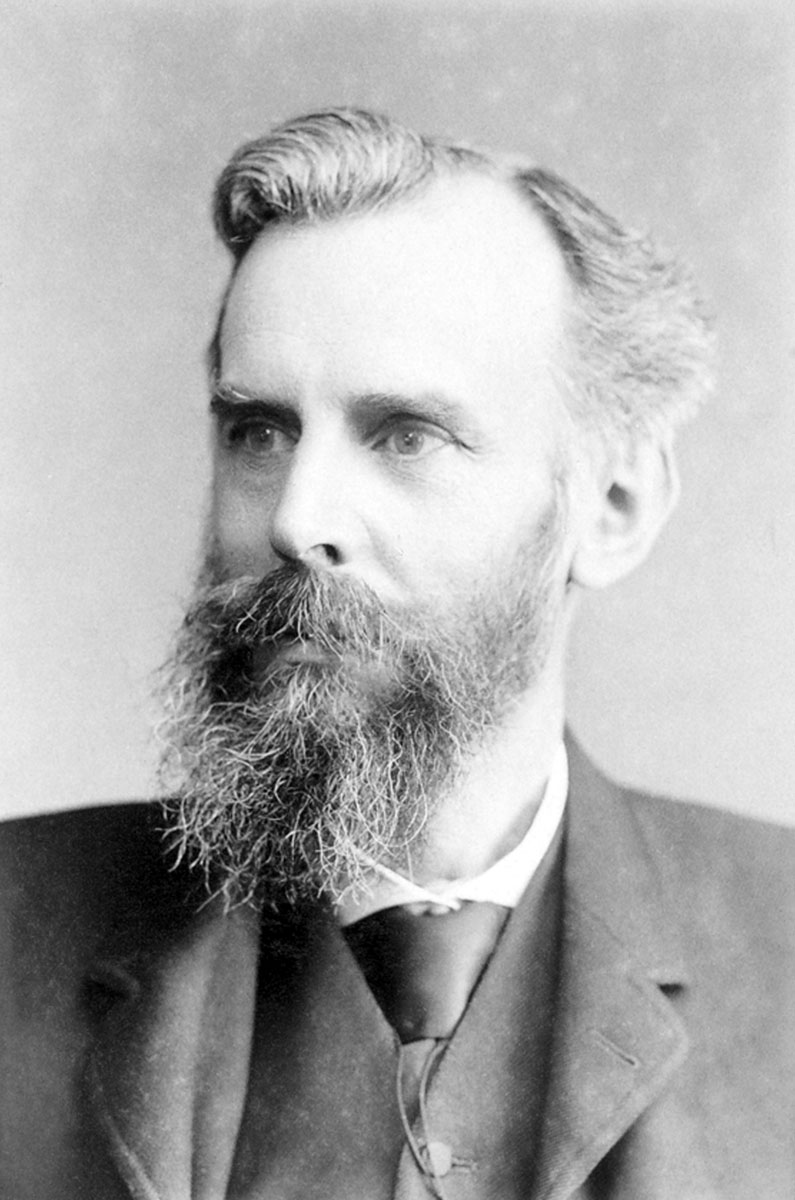
With the exception of the Olympics’ insignia, Venn diagrams are our most recognizable overlapping circles. Named after Cambridge University mathematician and logician John Venn, they first appeared in his book "Symbolic Logic" in 1880. In that work, he named them after a different mathematician calling them “Eulerian circles.” 

Venn knew there had to be more to math than just cranking through problems. There were deep philosophical questions buried in it.

Leonhard Euler was a Swiss mathematician whose 866 published mathematical papers are the most published as a solo author of anyone in history. To make this even more impressive, he did much of this work while blind. One focus of his work was taking complex mathematical reasoning and operations and representing it using symbols so that instead of having to think through long chains of inferences, we could instead manipulate symbols according to simple rules. 

As a result, he generated many of the standard representations we still use. Why is the letter x used for an unknown quantity in algebra? Euler. Why do we use the Greek letter π for the ratio between a circle’s circumference and diameter? Euler. Why is the square root of -1 called i? Euler.

In his quest to make complicated (and in the case of i, complex) mathematics simpler, Euler came upon a way to use circles to represent class membership. This allowed for a teaching tool that made certain logical relations clearer because they could be simply seen. Euler’s diagrams were effective, but Venn soon realized that they were limited in their applicability. Euler’s circles could not do something that a modified approach could — allow for a mechanical way of doing logic. Venn, with his new twist, would out-Euler, Euler.

Who, what, where and Venn

John Venn was the son of an Anglican minister whose interest was not in the Divine order of the universe, but rather its underlying mathematical structure. Attending Cambridge, he sat for the Mathematical Tripos, a grueling eight-day exam that largely tested one’s ability to quickly calculate for extended periods of time. Venn described the event as “fearfully hard work, both physical and mental.”

John Venn; Venn DiagramJohn Venn FRS (4 August 1834 – 4 April 1923), was a British logician and philosopher. (Pictures from History/Universal Images Group via Getty Images)Venn did well enough, achieving the rank of sixth wrangler, that is, placing sixth in his class, which was impressive, but not prestigious. The outcome, however, was intense burnout. He had loved mathematics, but now could not stand to think about it. “[B]efore coming to Cambridge and for my first year or two, I had a real enjoyment in the subject,” Venn wrote in an unpublished autobiographical sketch, “I never made any study of it afterwards: and in fact felt almost a repulsion towards it.” He sold all his mathematics books. He was done with it.
But eventually, his old love started nagging at him. He knew there had to be more to math than just cranking through problems. There were deep philosophical questions buried in it. Searching for others who also sought the intellectual depths of the field, he found George Boole.

A load of Boole

Work with computers long enough and you are sure to hear the phrase “Boolean algebra,” which refers to the machine’s underlying logic. It was formulated by Boole, an Irish mathematician and logician, who redirected the study of reasoning.

The word “logic” comes from the Greek term “logos” which is the root for our suffix -ology. Geology is the logic of “geo,” the earth. Biology is the logic of “bio,” life. Literally, “logos” translates as the word for “word.” Logical reasoning is the set of reasonable words that leads the hearer to understand something. Logic was the structure of well-reasoned discussion.

We see examples of categorical propositions in Vice President Harris’ words.

But Boole wanted to make good reasoning rigorous. He wanted a sort of mathematical calculation that could help us determine whether a sentence was true or false based on the evidence adduced for it. He developed this for basic terms like “and” and “or.” He showed that we could build algorithms to demonstrate the necessary truth of certain kinds of arguments.

We start with two truth values — true and false — and strictly build the conditions under which an “and” sentence is true and an “or” sentence is true and we can then start to develop a turn the crank method, an algebra, that would tell us whether a set of “and” and “or” sentences would lead to a specified conclusion or not.

A century later, this algebra could be built into electrical circuits which could be placed in series or parallel to allow Alan Turing to create the first electronic computer to break the Nazi enigma code and later more advanced versions to stream unlimited cat videos.

Categorical denial

Venn became fascinated with Boole’s new approach to logic and in finding a way to reduce logic to simple calculations. He tried to use Euler’s circles to illustrate Boole’s algebra of truth-values, but Euler’s representational system would not quite do the trick.

But while he could not use Euler to account for Boole’s new approach, Venn realized that he could accomplish something else just as important. He could restructure Euler’s circles to automate classical logic. 

Before Boole, formal logic came from the writings of Aristotle. In his book "Prior Analytics," Aristotle works out the logic of “the categorical syllogism.” A syllogism is any argument that has a conclusion supported by two premises. Consider the old chestnut, “All Greeks are mortal, Socrates is Greek, therefore Socrates is mortal.” That is a syllogism.

A syllogism is “categorical” if the conclusion and two premises are of categorical form, that is, is a sentence of the type “All A are B,” “No A are B,” “Some A are B,” or “Some A are not B.” Each part of the argument will have one of these four forms, although the A and B categories could be in either order.

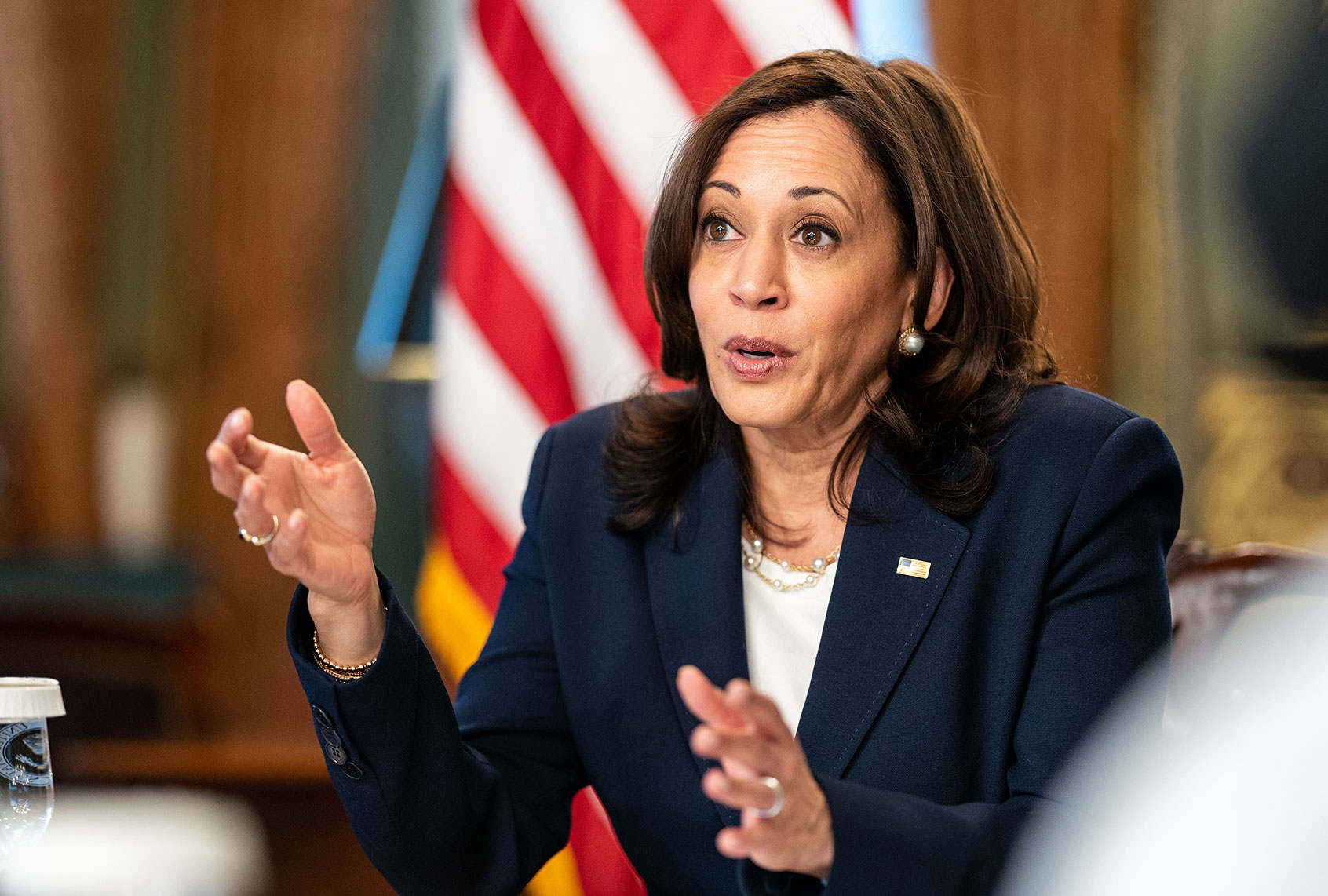
Kamala HarrisVice President Kamala Harris (Kent Nishimura / Los Angeles Times via Getty Images)We see examples of categorical propositions in Vice President Harris’ words. Consider her questioning of Justice Brett Kavanaugh at his confirmation hearing when she asked, “Can you think of any laws that give the government power to make decisions about the male body?” She got Judge Kavanaugh to uncomfortably consent to the truth of the categorical sentence, “No laws are impinging on male bodily autonomy.” In her comments after meeting with Israeli Prime Minister Benjamin Netanyahu, she said, “So to everyone who has been calling for a cease-fire, and to everyone who has been calling for peace, I see you and I hear you.” This is equivalent to “All people calling for an end to the hostilities in Gaza are people whose concerns she acknowledges.” Categorical propositions of the sort Aristotle was considering are normal in day-to-day reasoning.  
It turns out that there are 256 ways to arrange three categorical sentences into a syllogism. We are interested in finding the ones that are valid, that is, if the premises are true, then the conclusion must be as well. These are the good forms of reasoning that give us reason to believe the conclusion. Of these 256 argument forms, only 15 are valid. Aristotle developed five rules which determine if any given argument form is valid. While this system of rules worked, however, it was hard to see why they were successful.

Venn I find myself in times of trouble

Venn’s great realization was that he could alter Euler’s diagrams to construct clear visual representations of all four of Aristotle’s categorical propositions built on a common template, the iconic two interlocking circles.  “All A are B” means that the area of the A circle that is not a part of the B circle is empty. He shaded in the empty part. “No A are B” means that the intersection of the two circles was empty, so it was shaded. “Some A are B” means that the intersection of the two circles was not empty, that there was at least one thing there, so put an x there to represent it. And finally “Some A are not B” means that the part of the A circle that is not a part of the B circle has at least one thing in it, so put an x there.

A categorical syllogism includes three categories, call them A, B, and C. One premise would involve A and B, the other would relate B and C, and then the conclusion would be a statement about A and C. So, if we were going to move from representing single propositions to illustrating the entire syllogism, we need a new sort of diagram, the one with three interlocking circles that Vice President Harris is so enamored with. “I love Venn diagrams, It’s just something about those three circles.”

Venn recognized that he could use the two circle representation of each of the premises in the three circle diagram and what came out was what those two sentences entailed. So, diagram the A/B premise and the B/C premise onto the three circles. If what comes out when we look at the A/C circles entails the representation of the form of the conclusion, BOOM, the argument is valid. If it was not exactly what the conclusion’s diagram would look like, then it was not.

Venn gave us a simple, turn-the-crank means of clearly seeing why the 15 forms of the Aristotelian syllogism – and only those 15 forms – are valid. All of a sudden logic went from a set of abstract seemingly arbitrary rules to a mechanical, easily visualizable practice that governed good reasoning. (Interestingly, another mathematician, Charles Dodgson, better known by his pen name Lewis Carroll, came up with an equivalent system using squares at about the same time just 100 miles away at Oxford.)

Venn’s success inspired other logicians to try to do the same with Boolean algebra. A couple of decades later, Gottlob Frege with his "Begriffsshrift" and then Bertrand Russell and A.N. Whitehead with their "Principia Mathematica" did just that, and modern logic was born.

Love and logic

Any logician will tell you that there is a lot to love about Venn diagrams, but what does Vice President Harris’ love of them tell us about her? 

It is clear from the context of her repeated invocations that she uses Venn diagrams to clarify complicated situations. “Whenever I am presented with kind of like ‘this is complicated,’” she recently said in an interview at the University of Southern Nevada, “I always wonder ‘Is there a Venn diagram?’” 

Scientists speak of dependent and independent variables. In reality, lots of things are connected to other things and changing one affects the others, whether you mean to or not. Her use of Venn diagrams shows that Vice President Harris understands that the world is full of interlocking elements and that effective policy requires not just changing what needs to be fixed, but doing so in a way that does not create unintended negative consequences elsewhere. Her use of Venn diagrams seeks to clarify without simplifying, to give a clear picture of interrelations without ignoring their existence.

We should take comfort in someone who may end up in the world’s most difficult job loving Venn diagrams.

It is often the case in policy debates that ideology determines policy prescriptions, side effects be damned. When someone points them out, just yell louder about how bad the problem is and draw attention away from the unintentional outcomes. Does eliminating sex ed increase demand for abortions? Does raising the minimum wage increase inflation? These are the sort of important questions that need to be honestly wrestled with when proposing new laws and regulations, but which we all too often – no matter where you are on the political spectrum – tend to ignore. Al Gore told us that some truths are inconvenient and too often we downplay them because of their inconvenience instead of contending with them because of their truth.

But someone who professes her love for Venn diagrams is signaling to us an intellectual orientation that begins with the axiom that categories intersect, that domestic and foreign policy matters do not exist atomistically disconnected from everything else, that there is a fundamental complexity to the world that cannot be eliminated. 

Yet, it also points to a hopefulness that this intricate interweaving implicit in the real world can be understood. We can model the fact that the political knee bone is connected to the economic leg bone is connected to the social hip bone. It is indicative of a mind that accepts complexity and seeks to account for it, instead of oversimplifying it into a false but attractive narrative.

We should take comfort in someone who may end up in the world’s most difficult job loving Venn diagrams. She is utilizing an intellectual instrument that changed the way we think about thinking, that constructed a way to make sure we were reasoning properly, and that showed us why valid argumentation is a matter of fact and not mere opinion . . . and those are logical, not alternative facts.

Trump offers “total endorsement” of two Republicans running for the same Arizona congressional seat

Donald Trump is endorsing two candidates in a close Republican primary race for Arizona’s 8th Congressional District.

On Monday, Trump announced his endorsement of Blake Masters, who previously failed to win a Senate seat, after previously endorsing his rival, Abe Hamadeh. The unusual dual-endorsement comes just before the July 30 primary election. 

“Both Blake Masters and Abe Hamadeh have my Complete and Total Endorsement to be the next Congressman of Arizona’s 8th Congressional District," Trump wrote in a post on his website, Truth Social.

Earlier this month, the Trump campaign warned Masters to stop running a deceptive ad that suggested he had Trump’s endorsement. While Trump endorsed Hamadeh in December, the former president's new running mate, Sen. JD Vance, R-Ohio, had endorsed Masters, a long-time friend and acolyte of billionaire investor Peter Thiel.

"Blake Masters is a very successful businessman, and an incredibly strong supporter of our Movement to Make America Great Again — He is smart and tough!" Trump wrote on Truth Social. "Likewise, Abe Hamadeh, a Veteran, former prosecutor, and fearless fighter for Election Integrity, has been with me all the way!"

“They will both be spectacular, and I’m pleased to announce that both Blake Masters and Abe Hamadeh have my Complete and Total Endorsement to be the next Congressman of Arizona’s 8th Congressional District — THEY WILL NOT LET YOU DOWN!” the former president added.

Both Hamadeh and Masters received Trump’s endorsement in 2022 when Hamadeh ran for Arizona attorney general and Masters ran for Arizona’s U.S. Senate seat. The two have since become fierce rivals, though both men are ardently pro-Trump.

Hamadeh is an adamant election denier and focused most of his 2022 campaign on false claims about the 2020 election, according to reporting from NBC News. He also claimed election fraud in his own 2022 race for attorney general, which he lost.

Masters has repeatedly attacked Hamadeh, who is Arab-American, over his race and immigration status (Hamadeh’s parents immigrated from Syria). He has also criticized Hamadeh for not having children, saying that Hamadeh has no “skin in the game.” Last week, Masters also garnered attention for a similar comment directed at presumptive Democratic candidate Kamala Harris. 

“Political leaders should have children. Certainly they should at least be married,” he wrote on X.  

Arizona’s 8th congressional district is majority Republican and the victor in the primary will most likely win in November’s elections, USA Today reported.

One in 11 people went hungry last year. Climate change is a big reason why

One in 11 people worldwide went hungry last year, while one in three struggled to afford a healthy diet. These numbers underscore the fact that governments not only have little shot at achieving a goal, set in 2015, of eradicating hunger, but progress toward expanding food access is backsliding. 

The data, included in a United Nations report released Wednesday, also reveals something surprising: As global crises continue to deepen, issues like hunger, food insecurity and malnutrition no longer stand alone as isolated benchmarks of public health. In the eyes of the intergovernmental organizations and humanitarian institutions tracking these challenges, access to food is increasingly entangled with the impacts of a warming world. 

"The agrifood system is working under risk and uncertainties, and these risks and uncertainties are being accelerated because of climate [change] and the frequency of climate events," Máximo Torero Cullen, chief economist of the UN's Food and Agriculture Organization, or FAO, said in a briefing. It is a "problem that will continue to increase," he said, adding that the mounting effects of warming on global food systems create a human rights issue. 

Torero calls the crisis "an unacceptable situation that we cannot afford, both in terms of our society, in terms of our moral beliefs, but also in terms of our economic returns." 

Of the 733 million or so people who went hungry last year, there were roughly 152 million more facing chronic undernourishment than were recorded in 2019. (All told, around 2.8 billion people could not afford a healthy diet.) This is comparable to what was seen in 2008 and 2009, a period widely considered the last major global food crisis, and effectively sets the goal of equitable food access back 15 years. This insecurity remains most acute in low-income nations, where 71.5 percent of residents struggled to buy enough nutritious food — compared to just 6.3 percent in wealthy countries. 

Climate change is second only to conflict in having the greatest impact on global hunger, food insecurity and malnutrition, according to the FAO. That's because planetary warming does more than disrupt food production and supply chains through extreme weather events like droughts. It promotes the spread of diseases and pests, which affects livestock and crop yields. And it increasingly causes people to migrate as they flee areas ravaged by rising seas and devastating storms, which, in turn, can fuel conflict that then drives more migration in a vicious cycle. 

"What happens if we don't act and we don't respond?" said Torero. "You have more migration … it will empower more conflicts, because people in hunger have a higher probability to be in conflict, because they need to survive. And that will trigger also a bigger frequency of conflicts."

Earlier this year, the African countries of Zambia and Zimbabwe declared a state of disaster because of an ongoing drought. Mercy Lung'aho, a food research scientist at the International Institute of Tropical Agriculture, said she witnessed long lines of people waiting to buy food, with quotas on how much they could buy. "Imagine not being able to know when, or if, you will eat. That's the impact of climate change," said Lung'aho.

Although governments, nonprofits, and other organizations spend vast sums each year to solve these problems, no one can offer anything more than inconsistent estimates of just how much is spent or what impact it is having. One reason for that, the UN report notes, is because there is little clarity into how this money is used, or even how these funding strategies are defined. (That also is true of multinational funding pledges to address these issues.) The authors of the report call for adopting a universal definition of financing for food security and nutrition that includes public and private resources aimed at not just eradicating hunger, but everything from strengthening agrifood systems to mitigating drivers like climate shocks. 

As it stands, the world is assuredly not on track to reach all seven global nutrition targets governments set for 2030 under the Sustainable Development Goals they adopted in 2015. But experts on the issue have long argued that such measures have always been more naive than realistic, with "over-ambitious and impossible" targets that include the eradication of hunger and malnutrition for all people, and doubling the agricultural productivity and income of small-scale producers, among other goals. 

Nemat Hajeebhoy is the chief of nutrition for UNICEF Nigeria, which has the second largest population of malnourished children in the world. Unless governments, NGOs and the private sector come together to address the underlying causes of hunger, food insecurity and malnutrition, she said, vulnerable women and children worldwide will bear the brunt of that inaction. "What keeps me up at night is the numbers I'm seeing," said Hajeebhoy. "As human beings, we have to eat to live. And if we cannot eat, then the consequence is sickness and death." 


This article originally appeared in Grist at https://grist.org/food-and-agriculture/one-in-11-people-went-hungry-last-year-climate-change-is-a-big-reason-why/.


Grist is a nonprofit, independent media organization dedicated to telling stories of climate solutions and a just future. Learn more at Grist.org

"This story was originally published by Grist. Sign up for Grist's weekly newsletter here.


“Manipulated lies”: Elon Musk intentionally shares fake video of Kamala Harris, violating own rules

Vice President Kamala Harris' campaign is accusing billionaire Elon Musk of spreading "manipulated lies" after he reposted a video on X featuring an AI-generated voice imitating the vice president. Musk, who has endorsed former President Donald Trump, shared the video on his social media platform without noting that the video was originally released as an explicit parody, violating X's own policy that bars users from sharing “synthetic, manipulated, or out-of-context media that may deceive or confuse people and lead to harm."

The fake video reiterates racist attacks against Harris, who previously served as a U.S. senator and attorney general of California.

“I, Kamala Harris, am your Democrat candidate for president because Joe Biden finally exposed his senility at the debate,” the voice says, adding she is a "diversity hire" who doesn't know "the first thing about running the country." The fake-Harris voiceover is played alongside real clips of Harris used by her campaign in an earlier ad, authentic Harris campaign branding and the occasional statement from the actual candidate.

The mocking statements by the voiceover echoes statements from Republican politicians that Harris was only picked as Biden's running mate because she is a Black and Indian-American woman.

In a statement, a Harris campaign spokesperson told the Associated Press that "the American people want the real freedom, opportunity and security Vice President Harris is offering; not the fake, manipulated lies of Elon Musk and Donald Trump.” Musk has since responded on X that “parody is legal in America," including the original video by @MrReaganUSA in the post.

Two AI experts told the AP that the video represents the growing power deepfakes in shaping popular opinion and belief. 

“The AI-generated voice is very good,” UC Berkeley digital forensics expert Hany Farid told the news service. “Even though most people won’t believe it is VP Harris’ voice, the video is that much more powerful when the words are in her voice.”

Rob Weissman, co-president of the advocacy group Public Citizen, said that many people will be completely fooled by the video.

“I don’t think that’s obviously a joke,” Weissman said. “I’m certain that most people looking at it don’t assume it’s a joke. The quality isn’t great, but it’s good enough. And precisely because it feeds into preexisting themes that have circulated around her, most people will believe it to be real.”

“Classic Trumpism”: Republicans brush off Trump telling supporters they “won’t have to vote anymore”

“Get out and vote just this time. You won’t have to do it anymore,” former President Donald Trump told the crowd at a far-right Christian rally in Florida on Friday. “Four more years it will be fixed. It’ll be fine. You won’t have to vote anymore, my beautiful Christians.”

Asked about that comment Sunday, Republican New Hampshire Gov. Chris Sununu dismissed it as a “classic Trumpism,” downplaying the former president’s threat to democracy. “Obviously we want everybody to vote in all elections, but I think he was just trying to make a hyperbolic point that it can be fixed as long as he gets back into office and all that," he said on ABC’s "This Week."

Sen. Tom Cotton, R-Ark., responded similarly when asked about the comment on CNN. 

“I think he’s obviously making a joke about how bad things had been under Joe Biden, and how good they’ll be if we send President Trump back to the White House so we can turn the country around,” Cotton said in an interview on CNN’s State of the Union. 

Sen. Lindsey Graham, R-S.C., laughed off Trump’s remark on CBS’s Face the Nation and said that the former President was merely implying that “the nightmare that we’re experiencing will soon be over.”

“He's trying to tell the Christian community and anybody else who's listening, the nightmare that we're experiencing will soon be over, give me four more years and I'm gonna ride this ship called America and pass it on to the next generation,” he told CBS in attempt to explain the intent behind Trump’s comment.

While Republicans view Trump’s remarks lightly, Democrats do not. Many have said Trump's remark comes off as a threat.

“The only way ‘you won’t have to vote anymore’ is if Donald Trump becomes a dictator,” wrote Rep. Danield Goldman, D-N.Y., on X. 

“This year democracy is on the ballot, and if we are to save it, we must vote against authoritarianism," Rep. Adam Schiff, D-Calif., wrote on X. "Here Trump helpfully reminds us that the alternative is never having the chance to vote again,”

“Couch-f***er energy”: John Oliver mocks JD Vance’s “terrible” first week on campaign trail

John Oliver went off on Sen. JD Vance on Sunday, skewering Donald Trump's vice presidential pick for his lukewarm performance at the Republican National Convention, his "cat lady" comments, and his staunch anti-abortion views and 2020 election denial.

Oliver on the latest edition of "Last Week Tonight" highlighted the positive upturn for the Democratic Party from President Joe Biden dropping out of the presidential race and Vice President Kamala Harris's journey into the spotlight as the potential new Democratic nominee. However, Oliver pointed out that while the Democrats have had a great past two weeks, the Republicans are flailing because of Vance's personality and political views.

Oliver said it's been a "pretty terrible [week] for Trump’s pick to be his next VP, JD Vance, because he spent the week on the campaign trail where his performance was, to say the least, underwhelming."

The comedian mocked the atmosphere at Vance's rallies. "The vibe there is less running for vice president and more bombing the bed at an open mic night that makes Jeb’s ‘please clap’ look like Showtime at the Apollo," he said.

But mostly, Oliver noted that "people are getting a look at JD Vance for the first time, and what is becoming clear from polling comparing him to previous VP candidates is that voters are not liking what they’re seeing."

The show played a clip from CNN that showed Vance polling negatively after the Republican National Convention, noting that the poll numbers may be tied to Vance's views.

"He’s argued the last election was stolen from Trump and supported a federal abortion ban while also opposing exceptions for rape and incest," Oliver said. "He’s also argued that because Kamala Harris and other Democrats didn’t have children, they didn’t have, quote, 'any physical commitment to the future of this country.'" 

Moreover, the comedian mentioned the viral comments Vance made about how the country is being run by Democrats who are "miserable" and "a bunch of childless cat ladies."

"You don’t need kids to care about your fellow human beings," Oliver shot back. "As for the claim that women who don’t have children are miserable with the choices they’ve made, the only person I’m pretty sure is miserable with the choice they’ve made right now is Donald Trump after choosing Great Lakes Ron DeSantis here as a running mate."

But Oliver said that "JD Vance sucks so much that it says something that for a few days this week, the internet ran wild with a joke tweet that he was the first VP pick to have admitted in a New York Times bestseller to f***ing an inside-out latex glove shoved between two couch cushions with a citation to a page number from his memoir."

While that wasn't true and Oliver confirmed that, the host said "I think the reason it spread so fast might be that A. nobody read that book and B. it was incredibly easy to believe because if you ask me to draw a man that f**ks his couch, 10 times out of 10, I’m drawing this guy."

Oliver continued the joke, "I’ve never seen someone with more couch f***er energy. He looks like he watched the Tom Cruise Oprah interview and was jealous of Tom’s shoes."

We need your help to stay independent

Despite the rumor being fake, it hit the news in Norway which led to The Associated Press publishing a fact check that said “No, JD Vance did not have sex with a couch,” only to then take it down with the link leading to “Page unavailable.”

"The AP later explained its decision to pull the piece by saying the story did not go through their standard editing process. And no, it didn’t, because there’s an obvious problem with that original headline," Oliver said.

So "Last Week Tonight" reached out to Vance's campaign because they wanted to give him the opportunity to deny the claims.

"We asked, and I quote, 'Has Senator Vance ever had sex with a couch?' they hung up on us, which is, and this is critical, not a no, is it? We then followed up by both texting and emailing the same question again, as well as asking if he’d had sex with any other furniture or household items, but as of taping, we sadly haven’t heard back," Oliver said.

Last Week Tonight with John Oliver airs on Sundays at 11 p.m. ET on Max.

Kamala Harris’ favorability rating jumped after Biden stepped aside, while Trump’s only dropped

Vice President Kamala Harris' favorability rating among Americans jumped 8 points after Joe Biden stepped down as the Democratic nominee and endorsed her, a new ABC/Ipsos poll shows. 

In the poll, which was conducted July 26-27, Harris scored a favorability rating of 43% and an unfavorability rating of 42%. Just over a week ago, 36% of voters saw her favorably and 46% saw her unfavorably, according to a previous ABC News/Ipsos poll. 

Harris’ favorability increased significantly among independent voters, jumping from 28% to 44% after Biden stepped down. Some 40% of independent voters viewed her unfavorably, a 7% decrease from a week ago.

Harris’ solo presidential campaign raised a record-breaking $200 million in its first week. She has secured enough endorsements from delegates to officially become the Democratic nominee and no major challengers for the nomination have emerged since Biden’s announcement on July 20.

In the poll, 52% of all American voters said Harris should be the Democratic nominee and 86% of Democrats said the same. 

Republican candidate Donald Trump saw a slight drop in favorability from 40% to 36% following the Republican National Convention and his attempted assassination. His favorability rating among independent voters dropped from 35% to 27%.

Since Harris has become the presumptive Democratic nominee, the Trump campaign has repeatedly accused Democrats of knowing Biden was incapable of running for another term and waiting to the last minute to switch candidates. 

Republicans have also taken to insulting Harris’ identity, calling her a DEI hire, among other attacks on her race and gender. The GOP has also tried to paint her as further left than the man she replaced the top of the Democratic ticket.

“She’s the same as Biden but much more radical. She’s a radical left person and this country doesn’t want a radical left person to destroy it. She’s far more radical than he is,” Trump told the Associated Press on Tuesday.

“Old and quite weird”: Democrats finally discover new effective attack — and Republicans hate it

Sure, Donald Trump is a threat to democracy — a would-be dictator on day one who has called for terminating the U.S. Constitution so he can hold onto power even after losing a free and fair election. But while draped in the rhetoric of populism, Trump and his MAGA movement are not actually popular; the man himself has never won more votes than the person he ran against, a majority of Americans twice rejecting him and his off-putting cult of personality. That he was ever president is more or less because a few thousand swing voters in Wisconsin, Michigan and Pennsylvania thought it would be fun.

President Joe Biden won in 2020 largely by promising to a return to normalcy and baseline competency. In 2024, Democrats are making a similar argument but more forcibly: They’re pointing, laughing and dismissing Trump and his circus as a total freak show to which we can’t return.

“The fascists depend on fear,” as Minnesota Gov. Tim Walz put it over the weekend. “The fascists depend on us going back. But we are not afraid of weird people. We’re a little bit creeped out, but we are not afraid.”

Walz, currently being vetted as a potential running mate for Vice President Kamala Harris, came out of nowhere and, in a series of TV appearances over the last two weeks, effectively crafted Democrats’ latest messaging on Trump and his new sidekick, Sen. JD Vance, R-Ohio. The Republican ticket is a pair of odd dudes: one, 78, is visibly declining and rambling about whatever enters into his mind before a crowd of people wearing diapers and oversized t-shirts with his face on it, while the other, 39, is having fights with America's sweetheart, Jennifer Aniston, while seeming like a guy who'd corner you at a party to talk about "this trans stuff" and birth rates in Europe.

They’re strange guys with sick obsessions, as the two-term Democratic governor and former congressman put it on MSNBC last week.

“You know there’s something wrong with people when they talk about freedom — freedom to be in your bedroom, freedom to be in your exam room, freedom to tell your kids what they can read,” Walz said. “That stuff is weird. They come across as weird. They seem obsessed with this.”

After nearly a decade of being forced to take the host of “The Apprentice” seriously, Democrats are increasingly calling “bulls**t” on the whole charade. Trump is not a normal opponent who one should (or can) engage in a high-minded debate about tariffs and industrial policy. He’s a clown: scary, but often sad and ultimately a joke.

Transportation Secretary Pete Buttigieg, appearing Sunday on Fox News, contrasted the Republican devotion to a lie — that Trump is coherent, a respectable role model for children, and the winner of the 2020 election — with Democrats’ willingness to acknowledge that Biden was no longer the party’s best candidate in November.

Republicans, including Fox News anchors, “will take a look at Donald Trump and say he’s perfectly fine, even though he seemed unable to tell the difference between Nikki Haley and Nancy Pelosi; even though he’s rambling about electrocuting sharks and Hannibal Lecter; even though he’s clearly older and stranger than he was when America got to know him,” Buttigieg said. “They say he’s strong as an ox, leaps tall buildings in a single bound. We don’t have that kind of warped reality on our side.”

We need your help to stay independent

Republicans are out of step with a clear majority of Americans. They are, bluntly, the party of mobs yelling at school board meetings about books and teachers making kids gay; they are the party that has three times now nominated a demagogue from a reality TV show to lead the country — and Democrats, representing more than half the country on everything from abortion to LGBTQ+ rights to whether poor children should be fed, are finally pointing out how bizarre it all is.

That it’s working is evident in how openly Republicans hate it, the party that runs against every resident of a big city and wanted to toss out 81 million votes so a reality star could own the libs and be king — which dismisses the Democratic candidate as a “DEI hire” — now decrying Democrats’ nasty lack of decorum.

“This whole ‘they’re weird’ argument from the Democrats is dumb [and] juvenile,” Vivek Ramaswamy, a Republican billionaire, posted on X. “This is a presidential election, not a high school prom queen contest.”

Democrats, Ramaswamy kindly recommended, should instead be running on “policy.” And sure: Democrats should emphasize their popular commitment to restoring reproductive freedom in the world’s strongest economy. But they’re not about to take advice about messaging from someone who would like them to lose.

The Harris campaign, if anything, is leaning into what works. In a press release over the weekend, addressing a “78-year-old criminal’s Fox News appearance,” the vice president’s staff noted Trump’s failed attempt to distance himself from his ally’s hard-right Project 2025 agenda. But there was also a fact that the campaign did not want reporters to miss: the man with 34 felony convictions to his name is also “old and quite weird.”

“Not normal”: Biden proposes Supreme Court reforms after “dangerous and extreme decisions”

President Joe Biden announced his proposal to reform the U.S. Supreme Court in an op-ed published in the Washington Post on Monday, castigating its right-wing majority for overturning settled legal precedents and failing to concretely address scandals involving justices. He began by taking aim at the court's decision to grant presidents broad immunity from prosecution for crimes while in office, warning that "if a future president incites a violent mob to storm the Capitol and stop the peaceful transfer of power — like we saw on Jan. 6, 2021 — there may be no legal consequences."

While Biden did not mention Donald Trump by name, it was clear that he had the former president in mind. It was Trump's attempts to overturn the 2020 election that led the court to vote 6-3, along ideological lines, to grant him immunity. "No one is above the law," Biden wrote. "Not the president of the United States. Not a justice on the Supreme Court of the United States. No one."

Biden's op-ed underscores his long-simmering frustration with the court, which has now finally led to him to respond to calls from within his party to take drastic action and hold it accountable. Biden acknowledged in the op-ed that he had "great respect for our institutions," but maintained that "dangerous and extreme decisions" and scandals that have caused the public to "question the court’s fairness and independence," including undisclosed gifts to justices from individuals with business before the court, left him with no choice.

"What is happening now is not normal, and it undermines the public’s confidence in the court’s decisions, including those impacting personal freedoms," he wrote. "We now stand in a breach."

Biden delved into the contents of his plan to reform the Supreme Court, which was informed by analysis from the bipartisan Presidential Commission on the Supreme Court of the United States that he set up earlier in his term. The first proposal is a constitutional amendment called the No One Is Above the Law Amendment, which would establish that there is no immunity for crimes that a former president has committed while in office. A constitutional amendment, named after what Biden called a "simple yet profound principle" that acted as a bedrock for the nation, would override the Supreme Court's decision to grant Trump immunity if successfully passed.

The second proposal is a rule that would impose term limits on Supreme Court justices, who currently serve for life or until they choose to retire. Biden wrote that he supports a system in which every two years, the president would appoint a justice that would serve an 18-year term. The Constitution does not expressly grant life tenure to Supreme Court justices, saying only that they “shall hold their offices during good behavior.” Term limits "would make timing for court nominations more predictable and less arbitrary," he wrote. "It would reduce the chance that any single presidency radically alters the makeup of the court for generations to come."

Biden was likely alluding to the three conservative justices that Trump was able to place on the court during his single term in office, more than the two that Bill Clinton, George W. Bush and Barack Obama appointed during each of their two-term presidencies. Trump was helped by a Republican Senate majority that blocked a potential third appointment by Obama, holding open the seat for a friendlier administration to fill.

We need your help to stay independent

The third proposal calls for a binding code of conduct for the Supreme Court that would require justices to disclose gifts, refrain from public political activity and recuse themselves from cases in which they or their spouses have conflicts of interest. Biden noted that every other federal justice in the country is bound by an enforceable code of conduct and opined that the Supreme Court should follow suit.

Those suggested rules in the code of conduct appear to respond directly to the scandals that have embroiled the court in recent years. In 2023, a ProPublica report revealed that Justice Clarence Thomas failed to disclose most of the $4 million he received in gifts since 2004, many of them from individuals who had business before the court. Other justices, including Samuel Alito, also accepted undisclosed gifts from such donors. Earlier in 2024, Alito received criticism for pro-insurrectionist flags that were raised outside of his homes in Virginia and New Jersey, then declining to recuse himself from cases related to the Jan. 6 storming of the Capitol.

Amid rising public anger at a court run amok with power, Chief Justice John Roberts issued a non-binding code of conduct in November 2023. But he declined to make it anything more than a set of unenforceable guidelines or to meet with Senate Judiciary Committee members to discuss the scandals, writing in a letter that to do so would raise concerns about the separation of powers.


Want a daily wrap-up of all the news and commentary Salon has to offer? Subscribe to our morning newsletter, Crash Course.


Biden's proposals are unlikely to become law before the end of his term. Republicans control the House of Representatives, and Democrats hold only a one-seat majority in the Senate, where some members of the Democratic caucus are still resistant to Supreme Court reform, especially if it is passed by eliminating the filibuster. A constitutional amendment to overturn the court's immunity decision, which has a higher threshold of passage in Congress, faces the additional process of ratification by three-fourths of state legislatures before it can be codified.

Still, Biden noted that the reforms are supported by most Americans, including a majority of Republicans, as well as a number of conservative and liberal constitutional scholars.

"We can and must prevent the abuse of presidential power. We can and must restore the public’s faith in the Supreme Court. We can and must strengthen the guardrails of democracy," Biden concluded. "In America, no one is above the law. In America, the people rule."

Trump squanders his own momentum

After having spent most of the last two years playing golf and dining with his paying fans at Mar-a-Lago, former President Donald Trump picked up the pace of his campaign a little bit this past weekend. He met with a Christian group on Friday night and then made two appearances back to back, first at a Bitcoin convention in Tennessee followed by a rally in Minnesota. 

You might think that just coming off of the Republican National Convention 10 days ago and after last week's dramatic events in the Democratic Party going to a Bitcoin convention might not be among your top priorities. But Trump is always hungry for money and his campaign's been collecting Bitcoin donations for a couple of months while observing that large cryptocurrency PACs have put over $180 million into some congressional races. So he went there along with some other high-profile Republicans and Vivek Ramaswamy to make a bunch of promises at the behest of donors, which he clearly didn't understand, and make a pitch for votes from people who had listened to independent candidate Robert F. Kennedy Jr. the night before. 

He promised to create a “Bitcoin and crypto presidential advisory council” made up of people who "love your industry, not hate your industry.” When he promised to fire Gary Gensler, the Securities and Exchange Commission Chairman, the crowd went wild prompting Trump to exclaim, “I didn’t know he was that unpopular. Let me say it again: On day one, I will fire Gary Gensler.” Look for him to repeat that one on the trail even though your average MAGA follower probably won't know what he's talking about. But there's nothing unusual in that. Gensler is hated by this crew because he has filed lawsuits and fined members of the industry when they put the system at risk, like when one of the founders of an exchange was convicted of fraud and his exchange collapsed. Trump wants to fire anyone who wants to enforce the rule of law against fraudsters, especially himself. 

Speaking of enforcing the law, judging from his rally speech in Minnesota and his incessant posting on social media, he seems to think he's found the poison arrow that will destroy Vice President Kamala Harris. Rather than immigration, which I thought they'd emphasize over everything else, aside from some half-hearted slams at her for being the "border czar" he's been attacking her relentlessly for allegedly saying that she wanted to "defund the police" when she was running for president. He's repeatedly posted and reposted a misleading CNN headline claiming that she said it. (What she actually told The New York Times was that she agreed with the idea of assessing “what public safety looks like” and the size of police budgets, “but, no, we’re not going to get rid of the police. We all have to be practical.”)

This might be a good attack line against a former prosecutor and Attorney General if it weren't for the fact that Trump himself is a convicted criminal who has promised to pardon hundreds of fellow criminals he incited to assault police officers on January 6, 2021. Perhaps he would like to explain his own calls to defund law enforcement.

We need your help to stay independent

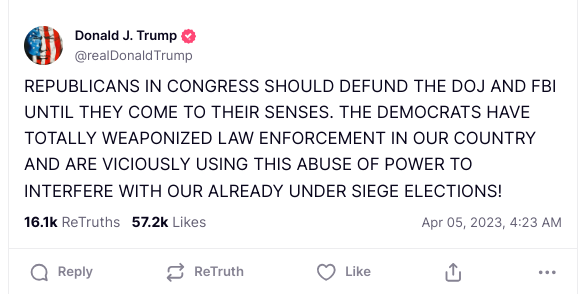
As Steve Benen at MSNBC's Maddowblog chronicled, Trump has nothing but contempt for any law enforcement agency he doesn't see as loyal to him over the rule of law:

In recent months, the former president has equated the FBI with “the Gestapo.” He’s told the public that the bureau is led by “Marxist Thugs.” He’s promoted a piece that referred to the FBI as “the Fascist Bureau of Investigation.” He’s condemned the FBI as “corrupt” and “crooked.” He’s described FBI officials as “mobsters” and a “real threat to democracy.” He’s slammed the FBI as the “Fake Bureau of Investigation,” before accusing the bureau of secretly paying people to “steal” the 2020 election from him, as part of the FBI’s plot to “rig” the election and “illegally change” the results.

Last March his minions in the U.S. House of Representatives did his bidding and voted to cut the FBI by six percent and the Bureau of Alcohol, Tobacco, Firearms and Explosives (ATF) by seven percent. They were disappointed it couldn't be more but they have promised to return to it as soon as they are back in power. Needless to say, if they are able to fulfill the Project 2025 agenda of firing all civil service employees who do not pledge fealty to Donald Trump, they will then provide full funding for the new East German STASI-style FBI. Until then, they are an enemy of the cult. 

Trump said a few other weird things this weekend. He spoke at a Turning Point Actions conference on Friday night where he offered up an astonishing promise to his Christian followers that they won't have to vote anymore after four years if they elect him:


Want a daily wrap-up of all the news and commentary Salon has to offer? Subscribe to our morning newsletter, Crash Course.


If it weren't for his constant praise for dictators and tyrants and his repeated comments that he should be allowed to stay in office beyond two terms, I might be willing to believe some people's interpretations of this startling remark to mean that he will fix everything in four years so they will have no reason to be involved in politics after that. But that makes no sense since unless he means he's not leaving office, people will always have to vote lest their opponents reverse their gains as Trump himself is promising to do right now. No, he said what he said and we know what he means. 

He admitted that all that talk about "unity" was just momentary hype. 

“I want to be nice,” Mr. Trump said. “They all say, ‘I think he’s changed. I think he’s changed since two weeks ago. Something affected him.’”

But to a cheering crowd of thousands, Mr. Trump quickly conceded the point. “No, I haven’t changed,” he said. “Maybe I’ve gotten worse. Because I get angry at the incompetence that I witness every single day.”

He must be talking about his campaign. It's understandable that he's angry but he has no one to blame but himself. Despite having been given a priceless gift with that awful debate and an assassination attempt that mercifully missed, he's now slipping in the polls and is saddled with a national joke of a vice presidential candidate. Donald Trump was born lucky but he has a unique gift for squandering it through hubris and ineptitude. And yes, he's gotten worse. 

The MAGA principle tested: Trump grows “more and more radical with each passing day”

The American people and the world know a great deal about Donald Trump. Even though he is an expert and compulsive liar, he is candid and transparent in his behavior and thinking in many ways. If he takes over in 2025 and becomes the country’s first dictator, the American people and their elites cannot say that they were surprised. When the authoritarian speaks always be sure to believe him or her. It is essential for your survival.

Donald Trump believes that he is some type of God or prophet, all-knowing, who is on a divine mission to take power. He has stated as much in his campaign videos, speeches, interviews, and other communications. Following the attempt on his life in Butler, Pennsylvania, the belief has only strengthened.

Perhaps most troubling (and too little discussed by the mainstream news media and political class for reasons of denial and fear) is Donald Trump’s repeated channeling of Adolf Hitler and the Nazis. Trump has almost literally quoted Adolf Hitler and "Mein Kampf" with his threats and promises to purify the blood of the country by removing the “human vermin” from within its borders. Like Adolph Hitler and the Nazis, Donald Trump repeatedly threatens to get revenge and retribution against his enemies. Trump has also threatened to censor if not outright ban freedom of the press and freedom of speech because he views the news media as “the enemy of the people.” The Nazis used the slur “lugenpresse."

Donald Trump allegedly keeps a copy of Hitler’s speeches near his bed. He has praised and met with overt neo-Nazis and white supremacists. Retired United States Marine Corps general Mike Kelley, who served as Trump’s second White House chief of staff, has explained in interviews how the corrupt ex-president praised Adolf Hitler, saying that “he did good things.” Donald Trump’s nephew, Fred Trump III, alleges that he said that disabled people “should just die.” i.e. be “mercy killed.” The Nazis murdered disabled people as a way of “purifying” the "Aryan race" and emptying the hospital beds to make space for military casualties from the war.

If he returns to power in 2025, Donald Trump and his regime will immediately create a massive concentration camp system to deport millions of non-white undocumented residents, migrants, and refugees. Donald Trump is a racial authoritarian who will systematically take away the rights of black and brown Americans more generally.

A second Trump regime will also take away the civil and human rights of LGBTQ people as well. Women will also see their reproductive rights and freedoms further taken away. The Nazis also enacted such policies in Germany.

Neo-Nazis, Ku Klux Klan members and other white supremacists played a leading role in the Jan. 6 coup attempt and terrorist attack on the Capitol. Trump has attempted to valorize these Jan. 6 terrorists as sacred heroes of the MAGA cause, a group he will release from prison when/if he takes power in 2025. Hate crimes and other forms of right-wing domestic terrorism and political violence (including mass shootings) greatly increased during Trump’s time in office.

Donald Trump has taken over the Republican Party and remade it in his image as a type of political personality cult and de facto political crime family and fascist front organization for his MAGA movement. There is now no meaningful distinction between MAGA and the Republican Party.

In all, Trump is not just a random or generic aspiring dictator or demagogue. He is of a specific type: Donald Trump is a textbook example of the Führer principle applied in 21st-century America. The Holocaust Encyclopedia offers this basic explanation of the Führer principle:

With the passage of the Enabling Law (March 23, 1933), the German parliament (Reichstag) transferred legislative power to Hitler's cabinet and thus lost its reason for being. By mid-July, the Nazi Party was the only political party left in Germany. The other parties had been either outlawed by the government or had dissolved themselves under pressure. The Reichstag became a rubber stamp for Hitler's dictatorship.

The Führer's will became the foundation for all legislation. Indeed, with the establishment of Hitler's dictatorship, the Führer principle (Führerprinzip) came to guide all facets of German life. According to this principle, authority—in government, the party, economy, family, and so on—flowed downward and was to be obeyed unquestioningly.

Upon Hindenburg's death in August 1934, Hitler had himself designated as both Führer and Reich Chancellor. Armed forces personnel swore an oath of loyalty to him in this function. While as Reich Chancellor Hitler's personal power remained limited by the laws of the German state, as Führer his personal power was unlimited and his will was equated with the destiny of the German nation.

With the recent decision by the right-wing extremist justices on the Supreme Court to give Donald Trump and his Republican-fascist successors near unlimited criminal immunity an American Führer principle has been codified into American law.

In a 2016 essay at the Washington Post, historian Peter Ross Range sounded an early alarm about Trump’s echoing of Adolf Hitler. Range’s warnings were eerily prophetic.

There. He came out and said it. “I alone,” averred Donald Trump in his speech Thursday night accepting the Republican nomination for president, can save America, save the world, save you.

Rarely in modern political memory has a candidate so personalized a candidacy. Certainly, no other U.S. political figure comes to mind who dared make such an exclusive claim on truth and light.  A savior complex may have befallen some of them, but who was bold enough to voice it so plainly as Trump?

That does not mean there is no historical precedent for campaigning — and ruling — on a platform of messianic certainty, though. One man who did it was Adolf Hitler….

But to any serious student of Hitler’s frightening and unforeseen rise to power in Germany, the recurring echoes in Trump’s speeches, interviews and his underlying thinking have become too blatant to overlook….

Hitler was building the case for the “Führer principle” — a belief in the iron infallibility of the leader. It was an elaborate, historically wrought version of the “I alone” principle. With it, Hitler eventually won power in Germany and governed as an absolute despot.

Trump’s analog is: “Trust me.” Leading up to his “I alone” moment at last week’s convention was a long string of assertions by Trump that we just have to trust him — trust him to solve problems and implement even implausibly ambitious programs like rounding up 11 million undocumented immigrants. When challenged during the primaries for programs or plans on how he would carry out his extreme policy proposals, he habitually fell back on “trust me” or variations such as his “unbelievable ability” to “get things done.”

We need your help to stay independent

Historian Richard Frankel, author of “States of Exclusion: A New Wave of Fascism,” shared his concerns with me via email about Donald Trump, the Führer principle, and America’s worsening democracy crisis:

Trump’s been employing the language and imagery of Hitler to one degree or another since he took that trip down his golden escalator back in 2015 and described Mexicans in horribly racist terms. His endorsement of the George Soros/International Jew conspiracy theory inspired the deadliest mass killing of Jews in American history at the Tree of Life Synagogue in Pittsburg in 2018 and a string of attempted pipe bombings of Soros and other “enemies.” His recent assertions that immigrants are “poisoning the blood” of America is pure racism that was common among radical nationalists, racists, and antisemites in both Germany and the United States during the first half of the twentieth century.

As with Hitler, these ideas are not in any way new. But what we’re seeing with Trump is that he is repeating them more and more frequently and the expressions are becoming more and more radical with each passing day. With more than half a year to go until the election—and considering the fact that his natural tendency is always and only in the direction of more extreme, more radical expressions—his resemblance to Hitler is only going to grow the closer we get. And that process is being helped along because of the way he reacts when the press brings up his most radical statements (to the limited extent that they actually do that). He doesn’t simply repeat his statements. He doubles (and even triples) down on them.

John Roth, who is a leading scholar on antisemitism and the Holocaust, is also deeply concerned about Donald Trump and his amplification of Hitlerism. Via email, Roth focuses in on the controversial “God Made Trump” campaign video and its connection to the Führer principle:

In 1934, Adolf Hitler’s acolyte Hermann Goering said, “We love Adolf Hitler because we believe, deeply and steadfastly, that he was sent to us by God to save Germany.” Such sentiments reverberated ninety years later, when “God Made Trump,” a three-minute MAGA Republican video-accolade went viral.

“And on June 14, 1946,” the script begins by invoking Donald Trump’s birthday, “God looked down on his planned paradise and said: ‘I need a caretaker.’ So, God gave us Trump.” From there, the narrative proceeds to depict Trump as an I-alone-can-do-it savior who will work tirelessly, day and night, to “fix this country.” Joseph Goebbels, Hitler’s chief propagandist, would have loved the video and wished he could have made the prequel “God Made Hitler.”

Goebbels’s prequel would have emphasized that “God Made Hitler” to be the Führer (leader) of the German people. Accompanying that title, which officially became Hitler’s in August 1934, the Führerprinzip (leadership principle) underscored Hitler’s absolute authority and the duty of Germans to be unswervingly loyal and obedient to him. More than ready to join this cult of personality, Hitler’s followers enabled him to kill millions in World War II in Europe and to commit genocide against the Jewish people.

Roth adds:

“God Made Trump” does not say that Trump admires Hitler. It does not say that he wants to be the American Führer. But Trump does say that Hitler did “good things.” He does imply that his version of the Führerprinzip will “make American great again.” The cult of personality that surrounds him stands ready to advance those aims. Its devotion and obedience to the twice-impeached and criminally-indicted ex-president could destroy American democracy.

The MAGA video does not say that “God Made Trump” so that he can “root out the communists, Marxists, fascists, and the radical left thugs that live like vermin within the confines of our country." Nor does the video say that “God Made Trump” to stop immigrants from “poisoning the blood of our country.” It didn’t have to. Trump mouths those Hitlerian tropes all the time. They define how cruel and violent this aspiring American Führer will be if he gets to put his Führerprinzip into practice.

Last Wednesday night, President Biden spoke to the nation and explained his decision to withdraw his nomination and to pass the torch to Vice President Kamala Harris because he believes that she has a better chance of defeating Donald Trump and the MAGA neofascist movement.

President Biden’s words here are particularly powerful and ominous, where he warns about Trumpism without needing to specifically mention the aspiring dictator's name:

I ran for president four years ago because I believed, and still do, that the soul of America was at stake. The very nature of who we are was a stake, and that’s still the case.

America is an idea. An idea is stronger than any army, bigger than any ocean, more powerful than any dictator or tyrant….

I’ve been blessed a million times in return with the love and support of the American people. I hope you have some idea how grateful I am to all of you.

The great thing about America is here, kings and dictators do not rule. The people do.

History is in your hands. The power is in your hands. The idea of America lies in your hands. You just have to keep faith. Keep the faith and remember who we are. We’re the United States of America. And there is simply nothing, nothing beyond our capacity when we do it together.

So let’s act together, preserve our democracy. God bless you all. And may God protect our troops. Thank you.

President Biden is correct in his (repeated) warnings about the existential nature of the 2024 election and how it will determine if America remains a democracy, albeit a flawed one, or instead collapses into a state of competitive authoritarianism or some other form of autocracy.

Donald Trump’s dictator’s playbook is public and available for all to see. History is warning us. An American Reich will not be glorious. It will be destruction, not just for those who are targeted as the enemy Other but for its own MAGA and other supporters as well. History does not repeat itself, but it sure does rhyme — and its rhymes in America in this moment of great uncertainty and worsening democracy crisis are sickening, disorienting, and almost debilitating. The American people only have about three months left to reorient themselves and to rise to the demands of history on Election Day by defeating Donald Trump and the MAGAfied Republican Party.

On abortion, Kamala Harris has the receipts

Another Trump abortion ban is set to take effect today. The State of Iowa joins the growing ranks of Republican-led states banning abortion at six weeks. Iowans woke up Monday to a new reality of state-forced birth.

Kamala Harris will also wake up to a new reality. After President Biden withdrew and endorsed Harris as the 2024 Democratic nominee, Harris raised a historic $250 million in campaign donations in under three days, much of it from first time donors, and young voter registration surged by 700%.

Anyone missing the connection between Trump’s abortion bans and the drumbeat for Harris isn’t paying attention.  

Harris won’t let Trump/Vance flip the script on abortion

Although abortion was carefully scripted out of the headlines and speeches at the Republican National Convention, Harris will remind Americans how Trump bragged about overturning Roe v. Wade, and appointed three radical justices who were willing to lie to Congress under oath — and trash the credibility of the Supreme Court in the process— to overturn abortion rights.  

Harris will remind voters how Trump publicly congratulated himself, bragging in writing that

After 50 years of failure, with nobody coming even close, I was able to kill Roe v. Wade, much to the ‘shock’ of everyone… Without me, there would be no 6 weeks, 10 weeks, 15 weeks, or whatever is finally agreed to. Without me the pro Life movement would have just kept losing.  Thank you President TRUMP!!! 

Indeed, thank you Donald Trump, for confirming in writing that you’re responsible for life-threatening six-week abortion bans, you’re responsible for forcing women and girls to flee their home states to stay alive, you’re responsible for Republicans gunning for armed menstruation police, you’re responsible for pushing frightened women to the brink of death before doctors can intervene to save them.

Very well done, sir. Bragging about the Dobbs decision was probably the most consequential self-own you will ever make.

Why Trump/Vance efforts to “soften” state forced birth won’t work

Faced with opinion polls showing that a strong majority of Americans think Trump overturning Roe v. Wade was a “bad thing,” Trump is now marketing a softer position on abortion, saying that rather than a national ban, it should be left up to individual states to decide. Veep candidate and antiabortion extremist JD Vance, who would criminalize abortion even in cases of rape and incest  because “two wrongs don’t make a right,” and who thinks “childless cat ladies” should not equally participate in democracy, now parrots Trump’s “softening,”

Letting states decide via popular vote whether women — or the government — should make private health care decisions is more gaslighting than softening. Under the 14th Amendment, all persons born or naturalized in the United States have been entitled to the same Equal Protection under the law since 1866, regardless of popular whim. The whole point of the 14th Amendment was to remove fundamental human rights from the vicissitudes of popular opinion, which, as MAGA illustrates, is easily manipulated.

The 14th Amendment prohibits all states from making or enforcing any law that denies the equal protection of the laws to all citizens, or that deprives any person of liberty without due process of law; it does not subject these rights to periodic revision as popular opinion fluctuates. When writing Dobbs, lifelong misogynist Justice Alito wrote deceptively that the 14th Amendment’s Equal Protection Clause could not protect women’s medical privacy, or abortion access, because “that theory is squarely foreclosed by the Court’s precedents, which establish that a State’s regulation of abortion is not a sex-based classification.” 

In case you missed it, that was Alito selectively choosing to prioritize the Court’s “classification precedent” over 50 years of substantive due process precedent to reach his desired outcome, despite Roe v. Wade’s determination that a woman’s decision to terminate her pregnancy is a “liberty” protected against state interference by the Due Process and Equal Protection Clause of the 14th Amendment.

Harris will stop the gaslighting

Helping themselves to Alito’s smug and dishonest dismissal of equal protection for women, Trump/Vance’s “let-each-state-decide” abortion stance subjects women’s bodies and lives to the whims of the popular vote.  After owning Miss USA and similar beauty pageants for decades, it’s not surprising that Trump continues to see women’s bodies on a catwalk, subject to popular opinion and scorecards. Harris will serve it back in ways Biden never could, due to Biden’s Catholic reluctance to say the word “abortion” in public. 

Harris isn’t reluctant.  She has read and understands the assignment. She can communicate how abortion bans have increased maternal and infant mortality, and decreased women’s equal opportunity to earn a living. She can explain how Republicans have unconstitutionally stripped half the U.S. population of Equal Protection under the 14th Amendment because Trump justices said they could.

Believed to be the first vice president to ever visit an abortion clinic, Harris talks about abortion rights clearly, forcefully and unapologetically, and will help shape abortion into the pivotal issue in November.

In stepping away from power despite his strong conviction that he could and should serve a second term, President Biden displayed as selfless an act of sacrifice and patriotism as any president since George Washington. As heart-wrenching as it was to watch his oval office address last Wednesday, women who have had it up to here with republicans’ cruel machinations under Dobbs are grateful finally to have a fierce messenger

Expert: JD Vance’s selection as Trump’s running mate marks the end of Republican conservatism

Since Donald Trump chose Ohio Sen. JD Vance as his running mate, it’s been widely noted that Vance once described Trump as “reprehensible” and “cultural heroin.” However, the day after Vance won his own Senate race in 2022, he reportedly made it known that he would support Trump for president in 2024.

Given this dramatic change, what does Vance’s selection mean for the Republican Party and conservatism, the political philosophy that the GOP once claimed to embrace?

I am a political scientist whose research and political analysis focuses on the relationship between Trump, the Republican Party and conservatism. Everyday citizens define conservatism in different ways, but at its root it is a philosophy that supports smaller and less-centralized government because consolidated power could be used to silence political competition and deny citizens their liberties.

Since 2015, Trump has tightened his grip on the Republican Party, moving it further away from its professed conservative ideology. The choice of Vance as Trump’s running mate – and the competition that preceded it – are the latest steps in this process.

Political columnist George Will describes how Trumpism has steered the Republican Party away from traditional conservative views.

Vance came from a small pool of contenders that included other noteworthy politicians who likewise once vehemently opposed Trump. By examining their trajectories, we can see how the Republican Party has abandoned conservative values to serve a single man.

Elise Stefanik

Elise Stefanik ran for Congress in 2014 from a district in upstate New York as a mainstream Republican who admired Rep. Paul Ryan of Wisconsin. Ryan was a traditional conservative who had run for vice president alongside former Massachusetts Gov. Mitt Romney in 2012. Romney endorsed Stefanik for Congress, saying that she was “a person of integrity. Every campaign is different, but values don’t change.”

But Stefanik’s values did change. When forced to share the ballot with Trump in 2016, she couldn’t even “spit his name out,” according to Republican consultant Tim Miller. But early in Trump’s presidency, she became a vocal ally, eventually replacing Rep. Liz Cheney as chair of the House Republican Conference in 2021.

House Republicans ousted Cheney from that position after she criticized Trump’s refusal to support the 2020 election results and his actions during the Jan. 6 attack on the U.S. Capitol. Cheney justified her opposition to Trump by highlighting her respect for the rule of law and support for limited government – even when those positions meant opposing her own party leader. These are foundational conservative principles, centered in aversion to consolidated government power.

This switch was a significant moment in the party’s ideological transformation. Stefanik’s rising star subsequently landed her in the mix for vice president, which she called “An honor. A humbling honor.”

Marco Rubio

Florida Sen. Marco Rubio challenged Trump for the 2016 Republican presidential nomination. During that race, Rubio issued a news release calling Trump a “serious threat to the future of our party and our country,” and blamed him for ushering in a climate of violence.

Statements like these made sense coming from a serious conservative whose worldview was defined by his family’s Cuban heritage and who opposed communism, tyranny and excessive government power.

Eventually, though, Rubio became a Trump ally. He voted to acquit Trump in his second impeachment trial in 2021, which centered on charges that Trump had incited an insurrection. In line with Trump’s wishes, Rubio opposed establishing an independent commission to investigate the Jan. 6 events.

In early 2024, Rubio was asked in an ABC interview if he really wanted to be vice president even though Trump had defended calls by Jan. 6 insurrectionists to hang former Vice President Mike Pence for certifying the 2020 election results.

“When Donald Trump was president of the United States, this country was safer, it was more prosperous,” Rubio responded. “I think this country and the world was a better place.”

This refusal to acknowledge and challenge Trump’s apparent support of lawlessness by his followers was an abdication of fundamental conservative values.

Sen. Marco Rubio called Donald Trump ‘a con artist’ and a threat to conservatism in 2016, but sought to be his running mate in 2024.

Tim Scott

South Carolina Sen. Tim Scott has touted his conservative values and principles throughout his political life. It was logical for him to endorse Rubio as Trump gained momentum in the 2016 Republican primaries.

In 2017, Scott insisted that Trump’s failure to condemn white nationalists after violent clashes in Charlottesville, Virginia, compromised his moral authority. Not long after, however, Scott met with Trump about his comments and was convinced that Trump had “obviously reflected” on what he said.

When Trump refused to flatly condemn white supremacists a few years later in a 2020 presidential debate, Scott suggested that Trump “misspoke” and should correct the comments, but added, “If he doesn’t correct it, I guess he didn’t misspeak.” After dropping out of the Republican primaries in 2024, Scott endorsed Trump as someone who could “unite the country.”

Why Vance?

These converted Trump allies still hold modern conservative stances on issues such as abortion and health care. But in seeking to become Trump’s running mate, they tacitly endorsed an executive’s attempt to overturn a democratic election and subvert the liberties of U.S. citizens. Such a shift violates the spirit of conservatism.

These politicians have also moved away from conservative principles in areas including U.S. foreign policy and immigration. But the fundamental shift that is most profound is in their attitudes toward abuse of government power.

What should we make of Trump choosing Vance, who once privately compared Trump to Hitler but now says that he would not have readily certified the 2020 election if he had been in Pence’s shoes?

Many considerations affect the choice of a running mate. But Vance doesn’t represent a swing state. He probably won’t appeal to MAGA-skeptical independent voters who have yet to make up their minds about who to vote for.

Instead, people close to Trump call the 39-year-old Vance the new heir to Trump’s MAGA movement. Vance is more than a protegé, though; he embodies Trump’s influence on the Republican Party’s evolving relationship with government power and insists his political conversion is genuine.

If there was any speculation that Republicans would revert to some form of traditional conservatism after Trump leaves politics, the prospect of a JD Vance presidency makes clear that the answer is no.


Karyn Amira, Associate Professor of Political Science, College of Charleston

This article is republished from The Conversation under a Creative Commons license. Read the original article.

Sinéad O’Connor’s one-year death anniversary reveals further details

Acclaimed Irish singer Sinéad O'Connor was found unresponsive at her home in Herne Hill, south London, and was soon after pronounced dead, at the age of 56, on July 26, 2023. Over five months later, an autopsy report determined that she died from natural causes but, even now, we're learning further details as to what exactly led to her passing at such a young age.

Just days after her one-year death anniversary, the Irish Independent reports that a death certificate specifically states that O'Connor's passing was a result of "exacerbation of chronic obstructive pulmonary disease (COPD) and bronchial asthma together with low-grade lower respiratory tract infection."

Earlier this week, the Dublin Wax Museum made the decision to remove a wax figure that was intended to honor the late singer, after receiving considerable amounts of criticism that it looked nothing like her, and was offensive.

"It looked nothing like her and I thought it was hideous," the singer's brother, John, told Irish broadcaster RTÉ's Liveline radio program on Friday, according to BBC. The museum has plans to replace it with "a more accurate representation."

"Our team of skilled artists will begin this project immediately, ensuring that every detail is meticulously crafted to celebrate her legacy appropriately," they said in a statement. 

“One of the main inventors of the form”: Bob Newhart’s stand-up comedy mind, unbuttoned

“I’m a stand-up comedian, but I don’t inform people,” Bob Newhart told Marc Maron a decade ago, as the comedy statesman recorded his two-hour conversation with the legend for his podcast “WTF with Marc Maron.” As if realizing how that sounded, he corrected himself a beat later. “Well, I do, but I do it very quietly . . .  ’Who am I?’ That’s kind of my attitude.”  

Newhart was answering Maron’s question about how he weathered the 1960s stand-up scene when contemporaries like Richard Pryor pushed into confessional stories doubling as commentaries on social injustice. George Carlin acerbically railed against prudish, politicized norms. 

Newhart steamed through the ‘60s with bits like “Benjamin Franklin in Analysis” and “Edison’s Most Famous Invention,” winning Grammys for his debut recordings “The Button-Down Mind of Bob Newhart” and “The Button-Down Mind Strikes Back!”

These days we’d say Newhart worked “clean,” crafting his material devoid of vulgarity or intentional offensiveness, which not many comics do well and even fewer pull off with a sense of timelessness. Since nothing on Newhart’s “Button-Down Mind” albums qualifies as blue we might mistake them for being quaint and old-fashioned. 

Maron thoughtfully offers another view.  

“These records are profoundly important in terms of creating what the possibilities of stand-up could be,” he explains, “of comedy criticizing, satirically, the forces at work at that time: marketing, advertising, politics, bureaucratic, employment. You know, what was being presented as the future of America.” 

Every generation knows its comedy by a select list of names. The current list is a lot longer than past ones, thanks to the proliferation of specials on Netflix and Max and the podcasting world. But all of them owe a giant debt to Newhart, who died July 18 at the age of 94. 

Newhart is best known for his TV legacy, starting with his therapist Bob Hartley on “The Bob Newhart Show,” which ran from 1972 to 1978, followed by his tenure as Vermont innkeeper Dick Loudon on “Newhart,” which ran from 1982 to 1990.  

Newhart’s “Bob Newhart Show” co-star Suzanne Pleshette surprised viewers at the close of the “Newhart” finale by showing up beside the star in bed, suggesting the previous eight years of bed-and-breakfast hijinks had been a dream. As New York Times critic Jason Zinoman wrote in his Newhart tribute, the "Newhart" finale's callback to “The Bob Newhart Show” was “essentially making a joke with a punchline that took 12 years.”

Creating one of the best TV finales of all time is something the most prolific creatives may never do. 

Maron, however, reminds us that Newhart did more than that. He positions him as a stand-up innovator who stepped into his career in his 40s – late for any actor trying to hit it big, but also a transition time for our culture – pre-John F. Kennedy Camelot, but post-World War II. Newhart was part of a shift from rapid fire punchlines to methodical, contemplative comedy.

Maron enters his conversation with Newhart from the perspective of a fellow craftsman speaking with someone whose work is ageless. And it’s hard to understate how rare of that is. Instead of arguing about what modern comedy is supposed to be or do, Maron brings us its history through the perspective of someone who helped shape it. 

We need your help to stay independent

Maron made his bones in the comedy world during an era when the superstars were Whoopi Goldberg and Robin Williams, and Jerry Seinfeld was a rising sitcom star. Since 2009, his probing interviews with entertainers about their artistic method and their lives have made his podcast one of the best. He has hosted all kinds of heavy hitters, including former president Barack Obama. A 2010 episode with Robin Williams was inducted into the Library of Congress' National Recording Registry.

Maron's sit-down with Newhart, though, feels different. It holds the weight of essentiality, freighted in no small part by his breathless introduction recorded outside Newhart’s Bel-Air home.

Some of this is standard Maron free-associating and garden-variety nervousness. Outweighing that, however, is Maron’s approach to the episode’s subject as a foundational link to the early days of comedy performance.  

Instead of arguing about what modern comedy is supposed to be, Maron brings us its history through the perspective of someone who helped shape it. 

“I don't think Bob Newhart gets the proper respect that he should as a stand-up comic and as . . . one of the main inventors of the form of American stand-up shifting away from joke telling and from, you know, straight-up comedic entertaining to actually doing cultural commentary and satire,” Maron says in his introduction. 

From there Maron points out that Newhart’s stand-up routines were among the first to blend storytelling and characters through acting out one side of a conversation, creating spaces for the audience to laugh at his joke by pausing, as he acts like he’s listening to what the invisible other party was saying. 

Sometimes that person was Mrs. Webb, the unseen co-star of “Driving Instructor.”  Others featured historic figures, like “Abe Lincoln vs. Madison Avenue” and “Introducing Tobacco to Civilization.” 

Newhart’s comedy assumed his audience was intellectually curious and imaginative, inviting them to play with him in the theater of the mind, which he described as a strange and funny place.  

His tobacco scene imagines a phone conversation between Sir Walter Raleigh and a representative of the West Indies Company: “Harry? You want to pick up the extension? It’s nutty Wally again.” 

He flexed his historical knowledge and his erudition without lording it over his audience, launching his famous Abraham Lincoln sketch by referring to Vance Packard’s “The Hidden Persuaders,” a 1957 classic exposing the inner workings of advertising. 

Newhart mentions the book as a baseline for a joke that demonstrates how an ad man might have created Lincoln’s image. 

Abe, you got the speech? Abe, you haven't changed the speech, have ya? . . . Abe, whaddya change the speeches for? . . .  You what? You typed it. How many times have we told you: On the backs of envelopes. . . . What else did you change? You changed “four score and seven” to “87”? Abe, that's meant to be a grabber. We test marketed that, and they went out of their minds.

Newhart was a bridge between Pryor and Carlin and the previous generation of stars like Mort Sahl, who brought political commentary into stand-up; Mike Nichols and Elaine May’s improv acts; and Lenny Bruce. But in his work you may recognize the genesis of Seinfeld’s and Larry David’s style along with that of every other observational humorist.


Want a daily wrap-up of all the news and commentary Salon has to offer? Subscribe to our morning newsletter, Crash Course.


Listening to Maron’s conversation helps us to better understand that entertainment lineage, the way it connects the two of them and us to modern today, perhaps sparking a renewed sense of appreciation and a more critical mindset. 

Many of the most popular performers drive our conversations about what comedy is supposed to be and do, ensuring endless arguments about the comic’s role and obligation to the audience. Provocation is the stock-in-trade of the biggest names, commanding huge paydays for performances that promise shock and assume offense. 

Newhart won over audiences by opening their minds and making them feel brainy regardless of what they brought with them to his performances. But I’d imagine he’d break it down even more simply. 

In a short phone conversation he had with Maron in 2018, which is now attached to the podcast episode, Newhart recalled something he told Billy Crystal that encapsulates his life’s outlook. “I think people who can make people laugh have an obligation to make people laugh,” Newhart told the “When Harry Met Sally” actor. “. . . It’s just a wonderful thing to be able to do, to make people laugh. Laughter is one of the great sounds of the world.”


Trump calls Harris a “lunatic,” during heated speech at Minnesota rally

Kamala Harris' campaign team has issued a new statement in their established youthful tone, pushing back against Donald Trump's fiery comments delivered during a rally in St. Cloud, Minnesota on Saturday.

In his first few public appearances since President Biden dropped out of his reelection campaign, Trump has leaned in on berating Harris, most recently referring to her as a "lunatic," and "probably the most far-left person in American history."

In a sequence of clips from the rally compiled by journalist Aaron Rupar in a handy thread on X, Trump also takes issue with what he sees as an effort being made by Democrats, presumably, to position Harris as a Margaret Thatcher-esque figure.

"Margaret Thatcher didn't laugh like that, did she?" Trump said, receiving a smattering of laughs from the crowd.

In the statement from Harris spokesperson Sarafina Chitika, they call Trump out by mentioning some of his other questionable speaking points, writing, "Tonight in Minnesota, a bitter, unhinged, 78-year-old convicted felon kept clinging to his lies about the 2020 election he lost being 'rigged,' rambled about his former president and golfing, and made excuses for why he's afraid to debate Vice President Harris. Donald Trump said that if [he] loses, our country is 'finished.' Yesterday, he promised the end of our democracy if he wins."

Read the full statement here:

How René Redzepi’s “Omnivore” picks up where Anthony Bourdain left off

In anticipation of the grand closing of Noma — the Copenhagen-based “gastronomic mecca” widely regarded as the best restaurant in the world — chef-owner René Redzepi is tapping into the entertainment industry. Redzepi recently made a television cameo in Episode One of the new season of “The Bear,” appearing in one of Carmy’s flashbacks. Now, Redzepi has an on-screen project of his own that’s currently available on Apple TV+.

Titled “Omnivore,” the eight-part series centers around the beauty and complexities of the world’s most universal language: food. Each episode spotlights and celebrates the cultivation, transformation and consumption of the most essential ingredients known to man, including bananas, chilies, coffee, corn, pork, rice, salt and tuna. Redzepi travels around the world — Denmark, Serbia, Thailand, Spain, Japan, India and Djibouti, just to name a few places — to unravel the history behind food and showcase it as something more than just an object of sustenance. Food, as the show portrays, has the power to transcend borders and connect us all.

“This is the story of everyday items that have changed the world in ways most of us have never considered. Add them all up, and you get a recipe for humanity,” Redzepi says in the beginning of the series’ first episode. “At the heart of that recipe, is an ingredient that forever burned in my mind as the transformative powers of food, and that’s where my journey begins.”

In an interview with “Food & Wine,” Redzepi said “Omnivore” was heavily inspired by the David Attenborough-narrated series “Planet Earth.” It’s not hard to see that from the get-go, especially with Redzepi’s mellow narration style and the many cinematic shots of natural landscapes on land and water. In that regard, “Omnivore” is more than just a docuseries. It’s a work of art that manages to captivate, enthrall and make even the simplest of foods a major spectacle.

With “Omnivore,” Redzepi also encourages viewers and critics alike to question what the future of food television is following the death of gifted chef, storyteller and food extraordinaire Anthony Bourdain. The idea for the series came together shortly after Bourdain’s passing, Redzepi along with the series’ producer Matt Goulding told Yahoo Canada. Bourdain himself previously worked with Goulding's media company, Roads & Kingdoms.

We need your help to stay independent

Unlike Bourdain’s beloved food shows like “Parts Unknown” and “No Reservations,” Redzepi’s “Omnivore” is less about the chef’s personal journey. 

“Bourdain had done that, he did it beautifully and those shows are still out there, and they're great. But [Redzepi] wanted this to be a bigger story,” Goulding told the outlet. “We wanted this to be…our story, all of ours, as people who eat and enjoy food, and survive around these fundamental ingredients.”

Whereas Bourdain embarked on a global quest in search of the ultimate dining experience, Redzepi embarks on a global quest to understand each specific ingredient and, ultimately, manipulate it into a Michelin-level dish. 


Want more great food writing and recipes? Subscribe to Salon Food's newsletter, The Bite.


“[Bourdain] kind of opened up these new doors, these new corridors creatively for all of us, and where else can we go? And that meant, what if we don't have talking heads? What if we don't have a host?” Goulding added. 

“What if we have the big, brilliant scope of ‘Planet Earth,’ but the small intimate details of a chef's table, but with the stories of the individuals, the hundreds of individuals in the case of these eight episodes, who are out there feeding the world.”

Redzepi’s “Omnivore” comes amid an interesting yet confusing time for food television. In recent years, food entertainment has shifted away from intimate portrayals of food preparation and more towards reality television. Food Network, for example, has abandoned its old content for a new lineup of competition-based game shows. Additionally, the network suffered from a decline in viewership after several of its staple chefs announced their leave to pursue new projects. Despite those changes, “Omnivore” reminds us that the food storytelling Bourdain was best known for is still thriving.

As Redzepi put it, “Food is never just food. It’s who we are.”

“Interview with the Vampire” drops teaser for Season 3, introducing rock star Lestat

It's been exactly 28 days since the credits rolled on the finale of "Interview with the Vampire" Season 2 and we're already getting a look at what's to come.

During the series' San Diego Comic-Con 2024 panel on Saturday, AMC dropped a surprise teaser trailer for Season 3, which will center on Anne Rice's 1985 book, "The Vampire Lestat," and fans of the show quickly flooded social media with expressions of excitement — all of which can be easily summarized by pressing play on a recording of someone screaming and then passing out — after being gifted with a glimpse of Sam Reid in all his "rock star Lestat" glory, confirming what was hinted at last season in the episode "And That's The End of It. There's Nothing Else," which showed Lestat moping around his Creole cottage in New Orleans, cradling a wooden plank crafted into a makeshift keyboard. 

In Rice's book, "The Vampire Lestat," her main character rises up from a lengthy slumber when he hears a local rock band practicing. Seeking them out, he joins their band as its frontman, embarking on a tour that results in a great deal of chaos. In the new teaser, we see this version of Lestat for the very first time on screen, and even get an all too brief taste of what his music will sound like, performed by Reid and written by the show's composer, Daniel Hart.

Thus far, the show has paid a great deal of respect to Rice's original vision for her characters — further evidenced by showrunner Rolin Jones being photographed walking around Comic-Con literally clutching a copy of her book — and in the teaser, Reid as Lestat delivers dialogue that is word for word the first paragraph of "The Vampire Lestat," which OG readers were doubly excited to see. 

Watch the teaser trailer and the lyric video for Lestat's first rock song, "Long Face," below:


Deadpool and Wolverine join forces to battle — and conquer — the wings of death on “Hot Ones”

Ahead of the Friday release of “Deadpool & Wolverine,” costars and longtime friends Ryan Reynolds and Hugh Jackman appeared on this week’s episode of “Hot Ones” to climb the infamous mountain of spicy chicken wings. While Reynolds tried his very best to maintain his composure, Jackman struggled to keep it together, perhaps proving that Wolverine's greatest weakness is hot sauce.

The duo spoke more about their latest project, which originally had a crazy plan attached to its name. “The original idea with this movie was to shoot a fake movie called ‘Alpha Cop,’ that was intentionally bad…It was about two guys that were sharing one brain and together they make the perfect cop…and the poster says ‘Alpha Cop: two cops, one brain, all balls,’” Reynolds explained. “And it was meant to be kind of like horrible. Like 10 people in America would go to see this movie on opening weekend and five minutes into the movie the Marvel logo would flip up and it would actually be ‘Deadpool & Wolverine.’”

In between sweating through his shirt and screaming into a napkin from the heat overload, Jackman revealed that his first-ever job was working as a clown: “I literally rented a clown outfit … and we had no skills, literally no skills … I broke my rule and I did an 8-year-old’s party. I always knew they were going to find me out and he found me out and this kid yelled to his mom ‘Mom, this clown is crap.’ And I’m like ‘shut up, kid.’”

Unfortunately for Jackman, the chicken wings became too unbearable at one point — so much so that a bowl of ice cream couldn’t cool down his taste buds.

“This ice cream has got f**king chili in it!” the Australian actor said to Reynolds. “That’s the kick, the ice cream’s the kicker!”

Host Sean Evans assured Jackman that there wasn’t any additional heat in the frozen dessert: “I promise there is no spice in the ice cream.”

“Hugh has never felt physical pain, so for him as a pampered starlet, this is important. Important right of passage, your next role is going to be amazing,” Reynolds poked fun at his buddy.


Want more great food writing and recipes? Subscribe to Salon Food's newsletter, The Bite.


Despite their struggles, both Reynolds and Jackman persevered till the very end. At the episode's finale, Evans asked both actors to share one thing that they appreciate and one thing that annoys them about each other. Reynolds and Jackman took the opportunity to indulge in exchanging praises for one another.  

“I don’t have anything apart from making me do this and he said if you don’t I’m going to disparage you and make fun of you and tell all of Australia that you didn’t have the guts and Canada is better. But apart from that … I have nothing,” Jackman concluded.

Everlasting jobstoppers: How an AI bot-war destroyed the online job market

It was the best of times, it was the … best of times.

Or was it?

According to a wide variety of institutions and publications, the past two years have featured the strongest labor environment in decades. The Commerce Department announced in February of 2023 that “Unemployment is at its lowest level in 54 years.” When this April’s official numbers showed that the U.S. recorded its 27th straight month of sub-4% unemployment, tying the second-longest streak since World War II, the Center for Economic and Policy Research was but one of a multitude of sources celebrating: “This matches the streak from November 1967 to January 1970, often viewed as one of the most prosperous stretches in US history.” In June, Investopedia practically gushed that “U.S. workers are in the midst of one of the best job markets in history. They haven’t had this much job security since the 1960s, and haven’t seen a longer stretch of low unemployment since the early 1950s.”

Arguments about statistical methodology aside, there’s nothing to suggest that those headline numbers were incorrect to any significant extent. But raw unemployment is considered a lagging economic indicator, and there is quite a bit of evidence supporting the premise that, below the surface, the biggest drivers of new employment — online job listings — have become elaborate façades destined to cause more problems than they solve for those seeking work. 

While commentators were singing the praises of America’s labor resiliency, the first stage of the job-hunting meltdown was already showing. That stage came in the form of “ghost jobs,” posts by employers soliciting applications for positions that had already been filled, were never truly intended to be filled or had never really existed at all. While this practice had been expanding for years, its true severity was not well understood until Clarify Capital released a September 2022 survey of 1,045 hiring managers that was the first to focus specifically on the topic of ghost jobs.

Half the managers in question said that one emphatically ambiguous reason they would keep such job listings open indefinitely was because “The company was always open to new people.” That was actually one of the better answers on a list of very bad ones. A tie, at 43%, went to the next most-common responses, “To give the impression that the company is growing” and “To keep current employees motivated.” Perhaps the most infuriating replies came in at 39% and 33%, respectively: “The job was filled” (but the post was left online anyway to keep gathering résumés), and “No reason in particular.”

That’s right, all you go-getters out there: When you scream your 87th cover letter into the ghost-job void, there’s a one in three chance that your time was wasted for “no reason in particular.”

One kind of question that Clarify did not ask, however, was about how many hiring managers were automating their activity. In other words, were they using early forms of what could now be considered management AI to automatically re-submit ghost listings every month, so they would look new? Were the managers using AI to help create the imaginary job descriptions in the first place, or perhaps to identify where the fake ads for fake work would receive the most real attention?

Luckily, there are other sources that not only provide such information, but openly advertise it. Workable, for example, offers employers the service of automatically “cloning/copying” aging job ads — complete with a reminder to delete the words “Copy of” in the titles of any clones/copies (imagine the embarrassment) — in roughly the same sort of bland and straightforward manner that one would expect from a talking pair of pleated khakis. Another company, Propellum, provides job boards with the technology necessary to perform what’s called “job post scraping,” which we’ll let Propellum itself define:

Job post scraping is the process of automatically gathering job posts from a variety of online sources, including career websites, job boards, and company portals. Using this automated method, web pages are accessed programmatically, their content is parsed, and relevant data—like job names, descriptions, locations, and requirements—is extracted… Recruiters can save time and costs by using advanced web scraping AI algorithms to quickly and thoroughly gather information about automated job postings without requiring personal interaction.

What does this mean in plain English? Well, Propellum may claim that this is merely a tool for “recruiters” to use to judge the market for certain positions, but just one click leads to a different page entitled, "Why automate job listings on your job site?” Conveniently, Propellum has the answer, and as you might guess, it involves a profound preponderance of Propellum: “Job automation guarantees the listing of quality and customized jobs on your board. Take Propellum, one of the leading job data automation service providers, for instance. Propellum deploys a host of tools, such as job crawlers and feeds, to scrape the most vaunted jobs present on the internet before posting them onto your job board’s web platform… Contact us to know more irresistible reasons to opt for our automation tools and services.”

Workable offers employers the service of automatically “cloning/copying” aging job ads — complete with a reminder to delete the words “Copy of” in the titles of any clones/copies. (Imagine the embarrassment!)

Irresistible! Yes, if you run your own listing site, there’s nothing quite so hard to resist as copying job openings from other sites and presenting those openings as your own, regardless of their quality or ghost-iness. Is this for the good of providing another place for employers and future employees to meet? Possibly. Is it because the more raw volume you have, the more traffic is likely to stumble upon your site, and that generates ad revenue? Absolutely. Just ask the second half of that same Propellum page: “As a direct result of this [traffic], you could boost your revenues through advertisements on your website. Websites can earn good money from Google ads and keep their visibility high with intelligent Search Engine Optimization (SEO) and the automation of their job listing process.”

But enough about Propellum, as the editor of this article surely concluded about two paragraphs ago. The big boys in the industry don’t need to outsource their scraping; they can easily do it themselves. Indeed uses the fact that it does so much scraping — ahem, “aggregating” — to make an incredibly bold claim: “Indeed… aggregates job listings from thousands of sources across the internet, including job boards, company career sites, local news sites, staffing agencies and recruiter listings. Since Indeed collects job listings from such a wide range of sources… Indeed delivers 47% of all hires in the US.”

Author Paul Fuhr has a slightly different way of describing Indeed: “[Y]ou’re usually applying to a listing that’s likely dated or dead. That’s the nature of web crawling and job cloning… I personally know a hiring manager who saw one of her own job listings on the site — a middle-management job she’d filled four months earlier. Even after contacting Indeed to take it down, her listing remained there for another five days. Now, think of all those hopeful applicants firing off applications toward a job that wasn’t even there.”

Competitor LinkedIn would like the world to know, according to one of its FAQs, that “Basic job posts are free job posts gathered by LinkedIn from job boards and aggregators across the web to create a comprehensive job-seeking experience for LinkedIn members.” But LinkedIn would also like the world to know, judging by the heavy push in marketing materials, that those creating job ads receive “AI-assisted recommendations to auto-fill and optimize job post attributes.” Additionally, once a listing has garnered some applicants, “Using AI-assisted messages is easy. Once you’ve selected a candidate in Recruiter, all you have to do is click the button that says ‘draft personalized message’ and a unique and personalized message will be crafted for you to review, edit, and send.” Hiring managers can even choose to automate follow-up messages, in case the AI’s first “unique and personalized message” didn’t really hit home.

Then there are the scammers. With so much automation available, it’s become easier than ever for identity thieves to flood the employment market with their own versions of ghost jobs — not to make a real company seem like it’s growing or to make real employees feel like they’re under constant threat of being replaced, but to get practically all the personal information a victim could ever provide. Returning, for a moment, to Paul Fuhr:

Like so many others, I’d missed the news that online thieves have not only leveled up their game, but they’ve put The Unemployed directly in their crosshairs. Armed with AI-driven interactive voice emulators, domain name spoofing, Python-powered web crawlers, the ability to post a fake job while posing as a real company, and some basic 3rd-grade distraction skills, scammers are winning in ways that would’ve seemed like science fiction just a few years ago.

In less than two weeks, I’d applied to, interviewed for, and succeeded in landing a job that didn’t actually exist.

In less than two seconds, I gave scammers everything they needed to secure loans, open utilities, get credit cards, score a Florida driver’s license, and gain access to my bank account.

This is the latest reality for those searching high and low on the internet for work: not only are plenty of companies tricking you into applying, but so are the people who used to pose as Nigerian princes or strangely-incompetent tech support workers. According to the FTC, there were more than five times as many fake job and “business opportunity” scams in 2023 as there were in 2018, costing victims nearly half a billion dollars in total. Technology is expanding the variety of possible con jobs with every passing year; today, with the rapid advancement and proliferation of AI-fueled deepfakes, not even video calls can provide reliable confirmation of who exactly is on the other end.

With so much automation available, it’s easier than ever for identity thieves to flood the employment market with their own versions of ghost jobs, in order to gather practically all the personal information a victim could ever provide.

To say that all the above information is upsetting for job seekers would be akin to saying that the meteor from 66 million years ago was bothersome for the dinosaurs. Social media is awash with those who have been living one of the harsher realities of unemployment for months or even years on end: looking for a job is, itself, a job, and a relatively soul-crushing one at that. The real pain can be felt by listening to some of the people who have been slamming their heads against brick walls that they now believe were often full of bots, clones, ghosts and scams:

Politicians are just talking about how the economy’s so great. I just wanna scream from the rooftops, "Then how come no one can find a job?"

It’s over sixty applications within fourteen days. You know how many companies got back to me? [Three.] You know how many interviews I’ve done so far? Just [one] … I do my interview, they said they had a couple more interviews to conduct and then they’ll call Monday or Tuesday and let me know. That was almost two weeks ago… I’ve been ghosted. I can’t tell you how many times I’ve been ghosted.

The final step is the almost total lack of response you get to job applications. Even just a semi-automated "we will not be going forward with your application" is too much to expect, I guess.

You know what? The self-doubt gets really real, at least it got really real for me around day 30… 40… 50… it’s day 80, okay. And now it’s a pretty regular struggle to be combating these feelings that I have and these thoughts that I have in my brain, these very intrusive thoughts that are saying pretty harsh things to me.

Granted, these are purely anecdotal examples, and any one or even any given series of anecdotes can be (and often are) dismissed by frequently-self-appointed Online Employment Gurus, who will happily explain what’s wrong with an individual person’s résumé or their presentation or their approach to interviews or their attitude or their need to network more aggressively or their lack of willingness to strap on a job helmet, squeeze into a job cannon and fire themselves off into Jobland.

But here’s the thing: While those criticisms may well be accurate for a certain number of anecdotal examples, anybody who searches for more such examples will never, ever run out. They can’t all have jumbled résumés. They can’t all need interview coaching.

Moreover, broad-based statistics confirm the anecdotal messages: Finding work is becoming much more difficult, a trend that started at least as early as 2023, when the average “time-to-hire” across all sectors reached a record high of 44 days. LinkedIn reported in March that hiring on its platform was down almost 10% over the previous year. Pantheon Macroeconomics economist Oliver Allen says that shifts in small business payrolls imply overall private sector job growth “dropping to zero over the next few months.”

The internet, as a collective, has responded to increasing job-hunting difficulty over time in ways that only the internet can. Memes were created. Viral TikToks were recorded. Viral YouTube videos were, too. “Ghost jobs” as a topic got its own Wikipedia page in August of 2023. The Marketplace podcast, ranked #40 in the country in terms of audience reach by Chartable, did an entire episode on ghost jobs this past January. Then there were the Reddit posts. Oh, the Reddit posts. So many Reddit posts.

Far more important, however, the “between jobs” army began to fight fire with fire. The virtual ink on Clarify Capital’s ghost jobs report was barely dry before the world was introduced to ChatGPT in November of 2022. Job applicants could now adjust résumés, customize cover letters and generate answers to any pre-interview questions or tests at speeds that were previously impossible. Optimism was suddenly in fresh supply, even on Reddit. “It felt very meta to have AI writing bullet points that some HR AI would evaluate,” wrote Reddit user Low_Cartographer2944. And that was only the beginning. 

The quaint rudimentary uses of ChatGPT and competing programs in the early days of public AI quickly gave way to software that was more and more specialized to the task of finding and applying for jobs. Sonara, Jobscan, LazyApply, SimplifyJobs, Massive and so many other types of job-hunting AIs now exist that it’s impossible to keep track of all of them. For the relatively tech-savvy, it’s not even difficult to use AgentGPT or similar bot-creating software to conjure up entirely new programs designed specifically to the user’s liking. In other words, anyone can use AI to make more AI; in fact, that first generation of AI could be coded to learn from its operations when constructing an improved second generation, which could go on to build a third generation and so on. The previously hopeless humans, the ones attempting to break through layer after layer of HR software specifically designed to prevent most résumés from reaching a pair of real live eyeballs, suddenly had a technological arsenal of their own.


Want a daily wrap-up of all the news and commentary Salon has to offer? Subscribe to our morning newsletter, Crash Course.


Rather than solving the problems raised by employers’ methods, however, the use of automated job-hunting only served to set off an AI arms race that has no obvious conclusion. ZipRecruiter’s quarterly New Hires Survey reported that in Q1 of this year, more than half of all applicants admitted using AI to assist their efforts. Hiring managers, flooded with more applications than ever before, took the next logical step of seeking out AI that can detect submissions forged by AI. Naturally, prospective employees responded by turning to AI that could defeat AI detectors. Employers moved on to AI that can conduct entire interviews. The applicants can cruise past this hurdle by using specialized AI assistants that provide souped-up answers to an interviewer’s questions in real time. Around and around we go, with no end in sight.

Movie buffs might be reminded of one of the final lines Heath Ledger’s Joker delivered to Batman: “I think we’re destined to do this forever.” Techno-geeks, on the other hand, could be prompted to think of Dead Internet Theory, which posits that the vast majority of public content on the web will soon be generated by bots instead of humans. This, instead, would be the Dead Indeed Theory:

Rather than solving the problems raised by employers’ methods, the use of automated job-hunting only set off an AI arms race that has no obvious conclusion.

Job listings written by AI and kept “evergreen” by AI cloning/copying will receive résumés and cover letters written by AI, which will then be passed through multiple levels of AI, first the now-archaic software designed to reject applications that lack the requisite amount of keywords and other unique indicators matching the job ad (a system so adorably antiquated that it didn’t merit its own space in this article), then some version of the aforementioned AI-applicant detector. If the detector fails to properly identify the artificial nature of the candidate’s digital paperwork, an AI messenger will send a “personalized” message to that candidate, with potential follow-up communication already written if there isn’t a response within a certain amount of time – although there most certainly will be, as job-hunting AIs will always answer at what they have determined to be the optimal moment. Seeing this reply, an AI scheduler will set up an interview with an AI voice caller or AI deepfake video caller, either of which the potential employee will talk to using optimized statements instantly provided by AI support. If that conversation is satisfactory, then the lucky applicant may be offered a salary that AI has estimated he or she is likely to accept, be hired and onboarded by AI, and, once that process is complete, could even oversee the work of AI interns. Further down the line, however, the news may not be so rosy — another HR AI might determine that this new hire should be included in a round of layoffs.

This is the Singularity of the online job market, the point at which AI growth has become so exponential that humans can’t compete. It is a war against and between the machines, not in the streets and skies but on our desks and in our pockets. And it may kill off the very notion of finding jobs via the internet — permanently.

Thankfully, certain things can still be trusted. Take, for example, what you’re reading right now. A story about AI tricking people, even tricking other AIs, into believing that original content was created by a genuine, authentic, flesh-and-blood individual. At least this was written by a real human being … right?