Spring Offer: Get 1 Year, Save 58%

“New slaves”: Kanye West, Milo Yiannopoulos sued by ex-employees alleging racism and bullying

More Yeezy employees are coming forward against Kanye "Ye" West, alleging that the rapper and fashion brand owner participated in fostering an environment rife with bullying against minority employees, exploitation of labor and unpaid wages and even exposing underage employees to pornography.

In a lawsuit filed on June 29, NBC News reported that West and former Yeezy apparel chief of staff Milo Yiannopoulos are being sued by eight former employees that range from young adults to minors. The law firm representing the ex-employees said in a statement that they endured "intolerable harassment and discrimination" while working on an app for Yeezy.

Moreover, the ex-employees who worked on the app's development claimed that they were “regularly and viciously bullied” for their race, gender and sexual orientation. According to the lawsuit, some employees were called "slaves" in a work group chat. It also claimed that new members of the team were put in a Discord channel called "new slaves."

"Black and African employees were segregated and given less favorable work assignments, and separate 'whites only' working groups were formed," the statement said.

Not only were Black and African employees allegedly made to feel segregated from their white counterparts and called slurs, minors allegedly were exposed to sexually explicit content in work group chats.

"Minor workers were mocked for their age. In addition, pornography from defendants’ venture Yeezy Porn was freely shared in the workplace when minors were present," the statement said.

Additionally, the lawsuit alleged that West's wife and head of architecture at Yeezy, Bianca Censori, sent one of the employees a link to "hard-core porn" for Yeezy Porn. The underage employees said that Yeezy had no guidelines or structure for protecting underage workers from seeing the pornographic pictures that were "openly disseminated" in work group chats.

While Yiannopoulos left the company in May over his qualms with West building a porn studio, the far-right political commentator and former editor of Breitbart News, said on X that the claims were a "joke lawsuit" spearheaded by "a disgruntled, comically inept Black developer I call Hotep Susan who is mad he didn’t get chosen for a full-time Yeezy job.

"The company has signed releases from and contractor agreements with every contributor to every closed and every open source project, including parents or guardians where appropriate," he said. "Yeezy Porn doesn’t exist, so could not have been shown to anyone. Clowns."

We need your help to stay independent

Alongside the alleged discrimination and exposure to porn, the suit also claimed that employees said that the company threatened to withhold their pay if they didn't agree to work long hours without breaks. Even though the app was finished in May, the statement said that none of the employees had been compensated for their work. 

"Many members of the app development team described the stress of workplace conditions, the constant deadline changes, and the cult-like behavior of other workers [on the development team] as hostile, intimidating, and harassing," the lawsuit said.

West did not respond to NBC News' attempts to comment on the lawsuit. In the last several years, the rapper and head of Yeezy has had a string of lawsuits and allegations of workplace abuse and harassment follow him. In June, West's ex-assistant sued him for sexual harassment and withholding wages. Also in April, a former employee sued the rapper for threatening staff and students at Donda Academy, West's private and unaccredited Christian school. The employee claimed that West created a discriminatory and hostile environment where he likened himself to Adolf Hitler. 


Republican pundit says Biden should drop out, cites poll that shows most voters want Trump to quit

A Republican pundit is being called out for saying President Joe Biden should drop out of the race and citing a poll that also shows most people think Donald Trump should be running either.

Republican Scott Jennings, appearing on CNN Sunday, declared that Biden "is compromised" and should quit the race. “It is a scandal what we’ve been told and what we’re now hearing and what we all saw with our own eyes on Thursday,” hetold CNN's Alisyn Camerota.

Towards the end of the segment, Jennings referenced a CBS News/YouGov poll that showed 72% of American voters don’t think Biden should be running for President.

Camerota pointed out that the same poll found that 54% of Americans don’t think Trump should run, either, bringing up an on-screen graphic.

Democratic strategist Maria Cardona, appearing on the same segment, conceded that there are concerns about Biden's fitness amid speculation about potential replacements. 

Cardona admitted there is “concern” in the Democratic Party after Thursday, but there are no plans to change their candidate. “No one is calling for President Biden to step aside,” she said.

Legal experts shocked at SCOTUS immunity ruling: “The president can basically be a king”

Legal experts are expressing concern about the widespread implications of the Supreme Court decision released Monday stating that Donald Trump and other past and future presidents enjoy “absolute immunity” for “official acts” taken in office.

In the 6-3 ruling, the court's right-wing majority said presidents are entitled to “absolute immunity” from criminal prosecution for actions related to their official duties. All three liberal judges dissented, with Justice Sonia Sotomayor writing that the decision “reshapes the institution of the Presidency,” and “makes a mockery of the principle, foundational to our Constitution and system of Government, that no man is above the law.”

“Never in the history of our Republic has a President had reason to believe that he would be immune from criminal prosecution if he used the trappings of his office to violate the criminal law. Moving forward, however, all former Presidents will be cloaked in such immunity,” she wrote. “With fear for our democracy, I dissent."

On social media, many law experts have shared similar concerns. Lawyer Bradley Moss made a stark historical comparison to put the ruling into perspective:

“July 4, 1776 – we declare independence from a king, July 1, 2024 – the Supreme Court decides the president can basically be a king,” Moss wrote.

Moss also listed a number of things the president can now do while still theoretically retaining immunity. The list includes choosing to “nuke American cities filled with his political opponents,”  execute the Supreme Court and “have the military execute Bannon in the prison showers tonight and be immune from prosecution.

He then asked his followers: “do you want to risk living in a military dictatorship or not?”

We need your help to stay independent

Steve Vladeck, a law professor at Georgetown University, wrote that the Supreme Court’s inability to avoid splitting down partisan lines in this case is a “major institutional failure.” He also pointed out a small, but crucial part of the ruling.

“There's an important sub-part of the Trump immunity ruling in which #SCOTUS holds that 'protected conduct' (that can't be prosecuted) also can't be used as *evidence* to establish other charges,” Vladeck wrote on X

This could hinder efforts to use official acts as evidence to determine prosecution against other charges, he explained. He also pointed out that the decision declares the president’s motive for the act irrelevant.

“If that's the case, how could a president ever actually *be* prosecuted for ordering the military, in his capacity as commander in chief, to kill his chief political rival?” he questioned on X.  

Disregarding motive was a point of contention for other critics as well.

Harry Litman, former U.S. deputy assistant attorney general, said bad motives are “the soul of criminal law.” 

“In dividing official from unofficial conduct, courts may not inquire into the President’s motives. But bad motives are what distinguish crim conduct; they're the soul of the criminal law,” he wrote on X. 

Eric Segall, a law professor at Georgia State College of Law shared similar concerns in an interview with comedian Pete Dominick.

“If the president really thought he had to execute an American citizen living in America as a matter of military necessity as part of his commander in chief powers, the next question we would ask is ‘Why are you doing this? What’s your motive?’ Can’t ask that question,” Segall told Dominick.

Josh Chafetz, a law professor at Georgetown University, questioned if there is ​​”any way to read the majority such that ordering the military to assassinate a domestic political rival isn’t an official act and therefore absolutely immune?”

He also shared his thoughts on how Democrats could use the ruling to their advantage, suggesting they “should make opposition to the Republican Court the organizing theme of the November election."

In a simple but profound statement, Richard Primus, a constitutional law professor at Michigan University, wrote: “Fundamentally, the problem is the same as it has always been: the system is not built to withstand a Holmesian Bad Man as president.”

“They should be fired”: O.J. Simpson’s In Memoriam inclusion at BET Awards draws criticism

Some attendees at Sunday's BET Awards were taken by surprise when O.J. Simpson, the former NFL star and actor, was among those featured in the In Memoriam segment of the show. 

According to The Hollywood Reporter, a "noticeable silence fell over the crowd" when Simpson's image was displayed. Aside from his athletic and cinematic feats, Simpson, who passed away in April from metastatic cancer, leaves behind a troubling legacy. Simpson was the primary suspect in a 1994 double homicide that saw the brutal slaying of his ex-wife, Nicole Brown Simpson, and her friend Ron Goldman, the 30th anniversary of which was on June 12. Following a highly publicized trial, Simpson was acquitted; however, in 1997, the former running back was found liable for both killings in a civil suit filed by the victims' families and was ordered to pay $33.5 million in damages. 

Both Ron and Nicole's families expressed frustration at the decision to feature Simpson at the BET Awards alongside figures like Willie Mays, Carl Weathers, Bill Cobbs, Dexter Scott King, and more. “I think they shouldn’t include anyone of that caliber — a wife beater, murderer . . . can’t imagine why they would include someone like that," Ron's father, Fred Goldman, told TMZ. Nicole's sister Tanya Brown, who along with many of Nicole's family and friends took part in the recently premiered Lifetime documentary, "The Life and Murder of Nicole Brown Simpson," claimed that it was "inappropriate to give an abuser and murderer recognition.

"Whoever thought of doing that owes every domestic violence victim an apology," she added. ". . .  And that’s including our family. And, they should be fired.”

“May have just legalized murder by one individual”: Experts alarmed at “stunning” SCOTUS ruling

Donald Trump is immune from criminal charges for official acts carried out within his "core constitutional powers" while in office but not from unofficial acts, the Supreme Court ruled Monday.

The highly anticipated decision comes nearly seven months after Trump first submitted the legal challenge in his federal election subversion case brought by special counsel Jack Smith, claiming he enjoyed absolute presidential immunity from prosecution of official acts connected to his alleged efforts to subvert the 2020 election results and remain in power.

The justices held that the former president is entitled to absolute immunity from criminal prosecution for actions taken "within his conclusive and preclusive constitutional authority" and receives "at least presumptive immunity from prosecution for all his official acts," ruling in a 6-3 determination split along ideological lines. Chief Justice John Roberts delivered the majority opinion.

"Criminally prosecuting a President for official conduct undoubtedly poses a far greater threat of intrusion on the authority and functions of the Executive Branch than simply seeking evidence in his possession," the decision reads, referencing the court's rejection of a claim that a president could not be subpoenaed in United States v. Burr in 1895. "The danger is greater than what led the Court to recognize absolute Presidential immunity from civil damages liability—that the President would be chilled from taking the 'bold and unhesitating action' required of an independent Executive."

"Although the President might be exposed to fewer criminal prosecutions than civil damages suits, the threat of trial, judgment, and imprisonment is a far greater deterrent and plainly more likely to distort Presidential decisionmaking than the potential payment of civil damages," it continued. 

The court sent the case back to U.S. District Court Judge Tanya Chutkan, who's overseeing the trial, to determine which of Trump's charged actions, including interactions with ex-Vice President Mike Pence, state officials, certain private parties and comments to the American public, constitute either official or unofficial acts.

The justices "gave Trump virtually everything he asked for," issuing a ruling that was "about as broad as it could be for presidential immunity" since it holds that "virtually everything a president does as president is 'presumptively' and 'official act'" that requires the prosecution to "rebut that presumption," argued Bennett Gershman, a law professor at Pace University and former New York prosecutor.

He pointed to the justices determining that courts may not "inquire into the president's motives" and the implication that proof of Trump's attempt to hold onto power through "fraudulent and corrupt actions" would not be allowed as another point of contention, calling the decision "a gift" to the former president "by delaying any trial until next year at the earliest, if at all." 

"The court’s recital of the president’s authority was stunning in its breadth," Gershman told Salon. "It made me wonder whether a president could claim absolute immunity for the 'official act' of ordering a Navy Seal team to assassinate a political rival; organizing a military coup to hold onto power; accepting a bribe in exchange for a pardon."

David Schultz, a professor of legal studies and political science at Hamline University, told Salon that the high court's decision was "not a surprise" to him in terms of what it held. Instead, he said he was more struck by the clean ideological split in the decision.

"Roberts did not get, I think, what he wanted: a 9-0 opinion," Schultz said, adding: "Whatever the merits of his argument, the public reception of it is going to be that this was a win for Donald Trump, given to him by a Supreme Court that he significantly had a hand in crafting. That's not going to be good for the public perceptions of the court."

We need your help to stay independent

Trump sought to have the charges in his federal election interference case alleging he conspired to overturn the 2020 election and obstruct the peaceful transfer of power on Jan. 6, 2021, on the grounds of having absolute immunity from prosecution for acts conducted while in office.

Two lower courts roundly rejected the notion before the Supreme Court decided to take up the case, and the high court appeared skeptical of the Trump legal team's assertion during oral arguments in late April. On Monday, the justices described Trump's description of presidential immunity as far broader 

Though the decision finally resolves an issue that put his Washington, D.C., trial on hold indefinitely — in theory, now allowing the case to move forward — legal experts have previously told Salon that the court's choice to delay the decision played right into the former president's hand: making it less likely for the case to go to trial before this year's election, which could result in the case being thrown out altogether should he win the presidency in November. 

Schultz said that the justices left open two possibilities for the district court to address deciding which alleged misdeeds were official or unofficial — doing so before any trial takes place or making these distinctions as part of trial. The former, he said, appeared to be where the nation's highest court had landed.  

"The implications of that are significant because if it basically says that the court has to figure it out first — the prosecution has to convince the court first that these are actions that are not immune — that could very well take place before a trial has to occur and affect the indictments," Schultz said, noting later that, given that the distinction between unofficial and office acts amounts to a "fact-based question," the judge could proceed to trial.

Arguing that there is "no excuse for the delay in reaching this decision," Norman Eisen, a CNN legal analyst and senior fellow at the Brookings Institute, called for Chutkan to "call the parties before her" and hold a "mini trial" — to be "scheduled imminently" — to categorize the remaining acts and "shed light" on the depth of Trump's misconduct for the American public to digest ahead of the election.

"The decision today does set up a test that now needs to be adjudicated in a mini trial," he said during a press call Monday afternoon, noting that the chief justice's opinion "actually calls for fact-finding by Judge Chutkan."

Eisen also emphasized the gravity of the dissenting opinion, proclaiming that the three dissenting justices — liberal Justices Sonia Sotomayor, Ketanji Brown-Jackson and Elena Kegan — will be "remembered as a clarion call that the Supreme Court took a terrible wrong turn."

"When dissenting justices warned that the majority may have just legalized murder by one individual in our country, that warning is to be taken very seriously," he said. "Nor are the consequences of the majority opinion able to be read in isolation. We can not ignore the trend towards authoritarianism."


Want a daily wrap-up of all the news and commentary Salon has to offer? Subscribe to our morning newsletter, Crash Course.


Sotomayor, joined by Brown-Jackson and Kegan, authored a scathing dissenting opinion.

"Never in the history of our Republic has a President had reason to believe that he would be immune from criminal prosecution if he used the trappings of his office to violate the criminal law. Moving forward, however, all former Presidents will be cloaked in such immunity," Sotomayor wrote. "If the occupant of that office misuses official power for personal gain, the criminal law that the rest of us must abide will not provide a backstop."

"With fear for our democracy, I dissent," she concluded.

In posts to Truth Social Monday, Trump, however, celebrated the Supreme Court's decision — and took swings at President Joe Biden and the prosecutors heading his other legal battles, including his civil fraud trial and defamation case from writer E. Jean Carroll. 

"Today’s Historic Decision by the Supreme Court should end all of Crooked Joe Biden’s Witch Hunts against me, including the New York Hoaxes – The Manhattan SCAM cooked up by Soros backed D.A., Alvin Bragg, Racist New York Attorney General Tish James’ shameless ATTACK on the amazing business that I have built, and the FAKE Bergdorf’s 'case,'" Trump wrote. "PROUD TO BE AN AMERICAN!"

Trump has repeatedly denied all wrongdoing and routinely characterized the cases against him as a political witch hunt.

The former president still faces federal charges in Florida brought by Smith alleging he illegally retained national security documents post-presidency and obstructed government efforts to retrieve them. He also faces charges in Georgia over an alleged conspiracy to subvert the election results in that state, though that trial has been postponed pending an appellate court decision on whether Fulton County prosecutor Fani Willis can remain on the case.

While Schultz said that Supreme Court's decision Monday is unlikely to impact the Florida case in any way due to the alleged misconduct being acts Trump undertook after leaving office, the ruling could impact the Georgia case by requiring the court to determine whether "the actions that he used to try to pressure state officials in Georgia" are official or unofficial acts.

Gershman, however, argued that both cases are "imperiled by this decision," asserting instead that Trump's conviction of 34 felony counts in New York late last month would not be impacted by the Monday ruling.

But looking just at the legal outcomes of the Supreme Court's decision is not enough, Eisen argued. He and Schultz agreed that the determination will have profound political consequences, with Schultz predicting it will be another hot-button issue of the 2024 presidential race.

"Much in the same way that the Dobbs opinion two years ago really affected the contour of the midterm elections, this opinion is — in addition to the fact that it affects Trump's trial and, I think, given the fact that it's going to be perceived as a highly partisan political opinion — also going to be now part of the talking points, at least for the Democrats, going into the 2024 election," Schultz said. "At a time when they need, especially after the debate last week, to shift something away from Biden's performance, it's something that they're going to hope that gives them momentum."

As for the decision's impact on the nation, Schultz said he finds what it suggests to be a lot more unclear.

"The court has really given a degree of immunity to core constitutional acts of the president. I think that does raise a lot of troubling questions," he said, citing specifically the question at oral arguments in April of whether the president ordering the assassination of a political rival amounts to an official or unofficial act. "I don't think the court addresses that question. It leaves open a lot of murky stuff that need not have been so unclear."

How was popcorn discovered?


How was popcorn discovered? – Kendra, age 11, Penn Yan, New York


You have to wonder how people originally figured out how to eat some foods that are beloved today. The cassava plant is toxic if not carefully processed through multiple steps. Yogurt is basically old milk that's been around for a while and contaminated with bacteria. And who discovered that popcorn could be a toasty, tasty treat?

These kinds of food mysteries are pretty hard to solve. Archaeology depends on solid remains to figure out what happened in the past, especially for people who didn't use any sort of writing. Unfortunately, most stuff people traditionally used made from wood, animal materials or cloth decays pretty quickly, and archaeologists like me never find it.

We have lots of evidence of hard stuff, such as pottery and stone tools, but softer things – such as leftovers from a meal – are much harder to find. Sometimes we get lucky, if softer stuff is found in very dry places that preserve it. Also, if stuff gets burned, it can last a very long time.


Corn's ancestors

Luckily, corn – also called maize – has some hard parts, such as the kernel shell. They're the bits at the bottom of the popcorn bowl that get caught in your teeth. And since you have to heat maize to make it edible, sometimes it got burned, and archaeologists find evidence that way. Most interesting of all, some plants, including maize, contain tiny, rock-like fragments called phytoliths that can last for thousands of years.

Scientists are pretty sure they know how old maize is. We know maize was probably first farmed by Native Americans in what is now Mexico. Early farmers there domesticated maize from a kind of grass called teosinte.

Before farming, people would gather wild teosinte and eat the seeds, which contained a lot of starch, a carbohydrate like you'd find in bread or pasta. They would pick teosinte with the largest seeds and eventually started weeding and planting it. Over time, the wild plant developed into something like what we call maize today. You can tell maize from teosinte by its larger kernels.

There's evidence of maize farming from dry caves in Mexico as early as 9,000 years ago. From there, maize farming spread throughout North and South America.


Popped corn, preserved food

Figuring out when people started making popcorn is harder. There are several types of maize, most of which will pop if heated, but one variety, actually called "popcorn," makes the best popcorn. Scientists have discovered phytoliths from Peru, as well as burned kernels, of this type of "poppable" maize from as early as 6,700 years ago.

You can imagine that popping maize kernels was first discovered by accident. Some maize probably fell into a cooking fire, and whoever was nearby figured out that this was a handy new way of preparing the food. Popped maize would last a long time and was easy to make.

Ancient popcorn was probably not much like the snack you might munch at the movie theater today. There was probably no salt and definitely no butter, since there were no cows to milk in the Americas yet. It probably wasn't served hot and was likely pretty chewy compared with the version you're used to today.

It's impossible to know exactly why or how popcorn was invented, but I would guess it was a clever way to preserve the edible starch in corn by getting rid of the little bit of water inside each kernel that would make it more susceptible to spoiling. It's the heated water in the kernel escaping as steam that makes popcorn pop. The popped corn could then last a long time. What you may consider a tasty snack today probably started as a useful way of preserving and storing food.


Hello, curious kids! Do you have a question you'd like an expert to answer? Ask an adult to send your question to CuriousKidsUS@theconversation.com. Please tell us your name, age and the city where you live.

And since curiosity has no age limit – adults, let us know what you're wondering, too. We won't be able to answer every question, but we will do our best.

Sean Rafferty, Professor of Anthropology, University at Albany, State University of New York

This article is republished from The Conversation under a Creative Commons license. Read the original article.


Curious Kids is a series for children of all ages. If you have a question you'd like an expert to answer, send it to curiouskidsus@theconversation.com.

Hunter Biden sues Fox News over miniseries, claiming the outlet “distorts the truth”

Lawyers for Hunter Biden, the Biden son clouded by personal controversies and a recent conviction for lying on a form to buy a gun, filed a lawsuit against Fox News on Monday over a miniseries they had posted and then taken down from their digital streaming service. 

The program, titled "The Trial of Hunter Biden," was a six-part docuseries released in 2022 that featured a "mock trial" about overseas financial dealings that landed him in a federal tax indictment.

In April, complaints by Hunter Biden's legal team over sexually explicit images of their client induced the right-wing media network to take the series down. At the time, a Fox News spokesperson said the outlet was "reviewing" concerns about the program and had elected to take it down "out of an abundance of caution in the interim."

Now, Biden's lawyers are suing Fox over the series, alleging that the media outlet targeted him “in an effort to harass, annoy, alarm, and humiliate him, and tarnish his reputation.”

“Far from reporting on a newsworthy event, Fox sought to commercialize Mr. Biden’s personality through a form of treatment distinct from the dissemination of news or information,” the lawsuit reads. “While using certain true information, the series intentionally manipulates the facts, distorts the truth, narrates happenings out of context, and invents dialogue intended to entertain.”

Biden's lawyers charge Fox News with violating a law that restricts disclosure of "intimate images."

A spokesperson for Fox News told Salon that the lawsuit is "devoid of merit," referring to Biden as a "public figure" and "convicted felon" who is trying to squash the network's right to free speech.

Exclusive poll: 6 in 10 people who watched the debate don’t think Biden can complete another term

A survey released Monday by Democratic pollsters BSG and exclusively provided to Salon found that people who watched last week's debate thought Donald Trump did better than President Joe Biden by a more than 2-to-1 margin, with six in 10 respondents saying they don't think the incumbent is likely to finish a second four-year term in office.

While the poll found viewers of the debate evenly split between the two candidates in the event of an election, a majority of the 509 people surveyed said they found the rematch "frightening" (56%) and "depressing" (63%). Some 41% of respondents said the debate made them less likely to vote for Biden, compared to 30% for Trump, findings that come amid a heated debate within the Democratic Party over whether Biden remains the best candidate to defeat Trump in November.

"For Donald Trump, the best spin is that this is a referendum on Joe Biden's preparedness for office and record in office," BSG Managing Director Mike Kulisheck told Salon. "For the Biden campaign, they have to talk about how this is one evening after three-and-a-half years as president, it's not representative of his performance as commander-in-chief and that as evidenced by later campaign events, he is 100% up for the job and proud to run on the record he's put together."

BSG, a consulting and strategic research firm, has worked with a range of nonprofits, corporations and Democratic political leaders, including former President Barack Obama. It conducted the poll online over the 16 hours immediately following the CNN debate on Thursday, which was watched by more than 51 million people. The survey of likely voters has 4.3% margin of error.

Despite Biden's poor performance at the debate, Trump did not rise to the occasion either, in eyes of viewers, coming across as self-interested and dwelling on the past, according to the survey. Most respondents said that Trump was fighting "for himself" rather than "people like me" (+14) and was speaking to his "base" rather than to "all Americans" (+15). While those surveyed gave Biden positive ratings on both attributes (+14 for talking to "all Americans" and +4 for fighting for "people like me"), they also rated him as unlikely to finish his second term (+24) and his performance in general as far inferior to Trump's.

When compared directly to each other on policy issues and temperament, Biden was described as more respectful of the law (+20), more focused on the future rather than on past grudges (+14), having the right approach to abortion and contraception (+12) and more truthful (+12). Trump was favored as having the energy to be president (+34), being exciting (+32), knowing how to deal with immigration and the border (+16), and knowing how to get inflation and prices under control (+8). However, the Republican is also considered to be more "dangerous and unpredictable" (+14).

The Trump campaign has consistently characterized Biden's age and mental capacity as rendering him unfit to lead, or perhaps incapable of staying in office until 2029, and the Democratic nominee's bumbling response to Trump's often misleading or false claims did little to allay voter concerns. Three-quarters of respondents said that Biden performed fairly/poorly (+53), but split down the middle over Trump's performance, with a slight majority rating his performance as excellent/good (+1).

Trump's relatively confident showing led respondents to say that they were now more likely rather than less likely (+9) to vote for him than before; viewers saying they were now less likely to vote for Biden outnumbered those who said they were more likely to vote for him by 16 points. The pair are tied, however, in both a direct match up and a potential race including third-party candidates.

We need your help to stay independent

The Trump campaign was quick to share a voiceover-free ad that let Biden's worst stumbles in the debate speak for themselves. The Biden campaign, meanwhile, raced to flood social media with clips of Biden more vigorously attacking Trump at a rally in North Carolina the next day and invoking the old adage that "when you get knocked out, you get back up."

For a chorus of editorial boards, political analysts, party donors and many Democratic voters, Biden needs to take a more drastic step: give up the campaign and hand the nomination to someone younger and more capable of taking the battle to Trump. A CBS/YouGov poll taken the morning after the debate showed that 49% of Democratic respondents believed that Biden should be replaced on the ticket, while only 30% said he should remain. And despite the public deference of Democratic elected officials, numerous reports have indicated a far more panicked response behind the scenes.

So far, Biden's surrogates are expressing confidence in his ability to lead the Democratic ticket. The president himself met with his family over the weekend amid what Rep. Jamie Raskin, D-Md., described as talk "at all levels" over whether he should be replaced. Others have criticized calls for Biden to drop out as a distraction from Trump's own follies.

Though the debate is now stuck in voters' memories no matter how Biden tries to spin his performance, Kulisheck added that there is still a long way to go and many opportunities for Biden to re-build confidence until election day.

"This is not the last time voters will hear from Joe Biden," Kulisheck noted. "They will hear him on the campaign trail, they will hear him at the Democratic National Convention, they will hear him at the second presidential debate, and all of those appearances are going to be weighed against the 90 minutes of last Thursday's debate," he said. The question stalking the air is whether Biden will be up to the challenge or not.

Should we be afraid of ultra-processed foods? It’s complicated

Ultra-processed foods (also called "UPFs"), the newfound villain within the food industry, have spurred much discourse amongst food experts, scientists, and consumers alike. In recent years, concerns regarding the potential health risks of such foods reached a fever pitch — so much so, that one nutritional scientist is now calling for tobacco-style warnings to be placed on UPFs.

Carlos Monteiro, the Brazilian epidemiologist who coined the term ultra-processed food, will discuss the dangers of UPFs in both children and adults at the International Congress on Obesity this week. Ahead of the conference in São Paulo, Monteiro said in a statement to The Guardian that UPFs are “increasing their share in and domination of global diets, despite the risk they represent to health in terms of increasing the risk of multiple chronic diseases.”    

“UPFs are displacing healthier, less processed foods all over the world, and also causing a deterioration in diet quality due to their several harmful attributes,” he continued. “Together, these foods are driving the pandemic of obesity and other diet-related chronic diseases, such as diabetes.”

In Latin America, several countries have already taken the initiative to print nutritional warning labels on the fronts of food packages. In 2010, Mexico became the first country in the region to move the “daily guidance amounts” label to the fronts of packages, The Guardian reported in May. Ecuador followed suit four years later with its “traffic light” label, which associates different colors (red, yellow, and green) to the levels of various nutrients in a specific food. And in 2016, Chile implemented a black, octagonal warning label that encouraged other countries including Peru, Uruguay, Mexico, Argentina, and Colombia to mandate similar labels. Many of these countries are working to implement labels specific to UPFs, although existing warning labels already encompass the majority of available UPFs. 

Food packaging labels for UPFs have yet to be introduced in the United States, where 73% of the food on grocery store shelves is ultra-processed. Monteiro said stricter measures are necessary, especially as UPFs continue to be more widespread and threaten consumers' health. Studies and reviews merely outlining the potential health risks associated with UPFs aren’t enough — a more in-your-face approach is required, Monteiro said. 

“Public health campaigns are needed like those against tobacco to curb the dangers of UPFs,” he told the Guardian in an email. “Such campaigns would include the health dangers of consumption of UPFs.

“Advertisements for UPFs should also be banned or heavily restricted, and front-of-pack warnings should be introduced similar to those used for cigarette packs,” Monteiro continued, specifying that UPFs should be banned from schools and health facilities and taxed.

UPFs remain a divisive topic today and research into the foods is still ongoing. Simply put, UPFs are commercially manufactured food products that have undergone significant processing. Because UPFs don’t resemble their raw ingredients, they are typically high in refined sugars, salt, artificial colors, emulsifiers and sweeteners. Common examples of UPFs include breakfast cereals, packaged snacks, soft drinks, candy and flavored yogurts.


Want more great food writing and recipes? Subscribe to Salon Food's newsletter, The Bite.


Although many studies have found that UPFs contribute to a greater risk of health problems — like obesity, hypertension, heart disease, and Type 2 diabetes — one recent study found that not all UPFs are detrimental. The study used 30 years of data from two large U.S. cohorts to examine the associations of ultra-processed food with mortality. When analyzing UPFs by sub-category, researchers found that mass-produced wholegrain products, like wholegrain breads and wholegrain breakfast cereals available at most local supermarkets, weren’t linked to poor health. The study also found that in individuals who routinely ate a healthy diet (one that is rich in fresh produce and whole grains, along with healthy fats, and low in unhealthy fats, sugar and salt), there was no clear relationship between the amount of UPFs they ate and a risk of early mortality. 

The study concluded that while most UPFs should be eaten in moderation, not all UPFs are inherently harmful and should be restricted — or vilified.

Monteiro didn’t specify which UPFs should be branded with tobacco-style warnings on their packaging. In his email to The Guardian, Monteiro said he plans to draw comparisons between UPFs and tobacco companies while speaking at the conference. That association, however, was described as “very simplistic” by registered dietitian and nutritionist Dr. Hilda Mulrooney.

“It is not as easy to reformulate some classes of foods to reduce them and they are not the same as tobacco because we need food — just not in the quantities most of us are consuming,” she told The Guardian.

“House of the Dragon” director Geeta Vasant Patel triumphs by fueling dragon fire with feeling

When “House of the Dragon” director Geeta Vasant Patel says, “I'm gonna tell you a story,” pay attention, because you're in for a moving saga. Her track record with the series proves it – she steered Season 1's epic “Lord of the Tides,” which still ranks as the series' highest-rated among IMDb users.

That episode set up Alicent Hightower (Olivia Cooke) to install her son Aegon II (Tom Glynn-Carney) on the throne, which Alicent’s husband King Viserys Targaryen had previously promised to his daughter Rhaenyra (Emma D’Arcy) and named his heir before the great houses. Viserys is mortally ill, alive but rotting away.

Yet with his strength nearly spent, he agonizingly lumbers down the long walk to the Iron Throne to defend his daughter’s name and all she’s due by her birthright. There’s a backstory behind that moving sequence too, and it informs the pulse of this season's third episode, the second “House of the Dragon” episode Patel directs.

But that’s not the one she wants to tell me in answer to my question of whether she felt a particular pressure in directing that first season episode that announced her as a formidable player in George R.R. Martin’s realm.

Instead, she walked me through everything that led to what would be the biggest shot of her career. Patel has been working in Hollywood since 2001, starting as an assistant writer on feature films like “The Fast and the Furious” and “Blue Crush.” In 2008 she wrote, produced and directed her first documentary, but it wasn’t until 2014 when she and her brother, actor Ravi Patel, made the romantic documentary “Meet the Patels” that she finally landed an agent. By then she was 35.

When she sat down with her representatives, she recalls them being eager to kick her documentary career into the next gear. “And I said, you know, I actually want to work on ‘Game of Thrones.’ Like, that was my goal,” she told me in a recent conversation over Zoom. “And I remember everyone's face was kind of like . . . 'Honey, honey, honey, honey,’ you know what I mean?”

But she didn’t give up. “I pushed and annoyed them to no end, every day since then. And thank God, my agents actually were pushable,” she said.

Then, at long last, she got her shot at the next best thing when she was called in to pitch herself for “House of the Dragon.” During the seven years that transpired between her voicing her dream to her agents and sitting down in front of the drama’s producers, she gathered all the experience she could, logging directing credits for comedy half-hours like “The Mindy Project” and “Fresh Off the Boat” and acclaimed dramas such as “P-Valley,” “The Magicians” and “The Great.”

Nevertheless, she knew heading into that meeting that she was the underdog choice. So she made a reel of her work set to Ramin Djawadi’s music, explained how she worked and assured them she could rise to the occasion. “I told them I could fill every single category you need to fill to be a ‘Game of Thrones’ director and capture the epic quality,” she said. “And I got the job. It was one of the greatest days of my career.”

Then came the kicker: “I found that I was pregnant.”
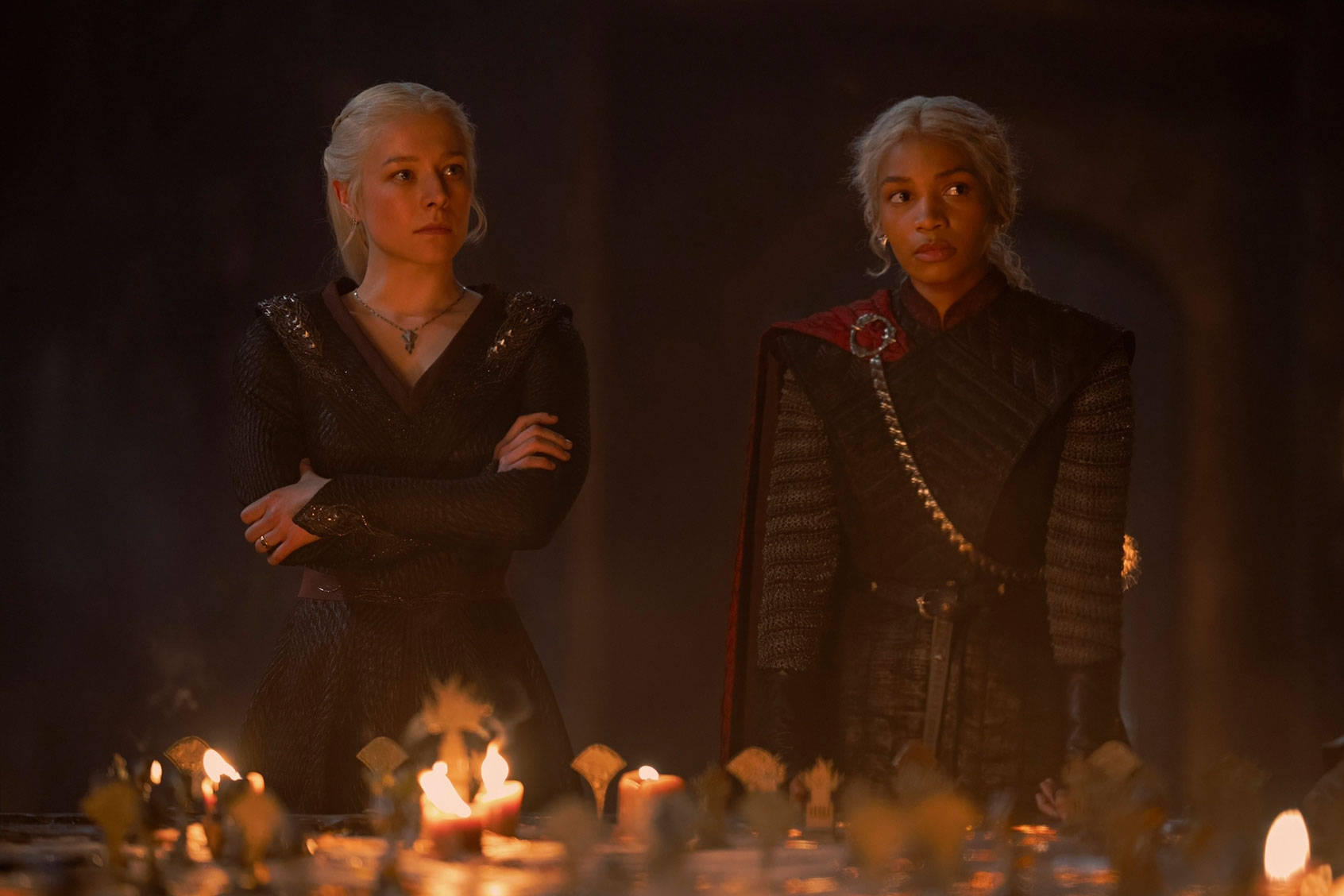
House of the DragonEmma D'Arcy as Rhaenyra Targaryen and Bethany Antonia as Baela Targaryen in "House of the Dragon" (HBO)

Understanding the history of Westeros is one thing. Patel’s seven-year journey requires a look back at “Game of Thrones”' hiring history with female directors. Don’t worry, it’s short: Michelle MacLaren directed two episodes in its third season and a pair in Season 4. Fin.

"This was about the past. It actually wasn't about the present,” Patel says of the third episode's climactic meeting.

Patel recalls thinking that MacLaren didn’t have children, and based on the show’s schedule, her first season episode would head into production shortly after she’d given birth. People tried to talk her out of taking on that responsibility on top of nursing a newborn. She almost did.

“Then my mother, an immigrant woman said, ‘You know what? No. You've been working your whole career for this I came to this country with nothing. I raised kids with nothing. Mom, Dad, and your husband, all of us, we're all coming to London with you. You're going to direct this and you're going to hand me the baby, and we're going to be fine," she said, adding, “And that's what we did.”

So to answer my question, yes, the pressure was incredible, “and it was my own pressure, I'm sure,” she added. “I didn't think I could be sick. I was already the underdog director. I think I was the youngest. I was the least experienced. I mean, I was scared out of my mind.”

But that pressure yielded a gem, and an invitation to helm two more in this second season: the third episode and the finale.

We need your help to stay independent

Where “Lord of the Tides” was primarily filmed in interior sets, Episode 3, "The Burning Mill," tasked Patel with connecting many moving parts, zooming between Dragonstone, King's Landing, Harrenhal and the Riverlands, including the skies above. 

With a war between Rhaenyra’s Blacks and Aegon’s Greens all but an inevitability, Ser Criston Cole (Fabien Frankel) musters his men, including Alicent’s brother Ser Gwayne Hightower (Freddie Fox), to take an army North. There, two feuding clans — the Brackens and the Blackwoods – had a bloody skirmish with heavy losses on both sides, ostensibly over a border dispute but also over one family siding with the Greens and the others with the Blacks.

Meanwhile, a petulant Daemon (Matt Smith) flies his dragon Caraxes to Harrenhal to claim it for Rhaenyra, which he does single-handedly since it is unguarded, decaying and cursed. There he has haunting dreams of a younger Rhaenyra (Milly Alcock) chastising him for leaving a political mess for her to fix.
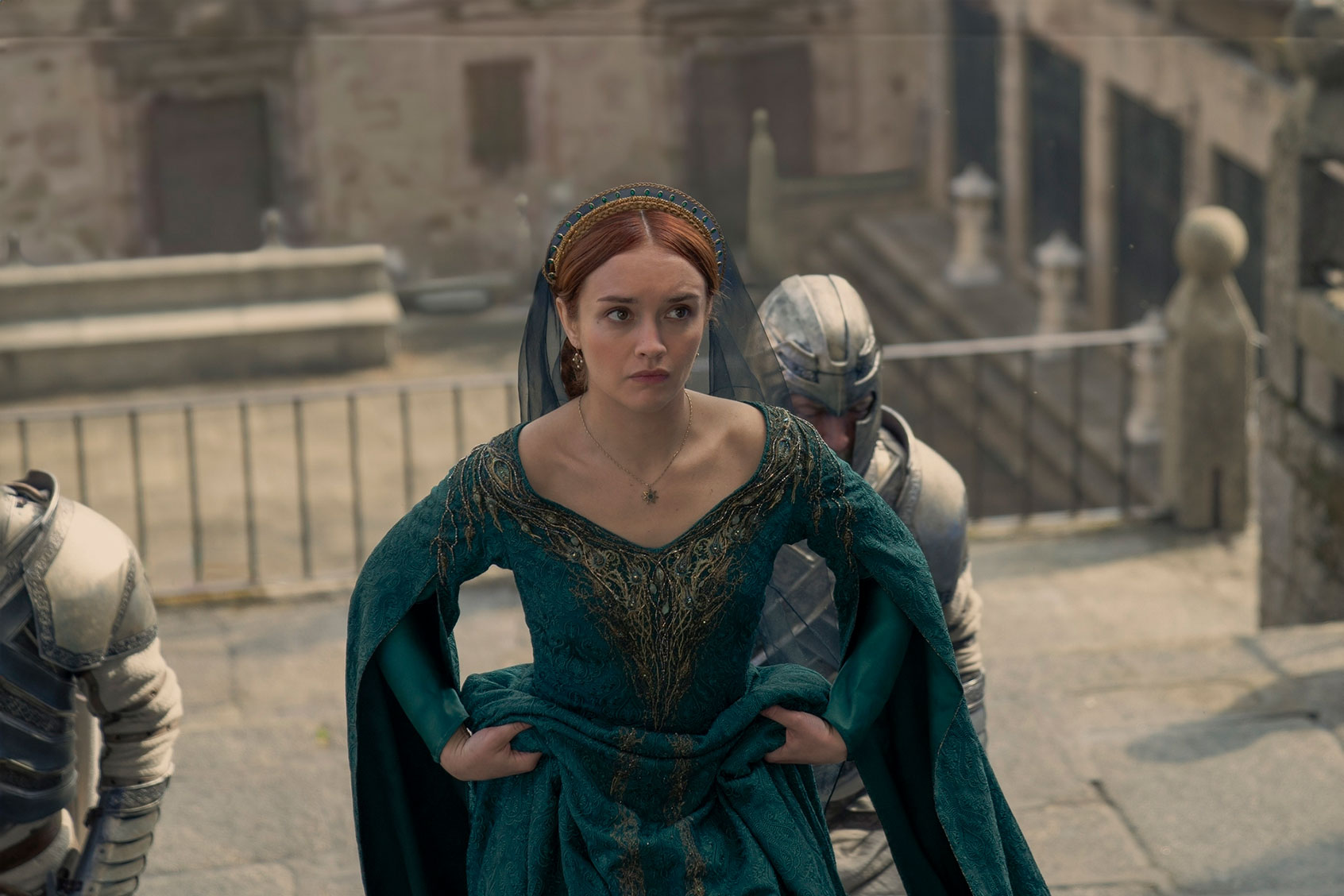
House of the DragonOlivia Cooke as Alicent Targaryen in "House of the Dragon" (HBO)

But the soul of the episode rests with two pairs of sisters. Its climax shows Rhaenyra sneaking into the Great Sept of Baelor to blindside her former friend Alicent at prayer in an effort to persuade the Dowager Queen to steer her sons away from war.

Alicent rejects Rhaenyra before revealing, in her retelling of Viserys’ final moments, that she misunderstood the dying Viserys’ words about the Song of Ice and Fire and the Prince That Was Promised – a traditional secret he passed down to his daughter and intended heir, but not Alicent’s son. But to Alicent, who seems to understand she made a mistake, none of that matters now. She can’t stop what’s in motion and doesn’t want to.

"I don’t think it was a coincidence that I directed Episode 3."

The other rival sisters are Daemon’s children Baela (Bethany Antonia) and Rhaena (Phoebe Campbell). Hard as it is to tell all the various Targaryens and Velaryons apart, this one’s easy: Baela has a dragon, and Rhaena does not. And while Baela is tasked with helping her grandmother Rhaenys (Eve Best) patrol the realm from the sky on her mount Moondancer, Rhaenyra sends Rhaena off to Pentos with her youngest sons, the Blacks’ tiniest dragons and four eggs. And she is not happy with that mission.

Among the many critiques “Game of Thrones” sustained for excluding women directors from its production related to its unnuanced portrayal of gender dynamics. Along with Patel, “House of the Dragon” also works with Clare Kilner, who helmed the second episode “Rhaenyra the Cruel.”

Patel says she directs from a highly emotional place, although gender has nothing to do with that; the director who influences her work the most, she said, is Anthony Minghella (“The English Patient,” “Cold Mountain”). But she’s also informed by the power of feeling. Returning for a moment to Viserys' near-death walk, she told me that scene was shot and reshot many times until she landed on what made it hit us in the gut.

Showing the dying King walking to the throne felt bloodless. But showing him gasping and struggling toward his daughter? “That brought tears to my eyes,” Patel said, “because to me, that was my dad walking to me . . . I needed to make that scene have the emotion that we all could relate to.”

That also ties to the meeting between Alicent and Rhaenyra in Episode 3, charged with animus, longing, and the type of externalized inner conflict born of two ex-best friends missing each other in crucial moments.

“I don’t think it was a coincidence that I directed Episode 3, with the two of them,” Patel said. “When [series co-creator and showrunner Ryan Condal] called me and said, ‘these are the episodes you're doing, he made a point to say, ‘You will be directing the first scene with Rhaenys and Alicent coming together.’ It was a continuation.”  

To bring D’Arcy and Cooke to that stinging, mournful exchange in the Sept, she recalled a personal experience. “I was bullied at 14,” she said. “And somebody said something bad to me the other day, and I was 14 again. It never goes away. And so that's something that we specifically focused on, that feeling."

Later she added, “I hope you felt that when you watched it, that this was about the past. It actually wasn't about the present.”


Want a daily wrap-up of all the news and commentary Salon has to offer? Subscribe to our morning newsletter, Crash Course.


Rhaena and Baela’s rivalry is closer to home for her. “I related to Rhaena a lot. Like I've done everything right, and then my brother was making all the money. You know?” she said. “Rhaena, she did everything right, and she didn't get a dragon, whereas Baela, she was a rebel, she didn't follow any rules, and she got the dragon. And that sucks!”

House of the DragonPhoebe Campbell as Rhaena Targaryen in "House of the Dragon" (HBO)

To get the actors into that mind frame, Patel had them improvise an entire backstory of slights and resentments, which escalated into them yelling at each other. So if Rhaena's scorn and Baela's casual haughtiness jumped off the screen, know that it came from an elaborately imagined place.

All these small moments set up a fourth episode which, as many critics have hinted, showcases the fiery spectacle that "House of the Dragon" viewers have been itching to see. And Patel appreciates that duty. “To be honest, looking at the fact that we are building to what’s next, it's really fun to know that you are that last note before what's going to happen happens.”

Besides, she’s already gotten one of her biggest wishes granted after her success with “Lord of the Tides.”

“When I got ‘Lord of Tides,’ I was like, ‘Aw, I didn't even get a dragon,'" Patel said with a faux pout. "It's funny, I know. But I got a great script . . . And I think my dad saw [Ryan Condal] after that and was like, ‘You better give her a dragon next year.’”

As of now, she has two.

New episodes of "House of the Dragon" premiere at 9 p.m. Sundays on HBO and on Max.


“One night in New Orleans”: How location plays a big role in “Interview with the Vampire”

In New Orleans, a city shaped like a soup bowl and situated between one and 20 feet below sea level, the presence of the dead — and the ghosts that linger — is part of the everyday atmosphere.

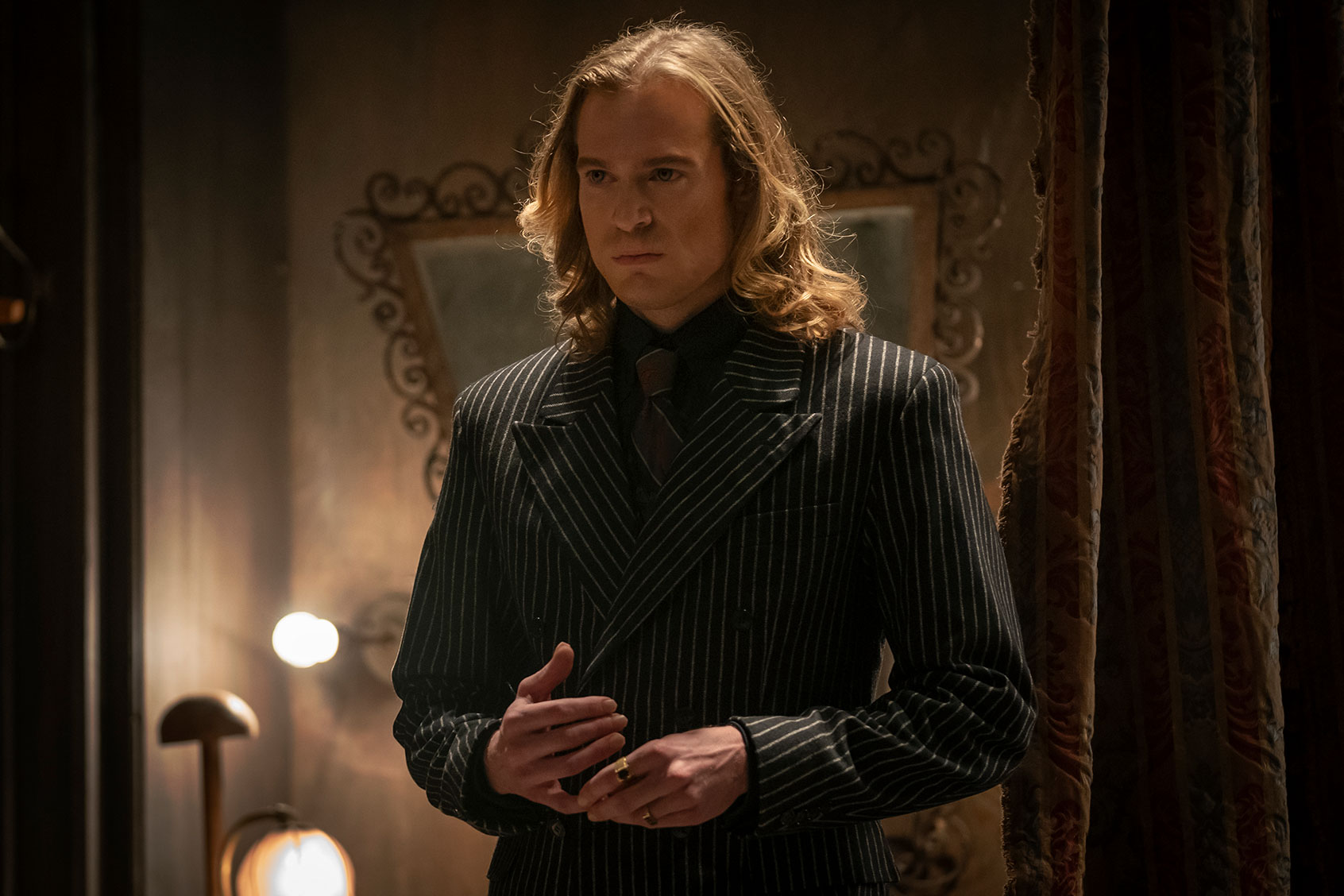
This location, which Lestat de Lioncourt (Sam Reid) refers to as "the humidified daughter of Paris" on "Interview with the Vampire," is the perfect setting for Anne Rice's Immortal Universe — AMC's re-imagining of her most beloved works — because, in New Orleans, the dead has already risen. And, by design, what has been lost is impossible to bury.

Any Crescent City cemetery tour worth its price of admission will tell you that, prior to 1804, coffins kept underground would regularly pop from the dank Louisiana soil like corks in a champagne bottle. And by 1818, when above-ground tombs became commonplace, the heat combined with the utilization of a broom or long stick — the purpose of which, I'll leave to your imagination — made it so that entire families could fit into one final resting place. 

For vampires like Lestat and his fairweather fledgling and lover, Louis de Pointe du Lac (Jacob Anderson), loneliness, not death, is feared above all else. And it's easier to beat in New Orleans, where even the dead have companions. But over the lip of that soup bowl, the veil is pierced and all manner of torment is imaginable. As evidenced in the finale, "And That's The End of It. There's Nothing Else," which completes the two-season arc of Rice's debut novel and lays the groundwork for "The Vampire Lestat," the second installment of her "Vampire Chronicles," which Season 3 will, presumably, center on.

While AMC's adaptation of "Interview with the Vampire" has strayed from the source material here and there — but not nearly as bad as in "Mayfair Witches" — it remains true to one main theme: Lestat's love of Louis was never fully reciprocated. And because he couldn’t get Louis to return his affections, he made attempts to "break him." But, in the end, Lestat suffered the most when, time and time again, Louis fled from his attempts to make amends or, if not that, at least his efforts to get back to having hot coffin sex. 

The story of the first 70 or so years that the two spent together in New Orleans has, so far, been told mostly by Louis — with a fair amount of mind-bending influence from his rebound, Armand (Assad Zaman), who helps to edit the memory of Louis' entire vampiric existence up to that point, and the role Claudia (Delainey Hayles) played in creating a wedge in his and Lestat's already fragile bond. But in Season 3, we'll get to hear the story from Lestat's side.


Want a daily wrap-up of all the news and commentary Salon has to offer? Subscribe to our morning newsletter, Crash Course.


The flip-flopping of perspective in both the first and second seasons of "Interview with the Vampire" is a two-way mirror, allowing us simultaneous narratives of Louis and Lestat's ties — however toxic, and from whomever's point of view — as it's experienced in both New Orleans and Paris. And, like The Upside Down in "Stranger Things," what we see of Paris, and the memories relived while there, is a warped and distorted version of how they actually are, and were, in New Orleans. 

In the first episode of this second season, “What Can the Damned Really Say to the Damned," Louis and Claudia leave Romania for “the mother of New Orleans” — as Louis is heard saying in narration — Paris. En route, in a truck transporting priceless works of art, Louis tells Claudia that if she were the last vampire on earth, it would be enough. And while Daniel Hart’s gorgeous composition, "The Whole World Was Ready To Return" plays, the camera pans to the right to reveal a vision of Lestat, with a pained expression on his face after hearing these words. But as this isn’t Lestat in the flesh, only an imagining of him, what we’re actually seeing is Louis’ own pain reflected back at him. Because as much as he’d like Claudia to believe that what he’d said was true, and to believe it himself, it will never be. And each step he takes from here, whether in the forefront of his intention or in the back, takes him further from New Orleans, where Lestat calls out for him — and returns to wait for him in the season finale — as keeper of the ghost of their union. 

Louis has previously referred to Lestat as being "for Lestat." But he has that — like so many other things — very wrong. We come to see clearly in these two seasons that Louis is, actually, "for Louis." Putting his own needs and wanderings above all else, resulting in the untimely death of who he claims to love the most, Claudia. 

Interview with the VampireSam Reid as Lestat de Lioncourt in "Interview with the Vampire" (Larry Horricks/AMC)
The first and second seasons of "Interview with the Vampire" position Louis and Lestat as bookends — two lovers who meet in New Orleans and spend their time pushing against each other in the hope of filling the gap between them, and in their own selfish and gluttonous hearts — reuniting at the end to bury what they had. But, just like the previously mentioned pre-1804 caskets, things will continue to pop up again.

In the season finale, the two reunite in New Orleans in a full circle moment, embracing in a run-down Creole cottage, the structure of which is rattling from a hurricane blowing outside. This moment contains an immense amount of visual symbolism, and the house it takes place in is VERY important.

Fleeing Paris — the city he spent his formative years in as a mortal — Lestat returns to New Orleans and secludes himself in this house, haunted by the memory of Claudia and the relationship with Louis that he mourns being unable to fully wrap his arms around, or keep where he wants it. And in Season 3, which begins the story of "The Vampire Lestat," he'll emerge from it (well, from under it), confused but, eventually, growing to embrace the modern world he's "re-born" in.  

In late 2023, as production for Season 2 was coming to an end, NOLA Twitter was abuzz with images like the one above, shared by locals who joined the crew to make this season's pivotal end scene in New Orleans come to life via exterior shots of Lestat's sad house, and shots of Louis smirking at incorrect information relayed during a modern-day ghost tour.

As most of this season was shot, not in New Orleans, but in Prague — standing in for both the mother of New Orleans, and the city itself — a lot of the magic fell on the shoulders of production design. And after a bit of pestering on my end, I was able to glean some intel on how Lestat's Creole cottage was fleshed out so perfectly in interior shots filmed thousands of miles away, and how they arrived at the location for the brief on-site filming in New Orleans for exterior shots. 

“I designed the set off of standard proportions and materials of the Creole Cottage," production designer Mara LePere-Schloop wrote in an email to me. "The team went out to look for historic creole cottages we could make look abandoned and on a street we could simulate a hurricane on and found several around town, but the one that really sang to me was in the Treme neighborhood on (1509) Dumaine Street. I thought the Treme house would make the most sense for Lestat as it is the closest neighborhood to where Storyville used to stand. We worked to make the house look derelict and abandoned on the exterior, so that it matched the level of decrepitude we had established in our built interior set in Prague. The New Orleans unit was on Royal Street at our hero location (the exterior townhouse) from Season 1 and at Dumaine Street for the reunion house.”

As AMC expands its adaptation of Rice's Immortal Universe with the announcement of another series, "The Talamasca" — continuing the story of Raglan James (Justin Kirk) and the rest of the society tasked with researching, investigating and tallying paranormal beings around the world — Lestat will be the focus, from here out, as the handsome vampire turned rock star (literally) who will be targeted from all sides for violating one of the coven's major rules . . . exposing his true nature to the entire world via a world tour. 

But until then, he exists in hurricane-prone New Orleans, waiting to blow the house down and expose Louis for what he is, the sum of his flaws.

Hooters is the latest chain to close multiple locations nationwide

Hooters has permanently closed several restaurant locations due to “pressure from current market conditions,” the chain said in a statement sent to several news outlets. In the same vein as many fast casual restaurants nationwide, Hooters has been hit hard by inflation-related food costs, which is encouraging consumers to eat at home instead of dining out.

On Monday, the Atlanta, Georgia-based Hooters announced that it would be closing some locations. Hooters restaurants in Florida, Texas, Kentucky, and Indiana have also officially shut down, according to USA Today.

Hooters joins a list of restaurants that have shuttered many of its locations over rising inflation, food price hikes, and increased labor costs. Last month, Red Lobster filed for bankruptcy after closing nearly 50 restaurant locations across the U.S. and liquidating restaurant equipment via auctions. Applebee’s also shut down hundreds of restaurants since 2017. According to the company’s chief executive officer John Peyton, Applebee’s is slated to close approximately 25 to 35 locations this year.  

“With new Hooters restaurants opening domestically and internationally, new Hooters frozen products launching at grocery stores, and the Hooters footprint expanding into new markets with both company and franchise locations, this brand of 41 years remains highly resilient and relevant,” Hooters said in a statement to Quartz. The company said it plans to continue “serving guests at home, on the go and at its restaurants” both nationally and internationally.

Pelosi says Trump spouted a “manifesto of lies” during the debate, spurring Truth Social rant

Donald Trump went after Rep. Nancy Pelosi, D-Calif., in a late-night rant on TruthSocial after the former House Speaker called Trump’s debate performance a “manifesto of lies.”

Trump wrote that Pelosi is more “cognitively impaired” than President Joe Biden, who has been heavily criticized for his weak debate performance last Thursday.

“She is suffering from TRUMP DERANGEMENT SYNDROME, sometimes referred to as TDS, and her case is terminal!” Trump continued.

In an interview with MSNBC’s Jen Psaki on Sunday, Pelso was asked to share a moment from the debate that people could watch to understand the threat Trump poses. 

“Stiff competition for that moment. Because it was a constant manifesto, again of lies,” Pelosi replied. “As you may recall I tore up his speech at the State of the Union because it was a total manifesto of lies. And that’s what we saw the other night, which must be rejected, as well as his candidacy.”

This is just one of many exchanges in the Trump-Pelosi feud. Along with ripping up Trump’s speech in 2020, Pelosi has previously called for an “intervention” to save America from Trump. He’s been referring to her as “Crazy Nancy” for years. 

Pelosi acknowledged Biden’s weak performance at the debate, but said he at least answered honestly when it came to questions of policy.

“How can you have a legitimate debate when somebody’s totally lying and you have to dispel their falsehoods?” Pelosi said.

Pelosi reiterated her support for Biden and said he represents “integrity, concern for people." Trump, by contrast, stands for “dishonesty, and self-serving lies.”

Did Kanye West visit Russia? Here’s what we know

Russian state media on Sunday claimed that Kanye West (who also goes by "Ye") was visiting Moscow. If true, the trip would make West the first major American celebrity to visit Russia since the Kremlin began its invasion of Ukraine in 2022, per CNN. 

CNN reported that the brand team Gosha Rubchinskiy — who serves as head of design for West's brand, Yeezy — indicated that West had arrived in the capital as part of a private list. Other reports from Russian state media alleged that West had posted on the Russian social media website VK, and was captured on video with his security guards in Moscow. 

Russia's Luznhiki Stadium also shut down rumors that the rapper would be performing there, telling state media that the information was "hype and fake," according to CNN. 

The controversial West has seen mounting public scrutiny in the past several years for making comments that have been widely panned as antisemitic. He has also been accused of engaging in discriminatory and abusive behavior. In April, West was sued by a former employee who accused him of threatening staff and students at Donda Academy, his private and unaccredited Christian school in Ventura County, Calif. 

Newest “Top Chef” winner Danny Garcia talks seafood, top ingredients and how he’ll honor his mentor

Brooklyn resident by-way-of-New-Jersey Chef Danny Garcia has had a whirlwind career. After attending culinary school in Rhode Island, he worked at the NoMad and the French Laundry and competed in the Bocuse d'Or before working with his mentor, the late Chef Jamal James Kent in opening Crown Shy and building out Saga restaurants and hospitality group.

In addition to all of that, of course, he's the newly crowned, reigning champ of "Top Chef" as the winner of season 21, which was set in Wisconsin. Danny won seven challenges across the show before clinching the grand prize, which includes a magazine feature in "Food & Wine," an appearance at the Food & Wine Classic, $250,000 and perhaps most importantly, the title of "Top Chef," a mark of distinction which has catapulted some winners (and non-winners!) to endless accolades, awards and recognition. 

Salon Food was able to catch up with Danny after his win to congratulate him and ask him a few questions pertaining to his success on the show, the tragic, recent passing of his mentor and what is coming up next for him. 

The following interview has been lightly edited for clarity and length.

Congratulations! How does it feel to be crowned "Top Chef?” 

I mean, it's amazing. It feels really great to work so hard for something and see it through all the way to the end. 

Was there anything about competing on the show that you didn't anticipate? Either from the competition standpoint itself, from the TV perspective, or perhaps even from watching yourself back after months have passed?

I don't think so. There was a lot of preparation that was done online. There was a lot of rewatching, there was a lot of studying the show. There was a lot of trying to understand what the expectations were like by talking to previous competitors, and so walking into it, I had a good grasp of what was going on.

 Top ChefKristen Kish, Tom Colicchio, Danny Garcia and Gail Simmons on "Top Chef" (David Moir/Bravo
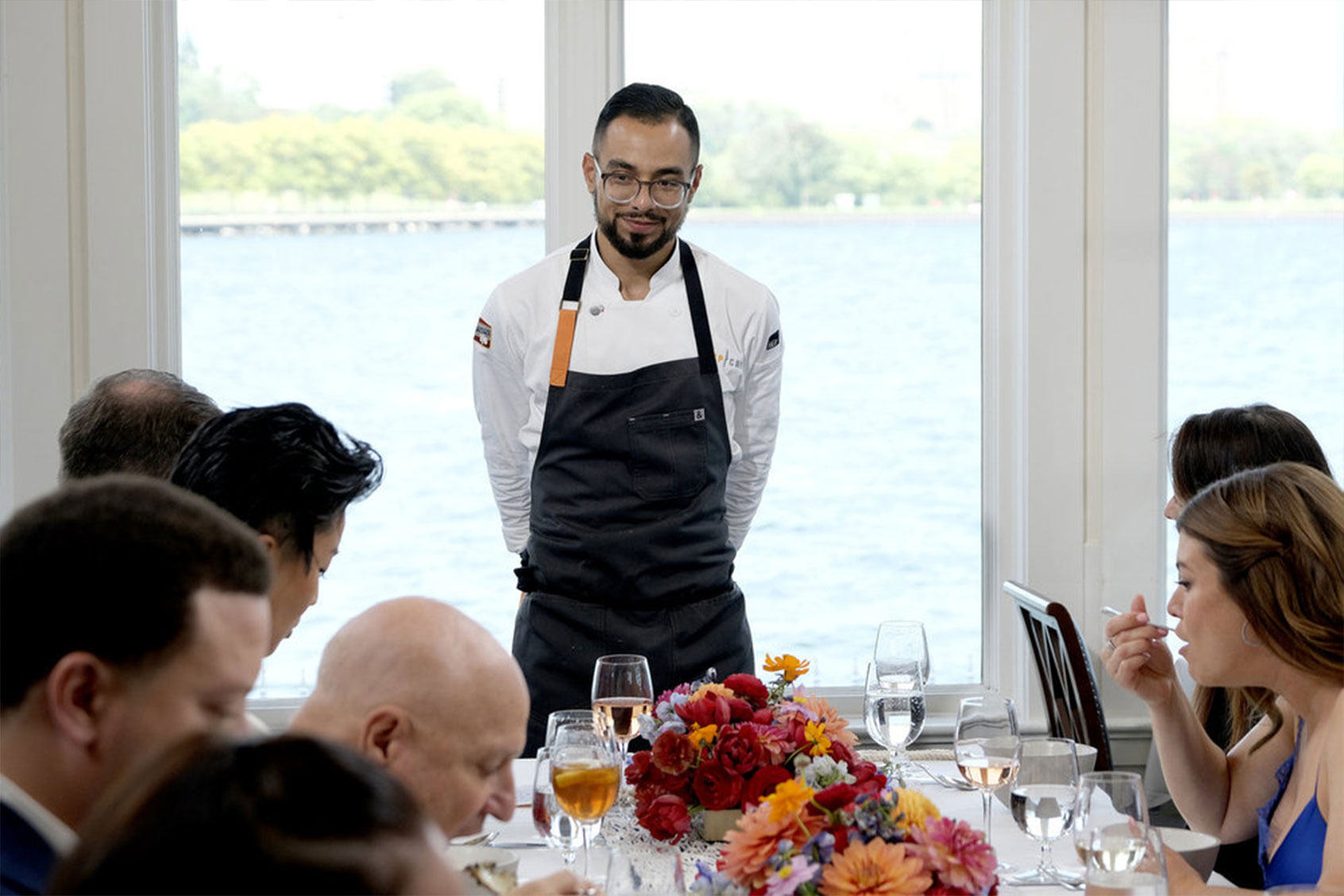
Which dish were you proudest of? I was impressed with your scallop-cabbage chou farci, as well as the Cheese Fest dish and I’m intrigued by your winning dish in the final four challenge. Also, I loved the sound of your Quick Fire dish of Jimmy Nardellos and harissa relish with labneh and mint. Lastly — you should bottle and sell that "watermelon A1!"

I would say the dish I'm most excited about is the lobster chaaza that I did for the finale. It's a dish that my wife [editor's note: pastry chef Sumaiya Bangee] and her family shared with me. It's their culture, it's Burmese, it's something that's definitely not in the limelight or gets a lot of attention. And to be able to do it at such a high level, on a big stage, execute in my vision and the way I see it and take it to a level of fine dining was really special for me. 

Having my wife and her family share their culture with me and being able to incorporate it into my cuisine is something that is very special for me. 

We need your help to stay independent

Do you have a number-one favorite ingredient to work with?

Number-one favorite ingredient would be seafood. I think all seafood  if it's coming out of the ocean, I want to use it. It's kind of hard to choose one specifically, but I think mackerel is probably one of my favorite fishes to cook and work with.

What was the biggest thing about Wisconsin  either from a food perspective or otherwise  that you've taken with you since filming?

I think it's coming from a big city and going to Wisconsin is definitely a culture shock. But in the best way. The people were amazing. There's more than meets the eye when it comes to food there. There's a lot more offerings. There are a ton of really good restaurants, products, farms. What they're doing for the hospitality industry and their chefs and food in its entirety is really something special.

Were there any guest judges this season that you felt particularly fond of, connected to or impressed by?

There were definitely a bunch of homies that came through — Gregory Gourdet, Mei Lin and Kwame Onwuachi — which was kind of cool to see them and have them address my food from that perspective, especially knowing them from a personal level. 

Carla Hall was super exciting just because my mom's always been a fan of hers for years since I was a little kid, watching her on "Top Chef" and competing. So that was a fun moment. And, of course, Emeril Lagasse is the OG of American chefs right there.

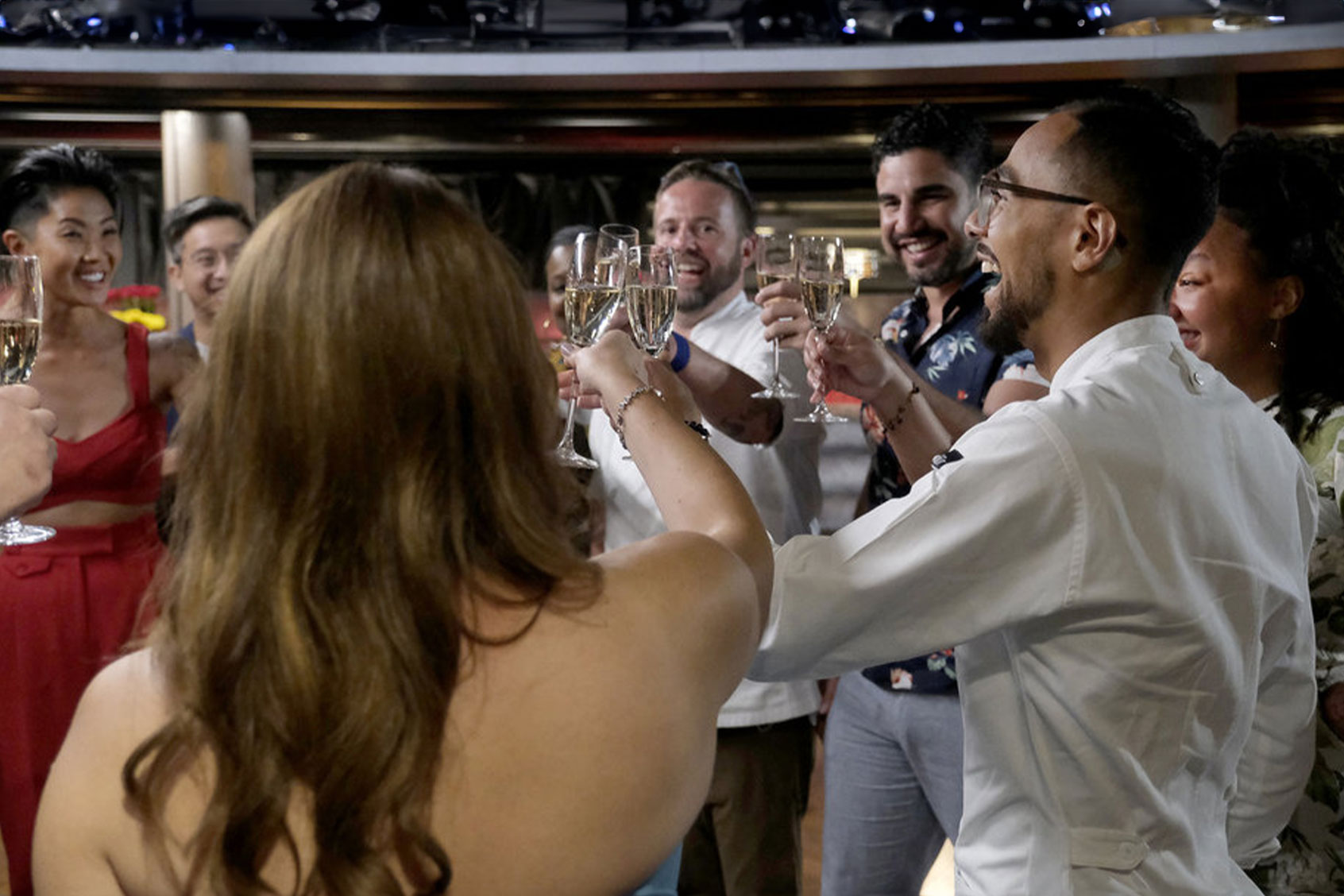
Top ChefKristen Kish, Justin Pichetrungsi, Daniel Jacobs, Manuel "Manny" Barella Lopez, Danny Garcia and Amanda Turner on "Top Chef" (David Moir/Bravo)
Talk to me a bit about your finale menu, especially that dessert that Tom deemed something that "will become a signature”?  

My thought process was pretty simple: Create a delicious menu that has an incredibly thoughtful through-line.

My vision was to tell the story of some of my first most significant food memories. The dessert idea stemmed from eating desserts with my grandfather after school. The fun part was putting my twist on It and bringing the element of the sea to the dessert. 


Want more great food writing and recipes? Subscribe to Salon Food's newsletter, The Bite.


I'm so sorry to hear about Jamal James Kent's passing. You mentioned him in the finale and I'm sure this has been such a remarkably bittersweet week. I wanted to allow you some space/time to speak about his influence and impression on you and how you hope to honor him, his teachings and his legacy moving forward, both personally and professionally? T

Thank you: Jamal was my chef, my mentor, my friend and my confidant. He gave me the platform and tools that got me to this point. He was someone who led with patience and grace.

We are going to honor him by continuing his legacy, building the restaurants he built brighter and bigger, and continuing the projects that we had on the horizon, expanding the group as he envisioned it. Jamal always said leave it better than you found it and that’s exactly what we plan to do.

What do you think was the turning point, dish or moment that really cinched the win for you? 

In regards to the finale in particular, it was hands down my dessert. It was a show stopper, no doubt about it. 

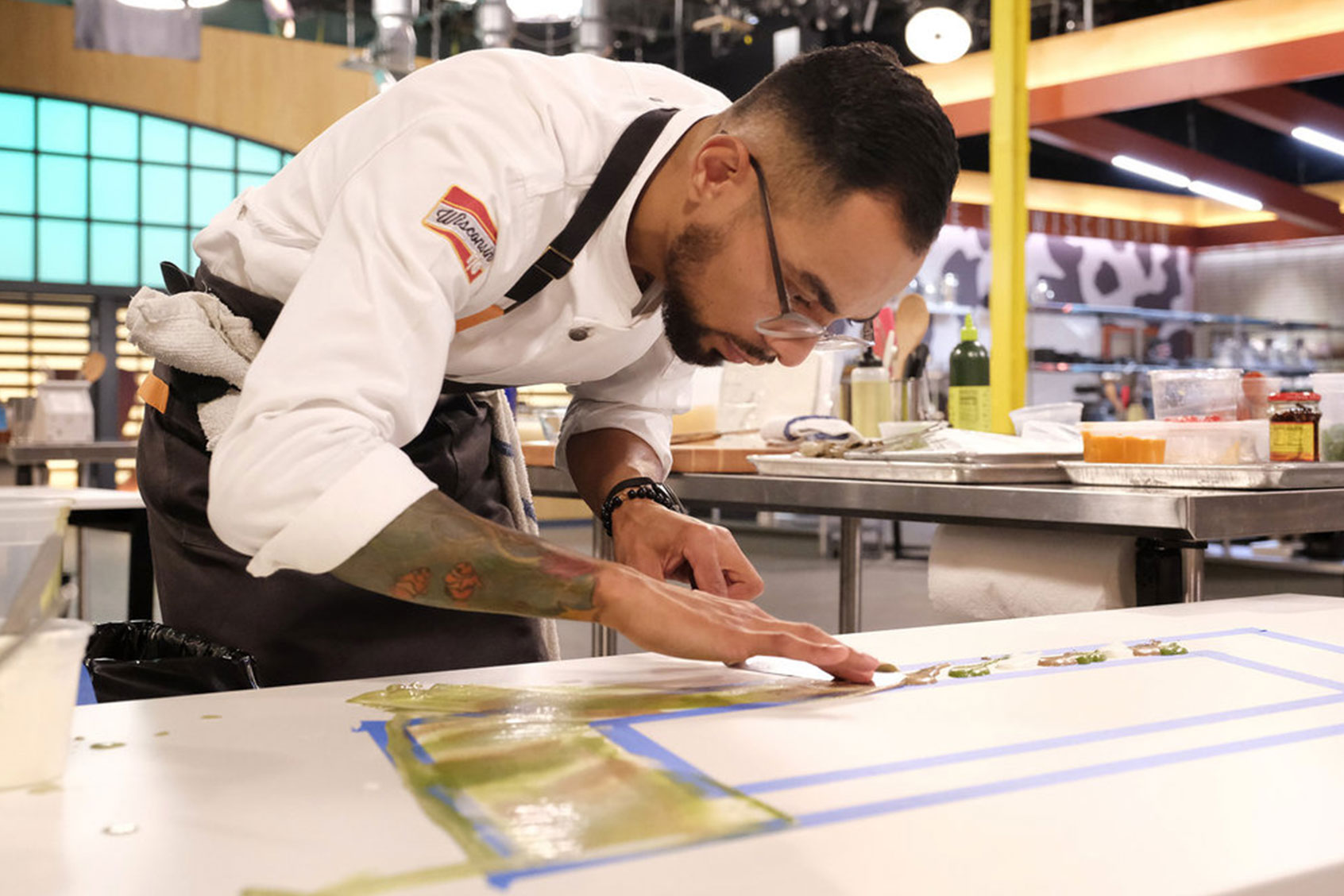
Top ChefDanny Garcia on "Top Chef" (David Moir/Bravo)
Your final confessional was so honest and moving. Can you talk a bit about what you were feeling in that moment? 

It was a culmination of feelings: pleasure, a sigh of relief. I put a lot of pressure on myself to compete and work at a high level. To be able to see it through and win was just an overwhelming moment — and one that I am incredibly proud of. 

What's next on the agenda for you?

"Time and Tide" is our new restaurant opening this fall. We took a classic approach to New York Steak Houses and flipping on its head with seafood being the star of the show. It’s going to be a really fun place to eat.

I can’t wait to show everyone what we are working on. 

Biden’s family blames advisers for debate as Dems “at every level” question if he should be nominee

First, there was the panic: Joe Biden, especially in the first half of last week’s debate, looked and sounded as old as an AI-generated deep fake of the president made be a 20-year-old groyper. Exercising none of the party discipline seen in the GOP — where it would be political suicide to describe a liar convicted of dozens of felonies as anything but an honorable statesman — Democrats indulged their anxiety, often in public, fretting about whether the leader of their party ought to be swapped out for someone (anyone) who is not 81 years old.

Then Biden reappeared at a rally the next day, looking and sounding like the man who previously allayed concerns about all the time he’s spent on this earth with a strong and dynamic performance during his State of the Union address. He’s still got it, some top Democrats said, pouring cold water on fever dreams of a brokered convention and a President Gretchen Whitmer.

“The other night, I saw Joe Biden reppin' for words and phrases, and even numbers that he was loaded up with,” Rep. James Clyburn, D-S.C., told CNN on Sunday, blaming Biden’s lackluster performance on his aides and too much preparation. “The next day, he gets to North Carolina, he’s freewheeling, and he captivated the audience,” Clyburn noted, arguing that it spoke to the need for Democrats to “stay the course.”

Rep. Debbie Wasserman Shultz, D-Fla., likewise urged the Democratic faithful to move on from a bad 90 minutes and focus more on getting out than vote than clutching at pearls.

"I have never known a more resilient human being than Joe Biden," the Florida lawmaker said on MSNBC. "If there is anyone who can turn Thursday night and the aftermath of that into a motivating force going forward, to be able to rally the troops and make sure that he can be focused and make sure that we can turn our voters out, it is Joe Biden."

But these are Democrats, rightly fearful of what returning Donald Trump to the White House could mean for democracy around the globe, and Biden does not enjoy a cult of personality like his rival. That is to say: the anxiety continues over whether the incumbent president still has what it takes to again defeat someone many liberals view as the standard-bearer of American fascism.

“This is what a real political party looks like and this is what a real political party does,” Rep. Jamie Raskin, D-Md., told MSNBC as a way of explaining why people “at every level” are having “a serious conversation about what to do.”

“Obviously there was a big problem with Joe Biden’s debate performance,” Raskin said, “and there is also just a tremendous reservoir of affection and love for Joe Biden in our party, so this makes it a difficult situation for everybody.”

What Raskin did next is likely to have more impact, in terms of getting the president to consider the once unthinkable, than The New York Times’ editorial board, whose call for Biden to step aside 24 hours after the debate appeared only to rally rank-and-file Democrats to their leader’s side: The Maryland lawmaker explained the stakes this November and how Biden can still cement his legacy even if he decides now is the time to pass the baton.

“Whether he’s the candidate or someone else is the candidate, he is going to be the keynote speaker at our convention,” Raskin said. “He will be the figure that we rally around to move forward and beat the forces of authoritarianism and reaction in the country.”

We need your help to stay independent

Over the weekend, Biden campaign officials made the case that the president is still the best man to bury MAGA, sharing polls that suggest the debate — while still a fiasco, one mitigated only by the other guy’s unhinged and incoherent performance — was not a four-alarm emergency, Biden still neck-and-neck with the only former president to ever incite an insurrection after losing an election, be convicted of felonies and found liable for rape.

But those polls also show that a large majority of voters do not believe that Biden has the physical or mental fitness to complete another four-year term in office. And while many also doubt Trump’s fitness, the numbers are not particularly close, which risks making the November election a referendum on the president’s age and not Trump’s criminality and desire, per Truth Social, to see his political opponents subjected to “televised military tribunals” and ultimately executed.

The polls, always to be taken with some grains of salt, also suggest Vice President Kamala Harris would do just as well in a head-to-head with Trump, as would a host of other, less realistic alternatives, undercutting the case for Biden or bust. Axios also reported over the weekend that the Biden people saw on the debate stage is not an unfamiliar sight to those who work with him every day; several aides said that while the president is “dependably engaged” every day, particularly when the sun is up, he is “more likely to have verbal miscues and become fatigued” when the day draws to a close.


Want a daily wrap-up of all the news and commentary Salon has to offer? Subscribe to our morning newsletter, Crash Course.


A president getting tired at night is not a national emergency, but it is a major political problem. Biden will not be getting any younger between now and Sept. 10, when the next debate is slated to take place. While the Biden clan, which met Sunday, reportedly believes the problem with the last performance can be addressed — by firing some of the president’s advisers, per Politico, citing sources “briefed on the family conversations” — the damage is arguably done: People already saw a version of the president who will at the very least pop up again in Republican attack ads (and they are unlikely to attribute it to Biden preparing too hard).

Where things go from here depends largely on polls and dollars. If Biden’s numbers plummet in the coming days, speculation about how could take over the Democratic ticket will turn into actual planning. Some of the party’s most important financial backers are already bringing up the possibility, having dialed in to what NBC News described as a “tense” call over the weekend with Biden campaign manager Julie Chavez Rodriguez.

But as Rodriguez explained on the call, it’s not that there is no alternative to Biden, it’s just that, realistically, there is only one — and it’s not a generic Midwestern governor, but Vice President Kamala Harris, who is likely the only Democrat who could inherit the Biden-Harris war chest, worth in the area of $100 million, and take over as the standard bearer without fracturing the party.

It is possible that Biden’s debate performance will have as much an impact on the polls as past debates have had, historically, which is to say: just about none at all. Sitting down for some hard interviews — showing that Debate Biden was the aberration and that State of the Union Biden is still there — could also steady the ship and reassure those in the party who are currently freaking out and openly lusting after other boats.

But it’s also more likely that the conversation about Biden’s age and acuity continues through August, when Democrats formally pick a nominee at their convention in Chicago. Biden will be the keynote speaker, but he may well be using that prime-time address to talk up his successor.

“Pyrrhic victory”: Steve Bannon claims Biden withdrawing from the race would actually hurt Trump

Former Trump adviser Steve Bannon, who begins a four-month prison sentence on Monday, says a Biden withdrawal from the presidential race could backfire on the Trump campaign.

After a shaky performance at the presidential debate in Atlanta on Thursday, voters and media critics alike are calling for Biden to step down from the race for a Democratic candidate, even as the president's campaign insists he will be the party's nominee in November.

Bannon, who was convicted for contempt of Congress for refusing to cooperate with the Jan. 6 investigation, predicted the president’s performance would lead to a collapse in poll numbers and ultimately take out what he said was Trump’s weakest opponent. The Trump campaign has focused so heavily on upending Biden that Bannon said a replacement could be a “wildcard,” the Washington Post reported.

“The campaign is starting to wake up after spiking the football, I think wrongly,” Bannon told the Washington Post. “Trump’s Thursday was a Pyrrhic victory .… You’re going to take out a guy you know you can beat and beat badly, and we’re going to have a wild card.”

Though the Biden campaign has acknowledged his weak debate performance, staff are adamant he will remain in the presidential race. "The bedwetting brigade is calling for Joe Biden to 'drop out.' That is the best possible way for Donald Trump to win and us to lose," Biden deputy campaign manager Rob Flaherty said in an email to supporters.

Bannon, who “keeps in pretty good contact” with Trump, said if Biden withdraws, Republicans should harp on the last-minute change after primary elections have already taken place.

“We must weaponize their process and show the nation how callous they were, how self-serving they were, how they didn’t put the good of the nation first, they put the good of personal ambition first,” he told the Post.

Federal funding for major science agencies is at a 25-year low

Government funding for science is usually immune from political gridlock and polarization in Congress. But, federal funding for science is slated to drop for 2025.

Science research dollars are considered to be discretionary, which means the funding has to be approved by Congress every year. But it’s in a budget category with larger entitlement programs like Medicare and Social Security that are generally considered untouchable by politicians of both parties.

Federal investment in scientific research encompasses everything from large telescopes supported by the National Science Foundation to NASA satellites studying climate change, programs studying the use and governance of artificial intelligence at the National Institute of Standards and Technology, and research on Alzheimer’s disease funded by the National Institutes of Health.

Studies show that increasing federal research spending benefits productivity and economic competitiveness.

I’m an astronomer and also a senior university administrator. As an administrator, I’ve been involved in lobbying for research funding as associate dean of the College of Science at the University of Arizona, and in encouraging government investment in astronomy as a vice president of the American Astronomical Society. I’ve seen the importance of this kind of funding as a researcher who has had federal grants for 30 years, and as a senior academic who helps my colleagues write grants to support their valuable work.

Bipartisan support

Federal funding for many programs is characterized by political polarization, meaning that partisanship and ideological divisions between the two main political parties can lead to gridlock. Science is usually a rare exception to this problem.

The public shows strong bipartisan support for federal investment in scientific research, and Congress has generally followed suit, passing bills in 2024 with bipartisan backing in April and June.

The House passed these bills, and after reconciliation with language from the Senate, they resulted in final bills to direct US$460 billion in government spending.

However, policy documents produced by Congress reveal a partisan split in how Democratic and Republican lawmakers reference scientific research.

Congressional committees for both sides are citing more scientific papers, but there is only a 5% overlap in the papers they cite. That means that the two parties are using different evidence to make their funding decisions, rather than working from a scientific consensus. Committees under Democratic control were almost twice as likely to cite technical papers as panels led by Republicans, and they were more likely to cite papers that other scientists considered important.

Ideally, all the best ideas for scientific research would receive federal funds. But limited support for scientific research in the United States means that for individual scientists, getting funding is a highly competitive process.

At the National Science Foundation, only 1 in 4 proposals are accepted. Success rates for funding through the National Institutes of Health are even lower, with 1 in 5 proposals getting accepted. This low success rate means that the agencies have to reject many proposals that are rated excellent by the merit review process.

Scientists are often reluctant to publicly advocate for their programs, in part because they feel disconnected from the policymaking and appropriations process. Their academic training doesn’t equip them to communicate effectively to legislators and policy experts.

Budgets are down

Research received steady funding for the past few decades, but this year Congress reduced appropriations for science at many top government agencies.

The National Science Foundation budget is down 8%, which led agency leaders to warn Congress that the country may lose its ability to attract and train a scientific workforce.

The cut to the NSF is particularly disappointing since Congress promised it an extra $81 billion over five years when the CHIPS and Science Act passed in 2022. A deal to limit government spending in exchange for suspending the debt ceiling made the law’s goals hard to achieve.

NASA’s science budget is down 6%, and the budget for the National Institutes of Health, whose research aims to prevent disease and improve public health, is down 1%. Only the Department of Energy’s Office of Science got a bump, a modest 2%.

As a result, the major science agencies are nearing a 25-year low for their funding levels, as a share of U.S. gross domestic product.

Feeling the squeeze

Investment in research and development by the business sector is strongly increasing. In 1990, it was slightly higher than federal investment, but by 2020 it was nearly four times higher.

The distinction is important because business investment tends to focus on later stage and applied research, while federal funding goes to pure and exploratory research that can have enormous downstream benefits, such as for quantum computing and fusion power.

There are several causes of the science funding squeeze. Congressional intentions to increase funding levels, as with the CHIPS and Science Act, and the earlier COMPETES Act in 2007, have been derailed by fights over the debt limit and threats of government shutdowns.

The CHIPS act aimed to spur investment and job creation in semiconductor manufacturing, while the COMPETES Act aimed to increase U.S competitiveness in a wide range of high-tech industries such as space exploration.

The CHIPS and Science act aims to stimulate semiconductor production in the U.S. and fund research.

The budget caps for fiscal years 2024 and 2025 remove any possibility for growth. The budget caps were designed to rein in federal spending, but they are a very blunt tool. Also, nondefense discretionary spending is only 15% of all federal spending. Discretionary spending is up for a vote every year, while mandatory spending is dictated by prior laws.

Entitlement programs like Medicare, Medicaid and Social Security are mandatory forms of spending. Taken together, they are three times larger than the amount available for discretionary spending, so science has to fight over a small fraction of the overall budget pie.

Within that 15% slice, scientific research competes with K-12 education, veterans’ health care, public health, initiatives for small businesses, and more.

Global competition

While government science funding in the U.S. is stagnant, America’s main scientific rivals are rising fast.

Federal R&D funding as a percentage of GDP has dropped from 1.2% in 1987 to 1% in 2010 to under 0.8% currently. The United States is still the world’s biggest spender on research and development, but in terms of government R&D as a fraction of GDP, the United States ranked 12th in 2021, behind South Korea and a set of European countries. In terms of science researchers as a portion of the labor force, the United States ranks 10th.

Meanwhile, America’s main geopolitical rival is rising fast. China has eclipsed the United States in high-impact papers published, and China now spends more than the United States on university and government research.

If the U.S. wants to keep its status as the world leader in scientific research, it’ll need to redouble its commitment to science by appropriately funding research.The Conversation

“Treasonous acts”: Liberal justices say SCOTUS Trump immunity ruling a “mockery” of the Constitution

The Supreme Court on Monday ruled 6-3 that Donald Trump cannot be criminally prosecuted for "official acts" he took when in office, stating that presidents enjoy "absolute immunity from criminal prosecution" and sending the case back to U.S. District Judge Tanya Chutkan to figure out which acts are official and unofficial.

All three liberal justices dissented from the ruling, with Justice Sonia Sotomayor arguing that the ruling "makes a mockery of the principle, foundational to our Constitution and system of Government, that no man is above the law."

"Because our Constitution does not shield a former President from answering for criminal and treasonous acts, I dissent," Sotomayor wrote. 

It is not immediately clear how the ruling will affect Trump's prosecution for actions taken on Jan. 6, 2021 but the ruling is expected to delay court proceedings even further, possibly beyond the November election.

Politico's Kyle Cheney tweeted that the ruling "essentially wiped out" the portion of the indictment related to Trump's plot to have the Justice Department intervene on his behalf in his post-election crusade. Under the ruling, "Trump is absolutely immune from prosecution for the alleged conduct involving his discussions with Justice Department officials," wrote Georgia State Law Prof. Anthony Michael Kreis. 

https://x.com/kyledcheney/status/1807784325288513644

Trump was indicted by special counsel Jack Smith in August of last year on four counts for conspiring to overturn the election on Jan. 6, when a mob of his supporters attacked the U.S. Capitol building during the electoral college certification process that ultimately awarded Joe Biden the presidency.

The central question in the case was whether Trump had absolute immunity for actions he committed as president. Trump's attorneys argued that his efforts to overturn the 2020 election were official acts as president, qualifying him for a degree of immunity from prosecution even if absolute immunity wasn’t found. 

We need your help to stay independent

When the trial judge, Chutkan, and the D.C. Court of Appeals each rejected Trump’s claim to immunity, he appealed to the Supreme Court, which agreed to take the case in February, holding arguments far enough out to scratch the original March 4 trial date.

In oral arguments back in April, justices prodded Trump’s lawyers over the reaches of immunity, prompting the attorneys to take legally controversial stances.

When Sotomayor asked whether the assassination of a political rival would count as an official act, Trump lawyer John Sauer noted that it would “depend on the hypothetical.”

“From what we can see, that could well be an official act,” he told justices, also admitting that the Trump team’s framework of immunity could hypothetically shield a president who took a bribe in exchange for an ambassadorship or staged a military coup, again depending on context.

Sotomayor in her dissent on Monday wrote that the court seemingly approved a president assassinating a political rival.

“The president of the United States is the most powerful person in the country, and possibly the world,” wrote Sotomayor. “When he uses his official powers in any way, under the majority’s reasoning, he now will be insulated from criminal prosecution. Orders the Navy’s Seal Team 6 to assassinate a political rival? Immune. Organizes a military coup to hold onto power? Immune. Takes a bribe in exchange for a pardon? Immune. Immune, immune, immune.”

Justice Ketanji Brown Jackson in her own dissent wrote that the ruling "breaks new and dangerous ground." 

"Even a hypothetical President who admits to having ordered the assassinations of his political rivals or critics, or one who indisputably instigates an unsuccessful coup, has a fair shot at getting immunity under the majority’s new Presidential accountability model," she wrote. 

The outcome is of course a boost to Trump, but the court even taking up the case was itself a tremendous help to the Trump campaign, which is committed to delaying further legal action against the former president after a New York jury found him guilty of falsifying business records in an attempt to influence the 2016 election.

The drop out debate: Biden has already lost a big part of the battle

If there's one bright spot during the very dark last few days, it's that we didn't have to hear much from Donald Trump and his henchmen. Of course, he was very unhappy about that and whined on his Truth Social platform that nobody was giving him the credit he deserved:

Mostly he's just been yelling at the clouds while his people have been keeping a low profile. It's been years since we've had such a respite and it almost makes the hell of this Biden debate debacle bearable. Almost. It's been a very rough few days and from the looks of it, things are not going to let up any time soon.

We're still awaiting the poll results to see if voters have decided to vote for Trump in light of Biden's miserable debate performance last Thursday. We've seen some numbers that show more people think he shouldn't run for a second term than said the same last month, but the number was always pretty high. (A majority say the same thing about Trump, for comparison, which is fewer than say it about Biden.) But we haven't yet seen the effects of the debate on voter preferences. Those will start coming in over the next few days and we'll get a much better sense of just how serious the damage is among actual voters. 

Among political pundits and analysts, it's clear: debate fallout has been catastrophic.

While there are those who say that Biden should stay the course and, so far, the Democratic establishment is backing the president, the vast majority of liberal writers, talking heads and newspaper editorial boards have decided that Biden must go. It's easy to just dismiss those voices and say they don't reflect the needs and desires of the American people but it would be a huge mistake to underestimate how hard it will be for Biden to have to fight both Trump and a media establishment that is convinced that he should withdraw from the race. As Biden would say, it's a big f-ing deal.

Part of this is driven by the fact that many members of the press apparently believe that they were lied to by the White House about Biden's fitness and are personally offended by that. Throughout many of the op-eds and analyses of the situation is a clear sense of self-righteous anger that they were not let in on the secret. It's not an uncommon reaction. I recall that the media had a similar solipsistic view of President Bill Clinton's refusal to admit to them that he had had an affair with a White House employee. In that case, the public had a much more nuanced opinion of the scandal and the Beltway media's objections didn't carry much weight. Clinton not only survived, he had a high approval rating and kept it throughout the rest of his term.

Of course, Bill Clinton wasn't running for re-election. His vice president, Al Gore, was, and he paid the price with the media which treated him woefully during the 2000 election largely because of the burning resentment they felt toward Clinton. You're all familiar with how that went. And you know how the lingering effects of that relationship dogged Hillary Clinton over the next 16 years as she pursued her own political career. 

We need your help to stay independent

Here's an example of how the new media narrative is shaping up, from media reporter Brian Stelter who says it's now a referendum on Biden and there's no more reason to bother covering Trump's lies since his base and the GOP's elites don't care.

So, even if the public decides that Biden's performance wasn't a deal breaker and his numbers have remained close to Trump's despite the voters' clear concerns about him, he'll have an even tougher uphill climb than he already had with that media narrative. It's not illogical or untoward even for people who think Biden should stick it out to be genuinely concerned about that since the stakes are so high. 

While "Biden must go"  may be the prevailing consensus among the media, what should happen next is not so clear. There are people demanding an open convention in which there would be a floor fight and delegates rather than voters would decide who the candidate should be. I maintain, as I did right after the debate, that as entertaining as it might be, it would likely be a disaster. The Democratic Party is not known for its discipline and cohesion on a good day and the last thing they need is a knock down drag out internecine fight before the whole country just two months before the election. 

In my view that leaves only one option. If Biden decides in good faith that he can't continue, then the only answer is for him to formally pass the torch to his vice president, the person 81 million people voted for four years ago to replace him if he could no longer be president through illness or death. {Let's face it, as the oldest president in history we were all very aware of that possibility.} If that's more or less happened now there's no reason to look anywhere but the person who has been on the ticket from the beginning for that very purpose. That's why we have vice presidents. 

Yes, it's meant for a president's term not a campaign but the principle is the same, particularly under these conditions. It's just too late for a full blown nomination battle. If this happens the party should strive for a seamless transition that's seen as a continuation of the Biden administration and the Biden campaign that's already been laid out. There's no time to completely re-tool. 

And there are important technical reasons for that as well. As legal historian Mary Beth Williams pointed out on Twitter, the campaign war chest assembled by the Biden-Harris campaign cannot be easily transferred to any other candidate. That requires the permission of every original donor:

The B-H campaign fund can donate to candidates, but is subject to the same limits as individual contributors. 

Any or all of the war chest can be transferred to federal, state, and/or local political parties, but then the limits on party donations to candidates are in effect. It can also be transferred to a super-PAC, but no coordination with campaigns is allowed. 

The DNC could run the general election campaign, but my experience on three "coordinated campaigns" (Gore, Kerry, and Obama '08,) leaves me very cold on that option.

It took B-H four years to build that war chest, and no candidate could come close to raising that amount in four months. Plus, all the media time is already purchased, the campaign offices are contracted, staff hired, etc.

The only two candidates with full, easy access to all that money and infrastructure are Biden and Harris. 

Harris is being a loyal soldier and has been out there forcefully backing Biden. And if he decides to stay in, the campaign should make sure that she stays front and center going forward because all eyes will be on her like never before. Whether anyone wants to admit it, the very real prospect of a vice president having to step in, one way or another, has never been so acute. 

The next couple of weeks are going to be agonizing for everyone, not the least of whom is Joe Biden himself. James Fallows put it well in a tweet on Sunday: Be wary of anyone who says this is an easy call. 

Donald Trump wants more political violence — the Supreme Court just handed MAGA one excuse

Donald Trump was the luckiest man alive last Thursday. President Joe Biden's abysmal debate performance overshadowed what should have been the biggest story of the night: Trump, as he did in the 2020 presidential debate, winkingly encouraged his supporters to commit political violence. Biden correctly noted during the debate that Trump has promised to pardon the over 1,200 people charged with federal crimes for the January 6 insurrection. Trump responded by calling the rioters "innocent" and saying Biden "ought to be ashamed" because his Justice Department charged them with crimes. This echoes Trump's increasingly rabid defense of the insurrectionists on the campaign trail, where he often calls them "hostages" and "political prisoners" and holds ceremonies honoring those who are imprisoned

Trump doesn't just glorify the insurrection because he is a narcissist who can never admit he's done anything wrong. It's part of a larger campaign to encourage more political violence from his supporters. He frequently uses "warnings" to threaten public officials. Using the pseudo-warning, Trump has threatened "bedlam" if he's prosecuted. He begged his followers to "go after" New York Attorney General Letitia James for prosecuting him for fraud. He posted a video fantasizing about kidnapping Biden. He threatened "death and destruction" if he was charged in the New York "hush money" case. He even had a rally in Waco, Texas around the anniversary of the Branch Davidian self-immolation, an unsubtle dog whistle to far-right militias that use that event to justify anti-government violence. 

"Many are likely ready to round this up to a total victory — and a reassurance they won't be prosecuted for future violence."

So far, however, Trump's open desire for more mob violence has not amounted to much. During his Manhattan criminal trial, which resulted in 34 felony convictions, Trump's desperation for another January 6 reached a fever pitch. He was all over social media and in front of cameras pleading with his followers to "rally" — barely code after the Capitol riot — but to no avail. There are many reasons for this, but at the top of the list was the widespread fear among right-wing radicals of going to prison, which feels a lot more real now that hundreds of their brethren went to lock-up for the insurrection.


Want more Amanda Marcotte on politics? Subscribe to her newsletter Standing Room Only.


Every time Trump or his surrogates calls for a "rally" to intimidate public officials, conspiracy theories fly around MAGA social media, claiming it's a "set-up" by the FBI and/or "antifa." However much anyone believes this, it's obvious what they're doing: Creating a face-saving excuse not to risk prison. No matter how much Trump may laud the January 6 insurrectionists, their fate has lingered as a warning to the rest of MAGA about what's coming if they commit more violence in Trump's name. 

Or, at least that was true until Friday. In Fischer v. U.S., the Supreme Court ruled in favor of a January 6 defendant who argued that he was wrongly convicted under a law criminalizing the obstruction of an official proceeding. As Amy Howe at SCOTUSblog explained, the court ruled the law "applies only to evidence tampering, such as destruction of records or documents, in official proceedings."

The ruling led to headlines that made it sound like a big win for the January 6 rioters. Words like "strike down" and "improperly charged" featured heavily in headlines. Yes, headline writers did try to soften the blow with words like "some" and "limits scope." For those who live in the alternative reality constructed by MAGA media, however, these modifiers will likely mean little. They've been hearing for years from Trump, Republican politicians, and talking heads like Tucker Carlson that they were done dirty by the Biden Justice Department. Many are likely ready to round this up to a total victory — and a reassurance they won't be prosecuted for future violence. 

Legal eagles did swiftly explain that this decision is limited and unlikely to do much to change the fates of the 1,200+ people who have been charged with crimes from the riot. That includes Trump, whose "fake electors" scheme in his indictment appears to fall outside the ruling's narrow scope since his conspiracy was so paperwork-centric. An analysis at Just Security demonstrated that, with small tweaks to their cases, prosecutors can keep the original charges in place. Even more importantly, the legal analysts write, "only 26 of these defendants have been (or were scheduled to be) sentenced solely" under this charge. They even included a helpful pie chart. 

A relief, no doubt, to both prosecutors and people nerdy enough to pay attention to these granular legal details. The message sent to MAGA is very different. It's not exactly a group of people gifted with the patience and comprehension to understand these nuanced legal analyses. Instead, MAGA world moved to declare victory and total exoneration.

We need your help to stay independent

In a vacuum, this could be viewed as inconsequential chest-thumping. But this is happening in a context where the threatening language and normalization of political violence is spreading way beyond Trump into the larger GOP. "Extremism monitors have warned for years that Trump’s incendiary rhetoric inspires real-world attacks. Assailants have invoked his name in dozens of violent episodes," the Washington Post reported last week. Just this month, the first vice chairman of the Maricopa County Republican Committee, Shelby Busch, was caught on video threatening to "lynch" election officials who correctly record ballot counts that don't favor Republicans. More candidates are echoing Trump's threats to "jail" anyone who opposes him. Some, like congressional candidate Anthony Sabatini, R-Fl., are even running paid ads with the threats. 

Last week, Attorney General Merrick Garland issued another warning about the rising threat of violence against government workers, telling the Washington Post, "Threats of violence targeting any public servant are abhorrent." The Post laid out some recent chilling examples, including a man who threatened to murder FBI agents if Trump loses in November and another who threatened to murder Sen. Jon Tester, D-Mon., and his whole family. 

All this was before the Supreme Court issued a ruling being read in many corners as a broad invalidation of charges against January 6 rioters. As we learned in the days after the riot, many — if not most — of the insurrectionists acted on the belief that people like them would never face legal consequences for political violence. That's why they filmed themselves during the insurrection and uploaded all the photographic evidence used to convict so many of them. A big part of Trump's appeal to his followers is the sense of impunity he breeds, where "criminal" is based on who you are, not what you do. A lot of MAGA is ready to believe their white skin and right-wing politics should immunize them from consequences. Regardless of what the Supreme Court's decision says, we should not be surprised if it's read by Trump's supporters as an invitation to commit more political violence. 

Joe Biden desperately needs to rebrand

In advertising and marketing, a brand is a way of creating an emotional attachment between the public and a product (a good or a service – or a person such as a celebrity, politician, or other public personality). This is done through repeated messaging that involves slogans, songs, logos, color use, narrative, and other means of storytelling and emotional manipulation. The most effective marketing achieves “semiotic unity” where the brand and what is being sold are universally understood to be inseparable from one another in the minds of the target audience (for example see “Coca Cola” and other legacy brands).

Over the last few decades, the Republican Party and larger right-wing propaganda marketing machine have done an excellent job at branding the Democratic Party (and liberals, progressives and “the left” more broadly). This branding includes language and narrative frames where the Democrats are “libtards”, “feminazis”, “anti-white”, “baby killers”, “takers” and “welfare queens.” The Democrats are also the political party of “racial minorities.” Thus they are not “patriotic” “real Americans” or strong on national defense. The Democrats have been branded as the party of the welfare state, big government, “dependency”, anti-business and anti-capitalism – and in the most extreme frame as being communists, socialists, and/or statists. The Republicans and right-wing have also branded the Democrats as being anti-Christian, anti-god, pro-gay and anti-family, feminine, weak, and now “woke” and “DEI” and “anti-cop.”

As part of this branding propaganda strategy, the Republicans have presented themselves as the opposite of these things, where in total to be a “conservative” means to be a “real American” and defender of the Constitution and American values. Like most branding, this is not an accurate description of reality; it is caricature and stereotype that elevates the Republicans and “conservatives” while simultaneously and systematically diminishing the Democrats, liberals, and progressives.

Public opinion polls show that the Republican Party’s attempts to brand the Democratic Party have been very effective. The Democrats have been passive and allowed this to happen.

In an era of extreme political polarization and negative/affective partisanship political branding has become even more important. Newt Gingrich, working with noted right-wing pollster Frank Luntz, outlined this branding and propaganda strategy in a 1990 GOPAC memo called “Language: A Key Mechanism of Control.” The memo offered the following guidance in effective propaganda, perception management, and marketing:

As you know, one of the key points in the Gopac [instructional tapes] is that "language matters." As we mail tapes to candidates, and use them in training sessions across the country, we hear a plaintive plea: "I wish I could speak like Newt." That takes years of practice. But we believe that you can have a significant impact on your campaign if we help a little. That is why we have created this list of words and phrases. This list is prepared so that you might have a directory of words to use in writing literature and letters, in preparing speeches, and in producing material for the electronic media. The words and phrases are powerful. Read them. Memorize as many as possible. And remember that, like any tool, these words will not help if they are not used.

The GOPAC memo highlights the importance of “contrasting words”, which are:

Often we search hard for words to help us define our opponents. Sometimes we are hesitant to use contrast. Remember that creating a difference helps you. These are powerful words that can create a clear and easily understood contrast. Apply these to the opponent, their record, proposals and their party.

These contrasting words should be used in conjunction with “optimistic positive governing words”

Use the list below to help define your campaign and your vision of public service. These words can help give extra power to your message. In addition, these words help develop the positive side of the contrast you should create with your opponent, giving your community something to vote for!

Donald Trump and the Republican fascists and the larger right-wing antidemocracy movement have taken Gingrich’s model and made it even more extreme. For example, in their speeches, fundraising emails, and other communications, Donald Trump and his propagandists routinely describe President Biden and the Democrats and “the Left” as evil enemies of America who need to be destroyed. This destruction is not metaphorical; it is literal through massive violence.

The 2024 election will decide if the United States will remain a multiracial pluralistic democracy or will instead succumb to fascism and authoritarianism under Dictator Donald Trump and his MAGA movement and its allies.

We need your help to stay independent

In response to this existential threat, President Biden’s reelection campaign has released a series of ads highlighting how the Democrats are the real defenders of democracy and champions of patriotism and the American project.

ABC News describes the Biden’s campaign’s flag ad:

President Joe Biden's campaign will air an ad during the pregame show before Thursday night's first game of the NBA Finals, in an attempt to reach young voters who are expected to tune in for coverage of the game.

The minute-long spot, titled "Flag," touts Biden's support for abortion rights and blasts the "extreme movement" seeking to discount election results and threaten America's democracy.

It will air toward the end of "NBA Countdown," directly before the start of the game between the Dallas Mavericks and Boston Celtics. ABC will air both the pregame show and the game itself.

The ad features video clips of the mob that stormed the U.S. Capitol on Jan. 6, 2021, and ends with a call to protect democracy.

"Joe Biden is running for reelection to make certain that the sun will not set on this flag," says a narrator. "The promise of American democracy will not break."

In a statement, Michael Tyler, a Biden campaign spokesman, said, "Not since the Civil War have freedom and democracy been under assault in America as they are today due to the threat that Donald Trump poses to the American people."

Via email, I asked political scientist M. Steven Fish, the author of the new book “Comeback: Routing Trumpism, Reclaiming the Nation, and Restoring Democracy's Edge,” for his assessment of the Biden campaign’s new American flag ad:

The “Our Flag” ads have the potential to be effective. They contrast Biden’s allegiance to the stars-and-stripes with the MAGA insurrectionists’ fealty to a variety of treasonous banners, and they laudably pull patriotic heartstrings on Biden’s behalf with vivid images. But whether the spots go far enough or will capture the flag from Putin loyalist Donald Trump who now owns the Republican Party remains to be seen. Biden is a hardcore patriot who fiercely safeguards the nation’s finest traditions and highest purposes—democracy, the lawful admission of new entrants who ensure America’s economic and cultural preeminence in the world, and the defense of the nation and its democratic allies against the predations of foreign dictatorships. Trump is a nativist would-be autocrat who eagerly sells out our allies to America’s greatest sworn enemy.

Unfortunately, none little of this comes through in the ads. Instead, Biden merely characterizes himself as a uniter, not a divider: “I don’t pledge allegiance to red states of America or blue states of America. I pledge allegiance to the United States of America.” That said, at least the Democrats are finally upping their patriotism game, and one can hope that a crush of even more pointed and gripping star-spangled messaging is soon to follow.

The new American flag ad, as well as the Convicted Felon Donald Trump ad, are part of a much more aggressive political marketing and communications strategy by President Biden and the Democrats.

For too long, the Democrats (and liberals and progressives) have been hiding from their successes in embodying the best of America’s values (and successes) and improving the day-to-day lives of the average American. The Democrats have also made the mistake of copying the Republicans and the “conservatives” by adopting neoliberal policies that sacrifice the needs of the average American to those of corporate interests and the financier class. The Democrats need to embrace their own brand and not offer a weak and less compelling version of the opposition’s. Democratic Party voters want strong and proud Democrats and not weak and watered-down Republicans and Trumpists. Ultimately, as we have seen for decades from the 1960s to Reagan and now the Trumpocene, if the Democrats do not write their own narrative the Republicans and Trump will do so for them.

How does diabetes start? A new study suggests it begins in the gut

Diabetes has been a well-known condition since ancient times, described 1500 years before Christ was born, in the Egyptian medical text the Ebers papyrus. Modern doctors thought they knew how it manifested: when the pancreas struggles to process insulin and therefore your blood glucose (or blood sugar) becomes too high.

But over the last several years, scientists have started looking at the gut microbiome — the menagerie of bacteria, fungi, viruses and other microbes that live in our bowels and impact our health — for a clues in the way diabetes develops. A recent study in the journal Nature Medicine reports that diabetes could be due to changes in the microbiome and the changes a body goes through when it develops the condition may even start there.

As diabetes rates continue to rise in the United States, the medical field continues to seek effective treatments for the debilitating disease. Patients with type 2 diabetes, for example, experience symptoms such as fatigue, thirst, frequent urination, tingling sensations and regular infections. If left untreated, patients with type 2 diabetes can suffer from kidney damage, eye damage, heart attacks and strokes.

"We are confident that the observed changes in the gut microbiome happen first and that diabetes develops later, not the other way around."

For decades, doctors have treated conditions like type 2 diabetes with medicines like metformin and SGLT2 inhibitors or through insulin injections.

What this surprising new research suggests is that treatment for diabetes could extend beyond the blood or pancreas, instead focusing onthe microorganisms which reside in our guts.

"Although our study is mainly hypothesis-generating and cannot be seen as direct evidence for causal inference, our detailed analysis (including many sensitivity analyses) supports that our findings of microbial features of diabetes are unlikely due to reverse causality — that is, the pathological changes of diabetes cause microbial changes," Dr. Daniel (Dong) Wang told Salon.

The study he co-authored includes the largest and most diverse analysis of gut microbiomes ever created for people with type 2 diabetes (T2D), prediabetes and healthy glucose status. In the process, the researchers from Brigham and Women’s Hospital, the Broad Institute of MIT and Harvard, and Harvard T.H. Chan School of Public Health discovered both specific viruses and genetic variants in specific bacteria which correspond to T2D risk.

"Therefore, we are confident that the observed changes in the gut microbiome happen first and that diabetes develops later, not the other way around," Wang said. "However, future prospective or interventional studies are needed to prove causation firmly."

That said, there are some things which the researchers determined for sure. First, there are 19 phylogenetically diverse species of microorganisms that live in human guts which are associated with T2D, including enriched Clostridium bolteae and depleted Butyrivibrio crossotus. Additionally, "our study identifies within-species phylogenetic diversity for strains of 27 species that explain inter-individual differences in T2D risk, such as Eubacterium rectale," the authors explain.

Perhaps the paper's most important contribution to understanding T2D is that it firmly establishes that different species of microbes are linked to with varying levels of diabetes risk. Even though scientists have yet to establish exactly why these microbes are associated with diabetes, simply knowing for sure that this is the case is an important first step. Think of it as a sort of police lineup: it'll be easier to determine what causes diabetes in the future if we know what the potential "criminals" look like.


Want more health and science stories in your inbox? Subscribe to Salon's weekly newsletter Lab Notes.


"These results lay the groundwork for future mechanistic studies."

"Different microbial strains, even within the same microbial species, are associated with different diabetes risks," Wang said. "The differences in the association can be explained by different genetic makeups and, therefore, functions of the strains."

When medical researchers apply the findings from the latest study, Wang believes they can use microbial features as biomarkers in order to help patients predict their risk for developing diabetes. That is only the beginning.

"If future mechanistic studies can confirm specific microbial strains are causally related to diabetes risk, we could develop intervention measures, such as dietary supplements or pharmacological approaches that target the specific microbial strains to prevent and treat diabetes," Wang said.

The last few years have seen an explosion of research into humans' gut microbiomes. Scientists have learned about the gut-brain axis, in which the gut biome helps control our cravings and may also be linked to neurological diseases. Technologies like fecal transplants are being considered to treat conditions like ulcerative colitis and yes, diabetes. In addition to helping us fight diseases and decide what we eat, gut microbiota are also believed to play an essential role in helping humans digest food that their digestive tracts cannot process on their own.

We need your help to stay independent

"Evidence suggests that gut microbes and their human host share much of the same metabolic machinery, with bacteria influencing which dietary components and how much energy their human host is able to extract from its diet," the Institute of Medicine (US) Food Forum said in 2013. "What we eat and drink, in turn, influences the microbiome, with significant implications for disease risk. This growing understanding of the role of diet in microbiome-human interactions is driving interest and investment in probiotic and prebiotic food products as a means to help build and maintain health."

In this respect, Wang suggests that the new Nature Medicine study may truly pioneer new ways of understanding humans' gut microbes.

"It offers the most comprehensive evidence to date of the gut microbiome’s involvement in the pathogenesis of T2D from the population study perspective," Wang said. "These results lay the groundwork for future mechanistic studies. Additionally, we provide a more nuanced understanding of the biology and pathogenicity of microorganisms by studying the genetic makeup and characteristics of microbial strains, bringing us one step closer to causality. Our findings provide evidence for the gut microbiome’s potential functional role in the pathogenesis of T2D, and highlight the identification of taxonomic and functional biomarkers for future diagnostic applications."

Gretchen Whitmer eyed as possible replacement for Biden, should he step down

Following Joe Biden's lackluster performance during Thursday's presidential debate against Donald Trump, there has been signaling from both Republicans as well as Democrats that perhaps it's time for him to stand down in the race for re-election. 

Although some experts are calling a push for Biden to be removed from the 2024 ballot a "risky proposition," names are already being floated around as to who would best be suited to take his place.

While Vice President Kamala Harris is an obvious top choice, there is another top female contender in the mix: Michigan Gov. Gretchen Whitmer and, according to her former aide, she offers much of what Biden is lacking.

According to The Telegraph, Mark Burton, who was Whitmer’s top aide for more than a decade, says that "she has always looked at her ascension over time in politics as an inherent comparison against the other candidate." Adding that she could beat Trump in a campaign and "govern better than Donald Trump could govern over the next four years."

Stopping short of affirming whether or not Whitmer would be a more effective candidate than Biden, Burton says she's “certainly got strengths that he doesn’t." Among the strengths listed are her “disarming” sense of humor and her youth, in comparison to the other candidates.

“Unfortunately, the electorate makes up its mind on certain issues very, very early and on the questions of age with the president, you know, I think, I think most people have already made up their mind on that point,” he said.