Spring Offer: Get 1 Year, Save 58%

“He left me no option”: Giuliani canned from conservative radio show, due to election lies

Rudy Giuliani’s daily talk show on WABC — a New York radio station — was canceled Friday, after he ignored repeated warnings about denying the legitimacy of the 2020 election on air.

WABC’s owner and GOP donor John Catsimatidis, who runs his own talk show on the station, said he repeatedly warned him, prior to cutting him loose. 

“We warned him once. We warned him twice. And I get a text from him last night, and I get a text from him this morning, that he refuses not to talk about it,” Catsimatidis told the New York Times. “So, he left me no option. I suspended him.”

Catsimatidis, who co-chaired a massive April fundraiser for former President Donald Trump, told Giuliani not to speak on “the legitimacy of the election results, allegations of fraud effectuated by election workers, and your personal lawsuits relating to those allegations” in a letter read aloud by Giuliani on his podcast Friday night.

Once a powerful attorney and the mayor of New York City, he was canned from one of his few remaining jobs, deep in financial woes and reportedly overspending on a $43,000-a-month budget set by a bankruptcy court. He will still be able to broadcast his daily podcast, on which he continues to spew election misinformation.

Charged with conspiring to overturn the 2020 election in Georgia and Arizona, Giuliani also lost a slew of civil cases involving false statements, including a defamation suit from Georgia election officials. 

“What John Catsimatidis has done is disgraceful,” Giuliani said on his podcast. “You can’t tell somebody not to talk about the 2020 presidential election and tell me that you have a respect for free speech.”

He has repeatedly denied being aware of a policy prohibiting him from discussing the election, but said he had been issued a warning letter. Maria Ryan, a regular co-host on Giuliani’s show, was also reportedly fired.

The rise of the Every Boyfriend, from Hugh Grant to Nicholas Galitzine

Rewind romantic movie history frame by frame and you’re bound to spark up debates about which characters are most influential. Is it John Cusack, holding that boom box aloft in “Say Anything” or curating mixtapes in “High Fidelity”? Do you picture Ryan Gosling squeezing the hearts and flowers out of Rachel McAdams’ face in “The Notebook,” or any of the problematic dudes who strung along Molly Ringwald in your pick of John Hughes movies?

Or . . . does Hugh Grant come to mind? For a while in the 1990s, he was the male face of romantic comedy. We loved him as the stammering bookseller who captures Julia Roberts’ heart in “Notting Hill” or the feckless non-marrying type in “Four Weddings and a Funeral.” We loved to hate him in “Bridget Jones’s Diary” while understanding why Renée Zellweger's titular heroine wasted so much time on him.

But those keen on connecting the genealogy of his character type from then to now must look back further to the movie that first suggested his appeal – “Maurice,” the 1987 Merchant-Ivory classic casting him as Clive, a gay aristocrat who has a torrid affair with his best friend. Clive cycles out of Maurice’s life, but he can’t stop thinking about him. Neither could we.

Nearly four decades later you might say actors like Timothée Chalamet or Nicholas Galitzine owe Grant something of a debt – he was one of the earliest mainstream straight actors who made a gay romance before becoming king of the rom-com.

Times were different enough for that to be a career risk. Ask Rupert Everett, who came out in the late 1980s. Ever since he's insisted that disclosing his sexual orientation all but withered his chances to play romantic leads. 

Red, White & Royal BlueRed, White & Royal Blue (Prime Video)That history may inform Galitzine's “uncertainty” about being a straight actor playing queer roles, as he admitted to British GQ. In Starz’s “Mary & George,” he’s a courtier who seduces his way into King James’ bed. In 2023’s romantic comedy “Red, White & Royal Blue,”  he plays a British prince who falls for the son of an American president.
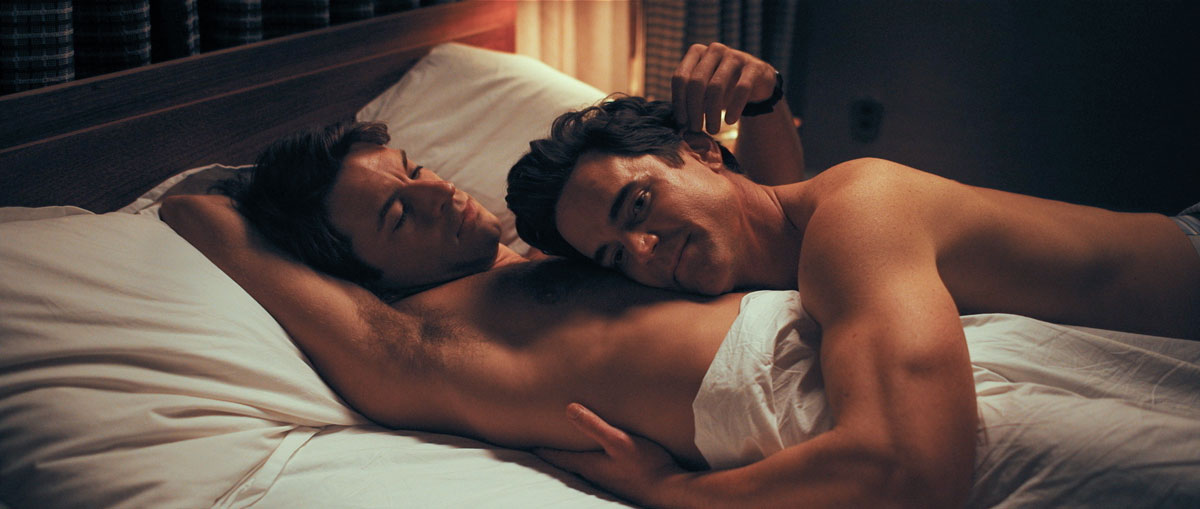
He’s also the boy band idol who falls for Anne Hathaway’s divorced art gallery owner in “The Idea of You” and the psychotic egotistical football star in “Bottoms.”  Although he’s admitted in several interviews that he resents feeling like “a cut of beef at a meat market" he has demonstrated, through talent and omnipresence, an ability to seduce everyone regardless of sexual orientation. 

Maybe he shouldn’t feel entirely guilty. Queer actors like Jonathan Bailey, Matthew Bomer and Andrew Scott soared into the mainstream as straight leads in roles either written for expressly romantic series (“Bridgerton,” in Bailey’s case) or in series that made them heartthrobs. 

The rise of the Every Boyfriend is not without its blind spots and gaps.

Bomer’s path to leading shows propelled by gay characters and stories like “Fellow Travelers”  – alongside fellow Every Boyfriend Bailey – began with him playing a straight con man whose girlfriend broke his heart on “White Collar.”  Scott, currently starring in “Ripley,” became the fallen priest of our fantasies in Phoebe Waller-Bridge’s “Fleabag.”  (Who doesn’t get slightly weak in the knees, three years later, at the memory of him growling, “Just kneel”?) 

BulletproofJonathan Bailey as Tim and Matt Bomer as Hawkins "Hawk" Fuller in "Fellow Travelers" (Courtesy of Showtime)This moment, for lack of a more concise description – calling it a trend suggests it’s fleeting or entirely new – may be the effect of TV and film catering to younger generations who identify as more sexually fluid than members of Gen X or Boomers. A 2023 Gallup survey found that 1 in 5 members of Gen Z identify as queer, with the greatest share in that group identifying as bisexual.
With half of movie theater visits being made by patrons ranging between 14 and 34 years old, according to the U.K.-based Screen Advertising World Association, assuming straight consumers won’t watch gay romances starring their favorite heartthrob leaves money on the table.

We need your help to stay independent

Chalamet isn’t any less magnetic in “Little Women” than he was in Luca Guadagnino’s “Call Me By Your Name.” The latter is more intensely erotic, in fact, and likely contributed to his eventual casting as this year’s most problematic love interest, Paul Atreides in “Dune.” Not a romance, but the point stands.

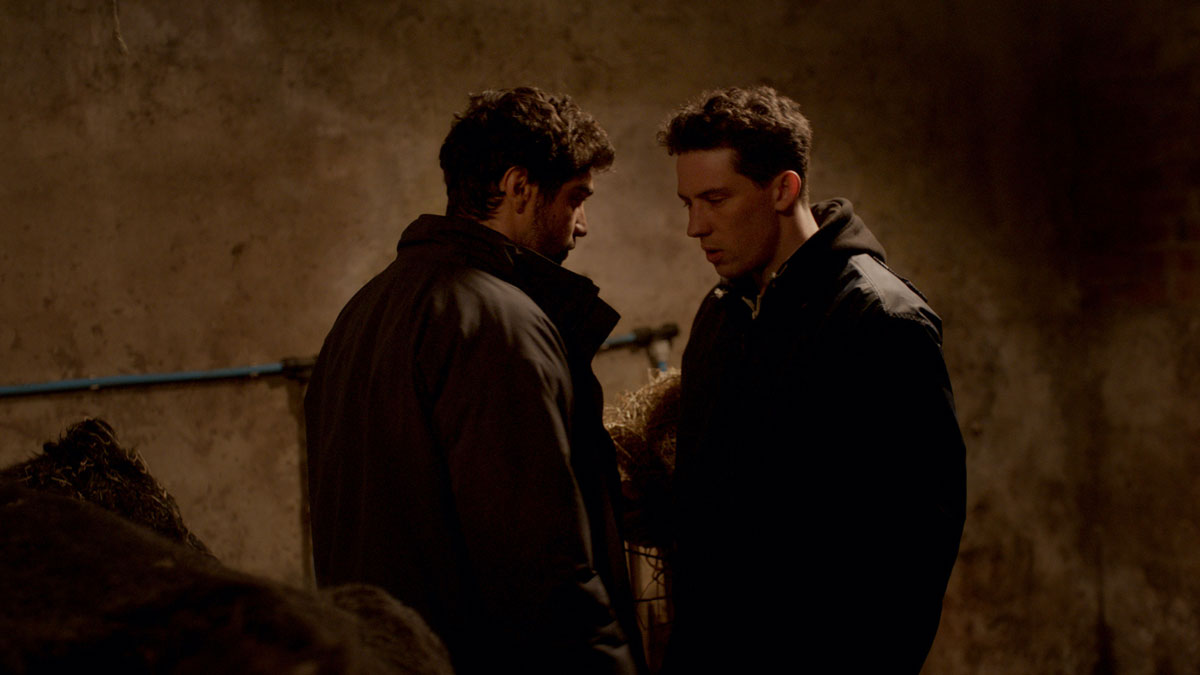
The rise of the Every Boyfriend, let’s call it, is not without its blind spots and gaps. Consider the way that Josh O’Connor’s profile exploded between playing a decidedly unsexy Prince Charles in “The Crown” and his current role in Guadagnino’s “Challengers.”  The actor has played several queer roles such as in "God's Own Country," and will co-star with Paul Mescal in “Mary & George” director Oliver Hermanus’ adaptation of “The History of Sound.” O'Connor is also reportedly in talks to reteam with Guadagnino for the gay romance "Separate Rooms."

God's Own CountryAlec Secareanu and Josh O'Connor in "God's Own Country" (Picturehouse Entertainment)Mescal, who is straight, played opposite Scott in 2022’s “All of Us Strangers.” To TV viewers he’s the sensitive co-lead of “Normal People,” in which he won notice and acclaim for both his performance and the natural carnality he brought to its love scenes. Echoes of Everett’s argument about the unequal opportunities for gay actors can be heard today in the social media discourse surrounding these movies, asking why these meaty roles aren’t going to gay actors. 

It doesn’t escape notice that these actors presented as equal opportunity heartthrobs are all white – and mostly British, but let’s keep this tirade focused.  Salon’s culture team struggled to come up with any non-white actors ascending with these others. 

The closest we could get is “Interview with the Vampire” star Jacob Anderson, and even that’s stretching it; he had a largely chaste heterosexual love affair on “Game of Thrones” before falling in love with Sam Reid’s Lestat.

Sometime soon we’ll see him as the man a woman falls in love with over and over again through various reincarnations in an indie called “Timestalker.”  Meanwhile, Mescal is bulking up for his starring role in “Gladiator 2.”


Want a daily wrap-up of all the news and commentary Salon has to offer? Subscribe to our morning newsletter, Crash Course.


Time will tell whether this is a passing phase in movies and TV or the start of a more open period for romantic comedies and the men cast to star in them and our imaginations. 

For his part, Grant upended the industry’s urge to keep casting him as the box office’s dream lover by leaping into what he characterized as his “millennium of bastards” in a 2000 interview. His widest-loved role in recent years was in 2017's “Paddington 2,” where he played a vaudevillian fraudster. (He also hated being in Chalamet's "Wonka," which is . . . on brand?) The following year he starred in "A Very English Scandal" as closeted British politician Jeremy Thorpe, who went on trial in 1979 on charges related to the attempted murder of his lover Norman Scott.  

Yet he still expresses affection for the movies that made him famous and shaped unrealistic expectations for finding true love for Gen X and geriatric millennials who, like him, grew out of those fantasies. 

Younger consumers know better while enjoying the benefit of seeing more screen versions of who they might be or love or be loved by. There’s room for expansion and evolution, as is true of all affairs worth pursuing and nurturing. If it leads to lasting satisfaction, we'll love that for all of us. 

When nature meets technology: Phone cameras bring the northern lights to life, during solar storm

Dazzling images of the northern lights — visible as far south as Arizona — have been made possible, in part, by dark mode photography features on our cell phones.

The aurora borealis, a phenomenon usually relegated to the northernmost parts of the globe, is lighting up the skies thanks to a massive G5 category solar storm, which is expected to continue through Sunday

While sky-watchers are reporting naked eye visibility throughout swaths of the U.S., those struggling to see the natural glow might have a powerful tool in their pocket. Michael Bettwy, the Chief of Operations at NOAA’s Space Weather Prediction Center, said people can snap a pic of the phenomenon for a clearer view.

“You may not be able to see it with your naked eye, but if you have a clear night with not that many clouds, and you put your phone to the sky, you may actually get an image or two,” Bettwy said in a Friday briefing.

Per Brent Gordon, Chief of Space Weather Services Branch for SWPC, technology in our phone cameras — the long-exposure feature known as dark mode or night mode on many devices — will enable amateur photographers to see the auroras.

“Things that the human eye can’t see, your phone can,” Gordon said in the briefing. “It’ll be interesting to see just how far south we’re getting aurora images.”

The colorful displays caused by disturbances to Earth’s magnetic field from solar particles were exacerbated by the storm, which tossed an influx of “coronal mass ejections” and expanded visibility as far south as Tucson, Arizona. 

If you have a dark mode photography feature on your phone, you can give snapping an aurora pic a whirl Saturday and Sunday nights, before the solar storm ends. Per Hello Aurora, a northern lights tracking service, using a tri-pod and turning on a feature like night mode or a manual longer exposure time create optimal conditions for pics, along with choosing a dark environment free of light pollution.

Apple and OpenAI to announce updates, as AI arms race intensifies

As OpenAI preps for a major news conference Monday, Apple is reportedly planning its own announcement on a major boost to Siri, an early voice assistant which has lagged behind other AI chatbots for years.

OpenAI, the ChatGPT maker and generative AI leader whose data collection policies have faced scrutiny for their use of copyrighted material, will unveil new features in a Monday event, per founder Sam Altman.

“[The announcement is] not GPT-5, not a search engine, but we’ve been hard at work on some new stuff we think people will love! Feels like magic to me,” Altman, who was fired and quickly reinstated from the non-profit research company last November, said in a post on X.

OpenAI, which has the backing of Microsoft, is reportedly still working on a search feature, which Bloomberg reports will be able to crawl the web and provide sources in results.

On the other side of the San Francisco Bay, Apple plans to completely overhaul the underlying technology beneath Siri, moving to a ChatGPT-like generative language model which can better engage in conversation rather than simple prompting, the New York Times reports.

In Apple’s forthcoming June 10 developers’ event, the company is set to announce the update, a key component of its effort to catch up with competitors in the generative AI space.

Apple’s launch of new chips this week made a splash in the AI world, signaling to investors that it’s becoming serious in the development of chips amidst an "AI arms race," per the Wall Street Journal. 

Google is similarly hosting a Tuesday event, which will likely spotlight its own chatbot, Gemini. Which has struggled to capture market share from ChatGPT and OpenAI's embedded generative AI features in Bing.

Can we end the Supreme Court’s assault on voting rights? This legal scholar says there’s hope

Joshua Douglas is an optimistic guy. He's a law professor at the University of Kentucky, where he teaches election law and voting rights. While the country as whole has been wracked by a wave of anti-voting rights legislation in the wake of the 2020 election and the Jan. 6 insurrection, Kentucky managed to pass a new bipartisan law that both expanded voting rights and addressed Republicans' supposed security concerns. So Douglas, who is acutely aware of how recent Supreme Court decisions have eroded voting rights and democracy itself, wanted to write a book about reversing that erosion, proposing a “grand election compromise” that would both strengthen democracy and reform the court in ways both Democrats and Republicans could support.  

“That's great, I love it. That's your conclusion,” Douglas says his agent told him. He and others who follow the courts closely already know that the Supreme Court has been terrible on voting rights, but the general public still wants to imagine the high court as a defender of rights. So Douglas needed to explain the problem, his agent said, before providing the solution. So was born “The Court v. The Voters: The Troubling Story of How the Supreme Court Has Undermined Voting Rights.” 

Each chapter focuses on a case in which the Supreme Court has eroded voter rights in some way. Where two or more cases have eroded rights in similar ways, those are presented in order, offering a grand overview of how the court has undermined democracy. Some are well known and infamous decisions, like Citizens United and Bush v. Gore, and others are well known to voting-rights activists, such as Shelby County v. Holder. Others are more obscure, but they all played a role in bringing us where we are today, with individual voting rights dramatically diminished from a high point under Chief Justice Earl Warren's court during the 1960s. Yet Douglas' book is anything but a dry, analytical legal brief. The stories of individuals involved in these cases feature prominently in each chapter, bringing the issues vividly alive. I recently spoke with Douglas via Zoom. This transcript has been edited for clarity and length.    

Your first three chapters describe a trio of cases that eroded the protections that voting rights had gained with the Warren court — what is known as “strict scrutiny.” How did that begin with Anderson v. Celebrezze, a case out of the 1980 election? 

The book has some cases that many people have heard of, but others that no one's heard of are perhaps more important for voting rights. Anderson is one of these. This case involved John Anderson's run for president as an independent in the 1980 election. He was too late to get on the ballot and so he sued in five states, including Ohio, which went up to the Supreme Court. 

I put this in Chapter 1 because it falls back on that "strict scrutiny" test, as you mentioned. Previously, in the 1960s, the court had robustly protected the right to vote by scrutinizing state laws, making states prove the need for a particular law that impacted voters. Anderson is the case that begins to pull back on that, where instead of saying to the state, “Give us a good enough reason and that's what we're going to test,” now the court says, “We're going to balance the rights of voters and the burdens they face with the state's need to regulate its election.” This case is the first in which you start seeing the court methodically giving states greater rights and providing less scrutiny on states.

The second case, Burdick v. Takushi, had to do with write-in voting. What happened there? How did it make matters worse? 

This is one of the most interesting cases in the book, to me. It deals with Alan Burdick, who wanted to write in a candidate in Hawaii. He was unsatisfied with the candidates for state representative and he wasn't allowed to cast a write-in vote. He said, “I want to write in” and the poll worker said, “Well you can't. The machines won't allow it.” He half-joked that he didn't know if it was the actual voting machines that wouldn't allow a write-in vote, or the political machine that was trying to make sure that there was no dissent outside their established candidates. 

It's also interesting in that this was not cause litigation, like you see in a lot of voting rights cases. This is just a guy who was upset that he couldn't write in a candidate, so he sued. What he told me was that write-in voting is an important outlet for voters who don't like the chosen candidates selected by the parties. So not allowing him to write in a candidate, he felt like, took away his right to vote. 

The court, however, rejected his lawsuit and in doing so furthered that test from Anderson that gives states more leeway to regulate their elections as they want. The Warren court had said states must prove why they needed a law that impacts voters. The combination of Anderson and Burdick meant a state can say things like, “Well, we want to have good election administration,” or “We’re worried about election integrity,” and in Burdick the court basically said, “We're going to give the state credit for just saying they want easy election administration, without scrutinizing whether that's a valid concern in this situation and whether the law actually achieves that goal.” 

The third case, Crawford v. Marion County Election Board, had to do with voter ID, which was justified as protecting against voter fraud — something for which there was no evidence. How did it build on Anderson and Burdick? 

Here you not only had the court applying this balancing test, but the thumb started getting pushed even further on the side of states. Before, the voter could say, “Look, this law is denying my right to vote,” and the state would have to provide evidence to show either that it wasn't denying the right to vote or that there was a good enough reason. After Crawford, the voter has to provide a ton of evidence about the ways the law impacts the right to vote, and the state has to provide no evidence whatsoever that there's actual fraud it's trying to prevent. 

So the Crawford case completes the trilogy, after Anderson and Burdick, by placing the thumb even more firmly on the side of states, and deferring to states in how they conduct their elections, which in fact is the last thing we should do. If there's any area in which we should trust politicians the least, it's on voting rights. 

The court ruled "that this tiny little phrase in Section 2 of the 14th Amendment allows felon disenfranchisement, even though that phrase was intended to ensure that the former Confederate states could not deny the right to vote to newly freed slaves."

Next you deal with felon disenfranchisement in a 1974 case, Richardson v. Ramirez. You explain that the Warren court strengthened the right to vote based on the 14th Amendment, but voter disenfranchisement was also rooted in the 14th Amendment. How did that unfold and how is it mistaken?

This is a question I get all time. Why are states allowed to disenfranchise individuals who have been convicted of a felony when the Constitution protects the right to vote? The answer is this Richardson case from 1974. This was cause litigation, unlike Burdick. Some California lawyers were looking for plaintiffs to challenge California's voting rules, and Ramirez was a good example. He had gotten into a bar fight in Texas 15 or 20 years prior and had a conviction, but had served his sentence and was living a happy life. He moved to California, he was a farmworker with a wife and kids, and he heard about this lawsuit. 

What's interesting to me about this case is that once it got to the Supreme Court, the case completely changed. The case was litigated as a right-to-vote case: Is there a right to vote in the Constitution, and does this felony disenfranchisement law infringe upon it? It gets to the Supreme Court and the case totally changes to: Does the Constitution also allow felony disenfranchisement, through this forgotten clause in Section 2 of the 14th Amendment, known as the "reduction in representation clause"?

Without getting too much into the legal weeds, the big takeaway is that the court says that this tiny little phrase in Section 2 of the 14th Amendment allows felon disenfranchisement, even though that phrase was intended to ensure that the former Confederate states could not deny the right to vote to newly freed slaves. This was never intended to allow a lifetime ban on individuals with a felony conviction. If you just looked at the history of the 14th Amendment, the court twists it and applies it in a way that was never intended, and says, yes, the 14th Amendment, Section 1, includes a right to vote through the equal protection clause, but that's taken away for some people by Section 2.

We need your help to stay independent

Citizens United is well known, but it's less well known that it overturned past precedents as recent as seven years earlier. How did it change the court's approach to campaign finance, how was it justified and what did the court ignore or dismiss in the process?

I write about Citizens United not only as a campaign finance case but also as a voting rights case. In terms of the law, it overturned a case called McConnell v. FEC from 2003. But the legal change is our understanding of corruption, and the court's understanding of corruption. In Citizens United, the court narrowly defined corruption as quid pro quo: I give a sum of money to a candidate directly, and the candidate is then going to do my bidding. The court said that's the only kind of corruption that the government can prohibit, instead of the broader and, I think, better understanding of corruption: I'm going to do something for you, but maybe not give you money directly, and I expect you to do something for me when you're in office. And the thing I'm doing for you that's indirect is that I'm spending my own money on my own campaign, trying to support your candidacy. 

So that's the campaign finance side. My focus is on the voters, in that it skews democracy by giving wealthy interests the loudest voices. That makes it harder for voters to understand what the politician's message actually is, and makes it harder for voters' voices to be the loudest.  

Next you deal with the notorious Bush v. Gore decision that decided the 2000 election, which explicitly said it was only applicable to that one case. You argue that it had profound harmful effects that continue to this day, even contributing to the Jan. 6 insurrection. So explain that argument. I think it's powerful and might surprise some people.

Although the court said that case was good for one time only, the politicians haven't thought so and lower courts haven't thought so either. It's been cited a bunch by the lower courts. Politicians haven't thought so because, essentially, any time there's a close election now, politicians think they can just challenge it. In the chapter I go through, basically, that in every four-year cycle there have been post-election challenges. In 2004, it was the governor's race in Washington state, and in 2008 it was the U.S. Senate election in Minnesota. Those elections came down to a few hundred votes out of millions, so it makes sense that there were recounts. But there's a sentiment now that an election is never really over on election night, or when the results are certified a few weeks later. 

Citizens United "skews democracy by giving wealthy interests the loudest voices. That makes it harder for voters to understand what the politician's message actually is, and makes it harder for voters' voices to be the loudest." 

This was exploited to very harmful effect by Donald Trump and his supporters, because that was not a close election in 2020, and yet they filed dozens of lawsuits all around the country to try to challenge aspects of the election results. And they can look at Bush v. Gore and say, well, you know, Al Gore challenged the election results in Florida in 2000. So it's contributed to this idea that post-election litigation can be a routine part of a campaign, or at least planning for it is something that every campaign does — and that the courts are an important part of the decision-making process when it comes to elections. That's dangerous because even when an election is not close, like 2020, you whip up your supporters to think it is, and you see what happened on Jan. 6. 

After Bush v. Gore, the next two chapters deal with cases undermining voting rights. The first is Shelby County vs. Holder. What did the courts do in that case, and why was it so consequential? 

This case involves Section 5 of the Voting Rights Act, which is this pre-clearance mechanism, this idea that certain states with a history of discrimination on the basis of race in voting had to seek what was known as pre-clearance before enacting any voting changes. Basically, Congress said, "We can’t trust you to pass laws that won't discriminate, so we need a mechanism to make sure that the laws you pass aren't going to have a discriminatory effect."

The court had upheld this pre-clearance mechanism four times, and yet Shelby County overturned it. It overturned not the pre-clearance idea itself but the coverage formula Congress had created to decide which jurisdictions were subject to this process. Everyone knew that by ruling that section — Section 4(b), the coverage formula — unconstitutional, it would kill off Section 5, which was pre-clearance. 


Want a daily wrap-up of all the news and commentary Salon has to offer? Subscribe to our morning newsletter, Crash Course.


The reason that is so controversial or so wrong is epitomized by Justice Ruth Bader Ginsburg's quote in her dissent, which I use for the chapter title, which is that taking away the pre-clearance mechanism because it's working so well — which was true; studies showed that these places were no longer passing egregious, discriminatory voting laws — was like throwing away your umbrella during a rainstorm because you're not getting wet. I think she was right. In the 10 or 11 years since Shelby County came down, you can see a retrenchment in voting rights in various areas. A recent study looked at the turnout gap in previously covered jurisdictions and showed that minority individuals are turning out at a lower rate, as compared to white individuals, in those 10 years. So it's concerning because of the retrenchment it caused on minority voting rights. 

Following that was Brnovich v. DNC — and in that case, you write, Justice Samuel Alito "made up the law.” What happened there, and what do you mean by that?

This is a case involving two Arizona laws that the plaintiffs argued hurt voters. One was about who could deliver someone's ballot, letting groups or individuals collect ballots to deliver, and the other involved what happens if you show up at the wrong precinct to vote, basically saying that any vote cast there will not count. The plaintiffs showed that these laws had some disproportionate effect on minority voters, particularly the ballot collection ban, which harmed Native American voters. So this was challenged under Section 2 of the Voting Rights Act, which says you can't have any laws that have an effect of racial discrimination. 

The court rejected the challenge under Section 2, but doesn't just throw out the plaintiff's lawsuit. It creates a whole new test for how to use Section 2 on a vote-denial case — laws that make it harder for people to cast their ballot. And as I say, Alito made up the law, creating what he calls five guideposts that plaintiffs must satisfy to bring a successful claim under Section 2 of the Voting Rights Act. These guideposts come out of thin air: There's no citations for them, and every single one of them will make it harder for plaintiffs to bring a successful case. Talk about judicial activism! This is not in the statutes, it's not in the legislative history. Alito just thinks these are good guideposts for plaintiffs to have to prove, so he creates them. Every single one lessens the protection of Section 2 of the Voting Rights Act by making it harder for plaintiffs.

Your next two chapters deal with gerrymandering. Only the first chapter title is tied to a particular case, Rucho v. Common Cause. What happened in that case and why was it significant?

Here you have two cases, one from North Carolina, and one from Maryland. One is Republicans severely gerrymandering the North Carolina map, while in the other, Democrats severely gerrymandered a district in Maryland. The lawyers brought claims under the 14th Amendment's equal protection clause. They brought First Amendment claims, they brought claims attacking the map statewide, they brought claims attacking just one district. They basically tried to give the court every possibility to rule that there's got to be some check from the courts on politicians drawing maps to help keep themselves in power. 

"Justice Alito, as I say, made up the law by creating what he called five guideposts that plaintiffs must satisfy to bring a successful claim under Section 2 of the Voting Rights Act. Talk about judicial activism!"

The court rejected all of that, and said that federal courts are not in the business of policing partisan gerrymandering — that it's up to the voters, essentially, to vote the bums out. Of course it makes it a lot harder to vote the bums out if the bums are drawing district lines to insulate themselves in power. The common phrase is that the politicians are choosing their voters, not the other way around. 

The court had grappled with this question for decades in a handful of different cases in which it tried out different tests to police partisan gerrymandering, and we basically had the best test that the courts had seen. Numerous lower federal court judges had applied this test to root out the worst abuses, not to question most maps but the extreme outliers — the North Carolina example was really an extreme outlier — and the court rejected it. What does that do? It lets the politicians run wild in drawing maps however they want, knowing that there will not be judicial oversight, at least not from the federal courts. 

Your next chapter is called “The Next Looming Case.” What are you dealing with there?

That chapter is mostly about the Moore v. Harper case from last year, involving the so-called independent state legislature doctrine. It connects to both Bush v. Gore and Rucho, in that it's also about North Carolina gerrymandering. Here, the state's top court had used the state constitution to strike down the map. It ties back to Bush v. Gore because the independent state legislature theory, which basically holds that federal courts can overturn state court rulings on state constitutions, ties back to Chief Justice Rehnquist's separate opinion in Bush v. Gore. 

It's a very fringe theory. A lot of people thought the court would run with it and say, “Yes, we have the power to overrule state courts even when it comes to state constitutions.” Normally you'd say the state's highest court has the final say, just like the U.S. Supreme Court is the final say on the U.S. Constitution. The court surprised a lot of people by rejecting the most robust use of this theory, but also said there might be situations when a state court goes too far that we do want to question. So it gave itself more power, but didn't say when it might use that power. It just said there might be an egregious example “when a state court transgresses the bounds of ordinary judicial review.” But the court didn't say what that means. The court will get to decide. 

"There's a theme throughout the book: The court will plant a seed in one case, let that seed blossom into a deadly weed in a future case and then say, 'Well, we're just following precedent,' and cite the previous case."

To me, the next looming case is when a state court protects voting rights, and someone challenges it and brings it to the U.S. Supreme Court. Is it going to be a situation where the court says, “Well, this is one where we want to scrutinize what the state courts have done”? We don't have a case that has done this yet. This is a good example of a theme throughout the book: The court will plant a seed in one case, let that seed blossom into a deadly weed in a future case and then say, “Well, we're just following precedent,” and cite the previous case. I think the Moore v. Harper case is one where the seed is potentially planted. 

You’ve just outlined all these judicial horrors undermining voters’ rights, but in your conclusion you turn optimistic. You think we can fix this. So what do you advise? 

I'm an optimistic person by nature, I have a new podcast and radio show called “Democracy Optimist.” My first book, “Vote for Us,” was an optimistic book. I didn't want to leave the reader with all these negative connotations. We can either lament how the Supreme Court is undermining voting rights and throw up our hands, or we can think about ways to fix it. So I point to a handful. One is, let's try to avoid the court altogether by coming up with bipartisan solutions, which is something we've done here in Kentucky to some success. It's not going to work in every place and certainly not going to work in some of the most contentious swing states. But perhaps we can get to some reasonable solutions where we can avoid the court.

But beyond that, we do need institutional reform at the Supreme Court. I'm not a fan of court-packing, because I think that leads to a political tit-for-tat, so I don't think that's a smart idea. Instead, I think we could look at what the federal courts of appeals do, and have the justices sit in randomly selected panels. We can impose 18-year term limits on the justices so that there's a regular rotation. Every four-year presidential term gets two nominations. I think we could have district court and court of appeals judges sit by designation on the Supreme Court. The goal here is to lower the temperature of Supreme Court nominations, make it less important which individuals get on the court or when they decide to retire or when they die. And therefore get the focus back on the rule of law and less on the identity of justices on the court. 

The history behind the National Association of Letter Carriers’ annual Stamp Out Hunger food drive

Each year, on the second Saturday in May, letter carriers across America give back to their communities by collecting food donations for those in need. The annual act of service is part of the National Association of Letter Carriers’ (NALC) Stamp Out Hunger food drive — which is the largest one-day food drive in the nation to date.

Hoping to organize a collective effort, the NALC along with the United States Postal Service (USPS) and American Federation of Labor and Congress of Industrial Organizations (AFL-CIO) held its first pilot food drive in October 1991. The effort was a major success and encouraged the creation of a national food drive that officially debuted in 1993. The drive was organized for the second Saturday in May at the request of food banks and pantries. Because most food donations were received around the Thanksgiving and Christmas holidays, food shelves were often understocked come spring. Food banks and pantries were also high in demand amid late spring since many school breakfast and lunch programs were not available during the summer months.  

The national food drive sought to have at least one NALC local branch participating in each of the 50 states. However, that goal was surpassed after more than 220 NALC postal branches collected over 11 million pounds of food. As of 2024, the food drive has delivered more than 1.82 billion pounds of food.

Letter carriers in more than 10,000 cities and towns across the nation will take part in this year’s national food drive, which will take place on May 11. Nearly 1,500 NALC branches in all 50 states, the District of Columbia, Puerto Rico, Guam and the Virgin Islands will also be involved. This year’s sponsors who will be supporting the drive include the USPS, National Rural Letter Carriers’ Association, AFL-CIO, United Way, CVS Health and Kellogg’s among many others.

Food insecurity remains a prevalent issue today and has only worsened following the onset of the pandemic. According to statistics from Feeding America — a nonprofit network of 200 food banks combating nationwide hunger — 100% of counties and congressional districts are home to people facing hunger. More than 44 million people in the US face hunger, including one in five children. One in three people facing hunger are unlikely to qualify for food assistance. And one in fourteen seniors (individuals ages 60 and older) and one in eleven adults (individuals ages 50 to 59) are food insecure.


Want more great food writing and recipes? Subscribe to Salon Food's newsletter, The Bite.


According to a 2023 report from the United States Department of Agriculture (USDA), food insecurity across households rose significantly in 2022 compared to the year prior. Nearly 13 percent of households — or 17 million households — struggled to acquire enough food in 2022 due to a lack of resources. That statistic was up from 13.5 million households, or 10.2%, in 2021. Additionally, close to nine percent of households with children were unable at times to provide adequate and nutritious food for their children in 2022, compared to 6.2% the year prior.  

According to the NALC, its national food drive strives to “deliver hope for those in need.” Those who would like to donate should leave a non-perishable food item(s) in a bag near their mailbox on Saturday for their letter carrier to pick up. Participants can also donate through their local food bank using a search tool courtesy of the NALC.

Project 2025 targets election 2024

In his recent interview with Time magazine, Donald Trump shared a litany of false grievances and real promises should he return to the White House. His promises include, among other things, “authoritarian power grabs, administrative cronyism, mass deportations of the undocumented, harassment of women over abortion, trade wars and vengeance brought upon his rivals and enemies.” 

Meanwhile, even before getting creamed in court this week, the pestilent “juvenile delinquent” redirected his grievance to avoid the courtroom’s “gag order” . to his nemesis, special counsel Jack Smith, who indicted Trump in both the federal election interference case. and the classified documents case.. So late last Friday evening on Truth Social, the former president first posted, “ARREST DERANGED JACK SMITH. HE IS A CRIMINAL.” Then, over that weekend at a Mar-a-Lago retreat for his biggest donors, he once again referred to Smith as “deranged” and “an evil thug.” Wrapping up his truculent remarks, as reported by the Washington Post, the projector-in-chief then called Smith a “f***ing a**hole,” adding that Biden and the Democrats were “running a Gestapo administration.”

During dinner at the same fundraiser, Trump slamed environmental protection rules and asked big oil for $1 billion. In return, the corrupt Boss promised them more tax breaks. He would also on day one if re-elected, Trump vowed, do away with Biden’s executive order regulations and scrap his policies on electric vehicles, according to The New York Times.

Project 2025 is a coalition of 100 organizations under the leadership of the far-right Heritage Foundation with the goal of institutionalizing Trumpism. Last fall the Washington Post wrote: “Trump and his allies have begun mapping out specific plans for using the federal government to punish critics and opponents should he win a second term; with the former president naming individuals he wants to investigate or prosecute and his associates drafting plans to potentially invoke the Insurrection Act on the first day in office to allow him to deploy the military against civil demonstrators.”

Authoritarian expert and author of Strongman: Mussolini to the Present Ruth Ben-Ghat describes Project 2025 as “a plan for an authoritarian takeover of America that goes by a deceptively neutral name. It brings together all of the ideological strands that supported Trump during his first presidency, and more who have joined the battle since then,” such as white Christian nationalists and far-right Catholics who favor the lessening or abolition of the separation of Church and State.

In discussing the history of autocracy, Ben-Ghat explains that “conservative elites have always played a big role.” These elites may also be extremists themselves “hiding behind a veneer of respectability” or they may ally with ordinary extremists striking “an ‘authoritarian bargain’ with the demagogue of the hour who they believe will save their own status in society and advance their ideological agendas.

The Pulitzer Prize-winning historian Steven Hahn in his latest book, Illiberal America: A History, reminds us that in the United States the beliefs in illiberal democracies, if not authoritarianism, are as American as apple or cherry pies. In opposition to the ideals of liberalism and justice for all, “Americans have long been animated by competing values, equally deep-seated in which the illiberal will of the community overrides individual rights, and often protects itself by excluding perceived threats, whether on grounds of race, religion, gender, economic status or ideology.”      

As many others, myself included, have argued Trump was not the first politician and he won’t be the last one to capitalize on American anti-democratic sentiments, state criminality, and klan-like community mob violence. Although the insurrectionist-in-chief, four times criminally indicted former president, and presumptive three-time nominee for commander-in-chief by the GOP is unequivocally the most successful authoritarian in U.S. history.        

In a recent Raw Story commentary, Inside the Trump Crime Syndicate and MAGA cabinet of knaves and rogues, I compared the damages of Donald Trump’s 2020 election interference and failed coup on Jan. 6 with the damages of Richard Nixon’s 1972 re-election campaign and the failed Watergate break-in and coverup. I also assessed the accountability of the associates of the Trump Crime Syndicate and MAGA kitchen cabinet with those indicted and convicted members of Nixon’s inner circles whose crimes were either directly or indirectly ordered by the president.

Among other things, I underscored that the Trumpian world has to a large extent already normalized the abuse of executive power as well as the abuse of legislative and judicial power, which all seem to be beyond incrimination.

The executive abuse of power and the accountability of the perpetrators was not difficult to compare. The legal and political reactions of the American people or the body politic to Nixon 50 years ago and Trump today are as different as night and day.

Politics aside in 1974, Democrats and Republicans alike, officials and non-officials, elites and everyday people were in agreement that what the POTUS had done was criminal and that he should be held liable for his abuse of power. Everybody was united against President Nixon and we were all pleased by his resignation from office. Mostly, because he was obviously guilty as charged and we wanted to believe that no person is above the law. Nixon had no defenders to speak of — lunatics or otherwise — like Trump does.

With respect to the presumptive 2024 presidential candidate and man currently on trial for 34 felonies in a Manhattan courthouse, Americans could not be more divided or polarized about what constitutes a crime and who the real criminals are, then when it comes to the prosecution versus the persecution of Donald Trump.

As for the two other branches of power, there were neither the widespread abuses of the legislature nor a Supreme Court without any delay in calling out and sanctioning Nixon tout de suite in response to the Watergate break-in and coverup.

Both Nixon and his associates were held accountable in a reasonably short period of time unlike Trump and his associates who have committed far worse crimes that threaten — then and now — American democracy and the rule of law.

We need your help to stay independent

I finished my comparative examination of presidential immunity, politics, and punishment as follows:

Paradoxically, it may seem strange given the reaction of the Republicans and the Department of Justice to Nixon and Watergate, that Trump and his election interference crimes have been given a free pass by the Supreme Court

With respect to Trump’s inner circles, a few have already pleaded guilty and many more will be held to account regardless of whether Trump is, although this is certainly a reflection on a man who boasted of surrounding himself with the “best and brightest” the nation has to offer.

With respect to Trump and the “balance of powers” scheme of things, I was able to scrutinize the accountability of the executive abuse of power. I could not, however, do the same with respect to the other two branches of political power: legislative and juridical.

In the case of Congress, there has been no accountability of any kind for those GOP House of Representatives who immorally and without any legal justification refused to certify the election of Joe Biden. Simultaneously, there were also other more deeply involved Republican power players participating in the plot to overturn the 2020 election. They have yet to be criminally investigated aside from the House Select Committee for their co-conspiring roles to interfere with the results of the 2020 election. 

These unaccounted for individuals are not limited to Rep. Jim Jordan, R-OH, Speaker Mike Johnson, R-LA, and Sen. Ron Johnson, R-WI. 

In the case of the Supreme Court, there will likely never be any accountability. Unless those blameworthy, anti-14th Amendment justices, are impeached for the first time in U.S. history for obstructing justice. 

Not unlike the “reasoning” of Trump who has complained about witch hunts and overzealous prosecutors, the conservative justices who during oral argument the week before last were skeptical of the Jan. 6 prosecution of Trump. Chief Justice John Roberts went so far as to slam the decision by the U.S. Court of Appeals for the D.C. Circuit that unanimously denied the former president’s immunity claim.

Likewise, professor of law at Harvard, Jack Goldsmith, writing for Lawfare maintains, “no, the justices were not normalizing the president as a crime boss.” 

I beg to differ. I understand perfectly well the excuse Goldsmith is making on behalf of the justices. Sure, there were other issues related to immunity that the court had a right to take up. Even so, these had nothing to do with Trump’s crimes or his criminal behavior as president. 

For their part, the justices were playing dodgeball as they zig-zagged around refusing to acknowledge, let alone, deal with the rogue elephant that on appeal should never have been granted entree into their courtroom in the first place.

Meanwhile, their diversionary hypotheticals were not only insulting to the office of the presidency and to American Democracy, they were also totally irrelevant or off the legal mark. Talk about a lame and corrupt — Trumpian — court of law.


Want a daily wrap-up of all the news and commentary Salon has to offer? Subscribe to our morning newsletter, Crash Course.


The political lack of accountability for the roles played by actors in the legislative branch before and after Jan. 6 and by the Supreme Court three years after the failed coup are massive derelictions of both constitutional duty and commonwealth responsibility. 

As for Trump’s fraudulent patterns of electioneering, these began in 2016 and have never stopped. The first time he ran for president, Trump engaged in election interference while colluding with the Russians and manufactured false stories about his political opponents while “catching and killing” sexual dalliances with America Media, Inc. and its publication the National Enquirer.       

Once before and once after the 2020 presidential race, the U.S. House of Representatives impeached Trump for election interference. The first case involved President Trump extorting President Zelensky of Ukraine to find some dirt on Joe Biden, or at least, to say out loud that there would be some kind of investigation. The second case was for Jan. 6. Both times the presumptive 2024 GOP nominee escaped culpability because of “jury nullification” carried out by the Boss’ Republican knaves in the Senate.

Presently, according to Rolling Stone magazine, Trump and the Republicans are “doing everything to rig the 2024 election.” Similarly,  J. Michael Luttig who served for 15 years as a conservative judge on the U.S. Court of Appeals for the Fourth District, maintains that should the Republicans lose to Biden for a second time, they have a new and improved blueprint in place to steal the 2024 presidential election just as they had one in place to steal 2020.

 Rolling Stone claims that “Trump and his allies have been working since his 2020 defeat to game the system in his favor ahead of a third run at the White House.” These include “auditioning lawyers” to challenge the 2024 election; “working to stop states from using data provided by Electronic Information Center (ERIC) to spot voting irregularities and identify unregistered voters''; and “trying to promote a MAGA version of ERIC” as some kind of alternative. 

Judge Luttig states that “January 6 was never about a stolen election or even about actual voting fraud. It was always and only about an election that Trump lost fair and square, under legislatively promulgated election rules in a handful of swing states that he and other Republicans contend were unlawfully changed by state election officials and state courts to expand the right and opportunity to vote, largely in response to the Covid pandemic.”

Since 2020 more than 560 new laws governing elections have gone into effect. According to voting rights experts, a slate of new voting rights laws in red battleground states “could serve as a preview for how changes to ballot access may offset the outcome of the 2024 general election” for president.

So far in 2024, 40 states have passed new voting laws. Fourteen of those have “enacted laws that will make it harder to vote. For example, targeting voter registration, enforcing stricter voter ID laws, and loosening up on restrictions for poll watchers to make intimidation easier. Provisions such as these, according to the Brennan Center of Justice, create burdens on voters of color, and advantages for the Republicans.

Finally, these new restrictive voting laws are undermining the Voting Rights Act of 1965 that was passed into law during the height of the civil rights movement in order to prohibit racial discrimination in voting. And to finally make good on some of the empty promises of the 14th amendment as the U.S. was about to celebrate its hundredth anniversary.

Critics accuse pro-Israel Republican mega-donors of trying to tip the scales in a Democratic primary

It’s not a surprise that Republican mega-donors are spending big to influence the 2024 election. What is curious is that they – and a super PAC that represents the far-right of the pro-Israel spectrum – are spending millions to tip the scales in a deep-blue district, seeking to ensure the victory of a candidate who is campaigning as a liberal Democrat.

Barring some unforeseen disaster in the general election, the next member of Congress from Maryland’s third district, incorporating Annapolis and the Baltimore suburbs, will be a Democrat. The only real question ahead of the May 14 primary election is which one it will be.

People who have given to former President Donald Trump and his allies would like it to be state Sen. Sarah Elfreth. The 35-year-old, serving in the state legislature since her first election in 2018, is not a right-wing extremist. Her campaign website boasts of endorsements from the Sierra Club and a number of local unions; it does not even mention Israel.

But Elfreth has nonetheless benefited from a massive infusion of cash  being spent on her behalf by a super PAC, United Democracy Project, that is an arm of the American Israel Public Affairs Committee. In March, the super PAC, to which donors can give unlimited amounts, spent $600,000 on a television ad campaign emphasizing Elfreth’s support for prenatal child care and abortion rights.

Filings with the Federal Election Commission show that the super PAC, which describes itself as “Democrats, Republicans and Independents” who support “America’s partnership with our democratic ally Israel,” has since spent funds on direct mail and a phone banking operation for Elfreth. It also dropped another $800,000 on ads the week before the primary, bringing the total spent trying to elect her to more than $4.2 million, dwarfing the $1.4 million raised by the campaign itself. Elfreth has also been endorsed by the Pro-Israel America PAC, which was founded by former AIPAC staffers and describes her as having “traveled to Israel on a life changing trip that will forever influence her worldviews.”

Elfreth’s most well-known competitor is former U.S. Capitol Police Officer Harry Dunn, 40, who gained notoriety for his actions during the Jan. 6 insurrection and subsequent testimony on Capitol Hill. A regular on MSNBC, he’s leveraged his national profile to raise more than $4.5 million and win endorsements from the likes of former House Speaker Nancy Pelosi, D-Calif., and Rep. Adam Schiff, D-Calif.

Dunn’s position on Israel is firmly within the mainstream of the Democratic Party. In February, he told Jewish Insider that Israel “has a right to defend itself, and I support the goals of returning all the hostages home and eliminating Hamas,” but added that he is “glad President Biden has advocated for an approach that reduces unnecessary civilian casualties.” The only candidate to publicly make the Israel-Palestine issue a central one for their own campaign has been former labor lawyer John Morse, who enjoys the backing of Sen. Bernie Sanders, I-Vt., and has pinned a post on his X profile calling for a “permanent humanitarian ceasefire in Gaza.”

We need your help to stay independent

UDP’s intervention, then, is peculiar by its own standards. In the past, it has intervened in other Democratic races with a stated aim of defeating any would-be member of the progressive “squad,” meaning critics of Israel like Reps. Alexandria Ocasio-Cortez, D-N.Y., and Ilhan Omar, D-Minn. In the 2022 cycle, it spent nearly $33 million on congressional races, including $3.2 million trying, unsuccessfully, to prevent Rep. Summer Lee, D-Pa., from winning in Pennsylvania, and more than $1.8 million to help Rep. Henry Cuellar, D-Texas, defeat a progressive challenge (Cuellar has since been indicted for alleged corruption).

Earlier this year, it also spent $4.6 million in a failed attempt to prevent California state Sen. Dave Min from winning the primary for Rep. Katie Porter’s, D-Calif., old seat.

Susan Turnbull, a former chair of the Maryland Democratic Party who previously served on the board of director for Hillel, told Salon she was troubled to learn of the pro-Israel intervention in the primary race. She herself identifies as a Zionist and supporter of Israel’s right to exist, but says the people backing Elfreth’s candidacy are not merely pro-Israel, but pro-Israel’s right-wing government.

Turnbull, who has endorsed Dunn, said her concern is that AIPAC-affiliated “mega-donors” have taken it upon themselves to make this race about Israel, “above and beyond every other issue that matters to the American people,” and are “attempting to determine races across this country.”

“As a Democrat, I am especially opposed to that notion,” she said. “Someone who is supporting… Donald Trump donating in a race in a Democratic primary to change the potential outcome of that race. That’s my problem with it.”


Want a daily wrap-up of all the news and commentary Salon has to offer? Subscribe to our morning newsletter, Crash Course.


UDP did not respond to a request for comment. But a spokesperson previously told the local news site Maryland Matters that, while it appreciated Dunn’s “support for a strong U.S.-Israel relationship” – he himself is endorsed by J Street, the liberal answer to AIPAC – Elfreth’s “leadership on abortion rights, climate change, and domestic violence makes her a stronger candidate.” The spokesperson, Patrick Dorton, added that there are other “anti-Israel” candidates in the race, “who are not Harry Dunn, and we need to make sure that they don’t make it to Congress.”

As a super PAC, UDP is not allowed to coordinate its spending with any candidate for office. But the group’s donors have responded to its support for Elfreth by donating directly to her campaign. Overall, more than 40 people who have donated at least $10,000 to UDP or AIPAC’s traditional PAC contributed to Elfreth’s campaign this year. Among them are some big-time GOP donors.

Edward Levy, for example, former president of AIPAC, gave $6,600 this year to Elfreth’s campaign; he’s likewise donated hundreds of thousands of dollars over the years to various arms of the Republican Party, and more than $650,000 to AIPAC-affiliated PACs, including UDP and the separate AIPAC PAC.

Larry Mizel, a businessman who served as Donald Trump’s 2016 state fundraising chairman in Colorado, has also donated $3,300 to Elfreth and over $300,000 to UDP and AIPAC PAC. Mizel made headlines last year when he hosted Florida Gov. Ron DeSantis for a dinner in Israel, fueling speculation he would back the erstwhile Trump rival. He donated over $41,000 to the RNC in January.

Real estate developer Robert Kargman has given $5,500 to Elfreth.  He too has given to UDP and AIPAC PAC, donating some $14,000 – and much more to various Republican candidates. In 2020, he gave $25,000 to Donald Trump’s reelection; in 2020, he helped fund the congressional campaign of Laura Loomer, a far-right activist and “proud Islamophobe” who has celebrated the drowning deaths of migrants in the Mediterranean Sea.

Other notable contributors to Elfreth’s campaign include Robert Sarver, who gave the maximum of $6,600. He is the former owner of the Phoenix Suns, forced to relinquish control of the basketball after facing allegations of misogyny and racism (a former coach of the team said Sarver repeatedly used the n-word). Sarver has also lavished the GOP with donations – more than $179,000 by the time of the 2020 election.

Daniel Kraft, son of New Englands Patriots owner and Trump megadonor Robert Kraft, has also donated $3,300 to Elfreth’s campaign since it won the backing of the super PAC. Kraft has also given to numerous Trump-backed congressional candidates over the last year, including Michigan Senate hopeful Mike Rogers and Rep. Elise Stefanik, R-N.Y.. (He’s also recently supported other Democrats, including Reps. Adam Smith, D-Wash., and Pete Aguilar, D-Calif.).

John Morse, the Sanders-backed labor attorney, told Salon that Elfreth is getting support from UDP and affiliated donors because they believe she is “someone who will turn a blind eye to the humanitarian disaster unfolding in Gaza.” Their intervention in a Democratic primary, he argued, is an effort to “control both parties” and deceive voters.

“The super PAC tries in vain to bolster her liberal bonafides and notably never mentions Israel,” he said. “That’s because the vast majority of Democrats favor a ceasefire. They’re doing this across the country to try to trick voters.”

Elfreth’s campaign manager, Pat Murray, rejects such accusations. He declined to address questions about why GOP donors are supporting the state senator and whether she intends to keep their donations, instead choosing to highlight the support she has received from environmental groups and labor unions – and describing the talk of money as a smear.

“We are disappointed that other candidates launched last minute negative attacks,” Murray said in a statement to Salon, “but that’s a clear sign that they know Sarah is the frontrunner and in a strong position to win on Tuesday.”

Dunn, in his own statement to Salon, did not mention Elfreth by name but argued that candidate receiving “dark money spending bankrolled by MAGA Republicans” is effectively cosigning their politics. “Any candidate who receives this support [and] refuses to condemn their meddling in this race,” he said, “essentially accepts the endorsement” of those who “incited the rioters I fought on January 6th.”

Motherless daughters of the ineffable sea

Stop me if you’ve heard this one. After a long day welding underwater naval mines off the Gulf coast of Florida in 1984, a six-foot-something Alabama bombshell walks herself into a saloon on a hot July night to sing with the band. And there she sees a 20-year-old Kentucky boy, tabletop-dancing right out of his Army fatigues. Nine months later — atop America's largest presumed stockpile of Cold War nukes, four alleged alien spacecraft and an 8,000-year-old Native American burial mound — a military midwife delivers her of a screaming girl who grieves her to this day. Especially this day. 

They call us motherless daughters. Or more clinically, “female maternal orphans.” And for us, Mother’s Day is a painful communion with the unknowable.

She was one of many, my mother. How many exactly, I don’t know. If the US Census Bureau has an exact count of dead mothers who’ve left behind living daughters, then the strands of its URLs are so awash in a sea of pages and jargon that neither my editor nor myself could reasonably fish it out. Our 11th-hour data trawl came on the heels of my other trawl. Having searched at length for quantitative research into the particular long-term trauma faced by motherless daughters, I’d resurfaced with only a thin stack of close-enough studies. 

Research on the sex-specific impact of father loss abounds in pediatric literature, as does sex-unspecified parental loss — but finding useful research on the unique needs of female-sexed children and women drowning in mother loss takes the kind of work most laywomen shouldn’t have to do when sobbing with grief. Too many peer-reviewed studies are outdated, removed from our readers’ Western experiences, or simply useless to me behind journal paywalls. You can imagine how little material I found addressing our sister-orphans who are trans. 

We need your help to stay independent

Even the most recent studies acknowledged the dearth of sex-distinct pediatric research. Finding research on adult orphan daughters is harder, and even good work is mostly parental-sex unspecific. Some of it reads with attunement. But more of it approaches insult, blind to repeated findings on mixed-sex adolescent bereavement which chart higher rates of suicidality, premature death and employment struggle — along with worse education and health outcomes, earlier and more frequent sexual, drug-related and criminal encounters. 

“The majority of children overcome the loss of a parent during childhood without experiencing increased mental health problems, reduced functional limitations or a greater need for mental health services during adulthood,” reads one from 2006

Feminist researchers haven’t let us down, though. Their qualitative work on the severed mother-daughter dyad has yielded wholly nuanced theories and praxis rooted in the unique “self-in-relation” analysis model. Even skimming a summary feels like quenching life-long thirst.   

Just last year, Australian women conducted what’s thought to be the largest known study of motherless daughters. Searching for answers, the researchers put out the all-call and hoped to get 100 responses. They got that many within two hours. By October, more than 2,000 women came to them, searching for answers where mothers once were. 

— 

I didn’t know my mother was dead until I was in my 20s. The last time I saw her, I was three and she was buckling my seatbelt in the back of my father’s car. Later, still much too young to hear it, he’d say this was his clever cross-country rescue after tracking her down. She was wild-eyed and feral, I was told, dangerous as she was beautiful. Gravid with me in her ninth month, she’d thrashed as if possessed, and had to be pinned down to keep from lunging into an obliterative cocaine frenzy. We’d lived on a little fishing trawler then, as it goes, and it wasn’t long after my first lungful of squall met the air, that a squall far bigger found us at sea. 

Caught between antidepressants and the bottle, she’d flipped her car three times before she stopped moving. But she’d left something behind for me in Alabama — a baby brother.

Towering waves, taller in each retelling, bashed us broadside amid a merciless downpour. My father was clambering to get us leeward against capsize when my mother took to the starboard bow. He says he heard my screams above the storm and turned to see her there, cradling me in her arms for a moment before she flung me overboard — jetsam into the devouring mouth of the sea. He dove into the waves and wrenched us back aboard somehow. 

More than 20 years later, my setting out to find her took some gall. And tracing her paper trail took some journalism. Months of records work ended in an online archive with a grainy newspaper clipping. She’d died while I was a teenager. No one had come looking for me. I couldn’t find a grave, nothing about ashes.

Caught between antidepressants and the bottle, she’d flipped her car three times before she stopped moving. But she’d left something behind for me in Alabama — a baby brother. I counted the years on my fingers to 18, dove back into records, and didn’t resurface until I fished him out. She’d named him Strongheart. We both drove all night to meet in Tennessee. Last time he saw her, he was three years old. He’d fought to graduate, an outcast with nowhere to go but our cousin’s couch. He hugged me hard and frantically. His hands were the same size as mine.

“I have a sister,” he cried.

“I’m gonna take care of you,” I told him.  

— 

I’d spent most of Thursday evening diving deep into the narrows of archived reports and dead-end URLs for fractions of percentages that might give me a headcount of my sister-orphans in the Dead Mom Club. Diving like there was a bottom I could hit. Like she’d be there if there was. But all I found was more sisters and brothers mixed together, our sibling-count growing as the world moves on

In the wake of COVID-19 deaths, an estimated 300,000 children were orphaned by one or both parents. Between April 2020 to June 2023, that number rises to 379,000 when you include “primary or secondary caregivers,” according to research from Imperial College London

As reported by the Guardian, Imperial’s collaboration with the Center for Disease Control notes Black children in the U.S. are twice as likely as white children to be orphaned under similar conditions. Worldwide in the same period, the Global Reference Group on Children Affected by COVID-19 and medical journal BMJ peg that number at about 10.5 million orphans. 


Want more health and science stories in your inbox? Subscribe to Salon's weekly newsletter Lab Notes.


In a pre-print study from a powerhouse line-up of academic and government health researchers, the spike in orphan numbers from COVID-19 arrived as the rate of US orphanhood was already growing, accounting for a roughly 50% overall rise in the number of orphaned kids. 

“From 2000 [to] 2021, orphanhood and custodial/co-residing grandparent caregiver loss annual incidence and prevalence trends increased 49.2% and 8.3%, respectively. By 2021, 2.9 million children (4% of all children) had experienced prevalent orphanhood and caregiver death,” the researchers wrote. 

1.7 million of those 2.9 million were aged 10 to 17 — kids far less likely to be adopted. Now add those 300,000-plus COVID orphans to the data published Wednesday in JAMA Psychiatry, concluding “an estimated 321,566 children lost a parent to drug overdose in the U.S. from 2011 to 2021.” 

129,000 of those kids lost their mothers. If half of all children are girls, we have 64,500 more motherless daughters now.

— 

It was just a month or so after I’d found my teenage brother, and time to fetch him home for good, when he died with our cousin. Caught between a bender and the bottle on a hot July night, they’d reached highway speeds before passing out behind the wheel. My race to Alabama is still a blur. Behind the chainlink fence of the impound lot, I saw his car crumpled bloody. The relatives that had cast him out never shed a tear, and they hid his ashes from those who did. I still didn’t know where they’d hid hers. 

After nearly 30 years searching, there would be no finding her among the numbered, no archive of her bones but my own.

In a motel for days, I scoured databases and worked phones. Still diving, still searching. An angel in some distant judicial call center happened to be from the same town I was sitting in; she slipped me his father’s number so I could tell him his son died. Before I hung up to write the eulogy, she prayed a blessing on me that’s never come off. It took intervention, but the relatives broke down and revealed where my brother’s ashes were. They’d put him with our mother — flung him into the water. 

After nearly 30 years searching, there would be no finding her among the numbered, no archive of her bones but my own. A lady at the gas station helped me draw a map to the spot. Down an old country road, off a winding gravel trail, I found the little swamp marsh that will someday be devoured by the rising sea. It was close to sunset when I took my shoes off and waded deep past the bank of reeds and cattails. 

There is nowhere you can not be now, I thought when the rain started. The human heart is 73% water, and mine is 50% you, and ours are these salt tears — near identical to our shared blood, that’s near identical to sea water. 

I washed my feet that were her feet. Anointed, I’d done what I could.

This is my body, this is my blood. I cupped a handful to my mouth and drank them both.


An earlier version of this article originally appeared in Salon's Lab Notes, a weekly newsletter from our Science & Health team.

How Russia is winning in Africa: Wave of military coups gains Putin new allies

Russia's deputy foreign minister, Mikhail Bogdanov, recently visited Sudan, where he met Gen. Abdul-Fattah Burhan, commander of the Sudanese armed forces and ruler of the country, to conveyed Russia's support. Burhan badly needs it. 

This was one recent example of Russia’s newfound strategy of intervention in Africa: Military “druzhba,” or friendship.

By most accounts, there have been at least seven military coups in West and Central Africa since 2020, in Gabon, Niger, Burkina Faso, Sudan, Guinea, Chad and Mali. The Russians have been eager to exploit almost all of them, not merely because the Kremlin regime knows how to deal with dictators, but, also because almost all the civilian governments that were toppled had been friendly with the U.S. and other Western nations. Indeed, some in West Africa offered military bases Western powers like France and the U.S. in exchange for aid in their wars against violent Islamists.

For more than a year, Burhan’s army in Sudan has been fighting a rival militia led by Gen. Mohammed Hamdan Dagalo, better known as Hemedti, who was formerly Burhan's deputy and ally. Hemedti's forces have established control over almost half the country, including the capital, Khartoum, forcing Burhan and his generals to flee to Port Sudan — which was where Bogdanov flew to meet him.  

Russia’s support for Burhan represents a change in policy. For several years, Moscow appeared to support Hemedti, mostly through the Wagner Group, the infamous private militia partially funded by the Russian government. That is, until last year, when President Vladimir Putin broke with Yevgeny Prigozhin, Wagner’s leader, who launched a short-lived rebellion sparked by conflicts over Russia’s war strategy in Ukraine.

In an ironic parallel, both Burhan and Putin abruptly broke with militia leaders that each had supported and supplied.

Soon after Prigozhin attempted rebellion against Putin, he was killed in a mysterious plane explosion that most assume was the work of Russian military intelligence. Burhan likely would have had Hemedti killed, but the latter's forces overpowered him, forcing Burhan and his officers to flee Khartoum. 

Putin’s new policy seems to be pursuing direct military intervention in Africa, without using the disgraced Wagner Group as an intermediary. But there's no question that Wagner served Putin well in Africa for the previous five years or so. 

In Mali, for instance, Wagner allied with a military regime that toppled an elected civilian government in 2020. Russian soldiers and arms arrived, replacing French forces in a country whose historical, cultural and military ties to France go back to the colonial era. In neighboring Burkina Faso, another former French colony, Wagner arrived after a military coup in 2022 that toppled another civilian government.

We need your help to stay independent

Last year, a third military coup took place in neighboring Niger, toppling another elected civilian government. This time, the stakes were considerably higher because of a decade-long U.S. military presence. Despite a flurry of visits from U.S. officials, including Molly Phee, the assistant secretary of state for African affairs, and Gen. Michael Langley, chief of the U.S. Africa Command, the Nigerien junta forced American troops to leave the country this March. In April, Russian troops arrived.

In Mozambique, a former Portuguese colony, special port facilities were awarded to the Russian navy, and Wagner troops participated in years-long government efforts to crush an Islamist insurgence.

In the nearby island state of Madagascar, a former French colony, Wagner's involvement accompanied efforts by Russian companies to gain access to important minerals such as chromium. Another important mineral, uranium, is known to be abundant in Niger, a likely reason for Russia's intense interest in the country. 

Communism is long gone, and the new Russian strategy has a more straightforward ideological goal in its battle with the West: Tearing down elected civilian governments.

Last April, a report by the Philadelphia-based Foreign Policy Research Institute warned that “the withdrawal of the U.S. from Niger would not only be a disaster for its counter-terrorism initiatives in the region but would also hinder its efforts to counter the rise of powers like Russia and China, who are striving to expand their influence in the region, across the continent, and globally.”

Russia's intervention in Africa is largely not financial. Chinese business in Africa since 2005 amounts to more than $2 trillion, and Beijing has $300 billion in current African investments. Russia simply cannot compete, since every day of the war in Ukraine costs the Russian government about $500 million.

Nor is the intervention ideological. The Communist Party of the Soviet Union, with its global ambitions, is long gone. In the mid-20th century, Sudan’s Communist Party was the strongest in Africa, and it still commands some support. But it has long been an enemy of the Sudanese military, and cannot have welcomed Bogdanov's visit. 

The new Russian strategy, that military “druzhba,” has a more straightforward ideological goal in its battle with the West: Tearing down elected civilian governments.


Want a daily wrap-up of all the news and commentary Salon has to offer? Subscribe to our morning newsletter, Crash Course.


A week before Bogdanov arrived in Sudan, the French arranged a conference, largely for Western countries, which agreed to donate about $2 billion to help the Sudanese as they enter the second year of fierce fighting between Burhan's military and Hemedti's militia. The conflict has killed hundreds of civilians, destroyed many cities, forced millions to leave their homes and threatened tens of millions with starvation.

France refused to invite the Sudanese military government, declaring it illegitimate for toppling a partially civilian government in 2021 (while declared the above-mentioned military governments illegitimate as well). A week later, Bogdanov was in Port Sudan to offer Russia’s support to Burhan.

Russia's next step is expected to be a call for “solidarnost" or solidarity, suggesting that its African military allies should work together to challenge the nearby civilian governments that oppose them. Indeed, this has already begun to happen: In February, Mali, Burkina Faso and Niger left the Economic Community of West African States, known as Ecowas, in response to criticism from the group's civilian governments.

A deadly coronavirus has resurfaced in Saudi Arabia, killing at least one patient

On Wednesday, May 8, the World Health Organization (WHO) confirmed an April outbreak of a coronavirus similar to SARS-CoV-2, which causes COVID-19. Four new infections of a coronavirus known as Middle East respiratory syndrome (MERS-CoV) have been reported in Saudi Arabia, according to health officials in that country. At least one of those cases resulted in death.

Because at least two of the MERS-CoV infections involved human-to-human transmission, some researchers are concerned that the outbreak could cause a new pandemic. Despite these fears, the WHO still assesses the overall risk posed by MERS to be "moderate" both regionally and globally. That is in part because three of the four confirmed cases were all limited to a single hospital in the Saudi Arabian capital of Riyadh. The last infection occurred in the city of Taif and involved a patient who had contact with camels. That infection is not believed to be directly connected to the other three.

"The three cases are epidemiologically linked to exposures in a health-care facility in Riyadh, although investigations are ongoing to verify this and understand the route of transmission," the WHO said.

In the one case that became a fatality, the WHO reports that the patient was a 56-year-old male schoolteacher who reported a cough, runny nose, fever and body aches on March 29. He was admitted to an emergency room at a Riyadh hospital on April 4, and two days later was transferred to the Intensive Care Unit isolation and intubated. He had preexisting health conditions that may have contributed to his death, including high blood pressure and chronic renal failure requiring hemodialysis. It is unclear how he was initially exposed to MERS-CoV.

MERS first came to light in 2012, and since then has been responsible for about 940 deaths out of 2,500 cases, giving it a pretty high fatality rate of 36%. There is currently no vaccine for this virus.

Barron Trump backs out of RNC: Melania’s team blames “prior commitments”

After the Trump campaign confirmed soon-to-be-graduate Barron Trump’s role as an RNC delegate, and his dad awkwardly forgot his age while reacting to the news, he’s turning down the role, according to his mom.

In a statement from former First Lady Melania Trump’s office, the 18-year-old’s “prior commitments” are blamed for his upcoming and unforeseen absence from the July convention.

“While Barron is honored to have been chosen as a delegate by the Florida Republican Party, he regretfully declines to participate due to prior commitments,” the statement reads.

Donald Trump’s fifth and youngest child has perhaps been the least public of any, taking a minimal role in past campaigns and White House duties. Barron’s older half-sister Ivanka has similarly distanced herself from Trump since the end of his term.

Barron was slated to be one of three of the former president’s sons representing Florida and sealing his nomination at the Republican National Convention, per a list released by the Florida Republican party Wednesday.

The move from Melania Trump’s office comes in line with reports that she doesn’t want to hit the campaign trail, now signaling that she seemingly doesn’t want her only son involved, either. 

Barron graduates from Oxbridge Academy on Friday, with his dad expected to attend at least some of the festivities before jet-setting to Minnesota for a GOP fundraiser, after falsely bashing the judge in his hush money case for not giving him the day off.

Katie Britt is back at it, pushing a bill to launch a pregnancy tracking federal database

Alabama Senator Katie Britt, who gained national attention after her controversial response to President Joe Biden’s state of the union, proposed a sweeping set of legislation, which would enable child support payments to begin during pregnancy and establish a national clearinghouse of pregnancy care providers, except those which provide abortion-related services.

The “More Opportunities for Moms to Succeed,” or MOMS Act, which garnered co-sponsors including Sens. Marco Rubio (R-FL) and Kevin Cramer (R-N.D.), creates specific carve-outs barring an entity that “performs, induces, refers for, or counsels in favor of abortions” from receiving funding or placement on a new Pregnancy.gov website, including swaths of OB-GYN services and sexual health clinics across the country.

The website would create a federal database of “relevant resources” for pregnant women, as well as ask users for contact information that the government could use to “conduct outreach via phone or email.” Critics, including former Kentucky Senate candidate Amy McGrath, say this amounts to a database of pregnant people.

“According to the GOP, America needs a national registry for pregnant women along with the federal government tracking women's menstrual cycles,” McGrath said on X.

The bill also outlines the creation of a database of “pregnancy support centers,” or crisis centers, which critics say provide women with misleading information in an effort to keep them from having abortions. Britt’s state of Alabama already has some of the nation’s strictest abortion bans, currently barring women from seeking any termination except in the case of saving a mother’s life.

The program further changes the mechanics of child support at a federal level to enable women to seek support from sexual partners upon conception, swapping out existing language from “child” to “unborn child.”

Trump asks oil executives for a billion dollars, as they write environmental policy for him

Donald Trump tried to shake down a group of top oil industry executives for a whopping $1 billion dollar donation, providing a glimpse into the cash-strapped nature of his 2024 campaign. 

The former president, who led a vast rollback of environmental protections and safety regulations on the oil and gas industry, invited executives to Mar-a-Lago last month to pass the hat around, per the Washington Post.

The potential quid-pro-quo isn’t as far-fetched as it may seem, as Politico notes that the oil industry has already put together a slew of executive orders for Trump to sign if he wins re-election in November. Such policies include a reversal on a Biden-administration pause on natural gas export permits and new drilling expansions.

Though the solicitation isn’t explicitly illegal, given that he reportedly didn’t tie the donation to exact policy actions, it raises major red flags into just how Trump would make decisions, critics say.

“At a high level, it perfectly captures so much of what’s wrong with our big money campaign finance system,” Erin Chlopak, former Federal Elections Commission attorney, told Politico.

Executives present at the April dinner from Chevron, ConocoPhillips, Continental Resources, ExxonMobil, EQT and more, as well as American Petroleum Institute lobbyists, could give the Trump Campaign a much-needed boost, though a billion dollar donation would likely have to go through a Super PAC, as it far exceeds the campaign finance contribution limit.

Trump, who is currently on the hook for hundreds of millions in legal bills and payouts, is seriously lagging behind his opponent, President Joe Biden, in fundraising, and struggling to make time to seek out donations in between his court dates.

Judge “finally just had enough” with Trump lawyers’ bad faith behavior

Maggie Haberman, the New York Times reporter who’s been front and center in Manhattan Criminal Court for Donald Trump’s hush-money trial, sees an increasingly frustrated judge as Trump's team gets bolder in court. 

In an interview with CNN, the former Trump White House correspondent spoke on the Trump legal team and their clashes with Judge Juan Merchan, who Haberman said has seemingly “finally just had enough.”

“Merchan — while the Trump team doesn’t like him — he has tried being really fair on a bunch of points,” Haberman said, pointing to an instance where Merchan called Trump’s lawyer into a sidebar to avoid embarrassing his client. Haberman, who called Trump’s criminal fraud trial a “circus,” said that Merchan’s treatment of the defendant was different up to this point.

Per Haberman, Merchan is becoming increasingly frustrated with Todd Blanche and Susan Necheles, Trump’s main attorneys, and their “bad faith” arguments. 

“He really lit into Susan Necheles, who had done the cross examination of Stormy Daniels, and said she had every opportunity to object to X, Y, Z, and didn’t,” Haberman explained. “Merchan said, ‘Your opening was that there was no sexual encounter. That opens the door for all the other questions.’”

Merchan denied Trump a mistrial for that very reason, asking “why on Earth [Necheles] wouldn’t object” to parts of Daniels’ testimony, with which the defense found issue.

Haberman also questioned whether Necheles’ aggressive cross-examination of Daniels was helpful.

“The jury sees this, and it ends up risking looking like you’re just badgering this woman,” Haberman said. “Continuing to go at Stormy Daniels in this very contentious back and forth felt, in the courtroom, like a losing prospect after the first several times.”

When it comes to the Kendrick Lamar and Drake beef, we all lose

Rap duo Metro Boomin's new diss song "BBL Drizzy" may be running in my head in an infinite loop like an unrelenting "Tom and Jerry" episode, but that doesn't mean I haven't had enough of the testosterone-tinged war between rappers Kendrick Lamar and Drake.

Lamar and Drake have been feuding for months, swinging bloody jabs back and forth on new diss tracks, in a beef that's so juicy, a lot of people online have been comparing it to an enemies-to-lover dynamic. Well, the enemies part is right at least. Their feud has led to numerous surprise releases, accumulating six new songs between them in the last month. If you thought they were beefing over some rapper inferiority complexes — you were wrong. That may be where this beef started but it's certainly not where it landed. Each new song is riddled with allegations of pedophilia, domestic abuse, body modifications, unsubstantiated parentage claims and more.

What once was a battle to clinch the crown of who dominates male rap has now turned into a glorified pissing contestant to see which rapper can out-worse each other. Meanwhile, in the process of annihilating one another, the collateral damage is the marginalized groups they've weaponized against each other.

Whether their bars are meant to expose how either Drake and or Lamar have mistreated the women and children in their lives, they are still being used as a symbol of how they're both better men than the other. To me, this only shows that in the war between Lamar and Drake, there are no winners. It's just the same toxic perpetual hamster wheel showcasing male hip-hop artists do not care about the abuse against women unless it benefits them or is used to cut someone else down. 

The diss tracks do not hit a certain level of venom . . . until Drake mentions Lamar's wife, Whitney Alford in "Family Matters." The Canadian rapper accuses Lamar of domestic abuse and infidelity. "On some Bobby s**t, I wanna know what Whitney need,” Here Drake refers to the abusive relationship between singers Bobby Brown and Whitney Houston. The rapper continued spitting, “When you put your hands on your girl, is it self-defense ’cause she’s bigger than you?” The accusations do not include any details or factual evidence; it is just a way to slander Lamar. The intention of the accusation does not serve actual survivor justice in the hip-hop community. Even if the accusation was true, how would that make a victim of abuse feel any safer, heard or even protected?

Following the incriminating allegations, Lamar fired back with the release of "Meet the Grahams" and "Not Like Us." In the song directed to Drake's family, Lamar addresses each of Drake's family members including who Lamar theorizes is the Canadian rapper's secret daughter. Addressing Drake's mother, Lamar spits with fervor, "Your son's a sick man with sick thoughts, I think n***** like him should die/Him and Weinstein should get f****d up in a cell for the rest their life." Lamar continues that Drake has sex offenders working for him, emphasizing that "A child should never be compromised, and he keepin' his child around them." He raps, "And we gotta raise our daughters knowin' there's predators like him lurkin.'"

The Compton rapper is referring to the longtime, down-low allegations of Drake's relationship with underage girls. However, Lamar comparing Drake to Harvey Weinstein, the disgraced Hollywood executive and central figure sparking the MeToo Movement, is a low blow seeing as how Weinstein is actually a convicted sex offender. Lamar's line sensationalizes allegations leveled at Drake; but it also fails to properly acknowledge that even despite two convictions, Weinstein's power, wealth and iron fist has still granted him an overturned conviction in New York. All the while survivors of his crimes have a chance of retraumatization as he is given a new trial by New York courts.

Moreover, in "Not Like Us," Lamar reiterates to Drake, "I hear you like 'em young" and that people should "hide your lil' sister from him." In a now-viral line, Lamar spits out Drake's self-proclaimed moniker "certified love boy" and instead calls him, "Certified pedophile/Tryna strike a chord, and it's probably A minor." While Lamar has a leg up in the battle because the allegations against Drake are a topic that has outraged people for years, it does not change that the feud has taken a darker turn . . . and not for the better. The way these allegations have been callously thrown around exposes a dark underbelly in rap and hip-hop. Everybody talks, and the culture is well aware of who has been accused of being an abuser or not.

If we were to look at the genre's biggest offenders, there is convicted sex offender and trafficker, R. Kelly, who Drake has sampled in his music and who Lamar has defended when the #MuteRKelly campaign pushed to have his music removed from all streaming platforms. There is Chris Brown, one of Drake's frequent collaborators, who has a legion of abuse allegations attached to him since he was arrested for assaulting his then-girlfriend Rihanna more than a decade ago. Drake is also a vocal proponent for convicted rapper Tory Lanez, the man responsible for shooting Megan Thee Stallion. Also, rapper Kodak Black pled guilty to assault and battery of a minor whom he was accused of sexually assaulting. The self-proclaimed king of rap, Lamar has a collaboration with him on his recent album "Mr. Morale and the Big Steppers." In a genre dominated by artists like Drake and Lamar, their cheap and moral policing essentially means nothing.

We need your help to stay independent

In an exhaustive last effort by Drake to swing public favor back towards him, he released "The Heart Part 6." The song attempts to absolve the rapper of the rumors of pedophilia and a hidden daughter. In a crude line, Drake raps, "If I was f***ing young girls, I promise I'd have been arrested/I'm way too famous for this s**t you just suggested." However, the song did nothing to quiet the allegations. It only showcases Drake's own lack of understanding of abuse. People like Weinstein and R. Kelly were certainly not too famous to prey on women and children. More importantly, their fame, wealth and the protection built from their millions did not stop them — it enabled them and silenced their victims. 

Many critics, fans and even musicians have analyzed the beef and songs to death but The Roots drummer Questlove had the most accurate take, stating on Instagram, “Nobody won the war. This wasn’t about skill. This was a wrestling match level mudslinging and takedown by any means necessary — women & children (& actual facts) be damned."

In the court of public opinion, Lamar has effortlessly held onto his crown by playing dirty. Mudslinging a few pedophilia accusations was enough to knock down the certified lover boy. The war between Drake and Lamar may have kept us entertained for the last month but all that's left is the souring stench of the festering wounds of women. How do we justify our entertainment when the only people being hurt are women? Let's be real; nobody's career is ruined by this. Both rappers have never been more popular. They both are predicted to chart on the Billboard Hot 100 soon. A beef that is so dead set on proving who can out-masculine one another attempts to prove that through who has hurt women in the worst, most grotesque way. "Hip-hop truly is dead," Questlove said. To counter his words, actually, hip-hop has never been more of a tedious cliche. 

Trump flubs son Barron’s age, ahead of his graduation

Donald Trump seemingly forgot his youngest son’s age in a Thursday interview with Telemundo, responding to reports that Barron Trump would play a role in his official nomination for president.

In the interview, Trump was asked about his son’s status as a delegate at-large at the Republican National Convention, weighing-in with, “To me, that’s very cute, because he's a very young guy, and he’s graduating from high school this year. He’s a very good student, very smart. But he’s pretty young, I will say. He’s 17.”

Born in March of 2006, Barron is currently 18 years old. The son of Melania Trump, and the former President's youngest of five children, he spent much of the past four years in West Palm Beach, Florida, where he attends the private Oxbridge Academy.

Set to graduate on May 17, Barron is reportedly attending New York University in the fall. Donald Trump previously lambasted judge Juan Merchan for potentially keeping him in court through the graduation, though he gave Trump the day off. That same evening, Trump is scheduled to headline a Minnesota GOP fundraising event.

Trump’s gaffe comes as reports of his increasingly public challenges speaking coherently plague his campaign, while he continues to run on the age of his opponent, Joe Biden, as a key deciding factor.

Trump has spent much of the week in court, which he told Telemundo hasn’t distracted him too much from the campaign trail.

“I’m willing to do and able to do things, and lots of different things. I run a business right now, but now I’m starting to get full back into the campaign mode,” he said. “We’re really — I mean — doing amazingly well. The best numbers we’ve ever had." 

Legal expert: Next witness Michael Cohen may be the “only person” who can connect Trump to scheme

Legal experts say the Manhattan criminal trial of former President Donald Trump could hinge on the testimony of his ex-fixer Michael Cohen – who served time in federal prison for tax fraud and perjury and now vows he’s telling the truth about Trump’s alleged scheme to aid his 2016 election bid by disguising pay-offs to kill salacious stories as routine legal fees.

Prosecutors charged Trump with 34 counts of falsifying business records, and say voters deserved to hear the stories he fought to kill before Election Day.  Each count is punishable by up to four years behind bars. 

Prosecutors are elevating the falsification of business records charges to felonies because they allege they covered up an underlying crime – including violation of New York’s election conspiracy statute, which says it’s a misdemeanor to “conspire to promote or prevent the election of any person to a public office by unlawful means.”

Trump has pleaded not guilty to the counts, which lawyer Todd Blanche has dismissed as “34 pieces of paper.” 

Cohen, who is expected to testify as soon as Monday, is crucial to the case. Trump’s defense lawyers are arguing that they paid Cohen legal fees and that Cohen – who wasn’t a Trump salaried employee at the time – then decided to pay off adult film star and director Stormy Daniels on his own accord.

Prosecutors are pointing to dry but crucial financial records — including checks with Trump's signature and internal documents showing those payments logged as legal fees — that they allege show Trump's role in a scheme to falsify internal business records to cover up reimbursements to Cohen for his payments to Daniels.

Still, one legal expert said that the defense team is likely to argue there's no smoking gun yet that undoubtedly shows Trump knew about the scheme to falsify the records.

“We have not yet gotten a direct connection between Trump and these documents,” said New York Law School professor Anna Cominsky, director of the school’s Criminal Defense Clinic. “From what we know, Cohen may be the only person that can make that connection.”

Trump has been fined $10,000 so far for violating his gag order in the case – at times for insults lobbed at Cohen, who has used his social media platforms to criticize Trump ahead of and during the trial.

On Friday afternoon, Trump grinned as Judge Juan Merchan instructed Cohen to hold off on any more statements about Trump. The former president’s lawyer, Todd Blanche, had asked the judge to do so.

“That comes from the bench,” he said after prosecutor Joshua Steinglass said the D.A.'s office cannot force Cohen to stop, according to The New York Times.

Trump’s defense team is continuing to press their case that prosecutors lack direct evidence linking Trump himself with the alleged scheme.

“You'll learn President Trump had nothing to do with any of the 34 pieces of paper, the 34 counts, except he signed on to the checks, in the White House while he was running the country,” Blanche said in his opening statement. “That’s not a crime.”

Blanche has also repeatedly pointed to Cohen’s lack of credibility and animus toward Trump: “I submit to you that he cannot be trusted.”

Cominsky said on top of the indirect evidence provided by numerous witnesses called by the prosecution, Cohen could add a potential description of Trump's direct role in the scheme.

“Potentially Cohen saying something like: ‘I spoke with Trump about this,’” Cominsky said. “‘This is what we agreed to do, and this is why we agreed to do what we did. Trump knew that I wasn't providing any legal services. He knew this was reimbursement for the payment that I made. And we were doing this all for the campaign. We were doing this all to make it so that voters would never know about this.’”

Trump’s defense team grilled Daniels in cross-examination this week in an effort to disparage her credibility. Trump denies any sexual encounter with her and claims she extorted him.

Cominsky said it’s unclear whether jurors will buy that everyone in the case is lying besides Trump.

The defense also seeks to convince jurors that Trump – described by numerous witnesses as a micro-manager – could have missed a scheme that involved checks drawn from his own account. 

But Cominsky said Cohen will undoubtedly face intense questioning about his credibility. 

“We know that they tried to do that with Pecker, where they're clearly doing that with Daniels, and we certainly know that they're going to do that with Cohen,” Cominsky said. 

Matt Cameron, a Massachusetts criminal defense lawyer and co-host of the podcast “Opening Arguments,” said he’s expecting Cohen to largely corroborate evidence provided by other witnesses.

“They’re going to make sure that nothing that Cohen says won't have already been said by someone else or shown in some of the documents,” Cameron said. “We all know that Cohen's not the best witness. These kinds of witnesses never are for the prosecution. So I think they're doing everything they can to just have a very strong foundation underneath him with credible witnesses who have no reason to lie about these things who are testifying as to the details that he's going to confirm.”

COHEN’S ROLE IN PAYOFF

New York prosecutors have cited text messages, witness testimony, audio recordings and other records to allege that Trump violated state law in a scheme to pay off Daniels, model Karen McDougal as well as a doorman who falsely claimed Trump had an affair with a housekeeper. 

Daniels testified about her X-rated 2006 encounter with Trump in Lake Tahoe, how he discussed the possibility of her appearing on “The Celebrity Apprentice,” and how she eventually received a $130,000 settlement to keep quiet.

Daniels said she and Trump talked on the phone several times after their 2006 encounter, and that she visited him at Trump Tower. Trump gatekeeper Rhona Graff testified she recalled seeing Daniels visit Trump Tower to discuss an “Apprentice” appearance before 2015.

Trump, for his part, has claimed that he hasn't seen or spoken to Daniels "since I took a picture with her on a golf course in full golf gear including a hat close to 18 years ago."

Daniels’ lawyer Keith Davidson testified that he “did everything” he could to avoid making overt threats connected to the 2016 election as he negotiated Daniels’ payment with Cohen. 

That settlement agreement, dated in late October 2016, includes Daniels’ and Cohen’s signatures – but not Trump’s.

She said as the election neared, her payment was delayed. “It made me more concerned that something bad was gonna happen, and that if it wasn't done before the election, that it was not ever going to happen because he got whatever he wanted," she testified.

Prosecutors said her story completes the narrative provided by days of witness testimony.

“Her account is highly probative of the defendant's intent, his intent and his motive in paying this off, and making sure that the American public did not hear this before the election,” prosecutor Susan Hoffinger said Tuesday.

Davidson testified that Cohen called him after the election and said Trump was “not even paying me the $130,000 back.”

Former Trump aide Madeleine Westerhout testified Thursday and Friday about her role coordinating White House meetings, and spoke of Trump’s scrutiny over his own finances even as president.

According to The New York Times, Westerhout confirmed that Cohen had an early 2017 meeting with Trump at the White House.

“Mr. Cohen was coming in to meet with the president,” she testified. 

“Was it your understanding that Mr. Trump and Mr. Cohen had a close relationship in 2017?” the prosecutor asked.

“At that time, yes,” Westerhout said.

Cohen in his testimony will likely delve into his account of that meeting – in which he’s said the two discussed how to falsely record his payments as legal fees.

Trump’s defense team has argued that loyalist Cohen grew aggrieved after not landing a White House job following the election.

We need your help to stay independent

ELECTION CONCERNS

Former Trump aide Hope Hicks testified that she was "very concerned" about the October 2016 release of the "Access Hollywood" tape in which Trump bragged about grabbing women by their genitals. 

She also said she consulted with Cohen in the wake of an early November 2016 Wall Street Journal story detailing the National Enquirer’s payment to McDougal, who alleged an affair with Trump. 

Hicks said it would have been out of character for Cohen to pay Daniels without alerting anyone else. 

She also provided some fodder for Trump’s defense team – saying that Cohen called himself Mr. Fix-it “and it was only because he first broke it." Hicks also said Trump was concerned about his wife reading about extramarital affairs he denied.

Jurors heard a Sept. 6, 2016 audio recording – revealed by CNN in 2018 – in which Trump and Cohen apparently talk about making a $150,000 payment to McDougal.

"‘I need to open up a company for the transfer of all of that info regarding our friend, David,’” Cohen said, apparently referring to National Enquirer publisher David Pecker. 

In the recording, Trump says: "So, what do we have to pay for this? One-fifty?"

Cohen then brings up “the financing.”

The recording is unintelligible at parts – Trump is later heard saying something, then “… pay with cash.”

Cohen then responded: "No, no, no, no, no, I got it.”

Trump then says: “Check.”

A lawyer for the Trump Organization at the time told The Washington Post that Trump was talking about cash as an alternative to “financing” through a loan.

In August 2018, Trump himself said Cohen’s payments to women “didn’t come out of the campaign; they came from me."

Daniels testified that once Cohen began speaking about the payments he made to her, she decided in 2018 to get out of NDA “so that I could stand up for myself.”

She said it was her understanding that Trump and Cohen agreed to no longer enforce her NDA.


Want a daily wrap-up of all the news and commentary Salon has to offer? Subscribe to our morning newsletter, Crash Course.


EXHIBITS 35 AND 36

On Monday, former Trump Organization controller Jeff McConney testified that nine of 11 checks to Cohen came from Trump's personal account, that Trump signed the checks from the Oval Office, and that the accounting department labeled the payments as “legal expenses.”

Key pieces include Exhibits 35 and 36: handwritten notes that prosecutors say lay out the plan to reimburse Cohen.

McConney testified that Exhibit 36 contains his handwritten notes calculating 2017 payments to Cohen. 

The notes read: “Bonus: $50,000” and include a calculation of “$180,000 x 2 for taxes” for a total of $420,000 divided by 12 for $35,000 a month. 

“Wire monthly from DJT,” the note reads. “Start $35,000/month Jan 2017. Mike to invoice us.”

McConney said he took those notes during a conversation with former Trump Organization chief financial officer Allen Weisselberg, who was sentenced to five months in jail on perjury charges in April in Trump’s civil fraud trial. Weisselberg previously served 100 days for tax fraud charges related to his role at the Trump Organization. 

McConney also testified about Exhibit 35: an October 2016 bank statement from Michael Cohen’s LLC that shows a $130,000 payment to Daniels’ lawyer Keith Davidson’s PLC. 

McConney said Exhibit 35 includes Weisselberg's handwritten notes.

McConney testified that Weisselberg told him sometime in January 2017 that Trump was reimbursing Cohen for an unknown reason. McConney said Weisselberg told him the payments should be “grossed up” to help cover Cohen’s state, federal and city taxes. 

Exhibit 35 notes that McConney said Weisselberg scrawled read: “$180,000 grossed up to $360,000. Add additional bonus, $60,000.” 

Those notes totaled the amounts to $420,000 and then divided them by 12 for “$35,000 per month effective 2/1/17.”

On Thursday, Trump organization bookkeeper Rebecca Manochio said that Trump and Weisselberg spoke “every day.”

On Friday, Trump’s lawyer Susan Necheles suggested that Trump and Weisselberg grew distant in 2017.

“Making The Shift”: 6 things we learned from Oprah Winfrey’s live broadcast with WeightWatchers

Following the premiere of her prime-time program, “An Oprah Special: Shame, Blame and the Weight Loss Revolution,” Oprah Winfrey is once again continuing the conversation on weight stigma, this time with a broadcast event in partnership with WeightWatchers.

Called “Making The Shift: A New Way to Think About Weight,” the three-hour showcase was live-streamed on WeightWatchers’ YouTube channel on Thursday, May 9, from 6-9 p.m. ET. In it, Winfrey led several discussions alongside a handful of key speakers, including WeightWatchers CEO Sima Sistani, IT Cosmetics co-founder Jamie Kern Lima and actors Rebel Wilson, Amber Riley and Busy Philipps. The focus of the event was less about anti-obesity drugs and more on dismantling diet culture and the harmful narratives surrounding both weight and body image.    

“As we reconcile the shame stories we have all experienced, I’m on a mission to keep this conversation going and help us better understand the complexity of weight health and how we can use the science and what we know now to enhance our lives,” Winfrey said in a statement released in anticipation of the event.

Back in March, the entertainment mogul announced that she will be leaving the board of WeightWatchers after almost 10 years. Winfrey has served as a director on the company’s board since 2015 when she acquired a 10% stake in WeightWatchers. 

According to WeightWatchers’ filings with the SEC, Winfrey’s agreement with the company states that she “will not engage in any other weight loss or weight management business, program, products or services” while she’s with the company and for an additional year afterward. The company added that Winfrey’s decision to leave “was not the result of any disagreement with the company on any matter relating to the company’s operations, policies or practices.”

Here are 6 things we learned from “Making The Shift”:

01
Winfrey said Joan Rivers “challenged” her to lose 15 pounds

During the opening moments of the live-stream, Winfrey recalled her infamous 1985 interview with Joan Rivers, who was guest hosting on “The Tonight Show With Johnny Carson.” Winfrey, whose career was on the rise after winning the Miss Black Tennessee beauty pageant in 1971, was working as a host of “AM Chicago” at the time.


Excited to be interviewed by Rivers, Winfrey said she was dumbfounded when Rivers blatantly called out her weight gain. “So how’d you gain the weight?” Rivers asked, inquiring about Winfrey’s eating habits, which had become difficult to maintain due to her busy schedule. Winfrey said she felt confused in the moment — like the “studio started spinning” — and questioned whether Rivers was mocking her for being “fat.” 


Winfrey also recounted the incident in her new cookbook, “Food, Health and Happiness,” that was released earlier this year.


“Joan sat behind Johnny’s big wooden desk, telling me that she didn’t want to hear my excuses and that I shouldn’t have let this happen,” Winfrey wrote. “The audience laughed nervously as she wagged her flawlessly manicured finger at me, pointed out that I was still 'a single girl,' and challenged me to come back 15 pounds lighter next time she hosted. And the whole time I just sat there smiling breezily, wanting nothing more than to crawl under my chair.”

02
The “obesity penalty” exits for women, not men

Sociologist and New York Times columnist Tressie McMillan Cottom defined the obesity penalty as “the way the world values us differently when we are overweight.” The obesity penalty is greatest for women, McMillan Cottom explained.


“What that looks like is when a woman is overweight, she’s paid less than a thinner woman. When a woman is overweight, she has fewer job opportunities over the course of her whole life. When a woman is overweight, if she finds herself unemployed, she’s unemployed for longer. And it’s even true for powerful women…if she is overweight, she earns less.”

03
There’s a difference between “acceptance and joy” when it comes to body image

“It’s hard to love yourself when the rest of the world is constantly telling you that what you look like isn’t enough,” Winfrey told her audience.


While talking about the differences between “accepting” one’s body versus finding “joy” in one’s self, Winfrey alongside McMillan Cottom introduced the concept of stigma. “I can accept myself and the world can still stigmatize me,” McMillan Cottom said. Joy, on the other hand, is moving into a greater space of acceptance.


“Yes, I accept myself and my body reflects the best version of myself…Other people’s opinion of us really limits how far our acceptance can take us,” McMillan Cottom added.

04
Rebel Wilson was once told she would lose her career if she lost weight

In her recent memoir “Rebel Rising,” actor Rebel Wilson said there was an “emotional war” going on in her mind while she battled her unhealthy eating behaviors and negative body image. 


“I used being overweight to my advantage and I leaned into comedy. At first, I wanted to become a serious actress and then I realized that bigger girls do really good in comedy,” Wilson told Winfrey. “I made millions of dollars playing the fat funny girl and I love it — I really loved it.”


When asked if she was afraid to no longer be “the fat funny girl,” Wilson said she was.


“It was put into me at the time by the team around me that if [I] do lose weight, [I] would lose my career,” she continued. “I thought I had two choices in life. Do I become healthy — and the impetus for that was because I wanted to have a child — or do I stay the same and have this great career which I do love?”


Wilson said her fertility doctor eventually confronted her with “the hard truth” and pushed her to become healthier.

05
Busy Philipps said weight stigma greatly impacted her career in Hollywood

“I’m just gonna be so real with you; my opportunities are better if I’m a certain size,” Busy Philipps said. “That is just a fact.”


The “Girls5Eva” star also slammed the hypocrisy of shaming women who choose to use Ozempic to lose weight. An old clip of Philipps on Jon Lovett’s “Lovett or Leave It” podcast was played during Winfrey’s live broadcast. In it, Philipps called out the “body positivity” movement and the double standards surrounding blockbuster weight loss drugs.


“All these motherf**kers have been on HGH (Human Growth Hormone) forever. I never saw one f**king Time magazine cover about it. The men are all on HGH,” Philipps told Lovett. “That’s why all the superheroes and movie stars have been so fit after age 40. What do you think has happened? They’re on drugs!”


“Then all of a sudden Ozempic comes along and people are like, ‘Oh, that’s a f**king big deal.’ Like, ‘We can’t have that.’ What in God’s name do you think has been happening?” she continued. “It’s all … people hate women so much. We didn’t create the system that we live in.”


While conversing with Winfrey, Philipps referenced her 2018 memoir, “This Will Only Hurt a Little,” in which she opened up about the job opportunities she lost due to her weight.


“I want better for my kids, and I want people to stop talking about our bodies. And I want women’s bodies to be off topic.”

06
Winfrey apologized for perpetuating diet culture

“I want to acknowledge that I have been a steadfast participant in this diet culture,” Winfrey said. 


“Through my platforms, through the magazine, through the talk show for 25 years and online. I’ve been a major contributor to it. I cannot tell you how many weight loss shows and makeovers I have done and they have been a staple since I’ve been working in television.”


Winfrey continued, saying she “set a standard for people watching that I nor anybody else could uphold.”

“Making The Shift: A New Way to Think About Weight" is available to watch on YouTube:


Virginia school board decides to rename schools after Confederate traitors, reversing 2020 decision

The names of Confederate military leaders will be restored to two public schools following a school board vote in Shenandoah County, Virginia.

By a 5-1 vote, the school board reversed a 2020 decision to change the names of schools, which will once again honor traitorous generals who fought for slavery: Stonewall Jackson, Robert E. Lee and Turner Ashby. 

The board had stripped their names amid protests over the murder of George Floyd by a Minneapolis police officer. At the time, the board moved to change the names in another 5-1 vote, stating that it was committed to “condemning racism" and "an inclusive school environment for all.”

What is today Mountain View High School will revert to being called Stonewall Jackson High School. Honey Run Elementary School will likewise be returning to its previous name, Ashby-Lee Elementary School. 

The conservative group, “Coalition for Better Schools," had petitioned school officials to change back the names, claiming that “revisiting this decision is essential to honor our community’s heritage and respect the wishes of the majority,” they wrote in their April 3 letter, NBC News reported

Before the decision was made, a black student had urged the school board not to rename the schools after people who supported the enslavement of Africans and their descendants.

"I would have to represent a man that fought for my ancestors to be slaves," the student said. "I think it is unfair to me that restoring the names is up for discussion."


Massive solar storm to hit Friday evening could disrupt communications, power and GPS, NOAA warns

The Space Weather Prediction Center (SWPC) — a division of the National Weather Service (NWS) — at the National Oceanic and Atmospheric Administration (NOAA) has issued a severe G4 Geomagnetic Storm Watch for the evening of Friday, May 10. G4 is the second-highest grade of geomagnetic solar storm and additional solar disruptions may cause continued geomagnetic storm conditions through the weekend, according to NOAA. 

Coronal mass ejections (CMEs) and solar flares appear to be directed at the Earth, and the storms they produce at G4 intensity can potentially disrupt satellite communications such as GPS and certain internet connections, certain parts of the electrical power grid, radio signals as possible cell phone communications. The SWPC said it has notified the operators of these systems so they can take protective action. 

An SPWC alert advises that Friday's G4 storm could cause "possible widespread voltage control problems" and that "some protective systems may mistakenly trip out key assets from the power grid." Satellite navigation systems could be "degraded or inoperable for hours" with high-frequency radio "sporadic or blacked out."

Cellular phone towers, wireless providers and website data hosting services could be impacted as a secondary effect of the above. Although not officially named as a cause, two major solar flares in February coincided with extended cellular network outages in some areas of the U.S. 

“We’ve not seen any evidence in the past that a space weather storm could impact that now,” Space Weather Services chief Brent Gordon told reporters on a Friday conference call. “If power is not available for those, then yes, certainly, the secondary impacts from that would be great.”

According to the NWS, "the vast majority of NOAA Geomagnetic Scale 5 level storms (G5) will not cause catastrophic damage to the electric grid. On average, the Earth is impacted by such storms about four times during every 11-year solar cycle, so many large storms have impacted the planet since the Carrington Storm with much less signification impact." 

The Carrington Event of 1859 was the largest recorded geomagnetic storm in history and caused extensive blackouts and dangerous power surges (mostly affecting telegraph systems) — but those effects occurred through the antiquated technology and power-regulation systems of the era.  

The government advises preparing for geomagnetic storms as one would a severe thunderstorm, including building an emergency preparedness kit, making a communications plan with your family, and having non-digital versions of your list of critical contacts and any emergency medical paperwork. Make sure you have a supply of backup battery power or a backup generator, particularly for any medical devices. Use a phone or laptop charger that can be plugged into your vehicle for power in the event of a partial outage. Fill jugs with drinkable water and refrigerate or freeze them in order to keep food or medicine cold during a potential power outage. Keep your vehicles fuel tank at least half-full. 

"Geomagnetic storms can also trigger spectacular displays of aurora on Earth. A severe geomagnetic storm includes the potential for aurora to be seen as far south as Alabama and Northern California," said the SWPC.

Solar eruptions that occurred on May 9 around 2 p.m. EDT were captured by NOAA's GOES-16 satellite and are available to view on YouTube.

“Hack Your Health”: 6 things we learned from Netflix’s documentary about the human gut microbiome

In the past 15 years, scientists have learned a lot about the complex microbial organisms that colonize our intestine. Turns out, our digestive system does more than just break down our food so it can be absorbed into our body. It actually has the power to dictate and enhance our overall well being.

The gut refers to our gastrointestinal tract that includes a series of hollow organs that are connected in a long, windy tube from the mouth all the way to the anus. Research has shown that several health issues, including weight gain, loss of appetite and diseases like Parkinson’s disease, depression and autoimmune disorders are all strongly linked to the gut. That’s why it’s important we pay attention to the foods we eat and prioritize a healthy diet to help improve our health.

The gut microbiome is further explored in Netflix’s new documentary, “Hack Your Health: The Secrets of Your Gut.” The hour-long feature explains our microbiome via four patients who are attempting to make sense of and tackle their individual health issues. There’s Maya Okada Erickson, a Michelin-starred pastry chef and recovering anorexic who is looking to build a healthy relationship with food; Daniell Koepke, a doctoral student who’s battling several digestive conditions; Kimmie Gilbert, an entrepreneur and single mother of three who is eager to lose weight; and Kobi Kobayashi, a competitive eater who no longer experiences hunger.

Here are six things we learned from the documentary:

01
Ninety-nine percent of the bacteria in our body are actually good for us

Bacteria is often associated with illness and infections. But actually, 99% of the bacteria that make up our microbiome — the collection of all microbes that naturally live on our bodies and inside us — are either harmless or incredibly beneficial.


Some bacteria even have more important roles than imagined, explained German doctor Giulia Enders. Certain bacteria help with digesting our foods. Others help strengthen the immune system and reduce our risks for inflammation and autoimmune diseases. In fact, approximately 70% of our immune system lives in our gut, said microbial ecologist Jack Gilbert. So it’s imperative that we take good care of it to maintain our health.


“We oftentimes believe that our human genes determine our health, but now we know that the microbiome is very central to being obese, being depressed, having allergies, or how stressed or relaxed you’ll feel,” said Enders. “We don’t know how big is the part that it plays in these entities. For some people it might be really relevant and for others, it might be smaller.”

02
The composition of the human microbiome is unique in each individual

Our microbiome is colonized by microbes shortly after we’re born. When a baby is born vaginally, it is first exposed to the bacteria in its mother’s vagina, explained microbiologist Erica Sonnenburg. The baby is then exposed to more bacteria once it's delivered. This bacteria comes from the mother’s anus as the baby is positioned head down, facing its mother’s back, with its chin tucked to its chest.


These bacteria make up our first microbial colonists and over time, they start to make a more habitable place to flourish for other microbes. “We shape our microbiome by all the little choices and adventures we have in our life,” said Enders. “Whoever we kiss, what we put in our mouth, where we travel.”


Our microbiome is also influenced by the relationships we have with our loved ones, the relationships we have with our pets, how often we exercise, our levels of stress and our childhood experiences.


Per Enders, our microbiome is essentially a “connection of microbial memories.”

03
The foods we eat greatly impact our microbial makeup

“If you eat a lot of sugar, you get sugar-loving bugs. If you eat a lot of fat, you get a lot of fat-loving bugs,” explained Gilbert. Compared to the diets of individuals who live in more rural communities, the standard American diet (also known as SAD) is lacking in fiber and other key nutrients. 


That’s why it’s important to diversify our diet in order to boost our microbiome. Dr. Annie Gupta recommended aiming to eat 20 to 30 fruits and vegetables per week.


“The gut is flexible. It really changes when we change the way we eat,” Enders said.

04
Individuals with depression-like symptoms are missing certain bacteria in their gut

Gilbert and his team found that people with certain depression-like symptoms were missing bacteria in their gut that produce chemicals which shape brain chemistry. The study utilized mice to compare two different microbiomes. Mice that were given microbes from a healthy person were generally more explorative and inquisitive. On the other hand, mice that were given microbes from a depressed individual developed stress, anxiety and depression. These mice also experienced changes in the chemicals involved in serotonin (the body’s natural “feel good” chemical) both in their gut and brain.


Scientists found that when the depressed mice were given key bacteria that they were missing, their overall mood was heightened. Their depression didn’t go away completely, but it was less severe than before.

05
Fecal microbiota transplant is an effective treatment for Clostridioides difficile infection

The procedure, also known as FMT for short, involves transferring fecal bacteria and other microbes from a healthy individual into another individual. FMT is an effective treatment for Clostridioides difficile infection (C. difficile infection or C. Diff. Colitis) which is an inflammation of the colon caused by the bacteria Clostridium difficile. Symptoms include diarrhea, belly pain, and fever.


FMT has a 90% cure rate for C. difficile infection. Scientists are currently trying to figure out if the procedure can treat hundreds of other conditions, both mental and physical.  


“With fecal microbiota transplant, there is really compelling evidence, but the science is still developing,” said Gilbert. 

06
Gut microbiome research is flourishing!
Scientists said the most recent findings on the gut microbiome is exciting and opening the doors for more research to be done. According to an article published in the microbiology journal Microbial Biotechnology, researchers are keen on learning more about the many ecosystem members that make up the human gut microbiome, the overall ecology within gut microbiomes and specific microbial molecules and mechanisms. Researchers are also looking to implement new educational programs for young scientists along with efficient data processing and management strategies to help move their findings forward.

“Hack Your Health: The Secrets of Your Gut” is currently available for streaming on Netflix. Watch the trailer below, via YouTube:


Steve Bannon could be headed to prison for defying a subpoena after federal court rejects his appeal

A federal court on Friday rejected Steve Bannon’s appeal of his criminal conviction for defying a subpoena from the Jan 6. House select committee. The ruling, which said the former Trump aide's arguments lacked merit, could send the political strategist to prison.

In 2022, U.S. District Judge Carl Nichols, appointed by former President Donald Trump, sentenced Bannon to four months behind bars after a jury convicted him on two counts of contempt of Congress. However, Nichols agreed to postpone Bannon's sentence as he pursued an appeal on the basis that he enjoyed immunity as a result of executive privilege.

However, a three-judge panel of the D.C Circuit Court of Appeals rejected Bannon’s argument, “saying the former aide and prominent podcaster had no legal rationale for his blanket refusal to appear before the Jan. 6 committee,” Politico reported.  

The panel's rejection of the appeal comes after former Trump aide Peter Navarro experienced a similar fate. Navarro, who worked with Bannon on a strategy to organize congressional objections to electoral votes from states President Joe Biden won in 2020, is currently serving a four-month sentence for defying his own Jan. 6 committee subpoena.

The two had planned on delaying the electoral process in 2020, seeking to buy GOP-led state legislatures time to appoint alternative slates of pro-Trump electors. Bannon and Navarro refused to appear for their depositions or provide appropriate documentation to the Jan 6. committee, arguing they were protected by executive privilege.

Bannon intends appeal the court's decision to a full eleven-member bench of the appeals court. The case could ultimately head to the Supreme Court, although it recently rejected Navarro's own request that he be let out of prison.

Stormy Daniels taunts Donald Trump, says “real men” would take the stand and testify

Stormy Daniels trolled Donald Trump after spending a combative day in court fielding questions from the former president's legal team, urging him to take the stand in his own defense.

“Real men respond to testimony by being sworn in and taking the stand in court,” Daniels wrote on X, posting after the Republican's lawyers failed to convince Judge Juan Merchan to partially lift his gag order so that he could talk about her.

Trump is currently subject to a gag order that prevents him from speaking negatively about or towards the adult film star and other witnesses. The former president's lawyers had claimed that since Daniels had completed her testimony, she could no longer be intimidated by Trump.

But Merchan rejected that argument on Thursday. "The reason why the gag order is in place to begin with is precisely because of the nature of these attacks — the vitriol," he said, per Axios.

Susan Necheles, the only woman on Trump’s legal team in the Manhattan hush money case, repeatedly took stabs at Daniel’s credibility during Thursday's cross examination, seeking to portray her as self-serving and unreliable. Legal experts said the aggressive approach risks backfiring with jurors.