Spring Offer: Get 1 Year, Save 58%

Beyoncé becomes first ever Black woman to score No. 1 country album with “Cowboy Carter”

Beyoncé's not done smashing historic records in country music.

Alongside her No. 1 country hit song "Texas Hold 'Em," the Texas pop star has become the first-ever Black woman to the top of the Billboard's country album charts. "Cowboy Carter" is a behemoth 27-track album that features country icons like Dolly Parton, Willie Nelson and Linda Martell and plenty of genre-bending country acts. Beyoncé said she doesn't classify the album as country but instead as "a 'Beyoncé' album." 

While Beyoncé has snagged the title of the first Black woman to be at the top of the country music charts, other Black musicians like Natalie Cole, Gladys Knight, Patti LaBelle, The Pointer Sisters and The Staple Singers on the album "Rhythm Country Blues" topped the country album charts in 1994, Billboard reported.

The Houston native also shared that the album was born over an experience where she did "not feel welcomed" in country music space and "it was very clear that I wasn’t," referring to her 2016 CMA Awards performance with the Chicks of her country song "Daddy Lessons."

Thus, "Cowboy Carter" was created to dive deeper into "the history of country music and studied our rich musical archive," Beyoncé said. Most importantly, the criticisms she faced "when I first entered this genre forced me to propel past the limitations that were put on me."

https://www.instagram.com/p/C4s6Zr7rlwA/

“Nowhere to go”: Experts say Judge Cannon reversed herself because Smith had her “dead to rights”

The judge overseeing former President Donald Trump’s classified documents case may have done just enough to avoid being removed from the case.

That’s the assessment of legal observers after U.S. District Court Judge Aileen Cannon, a Trump appointee, reversed herself Tuesday, agreeing that special counsel Jack Smith had been correct and that there is indeed no public right to know, at this stage, the identities of people who might testify against the former president.

“[T]he bottom line is this,” Cannon wrote in a 24-page order: the “most faithful” reading of the law and precedent suggests “this case is not subject to a public right of access” because it is still in the discovery phase. In other words, Trump won’t be armed with the names of potentially two dozen government witnesses, meaning he’ll have to find other grist for Truth Social.

That’s a stark reversal from two months ago.

Back in February, Cannon sided with Trump’s attorneys (and a group of media organizations) in ruling that a “strong presumption of in favor of public access” required unsealing documents that could out witnesses in the case. She explicitly rejected concerns about “witness safety and intimidation,” arguing that the special counsel had failed to substantiate fears that the former president and his allies would do what they have done in just about every legal proceeding.

Though that decision did not immediately compel the release of such information, it may have prompted one witness, former Mar-a-Lago employee Brian Butler, to come forward on their own terms. “I think the American people have a right to know the facts, that this is not a witch hunt,” he told CNN, suggesting that he’d personally seen efforts to cover up Trump’s mishandling of classified national security information.

Others believed no witnesses would actually be outed because, before that could happen, Cannon herself would be removed from the case.

Writing for Slate, Norm Eisen, former special counsel for the House Judiciary Committee, and Joshua Kolb, a former law clerk for the Senate Judiciary Committee, ­argued that Cannon’s February decision had likely sealed her fate. They predicted the special counsel would ultimately appeal the ruling to the U.S. Court of Appeals for the 11th Circuit – and argued that he would have ample cause for demanding her removal.

“This is a step that is warranted only in rare circumstances, including when a judge has made a ‘clear error’ that led to ‘manifest injustice,’” they wrote. “In this instance, at Trump’s behest, Cannon has decided to unseal the identities of two dozen potential witnesses, along with sensitive information they provided to the government,” they continued, agreeing with Special Counsel Jack Smith that the ruling relied on a “striking” misreading of case law.

We need your help to stay independent

In backtracking — and preventing Smith from potentially using the witness issue to argue she lacks the competency and impartiality to oversee a trial — Cannon may well have saved her job.

“She had nowhere to go,” former U.S. Attorney Harry Litman, posted on X. “Smith had her dead to rights for following Trump’s guide (and violating [11th Circuit] law) so it was that or certain appeal.”

Some legal observers suggested this was the play all along: drag out a decision on Smith’s motion to reconsider her February order, ultimately agreeing with the special counsel but only after two months’ delay – and giving him just enough to prevent an appeal.

“We’ve seen her do this repeatedly,” former U.S. Attorney Joyce Vance wrote on X, noting Cannon’s familiarity with the appeals process as a former federal prosecutor herself. “She knows where the lines are, what rulings will get her appealed [and] how to rule so as to avoid that [without] giving much ground.”

In fact, while Cannon did agree that witnesses’ names should not be revealed for the time being, she rejected Smith’s arguments that their statements should be sealed too – a potential avenue for identifying them.

Randall Eliason, a former U.S. attorney who teaches law at George Washington University, argued that Cannon is a cynic who knows what she is doing.

“Cannon drags things out as long as possible and then walks right up to the edge without giving Smith anything concrete that he could take to the 11th Circuit,” he wrote on X.

But others took solace in Tuesday’s ruling. After all, while it did not give the special counsel everything he wanted, it came close.

The “moral” of the Cannon story is this, argued Andrew Weissmann, the lead prosecutor in Robert Mueller’s special counsel investigation, in a post on X: “She backs down to avoid an appeal that could result in her removal.”

Donald Trump’s first criminal trial is nearly here — and he’s already starting to melt down

There's been some talk lately about Donald Trump's light campaign schedule compared to President Joe Biden, who's been visiting swing states constantly even as he's handling some very thorny legislative and foreign policy problems. The contrast has been sharp. Trump is spending much more time on the golf course than holding rallies and even his appearances on friendly right-wing media have been scarce. 

Judging by his Truth Social feed, it's fair to say that Trump is stressed and it's not about the campaign. He's obsessed with the criminal trial that's set to start next Monday:

It would seem that these outbursts serve as some sort of self-soothing exercise. I suspect he never thought it would get this far — he's tried every trick in the book to delay the proceedings and nothing so far has worked so he's getting frantic.

He's also becoming downright morose, fatuously declaring that it will be his honor to be the "modern-day Mandela" and whining endlessly about the judges in his cases lamenting at one point, "How many Corrupt, Biased, Crooked Joe Biden-‘Protection Agency’ New York Judges do I have to endure before somebody steps in?” (What — and who — exactly do you suppose he has in mind when he says "step in?") 

Trump's latest attempt to delay the trial was dispatched by a New York appeals judge who was not moved by his lawyers' argument that Trump has a First Amendment right to assail witnesses and the judge's family members publicly and refused to lift the gag order. Likewise, his appeal for a change of venue was also denied. There are still a couple of cards he can play by asking the full appeals court to hear his argument but that won't stop the trial from starting on Monday. 

It is why he's worked so hard to delay the trial rather than take advantage of what he claims to be a great political advantage and fulfill his destiny as the Nelson Mandela of Mar-a-Lago.

The case is referred to in the press as "the hush money case" but that's not really what the legal case is about. We all know that Donald Trump conspired with the publisher of the National Enquirer, David Pecker, and his consiglieri Michael Cohen to keep a lid on any tales about his philandering during the presidential campaign by using what's known as "catch and kill." They would "buy" the rights and then not publish it — in other words they'd pay off the accuser. Early in the campaign, they'd done just that with a former Playboy model named Karen McDougal who was paid $150,000 for her story.

This excellent recitation of the known facts in the case by David Corn reminds us that the adult film actress Stormy Daniels had approached various media back in 2011 with the story that she slept with Trump at a golf event four months after his son Baron was born. Cohen had managed to scare her off then but in the wake of the release of the Access Hollywood tape just before the election, in which Trump bragged about assaulting women, Daniels resurfaced with her story and Cohen sprang into action again. He negotiated with Daniels' lawyer and the National Inquirer to pay her $130,000 and sign a non-disclosure agreement at which point he took the deal to Trump, who expressed his concerns about how Daniels' story would affect his campaign if it got out and agreed to the payment. He allegedly instructed Cohen to arrange for it to be made with Allen Weisselberg, then the Trump Organization CFO.

We need your help to stay independent

Finding a way to get the money was complicated. Cohen and Weisselberg bounced around a number of different ideas without coming up with any way to front the payment. So Cohen put the money up himself with the understanding that he'd be paid back. Text messages and emails show that many people in the campaign were aware this was happening, including campaign manager Kellyanne Conway and Trump's personal assistant Hope Hicks, both of whom are on the witness list for the trial.

When the Daniels story hit in January of 2018 Cohen claimed that he had done the payoff completely on his own and Trump famously said he didn't know anything about it. 

Subsequent documents found by the FBI and Trump's lawyer Rudy Giuliani put the lie to that, revealing that Trump had reimbursed Cohen and the reimbursement appeared in the Trump Organization's financial records as a legitimate legal expense. 

Cohen went to federal prison for campaign finance violations, tax evasion, making false statements to a bank, and lying to Congress on behalf of Trump in this case. Trump is referred to in his indictment as "Individual number 1" and it's clear that he's the beneficiary of all of Cohen's actions to cover up the hush money scheme. Why the feds put Cohen behind bars but never pressed the case against Trump is one of those questions to which we've never gotten a satisfactory answer. 


Want a daily wrap-up of all the news and commentary Salon has to offer? Subscribe to our morning newsletter, Crash Course.


Everyone assumes that Cohen is going to be shredded on the stand because he's a convicted liar but he's also the only one who's paid the price for Trump's crimes, so it's always possible the jury will see the unfairness of that. But as Corn points out, this case doesn't rely on Cohen's word alone. There is a long list of people who were involved in this scheme and there is a mountain of paper evidence to back up the charges.

The Manhattan DA, Alvin Bragg, does not characterize the case as a "hush money" case but rather a financial fraud crime undertaken to interfere in the 2016 election, a campaign finance violation, which raises the charges to felonies. When he announced the indictment he said:

This is the business capital of the world. We regularly do cases involving false business statements. The bedrock — in fact, the basis for business integrity and a well-functioning business marketplace — is true and accurate record-keeping. That’s the charge that’s brought here, falsifying New York State business records.

We already have a judgment in civil court to the tune of 450 million or so that says Trump routinely falsifies his business records. This time he did it to hide a personal indiscretion and violated campaign finance laws on top of it and that's a criminal offense. As the New York Times reported in this lengthy recent profile of Bragg, although legal experts pooh-poohed this case when it was first brought, there has subsequently been a change in that opinion since a federal judge refused to allow the case to move to federal court and the presiding judge is convinced that the case should go to trial.

I have no idea if a jury will find Trump guilty. But I do know that unless the full New York Appeals Court issues a last-minute stay of the case to consider Trump's latest bogus delaying tactic, the first criminal trial of a former president will begin next Monday and the defendant, Donald Trump, will be required to attend every day it is in session. It's going to seriously interfere with his heavy golfing schedule — but he has no choice.

He says he believes this will help him gain sympathy with the voters and he will no doubt appear on the courthouse steps each day to whine and carp about the case. And every day people will be reminded of Donald Trump's sordid past and his ongoing, overwhelming corruption and criminality. He certainly knows this. It is why he's worked so hard to delay the trial rather than take advantage of what he claims to be a great political advantage and fulfill his destiny as the Nelson Mandela of Mar-a-Lago. He's worried and he should be.

Trump busts the myth behind the MAGA rich

"Is Corporate America in Denial About Trump?" read a headline in the New York Times Magazine over the weekend. In it, staff writer Jonathan Mahler details how wealthy corporate executives, many of whom distanced themselves from Donald Trump after his attempted coup, are now talking themselves into backing his current presidential campaign. Noting that the erratic nature of far-right leaders is often destabilizing, Mahler warns that authoritarian leaders have a "disastrous effect not just on democracies but on businesses — and business leaders." 

Trump went there at a fancy fundraiser because he believed that, as racist as the Bud Light-boycotting crowd at his rallies might be, he'd find an even more appreciative audience for his blunt "whites only" message among the private jet people.

Mahler's article is a useful read, particularly in laying out the likely dire consequences of a second Trump term to the economy. But it is built on a questionable premise: That business leaders, in their hearts, are smart enough to loathe Trump, yet are setting aside their reservations to cozy up to the possible next president.

The myth that wealthy people are inherently rational is sewn throughout both the article and coverage of it. MSNBC host Nicole Wallace, for instance, fretted Monday that "smart" people weren't seeing the dangers here. But I would like people to consider another possibility: That many rich people back Trump because they agree with his rancid views. That they don't just see Trump's racist rhetoric as a useful way to bamboozle working-class whites into voting for him, but that they also hold such views. That, beneath all the expensive clothes and fancy automobiles, many in the top economic tier of America have attitudes about race and gender that are no different than what you'd hear from Trump's beloved "poorly educated." 


Want more Amanda Marcotte on politics? Subscribe to her newsletter Standing Room Only.


Indeed, consider the possibility that the hyper-wealthy, ensconced in a world of luxury and privilege, might actually be more racist than the fanny pack crowd sitting in the cheap seats at a Trump rally. Certainly, Donald Trump thinks as much and indicated so at a recent fundraiser in Palm Beach, Florida. As reported by the New York Times, the event was held at the home of the billionaire financier John Paulson and attended solely by extremely wealthy people, there to soak up Trump's promises of another tax cut for the rich. It was in this safe space of other rich people that Trump escalated the already hair-raising levels of racist rhetoric he uses at his rallies. 

"Why can’t we allow people to come in from nice countries," Trump whined. "Nice countries, you know like Denmark, Switzerland? Do we have any people coming in from Denmark? How about Switzerland? How about Norway?”

As easy as it is for a middle class retiree to soak in right-wing propaganda all day, it's even easier for a rich person.

Sadly, because the press thinks Trump's white nationalism is "old news," his latest comments didn't get the media play they deserved. His rants painting immigrants from Latin America as criminals are indeed just standard fare from Trump now, but that shouldn't make it less alarming. And this was Trump going even further, explicitly spelling out his vision of the U.S. as a place that should only be welcoming to white people. 

The setting matters a lot. Trump went there at a fancy fundraiser because he believed that, as racist as the Bud Light-boycotting crowd at his rallies might be, he'd find an even more appreciative audience for his blunt "whites only" message among the private jet people. He appears to have guessed correctly, as the New York Times reporters registered no complaints about this David Duke-style talk at the upscale shindig. Instead, the rich attendees opened their wallets and rewarded Trump with fat checks. 

Because racism is ignorant and because rich people have access to expensive education and worldly experiences, the economic elite often get the benefit of the doubt that they cannot be "really" racist. When billionaires like the Murdoch family fill the airwaves with race-baiting propaganda on Fox News, the assumption is they don't believe any of it and are just cynically manipulating working people to get them to vote against their economic self-interest. But I'd argue that the flip side is often true: Money insulates people from the outside world and intellectual challenge. As easy as it is for a middle class retiree to soak in right-wing propaganda all day, it's even easier for a rich person. They don't need to work jobs that require them to speak to people who are different than they are. They're surrounded by yes-men and rarely have to encounter countervailing evidence to their prejudices. And because they're constantly told their wealth means they're smarter than everyone else, they start to enjoy the smell of their own farts. 

We can see this happening in real time to Elon Musk, the head of Tesla and ill-adviser purchaser of Twitter. Musk may be the single best example of an executive whose entire business model depends on the continuing stability of American democracy. Musk is a billionaire largely because of government contracts. Whatever benefit he may get from Trump tax cuts, it pales in comparison to the risks to his business from having to answer to an emotionally volatile wannabe dictator like Trump. 

Despite this, Musk has been escalating his very public embrace of racist conspiracy theories meant to stoke MAGA fears that "their" country is being taken over by "illegals." He keeps ignoring the fact that non-citizens can't vote to push the "great replacement" conspiracy theory, which falsely claims Democrats are deliberately "importing" non-white immigrants in order to "replace" white voters and win elections. This conspiracy theory originally hails from neo-Nazi and white nationalist groups and has been used by terrorists to justify multiple mass shootings


Want more Amanda Marcotte on politics? Subscribe to her newsletter Standing Room Only.


Musk is not just very rich, but also has a first-rate education, having graduated from an Ivy League university. None of this prevented him from falling down an internet rabbit hole of racist paranoia based on laughably obvious falsehoods. He's probably not quite dumb enough to believe the lie about undocumented people voting. But it's also likely that he, like most people who spread this disinformation, is doing so primarily to demonize Latinx immigrants and foster a view that the U.S. is meant to be a "white" country.

None of this serves Musk's economic self-interest, especially since it's breeding political instability that could come back to bite him. No, the likeliest explanation is he's buried himself in racist propaganda because he likes it, and likes how it flatters his prejudices. The biggest difference between Musk and his less-monied MAGA brethren is he's way less used to being confronted about his nonsense. Witness the way he reacted to rather gentle questioning about the "great replacement" from Don Lemon: By flipping out and canceling the former CNN host's Twitter-based show before it even really began. 

This process has been very publicly witnessed by the world when it comes to "Harry Potter" author J.K. Rowling. Her favorite poison is transphobia, not racism, but it's the same basic principle. Years of unbelievable wealth and flattering celebrity appear to have convinced Rowling to mistake her kneejerk reactions for facts. Unable to tolerate the possibility she could be wrong, she's spent years doubling and tripling and quadrupling down on her ugly opinions, to the point where she's now where no one smart should want to be: downplaying Nazi crimes. None of this is rational behavior, much less economically sensible. It's probably just lost her book sales and movie tickets. Yet she keeps on going. It's proof that money doesn't prevent someone from being a full-blown bigot. 

Trump’s MAGA rallies have morphed

In a years-long quest, the American news media continues to send its journalists out into the heart of red state America with the goal of discovering some supposedly hidden and mysterious truth – a Rosetta Stone of sorts – for understanding the collective political insanity of the Age of Trump and the enduring power of its leader. After almost nine years of such expeditions, one could reasonably assume that the American news media would have finally found some definitive answer. Alas, and for a variety of reasons (most notably institutional and leadership failings to ask the correct questions and a fear of accepting the obvious answers, such as the country’s deep well of white supremacy and racism), that is not the case.

Fortunately, there is a small and growing number of journalists and other observers who are finally getting closer to solving this supposed riddle. If the American people and their leaders want to save their democracy — and themselves — they need to heed these warnings and insights.

NPR political correspondent Danielle Kurtzleben recently traveled to a Trump political rally in Georgia and shared this account of how his MAGA people have found community and meaning in their lives:

At 6:30 a.m. it was still dark in Rome, Ga. But people had been lined up for a long time already, still nearly 12 hours before Trump was set to take the stage at another of his rallies.

Some had waited all night amid the crowd-control gates, in the bottom level of a downtown parking garage. At the very front of the line, Sharon Anderson waited under a blanket on a camp chair.

She told me this was her 50th rally. Why does she attend so many?

"I want to show my support for the best president in the history of this nation," she explained.

Anderson and some friends were all wearing tops styled to look like baseball shirts, with a big "47" on the back (for Trump's quest to be the 47th president) and "FRONT ROW JOES" on the front. Those "Joes" are a team of Trump superfans who get right up front at rallies.

I asked Anderson how she would describe a Trump rally to someone who has never been to one.

"Oh, it's very uplifting, encouraging, exciting," she said. "You just can't describe it verbally."…

But nine years in, these surreal events say so much more about the continued Trump phenomenon.

A Trump rally has the feel of an all-day pep rally mixed with a megachurch service — except with Trumpism as the religion. The rallies are places where a movement largely defined by grievance can be together, away from opponents — not to mention assertions that Trump lies and is harmful to democracy.

They are places to see that for many Americans, Trumpism isn't just about politics; it's a core part of their identities.

Contrary to what the hope peddlers and institutionalists would like to believe, Trumpism is not a problem of one or two election cycles. Political identities are forged when we are young. The MAGA people and other Trump followers are training their children to be true believers in the movement.

Kurtzleben continues:

Not far away from Sharon — maybe 20th in line — Lauren Tucker waited. She and her mother traded off holding their place in line overnight. This would be her first rally.

"Everybody here, all the people that were in line before us, they have been so amazing all night long. And they told us exactly what to expect. They helped us get our little buttons and they've just been wonderful," Tucker exclaimed. "It's almost like a little family."

Tucker is the mother of six, and her 6-year-old son played on a tablet next to her…

Trumpism and the American antidemocracy movement will continue long into the future, morphing and changing and adapting to fit a given social and political moment, but with the toxic core values intact.

For now, his campaign rallies are a therapeutic space where Trump's biggest fans experience community, meaning, and pleasure in each other’s company, and from basking in their Dear Leader’s energy and dark charisma. Trump’s rallies are a space for his followers to worship him as a type of divinely chosen warrior, a force for vengeance on their behalf, who has been anointed by “god” and “Jesus Christ” to turn America into a type of plutocratic theocracy where people like them will be given special powers and “rights” to rule over all others. Trump has harnessed the religious fervor and cult-like devotion of his followers to great effect. To that point, he is now selling his version of the Bible with the proceeds going to his war chest.

We need your help to stay independent

At the New York Times, Michael Bender focuses in on Trumpism as a type of political religion:

Long known for his improvised and volatile stage performances, former President Donald J. Trump now tends to finish his rallies on a solemn note.

Soft, reflective music fills the venue as a hush falls over the crowd. Mr. Trump’s tone turns reverent and somber, prompting some supporters to bow their heads or close their eyes. Others raise open palms in the air or murmur as if in prayer.

In this moment, Mr. Trump’s audience is his congregation, and the former president their pastor as he delivers a roughly 15-minute finale that evokes an evangelical altar call, the emotional tradition that concludes some Christian services in which attendees come forward to commit to their savior.

“The great silent majority is rising like never before and under our leadership,” he recites from a teleprompter in a typical version of the script. “We will pray to God for our strength and for our liberty. We will pray for God and we will pray with God. We are one movement, one people, one family and one glorious nation under God.”

The meditative ritual might appear incongruent with the raucous epicenter of the nation’s conservative movement, but Mr. Trump’s political creed stands as one of the starkest examples of his effort to transform the Republican Party into a kind of Church of Trump.

In a new much-discussed article at the Guardian, Rachel Leingang surveys the larger landscape of Trump’s rallies and cautions that the American news media has too often tried to make Trump’s communication style, persona, and apparent hyper-manic behavior into something normal and coherent when it is not:

Trump’s tone, as many have noted, is decidedly more vengeful this time around, as he seeks to reclaim the White House after a bruising loss that he insists was a steal. This alone is a cause for concern, foreshadowing what the Trump presidency redux could look like. But he’s also, quite frequently, rambling and incoherent, running off on tangents that would grab headlines for their oddness should any other candidate say them.

Journalists rightly chose not to broadcast Trump’s entire speeches after 2016, believing that the free coverage helped boost the former president and spread lies unchecked. But now there’s the possibility that stories about his speeches often make his ideas appear more cogent than they are – making the case that, this time around, people should hear the full speeches to understand how Trump would govern again.

Watching a Trump speech in full better shows what it’s like inside his head: a smorgasbord of falsehoods, personal and professional vendettas, frequent comparisons to other famous people, a couple of handfuls of simple policy ideas, and a lot of non sequiturs that veer into barely intelligible stories….

Trump’s tangents aren’t new, nor is Trump’s penchant for elevating baseless ideas that most other presidential candidates wouldn’t, like his promotion of injecting bleach during the pandemic.

But in a presidential race among two old men that’s often focused on the age of the one who’s slightly older, these campaign trail antics shed light on Trump’s mental acuity, even if people tend to characterize them differently than Joe Biden’s. While Biden’s gaffes elicit serious scrutiny, as writers in the New Yorker and the New York Times recently noted, we’ve seemingly become inured to Trump’s brand of speaking, either skimming over it or giving him leeway because this has always been his shtick.

Trump, like Biden, has confused names of world leaders (but then claims it’s on purpose). He has also stumbled and slurred his words. But beyond that, Trump’s can take a different turn. Trump has described using an “iron dome” missile defense system as “ding, ding, ding, ding, ding, ding. They’ve only got 17 seconds to figure this whole thing out. Boom. OK. Missile launch. Whoosh. Boom.”

These tangents can be part of a tirade, or they can be what one can only describe as complete nonsense.

But for all the sharp insights offered by the above accounts (and others), they lack a unifying explanation. As historians, political scientists and other experts have highlighted, the MAGA movement, like other authoritarian populist movements, is more of a force and experience than a coherent ideology.  Likewise, Trump is more than just a political leader and a man, he is a symbol.

Ultimately, what is happening in America with the rise of Trumpism and the larger right-wing antidemocracy movement is not new. The Nuremberg Municipal Museums website describes Nazi Party Rallies in Hitler’s Germany in the following way.

The Nazi Party Rallies serve to present the Nazi regime's self-image both domestically and abroad, and are intended as an embodiment of the "Volksgemeinschaft" and the "Führer" myth. Parades, omnipresent uniforms, and military displays are directly related to the Nazi state's preparations for war. First and foremost, however, the Nazi Party Rallies appeal to the participants' and spectators' emotions. Here politics are conceived not as something to be thought out and understood, but as an "experience." [my emphasis added]

This description could be easily updated to describe Trump’s MAGA rallies some ninety years later.

Learn from history or you will be doomed to repeat it. With less than seven months to Election Day, the American people and their news media are rapidly running out of time to internalize and correctly apply those lessons.

Republicans fought WIC — and WIC won

In January, 50 years after the very first clinic in the country that would administer the Special Supplemental Nutrition Program for Women, Infants, and Children, or WIC, opened in Pineville, Kentucky, the National WIC Association’s current president, Georgia Machell, issued a warning: “As we rightly celebrate WIC’s past, we must also take great care to protect it today.” 

At the time, Congress was in the throes of debating the budget for the new fiscal year — and it seemed like the future of WIC was in peril. In July, House Republicans had already proposed curtailing WIC in the chamber’s version of the US Department of Agriculture’s spending bill. As CNN reported, the proposed cuts included reducing WIC’s funding for 2024 to $5.5 billion, which would have been $185 million less than the fiscal year prior; this was despite the fact that the organization had already predicted they would need additional $1 billion in funding to keep up with increased demand amid escalating food insecurity rates. 

Additionally, the House Republicans proposed slashing WIC’s enhanced fruit and vegetable benefit. Instead of receiving $25 to $49 a month to purchase fresh produce, enrollees would receive between $11 and $15. 

Then, in February — a month after WIC’s 50th anniversary — Republicans came for the program again. As Salon Food reported, Congressional lawmakers reportedly seemed to be nearing a deal that would ensure WIC received the additional funding it needed, as long as it meant adding a pilot program called SNAP-choice to the Ag-FDA spending bill. The controversial program would, despite the name, actually restrict what kinds of foods and drinks participants could purchase using their benefits. 

The idea drew the ire of both food security experts, who said that it flew in the face of decades of bipartisan support for maintaining beneficiaries’ autonomy, and the National Grocers Association, who quickly issued a letter saying, in part: “The government will need to categorize more than 600,000 products and update the list each year with thousands more products. Grocery store cashiers will become the food police, telling parents what they can and cannot feed their families.”

However, after months of tense back-and-forth, the final budget has been revealed — and WIC received both the additional $1 billion it needs to successfully operate and, as announced Tuesday, word that the USDA’s Food and Nutrition Service (FNS) has committed to a “significant boost to the fruit and vegetable benefit provided to WIC participants, providing participants with up to four times the amount they would otherwise receive.”

In a year that has otherwise presented staggering challenges to nationwide food security, as hunger and inflation rates are both up, this presents a heartening narrative: Republicans fought WIC and WIC won. 

We need your help to stay independent

In March, congressional leaders approved legislation that included a more than $1 billion funding increase for the WIC. The bill also maintains the increased Cash Value Benefit that provides more dollars for WIC participants to purchase fruits and vegetables. 

“Congress has finally done the right thing for the nearly 7 million women, babies, and young children who rely on WIC each day for critical nutrition and health support,” Machell said in a statement at the time. “This desperately-needed funding increase will ensure that current WIC members will continue to receive their benefits, and that prospective WIC participants can be welcomed to the program rather than turned away.” 

Per the USDA, the Administration was able to secure in total “over $7 billion in critical funding to provide nearly seven million pregnant women, new mothers, infants, and young children with critical nutritional assistance they need and deserve.” 

Then, on Tuesday, Secretary of Agriculture Tom Vilsack announced that the FNS finalized updates to the food prescribed to participants in WIC. According to the agency, these improvements to the WIC food packages support “fruit and vegetable consumption by increasing the amount provided and the varieties available for purchase.” FNS has made permanent a significant boost to the fruit and vegetable benefit provided to WIC participants, providing participants with up to four times the amount they would otherwise receive.

“WIC has a half-century track record of caring for young families. USDA and the Biden-Harris Administration are committed to ensuring that moms, babies and young children continue to thrive through WIC,” said Secretary Vilsack. “These participant-centered changes will strengthen WIC by ensuring the foods participants receive reflect the latest nutrition science to support healthy eating and the brightest futures.”

According to the agency, other enhancements include, but are not limited to: Expanding whole grain options to include foods like quinoa, blue cornmeal, and teff to reflect dietary guidance and accommodate individual or cultural preferences; providing more convenience and options within the dairy category, including flexibility on package sizes and non-dairy substitution options such as plant-based yogurts and cheeses and requiring lactose-free milk to be available; including canned fish in more food packages, creating more equitable access to this under-consumed food; requiring canned beans to be offered in addition to dried; and adding more flexibility in the amount of infant formula provided to partially breastfed infants to support moms’ individual breastfeeding goals.

"In a time of rising food insecurity and high food costs, increasing participants’ purchasing power for healthy foods is critical."

“We are pleased that USDA’s final rule makes permanent the enhanced Cash Value Benefit that has in the past few years helped participants afford more fruits and vegetables,” Machell said in an emailed statement. “A survey released today by the National WIC Association finds that access to fruits and vegetables is the top reason why WIC participants join the program; in a time of rising food insecurity and high food costs, increasing participants’ purchasing power for healthy foods is critical.” 

According to Machell, the updates also provide participants with greater choice and flexibility, including a more comprehensive list of culturally appropriate food options, that will make it easier for participants to maximize their benefits.

“Congress’ recent infusion of an additional $1 billion in funding ensures that WIC will remain available for anyone eligible to join the program,” Machell said. “The updates to the WIC food package build on that success, and are an important reminder that supporting the health and well-being of families across the country is an investment always worth making.”

“Record-shattering” heat wave in Antarctica — yep, climate change is the culprit

As climate change continues to increase global temperatures, scientists are focusing on the most sparsely populated continent on the planet: Antarctica. The largely frozen southern continent has an immense amount of land ice that is gradually melting, causing sea levels to rise all over the world. A recent study revealed the so-called "doomsday" glacier, actually called Thwaites Glacier, began to lose large amounts of ice in the 1940s and is still melting today. If Thwaites collapses entirely, it would cause a domino effect of other melt events that could ultimately increase sea levels by 10 feet (3 meters). Even if global temperatures rise by 2°C or more above pre-industrial levels, as appears highly likely without major economic and social change, the resulting Antarctic melt could cause global sea levels to rise by as much as 6.6 feet (2 meters) by 2100.

Now there is more bad news from Antarctica: Scientists publishing in the Journal of Climate report that a "record-shattering" heat wave which struck East Antarctica in March 2022 was powered by the most extreme "atmospheric river" ever observed in the region, a freakish occurrence tied to climate change.

Atmospheric rivers are concentrated bands of water vapor from the tropics and subtropics, which on this occasion transported heat and moisture into the Antarctic interior. These have become more frequent as Earth's average temperatures continue to warm, especially with climate change increasing tropical cyclone activity and convection in the Indian Ocean. Even so, the atmospheric river that occurred in East Antarctica was still bizarre by modern standards. Concordia Station, a French-Italian research institute, recorded temperatures that were above average by 30° to 40°C, peaking at -9.4°C or 15°F. While that would be considered very cold in most of the world, it was several degrees warmer than the previous all-time high at that station. Essentially, the atmospheric river brought thick cloud cover that trapped heat in the lower atmosphere and, mixed with solar radiation, caused unusually warm temperatures at ground level.

That bad news was somewhat mitigated by a related fact: The atmospheric river also triggered high levels of snowfall, adding mass to the Antarctic ice sheet. There is no reason to believe that future warming events in the Antarctic will always be accompanied by increased snowfall, though, and the March 2022 event led to widespread surface melt in coastal areas while worsening the record-low extent of sea ice.


Want more health and science stories in your inbox? Subscribe to Salon's weekly newsletter Lab Notes.


Heat waves like the March 2022 event in East Antarctica "are expected to become more frequent in [a] warming climate," says Dr. Jonathan D. Wille, postdoctoral researcher for the Climate Physics Group at the Institute for Atmospheric and Climate Science and co-author of the paper. Scientists now understand, he said, that "tropical weather patterns can cause extreme weather events in Antarctica that are far more intense than we have ever observed. It readjusted our view on what is physically possible for heat wave and atmospheric river intensity in Antarctica."

While the March 2022 heat wave only lasted four days, Wille said it had far-reaching consequences, demonstrating that "singular, short-lived weather extremes can have multifaceted long-lasting impacts on the Antarctic climate system ranging from ice mass increases in the interior [to] coastal surface melting, ice-shelf collapse, and affecting the way we measure the past climate from ice cores and cosmic-ray measurements."

Dr. Kevin Trenberth, a distinguished scholar at the National Center for Atmospheric Research who was not involved in the study, said that as Antarctic heat waves impact other areas of the world by causing sea levels to rise, they will also accelerate melting processes and destabilize areas that hold glacier flow in check, leading to icebergs that melt more quickly. The unanswered question, Trenberth said, "is whether the atmospheric river took enough moisture into the continent to increase snowfall which offsets sea-level rise." 

"This heat wave redefined our expectations of the Antarctic climate … a future temperature-extreme event of similar magnitude is possible."

Dr. Michael E. Mann, a climate scientist at the University of Pennsylvania who also was not involved in the study, said it was consistent with other research demonstrating that climate change is causing unprecedented heat waves all over the planet. "It establishes the importance of changes in atmospheric circulation and the important and subtle role that they can play with some of these unprecedented weather extremes we’re seeing," he said. 

"Our own research suggests that persistent summer weather extremes, such as heat waves, are becoming more common in a way that is now fully captured by current-day climate models, so what we’re already seeing there is worse than expected," Mann says. "It will get worse as long as we continue to warm the planet with carbon pollution."

The paper itself notes that although this Antarctic heat wave was a singular, record-breaking event, warming global temperatures makes it likely that these types of "record-shattering" events will become commonplace.

"This heat wave redefined our expectations of the Antarctic climate," the authors write. "Despite the rare chance of occurrence based on past climate, a future temperature-extreme event of similar magnitude is possible, especially given anthropogenic climate change."

Jan. 6 investigator: Jack Smith “did not leave any stone unturned” in new Supreme Court filing

Special counsel Jack Smith urged the Supreme Court on Monday to reject former President Donald Trump's claim that he is immune from criminal prosecution in his federal election interference case. 

The 66-page filing was Smith's main submission in the case ahead of oral arguments later this month. In challenging Trump's immunity claim — that he is completely shielded from prosecution for any actions taken while in office — Smith argued that a president's "constitutional duty" to the execution of law does not "entail a general right to violate them," also noting later that the case's unprecedented nature highlights it's significance. 

“The absence of any prosecutions of former presidents until this case does not reflect the understanding that presidents are immune from criminal liability,” Smith wrote, according to The New York Times. “It instead underscores the unprecedented nature of petitioner’s alleged conduct.”

The special counsel also called on the Supreme Court to move quickly in administering their decision, imploring the justices to keep focus on the basic legal principles underlying the immunity question.

“A bedrock principle of our constitutional order,” he wrote, “is that no person is above the law — including the president.” He added: “The Constitution does not give a president the power to conspire to defraud the United States in the certification of presidential-election results, obstruct proceedings for doing so or deprive voters of the effect of their votes.”

Smith's filing was "strong and straightforward," University of Texas law professor Lee Kovarsky told Salon, noting that the "bottom line" of the prosecutor's argument is that "in order to immunize Trump's malfeasance, Trump needs to convince the court to adopt an immunity of breathtaking scope."

"Smith really did not leave any stone unturned, and he took on every one of Trump's arguments and, I think, also preempted various positions that the conservative wing of the court might be inclined to consider," added Temidayo Aganga-Williams, a partner at Selendy-Gay PLLC and former senior investigative counsel for the House Jan. 6 committee. 

The presidential immunity case is just one of three pertaining to the former president and the charges against him on the Supreme Court's docket, the Times notes. The justices last month denied a challenge to Trump's eligibility to hold office, and next week they will hear arguments about the scope of the obstruction charges against him in the federal election interference case. 

In agreeing to hear the case, the Supreme Court said it would decide on "whether and if so to what extent does a former president enjoy presidential immunity from criminal prosecution for conduct alleged to involve official acts during his tenure in office.”

The way the court's question was presented sparked close scrutiny because, while it seems to ignore Trump's argument that his acquittal by Congress, over charges in his second impeachment trial alleging he incited an insurrection on Jan. 6, blocked any prosecution on similar counts, it also leaves open the possibility that the court could parse through — or ask lower courts to examine — which acts constitute official acts or private acts. 

Former federal prosecutor Neama Rahmani told Salon that, based on the question presented, he expects the Supreme Court to analyze the immunity question "under the traditional principles" of that distinction, a legal issue the justice system does not have much precedent for. However, based on the 1974 U.S. v. Nixon decision, in which the court rejected then-President Richard Nixon's claims of executive privilege, "it's pretty clear that official acts are covered by executive immunity, and private ones are not," he explained, asserting that "campaigning" and "trying to remain in power" do not amount to official acts. 

"If the justices stick with the official and private acts analysis, then the question is: Are they going to rule that Jan. 6, was purely private, in which case the stay will be lifted and the trials in D.C. and elsewhere can begin, or will they send it back to the lower court to do that analysis? In which case, [there's] just additional delay," Rahmani said. 

We need your help to stay independent

The lower courts have flatly rejected Trump's absolute immunity claim. U.S. District Judge Tanya Chutkan, who is overseeing the case, in her December 2023 decision on the absolute immunity question, wrote, "Whatever immunities a sitting president may enjoy, the United States has only one chief executive at a time, and that position does not confer a lifelong ‘get-out-of-jail-free’ pass.” A unanimous three-judge panel of the U.S. Court of Appeals for the D.C. Circuit upheld that ruling earlier this year.

The Supreme Court set an expedited schedule for a decision in February when it decided to hear the case. With oral arguments scheduled for April 25, around seven weeks after the justice's acceptance, Trump scored a partial victory in the delay that timeline added to the trial, which was slated for March 4.

Aganga-Williams told Salon that during oral arguments he will be looking for whether the Supreme Court will decide to send the case back to Chutkan for "further factual findings as it relates to immunity." Smith, in Monday's filing, preempts that argument, he notes, explaining that Smith urged the Supreme Court to, should they decide to remand the case, do so "for trial because Trump has private conduct that is independently a sufficient basis for the trial to go forward."

Most legal experts expect Smith to ultimately win the immunity argument, Aganga-Williams added, emphasizing that the question is really a matter of "how and when."

Brookings senior fellow Norman Eisen agreed, telling Salon that he's "confident" the Supreme Court will reject Trump's position, with the possibility of the ruling coming down to a "7-2" or "6-3" outcome in Smith's favor. Of most importance, he added, is that the court "must stop the stall."


Want a daily wrap-up of all the news and commentary Salon has to offer? Subscribe to our morning newsletter, Crash Course.


The justices, he explained, are, so far, moving at a "much slower pace" than they did when deciding on the ballot eligibility issue and "certainly slower" than in U.S. v. Nixon or "truly fast cases" like Bush v. Gore.

"The other question will be: what is the limiting principle? And the answer to that is: decide this case," Eisen added. "You don't need to decide other cases that are not before you that might present more complex situations. This case is not complicated."

If the high court follows the pace of the ballot eligibility case and rules on the matter in May, the Washington, D.C. trial could begin toward the end of the summer and possibly conclude before the election, Eisen said. 

But if the court issues a ruling in late June or returns the case to lower courts for further consideration on partial immunity, the trial would likely begin after the 2024 presidential contest, the Times notes. Should Trump win, the Justice Department could drop the case, if not because of its policy against prosecuting a sitting president, because Trump, as president, could order the department to nix the charges.

"I think voters have a right to some answers about whether Donald Trump, having allegedly interfered with an election and deceived voters to grasp power, should be entitled to obtain the identical office where he can do that again," Eisen said. 

Parents of Michigan school shooter Ethan Crumbley sentenced to 10 to 15 years in prison

Jennifer and James Crumbley, the parents of mass killer Ethan Crumbley, were convicted of involuntary manslaughter in connection with the deadliest school shooting in Michigan history. They were each sentenced to 10 to 15 years in prison.

Before announcing the sentence, Judge Cheryl Matthews of the Oakland County Circuit Court in Pontiac, Mich., said that parents' convictions "are not about poor parenting," saying they could not have predicted that he would kill four of his fellow students. Instead, “these convictions confirm repeated acts or lack of acts that could have halted an oncoming runaway train — repeatedly ignoring things that would make a reasonable person feel the hair on the back of her neck stand up,” The New York Times reported.

Both Jennifer and James Crumbley spoke at the hearing before the judge handed down the sentence. Their son's murders took place at Oxford High School on November 30, 2021. They addressed the relatives of students who were killed, proclaiming their remorse.

“I cannot express how much I wish that I had known what was going on with him or what was going to happen, because I absolutely would have done a lot of things differently,” James Crumbley said in court.

“I stand today not to ask for your forgiveness, as I know it may be beyond reach, but to express my sincerest apologies for the pain that has been caused,” Jennifer Crumbley said.

The apparent consensus among relatives of those who were shot was that the Crumbleys consistently failed to take responsibility for what had happened. “They chose to ignore the warning signs. And now, as we’ve heard through all of the objections, they continue to choose to blame everyone but themselves,” said Steve St. Juliana, whose 14-year-old daughter, Hana, was murdered.

Ethan Crumbley was himself sentenced in 2023 to life in prison without the possibility of parole.

Arizona Supreme Court upholds 160-year-old abortion ban with no exceptions for rape or incest

Arizona's Supreme Court has rolled back the clock on reproductive freedom in the state, ruling Tuesday that a 160-year-old law banning abortion should go in effect now that Roe v. Wade has been overturned.

Writing for the 4-2 majority, Justice John R. Lopez IV argued that an 1864 ban on abortions should now be enforced, citing the absence of a "federal constitutional abortion right," the Arizona Mirror reported. The 1864 law calls for a mandatory prison sentence of two to five yeas for any doctor who performs an illegal abortion, the outlet noted.

Arizona's GOP-led legislature had passed a less severe ban on abortions after 15 weeks of pregnancy, signed into law by its last Republican governor, but the court ruled that law was superseded by the one already on the books — a law that provides an exception for protecting the life of a mother but not for victims of rape and incest.

At a press conference Tuesday, Arizona Gov. Katie Hobbs, a Democrat elected after the 2022 Dobbs decision, urged the legislature to "do the right thing" and pass a law protecting access to abortion. "I am devastated by this decision, and I know many Arizonans are as well," she said of Tuesday's ruling.

The Arizona high court's decision comes a day after former President Donald Trump once again boasted of his responsibility for Roe v. Wade being overturned. Since the U.S. Supreme Court's decision to overturn the 50-year precedent, there are now more than dozen state-level laws severely restricting abortion access.

David Chang called a “trademark bully” for attempting to claim control of “chili crunch” market

Chili crisp, a fiery red condiment rooted in Chinese cuisine, is a pantry staple for households nationwide thanks to several businesses — big and small alike — that have released their own brands. Made with fried chili pepper and aromatics infused in oil, the condiment can be found at restaurants and local supermarkets (i.e. Trader Joe’s). There’s even a cookbook solely dedicated to chili crisp.

In recent weeks, the terms “chili crunch” and “chile crunch,” renditions of chili crisp, have found themselves at the center of controversy after David Chang's food empire Momofuku Goods sought to trademark the label, much to the dismay of independent companies. According to The Guardian, the brand sent cease-and-desist letters to companies using “chili crunch” and “chile crunch” on their condiment labels. Momofuku, which successfully trademarked the term “chile crunch” (spelled with an “e”) back in 2023, is also attempting to trademark “chili crunch” (spelled with an “i”) with the US Patent and Trademark Office (USPTO).

In a cease-and-desist letter sent March 18, 2024, Momofuku accuses Homiah — a New York City-based Malaysian food brand that is one of several companies to receive the legal order — of trademark infringement. Momofuku specifically takes issue with Homiah’s signature product, Homiah Sambal Chili Crunch, which was called Crispy Sambal before 2023.   

“Momofuku trusts that Homiah did not adopt the CHILI CRUNCH mark in bad faith or with an intent to create confusion,” the cease-and-desist letter reads. “But because trademark law requires brand owners to police use of their trademarks — and because Momofuku is concerned that consumers may actually be confused here — we write to request Homiah’s cooperation.” Homiah has 90 days to cease the use of the “chili crunch trademark.” 

According to Homiah founder Michelle Tew, her chili crunch recipe was passed down in her family. A jar of Homiah Sambal Chili Crunch is packaged in a colorful floral paper label, while a jar of Momofuku Chili Crunch is more simple in appearance and typography. Regardless, Momofuku is concerned that consumers might confuse the former with its own brand of chili crunch.

Tew described the cease-and-desist letter as a “punch in the gut.” She told The Guardian that if she had received a similar legal action from Kraft Heinz, it would have been “so distressing,” but “the fact that it was Momofuku makes me feel really, really sad.”

“I've always been a Momofuku fan and supporter. Momofuku Ssam Bar was the first 'nice' restaurant I visited as a freshman after moving to the US over a decade ago. The next year, I requested a Momofuku Milk Bar Birthday Cake from my sister as my birthday present. And since then, I've stocked my pantry and freezer with countless Momofuku products,” Tew wrote on LinkedIn. “I was shocked and disappointed that a well-known and respected player in the Asian food industry would legally threaten me — a one-woman show operating on a much smaller scale — from selling a product that is part of my family's history and culture.”

Homiah’s lawyer Stephen Coates told The Guardian, “The phrase that I would use to refer to Momofuku in this case, is a trademark bully. This is a clear case of them picking on small businesses with a letter campaign hoping they’ll cave because of the financial pressure.”

Momofuku is also targeting MìLà, a Seattle-based company that specializes in Chinese street food and has its own chili crisp called MìLà Chili Crunch. “Our intent was to describe the product,” said Wang. “Chili crunch,” as opposed to “chili crisp,” provides consumers with a better understanding of MìLà’s new condiment, he explained.

Momofuku’s cease-and-desist letter states that the brand launched its own chili crunch in 2018 and began selling jars of it in 2020. Momofuku’s chili crunch has “developed valuable common law rights” to its “chili crunch” trademark, the letter further states. When it comes to trademark rights, “common law” indicates a term or name that is not registered with the USPTO, but has become "distinctive" over time. Momofuku cites its product’s popularity, media coverage and favorable online reviews as evidence of its chili crunch’s "distinctiveness."

The brand is only targeting companies that use the terms “chile crunch” and “chili crunch,” not “chili oil,” “chili crisp,” “chili sauce,” or other similar names for the condiment. That’s why major brands like Fly By Jing and Lao Gan Ma are not brands of concern for Momofuku. The former’s Sichuan Chili Crisp and the latter’s Spicy Chili Crisp both use the term “chili crisp.”

After receiving widespread criticism, Chang issued a public apology on the April 12 episode of his podcast, “The Dave Chang Show.” Chang said Momofuku is officially abandoning the trademark.

“First and foremost, I want to apologize to everyone in the AAPI community who’s been hurt or feels like I’ve marginalized them or put a ceiling on them by our actions,” Chang said. “There’s a lot of chefs that I’m friends with. There’s a lot of people that are upset, customers, and that’s the last thing — literally the last thing — that I wanted to happen.”

“I spent the greater part of my adult life trying to bring light to Asian food, Asian American food, Asian identity, [and] what it means to be Asian American,” he continued. “I understand why people are upset and I’m truly sorry.”


Want more great food writing and recipes? Subscribe to Salon Food's newsletter, The Bite.


Chang explained that Momofuku’s chili crunch was inspired by Lao Gan Ma’s spicy chili crisp sauce along with other sauces, including ssamjang and salsa macha: “When we were thinking about naming — and again, shame on me if I didn’t know this — but we named it chili crunch specifically because it was not chili crisp. And we named it chili crunch because it was out of deference to chili crisp, which we associated with as Chinese, specifically carved out by Lao Gan Ma.”

“Had I known, or Momofuku known, that chili crunch was a tautology, basically the same as chili crisp, we would have never named it chili crunch,” Chang said.

The trademark fiasco follows a string of recent controversies surrounding Chang. The celebrity chef has been accused of fueling a toxic work environment in his restaurants (“When I’m angry, I seethe with such intensity that it can’t simply be emotional. It’s like I’m an animal registering danger,” Chang wrote in his 2020 memoir “Eat a Peach”).

While Chang has indicated he wants to leave those experiences in his past, in a review of the memoir, food writer and Chang's former corporate beverage director, Hannah Selinger, said former employees don't have that luxury. 

"The recipients of Dave's anger — his employees — lack the same power to forget, or to leave the consideration of its impact to others," Selinger wrote in a longform essay for Eater. "I vividly remember the day that a line cook, who could not have been more than 22, was brought to tears by Dave's rage for cooking what was deemed a subpar family meal: 'I will scalp you,' Dave screamed. "I will murder your … family!'"

After playing a “Riverdale” teen for so long, Camila Mendes wants to surpass your expectations

Everything is going according to plan for Camila Mendes' career. In the past two months, Mendes has stared in two very different but equally heart-warming romantic comedies: “Upgraded” and, more recently, “Música." In “Música,” she plays Isabella, a young woman of Brazilian heritage. “I feel like I have been waiting for this moment my whole life,” she said of the opportunity for her own cultural background to be explicitly a part of her character's story. 

While Mendes is excited to highlight Brazilian culture — and set the record straight that Brazilians speak Portuguese, not Spanish — she knows that representation for Latinas in film and TV can happen in more subtle ways, too. “Something I tell myself a lot is that me existing in Hollywood and being Brazilian-American is enough,” she said on "Salon Talks." 

“Música," writer/director/star Rudy Mancuso's loosely autobiographical feature directorial debut, follows a young man with synesthesia and a passion for puppetry (Mancuso) as he figures out his future while juggling the conflicting desires of the women who make up three corners of what Mendes calls a “love square" — his mother, his ex-girlfriend and his new romantic interest, played by Mendes. 

After playing high schooler Veronica Lodge on "Riverdale" for seven seasons from 2017 to 2023, Mendes has one simple goal: “I just want to be in good s**t,” she said. Now 29, the actress is using her decade of industry experience to take on bigger roles behind the camera, including executive producing.

“At first, it was a protective measure, a way for myself to ensure that I would be proud of the project,” she said. Her time in Hollywood taught Mendes a lot about shielding herself from “disappointments,” which in turn helped her discover that she loves having more control and voicing her creative opinions, which she can do as a producer. “I actually have a lot to contribute in this way, in a way that I don't think anybody expects of me,” she said.

Mendes knows that the legacy of the confident, self-assured Veronica Lodge will follow her in future casting decisions, but she doesn't mind being "stuck" playing these kinds of characters. It turns out, she shares that self-assuredness with them. "Even though I get insecure about things, I feel like I'm meant to do this, so I think that's this natural confidence that people pick up on that translates to my roles," she said. 

You can watch Mendes’ full “Salon Talks” interview here or read a copy of a transcript from our conversation below. 

The following interview has been lightly edited for clarity and length.

You're starring in two rom-coms in something like two months. Did you always know that this was a genre you wanted to get into?

Not really. I think it was just more of a coincidence that these two projects came out at the same time. I definitely shot them in the same year, but I always categorized “Música” as a different thing than just a rom-com. I mean, I love rom-coms. I'm not s***ting on rom-coms, but “Música” felt like so much more because it wasn't just a rom-com. It had this Brazilian American cultural aspect. It had this synesthetic perspective, which I'd never seen before. It's a musical; it's also a coming-of-age story. I just think "rom-com" was probably the most appealing way to package all of that together, but the truth is that this movie has so many genres going for it.

There's such a rom-com resurgence right now and I'm really excited about it.

Me too.

Are you feeling that excitement from fans?

Yes, a thousand percent. Especially with “Upgraded,” as we were saying, that one I felt really struck a chord with people. Obviously, I love the movie and I was excited about it, but it was genuinely surprising to see how many people were craving that kind of rom-com resurgence.

I know that you said that “The Devil Wears Prada” was a touchpoint for “Upgraded.” What were your touchpoints for a “Música”? Because you're right, it's not just a rom-com. It's a lot of different things, so was there anything you were referencing or is it really just something all its own?

"He seems to think that I exude a natural confidence, and to me, it's always strange to hear that because I feel really insecure about things."

It definitely is something all on its own. There aren't that many Brazilian films in Hollywood, or Brazilian-American films in Hollywood, but I think what it immediately reminded me of was “Forgetting Sarah Marshall.” It had very similar elements to it. I think the puppet thing helped with that, but also he's got the ex-girlfriend and this new girl that he meets and he's lost, and I think there's … a very similar storyline in “Música.” But then it also gave “500 Days of Summer” a little bit, and we say, “La La Land,” I think because that's the most recent modern musical that we can all think of, even though I feel like it's very tonally different. But there is that sort of romantic musical feeling with this too. 

I see all of those in this, absolutely. Now that you've been in two, and you're obviously a fan of rom-coms, what would you say makes a good rom-com?

Chemistry above all else. I got really lucky that I had chemistry with Archie in “Upgraded” because we'd never met in person before filming, and same thing with “Música.” I'd never met Rudy before we [started filming]. Obviously, we met over Zoom, but I didn't actually meet him in person until the day before filming. So, I got very lucky with both projects. I had a natural chemistry. A lot of actors these days are getting offers for roles just in their inbox and they're not really doing chemistry tests, and it's not like that magical feeling of finding two people who just have a really beautiful chemistry.

Talking about “Música” now more specifically, I loved this movie. I never thought I’d be into puppetry, either, but I even enjoyed that.

It works for some reason.

Can you tell viewers what to expect with “Música”? 

It's so hard to boil it all into one thing because the truth is it's not what you expect at all, and people keep telling us that. They keep saying, "This is unlike anything I've ever seen before." It feels like such an original, fresh idea. We call it a non-musical musical. It's based on Rudy's life. About 80% of it is real and things that have actually happened to him, and it's told through the eyes of a synesthete. 

"I constantly have to remind people that I don't speak Spanish."

Rudy experiences a condition called synesthesia, which is basically when your sensory wires get tripped up so you can hear Tuesday and smell an orange, or there's just a mixing of the senses. For Rudy, it's rhythmic association where he organizes everyday sounds into rhythm, into a musical construct. This movie is making music a character in that Rudy is constantly seeing these musical sequences around him that only he sees and nobody else is seeing, so it's got a really unique perspective. 

It's set in New Jersey. He's got his mom in real life playing his mother in the film, and he's balancing his relationship with his mother and his relationship with his ex-slash-on-and-off-girlfriend and his relationship with my character, Isabella, who is the new girl in his life. He is caught in between these three women, and it's what we're calling a love square instead of a love triangle.

Across many of your projects have a through line of these self-assured, confident, young female characters. Your character in “Música” fits this description too. Is there something that draws you to these roles?

I think it makes sense because my first big role was a role where I played a very confident character, but I also think — I was actually talking to Rudy about this last night — he seems to think that I exude a natural confidence. It's always strange to hear that because I feel really insecure about things and I'm very in my head all the time. 

I think it's less confidence and more, as you said, self-assuredness. I don't have this feeling, necessarily, of, “I don't belong.” Even though I get insecure about things, I feel like I'm meant to do this, so I think that's this natural confidence that people pick up on that translates to my roles. I booked a role that was very confident and it just kind of stuck, and now I'm stuck playing confident characters.

You're someone who I'm always excited to see on screen and I'm always rooting for you, and that's because we have something very important in common. We're both Latina.

Where are you from?

I'm Puerto Rican.

Amazing. Did you grow up here?

Yes, I grew up here, but my family's Puerto Rican, so I have that whole side. I know you’re Brazilian. Now you're in a movie that's all about Brazilian culture and highlighting it. What's it like playing a character where your background is so much a part of the story this time around?

It's amazing because I feel like I have been waiting for this moment my whole life. I have been auditioning or getting offers for roles that are all Spanish-speaking, and that's been tough because I constantly have to remind people that I don't speak Spanish … [or why I'm] not auditioning for or not accepting a role, because I have to explain to people that the right people will realize that this isn't OK. I would hate to see a Puerto Rican playing a Brazilian in something and trying to sound like she speaks Portuguese. That would be insulting and offensive to me because I know there are so many able Brazilian people out there who could play it. It just felt really nice to finally, effortlessly, step into a role and embrace my Brazilian culture and embrace the fact that it has nuances that people don't even know about.

Representation is something that's important to you and it's something you speak a lot about. When you're thinking about future projects and dream roles, how does identity play into that? 

Something I tell myself a lot is that me existing in Hollywood and being Brazilian American is enough. I don't feel this pressure to make myself only be a part of stories that are about Latin representation. “Música” obviously is that and I'm very happy to finally get the chance to do that, but ultimately, I just want to be in good s**t. I just want to do good projects and be excited by the things that I do. Ultimately, I think the best representation is just seeing people like yourself who are thriving and who are being admired for their work and their talent, just like anybody else.

I know you said with “Upgraded,” having the name Ana Santos, that's enough. And I was like, “Absolutely.”

Yes, and even just being Ana Santos with an “S,” there's something about that that feels very like, that's how the Portuguese descent, that's how it would be spelled, so I was very mindful of little details like that.

Speaking of those little details, I know you're stepping into more producing roles with “Música” and with “Upgraded.” What made you want to start getting behind the camera? 

"Existing in Hollywood and being Brazilian American is enough. I don't feel this pressure to make myself only be a part of stories that are about Latin representation."

At first, it was a protective measure, a way for myself to ensure that I would be proud of the project. I've had experiences in the past — I've gone through a decade of Hollywood already — and I've had my disappointments. So I think for me, I was like, “OK, I want to make sure that I get to have creative authority and contribute to these stories in a way that's more meaningful.” It started as a protective measure and it kind of evolved into a genuine love for it because I think I have a personality type that lends itself to producing. I definitely like more control. I am very vocal about my creative opinions.

When I was at NYU, I studied at a theater school there. They divide everybody into seven different studios, and the studio that I got placed in was called Playwrights Horizons and they were all about creating well-rounded artists. We didn't just do acting. We did design, we did directing, we did producing, playwriting, everything. At first, I was like, "Well, I don't want anything to do with any of those other mediums. I just want to be an actor."

In the last few years, I've realized how much that has helped me and how now I step into that role more effortlessly because I spent 10 years on a TV show. I have a lot of experience. I actually have a lot to contribute in this way, in a way that I don't think anybody expects of me. Producing has turned into this other career that I really love.

Bringing it back to this movie, do you feel like you're a Rudy or an Isabella, when you look ahead at where you see your career going post the success of “Riverdale” and now these projects?

I wouldn't say I'm either because I think Rudy is very uncertain and a little bit too scattered, and Isabella's very grounded but she's also very OK with not knowing the future. I'm very future-oriented and I need to know what's next, and I am always trying to come up with a plan.

To waste less food, become a scrappier cook

For some, minimizing food waste is a magnificent idea in theory, but it falls apart when it comes to execution. Using blemished produce? Eating the trims or scraps or peels we usually throw out?

These seem like small changes, but if you’ve cooked, prepped or eaten in the same way for many years, they can feel unnatural or cumbersome, especially on busy weeknights.

That’s where Carleigh Bodrug comes in. 

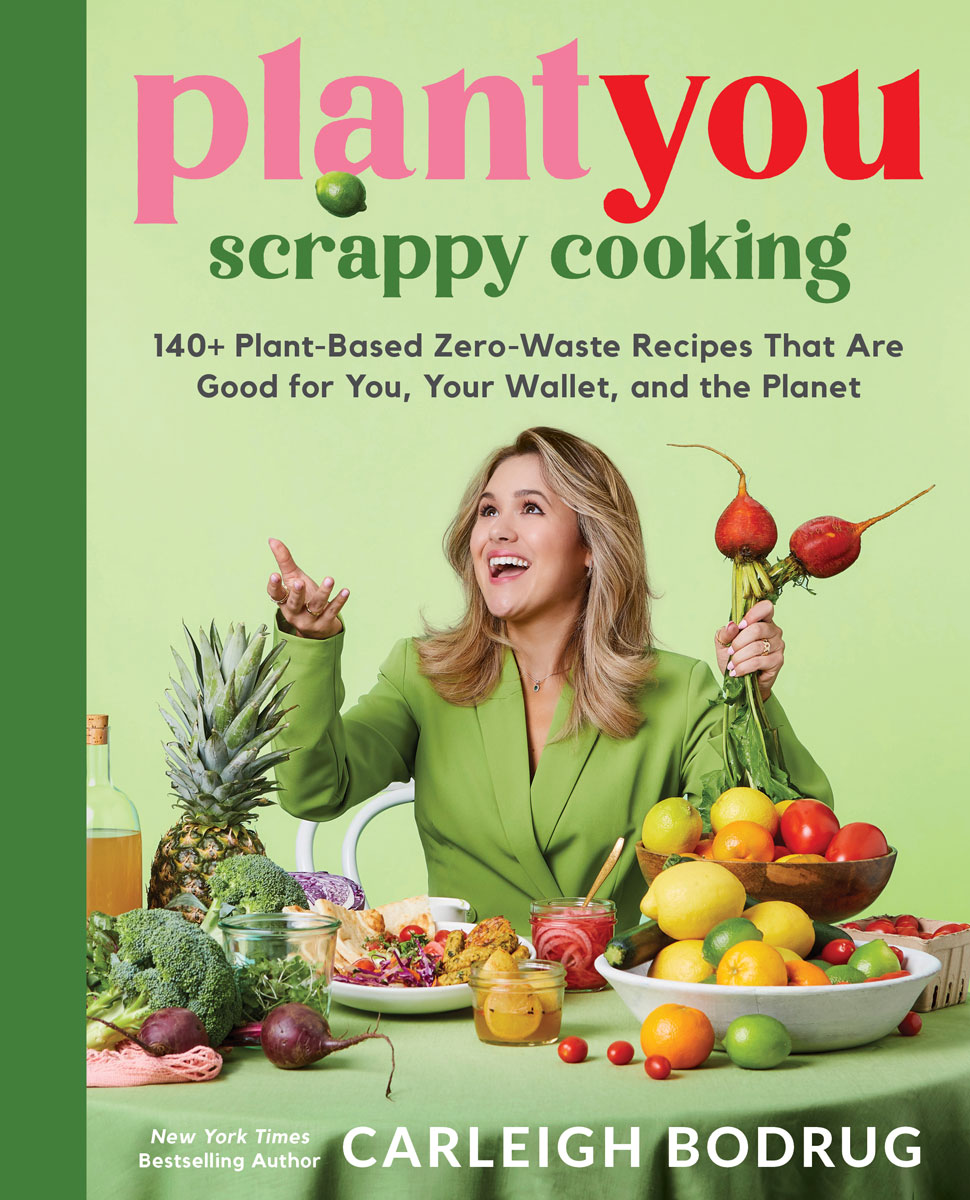
Bodrug, the author of the new book "PlantYou: Scrappy Cooking: 140+ Plant-Based Zero-Waste Recipes That Are Good For You, Your Wallet, and the Planet,” believes that entering the zero-waste space does not have to be very challenging at all — and, in most cases, can be both fun and imaginative, too. And, as inflation, “shrinkflation” and “greedflation” continue to cause food prices to skyrocket, this practice is something we all could get better at adapting. 

“The idea for ‘Scrappy Cooking’ started from a shocking statistic: 30 to 40% of the entire United States food supply ends up in landfills, a lot of which stems from household waste,” Bodrug told Salon Food. “As you may have guessed, food waste is a not-so-great thing for our planet and obviously, our wallets as well.” 

Plant You Scrappy Cooking coverPlant You Scrappy Cooking cover (SB Creative Studio)
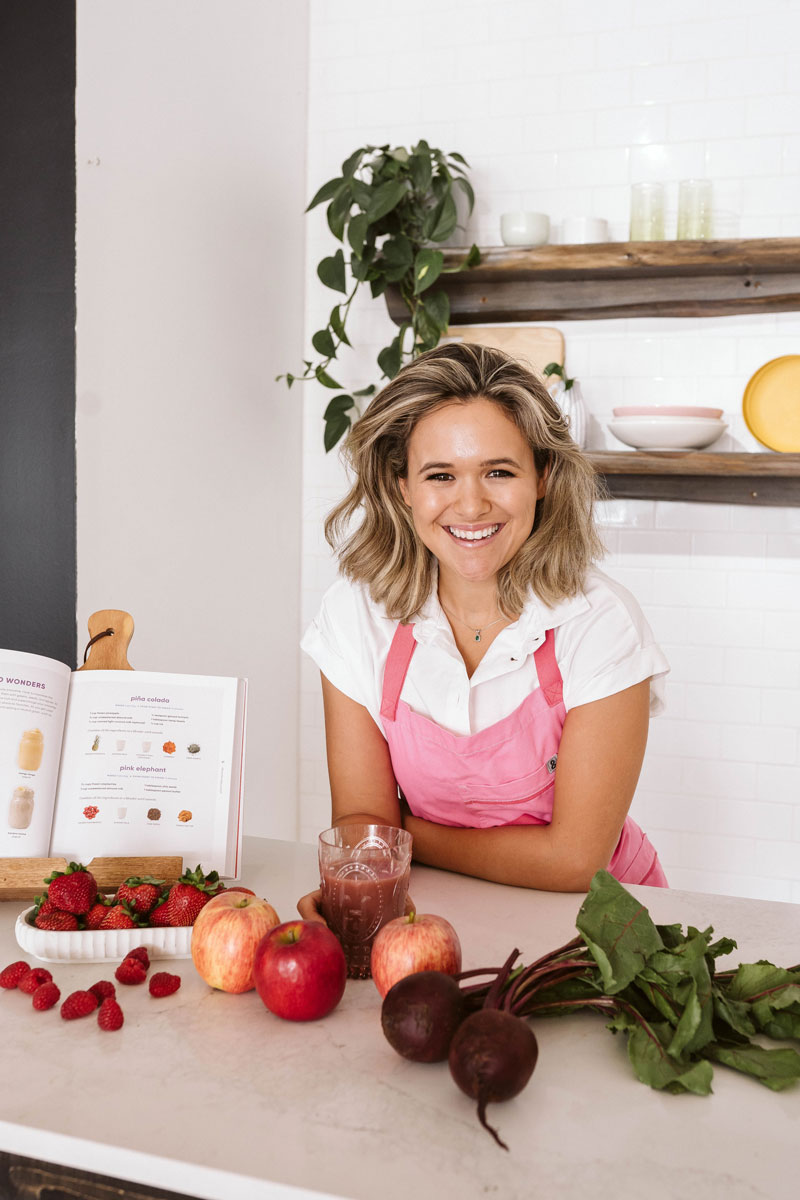
As a vegan blogger, Bodrug said she was “already mindful of [her] environmental impact,” but it wasn’t until she published a quick Instagram video of her turning discarded orange peels into candy resonated with the platform’s users, garnering 1 million views, that she realized she had an audience for her message.

"I couldn’t believe how many people were jazzed about reducing their food waste, and eating more plants,” she said. 

As such, in reading through the book, Bodrug’s enthusiasm is palpable; her tone and approach is so unpretentious and straightforward that, each time she recommended a minor tweak or simple change, I found myself inadvertently nodding and thinking, “Yes, I must incorporate this!” 


Want more great food writing and recipes? Subscribe to Salon Food's newsletter, The Bite.


For instance, Bodrug says she is “obsessed with repurposing coffee grounds.” 

“I have a delicious mocha flavored granola recipe in my new cookbook that utilizes spent coffee grounds to enhance the chocolate flavor,” she said. “Additionally you can use spent coffee grounds in a bowl in your fridge as a natural deodorizer, or as a fertilizer for some plants." 

Win-win! Who would turn that down? Similarly, I'm obsessed with onions and garlic and was especially intrigued by a trick Bodrug mentions in the "Got this? Make that" section of the book. 

"One of my favorites is turning onion and garlic skins into a delicious seasoning,” she said. “Not only does this save me from purchasing packaged seasoning at the grocery store, but it's also incredibly simple to do. You'll find this recipe featured in my cookbook, along with various other powders." 

Beyond ideas for transforming kitchen bits and bobs, Bodrug also outlines some broader best practices for cutting down on cooking waste: invest in “glass sealable storage containers” for produce like berries and spinach; wrap leafy greens in a clean cloth or paper towel “to help absorb moisture, which is the culprit for a lot of spoilage”; root vegetables should be absorbed in dark, cool well-ventilated, while most vegetables don’t do well in plastic bags, so instead opt for mesh or cotton. Or, as she put it, just simply “go without.” 

Furthermore, one of the simplest ways to cut down on food waste is to actually keep track of your pesky leftovers and make a quick plan for how to utilize them. 

“Eat them for lunch the following day, incorporate them into new recipes, or freeze them for later use,” she said.

We need your help to stay independent

Once you’ve tackled some of the food waste in your home, Bodrug said that conscientious shoppers can find ways to make a difference even before they bring food into their kitchen. For instance, “best before” dates on food packaging can sometimes be misleading. "Best before dates are exactly what they suggest — best before,” she said. “We take them very literally and think the food is no longer edible after that date, but it’s more than often not true.”

The best way to approach shelf life is to use your senses, she continued. 

"Smell and look at the appearance of the food for any signs of spoilage. That’s going to be a better indicator than anything else,” Bodrug said. Shoppers can also keep an eye out for blemished or less than aesthetically ideal produce while at the store. 

"So often wonky shaped butternut squashes or single bananas are left behind — so you can intentionally pick them up,” Bodrug said, which can then be turned into some of the recipes in her book. 

Carleigh BodrugCarleigh Bodrug (SB Creative Studio)

When I asked Bodrug about her favorite recipes from “Scrappy Cooking,” she mentioned the lemon peel pasta where she utilizes “the whole lemon from the juice to skin, ensuring no waste is left behind.” She also mentions her Citrus Cabbage Slaw and Broccoli Stem Summer Rolls, both of which incorporate broccoli stems. 

If you’re paying for broccoli stems by weight, then discarding them, you’re throwing money down the drain — and they’re so delicious,” she said. 

The book is also so bright and upbeat, with colorful visuals galore, including images of each of the ingredients that go into each dish. 

“This journey was inspired by how I started my Instagram account, which initially focused on creating infographics demonstrating simple and easy recipes,” she said. “I've found this approach incredibly useful, particularly for first-time cooks, kids, and anyone looking to gain confidence in the kitchen, especially with plant-based cooking.”

For some, the notion of cooking zero-waste and plant-based seems wildly difficult and possibly too challenging to even approach, but Bodrug makes it seem seamless. And it's as simple as that to save money, prolong your produce, do your part to help preserve the planet, and also eat some darn good food, too. 

"I’m so grateful for where this scrappy journey has taken us so far, I’m eager to see how it makes a difference one recipe at a time,” she said. 

“No force in the world” will stop Israel from invading Rafah, Netanyahu claims

Israeli Prime Minister Benjamin Netanyahu said Tuesday that he still intends to invade the southern Gaza city of Rafah, despite U.S. objections.

“We will complete the elimination of the Hamas battalions, including in Rafah. There is no force in the world that will stop us,” Netanyahu told members of the Israel Defense Forces, CNN reported. “Many forces are trying to do this, but it will not help, because this enemy, after what it has done, will not do it again, it will cease to exist.”

According to Netanyahu, Israel has three goals with a Rafah offensive: “to return the abductees”; “eliminate Hamas"; and “ensure that Gaza no longer poses a threat to Israel.”

In a video posted on his official Telegram account, Netanyahu added that he has set a date for a Rafah offensive, though he did not reveal it.

Netanyahu's announcement defies “mounting global pressure not to assault a city where more than 1 million Palestinians are sheltering,” NBC News noted. President Joe Biden has urged Netanyahu to call off the invasion, with the White House having expressed "deep concerns" that Israel lacks a plan for protecting civilians.

At the same time, Netanyahu faces political pressure at home. Far-right members of his coalition are insistent that the war in Gaza must go on, while protesters across Israel, unhappy with the prime minister's handling of the country's security, have been demanding that Netanyahu call early elections that could see him thrown out of office.


“Unprecedented”: Jared Kushner’s “unusual” dependence on foreign money shocks other investors

Technically, it would not be accurate to say that literally all of the investment money that’s been flowing to Jared Kushner since he left the White House has come from foreign sources, such as the governments he worked with while serving former President Donald Trump. The actual figure, as reported by The New York Times on Tuesday, is “just” 99 percent, the vast majority of the $3 billion raised thus far coming from authoritarian governments.

It’s an arrangement – Kushner cashing in on relationships forged while his father-in-law was the president – that at the very least constitutes an appearance of impropriety. It is also far from the norm, experts say.

In 2022, just six months after leaving the White House, Saudi Arabia’s sovereign wealth fund invested $2 billion in Kushner’s newly formed private equity firm, despite misgivings among the fund’s staff that Trump’s son-in-law had little relevant experience. Kushner has also accepted investments from state-managed funds in Qatar and the United Arab Emirates. 

Kushner, who won’t rule out serving in a second Trump administration, has in turn invested some of that money in a foreign project, last month announcing a $500 million real estate project in Serbia at the same site where Trump himself had previously sought to build a luxury hotel.

J. Robinson West, a former Reagan administration official who spoke to the Times, said there were a number of “unusual” things about Kushner’s post-White House business dealing.

“A lot of people leave government and become lobbyists or they start consulting firms,” he said. But no one that he recalled had ever received so much money, so fast, from foreign governments – especially not ones they worked with while working for a president.

“I think it’s fair to say that the spirit of public service and George Marshall and Robert Lovett — those days are past,” he said.

Steve Rattner, an economic analyst who himself leads an investment firm, commented that he's never seen a U.S. private equity firm so dependent on foreign cash. "This is extraordinary — unprecedented — I've never seen anything like it," he told MSNBC.

“Unconscionable”: Jon Stewart blasts Biden’s “verbal gymnastics” about Israel’s war in Gaza

Jon Stewart did not mince words on Monday in his appraisal of the United States' role in the ever-worsening humanitarian crisis unfolding in Gaza.

During the latest episode of "The Daily Show," the outspoken comedian conducted a "wellness check" on Gaza, as Sunday marked six months since Hamas launched a deadly armed offensive against Israel. 

“As the war has grinded on, justice is beginning to seem more like cruelty,” Stewart said on Monday's segment. “But not to worry: America, the shining city on a hill, is on the case with our universal values.”

Frustrated by the incongruous response by U.S. government to the war in Ukraine compared to the war in Gaza, Stewart displayed clips of President Joe Biden and Secretary of State Anthony Blinken commenting on the former crisis, which the lawmakers referred to the Kremlin aggressor as a "brute force" and deemed its weaponization of food "unconscionable." Notably, a similar situation is unfolding in Gaza, with UN experts warning that widespread famine is imminent in the region. 

“There is a literal famine in Gaza caused by the war,” Stewart said. “I assume America will also consider this unconscionable. Well you can’t spell unconscionable without concern. At least part of it — the ‘con’ part."

The late-night host then poked holes in the government's approach to assaults on the free press, given that White House Press Secretary Karine Jean-Pierre had previously stated that the Biden administration vehemently condemned "the Russian government’s continued targeting and repression of journalists.” In February, the Washington Post reported that at least 85 journalists and media workers had been killed in the war in the Middle East.

Stewart then cited a new piece of Israeli legislation that allows the country to ban certain media outlets they deem to be a threat, before playing another clip of Jean-Pierre responding to news that Israeli Prime Minister Benjamin Netanyahu had vowed to shutter Al Jazeera media network. 

“If it’s true, it is concerning," Jean-Pierre said.

“Oh, we’re concerned again,” Stewart replied sarcastically. “How about: ‘If it’s true, we condemn it’? And by the way, is it true? Feels like you could probably just call someone and just be like, ‘Is this true?’ And if they’re like, ‘Yeah, it’s true,’ you can be like, ‘That’s concerning. Not condemning, but concerning.’”

We need your help to stay independent

“This is where Israel’s actions get interesting,” he continued. “Because you might say Israel’s war is different than Ukraine’s. Israel is responding to an attack and a hostage crisis.

"But in the midst of that, they pulled a little something in the West Bank on March 22 that might be notable," he added, referring to Israel's largest land seizure in the West Bank since the signing of the Oslo Accords in 1993.

Blinken, who happened to be in Israel that day, claimed he hadn't "seen the specifics" of the land acquisition. 

“You don’t know about it? They did it the day you f**king visited,” Stewart fumed. “Why do we tiptoe around on eggshells? They slap America in the face and our response is, ‘Well, if anyone slapped us in the face it would be concerning, that’s for sure.’”

“The verbal gymnastics that the American government must undertake so as not to offend the delicate sensibilities of a country we provide most of the weapons for is [insert incoherent scream],” he added. “Every time America tells the world that there’s something we won’t allow, Israel seems to say, ‘Challenge accepted.’”

"The Daily Show" airs Monday through Thursday at 11 p.m. on Comedy Central and streams on Paramount+

Useful hacks (or outright lies) that can trick toddlers into healthy eating

You know what's more difficult than advanced trigonometry? Getting your toddler to eat healthy on a consistent basis or getting them to try new foods. 

My daughter, who trusts me to take care of her, to slay all of the monsters under her bed, to hold her at doctor's appointments during shots, to explain things that she doesn't understand, to be her go-to guy for everything when everyone is around or when it's just us, does not, cannot and will not listen to any of my food recommendations. The nerve!

Doesn't matter if it's candy, cake, cereal, or whatever – if she doesn't know it, then she doesn't trust it. Sometimes I feel like she looks at me as if I am a scammer, a food scammer – a great guy when it comes to recommending movies or new cartoons or books, but a super scammer when it comes to anything edible.

“Hey baby,” I say in my sweetest voice. “You love pie and you love apples so I know you would just love this apple cobbler.” 

“Cobbler?” She responds one eyebrow raised, her small nostrils flaring over the plate, “Daddy, no. It’s be-sgusting!” 


Want more great food writing and recipes? Subscribe to Salon Food's newsletter, The Bite.


What confuses me the most is that sometimes she'll do this with foods she is very familiar with. Paying attention to detail, to some of the smallest things like packaging, the way it is arranged on the plate, and who prepared it, whether it's me or her mom. 

“Mommy, you are the best cook in the world,” she swoons, kissing up to my wife. “Your pancakes are so be-licious!” Daddy's pancakes are be-sgusting!” 

"We have been having this battle with our child since we switched her to solid foods three years ago and have developed a few ways to con her into eating healthy and sometimes trying new foods "

My wife could lay back and suck up all of the praise, but since she's a good sport, she explains to our daughter that they are the same pancakes, from the same company and we prepare them the same way — in the toaster oven, for four minutes, sliced into triangles and served with strawberries and whipped cream.

But that’s not good enough, my daughter requires more. 

We have been having this battle with our child since we switched her to solid foods three years ago and have developed a few ways to con her into eating healthy and sometimes trying new foods. I'm excited to share a few with you. 

01
Broccoli-sicles

I cannot personally vouch for broccoli-sicles as I have never tried them (fortunately for my family, broccoli is one of my daughter's favorite foods), but I picked this up from another parent as we waited for our kids to get out of dance class. She simply said that she puts a stalk of broccoli in the freezer, removes it when it's completely frozen and proceeds to let her child eat it like a popsicle. 


Again, we don't have to do this. It actually sounds disgusting. But maybe it will help you out. 

02
Keeping your teeth healthy

This is as mean as it is as disingenuous, but it might be necessary.


Trips to the dentist have taught me that candy and sweet juices destroy deciduous teeth. The problem is that most kids love candy and sweet juice. My wife and I were lucky enough to have this information before my daughter started eating solid foods and drinking things other than milk. So, how do you trick your kids out of candy and sweet juice? 


You just tell them that their teeth are going to fall out in bloody chunks if they indulge in candies or juice of any kind. I know this is a very bad lie, but this lie has gifted me a child who will go trick or treating for three hours straight, collect two big baskets of candy and won't try any. Her dentist remains happy.
 

We need your help to stay independent

03
Green French fries

This is another lie that was brilliantly cooked up by my wife. We never had to convince our daughter to eat French fries, I don't think anyone needs convincing to eat French fries because French fries are delicious. But you can't eat French fries all day and we know that. 


So, one night, we were out at a restaurant and my daughter kept requesting French fries. String beans —which I realize that many people out of my community call green beans — were on the menu. My wife raised her big eyebrows and said, “Instead of getting you the normal French fries, we are going to try green fries because they are special.” 


And my daughter ate that lie right up along with her string beans. I don't want to oversell this because my daughter still loves French fries, but now she knows that in order to get those normal fries you're going to have to enjoy some green ones first. 

04
Apple for pizza trade-off

My child loves pizza as much as anybody else with a pulse and would eat it every day all day if she could. As a parent, I think we should give our kids the foods they love; however, we should also make them earn those foods — and I do this by saying you can have all of the pizza you want, or spaghetti, or what every kind of carb you are craving on that particular day as long as you eat apple slices first. 


I treat apple slices like junk food dividends. You eat a few apple slices, you get some junk food — that way I know you're getting the fiber you need to digest the crap you love. 
 

05
Your new assistant

This is the number-one trick for getting your kid to try new foods and enjoy their vegetables.


I've done the research and I've talked to multiple parents who have also done their research — and as a collective, we all agree that our children are sweet little narcissists. They love to go to the market and help pick out the vegetables, to come into the kitchen and help mix up the seasonings, and to say that they took part in preparing the meal. My daughter goes so far that sometimes she excludes me and my wife by yelling, “I made dinner tonight and it is so be-licious!” 


They take pride in the food they help prepare, so let them! It will make your life a whole lot easier.

An activist working for RFK Jr. said the candidate could help return Trump to the White House

Rita Palma, an anti-vaccine activist who has worked as a consultant for Robert Kennedy Jr.'s campaign and is helping him get on the New York state ballot, openly discussed using the third-party candidate to help defeat President Joe Biden in November.

In a video presentation, the two-time voter for former President Donald Trump said that while she plans to vote for Kennedy, “if I wake up on Nov. 6 and Trump wins, I’m not going to be overly upset,” as reported by Politico. To her, a second Trump term would be better than the alternative: reelecting Biden.

The video of the presentation was first reported by CNN and posted on X on April 5, 2024.

Palma said that her “good strategy” of gathering 45,000 signatures to back RFK Jr. as an independent candidate could force a contingent election in November. A contingent election is when no candidate wins enough electoral votes, and gets thrown to Congress, where Republicans control enough state delegations to potentially throw the election to Trump. The last contingent election was in 1836; as it stands, RFK Jr. is not polling well enough to win a single state.

But Palma insisted that Republicans, for tactical reasons, should get behind the Kennedy campaign.

“If Republicans accepted the fact that New York, Maryland, Illinois, California, New Jersey, Connecticut, most of the Northeast is going to go blue, why wouldn’t we put our vote to Bobby and at least get rid of Biden and get those 28 votes in New York,” Palma said.

Following the backlash, an RFK Jr. spokesperson, in a statement to CNN, downplayed Palma's role while still describing her as an active part of the campaign.

“Rita Palma is a ballot access consultant responsible for scheduling volunteer shifts for our upcoming signature collection drive in the Empire State. She is not involved in electoral strategy, nationally or in New York,” said Stefanie Spear, a campaign spokesperson. (Palma is listed on the campaign's website as the co-host of an upcoming Kennedy fundraiser in Melville, New York.)

Spear went on to say that Palma’s statements were made as a private citizen and did not reflect the Kennedy campaign's actual strategy, which she described as trying to win the White House with “votes from former Trump and Biden supporters alike.”

Trump blasts MAGA ally Lindsey Graham on Truth Social for criticizing his abortion stance

Sen. Lindsey Graham and former President Donald Trump have been close allies in recent years. But following Trump’s comments on abortion Monday, in which the Republican candidate tried to distance himself from calls for a national ban, the South Carolina senator criticized him, "The idea of the Republican Party abandoning the opposition to late-term abortion, I think, would be a mistake." 

Trump did not take the criticism lightly.

“Senator Lindsey Graham is doing a great disservice to the Republican Party, and to our Country,” Trump wrote about one of his top allies on Capitol Hill, adding that the senator "constantly favors and promotes" military interventions abroad. Instead of abortion, an electoral burden for the GOP, Trump argued that Republicans should spend more time discussing the U.S.- Mexico border situation.

Trump’s public position on abortion is meant to disarm Democrats, who he claims “love this issue.” By pursuing a federal abortion ban, now, Republicans like Graham are “handing Democrats their dream of the House, Senate, and perhaps even the Presidency," Trump wrote.

Graham has been a devoted supporter of Trump in Congress, consistently defending him against Democrats, despite arguing in 2016 that Trump would destroy the Republican Party ("and we will deserve it," he wrote on social media at the time). When Graham introduced a bill in September 2022 to ban abortions after 15 weeks of pregnancy, he along with other anti-choice Republicans were hoping for Trump's support.

However, in Monday’s video, Trump, while boasting that he helped overturn Roe v. Wade, refused to publicly support a national prohibition. Graham, for his part, said he "respectfully" disagreed with that.

“The states’ rights issue, I think, is not about the pro-life movement,” Graham told HuffPost. “It’s a political position that I think doesn’t make sense if you’re pro-life, because pro-life is about the well-being of the unborn child.”

But other Republican senators who support a federal ban endorsed Trump's new, public position on the matter, at least for now, a seeming acknowledgment of how the issue has hurt the party's performance in recent elections.

“Some of the same Republican senators who supported that bill maintain it should be left up to the states, in yet another way Trump has scrambled traditional GOP orthodoxy and forced his party into uncomfortable debates they once agreed on,” HuffPost reported.

“There’s no way this United States Congress is going to pass a federal rule on abortion. I mean, it’s just not,” Sen. John Kennedy, R-La., told HuffPost. “A bill like that is dead as Dillinger, so why debate it? It’s not going to happen.”

Beyond slicing and snacking: The art of actually cooking with cheese

For as long as I can remember, cheese has been my favorite food. It is truly insurmountable to me. I have eaten more than my weight in specifically Parmigiano Reggiano and mozzarella over the years, and is the epitome of a comfort food for me — from the saline, crystallized bites in the aforementioned parmesan to the salty, crumbly bite of feta. 

So it’s a bummer that the “cheese” challenge in this season’s "Top Chef," which is remarkably set in Wisconsin, was so underwhelming. Unimaginative, droll, flat. Aside from a few particular dishes (Danny’s, Rasika’s, Michelle’s), the results of the challenge were very lackluster. I always love seeing Carla Hall, though!

But I digress: When it comes to cooking with cheese — as in actually incorporating cheese into a dish versus simply slicing it and serving it alongside honey, mostarda and olives — there are many things to consider. 

Cheese can lend a vast tapestry of flavor notes, profiles, textures and consistencies to a dish, based on so many of its inherent traits as well as how those traits are manipulated: Is it a central component of the dish? Is it incorporated into the dish? Or it is being used as a topping, such as grating cheese onto pasta, mixing cubes into salad — or even like Manny's curds on his reimagined poutine in this episode?There's also a whole other genre of grillable cheese, like squeaky halloumi, which is one of my absolute favorites. 

That's even without considering the variety of flavors cheese can lend a dish. Do you want the bite of gorgonzola or the mildness of brie? Do you want the crumble of feta or the melting capabilities of gruyere? Do you want a goat’s milk cheese in your salad or a sheep’s? Is there a rind on your cheese, and if so, is it edible? Is it stinky, like taleggio? The list goes on and on.


Want more great food writing and recipes? Subscribe to Salon Food's newsletter, The Bite.


The uses of cheese are myriad and practically infinite, but if you have some in your fridge or you’re just a verified cheesehead like me, here are some ideas for using those wonderful cheeses in ways other than simply slicing and snacking:

01
Incorporate into a sauce
You may have heard many mentions of Mornay on this week's episode — one particular mention was in Danny's terrific-sounding dish, which reminded so much of a dish I had at Crown Shy in New York a few years back. Mornay is essentially plain ol' Bechemel that is then enriched with Gruyere and sometimes parmesan. Yes, it is as good as it sounds. The way it enrobes and enlivens anything with which it is served is astonishing. Any macaroni-and-cheese you may have ever had was probably made with something similar, just with lots and lots cheddar (or Colby or Brie or gouda or Monterey jack or fontina or manchego . . .) instead.
 
But why stop at that? Use any of your favorite base sauces and whisk in a cheese and see what it might impart, how it shifts the flavor, how it changes the textures and so on and so forth. Sometimes, you might land on something incredible. Just be sure to always opt for a finely shredded or grated cheese, which will help it to more uniformly dissolve or melt into the sauce itself instead of resulting in a large, unappealing orb of quasi-melted cheese coated in a disparate sauce. 
02
Use in a stuffing or filling
I have made an inordinate amount of stuffed chicken breasts in my life. I usually opt for multiple cheeses, bread crumbs, lemon zest, a touch of cream, sometimes sun-dried tomatoes and lots of fresh herbs, but the specifics differ based on the season and what I have on hand. You don't have to just stop at chicken, though. Really, you can stuff anything. 
 
Of course, a pepper is always an option, but I love stuffed onions, tomatoes, eggplants and zucchini.
 
Furthermore, stuffed breads are always a wonderful option, like an uber-cheesy pepperoni bread or a savory cross-hatched bread stuffed with tons of cheeses, garlic and herbs. Of course, grilled cheese would also fall in this category (how did no one on "Top Chef" make grilled cheese and tomato soup in this episode?), as well as the always iconic stuffed mushroom. This genre of cheese dishes are typified by that ooey-gooey, "cheese pull" type moments.
03
Harness the melting qualities as a binder


One of my favorite things in the world is roasting vegetables and then, about halfway through the cooking process, adding some cheese (almost always gruyere and parm, sometimes mozzarella, sometimes fontina) and letting the cheese melt and brown, melding with the crisped vegetables. I love the way the cheese melts and pools, sort of trapping the veggies, the flavors of the cheese imbuing the vegetables and vice-versa — I truly haven't eaten vegetables any other way in years.


I pretty much always opt for a singular vegetable and I always let the sheet tray sit for a good five minutes for the cheese to begin to solidify. Sometimes, I like to top the cheesy roasted vegetables with picked shallots and a nut of sorts, like a salted pistachio or hazelnut. 


Conversely, the "binding" method is great, obviously, for sandwiches, as well as practically any potato or mushroom dish, stuffed items, or anything else you're looking to cook that needs something to help "fuse" it together. This is also the case for the deep, bronzed caramelization on my chicken parm., which is the single dish I've cooked the most over the years. 


In terms of embracing the "gooey" aspect of cheese, though, there may be no better usage than good ol' fondueOf course, there's also cascading, melted Raclette over any sort of potato, which is also unmissable. Cheese is just too darn good.

We need your help to stay independent

04
Experiment with pizzas and flatbreads
One of my all-time favorite dishes comes from a cookbook written by Christina Ha, the first and only visually-impaired person to win "Masterchef." It's called "Bombay Flatbread" and it's essentially naan bread — or whatever flatbread you have on hand or would like to make — topped with Indian-spiced spiced chicken, cilantro cream, mozzarella, feta and a fried egg. It's a wildly unique, bombastic dish and every bite is rip-roaring with amazing textural differentiation (melted cheese! runny yolk! spiced chicken!) and flavor.
 
Similarly, if you've had a Neopolitan pizza made with hand-torn chunks of fresh mozzarella, you know there's a vast difference when compared to a pizza made with shredded mozzarella. I'm a sucker for fontina on pizza and a classic white pie with mozzarella, ricotta and parmigiano is always an amazing textural experience. 
 
Try out different bases and different cheeses and you'll be amazed at the results, from the way the cheeses melts to how they brown and the varying flavor they take on depending on how long they're cooked.
05

Elevate soups and salads

Every bowl of Italian Wedding Soup must have freshly grated Parm. on top. All chili or baked potato soup requires some shredded cheddar. I'm obsessed with slightly melted Mexican cheeses on top of a taco salad. There's nothing like enormous chunks of feta in a Greek salad. I adore the cheesy, full-flavored creaminess of goat cheese scattered throughout greens, with some crunchy nuts and dried fruit to provide textural differentiation.
 
Sometimes, stirring cheese into the soup base itself is perfect, while other times, a sprinkling on top if the preferable option. I'm obsessed with pressed, cubed, super-thinly-sliced or otherwise manipulated stone fruits paired with creamy cheeses, like a burrata, with lots of salt and olive oil. Cheese is the perfect ingredient for both soups and salads, no matter if it's a starring ingredient or a mere garnish. 

"Top Chef" Takeaways, Episode 3:
 

  • loved how Rasika used simply cherries and onions in her Quick Fire dish, concentrating and focusing on those flavors and those flavors alone. She's terrific! 
  • I loved how astute and cutting the guest judge was and his critiques were super insightful and revealing — yet he was never properly introduced aside from a fleeting reference early in the episode. Is Kristen just not introducing the guests or is that being cut out? Similarly, I was confused last episode by that random man who was apparently a comedian and why everyone at that table would throw their heads back and laugh with fervor at every word he said. I loved how Padma would slowly but surely introduce every single person and a bit about them. I'm finding that pretty jarringly missing thus far this season. 
  • I really liked Kenny and think he was so unvarnished, upfront and refreshing in his confessions, which is such a rarity in modern reality TV, whether competitive or otherwise. Some of his dishes sounded so great, too  I really liked how committed he was to his culture and his cuisine throughout each dish. Alisha is similar in confessionals: Raw, self-deprecating, not putting on airs, not visibly attempting to make funny quips. I always enjoy those types of chefestants, who have been fewer and further between as the show’s continued on.

“Exploitation is just so rife:” HBO’s “Brandy Hellville” rips open the seam on fast fashion’s woes

One size fits all. Tiny tank tops. A prevailing image of whiteness and beauty tailored for young, rich teenage girls. These elements encapsulate the brand of Brandy Melville, a trendy, bohemian fast-fashion clothing company.

While the Italian brand has been operating since the 1980s, it hit its stride in America with its presence in Los Angeles in 2009. But really, Brandy Melville is known to women under the age of 30 for its peak Tumblr and Instagram influence. The brand capitalized on the beginnings of online influencer culture across social media, using teenage girls posting online about its clothing to advertise super soft, one-size-fits-all baby T-shirts and beach aesthetic to other plugged-in teen girls. They would then recruit young, beautiful girls to work and model for its stores across the country.

Almost instantaneously the brand became a cult favorite of teen girls with an eye for trendy fashion. Despite its popularity — the company amassed an Instagram following of 3 million — Brandy Melville has also been controversial since the late 2010s. As a teenager, I saw socially aware people on the internet banding together to boycott Brandy for its lack of size inclusivity, but attempts were unsuccessful.

But in 2021, a bombshell article by Business Insider reporter Kate Taylor reported on allegations of fatophobia, racism against Black and brown ex-employees and odd and inappropriate behavior with underage teenage girls. Then, a group chat between Brandy Melville CEO Stephen Marsan and other company employees leaked, revealing a number of antisemitic, anti-Black and misogynistic messages. This has led to two discrimination lawsuits against the brand and Marsan.

The HBO documentary, "Brandy Hellville & the Cult of Fast Fashion" — which debuts on HBO and Max at 9 p.m. on April 9 — rips open the seam that holds together the loosely woven story that lucrative fast fashion brands like Brandy Melville tell to exploit young, female retail workers all the way down the supply chain. 

Salon talked to director Eva Orner about whistleblowers, the global impact of fast fashion and how "the power is with the consumer, but they're being duped." 

The following transcript has been lightly edited for length and clarity.

I also grew up in the age of Tumblr, so I knew a lot about Brandy. What did you know about Brandy Melville before you took on this documentary and did you know about its cult following?

I wanted to do something about fashion, and particularly fast fashion, and I was looking for the right story. I had a meeting with the producers Jonathan and Simon Chinn, who are amazing, from the company Lightbox. We talked about it and they came back a few months later with the Brandy Melville story. You know, I'm not the age of you. I don't have a teenage daughter and I didn't know what it was. I did a bit of a deep dive and I was like, 'This is amazing.' So I didn't know anything.

The first thing I did was ask my friends with teenage daughters, and they were all like, 'Oh my god, my daughter's obsessed with it.' I went and looked at their closets and I talked to them about it. And then the one thing that I wanted to do was also open the story up to make it a little bigger, about the implications of where all of this excess clothing goes. That's why we went to Italy and we also went to Prato, to Ghana, to tell a bigger story. 

People know about Brandy because it capitalized on influencer culture. I think it was really successful because of that. During your interviews, what did you uncover about young girls' relationships with social media?

I say this about all of us, because I don't want to just blame young girls on this, but you know, it's addictive and it's captivating and I think we're all a bit obsessed with it and we spend too much time on it.

I have the odd friend, like my fiancé, [who's] not on any social media and never has been. It's really interesting to watch his life as opposed to my life. I'm not super consumed. But you know, [teenage girls] grew up with it and this is how they communicate and this is what they do and people want big followings. People want to be influencers — Brandy encouraged like crazy.

The biggest thing for me is when I look at all my friends' teenage daughters, they are basically unpaid brand ambassadors for all of these companies. It's genius — evil genius — of the companies. It's horrifying. Right now on TikTok, the biggest trend I think is face care for young girls. So there's all these girls between probably five [to] eight years old and 15 years old and they buy all this expensive face product. Then [they] make videos of it and then they post it and millions of people see it and replicate it. I mean, the companies are laughing all the way to the bank. They don't have to advertise. It's insane and I think exposing it is really important because if they stopped, the companies would collapse. I think you realize the power is with the consumer, but they're being duped. 

At the center of this is Brandy Melville's CEO, Stephan Marsan. We discover in the documentary that he's this middle-aged white man shrouded in mystery. How did you begin deconstructing this elusive figure and boss? And where did you start considering the numerous allegations of racism, antisemitism and discrimination against him? 

A lot stemmed from Kate Taylor's Business Insider article. That was the jumping off point. Then once you start talking to people, you find out more and more and more. Obviously, the two Italian men agreed to appear in the film anonymously. That's not them. That's actors playing them in the film, but off their transcripts. I think it's really hard when you have to make a film and the antagonist is a shadowy figure and there's literally three photos of him online. There's absolutely nothing about this man online. It's really extraordinary. And what's even more horrifying is he spends his days gathering photos of young girls who work for him. So there's tons of material of them. I mean, the exploitation is just so rife, but nothing of him. And then when you see him, it's really inappropriate, who he is and what he's doing. And it's the same as his offsider, Jessie, who was running the Instagram; he's equally the same. He is managing these teenage girls and again, he's a middle-aged man. It just feels really wrong and incredibly exploitive and the industry is such an exploitative industry. The fashion industry is mostly female workers are all being exploited, whether they're models down to the workers, and it's mostly run by men.

We need your help to stay independent

You've mentioned two actors speaking from transcripts, how did that process go? These two people are involved in a discrimination lawsuit against Brandy and they decided to stay anonymous. Was it challenging to film?

I mean, everything in this film was really challenging. It was actually surprising because I've done a lot of stuff in war zones and with refugees, and there I haven't had that kind of hesitancy to go on camera. I mean, starting with the girls — and I really liked to point this out — we spoke to so many girls and reached out to so many girls and ex- and current employees, and like 95% of them said no to being in the film. They would share their stories often, not always, but there's a level of fear, you know, fear of retribution. They're scared of the people who own the company, but they're also young girls starting their careers, so they're scared of going on camera . . . it could stop them from getting a job.

"I wanted to get to the end of the film and to have people more informed about the global impact of buying a T-shirt and their choices."

So, my first thing is that all of the young women who appear in the film are the heroes of this story. They are whistleblowers. They are brave. Most of them said no, and I cannot show my gratitude and awe of how strong and brave they are. It's an example of when young women speak out, they have a powerful voice and I think that needs to be galvanized more and they need to be manipulated less. So, I think that was a really amazing thing.

And the two Italians who I have mentioned and — I'm actually in Kate's article, and so we were introduced to their attorney, and then it was a lot of negotiation from 'maybe,' to 'yes, but I don't want to be on camera' and 'no, you can't use my voice.' 

So I said we can do a Zoom interview that I record. We'll cut it into the film. And then once we're pretty much locked, we will have actors sit in silhouette, reading from your transcripts. They agreed to that and I think it works really well. I think it's really effective. I think you just go with it and forget that they are actors. We brought Italians to play them because their Italian [had] strong Italian accents.

Honestly, I really didn't even fit the pieces together until you mentioned that because it felt like they were actually them. So it was a success.

That's why I didn't show their faces. 

But again, I feel like they didn't have to speak and are really brave to do it. And I feel like whenever you have a whistleblower in a film, without whistleblowers, we are in the dark, we are in big trouble. And I think whistleblowers are getting more and more concerned and scared to speak because of laws changing and governments changing and journalists are the same. So I'm always like, without these incredibly brave people, we have nothing. 

You highlight the environmental cost of fast fashion, and it's laid out perfectly from the beginning of the supply chain with exploited textile workers to exploited teenage retail workers. Why was important to highlight the stark racial and environmental inequity in fashion?

It would have made my life a lot easier to just stick with an exposé on Brandy, but I wanted to get to the end of the film and to have people more informed about the global impact of buying a T-shirt and their choices. And I thought, honestly, when you see those images from Ghana, from the beach in Accra — my crew and I have shot in war zones and we've seen the worst of humanity and the best and standing on that beach for the first day in Ghana our jaws were on the floor, and we were kind of like, "This is one of the worst things we've ever seen."

I mean, I'm literally getting chills. It was so shocking. And you realize you're part of the problem. It's so shocking. So I really wanted that to be in the film. And I wanted you to get to the end of the film, and this is why the last line of the film is 'We need to buy less.' Look there's lots of different technologies and solutions that are in progress at the minute, but I'm just checking my facts. One-hundred billion garments are produced nearly globally and most of those are discarded in the first year of wearing them. We don't need as much as we have. We don't need these massive closets. 

In terms of just day to day, we just need to buy less, and if our buying went down even 20%, 30%, 40%, — I mean, let's go for 80% or 90% — but even if you've just stopped buying 30% of what you're buying now, if everyone did that, it would make an impact. 

It would really hit the businesses who are making all this excess product that we don't need. Lee is one of the women who works in Ghana [and she says], 'You know we've we've made enough clothing we don't need to make any clothing.' So I really just hope that people see this film. Everyone who worked on the film is affected. We've all cut down our consumption by probably 70-80%. It's really, just take a minute and don't buy it instantly. That's what the algorithms are trying to make you do. 

The image that Brandy has created to sell their clothes is this Western standard of beauty: White, blond, light eyes, skinny and beautiful. While interviewing former Brandy employees, how did this ideal affect them long term? And what does it say about our culture that this is still the beauty standard perpetuated in fashion?

Kate Taylor, who was the initial journalist who uncovered this, is in the film. She says at the beginning of the film, 'I didn't think that's what this generation was about.' You know, there's so much inclusivity and diversity, but that is a new thing that didn't exist when we were growing up. Maybe [diversity and inclusion] is not as deep as we really think it is because something like Brandy exists. What's great is that the ex-employees, who are in the film really spoke about it honestly, I love their honesty. I love when Natasha says 'I don't know why we wore it because everyone wore it.' That's exactly what we all did at school and it's very easy to make fun of that, but to me, that honesty is extraordinary. When Kate says she felt amazing when she was complimented in a Brandy store and you know, it was like being a cool girl, and that's fine. That's what growing up is all about, but this company exploits that.

Did doing this documentary make you look at clothing and the fashion business differently in your own life?

It's so interesting because I love fashion and that's how this all started. I mean, I love watching fashion documentaries. I loved you know, not buying excessively, but I definitely have too much stuff. I think it's made me not like the fashion business and to not be as interested in it. I'm interested in the kind of designers doing real work with recycling, like the company in Italy, Manteco, who makes all that incredible, like cashmere and recycled wool. To me, that's sexy and interesting, taking all our old woolen cashmere and turning it into a gorgeous product. To me, that's interesting and it needs to be scaled up.

"To be truly sustainable means not making something new."

So, I feel like now I'm more interested in the activism. Aisha, who is a woman in the film, runs an organization called Remake which is all about activism and campaigning. I sort of switched my focus to 'I still want to look nice and be fashionable and look at fashion, but I don't want to read fashion magazines.' I'm also incredibly critical and have very little patience for companies that call themselves sustainable and they're not. I feel like everyone's doing it. You can have one organic t-shirt in your line and say you're sustainable because there's no regulation in the global fashion industry. You go on any website and it says sustainable and you feel good about what you're buying and it's simply not, it's just greenwashing, you know? To be truly sustainable means not making something new.

How does this documentary fit in with your other work? I know that you've done exploration into Bikram yoga and the Ohio State University abuse scandal. What about these stories have a common theme?

I'm just definitely into exposes these days. I'm definitely into giving a voice to people doing good, representing the underdog. You know, I historically did a lot of films in war zones with refugees, and I'm not known for doing easy films. When I said I love fashion, I'd love to do something in fashion, I'm very quick to say, 'But I don't want to do a celebrity designer piece.' So I wanted to do something about fast fashion.

To me, it's about exploration, discovery, meeting people and going to places that I would never meet and that I've never been to. I find that endlessly fascinating and I'm so blessed that I get to do this. I do like a little bit of edge to what I do. I feel like you can lure an audience into something and then maybe they walk away with slightly changed behavior, whether it's more empathy towards a refugee or whether it's being more thoughtful about waste and what you buy. So I kind of like not banging people over the head with things, subtly drawing them in, educating them and maybe changing their behavior a tiny bit for the better if that's possible. But at the end of the day for me, it's about stories. You know, when people bring you things or you come across things, you know instantly if it's something you want to spend a few years of your life on.

"Brandy Hellville & the Cult of Fast Fashion" is now streaming on Max.

Shake Shack throws shade at Chick-fil-A by offering free sandwiches on Sundays

If you're a Shake Shack stan, gear up for this month because you might be able to procure some free chicken sandwiches. The chain is offering free Chicken Shacks every Sunday during the month of April. "Here at Shake Shack, we pride ourselves on our Chicken Shack which is available 7 days a week," the company said in a statement, clearly making a very-thinly-veiled reference to competitor Chick-Fil-A.

In order to get your free sandwich, which includes a crispy chicken breast with lettuce, pickles and buttermilk herb mayo on a bun, you need to place an order of a minimum of $10 at either a Shake Shack kiosk or via the app or website. This can be for either a delivery order or pickup and guests need to use the code "CHICKENSUNDAY." Per the terms of the deal, this exclude Shake Shack locations in "airports, stadiums, arenas, travel plazas and museums." 

According to Chick-fil-A's website, the company has been closed on Sundays since founder S. Truett Cathy opened his first restaurant in Georgia. "Having worked seven days a week in restaurants open 24 hours, Truett saw the importance of closing on Sundays so that he and his employees could set aside one day to rest, enjoy time with their families and loved ones or worship if they choose, a practice we uphold today," the company writes. 

Will Chick-Fil-A retaliate and return the shade? We shall see.

“Embarrassing himself”: Experts say Trump delay rejection shows “courts are fed up” with his tactics

Former President Donald Trump will have to stand trial next week on charges of fraud related to hush payments his personal attorney made ahead of the 2016 election, a New York appeals court ruled late Monday, dismissing the Republican candidate’s latest attempt to stall justice.

“Defendant’s application for a stay of trial… is denied,” Judge Lizbeth González of the New York Supreme Court Appellate Division wrote in an April 8 order. Trump had been seeking to delay his Manhattan trial, set to begin April 15, asking the appellate court to push back the start while he fights to change the venue. Trump’s attorneys have argued that New Yorkers, including Manhattan Judge Juan Merchan, are too biased against the former president to give him a fair trial.

In court, prosecutors pushed back against that claim, describing it as another delay tactic and an insult to the justice system, Politico reported.

“The question in this case is not whether a random poll of New Yorkers from whatever neighborhood are able to be impartial, it’s about whether a trial court is able to select a jury of 12 impartial jurors,” Steven Wu, a lawyer with the Manhattan District Attorney’s office, said Monday. The defendant has himself tried to taint the jury pool with “countless media appearances talking about the facts of this case, the witnesses, and so on,” he said.

Monday’s ruling means that jury selection will indeed begin on April 15, with Trump facing some 34 charges of falsifying business records to cover up payments made to adult film star Stormy Daniels, who has alleged that she had an affair with the Republican. Trump has denied the allegations against him.

CNN legal analyst Norm Eisen commented that Trump’s latest effort to delay the trial was, by his count, the former president’s “ninth delay tactic.” Trump also on Monday sued the judge in the Manhattan case as part of a separate legal effort to move the case out of Manhattan and lift the gag order imposed on him after he publicly attacked the judge and his family.

Eisen said Trump’s argument – that the case should be postponed and moved because of New Yorkers’ alleged bias – was never going to work since courts already address potential bias by quizzing prospective jurors during the jury selection process. “It was a dead loser from the get-go,” Eisen said.

We need your help to stay independent

Former U.S. Attorney Harry Litman noted on X, the website formerly known as Twitter, that the appeals court judge did not even refer the question to a full panel for review, instead rejecting the Trump legal team’s arguments in a “one sentence unsigned order.” Trump, Litman said, “is flailing and embarrassing himself within the legal system.”

George Conway, the conservative lawyer turned anti-Trump commentator, also took note of the court’s quick and curt reply. “The Appellate Division issued this order so quickly the judges didn’t even have time to stop laughing,” he wrote on X.

The rejection of Trump’s latest stalling tactic comes just two weeks before the Supreme Court will hear arguments on whether the former president enjoys absolute immunity from criminal prosecution.

Andrew Weissmann, a former Justice Department lawyer who worked with former special counsel Robert Mueller, urged the nation’s highest court to follow the lead of the state-level judges. New York "courts are fed up” with Trump’s delaying tactics, he posted on X. “The U.S. Supreme Court [should] take note,” he said, “and see how it’s done to vindicate our right to a public trial.”

Evangelicals won’t be bothered by Trump’s abortion gambit — they know he’s lying

On Monday, with great fanfare, Donald Trump released his "plan" on abortion in a video posted to Truth Social. As with most things Trump says, the short statement was an avalanche of lies. He claims overturning Roe v. Wade was "about will of the people." In reality, strong majorities of Americans disapprove of the Supreme Court's actions. He claims "all legal scholars" on "both sides" wanted to repeal Roe, another lie. Most legal scholars, except far-right ones, agree the right to privacy is justified by the Constitution but that such a dramatic reversal of precedent is bad law. He claimed, as he does routinely now, that Democrats want abortion "after birth," a vile lie that has become normalized through brute repetition. But the most consequential deceit is from Trump implying — but notably never actually saying — he's on the "leave it to the states" bandwagon. 

"My view is now that we have abortion where everybody wanted it from a legal standpoint" Trump said, which was another lie, most people wanted Roe to stay. "The states will determine by vote or legislation or perhaps both, and whatever they decide must be the law of the land."

As sharp observers noticed (which most mainstream media missed), Trump's language here is descriptive of the current state of play and avoids committing to any future action or inaction. Trump is usually sloppy with language, but as Jordan Weissman of Semafor points out, whoever wrote this statement carefully did so to leave the impression Trump is saying he will leave it to the states — but in fact, he leaves the door open to signing a national abortion ban. 


Want more Amanda Marcotte on politics? Subscribe to her newsletter Standing Room Only.


Matt Gertz of Media Matters correctly criticized the press for leaving "pro-choice swing voters with the false impression that he is more moderate than he actually is." As he points out, Trump sidestepped the question of what he plans to do if he's in the White House. That's because he plans to ban abortion nationwide. 

They know Trump will do whatever they ask of him, which is why they aren't sweating this whole thing where he pretends to be moderate to sucker the mainstream press.

Despite all his word games, Trump has never believed there's a legal reason to avoid a national ban. Before they settled on this cleverly dishonest video, his campaign was leaking trial balloons to the press about considering a 15- or 16-week ban. As the Washington Post reported, "as president, he backed a national 20-week ban." So he's lying when he claims to believe this "shouldn’t be a federal issue." 

But most telling is the muted response on the Christian right. The anti-abortion group SBA List said they were "disappointed," but promised to "work tirelessly" to elect Trump in 2024 and that "he will get there" on a national ban.  Alliance Defending Freedom, which argued the Dobbs case before the Supreme Court that ended Roe, completely ignored Trump's statement. Americans United For Life, Family Research Council, the Heritage Foundation, Turning Point USA: All loudmouthed fundamentalist groups, all angrily anti-abortion, and all responded with either silence, or in some cases, eager support to Trump's video. Penny Nance of Concerned Women for America, a longstanding anti-feminist group, seemed confident Trump will stick by the forced childbirth cause. 

That's because they all know it's a crock, and Trump will sign any abortion ban a Republican-controlled Congress passes. Moreover, they all know that, if he gets into the White House, Trump will abuse executive powers to create a backdoor ban on most, if not all abortion, by using the defunct-but-never-repealed Comstock Act to legally persecute those who transport drugs or materials that are used in abortions. They know he will do this, because they are all involved in developing the plan to do so, through Project 2025

For those still unaware, Project 2025 was created by a coalition of MAGA forces, including all these Christian right groups, to draft the blueprint for Trump to use to destroy rule of law and force an authoritarian agenda on the nation if he gets back into power. They are especially keen on abusing presidential powers to impose a Christian nationalist worldview, complete with abortion bans, reversal of LGBTQ rights, and a crackdown on sex education and contraception usage. They know Trump will do whatever they ask of him, which is why they aren't sweating this whole thing where he pretends to be moderate to sucker the mainstream press. 

As Melissa Gira Grant wrote at the New Republic, "On January 20, 2025, conservatives plan to resurrect a 150-year-old defunct law to ban abortion across the nation." And as she notes, "This is not a secret plan—far from it." It's published and heavily talked about in right-wing circles. Two Supreme Court justices, Samuel Alito and Clarence Thomas, unsubtly championed this during arguments in the recent case, still pending, involving the abortion pill. While the Trump campaign claims, "Project 2025 does not speak for President Trump," every sign suggests that their 900-page playbook will be adopted by a Trump White House since the leaders of Project 2025 served in his first administration and likely would control a second. 

Trump and his allies are clowns, but they are nonetheless deft manipulators of the media. They know how to hide the plans to implement draconian abortion bans in plain sight. The problem with the Comstock Act, an 1873 law that they plan to use to arrest people shipping drugs or materials necessary for safe abortion, is that explaining what it is, why it's still on the books, and how this will work is complicated and confusing. So mostly, the press avoids that. But a Trump video where he implies — but never actually promises — to leave it to the states feels simple. So the latter gets oodles of extremely misleading coverage, while the truth — that Trump's team has a fully fleshed-out plan to ban abortion — is largely ignored. 

We need your help to stay independent

As journalist Sarah Posner, an expert on the religious right's control of Trump's agenda, explained on Bluesky, "Trump *intends* to muddy the waters, not clarify his position. We already know his position. He wanted Dobbs because the base did. He'll do a national ban because the base wants it."

There are many ways Trump's intention to pass a national ban could manifest. If Republicans control Congress, they'll just pass a national ban and he will sign it. (Which he does not deny in this video, a point worth repeating.) If Republicans can't get the votes for a national ban, the Project 2025 scheme shows how he'll do it through executive action. It will start with directing federal law enforcement to arrest people who mail abortion pills. If that sticks, he'll rapidly expand to prosecuting pharmacies and medical suppliers who ship drugs and devices to doctors to use in abortions. Eventually,  the same legal framework will be used to go after contraception. MAGA leaders are already prepping their base to believe birth control bans are a good thing.  

It sounds dystopian, and one can hear the critics dismissing it as hyperbole. But people said the same thing about those of us who predicted Trump would attempt a coup if he lost in 2020, and that's exactly what he did. A lot of lower information voters don't believe Trump would really ban abortion, because, they believe, he's probably paid for a few in his time. (More likely: He promised to pay, but reneged after the fact.) But that is missing the point. Trump doesn't care about passing laws he himself wouldn't follow, since he already rejects following the law now. 

In many ways, Trump's reputation as a cad and an adulterer makes him even more obliged to pay back the Christian right with draconian abortion bans. After all, evangelicals had to swallow a lot of grief from the press and from liberals, who constantly point out how hypocritical it is for their community to back Trump, a man who has clearly never cracked a Bible, even as he sells them. They're going to feel Trump owes them even more if they secure him the White House because their investment came at such a high price. And there is no prize more precious to the religious right than a nationwide ban on abortion.