Spring Offer: Get 1 Year, Save 58%

NY Times “reviewing” Israeli reporter who liked post calling to turn Gaza into a “slaughterhouse”

Higher-ups at The New York Times have confirmed Sunday that they are looking into Anat Schwartz, who contributed to widely criticized reporting about Hamas' alleged sexual violence on October 7, after it came to light over recent days that the Israeli freelancer liked a social media post calling for Israel to turn the Gaza Strip "into a slaughterhouse" and other content.

"We are aware that a freelance journalist in Israel who has worked with the Times has 'liked' several social media posts," Danielle Rhodes Ha, a spokesperson for the newspaper, told The Daily Beast. "Those 'likes' are unacceptable violations of our company policy. We are currently reviewing the matter."

Confirmation of the review came after the popular account @zei_squirrel on X, formerly Twitter, highlighted Friday that Schwartz had liked the hateful "slaughterhouse" message from editor and radio presenter David Mizrahy Verthaim and other posts circulating misinformation about the October Hamas-led attack.

Esha Krishnaswamy, host of the podcast Historic.ly, who also began digging into Schwartz's online activity and history, said Saturday on X that she "has reactivated her account. But she has purged it of her previous genocidal 'likes.'"

The newspaper's social media policy states in part that journalists "must not express partisan opinions, promote political views, endorse candidates, make offensive comments, or do anything else that undercuts the Times' journalistic reputation," and "should be especially mindful of appearing to take sides on issues that the Times is seeking to cover objectively."

A filmmaker whose LinkedIn identifies her as working at the Israeli Public Broadcasting Corporation (Kan), Schwartz contributed to Times reporting from November to January, focusing on the Hamas attack and Israel's retaliation in Gaza—which has killed over 30,000 Palestinians and is being investigated at the International Court of Justice as genocide.

Schwartz has bylines on multiple pieces about accusations that Hamas militants committed sexual violence during the attack on Israel. She repeatedly collaborated with Times international correspondent Jeffrey Gettleman and Adam Sella, who has written dozens of articles for the paper since mid-October and is reportedly her nephew.

The Times had to add a correction to a December report by the trio, clarifying that Israeli police "are relying mainly on witness testimony, not on autopsies or forensic evidence." Another report by Schwartz, Sella, and Gettleman—'Screams Without Words': How Hamas Weaponized Sexual Violence on Oct. 7appeared on the front page of the print edition on Sunday, December 31.

Then, citing newsroom sources, The Intercept reported last month that the Times "pulled a high-profile episode of its podcast 'The Daily' about sexual violence perpetrated by Hamas on October 7 amid a furious internal debate about the strength of the paper's original reporting on the subject."

A newspaper spokesperson, Charlie Stadtlander, told the outlet at the time that "as a general matter of policy, we do not comment on the specifics of what may or may not publish in The New York Times or our audio programs."

The Intercept's Ryan Grim said Sunday that sources told him the Times "is now cutting ties" with Schwartz. He also pointed out that the paper's podcast hasn't put out an episode related to their reporting.

As attention on Schwartz grew over the weekend, multiple other U.S. journalists weighed in on social media.

"I sometimes joke 'it's another good day not to be The New York Times public editor' but the organization could *really* use one right now to investigate on behalf of the readers," said Margaret Sullivan, who held the role for four years.

Philadelphia Inquirer columnist Will Bunch wrote that "as a veteran journalist, I know there are a lot of award-winning reporters who would kill to get their byline in the NYT. But a filmmaker with ZERO experience shows up and gets on the front page covering the world's most controversial story? Something here is not right."

The Times—like other U.S. dailies—has long been accused of anti-Palestinian bias, criticism that has ramped up in response to the paper's coverage of Israel's four-month attack on Gaza.

Jazmine Hughes was forced to resign as a New York Times Magazine staff writer in November for violating its public protest policy by signing an open letter condemning Israel's genocide in Gaza. That same month, Jamie Lauren Keiles, a contributor who self-identifies as a "religiously observant Jew," also signed the letter and said that he would no longer write for the publication.

In October 2022, Hosam Salem, a Palestinian freelance photojournalist, announced on social media that The New York Times terminated his contract over posts in which he "expressed support for the Palestinian resistance against the Israeli occupation."

Jon Stewart’s solution to the Israel and Palestine war: “Let’s just ask God. It’s his house!”

Jon Stewart is no stranger to stirring the pot — even he can agree with that.

During Stewart's third episode back at "The Daily Show," he began by addressing the discourse surrounding his first two episodes since he returned to the comedy news show, in which he called out concerns about President Joe Biden's age and aptness. Stewart's critics have accused him of "bothsideism."

“A lot of discourse around it. A lot of carping back and forth. A lot of anger. A lot of commentary,” Stewart said. “Tonight, I’m done with it. Tonight is perhaps an amuse-bouche. A trifle. Something light! Tonight, we discuss Israel, Palestine!"

Stewart's return has largely dealt with the more sensitive parts of American society and politics, so it's only natural that he would deconstruct and attempt to find a solution to the ongoing war between Israel and Gaza. The war began with Hamas' Oct. 7 attack on Israel, which killed more than 1,200 Israelis, with Israel's response resulting in an unprecedented, full-scale military assault on Gaza. It has led to more than 28,000 Palestinian deaths and millions more displaced, according to the Human Rights Watch.

Stewart introduced the audience to a new segment "The Futile Crescent" with a "Middle East Conflict Disclaimer Cam." The sped-up infomercial voiceover said quickly, "Discussion of Israel and Palestine is not meant to endorse or justify each side." Following the disclaimer, Stewart dug into what is an ongoing "five-month brutal bombing campaign," and "we seem not closer to ending anything but the reigns of a couple of Ivy League presidents." 

The comedian aimed his criticism at Israeli President Benjamin Netanyahu's peace plan: "So your peace plan is a siege, military siege? You really think a military solution ends this cycle?"

Intercut with an interview with Netanyahu on "Face The Nation," he said, "victory is in reach and you can't have victory until Hamas is eliminated."

Stewart then responded, "But your plan to eliminate Hamas by destroying all of Gaza. . . uh . . . Doesn't that just make more Hamases?" alluding to the concept of "blowback" in which bombing terrorists often radicalizes people and just creates more terrorists.

Then Stewart took aim at the United States' support in aiding Israel with military assistance with bombs and other weapons. "Look, the United States is Israel’s closest ally. Israel’s big brother in the fraternity of nations," he said. "Israel’s work emergency contact. Maybe it’s time for the U.S. to give Israel some tough moral love."

This was followed by a clip reel of various US foreign policymakers and leaders, all urging to "stop the war crimes and atrocities and end the war today. It could happen right now."

"No one seems to be incentivized to stop the suffering of the innocent people in this region."

The audience responded to the clip with roars of applause and even Stewart was riled up and emphasized, "Right now! These atrocities must be—" Then he paused, holding a finger up to the crowd, miming getting a note from producers in his earpiece, "I'm sorry I'm being told the administration was talking about Russia and Ukraine. I apologize. Also a war crime."

"But I'm sure they're giving equally stern advice to Israel," he said unconvincingly. But clips of the Biden administration sharing the same sentiment about Israel's bombardment on Gaza were much softer in comparison. President Joe Biden vaguely said Israel should "be more careful."

"'Hey, Israel, take it down a notch. Could you please be more careful with your bombing?' is good advice," Stewart said. "But really, couldn’t the United States have told Israel that when we gave them all the bombs? They’re our bombs! This is like your coke dealer coming over with an eight ball and going, 'Don’t stay up all night.'"

Stewart also took issue with the United Nations' inability to create any solutions between the warring factions. A montage of several failed UN ceasefire resolutions due to vetoes from the Security Council, which is made up of Western leaders and other powers like China and Russia. 

Angrily Stewart said, "Why do you even have a f*****g building? Why? We could use that! We have a housing crisis. Give us back our f*****g building! It's just not right! What is the United Nations even?"

Frustrated with the lack of initiative from the Western leaders, the international community and even the Arab countries like Saudi Arabia, Stewart said, "No one seems to be incentivized to stop the suffering of the innocent people in this region."

"The status quo cycle of provocation and retribution is predicated on some idea that one of these groups is going away and they are not. If we want a safe and free Israel, and a space and free Palestine, we have to recognize that reality," he said.

He continued, "And I know there's a twisted and much-contested history in the region that has gotten us to this point. But we are at this point. Anything we do from here has to look forward."

So Stewart said he had three ideas for peace. The first is a peace-building camp between Israeli and Palestinian people in Maine. "OK that one hasn't been scaled up yet," he joked.

We need your help to stay independent

Solution two: “Let’s just ask God. It’s his house! He’s the one who started all this! Just ask God. He can tell us who is right! Is it the Jews? Is it the Muslims? Is it the Zoroastrians? If it’s the Scientologists, a lot of us are going to have egg on our faces.” 

And last but not least, Stewart said, “I actually think this last one could work. Starting now: no preconditions, no earned trust, no partners for peace. Israel stops bombing. Hamas releases the hostages."

"The Arab countries who claim Palestine is their top priority come in and form a Demilitarized Zone between Israel and a free Palestinian state. The Saudis, Egypt, U.A.E., Qatar, Jordan — they all form like a NATO arrangement guaranteeing security for both sides. Obviously, they won’t call it NATO — it’s the Middle East Treaty Organization. It’s METO,” he said. "Tweet it out! METO!"

"The Daily Show" airs Monday through Thursday at 11 p.m. on Comedy Central and streams on Paramount+

In the age of dragon fantasies, FX’s “Shōgun” defines what it means to be an event series

By the conclusion of FX’s “Shōgun,” we won't be talking about Cosmo Jarvis. He takes second billing to Hiroyuki Sanada, which is proper. It becomes apparent that Jarvis’ character, John Blackthorne, is designed to be overwhelmed by the forces surrounding him. From feudal Japan’s landscape and its politics, to the purposeful ferocity of Lord Toranaga and his vassals, to the etiquette intricacies he fails to grasp and the cost of his clumsy words, Blackthorne nearly drowns in all of it.

In the end, Blackthorne comes to understand that he can only pray to be towed by Sanada’s Lord Toranaga, who generates a gravitational pull in a constellation of indelible characters and mighty performances. Foremost among them, aside from Sanada, is Anna Sawai as Mariko, a haunted noblewoman and Christian convert whom Toranaga assigns to Blackthorne as his interpreter and minder.

Her face is a minimalist canvas through which all things translate plainly, making the rare appearance of a tear that much more piercing.

Sawai plays the lead in the Apple TV+ series “Monarch: Legacy of Monsters” and other roles foregrounding her action capabilities, none of which capitalize on her ability to manipulate silence with remarkable eloquence. Her face is a minimalist canvas through which all things translate plainly, making the rare appearance of a tear that much more piercing.

Sanada, a producer on “Shōgun,” is known to American film and TV audiences from co-starring roles in slick action movies like “John Wick 4” and sci-fi series such as “Lost” and “Westworld.” One imagines we'll see him in more projects after this, but it’s Sawai whose Mariko sets our minds whirling as a pair of characters stare at a portentous sunset, pondering everything that has transpired over the 10 hours leading up to this moment.

The shadow Toranaga and Mariko cast makes Blackthorne a footnote. Blessedly, we understand why that is — and Jarvis probably does, too.

ShogunAnna Sawai as Today Mariko in "Shōgun" (Katie Yu/FX)Nearly every major player in “Shōgun” is linked to a historical figure, with Blackthorne based on a British navigator named William Adams and Toranaga a stand-in for Tokugawa Ieyasu, who you can look up if you don’t mind spoilers.

Much of the plot remains as novelist James Clavell wrote it, with John Blackthorne and his dying crew washing up on the shore of Izu in the year 1,600, when the nation’s only relationship with Europe was through Portugal and its Catholic emissaries.

Toranaga’s daimyo Kashigi Yabushige (Tadanobu Asano) and his nephew Omi (Hiroto Kanai) are the first to encounter these filthy Englishmen, of whom Blackthorne is the only one who speaks Portuguese. The series’ handling of subtitles is one of its neater crafting choices, in that it trusts us to understand that while we hear characters speaking English to each other, most of the time they're actually communicating in Portuguese, as that is the only European language Toranaga's people would have encountered.

In context, it drives home the point that the communication that matters most is in Japanese, translated for the audience by way of the text onscreen.

Blackthorne’s mission is to establish a foothold in the “Japans” on behalf of the queen, but Toranaga is focused on trying to survive the machinations of his political rivals. The nation’s recently deceased ruler left governing power in the hands of his appointed Council of Regents, including Toranaga, a military hero and one of the king’s most trusted allies.

But the other regents, swayed by the politically cunning Ishido (Takehiro Hira), view Toranaga as a threat and scheme to eliminate him. Against these concerns, Blackthorne’s rivalry with the Portuguese is meaningless; besides, to him, Yabushige and the rest, Blackthorne, who they refer to as merely “Anjin,” or pilot, is a barbarian whose only value to them is his boat.

“Shōgun” is a true epic, which says something in this age of dragon fantasies.

Calling limited series "events" tends to be a misnomer these days, implying a distinction from typical episodic entertainment that is rarely borne out as consistently across all creative realms as it is here. “Shōgun” is a true epic, which says something in this age of dragon fantasies. Positively likening this production to “Game of Thrones” should be a relief to series creators Justin Marks and Rachel Kondo, who evidently strove to strike a balance between care and fearlessness without restricting the story’s breathing room.

You can see the work poured not only into “Shōgun's”​​​ construction but also its execution. Most of us can't specifically recognize the pains taken to ensure that the actors’ elocution is period-appropriate, each piece of cloth from their costume hangs perfectly or their hair is not only in place but also the right length to convey their station.

All this merges into an immersive topography that, unlike the Eurocentric novel or NBC’s adaptation, feels natural and familiar.

ShogunHiroyuki Sanada as Yoshii Toranaga in "Shōgun" (Katie Yu/FX)It must be said that the 1980 miniseries was a monumental undertaking in its time. It was filmed entirely in Japan and costarred the legendary actor Toshiro Mifune as Toranaga, around whom the kingdom’s political constellation methodically arranges itself.
But it’s Richard Chamberlain and his striding across Japan’s landscape people recall ever so vaguely — this was 44 years ago after all — a position that launched him as that decade’s king of made-for-broadcast TV romances in the U.S.

Back then, Japan’s contribution to popular culture was nowhere as prevalent as it is today, facilitated in no small way by the expanded availability of travel and other developments shortening the distance between nations and their people’s history.

We need your help to stay independent

Remaking “Shōgun” necessitates that the script rearranges around the gravitational forces at this story’s center: Toranaga, Mariko and other vassals. One sacrifice resulting from this approach is the plausibility of Mariko’s eventual attraction to Blackthorne, who is basically a lost pooch.

This is less of a commentary on Jarvis' talent than the result of being surrounded by potent personalities to whom Blackthorne must defer. Meanwhile, it also brings a sharper focus to Asano’s infusion of the slightest humor into Yabushige’s treachery and the attentive performances of ensemble players, such as Moeka Hoshi, whose character Fuji rises out of a wrenching tragedy, and Tokuma Nishioka, whose Hiromatsu serves as Toranaga’s heart and conscience in moments where he appears to abandon both.

“Shōgun” doesn’t soft-pedal the bloody reality of this feudal era; in the opening episodes, men die in several horrific ways, though seppuku, a suicide ritual that involves opening one’s belly with a blade before being beheaded, recurs throughout its 10 episodes.


Want a daily wrap-up of all the news and commentary Salon has to offer? Subscribe to our morning newsletter, Crash Course.


For all its brutality, the series retains the original’s romance without sliding into its predecessor’s cultural fetishism. Quite the opposite: It may inspire a yearning to learn more about this history.

Even if it doesn’t, you may find yourself contemplating how easily we can be seduced by compelling stories about people who do terrible things to achieve noble outcomes and how little most of us matter to their ends. Only great storytelling can achieve this feat. The rest take it for granted that they can refer to themselves as events and we'll believe them.

"Shogun" premieres with two episodes Tuesday, Feb. 27 on Hulu and airs at 10 p.m. Tuesdays on FX.

Leaked audio: Right-wing Texas Supreme Court justice caught blasting “brainwashed” GOP colleagues

Sign up for The Brief, The Texas Tribune’s daily newsletter that keeps readers up to speed on the most essential Texas news.


Speaking to a group of East Texas voters in September, state Supreme Court Justice John Devine cast himself as the antidote to his “brainwashed” colleagues on the all-Republican bench.

Their “Big Law” backgrounds, he said, had taught them to worry more about legal procedures — “standing, timeliness, or whatever else” — than their duty to uphold the Constitution.

“At times I feel like they would sacrifice the Republic for the sake of the process,” Devine said in the speech, a recording of which was obtained by The Texas Tribune. “My concern is that they all bow down to the altar of process rather than to fidelity to the Constitution. And when I say that, it’s not meant to be malice towards my colleagues. I think it’s how they were trained — how they were brainwashed.”

Particularly egregious, he said, was their ruling against Jeff Younger, a former Texas House candidate who had for years waged a public war against his ex-wife over their young child’s gender identity. In 2022, Younger asked the court to stop his ex from moving their child to California, which had recently passed a refuge law shielding parents fleeing from states that restrict gender-transitioning care for minors from prosecution.

The court declined to hear Younger’s lawsuit, which two justices argued was riddled with errors and based on “tenuous speculation” that the ex-wife would violate a standing court order that already prevented her from pursuing gender-transition therapies for the child.

Devine was still angry at his colleagues when he spoke at the September event.

“I'm not going to stand here sanctimoniously and say, ‘Well he didn’t cross a T or dot an I,’” he said of Younger. “We are talking about great constitutional issues here that will determine whether we survive as a representative republic or not. Are we going to just have it stolen from us? Over process for crying out loud?”

The audio is a rare glimpse into Texas’ typically-insular high court and window into the judicial philosophy of Devine, a former anti-abortion activist whose tenure as a jurist has been shaped by his religious beliefs and deeply conservative politics — sometimes, his critics say, at the expense of his impartiality.

Those concerns are now the focus of an unusually heated primary election for the relatively unknown Texas Supreme Court. Devine is the only justice with a challenger in the statewide, March 5 race, and his opponent, Second District Court of Appeals Judge Brian Walker, has centered his campaign on questions about Devine’s ethics dating back to the mid-1990s.

“We have a judge who just continues to violate ethical rules and the code of judicial conduct that's written by the Texas Supreme Court itself,” Walker said in an interview. “And if the people can’t trust that judges are going to follow even their own rules, then they'll have very little confidence that the rule of law truly will prevail.”

For 30 years, Devine has been a stalwart of the religious right. He claimed on the campaign trail that he was arrested 37 times at anti-abortion protests in the 1980s and 1990s, and says church-state separation is a “myth” that has shrouded America’s true Christian roots.

As a justice, Devine has earned praise from conservatives and repute as a bulwark between religious liberty and the activist judges they feel threaten it.

“He's very principled and passionate about his role, and about standing firm and exercising that role even if someone has a different opinion or they're trying to put some political pressure on him,” said Jonathan Saenz, president of Texas Values. “To me, it's a reflection of what the people of Texas want and expect.”

But to others, Devine’s tenure and September comments reflect what they say is a decadeslong erosion of norms that once dissuaded jurists from airing their political grievances or speaking on topics that could one day be in front of the court out of concern about the appearance of bias.

“Judges usually didn't speak that way,” said Sanford Levinson, a longtime legal scholar at the University of Texas at Austin School of Law. “And I don't think that trash talk is a particularly healthy phenomenon.”

That’s not an apparent concern for Devine, who in his September remarks also took aim at a number of Texas officials over a variety of legal or political disputes. Texas’ all-GOP Court of Criminal Appeals — which ruled that Attorney General Ken Paxton’s office could not unilaterally prosecute local voting crimes — is controlled by “RINOs” and “trans-Republicans,” Devine said. He also railed against Democratic leaders in Harris County, accusing them of “Democrat dirty tricks” and trying to “bastardize our election code” to steal elections.

Devine did not respond to interview requests or a list of questions, and a Texas Supreme Court spokesperson declined to comment on excerpts of Devine’s speech.

His comments have been criticized by Walker who, in the lead up to the March 5 primary, has also blasted Devine for missing half of oral arguments as he campaigned this year; auctioning private tours of the Texas Supreme Court for a 2023 GOP fundraiser; and not recusing himself from cases in which Walker argues that Devine had conflicts of interest.

[Despite ties to defendants, Texas Supreme Court justice didn’t recuse himself from sex abuse case]

Earlier this month, the Tribune reported that Devine did not recuse himself in a high-profile sex abuse lawsuit against Southern Baptist leader Paul Pressler and his former law partner Jared Woodfill. The plaintiff in the case, a former employee of Woodfill and Pressler’s firm, said he was sexually abused by Pressler at the same time that Devine also worked for the firm.

Devine has defended his decision not to recuse himself in the sex abuse lawsuit, previously telling the Tribune that he had no financial or other ties to the lawsuit or Woodfill and Pressler’s firm. He’s also downplayed his absences from oral arguments this year, calling it a “non-issue” and natural consequence of having an elected judiciary.

“The fact is we’re elected and part of our job is to run for reelection,” Devine told Bloomberg Law, which first reported on his absences this month. “It doesn’t do you any good if you don’t get reelected.”

Forged by a movement

After moving to the Houston area from Indiana in the 1980s, Devine enrolled at the South Texas College of Law and jumped head-first into Texas’ nascent anti-abortion movement.

“It was very small and fragmented — nothing compared to what it is now,” said Joe Pojman, executive director of Texas Alliance For Life. “We were very hopeful. But there hadn't been much accomplished tangibly at that point.”

With relatively few powerful allies or ways to spread their message, some in the movement turned their attention toward protests outside clinics. Among them was Devine, who later said that he served 34 days in jail for blocking the entrance to an abortion clinic during one protest.

One inflection point came in 1992, Pojman said, when Eileen O’Neill, a state district judge in Harris County, barred protesters from being within 100 feet of abortion clinics ahead of the Republican National Convention held in Houston that year. It was an “insulting” ruling, Pojman said, that they believed trampled on their First Amendment rights.

Later that year, the then-32-year-old Devine challenged O’Neill as a write-in candidate. Centered on the concept of “Christianity in American Law,” his campaign was supported by figures such as Steven Hotze, an anti-gay activist and longtime powerbroker in Houston’s conservative Christian movement.

Devine also faced opposition: Ahead of the election, 11 local Republican precinct chairs issued a letter opposing his endorsement by the state and local GOP, saying Devine did not honor the “wall between church and state.” Devine got some-40,000 write-in votes — a local record, but not enough to win.

Two years later, he again challenged O’Neill, casting her as an incompetent and unethical judge who was “absent from the bench almost as much as she has been present.” (Now, in his primary challenge, Walker is attacking Devine for missing 28 of 50 oral arguments before the court this term.)

In a Republican wave that was bolstered by straight-ticket voting in Harris County and anti-Clinton sentiment, Devine won the judgeship by a half of a percentage point — a victory, he said, for the “little people like myself” against the “bar association” and its “arrogant lawyers.”

Soon after taking the bench in Harris County, Devine adorned his courtroom with a copy of the Ten Commandments and spearheaded the refurbishment of a monument outside of a county courthouse that featured a Bible. Both moves drew lawsuits and controversy that Devine dismissed as attacks on religious liberty.

"We are at war now over the systematic elimination of Christian tradition from civil government,” he said in 2004, after a judge sided with a woman who sued over the Bible monument. "This is just one more battle. If they take the Bible, the battle will continue for the heart and soul of America."

In 1996, Devine used his courtroom for an after-hours event to announce a congressional campaign, earning a sanction by the State Commission on Judicial Conduct for using the "prestige of judicial office to advance the private interests of the judge or others.” And later that year, he presided over a lawsuit between a major labor union and U.S. Congressman Steve Stockman over political advertisements. Devine acknowledged that the outcome of the case could affect his ongoing campaign for a congressional district near Stockman’s, but declined to recuse himself until the next day — and after using the hearing to publicly blast the union.

Devine lost that congressional race, but was reelected as a Harris County state district judge and, in 1999, ran for the Texas Court of Criminal Appeals on a promise to be “short on words, but long on sentences.” He lost, but returned to district court until 2002, when he resigned to run for Harris County Attorney.

During that race, Devine was criticized by the Texas Ethics Commission, which found that he had not disclosed his position as president of a real estate company on financial forms dating back to 1994. The State Commission on Judicial Conduct also said that Devine may have violated other rules by listing his county phone number for the business.

Devine corrected his financial disclosures but denied using his office for personal business. He eventually lost in the 2002 primary.

“Devine intervention”

Throughout the aughts, Devine kept at his quest for elected office. He lost a second congressional race, in 2004, during which his campaign was accused by three GOP figures of mailing phony endorsements on their behalf. His 2006 bid for the Texas House failed, as did his 2010 campaign for a Montgomery County judgeship.

Still undeterred in 2011, Devine announced his challenge to incumbent Texas Supreme Court Justice David Medina in the statewide GOP primary.

Devine’s campaign focused heavily on the decision by him and his wife, Nubia, to carry a seventh child to term despite doctors warning that the child and Nubia could die. The child died almost immediately, but Nubia Devine survived.

Along the way, he picked up endorsements from religious figures such as David Barton, a prominent Texas activist who, like Devine, falsely claims that church-state separation is a “myth.” Also backing Devine was Texas’ Tea Party movement, which had coalesced around intense fears that President Barack Obama would use his second term to persecute Christians en masse.

The mood of the grassroots was reflected by a San Angelo woman who, in a letter to her local paper, compared American Christians to Jews in Nazi Germany and begged for a “Devine intervention.”

“If we don't get back to our Christian principles, like the Ten Commandments and honoring the Constitution of the United States, we are lost and so are our children and grandchildren,” she wrote.

What followed was a dark-red, anti-establishment wave. Tea Party darling Ted Cruz shocked the nation by beating Lt. Gov. David Dewhurst in a GOP runoff for a U.S. Senate seat. Donna Campbell, a little-known emergency room physician, ousted a 20-year incumbent in the Texas Senate.

Devine beat Medina by 6 points in a runoff and cruised to victory in the November 2012 general election.

The grassroots’ jurist

Devine’s rise to the court came at a pivotal moment for the movement that forged him.

By 2012, Texas — led by then-Attorney General Greg Abbott — was in the throes of an all-out legal war with the Obama administration, frequently taking his administration to court over environmental rules, the Affordable Care Act or other policies that GOP critics decried as federal overreach. Devine’s election also coincided with the growth of a broader conservative, Christian legal movement that has since been ascendent across the nation.

Devine has proven an ally of that movement: Since taking the bench, he has continued to praise “Judeo-Christian principles” as the bedrock of the nation’s founding. And he has at times been a key dissent from his colleagues on issues favored by the Religious Right.

Just before the U.S. Supreme Court’s recognized a constitutional right to same-sex marriage in 2015, Devine issued a 15-page dissent in which he criticized his colleagues' decision in a separate lawsuit involving same-sex couples. At issue were two women who married in Massachusetts and, after moving to Texas, were granted a divorce in Tarrant County.

The state appealed, arguing the couple had no right to divorce because their union was never valid under Texas law. The court majority later sided with the appeals court, ruling that the state had no standing to sue because it had failed to intervene when the divorce was in trial court.

The next year, Devine issued a lone dissent after the court’s majority declined to hear a legal challenge to the City of Houston’s decision to extend marriage benefits to the spouses of gay and lesbian city workers.

Texas, Devine wrote in his dissent, had a long history of dictating spousal benefits in order to encourage procreation or other societal goods.

“Surely the State may limit spousal employment benefits to spouses of the opposite sex,” he wrote. “Only these spouses are capable of procreation within their marriage, and the State has an interest in encouraging such procreation.”

Devine’s dissent was praised by conservative leaders, including Abbott and Paxton, who publicly criticized the court’s decision and campaigned for Devine’s colleagues to take up his position.

In a rare move, the Texas Supreme Court eventually revisited the issue, unanimously ruling in 2017 that the right to marry does not “entail any particular package of tax benefits, employee fringe benefits or testimonial privileges.”

Saenz, of Texas Values, was involved in that dispute, which he said catalyzed Devine’s reputation in conservative Christian circles as a defender of religious liberty who “is not going to be pushed around, bullied or bought.”

In Devine, Saenz sees the reflection of a movement that has grown from the at-times disjointed energy of the Tea Party era into something much stronger and better organized. Those voters, he said, have been increasingly attuned to the state’s judiciary. And in Texas, where judges are elected in typically low-turnout primaries, they have wielded their voting power to push courts toward their conservative legal and political views.

“Voters expect judges to follow the Constitution at the state and the federal level, and not see it as this living, breathing document that they can change depending on what the facts are of some case that may not fit their own political ideas or agenda,” Saenz said. “Judges like Justice Devine understand that this is what the voters expect, that this is what his role is. And he's very committed to it.”

Levinson, the longtime constitutional scholar, agreed that the judiciary has been increasingly shaped by voters. But he worries that trend has further polarized the country, opening up a “Pandora’s box” that has allowed intense, existential rhetoric to cloud nuanced and much-needed conversations about the role of religion in democracy.

“I think that's a perfectly legitimate topic for discussion and debate,” he said. “But we seem incapable of having it.”


We can’t wait to welcome you to downtown Austin Sept. 5-7 for the 2024 Texas Tribune Festival! Join us at Texas’ breakout politics and policy event as we dig into the 2024 elections, state and national politics, the state of democracy, and so much more. When tickets go on sale this spring, Tribune members will save big. Donate to join or renew today.

This article originally appeared in The Texas Tribune at https://www.texastribune.org/2024/02/27/john-devine-texas-supreme-court-conservatives/.

The Texas Tribune is a member-supported, nonpartisan newsroom informing and engaging Texans on state politics and policy. Learn more at texastribune.org.

“Orwellian”: Supermarket leaders say Republicans’ new SNAP plan makes cashiers the “food police”

For the last week, rumors and reports have been swirling about how Congress may finally be nearing a deal that would result in appropriating some much-needed additional funds to the Special Supplemental Nutrition Program for Women, Infants, and Children, or WIC, so that the organization won’t have to turn away potential program participants due to increased need and a lack of resources in 2024. 

Though, as first reported by Politico, Congressional Republicans want that money to come with a pretty big catch. In exchange for funding WIC, they want to to add two major provisions to the Supplemental Nutrition Assistance Program (SNAP): One would create a pilot program to catalog and restrict what SNAP participants can purchase with their benefits, while the other “would collect SNAP purchasing data with the goal of eventually restricting SNAP purchases.” 

Food security advocates and liberal policymakers have already raised major alarms about how rolling out these additional restrictions would both further stigmatize the use of federal nutrition benefits and could also lead to uneven application across all 50 states, especially in those where there is already a sizable backlog in administering benefits. Some states, like Alaska, have been struggling to keep up for years — at one point, more than 15,000 Alaskans’ claims were stuck in the backlog — but earlier this month, the U.S. Department of Agriculture sent warning letters to 46 additional states and two territories that were late on processing applications. 

However, another group that has a major stake in the SNAP program has also come out to declare Republicans’ plan untenable: the leaders of America’s supermarkets. 

In a letter sent last week to Senate Majority Leader Chuck Schumer, Senate Minority Leader Mitch McConnell, House Speaker Mike Johnson and House Minority Leader Hakeem Jeffries, the National Grocers Association — alongside nearly 2,5000 undersigned business and trade associations — said they were deeply opposed to “all efforts to restrict purchases under the Supplemental Nutrition Assistance Programs, a critical resource for struggling families in [their] home states.”

We need your help to stay independent

“One of the many reasons SNAP works so well is the ease of processing transactions for both retailers and beneficiaries, who can make their own decisions about the food that is best for their households,” the write. “Choice also ensures families can shop with the same dignity as any other grocery customer.” 

Efficiency and privacy were two of the main benefits of introducing Electronic Benefit Transfer (EBT) cards in the early 1990s. The cards revolutionized SNAP by allowing program participants to trade in paper vouchers for simple electronic cards loaded with benefits, streamlining transactions for both retailers and beneficiaries.

Three decades later, the organization maintains that a key to SNAP’s success is flexibility and that restrictions would limit the program’s ability to react to the changing needs of the community. For instance, they write, a cancer patient who is struggling to gain weight won’t have the same needs as a child who has diabetes

“Restricting eligible items to those approved by the U.S. Department of Agriculture will quickly drive-up food costs and strangle the program with needless red tape with no meaningful public health outcome to show in return,” the letter said. “The government will need to categorize more than 600,000 products and update the list each year with thousands more products. Grocery store cashiers will become the food police, telling parents what they can and cannot feed their families.” 

"No consumer purchases have ever been subjected to this Orwellian level of snooping by the Federal government, and it would set a terrifying precedent of intruding on the most private areas of our lives."

The industry’s concerns over becoming “the food police” run deeper than just telling customers what they can and cannot buy. In their letter, the National Grocers Association accuses the federal government of asking them to “spy on their customers’ buying habits and keep records of how they spend their own money.” 

“No consumer purchases have ever been subjected to this Orwellian level of snooping by the Federal government, and it would set a terrifying precedent of intruding on the most private areas of our lives,” they write. “The surveillance would yield incomplete data that would be useless for scientific study because SNAP purchases are only a portion of what beneficiaries purchase. On the other side of the register, retailers would be obligated to safeguard the confidential information from both criminals and competitors looking to get an edge.”

Congressional lawmakers have until Friday to reach an agreement on four appropriation bills to prevent yet another partial government shutdown. As reported by Forbes, if a shutdown occurs, the Department of Agriculture — which administers SNAP — would be impacted. While funds for SNAP are allocated a month in advance to prevent a complete cessation of services, the clock is ticking for lawmakers to reach an overall funding agreement. 

The 9 biggest bombshells from Wendy Williams’ unfiltered documentary “Where is Wendy Williams?”

Two days after Wendy Williams was diagnosed with aphasia and frontotemporal dementia, Lifetime premiered “Where is Wendy Williams?” — a four-part docuseries detailing the next phase of Williams’ life, following the end of her eponymous talk show. The bombshell production was at the center of legal action after Williams’ guardian filed a lawsuit against Lifetime's parent company A&E Television Networks, seeking to halt its release. The motion was denied by an appeals court Friday afternoon and the documentary was aired as a two-part event — the first two episodes were released on Saturday and the last two were released on Sunday.

Filmed between August 2022 and April 2023, “Where is Wendy Williams?” offers an intimate look at Williams’ life under her court-ordered guardianship, which was placed after Wells Fargo froze her bank accounts and claimed she was an “incapacitated person.” The series spotlights Williams’ alcohol addiction and health issues, which both worsened following the end of “The Wendy Williams Show,” along with her attempted comeback by way of a new podcast.

Prior to the documentary’s anticipated release, Williams thanked her supporters for their well-wishes in light of her diagnosis:  

“I want to say I have immense gratitude for the love and kind words I have received after sharing my diagnosis of Aphasia and Frontotemporal Dementia (FTD). Let me say, wow! Your response has been overwhelming,” Williams said in a statement released to The Associated Press through a representative for her care team. “The messages shared with me have touched me, reminding me of the power of unity and the need for compassion.”

“Where is Wendy Williams?” stars Williams herself along with her management team (notably her manager and publicist) and close family members, including her son, niece, nephew and sister.

Here are the nine biggest bombshells from the series:

01
Williams says her sister Wanda “hates that I love alcohol”
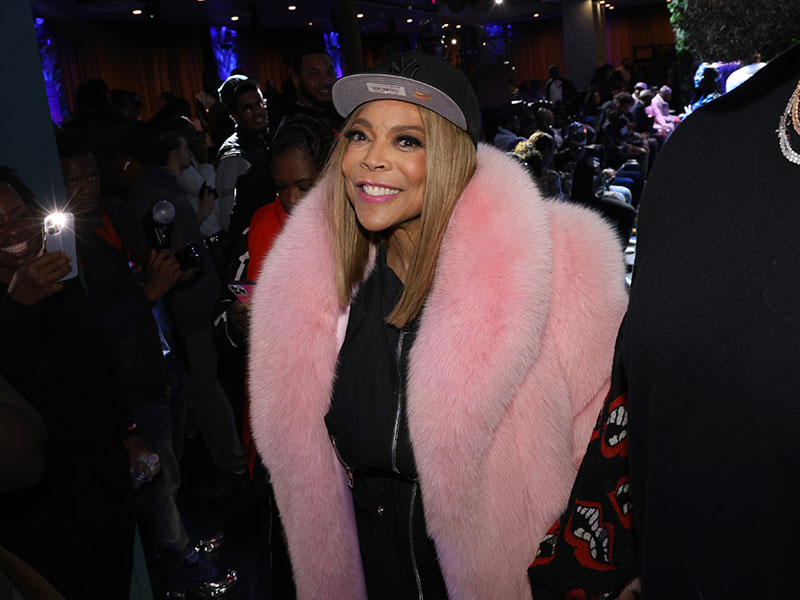
Wendy WilliamsWendy Williams attends Daniel's Leather Fashion Show featuring Dame Dash at Harbor New York City on February 15, 2023 in New York City. (Johnny Nunez/WireImage/Getty Images)
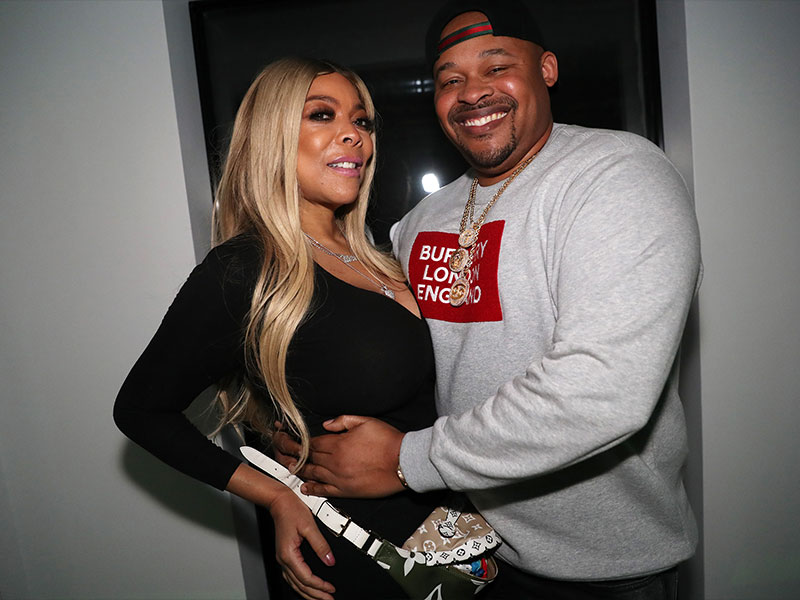
In the opening moments of the documentary’s first episode, Williams unapologetically says, “I love vodka,” adding that her sister Wanda Finnie “hates that I love alcohol.”


Williams’ lifelong friend Regina Shell says the former talk show host began abusing alcohol in 2018 when she was grappling with her husband Kevin Hunter’s infidelity: “It was causing her to drink more than she usually would. She would drink sometimes, but when she was going through the tribulation with Kevin, it definitely was to numb out.”


In 2019, Williams’ family admitted her to a rehab facility in Florida. She was soon moved to a sober house in New York when executives for “The Wendy Williams Show” asked her to be back in the city.


In Sept. 2022, Williams spent time in a wellness facility. Two months after, Williams returned home to New York under the care of her guardianship and resumed filming for the documentary. When shown a prior clip of herself drunk, Williams began crying — not because of the things she said but because of the outfit and wig she was wearing at the time.


Throughout the documentary, Williams’ manager Will Selby is seen expressing concern over her drinking habits. In the second episode, Selby finds an empty vodka bottle in her room and asks Williams if she ate something or just had “a liquid lunch.” In another scene, Selby asks a waiter to ignore Williams’ drink order and instead give her a mocktail while she’s out to dinner with her management team.


When asked why she chooses to continue drinking, Williams simply says, “because I can,” and added, “We all drink — why can’t I?”

02
Williams’ manager says she has become “more aggressive” and “demanding”
Wendy WilliamsWendy Williams (L) attends the "New Cash Order" Documentary Screening at Lighthouse International Theater on February 20, 2020 in New York City. (Johnny Nunez/WireImage/Getty Images)
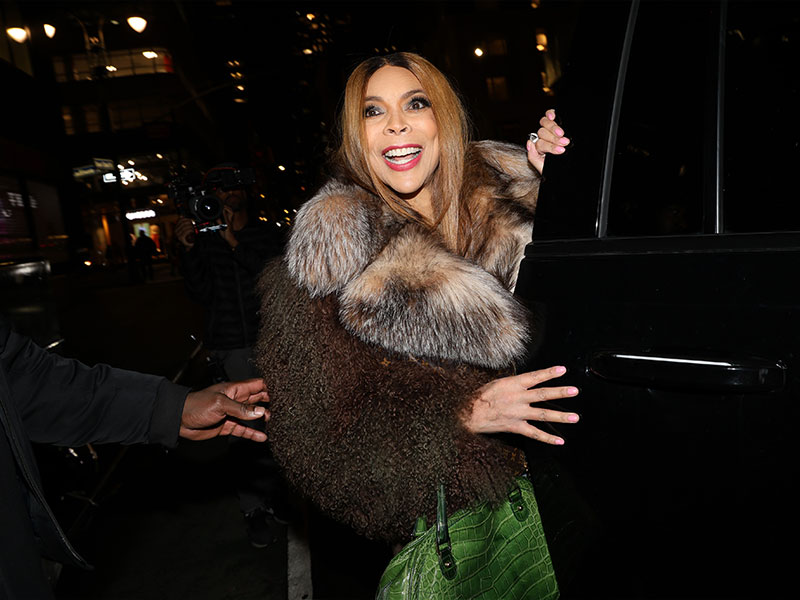
Selby says he’s noticed Williams become “more aggressive" and "demanding” but regardless, she’s “one of the biggest personalities we’ve seen in quite some time.” In the early episodes, Williams is seen lashing out at multiple individuals, including her management team, her stylist and a personal trainer.


“Wendy being pissed off is normal,” Selby says. “She changes her mind all the time.”


In one scene, Williams berates her nail technician and calls her “stupid.” She also tells her publicist Shawn Zanotti that she needs liposuction and calls her a “dumbass,” later scolding Zanotti for purchasing the incorrect vape pen.


Williams' nephew Travis Finnie says he noticed a change in his aunt’s personality over the past 10 years. Finnie recalls living with Williams while he was in college, saying the family wouldn’t see her until 5 a.m. when it was time for her to go to work on “The Wendy Williams Show.”

03
Williams would get high "five days" a week while working as a shock jock in the 90s
Wendy WilliamsWendy Williams attends a private dinner at Fresco By Scotto on February 21, 2023 in New York City. (Johnny Nunez/WireImage/Getty Images)

Williams says she would get high “like five days” a week in the 90s during the early beginnings of her career as a burgeoning radio shock jock. She says she did drugs because she “wanted to experience everything.”


Williams stopped doing drugs when she met Hunter because she “wanted to have a baby.” Williams and Hunter welcomed their son, Kevin Hunter Jr., in 2000.


“My son Kevin is very important to me,” Williams says tearfully.

04
Williams’ disc jockey, DJ Boof, found her unresponsive in 2020
Dj BoofDj Boof attends "Power Book III: Raising Kanan" Season 3 Premiere at Chelsea Factory on November 30, 2023 in New York City. (Arturo Holmes/Getty Images)

In April 2019, Williams filed for divorce from Hunter after more than two decades of marriage. The split came after Williams learned that Hunter had fathered a child with another woman.


“Kevin had a major indiscretion that he will have to deal with for the rest of his life. An indiscretion that I will not deal with,” Williams told The New York Times. “I never thought that I would be in this position. I’m a very forgiving person, but there’s one thing that I could never be a part of, and that one thing happened.”   


Following Williams' divorce, her show disc jockey, DJ Boof, says he became Williams' newfound “protector.” Boof had been helping Williams broadcast remotely from her New York City apartment amid COVID’s peak. He would hold up cue cards for her, but recalls that there were “times she showed no emotion.”   


“This is not COVID doing this,” Boof says. “[It's the] damage of using alcohol for so long…I got to see the lowest of lows.”


In May 2020, Boof says he found Williams unresponsive. Boof called Williams’ ex-husband, who then called an ambulance to take her to the hospital, where she received several blood transfusions. The incident led to Boof leaving “The Wendy Williams Show” once it returned to the studio months later.     


“She just wasn’t the same person anymore,” he says.

05
Williams didn’t know that her talk show was being canceled
Wendy WilliamsWendy Williams hosts "The Wendy Williams Show" at The Wendy Williams Show Studio on January 12, 2012 in New York City. (Rahav Segev/WireImage/Getty Images)
According to Williams’ niece Alex Finnie, her aunt had no clue that “The Wendy Williams Show” was slated to be canceled. The long-running talk show, which ran for 13 seasons from 2008 to 2022, had officially been canceled in Feb. of 2022.


“I said to her, ‘Sit down. The show is no more. The show’s done. It’s now Sherri [Shepherd] who is in your time slot. The Wendy Williams Show as you know it, it’s done,’” Finnie recalled telling her aunt. “She [Williams] was still going out and saying, ‘I’m getting ready for a new season,’ and then it took a little bit of time — weeks, months — to really understand where things stood. That’s how that played out.”


In the second episode of the documentary, Williams cries on the steps of her childhood home in Asbury Park, New Jersey, and tells her manager, “I really want to be back on television.”


“She’s overcome a lot,” Selby says. “She’s still in this fight.”

06
Williams’ son Kevin Jr. says he’s never taken money without his mother’s consent
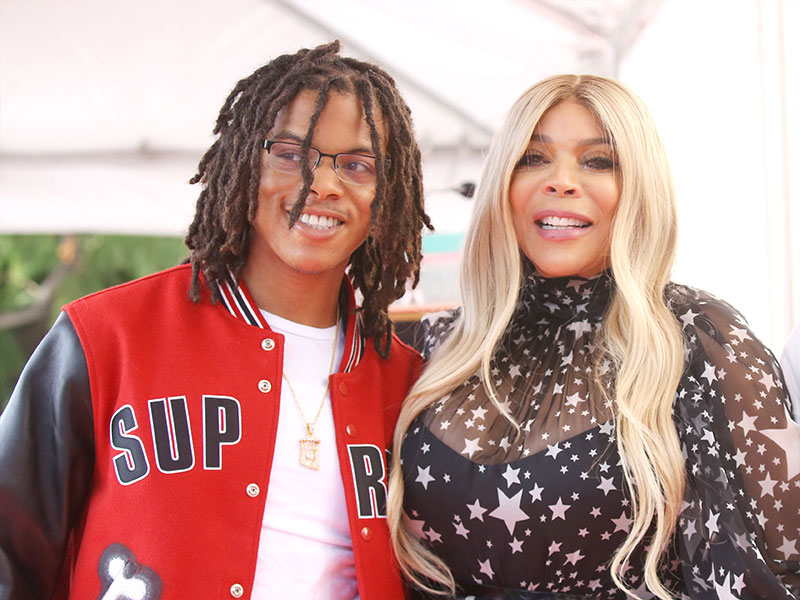
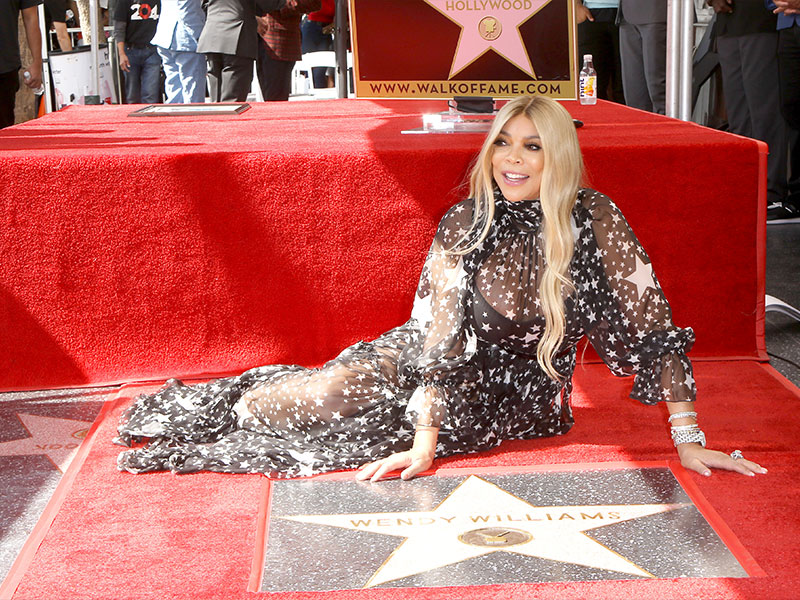
Wendy Williams and son, Kevin Hunter Jr.Wendy Williams and son, Kevin Hunter Jr. attend the ceremony honoring Wendy Williams with a Star on The Hollywood Walk of Fame held on October 17, 2019 in Hollywood, California. (Michael Tran/FilmMagic/Getty Images)
In early 2022, Williams’ bank Wells Fargo froze her accounts and successfully filed a petition for a temporary financial guardianship, arguing that she is of “unsound mind.” Williams says she currently has no access to her money: “One judge and three doctors say my money is still stuck at Wells Fargo and I’m going to tell you something, if it happens to me, it could happen to you.”


Williams’ son Kevin Jr. refuted claims that he exploited his mother and spent her money without her consent. “As one can imagine, it’s not a cheap lifestyle. The court tried to frame it as though I was making all these charges for my own happiness. My mom has never been a cheap person, whether it’d be flying her back and forth on private planes or even paying for appointments,” he says.


He continued: “I've always spoken to her, and she's always wanted me to spend her — let's spend her money. She's always told me, 'Kevin, if you ever need something or whatever, just ask me, and, like, you know, it could happen.' She would always communicate with me."


Williams’ nephew explained that the charges the bank was suspicious of totaled to only $100,000, which he claims is nearly how much Williams might spend on a birthday party for her son.


“For them to have a court case and rip him away from taking care of his mother, it’s very questionable,” Finnie said.

07
Kevin Jr. reveals that doctors believe Williams has “alcohol-induced dementia”
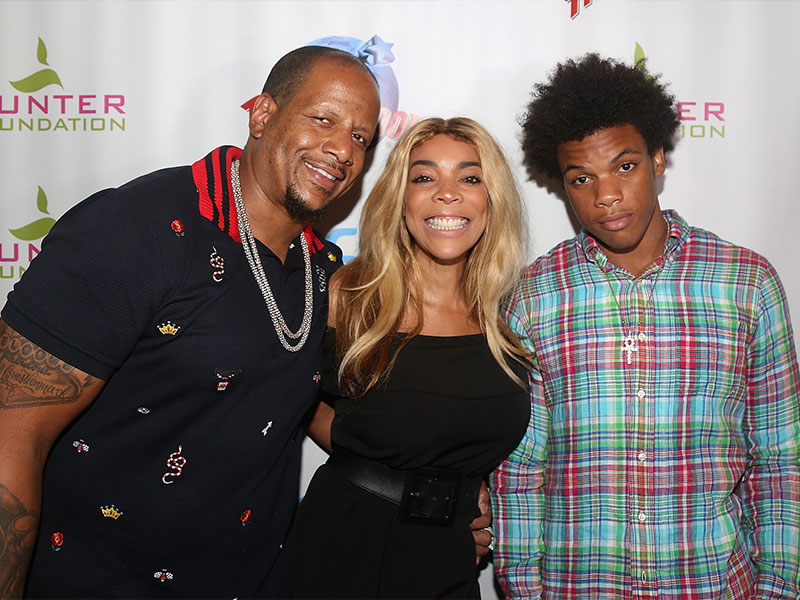
Kevin Hunter, wife Wendy Williams and son Kevin Hunter JrKevin Hunter, wife Wendy Williams and son Kevin Hunter Jr pose at a celebration for The Hunter Foundation Charity that helps fund programs for families and youth communities in need of help and guidance at Planet Hollywood Times Square on July 11, 2017 in New York City. (Bruce Glikas/Bruce Glikas/Getty Images)
Kevin Jr. says his mother’s doctors told him that her health condition is caused by excessive drinking. “Because she was drinking, I think they said it was alcohol-induced dementia,” he says.
08
Wanda says she was asked to be her sister’s guardian, but then “the wall came down”
Wendy WilliamsWendy Williams attends the ceremony honoring her with a Star on The Hollywood Walk of Fame held on October 17, 2019 in Hollywood, California. (Michael Tran/FilmMagic/Getty Images)

Wanda reveals in the final episode that she was asked to be Williams’ guardian, but then “the wall came down.” Wanda also says she was one of the last family members to sign onto the docuseries.


“We want Wendy healthy and happy,” she says. Despite not knowing her sister’s exact location, Wanda hopes Williams will be better soon: “All I want is for my sister to be healthy. She has withstood attack after attack. She is my hero. She will always be my hero. I will do whatever has to be done to help her be healthy.”


“There is going to be a happy ending.”

09
Williams is currently in a facility to treat cognitive issues
Wendy WilliamsTelevision personality Wendy Williams speaks onstage during her celebration of 10 years of 'The Wendy Williams Show' at The Buckhead Theatre on August 16, 2018 in Atlanta, Georgia. (Paras Griffin/Getty Images)

In an interview with People, Wanda says Williams is in a better place physically and mentally.


“I spoke with her yesterday and I speak with her very regularly when she reaches out to me. She is, from what I understand, in a wellness, healing type of environment,” says Wanda of the unnamed facility Williams is in to address cognitive issues.


“We cannot reach out to her, but she can reach out to us. And she is in a healing place emotionally. She's not the person that you see in this film.”

"Where is Wendy Williams?" is currently available for streaming on Lifetime. Watch a trailer for it below, via YouTube:


The measles outbreak in Florida is a warning for the rest of the nation

Cases of measles are spreading in South Florida. 

On Monday, officials in Broward County confirmed an eighth case of the virus nearly a week after news broke about a concerning rise in measles at a Broward County elementary school. The outbreak has quickly become politicized as Florida Surgeon General Joseph Ladapo and conservative officials have openly disregarded public health norms. While the Centers for Disease Control and Prevention (CDC) recommends that unvaccinated students stay home from school for three weeks after exposure, Ladapo said that the state's Department of Health "is deferring to parents or guardians to make decisions about school attendance.”

According to CBS News, around 200 students at one elementary school didn't attend class last Tuesday, and 174 missed class Wednesday — a sign that parents decided to keep kids home. Still, infectious disease experts tell Salon the rise of measles in Florida is something that should be of concern to all Americans, especially as spring break nears and people travel to the state for vacation, and that Ladapo’s response is disappointing and frustrating. 

“Whenever politics gets into public health, it can become a problem,” Dr. Sean O’Leary, who is the chair of the committee on infectious diseases at the American Academy of Pediatrics. “And in this case, it may end up harming children, which will just be a real tragedy if that's how this plays out.”

"Whenever politics gets into public health, it can become a problem."

O’Leary said while it's important to keep children in school, that must be when it’s safe. “Many children who get measles will be hospitalized,” he said. “That's not a safe environment. I think it's terribly frustrating.”

Measles deaths occurred by the thousands in the first two decades of the 20th century. But by 2000, measles was declared eliminated from the United States, and no deaths were reported until 2015 when a woman in Washington was the first to die in 12 years due to complications from measles.


Want more health and science stories in your inbox? Subscribe to Salon's weekly newsletter Lab Notes.


Since then, there has been an overall significant resurgence in the incidence rate of measles across the United States. Last year, more than a dozen unvaccinated children in Ohio were infected with the measles, with nine of them hospitalized. The Centers for Disease Control and Prevention (CDC) responded and deployed a small team to help assist with the outbreak. But by December, the number of infected children grew to 59. Most recently, as of January 6, the number of measles cases has increased to 82 cases; 33 of those were hospitalized.

Measles cases rise rapidly because the virus is so contagious. It can be easily spread by coughing, talking or being in the same room. It is estimated to infect 90 percent of unvaccinated people who are exposed.

“Measles is one of the most infectious diseases known to humankind,” Dean Blumberg, chief of pediatric infectious diseases and associate professor in the Department of Pediatrics at the University of California, Davis, told Salon. “And because of that, it requires a really good vaccine and a really high vaccination rate in order to control measles transmission.” 

"If you don't really address it, you know if that crack can widen and then it can just lead to a flood of cases."

The measles and rubella vaccine is extremely effective. After two doses, nearly 99 percent of people will be shielded against infection. While the vaccine was first developed in 1963, it wasn’t until 1980 when all 50 states had laws that required measles immunization for school enrollment. But since then, the so-called “Wakefield effect” has unrolled this progress. This effect refers to a thoroughly discredited British doctor, who claimed to document changes in behavior in children given the MMR vaccine, suggesting it could cause autism. This has seemingly contributed to the decline in vaccination rates.

Blumberg said once a community has a small cluster of cases, it’s like “small leak in a dike.”

“If you don't really address it, you know if that crack can widen and then it can just lead to a flood of cases,” he said. “That’s why mainstream public health doctors and scientists take that very seriously and do recommend isolation and quarantine measures.”

In order to control the spread of measles, a community needs a vaccination rate of around 95 percent. If it drops below that — even by a single percentage point — it can lead to localized outbreaks. Blumberg emphasized that measles isn’t just a fever and a rash. An estimated one in four cases will be hospitalized. In severe cases, there can be complications like pneumonia and encephalitis, which is when the brain swells. Before the measles vaccine was widely available in the U.S., nearly 400 to 500 children would die from measles and its complications each year. 

“Measles was a very, very nasty infection,” Dr. William Schaffner, a professor of infectious disease at Vanderbilt University Medical Center, told Salon. “In addition to these illness components, it had major social consequences — number one, parents had to stay home to take care of the children, and that disrupted many parents' incomes.”

Schaffner emphasized it’s important to vaccinate children against measles, especially during a time when it’s being spread, because it helps protect the child and other unvaccinated children, usually children with immune system deficiencies.

We need your help to stay independent

As spring break nears, and many head to south Florida to vacation, is there a risk? O’Leary said if you and your children are vaccinated, there isn’t a risk. 

“Immunocompromised children are an important exception because certain immunocompromised children can't receive the MMR vaccine because it's a live vaccine,” he said. “And so for those families, yes, I think staying away from anywhere where there's a measles transmission is a good idea.”

He noted that when an outbreak is first identified “that's just the tip of the iceberg.”

“The incubation period for measles is relatively long,” he said. “It may have gotten beyond that small community, and we don't really know that yet for sure, but I think I think time will tell.”

“He can’t remember his wife’s name!”: Biden turns the tables on Trump over age attacks

President Joe Biden addressed concerns about his age by underscoring Donald Trump's ostensible senility during a Monday appearance on "Late Night With Seth Meyers."  

After Meyers noted how some recently leaked documents observed that the president is 81, Biden sarcastically replied, "Who the hell told you that? That's classified."

Meyers went on to ask how Biden plans to combat concerns in recent polling about his age ahead of the 2024 presidential election. 

“Well, a couple things. Number one, you got to take a look at the other guy,” Biden said. “He’s about as old as I am, but he can’t remember his wife’s name,” he added, referring to claims that Trump called his wife Melania "Mercedes" during the keynote speech at a recent Conservative Political Action Conference (CPAC) event, though he appeared to be addressing Mercedes Schlapp, the wife of CPAC founder Matt Schlapp.

“It’s about how old your ideas are,” Biden added. “Look, I mean, this is a guy who wants to take his back …he wants to take us back in Roe v. Wade. He wants to take us back on a whole range of issues that are 50, 60 years. They’ve been solid American positions."

Biden went on to tout his achievements in office and called out the GOP for killing a bipartisan immigration deal he backed.

"It’s overwhelmingly, overwhelmingly supported by Republicans and Democrats in the House and Senate," he said of the deal. "But because, I don’t know this very fact, but I was told that Trump was picking up the phone call and speaker of the House saying, 'Don’t let it pass.' Why not? Because you don’t think it’s good because it will benefit Biden. That’s no way to run a country. That’s no way to deal. We didn’t even when we had real divisions back when I was a young senator, among Democrats and Republicans, that that wasn’t the way it worked. And look, I think this is not your father’s Republican Party. They’ve got about 30% of the Republican Party controlling at all. And, and I think it’s we’re going to break it."

Inside the internal debates of a hospital abortion committee

Series: Post-Roe America:Abortion Access Divides the Nation

After the Supreme Court overturned Roe v. Wade, ending nearly 50 years of federal protection for abortion, some states began enforcing strict abortion bans while others became new havens for the procedure. ProPublica is investigating how sweeping changes to reproductive health care access in America are affecting people, institutions and governments.

Sitting at her computer one day in late December, Dr. Sarah Osmundson mustered her best argument to approve an abortion for a suffering patient.

The woman was 14 weeks pregnant when she learned her fetus was developing without a skull. This increased the likelihood of a severe buildup of amniotic fluid, which could cause her uterus to rupture and possibly kill her. Osmundson, a maternal-fetal medicine specialist at Vanderbilt University Medical Center who helps patients navigate high-risk pregnancies, knew that outcome was uncommon, but she had seen it happen.

She drafted an email to her colleagues on the Nashville hospital’s abortion committee, arguing that the risk was significant enough to meet the slim exception to Tennessee’s strict abortion ban, which allows termination only when “necessary to prevent the death of the pregnant woman or to prevent serious risk of substantial and irreversible impairment of a major bodily function.” She pleaded with her fellow doctors to spare this woman the gamble when her baby wasn’t even viable.

Then came the replies.

One doctor wasn’t “brave enough.”

Another urged her to consider the optics — approving an abortion in this case could be seen as “cavalier” and trying to circumvent the law. “I’m saying this because I care about you and your personal liberties,” the doctor said.

To Osmundson, the responses reflected just how much abortion bans had warped doctors’ decision-making and forced them to violate the ethics of their profession, which require acting in the best interests of their patients.

Doctors described the position they’ve been put in — denying abortions to high-risk patients who are begging for them — as “distressing,” “untenable” and “insane.”

Most medical exceptions in abortion bans only allow the procedure to “save the life of the mother.” But there is a wide spectrum of health risks patients can face during pregnancy, and even those that are potentially fatal could fall outside of the exceptions, depending on how the law is interpreted and enforced. Without clarification from legislators and prosecutors on how to handle the real-life nuances that have emerged in hospitals across America, doctors in abortion ban states say they are unable to provide care to high-risk pregnant patients that meets medical standards.

Under threat of prison time and professional ruin, they are finding their personal interests pitted against their patients’ and are overriding their expert training for factors that have nothing to do with medicine, like political perceptions and laws they aren’t qualified to interpret. As a result, some patients are forced to endure significant risks or must travel out of state if they want to end a pregnancy. Sometimes, their doctors aren’t even giving them adequate information about the dangers they face.

Osmundson and 30 other doctors across nine states in which abortion is banned or restricted described to ProPublica the impossible landscape they must navigate in the nearly two years since the Supreme Court struck down Roe v. Wade.

It is one in which fetuses — some with no chance of survival — are being prioritized over their at-risk mothers and oncologists are hesitating to give chemotherapy to cancer patients for fear of legal consequences if it disrupts the pregnancies.

Doctors described the position they’ve been put in — denying abortions to high-risk patients who are begging for them — as “distressing,” “untenable” and “insane.” Speaking out about the broken system felt like the only way to not be complicit, Osmundson said. “It’s going to take physicians coming together and saying: ‘We’re not going to participate in this. We’re going to do what we think is right for patients.’”

Osmundson, who has worked at Vanderbilt for the past eight years, decided to share with ProPublica the inner workings of the hospital’s abortion committee to give the public a rare glimpse into the tortured decisions she and her colleagues are being forced to make. It shows how maternal health care could be dramatically altered across America if Republicans gain control of Congress this fall and succeed in passing the nationwide ban that influential anti-abortion activists have long sought.

In a series of interviews, Osmundson detailed the deliberations in a wide variety of cases and described conversations and emails among doctors. She did not disclose the identities of patients or their individual files. ProPublica was able to confirm details with one patient and three colleagues familiar with the committee, some of whom were not willing to speak publicly for fear of professional repercussions. Vanderbilt declined to comment.

What she shared shows how the strictly written bans fail to account for a broad range of dangerous maternal health risks, leaving doctors to deny abortion requests for medical reasons like warning signs of preeclampsia, a potentially fatal blood pressure condition; complications related to Type 1 diabetes, which can cause vision loss, kidney disease and death; and conditions requiring patients to have their uteruses “cracked open” in order to give birth.

The penalties for violating the ban include up to 10 years in prison and a $15,000 fine. Doctors can also lose their medical licenses if they are criminally charged.

She’s come to believe it’s time to take abortion decisions out of doctors’ hands and shift the final say to hospital lawyers and administrators. In her view, that’s the only way to protect the independent judgment of the medical experts, who could make strong arguments in their patients’ interests using research and data.

“I understand pragmatism,” Osmundson told ProPublica. “I also don’t want to have a patient die and be responsible for it.”

She also thinks hospitals should require doctors to obtain informed consent from patients facing dangerous pregnancy complications, so that providers can’t make decisions on their behalf without counseling them about their risk and getting their response. “In this climate, we’ve really diminished women’s autonomy,” she said. “If a patient says, ‘I don’t want to take on that risk,’ we need to honor that.”

A few months ago, she was on call caring for a patient who had developed severe high blood pressure near 24 weeks, a warning sign for preeclampsia, which can rapidly deteriorate and lead to organ damage or death. With her pregnancy at the edge of viability, the patient requested to have a cesarean section, Osmundson said, even though there was a significant chance the baby might not survive.

Osmundson said she scheduled the surgery. This was not considered an abortion, because the intent was still to deliver a live baby. But after her shift ended, Osmundson recalled, a colleague overrode her and kept the patient pregnant.

Osmundson and her colleagues launched the committee in fall 2022 to address a crisis they were seeing unfold in abortion ban states across the country and at Vanderbilt: Patients facing severe and urgent pregnancy complications were being denied care by hospitals where doctors were terrified about the new legal personal and professional risks.

With strength in numbers, the committee members would back one another up and aim to serve the most patients possible while staying within the law.

Since then, the committee has helped Vanderbilt doctors respond to the most severe emergencies. Abortion requests can hit the committee’s inbox at any hour — at least two a month, but sometimes four in a week. When complications are urgently life-threatening — cardiac failure, Stage 3 kidney disease — doctors often coordinate through a few text messages and sign off that an abortion is medically indicated.

The committee has also developed critical protocols. If a patient’s water breaks before a fetus is viable, the administration considers it a medical emergency because the patient has a high chance of developing sepsis, which can lead to death. In those cases, it’s a blanket policy that doctors can offer abortion care, Osmundson said.

“Who are we to say what is too much or not enough risk? Where is the line and why do we have to decide that?”

Other cases fall outside of the committee’s power. Osmundson said she has seen some doctors avoid the issue entirely, never informing their patients about the option to terminate their risky pregnancies; those cases never make it to the committee’s attention. The law also makes no exception for sexual assault or fetal anomaly cases, even when the pregnancy is not viable. Doctors direct these and other patients who want abortions to leave the state, if they can. In 2023, Osmundson counted 27 cases of nonviable pregnancies that were referred out of state.

It is those cases in the middle — potentially perilous, but not urgently deadly — that can feel like bombs hitting their inboxes, blasting shrapnel into the rest of their days as they turn over the particulars and try to come to a consensus.

The six doctors, five of whom are women, sometimes call one another up to hash it out. Other times, the discussion unfolds over email and can involve specialists from other departments. They respect one another and know they share the same goals, but the conversations can be heated and emotionally draining.

Last October, a challenging case came before the abortion committee, showcasing the murky limits of Tennessee’s exception.

The patient was seven weeks pregnant and stable, but with a medical history that would make delivery very high risk. Surgeons would need to make a vertical incision on her abdomen — a procedure Osmundson described as “fileting” the uterus — that could lead to permanent bladder or bowel damage due to the patient’s existing complications.

When Osmundson read the file, her mind ticked through worst-case scenarios if things didn’t go well: The patient might need to use an ostomy bag attached to her abdomen to dispel waste. She could suffer severe blood loss or develop sepsis. She could die. The patient already had children and, in a letter to her doctors, requested an abortion.

“I cannot deny abortion care to a patient concerned about their medical safety.”

The challenge for the doctors: The patient had no immediate complications; the potential emergency would not occur until the baby was at full term and doctors were performing surgery. Was it enough to predict that a patient might suffer “substantial and irreversible impairment” or death, based on past case studies? Or did the emergency need to have actually begun?

The law doesn’t say. Nor does it give guidance on how doctors should interpret the spectrum of risk. Was a 50% chance of death or “substantial and irreversible impairment” enough to meet the standard of the law? Twenty percent? Ten? The law says only that an abortion must be “necessary” in a doctor’s “reasonable” medical judgment.

Committee members could see how a zealous prosecutor might challenge that judgment. Doctors like Osmundson often help manage risk for patients who choose to go forward with dangerous pregnancies; some make it through with few long-term issues. It wasn’t hard to imagine a scenario in which a prosecutor held up cases of women who had survived similar complications and pointed to one patient’s abortion as a crime. The penalties for violating the ban include up to 10 years in prison and a $15,000 fine. Doctors can also lose their medical licenses if they are criminally charged. Many have expressed that they would not trust jurors without medical training to evaluate their cases and decide their fate.

In that October case, one doctor argued that the patient’s condition did not fit the definition of a medical emergency because continuing the pregnancy itself would not cause direct harm to an organ — all of the risk would emerge at the time of delivery.

“Who are we to say what is too much or not enough risk?” another wrote. “Where is the line and why do we have to decide that?” But the doctor pointed out that if they offered the abortion, “nurses and other staff will be upset.”

A third wrote: “I unfortunately don't think this meets the criteria for the law and my interpretation even though it is the ethical right thing to do.”

A fourth: “If one of our purposes is to protect the physicians involved in the care of these patients, I think this case is too risky.”

Osmundson bit her lips as she read the responses. After work, as she cooked dinner for her family and played with her kids, she couldn’t stop thinking about the patient. It was one thing to choose to continue a high-risk pregnancy — another to be forced to. As a doctor who spent her career working with the most difficult cases, she knew better than anyone that even healthy pregnancies could suddenly turn life-threatening.

“I just watched a woman die from liver failure this weekend after a normal uncomplicated pregnancy,” Osmundson told them. “I’m finding it morally repugnant to force anyone to continue a pregnancy for a potential life when the pregnancy poses a real threat to her life.”

If the patient the committee was considering died, Osmundson felt they would all have blood on their hands.

“I cannot deny abortion care to a patient concerned about their medical safety,” she wrote.

The group punted the decision until the university’s ethics committee could weigh in.

The patient was left waiting on a faceless abortion committee to deliver its verdict as the clock ticked.

Soon after, Osmundson learned, the woman was no longer pregnant. Perhaps it was a miscarriage. Or perhaps, Osmundson thought, she had gotten fed up and taken measures into her own hands.

It saved the committee from making a difficult decision. This time.

The predicament is far worse at many other hospitals.

Plenty of doctors ProPublica interviewed don’t work at a well-resourced institution or have an administration that has promised criminal defense if they are prosecuted. And some hospitals rely on state funding, leaving them subject to the demands of lawmakers who could request their emails and protocols, which are public record. Many doctors requested anonymity to speak about sensitive internal matters, fearful they could land on the radar of state officials looking to target abortion providers.

Doctors have no clarity on whether they could face repercussions for offering abortions for life-threatening health risks that aren’t active emergencies.

There were wide variations in how their hospitals have navigated the post-Roe reality. Some had abortion committees, but many relied on informal networks among colleagues to make decisions. A few had developed protocols like Vanderbilt’s, but others still require signs of infection or bleeding in order to act, even in cases when a patient’s water breaks before viability. “We are trying to push the idea that the harm does not have to be immediate,” said Dr. Nisha Verma, an OB-GYN and abortion provider in Georgia. “But institutions want to protect themselves.”

Doctors recounted nurses saying they weren’t allowed to treat patients who needed urgent abortions to survive. One was bleeding out. Another was septic. “That’s part of our risk,” one doctor said. “You don’t know who you are working with, who will decide you need to run this by the district attorney.”

Doctors felt similar hesitation from their specialist colleagues, some of whom have balked at having to sign off on any abortion-related paperwork. One OB-GYN described trying to get a cardiologist to evaluate a pregnant patient with heart failure. “We got a ‘Look, we know what you guys are doing and we don’t agree with abortion, so we aren’t going to say she can have an abortion,’” the doctor said.

In other cases, specialists have been afraid to treat patients for fear of accidentally causing harm to a fetus. One OB-GYN said an oncologist at their hospital was reluctant to provide cancer treatment for a patient who wanted to continue their pregnancy, in case chemotherapy were to be misconstrued as an abortion.

Some doctors feel that instead of offering backup, their hospitals have siloed all responsibility to a few providers who would take the fall if an abortion case were challenged. “Care was dependent on each case and who saw the patient and what their risk tolerance was and their views about abortion,” said Dr. Jessica Tarleton, an OB-GYN and abortion provider in South Carolina who left her institution due to its handling of the ban. “It was like chaos all the time.”

Doctors have no clarity on whether they could face repercussions for offering abortions for life-threatening health risks that aren’t active emergencies.

Lawmakers and prosecutors don’t want to offer it.

In Tennessee, legislators sided with an anti-abortion group last year to defeat an effort to include clear exceptions for fatal fetal anomalies and broader health risks. A lobbyist for the group opposed language that would allow doctors to provide abortions to “prevent” emergencies because, he said, “that would mean that the emergency hasn’t even occurred yet.” And Attorney General Jonathan Skrmetti is fighting a legal effort aimed at getting a judge to clarify the ban’s exception; he argues that the state can’t be held liable for doctors “overcomplying” for fear of violating the law. The case is ongoing.

Anti-abortion groups that support the bans have advocated for the narrowest possible interpretation of exceptions. “We would want a stricter standard,” Blaine Conzatti, the president of Idaho Family Policy Center, told ProPublica in November. “The only appropriate reason for abortion would be treating the mother and the unintended consequence is the death of the preborn child.”

Meanwhile, officials have doubled down on their warnings about the consequences if doctors go too far.

Texas Attorney General Ken Paxton fought back against the Biden administration’s federal guidance to offer abortion care for patients with medical complications and threatened doctors with prosecution if they complied with a court’s order to offer emergency abortion care. And in Indiana, the Attorney General Todd Rokita investigated a doctor for sharing with the media that a 10-year-old rape victim had to go out of state to get an abortion.

“There aren’t many people who want to risk or just rely on the goodwill of the legislature and the attorney general or any politician in our state,” one doctor said. Penalties vary by state — in Texas a doctor could face 99 years behind bars.

No doctor has been prosecuted under their state’s abortion ban. But the few public glimpses into judges’ thinking hasn’t provided reassurance. Recently, a Texas court denied a doctor’s request to serve a woman who wanted an abortion because her fetus had a fatal anomaly. The doctor argued the woman shouldn’t be subject to the risks of carrying to term a baby that would not survive. The court said the doctor hadn’t proved her life was in danger.

Will a judge decide the same if a doctor is charged with a felony? Would a jury, or an appellate court, or ultimately the Supreme Court? “The bottom line,” said Dr. Emily Patel, a maternal-fetal medicine specialist in Nebraska, “we don’t know what [the exception] means and won’t know until it’s tested in a court of law.”

No doctor wants to be the first to stand trial. “I don’t know how you can overinterpret the law when you are looking at jail time,” said Dr. Dawn Bingham, an OB-GYN in South Carolina. “A prudent person would hear that and go, ‘Well I guess I will interpret that to be as safe as possible.’”

A year ago, Osmundson said, she could never have imagined arguing to strip her committee of its decision-making power and turning it into an advisory board. But now she believes it’s the only way to shield doctors from the ethical conflict of denying patients evidence-based care. “I feel like these committees are kind of making physicians become complicit in an unethical and unjust system,” she said.

Dr. Mack Goldberg, her committee colleague, knows the position perhaps better than anyone else. Unlike most of his colleagues, including Osmundson, he actually performs abortions; since clinics shuttered in the wake of the ban, he’s one of the only people in the state with the expertise and institutional support to do so for medical complications.

He knows the hospital submits paperwork to the state after each one. And while he recognizes that his colleagues are putting their names on the decisions, he feels more exposed. He often can’t shake the feeling of being constantly on call, his livelihood perpetually on the line, a burning question in the back of his mind: “When push comes to shove, if I ever got trudged through a court case, how many people will truly have my back?”

Despite all of the anguish it causes him to turn away some patients, Goldberg disagrees with Osmundson. He believes it’s important for doctors to continue walking the tightrope: Do as much as possible with the support of colleagues and their institution, while being honest with patients about their risks and options. He feels the committee has made it possible for him to save some lives by acting quickly, and he doesn’t want to leave the call to hospital administrators and lawyers, who may be even more risk averse.

”We are on the front lines,” he said. “At the end of the day, the patients are staring right in our faces.”

Late last year, he sighed heavily as he counseled the woman whose baby was developing without a skull and gently told her what he tells all of his patients in her position: that he had the training to help her, but because of Tennessee’s laws, he might face prosecution and jail time if he did. He had a baby at home and couldn’t take that risk, he explained. Instead he would refer her to options outside the state.

The patient, Charlotte Miller, told ProPublica she understood and appreciated his thorough counseling. But she was stricken to realize it would have been different had they been in her home state of Colorado.

When the 22-year-old sat across from Goldberg in his office, all she knew was that she didn’t want to spend the next six months putting her body through the hardships of pregnancy to give birth to a baby that would never survive.

Her first pregnancy had been challenging. She struggled with worsened asthma and endometriosis, a painful condition in which tissue grows outside of the uterus. The toll on her mental health alone would be enormous, she believed, and she didn’t want to risk any unexpected complications that could make getting pregnant again more difficult. She desperately desired another child, but in this case, the best option, she was certain, would be to deliver her baby as soon as possible — to have the chance to hold him and say goodbye.

Instead, her family would have to scrape together more than $1,200, a week of her partner’s paycheck as a waiter, so she could travel to a clinic in Illinois. There, her only choice would be a dilation and evacuation procedure while unconscious, not a delivery in which her baby could emerge intact and she could hold him in his last moments. Before it came to that, she lost the pregnancy naturally.

She’d been unaware of the committee’s debate about her health risks. When she learned of it, it only affirmed what she’d come to believe: “It’s just so disheartening to me that doctors can want to provide me care and not be able to because of what a law says, for fear that they would have repercussions.”

ProPublica is a Pulitzer Prize-winning investigative newsroom. Sign up for The Big Story newsletter to receive stories like this one in your inbox.

Hazmat team spotted at Don Jr.’s home after reported white substance found: report

Several fire trucks and hazmat-suited men were seen outside Donald Trump Jr.'s Jupiter, Florida, home Monday evening after the former president's eldest son received a letter containing an unidentified white powder, three sources familiar with the incident told The Daily Beast. The white substance flew out of the letter when Trump Jr. opened it, one of the sources told the outlet. The Jupiter Police Department did not respond to the Daily Beast's request for comment. 

A representative for Trump Jr. said it is still unclear what the powder was, but confirmed that the former president's son does not seem to be in danger. “The test results of the substance came up inconclusive on what it was exactly, but officials on the scene do not believe it is deadly,” a spokesperson told The Daily Beast. 

Trump Jr. has been a vocal and unwavering supporter of his father, making campaign appearances with the senior Trump throughout the year. “It’s just become a little bit too commonplace that this sort of stuff happens,” Donald Trump Jr. told right-wing publication the Daily Caller. The envelope, he claimed, was the second containing white powder that he has received in the mail in recent years. 

“Clearly, if this happened to a prominent Democrat it wouldn’t be tolerated and would drive news coverage for weeks," Trump Jr. added. "The media would blame all Republicans and force them to answer for it. But since it’s me, radical haters on the left will largely get a free pass and the media will barely flinch.”

Raw cheddar company linked to multi-state E. coli outbreak

Raw Farm LLC, which produces and sells raw dairy products, has voluntarily recalled four of its cheddar products in connection to a multistate E. coli outbreak, as reported by Audrey Morgan at Food & Wine.

"As of February 16, 10 E. coli infections have been reported that may be related to the consumption of Raw Farm cheddar cheese products, according to the Centers for Disease Control and Prevention (CDC)," Morgan wrote, noting that the actual number of infected individuals might be even higher than that.

Thus far, cases have been reported in California, Colorado, Utah and Texas. The CDC and FDA "alerted Raw Farm to the possibility that its product may have caused these illnesses" in mid-February, and while the company notes that none of their tested products tested positive for E. coli, the farm opted to voluntarily recall the products "out of an abundance of caution." The recalled products at hand are all expired and are all variants of the "Raw Cheddar Cheese" product.

If you do happen to have any of these cheeses on hand, be sure to either dispose of them or return for store credit. 


FDA has approved new treatment that might mitigate the symptoms of food allergies

Xolair, originally intended to treat asthma and similar issues, has actually now been discovered to effectively treat food allergies such as peanut allergies. Jelisa Castrodale of Food & Wine reports that the FDA has approved the drug now for that purpose after conducting a study of 168 adults and children with both peanut and other common allergens. The trial showed that 68% of the group injected with Xolair were able to eat peanuts without showing "moderate to severe allergic symptoms."

"This newly approved use for Xolair will provide a treatment option to reduce the risk of harmful allergic reactions among certain patients with IgE-mediated food allergies," said Dr. Kelly Stone, associate director Division of Pulmonology, Allergy, and Critical Care in the FDA's Center for Drug Evaluation and Research, 

Xolair has not been approved for use in an emergency situation to treat severe allergic reactions, Castrodale reports. The drug, which is given as an injection every two to four weeks, works by "reducing the risk of allergic reactions over time." 

"We've literally overnight doubled the amount of options we have to manage this disease," said Erin Malawer of AllergyStrong, a national allergy awareness and education group. "No matter how careful you are, these accidental exposures happen."

“Stunning”: Expert says gag order filing shows DA treating Trump trial like “organized crime case”

Manhattan District Attorney Alvin Bragg is already seeking a partial gag order to ensure that former President Donald Trump and his legal team are unable to publicly attack or threaten witnesses, jurors, staffers, and others who may be involved in the former president's upcoming criminal hush money trial.

Bragg's office, in a series of motions filed Monday to New York Supreme Court Justice Juan Merchan, wrote that Trump “has a long history of making public and inflammatory remarks about the participants in various judicial proceedings against him, including jurors, witnesses, lawyers, and court staff."

The motion cited the hundreds of concerning messages his office received after he first indicted the ex-president for allegedly falsifying business records related to a hush money payment made to adult film star Stormy Daniels last March. Bragg's office also noted that Trump's propensity for public remarks about perceived political or legal adversaries “pose a significant and imminent threat to the orderly administration of this criminal proceeding and a substantial likelihood of causing material prejudice."

Prosecutors in the motion also requested that Merchan withhold jury information from Trump if he intimidates the jury selection process, which is slated to begin on March 25, given that his past behavior “presents a significant risk of juror harassment and intimidation that warrants reasonable protective measures.”

The district attorney's team also underscored Trump's comments about the jury foreperson in the 2019 trial of his campaign adviser, Roger Stone, as well as Trump's fraudulent accusations against two Georgia poll workers — Shaye Moss and Ruby Freeman — in 2020. Moss and Freeman faced an inundation of racist and threatening phone calls, and Freeman eventually had to move once her address was circulated online. 

We need your help to stay independent

Prosecutors in the motion argued that keeping the names and addresses of jurors private would “ensure the integrity of these proceedings, minimize obstacles to jury selection, and protect juror safety.” As noted by The Washington Post, the requested gag order would not shield Bragg from Trump's inevitable vitriol.

"One of the most stunning aspects of the protective order the Manhattan DA seeks in his prosecution of Donald Trump," tweeted former U.S. Attorney Joyce Vance, "is that although Trump is entitled to know the identities of jurors, the DA has asked to keep their addresses secret. Like you would in an organized crime case."


Want a daily wrap-up of all the news and commentary Salon has to offer? Subscribe to our morning newsletter, Crash Course.


Trump spokesperson Steven Cheung on Monday responded to news of the gag order request by calling it a form of election interference, according to WaPo. Cheung said it “would impose an unconstitutional infringement” on the ex-president, “including his ability to defend himself, and the rights of all Americans to hear from President Trump.”

Trump has faced gag orders in several other legal cases, including a limited gag order imposed by U.S. District Court Judge Tanya Chutkan in his D.C. election subversion trial as well as a partial gag order in his New York civil fraud trial.

Jack Smith filing uses Biden special counsel report against Trump: Not even “remotely similar”

President Joe Biden's handling of classified documents is not even "remotely" similar to Donald Trump's "deceitful criminal conduct," special counsel Jack Smith said in a Monday brief.

Smith's team submitted the filing to challenge the former president's argument that he's being unfairly prosecuted by Biden-allied attorneys, Politico reports. In it, the prosecutors rebuked Trump's attempt to compare his conduct with the president's, whom special counsel Robert Hur chastised for retaining classified materials. Smith's team noted, however, that Hur's report also highlighted why only Trump is facing a bevy of criminal charges for his conduct. 

“The defendants have not identified anyone who has engaged in a remotely similar suite of willful and deceitful criminal conduct and not been prosecuted. Nor could they,” assistant special counsel David Harbach wrote in the 12-page filing. “Trump, unlike Biden, is alleged to have engaged in extensive and repeated efforts to obstruct justice and thwart the return of documents bearing classification markings,” Harbach added. “And the evidence concerning the two men’s intent — whether they knowingly possessed and willfully retained such documents — is also starkly different.”

Hur in his report wrote that there are "several material distinctions" between Trump's case and Biden's.

"Unlike the evidence involving Mr. Biden, the allegations set forth in the indictment of Mr. Trump, if proven, would present serious aggravating facts,” the report said, adding that Trump rejected several chances to return the classified documents found at Mar-a-Lago.

“According to the indictment, he not only refused to return the documents for many months, but he also obstructed justice by enlisting others to destroy evidence and then to lie about it," Hur wrote. "In contrast, Mr. Biden turned in classified documents to the National Archives and the Department of Justice, consented to the search of multiple locations including his homes, sat for a voluntary interview. and in other ways cooperated with the investigation.”

Trump faces 40 felony counts in Florida for storing a treasure trove of classified documents at his Mar-a-Lago residence after leaving office and allegedly resisting government efforts to retrieve them. In Monday's brief, Harbach highlighted that the sensitivity and quantity of the records Trump retained far exceeded that of other instances of classified-record mishandling that have been resolved without an indictment, Politico noted. “There has never been a case in American history in which a former official has engaged in conduct remotely similar to Trump’s,” he wrote.

“More indictments await”: Experts say Jan. 6 architect’s secret tweets may lead to “felony charges”

Right-wing attorney Kenneth Chesebro, one of the key architects of former President Donald Trump’s Jan. 6 fake elector scheme, concealed a secret Twitter account from Michigan prosecutors that was filled with posts that undercut his statements to investigators about his role in Trump’s election subversion scheme, according to CNN.

Chesebro denied having a Twitter account or any “alternate IDs” when asked by Michigan prosecutors last year, according to recordings of his interview obtained by the outlet.

But CNN’s K-FILE linked Chesebro to a secret account — BadgerPundit — based on matching details, including biographical information about his work and travels as well as his family and investments.

The posts show that before the election and days after polls closed, Chesebro promoted a “far more aggressive election subversion strategy than he later let on in his Michigan interview,” CNN reported.

Chesebro’s attorneys confirmed to CNN that the account belonged to Chesebro, calling it his “random stream of consciousness” where he was “spitballing” theories about the election but argued that it was separate from his legal work for Trump’s campaign.

“When he was doing volunteer work for the campaign, he was very specific and hunkered-down into being the lawyer that he is, and gave specific kinds of legal advice based on things that he thought were legitimate legal challenges, versus BadgerPundit, who is this other guy over there, just being a goof,” Chesebro’s attorney Robert Langford told the outlet.

Chesebro, who framed himself as a moderate go-between who was pulled in deeper by Trump’s extremist lawyers, has not been charged with any crimes in Michigan.

“Our team is interested in the material and will be looking into this matter,” a spokesman for the Michigan attorney general’s office told CNN.

Chesebro claimed to investigators that the so-called fake elector plot was just a contingency in case Trump’s team won any of the election lawsuits, which they ultimately failed to do. He claimed to Michigan prosecutors that he told the Trump team that “state legislatures have no power to override the courts.”

But BadgerPundit argued that the litigation did not matter and that Republican-controlled state legislatures had the power to send their own electors.

“You don’t get the big picture. Trump doesn’t have to get courts to declare him the winner of the vote. He just needs to convince Republican legislatures that the election was systematically rigged, but it’s impossible to run it again, so they should appoint electors instead,” BadgerPundit wrote on Nov. 7, 2020, days after President Joe Biden was projected as the election winner.

Chesebro claimed to prosecutors that he saw “no scenario” in which then-Vice President Mike Pence could “count any vote for any state because there hadn’t been a court or a legislature in any state backing any of the alternate electors.”

BadgerPundit tweeted more than 50 times that Pence had the power to count the alternate electors, according to CNN.

Chesebro also claimed that he was “misled” by the Trump campaign concealing the entire plan for him and claimed he only realized they planned to deploy the fake electors regardless of what happened with the lawsuits. But on Twitter, he shared an Atlantic article citing a “Trump legal adviser” who described the full plan.

Chesebro’s attorneys acknowledged to CNN that “there’s clearly a conflict” between some of the tweets and what he told prosecutors, but argued that some of his online theories were “inconsistent” with legal advice he gave the Trump campaign.

We need your help to stay independent

Though Chesebro has not been charged in Michigan, he agreed to plead guilty in the Fulton County, Ga., RICO case to one felony count and gave proffer interviews to prosecutors. Chesebro was also identified as an unindicted co-conspirator in the federal D.C. election subversion case.

“Chesebro appears to have pursued a legally perilous path in his dealings with Michigan authorities,” Ryan Goodman, a law professor at New York University, told CNN. “The Twitter posts strongly suggest Chesebro committed the crime of making false statements to investigators… his entire cooperation agreement may now fall apart.”

Goodman added that it appears that Chesebro “hid highly important evidence in the form of these social media posts from the investigators,” which could put him at “great legal risk.”

“We should have asked for clarity, and that was our screw-up,” Chesebro attorney Manny Arora acknowledged to CNN when asked about his client denying his Twitter account. Arora added that he has since provided “all the information on BadgerPundit” to investigations in “all the different states that are involved.”


Want a daily wrap-up of all the news and commentary Salon has to offer? Subscribe to our morning newsletter, Crash Course.


But CNN legal analyst Elie Honig, a former federal prosecutor, argued that the news further undercuts Chesebro’s value to prosecutors in Georgia.

"Kenneth Chesebro is facing more legal jeopardy now, and he is not and never has been a viable cooperator for prosecutors in Georgia,” he said Monday, arguing that Chesebro’s statements to investigators were “misleading at best, outright false at worst.”

Honig called Chesebro’s attorneys’ defense “utterly nonsensical.”

"He is not a viable cooperator for the Fulton County D.A.," Honig added. "They gave Kenneth Chesebro a softball deal. They let him plead out to probation. And the reason they gave us well, he's cooperating, no he is not, he has not come clean. He is a failed cooperator. That's a black eye for the Georgia district attorney as well."

Longtime Harvard legal scholar Laurence Tribe predicted that “more indictments await” following the Twitter revelation.

“Chesebro’s secret Twitter account could lead to serious felony charges in Michigan and will augment his eventual federal indictment by Jack Smith,” Tribe tweeted. “The guy is in a huge heap of trouble that his guilty plea in Georgia barely touches.”

First abortion, then IVF… and now birth control?

Man, one thing you can depend on Republicans for is that if you give them a shovel, they will just keep on digging.  Last week the Alabama Supreme Court did Republicans the favor (not!) of putting in vitro fertilization on the ballot for 2024. Two years ago, the U.S. Supreme Court did their Republican handlers the favor (not!) of putting abortion on the ballot by overturning of Roe v Wade.  Now Democrats will be able to use access to contraception as another issue to pound Republicans with, given the results of a new poll that shows how hugely unpopular Republican opposition to contraception is.

Republicans have been suffering on the issue of abortion already, losing several special elections to Democrats pushing the issue.  It’s a no-brainer.  Democrats have turned the Supreme Court decision on Roe to their advantage every chance they’ve gotten.  And why not?  According to Pew Research Center, 61 percent of Americans say abortion should be legal in most cases.  With restrictions on abortion on the ballot in states both red and blue across the nation, emphasizing a woman’s right to control her own body has been a winner every time Democrats have pushed it.

The Alabama IVF decision is cream in the coffee of Democrats running for office everywhere. The state’s Supreme Court, in a ruling one judge joined with a concurrence dripping with references to Bible verses and Christian theologians, found that embryos, even frozen embryos, are legally “children” and thus subject to laws forbidding abuse and murder if they are accidentally or purposefully destroyed. 

Polling on the issue of fertilization treatments is even worse for Republicans than abortion. A memo to the National Republican Senatorial Committee from pollster Kellyanne Conway, who was an aide in the Trump White House, revealed that “a staggering 85% of all respondents, including 86% of women, support increasing access to fertility-related procedures and services.”  A poll last year by Pew showed that 42 percent of Americans have either used IVF or know someone who did.

It's hard to believe I’m sitting here in 2024 writing a story with the word contraception in it. I was in high school, and condoms were sold from behind the pharmacist counter in drug stores when Griswold was decided. Is that really how far back Republicans want to take us?

Too bad Kellyanne wasn’t around in 2022 when 125 House Republicans sponsored a bill called the “Life at Conception Act,” which defines a “human being” to include “the moment of fertilization or cloning, or other moment at which an individual member of the human species comes into being.”  The bill would recognize such “human beings” as protected by the 14th Amendment to the Constitution “for the right to life of each born and preborn human person.”

If you take your Republican shovel and dig even an inch into that language, you will find a law mirroring the Alabama Supreme Court decision that essentially made in vitro fertilization illegal, because during the procedure, some fertilized eggs are either discarded or otherwise destroyed.  And while Alabama’s Republican attorney general scrambled to assure the public that his office doesn’t plan to prosecute prospective parents or physicians, multiple IVF clinics have already shut down the procedure in Alabama following its Supreme Court decision, causing panic among couples in the middle of IVF treatments that were suddenly stopped.

The Life at Conception Act, if it were to become law, would have the effect of ending in vitro fertilization everywhere in the country, for the same reason IVF clinics were closed in Alabama.

We need your help to stay independent

And now comes a poll from Americans for Contraception to remind everyone that 195 House Republicans voted against a bill proposed by Democrats that would protect the right of all Americans to access contraception without the hand of the government tapping them on the shoulder and shaking a finger in their faces.  According to the New York Times, the poll “found that most voters across the political spectrum believe their access to birth control is actively at risk, and that 80 percent of voters said that protecting access to contraception was ‘deeply important’ to them. Even among Republican voters, 72 percent said they had a favorable view of birth control.”

Americans have had a Constitutional right to contraception since the Griswold v. Connecticut decision in 1965.  Anti-abortion right-wingers have had their eye on Griswold for decades, and Clarence Thomas gave them hope for a reconsideration of the right to contraception in his concurring opinion to the Dobbs v. Jackson Women’s Health decision that overturned Roe v. WadeThomas also said same-sex marriage “should be reconsidered” in the same concurrence, so there you go – another Republican with another shovel who just won’t stop digging.  Some 70 percent of Americans approve of same-sex marriage at this point.

Have Republicans just lost their minds?  Is it that the three issues – abortion, fertility treatments, and contraception – are all about fundamentalist Christian faith and its stiff-collared view of morality?  Or is it something else, like…uh…I don’t know…a cynical play for the votes of evangelicals? Republicans have been promising right-wing Christians to deliver on their dream of a theocratic state for decades, and they’re still promising.  At the CPAC gathering in Maryland last weekend, Jack Posobiec got up in front of the cheering crowd and announced, “Welcome to the end of democracy. We’re here to overthrow democracy completely,” he continued. “We didn’t get all the way there on January 6, but we will endeavor to get rid of it and replace it with this right here.” He then held up a necklace featuring a large Christian cross.  “All glory is not to government, all glory to God.” Shouts of “amen” arose from the audience.

Posobiec was one of the original nutcases behind the whole Pizzagate conspiracy that alleged that Democrats were running a child trafficking ring right out of the basement of a pizza joint in Washington, D.C., a conspiracy theory that is still being pushed out there, by the way.

It's hard to believe I’m sitting here in 2024 writing a story with the word contraception in it. I was in high school, and condoms were sold from behind the pharmacist counter in drug stores when Griswold was decided. Is that really how far back Republicans want to take us?

Democrats should get out there on the stump starting tomorrow and clobber Republicans with every one of these insanely reactionary issues, and I’m talking to you, President Biden.  Let’s help Republicans dig their hole, all those signatories to the “Life at Conception Act,” including Speaker of the House Mike Johnson, and the Republicans who voted against the right to contraception, again including Speaker Johnson and Jim Jordan and James Comer.  When they get it deep enough, let’s shovel dirt in there on top of them with our votes.

Black Americans deserve real tobacco harm reduction options

Achieving health equity has been one of my life’s passions since I fought for civil rights alongside giants like Harry Edwards, who taught me that top-down fixes fail marginalized communities. Lasting change happens when those facing injustice shape solutions based on lived experience.

As debates bubble on public health policies, we must ask whether proposed reforms actually empower Black Americans – or impose supposed benefits without input from those impacted. Too often, those closest to the pain lack power in health policy conversations. Yet ethical, durable progress comes when affected populations play an integral role tailoring remedies to meet their needs.

We see this in America’s ongoing struggle for equality. True empowerment soars higher when rising from grassroots advocates – those who viscerally grasp realities that elites miss. That’s why I listen closely when today’s activists discuss innovations that could save Black lives by reducing smoking-related illnesses.

Health data reveals a painful legacy of deception towards Black Americans. The decades-long failure to curb cigarette addiction has fueled health inequities experienced by Black communities, where smoking disproportionately cuts lives short. But marginalized groups now suffer a new injustice: government agencies banning tobacco alternatives that empower harm reduction.

Regulatory agencies continue enabling traditional smoking through certain approvals, while simultaneously restricting access to emerging innovations showing potential for harm reduction.

Science shows switching to e-cigarettes provides the single most effective path for Black smokers to reduce smoking. Yet, the U.S. Food and Drug Administration (FDA) and Center for Tobacco Products (CTP) continues approving traditional cigarettes while denying Black citizens access to vaping products offering a lifeline from addiction. This contradicts the mission of Biden’s Cancer Moonshot to halve U.S cancer deaths by 2050, and the administration’s own stated health equity goals.

Banning harm-reduction options is nonsensical when the goal is curbing disease for at-risk groups. Imagine if officials barred access to HIV medications or sterile needles, worsening epidemics among marginalized populations. When politics or profiteering halt innovations that alleviate suffering, reform has lost its moral compass.


Want more health and science stories in your inbox? Subscribe to Salon's weekly newsletter Lab Notes.


Last year, Earl Fowlkes, the Democratic National Committee caucus chair for Black and LGBTQ+ issues and the head of the Center for Black Equity, commissioned research confirming that switching to less harmful nicotine alternatives can provide effective smoking cessation benefits for marginalized groups facing tobacco-related illness. This would align with the Biden Cancer Moonshot’s goal of expanding all options to cut preventable deaths.

Despite this, regulatory agencies continue enabling traditional smoking through certain approvals, while simultaneously restricting access to emerging innovations showing potential for harm reduction. If the aim is curbing cancer and empowering change, might we achieve more by doubling efforts to support communities disproportionately impacted – rather than limiting viable alternatives? It is a question deserving earnest response from the FDA regarding the ethical application of science for the public good.

Few grasp the complex drivers of addiction and disparity like those living it while being denied tools for change.

Lasting change occurs only when impacted communities command solutions reflecting lived realities – not symbolic gestures that entrench power imbalances. The key is enabling the marginalized to transform their own health outcomes, not political point-scoring that perpetuates inequity.

I pray this conversation opens seats at decision-making tables for real grassroots leaders solving big challenges – where establishment gatekeepers transition to allies taking cues from those closest to America’s deepest pains and boldest hopes. For equality depends on unraveling hierarchy so all might thrive.

We need your help to stay independent

The key is opening pathways for real-world expertise to transform communities, not imposing solutions from afar. Few grasp the complex drivers of addiction and disparity like those living it while being denied tools for change. Agencies must engage marginalized populations to develop harm reduction policies meeting their needs and values.

That is the Olympic-level goal we strive for: where those facing the greatest injustices can access innovations enabling them to thrive. Equality depends not just on medals and slogans, but on society lifting up and listening to the excluded until health justice reaches all: May that be the dream we renew.

If the FDA and CTP expect the Black community to take seriously their stated commitments to health equity – as more than continued deception by the U.S. public health establishment, the memory of which is all too familiar to Black Americans – they must approve e-cigarettes and other less harmful, non-tobacco nicotine products. Now.

It’s my hope that FDA and CTP will follow the indisputable science, support these alternatives, and, most importantly, save Black lives.

Comedian Shane Gillis’ “Saturday Night Live” journey from firing to hosting, explained

Five years ago, comedian Shane Gillis was fired from "Saturday Night Live" before he even stepped on the esteemed stage at 30 Rockefeller Plaza. But this past Saturday, he made his way back on the stage, not as a cast member but as a host.

The comedian's career first launched when he was kicked off the starting lineup of new cast members in 2019 for his resurfaced podcast clips that were deemed both racist and homophobic, using language that SNL called “offensive, hurtful and unacceptable.” Since this hiring and immediate firing, Gillis has created a successful comedy career with the Netflix comedy special "Shane Gillis: Beautiful Dogs" and a YouTube sketch comedy channel called "Gilly and Keeves" that has nearly a million subscribers and millions of views. Also, Netflix just recently acquired the comedian's independently produced sitcom "Tires."

Needless to say, even after Gillis' very public ousting at "SNL," his career has flourished enough that he was even invited back to host the show. So how did a cancelled comedian become the controversial celebrity comedian to host the respected late-night sketch comedy show?

Here's a timeline of the events from Gillis' firing to hosting:

September 11, 2019: Gillis is hired at "SNL"

When Gillis was hired at the show five years ago, he was joined with now current cast members Bowen Yang and Chloe Fineman. The sketch comedy show has a wide array of talent from diverse backgrounds but the show was lauded for casting its first openly gay Asian American comedy, Yang being the first Chinese American cast member in its 50-year history.

A whole 24 hours after Yang's historic casting, a 2018 video of Gillis made its rounds online from his podcast "Matt and Shane's Secret Podcast" in which he called Asians by a racial slur. The video was reportedly removed after it was posted online. But NBC News said that the podcast host Matt McCusker and Gillis were talking about the origins of Chinatown. Gillis said that when the area was built people said "Let the f*****g c****k live there." Not only did Gillis drop a slur, he also mocked Chinese people's cuisine, accents and English-speaking abilities.

Not only did Gillis drop a slur, he also mocked Chinese people's cuisine, accents and English-speaking abilities.

In another podcast clip, the hosts complain about comedians like Judd Apatow and call them  “white f****t comics” and “f*****g gayer than ISIS.” He continued to generalize comedians by race, gender and sexuality by saying, “Black chicks are very funny, especially when they’re sassy . . . White chicks are literally the bottom. Ali Wong is making it so Asian chicks are funnier than white chicks.” 

Almost immediately, Gillis took to Twitter (now known as X) to address the controversy. In a now-deleted tweet, he said "I’m a comedian who pushes boundaries. I sometimes miss. If you go through my 10 years of comedy, most of it bad, you’re going to find a lot of bad misses."

He continued, "I’m happy to apologize to anyone who’s actually offended by anything I’ve said. My intention is never to hurt anyone but I am trying to be the best comedian I can and sometimes that requires risks.”

Yang and other cast members stayed silent about the firing. In 2020, the comedian said to the New York Times, "The reason I didn’t comment on it was because there was a sense of opposition being created between the two of us, right? But a lot of it was invented because it wasn’t like he was making any comments about me specifically.”

September 16, 2019: SNL fires Gillis for "offensive" and "hurtful" language

Five days after the comedian was hired, a spokesperson for long-time "SNL" executive producer Lorne Michaels said that they would not be going forward with Gillis during season 45. The statement also apologized to its viewers because it flagged that Gillis's casting decision and vetting process "was not up to our standard," NBC News reported.

"We want SNL to have a variety of voices and points of view within the show, and we hired Shane on the strength of his talent as comedian and his impressive audition for SNL," the statement said. "We were not aware of his prior remarks that have surfaced over the past few days. The language he used is offensive, hurtful and unacceptable."

After the statement and the firing, Gillis took to Twitter again to say that he was "a comedian that was funny enough to get SNL. That can't be taken away. Of course I wanted an opportunity to prove myself on SNL, but I understand it would be too much of a distraction. I respect the decision they made."

2021-2023: Gillis releases his Netflix special "Beautiful Dogs" and his career takes off

After the firing, Gillis went on podcasts like "The Joe Rogan Experience," openly embraced by conservatives, and said that he told "SNL" about the tone of comedy and podcast. Gillis said that Michaels asked him about his work, Gillis said he had a podcast in which, “I say like gay and retard a lot.” According to Gillis, “They were like, ‘Ah, that’s fine, don’t worry about it.’”

His career did not slow down post-"SNL" firing either — it only ramped up. At the center of culture wars and the anti-cancel culture brigade, Gillis' standup was widely received on Netflix. His controversial standup special, "Beautiful Dogs" had a lengthy run on the streamer’s Top 10 in five countries and spent two weeks US Top 10 list. 

The special is said to be walking the line between satirizing conservatives and playing to them, the New York Times reported. Gillis' YouTube, "Gilly and Keeves," where he is seen dressed up as former president Donald Trump in a seemingly mocking way has nearly a million subscribers and a couple million hits per video.

February 4, 2024: Gillis is announced as a host for "SNL"

However, a couple of weeks ago "SNL" announced its Feb. 23 host was Gillis, which came as a surprise to some people. Comments under the Instagram post show varied responses around his return with many angered that Gillis was allowed back, especially during Black History Month.

An actor Jeff Locker said in the comments, "So SNL invites a transphobe up to the stage last week, a presidential candidate who espouses anti-LGBTQ hate on tonight, and next week a guy who got fired from SNL for making racist Asian jokes. This while you have one of the biggest breakout stars in years in Bowen Yang. I've loved SNL my whole life, but JFC Lorne, WTF are you doing? This is not f'ing ok."

Another said, "Bout to be the highest SNL views in a long time 😂"

https://www.instagram.com/p/C26b4PXtmGF/?hl=en 

February 23: Gillis makes his "SNL" debut 

Despite all the blowback and praise that Gillis finally got his shot on the "SNL" stage, Gillis had an interesting night as a host. In his dicey open monologue, he addressed his firing and made jokes about his Black niece, Down syndrome and being the gay best friend to his mother. Some critics think Gillis bombed terribly and others think it was a thoughtful redemption.

Out the gate, Gillis began, “Yeah, I’m here. Most of you probably have no idea who I am. I was actually — I was fired from this show a while ago. But if, you know, don’t look that up, please, if you don’t know who I am. Please, don’t Google that. It’s fine. Don’t even worry about it.”

He continued frankly, "probably shouldn’t be up here, honestly." He then talked about how members of his family have Down syndrome, “It almost got me,” he said “I dodged it, but it nicked me. It nicked me.” The studio audience's reaction was delayed and awkward, “Look, I don’t have any material that can be on TV, all right? I’m trying my best. Also, this place is extremely well-lit. I can see everyone not enjoying it. This is the most nervous I’ve ever been.”

Gillis said that talking about Down syndrome can make people uncomfortable, but his family members are “doing better than everybody I know — they’re the only ones having a good time, pretty consistently. They’re not worried about the election. They’re having a good time.”

We need your help to stay independent

He added, “I thought that was going to get a bigger laugh. I thought we were allowed to have fun here.”

Gillis joked about his sister, who he said had adopted three Black children and has a daughter with Down syndrome. He joked that if his niece is older and bullied by a white student, “And then three Black kids coming flying out of nowhere, start whaling on that cracker."

Later on in the episode, Yang who was missing during most skits, played an HR manager with Fineman, the rest of the cast and Gillis.

The episode was met with mixed reactions from fans and critics, with people online raving that "the magical thing about Shane Gillis is that his liberal fans think he’s a leftist using shock humor to deliver progressive messages and his conservative fans think he’s a rebellious edgelord who’s triggering the libs when in reality he’s just a dude bein a guy."

Another saying, "Well, Shane Gillis is still racist and unfunny. Big shock. @nbcsnl really dropped the ball. One of the worst opening monologues ever."

“A doomsday scenario”: Former DOJ prosecutor warns Trump could profit from classified docs trial

The so-called walls have not yet fully closed in on Trump and his political crime spree, but they most certainly are moving and appear to be gaining speed.

In New York, Donald Trump was recently fined more than 350 million dollars by Judge Engoron for financial crimes. Trump has also been punished with a more than 80-million-dollar judgment in the E. Jean Carroll defamation case.

Trump and his attorneys are continuing to argue that he is a type of king or god who has immunity from the law for any and all crimes he committed while president. Such claims, which are in direct conflict with the spirit and letter of the Constitution, the Founding, and America’s political culture more broadly, will likely be rejected by the United States Supreme Court.

However, these walls are encountering obstacles.

"Trump is definitely between a rock and a hard place at this point."

In Florida, Judge Cannon is clearly demonstrating her personal loyalty to Donald Trump and not the rule of the law and the public interest by showing great favor, bias, and deference towards him in the classified documents case. The trial in Georgia for Trump and his confederates’ attempts to steal the 2020 Election as part of the Jan. 6 coup attempt has been derailed, perhaps permanently, by accusations that Fulton County District Attorney Fani Willis and special prosecutor Nathan Wade have a conflict of interest because they violated ethics rules by having an intimate relationship with one another. Trump’s trial in Washington D.C. for the crimes of Jan. 6, is encountering strategic delays by the ex-president’s legal team and may not be concluded before the 2020 election.

The American people and the world will soon see if these legal walls can trap Trump and stop his MAGA movement or if the corrupt and criminal ex-president is able to escape and fulfill his promise of becoming the country’s first dictator, with all of the horror that will mean for the American people and the world.

In an attempt to better understand Trump’s historic trials and legal developments and what they mean (or not) for the election and the country as a whole, I recently spoke with longtime attorney and author Kenneth Foard McCallion. He is a former Justice Department prosecutor who also worked for the New York attorney general's office as a prosecutor on Trump-related racketeering cases. McCallion's books include the companion pieces "Profiles in Courage in the Trump Era" and "Profiles in Cowardice in the Trump Era," as well as "Treason & Betrayal: The Rise and Fall of Individual-1."

In this conversation, McCallion explains that Trump’s trials and the election are a civics lesson and type of test for the American people and if their country will remain a democracy or succumb to Trumpism and authoritarianism. He also shares his concerns that Trump is acting like a mob boss who is trying to intimidate and otherwise threaten the judges, jurors, and witnesses in his trials – and that the FBI must be more active in stopping this behavior.

McCallion also warns that Trump and his inner circle must be carefully monitored by the country’s intelligence and law enforcement community to ensure that he does not sell or otherwise give away the country’s military and other secrets to a hostile foreign power or some other malign actor as a way of raising money to pay off his huge legal fines and penalties.

This interview has been lightly edited for clarity and length

The walls have supposedly been closing in on Trump for several years from his various criminal and civil indictments and trials. There was a judgment against Trump last week in the financial fraud case in New York, where he will have to pay more than 350 million dollars. Where are we — and Trump — in the story of "the walls are finally closing in"?

He can run, but he can’t hide. Trump is facing multiple trials right now, and the recent civil judgments against him in the New York courts have been seriously damaging to him. On the criminal side, while I think there are some convictions that are going to come down against him before the election in November, he's probably less concerned about doing major time in prison than he is about losing his assets. Between Judge Engoron’s rulings and the E. Jean Carroll case, Trump owes close to half a billion dollars at this point. Trump's lawyers keep saying he can put up a $400 million bond, but that's going to liquidate all of his available cash. There's only so much that Trump can squeeze out of his election campaign fund to finance his legal bills and judgments.

What are the specifics and implications of the ruling against Trump and his business associates in the financial fraud case?

Trump is prevented from engaging in business in New York for three years, and his companies are prevented from conducting business in New York for three years, except under very close scrutiny of what is in essence a special master, who will be at the offices and will have financial oversight over checks that are written and the income and outgoing cash flow there. Trump's business operations, which have been freewheeling and rather sloppy over the years, are going to be severely scrutinized. Trump is going to have to account for every transaction. So, his businesses are going to be largely stalled at this point, and the real estate market and the value of his properties have already cooled off. Trump's New York properties alone are maybe worth at best 400 million dollars at this point. Trump is going to try to move money around or do some other sleight of hand to come up with the cash for the appeals of the recent rulings against him. Of course, Trump is going to try to keep the appeals process going for as long as possible — but he must put substantial assets into an appeal bond and that will tie up pretty much all his cash at this particular point. New York is the major sector for his businesses. Trump still does have operations elsewhere, such as in Florida, but his New York properties are Trump's crown jewels.

"There's only so much that Trump can squeeze out of his election campaign fund to finance his legal bills and judgments."

I believe that we are probably going to see some Trump bankruptcy proceedings before very long, along with auction sales of some of the properties in order to keep his business liquid. Trump has contracted some of his businesses already in order to raise cash. And he'll continue to do that. But this will take a lot of time and attention. Running a national campaign and trying to sort out what is going on with his businesses is going to be very difficult for Trump, made even more so by the fact that he doesn't have a very large team of people. He always pretty much did it all himself regarding real estate. We have come to the point where this is going to be a very rough year for Trump to balance the presidential campaign and important, critical life and death business decisions that he's going to have to make regarding his properties. Trump is definitely between a rock and a hard place at this point.

Donald Trump hoarded secrets and other confidential information and material during his presidency. He is on trial for those alleged crimes in Florida. As others have pointed out, now that Trump may owe half a billion dollars, all that information is something he could sell to raise money. The country is imperiled again by Trump.

That's a doomsday scenario.

We need your help to stay independent

Trump was either psychologically a kleptomaniac by taking the top-secret papers down to Mar-a-Lago or he's crazy like a fox. That secret information is an asset. When in trouble, Trump has shown that he is willing to monetize whatever assets he has. Trump is going to be running a fire sale for not only his real estate assets, but also for his personal memorabilia and maybe even a few top-secret documents. Given the desperation of Trump's circumstances right now he is extremely vulnerable and potentially receptive to an overture from a hostile foreign state actor. For all we know, Trump may have already reached out through intermediaries to market some of the top-secret information that he has.

How would the Department of Justice and the other law enforcement and intelligence agencies try to stop Trump?

Michael Flynn and others ended up in jail by thinking that their conversations with Russian actors and other foreign actors were not being monitored. The FBI and intelligence agencies have a pretty good surveillance net now on targets for possible treasonous activities. Konstantin Kilimnik, for example, was a Russian intelligence GRU agent dealing with Paul Manafort and Trump. He's not in this country, but he's still quite active overseas. In order to sell this information to the Russians, Trump or one of his operatives would have to actually deal with somebody close to the inner circle of Vladimir Putin and the Kremlin. America's intelligence apparatus has those sources pretty well covered at this point. Trump would sell America's top-secret information if he thought he could get away with it. Again, Trump is desperate, so he may run the substantial risk that he will get caught red-handed. The bottom line is that the criminal indictments may continue to multiply as Trump continues to push the envelope and monetize whatever assets and information that he has.

During your time as a prosecutor, you went up against Donald Trump. How are you feeling as you watch these trials proceed?

What we are seeing has never really happened in my lifetime or for that matter in American history. We are seeing with Trump a prominent former President and still active politician subject to criminal indictments, and his popularity has not been hurt, at least in MAGA Republican circles. With each one of the indictments and civil judgments against him, Trump has not only kept his popularity intact as measured by the public opinion polls among Republican voters, but has actually expanded that favorable percentage. I'm quite satisfied that the legal system is working correctly, but across our society there's an increasing lack of confidence in the Rule of Law among a large segment of the US population. This is not only a lack of respect, or confidence in the Rule of Law, but also a lack of confidence in our core democratic institutions as well. There is a growing longing for a strong man, an autocrat, an entertaining personality, such as Mr. Trump among wide swaths of the American public. I believe that no matter what happens in the interim, if Trump is still on the ballot in November, and anything can happen. There are so many wildcards in the mix at this point. It's very hard to tell what the endgame this year is going to be for the country with the presidential election and what happens after.

What is actually happening with Judge Cannon in Florida? She is clearly interfering on Trump's behalf. Can anything be done to stop her?

Judge Cannon had her hand slapped by the 11th circuit early on with some of her horrible amateurish rulings. Since then, Cannon has been more cautious about tipping the scales of justice in his favor, but she has still given Trump a lot of leeway. A schedule is developing where I hope we are going to see some court proceedings in Florida that are going to lead to Trump’s conviction for having willfully hidden classified documents and then lied about it. After all, Trump was caught red handed with top secret documents, and if Trump's classified documents case proceeds this year before the election, a criminal conviction is virtually assured. Cannon is walking a very fine tightrope. Despite the fact she was nominated and appointed by Trump, she does not want to get removed from this case. So the Justice Department will be permitted to introduce its overwhelming evidence against Trump, whether Judge Cannon personally likes it or not. 

In Georgia, Trump and his confederates are on trial for interfering in the election there as part of the Jan. 6 coup attempt and plot against democracy. But that trial is being disrupted by allegations of inappropriate and unethical behavior by Fulton County District Attorney Fani Willis and special prosecutor Nathan Wade. But the allegations about their relationship have nothing to do with the material facts of the case. Help me understand what is happening there.

It's a distraction, but a major one. The accusations are unfortunately not completely unfounded regarding their traveling together, expenses, and what money was used to pay for it and whether their vacation expenses came out of the budget for the Trump prosecution. However, those details do not affect the merits of the case against Trump and the other defendants. But these questions are a serious blow to the public confidence in the case and reflect poorly on the judgment of the district attorney. I would have liked her to step aside. She's an experienced prosecutor. But if she had stepped aside, we wouldn't be dealing with this distraction on a day-to-day basis, and we could move on with the prosecution of the case. She decided not to do that. She decided to take the hit in disclosing the intimate details of her relationship. This has slowed down and distracted from the important elements of the election interference case against Trump and the other defendants in the 2020 election. We need to get on with the trial.


Want a daily wrap-up of all the news and commentary Salon has to offer? Subscribe to our morning newsletter, Crash Course.


From where I sit, the January 6 trials are the main show and should be the primary focus of bringing Trump and his confederates to justice. The hush money, the financial and fraud crimes and judgments, and the classified documents are all important, but they are peripheral to the larger plot against democracy. 

The Jan. 6 DC trial is more complex and difficult. The low-hanging fruit are the cases in Florida and Georgia. If you have several prosecutions pending, you will want to lead with the relatively quick hit, where you have a very simple and straightforward case that a jury can understand. I am confident that a DC jury will know what happened on January 6, and they'll know that Trump is responsible for inciting the crowd and urging them on in their violent behavior and attack on the Capitol that day. Trump planned it. Trump executed it. Trump urged his followers to act   in the violent manner that they did, and then he sat there watching it all on TV for hours as our elected representatives were under physical assault and in mortal danger. I would like to see the January 6 case move forward but there are so many witnesses, and it won't be a fast trial. Given all the moving parts and variables involved, the trial could last for a few weeks or well-beyond the endurance of a normal jury. 

You've dealt with the man directly. What do you think is going through Trump's mind? What are the conversations that Trump's attorneys are having with him right now?

Trump has gone through several experienced attorneys who have tried to talk reality to him. Trump's only viable exit strategy would be to cut a deal with the mutual prosecutors and do what Nixon's vice president did – Spiro Agnew – which was to enter into a plea bargain agreement that avoided jail time, with the promise not to run for public office again. Because of his ego, such a decision would be very difficult if not impossible for Trump. He's been well advised mainly by experienced former prosecutors who were his defense counsel, a group that has now either fired or left, to make that deal. It's not acceptable to Trump at this point, but he can still go that route. There's still an exit ramp for him. But it would require Trump stepping away from the presidential race. If Trump did not have the ego and psychological self-aggrandizement issues that he has, he would be making deals right now. Trump has a fatal personality flaw if he does not face reality and start cutting his losses at this point, which he definitely can still do.

Special counsel Robert Hur released a "report" on President Biden and his handling of classified documents. Instead of just stating the plain facts that Biden did nothing illegal that merits prosecution or further investigation, Hur wrote a political hit piece, describing the president as basically a senile old man. Hur was nakedly partisan. As a law enforcement professional at a high level, what was your reaction to Hur's report? 

It really mirrored the worst moments of James Comey's decision not to prosecute Hillary Clinton, but instead giving her a lecture on what she should have done and what she failed to do. It's basically the same thing with the Hur report. Prosecutors are not supposed to do that. We're not teachers, we're not schoolmarms. We are given the task of either making a decision, black or white, after having seen all the evidence, to prosecute or not to prosecute. That's it; Nothing else. As prosecutors we are not there to be the moral or ethical guides of public opinion. What special counsel Hur did against President Biden was a cheap shot. A quick hit for a media bite. It was unprofessional. 

"When in trouble, Trump has shown that he is willing to monetize whatever assets he has."

What Hur did has nothing to do with his legal professional responsibilities. It has a lot to do with career management and leaving the door open to a position in the Trump administration and keeping his Republican buddies still on his side. Hur should have simply concluded that there is not sufficient evidence, and it would be inappropriate to prosecute the president regarding these matters. Instead, Hur said that Biden is some type of doddering old man, which is really the best card, if not the only card, that the Republicans can play against Biden at this point.

Trump's attorneys are trying to stretch out the proceedings for as long as possible, literally running out the clock until the Election with the hope that he wins and becomes a de facto dictator. What are some of the specific tactics they are deploying in service to this strategy?

Dragging out the timeline for as long as possible is key to any defense strategy, and especially so given the elections and Trump. This includes everything from very technical scheduling orders, motions, and pretrial to limit and/or eliminate evidence. There is a whole array of arrows in a defense lawyer's quiver that can be used to delay a trial. Trump's attorneys are using all of those strategies in all of the courtrooms that they're in at this point, with varying success. The hope is that at least one or more of these criminal proceedings will come to trial by the summer. At some point after that, the Department of Justice's own guidelines would mean that the prosecutions would be suspended until after the results of the November election are in.

Trump is basically a political crime boss. He and his agents have been making both veiled and direct threats against witnesses, jurors, and members of law enforcement, including the judges and prosecutors, who are involved in his trials. What can be done to protect these people (and the public at large) from Trump and his agents so that a proper trial can take place?

I had organized crime cases where there were efforts to manipulate and influence jurors and intimidate witnesses. But I have never seen anything like the concerted attempt to do this by Trump and his agents. I am surprised that the Department of Justice and law enforcement have not come down harder on these attempts and responding to it. The judges are in danger of losing control of their courtrooms. There are a lot of dangerous people out there who are trying to track down witnesses and potential jurors in these Trump trials. The FBI has a unit working full time on this, but additional resources are going to have to be put in place to stop and prosecute those people who are attempting to interfere with the judicial process.

Trump's criminal and civil trials are a type of civics lesson for the American people. What are some of the lessons they are learning?

We still have to see how it plays out. I would like to see the civics lesson at the end of the day be that the rule of law has stood firm in these United States and that no man is above the law.  When the evidence warrants a guilty verdict – and I think it does in all of the various and sundry criminal prosecutions against him, Trump should be found guilty beyond a reasonable doubt. Jurors generally take their civic duty very seriously. They will deliberate and evaluate all the evidence and have the fortitude to return a guilty verdict if warranted. Unfortunately, there are growing numbers of our fellow citizens who want to enjoy the benefits of democracy, free speech, etc. but do not want to assume the responsibilities of being a juror or respecting the rule of law. I truly hope that once the guilty verdicts are returned, and the guilty are appropriately sentenced, that America will wake up and see, again, that our legal system is one of the bedrocks of our democratic system, and it has prevailed. 

Trump’s criminal past is catching up to him at the worst moment politically

After five decades of playing fast and loose with the laws of New York, and a plenary of fraud, deception and corruption, legal appeasement seems to be declining and legal accountability seems to be ramping up as the proverbial hens are finally returning home to roost for the former Houdini of white-collar crime, Donald J. Trump.

First, there was the civil judgment of 5 million dollars awarded to the writer E. Jean Carroll by a federal jury of Trump’s peers. Then there was a second judgment of $83.3 million in damages awarded to Carroll by another jury of Trump’s peers for the additional defamatory statements that he continued to make after the first judgment was rendered for denying that he had sexually assaulted Carroll. And then there was the New York civil fraud decision by Judge Arthur Engoron holding Trump and his sons, Eric and Don, Jr. financially liable to the tune of more than $350 million underscoring “the extent of Trump and the Trump Organization’s white-collar malfeasance.” Last week, Judge Engoron turned down a request by Trump’s lawyers to postpone payment.     

However, in the case of the historic $454 million judgment, “a figure that is growing by more than $100,000 in interest every day,” Trump sought a stay yesterday in opposition to New York law that requires first forking over the entire amount in damages or putting up a cash bond for the same known in the New York civil court system as an “undertaking.”

Trump also had previously done the same thing with the $83.3 million ruling by a jury in the second E. Jean Carroll defamation lawsuit. Neither of these appeals should go anywhere and the clock is still ticking in each case and soon time will be up before Carroll’s attorneys and then the New York attorney general Letitia James can start seizing the former president’s assets and property.

While the Trump image and finances may have taken a huge hit, even draining his cash on hand, Trump was busy blasting the judge’s ruling posting on Truth Social that “This ‘decision’ is a Complete and Total SHAM.” And in another post writing that “The Democratic Club-controlled Judge Engoron has already been reversed four times on this case, a shameful record and he will be reversed again. We cannot let injustice stand and will fight Crooked Joe Biden’s weaponized persecution at every step.” 

What often gets lost in the trials of Trump with respect to those judges presiding over his lawsuits is the extent of the assaults they experience even though many of these have been covered by the major news media with respect to both his civil complaints and criminal indictments alike. During much of the trial before Engoron, as the New York Times noted, the judge “contended with repeated anonymous antisemitic attacks on his family and on his law clerk, Allison Greenfield, and with threats to his own life.” In January, Engoron was awakened early one morning to learn that “a bomb squad has been dispatched to his Long Island home” in response to a report that turned out to be a hoax.  

Thus far Trump has been able to turn his legal losses into cash cows. Whether his legal defeats as they accrue will continue to be a fundraising bonanza remains to be seen once Trump has been criminally convicted by a jury of his peers. In the meantime, one day after the New York ruling the indefatigable Trump had launched the gold high top sneaker line. I must say, The Never Surrender High-Tops look very cool and they only cost $399 for both the right and left sneaker combined.  

This is yet another opportunity for Americans without the benefit of a televised trial to focus in on the sociopathic behavior of Trump.

This new attempt at fundraising by Trump has occurred after he “raised $8.8 million less than [Nikki] Haley’s $11.5 million” in January. This difference in fundraising happened while Trump was also experiencing “a net loss of more than $2.6 million” in money raised versus expenditures spent for the month mostly due to his rising legal bills that approached nearly $3 million last month alone.

With one week before Super Tuesday and Trump’s clinching of the 2024 GOP presidential nomination, and only two weeks before the first in a series of Trump’s four criminal trials is set to begin, the adversarial battle between the rule of law versus the insurgent and anti-democratic revolutionary has only begun intensifying.

Strategically, however, Trump and his lawyers have been most concerned about the January 6 trial materializing before the election and in front of Judge Tanya Chutkan.  So they have been trying to box her out by pitting this case against the classified Mar-a-Lago documents case. As CNN’s Katelyn Polantz reports, “Trump’s lawyers see a major opportunity this week to use his criminal document mishandling case in Florida to create an impasse on his calendar” for the federal judges trying these two criminal cases. 

If SCOTUS has taken up the presidential immunity question with two or more dissents, which I increasingly suspect may be and coupled with the continuing delays by Judge Aileen Cannon in the documents and obstruction of justice case, then it might very well turn out that the upcoming Manhattan criminal trial will be the only one to have occurred before the 2024 presidential election.     

To date, Trump has shown no signs of resignation or incrimination, let alone remorsefulness. Hopefully, after his first criminal conviction occurs in Manhattan in early May, Trump’s bluster will scale back. Before then, however, Trump’s rhetorical narrative of his victimization will only continue to ratchet up. The former president is now comparing himself to Alexei Navalny, the Russian dissident and anti-corruption activist who died last weekend in one of Vladimir Putin’s gulags, allegedly of “sudden death syndrome” when only the night before he seemed to be doing as well as could be expected.

“The sudden death of Alexei Navalny has made me more and more aware of what is happening in our Country,” Trump wrote on Truth Social. “It is a slow, steady progression, with CROOKED, Radical Left Politicians, Prosecutors, and Judges leading us down a path to destruction. Open Borders, Rigged Elections, and Grossly Unfair Courtroom Decisions are DESTROYING AMERICA. WE ARE A NATION IN DECLINE, A FAILING NATION!” 

The anti-American and pro-Russian narrative in conjunction with Putin’s slow death murder of Navalny which coincided with the ongoing Munich Security Conference has also resonated with Fox News, House Speaker Mike Johnson, and other GOP sycophants, not to mention that of anti-democratic and U.S. propagandist Tucker Carlson who only days before the killing had been “interviewing Putin and celebrating Russia’s superiority to America in a series of embarrassing videos about Moscow supermarkets and subways.”  

It is most fitting if not poetic justice that after so many decades of habitual lawlessness that Trump’s first criminal trial will be occurring in a New York courthouse on what used to be the former president’s home turf. It is also most appropriate that if (or when) criminally convicted for the first time that it will be for tax fraud one of Trump’s specialties. 

We need your help to stay independent

This is yet another opportunity for Americans without the benefit of a televised trial to focus in on the sociopathic behavior of Trump. The trial will also provide a window into what is rapidly becoming an almost seamless transition away from the former president’s willful or intentional civil lawlessness to his willful or intentional criminal lawlessness as these normative violations of Trump’s are indivisibly transactional from his daily modus operandi of moving through the worlds of business, law, and politics.  

As David Corn has written, the hush-money porn-star case may not be among Trump’s greatest crimes, but it may very well be his Trumpiest replete with “phoniness, dishonesty, hypocrisy, and corruption.” 

Many folks, legal and non-legal, have played down the significance or importance of Trump’s first criminal indictment compared to the three others involving his attempted thefts of the 2020 election or his stealing of classified documents. Nevertheless, this case is about 34 felonies for what are essentially white-collar “bread and butter” criminality.Most importantly, the payments of hush money to at least two women which are misdemeanor offenses are not what the forthcoming criminal trial is really even about as there were no misdemeanor charges brought forth in the case only first-degree felonies.

In the tradition of Trump’s decades-long legacy of deception, lying, and fraud, the Manhattan case is about falsifying business records with the intent to defraud and to commit other crimes including the repeated violations of both campaign election and tax laws. As is often Trump’s M.O., he and the Trump Organization have tried their best to conceal the commission of these and other offenses by way of their fraudulent keeping of business records.

Trump almost always has no legal defenses for his lawlessness other than to deny that what he has done was illegal, should not otherwise be considered a crime in the first place, or if a violation of the law has indeed occurred, then he is not the one responsible for it and should not be held accountable. 

As most everyone knows, Trump and his legal teams will raise every type of viable and nonviable motion they can think of to invalidate and/or delay his trials from commencing. Moreover, he and his lawyers will always raise every type of appeal after Trump has been found civilly liable or criminally guilty to avoid and/or postpone accountability for as long as possible.  


Want a daily wrap-up of all the news and commentary Salon has to offer? Subscribe to our morning newsletter, Crash Course.


True to form, Trump’s attorneys tried to knock down Manhattan District Attorney Alvin Bragg’s 34 felony counts “to misdemeanors by looking at a U.S. Supreme Court decision in a decades-old hate crime case.” They had also tried to use similar arguments to remove this case from state to federal court that failed but which was very useful as a delay tactic. 

In late May 2023, one week after Judge Juan Merchan had established with Trump by video the terms of his “protective order” effectively establishing the rules around Trump’s abilities to inappropriately share publicly or otherwise discovered evidence, Trump’s attorneys were busy filing a motion seeking to have the judge recuse himself from the Manhattan case for alleged “conflicts” and that getting an “impartial” judge was “vital to stop this travesty of justice.” 

Seven weeks earlier Trump had lashed out and attacked Judge Merchan as he often does with most judges presiding over his lawsuits. Trump had posted on Truth Social that Merchan had “railroaded” former Trump Organization CFO Allen Weisselberg who had served time at Rikers Island after he had pled guilty to four tax fraud charges. Trump also maintained: “The Judge ‘assigned to my Witch Hunt Case, a ‘Case’ that has NEVER BEEN CHARGED BEFORE, HATES ME…and was handpicked by Bragg & the Prosecutors.”

On Monday, Alvin Bragg asked Judge Merchan to bar Trump from “‘making or directing others to make’ statements about witnesses concerning their role in the case,” and “commenting on prosecutors on the case – other than Mr. Bragg himself – as well as court staff members.” Lastly, Bragg’s gag order request asked that Trump be barred from publicly revealing the identities of any of the jurors.

Meanwhile, as we all are getting ready for Trump’s first criminal trial, one of his co-defendants and team of legal attorneys involved in a separate case, the Georgia RICO case, were also trying their best to remove District Attorney Fani Willis for misconduct allegations in the Trump election case. Although the standards for disqualification due to a conflict of interest was not met according to Professor Richard Painter and former Ethics Czar for the Bush II administration, Painter has urged in an opinion piece in The Atlantic that Willis should recuse herself. All of which, at least temporarily, has distracted attention away from the most important RICO case in U.S. history.

“Nothing has compared to what we’re seeing”: Hala Gorani on the toll of covering Gaza war

Award-winning journalist Hala Gorani was "born in one country" and "raised in another with parents from somewhere else entirely," as she tells us in her new book "But You Don't Look Arab: And Other Tales of Unbelonging." Gorani, who became the first Arab-American to host a primetime cable news show, told me in our recent “Salon Talks” conversation how this unique background has informed both her decades-long career as a journalist — sometimes covering devastating conflicts in the region of her ancestry — and her personal search "to try to figure out who I am."

Gorani, who is Syrian-American, worked at CNN for decades and now reports for NBC News, had recently returned from the Middle East, where she covered an evacuation flight of wounded Palestinian children from Gaza who she describes as "completely traumatized." She said that while previous conflicts between Israel and Hamas have been brutal, “nothing has compared to what we're seeing now.” 

She cited the unprecedented scale of death among women and children in Gaza, along with the massive destruction of civilian infrastructure. But Gorani also noted another important — the role of social media. “A lot of younger people, especially who are watching it on their apps, on their phones, are getting another side of the narrative,” one typically not seen from legacy media organizations, she explained. 

Gorani also candidly discussed the emotional toll of covering war zones as a journalist, saying that “a human brain is not designed to be exposed to this much misery and bloodshed every single day.” Because her family comes from Syria, she said, covering the conflict there "did, in the end, take a huge mental health toll on me, in the sense that I started really getting a lot more anxious and panicky.” When she was anchoring coverage about the bloodshed in Syria, Gorani told me, she would take her earpiece out so “I couldn't hear any of the crying anymore.”

Watch the “Salon Talks” interview with Hala Gorani here or read a transcript of our conversation below, lightly edited for length and clarity.

In your book you write about being born in one country but raised in another one, "with parents from somewhere else entirely." Tell us about that journey, and how it all makes sense.

Well, it doesn't make a lot of sense to me, and it didn't growing up. Now of course, I've come to make peace with my set of overlapping identities. My parents are from Syria, originally. They were born in Aleppo. They moved to Seattle before I was born. My parents split up when I was six years old. My mom moved to France, so I moved with her there. French became my native tongue, even though English is now my strongest language because I've been working in English as a journalist for 25 or 26 years. 

And then Arabic, of course, was the language spoken at home — and there was Arabic food and going back to Syria for summers, at least before the war,. I'm married to a German, who's right there sitting off-camera. I live in London. I was partly brought up in Algeria. There is so much going on that it's always been a lifelong search for me to try to figure out who I am. Really it's a natural human impulse, I think, to know what makes us who we are.

And have you figured that out?

Writing this book, I figured out that the journey itself is maybe where I belong. It's what attracted me to journalism. It's what attracted me to being a foreign correspondent, to trying to find my story reflected in other people and the people that I cover. I write in the book about being in Haiti and meeting this shopkeeper, recognizing the pale-skinned man and asking him where he was from. When he said "Syria," I was like, "Brother." In the middle of this post-apocalyptic, miserable situation, recognizing something in a perfect stranger of yourself.

In your book you write about your great-grandmother who was in the Sultan Abdulaziz's harem. I've never met anyone who had a family member in a harem, but I don't think it's exactly what people think. Share a little bit more about that and your great-grandmother.

I did research into my family, and women are very poorly covered in history. We have photos of my male ancestors wearing the fez and the Ottoman military uniform, but women were rarely photographed. Their stories were rarely highlighted because they weren't stories of typical accomplishment, in the male sense. They don't rise in the ranks of the military. They don't become ministers of security. 

I went down that path and I learned this story through the female members of my family. My great-great-grandmother, during the Ottoman Empire, had been taken against her will, kidnapped and then inducted into the sultan's harem. This was not uncommon. Women who came from the Slavic areas of the Ottoman Empire, which extended all the way into the Circassian mountains, in what is now Bulgaria, would be taken because of how they looked. This was the effect of colorism at the time, which still exists today. The pale skin, the blue eyes, the high cheekbones, this is where some of my physical features come from.

Being abducted against her will was horrible, obviously. But it's not like in the movies where there's just women in a tent waiting for the sultan. These women are educated , almost to be women of society. I never knew about that part of it.

It's very interesting, because the word slavery has a connotation in this country, which is a little bit different. Obviously these women were the victims of a form of sexual slavery. There's no doubt about that. But they were slaves and at the same time women of society. They were masters of other slaves, but at the same time, they were the toys, the objects of the will of the men, of the sultans and of the higher-ranking women. So there was this constant contradiction in their lives, but ultimately they were not the mistresses of their own destinies. That much is very clear.

You go through the history of Syria and the role that colonization played. Why was that important, to share the real history of a country that doesn't get much press except during the time of the civil war?

"I figured out that the journey itself is maybe where I belong. It's what attracted me to journalism. It's what attracted me to being a foreign correspondent, to trying to find my story reflected in other people, in the people that I cover."

I think the history of colonialism in that part of the world informs a lot of what we're seeing today. So much of what causes the tension, the strife, the sectarian wars — some of that is the responsibility, of course, of the leaders of the region. Not everything is the result of the colonial history of those countries, but it is the starting point that led to where we are today. These artificially created countries that don't always make logical sense. Lebanon is an example of a country where you have a north, a south, and a center that are three very disparate sectarian groupings cobbled together by the French colonial masters. That's true in Syria as well. 

There's a certain nostalgia for the French mandate among my mother's generation, where they were educated in French schools and the Jesuit religious institutions, which were the high-level elite academic institutions in Syria. I talk about that also, to share with the reader some of what makes Syria a more complex story than what we see in the news every day.

Your book title, “But You Don't Look Arab,” is something I've gotten all the time. I'm half Arab and half Italian, so I'm Mediterranean looking. It tells you what people think Arabs should look like when they say that. What has it been like for you when people say that to you? Do you have a response you usually give?

I have a whole paragraph rehearsed. “I was born there …” — exactly what we discussed here at the beginning. I try to tell people that like in any population, any ethnic grouping, people don't all look the same. It's not like we're all flying in on a carpet and all come right out of Aladdin. I like being able to tell people that this part of the world is actually very much the product of human migratory flows that have come in and out of what we call the Near East from Europe, and then on to other parts of Asia and the Far East for centuries. Of course, ultimately, you are going to have people who look like you and me.

I think so much of our fellow Americans' understanding of what an Arab should look like is from film and TV, especially from pre-9/11 movies where they were casting Indian and Latino actors to play Arabs because they wanted them to look darker, when in reality there's a mix, there are very dark-skinned and very light-skinned people.  

It's like northern Italy as well, where you'll have blonde, blue-eyed people.

How did those attitudes impact you as a journalist? You talk about in your book a little. You go to the Middle East and Arabs see you, but perhaps you don't look Arab to them. How did that affect you, and how did it affect you within the world of media? Did it help or hurt?

I think you never know if anything has helped or hurt you when it comes to your ethnicity or your origin because nobody's going to come up to you and be like, "You know what, your name's a little weird, we're not going to put you in prime time." I don't know if it had an impact. I can only wonder if I had been more typically European or Western in my name, in my origin and my religion, whatever it is, would that have made the path easier for me or was it more of an uphill battle? 

I write in the book that I was raised in France, and when I was sending out my résumés and my friends were sending out their résumés as well, I had in my "other" category the fact that I spoke Arabic and I wasn't getting any callbacks. A friend from university said, "Listen, if I were you, I'd remove that because it might not be helping you," which is kind of abject when you think about it. I did remove it. I slapped on a picture and I changed my name from Basha, which is my dad's name, to Gorani, which is my mom's name and sounds more European, Italian, Balkan or whatever. Then I got a lot more callbacks. Anecdotally, you can come to the conclusion that perhaps having Arabic as a spoken language and a typically Arab-sounding name, in France in the '90s, wasn't necessarily an advantage.

You are born in one place, and raised in others. You have this journey looking for who you are. But you write about your sense of pride that in November 2017, you got to be the first Arab-American to host a show on prime time on CNN International. Why did that matter to you? Obviously it's a great honor, and it's a testament to your work ethic. 

"A human brain is not designed to be exposed to this much misery and bloodshed every single day."

Well, it's two things. First, people remind you of it. So you get a lot of, "I'm so proud of you," from people you've never met, Lebanese, Jordanian, Syrian. I think it's a part of the world that's going through a major crisis and having someone who represents accomplishment, in the eyes of people who are from there, is something that they celebrate. I never take that for granted. I think, for that reason, it's a part of me I don't forget. 

Second reason is, Amin Maalouf, the Lebanese-French novelist and writer, said, "You recognize yourself most often in the most attacked facet of your identity." So if someone is more critical of the Arab side, for whatever reason, because you're lumped in with terrorists, because you're considered rejectionist or violent or whatever, then you hold on a little bit stronger to that part of your identity because that's where you feel you need to prove yourself the most, to tell people, no, you're wrong about this. How can hundreds of millions of people all be cast in this same way or described with similar negative attributes?

Well, that comment really resonates with me because pre-9/11 I was really a white guy. I tell people, on Sept. 10, I went to sleep a white American, and on Sept. 11, I woke up an Arab. But in the post-9/11 world, as time went on, I got more and more in touch with my Arab heritage because of the demonization of the community. Even with my faith as a Muslim — my mom's Catholic and my dad's Muslim, and as time went on I gravitated more to Islam. That was part of the demonization — you become emotionally invested in what you're defending.

That's exactly how Amin Maalouf explains it: It's that facet of who you are. For me, it's been more a question of trying to find or to explore that facet of my identity rather than embrace it more, because I've always been very international, very secular, non-practicing in the sense of religion. I can absolutely respect everyone's practice and everyone's religion, whatever it is. But for me, it's more a question of trying to figure out what the life of my great-great-grandmother was in the harem of the sultan, something that I didn't necessarily feel I needed to do 20 years ago.

We need your help to stay independent

You've done a lot of work in the Middle East. You've covered war zones. What is it like? Is there an emotional toll at times when you're seeing things that are just horrific?

I've thought about this a lot. I've always thought of myself as someone who can compartmentalize horror, in the sense that I just came back from Rafah in Egypt where I covered a evacuation flight of children wounded in Gaza. Some of them were amputees, completely traumatized children. And you do that, you write the piece, the piece airs, you fly back to London, and then that night I have dinner in a restaurant and I'm able not to think about that. 

However, I will say that I think it lives somewhere in there. With Syria, to give you an example, because Syria is where my family comes from, I think it did in the end take a huge mental health toll on me, in the sense that I started getting a lot more anxious and panicky at one point, at the tail end of six or seven years of watching every frame of video coming from Syria. I associate those two things.

It's not that I immediately react. I think there is a delay and when that happens, you put two and two together and you realize that a human brain is not designed to be exposed to this much misery and bloodshed every single day. That's me, I can only imagine the people who are actually going through it, what they're experiencing and what mental health toll that will take on them. But some of the most hardened conflict reporters end up breaking down, who are much tougher than me. I'm not a conflict reporter, in that sense. I don't go out and cover only war. I do a whole lot of other stuff. But yeah, it does take its toll. And what I saw on that flight, it went to the back of my head, and then another little piece will come on top of it and come on top of it, and one day it'll all come out and you'll start crying. 

For a while, I couldn't watch a single frame out of Syria. When I was anchoring my show, I would take my earpiece out when there was a Syria story because I couldn't hear any of the crying anymore. I couldn't do it. I’d tell my producer, I'd be looking away, "Tell me when the story has three seconds left," and I'd put the earpiece back in and go to the next story. There was a whole year where I had to do that.

You've covered a lot of conflicts in the Middle East. What's happening now in Gaza, is this different?

It's different in that we are not in Gaza. There is definitely a push from my colleagues to get inside the Gaza Strip to be able to report. This is not to say that the reporters on the ground aren't doing a heroic job. They really are. There is absolutely no doubt that their work has brought to light some of what's going on inside of Gaza, but there needs to be independent, international journalism happening inside Gaza right now, and it's not. There have been letters written, appeals made, yet that's not made any difference so far.

Who controls who can enter?

You have the Egyptians controlling on one side and the Israeli government as well, not allowing access.

Neither one will allow journalists in?

The Egyptians, no. If you want to go into Gaza with the permission of the Israeli government, you go in embedded with the IDF.

You live in London now. When you see the coverage of the Middle East, of this conflict specifically, is it different from what we see in the U.S.? I know you can't watch everything, and maybe there's the equivalent of the Fox News over there as well. But is international coverage of the Gaza conflict different from what you see in the States?

"There needs to be independent, international journalism happening inside Gaza right now, and it's not."

One thing I've noticed is different is that there have been other Israeli military operations and conflicts between Hamas and Israel over the last few decades — there was a really, really deadly one in 2014 — but nothing has compared to what we're seeing now. I would say the biggest difference is the scale, obviously the destruction of the infrastructure and the residential buildings. There's that. There's the death toll, the horrific toll of women and children killed and injured.

The biggest difference is that now the content coming out of Gaza is on social media. So a lot of younger people, especially, who are watching it on their apps, on their phones, are getting another side of the narrative. It's a little bit different than 2014 where when you were getting your news, you were mainly getting it from legacy media organizations.

What might be the impact of these sorts of "citizen journalists" who are on the ground in real time? What I see, for example, on TikTok, it's peer-to-peer: a young person in the States watching someone around their age in Gaza, who is saying, "Here's what we're going through." It's having an impact on young people in the States. 

I agree and it's not just peer-to-peer. It's also big media organizations in the Middle East on social media platforms that are reaching younger people in Western countries. So you have another view of the conflict reaching younger people who may not have seen it before social media was so widespread and available. You're seeing a lot more impact on public opinion in the younger generation of social media users. And you see that very, very clearly. Folks my age, for instance, are much more likely to watch news as an appointment program, sit in front of their TV. It's very different to, say, my nieces who are in their 20s who are on their phones all day and don't even own a TV. They're seeing a lot more of the raw unedited footage from a conflict zone.


Want a daily wrap-up of all the news and commentary Salon has to offer? Subscribe to our morning newsletter, Crash Course.


How do you, as a journalist dealing with the intensity of a conflict like this, cut through what's misinformation or disinformation? You might have Netanyahu peddling a certain propaganda. You might have Hamas wanting to say things to help their side. What do you do as a journalist?

Well, I will say one important thing here, and this is something that of course you'd expect a journalist to say. It is a skill. You do what you did before TikTok invaded our airwaves and our phones: You check. You check that this is factually correct. You check that it's the person who's quoted who actually said this. Oftentimes you'll see a piece of video that's three weeks old presented as something that happened yesterday. You have to be careful. That takes time and it takes skill. You make mistakes, don't get me wrong. We all do. When we do, we admit that we've made them, that's very important.

I wouldn't say covering this conflict, though the scale is bigger, is different from covering Syria, for instance. I think you have to be just as precise and just as rigorous as when you do anything else. Again, I'll go back to saying that the journalists on the ground who have been feeding us some of this content, without them a lot of this work would be impossible. The big media organizations do have production teams that they used to work with before Oct. 7 who are still continuing to do the work on the ground.

Let's talk about 2024 before we wrap up here. You write about covering Donald Trump, "I had covered dictators and I had covered presidents and democracies before, but never a man with autocratic tendencies in a democracy." What does the media do about covering the GOP nominee, barring something we don't expect, and who aspires to be a dictator? He's running on retribution. He's pledged to use the Justice Department to go after Joe Biden. It's things we've never seen before. 

Listen, I do not envy my friends in U.S. political journalism. It is such a tough job because it involves constant fact-checking. Literally, that becomes almost all you do. All you do is fact-check, fact-check, fact-check. 

My type of journalism, I'm not as interested in interviewing senators and congresspeople. I'm interested in going to the places in the U.S. where there are lots of people who vote for somebody like Donald Trump. I want to figure out what's going on. I think the more we have that, the more we understand the impulses that lead people. … Also, what is leading to such a mistrust of the mainstream, of the establishment? There is something there in America and in other parts of the world. Look at Viktor Orbán in Hungary. Look at the situation in Poland. Look at how populist politics in France are gaining ground. Marine Le Pen is at over 40% approval rating in a country like France. What's going on there? 

People mistrust establishment politicians, they view them as corrupt. They view them as bought. They view them as not working for them. So is someone like Trump or Orbán, are they the symptoms of that or are they the cause of the problem? I'm not saying I have the answer. I'm just saying that's the question I would ask myself when I cover any extreme political movement, extreme in the sense that it's on the fringes of the mainstream.

Have you ever seen a political figure like Trump in the United States where it's not just what he's saying — his supporters will repeat what he has said, and there's no ability to fact-check. It doesn't matter. You can say, "Two plus two equals four." They go, "Nope, it's five because Donald said it was five." I have no idea what I can say now. 

"Trump is a particular character. He's like a character that someone has created for a film that you wouldn't have believed existed 10 years ago."

Trump is a particular character. He's like a character that someone has created for a film that you wouldn't have believed existed 10 years ago. But what he's saying is being said in other countries. For instance, look at Brexit in the U.K., the decision to leave the EU. It was always an emotional decision by voters. It was not based in fact. People might say, "Oh, we don't want immigrants." You could tell Brexit voters that immigrants bring more in tax money than they take out in public assistance and it wouldn't matter. So a non-rational decision, a decision not supported by the facts, cannot be then countered with facts. Correct?

This is the same thing, I think, in all the populist emotional campaign messaging that we see in other parts of the world. Fact-checking is useful because it's journalistic and it's our job, but the purpose of it is not to convince anyone not to think the way they're thinking. That's not our job. Our job as journalists is to explain what leads people to vote in emotional ways, and that's what interests me. But I do see parallels between the messaging here and what I see in other parts of the Western world and beyond, by the way. Look at countries in Asia where you have people who are whipped into a nationalist frenzy. You see it in many other places.

What are your concerns when you see Trump refusing to denounce Vladimir Putin when asked point blank about him killing journalists? After Alexei Navalny's death in prison, Trump has not criticized Putin at all, whereas Joe Biden has said he believes Navalny was murdered by Putin. What are your concerns about that going forward?

I don't think it'll be much different from the four years that Trump was in office, in a foreign policy sense. Domestically, that I don't know. But in a foreign policy sense, I think it's going to be more of the same. My question would be how will world leaders then react? Will they, à la Emmanuel Macron, try to placate him and be like buddy-buddy, or will they be, "OK, here's a world leader that we have to work against rather than try to lead him in our direction." I'm not sure that's a foregone conclusion, let's just put it that way.

Foreign leaders may look at him and say, "OK, he won, but he can only serve one term. We just have to survive a few years. We build our own little coalition."

Yeah. That's possible. In the same way the Ukraine war brought most European allies together, is it possible that if they feel some pushback by an eventual Trump administration, that will lead European partners closer together? I don't know, these are all hypotheticals. We have enough on our plate now. When we get to November, we'll have another discussion.

War is bad for you — and the economy: False job claims fuel massive Pentagon budgets

Joe Biden wants you to believe that spending money on weapons is good for the economy. That tired old myth — regularly repeated by the political leaders of both parties — could help create an even more militarized economy that could threaten our peace and prosperity for decades to come. Any short-term gains from pumping in more arms spending will be more than offset by the long-term damage caused by crowding out new industries and innovations, while vacuuming up funds needed to address other urgent national priorities.

The Biden administration’s sales pitch for the purported benefits of military outlays began in earnest last October, when the president gave a rare Oval Office address to promote a $106-billion emergency allocation that included tens of billions of dollars of weaponry for Ukraine, Israel, and Taiwan. MAGA Republicans in Congress had been blocking the funding from going forward and the White House was searching for a new argument to win them over. The president and his advisers settled on an answer that could just as easily have come out of the mouth of Donald Trump: jobs, jobs, jobs. As Joe Biden put it:

“We send Ukraine equipment sitting in our stockpiles. And when we use the money allocated by Congress, we use it to replenish our own stores… equipment that defends America and is made in America: Patriot missiles for air defense batteries made in Arizona; artillery shells manufactured in 12 states across the country — in Pennsylvania, Ohio, Texas; and so much more.”

It should be noted that two of the four states he singled out (Arizona and Pennsylvania) are swing states crucial to his reelection bid, while the other two are red states with Republican senators he’s been trying to win over to vote for another round of military aid to Ukraine.

Lest you think that Biden’s economic pitch for such aid was a one-off event, Politico reported that, in the wake of his Oval Office speech, administration officials were distributing talking points to members of Congress touting the economic benefits of such aid. Politico dubbed this approach “Bombenomics.” Lobbyists for the administration even handed out a map purporting to show how much money such assistance to Ukraine would distribute to each of the 50 states. And that, by the way, is a tactic companies like Lockheed Martin routinely use to promote the continued funding of costly, flawed weapons systems like the F-35 fighter jet. Still, it should be troubling to see the White House stooping to the same tactics.

Yes, it’s important to provide Ukraine with the necessary equipment and munitions to defend itself from Russia’s grim invasion, but the case should be made on the merits, not through exaggerated accounts about the economic impact of doing so. Otherwise, the military-industrial complex will have yet another never-ending claim on our scarce national resources.

Military Keynesianism and Cold War Fallacies

The official story about military spending and the economy starts like this: the massive buildup for World War II got America out of the Great Depression, sparked the development of key civilian technologies (from computers to the internet), and created a steady flow of well-paying manufacturing jobs that were part of the backbone of America’s industrial economy.

There is indeed a grain of truth in each of those assertions, but they all ignore one key fact: the opportunity costs of throwing endless trillions of dollars at the military means far less is invested in other crucial American needs, ranging from housing and education to public health and environmental protection. Yes, military spending did indeed help America recover from the Great Depression but not because it was military spending. It helped because it was spending, period. Any kind of spending at the levels devoted to fighting World War II would have revived the economy. While in that era, such military spending was certainly a necessity, today similar spending is more a question of (corporate) politics and priorities than of economics.

In these years Pentagon spending has soared and the defense budget continues to head toward an annual trillion-dollar mark, while the prospects of tens of millions of Americans have plummeted. More than 140 million of us now fall into poor or low-income categories, including one out of every six children. More than 44 million of us suffer from hunger in any given year. An estimated 183,000 Americans died of poverty-related causes in 2019, more than from homicide, gun violence, diabetes, or obesity. Meanwhile, ever more Americans are living on the streets or in shelters as homeless people hit a record 650,000 in 2022.

Perhaps most shockingly, the United States now has the lowest life expectancy of any industrialized country, even as the International Institute for Strategic Studies reports that it now accounts for 40% of the world’s — yes, the whole world’s! — military spending. That’s four times more than its closest rival, China. In fact, it’s more than the next 15 countries combined, many of which are U.S. allies. It’s long past time for a reckoning about what kinds of investments truly make Americans safe and economically secure — a bloated military budget or those aimed at meeting people’s basic needs.

What will it take to get Washington to invest in addressing non-military needs at the levels routinely lavished on the Pentagon? For that, we would need presidential leadership and a new, more forward-looking Congress. That’s a tough, long-term goal to reach, but well worth pursuing. If a shift in budget priorities were to be implemented in Washington, the resulting spending could, for instance, create anywhere from 9% more jobs for wind and solar energy production to three times as many jobs in education.

As for the much-touted spinoffs from military research, investing directly in civilian activities rather than relying on a spillover from Pentagon spending would produce significantly more useful technologies far more quickly. In fact, for the past few decades, the civilian sector of the economy has been far nimbler and more innovative than Pentagon-funded initiatives, so — don’t be surprised — military spinoffs have greatly diminished. Instead, the Pentagon is desperately seeking to lure high-tech companies and talent back into its orbit, a gambit which, if successful, is likely to undermine the nation’s ability to create useful products that could push the civilian sector forward. Companies and workers who might otherwise be involved in developing vaccines, producing environmentally friendly technologies, or finding new sources of green energy will instead be put to work building a new generation of deadly weapons.

Diminishing Returns

In recent years, the Pentagon budget has approached its highest level since World War II: $886 billion and counting. That’s hundreds of billions more than was spent in the peak year of the Vietnam War or at the height of the Cold War. Nonetheless, the actual number of jobs in weapons manufacturing has plummeted dramatically from three million in the mid-1980s to 1.1 million now. Of course, a million jobs is nothing to sneeze at, but the downward trend in arms-related employment is likely to continue as automation and outsourcing grow. The process of reducing arms industry jobs will be accelerated by a greater reliance on software over hardware in the development of new weapons systems that incorporate artificial intelligence. Given the focus on emerging technologies, assembly line jobs will be reduced, while the number of scientists and engineers involved in weapons-related work will only grow.

In addition, as the journalist Taylor Barnes has pointed out, the arms industry jobs that do remain are likely to pay significantly less than in the past, as unionization rates at the major contractors continue to fall precipitously, while two-tier union contracts deny incoming workers the kind of pay and benefits their predecessors enjoyed. To cite two examples: in 1971, 69% of Lockheed Martin workers were unionized, while in 2022 that number was 19%; at Northrop Grumman today, a mere 4% of its employees are unionized. The very idea that weapons production provides high-paying manufacturing jobs with good benefits is rapidly becoming a thing of the past.

More and better-paying jobs could be created by directing more spending to domestic needs, but that would require a dramatic change in the politics and composition of Congress.

The Military Is Not an “Anti-Poverty Program”

Members of Congress and the Washington elite continue to argue that the U.S. military is this country’s most effective anti-poverty program. While the pay, benefits, training, and educational funding available to members of that military have certainly helped some of them improve their lot, that’s hardly the full picture. The potential downside of military service puts the value of any financial benefits in grim perspective.

Many veterans of America’s disastrous post-9/11 wars, after all, risked their physical and mental health, not to speak of their lives, during their time in the military. After all, 40% of veterans of the Iraq and Afghan wars have reported service-related disabilities. Physical and mental health problems suffered by veterans range from lost limbs to traumatic brain injuries to post-traumatic stress syndrome (PTSD). They have also been at greater risk of homelessness than the population as a whole. Most tragically, four times as many veterans have committed suicide as the number of military personnel killed by enemy forces in any of the U.S. wars of this century.

The toll of such disastrous conflicts on veterans is one of many reasons that war should be the exception, not the rule, in U.S. foreign policy.

And in that context, there can be little doubt that the best way to fight poverty is by doing so directly, not as a side-effect of building an increasingly militarized society. If, to get a leg up in life, people need education and training, it should be provided to civilians and veterans alike.

Tradeoffs

Federal efforts to address the problems outlined above have been hamstrung by a combination of overspending on the Pentagon and the unwillingness of Congress to more seriously tax wealthy Americans to address poverty and inequality. (After all, the wealthiest 1% of us are now cumulatively worth more than the 291 million of us in the “bottom” 90%, which represents a massive redistribution of wealth in the last half-century.)

The tradeoffs are stark. The Pentagon’s annual budget is significantly more than 20 times the $37 billion the government now invests annually in reducing greenhouse gas emissions as part of the Inflation Reduction Act. Meanwhile, spending on weapons production and research alone is more than eight times as high. The Pentagon puts out more each year for one combat aircraft — the overpriced, underperforming F-35 — than the entire budget of the Centers for Disease Control and Prevention. Meanwhile, one $13 billion aircraft carrier costs more to produce than the annual budget of the Environmental Protection Agency. Similarly, in 2020, Lockheed Martin alone received $75 billion in federal contracts and that’s more than the budgets of the State Department and the Agency for International Development combined. In other words, the sum total of that company’s annual contracts adds up to the equivalent of the entire U.S. budget for diplomacy.

Simply shifting funds from the Pentagon to domestic programs wouldn’t, of course, be a magical solution to all of America’s economic problems. Just to achieve such a shift in the first place would, of course, be a major political undertaking and the funds being shifted would have to be spent effectively. Furthermore, even cutting the Pentagon budget in half wouldn’t be enough to take into account all of this country’s unmet needs. That would require a comprehensive package, including not just a change in budget priorities but an increase in federal revenues and a crackdown on waste, fraud, and abuse in the outlay of government loans and grants. It would also require the kind of attention and focus now reserved for planning to fund the military.

One comprehensive plan for remaking the economy to better serve all Americans is the moral budget of the Poor People’s Campaign, a national movement of low-income people inspired by the 1968 initiative of the same name spearheaded by the Reverend Martin Luther King, Jr., before his assassination that April 4th. Its central issues are promoting racial justice, ending poverty, opposing militarism, and supporting environmental restoration. Its moral budget proposes investing more than $1.2 trillion in domestic needs, drawn from both cuts to Pentagon spending and increases in tax revenues from wealthy individuals and corporations. Achieving such a shift in American priorities is, at best, undoubtedly a long-term undertaking, but it does offer a better path forward than continuing to neglect basic needs to feed the war machine.

If current trends continue, the military economy will only keep on growing at the expense of so much else we need as a society, exacerbating inequality, stifling innovation, and perpetuating a policy of endless war. We can’t allow the illusion — and it is an illusion! — of military-fueled prosperity to allow us to neglect the needs of tens of millions of people or to hinder our ability to envision the kind of world we want to build for future generations. The next time you hear a politician, a Pentagon bureaucrat, or a corporate functionary tell you about the economic wonders of massive military budgets, don’t buy the hype.

I want to eat healthily. So why do I crave sugar, salt and carbs?

We all want to eat healthily, especially as we reset our health goals at the start of a new year. But sometimes these plans are sabotaged by powerful cravings for sweet, salty or carb-heavy foods.

So why do you crave these foods when you're trying to improve your diet or lose weight? And what can you do about it?

There are many reasons for craving specific foods, but let's focus on four common ones:


1. Blood sugar crashes

Sugar is a key energy source for all animals, and its taste is one of the most basic sensory experiences. Even without specific sweet taste receptors on the tongue, a strong preference for sugar can develop, indicating a mechanism beyond taste alone.

Neurons responding to sugar are activated when sugar is delivered to the gut. This can increase appetite and make you want to consume more. Giving into cravings also drives an appetite for more sugar.

In the long term, research suggests a high-sugar diet can affect mood, digestion and inflammation in the gut.

While there's a lot of variation between individuals, regularly eating sugary and high-carb foods can lead to rapid spikes and crashes in blood sugar levels. When your blood sugar drops, your body can respond by craving quick sources of energy, often in the form of sugar and carbs because these deliver the fastest, most easily accessible form of energy.


2. Drops in dopamine and serotonin

Certain neurotransmitters, such as dopamine, are involved in the reward and pleasure centers of the brain. Eating sugary and carb-rich foods can trigger the release of dopamine, creating a pleasurable experience and reinforcing the craving.

Serotonin, the feel-good hormone, suppresses appetite. Natural changes in serotonin can influence daily fluctuations in mood, energy levels and attention. It's also associated with eating more carb-rich snacks in the afternoon.

Low carb diets may reduce serotonin and lower mood. However, a recent systematic review suggests little association between these diets and risk for anxiety and depression.

Compared to men, women tend to crave more carb rich foods. Feeling irritable, tired, depressed or experiencing carb cravings are part of premenstrual symptoms and could be linked to reduced serotonin levels.


3. Loss of fluids and drops in blood sugar and salt

Sometimes our bodies crave the things they're missing, such as hydration or even salt. A low-carb diet, for example, depleats insulin levels, decreasing sodium and water retention.

Very low-carb diets, like ketogenic diets, induce "ketosis", a metabolic state where the body switches to using fat as its primary energy source, moving away from the usual dependence on carbohydrates.

Ketosis is often associated with increased urine production, further contributing to potential fluid loss, electrolyte imbalances and salt cravings.


4. High levels of stress or emotional turmoil

Stress, boredom and emotional turmoil can lead to cravings for comfort foods. This is because stress-related hormones can impact our appetite, satiety (feeling full) and food preferences.

The stress hormone cortisol, in particular, can drive cravings for sweet comfort foods.

A 2001 study of 59 premenopausal women subjected to stress revealed that the stress led to higher calorie consumption.

A more recent study found chronic stress, when paired with high-calorie diet, increases food intake and a preference for sweet foods. This shows the importance of a healthy diet during stress to prevent weight gain.


What can you do about cravings?

Here are four tips to curb cravings:

1) don't cut out whole food groups. Aim for a well-balanced diet and make sure you include:

  • sufficient protein in your meals to help you feel full and reduce the urge to snack on sugary and carb-rich foods. Older adults should aim for 20–40g protein per meal with a particular focus on breakfast and lunch and an overall daily protein intake of at least 0.8g per kg of body weight for muscle health

  • fibre-rich foods, such as vegetables and whole grains. These make you feel full and stabilise your blood sugar levels. Examples include broccoli, quinoa, brown rice, oats, beans, lentils and bran cereals. Substitute refined carbs high in sugar like processed snack bars, soft drink or baked goods for more complex ones like whole grain bread or wholewheat muffins, or nut and seed bars or energy bites made with chia seeds and oats

2) manage your stress levels. Practice stress-reduction techniques like meditation, deep breathing, or yoga to manage emotional triggers for cravings. Practicing mindful eating, by eating slowly and tuning into bodily sensations, can also reduce daily calorie intake and curb cravings and stress-driven eating

3) get enough sleep. Aim for seven to eight hours of quality sleep per night, with a minimum of seven hours. Lack of sleep can disrupt hormones that regulate hunger and cravings

4) control your portions. If you decide to indulge in a treat, control your portion size to avoid overindulging.

Overcoming cravings for sugar, salt and carbs when trying to eat healthily or lose weight is undoubtedly a formidable challenge. Remember, it's a journey, and setbacks may occur. Be patient with yourself – your success is not defined by occasional cravings but by your ability to manage and overcome them.

Hayley O'Neill, Assistant Professor, Faculty of Health Sciences and Medicine, Bond University

This article is republished from The Conversation under a Creative Commons license. Read the original article.

“Mary Poppins” U.K. age rating raised to PG due to “discriminatory language”

Nearly 60 years after its release, “Mary Poppins” has been reclassified by the British Board of Film Classification (BBFC) because it features “discriminatory language,” the BBC reported

The film, which stars Julie Andrews in the titular role, has been raised from a U rating (synonymous to a G rating) to a PG rating. The change is due to the film’s usage of “Hottentot,” a derogatory term for the Khoikhoi — the traditionally nomadic pastoralist indigenous population of South Africa — originally used by Dutch settlers. The term is said twice by Admiral Boom, who first mentions it while conversing with one of the Banks children, and then uses it as a descriptor for the chimney sweeps with soot-covered faces.

“We understand from our racism and discrimination research…that a key concern for…parents is the potential to expose children to discriminatory language or behavior which they may find distressing or repeat without realizing the potential offense,” a BBFC spokesperson told the Daily Mail. “Content with immediate and clear condemnation is more likely to receive a lower rating.”

The rating change only affects the cinema version of the film. The home entertainment versions are still rated U, according to the BBFC.