Spring Sale: Get 1 Year, Save 58%

Legal analyst: Trump “stormed out like a baby” after Michael Cohen “stumped” his lawyers in court

Former President Donald Trump's conduct during the Wednesday hearing of his New York civil fraud trial only hurt his standing in the case and with the judge while lending credence to witness and his former-lawyer-turned-foe Michael Cohen, legal experts say.

Wednesday's proceedings saw the continuation of Cohen's testimony and his cross-examination by Trump lawyers Alina Habba and Cliff Robert, an hours-long process that MSNBC legal analyst Lisa Rubin said signaled to her that Trump may not be "faring very well" in court. 

"Yesterday's first 45 minutes of cross-examination was far more effective than the hours that Alina Habba and Cliff Robert, who represents the adult Trump sons, put in today," she told host Nicolle Wallace, per RawStory.

She went on to highlight how Cohen deftly navigated the attorneys' questions by stating when he didn't understand a question, asking for clarification when they jumped between time periods and answering "yes" or "no" questions "honestly and truthfully, sometimes even stumping the lawyers." As an example, Rubin pointed to the instance when Robert kept mentioning an arraignment while asking Cohen about the space and time between his indictment on the charges that led to his 2018 plea and his ultimate plea, explaining that "anybody who has Google knows" Cohen was never arraigned. He pled and filed criminal information the same day.

"Trump's lawyers were not well prepared for what happened today. They knew they wanted to paint Michael Cohen as a liar, and they succeeded in that to some extent, but in terms of dismantling the core of his testimony, which was about Trump's intent and participation, they didn't even do that very well," Rubin said.

"And Michael Cohen was able to square that circle," she continued. "He basically said, 'Yes, Mr. Trump never directly instructed me to inflate the numbers, and so I was telling the truth when I testified in 2019 before the House oversight committee, but he spoke like a mob boss at all times to me and all the other executives who worked for him.

"'So while he never said directly, "Michael, go inflate the numbers," we all understood what he meant.' So I thought Michael Cohen did a good job cleaning up that portion of his testimony later in the day, and as you noted, he maintained his cool throughout the day," Rubin concluded. "And Trump, unfortunately, did not."

Rubin also lambasted the former president for fleeing the courtroom with his Secret Service agents in the second half of Wednesday's hearing after New York Supreme Court Justice Arthur Engoron fined him $10,000 for violating his partial gag order a second time. Engoron issued the sanction after Trump slighted Engoron's law clerk, whom Trump's inflammatory social media posts about led the judge to impose the order earlier this month and initially sanction him for last week, in a statement outside of the courtroom, and was later found to have lied about it during a brief stint on the witness stand.

The former president "stormed out like a baby," Rubin said during the Thursday edition of MSNBC's "Morning Joe," adding that he was likely also aggravated because Habba was unable to gain any traction during her cross-examination of Cohen Wednesday.

"I think the first day, she had a great day, the second day was tougher for her," Rubin suggested according to RawStory. "We should have been talking about Michael Cohen. Instead, the person's credibility on the line at the end of the day was Donald Trump himself. He didn't have to flaunt the order and nonetheless, he did both."

Rubin again praised Cohen later in the appearance, acknowledging both the gravity of his lie under oath during a plea hearing and that admitting to doing so in court Wednesday took guts.

"On the other hand, to get up in front of a court now and admit that, you don't do that unless you are really serious about what you're about to say, as well," she said.

"It took a lot of bravery, particularly in this political environment, as Donald Trump is making his enemies list, as his campaign continues, to come into open court and admit to that in court," Rubin concluded.

We need your help to stay independent

Andrew Weissmann, a former assistant U.S. attorney, suggested Trump's proclivity for violating his gag order is instead a "very deliberate strategy" meant to rally support from his camp, according to HuffPost.

Speaking to MSNBC's Wallace, Weissmann said that Trump could have legitimately called into question Cohen's credibility after the lawyer admitted to deceiving Congress and lying in court while on the witness stand. But the former president's choice to attack Engoron's clerk demonstrates a different goal. 

"Trump is deliberately playing to his base and goading the judicial system as part of a strategy in terms of his base, in terms of his political campaign, in playing the victim,” he said. 

"I think this is quite intentional on his part because it would have been so easy to go with the facts today” about Cohen, Weissmann added.


Want a daily wrap-up of all the news and commentary Salon has to offer? Subscribe to our morning newsletter, Crash Course.


Lawyer and author Mark Herrmann echoed those sentiments in a Wednesday op-ed for The Daily Beast, arguing that Trump is going out of his way to ensure that his final judgment in the trial involves a steep fine.

Trump, he notes, will lose the New York attorney general's $250 million lawsuit against him over “numerous acts of fraud and misrepresentation" on his statements of financial condition because Engoron ruled he was liable in September summary judgment just ahead of the trial's start. What Engoron will determine through the trial is exactly how much Trump will ultimately have to pay.

Herrmann pointed to Trump's failure to delete the cross-posted message about Engoron's law clerk from his campaign website that led him to be sanctioned $5,000 last week, the circumstances around his Wednesday fine and the former president's unexpected but brief exit from the courtroom.

"This is not a man who’s trying to ingratiate himself with the court," Herrmann wrote. "When you’re the defendant in a trial without a jury, you really want the judge to like you. The judge may in the end rule against you, but you shouldn’t encourage the judge to want to hammer you. Any lawyer will tell you that needlessly antagonizing a presiding judge is just stupid."

He explained that judges try to be fair, and while they set out to prevent their personal feelings from interfering with their rulings, judges are still human. "Any rational defendant," he writes, would have taken Engoron's ruling and current aim to determine how badly to ding Trump for his actions as a sign to stop the antics, but Trump isn't that.

"Perhaps he can’t resist the publicity that he gets from attacking the judge and his clerk during trial. Perhaps Trump is affirmatively trying to antagonize the judge, so that the court’s final decision is particularly harsh. This may help Trump politically—or make the opinion weaker when Trump ultimately takes his appeal," Herrmann said.

"Or perhaps Trump simply can’t help himself. He’s spent a lifetime attacking those who don’t accommodate him, and he’s not able to break that habit," continued. 

"Whatever the cause however, the legal reality is the same: When the judge speaks, Trump should listen," Herrmann concluded, adding that while the former president's conduct may help his political cause and grant him personal satisfaction, from a legal perspective, "it’s just plain crazy."

Forensic psychological expert: MAGA “victimhood” is a major recruitment tool for violence

One of the defining features of the rise of American neofascism is violence. This is in no way surprising: violence is one of the primary tools that enemies of democracy use to impose their will, undermine institutions, and prevent the types of consensus-seeking that's foundational to a healthy democracy and society. Contrary to what right-wing leaders and their disinformation media would like to suggest, this violence is not on “both sides.” The data and other evidence show that political violence and extremism in the Age of Trump (and from the late 1980s to the present more generally) is a phenomenon almost exclusive to the right-wing and “conservative” movement. Donald Trump’s coup attempt on Jan. 6 and the terrorist attack by his MAGA zealots on the Capitol serve as the most prominent example.

National security experts and law enforcement are continuing to warn that right-wing political violence as seen on Jan. 6, in mass shootings and other acts of terrorism, hate crimes, and other such actions – up to an including the possibility of a sustained insurgency to remove President Biden and the Democrats from power – is the greatest threat to the country’s domestic safety and security.

As the 2024 Election approaches and Trump’s criminal trials continue, the risk of lethal violence by members of the American right wing will only escalate. In all, Trumpism and American neofascism and the types of radicalization and extremism they are both a product of and are encouraging (and spreading) constitute a political, cultural, moral, and public health crisis.

In an attempt to better understand why so many Americans have succumbed to radicalization and extremism in the Age of Trump and beyond, the psychological processes involved, how this is a global problem, and what can be done to escape the spiral of radicalization in American, I recently spoke with Dr. Emily Bashah, a licensed psychologist and author. She is the co-author of Addictive Ideologies: Finding Meaning and Agency When Politics Fail You.

This interview has been lightly edited for clarity and length:

Given the state of the world, with all this conflict and tumult, how are you feeling?

As a mother, I am heartbroken. As an Arab Jew, I am heartbroken. As a psychologist, I am looking to science and theory that can give me answers, hope, truth, and a path forward out of this horror. As a forensic psychological expert, I deal with some of the most hardened, ideological, extreme people. I do evaluations mostly in jail or sometimes prison.  I have evaluated people who have been found guilty of crimes, heinous acts against children, or women, and convicted of domestic terrorism. Believe it or not, as hard as these interviews often are, I leave them feeling both grateful and hopeful. Because it is clear to me that as individuals, we decide who we are. That free will gives us the ability to decide to become the best version of ourselves or the worst version of ourselves.

We need your help to stay independent

This does not mean that there are not terrible conditions that these people are afflicted by that are outside of their control or power. But it offers an important framework based upon self-agency that can be applied to understanding and uncovering the process of becoming extremist. I can tell you that as a psychologist who does both forensic evaluations and clinical psychotherapy, I have interviewed people who came from the worst conditions, and who will spend the rest of their lives in prison for their crimes, but have transformed themselves for the better. I’ve also dealt with people who have everything that someone could imagine would be good in life, and their view is incredibly dark, bleak, and negative. The only thing that gives them some solace is the ability to blame someone or something for all their problems. 

I’m optimistic because I believe in free will, that we don’t have to become products of our environments. Though the work is hard, we get to choose our narrative. I personally look for the heroes in our past and present to find inspiration in dark times. While a prisoner in an Auschwitz concentration camp, Viktor Frankl said most prison guards were not sadistic, but there were some who you could see found pleasure in killing or torturing others. 

As a clinician and mental health expert, what suggestions do you have for how people can better manage what has been an exhausting last seven or more years here in the United States?

Long-term stress can have deleterious effects on our health. Prolonged exposure to stress has an effect on hypertension, heart disease, stroke, cancer and mental illness. 

If you’re stressed by “the liberal elite," or by Donald Trump, or by any politician, you should start with a recognition that terrifying the public is profitable. All of us need the neocortex to be able to rationalize, and process information using executive functioning skills. But when we’re stressed and overpowered through a process called the amygdala hijack, we are operating on a flight, fight, freeze response. In this process, our limbic system is activated and overrides our frontal lobe.

So, the nightly news picks a side. They appeal to an audience. And then they intentionally terrify them to keep them watching tomorrow. Politicians and political parties terrify you about the other side to keep you loyal. They take your agency from you and then stand upon it for greater leverage. The only way out of this is to take responsibility for yourself and don’t surrender your accountability, responsibility, and personal agency. Think about re-registering as an unaffiliated voter — as recommended by my partner, Paul Johnson, and co-author of our book. Turn off the nightly news if it’s stressing you and try reading things that have a more in-depth look and critical analysis of problems, so you are not basing your assumptions on emotional reasoning. Be engaged in politics when it’s time to vote. The rest of the time focuses on the great things that are happening in your life.

As I, and a few others with a public platform, have consistently been trying to warn throughout the Age of Trump and beyond, America’s democracy crisis and ascendant neofascism is also a mental health crisis.

I couldn’t agree more.

If the mental health crisis that we’re talking about is a result of the stress, terror, loss of control, unpredictability, that individuals are experiencing from our current political divisions, then I see this as a psychological crisis in the U.S. This problem stems from not only extremism, but the effect that extremism has on tribalism. 

"Mass movements do not come from people who have a lot and want more, and they don’t come from people who have nothing and want something, mass movements come from people who had some something and lost a piece of it."

Our current political crisis has created a win/lose mindset. The tribal belief that if one side wins the other side loses.  This becomes the politics of resentment, hate, envy, revenge, and assigning fault.  We slip consciously or unconsciously into these types of problems, that if unaddressed can begin to look very much like the ones that we are seeing in the Middle East.

All of this creates stress, anxiety, hopelessness, existential threat, collective grief, and paralysis. My other concern is people are secluding their lives with people who either think like them or more extreme forms of it. Households and families are so divided by politics. And all this further differentiates us from artificial categories of friend or foe. Through this process, we lose the ability to exercise communication skills and having difficult conversations with people you disagree with without making it personal and exercising respect, social norms, and preservation of a common ground socially and within the community. 

The Age of Trump and the rise of the global right has seen an increase in violence, terrorism, hate crimes, and other antisocial behavior here in the U.S. and abroad. There is also conspiracism, the MAGA political cult behavior, disinformation, echo chambers, and a world where there increasingly seems to be a lack of consensus about basic reality and facts. How are you navigating these forces?

Certainly, we all worry about this. Unfortunately, sometimes these values come in conflict with one another. Here’s the hard answer to your questions; If those on the left see this as a problem of the right, this can’t be fixed. If those on the right see this as a problem on the left, this can’t be fixed. But if we both take responsibility for the excesses of the extremes within our tribe and stay away from moral relativism, whataboutisms, and instead focus on our own accountability, there is hope. This is no different than every person I have dealt with on death row.  

I imagine from your questions that both of us are on the Left. Both of us are more worried about the increase in violence, terrorism, hate crimes and other antisocial behaviors. However, I see this as what is my role in making the problem better or worse, and why does the right feel the way they do? As a strong supporter of human rights, equal rights and civil rights, It would be unfair to say that there weren't people in the U.S. who believed that they lost something as those values were moved forward. That something may have been social status, lost a job or a promotion, or even being hired in the first place. 

We don't have to give up our values to be empathetic to the other side. And maybe through empathy we look for ways to mitigate their loss. Maybe we quit seeing the world as one of scarcity that results in an us versus them mentality. Maybe we recognize that the abundance of this country has enough to benefit all groups.

Life is much more hopeless if we believe our problems are caused completely by the other side. If one believes this, then nothing that I do can make it better. 

What do we know about the process of radicalization? Why do some people succumb to radicalism and others do not? How is radicalization like an addiction?

The definition of an addiction is that you continue doing something harmful to yourself and people you care about, and you cannot stop.  One can become addicted to an ideology just as they can become addicted to drugs, alcohol, gambling, or sex.


Want a daily wrap-up of all the news and commentary Salon has to offer? Subscribe to our morning newsletter, Crash Course.


Part of this addiction is driven by personality type.  But there is also a chemical addiction. The need to be right actually creates a biological effect on the body that creates an addiction. When one wins an argument, it releases dopamine and hormones. This, like a drug, causes an artificial high. And this high we want to repeat. It forms the basis for an addiction. 

It's important to separate the addicted into at least 2 categories; the extremist and the tribal member. The extremists might also be seen as the afflicted and the tribal members as those who are at risk. I create this distinction both because they react in different ways, but also because the prescription is different.

"If those on the left see this as a problem of the right, this can’t be fixed. If those on the right see this as a problem on the left, this can’t be fixed."

On the extremists, I’m going to give you some bad news. Studies show that once somebody becomes an extremist, trying to confront them with facts or experts can make them more violent. The only real thing we can do to help them is to get them off the topic of politics and get them back onto other important aspects of their life, family, job, etc. And often even there, their ideology eclipses the values of those other things, and they create a reason as to why their job, children, or spouse is so wrong in their view of the world. Thus, becoming more justified in their reasons for taking violent action.

This group probably does not represent more than 3-4% of the public. Some of them have mental disorders. Others are recruited into radicalized organizations. The ability to recruit generally comes from one's sense of loss. But this group is more willing to harm other individuals. Sometimes reputational harm, other times physical harm.

The tribal members are different. This group of people are less willing to harm others. However, these individuals are tied to these extremists through their social identities. In the problems we are addressing in these questions, they are tied to these extremists through political parties. Most members of those political parties are not extremists. They are not willing to commit violence of any type to promote their cause.

Loneliness and social atomization play a large role in why individuals join extremist organizations be it ISIS/ISIL or right-wing paramilitaries and other antidemocracy and hate groups here in the U.S. What do we know empirically?

The sense of loss is a major driver for recruitment. Isolation drives one more towards violence. This might explain why racial minority members are more optimistic than racial majority members. This should be curious because we know that racial majority members are doing better economically than racial minorities. However, as pointed out in the work of Eric Hoffer in the True Believer, mass movements do not come from people who have a lot and want more, and they don’t come from people who have nothing and want something, mass movements come from people who had some something and lost a piece of it. Every radical movement utilizes this concept to gain membership: victimhood. They give them an ideology that creates a compact and simple explanation of why that happened.

After that isolation becomes a problem. As one is going through the process of radicalization, it becomes very difficult to have conversations with people who are not a part of the ideology. This in turn creates distance between someone who is being radicalized and those people who care most about them. This makes the more radical influence the only dominant voice they are hearing. That, according to Belanger’s work, leads to violence. 

The FBI still identifies these radical organizations as a very small percentage of the population. But this does not show how these more radical organizations such as the Alt Right, through political organizations, have an ability to expand their numbers.

Hillary Clinton recently suggested that Trump’s MAGA cultists need to be “deprogrammed. Intervene if you would.

I don't see how Hillary Clinton has any ability to be helpful in healing the country. While I might agree with her on many policy issues, she sees the other side as being without merit. She sees them as being some group of people who have deplorable values.

I also do not believe Donald Trump has the leadership skills to pull our country back together. I am hopeful that we will find the right leader. But more importantly, I am optimistic that there are enough people who want to preserve what they see as being good in Western-style liberal democracy. 

What interventions can be made individually and collectively to counter the spiral or radicalization here in the U.S., specifically, and more generally?

  1. Help people know the truth, it’s not as bad as you think. But you will probably have to turn off the nightly news.
  2. Become accountable for your own actions.  Know that our partisan ideologies allow us to escape the evils within us. More importantly, over time it allows us to objectify the other side.
  3. Find strength through free speech. We do not become stronger by finding a safe place. We become stronger by listening to people we disagree with. Being safe is important. Free speech is more important.
  4. Find meaning and purpose. Focus on this instead of happiness. We find this in what you create, who you love and how you serve.
  5. Love and forgiveness. We will have to let go of things that were done to us that were harmful. We will have to find ways to love people that today we count as our enemy. See people as people, not as some member of a group.
  6. Find a sense of belonging. A common narrative is essential and the one we had for 250 years shows great promise at being able to attract people on the right and left.
  7. It’s We not Me. We have to be willing to think beyond our ego, frailties, cognitive and prejudices. Try to focus on building a better We. 

New GOP House Speaker Mike Johnson has proposed trillions in cuts to Social Security and Medicare

The newly elected Republican speaker of the U.S. House of Representatives has previously proposed trillions of dollars in cuts to Social Security, Medicare, and Medicaid and suggested that slashing the programs should be the top priority of Congress.

During his tenure as chair of the Republican Study Committee (RSC) between 2019 and 2021, Rep. Mike Johnson (R-La.) helped craft budget resolutions that called for roughly $2 trillion in Medicare cuts, $3 trillion in Medicaid and Affordable Care Act cuts, and $750 billion in Social Security Cuts, noted Bobby Kogan of the Center for American Progress

Alex Lawson, executive director of the progressive advocacy group Social Security Works, said in a Wednesday statement following the speakership vote that the budget proposals released by the Johnson-led RSC also endorsed raising the Social Security retirement age, lowering annual cost-of-living benefit increases, and advancing privatization efforts.

"Multimillionaire Johnson has also made the outrageous claim that forced births are necessary to fund Social Security," said Lawson, referring to the Louisiana Republican's attempt to blame Roe v. Wade for depriving the U.S. of "able-bodied workers."

Lawson added that Johnson "recently joined the vast majority of House Republicans to vote for a commission designed to cut Social Security and Medicare behind closed doors."

"Now that Johnson is speaker, he will do what the Republicans never stop doing—everything in their power to cut our Social Security and Medicare, by hook, crook, or commission," said Lawson. "The White House has rightfully referred to such a commission as a 'death panel' for Social Security and Medicare. Seniors and people with disabilities are counting on the Biden administration, as well as Congressional Democrats, to stand united to protect our earned benefits. That means rejecting any commission proposal."

Johnson's positions on Social Security, Medicare, and Medicaid are in no way out of step with the overwhelming majority of the House Republican caucus.

Earlier this year, the RSC—now chaired by Rep. Kevin Hern (R-Okla.)—issued a budget proposal that called for gradually raising the Social Security retirement age to 69, a change that would slash benefits across the board.

The RSC, which is comprised of three-quarters of the House GOP caucus, also proposed turning Medicare into a voucher program and massively cutting Medicaid, the Children's Health Insurance Program, and Affordable Care Act subsidies.

“Attempting to intimidate”: Jack Smith filing cites Trump’s Truth Social post targeting Mark Meadows

Special counsel Jack Smith is advocating for the judge presiding over Donald Trump's federal election subversion case to reimpose the a gag order on him, arguing that the former president has used his time unbridled by its restrictions to attack and pressure witnesses like former chief of staff Mark Meadows, Politico reports. In the 32-page filing submitted Wednesday night, federal prosecutors portray Trump as a real danger who must be reined in by the court to not only protect the integrity of his March trial but also the government witnesses' safety.

U.S. District Court Judge Tanya Chutkan issued the gag order last week after determining that Trump's repeated attacks on potential witnesses and Smith threatened the proceedings, pausing it a few days later after the former president appealed it. With the loosening of the restrictions came Trump's immediate barrage of public attacks that would have violated the order had it been in effect, the special counsel's team argued. “The defendant has returned to the very sort of targeting that the Order prohibits, including attempting to intimidate and influence foreseeable witnesses, and commenting on the substance of their testimony,” wrote the senior assistant special counsels, Molly Gaston and Thomas Windom.

Prosecutors went on to describe the former president as aware of and using to his advantage his influence over extremist followers who, motivated by his inflammatory comments, threaten or attack his perceived enemies. “The defendant knows the effect of his targeting and seeks to use it to his strategic advantage while simultaneously disclaiming any responsibility for the very acts he causes,” they wrote. Gaston and Windom pointed to Trump's latest sanction Wednesday in his New York civil fraud case and his dig at Meadows following reports of his immunity deal as examples of conduct that merit the order's reinstatement. 

GOP finally picks a speaker: But the hellish chaos of D.C. won’t end anytime soon

The clowns continue to burn down their circus.

Late Tuesday, the clowns started whispering, “Who is Mike Johnson?” That murmur spread across the country — and was even heard in Johnson’s home district. Before that point, there was even some discussion of pulling Gilligan from his deserted island and nominating him to be House speaker.

But by noon on Wednesday it was obvious the Republicans were tired, worn out and beaten down, so Rep. Mike Johnson of Louisiana — whose greatest claim to fame has been to deny that Joe Biden won the 2020 election, and who also proposed ways to overturn that election — was finally elected as speaker of the House.

It makes as much sense as anything else I’ve seen on Capitol Hill in the last three weeks.

Let me digress.

As a young boy I was a NASA enthusiast.

I collected every newspaper clipping I could about the Gemini and Apollo missions (I was too young for the Mercury missions).

My dad also bought me a telescope. I’d stare into the night sky and wonder how many planets revolved around the infinite number of stars in the universe, and whether anyone was staring back at me wondering the same thing.

Now I can only wonder how many of the possible civilizations out there destroyed themselves out of greed, lust, stupidity and self-absorption, the depths of which have lately been reached in the House of Representatives.

Our world is divided, our country is distraught. Wars are raging, and according to the president of the United States, our country is at an “inflection point.”

We aren’t currently threatened by asteroids, comets or alien invasion; just by our own hubris. All politicians suffer from this affliction, but no group of alleged human beings on the planet suffer it more acutely than what remains of the Republican Party. 

More than anything else, that party has come to resemble its lord and master Donald Trump. It can’t govern. It can’t pass a bill. It can’t acknowledge the needs of others. It is narrow-minded, cynical and overtly misanthropic, in the truest sense of that word. The party is racist, misogynistic, anti-poor, elitist, delusional and greedy for power at all costs. That also perfectly describes Trump. This is his spirit writ large, trying and failing on another grand scale.

If the Republican Party was in elementary school, what grade would it be in?

I’ve asked that once or twice. Sometimes I get a smirk. Maybe an attempt at a sarcastic reply.

But I ask the question sincerely. The average sixth grader understands the basics of government — at least until the GOP passes more cuts to public education. 

Here’s a relevant question: If you can’t govern yourselves, why would you expect the rest of the country to believe you can govern us?

The answer I hear most often to that question is some variety of, “This is the way it works. It’s sloppy. That’s democracy.”

In that answer there’s an implied admission of an absence of self-control, but also the suggestion that being out of control is part of the democratic process. That’s like saying that even if you drink a gallon of bourbon, you’re still sober.

No. No, you’re not. 

You have to govern your own bad behavior before you try to govern others. The level of our political debate has to be higher than that. American politics should be more than an endless argument among pre-pubescent swimmers at a private country club pool or, perhaps more accurately, a “Lord of the Flies” reality show starring Mike Johnson as Piggy.

We need your help to stay independent

Wednesday dawned with Joe Biden on the South Lawn talking about imagination and “working together,” standing next to the Australian prime minister. He was talking about our relationship with a Pacific ally, but reading between the lines there was no doubt that he was talking to the clowns down the street who were making a mockery of American democracy in Congress.

Republican dysfunction did not end with a collective sigh of relief and the election of a House speaker whose credentials are threadbare or nonexistent. The last three weeks of GOP pandemonium threatened not just the legislative branch, but the entire government. 

I’ve spent those last three weeks visiting both the White House and the Capitol multiple times. It has never been worse. While the pre-pubescent pustules in the House were pissing all over their sandbox on Tuesday afternoon, Biden honored scientists and innovators in the East Room of the White House. Some of the very best among us were honored for innovative work on biomechanics, the internet, diversity and research into Alzheimer’s, heart disease, eye disease, cancer and botany.

It was humbling to see this diverse group of scientists and innovators, a representative group of people who often toil away anonymously for years, many never expecting to be honored but soldiering on in their work. “When you do the right thing, no one may ever recognize what you do, but you do it anyway,” a family member of one award recipient told me.

I left the East Room both impressed and wondering why we can’t get people like that in Congress.

Those Republicans who’ve spent the last few weeks in a fetid conference room, either in the Longworth building or the Capitol itself, arguing with each other amid the odors of flop-sweat, cigar and cigarette butts, stale coffee and pizza, gave the impression of a never-ending frat party held by the Omegas in “Animal House.”


Want a daily wrap-up of all the news and commentary Salon has to offer? Subscribe to our morning newsletter, Crash Course.


Meanwhile, the Biden administration has kept its distance. I asked White House press secretary Karine Jean-Pierre on Tuesday if the president would consider inviting leading Republicans to the White House to discuss leadership issues. She said it wasn’t necessary because a majority in Congress, even at its divisive worst, remains supportive of aid to both Ukraine and Israel. After Johnson was elected on Wednesday afternoon I asked the president, at the end of his bilateral press conference with Australian Prime Minister Anthony Albanese, whether he planned to  invite the new speaker of the House to the White House. He didn’t answer; I wasn’t listed among his note cards of pre-selected questioners.

It’s an important question. Biden has made deals to supply military aid to Ukraine and Israel and also announced a defense deal with Australia. All of that includes spending that must be authorized by Congress. There is no guarantee that the Republicans who currently control the House can deliver on anything before the next election, when they will face the ire of voters  weary of their “Lord of the Flies” attitude.

Worst of all, if the House fails to pass another continuing resolution or to otherwise deal with the budget by Nov. 17, that would lead to another government shutdown. As reported in the Hill, “Congress has passed budgets on time only four times in the last 46 years — not once since 1997.” Otherwise, it’s been a series of shutdowns and continuing resolutions, which are “essentially temporary permission for the government to keep operating with the previous year’s budget and without any new programs.” We can only hope to avoid the 34-day shutdown at the end of 2018, when Republicans also held the House majority.

It's been more than 40 years since Ronnie Reagan became president and unleashed hell and chaos upon America. There aren't too many people around who understand that — but Joe Biden knows, and he should do something about it.

Government shutdowns were unheard of before a one-day shutdown of the Federal Trade Commission during the Carter administration, which cost the government $700,000 — barely a rounding error in today’s budget math. It was Ronnie Reagan, better known as the godfather of today’s Republican Party, who made shutdowns popular, using them as leverage on three different occasions. Since then they’ve only grown in popularity, with both Democrats and Republicans being equally responsible. The fact that shutdowns have become a normal part of politics is symbolic of the ongoing chaotic mess our government has become since Reagan unleashed hell upon us.

It is time for all this to come to an end. Joe Biden, who has manifested a return to American norms on the International stage, needs to jumpstart that attitude here at home.

Reagan created a lot of the discomfort, disconnect and disunity in this country — and given that his stewardship of this country began more than 40 years ago (and also, unfortunately, bequeathed us Mitch McConnell), there aren’t too many people around who understand when the chaos began, or how.

But Biden knows, and he should do something about it.

Biden complained in the East Room Tuesday that humanitarian aid isn’t getting into Gaza fast enough. When I asked National Security Council spokesman John Kirby about this later, he said the president blamed “actors in the region” for the delay (without specifically naming anyone).

That’s all well and good, but if Biden is upset now, what will he think when our own government becomes complicit in this delay because of self-inflicted chaos and drama in the House? That’s not just idle conjecture. It’s a legitimate concern, based on watching Republican members of Congress tear down political institutions in hopes of ruling over the rubble and cheering for themselves while our country sinks into division. 

So Mike Johnson, a full-on Donald Trump sycophant, joins the choir of fools in the Republican-controlled House who don’t understand how government works and don’t care, and who won’t make any effort to solve real problems. That reign of error will not end with the election of a new speaker, nor for that matter as long as Republicans control the House.

This country is in dire need of adults like those honored at the White House on Tuesday. Without them, the chaos first introduced into the body politic 40 years ago will continue to fester and spread. 

Late in the day on Wednesday the Republicans all gave a perfunctory cheer at Johnson’s elevation to the speakership, but the entire spectacle reminded me of the scene on the bus at the end of “The Graduate.”

Now what? 

The tired phrase, “Be careful what you wish for” has never rung so true.

America’s cold reality is far different than the romantic Republican dysfunctional fever dream, born of dissatisfaction, disinterest, dismal verisimilitude and disingenuous divisiveness.  

Go back and check out “Terminator 2.” There’s a scene when the young John Connor says, “We’re not going to make it, people,” and is met with a dystopian response from the Terminator: “It is in your nature to destroy yourselves.”

The Republican clowns in the House are living proof. They would welcome that destruction with a smile.

That’s the cold reality we face. 

Maine mass shooter opened fire at children’s bowling league and cornhole night: reports

Hundreds of officers are hunting for a “person of interest” after two mass shootings killed at least 16 people and injured dozens of others at a restaurant and bowling alley in Lewiston, Maine, on Wednesday night.

Police identified Robert Card, 40, as a person of interest in the shooting. Card is a trained firearms instructor believed to be in the Army Reserve stationed out of Saco, Maine, according to police.

Card recently reported mental health issues, including “hearing voices and threats to shoot up the National Guard Base in Saco” and was reported to have been committed to a mental health facility for two weeks during summer 2023 and subsequently released, a police bulletin said.

The dual shootings took place at Schemengees Bar and Grille and at Sparetime Recreation, a bowling alley. Numerous children and parents were at Sparetime for a children’s bowling league at the time of the shooting, according to the Associated Press.

“It’s scary,” 10-year-old Zoey Levesque told WMTW-TV. “I had never thought I’d grow up and get a bullet in my leg. And it’s just like, why? Why do people do this?”

Riley Dumont, whose daughter was bowling at the time of the shooting, told the outlet that she “laid on top” of her daughter to keep her safe while her father, a retired police officer, helped usher people to safety.

“Next thing I know, he was just taking the group that we were in and just corralling us in the corner,” she told WMTW. “He put tables over us and just made sure we were safe. He just kind of went into action at that point. It felt like it lasted forever.”

Kathy Lebel, co-owner of Schemengees, told the outlet that it was cornhole night at the venue.

“It was just a fun night playing cornhole. … It’s the last thing you’re expecting, right?” Lebel said. “I still feel like this whole thing is a nightmare.”

Survivors were taken to a nearby middle school to be reunited with family.

We need your help to stay independent

At least 16 people were killed but that number is expected to rise, according to Michael Sauschuck, commissioner of the Maine Department of Public Safety. Dozens of others were wounded.

Police described Card as “armed and dangerous.”

“If people see him they should not approach Card or make any contact with him in any way,” Sauschuck said.

After the shooting, police descended onto the city with rifles and urged people to stay in their homes. A shelter-in-place advisory was issued on Wednesday for Androscoggin County and schools are closed as far as Kennebunk, which is about an hour from Lewiston, according to the AP.

“Please stay inside your home with the doors locked,” Maine State Police warned.


Want a daily wrap-up of all the news and commentary Salon has to offer? Subscribe to our morning newsletter, Crash Course.


A “vehicle of interest” in connection with the shooting was found early Thursday in Lisbon, about eight miles from Lewiston, according to The Messenger.

“Lewiston is currently under a shelter-in-place order, and it is critical to prioritize your safety and the safety of those around you,” he said in a statement. “Please follow all recommended guidelines and stay home.”

The state had just 29 homicides all of last year, according to the AP, which noted that the state does not require permits to carry guns and has a longstanding culture of gun ownership.

Lewiston Mayor Carl Sheline urged residents to be cautious.

The shooting is likely the deadliest mass shooting in Maine’s history, according to the Sun-Journal, and one of the deadliest mass shootings since 1966.

Rep. Jared Golden, D-Maine, who lives in Lewiston, said in a statement that he was “horrified” by Wednesday’s events.

“Right now, all of us are looking to local law enforcement as they gain control of the situation and gather information,” Golden said. “Our hearts break for those who are affected and we encourage everyone to follow the directions of the authorities as they conduct their work.”

“Now and Then”: The history of the Beatles’ final song and how it’s getting released 46 years later

The Beatles’ new song, the final entry in their extraordinary songbook to be released in November, is a thing of beauty. Titled “Now and Then,” it reminds us, above all else, that the narrative of the Beatles is a love story. And as with the finest romances, it is chockful of buoyant beginnings — think about Beatlemania and the world falling in love at first sight with the Fab Four — and heartbreaking endings. As I remind my students every fall during my introductory Beatles course, the band’s story is unfailingly true. There are moments of unparalleled genius, to be sure, but they are bookended by instances of unflinching reality. One Beatle will be the victim of a senseless murder, the other suffering an untimely death.

The “Now and Then” demo suffered under the sonic weight of too much ambient noise.

“In the end,” Lewis Carroll wrote in the twilight of his own life, “We only regret the chances we didn’t take, the relationships we were afraid to have, and the decisions we waited too long to make.” As John Lennon’s most persistent literary muse, Carroll knew a thing or two about loss, one of the most constant themes in the Beatles' vast songwriterly corpus. Working at his piano in the Dakota in 1977, Lennon concocted “Now and Then,” a deceptively hopeful paean about love and our inherent despair over the possibility of losing it. For Lennon, the demo marked one of his first stabs at the composition. A nearby television, along with a buzzing sound, can be heard in the background.

In December 1978, Yoko Ono gifted her husband with a brand-new Yamaha electric-acoustic piano, complete with a pair of microphones and inboard recording capabilities. With his new piano rig, Lennon would begin writing a spate of new material that would wind its way onto "Double Fantasy" (1980), released scant weeks before his death, and the posthumous "Milk and Honey" (1984). The evidence suggests that he never returned to “Now and Then.”

Beatles Now and Then cassetteBeatles "Now and Then" cassette (Apple)But the so-called “Threetles” would. With the Beatles’ "Anthology" project in the offing, Ono presented Paul McCartney with demos for “Free as a Bird,” “Real Love” and “Now and Then” after Lennon’s January 1994 induction into the Rock and Roll Hall of Fame. If you haven’t seen McCartney’s induction speech, do yourself a favor and watch it now. I’ll wait.

It’s all there in McCartney’s final summation. “So now, years on, here we are. All these people,” his voice breaking as he reads an open letter to his fallen friend. “Here we are, assembled to thank you for everything that you mean to all of us.” In 1995, the surviving Beatles would work with producer Jeff Lynne to enhance the existing demos for “Free as a Bird” and “Real Love,” but “Now and Then” wouldn’t make the cut. In contrast with the other recordings, the “Now and Then” demo suffered under the sonic weight of too much ambient noise. While Harrison preferred to throw in the towel after reportedly spending an afternoon working on the recording, McCartney has long vowed to revisit the song.


Love the Beatles? Listen to Ken's podcast "Everything Fab Four."


Thanks to Peter Jackson and the high-tech wizardry of his New Zealand production team, technology has finally caught up with the challenge of resurrecting Lennon’s voice from his original 1977 cassette recording. Working in support of "The Beatles: Get Back" docuseries (2021), Jackson and his cohorts created a machine-learning neural network that they dubbed MAL (Machine-Assisted Learning). Sci-fi aficionados naturally interpreted MAL as a nod to HAL 9000, the sentient computer villain in Arthur C. Clarke’s "2001: A Space Odyssey" (1968). A Beatles enthusiast to the core, Jackson proudly noted that MAL had been christened in homage to the Beatles’ beloved roadie Mal Evans, who exited the band’s story in 1976 at age 40 after a lethal confrontation with the LAPD.

With MAL in their stead, Jackson’s team has developed the capabilities of separating audio tracks into their core components. With “Now and Then,” their efforts came up trumps, disaggregating Lennon’s vocal in splendid isolation. During a playback session last month in New York City’s Dolby Theatre, listeners were treated to a thrilling preview of the song. Quite suddenly, Lennon’s voice rose faultlessly above the din.

“Now and Then” will shortly be released as the last Beatles’ single, appropriately backed with “Love Me Do."

Finally able to isolate Lennon’s vocal for “Now and Then,” McCartney and drummer Ringo Starr put the finishing touches on the song, which also featured Harrison’s guitar work from 1995, along with a newly recorded string arrangement. The result is simply breathtaking, a plaintive reminder of the majesty of the Beatles’ narrative itself, as well as our sense of irreparable loss over Lennon and Harrison’s absence from the story. 

The Beatles; Red Album; Blue Album"The Beatles, 1962-1966" red album and "The Beatles, 1967-1970" blue album (Apple)“Now and Then” will shortly be released as the last Beatles’ single, appropriately backed with “Love Me Do,” the group’s inaugural recording that just managed to crack the Top 20 in 1962. It was not long afterwards, with the release of “Please Please Me,” that the world’s love affair with the Fabs would be set into a ceaseless motion. “Now and Then” will be accompanied by bravura remixes of the so-called “Red” and “Blue” albums. Originally released as "The Beatles, 1962-1966" and "The Beatles, 1967-1970" in 1973, the bestselling double LPs have been supplemented with a host of additional tracks. 

And thanks to contemporary technology, music lovers will enjoy sizzling remixes of the songs. During the playback session, attendees listened with a sense of awe as new mixes of “Ticket to Ride” and “I Am the Walrus” came roaring to life with previously unrealized dimensions in the Dolby Theatre. If those tracks are any indication, the “Red” and the “Blue” albums are poised to take the Beatles’ incomparable sound to even greater heights. 

But in truth, we shouldn’t be all that surprised. As time marches on and technology affords us with new vistas of possibilities, the Beatles’ otherworldly collection of music inevitably finds even more creative riches to divulge. Their human story may be heartbreakingly true, but their songs are pure magic.

The "Now and Then"/"Love Me Do" double A-side single will be released Nov. 2 on digital/streaming and Nov. 3 on vinyl/cassette.

"The Beatles 1962-1966" (Red Album) and "The Beatles 1967-1970" (Blue Album) 2023 editions will be released Nov. 10.


How does an ocean-sized tectonic plate go missing for 20 million years?

About 150 million years ago, a massive tectonic mega-plate stretched across the Earth, spanning roughly a quarter of the size of the Pacific Ocean. Its jagged contours ran all the way through the South China Sea and the intricate underpinnings of the Philippines, right up to the southern edge of Japan and northern shores of Borneo. Then, as the roiling layers of soft core-mantle shifted beneath the Pangaea supercontinent 20 million years ago, a smaller plate beneath Australia converged with a more northern Eurasian one — and between the two, the tectonic mega-plate disappeared.

For the past decade, the mega-plate was only called a theory. But when geologist Suzanna van de Lagemaat published her discovery this month, she proved that after its 20-million-year disappearance, the long-lost plate was real. Now we call it the Pontus Plate — a name chosen by she and her Utrecht University team after the primordial Greek sea god, and the former Pontus Ocean once atop the plate.


Published in the journal Gondwana Research, the study charts Van de Lagemaat’s discovery through a notoriously difficult reconstruction process in the most geologically complicated place on the planet.

"The Philippines is located at a complex junction of different plate systems,” Van de Lagemaat explained. “The region almost entirely consists of oceanic crust, but some pieces are raised above sea level, and show rocks of very different ages."

By reading the information stored in the rock’s ancient magnetic field, Van de Lagemaat was able to deduce what latitude the rock formed at.

Van de Lagemaat couldn’t just reach into the sea for a fistful of rocks to prove Pontus was real and as massive as predicted. To find remnants from a missing oceanic tectonic plate — as opposed to one, say, where human cities exist today — she had to dig into mountain belts in five countries to unearth ancient fragments in a bid to track the plate’s movement. And that’s how she found something rather odd. 

The Pontus oceanic plateThe Pontus oceanic plate that was reconstructed by Suzanna van de Lagemaat: its location in the paleo-Pacific ocean 120 million years ago, and its present relicts. (Suzanna van de Lagemaat, Utrecht University)
"We also conducted field work on northern Borneo, where we found the most important piece of the puzzle. We thought we were dealing with relics of a lost plate that we already knew about,” she said.

Those relics came in the form of a particularly telling mineral — basalt. The product of basaltic lava flows dating back more than 135 million years, basalt’s formation process is shaped by the natural magnetic fields present in its location at the time. By reading the information stored in the rock’s ancient magnetic field, Van de Lagemaat was able to deduce what latitude the rock formed at. 


Want more health and science stories in your inbox? Subscribe to Salon's weekly newsletter Lab Notes.


“But our magnetic lab research on those rocks indicated that our finds were originally from much farther north, and had to be remnants of a different, previously unknown plate," she told Urecht University.

To suss out the trail of the moving plate and further identify the rock fragments, Van de Lagemaat turned to seismic topography and 3D modeling. When the edge of two tectonic plates shift to produce an earthquake, the seismic waves it emits are measured by seismographs all over the world. When calculating a waves’ speed and distance, a wave that shows up later than expected can point scientists toward previously undiscovered variations in the Earth’s mantle.

These seismic anomalies — a pool of data gathered from years upon years of earthquakes — are what Van de Lagemaat used to construct a 3D model of the area.

Pontus: reconstruction of a previously unknown tectonic plate in the paleo-Pacific Ocean

"Eleven years ago, we thought that the remnants of Pontus might lie in northern Japan, but we'd since refuted that theory," said Douwe van Hinsbergen, Van de Lagemaat's former Ph.D. supervisor. "It was only after Suzanna had systematically reconstructed half of the Ring of Fire mountain belts from Japan, through New Guinea, to New Zealand that the proposed Pontus plate revealed itself, and it included the rocks we studied on Borneo."

We need your help to stay independent


Oceanic crust is heavy stuff, geologically speaking, and that’s what Pontus was mostly made of. By the time the comparatively less dense crust of the Australian and Eurasian plates began shifting together during the early expansion of the Pacific ocean, Pontus’ density would have set it up to lose the battle against the encroaching plates.

By carefully piecing together the fragments of Pontus from the chipped edges of tectonic plate collisions (i.e. mountain formations) across the south Asian and Pacific regions, Van de Lagemaat proved the vast scope of Pontus and settled its disappearance once and for all.

Her work shows that as gravity battled against the buoyancy of Earth’s shifting mantle, Pontus was ultimately forced beneath the lip of the Eurasian tectonic plate — losing its fight for surface visibility in the process of subduction, being pulled down into the depths, and leaving only the scrapes of fragmentary evidence in the mountains marking its battle.

California expands paid sick days and boosts health worker wages

SACRAMENTO, Calif. — California continues to burnish its reputation as a progressive state for health policy as Gov. Gavin Newsom signed bills expanding paid sick leave, adding bereavement leave for miscarriages, and boosting wages for health workers.

Newsom blessed a rare agreement between labor and the health industry to gradually phase in a nation-leading $25-an-hour statewide minimum wage for health workers. Estimates based on earlier versions of the bill found it would increase health care costs by billions of dollars each year and put pressure on the state’s Medicaid program to raise reimbursement rates for long-term care to maintain patients’ access to services. Other new laws aim to strengthen reproductive rights, as well as patient protections against errant doctors and pharmacists and surprise ambulance bills.

Still, in a possible sign of his national ambitions and experience as a businessperson and father, the Democrat tempered the bill-signing season by vetoing free condoms in schools and possession of psychedelic mushrooms.

He rejected decriminalizing such hallucinogens even as he supported their therapeutic potential as “an exciting frontier.” He urged lawmakers to try again next year, this time adding specific treatment guidelines including recommended doses and protections for people with underlying psychoses. The bill’s lead author, state Sen. Scott Wiener of San Francisco, had introduced the proposal amid successful decriminalization efforts in Colorado, Oregon, and some cities, saying veterans and others suffering from post-traumatic stress disorder and depression should not be penalized for seeking relief.

Newsom also shot down a $35 price cap for a 30-day supply of insulin in favor of his own price-cutting efforts, touting his administration’s $50 million contract to begin sourcing its own insulin as early as next year. He argued this approach would avoid indirect price hikes for consumers that could come in the form of higher premiums to cover cheaper insulin.

Newsom also shot down a $35 price cap for a 30-day supply of insulin in favor of his own price-cutting efforts.

The governor similarly showed caution in vetoing health and safety protections for domestic workers, arguing that “private households and families cannot be regulated in the exact same manner as traditional businesses.”

The new laws will take effect in 2024 unless otherwise noted:

Sick Days

California workers will be entitled to five paid sick days a year under SB 616, by state Sen. Lena Gonzalez, a Democrat from Long Beach. That’s up from the three days required in California since 2014, but short of the seven days Gonzalez originally sought. Advocates say workers shouldn’t have to show up sick, potentially spreading illness, because they can’t afford to stay home. But the California Chamber of Commerce included the bill on its annual job killer list and said it would harm struggling small businesses.

Miscarriage and Failed Adoption Leave

Parents who experience miscarriages, stillbirths, failed adoptions, or a breakdown in a surrogate pregnancy agreement will all be entitled to bereavement leave under SB 848. The bill, by state Sen. Susan Rubio, a Democrat from the San Gabriel Valley, will include unpaid reproductive loss leave under the state’s existing law allowing up to five days of bereavement leave upon the death of a family member. She called reproductive losses “one of the most traumatizing events a person can experience,” noting that Illinois and Utah enacted similar laws in 2022. The bill applies to companies with five or more employees.

Abortion Protections

A year after the U.S. Supreme Court overturned Roe v. Wade, Newsom signed nine abortion-related laws, adding to the strong protections for the procedure that California lawmakers adopted a year ago. Among them is SB 345, which increases protections for medical providers who live in California but mail abortion pills or gender-related medications to states where they are illegal. The bill’s lead author, state Sen. Nancy Skinner, a Democrat from Berkeley, said in a statement that the laws strengthen California’s position “as the national leader for reproductive freedom.” Another bill, AB 1646, by Assembly member Stephanie Nguyen, a Democrat from Elk Grove, allows doctors from other states to receive abortion training in California without having to obtain a California medical license.

Behavioral Health Funding

Voters will get a direct say in March on Proposition 1, Newsom’s key behavioral health initiative. Having signed a bipartisan package of bills, Newsom will ask voters to approve billions of dollars aimed at alleviating California’s seemingly incorrigible homelessness crisis. He says that represents a paradigm shift in how California addresses the dilemma, but the proposition is opposed by those worried about expanding involuntary treatment and diverting funding from existing community-based programs. He also signed SB 43, expanding the state’s conservatorship law to make it easier to force people into treatment for mental illness or addiction.

Medical Licensing Fees

The Medical Board of California will be required to follow new procedures while investigating complaints, while doctors will pay higher licensing fees to help fund those investigations. SB 815, by Sen. Richard Roth, a Riverside Democrat, mandates the new complaint procedures amid criticism of the board by patient advocates, who say bad doctors often escape sanction. It will gradually boost the license renewal fee to $1,255 every two years, up from $863 currently. It also repeals AB 2098, passed last year, that said it is unprofessional conduct for doctors to spread misinformation or disinformation related to covid-19. The law was entangled in multiple lawsuits with conflicting rulings, including one by a federal judge who called it “unconstitutionally vague.”

Pharmacy Errors

Medication errors harm at least 1.5 million Americans annually and are among the most common medical errors, according to the National Academy of Medicine. In California, they are the top violation resulting in a citation. AB 1286, by Assembly member Matt Haney, a Democrat from San Francisco, imposes what he said is a first-in-the-nation requirement that retail pharmacies report every error. It also gives the pharmacist in charge at each store the authority to increase staffing and the duty to inform the store’s management of dangerous conditions. The California State Board of Pharmacy can close a pharmacy if the conditions aren’t improved.

Surprise Ambulance Bills

Patients who call for an ambulance can sometimes receive “surprise bills” topping $1,000, according to Health Access California. AB 716, by Assembly member Tasha Boerner, a Democrat from Encinitas, protects consumers from being charged out-of-network costs for ambulance services and uninsured Californians from being charged what she calls inflated ambulance rates. An analysis by the California Health Benefits Review Program said that would require health plans and insurers to pay more for out-of-network services.

Lifesaving Medications

AB 1651, by Assembly member Kate Sanchez, a Republican from Rancho Santa Margarita, will require schools to have emergency epinephrine auto-injectors for use by school nurses or trained volunteers to treat life-threatening anaphylactic reactions. More than 15% of children with food allergies have had a reaction at school, according to the Latino Food Allergy Network, which sought the bill.

Food Safety

By 2027, California will become the first U.S. state to ban four chemicals widely used in processed food and drinks, following the lead of the European Union and other nations. AB 418, by Democratic Assembly members Jesse Gabriel and Buffy Wicks, initially drew headlines because it would have banned titanium dioxide, which is used in Skittles, but that chemical was dropped from the bill. Opponents said the U.S. and California already have sufficient food safety and food labeling requirements. Newsom and the bill’s supporters chided the Food and Drug Administration for failing to take action.

This article was produced by KFF Health News, which publishes California Healthline, an editorially independent service of the California Health Care Foundation. 

KFF Health News is a national newsroom that produces in-depth journalism about health issues and is one of the core operating programs at KFF—an independent source of health policy research, polling, and journalism. Learn more about KFF.

Subscribe to KFF Health News' free Morning Briefing.

Jenna Ellis and Michael Cohen: What happens when Trump’s co-conspirators become his victims

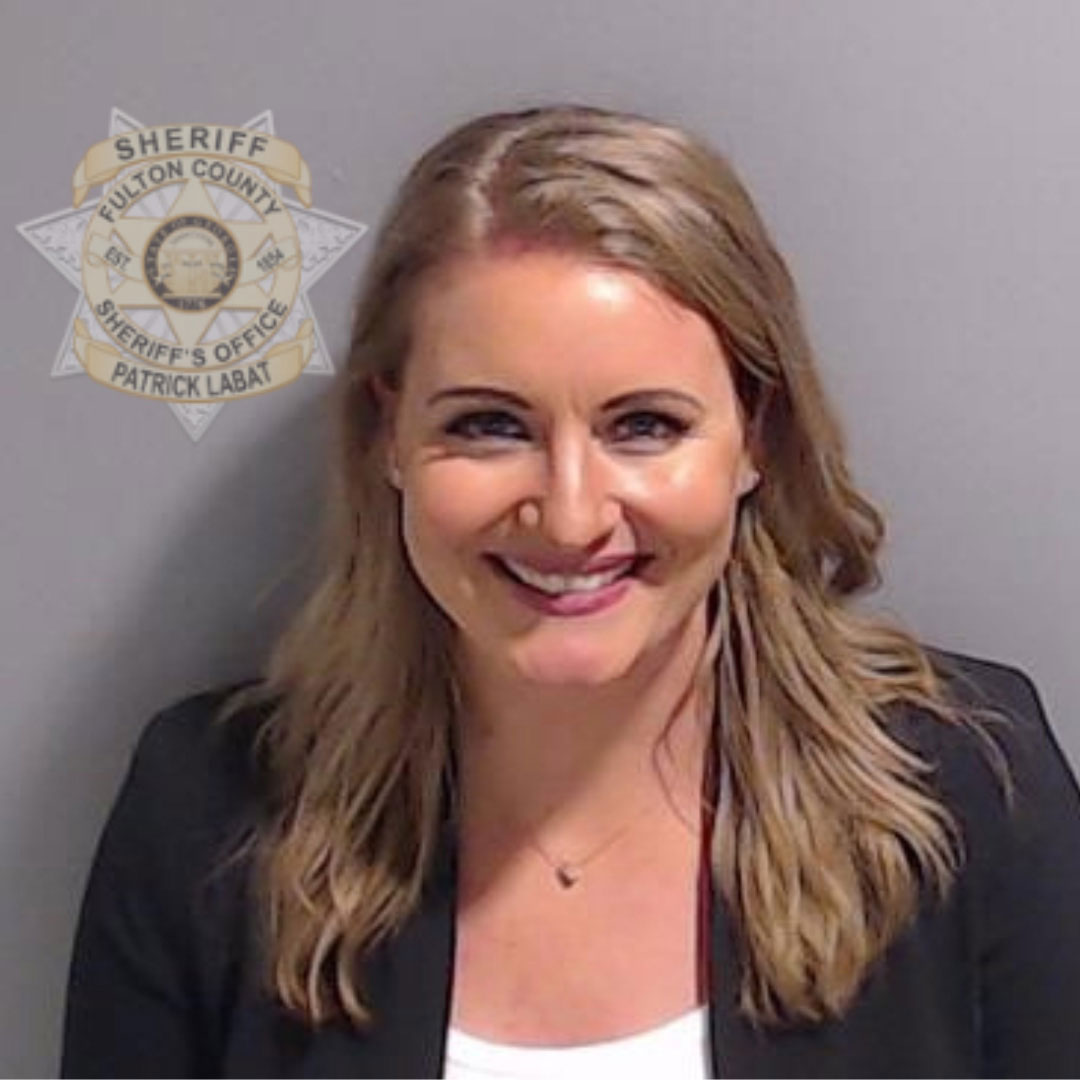
When a senior member of Donald Trump's coup conspiracy, Jenna Ellis, was arrested in Georgia in August, she did better than most of her 18 co-defendants in serving "you can't touch me" face to the mug shot photographer. Ellis, who worked closely with Rudy Giuliani, had been pretending for years to be a "constitutional law" attorney, even though she had actually been an assistant district attorney prosecuting traffic tickets for a mere six months in Colorado before being fired. With her fake "expertise," Ellis had been at the forefront of efforts to pressure conservative judges and election officials to steal the 2020 election for Trump. Her 2023 mugshot suggested she was still confident she could bullshit her way through anything. 

Jenna EllisFormer Trump lawyer Jenna Ellis poses for her booking photo on August 23, 2023 in Atlanta, Georgia. (Fulton County Sheriff's Office via Getty Images)Boy, what a difference two months makes! On Tuesday, Ellis became the third Trump lawyer to plead guilty for her role in the illegal scheme to steal the 2020 election. As she read her statement in court, gone was the cocksure grin, replaced by sobbing.

"I look back on this experience with deep remorse," Ellis said through tears, though she mostly evaded responsibility by saying, "I relied on others, including lawyers with many more years of experience."

For her self-pitying act, Ellis drew widespread disdain for her "crocodile tears" and "barefaced lies that could give a coyote gastric distress." Lawyers Sidney Powell and Kenneth Chesebro, who pled guilty in the days before Ellis took her deal, did not read similar statements and did not draw similar ire. 


Want more Amanda Marcotte on politics? Subscribe to her newsletter Standing Room Only.


As Ellis was in an Atlanta court on Tuesday, another former Trump lawyer and co-conspirator Michael Cohen was taking the stand in Manhattan in an entirely separate case involving Trump's lifetime of financial fraud. Cohen and Ellis are remarkably similar characters. Both were mediocre-at-best lawyers who glommed onto Trump because he was their only real opportunity to make something more of themselves. Both understood that they were being hired not for their legal acumen, but their willingness to cheat and break the law on Trump's behalf. And both foolishly thought Trump would protect them, only to be thrown hastily under the bus by their former boss with the cops' first knock at the door. 

Cohen and Ellis are remarkably similar characters.

Trump is a lifelong con artist and this is how grifters manipulate their victims, by preying on their less-than-honorable traits. They target people's greed or ambition, peddling get-rich-quick schemes or glittery promises of effort-free power and fame. They make the mark feel like they are in on the con, that if you stick with the charlatan, you'll be cheating the system together.

In both Cohen and Ellis' stories, it's easy to see how they got sucked into the drama of committing crime. Engaging in a criminal conspiracy is certainly more exciting than the paperwork-oriented life of an ethical lawyer. It was probably a rush, getting away with all the crimes — until, of course, they stopped getting away with it. 

The public reaction to Ellis and Cohen is markedly different, despite their similarities. Cohen gets a lot more sympathy as a Trump victim, even as people acknowledge that, if he resisted the pull to the dark side in the first place, he wouldn't have gone to prison. Part of the reason is Cohen has put in years of work recasting himself as a Trump critic, by testifying in front of Congress and making himself a regular face on MSNBC. His total rejection of the GOP and his repeated, mostly ignored, warnings to Republicans have reinforced the sense that he really did learn his lesson. Ellis, on the other hand, fits neatly within the paradigm of the self-pitying "Karen," a figure who gets no sympathy, especially when she made the bed she's sleeping in. 

In both cases, however, it is worth pondering some shared moral complexities.

The same self-centeredness that led both Cohen and Ellis into Trump's orbit is what is fueling the turning of their coats. Neither of them had some road-to-Damascus moment that turned the sinner into a saint. Mostly, they both seem bitter and upset at Trump for betraying them. They both seem to be feeling that itch for revenge. Moreover, it doesn't really matter why they're flipping on the boss, just so long as they see this through to the end. 

The very people laughing at Ellis and her tears might soon be grateful for her sobbing. Her story of trust in Trump and betrayal gives Republican-voting jurors a permission structure to convict him while absolving themselves of guilt for voting for him.

Ellis' self-pity might be more grating than Cohen's, but she isn't wrong to be furious with Trump and Rudy Giuliani and whoever other conspirators are now in her burn book. I doubt she believed the Big Lie to begin with, but, like Cohen, she clearly did believe the smaller, equally dumb lie that Trump would have her back if things went sideways. Again, the easiest marks are the ones who don't realize they're being set up as a patsy. 

To make this even more emotionally complicated, there's a good chance that her sense of victimhood is going to be helpful for those who want to see Trump behind bars, where he belongs. While Fulton County District Attorney Fani Willis is trying this case in the relatively blue city of Atlanta, this is still Georgia. There's still a strong possibility that people who voted for Trump end up on that jury. Convincing them to drop their defensiveness about that long enough to admit that Trump is guilty is going to be hard.


Want more Amanda Marcotte on politics? Subscribe to her newsletter Standing Room Only.


One pathway to get them there might be to offer up someone relatable, a person who trusted Trump and was betrayed by him. Powell and Chesebro aren't going to play that role, as it seems both were motivated more by a generalized enthusiasm for fascist insurrection than they were by Trump himself. Their demeanor when they pled guilty also suggests they aren't going to bring the emotional fireworks to their testimony. Trump's chief of staff, Mark Meadows, seems to be flipping, as well, but it's a similar story. He doesn't really seem victimized by Trump, because he was always a cynical operator who never trusted his boss in the first place. 

This is a long way of saying that the very people laughing at Ellis and her tears might soon be grateful for her sobbing. Her story of trust in Trump and betrayal gives Republican-voting jurors a permission structure to convict him while absolving themselves of guilt for voting for him. It might be a bit of B.S. — his voters have long known he's scum, and just don't care — but at this point, I'm good with whatever it takes to get them there. 

Of course, there's a not-small chance Ellis blows up the fragile remorse she's expressed, and slides right back into the MAGA world. We've seen this time and again with Jan. 6 defendants who tell the court they are very sorry that they stormed the Capitol, only to go right back to raving about stolen elections and the glories of Trump on their social media accounts within days of being returned to society. They have invested too much of their identity into MAGA to walk away, even if they know that Trump betrayed them. 

Still, there's so much value in a story like Cohen's: the person whose loyalty to Trump was rewarded with a smack in the face. It can help others with doubts walk away. The role of "victim" allows one to turn on the perpetrator, even if a person was complicit, as all these Trump stooges are. Nuance is a tough sell in our day and age, but it's more necessary than ever. People can be both victims and perpetrators. We can want justice for the latter while holding sympathy for the former. If we want the man who is ultimately responsible for all this to pay the price, embracing these uncomfortable tensions may be our only choice. 

Legal expert on what Jack Smith’s immunity deal with Mark Meadows could mean: “Walls are closing in”

Donald Trump’s former White House chief of staff, Mark Meadows, secured an immunity deal with special counsel Jack Smith's team to testify under oath about efforts by the former president to overturn the 2020 election results, ABC News reported this week. At least three times this year, Meadows reportedly testified before a federal grand jury after he was granted immunity – which compels witnesses to testify with the assurance that their statements or the information stemming from their statements won't be used against them. "His cooperation," legal experts tell Salon "is a very big deal.”

Meadows informed Smith's team that he repeatedly told Trump in the weeks following the 2020 presidential election that the claims of substantial voter fraud lacked merit, marking a notable departure from Trump's extensive rhetoric on the election, sources told ABC. The former White House chief of staff also informed federal investigators that Trump was being "dishonest" with the public when he declared victory on election night hours after polls closed, according to sources.

ABC News has identified apparent contradictions between Meadows' 2021 book and what he allegedly told investigators this year. His book alleges that the election was "stolen" and "rigged" in part due to media complicity, but in private conversations, Meadows told investigators that he hasn't seen evidence to dispute Biden's victory and agrees with the government’s assessment that the 2020 presidential election was the most secure election in U.S. history.

However, this contradiction is not an “unusual problem” in criminal prosecution, former U.S. Attorney Barbara McQuade, a University of Michigan law professor, told Salon. Very often, a criminal associate will deny allegations initially and then change their story later. “If Meadows testifies favorably for the government at a trial against Trump, certainly his prior inconsistent statements would be used by the defense to undermine his credibility,” McQuade said.

She explained that Meadows would need to explain why he has made conflicting statements and the prosecution would also need to “bolster his credibility” by corroborating it with the testimony of other witnesses or exhibits. “Prosecutors would use his testimony, only if they believe they can successfully demonstrate to a jury witness’s truthfulness,” she added.

Meadows' testimony is unlikely to significantly impact Trump's defense since the ex-president has maintained that some of his advisers believed the election was fraudulent, while others did not, and he aligned himself closely with those who persisted the existence of election fraud.

We need your help to stay independent

Still, Meadows is one of the “most subtly powerful figures in Washington, DC,” James Sample, a professor at Hofstra University's School of Law, told Salon.

“To borrow a line from ‘Hamilton,’ the chief of staff is figuratively in the room when it happens – and quite often they are literally in the room as well,” Sample said. “To carry the ‘Hamilton’ metaphor forward, Mark Meadows was literally and figuratively in the room when the efforts to overturn the election happened. Accordingly, his cooperation is a very big deal.”

On top of this, Meadows had direct access to Trump and “controlled” who else had access to his and therefore “is a direct eyewitness to critical events and key junctures between election day and January 6,” Sample explained.

Public testimony reveals that in the weeks following the election, Meadows helped Trump in assessing fraud claims coming from key allies like Rudy Giuliani. But, by mid-December, Meadows said that he privately informed Trump that Giuliani had not provided evidence for the numerous allegations he had been making, ABC reported.

Additionally, former Attorney General Bill Barr stated in congressional testimony that allegations of election fraud were not substantiated, which he had conveyed to Trump and Meadows during an Oval Office meeting.


Want a daily wrap-up of all the news and commentary Salon has to offer? Subscribe to our morning newsletter, Crash Course.


"Defense attorneys are adept at using prior inconsistent statements to undermine the credibility of witnesses,” V. James DeSimone, a California civil rights attorney, told Salon. “But here the proof is in the pudding. While initially Meadows may have had a good faith belief in the election fraud theory, it became increasingly clear that there was no evidence to support this view and the repeated public statements to the contrary while pulling out all stops to prevent our democracy from functioning will corroborate Meadows’ statements to investigators and prosecutors. If they are granting him immunity, what he has to say must be valuable to the prosecution."

The contradictions between Meadows’ book and his alleged testimony certainly raise some credibility questions, Sample added. But just as is true of Michael Cohen’s testimony in the New York civil fraud case against Trump or of the organized crime cases, getting "at the whole truth" requires the testimony of “some imperfect witnesses.” 

“Prosecutors can reinforce the credibility of such witnesses with corroborating evidence and surely they will seek to do so with Meadows,” Sample said.

While Meadows wasn't indicted in Washington, he was charged alongside Trump and other key associates in mid-August. Fulton County District Attorney Fani Willis brought RICO and conspiracy charges related to their alleged efforts to overturn the 2020 election results in Georgia.

“With multiple of the former president’s attorneys, and now his former chief of staff agreeing to cooperate with prosecutors, Donald Trump will surely publicly project confidence, but will just as surely know that the walls are closing in on him,” Sample said. 


To achieve the Biden Cancer Moonshot, e-cigarettes must be widely approved

Recently, Biden administration officials shared a status update on the president’s Cancer Moonshot, one of the most ambitious domestic health policy initiatives in recent memory, inspired by the tragic death of President Joe Biden’s son, Beau, from brain cancer at the age of 46. 

One of the key objectives of the Biden Cancer Moonshot – a whole-of-government approach to cut U.S. cancer rates in half by 2050 – is to “prevent more cancers before they start,” including by “reducing tobacco use.” Smoking is the leading cause of preventable death overall in the U.S. and, according to the U.S. Centers for Disease Control and Prevention (CDC), is responsible for 90% of all lung cancer deaths – about 114,000 deaths annually. 

According to the CDC and the American Cancer Society, Black and LGBTQ+ Americans smoke and suffer from cancer at disproportionately higher rates than their white and straight counterparts. Because health equity for marginalized groups has always been at the top of the president’s public health agenda, I was surprised to see that his own Food and Drug Administration (FDA) – specifically, the Center for Tobacco Products – has become a roadblock for his ambitious goals to reduce tobacco use and preventable lung cancer, especially for Black and LGBTQ+ Americans.

Out of 6.7 million e-cigarette product applications filed, only 1.2 million were even formally reviewed by the FDA.

Harm reduction saves lives. E-cigarette and vaping products are proven to help adults reduce their smoking, or quit entirely, and contain none of the 7,000 carcinogenic or otherwise toxic ingredients contained in cigarettes. In fact, the only ingredient that vaping products share with cigarettes is nicotine. 

And yet, over the last several years, the FDA has systematically refused to approve vaping or e-cigarette products – ignoring the latest science around both e-cigarettes and harm-reduction. Harm-reduction is work I have done through the entirety of my career in Black and LGBTQ+ advocacy.


Want more health and science stories in your inbox? Subscribe to Salon's weekly newsletter Lab Notes.


Out of 6.7 million e-cigarette product applications filed, only 1.2 million were even formally reviewed by the FDA. Of those reviewed, just 23 related products – including only eight individual vaping devices, all made by Big Tobacco – have been technically approved for sale. At the same time, the FDA approved 900 new cigarettes during the same period.

My organization, the Center for Black Equity (CBE), one of the leading Black and LGBTQ+ public health advocacy organizations in the country, recently released a new econometric analysis authored by Dr. Robert J. Shapiro, a noted Democratic economist and advisor to the last three Democratic administrations. The new research quantifies the significant health and economic benefits of vaping nicotine as an alternative to cigarettes, with particular focus on the impact on and benefit to the communities I serve in my role at CBE.  

If reducing smoking and preventable cancer is a priority, approving a wide variety of e-cigarettes would be the easiest and most impactful place to immediately improve health outcomes.

The analysis confirms the findings of hundreds of other studies – that vaping is a legitimate and effective harm-reduction and smoking-cessation tool for adults, and that the risk profile of vaping nicotine is extremely low both on its own and as compared to smoking cigarettes. But more than that, the report has, for the first time, quantified the health and economic benefits of switching from smoking to vaping. 

Dr. Shapiro’s analysis used advanced statistical modeling techniques and massive amounts of public health data to determine that between 2010 and 2022, the availability of vaping products saved 113,000 lives, preserved $137 billion in GDP, saved $39 billion in healthcare costs, and reduced the number of smokers in the U.S. by 6.1 million. 

The science is clear – if reducing smoking and preventable cancer is a priority for the Biden administration, approving a wide variety of e-cigarettes would be the easiest and most impactful place to immediately improve health outcomes. Allowing consumers to access lower-risk nicotine products would directly improve the health profiles of Black and LGBTQ+ Americans who smoke and die in higher numbers than the rest of the population. 

We need your help to stay independent

Other government health agencies understand this. Britain’s Department of Health and Social Care launched a program called “Swap to Stop” that urges British citizens to exchange their carton of cigarettes for a vaping kit. The U.S. is far behind in its approach, but the FDA and the Center for Tobacco Products could easily implement a policy that broadly approves vaping products – especially flavored vaping products – whose availability makes it two to three times more likely adults will quit smoking as compared to non- or tobacco-flavored products. 

Less smoking means less cancer, especially for Black and LGBTQ+ Americans. And supporting broad access to and availability of vaping products means supporting the Biden Cancer Moonshot. It means more adults quitting smoking; it means fewer cancer diagnoses; and it means eliminating the most preventable cause of death in the U.S. 

The benefits of shifting from smoking to vaping will be felt most acutely among those communities most at-risk. Americans, especially Black and LGBTQ+ Americans, need regulatory policies that reflect modern science.

Anything less stands in the way of achieving essential health equity and harm-reduction goals critical to the president’s agenda.

Four rare and endangered wildflowers given federal protections in Southern California

Last week the Bureau of Land Management announced protections for a quartet of rare plants in the San Bernardino National Forest in Southern California. The four plants exist in a part of the forest known as the Carbonate Habitat Management Area because it exists in carbonate rich soil over ancient coral reefs.

All of the newly-protected plants are wildflowers. These include the Cushenbury oxytheca (A. p. var. goodmaniana), Parish’s daisy (Erigeron parishii), the Cushenbury milk-vetch (Astragalus albens) and the Cushenbury buckwheat (Eriogonum ovalifolium var. vineum). The wildflowers in question depend on the calcium carbonate in the soil in order to grow, but this has put them at potential risk because that same calcium carbonate can be used in common products like cement, toothpaste and medicines. As a result, the Bureau of Land Management has designated that for 50 years this area cannot be used for mining. The protected region includes 2,841 acres of withdrawn National Forest System lands and 280 acres of withdrawn non-federal lands within forest boundaries.

“This mining withdrawal is a key step in protecting these highly restricted rare and endangered plants, whose habitat has already been significantly reduced by mining,” Aaron Sims, rare plant program director at the California Native Plant Society, told the Center for Biological Diversity. “High-grade calcium carbonate can be found in many other places, but the only place on the planet where these special plants live is confined to a small area in Southern California, primarily on the northern slopes of the San Bernardino Mountains.”


Rep. Jamaal Bowman pleads guilty to criminal charge for Capitol building fire alarm incident

Rep. Jamaal Bowman, D-N.Y., pleaded guilty to a misdemeanor in connection incident that took place in a congressional building on Capitol Hill last month where it was found that he triggered a fire alarm for no good reason. According to Bowman, he was rushing to cast his vote on a government funding bill that day and mistakingly pulled the alarm while trying to pass through a door in the building that was usually kept open.

"It was a lapse of judgment if you will… wasn't a conscious decision to do something wrong," Bowman said in a quote obtained from Fox News

According to CNN, Bowman agreed to plead guilty to a single misdemeanor offense. His sentence was deferred for three months while he serves probation, pays a $1,000 fine, and writes a letter of apology to Capitol Police. If he fulfills the requirements, prosecutors agreed to drop the charge at a January hearing, according to the report.

“I’m thankful for the quick resolution from the District of Columbia Attorney General’s office on this issue and grateful that the United States Capitol Police General Counsel’s office agreed I did not obstruct nor intend to obstruct any House vote or proceedings,” Bowman said in a statement Wednesday. “I am responsible for activating a fire alarm, I will be paying the fine issued, and look forward to these charges being ultimately dropped.”

Five of the biggest revelations from John Stamos’ new memoir

John Stamos has been typecast all his life like every other actor a part of a megahit American sitcom like "Full House." But the actor who played the himbo rockstar Uncle Jesse is ready to shed that image in his new memoir "If You Would Have Told Me.” Throughout the book, he reveals many of the interworkings of his long-term career like his short-lived beef with child stars Mary-Kate and Ashley Olsen, known for making him the famous Uncle Jesse.

The actor also dives into strange connections like one of his mother's best friends, Doreen Lioy, who fell in love with convicted serial killer Richard Ramirez and even asked his mom to be her maid of honor. Also, Stamos reveals that an old acting coach of his gave him an intro to Scientology book. He attended a meeting at the Church of Scientology Celebrity Centre International where he was questioned by a man and was probed about "some strange sex inquiries." He was of course turned down: "Apparently, I’m not Scientology material. Darn it.”

Here are some of the most surprising revelations from the veteran actor's memoir:

1
Stamos initially didn't like the Olsen Twins nor Bob Saget
The actor, most known for his role as Uncle Jesse in "Full House," and Jesse's most memorable scenes were with Michelle, the youngest of the Tanner clan played by the Olsen twins. But in Stamos' memoir, he shared that he tried to get the twins fired when they were only 11 months old. He gave the show's creator an ultimatum: “It’s either me or them. They’re not going to work out. They’ll ruin this show and my career.” 
 
So a new pair of twins were brought into the show who were “quiet, calm, and homely as hell.” But he reneged on his ultimatum and actually asked for the Olsen twins to come back. Ultimately, he ended up loving the twins and learned that  “Mary-Kate is stronger in the emotional scenes, Ashley scores in the comedic ones.” He also wrote that their sister Elizabeth Olsen (now known as Wanda Maximoff/ Scarlet Witch in the MCU) visited the set and “she quickly becomes my new favorite Olsen.”
 
Stamos shared that the late Bob Saget was jealous of his onscreen relationship with the Olsen twins and Dave Coulier. Stamos said he didn't even think Saget was right for the role of patriarch Danny Tanner because he was not an actor but a comedian. 
 

“Bob is the humblest egomaniac I’ve ever met, but he undercuts his narcissism by being so damn lovable. A walking contradiction, he makes up for his self-inflicted insecurity by being a self-inflicted aggrandizer,” he said. “I know Bob is wickedly talented. I just don’t tell it to his face at this point. But If I want to learn anything about comedy, I need to study Bob . . . Bob and I tolerate each other and attempt to avoid interfering with each other’s creative processes, though it can be challenging.”


But the three lead male actors bonded when each of them had sisters who got sick: “Bob, Dave, and I are no longer three guys who work on the same show; we are brothers worried about amazing women slipping away from us,” he wrote. “All the fear, fighting for family, and frustration of loss has pummeled down some of our pettiness on the set. We’re seeing not only what is important in our own relationships with each other, but also our relationships with the fans out there who are struggling with issues of life and death.”


Stamos learned of Saget's death in 2022 after he received a call from his publicist, sharing the TMZ story and then a text from Candace Cameron Bure. Then Kelly Rizzo, Saget’s wife called. He told Coulier and Lori Loughlin.


“When you lose a best friend, you lose a piece of your history," he said. The "Full House" cast gathered at Saget's home and grieved together.

2
Stamos turned down "Nip/Tuck" because then wife and actress Rebecca Romijn said it was anti-women


The hit Ryan Murphy medical satire "Nip/Tuck" which aired for six seasons was offered to Stamos right before its start on the then brand new channel FX.
 
Stamos wrote: "The show sounds daring and edgy. Exactly what I need. I pass on ‘Charlie’s Hookers,’ but I know Ryan is the real deal, and I should take this offer seriously."
 
But his then-wife and actress Rebecca Romijn read the script and told him: "‘It’s demeaning to women,’ she says dismissively. I think there’s more to the show, but we talk it out and I turn down ‘Nip/Tuck.'”
 
Stamos eventually worked with Murphy in his hit "Glee" and his canceled show "The New Normal."
3
Stamos said that he was sexually abused by his adult babysitter
Stamos not only discussed the most pivotal moments in his career but also some of the most heartbreaking moments in his adolescence. The actor opened up about sexual abuse he experienced as a child by his then 18- or 19-year-old babysitter. 
 

He shared on Instagram that “About five years ago, I was writing out a speech that I was going to make at a Child Help charity and I started writing and all of a sudden it just came back. Just like flooded me with a crystal clear vision of what happened back then and I was like — it was very unsettling. And I thought, ‘Well, should I talk about it in my speech? And then I thought ‘No, the night was about the kids and not me.’"


"So I packed it away and I thought, ‘Some day will be the right time to talk about this.' I’ve had three friends text me today. Three. Saying that they had a similar situation that happened to them and never told anybody. So if sharing my story has helped even those three friends of mine, then I’m glad I did it. Please know that it is never your fault and you deserve to be heard and you deserve to be supported,” he shared.

4
He begged his team to get him off of "Full House"
Prior to the formation of the iconic Uncle Jesse, every teenage girl and woman fell in love with across America in the 90s, Stamos's character was named Uncle Adam, and he hated it.
 
At a table reading for the first season, the cast was "to gather around a baby’s crib and sing the theme song to ‘The Flintstones.’ By the time we get to ‘Have a Yabba-Dabba-Doo Time,’ I’m having a Yabba-Dabba-Don’t Time. The reading ends, thank God, and I head to the lobby as fast as I can, avoiding everyone babbling how great the reading went. I dig through my pockets for change. I jam a quarter into a pay phone, get my agent on the line, and gently suggest, “Get me the **k off this show!'”


The show's first season did not have great ratings and it almost crashed and burned "faster than my reputation, and I hope I can salvage some dignity with my next project," he wrote. And it almost was canceled until ABC put one of its biggest hits as a lead-in over the summer reruns which helped land the show into "in the top ten throughout the summer. We find an audience and they follow us to season two.”

5
He was told he would never work again after he quit "General Hospital"
Prior to "Full House," Stamos was on the soap "General Hospital" as the character Blackie Parrish. He was in the show for 139 episodes and paid $400 an episode. After a decade on the show, he was ready to leave. Producer Gloria Monty took him out to lunch and they ran into Dean Martin who told him to “get out while you can."
 
Stamos told the told the producer he wanted to leave and do a sitcom ("Full House"). She responded, “You know, if you leave, dear, you’ll never work in this town again. Fortunately for Stamos, "Full House" became an All-American classic.
 

Trump storms out of court chased by Secret Service after being slapped with a second fine

Former President Donald Trump dashed out of the courtroom with Secret Service agents in tow in the midst of his former lawyer and "fixer," Michael Cohen's, testimony Wednesday in his New York civil fraud trial, NBC News reports. The dramatic exit came after the former lawyer took the stand himself in a surprising twist in the case. 

Trump attorney Cliff Roberts requested a directed verdict in response to Cohen stating that he did not recall Trump or co-defendant Alan Weisselberg directing him to inflate the numbers on his personal statement, but New York Supreme Court Justice Arthur Engoron denied it. Trump then immediately rose from his seat and stormed out of the room with Secret Service agents chasing after him, an unexpected move that even appeared to surprise his legal team. Gasps could be heard throughout the courtroom. 

"Unbelievable," Trump repeatedly muttered.

The former president did return a short time later, walking back into the room with lawyer Alina Habba. Robert again asked the judge for a directed verdict, to which Engoron quipped, "Absolutely not. There's enough evidence in this case to fill the courtroom.”

Trump's interruption came shortly after Engoron fined him $10,000 for violating a gag order barring him from making inflammatory comments about court staff. The former president had taken the stand for around a minute and was asked about statements he made outside the courtroom, referring to the judge and someone else as "partisan." Trump said he was referring to Cohen and not Engoron's court clerk, whom he had been sanctioned $5,000 for criticizing previously. After the judge asked if Trump always refers to Cohen by name and his lawyers interjected that the former president uses far worse language to refer to him, Engoron determined that he didn't find Trump credible and levied the fine. 

Trump spokesperson Steven Cheung told NBC News that the GOP frontrunner would go to the airport from the courthouse at the conclusion of Wednesday's proceedings.

Biden slams “extreme MAGA takeover” after House Republicans finally settle on a new speaker

After nearly a month of bickering and internal strife, Republicans in the House of Representatives unanimously elected Rep. Mike Johnson, R-La., the 56th speaker of the chamber in a floor vote Wednesday afternoon. 

The little-known Johnson filled the position after a 22-day vacancy and allowed the House to resume operations following Rep. Kevin McCarthy's, R-Calif., ouster three weeks ago. All 220 Republicans present cast their vote for Johnson, who needed a 215-vote majority to secure the speaker's gavel, marking the first time the GOP has unanimously elected a speaker since elevating John Boehner in 2011.

The Louisiana Republican earned the nomination and became the conference's fourth pick for the role Tuesday evening, beating out four other Republicans seeking out the nomination with 128 votes compared to 29 for Rep. Byron Donalds, R-Fla. and 44 for others — 43 of which went to McCarthy, Axios reports. The former House GOP vice chairman initially finished second to Rep. Tom Emmer, R-Minn. in an earlier vote but met success in a nighttime vote after Emmer abruptly dropped out of the race due to a lack of party support approximately four hours later. Johnson's win also follows Reps. Jim Jordan, R-Ohio, and Steve Scalise's, R-La., failed bids for the position in the last two weeks.

"This group is ready to govern," Johnson said Tuesday when he announced plans to advance a full House floor vote on Wednesday. He told reporters that the conference is "united" and ready for the ballot.

Having only served three full terms as a representative, Johnson's success means he has had the shortest congressional tenure of any speaker in modern times prior to their election by far. While the lawyer and former state legislator is much lesser known to the public than his nominee predecessors, he boasts — and projects — a similar right-wing ideology to many of his culture-warrior colleagues.

"Some people are called to pastoral ministry and others to music ministry, etc. I was called to legal ministry, and I’ve been out on the front lines of the ‘culture war’ defending religious freedom, the sanctity of human life and biblical values, including the defense of traditional marriage and other ideals like these when they’ve been under assault," Johnson told the Louisiana Baptist Message, a religious newspaper in the state, as he campaigned for federal office in 2016.

Johnson's widespread support among the GOP conference — marked by the unanimous applause he received from the Republican side as the vote began Wednesday, per Punchbowl News — rings as foreboding. It demonstrates congressional Republicans' overwhelming willingness to elevate a far-right congressman — particularly one reminiscent of failed nominee Jordan — with less legislative experience and less reputational baggage to the third highest position in the nation despite weeks of in-fighting belaboring the process.

We need your help to stay independent

A staunch ally of former President Donald Trump, Johnson is best known for spearheading the Supreme Court amicus brief, signed by 126 House Republicans, backing a Texas lawsuit aiming to overturn the 2020 election results in four swing states. House Jan. 6 committee proponent and vocal Trump critic Rep. Liz Cheney's, R-Wyo., team released old videos discussing Johnson's involvement and spotlighted a New York Times quote calling the Louisiana Republican "the most important architect of the Electoral College objections," according to NBC News.

Johnson is also a longtime opponent of Roe v. Wade, which secured a federal right to abortion care for decades until it was overturned by the conservative majority of the Supreme Court last year.

"Look, I’d love it if the Supreme Court would overturn Roe v. Wade," Johnson told Mother Jones in 2001. "That would be the greatest day of my life. But until we can do that, I accept the fact that they can perform abortions legally, and I just want them to do it under the same health and safety standards that any other medical professional has to adhere to.”

"Look, I’d love it if the Supreme Court would overturn Roe v. Wade," Johnson told Mother Jones in 2001. "That would be the greatest day of my life"

Johnson, then an attorney in Louisiana, the outlet notes, helped draft Louisiana's anti-abortion legislation, which like other targeted regulation of abortion providers laws would apply specific licensing requirements on abortion clinics that would not apply to other facilities that perform similar or riskier procedures.

"MAGA Mike Johnson’s ascension to the speakership cements the extreme MAGA takeover of the House Republican Conference," Biden campaign spokesperson Ammar Moussa said in a statement. "Now, Donald Trump has his loyal foot soldier to ban abortion nationwide, lead efforts to deny free and fair election results, gut Social Security and Medicare, and advance the extreme MAGA agenda at the expense of middle-class families."

Ahead of his election Wednesday, the House Judiciary Dems' account on X, formerly Twitter, shared a clip of Johnson amplifying his anti-abortion rhetoric during a committee hearing and dubbing Roe v. Wade a "terrible corruption of American jurisprudence."

"Roe v. Wade gave constitutional cover to the elective killing of unborn children in America, period," Johnson began in the clip. "You think about the implications of that on the economy. We're all struggling here to cover the bases of social security, Medicare and Medicaid, and all the rest," he added. "If we had all those able-bodied workers in the economy, we wouldn't be going upside down and toppling over like this."


Want a daily wrap-up of all the news and commentary Salon has to offer? Subscribe to our morning newsletter, Crash Course.


With Johnson minted as the speaker, the House sputtered back into action Wednesday afternoon. The lower chamber has moved directly to passing a resolution defending and supporting Israel, Punchbowl News reports.

As the renewed deadline to pass funding legislation to prevent a government shutdown also draws nearer, Johnson has put forward a possible plan, according to CNN's Annie Grayer: passing a short-term spending bill that will extend until Jan. 15 or April 15 and then using the time in the interim to pass the remaining single subject spending bills. His proposed schedule also eliminates the chamber's August recess unless all 12 Appropriations bills are passed. 

"Johnson was one of the 91 members to vote against the short-term spending bill that extended government funding from September 30 to November 17," CNN's Annie Grayer noted online. 

Brown, red, black, riceberry — what are these white rice alternatives? Are they actually healthier?

Throughout history, rice has remained an important food staple. It supports the nutritional needs of more than half of the global population.

While you might be familiar with a handful of types, there are more than 40,000 different varieties of cultivated rice — a testament to the diversity and adaptability of this staple crop.

Rice, much like other grains, is the edible starchy kernel of a grass plant. In fact, the vast majority of rice varieties (although not all) belong to just one species — Oryza sativa.

If you have ever found yourself at the supermarket, overwhelmed by the number of rice options available, you are not alone. From aromatic Thai "jasmine" rice used in curries, to the "basmati" rice of India and the sticky "arborio" for making creamy Italian risotto, each variety or cultivar, is distinguished by its grain length, shape and color.

Each cultivar also has its own flavor, texture and unique nutrient properties. To make things more complicated, some varieties are higher in anthyocyanins — antioxidants that protect the body's cells from damage. These rice varieties are known by their color — for example, red or black rice.


What is brown rice?

Compared to white rice, brown rice is a whole grain with only the inedible outer hull removed. It is largely grown in India, Pakistan and Thailand.

To make white rice, the bran (outer shell) of the grains is removed. In brown rice, the bran and germ (core of the grain) are still intact, giving this type of rice its tan color and high fiber content. Brown rice naturally contains more nutrients than white rice, including double the amount of dietary fiber and substantially higher magnesium, iron, zinc and B group vitamins, including folic acid.

Brown rice also contains polyphenols and flavonoids — types of antioxidants that protect the body from stress.

It is often sold as a longer grain option and has a similar nutty flavor to black and red rice cultivars, though some chefs suggest the texture is slightly chewier.


Fancy black rice

While not as common as other varieties, black rice — also called purple rice due to its coloring — is high in anthocyanins. In fact, black rice contains the same antioxidant type that gives "superfoods" like blueberries and blackberries their deep purple color.

The Oryza sativa variant of black rice is grown primarily in Asia and exported globally, while the Oryza glaberrima variant is native to and grown only in Africa. Among black rices there are also different shades, from japonica black rice, Chinese black rice, Thai black rice through to Indonesian black rice.

With its antioxidant properties, some would argue black rice is one of the healthiest choices due to its protective effects for heart health and metabolic diseases.

Black rice can be a short, medium or long grain and has only the outermost layer (inedible hull) removed for consumption. The bran and germ remain intact, similar to brown rice, making it a high fiber food. Black rice has been described by some foodies to have a mild nutty and even slightly sweet flavor.


Iron-rich red rice

Similar to black rice, red rice or Oryza rufipogon, is a medium or long grain variety colored by its anthocyanin content. Interestingly, it is considered an edible weed growing alongside other rice varieties and primarily grown in Asia as well as Northern Australia.

The difference in colur compared to black rice types is due to the amount and type of anthyocyanins (specifically catechins and epicatechins) in red rice.

Red rice also contains more iron and zinc compared to white, black or brown varieties. The anthocyanins found in red rice are used as a pigment for colouring other foods such as liquor, bread and ice cream.


Is riceberry a type of rice, too?

Despite the slightly confusing name, riceberry rice was originally developed in Thailand as a cross between a local jasmine rice and local purple rice variety, creating a lighter, purple-coloured grain.

Increasingly available in Asian grocers across Australia, this type of rice has a more favorable nutrient profile than brown rice and has a shorter cooking time similar to that of white jasmine rice.


Rice is not just another carb

Rice has many nutritional benefits besides providing the body with carbohydrates — its primary fuel source. Rice contains more than 15 essential vitamins and minerals including folic acid, magnesium, iron and zinc and is naturally gluten free, making it an appropriate substitute for people living with celiac disease.

Brown, red and black rices are also whole grains, recommended as part of a healthy eating pattern.

In addition, different cultivars of rice have a low glycemic index or GI — a measure of the speed at which carbohydrates raise blood sugar levels.

Generally speaking, the more colorful the rice variety, the lower its GI. This is a particularly important consideration for people living with diabetes.

Less frequently consumed rice varieties have nutritional benefits, including their anthocyanin and fiber content. However, they can be harder to find and are often pricier than more common white and brown varieties.

If you enjoy trying foods with unique flavors, try experimenting with black or red rice varieties. Whatever the color, all types of rice have a place in a balanced diet.

Yasmine Probst, Associate professor, University of Wollongong; Karen Zoszak, Accredited Practicing Dietitian, PhD Candidate, University of Wollongong and Olivia Wills, Accredited Practicing Dietitian, PhD candidate, University of Wollongong

This article is republished from The Conversation under a Creative Commons license. Read the original article.

Use your voice, Luke: How Mark Hamill’s anti-Jedi mind tricks gave him career longevity

Remarkably few of us experience life like Mark Hamill does. By this, we mean an existence informed by a recurring role in a handful of films that, for millions of people around the world, has frozen him in time and space – deep, deep space.

His life is informed but not shaped by having played Luke Skywalker — informed, but not formed around. That’s the difference between Hamill and other actors seen by the public as a fictional persona they played decades ago  – or worse, those performers who resent that double-edged sword.

On one side of that blade, they’ll live on forever via action figures and any kind of paraphernalia one can imagine.

Cutting in the opposite direction is the tendency for that immortality to rob an actor of being seen as anything else.

Where others might have taken out those frustrations on reporters or children – especially the ones who grew up, but never outgrew that hero worship – Hamill exercised the wisdom of a Jedi and took his career in the opposite direction. Seeing him in Mike Flanagan’s “The Fall of the House of Usher,” a gothic-style horror series based on the works of Edgar Allen Poe, fits the audience’s expectation that Hamill spent decades carving out.  

As the Usher family’s amoral fixer Arthur Pym, a ruthless lawyer who kills the family’s enemies without question and with extreme efficiency, Hamill follows a pattern established over many roles in which he makes himself known but doesn’t headline.

Hamill’s family attorney, dubbed the Pym Reaper by their adversaries and the many children of family patriarch Roderick Usher (Bruce Greenwood), is ever-present but typically silent, speaking only when necessary. Pym can circumvent cops and influence judges. He tells the petulant Usher children what to say and how to say it, and to keep them in line he lets each know how easily he can destroy whatever padlocks they have on their fortress gates.

Hamill makes him sound like a man whose fingernails and teeth should be stained with blood and graveyard dirt, with a timbre crackling with broken headstone fragments. It is the voice of a man who has seen and done so many terrible things that he cannot be moved to anger, only impatience for humankind’s naivete.

The Fall of the House of UsherMark Hamill in "The Fall of the House of Usher" (Netflix)Flanagan, who writes or co-writes seven of the show’s eight episodes, saves the details of Pym's crimes for a finale on which he collaborates with Kiele Sanchez, directed by Michael Fimognari. Pym's sin ledger is recounted to him by Carla Gugino’s mysterious immortal Verna, and upon hearing it, he doesn’t try to explain himself or even flinch as she reads his life’s filth back to him. Pym sits there and takes it, slightly slumped into his too-large overcoat, peering at her from under his fedora's brim.
"We’re a virus, I think,” he tells her. “People, I mean.”

The first three “Star Wars” films yielded one megastar in Harrison Ford, and his celebrity is probably more attributable to his solo turn as Indiana Jones. Han Solo is a space pirate while Indy is many archetypes in one – an action hero, a professor and a romantic lead. Luke Skywalker, in contrast, is a holy knight. There was never a failed moral test demanding he redeem himself, and never a girl for him to chase. (You know that that kiss with Carrie Fisher’s Leia doesn’t count.) He was, and is, eternally linked to some neutral and neutered concept of what is best about us.

Looking at Hamill’s old role that way, it makes sense that people, children and casting producers especially, could only picture him as Luke. Instead of resigning himself to this – publicly, anyway – Hamill removed his face from the equation and doubled down on the malleability of his voice.

While Hamill worked steadily throughout the 1980s and ‘90s on Broadway and appeared in TV guest roles and smaller movies, one was more likely to encounter Hamill’s thoroughly disguised voice in the likes of “Batman: The Animated Series,” “Spider-Man” or “Avatar: The Last Airbender,” where he established the voices of The Joker, Hobgoblin or Fire Lord Ozai respectively. We wouldn't bother mentioning these if Hamill's renditions weren't brilliant or tough, if not impossible, to top.  A stand-out voiceover makes a person check the credits, and when his name matches a recognizable character the viewer can only say themselves, "Of course it's him."

We need your help to stay independent

Hamill’s voicework resume is extensive and varied, but when it comes to the marquee titles you may notice a pattern: instead of campaigning to play a famous hero, he embraces the Dark Side. In the “Transformers” franchise he voices Megatronus, the first Decepticon. In the 2021’s “Masters of the Universe: Revelation,” he shows up as Skeletor.  Heck, in “Star Wars: The Clone Wars,” he lends his versatile expression not a Jedi, but a Sith called Darth Bane. That entirely removed any possible shock at seeing his name in the credits for the 2019 remake of “Chucky” as the voice of the film’s titular homicidal toy.

This intentional project curation piques our interest by surprising us, as he did by showing up in an indelible episode of “What We Do in the Shadows” as Jim the Vampire, a monster so fearsome that he forces Laszlo to assume a new identity: Jackie Daytona.

Much earlier in his career – probably around the time that he lost out playing the lead in the film version of “Amadeus” to Tom Hulce despite having portrayed the role on Broadway to much critical acclaim – Hamill has demonstrated a preference for roles that bring him joy if not outright tickle him. (That much was obvious in 2001, when he showed up in the fanboy full-service pump that was Kevin Smith’s “Jay and Silent Bob Strike Back” as a character called Cocknocker.)

In his next film, he co-stars with Tom Hiddleston in a Flanagan adaptation of Stephen King’s “The Life Of Chuck.”

The MachineBert (Bert Kreischer) and Albert Kreischer (Mark Hamill) in "The Machine" (Sony Pictures)Whether he intended to or not, all these choices planted seeds for a harvest that’s been steadily ripening in recent years. His turn in “The Fall of the House of Usher” comes after his work in “The Machine,” Bert Kreischer’s action-loopy and unapologetically dumb comedy where Hamill plays Bert’s father demanding and emotionally withholding father Albert who ends up accompanying his boy on an adventure with Russian mobsters.


Want a daily wrap-up of all the news and commentary Salon has to offer? Subscribe to our morning newsletter, Crash Course.


Albert excels at nagging his son and appearing to do the wrong thing at every turn, including ingesting enough designer party drugs to make a featuring criminal heavy think twice about the old man. Those scenes showcase Hamill’s facility for tapping into hedonism, a part of him we’re accustomed to hearing within his portrayals of cartoon villains but not seeing in the flesh. In Albert, though, he joins the light and the dark giving us a man who is part joker – he emotionally tortures his son enough to impress the gun-toting baddies while never letting the audience forget that he’s on the side of, if not good, then doing better than he did before.

Hamill’s digital likeness has appeared in “The Mandalorian” and “The Book of Boba Fett,” and in sundry profiles by the likes of CBS News and Esquire, he’s made it abundantly plain that while he has no interest in playing Luke Skywalker again, he’s also agnostic about the whole affair. In the same way that Fisher viewed herself as Leia’s custodian, Hamill probably recognizes he may never be fully finished with the Lucasfilm universe.

Now, at long last, the larger TV and movie audience can appreciate how much more he’s capable of aside from the part that keeps his name on our minds more than four decades after he stepped into it for the first time. Hamill was always willing to let Luke go to move forward, which he does each time he takes on a new voice. In “The Fall of the House Usher" he assigns his face to a soulless crook who can’t help slicing his way from the edges of the action into the spotlight. And that makes us like him all the more.

"The Fall of the House of Usher" is currently streaming on Netflix.

“The View” host compares Republican whiteness to “The Shining”

During a segment of "The View" this week, host Alyssa Farah Griffin compared the unhinged whiteness of a recent Republican press conference to announce Rep. Mike Johnson's speaker nomination to that of an eerie detail from "The Shining."

Referencing a photo seen in the 1980 horror film — directed by Stanley Kubrick and starring Jack Nicholson and Shelley Duvall — which shows a party of all white faces smiling at the camera in a soulless fashion, she remarked to her co-hosts that it was basically the same vibe during the presser — footage of which was lacking other ethnicities in a very noticeable way. 

As The Wrap highlights in their coverage, "Really, what the ABC hosts took issue with was the behavior of Johnson and his colleagues. When ABC reporter Rachel Scott pressed Johnson on the fact that he pushed Donald Trump’s 2020 election lies, she was cut off by the congressmen, with Rep. Virginia Foxx yelling 'shut up' repeatedly."

“That whole image kind of reminded me of the scene from ‘The Shining,’ where it’s just like all the white folks,” Farah Griffin joked.

Watch a clip here:

“I don’t want anybody killed”: Judge reprimands Trump for “dangerous disobeyal” of gag order

Former president Donald Trump may have once again violated a recently imposed limited gag order in his New York civil fraud trial, per a suggestion made by New York Supreme Court Judge Arthur Engoron, who is overseeing the case. Engoron implied that the ex-president attacked his principal law clerk, Allison R. Greenfield, citing reporting by The Associated Press wherein Trump had stated that the justice was a “very partisan judge with a person who is very partisan sitting alongside him, perhaps even more partisan than he is.”

“It’s easy for the public or anyone to know who that is,” Engoron said. “I’m very protective of my staff, and I believe I should be; I don’t want anybody killed. Why should there not be severe sanctions for this blatant, dangerous disobeyal of a clear court order?”

Trump was fined $5,000 last week after failing to remove an insensitive post referring to Greenfield as Senate Majority Leader Chuck Schumer's, D-N.Y., "girlfriend." Trump removed the post from his TruthSocial platform when asked to, but it remained live on his campaign website for two weeks. “This court is way beyond the warning stage,” Engoron warned while handing down the fine.

MAGA attorney Chris Kise stated that Trump's remarks were made about his former lawyer and personal fixer Michael Cohen. “My understanding of what was said — I believe what Mr. Trump will tell you — was he was talking to Michael Cohen, his credibility as a witness. … I’ve asked him and that’s exactly what he said,” Kise said. Engoron, however, did not seem entirely convinced, saying that it “seems clear to me” that Trump was referring to Greenfield.

Why Reggie Watts learned to be funny

It doesn't matter if you're the coolest kid in the world, a person who identifies as a quirky geek, or the regular kid next door, you need community. Everybody needs community, because no one can make it on their own. Reggie Watts explain how his career would not exist without his lovable weirdo crew in his hometown of Montana on a recent episode of "Salon Talks." 

Writer, musician, and comedian Reggie Watts is most known for being the bandleader on CBS’ "The Late Late Show with James Corden" and IFC’s "Comedy Bang! Bang!" Watts has also been featured in multiple comedy specials on Netflix and Comedy Central. He has now laid out the details of his compelling story in the new memoir, "Great Falls, MT: Fast Times, Post-Punk Weirdos, and a Tale of Coming Home Again." 

The book begins with Watts’ family relocating from Germany to Montana. Watts walks us through the many issues he faced dealing with race and being the one of the few Black guys around, addiction and some of the wildest relationship stories you may ever read. Ultimately, art, creation and Watts finding his community of weirdos, just like him, saved his life. 

You can watch my "Salon Talks" episode with Reggie Watts here or read a Q&A of our conversation below to learn more about his experience as a Black man in Montana, the new way in which he viewed his town when he traveled back home and who should play Reggie Watts in the biopic. 

The following conversation has been lightly edited for length and clarity.

We're here to talk about your great new memoir, “Great Falls, MT: Fast Times, Post-Punk Weirdos, and a Tale of Coming Home Again.” Let's unpack the subtitle. Let's start there.

Sure, sure. Yeah. I wanted something that was kind of an '80s movie, iconic vibe. I don't know, it has that a little bit, but it's also descriptive, it's true. It's what it is.

I had so much fun and got so many laughs reading the book. It set my mind spinning because I've been everywhere, I've been all over the place, so many different countries, so many different cities. I never thought about going to Montana.

It's easy to forget to go there. It's a great place. I mean, I like it. It's simple. It's just a simple life. It's like the interior. You could go to Wyoming, North Dakota, South Dakota. It's got the same vibe. Idaho.

Apparently, they have big parties in Wyoming now.

Oh, do they?

Yes. It's time for you to come out with your Montana thing.

Oh, god damn. Wow. Well, I got more work ahead of me. I thought I'd done everything, and now you've just added more work. That's fine.

It's a transformative place for you, so much that it make it onto the cover of your book. Can you start off by talking about the journey and that transition from being born in Germany and moving to Montana?

I don't remember a ton of it, but it definitely had an impact for sure because just being around, hearing people speaking German and my mom speaking French, and living in Spain, I was around a lot of different languages and things like that. That was super helpful to me. 

"Finding your crew, finding your community is way more important than I think people give credit to."

Then moving to Montana, I had to learn English, and it was weird. It was kind of trial by fire as soon as I was born, in a way, on a human, cultural level. I just experienced so many different things, and then when you go to Montana, where it's really slow and what it is, and it doesn't really change that much. It's not immediately dynamic or anything like that, so yeah, it was culture shock a little bit.

I mean, it seems beautiful. It seems like there's a certain type of peace that you could never get in a city with as much motion as a New York or a Los Angeles.

Oh, 100%. Yeah. I mean, you just got time to figure out what do you want to do today? Well, I guess I better go pick up some sandwich fixings. I don't know. Or I am going to go visit my friend at the coffee shop and talk about whatever, or we're going to go for a quick hike outside of town or something or go fishing. It's chill.

If I'm moving there, what's the top five rules for a Black guy moving to Montana? 

Just a lot of firearms. No. No. Rules for Black guy? I don't know, man. Growing up there, the thing is, people are generally pretty nice. They might be suspicious at first, but I noticed that sometimes that's suspicious isn't necessarily because you're Black. I mean, I think that's definitely a part of it, but it's not just that. It's that you're a stranger. "I don't know anything about you, and so I'm going to treat you as a stranger until something clicks." Once something clicks, everybody's super sweet and they're really nice, and you're done. That's it.

That's fair. It's better actually. I shouldn't just want to be your friend because I think we identify, because you could be a scammer.

Yeah. Oh, 100%. I don't know. It's like I kind of get it. It's like someone comes into the village; it's a tribal reaction, right? It's like you're in your tribe, you're in your village, and then someone comes in, and you're like, "Who is the stranger? I don't know who the stranger is. The stranger helped with water yesterday and the stranger helped build a fire. So stranger OK, now not stranger." In my experience, that's why I kind of learned to be as useful and as funny as possible, and for better or for worse.

One of the most powerful elements of your journey is just your friend group, and you found the group of people that made you feel comfortable. Can you talk about that right now? Because I think we're having a big issue just today in society with people lashing out because they haven't been able to find that community, or a group of people that speak to what they like and what they care about.

"They're them, and that's who they'll always be."

100%. Yeah. Finding your crew, finding your community is way more important than I think people give credit to. We're in life, so we just kind of go through the motion sometimes, but we might still feel separated or lonely, and it's different when you have a bunch of [people around you]. Obviously when you're a teenager, there's a higher chance that you're going to find a group, some kind of group of some sort, even if it's just a friend. 

For me, finding that group was huge because that became my platform for experimenting with myself in a safe way and being who I wanted to be and having everybody around me accept me for who I was, and then me accepting my friends for who they were. It was hugely important. I got really lucky. I found some really incredible people.

Were those relationships different when you went back?

No. No, not really. I mean, everyone's kind of still the same. I've got probably, I would say maybe 50%, 60% of my friends still live in Great Falls. Some of them left and came back to start families and things like that. But no, people haven't changed. My friend Wally hasn't changed a lick. I mean, that guy, he is just forever Wally. Everybody I run into around town when I'm doing errands and chores and stuff, they're like, "Yo, it's Patrick Murphy from high school." I'm just like, "Oh yeah, man, what's up?" It just takes you right back. People are, yeah, they're still themselves. Whether you think that's a positive thing or a negative thing, it doesn't really matter, but it's just like, yeah, they're them, and that's who they'll always be. It's kind of comforting in a way.

Sometimes I feel that way when I venture into the neighborhood that I grew up in, because I live in Baltimore and I never left. With business, with success, with opportunity, you kind of get pushed around and thrown into these different worlds sometimes, when you miss it for the nostalgia piece of it, but I was just wondering, how long can you stay in Great Falls before you got to get on the road?

Yeah, no, I hear that. That's a great question. I'd say in general, about 10 days. I think 10 days is a good amount.

After 10 days, you're missing your latte and . . .

Yeah, I'm just missing my friends because I have so many friends in LA, and I do have friends in Great Falls, but there's only so much you can do there. Like I said, I have friends that live there and they're very happy and stuff, but because I do what I do, I still have people that live there, and so it's not to trivialize it, but because I do what I do, I do comedy and I do music, I kind of need to be around a place that has comedy and music. Great Falls, for as cool as it is, it doesn't have those things in abundance, so I do tend to miss it.

Reggie Watts, the multi-billionaire who has accomplished everything that he set out to accomplish is not going back home to retire.

Well, I think I will go back, but what I would do is I'd probably build a studio and have projects going on there in Great Falls. That's the way that I think I could keep my creative, as long as I know I could keep making stuff, then I could spend more time in Great Falls, for sure.

Some of the more brilliant elements of the book outside of the location was the way you write about your parents and how delicate you dealt with family and grief and all of those different things. I think that was special. As I was reading the book, I was like, wow, when's the film coming? It has to be a story, right?

I would love for it to be told in film or a series. Absolutely. 100%. I think it's a good story.

Who plays you?

Chiwetel Ejiofor.

Anybody not on the list?

Not on the list? Bill Cosby. Oh yeah, yeah. Tyrese. Geez. Oh my God. Yeah. I don't know. I don't know. It's probably some young kid that no one knows. I think that's what it would have to be, because otherwise you're just like . . . I always hate it when famous actors take on mundane characters. The whole time, I'm just like, "Am I not going to be able to tell it's that actor.” The whole time, I’m like, “That's pretty good. That almost made me feel like I don't think it's that actor." It's like, just hire someone that no one has an association with. Way easier. Anyways . . .

People in Europe ate seaweed for thousands of years before it largely disappeared from their diets

Seaweed isn't something that generally features today in European recipe books, even though it is widely eaten in Asia. But our team has discovered molecular evidence that shows this wasn't always the case. People in Europe ate seaweed and freshwater aquatic plants from the Stone Age right up until the Middle Ages before it disappeared from our plates.

Our evidence came from skeletal remains, namely the calculus (hardened dental plaque) that built up around the teeth of these people when they were alive. Many centuries later, this calculus still contains molecules that record the food that people ingested.

We analyzed the calculus from 74 skeletal remains from 28 archaeological sites across Europe. The sites span a period of several thousand years starting in the Mesolithic, when people hunted and gathered their food, through to the earliest farming societies (a stage called the Neolithic) all the way up to the Middle Ages.

Our results suggest that seaweed was a habitual part of the diet for the time periods we studied and became a marginal food only relatively recently.

Unsurprisingly, most of the sites where we detected the consumption of seaweed are coastal. But we also found evidence from inland sites that people were ingesting freshwater aquatic plants, including lilies and pondweed. We also found an example of people consuming sea kale.


How are we sure people ate seaweed?

We identified several types of molecules in the dental calculus that collectively are characteristic of seaweed. We refer to these as "biomarkers". They include a set of chemical compounds called alkylpyrroles. When we detect these compounds together in calculus, we can be fairly sure where they came from. The same goes for other compounds characteristic of seaweed and freshwater plants.

To have become embedded in dental calculus, the seaweed and freshwater plants had to have been in the mouth and most probably chewed. Biomarkers do not survive in all our samples, but where they do, they're found consistently across many individuals we analyzed from different places. This suggests seaweed was probably a routine part of the diet.


Perceptions of seaweed

Today, seaweed is often seen as the scourge of beaches. It accumulates at the high-water mark where it can create a slippery and sometimes smelly barrier to the sea.

But it is a wondrous world of its own. There are over 10,000 species of seaweed worldwide living in the intertidal zone (where the ocean meets the land between high and low tides) and the subtidal zone (a region below the intertidal zone that is continuously covered by water). Around 145 of these species are eaten today and in parts of Asia it is commonplace.

Seaweed is edible, nutritious, sometimes medicinal, abundant and local. Although overconsumption can cause iodine toxicity, there are no poisonous intertidal species in Europe. It is also available all year round, which would have been particularly useful in the past, when food supplies were less reliable.


Reconstructing ancient diets

Reconstructing ancient diets is challenging and is generally more difficult as you go back in time. This helps explain why we've only just realized how much seaweed was being eaten by ancient Europeans.

In archaeology, evidence for ancient diets often comes from physical remains: animal bones, fish bones and the hard parts of shellfish. Evidence for plants as part of the diet before farming, however, is rare.

Techniques to study molecules from archaeological remains have been around for some time. A key method is known as carbon/nitrogen (C and N) stable isotope analysis. This is widely used to reconstruct ancient human and animal diets based on the relative proportions of these elements in bone collagen.

But the presence of plants has been difficult to identify, due to their low nitrogen content. Their presence is masked by an overwhelming signal for animals and fish.


Hiding in plain sight

The evidence for seaweed had been present all along, but unrecognised. Our discovery provides a perfect example of how perceptions of what we regard as food influence interpretations of ancient practices.

Seaweed was detected in chunks that had been chewed (and presumably spat out) at the 12,000-year-old site of Monte Verde, Chile. But when it is found at archaeological sites, it is more commonly interpreted as having been used for things other than food, such as fuel and food wrappings.

In European archaeology, there is a longstanding perception that Mesolithic hunter-gatherers ate lots of seafood, but that when people started farming, they focused on food sourced from land, such as their livestock. Our findings hammer another nail into the coffin of this theory.

Today, only a few traditional recipes remain, such as laverbread made from the seaweed species Porphyra umbilicalis in Wales. It's still not clear why seaweed declined as a staple source of food in Europe after the Middle Ages.


What are the implications?

Our unexpected discovery changes the way we understand past people. It also alters our perceptions of how they understood the landscape and how they exploited local resources.

It suggests, not for the first time, that we vastly underestimate ancient people. They had a knowledge, particularly about the natural world, that is difficult for us to imagine today.

The finding also reminds us that archaeological remains are minute windows into the past, reinforcing the care required when developing theories based on limited evidence.

The consumption of plants, upon which our world depends, has been habitually left out of dietary theories from our pre-agrarian past. Rigid theories have sometimes forgotten that humans were behind these archaeological cultures — and that they were probably similar to us in their curiosity and needs.

Today seaweed sits, largely unused as food, on our doorstep. Making the edible species a bigger component of our diets could even contribute to making our food supplies more sustainable.

Karen Hardy, Professor of Prehistoric Archaeology, University of Glasgow and Stephen Buckley, Research Fellow, Department of Archaeology, University of York

This article is republished from The Conversation under a Creative Commons license. Read the original article.

“The jig is up”: Trump goes berserk at news Meadows’ testimony could “obliterate” Jan. 6 defense

Donald Trump's former White House chief of staff, Mark Meadows, has reportedly been granted immunity by Jack Smith after meeting with the special counsel and his team of investigators numerous times in connection to the 2020 presidential election subversion case, casting a grim outlook on the former president's future ability to defend himself. 

According to a report from ABC News, Meadows stated that Trump was "dishonest" on the night of the election, prematurely telling the public that he had secured the presidential nomination before the final results had been tallied. "Obviously we didn't win," a source quoted Meadows as telling Smith's team.

And while Meadows' book purports that the election was "stolen," the former chief of staff reportedly conceded to Smith's prosecutors that he has never witnessed signs of fraud that would have precluded Joe Biden from claiming victory, also noting, per the report, that he concurs with a federal assessment done in 2020 that the presidential election that year was the most secure in U.S. history.

In response to the blockbuster news, the ex-president hit out at Meadows in a late-night TruthSocial post on Tuesday.

“I don’t think Mark Meadows would lie about the Rigged and Stollen 2020 Presidential Election merely for getting IMMUNITY against Prosecution (PERSECUTION!) by Deranged Prosecutor, Jack Smith," Trump wrote. "BUT, when you really think about it, after being hounded like a dog for three years, told you’ll be going to jail for the rest of your life, your money and your family will be forever gone, and we’re not at all interested in exposing those that did the RIGGING — If you say BAD THINGS about that terrible 'MONSTER,' DONALD J. TRUMP, we won’t put you in prison, you can keep your family and your wealth, and, perhaps, if you can make up some really horrible 'STUFF' a out him, we may very well erect a statue of you in the middle of our decaying and now very violent Capital, Washington, D.C."

We need your help to stay independent

“Some people would make that deal, but they are weaklings and cowards, and so bad for the future our Failing Nation," Trump continued. "I don’t think that Mark Meadows is one of them, but who really knows? MAKE AMERICA GREAT AGAIN!!!”

“Mark Meadows NEVER told me that allegations of significant fraud (about the RIGGED Election!) were baseless," the former president added in a follow-up post. "He certainly didn’t say that in his book!”

Ex-Trump-aide turned Jan 6 whistleblower Cassidy Hutchinson shared her thoughts about Meadows — her former boss — and his recently brokered deal with the Department of Justice during an MSNBC interview with Ari Melber. 

"I don't want to get out ahead of anything the Justice Department has not commented on," Hutchinson said after the news broke. "But what I will say is this," she continued. "I have hoped for a long time that Mark would step up and do the right thing, and what I define as the right thing, which is share what he knows with the Justice Department and, in effect, with the country about what happened inside the White House on January 6." 

Later in the sit-down, Melber asked Hutchinson, "When he [Meadows] looks at all these people who are pleading while we're discussing him, do you think he is worried about getting convicted and going to prison in Georgia?" referring to Trump co-defendants Jenna Ellis, Keneth Chesebro, and Sidney Powell pleading guilty in the Georgia election subversion case. 

"Again, I don't want to speculate about what Mark may or may not be worried about," Hutchinson replied. "I would leave that to him if he would be willing to talk to, talk to his emotions about that."

Melber also broached the notion of Hutchinson serving as a potential witness if Meadows does go on trial in Fulton County, asking if she thought it was "fair to say" that Meadows may potentially be facing a slew of cooperating witnesses who were closely associated with him during his time in the White House. "You know, I would let the system in Georgia play out," Hutchinson replied. "Day by day we're starting to see more people start to cooperate and, you know, there still is a chance — unless there has been reporting, I don't believe there has been a trial date set for Mark — so there still is time for him to come around and potentially cut a cooperation agreement."

Former Principal Deputy Solicitor General Neal Kaytal also spoke with MSNBC, focusing instead on the ramifications that Meadows' flipping could have for Trump. Kaytal underscored how Meadows' "limited immunity deal" is part of the federal Jan 6 prosecution, separate from the state prosecution that saw back-to-back plea deals this week. 

"The jig is up for a host of other Republican leaders who have been trading on this story to stay connected to voters that they think are riled up about this."

"We may wanna take this a little bit with a grain of salt, this ABC report, because … the lawyer for Mark Meadows is disputing it, but not, I think notably, explaining what he's disputing," Kaytal told MSNBC’s Jonathan Capehart. "I think, you know, it stands to reason that Mark Meadows probably told the grand jury something significant for the prosecution because it's really obvious that Donald Trump lost the election," he continued. "We think it's pretty obvious that he himself knew."

"And you don't give an immunity deal to someone as high up as Meadows on a whim, so that tells me that Mark Meadows has a bit more dirt on Donald Trump than he chose to share in his book, which it looks like, according to the ABC story, he's now contradicting what he himself wrote in his book."

"But even if he hasn't flipped yet," Kaytal continued, "he may very well flip in the future because Meadows is a defendant who knows Donald Trump well and you know if the situation were reversed and if you know Trump well, you know Trump would flip on one of them in a second if he could."


Want a daily wrap-up of all the news and commentary Salon has to offer? Subscribe to our morning newsletter, Crash Course.


"Is it just about Donald Trump's state of mind?" asked Capehart. 

"That's at least part of it," Kaytal said, "because one of Trump's big defenses in both January 6 prosecutions is, 'hey I reasonably thought I won the election, and all of these actions were calculated to try and protect democracy.'"

"So for Meadows to say this, if the ABC report is true, obliterates Donald Trump's state of mind defense."

New York Times journalist Maggie Haberman, meanwhile, told CNN that Meadows is providing Smith with new information.

“This feels a little different in terms of some of the specifics of what he is said to have said, and this really drills down on him, according to ABC, saying bluntly this wasn’t stolen, he supposedly told Trump that they weren’t proving this and that he had questions about it,” Haberman told CNN’s “The Source.” “That was the first time I had heard anything like that.”

Washington Post reporter Carol Leonnig, in her own interview with MSNBC, said that Meadows' autobiography has been used by other legislators to substantiate their own thoughts and ideas about the 2020 election and that Meadows seems to have disclosed to Smith what he did in days before and after the Capitol insurrection. 

"We have seen texts and exchanges that Mark Meadows had with people in the White House counsel's office and other lawyers in which he made fun of the claim that there was an election that had been stolen," Leonnig said. "There was fraud enough in states such as Georgia to call those counts into question. As I remember one of those text exchanges, he said even my son hasn't found enough dead people that voted in Georgia to raise questions about this. So, it's pretty powerful stuff."

However, she added, if Meadows acknowledges that sections of his book as false, "it reveals to most of us reporters who have been covering this for a long time that the jig is up for a host of other Republican leaders who have been trading on this story, to stay connected to voters, that they think are riled up about this."

"To stay connected to a group of people that they are misleading in order to get their votes. People who gobble up conspiracy theories, distrust the government, and can be loosely misled and led astray. But it will be really interesting to watch what happens for other Republican leaders who have insisted that the election was stolen. Lindsey Graham, Ted Cruz, Jim Jordan, a host of people, many of whom are closely tied to Mark Meadows and Donald Trump."