Spring Sale: Get 1 Year, Save 58%

“What’s the US military doing in Africa?”: What U.S. Africa Command doesn’t want you to know

What’s the U.S. military doing in Africa? It’s an enigma, wrapped in a riddle, straight-jacketed in secrecy, and hogtied by red tape. Or at least it would be if it were up to the Pentagon.

Ten years ago, I embarked on a quest to answer that question at TomDispatch, chronicling a growing American military presence on that continent, a build-up of both logistical capabilities and outposts, and the possibility that far more was occurring out of sight. “Keep your eye on Africa,” I concluded. “The U.S. military is going to make news there for years to come.”

I knew I had a story when U.S. Africa Command (AFRICOM) failed to answer basic questions honestly. And the command’s reaction to the article told me that I also had a new beat.

Not long after publication, AFRICOM wrote a letter of complaint to my editor, Tom Engelhardt, attempting to discredit my investigation. (I responded point by point in a follow-up piece.) The command claimed the U.S. was doing little on that continent, had one measly base there, and was transparent about its operations. “I would encourage you and those who have interest in what we do to review our Website, www.AFRICOM.mil, and a new Defense Department Special Web Report on U.S. Africa Command at this link http://www.defense.gov/home/features/2012/0712_AFRICOM/,” wrote its director of public affairs Colonel Tom Davis.

A decade later, the link is dead; Davis is a functionary at Pima Community College in Tucson, Arizona; and I’m still keeping an eye on AFRICOM.

A few months ago, in fact, I revealed the existence of a previously unknown AFRICOM investigation of an airstrike in Nigeria that killed more than 160 civilians. A formerly secret 2017 Africa Command document I obtained called for an inquiry into that “U.S.-Nigerian” operation that was never disclosed to Congress, much less the public.

Since then, AFRICOM has steadfastly refused to offer a substantive comment on the strike or the investigation that followed and won’t even say if it will release relevant documents to members of Congress. Last month, citing my reporting, a group of lawmakers from the newly formed Protection of Civilians in Conflict Caucus called on Secretary of Defense Lloyd Austin to turn over the files on, and answer key questions about, the attack. The Pentagon has so far kept mum.

Has AFRICOM then, as Davis contended so long ago, been transparent? Is its website the go-to spot for information about U.S. military missions on that continent? Did its operations there remain few and innocuous? Or was I onto something?

A Kinder, Gentler Combatant Command

From its inception, according to its first commander, General William Ward, AFRICOM was intended “to be a different kind of command”: less hardcore, more Peace Corps. “AFRICOM’s focus is on war prevention,” Deputy Assistant Secretary of Defense for African Affairs Theresa Whelan said in 2007, “rather than warfighting.”

In 2012, Ward’s successor, General Carter Ham, told the House Armed Services Committee that “small teams” of American personnel were conducting “a wide range of engagements in support of U.S. security interests.” Years later, retired Army Brigadier General Don Bolduc, who served at AFRICOM from 2013 to 2015 and headed Special Operations Command Africa until 2017, would offer some clarity about those “engagements.” Between 2013 and 2017, he explained, American commandos saw combat in at least 13 African countries: Burkina Faso, Cameroon, Central African Republic, Chad, the Democratic Republic of Congo, Kenya, Libya, Mali, Mauritania, Niger, Somalia, South Sudan, and Tunisia. U.S. troops, he added, were killed or wounded in action in at least six of them.

Between 2015 and 2017, there were at least 10 unreported attacks on American troops in West Africa alone. A month after that January 2017 Nigerian air strike, in fact, U.S. Marines fought al-Qaeda militants in a battle that AFRICOM still won’t admit took place in Tunisia. That April, a U.S. commando reportedly killed a member of warlord Joseph Kony’s Lord’s Resistance Army in the Central African Republic. The next month, during an advise, assist, and accompany mission, 38-year-old Navy SEAL Kyle Milliken was killed and two other Americans were wounded in a raid on a militant camp in Somalia. That same year, a Navy SEAL reportedly shot and killed a man outside a compound flying an Islamic State (ISIS) flag in Cameroon. And that October, AFRICOM was finally forced to abandon the fiction that U.S. troops weren’t at war on the continent after ISIS militants ambushed American troops in Niger, killing four and wounding two more. “We don’t know exactly where we’re at in the world, militarily, and what we’re doing,” said Republican Senator Lindsey Graham, then a member of the Senate Armed Services Committee, after meeting with Pentagon officials about the attack.

In the 2010s, I would, in fact, help reveal that the U.S. had conducted at least 36 named operations and activities in Africa — more than anywhere else on earth, including the Middle East. Among them were eight 127e programs, named for the budgetary authority that allows Special Operations forces to use foreign military units as surrogates in counterterrorism missions. More recently, I would report on 11 of those proxy programs employed in Africa, including one in Tunisia, code-named Obsidian Tower and never acknowledged by the Pentagon, and another with a notoriously abusive Cameroonian military unit connected to mass atrocities.

Five of those 127e programs were conducted in Somalia by U.S. commandos training, equipping, and directing troops from Ethiopia, Kenya, Somalia, and Uganda as part of the fight against the Islamist militant group al-Shabaab. In 2018, 26-year-old Alex Conrad of the Army’s Special Forces was killed in an attack on a small U.S. military outpost in Somalia.

Such outposts have long been a point of contention between AFRICOM and me. “The U.S. maintains a surprising number of bases in Africa,” I wrote in that initial TomDispatch article in July 2012. Colonel Davis denied it. “Other than our base at Camp Lemonnier in Djibouti,” he claimed, “we do not have military bases in Africa.” I had, he insisted, filed that article before AFRICOM could get me further outpost material. “If he had waited, we would have provided the information requested, which could have better informed his story.”

I had begun requesting information that May, called in additional questions in June and July, and then (as requested) put them in writing. I followed up on the 9th, mentioning my looming deadline and was told that AFRICOM headquarters might have some answers for me on the 10th. That day came and went, as did the 11th. TomDispatch finally published the piece on July 12th. “I respectfully submit that a vigorous free press cannot be held hostage, waiting for information that might never arrive,” I wrote Davis.

When I later followed up, Davis turned out to be on leave, but AFRICOM spokesperson Eric Elliott emailed in August to say: “Let me see what I can give you in response to your request for a complete list of facilities.”

Then, for weeks, AFRICOM went dark. A follow-up email in late October went unanswered. Another in early November elicited a response from spokesperson Dave Hecht, who said that he was handling the request and would provide an update by week’s end. I’m sure you won’t be shocked to learn that he didn’t. So, I followed up yet again. On November 16th, he finally responded: “All questions now have answers. I just need the boss to review before I can release. I hope to have them to you by mid next week.” Did I get them? What do you think?

In December, Hecht finally replied: “All questions have been answered but are still being reviewed for release. Hopefully this week I can send everything your way.” Did he? Hah!

In January 2013, I received answers to some questions of mine, but nothing about those bases. By then, Hecht, too, had disappeared and I was left dealing with AFRICOM’s Chief of Media Engagement, Benjamin Benson. When asked about my questions, he replied that public affairs couldn’t provide answers and I should instead file a Freedom of Information Act (FOIA) request.

To recap, six months later, Benson recommended I start again. And in good faith, I did. In 2016, three and a half years later, I finally received a partial response to that FOIA request: one page of partially redacted — not to mention useless — information about (yep!) Camp Lemonnier and nothing else.

I would spend years investigating the bases Davis claimed didn’t exist. Using leaked secret documents, I shed light on a network of African drone bases integral to U.S. assassination programs on the continent as well as the existence of a secret network of National Security Agency eavesdropping outposts in Ethiopia. Using formerly secret documents, I revealed an even larger network of U.S. bases across Africa, again and again. I used little-noticed open-source information to highlight activities at those facilities, while helping expose murder and torture by local forces at a drone base in Cameroon built-up and frequented by Americans. I also spotlighted the construction of a $100 million drone base in Niger; a previously unreported outpost in Mali apparently overrun by militants after a 2012 coup there by a U.S.-trained officer; the expansion of a shadowy drone base in the Horn of Africa and its role in lethal strikes against the Islamic State in Iraq and Syria; hundreds of drone strikes from Libya to Somalia and the resulting civilian casualties; and the flailingfailing U.S. war on terror all across Africa.

Not surprisingly, AFRICOM’s website never had much to say about such reporting, nor could you go there to find articles like:

“The AFRICOM Files: Pentagon Undercounts and Ignores Military Sexual Assault in Africa”

“Pentagon Document Shows U.S. Knew of ‘Credible’ Reports of Civilian Casualties After Its Attacks in Somalia”

“New Data Shows the U.S. Military Is Severely Undercounting Civilian Casualties in Somalia”

Pentagon Stands by Cameroon — Despite Forensic Analysis Showing Its Soldiers Executed Women and Children”

U.S. Troops in Africa Might be in Danger. Why Is the Military Trying to Hide It?

You Know You’re on Target When You’re Getting a Lot of Flak(s)

In the years since, a parade of AFRICOM press officials came and went, replying in a by-then-familiar fashion. “Nick, we’re not going to respond to any of your questions,” Lieutenant Commander Anthony Falvo, head of its public affairs branch, told me in October 2017. Did he, I asked, believe AFRICOM needn’t address questions from the press in general or only from me. “No, just you,” he replied. “We don’t consider you a legitimate journalist, really.” Then he hung up.

That same month, I was inadvertently ushered behind the closed doors of the AFRICOM public affairs office. While attempting to hang up on me, a member of the staff accidentally put me on speakerphone and suddenly I found myself listening in to the goings on, from banal banter to shrieking outbursts. And, believe me, it wasn’t pretty. While the command regularly claimed its personnel had the utmost respect for their local counterparts, I discovered, for example, that at least certain press officers appeared to have a remarkably low opinion of some of their African partners. At one point, Falvo asked if there was any “new intelligence” regarding military operations in Niger after the 2017 ambush that killed those four American soldiers. “You can’t put Nigeriens and intelligence in the same sentence,” replied someone in the office. Laughter followed and I published the sordid details. That very month, Anthony Falvo shipped off (literally ending up in the public affairs office of the USS Gerald Ford).

Today, a new coterie of AFRICOM public affairs personnel field questions, but Falvo’s successor, Deputy Director of Public Affairs John Manley, a genuine professional, seems to be on call whenever my questions are especially problematic. He swears this isn’t true, but I’m sure you won’t be shocked to learn that he fielded my queries for this article.

After Col. Tom Davis — who left AFRICOM to join Special Operations Command (where, in a private email, he called me a “turkey“) — failed to respond to my interview requests, I asked AFRICOM if his defer-and-deny system was the best way to inform the American public. “We are not going to comment on processes and procedures in place a decade ago or provide opinions on personnel who worked in the office at that time,” said Manley.

“Our responsibility is to provide timely, accurate, and transparent responses to queries received from all members of the media,” Manley told me. Yes, me, the reporter who’s been waiting since 2012 for answers about those U.S. bases. And by AFRICOM standards, maybe that’s not really so long, given its endless failures in quelling terrorism and promoting stability in places like Burkina FasoLibya, and Somalia.

Still, I give Manley a lot of credit. He isn’t thin-skinned or afraid to talk and he does offer answers, although sometimes they seem so far-fetched that I can’t believe he uttered them with a straight face. Though he agreed to discuss his replies further, I doubted that badgering him would get either of us anywhere, so I’ll just let his last one stand as a digital monument to my 10-year relationship with AFRICOM. When I asked if the public affairs office had always been as forthcoming, forthright, and helpful with my queries as possible, he unleashed the perfect capstone to my decade-long dance with U.S. Africa Command by offering up just one lone word: “Yes.”

“This could become a factor”: Experts warn there is no one “Latino vote” ahead of midterm elections

Nearly 1 in 5 people in the United States today are Latino, and “the Latino vote” has attracted significant news coverage as their political voice grows stronger. Yet considering all 62 million Latinos as a group isn’t necessarily all that helpful in understanding attitudes or voting patterns, as some scholars and journalists have pointed out.

The U.S. Latino population is extremely diverse. As scholars who study immigration in the fields of sociology and religious ethics, we are especially interested in the growing religious diversity and often overlooked geographical diversity among Latino populations.

These aspects of Latino identity are just beginning to be recognized more clearly in media reports. Yet they are as informative as gender, race and other characteristics for understanding Latino voters – and will likely come into play when Americans go to the polls in November.

Religious diversity

Historically, Latinos in the U.S. have mostly been Catholic, but the numbers have recently changed. In 2020, the Public Religion Research Institute reported that 50% of Latinos say they are Catholic, 14% are evangelical Protestant, 10% non-evangelical Protestant and 19% religiously unaffiliated. Some researchers have estimated that by 2030, fully half of U.S. Latinos will identify as Protestant.

This diversity has implications for political ideology and affiliation. Latino Protestants, particularly evangelicals, are generally more likely to identify as politically conservative and to support Republican candidates than Latino Catholics are, according to the Public Religion Research Institute’s 2020 Census of American Religion. Religiously unaffiliated Latinos, on the other hand, are generally more likely to identify as politically liberal and to support Democratic candidates.

These trends are similar to those among non-Latino white Americans. Political ideology by age also looks similar: Whether Latino or not, younger groups are more likely to identify as politically liberal, whereas older groups are more likely to identify as politically conservative.

Indeed, Latino groups’ voting preferences may be better understood by looking at religious affiliation, not ethnicity. Sociologist Gerardo Marti, for example, has shown that Latinos who identify as evangelical Protestants are more likely than other Latinos to embrace Christian nationalist ideas. This ideology promotes the view that the U.S. has a special relationship with God and that it should be governed by Christian principles. Marti also shows that evangelical Latinos are more likely to align with white evangelicals in favoring policies that maintain the political dominance of white Americans.

Protestant Latinos are also more likely than other Latinos to hold anti-immigrant sentiments, which track with attitudes among non-Latino white evangelicals. This may seem counterintuitive, since Latinos have been subject to racist stereotyping and often have connections to immigrant communities. However, immigrant groups’ attitudes toward newcomers do change over time, especially if those groups begin to gain access to privileges associated with whiteness.

Geographic diversity

The media has begun to pay more attention to Latino diversity, especially in the wake of the 2020 presidential election, but tends to focus on states like Florida, California and Texas. Regions where Latino communities are smaller but growing are understudied, particularly in the Midwest – home to five of the 13 battleground states in 2020.

Comparing by Census regions, the Latino population of the Midwest grew 28% between 2010 and 2020: the second-largest rate of all regions, only 2 percentage points less than in the South. The Midwest also has the youngest Latino population, with a median age of 26.7 years. Because there is a significant association between age and political opinion, and because younger Latinos are more likely to be U.S. citizens and therefore able to vote, this could become a factor in the future.

Taken together

The intersection of religious and political affiliation among Latinos in the United States also seems to vary by geography. Considering geography and religion together helps highlight diversity among Latino voters.

Based on our analysis of polling data from the Pew Research Center’s American Trends Panel Wave 86, Latino Protestants in the Midwest are more likely to identify as Democrat or Democrat-leaning than in other regions: about 74%, compared with approximately 63% in the Northeast and 52% in the West and South. Meanwhile, 86% of Latino Catholics in the Northeast identify with the Democratic Party – but only 66% in the South.

Among religiously unaffiliated Latinos, meanwhile, 65% in the Midwest identify with the Democrats, lower than in any other region. These differences are intriguing, but since Pew only surveyed 207 Latinos in this region, representing just 6.1% of the total sample, it is difficult to reach statistically well-grounded conclusions – another reason for more research in the Midwest.

The problem with understanding “the Latino vote” is that there really is no such thing. Latino communities have always been diverse, and are growing even more so.


Laura E. Alexander, Associate Professor of Religious Studies, Goldstein Family Community Chair in Human Rights, University of Nebraska Omaha and Cristian Doña-Reveco, Associate Professor, Department of Sociology and Anthropology; Director, Office of Latino/Latin American Studies, University of Nebraska Omaha

This article is republished from The Conversation under a Creative Commons license. Read the original article.

The remarkable variety of Caribbean cornmeal

In Caribbean restaurants across America, patrons have become accustomed to common dishes such as jerk chicken, beef patties, and oxtail. The heat and vibrance of Caribbean food has made a splash stateside, but some of the more home-style, foundational dishes are still struggling to gain attention in the restaurant space.

Fungi — pronounced “foon-ji,” with no relation to mushrooms — is one of them. A staple Caribbean cornmeal dish flaked with okra and laced with butter can be found throughout the islands, particularly in the West Indies and Virgin Islands. The thickened, earthy porridge-like dish has roots in slavery itself, and is one of many dishes that demonstrates the importance of cornmeal in Caribbean foodways.

A staple with pseudonyms

Ramin Ganeshram, a journalist, food writer, trained chef, and executive director of Connecticut’s Westport Museum for History and Culture, explains, “We call [fungi] cou cou [sometimes written as “coo coo”] in Trinidad, and it’s called different things in different parts of the Caribbean.”

Ganeshram is a multiracial American with Trinidadian heritage who has spent her career focusing on the colonial and early federal foodways of African Americans and mixed race people, with a focus in the Caribbean. (She also authored a book about Hercules, George Washington’s enslaved, talented Black chef).

She explained that cornmeal-based fungi takes a variety of shapes across the Caribbean community. Her first memory eating the cornmeal is the way it’s still cooked in Trinidad: with okra. It’s molded into a cake-like or molded figure or some sort, then sliced and eaten with any kind of stewed dish.

“Corntastic” cornmeal

Ganeshram went on to say that cornmeal itself makes cameos in various guises throughout the Caribbean, and that the diversity of cooked cornmeal shows the range of Caribbean foodways. Beyond fungi and cou cou, it’s also used for pastelles, which are similar to tamales stuffed with seasoned meats, wrapped in banana leaves, and steamed. (Tamales and pastelles are different from Puerto Rican pasteles, which have a plantain–green banana mash base.) On the islands, it’s also common to see cornmeal combined with flour to make Caribbean dumplings.

“The Caribbean is often seen as this monolith to Americans,” says Ganeshram. “They assume that Caribbean food is the same, and all Caribbean accents are the same, and yet we see these incredible distinctions from island to island.”

Queens native Brittney “Stikxz” Williams agrees. The private chef and caterer describes fungi as something that’s more prevalent in the Virgin Islands and Barbados. In her Jamaican household growing up, however, her family ate cornmeal in the form of a slightly sweetened porridge. The chef recalls learning as a young girl that the porridge had been considered a form of sustenance for generations.

“It was something that was always eaten for breakfast to sustain [you] hunger, especially for those growing up on farmland [who] were responsible for attending to the land,” she said.

Ganeshram says this can be traced to slavery. During the Transatlantic Slave Trade, Africans who were brought to the Central American islands introduced cornmeal-based dishes such as fungi. These dishes–and Caribbean food in general–were deemed “poor man’s food”: food that could keep physical laborers moving at an inexpensive price.

A cuisine beyond jerk chicken

Recognizing the more unassuming dishes within Caribbean cuisine gives people the opportunity to taste essential Caribbean history and culture, says Ganeshram, who has tried for years to shift the narrative about what island cuisine is about.

“The foodways are a way to get to that story, and get to that truth, and get to that centuries-long, systemic oppression in a way that people can quite literally digest,” she says.

Chef Williams is likewise eager to bring fungi and similar cornmeal dishes to the Caribbean cuisine story, saying that it’s rarely given full attention and credit in restaurant settings. She’s tried to counter the idea that cornmeal can’t be used in creative or refined Caribbean dining (polenta, for example, appears on some of the finest Italian menus in the country), and incorporates cornmeal in her menus.

“I love to introduce cornmeal at my dinners whenever I [have] multiple courses, or anything of that sort, because I want everyone to really understand the gravity [of cornmeal] and how impactful each of these specific ingredients hold true to West Indian culture, and to the Caribbean diaspora,” said Williams.

Ganeshram applauded efforts from culinary figures like chef Williams to help the kaleidoscope of Caribbean cuisine attain the same level of respect as other, more Eurocentric cuisines. (What is polenta, after all, if not Italy’s version of fungi?)

“I’ve been writing about this food for 20 years,” said Ganeshram. “My struggle, as a person of Caribbean descent, who’s a chef and a food writer, is that I’ve spent literally decades trying to convince editors that Caribbean food is valuable, that people care about it, that it’s interesting, and that it’s delicious.”

Criminology expert takes a sledgehammer to GOP claims “blaming Democrats for an increase in crime”

In the lead-up to the 2022 midterm elections, Republican candidates across the nation are blaming Democrats for an increase in crime.

But as a scholar of criminology and criminal justice, I believe it’s important to note that, despite the apparently confident assertions of politicians, it’s not so easy to make sense of fluctuations in the crime rate. And whether it’s going up or down depends on a few key questions:

  • What you mean by “crime,”
  • What the “up” or “down” comparisons are in reference to, and
  • The location or area being examined.

Here’s an explanation of those elements – and why there is no one answer to whether crime has increased in the past year, or over the past decade.

What is ‘crime,’ anyway?

An email message reads: Three fires in residential neighborhoods in ONE WEEK!    Three homeless encampment evictions in that same week!    Multiple vehicles broken into in just one neighborhood!    A homecoming game interrupted by youth with unmarked guns!

Republican politicians across the nation, including Cicely Davis in Minnesota, are working to get voters concerned about crime. Cicely Davis campaign email


Usually when politicians, public officials and scholars talk about crime statistics, they’re referring to the most serious crimes, which the FBI officially calls “index” or “Part 1” offenses: criminal homicide, rape, robbery, aggravated assault, burglary, larceny, motor vehicle theft and arson.

Because these crimes vary a great deal in terms of seriousness, experts break this list up into “violent” and “property” offenses, so as not to confuse a surge in thefts with an increase in killings.

Each month, state and local police departments tally up the crimes they have handled and send the data to the FBI for inclusion in the nation’s annual Uniform Crime Report.

But that system has limitations. According to the U.S. Bureau of Justice Statistics, fewer than half of all events that could count as crimes actually get reported to police in the first place. And police departments are not required to send information about known crimes to the FBI. So each year what are presented as national crime statistics are derived from whichever of the roughly 17,000 police departments across the country decide to send in their data.

In 2021, the optional nature of reporting crime statistics was a particular problem, because the FBI asked for more detailed information than it had in the past. Historically, the bureau received data from police departments covering about 90% of the U.S. population. But fewer agencies supplied the more detailed data requested in 2021. That data covered only 66% of the nation’s population. And the patchwork wasn’t even: In some states, such as Texas, Ohio and South Carolina, nearly all agencies reported. But in other states, such as Florida, California and New York, participation was abysmal.

With those caveats in mind, the 2021 data estimates that criminal homicide rose about 4% nationally from 2020 levels. Robberies were down 9%, and aggravated assaults remained relatively unchanged.

Rapes are notoriously underreported to police, but the 2021 National Crime Victimization Survey suggests there was no significant change from 2020.

What’s the benchmark?

Those comparisons look at the prior year to assess whether certain types of crime are up or down. Such comparisons may seem straightforward, but violent crime, particularly homicide, is statistically rare enough that a rise or fall from one year to the next doesn’t necessarily mean there is reason to panic or celebrate.

Another way to assess trends is to look at as much data as possible. Over the past 36 years, clear trends have emerged. The national homicide rate in 2021 wasn’t as high as it was in the early 1990s, but 2021’s figure is the highest in nearly 25 years.

Meanwhile, robberies have been trending steadily downward for the better part of 30 years. And though the aggravated assault rate didn’t change much from 2020 to 2021, it is clearly higher now than at any time during the 2010s.

Crime is highly localized

These figures are imperfect in other ways, too. The data being used in today’s assertions about crime rates is more than 10 months old and presents national figures that mask a substantial amount of local variation. The FBI won’t release 2022 crime data until the fall of 2023.

But there is more current data available: The consulting firm AH Datalytics has a free dashboard that compiles more up-to-date murder data from 99 big cities.

As of October 2022, it indicates that murder in big cities is down about 5% in 2022 when compared with the first 10 months of 2021. But this aggregate change masks the fact that murder is up 85% in Colorado Springs, Colo.; 33% in Birmingham, Ala.; 28% in New Orleans; and 27% in Charlotte, N.C. Meanwhile, murder is down 38% in Columbus, Ohio; 29% in Richmond, Va.; and 18% in Chicago.

Even these city-level statistics don’t tell the whole story. It is now well established that crime is not randomly distributed across communities. Instead, it clusters in small areas that criminologists and police departments often refer to as “hot spots.” What this means is that regardless of whether crime is up or down in cities, a handful of neighborhoods in those cities are likely still significantly and disproportionately affected by violence.


Justin Nix, Associate Professor of Criminology and Criminal Justice, University of Nebraska Omaha

This article is republished from The Conversation under a Creative Commons license. Read the original article.

Ted Cruz confronted on “The View” during tense segment: “Were you lying then or are you lying now?”

During a contentious appearance on The View, Sen. Ted Cruz, R-Texas, faced a flurry of questions from the show’s hosts, peppering him with questions over Donald Trump’s stolen election claims and other elements of extremism in his party. At one point, co-host Ana Navarro brought up a viral and embarrassing moment from the 2016 campaign, when Cruz was running for president.

“Donald Trump went incredibly personal when it came to you,” Navarro told Cruz. “He suggested that your father may have been involved in Kennedy’s assassination, and he called your wife, Heidi, ugly.”

Navarro then played a video clip of Cruz calling Trump a “pathological liar” and a man who is “utterly amoral,” and asked him how he justified his support for Trump in the wake of such personal insults. “Were you lying then, or are you lying now?” Navarro asked Cruz.

Cruz replied that the prior feud with Trump was just due to the fact that they were locked in a primary “where Donald Trump and I beat the living crap out of each other,” and claimed that both his father and his wife “laughed” when they heard Trump’s insults.

“We went after each other and at the end of the day, [Trump] won, and I had to make a decision to make in November of 2016 … I could have decided my feelings were hurt, take the ball and go home and not do my job.”

Watch video below or at this link.

‘We will all die if we continue like this’: Indigenous people push UN for climate justice

As the United Nations General Assembly opens this week in New York, Indigenous people are taking to the streets, and waters, of New York to protest for climate justice and call on world leaders to recognize Indigenous rights. Starting Saturday, activists have protested in front of consulates, projected images of deforestation on buildings in midtown, sailed down the Hudson and East Rivers, and held a die-in in front of the New York Stock Exchange. 

“Every day we see violence increasing, Indigenous Peoples being murdered and the destruction of our territories happening at an accelerated rate,” said Dinaman Tuxá, Executive Coordinator at Articulation of Indigenous Peoples of Brazil (APIB), a national organization that unites Indigenous communities in support of their rights. “We demand the immediate demarcation of our lands and full protection of our rights and lives, as this is the only way in which we can continue to contribute to the fight against the climate crisis.”

APIB members focused their attention on President Jair Bolsonaro, who is in New York to make an address before the General Assembly and has pushed for development of the Amazon at the expense of Indigenous people. From 2019, when Bolsonaro took office, to 2021, Brazil lost over 13,000 square miles of Amazon forest. In just the first six months of this year, 1,500 square miles of forest were destroyed, the highest ever for that time period. Bolsonaro’s policies have also led to increasing violence against Indigenous land defenders–last year at least 27 people were killed protecting their territories. “Further allowing deforestation puts biodiversity, the lives of Indigenous Peoples and traditional communities, and the global climate at risk,” said Carol Pasquali, Executive Director at Greenpeace Brazil, which helped organize the protest. “World leaders must be accountable and put people and the planet first always.”

Filipino groups, including the Kalikasan People’s Network for the Environment, gathered in front of the Philippine Consulate to protest President Ferdinand “Bongbong” Marcos Jr. ahead of his speech at the U.N. Indigenous leaders are concerned that Marcos Jr.’s government will continue the nation’s history of directing violence toward Indigenous people. The protest also marked the 50th anniversary of Marcos Sr. declaring martial law and starting a years-long campaign during which over 3,000 people were killed, 70,000 imprisoned, and 34,000 tortured

Indigenous activists are also using this week to push world leaders on concrete climate actions. Led by the Pacific Islands Students Fighting Climate Change (PISFCC), boats filled with activists sailed down the Hudson and East Rivers in New York to call on world leaders to support their calls for climate justice. 

Indigenous people from Pacific Islands are often the most affected by rising sea levels and other climate impacts despite minimal contributions to the crisis, but have limited influence on the international level. “Our traditional knowledge is interrelated with our lands and this climate change is threatening to take this away, but we in Vanuatu will not be passive victims,” said Arnold Kiel Loughman, Attorney General of the Republic of Vanuatu, an island nation in the South Pacific Ocean. “We will do everything we can to defend the human rights of our people.”

Vanuatu and PISFCC are calling for the International Court of Justice (ICJ) to issue an advisory opinion on climate change — non-binding legal advice provided to the United Nations which carries significant weight internationally. As of 2017, only 28 advisory opinions have been requested, on subjects ranging from use of nuclear weapons to United Nations expenses. To date, the International Court has never heard a case on climate change. 

Advocates say the issuing of an opinion would put pressure on member states to review their policies and commitments, including strengthening the Paris Agreement by clarifying state’s obligations toward climate goals, and affirming Indigenous rights in the fight against climate change. For that to happen, the General Assembly must vote to send the case to the ICJ, which organizers believe is likely. Vanuatu and PSIFCC are calling for that vote and rallying support among countries through both diplomatic channels and public campaigning. 

“The [International Court of Justice Advisory Opinion] campaign was born out of this sense of urgency,”said Vishal Prasad, a campaigner with PSIFCC. “We are campaigning for an advisory opinion that seeks to bring together human rights and impacts of climate change on future generations.”

International financing for projects like oil pipelines and deforestation that harm the environment and violate Indigenous rights are also the target of activists this week. Indigenous groups, including the Global Alliance of Territorial Communities, staged a die-in in front of the New York Stock Exchange on Monday. “We start the week in Wall Street to ask decision makers what kind of projects they are supporting. We don’t want continued investment into the destruction of the Earth,” said Gustavo Sanchez, from Alianza Bosques. “We will all die if we continue like this.”

A coalition of Indigenous groups from Peru, including the Autonomous Territorial Government of the Wampis Nation, are calling on banks to divest from companies that destroy the Amazon, including Petroperú, a company they say is trying to build an oil pipeline on Indigenous land. The coalition presented a risk assessment to bank representatives that shows the environmental, financial, and moral cost to continuing with these investments. 

“We all know global action has been significantly lacking,” Vishal Prasad said. “We are not just fighting for the rights of people now, but those that come after us.” 

Lust for life: How Anne Rice’s alcoholism influenced “Interview with the Vampire”

In Anne Rice's debut novel, "Interview with the Vampire," she writes into existence a type of vampire unlike any we'd encountered before, one who needs to drink blood to keep their immortal body thriving, but hates the idea of doing so. For Louis de Pointe du Lac, the first reluctant vampire, the act of drinking isn't a dark gift, it's an un-kickable addiction.

Prior to this novel, which was released in 1976, what we knew of vampires came from Bram Stoker's "Dracula" (1897), and later adaptations of that source material brought about by F. W. Murnau's German silent film, "Nosferatu," (1922) and Tod Browning's "Dracula," (1931), starring Bela Lugosi. These vampires, although lovesick, charming and seductive in their own right, lacked the humanity of Rice's — and their depictions would be much harder to tie thematically to addiction because in order for a character to be painted as an addict they have to try to quit whatever it is they're addicted to and find that they cannot. The thought of going "vegetarian," as Louis calls it, substituting animal blood for human blood, would have never crossed Dracula's mind.

Whereas Dracula prowled his eternal nights in search of blood with little reluctance, and only a glimmer of mourning for the living being he once was; Louis is as addicted to his attempt to pass as his once living self as he is to the living blood he subsists on. Speeding through his immortal existence as generations come and go around him, Louis yearns for whatever beautiful and trivial distraction will make his nights feel a little less long, but has only one true need, the need to drink. And while writing this book, that's something that Rice herself could very much relate to.

Anne Rice, whose full maiden name was Howard Allen Frances O'Brien, learned at a very young age what an unquenchable thirst looks like when, at the age of 15, her mother Katherine died from alcoholism. Sadly, Rice grew to develop a thirst of her own and struggled with alcohol from the age of 20 up until a year after the birth of her son Christopher in 1978. In a video titled "Don't Drink," which Rice posted to her YouTube account in 2008 in celebration of 28 years of sobriety, she describes her experience and what eventually made her quit.

Anne Rice learned at a very young age what an unquenchable thirst looks like when, at the age of 15, her mother Katherine died from alcoholism

"From the very beginning, alcohol was very bad for me," Rice says in her video. "For years I was an episodic drunk, then, after a considerable length of time, I became what I would call a steady drunk. I still managed to be very successful at life. I wrote 'Interview with the Vampire' and got drunk at night . . . I wrote 'Feast of All Saints' and managed to get drunk in the evenings afterwards. I don't know that I'd be alive today if I'd kept up the way I was going back in 1978. But something saved me. It was a miracle. And the name of that miracle was Christopher Rice."

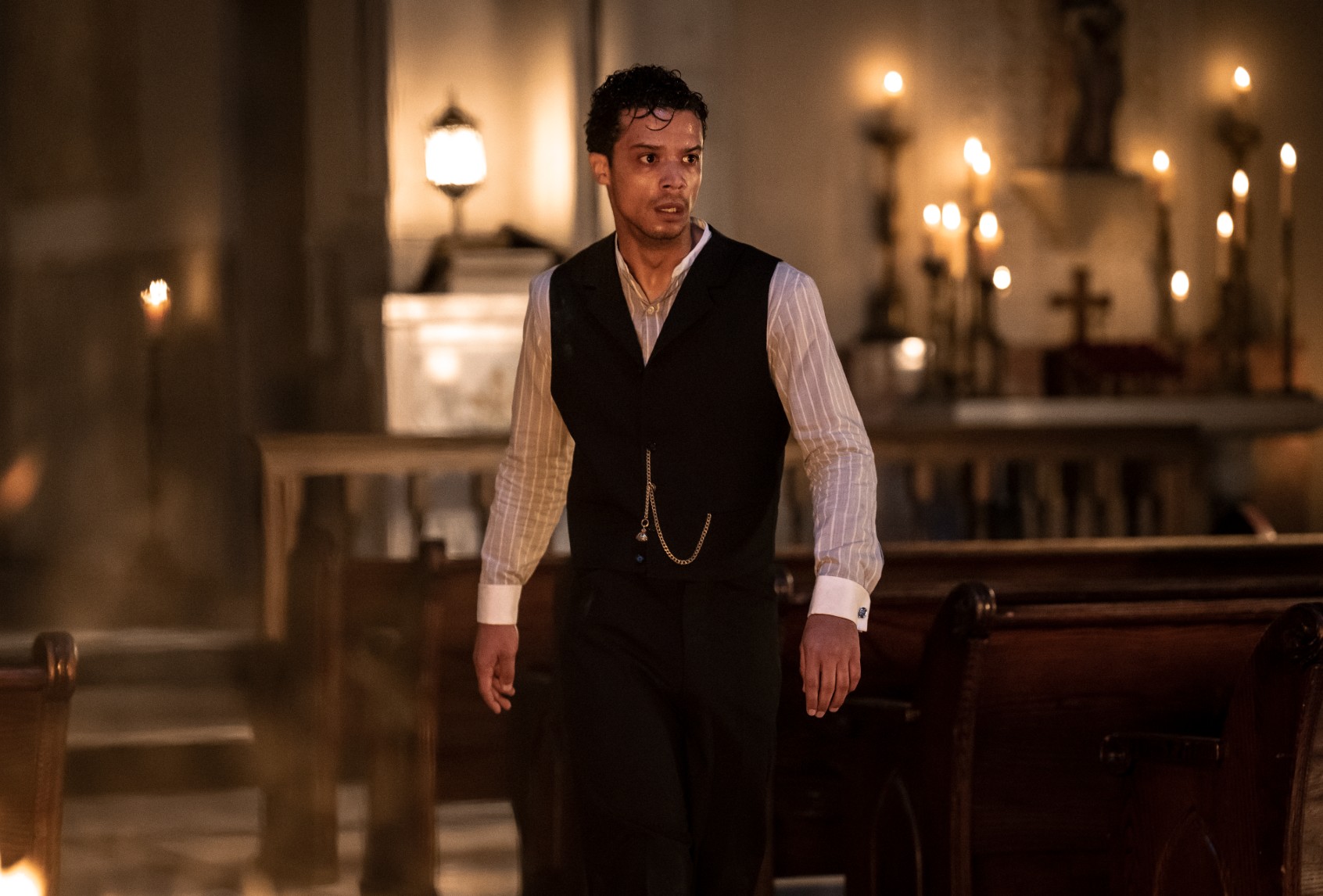
Jacob Anderson as Louis de Pointe du Lac – Interview with the Vampire _ Season 1, Episode 1 (Alfonso Bresciani/AMC)In "Interview with the Vampire," the first of the 13 books in her Vampire Chronicles series, Louis spends a good portion of his early vampire years struggling with his relationship to drinking and how to go about filling his body with the blood it needs without having to kill people in the process. Louis' maker, the co-dependent Lestat de Lioncourt, shames him for this, encouraging him to give in to what he is, which is a killer, but Louis refuses. Along the way there are slips, which every addict must reasonably anticipate and weather the after-effects of, but he makes do with animal blood and blood donated from lovers and servants whom he drinks from without draining to the point of death. Knowing what we know of Anne's own struggles, it's easy to see how she may have written herself into this character.
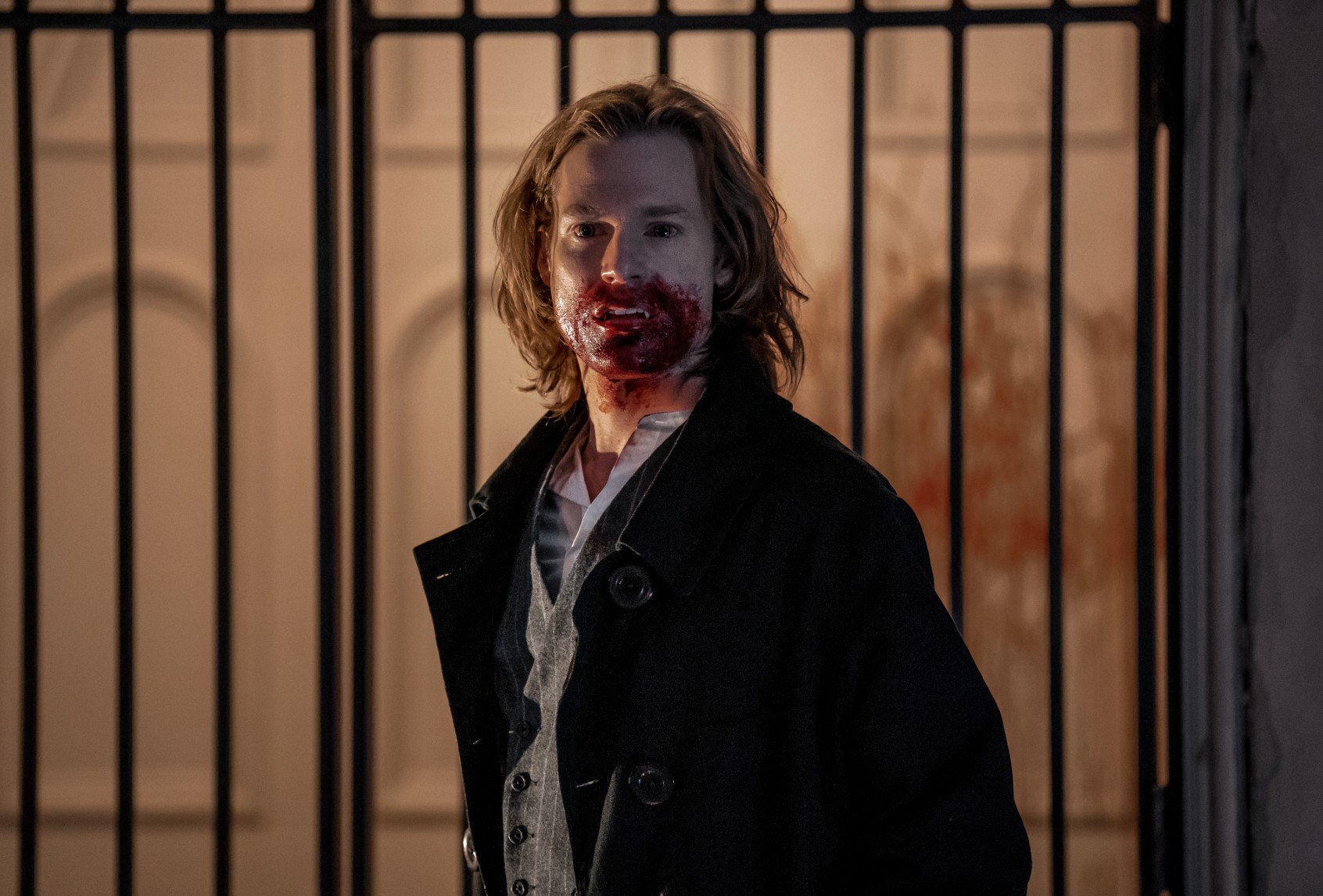
"I wasn't even thinking about Lestat when I wrote 'Interview with the Vampire,' I was thinking about Louis," Rice writes in a post shared by a fan page. "Louis was the hero, everything revolved around Louis."

Based on Rice's own husband, poet Stan Rice, Lestat was the character born from Rice's own sorrowful imagination, coaxing her to not only drink, but drink until she was to the point of bursting.

While both Anne and her character Louis grappled with their romantic notions of morality and restraint, Lestat was the polar opposite. Based on Rice's own husband, poet Stan Rice, Lestat was the character born from Rice's own sorrowful imagination, coaxing her to not only drink, but drink until she was to the point of bursting.


Want a daily wrap-up of all the news and commentary Salon has to offer? Subscribe to our morning newsletter, Crash Course.


Sam Reid as Lestat De Lioncourt – Interview with the Vampire _ Season 1, Episode 1 (Alfonso Bresciani/AMC)
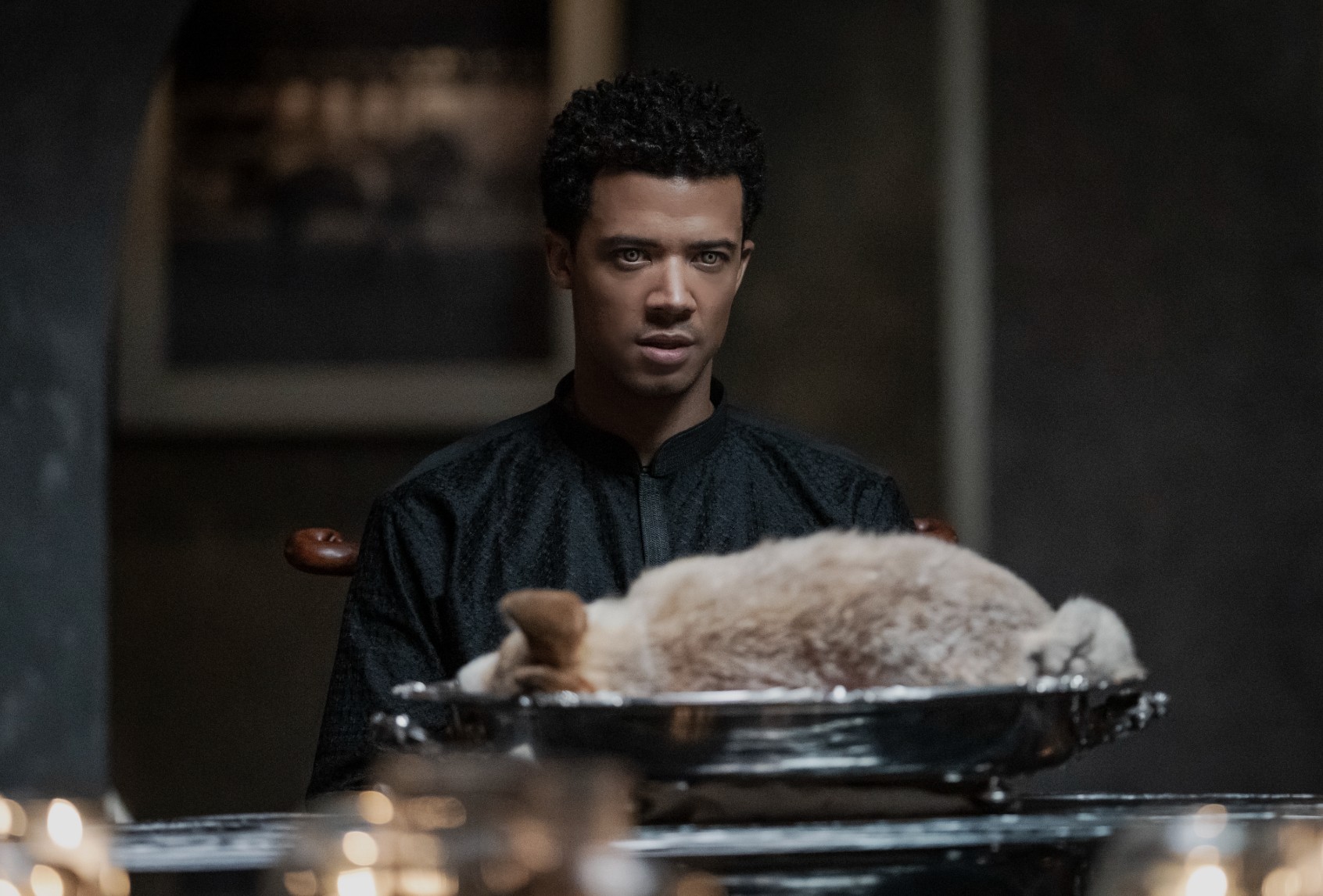
"Lestat just sprang to life in the corner of my eye," Rice writes. "This character took on all this ferocity . . . I had an idea of Lestat as the man of action, the man who could do things that I couldn't do, that man who could make the decision that I never had the nerve to make; and the person who could go through life joyfully in spite of the questions that torment me — the doubts that torment me, the horror of death that torments me."

Rice, who passed away in 2021 having lost her husband in 2002, was no stranger to death. In her books, she describes death, and the act of dispatching it, as something poetic, giving it deeper meaning beyond just the end of a life. Like with the themes of drinking and addiction, she used writing as a therapy to cope with some of the darker aspects of her real life.

In 1972, Rice experienced the tragic loss of her 5-year-old daughter Michele from leukemia and, after going on a bender to drown her sorrows, funneled that unspeakable loss into the creation of one of her most famous characters, Claudia, a doll-like child vampire unburdened by the pains of mortality. A daughter who could live forever.

"It was a nightmare," Rice said about her loss in a 2016 interview with Horror Feminista. "I was nothing and nobody. I had no prestige. I wasn't a mother. I was a bad wife — I never cleaned house. I was no good at anything."

Rice used her sadness and addiction to turn "Interview with the Vampire" into so much more than a book about blood-suckers, but a legacy of work that, at the heart of it, is a love-letter to life, and recovery.

After the worst of her grieving, Rice dusted off an old short story she'd written that would eventually become "Interview with the Vampire," and used her sadness and addiction to turn it into so much more than a book about bloodsuckers, but a legacy of work that, at the heart of it, is a love letter to life and recovery.

Rice passed away in California, where she relocated in 2005, after the death of her husband, but she will always be tied to the city of New Orleans, where she lived for most of her life, and which she chose as the setting for her Vampire Chronicles. If you've spent any amount of time in New Orleans at all, then you know how hard it would be to try to kick a drinking habit in a place that literally has drive-through daiquiri shops and bars that advertise "big ass beers." She put her own struggles into these books, and her characters guzzled in ways she could no longer allow herself, or, in the case of Louis, acted as sponsor in her own recovery.

"Suddenly, when I was in the skin of Louis . . . I slipped into this seemingly unreal thing and looked through his eyes, I could make my whole world real," Rice said to Horror Feminista. "He was able to say, 'Let me tell you about New Orleans; this was our world,' and I could write about all the beauty. Even the most fictional stuff in there was somehow out of my real world. It fell into place and was coherent . . . I didn't know it at the time, but it was all about my daughter, the loss of her and the need to go on living when faith is shattered. The lights do come back on, no matter how dark it seems."

Rice died during the early stages of filming AMC's TV adaptation of "Interview with the Vampire," a project that she toiled for many years to get into the right hands. In interviews, show creator Rolin Jones, Jacob Anderson, who plays Louis and Sam Reid, who plays Lestat, have all expressed that as huge fans of Rice, they'd wished she'd been able to see what they've done with her characters. As someone who read first editions of her Vampire Chronicles as they came out, and who also struggles with alcohol, I would bet a thousand nights that she would have appreciated the many ways in which the show pushes the themes of her book to the forefront.

In AMC's "Interview with the Vampire," Louis becomes a vampire shortly after the death of his brother. In the show's first episode, "In Throes of Increasing Wonder. . . " he describes what it felt like to be drunk on Lestat's blood for the first time.

Reconnecting with journalist Daniel Molloy (Eric Bogosian) to continue a discussion that began in Rice's debut novel, Louis asks him to think back to his own days as an addict and recall the best he'd ever had.

"Imagine that flowing inside your veins again, now multiply it by miles to the rings of Saturn and back," Louis says.

Louis walks the streets with Lestat as he points out passing humans and compares them to different types of alcohol.

In Episode 2, ". . . After the Phantoms of Your Former Self," he goes into further detail, describing his first moments as a newly made vampire, walking the streets with Lestat as he points out passing humans and compares them to different types of alcohol.

"Lestat's blood was giggling inside me; teasing my senses, illuminating the District with overwhelming detail, as if I'd walked my entire life as a dead man," Louis says.

"You were f**king loaded," Daniel replies.

Jacob Anderson as Louis de Pointe du Lac – Interview with the Vampire _ Season 1, Episode 2 (Alfonso Bresciani/AMC)
As an introvert who first read Rice's "Interview with the Vampire" in high school, I would think of her written descriptions of these experiences as I chugged whole bottles of Boone's Farm at parties, waiting for that moment where my true self cracked out of its shell, allowing me to navigate the room in ways I felt I couldn't have otherwise. As a sober person I was stoic, trapped inside myself. But once drunk, I could step outside of the prison my own mind kept me in and be free. This has always been the allure of drinking for me. It has the ability to calm me, comfort me, help me really "live." But as any addict or vampire knows, such apparent gifts come with consequences. For both alcoholics and vampires, those consequences are often death.

Rice saw her mother die at the bottom of a bottle. "As a matter of fact, I think she swallowed her tongue," she said in an interview

Rice saw her mother die at the bottom of a bottle. "As a matter of fact, I think she swallowed her tongue," the writer told Horror Feminista, describing the severity of the addiction that stole her own maker away from her. For Louis, the consequence of his addiction was his own witnessing of the loss of life, by his own hand, which caused him to break away from the norms of his own vampire companions in a way that others were not strong enough to do, or had no interest in considering.

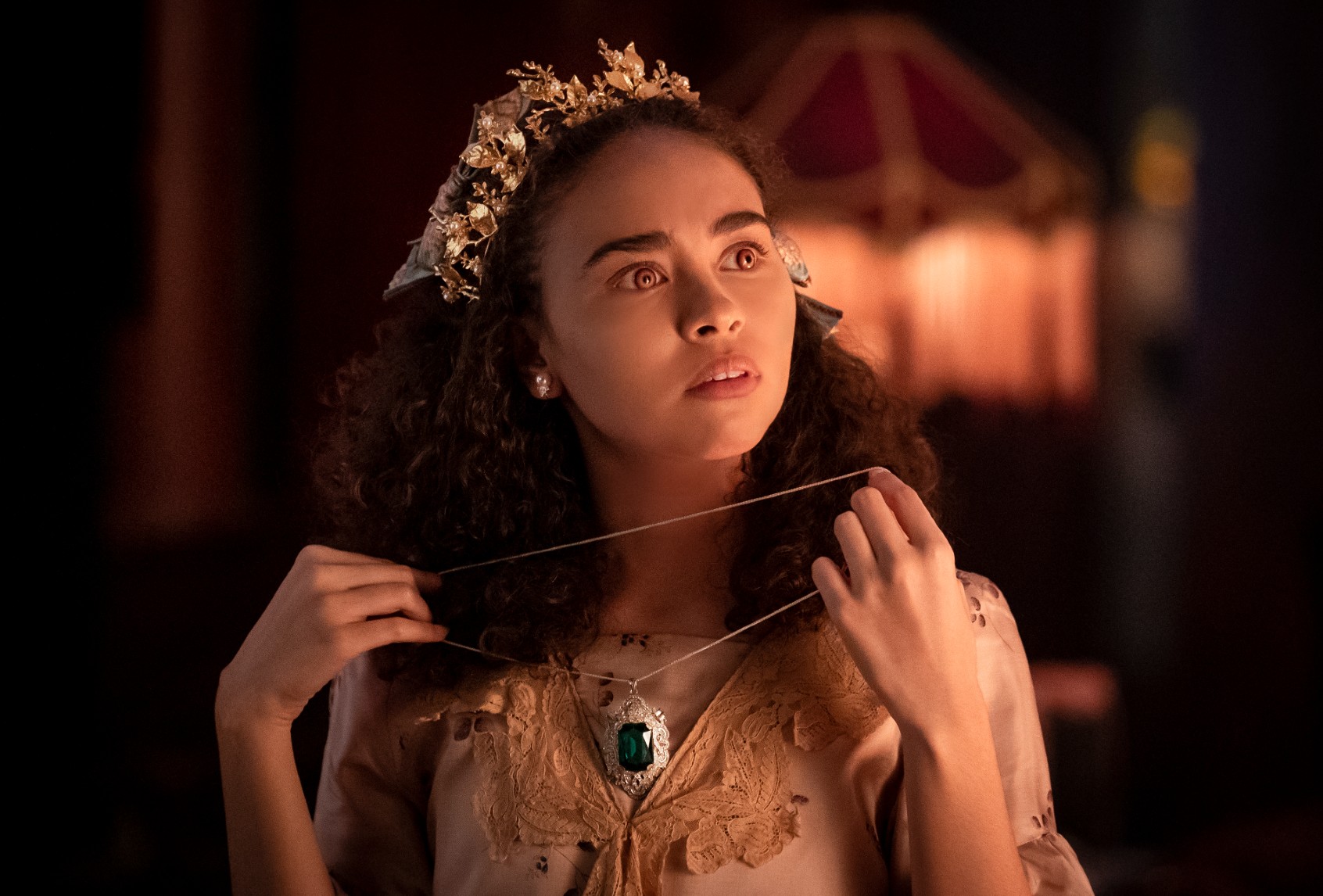
In Episode 4 of AMC's "Interview with the Vampire," ". . . The Ruthless Pursuit of Blood with All a Child's Demanding," we see what the full-fledged party years of addiction look like for a vampire when Claudia (Bailey Bass) drinks her way through the population of New Orleans.

Saved from a burning building as a young girl by Louis, and turned into a vampire by Lestat, Claudia's eternal youthful enthusiasm turns her need for blood into an unbridled and unquenchable frenzy. If you were a drinker in college, think back to those nights when you could slam upwards of 10 red cups of beer, wake up for brunch the next afternoon, and then do it all over again that night without giving it a second thought. Now "multiply it by miles to the rings of Saturn and back," to steal a phrase from Louis, and that's what life as a fledgling vampire is like for Claudia.

Bailey Bass as Claudia – Interview with the Vampire _ Season 1, Episode 4 (Alfonso Bresciani/AMC)Having been made a vampire at such a young age, Claudia will never be able to grow out of her youthful hunger. While she eventually does mourn the fact that she'll never blossom into a woman, never have children, and never marry a man who isn't the sort who would be OK with sleeping with the body of a child, she's absolutely fine with her drinking habits, which she doesn't see as a problem at all.

"I tasted it, and right away I felt as strong as a streetcar," Claudia says, describing the first moment she tasted Lestat's blood. "I realized what I thought was heaven was just some nice room. And what I thought were angels were really Hell demons . . . I decided to make the best of it."

Addiction, much like a vampiric craving for blood, waxes and wanes in terms of its influence. There are days and nights when it may seem easy to pull back, or abstain all together, and there are others when it feels like there's not enough in the world to satiate your thirst. For Rice, and for her vampires, the main differential is in how that unending thirst is dealt with. For Rice and Louis, they hold themselves to a certain standard. For Lestat and Claudia, they give into it completely, drinking like fat ticks.

At the end of Rice's "Interview with the Vampire," Claudia is killed and, in this moment, she essentially loses her daughter Michele for a second time.

In describing to Horror Feminista how she grappled with that ending, Rice said "that Claudia had really been meant to die at the end of 'Interview' the way Michelle had died . . . I almost died myself and went kind of crazy. I saw germs on everything and washed my hands 50 times and really cracked up."

Sacrificing Claudia, mourning the death of her daughter, and wrestling with her own thirst for booze sent Rice spinning all over again, only to emerge from the depths of her despair years later, born anew with the birth of her son. A mother and child, gazing upon the world with new eyes.

"Don't make the mistakes I made," Rice says in her 'Don't Drink' video. "Don't give your young years to drinking. Don't give your young adulthood to being drunk."

Lestat would likely roll his eyes at that. But Louis, Rice's hero, who was created by her and will live on in her memory, would happily toast a warmed glass of donated AB negative in her honor.

“Remember when Trump called your wife ugly?”: Ted Cruz brutally heckled at Yankee Stadium

United States Senator Ted Cruz (R-Texas) visited Yankee Stadium in New York City on Sunday to cheer for the Houston Astros, who routed the Yankees 6-5 for a spot in the upcoming World Series. But the baseball rivalry paled in comparison to the jeers that Cruz received from gamegoers in the Bronx.

“F*ck you, you racist piece of sh*t. F*ck you, f*ck you man,” one man shouted at Cruz. “You f*cking suck, dude. You go to f*cking Hell, dude. Remember when [former President Donald] Trump called your wife ugly? Remember that? Remember when Trump called your wife ugly and then you nominated him? F*ck you, you f*cking piece of sh*t. Remember when those insurrectionists wanted to murder you? You ugly piece of sh*t, go to Hell. Get the f*ck out of New York. Trump called your wife ugly and you loved it. You ugly f*ck, get the f*ck outta here. Eat my d*ck, you a**h*le.”

While that was happening, other individuals can be heard hurling various taunts toward Cruz:

You suck. You suck. You’re a disgrace. You’re a disgrace to this country. You’re a disgrace.

You fat f*ck.

Yo, go blow Trump. You suck. Get outta New York. We don’t want you here. We don’t want you here. You suck.


On Monday, Cruz stated that there were no hard feelings – from him, at least. “It was an awesome game — it was spectacular,” he said. “And I appreciated the great New York hospitality.”

Watch below or at this link.

EPA finally calls out environmental racism in Louisiana’s Cancer Alley

This story was reported in collaboration with ProPublica.

Louisiana must examine how polluters imperil the health of Black residents, the Environmental Protection Agency said in a letter it sent last week to state regulators in response to civil rights complaints about air pollution in the region known as Cancer Alley. 

Black residents in southeastern Louisiana bear a disproportionate cancer risk from industrial air pollution, the agency found, with children at one predominantly Black elementary school having been exposed to a dangerous carcinogen at levels 11 times what the EPA considers acceptable.

ProPublica reported last year that the EPA does a poor job of regulating the combined risk from multiple sources of industrial air pollution. In parts of Cancer Alley, ProPublica estimated lifetime cancer risk is up to 47 times what the EPA deems acceptable. 

The EPA letter urged Louisiana’s environmental and health agencies to analyze cumulative impacts for residents near a synthetic rubber plant owned by Denka Performance Elastomer in St. John the Baptist Parish and a proposed Formosa plastics facility in St. James Parish.

Wilma Subra, an environmental health expert who advises communities in the area, said ProPublica’s reporting “confirmed the importance of cumulative risk and made it a focus that could not be ignored.”

“What’s remarkable is that EPA, for the first time in a long time, is speaking the truth around environmental racism and willing to put civil rights enforcement tools out there,” said Monique Harden, assistant director of law and public policy at the Deep South Center for Environmental Justice. Federal civil rights protections predate the EPA, but they haven’t been enforced, she said: “There’s nothing new to any of this except that we have leadership at the EPA” that “wants to do something about it.”

The EPA urged state regulators to move students out of St. John the Baptist Parish’s Fifth Ward Elementary School, where air monitoring found high levels of chloroprene, a potent carcinogen. The letter, which summarizes the agency’s initial findings, cites years of data, studies and state policies to show how Black residents are disproportionately harmed by air pollution and how those disparities are baked into the region’s history. It explains how between the Louisiana Department of Environmental Quality and the Louisiana Department of Health, state officials have dismissed residents’ concerns about air quality, underplayed the dangers of chloroprene, conducted flawed health studies, and mischaracterized air monitoring data

“We take these concerns very seriously and are committed to health equity — which is why we are fully cooperating with the EPA’s investigation into Denka,” the state health department said in a statement.

In an email, an LDEQ spokesperson said the agency is “committed to working with EPA” and remains “confident that we are implementing our air permitting program in a manner that is fully consistent with” federal and state laws.

Local activists have fought for environmental protections for decades. Robert Taylor, executive director of Concerned Citizens of St. John, said he founded his organization after attending a 2016 EPA meeting that revealed chloroprene concentrations at the school. “I went from fear to anger to shock,” he said, that “the government was allowing people to do this.”

Fifth Ward Elementary School is about 1,500 feet from the Denka facility, which produces neoprene, a form of synthetic rubber used to manufacture wetsuits. DuPont began making neoprene at the site in 1969 and sold the neoprene operation to Denka in 2015. It is the nation’s only industrial site that emits chloroprene. 

EPA Administrator Michael S. Regan visited the nearby school last fall as part of his “Journey to Justice” trip that was announced two days after ProPublica’s investigation into pollution hot spots. He later sent a letter to Denka and DuPont that stated, “As a parent, I remain extremely concerned” about the “health and well-being of the students.” Three-quarters of Fifth Ward Elementary’s students are Black. 

A DuPont spokesperson declined to comment on EPA’s letter to Louisiana regulators but shared a response it sent to Regan in March in response to his letter about the school. In its response, DuPont said that Denka, not DuPont, operates the neoprene facility, and that tens of thousands of residents have worked at DuPont’s adjoining facility. The workers’ children have attended Fifth Ward Elementary, the company said, and “we care deeply about its success.”

DuPont is “committed to continue to work with Denka,” regulators and the community “to maintain the strong ties and supporting efforts needed to keep St. John Parish a safe and great place to work and live,” the company added. 

In 2010, the EPA released a report classifying chloroprene as a “likely human carcinogen.” Chloroprene is a mutagen, meaning it causes cancer by attacking and mutating DNA. Mutagens are particularly dangerous for children and infants, whose cells divide much more rapidly than those of adults. 

Recent air monitoring data from Denka, collected about 1,000 feet from the school, showed average concentrations 11 times what EPA considers acceptable, according to the agency’s letter. At times over the past few years, air samples collected by the EPA on school grounds showed concentrations as high as 83 times the acceptable guideline.

Jim Harris, a spokesperson for Denka, said in a written statement that the EPA’s chloroprene limit is “based on a faulty and outdated exposure model.”

The company asked the EPA to revise its chloroprene guidelines last year, arguing that the model used was not “sufficiently rigorous.” The EPA refuted Denka’s conclusions this spring, stating that the company did not identify any errors with the agency’s analysis. 

“There is simply no evidence of increased levels of health impacts near” the plant, Harris wrote. “Data compiled by the Louisiana Tumor registry (LTR) have repeatedly shown for decades there are no widespread elevated rates of cancer in the parish or in the census tracts neighboring the facility compared with state averages.”

Kim Terrell, a research scientist at the Tulane Environmental Law Clinic, argued that the registry’s census-tract-level data obscures health effects in the communities closest to industrial facilities. The tumor registry, too, has said that its data should not be used to represent cancer rates in smaller populations, such as neighborhoods near industrial fence lines. 

“The cancer rates Denka cited are not specific to the people who have been most exposed to chloroprene,” Terrell said. 

Harris, the Denka spokesperson, said the company has “invested over $35 million to reduce its emissions by over 85 percent” since purchasing the facility in 2015 and conducted community air monitoring that showed similar reductions.

The EPA’s letter acknowledged the reduced concentrations, which resulted from an enforcement order from LDEQ. “There is no question, however,” the EPA wrote, “that elevated cancer risk for residents of all ages and school children still exists and has existed as a result of breathing air polluted with chloroprene and that this risk has impacted and currently impacts Black residents disproportionately.”

Taylor, the community advocate, said the letter indicates the agency is “considering our humanity” and “doing what we consider is the right thing.” For too long, he said, residents have operated under the assumption that “our government has abandoned us — we are just sacrifice zones.” 

A lifelong resident of St. John the Baptist Parish, Taylor recalled how his children used to run into the house to escape fumes that made their chests hurt. He lives five blocks from the Denka plant, close enough to hear announcements from the company’s loudspeakers. He has grandkids and great-grandkids who attended local schools, including a Catholic school next door to Fifth Ward Elementary. 

The EPA letter is a response to civil rights complaints filed on behalf of Taylor’s organization, the Sierra Club and other groups. The complaints cite Title VI of the 1964 Civil Rights Act, which bans the federal government from funding state agencies whose policies or actions discriminate based on race. 

The act prohibits both intentional discrimination and disparate impact regardless of intent, said Deena Tumeh, an associate attorney at Earthjustice who helped file the complaints for Taylor’s group. The EPA’s letter noted that 93% of the residents within a mile of the Denka plant are Black, and the Formosa plant is slated for a census tract where 90% of the population is Black, compared to 50% in the overall parish. These demographic patterns can be traced back to the Reconstruction era, the letter said, as freed Black families were able to purchase small parcels of land near plantations. Over time, the plantations were replaced by large petrochemical facilities, while the descendants of those families continued to live in rural, unincorporated towns that became “fence line” communities.

Last month, a judge blocked progress on the Formosa plant by withdrawing its air permits. The judge’s decision cited the fact that state regulators failed to assess cumulative impacts from multiple sources, even though the location suffers from significant existing toxic air pollution that would be exacerbated by the proposed facility’s emissions. LDEQ has appealed the decision. Formosa didn’t respond to a request for comment.

“For years, Title VI letters went to a closet and died,” but this EPA is talking to people and investigating seriously, said Darryl Malek-Wiley, a senior organizing representative at the Sierra Club. 

Malek-Wiley, who helped popularize the term “Cancer Alley” in the 1980s, said the real test of the EPA’s dedication to equity will come once it negotiates specific terms with the two Louisiana agencies. Tumeh said the agreement could include the recommendations from the EPA’s letter, as well as additional requirements. That process could take months. 

‘A moral responsibility’: Scotland calls for climate reparations ahead of COP27

The scale of devastation that unprecedented flooding brought to Pakistan this summer is hard to fathom. A third of the country is underwater, and more than a million homes have been damaged or destroyed. More than 1,700 people have died. About 5.7 million people are facing food shortages, and around 600,000 pregnant women require urgent access to healthcare. 

We know that the rainfall contributing to this flooding was  intensified by global warming — the planet has already warmed 1.2 degrees Celsius (2.2 degrees Fahrenheit) on average since the industrial revolution. In the parlance of the international debate over climate change, the effects of such climate-driven catastrophes are termed “loss and damage.” Because the countries that suffer the most loss and damage tend to be countries that, like Pakistan, were late to industrialize and therefore are relatively blameless for the scale of climate change so far, activists and leaders in developing countries are increasingly calling on wealthy, early-industrializing nations to compensate them for what they’ve lost. The issue is set to take center stage at the 27th United Nations climate change conference, called COP27, which will be held in Egypt next month. 

Small island nations and developing countries have been advocating for funding to address loss and damage for more than two decades, and for the first time they have finally succeeded in getting it included on the official agenda for the conference. Given that COP27 is being hosted by a developing nation for the first time in six years, Egypt’s special representative for the conference said that the COP27 leadership is “putting a lot of effort” into moving the conversation forward on loss and damage. The recent floods in Pakistan, a country responsible for less than 1 percent of the world’s historical carbon emissions (though it’s home to around 3 percent of the world’s population), have further highlighted the urgent need for loss and damage funding. In an effort to build on this momentum leading up to COP27, the Scottish government organized a two-day conference on loss and damage earlier this week. 

“People in the Global South and emerging economies are already paying the price of climate change every single day,” Scottish First Minister Nicola Sturgeon said in the conference’s opening remarks. Developed countries should be recognizing “a moral responsibility to address this issue,” she added. 

Scotland has played a crucial role in elevating loss and damage in climate negotiations. Last year at COP26, which was hosted in Glasgow, Sturgeon made a groundbreaking announcement recognizing Scotland’s historic role in the climate crisis and pledged £2 million (about $2.2 million) to compensate developing nations for loss and damage. Although a small sum compared to the scale of the problem, the commitment proved to be a catalyst, prompting others to follow suit. Wallonia, Denmark, and a group of philanthropies have since pledged funds, and the tally for loss and damage funding now stands at $19.5 million. 

At this week’s conference, Sturgeon emphasized the need for new financing that adds to the pool of money that has already been committed to various climate projects. She argued that loss and damage funding should not increase the debt burden of developing nations. (According to the International Monetary Fund, about 60 percent of low-income countries are at high risk of debt distress or already in debt distress.)

Wealthy nations promised to raise $100 billion a year by 2020 to fund climate projects in developing countries, but they have fallen short of that target by about $20 billion, according to recent estimates. Of the approximately $80 billion in funding that has been raised, a significant portion is in the form of loans that countries are expected to repay. A recent study by Oxfam, a global charity, found that more than 60 percent of the $11.7 billion in climate funds raised for West African countries between 2013 and 2019 took the form of loans.

“These [climate] losses are bad enough in themselves, but they should absolutely not also lead to further indebtedness for the nations who have overwhelmingly been the victims of climate change,” Sturgeon said. 

Currently, climate-related finance for developing countries takes many forms: It can arrive as humanitarian aid following a natural disaster, such as the aid that is now flowing to Pakistan. It can be disbursed from United Nations-backed funds set up to help developing nations prevent further global warming and adapt to the effects of climate change. And it can take the form of disaster risk and climate migration management funding. Funding for loss and damage can overlap with each of these different types of funding, and researchers and advocates at this week’s conference in Scotland argued that these efforts should no longer take place in isolation — that a unified international approach to loss and damage funding would better tackle the scale of the problem.

In an interview with the Guardian last month, Pakistan’s climate minister Sherry Rehman said, “There is so much loss and damage with so little reparations to countries that contributed so little to the world’s carbon footprint that obviously the bargain made between the global north and global south is not working.”

At the recent conference, Sturgeon said that the “task for the countries that gather at COP27 is to start making good on that bargain.” She called on developed countries to commit funding and not to wait for consensus on how to address loss and damage.

“Further delay is unconscionable and is not acceptable,” she insisted.

Clarence Thomas temporarily shields Lindsey Graham from having to testify in Georgia election case

Supreme Court Justice Clarence Thomas used the “shadow docket” on Monday to temporarily block a subpoena seeking to have Sen. Lindsey Graham, R-S.C., testify in a Georgia election case.

According to The Hill’s John Kruzel, Thomas made use of the “shadow docket” to “unilaterally” block the subpoena.

“IT IS ORDERED that the August 15, 2022 order of the United States, District Court for the Northern District of Georgia, case No. 1:22-CV-03027, as modified by the district court’s September 1, 2022 order, is hereby stayed pending further order of the undersigned or of the Court,” the order said.

Thomas is responsible for emergency applications issued out of the federal 11th Circuit Court of Appeals, which includes Georgia.

The court has requested that the parties provide additional responses by Thursday, so more action on the case is expected.

Ex-GOP Jan. 6 investigator warns there are still “three dozen” MAGA lawmakers who should be probed

Former Republican Rep. Denver Riggleman, R-Va., served as a key researcher in the early days of the House Select Committee investigating the Jan. 6 attack on Congress.

After a digest of Rep. Lauren Boebert’s, R-Colo., role in helping insurrectionists on Jan. 6, Riggleman told MSNBC host Mehdi Hasan that she is one of three dozen Republicans that have never been questioned by the committee about their involvement in the attacks or the attempts to overthrow the 2020 election.

Riggleman said that rating the committee, he’d give them an 8.8 with 1.2 off for their lack of speed.

“For me, once you see data, and data is perishable, time is paramount,” said Riggleman. “When you look at Lauren Boebert, there are actually over three dozen active members on Meadows text messages. So, Lauren, even though I would love to talk to her about her 1776 tweet and also her tweet about Pelosi, which either you are ignorant about operational security, or you are directed and doing things you should be doing. And by the way, Mehdi, whether you get shot on purpose or shot by accident, you are still being shot. It’s a military thing. What she did was just ridiculous and unconscionable. We still have over three dozen members on the Meadows text messages that we need to talk to, as far as I’m concerned.”

He said that he’s not certain about the political ramifications of bringing in members of Congress to answer questions. The three dozen also doesn’t count Senators. As was seen this week in the Utah Senate debate, Sen. Mike Lee, R-Utah, was attacked for his texts to Meadows attempting to come up with a strategy to overthrow the 2020 election using a slate of fake electors. There’s also a matter of Cabinet members and former members of Congress who were all sending text messages to Meadows about the election strategy.

“I think there is a long way to go. I think the committee has done a great job. The hearings, obviously, have identified a team of crazies was running the White House. I think, right now, we need to look forward, and we need to see what happened two years ago in order to try to almost predict what we could see in the future with any type of election overthrow activities. Whether it’s violence, option electors, or manipulating state Houses in order to discount votes.”

See his comments below or at the link here:

“Variant soup”: Why this winter’s COVID wave may be different than any previous pandemic phase

If the last two winters are any indication, North America and Europe will likely experience a surge in COVID infections by the end of this year, driven by cold weather, students in close quarters in classrooms and holiday travel. Public health officials are closely watching the situation by monitoring wastewater, sequencing the genetics of the virus and tracing positive cases.

But an increasing number of experts are worried that this wave could be markedly different from years previous. The emergence of multiple variants with the ability to evade immunity could surge simultaneously, which is something we haven’t seen previously.

“We haven’t had one like this before. This is different.”

“We anticipate continued circulation of the virus that causes COVID-19 and the potential for surges in virus circulation over the next several months,” Jasmine Reed, a spokesperson for the Centers for Disease Control and Prevention (CDC), told Salon in an email. The CDC is urging anyone age five years and older who is eligible for an updated vaccine booster to get one. “Importantly, we know updated COVID-19 vaccines provide additional protection against the currently circulating variants,” Reed added, referring to newly-available bivalent vaccines that have been found in studies to protect well against the BA.5 omicron variant.

The question remains how bad the wave will be this time around, but several factors — including low booster uptake and fewer people wearing masks in public — may add complications to the potential surge. The data on COVID infections is also somewhat muddled because positive tests are going uncounted while the CDC and many state agencies have switched to updating their data weekly instead of daily.

To make matters worse, a cluster of COVID variants is slowly starting to dominate simultaneously — what many experts are calling a “variant soup” — with many strains showing surprising immunity to certain COVID drugs. While the latest vaccines have still been demonstrated to work against these variants, it means we could have a few less tools at our disposal this winter. If this will translate into overwhelmed hospitals, supply chain disruptions or an uptick in deaths is yet to be seen.

“We haven’t had one like this before. This is different,” Dr. T. Ryan Gregory, an evolutionary and genome biologist at the University of Guelph in Canada, told Salon. “You hear cloud or swarm or cluster or variant soup. All these things at once that are all immune-escaping.”

Last winter in the U.S., the omicron BA.1 variant smashed records for daily cases. But unlike with delta, it didn’t disappear after a while; rather, it kept mutating. Omicron’s subvariants or children stuck around, like BA.5, which has been largely responsible for infections, hospitalizations and death in the U.S. for most of this year. While cases have yet to spike severely again as they did in January 2022, the pandemic instead morphed into “a long, never-ending plateau” as The Atlantic put it.

Gryphon is a recombinant strain, which means it has the genetic code of two different omicron subvariants. It’s also been described by the WHO as “the most antibody-evasive variant yet.”

At last, BA.5’s supremacy is finally starting to wane, emerging data shows. Unfortunately, this time, it could be replaced by multiple variants at once.

“I suspect we’re set up for a lot of cases,” Gregory said. “How serious are they individually remains to be seen.”

This variant soup includes viruses like XBB, BQ.1 and BF.7. Understandably, these random mishmashes of letters can be quite confusing to keep track of, so Gregory has proposed a list of nicknames for certain variants based on monsters from Greek mythology. So BF.7 is Minotaur and BQ.1 is Typhon, for example.

These variants are emerging in different ways across the globe. Earlier this month, the Gryphon variant (XBB) began rising sharply in Singapore, but the World Health Organization (WHO) has now reported it in 25 other countries, according to Fortune. Gryphon is a recombinant strain, which means it has the genetic code of two different omicron subvariants. It’s also been described by the WHO as “the most antibody-evasive variant yet.”

Luckily, there are other tools against Gryphon, including the drug Paxlovid, which attacks the virus differently than antibodies. So humanity is not completely unarmed against this version of the virus.

Meanwhile, New York is seeing a stark rise in Typhon (BQ.1) and Cerberus (BQ.1.1) cases, making up 16.6 percent of cases in total as of October 21, a jump from 5.1 percent two weeks ago. They also seem able to evade antibody drugs like Evusheld and Bebtelovimab.

“BA.5 continues to be responsible for most infections. BQ.1 and BQ.1.1 represent a small but fast-growing group of BA.5-related viruses in the United States,” Reed said, emphasizing that the mRNA vaccines from Pfizer and Moderna include components that target earlier lineages of the virus, so they will still help prevent hospitalization and death.

The CDC is closely monitoring all of these variants, but as they are still just emerging, there is limited data on them. We don’t know how much immunity one variant will provide against another, so some folks could become sick again immediately following an infection. Or they may contract multiple variants at once.

“I am worried about the fall, that there will be a peak, but we wouldn’t even know that there is a peak.”

So far there’s no evidence to suggest these variants cause more severe disease. But as anyone with long COVID will tell you, it doesn’t make sense to call any of these omicron offshoots “mild.”

“We don’t know a lot of things about the variants. We don’t know, are any of them more severe than others?” Gregory said. “Do they attack different tissues? Is one more likely to have brain fog than another or heart problems? We don’t know. Those are really hard to predict, much more difficult to predict than if it is going to escape immunity. That you can look at the structure of the protein and make a good guess. With what’s it going to do in the body is, we have to wait and see.”

The good news is the newer vaccines seem to work against all of these variants, but relying on vaccines alone is shortsighted. We need more testing and surveillance of the virus, as well as more masking and improved indoor ventilation.

Dr. Rajendram Rajnarayanan, an assistant dean of research and associate professor at the New York Institute of Technology campus in Jonesboro, Arkansas, says that store-bought antigen tests should still be able to detect these variants — but because the results aren’t reported to health agencies, it could leave people in the dark.

“I am worried about the fall, that there will be a peak, but we wouldn’t even know that there is a peak. That’s what I’m more worried about,” Rajnarayanan told Salon. He emphasized that the public should not panic, but stay informed and monitor the situation to take steps to protect one another.


Want more health and science stories in your inbox? Subscribe to Salon’s weekly newsletter The Vulgar Scientist.


“Booster uptake is low, masking is pretty low,” Rajnarayanan said. “And whether liberal or not, it’s really not about the politics anymore. It’s really about looking out for each other. That kind of camaraderie is what we have to promote.”

Even though this soup of variants can seem scary, and some of our tools against them have been blunted, we still have plenty of resources at our disposal, especially masks and social distancing. The question is: Will we use them in time? As Time Magazine recently posited, it doesn’t seem like America is ready for a winter wave. But there’s still time to adjust course.

“The less we try to stop viruses from replicating, the more we’re going to see new variants,” Gregory said. “The situation is different in many ways. There’s multiple variants, they all escape immunity quite well. They’re rising simultaneously, which we haven’t seen before. But my reaction to that is the same as it was with delta. And the same with the first omicron. We should strive to stop transmission as much as we can.”

Ted Cruz reveals he hid in a “closet” during Capitol riot after leading Jan. 6 objections

United States Senator Ted Cruz, R-Texas, and other Republican lawmakers holed up in a janitorial closet during the January 6th, 2021 Capitol insurrection, according to excerpts from Cruz’s new book that were obtained by Newsweek.

“Toward the end of our two-hour session, as Senator James Lankford from Oklahoma was speaking, there was a commotion from outside the [Senate] chamber,” Cruz recalled in Justice Corrupted: How the Left Weaponized Our Legal System. “Suddenly, Capitol Police officers rushed in and hastily escorted the vice president off the dais. Shortly thereafter, we paused the proceedings. In the fog of the confusion, it was difficult to tell what exactly was happening. We were informed that a riot had broken out and that rioters were attempting to violently breach the Capitol building. At first, Capitol Police instructed us to remain on the Senate floor. And so we did. Then, a few minutes later, they instructed us to evacuate rapidly.”

Cruz noted that he and fellow lawmakers were escorted to a “secure location” where “tempers were high” and while a handful of their colleagues were “blaming us explicitly for the violence that was occurring.”

Cruz also revealed that “while we waited for the Capitol to be secured, I assembled our coalition in a back room (really, a supply closet with stacked chairs) to discuss what we should do next.”

Congress was in the middle of certifying President Joe Biden’s landslide Electoral College victory over then-President Donald Trump in the 2020 election when the mayhem erupted.

Yet even as former Trump’s mob was ransacking the Capitol – leading to five deaths and uncertainty about the state of American democracy – Cruz admits that he thought that Trump’s lies about fraud in the 2020 election were worth defending.

“Several members of the group argued that in the face of the riot, we should suspend our objections and vote to certify the election. I understood the sentiment. But I vehemently disagreed with it,” wrote Cruz. “I urged my colleagues that the course of action we were advocating was the right and principled one.”

Fox News host confronts GOP Sen. Mike Lee over his role in Jan. 6 plot: “You were on board”

Fox News host Shannon Bream challenged Sen. Mike Lee, R-Utah, over his role in a plot to overthrow the 2020 presidential election.

During an interview on Fox News, Bream noted that Lee has been accused of participating in a plot to use fake electors to change the outcome of the presidential election.

Lee was caught sending text messages to then-White House Chief of Staff Mark Meadows about the fake electors plot.

“I’m trying to figure out a path,” Lee wrote in one text.

Bream asked the senator to explain the text messages.

Lee argued there was “not a scintilla of truth” to the allegations despite the text messages being a matter of public record.

“I made phone calls to investigate the truthfulness of those [fake elector] rumors,” Lee said. “That’s all. Not advocating, just investigating the truthfulness of them. It’s the only scenario in which Congress would have had a role. I concluded after my investigation that the rumors were false. And on that basis, I voted to certify the results of the 2020 presidential election.”

“So when you say I’m looking for a path forward,” Bream countered, “that path forward would suggest that you were at some point on board with the idea.”

“No,” Lee stuttered. “Look, the point here is there was the — there was only one path and that — that path was trying to get the White House and the president’s team to acknowledge — that was the only path. If a state concluded that it had incorrectly certified the results of its election, and on that basis shifted out its slates of electors, that would be the only way of [overthrowing the election].”

Lee concluded: “I wanted the president’s team to acknowledge that would be the only scenario where there would be a role for Congress. There wasn’t. And on that basis, I voted to certify.”

Watch the video below from Fox News. You can also watch it at this link.

“Dress rehearsal for 2024”: Trump plans to challenge Senate race before votes are cast, report says

Former President Donald Trump is already laying the groundwork to challenge the results of the Pennsylvania Senate race, viewing the election as a “dress rehearsal for Trump 2024,” according to Rolling Stone.

Trump last month met with Republican allies at Trump Tower to demand they “do something” about the Senate race between Pennsylvania Lt. Gov. John Fetterman and Republican challenger Mehmet Oz, claiming that there was a “scam” happening in Philadelphia and elsewhere around the state.

“During our briefing, he was concerned that 2020 is going to happen again in 2022,” Michael Caputo, a former Trump administration official who attended the meeting along with Bradford County Commissioner Doug McLinko and retired CIA officer Sam Faddis, told Rolling Stone. “Our team encouraged him to be concerned … [Furthermore], I’m advising Republicans to recruit and train election observers and a team of attorneys to oversee historically problematic precincts,” Caputo said.

The meeting was one of several in which Trump has discussed plans to challenge the 2022 midterm results, and not just in Pennsylvania, four sources told the outlet, discussing “scorched-earth legal tactics they could deploy.”

TrumpWorld is planning “aggressive court campaigns” if there is any hint of doubt about the results, according to the report. Trump himself has been briefed on plans in multiple states, including in Georgia, but he has been particularly fixated on the Pennsylvania race. If Oz does not win or the results are close, sources told Rolling Stone, Trump and other Republicans are already planning to “wage a legal and activist crusade against the ‘election integrity’ of Democratic strongholds such as Philly,” according to the report.

One source told the outlet that Trump is particularly focused on Pennsylvania because he sees the Senate race as a “dress rehearsal for Trump 2024.”

Trump during the September meeting urged GOP allies to work to limit mail-in voting in the state, pushing debunked claims that the 2020 election was stolen in Philadelphia and demanding officials focus on the heavily Democratic and diverse area, according to the report. Trump has asked several advisers what Republicans are doing to prevent Democrats from “steal[ing] it in Philadelphia [like] they did last time,” sources told the outlet.

Numerous Trump allies are ready to help wage another campaign to stoke doubt in election results before any votes are even cast.

“It’s important to prepare for legal fights that will inevitably arise,” Hogan Gidley, a former Trump White House spokesman who now works at the America First Policy Institute, told Rolling Stone. “The effort that the Center for Election Integrity is focused on started at the beginning of this year…We’ve been seeding efforts across the country in important states…[because] having people on the ground locally is key to these efforts — because if you’re not at the table, you’re on the menu.”

MyPillow founder Mike Lindell, who has spent millions pushing lies that voting machines flipped votes from Trump to President Joe Biden, also vowed to fight over the 2022 results.

“No matter what happens, I’m not giving up on getting rid of those voting machines … I will not stop until the machines are gone,” Lindell, who is facing a $1 billion defamation lawsuit from Dominion Voting Systems, told Rolling Stone.

Patrick Byrne, the former Overstock CEO who has likewise poured his own money into the “Big Lie” crusade, has teamed with former Trump national security adviser Michael Flynn to form the so-called America Project.

“We have made proper preparations for post-election challenges if necessary, but our overwhelming focus is on having a clean, transparent election, which obviates the need for post-election legal scuffles,” Byrne told the outlet.


Want a daily wrap-up of all the news and commentary Salon has to offer? Subscribe to our morning newsletter, Crash Course.


The Republican National Committee is already involved in the race, pushing the state to stop counting mail-in ballots that are missing handwritten dates.

The Third Circuit Court of Appeals earlier this year ruled that tossing such ballots would result in “disenfranchising otherwise qualified voters” over a “meaningless requirement” that does not affect the voters’ eligibility. The Supreme Court last week tossed the court’s decision but did not rule on whether the ballots are required to be counted. A state court previously ruled that undated ballots can be counted and the state’s Supreme Court in 2020 ruled that such ballots should be counted that year but not in future elections.

Democratic Gov. Tom Wolf and Acting Secretary of State Leigh Chapman issued guidance urging counties to count the undated ballots but the RNC and a group of Pennsylvania Republicans sued last week, asking the state Supreme Court to rule that the undated ballots should not be counted. The lawsuit is led by attorneys Kathleen Gallagher and john Gore, who previously represented Pennsylvania Republicans in their attempt to overturn the 2020 results over late-arriving mail-in ballots.

It’s a trend that could play out across the country as numerous election deniers seek midterm wins, including Arizona gubernatorial candidate Kari Lake and New Hampshire Senate candidate Don Bolduc. And pro-Trump media has boosted the message.

“If it is fair, Kari Lake’s going to win,” Fox News host Tucker Carlson said recently.

Pro-Trump radio host Mark Levin accused Democrats of “trying to steal the election for Fetterman,” citing the dispute over the undated ballots.

The Rolling Stone report noted that Trump’s obsession with bolstering the Republican legal infrastructure to challenge the election stands in stark contrast with the “relatively small sums” he has poured into the campaign to boost Oz’s chances. His super PAC has spent just $770,000 on TV ads for Trump, compared to $34 million from the Senate Leadership Fund, which is allied with Senate Minority Leader Mitch McConnell, R-Ky.

Some Republicans have taken notice.

“There’s a lot of people that were Trump supporters, who backed him through thick and thin,” a Pennsylvania Republican attorney told Rolling Stone. “That’s not lost on them.”

Bob Woodward on COVID, Kim Jong-un and “The Trump Tapes”: “He’s drowning in himself”

Venerable reporter Bob Woodward has produced a new audiobook called “The Trump Tapes,” which contains the 20 interviews he conducted with Donald Trump in the course of reporting and writing his three books about the ex-president’s administration, “Fear,” “Rage” and “Peril” (the latter with Robert Costa). Woodward has never released full interviews or raw transcripts before, but decided to do it this time because Trump’s words don’t come across the same way in print. I think that’s true. I’ve read a number of Trump books over the past five years and I’m always struck by the fact that he doesn’t seem quite on the page as he does on video, even when the authors are quoting him saying something we’ve all seen or heard.

(Of course Trump now says the tapes actually belong to him and claims he’s already hired lawyers to sue Woodward, whom he describes as a very sleazy guy. One would expect nothing less.)

Woodward shared some of the audio in a piece for the Washington Post over the weekend in advance of the audiobook’s release this week. One of its most interesting aspects is the extent to which Woodward himself was clearly appalled by the man he was interviewing. That’s been pretty clear in the previously published books and interviews but it really comes through in this piece. This is a reporter who’s interviewed every president of the last 50 years and many other powerful officials, and he sounds … spooked.

Some of the exchanges in the article are familiar ground but always worth revisiting since Trump is clearly close to announcing that he’s running again in 2024. (At a rally in Texas over the weekend he said, “I will probably have to do it again.”) Woodward provides one of the discussions about Trump’s relationship with Kim Jong-un, which the then-president considered beyond special:

Woodward: The CIA says about Kim Jong Un that he’s “cunning, crafty but ultimately stupid.”
Trump: I disagree. He’s cunning. He’s crafty. And he’s very smart. You know.
Woodward: Why does the CIA say that?
Trump: Because they don’t know. Okay? Because they don’t know. They have no idea. I’m the only one that knows. I’m the only one he deals with. He won’t deal with anybody else …The word chemistry. You meet somebody and you have a good chemistry. You meet a woman. In one second you know whether or not it’s all going to happen…

Woodward: And is this all designed to drive Kim to the negotiating table?
Trump: No. No. It was designed for whatever reason, it was designed. Who knows? Instinctively. Let’s talk instinct.
Woodward: Do you get a sense he’s wooing you?
Trump: No, I get —
Woodward: Or building a relationship of trust?
Trump: — a sense — I get a sense he likes me. I think he likes me. Okay, so, you know he’s got a great piece of land. He’s in between Russia, China and South Korea. In the real estate business we’d say, “Great location.” You understand?

Listening to him say such idiotic things in the intimacy of private conversations is even more unnerving than watching him do it in front of a crowd. Woodward writes:

Trump’s voice is a concussive instrument. Fast and loud. He hits hard and will lower his volume to underscore for effect. He is staggeringly incautious and repetitive, as if saying something often and loud enough will make it true.

When asked if he’d given Kim too much power and what he would do if the North Korean leader shot off one of his ICBMs, Trump responded, “doesn’t matter… let me tell you, whether I gave it to him or not, if he shoots he shoots.” He literally cared about nothing but this supposed personal relationship, which seemed largely to exist in his own head, and just shrugs off the prospect of a nuclear strike by a rogue nation. It’s deeply bizarre.

Trump literally cared about nothing but his supposed personal relationship with Kim Jong-un, which existed largely in his head, and just shrugged off the prospect of a nuclear strike.

Woodward was perhaps most upset by Trump’s attitude toward the pandemic, which sounds even more dreadful than it did in real time. Woodward asks at one point if Trump thinks the crisis — in which the entire world economy was shut down and thousands were dying every day — was “the leadership test of a lifetime” and Trump barks out “No!” It is an exceedingly weird response. He consistently tells Woodward that everything is going great, while clearly failing to grasp the gravity of the situation.

Woodward says he believes that “the tapes show that Trump’s greatest failure was his handling of the coronavirus, which as of October 2022 has killed more than 1 million Americans.” There is no doubt of that in my mind either. I continue to be amazed that it seems to be forgotten among Trump’s many crimes, scandals and misdeeds.


Want a daily wrap-up of all the news and commentary Salon has to offer? Subscribe to our morning newsletter, Crash Course.


There are a number of committees and commissions charged with looking at the COVID crisis but they mostly seem concerned with where all the money went, which is important. The House Select Subcommittee on the Coronavirus Crisis has released a number of reports on the Trump administration’s failures, to very little fanfare. Just last week, for example: 

A committee report last summer laid out evidence of the administration’s similar pressure on the FDA. But so far there has been almost no media attention on how poorly Trump and his administration handled that terrifying first year.

That level of malfeasance, which had such terrible consequences for millions of people, should not be allowed to disappear down the memory hole. Perhaps Woodward’s new book and the attendant publicity, given his personal focus on the issue, can put it back on the agenda.

When Woodward appeared on “CBS Sunday Morning,” he told host John Dickerson:

Trump was the wrong man for the job. But I realize now, two years later, all the Jan. 6 insurrection, leads me to the conclusion that he’s not just the wrong man for the job, he’s dangerous. He is a threat to democracy and he’s a threat to the presidency, because he doesn’t understand the core obligations that come with that office.

Unfortunately, Trump is the clear frontrunner for the 2024 Republican nomination and could be back in the White House in a little over two years. The recording of Trump saying the following says it all:

Trump: … I get people. They come up with ideas. But the ideas are mine, Bob. The ideas are mine.
Woodward: And then?
Trump: Want to know something? Everything is mine.

Woodward told Dickerson, “When you hear this voice and the way he assesses situations and himself, he’s drowning in himself.” Yes, he is — and he’s taking the country down with him. 

In my mother’s kitchen, Diwali came early this year

Diwali came early this year for Mom. And not the way Diwali, our festival of lights, regularly comes early in my family when one of us neglects to turn off the lights and Mom yells, “Is it Diwali? Turn off the lights!” No, not like that. 

Diwali came early this year because time becomes a meaningless loop when you’re trapped at home with cancer. Trapped at home because you live in a country that has decided your life, and the lives of others who are sick and old, are expendable. So even though Dad is the one with the memory loss so bad he forgets whether he has eaten dinner, Mom is the one who messed up tracking Diwali. She thought it was a month earlier than it was.

I knew something was off when she insisted I go to Costco for the giant double bags of all-purpose flour and granulated sugar, gallon jugs of frying oil, as well as the multipack pounds of unsalted butter for ghee for the Diwali treats. It was around mid-September when she did this, and though Diwali was over a month away, I just figured she wanted a head start.

But then she asked me when my friend would come over to help make ghughra, the miniature empanada-looking ghee-fried Diwali sweets filled with semolina, coconut, raisins, almonds, sugar and cardamom. A few years back, we discovered that one of my best friend’s super powers was filling ghugra, a skill she developed when she did her Mormon mission in Argentina and perfected empanadas. My mom, a woman not easily impressed with most people in a kitchen, watched on in admiration as my friend methodically stuffed and pinched the dough edges into a perfect kangri (the folded edge), ghugro after ghugro. Since then, the lead up to our family’s Hindu festival is incomplete without our indispensable Mormon. I reassured Mom that yes, my friend would come. Her insistence felt premature, but again, I just thought it was more early planning.

Mom is almost 80 and has cancer, and the cost of living extracted by the chemo is pins-and-needles hands that are effectively numb. She is the opposite of lazy and still wills her hands to work, but it only gets harder with each chemo. Mom grew up with a strong work ethic in a home that was more like a free hostel where people would come and go according to their circumstances, and there was always a warm bed and a warm meal as long as you needed it. My grandmother’s kitchen went through a 200-pound burlap sack of wheat flour every month due to the many mouths to feed in frequent rotation over the years. When my mom describes the stack of rotli her and her sisters had to roll every day, she’ll hold her hand up two feet high. During one long stretch, my grandmother, whose own ten kids were not yet all grown, was raising eight motherless kids, some her blood, some not. Children who were raised by the village that was her home. At any given moment, there might be a friend whose daughter’s pregnancy needed hiding, so another three adults would show up for a period of months until the child was born and put up for adoption. An open house, welcome to all, with nourishment for all, no matter my grandfather’s meager earnings. That is the home my grandmother built, and my mother followed suit. My Mom’s home has always been open to all with an abundance of food — she has been dubbed an Annapurna by my relatives — full of food, the Hindu Goddess of food and nourishment. Unwavering in the openness of her heart and home, even in the lean years of their early immigrant life, ready to feed all at a moment’s notice.

Given who my Mom is and who she comes from, a little cancer or chemo was never going to get in the way of her annual Diwali food operation.

Given who my Mom is and who she comes from, a little cancer or chemo was never going to get in the way of her annual Diwali food operation, so over the past few years, we have tried to offload the burden of her making all the Diwali treats. 

Her standards are too high to be satisfied with what we can get from the Indian store, and frankly, her standards are justified. The store-bought Diwali snacks don’t even begin to approach the same universe of taste, richness, crunch, joy. They don’t induce the same taste-of-home authenticity—you can’t taste the love. The swirly chakris don’t have the same snap, the round mathiya don’t have the perfect balance of sweet and salt, the sweet diamonds of magash taste ghee-skimped. And don’t even get me started on the chevdo. 


Want more great food writing and recipes? Subscribe to Salon Food’s newsletter, The Bite.


Unless you are small batch hand-frying round after round of a variety of overnight soaked dry pulses and flattened rice flakes, hand grating the potatoes to fry with the peanuts, cashews, and almonds for their nutty crunch, along with the occasional plump raisin — and unless you season each ingredient and put it all together to get something that is much more than the sum of its parts, don’t bother calling it Diwali chevdo. It’s not chevdo unless you are sweating over the iron kadhai, frying, ventilation fan on full blast to reduce the choking on all of the capsaicin in the air from the frying chilies, hours passing as you inadvertently salt ingredients with the sweat of your brow, losing track of yourself and time, questioning who you are and why you are here. 

This part is key. You have to get to the level of achy arm soreness, fatigue tinged with despair, fry-induced carpal tunnel tingling, till you are hit with an existential wonder, questioning the point of it all, the point where you even reach a hostile edge towards Mom for having such high standards — because you never knew how much work it was until you did it yourself. Once you reach this point, the chevdo is almost done. You add the fried limdi (curry leaf), the green chili and coconut pieces, and then mom might remember anywhere between another one to eighteen more ingredients to add, and then you are done. Your sore biceps fire one more time to mix it all together, and the chevdo is complete. The kitchen is littered with an assortment of giant stainless steel containers that only belong to industrial kitchens and Indian households. 

Finally, you have before you a perfect, authentic, no short-cuts chevdo, because you have an Indian Mom on steroids (literally because of the chemo), one who doesn’t debase herself by using rice krispies or cornflakes or store-bought shoestring potatoes for her chevdo like all those other basic Indian Aunties, who skip out on the hours of work and sweat. 

Once the chevdo cools, and you get that first fistful in your mouth, all your doubts dissolve, all your resistance melts away. Damn right it’s worth it. 

Then you pack up the containers for the various houses in the family and move on to making the next Diwali snack

This is the lead up to Diwali. There is no other.

And so this Diwali, this year’s celebration of good over evil, this year’s festival of lights, while I aspire to make ghugro and chedvdo like my Mom, what I will really be seeking, in those despair filled moments frying over the kadhai, is to try and emulate a life like hers, a home like hers.

So in September, Mom forgot it wasn’t Diwali month, and started making some of the snacks on her own. All of a sudden, there were mathiya and ghugra and puri and I was confused, saying, Mom, wait, we will come over and help. My sister in-law thought Mom was just doing a dry run before the big event. She wasn’t. She got confused.

And here we are a month later, getting ready this week for Diwali in earnest. And like the last few years, the post-cancer diagnosis years, I will wonder if this is the last Diwali I get to have with my mom. And I will take notes because I don’t want to forget that she adds the khaskhas (white poppy seeds) to the ghugro mix, or the tiny nut, charoli, to the magash. But I’ll also be watching the way she flicks her wrist when she uses the jharo to fry, handily dripping excess oil off batch after batch, or the way she’ll sniff the air for a certain nuttiness to make sure the chickpea flour has cooked in the ghee long enough while making the magash. And I will be paying attention like an obsessive, trying to sear the details inside myself forever, hungrily, thirstily, consuming these moments, knowing I am not promised more.

And so this Diwali, this year’s celebration of good over evil, this year’s festival of lights, while I aspire to make ghugro and chedvdo like my Mom, what I will really be seeking, in those despair filled moments frying over the kadhai, is to try and emulate a life like hers, a home like hers. To hold on to and pay attention to every detail as long as I have her, so that I can be a woman like her, with a heart like hers.

The Oath Keepers are using the “we were just kidding” white privilege defense

Jason Dolan was ready to die. As he texted his fellow Oath Keepers in the days before the January 6 attack on the Capitol, there was “no coming back” from what he planned to do, and he would be “lucky” if he got “a bullet” that day. “I think my biggest trouble is trying to convince myself to say good bye to my family,” he wrote, having convinced himself that it was necessary to die to overturn the results of the 2020 election.

Dolan did not die. Instead, he’s turned state’s witness in the prosecution of five of his fellow Oath Keepers, who are currently on trial. During his live testimony last week, Dolan, who already pleaded guilty to conspiracy, told the jury he “literally” meant those maudlin texts when he wrote them. Describing his thought process, he said he asked himself, “Is this all just going to be talk, or am I willing to back up my words with actions?”

That Dolan meant to storm the Capitol on January 6 seems, to most outside observers, self-evident. He was, after all, there that day, acting on weeks of planning his right wing paramilitary group had engaged in. But there’s a reason the prosecution prompted Dolan to explain how deadly serious he was about this “overthrowing the government” business. The people he’s testifying against, including Oath Keepers leader Stewart Rhodes, are defending themselves by claiming their copious plotting was more fantasy role-play than a serious plan of action. 


Want more Amanda Marcotte on politics? Subscribe to her newsletter Standing Room Only.


“Oath Keepers defense attorneys have contended that despite the tough talk in private messages, the group was primarily in Washington D.C. to act as security details for VIPs at a pro-Trump rally, and had no plan to enter the Capitol,” Kyle Cheney, who has been covering the trial for Politico, wrote last week. 

When faced with text messages showing the plan was to force Congress to invalidate President Joe Biden’s electoral win, defense attorneys argue it was just “macho” talk, reports Brandi Buchman of Daily Kos, who has been watching the trial daily. 

They said the thing and they did the thing. It seems like the prosecution would have an open-and-shut case, right?

The defendants are charged not just with trespassing or trying to obstruct an official proceeding, like so many of the insurrectionists before them. They are facing the more serious charges of seditious conspiracy, so the extent of serious planning matters. To prove the charges, the prosecutor needs to show not just that the defendants stormed the Capitol, but that they conspired together to overthrow the government. The defense wants to convince the jury that the Oath Keepers happened to be in Washington D.C. for reasons other than insurrection, arguing that they only stormed the Capitol because they got swept up in the moment.

They’re arguing against a mountain of evidence that the operation was planned. Rhodes, a Yale-educated lawyer, understood that seditious conspiracy was a possible charge. And yet despite his warning to fellow Oath Keepers to speak in coded language, seditious intent appears to leak into their messages anyway. In one text, Rhodes wrote, “we will have to rise up in insurrection (rebllion) [sic] against the ChiCom puppet Biden.” 

They said the thing and did the thing, so it seems like the prosecution would have an open-and-shut case, right? But there’s a good reason the defense thinks an “it was just talk” argument will work. Conservative white people generally get a generous benefit of the doubt when it comes to determining whether they really mean the terrible things they say. Like Donald Trump dismissing it as “locker room talk” when he was caught bragging about sexual assault, the presumption of innocence for conservative white people is so robust it’s often extended even in the face of overwhelming evidence. 


Want more Amanda Marcotte on politics? Subscribe to her newsletter Standing Room Only.


Evidence uncovered by both the January 6 committee and the various federal prosecutions of insurrectionists has demonstrated this. Both the FBI and the Secret Service received tips in the weeks before the insurrection, indicating there were people planning to storm the Capitol, but those tips were ignored. During the Oath Keepers trial, prosecutors revealed the FBI was specifically tipped off about this particular alleged conspiracy, but that tip was also ignored. While there may have been more sinister reasons for the Secret Service to blow off the tips, mostly it seems that law enforcement was oblivious. They simply didn’t take seriously the possibility that all this online chatter was building toward real violence. They assumed people were just playing around. 

“[I]t’s hard to get Congress, police, anybody affected by extremism to take this seriously,” Andy Campbell, author of “We Are Proud Boys: How a Right-Wing Street Gang Ushered in a New Era of American Extremism,” told Salon last month. “Department of Homeland Security officials said that they thought the Proud Boys were just a drinking club,” he explained— until, at least, the Proud Boys led a massive group of insurrectionists into the Capitol.

Even now, Republican leaders and conservative pundits fall back on the “just kidding around” arguments to downplay the seriousness of both Trump’s attempted coup and the violence of January 6, claiming it was “forgettably minor” and waving it off as a protest that merely got a little rowdy

To get an idea of how deeply ingrained this white conservative presumption of innocence is, check out a recent, lengthy article for Esquire about the plot to kidnap and murder Michigan Gov. Gretchen Whitmer. In it, journalist Chris Heath recasts the accused conspirators as a bunch of goobers who didn’t mean any real harm. While repeatedly admitting that the FBI had a large number of text messages and testimony to establish that these men were plotting a serious crime, Heath keeps circling around to the idea that, in the end, they were just fooling. 

Heath argues that the use of FBI informants and undercover agents to expose the plot is why he’s skeptical of the government’s case. But it’s also hard not to miss how he gets sucked into the white-guyness of the alleged conspirators. He is another white guy, and he sees himself in them. “I somehow felt like I recognized something fundamental about who this guy was,” he says of one of the accused, calling him “sincere, open, thoughtful, and curious.” This is the same man, Brandon Caserta, who was recorded saying, “The fear will be manifested through bullets.” Esquire includes a photo of another man, Daniel Harris, cuddling a puppy. Harris, on the recording: “Knock on the door, and when she answers it just cap her.” Heath writes of how another defendant, Barry Croft, enjoyed “a family get-together with food, swimming.” Croft, on tape: “A quick, precise grab on that fucking governor. And all you’re going to end up having to possibly take out is her armed guard.”


Want more Amanda Marcotte on politics? Subscribe to her newsletter Standing Room Only.


Heath portrays these men as victims of social prejudice, pointing to anonymous commenters online mocking the men’s appearance. But oodles of social science suggest the opposite is true: that white men get the benefit of the doubt not extended to other people accused of similar crimes. As the Sentencing Project has carefully documented, “African Americans are more likely than white Americans to be arrested; once arrested, they are more likely to be convicted; and once convicted, and they are more likely to experience lengthy prison sentences.” This is true, even when you control for the likelihood of having committed a crime. For instance, drug use rates between white and Black Americans are the same, but Black people get arrested for possession at nearly four times the rate of white people. 

I’m only singling Heath out because he wrote such a long and prominent piece for a major magazine. That he would write it and Esquire would publish it shows how truly ingrained this idea of white privilege is. White people, especially conservative white men, get away with so much because people are willing to write off their toxic behavior as mere braggadocio.

Trump, in particular, has benefited from this. As one anonymous Republican famously told the Washington Post on November 9, 2020, while speaking of Trump’s claims that Biden stole the election: “What is the downside for humoring [Trump] for this little bit of time?”

The anonymous Republican then added, “It’s not like he’s plotting how to prevent Joe Biden from taking power on Jan. 20.” 

Adam Hochschild on history and the orange man: “We haven’t had a figure exactly like him before”

What year is it really? On the calendar it says 2022, but time feels broken: Past, present and future all seem to be colliding. This disorientation often feels alien and monstrous — but could also be productive and radically recuperative.

America and many other parts of the world are under siege by illiberal forces that are seeking to end democracy under the banner of right-wing populism and other authoritarian visions. Such forces are old and new at the same time. 

In the United States and many other parts of the world, right-wing street thugs and paramilitaries have staged marches and engaged in acts of violence against their “enemies” — which include Black and brown people, immigrants of all races, LGBTQ people, liberals and “socialists,” Jewish people, Muslims and other targeted groups — as part of a reactionary revolutionary project to enforce “tradition” and “conservative” values and return their societies to a mythic past of “greatness” and “unity”. 

It is clear that Donald Trump still aspires to be an authoritarian strongman and fascist, looking to some of the worst such leaders in history as his role models. To that point, Trump’s coup attempt on Jan. 6 had echoes of Adolf Hitler’s Beer Hall putsch and the Reichstag fire, both of which preceded the Nazi seizure of power.

In other parts of the world, right-wing populists and neofascists like Viktor Orbán in Hungary, Recep Tayyip Erdoğan in Turkey and, most recently, Giorgia Meloni in Italy have risen to power.

Vladimir Putin’s invasion of Ukraine has been accompanied by rhetoric about the rejection of liberal democracy along with “political correctness,” “diversity” and “multiculturalism,” often describing such values as “cosmopolitan” and by implication feminine and weak. Putin, Orbán and other authoritarian leaders are idolized as role models by many American “conservatives.” 

The QAnon conspiracy cult also continues to gain influence within the Republican Party and “conservative” movement. It is hardly a new phenomenon: It draws on centuries-old antisemitic beliefs such as the “Protocols of the Elders of Zion” and the “blood libel” that Jewish people murdered Christian babies, which can trace their origins at least to the European Middle Ages.

In the United States and other Western societies, wealth and income inequality have reached extreme levels not seen since the Gilded Age, where a very small number of people control the majority of the world’s resources.

In these examples and others, we see the unvanquished ghosts and demons of the 19th and 20th centuries (and even earlier) reanimated for the 21st century and amplified by social media across an interconnected global society. Today’s Western-style democracies and societies appear to lack the civic immune systems required to effectively resist these forces — and are running out of time to develop them. 

History offers many lessons in dealing with such crises, and historian and journalist Adam Hochschild is among our most valuable instructors. His books include such bestselling and award-winning titles as “Bury the Chains: Prophets and Rebels in the Fight to Free an Empire’s Slaves,” “King Leopold’s Ghost: A Story of Greed, Terror and Heroism in Colonial Africa” and “To End All Wars: A Story of Loyalty and Rebellion, 1914-1918.”

Hochschild returns to early 20th-century history in his newest book, “American Midnight: The Great War, a Violent Peace, and Democracy’s Forgotten Crisis.” His essays and other writing have appeared in such publications as the Atlantic, the Nation, the New Yorker, Mother Jones and the New York Review of Books.

In this conversation, Hochschild locates Trumpism and the rise of American neofascism and other reactionary revolutionary forces within a much longer continuity of American history and unresolved struggles over democracy, freedom, truth, reason, progress, equality of opportunity, and civil and human rights. He describes Donald Trump as an almost unique figure in American history, which is why he is so popular among his followers — and so dangerous to the country’s democratic institutions and culture. 

American society, Hochschild says, would be more democratic, more humane and more prosperous for most people if progressive movements had not been crushed during the latter part of World War ! and its immediate aftermath. Toward the end of this conversation, Hochschild reflects upon the importance and meaning of “social democracy” and says that tradition can still help American society weather its multiple overlapping and potentially existential crises.

Given the world’s democracy crisis and so many other troubles, how are you making sense of it all? How are you feeling? 

It’s been up and down these last few years. The fact that we came within such a hair’s breadth of getting Trump for the second time scared the hell out of me. Government inaction in the months after that was deeply depressing. I did feel somewhat heartened that the Manchin-Schumer deal unleashed a lot of money that will help the country.

Having a president who recognizes that global warming exists and is actually trying to do something about it just reminds me of how lucky we are compared to a couple of years ago. But we also saw George Floyd murdered for all the world to see, and that was a reminder of just how far we have to go as a country. These tough years for many people here in the United States and the world have also seen an explosion of wealth inequality. These years have seen the greatest transfer of wealth from bottom to top in modern American history.

How are you using your intellectual tools as a historian to get leverage on these events, to make the larger picture more coherent and more intelligible? 

I love writing about history, and I have to say that it was a great comfort to me to have the privilege of writing this book during the pandemic. So many people were unable to work. Their jobs were shut down and they did not have the privilege of working from home. If I’m writing a book and telling people about a time in history that they may not know about, I feel like I am being somehow useful. The pleasure of doing that just keeps me going.

In times of trouble and tumult we often hear the phrase that “history is being made” or that these are “historic events.” What does that actually mean? I feel like that language should be unpacked and interrogated. 

I find satisfaction in feeling the echoes of that earlier time period in the present. None of the conflicts that divided the United States 100 years ago have gone away: They’re just here in different forms.

History is always happening, even at times when it feels stuck. There are tensions building and nasty things are afoot. In “American Midnight,” I write about how these tensions were building here in the U.S. in that period from the end of World War I through the early 1920s. Nativists were against immigrants. Whites were against Black people. Business was against labor. Then there are these moments where things seem to be happening more rapidly and something dramatic happens that crystallizes the public mood. The murder of George Floyd was one such recent moment.

When I am writing, I am living emotionally in the time period I’m writing about. I find satisfaction in that. I also find satisfaction in feeling the echoes of that earlier time period in the present. None of the conflicts that divided the United States 100 years ago have gone away: They’re just here in different forms.

What year is it really? The Age of Trump is utterly disorienting. We know the calendar year, of course, but the feeling and experience of the past and present colliding can make it feel difficult to locate ourselves relative to history.

I believe it depends on where you are and who you are in this society and world. If you’re a young Black man walking down the street on a dark night in Chicago, and a car full of cops comes by, it may feel like it’s 1870. If you’re a journalist who is able to express themselves through their freedom of speech and rights, then it really is 2022. Wanting and needing the freedom to say what you want, to think critically and be investigative and probe deeply, it really is 2022 — you are not being repressed or censored in the way journalists were during the earlier decades of the 20th century. If you’re a labor activist who is trying to sign people up for a new union at Amazon or Trader Joe’s, maybe it feels like 1930, where we hadn’t yet gotten to the surge in the labor movement that happened under the New Deal. 

One way I have oriented myself during this democracy crisis is to lean into my study of history. It is frustrating and disheartening to see the professional politics watchers and pundits, who are supposed to know the fundamentals about America’s history, repeat narratives that do not pass the most basic critical inquiry. Many of them treat the Age of Trump and neofascism as a surprise or shock, when the facts of American history are clear: This not something foreign to the country’s political and social history. I wonder if that ignorance is just a performance or if the professional smart people really do not know these things.

I think one of the problems is that the writing we do tends to get read by people who agree with us already and who don’t need convincing. The problem is how to reach the ones who do need convincing or whose minds could be broadened. That’s why I put a lot of emphasis on trying to write history in a way that makes use of narrative techniques and catches readers up in the story of it. I really try to tell history through the lives of individual people, rather than just sitting back and looking at broad historical trends. When people reach out to me after reading one of my books, they tell me that those human stories really pulled them in.

How do we locate the Age of Trump within the larger story or American history? What chapter is this?

It’s a middle chapter, because we’re not at the end yet. We’ve made some progress and I think that we took some steps back. There are areas of life in this country where we’ve not had much progress and other areas where we have seen much progress. One of those areas I have focused on is the distribution of wealth. As a society we have been backsliding on that terribly since around 1970. We’ve reached the point where the two or three richest people in this country — Warren Buffett, Bill Gates and Jeff Bezos — have as much wealth as the bottom half of the population combined, which is more than 150 million people. Such a situation is unparalleled in the country’s history.

I think we’ve advanced in some other areas. My wife and I were civil rights workers for a brief time in the South in 1964. At that time, Black people in the South couldn’t vote. Of course Black Americans have the right to vote now, but of course there are strenuous efforts being made to take their right to vote away through voter suppression, voter nullification and such things. In terms of the labor movement, the country has slipped backward too. Not too long ago, 30 percent or so of working Americans were in unions; now it is much lower. But history is always a matter of moving forward and backward, and then trying to figure out what we can do to move forward again.

What are some of the continuities between the period you were writing about and today?

Some of the continuities that I identified in the book that we see in different forms today involve that old tension in American life between nativists and immigrants. In this context, “nativist” means the people whose ancestors got here one or two generations ago being resentful of those who are now arriving. A hundred or so years ago, that meant tensions around European immigrants and questions of whiteness. As you know, Jews, Poles, Italians and other white “ethnics” had not yet become white in the eyes of the white people who were already here in America. The tensions of the color line, where whites are resentful of Black people’s advances and progress is still very much with us in this country. The tension between business and labor is still with us too.

And of course, questions of women’s rights and equality are unresolved in this country, with the most obvious example being how this right-wing Supreme Court just struck a huge blow against women’s reproductive rights and freedoms. The right-wing militia groups and what they represent are also nothing new in American history either. 

How do you locate Donald Trump in this American story? Here I mean not just the man — that is a superficial error that too many political observers are making. My concern is about what Donald Trump represents and symbolizes.

One strand of Trump can be traced to European fascists like Hitler and Mussolini. Another strand connects to the country’s long history of snake oil salesmen, flimflam artists and con men.

I wish that I had a perfect comparison for Donald Trump to somebody in the country’s past. In many ways, we have not had a figure exactly like him before. One strand of Trump can be traced to the European fascists and leaders such as Hitler and Mussolini. Trump, like them, knows that if you can target a whole group of people as a villain or some type of enemy, you can gain power. Another strand of Trump connects to the country’s long history of snake oil salesmen, flimflam artists and con men who are trying to sell you a magical cure for your troubles. Trump also connects to conspiracy theories. He is also a P.T. Barnum-esque figure, a showman who travels around entertaining his public.

Trump basically has endorsed QAnon, which is fundamentally just the antisemitic “Protocols of the Elders of Zion” updated for today. Trump also has connections to the Ku Klux Klan and blatant appeals to whiteness that we saw after the Civil War and through to the 1920s, the Red Summer and beyond. 

The full title of your new book is “American Midnight: The Great War, a Violent Peace, and Democracy’s Forgotten Crisis.” Who has forgotten this history?  

I’m always interested in forgotten history because I think every country in the world likes to have a glowing, shiny, upbeat version of its past and things it wants to forget. For example, look at the outpouring of grief and loss because of Queen Elizabeth II’s passing. She is being almost canonized as some type of perfect person when in reality the British Empire, which she symbolized, has its origins in imperialism, chattel slavery and other crimes against humanity. America is no exception to that yearning for a simple shiny version of its past.

There are so many parts of America’s history that many people would like to overlook by instead focusing on hagiographic or mythical stories about the founders. We do so at our peril. Many of the dark forces that I write about, from 1917 to 1921, that very repressive time in our country’s history, are still with us today. Moreover, those dark forces could be triggered and inflamed even further, depending on political developments or some great crisis here or abroad. 

How do you make sense of these right-wing attacks on history and the creation of Orwellian thought-crime laws across red-state America?

There are many parts of America’s history that people would like to overlook by focusing on hagiographic stories about the founders. We do so at our peril.

We’ve seen it before. We’ve also seen periods of time in this country where those types of thought crimes and suppression were not even necessary because history was so sanitized and written by the powerful. There weren’t books like “The 1619 Project” to challenge those narratives. The right wing didn’t have to start banning books because there were relatively few bannable books, in their eyes. The fact that the right wing in America is so outraged and wants to ban books today is really a testimony that there are a lot more books out there today which are challenging power and the dominant narrative. That is an improvement and a good thing, compared to decades before. 

I don’t want to summon this outcome into being, but the truth-telling you are advancing in “American Midnight” may get it banned in some parts of this country.

Many of the books that have been banned in recent years have been targeted because they talk openly and honestly about race. Books that discuss women’s rights, human sexuality, the LGBTQ movement and history have also been targeted by the right wing. I don’t know if my book will earn the right-wing’s ire. But then again, I do discuss America’s long history of racial violence, which basically means white violence. The so-called race riots of 1919, the Red Summer, really should be called “white riots” because that’s exactly what they were.

Can you highlight some of the profiles of resistance to these forces of evil that you feature in “American Midnight”? 

It is always more interesting to try to tell history from the bottom up, as well as from the top. In “American Midnight,” I was drawn to the resistors during what was a very unequal and oppressive time in the country’s history. In the book I spend a lot of time on Emma Goldman and Kate Richards O’Hare. I also would make a deep bow to Ida B. Wells and W.E.B. Du Bois, who were brave and tough in how they chronicled the racial injustice in this period. Another of my heroes in the book is Louis F. Post. He has not received much attention. He was a government bureaucrat who saved thousands of people from being deported. There are those bottom-up stories, stories of those who fought against the repression, if you go looking for them, 

Eugene Debs is certainly another hero from this period. He was somebody who spoke out strongly against World War I and in favor of racial and social justice of all kinds. Debs spent three years in jail for his beliefs and received almost a million votes for president while he was in jail. Those are the kinds of stories that I love to look for and then weave into a larger tapestry of history.

A fundamental and critical question: What is history? And why does history matter?

History formed who we are, and unless we understand how we came to be, we’re not going to be able to make a turn for the better. Unless we understand how we got to where we are right now, we’re not going to be able to understand the dangers we face, the possibilities we face and find heroes and heroines to inspire us. Those are some of the reasons we need to study history.

What are some things we can do to fight back against the right and its thought-crime campaign? Fascism and other authoritarian systems gain power and sustain themselves by attacking critical thinking in order to disorient the public.

You have to push back against the thought-crime impulse. People need to organize, join school boards, support libraries. It is so important right now to support the teachers and librarians who want books to be available to the public, because they know the importance and power of critical thinking. It’s tough in these small rural communities where there aren’t a lot of people who feel that way. The more we can do to support the people who are fighting these battles, the better. Supporting the independent news media is also a critical part of this struggle for truth and history and democracy. 


Want a daily wrap-up of all the news and commentary Salon has to offer? Subscribe to our morning newsletter, Crash Course.


The struggle for social democracy is a key theme in your new book. Many Americans may not be familiar with that concept, or at least with what it means. How would you explain it to them?

A full-scale democracy involves much more than being able to vote. Real democracy means having a far larger measure of social and economic equality.

Different people use that word in different ways. To me, social democracy means that a full-scale democracy involves much more than just being able to vote. It’s not just a matter of having the rights that are there in the Bill of Rights. Real democracy means having a far larger measure of social and economic equality. This means that medical care is a right, for example. Access to a truly meaningful social safety net is part of social democracy too. Access to higher education, if you qualify, should also be a right. I can’t help but wonder whether we wouldn’t have some of those things, or more of those things, here in the United States if the left had not been so ruthlessly crushed in this 1917 to 1921 period that I write about.

Given the democracy crisis and ascendant neofascism and other overlapping challenges, what time of day is it right now in the American story? Is it midnight?

I don’t think we’re at midnight yet. But let’s put it this way: If we go one direction we’re heading for midnight and if we go another direction, then we’re heading for noon.

How do you want people to feel after they have read “American Midnight”?

I want them to feel inspired by some of the heroic figures they met. I want them to feel surprised and a little bit angry that they didn’t learn about this in that American history class in high school. I want them to go out and vote and organize.


Bernie Sanders: To boost turnout, Dems must attack GOP’s “corporate agenda”

With early voting underway across the country, Sen. Bernie Sanders, I-Vt., voiced concern on Sunday about turnout on the Democratic side — particularly among young and working-class voters — and urged the party to more forcefully differentiate its economic agenda from the corporate-friendly policies of the GOP.

“I am worried about the level of voter turnout among young people and working people,” Sanders, chair of the Senate Budget Committee, told CNN’s Jake Tapper. “What Democrats have got to do is contrast their economic plan with the Republicans’. What are the Republicans talking about? They want to cut Social Security, Medicare, and Medicaid at a time when millions of seniors are struggling to pay their bills.”

“Democrats should take that to them,” said Sanders, who recently announced an eight-state voter mobilization tour aimed specifically at energizing young and working-class voters amid mounting fears that Democrats aren’t focusing enough on the economy.

One recent analysis found that less than 7% of Democrats’ total ad spending since Labor Day has been devoted to the economy and inflation, which remains stubbornly high as the Fed continues to jack up interest rates, risking a painful recession.

“I think what we have got to do is contrast what a strong, pro-worker, Democratic position is with the corporate agenda of the Republicans,” Sanders said.

Pressed by Tapper to respond specifically to GOP inflation messaging — which recent polling suggests has been effective — Sanders said it’s “important to take the attack to Republicans” on the issue by stressing the right-wing party’s opposition to cutting prescription drug prices and support for slashing Social Security and Medicare benefits.


Want a daily wrap-up of all the news and commentary Salon has to offer? Subscribe to our morning newsletter, Crash Course.


If they retake both the House and Senate in the midterms, Republicans are also planning an effort to make permanent the tax cuts for the rich that they enacted in 2017 — a move that would likely exacerbate inflation.

During his CNN appearance Sunday, Sanders emphasized the role that corporate profit-seeking has played in producing high inflation, which he noted is a global problem caused by myriad factors, including pandemic-related supply chain disruptions and Russia’s war on Ukraine.

“At a time when working families are struggling, having a hard time filling up their gas tanks, paying for food, paying for prescription drugs, we are living in a nation today where the richest people are doing phenomenally well,” Sanders said. “And one of the reasons for inflation is the incredible level of corporate greed.”

“Check out the profits of the oil companies, the drug companies, the food companies,” Sanders continued. “I think what the Democrats have got to say is, ‘We are going to stand with working people. We’re prepared to take on the drug companies, we’re prepared to take on the insurance companies and create an economy that works for all of us.'”

“House of the Dragon” ending flames out after a season of inhaling

Forget for a moment the scales, the spiky fangs and the fiery breath, and contemplate the question at the heart of “House of Dragon”: What is a dragon? Series co-creator Ryan Condal wrote the Season 1 finale, “The Black Queen,” in a way that answers that question but only in part. The beast represents power, to a point.

The branch of the Targaryen tree mothered by Alicent Hightower (Olivia Cooke), known as the Greens, has claimed the Iron Throne in the name of Aegon Targaryen (Tom Glynn-Carney), Alicent’s firstborn with the deceased king Viserys.

They have fewer dragons under their control than Rhaenyra Targaryen (Emma D’Arcy) and her family do. Yet the Blacks, as Rhaenyra’s children Lucerys, aka Luke (Elliot Grihault), Jacaerys, or Jace (Harry Collett), and Joffrey are known, have younger, smaller dragons, as does their mother and stepfather Daemon (Matt Smith).  

Physical size matters, as the finale’s culmination proves, when Luke, astride his young dragon Arrax, is pulled into a mid-air dogfight with his bully of a cousin Aemond (Ewan Mitchell) riding the gargantuan and older Vhagar.

Ewan Mitchell as Aemond Targaryen in “House of the Dragon” (Gary Moyes/HBO)

Rhaenyra had sent Luke as her emissary to Storm’s End, the Baratheon stronghold, to remind Lord Borros Baratheon (Roger Evans) of his father’s oath of loyalty to her, believing the trip to be shorter and his mission easier.

But Aemond arrived first on his flying Tyrannosaurus Rex, with a marriage offer for one of Lord Borros’ daughters. Aemond tries to draw Luke into a duel in front of Lord Baratheon, but Luke refuses, honoring his pledge to his mother not to fight. But Aemond wanted one, especially with the boy who took his eye. That is, until he didn’t. Aemond followed his retreating cousin adragonback into a storm to taunt him, but neither Arrax nor Vhagar got the message that Aemond was only toying with Luke.

It makes a person wonder whether a TV show’s loyalty to the book serves the audience as ably as some additional creative departure might have.

The little dragon took a flamethrower to the giant’s eye before, in a move reminiscent of Luke’s “Star Wars” namesake, maneuvering into a nearby rocky outcrop with passages too small to accommodate Vhagar. Just when it seemed the kid was clear and ready to go home, the elder dragon ended all hope for Queen Rhaenyra and Queen Alicent to solve their problems peacefully.

Up until the moment she receives the news, Rhaenyra handles her ex-best friend’s ultimate betrayal as calmly as one can. Considering that the initial blow causes her to go into labor prematurely, giving birth to a stillborn son, she’s downright saintly, devoted to maintaining the safety of the realm as the men around her clamor for open war.

But the final frame of the season shows her face after she’s gotten the news of what’s happened to Luke. Rhaenyra’s queenly forbearance has run out. The . . . end?

House of the DragonEmma D’Arcy in “House of the Dragon” (Ollie Upton / HBO)

Yes, that is how the first season of “House of the Dragon” snapped shut its jaws. Season 2 has already been picked up, and it’s unlikely to have much of a problem bringing the audience back into the den. Viewers are invested in this series, although more than a few of them can’t figure out why that is. The finale isn’t going to answer that question either.

Instead, it makes a person wonder whether a TV show’s loyalty to the book serves the realm –  or the audience – as ably as some additional creative departure might have.

HBO’s George R.R. Martin universe is a sucker for symmetry: In the same way the first season of “Game of Thrones” began with a dead direwolf leaving behind puppies tied to the Stark children’s fates and ended with an abandoned Targaryen hatching three dragons from stone, “House of the Dragon” opened with a terrible birthing scene and ended with one. Each was hideous enough to make people who can give birth question why anyone would want to, but the tight shot of the blood and fetal tissue sliding out of Rhaenyra in the finale was a true horror show.

Director Greg Yaitanes explains in the post-game, behind-the-scenes installment that he wanted to depict the birth as Rhaenyra “being at war with her own body” which is . . . a thought. Is there a clause in all “Game of Thrones”-related titles’ contracts that women must suffer onscreen mightily, somehow, in ways designed to make viewers’ lady parts spontaneously heal over?

But let’s shake that off and return to the doomed duel between Aemond and Luke, and Vhagar and Arrax. This is the inciting incident that kicks off the Dance of the Dragons according to Martin’s “Fire & Blood,” which means Condal hit the mark as the book prescribed. However, if ending the season on Rhaenyra’s rageful visage felt dissatisfying, that could be because we’re accustomed to moments like this being penultimate episode plot material.

House of the DragonTom Glynn-Carney as Aegon Targaryen in “House of the Dragon” (Ollie Upton/HBO)

Imagine, for instance, if the first season of “Game of Thrones” seasons ended with Ned Stark’s beheading, or the third blinked out for a year after the Red Wedding. We’d be shocked, certainly, but also left adrift. Writers have amply chronicled the many mistakes David Benioff and D.B. Weiss made as showrunners, but structuring seasons to conclude with a sense of mystery and triumph wasn’t one of them.

Can we mourn Luke’s death without knowing anything about him?

Condal and his co-showrunner Miguel Sapochnik also have a challenge and opportunity their predecessors didn’t, in that they began the show with dragons and ended the season by showing what one of them can do . . . sort of. For all the mystery around the “song of ice and fire” hidden in the blade Viserys passed to Rhaenyra, we didn’t see much of the latter.

Neither were we given many reasons to emotionally connect to any of these characters aside from Rhaenyra, Alicent and Daemon. Can we mourn Luke’s death without knowing anything about him? Yes, he was a small child, but so was that puddle of goo Rhaenyra screeched out of her body earlier in the episode. These feel like abstract tragedies inserted to flip the switch from calm leadership into that “fire and blood” mode we’ve heard much about.

In case we needed to be reminded that Daemon is The Sexy Worst, his means of persuading Rhaenyra to take a more aggressive war footing amounted to strangling her. And she’s the relative the writers spend most of the season persuading us that he truly loved!

Even so, “The Black Queen” has a few triumphs worth noting. The Dragonstone war council’s table, lit from below by candles, was a flawless design achievement. Where can we get one?


Want a daily wrap-up of all the news and commentary Salon has to offer? Subscribe to our morning newsletter, Crash Course.


Above that eye-catcher, however, is the performance from Eve Best, a quiet yet forceful presence all season long.  But Rhaenys’ enigmatic smirk as she watches Rhaenyra handle her first test is a damn thesaurus, articulating much without opening her mouth. Only when she stands up for Rhaenyra with her wavering husband Corlys (Steve Toussaint) is it clear that the faint smile is one of deeply earned respect.

House of the DragonEve Best in “House of the Dragon” (Ollie Upton / HBO)

This finale provides a fine showcase for actors to display their range through silence, as Mitchell does when he realizes what Vhagar’s fateful chomp means for the realm’s future, allowing the prideful, sneering Aemond to show some humanity for once.

Inadequately addressed, however, is the larger question of what makes some Targaryens more special than others. Daenerys Targaryen, aka The Unburnt, understood that dragons aren’t simply magical creatures the Targaryens ride but a mystical designation that made a few among them extraordinary and, to be specific, fireproof.

Rhaenyra tells her children that it has been said about Targaryens, “We are closer to gods than to men.” Very little within this first season of table-setting hints at why that is, trusting the audience to understand what she’s talking about due to the web of lore “Game of Thrones” spun over its eight seasons. We do, but that isn’t enough of a reason to spend 10 episodes engaging in the narrative equivalent of slowly, deeply inhaling only to have the show hold its breath.

“When dragons flew to war, everything burned,” Rhaenyra reminds her allies. It’s a terrible possibility, but preferable to leaving us cold and waiting for an undetermined amount of time to see whether this story will ever light up.

“Magpie Murders” is a metafiction marvel: Anthony Horowitz on adapting his mystery within a mystery

Authors writing about authors is nothing new, but Anthony Horowitz did one better.
For “Magpie Murders,” the bestselling murder mystery novelist wrote about a bestselling murder mystery novelist who dies under peculiar circumstances . . . and the clues to his death are in his final unfinished book – you guessed it – a murder mystery.

Unsurprisingly, that killer story-within-a-story – boasting two mysteries, two sets of suspects and two solutions – required at least double the time to craft. 

While Horowitz has written plenty of crime and detective dramas for television, this would be the first time he’s adapted one of his novels for the screen. 

“Most of my mysteries are about 300 pages, and ‘Magpie Murders’ the book is about 630 or 640 as I recall,” Horowitz said in a Zoom interview with Salon. “That’s a lot more writing to have to do, and also yes, a lot more planning and everything. Now that I think about it, an ordinary murder mystery takes me about seven months to write. And my memory of ‘Magpie Murders’ was about 15.”

In “Magpie Murders” fictional author Alan Conway’s final novel is a 1950s-set murder mystery in which two deaths in the village of Saxby-on-Avon appear to be linked. As detective Atticus Pünd investigates, multiple suspects emerge. But just as he’s about to reveal the killer’s identity, the novel abruptly ends; its final chapter is missing.

To make matters worse, Alan Conway suddenly turns up dead. As book editor Susan Ryeland goes through her client’s home in hopes of finding the missing chapter, she is convinced that Conway’s death is in fact a murder. Even more confusing? Conway based many of his novel’s characters on people in his life, people who have reasons for wanting him dead.

Horowitz not only had the challenge of crafting such an intricate story the first time around but he also had the dubious pleasure of adapting his own novel for a six-part TV series. While Horowitz has written plenty of crime and detective dramas for television – “Foyle’s War” and “Midsomer Murders” are his most well-known – this would be the first time he’s adapted one of his novels for the screen. 

And it was a task that required ripping apart his novel and reconfiguring it entirely because Lesley Manville (“Mrs. Harris Goes to Paris,” “The Crown,” “Phantom Thread”) was cast as book editor Susan Ryeland.

“Suddenly, we had a major, major talent playing Susan Ryeland,” said Horowitz. “And if I had done it the same way as the book, she wouldn’t have turned up pretty much until Episode 4, which is crazy. You cannot do that with a star of that caliber. So once I made the decision, helped very much by my wife, producer Jill Green, who said this is the only way to do it.”

Magpie MurdersLesley Manville as Susan Ryeland in “Magpie Murders” (PBS/Eleventh Hour Films/ Nick Wall)Manville had been a champion of the Susan Ryeland mysteries from the start and had in fact been the audio narrator of the second book in the series, “Moonflower Murders,” before being cast on the show.
“One of one of the things I like about Susan Ryeland is that she is a woman of a certain age, but she had doesn’t bow to the sort of restrictions that come with that,” said Horowitz. “She’s not the older woman. She is a woman with a very, very full life. She is somebody who drives a really sporty car, who drinks gin in the shower, who smokes cigarettes, who is quite in control of herself and what she wants, although even she’s at a crossroads in her career and love.”

Most of these details are faithful to the novel, but Horowitz deepens the Susan Ryeland character for the TV series, giving her a backstory. Putting her character front and center also helped unlock the show’s major storytelling strategy: mirroring the parallel mysteries, from the 1950s village setting to the contemporary publishing story and back again. 

“The two worlds had to fold over each other. You couldn’t just do the ’50s followed by the modern day, you had to somehow do them at the same time,” said Horowitz. “Susan would guide us through it, she would meet Atticus Pünd (Tim McMullan). They would actually form a relationship together, and the two worlds would fold into each other, they would embrace each other. And that’s exactly what we what we ended up doing.” 

While Susan is trying to determine what happened to Alan Conway’s last chapter, viewers get to follow the book’s own detective Atticus Pünd in his inquires. But while these two investigators can’t be any more different, the rest of the show’s characters start to blur the lines of reality. Since many of Alan Conway’s characters are based on people he knew, the show casts the same actor to play both roles.

Magpie MurdersMatthew Beard as James Taylor in present day and as James Fraser in the 1950s in “Magpie Murders” (PBS/Eleventh Hour Films)

“Originally I wasn’t going to do [the dual casting]. I didn’t see that. Now I think about it I was being an idiot because it was a gift,” said Horowitz. “It is the whole fun of the show. I love the way a 1950s character hears his doorbell ring, goes down the stairs to answer it, but when he comes out at the bottom, he’s turned into the 21st century character. You’ve just jumped into a new time[line]. I don’t think anyone has ever done this in television before.”

Horowitz is referring the double roles played by Matthew Beard: James Fraser and James Taylor – the former the secretary to Atticus Pünd and the latter Alan Conway’s boyfriend.

“What actor can resist playing two parts in one show? So there was a lot of fun to be had,” said Horowitz.

“There’s a lot of comfort we found in murder [books]. What a murder mystery is about is truth.”

Someone who did not need to be doubled, however, is Alan Conway, the notorious author whom Susan Ryeland not only edited but had to keep in line. While he is the top author at his publishing house, he’s also a bit of a jerk. Getting Conleth Hill, known for playing spymaster Varys from “Game of Thrones,” to play Alan Conway added just enough of a rascally edge to a character viewers had to be worthy of being murdered.

“We were thrilled he took the role because what he gets so brilliantly right is that he plays it with a slight tongue-in-cheek, this mischievous quality to the performance, but he never takes it too far to make it not real,” said Horowitz. “That’s what we were looking for this. We didn’t want the ’50s material to seem like pastiche or parody, it had to be real. But at the same time, it’s not as real as the 21st century and Susan’s story. So we were looking for a sort of a slight smile in the performances. And that’s exactly what Conleth gave us.”

Magpie MurdersLesley Manville as Susan Ryeland and James Flynn as Klaus in “Magpie Murders” (PBS/Eleventh Hour Films)

It’s clear that Horowitz enjoys metafiction judging from his writing about writers and centering a murder mystery in the publishing world. But don’t read too much into the character of Alan Conway as a representative of Horowitz the author. Look to the “Hawthorne & Horowitz” series to see how Horowitz wrote himself into those mysteries. 


Want a daily wrap-up of all the news and commentary Salon has to offer? Subscribe to our morning newsletter, Crash Course.


But he does like to think about the craft and purpose of writing.

“We’ve just come through two of the worst years in the planet with COVID and everything,” he said. “Many of the people I know were kept sane by books, by fiction, by murder mystery. Book sales spiked during COVID, but the biggest sellers were the murder mystery books. That sort of escapism, that sort of folding yourself into a puzzle helped to cushion you from the reality of the world around you. 

“There’s a lot of comfort we found in murder,” he added. “What a murder mystery is about is truth. At the end of the day, it is one of the few forms of fiction I can think of where every ‘I’ is dotted, every ‘T’ is crossed. You come to a conclusion, the world is healed. The detective enters in a community whether it’s Saxby-on-Avon or wherever it might be, where there is trouble because there’s been a murder, there is suspicion, there is fear, there is anguish. But the detective arrives and when he leaves the murderer has been caught, everything has been explained, the community is at ease with itself. The world is a better place. That’s why these books and TV shows like mine have such an attraction. We need them, especially in a world of 24-hour news fake news, where nothing is quite explicable anymore.”

“Magpie Murders” airs Sundays at 9 p.m. on PBS’ “Masterpiece.”

“Nobody said anything because they feared being benched” – how abuse is baked into American sports

As someone who has been researching, writing and teaching about women’s and girls sports for the past 15 years, I wasn’t surprised by the recent revelations of sexual and verbal abuse by National Women’s Soccer League coaches.

There’s a tendency to explain such horrific behavior in strictly individualistic terms – as a sign of personality disorders or moral deficiencies. But this kind of response misses the larger picture of how organized sports itself contributes to abusive and even sadistic behavior.

My book on the hypercommercialization of girls sports identified many instances of verbal and physical abuse of girls and young women at both the youth and college levels.

More recently, some colleagues and I have been exploring the structural causes of college athlete stress and anxiety. A pilot study of several hundred athletes (of all genders) at both large and small schools has revealed troubling examples of abusive coaching behavior. These examples were identified more frequently in women’s sports and were present in both large and small colleges.

“It’s like being in the Army”

Our study – which involved over 600 surveys and 40 interviews – has not explicitly uncovered any cases of sexual abuse.

The findings, though, suggest that abusive behavior can take several forms short of sexual assault. The surveys we administered did not ask about abuse in any form. We discovered examples of abuse only during interviews. Most of these examples were offered without direct prompting but when “coaching behavior” was discussed more generically.

We found that there is often overt denigration of an athlete’s other college responsibilities. In the survey portion of our study, 80% of athletes reported spending far more than 20 hours per week on their sport. That violates NCAA bylaw 17.1.7, which sets limits on weekly and daily sports participation.

One woman in a small college program told us, “Coach was clear that if I missed ‘voluntary’ conditioning to finish a lab report I could forget about playing next season.” Another athlete in a larger program said, “The 20 hour rule is a joke; they think our whole lives should be about [the sport]. Them preaching balance is a load of bulls— for parents and recruits.”

A second form of abuse concerns the facilitation of authoritarian behavior. Sociologist Sarah Hatteberg has written on college sports as a “total institution” not unlike prison or the military.

As Hatteberg argues, in total institutions, those in charge have complete control of subordinates and have the power to set stringent rules and the freedom to mete out punishments. My colleagues and I believe this “militarized” aspect of organized sports encourages and legitimates abusive coaching behavior by reinforcing authoritarianism.

Our interviews regularly uncovered elements of militarization.

“The coaches tell us when to eat, when to sleep, when to s***, what to wear, what classes we take,” one football player told us. “It’s like being in the f***ing Army.” A softball player remarked, “When I asked why we had 6 a.m. practice during finals even though the field is always available, [the coach] shouted, ‘because I said so; toughen up or get lost.'”

Blaming bad apples

The final thread of abuse we uncovered is the most straightforward: emotional abuse or nonsexual physical abuse.

Emotional abuse consists of ridicule, embarrassment and demoralization, usually in a public setting. Physical abuse might include forcing people to lift an unsafe amount of weight or having to run up and down stairs until the athlete throws up or faints, which often results in more ridicule.

As one baseball player recounted, “The coach would go berserk and start winging baseballs at us if we made an error during practice. He hit a couple of guys in the head. Nobody said anything because they feared being benched.”

It’s easy to say that the allegations against the National Women’s Soccer League coaches, along with the arrests of sexual abusers like former USA Gymnastics doctor Larry Nassar and former Penn State assistant football coach Jerry Sandusky, represent hideous aberrations.

But our data – along with other research – strongly suggests that abusive behavior is widespread and baked into the very essence of organized sports.

Even though none of the people who participated in our research mentioned sexual abuse, we wouldn’t be surprised if some of them were victims of or knew about a coach’s sexually abusive behavior. Studies by the U.S. Center for Safesport estimate that 90% of sexually abused athletes do not report the offense in real time. A study commissioned by the Lauren’s Kids Foundation puts that number at 75%.

The prevailing wisdom in organized sports is that physical and emotional antagonism – it is rarely called “abuse” – creates better athletes, just as it supposedly makes better soldiers. But athletic competitions aren’t wars. They’re games – at least, they’re supposed to be.

Firing, suspending or fining offending and offensive individuals will not by itself address the systemic conditions that enable this sort of behavior in the first place. Imagine for a moment if teachers publicly ridiculed a student for making an error. Or if they made an entire class serve detention when one student arrived late to class.

College and high school administrators, along with national oversight boards, tend to address abusive coaching by blaming bad apples rather than examining the conditions that allow bad apples to thrive. For decades, the media has fallen into the same trap.

As long as organized sports continue to emphasize winning at all costs, abuses are unlikely to disappear – no matter how many bad apples are discarded.

Rick Eckstein, Professor of Sociology, Villanova University

This article is republished from The Conversation under a Creative Commons license. Read the original article.