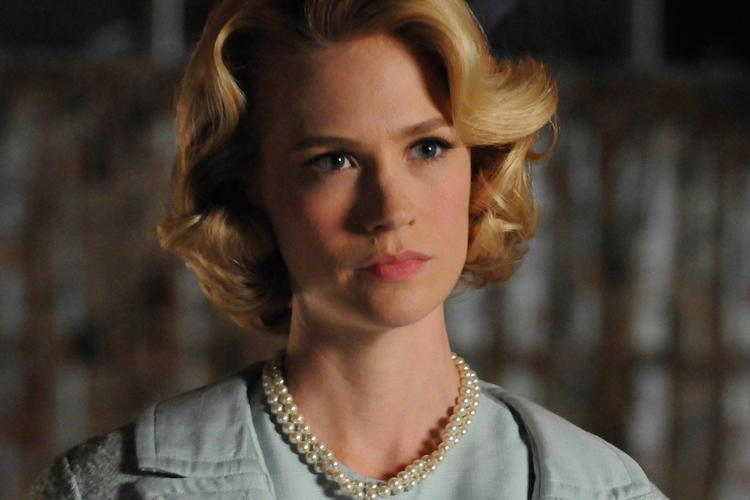
Mad Men

The best TV of 2009

From cash-strapped polygamists to rogue lawn mowers at Sterling Cooper, the greatest shows dared to provoke

  • more
    • All Share Services

The best TV of 2009Clockwise: "In Treatment," "Modern family," "30 Rock," "Parks and Recreation," "Mad Men"

This was the year TV dared to be odd. Comedies and dramas across the dial flirted with darkness and freaks and bizarre references and tiny subcultures and left the big, obvious, conventional stories and plotlines far behind. Instead of tolerating the same generically likable characters and bland, familiar American lives, we traveled through time and space to meet manic community college professors, polygamists struggling with money troubles, a suicidal retired CEO, a self-deprecating geek with a knack for extreme neurological makeovers and a gay couple bickering over their adopted daughter’s bedroom mural.

Yes, this year, bad TV was still bad. But good TV? Good TV was smart and weird and hilarious and fun and provocative — remarkably so. This year, TV overachieved, and instead of one or two quirky, original, suspenseful, strange shows, we had about 15 of them. If that sounds like an exaggeration, well, maybe you’re watching the wrong stuff.

1. “Mad Men”

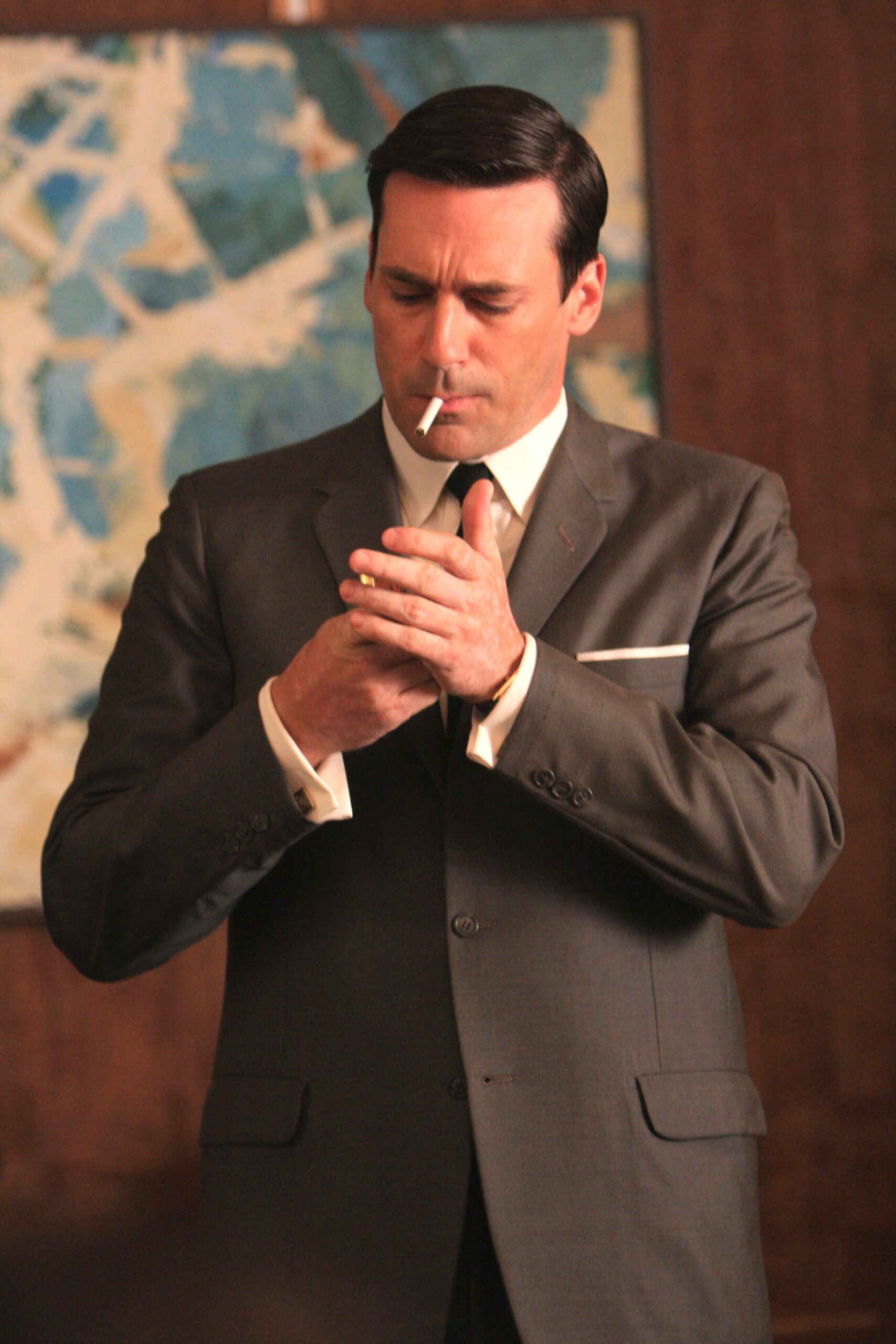
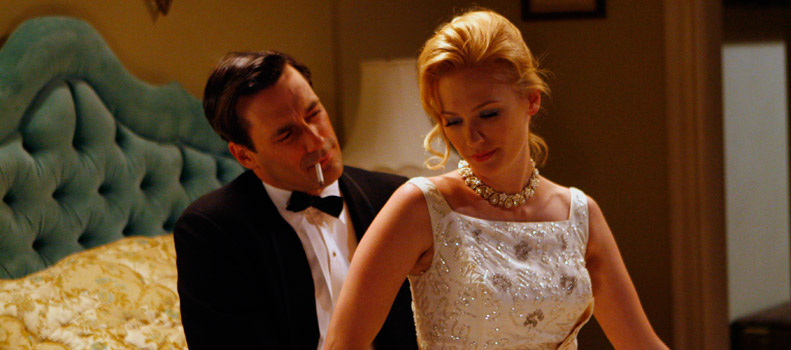
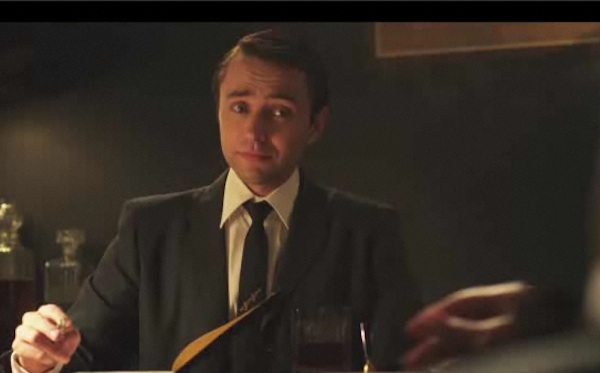
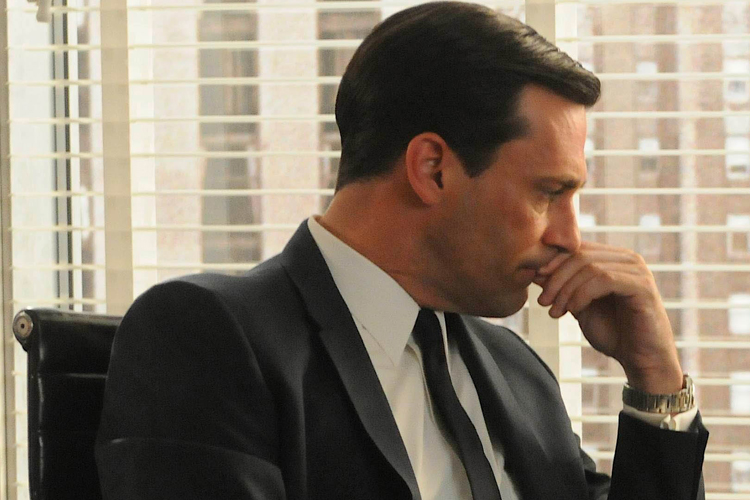
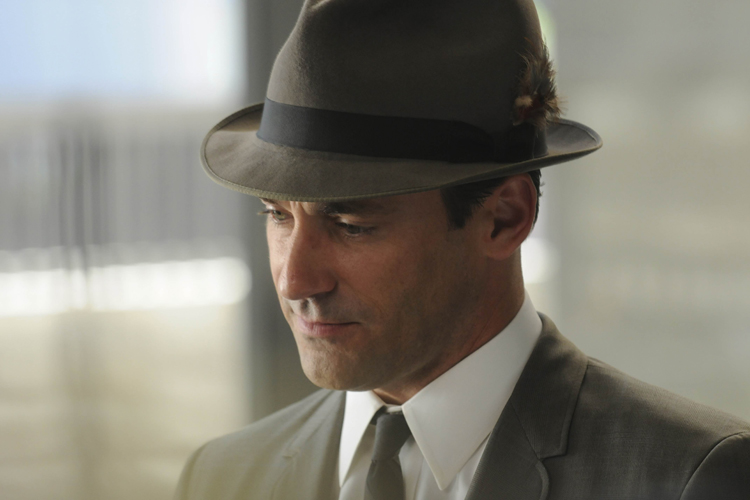
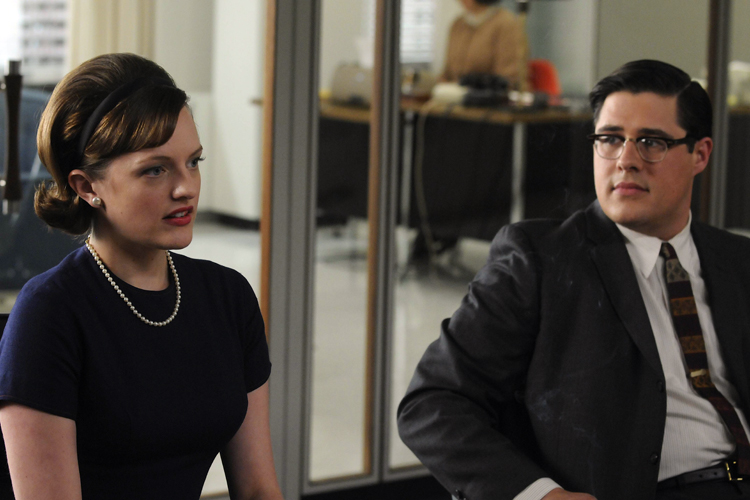
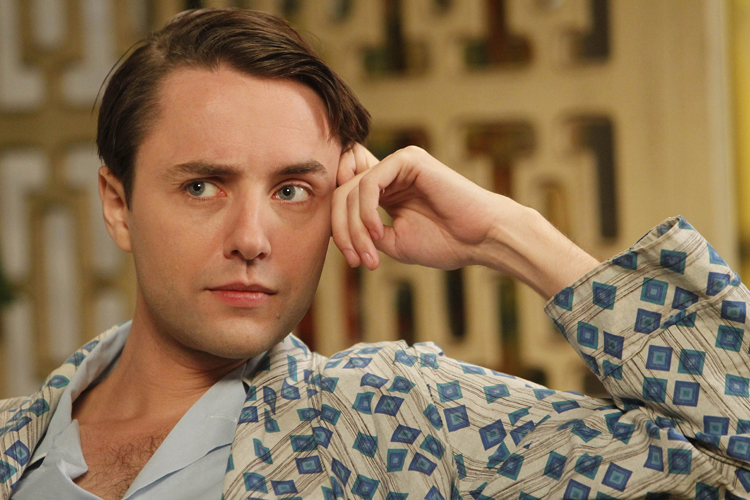
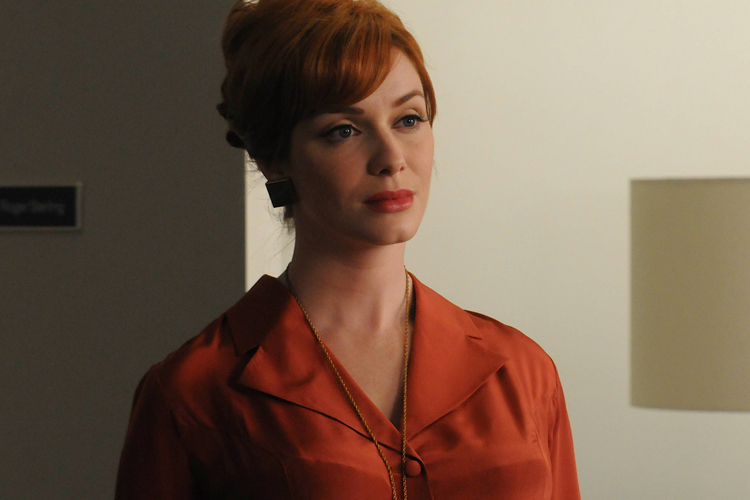
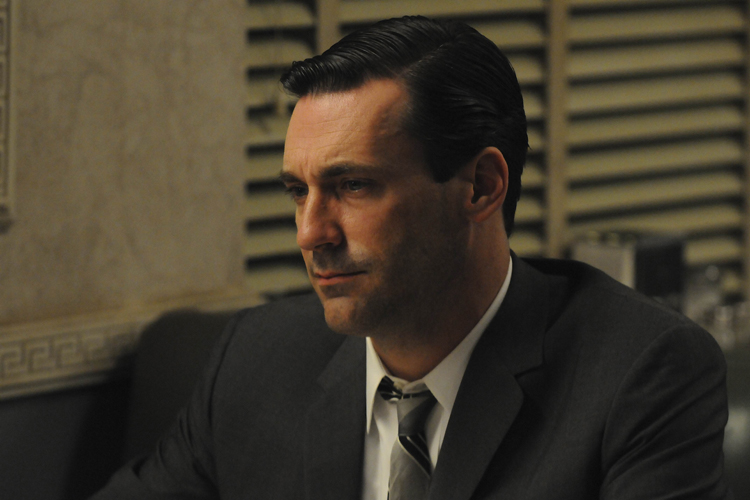
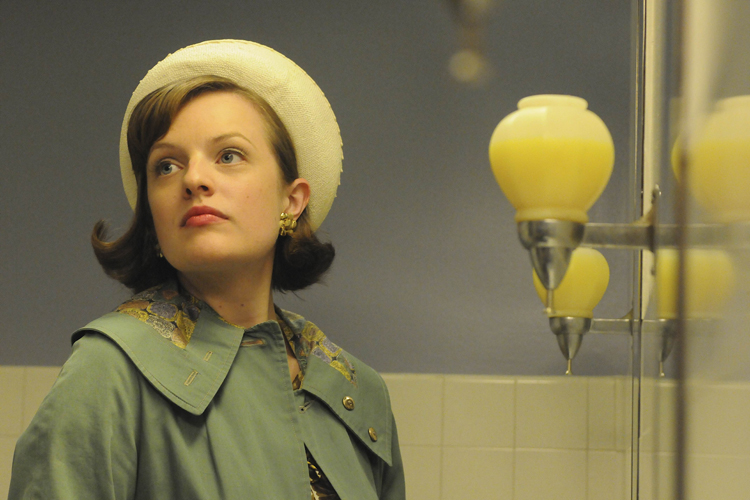
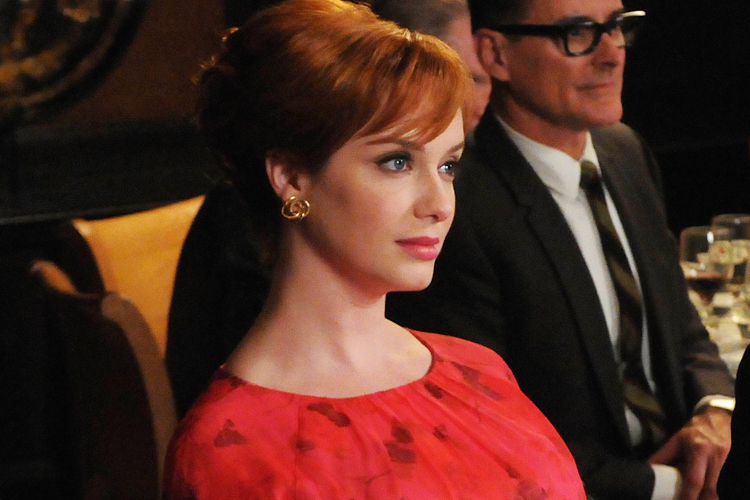
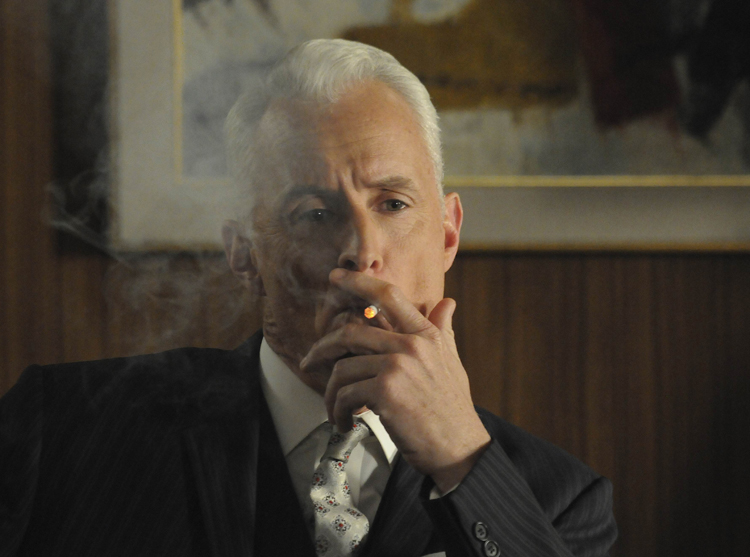
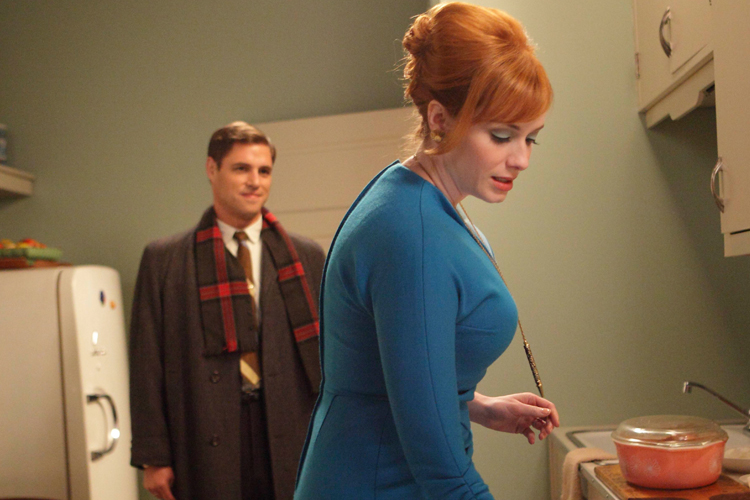
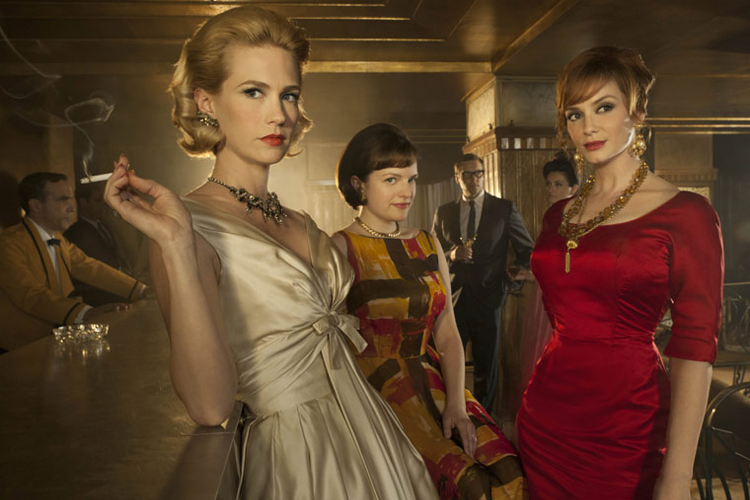
“That’s life. One minute you’re on top of the world, the next minute some secretary is running you over with a lawnmower.” In describing the bloody John Deere calamity at Sterling Cooper, Joan Holloway (Christina Hendricks) might as well have been summarizing the cultural tidal wave about to take America out at the knees. If “Mad Men” seemed to veer off the tracks in Season 3 — Violent bohemians! Grueling childbirth! Betty (January Jones) and Peggy (Elisabeth Moss) making kissy-face with old guys! — the madness made sense against the vertigo of the times. After all, when the advertising gurus go from slinging hairspray and staging chirpy reenactments of Ann-Margret’s “Bye Bye, Birdie!” to grappling with the unexpected brutality of JFK’s assassination, the fallout is sure to extend beyond rumpled hairstyles. The genius of Matthew Weiner’s meticulously imagined drama is that the serene perfection and glossy exterior that the series has become known for feels like it’s about to be blown out of the water like the idealized decoy that it is: Marriages are unraveling, long-held traditions and beliefs are starting to look as outdated as Betty Draper’s 24-hour bra, and Sterling Cooper has been disassembled and reimagined in a scrappy new form. “Mad Men” doesn’t just invite us back into the past, it forces us to question our long-held, oversimplified notions about those times. Or, as Don Draper put it in the first season of the show, “I feel like Dorothy. Everything just turned to color.” Likewise, the vibrant, imaginative world of “Mad Men” sometimes made everything else on TV look as flat as black-and-white.

2. “Modern Family”

Aliens have assumed for years now that family sitcoms were merely government-sponsored cautionary tales of how dangerously lame and devoid of laughter people become the second they get married and have kids. Thankfully, ABC’s “Modern Family” is here to set them straight, proving for the first time since “Arrested Development” that families and comedy aren’t mutually exclusive. Against all odds, creators Steven Levitan and Christopher Lloyd managed to start with a gay couple who adopt a baby, two middle-aged parents with two school-age kids and a teenager, and an older guy with a trophy wife, and spin the whole mess into comic gold. From Jay’s (Ed O’Neill) eye-rolling acceptance of his odd stepson (“When I first heard Manny wanted to fence I was like, sure, uncoordinated kid, lethal weapon? How could this go wrong?”) to the hilariously coy banter between Cameron (Eric Stonestreet) and Mitchell (Jesse Tyler Ferguson) (“You had to clip my wings, which you used to be the wind beneath!”), “Modern Family” is packed to the brim with hilarious but realistic characters, pitch-perfect familial squabbling and absurdly ill-fated scenarios that devolve in unpredictable ways (Luke’s elaborate but treacherous birthday party is one recent favorite). And speaking of unpredictable, who could’ve known that the best new comedy on TV this year would be full of beleaguered parents and obnoxious kids? Or as Manny would say, “Ugh, kids! You don’t have to tell me, my school is full of them.”

3. “In Treatment”

No sooner had HBO’s “Tell Me You Love Me” demonstrated that almost nothing under the sun could be more tedious and unbearable than a TV show about therapy than HBO’s “In Treatment” arrived to prove just the opposite. In the show’s second season, the offices of therapist Paul Weston (Gabriel Byrne) once again unveiled a steady flow of tense scenes and characters so deftly scripted that they had audiences sniffing and weeping their way through big boxes of tissues right along with them. How could therapy be so riveting? In part, “In Treatment” works because the show’s writers acknowledge the limitations and frustratingly distancing language of therapy even as they explore its benefits for the emotionally shell-shocked clients who find their ways to Weston’s door. As tough as it was to invent a worthy follow-up to “In Treatment’s” dynamic first season, all of the new clients were compelling, from retiring business executive Walter (John Mahoney), with his alternately infuriating and heartbreaking self-protective tics, to biological time bomb Mia (Hope Davis), who may be my favorite complicated, conflicted female character ever to appear on a drama other than “Six Feet Under.” And of course, Byrne was utterly believable as the sensitive professional who remains confused about his own issues. “In Treatment” offered the immediacy and emotional impact of an engrossing play, while showcasing the most intricately drawn, exquisitely performed characters on TV this year.

4. “Parks and Recreation”

After an amusing but unremarkable first season, NBC’s “Parks and Recreation” leaned into the seemingly limited comedic possibilities of small-town government in Indiana and pulled out one absurdly funny episode after another, from the dismissive Venezuelan officials visiting from Pawnee’s sister city to the soft-porn appeal of local beauty pageants. Whether Leslie Knope (Amy Poehler) is trying to save an empty lot from the malevolent forces at the library or trying to broach the subject of Tom’s divorce (“And … how are your institutions … that you’re a part of?” she finally asks him), she sticks to her principles. When Ron Swanson’s (Nick Offerman) ex-wife Tammy (a great guest spot by Megan Mullally) asks whether Leslie would rather be unscrupulous but sexy like Cleopatra or principled but plain like Eleanor Roosevelt, Leslie is incredulous: “What kind of lunatic would want to be Cleopatra over Eleanor Roosevelt?!!” Thanks to some smart character development and some ridiculously entertaining stories this season, the female leader we really want to emulate is Leslie Knope. Three cheers for Leslie and three cheers for Pawnee. 

5. “30 Rock”

Liz Lemon (Tina Fey) and Jack Donaghy (Alec Baldwin) may be searching for a new star for TGS, but “30 Rock” itself doesn’t need any new curveballs to keep our attention this season. Despite the sudden rush of fine comedies on TV this fall, there’s just something special about this depraved gaggle of industry weirdos that makes our hearts sing. “30 Rock” successfully dramatizes everything from class differences to the unbearable preciousness of actors to thirtysomething biological clocks, veering into the absurd, the outrageous, the utterly freakish with equal abandon. Whether the show is taking on Facebook (“Those sites are for horny married chicks with kids who want to exchange pervy e-mails with their old high school boyfriends,” offers Liz) or meaningless book blurbs (“Lemon numbers among my employees” is Jack’s blurb on the jacket of Liz’s book), the show features a reliably steady flow of great pop cultural commentary. Throw in a three-ring circus of unhinged characters and bizarre outbursts, and you have one of the best workplace comedies ever. How do they do it? Just don’t ask Liz. To her, “Your hair is looking less weird,” is a glowing compliment.

6. “Friday Night Lights”

Instead of keeping its high school graduates around indefinitely, all of them becoming general managers at Applebee’s, doomed to comp Coach Taylor’s (Kyle Chandler) barbecue rib platters until the end of time, the show’s writers wisely chose to send these kids off into the world on their own. A third season dominated by long goodbyes should’ve been an intolerable, uneven mess, but “Friday Night Lights” milked every moment for all it was worth, and in so doing, sent Smash Williams (Gaius Charles), Jason Street (Scott Porter), Lyla Garrity (Minka Kelly) and the others off in style. Only Riggins (Taylor Kitsch) and Matt Saracen (Zach Gilford) remained in the show’s fourth season this fall on DirecTV (the show will air on NBC in 2010), but the writers have wisely taken their time to weave new characters into the mix. Coach Taylor’s new gig at East Dillon High has proved a rich and necessary source of story lines. While the “bad boy gets drunk and reckless” plot is probably repeated a little bit too often, ultimately the emotional impact of “Friday Night Lights” remains as strong as ever, most recently evidenced by an unexpected major turn in Matt Saracen’s life that led to the show’s strongest episode this season. Although its odd on-air schedule makes it challenging to write about “Friday Night Lights” in anything but veiled terms (to avoid spoiling it for those who’ll eventually watch it on NBC), thank the good lord that DirecTV and NBC found a way to keep this sweet, humble, yet utterly original drama on the air for as long as they have, because, in its best moments, “Friday Night Lights” is simply transcendent.

7. “Dollhouse”

Joss Whedon’s “Dollhouse” has been canceled, but that doesn’t mean it isn’t the best sci-fi drama on TV right now, and yes, that includes “Fringe” and everything on SyFy. (While they “Imagine Greater,” as their logo goes, how about imagining picking up “Dollhouse” once Fox drops it? Might just fill that “Battlestar Galactica”-shaped hole in their lineup.) While Eliza Dushku’s star turn as Echo has always been the show’s weakest link, Whedon’s fantastical army of brainwashed whores has remained unnerving and clever in all of the ways you’d hope, despite the obvious push to minimize the overarching narrative in favor of standalone procedural episodes. Fox just couldn’t blot out Whedon’s brilliance, from his ethically challenged characters to his layers of thoughtful reflection on conformity, societal pressures, loneliness and free will. Could some second-rung cable channel with lower expectations for ratings please, at long last, give Whedon a blank check once and for all, without any talent attached, and let him work his magic? This man was born to write twisted, witty, diabolical tragicomedies for the greater good. Of course, as Echo (or a Fox development executive, for that matter) might put it, “Is this some sort of fantasy scenario, ’cause I don’t get it. When do we get naked again?”

8. “Community”

How could a comedy about community college be anything but silly? NBC’s “Community” proves that it can’t, yet this show still bounces along like an empty kegger, giddy and foolish and ready to brain anyone who stumbles into its path. From the Greendale Community College mascot (a grayish, faceless “human being” chosen for his/her inability to offend some segment or ethnic group) to Jeff’s (Joel McHale) aggressive dalliance with debate team grandstanding, “Community’s” finest episodes are direct parodies of the enforced p.c. climate of academia, the adorably provincial notions of academic administrators, and the specific built-in insults of so-called second-rung institutions of higher learning. Beyond the rich subject matter, “Community’s” cast pulls off even the most juvenile of plots, from Pierce’s (Chevy Chase) drug-induced existential crisis to Jeff’s continuing struggle to grow beyond his flatly selfish existence. Danny Pudi is deliciously off-kilter as Abed, Allison Brie is hilariously prudish and spot-on as Annie, and Yvette Nicole Brown masters the alternately aggressive and retiring Shirley. In short, “Community” is all about community — albeit, one filled with pure-hearted but deeply disturbed individuals.

9. “Big Love”

While Bill’s (Bill Paxton) choice to find a new spouse at the end of “Big Love’s” second season threatened to make him look like an unscrupulous horndog, it’s really the female leads that make this show so transfixing, from sweetly naive Margene (Ginnifer Goodwin) to fiercely protective Barb (Jeanne Triplehorn). The third season was even more fraught with peril than usual, thanks to Roman’s (Harry Dean Stanton) trial, Nicki’s (Chloë Sevigny) increasing alienation and the countless unnerving twists and turns along the way. Without careful storytelling, of course, a show about polygamy would feel like a attention-seeking gimmick (as it sometimes did in its first season). But “Big Love” keeps our interest by staying focused on the ties that bind this odd family together, their very earnest interest in making their bizarre collaboration work, and the challenges of living in ways that the wider world openly discriminates against. Whether or not we understand their motivations perfectly, through moving performances and riveting storytelling, “Big Love” makes us care about this odd family and its endless tribulations.

10. “Damages”

Glenn Close’s restrained intensity as high-powered lawyer Patty Hewes was reason enough to love the second suspenseful season of “Damages,” but when you threw in William Hurt’s great performance as the perplexing Daniel Purcell, Rose Byrne as fallen ingénue Ellen, and Timothy Olyphant as Ellen’s double-dealing lover Wes, you had the kind of cast that directors’ daydreams are made of. Although this twisty tale of blackmail, lawsuits and countersuits, hired thugs, dirty deeds and vengeance isn’t exactly notable for its layers of meaning or insights into the human condition, what it lacks in weight it more than makes up for in breakneck, head-spinning plotting and truly nasty dialogue. (My personal favorite Patty line? Her warning to her son’s older girlfriend, “You will break his heart, and when you do, I will tear your face off.”) Other TV writers may loudly fret over the challenges faced by serial dramas to hold an audience’s interest over the course of a season, but the “Damages” scribes seem to have stumbled on a clear solution: Offer up a few revelations and one or two major twists per episode. The resulting wild ride of repositioning, scheming and backstabbing adds up to one thing: riveting television.

HONORABLE MENTIONS:Hung,” Glee,” “Bored to Death,” “Flight of the Conchords,” “Survivor,” “The Office,” “Kings,” “Saving Grace,” “Burn Notice,” “Men of a Certain Age.” 

Check in tomorrow for Heather Havrilesky’s picks for best TV of the decade.

Heather Havrilesky is Salon's TV critic and author of the rabbit blog. Her memoir, "Disaster Preparedness," published in 2010.

“Mad Men” finale: What’s worth a fight?

Don Draper and the denizens of Sterling Cooper take drastic measures in the face of a brave new world

  • more
    • All Share Services

It looks like Don Draper might finally grow up after all! Instead of running for the hills at the first sign of trouble as is his habit, Don discovered in Sunday night’s third season finale of “Mad Men” that there are some things in his life that he has the conviction to fight for: the survival of Sterling Cooper in some new form. His friendship with Roger Sterling. His professional and personal relationship with Peggy Olson.

But Don (Jon Hamm) also discovered there are things he’s no longer interested in fighting for — namely, his marriage. After greeting the news that Betty (January Jones) wants a divorce in his usual condescending way (“Maybe you can see a doctor — a good one this time,” he tells her as she grimaces at his arrogance), then shifting into angry drunk mode when he finds out about Betty’s new caretaker/husband/father figure Henry Francis (Christopher Stanley), Don finally lands in even-handed territory. 

“Listen, Betts. I want you to know I’m not gonna fight you. I hope you get what you always wanted,” he tells her in a phone call at the end of the episode.

“You will always be their father,” Betty replies — typical tone-deaf Betty, unable to express her emotions in the slightest, and preoccupied with patriarchs to the end.

But Don always wanted more than a good, obedient, perfectly coifed wifey at home, as evidenced by his far less groomed, more spirited love interests elsewhere, from Midge (Rosemarie DeWitt) the devil-may-care intellectual to Suzanne (Abigail Spencer), the pure-hearted but unorthodox schoolteacher. Even as Betty and then Peggy (Elisabeth Moss) dress Don down with their unforgiving words, he almost seems to lean into their disapproval, as if he’s relieved that finally someone’s going to call him to the carpet for his clumsy, caddish behavior. Maybe he realizes he’s been as much of a presumptuous asshole as Conrad Hilton, who cast aside his professional and personal relationship with Don the second he was no longer useful. Still, Hilton may be the one whose past keeps him overworked and friendless indefinitely; Don’s days of lamenting his tragic upbringing are drawing to a close. The flashback to his father’s death seems to signal that Don is finally going to put his daddy issues aside and shake off the shadow of his real identity once and for all. Now that his fake life is crumbling around him, something resembling an authentic life seems possible at last.

In fact, Sunday night’s finale was particularly satisfying because all of the show’s best characters look poised to move on to a new era in their lives. Peggy was clearly overjoyed to finally be acknowledged as talented and valuable by Don. Pete (Vincent Kartheiser) for once found himself perfectly positioned, thanks to his exit strategy of gathering clients to take to another firm, to get the promotion he’d always dreamed of. Joan (Christina Hendricks) came alive again when she was called back into action as the new firm’s office manager, returning to a role that exploits her remarkable knack for attention to detail, propriety, pragmatism and pretty much everything that the partners and associates of the new firm so dearly lack. Even Lane Pryce (Jared Harris) found himself unexpectedly handed a chance to avenge his heartless bosses in London with the same air of casual cheer they’d employed when dragging him over the coals for years.

Breathtaking, really, that each character’s deepest desires and drives could be satisfied without screwing up the story or turning it into a fairy tale. In particular, the difference between Peggy and Joan and what they each want was beautifully expressed in seconds: Roger, Joan and Peggy are hunched over the books at the old offices, exhausted from their scrambling attempts to bring as much with them to the new firm as they can before they’re locked out, when Sterling asks, “Peggy, can you get me some coffee?” Without wavering, Peggy snaps back, “No.”

Next we cut to Don informing Joan, “I’m at the Roosevelt, but I’ll need you to find me an apartment.”

“Furnished?” Joan asks without skipping a beat, in that tone of professional nonchalance that makes her such a star. Sure, Joan’s made to be a caretaker and organizer of men’s lives, but does that make her miserable? No. She absolutely glows when she’s s given an opportunity to do what she does best.

Even the Draper kids look reasonably happy camped out on the couch in front of the TV set with big glasses of chocolate milk, the housekeeper (who’s far more nurturing than their own mother, after all) perched between them. The only character whose fate feels slightly tragic is Betty. How heartbreaking was that shot of her on the plane to Reno, holding her little, worried-looking baby as Henry Francis snoozed in the seat beside them? Now Betty has the dull life and the dull Daddy of her dreams, and not surprisingly, there she is, looking as hopelessly alone as ever. (And really, someone should give that baby an Emmy for encapsulating the angst of that scene in his poor little face. Another boy goes barreling off into an unknown future with a dad who’s not his own. Is Francis even a good guy? Who knows?)

Although his baby’s plight echoes his own sad past, Don’s future looks far less bleak than it has in a long time. As he returns from his last phone call with Betty, what does he see? The chaotic, cramped temporary offices of Sterling Cooper Draper Pryce, filled with the people who have always been his true family, for better or for worse.

Continue Reading Close

Heather Havrilesky is Salon's TV critic and author of the rabbit blog. Her memoir, "Disaster Preparedness," published in 2010.

Arrogance rules the small screen!

From the Voltaggio brothers of "Top Chef" to Don Draper of "Mad Men," grandiosity and swagger make good TV

  • more
    • All Share Services

Arrogance rules the small screen!Bryan and Michael Voltaggio from "Top Chef"

Arrogance is telegenic. Who knows why? Ask Don Draper or Tom Colicchio or Jack Donaghy or Tony Soprano. Ask Oprah or Al Swearengen or Ted Danson or Vic Mackey or Grace Hanadarko or Clay Morrow.

Smugness and swagger play well on TV. Eye-rolling know-it-alls, snorty laughter, brazen disregard for other people’s feelings, bullying, condescension, superiority complexes, afternoon glasses of bourbon, grumbly stoicism, infidelity, overconfident banter: These things are the rainbows and unicorns of the televisual schoolyard.

Whether it’s “Sons of Anarchy” or “The Amazing Race,” whether it’s “The Mentalist” or “Project Runway,” the last thing we want, at the end of a long day at work, is to relax by watching insecure people second-guess themselves. The heroes of the small screen are the ones with the biggest egos.

Revolting Voltaggios!

Take the Voltaggio brothers of “Top Chef: Las Vegas” (10 p.m. Wednesdays on Bravo). These two self-assured but growly young men don’t take kindly to either flaccid flavor profiles or incendiary comments in the Glad Torture Chamber. It was obvious from the start of the sixth season that these snarling siblings had the chops to make it to the final three. What was less obvious was the extent to which they might let their clashing personalities and lifelong resentments and deeply competitive natures rise to the surface and engulf them in a stormy sea of unspoken contempt, sullen silences and occasional spitty outbursts.

Who knew that younger brother Michael would have such an amusing tendency to blow up at his far more reserved elder, Bryan, squawking, “Fuck you, Bryan!” and also, “I’ll take my time now, you fucking asshole,” and, my personal favorite, “Don’t be a dick”? That’s classic brotherspeak, a baseline instruction to watch your step lest you get popped in the face by a stray fist. And make no mistake about it, it has come to blows with these two before. Every time Bryan mumbles something condescending then averts Michael’s gaze, I can almost see a 10-year-old Bryan making some snide, superior comment in passing that turns a 7-year-old Michael bug-eyed with rage and sends him flying across the room, hands aimed at Bryan’s holier-than-thou neck, ready to choke the life out of the smug bastard.

All of which merely means that the Voltaggio brothers are actually brothers and not paid actors or talented chefs posing as brothers to make it onto the show. Still, it’s a testament to how completely Michael has dropped his guard that suddenly he’s freaking out while the cameras keep rolling.

Which brings us back to some of the possible reasons why arrogance lights up the small screen like nothing else. Whether or not they feel comfortable with the spotlight, whether or not they approve of broadcasting themselves for a nation’s idle amusement, the arrogant sooner or later come to adore the camera’s gaze in spite of themselves. At first, since they’re arrogant, they make pronouncements about how they’ll resist the pitfalls of fame and notoriety, how they’ll lead with their dignity, how they’ll bestride the pathetic shenanigans of their colleagues like great golden gods. Witness how recently Michael stated with great conviction, “Yelling and screaming, arrogance and things like that? There’s really no place for that in the kitchen.” And now? He yells and screams with reckless abandon.

But he can’t help it! His arrogance lies to him, telling him that even when he falls apart and stomps his feet like a bratty little tool, the camera loves him and embraces his every move. And let’s face it, the guy is pretty hot. He has angry bedroom eyes. He’s cocky. He cooks a mean pressed chicken with calamari noodles, tomato confit and fennel salad. If this guy isn’t neck-deep in fine women around the clock, there is no God.

It’s no wonder he gets under older brother Bryan’s skin. Bryan, who has appeared relatively peace-loving until last week’s episode, nonetheless has a disconcerting tendency to blow up at anyone who tries to make polite chitchat with him in the Glad Torture Chamber. State an opinion about which dish sucked the most, ask Bryan what he thought about how another cheftestant performed, speculate about who might be going home, and Bryan will bite your head clean off. He doesn’t want anyone gossiping about anyone else. His commitment to accuracy, to squelching the slightest whiff of gossip, is so complete, you’d think he was a highly decorated investigative reporter on a fact-checking mission, as opposed to, say, a reality show contestant. Sometimes, in fact, when Bryan says things like, “Did you taste that dish?” and “Were you there?” you almost want to say, Jesus, Bryan, give the postproduction editors a break, will you? What are they supposed to make a show out of? Shots of you, pursing your lips in silence? This is Bravo, dude.

But last week, after that little hotheaded pussy hound Michael won the elimination challenge plus $10,000, then uncharacteristically offered to share his money with his team, Bryan couldn’t restrain himself. He sat in the Glad Rage Pantry in silence until Michael couldn’t help  commenting on his obvious anger. Then Bryan quietly informed Michael that he could keep his share of the prize money. I don’t want your blood money, his eyes told Michael. It was like a scene out of “Jesus Christ Superstar,” only with higher stakes.

“I think the two dishes he executed were great, but he’ll admit he’s a bit of a control freak,” Bryan told the camera, sounding like a bit of a control freak, then adding, “And I’m tired of his unprofessional behavior being rewarded.” Aww! Big brother hates how little brother’s grandiosity and temper tantrums have landed him flashy prizes and loose women for decades now! It’s sooooo no fair!

But don’t judge Bryan. After all, don’t we all feel a little highhanded when we notice how grandiosity and temper tantrums are not only telegenic, professionally expedient and disconcertingly lucrative, but also sexy? Don’t we all feel a little threatened by the ways that pissy little braggarts and smug jerks get all the cash and the hot girls, while the rest of us sit on our hands, restating our principles and values as the camera crew races over to get more footage of the outspoken dick across the room — you know, the one who just happens to be our slightly-more-handsome little brother?

In short, the “Top Chef” producers’ decision to include siblings on the show who also happen to be celebrated professional chefs guaranteed to blow away the competition while fighting like enraged squirrels looks less like a crass manipulation and more like an act of sheer brilliance every day.

“You know, why don’t you keep the whole thing, if you’re so mad?” Michael sulkily asks his brother back in the Glad Seething Storeroom.

“I’m not mad at all. I’m very happy about this whole situation,” Bryan hisses through gritted teeth, the poster child for Passive-Aggressive Seething Glad-Wrapped in Gladness.

In a fitting denouement, wishy-washy Laurine is sent packing while explaining to the camera that on “Top Chef,” “I think I’ve learned something about myself, and uh, I don’t know that I want to be in a competition with anybody for anything, really.” Now we know why Laurine was always vaguely chafing on-screen: She’s humble, she hates the attention and she doesn’t like to compete.

We may understand how she feels, but that doesn’t mean we aren’t happy to see her go. Quivering worrywarts and jittery second-guessers? Stay home. We prefer eye-rolling braggarts and scoffing, swearing jerks on our screens instead, thank you very much.

Betty gets ugly

Now think of the ever-paradoxical Don Draper (Jon Hamm) of “Mad Men” (10 p.m. Sundays on AMC). He pretends to be reserved, principled, unflappable, consistently self-assured, but Don’s smooth, arrogant exterior barely conceals the roiling mess of insecurities and identity issues churning just under the surface. Don isn’t the uncomplicated hero and all-seeing prophet he claims to be at work and at home. He plays the part of the dependable family man but keeps a big pile of cash in his desk drawer in case he needs to skip town. He acts as a trustworthy mentor to Peggy (Elisabeth Moss), until the moment when she needs his guidance and, feeling pressured by his employment contract, he turns on her. He builds a friendship with Roger Sterling (John Slattery) until Roger has the bad taste to leave his marriage, and Don, who’s obviously envious, lashes out and calls Roger foolish instead of admitting the truth to Roger or himself.

Don’s arrogance — which like most arrogance is fueled by a vast array of insecurities that our arrogant hero refuses to acknowledge — prevents him from seeing himself or his world clearly. Instead of becoming the man he pretends to be, choosing to embrace his responsibilities as a good father and devoted husband, or even leaving Betty once and for all and settling down with the smart, lovable schoolteacher of his dreams, Don continues to pull one over on the world. In his initial brusque manner with the schoolteacher’s epileptic brother, we can see it clearly: Don wants no part of weakness. He can’t stand to play any role in some loser’s sob story. He can’t tolerate so much as considering this man’s plight in life, since it bears such a haunting resemblance to his own checkered past, and reminds him of his poor, dead brother, the one he refused to help or even acknowledge years prior.

Don tells himself he’s turning over a new leaf by slipping the brother some money and dropping him off in the woods instead of taking him to the job his sister lined up for him in Bedford. But really this is more of the same: Don playing fast and loose, thinking on his feet. Don uses his money as a replacement for genuine concern, just as he uses sex as a stand-in for real love and intimacy. His essential instinct for dishonesty is what keeps him from ever forging a real connection with the women in his life. He considers himself above them, ultimately, and he seems to feel that he’s licensed to make his own independent decisions about anything — the epileptic brother, Salvatore’s choice not to whore himself to a client and his subsequent dismissal, Peggy’s request for a promotion — even when the decisions aren’t really his to make.

But he can’t help it! His arrogance lies to him, telling him that he is the master of all he surveys. Even when he lies and cheats and slams doors like a bratty little tool, the camera loves him and embraces his every move. And let’s face it, the guy is pretty hot. He has an unforgiving, unflinching gaze. He’s cocky. He could write a catchy jingle for week-old bologna that would make housewives flock to the stores. If this guy weren’t neck-deep in horny schoolteachers around the clock, we’d know for certain that God is dead.

But Don will not be king for much longer. The times are changing. Betty has just discovered his little box of secrets, and now that she’s had a chance to stew over it, thanks to Don’s not coming home that night, she’s liable to keep her mouth shut while carefully planning a colorful and catastrophic exit. What kind of precipitous fall lies ahead for our dashing, overconfident hero Don Draper, or for those volatile, versatile Voltaggio brothers?

We can’t wait to find out. Because if there’s one thing that’s more dramatic and powerful than arrogance on TV, it’s watching the arrogant finally get trampled underfoot by their own barely concealed insecurities. 

Continue Reading Close

Heather Havrilesky is Salon's TV critic and author of the rabbit blog. Her memoir, "Disaster Preparedness," published in 2010.

January Jones’ breasts: All real

GQ's photo editor says the "Mad Men" actress received no cleavage enhancement on its November cover

  • more
    • All Share Services

I feel like a total boob. This morning, I got an e-mail from GQ alerting me to a new interview about the magazine’s November cover shot of January Jones, which I speculated yesterday was heavily Photoshopped to make her breasts pop. Asked whether they messed with her cleavage, photo editor Dora Somosi responds: “No, absolutely not.” She explains that Terry Richardson, the extremely talented photog behind the shoot, has a preference for “harder lighting” which “can create a stronger shadow — that, and body position and perspective could give the illusion that her breasts are bigger.” 

There you have it: I was wrong. 

Let me offer a glimpse of how this all transpired behind-the-scenes: My editor Sarah Hepola sent me an e-mail Wednesday morning with the subject line, “What the hell happened to January Jones’ breasts?” She linked to the striking image and signed off with: ”Bazoonga!” Yes, I thought, her cleavage does look rather unnatural. (For the record: I called them “porny” in my original post not because they were big but because they defied gravity in a manner that looked rather fake to me.) I published the item — thinking of it as fun, ephemeral — and turned to more pressing matters.

Then readers began questioning my assumption in the post’s letters thread. A couple male coworkers argued that, hey, they also thought the photo looked legit. Hah! Sarah and I laughed. They just didn’t understand. After all, women know real breasts and we know the ubiquity of heavily retouched women.

Oh, but I should have known better: As a teen, I spent uncountable hours propping up my breasts and smooshing them together to simulate the cleavage-to-chin look of Victoria’s Secret models. I well know that slender women like Jones with anything above a B-cup can achieve this look with the right pose, outfit, lighting, camera angle or all of the above. Heck, I’ve been insulted in the past when a friend asked if my breasts were fake simply because of the way they sat on my slight build — but there I was doing a very similar thing to Jones.

Why was I so quick to jump to the Photoshopping conclusion? Because it is so pervasive. My default setting is: Objects in magazine are other than they appear. After seeing the glossy rag beauty ideal you’ve grown up with revealed as a sham, it’s easy to develop a defensiveness about such things. I wasn’t the only one whose retouching radar was set off by the cover shot, either. Regardless, I’m sorry GQ. I said in my original post that I thought you were better than all that —  and you are.

Continue Reading Close
Tracy Clark-Flory

Tracy Clark-Flory is a staff writer at Salon. Follow @tracyclarkflory on Twitter.

Betty Draper gets a boob job?

GQ turns "Mad Men's" January Jones into a porntastic blowup doll

  • more
    • All Share Services

Betty Draper gets a boob job?

Whoah, Betty Draper has got some major double D’s — and I’m not referring to her “depression” and “dissatisfaction.” On the cover of its November issue, it appears GQ has given January Jones, the talented actress who plays “Mad Men’s” matriarch, a most unfortunate makeover, slapping Pamela Anderson-size breasts on her delicate frame. She’s been transformed from a bored ’60s housewife into a cast member of “Real Housewives of Orange County.” It’s buh-bye, Betty; hello, blowup doll. If the image isn’t heavily Photoshopped, then Mrs. Draper’s been more corseted than the closeted Sal. Jones has a rocking body, there’s no doubt about that, but she does not have porno boobs. Don’t believe me? Click here.

A little retouching is OK, it’s expected. But morphing a natural beauty like Jones — an image of absolute porcelain perfection if there ever was one — into a plastic, porny cover model is pathetic. The same could also be said for GQ acting like Maxim, its infantile companion on the magazine rack. Come on, guys, you’re better than that.

Tracy Clark-Flory

Tracy Clark-Flory is a staff writer at Salon. Follow @tracyclarkflory on Twitter.

Scandal: Why did a “Mad Men” scribe get axed?

Rumors fly that Emmy-winning writer Kater Gordon was sleeping with creator Matt Weiner. Does it really matter?

  • more
    • All Share Services

On Sunday, Deadline Hollywood’s Nikki Finke reported that “Mad Men” writer Kater Gordon has been fired — three weeks after winning an Emmy for outstanding writing. Gordon began her “Mad Men” career as show creator Matthew Weiner’s personal assistant, giving the whole thing Peggy Olson undertones (“There’s not one thing that you’ve done here that I couldn’t live without, Kater!”) — not to mention the inevitable David Letterman comparisons — that make speculation about what really happened darn near irresistible, despite the lack of confirmed information, or even much trustworthy gossip.

What we know so far: The insider who gave Finke the dirt also noted that Weiner is known for giving big opportunities to relatively inexperienced talents, which is “one of the great things about ‘Mad Men’” — but that has a flip side, as a commenter over at “Mad Men” fan blog Basket of Kisses pointed out: “Anyone who wants to look at IMdB for a few minutes will quickly discover that there has been a lot of turnover on the writing staff.”

Gawker rounded up some of the most provocative comments from the Deadline Hollywood thread, which include a couple of interesting thoughts. 1) Inexperienced talent is cheap talent; Emmy-winning talent commands a higher price, and Weiner might not be inclined to rearrange the budget accordingly. 2) Weiner is a well-known control freak, and furthermore, according to one commenter, “the lowest of the low in our business. He is a egomaniac [sic] and the likelihood is that he was incensed that he had to share credit and let alone an Emmy with her. A lowly former writer’s assistant. As far as he is concerned, he is solely responsible for the success of this show and no other writer, producer, director, actor, key grip have done anything to contribute to the show’s success. For Pete’s sake, he didn’t even let Kater Gordon say a word when they got up on stage. It was her moment as well but Weiner made it ALL about him.”

Depressing thought of the day: I actually find it heartening that there’s so much speculation, gossip and smack talk surrounding this story that doesn’t involve the question of whether Gordon and Weiner ever slept together! It’s so refreshing that Weiner’s enemies have some less predictable ideas — and for that matter, that Gordon doesn’t appear to have many vocal enemies adding their two cents at all. (Though one commenter who’s not a fan of her writing suggested she was fired simply for not having the chops.) However, in the wake of the David Letterman scandal, that question lurks. And Finke quickly updated her post, attempting to nip it in the bud:

A prominent female writer (she asked not to be identified) knows both Kater Gordon and Matthew Weiner and sets the record straight for me: “As a female writer who has worked with many strong showrunners, I have to say that any ‘Letterman’ talk on today’s thread about Kater Gordon really disgusts me. The same kind of talk followed me and my success. So you see, you can’t win. If you’re young and female, you’ll always be suspect. Success or failure, it can’t be because you’ve actually got the goods. I feel compelled to come to both Kater and Matt’s defense on this one. Kater was a fantastic writer’s assistant, the best. She totally got the show and deserved the break she got. There was NOTHING illicit in her relationship with Matt. I believe Kater will go on to great success, if she so desires, and their parting of the ways was amicable.”

Regardless of whether that source is correct about Gordon and Weiner, she’s absolutely right that it’s disgusting how swiftly some people will leap to the conclusion that any young woman who has a rapid rise to success must have slept with the boss along the way. As Hortense at Jezebel notes, similar speculation is currently haunting Molly McNeary, a co-headwriter on Jimmy Kimmel’s late-night talk show. “Kimmel’s relationship with McNearney was recently announced, and the ‘uh-oh, Letterman!’ comparisons began, based solely on the fact that McNearney worked her way up the ranks.” Referring to Gordon, Hortense sums up the problem with such assumptions: “Surely, her promotions couldn’t be the result of her, you know, talent, right? I mean, that would just be crazy, no?”

I trust I don’t need to explain why the presumption that sex was exchanged for promotions is so offensive, especially to a generation that’s supposed to see “Mad Men” as a startling reminder of how far we’ve come as a society. (For that matter, since the show itself attempts to illustrate damaging, not-so-bygone stereotypes without actually reinforcing them, even it hasn’t gone there. Secretary turned copywriter Peggy and her boss, Don, have never so much as flirted, even though she’s secretly slept with a co-worker, he’s a notorious lothario, and some viewers believe the sexual tension between them is palpable. The audience is meant to see how Peggy’s talent is consistently undervalued because of her gender, even without any whiff of her sleeping her way to the low middle.) And as Finke’s second source makes clear, saying it about one successful woman casts a shadow over all successful women. When the Letterman story broke, I heard from a female friend who, early in her career, worked for a boss known for sleeping with female underlings. She was never one of them, but for years afterward, she was dogged by others’ speculation about the “real” reasons for her rise up the ladder. Her former boss may have earned his bad reputation, but every young woman who ever worked for him sure didn’t.

Speaking of which, I was discussing this story with friends over e-mail, and a much more obsessive “Mad Men” fan than I immediately recalled being squicked by a bit of DVD commentary on the episode “Six Month Leave,” in which Kater Gordon makes a cameo “dressed just this side of Playboy bunny.” My friend wrote that the commentary, by Weiner and “some other male production person” was “leering in a way that made me uncomfortable. Like, Weiner says, ‘That’s Kater,’ and the other guy says, ‘Really?’ and Weiner says sarcastically, “Yeah, I hate coming into work, hahaha.’” And see, there’s the thing right there: You say on the record that you view your young, female employees as sex objects (even when they’ve agreed to dress as precisely that for a scene), and people are going to talk, whether anything happened or not. And whether anything happened or not, it’s not the male boss who’s going to see any real professional fallout for it, but every woman who’s ever worked for him.

In light of that, I’d like to ask the one question I haven’t seen come up as a result of this story: So what if they did sleep together? Weiner’s wife would have a right to be pissed, and it would suck for Gordon and every other female employee of his for all the reasons above, but it’s worth noting that those very reasons are based on yet another sexist assumption: That a woman cannot simultaneously be attractive/attracted to her professional superior and be extremely talented. 

And that, of course, is based in the stereotype that pretty women are stupid and smart women aren’t the kind the boss would go after — a false binary “Mad Men” has been dealing with from Day One. Head secretary Joan is whip-smart but sees her sexuality as a stronger asset in achieving the most she can hope for — which to her mind, in the context of the era, is being a successful professional’s wife. Peggy is professionally ambitious and increasingly exploring her own sexuality, but part of the reason she was able to rise from secretary to copywriter was that she was desexualized by a pregnancy everyone else read as an unfortunate weight gain; Weiner himself has said of that story line, “Part of it was her becoming a guy. She was putting on a suit of armor to protect herself sexually and because of that she could begin operating as a man.” (Yes, being pregnant somehow amounted to her “becoming a guy,” which raises a whole bunch of other fascinating questions.) Betty, Don’s wife, is clearly bright but has never worked as anything but a model and a housewife. One way or another, her primary role as an adult has always been to act as an ideal of beauty and femininity, and the character is increasingly depressed by the gulf between appearances and her internal life. This is exactly why so many women and so many feminists — including most of us here at Broadsheet — are tremendous fans of the show: The female characters are constantly shown struggling against the confines of those stereotypical boxes, while too many television programs are content to leave even contemporary female characters trapped inside them.

So the fact that any young woman who rises to success is still frequently assumed to have slept her way there is one marker of just how far we haven’t come since the “Mad Men” era. But another is the fact that we so quickly assume any sexual relationship between a woman and her professional superior necessarily involves a quid pro quo. Can’t sex and success ever be a coincidence? Can’t talent in fact be a part of what might attract two people working in close proximity to each other? As another friend of mine said, even if Gordon and Weiner did have a relationship, sometimes “people sleeping together make really good art (hello, Fleetwood Mac)! Weiner and Gordon wrote fantastic episodes whose merits speak for themselves, so …?” Exactly. 

It’s a shame people automatically assume there must have been a sexual relationship based on zero evidence beyond her youth and gender and his power. But it’s equally a shame that any actual relationship would be seen as grounds to deny Gordon’s writing talent. I have no idea if Kater Gordon ever slept with Matthew Weiner (which, since it’s none of my damned business, works out just fine). But either way, I think it’s quite safe to assume that Gordon did not sleep with the entire Academy of Television Arts and Sciences to earn that Emmy. Female sexuality can, in fact, coexist with intelligence, skill and professional ambition. You’d think “Mad Men” fans, of all people, would have caught on to that by now. 

Continue Reading Close

Kate Harding is the co-author of "Lessons From the Fatosphere: Quit Dieting and Declare a Truce With Your Body" and has been a regular contributor to Salon's Broadsheet.

Page 11 of 15 in Mad Men