Louis Bayard

Can James Franco write? Yes, but …

The actor's new collection, "Palo Alto," shows promise -- and an undeveloped obsession with youth and violence

  • more
    • All Share Services

Can James Franco write? Yes, but ...James Franco

In the old days, by which I mean last week, no one expected an author to look hot. If you had bathed within the last lunar cycle, if your body compared favorably with Winston Churchill’s, if your eyes, nose and mouth were all in roughly approximate position, you got a pass. An affirmative-action, hey-he-shaved-and-brushed-his-teeth pass.

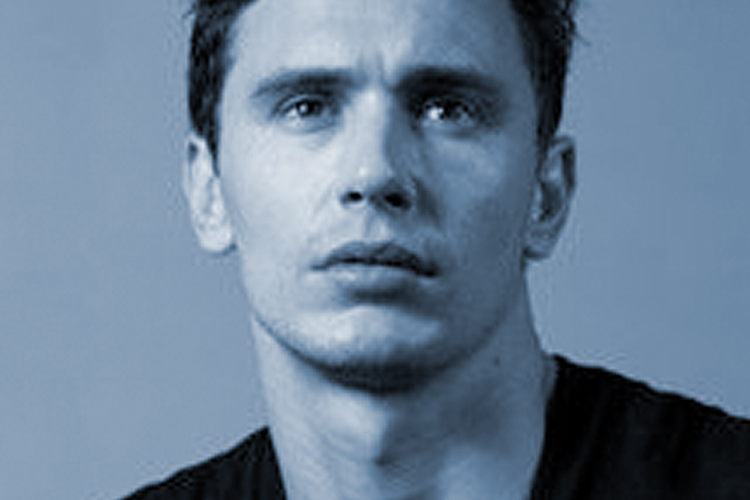
Now who should come along to screw it up but James Franco, whose short-story collection, “Palo Alto,” comes with an author pic so ridiculously dreamy, so full-lipped and chin-carved and chestnut-haired that I’m already wondering how I can scan it into my next book jacket. “Yes,” I imagine responding to e-mail queries. “That’s exactly what I look like. Which is why I don’t do public appearances anymore. The fans get so damn grabby.”

Envy, then, is a prime consideration in confronting Franco the Writer. It’s not enough that he should be Salon’s Sexiest Man Living of 2009. Or an artist with a solo exhibition in Tribeca. Or an extremely well-compensated and (when occasion demands) competent movie actor. Nooo, James Franco is now making a play for the New York Times Book Review and the monthly Book Sense list and the Barnes & Noble 100 and all those places where homely, unsocialized men and women once held sway.

Snark is the default response but not, I am sad to say, the honest one. Because to the question of “Can James Franco write?”, the short answer is yes. And so is the long answer, but with the qualification that a writer’s subject is as important as his method and that, having dwelt so lovingly and hatefully on his boyhood, James Franco may now be advised to leave it behind.

“Palo Alto” is a suite of interconnected stories built around the tumult of coming of age, as Franco did, in Palo Alto, Calif., in the early 1990s. (We know how far we’ve gone back because of the strategically inserted signifiers: Guns N’ Roses, “Schindler’s List,” Gulf War.) These aren’t the dead-end working-class kids of Springsteen’s discography but kids of privilege, living in the precincts of Stanford and Lockheed Martin, smart enough to drop literary allusions but shooting blanks when it comes to ambition. White or Hispanic or mixed-race, they shun black company but worship black music, and they smoke and get stoned and drink their parents’ whiskey and vodka, and the boys call each other “bitch” and “faggot” and compete to see who can have sex with the most girls.

They’re lonely kids, bored and angry — “I hate everything,” declares one — and their feelings get “computed in strange ways,” with the end product usually being cruelty. Is there any eye more merciless than a teenager’s? “She walked crookedly and had a funny-shaped ass, like a heptagon … His shorts hung to his fat knees and he had them in all ugly colors … Her face was like her ass, flat and wide. Her cheeks stuck out farther than her temples and they hung like the jowls of a St. Bernard.”

And when mere cruelty falls short, putting the hurt on someone is the next best bet. Violence is, in fact, the blood-seed from which each of Franco’s stories blossoms forth. One boy runs his grandfather’s car into a wall; another plots to assassinate the football player who assaulted him; another is savagely beaten over a Civil War assignment. A girl’s brief flirtation with a handsome teenager ends when he is drawn into a gang fight. Teddy defaces library books; Ryan runs over a librarian. Bone meets bone, ennui erupts into mayhem, and when you come to a story titled “Killing Animals,” you can be certain it’s not a metaphor.

In “Palo Alto,” destruction is the only way kids can make connections, their only chance to feel alive. Victim and victimizer find a bloody transcendence. “I kicked Sam in the shin and he fell to the ground holding his leg. I felt awesome … He roared like a boar, long and angry, and then he started stomping on my ribs. Quick, hard stomps. My ribs bent, and my lungs were jolted, and there was a sucking-in sound. I stayed rolled up and he stomped me.”

Read between the lines, and you’ll be able to pick out Franco’s influences: Raymond Carver’s tight-lipped stoicism; the sun-streaked disaffection of “Less than Zero”; a grueling gang-bang sequence that harkens straight back to Hubert Selby Jr.’s “Last Exit to Brooklyn.” It’s a heavy freight of angst, all told, so one is grateful for the periodic flashes of humor, which come usually at the expense of some adult. The high-school history teacher, for example, who recreates the Anne Frank story on top of the machine shop in the storage room. “At the end Mr. Tyson busted through the door dressed like an SS agent. He was pretty convincing.”

Franco can be a wag when he permits himself and, like many actors-who-write, he excels at dialogue. In one particularly lively sequence, a boy tries to persuade his friend that every children’s-book character is gay.

“Cat in the Hat?” I said. “Gay. The Grinch? Gay. Hungry Caterpillar? He turns into a butterfly, gay!” Now Fred was thinking about it. I continued, “The Runaway Bunny, the bunny in ‘Goodnight Moon,’ the Velveteen Rabbit, Peter Rabbit, all gay. All rabbits are gay.”

“No.”

“They’re sensitive, but different, but also like boys, but then also not.”

He thought, and then said, “Yeah, I guess they are.”

“The little boy who flies around naked in ‘Night Kitchen,’ and Max from ‘Where the Wild Things Are, gay!’”

“Bullshit, Max isn’t gay.”

“Bull true, he dresses up in his little white wolf suit, so gay. And then he tells his mom to fuck off …”

“That’s not gay …”

“… and then he goes to an island and hangs around with a bunch of monsters who party with him all night, dancing and parading him around on their backs.”

“That’s so weird, but I think it’s kind of true,” said Fred.

“All little-kids’ stories have to be like that. They have to be all soft and gay, so that the moms are okay with it.”

Fred sat there, and then he said, “I want a wolf suit.”

“Yeah, me, too,” I said.

Shorn of its profanity, the whole exchange might have nestled comfortably into Franco’s breakout show, “Freaks and Geeks.” But if Judd Apatow is Franco’s spiritual godfather, this book’s true habitat is the creative-writing seminar, where Franco has communed with the likes of Mona Simpson and Gary Shteyngart and where, through trial and error, he has learned how to make a work of fiction pass muster with the MFA gods. “Palo Alto” is, by direct consequence, sad, sensitive, concerned at all times with its authenticity and uncontaminated by plot (even, at times, incident). Above all, it forebears to judge its teenage protagonists, blaming their behavior instead on that venerable bete noire of literary intelligentsia: the burbs.

“Fuck into this,” one of Franco’s kids scrawls on a mailbox. “Born into this.” Born, yes, into these wide, tree-lined streets with their spotless mailboxes and Scotts Lawn Care yards. A plain of anomie. If these kids were growing up now, they’d all have My Chemical Romance ringtones and they’d be slamming each other on Facebook and uploading manifestos onto YouTube. But this is still the early ’90s, so all they can do is drink and smoke pot and argue and drive somewhere and drive somewhere else, and the effect finally isn’t cumulative but reductive.

That’s partly because Franco hasn’t developed the ventriloquial skills to differentiate his voices. Narrator after narrator speaks in the same clipped, bruised tone, and you don’t even notice when a girl takes up the story thread because her diction is no different from the boy who preceded her. The only thing that gathers, finally, is a pool of self-pity. “It can be so boring being you sometimes … We’re stopped for no reason except that the night is still going and we’re drunk, and who wants to go home, ever, and this spot is as good as any to just sit in the shadows and let life slow … This world sucks, and even if you are high it only lets you escape a little bit, it lets you escape enough that you know there could be something better, but it won’t let you into that place.”

As insights go, these don’t vault much higher than “The Breakfast Club,” but they do suggest that James Franco has enacted the teenage mind-set rather too well. The narcissism, the grandiosity, the contempt for maturity, these he has made his own, and for his epigraph, he has approvingly (and, OK, pretentiously) quoted Proust: “Adolescence is the only period in which we learn anything.” But the Proust who wrote that was a middle-aged man, capable of setting his youthful experiences in a wise and, at times, ironic perspective. That’s the artist’s task, and that’s the task that Franco, for all his ability, hasn’t risen to here. He’s a grown-up afraid of grown-up wisdom.

Having kids made me a movie wuss

I always thought I'd be a rational father. But seeing a child in danger drives me over the edge

  • more
    • All Share Services

Having kids made me a movie wuss

This Friday marked the premiere of a movie called “The Last Exorcism.” It is a faux cinéma-vérité documentary about a deeply troubled teenage girl racked by demons. It may be a piece of art or a hunk of trash. It may spin interesting new variations on the possessed-girl template, or it may be the holy water sprinkled on the genre’s corpse. None of this will matter because I won’t be watching.

Any more than I’ll be watching, in the weeks to come, “Let Me In” (severely bullied boy seeks help from a neighboring vampire girl) or “Case 39″ (12-year-old girl’s parents try repeatedly to murder her, to the point of stuffing her in an oven). Or putting “Kick-Ass” on my Netflix list or, except under great duress, escorting my kids to the latest Harry Potter movie. And my reasons have nothing to do with esthetic principles, of which I have few. It’s just that, after 10 years of parenthood, I have become ridiculously, intractably, humiliatingly averse to seeing children in peril.

It doesn’t matter if the children look like mine. It doesn’t matter what age they are, what gender, race, nationality. It doesn’t matter whether I’m watching it happen or reading about it or just thinking about it. In every instance, my critical carapace falls away, my scaffolding of reason collapses, and I’m defenseless in a way I haven’t been since … well, since I was a child.

And I don’t think it’s getting better.

I first became aware of the problem in 2001. My older son was then a little over a year old, and for a grown-up treat, my partner and I called in a babysitter and went to see “A Beautiful Mind,” thinking it would be the uplifting story of a genius mathematician who struggles with schizophrenia. Which it was. Until the moment when John Nash (Russell Crowe) leaves his baby in a bathtub and turns on the water and walks out of the room.

He’s convinced that his imaginary friend Charles is watching the baby when in fact no one is there. The water’s rising … the baby’s crying. An ancient suspense device, I told myself, traceable to the days of penny dreadfuls and serialized melodramas. And how little its provenance mattered in that moment! A cold ribbon of sweat welled up from my temples and dribbled down my face and gathered in my collar bones. My skin prickled. My heart beat like Judgment Day. Get … the baby … out of the bath.

The jitters of a new dad, you’ll say. I assumed the same thing, but no amount of parental experience would make it go away. Just a couple of years ago, I went to see “Slumdog Millionaire,” thinking it would be the uplifting story of a young man who finds salvation in a game show. Which it was. Until the moment when a boy (not our hero) is chloroformed into unconsciousness and then blinded with a scalding spoon. A few seconds of screen time, no more, but I watched in a vise of horror until I couldn’t watch anymore. And even when I closed my eyes, all I could see were my boys being overpowered, sedated, maimed in exactly the same way. All I could feel was how easy it would be to do this very thing to them.

Where are they now? I asked myself. (With their aunt.) Do I need to go there? (Of course not.) Will anything bad happen if I stay here? (Don’t be silly. It’s just a movie.)

It’s just a movie. But it doesn’t have to be a movie. And it doesn’t have to be a boy. A few years back, I was standing in a Barnes & Noble in Chelsea, reading the opening pages of “The Lovely Bones.” On one side stood my brain, sallying forth on a stream of prose, pausing to note the charm of the voice, marveling at how fleetly a young girl’s rape and murder could be narrated. On the other side was my body, absorbing each act of violence as if it were a toxin. Before I’d even finished the first chapter, my stomach had twisted itself into a knot so agonizing that I had to toss the book down and walk away.

But it’s all make-believe, you’ll argue. And I’ll answer: Of course it is. And I’ll answer: No, it’s not.

Because everything that happens to a child on the screen or on the page belongs, however remotely, to the realm of the possible. Which makes it, to a certain kind of parent, a physical insult: cell deep, impervious to logic. Indeed, of all the adjustments I anticipated in becoming a parent — less sleep, less sex, more alcohol — this is the one I never saw coming. That, in looking at other children, I would be forced to see my own. That every child’s death, imaginary or no, would diminish me.

It was particularly embarrassing for me because, from the start, I had refused to be one of those fear-shackled parents. I wasn’t going to give my kids ID bracelets. I wasn’t going to file their fingerprints with the local police station. I wasn’t going to fill their heads with pointless horror stories. When the time came, I would let them roam the block and walk to school by themselves, and to anyone who objected, I would point out how statistically rare stranger abductions are and how important it is to nurture our children’s independence. None of that nanny-state brooding for me. I was going to be Rational Dad.

And how swiftly that pose evaporated every time I entered the darkened room of a theater!

One could argue, I suppose, that art’s function is to break down our brain’s defenses, the better to usher us toward catharsis. But whenever I see a fictional child abused or stalked or wounded or murdered — or even just betrayed in some irretrievable way — it isn’t catharsis I experience but a chain of sawed-off nerve ends.

The only comfort I can derive, honestly, is knowing that, in my sheer wussiness, I have company. There’s a small chance I’m legion. To extrapolate at least from my friends and family members, there’s a long and winding trail of books and movies that parents dance around as if they were unexploded ordnance. “The Kite Runner”? Nope. “A Map of the World”? Sorry. “The Orphanage”? Pass. “Precious”? Uh uh. “Bastard Out of Carolina”? Try again.

But that policy of avoidance can take us only so far once we realize that terror and death are woven into the entertainment vehicles specifically targeted at our kids. I don’t know that I’ve seen a more dumbfoundingly sadistic movie than “Dumbo”; “Pinocchio” isn’t far behind; “Bambi” is a close third. A friend of mine stopped reading the last installment of “Harry Potter” because she had a sudden epiphany: “It’s all about grown-ups trying to kill kids.” Which is the subject nearest and dearest to the hearts of the brothers Grimm. Hansel and Gretel, we may recall, aren’t wandering through the woods because they got lost but because their parents left them to die.

In his famous book, “The Uses of Enchantment,” Bruno Bettelheim argues that the very darkness of these stories allows children to move past their own terrors, symbolically conquering them through the use of surrogates. I would argue that the fear of losing children is something that parents cannot move past — can scarcely even imagine — because nothing lies on the other side of it. No wisdom, no purpose, no progress. The end of children is the end of everything.

So I guess that’s why I hate seeing kids in peril. But when I speak of this squeamishness, I’m always at pains not to paint it as a higher arc of sensitivity or as an implicit rebuke to non-parents. (“You can’t know our pain!”) On the contrary, I consider it deeply regressive: an inability to distinguish truth from illusion that would qualify as childlike if it weren’t so lacking in a child’s wonder.

And the end product isn’t always recoil; sometimes it’s just a recasting of old artifacts in a strange new light. A friend of mine, rereading the “Little House” books with her daughter, was astonished to find that the treasured storyscapes of her childhood were now festering with dysfunction. How poor the Ingalls girls were! How hard and peripatetic their lives! Pa was no longer the beloved patriarch of memory but a shiftless ne’er-do-well, exhibiting all the signs of ADHD. Why couldn’t he just keep it together? Earn a decent living?

Something similar happened to another friend when she reread the Pippi Longstocking stories with her daughter. She couldn’t get past the fact that Pippi and her friends were wandering alone, unmonitored, undefended. Where were the parents? (Her daughter, by contrast, reveled in Pippi’s strength and resourcefulness.) Still another friend, watching a scene of mass carnage in “Jaws” more than 30 years after its original release, found her eyes snagging for the first time on … a baby. Abandoned on a dock. Barely visible at frame’s edge and seemingly unnoticed by anyone — except by my friend, who could see nothing else. Why was nobody moving the baby to safety? Where the hell were the parents?

The incompetence or, worse, the plain aching absence of mothers and fathers is a time-tested staple of storytelling. But for some parents, I think, it’s also a constant reminder that we will one day come up short. Seeing a movie like, say, “The Sixth Sense” — which, for me, is really about a mother trying valiantly but fruitlessly to shield her son — can be painful beyond endurance because it reaffirms that we will never be, in ourselves, sufficient. We won’t always, we can’t always, be there to save our kids when the ghosts come calling, when the sharks strike, when something hidden steps into the light.

Which raises the not-insignificant question of who really needs to be protected in those darkened movie theaters and living rooms and bedrooms. Who is at greatest risk? God knows we’ve seen — in newspapers, on TV, on the Internet — any number of field guides for shielding our kids from sexual content and violence. (The best, least excitable one I know is Jane Horwitz’s “The Family Filmgoer.”) If I had my way, there would be at least as many guides for shielding parents. “Thirteen”: You’ll want to kill yourself afterward. “The Pursuit of Happyness”: It’s a long, long road to the happyness. “To Kill a Mockingbird”: Who lets their kids walk alone in the woods at night? “The Cat in the Hat”: Where the hell are the parents?

In one regard, at least, I’m not a helicopter dad. Having sat with my sons through many a book and movie and TV show, I now believe they can safely accommodate much (though not all) of what Hollywood and the publishing industry can throw at them. It’s me I’m not so sure about. My kids, being kids, have an innate knack for finding tracks of light in the darkness. My gift is something opposite: to see where the tracks end.

Continue Reading Close

Miss Universe and the death of the beauty pageant

Even as a gay man, I couldn't find joy or fun in last night's monument to wax figurines and Donald Trump

  • more
    • All Share Services

Miss Universe and the death of the beauty pageantIn a photo provided by the Miss Universe OrganizationJimena Navarrete, Miss Mexico 2010, wears her national costume for a pre taped segment of the 2010 Miss Universe Competition at Mandalay Bay in Las Vegas, Wednesday, Aug. 18, 2010. (AP Photo/Patrick Prather/Miss Universe Organization LP, LLLP)(Credit: AP)

Last night, I watched a two-hour commercial, and a beauty pageant kept breaking out.

Which is to say that, somehow, amid the interstices of skin- and hair-care commercials and NBC fall-show previews (repeated as insistently as Buddhist chants) and distance-learning courses in hair styling (from chief sponsor Farouk Systems) and running spigots of advertorials for Las Vegas attractions (Sushisamba! Minus 5!), the high solemnities of the 2010 Miss Universe competition were prosecuted efficiently and relentlessly and, yes, joylessly.

Do you remember when beauty pageants were entertainment? A hoot and a holler and a half? Gay men crowded around the TV set with their boy and girl pals and laughed at all those fire jugglers and hula dancers and rhythmic gymnasts and all the glib horrors that came tumbling from their cherry-red mouths, and look, there WAS Bert Parks dragging his ponderous ass down the Atlantic City runway, and we could laugh because it was our game, too. We were in on it, living in the same gap between aspiration and reality.

And then something happened. Miss America became a serious thing and began to boast about the scholarships it funds and the lives it improves, and today, it’s rotting on unremunerative perches like TLC (though it will be broadcasting its 2011 edition on ABC). In marked contrast, the Miss USA-Miss Universe franchise has refused all along to fret about whether its contestants could carry a tune or spell their names or build latrines in Burkina Faso. It has remained a principality of the flesh, where the currency is two-piece bikinis.

And to judge from last night’s iteration, that carnal philosophy has reaped its reward. Miss Universe is in the pink: stinking with ad revenue, sprawling across a two-hour expanse of network television. The whole enterprise should be neon with triumph, and yet it’s every bit as gray as an annual report. For that’s exactly what it is. A celebration of a company and the man behind it. The man whose International Hotel is shown at regular intervals thrusting toward the Vegas sky. The man known simply to the outgoing Miss Universe as “Meester Trump.”

Oh, yes, the Donald is weighing in at every commercial break, reminding us that this is his franchise and promising new ministries of Eros. “The most incredible women in the world,” he announces, “will show off the sexiest swimsuits you can imagine…. These women would scorch the Sunset Strip.” And, just to make sure we’re awake: “This is live TV, and anything can happen.”

A lie almost touching in its transparency. Nothing very large can happen on that stage that hasn’t already been dreamed up behind Trump’s Morpheus mask. Oh, sure, a batch of Elvis impersonator/gymnasts can burst in on the swimsuit competition, and the somnolent piano man John Legend can find himself abruptly surrounded by women in evening gowns, but the evening’s only real wild card is co-host Bret Michaels, whose customary doo rag and earrings have been tastefully accessorized with a shiny-lapeled tux and open-collared shirt.

If, in your hunger for entertainment, you entertain fantasies of him being strangled by Miss Zambia’s coconut bra or, at the very least, dragging the contestants through a panty-twisting contest just to prove their love for him … alas, in these skank-free precincts, the wildest thing Michaels can do on this stage is leer at the cue cards and inform Miss Jamaica that “Ja makin’ me crazy.” (And yet … and YET … isn’t his horndoggery preferable to the preening ethnic pronunciations of co-host Natalie Morales, who, in a just world, would be scalded in habanero juice after saying “MEH-hee-ko” for the fifth time?)

Bret understands, and so do we. This is business. There’s no room on the balance sheet for lust. Or camp. Or grunge. Or even beauty. Miss Universe subsists on a steady diet of press releases, on promises of an “incredible journey” that will be undertaken by “molten hot” women.

In fact, these women do what beauty queens have always done: present themselves like waxed fruit. And indeed, if you spend enough time with them, you find yourself eyeing them for bruises and gray patches. The two young sex-starved heterosexual males who watch Miss Universe with me begin the night in a general mood of welcome and graduate steadily into Ruskinesque discrimination. Miss Ukraine is flagged for her protruding “babyback ribs.” Miss Australia, who looks as though she’s just been carried off in triumph from a field-hockey game, is dismissed as “a very poor version of Jennifer Aniston.” Miss Thailand has her gender questioned. Even I am forced to admit that the wildly sensual Miss Ireland has a disproportionately plump lower lip.

Oh, yes, we become jaded — all the sunless tans, all the lettuce-devouring teeth — but we beat on, don’t we? Waiting for those moments of bald fiction. (“I’m having so much fun that I keep forgetting this is actually a competition … I like trying different foods …”) Those slips of the mask. (The cold rage of Miss France, captured just moments after her elimination.) And, of course, those passing squiffs of unlicensed humor, which tend for some reason to cluster in the “demanding final question” segment.

“Many airports are using full-body scanners,” croons judge and retired medicine woman Jane Seymour. “How do you feel about going through a scanner that can actually see through your clothes?”

Miss Ukraine’s reply is obscured in translation, but no language barriers deter Miss Philippines, who, when asked to recall the biggest mistake of her life, declares that she has never made one. Even if this were true, it ceases to be, and she is left a waif-shouldered fifth.

The judges (who include Sheila E, looking worthy and philanthropic, and skater-android Evan Lysacek) are congratulated more than once for their hard work, as if they really were building latrines in Burkina Faso. They can at least be credited with anointing the evening’s most unqualified knockout: Jimena Navarrete, or, as she is known to Bret Michaels, “the hotness that is Mexico.”

And with the pinning of the tiara, the show comes in under two hours, and Trump Organization can close its books and pass out its bonuses and write off its after party. A job well done.

But what’s this? Natalie Morales, seeking to recover her journalistic bona fides, rushes toward the new Miss Universe, shouting: “What is going through your mind right now?”

Forgetting, in that moment of panic, that Miss Universe speaks no English, that what is going through her mind is of no concern either to her or to the corporate endeavor of which she is part, that the business of beauty is now the business of Trump, Miss Universe makes no reply, but her silence has a bottom-line urgency all its own: Faster, pussycats. Shill, shill.

Continue Reading Close

“Role Models”: Filth king John Waters dishes the dirt

The film legend and memoirist on his fight for a Manson family member and why reality TV is the worst kind of bad

  • more
    • All Share Services

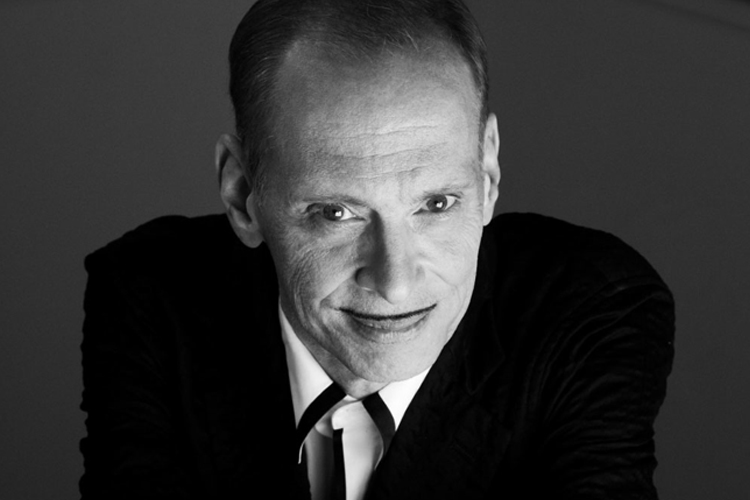
Maybe the most disorienting thing about meeting John Waters in person is realizing what an old-school gentleman he is. The kind who gives your hand a courtly shake, fetches tea for you, and never lets on that this is his gajillionth interview of the day. By now, the self-proclaimed king of puke has earned the right to be a book-tour paragon. Which makes it fitting that his new essay collection, “Role Models,” celebrates some of the paragons in his own life.

As you might expect from the director who brought us Odorama and Divine eating dog shit, these role models are a raffish lot: lesbian stripper moms, foul-mouthed barmaids, pornographers, perverts. Not to mention the occasional cult celebrity (including “Monster Mash” singer Bobby “Boris” Pickett and former child actress Patty McCormack, star of “The Bad Seed”). Loitering as always on the edges, Waters finds inspiration where others see squalor and makes provocative points about art and morality and the good life — without losing an ounce of his ironical cheer.

Salon spoke with Waters in Washington, D.C.

Here’s a problem I hope you’ll resolve. Your name does not lend itself to an adjective. With other directors, it’s Spielbergian, Wellesian, Hitchcockian … but the only thing I can come up with in your case is Watersesque. Which sounds like a perfume.

You’re right. That doesn’t work. Watersian? Watersish? Waters-like?

It must be a sign you’ve arrived, I guess, when you have your own adjective.

No, you know you’ve arrived when they name a sex act after you. Like the Marquis de Sade. That’s arriving. And that guy Sacher-Masoch, who gave us “masochist.” St. Catherine of Siena helped cause the Reformation — that’s famous.

“Role Models” introduces us to people who have been, for lack of a better word, your ethical compasses. I did a comparative analysis with William Bennett’s “Book of Virtues,” and I find no overlap between your books.

No, but I think my book is very moral in its way. I picked the people for moral reasons — the basic goodness of people, which I do believe in.

One of those people is former Manson family member Leslie Van Houten. What attracted you to her story?

I didn’t talk about Leslie for 25 years, and now I’m talking about her all day, every day. And I so much wish she could talk, because no one defends her better than she does. Not “defends” — that’s not the word — she takes responsibility for every single action that happened in the [LaBianca] house, even though she did not participate in all of it. She doesn’t blame it on drugs. She doesn’t even blame it on Manson. She says, “It’s my fault for being in a cult. He wouldn’t have been a leader if he didn’t have followers.” She hasn’t had any contact with Manson in 30-something years. She won’t give him the power even to hate him. I think the family members that have survived him, almost every one of them looks back on that time with great horror and shame.

I was really struck by the fact that the Manson killers have been in prison longer than Nazi war criminals.

They’ve been in prison longer than William Calley, longer than the Baader-Meinhof Gang. And the Baader-Meinhof Gang didn’t even say they were sorry! Leslie has been saying she’s sorry for decades — and eloquently and with great believability. No one thinks she’s a danger to any community. She’s a 60-year-old woman who has spent 40 years in therapy, N.A., A.A., every possible thing to better herself. You think she’s going to go out there and hook up with a cult? If anything, she could help people not be in cults. But she doesn’t even want to do that. She wants to have a quiet, humble life away from everything. Somebody once said to me, “Is she going to be in your movies?” And I said, “You really don’t understand the whole thing. That’s not even an issue that would ever come up.”

Maybe they were thinking of Patty Hearst, who’s appeared in five of your movies.

But Patty Hearst is a very different story. I mean, she was brainwashed, too, but she was kidnapped. There are some similarities, though. They both did what they did to stay alive. The people who join cults, they all think they’re doing something right, which is almost mind-boggling to imagine. The Manson family believed they were elves, the Beatles were talking to them, it was the end of the world. It was insanity: a hippie nightmare dreamt up by a madman.

Do you believe Leslie will ever be paroled?

I have to believe she will. Bruce Davis, another member of the Manson family who was just as involved as Leslie was, he just got a parole day. All I can do is try to write her out of prison. Every year I write a letter to the parole board. I don’t know if they read it. But I’ve told her, if she gets out, she doesn’t ever have to see me again. I think that’s the best gift I could give her.

You’ve said in the past that your movies have no redeeming social or moral value, but the Van Houten chapter is a really nuanced example of moral reasoning. You give all due honor to the feelings of the LaBianca family.

As much as I can. I don’t know that anyone can completely. And I understand why certain people think Leslie should never get out. If you don’t believe in rehabilitation, if it was your family … I can’t criticize that. Who am I to say what they should believe?

You’re a well-documented cultural figure, but your book still manages to spring some surprises. I wouldn’t have guessed you were a fan of Johnny Mathis.

I remember, when I was 11, I went to a party across the street, and they were playing Johnny Mathis music, and all the older kids were making out to it. He makes everybody in the world want to make out, even 80-year-olds, and that’s kind of hilarious to me. He doesn’t participate in the fame game, and he’s still incredibly famous. Do you ever see him at a premiere? Or on a talk show? I went to his Christmas show, and it was completely sold out. And there was no interview with Johnny Mathis in the local paper.

I asked him, “Don’t you get sick of singing the same songs?” He said, “No, you pretend you’re the audience every night, and you haven’t heard it.” So I respect him, and I still like to hear him sing.

What kinds of things do you read?

I used to get 150 magazines. I get everything from Death Penalty News to the New York Review of Books to Butt, which is actually a fairly intellectual gay magazine.

You’ve embraced honorifics like the Pope of Sleaze, you’ve declared “a war on taste,” you’ve instructed readers to have faith in their own bad taste. In “Role Models,” there’s a lot of good taste on display.

Oh, there’s no bad taste.

There’s some fairly graphic stuff…

But I write about it in a refined way. I’m trying to give it grace — a word I would never normally say. I also hate the word “journey.” And “craft” and “rigorous.” And “openly gay,” which always makes me laugh. Do they say, “Openly heterosexual So-and-So is appearing tonight”?

And that phrase “practicing homosexual.” Like, if he keeps practicing, he’ll get it right…

They used that with Little Richard. Also “flamboyant” and “outrageous.”

To judge from this book, your artistic role models are a sharply opposed group. You wax just as enthusiastic about Bobby Garcia, who filmed himself giving blow jobs to Marines, as you do about author Ivy Compton-Burnett and artist Cy Twombly. Clearly, you embrace both high and low.

Yeah, the middle is where I’ve always had trouble.

So it’s an aesthetic of extremes?

And a joy in that extreme. And a style that makes you think about the extreme in a new way. Bobby Garcia has no choice but to make his movies. If no one noticed them, he’d still be doing them.

If you had to define your sensibility as an artist, would it be queer or gay?

Neither. First of all, I never call myself an artist. History decides if you’re an artist. I certainly think I’m equally right for gay and straight people. I don’t have a gay agenda, although I vote gay. If someone said they were against gay marriage, I wouldn’t vote for them. But I have no desire to mimic something Larry King does eight times, and I like Larry King. Good for him! He’s helping us. I hope he gets married 10 more times. I think I should be allowed to marry your tape recorder right now. Just don’t make me do what you want to do.

Do you consider yourself a role model?

Yeah, a filth elder. It’s funny, I get older and my audience gets younger. I do these book signings, and there are kids there who weren’t born when I made my later films. And I like kids. I mean, who else is going to take care of me when I’m sick?

Speaking of kids and role models … you mention in your book that your film “Pecker” inspired a hazing incident where a 15-year-old boy was tea-bagged by some upperclassmen. How does that make you feel?

Well, it’s bullying, which I’m very against, but being tea-bagged is not the worst thing. I mean, he was trying out for a fraternity. What do you expect? Assholes are in fraternities!

What do you think of other shock artists? Sacha Baron Cohen? Sarah Silverman?

I’m a fan of both. I liked “Bruno” even better than “Borat.” I like Todd Solondz a lot. There’s a new movie coming out called “Dogtooth” that I loved. A Greek movie, really strange.

Have you seen “Glee“?

Yes. I’m happy for its success. “Glee” and “The Wire” and “Treme” are the only TV shows I’ve seen in the last 30 years, since “Pee-wee’s Playhouse.”

In the pantheon of bad taste, where does reality television fit?

I don’t like it, because it’s real bad taste. It makes the viewer feel superior to the people in it. It’s naked pathology, and it doesn’t work. And I think no matter how big the shows are, do people ask them for autographs? I’d like to see a show about the balloon boy. He puked on the “Today” show, and they just kept talking. I wish his family had gotten a reality show — I mean, that’s why they did it. I guess that means I like reality shows that are not picked up.

Living in Baltimore … every house is a reality show, and I don’t think I’m better than any of those people. Most reality shows on TV now, you’re laughing at them. Even those shows where people lose weight. Wouldn’t you be terrified if you were that fat and outside was Richard Simmons with a crane to get you out? Oh, my God, is there anything more frightening?

Your movie “Pink Flamingos” is about two families vying to be the filthiest people alive. If that competition were happening today…

I don’t know if it would work. I did a radio show in New York, one of these shock jocks, and they offered $500 to anybody would come down and eat a dog turd. And no one came. I said, “What’s the matter with junkies? One turd for $500?” When I made that movie, 30 people would have been lined up.

It’s just a higher class of junkie now.

They wouldn’t do it. And Johnny Knoxville has done it all. He’s doing “Jackass” in 3-D, and they’re going up Steve-O’s butt. And what’s great about it is, these are all straight boys who are the most gay-friendly people. They have things about their ass and nudity, and straight men and their fathers watch and laugh, and it works!

So they’re subverting from within?

And so beautifully because the people who would probably be the most uptight about this are cheering and laughing when they shove things up their ass. Or cook their puke and eat it. It’s amazing to me. I think it’s a great, great series. It’s the Three Stooges, and I love them.

You like the Stooges more than Chaplin.

They’re more fun, and they have a better fashion sense. I hate people who wear top hats, they look like assholes, but Moe with his bangs? He inspired the shoe-bomber fashion. The shoe bomber looked exactly like him. Imagine if you got on the plane, and he sat down next to you with Moe Howard’s haircut and shoes with big fuses sticking out of them and dynamite. Trying to light the match and it wouldn’t go off.

At the risk of using another hated word, is there a “message” you’d want people to take away from this book?

Be interested in other people’s behavior and try to figure out why they did it. That’s what’s so interesting to me, and it’s not quite so obvious, and everybody has horror stories, everybody has secrets, everybody has things they’ve done that they’re still trying to explain why they did. So if you can understand why other people did it, then maybe you’ll be better with yourself and you can be a happy neurotic, which is what I’m trying to be.

There’s one quote I particularly loved: “True success is figuring out your life and career so that you never have to be around jerks.” Does that include journalists?

I haven’t had jerk journalists for really a long time. I’ve had dumb ones, like the one who asked if I had hobbies. How dare you ask me that question? Do you think I’m sitting around collecting Pez machines? Stamps? I hate people with hobbies. You should have a passion for whatever interests you and try to make it your life’s work — not dabble!

Can you tell us what’s coming next?

I have one big project that’s in development. I guess it’s like straight people trying to get pregnant: You don’t tell people until you are. I’m still trying to make “Fruitcake: The Movie.” I have another one that’s called “Liar Mouth.” I don’t know if that one’s going to get made, either.

Is it easier or harder to get film projects off the ground now?

Much harder for me, but I think it’s much harder for everybody in independent film right now. I think it’s the worst it’s ever been since I started. It’s a great time if you’re a kid and making your first movie for $100,000, and it’s an amazing time for Hollywood movies. It’s like the ’30s: They’re all making billions of dollars and doing well. It’s medium-priced independent films that are very bad right now. But I’ve been doing this for a long time. Who knows? You throw enough shit on the walls, something sticks. A “no” is free, that’s what I tell kids. Keep asking.

Continue Reading Close

My antidepressant gets harder to swallow

As studies shed doubt on certain psychiatric drugs, I wonder: Do I really need my little white pill?

  • more
    • All Share Services

My antidepressant gets harder to swallow

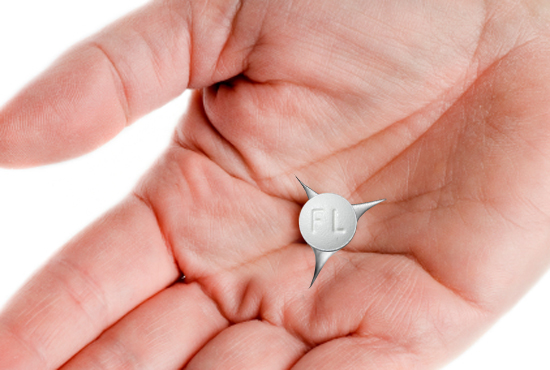
I take it every morning, right after I brush my teeth. A single white pill, with the letters F and L stamped on one side, the number 10 on the other. It’s so small it nearly disappears into the folds of my palm. You could drop it in my orange juice or my breakfast cereal, and I’d swallow it without a hitch.

And, for the last three years, I have been swallowing my Lexapro — and everything that comes along with it. And, apparently, I’m not alone.

Between 1996 and 2005, the number of Americans taking antidepressants doubled. According to the Centers for Disease Control, antidepressants are now the most commonly prescribed class of drugs in the U.S. — ahead of drugs for cholesterol, blood pressure and asthma. Of the 2.4 billion drugs prescribed in 2005, 118 million were for depression. Whether the pills go by the name of Lexapro or Effexor or Prozac or Wellbutrin, we’re downing them, to the tune of $9.6 billion a year, and we’re doing it for a very good and simple reason. They’re supposed to be making us better.

Which leaves a quite massive shoe waiting to drop. What if these costly, widely marketed, bewitchingly commonplace drugs really aren’t fixing our brains?

The implications are troubling, and not just for the pharmaceutical industry. In a study published last January by the Journal of the American Medical Association, scientists conducting a meta-analysis of existing research found that antidepressants were unquestionably “useful in cases of severe depression” but frankly not much help for the rest of us. “The magnitude of benefit of antidepressant medication compared with placebo,” the study’s authors concluded, “may be minimal or nonexistent, on average, in patients with mild or moderate symptoms.”

In other words, antidepressants work, but only because we believe they’re working. If we’re not seriously depressed and we’re taking a tricyclic or a serotonin reuptake inhibitor or a norepinephrine booster, we’d fare about as well with a sugar pill. Which means that antidepressants are, to borrow the phraseology of Newsweek writer Sharon Begley, “basically expensive Tic Tacs.”

And so, like millions of Americans, I’m left with the problem of it: that little white pill that travels down my gullet every morning. What is it really doing down there — up there? What if it’s not doing anything? Is there any good empirical unassailable reason that I should be swallowing it day after day after day? If I stop believing in it, will it stop working?

More than half a century has passed since the first antidepressants were prescribed, but it’s fair to say that the opposition to them coalesced in the 1990s, with the explosive sales growth of Prozac. As critics like David Healy and Ronald W. Dworkin warned that Big Pharma was medicalizing sadness for profit, the widespread usage of ironic terms like “happy pills” conjured up visions of smiling zombies wandering through sinister dreamscapes. Eric G. Wilson, in his overwrought “Against Happiness,” actually envisioned a day when antidepressants would “destroy dejection completely” and “eradicate depression forever.”

Looking back, we can see that both critics and advocates were working from the same premise: that these drugs change us in some fairly profound way. (Even pro-drug Peter Kramer, in his bestselling “Listening to Prozac,” worried about the cost of making people “better than well.”) But as researchers like Irving Kirsch and Guy Sapirstein are increasingly finding, the truth may shade more toward the comic end of the spectrum. Far from transforming us, antidepressants are leaving us pretty much as they found us. Emperors in gleaming new clothes.

The more I ponder my experience, the less surprised I am. I turned to medication because I couldn’t stop crying in public places — Starbucks was a popular spot — or imagining my death. (Crucially, I never got around to planning it.) And because I realized that although I was meeting life’s core requirements, I was not always exceeding them. And because, after a couple of years of sessions with an empathetic therapist, I came to believe that my wiring really had shorted out, that some form of grayer matter had fastened itself to my brain and was hard at work, siphoning away my joy.

I remember watching the camcorder footage of my son’s first birthday party and being shocked by the sight of myself, staring back at the camera with sad eyes. Depression had always been a sporadic companion, but in my 43rd year, it began to take up permanent residence. I felt like I was walking around on rotting floorboards. I cried. I lost my temper on the flimsiest of pretexts. I saw myself dead.

At which point medication seemed like a reasonable alternative. Before another week had passed, I had secured a low-dosage prescription for Lexapro, prescribed not by my therapist but by my primary-care physician. (Even that’s not quite true. It was the doctor who was taking my doctor’s patients while she was on vacation.)

“Who’s going to monitor this drug?” my partner asked.

“Um … you? Me?”

When it came to Lexapro, all my responses had the same interrogative lilt. If someone asked me how I was feeling, I’d say, “Better, I guess?” When asked if I would recommend Lexapro to others, I’d say: “Maybe kind of?”

This was the most surprising part of the whole experience: that the transformation or malformation I had expected to feel never quite arrived, that in the course of ramping up my serotonin levels, I should remain so freakishly myself.

It is, in fact, one of the amusing side effects of living in the age of pharmaceuticals that you can always compare your lack of progress with those nearest and dearest to you—in this case, my mother. Not a lunch goes by that one of us doesn’t say to the other:

“How’s the Lexapro working?”

“I don’t know.”

Agnosticism, I’ve found, is a common refrain among my medicated friends. We’re feeling OK, thanks. Is it the pill? Natural cycles? A good week at work? The fact that the sun is shining? Not always apparent. The only thing we’re really clear on, honestly, is our side effects. Nausea, nightmares, hypomania, agitation, headaches, decreased sex drive, decreased sex performance … the list is exquisite in its variation. My first two nights on Lexapro, I lay for hours on the precipice of unconsciousness, unable to take the last plunge. To fall asleep, I had to get a prescription for Ambien, which I then spent another week weaning myself off. To this day, the prospect of sleep holds a mild terror for me that it never did before.

Oddly enough, the side effects are often the pills’ best advocates. If we’re feeling that crappy, we figure something of great moment is happening inside us. What’s harder to accept is the alternative explanation — that, when it comes to depression, we’re still wandering in the dark. As Charles Barber, author of “Comfortably Numb,” argues, scientists don’t really know how antidepressants work. “They change the brain chemistry, but the infinite spiral of what they do from there is very unclear.”

So if you don’t know how something works, and you can no longer credibly claim it does work (even some industry spokesmen are beginning to qualify their claims), you’re not left with much of a fallback position. The placebo effect is real — the body actually does heal itself when it believes it is being healed — but it is founded on faith, and in the wake of the JAMA study, it’s becoming harder and harder to maintain that faith except through a rather larger act of denial.

Of course, even the most ardent critics of antidepressants caution strongly against sudden withdrawal. (Those side effects suck, too.) And few scientists will deny that drugs help people with severe unipolar depression. But what of the rest of us? Should we find some way to make ourselves believe in our little white pills again? Or should we find other things to believe in? Should we, in fact, begin to rethink our relationships with our brains?

I don’t bring much in the way of ideology to these questions. I’ve always felt that the rise of Prozac and its ilk at least had the salutary effect of removing the stigma attached to depression. Reconfigured as a chemical condition, it could now be owned and acknowledged and treated. But by translating it from the personal to the pharmacological, we may have left people even less empowered to combat it.

It’s bracing to see how depression is treated in other countries, where the relationship between drug manufacturers and physicians isn’t quite so hand-in-glove. Great Britain’s National Institute for Health and Clinical Excellence, for example, recommends that, before taking antidepressants, people with mild or moderate depression should undergo nine to 12 weeks of guided self-help, nine to 12 weeks of cognitive behavioral therapy, and 10 to 14 weeks of exercise classes. They should, in short, work on themselves before they can be worked upon.

Unfortunately, as Barber notes, that’s work, and not always pleasant. If we are to be honest with ourselves, we should admit that the drug companies aren’t the only ones who want that pill. We want it, too. If every last antidepressant were to vanish from the market today and a new one were to appear tomorrow, promising greater benefits than before, which of us would not line up? There is, after all, a strength in numbers, whereas grappling with yourself — your self — is a lonely business.

But it is, finally, a necessary one. The little white pill sits in my palm. In the glare of the bathroom light, I give it a good hard searching look. And then once more I clap it in my mouth and swallow it down.

Maybe, as one team of researchers has suggested, it’s the triumph of marketing over science. Maybe, as Samuel Johnson once said of second marriages, it’s the triumph of hope over experience. Maybe I’m just weak.

I will say only this: I no longer count on Lexapro to make me well. Which is to say I no longer fret if I miss a day or two, I no longer rush to the drug store to get my refills, and I place far more importance on getting my life in order: regulating my alcohol consumption, getting a decent night’s sleep, exercising (I’m not the only depressive who’s become an amateur triathlete) and, corny as it sounds, pausing at intervals to ponder my blessings. And also appreciating the ways in which my brain and body regulate their own climate through such time-honored techniques as the crying jag. Which is no less effective for happening in the middle of a busy Starbucks.

Three years and however many dollars later, can I honestly say Lexapro has made me a happier person? No. Has it usefully complicated my thinking? Maybe. In my pre-pill days, I regarded happiness as a form of grace, descending upon me whether or not I was worthy of it. Now I think of it as something that, however elusive, is there to be sought. Swallowing a pill every morning is not, in my mind, an act of obedience but a tiny spark of volition, a sign that I’m willing to find the light wherever it’s hiding. My Lexapro may be no better than a Tic Tac, but it’s a daily reminder that I won’t take depression’s shit lying down. 

Continue Reading Close

John Edwards’ scorned confidant spills

"20/20" turns ex-aide Andrew Young's confessional into a hoary Victorian melodrama with a sex-tape finale

  • more
    • All Share Services

John Edwards' scorned confidant spills

Speaker 1: “I love you. I really love you … I will never abandon you.”

Speaker 2: “I fell in love with him … I truly believed that we were going to do great things, and he was my ticket to the top … I became his sole confidant.”

Given the crush of recent news coverage, you won’t have any problem believing the first speaker is John Edwards. Your task now is to figure out the second speaker, who is also the person to whom he directed the aforementioned remarks. Is it:

A) Soon-to-be-ex-wife Elizabeth?

B) Mother of most recent child Rielle?

C) Disgraced ex-aide Andrew?

As anyone who sat through last night’s “20/20″ soft-pornathon can attest, the answer could very well have been A or B, but it is in fact C.

And maybe that’s everything that need be said about the quasi-erotic and not-so-quasi-erotic ties that bind political leaders to the young men who champion them and sacrifice their egos for them and work 16 hours a day for them, and even their example pales alongside that of Andrew Young, who pretended to be the father of his boss’s mistress’s child despite already being the married dad of three kids. And who, to keep that deceit alive, actually dragged his family across the country with the mistress in tow and paparazzi snapping at their asses the whole way.

War-scarred Bob Woodruff was the correspondent assigned to this tale of staffer gone mad, but wouldn’t the job have been better handled by George Stephanopoulos? Who, like Young, knew a thing or two about mopping up the sex spoor of charismatic bosses? How easily they would have bonded over man-tinis at the Matchbox, comparing their respective exit strategies. Unkind memoir? Check. Moral rearmament? Check.

But with Woodruff in the interviewer’s seat, the whole thing played out like the hoariest Victorian melodrama. Meet John Edwards, millworker’s son, champion of “One America.” Meet ailing wife Elizabeth, rising from her deathbed to put her husband in the White House. (Anyone who still believes “20/20″ is capable of journalism had only to look at the computer-induced tears welling up from Elizabeth’s still photos.) Meet evil temptress Rielle Hunter — not her original name! — using New Age wiles and Internet familiarity to seduce Edwards under the guise of being his “videographer.”

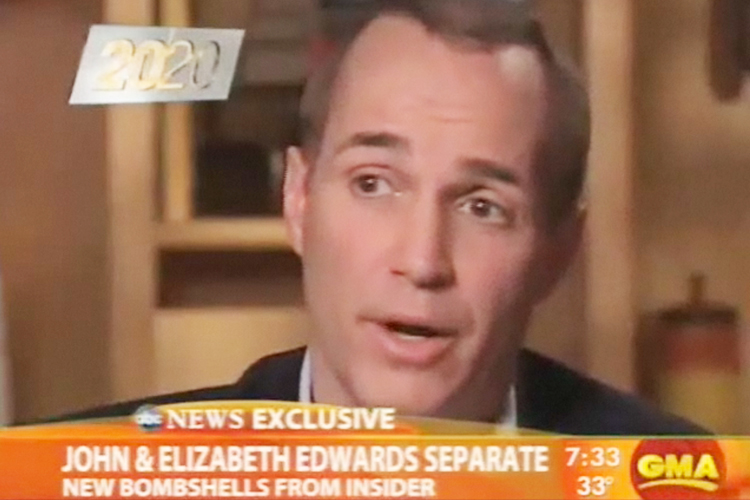
And now meet Andrew Young, the “little known but loyal aide” aspiring now to disloyalty and great renown through the publication of his tell-all book, “The Politician.” Not to begrudge Young his royalties, but you’ll save yourself a few bucks and a few hours by committing the following allegations to memory.

• Edwards and Hunter’s favorite song was “Steady As We Go” by the Dave Matthews Band, and they made love in Elizabeth’s bed while she was gone.

• Edwards tried to arrange a fake paternity test that would absolve him of being the father of Hunter’s child.

• To help Edwards cover up said child, nonagenarian heiress Bunny Mellon sent checks totaling hundreds of thousands of dollars inside boxes of chocolate.

• Hunter, heavily pregnant and on the lam with Young and his family, rejected room after room at a Hollywood, Florida, hotel because each one lacked “the right energy.” She settled finally on the penthouse suite.

• Elizabeth, still under the impression that Young was the father of Hunter’s baby, left him the following phone message: “You and your concubine and your entire family can stay out of our lives.”

• Modern people still use the word “concubine.”

• Politicians and their spouses still leave messages and record acts that can be played back later.

Which brings us to, oh yeah, the sex tape, ticking like a dirty bomb beneath the whole “20/20″ episode. According to Young, the tape was made just a couple of months before the 2008 Iowa Democratic caucus, and it shows a “visibly pregnant” woman wearing Hunter’s jewelry and having intercourse with a man — well, here it’s worth quoting Young’s revealingly prim description: “I can’t speak for the other body parts, but it’s definitely [Edwards'] face.”

Could the North Carolina senator have been so stupid as to record his own extramarital sex? (Not even Bubba went that far. That we know of.) Would his lover have been so scatterbrained as to leave it in a house she shared with Young and his wife?

Barring any viral outbreaks, we have only the word of the chastened Youngs, whose remorse came chiming out like church bells at the end of their “20/20″ pilgrimage.

“Are you sorry?” nudged Woodruff.

Mrs. Young: “I’m sorry that we lied to ourselves, to the people of America. And I’m sorry that we helped a person that we found out was not the person that we devoted ourselves to.”

Mr. Young: “I am so sorry for my part in this.”

I was a bit sorry, too, to have lost an hour of my life to them. And I was left to ponder why we still care so much about the sexual misconduct of a politician who was not even a heartbeat away from the presidency. Or the vice-presidency. Or the ambassadorship to Burkina Faso. Why does this story have such hellacious legs?

Is it because no one has been willing to stay in character? Edwards began as a rather asexual, grinning millionaire populist; he’s now an oversexed hick, searching for grace in the wilderness of Haiti. The saintly Elizabeth, bearing her cross through 14 stations of Oprah, is now, thanks to the deconstruction of Mark Halperin and John Heilemann, a staff-terrorizing harpy flashing her mastectomy scars. Rielle Hunter, emblem of a love so lowly that Elizabeth dared not speak her name, has subsided into a silence that, in the context, looks suspiciously like dignity. (Except that she’s now obtained a court order requiring Young to turn over all photos and videos belonging to her.)

Then there’s the child. A very young girl named Quinn, who deserves a much better welcome into the world than she’s received.

And I can’t help but feel that this whole fetid business deserves better. The ideal interpreter, in my mind, is not “20/20″ or the National Enquirer (which first broke the story) or the New York Times editorial page but a sensitive novelist on the order of Curtis Sittenfeld, who can roam through the hidden psychic corridors and explore scenarios that our current journalistic and political discourse can’t accommodate.

The possibility, for instance, that John Edwards never believed he could be president and never particularly wanted to be. That he genuinely loved his wife — even as he was sleeping with another woman, even as he was imagining a life after his wife’s death. That he may one day cherish his youngest daughter more than anything else in his shrinking world.

In the absence of direct testimony, none of this can be posed as anything but questions. But it’s safe to say a sex tape is the last place to look for answers. 

Continue Reading Close

Page 1 of 10 in Louis Bayard