Patrick Smith
patricksmith@askthepilot.comAsk the pilot
Can it really get too hot to fly? And what was it like to be in the air on Sept. 11?
“Please don’t disrespect the cabin crew?” mocked a reader in response to my earlier explanation about safety briefings. “Do you realize how much disrespect is dished out to passengers every day by the cabin crew? When was the last time you flew coach? ”
Um. I was merely addressing an issue, as I tend to do, with a habit of wry undertone that apparently is not picked up on by everybody. What can I say except I feel your pain, and those of you who’ve read my earlier columns and articles will recall me lamenting the insults and affronts of flying as much as I’ve begged people to glean some wonder from it. I recommend, as a kind of therapeutic remedy to whatever nastiness was thrown your way by a flight attendant, a round trip journey on Singapore Airlines, or Thai Airways, where the cabin crew hands you a flower and bows a respectful wai to each passenger.
And I travel in coach, just so you know, most of the time.
What is the largest airline in the world?
It depends on the criteria. In terms of passengers carried, the three biggest airlines in the world last year were, in order, Delta, American, and United. Delta carried 105 million passengers. American carried 78 million (prior to the TWA acquisition), and United ranked third with 75. However, both United and American have more airplanes than Delta, and thus the rankings change if you gauge via fleet size. American had the largest fleet in 2001, with 712 aircraft (again, prior to TWA). Going down the passengers-carried list, the first non-U.S. airline to appear is Japan’s All Nippon Airways, or, measuring by airplanes, British Airways.
Before the breakup of the Soviet Union, Aeroflot was the perennial size champ, and at its height was roughly the size of all the major American carriers combined. It has since split into dozens of smaller independent airlines.
Flying from Mexico City, several passengers were bumped from our flight. We were told it was too hot for the plane to depart fully loaded. Can this “it’s too hot to fly” explanation possibly be true? Is an airplane so delicate that a few degrees change in temperature renders it unable to fly?
The author once got stranded at the airport in Cuzco, Peru, in a similar situation. Increasing temperature and altitude negatively affect an airplane’s performance by decreasing the density of air, though this does not actually mean anything so over-the-top as a plane being unable to fly. Rather, a plane may no longer meet the very strict performance requirements for a runway. These include the distance needed to stop following the rejection of a takeoff at high speed, and required clearances over obstacles in the departure path, which would be important in the event of engine failure. All of this is figured out beforehand by the flight planners and dispatchers, and a maximum takeoff weight is determined. Mexico City sits at about 7,400 feet, and is a great candidate for a performance hit.
This is one of those areas where airlines really could do themselves a favor by offering more coherent, technically explicit explanations to passengers rather than churlish announcements like, “it’s too hot to fly.”
And to continue this point …
Recently while high over the Atlantic in a 747 we heard a very loud bang, followed by a palpable vibration through the cabin. The captain informed us we’d suffered an “engine pop.” A what?
Engine pop. Ugh. Pilots, in their attempts to put people at ease, can often oversimplify things to the point where people giggle at them. What he was talking about was a “compressor stall,” a phenomenon where the airflow through a turbine (jet) engine is temporarily disrupted for one of a few possible reasons. It’s not a big deal. It can damage an engine, but usually it doesn’t.
As a nervous traveler I am constantly trying to read the facial expressions of the cabin crew. If there were a true emergency on board, is it general policy to not inform passengers in order to avoid panic?
Many people expect nothing less than compulsive deception at the hands of the airlines, but no, there is no official concealment policy. The carriers themselves have bred much of this culture (see above), but while they could do better in the articulation department, they do not, as a rule, intentionally mislead passengers or withhold information during in-flight emergencies.
That said, a crew will not, generally, inform passengers of more commonplace problems or malfunctions with no real bearing on safety: “Ladies and gentlemen this is the captain speaking … Just to let you know, we’ve received a failure indication for the backup loop of the secondary smoke detection system in the aft cargo compartment.” Being blunt about every little problem invites trouble. In the above example, passengers arrive home with stories like, “Oh my god, the plane was on fire.” Which isn’t to say people aren’t bright enough to figure out what is or isn’t a dangerous situation, but often you’re dealing with jargon and terminology that lends itself to exaggeration and misunderstanding.
Could you clear up my lingering doubts and suspicion concerning TWA Flight 800. I watched a newscaster express his intense skepticism that a 747 would blow up in mid-flight due to a mechanical problem. What do you think happened to Flight 800?
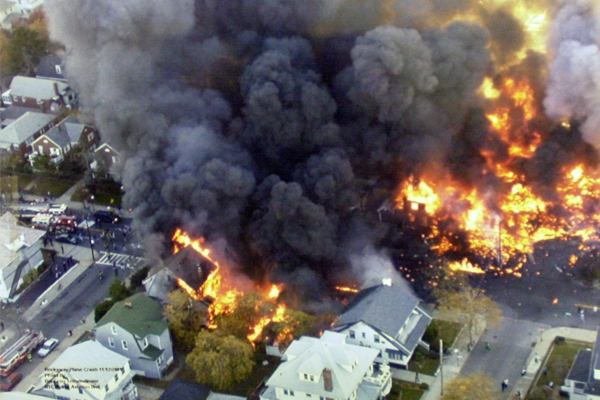
There has been an almost pathological refusal by many people to believe mechanical failure caused the explosion of the Boeing 747, which blew up near Long Island in the summer of 1996 on its way to Paris. But in my opinion that’s probably what happened. The airplane, an old 747-100, had been baking on a hot JFK tarmac up until departure, superheating the vapors in its empty center fuel cell (a 747 does not need a full complement of fuel to cross the Atlantic). There have been at least two other cases of exploding fuel tanks on planes that languished in the heat. One of these was a Thai Airways 737 that exploded at the gate in Bangkok, killing a flight attendant.
” … intense skepticism that a 747 would blow up in mid-flight due to a mechanical problem.” Indeed, it’s not very likely. But neither is it impossible, and catastrophic mid-flight failures have occurred several times in the annals of commercial aviation.
What was it like, from a pilot’s point of view, on the morning of Sept. 11? What were your thoughts and impressions?
Portions of this answer were originally published in “Back in the Saddle.”
I watched the events unfold with a kind of horror and morbid fascination. And after my immediate, reflexive shock, I started to sink into despair over how, I suspected, those of us in the airline business were going to suffer.
I was flying from Boston that morning — deadheading to work as a passenger — as were both of the World Trade Center aircraft. I watched American Flight 11 take off. Our plane departed just after it, on Runway 9, and I passed directly over Manhattan just a few minutes before the attacks. Because of a “security issue,” our captain told us about halfway through the flight, we would be diverting. Pilots love to dish out semi-comforting euphemisms, and this little gem would, in time, be one of the more laughable understatements I shall ever hear a comrade utter. It wasn’t until I joined a large crowd of passengers in a concourse restaurant that I learned what was going on.
The most vivid impression was the video of the second 767 hitting the building — the one shot from the ground in a kind of 21st century Zapruder film. The picture swings left, picks up the United jet, its gray-painted fuselage and tail logo clearly visible, moving swiftly. Very swiftly, in fact. My trained eye notices the plane is traveling at a much higher velocity than it would be normally at such a low altitude. The plane rocks slightly, picks up its nose, and like a charging, pissed-off bull making a run for an unfortunate matador, it drives itself, accurately, into the very center of that building. The airplane simply vanishes. For a fraction of a second there is no falling debris, no smoke, no fire, no movement. It’s as though the plane has been swallowed by a skyscraper of liquid. Then, from within, you see the white-hot explosion and violent, spewing expulsion of fire and matter.
To me, had the airplanes crashed, blown up, and reduced the upper floors of those buildings to burned-out hulks, the whole event would nonetheless have clung to the realm of believability. But it was the groaning implosion, the buildings dropping and the white clouds of wreckage funneling like a pyroclastic tornado through the streets of lower Manhattan, that catapulted the event to one of pure, historical infamy. They fell down. The sight of those ugly towers collapsing onto themselves is the most sublimely terrifying thing I have ever seen in my life.
Do you have questions for Salon’s aviation expert? Send them to AskThePilot and look for answers in a future column.
Ask the pilot
Do seat cushions actually save lives? And why don't U.S. airlines fly to Africa?
OK, I admit to a certain cantankerous frustration in last week’s column, but I was intentionally being ornery and had to laugh when somebody finally called me on it. The intention wasn’t to mock anybody’s phobias, as I was only lamenting my lack of qualifications to deal effectively with what I (callously?) called “irrational worries.”
And for those of you who thought I was exercising hyperbole in my whine about pilots not making much money: Believe me, there is no shortage of pilots out there ready to offer up handfuls of humiliating W-2 forms proving the absurd wages at many airlines. In 1990, when at age 24 I was hired to fly a $3 million turboprop for the commuter affiliate of a major airline, this pilot’s starting salary was $800 a month.
Continue Reading CloseAsk the pilot
Do airlines cut down the flow of oxygen in the cabin to save fuel? Can wind shear rip off a plane's wing?
OK, readers will have to take my word that I do indeed feel sympathy toward those of you with white knuckles. The ill-at-ease flier in 34B does nothing to enhance the merriment or livelihood of the crew, and in many ways it injures our pride to know we can usually do little to ameliorate your irrational fears of crashing. After evaluating dozens of e-mails in which readers worry over bizarre calamities the likes of randomly snapping wings and spontaneous plunges to watery doom, the best I can do is throw out the usual flying-vs.-driving comparisons and other statistical encouragement: At major airports alone, across America and around the world, airplanes come and go at a rate approaching 100 per hour. This happens every day, every week, every month, every year. Of these, the number of flights that fail in their attempt to successfully defy gravity can be totaled in very short shrift.
Continue Reading CloseUp, locked, and loaded
Should guns be allowed in the cockpit? Possibly, says Salon's aviation expert, but not at the expense of other solutions to air terror.
Are you for or against the plan to allow guns in the cockpit?
The seminal question is: Would an armed flight crew have thwarted last fall’s skyjackers? Many pilots, including the world’s largest pilot union, the Air Line Pilots Association, believe it would have.
“Unable to defend our cockpits, thousands of Americans died on 9/11 in spite of our warnings,” reads an ALPA statement. “The terrorists took control of our aircraft because they knew American pilots were unarmed and helpless in their own cockpits.” In the words of Rep. Don Young, R-Alaska, “9/11 would not have happened if that pilot had had a gun.”
Continue Reading CloseAsk the pilot
Do pilots sweat bullets during wind-whipped landings? And why are those darn windows so small?
Sifting through the responses to last week’s “Ask the Pilot” feature, I noticed an occasional tone of resentment and suspicion. One reader, a bit more openly annoyed than most, asked of the author, “Is he a shill for the corporate bullshit airlines?” But pointing out the selfish antics of the airlines and lamenting the general indignities of flying brings us back to the purpose of the article in the first place.
I get the feeling that if I had written a piece about the play of light in the 17th century paintings of Vermeer, or the architectural work of Sinan in the mosques of Istanbul, nobody would have gotten so hot and bothered. But the idea was to show some beauty where you don’t expect it. Indignities aside, there are, at least for now, still many jewels, both aesthetic and existential, to be found in the world of flying. To counter them with yet more horror stories from Row 45 proves what I was saying in the first place — that many people are too distracted and spoiled to get it. Sure, flying sucks, but if you can’t value the idea of zipping to Hong Kong in 12 hours in a million-pound machine, then there’s a problem. The article was not extolling the virtues of 18-inch seats or the culinary subtlety of half-ounce bags of snack mix. It was a cautionary for the passengers who snap their shades closed over the Grand Canyon and read the paper during the takeoff roll.
Continue Reading CloseAirplanes don’t get no respect
The glamour of the jet age is gone, and that's a shame. It's time to bring back the wonder.
I remember, as a kid and an airplane buff in the mid-1970s, when passengers still broke out in applause at every smooth landing. Sure, by this point the era of white-clad stewards and flying boats was a relic of decades past, while the glitz and excitement of the jet age had long disappeared, but travel by plane still clung to a sort of delusional esteem. Nowadays, rarely do you come across an American who has never flown in an airplane, and we’ve come to treat flying with ho-hum embrace as yet another impressive but ultimately uninspiring technological realm.
Continue Reading ClosePage 89 of 90 in Patrick Smith