Rebecca Traister
True, new female friendship
"Girls" breaks new TV ground in creating an identifiable portrayal of women's relationships
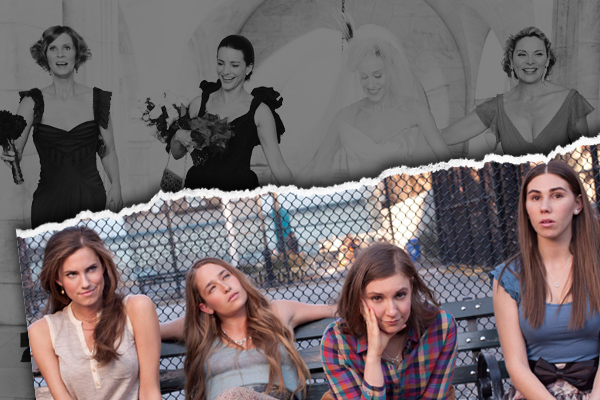
The casts of "Sex and the City" (top) and "Girls" A young woman sleeps in her bed, in the embrace of someone who has a leg draped over her thigh and an arm comfortingly around her middle. When the alarm clock buzzes, jolting this spooning pair to consciousness, we realize that they’re not a romantic couple; they are best friends and roommates, Hannah and Marnie.
It’s an early, lovely moment in “Girls,” the new HBO series created, directed, written, produced and, really, detonated onto the pop landscape by 25-year-old Lena Dunham. Dunham stars as Hannah, who is joined in bed by Marnie because Marnie is avoiding having to be touched by her over-kind swain, and because both girls like to stay up late watching reruns of “The Mary Tyler Moore Show.”
These details, along with the image of two friends snoozing happily entwined, make the moment emblematic of a dynamic central to “Girls’” appeal and its importance. Despite Dunham’s protestations about not wanting to be some symbolic emissary from the land of young ladies (Sorry, kid, you’re it!), this is what she’s telling us about Women Right Now: that the lives of contemporary Mary Richardses and Rhoda Morgensterns are not based on pursuit or enjoyment of hetero congress; rather, they are often most firmly and warmly wrapped around each other.
You have likely already read something about the sex on “Girls,” which in early episodes, at least, all takes place between straight, sort-of-realistically-bodied young people. What you’ve read is true: the show’s abundant sex – as experienced by its four female leads – is either boring and unsatisfying, porn-fantasy-driven and unsatisfying, nonexistent and unsatisfying, or performed as conquest (Jessa says after bagging an ex, “That was me showing that I cannot be smoted. I am unsmoteable”) and yet … unsatisfying. Sex for these young women is an awkward element in their lives, and whether you think that this characterization is hilariously awful, worryingly awful, or whether it prompts you to reflect, once again, on how everyone else but you is a prude, there is no question that “Girls” features some awful, awful sex.
But part of the point of “Girls” is that the sex, and the guys with whom the sex happens, are not the point. Instead, as titularly advertised, “Girls” is about girls, and the fact that they do make connections – emotional, intimate, irritating, satisfying, pleasurable, lasting. Just not, so far anyway, with men. The show, among many other things, is crucial and corrective testament to the ways in which women’s friendships with each other have flourished and changed during the same period in which their liberties and status have increased.
Minutes into the first episode, Hannah sits naked in a bathtub eating a cupcake, laughing pityingly with a betoweled Marnie about Marnie’s emasculated boyfriend. When the boyfriend accidentally comes into the room, it’s clear he has no place in this room of unclothed communion. A similarly awkward entrance occurs later, during one of several scenes in which one of the four lead characters sits on the toilet, making serious confessions (of pregnancy, for instance) to a girlfriend while peeing. The bodily closeness depicted on “Girls” makes flesh the role these women play in each other’s lives: They are the non-sexual lovers of each other.
It’s the girlfriends who provide the physical affirmations usually associated with boyfriends. “You are beautiful, shut up,” Marnie tells self-deprecating Hannah. “Your skin is, like, hauntingly beautiful,” Long Island girl Shoshanna says to her worldly cousin Jessa. “When I look at both of you, a Coldplay song plays in my heart,” Hannah tells Marnie and Jessa, kidding but serious. In one scene, having been meanly rejected by a boy because of her virginity, Shoshanna desperately asks her friends if they would have sex with a virgin, meaning her. “Oh Shosh,” Jessa says kindly, “if I had a cock, it’s all I’d do.” You get the feeling that she means it; if they could provide that kind of fulfillment for each other, they would.
This same-sex affinity feels extremely contemporary, part of what has prompted critics to write about the show as revolutionary. But noting female friendship as a (or the) primary source of emotional sustenance only feels strange in the context of relatively recent history; in fact it’s a dynamic that is very old.
For the many centuries during which marriage was regarded as an economic and a socially ratifying necessity, rather than as an institution from which women could reasonably hope to derive emotional or sexual pleasure, intense social and physical bonds between women were an accepted part of life. From Celia and Rosalind in “As You Like It” to Hermia and Helena in “A Midsummer Night’s Dream,” whom we’re told were as close as “two lovely berries, moulded on one stem,” Shakespeare regularly used the assumed closeness (and sometimes the bed-fellowship) of women as a plot device. Much of what we learn of the fate of Samuel Richardson’s Clarissa Harlowe is from letters to her best friend, Anna Howe. Then there’s Lucy Montgomery’s Anne Shirley, who meets her “bosom friend” and “kindred spirit” in Diana Barry.
The term “Boston marriage” was used during the late 19thcentury to describe unmarried women who lived together in long-term partnerships. In “Bachelor Girl,” a history of single female life in the United States, Betsy Israel writes that around the same period, near-romantic female bonds were encouraged by parents. Two girls, meeting perhaps in school, would be “‘smashed’ – think of best friends going steady – and once smashed, they’d learn trust, loyalty, tolerance, patience.” Of course, all that social growth was supposed to be in service of marriage. “Once they’d mastered these skills,” Israel writes, “they would be able … to transfer them onto a marital relationship. Even if those who wed never felt quite the same about their husbands.” For a long time, there was no questioning the sexuality of women who held hands, slept side-by-side, confided in each other or wrote long love letters to one another.
It wasn’t until the early 20th century, as marriage came to be treated as a union based on love and sex, that same-sex friendships began to be seen as competitive to the closeness a woman was supposed to feel to her husband, and thus as sexually suspect. Marriage historian Stephanie Coontz has described how, by the end of the 1920s, American psychoanalyists “were warning that one of the most common ‘perversions of the libido’ was the tendency of teenage girls to fix their ‘affections on members of the same sex.’ Such perversions, they claimed, were a serious threat to normal development and to marriage.” The fix, Coontz writes, was to discourage social unions between women and encourage more early sexual experimentation between the sexes. Networks based on female camaraderie, trust and dependence began to break down.
These mid-20th-century decades are the ones on which most of us have drawn, until recently, our understanding of how a woman’s life is supposed to proceed. They were years in which women made stupendous social, economic and professional strides, yet during which they were still told to pursue, and mark their graduation to adulthood with a “traditional” marriage, in which a man is lover, confidant, provider, partner and companion. These were also years in which messages about women’s behavior toward women were nasty; girls were hair-pullers, back-stabbers and bitches, always after each other’s jobs, wardrobes and men.
Now, it seems, we are coming out on the other side of the looking glass. The median age of first marriage for women has been rising steadily since the late 1980s. Marriage – while still widely fetishized as some kind of goal – is no longer the only acceptable marker of maturity. The idea of young adult women living, working, earning, spending and having sex on their own, outside of marriage, is, in many parts of this nation, not aberrant, but an expected phase of life, a norm.
These are Dunham’s “Girls,” and while the privileged Oberlin grads depicted on the show are members of the demographic statistically most likely to eventually marry – and to enjoy successful companionate marriages – their walks down aisles might well not take place for a decade or more. During that period, the people with whom they are likely to form their most intense emotional partnerships are, like the smashes of old, other young women. Except now, the smashes are happening not in anticipation of unfulfilling marital futures, but in advance of potentially happy marriages; they’re not a reflection of the powerless quandary of women compelled to marry practical strangers for money and social acceptance, but rather of a generation of women who, even if they don’t yet have real power, experience historically unprecedented autonomy and freedom.
Yes, we’ve seen friends on television before. From Mary and Rhoda to Laverne and Shirley to, yes, the show that must not be named but to which “Girls” is always compared. But Carrie and her brightly colored cadre made history in almost cartoonish fashion, in which material consumption was supposed to be symbolic of social liberty (until it just became material consumption), in which friendship was a public performance enacted in expansive shiny clubs over jewel-colored cocktails. Those flamboyantly drawn expressions have given way to Hannah and Marnie, who breakfast in their grim apartment kitchen, Marnie listening with irritation as Hannah slurps her cereal milk and talks with her mouth full, like regular best friends, not fabulously implausible best friends.
Their life is not one of aspirational adornment, but of the quotidian realities of (even privileged) young adult life, in which the people you trust and argue with and talk to at the end of the day about your job, whom you share beers and breakfasts with, are your girlfriends.
It’s hard to talk about the role of female friendships without making them sound like placeholders for marriage. But it sells female friendship very short to regard it as some kind of training ground for later, committed heterosexual (or homosexual) partnership. These relationships take place not in some liminal state, as women are waiting for “real” life to begin; marital partnership no longer defines “real” life. Young women, older women, unmarried women – they are simply living their actual lives, not dress rehearsals for them, and the bonds they form with each other are as real, as varied, as complex and often as long-lasting as the ones they may or may not form with romantic and sexual partners, and as fraught and as true as the love they may or may not feel for their kids.
These women are, make no mistake, partners, spouses, family to each other. They get mad at each other for being late for dinner, for sleeping with the wrong people. They are jealous, possessive, dismissive of and bored by each other, sometimes in the emotionally manipulative style associated with lovers. Fighting over that too-adoring boyfriend, Marnie tells Hannah that she can’t understand because “you’ve never been loved this much.” She pauses. “Except by me. I love you that much.” While Jessa at one point turns to Hannah and issues a line that could have been taken from either romantic comedy or drama: “I am not a character for one of your novels. Stop staring at my face so hard.”
The bad stuff – the fighting – is as much a part of adult connection as the good stuff, and the good stuff – the love – is there in abundance in “Girls.”
At the end of an early episode, Hannah, recovering from a series of life’s traumas, dances by herself in her bedroom to Robyn’s “Dancing on My Own.” Marnie arrives home; they laugh at the day’s indignities, and then, before you know it, they’re dancing – happily, freely, satisfyingly – together.
Didn’t she almost have it all?
Whitney Houston died Saturday at 48. As Salon wrote six years ago, it's a tragedy too many people saw coming
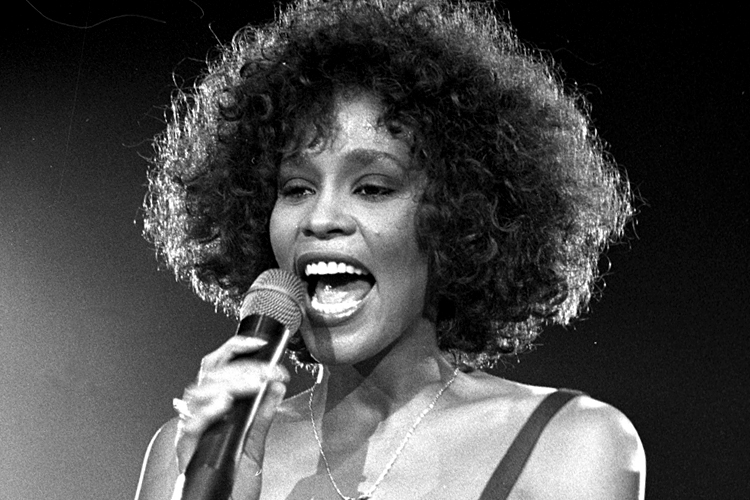
Singer Whitney Houston performs in concert at Wembley Stadium in London on May 5, 1988 (Credit: Reuters) Two weeks ago, a story by Los Angeles celebrity journalist Nick Papps began, “It’s hard to believe that the drugged, dazed woman staring out from [an accompanying] picture was once one of the most popular singers in the world … But today that woman, Whitney Houston, 42, is just another crack head.”
The dim assessment came in response to tabloids that on March 29 printed photos of what is supposedly Houston’s Atlanta bathroom, littered with crack pipes, cocaine-coated spoons, cigarette butts, Budweiser cans and garbage. The photos were taken, and sold to the magazines, by Houston’s sister-in-law, who provided an accompanying tale of the singer’s cracked-out habits, from hallucinating violent demons, to biting and hitting herself, putting her hand through walls, and locking herself away to smoke rock cocaine and pleasure herself with an apparently prodigious collection of vibrators. Speaking about the mess on Fox’s “The O’Reilly Factor,” Billboard executive editor Tamara Conniff said, “I think that she was a really well-manicured diva star and she just turned a little ghetto.”
Continue Reading CloseSusan G. Komen’s priceless gift
A radical decision woke the country up to an alarming rightward drift, and gave new life to women’s health advocacy
Members of Planned Parenthood, NARAL Pro-Choice America and more than 20 other organizations hold a "Stand Up for Women's Health" rally in Washington (Credit: Joshua Roberts / Reuters) The startling intensity that we saw this week in response to Susan G. Komen for the Cure’s decision to pull its grants from Planned Parenthood — an intensity that prompted the Komen foundation to reverse its decision today — may be the best thing that’s happened to the conversation about reproductive rights in this country for decades. It certainly should be.
Practically since Roe v. Wade was decided in 1973, reproductive rights activists have been left to play stilted defense against ideological opponents who grabbed the language of morality, life, love and family as their own, always deploying it with reference to the fetus. The rhetoric around reproductive rights, which has more recently begun to creep into arguments over contraception, has become suffocating in its emotional self-righteousness, but too muscular, too ubiquitous to effectively combat.
Continue Reading CloseObama’s woman problem
The president shamefully uses his daughters to justify limiting the healthcare options of America's young women
(Credit: AP/Carolyn Kaster/Salon) When will Barack Obama learn how to talk thoughtfully about women, women’s health and women’s rights?
Apparently, not today.
On Wednesday, Health and Human Services Secretary Kathleen Sebelius unexpectedly overruled the Food and Drug Administration’s recommendation that emergency contraception be sold on drugstore shelves and made available without a prescription to women under the age of 17. The move came as a surprise blow to healthcare and women’s rights activists, the kinds of people regularly counted as supporters of the Obama administration.
Continue Reading CloseEarly signs of a “Bridesmaids” bump
A veteran producer sees not just success for Kristen Wiig's blockbuster, but signs of a lasting legacy
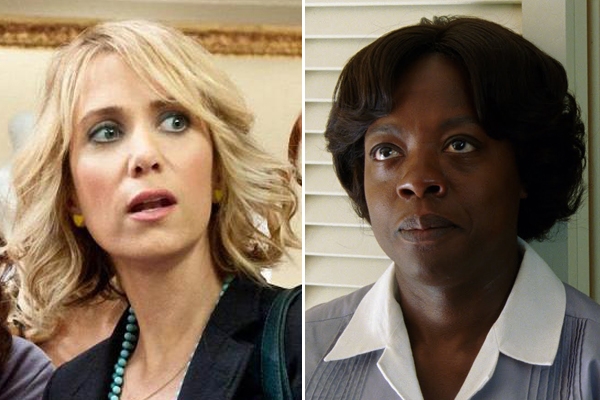
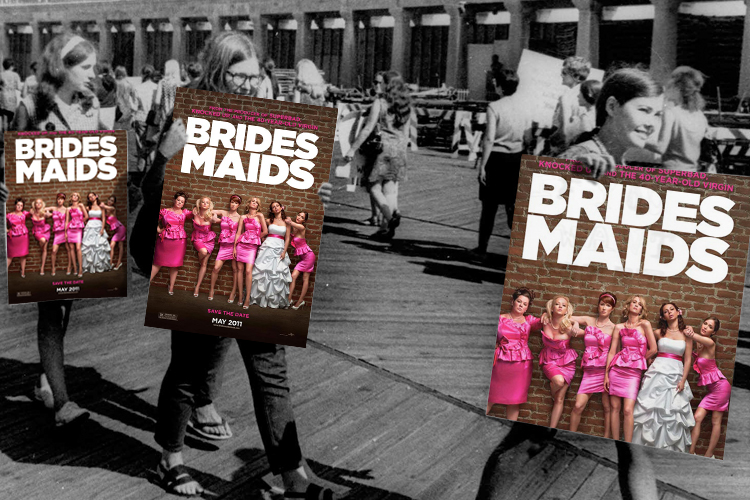
Kristin Wiig in "Bridesmaids" and Viola Davis in "The Help" Last week, the summer’s surprise blockbuster, “Bridesmaids,” was released on DVD, after a spectacular run both in the United States and abroad. The fortunes of the film, which starred a brace of funny women and dealt equally in fart jokes and friendship, were regarded as crucial to the future of women in entertainment.
Hollywood, perpetually on the verge of never making another movie for anyone but teenage boys, was in need of a slap in the face, reminding it that women buy tickets, fill theaters, tell friends they loved it — and know men who are occasionally eager to see the opposite sex portrayed compellingly on celluloid. “Bridesmaids” delivered a wallop, bringing in more than $280 million worldwide, and drawing an audience reported to be a third male, and largely over 30.
Continue Reading CloseSeeing “Bridesmaids” is a social responsibility
How the fate of female-driven movies came to rest upon the success of "SNL" star Kristen Wiig's new comedy
It’s a strange day when our social movements coalesce around a movie comedy that appears, from its trailer, to hinge largely on an explosive farting scene, but Hollywood’s warped gender politics seem to make each day stranger than the last.
This week, with a viral enthusiasm usually applied to marches on Washington, grass-roots presidential campaigns or saving Planned Parenthood from House Republicans, women (and men) who believe in a future that includes movies for and about women have turned the comedy “Bridesmaids” — written by “Saturday Night Live’s” Kristen Wiig and her collaborator Annie Mumolo, and starring a passel of funny women — into a cause. “Bridesmaids” activists want to send a bracing message to a business that has become increasingly oppressive for the women who work within it as well as for those who consume its product. That message must be delivered in the form of box office receipts, which means that for a certain set, seeing “Bridesmaids” this weekend — and encouraging others to do the same — is more than a trip to the theater; it’s a social responsibility.
Continue Reading ClosePage 1 of 118 in Rebecca Traister