Rebecca Traister

“30 Rock” takes on feminist hypocrisy — and its own

The show skewers Jezebel, sexy female stand-ups, lame period jokes -- and we all win

  • more
    • All Share Services

Liz Lemon (Tina Fey) and Abby Flynn (Cristin Milioti) in the February 24 episode of "30 Rock."

Last night on NBC’s “30 Rock,” Tina Fey and company dove head first into the mud-wrestling match that is the ongoing conversation about women in contemporary comedy. The show took particular interest in the recent kerfuffle that erupted when unofficially-feminist-but-totally-feminist women’s pop-culture website Jezebel took on the beloved “Daily Show” for not featuring enough women as on-air talent or in the writers room, and for its hiring of lissome-but-arguably-not-hilarious Olivia Munn as a token female cast-member. The episode was a direct entrance into the controversy that has lately swirled not only around Munn and “The Daily Show” but also around Fey and her “30 Rock” protagonist Liz Lemon: the one about the very combustible relationship between women, comedy and feminism.

The show begins when a website called JoanOfSnark.com takes “30 Rock’s” meta-show “TGS” and particularly Fey’s meta-character Liz Lemon to task for not employing enough women. In response, Liz hires Abby Flynn (Cristin Milioti), a pneumatic, infantilized, thumb-sucking trampoline jumper whose character was both an obvious reference to Munn (who took a girlish hop on the old trampoline for a Maxim shoot) and, to my eye, an even more devastating take on the pigtailed creepy-sex-object shtick of Sarah Silverman, two hot real-life funny women often credited by male critics for their comedic talent while those women who don’t make their sexuality the most salient part of their personae get ignored or dismissed.

When Lemon actually gets a load of Abby, and notes the way she plays to men for approval, she tries to “help” her by explaining, in front of a statue of Eleanor Roosevelt, that she doesn’t have to put on a baby voice and do her hair like a little girl in order to be valued. Abby retorts that her voice is not fake, and that “the whole sexy baby thing isn’t an act … I’m a very sexy baby!” More pointedly, Abby questions Liz’s claim that she’s trying to help her: “Really? By judging me on my appearance and the way I talk?” and wonders how her infantilized appearance is any different from Liz wearing glasses to convey that she’s smart.

Mesmerizingly, practically the whole half hour of network television was dedicated to slicing and dicing nearly every angle of the arguments that crop up any time anyone tries to talk about gender, popularity and perception. It was a testament to the fact that these arguments have been cropping up ever more frequently in recent years, thanks in no small part to the ascension of Fey and her generation of talented (and very often beautiful) comedians, as well as the rise of a critical and popular feminist-minded blogosphere that keeps a celebratory and often cutting eye on the gender history being made in media, politics and entertainment.

Yes, the episode took a couple of digs at Jezebel — a site whose success has offered one of the best examples of the heretofore dubious possibility that feminism, politics and high culture could effectively be mixed with pop culture, comedy and low culture — with Liz pointing out that it was “this really cool feminist website where women talk about how far we’ve come and which celebrities have the worst beach bodies” before hooting: “Ruth Bader Ginsburg!”

But the very fact that an NBC sitcom would revolve a plot around the commentary coming from a lady-minded website seems to me to be a warm tribute to that website’s clout in the landscape of cultural criticism. At least one person at Jezebel agrees. Irin Carmon, the reporter whose work on Munn and “The Daily Show” was most directly parodied in last night’s episode, told me, “We’re honored, of course. It’s fitting that this most meta of shows would tackle the contradictions and tensions of the whole ‘women in comedy’ conversation – and more broadly how women struggle with the external representation of our sexuality. Also, Nick Denton would never let us put a womyn sign on the homepage.”

Indeed, one of the finest site gags was the design of the JoanOfSnark.com site, which looked very much like Jezebel, with the “o” made into a “womyn sign” and the site tag line, “Perhaps correct. Definitely exhausting.”

As someone who has frequently weighed in on the topics being parsed last night on NBC, and who believes that public wrestling with questions of women and perception is not only necessary but itself a sign of progress, I could also not agree more with this nifty summation of how the process often feels. People coming at it — often from contradictory angles — are often correct. And the sparring is often exhausting. Last night, it happened also to be hilarious.

What Fey is good at is peeing all over sacred (or at least earnest) cows at the same time that she’s polishing them up and offering them more airtime than they would find anywhere else on network television. (Remember the episode from some seasons ago in which Fey’s Lemon lets down her feminist comedy writer idol with her unwillingness to tell a risky political joke in the same episode that Alec Baldwin’s Jack Donaghy imitates a series of African-American male characters in one of the more racially electric skits on television since the demise of “Chappelle’s Show.”)

Last night, Fey again took feminist piety as her mark (memorably telling Jack, “I support women! I’m like a human bra!”) at the same time that she engaged in it herself. At one point, when jealous Jenna (Jane Krakowski) tells Liz she must destroy lollipop-licking competition for male adulation, Liz responds, “No, Jenna, that’s exactly the problem: men infantalize women and women tear each other down.” No contradictory punch line here. Liz spoke the truth! Or part of it. Other parts included the fact that the JoanOfSnark critique of how women were treated on “TGS” was spot on, as evidenced by the fact that Liz’s purportedly female-friendly show had recently showcased Jenna … as feminist icons Amelia Earhart and Hillary Clinton … both losing control to menstrual cramps. To meta things up, these bits were followed by (fictional feminist icon) Liz Lemon announcing to her writers’ room: “This show started as a show for women starring women. At the very least we should be elevating the way women are perceived in society!” before clutching her midsection and shouting “Oh! My period! You’re all fired!” and fainting.

See? The blogofems might be hypocritical, pious and tiresome, but they are also … correct!

Fey herself has been one of those Joans of Snark she was sending up last night, at least when it comes to being full of contradiction and confusion at the same time that she’s genuinely and energetically engaged questions of gender representation in comedy, politics and entertainment. As the first female head writer at (and later guest contributor to) “Saturday Night Live,” her skits about and starring women were put under a microscope that revealed two different strains of DNA: the one where she and Amy Poehler made feminism gut-busting at the Weekend Update Desk and “Bitch Is the New Black” got emblazoned on Hillary Clinton-supporting T-shirts, and the one where she made lots of jokes about whores. Fey produced, wrote and starred in “Mean Girls,” a feminist movie filled with mixed messages about the innate natures of young women; she has said publicly dismissive and judgmental things about promiscuous women and strippers; she regularly pokes fun at the image of the pathetic single woman as Liz Lemon, and this summer finally ran afoul of some of her most ardent admirers in the blogosphere.

Just a few weeks ago, Fey’s upcoming book of essays was excerpted by the New Yorker, one of the magazines currently under scrutiny for its paucity of female bylines. Her roaringly unapologetic feminist piece about the scrutiny, pressure and conflicting responsibilities of working mothers included some deep jabs at Hollywood’s relationship to aging women, including her acidic assertion, in reference to a generation of older comedic actresses we never see anymore because they’ve been labeled crazy, that “the definition of ‘crazy’ in show business is a woman who keeps talking even after no one wants to fuck her anymore.”

The fact that there is hypocrisy in feminist criticism — and more maddeningly, that there are knots having to do with beauty, sexuality, comedy, respect, desirability, power and representation that will simply not come cleanly undone no matter how sharp a nail we take to them — does not mean that the criticism is invalid, or that we should stop worrying the knots, or that our struggles on both fronts should be exempt from mockery.

Jezebel does publish smart feminist content at the same time it publishes snarky items that might appear in more traditional women’s magazines. So does Salon. Tina Fey has made huge, feminist strides for women in comedy at the same time that she has made comedy at the expense of women. Such is life when you attempt — as we all should! — to bring gender criticism out of the pure ether of sociopolitical discourse and attempt to deploy it in the real, messy world of commerce, consumption and popular culture.

On the show, it turned out that Liz Lemon was correct: Abby’s voice and boobs and pigtailed hair had been fake. But Liz’s feminist victory was trumped by her feminist fail: the put-on personality had been Abby’s attempt to escape a violent and abusive ex-husband, who now knew where she was thanks to Liz’s “helpful” meddling. This final twist was ridiculous but made a final needle-sharp point: Different strands of feminism — or any kind of social activism — can work in contradiction to each other. Just because there’s no one correct answer doesn’t mean that the questions are useless or boring; they’re interesting enough to plot a sitcom around.

To dig deeply — and wittily — into these ultimately unsolvable but real issues, especially with direct tributes to places like Jezebel and more broadly the feminist critique of media powerhouses like Stewart’s “Daily Show” or of Fey herself, is to pay them the honor of taking them seriously — seriously comedically. Last night’s episode was Fey’s clever, direct admission that she’s been paying attention, and that her typically eagle eye has caught the hypocrisy on every side, including her own. 

This is what “pro-life” means?

House Republicans just cut off funds for abortions -- and breast exams, cervical cancer screenings and STD testing

  • more
    • All Share Services

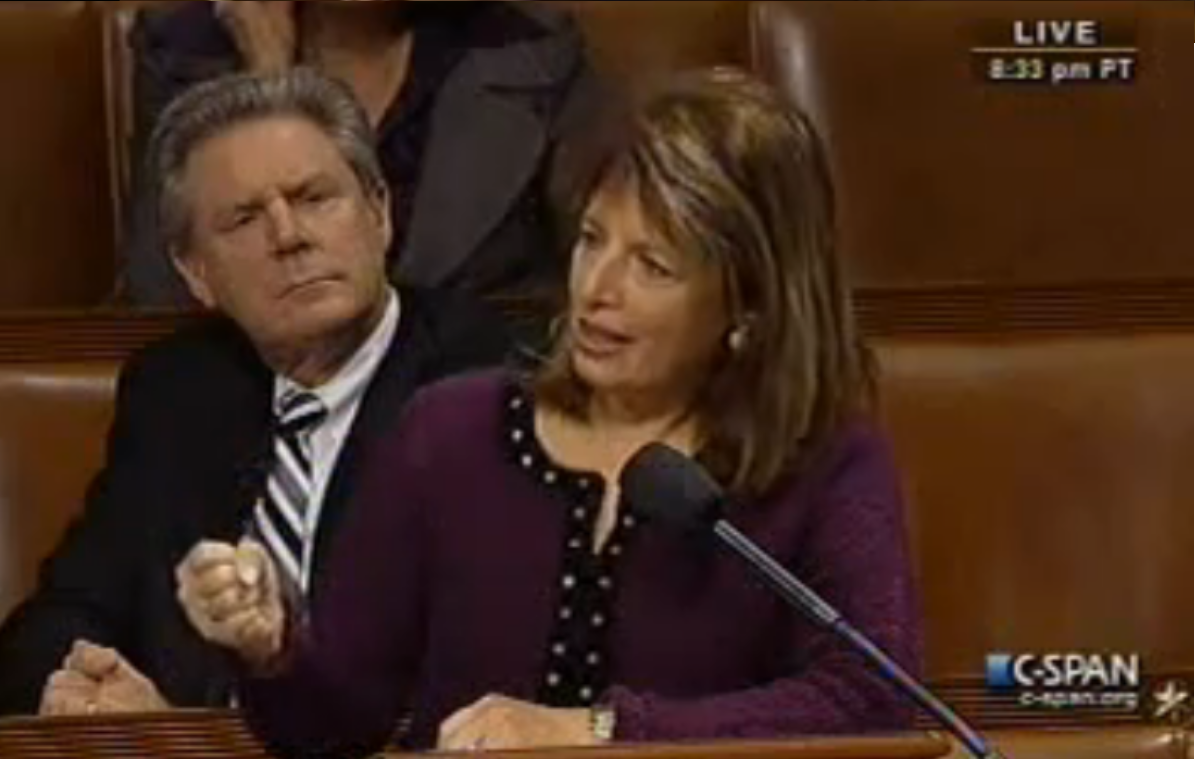
This is what Rep. Jackie Speier (D-Calif.)

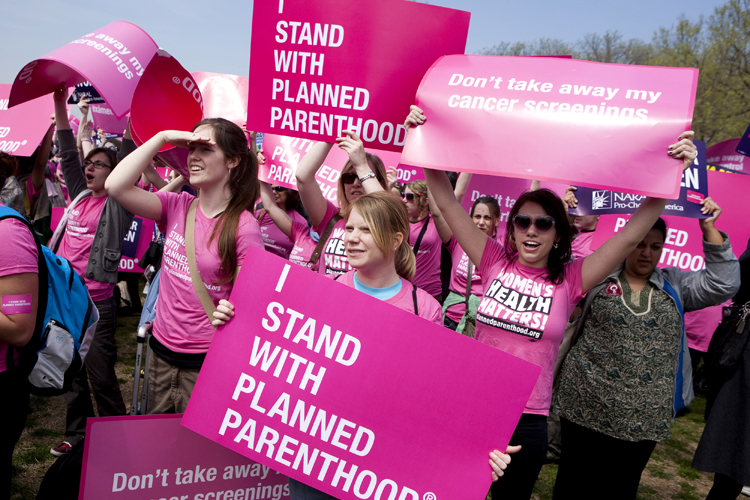
As part of their stated mission to focus on jobs (specifically, the job of preventing women from getting healthcare), House Republicans this afternoon voted 240-185 to bar federal funding for Planned Parenthood.

This is a big win for Rep. Mike Pence, the Indiana Republican whose deficit-minded crusade against Planned Parenthood hinges not on the argument that taxpayer money shouldn’t pay for abortions (the Hyde Amendment put a stop to that in the mid 1970s), but on the conviction that taxpayer money should not go to organizations that provide abortion services, regardless of what else they might do.

Pence’s plan, which will likely stall in the Senate, would mean the end of federal support for an organization that each year provides more than 800,000 women with breast exams, more than 4 million Americans with testing and treatment for sexually transmitted diseases, and 2.5 million people with contraception, which, not for nothing, is the stuff that prevents unintended pregnancy, and thus abortion, to begin with.

In Friday’s Washington Post, former Catholics for a Free Choice president Frances Kissling suggested that the current, harrowing onslaught against reproductive rights should force the pro-choice movement to alter its path and redirect what has indeed become a slightly stale message.

Though I’m not sure I see eye-to-eye with Kissling on which particular path to take, I agree that now is the time for women and men who believe in women’s rights, health and liberty to reclaim the language of morality and life, long coopted by abortion foes, as our own. Because what the Republicans have made clear in the weeks since they took over the House is that there is most certainly morality at play here, there are most certainly lives at stake: the lives and the moral value not of the unborn, but of the living, breathing women of this nation.

Pence and his fellow Republicans are not simply taking aim at a particular medical procedure — one that, I would nonetheless submit is an integral component in women being able to control their bodies, their health, their careers and thus their economic, social and political freedom. But this isn’t simply about the question of abortion itself. What Pence and the House of Representatives did today was devalue women’s lives, women’s rights and women’s ability to participate fully in the democracy. The excuse used by Republicans is that we are saving taxpayer money. Saving money in exchange for breast exams, cervical cancer screenings, STD testing and care: Welcome to the movement that has long billed itself as “pro-life.”

In the midst of the House battle, two congresswomen underscored precisely these points, and in doing so, offered vivid evidence of why, exactly, it makes a difference to have a governing body that includes members of differing genders, races, classes, perspectives and experiences.

In response to Rep. Chris Smith, a New Jersey Republican, who had taken to the floor to read aloud a description of a second-trimester abortion procedure he’d found in a book, Democratic Rep. Jackie Speier of California described a second-trimester abortion procedure she’d had in her life. Speier told of a procedure she’d had at 17 weeks pregnant, when something went wrong with her pregnancy. “For you to stand on this floor and suggest that somehow this is a procedure that is either welcomed or done cavalierly or done without any thought, is preposterous,” Speier said, directing her comments at Smith. “Planned Parenthood has a right to operate. Planned Parenthood has a right to provide services for family planning. Planned Parenthood has a right to offer abortions. The last time I checked, abortions were legal in this country … I would suggest to you that it would serve us all very well if we moved on with this process and started focusing on creating jobs for the Americans who desperately want them.”

Meanwhile, late Thursday night, Georgia Republican Rep. Paul Broun had trotted out the old canard about Planned Parenthood being a bunch of eugenically motivated abortion enthusiasts, pointing out that “there are more black babies killed through abortion proportionally than there are white babies or any other colored babies.”

Responding to Broun’s deep concern for the well-being of black babies (a concern that apparently ends when those black babies grow up to need breast exams or cervical screenings) Wisconsin Democrat Gwen Moore said, “I know a lot about having black babies. I’ve had three of them. And I had my first one … at the ripe old age of 18. An unplanned pregnancy.”

Moore told the story of her labor, of not having had a phone or a cab or the money for a cab to the hospital. She went on, “I just want to tell you a little bit about what it’s like to not have Planned Parenthood. You have to add water to the formula to make it stretch. You have to give your kids Ramen noodles at the end of the month to fill up their little bellies so they won’t cry … It subjects children to low educational attainment because of the ravages of poverty. You know, one of the biggest problems that school districts have in educating some of these poor black children who are unplanned is that they are mobile; they are constantly moving because they can’t pay the rent … [P]ublic policy has treated poor children and women who have not had the benefit of Planned Parenthood with utter contempt. These same children, it has been very difficult to get them health insurance through CHIP.”

This is rhetoric that must now be blasted from the rooftops. Those of us who have been raised on and come to rely too heavily on the limp language of choice must listen and then yell it as well. Opponents of reproductive rights are working — successfully, today — to prevent women from receiving the healthcare that they and their families require; they are working against the well-being of women.

Morality is not the exclusive domain of the unborn, whatever we have been told for decades. Morality is on the side of women, on the side of children, on the side of a society that offers aid to its impoverished and to its young and does not discriminate against half its population. In Moore’s words, “Planned Parenthood is healthy for women, it’s healthy for children, and it’s healthy for our society.”

Here’s video of Rep. Speier’s remarks:


Continue Reading Close

Gabrielle Giffords’ revolutionary political role

Young, highly educated and ambitious, Giffords has represented the brightest future of women in American politics

  • more
    • All Share Services

Gabrielle Giffords' revolutionary political roleFILE - In this July 28, 2010 file photo, Rep. Gabrielle Giffords, D-Ariz., speaks during a news conference on Capitol Hill, in Washington. Republican Jesse Kelly was still basking in the glow of his victory in an Arizona congressional primary last week when the Democratic congresswoman he's trying to unseat released a scathing TV ad branding him "a risk" who would gamble away people's retirement savings. (AP Photo/Drew Angerer. File)(Credit: Drew Angerer)

“Who, besides Hillary Clinton and Sarah Palin, might the country look to in coming years when considering the future of women in American politics?”

That’s a question I was asked approximately 10 times a day this fall, as I traveled the country discussing my book about women and the American presidency, talking to audiences and on television and radio throughout the bitter midterms and the gales of Mama Grizzly media.

Answering the query meant that the name on my lips, all day every day it sometimes seemed, was Gabrielle Giffords’.

I am no Giffords acolyte; her blue dog politics are more centrist than my own, especially on issues of guns and border security (though she opposed Arizona’s horrifying immigration law S.B. 1070). But given that most successful Democratic politicians don’t actually share my politics these days, everything else I knew about her was promising: a young, charismatic, former Fulbright scholar who had grown up racing motorcycles and married an astronaut in 2007, a Democrat who had won her Republican congressional district (Arizona’s 8th voted for George Bush in 2004 and John McCain in 2008 by 52 percent to 46 percent) by 54 percent in 2006. Giffords was so charismatic, so winning that she — unlike many of her congressional colleagues — had made the politically risky decision to vote with her party on electric issues like healthcare, cap and trade and the stimulus bill. Still, somehow, in a terrible year for Democrats, she was managing to hang on in a tight race.

For most of the fall, I did not think that Giffords would hold her seat, and often found myself talking regretfully about what her potential loss might mean for the House of Representatives, and for the number of women in Congress. She was tied with Republican opponent Jesse Kelly, and despite having raised an impressive amount of money on her own, had received little help from the DCCC, a fact that enraged me, especially as I saw some of her colleagues who had broken with the party on the big votes getting check after check.

It was Giffords’ district that I checked most obsessively on election night, and for the three days following, until it was finally declared that Giffords had managed to beat Kelly by the slimmest of margins. Giffords’ victory was a huge part (along with the tight victories of Barbara Boxer and Patty Murray) of what led me to feel less bad than many of my peers about the grim results of November’s election, at least when it came to the tenacity, power and futures of pro-choice Democratic women. To me, the hard-fought squeaker of a race affirmed my belief that this was a roaringly capable politician who had a powerful political future in front of her, even in the face of remarkably steep odds.

Of course, the human losses of today’s attacks in Arizona are immeasurably greater than any political or social toll. But it would be irresponsible to fail to note that a young, highly educated, ambitious Jewish woman like Gabrielle Giffords, despite her centrism, represents much that is revolutionary and hopeful about the changing face of American politics, as well as about the new and varied paths and possibilities available to women. She is the kind of politician this nation could barely have imagined existing just a decade or two ago. And so, when I have been asked about which women are not yet national stars but have the peculiar, groundbreaking alchemy it might take to someday become the nation’s first female president, again and again my answer has included the same name: Gabrielle Giffords.

As of this writing, Giffords is still alive; the doctors have just said that she is, miraculously, expected to survive. Amazing, inspiring, tough as nails. I hope with all my might to be talking about her future for many years to come.

Continue Reading Close

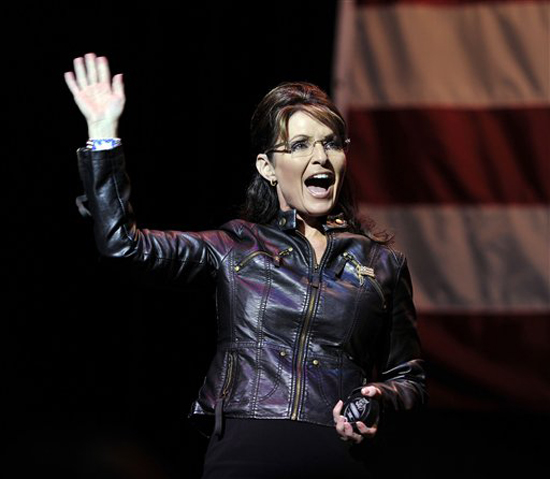
Sarah Palin’s feminist revolution

When the pro-life politician embraced the F-word, she horrified Democrats -- and electrified her fan base

  • more
    • All Share Services

Sarah Palin's feminist revolution

This is an excerpt from “Big Girls Don’t Cry,” in which author Rebecca Traister uses the 2008 election as a prism through which to examine the past and future of American women in politics, of feminism and women’s political empowerment. The following chapter begins with the final stages of the 2008 presidential campaign, as Sarah Palin began to go off her campaign message and most Democratic women were at the height of their loathing for her. However, there were a few, a tiny band of lifelong feminists, who took up with Palin and helped her kick off her mission to capture the language and symbolism of feminism for the right, a mission that remains very much in play two years later. (Read an interview with Rebecca Traister about the book.)

There were some Democratic women who believed that feminism meant not just gamely defending Palin against sexist criticism, but supporting her full-throttle. A small number of Democratic women, some livid about the florid ways the vice-presidential candidate was being dissed, some convinced that it was a feminist imperative to back any woman running for executive office, and a few still too sore to embrace Obama, were dissenting. They were angry at the national women’s organizations for which some of them had worked and volunteered, and they wanted to make a public stand against them.

In early October Shelly Mandell, the president of Los Angeles NOW, a feminist organizer for more than three decades and chief organizer of the March for Women’s Lives in 2004, introduced Sarah Palin at a speech in California. Making clear that she was appearing personally, not on behalf of the National Organization for Women, Mandell told the crowd that she was there “as a women’s rights activist for 30 years who has worked for all those years to see this day.”

“I’m a lifelong Democrat,” said Mandell. “I don’t agree with Governor Palin on several issues … [but] I know Sarah Palin cares about women’s rights, she cares about equality, she cares about equal pay, and as vice president she will fight for it.” Mandell did not mention that Palin’s running mate had been vocal in his denunciation of the Lilly Ledbetter Fair Pay Act. “It is an honor to call her sister,” Mandell said. “America, this is what a feminist looks like.”

Mandell wasn’t the only one to break with feminist opinion on Palin. Elaine Lafferty, the former editor of Ms. magazine who had volunteered for the Clinton campaign, officially signed on as a McCain consultant soon after he picked Palin. Lafferty, coauthor of a book with her friend and Fox News anchor Greta Van Susteren, had a complicated history with institutional feminism. Her two-year stint at Ms., from 2003 to 2005, had been officially successful; under her stewardship the struggling magazine’s circulation had jumped, and she had published critically lauded stories. But behind the scenes there had been tension between Lafferty and the Feminist Majority Foundation, which had taken control of publishing Ms. in 2001, about her desire to move the magazine in a more broadly popular direction. At the time of her exit from Ms., Lafferty told the New York Observer, “My vision of Ms. was that it would be a thinking woman’s magazine — a feminist magazine for sure, but my vision of feminism is a big tent … as the original Ms. was; they didn’t check membership cards at the door. I don’t believe in dogma, in exclusion or rhetoric. I thought it could be a magazine that invites women into the conversation about how we live today.” Lafferty’s words would resonate three years later, when criticism of feminism’s exclusivity and elitism would be applied by people looking to stretch the movement’s defining boundaries not simply outward, but rightward, and in doing so perhaps permanently explode them.

Lafferty came aboard the McCain campaign as Palin’s unofficial consigliere on all matters feminist and began helping her with, as Lafferty would call it, “a speech that Palin had long wanted to give on women’s rights.” That speech took place on Oct. 21 in Henderson, Nev. Behind Palin stood Lafferty and NOW’s Mandell, along with another NOW dissenter, former Oregon chapter president Linda Klinge, and Lynn Forester de Rothschild and Prameela Bartholomeusz, both vocal Hillary dead-enders and members of the Democratic National Platform Committee. Palin introduced and thanked the group for their bravery before asking the women in the audience, “Are you ready to break the highest, hardest glass ceiling in America?” She next made a point lifted directly from the Obama-embittered PUMAs: “Somehow Barack Obama just couldn’t bring himself to pick the woman who got 18 million votes.”

“American women, Democratic, Republican and Independent should not just let Barack Obama take their votes for granted,” said Palin, sounding like the millions of Democratic women who had tried, with varying degrees of cogency or lunacy, to express this very conviction to their own party peers.

Then came a part of the speech in which the interest of disenchanted Democratic women fused with what was unmistakably Palin’s own experience of feminism.

“When I was a kid Congress passed a law that’s come to be known as Title IX, and that law allowed millions of girls to play sports,” she told the crowd. “Over time, that opened more than just the doors to the gymnasium. Along with other reforms, Title IX helped us to see ourselves and our futures a different way. Women of my generation were allowed finally to make more of our own choices with education and with career, and I have never forgotten that we owe that opportunity to women, to feminists who came before us. We were allowed to be participants instead of just spectators [of] the achievements of others.” This was all pretty remarkable coming from a woman who opposed abortion even in cases of rape and incest. It was downright confounding given that she was running alongside a man who voted 19 times against increasing the minimum wage, who voted against the Violence Against Women Act and against funding for the Office of Violence Against Women, who voted against expanding the Family and Medical Leave Act and to terminate funds for family planning. But she wasn’t done.

Palin assured anyone surprised by her embrace of a feminist history that “equal opportunity is not just the cause of feminists. It’s the creed of our country.” Were she given the honor of serving, she said, “I intend to advance that creed in our own nation and beyond, because across the world there are still places where women are subjugated and persecuted as they were in Afghanistan, places where they’re bullied and brutalized and murdered in honor killings. … No one leader can bring an end to all of those ills, but I can promise you this: These women too will have an advocate and a defender in the 47th vice president of the United states.” As her speech concluded, Shania Twain’s power anthem “She’s Not Just a Pretty Face” blared, and Palin embraced the rogue feminists standing behind her.

When I interviewed Lafferty in 2009 she said that just after the election, a teary-eyed Palin asked her, “Why does Gloria Steinem hate me? [She] was my hero. Why do they hate me? I’m a feminist.” Lafferty was firm with me: “The woman I met during the campaign and that I was on the plane with was a feminist,” meaning that she believed in the professional and economic potential of women, even if she didn’t want to make policy to support it. She also believed in a redistribution of domestic work and had said, after giving birth to Trig, “To any critics who say a woman can’t think and work and carry a baby at the same time, I’d just like to escort that Neanderthal back to the cave.” Even I had to admit that the moment at the end of the vice-presidential debate at which she picked up her infant son had stunned me into silence. I knew the baby was there to advertise Palin’s maternal allure, to protect her from criticism, to hammer home her antiabortion bona fides, but still: Seeing a vice-presidential debate in which one of the participants was holding her infant changed everything. As the feminist columnist Ellen Goodman wrote of Palin early on, “Mom to mayor to governor to veep nominee? There’s one woman who didn’t have trouble raising her hand in class. There’s one woman who didn’t think she had to be twice as good as a man to run. Be careful what you wish for.” In many ways Palin embodied not only feminism’s gains but some of its still unmet aspirations.

The question of whether or not Palin “was a feminist” was one that obsessed and troubled lots of women. Katie Couric and I discussed it during our interview in 2009, during which Couric said, “I wrestle with this. … She’s a successful woman. She’s running the state of Alaska. She was a vice-presidential candidate. Just because she doesn’t believe in choice and she thinks abortion is tantamount to murder. … What is a feminist? Can you be a conservative feminist? I find this so interesting. … I think, ‘OK, maybe she is a feminist.’ Then I think so many of her views indirectly or directly would hurt women. So I go around and around.”

Some of the women associated with the earliest iterations of American feminism had also been involved in the conservative Christian temperance battles. Gail Collins would remind readers in “When Everything Changed” that Republican women had been the strongest proponents of women’s rights, while heavily Catholic working-class Democratic voters had been more reluctant to mess with gender roles. More recently those dynamics had been reversed by the liberal and radical Democratic women who led the midcentury social movements, and by Republican women who fought against modernization of the American family. Phyllis Schlafly opposed the ERA and pushed American women to stay home with their children, and Marilyn Quayle told the Republican convention in 1992, “Most women do not wish to be liberated from their essential natures as women.”

Yet here was not just a candidate, but crowds of Republican women and a few Democratic ones, cheering on Palin’s vision in which personal empowerment had no correlation to progressive policy, and beginning to agitate for a reevaluation of the meaning of feminism. On the day of Palin’s speech about women, former Republican Massachusetts Gov. Jane Swift, the only woman before Palin to give birth while a sitting governor, told Greta Van Susteren, “There are some on the liberal left who believe that only they have … an ability to call themselves feminists. … I think a feminist is someone who believes that women should have equal opportunity to men. … It is someone like me, like Gov. Palin, who hopes that our daughters, if they work hard and play by the rules, can do virtually anything they want to in their life.”

When it came to bullying contests over language, it had never been difficult, historically, to get the feminist movement to hand over its lunch money. Perhaps in part because of its breadth and diversity, perhaps because of a lack of gumption that characterized many on the left in the fourth quarter of the 20th century, perhaps simply because of the manipulative agility of the right, the women’s movement lost almost every serious battle over words and imagery in the 40 years following the second wave. The worst and most damaging defeats had come over the language of reproductive rights, in which abortion opponents had gobbled up the vocabulary of life, loss, morality and emotion, while reproductive rights activists persisted with the limply fungible “choice.”

The word was meant to convey women’s ability to make decisions regarding their own family and reproductive lives, but instead served most frequently as a baseball bat with which pro-lifers could hit feminism in its nuts. If “choice” was really the only word that feminists owned, then didn’t that make every choice a feminist act? If the choice to have an abortion and the choice to continue a pregnancy were equally valid, then why, some women wondered, should the choice to give up a career, or stay in a bad relationship, or get breast implants be disparaged or dismaying? A year after Palin’s appearance on the McCain ticket, the conservative publication Newsmax ran a series of stories on “the newer feminism” that included one with the telling headline “Feminism Now Defined by Each and Every Woman.” No one was quite sure how best to wrest stronger or more assertive language back from the other side.

The word “feminism” itself had not exactly inspired a ferocious defense by its own adherents. For decades the right had successfully demonized women who embraced the label as hirsute succubi, family-scorning and erotically disadvantaged old bags. In 2005 I wrote a story about old-school feminist organizations wondering whether to retire the much maligned word in favor of a new one, and a new generation of women determined to reclaim it. In recent years I had seen young women sporting “This is what a feminist looks like” shirts, and had read with surprise as teen and 20-something celebrities identified themselves as feminists. Now that “feminist” was slowly clawing its way back to cool, Republicans wanted in. Sarah Palin, charismatic mascot of the you-go-girl spirit and the modern cross-party liberation she represented, had awakened in Republican women a desire to claim a piece of feminism as their own, but they were going to fight to remold it to suit their ideology.

Feminism’s history of fluidity and combustibility, which originated with its impossible goal of adequately representing all of the interests of a population that came in innumerable shapes, sizes, colors and identities, also made it legitimately vulnerable to incursions from those of a different ideological caste. The trouble here was that the intruding group was at odds with what was perhaps modern feminism’s only truly immutable core value: a woman’s right and ability to control her own reproduction.

Lafferty wrote in the Daily Beast, “Palin is being pilloried by the inside-the-Beltway Democratic feminist establishment. … Yes, she is anti-abortion. And yes, instead of buying organic New Zealand lamb at Whole Foods, she joins other Alaskans in hunting for food. That’s it.” Lines like this were practically enough to get thoughtful feminists — who, like Lafferty, wanted to expand the appeal of women’s rights advocacy, who wanted more women to proudly celebrate equal opportunity, who wanted to move forward and away from the movement’s reputation as exclusive, elite, white and middle class — to say “Oh, that’s it? Anti-abortion and no lamb from Whole Foods? Well, OK then, welcome!” before pausing to consider, “Wait, what was that first thing again?” That thing was at the heart of a very grave question for women’s rights activists: Could they work productively alongside women and men with antiabortion stances? Could pro-lifers be feminists? As Couric wondered to me in 2009, “Should the feminist movement say, ‘We have certain tenets, but people who are pro-life, we can welcome them. Let’s find our common ground to achieve things in other areas.’”

The trouble was that the goal of outlawing abortion (as well as desires to limit access to birth control and sex education) — not as a matter of personal belief, but as a legislative goal — was not compatible with feminism if feminism in fact meant supporting women’s rights to pursue their life, liberty and happiness on equal footing with men. Not believing in abortion personally was one thing. But preventing other women from exerting full control over their bodies and health, assessing their value as lesser than the value of the fetuses they carried, was, it seemed to me and many others, fundamentally anti-feminist and anti-female.

- – - – - – - – - – - -

Ultimately Palin, like Clinton and Obama before her, was a candidate onto whom millions of voters, and millions of women, had projected their own hopes and dreams and identifications. The fever for Obama had demonstrated the emotional pull of history making. Now I felt a wave coming from the right, coming to wash over feminism.

I was not wrong. Nearly a year to the day that Hillary Rodham Clinton conceded the nomination for the presidency, an organization called the New Agenda would rally its troops in an art gallery in Manhattan for an event called “One for the Herstory Books.” The organization’s founder, 43-year-old former Wall Street trader Amy Siskind, had gained some notoriety in 2008 as one of the vocal Hillary dead-enders angrily pushing to count unofficial primary votes in Michigan and Florida. Though she never officially called herself a PUMA, in the months during which most Democrats had been rallying around Barack Obama in the general election she had worked to organize them, building a media presence for the New Agenda, which she called “a sisterhood of support.” Siskind’s sisterhood differed from the feminist organizations that had preceded it by not taking a position on abortion. As she explained on the group’s website, “For women in this country to have power, we would need to focus on the issues that unite us, and put aside the issues that divide us. … When we come to the New Agenda we ask that you put that issue aside and work together on the 80% of issues that impact all women.”

Siskind’s Wall Street savvy helped to land her a platform. Within weeks of the official formation of the New Agenda she was speaking as “a feminist” on Fox and later on CNN and PBS; she was quoted in the Boston Globe, the Los Angeles Times, the New Republic, the Wall Street Journal, and the Washington Post, and wrote columns for the Daily Beast and the Huffington Post. In these venues Siskind hammered home some fundamental feminist points about the continued wage gap and the toll it takes on both women and men. She assured readers, “The next wave is here. The players are different. The words are different.” Perplexingly, she wrote, “Gone is ‘equal rights.’ … This wave is about reaching down beneath the surface to eradicate the roots of sexism that lie deeply buried in darkness, ignorance and bias … Gone is ‘feminism.’ The word, hijacked by a few into an exclusive clique with liberal, pro-choice rites of entry, is being put to rest.”

Siskind’s feminism had been loosed from ideology, from policy investments that would otherwise tie it to the nominally more progressive party; it was antipathetic to a commitment to reproductive rights. It was supportive not just of Hillary Clinton and Sarah Palin, but of the burgeoning population of conservative female politicians — from Meg Whitman and Carly Fiorina (respectively running for governor and senator in California) to Minnesota congresswoman Michele Bachmann — who did not support economic or social policies that helped women. And it would have an impact on institutional feminism and especially on those feminists who Siskind believed had worked against either Clinton or Palin, like NOW’s Kim Gandy. Siskind would claim that Gandy had secretly backed Obama in the primary. (Gandy campaigned for Hillary.) She would assert that Gandy had not defended Palin. (Gandy issued a statement condemning the “onslaught of double-standards and condescension” heaped on the Alaska governor.) At the annual NOW convention in the summer of 2009 some NOW members who had broken with the organization to support Palin campaigned against Latifa Lyles — the candidate whom Gandy had endorsed to succeed her as NOW president. Lyles lost the election by eight votes out of 400 cast. Gandy told me, “I’ve probably been to 34 national conferences and … this was nasty and vicious and mean in a way I’ve never seen. I think it’s going to be hard healing.”

Something had been stirred up, not simply in the Republican Party, but within feminism. It seemed to me that it was a mistake to ignore it. Palin’s candidacy had empowered Republican women eager to claim their share of the feminist legacy and transform its institutions by making them more amenable to their antiabortion positions and conservative policy positions. In light of the women’s movement’s history of losing battles over language and self-presentation, I feared that Elaine Lafferty might have been on to something beyond the candidate she was referring to when, in the days before the election knocked Palin off a presidential ticket but not out of the American consciousness, she wrote in the Daily Beast, “Will Palin’s time come next week? I don’t know. But her time will come.”

Continue Reading Close

A jar of her magic

I pickled the dilly beans with Nana when she was still alert and active. What will happen when I throw them out?

  • more
    • All Share Services

A jar of her magic

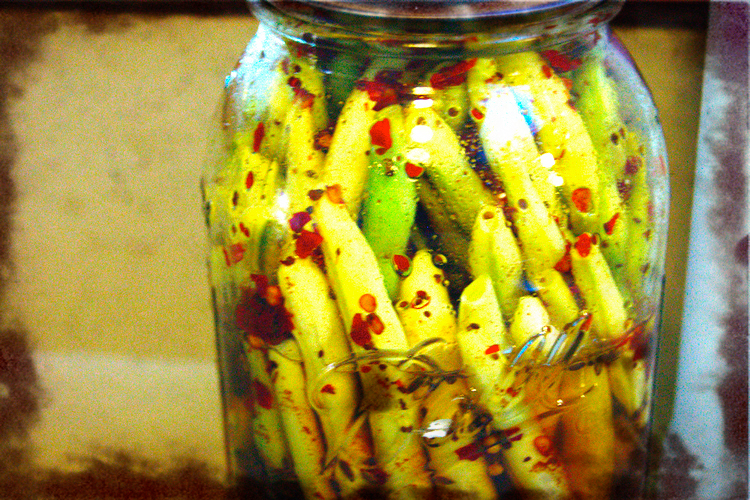
When I was a child, I spent weeks of every summer on the farm where my mother was raised, making things with my grandmother. There was so much to be done: wild strawberries, raspberries, blackberries and, once, gooseberries to turn into jam; beets and eggs and cucumbers and beans and crab apples to pickle, pies and zucchini breads to freeze, tomatoes and wax beans to put up in watery jars.

All those years ago, I didn’t think it unusual to spend so much time making stuff. This had a lot to do with my grandmother, a woman who, when she was not preserving produce, was ceaselessly creating other kinds of goods. She spent her evenings at her handwork: The needlepoint and cross-stitch samplers she’d frame and hang on walls; she hooked rugs and sewed the odd quilt, made Christmas ornaments and wine cozies and doorstop covers. As a little kid, I followed her lead, pulling thick yarn through big-holed plastic patterns of butterflies and strawberries, later graduating to friendship bracelets, some small needlepoint and, briefly, origami. But eventually I graduated altogether, and grew into a young adult who did not spend the bulk of her time in the production of material goods, instead wiling away evenings reading, talking on the phone, watching television. I was not a maker.

Perhaps it is this mysterious but stark divergence of my adult experience from my grandmother’s that accounts for the fact that I have a jar of dilly beans from 1999 in my refrigerator. Because despite the fact that I no longer did much material fabrication on my own steam, I never stopped loving making things with my grandmother on the farm.

As a young adult, in the years before Nana slipped into dementia and my mother and her siblings moved her to a different home, in the years before they rented that farmhouse with its gardens to tenants who could maintain it through the harsh Maine winters, I still visited every summer. And I marveled at my 80-something grandmother, who could still bend at the waist and pick tiny wild strawberries from the ground for hours at a time, then meticulously clean and hull them, stir them up with pectin and sugar and pour them into sterilized Mason jars, covering the ruby red gel with a thick layer of protective wax.

During one of these last sociable sojourns, I asked specifically to make dilly beans, the crisp, cold snappy green beans that, along with everything else that sat still long enough to be dunked in brine, my grandmother made into pickles and served as a side dish. I don’t remember why I wanted dilly beans in particular. Perhaps there was a profusion of the verdant legumes, and I could not stomach the idea of putting up the limper, blander version of simply canned beans. Maybe I was just in the mood for them.

Whatever the reason, we made the dilly beans. There was nothing particularly profound about the process. My grandmother was slightly forgetful, very stooped, needling me in the way she did in those last cogent years about how I planned to find and keep a man. She probably did the bulk of the work: briefly blanching the beans, popping the garlic and dill and peppercorns into the jars, pouring the hot vinegar solution into each steaming glass vessel. I was probably slightly annoyed at her, slightly worried about her memory troubles, slightly anxious to get away from the farm, to take these beans and escape to the Maine coast, where my then-boyfriend and friends were already ensconced in a vacation rental house, a world away from the remote hill farm from another century. With my friends, I would eat the beans not as a side dish at supper in Aroostook County, but as a garnish in the strong bloody marys we would make throughout each day back in the real world — my world.

I’m sure I did take the dilly beans down country with me. And I’m sure we went through most of them during the hard-drinking remainder of our week. But somehow, one jar of them didn’t get eaten. They followed me back to Brooklyn, N.Y., and have stayed with me through two moves, two jobs, three cats, one book and now a marriage, all of which is more than I can say for my grandmother, who has been lost to dementia for years now, who knows nothing of me or my husband or my home or my work.

I cannot bring myself to throw the beans out, though I will never dare to eat them. I look at them crowding one corner in the back of an overstuffed fridge and think not that I made them, but that my grandmother did. They’re her beans grown from seeds she put in the ground. They’re in her once-sterile Mason jar along with her dill, grown on the hill that I haven’t climbed for far, far too long now.

I live in Brooklyn and it’s not like we don’t have dilly beans here. Here in the outer boroughs of New York, a world so far away from Aroostook County, we now live in another century of food preparation, and I make more of my own foodstuff than I have in decades: tomato sauces and jams and bacon and pickled onions and seltzer. I could find a (possibly superior or more fail-safe) recipe for dilly beans and whip up a batch from the organic farmer’s market in about an hour.

But my grandmother’s hand would not touch those beans, her hot water, drawn from the well deep beneath the hill, would not scald the metal lids of the Mason jars; they would not cool on her round kitchen table, and her spidery handwriting would not adorn the identifying sticker on the outside of their jar.

And there is some magic in there. Something of her that I wonder if we accidentally pickled alongside the beans, more than a decade ago. Of course it’s this imagined spell — a child’s love for her grandmother combined with a child’s tendency toward the maudlin and the overwrought — that has kept me from tossing the beans. But I will not pretend that I haven’t also wondered — in these sad years in which my grandmother’s strong, flexible body has continued to function but her mind and recognition and mental capabilities have been extinguished — if I have perhaps had a hand in keeping her alive longer than necessary. That if, perhaps, I threw out the dilly beans, my grandmother’s empty body might mercifully follow. 

Continue Reading Close

A summer that sucked

Dominated by oppressive heat, the oil spill and Sarah Palin, does summer 2010 rank among the worst ever?

  • more
    • All Share Services

A  summer that suckedReuters/iStockphoto/Salon

That this summer was going to be bad was obvious going in. The sun was barely hanging late in the sky when the New Yorker’s Hendrik Hertzberg dubbed the season “this hellish summer of discontent.” What we did not know was how intense and varied the badness was going to be. Now we know. Save for one California Supreme Court ruling against gay marriage opposition (a great victory that is, alas, part of a very long process), one great movie (also about gay marriage) and one straight marriage that seemed to gratify a lot of people who are into that kind of thing, the season has been one of the most cheerless on record.

Now, I don’t want to get into any kind of bad-summer pissing match here. I give you 1968, and I’ve gathered that 1977 wasn’t much fun for New Yorkers. But I don’t need to prove unequivocally that 2010 has been the worst of the worst to know that it has been pretty damn bad.

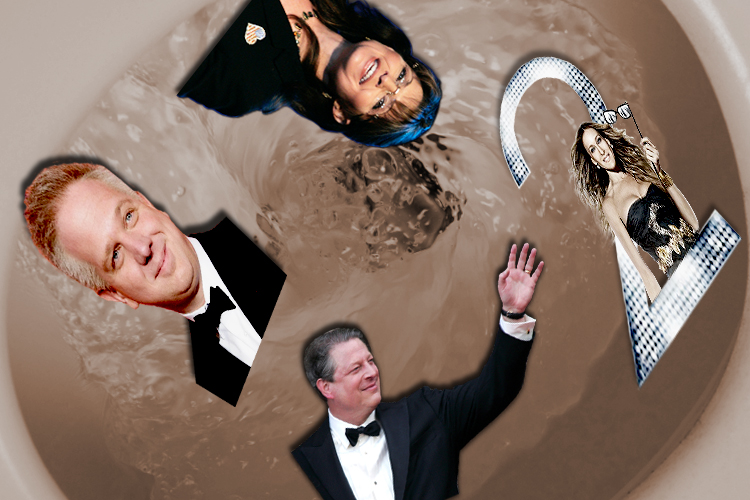
Frankly, even the fun stuff wasn’t that fun. The author of the summer’s blockbuster novels died before realizing his success, and the other author of a summer blockbuster novel is Glenn Beck. Poor Miley Cyrus got photographically violated, and Laurence Fishburne’s daughter Montana believes the only way to kick-start her career is as a porn star.

In similarly depressing news about the state of our tastes: “Sex and the City 2” was released and “The Last Airbender” was a giant hit. “Law & Order” got canceled. So did “As the World Turns,” on the heels of “Guiding Light,” leaving the New York television production industry devastated. In June, cable network Starz ensured that “Party Down,” which Salon’s Heather Havrilesky called “the best show you haven’t heard of,” would continue to never be heard of by canceling it.

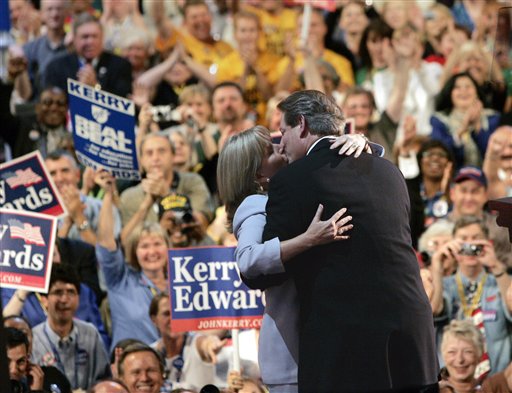
Meanwhile, Al and Tipper Gore announced they were divorcing, leaving some of us way more bummed out than we could believe. Then their daughter Karenna announced that she and her husband were divorcing. And then there was the miserable, inevitable follow-up spate of stories about affairs with Laurie David and the alleged harassment of massage therapists. And this was a summer when we really could have used Al Gore to talk to us about the heat. The unrelenting, ceaseless, apocalyptic heat. It was hot! So hot! Not just uncomfortable, but deadly, especially in India and in smoke- and smog-clogged Russia. There were the storms that slowed oil cleanup in the gulf, and floods. The wrecking, devastating floods in Brazil and along the Missouri in Arkansas and in lakes and rivers all over Iowa.

OK, the World Cup was a good time — if you manage to repress the memory of the French team’s poor sportsmanship, and the even more alarming wave of racism it kicked off in Europe — but otherwise, sports offered little relief. In early June, umpire Jim Joyce blew a call and ruined Armando Galarraga’s perfect game, which would have been the first in Detroit Tigers team history. Elsewhere in the hurting Midwest, LeBron James ditched Cleveland for Miami in a fashion so spectacularly tacky and overblown as to suggest that perhaps we have all gone a bit too far with this exultation-of-fickle-and-egomaniacal-sports-heroes thing.

LeBron’s exit was only a last, classless blow to Cleveland, a city that has been hit as hard as almost any with poverty, joblessness and crime during this recession. Ohio announced in July that — like Georgia, Florida, Hawaii, Idaho, Iowa, Kentucky, Montana, North Carolina, South Carolina, South Dakota and Utah before it – it would start wait-listing thousands of patients in need of AIDS drugs, because increased demand combined with a withered economy had created an unmeetable need.

Yes. The bad stuff, of course, was not about hoops and porn and saying goodbye to S. Epatha Merkerson. This summer also brought profoundly, deeply, achingly sad news that came at us in battering waves. Like the fact that next year, 5 million Texas kids will learn from new textbooks that are light on secularism, Thomas Jefferson and the civil rights movement and heavy on the great legacies of Phyllis Schlafly and Newt Gingrich. There was the relentless joblessness, the petering out of the stimulus and the fact that there are now five unemployed Americans competing for every available job. There was the horrible immigration legislation, and a Supreme Court ruling that dealt a blow to cities looking to enact comprehensive gun bans. Even on a local level, the news seemed always to be jaw-droppingly bad: the baby killed by a falling tree branch in Central Park, the Texas mayor who shot her 19-year-old daughter and herself in July, and the people stabbed and tasered at Taste of Chicago. Even the food festivals seemed to end in tragedy.

While politics offered a few minor bright spots — Amy Klobuchar schooling Tom Coburn on the meaning of freedom and Anthony Weiner going Mr. Smith on Republicans — mostly, it was more bad news. Tough to remember how everyone was slapping their knees just a year ago when Sarah Palin made what promised to be a career-killing exit from the Alaska governor’s seat, but this summer it’s been all Palin all the time, and laughter has dried up as the former vice-presidential candidate has shown up across the nation, lending campaign-rejuvenating support to Tea Partiers and Mama Grizzlies gunning for congressional and gubernatorial seats in the midterms. (Oh, I’m sorry, were you hoping for a brighter fall?)

This summer brought us the spectacular, blazingly awful fail of the Shirley Sherrod story, in which every single person involved — save Sherrod and the farmers who came to her defense — looked ridiculous. Vilsack? Obama? NAACP? You’re all having a bad, bad summer.

Speaking of which, in July, the Obama administration angered pro-choice groups by banning elective abortion funding in federally funded high-risk insurance pools. (Response: Quit yer bitchin’, ladies, don’t you know this is how progressive healthcare legislation gets made?) And then last week, White House press secretary Robert Gibbs tore into “the professional left” for wanting too much from the president. Congratulations, administration, on helping to further ensure that the only people in the country absolutely guaranteed to go out and vote for Obama will now do so with a hell of a lot less enthusiasm.

And then, of course, there was the stuff that we could not wrap our heads around: the stuff that didn’t just kick our ass, but kicked the planet’s with a thousand steel-toed boots. The oil spill that just kept on spilling, killing birds, fish, the livelihoods of millions of people along the Gulf Coast. How were we to process such sadness? Thank god (only because it would piss him off) for the sorrowful work of Christopher Hitchens, that rat bastard neocon who, of course, managed to be elegant and eloquent in his description of how death is coming for him too early, putting his grief and fear into words that resonated. In this project, there was also Tony Judt, the brilliant historian who had recounted so gorgeously his battle with Lou Gehrig’s disease, and who died earlier this month.

It’s not often that we sit and wait anxiously for Labor Day to arrive, freeing us from the season of beaches and beers. But in 2010, I feel I’m not alone in my impatience to be done with the summer and hope that the school year brings all of us some greater measure of goodness and good news.

Continue Reading Close

Page 2 of 118 in Rebecca Traister