Spring Sale: Get 1 Year, Save 58%

After the insurrection, America’s far-right groups get more extreme

As the U.S. grapples with domestic extremism in the wake of the Jan. 6 insurrection at the U.S. Capitol, warnings about more violence are coming from the FBI Director Chris Wray and others. The Conversation asked Matthew Valasik, a sociologist at Louisiana State University, and Shannon E. Reid, a criminologist at the University of North Carolina – Charlotte, to explain what right-wing extremist groups in the U.S. are doing. The scholars are co-authors of “Alt-Right Gangs: A Hazy Shade of White,” published in September 2020; they track the activities of far-right groups like the Proud Boys.

What are U.S. extremist groups doing since the Jan. 6 riot?

Local chapters of the Proud Boys, Oath Keepers, Groypers and others are breaking away from their groups’ national figureheads. For instance, some local Proud Boys chapters have been explicitly cutting ties with national leader Enrique Tarrio, the group’s chairman.

Tarrio was arrested on federal weapons charges in the days before the insurrection, but he has also been revealed as a longtime FBI informant. He reportedly aided authorities in a variety of criminal cases, including those involving drug sales, gambling and human smuggling – though he has not yet been connected with cases against Proud Boys members.

When a leader of a far-right group or street gang leaves, regardless of the reason, it is common for a struggle to emerge among remaining members who seek to consolidate power. That can result in violence spilling over into the community as groups attempt to reshape themselves.

While some of the splinter Proud Boys chapters will likely maintain the Proud Boys brand, at least for the time being, others may evolve and become more radicalized. The Base, a neo-Nazi terror group, has recruited from among the ranks of Proud Boys. As the Proud Boys sheds affiliates, it would not be surprising for those with more enthusiasm about hateful activism to seek out more extreme groups. Less committed groups will wither away.

How does that response compare with what happened after 2017’s ‘Unite the Right’ rally in Charlottesville?

Neither the Capitol insurrection nor the Charlottesville rally produced the response from mainstream America that far-right groups had hoped for. Rather than rising up in a groundswell of support, most Americans were appalled – some so much that they have abandoned the Republican Party.

Additionally, right-wingers have been hit hard by the post-insurrection actions by large technology companies like Facebook, Twitter, Apple, Google and Amazon. They took down far-right group members’ accounts and removed right-wing social media platforms, including permanently blacklisting Donald Trump’s Twitter account and temporarily blocking all traffic to Parler, a conservative social media platform. Those steps are more significant than earlier moderation and algorithm changes those companies had undertaken in previous efforts to curb online extremism.

Another major difference is the lack of regret. Nobody on the right wanted to be associated with Charlottesville after it happened. Figureheads of the far right who had initially promoted that rally saw the negative public reaction and distanced themselves, even condemning the “Unite the Right” rally.

After the insurrection at the Capitol, their response was different. They did not split and blame other right-wing groups. Instead, conservative and extreme-right circles have united behind a false claim that they did nothing wrong, and alleged, despite all the evidence to the contrary, that left-wing activists assaulted the Capitol – while disguised as right-wingers.

Are extremist groups attracting new members?

Some members have left extremist groups in the wake of the Jan. 6 violence. The members who remain, and the new members they are attracting, are increasing the radicalization of far-right groups. As the less committed members abandon these far-right groups, only the more devout remain. Such a shift is going to alter the subculture of these groups, driving them farther to the right. We expect this polarization will only accelerate the reactionary behaviors and extremist tendencies of these far-right groups.

Right-wing pundits and conservative media are continuing to stoke fears about the Biden administration. We and other observers of right-wing groups expect that extremists will come to see the events of Jan. 6 as just the opening skirmish in a modern civil war. We anticipate they will continue to seek an end to American democracy and the beginning of a new society free – or even purged – of groups the right wing fears, including immigrants, Jewish people, nonwhites, LGBTQ people and those who value multiculturalism.

We expect that these groups will continue to shift more and more to the extreme right, posing risks for acts of violence both large and small.

Have far-right extremists’ views toward the police changed?

With a Democratic administration and attorney general, the far right will no longer view federal law enforcement agencies as friendly, the way they did under the Trump administration. Rather, they view the police as the enemy.

Even before Joe Biden took office and the Republicans officially lost control of the U.S. Senate, the Capitol riot showed this divide between right-wing extremists and police. A Capitol Police officer was assaulted with a flagpole bearing an American flag, and some members of the mob were police officers and military personnel. Many more were military veterans.

It’s not clear what this different view of law enforcement means for police officers, active-duty military and veterans who are members of right-wing groups. But we anticipate that only those who are most zealously committed to far-right causes will remain active. That, in turn, will push those groups even farther to the extreme right.

Has anything changed for militias since Biden has become president?

In 2009, the Department of Homeland Security issued a report warning about the growing membership in far-right groups, including their active recruitment of military veterans. Shortly after the report was released, Republicans in Congress pushed for the report to be retracted and for dramatically reducing the federal effort to monitor far-right groups in the U.S. This permissive atmosphere allowed far-right groups to grow and spread nationwide.

The Trump administration further served far-right groups by failing to pay out federal grants for grassroots counterviolence programs, by refusing to help local law enforcement agencies with equipment or training to deal with these groups, and by routinely downplaying the violence perpetrated by these white power groups. Essentially, far-right groups were unpoliced for the past decade or more.

But that approach has ended. Merrick Garland’s appointment as Biden’s attorney general is a big signal: In his career at the Department of Justice before becoming a federal judge, Garland supervised the investigations of the 1995 Oklahoma City bombing and the 1996 Atlanta Olympics bombing.

These were two of the most noteworthy acts of far-right domestic terrorism in the nation’s history. Garland has said that he will make fighting right-wing violence and attacks on democracy major priorities of his tenure at the head of the Justice Department.

In January, Canada designated the Proud Boys and other right-wing groups as terrorist organizations, which puts pressure on U.S. law enforcement to reconsider how they evaluate, investigate and prosecute these extremist groups. Beyond law enforcement’s treating these far-right groups like street gangs, there are also laws in place to combat violence associated with domestic terrorism.

It appears that U.S. prosecutors may finally begin to take seriously the violent actions of Proud Boys, especially as more and more members are being charged with coordinating the breach of the U.S. Capitol Building.

But as police power comes to bear on these violent right-wing groups, many of their members remain at least as radicalized as they were on Jan. 6 — if not more so. Some may feel that more extreme measures are needed to resist the Biden administration.

Matthew Valasik, Associate Professor of Sociology, Louisiana State University and Shannon Reid, Associate Professor of Criminal Justice and Criminology, University of North Carolina – Charlotte

This article is republished from The Conversation under a Creative Commons license.

Watch: Fox News’ Judge Jeanine Pirro stunned by her guest who calls her out on her “facts”

There was an awkward moment on Fox News on Saturday as a guest on “Justice” with Judge Jeanine Pirro attempted to pierce the bubble of right-wing misinformation on the network.

After the host attempted to question the numbers presented by the guest the show had invited on-air, she received a harsh response from immigration attorney David Leopold.

“Jeanine, just because you say my numbers are wrong, doesn’t mean they’re wrong,” Leopold said.

“No, they’re facts,” Pirro angrily replied. “These are the facts.”

“They’re not facts, Jeanine,” Leopold replied.

“Very few things I’d hear on this on this show tonight have been facts,” he explained.


Can vaccination and infection rates add up to reach COVID herd immunity?

It’s been a long, dark winter of covid concerns, stoked by high post-holiday case counts and the American death tally exceeding 530,000 lives lost. But with three vaccines — Pfizer-BioNTech, Moderna and Johnson & Johnson — now authorized for emergency use in the United States, there seems to be hope that the pandemic’s end may be in sight.

A recent analysis by the Wall Street research firm Fundstrat Global Advisors fueled this idea, suggesting as many as nine states were already reaching the coveted “herd immunity” status as of March 7, signaling that a return to normal was close at hand.

“Presumed ‘herd immunity’ is ‘the combined value of infections + vaccinations as % population > 60%,'” noted a tweet by a CNBC anchor based on a more complete analysis by the firm. That got us thinking: Does this calculation hold up?

First, do public health experts generally consider herd immunity to kick in at 60%? In addition, does current scientific thinking equate protection from the antibodies generated by past covid infections with the same degree of protection as a vaccination?

We decided to find out.

First, a review of herd immunity. Also known as community or population immunity, the term is used to describe the point at which enough people are sufficiently resistant — or have an immune response — to an infectious agent that it has difficulty spreading to others.

In this explainer, we noted that people generally gain immunity either from vaccination or infection. For contagious diseases that have marked modern history — smallpox, polio, diphtheria or rubella — vaccines have been the mechanism through which herd immunity was achieved.

While the United States is getting closer to this point, most health experts caution, it still has ground to cover. Fundstrat’s analysis offered a rosier take. Although the site is located behind a paywall, the chart generated buzz on Twitter and in news outlets like the Daily Caller.

Fundstrat relied on a variety of sources — particularly, a data scientist and pandemic modeler named Youyang Gu — to determine what level of immunity a state needs to stamp out covid, said Ken Xuan, the firm’s head of data science research. From there, analysts created a chart intended to track the level of covid immunity in each state. They calculated the number by adding the percentage of people estimated to have been infected with the virus to the percentage of people who had received the vaccine.

Xuan, who was quick to note that he is not a public health expert, said he and his team followed Gu’s predictions and arrived at 60%, a figure he acknowledges is an assumption.

“The idea would be we don’t know if 60% is true,” he said. However, if states that have reached this threshold see steep declines in covid cases, “then it’s the number to watch.”

What About the 60% Marker?

Throughout the pandemic, health experts have tended to set the magic number for herd immunity between 50% and 70% — with most, including Dr. Anthony Fauci, the head of the National Institute of Allergy and Infectious Diseases, leaning toward the higher end of the spectrum.

“I would say 75 to 85% would have to get vaccinated if you want to have that blanket of herd immunity,” he told NPR in December.

The experts we consulted were skeptical of the 60% figure, saying the mechanics of the Fundstrat analysis were relatively sound but oversimplified.

Ali Mokdad, chief strategy officer for population health at the University of Washington, said the level of immunity needed to reach this goal can vary due to several factors. “Nobody knows what is herd immunity for covid-19 because it’s a new virus,” he said.

That said, Mokdad described using 60% as “totally wrong.” Data from other communities around the world show covid outbreaks happening at or near that level of immunity, he said. Indeed, the city of Manaus in Brazil saw cases drop for several months, then surge despite three-fourths of their residents already having had the virus.

Josh Michaud, associate director for global health policy at KFF, described the 60% assumption as “off-base.”

And some said it wasn’t even the main point.

Dr. Jeff Engel, senior adviser for covid at the Council of State and Territorial Epidemiologists, said the question of herd immunity may not even be relevant because, regarding covid, we may never reach it. The novel virus may become endemic, he said, which means it will continue circulating like influenza or the common cold. For him, lowering deaths and hospitalizations is more important.

“The concept of herd immunity means that once we reach the threshold, it’s going to go away,” Engel said. “That’s not the case. That’s a false notion.”

Natural and Vaccine Immunity — Should They Be Lumped Together?

When asked why the Fundstrat analysis treated the two types of immunity as equivalent, Xuan said it was an assumption.

Here’s what current science supports.

Those who receive any of the three vaccines available in the United States enjoy a high level of protection against getting seriously sick and dying from covid — even after one dose of a two-shot series.

In addition, people who were infected and recovered from the virus appear to retain some protection for at least 90 days after testing positive. Immunity may be lower and decline faster among people who developed few to no symptoms.

Practically speaking, two experts said, natural and vaccine-induced immunity work the same way in the body. This lends credibility to Fundstrat’s approach.

However, some health experts consider vaccine-induced immunity to be better than the protection generated by the infection because it may be more robust, said Michaud. Researchers are still figuring out whether people who were infected with the virus but experienced mild or no symptoms generated an immune response as strong as those who developed more severe disease.

In fact, the Centers for Disease Control and Prevention cites the unknowns surrounding natural immunity and the risk of getting sick again with covid as reasons for those who had the virus to get a vaccine.

“They haven’t been studied well at all yet,” said Engel, in reference to asymptomatic people. “And maybe we’re going to discover that a large group of them didn’t develop really robust immunity.”

Both types of viral protection leave room for potential breakthrough infections, Michaud said. Neither offers “perfect immunity,” he said. And wild cards remain. How long do both types of immunity last? How do different people’s systems respond? How protected will people be from emerging coronavirus variants?

“It’s a witches’ brew of different factors to consider when you’re trying to estimate herd immunity at this point,” said Michaud.

Grief, with a side of baked ziti

Good food is worth a thousand words — sometimes more. In My Family Recipe, a writer shares the story of a single dish that’s meaningful to them and their loved ones.


They say everyone has their own love language, their unique way of showing people that they care. For my mom, that language was, unmistakably, food.

Growing up, she taught me that gooey brownies were the best way to cheer someone up; that you didn’t dare go to a friend’s house without a cake in hand; that you should always have an extra loaf of crusty Italian bread on hand, “just in case”; and that adding cheese to most things can make life’s problems suddenly feel a whole lot more manageable.

My mom’s signature recipe was her sauce: A third-generation Italian, she had learned very early in life how to make my great-grandmother Nannie’s classic bolognese recipe. Every Sunday of my childhood was designated Sauce Day, a multi-hour event that kicked off midmorning — complete with the rituals of stirring and tasting, never measuring, trusting your wooden spoon to let you know when there was enough of an ingredient, and when this rich meat sauce was done and ready to be paired with pasta. Despite our being a family of just three, this exceptional Sunday sauce was designed to serve 10, and any leftovers were meticulously packed up and frozen, usually in the Chinese takeout containers my parents washed and saved specifically for that purpose.

When I left home to go to college one state away, my mom started driving up to visit, with a big red and white cooler seatbelted into the back seat of her red-wine-colored sedan, transporting the most precious of cargo: frozen containers of her sauce, made especially for me. From her perspective, this was nonnegotiable — it was her responsibility to make sure I always had some on hand, just in case I got homesick. Five hours by car and six slightly defrosted containers later, she would arrive, double-parking outside my dorm, telling me how much she’d missed me. And later, when she’d head back home, the sauce would remain, tucked away in my freezer for all those days when she wasn’t around.

The writer with her mother.

The writer with her mother. Photo by Joelle Zarcone. 

This tradition continued for more than 15 years, well after I graduated college. When I moved cross-country and a cooler in a car would no longer cut it, she’d arrive at my doorstep with her trusty pot and wooden spoon, setting up shop in my apartment to make enough sauce to last until her next visit.

That sauce was the key ingredient of my favorite dinner — Italian baked ziti. This was the meal my mom made to celebrate special occasions, including my birthday. If there wasn’t any freezer sauce available, she’d make a fresh batch, always calling out from the kitchen as she was slicing the mozzarella. Her thick New York accent would travel across the house, letting me know there was extra cheese available to dunk into the simmering sauce on the stove, you know, just in case I wanted some. (I always did.) It didn’t matter how old I was, she still used that baked ziti to remind me how happy she was that I was around.

It was also the meal my mom made the first time my now-husband visited my parents’ house, and the dinner she always made the day I’d arrive home for the holidays. If we were together, it was worth a celebration, and her love spilled into every meal she touched.

In March of last year, shortly after the pandemic had begun to take hold in the U.S., my mom was diagnosed with stage II cancer. It caught us by complete surprise, as cancer is apt to do. While the chemotherapy didn’t, thankfully, wreck her the way it does many, it caused her to lose her hair and — perhaps most unfortunately from her perspective — her appetite. Nothing tasted quite right anymore, and the exhaustion caused by her treatments left her eating applesauce and Jell-O more often than the Italian recipes she’d made for 60 years.

Midsummer, she experienced a complication from chemo that we’d never anticipated, nor even known was possible: stubborn blood clots that traveled up to her lungs, making it difficult for her to breathe. When she first went into the hospital, she would detail each of her meals for me during our frequent phone calls, especially tickled when the head cook stopped by to ask how she was enjoying the food. She was impressed to see the pride he had in his food service — it felt similar to how she felt about the meals she cooked for her own family.

We thought she’d be in and out of hospital, but within 10 days of being there, her situation took a turn for the worse. Shortly after midnight on a Friday in July, she became unable to catch her breath and was put on a ventilator. Two days later and one month before my birthday, as I stood at her bedside rubbing her legs under the piles of blankets and sobbing through layers of cloth face masks, my mom — my best friend — left me forever.

It took weeks for the shock to wear off, and I clung to the tangible pieces of my mom I still had left: an old sweatshirt, her favorite ring, her notebook of recipes (a black and white composition book, weathered and stained with use). And that one last container of her sauce, tucked deep into my freezer back home, saved from the last time she’d come to visit.

One evening in the fall, three months after she left us, I defrosted it. As I served my dad and husband that warm California evening, I began to cry. It felt like she’d died all over again; her sauce had been such a real reminder of her unending love and care, and now it was finally, truly gone.

I had resisted making her sauce for years, even before she got sick, because I felt like it could never taste the same. I also didn’t have a real recipe to go off of; while she’d given me the baked ziti recipe a long time ago, there was no entry in her notebook for the sauce. All I had was the list of ingredients (saved from the last time she’d made me a grocery list), and my memory of the verbal instructions she called out as she cooked. With my freezer empty, though, I decided it was time.

I spent a couple of weeks at the beginning of November poring over old text message conversations and emails about cooking that I’d received from her throughout the years, and racked my brain to recall kitchen scenes from my childhood to remember the order in which she poured things into the pot. It took two Sundays worth of trial and error over the stove to finally piece the recipe together. That second Sunday, I knew from the moment I smelled the sauce simmering in my kitchen that it was a success — it smelled just like my mom’s.

That week, I made a big tray of baked ziti to celebrate my mom’s life, using her recipe, which is now mine, too. It was just for my husband and me, but I made enough to serve a much larger table, because that’s what my mom would’ve done. And when it came time to slice the mozzarella, I looked around my quiet kitchen and called out to no one in particular that we could now dunk it in the simmering sauce if we wanted. I did.

***

Recipe: Cheesy Baked Ziti With Big-Batch Sauce

Prep time: 20 minutes
Cook time: 3 hours 30 minutes
Serves: 8-10

Ingredients

Sunday Sauce

  • 8-10 tablespoons olive oil
  • 3-4 garlic gloves, finely chopped
  • 2 (6-ounce) cans, tomato paste
  • 8 (7-ounce) cans, Hunt’s tomato sauce
  • 1 (28-ounce) can, Hunt’s crushed tomatoes
  • salt, to taste
  • pepper, to taste
  • 1-2 tablespoons Italian seasoning
  • 2 small yellow onions, whole
  • 1/2 pound beef chuck, cut into 1-inch cubes
  • 1/2-3/4 pounds pork spare ribs

Baked Ziti

  • 1 pound ziti, cooked
  • Sunday sauce (see above)
  • 5-6 tablespoons ricotta
  • 1 log of full-fat mozzarella, sliced into chunks

Directions

Sunday Sauce

  1. Add olive oil to a large, sturdy pot and place on medium to low heat. Once oil is hot, add garlic and sauté on low. (Do not let garlic burn!)
  2. Once garlic is fragrant and slightly browned, add two cans of tomato paste. Stir for 5-10 minutes.
  3. Add remaining cans of sauce and large can of tomatoes to pot and stir well. Add water to each of the small sauce cans (not the large can) and mix and pour into the mixture. Stir well to combine.
  4. Add salt and pepper to taste, as well as the Italian seasoning. Stir once more to mix seasonings into the sauce.
  5. Cover and bring the mixture to boil on a medium flame. Add whole onions and meat. Reduce to low heat and simmer for 2.5-3 hours.

Baked Ziti

  1. Heat the oven to 350°F. Pour cooked pasta into a 13×9-inch oven-safe baking dish or similar pan. Pasta should cover the entire length of the baking dish in one consistent layer.
  2. Add about 5-6 heaping tablespoons of ricotta to pasta, and mix until ricotta is well incorporated.
  3. Add enough of the Sunday sauce that the entire dish is well-coated, but not soaked. (Note: Even though this is a meat sauce, do not add the meat. Instead, save it for another meal or serve some on the side of the baked ziti, mixed in with extra sauce.) Next, add a handful of mozzarella chunks, and mix well so the dish of pasta is pink with sauce and cheese is well spread out.
  4. Add more sauce to cover the top of the pasta (you don’t want the pasta to dry out in the oven), and a final layer of mozzarella. You can add as much or as little cheese as you like, but keep in mind that it will melt and spread.
  5. Bake in the oven for 20-30 minutes, or until evenly hot throughout and cheese has melted and crisped up. You can cover the pan loosely with foil to bake, but remember to remove the foil for the last 5-10 minutes. Serve with extra sauce on the side.

For the love of all that is delicious, why don’t we eat duck more often in this country? 

When’s the last time you had a glorious duck feast? Mine was a few nights ago. Duck confit risotto, seared duck breast, duck fat roasted Brussels sprouts and potatoes, green salad with duck fat toasted croutons, duck foie gras, and so help me, duck fat sea salt caramels. All washed down with a wine from Gascony in southwest France, where duck is a staple. 

It was one of the best things to come out of our kitchen — ever. Like, last meal-worthy. Our quarantine pod friends went nuts for it. The crisp, almost caramelized skin on the duck swaddling the melting, succulent fat on the inside satisfied one of the most primal urges in my body. Everyone — including our friends who didn’t think they liked duck and our teen niece — had seconds. 

Then why, for the love of all that is delicious, don’t we eat duck more often in this country? 

Since making the leap from a vegetarian lifestyle to full omnivore when I spent a couple of weeks in Gascony at author Kate Hill’s Kitchen at Camont learning about all things duck several years ago, I’ve wondered why this poultry that’s so celebrated in France and other parts of the world hasn’t caught on here. I had theories, but I wanted to hear from experts, so I turned to Ariane Daguin, who founded the renowned gourmet food purveyor D’Artagnan where duck is revered. I then spoke with Aaron Schorsch, a student of food with a background in cultural anthropology, agriculture, cooking and food activism; he also leads culinary adventures to France and beyond at his company Saveur the Journey.

All duck, all the the time. A duck feast at home starred duck confit risotto, seared duck breast, duck fat roasted Brussels sprouts and potatoes, green salad with duck fat toasted croutons, duck foie gras and duck fat sea salt caramels.

Was there one be-all, end-all reason? Consider it more of a perfect storm that has shut duck out of most American kitchens. To our great detriment, I would add, because a perfectly cooked duck is deliriously good. 

Duck fat is called gold by everyone who knows its powers. The breast is as deeply, intensely flavored as the best steaks. (“Give me some more of that duck steak,” my friend said, in fact.) Confit — leg slow-cooked in its own fat — is a dream. And grattons? The crispy skin cracklings left in the skillet after rendering the fat can make you weep.  

You can’t talk about duck without talking about the polarizing controversy that is foie gras, and that’s an entire other story for another day — but we’ll go there for just a minute. When I became an omnivore, I decided to learn to kill and process a chicken at a local farm. It was important that I didn’t look at animal flesh as a plastic-wrapped food product. Instead, I literally looked the fact that it was a sentient being in the eye. Before I ate the maligned foie gras — liver of a fattened duck — I visited a French farm where the ducks — happy until their last moment — waddled around nonplussed by the gavage process of the act dubbed force feeding. 

The overwhelming feeling I left with was to wonder why foie became the devil when actual atrocities like factory farming exist in the world. With no gag reflex, a hard esophagus anchored by a sac to catch excess grain and an instinct natural in their species to gorge themselves before migrating, the pastured ducks didn’t appear to give a whit about the momentary process. And, like the Egyptians who originally discovered how amazing that engorged liver tasted when the self-fattened birds flew south for the winter, I became enamored. Don’t @ me, especially if you eat chicken from a factory or feedlot cattle. Correctly prepared foie is the best butter in the world on steroids, but if you’re going to confess to loving the dish, you may as well publicly share photos of yourself at a rave, sans mask during peak pandemic. 

And it may just be that our collective repugnance of foie gras — an easy target as a wildly expensive food for those who can afford it — is part of why we don’t get to enjoy duck in this country, Schorsch said. Foie is the penultimate celebration food in France, he said, and if it’s going to be produced in enough quantity to meet the demand, well, then you’re also going to have duck breast, duck legs and all the other duck goodness. Without a demand for foie here — in fact with a vocal opposition to it — out of the gate we’re not going to have as much duck. 

The gift shop at the Musée du Foie Gras at Ferme de Souleilles in southwest France is a wonderland of duck and foie gras goodies. 

What we do have, Daguin said, is often, frankly, just not good. The industrialization of agriculture that followed WWII led to a genetically manipulated duck that was ready for slaughter more quickly — read: cheaper — but at the cost of taste, laden with watery fat as it was. Combine the inferior product with the fact that Americans moved from cooking food to heating TV dinners, and the delicious duck was doomed. 

For those of us — myself included — who grew up either only ever having a poorly bred and raised, incorrectly cooked duck or none at all, it just never became part of our food imprinting, Schorsch said. I saw this at my own table when a friend of my niece’s refused to try a divine cassoulet (a duck and bean stew) — insisting they didn’t like it, even though it would have been their first time ever eating duck. 

Luckily, my adult friends were more willing to experiment, even with having had markedly bad experiences eating duck before. Over the course of that duck extravaganza, they became converts, lapping up foie like cats at a saucer of cream and requesting containers to take home leftovers.

But even for those of us who know and love duck, it’s still considered something of a fringe meat, Schorsch said. It’s not like you can walk into your closest grocery and pick up a bag of premade confit like you can in a French market. When we’re feeling ambitious, we get a whole duck from our local butcher and break it down. For this particular meal, I got the goodies shipped from D’Artagnan — individually-packaged Moulard breast, legs already confited, a terrine of foie, and a tub of fat. (Which also prompts the question: Does our nation’s abhorrence of fat send us running from a meat so luxuriously endowed with fat?)

I also have to wonder if it would be such a specialty item if duck had ever had a marketing campaign behind it like more popular animal products. What if we’d had Duck: It’s What’s For Dinner? Or Duck: The Other White Meat (except it’s red)? Eat More Duck? Got Duck

Volunteer butchers at the Marché au Gras à Gimont in southwest France break down ducks.

Would it be so expensive (the last whole duck I bought rang in at $65, and the D’Artagnan duck breasts cost closer to steak prices than chicken) if our government-subsidized duck farms in the way they prop up, say, commodity corn for the beef industry? If Americans spent as big a percentage of our incomes on food as other countries, would that matter? 

I don’t think I can get to the bottom of this with any one or even handful of reasons, and I’m left with more questions than answers. In spite of it all, maybe duck’s day is coming. The popularity of duck is rising enormously, especially as people become more concerned with the quality of their ingredients, Daguin said. And perhaps with so many of us cooking exponentially more over the last year and looking for new things, I wonder.

But even if we find a great source for duck, we still need to know how to prepare it properly. “It’s greasy,” was a complaint my friend had about his prior duck experiences. For others, Schorsch said, they “have been turned off to duck because they bought one, and they cooked it like a chicken . . . The legs were tough, the breasts were dry, and it was a bunch of flabby fat.” Gross. 

So what’s the right way? I’ll leave you with Daguin’s very precise advice for cooking a breast. We’ll start there, because it’s the easiest part to cook, she said.  

“It has its own protective foolproof technique of cooking,” Daguin said, “which is that natural layer of fat on top.” You still need to cook it on the skin even if you don’t like the fat and you’re not going to eat the skin. (Quelle horreur, I would say!) That’s what’s going to make it cook properly, she explained.

Score the skin in little squares in a bias. “That, one, will make it nice,” she said. “But two, that will get the fat that is inside that skin to render more, and so the skin, little by little, will become very nice and crisp.”

Put the breast skin side down in a pan on low heat, salt and pepper the flesh side on top, and basically let the fat melt. No need to add anything to the pan, since the fat is built in — you’re not searing it here. Pull the fat from the pan as it renders, and after eight minutes, “you should have a perfectly crisp skin,” she said, and “you should have liquid gold on the side, which is your duck fat that has rendered and that you want to cook your potatoes in because there’s nothing better in the world than potatoes cooked in duck fat.”

Next, Daguin said, “put your fire at the maximum, and you flip it so the breast is on the flesh side. You’re going to go at the maximum heat, searing it very fast for another four minutes.”

These instructions are for a one-pound Moulard breast, “the nice, big fleshy breast.” For a smaller portion, go six minutes on the skin and three on the flesh, she said.

Remove the duck from the pan, and this is the most difficult part (because you’ll want to devour it!). “You have to let it rest,” she said. “Please, let it rest, because, one, it continues to cook inside when you do that, and it finishes cooking, to the center, and two, the juices kind of reintegrate with the muscle. So it’s very important to rest for three minutes on that cutting board or that plate.” Put it somewhere warm, maybe on top of the stove while it rests, then slice it on the bias and serve immediately.  

More from this author: 

The Nas generation of scholars: Finally, a Grammy for the hip hop artist who led me to liberation

After nearly three decades in the rap game, Queensbridge’s self-proclaimed God Son, Nasir Jones, finally added a Grammy to his extensive resumé. Last Sunday, the veteran MC snagged Best Rap Album for his 13th studio opus, “King’s Disease.”

During an interview with NME in November, speaking on the album’s lead single, “Ultra Black,” Nas said that he attempted to create a record similar to James Brown’s 1968 hit, “Say It Loud ― I’m Black and I’m Proud.” Esco added that it was necessary for Black artists to make similar anthems because of “the foot on our necks.”

As Nas collected his first Grammy, thanks to an album led by a single celebrating Blackness, I’m enjoying my fifth month of sobriety from cocaine addiction, and excelling inside the halls of Columbia University, where I’m studying Blackness. Ironically, my journey began with Nas’s critically creative musical catalog. 

* * * 

The Ford F-150 cruised across the finish line. I wasn’t in the NASCAR business, though. I was trafficking heroin. And after a 14-hour trip, I’d finally passed over the Jasper County, Mississippi line separating Vossburg from Laurel in Jones County, my then-home city. 

Stuffed in a hidden compartment behind the glove box was a scary amount of drugs. Lyrics from Jay-Z’s commercial banger “Roc Boys (And the Winner Is)” — they don’t know the feeling when them things get across — playing in my mind. Jay’s words resonated with me; they seeped out of my pores as if they were a part of my genetic makeup. Making it home safely after traveling through four states with a truck full of heroin felt like being released from prison. I finally made it. Leaving my city to traffic drugs was an uncertain job. I never knew if I’d make it home until I actually made it home. 

But this triumphant feeling was an illusion, an act of rebellion that duped me into believing that I possessed control. Self-governing my life had always been elusive: public housing-living, my grandmother’s checks from the government, addiction, group home-living, and jail always collided with agency. So I held close to delusions. And outsmarting state troopers to flood Laurel with heroin is what I lived for, until I could find something real to believe in. 

To survive within my world of illusions I had to suppress feelings. At any moment I could be subjected to a drug raid. I understood that getting pulled over by state troopers would’ve had deleterious outcomes. I was once a victim of an armed robbery, and I knew the probability of experiencing another was high. In fact, my crew and I knew that E-Money and Black were plotting to either rob or kidnap me. It wasn’t anything that E and Black said. We just knew it from their body language, their energy and having an understanding of how E and Black operated in the streets. They were former kingpins turned heroin addicts. Even when they were moving kilos, they were known to rob their fellow kingpins for bricks of cocaine. I understood that I’d have to seriously hurt these guys or they’d kill or seriously hurt me. I was given a semi-automatic 9mm by a crew member and instructed not to serve Black and E-Money any drugs unless a certain crew member was with me. 

Dealing drugs for a living was heavy. The illusions of cocaine use and staying freshly dressed made life bearable for me. But underneath the fly clothes and lines of coke were nightmares of murder and jail. My grandmother even began having nightmares about my demise. The only respite, a sense of freedom, I found was in the crevices of Nas’ music. With his discography as my blueprint, a flood of curiosity centered around Black history and literature grabbed my attention, and provided a lens for me to see a world that was bigger than myself. He gave me language to express my ideas of Blackness. Songs like “Queens get the Money,” “These Are Our Heroes,” “Testify” and “N.I.*.*.E.R (The Slave and the Master),” among several others, found Nas name-dropping writers and leaders like Langston Hughes, Huey P. Newton, and Jonathan and George Jackson. Names that I was, at most, only vaguely familiar with at the time. His social commentary about poor schools and health care disparities, combined with the aggressive energy that I recognized, spoke to me. 

I began buying books written by and about the men and women Nas rapped about. Reading became a hook, and I developed a freeing form of addiction to them. Before linking with my drug supplier in his city, I’d stop at a local bookstore in Louisville or Cincinnati to purchase new reads. Every time I went home, not only did I have a truck or book bag full of drugs, I also had a pile of books to pore over. Since embarking on this Nas-inspired educational journey, one theory that I’ve been struggling with is the idea of Blackness, and what Blackness means to me.  

* * *

“What are you reading?” a Black police officer asked me.  

“‘Black Jacobins’ by C.L.R. James,” I answered. He then asked whether or not I was a college student.

“Yes, at the University of Louisville,” I lied, because I didn’t want to raise suspicion.  

The Greyhound bus station in Nashville was fairly empty. A handful of patrons rested their eyes while their heads leaned back against their seats. Others lounged in chairs with their feet resting atop their luggage. I, dressed in a brown Akademiks tracksuit two sizes too big, complete with matching Jordan 11’s, sat at a table reading about Blackness, and taking notes. At my feet, resting against my leg, sat a book bag filled with three ounces of heroin.  

“I meet a lot of students from Tennessee State,” he said. “What is it like being a Black student at the University of Louisville? Do y’all stick together?” 

“We have different experiences,” I lied again. “We’re not connected by the things that people refer to as Black culture like hip hop, jazz, blues, Jordans, spades, the electric slide, basketball, etc. Nor are we linked by the content that’s pumped out of ‘urban departments.'” 

Barack Obama was pursuing his first presidential campaign. The police officer asked me to share my thoughts about Obama possibly becoming the first Black president. 

“If Obama wins he’ll be part of a system that has been designed to stifle Black life,” I said. “It’ll be interesting to see how he deals with this. Will he destroy the current system, and rebuild a system that’s free of misogyny, hierarchy and gender bias? Or will he use his presidency to give himself leverage? I don’t know. But I do know that Obama’s experiences as a Black man in America are a far contrast to my experiences, as well as the experiences of my uncles.”  

The cop seemed interested in what I was saying, and I was excited to talk about a topic that I was passionate about. “What do you think needs to happen?” he asked.

“To me, Blackness is about constructing a liberatory politics that is dedicated to uprooting the current economic and political system, and creating a system that is free of hierarchy, gender bias, racism and misogyny,” I said. 

The police officer applauded my “success” at the University of Louisville as a woman’s voice announced my boarding number over the PA system. I stuffed my book and notebook into the book bag that held my heroin before boarding the Greyhound. 

Even after discussing my Nas-inspired ideas centered on Blackness, I still couldn’t figure out how to transform this newfound passion into something positive. 

* * *

The light over the stove, combined with the glow from the television, shed just enough light over the saucer and the thin razor that sat between my right thumb and index finger. I slid the razor across the saucer, separating lines of cocaine to snort.

It was close to 3 a.m. Black and E were still a threat, so the 9 mm pistol sat next to me on the couch. Down the hall in my bedroom a young lady was asleep. Someone’s headlights flashed on my street. I figured it wasn’t the Drug Task Force; they would’ve cut their headlights off. I peeped out the window. It was Black and E. I hid the plate of cocaine, stuffed my pistol inside my pants, and suddenly became sober.  

“What up, cuz?” they said with sly smirks on their faces as I opened the door.

They were reading me to see where my mind was at. My t-shirt was positioned so the handle of the gun showed. 

“Cuz, we short,” Black said, while stuffing crumpled dollar bills into my palm. 

“How much is this?” They didn’t answer, but I saw that it was under $70. 

Stuffed inside a small pocket of my jeans were a few bags of heroin I hadn’t sold that day. I wanted them out of the house so I could protect the lady who was asleep in my bedroom. Instead of reaching in my pocket for the heroin, I led Black and E outside, walked to my car, where I pretended to get some heroin out of the backseat. 

I gave them four bags and they left. But I knew they would circle back to my house. I walked inside only to walk out the back door, where I stood on the side of my house. A few minutes later I saw Black and E coming down my block with their headlights off. I didn’t give them time to get out of the car before I came from around the house. 

They were surprised to see me. “Cuz, did I drop my wallet over there?” Black said. 

“Nah,” I yelled to them. 

“I told you left that shit at home,” E said to him.  

“Damn. Aight, cuz,” Black said before pulling off. 

* * *

Two days later I was on the Greyhound again, buying more heroin. My grandma had started drinking again. I hadn’t told her what happened with Black and E, but I believe grandmothers are gods on earth and feel their children’s energy. With tears in my eyes, I stared out of the Greyhound window asking God for guidance. I was tired of the streets. In a show of defeat, I dropped my head. In my lap was an issue of XXL Magazine, with Lil Wayne on the cover, and Carter G. Woodson’s “Mis-Education of the Negro.” Then God spoke to me: You dummy, you love hip hop magazines and history books. Go to college and study journalism and history

I finally figured it out. I was going to enroll in college to study Blackness — African American history. 

But I never made it home from this particular trip. I was the subject of a drug bust on Jones County’s Interstate 59. It would be nearly four years before I would be able to follow through on seeking to understand Blackness. 

During my bid, I continued reading about topics that Nas rapped about. In prison, books shed a sliver of freedom over my life. Titles like “Convicted in the Womb” by Carl Upchurch; “The Man Who Cried I Am” by John A. Williams; “Mumbo Jumbo” by Ishmael Reed; “Manchild in the Promised Land” by Claude Brown; “Coming of Age in Mississippi” by Anne Moody, and several others, gave strength to my experiences and language to my goals. Because Nas pointed the way first, I discovered a blueprint for me to create something that is bigger than me. 

Trump family buried in ridicule after Mar-a-Lago forced to partially shutdown due to COVID scare

To the surprise of no one, Donald Trump and his family were roasted on Twitter late Friday after it was reported that parts of the Mar-a-Lago luxury resort had to be shut down over COVID-19 concerns.

According to a report from the Associated Press, “several people familiar with the situation, including a club member who received a phone call about the closure Friday. A receptionist at the Mar-a-Lago club confirmed the news, saying it was closed until further notice, but declined to comment further.”

Critics of the president were quick to point out that multiple pictures taken at the resort lately showed members cavorting about maskless, so a COVID outbreak was probably inevitable.

As one critic put it: “Couldn’t happen to better people.”

You can see more like that below:


How the Nazis used music to celebrate and facilitate murder

In December 1943, a 20-year-old named Ruth Elias arrived in a cattle car at the Auschwitz-Birkenau concentration camp. She was assigned to Block 6 in the family camp, a barracks that housed young women and the camp’s male orchestra, an ensemble of incarcerated violinists, clarinet players, accordion players and percussionists who played their instruments not just when the prisoners marched out for daily labor details, but also during prisoner floggings.

Performances could be impromptu, ordered at the whims of the SS, the paramilitary guard of the Nazi Party. In a postwar interview, Elias discussed how drunken SS troops would often burst into the barracks late at night.

First, they’d tell the orchestra to play as they drank and sang. Then they would pull young girls from their bunks to rape them. Pressed against the back of her top-level bunk to avoid detection, Elias heard the terrified screams of her fellow prisoners.

Before her tormentors engaged in these acts, she recalled, “The music had to play.”

Music is often thought of as inherently good, a view exemplified in the playwright Wilhelm Congreve’s oft-cited aphorism “music hath charms to soothe a savage breast.” It is also often seen as a form of art that ennobles those who play and listen to it. Its aesthetic qualities seem to transcend the mundane and horrific.

Yet it’s also been used to facilitate torture and punishment, a topic I think is worth exploring.

When I was researching my book “Drunk on Genocide: Alcohol and Mass Murder in Nazi Germany,” I was struck by the ways in which music accompanied deaths in the camps, the ghettos and the killing fields.

Beautiful music accompanying murder and rape is a bizarre and disturbing juxtaposition. But its use by the perpetrators to torture their victims and to celebrate their acts reveals not only the darker side of its use but also offers insights into the festive mindset of the killers as they participated in genocide.

The “joy” of killing

Stories of the integration of music and song into acts of torture and killing can be found throughout the interviews and memoirs of survivors. As in Auschwitz, the SS detail at the Belzec killing center organized a prisoner orchestra for its entertainment. Every Sunday evening, members of the SS forced the ensemble to play for their enjoyment as they held a drunken party.

One of the SS troops amused himself by having the orchestra repeatedly play a melody while the other prisoners were forced to sing and dance, without respite.

Another Jewish survivor remembered listening to that same orchestra as it accompanied the cries of those being murdered in the camp’s gas chamber.

In the absence of an orchestra, troops could nonetheless spontaneously break into song.

Genia Demianova, a Russian schoolteacher, was interrogated, tortured and gang raped in August 1941. After the initial assault, she wrote of hearing the clinking of glasses as her rapist toasted, “The wildcat is tamed!” Other German soldiers then took their turns with Genia, who lost count of the number of assailants. As she lay battered and bleeding on the floor, she heard the voices of her attackers crooning to “the sound of a sentimental [Robert] Schumann song.”

And SS Col. Walter Blume, a commander in the Einsatzgruppen, the notorious SS death squad, was known to gather his men after a day of murder for evening singalongs around a campfire.

Carnivals of carnage

The single largest massacre of prisoners in a concentration camp occurred on Nov. 3, 1943, at Majdanek.

Planned under the celebratory code name “Operation Harvest Festival,” German soldiers shot some 18,000 Jewish men, women and children. During the executions, Viennese waltzes, tangos and military marches blared from the camp’s loudspeakers.

During a postwar interrogation, one policeman recalled hearing a colleague at the time exclaim, “It’s really nice to shoot to military march music.”

Afterward, the troops returned to their quarters for a “wild party,” during which they swilled vodka and celebrated in uniforms covered in the victims’ blood.

In September 1941, a group of German policemen prepared to execute 400 Jewish men, women and children near the Ukrainian town of Cutnow. In postwar testimony, one of the policemen described the presence of a band as the Jews were marched to the grave site.

“It was loud,” he testified, “just like a carnival.”

I came across this often during my research – mass killings described as carnivals or evoking a “wedding atmosphere.” The recollections of these heinous acts as part of some sort of macabre celebration have appeared during other genocides, too.

After the Rwanda genocide, one Hutu perpetrator remarked that “the genocide was like a festival,” and he remembered celebrating a day of murder with beer and a barbecue with his fellow killers. A female Tutsi survivor described intoxicated perpetrators singing as they hunted for their victims and engaged in mass rapes.

Wine, murder and song

The fusion of alcohol, music and song with mass murder shows how violence was normalized – even celebrated – by the Nazis.

Under the Nazi regime, music and song forged community, camaraderie and shared purpose. In unit bars, around campfires and at the killing sites, the addition of music was more than just a form of entertainment. It was also an instrument for promoting a common purpose and bringing people together. Through rituals of song, drink and dance, the Nazis’ actions could be collectivized and normalized – and their larger project of violence that much easier to pull off.

Ultimately, genocide is a societal endeavor; music and song – like political philosophies – are part of a society’s cultural artifacts.

So when mass murder becomes a central tenet of a society, perhaps it shouldn’t be a surprise that these atrocities are carried out against a backdrop of stirring song, a rousing military march or a sentimental Schumann melody.

Edward B. Westermann, Regents Professor of History, Texas A&M-San Antonio

This article is republished from The Conversation under a Creative Commons license. Read the original article.

TikTok’s nature’s cereal: It’s natural, but is it cereal?

A little over a month ago, Sherwayne Mears shared a simple recipe via his TikTok, @natures_food. “This, my friends, is what breakfast cereal looks like for me,” he says as he combines blueberries, blackberries, and pomegranate seeds in a wooden bowl. “I call it nature’s cereal.”

He tops the berries with a glug of coconut water straight from the source and eats the whole affair with a spoon as he praises the personal benefits of his winning breakfast: “My number one thing when I eat this that I notice is the energy level. I literally felt like I could run a marathon.”

Before long, the recipe, like so many on TikTok, started to catch on as imitators across the site tried their hand at this new breakfast of champions. It wasn’t until singer Lizzo made a batch of nature’s cereal and broadcast it to her audience of 13 million followers that it truly took off.

Her version stars strawberries, blueberries, pomegranate, and, of course, coconut water. She ups the ante, however, and adds a few cubes of ice. “It’s gooooood,” she whispers soothingly as she takes her first bite.

With Lizzo’s endorsement, nature’s cereal entered the upper echelons of viral food recipe-dom. In the week since her take, I’ve seen nature’s cereal appearing across Instagram and TikTok, spurring countless permutations. Jason Derulo assembles a version that makes him float. Internet star Trisha Paytas claims her version “tastes like ice cream.” A cursory glance at the hashtag on TikTok reveals a small army trying their hands at this very simple recipe.

I talked to Mears about the runaway success of his go-to breakfast: “I’ve always been a lover of fruits and leaves,” he says. “The idea behind nature’s cereal originated from just simply thinking about what to eat the next morning while I was laying in bed the night before.” Awesome!

Of course, I couldn’t resist trying. With the help of my friend Zach, I assembled the requisite berries in a bowl and topped them with a heavy splash of coconut water. I don’t usually love to eat super-cold things, but I tossed a few ice cubes in there for the experience, and took a few bites.

My bath bomb gave me a UTI — and apparently I’m not the first

There are only so many Valentine’s Day gifts you can give a partner during a pandemic. I doubt I was alone in my struggle to find something thoughtful, COVID-safe, under $50— and if I’m being honest, a gift I’d enjoy too.

That was how I landed on the idea of giving my partner a nice box of bath bombs. Not the mass-produced ones that try to seduce you with their colors when you’re in the check-out line at Walgreens, but something more bespoke. That meant turning to Etsy, where I knew I could find something handmade by a mom-and-pop operation — ideally, more eccentric and interesting than what one might find at Lush or Bath and Body Works. 

The bath bomb set I settled on advertised themselves as “handmade, organic,” and “healing” — plus, they were infused with “essential oils.” “FEEL your skin being nourished like never before; SEE the multicolor swirls of a long lasting beautiful fizz; HEAR your stress melting with the bubbles” the description promised. And, a bonus: these bath bombs had “no parabens, sulfates, or chemicals,” and were “only pure natural goodness.” It sounded soothing.

On Valentine’s Day, my fiancé unwrapped his gift, thanked me, and said, “you can use these, too.” My not-so-sinister plan was working. 

When it comes to having fun in a pandemic, I take what I can get; and, well, let’s just say I was very excited for this bath. I ran the hot water until it was halfway full and dropped in the purple bomb. As it dissolved, it resembled a ball of yarn unfurling slowly, turning the water a shade of cobalt blue. My bathroom smelled like a field of lavender; I was in heaven. I lowered my body into the hot bath and felt instantly relaxed. I read for about 20 minutes and then flipped the switch to drain the water. After my bath, I felt so relaxed. Maybe the stress actually did melt with the bubbles. I even told my partner that it was the best bath I ever had — until it wasn’t.

* * *

A few hours I felt the inexplicable urge to pee, yet I hadn’t been consuming liquids. The sensation was familiar; I immediately suspected that I had a urinary tract infection.

How did this happen? I wondered. Could it be that the best bath of my life is to blame?

I googled “Can bath bombs cause UTIs?” To my horror, a slew of articles detailing why bath bombs are bad for women’s health popped up.

In hindsight, it should have been obvious why and how bath bombs aren’t good for women. Foreign objects — like bath salts or color dye — can lead to the beginnings of a urinary tract infection.

Dr. Megan Evans, MD, Obstetrician and Gynecologist at Tufts Medical Center, said the ingredients that are often used in bath bombs can cause “irritation and inflammation to the vulva.”

“Irritation to the epithelium [skin on the outside of the body] makes it easier for bacteria to ascend up the urinary tract through the urethra and into the bladder, causing a urinary tract infection,” Evans said.

So are all bath bombs equally bad? Is there a specific ingredient to look out for? Different bath bombs have different ingredients, but most include a weak acid and a bicarbonate base to create the fizzing effect.

“It’s difficult to know, as bath bombs are likely made with a variety of ingredients,” Evans said. “For some people, artificial scents and colors could cause irritation to the vulva; for others it may be a specific ingredient; and not all people will have a reaction.”

Bath bombs are generally marketed towards women; and ironically, the feminine design and scents may be what makes bath bombs apt to cause UTIs. The visual aesthetic, achieved through dyes, are a large part of the appeal. Indeed, bath bombs are frequently Instagrammed by wellness influencers for their effervescent colors and effects. 

Interestingly, the history of the bath bomb predates social media: Lush Cosmetics claims that their co-founded invented the bath bomb in 1989. Still, the visual culture of social media has inarguably helped popularize them. Hence, since 2014, creating homemade bath bombs has become somewhat of a trend, with how-to guides published in an array of publications from Scientific American to MindBodyGreen

Evans agreed this is certainly part of a larger trend of products being marketed to women that aren’t actually good nor “necessary” for their hygiene.

“Think ‘vaginal cleaning products’ or scented menstrual products,'” Evans said. “Many people enjoy baths, and this appears to add a fun element to the experience; however, there may be unintended consequences like urinary tract infections or vaginal infections.”

Evans said in general, she would recommend that women avoid heavily scented and artificially colored products.

“If you want to add something to your bath, stick with things that you know haven’t bothered you in the past,” she said. “If you want to try a bath bomb, check out the ingredients and proceed with caution; you might be surprised how many unfamiliar ingredients are in there.”

* * *

The next day, I was able to get on antibiotics and AZO pills to relieve the discomfort. I was fine 10 days later. But I am forever wary of bath bombs, and I can’t shake the feeling that this should be common knowledge. To every woman considering a bath bomb, I leave you with this: proceed with caution and know your risks. A bath bomb might be a ticking UTI time bomb in disguise.

How Evangelicalism’s racist roots and purity culture teachings catalyzed the Atlanta killings

On March 16, Robert Aaron Long, a 21-year-old white man, killed eight people during three separate spa shootings outside Atlanta. He cited “sexual addiction” as his defense, which started a sort of media tug-of-war about Long’s motivations, especially after Atlanta Police reported that Long told them the killings weren’t “racially motivated.” 

However, seven of the gunman’s eight victims were women; six were identified as Asian and at least four of those killed were of Korean descent. Their names were Delaina Ashley Yaun, Paul Andre Michels, Xiaojie Tan, Daoyou Feng, Soon C. Park, Hyun J. Grant, Suncha Kim and Yong A. Yue.

Despite the denials, the killings are a hate crime that exists at the intersection of misogyny, xenophobia and racism, and underpinning it is the toxicity of Evangelical purity culture. Long was a longtime member of Crabapple First Baptist Church, a Southern Baptist Church in Macon, and reportedly told police that he viewed the people who worked at the spas as “temptations” he needed to “eliminate,” indicating that he set out with the intention of attacking Asian women whom he perceived to be sex workers. Police have given no indication that the victims were sex workers. 

Long’s statement is reminiscent of how some Christian men excused the actions of the late apologist Ravi Zacharias who, as Christianity Today reported in an explosive 2020 expose, was credibly accused after his death in May of sexually abusing multiple massage therapists who worked at two day spas he co-owned in the Atlanta suburbs. Several of the women were immigrants, and it was late rrevealed that a different woman, who was also an immigrant, told investigators that “after he arranged for the ministry to provide her with financial support, he required sex from her.” She called it rape. 

His posthumous fall from grace was a shock to many Evangelical Christians; his organization Ravi Zacharias International Ministries, was viewed by many as a successor to that of late evangelist Billy Graham, and former Vice President Mike Pence spoke at his funeral. 

But then came the excuses. 

Nick Stumbo, the founder of Pure Desire Ministries, a Christian organization that is dedicated to giving participants “freedom from unwanted sexual behavior” through group and individual counseling, wrote a blog post about sexual misconduct among Christian leaders following news of Zacharias’ sexual abuse. 

“Here’s a truth you might be missing: they aren’t doing this on purpose,” Stumbo said. “These leaders aren’t trying to live a double life, not most of them anyway. Most of them are trying — desperately trying — to live a God-honoring life, do the ministry they have been called to do, and banish the ‘deeply troubling and wholly inconsistent’ conduct from their lives.” 

He continued: “Their hearts cry out to do the right thing. Their soul longs for real freedom. But a deep rut of sexual dysfunction continues to trip them up and take them to places they never meant to go.” 

To many Christian men like Stumbo, the women who spoke out against Zacharias weren’t victims; they were anonymous stumbling blocks in a great man’s life, obstacles to be bested. It’s a line of thinking that is deeply rooted in Evangelical teaching and colored by the tradition’s insidious sexism and racism — which were on full display through Christian right’s overwhelming support of former President Donald Trump — all of which Long would have become well acquainted with during his time in the church. 

* * *

Purity culture became a pop culture buzzword in the mid-2000s after several young pop stars — including the Jonas Brothers, Miley Cyrus and Demi Lovato — donned purity rings. While most of these celebrities eventually took off their rings as they grew out of their totally wholesome Disney-approved images, as I’ve written about before, in my Evangelical church, purity wasn’t something you could simply shed. 

If you were a woman, premartial sex would render you essentially worthless. There were a variety of metaphors that were used to illustrate this: Women who had sex were sticks of gum that, after being chewed by someone else, were rendered less flavorful for the next person who planned to take a bite. We were the roses with our petals torn off, a shattered perfume bottle, a damaged bicycle. “Nobody wants damaged goods,” a youth leader once explained to me. 

And while inherent to all these metaphors was the implication that women were the inanimate objects that were acted upon, there’s also the simultaneous belief that it is a woman’s God-given mandate to prevent the men in her life from “stumbling” towards lust. 

We were given these lessons, too: Don’t wear tight-fitting pants as they can cause a man to think impure thoughts. Depending on how you are naturally built, maybe you’ll be told that you shouldn’t even be wearing pants at all and are assigned to navigate adolescence in a series of dowdy skirts. Shirts should be cut no lower than the length of two horizontal two fingers below your collarbone. Body jewelry is frowned upon and make-up should be kept natural. 

“Only harlots wear liquid eyeliner,” another youth pastor once told us. 

Women’s status as stumbling blocks to purity — or even as intentional temptresses — is only amplified in Bible studies that are targeted at Evangelical men. “Every Man’s Battle: Winning the War on Sexual Temptation One Victory at a Time” is a best-selling series of books about Christian sexuality. 

“A red-blooded American male can’t watch a major sporting event without being assaulted by commercials showing a bunch of half-naked women cavorting on some beach with some beer-soaked yahoos,” one passage reads. “What’s a man to do?” 

It continues: “To attain sexual purity as we define it, we must starve your eyes of the bowls of sexual gratification that comes from outside your marriage. When you starve your eyes and eliminate ‘junk sex’ from your life, you’ll deeply crave ‘real food’ — your wife. And no wonder. She’s the only thing in the cupboard and you’re hungry!” 

Let’s put aside, for now, the really problematic assertion that a healthy marriage is one in which you have sex with your partner just becase they’re there and you have no other options in your sexual cupboard. The term “assaulted by commercials” is interesting in that it plays into another common Christian narrative — that of spiritual battles. You put on the “armor of God,” as written about in Ephesians, to engage in the fight between good and evil. 

In Christians’ daily lives, temptation is something to be attacked head-on and vanquished. It’s language that is frequently espoused from the pulpit, and language that also bears a striking resemblance to Long’s statement to police in which he said he described his victims as temptations to be eliminated. 

* * *

Evangelical purity culture is dangerous in that, despite promising the opposite, it positions women as dehumanized, sexual objects — a walking collection of body parts that can provoke temptation — and that it is their responsibility to keep men from straying.

This is especially true for women of color, who have long been exoticized through the church’s particular brand of colonialist missionary work. 

The word “evangelical” comes from the Greek term euangelion meaning “gospel” or “good news,” and per the New Testament book of Mark, Christians are commanded to “go into all the world and preach the good news.” Growing up in the church, I vividly remember missionaries visiting for special services once they had returned to the States to set up old-school slideshows packed with photographs from their trips. They would talk about the work — handing out Bibles, leading church services, building houses of worship — they had done in these countries, which were often positioned as almost otherworldly. 

While, as the Atlantic reported, some Christian denominations are currently trying to pull back from the “white savior complex” style of mission work in favor offering genuine humanitarian aid or serving their own communities more intentionally, the International Mission Board, which is the Southern Baptist Convention’s missionary society, still describes their work as “bring[ing] the good news to the helpless and the hopeless.” 

While Long may assert that his crimes weren’t “racially motivated,” growing up in a the Southern Baptist church, he would have been familiar with this language — language that is reminiscent of what I heard from the pews in the ’90s — that was meant to both encourage a sense of “otherness” and excuse attempts at domination, cultural and otherwise, of people of color, including those of Asian descent.   

Long isn’t the only example of how the ugliness of the rhetoric behind that language, as well as the misogyny that underpins it, can dangerously collide in public and encourage violence. Donald Trump was  a thrice-married candidate that paid hush money to an adult entertainer and bragged about grabbing women by the genitals. His blatant racism only escalated during his term in office and his use of the phrases “Wuhan flu” and “China virus” directly contributed to the current rise in violence against Asian Americans. 

And he enjoyed overwhelming support from Evangelical Christians along the way. 

Some have left the church because of it. As Salon reported, Beth Moore, a major female Evangelical leader, announced earlier this month that, as a survivor of sexual assault, she “can no longer identify with Southern Baptists.” Meanwhile, the #LeaveLOUD movement is gaining momentum among Black Christians who no longer see a home for themselves in white Evangelical spaces. In both instances, denominational leadership reportedly seems more keen to stomp out voices of dissent than do the work necessary to unravel generations of harmful teachings. 

On Friday morning, Crabapple First Baptist Church, Long’s home church, released a statement about the killings. 

“We want to be clear that this extreme and wicked act is nothing less than rebellion against our Holy God and His Word,” it said. “Aaron’s actions are antithetical to everything that we believe and teach as a church. In the strongest possible terms, we condemn the actions of Aaron Long as well as his stated reasons for carrying out this wicked plan.”

It continued: “No blame can be placed upon the victims. He alone is responsible for his evil actions and desires. The women that he solicited for sexual acts are not responsible for his perverse sexual desires nor do they bear any blame in these murders. These actions are the result of a sinful heart and depraved mind for which Aaron is completely responsible.” 

The language used, the focus on sex, only continues the narrative that a man in the church has been raised to believe is the expected, natural order of his existence without acknowledging its roots. The culture that the church chooses to perpetuate tells a more complicated story specifically dealing with race. 

As the Washington Post reported, Long’s church is part of a group in the Southern Baptist Convention called Founders Ministries that has pushed the convention in a more conservative direction in recent years. The group has described the labeling of “white fragility” as “racism” and called critical race theory “godless and materialistic ideologies.”

And while there’s no evidence currently online about the church’s teachings about sexuality — following the killings, Crabapple First Baptist deleted their social media accounts, including photographs and videos of past sermons — Long’s own dehumanizing language about his victims tells us enough. 

COVID-19 has made Americans lonelier than ever — here’s how AI can help

“How does that make you feel?”

In the isolation of the COVID-19 pandemic, many people are missing a sympathetic ear. Would a response like that make you feel heard, less alone, even if it were a machine writing back to you?

The pandemic has contributed to chronic loneliness. Digital tools like video chat and social media help connect people who live or quarantine far apart. But when those friends or family members are not readily available, artificial intelligence can step in.

Millions of isolated people have found comfort by chatting with an AI bot. Therapeutic bots have improved users’ mental health for decades. Now, psychiatrists are studying how these AI companions can improve mental wellness during the pandemic and beyond.

How AI became a therapy tool

Artificial intelligence systems are computer programs that can perform tasks that people would normally do, like translating languages or recognizing objects in images. AI chatbots are programs that simulate human conversation. They have become common in customer service because they can provide quick answers to basic questions.

The first chatbot was modeled on mental health practitioners. In 1966, computer scientist Joseph Weizenbaum created ELIZA, which he programmed to sound like a Rogerian psychotherapist. Rogerian approaches encouraged psychotherapists to ask open-ended questions, often mirroring patients’ phrases back to them to encourage the patients to elaborate. Weizenbaum did not expect that his psychotherapist-like AI could have any therapeutic benefit for users. Training ELIZA to translate users’ comments into questions was merely a practical, if not ironic, model for the AI’s dialogue.

Weizenbaum was amazed when his test subjects actually confided in ELIZA as they would a flesh-and-blood psychotherapist. Many study participants believed that they were sharing vulnerable thoughts with a live person. Some of these participants refused to believe that the seemingly attentive ELIZA, who asked so many questions during each conversation, was actually a computer.

However, ELIZA did not need to trick users to help them. Even Weizenbaum’s secretary, who knew that ELIZA was a computer program, asked for privacy so she could have her own personal conversations with the chatbot.

In the decades since ELIZA stunned its inventor, computer scientists have worked with medical professionals to explore how AI can support mental health. Some of the biggest therapy bots in the business have astounding reach, especially during times of sociopolitical uncertainty, when people tend to report higher levels of isolation and fatigue.

Since the COVID-19 pandemic struck, the demand for telehealth options, including AI chatbots, has skyrocketed. Replika is an app famous for its lifelike, customizable avatars, and it has reported a 35% increase in traffic. With mental health facilities overwhelmed with weekslong waitlists, millions of people are supplementing their mental health routines with therapy chatbots.

As mental wellness needs have changed over time, coders and therapists collaborate to build new AIs that can meet these new challenges.

The digital doctor is in

How can a chatbot seem so human? If you were to dissect an AI, you would find algorithms and scripts: rules, essentially, that humans use to direct the AI’s behavior. With chatbots, coders train the AI to automatically produce certain phrases in response to a user’s message. Coders then work with writers to determine what kind of punctuation, emojis and other stylistic elements the bot will use.

These scripts ultimately provide a sense of the bot’s “attitude.” For example, a coder can train an AI to recognize the word “depressed” so that, whenever a user types a phrase like “I am feeling tired and depressed today,” the chatbot may respond with “I hear that you are feeling depressed. Can you explain why?” Or a writer may code the bot to produce a more colloquial tone: “Wow, I’m sorry you’re feeling this way. Why do you think you might be feeling depressed?”

These scripts replicate a common tactic in cognitive behavioral therapy: asking questions. AI therapy bots encourage people to vent frustrations and then ask them to more closely reflect on those experiences or emotions. Even when an AI’s responses are broad or unspecific, a patient may find the process of typing out their thoughts to someone — even an artificial “someone” — cathartic.

Who benefits and how

Do chatbots actually work to relieve loneliness or anxiety? More research is needed, but it seems so. Several studies provide promising results. For example, young adults who regularly messaged a therapy chatbot reported less loneliness and anxiety than did their peers who did not use the AI. Elderly users may also benefit from communicating with chatbots, especially if those elders live alone or do not have regular contact with loved ones.

A chatbot’s therapeutic power — and its Achilles’ heel — is its script. The dialogue is predetermined, the same lines delivered to multiple users. These scripted responses allow a chatbot to communicate with numerous users simultaneously. Chatbots are especially helpful for people who want to express themselves quickly and anonymously, without judgment. Users can immediately pull up a chatbot to offload stress from their day when they may not want or be able to share such thoughts with family or friends.

However, these same scripts prevent AI from being a serious replacement for human therapists. AI bots respond to certain keywords, so they sometimes misunderstand users. When Vice tested the popular therapy app Woebot, the app produced a cringeworthy response.

User: “I’m super anxious and can barely sleep.”

Woebot: “Ah, I can’t wait to hop into my jammies later” followed by a series of sleepy “z” emojis.

Would a user in the throes of a panic attack find this scripted comment helpful or comforting? Not likely. But unlike human therapists, AI bots are not good at interpreting social context or intervening in a crisis. While an AI may seem lifelike, it isn’t always an appropriate tool to use when someone’s life is on the line. Unlike trained crisis counselors, chatbots cannot recommend specific safety plans or connect users with health resources and support in their community.

Despite these real limitations, AI chatbots provide a much-needed platform for open communication and self-expression. With therapy apps like Replika, Tess and Woebot raking in millions in funding and user downloads, people have more options than ever if they want to try chatting with a bot to process their emotions between therapy appointments or to make a digital friend during a pandemic.

Laken Brooks, Doctoral Student of English, University of Florida

This article is republished from The Conversation under a Creative Commons license. Read the original article.

Racism is behind anti-Asian American violence, even when it’s not a hate crime

Over the past year, attacks on Asian Americans have increased more than 150% over the previous year, including the March 16 murders of eight people, including six Asian American women, in Atlanta.

Some of these attacks may be classified as hate crimes. But whether they meet that legal definition or not, they all fit a long history of viewing Asian Americans in particular ways that make discrimination and violence against them more likely.

I have researched and taught on Asian America for 20 years, including on the pernicious effects of stereotypes and attacks on individuals. Race can play a role in violence and prejudice, even if the offender does not clearly express a racist intent.

Much remains unknown about the attacks in Atlanta, but the man charged with the murders has said he did not have a racial prejudice against people of Asian descent. Rather, he has claimed he has a sexual addiction. But that statement indicates that he assumed these women were prostitutes, whether that’s true or not.

This assumption, and the resulting violence, is just one of many that Asian Americans have suffered through the years.

A long history of prejudice

The presupposed connection between Asian women and sex dates back almost 150 years: In 1875, Congress passed the Page Act, which effectively barred Chinese women from immigrating, because it was impossible to tell if they were traveling “for lewd and immoral purposes,” including “for purposes of prostitution.” The assumption that all Chinese women were of questionable moral character placed the burden on the women themselves to somehow prove they were not prostitutes before being allowed to immigrate.

The U.S. military contributed to this conception of Asian women as hypersexualized. During the wars in the Philippines at the start of the 19th century, and during the mid-20th-century wars in Korea and Vietnam, servicemen took advantage of women who had turned to sex work in response to their lives being wrecked by war.

In the 1960s, the U.S. government brokered a deal with Thailand to be a “rest and relaxation” center for military personnel fighting in Vietnam. That bolstered what became the foundations of Thailand’s modern-day sex tourism industry, which attracts men from the United States and Europe.

This association of Asian women with men’s sexual fantasies has permeated popular culture, such as a scene in the 1987 Stanley Kubrick movie “Full Metal Jacket” in which a Vietnamese woman entices two servicemen by saying, “Me love you long time,” and regular themes in the animated comedy “Family Guy.” This makes Asian women more desirable to sex traffickers, brought over to serve male desires in spas and massage parlors such as the ones attacked in Atlanta.

This history of sexualization of Asian women, shaped by the U.S. military and patriarchy, creates the backdrop to the Atlanta shootings. It helped create the conditions for the Asian spas and massage parlors to be there in the first place. It presents Asian American women as submissive, responsive agents of sexual temptation.

Race and gender inform what happened, and the public response to it, whether the alleged shooter articulates racist motives or not.

Stereotypes and perceptions matter

Other crimes against Asian Americans may also lack clear evidence of racial bias, but still echo anti-Asian American stereotypes.

For instance, many elderly Asian Americans have been shoved to the ground in recent weeks, and Vicha Ratanapakdee, an 84-year-old man, died in one such incident in February in San Francisco.

The public defender representing the accused perpetrator in Ratanapakdee’s death denies that race motivated the crime. But that is different from saying race was not a factor at all.

Practically all Asian Americans, but elderly men in particular, are often viewed as nonaggressive, meek and unable or unwilling to fight back, in contrast to men of other races. They are easy targets.

It’s not always a crime

Other anti-Asian American racism isn’t criminal at all, but still fits with the nation’s racist history. As COVID-19 spread across the U.S., Asian-owned restaurants and stores were the first to experience declining revenue, even though most of the earliest cases in the U.S. came from Europe.

There is a long history of suspecting Asian Americans of carrying disease into the U.S., which made it seem natural for people to avoid Asian American-owned businesses. President Donald Trump’s repeated public declarations that the “Kung Flu” virus came from China reinforced those feelings.

This race-based and erroneous assumption has resulted in Asian Americans having among the highest unemployment rates in the nation, though they had among the lowest before the pandemic.

It defies logic to claim that race isn’t relevant in attacks on Asian Americans unless the perpetrator actively references it. Research has found that most Americans assume a person of Asian descent is foreign-born, unless there is some aspect of their appearance that clearly marks them as American – such as being overweight.

Asian Americans of all types experience this perception of being “forever foreigners” in a wide range of ways. Regardless of whether some or all – or none – of these latest assaults on Asian Americans are proved to be hate crimes or not, race plays a historic role.

Pawan Dhingra, Professor of Sociology and American Studies, Amherst College

This article is republished from The Conversation under a Creative Commons license.

“Aretha” crowns the Queen of Soul in glory, thanks to star Cynthia Erivo’s own genius

Aretha Franklin showed her genius to the world in 1998 when fate called upon her to replace Luciano Pavarotti at the 40th Grammys. The opera superstar was scheduled to sing one of his signature pieces from Giacomo Puccini’s “Turandot,”  but half an hour after the show began he canceled due to illness. Desperate producers turned to Franklin after hearing she’d performed the piece for a benefit a few nights prior and with little preparation, she agreed to step in . . . and made history.

Franklin’s “Nessun Dorma” marries the formal swoop and swoon of operatic emoting with soul’s fire. You can hear it in her effortless riffs and runs within each measure, the way her voice curls around the orchestral melody. Then she seals her gift to the Grammys audience with the simplest touch, travelling between the original Italian and an English translation.

That moment isn’t shown in the first seven episodes of “Genius: Aretha” but we do see the exchange that launches her towards it when a younger Franklin, played by Cynthia Erivo, meets the producer who changes her career, Jerry Wexler (David Cross). Aretha has serviceably crooned “Skylark” on “The Steve Allen Show” at a time when the singer was trying to be everything to everybody. Afterward Wexler doesn’t pull his punches – he says he wasn’t wowed. Aretha insists she wants to make hits.

“You’ll get there,” he says, “when you realize you’re Aretha Franklin and nobody else.” With that he starts to walk away, but Aretha isn’t ready to let him go. She politely asks the pianist providing gentle cocktail hour music to step aside, seizes control of the keys and belts out a raucous, rock n’ roll version of Mahalia Jackson’s arrangement of the spiritual “How I Got Over.”

Suddenly she’s the center of the universe, the sun pulling Wexler back towards her and forging a partnership that will last for years.

No other performer but Erivo could persuasively radiate such passion. A genius in her own right with an Emmy, Grammy and Tony to her name, Erivo bends her style to conduct Franklin’s voice through her body, and while hers isn’t a precise impersonation, mimicry isn’t the goal. She’s embodying Franklin’s essence in those scenes, body and spirit.

Listen to her renditions of some of Franklin’s best-known songs (but not the ones that have been played to death, thank goodness) and you will hear the unique means by which the Queen of Soul transformed familiar songs into entirely new creations.

Luckily for the audience “Genius: Aretha” is stocked to the brim with such performances whether on stages, in churches, inside tent revivals or studios. Traveling between those venues is a cinch. Other structural choices are not as smoothly navigated.  

“Genius: Aretha” is the third installment of the biographical anthology series from executive producers Ron Howard and Brian Grazer, and the first to feature a woman and a person of color as its focus. Franklin’s seminal influence on modern popular music places her on par with previous “Genius” subjects Albert Einstein and Pablo Picasso.

Unlike these men many of the finer details about Franklin’s life remain underexplored, leaving plenty of inner landscape to tour. 

Past “Genius” versions played with (and up) the close personal relationships in their subjects’ lives. In the Einstein and Picasso seasons that meant portraying the women they loved and bedding as reflecting their greatness instead of augmenting it. 

This notion takes on irritating shapes in “Genius: Aretha” when the story presents the musician’s relationship with her family and many of the men in her life as obstacles to overcome.

In the first seven episodes, “Genius: Aretha” trips back and forth through time, covering adult Aretha’s career from her early successes in the 1960s through the Civil Rights movement and the disco era in the late 1970s, and journeying through her pre-teen childhood as Little Re, enlivened through Shaian Jordan’s tender performance.

Little Re is the favorite the daughter of legendary Detroit pastor C.L. Franklin (Courtney B. Vance, who brings fire and brimstone to every line he drops), a widely beloved community figure and activist who coupled preaching on Sundays with drinking and womanizing on the other six days and nights.

C.L.’s role in Aretha’s life is as troubled as it is puzzling. He recognizes his daughter’s talent and takes her on his gospel caravan tours, but neglects to keep an eye on her, which eventually leads to her giving birth to her first child. Jordan conveys Aretha’s talent and the joy in her singing, never letting us forget even in the darker moments that she was still very much a child when adults took advantage of her innocence.  

But during these tours and parties at her parents’ house when she witnessed performances from such stars as Sam Cooke and Dinah Washington, Little Re picks up the finer points of performing instead of simply singing, gaining confidence as she matures. It is in these detailed sequences where screenwriter and Pulitzer Prize-winning playwright Suzan-Lori Parks’ stagecraft shines.

Once Aretha steps into her own fame C.L. maintains a hand in her career, but so does her first husband Ted (Malcolm Barrett), who is full of praises in one moment and bruising her in the next. We get an eyeful of Ted’s two faces in the series opener, when Aretha is crowned the Queen of Soul by her adoring fans on the same night her husband lashes out at her.

These moments and people are part of Franklin’s story, and like the “Genius” subjects that came before her, Aretha has an ego that sometimes crushes lesser entities in her orbit, including the chart-topping aspirations of her sister Erma (Patrice Covington).

Even so, we never get a clear sense as to why she keeps Ted around for so long, or lets C.L. enjoy such an outsized presence in her career long after she has grown beyond them. You’ll want to watch “Genius: Aretha” despite all these dropped threads because Franklin’s music and Erivo’s masterful portraiture (and the absolutely stunning wardrobe) overpower many of these errors.

In Erivo’s hands the musical sequences soar, and enough of such scenes run throughout these eight hours to make the show worth devouring whole. But it’s not an entirely satisfying experience because this third “Genius” suffers from the same core problem as the Picasso and Einstein seasons, which is that we see little to nothing that illuminates source of Aretha’s genius.

To clarify, Franklin’s music is the product of her genius, and Erivo’s interpretations shine them to brilliance. But neither the inelegant dialogue nor the narrative progression allows us insight into how Franklin’s mind works or uses artistic license to illustrate where her singular inspiration came from.

Instead Parks conflates artistic innovation with biographical examination. The two aren’t mutually exclusive, but without highlighting specific sparks we don’t get the benefit and drama of watching them evolve into greatness.

This approach may not be Parks’ fault as much as the constraints delineated by the “Genius” brand since they’re essentially the same problems holding back previous seasons. Einstein, Picasso and Aretha Franklin couldn’t differ more from one another, and yet the flaws in the “Genius” telling of their tales are virtually the same: They fill artistically fertile or potentially consequential periods in their subjects’ lives with trivia and never imaginatively express how those moments charged the art through and by which we know them.

Franklin died in 2018, and her memorial stopped the nation’s collective clock. Millions mourned along virtually with the hundreds attending her service. The reason for that needs no explaining – her music threads through our lives directly or indirectly, through artists translating her soul into their own work. “Genius: Aretha” doesn’t allow us to gain more intimate knowledge of who she is, but through its music we’re at least reminded of why she deserves that designation, as does the woman playing her.

“Genius: Aretha” premieres with two back-to-back episodes Sunday, March 21 at 9 p.m. on Nat Geo. Episodes will be available the next day on Hulu, with two new episodes debuting on consecutive nights at 9 p.m. All eight episodes will available to stream Thursday, March 25 on Hulu. 

Border disputes threaten climate science in the Himalayas

Perched on a mountaintop in northern India, the Aryabhatta Research Institute of Observational Sciences (ARIES) has been monitoring the Earth and skies for about 15 years. The air here at the foothills of the Himalayas is especially pristine, thanks to the absence of human industry. Paradoxically, this makes the institute especially well-suited for research into air pollution.

Just below the mountains, pollutants aggregate from far and wide, brought in by strong winds and yearly monsoons. The mountain peaks act like chimneys, through which a small amount of air rises up from the plains, carrying the pollutants to higher altitudes, where scientists can easily detect them against an otherwise clean background.

“That is the beauty of this place,” says Manish Naja, an atmospheric scientist at ARIES. Inside his high-altitude laboratory sits a cacophony of buzzing instruments. A tube from outdoors takes in for analysis mountain air that may contain particles emitted from the burning of fossil fuels, wood, and cow dung. On this particular day, a printout from a machine that measures black carbon, called an aethalometer, is dotted with sooty spots — visual clues that scientists can use to help measure local pollution.

Stretching from Afghanistan to Myanmar, the Hindu Kush Himalayan region is a 2,000-mile long mountain range, home to the world’s highest peaks. Because of the region’s unique climactic conditions, these peaks are warming faster than the rest of the planet. Even if global temperatures rise on the lower end of climate projections, around 1.5 degrees Celcius, about one third of the region’s glaciers will be gone by the end of the century. This, experts say, would be a disaster for the more than 1 billion people who depend upon the glaciers’ rivers for drinking, hydroelectric energy, grazing, and farming.

Data like Naja’s is key to building regional and global climate models that might inform policy makers and residents who must prepare for the inevitable changes ahead. Across the Himalayas, scientists capture information on local air pollution and weather, then share their findings with international teams. These teams use computers to create three-dimensional maps of the planet, charting the interactions of mass and energy that drive the climate, shaping phenomena such as atmospheric and ocean currents or ice melt and formation. The locally-derived data serve as an important cross-check to ensure that the computerized models are accurate.

But that local data isn’t always able to be shared. The Himalayan region is divided not only by a patchwork of artificial national borders, but by deeply-entrenched political hostilities. In the past, diplomatic fallouts have disrupted scientific collaborations, making it exceedingly difficult for scientists to work on projects involving cross-border ecosystems. This past May, for instance, a deadly border confrontation between Indian and Chinese troops raised concerns of further disruption among scientists who for decades have built shared platforms to manage the impacts of climate change in the region.

“Sometimes conflicts like that just make it harder for us to go and work,” says David Molden, former director general of the International Center for Integrated Mountain Development (ICIMOD), an intergovernmental institution based in Nepal that works with the eight countries of the Hindu Kush Himalayan region to protect its fragile ecosystem and tackle climate change. Groups like ICIMOD have managed to persevere by taking a long-term perspective, he says. Shorter projects, on the other hand, are more vulnerable to geopolitical disruption. If a new conflict leads to one and a half years of tensions during a two-year collaboration, for example, says Molden, “you’re sunk.”

* * *

Not far from Naja’s laboratory sits a squat building with nearly 600 antennas stretching from the rooftop. Each antenna stands about 6 feet tall and resembles a small utility pole. But rather than carrying electrical power, these antennas send radar signals into the atmosphere and measure wind direction and speed from the signals that bounce back. By tracking this information over time, scientists hope to better understand atmospheric turbulence, says Samaresh Bhattacharjee, an electrical engineer at ARIES who works with the radar.

Understanding how air moves throughout the plains and on the mountain peaks can help scientists create more accurate weather predictions and climate models. This particular radar has been conducting observations since 2017, so its current dataset is relatively limited. But Bhattacharjee hopes that within a decade the facility will have collected enough information to be useful to researchers across the region.

Naja’s laboratory, on the other hand, has been continuously collecting data since 2006. The team’s pollution measurements (referred to as “observations”) are used by both Naja and outside collaborators for a number of purposes, including identifying where pollutants originate. For instance, Naja points to one study showing that the high peaks of the Himalayan region are touched by pollution coming from the Thar Desert on the border of India and Pakistan, from southern Europe, and even from northern Africa.

The raw data from places like ARIES can also be used to reverse engineer carbon emissions. By matching the raw data with the pollution models, scientists identify the relative contribution of each pollutant to the total amount of emissions. This sophisticated process, Naja explains, translates into a clear map of which sectors, including agriculture and transportation, contribute most to global warming.

International collaborators also use the data to perform inverse modeling. In this type of modeling, scientists compare locally-derived data on greenhouse gases with data obtained from satellites to see if the two match. This helps ensure the validity of climate models built from satellite data.

The Himalayas are home to a number of disputed international boundaries, including portions of the Pakistan-India border and the China-Bhutan border. Some of the dispute between China and India centers around the region of Ladakh, where the two countries and Pakistan butt up against one another. Today, the world’s two most populous nations regularly clash along a highly militarized dividing line known as the Line of Actual Control.

Scientists, however, insist that research and data sharing need to be decoupled from military disputes. That way, all the nations of the Himalayas can tackle a common threat: climate change.

* * *

While ARIES seeks to provide a steady stream of data gathered from its facility in the city of Nainital — less than 100 miles from Nepal — the Himalayas are a patchwork of unique microclimates. To capture local variations, models need to be validated against a dense grid of datapoints providing information on pollution trends, temperature, wind speed, precipitation, snow cover, and more.

Elevation in the Himalayas can change dramatically from sea level to about 3300 feet or more within a very short distance, explains Shichang Kang, a researcher at the State Key Laboratory of Cryospheric Sciences in Lanzhou, China. Like Naja, Kang studies the movement of air pollution across the world’s highest peaks. His work tracks pollutants’ journeys using carbon-14, which is found in fossil fuels and biomass at varying concentrations depending on the altitude at which the particles traveled. Because the Himalayan terrain is so complex, says Kang, computer models require more data than would be necessary to understand relatively flat regions of India or China.

But synthesizing that data is challenging when neighboring nations are suspicious and even hostile.

Molden recalls how bad blood almost thwarted a key program involving the sharing of water data. In that instance, he says, an international team of scientists had gathered in Nepal, at ICIMOD headquarters, when one scientist claimed — without evidence — that data sharing would create a national security threat. Molden says he worried that the scientist would press the issue with politicians, who might have called for an end to the collaborative project. “Luckily,” he says, “we had enough friends in enough places” that they were able to defuse the tension.

In 2017, Chinese and Indian troops faced off on a strategically important strip of land in the mountain nation of Bhutan. Shortly after, China suspended the continuous supply of rainfall, water level, and discharge data that had helped downstream Indian communities predict and prepare for flooding events.

“A lot of people in this region say information is power, and they would like to retain that, control their power,” says Arun Shrestha, a climate change specialist who studies water systems and glaciers for ICIMOD. “They would think that having information gives you the upper hand in discussions and negotiations.”

The chronic border conflict between China and India flared up again last May, with troops clashing along the Line of Actual Control in the northeastern part of Ladakh. In June, 20 Indian soldiers and at least four Chinese soldiers were killed in the fighting. In the subsequent months, India raised tariffs on many products it imports from China on which many of its industries — including renewable energy — depend. That border confrontation continues to this day, posing a national security threat for both nations. In this particular instance, wildlife management programs may have suffered the biggest scientific blow, but tension in the region threatens to disrupt climate science, too.

China and India have a lot to gain from climate cooperation, says climate policy researcher Robert Mizo of the University of Delhi in India. The two nations face similar challenges, including curbing pollution and safeguarding the glaciers, which feed the river systems that serve as vital sources of freshwater to both nations. And China and India often form a united front on climate diplomacy, with similar perspectives on issues such as emission caps.

Indian and Chinese leaders have so far missed some opportunities to work together to mitigate the impacts of climate change, Mizo says, noting that the lack of cooperation doesn’t bode well for the environment. Either countries need to solve the problem of border security, he says, or they need to learn to separate border issues from climate change efforts. So far, he concedes, this hasn’t happened.

Even when data is shared freely, geopolitics can intrude on the science, says Ruth Gamble, a lecturer at La Trobe University in Melbourne, Australia. An expert in the history of Himalayan environmental changes, Gamble looked at efforts to study black carbon in the region. According to Gamble, black carbon contributes significantly to the region’s warming. But when she looked at the available studies, she was surprised to discover that the bulk of the Chinese mapping efforts took place near the Indian border or in the middle of the Tibetan Plateau where nomad communities burn yak dung. Meanwhile, there was a dearth of data from the Chinese industrial areas where much coal is burned.

“I’m not actually sure that anyone set out to do this,” Gamble says. But, she adds, “you get this kind of implicit nationalism in the way that these things are done. And then Indian sources will say ‘No, no, it’s not us; it’s China. They’re the ones that produce a lot of carbon.'”

Today, the Ladakh standoff represents a major threat to Himalayan science, yet Molden says he feels that governments really do want to “leave a door open for science.” Last October, with political relations at one of the lowest points in recent history, government officials from India, China, and the other Himalayan countries signed a joint declaration committing to increased cooperation in the fight against climate change and environmental degradation.

For now the declaration remains aspirational. Molden acknowledges that after the violence at the border, there may be some areas in which both sides are more cautious about sharing information. “Luckily, on the science side, there’s typically been an open space for that kind of dialogue,” he says, “in spite of tension.”

This article was originally published on Undark. Read the original article.

The unrepentant joy and popularity of R.E.M.’s polarizing “Shiny Happy People”

In recent weeks, R.E.M. and their fans have had much to commemorate and celebrate. Early March marked the 10th anniversary of the band’s final studio album, “Collapse Into Now,” while just days later the group’s 1991 full-length “Out of Time” turned 30.

“Out of Time” was a landmark release for R.E.M.: Not only did it win a Grammy Award for best alternative music album, but the LP became their first Billboard No. 1 Top 200 album and produced the band’s biggest single, “Losing My Religion.” The mandolin-driven song also won a Grammy, as did the song’s Tarsem Singh-directed video; in fact, the clip nabbed a ton of awards, including multiple MTV Video Music Awards trophies.

The “Out of Time” anniversary also brought up (once again) a long-simmering debate over “Shiny Happy People.” Every band has at least one polarizing song, one that divides fans and inspires heated discussions. And for R.E.M., it’s safe to say that tune is “Shiny Happy People,” the band’s second Top 10 hit from “Out of Time.” For starters, it perennially appears on critical lists: In recent weeks, the song came in at No. 100 (out of 100) on Uproxx‘s ranked list of R.E.M.’s best songs, while Forbes included the song in an article called “The Worst Lyrics of All Time.” 

In contrast, R.E.M.’s Spotify statistics tell a different story. “Losing My Religion” is of course their top-streamed song, with more than 600M plays, followed by “Everybody Hurts,” which has 215M. Coming in third? Not their first top 10 hit, “The One I Love,” or the often-viral “It’s the End of the World as We Know It (And I Feel Fine),” or even “Man on the Moon.” It’s “Shiny Happy People,” with around 145M streams. 

Part of this popularity no doubt stems from the song’s pop culture saturation. According to the band’s IMDb page, it’s been used in a steady string of movies, documentaries and TV shows. During the 1990s, the song appeared on “Beverly Hills, 90210” — in fact, it was one of three R.E.M. songs in the episode “Down and Out (of District) in Beverly Hills” — and was referenced during vocalist Michael Stipe’s 1995 appearance on “Space Ghost Coast to Coast.” More notably, it emerged years later that the song was originally being considered as the theme song for the hit TV sitcom “Friends.” 

In later decades, the band re-did the song as the warm ‘n’ fuzzy “Furry Happy Monsters” for an episode of “Sesame Street” — and performed the song with a Muppet Kate Pierson — while the tune appeared in the 2008 rom-com “Marley & Me” and was used in an ironic way to demonstrate incongruity in the 2004 documentary “Fahrenheit 9/11.”

For all the grumbling about “Shiny Happy People,” the song is gorgeous, and as innocuous as it gets. Driven by Peter Buck‘s ornate chiming guitars and drums as steady as a heartbeat, the song feels sunny and retro. The bridge is a lilting waltz, a time signature suggestion courtesy of Buck, who told Guitar School magazine in 1991 the approach “gives the song a ‘Saturday In The Park’ feel,” as in the Chicago hit.

However, the vocal interplay between Stipe and a special guest, The B-52s’ Kate Pierson, lifts the song considerably: The pair sing to each other, as if they’re having an animated conversation, and gain emotional and dynamic exuberance as the song progresses. On the chorus, Stipe and Pierson are joined by bassist Mike Mills, and the trio sing a round of overlapping and interlocking melodic lines. The song’s dancing-filled video, recorded in Athens at the Georgia Theater and featuring artwork done by local fifth graders, matches the song’s vibe: It’s a testament to the power of being unselfconscious, and occasionally letting loose and being a goofball.

“Shiny Happy People” didn’t necessarily come completely out of left field; after all, the band’s previous album, 1988’s “Green,” had the upbeat, organ-driven hit song “Stand.” Both Stipe and Mills have referenced that song in interviews about “Shiny Happy People,” and also stressed that the latter was intended to be a song written for kids. In a recent interview on Apple Music’s The Matt Wilkinson Show, Stipe reaffirmed that “Shiny Happy People” is geared toward youth and added, in a lighthearted tone, “The band had just presented me with this really kind of dumb piece of music. I was like, ‘I’m going to one-up you on this. You’re giving me that to write to?'” 

Stipe did indeed have his revenge, albeit in a somewhat cheeky way. “I distinctly remember when we were all in the control room and Michael went in to sing the lyrics,” Athens-based engineer John Keane, whose studio was a go-to for the band, including during “Out of Time” demos, told TIDAL. “None of the band members had actually heard the lyrics clearly until that point. When he got to the ‘Shiny Happy People’ part, Mike Mills and Pete looked at each other like, ‘Really? Is that what he’s gonna sing?’ And then they hit the floor laughing.”

Although “Shiny Happy People” can be taken as goofy, Stipe has said multiple times over the years that the song was no joke. That’s certainly in character: R.E.M. certainly has songs that are cynical about government (“Ignoreland”), critical of politics (“Exhuming McCarthy”) or generally defiant (“Second Guessing”), but where matters of the heart were concerned, Stipe’s lyrics almost always bent toward empathy and optimism. That’s one of the reasons the band connected with so many people; there was a sense that vulnerabilities and insecurities felt safe in the R.E.M. universe.

“I’ll start by saying that I love that song,” Pierson recently told Vulture. “It makes me so happy when I hear it. The lyrics are so uplifting and beautiful. I don’t know for sure, and I should’ve asked Michael, but it seemed to me like they were doing a little homage to the B-52s, and that’s why they asked me to sing on the song. It’s very much in that direction.” Fittingly, Pierson covered the song during 2015 solo dates, and her take was jaunty and faithful to the original.

Much has been made over the years that some R.E.M. band members allegedly disliked (or were at least neutral about) the song. However, both Stipe and Mills have now debunked this myth many times. “We like the song,” Mills told TIDAL. “It’s a great song. It’s very different than it began. I wrote the verse part on acoustic guitar, and it actually sounded a lot darker when it started out, but it turned into what it turned into. There’s nothing wrong with writing a happy song. It’s hard to write a happy song.”

A lyrics-less demo of the song that appeared on the 2016 deluxe edition of “Out of Time” (full disclosure: I provided liner notes for that release) bears out the darker tone: The chiming guitars on the verses especially sound melancholy and longing, closer in spirit to the wistfulness of “Texarkana.” 

Interestingly enough, many recent “Shiny Happy People” covers tap into the song’s less-upbeat origins. The jangle-inclined Australian indie band Quivers covered “Out of Time” in full in late 2020 and transformed “Shiny Happy People” into a splintered, stormy dirge that had almost Cure-esque vibes. A similarly morose cover by the Canadian indie band Reuben and the Dark stripped the song down to somber piano, trembling vocals and cinematic touches — making it perfect for an appearance in a March 2020 episode of “Grey’s Anatomy” where the character Dr. Alex Karev left the ensemble. 

But at the end of the day, “Shiny Happy People” is a joyful ode to togetherness: being with friends, tending to relationships, sharing your heart. These times also create the kind of memories that are sustaining: “There’s no time to cry, happy, happy/Put it in your heart where tomorrow shines.” During a year when isolation meant that times like these felt very far away, “Shiny Happy People” hit differently.

Cancel work: The COVID-19 pandemic has taught us that work is not a virtue

Several years ago, Alexandria Ocasio-Cortez released an overview of the Green New Deal that mentioned guaranteeing “economic security” for people who are “unable or unwilling to work.” When conservative critics noticed those last three words, they pounced. Fox News waxed poetic about the “dignity of work” and Breitbart sneered at the “self-described Democratic Socialist” whose “radical proposal” ignored that even “traditional American liberalism regarded full employment as its goal because of the importance of work to society and the individual.”

Indeed, there is a deep-seated belief in American society that one’s survival is tied to work — and, thus, those who don’t work don’t deserve to survive, or at least to not be poor. You can see this in the New Testament, where it is written that “if a man will not work, he shall not eat” and people are urged to “settle down and earn the bread they eat.” Over time conservatives found ways of couching that belief in lofty rhetoric about the wonders of the free market and warnings that if the government guarantees economic rights to all, somehow we’ll lose our most cherished freedoms. Even Democrats have bought into this, most notably when Bill Clinton’s 1996 welfare reform bill threw millions of people off relief by limiting benefits and establishing as a policy priority that recipients eventually be forcibly transitioned back to work.

Flash forward two years, and one global pandemic, later. Joe Biden just passed a historic $1.9 trillion stimulus bill to help the millions who are financially struggling as COVID-19 lockdowns spur job losses. Millions of other people suffer from burnout, stress and exhaustion as their employment lives and domestic lives have involuntarily meshed while they work from home.

We don’t need studies to demonstrate how traumatizing this has been: Most of us are either stressed about making ends meet or stressed because the need to work for a living in these unusual times is physically and spiritually taxing.

Yet the people who decide what ideas fall within the Overton window — or the spectrum of opinions deemed socially acceptable — only permit us to seek ways to reinforce the pro-work status quo, not reevaluate it. Even in the earliest days of the pandemic, right-wing commentators like Glenn Beck were urging older Americans to risk their lives by going to work lest the economy suffer as authorities tried to contain a deadly disease. Billionaires became vastly wealthier during the pandemic while income inequality (which was already out of controlsignificantly worsened.

But instead of questioning whether this redistribution of wealth was just or efficient, the political focus has been on “getting people back to work” no matter what. Options like paying people to stay home and not work until the pandemic is over (which countries like the United Kingdom and Spain did to varying degrees) were never seriously considered — even though scientifically this would have been the most effective way to contain the disease. After all, if we did that, then people might start to question whether they should be forced to work to survive in the first place. And we can’t have that because, well… reasons.

But what are those reasons, exactly? Why do we assume that whenever the economy crashes — whether in the Great Depression of 1929, the Great Recession of 2008 or now the Great Lockdowns of 2020 — the most we can hope for is that a moderate liberal like Franklin Roosevelt or Barack Obama will step in and mildly mitigate the damage? Why do we take it for granted that people must, absolutely must, be forced to work in order to survive? Why do we insist that anyone who even considers challenging that notion is a lazy and immoral mooch, someone who wishes to contribute nothing to society — even though, ironically, many of the world’s wealthiest heir and heiresses do no work themselves?

What if there is a third way of looking at the concept of work, but we are so conditioned to reflexively believe that you must “earn your living” that we are failing to recognize it?

Ocasio-Cortez was not the first political thinker to ponder these things. In his 1932 essay “In Praise of Idleness,” philosopher Bertrand Russell pointed out that there are two kinds of work: “first, altering the position of matter at or near the earth’s surface relatively to other such matter; second, telling other people to do so.” In other words, all work is either manual labor or managing manual labor. As Russell quipped: “The first kind is unpleasant and ill paid; the second is pleasant and highly paid.”

Although the first type of work, manual labor, is necessary to some degree, Russell says that it “is emphatically not one of the ends of human life” because technology has made it possible to significantly reduce the amount of labor necessary to provide everyone with their necessities. Arguing that all human beings should still have to spend most of their days working, even though such work is unnecessary for society and often cruel to the individual, is irrational and immoral. Yet society has refused to recognize this in part because of the stubbornly persistent belief that work is, in its own right, some kind of reward.

That belief, not coincidentally, also allows a small fragment of our population to become extremely wealthy while the vast majority wastes most of its years in pointless toil. People buy into the pro-work ideology even though the moments people most cherish in their lives are usually those tied to pursuits that they choose on their own — whether they make money doing them or not — rather than because of tasks they are forced to perform in order to sustain life.

It isn’t easy to figure out how to transition away from these assumptions. Russell suggested that “if the ordinary wage-earner worked four hours a day there would be enough for everybody, and no unemployment — assuming a certain very moderate amount of sensible organization.” This did not mean that people should be encouraged to fritter away the remaining 20 hours of their work days, but rather that they should use their own judgment on how to create the best quality of life for themselves and other people. “Four hours’ work a day should entitle a man to the necessities and elementary comforts of life, and that the rest of his time should be his to use as he might see fit,” Russell posited. Barring that, we will continue to inhabit a world in which most of the population is miserably chugging away at pointless, menial jobs because they wrongly believe that misery is essential to survival. As this happens, our culture marinates in the toxic assumption “that everything ought to be done for the sake of something else, and never for its own sake.”

Russell was not the only great thinker to arrive at this type of conclusion. In his 1880 essay “The Right to be Lazy” (revised in 1883), the Marxist writer Paul Lafargue (who was also Karl Marx’s son-in-law) drew back on ancient philosophers from Greece and Rome to argue that free time, not constant work, allows us to realize our optimal selves. Lafargue believed that we flourish as human beings when we are free to think, to explore, to play, to indulge in our curiosities, to engage in stimulating conversations… and to decide for ourselves how we can best improve the world we inhabit.

“Capitalist ethics, a pitiful parody on Christian ethics, strikes with its anathema the flesh of the laborer,” Lafargue wrote. “Its ideal is to reduce the producer to the smallest number of needs, to suppress his joys and his passions and to condemn him to play the part of a machine turning out work without respite and without thanks.” He pointed out that it is inherently hypocritical for any ethical system to claim to value freedom and then consign people to spend most of their waking hours engaged in dreary toil. People have a right to recreation (something even Roosevelt acknowledged), a right to free time… a right, in short, to be lazy.

“The unbridled work to which it has given itself up for the last hundred years is the most terrible scourge that has ever struck humanity,” Lafargue concluded, hoping that one day “work will become a mere condiment to the pleasures of idleness, a beneficial exercise to the human organism, a passion useful to the social organism only when wisely regulated and limited to a maximum of three hours a day.”

Author Mark Twain — best known for writing “The Adventures of Tom Sawyer” and “The Adventures of Huckleberry Finn” — perhaps most succinctly summed up this point when he told a reporter in 1905 that he had never “worked” a day in his life.

“What I have done I have done, because it has been play. If it had been work I shouldn’t have done it,” Twain mused.

The beauty is that, when a person finds the work that he or she was intended to do, they wind up making the world a better place. Certainly they contribute more to society than if they are forced to sacrifice their hours to “bullshit jobs,” a term that the late anthropologist David Graeber coined to refer to a special class of meaningless toil in an eponymous 2018 book. Four years before writing that book, Graeber told Salon that he was envisioning “a labor movement that manages to finally ditch all traces of the ideology that says that work is a value in itself, but rather redefines labor as caring for other people.”

Throughout his writings, Graeber found evidence that most people will naturally want to help others in order to keep society running. They do not need to be forced to work in order to survive for that to happen. In fact, society winds up wasting its potential for efficiency by requiring people to do that. We create jobs that do not need to exist, or exist solely to help extremely wealthy people engage in lives of leisure, when we operate from that ethic. Graeber observed to Salon back in 2014 that he was struck by how people who expressed support for the Occupy movement online (because they were too busy working to do so in person) made it clear that they wanted fulfilling jobs, not work for its own sake.

“The complaints were surprisingly uniform,” Graeber recalled. “Basically they were all saying, ‘I want to do something with my life that actually benefits others; but if I go into a line of work where I care for other people, they pay me so little, and they put me so much in debt, that I can’t even take care of my own family! This is ridiculous!'”

This brings us back to Ocasio-Cortez and her “controversial” idea that people who are unwilling to work shouldn’t be left to die. Only a few weeks after she posted that, Ocasio-Cortez indirectly returned to that belief when an audience member at SXSW asked her about whether automation would ruin lives by putting people out of work.

“We should not be haunted by the specter of being automated out of work,” Ocasio-Cortez explained. “We should be excited by that. But the reason we’re not excited by it is because we live in a society where if you don’t have a job, you are left to die. And that is, at its core, our problem.”

The good news is that this problem — of meaningless work and too much work — isn’t unsolvable. What Lafargue and Russell observed in the late 19th century and early 20th century is even more true today: We have the resources to create a world in which people work for fewer hours and have more free time. We could put a cap on how much wealth any individual or institution could accumulate, establish a universal basic income so that no one would live in poverty and have a strong centralized government to address existential crises like climate change, pandemics and chemical pollution (an issue that gets overlooked: how plastics and other common products are making us infertile).

That path seems radical to us now, but only because we’ve been conditioned to believe that work is an absolute virtue and eliminating major class differences is unthinkable. Yet the truly radical proposition is that the vast majority of humanity should waste their lives working when they do not have to, just so a small fragment can indulge in excessive leisure because they are extremely wealthy. It is even more radical yet to claim that this should continue happening until, because the wealthy fail to address issues like climate change, they wind up destroying humanity altogether.

Welcome to the age of Modern Monetary Theory: It’s turning conventional economics upside down

Congress has authorized $6 trillion in deficit spending to defeat the coronavirus. That’s more than the United States spent fighting World War II, when $4 trillion of government spending released the country from the clutches of the Great Depression.

Naturally, politicians and pundits debate whether the amount is excessive. But implicit in their seemingly routine deficit debate is a remarkable shift: Inflation has replaced debt — the old stalking horse for defeating progressive legislation — as the primary concern with deficit spending.

It’s a subtle change, with profound consequences. And it augurs the rise of a revolutionary approach to political economy, Modern Monetary Theory (MMT), as the dominant paradigm in the politics of money.

Like Keynesians of yesteryear, Modern Monetary Theorists urge government to achieve full employment through fiscal policy, even when it requires deficit spending. Their comfort with large deficits emerges from an understanding that an obsession with national debt is a relic of another time, the age of gold standards and fixed currency arrangements. Today, in the age of national monetary sovereignty and free-floating currencies, countries like the United States can fulfill all financial obligations with a simple keystroke.

Still, MMT economists don’t exactly scoff at deficits. Their point is that inflation, rather than rising national debt, is the best indicator of whether deficits are too large. Short of extreme inflation, MMT encourages policymakers to juice the economy through government spending. Seen through MMT goggles, a tenet of economic orthodoxy is flipped on its head: Deficits appear as virtuous public investments, while surpluses become scourges, condemned for sucking money out of the economy. 

In this brave new world, the refusal of monetary sovereigns to run substantial deficits seems cruel and inefficient. According to MMT economist Stephanie Kelton, deficit spending can and should continue while additional spending can be absorbed by an economy’s productive resources. When overspending does cause inflation, the MMT remedy is to remove money from circulation through progressive taxation, rather than by reducing spending and sacrificing the poor to unemployment. 

To be clear, there are legitimate critiques of MMT, even among left-leaning economists. Yet judging by the ascent of previous economic paradigms, consensus among economists is not prerequisite in the rise to power of new theories. Historically, the critical requirement for an economic theory to become paradigmatic — meaning, to leap from the ivory tower to the halls of power — is that it simultaneously responds to economic crises and meets urgent political needs. 

The work of John Maynard Keynes entered amid the economic crisis of the Great Depression and met the political demands of Roosevelt’s New Deal. Later, as Keynesianism faltered in the 1970s, the monetarism of Milton Friedman and the fiscal policy of Arthur Laffer met the crisis of runaway inflation and provided economic legitimacy to the political agenda of the Reagan era.

Good policy or not, MMT enters during a similar moment of economic crisis and political need. It legitimizes large deficits that soften the economic disaster wrought by COVID-19 and it meets the ambitious political agenda of the Biden administration.

Ironically, the path to MMT was opened during the Trump administration. The terrain of deficit debates shifted when — in response to Congressional Budget Office projections of trillion-dollar deficits from Trump’s tax plan — conservatives began to hint that maybe concern over debt was overblown.

Then the global pandemic hit. Trump spent trillions. Biden spent trillions. The national debt surpassed $28 trillion. And last week the Congressional Budget Office projected a doubling of the debt before 2051.

All this as the Biden administration prepares its multi-trillion-dollar infrastructure proposal and its plans to make various anti-poverty stipulations of the stimulus bill into permanent programs.

President Biden’s economic team may not have arrived in D.C. as MMT acolytes, but they will leave as its greatest practitioners. They don’t have a choice. 

Deficits will not disappear by repealing Trump’s tax cuts. Neither will a path to budget surplus be blazed by Treasury Secretary Janet Yellen’s proposed global minimum tax. Even a wealth tax is not certain to rid the country of deficits, much less retire the debt. 

Deficit spending is here to stay. Passing transformative legislation requires that Democrats finally become unafraid of debt. For 40 years, conservatives have raised the specter of national debt to stifle progressive ambitions. Milton Friedman famously advised that President Reagan’s 1981 tax cut couldn’t fail. After all, if the cuts didn’t pay for themselves, they would create a national debt so large that expanding liberal government programs would become politically impossible.

Friedman was right — and an entire generation of Democrats were caught in his trap, unable to expand safety net programs, and often failing even to maintain them. Modern Monetary Theory gives Biden an opportunity to break free from the Reagan-era debt trap. You can bet he’ll take it.

The Trump health care policies that deserve to stick around

President Joe Biden’s goal of providing health care for more Americans advanced this week with his signing of an economic stimulus package that includes subsidies for health insurance premiums and new incentives for states to expand Medicaid, as well as the potential confirmation of Xavier Becerra as secretary of Health and Human Services.

But as the current administration works to reverse the actions of its predecessor, it should recognize that former President Donald Trump introduced policies on medical care and drug price transparency that are worth preserving. Those measures could help struggling patient-consumers while the new administration pushes for the far more ambitious reforms Biden campaigned on, which include a public health insurance option and a system that would allow Medicare to negotiate drug prices.

To be clear, the Trump administration, generally, put the health care of many Americans in jeopardy: It spent four years trying to overturn the Affordable Care Act, despite that law’s undeniable successes, and when repeal proved impossible, kneecapped the program in countless ways. As a result of those policies, more than 2 million people lost health insurance during Trump’s first three years. And that’s before millions more people lost their jobs and accompanying insurance during the early days of the covid-19 pandemic.

But the Trump administration did attempt to rein in some of the most egregious pricing in the health care industry. For example, it required most hospitals to post lists of their standard prices for supplies, drugs, tests and procedures. Providers had long resisted calls for such pricing transparency, arguing that this was a burden, and that since insurers negotiated and paid far lower rates anyway, those list prices didn’t matter.

Of course, prices do matter to the patients who are uninsured or end up at an out-of-network hospital when illness strikes and are charged full freight, or nearly so. Some patients, facing bills of hundreds of thousands of dollars, have been sued by hospitals or forced into bankruptcy or foreclosure.

In 2019, the Trump administration proposed a rule that hospitals disclose the discounted rates that they agree to accept from insurers for common medical services, as well as prices for patients who pay in cash. To be clear, this type of transparency doesn’t directly lower bills, but the information can help patients shop around for medical care.

These master price lists span hundreds of pages and are hard to decipher. Nonetheless, they give consumers a basis to fight back against outrageous charges in a system where a knee replacement can cost $15,000 or $75,000, even at the same hospital. And the requirement might just motivate some providers to lower their prices, if only to compete with neighboring hospitals.

Last summer, hospitals said it was too hard to comply with the new rule while they were dealing with the pandemic. They still managed to continue the appeal of their lawsuit against the measure, which failed in December. The rule took effect, but the penalty for not complying is just $300 a day — a pittance for hospitals — and there is no meaningful mechanism for active enforcement. The hospitals have asked the Biden administration to revise the requirement.

Trump also used his bully pulpit to take on drug prices, remarking at his first news conference as president-elect that pharmaceutical manufacturers were “getting away with murder.” His administration ordered drugmakers to list prices in advertisements for medications that cost more than $35 per month. (Some of the most commonly advertised drugs cost thousands of dollars.) Just before the order took effect, a court blocked it.

Then, last summer, Trump issued a bunch of executive orders aimed at forcing drug price reductions. In September his health secretary, Alex Azar, certified that importing prescription medicine from Canada “poses no additional risk to the public’s health and safety” and would result in “a significant reduction in the cost.” This statement, which previous health secretaries had declined to make, formally opened the door to importing medication. Millions of Americans, meanwhile, now illegally purchase prescription drugs from abroad because they cannot afford to buy them at home.

In Congress, bills allowing prescription drug importation have for years gained bipartisan support, but without the go-ahead from the Department of Health and Human Services, they were nonstarters. Now a number of states are moving ahead with efforts to import drugs from Canada.

Biden said he supported the legalization of importing drugs during his presidential campaign. Becerra, Azar’s potential successor, voted for an importation bill in 2003 when he was a member of Congress.

But the drug lobby will no doubt prove a big obstacle: The Pharmaceutical Research and Manufacturers of America, an industry trade group, filed suit in federal court in November to stop the drug-purchasing initiatives. The industry has long argued that importation from even Canada would risk American lives.

Finally, shortly before the election, Trump issued an executive order paving the way for a “most favored nation” system that would ensure that the prices for certain drugs purchased by Medicare did not exceed the lowest price available in other developed countries. The industry responded with furious pushback, and a court quickly ruled against the measure.

Some of these initiatives, such as posting hospital prices, have already taken effect. But executive orders have limited power; some are stuck in court or require further governmental action to move forward. The Biden administration will have to decide which, if any, to pursue.

Biden’s proposals to get better, more affordable health care to every American are far more substantial — and disruptive to the health industry — than any of Trump’s efforts. But Biden may find it difficult to get support for his plans in a Congress that is narrowly controlled by Democrats. The Democratic Party has historically been friendly to the health care industry: According to the Center for Responsive Politics, 71% of the money spent by the pharmaceutical industry in the 2020 elections went to Democratic candidates. Biden raised twice as much money from hospitals and nursing homes during the 2020 presidential campaign as Trump did. The health care industry is already aggressively advertising and lobbying against any sort of public option.

The Trump administration’s attempted market-based interventions shined some light on dark corners of the health market and opened the door to some workarounds. They are not meaningful substitutes for larger and much-needed health reform. But as Americans await the type of more fundamental changes the Democrats have promised, they need every bit of help they can get.

Joe Manchin’s filibuster demands might end up making Republican obstruction even worse

Senate Democrats are pushing to reform the filibuster in response to years of partisan gridlock — but Republicans don’t seem overly concerned about the prospect after centrist Sen. Joe Manchin, D-W.Va., ruled out key changes that could help advance President Joe Biden’s agenda.

Biden for the first time this week supported bringing back a “talking filibuster,” which would require senators to continuously speak on the Senate floor to block a vote on a bill. Under current rules, Democrats face a seemingly insurmountable 60-vote threshold in their efforts to pass voting protections and other measures they’ve long campaigned on.

“I don’t think that you have to eliminate the filibuster, you have to do it what it used to be when I first got to the Senate back in the old days. You had to stand up and command the floor, you had to keep talking,” Biden told ABC News, adding that Senate obstruction is getting to the point where “democracy is having a hard time functioning.”

Sen. Lindsey Graham, R-S.C., the top Republican on the Senate Budget Committee, scoffed at the idea. Graham, who succeeded segregationist Strom Thurmond — best known for his record 24-hour filibuster of the Civil Rights Act — vowed that a return to the “talking filibuster” would not prevent Republicans from blocking bills like the Senate counterpart to H.R. 1, a sweeping election reform package that includes provisions to expand voting rights and codify voter protections, and the Equality Act, which would extend civil rights protections to the LGBTQ+ community.

“I would talk till I fell over to make sure we don’t go to ballot harvesting and voting by mail without ID,” Graham declared during an interview with Fox News’ Sean Hannity on Wednesday. “I would talk till I fell over to make sure that the Equality Act doesn’t become law, destroying the difference between a man and woman in our law.”

A growing number of Democrats have called for the outright elimination of the filibuster, with former President Barack Obama calling it a “Jim Crow relic.” Progressives have long argued that the 60-vote threshold to invoke cloture and end debate will prevent Congress from passing key legislative priorities, including a federal minimum wage increase. But the issue has taken on additional importance as Democrats attempt to pass two major voting rights bills.

Manchin and fellow centrist Sen. Kyrsten Sinema, D-Ariz., vowed earlier this year that they would oppose any efforts to eliminate the filibuster. But Manchin softened his stance earlier this month, telling NBC News that he would be open to making the filibuster “a little bit more painful” by making senators “stand there and talk.”

Manchin’s comments sparked optimism among reformers, but political reporters questioned whether a “talking filibuster” would actually help Democrats push through their agenda.

“How does a ‘talking filibuster’ help anything?” tweeted longtime Capitol Hill reporter John Bresnahan, the co-founder of Punchbowl News. “Depending on how it’s structured — the critical question, as with anything Senate-related — a small group of senators could talk for days or even weeks. How does that get reformers any closer? It doesn’t.”

Politico White House reporter Alex Thompson noted that this is exactly why some Senate Republicans “aren’t sweating a potential ‘talking filibuster’ reform.”

There are a number of ways a “talking filibuster” could work in practice and it’s unclear which path Senate Democrats will choose. Sen. Jeff Merkley, D-Ore., who has led the fight to reform the filibuster for over a decade, introduced legislation in 2011 that would require senators to actually hold the floor by talking, as in Frank Capra’s famous film “Mr. Smith Goes to Washington,” rather than simply threatening to do so. More recently, he has proposed requiring 41 opposing senators to remain on the floor to sustain a filibuster rather than putting the onus on the majority party to break the filibuster. Others have proposed lowering the threshold to break a filibuster, the same way the Senate lowered it from 67 to the current 60.

But Manchin shot down any lower thresholds or 41-senator requirements on Wednesday, telling CNN that he still supports requiring 60 votes to end debate.

Without additional measures in place, filibuster reform could actually result in even more delays and obstruction, at least in the short term, said Molly Reynolds, a senior fellow in governance studies at the Brookings Institution.

“When you are the majority party, you have lots of things that you want to try to do in the Senate,” Reynolds, the author of “Exceptions to the Rule: The Politics of Filibuster Limitations in the U.S. Senate,” said in an interview with Salon. If Democrats allow a committed minority to hold the floor, “that means that there’s other things that you’re not doing. You’re sucking up Senate floor time at the expense of things that you have to set aside.”

This gives Republicans even more reason to stage filibusters, since that could derail not just the bill they are opposing but subsequent legislation as well.

“If you’re the Republicans, and the Democrats try to do this, you have a really big incentive as the minority party to try and push that first use of the talking filibuster as far as you can,” Reynolds said. “Whatever that first issue is, Republicans have a huge incentive to really dig in and demonstrate that it’s not feasible.”

Even if Democrats agree to Merkley’s proposal to require 41 senators on the floor to sustain a filibuster, it’s not clear that would “actually prevent [Republicans] from successful obstruction,” Reynolds added. “If the majority party has enough things that it wants to do, or enough competing priorities, it’s not willing to give over the Senate forever to the minority to hold the floor and talk and talk and talk.”

Adam Jentleson, executive director of the progressive strategy firm Battle Born Collective and former chief of staff to longtime Senate Majority Leader Harry Reid, agreed that restoring the talking filibuster “could definitely lead to more grandstanding” but said he was not sure whether grandstanding is “better or worse than no debate at all.”

The system in place today allowing senators to derail legislation with just the threat of a filibuster was created in the 1970s in order to stop filibuster delays and allow the Senate to get on with its workload.

“You might have a return to a system where a single filibuster backs up every other piece of business,” Jentleson said in an interview with Salon. “That could have a flip effect — to increase the amount of pressure on the people filibustering to stop. If they’re going to filibuster until the government shuts down, if they’re going to filibuster until funding for critical programs runs out … that’s going to increase the amount of pressure on the filibuster to yield.”

Graham may be happy to filibuster voting rights until he falls over, Jentleson continued, “but is he going to be happy to filibuster voting rights if that also prevents military appropriations from being renewed?”

Jentleson, the author of “Kill Switch: The Rise of the Modern Senate and the Crippling of American Democracy,” said there are an “infinite number” of ways to restore the talking filibuster, but that the “important thing to keep in mind is the question of: Is there any mechanism to bring the talking to an end after it’s reached a certain point? And how often will it be used?”

When the talking filibuster was used by Southern senators during the Jim Crow era, “it was very effective because Southerners used it as a bloc,” he explained. While there are famous examples of individual senators staging marathon talking sessions, these at best delayed legislation by about a day. “What makes it really effective is when a group of senators coordinate with each other to keep it going in perpetuity,” he said.

But Southern senators primarily deployed the filibuster against civil rights bills, meaning it wasn’t used often, Jentleson added. Things could be quite different in the hyper-partisan atmosphere of Washington in the 2020s.

“Presumably Republicans would be using this against everything, or at least all of Democrats’ major priorities. You could see them using it against infrastructure or the Equality Act, voting rights, the Dream Act, any number of things,” he said. “So it is a big unknown whether you can sustain a talking filibuster indefinitely, all the time. It’s one thing to do it against one single bill, one time per session or once every few years. It will be quite another to have to sustain this basically all the time.”

Jentleson argued that Manchin’s opposition to certain measures should be taken with a “grain of salt,” given that he’s already shifted on the issue.

“My boss, Sen. Reid, swore up and down that he was never going to go nuclear and then he did,” he said.

Reid has since called for the outright elimination of the filibuster, which was created by accident in 1806 and wasn’t widely used until the Civil War era. Jentleson was referring to Reid’s 2013 decision to use the “nuclear option” to eliminate the 60-vote threshold on executive branch and non-Supreme Court judicial nominees. Senate Republican Leader Mitch McConnell, R-Ky., did the same thing in 2017 to speed up Donald Trump’s Supreme Court appointments, and in 2019 limited debate time from 30 hours to two hours to further speed up Trump’s lower court nominees. An analysis by Reynolds found that Senate rules have been changed to limit the use of the filibuster more than 150 times.

“What we’ve generally seen is a slow chipping away at the filibuster,” Reynolds said. That suggests that whatever Democrats do next is not likely to be the final step.

“If Democrats implement this reform and it doesn’t work well enough, they can always do more,” Jentleson said. “There’s no expiration date on your ability to pass further reforms.” In fact, once “you’ve made that initial reform, you’re heavily invested in actually getting to a place where it works.”

There are several other reforms that can help Democrats advance important legislation. Newly-elected Sen. Raphael Warnock, D-Ga., has proposed exempting voting rights bills from the filibuster, though Manchin quickly shot down that idea. Another potential reform, not directly related to the filibuster is the elimination of the Byrd Rule, which bans certain non-budgetary measures from being included in the reconciliation process and effectively killed the federal minimum wage increase in Biden’s initial pandemic relief proposal.

Manchin and Sinema have rejected the idea of scrapping the Byrd rule, and they are not the only centrist Democrats standing in the way of more effective reform. Sens. Jon Tester, D-Mont., John Hickenlooper, D-Colo., Jeanne Shaheen, D-N.H., and Angus King, I-Maine, have also opposed or expressed reluctance toward scrapping the 60-vote threshold.

McConnell further tried to stoke concerns about the filibuster last Tuesday, threatening a “scorched earth Senate” if Democrats move forward with filibuster reform and warning that “even the most basic aspects of our colleagues’ agenda, the most mundane task of the Biden presidency, would actually be harder not easier.” He has previously threatened to ram through numerous Republican priorities with a simple majority if his party regains control of the Senate.

“That’s something that we have to take very seriously, but you can’t let the threat of possible future bad stuff prevent you from doing good stuff when you have the power to do it,” Jentleson said. “By any measure, Democrats will come out well ahead, because we are the party that wants to enact progressive change and Republicans are the party that wants to stop stuff. We simply have more things that we can get passed in the next two years that will move the ball down the field and provide us a lot of insurance against the bad things Republicans might possibly do in the future.”

Reynolds agreed that there is “increasing asymmetry between the share of the Democratic agenda that can get done with the filibuster, versus the share of the Republican agenda that can get done with the filibuster in place.

“One of the things we saw during the Trump administration is that Republicans in the Senate had two top priorities: confirming federal judges and passing tax cuts,” she said. “They could do both of those things without the threat of a filibuster.”

Democrats were able to include many of their priorities in the budget reconciliation used to pass the $1.9 trillion American Rescue Plan, but ran into limitations on the process when it came to the minimum wage and other matters.

“You can do a lot of things through reconciliation but you can’t do everything,” Reynolds said. “There are things that are really important to Democrats that they can’t get done with the filibuster in place.”

That imbalance could build support among Democrats to eliminate the filibuster entirely, if Republican obstruction on a particular issue gets to a “where the votes are there” but the majority party faces “a more sustained period of frustration,” she added. “If there’s something that Democrats are really committed to trying to get done, and are unified around getting that thing done and have felt sufficiently frustrated by Republicans, those are the stars that need to align in order to get a majority to change the way the Senate works.”

That issue could well turn out to be voting rights, as Democrats push to pass H.R. 1 and the John Lewis Voting Rights Advancement Act, which among other things would reinstate the provision of the Voting Rights Act that required states with a history of racial discrimination to pre-clear any electoral changes with the Justice Department.

It was the urgency of that issue that apparently prompted Obama’s change of heart on the filibuster. “If all this takes eliminating the filibuster, another Jim Crow relic, in order to secure the God-given rights of every American, then that’s what we should do,” he said while paying tribute to late civil rights icon Rep. John Lewis, D-Ga.

Reynolds said the issue makes the elimination of the filibuster “more likely now than I thought it was two years ago.” The issue has only grown in importance against the backdrop of hundreds of proposed voting restrictions introduced by Republicans in more than 40 states in response unfounded fears of voter fraud stoked by Trump’s lies about the 2020 election.

House Majority Whip Jim Clyburn, D-S.C., vowed that opposition from centrist Democrats would not prevent Congress from passing critical voting rights protections amid a wave of Republican restrictions that disproportionately target Black voters.

“There’s no way under the sun that in 2021 that we are going to allow the filibuster to be used to deny voting rights. That just ain’t gonna happen. That would be catastrophic,” he told The Guardian. “If Manchin and Sinema enjoy being in the majority, they had better figure out a way to get around the filibuster when it comes to voting and civil rights.”

Evangelicals are teaching false doctrine. Who says so? Jesus Christ

I was raised by a pair of wild hippies, so my heart has always been committed to liberal ideology. As a Bible-believing Christian, however, I was surrounded by evangelical theology throughout my youth, in various churches, Bible camps and so on. When I decided to enter the ministry to attempt to change that conservative theology, I attended an evangelical seminary. It was clear on my first day on campus that no reform was going to occur.  

If I happened to mention voting for Al Gore, I was told by my classmates that God keeps a record of my voting history and that I had voted for a man who endorses baby-killing and tearing down the American family. Honestly, I was just hoping that President Gore might help save the planet and not make up a reason to go to war in Iraq. Anyway, in my 10 years in ministry I had even less luck making any changes, which is why I left the formal ministry a couple of years ago. 

The truth then, and even more so now, is that we cannot separate Republicans, and now the Trumpists, from the evangelicals. I have seen my fellow “Christian left” types attempting to reform the God vote — in fact, I’ve done it myself — but I feel we have been too timid in our approach. Stronger language and a pure rejection of evangelical theology is needed. From a purely Christian point of view, the evangelical leadership are false teachers teaching a false doctrine. Trumpism cannot be defeated without first facing down evangelicalism. Jesus Christ, who these people claim as their savior, himself provided a warning against these religious hypocrites in Matthew 23:

Woe to you, teachers of the law and Pharisees, you hypocrites! You shut the door of the kingdom of heaven in people’s faces. You yourselves do not enter, nor will you let those enter who are trying to.  

The only real threat to Christianity is Christianity itself. Leading evangelical pastors like Franklin Graham and Robert Jeffress made a passionate plea for Christian voters to ignore Trump’s shortcomings as a man because he stands with the Christian church on all things that are right and true. Apparently, that means Christians must shut the door to all LGBTQ people, abortion providers, liberals, immigrants, Muslims and anyone who happens to mention taxing the wealthy.

Woe to you, teachers of the law and Pharisees, you hypocrites! You travel over land and sea to win a single convert, and when you have succeeded, you make them twice as much a child of hell as you are.

Many of the false American evangelical teachers demonize and look down upon the people in poorer countries. I have seen these “missionaries” in places like Haiti building their churches and making sure “proper doctrine” is followed. It is this type of modern-day colonialism that has provided foreign governments the religious authority to enact terrible anti-LGBTQ laws and restrictions on reproductive rights for women.  

Woe to you, blind guides! You say, “If anyone swears by the temple, it means nothing; but anyone who swears by the gold of the temple is bound by that oath.” You blind fools! Which is greater: the gold, or the temple that makes the gold sacred? 

False teachers have always believed that their financial wealth means favor with God. I have seen many Christian leaders give praise to God for their big homes, nice cars and million-dollar sanctuaries. This belief that God has blessed them with great stuff prevents them from ever understanding the need to fund programs that provide equality in the education, health care, justice and economic systems.

Woe to you, teachers of the law and Pharisees, you hypocrites! You give a tenth of your spices — mint, dill and cumin. But you have neglected the more important matters of the law — justice, mercy and faithfulness. You should have practiced the latter, without neglecting the former. You blind guides! You strain out a gnat but swallow a camel.

These false evangelical leaders may have stayed within the law, but they know nothing about being merciful. They could never understand the message to reach out to undocumented immigrants because of God’s call to treat the foreigner as native born — because we were once foreigners ourselves. They only understand the language of rules and law without mercy and grace.

Woe to you, teachers of the law and Pharisees, you hypocrites! You clean the outside of the cup and dish, but inside they are full of greed and self-indulgence.

Many of these false evangelical leaders have spent a lot of time and money making sure their public image is clean. Ideal marriages, wonderful children, kind and loving people who are financially affluent and pay their taxes. Christ reminded his followers to be careful of such a well-crafted persona. Behind the curtain there are many filled with hypocrisy and wickedness. 

Woe to you, teachers of the law and Pharisees, you hypocrites! You build tombs for the prophets and decorate the graves of the righteous. And you say, “If we had lived in the days of our ancestors, we would not have taken part with them in shedding the blood of the prophets.” So you testify against yourselves that you are the descendants of those who murdered the prophets. Go ahead, then, and complete what your ancestors started!

Many of these current evangelical leaders love to quote Dr. Martin Luther King Jr. and his message of love and forgiveness. Many would like to forget that most conservative Christian leaders rejected Dr. King’s message while he was alive, and some believed he was a communist. It is no mystery to me why there is no picture of the great Rev. Billy Graham marching with Dr. King. These false evangelical leaders expose themselves again as they reject the Rev. William J. Barber II’s message about honoring and uplifting the poor, which is far more clearly based in Christian doctrine than anything they preach. These false evangelical Christian leaders never understood Dr. King’s message to follow Jesus into those places in America where poor people struggle and suffer and too often die, and they never will.  

Twitter says it was an “error” to suspend Rep. Marjorie Taylor Greene

On Friday, Twitter briefly suspended the account of Rep. Marjorie Taylor Greene, R-Ga., but later reinstated it, saying that the move was a mistake. 

“In this case, our automated systems took enforcement action on the account referenced in error,” the social media company said in a statement. “This action has been reversed, and access to the account has been reinstated.”

A spokesperson for the company told CNBC that Twitter uses “a combination of technology and human review to enforce the Twitter Rules across the service.” Green’s account was set to be locked for 12 hours “without explanation,” she said in a campaign message.

Greene’s office raised concerns about the timing of the move, which came just in advance of a resolution led by Rep. Jimmy Gomez, D-Calif., that sought to expel Greene from Congress. “I was just told @Twitter suspended me for 12 hrs in ‘error,’ on the same day Dems introduced a resolution to expel me from Congress,” Green tweeted. “What a coincidence?” 

In a House floor speech on Friday, Gomez said that he truly believed some of his Republican colleagues “wish harm upon this legislative body.”

“I’m not saying this for shock value,” he warned. “It’s the conclusion I drew after a member of Congress advocated violence against our peers, the speaker and our government.”

According to CNBC, 72 House Democrats currently back Greene’s ouster. 

“I take no joy in introducing this resolution,” Gomez said on the floor, “But any member who incites political violence and threatens our lives must be expelled, and I’ll do everything I can in my power to protect our democracy and keep all my colleagues safe.”

In January, Greene filed articles of impeachment against President Joe Biden the day his inauguration. Later that month, Reps. Nikema Williams, D-Ga., and Sara Jacobs, D-Ca., introduced a resolution to censure Greene. However, the resolution never came to fruition. 

In February, the House voted to strip Greene from her committee positions in response to resurfaced social media activity which bore a litany of incendiary conspiracy theories. Some posts called the execution of certain Democratic leaders. Later that month, after a floor debate on a bill addressing trans rights, Greene displayed a transphobic poster out of the office of Rep. Marie Newman, who supported the bill and has a trans daughter. 

Greene has also adamantly blocked Democratic legislation, stonewalling the Covid stimulus bill and H.R. 1, the ethics and voting rights overhaul, both bills which most Americans support

Through it all, Greene has never apologized for her conduct. However, since taking office, she has disavowed QAnon, the baseless conspiracy theory that the former President is leading the fight against a covert cabal of satanic and cannibalistic child molesters. Greene expressed a modicum of regret about pushing QAnon. “I was allowed to believe things that weren’t true and I would ask questions about them and talk about them,” Greene said, “and that is absolutely what I regret.”

7 ways to avoid becoming a misinformation superspreader

The problem of misinformation isn’t going away. Internet platforms like Facebook and Twitter have taken some steps to curb its spread and say they are working on doing more. But no method yet introduced has been completely successful at removing all misleading content from social media. The best defense, then, is self-defense.

Misleading or outright false information – broadly called “misinformation” – can come from websites pretending to be news outlets, political propaganda or “pseudo-profound” reports that seem meaningful but are not. Disinformation is a type of misinformation that is deliberately generated to maliciously mislead people. Disinformation is intentionally shared, knowing it is false, but misinformation can be shared by people who don’t know it’s not true, especially because people often share links online without thinking.

Emerging psychology research has revealed some tactics that can help protect our society from misinformation. Here are seven strategies you can use to avoid being misled, and to prevent yourself – and others – from spreading inaccuracies.

1. Educate yourself

The best inoculation against what the World Health Organization is calling the “infodemic” is to understand the tricks that agents of disinformation are using to try to manipulate you.

One strategy is called “prebunking” – a type of debunking that happens before you hear myths and lies. Research has shown that familiarizing yourself with the tricks of the disinformation trade can help you recognize false stories when you encounter them, making you less susceptible to those tricks.

Researchers at the University of Cambridge have developed an online game called “Bad News,” which their studies have shown can improve players’ identification of falsehoods.

In addition to the game, you can also learn more about how internet and social media platforms work, so you better understand the tools available to people seeking to manipulate you. You can also learn more about scientific research and standards of evidence, which can help you be less susceptible to lies and misleading statements about health-related and scientific topics.

Badges identify ways misinformation exploits people's minds

Playing the “Bad News” online game illustrates different ways information warriors can prey on people’s psychological vulnerabilities. Screenshot of Get Bad News

2. Recognize your vulnerabilities

The prebunking approach works for people across the political spectrum, but it turns out that people who underestimate their biases are actually more vulnerable to being misled than people who acknowledge their biases.

Research has found people are more susceptible to misinformation that aligns with their preexisting views. This is called “confirmation bias,” because a person is biased toward believing information that confirms what they already believe.

The lesson is to be particularly critical of information from groups or people with whom you agree or find yourself aligned – whether politically, religiously, or by ethnicity or nationality. Remind yourself to look for other points of view, and other sources with information on the same topic.

It is especially important to be honest with yourself about what your biases are. Many people assume others are biased, but believe they themselves are not – and imagine that others are more likely to share misinformation than they themselves are.

3. Consider the source

Media outlets have a range of biases. The Media Bias Chart describes which outlets are most and least partisan as well as how reliable they are at reporting facts.

You can play an online game called “Fakey” to see how susceptible you are to different ways news is presented online.

When consuming news, make sure you know how trustworthy the source is – or whether it’s not trustworthy at all. Double-check stories from other sources with low biases and high fact ratings to find out who – and what – you can actually trust, rather than just what your gut tells you.

Also, be aware that some disinformation agents make fake sites that look like real news sources – so make sure you’re conscious of which site you are actually visiting. Engaging in this level of thinking about your own thinking has been shown to improve your ability to tell fact from fiction.

4. Take a pause

When most people go online, especially on social media, they’re there for entertainment, connection or even distraction. Accuracy isn’t always high on the priority list. Yet few want to be a liar, and the costs of sharing misinformation can be high – to individuals, their relationships and society as a whole. Before you decide to share something, take a moment to remind yourself of the value you place on truth and accuracy.

Thinking “is what I am sharing true?” can help you stop the spread of misinformation and will encourage you to look beyond the headline and potentially fact-check before sharing.

Even if you don’t think specifically about accuracy, just taking a pause before sharing can give you a chance for your mind to catch up with your emotions. Ask yourself whether you really want to share it, and if so, why. Think about what the potential consequences of sharing it might be.

Research shows that most misinformation is shared quickly and without much thought. The impulse to share without thinking can even be more powerful than partisan sharing tendencies. Take your time. There is no hurry. You are not a breaking-news organization upon whom thousands depend for immediate information.

5. Be aware of your emotions

People often share things because of their gut reactions, rather than the conclusions of critical thinking. In a recent study, researchers found that people who viewed their social media feed while in an emotional mindset were significantly more likely to share misinformation than those who went in with a more rational state of mind.

Anger and anxiety, in particular, make people more vulnerable to falling for misinformation.

6. If you see something, say something

Stand up to misinformation publicly. It may feel uncomfortable to challenge your friends online, especially if you fear conflict. The person to whom you respond with a link to a Snopes post or other fact-checking site may not appreciate being called out.

But evidence shows that explicitly critiquing the specific reasoning in the post and providing counterevidence like a link about how it is fake is an effective technique.

Even short-format refutations – like “this isn’t true” – are more effective than saying nothing. Humor – though not ridicule of the person – can work, too. When actual people correct misinformation online, it can be as effective, if not more so, as when a social media company labels something as questionable.

People trust other humans more than algorithms and bots, especially those in our own social circles. That’s particularly true if you have expertise in the subject or are a close connection with the person who shared it.

An additional benefit is that public debunking notifies other viewers that they may want to look more closely before choosing to share it themselves. So even if you don’t discourage the original poster, you are discouraging others.

7. If you see someone else stand up, stand with them

If you see someone else has posted that a story is false, don’t say “well, they beat me to it so I don’t need to.” When more people chime in on a post as being false, it signals that sharing misinformation is frowned upon by the group more generally.

Stand with those who stand up. If you don’t and something gets shared over and over, that reinforces people’s beliefs that it is OK to share misinformation – because everyone else is doing it, and only a few, if any, are objecting.

Allowing misinformation to spread also makes it more likely that even more people will start to believe it – because people come to believe things they hear repeatedly, even if they know at first they’re not true.

There is no perfect solution. Some misinformation is harder to counter than others, and some countering tactics are more effective at different times or for different people. But you can go a long way toward protecting yourself and those in your social networks from confusion, deception and falsehood.

H. Colleen Sinclair, Associate Professor of Social Psychology, Mississippi State University

This article is republished from The Conversation under a Creative Commons license.
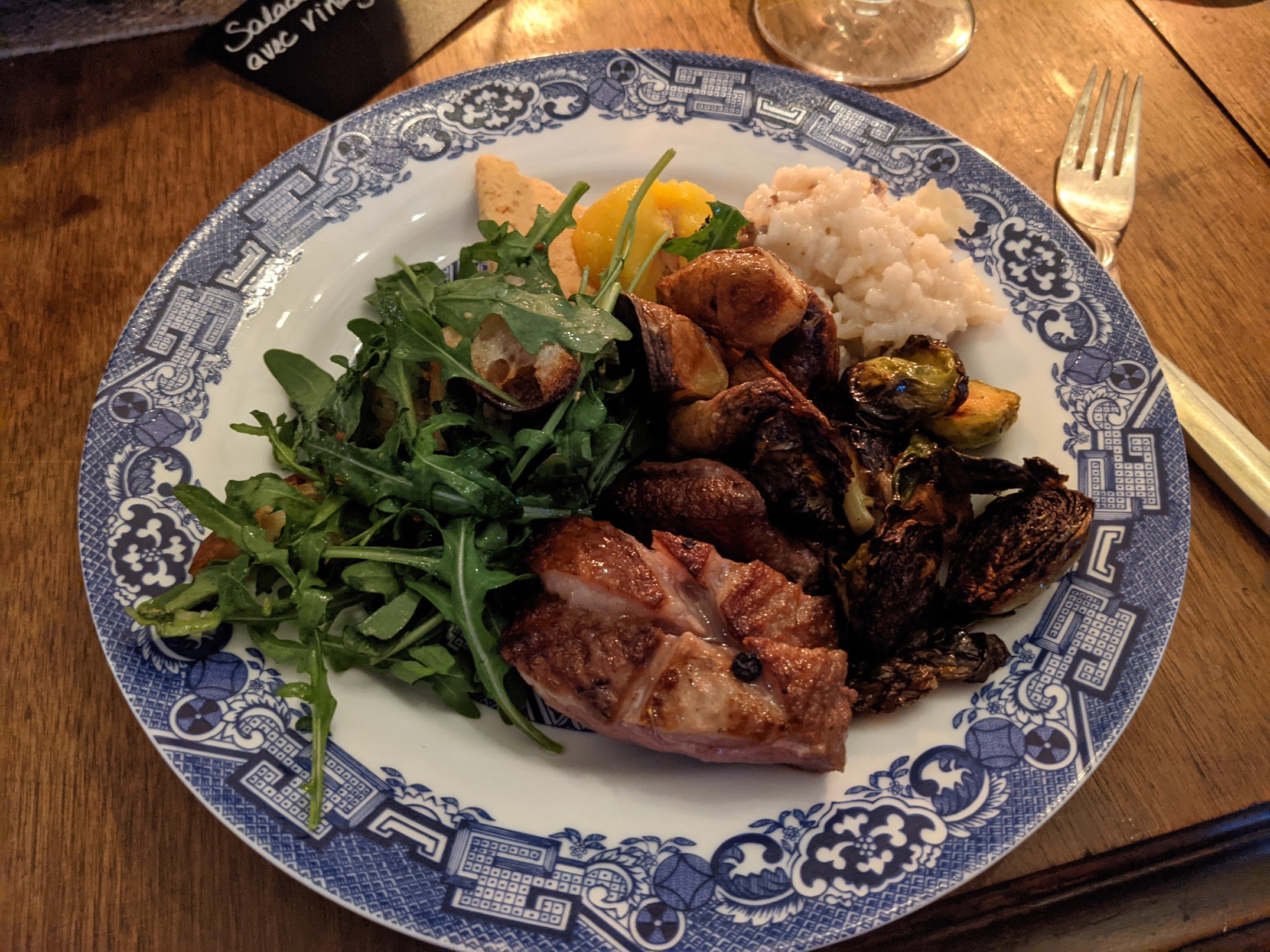
Fox News’ Sean Hannity caught “chilling and vaping” on air

In his 2020 book, “Hoax: Donald Trump, Fox News, and the Dangerous Distortion of Truth,” CNN’s Brian Stelter reported that Fox News’ Sean Hannity was so stressed out by his relationship with then-President Donald Trump and his erratic behavior that he was vaping incessantly in an effort to calm his nerves. Trump is no longer president, and Hannity now finds himself railing against a president, Joe Biden, instead of being an apologist and sycophant. But Hannity’s vaping continues.

Mediaite’s Reed Richardson reports that on Thursday night, March 18, Hannity “got caught on air chilling and vaping a little too long.”

“After the last commercial break of the show,” Richardson explains, “Hannity’s graphics cued up and he appeared on screen as usual. But he apparently wasn’t ready, as he was still wearing reading glasses and had a vape pen in his mouth.”

Hannity rolled into fellow far-right Fox News pundit Laura Ingraham’s show, “The Ingraham Angle,” and Ingraham made fun of her colleague.

“When the split screen handoff appeared seconds later,” Richardson notes, “Ingraham pretended to be caught unaware as well. Holding a glass of water, she deadpanned, ‘Oh, am I on camera?’ The pair then laughed off Hannity’s flub, with Ingraham joking that Fox viewers got a glimpse of ‘the real Sean Hannity.'”