Spring Sale: Get 1 Year, Save 58%

Changes by Trump donor heading USPS may “disenfranchise voters”: former top Postal Service official

A former top United States Postal Service official is warning that Louis DeJoy, the new postmaster general who is also a Trump donor and ally, is implementing changes at the agency could “disenfranchise” voters, according to The Guardian.

“Amid reports of significant mail delays, Ronald Stroman, who stepped down earlier this year as the second in command at USPS, said he was concerned about the speed and timing of changes that appeared to be implemented after Louis DeJoy, the new postmaster general, took office in June,” The Guardian reports. “USPS faces a financial crisis and every postmaster general is interested in cost savings and efficiency, Stroman said, but the question was how to balance those changes with the public’s needs.”

Stroman said that his concern is not only because the actions are taking place during a pandemic, “but a couple of months before an election with enormous consequences.”

“If you can’t right the ship, if you can’t correct these fast enough, the consequence is not just, OK, people don’t get their mail, it’s that you disenfranchise people . . . Making these changes this close to an election is a high-risk proposition,” he said.

While some mail delays could have been due to worker shortages because of the pandemic, concern increased when DeJoy took over the agency and began prohibiting overtime and ordering postal workers to leave mail behind at processing plants if it would cause them to leave late.

Read the full report over at The Guardian.

“Worse by the hour”: Rachel Maddow exposes shocking new examples of Postal Service “sabotage”

MSNBC’s Rachel Maddow on Thursday shined a light on shocking new examples of “sabotage” of the United States Postal Service by President Donald Trump’s administration.

“I just mentioned some breaking news about what’s going on with this ongoing story of the administration admitting now they are trying to sabotage the post office before we all vote absentee by mail in this election because of the coronavirus,” Maddow reported. “Today, the president really did come out and say he’s undermining the postal service and denying it funds so that they can’t handle ballots for the election.”

Maddow also noted a Thursday night report in The Philadelphia Inquirer.

“The U.S. Postal Service has warned Pennsylvania that some mail ballots might not be delivered on time because the state’s deadlines are too tight for its “delivery standards,” prompting election officials to ask the state Supreme Court to extend the deadlines to avoid disenfranchising voters,” the newspaper reported. “The warning came in a July 29 letter from Thomas J. Marshall, general counsel and executive vice president of the Postal Service, to Pennsylvania Secretary of State Kathy Boockvar, whose department oversees elections.”

“It appears to be getting worse by the hour,” Maddow warned.

Maddow also noted a recent report by the Sun Journal in Maine.

Customers across southern Maine will be waiting on as many as 80,000 pieces of mail that will arrive late because of new U.S. Postal Service policies, the president of a local postal workers’ union said.

“Rather than wait an extra 10 minutes for the mail to be ready, the trucks left the postal service’s Southern Maine Processing and Distribution Center in Scarborough exactly on time Monday morning, leaving behind roughly 80,400 letters that will be delivered late as a result, said Scott Adams, general president of the American Postal Workers Union Local 458. He estimated the processing center sorts approximately one million pieces of mail on a typical Sunday night,” the newspaper reported.

And she noted a Thursday report from Vice News.

“The United States Postal Service is removing mail sorting machines from facilities around the country without any official explanation or reason given, Motherboard has learned through interviews with postal workers and union officials. In many cases, these are the same machines that would be tasked with sorting ballots, calling into question promises made by Postmaster General Louis DeJoy that the USPS has ‘ample capacity’ to handle the predicted surge in mail-in ballots,” Vice reported.

Up to 204,691 extra deaths in the U.S. so far in this pandemic year

The number of deaths in the United States through July 2020 is 8% to 12% higher than it would have been if the coronavirus pandemic had never happened. That’s at least 164,937 deaths above the number expected for the first seven months of the year — 16,183 more than the number attributed to COVID-19 thus far for that period — and it could be as high as 204,691.

Tracking deaths

When someone dies, the death certificate records an immediate cause of death, along with up to three underlying conditions that “initiated the events resulting in death.” The certificate is filed with the local health department, and the details are reported to the National Center for Health Statistics.

As part of the National Vital Statistics System, the NCHS then uses this information in various ways, such as tabulating the leading causes of death in the United States — currently heart disease, followed by cancer. Sometime this fall, COVID-19 will likely become the third-largest cause of death for 2020.

Projecting from the past

To calculate excess deaths requires a comparison to what would have occurred if COVID-19 had not existed. Obviously, it’s not possible to observe what didn’t happen, but it is possible to estimate it using historical data. The Centers for Disease Control and Prevention does this using a statistical model, based on the previous three years of mortality data, incorporating seasonal trends as well as adjustments for data-reporting delays.

So, looking at what happened over the past three years, the CDC projects what might have been. By using a statistical model, they are also able to calculate the uncertainty in their estimates. That allows statisticians like me to assess whether the observed data look unusual compared to projections.

The number of excess deaths is the difference between the model’s projections and the actual observations. The Centers for Disease Control and Prevention also calculates an upper threshold for the estimated number of deaths — that helps determine when the observed number of deaths is unusually high compared to historical trends.

Clearly visible in a graph of this data is the spike in deaths beginning in mid-March 2020 and continuing to the present. You can also see another period of excess deaths from December 2017 to January 2018, attributable to an unusually virulent flu strain that year. The magnitude of the excess deaths in 2020 makes clear that COVID-19 is much worse than influenza, even when compared to a bad flu year like 2017-18, when an estimated 61,000 people in the U.S. died of the illness.

The large spike in deaths in April 2020 corresponds to the coronavirus outbreak in New York and the Northeast, after which the number of excess deaths decreased regularly and substantially until July, when it started to increase again. This current uptick in excess deaths is attributable to the outbreaks in the South and West that have occurred since June.

The data tell the story

It doesn’t take a sophisticated statistical model to see that the coronavirus pandemic is causing substantially more deaths than would have otherwise occurred.

The number of deaths the CDC officially attributed to COVID-19 in the United States exceeded 148,754 by Aug. 1. Some people who are skeptical about aspects of the coronavirus suggest these are deaths that would have occurred anyway, perhaps because COVID-19 is particularly deadly for the elderly. Others believe that, because the pandemic has changed life so drastically, the increase in COVID-19-related deaths is probably offset by decreases from other causes. But neither of these possibilities is true.

In fact, the number of excess deaths currently exceeds the number attributable to COVID-19 by more than 16,000 people in the U.S. What’s behind that discrepancy is not yet clear. COVID-19 deaths could be being undercounted, or the pandemic could also be causing increases in other types of death. It’s probably some of both.

Regardless of the reason, the COVID-19 pandemic has resulted in substantially more deaths than would have otherwise occurred … and it is not over yet.

Ronald D. Fricker Jr., Professor of Statistics and Associate Dean for Faculty Affairs and Administration, Virginia Tech

This article is republished from The Conversation under a Creative Commons license. Read the original article.

Mueller prosecutor Glenn Kirschner: Trump is a “career criminal” guilty of “negligent homicide”

Donald Trump has inflicted mass death on the American people through his malevolent, indifferent and willfully cruel response to the coronavirus pandemic. In the United States more than 5 million people have been diagnosed and 166,000 people have now died — and the true numbers are likely much higher. Public health experts predict that the final death toll may be as high as 250,000 to 300,000.

Yale University public health expert Dr. Gregg Gonsalves summarized this dire situation in a recent conversation with Salon: 

Trump’s pandemic response is not the same as Nazi Germany. It is not Rwanda. But Trump’s response is something that is well beyond a policy mistake. One hundred thousand people are dead. There are likely to be 150,000 or perhaps even 200,000 dead from the coronavirus pandemic in the United States. The estimates are that two-thirds or more of the deaths could have been prevented. …

Moreover, it was premeditated. There were people in the White House and elsewhere warning Donald Trump, “People are going to die. We need to do something about this.” And the White House made a concerted policy decision to let people die…. What the Trump administration is doing in response to the coronavirus is something we have not seen in the United States in a long time, which is basically wiping out a whole group of people by public policy.

In a new essay at the Atlantic, Ed Yong shows in rich and compelling detail how American government and society failed in its response to the pandemic, observing that Trump is himself a type of “comorbidity” for the pandemic disaster.

During congressional hearings in July, Illinois Gov. J.B. Pritzker summarized the Trump regime’s abandonment of responsibility for the common good and general welfare as resembling a real-life version of the “Hunger Games” books and movies.

It has now been reported that Donald Trump did not care about the coronavirus pandemic until it started to sicken and kill “our people,” meaning likely Republican voters in red states. This is more proof, if we needed it, that Trump feels no responsibility to the majority of Americans who do not support him and his regime.

In a recent interview with Chris Wallace on Fox News, Trump responded to a question about deaths from the pandemic by saying, “It is what it is.”  

Vanity Fair reports that Trump’s son-in-law Jared Kushner (who was tasked with leading a so-called coronavirus task force) advised the president to abandon a plan for national testing because the pandemic, at the time, was primarily impacting Democratic cities and states. Kushner and the Trump regime made the grotesque decision that sick and dying people in New York, Boston, Chicago and California would somehow help Donald Trump’s re-election chances.

Many of the Americans who have died (and will die) from the coronavirus pandemic would likely still be alive if Trump and his regime had treated the coronavirus as a serious public health emergency months ago instead of at first ignoring it, then sabotaging the response for personal and political reasons, and now continuing to risk human lives (including children and elderly people) in a quest to aid Trump’s chances of victory by forcibly “reopening” the economy.

Trump’s presidency is a moral crime and an abomination. It is a crime against human decency. Trumpism and its supporters are attacking and seeking to undermine American democracy, civil society and the rule of law. Trump and his followers have their boots on the necks of America’s multiracial democracy.

After Trump was impeached for his attempted extortion against the government of Ukraine as part of a scheme to defame Joe Biden (as a way of weakening Biden before the 2020 Election), Republicans in the Senate refused to convict their president. Despite the abundance of evidence against Trump, they effectively anointed him as a de facto emperor, a person above the law.

A huge question looms over the Age of Trump and its aftermath: Should Donald Trump and his inner circle face criminal charges for their fatal response to the coronavirus pandemic? Former federal prosecutor Glenn Kirschner believes the answer is an unqualified yes.

Kirschner is an NBC News and MSNBC legal analyst who teaches criminal law at George Washington University. During his 30-year career in law enforcement, Kirschner also served in the U.S. attorney’s office for the District of Columbia, where in the mid-1990s he worked under Robert Mueller.

In this conversation, Kirschner explained why Donald Trump and other members of his regime should be criminally prosecuted for negligent homicide or manslaughter because of their actions in response to the coronavirus pandemic. Kirschner also outlined his belief that the United States will need its own version of the Nuremberg trials to fully expose and punish the expansive wrongdoing of the Trump regime.

Kirschner also reflected on his onetime boss Robert Mueller, and the outcome of Mueller’s “Russia investigation.” Most troubling of all, he issued an ominous warning that Donald Trump will pardon Attorney General Bill Barr and other high-ranking members of the administration for any crimes if they continue to aid and abet his assault on American democracy and the rule of law — which may include attempts to enable Trump to stay in office by any means necessary.

You can also listen to my conversation with Glenn Kirschner on my podcast “The Truth Report” or through the player embedded below.

As usual, this interview has been edited for length and clarity.

How are you feeling? How do you make sense of Donald Trump and his administration’s assault on democracy, the rule of law and human decency?

I was a federal prosecutor for 30 years and a homicide prosecutor for 22 of those 30. So I worked with death and grieving families every single day in Washington as a homicide prosecutor. I have thick skin. I was in the Army before that. I believe that I do fine with difficult circumstances on the day-to-day. But what really upsets me is that the American public, by and large — at least the ones who are paying attention — are suffering from PTSD. This entire situation with Donald Trump and his administration has made the American people so upset and anxiety-ridden.

It is clear that If Donald Trump were not a rich white man and president of the United States he would likely already be in prison. You were a federal prosecutor. You understand the criminal mind. What do you see when you look at Donald Trump?

Donald Trump is a career criminal, plain and simple. I have asked myself repeatedly, “Why is it that Donald Trump has not been held accountable by prosecutors?” Be they state prosecutors in New York or federal prosecutors in New York or elsewhere.

You worked with former special counsel Robert Mueller for several years. What do you think happened with the Russia investigation? It seemed like Mueller should and could have gone much further in his investigation of Trump’s obvious collusion with Russia. Mueller was very restrained and careful in his testimony. There were moments when it seemed as though he was holding information back that would have been even more damning for Trump and his inner circle and allies.

There are several things happening here. Mueller is an institutionalist. In fact, he’s an “institutionalist’s institutionalist.” I believe that one of the hardest things for him to do was to come out and criticize Attorney General Barr for misrepresenting his findings and conclusions. That was difficult to do because as federal attorneys and law enforcement we push back in private. Not in public, but man to man. I literally had an office right next to Mueller and I was his point person on the FBI/Metropolitan Police Department cold-case task force. I have a sense of the man and the prosecutor and certainly the supervisor he was, which was second to none. Ultimately, we do not like to criticize our boss in this business and we really do not like to do it in public.

However, Mueller was also a Marine. As a military man or woman, you are taught that you must speak out if your superior has done something that is unlawful. Mueller did that with Bill Barr. He said, “Look, Attorney General: You mischaracterized my findings and conclusions, and as a result, the public is confused.” Judge Reggie Walton has gone even farther, saying that Bill Barr is a liar who spun the Mueller report by mischaracterizing the findings and conclusions.

I believe that Robert Mueller felt great pressure to move quickly through the investigation to a timely conclusion. Twenty-two months sounds like a long time, but it was light speed for what he accomplished. He did not chase down the money trails with Trump and his campaign because he probably made a calculation: “Look, my mandate, my jurisdiction, my scope, is to investigate the relationship and context of the Trump campaign and the Russians, and to prosecute any case I needed to in order to further that investigation.”

Mueller said he was not denied permission to do anything that he wanted to do in terms of the investigation. I believe him. I do think the Russia investigation seemed to be too narrow, because there was so much more that Mueller could have done. But he could have taken another 22 months, and his investigation would have outlived the Trump presidency. In my opinion, Robert Mueller balanced all of the competing concerns and interests and did what he thought was right.

As an institutionalist, I absolutely believe that Robert Mueller thought: “When I deliver this report which says, ‘sweeping and systematic interference,’ that details 140 contacts between Trump campaign members and the Russians, that the Trump campaign welcomed the assistance from Russians …” 

When I look at that, and I am a pretty forward-leaning prosecutor, give me another year and I would have found clear and overwhelming evidence that would have supported a conspiracy charge against Trump and the people in his orbit.

Perhaps more importantly with respect to Trump himself, in Volume Two of the Mueller Report there are as many as 10 documented felonies, federal obstruction of justice crimes, committed by the president of the United States. Mueller and his team showed overwhelming evidence of obstruction of justice.

Because Robert Mueller is an institutionalist, he thought he would deliver this evidence to Congress and that it would serve its purpose. The report was an impeachment referral to Congress. Robert Mueller, being the honorable man that he is, probably believed that Trump would then be impeached and convicted and removed by the Senate. Robert Mueller is a lifelong Republican. He really believed that the Republicans, his party, would recognize just how dramatic his findings are about Trump and Russia.

The second thing Mueller believed is that Donald Trump would be prosecuted — albeit when he leaves office, because of that horrible Office of Legal Counsel memo which says that a criminal president cannot be indicted while in office.

You are a law professor. What is the teachable moment from the Trump-Russia scandal and Mueller’s investigation?

You can document the crimes that have been committed by politicians, but if the rest of the system is unwilling or unable to do its part, which here is the Department of Justice, the judiciary and the legislative branch, then the system fails.

When the justice system fails, the American system of government fails. The teachable moment for me was that I always believed that there was a certain baseline of patriotism below which politicians would not sink, whether they were Republicans or Democrats. And what I have learned, and what we’ve all learned the hard way, is there is no bottom. There’s no baseline of patriotism below which, at this moment in time, the Republicans in the Senate would not sink.

The Republicans just want to remain in power, and they will do anything to remain in power, including continuing to support a president in the form of Donald Trump who could destroy the republic. No matter how dangerous Donald Trump is, the Republicans continue to support him. I don’t know how to fix that.

When Attorney General Barr recently testified before Congress, what did you see?

I saw a man who is corrupt to his core, brazenly and defiantly so. Barr has assumed the position of the president’s Roy Cohn, a man who is a partisan loyalist, a fixer, a person with no respect for the law. Barr has taken on that role happily.

There were so many things in his testimony before the House and Senate that merit condemnation and some that should be prosecuted. Barr is so brazen with his ethical and criminal conduct that I believe his pardon from Donald Trump is already printed, signed and sitting in Donald Trump’s desk. It has to be the case, because Barr does not appear to care if he incriminates himself.

For example, Barr wouldn’t even immediately and flat-out say that a president taking foreign assistance to win an election would be a crime. William Barr is bold. He’s so brazen. He is a bully. And Barr knows that he is getting his pardon from Trump, which means that he can say and do whatever he wants.

However, the one thing that William Barr may not want to believe is that every pardon that Donald Trump gives — and certainly Roger Stone was a quintessentially corrupt pardon — will need to be litigated beginning in January. And I believe that these corrupt pardons will be successfully attacked in the courts because the judiciary will rule that corruptly issued pardons, particularly by co-conspirators, are unlawful.

One of the reasons the courts will rule these pardons are unlawful is because if a criminal president can pardon all his criminal associates, then the courts will have put all those people above the law and above the reach of the courts. It is self-preservation, if nothing else, that the courts will say, “No, you can’t do this.” The courts will retain jurisdiction and the ability to try cases involving these political criminals.

The other possibility, and the most basic and obvious one, is that Barr, Trump’s other agents, and Donald Trump himself, break the law in plain sight because they believe they are going to be in power as long as they want. Trump and his regime are publicly trying to steal the 2020 election to stay in power indefinitely. If there are no consequences, then there are few if any reasons for Donald Trump and his agents not to break the law.

The combination of a pardon and re-election — are they going to successfully steal the next election? Or when he loses in a landslide, declare it is a product of Chinese interference, which is what they have been trying to set up with their crazy demonization of all things China?

The more Americans get sick and die from the pandemic, the more Trump is going to say, “It’s China’s fault.” I believe that is part of the explanation for why Trump is allowing the pandemic to spread across the country largely unchecked. He will blame his loss to Biden on China. Then Trump will order Barr to begin a national security investigation. We know that Trump and is supporters are going to try to steal the 2020 election and the presidency. If they are successful, then the American republic is done for. Barr and Trump together for another four years or more? The republic is truly doomed.

Do you believe that Donald Trump is running a political crime family? If so, how would you prosecute them?

I would probably use the RICO statutes and go after the Trump Organization and the family’s role in it as a racketeer influenced organization. It has a hierarchy and established roles for the different people in the organization. It will take a massive law enforcement effort to prosecute the Trumps. I would focus on fraud and corruption. 

You have been very public and bold in your assertions that Donald Trump should be criminally prosecuted and then convicted for his handling of the coronavirus pandemic. What would the indictment look like?

Some jurisdictions call this involuntary manslaughter or negligent homicide. The lowest level of homicide has three elements to the crime, and Donald Trump satisfies them easily.

The first element is that a person commits an act in a grossly negligent manner. Or there is a duty to perform an act and a person fails to perform it in a grossly negligent matter.

There are many different pieces of evidence which show that Donald Trump has acted in a grossly negligent manner in the way he has handled or mishandled the coronavirus pandemic. Trump had a duty to act as president of the United States and he failed to act — and that failure was a product of gross negligence.  

The second element of that type of homicide is that your grossly negligent act, or your grossly negligent failure to act, was reasonably calculated to result in serious bodily injury or death. With a deadly virus, the grossly negligent failure to act is reasonably likely to create serious bodily injury or death in another person.

The third element, which sounds like it is the toughest to overcome, is causation. The causation element says that a person acted in a grossly negligent manner where their failure to perform a duty or conduct or failure to act was reasonably likely to create death or serious bodily injury in another person.

The United States will need a truth committee if the country is to begin healing from the damage done by Trump, the Republican Party and their movement’s assaults on democracy, human and civil rights, and the rule of law. If you were asked to testify or advise at such hearings, what would you want to know about the Trump regime?

I have been advocating for a Nuremberg Trial-like approach to criminal prosecutions. A truth and reconciliation commission would complement the criminal investigations. If we are to heal and rebuild the United States after Trump, then the criminals must be held accountable.

The public must know why Donald Trump is beholden to Vladimir Putin and has made national security decisions based on what is in Putin’s best interests and not those of the United States and the American people. The pandemic and Trump and his administration’s response must also be investigated and revealed in all its elements. When one apparent criminal string is pulled, the whole ugly patchwork of conspiratorial conduct by Trump and his inner circle and others will be revealed. It is going to get ugly.

The widest possible investigative net should be cast to catch Trump and other apparent political criminals. In the final analysis, some hard decisions are going to have to be made about who to indict — beginning in January, after the presidential election, if Trump is no longer in office.


McConnell adjourns Senate for summer break after millions lose COVID benefits

Senate Majority Leader Mitch McConnell adjourned the Senate for the rest of the month without a deal on a new coronavirus relief package, saying on the floor that if a deal is reached, senators will get at least 24 hours notice to return to Washington for a vote.

The collapse in talks could deny benefits to as many as 30 million Americans currently collecting unemployment. Moody’s recently estimated that the failure to act on a new economic bailout could force another 4 million people out of work and cause the economy to contract by another 4%.

“If the speaker of the House and the minority leader of the Senate decide to finally let another rescue package move forward for workers and for families, it would take bipartisan consent to meet for legislative business sooner than scheduled,” McConnell said in making the announcement Thursday, referencing Democratic House Speaker Nancy Pelosi and Democratic Senate leader Chuck Schumer.

He added that he hoped the Senate would be able to “act sometime soon.”

However, any senator could block progress before Labor Day, not just Democrats. Indeed, about 20 Republicans have made clear that they believe the federal legislature has done enough to address the pandemic.

“From my standpoint, the breakdown in the talks is very good news,” Sen. Ron Johnson, R-Wis., a spending hawk, said last Friday. “It’s very good news for future generations.”

McConnell, who himself faces an unusually tough re-election battle in Kentucky this November, has made clear that he breaks with the hawks. “The American people need more help, coronavirus is not finished with our country, so Congress cannot be finished helping our people,” he said on the floor Thursday.

McConnell had kept the legislative session open for the week, which would normally have been the first of Congress’ annual August recess, in hopes that lawmakers and the administration could reach a bipartisan deal for a fifth coronavirus emergency bill. The abrupt adjournment, which extends until Sept. 8, the day after Labor Day, signals that negotiations haven’t progressed since collapsing late last week.

For its part, the Democratic-led House ended its session Aug. 4, having passed a sweeping $3 trillion rescue package in May. Senate Republicans rejected that bill as unrealistic, but waited to counter until late July, when they introduced a $1 trillion plan that Democratic leaders dismissed as a non-starter, with House Speaker Nancy Pelosi saying it was “not enough” to address the ongoing twin economic and public health crises.

But Republican senators weren’t even close to unanimous agreement among themselves, with fiscal hawks taking hardline stances against additional monthly payments and rejecting extended unemployment benefits outright.

Under these political pressures, President Trump, already on vacation at his Bedminster, New Jersey, golf resort, issued a series of four executive directives last Saturday that purported to provide an additional $400 in weekly unemployment benefits, $200 less than under the previous bill.

That order requires states to contribute 25% of the $400, however, and some Republican-governed states have not committed to doing so. Many experts have said that Trump’s new directives could take weeks or months to get money flowing, and the funds would last less than two months.

Shortly after Trump signed his directives, Pelosi and Schumer released a statement blasting the orders as “unworkable, weak and narrow,” adding that, in addition to reducing unemployment benefits, the cuts to payroll taxes “endanger seniors’ Social Security and Medicare.”

More than 30 million Americans were currently on unemployment as of the end of July, and many are fearful at the prospect of losing the additional weekly $600 afforded by the earlier coronavirus relief bill — a bonus that Republicans argue removes incentives to go back to work, though recent studies have shown otherwise.

A July study from the Aspen Institute found that the looming threat of eviction could render as many as 20 million Americans homeless by the end of September.

Contention over mail-in voting adds another wrinkle. House Democrats pushed to include $25 billion in aid to the U.S. Postal Service and $3.5 billion in supplemental election funding as part of the next phase of coronavirus relief, but Trump has vowed not to approve the emergency funds.

On Thursday the president told Fox Business that he will continue to block aid to the Postal Service, publicly acknowledging that doing so would undermine states’ plans to expand mail-in voting for Election Day.

“They need that money in order to have the post office work, so it can take all of these millions of ballots,” Trump said. “If they don’t get those two items, that means you can’t have universal mail-in voting. Because they’re not equipped.”

“It’s a stalemate,” White House economic adviser Larry Kudlow told CNBC on Thursday.

House Speaker Nancy Pelosi made the case for funding for the Postal Service, rent assistance, food aid and extended rapid COVID testing at her weekly press event, castigating Republicans as callous and flatly declaring that “people will die” if the debate drags into next month.

“Perhaps you mistook them for somebody who gave a damn,” she said when asked whether the smaller rescue package proposed by Republicans would be worth the trade-off to avoid weeks of gridlock. “That isn’t the case.”

Trump campaign’s new racist attack on Joe Biden: Tweeting mugshots of Black people

Donald Trump’s campaign has been tweeting mugshots of Black people out on bail in an effort to instill fear in voters about a future Joe Biden presidency.

The tweets featured the mugshots and full names of four Black defendants in Minnesota who had been released on bail money raised by the Minnesota Freedom Fund in the wake of the death of George Floyd in police custody.

“Donovan Boone is a violent fugitive who was in jail for attempting to strangle his ex-girlfriend,” reads one tweet. “Now he’s free thanks in part to Biden campaign officials who donated to pay bail fees. Does Joe Biden regret his campaign putting women in danger?”

The tweet then links to an official Trump campaign page, which says that the bail donations are “evidence your family won’t be safe in Joe Biden’s America.”

“He is actively putting Americans’ lives at risk by making our streets more dangerous, cops’ jobs more difficult, and families less safe,” the page says.

According to an investigative report by local Minneapolis Fox affiliate Fox 9, police had charged Boone with breaking into the home of an ex-girlfriend and choking her. The victim told police that she thought he was going to kill her.

MFF bailed Boone out for $3,000 cash. However, the group forfeited the bail money when the suspect later failed to show up for his court date and a warrant was issued for his arrest.

Bail fund donations have become popular amid the national reckoning on racial justice. Critics of the cash bail system, who range from local advocates such as MFF to Democratic leaders such as Sen. Bernie Sanders, Sen. Kamala Harris and Biden — whose website calls it a “modern-day debtors’ prison” — have long argued that it perpetuates racial and economic disparities.

MFF has taken in more than $35 million in donations from more than 900,000 people worldwide as Black Lives Matter protests swept the country, according to the nonprofit’s website and the Fox 9 report. Those 900,000 include at least 13 Biden staffers, Reuters reported May 30. Two days later the New York Times reported that MFF had raised $20 million in four days.

Previously, MFF had only received about $100,000 in donations each year, according to Fox 9.

The Fox 9 report reveals that some of the people helped by the Minnesota Freedom Fund (MFF) — in addition to protesters — include Darnika Floyd, a woman charged with second-degree murder after she allegedly stabbed a friend to death, and Christopher Boswell, who had been charged with kidnapping and sexual assault. MFF put up $100,000 to free Floyd and $350,000 to spring Boswell.

In 2001, Sen. Amy Klobuchar, D-Minn., at the time the Hennepin County attorney and now a prominent Biden surrogate, prosecuted Boswell for rape.

Greg Lewin, MFF’s interim executive director, told Fox 9 that his group’s mission isn’t about the crimes or even the police, per se, but the inequities of the cash bail system.

“I often don’t even look at a charge when I bail someone out,” Lewin said. “I will see it after I pay the bill because it is not the point. The point is the system we are fighting.”

The Fox 9 report was published Monday. The next day, the Trump campaign launched its ads and multiple conservative-leaning news sites carried the message. Right-wing site Gateway Pundit included screenshots pulled from the Trump campaign’s tweets, including the call-to-action text message number.

Sen. Kamala Harris, D-Calif., made history that evening as the first woman of color to join a major-party presidential ticket.

The Trump posts echo an infamous 1988 campaign attack ad targeting Democratic nominee Michael Dukakis and featuring convicted murderer Willie Horton, a Black man. Horton was allowed temporary leave from prison under a controversial “weekend furlough” program in Massachusetts’ prison system, but one day escaped and committed more crimes, including raping a white woman, before being caught.

At the time, Dukakis’ Republican opponent George H.W. Bush referenced Horton’s case as evidence that Democrats were “soft on crime.” Horton’s name and face later appeared in a pro-Bush TV ad, though the spot wasn’t affiliated directly with the Bush campaign. The ad has long been held up as an example of racist dog-whistlie politics, an issue that returned to the national conversation with another race-baiting Trump ad in 2018.

The Trump campaign and MFF did not respond to Salon’s request for comment.

Back to the future: Trump’s history of promising a health plan that never comes

Ever since he was a presidential candidate, President Donald Trump has been promising the American people a “terrific,” “phenomenal” and “fantastic” new health care plan to replace the Affordable Care Act.

But, in the 3½ years since he set up shop in the Oval Office, he has yet to deliver.

In his early days on the campaign trail, circa 2015, he said on CNN he would repeal Obamacare and replace it with “something terrific,” and on Sean Hannity’s radio show he said the replacement would be “something great.” Fast-forward to 2020. Trump has promised an Obamacare replacement plan five times so far this year. And the plan is always said to be just a few weeks away.

The United States is also in the grips of the COVID-19 pandemic, which has resulted in more than 163,000 U.S. deaths. KFF estimates that 27 million Americans could potentially lose their employer-sponsored insurance and become uninsured following their job loss due to the pandemic. (KHN is an editorially independent program of the Kaiser Family Foundation.) All of this makes health care a hot topic during the 2020 election.

This record is by no means a comprehensive list, but here are some of the many instances when Trump promised a new health plan was coming soon.

2016: The campaign trail

Trump tweeted in February that he would immediately repeal and replace Obamacare and that his plan would save money and result in better health care.

By March, a blueprint, “Healthcare Reform to Make America Great Again,” was posted on his campaign website. It echoed popular GOP talking points but was skimpy on details.

During his speech accepting the Republican nomination in July, Trump again promised to repeal Obamacare and alluded to ways his replacement would be better. And, by October, Trump promised that within his first 100 days in office he would repeal and replace Obamacare. During his final week of campaigning, he suggested asking Congress to come in for a special session to repeal the health care law quickly.

2017: The first year in office

January and February:

Trump told The Washington Post in a January interview that he was close to completing his health care plan and that he wanted to provide “insurance for everybody.”

He tweeted Feb. 17 that while Democrats were delaying Senate confirmation of Tom Price, his pick to lead the Department of Health and Human Services, the “repeal and replacement of ObamaCare is moving fast!”

And, on Feb. 28, in his joint address to Congress, Trump discussed his vision for replacing Obamacare. “The way to make health insurance available to everyone is to lower the cost of health insurance, and that is what we are going to do,” he said.

March: Eyes on Congress — And Twitter

House Republicans, with backing from the White House, were the ones to introduce new health legislation, the American Health Care Act (AHCA). The repeal-and-replace bill kept in place some of the more popular provisions of the ACA. Some conservative Republicans said the bill didn’t go far enough, deriding it as “Obamacare Lite” and refusing to vote on it.

On March 9, Trump tweeted, “Despite what you hear in the press, healthcare is coming along great. We are talking to many groups and it will end in a beautiful picture!”

Later that month, as efforts to pass the AHCA continued to stall, Trump updated his earlier promise.

“And I never said — I guess I’m here, what, 64 days? I never said repeal and replace Obamacare. You’ve all heard my speeches. I never said repeal it and replace it within 64 days. I have a long time,” said Trump in his remarks from the Oval Office on March 24. (Which was true; he had said within 100 days.) “But I want to have a great health care bill and plan, and we will. It will happen. And it won’t be in the very distant future.”

April and May: A roller-coaster ride of legislation and celebration, then . . .

After an intraparty dust-up, the House narrowly passed the AHCA on May 4. Despite tepid support in the Republican-controlled Senate, Trump convened a Rose Garden celebratory event to mark the House’s passage, saying he felt “so confident” about the measure. He also congratulated Republican lawmakers on what he termed “a great plan” and “incredibly well-crafted.”

Nonetheless, Senate Republicans first advanced their own replacement bill, the Better Care Reconciliation Act, but ultimately voted on a “skinny repeal” that would have eliminated the employer mandate and given broad authority to states to repeal sections of the ACA. It failed to gain passage when Sen. John McCain (R-Ariz.) gave it a historic thumbs-down in the wee hours of July 28.

September and October: Moving on . . . but not

Trump began September by signaling in a series of tweets that he was moving on from health reform.

But on Oct. 12, he signed an executive order allowing for health care plans to be sold that don’t meet the regulatory standards set up in the Affordable Care Act. The next day, Trump tweeted, “ObamaCare is a broken mess. Piece by piece we will now begin the process of giving America the great HealthCare it deserves!”

Roughly two weeks later, on Oct. 29, Trump got back to the promise with this tweet: “… we will … have great Healthcare soon after Tax Cuts!”

2019: More talk, more tweets

March and April: A moving target

It seems that 2018 was a quiet time — at least for presidential promises regarding a soon-to-be-unveiled health plan. It was reported that conservative groups were working on an Obamacare replacement plan. But in 2019, Trump again took up the health plan mantle with this March 26 tweet: “The Republican Party will become ‘The Party of Healthcare!'” Two days later, in remarks to reporters before boarding Marine One, Trump said that “we’re working on a plan now,” but again updated the timeline, saying, “There’s no very great rush from the standpoint” because he was waiting on the court decision for Obamacare. This was a reference to Texas v. U.S., the lawsuit brought by a group of Republican governors to overturn the ACA. It is currently pending before the Supreme Court.

Backtracking from his earlier promises to repeal and replace Obamacare within his first 100 days in office, Trump on April 3 tweeted: “I was never planning a vote prior to the 2020 Election on the wonderful HealthCare package that some very talented people are now developing for me & the Republican Party. It will be on full display during the Election as a much better & less expensive alternative to ObamaCare…”

June 16:

In an interview with ABC News, Trump again said a health care plan would be coming shortly.

“We’re going to produce phenomenal health care. And we already have the concept of the plan. And it’ll be much better health care,” Trump told George Stephanopoulos. When Stephanopoulos asked if he was going to tell people what the plan was, Trump responded: “Yeah, we’ll be announcing that in two months, maybe less.”

June 26:

But then, timing again changed as Trump promised a sweeping health plan after the 2020 election. “If we win the House back, keep the Senate and keep the presidency, we’ll have a plan that blows away ObamaCare,” Trump said in a speech to the Faith and Freedom Coalition’s Road to the Majority conference.

Oct. 3:

He reiterated this post-2020 election pledge in a speech to Florida retirees. “If the Republicans take back the House, keep the Senate, keep the presidency — we’re gonna have a fantastic plan,” Trump said.

Oct. 25:

Trump told reporters that Republicans have a “great” health care plan. “You’ll have health care the likes of which you’ve never seen,” he said.

2020: “Two weeks”

Feb. 10:

During a White House business session with governors, Trump commented on the Republican governors’ lawsuit to undo the ACA and whether protections for preexisting conditions would be lost: “If a law is overturned, that’s OK, because the new law’s going to have it in.”

May 6:

During the signing of a proclamation to honor National Nurses Day, Trump again said Obamacare would be replaced “with great healthcare at a lesser price, and preexisting conditions will be included and you won’t have the individual mandate.”

July 19:

Trump told Chris Wallace in a Fox News interview that a health care plan would be unveiled within two weeks: “We’re signing a health care plan within two weeks, a full and complete health care plan that the Supreme Court decision on DACA gave me the right to do.”

July 31:

With no sign of a plan yet, reporters asked Trump about it at a Florida event. Trump responded that a “very inclusive” health care plan was coming and “I’ll be signing it sometime very soon.”

Aug. 3:

Pushing the timeline once again, Trump said during a press briefing that the health care plan would be introduced “hopefully, prior to the end of the month.”

Aug. 7:

Citing his two-week timeline once again, Trump said during a press briefing that he would pursue a major executive order in the next two weeks “requiring health insurance companies to cover all preexisting conditions for all customers.” Trump also said that covering preexisting conditions had “never been done before,” despite the ACA provisions outlining protections for people who have preexisting conditions being among the law’s most popular components. The Trump administration has backed the effort to overturn the ACA — including these protections — now pending before the Supreme Court.

Aug. 10:

In response to a reporter’s question about why he was planning to issue an executive order when the ACA already protects those with preexisting conditions, Trump said: “Just a double safety net, and just to let people know that the Republicans are totally strongly in favor of … taking care of people with preexisting conditions. It’s a second platform. We have: Preexisting conditions will be taken care of 100% by Republicans and the Republican Party.”

Just before publication, we asked the White House for more information regarding when exactly the plan might be unveiled. The press office did not respond to our request for comment.

Robert Reich on Betsy DeVos’ deadly plan to reopen schools

Trump education secretary Betsy DeVos is heading the administration’s effort to force schools to reopen in the fall for in-person instruction. What’s her plan to reopen safely? She doesn’t have one. 

Rather than seeking additional federal funds, she’s using this pandemic to further her ploy to privatize education — threatening to withhold federal funds from public schools that don’t reopen.

Repeatedly pressed by journalists during TV appearances, DeVos can’t come up with a single mechanism or guideline for reopening schools safely. She can’t even articulate what authority the federal government has to unilaterally withhold funds from school districts — a decision that’s made at the state and local level, or by Congress. But when has the Constitution stopped the Trump administration from trying to do whatever it wants? 

DeVos is following Trump’s lead — prematurely reopening the economy, which he sees as key to his re-election but is causing a resurgence of the virus.

Let’s get something straight: Every single parent, teacher, and student wants to be able to return to in-person instruction in the fall — but only if no one’s life is put at risk. 

Districts need more funding, not less, to implement the CDC’s guidelines. Given that state and local governments are already cash-strapped, it’s estimated that K-12 schools need at least $245 billion in additional funding to put safety precautions in place — funding that Republicans in Congress and the Trump administration refuse to give.

One might think an education secretary would be studying what kind of safety precautions would work best, and seeking emergency funding for those safeguards. Not DeVos. Just like her boss in the Oval Office, she’s been hard at work shafting working families to advance her personal agenda. 

In late April, she issued rules for how states should use the $13 billion allocated in the CARES Act for schools. Her rules would divert millions of dollars away from low-income schools into the coffers of wealthy private schools. It’s such a blatant violation of federal law that several states are suing her and her department. 

DeVos’ entire tenure has centered on shafting low-income students and their families — the very people she’s supposed to protect.

She has repeatedly empowered the predatory for-profit college industry at the expense of the students they prey upon. Why? She has considerable financial stakes that are rife with conflicts of interest. Her financial investments are a web of holdings in for-profit colleges and student loan collectors.

When DeVos took office, she repealed an Obama-era rule imposing stricter regulations and higher standards on for-profit colleges. She also stopped canceling the debts of students defrauded by these institutions — a move that has prompted 23 states to bring a lawsuit against her. In the process, she was even held in contempt of court for violating a federal court order. 

Now, in the middle of the worst public health crisis in more than a century, she’s jeopardizing the safety of our students, teachers, parents, bus drivers, and custodians, while rerouting desperately needed public school funds towards the private schools she’s always championed.

Remember, when you vote against Trump this November — you’re voting against her, too. It’s a win-win.

Latest Fox News poll spells bad news for Republicans

Senate Majority Leader Mitch McConnell (R-KY) adjourned the Senate on Thursday for an August recess.

Despite the lack of a coronavirus stimulus deal, the Senate is not scheduled to meet for a regular session until September 8th — which is 26 days from now.

But a new Fox News poll demonstrates how much Americans are seeking additional help from the government during the economic catastrophe.

“The poll asks voters to choose one of two messages to send to the federal government right now — ‘lend me a hand’ or ‘leave me alone.’ A majority of 57 percent says they would ask Washington to ‘lend me a hand.’ Last year, just 34 percent asked for a hand-up (February 2019). The previous high was 44 percent in 2011, after the financial crisis,” Fox News reported.

“At the same time, the number saying they would tell the government to ‘leave me alone’ dropped 19 points, from 55 percent to 36 percent,” Fox noted.

The dramatic shift in the role of government was not the only bad news for Republicans in the Fox News poll. Here’s what people were noting about the results:


Trump left speechless after a reporter directly confronts him about “all the lying you’ve done”

President Donald Trump didn’t seem to be expecting to be directly challenged on his wild dishonesty on Thursday.

While he was taking questions in the White House press briefing room, a reporter was unusually blunt with the president.

“After three and a half years, do you regret at all all of the lying you’ve done to the American people?” the reporter S.V. Dáte asked.

“All of the what?” Trump asked, not yet catching on.

“All of the lying. All of the dishonesty,” Dáte responded.

“And who is that?” Trump asked.

“That you have done,” the reporter repeated.

Trump had no response. “Uh…” he said, quickly pointing to another reporter to move on. That reporter, too, seemed caught off-guard, and Trump had to urge him repeatedly to ask a question.

Watch the exchange below:

New “Ren & Stimpy” doc perpetuates the problematic myth of the cult cartoon’s bad-boy genius

The pre-title sequence of the spunky documentary, “Happy Happy Joy Joy: The Ren & Stimpy Story,” heaps praise on the controversial John Kricfalusi, the innovative creator of Nickelodeon’s cult favorite animated series from the ’90s. “He has a rock star status,” says one interviewee. His show is complimented for being “unapologetic and disgusting,” and, according to a news report, it was the most popular made-for-cable series in television history. 

But behind the scenes was a different story. There are reports that John K. (as he was called) was abusive. “There was an ugly undercurrent,” confesses one observer. Another woman says, referring to her experiences with Kricfalusi, “I still have nightmares about it.” 

Directors Ron Cicero and Kimo Easterwood plumb the depths of Kricfalusi’s genius and address his extremely bad behavior to chronicle both the trailblazing path he initiated in the field as well as his spectacular downfall. “Happy Happy Joy Joy” also probes, perhaps too gently, the conundrum — Can you separate the art from the artist?

If the film asks viewers to draw their own conclusions to that question, it does present Kricfalusi as initially endearing as he recounts falling in love with animation. He describes discovering flip-book animation, and how drawing funny, exaggerated illustrations made people laugh, a route to popularity. 

While he pitched network Saturday morning cartoon TV executives, acting out the entire storyboard, it wasn’t until he answered a call from Nickelodeon that anyone responded to his edgy style of humor. That producer was Vanessa Coffey, who claims she did not want his “Your Gang” series pitch, but instead was interested in the two supporting characters, Ren and Stimpy. She begged Nickelodeon’s head, Geraldine Laybourne, to greenlight the project, and six episodes were ordered.

This history is recounted in a zippy fashion that also reveals how John K. imagined the characters that would make him famous. Ren, he says, is basically an a**hole, and Stimpy his loyal, simpleminded friend. (John K. uses a less politically correct term). That Ren is voiced by Kricfalusi — and modeled after Peter Lorre — while his then girlfriend, Lynne Naylor, is the basis for Stimpy, is telling, and not just because of what it says about Kricfalusi’s megalomania and thoughts about women. Stimpy seems to love Ren no matter how much he is slapped around and abused. Their codependent relationship is obviously steeped in painful truth. “Happy Happy Joy Joy” also shows how John K. created other characters, such as George Liquor, after his demanding father. (His and other characters’ expressions are modeled after Kirk Douglas, a fun fact). 

There is considerable enjoyment in going behind the scenes with various animators at Spumco, the show’s animation studio. A brief tribute to the work of background Illustrator Bill Wray is terrific, as is a montage of clips that showed how “Ren & Stimpy” emphasized close-ups of outrageous and/or disgusting things and held those shocking images for laughs. (The “Ren’s Toothache” episode being a prime example). The documentary also illustrates how the studio sidestepped censorship issues in a creative fashion, getting approval from network executives on misleading storyboards. A lively discussion of “Son of Stimpy” shows how that episode — about Stimpy losing his fart — was both simultaneously offensive and touching. (Coffey emphasized creating emotion).

But the Spumco team is also said to have had a cult mentality in following its leader. Kricfalusi is described as being eccentric and volatile, yelling at employees, and creating a pressure cooker environment. This segues into the negative, and feeds into his controlling tendencies. He would hold up approvals on layouts, creating a production bottleneck, which would cause delays in delivering episodes. And, after the show was an instant hit, Kricfalusi let his ego run rampant, declaring that he would refuse to conform to budgets and deadlines. John K., who appears to be his own worst enemy, was soon fired.

And if that blow wasn’t enough, “Happy Happy Joy Joy” chronicles Kricfalusi’s vain effort to revive the show as “Ren & Stimpy ‘Adult Party Cartoon'” in 2003 — only to be canceled after eight episodes. (Comedy Central recently announced a reboot of the original series sans Kricfalusi is in the works.)

Eventually, the filmmakers get to the disturbing fact that Kricfalusi had an inappropriate relationship with Robyn Byrd, a teenage fan interviewed in the film. Byrd recounts exchanging letters with Kricfalusi when she was 14, and moving in with him at age 16, while she interned for him. What occurred between Kricfalusi and Byrd is not discussed in detail — a respectful move on the filmmaker’s part, perhaps — but it doesn’t have to be. It’s creepy, even more so when there is evidence of another teenager, Katie Rice, experiencing similar abuse.

Cicero and Easterwood prompt Kricfalusi to publicly apologize to Byrd. (Cynics might suspect he agreed to be interviewed if he would be humanized as well as demonized). This episode in the film is easily the most provocative, but it somehow feels unsatisfying because Kricfalusi’s contrition seems hollow.

“Happy Happy Joy Joy” could not have avoided this controversial moment. But the takeaways here are that the success of “Ren & Stimpy” encouraged its creator’s bad behavior. He was proving himself to his tough-love father who never thought he’d succeed. He was abusive to his staff to achieve his singular vision. He was despicable in his preying on teenage girls. (He even admits that he crossed the border from Canada illegally — but did become a U.S. citizen). The clues, tidily packaged, explain away Kricfalusi’s pathology. “Happy Happy Joy Joy” is a cautionary tale not a hagiography. Nevertheless, it ultimately leaves a bad taste in one’s mouth.

“Happy Happy Joy Joy: The Ren & Stimpy Story” releases on VOD on Friday, Aug. 14 or is available for pre-order on iTunes.

Trump misogyny: Donald calls Democratic women “mad,” Eric likes tweet calling Harris “whorendous”

One day after courting votes from “suburban housewives,” President Donald Trump went on Fox airwaves and launched a flurry of misogynistic attacks against a number of women in Congress, including Sen. Kamala Harris, D-Calif., Speaker of the House Nancy Pelosi, D-Calif., and Rep. Alexandria Ocasio-Cortez, D-N.Y.

The president on Thursday called the powerful members of Congress “mad,” “stone cold crazy” and “not even a smart person,” respectively.

Trump hurled the insults throughout a wide-ranging early-morning interview with Fox Business host Maria Bartiromo, first targeting Harris, who days earlier became the first woman of color named to a major-party presidential ticket.

The president called Harris “sort of a madwoman” as he reminded viewers of her blistering interrogation of Supreme Court Justice Brett Kavanaugh during his Senate confirmation hearings.

“She was so angry,” Trump said. “Such hatred with Justice Kavanaugh — I’ve never seen anything like it. She was the angriest of the group, and they were all angry.” 

“These are seriously ill people,” he added.

Referring to Black women as “angry” or “mad” is a racial trope. Earlier in the week, Trump suggested in another interview that presumptive Democratic nominee Joe Biden had insulted men by vowing to pick a woman for a running mate.

“Some people would say that men are insulted by that,” the president said, “and some people would say it’s fine.”

Adding that he was not yet sure which camp he best fit into, Trump said: “I don’t know.”

One of the president’s adult sons also joined in the misogynistic pile-on against Harris. Eric Trump on Wednesday “liked” a tweet from right-wing Twitter personality Lori Hendry calling Harris a “whorendous” pick for a running mate.

One day later, the president turned his focus from Harris to a favorite target: Ocasio-Cortez.

“AOC was a poor student. I mean, I won’t say where she went to school,” Trump said. “It doesn’t matter.”

“This is not even a smart person other than she’s got a good line of stuff,” the president continued before adding: “I mean, she goes out and she yaps.”

Next in line was Pelosi, whom Trump preemptively saddled with the blame if Republicans recapture the House in November — a daunting prospect which political experts almost universally believe is untenable.

“I believe we’re going to take back the House, because Nancy Pelosi is stone cold crazy,” the president claimed.

That was far from the first time Trump had called Pelosi crazy.

Just ahead of the Bartiromo interview, Trump went after another influential woman in politics, tweeting that Mika Brzezinski, the co-host of “Morning Joe” on MSNBC, was the “ditzy airhead wife” of Joe Scarborough. (Trump also called Brezinski’s co-host and husband a “complete Psycho” in the same tweet.)

The day before, Trump tweeted that “suburban housewives” would flock to him at the polls after he appealed an Obama-era affordable housing program under which “low income housing would invade their neighborhood.” 

Brzezinski used her own program to fire back Thursday, saying powerful women make Trump “scared like a little baby.”

“What’s your thing with women? You have a lot of problem with women. Like, you’re scared of them or something,” Brzezinski said. “I think the Kamala [Harris] thing has you freaked out, but I’ve noticed it’s all over the place. You get really like stressed out by women.”

“You have to say things that are sort of triggering about women that are like back from the 1950s,” the MSNBC host continued. “You’re calling us ‘housewives’ when you talk about voters.”

“Every time Kaitlyn Collins from CNN or Paula Reid from CBS . . . ask you a question, you scurry off the stage,” she concluded. “You get scared like a little baby.”

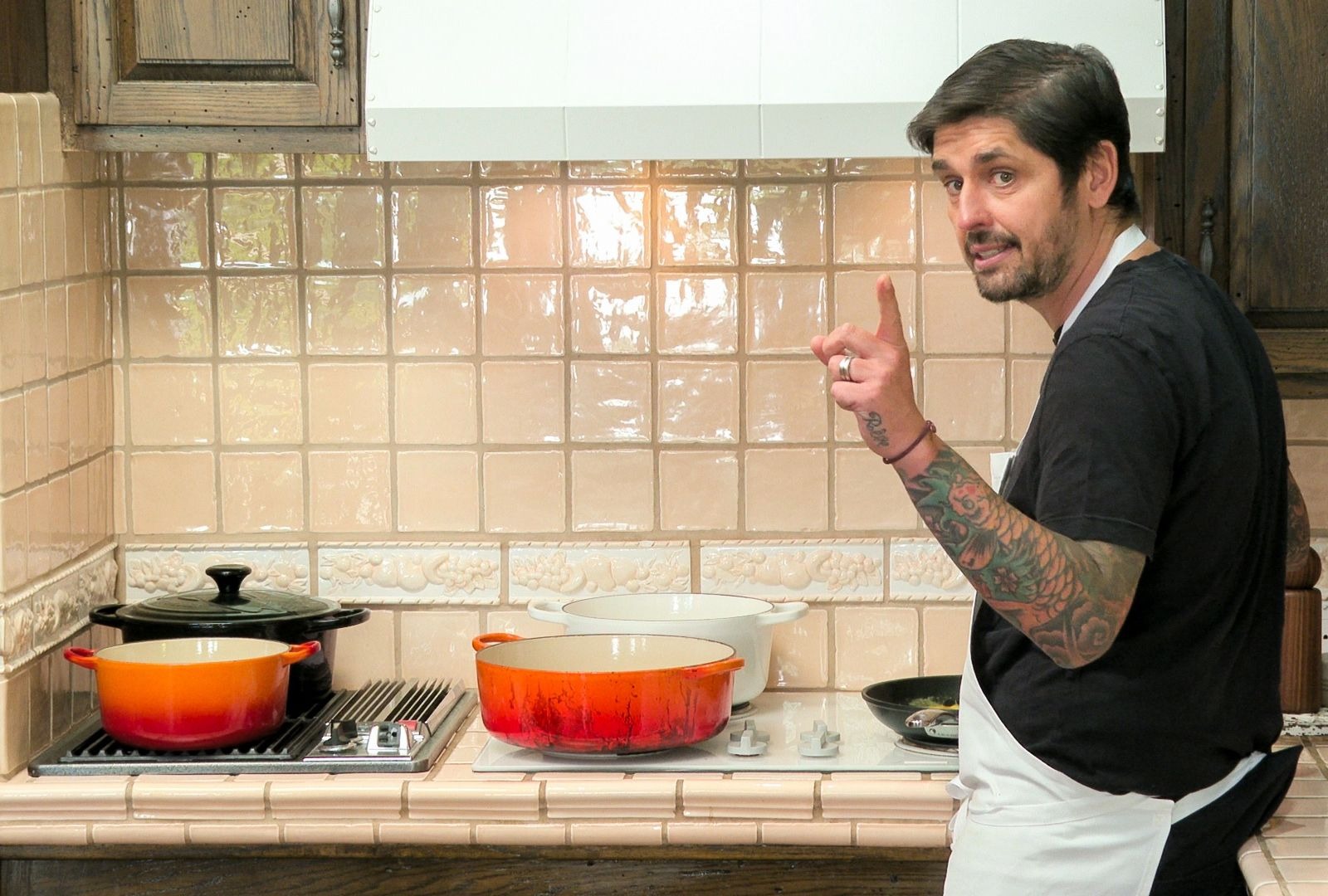
Superstar chefs teach on “Selena + Chef,” a quarantine cooking show that looks like no other

In the opening of her new unscripted HBO Max series “Selena +Chef,” musician, actress and TV producer Selena Gomez remarks, “I really love to eat, but I’m not the best cook.” Many of us probably have come to a similar conclusion since the beginning of the pandemic, as nights out have been replaced with endless evenings in. 

The multi-platinum selling recording artist quickly enlisted the help of a roster of world-renowned chefs: Angelo Sosa, Antonia Lofaso, Candice Kumai, Daniel Holzman, Ludo Lefebvre, Nancy Silverton, Nyesha Arrington, Roy Choi and Tanya Holland. 

But this isn’t your typical cooking series. “Selena + Chef” was conceived and produced while all the talent was completely in quarantine. The chefs filmed themselves in their own kitchens, while Gomez filmed herself in her own (with a little help from her housemates and grandparents, with whom she is in quarantine). 

It’s similar in concept to other home cooking shows that celebrities have executed themselves during the pandemic, like Alton Brown’s “Quarantine Quitchen,” the self-shot “Amy Schumer Learns to Cook,” and Iliza Schlesinger’s “Don’t Panic Pantry,” but is the first quarantine cooking show produced by major network. 

“This was very, very different — different than anything I’ve ever done in my career or that my production company had ever attempted,” executive producer Aaron Saidman told Salon. “It was our first COVID production.” 

Saidman, who is known for his work on numerous reality and nonfiction series ranging from “American Idol” to “Indian Matchmaking,” discussed the challenges of creating a show in the middle of a pandemic and Gomez’s desire to present an authentic cooking experience — kitchen fires and all. 

The following conversation has been lightly edited for length and clarity.

What sparked the idea for the series?

This was early days for the quarantine and sheltering in place in California. Like the rest of us, Selena found herself at home more than ever and found herself in the kitchen, specifically, more than she ever thought and developed a desire to know how to be better in the kitchen and to make healthy, delicious meals. 

And by her own admission, she’s not necessarily an expert in the kitchen. You know, she is amazing at many, many things. She is a genuine talent in so many areas, but I wouldn’t say the kitchen is one of them. I think she would agree. So there seemed to be a genuine need and something was certainly born from COVID and from all of our being at home. 

It turned into something where the viewer would get takeaways themselves about how to make these meals and something where Selena could be completely disarming, unfiltered, unrehearsed and unscripted — just be herself in the kitchen learning from these expert chefs. 

So on one hand, there is nothing terribly funny about COVID, of course; on the other hand, this is escapist fare, if you will. She is having a lot of fun making these meals and getting this expert advice. And if the goal for the viewer is to have fun with her and go on that journey with her — either vicariously or in trying to make those meals yourself — you can absolutely do that. Or if you just want to watch a fun cooking show with Selena Gomez, I think it works in that regard as well. 

Right — and that’s something I want to return to in just a moment. But can we pull back and talk about some of the realities of producing a show in the quarantine. You’ve served as a producer on a ton of different reality and nonfiction series. Could you explain how the filming of this show was different than your average television show?

Well, this was very, very different — different than anything I’ve ever done in my career or that my production company had ever attempted. It was our first COVID production. So, rule one was “do no harm and put no one in harm’s way.” So safety I think was paramount across the board. Not just for Selena’s safety, I should add, everyone’s safety. 

That was our number one priority. You know, people’s health and safety is way more important than any single television show. 

So the task was, can we do something fun and entertaining, but completely safe with brand new protocols that we had never implemented before? And I can bore you with some of the details . . .

Please do. 

So intrinsic to the conceit of the show is that, of course, Selena is in her kitchen in her own home with the other people that are sheltering in place with her, and we didn’t want to compromise that area. So we went in, we sanitized everything when she wasn’t in her kitchen. A crew rigged all of the remote cameras — and there are many — that we set up in and around her kitchen. Then we sent a crew back in to do further sanitizing and then we left. No one was ever in the kitchen space with Selena. 

Once we did that setup, we remotely showed Selena how to turn on all the cameras and were able to remotely check to make sure everything was technically working. From there we proceed to produce the show from outside with a crew of 10 people or less. There were never more than 10 total people outside her house. 

Everyone was socially distanced six or more feet apart from the next crew member, you had your own pre-packaged craft services, your own masks, your temperature was taken when you showed up to set and then periodically throughout the day. 

Selena did her own hair and makeup — people may be surprised to learn that. I think she did a great job. 

For sure, I definitely bookmarked the makeup look in the second episode for future reference. 

You know, hire Selena Gomez right here to do your hair and makeup. Another talent that we now know she possesses. 

There are 10 episodes, 10 chefs. It’s a really robust mix. We’ve got several “Top Chef” alums, some big names like Roy Choi and Nancy Silverton. What were the conversations about who to choose like? 

Really good question. So, we wanted to make sure that we were covering different styles of cooking, different types of cuisine. We wanted to make sure that we were getting great talent and great master chefs, something that was important for Selena and the viewer to get the best possible instruction. 

Because we had developed a pretty sophisticated remote filming system, I — I’m getting off on a tangent, but I hope when people watch this show, they aren’t watching it and thinking, “Oh, that’s pretty good for remote production.” I hope they don’t think about it at all because it’s seamless. 

But as a result of setting up remote cameras in Selena’s home and in the chefs’ homes, and due to the tight timetable we ramped up and had to shoot this in, we did not go outside of LA for chef casting. Thankfully, in the Los Angeles area, there are a lot of brilliant, amazingly talented chefs in the pool for the casting of the chefs. 

Our hope is that in future seasons, we can expand that and obviously film with great chefs in other cities. We just wanted to make sure that the remote production would work and now that we have achieved that and are confident in the results, we are looking to expand to New York and some other great culinary destinations to include more chefs. 

I wanted to ask as well about the dishes featured as well. You know, I write about food, I’m a decent home cook, but when I saw stuff like making a souffle or breaking down a whole octopus on the docket, I got a little nervous. But “Selena + Chef” made it feel accessible. Was accessibility one of the goals of the show? 

Accessibility was a very important goal of the production, that is accurate to say. It’s a careful balance. We wanted people to feel like they could make these dishes, but we also wanted to do some interesting stuff that pushed those limitations just a little bit. 

You know, I’m not sure that I necessarily feel comfortable grabbing a raw octopus, throwing it down on a cutting board and chopping its head off, but seeing Selena doing it made me feel like that was actually possible if I just follow the instructions and the steps. 

On one hand, you want it to feel incredibly accessible for the viewer and you want it to be something that Selena herself felt like she could reasonably pull off, but you also want to do fun, interesting things that you might not otherwise do. If you have a group of master chefs teaching you how to cook, you want to take advantage of that. You don’t necessarily just want to make a peanut butter and jelly sandwich. 

Well and when pushing limits, obviously, sometimes mistakes happen, and that was a really humanizing element of the show. It kind of reminded me of Julia Child on “The French Chef.” She would mess things up, but then would show us how to fix them if possible. We see a few mistakes on the show, like when Selena almost starts a little kitchen fire or undercooks a souffle — why did you all opt to keep those in the final edit?

Thank you for asking that question and for noticing that, because it was so important to the creative of this series. You know, Selena genuinely wanted to learn how to make this stuff and again, by her own admission, is not an expert in the kitchen. We didn’t want to gloss over any mistakes or trial and error that happens when the rest of us are in the kitchen trying to cook at home without any cameras on us. We wanted to reflect the realities of cooking at home, an authentic home cooking series.

It’s really what it was, and Selena was very gracious in allowing her flaws in the kitchen to be on display. I do think it’s a really humanizing element of the series and should hopefully make the viewer feel more comfortable getting into the kitchen and experiencing the goal of trying to make these dishes. 

We didn’t hire what you would call culinary producers, right? Where everything is pre-planned — the perfect amount of onion is diced up and put in the perfect little glass dish right in front of your refrigerator when it’s time to open it up and grab it. 

That’s precisely what we didn’t want to do. We wanted to do something that showed the authentic experience of what it’s like to not be a master chef in the kitchen and to actually make these meals. It goes back to the show being unrehearsed, unfiltered and truly unscripted. 

I also feel like we as viewers learn a lot from that element of the show. For example, the wet towel trick that Ludo [Lefebvre] shared to help reshape your omelet was a game-changer for me. Did you learn anything from the show that you think you’ll take into your home kitchen? 

Well, I will admit that I am not a cook and I am almost definitely a worse cook than Selena. So I have a learning curve that will be steep. I feel like with enough patience and by carefully following the instructions, I can — at some point — nail Roy Choi’s Korean barbecue breakfast taco.  

Oh, for sure. Now, Aaron, you mentioned the idea of upcoming seasons — maybe reaching out to chefs across the country and in New York. What is the status of upcoming seasons? 

What I can tell you is, we had a great experience. That’s the truth. Selena, the producers, the whole crew. We had a wonderful time making this show and we think that it’s something special and fun for the viewer. We’re excited to bring that to them because it was such a positive experience and we’re certainly eager and looking forward to doing more. 

The first three episodes of “Selena + Chef” are now available on HBO Max.

Eric Trump criticizes Nancy Pelosi and Chuck Schumer on “Fox & Friends” over “lavish” lifestyles

Eric Trump, the son of President Donald Trump, on Thursday slammed House Speaker Nancy Pelosi (D-CA) and Senate Minority Leader Chuck Schumer (D-NY) for leading “lavish” lives.

During a “Fox & Friends” segment, host Brian Kilmeade suggested that weekly unemployment claims had fallen below 1 million for the first time in five months because the federal government was not able to extend jobless benefits for those impacted by COVID-19.

Eric Trump suggested that Pelosi is a hypocrite because she supported a temporary payroll tax deferment in 2012 but opposes similar action taken by the president in 2020.

“She’s a phony,” Eric Trump opined. “Chuck Schumer’s a phony. And you know, Brian, these people have never actually signed checks in their life. They’ve been dependent on the U.S. government their entire adults life.”

He added: “And by the way, look at the lives that they live. I mean, they’re pretty lavish.”

Eric Trump also remarked on Democratic presidential candidate Joe Biden picking Sen. Kamala Harris (D-CA) as his running mate.

“I don’t know why magically she’s going to become this unicorn that somehow rejuvenates Joe Biden,” Eric Trump said. “I really believe she was kind of a Christmas present in August for my father and for the campaign. And we’re really excited that she’s on the ticket.”

You can watch the video below via YouTube:

Trump’s complaint about what water pressure does to his hair sparks proposal to change shower rules

President Donald Trump has a history of complaining about water pressure that he considers inadequate, from toilets to showers. And the Trump administration, Reuters reports, is proposing new rules that would allow shower heads to increase water pressure.

In December 2019, Trump complained about water pressure in toilets, saying, “People are flushing toilets ten times, 15 times as opposed to once.” And recently, during a White House event, Trump complained that water does not come out fast enough when he is taking a shower. Trump told those in attendance, “So, what do you do? You just stand there longer, or you take a shower longer? Because my hair — I don’t know about you, but it has to be perfect. Perfect.”

Consumer groups, however, have warned that increasing water pressure to Trump’s liking would result in higher water bills in the U.S.

Reuters explains that the Trump Administration’s proposal, “would effectively allow shower fixtures to include multiple shower heads that would get around the 2.5-gallon-per-minute standard Congress set in 1992, when Trump’s fellow Republican, George H.W. Bush, was president.” And Reuters notes that the U.S. Department of Energy has “also proposed easier standards on washing machines.”

According to Reuters, “The Trump Administration says its regulatory rollbacks save average American households $3100 a year, but conservationists say easing bathroom fixture standards could boost energy and water costs.”

Florida’s Ron DeSantis compares reopening schools to Navy SEAL operation that killed Osama bin Laden

Despite the worries of health officials, some school districts in Florida — a state where more than 8500 people have died from coronavirus — have started reopening. Far-right Republican Gov. Ron DeSantis, according to Washington Post reporter Valerie Strauss, discussed the reopening during a speech on Wednesday, August 12, comparing it to the Navy SEAL operation that killed al-Qaeda leader Osama bin Laden in May 2011.

During his speech, DeSantis noted that Laurie Gaylord, school superintendent in Martin County, Florida, told him she viewed the reopening of schools as “akin to a Navy SEAL operation.”

DeSantis said, “Just as the SEALs surmounted obstacles to bring Osama bin Laden to justice, so too would the Martin County school system find a way to provide parents with a meaningful choice of in-person instruction or continued distance learning.”

In May 2011, President Barack Obama ordered a military raid on bin Laden’s hideout in Pakistan. Navy SEALs were ordered to shoot to kill if necessary, and bin Laden was killed rather than captured. The raid came almost a decade after the al-Qaeda terrorist attacks against the World Trade Center in New York City and the Pentagon in Washington, D.C. on September 11, 2001.

During his speech, DeSantis also said, “The superintendent of Suwanee County, Ted Roush, told me that never before in his 26-year career had he witnessed what he saw during the first day of school: parents not only bringing their kids to school, but also, bringing presents and supplies for the teachers as a way to say thank you.”

President Donald Trump has been demanding that schools reopen in the U.S., and DeSantis — a staunch ally — has pushed for the reopening of Florida schools in most of its 67 counties. Although school officials in some Florida counties have called for remote learning because of high COVID-19 infection rates, Strauss notes that “the DeSantis Administration has approved remote learning plans for only a few districts, including Miami-Dade and Broward Counties.”

Supreme Court denies GOP attempt to block rules making it easier to vote from home amid pandemic

The United States Supreme Court has shot down a GOP request for an emergency stay to stop the suspension of witness and notary requirements for Rhode Island mail ballots, WPRI reports.

Rhode Island election officials can now send out mail ballots without the witness and notary requirements, which raised concern due to the coronavirus.

“Your health should never be the price of admission to our democracy,” Rhode Island Secretary of State Nellie Gorbea said in a statement. “Making it easier to vote safely from home by removing the burden of obtaining two witnesses or a notary is a common-sense step that will protect Rhode Islanders during this pandemic.”


Fox hosts call out Judge Jeanine for predicting “something” will keep Biden off of Democratic ticket

Fox News host Bret Baier pushed back Wednesday on his colleague Judge Jeanine Pirro’s baseless prediction that presumptive Democratic nominee Joe Biden will not be on the party’s ticket on Election Day.

Pirro made the comments during an appearance on “The Five” following Biden’s first joint appearance with his new running mate Sen. Kamala Harris, D-Calif.

“The first thought I have is: For some reason, I just have this feeling that Joe Biden isn’t going to be on the ticket,” Pirro baselessly predicted. “I have a sense that something is going to happen before the election, and he’s not even going to be on the ticket. So don’t even ask me if he’s going to make four years.”

Off-camera during Pirro’s remarks, co-host Dana Perino could be heard saying, “Oh, man.”

“We certainly don’t hope that anything happens to Vice President Joe Biden anytime soon,” Pirro added.

Baier rejected Pirro’s prediction, noting that Biden will officially be crowned the nominee at next week’s Democratic National Convention.

“Let me say, I respect Judge Jeanine’s opinions and her fiery passions about things,” he said. “Last night was the last Democratic primary — Connecticut, where 60 delegates went to Joe Biden. So he is going to be the nominee, and next week we will see the official nomination. You’re saying he doesn’t make it all the way. The bumper stickers are already printed. It is Biden-Harris. He is going to be the nominee next week.”

Pirro attempted to walk back her comments in response.

“I just want to say something,” she said. “Look, I wish him all good health — that’s not what I’m talking about. He’s got the numbers, but things are so crazy right now. I don’t know what’s happening in the Democrat Party, and that’s all I’m saying. I hope he lives forever — that’s not my point. I know he’s got the numbers.”

Pirro previously appeared on a panel on Sean Hannity’s show alleging that some mysterious force must have influenced Biden to select Harris, because she was somehow “not qualified” to be vice president.

The selection of Harris has played fairly well among the network’s “news side,” however.

After the duo’s joint appearance, Perino said Wednesday that “if you’re the Biden campaign, you’re pretty happy with how that went.”

Host Chris Wallace pushed back on allegations made by Trump and hosts like Hannity and Tucker Carlson that Harris was too far left to be the vice president.

“She is not far to the left despite what Republicans are going to try to say, ” Wallace said on Wednesday. “I think she is a reasonably safe choice. She was the obvious front-runner. She was the obvious choice. She adds some excitement to the ticket. She’s a statement to African-Americans — and especially to African American women, who are the real solid core of the Democratic Party — that the party does not take them for granted. And so, I think she is a pretty safe choice.”

Commentator Geraldo Rivera praised Harris as a “sensational pick.”

“They say nobody votes for a vice president, except this time they may be,” he said Wednesday. “I strongly advise President Trump not to go after Kamala Harris. Go after Joe Biden . . . This spells trouble for the Republicans, and I think she has strengthened Biden’s hand.”

Ohio blocks new ballot drop boxes amid alleged moves by Trump and DeJoy to “sabotage” Postal Service

Ohio Secretary of State Frank LaRose announced on Wednesday that he will ban county election boards from offering more than a single ballot drop box amid growing concerns that cost-cutting measures implemented by a Trump donor at the helm of the U.S. Postal Service (USPS) will impact an expected surge of mail ballots in November.

Citing time constraints, LaRose, a Republican, said election boards will not be able to offer more than one drop box for absentee ballots. Early voting in Ohio begins on Oct. 6.

“With under three months to go until Election Day, I don’t think it’s time to change the way we have done things here in Ohio and add new drop boxes and questions about the validity of that,” LaRose said at a Wednesday news conference. 

RELATED: Trump says he’ll block aid from Postal Service: “That means you can’t have universal mail-in voting”

The secretary of state sent a directive Wednesday to Ohio election officials, which warned that “boards of elections are prohibited from installing a drop box at any other location other than the board of elections.”

Democrats, as well as voting rights groups, claim that installing additional drop boxes is both legal and necessary. Nothing under state law prevents election officials from offering more than one drop box, according to Cleveland.com.

Pointing to the Trump campaign’s pending lawsuit against Pennsylvania over its plan to offer drop boxes, LaRose claimed that allowing extra would draw legal challenges. LaRose said he asked Ohio Attorney General Dave Yost, a fellow Republican, for a legal opinion three weeks ago; however, he has not heard back. 

RELATED: Mail sorting equipment being “removed” from post offices, leaving mail to “pile up”: union leader

“I don’t want to subject our county boards of election to a bunch of wasteful litigation,” he said, “but I do hope our legislature weighs in on it.”

In response, Democrats accused LaRose of “voter suppression,” Cleveland.com reported. They also called the request to Yost a “charade that would allow LaRose to eventually run out the clock.”

Bethany McCorkle, a spokeswoman for Yost, told the outlet that the attorney general was preparing to issue a legal opinion this week before LaRose withdrew his request on Tuesday.

RELATED: “The biggest information network in the world”: How Trump’s war on USPS threatens democracy itself

LaRose blamed the Republican-led state legislature for being slow to respond to issues surrounding the upcoming election. The legislature has delayed votes on whether or not to allow residents to request ballots online; whether or not to delay the deadline for voters to request an absentee ballot; and whether or not to approve LaRose’s plan to add pre-paid postage on ballot applications and blank ballots.

“I think that it’s a good thing for Ohio to have that,” LaRose said Wednesday of the latter. “But again, I’m not going to act outside the law and subject Ohio to a bunch of litigation on this, particularly when I think that’s litigation that we would likely lose.”

LaRose warned voters not to wait to request and submit their absentee ballots in order to ensure they will be counted, noting that the “Postal Service is not operating at peak efficiency.”

But Democrats rejected the blame cast by LaRose.

“This has nothing to do with the legislature, who LaRose likes to blame for everything he doesn’t want to do,” Ohio Democratic Party Chairman David Pepper said in a tweet. “This is his decision to artificially limit drop boxes to one per county. It’s a terrible decision, totally disregarding voter safety.”

Democrats claim that Ohio law does not need to be changed in order for LaRose to implement the changes.

“It’s just ridiculous to me that he keeps blaming the legislature for not acting,” state Rep. Bride Rose Sweeney, a Democrat, told the Columbus Dispatch.

Ballot drop boxes have swelled in importance this year. As LaRose noted, the USPS is “not operating at peak efficiency” after recently-installed Postmaster General Louis DeJoy, a top Trump and Republican Party donor, implemented a number of cost-cutting moves at the cash-strapped agency, which have slowed down mail delivery. The USPS has also removed mail sorting equipment from post offices, and plans to cut service and nearly triple the cost of states’ postage to mail ballots have advanced.

Democrats have tried to provide emergency aid to the agency, but President Donald Trump told Fox Business on Thursday that he will continue to block aid to the U.S. Postal Service (USPS), publicly acknowledging that doing so would undermine states’ plans to expand mail-in voting for Election Day.

Trump has falsely claimed that voting by mail is rife with fraud and favors Democrats. Hundreds of millions of mail ballots have been used in the U.S. over the last two decades and five states, including red ones, already have all-mail election with no signs of any significant fraud or party advantage.

“They need that money in order to have the Post Office work so it can take all of these millions of ballots,” Trump said in the Thursday interview with Maria Bartiromo. “If they don’t get [the aid], that means you can’t have universal mail-in voting, because they’re not equipped.”

Democrats have accused Trump and DeJoy of trying to “sabotage” the postal system ahead of an election he is currently projected to lose. Many have pointed to ballot drop boxes as a way to avoid having a ballot request or completed mail-in ballot become ensnared in postal delays amid crucial deadlines.

States such as Michigan and Connecticut already offer hundreds of ballot drop boxes, while others are considering adding them amid concerns over in-person voting during the coronavirus pandemic. But some red states, such as Tennessee, have banned drop boxes, and the Trump campaign and Republican National Committee are trying to block Pennsylvania’s expansion of them.

“There’s a lot of confusion just at the moment about when the ballots got mailed, to whom, when they’re going to arrive,” Connecticut Secretary of State Denise Merrill told NPR. “It’s going to be very tight, and ballot boxes play an increasingly important role in all this, because you know, you shave off two, three, four, maybe five days from when you mail a ballot.”

Kristen Clarke, who heads the Lawyers’ Committee for Civil Rights Under Law, testified to the Senate earlier this year that drop boxes have long been a key election access option for voters and are even more important this year amid polling location closings and pandemic fears.

“They complement the limited postal [services] that are available in communities,” she said, “and are just critical to providing access this season.”

We asked scientists whether Russia’s rush-job coronavirus vaccine is safe

On Tuesday, Russia’s president Vladimir Putin announced that his country had approved a coronavirus vaccine, making it the first country in the world to do so.

“I know it has proven efficient and forms a stable immunity,” Putin said, adding that his daughter had been inoculated. “We must be grateful to those who made that first step very important for our country and the entire world.”

The announcement was met with skepticism internationally, and not merely because the fast-track Russian vaccine announcement appears to be politically motivated. (It has been dubbed “Sputnik V,” a nod to the space race.) Rather, scientists are skeptical because this vaccine has only been tested on 76 volunteers, and there is little published data about the vaccine. According to AP News, half of the volunteers were injected with a vaccine in liquid form and the other half received the vaccine through a soluble powder. These trials started on June 17 and finished earlier in August. The results have yet to be published. 

Because most vaccine trials take years and involve tens of thousands of volunteers and lengthy studies, scientists have questions about the efficacy and safety of the Russian coronavirus vaccine.

“The news announcement is undoubtedly politically motivated, and there is essentially insufficient information provided to form a really firm conclusion,” Joel Ernst, Chief of the Division of Experimental Medicine at the University of California, San Francisco (UCSF), told Salon.

The vaccine was created by the Gamaleya Research Institute of Epidemiology and Microbiology, and the vaccine’s scientific name is called Gam-COVID-Vac Lyo. According to the Russian registration certificate, 1.5 million doses of the vaccine can be produced each year. The vaccine is a combination of two adenoviruses that have been engineered with a coronavirus gene. The vaccine is said to grant two years of immunity to the novel coronavirus that causes COVID-19. According to Science magazine, that estimate is based on vaccines Gamaleya has made with similar technology.

In the past few months, the United States, Canadian and British governments have accused Russian state hackers of trying to steal vaccine research, an allegation that Russian officials have denied.

In contrast, in the United States, vaccines must go through four phases of testing before reaching approval. [Read more about what each “phase” entails.] Phase 3 trials are the most important phase in drug development; that phase focuses on efficacy, and involves tests on thousands of people.

Yet the approved Russian vaccine didn’t make it to this phase, a fact that concerns many experts here in the United States. Nor has Russia published its Phase 1 and 2 trial data.

“There’s no way in the world that they would have any data on whether the vaccine is efficacious at preventing COVID-19,” Ernst said. “It would be impossible for them to know that given the information that’s been provided so far.”

Dean Blumberg, chief of pediatric infectious diseases and associate professor in the Department of Pediatrics at the University of California, Davis, told Salon that a lack of published data means a lack of public awareness of possible side effects. According to Science magazine, a Russian government press release about the vaccine simply said there were no serious effects.

Blumberg said jumping from Phase 2 to a wide release of the vaccine was risky.

“It’s a gamble, and so, it’s rolling the dice and hoping that it works, that it’s safe and that it’s effective,” Blumberg said. “They might win, but it’s also very risky.”

Blumberg said that by approving the vaccine and distributing it before completing Phase 3 puts both the safety and effectiveness of the vaccine at risk.

“There might be rare or unusual adverse effects following immunization that will only be picked up with large-scale studies,” Blumberg said. “If there’s something that occurs one out of every 500 immunizations or one out of every thousand or that occurs in a specific subpopulation, such as older males with mild renal disease, then you’re not going to pick that up in the Phase 2 studies.”

One reason for widescale vaccine testing is to avoid immune reactions in some of the population. As Blumberg explained, a nightmare scenario is that patients who are vaccinated with a shoddy vaccine later contract coronavirus anyway and have a much more severe case than if they hadn’t been vaccinated. 

Some of these severe immune responses could include the cytokine storm. In adults, a cytokine storm occurs when the immune system overreacts and floods the body with the eponymous signaling molecules. During a cytokine storm, patients are at risk of dying at the hand of their own immune system. Cytokine storm has been documented in some severe COVID-19 cases.

In children, the most severe COVID-19 cases have been manifestations of pediatric multisystem inflammatory syndrome (MIS-C) which appears to be an inflammatory response. Such a condition could be the end result of vaccinating children with a little-tested coronavirus vaccine. As of August 6, the Centers for Disease Control and Prevention (CDC) has received reports of 570 confirmed cases of MIS-C and 10 deaths.

“When you’re designing a vaccine . . . you can design it to go in a variety of ways in terms of the immune response,” Blumberg said. In some cases, Bluberg said, “it’s possible that if you give the vaccine before somebody is infected, they might have more of an inflammatory response. Then, it might not prevent infection, but [would] cause more of an inflammatory response.”

This could, Blumberg explained, lead to worse clinical outcomes in adults and might increase the risk of MIS-C in children.

Ernst, who is also an immunologist at UCSF, said distributing a vaccine that has yet to go through the proper testing trials is at risk of backfiring and putting everyone at a greater risk of getting infected.

“If you tell a whole bunch of people they’ve been vaccinated and then they don’t worry about themselves otherwise, and the vaccine actually didn’t lead to productive immunity, then you’ve got a colossal mess on your hands because you’ve misled people into thinking that they were protected, and then they’re going to get sick and they’re going to transmit the infection to other people,” Ernst said.

Finally, Ernst said, he fears that this “reckless” approach in Russia could heighten fears in the United States and decrease the likelihood of people getting the vaccine. A recent poll found that only two-thirds of Americans would get a coronavirus vaccine.

“It just may heighten the problem of vaccine reluctance here in the United States,” Ernst said. “If something goes wrong, or if there’s just a suspicion raised by the nature of things done in another country and some people extrapolate that as the way things are done here, then there’s an additional cause for concern.”

According to the vaccine tracker at The New York Times, there are more than 165 vaccines being developed around the world; 31 vaccines are in human trials. Leading infectious disease expert Dr. Anthony Fauci has been cautious about Russia’s vaccine. He said that “claims of having a vaccine, ready to distribute before you do testing [is] problematic, at best.”

Maskless Alex Jones shouts coronavirus conspiracies through a bullhorn at young park workers

Austin-based conspiracy theorist Alex Jones was filmed screaming without a mask for several minutes through a small bullhorn earlier this week at a small group of largely unresponsive hikers and young park workers seated in camp chairs at one of the new check-point entrances to the city’s Barton Creek greenbelt, accusing the “cult member kooks” of participating in an “illegal power grab of the people’s greenbelt.”

“My wife came here this morning, when you cult member kooks showed up here. And you asked her, ‘Where’s her reservation?'” Jones, founder and host of the conspiracy theory website InfoWars, was recorded shouting in an InfoWars video that first went viral Monday.

“Her reservation is that we live in a free country,” he added. “We live in America.”

The city opened the greenbelt Saturday for the first time since the July 4 weekend, implementing a reservation system to limit attendance amid the coronavirus pandemic. Jones, who has peddled conspiracy theories for years, alleged the new system was a profit scheme.

“I want this removed tonight,” he screamed, pointing at the makeshift wooden registration stand as a woman stared at her phone.

“Now you guys use your COVID hoax to like set a checkpoint up to take over the parks and start charging?” he asked the employees, all of whom wore masks in contrast to Jones. “It’s unconstitutional,” he claimed, falsely.

At one point, Jones bellied up to a young park employee seated in a camp chair and wearing a mask, eyeglasses and purple ball cap.

“Who are you, masked man?” Jones asked.

“I’m a lifeguard for Barton Springs,” the man replied.

“You’re a lifeguard for Barton Springs,” Jones said, “now part of the criminal power grab.”

Turning to address the wider crowd, many of whom were seen silently thumbing their phone screens, Jones then shouted: “This is outrageous criminal activity. This is a seizure of the infrastructure of Austin.”

“COVID-19 is a power-grab hoax,” he said at one point. “COVID-19 is a scam.” 

Jones has faced consequences for disseminating conspiracy theories in the past, including getting kicked off of mainstream social media platforms and YouTube. Notably, a Texas judge ordered Jones to pay $100,000 in a defamation lawsuit last year brought by the parents of victims of the Sandy Hook school shooting, whom Jones had repeatedly accused of participating in a hoax, prompting threats and harassment.

Last December, a former InfoWars editor admitted in an essay penned for the New York Times Magazine that the site pushed lies about a Muslim community in New York to support Jones’ fearmongering about Sharia law.

In Monday’s viral video, an InfoWars narrator at one point claimed that a San Antonio family had been turned away, but police intervened and allowed the family to enter.

“There they go,” Jones said, giving the alleged father of the family a high five. “Down their path to freedom.”

Austin closed the greenbelt along with a number of city parks last month as a wave of infections surged across Texas.

In April, just weeks into statewide lockdowns, Jones appeared to entertain the idea of cannibalism live on his show.

“I will admit it — I would eat my neighbors,” Jones said. “I’m not letting my kids die. I’m just going to be honest. My superpower is being honest. I’ve extrapolated this out — and I won’t have to for a few years because I’ve got food and stuff — but I’m literally looking at my neighbors now and going, ‘I’m ready to hang ’em up and gut ’em and skin ’em.'”

He blamed “globalists” for the lockdowns and forcing him to consider eating humans.

“You think I like sizing up my neighbor?!” he asked. “I’m gonna haul him up by a chain and chop his ass up! I’ll do it! My children aren’t going hungry! I’ll eat your ass! And that’s what I want the globalists to know — I will eat your ass first!”

Texas has seen at least 9,547 deaths from COVID-19, according to the most recent data from Johns Hopkins University. The U.S. has experienced at least 166,361 deaths and more than 5 million infections.

Epidemiologists at the University of Texas at Austin currently project the state will see more than 5,000 additional deaths by Sept. 1.

Is QAnon the new Christian right? With evangelicals fading, a new insanity rises

Remember the “Left Behind” series, about how the Rapture would whisk away all devout right-wing Christians before Jesus Christ unleashed the apocalypse on the unbelievers? Purity rings? Jesus Camp? Breathless stories about “girls gone mild,” giving up sex and tank tops for the Lord? A federal health official who believed that women who had premarital sex couldn’t feel love? Jerry Falwell Sr. and Pat Robertson blaming 9/11 on the “pagans and the abortionists and the feminists and the gays and the lesbians who are actively trying to make that an alternative lifestyle, the ACLU, People for the American Way”?

There can be no doubt that the heyday of Christian fundamentalism in America was the George W. Bush administration. Conservatives craved reassurance that they were defenders of “morality”, despite supporting an indefensible invasion of Iraq that led to the deaths of hundreds of thousands.  These claims to moral superiority over liberals mainly came in the form of policing hymen status, harassing women at abortion clinics and claiming a right to Christian forgiveness (for yourself) when caught with prostitutes or soliciting gay sex in public bathrooms

White evangelicals still hold considerable political power, which is why Donald Trump occasionally tries to get photographed fondling a Bible in ways he vainly hopes are convincing. Abortion and LGBTQ rights are still under serious threat, as the Christian right has made major inroads into the federal judiciary. 

Perversely, however, the cultural power of white evangelicals is clearly fading, both in terms of numbers and relevance, and that process started long before Liberty University president Jerry Falwell Jr.’s name was ever associated with a “pool boy.” Bibles have been largely replaced with Pepe the Frog memes. Public prayer has given way, among right-wingers, to chants of “Lock her up.” You hardly hear anyone on Fox News these days talking up premarital abstinence anymore. They’re too busy arguing that it’s no big deal that Trump has routinely cheated on his wives, or that it’s “pearl-clutching” to be angry that he has bragged about committing sexual assault

White evangelicalism is in decline, but another movement is rising to take its place, a movement that scratches that same right-wing itch towards false piety and elaborate tribalist mythologies that are incomprehensible to outsiders: QAnon.

Yes, QAnon, the bizarre paranoid conspiracy theory that holds (more or less) that behind the scenes of observable reality lies a shadowy worldwide pedophile ring run by Democrats and prominent celebrities, and that Trump’s bizarre and self-serving authoritarian behavior is actually an elaborate ruse to hide his secret fight to destroy this elite child-abuse conspiracy.

QAnon has grown rapidly since it first emerged in 2017, morphing from an online conspiracy theory to an explosive political and cultural phenomenon, one that can probably be considered a cult — although it lacks leaders in any conventional sense. While there hasn’t been systematic research into how many Americans are QAnoners, an NBC News study earlier this month discovered that QAnon accounts on Facebook have more than 3 million followers.

An estimated 20 QAnon adherents are running for congressional office this year. One of them, Marjorie Taylor Greene, just won a primary race for the Republican nomination in a Georgia district that is nearly certain to go red in November, in a landslide that suggests, at the very least, that her wacky beliefs didn’t scare off Republican voters. While some Republicans have publicly expressed reservations about Greene — who has apparently made racist comments and used sexist slurs — Donald Trump just called her a “future Republican Star”.

It’s a measure of our bizarre political climate that the Trump campaign sees QAnon as the future, but it’s hardly a surprise. Trump hasn’t been shy about courting QAnon followers, frequently retweeting its adherents (while later suggesting he doesn’t know much about it). But this public endorsement of a QAnon candidate brings the public embrace of the movement to the next level. Now Trump’s campaign is publicly attacking at least one Republican congressman who committed the sin of criticizing QAnon, with Trump’s deputy communications director arguing that the “real” conspiracy theory is the Russian collusion story. (That’s actually true, even if Team Trump has the story upside down.) 

As ridiculous as all of this is — in the real world, Trump has wished accused child-sex trafficker Ghislaine Maxwell “well,” and has shown no particular interest in the issue — the rise of QAnon as a more secular replacement for evangelical Christianity makes a lot of sense.

By claiming to pursue a crusade against the sexual abuse of children, QAnon gives its adherents a feeling of self-righteousness, one that allows them to ignore the reality that they support a deeply immoral and sociopathic president who is bragging about his efforts to steal the November election, and whose malicious mishandling of the coronavirus pandemic has destroyed our economy and led to 166,000 deaths and millions of damaged lives. It lets them construct a story where they’re the good guys who oppose sexual exploitation, when in fact they are fiercely loyal to a man who has been credibly accused of sexual assault by two dozen women

Evangelical Christianity played the same role for conservatives in the pre-Trump years, letting them feel holy and moral despite openly backing politicians who promoted immoral policies. But it came with a bunch of downsides, like being made to feel guilty for premarital sex, divorce or even (as Falwell Jr. found out) drinking and partying. With QAnon, you get to sleep in on Sunday and have all the sex you like, without giving up that pious assertion of moral superiority or the presumption of secret knowledge. 

QAnon even swipes a central tactic from the Christian right: Focusing its concern on imaginary threats to children, while ignoring the very real threat to children (and everyone else) posed by their beliefs and actions. 

With the Christian right, it’s all about melodramatic appeals that abortion supposedly “kills babies,” rhetoric that allows them to feel righteous while they undermine the services — social welfare, health care, housing and education — that allow parents to raise actual living children in safe, healthy environments.

QAnon claims to be fighting for children, but the child sex-trafficking victims they speak for are exclusively in their heads. In fact, QAnoners not only ignore the real cases of sex trafficking that exist, which have nothing to do with their conspiracy theory, but get in the way of activists who fight the real problem by clogging up phone lines, confusing their fundraising efforts, and interfering with social media campaigns. And they certainly don’t give a damn about the real-life children that Donald Trump separated from their parents and stuffed in cages along the border.

Embracing ridiculous beliefs, whether in the Rapture or in Pizzagate, seems to be a part of American right-wing DNA, perhaps because wild fantasies are the only way they can distract themselves from the real evil they do in the world. In light of that, the rise of QAnon makes sense. It’s the perfect mechanism, in Trump’s America, for conservatives to tell themselves a story about how they’re noble warriors for truth and justice in the face of overwhelming evidence that they’re not. Hardly anyone likes to face the genuinely bad things they’ve done, and QAnon provides Trump-loving conservatives a fable to justify all their dreadful choices.

Trump says he’ll block aid from Postal Service: “That means you can’t have universal mail-in voting”

President Donald Trump on Thursday told Fox Business that he will continue to block aid to the U.S. Postal Service (USPS), publicly acknowledging that doing so would undermine states’ plans to expand mail-in voting for Election Day.

House Democrats have pushed to include $25 billion in aid to the USPS and $3.5 billion in supplemental election funding as part of the next phase of coronavirus relief, but Trump has vowed not to approve the emergency funds.

“They need that money in order to have the Post Office work, so it can take all of these millions of ballots,” he told Fox Business host Maria Bartiromo on Thursday. “If they don’t get those two items, that means you can’t have universal mail-in voting. Because they’re not equipped.”

RELATED: Mail sorting equipment being “removed” from post offices, leaving mail to “pile up”: union leader

Trump made a similar comment during his Wednesday news briefing on the coronavirus pandemic.

“They don’t have the money to do the universal mail-in voting. So therefore, they can’t do it, I guess,” he said. “Are they going to do it even if they don’t have the money?”

The remarks sparked alarm among journalists.

“Trump is admitting he wants to obstruct mail-in voting,” CNN host Jim Sciutto tweeted. “Nice of the president to openly announce he’s trying to sabotage the election,” New York Times columnist Jamelle Bouie added.

RELATED: “The biggest information network in the world”: How Trump’s war on USPS threatens democracy itself

Trump, trailing significantly in the polls, has railed against mail-in voting for months, falsely alleging the practice is rife with fraud and baselessly arguing it would hurt Republicans. In fact, mail ballot fraud is virtually non-existent, and some states already have all-mail elections, including deep-red Utah.

Trump similarly threatened to veto the $2.2 trillion CARES Act back in April over the inclusion of funding for the USPS. The White House and the Democrats ultimately compromised, agreeing to provide the cash-strapped agency a $10 billion loan with administration-friendly terms set by Treasury Secretary Steven Mnuchin.

Trump’s comments come as Democrats worry that cost-cutting moves by recently-installed Postmaster General Louis DeJoy, a major donor to the president and the Republican Party, will impact the expected surge in voting by mail this fall. Since DeJoy took over, the agency has cut overtime and changed other policies, which have slowed down mail delivery across the country. The USPS has additionally removed mail sorting equipment from some post offices, leaving mail to “pile up,” according to the head of the Iowa Postal Workers Union.

Speaker of the House Nancy Pelosi, D-Calif., and Senate Minority Leader Chuck Schumer, D-N.Y., said last week that DeJoy had “confirmed that contrary to prior denials and statements minimizing these changes, the Postal Service recently instituted operational changes” shortly after he assumed office.

“We believe these changes, made during the middle of a once-in-a-century pandemic, now threaten the timely delivery of mail — including medicines for seniors, paychecks for workers, and absentee ballots for voters — that is essential to millions of Americans,” they wrote in a letter to DeJoy, calling the cost-cutting measures “counterproductive and unacceptable.”

The agency has also moved forward on a proposal to nearly triple states’ postage cost to send mail ballots. USPS General Counsel Thomas Marshall told state election chiefs that they should use high-priority first-class postage, which costs 55 cents per ballot, instead of third-class postage, which costs 20 cents per ballot, because third class may cause voters to miss voting deadlines, The Washington Post reported.

But postal workers have long treated election mail as first-class items, the outlet noted. Democrats expressed worry that the USPS might direct postal workers to stop doing so under DeJoy’s cost-cutting agenda.

“If any changes are made to long-standing practices of moving election mail just months ahead of the 2020 general election, it will cause further delays to election mail that will disenfranchise voters and put significant financial pressure on election jurisdictions,” Schumer and Sens. Amy Klobuchar, D-Minn., Gary Paters, D-Mich., Tom Carper, D-Del., wrote in a letter to DeJoy signed by all 47 Senate Democrats.

“Many state deadlines allow voters to request absentee ballot applications and absentee ballots within a few days of Election Day, so it is vital that standard delivery times remain low and pricing remain consistent with past practices to which election officials and voters are accustomed,” the senators added. 

House Democrats also warned that such a move would disenfranchise voters.

“The House is seriously concerned that you are implementing policies that accelerate the crisis at the Postal Service, including directing post offices to no longer treat all election mail as first class,” Pelosi and Oversight Chairwoman Carolyn Maloney, D-N.Y., said in a letter signed by more than 170 House Democrats. “If implemented now, as the election approaches, this policy will cause further delays to election mail that will disenfranchise voters and put significant financial pressure on election jurisdictions.”

The USPS said in a statement to The Post that it had long based delivery times on the class of postage used, including election mail, and “consistently recommended” that first-class mail be used. It also urged officials to clearly label election mail to help postal workers identify those items.

“To ensure that voters who wish to use the mail to vote can do so successfully, it is critical that election officials and voters are mindful of the time that it takes for us to deliver ballots, whether it is a blank ballot going to a voter or a completed ballot going back to election officials,” the agency said. “In other words, the time required for both legs of a ballot’s delivery through the mail must be taken into account.

“In many cases, certain deadlines concerning mail-in ballots may be incompatible with the Postal Service’s delivery standards, especially if election officials use marketing mail to send blank ballots to voters,” it added. “Using marketing mail will result in slower delivery times and will increase the risk that voters will not receive their ballots in time to return them by mail.”

However, a Michigan postal worker rejected the agency’s claim.

“Every political season, we treat political mail like first-class mail. It was always the priority to go out. Now, they’re treating it like bulk-rate mail,” the worker told The Post. “We recycle the bulk-rate mail that doesn’t go out, but first-class mail — we always try to get it to you. We forward it if you moved. We try to find you.”

You can watch Trump’s interview with Fox Business below via Twitter

Kamala Harris and history: With America at a crossroads, her role will be crucial

Joe Biden has chosen Sen. Kamala Harris as his running mate. She is the first Black woman to fill that role on a major-party platform, and only the second Black person to be part of a presidential ticket. If Biden is elected president, Harris will become both the first female vice president and first Black vice president. Given Biden’s age and stated intentions, it is conceivable that he will only serve one term and Harris will be his presumptive successor. One way or another, she appears positioned to become (perhaps) the country’s first woman president and second Black president.

Conventional political wisdom holds that a vice-presidential candidate adds little value to the overall ticket, but can potentially cause great harm. (See, for instance, Sarah Palin and Dan Quayle.)

At best, the vice-presidential candidate can improve the presidential candidate’s chances of victory in the general election by helping them win a crucial state, offering expertise which the nominee lacks, neutralizing the advantage of the rival ticket or possessing personality attributes or other intangibles which may appeal to undecided voters or secure and broaden the base.

Kamala Harris fulfills several, if not all, of these roles. She has experience as both a U.S. senator and the attorney general of California. As a Black woman, she represents two of the Democratic Party’s key constituencies.

Harris’ skill as a prosecutor makes her a formidable voice for the Democratic Party’s message in the debates and on the campaign trail. She is also media-savvy and not likely to make the kinds of errors in tone and style that have plagued Biden in his discussions of race in America, among other things. Harris is relatively young (at age 55) and is perceived as somewhat more progressive than Biden, thereby representing at least a partial intergenerational passing of the baton within the Democratic Party. 

In many ways, the choice of Harris is an anti-climax and almost inevitable in its obviousness. Edward-Isaac Dovere of the Atlantic described this several weeks ago: “If Harris is the pick, in retrospect this will probably seem like the longest, most drawn-out lead-up to an obvious conclusion in the history of modern presidential politics.”

Likewise, CNN’s Chris Cillizza summarized Biden’s logic this way:

There was no one else on Biden’s VP shortlist that checked so many boxes.

What’s telling is that Biden — and his team — didn’t feel the need to reach for a less predictable pick. They knew that while picking Harris would draw considerable attention, it would also be the thing most people expected them to do. Despite the historic nature of putting Harris on the ticket, Biden and his advisers knew that selecting Harris might be described by some as unsurprising.

But one man’s “unsurprising” is another man’s “safe.” And that’s exactly what Harris is — and what Biden believes he needs….

What Biden did is make the pick that maximized his chances of continuing to make the race a straight referendum on Trump while also selecting someone, in Harris, whose resume suggests will be ready to step in if and when Biden decides to step aside. This is the VP choice of a confident candidate, and campaign, who believe they are winning. And who believe that, as long they execute the basics of the campaign between now and November 3, Biden will be sworn in as the 46th president on January 20, 2021.

Moreover, Harris is an excellent choice because her selection signals that, at least in the 2020 election, the Democratic Party appears to be more concerned with serving its base and long-term electoral interests instead of engaging in painful hand-wringing over the importance of appealing to “swing voters.” the “white working class” or some other imagined group of right-leaning, predominantly white independents. In short, Kamala Harris as the Democratic Party’s 2020 vice presidential nominee is good political strategy.

How will Donald Trump and his campaign attack Kamala Harris?

Disinformation and outright lies circulated by the right-wing hate news machine, perhaps in combination with Russian assistance, will seek to manipulate low-information voters by claiming that Harris is a “radical,” a “socialist” or some kind of “Antifa”, Black Lives Matter anti-American who wants to abolish the police and the white suburbs.

The Trump campaign will use white supremacy, racism and other forms of anti-Black and anti-brown bigotry. Such values carried Trump to the White House in 2016 and have sustained his support during his first term. They continue to fuel his 2020 re-election campaign. During his remarks to the media on Tuesday, Trump called Harris “nasty” — an adjective he exclusively uses to describe women who offend his sensibilities — and then used a racial slur against Sen. Elizabeth Warren. In an act of classic psychological projection, the Trump campaign is already accusing Biden and Harris of being “the real racists.”  

Trump will of course deploy hostile sexism, as he did against Hillary Clinton in 2016, along with white male victimology and other forms of white-identity grievance politics. Racism and sexism will be used in combination with one another to describe Harris as a woman who is “angry” and  “does not know her place”. She will also be attacked by Donald Trump and his agents for being “disrespectful” toward him, Justice Brett Kavanaugh and other white conservatives

And of course there will be name-calling and other childish behavior designed to excite Donald Trump’s “human deplorables,” along with various other members of America’s right-wing kakistocracy. On cue, in a campaign email sent on Tuesday evening, Team Trump has already designated the Biden and Harris ticket as “Slow Joe and Phony Kamala.”

Black and brown conservatives will also try to feast on Kamala Harris. For them, she is a potential smorgasbord.

Because Black and brown conservatives are racial mercenaries who serve as human defense shields, as well as weapons, for today’s white supremacist movement, they will be tasked with making some of the most vicious, false and vile attacks against Kamala Harris. They will focus a great amount of time and energy on Kamala Harris’ “racial” background and claim that she is not a “real” or “authentic” African-American because her father is Jamaican and her mother is of Indian ancestry. In fact, Harris’s candidacy will prove very lucrative for Black and brown conservatives as they clog up the internet, cable TV, talk radio and other media with their attacks at the behest of Donald Trump and their other commanders.

With Kamala Harris, the American people are once again being forced to confront (as they did in 2016, albeit in a different way) both white supremacy and sexism at the ballot box.

In a new essay for the Atlantic, historian Ibram X. Kendi, author of “How to Be an Antiracist,” signals to the weight of this moment:

As [Trump’s] administration’s first term comes to an end, Black Americans — indeed, all Americans — should in one respect be thankful to him. He has held up a mirror to American society, and it has reflected back a grotesque image that many people had until now refused to see: an image not just of the racism still coursing through the country, but also of the reflex to deny that reality. Though it was hardly his intention, no president has caused more Americans to stop denying the existence of racism than Donald Trump. …

Trump’s denials of his racism will never stop. He will continue to claim that he loves people of color, the very people his policies harm. He will continue to call himself “not racist,” and turn the descriptive term racist back on anyone who has the temerity to call out his own prejudice. Trump clearly hopes that racist ideas — paired with policies designed to suppress the vote — will lead to his reelection. But now that Trump has pushed a critical mass of Americans to a point where they can no longer explain away the nation’s sins, the question is what those Americans will do about it.

Will the American people decide on Election Day, if only momentarily, to reject racism and sexism? Or will too many of them embrace Trumpism and take another great leap forward on a path of destruction, national shame and global embarrassment — not to mention mass death from Trump’s pandemic — because the allure of white supremacy in combination with sexism is too great to resist?

In less than three months, the American people will face a great reckoning, a referendum on their national character that they cannot dodge or avoid. Judgment will be rendered on bystanders and participants alike.