Help keep Salon independent

Then and now, “Pachinko” remains one of TV’s richest shows about life and living

Late in Season 2 of “Pachinko” waits a frame that's as flawless as it is simple, in that it holds two people. By then we've watched their yearning for each other sigh and strain through several episodes leading up to that perfect picture capturing them as they finally face what they know to be true and yet, cannot be. The pair stands inches apart but the lighting, airy atmosphere and the weight of their suppressed affection turn that length into miles of impossibility.

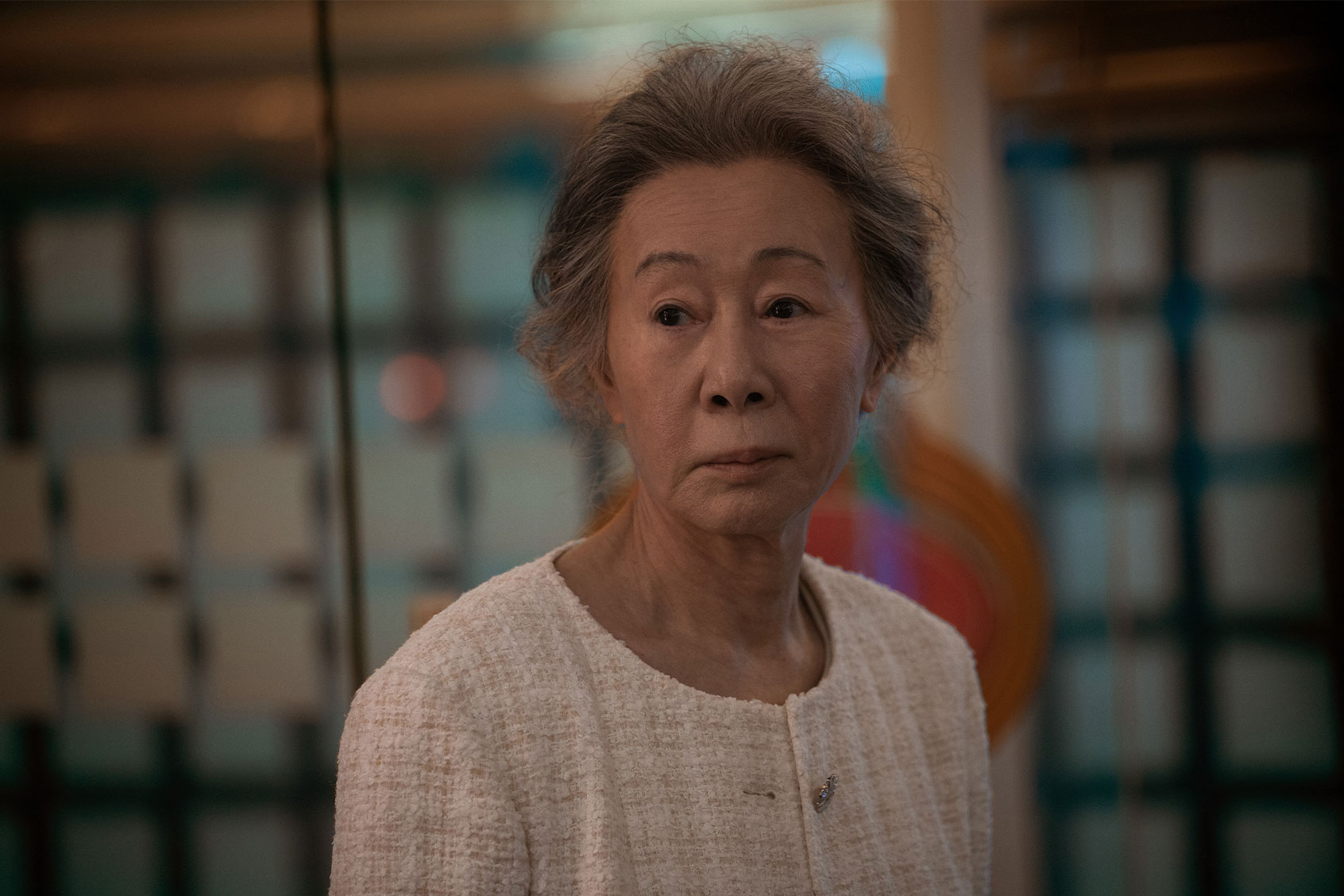
Such bubbles of longing buoy most love stories, although they're employed as sparing oases between expositional expanses. Soo Hugh’s adaptation of Min Jin Lee's exquisite novel refuses to be so stingy, following the lead of her heroine Sunja Baek.  Seen as a both 30-something mother in 1945 (Minha Kim ) and a revered elder in 1989 ( Yuh-jung Youn), Sunja's wealth is her resolve, and Hugh uses her story as the thread connecting the lives and loves around her like precious beads. 
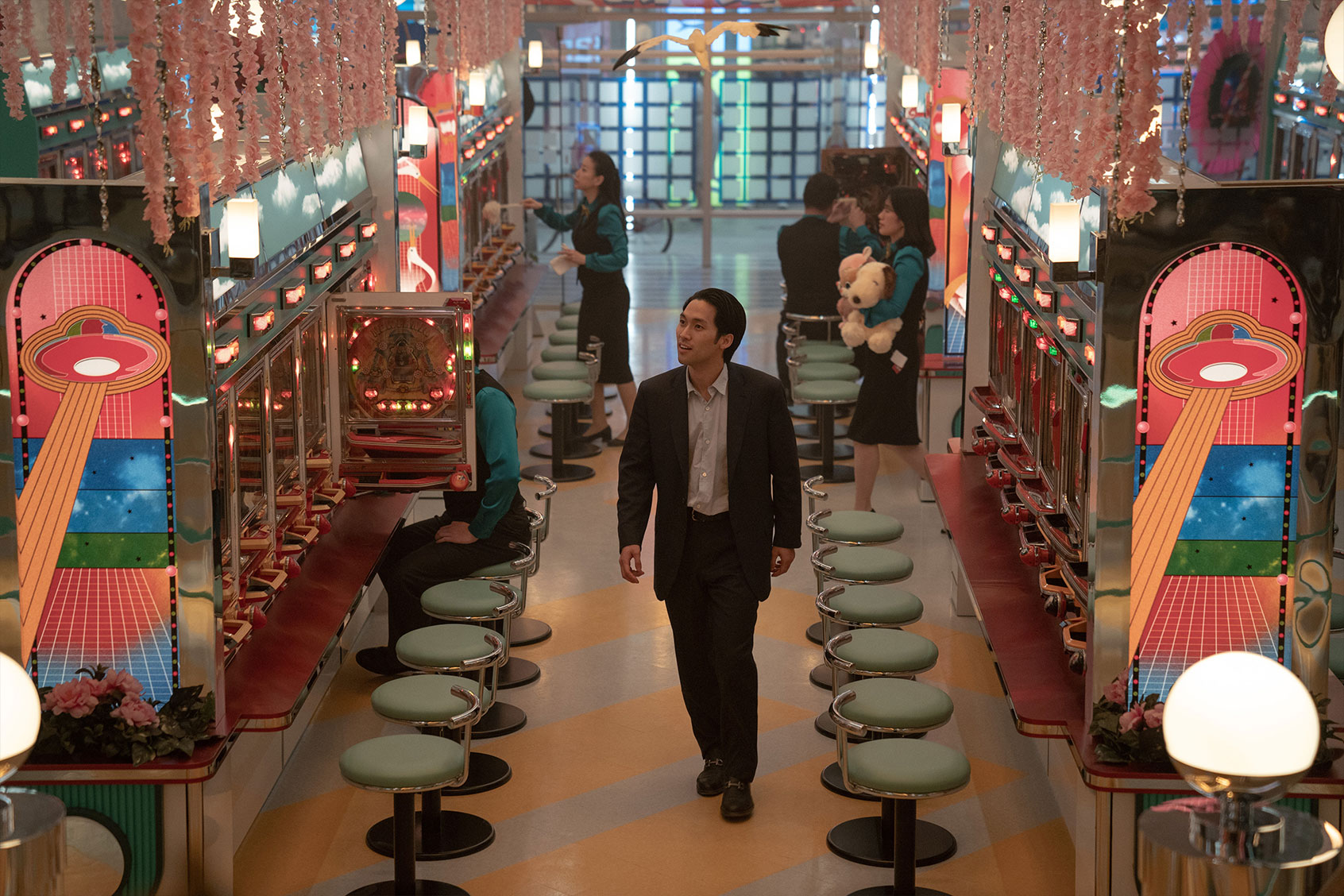
PachinkoPachinko (Apple TV+)

“Pachinko” is unrivaled on the small screen for its visual richness, the yield of what would otherwise be a modest setting. A story told in parallel timelines, it steps between the past and present seamlessly and without explaining itself. Gently and assuredly we understand the way choices seeded in the past wind their tendrils through the life of generations not yet born. 

We can tell where we are in Sunja Baek’s life based on the featured cast, costumes and sets, but also through the difference in energy emanating from Kim’s expressive determination versus Youn’s more overt personality, which holds the ease of one who has seen much but lost none of her will.  

Season 2 meets the younger Sunja in 1945, when she's with her sons Noa and Mozasu on her own . . . although not entirely. Noa’s biological father Koh Hansu (Lee Minho) is the family’s shadow, determined to bind himself to Sunja and Noa’s fate by silently and jealously shaping it in the background regardless of what Sunja desires. When the Allies begin bombing Japan, Koh arranges their escape to a farm in the countryside to live safely if not entirely in peace.

In its simultaneously presented 1989 story, Youn's Sunja and Mozasu (Soji Arai), now a successful owner of multiple pachinko parlors, witness her grandson Solomon (Jin Ha) struggle to recover all he’s lost after being ousted from his high-earning executive job. Solomon's offense was to protect an elderly woman from selling her property to a predatory businessman, Abe (Yoshio Maki) who was pressuring her, and who salts the earth for the man who wronged him.
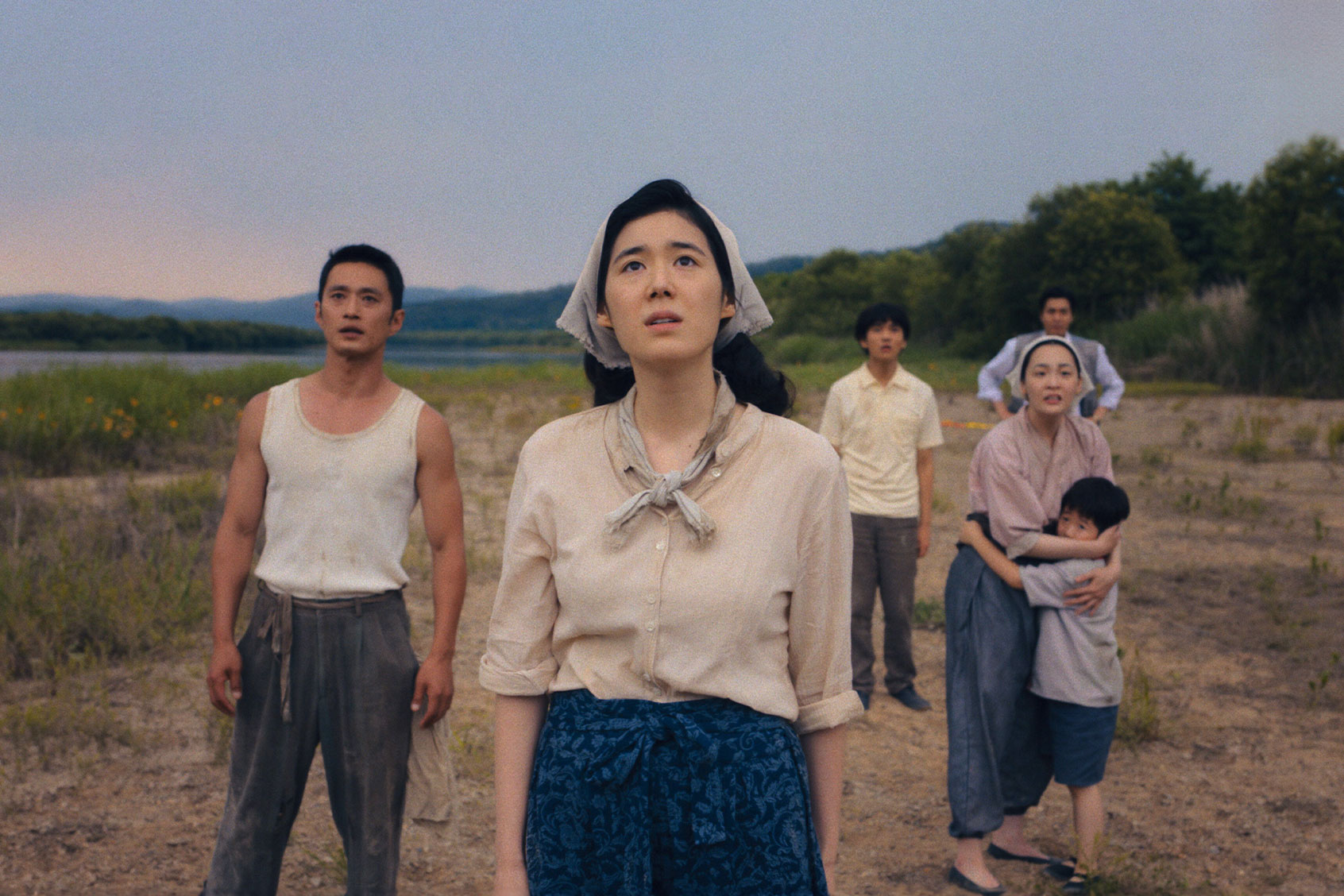
PachinkoPachinko (Apple TV+)Quiet shows aren’t often afforded their due, something of which you may be constantly reminded while absorbing the care and detail that goes into each of "Pachinko's" eight episodes. Its cinematography embraces the full palette of textures and tones, finding gorgeousness in the most common items — a box, a length of fabric, even a burnt-out ruin.  In the early 20th century Sunja and her family contend with many of those. At times they can see the horizon burning where a sunrise or sunset would otherwise illuminate the sky.

But their countryside retreat is another kind of tinderbox. Sunja and her sister-in-law Kyunghee (Eunchae Jung) bear both the anxiety of being parted from their husbands and the vocal resentment of the native-born Japanese women who despise them for being Korean. Neither entirely know what to make of Koh’s man Mr. Kim (Sungkyu Kim), who remains with them under Koh’s orders.

We need your help to stay independent

This is a show that steeps us in the experience of living through history and demonstrates the vastness of ordinary lives and families like the Baeks, especially in the times when we know what lies in wait.

Quiet shows aren’t often afforded their due, something of which you may be constantly reminded while absorbing "Pachinko."

When it’s mentioned that Yoseb, Kyunghee’s husband (Junwoo Han), has a factory job in Nagasaki, we know that is not the blessing the family believes it to be in such hard times. Another kind of cloud hangs over Solomon once he’s decides to mount an attack on Abe that he believe the powerful man won’t see coming. His grandmother senses the peril in Solomon’s overconfident business strategy, especially as he brushes off warnings that sound familiar from the other side of the Great Recession.

The magic of “Pachinko” doesn’t rest on its connection to historic benchmarks, although the episode depicting the hours and minutes leading up to the bombing of Nagasaki, half of it rendered in black and white, is a blunt-force knockout. 

Like all else in the life and times of the Baeks, that’s a tragedy that happens to them; the story’s muscle is in what they do in its aftermath. In this, the writers find a bottomless trove of understanding for everyone, including Lee’s Koh who could easily press his taciturn flintiness in a sinister direction. At times he does. But his desire to be part of something honest and good overwhelms the shadiness in his personality owing to Lee's uncomplicated performance. 
PachinkoPachinko (Apple TV+)

Koh's arc and that of Mr. Kim are the most absorbing among the secondary figures, although not everyone is developed as richly. Anna Sawai reprises her role as Solomon’s now-former co-worker Naomi, and in the wake of her extensive and formidable presence in “Shōgun,” you may be disappointed with how little she has to work with.

A similar nagging accompanies Minha Kim’s performance this season which, though still moving in its subtlety does not lay many additional planks on whatever bridge eventually joins her rendition of Sunja and Youn’s. Her grandmotherly Sunja wears an unbothered determination fiercely throughout the season, especially when a shameful insult to which she’s subjected gives rise to an unexpected friendship that’s both affirming and potentially renewing.  


Want a daily wrap-up of all the news and commentary Salon has to offer? Subscribe to our morning newsletter, Crash Course.


Even that is not entirely immune to the danger of the past rolling into the present, as we’re reminded scene by scene. Several characters repeat some version of the phrase, “always look forward,” which is fortifying but also unrealistic. The writers prove this many times over by having the ramifications of past decisions sneak up from behind to shove an unsuspecting figure with a schoolyard bully’s remorseless force.

More often in this darker span, “Pachinko” emphasizes how all histories matter, both the common and the personal, regardless of who is living them and how. Sunja sees this in her children and their potential to move her legacy beyond what she could imagine. 

“Your grandfather always said he wanted me to fly high so I could see just how big this world is,” she tells one of her sons. “But can you promise me something? Every so often, you come back and tell me. I want to know as well just how big it is.”  By returning to us, "Pachinko" gives us more of a sense of that immensity in ways we previously may not have thought possible. 

"Pachinko" streams weekly starting Friday, Aug. 23 on Apple TV+.
Military official urges removal of fast-food on bases to improve service members’ health

As the military grapples with an increasing prevalence of clinically overweight personnel, the removal of fast-food outlets from military bases could play a pivotal role in curbing obesity rates among service members, said a senior U.S. military official, according to a report from Military Times

“If you want to reduce obesity, serve different types of food at the chow hall,” said Marine Corps Sgt. Maj. Troy E Black, the senior enlisted advisor to Joint Chiefs of Staff Chairman Gen. CQ Brown, in an interview late last month on the “MOPs & MOEs” podcast. “Remove immediately all fast-food restaurants from all installments.” 

While Black noted that dining halls sign contracts with the Defense Department, meaning they have stricter standards for nutritional quality in the food they serve, “unfortunately, it doesn’t compete with a cheeseburger” when there are fast-food locations on-base. Many American military bases have lease and franchise agreements with fast-food restaurants — like Arby’s, Dairy Queen, Burger King, KFC, McDonald’s and Panda Express, among many other — and offer them as amenities. 

According to an October report from the American Security Project, nearly 70% of service members are either overweight or obese, while Defense Department data shows the obesity rate among service members has more than doubled from 10% to 21% in the last decade. 

Michael Keaton: Without Tim Burton, “there is no Marvel Universe, there is no DC Universe”

Actor Michael Keaton in a recent interview with GQ shared how he believes Tim Burton's "Batman" (1989), in which he was cast as the titular character, had a major role in the subsequent success of the Marvel and DC universes. 

“Tim deserves enormous credit. He changed everything,” the "Beetlejuice" actor said, speaking about Burton's choice to cast him as the superhero, a decision that was met with considerable backlash. “I can’t necessarily say this, but there’s a strong possibility there is no Marvel Universe, there is no DC Universe, without Tim Burton. He was doubted and questioned.

“He hasn’t gotten himself enough credit for going, ‘Yeah, that guy,’” Keaton continued. “And everybody went, ‘Wait, Michael? You worked with him on 'Beetlejuice,' right?’ But I think what happened was Tim saw 'Clean and Sober' [Keaton’s first non-comedic role]. I get the credit. I don’t know that he got enough credit for making that move. That was a bold move.”

Reflecting on portraying Gotham Citys resident crime fighter, Keaton said he felt "proud of it actually because I like to prove everybody wrong. It’s fun for me.”


Jon Stewart mocks Fox News for having to admit DNC was a hit despite host’s attempt to spin

Jon Stewart picked apart conservative media's reactions to the week-long Democratic National Convention, highlighting the hypocrisy in the Fox News pundits' contradictory comments about the event.

During a live "Daily Show" episode Thursday, Stewart recapped the lively four-day program in Chicago that had entertainers like Lil Jon, Stevie Wonder and Pink performing and saw Vice President Kamala Harris accept the Democratic nomination for president. Officially, Harris is now the first Black woman and first Asian person to become the party's pick for president. However, all the excitement and success surrounding the DNC didn't convince Fox News anchors. 

"It's very difficult when you're inside that convention environment to know if this has been a successful endeavor," Stewart said. "Perhaps the best way to see how it really went is through the eyes of a more objective observer, a fair and balanced organization that will give you a clear-eyed perspective."

Then the comedian played a montage clip of multiple Fox News pundits and hosts who said "there's not much joy" at the DNC or noted empty chairs during President Joe Biden's speech. 

"The vibes are off. . . This is probably the most boring scene I’ve ever seen in my entire life," host Jesse Watters said in one clip.

“Oooh, so boring,” Stewart joked. “I forgot your life is a never-ending joyride of talking to Brit Hume in between catheter ads on Fox. But unfortunately for Jesse Knievel over here, the next night even Fox had to acknowledge, ‘fire emoji, fire emoji, fire emoji.'"

The host showed clips of Fox News hosts admitting that the DNC looked like an exciting time even though they called out Democrats for focusing on “all the vibes” instead of “the actual issues that matter.” 

"You can't eat good vibes," said host Laura Ingraham.

"So which is it?" Stewart retorted. "Did the vibes fatten you up or are they emotional Ozempic? I guess you’re right. You can’t feed your family on vibes. You can only feed your family on immigration fearmongering."

We need your help to stay independent

Despite all the pushback from pundits, as the convention went on they agreed that there were aspects of the week that were working, including Harris's running mate Governor Tim Walz who proved himself "a great wingman."

“The Walz came tumbling down,” Stewart joked. But the comedian also reveled in Watters' continuous denial about the lively convention, playing another clip of Watters, claiming that the DNC “felt like a funeral.” A split screen next to Watters showed a DJ happily dancing at the convention.

“And we all know funerals always have a DJ,” Stewart stated.

"The Daily Show" airs Monday through Thursday at 11 p.m. ET on Comedy Central and streams on Paramount+.

Cetacean conversation: AI could let us talk to whales. Experts question if that’s a good idea

Selling more than 125,000 copies, the 1970 album “Songs of the Humpback Whale” is the bestselling nature recording of all time. Including tracks such as “Distant Whale” and “Three Whale Trip,” the 35-minute series of recordings produced by bioacoustician Roger Payne was a historical landmark during the beginning of the Save The Whales campaign.

In an article published five days before Payne’s death last year, the lifelong activist asked readers to imagine what it might be like to talk to whales, writing, “If we could communicate with animals, ask them questions and receive answers — no matter how simple those questions and answers might turn out to be — the world might soon be moved enough to at least start the process of halting our runaway destruction of life.”

Now organizations like the Cetacean Translation Initiative, better known as Project CETI, are working to crack the whale code. The nonprofit organization is applying machine learning to understand communication between sperm whales, and received an initial $33 million in funding from the Audacious Project, an organization housed by TED conferences and funded by billionaires like Richard Branson and Ray Dalio. Scientists working for CETI include marine biologists, cryptographers, linguists, artificial intelligence experts and others. By observing sperm whales and matching the sounds they make with their behavior, researchers hope to discover common patterns and identify specific words. 

Instead of the more commonly known melodies popularized by “Songs of the Humpback Whale,” sperm whales communicate with sequences of clicks called codas. For example, a sperm whale might click three times during a coda, with a longer gap between the second and third click than the first and second, such as the first coda listed by Project CETI’s recent article published in Nature Communications last May.

There are 21 known codas used by whales in the Caribbean, but the paper found certain codas may be repeated at remarkably different tempos and rhythms, as well as with occasional “extra” clicks that appear in 4% of all audio recordings. The paper concludes that the variations in whale codas may imply that they are being combined into complex phrases, making it possible to create thousands of individual words similar to the way human diphthongs bring individual vowel sounds like o and u together to make a word like “cloud.” Researchers claim to have discovered two separate patterns they refer to as “coda vowels,” which are actively exchanged between whales as they communicate.

Although human and whale communication share some similarities in that sense, we still can’t talk to whales. But we may soon have a way around that, using artificial intelligence (AI).

Without understanding what these codas signify, researchers can’t actually know what they might be saying, if anything meaningful at all.

By using AI to analyze and interpret the largest database of sperm whale recordings ever created, research teams at Project CETI plan to recreate coda sequences and then transmit them back into the wild. But like the way autofill on a cell phone can predict what you might be about to type next without actually understanding the context of your conversation, learning algorithms designed to predict sperm whale codas are only capable of completing patterns of information. Without understanding what these codas signify, researchers can’t actually know what they might be saying, if anything meaningful at all.

AI-generated codas might only confuse whales, and could potentially spread false information between cetacean species. Aza Raskin, president and co-founder of the Earth Species Project, another nonprofit that researches animal communication, has shared fears of accidentally creating the equivalent of "whale QAnon" due to AI unknowingly stringing the wrong pattern of codas together. There are also concerns that AI mimicry could be used by unscrupulous humans to hunt and lure whales and other species to their doom.

But that’s assuming this technology can even work. Not all scientists are convinced the data shows whales communicate using actual language. Luke Rendell, lecturer in biology at the Sea Mammal Research Unit for the University of St. Andrews, questions the ability to translate the sounds made by sperm whales into human language.


Want more health and science stories in your inbox? Subscribe to Salon's weekly newsletter Lab Notes.


“The really critical thing about the way that humans use phonemes and sequences of phonemes is that it's very hard to predict what the next one's going to be,” Rendell told Salon during a video interview he conducted onboard a research vessel near the Scottish Isle of Eigg in the North Sea. While researchers at Project CETI may be identifying whale codas, Rendell doesn’t believe they are being combined together like human phonics. According to Rendell, the evidence shows whales are mainly repeating the same phoneme over and over again instead of actually combining varieties of phonemes into complex words.

“We don't go, ‘puh puh puh,’” Rendell said, comparing the potential whale phonemes identified by Project CETI to the way humans speak. “We go, ‘Pyrex’ or ‘pirate.’”

Aza Raskin, CEO of the Earth Species Project, has shared fears of accidentally creating the equivalent of "whale QAnon."

Whether or not whales are actually speaking with one another, the fossil record shows that their ancestors evolved the ability to make sounds underwater tens of millions of years ago — long before human beings existed, let alone human language. The subjects being communicated by animals may be unlike anything humans might expect or comprehend, which the philosopher Ludwig Wittgenstein once summed up by arguing, “If a lion could speak, we would not understand him.”

Although killer whales (which are not technically whales, but dolphins) have been taught to mimic basic words in English, scientists can lose track of the significance of animal behaviors by expecting them to share human points of view. According to Hal Whitehead, who has pioneered research on social organization and cultural transmission in deep-water whales since the 1970s, researchers began studying sperm whale codas by comparing them to Morse code.

“That was our initial thought — here we've got a Morse code-like system. So we started to look and see if we could relate specific codas to specific behaviors,” Whitehead told Salon. “The more we did that, we realized that wasn't actually a very good model for what was going on.”

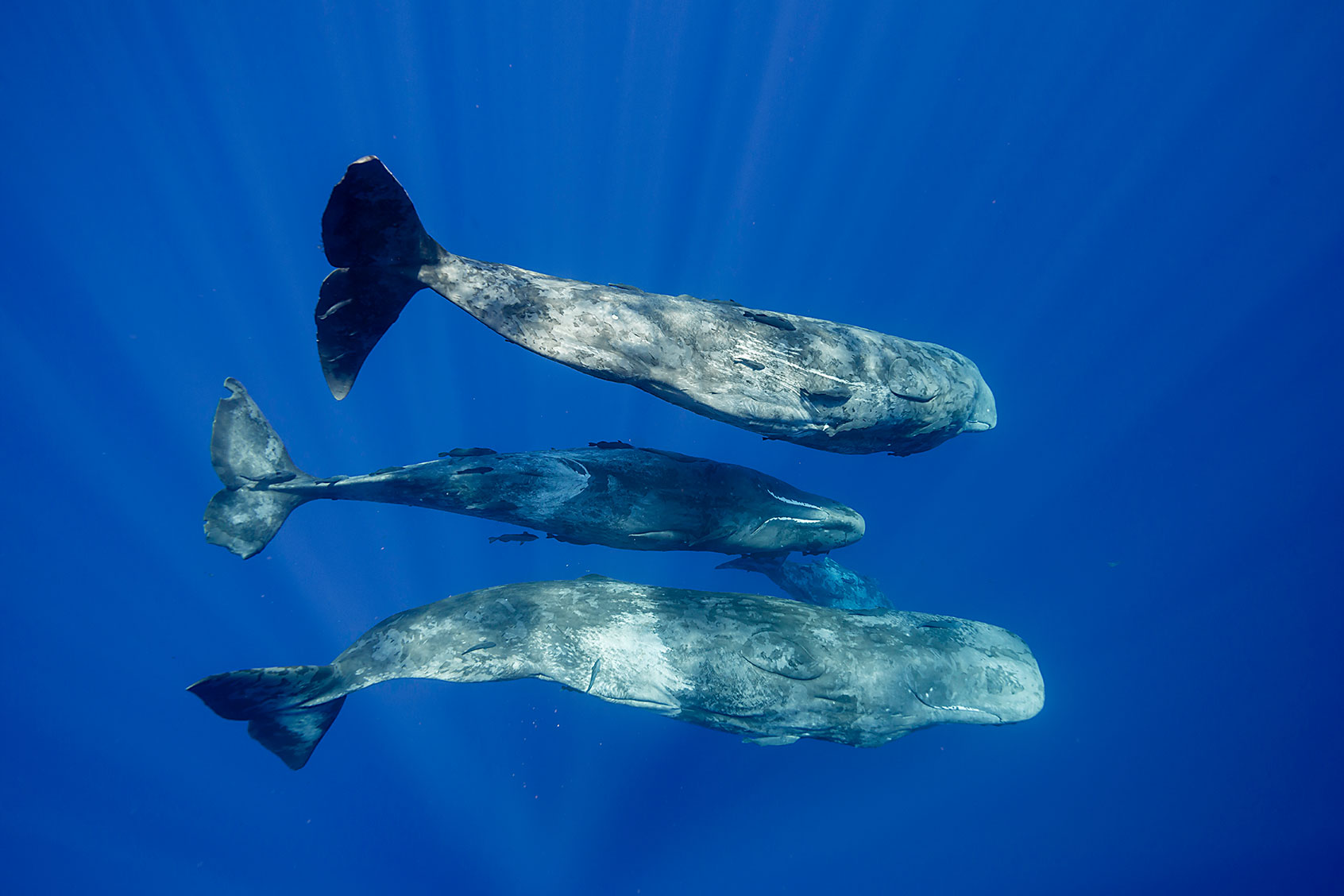
Sperm WhalesA small pod of sperm whale calves dive to swim under me and turn on their backs to look at us. (Getty Images/wildestanimal)Whitehead and his colleagues investigated the hypothesis that whales use language throughout decades of research, but never came up with clear results. “It didn't turn out to look like a conversation. When you look at how it's made, it looks like something very different. It looks more like a musical duet,” Whitehead said.
Cetacean species like whales and dolphins have been described musically throughout history. The Delphinus constellation is named for a Greek legend about a musician who played their instrument to summon a dolphin that saved them from pirates. A Dutch guide to marine life from the late 1500s claims that some whale species “like to hear music played on the lute, harp, flute and similar instruments.” An 1889 whaling travelogue recounts the sounds made by right whales and humpbacks note by note. “Beginning on F, the tone may rise to G, A, B and sometimes to C, before slanting back to F again. With the humpbacked whale the tone is much finer, often sounding like the E string of a violin.”

Jim Nollman is a conceptual artist and environmental activist passionate about playing music for animals, and claims the most notable reaction he’s ever received from orcas was in response to creating loops of guitar tracks inspired by James Brown songs. Nollman mainly plays slide guitar for whale species, but has worked with a wide range of other musicians, including a grammy-winning oboe player, violinists, percussionists, a chanting Tibetian lama and more.

“I always made it clear from the start that everyone listening got to decide for themselves whether the whales were in sync with us,” Nollman said, stoic on whether animals actually interact with his music, instead focusing on how playing with whales impacts the musician. “The Tibetan lama said the main thing the orcas can teach us is how to breathe. They do this special kind of breathing that takes years to learn in the monasteries, but they just do it naturally,” he continued. “No AI guy is going to know that — unless he’s from Tibet.”

David Rothenberg is one of the musicians who has performed for whales alongside Nollman, and believes making interspecies music is more of an exercise in empathy than an attempt to find specific definitions of sounds. “We can learn what it's like to be all kinds of other animals by really sharing in their world of communication. That's why I play music with them — to get a sense of what it might be like to be them,” Rothenberg explained.

"The Tibetan lama said the main thing the orcas can teach us is how to breathe."

Musicians like Rothenberg are interested in understanding how differences in animal perception create their own unique forms of communication. Umwelt is a German term describing the perspective of an organism based on its sensory abilities, environment and anything else that contributes to its overall consciousness — the way fish must perceive water much differently than birds or how a bumblebee can see ultraviolet light but we can’t.

Sperm whales rely on echolocation to sense their surroundings, and can only see around 35 feet (10.7 meters) ahead of themselves in most water. To get around this, when communicating between members of their own species they sometimes use extremely loud omnidirectional blasts of sound, emitting noise in all directions at once. Sometimes called a sperm whale’s “gunshot,” these sounds are the loudest made by any animal — over 200 decibels, or roughly the equivalent of a Saturn IV rocket blasting off, and loud enough to burst human eardrums and potentially kill someone, though neither deafening or death has been documented. This technique allows sperm whales to sense each other from over one thousand miles away.

“These codas were more about bonding,” Whitehead said, when asked what kinds of messages sperm whales might be sending to one another. “The basic information was, ‘we are really good buddies,’ and, ‘you can depend on me, and I can depend on you.’”

Artificial intelligence may be perfect for analyzing every aspect of codas except for the emotional bonds they signify between individuals. AI can find correlations between audio, video, chemical analysis, or any other kind of measurements that may create a sperm whale’s umwelt, which Whitehead agreed can be expected to lead to exciting new discoveries. But using AI as a specific translation tool between whales and humans remains a questionable goal for many marine biologists. Even if sperm whale codas can’t be decoded, however, that doesn’t mean they can’t be better understood.

We need your help to stay independent

Sperm whales derive their name from the waxy, liquid substance produced in their skulls by a massive biological structure called the spermaceti organ. This melon-like organ takes up most of the animal’s head, making communication possible by acting like a form of sonar. But the spermaceti is full of goo resembling the pearly hue of human sperm, and possesses oily properties that once led humans to hunt them to the brink of extinction. Whale oil was legally sold in the U.S. until 1972, and could be used for anything from gun lubricant to transmission fluid. Considering centuries of whaling, suffocating amounts of plastic garbage, and sound pollution from shipping traffic, what would be most surprising is if whales felt like speaking with humans at all.

Whale populations have dramatically rebounded since the 1986 global moratorium on whaling, despite the many hazards that remain for cetacean species. In the time since the beginning of the Save the Whales campaign, the number of humpbacks in the Indian Ocean has grown from 600 to over 36,000. Maybe humpbacks have helped themselves by making music catchy enough for humans to sell on records. Though such an influence isn’t quantifiable, activists agree whale songs have been a major inspiration for the campaigns and legislation that led to international legal protections for whales today. Although this increase in whale populations is encouraging for conservationists, laws alone aren’t enough to protect the species long-term.

From where he continues research in the North Sea, Luke Rendell stated the obvious: “There's nothing that they could tell us about what they need that we don't really already know, which is to stop hunting them, stop catching them in our nets, stop polluting their environments, and try and just leave them alone for a little bit,” Rendell said. “I don't think we need an AI translation tool to know that's what the animals would probably ask for if they could.” 

Video: JD Vance struggles with small talk in awkward donut shop visit

A donut shop employee, in Georgia, did not want to be seen on video with Sen. J.D.Vance, R-Ohio, when Donald Trump’s running mate visited the spot equipped with a camera crew before his remarks in Valdosta, Georgia.

The GOP vice presidential candidate has struggled to shake the “weird” label his political opponent, Minnesota Gov. Tim Walz, coined early in the race, and the awkward interaction between him and the server isn’t likely to do him any favors.

Vance, who waited for someone to show up behind the display to serve him, opened his interaction with the servers joking the  "zoo has come to town." The employee’s only reaction was asking not to be filmed. 

He tried again. 

“I’m JD Vance. I’m running for vice president,” Vance said to which he received a plain response from the donut shop server: “Okay.”

Trying to remedy the interaction, Vance’s arms remained promptly glued to his hips as he walked up and down the display examining his donut options before saying “We’re gonna do two dozen. Just a random assortment of stuff here.” 

“Everything. A lot of glazed here. Sprinkle stuff. A lot of cinnamon rolls. Just whatever makes sense,” he added.

Michelle Obama shames right-wingers like Ann Coulter for “mocking” Tim Walz’s son Gus

Republicans and Democrats clapped back at right-wingers like Ann Coulter for attacking Gov. Tim Walz’s s 17-year-old son Gus after his emotional reaction to his father's Democratic National Convention speech.

“Hope, Gus, and Gwen – you are my entire world, and I love you," Walz said to cap off his speech. Gus Walz rose from his seat snuggled in between his family who were all in tears and said, beaming at the vice president candidate, “That’s my dad.”

Some right-wingers attacked the teen, who is neurodivergent and has a nonverbal learning disorder and ADHD.

Coulter, in a tweet that has since been deleted, posted an image of Gus Walz crying, writing, "Talk about weird…"

Coulter ultimately removed the post without apologizing, writing:: “I took it down as soon as someone told me he’s austistc [sic],” she said, misspelling the diagnosis, “but it’s Democrats who go around calling everyone weird thinking it’s hilariously funny.”

Former first lady Michelle Obama took a subtle jab at Gus' critics as she praised his emotional response.

“I was touched to see Gus Walz’s joy when his dad @Tim_Walz took the stage last night,” Obama wrote while Kamala Harris was accepting her party’s nomination for president at the DNC. “Thankful for you showing us all what real love looks like, Gus.”

“Let’s be a nation that embraces this kind of warmth and vulnerability, instead of making fun or mocking it. We could all use some of Gus’s example in our own lives,” she added.

Some on the right also condemned the attacks, including Rep. Marc Molinaro, R-N.Y.

“I may not agree with [Walz's] prescription for America's challenges – but I've always believed in shielding our children from attack," he wrote. "His son Gus, our kids – neurodivergent and of all abilities – ought to be celebrated and supported. I've done it my whole career and will continue to push for everyone to #ThinkDIFFERENTLY."

"The View" host Ana Navarro blasted the attacks at Walz as “cruel,” “inhumane,” “disgusting,” "unacceptable" and “un-American."

“Just before coming here, I was at brunch with Gwen Walz, the wife of Tim Walz, the vice presidential nominee,” she said in a clip flagged by Mediaite. “And you could see the emotion she has of the attacks that are going on against her teen son, who’s got special needs. There are many Republicans, many Trump Republicans out on social media taking horrible attacks on a kid who had a beautiful moment of authentic pride and love for his father yesterday and got emotional."

“The spark that ignites the flame”: Black sororities flex “collective power” for Kamala Harris

CHICAGO — Members of the Divine Nine, the collective of the nation's nine historically Black sororities and fraternities, stepped out at the Democratic National Convention in Chicago this week adorned in the array of bright colors and regalia that define their groups.

Sigma Gamma Rho sorority sisters sported blue and gold dresses. Alpha Phi Alpha fraternity brothers donned jackets and sweaters of black and gold. Some Alpha Kappa Alpha (AKA) members' bright pink or green attire — including ",LA" shirts and buttons referencing their soror — popped in the sea of attendees, while others opted for subtler signals of their membership like elaborate light pink and green brooches or the group's signature pearl necklaces.

Black Greek life participants offer Vice President Kamala Harris both an especially loyal voting bloc and experienced voter mobilizing force as she carries out her presidential campaign over the next 75 days. Though the groups, given they are registered charity organizations, do not endorse political candidates, the momentum generated by AKA member Harris' campaign has galvanized many of their millions of participants to enter a new realm of political engagement.

Drawing on the dedication to community service their organizations pride themselves on, Black Greek life members told Salon they feel inspired by what a potential Harris presidency makes possible for their advocacy in service of their sororities' and fraternities' missions.

"In our social justice, which is one of our tenets that we have, sisterhood, I think for us, we feel like we helped push and lifted this tide up and make it happen a little sooner than it normally would," said Grace Carrington, the director of the Democratic National Committee's Southern Region and a proud member of Delta Sigma Theta. Harris, "of course, being a part of Divine Nine, we feel some independent ownership of her career, her life, and also responsibility to take her over the finish line."

"This moment is the spark that ignites the flame for generations to realize it's our time," added James J. Fedderman, a Virginia delegate and member of Alpha Phi Alpha, arguing that now is the time to act if the organizations intend to take "sustainable" and "repeatable" action that they can use to encourage others.

"Members of the Divine Nine have come together to really unify this collective power that we've always had," said Fedderman, who wore an Alpha Phi Alpha-branded black bomber jacket. "This power that we have had has been the catalyst to promote, encourage, protect our communities, and we realize that this is our moment to ensure that future generations have a place and a space."  

"She came from the same roots that we came from, which is stemmed from community service, and we know that she'll be focused in on taking care of the people — all the people."

Black college students founded Black Greek-letter organizations in the early twentieth century to provide a safe haven for Black Americans amid the rise in Jim Crow laws and the rampant racial violence and discrimination they faced, which included being barred from participating in Greek life at predominantly white institutions. Alpha Phi Alpha was the first, established in 1906 at Cornell University, and AKA followed soon after in 1908, planting its roots at historically Black Howard University. 

Over the more than a century since their establishment, Black Greek-letter organizations have developed individual cultures signified by chosen colors, slogans, clothing and traditions like strolling, a group-varied and exclusive form of choreography. The organizations, unified and governed by the National Pan-Hellenic Council, hinge themselves on tenets of personal excellence, racial uplift, civic action, kinship and — often most importantly — community service, according to the National Museum of African American History and Culture

"My great grandmother was an AKA in 1915, so when I think of women organizing back then to provide service to the community — we've always been organizers as any of the fraternities and sororities, that is what they do. That's what we do," Cook County, Ill., Commissioner Donna Miller, who is also an AKA, told Salon.

Through Harris' nomination and potential presidential victory, AKA members see that commitment to service "going to the highest office in the world," said Miller, dressed in a green power suit, hot-pink ",LA" shirt and cream-colored custom Chucks with the words "We are not going back" scrawled on the side alongside painted-on pearls that matched the real ones on her earrings and necklace. 

"What better way to see someone giving back to our community than being the president of the United States and coming from an HBCU and being someone who came from a family that actually worked for a living," she added. 

Harris pledged AKA in 1986 as an undergrad at Howard University and has remained an active member of the group in the years since. 

The vice president addressed her sorority sisters at the organization's biennial national convention, or boulé, just ahead of her campaign's launch and gave remarks at the Sigma Gamma Rho boulé in July. During the former appearance, Harris recounted her history with the sorority, evoking the image of her aunt Christine Simmons, who joined the AKAs in 1950 when attending Howard herself.

“Sorors, this is a serious matter,” Harris told the audience of around 20,000 AKAs, per NBC News, making reference to the group's “serious matter” chant. “For 116 years, the members of our sorority have been on the front lines of the fight to realize the promise of America. This year, let us continue that work.”

We need your help to stay independent

Carolyn Williams, a member of Sigma Gamma Rho and the executive detail for the sorority's international grand basileus, said Harris' AKA roots provide a sign of what Americans can expect from her presidency should she be elected. 

"She came from the same roots that we came from, which is stemmed from community service, and we know that she'll be focused in on taking care of the people — all the people," Williams told Salon, the blue rhinestones of her gold Sigma pin catching the United Center lights.

Harris has "already indicated that by talking about trying to cut the expenses that we're currently seeing," she added, noting that the Democratic nominee's ascension would "only make it easier for the rest of us to stay down in the trenches and work harder to support the communities that we live in."

"We are leaders of every organization. We're teachers, we're lawyers, we're doctors, we're parents — we're on the PTA."

The Divine Nine boasts more than 2 million members, including prominent activists, community leaders and philanthropists. The organizations prize lifelong membership and visibility within their communities beyond college years, with a swath of alumni chapters for each organization conducting service work in cities across the nation. 

Members of Black sororities and fraternities are no strangers to political engagement either, having built practices of civic engagement around addressing community-specific inequities. Members told Salon their service activities have included volunteering to teach children how to swim amid high Black drowning rates, mobilizing to boost voter turnout and education in the face of voter suppression efforts, and organizing food drives during the height of the pandemic. 

In 2020, AKA members also became key donors to the Biden-Harris campaign, raising hundreds of thousands of dollars through donations of $19.08, a reference to the sorority's founding year, in the week after the then-senator was announced as Biden's running mate.

Black Greek organizations also provide members with tight-knit support networks, connecting each other with jobs and resources among other opportunities for personal and professional development. The AKA network includes a number of prominent Black figures and Democratic mega donors, including Ava DuVernay and Wanda Sykes, who have supported Harris.

"That's why we're able to organize within ourselves as well, in our own personal capacities, because we are leaders of every organization," Miller said. "We're teachers, we're lawyers, we're doctors, we're parents — we're on the PTA."

The "sisterhood" is what it's all about, she continued, and rallying around Harris is "about uniting us again."


Want a daily wrap-up of all the news and commentary Salon has to offer? Subscribe to our morning newsletter, Crash Course.


Harris' presence in the presidential race has galvanized the Divine Nine to expand its political engagement in new ways, too, with AKA earlier this month establishing a political action committee, Alpha Kappa Alpha Sorority PAC, Inc. (AKA 1908 PAC). 

The Council of Presidents for the Divine Nine also debuted plans to launch a massive voter turnout effort the day after Biden withdrew from the presidential race last month — a move that builds on Black sororities' "Stroll to the Polls" initiative encouraging community members to vote early. 

Miller said the AKAs launching a PAC marks the "next evolution" of the organization because it offers the sorority a chance to learn "how much a PAC can make a movement and make a difference," by allowing it to make greater use of its network and the money within it to better help out communities. 

"We have to be twice as good, twice as fast to be able to elevate, and I just think this is a gift and a celebration for each of us."

"I wish we would have had this long before now because we can change any election by moving our pack," she said, adding that if "we take the collective and put it into our PAC. It's gonna change the course of whatever happens, and not just on the top of the ticket because" the "trickle down effect" allows it to impact state and local elections. 

Fedderman characterized AKA's creation of a PAC as a "culminating experience" of the political activism included in the service that Black Greek-letter organizations conduct.

"When you can put capital behind a person, when you can put resources behind a person, the dividends really make a difference, you can't lose. You can't lose," he said, imagining multipronged efforts of members giving financially, knocking doors and phone banking to boost candidates. 

Faye Tate, a Delta and DNC attendee who works in financial services, told Salon she hopes the momentum around Harris' presidential campaign will inspire Divine Nine members to deepen their longtime focus on leadership at different levels.

"This moment right here says it all," she said, pointing to the AKA member's presidential bid and the energy around it.

Through the DNC Black Caucus, Carrington also expressed a hope that, as a Divine Nine member and alongside nonpartisan groups like her sorority, she and the caucus can continue to "really lift up each individual segment of the population" and ensure they're "elevating not only Black women, but qualified Black people" who are running for office across the nation, noting how "definitive" Black Greek organizations have been in boosting efforts to elect Black judges across the nation. 

"My mom always said, 'if you put in the work — and it's not going to be easy, it's going to be very hard — the reward will be great," Carrington said, predicting a Harris presidential victory. "This is going to be the greatest reward that we're all going to celebrate on November 5, because we have always been trying.

"We have to be twice as good, twice as fast to be able to elevate, and I just think this is a gift and a celebration for each of us," she continued, describing us as "being women in general but Black women specifically." 


Editor's note: An earlier version of this story characterized Alpha Kappa Alpha's newly-created PAC as the first of its kind. Several Divine Nine organizations have organized PACs or C4 groups. The story has been updated. 

“He’s still talking”: Host jokes after Fox News cuts off Trump’s rambling phone call

Fox News anchors cut off former President Donald Trump's rant on Thursday after he called in to the network following Vice President Kamala Harris' Democratic National Convention speech.

The GOP candidate immediately called the network after Harris’ acceptance speech for what turned into a 10-minute long, one-sided, conversation with hosts Bret Baier and Martha MacCallum.

While Baier and MacCallum struggled to interject, Trump carried on talking about immigrants “from prisons and jails, from mental institutions and insane asylums;” his polling success over Harris with people of color, voters, or simply women who “want safety;” and the auto workers in Michigan who support him.

MacCallum noted Harris' rise among voters of color. “She’s having some success in that, at this point. What are you going to do — what’s your strategy to rebuild the momentum that you had with those voters?” she asked.

“No, she’s not having success. I’m having success. I’m doing great with the Hispanic voters. I’m doing great with Black men. I’m doing great with women, because women want safety," Trump replied.

“No, it’s only in your eyes that they have that, Martha,” he added. “We’re doing very well in the polls.”

Towards the end of their phone-in, the former president responded to Baier’s question about receiving Robert F. Kennedy Jr.’s endorsement with high praise for the independent candidate. 

Trump claimed he was unsure whether he’d received the endorsement but said that Kennedy “was treated very unfairly by the Democrats. He would have beaten Joe Biden in a Democratic primary.”

Baier and MacCallum ultimately interjected to cut off the conversation in order to kick it over to a live edition of "Gutfeld!"

“We appreciate that live feedback," Baier said.

“That wasn’t my fault, Donald Trump!” host Greg Gutfeld said. “He’s still talking, by the way,” he joked.

The former president then hopped on a call with Newsmax, an alternative right-wing network, shortly after to continue his monologue.

The DNC did not unify Democrats. Donald Trump did that long before

Kamala Harris looks and sounds like a president — so much so that you almost forget that if she wins she will be the first woman to hold the office. From her impeccably tailored suits to the authority in her voice to her confidence and ease in the spotlight, this is a person who is clearly ready to take on the most powerful job in the world.

Harris' acceptance speech at the Democratic National Convention Thursday night was pitch perfect, filled with warm biographical details in the beginning before becoming deeper and more serious as she talked about the issues facing the country, the threat from Donald Trump and America's place in the world. She is a mature, confident, leader who sounds optimistic, patriotic and strong.

The fact is that from the moment Trump was inaugurated in 2017, Democrats have been pragmatically working together in ways thought impossible just a few years ago.

The convention was, for the most part, a big, fun love fest with the party celebrating in relief that it has a good chance to beat Donald Trump with the new Harris-Walz ticket and enjoying the more positive, hopeful feelings it offers after years of dealing with the darkness of Trump, pandemics and economic stress. There was lots of humor and lighthearted banter as well as some sentimental, respectful send-offs to the old guard as the new generation took over. It was, to quote the overused word this week, joyful.

With some serious turns about women's experiences with the new abortion laws and gun violence, it was mostly upbeat, as best exemplified by Gov. Tim Walz's stirring pep talk and the open love of his family when he accepted his nomination on Wednesday night. It was heartwarming and sweet. Many of the other speakers, notably the Obamas and the vast number of rising stars in the party, were entertaining and inspiring. And the convention program itself, although it ran long, was extremely well-produced with innovative multimedia strategies designed to go viral online and plenty of made-for-TV moments. The ratings outstripped last month's drab Republican National Convention substantially over the first three nights.

But it was up to the vice president to present herself as the president and pull together all the strands of the big conversation of the past three days under the Democrats' expansive Big Tent. She did that. The big party stopped for a while and everyone listened raptly. It was the reason they were there. She held the room, which looked on at her with a mixture of awe and respect.

There's been a lot of talk about Harris bringing the fractious Democratic Party together, but for all her charisma and talent, I don't think that's quite right. This didn't happen because she became the nominee. I've been astonished at how unified (with the obvious exception of the war in Gaza) the Democrats have been for quite some time. I believe the reason the party is so united, surprisingly enough, is because of Joe Biden and Donald Trump, the two old geezers everyone is determined to finally put out to pasture.

The threat of Donald Trump cannot be overstated. As long as he and his authoritarian MAGA movement hang over the American political scene it is incumbent on the Democrats to present a united front to oppose him. There is no margin for error. The fact is that from the moment he was inaugurated in 2017, Democrats have been pragmatically working together in ways thought impossible just a few years ago. And to the extent that they have attracted independents and disaffected Republicans, some of whom were featured prominently at the convention this week, Trump gets credit for that, too. He may have divided the country, but he brought the Democrats together and inspired a popular front that's held fast for the last four years.

Joe Biden really deserves a lot of credit as well.

The president came from the mainstream of the party but was surprisingly open to the progressive wing in ways that Obama was not. He never tried to "Sister Souljah" them (in '90s parlance) by beating them up in order to remain credible to the moderates in the party. (Yes, it helped that there are fewer of those centrist types these days, although the few remaining caused plenty of trouble.) And because of Trump, the progressive wing was ready to grab their seat at the table and take their wins when they got them. And there were a lot of them, showing that progressives can leverage their power within the coalition in a cooperative way. The party is more populist than it's been in decades and pretty much defines itself across the board as unapologetically pro-union, anti-monopoly and pro-family.

We need your help to stay independent

Biden built enough loyalty on the left that when pundits and some Democrats began publicly calling for his withdrawal from the race, Alexandria Ocasio-Cortez openly supported him — as did Bernie Sanders. In the end, once he accepted the inevitable, Sanders' hard work to bring the previously warring factions together paid off. The party was able to come together very quickly behind his endorsement of Harris and embrace the new ticket with little angst or resentment.

Trump reshaped his party too, of course. It is now more of a cult devoted to his whims and needs, made that way through mafia-style strong-arming and threats. His purges of "RINOs" and apostates and the elevation of flunkies and sycophants made the Republican Party into a dysfunctional party of weirdos and cranks. When Trump finally does exit the stage, the transition to the next chapter will not be quite as smooth. In fact, it's going to be an epic mess.

Whether this new harmonious Democratic coalition will last is unknown but nothing could be more important in this moment than to present a united front to stop Trump. If Harris wins, we'll have to see if she can navigate the inevitable jockeying for power as well as Biden did. She did have the advantage of seeing him operate, so hopefully that will guide her judgment.

The Democrats have collected over $100 million in small donations through Act Blue during the convention week. They brought in almost $36 million yesterday. During the hour after Harris' speech alone, they collected $7 million. These are very big numbers and they continue to suggest that the enthusiasm is on their side. If the polling trends continue, the election could be a little less daunting than we thought. As long as nobody takes that for granted, the Democrats might just pull it off.


Want a daily wrap-up of all the news and commentary Salon has to offer? Subscribe to our morning newsletter, Crash Course.


The power of Kamala Harris’ simple DNC message: Freedom is what normal Americans want

CHICAGO — Vice President Kamala Harris only entered the presidential race a month ago, so it's unsurprising to see trace evidence all over the Democratic National Convention of the original plans for when President Joe Biden was the presumptive nominee. The order of the states for the ceremonial roll call, the choice speaking slots for folks like Sen. Chris Coons of Delaware, and even a party platform so hastily rewritten it mentions Biden's "second term": all ghosts of the convention that would have been if Biden hadn't stepped down. Unsurprising, the most prominent relic of the alt-history convention was Biden's Monday night speech, which focused on the theme of his now-deceased campaign: "clear and present threats to our very democracy" from Donald Trump. 

"Democracy has prevailed, democracy has delivered, and now democracy must be preserved," Biden declared. In contrast, the Harris campaign has downplayed the "democracy" talk in favor of another word: freedom. 

"In this election, many other fundamental freedoms are at stake," Harris said in her convention speech Thursday night, listing everything from reproductive rights to the right to vote. But she connected it into a larger, more aspirational vision. "Here in this country, everything is possible. Nothing is out of reach."

Citing a lesson from her mother, Harris told the nation, "Never let anyone tell you who you are. You show them who you are."

Gov. Tim Walz of Minnesota, Harris' running mate, struck a similar tone in his 16-minute speech Wednesday night. "When Republicans use the word freedom," he said, they mean freedom "to invade your doctor’s office," "to pollute your air and water," and "to take advantage of customers." Democrats, in contrast, "mean the freedom to make a better life for yourself and the people that you love."


Want more Amanda Marcotte on politics? Subscribe to her newsletter Standing Room Only.


Harris even uses "Freedom" by Beyoncé as her walk-on music. The watchword of the defunct Biden campaign — "democracy" — has faded into the background as this "freedom" messaging takes over. And some political observers are worried about this change.

"Harris should not abandon democracy as a campaign issue, but rather double down on it," Vox's Zack Beauchamp wrote, citing studies suggesting that "democracy" messaging works well on "moderate Trump-skeptical Republicans." He argued that such a message could be folded into the "freedom" message by "highlighting attacks on democratic freedoms," such as the "freedom to vote."

By recentering the conversation onto "freedom," Harris has made the conversation about goals, not processes.

It's overstated to say Harris' campaign has abandoned the "democracy" language. The week's program, for instance, featured speakers and segments on the January 6 insurrection. In her convention speech, Harris reminded the crowd of Trump's coup, arguing he "fanned the flames" of the riot. Multiple speakers at the convention highlighted how the vote was hard-won for certain Americans. But the campaign does seem to feel that "democracy" is too abstract. Americans support democracy in theory, but in practice, it can be confusing or opaque. Many voters can't say who their governor or senator is, much less their local representatives. "Democracy" is a word that may sound soaring to political junkies, but feels bureaucratic and frankly bloodless to many others. 

"Freedom," in contrast, is an idea more people can wrap their hands around, especially with MAGA Republicans openly gunning to take away freedoms that protect the most intimate parts of people's lives, like who they marry or when they have children. The path between your vote and the end goal of policies can seem byzantine. But losing the right to abortion is immediately visceral. Most everyone knows how life-derailing an unwanted pregnancy or medical emergency can be.

When Salon asked delegates and other attendees at the DNC what they think makes MAGA "weird," few of them mentioned the Capitol riot or Trump's attempted coup, though both are abnormal in American history. Instead, most folks cited the obsessive way that MAGA leaders like Trump or his running mate, Sen. JD Vance of Ohio, want to control the daily lives of everyday Americans. They cited book bans, abortion bans, the rejection of gay rights, the bans on trans health care, and the attacks on women who choose not to have children. One attendee flagged Trump's hostility towards interracial couples like Harris' parents. Multiple people brought up Project 2025's voluminous suggestions for policies meant to dictate everything from what you're allowed to read to who you're allowed to marry. 

So much of what the right, especially the MAGA right, wants is to rob people of their right to be themselves. 

In all the hosannas to democracy from Biden and the political elites at MSNBC, what is lost is that democracy isn't an end in itself, but a means, ideally toward more good for more people. People want freedom and security, and democracy is a system that offers the best shot at getting what we want. Biden certainly understands this, which is why he often speaks of how democracy "has delivered." Unfortunately, that message often gets lost when he loses the specifics of what, exactly, democracy has delivered. 

By recentering the conversation onto "freedom," Harris has made the conversation about goals, not processes. In doing so, she's making a stronger case for democracy. She's explaining why anyone should care to defend it: to protect the freedoms they care deeply about. Former President Barack Obama laid this argument out more clearly than anyone else at the convention. "Democracy isn’t just a bunch of abstract principles and dusty laws," he told the crowd. "It’s the values we live by, and the way we treat each other — including those who don’t look like us or pray like us or see the world exactly like we do."

We need your help to stay independent

This latter point, about respecting differences, resonated strongly with the convention-goers. What so often gets minimized by Beltway pundits as "identity politics" is experienced as freedom by ordinary people. So much of what the right, especially the MAGA right, wants is to rob people of their right to be themselves. 

The popularity of this simple "freedom" framework can be seen in how flatfooted the Trump campaign has been responding to Harris's nomination. Both Trump and Vance clearly want to attack her in boldly misogynist terms, going after her for having dated other men before marrying her husband or not having biological children. But Vance deeming her a "miserable cat lady" backfired, only drawing more attention to how Republican leaders want to micromanage the uteruses of America. As Kate Riga of Talking Points Memo pointed out in a recent podcast, "We haven't even really seen discussion about the fact that she kept her last name" when she married Doug Emhoff. It's a sign that even the Trump campaign is starting to worry that the obsession with controlling women's personal choices might hurt them politically. 

Ultimately, the choice to go with "freedom" over "democracy" does come down to vibes. This irritates some pundits, as "vibes" are hard to measure. But that doesn't change the fact that vibes — or what might have been previously called the national mood — matter quite a bit. The "democracy" framework has a seriousness to it that verges on dour. In 2020, during a deadly pandemic, that tone was effective. In 2022, with the loss of abortion rights and January 6 still fresh in people's minds, a downbeat message still had resonance. In 2024, however, it seems people are tired of the negativity and want something more upbeat. Freedom isn't just something to protect, but aspirational. Harris and Walz are projecting an image of a country where we all get to do our own thing, and people chill out, accepting not everyone has to be exactly the same. It's a lovely message of acceptance and peace. Only weirdoes could have a problem with it.

“Do something”: The challenge of the Obamas’ marching orders begins now

The last time I watched President Barack Obama deliver a speech in Chicago was in 2017 at the McCormick Place Convention Center. It was his now legendary farewell address. I watched President Obama from the press area behind and parallel to the stage. It was not the most ideal view. But it was the best view for me as I thought about Obama’s legacy and the country’s first Black president, all that he accomplished and the challenges of the color line that hope and change could not hurdle over.

I had a few tears of joy and mourning as I watched Obama’s speech as I thought about how proud my father and mother would be that I, the child of a janitor and home healthcare worker, perpetual renters who never owned a home, and a proud member of the Black working class, was sitting here, so close to America’s first Black president. I wrote the following that evening:

As I stood in the security screening line earlier, I decided that after Obama's farewell address I would go to Michigan Avenue, buy a 34-ounce can of Asahi beer, put it in a brown paper bag and then stand across from Trump Tower. As I took deep sips of my favorite beer I would then look up at that testament to ego and narcissism and proceed to curse Donald Trump — for all the wickedness, damage and insult he has already done and will certainly do to America, her citizens and the world.

But after listening to Obama's farewell address, I decided to not do those things, for that would be to against the spirit, wisdom and guidance that the president had offered the American people in his final address. Now is the time to reflect, organize and decide how best to resist in the age of Donald Trump. It is not a time to rage blindly or with futility.

What comes next I do not know. But it is abundantly clear that as Barack Obama departs, and his successor who is (as I have argued repeatedly) a fascist authoritarian takes the reins of state, we the American people are truly through a glass darkly. Obama told us that the answers lie in ourselves and also with one another: "Yes, we can!" I hope that he was right. I worry that he was wrong.

On Tuesday, President Obama and his wife Michelle Obama returned to Chicago to deliver speeches at the Democratic National Convention. I received several invitations to attend the DNC and its related events. I chose to stay home and watch the Obamas on television. I did not want to risk replacing or complicating my cherished memory of President Obama’s farewell address.

What President Obama and Michelle Obama accomplished this week was a masterclass in storytelling, rhetoric, and an act of public teaching and a call to action in defense of American democracy and freedom. Their speeches and the response to them by the crowd and larger public is also a reminder that President Obama could seek another term in office if he wanted to (and if the law would allow it) — and he would likely win.

In all, the Obamas reminded the Democrats and the American people that democracy is both a verb and a noun. It is something we must do and the work of defeating Trumpism and the deep cultural and institutional problems that birthed it (and the other threats to this country’s democracy and freedom) will be very difficult.

In a new essay, David Rothkopf summarizes the substance and performance of President Obama and Michelle Obama’s speeches at the Democratic National Convention in the following way:

The speeches deserve study. They were masterpieces of political oratory not despite their lack of weighty marble-clad phrases but because of it. They spoke to all Americans in an accessible way that then, once they gained entry into your mind made a beeline for your heart and took it soaring. They were tough when they had to be tough, funny at just the right moments and then in the end, inspiring, the kinds of call to action this year’s high stakes election demands.

But what was perhaps most striking about the Obama addresses was their generosity toward Kamala Harris. The Obamas showed up to help another Democrat, the party and the country. They knew their roles. They are pillars of the party, perhaps the most popular Democrats in the country. But they showed up not to burnish their reputations but to use them to help elevate the country’s next great leader, one in whom they clear deeply and sincerely believe.

They delivered two of the great addresses ever delivered at a U.S. political convention. And they and everyone in the house knew they were just one of the opening acts for the main attraction.

The positive energy and hope of the Democrats made for a swift embrace of Harris and Tim Walz as happy warriors in defense of American democracy, freedom, and decency. The convention made clear that they finally believe, if not know in their hearts, that they can defeat Donald Trump and his MAGA movement:

At Slate, Jim Newell focuses in on how President Barack Obama and Michelle Obama used satire and humor to sharpen their truth-telling about the extreme dangerousness of Donald Trump and what he represents. The Obamas, perhaps even more importantly, also told the Democrats some uncomfortable truths about what this moment will demand of them and the nation:

What caught my attention more, though, was the ability Michelle and Barack Obama have to tell Democrats to cut their own crap, and be heard.

Much of Michelle Obama’s speech was managing expectations about how, even if Democrats feel euphoric now, the next couple of months will be no picnic. Harris will either have stumbles or be forced to make difficult decisions that test the unity of the Democratic coalition, sects of which are known to complain when they’re on the losing end.

Advising Democrats not to “be our own worst enemies,” Michelle Obama warned against “wringing our hands” the “minute something goes wrong” or “the minute a lie takes hold.”

“We cannot get a Goldilocks complex about whether everything is just right,” she said. “We cannot indulge our anxieties about whether this country will elect someone like Kamala—instead of doing everything we can to get someone like Kamala elected.” Don’t complain, she said, “if no one has specifically reached out to ask for your support. There is simply no time for that kind of foolishness.”

“So consider this to be your official ask: Michelle Obama is asking you to do something.” It may go without saying, but if any other DNC speaker drawn out of a hat told Democrats to stop succumbing to their worst tendencies, it would only encourage those tendencies further.

Michelle Obama’s speech (and President Obama’s) also emphasized the importance of hope, family, community, and how we, the striving children of the Black Freedom Struggle, stand on the shoulders of our ancestors and the sacrifices they made to expand American democracy for all people.

On this, historian Heather Cox Richardson writes at her site Letters From an American how:

If President Obama emphasized tonight that the nation depends on the good will of ordinary people, it was his wife, former first lady Michelle Obama, who spoke with the voice of those people and made it clear that only the American people can preserve democracy. 

In a truly extraordinary speech, perfectly delivered, Mrs. Obama described her mother as someone who lived out the idea of hope for a better future, working for children and the community. “She was glad to do the thankless, unglamorous work that for generations has strengthened the fabric of this nation,” Mrs. Obama said, “the belief that if you do unto others, if you love thy neighbor, if you work and scrape and sacrifice, it will pay off. If not for you, then maybe for your children or your grandchildren.”

Unlike her husband, though, Mrs. Obama called out Trump and his allies, who are trying to destroy that worldview. “No one has a monopoly on what it means to be an American,” she said. “No one.” “[M]ost of us will never be afforded the grace of failing forward,” she said. “We will never benefit from the affirmative action of generational wealth. If we bankrupt a business…or choke in a crisis, we don't get a second, third, or fourth chance. If things don't go our way, we don't have the luxury of whining or cheating others to get further ahead…we don't get to change the rules so we always win. If we see a mountain in front of us, we don’t expect there to be an escalator waiting to take us to the top. No, we put our heads down. We get to work. In America, we do something."

And then Mrs. Obama took up the mantle of her mother, warning that demonizing others and taking away their rights, “only makes us small.” It “demeans and cheapens our politics. It only serves to further discourage good, big-hearted people from wanting to get involved at all. America, our parents taught us better than that.”


Want a daily wrap-up of all the news and commentary Salon has to offer? Subscribe to our morning newsletter, Crash Course.


At the Washington Post, Michele Norris, who is a friend of Michelle Obama, reflects on how the First Lady’s speech, habitus, and gifted insights are channeled through her experiences as a Black woman.

“Her speech will be studied for years because it works on many levels. The rhetoric and body language were culturally specific yet broadly relatable. The full-throated defense of a Black woman candidate without shying away from the matters of race and class and misogyny that will be used to clutter her path. The reminder that 'no one has a monopoly on what it means to be American' and the stirring call for people to remember those who came before them: 'Let us not squander the sacrifices our elders made.' That line paid homage to her mother’s generation, people who grew up in an America where millions had to fight for the privilege to participate in democracy.”

Via email, I asked Audra Wilson, who is the president and CEO of the Shriver Center on Poverty Law, based in Chicago, and former deputy press and policy director for Obama for Illinois, 2004 for her personal reflections and insights:

I was both a campaign staffer and an Illinois delegate at the 2004 Democratic National Convention when then state senator Barack Obama gave his legendary “Red State Blue State” speech. At that time, he leaned heavily on the greatness of our nation, and acknowledged that despite its many challenges, there was no place on earth but America where his story would be possible. I was also on site and up close in Grant Park in November of 2008 where Barack and Michelle made history in being elected the first Black president and first lady of the United States. So naturally, I was excited to hear them speak at the 2024 convention, and on the cusp of another milestone: the election of America’s first female president. As a couple, they still exuded the same elegance, grace and wisdom as they always have. But their tone was decidedly starker.

Barack was still hopeful but more pragmatic. In speaking about the American experiment of “we, the people” he reminded us that such a declaration includes everyone, not just a privileged few. But to me, Michelle’s words felt like the release of a valve of pent-up frustration and unspoken truths. She clearly feared no retribution for speaking her truth. [She was proudly and unapologetically Black, with her trademark muscular arms and braided hair proudly on display, a huge nod to Black women in C-suites like me who have long felt the pressure to conform physically and otherwise to fit into corporate spaces.] She both expressed her love for her country while simultaneously admonishing it for the failure to live up to its ideals.   

In the eight years since Obama’s farewell address and his and Michelle Obama’s speeches on Tuesday, the American people have experienced so much. We “the Americans” have been weathered and traumatized by the Age of Trump and its many horrors. This weathering and trauma and the whirlwind of the last seven or eight weeks here in the United States that included one of the worst debate performances in modern American political history, an assassination attempt, Trump’s coronation as a fascist god king, and President Biden stepping aside so that Vice President Kamala Harris can ascend to history (again), has made these feelings of peril and exhaustion and then hope and possibility—and yes, anxiety because of a fear of disappointment and failure—even more extreme. So much can and will happen in the 70 or so days until Election Day.

Looking forward to Inauguration Day, there is a coincidence of dates and events that may prove to be prophetic and good or chilling and nightmarish. Monday, January 20, 2025, is both Inauguration Day and Martin Luther King Jr. Day.

There is the Hope. If Vice President Harris wins, America’s multiracial democracy, what Brother King and the other hope warriors struggled, died, and were martyred for, continues and will perhaps even be reenergized.

There is the Nightmare. Donald Trump wins and he becomes the country’s first dictator. Trump is an enemy of multiracial democracy and he and his MAGAfied Republicans and their neofascist enforcers and agents impose a 21st century version of apartheid on the American people. Jim and Jane Crow are back as they wear MAGA hats and chant “Make America Great Again!”

Brother King famously counseled that, "the arc of the moral universe is long, but it bends towards justice.” This outcome is not natural or preordained. We must do the bending. These are the marching orders that President Obama and Michelle Obama have given. It is now up to the Democrats and other pro-democracy Americans to go out there and get the job done.

Kamala Harris practices the post-racial politics we’ve been waiting for

Like some other liberal Democrats who resisted warnings in July that President Biden should end his re-election bid, I pushed back against the "It's time to go, Joe" messages that were coming from news stories and commentaries. If Biden could make it through re-election in November, I thought, he wouldn’t need to barnstorm the country again; he could continue working from the Oval Office to advance the experienced, wise decision-making that he’d delivered since 2021 (with a notable exception in the Middle East).

Even when he stepped down and endorsed Kamala Harris to succeed him, I wondered if his vice president was seasoned and wise enough to continue his best work. Brilliant campaigning isn’t the same as governing, and a disturbingly large swath of the electorate that’s racially obtuse and/or misogynous won’t vote for her, even though some of its members did vote for a Black man in 2008 in the wake of the Bush administration’s Iraq War fiasco, emergency-management failures in Hurricane Katrina and the financial meltdown of 2008 — the latter in complicity with neoliberal Democrats who thought that breaking glass ceilings excuses their breaking up the Glass-Steagall law of 1933, whose repeal Bill Clinton signed in 1999, thereby enabling the plunge into wild financing that helped bring on the meltdown.

Would a President Harris really continue Joe Biden’s efforts to build back better? Her initiatives as vice president have been muted, even mooted. Even now, we need to be sure of her professed commitment to strengthening the legal and economic foundations of working- and middle-class security and comity.

Fortunately, though, one of Harris' first truly independent, consequential decisions about governing — making Minnesota Gov. Tim Walz her running mate — promises to rescue diversity at its best from elitist and progressive “diversity, equity, and inclusion" measures that sometimes mire every ethno-racial group in its place with a label on its face. "We have so much more in common than what separates us," she said in her nomination acceptance speech last night. 

Her own family background and marriage have shown that true diversity can't be pre-scripted and bureaucratically mandated. It's a consequence of fair laws and practices that aren’t “of color” or “white” and that does not make your racial physiognomy or surname a signal that you're the bearer of “culture” which you may not actually identify with. Such cookie-cutter “diversity” reinforces the opposite of civic vibrancy and individual freedom. It depicts your citizenship and even your personhood ethno-racially whenever you walk for the first time into a classroom, workplace, or courtroom.

That kind of diversity doesn't curb racist discrimination as often as it recapitulates it. Its torturous racial etiquette often prompts epithets as surely as hypocrisy prompts hostility. And it distorts sincere efforts to re-focus our race lenses against pious conservative pretension to color blindness that conceals monstrous injustices. I’ve made such arguments in many ways, including here in Salon and more comprehensively in my book "Liberal Racism" (whose opening chapter, "Life After Diversity," I urge you to click on and read). This year, the Massachusetts Institute of Technology became the first elite university to stop requiring job applicants to submit statements indicating how they would enhance diversity. M.I.T., whose percentage of Black students enrolled in last year’s incoming freshman class dropped to 5 percent from 15 percent the year before the Supreme Court’s decision banning affirmative action, isn't saying that diversity is bad; it's saying, in effect, that commitments to advance it can't be prescribed and imposed as they've been by "Diversity, Equity, and Exclusion" protocols.

Harris’ own blended ethno-racial background of Jamaican and Indian ancestries was a consequence of her parents' freedom. It confounds the simplistic color coding and racial mind games that are played by people like someone I'll nickname as "Donnie 'Bone Spurs' Trumpf." Harris chose, freely, the historically Black Howard University as her college, and she honors the African American identity that Obama, whose parentage was racially mixed, too, embraced and internalized, but she rightly looks beyond racial identification as a presidential candidate.

Tim Walz, far from representing the toxic “white male” who haunts too many progressive imaginations and pronouncements, is one of the truly countless white men who’ve built bridges to transracial justice. Those bridges may not be quite what Pennsylvania Gov. Josh Shapiro had in mind when he praised Walz by saying, “Everybody in America knows, when you need a bridge fix, call that guy,” but the metaphor carries "can-do" and social-justice commitments. White bridge-builders were key to liberating the segregationist South, as the historian David Chappel shows in his book "Inside Agitators."

I wonder why people who champion maximum fluidity in sexual identity keep locking us into ethno-racial categories, admonishing deviants to “stay in your lane” instead of learning from and joining one another as tens of millions of Americans are doing. The growing prominence of biracial or non-racial citizens in recent U.S. Census reports suggests that the old civic-cultural norm in “whiteness” is fading and that no other official color-coding can tell us who “we” really are.

We need your help to stay independent

In 1920, the philosopher George Santayana wrote that Americans “have all been uprooted from their several soils and ancestries and plunged together into one vortex, whirling irresistible in a space otherwise quite empty. To be an American is of itself almost a moral condition, an education and a career.” He may not have been thinking transracially, but that writing was on the wall: Precisely because the United States is more complex racially and ethnically than institutional color-coding comprehends, we should be working overtime to advance principles, habits and bonds that transcend racial groupism in a civic culture that’s thick enough to thrive in on post-racial terms.

The struggles of people of color to share fully in a larger American identity has been one of the most powerful epics of unrequited love in the history of the world. Even if every broken heart could be mended and every theft of opportunity redressed, ethno-racial communities would still rightly honor the endurance and resistance that sustained their members. Ultimately, though, Santayana was right: If America is to survive as liberal democratic republic, it will have to stop making ethno-racial distinctions a key organizing principle of its legal and educational public life.

Doing so will require acknowledging what Harris and Walz and millions of biracial young Americans have been demonstrating in different but converging ways: We're not going back. True diversity will liberate us from so-called whiteness and blackness as vessels of hope.

Massive extinction: The demise of Darwin’s ancient giant sloth has lessons for the present

Talk about outlandish — I’m here at the edge of the world to learn more about the demise of ancient giant sloths, as well as environmental and wildlife conservation lessons for the future. In the quirky and offbeat city of Punta Arenas, located in southern Chile, I duck inside a local ethnographic museum where I take in the ghoulish remains of Milodón darwinii (Darwin’s sloth, or Mylodon), including claws, skin and fur. 

Strolling further, I notice a model of HMS Beagle, the ship which Charles Darwin sailed on from 1832 to 1835 throughout South America. During his voyage, Darwin uncovered the remains of four species of giant sloths, three of which were new to science, and such discoveries would later help to inform the naturalist’s theory of evolution. Indeed, after observing the relationship between extinct giant sloths and living species, Darwin developed his “law of succession of types;” that is to say, the relationship between past and present inhabitants of a given region.

Mylodon, which lived between 1.8 million and 12,000 years ago, was mainly vegetarian but was also an opportunistic omnivore. The creature is related to current armadillos, anteaters and sloths, though in contrast to some of its relatives, Mylodon did not burrow or climb trees. Remains have been found throughout South America, demonstrating the animal was adaptable to cold climates.

At the crack of dawn, I’m picked up at my hotel by Maximiliano Valdivieso, a guide who will take me to Mylodon cave located outside the city. Several hours later, feeling out of sorts from lack of sleep, I got out of the minivan in the middle of a rainstorm. A path leads us alongside a dramatic cliff face, and to one side I take in life-size models of Mylodon, as well as illustrations of other ancient megafauna which roamed the area, such as Macrauchenia, which Darwin regarded as a “prehistoric llama” and saber-toothed tigers.

He “realized he had been looking for a ghost, a unicorn, an animal that had been extinct for thousands of years. It was Mylodon.”

Discovered in 1895 by German explorer Hermann Eberhard, Mylodon cave contained exceptionally well-preserved remains including pieces of skin, fur and dung. As we make our way into the vast cavern, my guide explains how Eberhard dissected samples and sent them to England for analysis. In the meantime, however, the German hunted in vain for the animal, surmising it might still be alive since the remains were in good condition. When the results came back, however, he “realized he had been looking for a ghost, a unicorn, an animal that had been extinct for thousands of years. It was Mylodon.”

Gigantic sloth Mylodon illustrationGigantic sloth, extinct mammal of the Pleistocene Epoch, drawing (Getty Images/DeAgostini/Getty Images)And yet, how did researchers identify the animal? Fortuitously, they were able to compare Eberhard’s sample with Darwin’s original fossils from Argentina, noting a resemblance. Peering into dark recesses of the cave, I wonder what might have caused Mylodon’s demise? Valdivieso says arrowheads were uncovered, indicating early human presence. 

Could human hunting have played a role, or were there other factors? Rewind more than a month earlier, and I find myself in Montevideo. During his travels in Uruguay, Darwin uncovered fossils belonging to Glossotherium, also known as the “tongue beast,” another species of giant sloth. Hoping to learn more about Darwin’s ancient megafauna, I headed to a storehouse linked to Uruguay’s National Museum of Natural History. Shortly before my arrival, the museum had put on an exhibit dealing with Darwin’s legacy in the country. Andrés Rinderknecht, a paleontologist, provided me with a tour of the fossil collection.

Archaeologists have uncovered early pendants made of bony Glossotherium material, suggesting humans may have played a role in the creature’s demise, however Rinderknecht says the jury is still out on whether hunting, climate change, or even other factors may have dealt the crucial blow.


Want more health and science stories in your inbox? Subscribe to Salon's weekly newsletter Lab Notes.


Are there lessons for the present day? Extant animals like giant armadillos and giant anteaters, related to Darwin’s ancient giant sloths, have experienced similar pressures. Indeed, the former has been listed as endangered, and in Uruguay the animal has been hunted while suffering habitat loss. Giant anteaters, meanwhile, are listed as vulnerable and have been targeted by poachers. There is little knowledge of local fauna, Rinderknecht remarks, and coastal ecosystems have become a “disaster” due to urbanization.

“We recently experienced the worst drought in one hundred years,” the paleontologist adds, and Montevideo was hit by a lack of potable water. On the other hand, Uruguay has a historic secular streak, and though the current conservative government isn’t wholly supportive of science, at least officials recognize the reality of climate change.

After concluding my business in Montevideo, I took a short ferry ride to Buenos Aires.  In the midst of a suffocating summer heat wave, I paid a visit to the “Bernardino Rivadavia” Argentine Museum of Natural Sciences, where I spoke with paleontologist Agustín Martinelli. In addition to Mylodon, Darwin uncovered fossils in Argentina belonging to another giant sloth species, Megatherium. Though the creature had already been described by science, researchers lacked significant specimens to inspect until Darwin happened upon a Megatherium skull. Martinelli himself was inspired to become a paleontologist after growing up as a young boy near the Luján River, where Megatherium remains had been discovered.

Upstairs, walking through an exhibit dealing with ancient megafauna, I was non-plussed by the sheer scale of a Megatherium skeleton — indeed, the creature weighed up to four tons and grew to the size of an elephant while consuming vast quantities of vegetation daily. As with Glossotherium, it’s unclear what caused Megatherium’s demise 12,000 years ago, though some believe climate and hunting played a role. Megatherium is related to present-day sloths, which face climate and environmental pressures. Currently, Martinelli remarks, sloths are restricted to northern Argentina and Brazil, though the creatures are at ecological risk. Meanwhile, though giant anteaters have successfully been released back into the wild, giant armadillos are extremely threatened.

Argentina’s political environment, meanwhile, leaves something to be desired and provides a stark contrast to Uruguay, where there is more support for science. Just before I arrived, the country elected Javier Milei to the presidency, a rightist politician and climate denier. Milei is highly volatile and unpredictable, Martinelli remarks, and he and his scientific colleagues are concerned for the future. Even within the museum itself, Martinelli says, they do not have the proper means to regulate indoor temperature. Outside, meanwhile, the climate in Buenos Aires is becoming more and more tropical.

Fast forward to Chile, and I’m thinking more broadly about human folly and our inability to protect native wildlife. After visiting the Mylodon cave, I took in majestic mountains and glaciers in Torres del Paine National Park. Struggling to hear amid high winds, my guide Valdivieso explained the region had witnessed high temperatures and a lack of rain, with hundreds of small lagoons drying up, which in turn had a ripple effect on wildlife.

“I’d never seen anything like that in my life,” he said, “which startled and alarmed me.” I, too, was taken aback by the sight of burnt patches of trees. Local fires linked to human error and carelessness, Valdivieso explained, have become more intense and difficult to extinguish.

We need your help to stay independent

Back in Punta Arenas, I caught up with Juan Francisco Pizarro, a government biologist, who was inclined to believe Mylodon succumbed to both hunting and climate pressures. Considering current environmental problems, he remarked, Mylodon cave should not be considered a “mere curiosity.”

Pizarro remarked how Punta Arenas, the most southerly city in the world, has been experiencing strange weather patterns. Just that morning, in fact, he had remarked to his family how Punta Arenas had gone through two days of rain, though it wasn’t cold but rather quite humid with temperatures ranging in the mid-60s. That is the type of summer weather one might expect far to the north, in more temperate areas of Chile.

On the other hand, in contrast to climate-denying Milei, the government in Santiago has sought to prioritize the environment and Pizarro praised Chile’s president Gabriel Boric for his efforts. And what would Darwin have made of climate change? The naturalist observed how species can adapt to such change over long periods of time, Pizarro remarks, but now the climate is changing at a more accelerated pace. Given previous extinctions of megafauna such as Darwin’s giant sloth, and humanity’s inability to protect current day wildlife, it’s not clear whether valuable lessons have been learned

Beyoncé rumors and Trump’s live-tweeting take nothing away from Harris’ “freedom” at DNC close

On the morning of the fourth and final day of the Democratic National Convention, buzz was already building about a big "surprise guest" rumored to top the previous night's celebrity speakers and one name rose to the top in terms of who it could be — Beyoncé — as her song "Freedom," off of her 2016 album, “Lemonade,” has become the anthem for Kamala Harris' campaign. But even though those rumors ended up being unfounded, it took nothing away from the joyful vibes building from the start of the convention on Monday, and the grand finale was, in actuality, exactly what it was intended to be all along — Harris herself.

As the clock ticked away on Thursday, a post to social media by White House Political Director Emmy Ruiz containing a bee emoji — thought to be a reference to "the beyhive," Beyoncé's fan club — added to the speculation surrounding a maybe/maybe not appearance by the singer, which picked up even more steam after TMZ ran a now known to be bunk "exclusive" that Beyoncé was spotted in Chicago and was a sure thing for the event. But as the night went on and Harris took the stage, the social media chatter turned to jokes about how it was all a ruse (not really) to keep people tuned in.

"The surprise guest was the friends we made along the way," media columnist Justin Baragona riffed in one tweet.

"Good Evening, 'DNC surprise Beyoncé' was a 7 hour sociological study conducted by the Democratic Party. We are now complete with our study. Thank you for your attention," Democratic strategist Joshua Rush said in another.

By the time The Hollywood Reporter ran a quote from a Beyoncé representative saying, "Beyoncé was never scheduled to be there. The report of a performance is untrue,” attendees and remote viewers of the convention were able to remove their glittery cowboy hats and focus on the intended purpose of the night. Maybe not the "Freedom" that everyone wanted, but a historical moment of "freedom" that carries a heavier weight and will last far longer than the length of a song — perhaps even four years, or eight. 

"On behalf of the people, on behalf of every American, regardless of party, race, gender or the language a grandmother speaks, on behalf of my mother and everyone who has ever set out on their own unlikely journey, on behalf of Americans, like the people I grew up with, people who work hard, chase their dreams and look out for one another, on behalf of everyone whose story could only be written in the greatest nation on Earth, I accept your nomination to be President of United States,” Harris said in her opening remarks on Thursday night as the first Black woman and first Asian American to lead a major-party ticket.

Speaking about the experiences that helped shape her into the woman, politician, and presidential candidate that she is today, Harris, on several occasions, had to interrupt applause from the crowd to make sure she had time to fit in everything she wanted to share with viewers. 

"To hold sacred America’s fundamental principles, from the rule of law to free and fair elections, to the peaceful transfer of power. I will be a president who unites us around our highest aspirations. A president who leads and listens, who is realistic, practical, and has common sense. And always fights for the American people. This has been my life’s work,” she said, working in examples of how Trump stands for everything she strives to work against.


Want a daily wrap-up of all the news and commentary Salon has to offer? Subscribe to our morning newsletter, Crash Course.


“Just imagine Donald Trump with no guard rails . . . Consider what he intends to do if we give him power again. Consider his explicit intent to set free violent extremists who assaulted those law enforcement officers at the Capitol. His explicit intent to jail journalists, political opponents and anyone he sees as the enemy. His explicit intent to deploy our active duty military against our own citizens," she said of her opponent, who was live-tweeting her speech all the way through.

"IS SHE TALKING ABOUT ME?" Trump wrote to Truth Social early on in her address.  

And just like the night wasn't about Beyoncé, but about the hope for a better and more joyful America — no, it wasn't about him either. Harris wasn't talking about Trump, per se, she was talking about what to do about him. 

“In many ways, Donald Trump is an unserious man, but the consequences of putting Donald Trump back in the White House are extremely serious,” Harris said. And that was a serious point that was made clearer, in this instance, without a soundtrack.

Thailand becomes second country outside Africa to confirm deadlier mpox clade

Earlier this week, a World Health Organization (WHO) official stressed that the mpox virus is not the new COVID-19, because we know how to handle its spread, but the current outbreak is steadily growing, alarming health experts. It involves two different versions of the mpox virus: one that caused a global outbreak in 2022-2023 and a new, mutated and potentially more deadly strain.

So far, most of the cases of the deadlier strain, known as clade Ib, have been on the African content, especially in the Democratic Republic of Congo. On Thursday, Thailand became the second country outside Africa to report a clade 1b case, following Sweden last week. According to BBC, the infected 66-year-old European man had residency in Thailand and arrived in Bangkok from an unnamed African country on 14 August.

The WHO declared a public health emergency of international concern on August 14. At least 14 African countries have reported cases, with over 1,000 in a week in Congo, prompting African health authorities to plead for vaccines. (The smallpox vaccine works against mpox, as the viruses are related.)

Other recently detected cases around the world — in Spain, Taiwan, Pakistan and the Philippines — turned out to be clade II. Although both versions of the disease result in flu-like symptoms and pus-filled lesions, the Ib strain is generally considered to be much deadlier, killing 1 in 10 people in some outbreaks. On the other hand, Clade II has a survival rate greater than 99.9%.

Nonetheless, the current outbreak of both strains continues to expand. Speaking with Salon earlier this month about the outbreak, officials from the World Health Organization (WHO) explained they are concerned but are taking proactive measures.

“Spread to other countries and areas is also likely and remains very concerning,” the WHO said. “There remains a risk of wider outbreaks, and WHO is working with countries in the region to step up preparedness, strengthen surveillance and cross-border collaboration.”

A spokesperson for the U.S. Centers for Disease Control and Prevention (CDC) said the public health agency “is closely monitoring the situation” in the United States.

“Given how widespread the clade I outbreak is in Central and Eastern Africa, a case diagnosed in an occasional traveler is not unexpected,” Dave Daigle said in a statement. “Rapid detection and containment of any mpox case are key to stopping mpox spread.”

Trump to host awards gala honoring “incredible courage and sacrifice” of Jan. 6 defendants

Just one day after lengthy footage of violent insurrectionists storming the U.S. Capitol on Jan. 6 was shown to attendees and remote viewers of the Democratic National Convention, word has begun to circulate that former president Donald Trump will be hosting a gala event in their honor in September at his Bedminster, New Jersey country club.

A flyer for the "J6 Awards Gala" reported on by MTN lists Rudy Giuliani as a guest speaker for the event where "attendees will have a chance to win a plaque commemorating the MAGA community's purchase of numerous copies of Trump's 'Justice for All' song," with the event description reading: "We gather to pay tribute…to all J6 defendants who have shown incredible courage and sacrifice."

On Wednesday, Sergeant Aquilino Gonell — a retired United States Capitol Police Officer — spoke at the DNC about the events of Jan. 6, which took a toll on him personally, both emotionally as well as physically, saying he "nearly died" that day after being beaten by rioters wielding a pole attached to an American flag.

"I had seen violence while serving in Iraq, but nothing, nothing prepared me for Jan. 6." Gonell said.

Watch the Capitol riot footage shown at the DNC here:

Per Huffington Post, a video promoting the J6 Awards Gala features Trump praising the Capitol riot defendants, saying, “They ought to release the J6 hostages. They’ve suffered enough. I call them hostages. Some people call them prisoners. I call them hostages."

Tickets for the event start at $1,500 and are intended to "help cover costs and support the defendants and their families, with exclusive benefits and recognition at the gala."

COVID is getting so bad, new vaccines were given early emergency approval

This summer's COVID-19 wave has gotten so bad — even worse than winter peaks in some regions — the U.S. Food and Drug Administration (FDA) announced they are approving two vaccines early, but leaving one out for now. On Thursday, the agency used its emergency use authorization (EUA) to rubber stamp a group of updated mRNA vaccines produced by Moderna and Pfizer-BioNTech. They inoculate against the SARS-CoV-2 virus, specifically the KP.2 strain, which has been driving a large proportion of infections this summer.

The vaccines (Pfizer-BioNTech's Comirnaty and Moderna's Spikevax) are recommended for everyone six months and older. Shots will be available in days. To find a vaccination location near you, the Department of Health and Human Services says you can text your zip code to 438829, call 1-800-232-0233 or visit vaccines.gov (though the website is still being updated as of this posting.)

“Vaccination continues to be the cornerstone of COVID-19 prevention,” Peter Marks, M.D., Ph.D., director of the FDA’s Center for Biologics Evaluation and Research, said in a statement. “These updated vaccines meet the agency’s rigorous, scientific standards for safety, effectiveness and manufacturing quality. Given waning immunity of the population from previous exposure to the virus and from prior vaccination, we strongly encourage those who are eligible to consider receiving an updated COVID-19 vaccine to provide better protection against currently circulating variants.”

Last year, the FDA signed off on updated vaccines on September 11. But many regions are experiencing a surge this summer — with wastewater data indicating "very high" virus levels in 32 states and D.C. and an additional 11 states experiencing "high" levels. As such, reports were circulating earlier this week that the FDA may speed up approval.

mRNA vaccines use a nucleic acid known as RNA to prepare the immune system from attacks by specific pathogens. Using a bespoke RNA strand with a "message" (hence the term "messenger RNA"), mRNA vaccines transmit information about potential pathogens from genetic codes in the nucleus to the cytoplasm where pathogen-fighting proteins are manufactured. In the case of the mRNA vaccines manufactured by Pfizer and Moderna to fight COVID-19, the mRNA helps a human's cells fight the SARS-CoV-2 virus through their spike proteins. The spike proteins are the little points that emerge out of the coronavirus, like spines jutting from a sea urchin, and the SARS-CoV-2 virus uses them to infect a patient's cells.

Other COVID vaccines that don't use mRNA technology are in development, such as a new shot from drugmaker Novavax. Though the company filed for EUA, it does not seem to be granted yet as the company continues to work with the FDA as it completes its review. Last year, Novavax's shot was also approved weeks after Pfizer and Moderna were given the green light.

"We expect to have authorization in time for peak vaccination season," Novavax said in a statement. "Our 2024-2025 formula COVID-19 vaccine targets JN.1, the 'parent strain' of currently circulating variants and should provide acceptable coverage and cross-reactivity against JN.1 lineage viruses, including KP.2.3, KP.3, KP.3.1.1 and LB.1.1. Upon authorization, Novavax’s vaccine will be the only protein-based option available in the U.S. for use in individuals aged 12 and older to prevent COVID-19."

A timeline of Bennifer’s fractured fairy tale romance

The love spell has been broken. Bennifer is over (again).

On Aug. 20, Jennifer Lopez filed for divorce from her longtime love Ben Affleck after only two years of marriage and three years together. A legion of fans are mourning the rekindling of Lopez and Affleck's second-chance romance after two decades of being part.

However, the details of the end of their high-profile relationship are muddled as their on-again-off-again romance. Despite the breakup, Lopez and Affleck's relationship has spanned years from movie sets to becoming the celebrity couple Bennifer the media couldn't stop theorizing about — even two decades after their initial split.

So how did the fractured and tumultuous fairy tale between a pop singer from The Bronx and an actor-director from Massachusetts end up in a romance that spanned two decades and encompassed multiple marriages and children? 

Salon dives into Lopez and Affleck's two-decade-long love affair from meeting on the set of "Gigli" to their second attempt at love.

2002: Affleck and Lopez meet on the "Gigli" set

Twenty-two years ago, the pair famously met on the movie set of "Gigli," in which Affleck plays a bumbling mobster and Lopez plays the woman who helps him kidnap a young man. During the filming of the romance crime drama, Lopez was at the time married to her second husband, Cris Judd. However, the couple divorced a year later and not long after, Lopez and Affleck went public with their relationship.

In 2016, Lopez told People Magazine that, "I really felt like when I met Ben, 'OK, this is it.' [But] sometimes I feel like what you think people are and how you see them when you love them is different than when they reveal later."

They would soon quickly become one of Hollywood's most popular couples, giving them the hybrid celebrity couple name Bennifer. Affleck even starred in Lopez's iconic "Jenny From The Block" music video.

November 2002: The pair get engaged

Not long after the couple filmed their movie, in an interview with Diane Sawyer, Lopez revealed she was engaged to Affleck. She said it was "traditional, but also in a very spectacular way, as of course Ben would do it . . . it was very, very beautiful."

According to People Magazine at the time, Affleck proposed with a custom-made Harry Winston pink-diamond solitaire ring.

August 2003: The world premiere of "Gigli" 

Following the couple's engagement, they had reached new heights of celebrity couple stardom. However, "Gigli" was panned by critics and suffered from poor office box returns. The film currently sits at 6% on Rotten Tomatoes with a critical consensus stating, "Bizarre and clumsily plotted, 'Gigli' is a mess. As for its stars, Affleck and Lopez lack chemistry."

Affleck even admitted on "The Tonight Show" that the movie "wasn't good," and they "got buried." 

September 2003: Lopez and Affleck postpone their wedding

Right before the couple's wedding, they announced they were postponing their ceremony in a statement. Lopez and Affleck cited that the media frenzy around their relationship led to the postponement.

The statement said, "Due to the excessive media attention surrounding our wedding, we have decided to postpone the date. When we found ourselves seriously contemplating hiring three separate 'decoy brides' at three different locations, we realized that something was awry.

"We felt what should have been a joyful and sacred day could be spoiled for us, our families and our friends," they added.

January 2004: Lopez and Affleck break up

People reported that the couple split after their canceled wedding but they had in fact rekindled their relationship. However, this attempt to salvage their relationship was unsuccessful, and they officially called it off four months later.

A statement from Lopez said, "Jennifer Lopez has ended her engagement to Ben Affleck. At this difficult time, we ask that you respect her privacy."

Affleck's spokesperson said, "I am not going to confirm anything about his personal life. We don't want to get dragged into quicksand. Everybody wants a war. It's not happening from our side."

March 2004: Lopez and Affleck costar in their second movie

Directed by Kevin Smith, "Jersey Girl" stars Affleck as a single father whose wife (Lopez) dies giving birth to their daughter. The movie, filmed while the couple was still together, was released only two months after the couple split and was better received than "Gigli" but not by much. 

2005-2020: Lopez and Affleck lead separate lives with others

Months after Lopez and Affleck's relationship ended, Lopez married singer Marc Anthony. She had two children with Anthony but the relationship lasted seven years before they'd get a divorce in 2011.

"We have decided to end our marriage," the couple said in a statement to E! News. "This was a very difficult decision. We have come to amicable conclusion on all matters. It is a painful time for all involved and we appreciate the respect of our privacy at this time."

Affleck also moved on from Lopez shortly after with his former co-star and actress Jennifer Garner, his "Daredevil" costar. The pair went public with their relationship in 2004 with an engagement a year later. They were married in 2005 and had three children. While the couple kept a low profile in the public eye, in 2015 they announced their divorce after 11 years together.

"After much thought and careful consideration, we have made the difficult decision to divorce," the couple said in a statement. "We go forward with love and friendship for one another and a commitment to co-parenting our children whose privacy we ask to be respected during this difficult time."

While Lopez and Affleck entered other high-profile relationships after their marriages with baseball player Alex Rodriguez and actress Ana De Armas, respectively, they remained supportive of each other's work. In 2020, Affleck said that Lopez "should have been nominated [for 'Hustlers']. She's the real thing. I keep in touch periodically with her and have a lot of respect for her. How awesome is it that she had her biggest hit movie at 50? That's f***ing baller."

April 2021: Two decades after their initial split, Lopez and Affleck reunite

Following Lopez's split from Rodriguez, it was reported that she began spending time with Affleck. It was not long after that they were spotted in Montana together in a car, near a resort where Affleck has a home.

July 2021: Bennifer 2.0 goes Instagram official

For the singer's 52nd birthday, she posted a series of photos on Instagram. Many of the photos were of the singer in a bathing suit and on a boat. However, the final photo was a picture of Lopez and Affleck kissing.

This was the first time the couple acknowledged their rekindled romance after tabloids and social media had been theorizing about their relationship.

In an interview with People, Lopez shared "I feel so lucky and happy and proud to be with him. It's a beautiful love story that we got a second chance."

We need your help to stay independent

April 2022: Lopez and Affleck are engaged again

The second time's the charm. Lopez shared the news of their engagement on her JLO newsletter after she was photographed with an engagement ring. She revealed the news in the email to her fans. The message also included a clip of Lopez admiring the green diamond.

Lopez teased the "major announcement" with a video on Twitter too. "So I have a really exciting and special story to share . . . " she said to her followers. She also added a diamond ring emoji to her Twitter handle.

In the blog post, she wrote, “Did you ever imagine your biggest dream could come true? Saturday night while at my favorite place on earth (in the bubble bath), my beautiful love got on one knee and proposed. I was taken totally off guard and just looked in his eyes smiling and crying at the same time trying hard to get my head around the fact that after 20 years this was happening all over again, I was quite literally speechless and he said, ‘is that a yes?’ I said YES of course that’s a YES.”

July 2022: Lopez and Affleck get married in Las Vegas

In the newsletter, the singer shared that she and Affleck wed in Las Vegas. In her post, she revealed that the wedding was the "best night ever" and stated that the couple's children were "the best witnesses."

Lopez said, "It's a beautiful outcome that this has happened in this way at this time in our lives where we can really appreciate and celebrate each other and respect each other. We always did, but we have even more of an appreciation because we know that life can take you in different directions."

She continued, "We have been in the game in the public eye long enough to know who we are as people and what really matters and what doesn't matter. We have kids and we respect each other. . . . We really live our lives in a way we can be proud of and our kids can be proud of you."

"We're just operating from a place of love and respect for everyone in our lives and that is very important to us. We know what the truth is [and] we hold it sacred," she concluded.

August 2022: Lopez and Affleck celebrate their marriage in Georgia

The pair shared their love with their close friends and family in Georgia where Affleck owns a home,

In her blog, the singer said she walked down the "aisle that would lead me toward the rest of my life."

"When he saw me appear at the top of the stairs that moment it both made absolute sense while seeming still impossibly hard to believe, like the best dream, where all you want is never to awaken," Lopez wrote. "I would have had many of the same thoughts probably had I not been focusing so hard on not tripping over my dress, but when I got close enough to see his face, it made the same wonderful sense to me.

"Some old wounds were healed that day and the weight of the past finally lifted off our shoulders. Full-circle — and not at all the way we planned it. Better," she said.

Lopez also shared photos of the wedding including one of the newlyweds walking up the aisle together, a photo of the duo holding each other under a sign that says "Mr. and Mrs. Affleck."

February 2024: Lopez releases "This Is Me . . . Now" 

As the couple grew into their newfound relationship appearing at each other's movie premieres, getting matching tattoos, starring in Super Bowl Dunkin commercials and blending their families, Lopez was also working on her ninth studio album "This Is Me . . . Now."

In an interview with Zane Lowe about the album, Lopez said “When [Affleck] came back into my life, again the same thing happened where I felt so inspired and so overtaken with emotion that it was just pouring out of me. When I feel good, I write music. And I wrote music and I got in the studio in I think May, and by August when we got married, it was done.”

In the documentary about the making of her album, Affleck said, "Getting back together, I said, 'Listen, one of the things I don’t want is a relationship on social media,' Then I sort of realized it’s not a fair thing to ask. It’s sort of like, you’re gonna marry a boat captain and you go, 'Well, I don’t like the water.'"

Lopez added, "I don’t think [Ben] is very comfortable with me doing all of this. But he loves me, he knows I’m an artist, and he’s gonna support me in every way he can, because he knows you can’t stop me from making the music I made . . . he doesn’t want to stop me. But that doesn’t mean he's comfortable being the muse."

June 2024: Affleck moves out of the couple's shared house

After months of speculation about the status of their relationship due to a lack of public appearances together, People Magazine sources said that Affleck moved out of the couple's home in Los Angeles. Despite the reports, Lopez and Affleck were seen together at the high school graduation of one of Affleck's daughters. However, there were reports that the couple had been on the outs for months and were looking to put their mansion on the market. 

Lopez also abruptly canceled her 2024 tour. Live Nation said in a statement, “Jennifer is taking time off to be with her children, family and close friends.”

August 2024: Lopez files for divorce after two years

On Tuesday, Aug. 20, Lopez filed the petition to end the couple's marriage in Los Angeles. The court filing was first reported by TMZ and confirmed by multiple sources to People Magazine.

In the court filing, the musician and actress listed that April 26 was the couple's official date of separation. Lopez also filed for the divorce herself without using a lawyer, which means she is technically representing herself, People stated. There is no confirmation if the couple had a prenuptial agreement, as the singer did not mention one in the court filing. Sources told TMZ the couple did not have one.

Chicken nuggets with a side of entertainment? Chick-fil-A slated to launch its own streaming service

Chick-fil-A, the fast-food chain known for its fried chicken sandwiches, is looking to enter the entertainment industry. 

According to Variety, the chain plans to launch its very own streaming service. Chick-fil-A has been working with Hollywood production companies and studios “to create family-friendly, mostly unscripted original shows,” the outlet reported. The chain is also in talks to license and acquire content, according to an unnamed source who pitched a project.

Specific programs include a game show from Glassman Media, the company behind NBC’s “The Wall,” and Sugar23, which is behind Netflix’s “13 Reasons Why.” The show has been given a 10-episode order, per Variety.

Budgets for unscripted projects are reportedly in the range of $400,000 per half-hour. Chick-fil-A is also considering both scripted projects and animation, sources said. Brian Gibson, who has worked on several big-name series like “Top Gear” and “The X Factor,” is leading the charge on programming and has been in talks with various producers.       

Sources told Deadline that Chick-fil-A hopes to launch its streaming service later this year.

Chick-fil-A is the latest non-entertainment company to join the so-called “streaming wars.” It follows in the footsteps of Lyft, which produced “Lucky Lyft,” a trivia game show hosted by Bob The Drag Queen; and Airbnb, which produced the documentary “Gay Chorus Deep South” that aired on MTV. In addition, Northwell Health — the primary healthcare provider in New York state — is also said to soon be veering into the the film and television realm, primarily via documentary content.

Chick-fil-A previously produced a series of short animated films for its site, “Stories of Evergreen Hills,” and made children’s puzzles and games under its Pennycake brand.

Jon Stewart calls BS on Trump’s Obama spin

Shortly before former President Barack Obama and former first lady Michelle Obama addressed the Democratic National Convention, former President Donald Trump told CNN that Obama was a "nice gentleman" and that he respected the couple. Jon Stewart called Trump's compliment "bulls**t" on his podcast "The Weekly Show," positing that the reason why Michelle did not enter the 2024 presidential race was because of "vile" and "conspiratorial" attacks fanned by Trump.

"You could tell though she was wounded by the treatment that the Obama family, not just the president, but the entire family, she was really wounded by the, if we’re being honest, disgusting treatment, which continues to this day, of the Obama family and just the vile politics, not policy, not anything other than vile, conspiratorial, personal, disturbing [attacks],” Stewart said, agreeing with his guest, historian Jill Lepore, that Michelle could have won the Democratic nomination after President Joe Biden stepped aside.

Trump saying he respected the Obamas, Stewart argued, didn't necessarily make it true. “He was the leader of an absolute torrent and river of slime, and I imagine for her, she thought, we’ve given our pound of flesh to this endeavor and I don’t want any part of that."

The former president's compliments on CNN are a rare break from his usual programming of disparaging Obama and his record as president, calling him, among other things, "the most ignorant president in our history," "a disaster," and the "founder of ISIS." Trump also promoted the conspiracy theory that Obama was not a real U.S. citizen and held a fraudulent birth certificate.

Obama has his own share of hits against Trump, mocking him as a petulant, grievance-filled narcissist in his convention speech, while Michelle accused him of benefiting from the “affirmative action of generational wealth.” The speeches displeased Trump, who was in form at a rally where he complained that "Barack Hussein Obama" and Michelle were taking "little shots" at him.

Muslim Women for Harris-Walz disbands after campaign denies slot for Palestinian speaker at the DNC

The group Muslim Women for Harris-Walz announced it will disband on Wednesday following the Democratic National Convention's refusal of the uncommitted movement’s request to give a Palestinian American a speaking slot, USA Today reported

For months the uncommitted movement — a group that formed during the Democratic primaries — has fruitlessly asked Democratic leaders to push for a ceasefire in Gaza and implement an arms embargo on Israel.

The group announced a surprise press conference outside the United Center Arena, outside where the DNC was underway. Delegate Abbas Alawiegh claimed that a few hours prior the Harris campaign called him to deny a speaker at the convention despite two months of pleading, Mother Jones reported

“We cannot in good conscience continue Muslim Women for Harris-Walz, in light of this new information from the uncommitted movement, that VP Harris’ team declined their request to have a Palestinian American speaker take the stage at the DNC,” the group said in a statement following Wednesday night's convention festivities.  

Essentially, the Harris campaign’s denial meant that no Palestinian nor Palestinian-American would be allowed to take the stage. Alaweigh, who has been a longtime Democratic congressional staffer, was left “stunned.”

One of the movement’s founders, Waleed Shahid, said at a news conference on Thursday that the Democratic Party made other offers to the group including meeting with senior campaign officials, just so long as the group wouldn’t take a speaking slot. He alleged that the Harris campaign said the group could not "define the biggest moment of the vice president's political life."

After years of discrimination, US makes a historic $2.2 billion payout to Black farmers

The Biden administration made a historic $2.2 billion payout to Black and other minority farmers who faced loan discrimination from the US Department of Agriculture (USDA), marking a step towards reconciling a long history of Black-owned farmland.

The payouts were made to over 23,000 farmers across the country are an “acknowledgement” of the long and documented history by the USDA toward Black farmers, Biden said in a statement. Most went to farmers in Mississippi and Alabama and ranged from $10,000 to $500,000. 

John Boyd, a fourth-generation farmer in Mecklenburg, Virginia and the head of the National Black Farmers Association (NBFA) says the payout is the result of decades-long fight from Black farmers and advocates across the country. 

“This is a very historic win for me personally and for the National Black Farmers Association, because we were out front, leading the way and leading the charge to get these payments done,” he said.

Last week, JD Vance, the Republican vice presidential nominee, called the payments “disgraceful” on CBS “Face the Nation.” He said that Black farmers were given “special benefits” because of their skin color and said that the payouts discriminated against white farmers.

“The Harris Administration, for example, handed out farm benefits to people based on skin color,” Vance said. “I think that's disgraceful. I don't think we should say, you get farm benefits if you're a Black farmer, you don't get farm benefits if you're a white farmer."

Boyd said Vance’s comments are despicable and ignore decades of systemic discrimination towards not only Black farmers, but other farmers of color, women and LGBTQ farmers. “He took a low blow at the oldest occupation in history for Black people, which is farming, not taking into consideration how poorly Black farmers were treated,” Boyd said.

We need your help to stay independent

As a Black farmer in Virginia, Boyd experienced discrimination from his local USDA officer first hand in the 1980s. He said the local officer repeatedly refused to give him a loan, would call him derogatory names and would only meet with Black farmers one day per week while white farmers could come in for loans whenever they wanted, Boyd recounted.

He isn’t alone in his experience. For years, Black farmers have faced discrimination from the USDA and been denied loans and credit at rates exponentially higher than any other demographic, explains David Wheaton, an attorney with The National Association for the Advancement of Colored People (NAACP) Legal Defense Fund (LDF).

Throughout the 20th century, Black farmers lost an estimated $326 billion worth of land due to discriminatory lending practices from the USDA and the forced sale of Black-owned land, according to a 2022 analysis by The New Republic. 

“When you lose $326 billion worth of land, that equates to $326 billion worth of wealth that could have been kept into black families and generations of black families down the line,” Wheaton said. 

A variety of policies stemming back to the Great Depression have led to the decline of Black farmers and Black-owned farmland. The Agricultural Adjustment Act of 1933 allowed white landowners to keep government benefit payments instead of passing them onto Black sharecroppers who were actually farming the land. The USDA also excluded Black farmers the Federal Emergency Relief Administration and granted a disproportionate amount of funds to white farmers.

But USDA loan discrimination isn’t a just thing of the past. According to a data analysis by NPR, in 2022, the USDA granted direct loans to 36% of Black farmers who applied, the lowest approval rate of any demographic. 72% of white farmers were approved. 

These discriminatory land practices have led to a significant decline in Black-owned farmland, which peaked in 1910 at around 16 million acres nationwide. Today, Black farmers own less than 3 million acres and make up just 1% of all American farmers. 

While the payouts are a historic moment for many, Boyd says the payments “aren’t enough to address the historic discrimination” Black farmers have faced. On top of the $2.2 billion payout, there was another $3 billion in debt relief from the USDA that was supposed to be paid to “distressed borrowers,” but was repealed. Both Boyd and Wheaton of the LDF say those payments are essential.

“We really want those funds to be targeted to, you know, socially disadvantaged farmers and other farmers who are still struggling economically,” Wheaton said.

For Boyd, the ultimate goal is more Black-owned farmland. While he said he doesn’t want to “underscore the significance” of $2.2 billion, without land, you can’t farm.

“Our numbers are dwindling, and if we can't get the land back, there's nothing to farm, Boyd said.

Trump seethes over claims that Queen Elizabeth found him “very rude”

Donald Trump angrily rejected a claim from a new biography of the late Elizabeth II that the queen found him "very rude," insisting that he was, in fact, her "favorite president," Politico reports.

According to “Voyage Around The Queen” by Craig Brown, the queen would sometimes privately express disapproval of some controversial world leaders she met on state occasions, including Trump.

"A few weeks after President Trump’s visit, for instance, she confided in one lunch guest that she found him ‘very rude’: she particularly disliked the way he couldn’t stop looking over her shoulder, as though in search of others more interesting," Brown wrote. The Daily Mail, which serialized the book, also noted Brown's claim that the Queen mused about Trump and his wife Melania, believing that they must have "some sort of arrangement."

Trump and the queen met during the former president's state visit to the United Kingdom in 2018, a trip marred by protests that included a giant blimp depicting him as a baby. Trump, who has lavished praise on the queen in the past, dismissed Brown's claims as "totally false" and called the author a "sleaze bag."

“I have no idea who the writer is, but it was really just the opposite. I had a great relationship with the queen. She liked me and I liked her," he told the Daily Mail, adding that "I heard I was her favorite president, and you’ve heard that too. She would say it to a lot of people."

As an embodiment of the state, the queen did not typically reveal her personal views in  the public sphere, leaving tabloids to engage in cycles of speculation. True to form, the Palace did not respond to the Daily Mail for comment.