Spring Offer: Get 1 Year, Save 58%

“It was pretty brutal”: More Democrats call for Biden to withdraw on leadership call

Several Democratic lawmakers told House Minority Leader Hakeem Jeffries that President Joe Biden needs to step down from the 2024 campaign in a House leadership call on Sunday, CNN reported. The call was held to see where Democrats stand on Biden’s candidacy after his deplorable debate performance last month.

Some expressed concern that Democrats would lose their chance at a house majority if Biden remained in the race and many agreed that a more adept candidate is Vice President Kamala Harris, a source told CNN. 

“It was pretty brutal,” a senior Democratic aide told CNN. 

Among those who expressed concern in the call were Reps. Mark Takano, Adam Smith, Jim Himes, Joe Morelle, Jerry Nadler and Susan Wild. Nadler, in particular, is notable as he is one of the most senior Democrats in House, serving since 1992 and currently the ranking member on the House Judiciary Committee.

Jeffries is yet to take a stance on Biden’s candidacy and has avoided sharing his own opinion on the matter, CNN reported.

A couple other Democrats publicly stated their support for Biden this weekend, but agreed that this week is crucial for the president to regain voters' trust. 

“Given Joe Biden’s incredible record, given Donald Trump’s terrible record, he should be mopping the floor with Donald Trump,” said Rep. Adam Schiff in an NBC interview on Sunday. “It should not be even close. And there’s only one reason it is close, and that’s the president’s age.”

Schiff said last month’s debate “rightfully raised questions among the American people about whether the president has the vigor to defeat Donald Trump.” He urged Biden to consult with people outside his team and inner circle so he can properly assess whether he is the best Democratic candidate to run for president. 

Sen. Chris Murphy, D-Ct., expressed similar sentiments in an interview on CNN’s State of the Union on Sunday, stating that this week is crucial for Biden to regain the public’s trust post-debate.

“I think the president needs to make some moves this week to put himself out there in a position to answer those questions. And if he can’t do that, then of course, he’s going to have to make a decision about what’s best for the country and what’s best for the party,” Murphy said. 

Murphy added that if Biden can quell voter concerns this week, he “absolutely” can beat Trump.

Five lawmakers have now publicly called for Biden to step down: Reps. Lloyd Doggett, Seth Moulton, Raúl Grijalva, Angie Craig and Mike Quigley.

In an interview with ABC on Friday, Biden dismissed his debate performance as a “bad night” and said only the “Lord Almighty” could convince him to step aside.


“What if he stole Air Force One?”: Supreme Court gives Cannon opening to further delay Trump case

U.S. District Judge Aileen Cannon is what many in the legal community would call an "absolute hack”: an appointee of former President Donald Trump who, since being randomly assigned the presumptive Republican nominee’s classified documents case last year, has done nothing to rebut the charge that she’s totally in the tank for the criminal defendant. Indulging every legal argument from the defense, Cannon has diligently ruled — or held off on ruling — in ways that ensure voters will not see a trial, much less a verdict, any time before November.

But there are bigger "hacks" in the federal judiciary, some of whom have opinions that Cannon and other district judges cannot simply ignore. A half-dozen right-wing activists now sit on the Supreme Court, half of them also picked by the only former president to have been impeached twice, found liable for rape and then convicted of 30-plus felonies. In their last ruling of the summer, after eviscerating the administrative state and opening the door to criminalizing homelessness, those justices declared Trump to be practically beyond the reaches of the law, deeming him ineligible for prosecution over any act that a defense attorney could argue was loosely related to his “official” duties.

The ultimate arbiter of what’s official and out of bounds? The same six justices who issued a ruling they knew would upend every case against Trump; even his New York conviction is now in doubt, the sentencing delayed until September. One justice, Clarence Thomas, even used his opinion to challenge the ability of special counsel Jack Smith to even try to prosecute a case against Trump, claiming that decades of prior rulings are wrong and that the appointment of any special counsel is actually a crime against the U.S. Constitution.

When Cannon on Saturday ruled that the Supreme Court’s decision required delaying Trump’s case, then, there was not the usual degree of outrage from legal experts who know what they are talking about, at least not directed at Cannon herself. The New York Times reported that it would likely only cause “minor delays,” noting that the case had already “slowed to a crawl”

“I think there’s fair criticism with regard to what she has done with delaying previously,” criminal defense attorney Joey Jackson told CNN. Cannon took the most straightforward of the cases against Trump — that he took national security secrets and stashed them at Mar-a-Lago is not in doubt — and bogged it down by carefully considering every inane argument from the Trump legal team, ensuring even before the Supreme Court ruling that there would be no trial before the election, if ever.

Still, Jackson said, Cannon isn’t wrong to indulge the Trump team here and grant their latest request for a delay, citing the immunity decision’s potential impact. “As it relates to this specific case, I think it’s legitimate,” he said.

We need your help to stay independent

“This case was never going to be heard before the election anyway,” Dave Aronberg, state attorney for Palm Beach County, Florida, told MSNBC. He argued that Cannon, already deferential to the defense team, was given ample reason for further stalling by the nation’s highest court, with briefings on its immunity ruling now expected in her court by July 18. If the case survives after that date, it's possible that prosecutors could then present their evidence as to why it deserves to move forward at a sort of "mini trial" this fall.

All that's certain is that Cannon will be in no rush.

“She’s going to tread very carefully, but delay is her middle name,” Aronberg argued. That said, the question isn’t difficult: There’s no way that storing state secrets next to a toilet, as a private citizen, can be construed as part of an active president’s official duties.

Right? Well, the Trump team would argue: No, he packed up those documents while president, entitling him to do literally whatever he likes, from keeping them in the bathroom to handing them over to the Kingdom of Saudi Arabia. Whatever. As Justice Sonia Sotomayor wrote in her dissent: “Immune, immune, immune.”

“What if he stole Air Force One?” Aronberg asked. “He was allowed to use it while he was president. If he continued to use it after he left he would be arrested for it.”


Want a daily wrap-up of all the news and commentary Salon has to offer? Subscribe to our morning newsletter, Crash Course.


It would indeed be absurd. But why wouldn’t this Supreme Court allow it? Sure, Chief Justice John Roberts may not explicitly say that Donald J. Trump can steal state secrets and a plane too if he likes — why not all the gold at Fort Knox? — but he already co-signed the invention of an immunity doctrine nowhere to be found in history or text. By refusing to clearly define what is and is not an “official” act, Roberts has also ensured that he and his court’s conservative majority will be able to decide the question themselves on an ad hoc basis.

The problem for everyone, district judges included, is that it’s anyone’s guess just how far the Supreme Court is willing to take the whole “divine right of Trump” thing.

“I think the problem really is that there’s no way to be confident in any direction in any of these cases about what the effects are going to be,” Steve Vladeck, a law professor at the University of Texas, told New York Magazine. “It’s going to be a lot of uncertainty all the way down.”

A global popular front against fascism emerges — but Trumpism threatens to buck the trend

In the first round of the French snap elections called by President Emmanuel Macron last month, the far right came in first, scaring lespantalons off of everyone in Europe. Not since the Vichy government during German occupation had France been led by the authoritarian far right. But it looked very possible it soon would be, especially considering the right-wing surge in the European Union elections which precipitated Macron's call for elections in the first place. As recently as three days ago, polls showed that the second round would likely lead to such an outcome. 

But a funny thing happened on the way to that run-off. The parties of the left formed a National Popular Front party and joined with the center to block the right. Many of the candidates in each district had to make the hard choice to leave the race so that the stronger member of the opposition could defeat the right. 

One incumbent had to take that gut check and she dropped out saying, "defeats happen, but you can never recover from dishonor." 

It worked and a major upset happened Sunday as the Popular Front and Macron's centrist party defied the polls to come in first and second, respectively, with the far-right National Rally coming in third. It was a strong repudiation of the authoritarian right, defying all predictions going into the election on Sunday. The moment the announcement was made, great throngs in the streets were cheering:

This sweep by the left and center came on the heels of a historic victory by Labour in the UK last week, turning out the Tories after 14 years in the majority. That result wasn't much of a surprise but the scope of it was impressive and the message was clear: With the spectre of far-right movements across Europe, the British people said no. Last fall Poland had a similar electoral result. Even Iran elected a reformist president last week over a hard-liner, although the Ayatollah  Khamenei still reigns supreme. 

All of these global elections, including the aforementioned European Union vote last month which showed growth of the far right in Germany and France, ended up with mixed results for governance. Each country is different and has a unique set of issues and the coalitions that were formed are not necessarily ideologically coherent. But the one thing they all have in common is a desire by a majority of voters to repudiate the far right. 

We need your help to stay independent

As we recently witnessed in the big D-Day celebrations in June, the memory of World War II is much more vivid in Europe than it is for most Americans. I would imagine that the new rise of fascism is something they feel most acutely as well. Certainly, I suspect the history of Nazism is something they are more aware of. That was made clear by the left's decision in France to form a coalition named after the antifascist Popular Front in 1936. Instead of allowing the right to exploit divisions on the left and co-opt the center as the Nazis did in Germany, despite being in the minority, they put aside their differences this time and unified to stand against them. 

It was around eight years ago at this time that Americans were watching the UK make a momentous decision, driven by xenophobia and an ascendant right, to leave the European Union. They now have major regrets in the UK as the so-called Brexit has failed to deliver on virtually all of its promises. Here in the U.S., we were also in the midst of one of the weirdest presidential campaigns in our history with the businessman and demagogue Donald Trump having secured the Republican nomination by running a populist, anti-immigrant campaign. Trump didn't even know what Brexit was when he was first asked about it, but he was riding the same wave and a few months later he won as well. 

Now eight years later there's still plenty of white, rural rage and generalized discontent in Europe and the U.S. Yet authoritarian right-wing politics can't seem to gain a majority — and unless it's able to exploit divisions among the opposition or a flaw in the system like the electoral college in the U.S., they can't successfully seize power. I don't know if the U.S. will follow the U.K. this time but it's clear that we're all in the same boat. 


Want a daily wrap-up of all the news and commentary Salon has to offer? Subscribe to our morning newsletter, Crash Course.


We're in the midst of a crisis right now with the intense scrutiny of 81-year-old President Joe Biden and the doubts about his ability to successfully win the re-match against the 78-year-old Donald Trump. As of this moment, we have no idea if he will even be in the race a week from now. It's dominated the news cycle for the past 10 days but, as my colleague Amanda Marcotte pointed out, something else has suddenly gained the attention of the public despite all the noise about Biden's age: MAGA's manifesto for a second Trump term, Project 2025. 

It took people outside of the regular news media to make that happen. HBO's John Oliver did a program on it and the actress Taraji P. Henson hosting the BET Awards last week called it out — and they both went viral:

People are becoming alarmed and the Republicans know it which is why Donald Trump tried to distance himself from it. I don't think anyone believes that he's read any of the 900 pages of MAGA Kampf but he is the leader of the movement that's behind it and everyone in the country knows it. Like the neo-fascist movements, it is a minority faction and it's up to the people to vote in large enough numbers to ensure that he cannot win again through the electoral college loophole (something which had only happened once before the year 2000.) 

All of this is to say that for all the sturm und drang over Biden's age and even Trump's massive character and intellectual flaws, this election is really about something bigger than both of them. There is a potent far-right movement that's threatening democratic governments all over the world and the election is about repelling this authoritarian surge once again. France managed to do it this weekend by forming a popular front and setting their differences and their competing interests aside. America needs to do the same.  

“Some folks need killing!”: It’s time to take MAGA threats of violence literally and seriously

Attempts by Donald Trump and his MAGA minions to create plausible deniability of their violent intentions are getting less plausible by the day. Take for instance the uproar caused last week when Kevin Roberts, the head of the Heritage Foundation, threatened a violent crackdown if Trump returns to the White House.

"We are in the process of the second American Revolution, which will remain bloodless if the left allows it to be," Roberts told host of Real America's Voice Dave Brat, a former congressman who spent his brief time in government claiming the attendees of the Women's March are much more dangerous than white supremacists. Roberts' right-wing group is the primary driver of Project 2025, an initiative that has done the organizing and policy work to turn Trump's dreams of being a far-right dictator into a reality. 

The word "if" is meant to be doing a lot of work there. From Trump on down, the MAGA protocol when issuing violent threats has been to couch them in ambiguous wording. For instance, Trump dropped one "peaceful" in his speech telling the MAGA crowd to "march on" the Capitol on January 2021. Another gambit is to claim the threat is a "warning," as if any violence that could result when Trump doesn't get his way is random and not the direct result of his "warnings." And, of course, there are the fake claims of "self-defense," where Trump and his allies voice violent fantasies justified by imaginary victimization at the hands of "antifa." 


Want more Amanda Marcotte on politics? Subscribe to her newsletter Standing Room Only.


The Republican candidate for governor in North Carolina, Lt. Gov. Mark Robinson, let loose with this recommendation at a recent campaign stop: "Some folks need killing!" Robinson hollered this in a thoroughly paranoid and overheated speech inside a church, calling "killing" a "matter of necessity!" But even here, we can see Robinson trying to construct some wiggle room for himself, by being vague about which people "need killing." Greg Sargent at the New Republic explained:

Robinson’s call for the “killing” of “some folks” came during an extended diatribe in which he attacked an extraordinary assortment of enemies. These ranged from “people who have evil intent” to “wicked people” to those doing things like “torturing and murdering and raping” to socialists and Communists. He also invoked those supposedly undermining America’s founding ideals and leftists allegedly persecuting conservatives by canceling them and doxxing them online.

It's a favorite trick of Trump's, to claim his violent intent is aimed only at a few extremists. For instance, Trump called his fellow Americans "vermin" and implied they needed elimination, but caveated it by saying he's talking about "Communists, Marxists, Fascist and Radical Left Thugs." Anyone who is reassured by this, however, should note that these are the words Trump uses to describe anyone to the left of Steve Bannon, so really, it's not a small group at all. 

Roberts, similarly, appears to be trying the "self-defense" tactic with this "if." But in his excitement over the Supreme Court granting Trump the powers of a dictator, Roberts gives up the wiggle room used to deny that threats are threats. The "choice" offered Trump's opponents is to bend the knee or face the sword. Most people, even journalists wishing to avoid arguments over what a fascist "really" means with their barely-coded threats, can see that there is no choice at all. 

Even after the events of January 6, there's often a media skittishness around discussing Trump's eagerness to use violence to silence his political opponents. Understandably so, because every time the press points out that Trump uses unsubtle language and gestures to threaten violence, a sea of disingenuous actors rise up to berate journalists into exhaustion with bad faith claims that Trump is merely "joking" or being "metaphorical." Report accurately that Trump warned of a "bloodbath" if he loses or that he posted an image depicting President Joe Biden being kidnapped, and prepare for the dogpile of gaslighting Republicans declaring they only see someone suffering "Trump derangement syndrome." Of course it is all lies, but journalists fear being seen as hyperbolic or biased, so the bullying works. 

The idea that only pants-wetters would see violence in Trump's rhetoric goes back to the 2016 campaign when journalist Salena Zito wrote in the Atlantic that Trump supporters take their leader "seriously but not literally." Since then, Zito has been exposed as a shoddy "journalist" who, uh, massaged the truth to create Trump-friendly narratives in the press. Her gambit was, in retrospect, obvious enough in its purpose: To browbeat into silence anyone who might raise the alarm about Trump's violent rhetoric, out of fear of being ridiculed as someone who can't take a joke. 

It's become an article of faith in GOP circles that January 6 wasn't violent or was the FBI/antifa or that Trump didn't do it — the excuse changes by the minute. That allows Republicans to ignore the dispositive fact that Trump literally means the terrible things he says, to the point where Speaker of the House Mike Johnson, R-La., smoothly lies to cameras by denying Trump's criminal behavior. But, as Roberts's threat of violent suppression of "the left" shows, the ability of Republicans to pretend it's all just a laugh is eroding quickly. 

We need your help to stay independent

As Kristy Parker, former federal prosecutor and counsel at Protect Democracy told the "Daily Blast" podcast, even with this new "immunity" ruling by the Supreme Court legalizing most — if not all — crimes committed by (Republican) presidents, there are still lingering limits on what illegal actions Trump could take in office. For instance, Trump's wild threat to falsify charges of "TREASON" against former Rep. Liz Cheney, R-Wyo., for daring to speak out against him. Trump wants "TELEVISED MILITARY TRIBUNALS," likely because that sounds scarier and more extra-legal than a jury trial.  But, as Parker says, you still have judges, prosecutors, and other law enforcement who will resist the command to throw out the rule of law in order to railroad an innocent woman. 

That is why Roberts is issuing his threat. As the 900-page playbook published by Project 2025 can tell you, their definition of "the left" is anyone who might resist far-right agenda — especially federal employees who insist on obeying the law instead of Trump. Any judge or prosecutor who refuses to falsify charges or evidence against Cheney would be reimagined as someone who is not "allowing" the "second American Revolution." Roberts is pre-emptively blaming the victim for the bloody "revolution" he is imagining. But, of course, the responsibility lies solely on the shoulders of those who are using threats of violence to scare people out of sticking by their oath of office. 

We should take this seriously, and not just because January 6 proved that MAGA means all the violent talk. Both the comments by Robinson and Roberts show that the MAGA threats are losing the thick swaddling of plausible deniability that they used to have. They're barely trying to pretend there's an "if" in there at all. The yearning to unleash violence on the majority of Americans who oppose the fascist project is right there on the surface. It's very much like MAGA activists know they're on the brink of being able to go hog wild, and can no longer contain their excitement. 

The death of the American Dream birthed Trumpism

The United States is the richest country in the world. But that statistic camouflages the more complex truth that the United States has a relatively small number of rich people and a much larger number of poor and working poor people. The average income for the top twenty percent of the population in 2022 was approximately $278,000. The average family income for the bottom 20 percent of the population was approximately $16,000.

When the income data is examined on a more granular level the divides between the poor, the working class, and the wealthy become even starker. The top 5 percent of individual earners had an average income of almost $336,000 in 2021. The same year, the top 1 percent had an average income of almost $820,000. The top .1% earned an average amount of approximately 3.3 million dollars.

Wealth is a much more revealing indicator of how extreme the levels of economic and social inequality really are in the United States. The top 1 percent of income earners now control approximately 26 percent of the country’s wealth. That amount of wealth is more than that owned by the entire American middle class. The poorest Americans by income (the bottom 20 percent) control only 3 percent of the country’s wealth.

Contrary to America’s dominant cultural myths about “bootstraps," wealth and income are selectively created (and in many ways directly subsidized) by the state through tax policy and other measures. To wit, Americans in the top 20 percent of income generally receive a much larger return from the federal government in terms of subsidies, credits, and other benefits than the amount of taxes they pay. Political scientist Suzanne Mettler has compelling described these benefits as “the submerged state”, i.e. “welfare for rich people." 

America’s elites (and especially the news media) love to tout the stock market as a barometer for the country’s economic health and prosperity. But that data is misleading: The top 1 percent of richest Americans by wealth control some 54% percent of stocks and mutual funds. Here, the American financier class benefits from the tax and other economic policies that they literally write, which are in turn passed by Congress and the president (who are also members of the financial elite).

In total, there is a set of perverse incentives built into this version of late-stage American capitalism, where private actors and other predatory gangster capitalists profit from the country’s extreme levels of wealth and income inequality — and are therefore incentivized to perpetuate such an unfair and ultimately anti-democratic system.

In her new book “Poverty for Profit”, lawyer and public policy expert Anne Kim documents this system and how it disproportionately targets Black and Brown communities. She is also a contributing editor at Washington Monthly, where she was a senior writer. 

In this conversation, Kim shows how predatory capitalism is preying on under-resourced black and brown communities and documents its real human cost. At the end of this conversation Kim, warns that the country’s extreme income inequality and the death of the American Dream are directly tied to the rise of Trumpism and the country’s democracy crisis.

This is the second part of a two-part conversation.

How does your research intervene against the many organizing myths of American society such as “individualism” and “meritocracy”?

There’s a huge body of work that pushes against these myths by illuminating the structural limitations so many Americans face. I aim to add one more dimension to this argument, by showing how the corporatization of poverty helps to perpetuate systemic disadvantage.

Of course, personal choices matter. But for too many people, these “choices” are limited or non-existent, or dictated by the industries that colonize low-income communities. Many people don’t have access to affordable healthy food, for instance, because dollar stores and bodegas control the food choices available in their neighborhoods. “Willpower” can’t overcome a diet where the only available options are ultra-processed foods high in fat and sodium – like much of what’s served in school lunches to poor children. Pizza Hut, for example, offers what it calls its “A+ Pizza Program” for school cafeterias. The company says its pizza crusts are made with “51 percent white whole wheat flour” to comply with federal nutrition standards for the National School Lunch Program.

“Personal responsibility” is a myth when the poverty industry controls the choices you have.

Which of the human stories – here I will use the language of tragedies and traps – struck you the hardest in researching and writing the book?

The person whose story has stayed with me the longest is Rafiq, a young man I met in Baltimore who was literally in the wrong place at the wrong time.  He was walking past a house in the middle of a raid and got picked up on basically trumped-up charges with no evidence. His lawyer said the jury acquitted him in less than half an hour.

By all rights, he should have been able to put this ordeal behind him. Instead, he owed his bail bondsman thousands of dollars because – it turns out – the “premium” that bondsmen charge for bail is non-refundable. It doesn’t matter if you get acquitted or the charges are dropped, the bondsman gets his money. So, Rafiq was in debt for an arrest that should never have happened, and in a system that not only punishes defendants for being poor but facilitates their exploitation by a predatory industry.

The moneyed classes and the corporatocracy privatize their gains and profits and externalize their losses.

In the context of the poverty industry, the profits businesses make exact a terrible toll on the people they purport to “serve.” The hundreds of dollars someone pays a tax preparer, for instance, means hundreds of dollars not spent on food or rent or to pay down debt. But it’s not like the tax prep industry will be held to account for the hunger a family might face because of their practices.

Ditto for bail bondsmen. In the case of Rafiq, whom I mentioned above, the debt he owes the bail bondsman was guaranteed by his mom, whose financial security was also put in jeopardy. Rafiq also has a family, which means the money going toward his unjust debt was money that wasn’t going toward diapers or baby food for his young daughter. But I doubt the bail bondsman feels any responsibility for the trauma he’s caused for Rafiq’s family.

“Poverty for Profit” is really a model of capitalism gone wrong – or is it precisely capitalism and markets and private interests working exactly as designed in the neoliberal regime and gangster capitalism?

I’m not anti-business. I respect business, and I admire the innovation and creativity of entrepreneurs. But I also think there are some realms that businesses just are not suited for, and that includes human services. I just don’t think that the motive for profit aligns very well with poverty reduction. Investing in human potential is expensive, the returns take a long time to accrue, and the results can’t always be measured in dollars. There have been some well-meaning efforts to “do well by doing good,” but as I mention in the book, those haven’t really panned out either.

How do you imagine that libertarians and other members of the right-wing (and yes, the corporate Democrats) who worship at the mantle of the “free market” and the neoliberal regime would respond to your book?

They’d dismiss it as liberal bellyaching about a problem they’d argue doesn’t exist. They’d say that government-run programs would be ten times less efficient than privatized ones, and they’d trot out extreme examples of government “waste” to prove their point, like the $600 hammer for the Pentagon that actually never existed.

They’d also argue that anti-poverty programs aren’t tough enough in demanding “personal responsibility” from poor Americans. That’s why they want draconian work requirements in every safety net program, including Medicaid, even though the research is clear that work requirements don’t do anything other than deprive people of the benefits they need. Some conservatives would be perfectly content for the government to have no role in poverty reduction – which means they’d likely applaud and even encourage the activities of the poverty industry.

Is Milton Friedman smiling or disgusted at the findings of your new book?

Actually, I think he’d be shrugging his shoulders with a big “so what?”

In a 1970 essay for the New York Times, Friedman wrote that “there is one and only one social responsibility of business—to use its resources and engage in activities designed to increase its profits.” I think he’d say that the companies engaged in the poverty industry are simply doing what they’re supposed to do. He does say companies should stay “within the rules of the game,” “in open and free competition without deception or fraud,” so perhaps he’d frown at some of the practices I’ve documented in the book. But I also think he'd be more likely to say the fraudsters are outliers, not a natural consequence of how the poverty market is structured.

There is the “Black and Brown tax”. There is also the “poverty tax” in America. What is the relationship between them?

They’re additive, and the cumulative result is a double disadvantage for Black and Brown people in poverty. The “Black and Brown tax” explains in part the massive racial wealth gap, which the Brookings Institution recently estimated to be more than $240,000. That’s the difference in wealth between a median white household and a median Black one, and it’s the result of systemic discrimination, lower wages, unequal access to education and a host of other factors.

The “poverty tax,” on the other hand, is the additional price poor people often pay for basic services. Many low-income Americans don’t have access to mainstream banking, for example, so they rely on check cashers, pawnshops, and other players in what the government euphemistically calls the “alternative financial services industry.” I’d argue that the tax prep fees I write about in my book are also part of this “poverty tax,” as are bail bond premiums. I’d also argue that some poverty taxes are non-monetary; rather the “price” is poorer health, substandard housing and education, greater exposure to environmental toxins, the list goes on. I have no doubt people pay the poverty tax with their lives as a result.

Please explain more about how there are dentists who are exploiting the poor. That is dystopian. 

Many mainstream dentists don’t treat patients on Medicaid, which created a market for some dentists and dental chains to specialize in these patients (mostly kids). These dentists then also realized they can make a ton of money on volume, because Medicaid pays by the procedure. The result has been a booming Medicaid dental industry that’s seen an outsized number of reported abuses by dentists and dental franchises performing unnecessary work to collect Medicaid dollars.

In one instance I wrote about, a North Carolina dentist reportedly performed 17 root canals on a three-year-old and was ordered to pay $10 million in penalties. In another case, a dental chain called Benevis agreed to pay $23.9 million to settle claims of Medicaid fraud brought by federal prosecutors. Some of these clinics have moreover been accused of using “papoose boards” to immobilize children for multiple procedures. The state of Colorado ended up banning papoose boards because of reported abuses involving Medicaid dental practices.

We need your help to stay independent

No doubt the vast majority of Medicaid dentists provide good quality care, so I’m not trying to tar and feather everyone. On the other hand, things have been bad enough that the U.S. senate held hearings on the damage done by  “corporate dentistry.”

There are also dialysis centers in the strip malls in poor communities where there are also dollar stores, check cashing businesses and tax return places. Again, this is like something out of the films “Idiocracy”, “Brazil” or something in a David Cronenberg film.

The “consumer” experience of living in a low-income community is nothing like the experience of people in the middle class and above. You get the feeling that everyone’s not so much a customer to be served than a potential target for exploitation. Instead of a Pottery Barn, you’ve got the rent-to-own store with crappy furniture at usurious rental rates. Instead of a Citibank, you’ve got a pawnshop.

District Heights, Maryland is one of several predominantly Black communities just across the river from D.C., minutes away from the U.S. Capitol. If you drive to the main crossroads in the area, at the intersection of Pennsylvania Ave. and Silver Hill Road, you’ll see a huge dialysis center and a drive-through liquor store, literally right next to each other facing traffic. That’s what you see sitting at the stoplight, and it tells you a lot about the quality of life for many in this community.

And if you go to Penn Station, which is one of the shopping centers nearby, you’ll find two more dialysis centers, and then a third one across the street. There are also a couple dollar stores,  a cash advance and check cashing place, another liquor store, a rent-to-own furniture outlet, and a discount clothing store. Down the road off Silver Hill, there are two pawnshops within about a block of each other.  There are, at least, several grocery stores nearby, which means the area isn’t also a “food desert.” According to the USDA, more than 39 million Americans live in low-income areas with limited access to supermarkets, many of which are disproportionately located in Black communities.

It's hard to overstate how huge the gaps have become in the amount of savings and wealth held by America’s wealthiest families versus households at the bottom. According to the Federal Reserve’s Survey of Consumer Finances, the median net worth of families in the bottom 20 percent by income was $14,000 in 2022 – compared to $2.56 million for families in the top 10 percent. People in the bottom half of the income distribution had an average of $54,700 saved up for their retirement – compared to $913,300 for those in the top 10 percent. The racial wealth gap is also appallingly vast. According to the Federal Reserve, the typical Black family’s wealth equals just 15 percent of the wealth held by a typical White household.

How do you want people to feel after reading your book? More importantly, what do you want them to do?

One of the reviews for my book called it “rage-inducing,” and more than one person has told me they’ve gotten progressively angrier with each chapter they’ve read.  The book isn’t, however, just a catalog of outrages, and I’m hoping that even if people end up angry, they also end up understanding how we got to where we are. I can’t tell people how to vote, but I think it’s pretty clear who’s responsible for the current state of public policy. I’d like people to use their voice and to use their vote.

America’s right-wing has become so odious that many people, including many progressives, are feeling practically nostalgic for Reagan-era conservatism. I totally get that – Reagan was no insurrectionist, at least!  But it’s crucial not to lose sight of just how destructive Reagan-era conservatism has been, especially for US social policy and how America treats its poor.

Reagan racialized poverty like no other politician before him. He popularized the idea of “welfare queens” sponging off government while living in luxury. His administration also presided over massive cuts to social programs while at the same time providing tax cuts to the rich that ballooned the federal deficit.  And as I write about in the book, he worked aggressively to outsource huge chunks of the government to the private sector, including social services. That’s why we have multi-billion-dollar corporations running state welfare and Medicaid programs and making enormously consequential decisions about access to benefits and people’s well-being. Reagan’s optimistic “Morning in America” image sugarcoated an ideology that was really quite cruel.

I know many progressives, and young progressives in particular, are disappointed by what the Obama and Biden presidencies failed to achieve and are thinking of sitting it out this fall. But is Trump 2.0 really what they’d prefer?  Though Trumpism is ten times more terrifying than Reaganism, they share the same DNA. That’s why Trump wanted work requirements in Medicaid and has no compassion for migrants seeking asylum. He’s beholden to billionaires and elevates white nationalists. His overtures to Black and Hispanic voters aren’t just clumsy – they’re sickeningly hypocritical.

What President Biden called the fight for the “soul of the country” has been going on for 40 years and it culminates this fall. Not to vote is to vote; let’s not lose the battle now.

Schiff acknowledges his concern over Trump’s threats against him

The U.S. Supreme Court ruling that grants Donald Trump immunity is scary from all sides, but perhaps especially so for those on the receiving end of his threats, such as Rep. Adam Schiff (D-Calif).  

Schiff being a member of the Jan. 6 select committee doesn't win him any popularity points with Trump, for sure, but their rift goes back much further. 

In 2019, Trump and his allies targeted Schiff in relation to the White House’s Ukraine scandal, during which time Trump wrote on Twitter, “Rep. Adam Schiff illegally made up a FAKE & terrible statement, pretended it to be mine as the most important part of my call to the Ukrainian President, and read it aloud to Congress and the American people. It bore NO relationship to what I said on the call. Arrest for Treason?"

When asked about Trump’s accusation of fraud and treason against him, Schiff told NBC News’ Kristen Welker on “Meet the Press” Sunday that “of course” he is worried about the former president’s personal threats against him. 

“I think anyone who’s on his enemies list should be concerned,” Schiff said.

He went on to state that he is particularly concerned after the Supreme Court ruled that presidents have immunity from actions considered official acts because of the implications the ruling has if Trump wins the presidential race this year. 

“What concerns me the most is what the court just did was to basically tell Donald Trump, you can do anything through the Justice Department. You can do anything through the military,” Schiff said. “These are core responsibilities of the president of the United States. You will have unquestioned immunity for whatever you do. And even outside of that, you will have such a strong presumption of immunity as to be irrebuttable.”

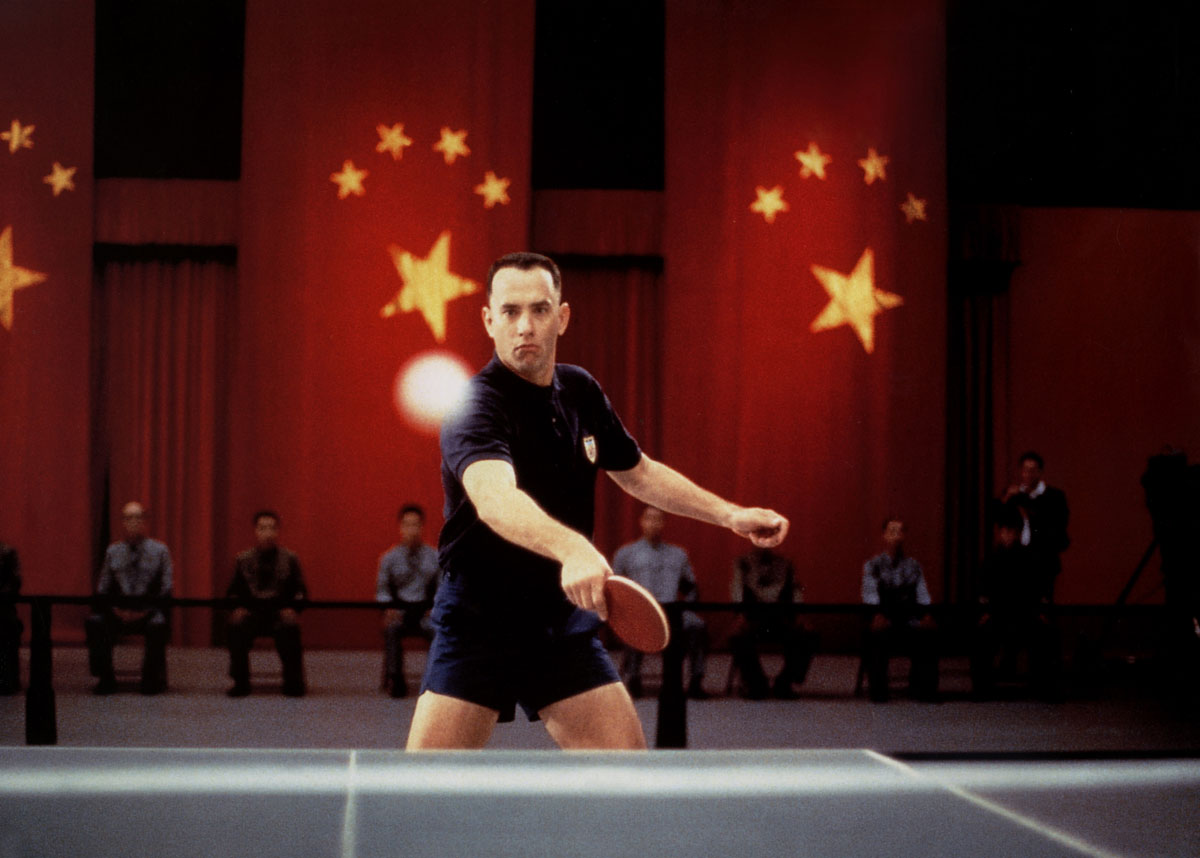
“Stupid is as stupid does”: The Gumpification of America, 30 years later

You know, it’s funny how you can remember some things, and some things you can’t. Memory has reduced “Forrest Gump” to a few lines of dialogue and the ubiquitous meme of Tom Hanks “running like the wind” blows down the country road outside his home in Greenbow, Ala.

Forrest’s hometown isn’t real, but neither is much of anything else in this movie save for a few landmark historical moments. Hanks’ character meets three American presidents – John F. Kennedy, Lyndon Johnson and Richard Nixon – and through digital wizardry that looks terrible now, we watch him treat shaking hands with history as an inconvenience. (We’ve since come to understand this as metaphor.)

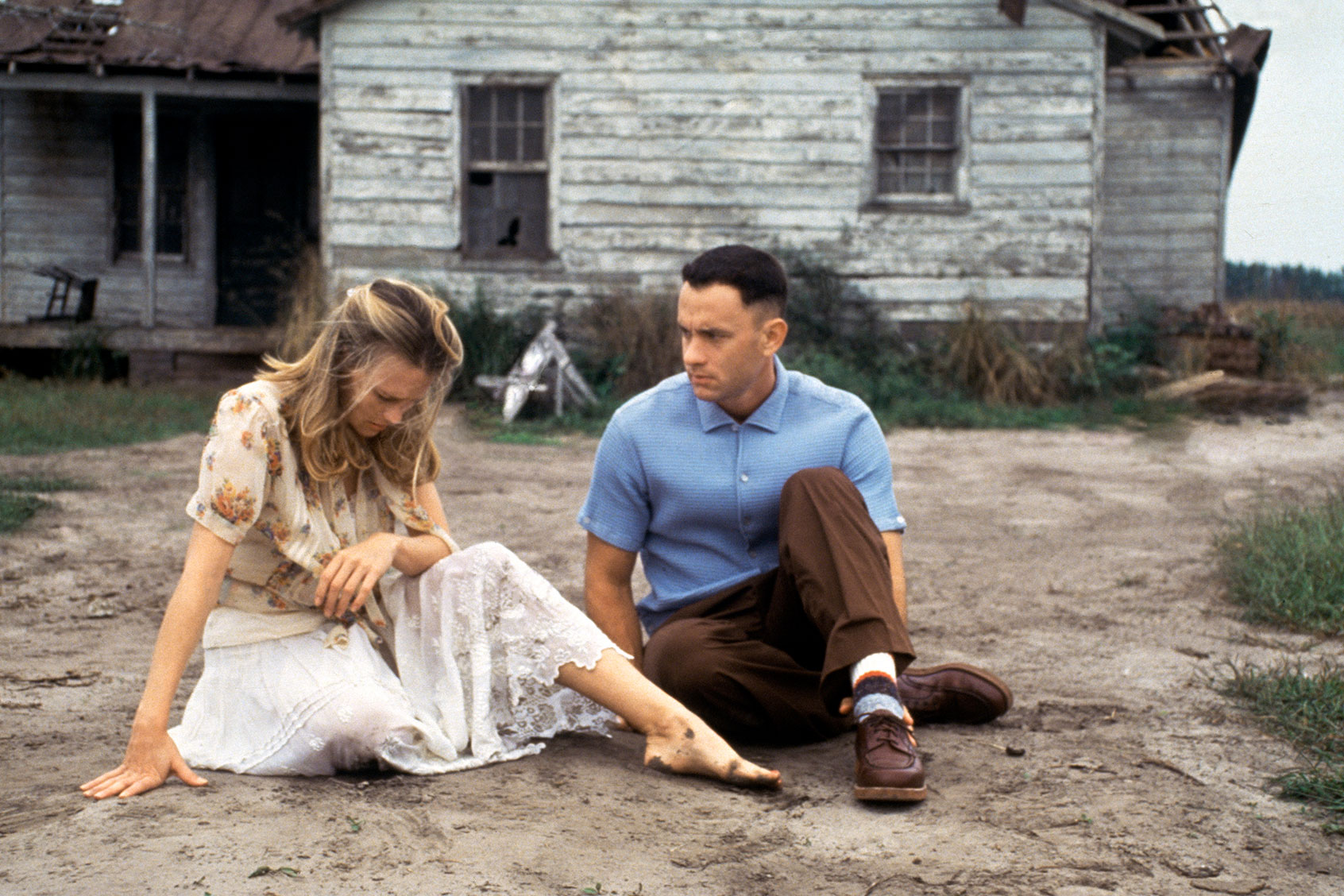
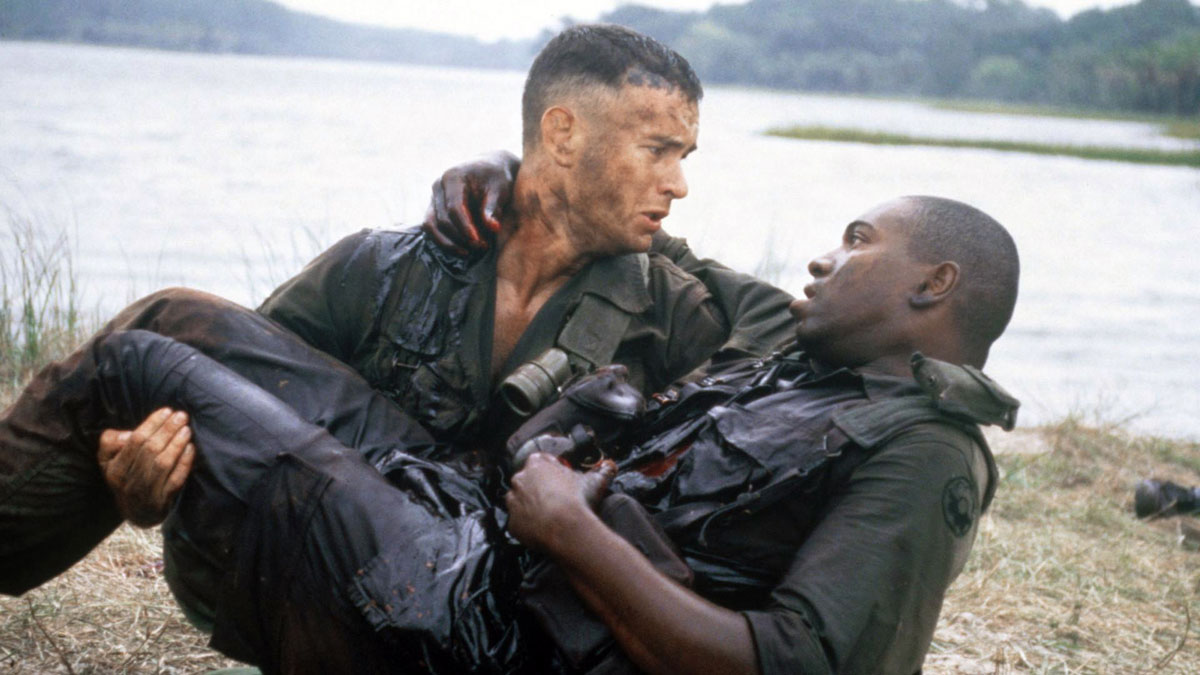
He loses his best friend Benjamin Buford “Bubba” Blue (Mykelti Williamson) while serving in Vietnam. Later we see Forrest lose his dear Momma (Sally Field) to cancer and the girl he’s always loved, Jenny (Robin Wright), to AIDS.

Remembering the 1994 movie’s specifics isn’t important since, as Hanks pointed out in a USA Today article marking its 25 anniversary, it’s never gone away.

And Hanks himself, that paragon of niceness, has only become a bigger avatar of American identity. He won his first best actor Oscar for his work in “Philadelphia” and his second for this. Of the two it is understood that Robert Zemeckis’ slow-witted hero launched him to icon status. Hanks’ “Philadelphia” character, an HIV-positive attorney suing his former firm for wrongful termination, was a more challenging performance. It was also a sympathetic examination of a shameful time that still made people uncomfortable in 1993.

Forrest Gump‘Forrest Gump’ 1994 directed by Robert Zemeckis. (Sunset Boulevard/Getty Images)

“Forrest Gump,” meanwhile, is entirely devoted to making white Americans feel comfortable — about themselves, and about what they represent to the world. Zemeckis’ adaption of Winston Groom’s novel presents the 20th century through the simplest lens as it was lived by a man with an I.Q. of 75 who loves his Momma, follows directions to the letter, and is essentially good.

The film’s running joke is that Forrest happens to stumble into moments of great consequence, usually as a witness but sometimes as the accidental force that pushes history along.

Five years ago major news organizations like CNN, the Los Angeles Times, and USA Today marked the movie’s 25th anniversary with coverage remarking on the film’s polarizing nature in the most neutral terms: it’s either heartwarming or manipulative, conservative or apolitical, an introduction to history, as CNN describes it, or an airbrushing of it.

Other culture writers were less diplomatic, citing the troubling portrait of Robin Wright’s Jenny, the love of Forrest’s life. One of the many reasons it made the National Review’s list of top conservative moves of all time in 2009 is the film’s tacit implication that Jenny catches HIV as the result of her sexual and political liberalism.

A turning point in Alan Roth’s script is when she turns down Forrest’s marriage proposal after living with him for a while. She has sex with him and disappears afterward, resurfacing years later with their child and news that she’s dying.

Forrest Gump‘Forrest Gump’ 1994 directed by Robert Zemeckis. (Sunset Boulevard/Getty Images)“One of the main complaints about the film is that it appears to be anti-intellectual, and anti-progressive,” wrote critic Noel Murray in the Los Angeles Times. “. . .The movie seems to argue that ignorance really is bliss.”

Murray continues:  “But to a large extent, “Forrest Gump” isn’t really an expression of values or a guide to a better life. It’s more a poignant, reflective look at how this country survived the tumult of the ’60s and ’70s by rebooting itself every few years, then running full-speed ahead into something new.”

IndieWire’s Eric Kohn had another take. “[V]iewed 25 years after its release lead to box office success and six Oscars, it remains a bad movie that gets worse with age, and much scarier than its cozy reputation suggests.”

I cite these excerpts about “Forrest Gump” less out of a matter of echoing them than to observe that at 30, the most alarming part about the movie isn’t its historical or political elision but in the ways present-day America is sinking to meet the film’s mythical version of it.

As much as Forrest is a know-nothing, except when it comes to knowing what love is, he’s also a do-nothing when it comes to acknowledging systemic wrongdoing.

To him, the legendarily bigoted Alabama Gov. George Wallace is an angry little man standing in the way of some people, not a national politician Wallace symbolically trying to block the integration of the University of Alabama in 1963. The Black Panther Party is a place where a furious Black man bellows at him about stuff while Jenny’s no-good boyfriend punches her. The film mutes the Black stranger’s grousing about inequality and the government’s warmongering because Forrest, in military dress, must save Jenny from the dirty hippie.

Forrest Gump‘Forrest Gump’ 1994 directed by Robert Zemeckis. (Sunset Boulevard/Getty Images)Even before that, we find out that Forrest’s sainted Momma named him after one of their ancestors, Confederate Gen. Nathan Bedford Forrest, the first Grand Wizard of the Ku Klux Klan. (No, really.)

“They’d all dress up in their robes and their bedsheets and act like a bunch of ghosts or spooks or something. They’d even put bedsheets on their horses and ride around,” he says in his guileless narration.

She did that, he says, “to remind me that sometimes we all do things that, well, just don’t make no sense.”

“Forrest Gump” is entirely devoted to making white Americans feel comfortable — about themselves, and about what they represent to the world.

In the “see no color” 1990s liberal America sold itself on the false idea that bigotry and racist terror were such distant relics of a bygone age that this could be played for laughs. The idea that groups like Moms for Liberty and other conservative activist groups would threaten school boards, force a curtailing of access to literature, and push to excise accurate teachings of history from public education was inconceivable. We couldn’t even picture a future time when provable facts about our nation’s history would be rewritten to protect some of us from being offended by nasty truths.

Three decades later, this is where we are: A small library in Donnelly, Idaho, has been forced to become “adults only” to comply with House Bill 710, passed by the state’s Republican legislature.  The law requires all libraries, public and private, to designate an “adults only” section to which they can relocate a book within 60 days of receiving a written complaint about it. Donnelly’s library is too small to accommodate a separate section, so it made the whole place “adults only.”

Ostensibly this censorship targets books with queer content but can easily be used to remove books that accurately depict American slavery, the Jim Crow era or any inconvenient truth, really. Any library that doesn’t comply could face a civil lawsuit under the law, along mandatory $250 fine for the library and plaintiffs could receive uncapped damages.

Only children participating in the library’s paid programming and whose parents sign a waiver will be given free access to the 13,000-item collection, the library’s director told Boise State Public Radio.

We need your help to stay independent

The law went into effect July 1, the same day Oklahoma’s Superintendent of Public Instruction issued a directive requiring all public schools to teach the Bible and the Ten Commandments – specifically, as he told PBS News Hour, “the role the Bible played in American history, dating back pre-Constitution . . . all the way up through Martin Luther King Jr. and civil rights movement.”

But probably not any version of that history that violates a law passed in May 2021 that prohibits public schools from teaching concepts that would cause students to “feel discomfort, guilt, anguish, or any other form of psychological distress” because of their race or gender. That would preclude an honest rendering of the Christian nationalist foundations of the Klan and its vision of a white Protestant America.

I guess if teachers ever teach that inconvenient bit they can skip the part about the lynchings, intimidation, political disenfranchisement and property theft and tell the kids the Klan was doing things that just don’t make no sense.

Forrest Gump‘Forrest Gump’ 1994 directed by Robert Zemeckis. (Sunset Boulevard/Getty Images)America is a place that insists nobody is different from anybody else, that we’re all the same, just like Forrest’s Momma teaches him is true despite knowing she’s lying to him. Recently a U.S. federal court of appeals upheld this lie by ruling against the Atlanta-based Fearless Fund, a venture capital firm’s grant program designed to benefit Black women businesses founded and run by Black women.

Less than 1% of venture capital funding goes to businesses owned by Black and Hispanic women, and only 2% of investment professionals at venture capital firms were Black women in 2022, according to studies cited by Associated Press coverage of the case.

The suit is being brought by the American Alliance for Equal Rights, the far-right group behind the Supreme Court case that ended affirmative action in college admissions. It is one of many using civil rights law to claim that the Constitution is colorblind and any institutional practice or program dedicated to leveling the playing field for non-white people discriminates against white people. And these are only the most recent developments in a years-long push to erase the historical accounts of and literature by and about marginalized people.

Forrest sees everyone as equal. He couldn’t walk, but, by the grace of being chased by a few local bullies who grew up to be violent rednecks, managed to run his way out of his leg braces. He ran his way into a college football scholarship, where he probably didn’t learn anything. He dashed his way out of poverty. So what’s stopping the rest of us?


Want a daily wrap-up of all the news and commentary Salon has to offer? Subscribe to our morning newsletter, Crash Course.


Let me be clear: none of this is the fault of “Forrest Gump” or any single movie. (For what it’s worth, in 2021 Hanks came out against educational whitewashing in a Times op-ed.) Zemeckis’ best picture winner is part of a long Hollywood tradition of looking at bigotry and segregation as all but solved or surmountable due to the grace and benevolence of individual white people.

But this movie exported a specific brand of American identity and our tendency toward historical avoidance around the world. Out of the $678 million the movie grossed worldwide, according to Box Office Mojo, nearly $348 million came from the international box office. That’s more than half.

Forrest Gump is the same as Miss Daisy or Emma Stone’s Eugenia “Skeeter” Phelan in “The Help,” only he is the feather we see floating through the air in his movie’s opening credits. By just drifting through the tumult and chaos of society, doing what he’s told, and through sheer dumb luck, Forrest Gump becomes one of the richest people in America.

“As I see it,” Groom told the New York Times back in 1994, “it’s a story about human dignity, and the fact that you don’t have to be smart or rich to maintain your dignity even when some pretty undignified things are happening all around you.”

That view absolves us of trying to understand the systemic source of those indignities as something other than unkindness. It’s a tip of the hat to willful blindness, lack of critical thought and historical illiteracy.

Groom took issue with screenwriter Eric Roth’s rewrite of his book’s line about chocolates, but another “Forrest Gump” catchphrase the screenwriter originated himself is more appropriate today than ever: “Stupid is as stupid does.” With a box of mixed candy, we may not know what we’re going to get. With our aimless drift toward mass ignorance, we do.

“Forrest Gump” is streaming on Paramount+.

Judge Aileen Cannon delays Trump’s classified documents case, yet again

Following the U.S. Supreme Court ruling that grants Trump partial immunity concerning his federal 2020 election interference case, Judge Aileen Cannon paused deadlines tied to his classified documents case, to allow for further briefing.

Cannon's ruling, which was handed down on Saturday, reads as such:

Temporarily granting in part and reserving ruling in part on Defendant Trump's Motion for Supplemental Briefing on Presidential Immunity and a Partial Stay 664. In order to allow for full briefing on the Motion, and consistent with the Special Counsel's request for the standard response period, the Court stays the following impending deadlines:

Defendants' Rule 16 expert disclosures, currently due July 8, 2024; Defendants' reciprocal discovery, currently due July 10, 2024; and Special Counsel's CIPA §§ 5-6 submission, currently due July 10, 2024, although the Special Counsel may proceed with filing should it so elect.

Previously accused of favoring Trump, Cannon's decision to hop to in her response to Trump’s attorneys requesting the pause in court proceedings on Friday — making the most of that Supreme Court ruling, which was also very much in Trump's favor — is causing waves. 

"She has got to tread carefully. Delay is her middle name," State Attorney for Palm Beach County Dave Aronberg said to MSNBC on Saturday. "She will continue to slow walk this case, or continue to err on the side of delay and indulge the former president with every request. Yes, this decision by the Supreme Court on immunity would further delay the documents case, which is the strongest case against Donald Trump. This case was never going to be heard before the election, anyway."

Defying inflation? How Arizona Iced Tea (mostly) maintains Its 99-cent price tag

During times of sustained inflation — those periods when the price of a carton of eggs makes headlines — it doesn’t take much for a business executive to cast themselves as an enemy in the eyes of an overextended American public, but out-of-touch statements with a certain “let them eat cake” undercurrent are certainly a shortcut to achieving villainy. 

For instance, in February,  WK Kellogg Co. CEO Gary Pilnick was likened to Marie Antoinette for encouraging people to eat cereal for dinner as a way to save money; this, despite the fact that the price per unit of Kellogg’s products was up nearly 20% compared to the year prior, the highest increase among ready-to-eat cereal brands. “There’s no reason for you to jack up your prices the way you did, except to screw us,” said the narration in one TikTok video that went viral at the time. 

Months later, Brian Niccol, the CEO of Chipotle was similarly accused of “greedflation” as customers began to report receiving smaller portion sizes when they visited the Mexican-inspired chain. Reddit is littered with hundreds of similar complaints — which somehow weren’t ameliorated by Niccol’s recommendation that customers give employees a special look (eyes wide, head tilted in disappointment) when they “want a little more pico.” 

Perhaps that’s why Don Vultaggio, the founder of Arizona Iced Tea, is being lauded as an inflation-time hero for making one simple, yet audacious proclamation: The brand's 23-ounce cans, which have cost 99 cents for three decades, will continue to be priced at 99 cents for the foreseeable future. 

“We’re successful, we’re debt-free,” Vultaggio explained to TODAY’s Savannah Sellers in a June interview. “We own everything. Why? Why have people who are having a hard time paying their rent have to pay more for our drink?”

Vultaggio went on to say that he doesn’t intend to raise prices “in the foreseeable future,” a decision impacted by both his background — during his first job as a grocery clerk in Brooklyn, he made $1 an hour — and the current state of the economy. 

“Everything [people are] buying today there’s a price increase on. We’re trying to hold the ground for a consumer who is pinched on all fronts,” Vultaggio explained. “I’ve been in business a long time, and candidly, I’ve never seen anything like what’s going on now. Every single thing has gone up, and I call it ‘from a paper clip to a too-big filling machine.’”

We need your help to stay independent

That said, there are rarely clean-cut victories for consumers under Big Capitalism and the real cost of Arizona Iced Tea is no exception. While Vultaggio can continue stamping “99-cents” on the can, that doesn’t guarantee stores will actually comply when it comes to their pricing. It’s a discrepancy that numerous observational comedians have used as fodder, and even inspired a satirical commercial on the FX series “Atlanta” which features the now-iconic line: “The price is on the can, though.” 

Since Vultaggio’s TODAY interview, X, formerly Twitter, has been flooded with field reports from bodegas and corner stores across the country, where users take and post photographic proof of offending cans, with prices sometimes up to $2. In response to one meme that depicted Arizona Iced Tea as a fantastical giant fighting back its enemy, inflation, an X user said: “As a New Yorker, I'm legally obligated to love Arizona iced tea  — and I do — but y'all can't be posting this … when it's impossible to find it for sale at 99¢ pretty much anywhere any more.” 

Since federal agencies don’t control how much your local supermarket or corner store charges, this isn’t illegal (and despite rumors to the contrary, there isn’t a federal hotline to call to report stores that slap a $1.34 price tag on a can of Arizona Iced Tea). This is something that Vultaggio himself has acknowledged. 

"I’ve been in business a long time, and candidly, I’ve never seen anything like what’s going on now."

“I hate to raise prices, I’m an old salesman and the worst day in a salesman’s life is when he has to go to a customer and say you have to pay more,” Vultaggio later told TODAY.com. “But on the other side of it, we’ve done all we can to hold the price.”

He continued:  “Unfortunately, we don’t govern how store owners choose to price their products. The price is on the can. We do all we can to help retailers remain profitable, so stores can sell it for 99 cents.” However, Vultaggio has promised that his company is “gonna fight as hard as we can for consumers.” 

“Maybe it’s my little way to give back,” he said. 

Kamala Harris dodges talk of Biden during Essence Festival appearance in New Orleans

Kamala Harris attended the 30th annual Essence Festival of Culture in New Orleans on Saturday, speaking about economic opportunity, threats to reproductive health, maternal mortality, and the dangers of a second Trump term. But there was one topic she didn't get into that much . . . Biden. 

This is probably the most significant election of our lifetime. We have said it every four years, but this one here is it," Harris said. "In 122 days, we each have the power to decide what kind of country we want to live in."

During her 30-minute Q&A with Essence Ventures CEO Caroline Wanga, Harris barely mentioned Biden. Wanga didn’t seem to press the matter either, even though, less than 24 hours ago, the president gave yet another underwhelming performance — in an ABC interview — that only added fuel to the call for him to step down from the race.

When Harris addressed a standing-room-only crowd in a room that can seat over 500 people at the Ernest N. Morial Convention Center, she was introduced as a woman “doing the heavy lifting” who is a “proven fighter for the backbone of this country.” She entered and exited the stage to the tune of Beyoncé and Kendrick Lamar’s song "Freedom," in which Beyoncé sings the lyrics, “Singin’, freedom, freedom, Where are you?… Hey! I’ma keep running.”

Reminding the audience of the work the Biden-Harris Administration has accomplished over the last four years, Harris spoke about curbing the price of insulin paid by Medicare users, expanding access to public health insurance for low and moderate-income women, and billions in student loan debt forgiven. She asked the room, by a show of hands, if anyone had reaped the benefits of student loan forgiveness, and hundreds of hands shot up. 

"You got that because you voted in 2020,” Harris told the audience, according to reporting by the Guardian.  

One of the attendees, who introduced herself as a nurse practitioner from Cleveland, said she is working double-time to pay off hundreds of thousands in student loans since none of it had been forgiven. She was attending to hear the VP talk about second-term plans and by the end of the event she said, “I liked what I heard. I did, but want to hear more.” Adding, “Honestly, I think what we heard tonight is the next president of the United States. Isn’t that something?”

Today’s dads help out more than previous generations. Is it actually enough?

An absent mother is often depicted as an unfathomable tragedy. An absent father though, is easily, and frequently, normalized. 

The difference in how the public views parental involvement based on gender contributes to headlines celebrating how today’s generation of dads are supposedly more involved than ever before. Over the last decade, multiple studies have stated that Millennial and Gen Z dads spend more time with their kids than previous generations. This is research worth highlighting, as studies continue to report that children benefit from more involved dads.

At the same time, studies continue to show that family responsibilities still fall more on mothers and that mothers are stressed. What’s going on?

According to a 2023 study by the Institute for Family Studies, fathers in the U.S. spend an average of 7.8 hours per week taking care of their children at home, an increase of one hour per week in just about two decades. Taking a deeper look, the researchers found that college-educated fathers with children under age 18 spent an average of 10 hours and 12 minutes a week on childcare, which was more than 2 hours a week since 2003. 

“That’s a big jump and it's encouraging news,” Dr. Wendy Wang, the director of research at the Institute for Family Studies, told Salon. “But on the other hand, you break it down by father's education and other characteristics, and you find out it's not all fathers are experiencing this increase in their time as their children.” 

"Even though fathers have become more involved with spending more time, mothers do a lot more."

Indeed, for dads without a college degree, time spent on childcare declined from 6.2 hours a week in 2003 to 5.9 hours a week. Marital status affects time spent with children as well. The study found that only half of the never-married fathers see their children at least once a day. But Wang added that more time college-educated, married fathers spend with their children doesn’t necessarily mean that there’s less responsibility placed on mothers. 

“If you compare mother’s childcare time and father's childcare time, even though fathers have become more involved with spending more time, mothers do a lot more,” Wang said. “But I think with more fathers, they're being involved, hopefully, that will lighten up some of the burdens from mothers.”


Want more health and science stories in your inbox? Subscribe to Salon's weekly newsletter Lab Notes.


Eve Rodsky, author of the book "Fair Play," told Salon that studies examining the time fathers spend with their children today usually fail to capture the reality of the situation for a multitude of reasons. One being that the time parents spend with children has gone up for both women and men. Indeed, one study found that today’s generation of moms spend nearly twice as much time with their kids compared to moms 50 years ago.

“Everybody's percentage of having to intensively parent has gone up,” Rodsky told Salon. “There’s no inherent difference in this generation of men.”

Rodsky added it’s also an issue of relative statistics and absolute statistics. Frequently, she added, studies claiming that fathers are spending more time with their children children are based on data that’s self-reported. The way questions are asked matter too, she further elaborated. It’s not so much who is in charge of childcare, or the time spent with a child, but the questions to ask should be centered around the cognitive labor of a task. In other words, the mental load. 

Rodsky said these studies stating that fathers today are spending more time with their kids can sometimes be helpful, but most times they are harmful. 

“Men will say, 'What do you have to complain about? I'm so much better than my dad,'” she said. “We're not looking at that type of comparison. We're looking at, well, I have to do much more than my mom, right? We want equal partnerships.”

Rodsky said women want their male spouses to handle the “conception and planning” of cognitive labor. To take ownership of a task from start to finish. “We need people who are willing to handle the conception and planning, to take over the cognitive labor, the ownership of a task from start to finish,” she said. “Until then, women will not have any relief from the mental load or from this unpaid labor challenge that we're in right now.”

Rodsky said early in her research for "Fair Play," she did a word cloud study for women on words they associated with childcare and housework when married. The two most used words were “overwhelmed” and “boredom.” 

We need your help to stay independent

“Nobody wants to be overwhelmed and bored, so I think that was the biggest concern for me, because this is a higher educated population of women, and so there is that boredom in the remoteness of the unpaid labor tasks,” she said. “But on top of it, it's still extremely overwhelming because of these cognitive labor demands.” 

For future research on parenting and gender roles, and to get a better grasp on what’s happening in America, Rodsky said there needs to be a deeper understanding of cognitive labor.

“I think it's important to understand the difference between cognitive labor and execution,” she said.  “The more that we get people to understand, and for the Bureau of Labor Statistics to understand, and for Department of Labor to understand, and for anybody who does time use to understand: that there's a difference between execution and cognitive labor, then I believe we're going to be in a much better place for how people report how men are doing more.”

Democrats’ divine intervention: Biden says only God can make him back down

God got dragged back into the presidential race this week, but not the way you might think. 

After sitting down with ABC’s George Stephanopoulos Friday night, President Joe Biden made two things abundantly clear: He still believes he’s the best man to run the country, or as he described it – being the most powerful man in the world. He also is fearful of what Donald Trump would do with a second term in office. “I convinced myself of two things. I'm the most qualified person to beat him, and I know how to get things done,” Biden said in the interview.

Those two things, combined with an obviously healthy ego, motivate him to continue to run for a second term even though it seems there is a growing number of Democrats who want to remove him from the ticket for fear that he is mentally deteriorating  – thus giving Trump that second term all Democrats fear.

At least they have solidarity on that issue. The Democrats all want to beat a convicted felon in the general election this Fall, but some just aren’t sure if the incumbent president can do it. That is a sentence I never, in my life, thought I would write.

Unless you’re living off the grid or have been in a coma, you know that Biden’s perceived decline manifested itself in Atlanta during CNN’s recent presidential debates. Biden stunk. So did Trump. But Trump sounded like his usual delusional, malevolent and demented self. At the same time, Biden shocked people with blank stares, an open mouth and befuddled answers to questions that he should have easily answered. The GOP circled the wagons and defended a convicted felon. The Democrats circled the wagons to burn Biden at the stake.

Afterward, Biden hit the campaign trail hard to shore up support, met with his staff, told them to soldier on, and has been on the road making sure the donor class still supports him. This unprecedented quandary in American politics just keeps getting worse.

Meeting with Stephanopoulos was supposed to settle the issue about Biden’s viability, but it raised more questions than it answered – according to some large Democratic donors, while others said he “knocked the ball out of the park.”

Appearance is reality these days. 

“I like the president a lot,” one West Coast donor told me. “I think he deserves thanks, our gratitude and our respect, but it’s time to step down.”

That question came up during the ABC interview. Stephanopoulos put it as politely as possible, but Biden would have none of it. So then he was asked, “And if you stay in and Trump is elected and everything you're warning about comes to pass, how will you feel in January?”

“Long as I gave it my all,” the president said, ”that’s what this is about.”

No. It’s not. And Biden seemed to understand that later, saying “the world is at an inflection point,” and the next several years “are going to determine what the next six, seven decades are going to be like.”

Yes. And while Biden’s approval rating is dismally low, and the poll numbers show him slipping, he refuses to believe those numbers. And those who think he should step aside for Vice President Kamala Harris should also know that Biden steadfastly believes the poll numbers about her chances against Trump. “I’m the only one,” who can win, Biden reiterated. Trump also tells us he alone can atone for our sins. 

“This was a very sad and weak interview,” one top donor explained. “I really hope he (Biden) steps down soon for the good of the country. He should step down right now and let Vice President Harris become President and she can run as an incumbent and she will win another four year term for the team.”

We need your help to stay independent

Harris supporters are much like Biden supporters; they don’t believe the poll numbers either – when it comes to her, but they do believe the poll numbers about the President. “She can easily win. Any candidate under 70 can beat Trump. And she is really great,” another donor explained.

But some Biden supporters ask an even more difficult question; “What if the poll numbers are right? What if Biden is the only one who can beat Trump. Harris is still on the ticket, and if, God forbid, something happened to Biden, she’s still there. So why should we change candidates?”

Biden on Friday was adamant about staying in the race unless there was divine intervention. “If the Lord Almighty came down and said, ‘Joe, get outta the race,’ I'd get outta the race. The Lord Almighty's not comin' down,” Biden said.

Maybe God did. 

I’m reminded of an old joke: A man is standing in front of his house during a deluge. Record flood predicted. Dam will burst. A neighbor drives by and offers him a ride. The old man turns it down. “The lord will save me.” A little while later, with the waters up to his waist, a guy in a boat passes by. Offers the old man a ride. “The lord will save me.” Finally, with the water up to his roof, a helicopter flies over and drops a rope. “Don’t worry, the lord will save me.” 

A short time later the old man drowns. He gets to heaven, meets God, and says, “Why didn’t you save me?” And God says, “I sent a car, a boat and a helicopter. What more do you want?”

Maybe the debate performance was God’s message.

Biden’s growing intricate explanation for “having a bad night” during the debate now seems more like an excuse – and his performance a definitive message about his viability. At least a number of Democratic politicians believe so – especially after looking at poll numbers showing several of them doing better than the president in their respective states. 

Biden admitted he can’t “run the 100 in 10 flat” but insisted he was still in good shape. So Stephanopoulos reminded him, “I know you,” but Biden stuck by his claim. “Look I’m running again because I think I understand best what has to be done to take this nation to a completely new level,” the president said. 

No Democrat, whether they want Biden to stay in the race or leave it, doubts that statement. Their concern is that Biden isn’t mentally or physically capable of handling the rigors of the challenge during the next four years. 

And to that point, several Biden supporters said those calling for him to step aside miss the bigger picture.

“Trump is only three years younger. At the end of his next term, he’d be older than Biden is now. If you think Biden is a problem, imagine what Trump would look like. Who will be pulling his strings? What will be left of the country when they’re done cutting it apart? The leader of the Heritage Foundation is calling it a revolution that could “remain bloodless” if we just step aside. That’s insanity.”

While some Democrats, like Senator Mark Warner, are publicly trying to assemble a group of senators to talk Biden out of running, many wouldn’t speak on the record about the debate or the ABC interview. Publicly most Democrats say they still love Biden. Behind the scenes, they’re eating their own — in a scene so strangely reminiscent of the 1968 Chicago Democratic convention as to be frightening. Even more frightening was Biden’s response to one of the questions Stephanopoulos, who by the way did much better than the CNN moderators in asking questions, aimed at the president; “If you’re going to lose the House and the Senate if you stay in, what will you do?”

Biden would not answer. “I’m not going to answer that question. It’s not going to happen.”

Pride comes before the fall. Biden doesn’t know the future any more than anyone else does. His pride is what got him into this mess. All he had to do was show up in public in the Brady Briefing room and show himself to the world on a regular basis and he could have quieted much of the criticism – and he could have prepared much better for his debate with Trump.

But he did not do that. He has no one to blame for the perception that he’s befuddled other than himself. Now he has to face the consequences of his own decisions. That sounds an awful lot like Trump. 

Finally, Biden says it takes character to run – especially because of the recent Supreme Court decision giving Presidents unlimited immunity for “official acts.” It’s going to take extraordinary intestinal fortitude to keep from manipulating the government with these newfound powers. He’s absolutely right. But I would like to hear that the President has more to offer on this subject – including expanding the court to better balance justice.

At the end of the day, as strongly as Biden remains entrenched, and as stubbornly as he has defended his entrenchment, the decision can still be reversed.

The next few weeks may yet find him stepping down.

Pandemonium is the new normal.

American politics remains chaos in a blender.

And Trump is laughing all the way to the White House – he hopes.

Ten Commandments gone wild! The Christian right’s latest toxic distraction

“I LOVE THE TEN COMMANDMENTS,” trumpeted Donald Trump on his Twitter knockoff site, in the wake of the passage of a widely-reported new law in Louisiana. Trump wasn’t exactly lying, for once, as he went on to explain: It was all about the branding. The commandments should be displayed, he wrote, “IN PUBLIC SCHOOLS, PRIVATE SCHOOLS, AND MANY OTHER PLACES, FOR THAT MATTER. READ IT — HOW CAN WE, AS A NATION, GO WRONG???”  

The hysterical disconnect between professed and practiced religiosity is with us always, but this hyperbolic extreme, which barely caused a ripple in the media, is worth serious reflection, both on its own and to fully appreciate the significance and multiple contradictions embedded in and surrounding the Louisiana law that elicited Trump's enthusiastic endorsement. The law itself follows from the Project Blitz playbook (described here in 2018), which laid out a three-tiered framework intended to advance a Christian supremacist, if not dominionist, agenda. Though Project Blitz later went into stealth mode, associated figures such as Texas-based pseudo-historian David Barton and Gene Mills, head of the Louisiana Family Forum, openly claimed credit for the bill. It would clearly be considered unconstitutional under established judicial precedent, but the current Supreme Court supermajority — with three justices appointed by Trump — no longer cares about that. The Constitution means whatever they say it means, apparently, and precedent be damned. 

Actual history tells a very different story, perhaps most comprehensively articulated by Andrew L. Seidel in his 2019 book “The Founding Myth: Why Christian Nationalism is Un-American” (Salon interview here.) He provides a detailed examination of how and why biblical principles are fundamentally at odds with our constitutional order. It may sound simplistic to contrast a country built on rebellion with a book built on obedience, but in fact, Seidel argues, that's exactly right. “America's justice system demands proof of guilt to avoid punishing innocence," he writes, but "the Judaeo-Christian god intentionally harms innocents to punish the guilty.” 

Why is this relevant here? Because Seidel is literally discussing the Ten Commandments, and referring to text excised from Louisiana's version. I reached out for comment, and Seidel replied:

Louisiana's Ten Commandments lawsuit actually disproves the Christian nationalist claim that the Ten Commandments are the basis of America's moral foundation. One need only compare the text that will go on classroom walls with the text of the Bible. Louisiana lawmakers edited and abridged the biblical commandments to “improve” the Word of God, to make them more moral. Gone is the reference to a jealous God punishing innocent children for the crimes of their parents (Exodus 20:5); the crime of exercising their right to freely worship. Lawmakers used our modern morality to edit the word of their God. Louisiana's heavily edited commandments undercut the very claim they are supposedly making.

As we’ll see below, Louisiana's legislators didn’t write their own text, but they clearly made a deliberate choice about what to copy and paste. 

If this were an intellectual debate, we could stop here. But it’s politics, which is full of challenging absurdities. Trump was only a distant spectator to the Louisiana bill, but he’s both a symptom and a super-spreader of the underlying moral abyss. Eight years ago, many evangelical Christians had their doubts about Trump. His running mate, Mike Pence, clearly helped calm, as did "apostle" Lance Wallnau, whose book “God’s Chaos Candidate” compared Trump to the Persian King Cyrus, a "heathen" instrument of God’s will. But now Trump openly compares himself to Jesus and his followers eat it up, while his flagrant violations of the Ten Commandments are shrugged off, at best. Pastors who preach on the Sermon on the Mount, in which Jesus told his followers to "turn the other cheek," are accused of pushing “liberal talking points.”  

Eight years ago, many evangelical Christians had their doubts about Trump. His running mate clearly helped, as did Lance Wallnau's “God’s Chaos Candidate,” which compared Trump to the biblical King Cyrus.

In short, Trump has helped catalyze a profound disorientation of Christianity, deep into gaslight territory. By comparison, Louisiana Gov. Jeff Landry is just a garden-variety Republican liar. “If you want to respect the rule of law, you’ve got to start from the original lawgiver,” he said on signing the bill. It's an obviously illogical claim — you could also start by not nominating a convicted criminal for president — that’s also ludicrous and false in several different ways.

If we turn to the actual Bible, Moses is better described as a law-taker, not a lawgiver. There was nothing original about his list of commandments (Egypt, Babylon and others were far ahead) and in any case American law is not derived from the Bible. It comes to us from various places, including ancient traditions of Germanic and Roman law. While the latter tradition certainly absorbed some Christian influences, those come under significant criticism in Montesquieu's “Spirit of the Laws,” which actually was a major influence on the U.S. Constitution, and thus our rule of law. Landry’s claim is so wrong, in so many ways, it makes your head spin. As for Louisiana’s version of the Ten Commandments themselves? As we’ll see below, they literally come from Hollywood, perhaps the crowning P.T. Barnum-style absurdity atop this whole sorry episode.

OK, so which Ten Commandments, exactly?

There are, in fact, three different versions of the Ten Commandments in the Bible: two in Genesis and one in Deuteronomy. While the versions in Exodus 20 and Deuteronomy 5 are similar (but not identical), the commandments given to Moses on top of Mount Sinai and engraved on two stone tablets, as recounted in Exodus 34, is nothing like the list of crimes most people know. It starts off with “Be careful not to make a treaty with those who live in the land where you are going, or they will be a snare among you,” and concludes with “Do not cook a young goat in its mother’s milk.” There’s no mention of stealing, bearing false witness or committing adultery, as Donald Trump will no doubt be happy to learn. 

In short, this is a perplexing state of affairs. In Exodus 20, God verbally gives Moses the first version of the Ten Commandments, followed by another 10 chapters of law, separated by a brief pause. It’s only at the end of Exodus 31 that God gives Moses two stone tablets “inscribed by the finger of God.” In Exodus 32, Moses breaks those tablets in anger at those who worship the golden calf and then, in Exodus 34, God tells Moses to make two new stone tablets and promises to inscribe the words from the first tablets on them. Except that the words that follow are clearly not the same.

I turned for guidance to biblical scholar André Gagné, the author of “American Evangelicals for Trump” (Salon story here), who pointed me toward a couple of clarifying overviews. "The Ten (or Eleven) Commandments" by Australian scholar Stephen D. Cook was particularly helpful. After quoting from Exodus 34, Cook observes: "This is definitely not the list of ten commandments which most people are familiar with, but it is the only list in Exodus which is actually called 'the ten commandments.'”

I wrote back to Gagné: "I guess this means there aren't better answers, just better adaptations to the fact there aren't better answers." He replied with a thumbs-up emoji.

The Ten Commandments recounted in Exodus 34 are nothing like the list of crimes most people know. It starts off: “Be careful not to make a treaty with those who live in the land where you are going, or they will be a snare among you.”

This is what it’s like in the world of serious Bible scholarship, a lengthy academic tradition whose rigorous pursuit of knowledge sparked a backlash in America and the English-speaking world that you may have heard about: fundamentalism. What you may not know is that fundamentalism borrowed its name and considerable momentum from a publication called The Fundamentals, bankrolled by the Los Angeles oil-baron brothers Lyman and Milton Stewart, who went on to subsidize considerable fundamentalist infrastructure in the U.S.

We'll get back to that connection between plutocrats and right-wing Christianity, but first there’s the vexing problem of which form of the Ten Commandments should be forced onto schoolchildren. Presumably not the Exodus 34 version quoted above, but that hardly solves everything. Wikipedia even offers a chart showing how eight different faith traditions group and number the commandments. 

Even in Louisiana, passing this kind of law wasn't entirely easy. “Some years ago a Ten Commandments bill never got out of committee," said researcher (and Salon contributor) Frederick Clarkson, because legislators "couldn't decide which version of the Ten Commandments was correct,” apparently because of disagreement between Catholics and evangelicals. This time around, he noted, the bill’s legislative sponsor is a Southern Baptist from evangelical northern Louisiana, but the governor signed it in a Catholic church, evidence of further negotiation.

Stephen A. Cook’s May 2023 post, mentioned above, began with a reference to similar legislation passed by the Texas State Senate, using a version, as he later noted, that “doesn’t appear in any Bible that I know of," describing it as a "highly Christianized version" with "Judaic elements removed.” 

Indeed, the Texas and Louisiana bills call for the exact same language, which happens to be the same used by Cecil B. DeMille to promote his 1956 Hollywood blockbuster "The Ten Commandments," the one with Charlton Heston as Moses. As Fred Clark noted on his Slacktivist blog, the DeMille text of the commandments was apparently first concocted by a “Minnesota juvenile court judge named E.J. Ruegemer [who] started sentencing young people who’d gotten into trouble with the law to study the 10 commandments with a local pastor.” Clark continues:

Since Jews, Catholics, Lutherans, Calvinists, and other traditions all number the Ten Commandments differently, Ruegemer’s poster tries to avoid alienating any of those groups by simply not numbering them. And because different traditions favor different translations, he paraphrases slightly from the King James Version he used as a starting point. That’s why the language of the poster is KJV-ish, but not always actually KJV.

Nine families with children in public schools have filed suit over the Louisiana law. One of the plaintiffs, Joshua Herlands, struck a number of key themes in a public statement:

As a parent, an American, and a Jew, I am appalled that state lawmakers are forcing public schools to post a specific version of the Ten Commandments in every classroom. These displays distort the Jewish significance of the Ten Commandments and send the troubling message to students that one set of religious laws is favored over all others. Tolerance is at the heart of our family’s practice of Judaism, and this effort to evangelize students, including my children, is antithetical to our core religious beliefs and our values as Americans.

The Hollywood Commandments

Author Kevin Kruse recently posted an excerpt from his book “One Nation Under God: How Corporate America Invented Christian America” that lays out much of the story about Cecil B. DeMille's "Ten Commandments" and its links to the Fraternal Order of Eagles, one of the most white-bread examples of such groups. The whole thing is well worth reading, but three points are worth noting here.

Kruse chronicles an even broader plutocratic reshaping of public Christianity than the Stewart brothers example mentioned above. DeMille insisted that his screenwriters were to base the work on fact (as if the Bible should be understood in those terms), but in fact scripture offers no description of Moses' life between when his adoption by Pharaoh's daughter (Exodus 2:10) and his adult life (Exodus 2:11). So DeMille actually relied on a trove of ancient apocryphal accounts, selecting whatever suited him, while pretending it was all authoritatively true. Then there's the right-wing gloss of DeMille's entire project: 

“The great clash between two beliefs is dramatized,” the director explained to the Los Angeles Times. “Rameses II represents the ruler governing only by his own whims and caprices, whereas Moses brought to the people a rule of life which was eternal and right because it came from the Supreme Being.” “It is the story of human freedom,” he told the Washington Post, “whether men are to be ruled by law or by the whims of dictators, whether they are to be free souls under God or whether they belong to the state.”

It's flat-out wrong to describe Egypt in the biblical era as a lawless land. Basic laws had been in place in since the predynastic period, going back to about 6000 B.C. Ramses II ruled from 1279 to 1213 B.C., when such laws had been in place for thousands of years. Could a ruler like him abuse his power? Certainly — and how many Christian rulers have done, and will do, the same — especially with gaslighting propaganda like this giving him cover?


Want a daily wrap-up of all the news and commentary Salon has to offer? Subscribe to our morning newsletter, Crash Course.


Sociologist Samuel Perry, co-author of “Taking America Back for God: Christian Nationalism in the United States,” highlights the distinction between Christian nationalism as an ideology and as a strategy, and the important role of propagandistic distraction. Christian nationalism, he said, has two goals: “First and most obviously, it's used by politicians to signal to their base that they are culture warriors against leftism, Marxism, woke-ism, state-sponsored atheism or whatever bogeyman serves as the scariest threat to conservative white Americans."

Republican lawmakers "must always face what Harvard political scientist Daniel Ziblatt calls the ‘conservative dilemma,’" Perry continued, meaning that they represent the economic elite's interests, but they need votes from people their own policies hurt, specifically working-class white people. So distraction becomes a crucial tactic: 

They point to immigrants, seculars, Muslims, the woke, etc., and tell working-class white people, "Those people are taking your jobs and ruining our economy and making you feel unsafe." Christian nationalist rhetoric and symbolic legal victories (like Ten Commandments legislation) helps in this regard, because politicians can talk about how they're fighting for our Christian heritage and values and those woke leftists are going nuts because they hate America and God.

As Perry noted on Bluesky, US News recently ranked Louisiana dead last among all 50 states, and no. 47 in education. "That's why you pass laws to post Ten Commandments. Distract from your failures & make it look like you're scoring victories somewhere."

"Passing laws mandating the Ten Commandments in classrooms gives the impression that … they're taking steps to fix public schools by starting with cultural repair.” 

Perry himself lives in Oklahoma, another deep-red state that ranks “among the worst states on most indicators of well-being, including the economy, infrastructure, crime, health and, importantly, education." States like Louisiana and Oklahoma have been "led by Republican lawmakers for years, many of whom have no interest in actually improving public education, but instead replacing it with private schools and home schooling. So passing laws mandating the Ten Commandments in public school classrooms gives the impression that 1) the politician is scoring political victories for their constituents and 2) they're taking steps to fix public schools by starting with cultural repair.” 

Dr. Barbara Forrest, who played a key role in discrediting intelligent design in the Kitzmiller v. Dover case, has long been involved in such battles in Louisiana, her home state. She has previously argued that Gene Mills, who helped write the Louisiana law, "has made our state an incubator for political strategies designed ultimately to transform the United States into a dominionist theocracy, making Louisiana a cautionary tale not only for its own citizens but for the rest of the country."

That was five years ago. Today, she says the Ten Commandments law "is only one aspect of a much larger picture in Louisiana," which concerns the influence of the Louisiana Family Forum, Mills' nonprofit group. "Without the LFF," Forrest said, "I daresay we would not be facing the situation we are in down here with the passage of the Ten Commandments law…. The media keep calling this phenomenon Christian nationalism, but dominionism is more accurate."

Both the logic of distraction and the organizing behind it applies just as well nationwide as it does in the Bible belt. Donald Trump functioned as a distraction from past Republican failures, and now that he’s got his own massive failures — the worst COVID record in the developed world, the worst job record since Herbert Hoover, massive criminality and corruption — he badly needs the distractions Christian nationalism can offer, and the support of committed activists like Mills. 

At its heart, the Christian nationalist agenda is very close to authoritarianism or fascism: America is a Christian nation, and Christians (of the right variety) should control every facet of it. Stephen Wolfe’s “The Case for Christian Nationalism” even calls for a “measured and theocratic Caesarism,” noting in a footnote that “modern democracy is often more oppressive than its alternatives.” So despite Cecil B. DeMille's claim, this kind of Christianity can be a facilitator of tyranny. Trump seems to understand that clearly enough.

Trump encourages Biden to stay in the race while listing all the reasons he thinks he’ll lose it

On Saturday, Rep. Angie Craig (D-Minn) added herself to a growing list of Democrats calling upon President Joe Biden to drop out of his re-election campaign, saying, “There is only a small window left to make sure we have a candidate best equipped to make the case and win,” according to The Washington Post.

“Given what I saw and heard from the president during last week’s debate in Atlanta, coupled with the lack of a forceful response from the president himself following that debate, I do not believe that the president can effectively campaign and win against Donald Trump,” she said in a statement.

But in a bizarre twist — albeit a disingenuous one — Trump himself is encouraging Biden to keep fighting, devoting a lengthy Truth Social post to expressions of mocking encouragement in one breath, and a list of direct slams in the next.

“Crooked Joe Biden should ignore his many critics and move forward, with alacrity and strength, with his powerful and far reaching campaign,” Trump writes. "He should be sharp, precise, and energetic, just like he was in The Debate, in selling his policies of Open Borders (where millions of people, including record numbers of Terrorists, are allowed to enter our Country, from prisons and mental institutions, totally unchecked and unvetted!), to Ending Social Security, Men playing in Women’s sports, High Taxes, High Interest Rates, encouraging a Woke Military, Uncontrollable Inflation, Record Setting Crime, Only Electric Vehicles, Subservience to China and other Countries, Endless Wars, putting America Last, losing our Dollar Based Standard, and so much more. Yes, Sleepy Joe should continue his campaign of American Destruction and, MAKE CHINA GREAT AGAIN!” 

In recent statements — including several made during his interview with ABC’s George Stephanopoulos on Friday — Biden firmly says that he has no plan to drop out, hitting back by pointing out that he beat Trump once and aims to do it again.  

“These athletes should be more famous”: “Sprint” shows how an “alpha personality” creates winners

"Sprint" executive producer Paul Martin likes speed. And sports. But when it comes to amalgamating the two, what he cares about most, as any seasoned storyteller would likely agree with, are the characters.

Characters are the explicit focus of "Sprint," Netflix's new docuseries highlighting some of the biggest names in the 100- and 200-meter sprint in professional track and field. "Sprint" features top American talents like Sha'Carri Richardson — who made headlines when she was suspended in 2021 after testing positive for marijuana — and Noah Lyles, the outspoken sprinter who stoked beef with NBA players last summer, British 100- and 200-meter record holder Zharnel Hughes, Jamaican legends Shelly-Ann Fraser-Pryce and Shericka Jackson, and more. Each of these athletes is in contention for a place on the podium — hopefully wearing a gold medal — at the upcoming summer Olympic Games in Paris.

Martin is no stranger to the world of athletics. An avid sports fan, he has helped produce various sports-centric Netflix documentaries, including "Formula 1: Drive to Survive," "Break Point," "Full Swing" and "Tour de France: Unchained." Unlike some of those projects, however, "Sprint" was partially born out of the desire to construct a narrative modeled around brevity. At the elite level for both men and women, short sprints like the 100 and 200 rarely exceed more than 10 to 20 seconds per race.

Perhaps equally as difficult as defining the scope of a short-lived competition through film is capturing the "emotional journey" that preceded it, as Martin tells Salon during a recent interview.

"You really understand the hard work that each of them have put in."

For many of these top-tier talents, it's not merely their abilities and efforts alone that see them garnering gold medals. As "Sprint" shows, peripheral yet integral characters like family and friends allow the viewer to "live the event" and the athletes' journey through their eyes. "I think it's really important to establish those relationships and those characters within the context of the series so that you can see that the emotional states don't just lie with the individual," Martin said. "They lie with the bigger team and they lie with the mom, the parent, the brother, whatever it is. And I think it's always an important part of these worlds, you know, to see."

Check out the full interview with Martin, in which he speaks about curating the "Sprint" cast, the importance of being a "main character" in track and field and the charm of the sport's enduring element of surprise. 

The following interview has been edited for length and clarity. 

You work for Box2Box Films, the team behind Netflix's "Drive to Survive," which was about Formula One racing. It seems like you enjoy producing projects about speed! I was a former track athlete in college. I ran NCAA track and field as a middle-distance runner. So I was really excited to see this project come out.

Track and field is a notable sport for many reasons. Why did you choose to make a docuseries about sprinters specifically?

I was an athletics fan for a long time. And I loved it. I always loved the variety of events from track and field and the multi-discipline events and everything. I just genuinely was an athletics fan. When we looked at the world of athletics as a whole — whether it's Formula One, whether it's golf, whether it's tennis, all the shows that we've done — we always look from a kind of a character and story narrative perspective. When we dialed into the 100 and the 200 meters, there were all the things that excited us. There were great characters on the women's side of the sport. There were some incredible — some of the greatest athletes to ever do it there. And some new up-and-coming athletes here. So it just ticked all those boxes.

But I also think that we've made a show, Formula One, that is about speed. That's a race that takes place over two and a half hours. And I think there was just something that excited us [about sprinting]; that idea of we're making about a sport, but it's a sport that lasts less than 10 seconds for the 100 meters and less than 20 seconds for the 200 meters. For "Drive to Survive," if we ever find ourselves in need of juicing up an episode, you can cut to a great crash or you can cut to five minutes of amazing driving. And we didn't have that. We didn't have that safety net here. And I think that appealed to us of trying to tell the story of a sport that was only 10 seconds long.

SprintShaCarri Richardson in "Sprint" (Netflix)I love that. In a May episode of the "Move the Ball" podcast, you said that there's a moment in the series that you felt, "is some of the best emotional scenes we've ever filmed." Now that "Sprint" has premiered, can you talk about which scene that was and why you think it's particularly emotional and effective?

Yeah. So in Episode 5, it's really between Sha'Carri Richardson's semifinal and final. And in the aftermath of her winning the gold, it was just incredible? If you've seen the series already or you remember that event, you know she ends up going through to the final as one of the two fastest losers, which means she's in lane nine. And there are only 20 minutes between, the semifinal and the final when she goes back to the warm-up track and she meets Dennis [Mitchell], her coach. And they're both incredibly interesting but complicated characters. Dennis and Sha'Carri — they're both characters that people have very strong opinions about, for good and for bad. But I think in that moment, the way that Dennis talks to her between the events . . . and it's this great moment of him holding her hands as they walk from the warm-up track to send her out to the final. And he stops and they hug and he whispers something to her like, "Listen, I'm going to ask you this question and I want you to tell me the answer. I just want you to go out there and show me." And that question is, "Who's the fastest?"

And then she goes out there and she just produces the most extraordinary performance to win the gold medal. And then in the aftermath, because he's separated from her, he's on the phone with his wife. The whole thing is, it's just what sports are all about. Here are two people that have been criticized and maligned, all the stuff that's been written about Sha'Carri and even Dennis. And here you just see it for that moment of winning gold medals. You just see how it affects them on a human level. I think it's just incredibly emotional, incredibly powerful. For me, it just epitomizes everything that's wonderful about every sport, but certainly about that sport. And I never tire of watching it. It just really makes me emotional every time I see it because I think you really understand the hard work that each of them have put in to get into that moment and being able to execute and get what they dreamed of, which is incredible.

Totally. I was actually going to ask something along those lines, regarding Sha'Carri specifically. When she wins the 100 meters at The World Championships in Budapest, it really feels not only like a culmination of her efforts, but the moment when no one can count her out anymore. It affected me emotionally — that moment when she and Dennis embrace after the race and he gets kind of choked up and he reminds her of all she deserves.

After Sha'Carri's unfortunate suspension in 2021 that led her to not be able to participate in the Tokyo Olympics,  what did it mean to be a part of that moment for her and with her, that 100-meter win where she set that record?

Those moments are just incredible to witness. And I think for our crew, it was that she is an incredibly complicated individual to carry. And still, though we've made this series about her — I wouldn't claim to have any grasp on who she really is and what really drives her.

But I think that she was thoroughly deserving of that gold medal and thoroughly deserving of everything that she got. And thoroughly deserving of, like you said, that ability to not have people that don't know anything about her question her anymore, because I think there was a lot of rubbish written about her and talked about her both before and after what kind of happened to her. And I think she felt that very strongly. I think she went out and she proved everyone wrong. Not that she really cared about proving everyone wrong. I think for her about, it was about doing what she really believed that she could do, which was win gold medals. I think her focus now will very much be on that Olympic gold medal. And I think the good thing is that now she's probably the favorite for that. And I don't think people are writing her off. I think it's conceivable that she could win that gold medal in Paris, which is incredible.

I'm curious to learn more about what the "Sprint" casting process looked like. The series features some incredibly big names in the sport from all over the world — Sha'Carri, Noah Lyles, Shelley Anne Fraser-Pryce, Sherika Jackson, etc. Why did you pick them other than the obvious reasons? Did you get everyone on your wish list and were some of them more challenging to lockdown than others?

"Carl Lewis was a character."

Yeah, I mean, these shows are always challenging to make because you are dealing with different personalities. Sometimes people are all in from day one. Sometimes it takes a little bit longer to build that kind of relationship. Sometimes halfway through it, you can see that their interest in being part of it has waned, or the story that you thought you were going to tell is maybe going in a different direction.

Someone like Noah is great. He's a gift. He's someone that takes his role in athletics very seriously. He sees it as part of his job to try and push athletics as much as he can. And therefore he sees that putting himself out there and putting his personal interest in growing the sport and growing people's interest in the sport. Other people don't feel that kind of obligation. They're very much in their own lane and very much on their own journey. And you have to respect that. 

I would say, Sha'Carri is one of those people, where she's so focused on where she wants to get to. Sure, she participated in this type of show. But I wouldn't say she did it with the same enthusiasm that Noah did. But that's expected. They're all different and they all have different entry points and they all have different participation. It's less a casting process and more the characters emerge through the process. We love to spend some time with Noah. We love Sha'Carri, Shelley-Ann, Fred [Kerley]. But you never really know how the storylines and the characters are going to evolve. But these shows just have a way of throwing up characters and storylines in a way that make them unavoidable. It's like, how could you have not told the Sha'Carri story? How could you have not told Noah's story?

Did any particular stories from any particular character surprise you especially?

I think Noah surprised me. I don't think we expected to like Noah as much as we did –

He's a bit of a showboater. He's very confident. At one point, he says, "If you don't have main character energy, track and field ain't for you." How do you feel about that sentiment?

I think he's probably right. I think if you look at the history of 100 meters, there's not too many kind of shrinking violets that win that event. Carl Lewis was a character. Britain's own Linford Christie was a big personality, a big character, right through to Donovan Mitchell. And again, to your first question, is probably the reason that we focused on those sprint events, because we felt that they were the biggest characters. Being that alpha in the room, both on the male and the female side, it's sort of part of the makeup of a successful sprinter. And I think that for us as producers and as filmmakers is the type of characters that you want to be around. And it doesn't necessarily mean that they're all — like Fred is a very different personality from Noah. But there's a line in there, where Fred talks about his history as a college football player. And he's like, "Oh, yeah, I just love to hit people." And that's petrifying. Fred's a huge guy! I think he's got that alpha personality. So, yeah, I think it's just part of that world. And I think Noah's right. I think if you can't, if you can't set foot on that line and match the energy of a Noah Lyles or a Fred Kerley or on the women's side, a Shelly-Anne Fraser-Pryce or a Sha'Carri, then sprinting probably ain't for you.
SprintNoah Lyles in "Sprint" (Netflix)Family plays a pretty big role for some of the sprinters in the series.  I really love those moments with Noah's mom, Keisha Caine Bishop. She's a former NCAA track athlete. And in Noah's words, if she wasn't around, he wouldn't be a professional athlete. There's a great scene when they're at their family home and she's pulling out all this memorabilia from his childhood: Baby books, medals he won, a pregnancy stick. Why was it important for viewers to see those moments between Noah and his mom, especially since so much of the energy and so much of the focus is what happens on the track and in the training?

What we want to do on these shows is just give people a different perspective from what they see, particularly when they watch the live events. And I think that the family stuff and moms and dads and parents are always a great vehicle. And then also what they can give you. It's very difficult in the moment to capture the emotional journey of an athlete in that moment. But if you spend time with kind of family, you can set up these proxy characters around them through which you can almost live the event through the eyes of the mom or Dennis the coach, who's almost like a father figure to kind of Sha'Carri. So I think it's it's really important to establish those relationships and those characters within the context of the series so that you can see that the emotional states don't just lie with the individual. They lie with the bigger team and they lie with the mom, the parent, the brother, whatever it is. And I think it's always an important part of these worlds to see.

"Americans don't like people who don't win."

I mean, I spoke to my own mom on my way into the office today. I live in L.A., she lives in the U.K. and I was on the phone to her and she was like, "I just watched your 'Sprint' show and I loved Noah's mom! She was great. She was pulling out all the baby photos and stuff like that." So, you know, if I need to keep my own mom happy, those parts are always very important to these shows [laughs].

"Sprint" focuses heavily on the deep rivalry between the U.S. and Jamaica, the two titans of sprinting. It was interesting to see how, and I certainly knew this already from being in the world of running, but viewers who might not, how in Jamaica elite sprinters are revered almost as celebrities. But in the U.S., that's not exactly the case. Track and field is certainly not as popular as bigger team sports like football and basketball, for example. How much did you want to show the contrast between how sprinters are publicly perceived and understood in Jamaica versus the U.S.?

I think it was an important part of the the narrative, and it was an important part of establishing the characters and the additional pressures that they're faced with in Jamaica. Michael Johnson says in his commentary on it, "In Jamaica, if you don't win the gold, they're really not interested in silver." And sprinting has become so synonymous with Jamaica. It gives them a cultural identity above and beyond music and stuff like that. And I think that that's important for a tiny island like Jamaica.

In the U.S., it is different. Track and field is competing with a lot of other sports. But I think that for me, the 100 meters is such a blue ribbon event in any sport. I think it would be interesting to see if Noah does win Olympic gold in the 100 meters this year, how his profile changes in the U.S. I think that if you go back — I was a young man at the time, but I remember Carl Lewis, and he was definitely an uber celebrity when he was winning Olympic gold. And I think, given that the Olympics after Paris is in L.A., you may see in the next four or five years, that suddenly track and field athletes become as famous as an NFL quarterback or whatever it is in some of those other sports. I live in L.A. now and I know that Americans don't like people who don't win [laughs]. So they had a whole generation of sprinters that didn't win. But when Carl Lewis was winning, he was as big a hero as anyone. And I think it would be really interesting to see if Noah wins in Paris, and what that does for his profile.

In between segments of the races and training sessions, sprint features industry and Olympic legends like Usain Bolt, Allyson Felix and Michael Johnson, who provide context and insight into the world of elite professional sprinting. How did you approach including those additional voices?

I always think that those roles, particularly in our show — you really want to bring people that have that gravitas because they're there to provide a different perspective on events. And I think it's very important that they have that kind of gravitas. We were always really keen to have Usain in there for obvious reasons. And it was great that we managed to tie him down to do an interview for it. And Michael was just someone that I was a huge fan. He does a lot of work with the BBC and the athletics commentary over there. And he's just one of those people that every time he speaks and every time he opens his mouth, you want to listen because it comes from a perspective. I think on one of his social media profiles, it's got like 12 gold medals,  which tells you everything about Michael and his mindset and everything. But he also just happens to be one of the loveliest men that you can meet and very down-to-earth and very easy to work with. And it was a joy. And like I said, I was a massive fan of him as a runner. I'm a massive fan of him. So to have him in the show was probably a personal dream come true for me to have it. And I think Allyson, you know, brought another level. And Ato — Ato was someone that, you know, it was a really big personality.

Right, yes, Ato Boldon.

Yeah, he really loves the world of athletics, and I sat down with him in New York recently at an event we did for the show. And Ato, he just cares so much about athletes and athletics and would almost do anything to try and push that sport forward. And so for all of them, it didn't take much persuading because I think they all feel like this is a sport that should be out there, and these athletes should be more famous and should be earning more money and should be taking more of the plaudits than they probably are for a variety of reasons. So it really wasn't difficult to get people on board a show like this because they could all see the potential benefit of being on a platform like Netflix and the global audience that always brings. So, yeah, it was it was a perfect storm to be able to get, those names involved in the show.

You're following the same group of athletes featured in "Sprint" to Paris this summer, which is really exciting. The content from that trip will account for the series' second season. What do you want to focus on in "Sprint's" second iteration?

I think that the audience will want to see if Noah can really go on and cement his legacy and win that. What's going to happen with Sha'Carri? Can the Jamaicans bounce back? But, you know, there were a few new characters kind of coming through as well and a few new stories. And there may be some surprises in Paris. And I think that's the great thing about it as well — at the heart of these shows is often something as a producer, we're not in control of. Like, I can't sit here and tell you who's going to win the 100 meters in Paris. And that throws up an opportunity on shows like this, because it might be someone unexpected, and suddenly, Season 2 of "Sprint" might look very different from what we think it's going to look like as we sit here now. And that's why I love making these shows because at the heart of it is the sport, which will consistently throw up surprise after surprise and drama after drama. And new characters will come and go.

"Sprint" is currently streaming on Netflix.


Laura Ozyilmaz on food waste, how “Top Chef” was affirming and her culinary-focused honeymoon

At points during this season of "Top Chef," it seemed as though Laura Ozyilmaz was unfairly being pigeonholed as something approximating a "villain," something the show has largely gone without for many seasons now. As the series itself matured, with Padma Lakshmi as its guiding force, it was softer, kinder and more professional, with memories of forced head shaving a long-ago occurrence that'd never occur in today's "Top Chef" landscape. 

However, at the end of the day, "Top Chef" is still television, so there always needs to be a storyline, rootable contenders (and in almost all cases, someone to perhaps root against). In this season, Ozyilmaz was sometimes slotted into a sort of antagonist characterization, with throwaway shots and confessionals used to establish her as somehow objectionable. 

For me? I saw a remarkably talented, intrepid, competitive chef who was cognizant of the fact that she was part of a competition and television show that could truly change careers — and lives, at that. And she competed at the highest level, using her knowledge, her expertise and some strategy to ensure that she'd perform as well as possible against some incredibly skilled competition.

Unfortunately, though, Ozyilmaz was unceremoniously booted from the competition in episode nine, titled "The Good Land."

However, much like current host Kristen Kish and many others — including winners Brooke Williamson and Joe Flamm — Ozyilmaz battled her way back into the main competition,  which she aptly celebrated by preparing a stunning tabletop dish in episode 11 and a magnificent manti dish in episode 12.

Once the competition took to the sea, though, Laura fell victim to unappetizing banana leaves and a roasted dish that came off as more baked and she was told to "pack your knives and go" a second time.

Salon Food had the opportunity to speak with Ozyilmaz about her experiences, what led her to "Top Chef," her marvelous and beautiful restaurant Dalida (truly, look at some photos online of the interiors alone), and why the show "affirmed [her] love of food and of being a chef".

Top ChefLaura Ozyilmaz on "Top Chef" (Stephanie Diani/Bravo)
The following interview has been lightly edited for clarity and length.

Hi! Was there anything about competing on the show that you didn't anticipate? Either from the competition standpoint itself, from the tv perspective, or perhaps even from watching yourself back after months have passed?

I did not anticipate the feeling of being disconnected from the outside world while filming "Top Chef." My family is back in Mexico and my husband's family is in Istanbul. My only way to stay connected with my loved ones is through my phone, which I didn’t have access to during the competition.

Did you have a favorite challenge? Conversely, was there a challenge you really didn’t enjoy?

I loved the sausage challenge. I had so much fun cooking at the American Family Field. My chorizo kebab taco was a dish that I always wanted to make, and the judges loved it. Everyone was in such a good mood that day, and we all loved seeing the sausages race. 

The hardest challenge was the one where I got eliminated. Overall, there were many obstacles that made it hard to succeed in that challenge.

Which dish were you proudest of? I was so impressed with your tabletop challenge dessert dish (with baklava, maraş, and sour cherry) and your manti dish in the top 5 elim. Challenge!

While competing on the show, I was always so surprised that I could do so much in such a short period of time. The baklava table was a forum for me to bring in some creativity and showcase my love of cooking.

I made three different types of ice cream, three sauces, a crumble, a meringue, garnishes and a baklava ring. Even though the judges had previously encouraged me to make dishes with fewer components, I felt that this challenge was calling for me to go all out, and I’m so glad that they loved the final result.

What was the biggest lesson you learned, culinarily or personally?

I realized that I am a huge fan of this industry. The competition affirmed my love of food and of being a chef. It made me appreciate my team, my customers, and my community even more.

“Top Chef” gave me a forum to show my skills, but it also reminded me that I am nothing without my people. I was so inspired to come back to San Francisco and bring people together while cooking good food at Dalida.


Want more great food writing and recipes? Subscribe to Salon Food's newsletter, The Bite.


Do you have a number-one favorite ingredient to work with?

I am not attached to specific ingredients, but I absolutely love the produce in California. I go to the farmers market every week and get inspired by the freshness and variety of fruits and vegetables that are available to us. I like to create dishes that have a sense of place, culture and innovation.

What, if any, special ingredients did you bring to Curacao?

We were on a cruise ship and we could not bring anything from other places. I was excited to work with Caribbean ingredients because I grew up in Acapulco. Working with tropical ingredients brings back the best memories.

What was the critique you received during the show that you learned the most from?

I initially wanted to showcase my skills by preparing multiple elements for each dish. On multiple occasions, the judges encouraged me to reduce the number of ingredients, components or flavors. Over the course of the show, I learned to cook simpler and more focused dishes. 

What was your favorite moment? 

I was so surprised when I won Last Chance Kitchen. I have so much respect for the other contestants who were fighting to get back on “Top Chef.” It was very intimidating because they were truly some of the best. I could not believe I was given a second chance to go back and compete.

Top ChefLaura Ozyilmaz on "Top Chef" (David Moir/Bravo)
How did you practice or prep. during the six week break before Curacao?

When I left for the competition, I had just opened a brand-new restaurant, Dalida. I didn’t spend much time preparing for the show because I had to focus on my business and employees during the break. When the competition resumed, I had to rely on my sixteen years of experience as a chef. 

What did the Top Chef “incubator” teach you? I spoke with Buddha just after his win last year and he referenced how it can be so great to singularly focus on cooking  not bills, not customers, not the daily minutiae of running or working in restaurants, etcetera. I always thought that was a great point.

It teaches you to find the motivation within yourself. You have to find the mental strength to keep going and to continue being creative. Everyone is in the same shoes and the stress can be very high. It is an emotional rollercoaster, but the experience helped me find the confidence and energy to make it through challenging times.

What was the biggest thing about Wisconsin  either from a food perspective or otherwise  that you've taken with you?

The people! Everyone was so sweet and welcoming to all the chefs. I was also so impressed by how proud they were to be from Wisconsin. I could feel a sense of community whenever I had the opportunity to interact with Wisconsinites.

What was the Last Chance Kitchen experience like for you? Did you find that format simpler to navigate than the competition proper?

I loved it! I felt I had a handle on Quickfires and going through Last Chance Kitchen felt like a similar challenge. With the focus shifted to a smaller group of people, it actually feels a bit more manageable. I appreciated the opportunity to get direct feedback from Tom Colicchio.

Did you feel like your second elimination didn’t "sting" as much since you had already experienced that “pack your knives and go” moment once before?

The second elimination was harder than the first one. When you get that close, you feel like you have a chance of becoming "Top Chef." You also get closer with the other chefs and want to experience the finale with them. 

We need your help to stay independent

Tell me a bit about your experience in the industry? 

I always knew I wanted to be a chef. I started my career in Mexico City and attended Centro Culinario Ambrosía while working at different catering establishments. I then continued my education at New York’s Culinary Institute of America (CIA).

I worked at Cafe Boulud, and later at Mugaritz in San Sebastian, Spain while simultaneously enrolled at the Basque Culinary Center. After my graduation from the CIA, I joined the teams at Eleven Madison Park and Del Posto in New York City. In San Francisco, I accepted a job offer at Saison and continued my focus by opening a pop-up restaurant called Istanbul Modern SF.

Later, I opened my first restaurant, Noosh, and consulted for other establishments like New Belgium Brewing Company. I also taught cooking classes part time at the Culinary Institute of America, Copia in Napa. Finally, last year, I opened my beloved Eastern Mediterranean restaurant, Dalida, in the Presidio of San Francisco. 

How did you wind up on Top Chef in the first place? Did you audition?

I was invited to participate in the show a couple years ago, but this time, it felt like the right moment. I was lucky that my husband could cover for me in our shared business, so I decided to compete even though we were in the process of opening Dalida.

Top ChefTom Colicchio, Kristen Kish, Laura Ozyilmaz, Paul Bartolotta and Kyle Knall on "Top Chef" (David Moir/Bravo)

Why do you cook? What stands out for you as a formative moment that got you into cooking or food at large?

I started cooking because I simply love food – mainly, I love eating. I have so much passion for ingredients, spices and cooking techniques. I am always researching new restaurants, looking into cookbooks, as well as food magazines and podcasts. I am a foodie at heart.

When I was around 13 years old, my family and I went on a trip to Oaxaca. During this trip, we met a chef who showed us around the city. After exploring markets and restaurants together, I realized I wanted to dedicate my life to being a chef. 

What is your favorite cooking memory?

For our honeymoon, my husband and I went on an eight-week tour of stages where we worked at 20-plus restaurants across the US and Mexico. We started our journey in New York City and ended in San Francisco. Some of the restaurants we visited were Zaytinya and Minibar in Washington, DC, Husk in Charleston, Pujol and Quintonil in Mexico City, and Restaurant Guy Savoy and Joël Robuchon in Las Vegas.

What’s your biggest tip for cutting down on food waste?

My restaurant is inside a national park site, making it all the more important to develop sustainable practices. We source some of the vegetables and garnishes from our own garden. This brings us closer to our goal of being zero-waste because we only pick what we need that day.

It is important to work with the seasons and develop techniques that allow you to use one ingredient in multiple dishes. For instance, we make our own cordials in house, including Nocino. After we macerate the walnuts in alcohol, we take them out and cook them in sugar to serve with one of our desserts. We also make cabbage leaf dolmas during the winter, fermenting the leftover cabbage core and serving it with dukkah and a sauce made with walnuts.

Were there any guest judges this season that you felt particularly fond of, connected to, or impressed by?

Our interactions with the guest judges were limited, but the words of encouragement that Chef Ed Lee shared with me during my last elimination challenge were very inspiring. He had so much sympathy for all of us, but at the same time was able to express concise and honest feedback. 

Did you do any sort of special prep for "Top Chef"?

Unfortunately, no. When I was recruited to join the competition, I was in the middle of opening my restaurant. I finally had some time to watch past episodes about two weeks before the competition, and even that was late at night after a long service. I was only able to watch a few, and then I was off to Wisconsin.

What’s next for you?

I am thrilled to continue the work I do at my restaurant, Dalida. I work with an incredible team in the beautiful city of San Francisco. I want to continue working towards a better culinary industry and create spaces where people from any path can enjoy warm hospitality and thoughtfully crafted food.

I am now even more inspired to create culinary experiences that offer a sense of comfort, culture, and community. 

“Wrong about everything so far”: Fired-up Biden blasts reporters for suggesting he can’t win

President Joe Biden is unconvinced by media and top Democratic narratives that he’s no longer electable after his discouraging debate performance last Thursday. 

When asked on the campaign trail why he thought he was the strongest candidate to defeat Donald Trump, Biden touted his record, both as a candidate and as a president.

“Because I’ve beaten him before, and I’ve done more than any president has,” Biden told reporters clustering around Air Force One after a Wisconsin rally on Friday. 

Biden has aggressively pushed back on pressures to exit the race and has hit the campaign trail in full swing, planning large in-person rallies in key swing states to go face-to-face with voters and get in front of cameras, as part of an effort to sway public perception of his competency. But, evidenced in clips like the one above, he is seemingly taking his frustration at the media at large out on individual reporters.

“You were wrong about 2020. You were wrong about 2022. We were going to get wiped out. Remember the red wave?” Biden says to the reporter in the clip, before unloading another set of races which he says the media falsely predicted.

“You were wrong about 2023. You said all the tough races . . . we won all but two."

“So look, we'll see,” the president said, optimistic about his chances despite recent polls showing him losing by 6 points to Trump, despite him being found guilty of 34 counts of felony fraud, indicted for attacks on the previous election, and liable for sexual assault since the pair’s last match-up.

Biden tells Stephanopoulos, only the “Lord Almighty” could push him out

President Joe Biden’s highly anticipated interview with ABC’s George Stephanopoulos demonstrated that he's still able to deliver answers, but it didn't move any mountains.

Much of the interview centered around Biden’s highly-criticized performance in the first presidential debate in Atlanta, Georgia last week, with Stephanopoulos opening the discussion on the matter.

The 81-year-old candidate, who admitted to having a “bad night” last Thursday, told Stephanopoulos that the debate was “no indication of any serious condition," adding that he was simply "exhausted." 

As Stephanopoulos laid out media reports that the debate could have been part of a bigger picture of signs of age, Biden blasted the reports, claiming that he is still fit to run, and to govern.

“Can I run 110 flat? No. But I'm still in good shape,” Biden said, before outright denying that he is more frail now than in 2020.

But Biden also resisted the idea that voters see him as older or less competent, telling Stephanopoulos that he doesn't believe he is seriously behind. 

“All the pollsters I talk to, they tell me it’s a toss-up,” Biden said, claiming that polls showing him losing after the debate weren’t substantial changes from pre-debate numbers. 

Asked if staying in the race, despite bleak polling numbers, was worth the risk, Biden affirmed: “I don’t think there’s anybody more qualified to be president or win this race, than me.”

Biden went on to tell Stephanopoulos that his campaign hasn't seen a falloff in the polls – just in the press.

Per the New York Times, top Democrats see the interview as "a wash,” essentially admitting that his performance isn’t devastating enough to push him out of the race, but failed to win over harsh critics.

Biden, who's taken a more combative tone with the press as the media amplifies calls for Democrats to drop him off the ticket, rejected claims that top Democratic lawmakers would seek to see him leave the race.

“I've spoken to all of them [House minority leader Hakeem Jeffries, Senate Majority Leader Chuck Schumer, and Rep. Nancy Pelosi] … If the Lord Almighty comes down and said ‘Joe, get out of the race,’ I’d get out of the race, but the Lord Almighty's not coming down,” he told Stephanopoulos.  

MSNBC in disarray: Biden’s debate crisis meets liberal self-delusion

The survival of American democracy currently seems to depend upon convincing a majority of voters that a man who could not speak in complete sentences and spent half the night staring blankly into the middle distance in front of the largest audience in CNN's history, is a trustworthy steward of the federal government and the world's most lethal military force.

Concerns about Joe Biden’s age, infirmity and mental acuity are nothing new. They have troubled his prospects for re-election for more than a year. What began as yet another expression of right-wing paranoia and manipulation — baseless accusations of senile dementia dating back to 2020 — have morphed into a legitimate inquiry into the health and state of mind of the president. 

Biden’s inner circle, and nearly all liberal commentators, ignored the warning signs that compiled during his year of visible decline: his increasingly labored gait and difficulty articulating complicated sentences, along with his bizarre episodes of incoherence, such as the occasion when he ended a speech about gun control with the words, “God save the queen, man.” They also ignored pre-debate polling data indicating that the majority of Democrats believed that Biden should withdraw from the race. 

Then Biden went on stage in Atlanta and gave the worst debate performance of any presidential candidate in American history. Looking vacant and on the verge of passing out, Biden failed to form even one argument or land one punch against the authoritarian and congenital liar across the stage. Unintelligible moments, including a digression about deaths in Afghanistan during a question about inflation and the meaningless declaration that “We finally beat Medicare,” had millions of Democratic voters — and no doubt many independents and Republicans — clutching their sofa cushions in panic. 

In the immediate postmortem of that traumatic debate, prominent pundits, including former Democratic senator Claire McCaskill, suggested that Biden should step aside. The New York Times followed with an editorial making the same argument, and former big-name Democratic strategists James Carville and David Axelrod also joined the chorus. Reportedly, Michigan Gov. Gretchen Whitmer told Biden staffers that after that horrific debate, Biden “cannot win” her crucial battleground state — although she later denied saying anything of the kind. 

At least two Democratic members of Congress, Rep. Lloyd Doggett of Texas and Rep. Raúl Grijalva of Arizona, have called on Biden to step aside. The president was already trailing Trump in most opinion polls before the debate. Since then, his numbers, both nationally and in the decisive swing states, have only worsened. 

It's not too late for Joe Biden to retire with dignity, and give his party a fighting chance to save the country from the theocratic autocracy that Donald Trump, with the compliant Supreme Court rolled up in his back pocket like one of his overly long red ties after a long day, has in store for his second term. 

Biden’s opponent in 2024, after all, is not a boilerplate center-right pro-business Republican in the Mitt Romney mold, but a brazen neofascist whose team longs to transform the U.S. government into a quasi-dictatorship that resembles an amalgamation of Viktor Orbán’s Hungary and the isolated compound of Jim Jones.

It was refreshing, and temporarily encouraging, to see the liberal commentariat demand the exact change that, according to one recent poll, 72 percent of the electorate desires

How quickly it faded. Within hours, MSNBC, which largely functions as the Democratic house network, was transformed into delusion central. The arguments that its hosts and regular commentators began to make soon went far and wide, transforming countless social media feeds into electric Kool-Aid acid tests. 

For starters, Rachel Maddow correctly pointed out that Trump lied like a maniac throughout the debate, and often outright refused to answer the CNN moderators’ questions. Those moderators, Jake Tapper and Dana Bash, then became the focus: Somehow, Maddow implied, they were to blame for the debacle, because they neglected to “fact-check” Trump. While it is more than fair to point out that CNN failed miserably, and also that Trump, a man recently convicted of multiple felonies who overtly attempted to subvert an election, should not be treated like a normal candidate for office, no amount of deflection can prevent American voters from asking obvious questions about Biden’s fitness for the most stressful executive position on the planet. 

Nicolle Wallace, former White House director of communications under George W. Bush and now a liberal talking head, claimed that a “big event” the next day might undo the damage of the debate, implying that Biden’s failure was just a “bad night,” rather than a catastrophic dismantling of his case for a second term. Let's remember that the Biden team wanted to schedule this debate early in the election cycle in order to prove the president's lucidity and competence. 

Nicolle Wallace and her MSNBC colleagues reacted to the generic scripted address Biden delivered in Raleigh as if it were Lincoln speaking at Gettysburg.

Biden sought to create Wallace’s "big event" by reading a 15-minute speech from a teleprompter the next morning in Raleigh, North Carolina. She and her MSNBC colleagues reacted to this generic scripted address as if it were Lincoln speaking at Gettysburg. They neglected to note that Biden’s supposedly stunning performance in Raleigh undermined another popular excuse for his debate disaster: MSNBC hosts Alex Wagner, Lawrence O’Donnell and Ari Melber had all previously argued that Biden fared poorly in Atlanta because he had a cold. 

The common cold is not an exotic disease with unpredictable symptoms. We've all had it without descending into mumbling gibberish. 

Al Sharpton, who receives the kind of deference from his MSNBC colleagues typically reserved for gods in ancient myths, actually suggested that the debate might endear Biden to the voting public, because everyone can relate to overcoming adversity. It is rare to hear an argument so ridiculous that no rebuttal is necessary. 

Sharpton, Wallace and Maddow also committed willful journalistic malpractice in comparing Biden’s debate performance with Barack Obama's during his first 2012 debate with Romney. Pundits at the time widely agreed that Romney got the better of Obama, but no one suggested that Obama — who was 50 years old at the time — should have his driver’s license taken away. He demonstrated a command of facts on myriad issues, and offered cogent arguments in defense of the Affordable Care Act and his foreign policy. His problem was tone and demeanor: He came off as overly aloof and at times unprepared to handle Romney’s aggressive attacks and impressive recollection of minor details. 

I would argue that MSNBC's collective delusions, and those of the liberal intelligentsia that it represents, are partially responsible for the crisis now facing the United States. Before the debate, Wallace, Maddow and others repeatedly insisted that no one could possibly present a better case against Donald Trump than Joe Biden. Without a sodium pentothal test, it's impossible to judge their sincerity, but does anyone really think those commentators truly believed that Biden was better prepared to take on Trump than, just for example, Vice President Kamala Harris or Gov. Whitmer or Sen. Raphael Warnock?


Want a daily wrap-up of all the news and commentary Salon has to offer? Subscribe to our morning newsletter, Crash Course.


Worse yet, most MSNBC commentators and their allies stayed silent for two years as Attorney General Merrick Garland dilly-dallied over Trump’s evident criminality. Had he appointed a special prosecutor in January of 2021, the now-indefinitely-delayed trials on the Jan. 6-related cases and Mar-a-Lago documents case would almost certainly have happened by now. 

One popular theme on MSNBC, often delivered by Joy Reid and Mika Brzezinski — whose husband and co-host, Joe Scarborough, believes Biden should withdraw — is to argue that the president’s record has so spectacular that his debate face-plant is irrelevant. 

This attempt to repackage Biden as the reincarnation of Abraham Lincoln is also nothing new. It's an extended version of a dubious assertion that MSNBC has harbored and propagated for three years. While Biden can claim a few significant accomplishments, such as the bipartisan infrastructure package and significantly lowering the cost of prescription drugs under Medicare, his presidency has also been full of disappointments and half-measures. 

One popular theme on MSNBC, often delivered by Joy Reid and Mika Brzezinski, is to argue that Biden's record has so spectacular that his debate face-plant is irrelevant. 

Setting aside Garland’s botched Trump investigations, there is Biden’s tendency to give a thunderous speech on a topic of great importance, like voting rights or the future of democracy, and then follow through with nothing of substance. Throughout his first term, MSNBC hosts have consistently behaved as if presidential rhetoric is revolutionary in itself, presenting Biden as the sorcerer-in-chief who casts marvelous spells every time he says “Look” or “Here’s the deal.” 

Even if Biden actually did have the record that Maddow and Melber insist is real, there is the unfortunate but irrefutable fact that he is widely unpopular. Biden’s approval ratings have hovered around 40 percent for nearly his entire term in office. It doesn’t require a lifetime of studying political campaigns to conclude that running on your record is ill-advised when the majority of voters, fairly or unfairly, disapprove of that record. MSNBC, it seems, is eager to avoid political reality. 

Despite the obvious lack of public enthusiasm for Biden's presidency, the majority of Americans do not support fascism, and almost certainly would not approve of the MAGA-sphere's Project 2025 plans to imbue Trump with near-dictatorial powers to circumvent Congress and the courts, and turn the civil service into his private fiefdom. Viewers of the Atlanta debate consistently found Trump dishonest, unpersuasive and repugnant. Democratic candidates for governorships and the U.S. Senate are outpolling Biden in nearly every state. 

Fascism’s greatest chance for victory lies the complacency and self-comforting fantasy of Democratic poohbahs who hope that millions of Americans will forget what they saw — and what they will continue to see, as clips of Biden’s meltdown continue to go viral on social media.

Even as the debate over Biden’s immediate future as the Democratic nominee unfolds in the media and behind the scenes, there is another critical factor that few have mentioned: How this drama will affect the long-term credibility of the Democratic Party. 

Legendary reporter Carl Bernstein, who helped break the Watergate scandal and bring down Richard Nixon, says that his sources in or around the White House have told him that Biden is “mentally sharp,” but has occasional episodes of confusion and struggle like those the world watched during the debate. 

If the Democrats, fueled by MSNBC-style delusions, insist on plunging onward with Biden as the 2024 nominee, they risk another unfortunate presidential episode going viral. His odds of electoral victory have plummeted since the debate. But what if he wins? How long can Biden plausibly continue performing his duties as president? Is it one year? Is it two? Is it six months?

Biden’s potential resignation or further deterioration during a second term would do immeasurable damage to all the leading Democrats who have publicly insisted that nothing is wrong, a list that includes Harris, Barack Obama, Nancy Pelosi, California Gov. Gavin Newsom and many others. MSNBC, which functions as the Democratic Party's house organ, is not just missing the point but endangering its own reputation by endlessly parroting absurd apologetics for Biden’s weakness.  

Republicans will of course deny this — and many on the progressive left will bemoan it — but at least for now the Democratic Party is the only electoral bulwark against a fascist takeover of American democracy. It cannot afford to squander its political capital, and risk the nation's future, in defending the delusional hubris of one decent, rapidly failing man and his devoted family. 

Experts: If it isn’t Joe, it has to be Kamala — here’s why

In the wake of President Joe Biden's widely-panned debate showing last week, Vice President Kamala Harris has of course been mentioned on the list of preferred potential replacements as calls for Biden to drop out of the race mount. But commentators have cast the net widely, suggesting such other Democrats as California Gov. Gavin Newsom, Michigan Gov. Gretchen Whitmer, Maryland Gov. Wes Moore and various others.

But in the still-unlikely event that the president decides to end his re-election bid, Harris would be the most likely Democrat to take his place, seven senior sources at the Biden campaign, the White House and the Democratic National Committee told Reuters — even if she's not the top choice among pundits.

Biden's lackluster debate performance — characterized by a raspy voice and occasional incoherence that his team explained away as effects of a cold — has ignited panic among Democratic insiders and regular voters alike over whether he's fit enough to handle a second term. Over the last week, Biden's team has scrambled to do damage control as he hits the campaign trail and makes media appearances in hopes of inspiring confidence and altering the clearly unfavorable momentum of his race against Donald Trump.

The conversation around Biden's age and ability to lead the country for four more years is one that "the Biden team was able to delay because there wasn't a really serious primary" in this year's race, argues Kevin McMahon, a professor of political science at Trinity College in Connecticut.

Biden's "debate performance was truly disastrous," McMahon told Salon, adding that he believes the president should step aside. "Now it becomes a question not just of Democrats holding on to the White House," he added, but preventing a Trump presidency. Democrats have "campaigned heavily" on the premise that "another Trump presidency will be destructive to American democracy. So if that's true, you want the best person who can defeat Trump." 

Influential Democrats have thrown out numerous options besides Harris, including the governors mentioned above as well as Michelle Obama, who has never expressed interest in running for office. But in reality, going around Harris to nominate another Democrat might well prove next to impossible, both logistically and financially.

Campaign finance laws allow for a presidential candidate and running mate to use one campaign fund when they run on the same ticket, but tightly limit the transfer of those funds to other candidates in the event of a presidential candidate's withdrawal, experts at the Campaign Legal Center told the American Prospect.   

Democrats have "campaigned heavily" on the premise that "another Trump presidency will be destructive to American democracy. So if that's true, you want the best person who can defeat Trump." 

If Biden wanted to transfer money from his account to another presidential candidate, he would be limited to $2,000 per election. Should he withdraw from the race, he could transform his campaign committee into a political action committee, or PAC, that would allow him to donate another $3,300 to another candidate — but those meager sums pale in comparison to the hundreds of millions the president's re-election campaign has raised.

Such a newly-formed Biden PAC could theoretically launch an independent expenditure campaign to support a different candidate or the president could refund all the remaining money to donors, notes the Prospect — but the cleanest solution would be to name Harris as the new nominee. She could easily claim all existing campaign funds because she and Biden are already on the same ticket.

Furthermore, Biden passing the reins to Harris would provide a smoother transition for the party in what would already be a chaotic and unprecedented change at this point in the election cycle, according to James Vike, a professor of political science at Widener University. 

Biden has various options should he choose to drop out, Vike told Salon: "One would be to kind of endorse" Harris, and another would be "to just step aside."

Vike added that he "couldn't imagine" Biden "stepping away from the campaign and espousing support for a different candidate. That would be quite unusual. The very role, the very purpose of the vice president," he said, is to be present "in the event that the president cannot perform the duties" of the office. Given that, if a president becomes incapacitated for any reason, or voluntarily withdraws, "you would anticipate" that the vice president or vice-presidential nominee would step in. 

Rallying behind Harris would also offer Biden the opportunity to "step out a little more gracefully," McMahon added. "His choice for vice president will be the new nominee. She could say, 'I will consult with him a lot,' or something like that. That makes it a little easier for Biden to accept this transition, if he ultimately does so."

We need your help to stay independent

Still, according to the Reuters report quoted earlier, some influential Democrats view Harris as a back-burner choice because they don't feel she can beat Trump.

The push for non-Harris alternatives hinges on the "notion of trying to find someone else that has less pre-established negative bias," Vike explained. 

Democrats' goal might be to identify "a positive message candidate," Vike said, "somebody that can actually mobilize people who aren't purely driven by the by their oppositional standing," he said. "Looking at the potential alternative Democratic candidates, people are starting to say, not only can we bring together the anti-Trump coalition, maybe we can inspire some previously disaffected or previously disengaged individuals and get them excited about the prospect of something new."

Harris' polling has been relatively poor throughout her term in office, and hasn't improved significantly despite her involvement in advocating for abortion rights, a decisive issue for many Democrats. She has also been subjected to a barrage of sexist and racist attacks from Republicans and conservative media, not to mention the criticism she felt from progressives over her record as California attorney general.

Some of the lesser-known governors Democrats have floated as possible Biden replacements seem attractive as "people that don't have pre-existing negative associations" and "have shown some electoral success in the past," Vike said. "I think that's where some people are looking," in hopes of infusing the anti-Trump coalition with "a positive aspirational vision."

Top Democratic consultants reportedly weighed in on the Biden dilemma during a private call with an audience of Democratic donors Tuesday, according to Semafor. While former Bill Clinton aide James Carville offered advice on how best to oust Biden and former White House strategist Paul Begala professed neutrality, consultant Dmitri Mehlhorn argued that swing voters may be concerned with Biden's ability to lead, but like Harris even less.


Want a daily wrap-up of all the news and commentary Salon has to offer? Subscribe to our morning newsletter, Crash Course.


“Kamala Harris is more threatening to those swing voters than a dead Joe Biden or a comatose Joe Biden,” he reportedly said. “So if Joe has to go, it’s gonna be Kamala and if it’s Kamala, it’s gonna be harder.”

After floating Whitmer and Newsom names as possible replacements last weekend, three Democratic donors who have been applying pressure on Biden to drop out said this week they believe it will be "impossible" to sidestep the vice president. 

"There is a real conversation in the Democratic party about leadership right now, but fair to say, and I'm not thrilled about this … it will be impossible to ignore Kamala," one donor told Reuters.

"She's nobody's choice," another added, agreeing that going around Harris would be "nearly impossible." 

Harris' approval ratings are below 40 percent, Reuters added, and recent polling flagged by the Biden campaign indicates that she and the president have similar odds of beating Trump.  

"Do the Democrats really want to choose somebody like Newsom, another white male, and kick out a Black woman who's a historic vice president?" It would be "very difficult to do that unless you know Harris is on board."

Harris trailed Trump by just one point (43 to 42 percent) in a Reuters/Ipsos poll released Tuesday, which is within the poll's margin of error and statistically just as strong as Biden's standing versus Trump. For all her perceived negatives, the vice president has already been vetted for national office and weathered intense Republican scrutiny, sources told Reuters.

Selecting a Democratic nominee other than Harris would also raise a concern about optics, McMahon argued. 

"Do the Democrats really want to choose somebody like Newsom, another white male, and kick out a Black woman who's a historic vice president?" he said, adding that it would be "very difficult to do that unless you know Harris is on board."

To this point, there are no signs the president is likely to back out of the race. White House press secretary Karine Jean-Pierre dismissed Biden's debate performance as a "bad night," insisting the president would continue to pursue re-election. The White House also denied reporting that he had seriously considered dropping out of the race. 

Harris' aides have also dismissed the possibility of a Democratic ticket without both current candidates. "Vice President Harris looks forward to serving a second term with President Joe Biden," her office told Reuters in a statement.

Democratic delegates are expected to formally nominate the president in a virtual meeting later this month, well ahead of the Democratic National Convention in mid-August. Still, Vike argues that "a clean transition would be beneficial" for the party and the presidential campaign, predicting that if Biden withdraws, delegates and supporters would "go dramatically" to Harris.

"Given the state of the campaign, it's going to require a vigorous and active effort to turn things around," Vike said. Harris would be capable of that, he believes, and is better positioned "to focus on clarity, focus on President Trump's failings and weaknesses, and also try to communicate a positive message for the future."

McMahon agreed, saying that a Harris nomination could offer "youth and energy" in the face of recent polling that indicates voters support Biden's policies but are uncertain about him as an individual. Switching from Biden to Harris would also "take the news away from Donald Trump, who is very good about attracting attention," McMahon argued. If Harris becomes the nominee, he said, the focus would shift to "a Democratic Party that is moving to a new generation of leadership with a plan in place, with experience as vice president and looking to connect to communities that were displeased with the Biden administration."

Don’t be fooled by Labour’s big UK win: British politics is melting down

It’s too early to draw clear conclusions about the meaning of Thursday’s dramatic national election in the U.K., and still less about what lessons it might offer to America's feeble attempt to preserve democracy. But one thing is clear enough: Headlines around the world announcing that Keir Starmer’s Labour Party has won a huge victory are factually accurate yet fail to convey the underlying complexity of the situation — especially the extent to which British politics has been thrown into complete disorder. 

Starmer, the moderate who has led Labour since 2020 following the party’s crushing defeat the previous year under leftist avatar Jeremy Corbyn, literally became prime minister overnight after the resignation of Rishi Sunak, who also announced that he would step down as leader of the Conservative Party. Sunak oversaw his party's devastating collapse at the polls over the six-week election campaign, and has no possible political future after that. Based on near-final vote counts, Labour has won 412 of the 650 seats in the House of Commons — one of the largest majorities in British political history, and the party’s biggest win since Tony Blair’s neoliberal-flavored “New Labour” surged to victory in 1997.

But the actual voting patterns in this week's election appear not just counterintuitive but counterfactual, compared to those results.

Labour’s overall percentage of the total vote was up less than two points from its near-catastrophic 2019 loss — in fact, it appears that Labour received 500,000 fewer votes nationwide than it did under the supposedly toxic Corbyn regime. And if we compare this week's election with Corbyn’s narrow loss to Conservative Prime Minister Theresa May in 2017, the picture is even more upside-down: In that election, Labour got 40% of the vote and about 12.9 million votes overall; this time around, in what will go down as a historic victory, Labour garnered less than 34% of the vote, about 9.7 million in all. 

It’s difficult to avoid the conclusion that below the surface Britain has just experienced an implosion of mainstream electoral politics.

Starmer’s supporters will no doubt shrug that off, and maybe they’re right: What matters in the British system, as in ours, is winning enough seats to control the reins of government, and Labour has certainly done that. But it’s difficult to avoid the conclusion that below the surface Britain has just experienced an implosion of mainstream electoral politics, along the lines of what has already happened in major European nations like France, Germany and Italy. The full consequences of that meltdown are effectively concealed, however, by the U.K.’s “first past the post” electoral system, in which the candidate with the most votes in a given district wins the seat, even when that person often (or, indeed, most of the time) falls well short of a majority. 

So how in the name of Guy Fawkes and John Bull could Labour have literally shed millions of votes over the past seven years and won such a massive majority? The real story here, to be sure, is the astonishing total collapse of the pro-Brexit, cross-class coalition put together by disgraced former Prime Minister Boris Johnson in his sweeping 2019 victory. The Tories (as the Conservatives have been known since before the party’s official creation) lost roughly half their vote total from that election, falling to 24% of the overall total and fewer than 7 million votes.

There are ample and satisfactory reasons for that, given the insulting and chaotic quality of Tory misrule over the last 14 years and the U.K.'s general mood of doom and gloom — but where did all those votes go? Not to Labour, clearly enough, and largely not to the centrist Liberal Democrats, who won a startling total of 71 seats — their best showing since the days of the old Liberal Party in the 1920s — but also lost votes, weirdly enough, compared to 2019. 

How in the name of Guy Fawkes and John Bull could Labour have literally shed millions of votes over the past seven years and won such a massive majority?

The only parties that actually gained a significant share of the vote since the last election? Well, let's give a very quiet shout-out to the Green Party, which got nearly 2 million votes and goes from one seat in Parliament to four. Many of the 7 million or so missing Tory voters from 2019 (along with the half-million missing Labour voters) simply stayed home; turnout this year is estimated at 60%, which would be decent in the U.S. but represents the second-lowest rate in Britain in the last 140 years. Those ex-Tory voters who did show up largely punched their tickets for what might be called the secret subterranean winners of this election: Reform U.K., the newly-hatched ultra-nationalist, anti-immigrant party led by professional far-right provocateur and Donald Trump superfan Nigel Farage.

Reform, which was originally known as the Brexit Party before its official rebranding on Jan. 6, 2021, only won five seats in Parliament, one of which will be held by Farage himself. But in terms of total votes and vote share, it has suddenly become the third-largest party in Britain, outpolling the Liberal Democrats (despite their impressive electoral gains) by roughly 600,000 votes. More to the point, Reform accomplished its chaos-agent agenda by torpedoing the Tories in countless parliamentary districts, splitting the right-wing vote and handing over scores of previous “blue wall” seats — the U.K. political color palette being the reverse of America’s — to Labour or the Lib Dems. 

This leads to the most salient single fact of the 2024 British election: Labour's huge parliamentary majority is built on just 9.7 million votes; Reform and the Tories, put together, got nearly 11 million — and as a hypothetical united force, would probably have won. On paper and in the House of Commons, Keir Starmer looks like this year’s big winner, but the pendulum that just swung so hard in his direction can just as easily swing back. He needs to learn the lesson that American liberals and progressives are absorbing, in painful fashion, right now: Don’t assume that the disgruntled far right has been beaten just because it lost an election. 

Astronomers spot seven stars that may sport alien megastructures — but many are skeptical of aliens

In the classic 1937 sci-fi novel "Star Maker," author Olaf Stapledon imagined a massive machine that could encompass an entire star, capturing its energy and harnessing it to provide near unlimited energy to space-faring civilizations. More than two decades later, Stapledon's creative thought experiment became a legitimate scientific concept when physicist Freeman Dyson published a 1960 paper in the journal Science. Dyson argued that, logically speaking, any sufficiently advanced extraterrestrial civilization would develop such intense energy needs that they would need megastructures like those envisioned by Stapledon.

"It could just be normal old astrophysics at play."

Thus the concept of Dyson spheres was born, but they've remained theoretical — until perhaps recently. A study last month in the journal Monthly Notices of the Royal Astronomical Society using observations from star-observing programs Gaia , 2MASS and WISE suggests that Dyson spheres may exist around at least seven different stars.

The scientists say this is so because they discovered infrared heat signatures near these stars — all within 1,000 light year of Earth — that cannot otherwise be explained yet. Other experts, however, are not so sure. Barnard College theoretical cosmologist Dr. Janna Levin is among them, having publicly suggested that the heat signatures could be explained by factors like planetary collisions, a very young star with material spinning around it in a disk or a distant galaxy behind some of the stars. Those are not her only reservations.

"Dyson spheres are more likely to be Dyson swarms — a vast collection of solar-energy collecting satellites, each on independent orbits around the Sun," Levin told Salon. "Any instrument that collects energy wastes some in the form of heat. It’s the heat signature that scientists have recently searched for. Heat signatures are so generic in nature that it’s far from a smoking gun and there are many possible natural explanations."

Astrophysicist and science writer Dr. Ethan Siegel told Salon that although stars emit very large amounts of energy, the temperature at which they radiate is determined by the size of the surface area from which the energy is emitted.

"The larger the surface, the lower the temperature," Siegel said. "So if you find a star emitting a large amount of energy but at a very low temperature, it makes sense to conclude that there's either the star is very large and 'puffy,' or perhaps there's an external structure around the star that's radiating heat outward after absorbing the solar energy."

Perhaps unsurprisingly, Siegel is skeptical that the seven stars identified in the new paper are actually surrounded by Dyson spheres.

"My personal view is that, out of the nearly ~2 billion stars that Gaia has catalogued, there was an explicit search for, 'Which objects are most consistent with the idea of this being a Dyson sphere?'" Siegel said. "And these were the seven best candidates. None of them are particularly compelling — it's just saying that if Dyson spheres are out there and have been built, could we find them and what is the best match, observationally, for that scenario."

He added, "Alternatively, it could just be normal old astrophysics at play, with no aliens, no megastructures, no Dyson spheres, and nothing exotic. When you have an extraordinary explanation and a mundane explanation for the same observed phenomenon, you really need more (extraordinary) evidence to favor the former explanation over the latter one, and we don't have that."


Want more health and science stories in your inbox? Subscribe to Salon's weekly newsletter Lab Notes.


"I think a fascinating twist would be to consider that we have a swarm of satellites around our own Sun and they must emit some heat."

Dr. Erik Zackrisson. an associate professor in astronomy at Uppsala University and one of the study co-authors, explained to Salon that all scientists know for sure is that these seven stars possess excess infrared radiation and that the properties of said radiation are consistent with what we would expect from Dyson spheres. That, however, does not mean that they are Dyson spheres.

"They are the best Dyson sphere candidates we've come across so far, but this does not mean that they are Dyson spheres, or even that Dyson spheres represent the most likely explanation for the phenomenon we're seeing," Siegel said. "Dust around a newborn star, a chance alignment with an infrared-bright background object, or dust due to some sort of rare cosmic catastrophe in the planetary systems of these stars (colliding planets or something similar) may also constitute viable explanations. "

Like the other experts who spoke with Salon, Zackrisson was very skeptical that the most inspiring and fantastical outcome — that these heat signatures are proof of intelligent extraterrestrial life — will be how things turn out.

"Personally, I think these objects are very unlikely to be Dyson spheres," Zackrisson said. "Some of them have already been argued to be due to chance alignments with background sources. Such cases are astrophysically uninteresting, so my hope is that at least some of these sources will be confirmed to have intrinsic infrared excess fluxes — then we're at least onto something interesting, even if it eventually boils down to extreme astrophysics rather than aliens."

Even though the experts agreed that these are not likely to be Dyson spheres, Levin still believes the recent study has scientific value.

We need your help to stay independent

"I think a fascinating twist would be to consider that we have a swarm of satellites around our own Sun and they must emit some heat," Levin said. "Is someone looking at us wondering if they’ve found signatures of intelligent life? Fascinating. However, we’ve not been at this space industry for very long and so an alien civilization observing at us would have to be very nearby, within 50 light years. And even then, the signs would be too faint."

She added, "What could be more exciting and existentially terrifying than the discovery of alien life?"

Siegel echoed that observation.

"It's important to keep an open mind, and it's easy to understand why the most wild possibilities excite us," Siegel said. "But without stronger evidence, this is just another example of people getting hyped up over what's almost certainly going to be a big nothing-burger."

Biden, still very much running, jokes “whether Trump has it all together”

President Joe Biden delivered an impassioned speech at a Friday rally in Wisconsin, vowing to stay in the race, as an increasing number of Democratic lawmakers, donors, and advisors see him as a liability in defeating Donald Trump.

Biden, who acknowledged that the first presidential debate wasn’t his “best performance,” took to the stage to squash conversations about replacing him months ahead of the election.

“I'm gonna run and I'm gonna win again,” he said on the mounting speculation.

In the charismatic performance — more reminiscent of his 2020 image than the debate in June — Biden threw punches at Trump, who seemed to incorrectly believe Biden had dropped out, according to a leaked video.

“By the way, if you wondered whether Trump has it all together, did you ever hear how he explained the 4th of July?” the president asked a crowd in Madison. “I’m not making this up . . . He said, 'George Washington's army won the revolution by taking control of the airports from the British!’ But talk about me misspeaking.”

Biden, who then jabbed that his opponent was a “stable genius” after all, had substantive attacks on Trump, too, claiming that “you can't be pro-insurrectionists and pro-America at the same time.”

After the resoundingly negative reaction within the party to his debate performance, sources close to Biden say he acknowledges that he has a short window to flip public sentiment in terms of his ability to lead the nation.

The Friday rally in Madison came after public appearances in New York City and North Carolina, in which he seemed much more invigorated than some media narratives suggest.

Biden’s more energetic, coherent performances come as many Democratic donors and pundits claim he’s too old to effectively serve another term, which the president’s campaign dismissed as attempts to “push” him “out.”

“I'm not letting one 90-minute debate wipe out 3.5 years of work,” the president said, addressing the party insiders who want to remove him from the ticket.

“I was like, this sucks”: Kevin Bacon tried living as a regular guy for a day

Kevin Bacon hasn't always been famous, but it's been quite a while since he could pass as an "average Joe."

Curious to see what it would be like to spend a day as part of the general public, he recently disguised his appearance in an effort to walk amongst us undetected, but his attempt to fit in wasn’t as fun as he thought it would be.

“I’m not complaining, but I have a face that’s pretty recognizable,” Bacon told Vanity Fair. “Putting my hat and glasses on is only going to work to a certain extent.”

The “Footloose” star used some Hollywood magic to make his social experiment work, enlisting professional help to disguise himself in fake teeth, a false nose, and glasses. And his efforts were successful. Maybe too successful.

“I went to a special effects makeup artist, had consultations, and asked him to make me a prosthetic disguise,” he said.

The Golden Globe winner, who appears in the Eddie Murphy-headed comedy “Beverly Hills Cop: Axel F," embarked on one of L.A.’s most crowded and tourist-filled spots, The Grove shopping mall, quickly realizing that nobody recognized him.

“People were kind of pushing past me, not being nice. Nobody said, ‘I love you.’ I had to wait in line to, I don’t know, buy a f*****g coffee or whatever,” Bacon recalled. “I was like, this sucks. I want to go back to being famous.”

Bacon, who starred in his wife Kyra Sedgwick’s directorial debut, "Space Oddity," went back to stardom last week, walking the Red Carpet for the recently-released A24 film “MaXXXine."