Spring Offer: Get 1 Year, Save 58%

Could parliamentary democracy save America?

The subtitle of Maxwell L. Stearns' new book, “Parliamentary America,” is critical: “The Least Radical Means of Radically Repairing Our Broken Democracy.”

Perhaps the worst single aspect of America's broken democracy is the fact that it seems virtually impossible to fix, since our system rests on a constitution written 230-odd years ago that is insanely difficult to amend. While the changes Stearns proposes are indeed radical in some respects, they fall well within the international norm for modern democracies, and do not come with strong, obvious disincentives that would lead political actors to reject them out of hand — particularly as other options may arise that appear more threatening. That alone is a remarkable feat.

Stearns, a law professor at the University of Maryland, proposes three constitutional amendments that would, for starters, double the size of the House of Representatives, which would be elected using mixed-member proportional representation, similar to the current system in Germany. Voters would cast ballots for candidates in their local district, as they do now, and then would cast a second ballot by party, in principle allowing smaller parties to flourish. Parties in the House — whether or not any party holds a majority — would then form a governing coalition to elect the president, who could also be removed with a 60-percent “no confidence” vote. 

Stearns begins "Parliamentary America" with a historical survey of how we got here, with separate chapters on our current two-party system and the role of the media. The founding fathers largely opposed party politics, and hoped the constitutional separation of powers — which Stearns likens to a game of rock-paper-scissors — might prevent such parties from emerging or dominating the political landscape. But they guessed wrong: Party politics created stronger loyalties than did institutional rivalry between the branches of government, and as we can all see today, partisan divisions have only gotten worse over time. The solution, Stearns suggests, isn’t to fight party politics, but to learn from democracies around the world how to better manage it, and then adapt those lessons to the existing American system. How we got here, I would argue, is a less urgent concern than how we might escape, so my recent conversation with Stearns focused on the latter question. 

In your introduction, you say that "to the extent the story of our nation is exceptional, it’s in spite of, not because of, our constitutional design," observing that while democracy has been widely adopted around the world, the American system has not. So why not — and what can we learn from other democratic systems?

We have successfully exported democracy, but not two-party presidentialism. The characteristic features of democracy around the world, when the democracies are successful, include proportional representation and coalition governance. Instead, our two-party presidential system operates on a winner-take-all principle. It turns out that democracies that don't rest on winner-take-all, that allow different parties to contribute to the formation of the government, better satisfy voters and also are more responsive as governments. 

The reason, in large part, is that to successfully campaign in a coalition-based governmental structure you have to demonstrate a willingness and even desire to work well and play well with others — to actually demonstrate to your constituents that you can coordinate with people who don't necessarily embrace your views and, likewise, that they will do the same thing. When you have proportional representation in a well-structured parliamentary system, the voters aren't subject to the every-four-year admonition not to waste their votes on third parties, despite the fact that those third parties might more closely affiliate with their personal views of the world. 

The problem with the two-party system is that when you vote for a third party, you could be a spoiler, throwing support to the candidate that you least prefer. Or you could be voting for a candidate who pulls in both both sides and renders the outcome a roll of the dice — I call that a randomizer. But in a coalition-based system, when you vote for a third party, those third parties are going to demand something in exchange for joining the governing coalition — typically commitments on policy or appointments, which in our case would be Cabinet-level positions, or even the Supreme Court. So voters supporting third parties would actually be rewarded for doing so, rather than punished for doing so. 

The challenge of constitutional reform is threefold: Identifying the root problems that need fixing, and then devising solutions that can be adopted in the existing situation. I want to ask about all three. You just said a lot about the problems. Would you like to add anything more? 

I would. Virtually every American school child learns, in middle school or at the latest high school, that the framers envisioned what I call "the rock-paper-scissors Constitution" — the idea that every branch of government can either be defeated by or can defeat another branch of government. The framers had this intuition that these never-ending rivalries among the three branches of government — Congress, the presidency and the judiciary — coupled with federalism, meaning we also have rivalries between the national government and the sovereign states, would mean we would never experience what they called "the violence of factions," which is language that comes out of a famous essay, "Federalist No. 10," written by James Madison. They thought they had devised a system — a game, if you will — that was going to avoid factions, the precursors to what we think of as political parties. 

It turns out that they embedded a fundamental feature in the Constitution that ultimately thwarted that game from the beginning. If you go back to George Washington's Farewell Address, he lamented the prevalence of partisanship taking over the way we think about governance. We already had a two-party system emerging, and that remains entrenched. 

"in a coalition-based system, when you vote for a third party, those third parties are going to demand something in exchange for joining the governing coalition. So voters supporting third parties would actually be rewarded, rather than punished for doing so."

The problem is that the way the framers set up the election for the president was that you have to get a majority of votes in the Electoral College. Whenever you have a geographically determined election and it's a single district — in this case, the country as a whole is the single district — you’re going to see the electorate join on two competing teams, because each side comes to realize that the winning strategy is to divide the opposition, but keep yourself intact. Because both sides have that same set of incentives, we end up with a dominant two-party system which thwarts what the framers of the Constitution thought they were creating, which is a system that would actually eviscerate parties. 

So it's important for people to realize that a lot of the stories that we’re told in school don't really explain the way our system works and it's important for them to actually understand how a system works, because the first step is figuring out the root problem, as I call it, the pathology. If you get the pathology wrong, the entire course of treatment is likely to fail. The pathology rests in a two-party system, and although we muddled along with that system for a very long time, there are reasons why, especially in the information age, it became increasingly vulnerable to the kinds of threats to democracy we’re experiencing today. 

The solutions you propose are informed by an examination of other democratic systems around the world. You show that there’s a two-dimensional typology we can use to understand how different democracies work, one with electoral systems, the other with what you call "executive accountability." You also stress that there are always trade-offs involved in their design. What can we learn by thinking about democracies in this framework?

A lot of half-measures or proposals for reform that seem as though they’re more politically viable may end up being less politically viable. There's a common intuition that if we can just avoid amending [the Constitution] we can solve our problems, but that turns out not to be true. It also turns out to be true that fixing just one dimension, one aspect of this, isn't going to solve the problem. I've just described the threat two-party presidentialism imposes to our democracy. It's also true that multiparty systems in which the parties are too fractured — there are too many of them — are also a threat to democracy. 

We have to achieve a sweet spot. We have to have more parties than we have, but not so many more parties that we end up inviting the threat on the opposite end of the spectrum. The way to avoid that threat has to do with the powers we give to those parties, which implicates the other part of the reform. The way you give third parties power is by ending winner-take-all politics and giving third parties the potential to play a meaningful role in our politics. That allows voters to support those third parties, and it motivates third parties to negotiate on behalf of their constituents. In that context, voters who support third or fourth or fifth parties aren’t wasting their votes. They’re actually getting something meaningful in exchange. And the leaders of those parties have to campaign on a platform that includes playing well with others. That's the difference between the way campaigns will be won in a coalition government versus what we're experiencing now, which is each side basically running a campaign of denigration. 

Looking at structures of government around the world, one dimension is about the electoral systems. There are actually three options, not just district-based, like we have, and proportional representation, but also a hybrid option. Could you talk about what those options are and what they mean?

You're absolutely right in your description. England, for example, has geographically-defined units of representation. When you have pure district representation, as I previously said, you end up dividing the constituency into two competing teams. The opposite end of the spectrum is not to have any districts at all, and there are countries that actually do this. They have pure proportional representation, so the only thing voters are voting on is which parties they prefer. You use the aggregate votes by party to figure out the percentage of seats in the legislature that each party gets.  

"One of the points of my book is that extremes are the greatest threat to democracy, whether it's ideological extremes or structural-system extremes. We want to achieve the Goldilocks principle, when you blend the systems of representation."

But it turns out that both of those systems are deeply problematic. When you have two parties, you’re subject to the kind of intense winner-take-all politics that can produce governmental dysfunction, which is what we’re experiencing. At the opposite end of the spectrum, with too many parties and a pure proportionality system, you can have the problem of one party not getting a majority, but getting more seats than any other party and then rolling over the other parties. If that party is authoritarian, that's the alternative threat to democracy. 

So the extremes are equally dangerous. One of the points of my book is that extremes are the greatest threat to democracy, whether it's ideological extremes or structural-system extremes, and we want to achieve the Goldilocks principle. That's the middle one, when you blend the systems of representation. And it turns out that the system that was designed for post-World War II Germany, which is called mixed-member proportionality, is widely regarded as the very best system of electoral representation by blending those two systems. 

So how would you do that in America?

You have one set of elected members who are elected by district, which is going to favor two parties, and then a second ballot by party.  We would take the party ballots by state and use that to achieve proportional representation for each state's delegation to the House of Representatives. So we double the size of the House. The benefit of that system is that the district elections make two parties more dominant than the others, but proportionality prevents any single party, typically, from capturing a majority of seats. When you put those together, you end up achieving that sweet spot which political scientists believe to be somewhere from four to eight parties in a legislative body. Not too few, not too many. You give voters much greater input into the shape and direction of the government by allowing those parties to negotiate on our behalf.


Want a daily wrap-up of all the news and commentary Salon has to offer? Subscribe to our morning newsletter, Crash Course.


We tell them, in effect, this is the party that's probably going ton lead the coalition — that's the first ballot. This is the direction I want the coalition to go — that's the second ballot. We can actually send much more defined information about what it is we want the government to do, what the coalition's going to look like and what policies we would like it to embrace. That middle sweet spot, when we combine it with coalition governance, generally produces greater citizen satisfaction, greater electoral outcomes and greater government responsiveness.

So the other dimension that you look at you call “executive accountability,” which also presents three options. Explain those options and what they tell us.

The options there are, first of all, what we’re presently faced with, the presidential system. We directly elect the president and we have a separate legislative body with separation of powers and checks and balances, despite the fact that, generally speaking, politicians think in terms of parties more than in terms of rivalries between institutions. 

There is also a system called "semi-presidential." A lot of people associate that with France. This is a hybrid system, with a balance of power split between the parliament, on one side, and the president on the other, who is directly elected, but in a multiparty system. In France, you end up with a pretty high number of parties. It turns out that the separate election of the president, even in a semi-presidential system, runs up against some of the same dangers that we see in a presidential system. We’ve seen that in the two most recent election cycles in France, which were subject to a significant threat that those elections could have turned out the other way, with a deeply problematic candidate winning. Thankfully, those elections didn't turn out in the most problematic way, but the threat was real. It turns out that when you separate the choice of the head of government from the coalition structures in the legislature, you create some serious governance problems. 

"We have to avoid the twin dangers of a two-party system, which invites the threat of an authoritarian leader, or too many parties, which can also invite the threat of an authoritarian leader."

Then the last form is parliamentary, where it really is the coalitions within the legislative body that are choosing the head of the government. What I argue in the book is that it really does matter, the power that you give to these third parties, and you want those parties to be involved in forming the government. The question is, how you do it right. Then we have to get to the Goldilocks principle again: We have to avoid the twin dangers of a two-party system which invites the threat of an authoritarian leader, or too many parties, which can also invite the threat of an authoritarian leader. The system created for post-World War II Germany — mixed-member proportionality, blending these two systems of districts and proportionality, marrying those two features — lets us get to that sweet spot, the right number of parties, and gives those parties a genuine role in government, so we end this winner-take-all death match between the two parties every four years. 

Before I ask more specifically about the different amendments this would require, how does that translate to the U.S., given that Germany has a far different history? 

We’re on different historical paths. Given path dependency. I’m proposing a very U.S.-specific adaptation. The title of the book is “Parliamentary America,” and I put emphasis both on "parliamentary" and "America." 

There's a very interesting difference between where Germany began and where we began. The tragedy of Nazi Germany was in significant part the product of a hyper-fractionalized legislative body that was exploited by Adolf Hitler, who rolled over other parties and rolled over the very systems that brought him to power. We are at the opposite end of the spectrum. We’re a two-party system, subject to the serious threat of an authoritarian taking over one party and then threatening to take over the government as a whole. 

So although it's true that on one side the original starting point was too many parties, on the other side it was too few, and those come together in terms of the threat they pose for democracy. It turns out that mixed-member proportionality — which will require adaptations to make it ours — ends up being able to solve the problem. We can adapt mixed-member proportionality so nicely to our system, and we can retain so many vital features of our constitutional scheme. 

You talked a bit about your first amendment, which would double the size of the House. How would that work, both for voters and parties?

Let's start with the individual voter. Every two years, you will go in and cast two ballots for the House of Representatives. One is going to be the district election, just like we have now but the other one is for a party. So let's say that you are a progressive Democrat. You might end up having a choice between what you would call a centrist Democrat, versus, say, a centrist Republican in your district. You choose, most likely, one of those two candidates, because that's the choice in the district election. But you’re a progressive Democrat. So you’ll vote for the Democrat, if that's the more appealing of the two main options in your district. But you want to signal that you want the Democrats to form a coalition with the progressives, so you’re going to vote for the Progressive Party in the second ballot.

By contrast, let's say that you're a more centrist Democrat. You might then cast your ballot for the Democrat, but then cast your party ballot for the Democrats, not for the Progressives, signaling that you don't want to go as far afield. So you're able to send surgical signals about what you want the coalition to look like, and the policy commitments you want the coalition government to undertake. 

So that’s what it looks like from the voter’s perspective. What happens next?

After all those ballots are accounted for in the state, we take the percentage that each party gets from the second ballot, and use that to assess proportionality for the entire chamber. So if you have too many seats already given to the Democrats through the districts, they’re not going to get additional seats. If the Progressives got too few, they’ll pick up those seats to make it proportional. Same thing with the Republicans and conservative parties, of course. You’re not going to get perfect proportionality, but good enough proportionality to break the two-party stranglehold, and to make it so that whoever is leading the coalition almost inevitably has to form a coalition with other parties, which changes the nature of our politics. 

And I’ll come back to the point about gerrymandering. In this system, although each member of the House keeps her or his district — even if it was the product of gerrymandering — any future gains from gerrymandering are taken away by the proportionality principle. Proportionality is the enemy of gerrymandering. Suddenly, those incentives to engage in hyper-partisan gerrymandering are gone. It changes the nature of campaigning. Through party lists, it allows people to run for office without having to go through the grueling process, every two years, of fundraising and denigrating the other side. Through party lists, you might be an outstanding member of your state assembly, a leader of a particular party, and you might get high on the list to get to Congress that way. 

"In this system, although each member of the House keeps her or his district — even if it was the product of gerrymandering — any future gains from gerrymandering are taken away by the proportionality principle. Proportionality is the enemy of gerrymandering."

So it empowers legislators at the state assembly level, it empowers members of the House through coalitions — since they get to choose the president — and it empowers voters, who are giving up the ability to vote directly for president, which was a terrible choice anyway, because you got stuck with two options you don't like. Real democracy is about defining the choices, not being forced to choose between two options you don't want. So you end up with much greater democratic input, with a much more powerful signal as to what you want the government to accomplish and what the coalition should look like. 

So when you put all the state coalitions together in the House of Representatives, you get seated as a party if you meet a certain qualification threshold. Then the parties that get the most seats, up to five parties, can negotiate a governing coalition until a majority coalition forms, and there's a bit of backstop to make sure it doesn't go on indefinitely like some parliamentary systems. 

Again, it is a very American system. We have to have a predictable timetable for government. We have to be able to make binding commitments with other nations. We have to have lines of succession which remain intact. So it’s a very American system, but an American system that is no longer a victim of the threat to our democracy of two-party presidentialism. 

That explains the parliament and the presidency — which is actually your second amendment. What about your third amendment, the one for removing the president from office for maladministration? How does that work, and why is that necessary?

This goes back to the difference between what the framers thought they were doing what they actually did. Imagine going back to the time of the framing, going into the Constitutional Convention and saying, "Hey folks, do you think that if this country survives for 240 years they will never elect a president who deserves to be removed from office?" It’s fair to say the framers would laugh at that notion. They were pretty sophisticated people. And yet in 240 years we have never removed somebody. We’ve had multiple impeachments but never removal, and the reason is that partisan politics has overtaken the game of separation of powers. 

So what I suggest is that if you have a coalition-based government, we need to have some assurance that the person who is leading the coalition is actually doing the work that the coalition has committed itself to on behalf of its constituents. So I come up with a method of accountability, a mechanism to vote "no confidence," based on maladministration, to hold that person accountable, to make sure that they really delivering on the commitments of the coalition. The goal is not to remove people based on maladministration. The goal is to motivate the head of government to deliver meaningfully for their constituency, and to diminish the cult of personality by suggesting that somebody else will be available to fill that role if you really are a problematic president. 

I have a 60-percent threshold, so a simple disagreement isn't going to be enough. It's going to require a real demonstration of maladministration. I give examples, historically, of past presidents and I talk about whether what they've done may or may not rise to the level of maladministration. I give examples without defining it, because I think it's experiential. It’s typically going to be associated with an inability to work well with government officials at home or abroad, egregious misrepresentations to the public or Cabinet officials or other political leaders, or something else that is of sufficient magnitude that we no longer have confidence in the capacity of the person who's holding the highest office in the land to actually perform the vital functions of the president of the United States.

Finally, what's the most important question I didn't ask? And what's the answer? 

I think it's the achievability point. A lot of people, including reformers, seem to think that the most significant thing is avoiding amending the Constitution. But if you look at the vast majority of proposals to get us out of the crisis we're facing, they generally translate into unemployment acts for members of Congress — multi-member districts, ranked choice voting and so on. The point is to displace sitting members with more moderate counterparts. It is conceivable we get reform from a constitutional convention, but unlikely. Most likely reform is going to come from Congress itself. So although it requires amending the Constitution, my proposal actually gets buy-in by allowing sitting members of both houses to keep their seats. I'm convinced that when we get that inflection point of change, having the buy-in of members of Congress is to be one of the most important features when it comes to which proposals actually have a shot at implementation.

Biden said Republicans oppose women’s rights — Katie Britt’s “tradwife” response proved him right

Politicians love to talk about their families, but in her Thursday night response to President Joe Biden's State of the Union speech, Sen. Katie Britt, R-Ala. went even further, portraying her powerful position as little more than the hobby of a housewife. While allowing that it's an "honor" to be a senator, Britt argued, "that’s not the job that matters most." Instead, she said her real job is to be "a proud wife and mom of two school-aged kids." 

Britt seemed to want viewers to imagine her in an apron, gazing lovingly upon her family and realizing she must sacrifice some measure of domesticity for "the future of children." It's all nonsense, of course. She is exactly the "permanent politician" she accused Biden of being, as any perusal of her resume will show. Britt holds a political science degree and law degree from the University of Alabama. She went straight from graduation to work on the staff of her predecessor, Sen. Richard Shelby. She worked in private practice and government, but never as a full-time stay-at-home mother. 

And yet, even as her colleagues were in D.C. for the speech, Britt framed herself as a hausfrau, talking about how "my husband, Wesley, and I just watched President Biden’s State of the Union Address from our living room." Her address was filmed from her kitchen with an aesthetic that former White House communications director Jennifer Palmieri mocked as "'tradwife," which is internet slang for "traditional wife." As feminist writer Jill Filipovic wrote, Britt's was a message of who women should be: "Afraid, valued only for being mothers, and in the kitchen." Republicans didn't even bother to hide the sexist nostalgia they were angling for. As the New York Times reported, talking points circulated before the speech suggested Republicans call her "America's mom."


Want more Amanda Marcotte on politics? Subscribe to her newsletter Standing Room Only.


Just last week, the GOP nominated Donald Trump to be president, despite a New York judge recently finding that "Trump sexually abused — indeed, raped" journalist E. Jean Carroll. In his State of the Union speech, Biden blew off the long-standing lie that Republicans oppose abortion because of "life," instead accusing Republicans of broadly opposing "reproductive freedom" and adding, "those bragging about overturning Roe v. Wade have no clue about the power of women in America." The "pro-life" mask is fully off, proving feminists were right all along: Republicans just want to make women second-class citizens.

Britt's speech contained a tacit admission of this, when she defensively insisted that Republicans "strongly support continued nationwide access to in-vitro fertilization." It's a lie, as was much of her speech. The Republican-controlled legislature in her own state tacitly banned in-vitro fertilization (IVF) last month. When Sen. Tammy Duckworth, D-Ill., introduced a bill to keep IVF legal in all 50 states, congressional Republicans blocked it. Republicans in Alabama recently passed a law to prevent the state court from blocking IVF, but as many feminists pointed out, they did with the understanding that, if Trump becomes president, he will likely sign a bill that bans both IVF and abortion nationwide. 

But that Republicans are willing to prop up this lie does unintentionally reveal a deeper truth: They do not and have never thought that embryos are the moral equivalent of children. An abortion kills one embryo. For every successful IVF procedure, at least 2-3 embryos are typically destroyed. By embracing a surface-level support for IVF while denouncing abortion, Republicans are tacitly admitting this was never about "life." It's about denying women health care that helps them gain more autonomy. Both IVF and abortion allow women more options, which is why the GOP hates both. But abortion, for obvious reasons, more directly allows women to escape bad relationships, which is why banning it is such a priority for Republicans. 

Britt's tradwife cosplay was on-the-nose, but compared to some of the sexist shenanigans of Republicans on the state level, her June Cleaver act was downright quaint. In North Carolina, for instance, Republicans nominated Lt. Gov. Mark Robinson to be governor, even though he manages to best even Rep. Marjorie Taylor Greene, R-Ga., in the obnoxious trolling department. He's racist, homophobic, anti-semitic, and frankly, it's easier to list who he doesn't hate: white conservative Christian men. Unsurprisingly, the vitriol Robinson fires at women is quite gross, such as calling victims of sexual harassment "whores" and demanding women be "led by men."

Shortly after his nomination last week, a video surfaced from 2020 in which Robinson came out against women's suffrage, arguing, "I absolutely want to go back to the America where women couldn’t vote." He made these remarks at an event hosted by the Republican Women of Pitt County, which means his party was well aware of his stance but backed him anyway.

Robinson is the most prominent Republican leader so far to speak out against the 19th Amendment, which was ratified in 1920. But this idea of repealing women's suffrage has been percolating in far-right circles for a while now. Prior to the Trump-endorsed Robinson, a Michigan congressional candidate endorsed by Trump in 2022, John Gibbs, supported the end of women's right to vote. Prominent conservative commentator Erick Erickson, who has worked for both Fox News and CNN, has also called for the end of women's suffrage

We need your help to stay independent

Joel Webbon, a conservative activist tied with the group writing "Project 2025," Trump's blueprint for a second term, also spoke in favor of repealing the 19th Amendment. 

In Christian right circles, the euphemism for ending women's suffrage is "head of household voting," in which the right to vote would be held only by the man of any house. (That women head households is of no consequence, as the Christian right's goal is to make sure all women live either with fathers or husbands.) This pathway to overturning the 19th Amendment is backed by Abby Johnson, an anti-abortion activist who was invited by Trump to speak at the 2020 Republican National Convention. 

But while ending women's right to vote is still a stretch goal for MAGA, the war on birth control is rapidly escalating after Justice Clarence Thomas suggested the Supreme Court is open to repealing the right to contraception as well. In Missouri, Republicans in the state house are once again attempting to block Planned Parenthood from using Medicaid funds. The word "abortion" is thrown around a lot to justify this, but it's obvious bad faith for two major reasons. First, Medicaid doesn't cover abortion and hasn't since the mid-70s. Second, abortion is banned in Missouri, which was one of the most eager states rushing to do so after the Supreme Court overturned Roe v. Wade. 

No, this is all a transparent effort to stop women, especially low-income women, from accessing birth control and other sexual health care services, such as those that prevent sexually transmitted infections. Far from being "pro-life," this policy is anti-baby. In no small part due to cuts to sexual health care in red states, the U.S. is facing a dramatic surge in syphilis, a disease that was once so rare as to be close to eradication. The disease kills newborns, leading to 51 baby deaths and 231 stillbirths in 2022 alone. The only reason to deprive women of birth control and other sexual health treatment is to punish them for being sexually active. Which is really to punish them for being living adult human beings, as research shows over 99% of Americans have sex at some point before middle age, making it as close as you're going to get to a universal behavior. 

The mask has been slipping for a while, as Republicans adore Trump, a man who bragged on tape about how much he loves to sexually assault women. Britt's bizarre speech Thursday night is part of a larger effort by the Christian right to put a cheerful face on their repressive and hateful policy preferences. Thankfully, most in the press seemed to see right through her, and even the loudest MAGA voices were disappointed at Britt's failed efforts at playing the frightened housewife. But more work needs to be done to link her strange performance to the full-scale assault Republicans are launching against women's rights. 

Florida colleges fire staff amid anti-“woke” crusade. Expert warns “this tactic will backfire”

Diversity, equity and inclusion staff at the University of Florida became the latest victims of the right-wing war on “woke” after being fired last week under a newly approved state rule stripping funding from equity initiatives at public universities. 

The culling is the latest in a sequence of Florida public university responses to a state law enacted by Republican Gov. Ron DeSantis last May, banning those institutions from using state or federal funding to support their DEI policies and programs. 

“DEI is toxic and has no place in our public universities,” DeSantis wrote on X, formerly Twitter, celebrating the cuts. “I’m glad that Florida was the first state to eliminate DEI and I hope more states follow suit."

But, while experts on diversity, equity and inclusion told Salon that the firings and program elimination were expected given how DeSantis' and conservatives' crusade against DEI in the name of saving students from so-called "left-wing" indoctrination has ramped up in recent years, they fear the harm it will cause to students and the integrity of higher education. 

"This is worse than trying to just create puppets and mimics of previous generations," Anthony Abraham Jack, an associate professor of higher education leadership at Boston University and Floridian, told Salon, adding: "They're going after things that make the university a welcoming place for all students. They're not going after things just that are targeting one particular group. They're going after things that force people who are used to being in a privileged position to no longer have sole access to the campus, sole access to the life of the campus."

Last week's cuts at the University of Florida mark one of the latest steps in the ongoing escalation of anti-DEI efforts in Republican states across the nation. The campaign, spearheaded in part by ultra-conservative leaders and activists like DeSantis, has taken on new legs in the wake of last year's Supreme Court ruling banning race-based affirmative action in college admissions as they endeavor to wipe diversity initiatives from a number of areas of public life.

Lawsuits targeting businesses and firms aiming to address historical racial and gender inequities through company policies and grants are making their way through the courts. Students and faculty are also shouldering the brunt of the blow from rollbacks in DEI funding and programming, or complete bans as public universities scramble to comply with the high court ruling or newly enacted state measures. 

This fallout is unfolding against a backdrop where Republican lawmakers in 20 states are rallying behind around 50 anti-DEI bills this year alone — all of which are similar to DeSantis' spate of measures aiming to end what he has called "woke" policies, according to a recent Associated Press analysis. 

"This is a long game that is a political effort to diminish the advances that have been achieved through affirmative action and through equity and inclusion efforts on college and university campuses to promote and enhance more equitable educational outcomes," Roger L. Worthington, the executive director of the University of Maryland's Center for Diversity and Inclusion in Higher Education, told Salon.

The split over political ideology playing out in higher education, one mirrored in the media and press, also comes with a swath of associated dangers, said Worthington, who is also a professor of counseling, higher education and special education at the University of Maryland. "Most critically, the demise of democracy is greater potential when academic institutions are not there to do the work that they are charged to do in the missions that they have established," he said.

An administrative memo released by University of Florida leadership on March 1 announced that the college would be immediately slashing all 13 DEI staff positions and 15 faculty appointments to the diversity office, closing the office of the chief diversity officer, ending work with DEI-focused contractors and reallocating the $5 million of the university's budget set aside for DEI initiatives, including salaries and expenditures, to a recruitment fund for the school's faculty, NBC News reports.

The UF cuts are the third university response this year to DeSantis' May 2023 funding ban and the Florida Board of Governors' subsequent adoption and approval of a regulation that loosely defined "DEI," according to the college's student newspaper, The Alligator. Two other Florida public universities — the University of North Florida and Florida International University — rolled back their programming last month.

Other schools, including Florida State University and the University of Central Florida, have not yet clarified how they will respond to the law. The New College of Florida voted last year to abolish its DEI office, the AP reported.

In the immediate aftermath of last week's DEI shuttering, University of Florida faculty are reeling as they navigate what it means for their institution, David Canton, the director of the University of Florida's African American Studies program, told Salon. An air of uncertainty has colored faculty's conversations on how and to what extent they can discuss diversity and equity on campus — if they even can. 

"Can you talk about diversity? Can you say, 'This program will talk about diversity, equity and inclusion, or this discipline will mention that in our classes?' Canton said, describing some of the questions he and his colleagues have been left with as they grappled with how to continue addressing inequities at the university. 

We need your help to stay independent

The "million dollar question" Canton describes himself and other UF faculty asking mirrors a similar reaction that Ericka Hines, the founder of DEI consultancy Every Level Leadership, saw in the aftermath of the Supreme Court's affirmative action decision last summer. 

A "chilling effect" came over a variety of organizations, leaving them unsure of what to do and how best to approach diversity, equity and inclusion, Hines told Salon, noting that these entities didn't want to stop addressing inequity but felt they needed to "quiet down." 

Their concerns were wrapped up in a fear of facing legal troubles — and a "reputational calculus" around whether a lawsuit over policy was better for business than litigation over inequitable treatment — as a result of the conservative reimagining of what DEI means, Hines said. 

"What has happened is the convolution of this framework where [opponents say], 'Ugh, it makes people feel bad. It's based on an oppressor-oppressee, being oppressed, framework," Hines said, describing common conservative talking points against equity programs. "The fact is that we actually have historical facts that people have experienced inequity and have been oppressed based upon traits. But there has been an allowed oversimplification, on the part of people who have criticized it, to not actually take the time to unpack what it means.

"Even when they do unpack what it means then they sort of go, 'But don't we all have the same access to opportunities?'" she continued, adding: "Folks like me are looking at data going, 'That's not true. Your opinion, your word soup, isn't true." 

The right-wing argument against DEI has also obscured the extent to which equity efforts show up tangibly at universities, making humanities programs like African American studies that offer counters to Western thought appear more active in student participation than they are and funding for DEI initiatives appear more expensive than it is, noted Canton, who previously served as the dean of social equity and inclusion at Connecticut College.

The $5 million the University of Florida spent on DEI amounted to less than 1 percent of the university's total budget for the 2022-23 academic year, the Alligator reported. 


Want a daily wrap-up of all the news and commentary Salon has to offer? Subscribe to our morning newsletter, Crash Course.


It's too early to tell what impacts the elimination of the diversity program will have on the university, but Canton suspects that they will see the concrete effects of it in two to three years. The early indicators of that will start to appear in the percentages of minorities in undergraduate and graduate student enrollment in the fall, full-time tenure track positions in the upcoming academic year and tenure-track faculty retention after it, he said. 

Race-based affirmative action bans in other states suggest that diversity at Florida's public institutions could tank as a result of DeSantis' legislation taking full hold. When California's 1996 elimination of race-based affirmative action in its public universities took effect in 1998, UCLA and UC Berkeley saw a 40 percent decrease in enrollment among Black and Latino students, a 2020 study found. 

What Florida's DEI ban makes certain, however, is that the "institutional inequities," like lower minority student enrollment as well as post-grad wage gaps, will remain, Canton said, echoing a finding of the study.

Florida's anti-DEI legislation and other efforts like it are also transforming DEI's focus on structural and systemic barriers limiting minority students' access and outcomes to an individualist perspective, he said.

"The arguments go back down to individuals. It's not the universities, it's individuals who decide not to go to UF or UT," Canton said, referring to the University of Texas system, which has similarly been navigating a state ban on DEI offices, programs and training at public universities. "It's individuals who didn't work hard enough in high school to get into UF or UT because we believe in meritocracy. Now we're shifting discourse back to individuals, values and, that for some Americans, racial oppression doesn't exist. Sexism doesn't exist."

These institutions have also erred in allowing the conservative pushback to influence their policy before waiting to see how court challenges to this legislation wind up, Jack added. He pointed to Tuesday's decision by a federal court against the "Stop Woke Act," another DeSantis law banning DEI training in public schools and workplaces that could spur feelings of shame around historical actions undertaken by a race or sex that the court described as a "First Amendment sin" in its efforts. 

Worthington expects similar rebuffs to come from the courts declaring these widespread anti-DEI efforts not only infringements "on free speech, but as an infringement on academic freedom" in the coming years. He also predicts the greater hurdle to the conservative anti-DEI campaign in higher education will come from within those universities. Faculty and staff will start to "react strongly" about their workplaces and "seek employment elsewhere," while students will show their discontent by choosing other colleges to attend and alumni will decide whether to provide donations. 

"Those institutions will start to find that this tactic is going to backfire," Worthington said. 

In the meantime, Jack sees a larger detriment to the U.S. taking root in how anti-DEI policies and efforts are holding back these institutions and their values, and by proxy the future their students will create.  

"America is only as good as its citizenry, and the more educated the citizenry, the better. But for us to be at our best we need all of us to be more educated and more importantly, more knowledgeable," Jack said. "They're preventing us from doing that.

"These legislations are preventing us from not only being more educated, but more knowledgeable and more ready and better prepared for what the future is to bring," he continued. "Because if we can't even handle questions about our past, and our present, we can never be ready for tomorrow."

Experts alarmed over AI in military as Gaza turns into “testing ground” for US-made war robots

As the U.S. Department of Defense and military contractors are focusing on implementing artificial intelligence into their technologies, the single greatest concern lies in the incorporation of AI into weapon systems, enabling them to operate autonomously and administer lethal force devoid of human intervention, a Public Citizen report warned last week. 

The Pentagon’s policies fall short of barring the deployment of autonomous weapons, commonly known as "killer robots," programmed to make their own decisions. Autonomous weapons “inherently dehumanize the people targeted and make it easier to tolerate widespread killing,” which is in violation of international human rights law, the report points out. 

Yet American military contractors are developing autonomous weapons, and the introduction of AI into the Pentagon’s battlefield decision-making and weapons systems poses several risks.

It also brings up questions about who bears accountability, pointed out Jessica Wolfendale, a professor of philosophy at Case Western Reserve University who studies ethics of political violence with a focus on torture, terrorism, war, and punishment. 

When autonomous weapons can make decisions or select targets without direct human input, there is a significant risk of mistaken target selection, Wolfendale said. In such a scenario, if an autonomous weapon mistakenly kills a civilian under the belief that they were a legitimate military target, the question of accountability arises. Depending on the nature of that mistake, it could be a war crime.

“Once you have some decision-making capacity located in the machine itself, it becomes much harder to say that it ought to be the humans at the top of the decision-making tree who are solely responsible,” Wolfendale said. “So there's an accountability gap that could arise that could lend itself to the situation where nobody is effectively held accountable.”

The Pentagon recognizes the risks and issued a DOD Directive in January 2023, explaining their policy relating to the development and use of autonomous and semi-autonomous functions in weapon systems. It mentions that the use of AI capabilities in autonomous or semi-autonomous weapons systems will be consistent with the DOD AI Ethical Principles. 

The directive says that individuals who authorize or direct the use of, or operate autonomous and semiautonomous weapon systems will do so with appropriate care and under the law of war, applicable treaties, weapon system safety rules, and applicable rules of engagement. It also states that the DOD will take “deliberate steps to minimize unintended bias” in AI capabilities.

However, the policy has several shortcomings, including that the required senior review of autonomous weapon development and deployment can be waived “in cases of urgent military need,” according to a Human Rights Watch and Harvard Law School International Human Rights Clinic review of the policy.

The directive “constitutes an inadequate response to the serious ethical, legal, accountability, and security concerns and risks raised by autonomous weapons systems,” their review says.

It highlights that the DOD directive allows for international sales and transfers of autonomous weapons. The directive also solely applies to the DOD and does not include other U.S. government agencies such as the Central Intelligence Agency or U.S. Customs and Border Protection, which may also utilize autonomous weapons.

There isn’t a lot of guidance in the current legal framework that specifically addresses the issues related to autonomous weapons, Wolfendale said. But sometimes, the exhilarating aspects of technology “can blind us or mask the severity of the ethical issues” surrounding it.

“There’s a human tendency around technology to attribute moral values to technology that obviously just don't exist,” she said.

The focus on the ethics of deploying these systems “distracts” from the fact that humans remain in control of the “politics of dehumanization that legitimates war and killing, and the decision to wage war itself,” Jeremy Moses, an associate professor at the Department of Political Science and International Relations at the University of Canterbury, whose research focuses on the ethics of war and intervention, told Salon.

“Autonomous weapons are no more dehumanizing or contrary to human dignity than any other weapons of war,” Moses said. “Dehumanization of the enemy will have taken place well before the deployment of any weapons in war. Whether they are precision-guided missiles, remote-controlled drone strikes, hand grenades, bayonets, or a robotic quadruped with a gun mounted on it, the justifications to use these things to kill others will already be in place.”

If political and military decision-makers are concerned about mass killing by AI systems, they can choose not to deploy them, he explained. Regardless of whether the use is killing in war, mass surveillance, profiling, policing, or crowd control, the AI systems don't do the work of dehumanization and they are not responsible for mass killing.

“[This] is something that is always done by the humans that deploy them and it is with the decision-makers that responsibility always lies,” Moses said. “We shouldn't allow the technologies to distract us from that.”

The Public Citizen report suggests that the United States pledge not to deploy autonomous weapons and support international efforts to negotiate a global treaty to that effect. However, these weapons are already being developed around the world and progressing rapidly. 

Within the U.S. alone, competition for autonomous weapons will be driven by geopolitical rivalries and further accelerated by both the military-industrial complex and corporate contractors. Some of these military contractors including General Dynamics, Vigor Industrial and Anduril Industries, are already developing unmanned tanks, submarines, and drones, according to the report. 

We need your help to stay independent

There are already autonomous systems like drones, which although don't make judgments without human intervention, are not unmanned themselves, Wolfendale pointed out. 

“So we already have a situation where it's possible for a military to inflict lethal force on individuals thousands of miles away while incurring no risk at all to themselves,” she added.

While some may defend drones because their ability to precisely target means they are less likely to commit war crimes, what that misses is that decisions about targets are based on all kinds of data, algorithms and entrenched biases that might lead weapons against legitimate targets, Wolfendale said.

“U.S. drone strikes in the so-called war on terror have killed, at minimum, hundreds of civilians – a problem due to bad intelligence and circumstance, not drone misfiring,” the Public Citizen report highlighted, adding that the introduction of autonomous systems will likely contribute to worsening the problem.

Promoters of AI in warfare will say that their technologies will “enhance alignment with ethical norms and international legal standards,” Moses said. But this demonstrates that there is a problem with the ethics and laws of war in general, in that they have become a “touchstone for the legitimation of warfare,” or “war humanizing,” as some would describe it, rather than the prevention of war. 

Weapons like drone strikes can “spread the scope of conflict far beyond traditional battlefields,” Wolfendale pointed out. 

When there isn’t a “definitive concrete cost” to engaging in conflicts since militaries can do so in a way that's “risk-free” for their own forces, and the power of the technology allows them to expand the reach of military force, this makes it unclear to see when conflicts will end, she explained. 

Similar actions are being carried out in Gaza, where the IDF has been experimenting with the use of robots and remote-controlled dogs, Haaretz reported. As the article points out, Gaza has become a “testing ground” for military robots where unmanned remote-control D9 bulldozers are also being used.


Want a daily wrap-up of all the news and commentary Salon has to offer? Subscribe to our morning newsletter, Crash Course.


Israel is also using an Israeli AI intelligence processing system, called The Gospel, “which has significantly accelerated a lethal production line of targets that officials have compared to a ‘factory,’” The Guardian reported. Israeli sources report that the system is producing “targets at a fast pace” compared to what the Israeli military was previously able to identify, enabling a far broader use of force.

AI technologies like The Gospel function more as a tool for “post-hoc rationalization of mass killing and destruction rather than promoting 'precision,'” Moses said. The destruction of 60% of the residential buildings in Gaza is a testament to that, he said.

The dog-shaped walking robot that the IDF is using in Gaza was made by Philadelphia-based Ghost Robotics. The robot's primary use is to surveil buildings, open spaces and tunnels without jeopardizing Oketz Unit soldiers and dogs, according to the report. 

The use of such tools being discussed in media are “simultaneously represented as 'saving lives' whilst also dehumanizing the Palestinian people,” Moses said. “In this way, the technology serves as an attempt to make the war appear clean and concerned with the preservation of life, even though we know very well that it isn't.”

Moses said he doesn’t see the ethical landscape of war evolving at all. Within the past few decades, claims about more precise, surgical, and humanitarian war have increased public belief in the possibility of “good wars.” New weapons technologies almost always serve that idea in some way. 

“We should also be aware that the promotion of these types of weapons systems serves an economic function, with the military industry seeking to show that their products are 'battle-tested…'” Moses said. “The ethical debate is, once again, a distraction from that.” 

A real advance in “ethical thinking” about war would require us to treat all claims to clean and precise war with skepticism, regardless of whether it is being waged by an authoritarian or liberal-democratic state, he added. 

“War is always horrific and always exceeds legal and ethical bounds,” Moses said. “Robots and other AI technologies won't of themselves make that any better or worse. If we haven't learned that after Gaza, then that just serves to illustrate the current weakness of ethical thought on war.”

“Get some medication, Katie”: Hosts of “The View” have a field day with Britt’s SOTU response

During a segment of "The View" on Friday, Joy Behar led her co-hosts in a recap of Sen. Katie Britt's, R-Ala., official Republican response to President Joe Biden's State of the Union address, with the unified take being that she should probably focus on her mental health for the time being.

With Alyssa Farah Griffin referring to Britt's ASMR freakiness as "a disaster from start to finish," pointing out the bad optics of the senator choosing to film her speech in a kitchen — just in time for International Women’s Day — Behar really leaned-in with her own commentary.

"Get some medication, Katie. I haven’t seen acting that bad since my wedding night," she joked. "So, which genius in that party decided that she was the perfect spokesperson? I’ve never seen mood swings like this. One minute she’s like [sobbing noise], then she’s like gonna take a knife and stab you. Then she’s laughing like an idiot. What is wrong with her? She’s like Sybil . . . the girl needs mood elevators." Picking this up and running with it, Ana Navarro said that Britt should be in "a padded room." 

Watch here:

A Stephen Miller immigration aide helped impeach Mayorkas

A senior staffer on the House Republican team that prosecuted Homeland Security Alejandro Mayorkas was a valued member of Stephen Miller’s immigration team in the Trump White House, internal emails show.

Trevor Whetstone is the deputy general counsel for the House Homeland Security Committee that impeached Mayorkas. He is also a veteran of the team that Miller assembled to pursue some of the most Draconian and radical immigration policies of then-Pres. Donald Trump.

The House’s impeachment of Mayorkas is going to the Senate, but it’s not clear whether Majority Leader Chuck Schumer (D-NY) will permit a trial.

Mayorkas was impeached on two counts. He’s accused of violating immigration law by not detaining enough undocumented migrants and of lying to Congress by touting the border as secure.

Ironically, Trump did both of those things, as Whetstone is in an almost unique position to know.

“Our Southern Border is now Secure and will remain that way,” Trump claimed in a Tweet on Dec. 11, 2018. (Shortly afterward, Trump argued that more money was needed to secure the border.)

Whetstone and the House committee he works for didn’t respond to a request for comment, but Whetstone is likely aware that other Homeland Security secretaries, like Mayorkas, also didn’t detain every single undocumented migrant. 

According to a Cato Institute analysis, Trump’s Department of Homeland Security released 52% of the undocumented immigrants encountered in 2019 and 2020. But it was the punitive, inhumane policies that drew scrutiny at the time.

While Whetstone’s specific role isn’t known publicly, emails show he was a part of the Trump White House team. And apparently of value to Miller, who gained infamy for his animus toward refugees, asylum-seekers, and any undocumented immigrants.

Related: Mayorkas Impeachment Staff Have Theocratic Ties
Related: GOP’s Top Mayorkas Investigator Is Benghazi Probe Alum

After Trump’s 2016 campaign falsely depicted an America beset criminally and economically by undocumented immigrants, his administration began separating families about a year before the policy became known in 2018. Trump killed it, officially, at least, with an executive order in June 2018.

But separations and mistreatment continued throughout the Trump presidency and hundreds of children had yet to be reunited with their families when Trump left the White House. (Pres. Joe Biden’s record on the issue is mixed, at best.)

It was Miller, a senior advisor to Trump, who pushed that administration’s cruelest measures and policies, which separated even some families who had applied for asylum in full compliance with the law. In April 2018, Attorney General Jeff Sessions announced the administration’s “zero tolerance” approach, prosecuting every undocumented immigrant, even if it meant splitting up families with small children.

When Trump came into office, Whetstone had been at the Department of Justice for ten years. Then, in August 2017, he was detailed to the White House, as a DOJ advisor to Trump’s Domestic Policy Council.

When Whetstone’s assignment came to an end, Miller got involved, even as his policies were becoming national news. Emails obtained by American Oversight show that on March 29, 2018, Miller emailed DOJ Counselor to the Attorney General Gene Hamilton about Whetstone. 

“Trevor Whetstone is our DOJ detailee,” Miller wrote. “Can you find a good place for him when his detail ends at White House?”

John Zadrozny, who was on Trump’s Domestic Policy Council, had been cc’ed on Miller’s email. Zadrozny explained that, “Trevor hails from OJP [Office of Justice Programs]. He has been a huge help. Give me a call later. I’m happy to discuss Trevor’s situation offline.”

The email chain doesn’t address why Whetstone’s situation merited a call.

When Miller asks for an update the next day, Hamilton assures him, “We will find a place that suits his strengths.”

Miller says, “It should be something that touches on border security law enforcement narcotics so he can stay part of the team.”

(Hamilton is now general counsel of the America First Legal Foundation, which Miller runs and which is part of the Heritage Foundation’s Project 2025.) 

There’s no public record of Whetstone’s work with the Trump immigration team. And Miller never said in the publicly released emails why he wanted to keep Whetstone on the team. But Miller was known to bounce staffers who advocated for refugees, and he kept Whetstone.

According to Whetstone’s LinkedIn profile, by July 2018 he was senior policy/attorney advisor at DOJ. Apparently, that post kept Whetstone on Miller’s team.

Four months later, in November 2018, Miller wrote in an email that Whetstone was part of the “full immigration team.”

In last month’s impeachment report from the House Homeland Security Committee, there’s no general counsel listed, but Whetstone is named as deputy general counsel, above the committee’s other attorneys. There’s no public record of his actions in that capacity, other than the impeachment report itself.

But his value to Miller and Zadrozny isn’t the only indication of a hard-right approach, with a theocratic bent to it.

Whetstone studied law at Ave Maria School of Law, founded in 1999 with the proceeds from the sale of the Domino’s Pizza company. As the school itself notes, the National Catholic Reporter called it “militantly religious,” with “a more conservative religious orientation than any existing Catholic law school in the nation.”

The school’s backers included a number of conservatives with theocratic leanings. Its founder opposed reproductive rights. Ave Maria’s website cites early interest from former Attorney General Edwin Meese, who has been affiliated with the Heritage Foundation since 1988 and an insider at the Fellowship Foundation, the secretive Christian group behind the National Prayer Breakfast.

As a lawyer, Whetstone might also be familiar with a legal precedent that’s been cited by legal scholar Jonathan Turley, a regular Republican witness. In a Daily Beast opinion piece, Turley pointed out that Mayorkas’s enforcement failures are not, in fact, illegal, because the courts and even the Federal Tort Claims Act have long established that cabinet secretaries have broad discretion about which laws and regulations to enforce.

If the Senate votes to dismiss the trial, however, it may never be known whether Whetstone as lead counsel came up with an effective rebuttal.

“The Program: Cons, Cults, and Kidnapping”: The 8 most harrowing revelations from Netflix’s series

In 2001, an institution called Academy at Ivy Ridge was officially founded. Marketed as a boarding school that would help troubled teens, Ivy Ridge claimed to use therapy and recreational activities as reformative tactics. In reality, however, it wasn’t anything close to resembling an actual school. Those who attended endured years of mental, physical and sexual abuse until the school shut down for good eight years later.  

Survivors of Ivy Ridge recounted their horrific, cult-like experiences in Netflix’s latest docuseries “The Program: Cons, Cults, and Kidnapping.” The three-part-series spotlights Katherine Kubler, an Ivy Ridge student turned filmmaker who exposes the mistreatment and brainwashing that occurred within school grounds. Kubler is joined by several of her former peers who recall what it was like attending the pseudo disciplinary school. The series also features their family members, along with journalists, attorneys, legal experts and a few former staff members at Ivy Ridge.

Here are 8 harrowing revelations from the series:

01
Children were pulled straight out of their beds and brought to Academy at Ivy Ridge
The Program: Cons, Cults, and KidnappingKatherine Kubler, Ken, and Julie in “The Program: Cons, Cults, and Kidnapping” (Photo courtesy of Netflix)

Kubler, who was sent away to the so-called boarding school at the age of 16, recalled being handcuffed by two individuals, who took her to Ivy Ridge.


“My parents had hired two strangers to forcibly escort me to Academy at Ivy Ridge in the small town of Ogdensburg in Upstate New York,” Kubler said. She arrived at the institution at 3 a.m. Upon entrance, she was greeted by staff and told by her escorts that she wasn't allowed to go outside anymore.


“This was the first time I started realizing, ‘This isn’t a normal school,’” Kubler said. “Like, ‘What’s going on?’ Then two staff members flanked me on either side, linked arms with me and walked me off to the dorms.” They took Kubler to a bathroom, where they strip-searched her, and had her sleep on a mattress in the hallway. 


“That’s most people’s first experience at Ivy Ridge is just hearing these doors click locked behind them. And you can never leave.”


Janja Lalich, a sociologist and author of “Take Back Your Life: Recovering from Cults and Abusive Relationships,” said, “Many of these kids are taken in the middle of the night out of their bedrooms by these so-called ‘transport services,’ where these big guys come, all dressed in black with their handcuffs. Your parents are standing there at the doorway, watching. It’s 3:00 in the morning. You get woken up out of bed. These guys grab you. You don’t know what’s going on. You’re saying ‘help’ to your parents. They are just standing there. They take you off somewhere. You have no idea where you’re going.


“That alone is going to be a lifelong trauma.”

02
School rules controlled everything, even eye contact
The Program: Cons, Cults, and KidnappingThe Program: Cons, Cults, and Kidnapping (Photo courtesy of Netflix)

Ivy Ridge had an obscene number of school rules. In fact, there were so many rules that it was impossible to learn and memorize all of them in just a few days. 


Notable rules were as follows: Students were not allowed to talk without permission. Students couldn’t look out the window. Students weren’t allowed to make eye contact with other students (female students weren’t allowed to look at male students and vice versa). Students weren’t allowed to touch anyone. Students had to pivot around every corner and maintain a strict, military-like structure. Female students had to wear their hair in a braid. Makeup and shaving were both prohibited. Students weren’t even allowed to look in the mirror. Bathroom stall doors also had to be open at all times.


The program ran on a points and level system. Everyone started on level one with zero points and had to collect points to move up a level. Points were earned by following the school rules on a daily basis. Students who broke a rule received a correction, which removed points from their total number. Negative point values could become positive by writing “meaningless” essays or writing the school rules for hours.


Students who reached level two were allowed to have a candy bar twice a week. Students who reached level three could have a 15-minute phone call once a month with their parents. Staff, however, listened in on those calls and were allowed to disconnect the phone if anything negative was said about the program.


Levels four through six were upper levels. Students could now talk, shave, wear their hair down, wear makeup, look out the window and hold an unpaid staff job. Completing level six was synonymous with graduating from the academy. However, the institution made it almost impossible for students to attain such a high number of points.

03
Ivy Ridge was just one program under an umbrella organization called WWASP
The Program: Cons, Cults, and KidnappingNikki Bilodeau in “The Program: Cons, Cults, and Kidnapping” (Photo courtesy of Netflix)
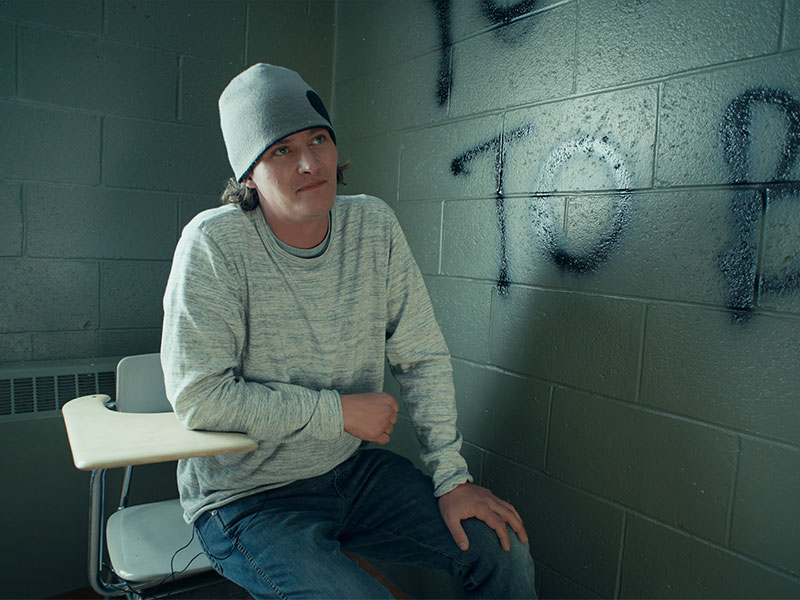
WWASP stands for the World Wide Association of Specialty Programs and Schools, an organization based in Utah that described itself as an umbrella organization of independent institutions for education and treatment of troubled teenagers. WWASP contained multiple sister facilities, including ones in Jamaica, Samoa, Czech Republic, Mexico and Costa Rica. When one facility was shut down, the children in that facility were transferred to a sister facility.


That’s what happened with Casa by the Sea, a now defunct WWASP school/treatment center in Ensenada, Baja California, Mexico that was shut down by the Mexican government in 2004. Those enrolled in Casa by the Sea were moved to Ivy Ridge, which was incapable of housing such large numbers of children. Six children were crammed into each dorm room. The lack of space also meant some children were sleeping on mattresses on the floor and in the hallway.


Foot fungus, pink eye and viruses spread rapidly throughout the facility. Medical neglect was also rampant.

04
Jail is a “five star hotel” compared to Ivy Ridge
The Program: Cons, Cults, and KidnappingQuintin Pedrick in “The Program: Cons, Cults, and Kidnapping” (Photo courtesy of Netflix)
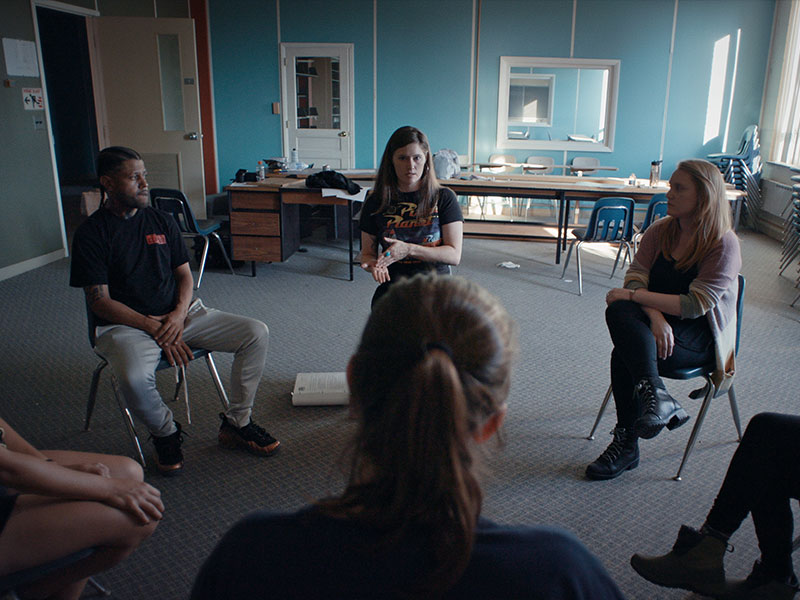
Fed up with their mistreatment, the teens at Ivy Ridge took part in a May 2005 boys’ riot in hopes of shutting down the institution for good. Quintin Pedrick, one of the primary instigators of the riot, was arrested for first-degree riot, third-degree assault, as well as fourth-degree criminal mischief. He was arraigned in the local Oswegatchie Town Court before being held at the St. Lawrence County Jail on $2,500 cash bail. Pedrick was 16 at the time.     


When asked how jail was in comparison to Ivy Ridge, Pedrick said, “like a five-star Hilton Hotel.”


“I loved jail. Jail was freedom to me. It was freedom compared to what we were going through here.”


The riot failed to shut down Ivy Ridge. The program’s spokesperson, Tom Nichols, said at the time that Ivy Ridge would be reviewing the incident and looking at procedures to prevent a similar occurrence from happening in the future.

05
The “emotionally abusive and humiliating” seminars
The Program: Cons, Cults, and KidnappingThe Program: Cons, Cults, and Kidnapping (Photo courtesy of Netflix)

Allison Chee, who was sent away at 15 and was in the program for 22 months, explained that seminars were two-to-four day events that took place every four to six weeks at each of the WWASP programs. Students had to get through one seminar in order to progress to the next one.


Seminars are essentially “the backbone of the whole program,” Chee said.


“In order to graduate [from] the program, you had to complete the seminars, and there were a lot,” said Kubler. “Completing the seminars meant not questioning their [the program’s] ideology and conforming to the groupthink of the program.”


The seminars used the teens’ physiological experiences to manipulate their mind and thought processes. Kubler, whose mother died of cancer a week before she turned two, was told that she was at fault for her mother’s demise. Same with Diana Nowak, whose father died in a car accident when she was a toddler. No one called Nowak by her real name at the institution. She was referred to as “The Mistake.”  


The program was essentially brainwashing its so-called students, who were deprived of sleep, food and personal time. Every single seminar also involved “some type of physical exertion component,” said Alexa Brand.


In one seminar, students were forced to repeatedly hit a towel wrapped in duct tape on the floor and scream. If they stopped or “chose out of the seminar,” they were sent to a new seminar called breakpoint, which was meant to mentally break those participating. In breakpoint, students had to repeat a series of phrases over and over again for the entire day to the point of dissociation.


Other seminars publicly humiliated students by having them cross-dress in front of their peers and perform a specific song. Sean, who was in the program for two years, said he had to perform “I'm Too Sexy” by Right Said Fred while wearing a red dress and prancing around in a cult-like circle.

06
Family reps were incentivized to keep teens in the program longer
The Program: Cons, Cults, and KidnappingKatherine Kubler in “The Program: Cons, Cults, and Kidnapping” (Photo courtesy of Netflix)

Each “student” was given a family rep, who was the sole liaison between child and parent. Family reps were the teens’ “only communication and lifeline to the outside world, to our parents and to our family,” explained Kubler.


Family reps would monitor the teens’ letters and phone calls to their parents. Reps would have weekly phone calls with parents, where they assured them that keeping their children in the program was the best thing they could do. Family reps also received talking points for how to address abuse allegations. They told parents that the allegations were not credible and said that the program didn't use isolation or brainwashing tactics.


Students were under the impression that family reps were there to help them, but that was far from the truth. Family reps were incentivized to keep students in the program longer. A file from the program reveals that reps were awarded $25 for each student in the program who was over the age of 18. They also received a $500 bonus for every student who graduated.

07
Despite making millions, Ivy Ridge spent a measly $4 on each student
The Program: Cons, Cults, and KidnappingThe Program: Cons, Cults, and Kidnapping (Photo courtesy of Netflix)

“If you actually are providing decent psychiatric care for children, it’s very difficult to make money because you need incredibly trained staff, and everybody’s gotta have a master’s-level degree or above,” said reporter Maia Szalavitz. “Now, these places convince parents that, because their regime is so well-designed to modify behavior, ‘We don’t need any trained staff. We just put them through our own training.’ And that’s all they need to be able to fix your kid.”


After retrieving several uncovered files, Kubler learned that some Ivy Ridge staff were being paid only $5.50 an hour to take care of students. The average tuition at Ivy Ridge was $3,500 per month. So, at peak enrollment, the institution was bringing in more than $1.5 million a month, she explained.


Despite the high profits, Ivy Ridge spent only $4 per teen on their daily meals. They also saved money by utilizing child labor. When students reached level three, they were allowed to work in the kitchen where they cleaned the facilities. Kubler said she believes the program never had a formal janitorial staff.


At Ivy Ridge, there were 500 students, 240 staff members and just one certified teacher. The institution itself used a Bible-based home study program to teach. Amid the early 2000s, a behavior modification program — which is what Ivy Ridge was classified as — didn't need to go through any kind of oversight or licensing in the state of New York, explained John Sullivan, a former regional director at the NY Office of Attorney General. That means that those who graduated from Ivy Ridge between 2001 to 2009 never received a legitimate high school diploma.

08
Ivy Ridge officially shut down in 2009
The Program: Cons, Cults, and KidnappingParis Hilton, Caroline, Alexa, and Katherine Kubler in “The Program: Cons, Cults, and Kidnapping” (Photo courtesy of Netflix)

In March 2009, it was announced that Ivy Ridge would close until fall 2009 in order to  “restructure” following a slew of legal troubles. At the time, there were approximately 60 enrolled students who were ultimately sent home or transferred to another institution. A Delaware-based corporation bought the property in April 2009 and announced that the school wouldn’t reopen.  


Although Ivy Ridge and several other WWASP programs have managed to shut down for good, troubled teen rehabilitation programs are still popular today.


“This story does not have a happy ending. And this story is far from over. The troubled-teen industry is still alive and thriving,” said Kubler. “They’re still out there institutionalizing children with little to no oversight or regulation.”

"The Program: Cons, Cults, and Kidnapping" is currently available for streaming on Netflix. Watch a trailer for it below, via YouTube:


A history of wartime protests at the Oscars

As Hollywood and cinephiles gear up for the Academy Awards on Sunday, there is underlying tension as many are torn between concern for the ongoing war overseas and the frivolity of Hollywood's biggest night.

With the widescale destruction of Gaza and deaths of more than 30,000 lives after an unprecedented Israeli military response to Hamas' Oct. 7 attack, entertainment industry figures have made their various stances very clear. Some 700 people have shown strong signs of support for Israel by signed an open letter condemning Hamas and demanding the safe return of hostages being held in Gaza. However, more than 200 people in the industry are struck by the humanitarian crisis in Palestine, starting Artists4Ceasefire and urging President Joe Biden and Congress to call for "an immediate de-escalation and ceasefire in Gaza and Israel before another life is lost."

Hollywood has grappled with how to address the war between Israel and Gaza. Susan Sarandon was dropped from her agency for pro-Palestinian comments, and Melissa Barrera was fired from a new installment of "Scream" for her comments on the war. The upcoming Oscars will certainly be a place where there will be space for civil disobedience from protesters outside the awards show. Los Angeles police are already planning to increase their presence at the ceremony to make sure Israel-Palestine protesters do not disrupt the ceremony, the New York Times reported.  It remains to be seen if any audience members, nominees or presenters will decide to take on the divisive topic on the live, global telecast (except for in China).

This isn't the first time that there have been wartime protests at the Oscars. In times of international instability, many winners and nominees and even presenters have taken the time to acknowledge humanitarian causes and injustices around the world

Here are some of the Oscars' most notable anti-war speeches so far:

 
1972: Jane Fonda denounces the Vietnam War
The outspoken Jane Fonda had spent a night in a Cleveland jail in 1970 – for suspected drug trafficking (which turned out to be vitamins) – following her participation in an anti-war college speaking tour in Canada. She alleged that she was detained on orders from none other than the Nixon White House. Fonda, who is no stranger to participating in protests, also infamously visited North Vietnam in 1972 to see the conditions of the war herself, resulting in a controversial photo that made her one of the most divisive figures related to the war.


In 1972, Fonda won best actress for her role in the thriller “Klute." While people expected her to use her acceptance speech as a plea to end the war, she instead took to a backstage interview to air out her qualms about celebrating awards when people were being killed in Vietnam. 
 
“I was thinking that, while we’re all sitting there giving out awards, which are very important awards, there are murders being committed in our name in Indochina,” she told the press, Politico reported. “And I think everyone out there is aware of it as I am, and I think that everyone out there wants it to end as much as I do. And I didn’t think I needed to say it. I think we have had it. I really do. I think everyone feels that way. And I just didn’t think it needed to be said.”


Fonda won her second best actress Oscar for her role in the 1978 film "Coming Home," a romantic drama set during the Vietnam War.


1975: An anti-Vietnam War film wins best documentary feature
During the 1975 Academy Awards, the anti-Vietnam War film "Hearts and Minds" won best documentary feature. The film highlighted the juxtaposition between the widespread death of South Vietnamese people and the callousness of the American military who dehumanized the people whose home country they invaded, Politico reported.
 

During the acceptance speech, the film's producer Bert Schneider read a message from a Viet Cong official, Dinh Ba Thi. Before reading the message, Schneider told the audience, “It is ironic that we are here at a time just before Vietnam is about to be liberated,” weeks before the fall of Saigon.


“Please transmit to all our friends in America our recognition of all that they have done on behalf of peace and for the application of the Paris Accords on Vietnam,” Schneider read. “These actions serve the legitimate interest of the American people and the Vietnamese people. Greetings of friendship to all the American people."

 
Later in the show, host Frank Sinatra read a statement from the Academy of Motion Picture Arts and Sciences, distancing itself from political statements made by winners.
 
 “I’ve been asked by the academy to make the following statement regarding a statement that was made by a winner. ‘We are not responsible for any political references made on the program, and we are sorry they had to take place this evening,'" he read.
 
1978: Vanessa Redgrave denounces Zionism, stands in solidarity with Palestine
For the 1978 Academy Awards, Vanessa Redgrave's nomination for the film "Julia" was met with protest from the Jewish Defense League who picketed the ceremony. The JDL criticized Redgrave for producing and narrating the documentary "The Palestinian" which was dubbed as anti-Israeli by critics.
 
When the actress won the award, during her acceptance speech, she denounced the people protesting her. It was reported that she was met with boos from the audience.
 
“I think you should be very proud that in the last few weeks you’ve stood firm and you have refused to be intimidated by the threats of a small bunch of Zionist hoodlums whose behavior is an insult to the stature of Jews all over the world and to their great and heroic record of struggle against fascism and oppression,” she stated.


2003: The Iraq War sparks fury in Oscar winners and attendees
Similar to the social and political implications of the war in Gaza, the Iraq War was another history-defining moment for Hollywood and American politics. Politics bled throughout the 2003 ceremony with many attendees, presenters and winners participating in some form of political dissent. 
 
Actor Andy Serkis held a protest sign on the carpet that read, "No war for oil." Alongside many others, Susan Sarandon and Tim Robbins waved peace signs on the carpet. As Gael Garcia Bernal announced the song for "Frida," he said, "If Frida [Kahlo] were alive, she'd be on our side, against the war." Best actor winner Adrien Brody said the film "The Pianist" had given him insight into the "dehumanization of people in times of war." He asked the audience to pray "whether to God or Allah for a swift and peaceful resolution." 
 
However, the most controversial statement of the night was director Michael Moore's acceptance speech. Winning best documentary feature for "Bowling for Columbine," Moore invited his other nominees in the category on stage in "solidarity."
 
He continued, “We like nonfiction and we live in fictitious times. We live in the time where we have fictitious election results that elects a fictitious president. We live in a time where we have a man sending us to war for fictitious reasons, whether it’s the fictition [sic] of duct tape or the fictition [sic] of orange alerts.
 
"We are against this war, Mr. Bush! Shame on you, Mr. Bush! Shame on you!” he exclaimed in a memorable moment in Oscars history.


2022: Russia's invasion of Ukraine hits home for Ukrainian actress Mila Kunis
A few months before the 2022 Oscars, Russia invaded Ukraine, ultimately causing the displacement of more than 6 million Ukrainians, with thousands dead and injured. On the red carpet, the guests and nominees wore gold and blue ribbons to show their support for Ukraine. Actor Jason Momoa wore a blue and yellow scarf tucked into his suit. Director Pedro Almodóvar walked the carpet wearing a blue ribbon that read, "#WithRefugees." Jamie Lee Curtis also wore a blue ribbon on her finger.
 
The ceremony and its audience paid respec to the lives lost in the war-torn country with a 30-second moment of silence. The tribute began with words and a plea for human rights from Ukrainian-born actress Mila Kunis.
 

“Recent global events have left many of us feeling gutted,” Kunis said before she introduced Reba McEntire's performance for her nominated song. 


“Yet when you witness the strength and dignity of those facing such devastation, it’s impossible to not be moved by their resilience,” Kunis continued. “One cannot help but be in awe of those who find strength to keep fighting through unimaginable darkness.”


After McEntire's performance, the Academy, which rarely makes political statements voiced its support for Ukraine with a statement. The message read, “While film is an important avenue for us to express our humanity in times of conflict, the reality is millions of families in Ukraine need food, medical care, clean water, and emergency services. Resources are scarce, and we — collectively as a global community — can do more. We ask you to support Ukraine in any way you are able. #StandWithUkraine.”
 

The 96th Academy Awards will be presented live on Sunday, March 10 at 7 p.m. ET on ABC.

Pelosi refers to McConnell’s Trump endorsement as a “sad” conclusion to his career

During a Friday appearance on MSNBC’s “Morning Joe,” former House Speaker Nancy Pelosi, D-Calif., spoke at length on the subject of Senate Minority Leader Mitch McConnell, R-Ky., days after he announced his endorsement of Donald Trump, calling his decision to do so a "sad" conclusion to his career.

Stating her belief that McConnell knew “full well” that Trump was complicit in the Jan. 6 attack on the U.S. Capitol, she questioned how he could feel justified in giving such a man the thumbs up, saying, “For him to know how bad the president’s predecessor was on all of this, and then come to the conclusion that he would endorse him, when we thought he was going to convict him . . . It’s really very, very sad."

Truthful in admitting that she and McConnell didn't often see eye-to-eye, she referred to his career as being strategic, calling into question how this endorsement fits into that established "strategy."

“It’s really — in my view — a sad, professional tragedy that he had to come around,” she furthered. “Why would he do such a thing? Perhaps he’ll explain it to the world.” 


“Chubb is on the hook now”: Trump secures bond in Carroll case — Expert asks what’s the collateral?

Donald Trump posted a $91.6 million bond to cover the $83.3 million a Manhattan jury awarded to writer E. Jean Carroll in January as he appeals the defamation lawsuit's verdict, lawyers for Trump told a court Friday. Attorney Alina Habba filed the papers with a New York judge alongside a notice showing that Trump, the likely GOP presidential nominee, is appealing the verdict.

The bond would cover the full judgment plus interest and was necessary to delay payment of the sum until the 2nd U.S. Circuit Court of Appeals, can bring down a decision on the former president's appeal, the Associated Press reports.

Trump secured the bond from "Federal Insurance Company, which is a principal of The Chubb Corporation," MSNBC legal correspondent Katie Phang reports. The Chubb Corporation is a global insurer headquartered in New Jersey.

"It will be interesting to see if the judge requires clarification be provided (likely solely to the court) regarding what kind of collateral Trump provided to Chubb to get the bond," national security lawyer Bradley Moss wrote on X. "But either way, Chubb is on the hook now." 

Trump's filings came a day after Judge Lewis Kaplan denied the former president's request to delay a Monday deadline for posting a bond, in an effort to make sure Carroll can receive the judgment if it's maintained following appeals.

Trump faces intense financial strain in covering both the judgment of the Carroll lawsuit and the larger lawsuit from the New York Attorney General, in which he was found liable for defrauding banks and insurers in financial statements. 

A New York Judge refused to pause collection on the $454 million fraud penalty ordered in the suit while Trump appeals, leaving the former president until March 25 to either foot the bill or secure a bond covering the amount. Interest on the civil fraud judgment accrues at roughly $112,000 each day. 

Following Alabama, embryo personhood bill in Iowa could put IVF at risk, too

Following the chaos that unfolded when Alabama’s Supreme Court ruled frozen embryos are legally children, many are watching a bill in Iowa closely as its passage could impact in vitro fertilization (IVF) clinics in the state, too. 

On Thursday, Iowa House Republicans approved a bill that would criminalize the death of an “unborn person.” Currently the state Iaw has penalties for terminating or causing a serious injury to a “human pregnancy,” but the bill would amend the language from “human pregnancy” to an “unborn person.” The proposed language change, if the bills passes, would read: “causing of death of, or serious injury to, an unborn person." An “unborn person” would be defined as “an individual organism from fertilization to live birth.” While it still has to pass the state senate and be signed by the state’s governor, democrats are worried this could affect IVF clinics and patients similarly to what’s going on in Alabama. 

“This bill right here … puts IVF at risk whether you want to believe it or not,” Iowa Democrat Rep. Beth Wessel-Kroeschell told AP News. “We are now seeing the damage these laws can have on people seeking and providing reproductive health care.”

As Salon previously reported, the February ruling that frozen embryos are “children” in Alabama has caused chaos for families. IVF clinics across the state have paused IVF treatments due to concerns about how and if embryos can be discarded, and what happens if transfers fail. It is common for multiple eggs to be transferred and fertilized because not all transferred embryos turn into viable pregnancies. IVF patients usually have a few options for their fertilized eggs that haven’t been transferred: to discard them, donate them to research, donate them to another couple or keep them for a future pregnancy. In Iowa, there’s an increasing fear that the passage of the bill could have similar ramifications.

“As written, this bill does not explicitly protect IVF and sets a precedent with new language of ‘unborn person,’” Rep. Heather Matson said during a debate. “For years many of us have made the case that legislation or judicial rulings for fetal personhood would potentially make IVF illegal.”


Wolfgang Puck’s 7 best vegan and vegetarian dishes

Wolfgang Puck, the iconic, Austrian-born chef, has been a recognizable name and face within, and outside of, the culinary realm for nearly 50 years. 

One of the original "celebrity chefs," Puck trained in France before moving to the United States in the 1970s and essentially taking over the Los Angeles restaurant scene in the ensuing years, making his Spago an internationally renowned restaurant. Since then, he opened restaurant after restaurant, became a food TV personality, released countless cookbooks, won various James Beard awards and Michelin stars, launched various charities and foundations — and the list goes on and on. 

Did you know, though, that Puck is also known for his plant-based fare, even catering last year's Oscars party with a fully plant-based menu? (He has catered the affair, held at Governors Ball, for 29 years, which will become 30 years this weekend.) The menu included items "Confit Golden Beet, Cashew Crème, Gastrique, Mint; Mushroom Potsticker 'Soup Dumpling'; Puri Pillow with Sumac Hummus; and English Pea Falafel and Pea Tendril," according to Anna Starostinetskaya at VegNews


Want more great food writing and recipes? Subscribe to Salon Food's newsletter, The Bite.


While you may not be casually whipping those dishes up at home, Puck's other vegan and vegetarian fare is delicious, accessible and straight-forward. Welcome spring with these lovely options.

With an assertive, Dijon-spiked vinaigrette tying all of the disparate parts together, this salad combines an astonishing array of fresh produce, from artichokes and carrots to green beans, radicchio, corn and even avocado. You can mix and match depending on the season, of course, but Puck's original recipe is hard to beat. I also love the combination of dressed salad greens as a base topped with the dressed chopped salad. It's a superb textural blend and the flavors are outrageous. 
As Puck himself puts it, "The simple soup my mother makes from the vegetables she grows in her own garden next to the house where I grew up in St. Viet, Carinthia, Austria, is very little different from the following traditional French recipe: just lots of good, fresh vegetables and some liquid to cook them in."
 
This is a very no-frills soup, as he writes, with a ton of fresh vegetables plus olive oil, water or stock, basil, salt and pepper  — that's it. The tomatoes, basil and garlic are blended before being added to the soup, which adds a distinctly tomato-forward flavor and color to the broth. Make sure you're using top tier produce here because there's quite literally nothing to "hide" behind.
 
Puck recommends serving either hot or cold, which would be an interesting dichotomy in flavor and texture, too.
This is the epitome of a classic risotto, with onion, garlic, Arborio rice, wine, 2 types of stock and tons of mushrooms. Of course, Puck uses Parmesan, chicken stock and butter, but feel free to omit the cheese and butter and use all mushroom or vegetable stock instead of chicken to turn this entirely vegan.
 
The tomato isn't customary here, nor is the parsley, but they both make for a burst of flavor and color in an otherwise relatively bland-looking (but not tasting!) dish. 

We need your help to stay independent

An aesthetic beauty and a classic Puck recipe, this savory napoleon is a surefire winner for a dinner party. Mixing beets, goat cheese, multiple dressings and toasted hazelnuts — the colors and flavors here will astound any eater, no matter if carnivore or vegetarian. The process is a bit involved, but trust us, it's so incredibly well worth it.
 
Also, don't be surprised if one (or both) of these dressings enter your daily repertoire; they're that good. 
This is a perfect recipe for a slow, leisurely weekend afternoon. With four (!) cheeses  —  farmer's cheese, goat, Parmesan and mascarpone  — plus fresh mint, chervil and an entire pound of potatoes, these uber-filling ravioli are totally vegetarian, incredibly flavorful and the perfect mix of a pierogi and a ravioli. If you haven't made fresh pasta before, do not fret; Puck outlines the process simply and directly.
 
Also, if you haven't made a browned butter sauce (or tried sauced pasta with toasted nuts) before, you're in for a real treat.
A Wolfgang Puck dessert is always a special occasion. 
 
While the idea of making meringue, poached pears, raspberry compote or a homemade souffle might seem intimidating at first, you'll be amazed at how simply this comes together.
 
This incorporation of sweetened rice into a souffle is like the best rice pudding you've ever had. I'm also a sucker for meringue, so this dessert is seriously top-notch. I also love the idea of bread crumbs in the souffle pan. Just be sure to set enough time aside to work on this! 
Granita, arguably the single-best vegan dessert, is an exercise in simplicity. This particular recipe calls for sugar, lemon juice, melon or watermelon juice and melon-flavored liqueur, but of course, feel free to omit the liqueur if you'd prefer (this isn't cooked, so the liquor doesn't "cook off").
 
There's a purity to a dish like this. Frozen foods often have a neutralized flavor due to the intense temperatures; I like serving granita with a touch of salt on top, which accentuates the flavor even moreso. 

The 1980’s “Shogun” didn’t usher in a decade of Japanophilia by itself. But it played its part

If you want to believe one of the more dubious claims concerning the influence of the 1980 adaptation of “Shōgun,” Americans may thank the production for bringing sushi to middle America.

This apocryphal trivia hasn’t been entirely debunked; it’s more accurate to say that it is roundly doubted. Never mind that Japanese dining establishments like Benihana had been wowing Americans since the mid-'60s, or that sushi as we know it didn’t appear until the 1800s. ("Shōgun" is set in 1600.) The allegation’s source is the behind-the-scenes documentary “The Making of Shōgun.” 

Given the times in which NBC’s adaptation of James Clavell’s novel aired, however, that detail feels true even if it isn’t.

The 1980 miniseries was the first to bring a highly fantasized version of Edo-era Japan to American primetime television by way of a production filmed entirely in Japan. It went on to win a Peabody Award along with several Golden Globes and Primetime Emmys, including for outstanding limited series, along with giving Richard Chamberlain’s career a second wind.

Looking back on America’s 1980s fixation with Japanese popular culture, one might be tempted to theorize that “Shōgun” seeded that obsession. The late Tom Shales, who reviewed the series for The Washington Post, wagered that “[the] serial may in fact constitute the first great wave in the Easternization of the '80s and it could do much to popularize or re-popularize Oriental culture and fashion here.”

If you couldn’t tell from his usage of an offensive descriptive term in that sentence, 44 years ago was a very different time. (A British New Wave band called The Vapors already had a hit with the speedy “Turning Japanese” months before the miniseries premiered. Cultural sensitivity was not exactly at an all-time high.)  

But Shales couldn’t have predicted how lasting in popularity “Shōgun” would turn out to be.

“Shōgun's" debut coincided with a strike by the Screen Actors Guild (SAG) and the American Federation of Television and Radio Artists (AFTRA) that had run since July. Meaning, it didn't have much competition on that fall's TV schedule.

Even if there were, by that era’s standards the miniseries' cinematography was dazzling, and the brutality, which challenged broadcast standards to a high degree, was unlike anything that had aired before. American TV dramas long depicted violence, but not beheadings. Sexuality was implied, but women didn't go topless; this miniseries flashed bare breasts.

For five nights in September of 1980, if you owned a television, it was probably tuned in to “Shōgun” at some point.

Since the VCR wasn’t as ubiquitous as it would be a few years later, relatively few horndogs were rewinding to ogle those moments. But a lot of people took them in. Nearly 33% of households with TVs watched all or part of “Shōgun,” giving it the second-highest rating in TV history after ABC's “Roots,” which was broadcast in 1977.

Like that telecast, NBC put “Shōgun” on the air outside of sweeps, although it intended to draw more attention instead of burying it, as ABC’s top executives sought to do with “Roots” by having it air over eight consecutive nights in January.  

Presenting its top miniseries as the opening salvo in its fall season worked. For five nights in September of 1980, if you owned a television, it was probably tuned in to “Shōgun” at some point, if not for the entire run.  

As is the case with most pop culture curiosa, “Shōgun” only deserves partial credit or blame for escalating America’s fetishizing of Japanese style and customs. In truth, its premiere coincided with an enthusiasm that was already rising by the time we watched it.

ShogunActor Richard Chamberlain and actress Yoko Shimada on set of the mini-series "Shogun" , circa 1980. (Michael Ochs Archives/Getty Images)It’s not as if Americans hadn’t been regularly exposed to Japanese culture, products or ideas before. The summer before, NBC News aired "If Japan Can . . . Why Can't We?" which endeavored to demystify the reasons for that country’s famed productivity. During the same September that “Shōgun” came to TV, PBS featured five programs from its public broadcaster NHK.
For many years before that, American and Japanese filmmakers had engaged in tacit cultural exchanges over the post-World War II era. Cinephiles already revered director Akira Kurosawa, who featured “Shōgun” co-star Toshiro Mifune in his famous Edo-era set jidaigeki films including "Rashomon," "Seven Samurai" and "Yojimbo." These works and other paid homage to American directors such as John Ford.

American audiences of the ‘60s, ’70s and ‘80s were amply exposed to other Japanese entertainment, mainly giant monster rampages epitomized by the 1954 movie “Godzilla” and its resulting sequels.

Since being syndicated to the U.S. in the mid-60s onward, American kids watched the adventures of, among others, “Ultraman,” “Spectreman” and “The Space Giants” after school.

These shows and movies reflect a post-war, industrialized, atomic-influenced vein of storytelling with none of the flirtation “Shōgun” foregrounded narratively and stylistically.

Then again, the miniseries also featured sword fights and ninja assassins, both of which still top the list of boyhood fantasies and inspire legions of would-be Karate Kids to this day. Each also figures centrally in many video games. The lineage of Sony Interactive’s lushly rendered “Ghost of Tsushima” may draw direct links to Kurosawa’s oeuvre, but if the swooning romance of its visuals and haiku interludes draw us in, I’d argue that’s a mild symptom of Clavell’s influence.

We need your help to stay independent

It’s impossible to place a concise count on the number of business school graduates who decided mounting katanas on the office walls was cool – it never was. Sadly, it was a thing for a while which, again, is less the fault of “Shōgun” than the result of an industrial shift.

When the American auto industry was in a slump in the early ‘80s, Japan’s economy was ascending. With the Reagan administration capping the number of vehicles allowed to be imported to the United States, Japanese automakers responded by moving a portion of manufacturing to the United States.

Like other fleeting trends of the '80s and '90s, our subsiding infatuation was followed by our embarrassment.

Honda began manufacturing automobiles at its Marysville, Ohio plant in 1982. Nissan’s first American-made cars rolled off the line in 1983; Toyota’s in 1986. Along with Sony, Casio and other brands we now see as commonplace, these companies’ functional entry into American life exposed more working and middle class employees to Japanese business culture, along with insinuating bastardized samurai lore into Western interpretations of the so-called Japanese business mindset.

So: Want to trace the origins of white-collar douchebaggery epitomized by, say, some of the choicest employees of the fictional Nakatomi Corporation of “Die Hard” to a source? Start there.

The perceived impact of “Shōgun” on fashion might have a stronger case although, again, many experts would argue that a group of Japanese designers including Rei Kawakubo of Comme des Garçons and the late Issey Miyake were already changing couture.

“[T]o many historians the exposure of modern ‘Japanese fashion’ to a suddenly more accepting international audience was intrinsically tied to the rise of Japan as an economic force in the 1980s,” observed Melissa Marra-Alvare, an assistant curator of research for the Museum at the Fashion Institute of Technology, in an article about the Japanese influence on fashion.

She went on to cite the “cultural exoticism depicted in author James Clavell’s bestseller ‘Shōgun’” as adding to America’s fixation on Japanese culture. This is true: in the weeks leading up to its adaptation’s TV debut Clavell’s book could be found in nearly every grocery store across the United States, and in the years afterward you could find piles of their paperback version at second-hand bookstores and used book fairs.

But like other fleeting trends of the '80s and '90s, our subsiding infatuation was followed by a collective embarrassment. Hence, when FX announced in 2018 that “Shōgun,” the prevailing murmured sentiment at the time was that the network was courting disaster.

ShogunRichard Chamberlain and Nobuo Kaneko in the 1980 miniseries "Shogun" (Getty Images)Its sins are what we remember best. Women depicted in “Shōgun” are highly sexualized, both in Clavell’s 1975 novel and the broadcast version. Chamberlain is written as the quintessential white savior, the “one man [who] has the power to change Japan’s destiny,” as a cable channel commercial describes. It’s no wonder that Japanese audiences couldn’t stand it when it first aired there in 1981.

But we’ve also benefited from what its success inspired. More than its predecessors, “Shōgun” ushered in the age of can’t-miss miniseries exemplified by “North and South,” “Lonesome Dove” and Chamberlain’s other best-known limited series star turn, “The Thornbirds.”


Want a daily wrap-up of all the news and commentary Salon has to offer? Subscribe to our morning newsletter, Crash Course.


Four decades later, FX’s refreshing revisit from the perspective of its Japanese characters drew 764,000 same-day viewers for its on-air premiere, an audience that expanded to 9 million streaming views globally on Hulu, Disney+ and Star+.

These totals reflect a whole new world of television in which the 10-episode limited series competes not with two or three other channels but hundreds of episodes across dozens of channels and platforms, and a streaming view is defined by a formula: total viewing time divided by running time. 

It’s also breaking through in a time when American audiences can choose from a broad variety of series and films from Asian countries; Japan is but one. We are fortunate to live in an era when a new “Shōgun” invites informed discussions about its filmmaking techniques and storytelling instead of gawking at its supposed foreignness. And it does make a person hungry for more limited series like it. Other cravings are entirely coincidental.

New episodes of "Shogun" premiere Tuesdays on Hulu and air Tuesdays at 10 p.m. on FX.

“The families deserve more”: Uvalde city report clears local officers of wrongdoing

Sign up for The Brief, The Texas Tribune’s daily newsletter that keeps readers up to speed on the most essential Texas news.


UVALDE — A city-commissioned independent review of Uvalde police’s response to the Robb Elementary School shooting cleared local officers of wrongdoing, infuriating parents of the 19 children killed in the massacre and at least two city council members who rebuked the report after it was released Thursday.

City officials hired private investigator Jesse Prado, a retired Austin police detective, to conduct the review into the response from the city’s police department to the May 24, 2022 mass shooting that also resulted in the deaths of two teachers and injured 17 others.

The findings of the report were presented in a question-and-response format with Prado at a city council meeting and the actual 182-page report was released later Thursday after city officials shared it with families. Prado said the review identified training, communication and leadership lapses, but he also commended some of the city’s officers and characterized their actions as in “good faith” — contradicting findings of previous audits by state and federal officials.

Those reviews have illustrated a catastrophic law enforcement failure in which children remained trapped with the gunman for more than an hour as nearly 400 law enforcement officers arrived at the school and encountered a chaotic scene without leadership.

Several people walked out of the impromptu council chambers roughly 40 minutes in when Prado said one of the issues that police encountered was crowd control. Some families tried to breach police tape to run into the school and try rescuing their children, some of whom ultimately died while others had called their parents and 911 pleading for help.

Following the presentation and right before the public hearing, Prado left.

Kimberly Mata-Rubio, whose daughter Lexi was among the children killed, slammed a podium in the civic center and in between tears demanded that Prado return to the meeting. A crowd then began chanting, “Bring him back!” One person shouted, “Coward.”

Prado returned five minutes later and sat with an expressionless face, underneath a big white cowboy hat he did not once remove, for the following hour as relatives of those killed castigated him and dismissed his audit as “bullshit,” “a joke” and disrespectful.

“They chose their lives over the lives of children and teachers, and there’s no policy change [that] will eliminate their fear,” Mata-Rubio said in calling for the firing of three officers who remain on the city’s police force.

Brett Cross, whose son Uziyah was killed by the shooter, approached the podium with AJ Martinez, one of the children who survived the shooting.

“I want you to look at this child,” Cross said. “Good faith for 77 minutes? The true heroes are those that passed, those teachers, the survivors are heroes.”

After the public speakers, City Council members echoed the disbelief in the report’s findings and how it was unveiled. One said he wished that Prado had actually presented the report himself and just given copies to families instead of the questioning method that resembled a court hearing.

“For you to come in here and say ‘No, everything was hunky-dory, they did their job,’ I can’t accept that,” Councilmember Hector Luevano said to applause. Luevano, and several other council members, had not reviewed the report prior to the meeting. “I’m insulted by this report. The families deserve more, the community deserves more.”

Apologizing to the crowd, Councilmember Ernest "Chip" King III said Thursday’s presentation was not how the city wanted the information to be released.

The private investigator’s report arrived almost two months after the U.S. Justice Department released its analysis of law enforcement’s bungled response, in which the federal government found “cascading failures of leadership, decision-making, tactics, policy and training” by responding officers.

That report’s findings about the failure to follow protocol and the lack of sufficient training to prepare officers for a mass shooting mirrored the flaws revealed in a Texas Tribune, ProPublica and FRONTLINE investigation that showed states require students and teachers to receive far more training to prepare them for a mass shooting than they require for the police.

At least 37 states require schools to conduct active-shooter-related drills, nearly all on an annual basis. But Texas is the only state that mandates that all of its police officers complete repeated training, at least 16 hours every two years. That requirement was implemented after the Uvalde shooting.

A speaker at the council meeting Thursday noted that the children had followed their active shooter training while officers did not.

Prado said the lack of cooperation from Uvalde County District Attorney Christina Mitchell hindered the investigation. In December 2022, the city sued Mitchell over her refusal to produce documents. The district attorney agreed to hand over some, but not all, of the information Prado requested.

Mitchell did not respond Thursday to a request for comment.

Prado also said the Uvalde Consolidated Independent School District stopped cooperating with him after a few months into his investigation. The city reportedly paid him nearly $100,000 for his work.

After the meeting, Prado declined to comment, telling reporters who followed him to his pick-up truck that he was done with the report but not with his job and still may have to answer questions. He did not acknowledge Felicha Martinez, whose son Xavier was killed in the shooting and who had also followed Prado to the parking lot.

“I wanted to ask him, is that how he really feels that the officers did — did they do right?,” Martinez said after Prado drove away.

“How does he sleep at night knowing that this is what he had to say? And he hurt all of us today — just opened wounds, after wounds, after wounds. I wanted to ask him if that’s really how he felt.”

Prado said he previously conducted 36 similar investigations. Of those, he said roughly 75% of the time there is a violation of policy. His Uvalde review, however, fell in the remaining 25% of investigations in which officers did not violate department policy.

The report recommended 23 city police officers, three dispatchers, the fire marshal and the police chief be “exonerated.” In all but one instance, Prado wrote that his probe uncovered “no evidence of serious acts of misconduct in direct violation of Uvalde Police Department's policies was found in” those officers’ behavior in responding to the shooting.

That included the highest-ranking officer, Lt. Javier Martinez, and the acting police chief the day of the shooting, Lt. Mariano Pargas.

In exonerating Martinez and Pargas, Prado blamed the lack of leadership on the school district’s Police Department. Prado cited an agreement between the city and school district that confirms Uvalde school district Police Chief Pete Arredondo was the incident commander. Arredondo never established a command post during the incident.

The report noted that Pargas “could have performed a stronger role in the overall incident command structure.” Pargas resigned within a couple of days of his interview with Prado and two days before the City Council was scheduled to discuss his termination in November 2022. Pargas still holds public office as a county commissioner.

On Thursday, Prado said he would have recommended exonerating Pargas because the acting police chief responded to the crisis correctly based on the division of responsibility between the city and school district.

Prado’s investigation found one 9-month pregnant detective, the closest to ballistic shields, violated the department’s insubordination policy surrounding limited duties when she did not ask a supervisor for permission before she “engaged herself in the incident” and delivered shields to officers.

The detective also identified the shooter by going to his house and interviewing his grandfather, according to Thursday’s report. The audit suggested exonerating her of the policy violation because she “only acted under extreme circumstances and because of her actions she provided valuable assets to the officers and valuable information in identifying the shooter.”

At least one investigation into the shooting remains ongoing. In January, a special grand jury convened to begin investigating law enforcement’s delayed response to determine whether criminal charges can be filed against officers. To date no one has been charged in connection to the massacre.


We can’t wait to welcome you to downtown Austin Sept. 5-7 for the 2024 Texas Tribune Festival! Join us at Texas’ breakout politics and policy event as we dig into the 2024 elections, state and national politics, the state of democracy, and so much more. When tickets go on sale this spring, Tribune members will save big. Donate to join or renew today.

This article originally appeared in The Texas Tribune at https://www.texastribune.org/2024/03/07/uvalde-robb-elementary-shooting-report/.

The Texas Tribune is a member-supported, nonpartisan newsroom informing and engaging Texans on state politics and policy. Learn more at texastribune.org.

FDA says it found elevated levels of lead in six cinnamon products in the U.S.

The U.S. Food and Drug Administration issued a public health alert Wednesday, advising consumers to throw away and not buy six specific cinnamon products sold nationwide because they contain elevated levels of lead.The agency found elevated levels of lead and chromium in six brands: La Fiesta, sold at La Superior and SuperMercados; Marcum, sold at Save A Lot; MTCI, sold at SF Supermarket; Swad, sold at Patel Brothers; Supreme Tradition, sold at Dollar Tree and Family Dollar; and El Chilar, sold at La Joya Morelense.

The FDA was able to detect levels of lead in the affected ground cinnamon products through product testing. Consumers should not eat, sell or serve the ground cinnamon products and instead, should discard them immediately, per the FDA’s recommendations. The FDA is also recommending that the manufacturers of the products recall them, with the exception of MTCI cinnamon because the agency has not been able to reach the company.  

Following the FDA’s alert, two of the companies formally announced recalls. Colonna Brothers of North Bergen, N.J., is recalling 1.5-ounce Ground Cinnamon and 2.25-ounce Supreme Tradition Ground Cinnamon distributed nationwide and through mail order. Colonna said it had ceased production and distribution of all cinnamon.

Additionally, El Chilar Rodriguez of Apopka, Fla., is recalling 127 cases of El Chilar Ground Cinnamon "Canela Molida" sold in 1.25-ounce bags, distributed by La Raza of Forestville, Md., and sold at retail stores throughout Maryland.

American melancholy: The real loss in “Past Lives” isn’t love

In the Academy Award-nominated film “Past Lives,” the Korean concept of inyeon is used to lead viewers into believing that Nora (Greta Lee) and Hae-sung (Teo Yoo) are destined to be together – if not in this lifetime, then in the future. Or perhaps they were together in a distant past that neither can recall. The introduction of the word leaves moviegoers hoping that these two can have a happily-ever-after ending, despite his living in Seoul, 7,000 miles from her apartment in New York City. 

Inyeon is mentioned throughout “Past Lives,” but another valid descriptor that runs throughout the film’s core is "melancholy."

There’s also the fact that Nora is married to Arthur (John Magaro), a sweetheart of a man who is not as handsome or enticing as Nora’s first love. In another kind of movie, Nora would jettison Arthur for her childhood friend, and the audience wouldn't be distraught over it. They might even write it off as inyeon in action.

But in her award-winning directorial debut, Celine Song – who also wrote the screenplay – didn’t craft an ordinary film about a couple that meets cute, breaks up and reconnects. Hers is an extraordinarily beautiful story set in two different countries (three if you count a brief shot of 12-year-old Nora waiting outside her Canadian school) over 24 years and ends with one of the most viscerally gut-wrenching scenes that may make some viewers wish for a typical Hollywood ending. 

“Past Lives” was released in June of last year, winning a slew of awards leading up to the Oscars. And while some praised what they perceived as a bittersweet love story, the film's strength is in how it layers in a complex loss that is far more central to Nora's identity. As someone who, like Nora, navigated two cultures for most of my life, I appreciate the nuanced references in Song’s work that may elude moviegoers unaccustomed to Korean culture. It’s these finely tuned touches that elevate this uniquely poignant film.

Inyeon is mentioned throughout “Past Lives,” but another valid descriptor that runs throughout the film’s core is "melancholy." It’s a word that co-star Teo Yoo understands all too well. Born in Germany, he moved to New York and then London for university, before relocating to Seoul to pursue the kind of acting career that was elusive to Asian actors in western countries. His diasporic background fueled his real-life melancholy – and it’s a core memory he said he tapped into while portraying Hae-sung.

“I wouldn't say that I'm a sad person, but I always felt a little bit of somewhat an outsider,” he told Salon in an interview last year. “And there was always an undercurrent of melancholy in my life. And it's really hard to explain because I don't know how to define melancholy, but it's an emotion that you all understand when we feel it or when we see it in music or movies or art.”

This melancholy starts early in “Past Lives.” Not long after their first and only date, arranged by their moms, Nora and her family emigrate from South Korea to Canada. The tweens say a perfunctory goodbye to each other, but both are too young and stubborn to give each other any sense of closure. They don’t promise to write each other long letters. She doesn’t make any cursory attempts to pretend she will ever come back. When he offers a cold, “Have a nice life,” she is fine with that.

Past LivesPast Lives (A24)Unlike some films centering Korean immigrants – not that there are that many – there are no shots of Nora’s family seeking to immerse themselves into a Korean church to find community. Nor are there any subplots revolving around how difficult it may have been for Nora to blend in as a visible minority. Instead, the film fast-forwards to show Nora as an adult Korean American.

When Nora and Hae-sung first reunite virtually via Skype, they are 24. He has just finished his mandatory military duty required of all able-bodied South Korean men, and she is now living in New York City. Their initial interactions are awkward, as would be expected of anyone who hasn’t seen their friend in a dozen years. But the chemistry is there as they fill each other in on their lives. But over time, due to their 13- or 14-hour time difference (South Korea doesn’t follow daylight savings) and his reticence to accept her hint to come visit her in New York – he wants to go to China to hone his language skills first –  she asks for a break.

That break lasts another dozen years, when Hae-sung – fresh from splitting with his girlfriend – finally comes to New York. Now in their mid-30s, Nora sits between him and Arthur, who politely listens as Nora and Hae-sung speak in a language he doesn’t understand. Making small talk in English, Hae-sung is profoundly aware of how nice Arthur is, a trait that makes him sad. But Arthur isn’t what stands (or stood) between the two; it’s their history and inability to acknowledge that they meant more to each other as children than they let on.

Maybe it is the concept of jeong … that draws Nora and Hae-sung together after all those years.

But now they’re together – for a couple days of sightseeing anyhow. And showing the patience of a man who truly loves and trusts his wife, but who’s also jealous of the past life she shares with this Korean man, Arthur stays home playing video games by himself as Nora shows Hae-sung around New York.

On a ferry ride circling the Statue of Liberty, there is a tender but funny moment that highlights what it means to be a Korean woman. Though Nora has now lived two-thirds of her life outside of Korea, she can’t shake her upbringing. As he prepares to take a selfie of them as a memento, she asks, “Why are you taking this so close?!” He laughs and apologizes right away, understanding her concern. He moves up, asks her to take a step back and retakes the photo. Every Korean woman has been conditioned since childhood that it's not attractive to have our faces appear too large in pictures. It's such a weird construct by western standards, but it’s also a fact that Koreans in general are obsessed with small faces. (A common compliment on variety shows is for hosts to comment on how a guest’s face has gotten smaller.) And Koreans know that it’s the man’s job to position himself in a way that the woman will appear more attractive. 

Past LivesPast Lives (A24)This small, but masculine gesture is never explained. But it is Song’s way of articulating that  while Nora might speak Korean with a child’s inflection and walk in a bold manner that would instantly identify her in Korea as a gyopo – or an ethnic Korean living overseas – she is still Korean.
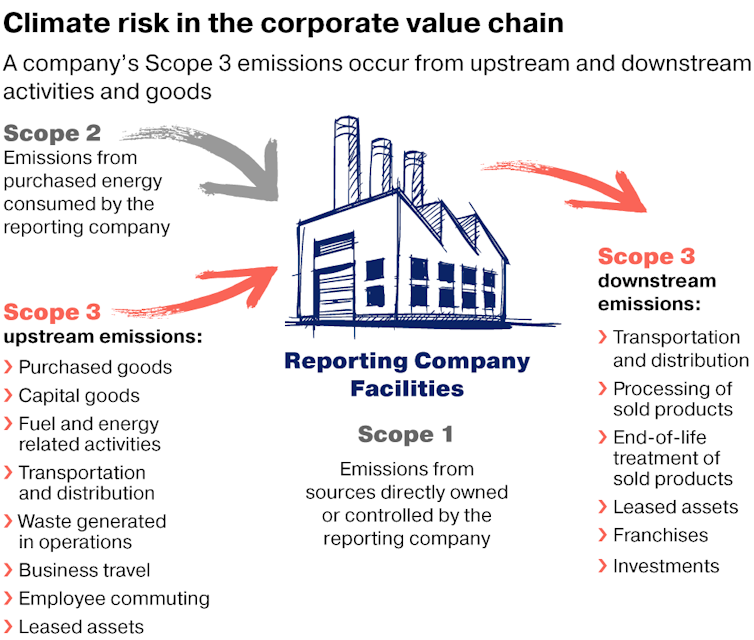
That heart-wrenching ending that I alluded to earlier takes place as Nora waits with Hae-sung for his Uber to take him to the airport. After saying goodbye and watching his car drive away, Nora breaks down sobbing. Some viewers have interpreted this as Nora regretting the choices she made. But from a diasporic point of view, it’s more likely that Nora is inherently upset about a life she can barely remember due to choices her parents made on her behalf.

At one point earlier in the film, Nora asks Hae-sung why he looked her up in their 20s. 

“Do you really want to know?” he says. “I just wanted to see you one more time because you left so suddenly,” he said. “I was pissed off.”


Want a daily wrap-up of all the news and commentary Salon has to offer? Subscribe to our morning newsletter, Crash Course.


Maybe that is the reason. Or maybe it is the concept of jeong, a word that’s never uttered in the film, that draws Nora and Hae-sung together after all those years. Jeong refers to an emotional connection between Koreans due to proximity (family, friends, neighbors) or lack thereof (two Koreans running into each other in a foreign country). The jeong that Nora and Hae-sung share align with their inyeon.

For Nora, proximity to Hae-sung reminds her of her younger days living in Korea. But it also reminds her of the 12-year-old girl she left behind to become who she is today. In order to become Nora Moon, she had to leave behind Moon Na-young. While she gained a new identity – one that she’s happy with and accustomed to – the loss of her younger self is profound.

"Past Lives" is available to stream for free on Kanopy, for digital rental or with a Paramount+ with Showtime subscription.

SEC approves first US climate disclosure rules

After two years of intense public debate, the U.S. Securities and Exchange Commission approved the nation’s first national climate disclosure rules on March 6, 2024, setting out requirements for publicly listed companies to report their climate-related risks and in some cases their greenhouse gas emissions.

The new rules are much weaker than those originally proposed. Significantly, the SEC dropped a controversial plan to require companies to report Scope 3 emissions – emissions generated throughout the company’s supply chain and customers’ use of its products.

The rules do require larger companies to disclose Scope 1 and 2 emissions, which are emissions from their operations and energy use. But those disclosures are required only to the extent that the company believes the information would be financially “material” to a reasonable investor’s decision making.

More broadly, the new rules require publicly listed companies to disclose climate-related risks that are likely to have a material impact on their business, as well as disclose how they are managing those risks and any related corporate targets.

After announcing its initial proposal in 2022, the SEC received a staggering number of comments from experts, companies and the public – about 24,000 of them, the most ever received for an SEC rule. The comments reflected both strong public interest in being informed about corporate climate-risk exposures and greenhouse gas emissions and also significant pushback, particularly over how much the rules would cost companies. Several Republican state attorneys general threatened to sue.

In response to the comments, the commissioners took their time to adjust the disclosure requirements, but the legal challenges may not be over.

I specialize in sustainable finance and corporate governance and have been following the SEC’s climate disclosure plans. Here are some of the major issues that led to this change and the implications of the new disclosure rules as they phase in starting in 2025.

The rule’s unequal cost to companies

The most important reason for adding climate disclosure rules, as SEC Chairman Gary Gensler has noted, is that climate-related risks and greenhouse gas emissions appear to be financially material information demanded by investors.

Indeed, for the past several years, large institutional investors have been vocal about the need for more transparency and consistency in corporate climate-risk disclosures.

As the SEC has often emphasized, most large companies already disclose some of this information voluntarily in their sustainability or ESG reports, which often are published alongside their annual reports.

Since investors seem to demand this information, and many companies are voluntarily providing it, the SEC and proponents argued that it would be sensible to mandate some consistency in disclosures.

However, much of the debate around the new disclosure rule has focused on whether it passes the cost-benefit smell test. In other words, would the compliance cost borne by firms potentially outweigh the financial benefits of mandated disclosures of climate risks and emissions that investors might value?

The compliance costs of federal disclosure requirements have been estimated to be substantial. When the SEC first proposed the rule in 2022, the commission’s own estimates implied that disclosure-related compliance costs would nearly double for the average publicly listed company.

Comments on the rule have since pointed out that there are also likely to be even greater indirect costs related to adjustments that companies might have to make in how they conduct their operations. These costs might also have broader implications for employment in certain jobs and sectors.

Given that many smaller listed companies do not have voluntary disclosure practices in place, the burden is also expected to hit companies unequally, disproportionately affecting smaller companies while large corporations see little impact.

Measuring greenhouse emissions isn’t simple

Another practical problem lies in enforcing consistent measurement of emissions and climate-risk exposure.

International groups such as the Task Force on Climate-Related Financial Disclosures and the International Sustainability Standards Board have provided reporting standards and guidelines. But the measurements themselves are still subject to estimation and collection problems that might vary across industries and activities.

Moreover, estimating Scope 1, 2 and 3 emissions separately presents significant challenges.

Lists of examples of Scope 1, 2, 3 emissions sources with an illustration of a factory in the center

What Scope 1, 2 and 3 emissions involve. Chester Hawkins/Center for American Progress

In particular, the difficulty of measuring a company’s indirect emissions from its supply chain – Scope 3 emissions – exponentially compounds the estimation problem. Reporting Scope 3 emissions also opens a floodgate of legal issues, as many smaller organizations in a large company’s value chain might have no legal obligation to disclose their own emissions.

The backlash over the challenges inherent in measuring Scope 3 emissions led to the commission’s decision to pare back that part of its proposed rules.

Many companies will also likely have to outsource the estimation and quantification of emissions and climate risks to third-party companies, where there have been concerns about higher costs, conflicts of interest and greenwashing.

How SEC stacks up to California, EU rules

The SEC is not the first to adopt climate disclosure rules.

A similar rule went into effect in the European Union in January 2024.

California has an even more stringent rule, signed into law in October 2023. It will require both publicly listed and privately held firms to fully and unconditionally disclose all of Scope 1, 2 and 3 emissions when it goes into effect in 2026 and 2027. Since California is among the world’s largest economies, its regulations are already expected to have wide effects on corporations around the world.

SEC Chairman Gary Gensler discusses what the SEC has to do with climate change.

Hardcore proponents of the SEC rule who wanted California-level disclosures across the board argue that Scope 3 emissions need to be disclosed given that they compose the largest fraction of all carbon emissions.

Skeptics of the rule, including two of the five SEC commissioners, question whether there needs to be any rule at all if things are inevitably watered down anyway.

Given the recent conservative backlash against companies focusing on ESG issues and the ensuing retrenchment by several institutional investors from their previous climate commitments, it will be interesting to see how the new corporate climate disclosures will actually affect investors’ and corporations’ decisions.

Sehoon Kim, Assistant Professor of Finance, University of Florida

This article is republished from The Conversation under a Creative Commons license. Read the original article.

Dems cringe at Biden calling migrant “an illegal” during State of the Union

Sign up for The Brief, The Texas Tribune’s daily newsletter that keeps readers up to speed on the most essential Texas news.


WASHINGTON — Texas Democrats were not thrilled with President Joe Biden using the term “an illegal” to describe an undocumented immigrant during his State of the Union address Thursday.

During the speech, Georgia Republican Marjorie Taylor Greene heckled Biden to acknowledge Laken Riley, a Georgia student who was allegedly killed by an undocumented immigrant, as he was discussing the border. Biden repeated Greene saying Riley was “killed by an illegal. That’s right.”

Democrats were not impressed, even if it was parroting Greene.

“It's dangerous rhetoric. And I think that the president is getting bad advice from his advisers and speech writers. That kind of rhetoric is what inspired the people who killed Aaron Martinez,” U.S. Rep. Joaquin Castro said, referring to a North Texas man who was killed by his neighbor who repeatedly harassed Martinez’s family over their Latino ethnicity. Castro brought Martinez’s wife, Priscilla Martinez, as his guest Thursday.

“I just don't get why the president will go down that road,” Castro added. “I don't think it's helpful to him or to the Democratic Party.”

U.S. Rep. Veronica Escobar, an El Paso Democrat who is also a co-chair of Biden’s reelection campaign, said “that is the statutory language,” though “it’s not the language I use.”

U.S. Rep. Greg Casar, D-Austin, found Greene’s heckling inappropriate and thought it did not reflect Biden’s views. He predicted Biden’s team would clarify his remarks later.

Republicans heckled Biden as he made a case for a bipartisan border security deal introduced in the Senate late last year. The bill, negotiated by Sen. Kyrsten Sinema, I-Arizona; Sen. Chris Murphy, D-Connecticut; and Sen. James Lankford, R-Oklahoma. Republicans turned on the bill after former President Donald Trump denounced it, essentially stopping it in its tracks. House Republicans oppose the bill.

“In November, my team began serious negotiations with a bipartisan group of senators. The result was a bipartisan bill with the toughest set of border security reforms we’ve ever seen in this country,” Biden said. “It’d be a winner for America. My Republican friends, you owe it to the American people to get this bill done.”

The border was one of the most contentious issues discussed during the speech. After the speech, Sen. Ted Cruz said Biden’s comments were “profoundly dishonest and out of touch.” U.S. Rep. Jake Ellzey, R-Midlothian, said Biden was “gaslighting Republicans” by “blaming us when he invited the border to be open.”

U.S. Rep. Pat Fallon, R-Sherman, tried to give Biden a pin that said “STOP THE BIDEN BORDER CRISIS” as he entered the chamber. Biden refused.

Escobar also does not support the Senate border deal, but she praised Biden’s speech otherwise as demonstrating “why the difference between him and the other guy is so stark,” referring to Trump. Escobar has long been a voice on bipartisan border reform, introducing her own bipartisan plan last year.

Earlier in his speech, Biden also vowed to overturn Texas’ restrictive abortion laws if he gets reelected and Democrats retake control of Congress.

“My predecessor came to office determined to see Roe v. Wade overturned. He’s the reason it was overturned. In fact, he brags about it,” Biden said. “Look at the chaos that has resulted.”

Biden highlighted the plight of Kate Cox, a Texas woman who filed a lawsuit to end her pregnancy in Texas after her doctor uncovered a lethal birth defect. Cox’s doctor said terminating the pregnancy was necessary to save her health and future ability to have children but would not carry out the procedure due to the state’s strict abortion ban.

First Lady Jill Biden invited Cox as her guest to the address Thursday.

Cox’s lawsuit said the state’s abortion ban discouraged doctors from risking their medical licenses to perform the procedure. The Supreme Court of Texas blocked a lower state court order that would have allowed her an abortion. She ultimately sought medical care outside the state.

“Because Texas law banned abortion, Kate and her husband had to leave the state to get the care she needed. What her family has gone through should never have happened as well. But it is happening to so many others,” Biden said. “Many of you in this chamber and my predecessor are promising to pass a national ban on reproductive freedom. My God, what freedoms will you take away next?”

Multiple Texas Democrats used the annual address to highlight abortion access. U.S. Rep. Lizzie Fletcher, a Houston Democrat who spearheaded legislation to protect abortion access nationwide, invited Dr. Damla Karsan, an OB/GYN who sought court approval to terminate Cox’s pregnancy. U.S. Rep. Colin Allred invited Dr. Austin Dennard, an OB/GYN who had to leave Texas to terminate her pregnancy after detecting a lethal birth defect.

U.S. Rep. Nanette Barragan, D-California, chair of the Congressional Hispanic Caucus, invited last year Olivia Julianna, a Gen Z activist who has been outspoken about abortion rights in Texas.

The White House has previously used the State of the Union to highlight Texas’ restrictions on abortion. At last year’s address, Jill Biden invited Amanda Zurawski, an Austin woman who nearly died after being denied an abortion for a nonviable pregnancy.

National Democrats are making reproductive rights a key issue in competitive races in Texas, crediting the overturning of national abortion access for staving off a larger Republican majority in the U.S. House. Allred has highlighted Sen. Ted Cruz’s opposition to legislation expanding access to abortion in his campaign to unseat him.

Jill Biden also invited Jazmin Cazares, a gun violence prevention advocate whose sister Jackie was killed in the Robb Elementary School shooting in Uvalde, to the speech.

President Biden evoked his visit to Uvalde after the shooting, after which he established a White House Office of Gun Violence Prevention. He urged Congress to pass further legislation on gun safety to prevent future shootings.

“We heard their message, and so everyone in this chamber should do something,” Biden said. “Meanwhile, my predecessor told the NRA he’s proud he did nothing on guns when he was president. After another school shooting in Iowa he said we should just ‘get over it.’ I say we must stop it.”


We can’t wait to welcome you to downtown Austin Sept. 5-7 for the 2024 Texas Tribune Festival! Join us at Texas’ breakout politics and policy event as we dig into the 2024 elections, state and national politics, the state of democracy, and so much more. When tickets go on sale this spring, Tribune members will save big. Donate to join or renew today.

This article originally appeared in The Texas Tribune at https://www.texastribune.org/2024/03/07/state-of-the-union-joe-biden/.

The Texas Tribune is a member-supported, nonpartisan newsroom informing and engaging Texans on state politics and policy. Learn more at texastribune.org.

Ego tripping: Why do psychedelics “enlighten” some people — and make others giant narcissists?

In the 1968 counterculture classic “Wild in the Streets,” a musician in his early 20s petitions to lower the voting age in the United States to 14. He quickly becomes president and turns the country on its head, forcing everyone over the age of 35 into “re-education camps.”

A truly gonzo montage unfolds, and we witness a gun-wielding teenage police force drag older adults out of houses and bus them into a concentration camp named “Paradise Camp 23.” They are force-fed the psychedelic drug LSD while dressed in bright blue togas adorned with peace symbols. The sequence ends with dozens of blissed-out senior citizens dancing in a field — happy, peaceful, psychedelic zombies.

For well over 50 years, there has been a persistent belief in the psychedelic world: If everyone could be switched on with these drugs, then we’d all be better off. A commonly recounted experience with psychedelics is that it dissolves one’s ego, blurring the boundaries between ourselves and others. As the ego dissolves, we profoundly understand that we are all connected, all the same, all one.

This recollection is so common, it’s reasonable to expect anyone who goes through a psychedelic experience to come out of it with a sense of deep humility and balance with the universe. This ego death inevitably brings about a realization that no one is better than anyone else. We are all worthy of love because we are all one.

Except that isn’t always what happens.

The history of western psychedelic use is littered with stories of elitism and evangelism. From Aldous Huxley to Timothy Leary, psychedelics have long been considered agents of spiritual betterment — drugs that bring about enlightenment. In fact, an uncomfortable truth is that many psychedelic “prophets” of the past century were also advocates of eugenics, believing a small group of genetic elites were crucial in steering humanity to its next stage of evolution.

“Elon Musk on psychedelics is even more Elon Musk than Elon Musk.”

In the 21st Century, these evangelical ideas have taken hold in the minds of a self-appointed “hallucinogenic elite." An assortment of business leaders, politicians, billionaires and tech bros who are now taking psychedelics at invite-only luxury retreats, such as The Journeymen Collective, with the express intention of fostering change in the world. But not just any change. It is this elite group deciding which way to steer human evolution. As author James Oroc described in his 2018 book, “We are the 5% who have to help humanity move into its next phase, the recognition of our own divine origins.”

But how does psychedelic ego death lead to ego inflation? Why are some people going through these experiences and coming back not with humility but with a heightened sense of righteous purpose? And what do we even mean when we talk about ego death with psychedelics?


Want more health and science stories in your inbox? Subscribe to Salon's weekly newsletter Lab Notes.


How to kill an ego

“At moderate to high doses, one very typical effect [of psychedelics] is to reduce the ordinary sense we have of being an entity separate from everything else,” philosopher Chris Letheby explained to Salon. “I think sometimes when people talk about ego death, maybe what they're referring to is what you might call total ego dissolution: a state of consciousness in which there is no experiential sense of self at all.”

Letheby has been studying the nexus of psychedelics and philosophy for several years. He says scientists have worked to quantify “ego dissolution” in relation to psychedelics, developing simple questionnaires that can rate the level of ego death a person experiences during a trip. And these surveys certainly have value in establishing a universality to some aspects of the psychedelic experience.

"When people talk about ego death, maybe what they're referring to is what you might call total ego dissolution: a state of consciousness in which there is no experiential sense of self at all.”

But pretty quickly in our conversation we hit a controversial philosophical roadblock, one that has been debated for a long time. Can a conscious experience exist without a self to experience it? If our ego dissolves completely during a psychedelic experience then “who” is left having that experience?

Letheby is in a philosophical camp that does believe total ego dissolution experiences can happen on psychedelics, but he suggests they are rarer than most people realize. For the majority of psychedelic experiences, some minimal sense of subjective self holds strong, but perhaps most importantly — regardless of the degree of ego dissolution during a trip — a process of reconstruction must occur for someone to engage again with the world.

“For whatever reason, the brain doesn't stay in that state. It doesn't stay in the kind of no boundaries, one-with-everything state. Its default tendency reasserts itself as the concentration of the drug exits the system and stops altering how the brain is processing information,” Letheby says.

Indeed, our ego springs back following a psychedelic experience — often in a different form, whether positive or negative. And according to Letheby the big factors that determine how one’s sense of self is reconstituted following a trip are set and setting: What happened to you during the trip? What community of people are around you? What were your intentions going into the trip? Who were you before the trip?

Who will lead the “revolution?”

“I remember when I was in college, on my third or fourth acid trip, being just shocked and horrified that assholes who took psychedelics were assholes on psychedelics.” Douglas Rushkoff told Salon. Since the late 1980s, he has been at the coalface of psychedelic counterculture. Crossing paths with everyone from Timothy Leary and Terrence McKenna to Robert Anton Wilson and R.U. Sirius, Rushkoff was an early proponent of the crossover between technology and psychedelics.

Over time Rushkoff watched the promising liberatory nature of technology be squashed by billionaire techno-capitalists. His most recent book, “Survival of the Richest,” investigated the mindset behind the super rich who are simultaneously leading the world into catastrophe while using their profits to hide from the apocalyptic reality they created.

In the book he recounts being invited to an exclusive gathering of business elites. The gathering was spawned by a duo who had a powerful ayahuasca experience and felt it their purpose to bring together like-minded leaders to address problems of climate change. A Zen monk was present at the gathering to help oversee things, and after a few hours of small talk the cohort got down to brass tacks. They were the self-anointed ones who were going to save the world.

“How could this awakening group of elites now lead humanity to a greener, more cooperative future?” Rushkoff wrote. “Lead? Really? These were freshly-minted New Agers whose entire life experience had been spent as financial advisors, brand managers or tech investors. Now, thirty minutes into their awakened selves, they were ready to lead the revolution.”

"I can understand someone whose neurology is different, and feels not part of the social fabric. I am God, becomes I am God."

According to Rushkoff, for these people, psychedelics seemed to simply garnish their pre-existing capitalist beliefs with a newfound cosmic justification. All their systems of exploitation and domination held strong, and psychedelics just amplified a sense that they were the only ones that could save the world.

“There's [a-hole] capitalists having intense psychedelic experiences, blowing their f**king brains out, but still processing the experiences in such a way as to reinforce the worst of themselves,” Rushkoff said in an interview with Salon.

The phenomenon of these billionaires consuming brain-blasting doses of psychedelics and not being shaken and humbled is one that still flummoxes Rushkoff. He sees this as both a problem of set and setting — powerful people who consider themselves leaders and are surrounded by lackeys who never say no —  and a fundamental indication that some people’s brains are just wired differently.

“There is a feedback loop quality to some psychedelics,” Rushkoff explained. “It can loop where you become a more strident version of yourself. So you know, Elon Musk on psychedelics is even more Elon Musk than Elon Musk.”

When talking about the way the über-rich take psychedelics and come back with a heightened elitism, Rushkoff is very clear. These people are not neurotypical. Their brains are wired differently, he says. If your view on reality is one of a systems theorist, then your psychedelic experience will simply amplify that perspective. Combine the idea that reality is something to be “fixed” with a sense of embedded power — suggesting you are the one to fix it — and you’re getting close to a perfect recipe for entering the echelons of the hallucinogenic elite.

We are God… Or I am God?

In 1987 actress Shirley Maclaine adapted her autobiographical novel “Out on a Limb” into a five-hour TV miniseries. The story followed MacLaine on her journeys into new age spirituality and the series concluded with her standing on a beach, arms outstretched, yelling “I am God!”.

Rushkoff recounts the scene as a way of highlighting how some people can come away from psychedelic experiences with inflated egos. For MacLaine, the affirmation was there to symbolize how we are all God. How our ego is merely an aspect of a greater whole. I am God really means We are God.

“But I can understand someone whose neurology is different, and feels not part of the social fabric. I am God, becomes I am God,” Rushkoff says.

Valerie van Mulukom is a cognitive psychologist at Oxford Brookes University. A few years ago, she co-authored a 2020 study in the journal Psychopharmacology that surveyed over 400 psychedelic users. The research asked participants to describe their most awe-inspiring or emotionally intense psychedelic experience. Subjects also completed several questionnaires designed to measure things like awe-experience and narcissism.

We need your help to stay independent

The findings were somewhat surprising, uncovering a link between intense psychedelic experiences and reduced levels of maladaptive narcissism. But as with most science, the devil lay in the details — and in this instance they told a much more complicated story.

The research compared ego-dissolution scales with a survey that quantified awe-experience. And it turned out ego dissolution did not correlate with increased feelings of connectedness and empathy, and reduced symptoms of narcissism. Instead, it was feelings of awe that seemed to be fundamental in reducing levels of narcissism.

And it wasn’t all kinds of awe either. Most specifically, the research found psychedelic experiences that generated feelings of awe leading to a sense of connectedness with nature and humanity were most associated with positive reductions in narcissism. But those subjects who took psychedelics and had feelings of awe connected with the greater universe came back from the experience with no decrease in narcissistic traits.

"The leading figures in the psychedelic renaissance have all fallen prey to a very simplistic utopianism."

Several years later, van Mulukom is still not entirely sure what to make of these results. Speaking to Salon, she said there may be something important in psychedelic experiences that connect one directly with nature or other people. But again, questions of set and setting become crucial, and why some people come out of psychedelic experiences with increased narcissistic drives is still a mystery.

When pressed to speculate, van Mulukom suggests individuals with a more porous sense of self will possibly find it easier to gain that positive sense of human connectedness from a psychedelic experience.

“Do narcissists have stronger self boundaries because they are guarding their creation of the sense of self?” van Mulukom asked. “Then you take psychedelics. You get the euphoric feeling. You feel like you're connected, but you're not actually. Your self-boundaries are not porous. So then you get the feeling of enlightenment without actually experiencing that connection.”

So if you have pre-existing narcissistic tendencies then you could frame the psychedelic awe experience as an interaction between just you and the universe. But van Mulukom proffers another wrinkle to the mix of set, setting and neurology: culture. Ideas around self are vastly different from culture to culture. Some communities of people believe we are deeply connected to each other, and these beliefs can manifest in supernatural ideas such as mind-reading. Underpinning these beliefs is a more porous sense of the boundaries between our individual selves.

And one thing that really defines current Western civilization is a profound focus on individualism. The self reigns supreme in our modern techno-capitalist world. There is no we, only I. 

Spiritual utopianism

In the late 19th Century, the psychedelic drug mescaline started to circulate through certain intellectual groups in New York and London. The drug was rapidly adopted as a tool for many proponents of what was known as evolutionary spirituality. Followers of this tradition, which goes back to 18th Century enlightenment philosophy, claim human evolution can be steered in the right direction by an elite group.

In his 2023 paper in Frontiers in Psychology “More evolved than you," Jules Evans confidently argues evolutionary spirituality has been a dominant cultural container for psychedelic use in the West for 130 years. From W.B. Yeats to Aldous Huxley, many early 20th century mescaline experimenters came away from their experiences with the view that these psychedelic drugs are likely crucial to enhancing our human potential.

It is no coincidence that many psychedelic-using evolutionary spiritualists were also eugenicists. And Evans has previously chronicled the uncomfortable crossovers between psychedelic culture and eugenics — from Huxley to Leary.

But over recent decades, ideas around society-level eugenics have been usurped by the more modern cult of self-improvement. Psychedelics are still aligned with spiritual evolution but the focus is now on the individual. Evans says what this has led to is a kind of simplistic spiritual utopianism evangelized by many leaders of the modern psychedelic renaissance.

“There's a seriously simplistic utopianism at the highest levels of the psychedelic industry,” Evans told Salon in an interview. “Like Rick Doblin seriously saying that psychedelics would lead to net zero trauma by 2070. Michael Pollan believing that psychedelics are crucial to save the human race. That's how he ended his Netflix series. The leading figures in the psychedelic renaissance have all fallen prey to a very simplistic utopianism.”

Evans says this simplistic notion of psychedelic utopianism often leads one to ignore the more challenging truth, which is that these drugs are simply cultural amplifiers that turn up the volume on whatever pre-existing tendencies are already present. Evans uses the Aztecs as a pertinent example of a society that employed psychedelic use in a way that did not necessarily make them kind and gentle.

Psychedelic use was at the heart of several Aztec rituals, Evans explains. These rituals were often violent, bloody and deeply hierarchical. Human sacrifices melded with psychedelics in ways that destroy any notion suggesting the drugs inherently create “nicer” people.

“You give psychedelics to David Icke, he becomes even more of a conspiracy theorist,” Evans adds. “The QAnon shaman takes psychedelics, he becomes even more into QAnon. The idea that they lead to a predictable outcome, I mean, it's possible, but they can actually amplify all kinds of cultural tendencies.”

Mindset, setting, neurology and culture. All are fundamental to the direction and nature of a psychedelic experience. Psychedelics can’t intrinsically save the world. But they can make you feel like you alone are the one anointed to save it. So are people who go to Burning Man or visit shamans in the Amazon really a member of this hallucinogenic elite?

According to Rushkoff, if you are asking that question then the answer is likely no. For most of us, having a modicum of self-awareness is enough to insulate from the worst ego-inflationary aspects of psychedelics — a kind of real-world inversion of the infamous Am I The A-Hole subreddit. Simply asking the question "Am I a self-righteous psychedelic narcissist?" is enough of an answer.

Unless you are rich, in a position of power, or Elon Musk. For the psychedelic billionaire elite, "they're in a different place,” Rushkoff said. “So much of their life is about insulating themselves from the externalities of their own actions. And you would have thought, you drop acid and they're gonna cry and realize they're evil s**ts, right? That's what we would have thought. But it doesn’t. That's not what happens.”

“One of our biggest disasters ever”: Republicans “f**king losing it” over Katie Britt SOTU response

Sen. Katie Britt's, R-Ala., official Republican response to President Joe Biden's State of the Union address Thursday night turned heads — but not for any of the right reasons.

The freshman senator's high-profile rebuttal was stern in its focus on immigration and the state of the economy — two key sticking points against the president — but had a bizarre delivery, according to The Daily Beast. Its dramatic cadence and beige-toned kitchen backdrop left political operatives and observers unsure of what to make of it.

Britt's performance was so unnerving that some Republicans watched "with a grimace," the Daily Beast reports. A GOP strategist even told the outlet that gossip about Britt's delivery quickly circulated among operatives connected to Donald Trump, which could have an impact on her consideration as his running mate. 

"Everyone's f—king losing it," the Republican, granted anonymity discuss private conversations, told the Daily Beast. "It's one of our biggest disasters ever."

In the minutes afterward, Britt's performance appeared to become a marked embarrassment for the Republican Party, generating widespread criticism among its pundits. Many took issue with the setting of Britt's speech: the GOP rising star gave the remarks clad in a deep-green blouse and seated at what she said was her home's kitchen table in an effort to come off as "America's mom."

“Senator Katie Britt is a very impressive person. She ran a hell of race in [Alabama],” former Trump White House advisor Alyssa Farah Griffin, who supports Nikki Haley, posted on X. “I do not understand the decision to put her in a KITCHEN for one of the most important speeches she’s ever given.”

Griffin elaborated on those thoughts during an appearance on CNN late Thursday, underscoring how "the staging of this was bizarre" to her, according to The Hill

“Women can be both wives and mothers and also stateswomen,” she continued. “So to put her in a kitchen, not in front of a podium or in the Senate chamber where she was elected where she won a very hard fought race, I felt fell very flat and was confusing to some women watching it.”

The substance of her comments was "great" the "The View" co-host added, before reiterating that the setting was "just very, very bizarre."

Olivia Perez-Cubas, Haley's former campaign spokesperson, echoed Griffin's sentiments in a post to X, writing that while Britt “is incredibly impressive, unsure why she felt the need to deliver the SOTU response from a kitchen.”

Britt also appearing alone in the kitchen is "creepy," Tim Miller, a former Republican Jeb Bush aide, said on X, adding that Britt's speech made former Louisiana Gov. Bobby Jindal's notorious 2009 response to Barack Obama's State of the Union address "look like the Finest House speech."

Brendan Buck, an ex-senior advisor to Speakers John Boehner, R-Ohio, and Paul Ryan, R-Wis., called Britt's delivery "unfortunate," arguing on MSNBC that she "was clearly overcoached."

Britt's speech also became the subject of mockery from viewers across the political spectrum, with some dogging the showing for its apparent "tradwife" and TikTok appeal. 

"Campiest, creepiest SOTU response in history?" Democratic strategist Lis Smith teased on X

"Sen. Katie Britt is delivering this speech with the cadence and theatrics of a TikTok video," Luke Russert, the host of "MSNBC Live," posted. "Looks like it’s written to be chopped up into 100 different social media quips."

Hosts and guests of MSNBC's "Morning Joe" were both stunned and amused by Britt's performance, with the Washington Post's Eugene Robinson emphasizing the difference between Britt and Biden's speeches.

"You had Joe Biden talking about fundamental rights that everyone deserves to have, that women deserve to have as human beings, as Americans," Robinson told the panel Friday morning, according to RawStory. "And you had Senator Katie Britt. For some bizarre reason, they decided to stage her in apparently her kitchen, which says a lot about how the Republican Party sees women."

He went on to describe Britt's comments as "all over the map," citing her "overdone affect" throughout and noting "one instant, she was near tears. The next instant, she was smiling. The next instant, she was serious."

We need your help to stay independent

Former White House Communications Director Jennifer Palmieri pointed out that right-wing influencer Charlie Kirk and his followers railed Britt's speech almost immediately, before explaining that the GOP rebuttal shared similarities with the conservative "tradwife" movement on social media, which sees women embracing a "traditional wife" role via embracing homemaking and being a stay-at-home mom while presenting "in a certain way." 

"I feel like that is the cadence and emotion [Britt] was going for was to present as one of these TikTok moms," Palmieri said.

"You would have no idea this woman was a United States senator," she added with astonishment. You know, a Republican man might have done a speech, a response like that from his kitchen, but we would have heard something about being a United States senator and something about governing and something that resembled the truth."

Britt's performance "was just wild," Palmieri continued. "I mean, I have never — and I was reassured to see that even people on the right, people were rejecting whatever it was that they were trying to convey about women's place."


Want a daily wrap-up of all the news and commentary Salon has to offer? Subscribe to our morning newsletter, Crash Course.


Awkward and unflattering rebuttals are par for the course as far as State of the Union responses from the opposing party's rising stars go, the Daily Beast notes. Sen. Marco Rubio's, R-Fla., awkward sip during his response speech more than a decade ago still follows him through his career. 

A GOP strategist likened Britt's speech to Rubio's sip, telling the outlet that Britt's performance was not only worse but that it “lowered her stature.”

"SNL is going to have to bring back Kristen Wiig to capture this one," quipped Karen Tumulty, an associate editor and columnist for The Washington Post. 

NY judge cites Trump’s “extensive history” of attacking jurors in new order

The New York judge overseeing former President Donald Trump’s upcoming criminal hush-money trial on Thursday ordered the identities of jurors to be sealed from the public.

New York Supreme Court Justice Juan Merchan granted a request from Manhattan District Attorney Alvin Bragg to shield prospective and actual jurors to prevent possible harassment or tampering but information about the jurors would still be available to Trump and his legal team.

“This Court concurs that a protective order is necessary,” Merchan wrote. “The Court further finds good cause… ‘that there is a likelihood of bribery, jury tampering, or of physical injury or harassment of juror(s).”

Merchan wrote in a footnote that the court further found that Trump “has an extensive history of publicly and repeatedly attacking trial jurors and grand jurors.”

But the judge declined to “explicitly” warn Trump that "any harassing or disruptive conduct that threatens the safety or integrity of the jury" would result in Trump’s team losing access to juror information, relying instead on his past warnings, Law360’s Frank Runyeon reported.

Trump is charged with 34 counts of falsifying business records in connection to hush-money payments to adult film star Stormy Daniels during the 2016 presidential campaign. Trump has pleaded not guilty. Jury selection is scheduled to begin on March 25.

“Remarkable document”: Smith rips Trump’s “deception” — and warns Truth Social posts are “evidence”

Former President Donald Trump’s “deception” differentiates him from other politicians who have been accused of mishandling classified information, special counsel Jack Smith’s team said in a filing to the judge overseeing his documents case.

Smith in a 29-page filing to U.S. District Judge Aileen Cannon detailed how Trump’s case is different from those of President Joe Biden, Bill and Hillary Clinton, former Vice President Mike Pence and former FBI Director James Comey.

“This is a remarkable document in which Smith compares Trump's actions to a long list of high-profile people accused of mishandling classified info. In a nutshell, none of them were as brazenly obstructive as Trump, he argues,” Politico’s Kyle Cheney tweeted.

“While each of them, to varying degrees, bears a slight resemblance to this case … none is alleged to have willfully retained a vast trove of highly sensitive, confidential materials and repeatedly sought to thwart their lawful return and engaged in a multi-faceted scheme of deception and obstruction,” the filing says. “There is no one who is similarly situated.”

Smith noted that while Biden’s case has “superficial similarities” to Trump’s, Trump stashed his documents in a “social club” accessed by hundreds of people and then engaged in a campaign of “deception” to prevent investigators from recovering the documents.

“Trump appears to contend that it was President Biden who actually made the decision to seek the charges in this case; that Biden did so solely for unconstitutional reasons; and that this decision was somehow foisted on the Special Counsel through a newspaper article, a press conference, and an interview that each preceded the Special Counsel’s appointment,” Smith writes. “That theory finds no support in evidence or logic. Indeed, the very sources Trump relies on undercut his claim.”

Smith noted that Trump’s posts on Truth Social, in which he claimed he “openly and transparently” took documents home and insisted he had “declassified” them, are further evidence against him.

“If he persists in these declassification claims, that, too, would provide additional evidence that he knowingly possessed the documents,” Smith argued.

“Biden owned the Republicans in every way”: GOP State of the Union hecklers go down in flames

President Joe Biden in his Thursday State of the Union address repeatedly battled Republican hecklers on immigration.

Biden during his speech criticized Republicans for killing a bipartisan border deal while decrying the border situation.

"We can fight about the border — or we can fix it. I'm ready to fix it. Send me the border bill now," Biden said.

During Biden’s remarks, Rep. Marjorie Taylor Greene, R-Ga., shouted the name of a Georgia nursing student killed by an undocumented immigrant, Laken Riley.

Biden responded by holding up a pin that Greene had given him and responded by referring to Riley as "an innocent young woman who was killed by an illegal” — a term that drew criticism from Biden’s Democratic allies.

"My heart goes out to you, having lost children myself," Biden told Riley’s parents, who were in attendance.

Biden also called out Trump directly for torpedoing the border deal.

“If my predecessor is watching, instead of playing politics and pressuring members of Congress to block the bill, join me in telling the Congress to pass it,” he said. “We can do it together.”

Sen. James Lankford, R-Okla., who led the negotiations, was seen nodding on the floor.

Other Republicans continued to shout at Biden from their seats.

When Democrats chanted “four more years,” Rep. Lauren Boebert, R-Colo., chanted “Trump, Trump, Trump,” according to The Washington Post.

We need your help to stay independent

Biden at another point chided Trump over his COVID response, saying the former president  “failed in the most basic presidential duty that he owes to American people the duty: to care.”

“Lies!” shouted Rep. Derrick Van Orden, R-Wis.

Republicans also booed when Biden called them out for enacting a tax cut for the ultrawealthy.

“Oh no, you guys don’t want another $2 trillion tax cut?” Biden said, smiling. “I kinda thought that’s what your plan was. Well, that’s good to hear.”

During another part of the speech, Steve Nikoui, a guest of Rep. Brian Mast, R-Fla., and the father of Marine Lance Cpl. Kareem Nikoui, who was one of the 13 U.S. service members killed in an attack during the U.S. withdrawal from Afghanistan, was escorted out and arrested for interrupting the speech.

“Remember Abbey Gate! United States Marines!” he shouted.


Want a daily wrap-up of all the news and commentary Salon has to offer? Subscribe to our morning newsletter, Crash Course.


Biden during his speech also called out the Supreme Court justices in attendance while criticizing Trump for appointing judges who would overturn Roe v. Wade.

“With all due respect, justices, women are not without electoral or political power,” Biden said. “You’re about to realize just how much.”

Biden also accused Trump of wanting a national abortion ban, which the former president has been coy about.

“My god, what other freedoms would you take away?” Biden said.

Democrats praised Biden’s performance after the speech.

"Nobody is going to talk about cognitive impairment now," Rep. Jerry Nadler, D-N.Y., was caught on video telling Biden.

"Hard for anyone at any age to give that performance," former House Speaker Nancy Pelosi, D-Calif., told CNN.

"Joe Biden owned the Republicans in every way,” MSNBC host Mika Brzezinski said Friday morning. “It was an incredible night for the president and I don't know if the Republicans understood just how negative they looked."

Joe Biden’s State of the Union shocked and delivered

Everyone was expecting a historic train wreck of a State of the Union last night and they got it. But it wasn't the one they thought it would be. President Joe Biden's address was powerful and dynamic and no doubt put a lot of timorous Democrats' worries to rest (at least for a day or so.) It was Donald Trump's highly touted response that failed dramatically. 

Biden came out swinging and knocked the Republicans so far back on their heels that they had to completely abandon the image of him they've been building since 2020 — a man so old and feeble that he can't even feed himself — and instead hilariously whimper about his loud macho aggression. They whined mightily that Biden was too "political" apparently forgetting that in his last State of the Union speech, Donald Trump bestowed the Medal of Freedom on far-right, hate radio star Rush Limbaugh calling him "a special man, beloved by millions of Americans." 

Biden gave a barn burner of a speech that wasn't boring, which is highly unusual for any president but especially unusual for a president many people have been convinced has one foot in the grave. As it turned out, what actually died last night was Trump's Truth Social media platform. Trump had flamboyantly promised to do a "play-by-play" of Biden's address but the site went down for many people all over the country before Biden even reached the podium, leaving us with only these important insights:

We need your help to stay independent

We were all waiting on tenterhooks for over an hour to read what he had to say about Biden's choice of socks until the site came back up to reveal that Trump had pretty much just been ranting about Biden coughing and warning people not to shake his hand because it has germs. And Trump also lied and lied and lied about his own record, obviously unnerved by Biden's very pointed criticism, especially in the very strong opening section of the speech, when the audience was biggest and most attentive, in which Biden strongly contrasted his record against his predecessor. 

It was one of his best speeches and delivered with a vigor that puts Donald Trump's recent rambling low energy rallies to shame. 

Starting with foreign policy Biden made a compelling case for support for Ukraine and went after Trump (without ever using his name) for his Putin toadying, particularly the asinine comment that he'd tell him "do whatever the hell you want" to any NATO country that doesn't "pay its bills." He said, "A former American President actually said that, bowing down to a Russian leader. It’s outrageous. It’s dangerous. It’s unacceptable.” Republicans all sat glumly silent, obviously terrified to cross their Dear Leader, as he railed on Truth Social. "He said I bowed down to the Russian Leader. He gave them everything, including Ukraine. I took away Nord Stream 2, he gave it to them! He was a Puppet for Putin and Xi, and virtually every other Leader!" Trump raged. It appears that criticism hit a nerve, maybe because it's true. 

The president admonished the Republicans to their faces for Jan. 6, saying, "My predecessor and some of you here seek to bury the truth of January 6. I will not do that. This is a moment to speak the truth and bury the lies. And here’s the simplest truth. You can’t love your country only when you win." Speaker Mike Johnson, R-La., sitting behind the president on the podium looked as if someone had just rubbed a grapefruit in his face.

And he took on the conservative Supreme Court Justices, some of whom were sitting in front of him as he excoriated the GOP's assault on reproductive rights. He reminded them of the passage in the court's Dobbs decision overturning Roe v. Wade which said “Women are not without electoral or political power" and then added: "You're about to find out." He asked the Republicans in the chamber, "My God, what freedoms will you take away next?” and he blamed Donald Trump right upfront, pointing out that Trump brags about overturning Roe. 


Want a daily wrap-up of all the news and commentary Salon has to offer? Subscribe to our morning newsletter, Crash Course.


And much to my happy surprise, he went after Trump for his greatest failure, and one of our country's worst tragedies, which for some reason people have flushed down the memory hole — the horrible response to the pandemic and the carnage he left in his wake:

“Remember the fear. Record job losses. Remember the spike in crime. And the murder rate. A raging virus that would take more than 1 million American lives and leave millions of loved ones behind. A mental health crisis of isolation and loneliness. A president, my predecessor, who failed the most basic duty. Any President owes the American people the duty to care. That is unforgivable.”

He did not care. He was worried about "his numbers" going up. 

That opening salvo was impressive and Biden didn't lose any steam for the rest of the speech as he laid out the differences between his agenda and his opponent's, and talked about his accomplishments and plans for the future. He announced a new plan for humanitarian aid to Gaza and while he reiterated his support for Israel he also said, "To the leadership of Israel I say this: Humanitarian assistance cannot be a secondary consideration or a bargaining chip. Protecting and saving innocent lives has to be a priority. As we look to the future, the only real solution is a two-state solution." If you want to know the prospects for any Republican president agreeing with that, all you have to do is look at the sour look on every one of their faces as they sat on their hands when he said that.  

It wasn't all aggressive rhetoric, he also went off script and confidently jousted with the Republicans on various topics (although he, unfortunately, used the ugly term "illegals" in a back-and-forth with Georgia Rep. Marjorie Taylor Greene.) He even managed to trap the GOP in the same trap he laid last year on cutting Social Security, this time on corporate tax cuts:

It was one of his best speeches and delivered with a vigor that puts Donald Trump's recent rambling low energy rallies to shame. 

If you were a person who only saw the headlines of the major papers or watched Fox News over the past year or so, you didn't recognize the president last night, that "elderly man with good intentions and a bad memory" as Special Prosecutor Robert Hur so snidely put it. It was Joe Biden, the same guy that 81 million people voted for three and half years ago. He's fine. Now maybe we can start talking about something other than his age.