Spring Sale: Get 1 Year, Save 58%

Former Olympic gymnast Mary Lou Retton “fighting for her life” as she battles rare form of pneumonia

McKenna Kelley, the daughter of former Olympic gymnast Mary Lou Retton, took to Instagram Tuesday to share that her mother is “fighting for her life” in the ICU with a rare form of pneumonia.

“My amazing mom, Mary Lou, has a very rare form of pneumonia and is fighting for her life," Kelley wrote in a Spotfund fundraising page for her 55-year-old mother. “She is not able to breathe on her own. She’s been in the ICU for over a week now. Out of respect for her and her privacy, I will not disclose all details. However, I will disclose that she [is] not insured.”

Kelley continued, “We ask that if you could help in any way, that 1) you PRAY! and 2) if you could help us with finances for the hospital bill.” As of Wednesday, the fundraiser has exceeded its $50,000 goal with 4,242 donors contributing $244,725. Retton rose to prominence during the 1984 Summer Olympics in Los Angeles, where she became the first American to win an individual all-around gold medal. Retton also secured two silver medals in the vault and team event, as well as two bronze medals in the uneven bars and the floor. She won more medals than any other athlete during those games.

Retton was named Sports Illustrated's "Sportswoman of the Year" and featured on a Wheaties box following her Olympics victory. She was inducted into the International Gymnastics Hall of Fame in 1997.

Shattering myths about women and evolution

Poet and scientist Cat Bohannon wants you to try this thought experiment: Picture an alternate opening of Stanley Kubrick’s 1968 classic movie “2001: A Space Odyssey.” The original begins with the iconic (and much parodied) scene in which a band of ape-like early humans beats a rival tribe into submission. After their victory, one of them triumphantly tosses his bludgeon, a masculine, violent tool, which morphs into a spaceship. But in the new version, the scene opens on a pregnant female waddling off to give birth with the assistance of another, older female. After the birth, this proto-midwife raises the newborn overhead, triumphant, and the scene melts into one of a woman holding a baby on a spaceship.

Humanity managed to survive and conquer the world, Bohannon argues in “Eve: How the Female Body Drove 200 Million Years of Human Evolution," not because of bludgeons but because of something else: gynecology. Giving birth as a human is incredibly dangerous, and in Bohannon’s view, practices that helped us survive that process, such as reproductive choice and midwifery, should be venerated as drivers of civilization.

What if instead of telling the same old stories about how male achievement shaped humanity, we rewrote our evolutionary and social history through the lens of the female body? This is the ambitious premise shaping this doorstopper of a book that reframes the history of the human body and of human culture, from deep time until the present.

Bohannon’s sweeping narrative examines the evolution of breastfeeding, the womb and menopause, as well as the female body’s contributions to features shared by all genders, such as perception, our musculoskeletal system and the brain. What emerges is a sort of feminist, science-minded version of David Graeber and David Wengrow’s 2021 bestseller "The Dawn of Everything."

The bias toward male bodies in the stories we tell about humanity has social and cultural implications, of course, but it also has implications for health and medicine.

The book is lively, comprehensive, sometimes provocative, and always thought-provoking. Bohannon, who holds a Ph.D. from Columbia University in the evolution of narrative and cognition, has been working on this project for a long time. She sold the proposal to her publisher more than 10 years ago, after another pop culture experience — an installment in the “Alien” movie franchise — got her thinking about how we need a “user’s manual for the female mammal.”

The bias toward male bodies in the stories we tell about humanity has social and cultural implications, of course, but it also has implications for health and medicine. From 1996 to 2006, 79 percent of the animal studies published in the journal Pain examined only males, a paradigm partly fueled by the fact that the male body is considered a less complicated subject without the variable of the female reproductive cycle.

But as Bohannon tells us, “When scientists study only the male norm, we’re getting less than half of a complicated picture,” which has dire implications for women. For example, we only started testing for sex differences in general anesthesia in 1999, despite the fact that the female body often responds to the drug differently than males. (Bohannon is careful to acknowledge the existence of nonbinary and trans identities, reminding us that “Trans women are women. Full stop.” But she uses the terms “female,” “women,” “male” and “men” as shorthand for “bodies that are assigned female or male at birth,” a stylistic choice adopted in this review).

What if instead of telling the same old stories about how male achievement shaped humanity, we rewrote our evolutionary and social history through the lens of the female body?

Bohannon structures her book in relative order of when the traits that make us human, and made humanity possible, developed. In each chapter, we encounter what she calls an Eve, the earliest known creature that exhibited a certain trait, from live birth to bipedalism, from perception to menopause.

Our first Eve is Morgie, a mouse-weasel that lived in the Jurassic era and first fed newborns with milk — a revolutionary practice and one of the first steps towards the creation of humanity, since a mother’s milk, through its immunization properties, “extends the protective borders of her body to envelop her children.”

In subsequent chapters, Bohannon examines how each evolving trait later influenced the rise of humanity and continues to play a role today. She argues, for example, that the feeding practice pioneered by Morgie led to the adoption of wet nurses in ancient cities like Babylon and Thebes, which allowed for the population explosion necessary for humanity to conquer the globe.

Many of the later chapters are devoted not to female-specific features such as wombs and milk, but rather to female versions of body parts shared by all humans. In these chapters, we meet modern-day characters such as Captain Griest, a soldier attempting to become the first woman to complete the notoriously treacherous Army Ranger School test, whose story Bohannon uses to probe the question of whether men are stronger than women (she concludes that the genders have different strengths).

We also meet Abedo, an Afghan woman who fought in the Soviet-Afghan war and survived long enough to impart essential knowledge to the next generation of fighters; Bohannon uses her story to examine why women live past menopause, hypothesizing that it behooves humanity to have older women around to pass knowledge down through the years.

Bohannon asks us to imagine a world where we appreciate and celebrate these differences rather than casting value judgments.

Bohannon also draws on her own experiences. She recalls, for instance, her stint as an art model in college, when the male students drew her breasts bigger than the female students did, which caused her to wonder if she was literally living in a different perceptual reality than men. She also recalls her time as a broke 20-something, when she nearly became a sex worker, which caused her to ponder the oft-repeated story that the history of womankind is intrinsically tied to the history of prostitution.

Her general conclusion: The female body isn’t any better or worse than the male body. In some ways, all bodies are quite similar, no matter the gender: Until puberty, there’s very little difference between an XX brain, an XY brain, and a trans brain, Bohannon writes. It is true that, during puberty, female test scores tend to drop, which some take as evidence of the female brain’s inferiority. But Bohannon chalks up that drop in scores to a sexist society that forces girls into the patriarchy’s control after menarche. Constant surveillance, fear, and stress take their toll on a developing brain.

In other ways, though, the human body does vary biologically from gender to gender. The female brain literally changes when its owner is pregnant, for example, and while women are not as good at feats of speed and strength as men are, there is evidence that suggests they may be better at endurance — for example, although men outperform women in marathons and shorter races, women often run faster than men in the longest ultramarathons. According to Bohannon, this may be because women have more so-called slow-twitch muscle fibers than men, whose bodies favor fast-twitch muscles. The former is better for endurance and the latter better for strength and speed.

Women also may have a marginally better sense of smell and are less likely to be red-green color-blind than men, Bohannon writes — intriguingly, 12 percent of girls are something called tetrachromats, which means that due to an additional type of retinal cone, they have the potential to see the world in four color dimensions rather than the normal three. Bohannon asks us to imagine a world where we appreciate and celebrate these differences rather than casting value judgments.

Some of her conclusions are sure to rankle social conservatives, such as her description of the Bruce effect, a mechanism by which many animals’ bodies spontaneously abort unwanted babies, and her related exhortation to consider human abortion natural.

Other theories and ideas, and the hard questions she asks, might also prove challenging for feminists. (Bohannon is clear that she also identifies as a feminist.) Although she states repeatedly that she doesn’t want to rely on the shopworn story of motherhood as the ultimate expression of the female experience, some passages flirt with this trope. She imagines, for example, a mother inventing storytelling by soothing her child with a tale, a speculative scene that hewed too closely to tired narratives for my comfort.

One of the hard questions she tackles head-on is whether humanity evolved to be sexist for a reason. She argues that sexism evolved in early hominid societies in order to control reproduction and minimize dangerous births. She claims we also evolved the patriarchy for a reason, when our female ancestors made a so-called “devil’s bargain” by collaborating with protective men, who could offer food and shelter in exchange for sex.

Many women will not be happy to read such conclusions. But as Bohannon reminds us, just because we don’t like something doesn’t mean it’s false. And, crucially, she also reminds us that the evolution of our biology is only part of the story. There’s also the evolution of our culture, which we change through the traits Bohannon identifies as the most human: problem-solving, collaboration, and storytelling. Just because our ancestors — our Eves, as Bohannon would have it — chose to make that devil’s bargain doesn’t mean that we have to keep choosing it if it no longer serves us.

One of the hard questions Bohannon tackles head-on is whether humanity evolved to be sexist for a reason.

Ultimately, Bohannon’s book is a joy to read: It’s replete with beautiful language (“Her belly fat and swollen and hanging low, like an old fig”) and humor (“Our Eves rejoiced then — or however much a half-starved, apocalyptic weasel-rat can rejoice.”) It’s also an informative, intriguing, sometimes frustrating call to view our human story through the evolution of women and the essential contributions that the female body has made toward the genesis of humanity.

As Bohannon writes: “The ideas that human beings have about reality — what it’s made of, how it works, how we all fit into grander schemata — can change fundamentally.”

With this book, she’s calling for us to make that fundamental change. What would our world look like if we changed our reality to shake off our tired stories about male triumphalism and female subordination? If we venerated the strengths of the female body the same way we venerate the male? If we centered women as the norm and honored their contributions to our evolutionary history as they deserve to be honored? Bohannon thinks it’s high time we found out.

Emily Cataneo is a writer and journalist from New England whose work has appeared in Slate, NPR, the Baffler, and Atlas Obscura, among other publications.

This article was originally published on Undark. Read the original article.

Drake, it’s time to give up the soft boy gimmick: Why the rapper’s lover boy persona is a sham

Drake is a self-proclaimed resident lover boy. His 2021 album "Certified Lover Boy" is one example of how the former Degrassi child star has spent the better part of a decade coaxing the public, his listeners and his biggest fans into thinking that he is a sensitive rapper who is soft. He is emotional and not afraid of crooning about love's failures, but most importantly, we can't forget all the villainous women who have broken his delicate, vulnerable bleeding heart (or all the harem of 23 women he married in his "Falling Back" music video).

In his eighth album "For All The Dogs," which was released on Oct. 6 and is his fourth consecutive album since 2021, the artist hits a career low in an exhausting diatribe against women ("Tried Our Best"). The album is aptly named for "the dogs" and or, as Drake means, for boys only — already alienating his large female listeners.

The Canadian rapper has always been synonymous with his more "sassy" or feminine-adjacent personality because of his comfortable online presence. I urge you to do a quick Google search of "BBL Drake" memes to understand this persona even further. A couple of years ago, the internet began theorizing that Drake had gotten the Brazilian Butt Lift surgery, as seen on the Kar-Jenner sisters. It snowballed and the ensuing memes feminized Drake. Some edits of Drake have long acrylic nails, hoop earrings and makeup.

Regardless of the "BBL Drake" memes, the rapper's soft personality was also cultivated through his angsty, pining emotions in his music from the classic Drake albums "Take Care," and "Nothing Was The Same." This lonely Drake, who was eternally heartbroken, was borderline endearing to the general public when the rap star was in his 20s. But as Drake nears 40, he just sounds like every other disgruntled and angry man on the internet, screaming into the void about how they have been wronged by a woman who didn't put up with their toxicity ("Slime You Out"). In his lead single for the album, the musician used a photo of Halle Berry being slimed at the Kids Choice Awards without her consent. The Oscar winner shared on her Instagram that he did not receive her permission and that she wished "these men out here would give women the respect we deserve." This is also the same man who collects the countless bras that are thrown on stage by his female fans during his recent tour at the grown age of 36.

Worst of all, in "For All The Dogs," Drake is perpetually stuck dating women in their early 20s. While the age gaps aren't inherently problematic if you look at legality, there have been whispers about Drake's dealings with underage girls (like Millie Bobby Brown from "Stranger Things" fame) and just-legal models (like Bella Harris). In one of the songs off the new album, he addresses the rumors, saying: “Weirdos in my comments talkin’ ‘bout some Millie Bobby, look/Bring them jokes up to the gang, we get to really flockin." But if you add in the fact that he is almost two decades older than both girls — and is one of the most visible rappers in the world with success and reach — the optics shift. 

As much as Drake paints that he is a harmless and safe picture for women, perhaps especially younger women, because of his vulnerability, as we know that can be a tool of manipulation too. In the song "Calling for You" featuring friend and frequent collaborator 21 Savage, Drake raps: "She was twenty-one, I don't see a savage" and 21 Savage sings that he: "Put a college b***h in a Benz."

But if the mistreatment of young women isn't uncomfortable enough, in “Fear of Heights,” Drake aims his anger at ex-girlfriend and superstar pop queen Rihanna. The pair have had a tumultuous relationship, dating as far back as 2005 but the gist is that they straddled the more-than-friends line many times. Their relationship also resulted in two collaborations: "What's My Name" and "Work," alongside a plethora of sad, angry songs written by Drake about Rihanna. And in "For All The Dogs" the rapper doesn't let up dropping mentions about Rihanna's partner, rapper A$AP Rocky in "Another Late Night" and dissing her honorary Parsons School of Design degree in "Virginia Beach."

But in "Fear of Heights" the rapper is seemingly frustrated about the public fascination with their relationship. He spits that he's over her, but angrily throws misguided and lame daggers aimed at Rihanna. He even references her latest 2016 album "ANTI" and her song "Sex With Me." 

"Why they make it sound like I'm still hung up on you?
That could never be
Gyal can't run me
Better him than me
Better it's not me
I'm anti, I'm anti
Yeah, and the sex was average with you
Yeah, I'm anti 'cause I had it with you."

Sounds like a woman he's over, right? Drake continues to highlight the women with whom he has unfounded grievances throughout the rest of the album, dissing women who seemingly don't want him back. He also blasts the women he dates because, well, he's not above that either. In “7969 Santa” he blames the age of a 25-year-old woman for their relationship faults. He harshly chides her for her lips and her looks:

"Damn, that's how you're dealin' with me, damn
Damn, that's how you're, that's how you're
Ayy, look, look
Who the f**k is that? It's a disguise
You ain't who I thought I recognized
Twenty thousand pound on your rent
B***h, I coulda spent that on the guys."

Not only does he diss women with whom he's been in relationships, but singer Esperanza Spalding catches a stray, too. Both of the musicians were up for Best New Artist at the 2011 Grammys and Spalding won when Drake was the favorite to win the category.

Drake calls her out by name in "Away From Home," rapping: 

"Four Grammys to my name, a hundred nominations
Esperanza Spalding was gettin' all the praises
I'm tryna keep it humble, I'm tryna keep it gracious
Who give a f**k Michelle Obama put you on her playlist?
Then we never hear from you again like you was taken."

The singer exhausts all the avenues of misogyny in "For All The Dogs" and it has become his most critically panned album to date. Drake's music sounds more in line with the current culture so persistent in crucifying women for their mere existence or agency. It is in line with the growing number of single, lonely 20 to 30-something-year-old men who are chronically living their lives solely online, becoming disgruntled with the state of women's independence or demands for a higher standard of living.

We need your help to stay independent

My biggest issue with someone like Drake is his ability to rewrite his soft boy misogyny into a weapon against women. He can call domestic violence survivor Megan Thee Stallion a liar and support a convicted abuser Tory Lanez, all while he continues to be called "one of the girls," for advocating for women against "men who never got p**sy in school makin’ laws about what women can do. I gotta protect ya."

It's drenched in a certain vile irony for which only soft boy misogyny can be the explanation, the kind of misogyny that aids and abets literal violence against Black women. I mean, look at his track record above — it's all Black women at the center of his thinly veiled disrespect. The lover boy persona that he has duped people into believing? It isn't real. It's just another fantasy used to make us feel like we have an ally in someone who has as much high-profile influence as Drake. It's always been an ephemeral illusion.

Newly released emails spark GOP demand for “full blown audit” of deepening Sarah Sanders scandal

New public records have sparked additional questions about when Arkansas Gov. Sarah Huckabee Sanders' office intended to use Republican Party funds to reimburse the state for a $19,000 lectern purchased in June with a government credit card. Records released this week, obtained by The Associated Press, show that the Arkansas GOP paid for the lectern in September but the words "to be reimbursed" were added to the original invoice later. The undated reimbursement notice has only fueled weeks of scrutiny in the state over the purchase.

This week, a legislative panel is expected to vote on Republican state Sen. Jimmy Hickey's request for an audit of the lectern's purchase. An email about the reimbursement notice was among a number of other documents related to the lectern that were released to AP through a Freedom of Information Act request. Hickey told AP that the email “further indicates the need for a full blown audit to get all the facts.” The custom lectern was bought for $19,029.95 and the Arkansas Republican Party reimbursed the state for the purchase on Sept. 14. Sanders' office called the use of a state credit card for the transaction an accounting error.

Sanders has said she welcomes the audit but has also dismissed questions about the purchase, and her office acknowledged the addition of the reimbursement note. “A note was added to the receipt so that it would accurately reflect that the state was being reimbursed for the podium with private funding the governor raised for her inauguration and the check was properly dated,” Alexa Henning, a spokesperson for Sanders’ office, told AP, dubbing questions about the invoice “nothing more than a manufactured controversy.”

Another report minimizes long COVID risk. Long haulers say the threat is being ignored

When Erica Hayes was infected with the SARS-CoV-2 virus in November 2020, her symptoms were mild and she didn’t even have a cough. It’s what followed that was worrisome: extreme weakness, such that she couldn’t even lift her arms up to fold laundry; a racing heart that felt like it would burst out of her chest just from cooking a meal; and her body forgetting to breathe on its own, leaving her gasping for breath. 

Although her doctor reassured her she wasn’t having a heart attack, which presents with similar symptoms, she went to the emergency room to get checked out. They, too, told her these were just side effects of COVID-19 that would pass along with the infection. But days went by. Then weeks, and years.

“I have spent months where I'm very limited and even getting out of bed is unbelievably uncomfortable because of the light and sun sensitivity, and I can't even think or talk at all,” Hayes told Salon in a phone interview. “You can't move. It’s just like a living dead state.”

“You can't move. It’s just like a living dead state.”

Hayes was diagnosed with long COVID, a condition in which the symptoms of COVID infection last for weeks or far longer, and over the course of nearly three years her condition continued to worsen. She was also diagnosed with a host of secondary conditions, including myalgic encephalomyelitis/chronic fatigue syndrome (ME/CFS), asthma, chronic sinusitis, a positional tremor and orthostatic hypotension, which causes sharp changes in blood pressure that make her faint. 

A mother of two, Hayes needed a wheelchair to prevent her from hurting herself if she were to collapse in or outside her home. But her first physical therapist didn't want to prescribe her one because they didn’t want her to become dependent on it, she said. Eventually, her cardiologist did write her a prescription for a motor scooter, but it couldn’t be delivered for six months and she ended up having to create a GoFundMe to get one sooner herself.

Hayes, a user experience designer who made websites before her condition put her out of work, is one of an estimated 18 million adults to be diagnosed with long COVID and one of an estimated half million people who have stopped working because of it. Many with long COVID have come together in grassroots patient advocacy groups because so many of them feel they have been forgotten and dismissed by the medical community. Without a cure or many effective treatments in sight, many are still adapting to a new life with what looks like could be lifelong disabilities.

“All of my conditions that I’ve been diagnosed with since having COVID are lifelong conditions,” Hayes said. “No one’s telling me I will regain a quality of life that would let me get back to work.”

Some in the long COVID space say it’s one of many recent attempts to minimize long COVID, which has been called the greatest mass-disabling event in human history.

Last month, an article published in the BMJ argued that the body of research used to estimate the prevalence of long COVID was flawed and exaggerated, suggesting a portion of those 18 million are not sick with the condition. But some in the long COVID space say it’s one of many recent attempts to minimize long COVID, which has been called the greatest mass-disabling event in human history. Many of those who do have long COVID, sometimes called long haulers, are all too familiar with having their condition erased and say there needs to be more research and resources dedicated to finding treatments for long COVID.

“It shouldn't really matter if we're 1% of the population or 5%,” Hayes said. “People are suffering. It’s a really ableistic point of view … When people talk about how [severe COVID-19] is only in the elderly or only people with pre-existing conditions, it’s hinting at placing value on human life.”

The symptoms for long COVID — a debilitating illness following a COVID-19 infection that can affect the brain, heart and lungs — vary from person to person, but may include extreme fatigue, headaches, nausea or even some symptoms that mirror those caused by neurodegenerative diseases. The Centers for Disease Control and Prevention estimate that between 7% of the U.S. population or one in five people who have had a SARS-CoV-2 infection develop long COVID. 

It’s unclear what causes long COVID in some but not others, however recent research has highlighted that people with long COVID have lower levels of cortisol, which could explain the fatigue, and that dormant viruses in the body may be reactivated by COVID infection. Some studies also suggest that reservoirs of SARS-CoV-2 virus may also be lingering in long COVID patients.

“There was a purposeful decision to make the diagnostic criteria broad so that we did not leave anyone behind."

It can take decades for medical researchers to understand a condition and come up with effective treatments. Dr. David Putrino, a long COVID researcher and professor of rehabilitation medicine at the Icahn School of Medicine at Mount Sinai, said he thinks it will be five to 10 years before the medical community can definitively say how many people had or have long COVID.

“The point is, we know it’s a nonzero and there are enough cases of long COVID in America and around the world that mean it doesn't meet the criteria of a rare disease or illness,” Putrino told Salon in a phone interview. "We know that in nontrivial and nonsignificant cases, an acute COVID infection leads to a chronic disability that currently doesn't have a cure.”

The authors of the BMJ study did not respond to Salon's request for comment before publication of this story. In the paper, the authors state that overestimating long COVID could increase social anxiety and healthcare spending, while also diverting resources from those who do have long COVID or leaving untreated other conditions misdiagnosed as long COVID. One of the authors, Dr. Vinay Prasad, has frequently posted controversial pandemic messaging and has been accused of disseminating misinformation through blog posts with titles like, “Do not report COVID cases to schools & do not test yourself if you feel ill.”

“Inappropriate definitions and flawed methods do not serve those whom medicine seeks to help,” the study authors wrote. “Improving standards of evidence generation is the ideal method to take long COVID seriously, improve outcomes, and avoid the risks of misdiagnosis and inappropriate treatment.”

Yet the decision to cast a wide net when constructing diagnostic criteria for long COVID was intentional because COVID and long COVID are so new — and there were, and still are, so many unknowns surrounding these novel diseases, Putrino said. 


Want more health and science stories in your inbox? Subscribe to Salon's weekly newsletter Lab Notes.


“There was a purposeful decision to make the diagnostic criteria broad so that we did not leave anyone behind,” Putrino said. “If we hadn't made the clinical case definition broad, individuals who have lapsing remitting symptoms — so they can work on the good weeks, five days a week, but on their bad weeks, they can only work one day a week — they would be left behind.”

A comprehensive long COVID review paper published in Nature Reviews Microbiology last January also suggests some long COVID studies were flawed but concludes instead that this likely underestimates the number of people with long COVID. Because PCR tests have a high false negative rate and COVID-19 was thought to only affect the respiratory system at first, some long COVID patients may have been missed, according to the study. Overall, long COVID commonly presents with any number of about 10 symptoms, but over 200 different symptoms have been traced back to the illness.

Further complicating estimates of how many people have long COVID is that vaccinations and natural immunity have over time reduced the number of people getting new SARS-CoV-2 infections. 

“We should understand that these fluctuations in case counts have occurred because of the changes that have occurred to the virus, the changes that have occurred to our bodies and the changes that have occurred to our ability to mitigate and treat some of the pathobiology of COVID-19,” Putrino said. “But this idea that we were trying to erase long COVID so that we can get back to work does not align with the science.”

"This idea that we were trying to erase long COVID so that we can get back to work does not align with the science.”

Neurological conditions have historically been trivialized as madness, demonic possession or hysteria. Epilepsy, for example, was initially dismissed by the medical community before being taken seriously as an illness, said Jaime Seltzer, director of scientific and medical outreach at #MEAction, which advocates for people with ME/CFS. (Up to half of individuals with long COVID meet the criteria for having ME/CFS.)

“I think that that medicine goes through a cyclic process of refusing to acknowledge neurological disorders before slowly beginning to accept their existence and accept the necessity of real treatment as opposed to palliative and ineffectual interventions,” Saltzer told Salon in a phone interview.

Some lessons have been learned from what is known about neurological conditions like ME/CFS, including using pacing to manage symptoms and avoiding overexertion with long COVID patients. But other missteps in the diagnosis and treatment of these conditions seem to be repeating themselves with long COVID. Just like ME/CFS is not adequately taught in the majority of U.S. medical schools, many providers still aren’t fully aware of the symptoms and research behind long COVID. And many patients with long COVID have their symptoms dismissed, just as many patients with postural tachycardia syndrome (POTS), a condition that causes similar symptoms to Hayes’ orthostatic hypotension, is often misdiagnosed as a psychiatric condition.

We need your help to stay independent

Hayes said she found comfort in talking with some patients with these conditions who have been dealing with similar symptoms for years without many effective treatment options or a cure. So far, her doctors have been able to find a few medications that improve her quality of life and they are doing their best to help her, she said. But they, too, are frustrated with the lack of available treatment options they can prescribe, she added. 

“A few of my doctors have learned a lot over the last few years and have confided in me how frustrating it is for them that they can't help me,” Hayes said. “[Long COVID] just keeps getting pushed under the rug, and I think it's easy to forget about us because whenever we are that severe, the doctors don't even see us.”

“Reading is fundamental”: Mace mocked for seemingly not understanding her “Scarlett Letter” stunt

Rep. Nancy Mace, R-S.C., wore a red "A" on her shirt Tuesday in response to feeling "demonized" over her vote to boot Rep. Kevin McCarthy, R-Calif., from the House's speakership. "I’m wearing the scarlet letter after the week that I just had, last week, being a woman up here and being demonized for my vote and for my voice,” Mace told reporters per The Hill, referencing the 19th century novel where the protagonist was forced to wear a scarlet "A" after becoming pregnant outside of marriage. Mace, who met harsh criticism following her vote and was the only female Republican to oust McCarthy, then asserted that she's for the people, not the establishment. "And I’m going to do the right thing every single time, no matter the consequences, because I don’t answer to anybody in D.C.; I don’t answer to anyone in Washington. I only answer to the people,” she said.

"Pro tip: Read the book you're referencing before you reference it," politics writer Thor Benson said on X, formerly Twitter. "Nancy Mace openly wore the scarlet letter on her chest & I thought she was embracing the video that’s been circulating of her, but nope, seems like she may not have known that the A stands for Adulterer… (Reading is fundamental)," Rep. Jasmine Crockett, D-Texas, tweeted. "It’s important to remember. @NancyMace will play like she is being brave with her vote. I know for a fact she almost voted to impeach trump," former U.S. Rep. Adam Kinzinger posted. "She didn’t have the courage to, now she is desperately trying to be liked. It’s not courage it’s creepy." MSNBC anchor Katie Phang added, "Innocent women, children, and men are being brutally murdered and terrorized, but Nancy Mace thinks this performative nonsense is the highest and best use of her time."

“Embarrassment”: George Santos vows to stay in Congress despite facing 23 felony charges

Rep. George Santos, R-N.Y., is facing a new set of criminal charges in a superseding indictment unsealed Tuesday, accusing him of stealing family members' identities and pilfering thousands from donors' credit cards, exacerbating his legal troubles five months after he was charged with a slate of other financial crimes, The Washington Post reports. According to the indictment, the freshman congressman has incurred 10 additional charges: one count of conspiracy to commit offenses against the United States, two counts of wire fraud, two counts of falsifying records submitted to obstruct the Federal Election Commission, two counts of making materially false statements to the FEC, two counts of aggravated identity theft, and one count of access device fraud.

Santos' new charges came days after his once-trusted campaign treasurer, Nancy Marks, pleaded guilty to fraud conspiracy and implicated the Republican congressman in a plot to doctor up his campaign finance reports with a fake loan and fake donors. He was charged in May with 13 counts for allegedly defrauding donors and wrongfully claiming unemployment benefits, ultimately pleading not guilty. Santos, who is due in court on Oct. 27 on the new charges, told reporters outside the U.S. Capitol that he does not intend to resign from office or take a plea deal, vowing to prove his "innocence" while daring colleagues to expel him. “They can try to expel me, but I pity the fools that go ahead and do that and think that that's the smartest idea,” Santos said, according to Politico. “They're in tough elections next year, but they're setting precedent for the future.” 

"This office will relentlessly pursue criminal charges against anyone who uses the electoral process as an opportunity to defraud the public and our government institutions,” U.S. Attorney Breon Peace said, in part, in a statement Tuesday. "Rep. George Santos’ outrageous and deceptive conduct has now resulted in a much expanded new indictment," Noah Bookbinder, the president of ethics watchdog Citizens for Responsibility and Ethics in Washington, wrote on X, formerly Twitter. "His continued presence in Congress is an embarrassment and a disservice to his constituents. He needs to resign."

A House in turmoil: Republicans struggle to find a speaker amid boiling tensions over Kevin McCarthy

As the whole world watches the events unfolding in Israel in slack-jawed horror, I think most people are vastly relieved that the person who won the 2020 American presidential election was not Donald Trump. As Israel's most powerful ally, President Joe Biden has been a steady hand at the wheel. Trying to ensure that the war doesn't spread beyond Israel's borders, Biden has reassured everyone that the U.S. is not going off the rails despite its ongoing political turmoil.

But you can't say the same for the putative Republican nominee for president in 2024, Donald Trump, whose only contribution to the discourse has been to repeatedly assert on his Truth Social feed that this never would have happened if he were still president and proclaim “I KEPT ISRAEL SAFE! NOBODY ELSE WILL, NOBODY ELSE CAN, AND I KNOW ALL OF THE PLAYERS!!!” He has also taken the time to insult Forbes magazine, New Yorl Attorney General Letitia James, Rosie O'Donnell and others. He held a raucous rally in New Hampshire where his brief comments about the war included a rousing recitation of "The Snake." Let's just say that Trump has never seemed more out of his depth.

Meanwhile in Washington, the Republicans are hardly any more serious. In the Senate, Alabama Sen. Tommy Tuberville is still refusing to allow the promotions of 300 military officers unless they agree to change some rules about abortion that are more to his liking. We have a conflagration in the Middle East happening as we speak but his hobby horse still takes precedence. He obviously believes that he can wear the Democrats down and get his way. So at some point, the Democratic majority needs to step up and change the rule that allows him to continue with this silly tantrum. This has gone on long enough.

Missouri Sen. Josh Hawley, a Republican, galloped around on his hobby horse this week demanding that all Ukraine aid be immediately redirected to Israel. I don't know how he's going to break it to Rep. Marjorie Taylor Greene, R-Ga., who has been demanding for months that the Ukraine aid be diverted to the southern border, which she now claims is leaving Americans vulnerable to Hamas terrorists. She's not alone in that. Her mentor, Trump, posted this on Monday:

“The same people that raided Israel are pouring into our once beautiful USA, through our TOTALLY OPEN SOUTHERN BORDER, at Record Numbers. Are they planning an attack within our Country? Crooked Joe Biden and his BOSS, Barack Hussein Obama, did this to us!”

Recognizing that sometimes you have to do more than one thing at a time, Senate Minority Leader Mitch McConnell, R-Ky., has reportedly been working with a bipartisan group of senators and the White House to put together a spending package linking Israel, Ukraine and Taiwan aid. Since the Senate is marginally more functional than the House there's a decent chance they can get it passed. Unfortunately, the House is still in chaos so it's still very much up in the air if anything will get done before the deadline to keep the government open is upon us.

We need your help to stay independent

There has not been a lot of progress on the quest for a new Speaker since Rep. Kevin McCarthy, R-Calif., was ignominiously removed last week. They are set to vote today and it does not appear that anyone has the votes to win it. McCarthy announced that he would not run again last week and then re-opened the door to it earlier this week. He reportedly told members since then not to nominate him but it's fairly clear that if duty calls he will be available.

The first meeting of the caucus after McCarthy's ouster last week was apparently something of a free-for-all all with some members almost coming to blows. And the anger and resentment against the eight members who voted to oust McCarthy is still raw today. One of them, the rather bizarre Rep. Nancy Mace of North Carolina posted this on social media:

https://x.com/Acyn/status/1711888986841776320

I don't think she understands what "The Scarlet Letter '' was all about but she seems to think that she is being targeted in her caucus as a woman when in reality she's been ostracized because she inexplicably threw in with Matt Gaetz and his band of rebels. It's unlikely this sort of stunt will get her or any of the rest of them back into the caucus's good graces.

After taking a few days to cool down, the caucus met again this week to clear the air and set forth a plan. It doesn't sound as if anything was resolved. There is much talk of reforming the rules to require that the vote not come to the floor unless someone can earn 217 votes from Republicans. I guess they don't want any more public humiliation. You'd think they'd have already agreed to get rid of McCarthy's suicidal agreement to allow one member to make a motion to vacate the chair but there's no sign that's happened yet or if it will. That means the new speaker will have the same sword hanging over his head that McCarthy had.


Want a daily wrap-up of all the news and commentary Salon has to offer? Subscribe to our morning newsletter, Crash Course.


Some of the more centrist members are vowing to keep voting for McCarthy over and over again in protest over the other two choices Rep. Jim Jordan, R-Oh., and Rep. Steve Scalise, R-La., both of whom are hardline right-wingers. Scalise appeals more to the more traditional far-right conservatives and has experience in the leadership while Jordan is a MAGA standard bearer who has Donald Trump's endorsement. (I'm a little surprised that hasn't carried more weight in this contest since Trump is almost certain to win the presidential nomination.) It will be surprising if these centrists follow through but you never know.

Both Jordan and Scalise have promised to keep the impeachment of Joe Biden on track so at least we know they do share the top priority of the nation. Jordan had said that he would shut down the government but according to CNN he offered a plan in Tuesday night's meeting for "a long-term, stopgap spending bill that would cut current spending levels by 1% in order to give them more time to pass individual spending bills." This appealed to some of the alleged moderates which may be the kiss of death. We'll just have to see if that marks him a RINO-squish in waiting or if his credibility as a MAGA warrior will keep the right-wingers with him anyway.

At this point, we have no idea if this can be resolved this week or even this month. There is no consensus and feelings are still running high. But one thing we do know is that whether it's Scalise, Jordan, McCarthy or some dark horse we haven't heard of yet, nothing is going to change. The dynamics that brought them to this place are exactly as they were last week. The Republican Party is still completely dysfunctional and they have no idea how to fix it. 

New Jack Smith filing suggests DOJ identified Trump’s “motive” in classified docs case: analysis

Special counsel Jack Smith suggested that the government knows “what Trump intended” to do with the classified documents he took home to Mar-a-Lago in a Monday filing highlighted by Washington Post reporter Aaron Blake.

Smith’s team in the filing pushed back on the former president’s bid to delay his Mar-a-Lago trial until after the 2024 election, arguing that Trump’s lawyers had not provided any sufficient reason for such a delay. But the filing also suggested that prosecutors may be ready to prove why the former president took the documents.

“That the classified materials at issue in this case were taken from the White House and retained at Mar-a-Lago is not in dispute,” the filing said, adding that “what is in dispute is how that occurred, why it occurred, what Trump knew, and what Trump intended in retaining them — all issues that the Government will prove at trial primarily with unclassified evidence.”

That suggests the Justice Department may be ready to prove Trump’s intent at the upcoming trial.

Smith’s team “might not necessarily need to prove Trump’s intention or his motive in the case,” Blake pointed out, noting that retaining classified documents is a crime regardless of motive and that the indictment did not make any direct claims about a potential motive.

“But that doesn’t mean proving Trump’s motive wouldn’t be helpful. Indeed, establishing a motive would seem to drive home the intention of Trump’s actions and combat any arguments that this was all a misunderstanding — or that Trump somehow didn’t know what he had,” he added.

Blake also highlighted some of the theories around why Trump may have stashed classified documents at his resort, noting that some Trump allies have claimed that he’s just a “pack rat” who inadvertently mixed the documents with personal mementos he took home from the White House — despite reports that Trump had a high interest in the contents of the boxes and the indictment’s allegation that he took repeated steps to prevent their return.

But the indictment also cites an exchange between Trump and former chief of staff Mark Meadows’ ghostwriters, in which Trump was recorded citing a classified document that he acknowledged he was not allowed to show others because he hadn’t declassified it. Trump cited the document, an Iran war plan drawn up by the military, to push back on former chairman of the Joint Chief of Staff, Gen. Mark Milley’s claim that he sought to stop Trump from attacking the country.

We need your help to stay independent

“I just found, isn’t that amazing?” Trump said in the recording. “This totally wins my case, you know.”

“To the extent Trump used a classified document to go after a critic, that could suggest he saw value in the documents beyond just keeping them or showing them off to burnish his ego,” Blake wrote. “Whether other evidence points in this direction, we don’t yet know. But Smith’s team has clearly shown an interest in whether Trump used the documents for his personal advantage,” he added. “In April it subpoenaed information about the dealings of Trump’s businesses with foreign countries, for instance, apparently in search of a possible financial motive. But such a motive wasn’t referenced in Trump’s indictment, and as of November 2022 it hadn’t been established.”

The 6 most shocking Twin Flames Universe moments from Prime Video’s “Desperately Seeking Soulmate”

Jeff and Shaleia Ayan are convinced that they’re not running a cult. But former members of their online spiritual community say otherwise.

Together, the real-life couple oversee Twin Flames Universe, a program that preys on those who are struggling to find love in their lives and promises to pair them with their soulmate “created for you by God” through a series of classes on modern dating, self help and spiritualism. Per its official website, Twin Flames Universe offers its clients “the keys to liberation in love and life,” using Jeff and Shaleia’s own relationship as the role model. Within Twin Flames Universe is Twin Flame Ascension School (TFAS), an intensive (and costly) education plan where Jeff and Shaleia preach to their desperate, lovesick students.

Much of the ugliness behind Jeff and Shaleia’s teachings was swept under the rug for years. But in February 2020, it all finally came to light after a Vice article published several claims of manipulation brought forward by former Twin Flames Universe students. In December of that year, Jeff and Shaleia found themselves yet again at the center of controversy when journalist Alice Hines wrote a Vanity Fair exposé on their so-called self help program. In addition to manipulation, the article detailed allegations of financial abuse, emotional abuse and forced gender conversion.

Twin Flames Universe along with Jeff and Shaleia are explored in “Desperately Seeking Soulmate: Escaping Twin Flames Universe,” a Prime Video docuseries from director Marina Zenovich (“Roman Polanski: Wanted and Desired”). Over the course of three episodes, the documentary spotlights the early beginnings of the programs and the horrifying claims against it and its founders. There are interviews with Hines, former Twin Flames Universe members and former friends of Jeff and Shaleia. 

Here are the six most shocking moments from the series:

01
Jeff’s many questionable — and eerie — name changes 
Desperately Seeking Soulmate: Escaping Twin Flames UniverseJeff and Shaleia in "Desperately Seeking Soulmate: Escaping Twin Flames Universe" (Photo courtesy of Prime Video)
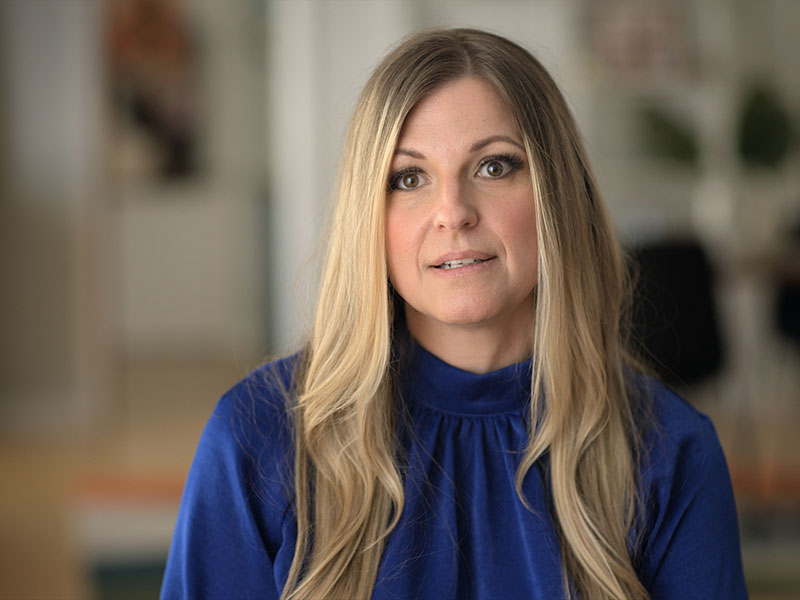
Eric Rogers, Jeff’s childhood friend, said Jeff’s online presence grew questionable shortly after he started a travel blog called Ender’s Adventures. The blog’s name was inspired by Jeff’s great love for “Ender’s Game,” the science fiction novel series written by Orson Scott Card. 


“Then he started going a bit further with it,” Rogers added. “He wanted to do life and career coaching, which at this point, as a 25 year old, what meaningful career advice do you have to give?”


Jeff also began changing his name. On Facebook, Jeff wrote, “Okay, I thought long and hard, and I’m changing my name to Jeffrey Ayanethos.” A couple months later, he changed his name to Ender Ayanethos, which he believed was his “one true name.” He finally settled on the name Shafira Ayanethos, which he said was his “one true name given by Divine Mother, the only name that I will answer to.”


“At this point, he also had hair down to his back,” Rogers said. “He would sometimes tie it up in a ponytail. He looked like Greek Jesus.”

02
Jeff and Shaleia encouraged their students to resort to extreme measures
Desperately Seeking Soulmate: Escaping Twin Flames UniverseCatrina in "Desperately Seeking Soulmate: Escaping Twin Flames Universe" (Photo courtesy of Prime Video)
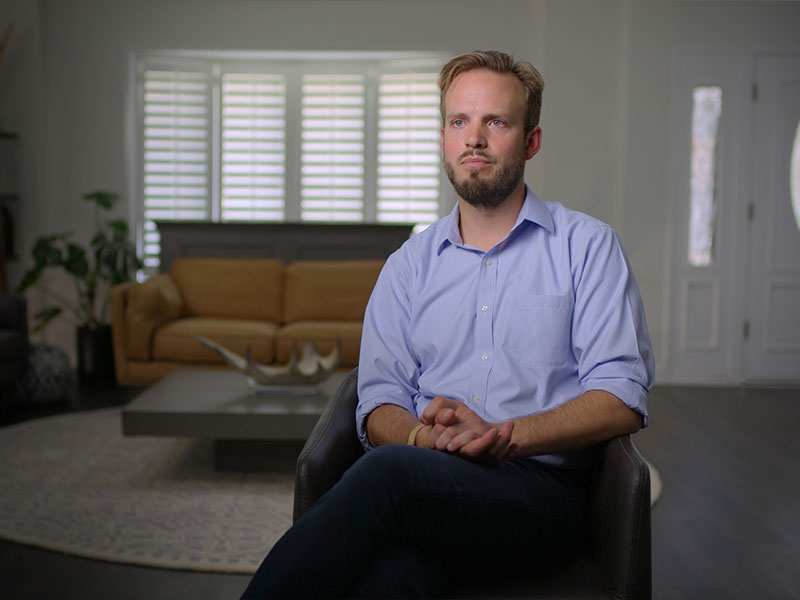
In their Twin Flame Ascension School classes, Jeff and Shaleia encouraged their students to aggressively pursue their twin flames, despite the serious consequences. Twin Flames Universe essentially advocated for a push-pull dynamic, in which the twin flame is a “runner” and their partner is a “chaser.”


In clips of Jeff and Shaleia’s online classes, Jeff is heard encouraging one student to sexually harass her partner in order to get him to respond back on text: “He’s a gamer dude. You’re a hot girl. Be like, ‘What’s up, I’m taking a class, so I can get laid. Wanna come over?’” Jeff said. 


In another clip, Jeff is heard telling a student, “Show up at his motherf**king door, bust it down. Show up every day at his house and drag him over to yours. Start grabbing his stuff and putting it in your house. That’s what he wants!”


Hines said she heard of many cases of people stalking their twin flame and people’s twin flames blocking them on Facebook. Hines even interviewed someone whose twin flame filed a restraining order against her, and ended up in jail for a month.


“This is what coercion looks like,” Hines added. “This is what spiritual manipulation is.”

03
Jeff believed he had the spiritual power to cure cancer
Desperately Seeking Soulmate: Escaping Twin Flames UniverseEric Rogers in "Desperately Seeking Soulmate: Escaping Twin Flames Universe" (Photo courtesy of Prime Video)
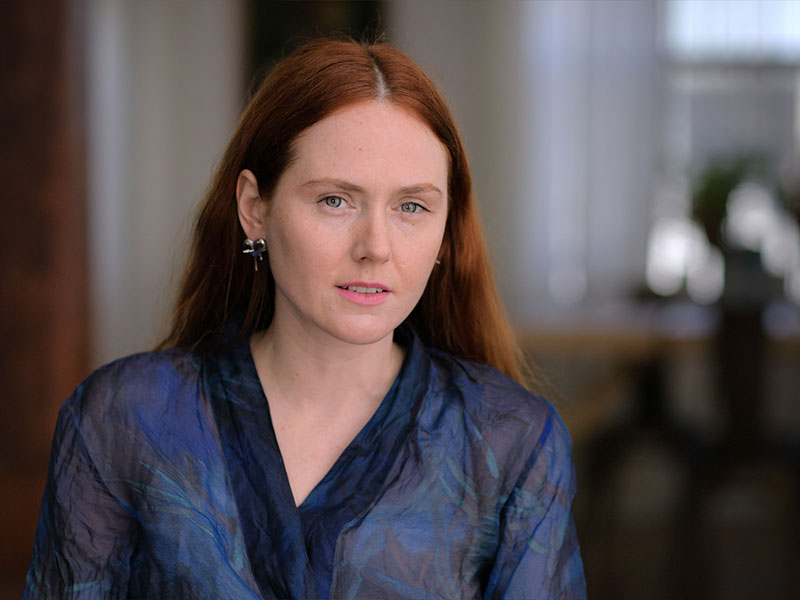
Rogers recounted the time Jeff proposed his biggest business idea yet. Jeff said he had “a gift” to cure people of their physical illnesses, which Jeff believed were all caused by childhood mental trauma.


“I can talk to people and I can draw out this mental trauma,” Jeff allegedly told Rogers. “I had my first client just last night. We had a great 20-minute session on Facebook messenger, and I cured her of multiple sclerosis.”


Jeff had a website where he advertised his so-called “spiritual healing” business. He claimed he could cure various illnesses, even cancer.


Rogers said a high school friend of Jeff’s, who lost their mother to cancer, reached out to him, telling him that he felt like Jeff was taking advantage of people in their most vulnerable moment. Rogers said Jeff’s response was, “I’m very sorry that I did not have my gift in high school, so I could not have cured your mother then.”

04
Jeff and Shaleia’s students lived in their home and were coupled up with each other
Desperately Seeking Soulmate: Escaping Twin Flames UniverseAlice Hines in "Desperately Seeking Soulmate: Escaping Twin Flames Universe" (Photo courtesy of Prime Video)

Journalist Alice Hines, who visited Jeff and Shaleia’s Michigan home prior to writing a Vanity Fair exposé on the couple, said things got “even stranger” when she went to Jeff and Shaleia’s basement. She said Jeff and Shaleia had a few of their students living in their house. It was then that Hines met Gabe and Briana, a couple who were paired together by Jeff and Shaleia. Hines recounted their basement room being crammed with stuff.


“Gabe recently came out as trans, and he had been guided into his identity as a trans man by one of Jeff and Shaleia’s coaches,” Hines said. “And then he had been paired into a twin flame relationship with Briana — and Briana was like, ‘I’m straight. I like guys.’ And Jeff and Shaleia were like, ‘Well, he’s going to be a guy.’”


Hines continued, saying that Gabe and Briana, along with the other students living in the house, were basically providing free labor for Jeff and Shaleia. Some students cooked while others would clean. The students ate meals with Jeff and Shaleia and in return, Jeff and Shaleia would provide them off-the-cuff coaching.


“They called it the Spiritual Boot Camp program,” Hines said. “That felt like a big red flag.”

05
Several members said they were pressured to change their pronouns and gender identity
Desperately Seeking Soulmate: Escaping Twin Flames UniverseJules Gil-Peterson in "Desperately Seeking Soulmate: Escaping Twin Flames Universe" (Photo courtesy of Prime Video)
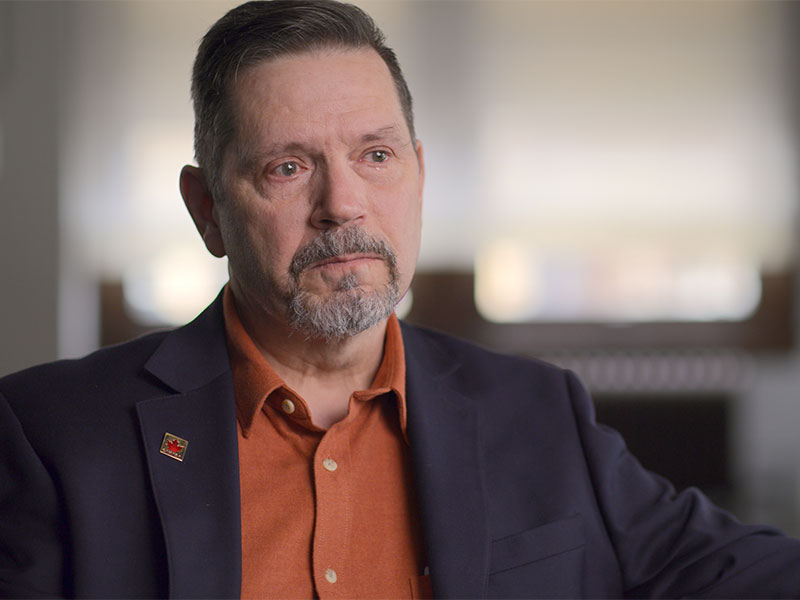
Hines explained that Jeff and Shaleia taught that there’s a “divine masculine” and a “divine feminine” in every twin flame union. Essentially, a twin flame couple is a single soul divided into two halves: a masculine and a feminine.


Hines said she spoke to several members of Twin Flames Universe who said they were pressured into changing their pronouns and gender identity under the guidance of Jeff and Shaleia and their coaches.


“The public image of Twin Flames Universe is very interesting to me. On the surface, of course, there’s all this kind of LGBT-accepting language,” said Jules Gil-Peterson, a historian of sexuality and gender. “You know, you can be any gender inside any body. Any pairing of people is okay visually, as long as it's divine feminine, divine masculine, right? It doesn’t look like conventional conversion therapy because we’re so used to Christian conversion therapy in particular using really anti-trans language.”


Anne, a former member of Twin Flames Universe, recounted how Jeff forced her to be the divine masculine in her twin flame relationship with Catrina, another former member. Jeff frequently referred to Anne as “Anne the man” and in one instance, forced Anne to adopt the name “Dan.”


“There was a really big display of power there, trying to get us to submit,” said Catrina. “And it was very tactical. It was very abusive.”


When Anne refused to change her name, Jeff and Shaleia took it as a threat to their community. They accused Anne and Catrina of abusing people and told other members to file chargebacks on Anne and Catrina’s account.

06
Shaleia’s real name is Megan Plante
Desperately Seeking Soulmate: Escaping Twin Flames UniverseWilliam Plante in "Desperately Seeking Soulmate: Escaping Twin Flames Universe" (Photo courtesy of Prime Video)

Although Hines noted that Shaleia is more quiet on-camera compared to Jeff, Shaleia is the main force behind the spiritual aspect of Twin Flames Universe and thus, equally complicit in all of the alleged abuse.


In an emotional moment from the documentary, Shaleia’s father, William Plante, revealed that his daughter’s real name is Megan Plante. Megan, he said, had the vision and the idea for Twin Flames Universe while Jeff knew how to set a camera and set businesses up. Together they were the perfect combination. William added that the last time he heard from his daughter was about four years ago. She had sent a letter that was basically “a diatribe of hatred.”


“The person that I refer to as Megan, I treat her like she’s dead,” William said. “I have to, because the person that she’s become, this Shaleia person, is alien to me, and I have no respect for her. There’s only so much heartache you can take as a father. I have to treat her as dead because I can’t live with what she’s doing.


“But I miss the Megan that I raised. I don't know if it'll ever come back. I hope it does.”

“Desperately Seeking Soulmate” is currently available for streaming on Prime Video. Watch a trailer for it below, via YouTube:

Crackpot fight! Trump is worried about RFK Jr. running for president — and he should be scared

He may not have bolts sticking out of his neck, but Robert F. Kennedy Jr. is morphing into the MAGA version of Frankenstein's monster. For months, he's been propped up by Donald Trump's sprawling propaganda apparatus, from Fox News to Steve Bannon's podcast, as he makes a fruitless bid to run for president. Even though the son of the assassinated former attorney general claimed to be a Democrat challenging President Joe Biden in the primary, most, if not all, of the staffing and financing for his campaign came from Republicans.

It's not because Republican power players like or even respect Kennedy. On the contrary, they see him for what he is: An unhinged conspiracy theorist with a massive ego that makes him easy to manipulate. They just thought they could use him, and his famous name, to make life hard for Biden in the Democratic primary, thereby weakening the president's general election campaign. 

Well, that didn't work out how the rat-f*ckers had hoped. Kennedy is still running for president, but he has given up on the Democratic primary route. Turns out that Democratic voters are not as stupid as Fox News and Steve Bannon think they are. While there was an initial bout of interest from some primary voters, as soon as they found out that RFK Jr. has rejected his family's legacy of both liberalism and support for science, polls show they return to backing Biden. So Kennedy, whose main motivation has obviously always been getting attention and pushing his various conspiracy theories, is switching tactics: Dropping out of the primary to run as an independent


Want more Amanda Marcotte on politics? Subscribe to her newsletter Standing Room Only.


Some Biden supporters panicked, no doubt thinking about past spoiler candidates like Ralph Nader and Jill Stein. But the actual Biden campaign seems unworried about losing votes, especially once people learn about Kennedy's history of lying, anti-semitic conspiracy theories, and getting people killed through disinformation campaigns. But there is one pool of voters who doesn't care about any of that: MAGA voters. Indeed, many see it as a plus if a candidate is a greedy con artist who doesn't care who is hurt by his lies, which is why they are so drawn to Trump.

As voters learn more, Kennedy's almost certainly going to lose his already weak Democratic support while turning a few heads among Republican voters, especially the 25% who are QAnoners.

Could Kennedy pull votes away from Trump? Trump's campaign team certainly seems to think so, at least according to Shelby Talcott at Semafor. She reports that "internal campaign polling suggests his expected third party bid could draw more votes from Trump than President Joe Biden in a general election." In their typical self-aggrandizing style, a Trump campaign member told Semafor they plan on "dropping napalm after napalm on his head reminding the public of his very liberal views." 

They may find that this is a more difficult task than their belligerent rhetoric suggests. Because the slice of voters Trump and Kennedy could be competing over aren't defined by political beliefs that map neatly onto concepts like "liberal" or "conservative." Instead, they're fighting over the crank vote: People who are addicted to gobbling down kooky, bizarre and above all, false information. The QAnon crowd, in other words. 

Trump has long had a lot of sway over conspiracy theory nuts, because of his flagrant contempt for the truth. From birth conspiracy theories to the Big Lie to his habit of continually lying about everything from his pocketbook to his golf scores, Trump broadcasts every moment of every day that what he wishes to believe matters more than actual facts. For people who put a premium on living in a fantasy world — either to escape the humdrum of reality or because doing so feeds their egotistical need to feel like special snowflakes — Trump's presidency was a permission slip to get buck wild with the bullshit. 

Conspiracists tend to be motivated less by ideology and more by ego and status anxiety. It's often people who want to believe they are more interesting and important than they are. Their conspiracy theories offer them a way to feel special like they are privy to insider knowledge that the "sheeple" are too stupid or ignorant to understand. 

It's not a surprise that both Trump and Kennedy have ended up in the conspiracist world. Both are mediocre men whose fame and fortune depend entirely on being born to fathers who had the talents the sons only pretend to have. (Though, of course, the elder RFK is viewed in a historically heroic light, whereas Fred Trump was just an exploitative landlord and a tax cheat.) They are both small men who want to be big, and conspiracy theories help soothe their easily injured egos.

We need your help to stay independent

Ironically, it's also their inheritances that give them traction with the conspiracy crowd. Conspiracists love to center celebrities in their storytelling because it adds to the sense of self-importance that they crave. There's a reason that QAnon, for instance, folded in Hollywood celebrities to their nonsense about blood-drinking pedophile rings. It adds drama to a narrative that would be less exciting than if it were about, say, random people in the neighborhood. Trump's celebrity is attractive to those folks, but when it comes to both fame and prestige, "former reality TV host" pales in comparison to being an actual member of the Kennedy family. 

In fact, a large subset of QAnon is so desperate to steal the honor of the Kennedys that they already circulate conspiracy theories claiming that John F. Kennedy Jr. is still alive and about to make a comeback, as Trump's running mate. What's going on there isn't mysterious. Even the QAnoners know, on some level, that Trump is a grubby embarrassment. Pretending that he's got some connection to the lionized Kennedy family is about gracing him with some class and prestige he could never achieve on his own. But now those people have a chance to vote for an actual Kennedy, instead of trying too hard to round Trump up to a Kennedy-like figure. Granted, it means ignoring that Robert F. Kennedy Jr. has nothing in common with his forebears, except his name, but that's an easier mental lift than trying to pretend President Tiny Fingers is some great hero. 

Granted, there are conspiracy theorists on both sides of the aisle in American politics and always have been. But it's long been worse on the right than the left, going back to the days of the John Birch Society spreading paranoia about fluoridated water. In recent years, however, the disproportions have grown even more extreme. The Democratic party has become a haven for reality-based people, including some former Republicans who want a politics based on reason and evidence. 

Meanwhile, the GOP has increasingly branded itself as a conspiracy theory party, and not just because of Trump. After all, the Iraq War was justified with President George W. Bush deceiving the public about "weapons of mass destruction," while presiding over a party that denied climate change, promoted creationism, and regularly spread disinformation about LGBTQ people and reproductive health care. House Republicans are on the precipe of making Rep. Jim Jordan, R-Ohio, their Speaker, a man whose entire claim to fame is how he treats the truth like an enemy to be vanquished. 

Right now, polling data is all over the place on whether Kennedy would be a spoiler for Trump or Biden. But that's because a lot of people aren't tuned in yet, and don't have any clue that Kennedy's penchant for conspiracy theories has turned him into GOP fellow traveler. As voters learn more, Kennedy's almost certainly going to lose his already weak Democratic support while turning a few heads among Republican voters, especially the 25% who are QAnoners. The party leadership on both sides seems to get this. It's why Democrats are shrugging Kennedy off, while the RNC sent out a panicked email titled, "23 Reasons to Oppose RFK Jr."

Couldn't have happened to nicer people, of course. Republicans have spent decades increasingly leveraging disinformation and tapping into the ego needs of conspiracy theorists, all to retain support their unpopular policies can't get them. But the problem with dealing with kooks is they are unpredictable and hard to control. The MAGA movement spent months feeding Kennedy's ego, hoping they could weaponize his narcissism. Instead, his head grew so big that he decided he can get what he wants out of this, without having to play second fiddle in the conspiracy theory wars to Trump. 

A “blood purity program”: Holocaust expert on why Trump is stoking fears of national blood poisoning

As Donald Trump finally faces serious consequences for his decades-long crime spree and other antisocial behavior, he will become more racist, white supremacist, antisemitic, violent, dangerous, and fascistic. Trump is unwilling to restrain himself – even when such vile behavior is potentially damaging to him and contrary to his goals.

For example, in a particularly bold move last week, Trump went so far as to threaten New York Attorney General Leticia James – who is a black woman. “I don’t think the people of this country are going to stand for it," he told reporters about his civil trial in New York for fraud and other financial crimes. "This is a disgrace. And you ought to go after this attorney general." In Trump’s imagination, the collective mind of his followers, a black person (especially a black woman) such as Leticia James is naturally supposed to show deference to white people. Trump has also called James a corrupt “racist” “monster."

Trump has used racist language and made threats against the other African American judges, prosecutors, and other members of law enforcement who are trying to hold him accountable under the law for his many and obvious crimes. Trump’s followers have been obeying these commands and incitements to violence.

In another example of the ex-president’s perfidy, during a recent interview with the National Pulse, Trump made white supremacist comments about “undesirables” from other countries who are “poisoning the blood” of (White) America.

Nobody has any idea where these people are coming from, and we know they come from prisons. We know they come from mental institutions [and] insane asylums. We know they're terrorists. Nobody has ever seen anything like we're witnessing right now. It is a very sad thing for our country. It's poisoning the blood of our country. It's so bad, and people are coming in with disease. People are coming in with every possible thing that you could have. And I got to know a lot of the heads of these countries. They're very cunning people. Very street-smart people. If they're not street-smart, they're not going to be there very long. And when they send up those caravans, and I had it ended, we had the safest border in the history of our country, meaning the history, over the last 80 years. Before that, I assume it was probably not so bad. There was nobody around.

The mainstream news media has, for the most part, either mostly ignored or has already moved on from this story. The media malpractice and general enabling of Trumpism and American neofascism continues. Hyper politics and the 24/7 news cycle and the attention economy will be the death of American democracy and freedom.

Trump’s comments about “diseased invaders” echo what Nazi dictator Adolf Hitler wrote in his book “Mein Kampf”:

“In the north and in the south the poison of foreign races was eating into the body of our people, and even Vienna was steadily becoming more and more a non-German city.”

“And so this poison was allowed to enter the national bloodstream and infect public life without the Government taking any effectual measures to master the course of the disease.”

"["The Jew"] occasionally bestowed one of his female members on an influential Christian; but the racial stock of his male descendants was always preserved unmixed fundamentally. He poisons the blood of others but preserves his own blood unadulterated."

The following passage from “Mein Kampf” is extremely similar, both in verbiage and meaning, to what Trump said in his interview with National Pulse:

All the great civilizations of the past became decadent because the originally creative race died out, as a result of contamination of the blood….

The adulteration of the blood and racial deterioration conditioned thereby are the only causes that account for the decline of ancient civilizations; for it is never by war that nations are ruined, but by the loss of their powers of resistance, which are exclusively a characteristic of pure racial blood. In this world everything that is not of sound racial stock is like chaff….

A State which, in an epoch of racial adulteration, devotes itself to the duty of preserving the best elements of its racial stock must one day become ruler of the Earth.

The antisemitic and white supremacist messaging of Trump’s conversation with the National Pulse becomes even more clear when placed in the larger context of similar language and behavior by the ex-president and the beliefs of his followers.

Hyper politics and the 24/7 news cycle and the attention economy will be the death of American democracy and freedom.

Trump infamously described the white supremacists and other racial fascists who ran amok in Charlottesville in 2017, killing Heather Heyer and injuring dozens of other people, as being “very fine people." They chanted “blood and soil” while marching and rampaging throughout Charlottesville. 

A majority of Republicans and Trump followers believe in the white supremacist antisemitic conspiracy theory that “white people” are going to be replaced in their “own country” by non-whites. Trump’s antisemitic and white supremacist messaging both reflects and encourages a belief in such lies and disinformation.

As I explained in a previous essay here at Salon, “Trump's fundraising emails and other communications are also filled with antisemitic themes and threats that mirror the infamous Protocols of the Elders of Zion and other racist and white supremacist hate tracts. Such themes in Trump's and his allies' messaging include the conspiracy lie that there is a 'deep state' that controls the Democrats and the liberal media through 'globalist' 'puppet masters' who are secretly pulling the strings and controlling the world by forcing the "Woke agenda" on patriotic Americans with the goal of making the country socialist or communist. Trump and the larger right-wing are also obsessed with George Soros (a Democratic Party donor who happens to be Jewish and a Holocaust survivor) and routinely launch antisemitic attacks on him.”

We need your help to stay independent

Trump believes that human beings can be bred like horses and other animals and that he himself possesses “superior genes” because of his German heritage. Trump is willfully ignorant and does not read; his belief in eugenics and race science is intuitive and spiritual. The following account from a 1990 Vanity Fair profile of Ivanka and Donald Trump provides a particularly illustrative example of the ex-president’s casual antisemitism:

Donald Trump appears to take aspects of his German background seriously. John Walter works for the Trump Organization, and when he visits Donald in his office, Ivana told a friend, he clicks his heels and says, “Heil Hitler,” possibly as a family joke.

Trump’s ex-wife has also reported that he kept a collection of Hiter’s speeches in a cabinet near his bed.

Trump’s antisemitic and white supremacist statements about “poisoning the blood” are also a reminder of the many deep connections between American “race scientists” and eugenicists and their German counterparts in the first decades of the 20th century. Madison Grant, who was one of the most influential “race scientists” and eugenicists of the era (and a prominent thinker more generally) wrote the following in his influential 1923 book “The Passing of the Great Race”:

The result of unlimited immigration is showing plainly in the rapid decline in the birth rate of native Americans because the poorer classes of Colonial stock, where they still exist, will not bring children into the world to compete in the labor market with the Slovak, the Italian, the Syrian and the Jew. The native American is too proud to mix socially with them and is gradually withdrawing from the scene, abandoning to these aliens the land which he conquered and developed. The man of the old stock is being crowded out of many country districts by these foreigners just as he is to-day being literally driven off the streets of New York City by the swarms of Polish Jews. These immigrants adopt the language of the native American, they wear his clothes, they steal his name and they are beginning to take his women, but they seldom adopt his religion or understand his ideals and while he is being elbowed out of his own home the American looks calmly abroad and urges on others the suicidal ethics which are exterminating his own race….

As to what the future mixture will be it is evident that in large sections of the country the native American will entirely disappear. He will not intermarry with inferior races and he cannot compete in the sweat shop and in the street trench with the newcomers. Large cities from the days of Rome, Alexandria, and Byzantium have always been gathering points of diverse races, but New York is becoming a cloaca gentium which will produce many amazing racial hybrids and some ethnic horrors that will be beyond the powers of future anthropologists to unravel.

One thing is certain: in any such mixture, the surviving traits will be determined by competition between the lowest and most primitive elements and the specialized traits of Nordic man; his stature, his light colored eyes, his fair skin and light colored hair, his straight nose and his splendid fighting and moral qualities, will have little part in the resultant mixture.

Donald Trump would likely agree with Grant’s description of how American society is being “poisoned” by “race mongrelization."


Want a daily wrap-up of all the news and commentary Salon has to offer? Subscribe to our morning newsletter, Crash Course.


I asked philosopher John Roth, who is an expert on the Holocaust, for his thoughts about Trump’s recent statements about how “poison blood” from non-white immigrants is infecting the United States.

Via email Roth explained:

Adolf Hitler’s racist, antisemitic dream of domination took “purity of German blood” to be fundamental for the continuing existence of the German people. Early on, American ways aided and abetted Hitler, whose 1920s writings, including Mein Kampf, admired American racism, white supremacy, and anti-immigration policies.

Those realities showed him that right-thinking Americans knew how the health of the body politic depends on blood purity. If American trends continued in the right direction, Hitler affirmed, the United States would be a model for his Nazi regime in Germany. 

World War II crushed the Third Reich but not blood-based politics. Recently, for example, Donald Trump echoed Hitler, putting blood purity center stage when the indicted ex-president lied that “the blood of our country” is being poisoned by disease-causing immigrants.

Neither the fear of national blood poisoning nor the yearning for national blood purity should be underestimated, unreasonable though they are, because such ideas are political constructs as powerful as they are malignant. Fear of blood pollution by Jews and protection of pure “German blood” led to the Holocaust. Defense of untainted “American blood” entrenched slavery and Jim Crow in the United States and legitimated genocide against Indigenous people. Nothing good, certainly nothing that honors American democracy at its best, comes from stoked fears of national blood poisoning or nativistic aspirations to save fictional national blood purity.

Early in 1933, Hitler advanced his blood purity program when the German parliament handed him an enabling act that turned his decrees into law.  Trump has said that he might overturn the Constitution.  Failing that, he apparently believes that Article II gives him “the right to do whatever I want as president.” When confronting authoritarians like Trump, the first rule is to believe that they will attempt to do what they say.  A second Trump presidential term would escalate his fear-mongering about national blood poisoning and advance his xenophobic blood purity program.  The price for any of that is further loss of democracy. 

History tells us where this horrific road ends and the great suffering that will take place along it and at the final destination – a road that America is rapidly and recklessly accelerating down in the Age of Trump and beyond.

Delay, delay, delay: Three motions from Trump’s legal team make his only strategy clear

Donald Trump’s latest team of lawyers certainly had a busy week. Last Monday, opening statements began in the civil bench trial of the State of New York vs. Donald Trump, et al over inflated assets in fraudulent statements. The judge in that case, – Arthur Engoron, – had days before ruled for partial summary judgment against Trump and his co-defendants and held all liable for “persistent and repeated” fraudulent behavior. Meanwhile, as the former president was busy attacking the judicial system, continuing to obstruct justice, and calling out prosecutors and judges in violation of his recently imposed gag order, and his lawyers were getting pummeled in his civil fraud case that will in all likelihood put the Trump Organization out of business.

So team Trump has filed three significant motions to dismiss and/or delay his legal cases from moving forward. And as special counsel Jack Smith said in a statement blasting the strategy this Monday, Trump’s lawyers “provide no credible justification to postpone.” 

In the USA vs. Donald J. Trump case in Washington, DC, the former president has been charged with conspiracies to defraud the United States, interfere with official electoral proceedings, and deny people their civil rights to vote and to have their votes counted. His lawyers, citing Nixon v. Fitzgerald, filed a 52-page motion to dismiss the indictment based on absolute immunity “for acts within the ‘outer perimeter of [the President’s] official responsibility.”In their introduction they argue that the incumbent administration, breaking with 234 years of precedent, “has charged Trump for acts that lie not just within the ‘outer perimeter,’ but at the heart of his official responsibilities as President. In doing so, the prosecution does not, and cannot, argue that President Trump’s efforts to ensure election integrity, and to advocate for the same, were outside the scope of his official duties.” 

In trying to characterize the conduct of the charges against Trump as simply carrying out the normal business of the president, they are of course ignoring the fact that Trump had successfully and unsuccessfully enlisted other people to conspire in illegal acts to overturn the 2020 election. As Joyce Vance has written, “No matter how Trump’s lawyers try to dress it up and normalize it, it’s criminal conduct. Sure, Trump can have conversations with people, but when they’re about trying to change the results of an election he’s lost, they cross the line and are no longer within the official governing duties of a president, not even within the outer edges of its periphery.”

With respect to the former president’s modus operandi of countersuing, intimidating and harassing his adversaries which has occurred more than 2000 times, he often does not follow through with the lawsuit. 

Trump’s team also makes, without legal citations, less serious arguments such as impeachment is the only remedy that can be taken against a sitting president. And contorting the text of the Constitution even further, his attorneys contend that without the House of Representatives’  articles of impeachment resulting in the conviction of a president in the Senate, that the former president cannot be prosecuted.    

While this motion to dismiss should inevitably fail even assuming that it is appealed up to the U.S. Supreme Court, it could very well postpone the January 6 trial to well after its starting date scheduled to begin on March 4, 2024. 

We need your help to stay independent

In USA vs. Donald J. Trump, et al in the stolen classified documents Mar-a-Lago case in Florida, his attorneys filed a 12-page motion last Wednesday to postpone the trial for a second time until after the 2024 presidential election. There are essentially two arguments in this motion to delay the trial that has been set for May 2024.First, that postponement was necessary because of scheduling conflicts. These included that the January 6 trial was scheduled to begin in March 2024 and that one of Trump’s attorneys in the Mar-a-Lago case, Chris Kise, was also the lead attorney representing the former president in the ongoing civil fraud trial in New York that should last until late December.Second, and somewhat more legalistically reasonable is the charge that special counsel Jack Smith had not been candid when he had stated that everything necessary about the classified documents for trial to begin had been turned over to the defense and that the prosecution was ready to proceed. 

Some material may not in fact have been turned over to the defense for good reason. Whether that was justifiable or not, it still should not have required an additional nine months to prepare for the case. It is highly probable that whatever information Smith may not have shared with Trump and  his two co-defendants, aide Walt Nauta and Mar-a-Lago property manager Carlos De Oliveira, had to do with its top-secret nature and the communications regarding those particular classified documents.   Such as the breaking news by ABC on Thursday evening, for example, that Trump had shared at Mar-a-Lago sensitive information about American submarines with an Australian billionaire soon after leaving office and that the businessman Anthony Pratt went on to share details with several others about the U.S. nuclear fleet, including the submarines’ “tactical capacities” and the number of “nuclear warheads the vessels carried and how close they could get to their Russian counterparts without being detected.” 

For his part, Smith blasted Trump’s motion as baseless because, he argued, “The vast majority of classified discovery is also available to the defendants.”

“The Government has provided the defendants extensive, prompt, and well-organized unclassified discovery, yielding an exhaustive roadmap of proof of the detailed allegations in the superseding indictment,” Smith wrote in a filing on Monday to U.S. District Judge Aileen Cannon..

In the first effort to delay the case until after the 2024 election because of delays involved in creating a secure facility for Trump to view the documents, Judge Aileen Cannon on Friday “granted a temporary stay while she decides whether to push back the pre-trial schedule” as well.  

In The People of the State of New York vs Donald J. Trump case, with its 34 felony counts also set to begin in March 2024, Trump’s attorneys moved to dismiss the “meandering” New York hush money case because according to the court filing the “Manhattan district attorney took too long” before he decided to prosecute the former president on “the years-old allegations.”  


Want a daily wrap-up of all the news and commentary Salon has to offer? Subscribe to our morning newsletter, Crash Course.


For some context about the Plaintiff in Chief with respect to the former president’s modus operandi of countersuing, intimidating and harassing his adversaries which has occurred more than 2000 times, he often does not follow through with the lawsuit. 

Accordingly, after moving the date for his deposition in the civil lawsuit, Donald Trump vs. Michael Cohen, which had been scheduled for last week as well and presented a conflict of sorts, but not really, with his civil fraud trial getting underway, Trump “temporarily” dropped his $500 million “lawsuit against his former lawyer-turned-witness,” Michael Cohen, who he has accused of “malicious intent” for “spreading falsehoods” and causing “vast reputational harm.” Trump was suing Cohen for breaching their attorney-client relationship because his former “fixer” had testified before Congress back in 2017, has written two best-selling books about their history together, and more recently has been talking publicly not only about the illegal hush-money payments to women during the 2016 presidential race but also about Trump’s fraudulent ways of conducting everyday business. 

In response to Trump’s dropping the lawsuit on Thursday – which I am willing to bet will be permanently discontinued –Cohen had this to say: “This case was nothing more than a retaliatory intimidation tactic, and his attempt to hide from routine discovery procedures confirms as much.”

So many lawsuits and so little time for the fraudster in chief. Then again, what else is the not persecuted and weaponizing Trump to do, especially when he is an insurrectionist and wannabe dictator trying to regain the White House in hopes of staying out of jail?  

Clyburn’s role in map that allegedly discriminates against Black voters becomes key in SCOTUS case

ProPublica is a Pulitzer Prize-winning investigative newsroom. Sign up for The Big Story newsletter to receive stories like this one in your inbox.

Democratic Rep. James Clyburn’s role in South Carolina’s 2022 redistricting has emerged as a central point of contention between Democrats and Republicans in a racial gerrymandering case to be argued before the Supreme Court on Wednesday.

The case revolves around whether Republicans, who control the Legislature, illegally disenfranchised Black voters when they created new election maps or whether the process was simply partisan politics. A key question is whether the role that the powerful Black Democrat played in the process was enough to inoculate the entire effort.

At the beginning of the process in November 2021, a top Clyburn aide secretly delivered a one-page map to the Republicans. That was the starting point for a formal redistricting plan that went through numerous revisions before the Legislature approved it in 2022. The NAACP sued state Republicans, arguing that the plan discriminated against Black voters. A three-judge federal panel sided with the NAACP early this year and ruled that one congressional district in the plan, the 1st District, is an illegal racial gerrymander and must be redrawn before the next election. ProPublica detailed Clyburn’s involvement and was first to publish his map in a May 5 investigation.

In their legal filings, Republican leaders contend they did not take race into account when they redrew the districts. They say they complied with acceptable redistricting principles. And they contend that Clyburn’s recommendations played a key role in starting the process. If the lower court’s ruling is allowed to stand, they argue, it “would invite federal courts to micromanage political disputes in countless such districts across the country.”

In a recent filing in response, the congressman’s lawyers argue that Republicans are trying to blame Clyburn, a state civil rights leader, for an “unconstitutional racial gerrymander intentionally designed to dilute minority voting power.” He supports the NAACP case and asked the high court to affirm the federal judicial panel.

Clyburn’s redistricting involvement was “routine and circumscribed.” The draft map his aide gave to Senate Republican staffers was only a rough idea for how to draw his district, not a formal redistricting plan for the entire state, his lawyers argue.

The decision will help define a murky point of redistricting law: when a partisan gerrymander crosses the line to become an illegal racial gerrymander. The Supreme Court in 2019 held that it would not interfere in partisan map-drawing. But federal courts have overturned redistricting plans in which racial considerations played a predominant role.

The case is being closely watched by other Southern states facing redistricting challenges. Parties in a federal racial gerrymandering case in Tennessee, for example, have decided they will await the court’s South Carolina decision before beginning their own pretrial document discovery.

In June, the court surprised observers by rejecting Alabama’s redistricting as discriminatory, a ruling that may affect maps in several other states and give Democrats a shot at winning as many as six seats in the South in the 2024 elections.

In South Carolina, race and politics are inextricably linked, and the state has a long history of racial discrimination and violations of the 1965 Voting Rights Act. The Republican Party is predominantly white and controls the Legislature, major state offices and six of the seven congressional districts.

Between the 2010 and 2020 censuses, South Carolina experienced an influx of people who were disproportionately white. The 1st District, a swing district, had too many people and the 6th District, which Clyburn has held since 1993, had too few.

The case revolves around the question of whether the 1st District was an illegal racial gerrymander. Republicans made it much safer for their party. As recently as 2018, a Democrat held the 1st District. It is now held by Nancy Mace, who ran as a moderate but recently has risen to prominence as one of eight Republicans who voted to depose Kevin McCarthy as U.S. House speaker. In 2022, she won by 14 percentage points.

Republicans made Mace’s district safer by taking Black neighborhoods out and putting some into the 6th District. The result was that Clyburn solidified his hold on the district as its population rapidly changed.

In doing so, they say they followed the outlines of Clyburn’s early map. It had suggested moving neighborhoods that are disproportionately Black into his district and out of the 1st District. It also recommended moving some heavily white neighborhoods into Mace’s district, strengthening the GOP’s hold. Republicans say that Clyburn suggested moving even more Black residents into his district than they eventually approved.

The 1st District ended up with a Black population of 17% in a state where the overall Black population is 26%.

In his brief to the court, Clyburn’s attorney, John Graubert, accused Republicans of trying to “blur the distinction” between the congressman’s rough recommendations and the final plan.

Graubert insisted that Clyburn’s involvement is legally irrelevant to a case that will decide whether the GOP-led Legislature “engaged in intentional racial discrimination.”

The Legislature’s case is being presented by William Wilkins, a former chief judge on the 4th U.S. Circuit Court of Appeals, and John M. Gore of Jones Day, who served in the Trump administration as acting assistant attorney general for the Department of Justice’s Civil Rights Division.

The court is expected to decide by early next year if it will uphold the three-judge panel’s ruling in the case, known as Alexander v. South Carolina State Conference of the NAACP.

Rick Hasen, a legal scholar at the University of California, Los Angeles, said deciding the line between partisan and racial gerrymandering is a “recurring issue” for the court as both political parties bring cases alleging violations of the Equal Protection Clause.

“When the state says it’s about politics, and the plaintiffs argue that it’s about race, how are you supposed to disentangle those two things?” he said.

Funky space weather causes navigation problems in birds, study finds

Space weather is exactly what it sounds like: variations in the environment between Earth and the Sun, influenced by factors like solar wind and the ionosphere, the buzzing layer of the atmosphere that is ionized by solar radiation. Birds rely on the Earth's magnetic field to navigate, yet until recently it was unclear whether space weather could make it more difficult for these same birds to fly. Now a recent study in the journal Proceedings of the National Academy of Sciences suggests the answer is yes.

"Our results suggest that fewer birds migrate during strong geomagnetic disturbances and that migrating birds may experience more difficulty navigating, especially under overcast conditions in autumn," the authors explain. To learn this, the authors analyzed an unprecedented quantity of data about how birds migrate, drawing from visual information gleaned by 37 NEXRAD Doppler weather radar stations over a period of 23 years. They then cross referenced that data with information about geomagnetic disturbances within those same regions. By doing this, the scientists learned whether events like severe space weather events that disrupt the magnetic field — most notably solar flares — had a measurable effect on those birds who migrated across a 1,000 mile swatch of the Great Plains from North Dakota to Texas.

They learned that the number of migrating birds in the Great Plains region decreases on average from 9 percent to 17 percent during periods of severe space weather. Additionally, there were more examples of birds getting lost while migrating, a phenomenon known as migratory bird vagrancy. Birds were also less likely to fly against the wind "under both overcast conditions and high geomagnetic disturbance," due to "a combination of obscured celestial cues and magnetic disturbance."

Farmers are bearing the brunt of big food companies’ decarbonization efforts — here’s why

More than a third of the global greenhouse gas emissions resulting from human activity can be attributed to the way we produce, process and package food. So it comes as no surprise that many large companies involved in food production and retailing are under pressure from investors, politicians and environmental groups to clean up their operations.

Having a carbon-neutral supply chain isn't just good for the environment, it's a smart business move too, especially at a time when the public is growing more concerned about the negative effects of climate change.

Several leading fast-food chains are starting to take note. McDonald's, for example, has announced plans to achieve net zero emissions from its entire business operation by 2040.

Yet the corporate rush to reduce the environmental footprint of their food supply chains poses several challenges for farmers. These supply chains — from providing ingredients, to processing and retailing — are mainly controlled by a handful of large companies. In the US, Walmart holds a quarter of the grocery market share, while Tesco commands 27% of the UK's food retail sector.

This level of concentration means that initiatives for decarbonizing the food supply system are spearheaded by large companies. This is a problem because the proposed measures are often impractical for smaller farms, expensive or lack buy-in from farmers.        


Voluntary or compulsory?

Many large companies have sought to offset emissions that are hard to reduce by buying carbon credits. These are permits that allow the owner to emit a certain amount of carbon dioxide.

However, there is a growing issue with the credibility of carbon offset programs. So firms risk being accused of "greenwashing" or facing potential legal challenges for spurious carbon offsets. Many of these firms are now shifting their focus towards decarbonising their own operations, by tackling emissions directly throughout their entire supply chain.

This shift directly affects farmers. For instance, a cattle farm in Brazil that supplies beef to a transnational retailer overseas would now be obliged to comply with emission-reduction measures imposed by that retailer.

These measures may include changes to grazing land or the installation of digesters (closed tanks where microorganisms break down organic material such as cow manure). But they can be very costly to implement for small farms and can expose them to the risk of exclusion from global markets.

Research by the British bank Barclays indicates that, in 2021, UK retailers cancelled contracts worth over £7 billion with suppliers as a result of failure to meet sustainability standards.    

Constrained by the influence of these companies, farmers also lose their ability to use practices that result in substantial, although challenging to measure, reductions in emissions. One such practice involves the selective breeding of cattle for greater feed efficiency.

By doing so, farmers can raise cattle herds that consume less feed and produce fewer greenhouse gases, all while maintaining milk and meat production. According to a UK government report, this breeding strategy has the potential to reduce beef-related greenhouse gas emissions by 27% across the whole industry over a 20-year period.

Still, a modelling study my colleagues and I conducted in 2016, found that farmers are unlikely to adopt this practice if beef processors — primarily large companies downstream in the supply chain — do not pay for feed-efficient cows. Even though our results were published a few years ago, the situation remains largely unchanged.  


Getting off the fence

Achieving a transition to net zero that is fair will require that farmers have a say over how to go about it. With an in-depth knowledge of their land, crops and animals, farmers can help to implement measures and set targets that are practical, effective and attainable.

There are encouraging signs that this is starting to happen in several countries. The UK's National Farmers Union, which represents over 55,000 farmers in England and Wales, has set an ambitious target of reaching net zero by 2040. Similarly, the Dairy Farmers of Canada plan to achieve net zero by 2050.

But these initiatives must extend beyond mere rhetoric and vague net zero targets, towards tangible actions. The capacity of farmers to measure, report and verify on-farm emissions must be improved through better training and innovation.

Currently, measuring a farm's carbon emissions is difficult. There are as many as 64 different carbon farm accounting tools in use, each differing in terms of their scope and data requirements. This lack of standardisation can diminish the credibility of decarbonisation schemes and potentially discourage farmers from participating.

Providing farmers with the right incentives is critical. The multinational dairy cooperative Arla Foods provides farmers with €0.03 per kg for engaging in sustainability activities, such as using renewable energy and €0.01 per kg for submitting emissions data using the firm's carbon accounting tool. More initiatives like this are needed across the industry to gather emission data from farms and incentivise change.

Decarbonising our food system hinges on major food companies, farmers, policymakers and environmental advocacy groups taking action together. This action must be practical and measurable and offer the right incentives, not only to companies, but also to farmers.


Imagine weekly climate newsletter

Don't have time to read about climate change as much as you'd like?

Get a weekly roundup in your inbox instead. Every Wednesday, The Conversation's environment editor writes Imagine, a short email that goes a little deeper into just one climate issue. Join the 20,000+ readers who've subscribed so far.


Albert Boaitey, Lecturer in Global Agri-food Supply Chains, Newcastle University

This article is republished from The Conversation under a Creative Commons license. Read the original article.

Yelp now has a public “wall of shame” for restaurants that are caught paying for reviews

Yelp, the online review site, is publicly outing various businesses that it believes may be posting sham reviews on its platform. In September, Engadget published a story saying Yelp launched a new tool to help people track businesses “that have tried to manipulate their standing on the review platform.” Now, Eater has confirmed that Yelp recently published an index of businesses it found violating the company’s policy against paying for fake reviews, which the publication referred to as a "wall of shame."

The Compensated & Suspicious Review Activity Alerts page, a new part of Yelp’s Trust & Safety site, is where the “platform breaks down how Yelp deals with content moderation and shares its annual trust and safety report on combating incentivized reviews,” Eater reported. The page includes links to the business’ Yelp page alongside a “View the evidence here” link, which contains “photographic evidence of email solicitations, promotional ads, or screenshots of social media posts offering gifts or products in exchange for reviews.”

Businesses that are caught violating Yelp’s policies will be added to the Trust & Safety site and the consumer alert pop-up added to the business’ Yelp page that’s been in practice since 2012. Alerts are removed after 90 days “if the offending behavior stops,” per the guideline page.

In addition to Yelp, the Federal Trade Commission (FTC) is cracking down on shady business reviews. The FTC proposed a ban against fake reviews, adding major fines against businesses that “buy, sell and manipulate online reviews” totaling up to $50,000 for each fake review — plus the number of times a customer sees it, Eater wrote.

“Fyre Festival strategy”: Lawyer warns Trump’s stunts in NY fraud trial “just begging for sanctions”

In the weeks leading up to his $250 million civil fraud trial in New York, Donald Trump and his legal team had privately accepted defeat and agreed that fighting the case on appeal was their best bet, sources told Rolling Stone. Those beliefs resulted in their development of a courtroom strategy defined by cacophony and chaos instead of efforts to win the case on the merits, an approach one source close to the former president dubbed "Fyre Festival strategies."

That method — “let’s just do it and be legends" per the failed festival's founder — famously led Fyre Fest to be a scandal-laden catastrophe. Trump and his lawyers, however, are hoping that as a legal strategy, the approach will transform the proceedings into a "media circus," Rolling Stone reports, by boosting the former president's public relations, shaking the table, angering the judge and gratuitously smearing some of the witnesses.

While the strategy likely aligns with Trump's typical approach, it also risks undermining his team's legal work in defending the business empire that elevated him to celebrity status and the Oval Office long term as its future hangs in the balance

New York Supreme Court Justice Arthur Engoron has already fined Trump's lawyers $7,500 each for repeatedly rehashing legal arguments he's already dismissed. Trump, however, has privately suggested in recent weeks that his attorneys should "worry" about getting further court sanctions for their planned antics, the sources told Rolling Stone. 

In light of those instructions, the legal team has concocted an aggressive trial game plan that includes what one Trump advisor called "below the belt" attacks on witnesses, prosecutors and the judge, alongside possible threats of retaliatory lawsuits against some of those people. Trump's trial lawyers — which include Chris Kise, Alina Habba and Jesus Suarez — have also taken to a number of delay tactics meant to upset Engoron during trial, which is scheduled for three months. One such tactic, which they debuted during the trial last week, involves pelting witnesses with lengthy, drawn-out questions and consistently repeating arguments the judge has already thrown out, the sources said.

“A lot of this is just begging for sanctions,” one attorney who’s known Trump for years told the outlet. “It is not how I’d do it, but … maybe that’s a reason I’m not on the [legal] team.”

In the weeks before the trial, Trump specifically discussed with some of his legal and political advisors how much he looked forward to his attorneys making his former fixer, Michael Cohen, "cry" on the stand, a person familiar with the situation told Rolling Stone. The former Trump lawyer is now listed as a witness for New York Attorney General Letitia James' office and was slated to go toe-to-toe with Trump in a lawsuit the former president had filed against him before Trump dropped it last week.

Trump hopes to relentlessly go after Cohen's character, intelligence, professional acuity, federal criminal charges and personal life, encouraging his attorneys to "fight rough and fight dirty, if you got to” with his former lawyer and others during the trial, a person close to Trump told Rolling Stone, paraphrasing what he said. The source, who has repeatedly spoken to the former president about this case, added that Trump gets especially worked up when discussing Cohen.

Cohen, however, told Rolling Stone that he is unfazed. 

“I have provided a hundred hours of testimony before members of Congress, law enforcement agencies, and committees whose, on behalf of Donald, primary goal was to denigrate me, discredit me, and harass me. None of it has worked, and it won’t work now when I take the stand in the [New York attorney general’s] case,” Cohen said. “I am certain Judge Engoron will not allow Donald’s legal team to make a mockery of his court and allow these antics to occur.”

But if Trump's legal team sticks to their plans, Engoron's interventions won't stop them from repeatedly trying.

Suarez already provoked the judge last week with a lengthy questioning of former Trump accountant Donald Bender. As the attorney tried to probe Bender with a series of lengthy and repetitive questions pertaining to nearly a dozen years of Trump's financial filings, Engoron erupted over what he deemed a "ridiculous" line of questioning that he said would "waste time."

The strategy is textbook Trump, geared toward generating PR buzz as "the Fox News set," one of the sources briefed on the plans described. It's also an approach that the judge appears to have caught onto. “Who are you talking to — me, the press, or the audience?” Engoron said to Trump's lawyers during the second day of the trial.

Even then, among Trump's slates of attorneys, the method is not without its faults. Trump's legal teams, including ones litigating the high-stakes civil and criminal cases against him, are fraught with infighting, betrayals, power grabs and resignations. Some Trump legal counselors also believe the strategy could easily blow up in their faces, result in too many costly sanctions and ultimately make an appeal harder to achieve, people with knowledge of the matter told Rolling Stone. There are other Trump attorneys who believe that if the current approach fails, the former president will harshly blame and reprimand his legal team despite it being his preferred methodology to begin with. 

We need your help to stay independent

There are few, if any signs of an imminent overhaul on the horizon for Trump's civil fraud trial legal team, but Trump is leaving his options open. In the past two weeks, he has discussed with some of his longtime associates other possible defense attorneys he could ask to join his New York legal squad, two sources with knowledge of the matter told the outlet. Some of those names were of attorneys who didn't have a background in the kind of law necessitated by this trial. 

The trial, which entered its second week Monday, represents the beginning of the culmination of James' yearslong investigation into allegations against the Trump organization. She launched the probe in 2019 and filed a suit against Trump in 2022, accusing Trump, the organization and its other key executives of committing fraud by drastically inflating or deflating the value of its assets by millions of dollars on financial filings. 

Late last month, Engoron ruled that the former president and his sons were liable for defrauding banks and insurers and ordered the dissolution of some of his businesses, a move an appellate court paused last week. 


Want a daily wrap-up of all the news and commentary Salon has to offer? Subscribe to our morning newsletter, Crash Course.


That order prompted Trump, who often chooses to skip his legal proceedings, to make a rare public appearance at the start of the trial last week. He took the opportunity to shore up publicity surrounding the case by calling for the judge to be disbarred, pushing baseless claims about the court clerk and earning himself a limited gag order for attacking court staff.

Sources who have spoken to Trump have told Rolling Stone that he has repeatedly underscored that his attendance in court was motivated by a desire to publicly defend his business reputation, his net worth and claims about the value of his assets, all of which the case has brought into question.

The sources added that Trump is especially sensitive to allegations he and his business overvalued his properties and has long placed a lot of emotional value on his status on Forbes' list of the richest Americans. In a sign of how much the case has affected Trump, a person with direct knowledge of the situation told the outlet that in the past month, the former president has — unprompted — interspersed comments about his wealth in the middle of unrelated conversations, in addition to making complaints that people are "lying" about his personal and corporate network and the value of Mar-a-Lago. 

Trump has also indicated that he wants to testify in the case. “At the appropriate time I will be,” he told reporters last week in New York.

James has also signaled a desire to get Trump, his sons Don Jr. and Eric, and his daughter Ivanka on the stand. She listed all four in a proposed witness list, the Daily Beast first reported.

Though the former president has earned a reputation for saying he'll take testify during an investigation or court proceeding, his attorneys often later belabor the process with delay tactics, in part, because they fear he'll lie or possibly incriminate himself under oath.

“Of course that remains an issue, as always,” said a source familiar with the Trump team’s internal discussions on the matter, adding. “But we have a while to go before he would even [possibly] take the stand.” 

Legal expert: DOJ may give opening for Judge Aileen Cannon to give in to Trump’s delay demand

Special Counsel Jack Smith in a court filing Monday urged U.S. District Judge Aileen Cannon, who is overseeing Donald Trump's classified documents case, to reject the former president’s attempts to delay his trial until after the 2024 election.

“The defendants provide no credible justification to postpone a trial that is still seven months away,” Smith’s team wrote in response to a court filing by Trump's attorneys seeking the postponement. “They are fully informed about the charges and the theory of the Government’s case from a highly detailed superseding indictment and comprehensive, organized unclassified and classified discovery.”

In their filing last week, Trump’s team argued that the delay was necessary due to scheduling conflicts and ongoing issues over classified evidence.

But Smith dismissed their claims of untimely access to the prosecutors' evidence as "misrepresented and overstated," saying that the "vast majority" of classified material is accessible to Trump and his two co-defendants, aide Walt Nauta and Mar-a-Lago property manager Carlos De Oliveira.

"The defendants have repeatedly distorted the comprehensive, organized, and timely unclassified discovery that the Government has produced, in service of an attack on the promptness and thoroughness of the productions and an allegation that the Government is in 'ongoing non-compliance,'" prosecutors wrote. "The facts prove otherwise."

The special counsel urged the judge to reject their request to delay the trial until after the November 2024 presidential election and proceed with the originally scheduled start date of May 2024 for the trial.

“Smith is going to do everything he can to keep the May trial date, and Trump is going to continue to try to delay,” former federal prosecutor Neama Rahmani told Salon. “If the DOJ complies with its discovery obligations in a timely manner, there should be no reason to continue the trial. If they don’t, or if the CIPA procedural hurdles take longer than anticipated, the defense will have a good argument to push the trial date back.”

The former president has pleaded not guilty to all counts stemming from his alleged mishandling of classified documents after leaving the White House and repeatedly obstructing government efforts to recover them. Trump was charged with 40 federal counts, including charges of retaining classified information, obstructing justice and making false statements.

In their response to Trump's request, lawyers from the Justice Department pointed out that they have already handed over more than 1.1 million pages of unclassified documents and all surveillance footage from Mar-a-Lago acquired before May. They mentioned that the most recent batch of information was delivered on Friday.

The filing from prosecutors also addresses “sensitive measures documents," which include most highly confidential documents that Trump is alleged to have improperly retained upon leaving the White House. The document also outlines the measures that have been taken to allow defense attorneys to examine these records.

We need your help to stay independent

Trump’s team in their filing argued that they only had "access to a small, temporary facility in Miami" to view the highly classified records and that one member of their legal team, Chris Kise, has also not yet been fully cleared to review certain classified materials.

But prosecutors in Smith's office refuted their claims and asserted that Kise received an interim security clearance in July and was authorized to review “about 2,100 pages of classified discovery the moment they were produced on September 13 – the same day the protective orders issued.”

The Special Counsel’s Office also mentioned that they had made arrangements for defense attorneys to review records in Washington, D.C. as well as Miramar, Florida and said that they were “not aware of any request by Trump to personally appear in Miramar to inspect any documents—a request upon which the necessary arrangements to do so can and will be made.”


Want a daily wrap-up of all the news and commentary Salon has to offer? Subscribe to our morning newsletter, Crash Course.


Trump is currently the frontrunner for the Republican presidential nomination and has also been charged in state indictments of falsifying business records in New York relating to his alleged 2016 hush-money payment to adult film star Stormy Daniels and for interfering with the results of the 2020 election in Georgia.

"It ultimately comes down to Judge Cannon, who has thus far appeared receptive to Trump's arguments,” Rahmani said. “When it comes to scheduling, she has a lot of discretion in managing her trial calendar. Appellate courts rarely get involved unless there is a speedy trial or other fundamental right affected by the timing.”

What Mamita leaves behind: Unlearned language and fraught ethnic identity as a white, “no sabo kid”

For most of my life, I’ve grown up with only one grandparent. This isn’t a particularly unique experience — like many other 20-somethings, the lack of ancestral presence in my life was owing to a combination of estrangement and premature deaths.

I was terrified of Spanish, electing to take Latin in high school and Dutch in college, refusing to confront that part of my identity.

The grandparent I did have, and gratefully still do, is my maternal grandmother. A wisp of a woman who lived to serve the Lord and love the people in her life with every fiber of her being, my grandmother came to the United States as many Hispanic immigrants do: only speaking Spanish. She met my grandfather, an Italian immigrant from Sicily who fought for the U.S. in World War II, in her hometown of Riberalta, where the rivers Beni and Madre de Dios converge. It’s a mythic village near the northwestern corner of Bolivia, not far from the Brazilian border, at the heart of the Amazon Basin — tropical lowlands where spiders are the size of dinner plates and the air hangs heavy with water vapor. 

Eventually, my grandparents would settle in Bayonne, New Jersey, an urban city situated on a peninsula between Newark Bay to the west, Kill Van Kull — a tidal strait — to the south, and New York City to the east. By the time my mother was born, sixth in a line of nine children, her older sisters had learned to navigate Bayonne’s predominantly white neighborhoods by suppressing their ethnicity. Don’t speak Spanish unless you’re at home. These instructions were soldered onto their minds from an early age, rules of the 1970s and '80s they were constantly reminded of through the discrimination they faced in their community, and the racial slurs hurled at them by peers. Their Latina names were chopped and shortened, molded into Westernized nicknames devoid of the proper pronunciation.

The lived experiences of my mother, aunts and uncles are largely why my nearly 30 cousins and I don’t speak Spanish today. Of course, there are exceptions. Two of my younger sisters, as well as some of my cousins, made the effort to learn it and learn it well. But I was terrified of Spanish, electing to take Latin in high school and Dutch in college, refusing to confront that part of my identity in a stumbling fashion, literally bereft of any palpable connection to the language. As the oldest of five children, I was, at least temporally speaking, closest to the deeply entrenched intergenerational trauma that came with my family’s Hispanic side. 

My mom had done the best she could, emotionally and mentally speaking, when my siblings and I were younger, often reading children’s stories to us in Spanish. I watched syrupy novelas with my grandmother and held her hands as I twirled to the Gipsy Kings, who often clattered from the hulking yellow boombox in her living room. And of course, Jesus was everywhere you looked. On birthdays, I was routinely gifted rosary beads and blue and white bottles of holy water shaped like Our Lady of Lourdes.

I have always felt as though my inability to speak Spanish has precluded me from being understood as a person of Hispanic descent.

My grandmother rarely cooked, outside of watery bowls of oatmeal, the occasional tray of beef and cheese empanadas or a plate of warm, wet plátanos. When I was a toddler, my ears could not cleave through her likely Indigenous accent, and I would simply reply “yes” when I didn’t know what she had said to me over the phone. It wasn’t until last fall, upon visiting a Bolivian restaurant in Queens, that I learned of api morado, the thick beverage of pulverized purple maize and sugar, made fragrant with cinnamon and cloves. Or that Bolivians have their own version of an empanada, a football-shaped pastry called a salteña, stuffed with spiced meat and the occasional hard-boiled egg. Hispanic heritage in my family was a sort of paradox, at once literally evinced in my grandmother and mom, but still always fumbling and far off, woven into the niche interstices of my life instead of the everyday.

My identity is one that is largely of privilege — I am white. I will never have to cope with the same racially inflected traumas my relatives did. But I am also a person of Hispanic origin. It’s an experience defined by deep-seated confusion that has left me feeling unmoored for most of my adult life. 

Living in a society consumed by identity politics and gatekeeping has only complicated things. Much of how we understand the world exists in stratified and hyperbolized extremes. How should we then account for those who occupy the liminal grey area, either overtly or quietly? The ability to speak Spanish, regardless of how Hispanic you are, is in many ways a sort of golden ticket to being accepted as such, a metric used to measure and validate one's Hispanic identity. I have always felt as though my inability to speak Spanish has precluded me from being understood as a person of Hispanic descent, an identity which, like any ethnic background, is inherently idiosyncratic and certainly not monolithic.

It has only become a recent phenomenon that “no sabo kids” like myself — young adults who grew up in Hispanic and Hispanic-adjacent households but were never formally taught Spanish due to discrimination their parents faced — have begun to push back against the policing of the language. Though I am not one of them, millions of Hispanic-identifying Gen-Zers have taken to TikTok and other social media platforms to redefine the once-denigrating term. “No sabo,” after all, is the improper way of saying “I don’t know” in Spanish, correctly said as “No sé.”

There are about 63 million Latinos in the United States, and no two people are Latino in the same way. It’s not language that makes you Latino,” Dr. David Hayes Bautista, professor and director at the UCLA Center for the Study of Latino Health and Culture, told NBC.

These days, my grandmother uses a wheelchair at her senior living community in New Jersey, rendered essentially nonverbal from dementia. When she does speak, it’s soft and slight, amounting to nothing more than “Yes, dear?” or small Spanish phrases. 

I recently listened to a collection of voicemails I have from my grandmother, dating back to 2011: calls to wish me a happy birthday, to get in touch with my parents, to see what time I was picking her up for mass at our local parish back home. Her thick Bolivian accent, candied in kindness and love and once indiscernible to my tiny childhood ears, was now cloudless and clear. But it was also distant and strange, a voice I had not heard in the same capacity in many years; like waking up from the most vivid dream I’d ever had and feeling it slip away with each second that I became more conscious.

Last January, on her 84th birthday, my parents, siblings, aunts, uncles and I sang happy birthday in Spanish, passed around heavy slices of chocolate cake, and showered Mamita (one of my grandmother’s nicknames,) with new sweaters and jewelry. One of our family dogs, a large Great Pyrenees named Boo, licked her paper-thin hands as she stroked his ivory face, the only show of emotion we saw from her that day. I took photos of my grandmother with her children, trying in vain to get her to look at the camera. 

“Aquí, Mamita!”

I’ve started listening to those voicemails weekly, and though I don’t cry any less each time I hear the first, “Hola, Gigi!” I will continue to listen, maybe for the rest of my life. After all, it’s a way to preserve time, a microcosm of the only way I know how to connect with that part of who I am. 


Jerry Seinfeld teases a possible “Seinfeld” second ending

"Seinfeld" may be getting a new ending more than 25 years after its final episode. Co-creator and star Jerry Seinfeld was asked during a stand-up set over the weekend if he liked the ending of the long-running comedy. The comedian told the audience that he “has a little secret” about the finale of the show.

“Something is going to happen that has to do with that ending. It hasn’t happened yet,” Seinfeld said to a roaring audience. “Just what you are thinking about, Larry [David] and I have also been thinking about. So, you’ll see.”

In the “Seinfeld” final, Jerry and his friends are arrested and locked up in prison. More than 76 million people tuned in live, making it one of the most-watched television broadcasts in history. Since its airing in 1998, the series finale has received backlash for decades even though it had massive ratings. Even Seinfeld himself has expressed regret over the ending.

Seinfield teased a potential revival a few years ago on "The Ellen DeGeneres Show" but there has been no word since. Cast members Seinfeld, Julia Louis-Dreyfus, Jason Alexander and Michael Richards have all teamed up with co-creator Larry David in his comedy "Curb Your Enthusiasm." In season 7 of the HBO comedy, the cast reunited to star in a multi-episode storyline that has the actors filming a special episode. There is speculation that Seinfeld's hints could potentially be related to the upcoming 12th season of “Curb Your Enthusiasm,” which has been filmed but does not yet have a release date.


Gwyneth Paltrow says uses her “Shakespeare in Love” Oscar as a doorstop

Out of all the places to put an Academy Award of Merit — the little golden man trophy sometimes called simply an "Oscar" — Gwyneth Paltrow uses hers prop her door open in her California home. The eccentric celebrity and founder of the lifestyle brand Goop showed Vogue in its 73 Questions web series that she uses the 1999 best actress statuette for "Shakespeare in Love" as a doorstop in her lush garden. She told the cameraman, "My doorstop," she said casually of the Academy Award. "It works perfectly."

In 2005, the actress shared that she kept the prestigious film award "tucked away at the back of the bookshelf in my bedroom because it weirds me out." Paltrow was only 26 when she won the award for best actress and her now late father, Bruce Paltrow, had been severely ill around her win and the response to her win was "mean," she said.

"For weeks after I won I kept it in storage," she said. "I won't even put it on the mantlepiece, the thing freaks me out." She said it was difficult to "feel really good about it" and that she was "sort of embarrassed." The award "brings up weird, traumatic feelings" because she associates it with a "tough time" in her life.


Superstar chef Michael Chiarello dies at 61 from “acute allergic reaction”

Michael Chiarello, the celebrity chef best known for hosting his Food Network show “Easy Entertaining With Michael Chiarello,” died Friday at Queen of the Valley Medical Center in Napa. He was 61. According to Chiarello's restaurant company Gruppo Chiarello, Chiarello’s death was due to an allergic reaction that resulted in anaphylactic shock. He had been at the hospital receiving treatment for the allergic reaction over the past week.

“We deeply mourn the loss of our beloved patriarch Michael. His culinary brilliance, boundless creativity, and unwavering commitment to family were at the core of his being. He brought people together through the joy of shared meals, fostering lasting memories around the table,” the Chiarello family shared in a statement, per CNN. The statement continued, “As we navigate this profound loss, we hold dear the moments we cherished with him, both in his kitchens and in our hearts. His legacy will forever live on in the love he poured into every dish and the passion he instilled in all of us to savor life’s flavors.”

Chiarello, a California native, graduated from the Culinary Institute of America (CIA) in 1982 and was named Food & Wine Magazine’s Chef of the Year in 1985. He opened his first restaurant, Toby’s, in Miami at just 22 years of age. He later opened several other restaurants around Napa Valley and San Francisco, including Tra Vigne Restaurant, Coqueta, Ottimo and Bottega. He also authored over ten cookbooks.

As for his on-screen career, Chiarello’s famed Food Network show ran for 10 seasons — beginning in 2003 — and secured three Emmys between 2003 and 2006. Chiarello also made appearances on various other notable cooking shows and talk shows.

Jack Smith seeks juror protections after Trump uses Truth Social as “weapon of intimidation”

Special counsel Jack Smith on Tuesday asked the judge overseeing Donald Trump’s election interference case to impose protections for potential jurors over the former president’s “intimidation” efforts. The filing cited Trump’s Truth Social attack on a court clerk in his New York civil fraud trial last week that led to the judge in that case imposing a limited gag order on the former president.

"Given that the defendant—after apparently reviewing opposition research on court staff—chose to use social media to publicly attack a court staffer, there is cause for concern about what he may do with social media research on potential jurors in this case," Smith's team said in a filing to Judge Tanya Chutkan. Smith listed several reasons for the protections, but "chief among them is the defendant's continued use of social media as a weapon of intimidation in court proceedings."

“Given the particular sensitivities of this case, stemming both from heightened public interest and the defendant’s record of using social media to attack others, the Court should impose certain limited restrictions on the ability of the parties to conduct research on potential jurors during jury selection and trial and to use juror research,” Smith's team wrote. The filing comes as Smith seeks a broader gag order on Trump in the case. “The defendant’s past conduct, including conduct that has taken place after and as a direct result of the indictment in this case, amply demonstrates the need for this order,” prosecutors said in a September filing.