Spring Sale: Get 1 Year, Save 58%

Trump gives Bill Barr the Truth Social treatment following appearance on Fox News

In a segment of Fox News on Thursday, Former Attorney General Bill Barr commented on Trump’s opinion that it’s “unfair” to try him in court for his many criminal charges while he’s actively running for president, making it clear that there is no “immunity” to be had in this scenario. 

“You don’t get immunity for two years in a runup to the election just saying, ‘hey, I’m a candidate you can’t try me,’ Barr said to host Neil Cavuto. “These investigations have been going on for a while, everyone knew about them before he even announced his candidacy.”

In response to this, Trump fired back at Barr via a pointed Truth Social post, in which he writes, “Why does FoxNews constantly put on slow thinking and lethargic Bill Barr, who didn’t have the courage or stamina to fight the Radical Left lunatics while he was A.G., and who, even more importantly, refused to fight Election Fraud. He knew what was going on, just look at his past remarks! Unless FoxNews starts putting the RIGHT people on, their Ratings will never recover.” Jumping into the fray, Marjorie Taylor Greene came to Trump’s defense (per usual) with her own attack on Barr via social media, writing, “Bill Barr is a traitor! I’m glad he was FIRED!” Trump was quick to share this sentiment to his own account. 
 

DeSantis encouraged to defend Trump during GOP presidential primary debate

A two-page memo written by leaders of the super PAC Never Back Down gives detailed instruction on the ways in which Florida Gov. Ron DeSantis should handle himself during next week’s first GOP presidential primary debate.

First reported on by The New York Times, the memo encourages DeSantis to go easy on Trump in his absence at the debate, and also urges him to come to his defense in any instance where Chris Christie slings mud at the former president. “Defend Trump when Chris Christie attacks him,” the memo instructs, going so far as to feed a line that could be used while on stage in Milwaukee, should the former NJ governor start up: “Trump isn’t here so let’s just leave him alone. He’s too weak to defend himself here. We’re all running against him. I don’t think we want to join forces with someone on this stage who’s auditioning for a show on MSNBC.”

Elsewhere in the memo, instructions are given pertaining to how DeSantis should handle upstart contender Vivek Ramaswamy, pushing him to “take a sledge-hammer” to his opponent and refer to him as “fake” or “Vivek the Fake.” On X, Ramaswamy responded to the planned attack writing, “Another boring, establishment attack from Super PAC-creation ‘Robot Ron’ who is literally taking lame, pre-programmed attack lines against me for next week’s debate.”  


“Depp v. Heard”: The 6 most shocking moments from Netflix’s doc about the viral celebrity trial

In April 2022, actors Amber Heard and Johnny Depp’s legal troubles took center stage as the estranged pair faced off in a $100 million defamation trial. At the center of it all was Heard’s 2018 op-ed for The Washington Post, in which she self-identifies as a survivor of domestic abuse and sexual violence but refrains from naming Depp as her abuser. Depp subsequently sued Heard for $50 million, accusing her of defamation. Heard then countersued for $100 million, claiming Depp had attempted to slander her name and smear her career.

The trial itself, which took place at Virginia’s Fairfax County Circuit Court, was ugly from the get-go. But along the way, it grew even uglier, thanks to a social media frenzy largely fueled by impassioned Depp fans. Countless online accounts launched support campaigns for the actor, who simply could do no wrong in their eyes, alongside hate campaigns against Heard.

Social media no doubt played a huge role in the six-week-long trial, which finally came to an end in June 2022, and Netflix’s “Depp v. Heard” documentary tries to examine that over the course of three episodes. Director Emma Cooper says the series attempts to cover the actual trial from a neutral perspective, instead placing special attention on the heated online reactions.

“My intention, right from the start, was to make a cogent and interesting reflection of what happened without using interviews or experts,” Cooper told Variety.

Here are the six most shocking moments from the documentary:

01
Depp and Heard called each other “Steve and Slim” in early love letters
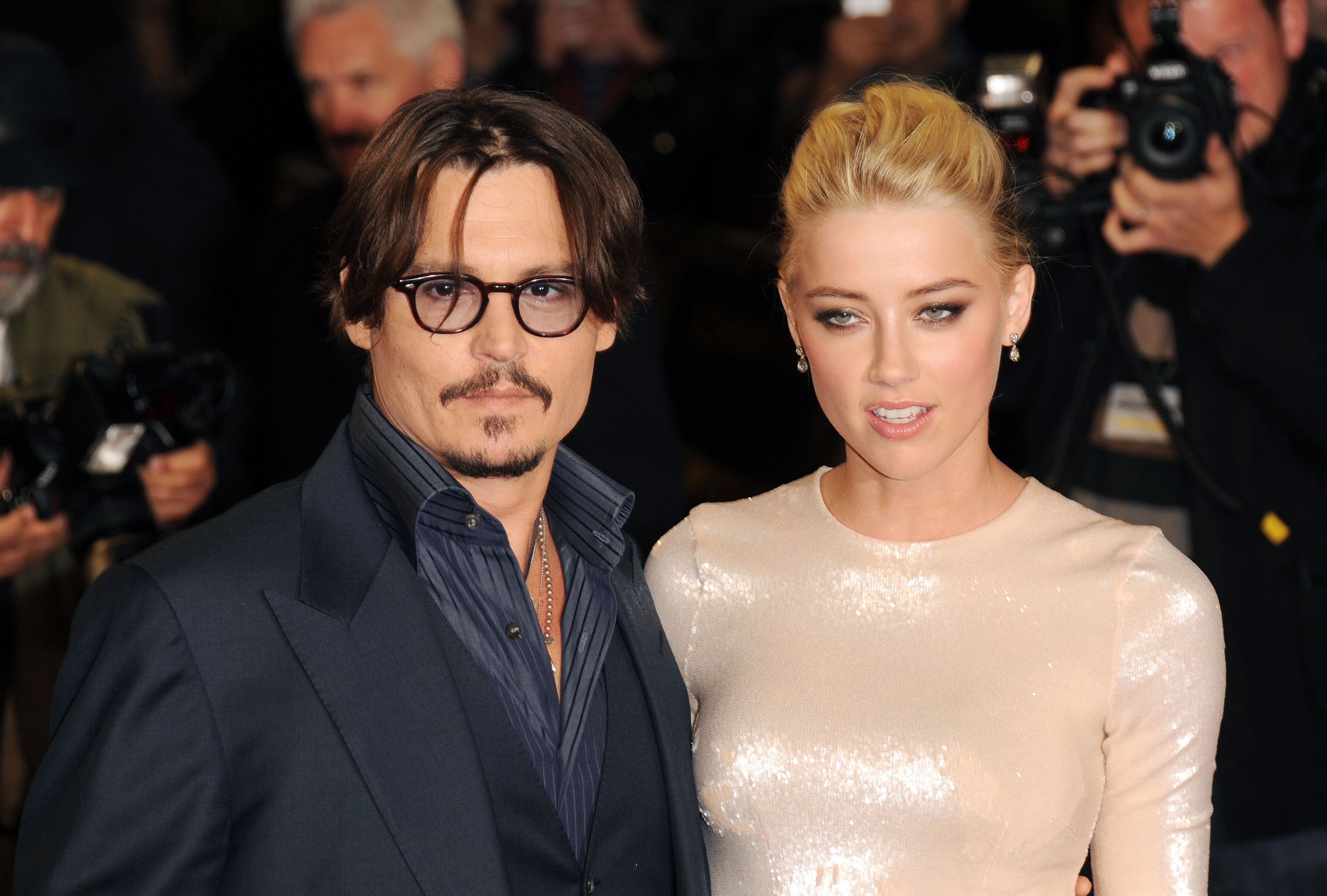
Johnny Depp and Amber Heard at “The Rum Diary” UK premiere, 2011 (Stuart Wilson/Getty Images)
Heard and Depp met in 2009 on the set of “The Rum Diary,” Bruce Robinson’s comedy-drama film based on the 1998 novel of the same name. The pair were cast as each other’s love interest — Depp as the struggling author-turned-journalist Paul Kemp and Heard as Chenault, the fiancée of a shady businessman. They began dating shortly afterwards and pictured their affair as a Hollywood romance. 


Heard and Depp frequently exchanged love letters, in which Depp would call Heard “Slim,” while she called him “Steve,” nicknames used by Humphrey Bogart and Lauren Bacall’s characters in the 1944 film “To Have and Have Not.” Depp frequently compared Bogart and Bacall’s 25-year age difference to his own 23-year age difference with Heard. Bogart and Bacall wed when Bacall was only 20 years old and Bogart was 45. At the time of their marriage, Depp was 51 years old while Heard was only 29. 


“I acknowledge the fact I was the old, craggy fogey, and she was this beautiful creature,” Depp said.

02
A TikTok creator went out of her way to hand-deliver evidence against Heard
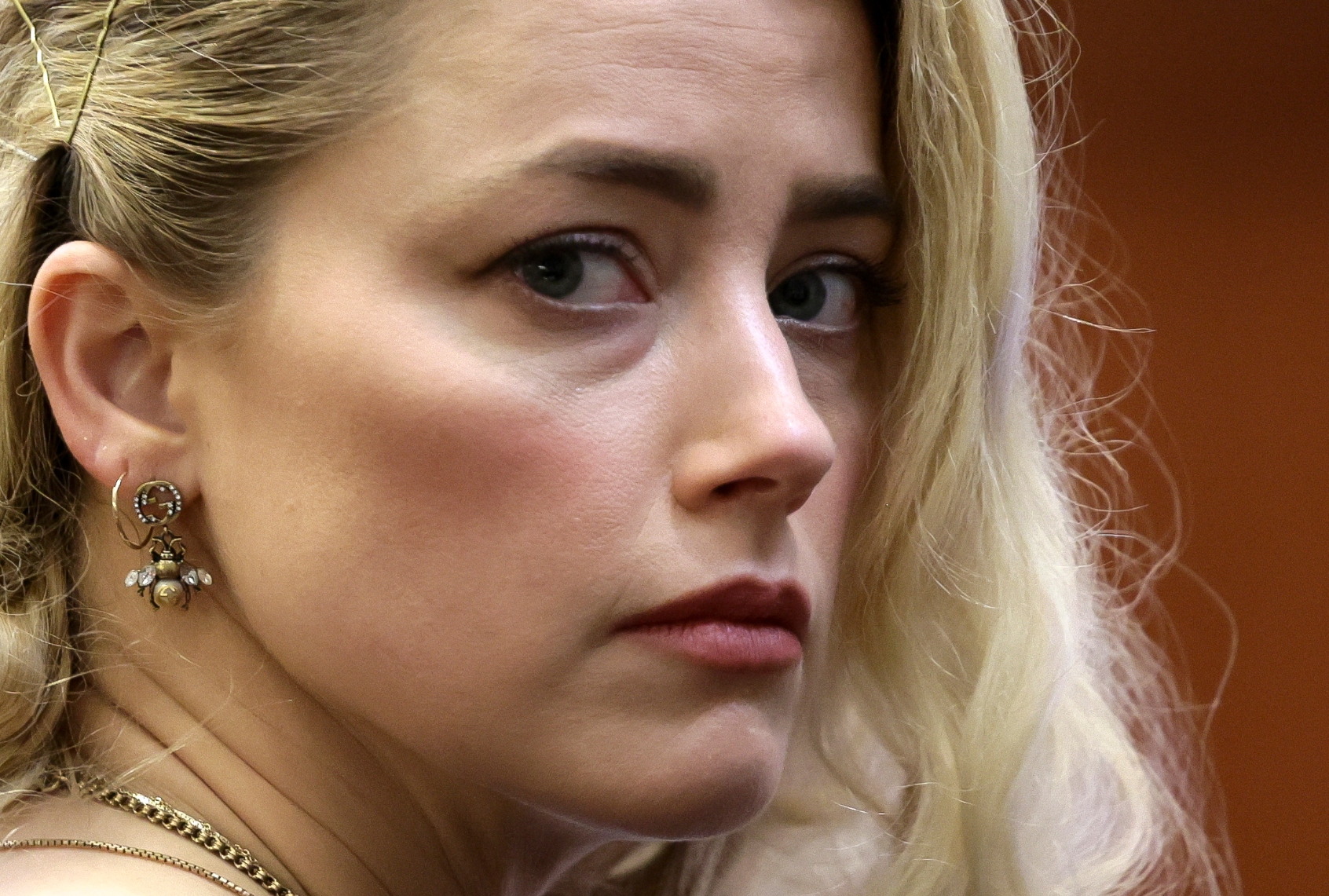
Amber Heard awaits the verdict in Depp v. Heard trial on June 1, 2022 (EVELYN HOCKSTEIN / POOL / AFP)
During the trial, Heard’s lawyer Elaine Bredehoft claimed the star used Milani Cosmetics’ All In One Correcting Kit to cover her bruises until she filed for divorce from Depp in 2016. The claim, however, was denied by the cosmetic brand, which took to TikTok to share that the color correcting palette wasn’t launched until 2017. 


The revelation went viral across social media, with several Depp fans urging Milani Cosmetics to submit its evidence to the actor’s lawyers. Although the brand never did, one TikTok user named Nuha (@devotedly.yours) did instead. The TikToker filmed herself walking to the Fairfax County Courthouse in Virginia in hopes of providing Depp’s legal team with the Milani Cosmetics evidence.   


“Alright guys, I’m here at the courthouse. I’m going to go inside right now and try to find his attorney,” Nuha said in the video “I don’t know how I’m supposed to find them, anybody on his team, but we’re going to try. I’m sure if I ask I’m going to get kicked out, but here we go.”


In a subsequent video, Nuha said she told Depp’s lawyer, Camille Vasquez, that she “had information that could be useful to the case.” In an email sent to Depp’s attorneys, Nuha wrote:


“Amber’s attorney showed a concealer kit during her opening statement and claimed it was in her purse the entire time she was with Johnny Depp (2014-2016) and that she used it all the time to cover up bruises. The makeup brand, Milani Cosmetics, just posted a TikTok today claiming the palette didn’t exist until the end of 2017. I’m not sure if you can submit new evidence once trial begins or if any of this can be admissible but I think an attorney telling a lie to the jury should be something you should be able to call to question.”

03
Depp’s “mega pint of wine” testimony inspired a wacky meme
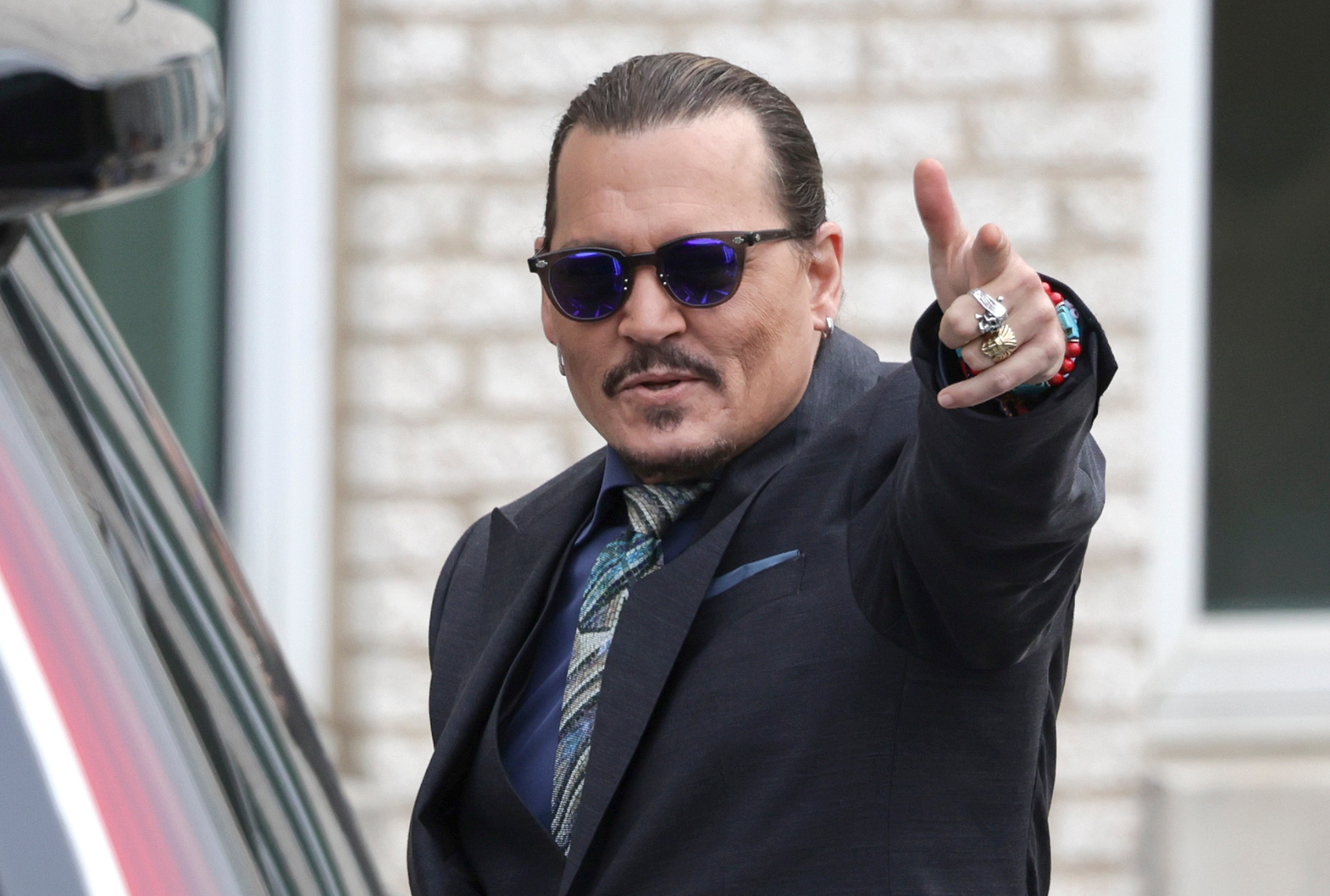
Johnny Depp arrives at the Fairfax County Courthouse on May 25, 2022 (Kevin Dietsch/Getty Images)
Although the phrase was initially said by Depp in court documents, it went viral when one of Heard’s attorneys asked the actor if he poured himself a “mega pint of red wine” after a video recorded by Heard showed Depp angrily yelling and slamming kitchen cabinets.


The humorous phrase encouraged several Netizens to ask how much liquid volume actually goes into a Mega Pint. It also inspired countless memes, including a “Mega Pint” remix uploaded on YouTube, a comical skit posted by YouTuber snerixx and other similar posts on Instagram and Twitter. Mega Pint accessories, including stickers, T-Shirts and wine goblets, were even available.

04
Heard testified Depp sexually assaulted her with an alcohol bottle
Amber Heard and Johnny Depp at the Fairfax County Circuit Courthouse on May 16, 2022 (Steve Helber / POOL / AFP)
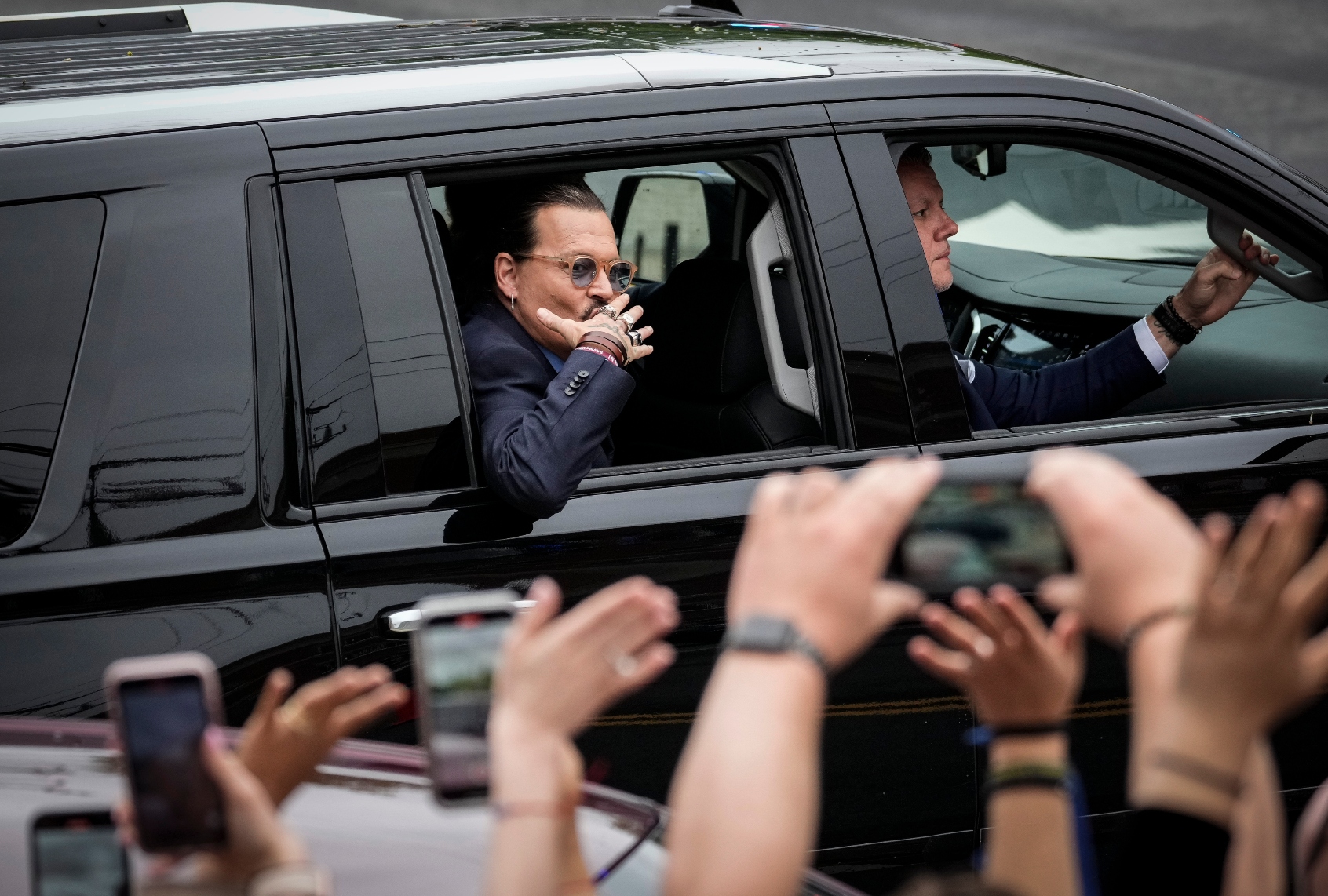
Perhaps the most shocking revelation from the trial was when Heard testified that Depp had sexually assaulted her with a glass bottle. The documentary also noted that it was the “first time live U.S. courtroom footage showed a victim alleging sexual assault in full vision.”


In her testimony Heard recounted the incident, saying, “At some point he’s on top of me, screaming, ‘I f**king hate you. You ruined my f**king life.’ I’m on the countertop. He had me by the neck and was on top of me. My back was on the countertop. I thought he was punching me. I felt this pressure on my pubic bone and I could feel his arm moving. It looked like he was punching me. I could just feel this pressure.”


She continued, “I remember looking around the room, looking at all the broken bottles, broken glass and I remember not wanting to move because I didn’t know if it was broken, I didn’t know if the bottle that he had inside me was broken.”

05
Many speculated that the pro-Depp social media accounts were primarily bots
Johnny Depp departs the Fairfax County Courthouse on May 27, 2022 (Drew Angerer/Getty Images)
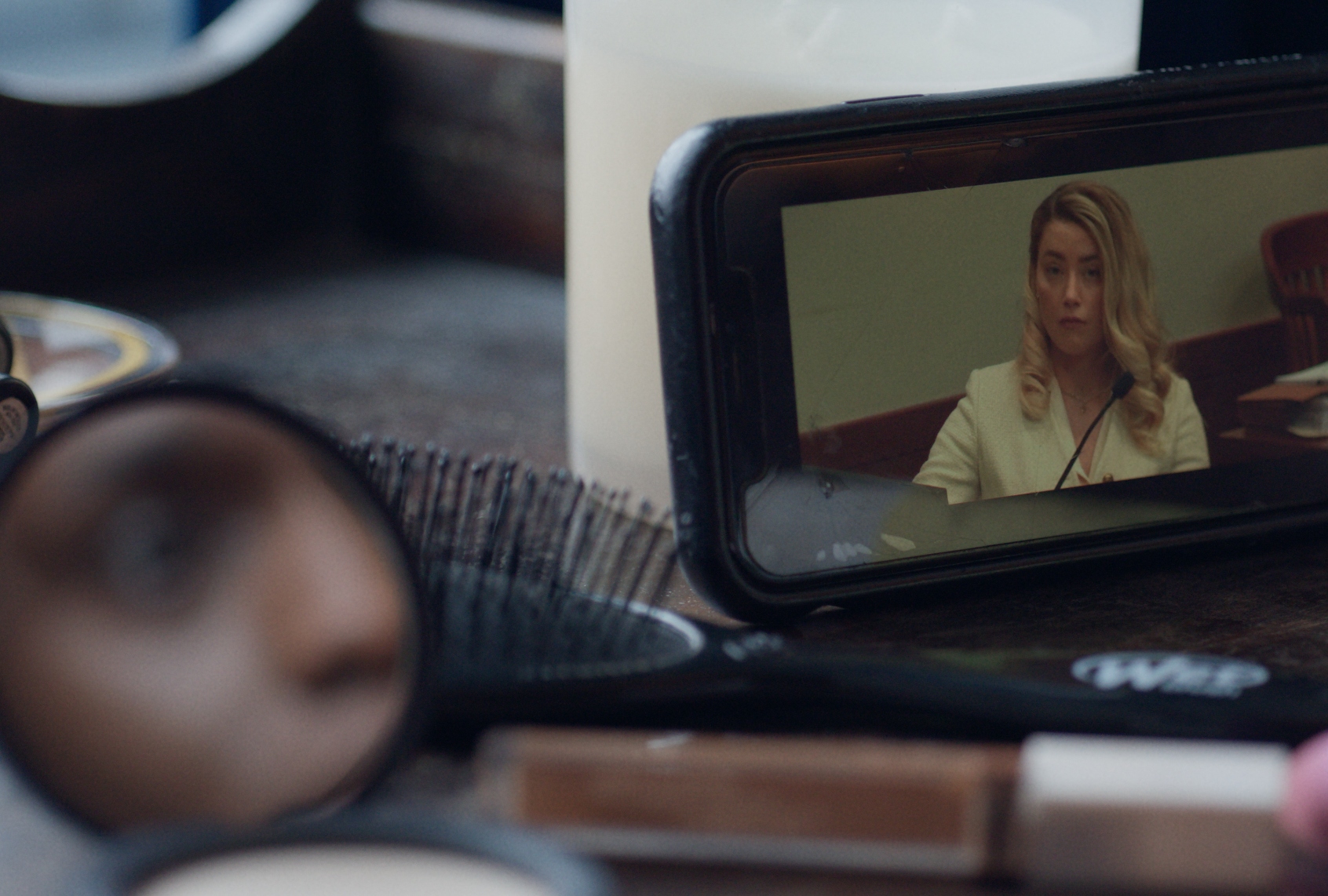
The documentary spotlights, albeit briefly, the theory that many of the Depp stan accounts were online bots. “Cruel taunts, slanderous comments and ugly death threats on social media have some wondering if the former couple’s online supporters are human beings at all,” wrote Rolling Stone’s Tatiana Siegel. The theory doesn’t seem too far-fetched, considering that ardent Depp fans were fixated on tarnishing Heard’s reputation and launching a myriad of hate comments at both Heard and her supporters.


There’s still no definitive answer on whether the Depp fan accounts were run by actual people or not. Depp’s legal team, however, told “Today” that Heard’s claims of there being an online smear campaign coordinated against her were “utterly baseless” and “absurd.”

06
Social media did ultimately influence the Depp-Heard verdict
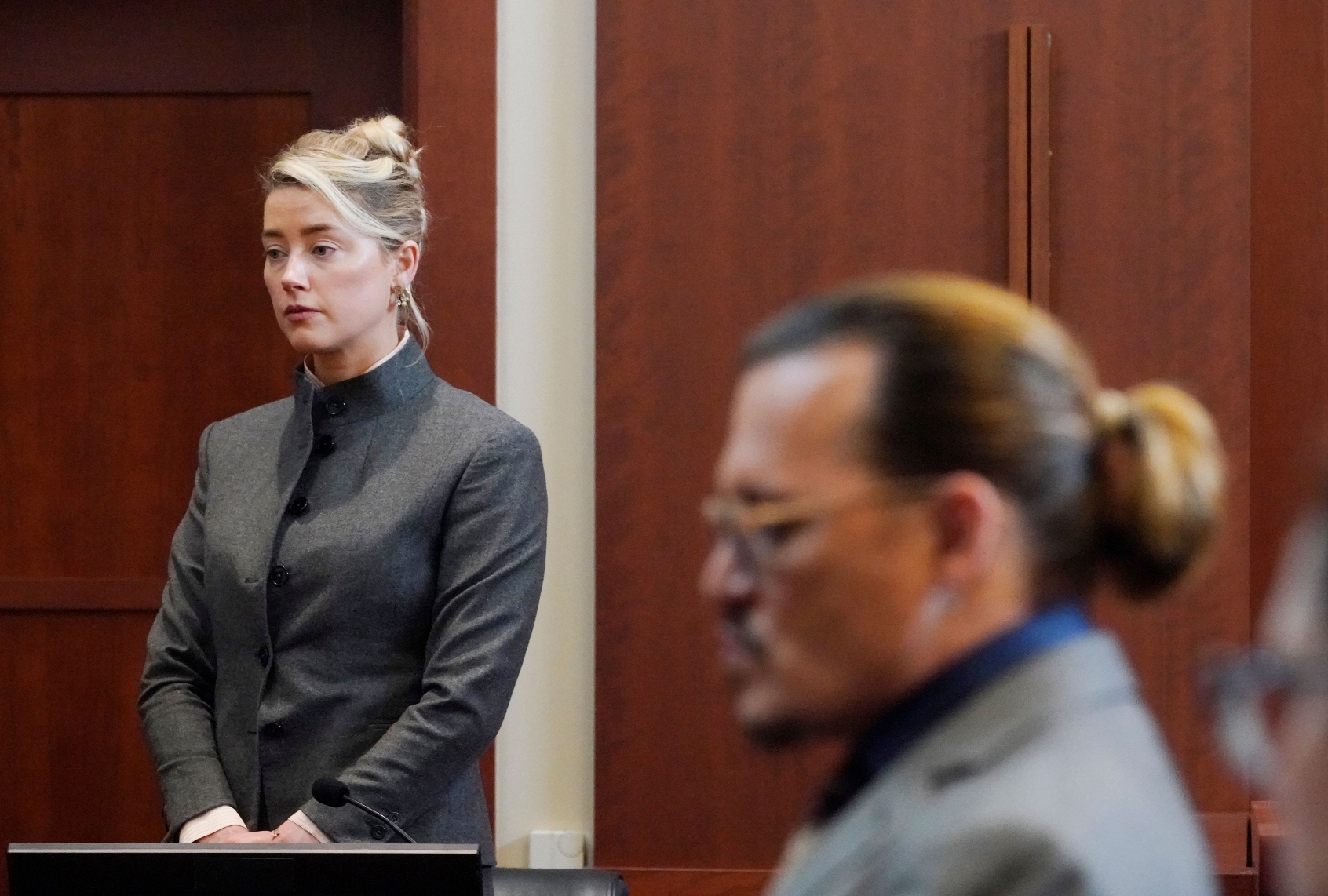
“Depp v. Heard” (Netflix)

Depp and Heard’s trial came to a dramatic end in June 2022 after a seven-person jury determined that Heard had acted with “malice” in her 2018 op-ed published for The Washington Post. Per the jury, Heard’s written accounts of domestic abuse were enough to qualify as defamation and subsequently tainted Depp’s own career and reputation.


Following the final verdict, one of Heard’s lawyers told “Today” that “lopsided” social media chatter and posts about the Johnny Depp defamation trial “influenced” the verdict and turned the courtroom into a “zoo.”


“How can you not? They went home every night. They have families. The families are on social media,” Elaine Bredehoft said of the jurors. “We had a 10-day break in the middle because of the judicial conference. There’s no way they couldn’t have been influenced by it.”

“Depp v. Heard” is currently available for streaming on Netflix. Watch a trailer for it below, via YouTube:

Now classified as a hurricane, Hilary could touch down in southwestern U.S. this weekend

Less than a week after Hurricane Dora stirred up 60-mile-per-hour winds that spread some of the deadliest wildfires on Maui that the U.S. has seen in a century, Hurricane Hilary formed off the coast of Mexico and is expected to impact parts of the southwestern U.S. over the weekend. On Thursday morning, scientists officially classified the tropical storm as a hurricane and warned that it could make direct contact somewhere between Baja California, Mexico and San Diego, California, Axios reported. It is currently predicted to reach at least a Category 3 status — the same as Hurricane Katrina — and bring flooding rains and high winds as far as Nevada and Arizona.

Forecasters predict the hurricane will lose lots of its power and lower in category severity as it passes through cooler waters and approaches land. Still, it could bring a year’s worth of rain to places like Palm Springs, California, or Phoenix, Arizona, most likely on Sunday or Monday. There have only been two tropical storms that have come within 100 miles of San Diego, and it has been over 50 years since this occurred, according to meteorologist Kieran Bhatia, Ph.D. “[Hurricane] Hilary over SoCal would equate to a nearly unprecedented event and should be monitored closely,” he tweeted.

Climate change is warming the oceans and increasing the frequency and intensity of extreme climate events like hurricanes. Scientists warned that the chances of an aggressive hurricane season are increasing, especially because El Niño is affecting currents and warming ocean and air temperatures across the globe this year. Hurricane Hilary follows a summer of widespread wildfires and extreme heat.

“This is unlikely to be, at this point, just a nuisance event and could actually produce some major impacts,” said Daniel Swain, a climate scientist at UCLA, in a video. “This is not typical for August in any part of California.”

“It would help Fani Willis build her case”: Experts explain why Trump might second-guess his presser

Former President Donald Trump’s legal advisers are urging him to cancel a press conference he promised would expose “irrefutable” evidence of 2020 presidential election fraud, according to ABC News

“If he does restrain himself and not hold the press conference, it will mark one of the first times he has ever taken the advice of wise counsel,” James Sample, a professor at Hofstra University’s School of Law, told Salon.

Shortly after Trump and 18 allies were formally indicted with felony racketeering and numerous conspiracy counts related to their efforts to overturn the 2020 election results in the state, the ex-president declared his plan to hold a news conference refuting the allegations.

“A Large, Complex, Detailed but irrefutable REPORT on the Presidential Election Fraud which took place in Georgia is almost complete & will be presented by me at a major News Conference at 11:00 A.M. on Monday of next week in Bedminster, New Jersey,” Trump wrote on his social media site Truth Social this week. 

The former president alleged that the “conclusive report” would show that all charges should be dropped against him and the others.

Despite Trump’s post, his plans may actually be derailed by his legal team, as advisers have pressed him to cancel the event lest he potentially risk digging himself into a deeper hole in the Georgia elections case, ABC News reported Thursday. 

“To hold a press conference that is specifically about the charges against him would be the height of foolishness.”

“Trump is obviously a unique defendant because he is running for president, but to hold a press conference that is specifically about the charges against him would be the height of foolishness,” Sample explained. One of the reasons that Miranda rights exist is to allow defendants in criminal contexts to remain silent, Sample pointed it. They “are almost always better off remaining silent than speaking when they don’t have to,” he said.

“A press conference may be good politics, but it’s bad for Trump’s legal cases,” former federal prosecutor Neama Rahmani told Salon. “All Trump would be doing by holding a press conference is potentially giving Smith and Willis more evidence that his claims of voter fraud were meritless and that he knew he lost the election.”

We need your help to stay independent

The report that Trump is referring to is a document consisting of more than 100 pages that was compiled partly by a Trump communications aide, Liz Harrington, who supports his election-fraud claims, The New York Times reported. It concentrates on alleged voting irregularities in Georgia – a focal point of election skeptics. The report has taken weeks to come together, one source told the newspaper. Harrington has even made calls to people outside of Trump’s campaign about the event, people familiar with the matter told The Times.

Soon after Trump made his announcement, she posted to X, the platform previously known as Twitter. “Georgia has among the most corrupt elections in the country — and they haven’t gotten better since 2020, they’ve gotten worse!” she wrote. “Tune in Monday!”

Trump himself, has continued to push out baseless claims about the 2020 election being rigged, even after his most recent indictment. But, organizing an in-person press conference might expose him to greater legal risks than simply posting on social media.

“While at this point, he has not suffered any consequences for the repeated, threatening and insulting attacks on witnesses and on the processes, I suspect that with four cases and four judges and three different lead prosecutors, we are not far removed from him actually, potentially for the first time facing real consequences,” Sample said.


Want a daily wrap-up of all the news and commentary Salon has to offer? Subscribe to our morning newsletter, Crash Course.


The former president could possibly face “contempt or witness tampering charges,” he added. If the press conference does take place, video from the event could be used as evidence against him, particularly if it captures audio of him making threats toward a witness or judge.

“If Trump starts making statements that are provably false, it may provide more evidence for the prosecutorial theory behind the Georgia indictment, which is that he intentionally deals in known falsehoods to further a political agenda and harm democratic institutions. It would help Fani Willis build her case,” Joshua Ritter, a former Los Angeles County prosecutor and a partner at the firm El Dabe Ritter, told Salon 

Trump’s indictment in Georgia marks the fourth time he’s been indicted this year, and the second within this month, that he’s been charged with attempting to undermine the outcome of the presidential election in 2020.

“At a certain point, one threat or another will be the proverbial straw that breaks the camel’s back,” Sample said. “That is the kind of thing that can be played to a jury, can be presented to a judge and will be taken very seriously… because it’s more compelling, psychologically, to see and hear the individual doing those things than it is to just read text.

Small farmers in New England are starting to rebuild, but climate extremes are here to stay

In early July, Courtney Whitley saw his 12-year-old son, who sometimes helps out on the vegetable farm, admiring the eggplants. “I know it’s going to be a good harvest,” the boy told his dad.

Whitley agreed. First in Jamaica, then in the United States, he has farmed most of his life and is now the owner of Ras Farm in western Massachusetts. As he told me when I visited the area just a few weeks later, “The eggplants did look beautiful this year.”

But then, the rain started falling. First in neighboring Vermont, causing the Winooski River to rise and overflow. Rushing water, 4 to 8 inches deep, washed out roads and bridges in the state. The flood damage was so severe that it exceeded 2011’s Tropical Storm Irene in some areas. The president declared the flooding in Vermont a major disaster, ordering federal aid. The state, which has the largest proportion of organic farm acreage in the country, also had the largest damage of those affected by this summer’s heavy rains, with 7,000 acres of farmland under water.

The rain continued across New England and other farms outside of Vermont were also submerged once the Connecticut River overflowed. The longest in the region, this river stretches over 400 miles from northern New Hampshire to the Long Island Sound. The flat areas of land that border it are called floodplains because the water channels meander over time, depositing fertile soil ideal for farming. Still, it’s a double-edged sword: As the river flows through New Hampshire, Vermont, Massachusetts and Connecticut, giving nutrients and water to the soil, it can also cause catastrophic damage when it floods.

Days after the rain began, Whitley woke up to a message that his plot of land, which he leases at GrowFood Northampton, one of many farms in western Massachusetts — and elsewhere in New England, including New Hampshire and Connecticut — that suffered losses, was underwater. The other plots and infrastructure were also submerged under at least 5 feet. “We worried with the farmers who lease farmland on our community farm, grieved with our community gardeners and mourned for the land itself,” Pat James, GrowFood’s community garden manager, wrote for Northampton’s Daily Hampshire Gazette one week after the floods subsided.

The water itself wasn’t the only thing to worry about. Flood waters can disperse contaminants over long distances; even if farms are in rural areas, crops can still be damaged by contaminants and waste washed off from industrial or urban areas. “There is still a quantity of contamination left over once the water washes away,” explained Omanjana Goswami, an interdisciplinary scientist at the Union of Concerned Scientists (UCS). “After testing and a plan for treating the land, farmers may lose an entire season or more, based on what they found and state regulations.”

Courtney Whitley, owner of Ras Farm in Northampton, Massachusetts, lost his entire vegetable crop in the recent floods.

Courtney Whitley, owner of Ras Farm in Northampton, Massachusetts, lost his entire vegetable crop in the recent floods. Photo credit: Carolina Drake.

Whitley estimates he lost a total of “six thousand eggplants, four thousand bell peppers, one thousand habanero and five hundred tomatoes, all under water.” Even if anything could be rescued, under state and federal guidelines, crops touched by river floodwaters had to be destroyed. “There is nothing else to do but leave the field, plot it up, cover it and start all over next year,” Whitley told me, sounding defeated while sitting in the shade on his empty farm.


The Disproportionate Toll of a Changing Climate

As global temperatures rise, climate swings from one extreme to another are becoming more common, making it more challenging to predict the weather. Research from the American Farm Bureau Federation suggests that in 2021 alone, nationwide disasters caused $12.5 billion in crop losses associated with extreme drought, wildfires, hurricanes, freezes and flooding. Risk Management Agency programs (a federally subsidized form of crop insurance) covered only half of those losses, while the rest did not have a safety net. “This leaves farmers, who depend on some level of predictability, with very little room to adjust and adapt,” Goswami said.

“We think about this a lot,” Suna Turgay told me of adapting to this new “normal.” She is the co-owner of Flowerwork Farm and, along with Stacia Potter, also leases land at GrowFood Northampton. This was their second year growing sustainable local flowers. “This valley is historically known for its great farming [soil],” she explained, taking a short break from cleaning their plot, “and the idea that farms in this area are at risk of flooding more often and might not be usable anymore is kind of scary.”

$12.5 billion: The nationwide number of crop losses associated with extreme drought, wildfires, hurricanes, freezes and flooding in 2021.

Turgay and Potter can still fill customers’ orders, even though profit and infrastructure loss have prevented them from doubling sales this year as anticipated. “We aren’t at ground zero like our vegetable farmer neighbors are,” Turgay noted; those growing anything for consumption had to throw it all away. But their dahlias, which they would have harvested later in the summer, are rotting in the ground from the rains and flood and they continue to brainstorm solutions: “In the future,” for example, “we may only want to plant perennials here, with a greater chance of surviving that event.”

For Whitley, “Farming in a land like this, with a river that runs by it, it’s like a gamble.” Every year he hopes for a good season. “You put your trust in the land. It’s not going to work all the time, but it’s not going to let us down, either.” The heavy work is seven days a week and farmers cannot leave their plots or take a vacation: “From beginning to end, you have to protect your crop.” While larger farms might have extra cash from the previous year’s gains to carry over for the next year, “I don’t have that luxury,” Whitley told me.

Farmers Suna Turgay and Stacia Potter of Northampton's Flowerwork Farm clean up their lot after the flooding.

Farmers Suna Turgay and Stacia Potter of Northampton’s Flowerwork Farm clean up their lot after the flooding. Photo credit: Carolina Drake.

Although costs are still being tallied, state officials estimated some 2,000 acres of farmland had been impacted by flooding in Massachusetts, amounting to $15 million in damage. But they cautioned that totals are expected to rise as more assessments are done. Connecticut saw 2,000 acres impacted, with $21 million in losses and counting.

State governments have stepped in with assistance, though it has sometimes been slow to arrive. In Vermont, Governor Phil Scott announced a $20 million fund to assist small businesses; among those, farmers are eligible. Governor Maura Healey announced the same amount of relief funding in Massachusetts. Until the money is distributed, local farms have been relying on volunteer labor and GoFundMe campaigns organized town by town. Farmer’s associations such as NOFA-VT and efforts like the Massachusetts Farm Resiliency Fund are also helping collect money for flood relief.

“Money has been approved from both state and federal resources, but we haven’t heard about the timeline for distribution,” James confirmed via email in early August. “While larger farms lost a portion of their crops and money, time and energy invested in the season, smaller farmers lost it all.”


Creating Climate Resilience

This year, Shuresh Ghimire, assistant extension educator and extension vegetable specialist at the University of Connecticut, drove around the state working with vegetable growers on climate strategy. “Every year is challenging for farmers, but the situation has worsened this year,” he said. Ghimire has already seen crops drying to the heat waves that started in early spring, bringing droughts to different parts of the state. Then came the smoke from the Canadian wildfires. Later, in early July, the heavy rainfall and flooding.

“Had a flood, a hurricane or a drought happened after September, farmers would have at least harvested something and could have reaped some gains,” Ghimire explained. But the flood came days before harvest for many, which made the losses even more significant. “It was the worst timing.”

One way to help crops survive some climate challenges is by working on the health of the soil. “Nothing can be done to avoid the damage caused by floods,” Ghimire said, due to the contaminants in the water (and in this case, the sheer volume). “But small farms and especially larger corporations can work on healthier soil practices wherever feasible.” A healthy soil will not only absorb extreme rainfall, helping avoid low-level floods and reducing water surges downstream during larger ones, but will also support crops during times of drought. Increasing the amount of organic matter can help the soil hold more water — “like a sponge, absorbing more of it and releasing it slowly” — as can mulching. Cover crops can protect against erosion and soil compaction. “There are long-term studies worldwide that support these healthy soil practices, showing they pay off their initial cost from added ecological and economic benefits,” Ghimire explained.

Combined with cropping strategies and water management, this can help New England’s organic farmers, who already apply some of these methods, become more resilient to challenges like extreme rain. But these practices can have an impact beyond an individual business or property — especially if adopted by the large-scale farms that deplete the soil and contribute the most to climate change. In addition to helping crops withstand extreme weather, healthy soil produces more nutrient-dense food, supports healthy ecosystems and contains an ecosystem of its own, acting as a “carbon sink” to sequester huge amounts of carbon dioxide.

Small-scale organic farms are leading the way with these sustainable practices, but “The federal subsidies granted through the farm bill largely exclude smaller farmers not growing larger scale commodities and overlook farmers of color, women, undocumented farmers and other marginalized groups,” James explained via email. Historically, one of the least accessible forms of subsidy has been crop insurance, which would be especially helpful for small farmers in the wake of extreme weather events. Instead, the legislation is made to incentivize large-scale farms cultivating corn and soy, using pesticides to squeeze more out of the land and continuing to fuel the climate crisis.

“The federal subsidies granted through the farm bill largely exclude smaller farmers not growing larger scale commodities and overlook farmers of color, women, undocumented farmers and other marginalized groups.”

PAT JAMES

Community Garden Manager, GrowFood

Unless the farm bill gives more incentives for using climate-smart and healthy soil practices and generally promotes more climate-friendly programs, not much will change. According to Goswami, it’s important that the farm bill protects the investments made through the Inflation Reduction Act, which included billions for sustainable agriculture and clean energy. “At UCS, we are advocating for a food and farm bill that centers racial justice, equity and climate-focused agricultural practices,” she said.

For now, the future of small-scale farms remains somewhat at the mercy of luck and chance. “When you have a great season, it’s a good feeling,” Whitley told me, though he remembered the bad years, too. “After putting in so much work, going into your field and the plants are all lined up, it’s the most beautiful thing to look at,” he said with a tired smile.

“So I will not give up. I’m a reckless gambler. Because when that crop does come in, it’s saying to you, ‘Now it’s your turn to harvest.'”

Religious Hindu leader demands apology from Baskin-Robbins for including beef in popular ice cream

A religious Hindu leader is seeking an apology from Baskin-Robbins for failing to disclose the presence of beef in its Rocky Road ice cream, Today reported. On Aug. 1, Rajan Zed, Hindu statesman and president of the Universal Society of Hinduism, published a news release, saying “it was shocking for Hindus to learn” that the popular ice cream flavor contains beef in it. Zed specifically took issue with the ice cream’s inclusion of marshmallows, which contain gelatin derived from both pigs and cows. Although gelatin is a known beef-based product, its animal source was not explicitly mentioned on the ice cream’s packaging. Zed came to know about the presence of beef only after he contacted Baskin-Robbins customer service, who said that the “gelatin in Rocky Road is from both porcine and beef source.”

“Consumption of beef is highly conflicting to Hindu beliefs. Cow, the seat of many deities, is sacred and has long been venerated in Hinduism,” wrote Zed, adding that it was “hard to comprehend” why the “world’s largest chain of ice cream specialty shops” didn’t think to explicitly mention that there’s beef in its product. 

In addition to an apology, Zed has asked the CEO of Baskin-Robbins’ parent company Inspire Brands to recall all of its Rocky Road packages and boxes and update their ingredients label with the source of its gelatin. In a statement to Today, Baskin-Robbins asserted that it “is compliant with all regulatory standards and strives to provide clear, simple nutrition and ingredient information on menus and labels.”


“Make that brand great again”: Anheuser-Busch heir offers to buy back the Budweiser brand

Billy Busch, the heir to the Anheuser-Busch company, said he would be the “first in line” to buy back his family’s company from its parent company, Anheuser-Busch InBev, if it was looking to sell. In a recent episode of conservative host Tomi Lahren’s “Fearless,” Busch slammed AB InBev for hiring so-called woke marketing students, a decision he believes led to the major boycott of the brand for making transgender activist Dylan Mulvaney one of Bud Light’s spokespeople.

“When you are a foreign company and you rely on these woke students that are coming out of these woke colleges to do your advertising for you, you’re making a big mistake,” Busch asserted. He also claimed that unlike his family, the current Anheuser-Busch parent company doesn’t know its customers: “I think InBev doesn’t understand who their core drinker is. It’s a Brazilian-based company that really doesn’t live here in America.”

“You need to go out there and understand who your core customer is,” Busch continued before telling Lahren, “I urge that company, InBev, if they don’t want that brand any longer, sell it back to the Busch family. Sell it to me. I’ll be the first in line to buy that brand back from you. And we’ll make that brand great again.”


“Stranger Things” fan divorced husband and was scammed out of 10K by a catfish Dacre Montgomery

A “Stranger Things” fan claims she was catfished by a person impersonating actor Darce Montgomery, alleging that the scammer conned her out of more than $10,000.

McKala, who only goes by her first name in the YouTube web series “Catfished“, shared that she divorced her husband for the person pretending to be Montgomery (whom plays Billy Hargrove on Netflix’s retro sci-fi series). She met the alleged scammer in an online forum for creatives, and the two “hit it off, but of course I’m suspicious from the get go until he starts doing things that make me believe that he is who he is,” McKala said.

The single mom said that the impersonator told her that his relationship with his girlfriend Liv Pollock was coming to an end because of Pollock’s behavior. McKala, who said she was in an unhappy marriage with a “toxic” partner related to the catfish because her ex was that way. The impersonator told her that his girlfriend controlled his bank accounts, so McKala then would send him money over the course of a year. 

McKala was convinced that the scammer was Montegomery when they told her to watch the Season 4 episode of Stranger Things titled “Dear Billy.” The episode featured the return of Montgomery’s character after he had been killed off the previous season. The scammer also sent her poems that mimicked Montgomery’s writing style from his poetry collection.

Montgomery’s team has not commented on the claims.

“They purposely show the absolutely worst pictures of me”: Trump cries about his Fox News treatment

Former President Donald Trump took aim at Fox News' flagship program, "Fox & Friends," on social media Thursday over its coverage of him amidst his ongoing feud with the network.

 "Why doesn't Fox and Friends show all of the Polls where I am beating Biden, by a lot. They just won't do it!" the GOP primary frontrunner began on Truth Social Thursday morning. Trump and President Joe Biden are ranking closely in the polls, with 43 percent of registered voters polled through Aug. 15 by YouGov selecting Biden in comparison to 42 percent choosing Trump, and 39 percent of polled adults saying they'd vote for Trump compared to 38% for Biden. 

The former president went on to lament the network's physical portrayals of him in the post.

"Also, they purposely show the absolutely worst pictures of me, especially the big 'orange' one with my chin pulled way back," he whined. "They think they are getting away with something, they're not. Just like 2016 all over again…And then they want me to debate!"

The first Republican presidential debate of the 2024 primary season is set to be held on Fox News. Trump has been blasting the conservative news network for months, accusing Fox of boosting his political opponents and arguing that its coverage of him isn't favorable enough. The former president also has not committed to attending the first Republican primary debate, which the network is hosting next week. 

Catastrophic fires 13,000 years ago drove mass extinctions — and humans may have lit the match

About 13,000 years ago, flora and fauna began disappearing from the fossil record in the region of modern-day Southern California in a mass extinction. New research indicates a familiar culprit played a bigger role in the destruction of the ecosystem than some once thought: humans.

Using carbon records for plants, animals and charcoal accumulation in Southern California and matching them with projections of what human activity was like in the area, researchers found the mass extinction of nearly all species they studied — including sabre-toothed cats, the dire wolf and bison. The extinctions corresponded to a period of “unprecedented fire activity,” following human arrival on the continent that suggests these early communities were the “primary cause of the state shift and resulting extinctions,” according to the paper published today in Science

“The human population increases, they start to kill off the herbivores, the fuel loads start to increase, there’s a big drought and you’re suddenly starting to get these massive fires that are burning down the forests,” said study author F. Robin O’Keefe, Ph.D., an evolutionary biology associate professor at Marshall University. “Once those forests are cleared out, the chaparral taxa comes in,” he said, referring to shrubland plants found throughout California.

Before the Holocene period, which started about 12,000 years ago and extends to today, present-day Southern California was a lot wetter and cooler, with more woodland trees — kind of like Oregon. During this Pleistocene period, the sea level was 100 meters lower, with much more land exposed on the continental shelf near the Los Angeles Basin.

The fact that the evidence of fires had previously been low even in times of drought suggests human-made rather than wildfires were accelerating the ecosystem shift.

Ice sheets had been melting across the globe due to global warming, which also made lands drier and hotter. According to the study, this drying occurred between 16,000 and 13,000 years ago, followed by the destruction of forests and the replacement of trees like oaks and junipers with more fire-resistant plants like pines. The land became the chaparral landscape Southern California still has today and humans helped accelerate this drastic ecosystem change, the study suggests.

Previously, evidence of fires and the carbon they emitted had been low, but it increased 30-fold when humans arrived, according to the study. The fact that the evidence of fires had previously been low even in times of drought suggests human-made rather than wildfires were accelerating the ecosystem shift, though whether humans “lit the match, we don’t know,” O’Keefe said. Still, the magnitude of fires was “unprecedented in the 33,000-year record,” the authors wrote. 

“This suggests that the decline of megafauna was not solely a consequence of excessive hunting.”

“The extinction is largely due to humans, but it’s through a lot of direct and indirect effects,” O’Keefe said. “Climate change was important, too, and all of these things play together to create this nonlinear event: this catastrophic fire event.”

Anikó Tóth, Ph.D., a macroecologist at the University of New South Wales, who was not involved in the study, agreed that the data points to “the potential for humans to have orchestrated significant ecological transformations during that period.”

“This suggests that the decline of megafauna was not solely a consequence of excessive hunting, the conventional suspect in studies linking human activity to megafaunal extinctions,” Tóth told Salon in an email. 

Scientists today warn that exceeding 1.5 degrees of global warming would trigger multiple “tipping points,” that lead to irreversible changes in climate systems that have significant effects on life as we know it.

This year’s record temperatures and widespread wildfires are evidence that we are fast approaching said tipping points. Torched landscapes are already unable to return to their previous states because “the climate is not suitable for the vegetation that used to grow there,” said Anthony D. Barnosky, Ph.D., a paleoecologist and professor emeritus at the University of California. 

“This study is a great example of how we can use the past to portend the future,” Barnosky, who was not involved in the research, told Salon in an email. “And what we are seeing today — increasing human pressures combined with and actually causing climate change — is like this lesson from the past on steroids.”

We need your help to stay independent

There are things we can do to prevent another catastrophic change, including slowing climate change by reducing emissions and transitioning to renewable energy, O’Keefe said. “If we stop doing that and if it stops getting warmer, that takes away some of the key drivers of extinction,” he added.

“We have knowledge people 13,000 years ago didn’t have,” O’keefe said. “We can choose our future — but if we do business as usual, it’s going to choose us. This is a cautionary tale.”

Elon Musk and Mark Zuckerberg: Fight me, cowards

Dear Mark Zuckerberg and Elon Musk: Talk is cheap. If y’all wanna fight, let’s go. I’ll take the both of you. Cage match, Las Vegas Octagon, Roman Colosseum, or my backyard — “send me location.” I’ll bring the thumbtacks, folding chairs, and a lifetime of service-industry class rage hardened into the lethally powerful mixed martial artform known as F*** Around and Find Out. You bring your inhalers and whatever Bugatti-built stretchers you wanna leave on.

You’re probably starting to realize nobody actually cares about whether two billionaires in overpriced athletic gear awkwardly paw at each other on the floor of an arena like a couple of confused virgins in the backseat of a Honda Accord. And, to be fair, watching grown white men of the American ruling class thump their chests and beg for applause — in a match that’s sure to be as thrilling as a yellow-belt demonstration by suburban private-school kids — isn’t normally how I like to spend my weekend. But I’m willing to make an exception for a good cause. 

See, now that you genteel rich folk have decided to legitimize a fist-based approach to economic conflict resolution, us poors finally have a shot at getting ahead in this country. So protect your necks; we’re better at this than you.

Nobody actually cares about whether two billionaires in overpriced athletic gear awkwardly paw at each other like a couple of confused virgins in the backseat of a Honda Accord. 

And, gentlemen, I can think of no finer gift you could offer the working class than a broadcast of your amateur fumbling. As the saying goes: If you can see it, you can be it. Your little spat would inspire in millions of viewers the sweetest sugarplum fantasies of themselves in that ring, finally given the power to beat — in the most satisfying way imaginable — a couple of surveillance-state barons who have Congressional hall passes and an army of lawyers.

Bring it then, boys. I’m going to trap you two in that cage and make you kiss like my Barbies. I can wing a can of Grizz at 16 mph in a high wind, have fallen down no less than four flights of stairs in my life without spilling my beer, and I might even have rabies. Who knows? Either way, it’s not like there’s a Coggins test to get into this dog and pony show. Roll up.

Are you sure you want this? 

A fight may not even be necessary in your case, Elon. You’ve made clear what this is actually about for you.

You want a d**k-measuring contest instead of a fight? Go for it. It’s not like the women on your platform haven’t already been inundated with d**k pics since the inception of DMs — a problem whose solution never seems to be more urgent in your thus-articulated Twitter.com vision than allowing a flood of AI-driven ad bots into a For You feed no one asked for.

And it’s not like anyone should expect sexual harassment of women on Twitter.com to get better, since the security and safety teams (how many remain after your layoff spree?) all seem tied up avoiding a legal crisis of non-compliance with two Federal Trade Commission consent orders.

So do it already, Elon. Either whip your skank meat out of whatever GQ-Worst-Dressed nightmare-fit you’re sporting and let the Bird Site roast you in a final, glorious swan song — or shut up about your stupid penis.

You both won. The hyper-surveillance dystopia is your oyster. Congratulations.

And you, Zuck? I don’t know if this is about the sport for you either. But I did detect some glimpse of light that seems yet un-snuffed in those mannequin-dead eyes of yours, which tells me this may be the first time you’ve felt anything close to emotion, outside of whatever locker-stuffing Phillips Exeter flashbacks presumably haunt your therapy sessions. And that’s good enough for me.

Either way, don’t listen to Wired’s Steven Levy, whose July 14 column begged Zuckerberg “Don’t fight Elon Musk in the Las Vegas Octagon.” Rumor has it Levy’s got money on Musk, despite being on your payroll. I would know since I made up that rumor in an attempt to also bait him into a cage fight. (Square up, Levy.)

You two dorks have both got more money than God, and likely better accountants. You both have the power to swing an election with the flick of a wrist courtesy of addiction-by-design swipe-holes and no real federal laws of substance to stop you. You both have fleets of lobbyists at your disposal, ready to pump millions into the campaign coffers of senators that the rest of us barely get to vote on.

To top it off, you can tap a dragon’s hoard of personal data at any time to doxx me and every other person clean off the face of the earth — with near-total impunity. You both won. The hyper-surveillance dystopia is your oyster. Congratulations.

And yet you both want to turn this embarrassment of riches into a parade of your excess — a slap-fight between the Pilsbury Divorced-boy and three FTC investigations stacked in a trench coat. Since you won’t pay someone to read the room for you, someone’s got to teach you a lesson you didn’t learn in the Ivy League. 

If I beat you, here’s what I want. 

I don’t want your money. Here are my terms.

Elon, if I come down off the top rope so hard that I flatten your hair plugs into a rug for the front row, then I want you to make things right for the roughly 2,000 former workers whose lives you upended with your cruel and thoughtless layoffs. In fact, go ahead and do right by every person listed in this Vanity Fair highlight reel of your greatest hits, which includes “tweeting misogynistic things at Senator Elizabeth Warren because she said he should pay more in taxes” and “attempting to ‘destroy a Tesla whistleblower.'”

I also want to know why you and Zuckerberg both always look slightly damp. It’s weird, guys.

You both want to turn this embarrassment of riches into a parade of your excess — a slap-fight between the Pilsbury Divorced-boy and three FTC investigations stacked in a trench coat.

Zuckerberg, if I kick your ass, I want Meta and all Meta-invested entities to stop snitching on abortion seekers in anti-abortion states, and stop enabling the hunt of migrant families by renegade agencies. We’re trying to keep these 11-year-olds alive after they get raped, and we’re trying to make sure kids survive desert cages. Meanwhile, Facebook has been so thirsty to narc that it and others have gotten busted for rubber-stamping the data requests of fake warrants from perverted stalkers who were hunting girls.

If I beat you, I want Meta to stop trying to take control of city public services, and I want to see you rip up any and every non-disclosure agreement you’ve ever had a city sign which keeps your impact assessments out of the public record.

And if I beat both of you, I want you both to hand over ownership of the company towns you’re building to the cities you’re building them in, to stop dodging taxes with overseas shell companies and to voluntarily adhere to manufacturing and logistics environmental standards that meet or exceed the aims of the Paris Agreement. That also means divesting from any holding, hedge, subsidiary, instrument or position that contributes to deforestation and the burning of the world’s lungs — and the same for any water-related investments.

And finally, I want you both to delete every single piece of personally identifiable data your companies have got on us non-billionaires — all of it. 

If you beat me, here’s what you get

If you all win, you get to brag to the world that you beat the hell out of some punkass writer who brought a pen to a wallet fight, and who could never turn down the chance to swing on a bully.

It’d be worth getting the teeth kicked out of my head as long as it meant landing just one, solid, nose-busting hook on either of your faces.

You can wave to your adoring fans from whatever social media platform you want, recounting how you mercilessly steamrolled yet another broke Millennial who can’t afford to fight you in court — much less afford your personal trainers, boutique performance enhancements and backyard octagons.

And then you get to go on parading through the embers of a burning empire from its highest point, while packing your bags for Mars. Or shouting about how I didn’t want the smoke, as you put on your gas masks and descend into your private island bunkers.

As far as my own mug is concerned, it doesn’t matter how many top-notch trainers your algorithm-engorged wallets can buy or how fast you can flatten me. It’d be worth getting the teeth kicked out of my head by Zuck’s preciously pedicured foot — and my knee tendons hyper-rotated into möbius strips by a dirty leg-sweep from Musk — as long as it meant getting you away from your bodyguards long enough to land just one, solid, nose-busting hook on either of your faces.

When the EMTs peel me off the mat, I’ll laugh a fountain of blood out of my mouth just so I can scream “worth it!” to the ring-side CNN cameras.

Seems like a pretty good deal to me, fellas. Ready when you are. 

This creamy and decadent baked seafood dish is the perfect meal for a dreary, rainy night

Delicate, rich crab meat is the shining star in this meal.

The shrimp very much play a supporting role  or no role at all, if you choose to omit them. It is a brilliant recipe either way and will become a favorite for entertaining, even if you cut the recipe down to accommodate an intimate party for two. 

Although this is a simple dish, it is elegant and decadent. There is something impressive about it, which is surprising considering once your seafood is prepped, it requires very little effort. The flavors are so harmonious that it is hard to pinpoint exactly what makes it so special (other than the crab meat), but I can’t help but think it might be the luscious, expertly seasoned béchamel.

The béchamel — the glorious, other-worldly white sauce in this recipe — is seasoned with a whisper of white pepper, nutmeg and a few other ingredients, all rounding out to complement this dish impeccably.

It is a simple sauce to make, but I was taught to do a few things in just this way: First, the butter should be put into your saucepan cold, straight from the refrigerator and heated on low. Second, don’t whisk in your flour until the butter is just starting to brown. Third, the cream, milk, or half and half, should be warmed before adding it next. And lastly, do not overcook it. Take it off the heat as soon as it is thick and smooth.          

My favorite way to eat this is with a fork in one hand and a hunk of French bread in the other. Serve a salad as its own course beforehand, so that once this main makes it to the table, you can give it your full attention through to the last bite. Some have served this over rice, but I believe that is a mistake. The flavors are too delicate and are drowned out by the rice. Trust me, bread is the way to go. 

I learned early that when preparing and serving crab meat, the goal is to not overpower it. Less is always more and this recipe showcases it like few others. Each ingredient pulls its weight, adding exactly what is needed to enhance without being too bold or brazen. 


Want more great food writing and recipes? Subscribe to Salon Food’s newsletter, The Bite.


Everything about this recipe says, light touch: From the subtlety of the seasonings to the rich, creamy, lightly textured mouthfeel, you find yourself slowing down and savoring every bite.

I’d love to tell you that when I made this for supper last night, I set the table, lit a few candles and created the kind of atmosphere I believe this meal deserves, but my day ended later than usual and those details fell away. Instead, this scrumptious dinner romanced me in an entirely different way. Comfortable and piled up on the couch, it was like having champagne in your pajamas.

Not the way I envisioned the evening, but amazing nonetheless. 

When you are ready for a fine, fine meal: This is it. Choose it for a celebration dinner or for a cozy night in. It is a splurge for your taste buds, no matter the occasion.           

Creamy Crab & Shrimp 
Yields
8 to 10 servings
Prep Time
20 minutes
Cook Time
25 minutes

Ingredients

8 tablespoons unsalted butter

4 tablespoons flour

2 cup half and half, warmed

1/4 teaspoon nutmeg   

1/2 teaspoon hot sauce, like Tabasco

1/4 teaspoon white pepper

Salt to taste (start with about 1/4 teaspoon)

1/4 cup white wine

1 can artichoke hearts, drained, rinsed, dried and chopped

8 ounces portobello mushrooms, stems removed and thinly sliced

3 green onions, thinly sliced, separate the white parts from the green   

3 to 4 tablespoons capers 

1 pound jumbo lump or lump crab meat, thoroughly picked for shell — OR — 1/2 pound crab meat and 1/2 pound shrimp. If using shrimp, they should be pre-cooked, peeled and deveined (They should also only be mostly cooked or slightly underdone, as they will cook more in the oven)

1/3 to 1/2 cup breadcrumbs 

French bread or baguette


Directions

  1. Preheat oven to 325 degrees Fahrenheit. 

  2. Melt butter over low heat. When butter is fully melted and starting to sizzle, use a whisk to blend in flour.

  3. Whisk in half and half, salt, nutmeg, white pepper and hot sauce. 

  4. Cook low while whisking until smooth and thickened. Remove from heat once it is thickened so as not to overcook.

  5. Once cool enough to taste, stir in the wine and adjust seasonings.  

  6. Sauté mushrooms until softened in a little butter or oil. Toss in white parts of green onions near the end, so they are partially cooked. 

  7. Drain off liquid and use a paper towel to remove excess.

  8. Butter a large casserole dish and arrange mushrooms, onions and artichokes on bottom. 

  9. Top with crab meat and shrimp, if using.

  10. Sprinkle capers on top of seafood.

  11. Pour sauce over and bake 20 minutes.

  12. Remove from oven and sprinkle breadcrumbs on top and return to the oven another 5 to 10 min.

  13. Serve with bread.

We need your help to stay independent


Cook’s Notes

-The white sauce: I generally use equal parts heavy cream and almond milk because I have them on hand, but traditional half and half is fine.

-Add the nutmeg and white pepper in small amounts and all them to fully incorporate and stand before adding more.

-The seafood: I make this just as often without shrimp as I do with them. It is wonderful either way. The crab meat is the star of this recipe, so feel free to omit the shrimp and double the crab meat.

“Devastating”: NC Republicans override Democratic veto to ban gender-affirming care for youth

North Carolina’s Republican-led General Assembly on Wednesday overrode the Democratic governor’s vetoes of legislation banning gender-affirming medical treatment for minors and other bills related to sports and LGBTQ+ instruction, marking a huge loss of access for transgender youth in the state.

According to The Associated Press, the bill — enacted by GOP supermajorities in the House and Senate — prohibits medical professionals from providing hormone therapy, puberty-blocking drugs and gender-affirmation surgeries to anyone under the age of 18, barring some exceptions. The law went into effect immediately, allowing only minors who had started treatment before Aug.1 to continue receiving care if their doctors determine its medically necessary and their parents give consent.

The move makes North Carolina the 22nd state in the nation to establish legislation banning or restricting gender-affirming medical care for transgender and non-binary minors. Most of those states, however, face legal challenges to the laws, and local LGBTQ+ rights advocates have declared their desire to take the ban to court.

“Our heart breaks for the many people, particularly trans youth and their families, whose lives will be harmed by these cruel laws. And we’re enraged by the hostile disregard to our communities displayed by the Legislature. Trans kids deserve better,” Equality NC, a North Carolina foundation dedicated to LGBTQ+ writes wrote on X, formerly known as Twitter.

We need your help to stay independent

“The General Assembly passed these bills in the face of vociferous and highly motivated opposition, including thousands of letters, phone calls, testimonies, and protests. You all showed up, making your voice heard loud and clear – and we’re so profoundly grateful,” the organization continued.

“This is part of a broader, nationwide attack on LGBTQ+ rights — with a heavy target on trans children — by politicians who are hellbent on stripping all of us of our bodily autonomy.”

“We know that our youth in NC are safer because there are so many motivated advocates and allies in our communities. And we’re infuriated by the disrespect and disregard shown for the people of North Carolina by this body in passing these bills over such committed opposition,” Equality NC added.

The North Carolina Senate voted 27-18 to complete the override after the House’s 74-45 vote. Two Democrats joined the present Republicans in supporting the override.

The bill’s primary sponsor, Republican Sen. Joyce Krawiec, argued that the state is responsible for protecting children from getting potentially irreversible procedures before they’re old enough to make an informed medical decision.

The American Academy of Pediatrics, the Endocrine Society and the American Medical Association all consider gender-affirming care safe and medically necessary. Trans minors also rarely receive surgical procedures; more commonly, they are prescribed drugs to delay puberty or, in some cases, started on hormones before reaching adulthood.

Democratic Sen. Lisa Grafstein, who is also the state’s only opening LGBTQ+ senator, decried what “may be the most heartbreaking bill in a truly heartbreaking session.”

Earlier in the session, the Senate and House voted to override another veto from Gov. Roy Cooper of a bill restricting LGBTQ+ classroom instruction in early grades. That law now compels public school teachers to alert parents before they begin calling a student by a different name or pronoun in most circumstances. It also prohibits instruction on gender identity and sexuality from kindergarten up to 4th grade, a provision that critics have compared to Florida’s “Don’t Say Gay” law.

Nathaniel Dibble, a 19-year-old who protested outside of the General Assembly, and other LGBTQ+ youth present told AP that the bill would put transgender students at risk in school as teachers could out them to unsupportive parents.

Sen. Amy Galey, the bill’s sponsor, argued that parents have the right to know the specifics about their children’s education. “Parents need to be brought into the conversation from the very beginning, not treated with suspicion or as the source of that anguish,” she said.

Both chambers of the General Assembly also voted to smack down Cooper’s veto of another bill that banned transgender girls from participating in girls’ sports teams from middle school through to college. The provision also went into effect immediately.

Democratic Rep. John Autry, who has a trans grandchild, was almost brought to tears while debating the gender-affirming care bill on the House floor. 

“Just stop it,” he pleaded of his Republican colleagues ahead of their vote.


Want a daily wrap-up of all the news and commentary Salon has to offer? Subscribe to our morning newsletter, Crash Course.


Cooper also slammed the Republican-led chambers for their “wrong priorities” even before they had completed the vote. He echoed these sentiments in a broader statement about the session shared to X.

“The legislature finally comes back to pass legislation that discriminates, makes housing less safe, blocks FEMA disaster recovery funding, hurts the freedom to vote and damages our economy,” Cooper wrote in the statement, before lamenting the Legislature’s failure to pass a budget.

Parents of trans and nonbinary children said before the vote that they have been weighing whether to move their families out of the state so their children can freely access gender-affirming health care.

“I have felt like I had a lump in my throat for months,” Orange County resident Elizabeth Waugh, whose child did not begin treatment before Aug. 1 and would need to travel out-of-state if they were to begin hormones, told AP. “Just talking to other families who are dealing with this, I mean, the pain that they are feeling, the suffering, the fear for their children — it’s devastating.”

Democratic Rep. Marcia Morey, who is also a former Olympic swimmer, emphasized the emotional effects the law could have on young athletes.

“This bill affects 10-, 11-, 12-year-olds who are just starting to learn about athletics, about competition, about sportsmanship,” she said. “To some of these kids, it could be their lifeline to self-confidence.”

Planned Parenthood South Atlantic North Carolina, which lobbies and advocates for access to basic health care including gender-affirming care in the state, called all three of the overrides “a devastating attack on LGBTQ+ rights” in a post to X.

“This is part of a broader, nationwide attack on LGBTQ+ rights — with a heavy target on trans children — by politicians who are hellbent on stripping all of us of our bodily autonomy,” the organization added.

Can coffee or a nap make up for sleep deprivation? No — a psychologist explains why

There is no denying the importance of sleep. Everyone feels better after a good night of sleep and lack of sleep can have profoundly negative effects on both the body and the brain. So what can be done to substitute for a lack of sleep? Put another way, how can you get less sleep and still perform at your peak?

As a psychologist who studies the ways in which sleep benefits memory, I’m also interested in how sleep deprivation harms memory and cognition. After some initial research on sleep deprivation and false confessions, my students at Michigan State University’s Sleep and Learning Lab and I wanted to see what interventions could reverse the negative effects of sleep deprivation.

We found a simple answer: There is no substitute for sleep.


Sleep deprivation impairs cognition

For many years, scientists have known that sleep deprivation reduces the ability to maintain attention. When asked to monitor a computer screen and press a button whenever a red dot appears – a pretty simple task – participants who are sleep deprived are much more likely to have lapses in attention. They don’t notice a bright red dot and fail to respond within a half-second. These lapses in attention are due to a buildup in pressure to sleep and are more common at points in the 24-hour circadian cycle when the body expects to be sleeping.


Sleep deprivation can seriously damage your body.


Research investigating the effect of sleep derivation on more complex types of thinking has shown somewhat mixed results. So my team and I sought to determine how keeping people awake for one night affected different types of thinking. We had participants perform various cognitive tasks in the evening before we randomly assigned them to either go home and sleep or stay awake all night in the laboratory. The participants who were permitted to sleep returned in the morning and everyone completed the cognitive tasks again.

Along with impairments in attention, we also found that sleep deprivation led to more placekeeping errors. Placekeeping is a complex ability that involves following a series of steps in order without skipping or repeating any of them. This would be similar to following a recipe to bake a cake from memory. You wouldn’t want to forget to add eggs or accidentally add the salt twice.


Can caffeine replace sleep?

Next, we set out to test different ways to potentially make up for a lack of sleep. What would you do if you did not sleep enough last night? Many people would reach for a cup of coffee or an energy drink. One 2022 survey found that over 90% of the American adults sampled consume some form of caffeine daily. We wanted to see whether caffeine would help maintain attention and avoid placekeeping errors after sleep deprivation.

Interestingly, we found that caffeine improved the ability to pay attention in sleep-deprived participants so well that their performance was similar to people who slept all night. Giving caffeine to people who had a full night of sleep also boosted their performance. So caffeine helped everyone maintain attention, not just those who did not sleep. This result was not surprising, as other studies have had similar findings.

However, we found that caffeine did not reduce placekeeping errors in either the sleep-deprived group or the group that slept. This means that if you are sleep deprived, caffeine may help you stay awake and play Candy Crush, but it likely will not help you ace your algebra exam.


Can naps make up for lost sleep?

Of course, caffeine is an artificial way to replace sleep. We also reasoned that perhaps the best way to replace sleep would be with sleep. You have likely heard that naps during the day can boost energy and performance, so it is logical to think that a nap during the night should have a similar effect.

We gave some of our participants the opportunity to nap for either 30 or 60 minutes during an overnight deprivation period between 4 a.m. and 6 a.m. This time period roughly coincides with the lowest point of alertness in the circadian cycle. Importantly, we found that participants who napped did no better on either the simple attention task or the more complex placekeeping task than those who stayed up all night.

Thus, a nap in the middle of the night had no discernible benefits to cognitive performance during the morning after a night of overall sleep deprivation.


Get your z’s

While caffeine may help you stay awake and feel more alert, it likely won’t help you with tasks that require complex thought. And while a short nap may make you feel better on nights that you need to stay awake, it probably won’t help your performance.

In short, sufficient sleep is essential to your mind and brain and there is simply no substitute for sleep.

Kimberly Fenn, Professor of Psychology, Michigan State University

This article is republished from The Conversation under a Creative Commons license. Read the original article.

Padma Lakshmi reveals the one thing that she doesn’t miss about “Top Chef”

After her time hosting “Top Chef”, Padma Lakshmi is reflecting on what the show meant to her — and discussing her excitement for what’s to come next.

Since her much-discussed departure from the show — which transformed from a fledgling Bravo show in 2006 to a full-fledged juggernaut in the realms of both food and culture under her tenure — Lakshmi spoke about her experience earlier this week on “Good Morning America”.

While acknowledging the incredible time she spent on the show, she also did note one thing that she deemed a “high class problem.” 

“What I won’t miss is the copious amounts of food in a very short time,” Lakshmi said. “I know it’s a high-class problem to have, but it can feel really uncomfortable, the long hours, eating all that food. I will not miss it.”


Want more great food writing and recipes? Subscribe to Salon Food’s newsletter, The Bite.


At the same time, though, she stated the deep impact that the show had on her, both personally and professionally. “It’s very hard, what I miss most is actually the people. When you spend 17 years on a show, 19 seasons, my daughter grew up on that set. I’ll miss almost everybody because they’re like family,” she said.

Lakshmi also acknowledged the incredible leaps and bounds of the show’s growth, stating “think about when we started . . . it’s such an institution, and I’m proud to have built that with the rest of my crew.” 

Lakshmi announced her departure just prior to the conclusion of the show’s twentieth season back in June. As reported, her successor is season 10 winner Kristen Kish, who said this when the announcement was made: “Top Chef is where I started my journey — first as a competing chef, then a guest judge and now as host, I have the honor of helping to continue to build this brand,” Kish continued. “I’m thrilled to sit alongside Gail and Tom as we get to know new incredible chefs and see what they cook up. It feels like coming home.” 

We need your help to stay independent

Lakshmi is now focusing her efforts now on her show “Taste the Nation,” which is currently streaming on Hulu.  

“It’s been the professional honor of my life, really, because it’s about food [and] culture,” Lakshmi said on GMA. “To me, what makes American really great is the contributions of many different kinds of people.” 

You can stream “Taste the Nation” on Hulu and the first 19 seasons of “Top Chef” are currently streaming on Peacock. 

CNN adds diversity, but still needs strategy to reclaim its status as the go-to breaking news source

On the same day that CNN announced its revamped programming lineup, MSNBC’s Rachel Maddow enjoyed the cosmic good fortune of having Hillary Clinton on her weekly show.

That meant MSNBC had one of the most sought-after people in politics sitting in its studio and being chatted up by one of the biggest names in cable news when the news broke that Clinton’s 2016 Republican presential opponent Donald Trump was being indicted for a fourth time.

The former secretary of state’s responses to Maddow were sober. “Do you feel satisfaction in that you warned the country, essentially, that he was going to try to end democracy?” the host asked Clinton, to which she replied no. 

“The only satisfaction may be that the system is working,” she said, “that all of the efforts by Donald Trump, his allies and his enablers to try to silence the truth, to try to undermine democracy, have been brought into the light.”

Then again, if a person only caught the gist of this segment via social media memes, they’d be more likely to encounter a screen capture of Clinton smiling giddily above the news chyron reading “Grand Jury Returns 10 Indictments in Trump Probe.” 

Abby Phillip is the second rising network star to be named as a permanent replacement for a face that once defined the network.

Certainly that image affirmed the rapturous reaction of a large percentage of the public that is giddy about every legal consequence Trump and his co-conspirators may face. Those people may be even giddier that the left-leaning “The Rachel Maddow Show” provided the setting for this extraordinary moment of cable news kismet.

And this reaction evokes the challenge CNN faces as its news team barrels into a national election cycle that’s already looking tenser and more fraught than 2020’s or 2022’s nailbiters. 

CNN’s programming update is a long-overdue effort to bring stability to a network in upheaval following the ouster of top executive Jeff Zucker and the short debacle that was Chris Licht’s tenure as chairman and chief executive of CNN. It remains to be seen if the new leadership’s decisions will prove strategically wiser than their predecessors. 

In the short term, elevating Abby Phillip and Laura Coates addresses concerns about the lack of diversity in its on-air talent following Don Lemon’s firing.

Phillip, a senior political correspondent, moves from hosting CNN’s Sunday show “Inside Politics” to becoming the permanent host of “CNN NewsNight with Abby Phillip.” Manu Raju assumes the role of hosting “Inside Politics” once Phillip’s show launches.

Coates, CNN’s chief legal analyst, is the permanent host of CNN’s 11 p.m. weeknight news hour, newly titled “Laura Coates Live.”

CNN’s other weeknight primetime anchors Erin Burnett, Anderson Cooper and Kaitlan Collins will continue helming their previous timeslots. 

The network also announced new weekend shows for former Fox News anchor Chris Wallace and veteran international journalist Christiane Amanpour, whose eponymous program will follow “The Chris Wallace Show” on Saturday mornings.

Meanwhile, chief White House correspondent Phil Mattingly will fill the co-host chair of “CNN This Morning” alongside Poppy Harlow. If you’re wondering who Mattingly is, that’s kind of the point. He’s more of a straight news delivery person as opposed to a personality, making him a better choice for the network’s a.m. tentpole than the contentious mismatch of Don Lemon, Collins and Harlow.

Phil MattinglyPhil Mattingly attends the 24th Annual Mark Twain Prize For American Humor at The Kennedy Center on March 19, 2023 in Washington, DC. (Paul Morigi/Getty Images)

Abby Phillip is the second rising network star to be named as a permanent replacement for a face that once defined the network: her 10 p.m. time slot was formerly occupied by Lemon. “The Source with Kaitlan Collins” replaced Chris Cuomo’s show when it debuted in July.

Both Phillip and Collins have the unenviable task of recalibrating audience expectations established by their predecessors.

Mind you, those time slots never belonged to Lemon or Cuomo as media analyst and former CNN host Brian Stelter sagely observed in his recent comments about another axed cable news personality. “News anchors don’t own their time slots, they rent,” Stelter wrote in Vanity Fair.

That may be true in the broader sense of time and space, but Lemon and Cuomo enjoyed a very long primetime lease.  

Both Phillip and Collins have the unenviable task of recalibrating audience expectations established by their predecessors, who were well-liked before they were fired. 

Cuomo and Lemon didn’t do much to pull CNN out of the ratings depths either, but their combative personalities generated the clips and soundbites Zucker prizes. It established them as personalities pushing back against the barrage of “alternative facts” streaming out of the previous administration’s White House through their right-wing cable news competition.

But this also places the onus on Collins and Phillip to offer a similarly potent counterpoint to the successful primetime lineup that MSNBC has built while helping to solidify CNN’s purpose and identity. 

We need your help to stay independent

That matters more than whatever Fox News is doing regardless of Fox’s ratings dominance, mainly because Fox’s primetime lineup, though successful, is opinion, not news

Even so, there’s no getting around the obfuscating emotional component that it and the rest of the right-wing mediasphere have injected into news coverage across the field. 

Both CNN and MSNBC are striving to deliver fact-based reporting and analysis, but for years MSNBC has excelled at capitalizing on liberal passions hooked to breaking political developments. Monday’s ratings coup for “The Rachel Maddow Show,” and CNN’s modest showing in comparison, exemplifies this. 

Long before Trump transformed cable news media into partisan propaganda and anti-propaganda factions, CNN was the centrist go-to for breaking news headlines of this magnitude.

Monday night’s Nielsen cable ratings illustrate how far removed we are from that era. Maddow’s Aug. 14 broadcast drew 538,000 in live plus same-day ratings in the 25-54 target demographic, with a total viewership of 3.93 million, healthily outpacing Sean Hannity’s Fox News show, which pulled 285,000 in the demo and 2.4 million total audience.

Where was CNN’s audience in all of this? Veteran anchor Anderson Cooper’s coverage averaged 175,000 viewers in the 25-54 age range. 

Cooper is a known factor to news consumers on both cable and network TV, where he serves as a “60 Minutes” correspondent. Yet when this momentous news event broke on Monday, his network failed to reap the same gains as its opinion-driven competition.

For the evening’s overall viewership, MSNBC took the most-watched crown with a 3.09 million total audience, with Fox News finishing second with 2.20 million. CNN eked out an average of 1.17 million viewers. 

Again, that’s typical of how the rankings of the three networks have broken down for some time, although in year-over-year comparisons, Fox and CNN have weathered steep double-digit declines compared to the same week in 2022, according to a recent AdWeek analysis. MSNBC’s audience is also down, but not as sharply.

CNN still lacks a permanent replacement for Licht who can devote their full focus toward shaping its editorial direction.

Straight news delivered with concision and insightful analysis still has value and theoretically, is what the audience wants. Updating CNN’s weeknight lineup aligns with that idea while presenting a more inclusive on-camera roster. 

Coates is a respected analyst and one of the few names the late Alex Trebek mentioned as a serious suggestion to replace him as the host of “Jeopardy!” Phillips has extensive experience in covering D.C. politics, although Collins received more of a public boost from previous CNN management — especially after the network’s disastrous Trump town hall in May that she moderated. 

CNN still lacks a permanent replacement for Licht who can devote their full focus toward shaping its editorial direction. Its interim leadership team consists of Amy Entelis, the network’s executive vice president for talent and content development; Virginia Moseley, executive vice president of editorial; Eric Sherling, executive vice president of U.S. programming; and chief operating officer David Leavy.


Want a daily wrap-up of all the news and commentary Salon has to offer? Subscribe to our morning newsletter, Crash Course.


Yet to be determined is what they or the person they hire for the top job can bring to the cable news conversation that MSNBC isn’t, and whether that direction can successfully capitalize on those distinctions as the 2024 presidential campaign heats up. 

There is an opportunity to move the needle here, especially if CNN returns to its classic strengths: live, on-location reporting and in-depth long-form journalism. It should also resist the urge to take on Fox, an opponent that’s also recently stabilized following a consequential and entirely self-inflicted wounding. 

Fox had lost viewers to Trump’s smaller but more vociferous megaphones Newsmax and One America News, but that audience cannot be coaxed leftward in the information space. After the loss of Tucker Carlson, Fox News’ lineup changes have helped the network recoup “a significant chunk of its viewers,” according to Washington Post.

The better news for CNN is being a near-perennial last-place finisher in the ratings leaves it with extensive room for growth . . . if its leadership gives its newly elevated and deserving talent the leeway and support to make that happen.

“Banana Republic”: MAGA upset Fani Willis wants to start Trump trial one day before Super Tuesday

Fulton County, Ga. District Attorney Fani Willis, the Atlanta-area prosecutor who indicted former President Donald Trump and 18 others late Monday for an alleged conspiracy to overturn Trump's 2020 election loss in the state, is seeking a March 4, 2024, trial date, according to a proposed scheduling order filed with the court Wednesday. Willis' proposed date would have the trial beginning a day before Super Tuesday, "when the most delegates are at stake in the primary contest to decide the next Republican presidential nominee," The Associated Press reports.

The proposed date drew complaints of bias from conservative commentators in Trump's camp:

One-time Trump legal adviser Tom Fitton cried of a "banana republic": 

Willis also requested that arraignments in the case occur the week of Sept. 5 for Trump and the other defendants, and proposed other deadlines for discovery and motions. She has already set a deadline of noon Aug. 25 for all of the defendants to surrender at the Fulton County jail. The suggested dates were selected "[i]n light of Defendant Donald Trump's other criminal and civil matters pending in the courts of our sister sovereigns," Willis writes in the filing, asserting that the proposed timeline would not conflict with the Republican party frontrunner's already scheduled hearings and trial dates.

Trump is slated to go to trial in March in his New York case accusing him of falsifying business records in connection to an alleged hush money payment to an adult film actor. His Florida, federal case — brought by special counsel Jack Smith regarding his retention of national security documents — is scheduled to stand trial in May, and Smith's team has requested a Jan. 2 trial date in Trump's other federal case regarding his efforts to overturn the election at large.

“You are in our sights”: Texas woman charged with threatening to kill judge in Trump case

“You are in our sights, we want to kill you.”

According to a criminal complaint filed last week, Abigail Jo Shry, a resident of Alvin, Texas, called the chambers of U.S. District Judge Tanya Chutkan on Aug. 5, two days after Donald Trump was arraigned in a D.C. courthouse on charges of election interference that lead to the Jan. 6 attack on the Capitol, and left a message threatening to kill anyone who goes after the former president. 

“Hey, you stupid slave n——-,” the 48-year-old begins with a racial slur towards the judge, who is Black. “If Trump doesn’t get elected in 2024, we are coming to kill you, so tread lightly, bitch.”

Shry’s threat came in one day after Trump posted this threat on his Truth Social account: “IF YOU GO AFTER ME, I’M COMING AFTER YOU!”

The judge then issued a protective order against Trump and direct warning to the former president. “I caution you and your client to take special care in your public statements in this case,” she told Trump’s attorneys. “I will take whatever measures are necessary to protect the integrity of these proceedings.”

Trump, in turn, continued to criticize Judge Chutkan on social media. 

“There is no way I can get a fair trial with the judge ‘assigned’ to the ridiculous freedom of speech/fair elections case. Everybody knows this, and so does she! We will be immediately asking for a recusal of this judge on very powerful grounds, and likewise for venue change, out if [sic] D.C.”

On Wednesday, a Texas court denied Shry bail for her threats during a detention hearing. She was sentenced to at least 30 days in federal custody. Her father, Mark Shry, told the court that his daughter “sits on her couch daily watching the news while drinking too many beers” and often became “agitated by the news.” So, he said, she started “calling people and threatening them.”

Department of Homeland Security agents said that Shry even made threats in front of them. When questioned about her threats against Democratic Rep. Shelia Jackson Lee, another Black woman, Shry allegedly said “if Sheila Jackson Lee comes to Alvin, then we need to worry.”

Folks, the wait was worth it: Donald Trump is going to prison

Finally. Donald Trump’s depravities are laid bare for all to see in a court of law.

With the latest felony indictments handed down by a Fulton County, Georgia, grand jury, former president Donald John Trump is accused of leading the “Fulton 19” — a loose assemblage of accused criminals also known as “The Enterprise” who face charges of trying to rig the 2020 election in Georgia.

Specifically, the “Enterprise” is accused of forgery, conspiracy to commit forgery, conspiracy to commit false statements and writings, filing false documents, influencing witnesses, conspiracy to commit election fraud, conspiracy to defraud the state, impersonating a public officer and a host of other charges.

Buried deep in the 96-page indictment are some of the most disturbing accusations ever leveled at a president. Indeed they rival those levied against the New York mafia figures Rudy Giuliani once prosecuted while with the Department of Justice.

How low did Don the Con go? Pay attention, all you Christians: Trump is accused of using a pastor to intimidate witnesses.

Stephen Cliffgard Lee is accused of knocking on Ruby Freeman’s door, frightening her and causing her to call 911 three times. Lee appeared at the election worker’s door roughly two weeks after Freeman and her daughter, Wandrea “Shaye” Moss, were falsely accused by Trump of pulling fake ballots from suitcases in Georgia, with Trump suggesting they committed election fraud. Lee is on videotape (from a police officer body cam) saying that he wanted to speak with Freeman because he had some “pro-bono” services to offer her and he was “also working with some folks who are trying to help Ruby out — and also get to the truth of what’s going on.”

Lee is a former police chaplain and pastor from Chicago within the Lutheran Church-Missouri Synod denomination. He is specifically charged with “attempting to influence witnesses and conspiring to solicit false statements and writings.” He is also accused of traveling from outside of the state to “intimidate [Freeman], and solicit her to falsely confess to election crimes that she did not commit.”

While you try to wrap your head around a pastor bearing false witness against his neighbor (a violation of the Ninth Commandment, remember?) here’s a question: What do you call a hundred lawyers at the bottom of the ocean?

A good start? Trump’s latest legal team? What?

The shocking thing about Trump’s latest indictment is not how depraved he is, but how easily he manipulated others into helping him — those who had little or nothing to gain and everything to lose.

His debauchery can be summed up in a statement Trump made himself, referenced on Page 18, section five of the Fulton County grand jury indictment: “In one instance, Donald Trump stated to the Acting United States Attorney General, ‘Just say that the election was corrupt, and leave the rest to me and the Republican congressmen.'”

It’s not just Republican congressmen who are accused of helping him out, or your stray pastor. According to the indictment, Trump corrupted quite a few attorneys. Lawyers are usually bound by ethics, but about half a dozen of them who served Trump will probably be bound over for trial.

“Trump is setting up all of the co-indicted individuals for the bigly fall, including Rudy,” said Michael Cohen.

One person who knows well what can happen to lawyers serving Trump is his former personal attorney, Michael Cohen. He says every single one of the “Fulton 19” should beware of the Donald. “Trump is setting up all of the co-indicted individuals for the bigly fall, including Rudy,” Cohen said. “Donald will not help out any of them financially, claiming that it might be considered improper for him or his PAC to pay their legal fees, as he too is a named defendant.”

Jenna Ellis is apparently the first to fall. She has said nice things about Ron DeSantis, which earned her a quick trip under the bus. She appeared with Rudy Giuliani at a Dec. 3, 2020, hearing hosted by state Republican lawmakers at the Georgia Capitol, during which false allegations of election fraud were made. She also wrote at least two legal memos to Trump and his attorneys advising that Pence should “disregard certified electoral college votes from Georgia and other purportedly ‘contested’ states” when Congress met to certify the election results on Jan. 6, 2021, prosecutors have said.

And what does she get for that effort? No loyalty from Trump. Ellis’ attorney, Mike Melito, has apparently set up an online donations account to pay her legal expenses.

Rudy Giuliani is in trouble. Not only will he likely never practice law again, but he’s facing ever-increasing legal expenses that could ultimately cleave him from the Trump fold. How long will it be until he flips on his “good friend” Donald Trump?

Another ethically challenged attorney wrapped up in this is John Eastman, literally the former dean of Chapman University law school in Southern California. Eastman retired from the Chapman faculty after he created worldwide controversy by speaking at the Trump rally that directly preceded the violent Jan. 6 insurrection. 

Sidney Powell, also named in the indictment, is not just an ethically challenged attorney, but someone who even members of Trump’s administration thought was a “nut” untethered to reality.

Then there’s attorney Kenneth Chesebro. He apparently worked on the coordination and execution of a plan to have 16 Georgia Republicans sign a certificate declaring falsely that Trump had won and declaring themselves the state’s “duly elected and qualified” electors.

We have the former dean of a law school and a bunch of highly qualified attorneys, several with decades of experience. They all face prison time, and will likely never practice law again.

And let’s not forget Jeffrey Clark, the man pulled from his house in his underwear. A Justice Department official who championed Trump’s false claims of election fraud, Clark tried to get Trump to appoint him as acting attorney general, and presented colleagues with a draft letter pushing Georgia officials to convene a special legislative session that could flip the state’s electors to Trump.

Pulling up the rear is Ray Smith, a Georgia-based lawyer involved in multiple lawsuits challenging the results of the 2020 election. He’s right there with Robert Cheeley, also a Georgia lawyer, who presented video clips to legislators that falsely alleged election workers at the State Farm Arena in Atlanta had counted votes two or three times. 

So we have the former dean of a law school and a bunch of highly qualified attorneys, some of them high-ranking officials with decades of experience. Now they all face prison time, in addition to never being able to practice law again. What happened to ethics in that profession?

Finally, there’s the already disgraced former White House chief of staff Mark Meadows. Elected to Congress as a Tea Partier, Meadows was  a founding member of the Freedom Caucus and was one of Trump’s closest allies. On Dec. 14, 2021, he was held in criminal contempt of Congress for refusing to cooperate with the Jan. 6 select committee. He is the first White House chief of staff since the Watergate scandal, and the first former member of Congress, to be found in contempt of Congress.

Remember, Donnie only hires “the best” people. 

We need your help to stay independent

Trump also told us in a tweet (remember those?) back on Nov. 8, 2013: “Leadership: whatever happens, you’re responsible. If it doesn’t happen, you’re responsible.” Of course, in answering one of my questions in the Rose Garden as president, Trump  infamously said, “I take no responsibility.” He’s about to be forced to accept responsibility for his actions as president — living up to his own words, and likely eating them. 

The indictment in Georgia is a sledgehammer blow to Donald Trump’s solipsistic and fictional reality, where he’s the good guy and the rest of the political world is out to get him by conducting a mythical witch hunt complete with ogres, monsters from the underworld, vampires and lycanthropes. Turns out the only beast in the woods is Donald — and he corrupted at least 18 named co-conspirators.

The Fulton County case brought by Fani Willis also fits hand in glove with the recent Jan. 6 case brought by special counsel Jack “Coach Beard” Smith. That case is streamlined and ready to go to trial quickly, and will probably be the first of Trump’s four criminal cases to do so. But remember, that one will be in a courtroom without cameras. The Georgia case, if it really goes to trial next March (as Willis has proposed), is far more comprehensive and complex — and will be seen in living color on television screens across the globe. 

Dahlia Lithwick, writing in Slate, put it this way:

Finally — and again, this is both atmospheric and also very important — Fani Willis has not just formally named Trump as a mobbed-up crime boss, but also placed him squarely behind the wheel of a national criminal clown car. For Trump, stripped away from the sober officials who once lent him intellectual heft and political credibility, his final public act may well be honking sadly on the oversize horn, surrounded by the likes of Rudy Giuliani, Sidney Powell, Jenna Ellis, and Jeff Clark.

For everyone who complained the investigation was taking too long — and for the record, I wasn’t one of them — I can only say the wait was worth it. Donald Trump has now been charged in four different jurisdictions and faces 91 felony counts, with more to come.

“I hope it is a weight around his neck like an albatross, with the density of a black hole,” his niece Mary Trump said on her podcast this week.


Want a daily wrap-up of all the news and commentary Salon has to offer? Subscribe to our morning newsletter, Crash Course.


Trump and his minions are desperately trying to pivot, but it’s much like toilet paper pivoting after it’s already been flushed. The goal of the MAGA movement (which, attorney Mark Zaid quips, stands for “Make Attorneys Get Attorneys”) is to call out the Justice Department as “weaponized,” while accusing President Biden of being the head of a crime family and his son Hunter of being a bigger criminal than Trump. In other words, what Trump is facing in 91 felony charges, his supporters hope to deflect onto Biden.

Norm Ornstein, a senior fellow emeritus at the American Enterprise Institute, noted on Mary Trump’s podcast that Republicans who are trying to switch attention to Hunter Biden should beware lest the scrutiny  boomerang. “Well, I hope Jared and Ivanka get special prosecutors too, as they should be investigated,” he said.

A century from now, Donald Trump and the Fulton 19 will be a historical afterthought — a minor flatulence laughed at by school children.

A century from now, if justice is served, Donald Trump and the Fulton 19 will be a historical afterthought; a minor flatulence laughed at by school children, dismissed by adults and ignored by the rest of the world. Trump’s hotels will become homeless shelters. Perhaps Alcatraz will be reopened,and doing business as the Trump presidential library — and forever noted in history as the last home of Donald Trump before he shuffled off this mortal coil.

His business acumen will be taught as cautionary tales of grift; his statesmanship dismissed as quackery and his promises remembered as broken dreams that only enhanced the rich and trampled on the downtrodden during the COVID pandemic he helped to exacerbate. 

That is his future. 

According to Trump, without him we’re all going to hell. Marjorie Taylor Greene calls us a “banana republic” for holding Trump accountable for his crimes. The mean-girl clique in Congress, which features the likes of Jim Jordan, Josh Hawley and Lauren Boebert, paint us as a nation in decline — heading toward hellfire without the trusty Trump to guide us to safety. The Don himself talks endlessly about how sick we are, how stupid we are, how corrupt we are, how hopeless we’ve become.

The United States, according to current president Joe Biden, is a bit rosier. His stump speeches all close the same way as this one did recently in Milwaukee:

It isn’t about the past; it’s about the future. It’s about each of us writing the next chapter in American history. I can honestly say I’ve never been more optimistic about America’s future, both domestic and foreign. We just have to remember who in the hell we are. We’re the United States of America. There is nothing beyond our capacity when we do it together. So let’s do it together, God love you. May God bless you all. And may God protect our troops.

Biden has his problems. His communications team stinks. His outreach is questionable, he commits gaffes as he always has. Still, he has restored a sense of normalcy to the presidency even as his enemies try to sacrifice his son at the altar of Trump, flinging endless accusations, nearly all of them (so far) provably false or evidence-free. When all else fails, they go back to wanting to prosecute Hillary Clinton. If you have evidence, present it — or shut up.

But Donald Trump is the one who faces 91 felony charges. Donald Trump is the one now facing trial for violating Georgia’s racketeering laws, hoarding classified documents, leading an insurrection and making questionable business deals. 

The future is clear for those who can see.

Donald Trump will never be president again. He will likely be in prison this time next year — and the future after that is wide open. 

The stage is set. Let the dance commence. 

Book review: A simple memoir in praise of complex science

Who hasn’t gazed at a murmuration of thousands of starlings wheeling rhythmically above their roost at dusk, and not wondered at the majesty and mystery of natural systems? For the Italian theoretical physicist Giorgio Parisi, merely marveling at nature wasn’t enough. In the early 1990s, he embarked on a decades-long project to install high-end commercial cameras on the rooftops of Rome, timed with millisecond-precision to capture and track every bird in the flock in three dimensions.

In this brief, crisply written memoir, “In a Flight of Starlings: The Wonders of Complex Systems,” Parisi takes the reader on a journey through his scientific life in the realm of complex, disordered systems, from fundamental particles to migratory birds. He argues that science’s struggle to understand and master the universe’s complexity, and especially to communicate it to an ever-more skeptical public, holds the key to humanity’s future well-being.


In 2021, Parisi shared the Nobel Prize in Physics in part for his work describing mathematically the behavior of exotic materials called spin glasses — metal alloys with constituent atoms that have magnetic properties that interact with each other in complex ways.

His breakthrough came in 1979, when he began working with a mathematical technique called “the replica method,” in which many copies of a system — in this case, spin glasses — are processed and compared for similarities and differences. His first public presentation on the topic, a poster consisting of “two pages torn from a copy book with some scribbles on them,” didn’t make any sense, according to a colleague at the time. But crucially, his calculations worked.

“The truth is that I did not myself really know what I was doing,” Parisi writes. “It was as if I had gone into a tunnel and then found myself on the other side.”

“The truth is that I did not myself really know what I was doing. It was as if I had gone into a tunnel and then found myself on the other side.”

Parisi’s book begins long before the tunnel, with his undergraduate studies at Rome’s prestigious Sapienza University in the 1960s, and quickly dives into the minutiae of 20th-century particle physics. He deftly describes collegial collaborations and conflicts, sudden insights, and regrettable oversights as he settles into the physics community. (Among other things, he relates an off-the-cuff conversation that he thinks could have led to a second Nobel prize for work in particle physics if he had simply spent a few more minutes thinking about it.)

As his career progressed, Parisi became interested in the physics of phase transitions — everyday phenomena such as the way water freezes and boils, or why certain materials lose their magnetization as they heat up.

There’s a lovely description of the world’s longest-running lab experiment, a 96-year-old blob of pitch in Queensland, Australia, that is very, very slowly dripping into a glass beaker, demonstrating the extreme viscosity of the world’s thickest known liquid. (Its 10th drop is expected any decade now.) And Parisi neatly outlines some of the enduring mysteries of physics, such as quantum gravity, in a tour of the last century’s major particle physics theories, concluding: “However much we try to predict the future, the only thing certain is that it will surprise us.”

But such asides are few and far between in otherwise dry chapters that are neither detailed enough to be textbook material, nor accessible enough to excite.

Parisi is far more lively when talking about how science imperfectly, but usefully, models reality. Just as Monopoly is a simple model of capitalism that does not contain all of its complexity but reflects some its characteristics, even crude and unproven scientific models can spark valuable insights and connections, he writes. It was an earlier, incomplete, theory of magnetism, for example, that inspired him to first study spin glasses and the way their magnetism varies with temperature. And while Parisi’s own replica method has never been rigorously proved, it has nevertheless since found use in fields from neural net simulations to machine learning, as a way of untangling and simulating complex systems.

Many systems in our disordered world “can be described as a large number of elementary agents that interact with each other,” he writes. “These interactions can be schematized with simple rules, but the results of their collective action are sometimes really unpredictable.”

While Parisi’s own replica method has never been rigorously proved, it has nevertheless since found use in fields from neural net simulations to machine learning, as a way of untangling and simulating complex systems.

“The elementary agents can be spins, atoms or molecules, neurons, cells in general,” he continues, “but also websites, financial traders, stocks and shares, people, animals, components of ecosystems, and so on.”

Parisi believes mathematical models can sometimes be applied to such diverse fields as exotic magnetic systems, the functioning of the brain, the behavior of large groups of mammals, and even the economy.

But he is frustratingly silent about what such models might look like, or how they might solve wickedly complex problems like financial inequality or climate change. Instead, he tends to retreat to his ivory tower: “Recently,” he writes, “we have achieved important results while trying to the solve the problem of putting into a box as many different-sized solid spheres as possible.”

For someone whose professional life is dedicated to studying complexity, Parisi’s view of his own field is actually quite simple. Science, he writes, is an enormous mosaic, every piece of which unlocks the possibility of connecting other pieces. In this optimistic view, “every scientist adds certain tesserae, with the knowledge of having made such a contribution and of the process whereby, when our own names are forgotten, those who come after will nevertheless be standing on our shoulders in order to see further.”

Many philosophers and historians have criticized such rose-tinted visions of uninterrupted scientific progress, in favor of more nuanced views that take into scientific fraud and misconduct, environmental harm, and colonialism. Not every step is a step forward.

Yet Parisi is nothing if not optimistic. “If citizens and politicians do not trust science, we will move inexorably in the wrong direction, and the struggle against any number of global ills — global warming, infectious disease, hunger and poverty, the depletion of the planet’s natural resources — will fail,” he writes. “Our job as scientists is to illuminate for everyone the truths that we discover.”

In an era of citizen science, mass community engagement, and Twitter — now called X — such a statement might seem terribly old-fashioned. But this is a terribly old-fashioned book, featuring a mostly male and European cast of researchers. The pronoun “she” appears five times in the entire book.

But at least we have the starlings. Parisi’s rooftop vigils resulted in several papers that more accurately describe the shape of murmurations and how collective decision making occurs in flocks of birds, no matter their size.

The intricate mechanics that Parisi discovered in the flight of starlings might not reflect the emotional thrill of experiencing such a phenomenon in the moment, but he is smart enough to realize that the best way to get people interested in the science of complexity is to tie it to something mysterious in their daily lives. “Science needs to be defended not just for its practical aspects but for its cultural value,” he concludes. “We need to promote initiatives that allow people to approach modern science.”


Mark Harris is a Seattle-based investigative science and technology reporter whose work has appeared in Wired, The Guardian, MIT Technology Review, and IEEE Spectrum. In 2014, he was a Knight Science Journalism Fellow at MIT, and in 2015 he won the AAAS Kavli Science Journalism Gold Award.

This article was originally published on Undark. Read the original article.

Hey, Republicans! It’s Trump who “criminalized politics” by turning the GOP into a two-bit mafia

Fulton County District Attorney Fani Willis wrapped up her case early and with a bang on Monday night, securing indictments against Donald Trump and 18 other people for conspiring to steal Georgia’s electoral votes for the 2020 election. “Sprawling” is the favorite adjective applied to her case, which uses the state’s Racketeer Influenced and Corrupt Organizations Act, or RICO. Such laws were originally written to deal with the Mafia and other organized crime syndicates, and typically allow prosecutors “to pull an array of conduct” into their charges, Devan Cole at CNN explains, by painting a picture of a criminal conspiracy for a jury. It allows prosecutors to take down a mob boss, for instance, instead of just the guys who follow orders. 

“RICO is a tool that allows a prosecutor’s office and law enforcement to tell the whole story,” Willis explained when announcing the charges. She’s used the RICO law in an array of cases, from shutting down traditional gang activity to prosecuting teachers who conspired in a public school cheating scandal. 

Unsurprisingly, Republicans are reacting to these charges with maximum dishonesty. Sen. Tim Scott of South Carolina, who is allegedly challenging Trump in the GOP presidential primary, protested that these indictments show “the legal system being weaponized against political opponents.” That statement requires pointedly ignoring the fact that most of the people who have testified against Trump are Republicans. 


Want more Amanda Marcotte on politics? Subscribe to her newsletter Standing Room Only.


Florida Gov. Ron DeSantis, who also claims to be running against Trump, complained that all this amounts to the “criminalization of politics.” RICO “was really designed to be able to go after organized crime, not necessarily to go after political activity,” he said. 

Former New York mayor and indicted co-conspirator Rudy Giuliani, along with Newsmax host Eric Bolling, offered a more pickle-brained version of the same argument Tuesday. Bolling read out a list of mobsters who have been convicted under RICO: “Fat Tony Salerno from the Genovese crime family; Tony Ducks, Lucchese family; Carmine ‘Junior’ Persico, Colombos; Paul Castellano, the boss of the powerful Gambinos.”

Giuliani responded, “This is a ridiculous application of the racketeering statute. There’s probably no one that knows it better than I do.” He certainly once did, decades ago as a federal prosecutor who put away lots of New York mobsters. 

It’s true that the list of 19 names Willis read out Monday night  — “Jenna Ellis, “Sidney Powell,” “Robert Cheeley” — sounded more like the membership roster at a tony suburban golf club than like characters on “The Sopranos.” DeSantis and Giuliani are clearly leaning into stereotypes that frame “organized crime” as something that cannot possibly involve upper-crust white folks with Anglo-Saxon roots. Once upon a time, Rudy Giuliani decried “the unfair stereotype” that equated Italian-Americans with mobsters. 

Willis is charging all these people with “organized crime” because, well, they conspired with each other to commit a big crime, which happened to be stealing the presidential election in Georgia.

But what makes someone a part of a crime syndicate is their behavior, not the number of natural blondes in your 23andMe profile. If you actually reads Willis’ indictment, or even a decent summary, it becomes clear that she’s charging these people with “organized crime” because, well, they conspired with each other to commit a big crime, which is pretty much the definition. Yeah, the specific crime they tried to commit was stealing the Georgia election and, yeah, that was a “political” act. But in the eyes of the law, that’s about the same as saying that bank robbery is a form of “entrepreneurship.” Obscuring the motive by wrapping it in the flag doesn’t change the facts: Breaking the law to take something that isn’t yours is called stealing, and it’s a crime. 

In reading Willis’ indictment, what comes across clearly is that Trump and his gang act exactly like a bunch of mafiosi, either drawn from the silver screen or less glamorous real-life types. Of the 161 acts Willis documents in furtherance of a criminal conspiracy, most of them fit right into what most of us picture when we think of “racketeering”: The use of threats, both overt and implied, to rope ordinary citizens into going along with the criminal gang’s wishes. Giuliani understands that perfectly well because he did, indeed, prosecute RICO cases all the time. 


Want more Amanda Marcotte on politics? Subscribe to her newsletter Standing Room Only.


It’s not guys in tracksuits telling pizza joint owners to pay protection money, or else. But it was Trump and his cronies telling state and local officials to fix the election for them, or else. And Trump’s “or else” was not limited to threats of political ruin. The pressure was backed up with the ever-present threat of violence: Remember “Hang Mike Pence” on Jan. 6? Do you really think they were kidding? One of the main targets of the criminal conspiracy in Georgia, Secretary of State Brad Raffensperger, has had a particularly rough go: Months after the end of Trump’s presidency, Raffensperger’s family was still getting texts that said things like “We plan for the death of you and your family every day,” or suggested that a family member was “going to have a very unfortunate incident.”

Some of the other detailed incidents in the indictment are even more lurid. The harassment campaign against election workers Shaye Moss and Ruby Freeman is especially unnerving. Trump’s goons got fixated on the idea that if they could scare these two women into “confessing” that they had somehow altered the vote count, that would be the magic bullet needed to overturn the election. So they concocted a scheme to intimidate them into “confessing,” which Timothy Noah at the New Republic summarizes: 

[Defendant Trevian] Kutti showed up at Freeman’s house at 8:30 p.m. on January 4. Freeman agreed to meet with Kutti but, given the threats she’d received, asked a police officer to attend. According to the indictment, Kutti tried to get her to confess to ballot fraud. According to a police report quoted by Reuters, Kutti said she’d been sent “by a high-profile individual” and that, because of the election, Freeman was in danger and had just 48 hours to “get ahead of the issue” before someone she wouldn’t name showed up at her home. The police officer suggested they move their conversation to the police station, which they did, with Floyd joining on speakerphone. “You are a loose end,” Kutti told Freeman, “for a party that needs to tidy up.” Kutti denied to Reuters that she pressured Freeman to falsely admit fraud, and Floyd told Reuters they were merely trying to cut an immunity deal for Freeman, but of course to do that Freeman had to be guilty of something, which she wasn’t.

It really is not much different than, “Nice pizza parlor you got, be a shame if something happened to it.” 

The indictment even has a heist subplot, in the curious case of the hacked voting machines of Coffee County, Georgia. Anna Bower at Lawfare describes it:

Cathy Latham, a public school teacher and chairwoman of the Coffee County GOP, escorts the group inside. There, they are welcomed by two local elections officials, Misty Hampton and Eric Chaney, and a former member of the elections board, Ed Voyles.

Video surveillance detailed in the litigation shows what happens next: Over the course of several hours, the forensics team handles, scans, and copies the state’s most sensitive voting software and equipment. All of this takes place without authorization from any court of law. The elections board will later claim it did not authorize the entry or copying, which the Georgia secretary of state’s office has referred to as “unauthorized access to the equipment that former Coffee County election officials allowed in violation of state law.”

In the “life imitating art” department, that falls a bit short of “Ocean’s 11.” But indisputably, that’s some straight up gangster activity. Maybe it would help if Trump and his co-conspirators were gifted with a tabloid-ready name for their crime syndicate. The “MAGA Mafia” comes to mind. Or perhaps the “Boat Shoe Coup.” Or the “Five-Iron Cartel”?

Or maybe they should just be called the “Grand Old Party,” because that’s the organization Trump has conquered, corrupted and converted into his organized crime enterprise. That’s why it’s so aggravating to hear Republicans disingenuously accuse Democrats of “criminalizing politics.” Oh, hell no. Donald Trump did that, when he made it clear that being a loyal Republican means being ready and willing to commit crimes for the boss, or at least to dishonor yourself by pretending you were looking the other way and didn’t see anything.

What’s ahead for Trump: There’s “literally no downside” to encouraging violence

Earlier this week, a grand jury in Fulton County, Georgia, returned a sweeping indictment of Donald Trump and 18 other individuals involved in his 2021 coup attempt, including attorneys Rudy Giuliani, John Eastman, Kenneth Chesebro and Sidney Powell, along with former White House chief of staff Mark Meadows, for multiple alleged crimes related to their plot to nullify the 2020 presidential election by overturning the results in Georgia.

Trump himself was charged with “soliciting a public officer to violate their oath, conspiring to impersonate a public officer, conspiring to commit forgery in the first degree and conspiring to file false documents.” The former president and his 18 co-defendants have also been charged under Georgia’s racketeering laws because of the complex nature of their alleged conspiracy. Those charges carry a minimum sentence of five years in prison.

The Georgia indictment also includes new information that Trump’s attempts to overturn the results of the 2020 election continued for many months into 2021, long after the events of Jan. 6 and Trump’s infamous phone call with Georgia Secretary of State Brad Raffensperger a few days before that.

At MTN, former federal prosecutor Ron Filipkowski offered this conclusion about the Georgia indictment:

I come to this with a unique perspective. I was involved in Republican politics for decades and monitored this scheme as it was unfolding in real time. I am also a former federal prosecutor in Georgia, and am one of the few lawyers in America who has defended a huge, complex RICO jury trial and won.

The bottom line is that the proof in this case is overwhelming. The fact that this trial is going to be public and televised will be extremely valuable. The American public can see and hear and all facts, and don’t have to rely on media filters. The evidence in this case is devastating for Trump and his co-conspirators. I fully expect many of them to cut deals to testify against Trump, where even more incriminating evidence will come to light.

This is Donald Trump’s fourth indictment for serious crimes, which include allegations of financial fraud and stealing classified documents as the Jan. 6 coup attempt and events around the attack on the U.S. Capitol. Trump now faces He now faces 91 total charges in two states and two federal court districts. Hypothetically, he potentially faces multiple long prison sentences and, at age 77, a somewhat realistic prospect of dying behind bars.

At the American Prospect, Harold Meyerson offers this observation about what the Georgia indictment tells us about the state of today’s Republican Party:

With 19 indicted conspirators and 30 unindicted conspirators, there are now almost as many Republicans caught up in Fulton County’s wheels of justice as there are Republican candidates for president. At some point, we may want to indict those candidates (among whom only Chris Christie and, lately and reluctantly, Mike Pence, have noted that Trump appears to have broken the law), too. On the charge of contributing to the erosion of American democracy, any number are guilty as sin.

While reading the Georgia indictment, I was reminded of my July 2022 conversation with retired U.S. Army Gen. Russel Honoré, who told me that he saw Trump as “a political thug who basically said, ‘Hey, I’m the president. I’m empowered to do anything I want to do’…. Had Donald Trump not been president he probably would have been arrested on Jan. 6 for his role in what happened with the coup and the attack on the Capitol.”

Only one outcome is likely: Trump will escalate his behavior all the way to a final act of personal and collective destruction.

Now that that is actually happening — Trump has until Aug. 25 to surrender in Atlanta for arraignment — how will the twice-impeached, four-times-indicted former president respond? First of all, Trump has shown himself through his public and private behavior to be a sociopath, if not a full-on psychopath. He is also a white supremacist, a woman-hater, a confirmed sexual predator, a megalomaniac and various other bad things. That’s who the man is; he will not and cannot change, and it’s foolish to suggest otherwise. As he faces the increasing pressure of multiple prosecutions and the 2024 presidential campaign, only one outcome is likely: He will escalate the worst of his behavior, perhaps all the way to a final act of personal and collective destruction for himself and his followers.

Ever since his Aug. 1 indictment in Washington on the Jan. 6 federal case, Trump has attempted to intimidate, bully and attack many of his perceived enemies, including special counsel Jack Smith, Attorney General Merrick Garland, Judge Tanya Chutkan, Fulton County District Attorney Fani Willis and various potential witnesses and potential jury members. Trump’s allies in the Republican Party, throughout the right-wing propaganda machine and among the public have almost unanimously rallied to his defense, amplifying the ex-president’s lies, distortions, threats and false claims of innocence.

Trump’s fundraising and campaign emails consistently depict him as a MAGA martyr or messiah who is sacrificing himself for the good of the country, or at least on behalf of “patriots” and “real Americans” in their struggle against “Stalinist” or “Communist” or “Marxist” enemies. Those imaginary foes are seen as part of a shadowy “deep state” cabal that involves the Biden White House, the Justice Department, the Democratic Party as a whole, virtually all of the “fake news” media and, of course, George Soros.

In a series of posts on his Truth Social platform last Thursday, Trump went deep into incoherent invective, even by his standards:

What Crooked Joe Biden, who can’t string two sentences together, has done to our once great Country through his Open Borders CATASTROPHE, may go down as the greatest and most damaging mistake ever made in USA HISTORY. It is not even believable that such incompetence and stupidity could have been allowed to happen. OUR COUNTRY IS BEING DESTROYED BY A MAN WITH THE MIND, IDEAS, AND I.Q. OF A FIRST GRADER. THIS INVASION OF OUR COUNTRY MUST STOP IMMEDIATELY. IT CANNOT BE ALLOWED TO CONTINUE!

I think that Crooked Joe Biden is not only dumb and incompetent, I believe he has gone MAD, a stark raving Lunatic, with his HORRIBLE AND COUNTRY THREATENING ENVIRONMENTAL, OPEN BORDERS, & DOJ/FBI WEAPONIZATION POLICIES. HE IS A MENTAL CATASTROPHE THAT IS LEADING OUR COUNTRY TO HELL!

I asked Dr. Justin Frank, a former professor of psychiatry at George Washington University and author of the bestselling book “Trump on the Couch,” for his insights into Trump’s reactions. He responded by email, saying that these enraged posts offer more evidence that Trump is a threat to the public and needs to be confined:

Judge Tanya Chutkan believes Trump poses a serious risk to legal proceedings. As a physician and psychoanalyst, I couldn’t agree more. Medical care has three basic stages: prevention of illness, treatment of acute illness and treatment of chronic illness. …

The threat to American democracy’s health from Donald Trump is real; already we are dealing with chronic political illness that continues to proliferate untreated. … Now we have a courageous judge trying to prevent further damage to the body politic at the hands of Trump and his mob, who are actively intimidating witnesses, prosecutors and judges. Yet the remedy of surrounding courthouses with police protection is weak tea, as we’ve already seen when it comes to preventing the kind of violence Trump engineered on Jan. 6, 2021.

But where is the prevention? The disgraced former president continues to play both ends against the middle, trying to intimidate some while provoking others. He remains a dangerous, mutating virus that requires preventative measures. If only there were a vaccine for “Virus 45” that spews threats that continue to poison our national sanity itself. He should be held in custody before trial, if at all possible. He has been granted bail his entire life. It doesn’t work. As President George W. Bush once said, “Containment doesn’t hold water.” I’m inclined to agree; it certainly has no effect on Donald Trump. 

Trump’s escalating threats in response to the prospect of real accountability also reinforce my own recent observation that Trump is a constant gardener of violence who has planted many seeds. Those seeds will continue to sprout and blossom all over the country. One such sprout appeared in Utah, where a man named Craig Robertson had threatened to assassinate Joe Biden, Kamala Harris, Manhattan District Attorney Alvin Bragg and other people he believed to be Trump’s enemies. Last week Robertson was killed by FBI agents when they attempted to apprehend him at his home.  


Want a daily wrap-up of all the news and commentary Salon has to offer? Subscribe to our morning newsletter, Crash Course.


According to former FBI assistant director Frank Figliuzzi, Robertson was facing charges for “three distinct federal violations related to making various and repeated ominous threats on two different social media platforms,” and had allegedly “made a detailed description of how he’d like to kill Bragg, including where he’d hide out and what weapon he’d used to kill him.” Not long before the FBI came to his house, Robertson wrote, “Hey FBI agents, you still monitoring my social media? Checking to make sure I have a loaded gun handy in case you drop by again.” Apparently he did: Robertson reportedly pointed a .357 pistol at agents before they shot him. The raid is being investigated internally by the FBI.

Law enforcement, terrorism and national security experts continue to warn that far-right fascists and MAGA true believers pose the greatest threat to America’s domestic security. Potentially, there could be tens of thousands of people affiliated with the white right who are prepared to engage in acts of political violence in support of Trump and his movement.

I asked Michaela Millender, program officer at the Soufan Center and an expert on right-wing extremism, for her thoughts on the possibility of political violence in the unprecedented context of an ex-president (and current candidate) facing multiple criminal trials amid an election campaign. She responded by email that the atmosphere of heightened online threat, coupled with the Utah incident:

[R]eflect a broader environment of far-right extremism and hostility in the U.S. Particularly, the events highlight how radicalization incubated and facilitated online rarely stays there and often has real-world impacts. Increasingly, narratives that serve to radicalize individuals online are reiterated and amplified by politicians, mainstreaming extremist narratives and legitimizing them to disaffected individuals.

Although some who knew Craig Robinson, who has been described as an active church member, may find it unexpected that the person of faith they knew could make the alleged threats, the increasing influence of Christian nationalism on the far right makes the fact far less surprising. Increased calls for holy war, comparisons of the criminal case against former President Trump to the persecution of Jesus Christ, and growing anti-government sentiment within the Christian nationalist movement is spiritualizing aspects of the broader violent far right.

There is also a risk that the events in Utah could serve as another flashpoint for anti-government sentiment and violent extremist acts. There is precedent for this, as threats against the FBI and federal law enforcement spiked after the FBI’s raid at Mar-a-Lago in 2022, for example. Although details are still emerging about the FBI raid in Utah, members of the far right have already taken it up as a data point to further prove — from their perspective — that the FBI is strategically targeting and killing critics of the Biden administration. For those on the far right, this affirms their perceived grievances and may motivate disaffected individuals to act on those grievances in violent ways.

I also asked Brynn Tannehill, author of “American Fascism: How the GOP Is Subverting Democracy,” for her insights:

Violence from the MAGA wing of the GOP is a real threat. Something in excess of three-quarters of all terrorism in the U.S. since 9/11 has come from right-wing sources, and only about 4% from the left. My sources tell me that federal law enforcement is concerned about what will happen after Nov. 7, 2024, regardless of who wins, but much more so if Trump loses. This weekend we saw Matt Gaetz standing on a stage with Trump arguing that the only path to meaningful change is violence.

Trump himself will do anything to stay out of prison, which is looking more and more likely if he doesn’t win in 2024. He will absolutely attempt to incite violence again if he thinks his next stop is prison. What’s he got to lose at that point? If he doesn’t stage a coup, he’s in prison for the rest of his life. If his coup fails, he’s in prison for the rest of his life. If it succeeds, he’s safe as long as he hangs on. For Trump, there’s literally no downside to encouraging violence if he loses, and his followers are getting the message, just like the guy in Utah.

Right-wing media influencers are already embracing Craig Robertson as a hero and martyr, much as they embraced and mythologized Ashli Babbitt.

As reported by Media Matters, right-wing media personalities and other influencers are already valorizing Craig Robertson as a hero and martyr, much in the same way as they embraced and mythologized Jan. 6 insurrectionist Ashli Babbitt, who was killed by Capitol Police while trying to break into the House speaker’s lobby. In all probability, there will be more right-wing political violence and thuggery ahead, and the right-wing echo chamber — along with too much of the mainstream media — will claim that such events are the isolated actions of disturbed individuals, and that of course Donald Trump and his allies are not responsible. Such deflections and denials are a defining feature of “stochastic terrorism,” in which political leaders encourage violence through direct or indirect appeals and then hide behind whatever rhetorical fig leaf is available. These days, the “lone wolves” are extinct. Political violence is the result of a process of radicalization, socialization and manipulation by leaders and other trusted figures and peers.

Trump’s indictments have been quiet affairs to this point. But we still live in a worsening political environment where many people on the right perceive political violence as a legitimate or at least acceptable tool in obtaining and holding political power. Donald Trump and the other members of his widespread criminal conspiracy against democracy must be brought to justice. But we must all be prepared for the violence and mayhem that may result. How that violence is confronted will tell us a great deal about America’s immediate future. 

Barbie and the dark side of generative artificial intelligence

Many are excited about the ways in which AI might enhance our lives. Any development that gives people the ability to express themselves in a new way is a thrilling one, and the speed at which AI tools are being funded, created, and deployed has propelled these systems into the mainstream almost before we could blink an eye.

But many also fear potential harms of this tech going mainstream, including how it is used to exacerbate existing inequalities that harm entire communities — like when Buzzfeed recently published images of 194 AI-generated Barbie dolls, many perpetuating inaccurate and hurtful cultural stereotypes that were not caught before publication. 

This bias does not occur in a vacuum. The nature of outputs like these AI Barbie images depend on the system’s training data, its training model and the choices its human creators make across the process. The old adage, “garbage in, garbage out” still holds true. AI systems need to be fed huge amounts of data to work, and will “learn” the biases most prevalent in that data. This data, built on scraping the open web, will tend to parrot the most dominant voices, often at the expense of minority and marginalized identities.

The old adage, “garbage in, garbage out” still holds true. AI systems need to be fed huge amounts of data to work, and will “learn” the biases most prevalent in that data.

The AI generated Barbies are a very visual and visceral example of why AI should not be used to determine more impactful decisions in our lives like housing, employment, medical care or schooling — a vibrant illustration depicting how these tools emerge with societal biases baked in.

Furthermore, in a world where wealthy countries are building walls around access to and development of AI systems, people in countries like Kenya are providing essential yet poorly-paid labor in building these systems. Despite being built on these people’s labor, the resulting AI only furthers their exploitation and disempowerment.

For example, an AI tool may generate images of white people as its default, reinforcing racial inequality or orient towards lighter skin in response to requests for “beautiful” people. Images of women are more likely to be coded as sexual in nature than images of men in similar states of dress and activity, due to widespread cultural objectification of women in these images and their accompanying text. All of these biases were evident in the AI Barbie dolls: the oversexualisation of dolls representing the Caribbean, ideations of war for certain countries in the Middle East, inaccurate cultural clothing from Asia and a global erasure of indigenous communities.

Things turn particularly dire when this veiled logic is used to determine life-altering decisions. Law enforcement, medical care, schools and workplaces are all turning to the black box of AI to make decisions, such as with predictive policing tools, which are built on a foundation of notoriously inaccurate and biased crime data. These tools launder biased police data into biased policing — with algorithms putting an emphasis on already over-policed neighborhoods. This bias laundering reappears in determining cash bail, job hiring, housing or even welfare benefits and asylum. Even without questioning the objectivity of AI, this bias can launder discriminatory and pseudoscientific claims — like predicting if someone is a criminal based on the shape of their face.

Law enforcement, medical care, schools and workplaces are all turning to the black box of AI to make decisions, such as with predictive policing tools, which are built on a foundation of notoriously inaccurate and biased crime data.

So what happens if — and more likely when — these decisions are “wrong”? How can a victim prove it, and who is legally and ethically responsible? These are questions yet to be answered.

AI without human input can’t be trusted, and this is particularly important considering that it’s often communities most impacted by harmful bias that have the least access to the development and oversight of these AI systems. Consider this debacle within the context of the current Writers Guild of America and SAG-AFRA strikes: Automated systems produce outputs that are generally low-quality — and without human contributors such as editors and mindful writers, we will see inaccurate, offensive and harmful AI creations creep into our media landscape.

It’s often communities most impacted by harmful bias that have the least access to the development and oversight of these AI systems.

The solution is to follow the example of security research and open science. Developing these new tools in an open and auditable way allows for more knowledge sharing, consensual and transparent data collection. It would help researchers across contexts address these biases and provide an effective system of AI that can help writers, rather than functioning as a poor, low-quality replacement for writers.

This would also make it possible for the would-be subjects to create their own systems and change the depiction of their images and communities in them — ultimately breaking down oppressive power imbalances. AI can be done correctly and equitably, but this must include the erosion of exploitative data harvesting to make sure everyone benefits.

We need to reclaim this data and harness its power to build tools for a better world — perhaps starting with better AI-generated Barbie dolls.

Paige Collings is Senior Speech and Privacy Activist and Rory Mir is Associate Director of Community Organizing at the Electronic Frontier Foundation, a nonprofit digital civil liberties organization headquartered in San Francisco.