Spring Sale: Get 1 Year, Save 58%

Thanks to record heat, chances of an aggressive hurricane season have doubled, NOAA warns

Chances of an aggressive Atlantic hurricane landing during the summer and fall season are now about 60%, according to the National Oceanic and Atmospheric Administration’s Aug. 10 forecast — twice as likely as the agency’s May forecast of 30%. NOAA said the increased likelihood of worse-than-average hurricanes is largely due to record hot ocean temperatures and slower than average development of El Niño conditions (which normally help lessen Atlantic hurricane activity). The agency also increased the overall number of Atlantic hurricanes it expects this year.

In a NOAA release last week from its Climate Prediction Center, lead hurricane forecaster Matthew Rosencrans encouraged hurricane-vulnerable communities to heed this advanced warning, saying “the updated outlook calls for more activity, so we urge everyone to prepare now for the continuing season.”

NOAA’s outlook — which covers the six-month hurricane season ending Nov. 30, but doesn’t predict specific landfall areas — is based on the average hurricane season: 14 storms big enough to get named, seven of which usually become hurricanes, with three of those becoming “major hurricanes.” In the latest forecast diagrams from the agency, NOAA predicts anywhere from 14 to 21 named storms compared to its May forecast of 12 to 17 storms. It now expects six to 11 hurricanes to develop from those storms, resulting in two to five major hurricanes. 

Love watermelons? This summer, be wary of the ones that foam and explode

Watermelons are indicative of summertime, sunny days and the languorous attitude often associated with those halcyon months.

Unfortunately, though, there’s been some decidedly less-than-ideal watermelons purchased this summer. There have been posts on Reddit and elsewhere online depicting watermelons foaming or in some cases, outright exploding. Amid hotter temperatures, which are, of course, blanketing the country currently, growing watermelons can be introduced to more bacteria than usual, which “combines with the sugars and yeast inside the melon and start[s] the fermentation process,” which results in foaming, seeping and cracks. Jelisa Castrodale writes in Food & Wine that “watermelons are primarily grown in Arizona, California, Delaware, Florida and Texas,” which have all been experiencing hotter-than-usual temperatures this summer. 

A pretty clear-cut food safety issue, these watermelons should be discarded — even storing them can cause issues due to varying bacteria or even fermentation-induced gasses which could even cause the watermelon to explode. If you notice a watermelon leaking or foaming in some capacity, do not cut into it! Just get rid of it outright — perhaps even in an outdoor garbage can as opposed to the one in your kitchen.

Florida oranges soon to soar in price, due to climate change and invasive insects

Yet another result of climate change might soon show up in your choice of breakfast beverages. As reported by Patrick Greenfield with The Guardian, "orange juice prices are expected to rise further in the US after a bacterial disease and extreme weather intensified by global heating ravaged this season's crop." Multiple hurricanes, along with a deep freeze and then incredibly high heat, have made orange producers have an especially challenging season throughout Florida, which, as Greenfield states, is responsible for more than 90% of the country's supply. Compounding the issues even further is citrus greening disease, which has been spread to many fruit trees due by invasive insects.

"Industry figures said US orange production would reach its lowest level for more than a century" said Greenfield, while Matt Joyner, a chief executive of a growers trade association, stated that "supply and demand dictates that with such a reduced crop, there will be upwards pressure on prices." It is thought that the heightened prices may begin to impact the market in the coming months.

Beyond the Florida-specific issues of hurricanes and invasive insects, though, other top orange-producing countries — such as Spain, Italy and Brazil — are also seeing many issues with orange production due to various citrus greening issues, such as the bacteria Candidatus liberibacter

Lionfish are harming our oceans — here’s one (delicious) way to fight them

Lionfish first appeared in the United States in 1985, off Florida’s Atlantic coast. Native to the coral reefs around the South Pacific and Indian Oceans, they were originally brought to the States as exotic pets. It’s believed that some of these pet owners eventually released their fish into local waterways — and unknowingly introduced an invasive species to the Gulf of Mexico.

Lionfish have no natural predators in the Gulf, can lay between 27,000 to 100,000 eggs every 2.5 days and decimate the ecology of local fish by consuming about 20 smaller fish every 30 minutes. After their initial appearance in Florida, they quickly spread to other states, but Florida continues to suffer from some of the most extreme consequences. In our southernmost state, lionfish wreak havoc on the food supply of native fish like grouper and snapper and their overconsumption of herbivorous fish results in damage to the reefs that line the Florida coast. It’s a dangerous combination that could result in lionfish causing grave damage to the delicate balance of life in and around Florida and all the states bordering the Gulf of Mexico. That’s where marine biologist Alex Fogg comes in.

Alex — currently the Coastal Resource Manager for Destin-Fort Walton Beach (DFWB) — grew up in a military family. Because his dad was in the Navy, no matter where they moved, he was never far from the water. From fishing and snorkeling to eventually diving, it was through his amphibious lifestyle that he grew a passion for marine biology. “Water activities were a huge part of my childhood,” Alex said, “So I decided pretty early on that I wanted to go to school for a career that would keep me around the water. What better career than a marine biologist?”

After graduating from the University of South Carolina, he became one of the early responders to the Deepwater Horizon Oil Spill (the “BP oil spill”) of April 2010 before moving to Mississippi to work with the National Oceanic and Atmospheric Administration. Alex spent over 200 days at sea in the following years, communing with divers and fishermen around the Gulf of Mexico in the process. There, he was given the chance to work on a project of his own making and he decided to focus his work (and subsequent Master’s Thesis) around the increasingly abundant, yet understudied, lionfish. It was during this period that Alex learned a simple truth: Lionfish are delicious. Although their exteriors are colorful and vibrant, lionfish meat is white, flaky and subtle in flavor — comparable to tilapia but slightly sweeter and sturdier. So, in the hopes of getting more people interested in unconventional means of protecting their marine life, Alex created the one and only Lionfish Restaurant Week.

Though Lionfish Restaurant Week officially starts in May every year, its preparations begin during February’s Lionfish Tournament, when Alex and his team encourage divers from all over the country to come to Destin-Fort Walton, Fla. to hunt lionfish. Unlike many other fish species along the coast, lionfish live so deep that they can’t be caught with a net; they can only be caught by spearfishing. Over the course of months, divers are encouraged to hunt as many lionfish as possible for up to thousands of dollars worth of prizes. After Alex and his team calculate the number of fish each diving team catches, they divide the lionfish among local seafood restaurants (free of charge), allowing them to prepare for Lionfish Restaurant Week. “In many cases, restaurants are scared to pay the divers a premium for the lionfish because they may not sell,” Alex said. “[The] restaurant week gives restaurants the opportunity to present a risk-free lionfish dish.” Because the lionfish dishes sell out every year and draw in new crowds to local restaurants, he hopes that the success of Lionfish Restaurant Week will encourage restaurateurs to buy lionfish from local divers outside of the annual competition.

Now who would be given the immense power, the mystical fork of Poseidon itself, to judge this culinary phenomenon? Me, it turns out — along with a team of other journalists and marine specialists who had visited the restaurants anonymously each night of the competition. In addition to the flavors and presentation of the dish itself, participating restaurants were judged on their staff’s knowledge of the environmental issues caused by lionfish and whether or not they promoted the special.

This year, eight eateries participated in Lionfish Restaurant Week and each prepared a dish completely unlike its competitors. We dined on blackened lionfish served over roasted corn and andouille maque choux (my personal favorite), plus a lionfish ceviche, at The Crab Trap. We ate coconut-crusted lionfish and a lionfish nigiri served three ways at Harbor Docks. We devoured deconstructed lionfish pad thai with teriyaki-glazed veggies at Brotula’s. Ultimately, the winner was La Paz a family-owned Tex-Mex restaurant that served lionfish tostadas, epazote lionfish soup and lionfish fajitas.

Thrilling and tasty as Lionfish Restaurant Week is, there are tangible benefits to the community and waters surrounding DFWB thanks to this annual event. Ultimately, the work that Alex Fogg is doing to keep lionfish numbers under control isn’t only helping to sustain local small business owners and divers — it’s also showing immediate and long-term results in the oceans. Almost 25,000 lionfish were removed from the coastal ecosystem in preparation for Lionfish Restaurant Week, thanks to the divers who participated in the Emerald Coast Open Lionfish Tournament. While Alex doesn’t believe that we can ever eradicate lionfish from our waters, these massive sweeps help to keep the ecosystem around Destin-Fort Walton Beach manageable for the other marine species.

Lionfish Restaurant Week is also a boon to the DFWB community. It revitalizes local eateries with out-of-town patrons and provides restaurateurs and chefs with a healthy dose of friendly competition and the space to show off their creativity. It’s a concept that could (and should) be used to combat other edible invasive species, from water hyacinths to European green crabs. What’s happening in this little corner of the Florida panhandle is proof that the more creative we can get with our sustainability efforts, the greater the beauty of the results.

Trump’s attempt to undermine Manhattan DA Alvin Bragg’s case badly backfires

Former President Donald Trump’s failed attempt to move Manhattan District Attorney Alvin Bragg’s hush-money case to federal court may end up bolstering the prosecutor’s case, according to The Daily Beast’s Jose Pagliery. Trump’s move gave U.S. District Judge Alvin Hellerstein a chance to “take the first swing,” which he used to “make it clear that the case against Trump is far more serious than it otherwise seems,” Pagliery wrote. Former New York prosecutor John Moscow told the outlet that Hellerstein’s rejection of Trump’s effort was effectively “a seal of approval on the indictment.”

Bragg’s case hinges heavily on federal issues — when Trump allegedly arranged for his former personal attorney and fixer, Michael Cohen, to send a hush money payment to adult film star Stormy Daniels he did so “in the service of sparing his presidential campaign from potentially calamitous embarrassment during a national, and thus federal, election.” Trump’s ostensible plan in pushing his case to federal court was to hope for a trial appeal, as any appeal would likely see the Supreme Court — and thereby the 6-to-3 conservative majority Trump helped to position there — take the reins.

Following a June hearing, Hellerstein wrote in a June 19 order affirming the strength of the DA’s case. “Whatever the standard, and whether it is high or low, Trump fails to satisfy it,” Hellerstein wrote. “Trump has not explained how hiring and making payments to a personal attorney to handle personal affairs carries out a constitutional duty. Reimbursing Cohen for advancing hush money to Stephanie Clifford cannot be considered the performance of a constitutional duty.” The judge added: “Falsifying business records to hide such reimbursement, and to transform the reimbursement into a business expense for Trump and income to Cohen, likewise does not relate to a presidential duty. Trump is not immune from the People’s prosecution in New York Supreme Court. Trump can be convicted of a felony even if he did not commit any crime beyond the falsification, so long as he intended to do so or to conceal such a crime.”

“It doesn’t feel good to me”: Billy Porter slams Harry Styles’ Vogue cover and editor Anna Wintour

“Pose” star Billy Porter hsd a few choice words for Anna Wintour and Harry Styles, who made history as the first solo man to pose on the cover of Vogue styled in a dress. In a recent interview with The Telegraph, Porter said he felt that Styles only landed the December 2020 cover because he’s “white and straight.”

“It doesn’t feel good to me. You’re using my community — or your people are using my community — to elevate you. You haven’t had to sacrifice anything,” he complained about Styles’ gender-fluid fashion sense, which has been hailed as both ground-breaking and bold. Porter continued, saying that he sat down for an interview with Vogue editor-in-chief Anna Wintour just a few months before the cover was unveiled. “That b***h said to me at the end, ‘How can we do better?’ And I was so taken off guard that I didn’t say what I should have said,” he recalled. Porter added that he wished he had told Wintour, “Use your power as Vogue to uplift the voices of the leaders of this de-gendering of fashion movement.”

All in all, Porter said his disappointment is with the magazine’s decision, not Styles specifically: “It’s not Harry Styles’ fault that he happens to be white and cute and straight and fit into the infrastructure that way . . . I call out the gatekeepers.”


“Very serious crime”: Expert says allies in RICO case would have “huge incentives” to flip on Trump

Fulton County District Attorney Fani Willis is expected to bring charges related to former President Donald Trump’s efforts to overturn the 2020 election results in Georgia as early as Tuesday.

Willis and her team are presenting their case from their two-and-a-half-year investigation into Trump and his allies’ efforts to reverse Joe Biden’s victory in the state. While Trump has already been indicted in three separate cases this year, the Georgia indictment could look much different. Clark Cunningham, a professor of law at Georgia State University, drew comparisons between the potential indictment and special counsel Jack Smith’s charges against the former president over his efforts to overturn the 2020 election.

“Smith is going for the quick score and District Attorney Willis is playing the long game,” Cunningham told Salon. “We don’t know if it’s going to be one indictment with multiple defendants or if it’s going to be separate indictments.”

While Smith’s indictment of Trump was simple and straightforward, Willis is “filing a much more complicated case,” he added.

At least two witnesses have received notifications requiring them to appear before a grand jury in Fulton County on Tuesday. Grand jurors will hear from former Lt. Gov. Geoff Duncan and independent Atlanta journalist George Chidi Tuesday. 

Former Georgia state senator Jen Jordan and former state lawmaker Bee Nguyen have also received subpoenas in the case. 

Willis is expected to pursue charges against more than twelve individuals in connection to the alleged efforts to overturn the outcomes of the 2020 election. 

“Prosecutors will be looking at this with the mindset of convincing a jury,” said Joshua Ritter, a former Los Angeles County prosecutor and a partner at the firm El Dabe Ritter. “They are probably going to focus on people who played a direct role rather than people whose roles were more ancillary.  If prosecutors throw too many ancillary people into the mix, a jury could get the impression that some defendants are being railroaded. That would tear away at the credibility of the overall case.”

The district attorney has described her probe in court filings as an investigation of “multistate, coordinated efforts to influence the results of the November 2020 elections in Georgia and elsewhere.”

CNN reported over the weekend that prosecutors obtained text messages and emails linking Trump’s legal team to a voting system breach in Coffee County in January 2021 as part of a Trump-led effort to undermine Georgia’s vote. Some of those potentially facing charges are connected to the breach within the larger criminal investigation.

Willis could pursue Trump under the state’s Racketeer Influenced and Corrupt Organizations Act (RICO) – a law often associated with addressing organized crime but with wider potential applications to pursue Trump in this case.

“The district attorney has signaled an interest in using that from the beginning,” Cunningham said.

We need your help to stay independent

She has a “track record” of using the RICO statute when she was the “star trial attorney” and an assistant district attorney in Fulton County, he added, pointing to Willis using the RICO Act against Atlanta public school educators in a cheating scandal.

“She successfully prosecuted the Atlanta school board cheating case and got convictions,” Cunningham said. 

Willis is using the RICO Act right now in a “very creative way,” going after the rapper Young Thug, who is facing gang-related charges stemming from the RICO indictment in Fulton County, Georgia. Several people have been indicted under RICO and are cooperating.

The RICO Act was passed by the federal government in 1970 “pretty clearly aimed at organized crime,” Cunningham said. It came with the understanding that if people work together in a criminal enterprise, that’s more dangerous than people working alone. Georgia passed its own version in 1980.

“When you have a criminal organization, [or] organized crime, you really need strong investigative and prosecutorial tools,” Cunningham said. “So it’s tough to reach the godfather. The godfather tries to keep his hands clean.”


Want a daily wrap-up of all the news and commentary Salon has to offer? Subscribe to our morning newsletter, Crash Course.


In this case, Trump’s alleged conspiracy to undermine democracy and keep himself in power by any means makes him the mastermind behind the effort to overturn election results in Georgia, he continued.

The DA could identify the Stop the Steal campaign or the unindicted co-conspirators as part of the RICO organization, Cunningham said. Arguably, the office of the presidency, after the election, was a RICO organization – an organization that was corrupted, he added.

“In putting together a racketeering case, it’s all about establishing a latticework of connections between different parties,” Ritter said. “Even if all the connections do not lead directly to Donald Trump, if prosecutors can build this theory that a network and a criminal enterprise was at work on Trump’s behalf, then they can point to certain actions that were clearly illegal and other actions that weren’t strictly illegal but were undertaken in furtherance of an overall criminal scheme.”

The RICO Act not only carries a prison sentence of 20 years but also includes a unique provision mandating a minimum of five years of imprisonment.

“So it’s a very, very serious crime and one of the things that it does is if you indict a lot of people under the RICO Act, that creates a huge incentive for people who are kind of lower the food chain to cooperate to avoid spending at least five years in prison,” Cunningham said.

A RICO indictment would bring all the important pieces of evidence together and make the case for how these different events all relate to each other. 

“That’s what a RICO indictment does, is that you’ve got all these different pieces of evidence that by themselves may not even seem criminal, may not seem that significant, like the phone call to [Brad] Raffensperger or Mark Meadows showing up unannounced in Cobb County…” Cunningham said. “All of these things fit together into a plan, a plan that really had a tremendous number of people working on it and a plan that came very close to succeeding.”

Stop underestimating the culinary potential of cottage cheese (and its lumps)

For too long, cottage cheese was unfairly yoked to the diet industrial complex or discarded as an old-school, if virtuous, deli or diner side. However, it’s seen some reputational repair in recent years, observable through a series of headlines: “Can We All Finally Admit We Love Cottage Cheese?” Bon Appetit implored in 2017; a year later, the New York Times’ food section countered with the more inquisitive “Is America Ready to Love Cottage Cheese Again?” 

In 2019, Bon Appetit volleyed back with a declaration that our collective summers all needed more cottage cheese (they do), before the Times gave the ultimate decree last month: “Cottage Cheese Makes a Comeback.” 

It’s been a slow build-up for the nation to recognize something many of us have known all along: It’s time to stop underestimating cottage cheese — and not just as a scoop or a side, but as an ingredient. 

Of course, Eastern European, and specifically Jewish, culinary culture is ahead of us here. Think of noodle kugel — sweet or savory — that is made dense, but not heavy, thanks to a mixture of eggs, egg noodles, sour cream and cottage cheese. In some of the remaining Polish restaurants that dot Chicago’s Avondale neighborhood (a portion of which Polish immigrants once dubbed “Jackowo,” pronounced yahts-KOH-voh, which roughly translates to the Village of St. Hyacinth, after the corridor’s anchor parish) diners can still find kluski z serem, sometimes just called “Polish noodles.” 

They are almost like a simple, deconstructed kugel, made by folding warmed cottage cheese and sweet, caramelized onions into a bowl of egg noodles. 

Cottage cheese, much like other acid-coagulated cheeses like ricotta, feta and farmers cheese, will never melt into a smooth, velvety pool of fondue or mix uniformly into a bechamel. It’s just not built for it. However, it’s worth learning to love the lumps, or at least learning how to manipulate them, to enjoy the unique dimension they bring to many dishes.

We need your help to stay independent

For instance, in the directions for Alison Roman’s Cottage Cheese Cake with Apricots — which the cookbook writer shared both in a 2021 issue of her recipe newsletter, fittingly called “a newsletter,” and then again in her 2023 dessert cookbook “Sweet Enough” — she writes that one could ostensibly swap ricotta for cottage cheese, but she wouldn’t recommend it. 

“While I say you can use ricotta, I really want you to use cottage cheese,” Roman writes. “The little cheese curds that sink to the bottom get caramelized and wow, it’s almost like I did that on purpose … I think substitutions are great. But know that my intentions are pure and purposeful, so follow the recipe if you can.” 

Late last week, “Good Eats” creator Alton Brown shared a new recipe for a wedge salad with salty pork bits and a thick, creamy blue cheese dressing. “Yes, we do need a new wedge salad recipe,” he wrote on Instagram. “And yes, the dressing has cottage cheese in it!” 

While I’m not always a big fan of the wedge salad (I prefer a pre-chopped salad, which my lapsed Catholic guilt interprets as a small knock against my work ethic), I do have a soft spot for any dish that feels like it should be served at an oak-walled steak house alongside an ice-cold dirty martini, so I dutifully whipped up a batch of the dressing this weekend. It’s excellent; the light tang of the cottage cheese cuts through the sulfur-laced funk of the blue, and when combined with Kewpie and buttermilk, whips into a fantastically airy final product. 

One can also always remove the lumps from cottage cheese by giving it a quick blitz in the blender, something that I was reminded of when I saw an Instagram post from Eater senior writer Bettina Makalintal (@crispyegg420) featuring a bowl of thick rigatoni coated in an eye-popping green sauce made by mixing cottage cheese, blanched greens and pasta water. The caption read: “blended cottage cheese is good. case in point: this kale sauce.” Take it from experience that this method also works with oil-packed sun-dried tomatoes, mashed butternut squash or even just loads of lemon zest — basically any ingredient that be blended smooth and would benefit from a creamy, acidic lift. 

Also, if you don’t want to blend the cottage cheese yourself, brands like Friendship Dairy and the Kroger store brand have released whipped cottage cheese products, excellent for blending into sauce or smearing on toast. 

The only stipulation is this: Non-fat cottage cheese isn’t worth buying; the curds are rubbery and the lack of fat is offset by the inclusion of additives. In fact, when a colleague asked the other day if fat-free cottage cheese could simply be tossed in the trash, I responded, “Like a layup.” If you’re going to fall back in love with cottage cheese, fall in love with the full-fat version, lumps and all.


“Heart of Stone” stars Gal Gadot in a lackluster Europudding action flick

The latest Netflix action spy thriller, “Heart of Stone” is another bland serving of Europudding — films made with a large, international cast, set in multiple countries. (Greg Rucka who co-wrote “The Old Guard,” a prime example of the genre, also co-wrote this film.)

Director Tom Harper’s flick opens promisingly with a 20-minute pre-credit sequence in which MI6 agent Rachel Stone (Gal Gadot), and her colleagues Parker (Jamie Dornan), Yang (Jing Lusi) and Bailey (Paul Ready) try to capture Mulvaney (Enzo Cilenti), an arms dealer at a casino perched high in the Italian Alps. Rachel, who is not a field agent, manages to leave the van so she can hack Mulvaney’s device and allow Parker and Yang access into a room where people are wagering on body counts during a live wartime operation. It is all moderately engrossing until things go sideways. Parker, thankfully, is able to capture Mulvaney, but as Yang and Bailey give chase, Rachel stays behind. 

Rachel is — surprise! — a double agent working undercover for The Charter, a top-secret organization of ex-intelligence agents. Her colleague, known as Jack of Hearts (Matthias Schweighöfer, from “Army of the Dead“) guides her moves using The Heart, a formidable weapon of knowledge and power. He can use The Heart to see how the future will play out and gives her the odds of her meeting Parker and Mulvaney at the bottom of the mountain. Yang and Bailey won’t get there in time in their car. And so, Rachel steals a parachute, does some ziplining and eventually borrows a snow bike to get to the rendezvous spot in time. Is it ridiculous? Of course. Is it original? Not for anyone who has seen a James Bond or “Mission Impossible” film. But the sequence does provide some of the film’s only thrills. 

As the plots kicks in, the MI6 team are all targeting Keya Dhawan (Alia Bhatt), who was at the Alpine casino and may be involved in something shady. Rachel secretly visits The Heart Headquarters, where a peacock struts around (why not?!), and her boss, Nomad aka the King of Hearts (Sophie Okonedo), tries to exert some control over her rogue agent. Jack, meanwhile, busies his hands calling up images on his impressive machine. 

We need your help to stay independent

Cut to Portugal where the MI6 crew turn off Parker’s Fado music and dance to Lizzo before they are ambushed by The Blond (Jon Kortajarena), an assassin. This is followed by a car chase through the city streets that “might get intense,” as Rachel says, as she does some fancy driving. Then a double cross happens, and Rachel learns what some viewers might have suspected — that one of her colleagues is in cahoots with Keya! 

Heart of StoneHeart of Stone (Netflix)

It is at this point, and perhaps even earlier, where “Heart of Stone” starts to suffer from the law of diminishing returns. The film drags with exposition. It bores with Rachel seeking revenge. And Harper asks viewers to hurt themselves suspending their disbelief, most notably in an action sequence where Rachel jumps out of a plane and lands on a zeppelin called The Locker. The Heart, apparently, is kept in a literal cloud. Rachel chases Keya and her colleague along the top of The Locker as it explodes behind her. Even the special effects in this sequence feel unrealistic and unremarkable. The film jumps the shark and drowns in mediocrity.

Harper, who most recently helmed balloon adventure, “The Aeronauts,” and the flinty character study “Wild Rose,” seems out of his league here. One fight scene is shot in close-up, denying viewers the ability to see what is actually happening between the characters. The film’s penchant for rapid editing does not help either. “Heart of Stone” never quite finds its rhythm after the opening sequence. 

The film eventually introduces the executives of The Charter who all have playing card names for no real reason except maybe the screenwriters thought it was cool. (It isn’t.) So the King of Diamonds (Glenn Close), The King of Clubs (BD Wong), and the King of Spades (Mark Ivanir) are introduced, and they talk and talk without really saying anything, other than they must protect The Heart from falling into the wrong hands. (Well, duh).  

And if a thriller is only as good as its villain, the “greed” that is motiving Keya and her partner is not sufficiently worrisome to make viewers care if The Heart gets into their wrong hands. That said, Keya is pretty clever, and Bhatt invests her performance with some verve, even making her motivations ambiguous as she bonds with Rachel in a few scenes late in the film.   

Gal Gadot, who produced this mess, tries hard here, and she is best when she is in action or in motion. She does looks stylish in a red dress, and she gets to slink around from time to time, but Gadot never makes Rachel sufficiently engaging or enigmatic. When the MI6 crew wonder how this newbie can “hack, fight and drive,” the real question is how did they get into MI6? No wonder two of them end up dead. 


Want a daily wrap-up of all the news and commentary Salon has to offer? Subscribe to our morning newsletter, Crash Course.


Jamie Dornan, a long way from “Fifty Shades of Grey,” seems underused here, but at least he keeps an air of mystery about him. He even surprises Rachel, sneaking up on her at a swimming pool. Likewise, Sophie Okonedo is given a thankless role; she spends most of her screen time frowning. Audiences will likely share her disposition if they watch beyond the opening credits. 

Netflix proved with “The Old Guard” they can make a decent Europudding action film. “Heart of Stone” is a sloppy, forgettable, and tasteless misfire.


The bubbly chemistry behind carbonated beverages

Many people love the refreshing effervescence of a soda, champagne, beer or sparkling water. When you take a sip, the gas bubbles in the beverage burst and the released gas tickles your nose. But have you ever wondered how carbonation actually works?

I’m a professor who teaches classes in chemistry and fermentation and a carbonated beverage enthusiast and home brewer myself. While the basic process of carbonation is relatively simple, a variety of factors — from temperature to surface tension — can affect the taste and quality of beverages.


Dissolving carbon dioxide

Carbonation involves dissolving the colorless and odorless carbon dioxide — CO₂ — gas into a liquid. When carbon dioxide is added to a sealed bottle or can containing water, the pressure in the bottle or can increases and the carbon dioxide dissolves into the liquid.

The CO₂ above the liquid and the CO₂ dissolved in the liquid reach chemical equilibrium. Chemical equilibrium essentially means the rate that CO₂ dissolves into the liquid is equal to the rate that CO₂ is released from the liquid. It’s based on the amounts of CO₂ both in the air and in the liquid.

Some of the dissolved CO₂ reacts with the water to form carbonic acid, which has a chemical formula of H₂CO₃. So once some of the dissolved CO₂ converts to H₂CO₃, more CO₂ from the air above can dissolve into the liquid and reestablish chemical equilibrium.


Carbonation happens when CO₂ is forced into a can or bottle, where it dissolves into the liquid.


When you open a bottle or can, the pressure above the carbonated liquid drops to match the pressure outside of the bottle or can. The pressure release results in a  hissing sound and you see bubbles rising in the liquid as the H₂CO₃ converts back to CO₂ and that gas escapes to the surface. The carbonic acid in the beverage is what makes it taste a little sour.


A colder drink is a bubblier one

Another important factor influencing carbonation is temperature. Most gases, including carbon dioxide, do not dissolve well in liquids as the temperature of the liquid rises. That’s why carbonated drinks go flat if you leave them out at room temperature.

Conversely, if you place your favorite carbonated beverage in the refrigerator and allow it to get cold, more dissolved carbon dioxide will stay in the beverage while it’s still sealed. When you open the chilled bottle or can, the liquid is more bubbly because there was more dissolved carbon dioxide in the cold beverage.  

           
The temperature of the liquid affects how the CO₂ molecules dissolved in the beverage behave once the beverage is opened.


Surface tension and fizziness

One final important factor for carbonation is the surface tension of the liquid. A liquid’s surface tension is determined by how strongly the liquid’s molecules interact with each other. For most beverages, those molecules are water molecules, but diet soft drinks have artificial sweeteners dissolved in them. These sweeteners can weaken the interactions between the water molecules, creating a lower surface tension. A lower surface tension means the carbon dioxide bubbles form faster and last longer.

This is why it takes slightly longer to be served a Diet Coke on ice, a problem you might notice on a plane. The lower surface tension from the artificial sweetener means there’s more fizz, and for longer, compared with other soft drinks. The flight attendants then have to wait for the bubbles in the cup to break before they can fill the cup with more Diet Coke.


CO₂ bubbles form on the surface of the candy, which falls to the bottom of the bottle and pushes the fizzing liquid out the top. The lower surface tension of diet soda means more bubbles that last longer.


Surface tension is also why Diet Coke works so well in the famous Mentos experiment, during which you drop Mentos candies into 2-liter Diet Coke bottles. The candy helps to weaken the interactions between the water molecules and the CO₂ molecules, lowering the surface tension and allowing for an easier release of CO₂ molecules. A bubbling “geyser” of Diet Coke rises fast above the 2-liter bottle as the CO₂ molecules quickly form on the candy’s surfaces and force the Diet Coke out of the bottle.


Getting the bubbles into a beverage

In an effort to make water similar to that from mineral springs, the carbonation process was invented by Joseph Priestley in England in the 1760s and commercialized by Jacob Schweppe — recognize the name? — in Switzerland in the 1780s. Priestley reacted chalk with sulfuric acid, producing CO₂ and he hung a water-filled container over the reaction to infuse the water with CO₂.

Today, most commercial beers, soft drinks, seltzers and sparkling waters are created by “forced” carbonation. This is when manufacturers directly inject carbon dioxide into the beverage under high carbon dioxide pressures.

A second common way to introduce carbon dioxide into a liquid is by fermentation. Champagne manufacturers and some small home beer brewers follow this method by sealing a sugar source and live yeast into their bottles. The yeast produce alcohol and carbon dioxide, and this carbon dioxide increases the pressure in the bottle, resulting in carbonated champagne and beer. But this process is not as controlled and can result in exploding bottles.

Larger brewers often capture CO₂ produced during a fermentation process and pump that gas into the tanks that contain beer to carbonate the beer. This is normally a controlled process that allows for known amounts of carbon dioxide to be introduced into the beverages for outstanding consistency.

Carbonation is a marriage between physics and chemistry — one that transforms ordinary liquids into effervescent treats. The next time you drink a carbonated beverage, take a moment to appreciate the science behind those dancing bubbles.

Michael W. Crowder, Professor of Chemistry and Biochemistry, Miami University

This article is republished from The Conversation under a Creative Commons license. Read the original article.

CNN revamps its primetime programming lineup ahead of the 2024 presidential election

CNN on Monday announced its new programming lineup, which includes new roles for both veteran and up-and-coming anchors spanning the morning, dayside, primetime and weekend dayparts. Per the network, the major changes “are some of the most wide-ranging in the cable news landscape in years and represent a new chapter for CNN” following the dramatic exit of former chief executive Chris Licht. The changes, which are slated to roll out in the coming weeks, are also CNN’s efforts to boost lackluster ratings and improve programming ahead of the 2024 presidential election.

Longtime reporters Chris Wallace and Christiane Amanpour will anchor new weekly programs. Wallace will continue anchoring his show “Who’s Talking to Chris Wallace?” (which also streams on Max) while Amanpour will bring her perspective and experience as CNN’s chief international anchor to both global and U.S. stories. Other notable mentions include Laura Coates, who will anchor a new primetime show for CNN out of Washington, and Gayle King and Charles Barkley, whose upcoming limited series “King Charles” will debut later this fall on Wednesdays at 9 p.m. Additionally, the new schedule spotlights diverse talent within CNN’s lineup — two evening anchors are women of color, and women will anchor all news between 7 p.m. ET and midnight. Anderson Cooper will continue to anchor his spot at 8 p.m. ET.

“By expanding the range and depth of our programming lineup across multiple dayparts, we are strengthening our reporting excellence throughout the schedule, elevating our ability to tell great stories across platforms, and doubling down on CNN’s position as the most trusted name in news,” said CNN Worldwide’s leadership team, Amy Entelis, David Leavy, Virginia Moseley and Eric Sherling, in a recent press release.


“Blatantly unlawful”: Legal experts say Trump is “witness tampering in real time” on Truth Social

Former President Donald Trump on Monday said that a witness in the Georgia election conspiracy probe should not testify ahead of an expected indictment from Fulton County District Attorney Fani Willis. 

Trump fired off a missive on Truth Social after former Georgia Lt. Gov. Geoff Duncan confirmed that he was invited to testify before the grand jury on Tuesday.

“I am reading reports that failed former Lt. Governor of Georgia, Jeff Duncan, will be testifying before the Fulton Country Grand Jury,” Trump wrote. “He shouldn’t. I barely know him but he was, right from the beginning of this Witch Hunt, a nasty disaster for those looking into the Election Fraud that took place in Georgia. He refused to have a Special Session to find out what went on, became very unpopular with Republicans (I refused to endorse him!), and fought the TRUTH all the way. A loser, he went to FCNN!”

The ex-president followed his warning to Duncan with an all-caps rant about his role in the 2020 presidential election, which he was recently criminally indicted for by special counsel Jack Smith. 

“WOULD SOMEONE PLEASE TELL THE FULTON COUNTRY GRAND JURY THAT I DID NOT TAMPER WITH THE ELECTION,” Trump fumed. “THE PEOPLE THAT TAMPERED WITH IT WERE THE ONES WHO RIGGED IT, AND SADLY, PHONEY FANI WILLIS, WHO HAD SHOCKINGLY ALLOWED ATLANTA TO BECOME ONE OF THE MOST DANGEROUS CITIES ANYWHERE IN THE WORLD, HAS NO INTEREST IN SEEING THE MASSIVE AMOUNT OF EVIDENCE AVAILABLE, OR FINDING OUT WHO THE PEOPLE WHO COMMITTED THIS CRIME ARE. SHE ONLY WANTS TO ‘GET TRUMP.’ I WOULD BE HAPPY TO SHOW THIS INFO TO THE G.J.”

Former U.S. Attorney Barb McQuade, a University of Michigan law professor, tweeted that Trump was effectively “witness tampering in real time.”

“He is now taunting grand jury witnesses in Georgia,” tweeted attorney Bradley Moss. “Just begging for trouble from whatever judge gets assigned that case if, as expected, Willis indicts him tomorrow.”

“This is blatantly unlawful stuff,” argued Georgia State Law Professor Anthony Michael Kreis. “Add witness tampering to the potential predicate acts for a Georgia RICO charge.”

MSNBC legal analyst Katie Phang predicted that “This is going to go so very badly for Trump….”

We need your help to stay independent

Former President & Director-Counsel of the NAACP Legal Defense Fund, Sherrilyn Ifill, argued that a different defendant would be treated differently.

“Imagine an accused gang leader posting this on social media after public reports about a witness to be called before the grand jury?” she wrote. “Would such a defendant be jailed or charged with witness tampering? In the alternative Trump is actively seeking to poison the jury pool.”

Trump’s Monday post comes mere days after U.S. District Judge Tanya Chutkan — the Obama-era appointee who was randomly assigned to oversee his election conspiracy case in Washington, D.C. — cautioned Trump during a Friday hearing to stop making repeated antagonizing statements.

Instead, the former president ignored Chutkan’s advisory, unleashing another torrent of Truths on Monday, this time attacking the judge herself. 


Want a daily wrap-up of all the news and commentary Salon has to offer? Subscribe to our morning newsletter, Crash Course.


“The following TRUTH is a quote by highly partisan Judge Tanya Chutkan, angrily sentencing a J-6er in October of 2022. She obviously wants me behind bars. VERY BIASED AND UNFAIR!” Trump wrote in an early morning Truth, before citing Chutkan’s sentencing:

“‘I SEE THE VIDEOTAPES. I SEE THE FOOTAGE OF THE FLAGS AND THE SIGNS THAT PEOPLE WERE CARRYING AND THE HATS THAT THEY WERE WEARING, AND THE GARB. AND THE PEOPLE WHO MOBBED THE CAPITOL WERE THERE IN FEALTY, IN LOYALTY, TO ONE MAN, NOT TO THE CONSTITUTION, OF WHICH MOST OF THE PEOPLE WHO COME BEFORE ME SEEM WOEFULLY IGNORANT; NOT TO THE IDEALS OF THIS COUNTRY, AND NOT TO THE PRINCIPLES OF DEMOCRACY. IT’S A BLIND LOYALTY TO ONE PERSON WHO, BY THE WAY, REMAINS FREE TO THIS DAY.’ Judge Tanya Chutkan!”

Last week, Trump took aim at Willis when he advanced an unfounded lie that the no-nonsense Georgia DA had an “affair” with a “gang member,” according to Rolling Stone. “They say there’s a young woman — a young racist in Atlanta — they say she was after a certain gang and she ended up having an affair with the head of the gang or a gang member. And this is a person who wants to indict me […] wants to indict me for a perfect phone call,” Trump claimed of Willis during a New Hampshire campaign event, in a massively misrepresented interpretation of a case Willis oversaw in 2019. 

Willis called the allegations “derogatory and false.”

“Barbie” vs. “Oppenheimer”: U.S. foreign policy has a lot to learn from this summer’s blockbusters

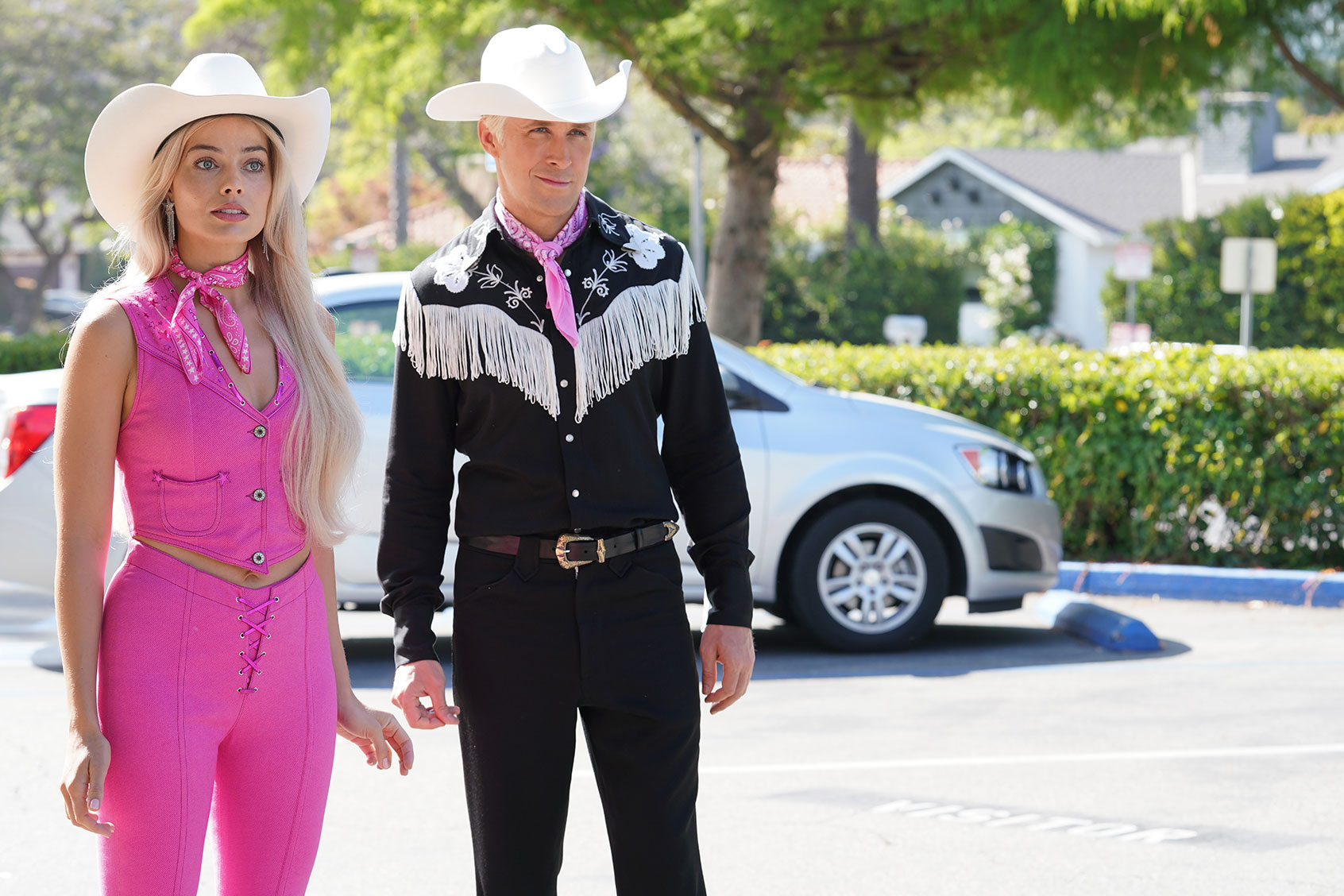
In “Barbie,” America Ferrera’s character Gloria tells us that it’s impossible to be a woman, while “Oppenheimer” demonstrates that the violence of patriarchy also makes it impossible to be a good man.

I’m so tired of men choosing violence, emotional and physical, of excusing the violence of other men, in order to stay in the boys club.

When faced with the consequences of their own actions, both Robert Oppenheimer (Cillian Murphy) and Barbie (Margot Robbie) seek to exercise strong leadership that is remorseful, accountable and rooted in feminist values of repair and community — but in Oppenheimer’s patriarchy, as in the patriarchy of our real world, practicing feminist leadership is punished.

Recently, Warner Bros., perhaps inspired by the underlying message of “Barbie,” apologized for tweets that made light of the nuclear bombings of Hiroshima and Nagasaki, just days before the anniversary of these events. This is a version of leadership that Oppenheimer was denied and that Barbie is able to enjoy: strength through accountability and repair.

When “Barbie begins,” we see snippets of an idealized Barbieland. Lawyer Barbie stands up in court and says, “I have no difficulty holding both logic and feeling at the same time. And it does not diminish my powers, it expands them.” On the other hand, as a successful man in a patriarchal nation, Oppenheimer was denied feelings. He couldn’t unionize his workplace without consequences and he couldn’t express remorse or regret about the use of the atomic bomb. As soon as he did, he was punished.

Our political leaders are similarly denied remorse. President Obama’s visit to the Hiroshima Peace Memorial, which marked the first time a U.S. president had visited the site where nuclear bombs were first used in warfare, was derided as an apology tour

“Barbie’s’ Gloria (Ferrera) is exasperated. “I’m just so tired of watching myself and every single other woman tie herself into knots so that people will like us,” she said. I, too, am just so tired —of seeing men contort themselves to hide their best qualities: kindness, softness, joy, and care.

I am so tired of men choosing to be hard in order to not be seen as feminine. I’m so tired of men choosing violence, emotional and physical, of excusing the violence of other men, in order to stay in the boys club. I am so tired of the gender binary reinforcing patriarchy, and of patriarchy reinforcing the gender binary. I’m so tired of men attacking women and the queer community to prove themselves to other men. I’m so tired of “girl dads” being celebrated, rather than girl dad qualities being extended to children of all genders. We all lose when these are our societal norms.

OppenheimerOppenheimer (Universal Pictures)In both “Barbie” and “Oppenheimer,” men perform masculinity for other men, preserving their egos by harming the women around them: in “Barbie, the Kens battle throughout the film, only working together when attacking what Barbie has built. Her dream house becomes Ken’s Mojo Dojo Casa House, and the Barbies become subservient to the Kens. In “Oppenheimer,” women are sexual fantasies, mothers-to-be or mothers. In both cases, as trophy wives or fantasies, for men to prove their worth to one another, for patriarchy to succeed, women must be the second sex and queerness must be isolated (Sorry, Allan).

What would have happened if Oppenheimer lived in Barbieland – a world, Will Ferrell tells us, without real weapons? What could he have created, what world would we live in today, if he had been able to hold feelings and logic, and the U.S. had never developed or dropped the atomic bomb?

We need your help to stay independent

In “Oppenheimer,” when the rules break down and he begins to question the scale of violence that the state is pursuing, he is punished. In “Barbie,” when the rules break down and her heels hit the floor, her community surrounds her with care and concern. She is encouraged to seek out the root causes of her unease. And, in the real world, she is confronted with the consequences of her life: that she has been complicit in creating impossible standards for women, and that the Kens have been taken for granted.

Patriarchy, as we see in the film, punishes dissent so effectively that we are afraid of dissenting at all.

In “Oppenheimer,” the only accountability he faces is damage to his career, his ego and his sense of self. He is never accountable to communities most harmed by his work. He imagines the damage of the bomb, but unlike Barbie, he is never confronted with the communities he has hurt, the lives destroyed by his creation. Even at the end of the movie, as he fears the world has been set on fire, he never has to experience loss like the citizens of Hiroshima and Nagasaki, or downwindersIndigenous communities and uranium miners across the southwest U.S. have.

The day I saw “Oppenheimer,” I also watched a Congressional hearing on Afghanistan. Like “Oppenheimer,” the hearing had no testimony from communities directly impacted by U.S. militarism. We continue to repeat our history because we have failed to practice accountability, listen to dissent and address harm with community, care and a commitment to repair. And part of why we have not learned these lessons is because patriarchy, as we see in the film, punishes dissent so effectively that we are afraid of dissenting at all. Just look at how Ken is scared of dissenting until he is introduced to patriarchy. Neither the Kens nor Los Alamos’ scientists can break ranks without punishment. 

BarbieBarbie (Warner Bros.)Unlike Oppenheimer, Barbie is directly confronted with the harms of promoting an idealized feminine image and, through Gloria, is reimagined as an ordinary Barbie celebrating a life renewed through the promise of equality. She is confronted with the impact of taking Ken for granted: instead of seeking equality, the Kens enact revenge, trashing Barbieland and taking steps to consolidate their power. When the Barbies come back to restore Barbieland, almost miraculously, Barbie apologizes. She knows she has taken Ken for granted, and the other Barbies also realize that the weight of unyielding leadership has become too heavy. It’s both a burden and an opportunity; one that they want to share.

“Barbie’s” matriarchy is imperfect, but that is the point: it is capable of evolution, and the movie follows not just Barbie’s journey, but the journey of Barbieland as it adapts to new challenges. Barbieland’s challenges are flat feet, the revolution of the Kens, and adopting variations of Barbie with existential crises. Our challenges in the real world are many: climate crisis, endless militarism and a patriarchal, homophobic and racist state. “Barbie” shows us it is possible to adapt to meet those challenges. We can prioritize abundant life, instead of violence and power. We can follow Barbie’s lead and work with Allan to enact queer liberation. We can build a society based on accountability and care.

If we imbue feminist values into our politics and our culture, our institutions and how we treat one another, we can uproot patriarchy and embrace abundant care for one another. And maybe then, we can have more dance parties and fewer nukes. 

“Gestapo tactics”: Co-owner of Kansas newspaper, 98, dies after “chilling” police raid

The co-owner of a small Kansas newspaper, the Marion County Record, died a day after police launched a raid on her home and the newspaper’s office. Police on Friday seized a computer and a router used by an Alexa smart speaker from the home of Joan Meyer, 98, Marion Country Record reported. Along with Meyer’s home, police raided the paper’s office, taking personal cellphones, computers, the newspaper’s file server, and other miscellaneous equipment, per CBS News.

Eric Meyer, owner and publisher of the Record, said the police raid — which included Marion’s entire five-officer police force as well as two deputies — came after a confidential source leaked sensitive documents to the paper. Recent news stories had circulated about a restaurant owner who had allegedly ousted reporters from a meeting with U.S. Rep. Jake LaTurner, R-Kan., which followed with subsequent leaks about the owner’s lack of a driver’s license and drunk driving conviction. “It’s going to have a chilling effect on us even tackling issues,” Meyer said, along with “a chilling effect on people giving us information.” The outlet’s “first priority is to be able to publish next week,” Meyer added. “But we also want to make sure no other news organization is ever exposed to the Gestapo tactics we witnessed today. We will be seeking the maximum sanctions possible under law.”

Marion Police Chief Gideon Cody on Saturday defended the raid and said that “the judicial system that is being questioned will be vindicated” once further information comes to light. The Kansas Reflector reported that the search warrant, which was inked by Marion County District Court Magistrate Judge Laura Viar, seems to be in violation of federal law that upholds protections for journalists from having their materials searched and seized. “An attack on a newspaper office through an illegal search is not just an infringement on the rights of journalists but an assault on the very foundation of democracy and the public’s right to know,” said Emily Bradbury, executive director of the Kansas Press Association.

“He is just daring the judge now”: Trump targets Chutkan in Truth Social attack

Former President Donald Trump again took aim at the judge overseeing his election conspiracy case despite being issued a warning to curtail his frequent outbursts.

The former president in a Monday Truth Social post criticized U.S. District Jude Tanya Chutkan as “highly partisan” and “VERY BIASED AND UNFAIR” as he shared a quote from Chutkan — a well-known administer of tough sentences for Jan. 6 insurrectionists — as she handed down charges to one of the thousands of rioters who laid siege to the Capitol. 

“The following TRUTH is a quote by highly partisan Judge Tanya Chutkan, angrily sentencing a J-6er in October of 2022. She obviously wants me behind bars. VERY BIASED AND UNFAIR!” Trump wrote in an early morning Truth, before citing Chutkan’s sentencing:

“‘I SEE THE VIDEOTAPES. I SEE THE FOOTAGE OF THE FLAGS AND THE SIGNS THAT PEOPLE WERE CARRYING AND THE HATS THAT THEY WERE WEARING, AND THE GARB. AND THE PEOPLE WHO MOBBED THE CAPITOL WERE THERE IN FEALTY, IN LOYALTY, TO ONE MAN, NOT TO THE CONSTITUTION, OF WHICH MOST OF THE PEOPLE WHO COME BEFORE ME SEEM WOEFULLY IGNORANT; NOT TO THE IDEALS OF THIS COUNTRY, AND NOT TO THE PRINCIPLES OF DEMOCRACY. IT’S A BLIND LOYALTY TO ONE PERSON WHO, BY THE WAY, REMAINS FREE TO THIS DAY.’ Judge Tanya Chutkan!”

Trump also shared a post falsely claiming that Chutkan “openly admitted she’s running election interference against Trump.”

MSNBC legal analyst Lisa Rubin pushed back on the claim.

“This should be obvious, but I was there—and she said exactly the opposite: The fact of the election and Trump’s role within it would not impact her decision making. When one judge’s striving for impartiality is broadcast as interference,  justice suffers. Will Trump?” she tweeted.

The Washington Post previously reported that Chutkan, an Obama-era appointee, was one of the first federal judges in Washington D.C. to scrutinize Trump’s attempts to invoke presidential power when he was mandated by the House select committee investigating the Jan. 6 attacks to turn over White House communications. 

The ex-president, ostensibly unable to stay quiet amid his ongoing legal plights, already claimed that he would be seeking recusal of Chutkan.

“THERE IS NO WAY I CAN GET A FAIR TRIAL WITH THE JUDGE ‘ASSIGNED’ TO THE RIDICULOUS FREEDOM OF SPEECH/FAIR ELECTIONS CASE,” Trump previously wrote on Truth Social. “EVERYBODY KNOWS THIS, AND SO DOES SHE! WE WILL BE IMMEDIATELY ASKING FOR RECUSAL OF THIS JUDGE ON VERY POWERFUL GROUNDS, AND LIKEWISE FOR VENUE CHANGE, OUT IF D.C. [sic]”

However, not long after Trump’s statement, his attorney John Lauro said that there were no immediate plans to pursue a recusal and that the former president had merely been speaking “with a layman’s political sense.”

“We haven’t made a final decision on that issue at all,” Lauro said. 

We need your help to stay independent

On Friday, Judge Chutkan held a hearing to discuss a protective order proposed by special counsel Jack Smith’s team in order to prevent Trump from publicizing evidence in the case through his social media rants. Prosecutors had previously asked Chutkan to issue a protective order after Trump posted the following threatening message on Truth Social: “If you go after me, I’m coming after you!” 

During the hearing, she cautioned Lauro about Trump’s “inflammatory” statements, saying that she would not hesitate to speed up his trial if he continues. 

“I caution you and your client to take special care in your public statements about this case,” Chutkan said. “I will take whatever measures are necessary to safeguard the integrity of these proceedings.”

“To the extent your client wants to make statements on the internet, that has to yield to witness security,” she said.

“The fact that he’s running a political campaign has to yield to the orderly administration of justice,” Chutkan said. “If that means he can’t say exactly what he wants to say about witnesses in this case, that’s how it has to be.”

“Even arguably ambiguous statements from parties or their counsel, if they can be reasonably interpreted to intimidate witnesses or to prejudice potential jurors, can threaten the process,” she added later in the hearing. “The more a party makes inflammatory statements about this case which could taint the jury pool … the greater the urgency will be that we proceed to trial quickly.”


Want a daily wrap-up of all the news and commentary Salon has to offer? Subscribe to our morning newsletter, Crash Course.


Former acting Solicitor General Neal Kaytal tweeted that it “would not surprise me if Judge Chutkan called a hearing, with Trump’s presence, given his new remarks.”

“He is just daring the judge now,” wrote attorney Bradley Moss. 

“He can’t help himself. And that’s not an excuse, it’s outrageous. It is directly contrary to what the judge just warned him against,” CNN legal analyst Elie Honig said on Monday, predicting Trump was trying to lay the groundwork to push for her recusal. “Judges aren’t going to go for that, Judge Chutkan is not going to go for that. Also, I think it has to be said, these accusations by Donald Trump, completely unfair, completely unwarranted. She has had other January 6 cases. She has handled them properly. She has sentenced them appropriately. She’s not been overturned on appeal on anything. So these are just outrageous comments. It will be interesting to see whether Judge Chutkan does anything about this. And if so, what?”

The PragerU goal: “Indoctrinate kids at a young age into a far-right belief system”

Since at least the 1960s, the American right has worked to create a parallel set of civil society institutions: think tanks, interest groups, foundations, educational institutions, many forms of media, churches and religious communities and much more. Their ultimate goal all along has been to transform American society to fit their vision.

Liberals, progressives, and others who believe in a genuine democracy and humane society have no comparable network of institutions.

The right-wing social engineering project is predicated on such ambiguous concepts as “traditional” American values and untrammeled “freedom,” which in practice means a society dominated by the moneyed classes and specifically by white Christian conservatives. In an increasingly global, pluralistic, and diverse society, that goal is clearly antithetical to democracy and the long-term health of the nation.

Because leading figures on the right understand that time and changing demographics are not on their side, in response their plan is to capture the hearts and minds of young people, who they can then develop into the future leaders and foot soldiers for their counterrevolutionary project.

As seen in Florida and numerous other states, PragerU, the powerful right-wing media, advocacy and pseudo-educational organization, is playing an integral role in that project. PragerU is clear in its mission, which it describes as being “a free alternative to the dominant left-wing ideology in culture, media, and education.”

In this conversation, John Knefel, a senior writer at Media Matters for America, explains the origins of PragerU, its relationship to the larger right-wing revolutionary project (especially under Ron DeSantis in Florida), and how education is being weaponized by the global right-wing.

Towards the end of this conversation, Knefel highlights two specific examples of the ways PragerU’s “educational” videos and other materials are literally whitewashing African-American history and Christopher Columbus’ role in the genocidal white European colonial and imperial project that decimated the Indigenous peoples of the Americas.

How do you locate Ron DeSantis and his Orwellian attacks on public education, as seen recently with the claim that chattel slavery in America was basically a job skills program, within a larger story about the conservative movement today?

The things we’re seeing in Florida right now are either long-simmering or open goals of the conservative movement to attack public education. And that includes at the elementary school, middle school, high school level and at the university and college level as well. What see in Florida is an attempt to either destroy public education through defunding it and allowing parents to transfer public tax dollars to charter schools or private schools, or to just starve the public school system more broadly.

What the Republicans in Florida and elsewhere can’t starve in terms of public schools and education, DeSantis wants to capture with the right-wing propaganda being produced and disseminated by the likes of PragerU Kids. There is another component here as well because these attacks on public education are a labor story.

This move for “parents’ rights” — which in reality is a euphemism for the concerns and anxieties and bigotries of wealthy white suburban parents — comes out of the COVID lockdowns and the school closures. The right wing blamed teachers’ unions for those lockdowns. These efforts by DeSantis also consist of an attempt to propagandize children at a young age into right-wing beliefs and lies about history.

What do we know about how the Republican Party and conservative movement have been propagandizing and recruiting young people as part of a largert strategic plan?

PragerU has been at the forefront of a lot of those efforts. It was founded in 2009 by Dennis Prager and his longtime radio producer Allen Estrin. They initially wanted to create a physical university. Pretty early on they realized that was prohibitively expensive. In 2011, very early in the digital media boom, PragerU saw an opportunity to target young people, millennials and now Gen Z, to try to counter the myth of the liberal “politically correct” media and educational system and society more generally. For the entire decade of the 2010s, Prager amassed a huge online viewership. Prager continues that growth by bringing in right-wing personalities such as Ben Shapiro, Charlie Kirk, Tucker Carlson, Candace Owens, Jordan Peterson and others. PragerU’s longer-term goal was to infiltrate public school classrooms. There was some successful infiltration, but that came with pushback. 

When PragerU Kids launched in 2021, they switched their target audience from college and high school students to elementary school kids. It appears that PragerU is afraid of public backlash because in some of their ads on Facebook, they say, “We are now an approved vendor and teachers can’t get in trouble for showing our videos in class.” PragerU knows that for parents outside the right-wing media and echo chambers, many of these “educational” videos are going to be deemed offensive and ahistorical and clearly not fit for the classroom. 

While reputable and award-winning books by serious and acclaimed writers are being purged from the schools in Florida and elsewhere, Prager propaganda is being approved for teaching. How do we reconcile that? What machinations in the Florida school bureaucracy have facilitated this? 

The radical right-wing astroturf group Moms for Liberty is a very close ally of Prager. Dennis Prager, the organization’s namesake and founder, just spoke at a Moms for Liberty conference in Philadelphia in July. At that conference, Prager admitted that what PragerU does is indoctrinate kids. Now, it’s worth noting that a couple days later on his syndicated radio show, he downplayed the idea that there was any ideological component to PragerU’s materials, saying that it isn’t “right-wing.” it is just “responsible.”

Depending on the context and audience, PragerU and its executives tailor their messaging and try to naturalize the reactionary right-wing ideology that they present as being value-neutral. As for the networks and behind-the-scenes connections, we know that PragerU Kids saw Florida as an incredibly welcoming environment to try to infiltrate public schools in that state and to leverage their connections in the Republican Party and conservative movement, as well as DeSantis’ obvious presidential ambitions.

We need your help to stay independent

This is about ideology and also about money, right? This is a highly lucrative operation. Always follow the money on the right. 

Prager is blessed to have connections with Dan and Ferris Wilks, who are hydrofracking multi-billionaires. The Wilks brothers were the initial largest donors to Prager, and they gave at least $6.5 million as of 2015. The Bradley Foundation, a right-wing charity, is another top donor. One of the members of their board is [attorney] Cleta Mitchell, allegedly one of the top architects of Trump’s failed coup. Interestingly, there are PragerU and now PragerU Kids curriculum videos that totally embrace climate denialism. These videos are so extreme they could have been produced by the fossil fuel companies themselves. PragerU is absolutely raking in the money. They are a 501(c)(3), so we often don’t know exactly where their money comes from. But as of 2020, they had at least a $25 million operating budget, and a huge amount of that money goes to YouTube and Facebook marketing. Contrary to claims by the right that they are being censored by “big tech” — which is not true; we know for a fact that the algorithms amplify right-wing sources — they are making lots of money and getting lots of traffic and attention from social media.

What is the worldview and ideology being advocated by PragerU? 

The picture of the world painted by PragerU is one that naturalizes the status quo. It normalizes every existing system of hierarchy, especially in the United States, but also globally. The PragerU view of the world consists of an ideology that depends on telling kids that any inequality or power imbalances or injustices that they may observe either don’t exist or exist for good reasons. There is no such thing as structural inequality or racism.  Racism, sexism, class domination and class exploitation are all made up buzzwords of “the left” or the “woke mob.” Instead, what exists is a system of meritocracy: The United States is the shining city on the hill and the greatest country that’s ever existed. If the United States may have inadvertently committed sins in the past, they weren’t really committed by anyone. 

Moreover, any wrongs of the past cannot be deemed as such or judged because we can’t judge the past by the standards of the present. The result of Prager’s worldview is that if you tell kids that existing inequality is natural, and the United States is inherently good, then there’s no reason for them to organize to create positive social and political change. In fact, there is no political remedy for injustice at all.

The PragerU worldview also has an almost religious devotion to capitalism that equates capitalism as synonymous with freedom and democracy. PragerU also celebrates colonialism and imperialism, “Western civilization” and “Judeo-Christian values,” the latter of course interpreted through a right-wing, white supremacist frame, and in a propagandistic way. PragerU videos are also teaching kids “copaganda,” urging them to “back the blue” and support the Second Amendment. 

Let’s focus on the Booker T. Washington PragerU Kids video. That’s an especially foul example of using history as propaganda. If the implications were not so serious, the video would actually be funny, like material for a skit on the Dave Chappelle’s show or the golden age of “Saturday Night Live.” 

It’s incredible. The Booker T. Washington video is breathtaking for its inaccuracies. That video is part of a PragerU Kids series called “Leo and Layla,” the adventures of two fictitious white kids who travel back in time to meet historical figures and learn lessons from them. Sometimes the lessons are pegged to current events. So Leo and Layla travel back in time to meet Booker T. Washington and learn about slavery and the Civil War. There are so many offensive things in the video, but one of the worst is when Washington explains to Leo and Layla how proud he is to be an American, saying, “I was a slave and now I’m free.” Booker T. Washington goes on to give this talk about the Civil War in the passive voice that robs Black people of agency in fighting for their own freedom, as opposed to sitting around waiting to be saved by white people. 


Want a daily wrap-up of all the news and commentary Salon has to offer? Subscribe to our morning newsletter, Crash Course.


The PragerU Kids videos also remove any blame or moral dimensions to the Civil War and present the North and the South, anti-slavery and pro-slavery forces, as equivalent. The video goes even further and has this fake Booker T. Washington telling the white kids that they shouldn’t worry or feel nervous because future generations are never responsible for the sins of the past. Then Layla says, “Thanks, I’ll try to remember that and stop feeling guilty about all this historical stuff.” So what we have here is a complete dramatization of the DeSantis “stop woke” legislation in Florida and the effort to stop the teaching of accurate history and events, because white children can’t ever be made to feel uncomfortable.

The Christopher Columbus video is an abomination as well.

Here is a quote from the video: “The place I discovered was beautiful. But it wasn’t exactly a paradise of civilization. And the native people were far from peaceful.” So again, you have a justification for colonialism and for Columbus enslaving the indigenous peoples. Columbus is depicted as responding to existing violence, rather than himself being an agent of violence. The video starts with Leo and Layla talking about Columbus Day at school and a teacher correcting them that it is now called Indigenous People’s Day. As with the Booker T. Washington video, the overall thesis of PragerU is that teaching white kids about actual history produces anxiety that must be alleviated. Real history has to be ignored and buried, and these videos are a perfect tool to do that.

What is PragerU and Ron DeSantis’ vision for the future? What is the grand plan?

Where PragerU goes next is to try to get into other schools. They are explicit that they want to expand from Florida into other school systems across the country. It’s not hard to imagine them going after a state like Texas or Virginia. As far as DeSantis and PragerU, they want to indoctrinate kids at a young age into a far-right belief system. The goal is to create a generation of right-wing media consumers who adopt their framing on issues both historical and current, whether that’s the George Floyd uprisings in 2020, trans rights, feminism and women’s liberation or any number of other issues.

The PragerU vision is to have consumers of their product from K through 12 and then into college. There is also Prager’s radio show for adults. The ultimate vision is to create a completely closed information system that doubles down on white supremacy, patriarchy, unfettered capitalism and other extreme right-wing values. If this project comes to fruition, it will be much easier for conservatives and the extreme right to implement their regressive policies at the state and federal level across the country.

“Multiple crimes”: Legal experts say Georgia texts “connect the dots” right “into the Oval Office”

Fulton County District Attorney Fani Willis’ team obtained text messages and emails that directly connect former President Donald Trump’s legal team to a January 2021 voting system breach in Georgia’s Coffee County, CNN reported on Sunday.

Willis, who is expected to seek charges against more than a dozen people as early as Tuesday, has gathered evidence indicating the breach “was a top-down push by former President Donald Trump’s team to access sensitive voting software” as part of a larger push to get evidence to back up Trump’s baseless fraud claims, multiple sources told the outlet.

While the probe has focused on Trump’s and his allies’ efforts to overturn the election in the state, including Trump’s infamous phone call demanding George Secretary of State Brad Raffensperger “find” enough votes to overturn his loss, the voting system breach has “quietly emerged as an area of focus” over the past year, according to the report.

The texts and other court documents show that Trump lawyers and other operatives sought to access the Coffee County voting systems days before the deadly Jan. 6 Capitol riot.

A former Trump official testified to the House Jan. 6 committee that plans to access Georgia voting systems were discussed in White House meetings, including a December 18, 2020, Oval Office meeting that included Trump.

Six days before pro-Trump operatives got unauthorized access to the voting systems, a local election official who helped facilitate the breach sent a “written invitation” to lawyers working for Trump, according to texts obtained by CNN.

Prosecutors have examined the role of the former election official, Misty Hampton, as well as the involvement of Trump attorneys Rudy Giuliani and Sidney Powell. Hampton’s invitation was shared with attorneys and former NYPD Commissioner Bernie Kerik, an investigator working for Giuliani at the time, according to CNN.

Katherine Friess, an attorney working with Giuliani and Powell, shared the letter and notified operatives who carried out the breach that Trump’s team had gotten written permission to access the systems, according to the texts.

“Rudy Giuliani had nothing to do with this,” Giuliani attorney Robert Costello told CNN. “You can’t attach Rudy Giuliani to Sidney Powell’s crackpot idea.”

Giuliani received a letter notifying him he is a target in the probe last year.

Coffee County was specifically mentioned in a draft executive order to seize voting machines that was presented to Trump during a chaotic December 18, 2020, Oval Office meeting in which Giuliani alluded to a plan to gain “voluntary access” to Georgia machines, according to the report.

We need your help to stay independent

“This is damning stuff and the kind of evidence built for Georgia RICO. This shows a pattern of unlawful activity all over the state,” tweeted Georgia State Law Prof. Anthony Michael Kreis. “Rudy Giuliani is almost certain to get indicted on Tuesday after this news. I’d be curious if Bernie Kerik gets roped in, too.”

Former U.S. Attorney Harry Litman wrote that the report described “multiple crimes” and “ham-handed conduct reminiscent of Watergate.”

CNN legal analyst Norm Eisen, who served as Democratic counsel during Trump’s first impeachment, said the report “connects the dots.”


Want a daily wrap-up of all the news and commentary Salon has to offer? Subscribe to our morning newsletter, Crash Course.


“We now have evidence that goes from Coffee County to Sidney Powell and Rudy Giuliani, and as CNN reports, right into the Oval Office because this was discussed on Dec. 18th in one of the very notorious meetings in the Oval Office, whether it’s possible to get access to these Georgia voting systems and others around the country,” he said. “It matters, of course, because it is one of the most serious crimes that we have in the 21st century is unauthorized access, hacking of computer systems.”

Eisen predicted that Willis’ indictments would target the fake elector scheme, the call to Raffensperger and the Coffee County breach.

“It pulls together those three conspiracies we were talking about, including this hacking conspiracy, into one large case that you can present to a jury where you say, ‘Hey, what was the point of those fake electoral certificates? What was the point of pressing Georgia officials to do the wrong thing? What was the point of the computer hacking?'” he explained. “The same point, all of these people were working together in one, as we put it, enterprise in order for Donald Trump to allegedly hang on to his office when we know he had lost the election. You can’t do that in American law.”

After Maui fires, human health risks linger in the air, water and even surviving buildings

People returning to what remains of the beachside town of Lahaina, Hawaii, and other Maui communities after one of the nation’s deadliest wildfire disasters face more dangers, beyond the 2,200 buildings destroyed or damaged and dozens of lives lost. The fires also left lingering health risks for humans and wildlife.

When fires spread through communities, as we’ve seen more often in recent years, they burn structures that contain treated wood, plastics, paints and hazardous household wastes. They can burn vehicles and melt plastic water pipes. All of these items release toxic gases and particles.

Many airborne pollutants fall to the ground, and when debris or dust is stirred up, hazardous particles can enter the air, where people can easily breathe them in.

Chemicals can also contaminate water supplies. On Aug. 11, 2023, Maui County issued an “unsafe water” alert for areas of Lahaina and Upper Kula that were affected by wildfires, warning residents to use only bottled water for drinking and cooking, and not rely on boiling tap water because of the risk of harmful chemicals.

As an environmental engineer, I work with colleagues to help communities respond to and recover from wildfires and other disasters, including the Marshall Fire in Boulder County, Colorado, and the Camp Fire that destroyed Paradise, California. Lahaina and other Maui communities face similar risks ahead.


Chemical hazards in fire debris

Residents returning to their burned neighborhoods will likely find themselves surrounded by hazards. Some are obvious, such as broken glass, nails and damaged natural gas containers. Broken power lines and gas lines may be live or leaking.

Less obvious are the chemical hazards that can reach well beyond the fire zone.

Black smoke from a fire is a sign of incomplete combustion that can produce thousands of chemicals when wood and plastics burn.

Chemicals like benzene, lead, asbestos and polycyclic aromatic hydrocarbons, or PAHs, are common in ash, runoff and sometimes water systems after fires.

Exposure to high levels of chemicals can sometimes cause immediate harm, such as nausea, vomiting, dizziness, rashes and respiratory issues. For these reasons it is critical to protect people, especially children and people with health conditions, from exposure.

State health officials recommended that residents wear close-toed shoes, N95 respirators, chemical resistant gloves and other protective equipment while looking through property debris.

When disaster debris is eventually removed by professionals, the contractors will be wearing Tyvek suits and possibly respirators to protect their health.

Buildings that didn’t burn can still have hazards

Even buildings deemed structurally safe may have pollutants that make them unsafe for human health.

Particles and vapors can enter buildings through cracks, doors, windows and other portals. Some of these pollutants settle onto surfaces, while others penetrate fabrics, stick to walls and enter air ducts.

Often buildings must be professionally cleaned or decontaminated by wildfire remediation companies. Cleaning surfaces and ducts, replacing air filters and installing HEPA filters can also help.

A small collection of homes appears unburned among the hulls of dozens of burned out houses.

Pockets of homes were untouched by the Lahaina fire, but the gases and ash that infiltrate these buildings can create health hazards that linger for months if not addressed. Patrick T. Fallon/AFP via Getty Images

Drinking water risks and soil testing

Drinking water is another serious concern after urban fires.

Wildfires can make the plumbing outside or inside the building itself unsafe in a couple of ways. Loss of water pressure can allow pollutants to enter pipes. Maui County cited this risk in issuing its “unsafe water” alert on Aug. 11. When plastic pipes heat up, they can also decompose and then directly leach chemicals into water.

My colleagues and I have documented benzene levels that exceeded hazardous limits for drinking water after several previous fires. PAHs can also be present, as our research has shown.

These and other chemicals pose an immediate health risk to water users, even if the water smells fine. Simple water flushing can fail to remove severe contamination. Proper inspections and testing in buildings and for private wells and larger water systems are important.

Outside, the ground can also become contaminated in a fire. Once the debris is removed, testing is necessary to ensure that the soil where people will replant their gardens, yards and fruit trees is free of hazardous chemicals and safe for humans and pets.

Protecting waterways and aquatic life

During firefighting and clean-up, and when it rains, pollutants can wash into waterways and end up in the ocean.

Lahaina stretches along Maui’s west coast and has long been a popular site for seeing sea turtles and other marine life. That sea life may now be at risk from pollutants from burned coastal buildings and runoff. The fire burned to the shoreline, destroying boats, docks and other vehicles, some of which sank.

Debris and sunken boats will need to be removed from the nearshore waters to protect corals. Similar to wildfires near lakes, rivers and streams, water testing will be necessary.

Communities can avoid more harmful runoff during the cleanup process by placing pollution-control barriers near storm drains, around properties and near waterways. These can help intercept pollutants flowing toward the ocean.

What happens to all the debris?

How to safely dispose of all the debris as the community is cleaned up and recovers is another question.

After the 2021 Marshall Fire in Colorado, where about 1,200 structures were destroyed, the cleanup generated 300,000 tons of waste. In Maui, debris may have to be taken off the island for disposal.

Cleanup and recovery from a disaster of this magnitude takes years. In the process, I recommend residents reach out to public health departments for advice to help them stay healthy and safe.

This article was updated Aug. 12, 2023, with new damage estimates from Maui County officials.

Andrew J. Whelton, Professor of Civil, Environmental & Ecological Engineering, Director of the Healthy Plumbing Consortium and Center for Plumbing Safety, Purdue University

This article is republished from The Conversation under a Creative Commons license. Read the original article.

Newest “anti-woke” tantrum: Right-wingers don’t think kids of different races can be friends

Considering how rapidly the right’s “war on woke” is expanding, it was perhaps inevitable: Self-identified “mama bears” on a Texas school board are angry that a classroom had a poster showing people of different races holding hands. Last week, the school board in Conroe, Texas, a small city north of Houston, turned the right-wing mania for censorship into a dark parody of itself. At issue? A poster that seemed to imply that interracial friendship is possible. 

According to ABC 13 Eyewitness News in Houston, things started when school trustee Melissa Dungan declared that she had spoken to parents who were upset about “displays of personal ideologies in classrooms.” When pressed for an example, according to the news report, “Dungan referred to a first grade student whose parent claimed they were so upset by a poster showing hands of people of different races, that they transferred classrooms.”

“I wish I was shocked,” Dungan said of the poster. “I am aware these trends have been happening for many years.”


Want more Amanda Marcotte on politics? Subscribe to her newsletter Standing Room Only.


Some other members of the school board did, in fact, argue that there was nothing objectionable about such a poster. But Dungan was backed up by another trustee, Misty Odenweller, who insisted that the depiction of uh, race-mixing was in some way a “violation of the law.” The two women are part of “Mama Bears Rising,” a secretive far-right group fueling the book-banning mania in Conroe and the surrounding area. At least 59 books have been banned due to their efforts. 

When another trustee asked Dungan if she personally objected to an illustration of cross-racial friendship, she demurred, simply declaring that she was just trying to avoid “situations like that.” Situations like what, exactly? She didn’t say. Dungan’s behavior is a perfect illustration of the “anti-woke” tap dance. The person alleging nefarious wokeness never admits to their own bigotry, instead pretending that they’re reacting to “woke” people who are “pushing” an agenda, in this case through innocuous poster art. Of course, the entire premise of the argument is rooted in bigotry, as this example shows. It presumes that the feelings of real or imagined bigots who might take umbrage at such an image are of paramount importance, and that everyone else’s freedoms must be curtailed to appease them. 

It’s tempting to shrug it off as one-off weirdness from Nowheresville, Texas. But while this was an especially ham-fisted example, it’s part of a well-funded nationwide effort, led by a group of interlocking far-right groups, aimed at destroying modernity, undermining democracy and imposing authoritarian government against the will of most Americans. Donald Trump sucks up most of the oxygen in the discussion about rising American fascism, but even without him, this movement is powerful and widespread, and it’s using these local culture-war skirmishes battles to seize even more power. And old-fashioned racism, the kind on display in Conroe, is very much at the center of it all. 

Last week, the New Republic published a lengthy and terrifying investigative article by Katherine Stewart about the Claremont Institute, once a vaguely respectable conservative think tank and now among the leading right-wing organizations pushing the anti-education and anti-democratic agenda below the surface of the Conroe incident. One of the many Claremont alumni Stewart profiles is Christopher Rufo, who spearheaded the recent hysteria over “critical race theory” in education. In reality, critical race theory was an approach used in law schools and other graduate-level academic spaces, and had basically nothing to do with public schools. Rufo’s ingenious idea was to turn it into a catch-all scare term that could be used to demonize any and all forms of anti-racist education, even something as previously noncontroversial as a poster depicting interracial friendship. 

The far-right, anti-democratic politics of the Claremont Institute are so grotesque that many readers will dismiss them as preposterous, but it’s all carefully documented and disturbingly real. As Stewart chronicles, Claremont has promoted the work of Costin Alamariu, who holds a PhD in philosophy from Yale and writes under the name “Bronze Age Pervert.” He has declared that the “liberation of women” is an “infection” that requires “the most terrible convulsions and the most thorough purgative measures.”

Media coverage of Moms for Liberty mostly portrays them as overzealous church ladies. But beneath the surface, there’s a lot of far-right radicalism.

A frequent contributor to Claremont’s online journal, who writes under the name “Raw Egg Nationalist,” argues that “men and women shouldn’t work together in the same spaces” and describes the Black Lives Matter protesters of 2020 as “hideously ugly, malformed people.” Claremont-associated blogger Curtis Yarvin argues (in Stewart’s words) that “America needs a king, a dictator with total military power.” Claremont’s most famous associate is board member and former law professor John Eastman, now known as “Co-Conspirator 2” in the indictment against Donald Trump for attempting to overthrow the U.S. government. 


Want more Amanda Marcotte on politics? Subscribe to her newsletter Standing Room Only.


Because of their tight link to the book-banning efforts, the relatively new but suspiciously wealthy group Moms for Liberty has received massive media attention in the past couple of years. Even so, the group’s radical ideology has not really been covered in most mainstream news coverage, which tends to portray the Moms as a bunch of overzealous church ladies. As Flux editor Matthew Sheffield, Media Matters vice president Julie Millican and researcher Olivia Little explained in a recent “Theory of Change” podcast, however, underneath the facade of “Christian moms” is some startling far-right radicalism. 

For instance, while it was widely reported that a Moms for Liberty pamphlet from one branch was caught quoting Adolf Hitler, the group was able to spin that as a misunderstanding and a mistake. But at their summit a few days later, speaker Tiffany Justice yelled, “I stand with that mom” — the one who quoted Hitler — while the audience whooped its approval. 

Moms for Liberty has heavily promoted trainings for conservative activists on how to take over school boards, which ought to make clear how we should understand stories like this one, which just sound like a racist tantrum in a Texas suburb. These aren’t random or isolated events — they’re part of a large, well-organized and well-financed attack on public education across the country. Mama Bears Rising, the group that fueled the Conroe school board takeover, in unsurprisingly discreet about its connections to the larger national movement for censorship. But screenshots of online communications by local anti-censorship activists suggests that it’s no coincidence that the books targeted for censorship in Conroe are the same ones that show up on book-ban lists across the country. Mama Bears Rising is drawing on the same playbook that’s being disseminated nationwide through a well-funded network of Christian nationalist activists. 

These days, it’s almost never just one nutty lady at a school board meeting. It’s about a movement with a committed ideology, that has deep connections to Donald Trump’s campaign to end democracy. 

After a Pittsburgh coal processing plant closed, ER visits plummeted

Pittsburgh, in its founding, was blessed and cursed with two abundant natural resources: free-flowing rivers and a nearby coal seam. Their presence made the city’s 20th-century status as a coal-fired, steel-making powerhouse possible. It also threw so much toxic smoke in the air that the town was once described as “hell with the lid off.”

Though air quality laws strengthened over the decades, pollution in Pittsburgh and surrounding Allegheny County has remained high, ranking among the 25 worst metro areas in the United States for fine, easy-to-inhale particles known as PM2.5. Carbon pollution can often feel so big — borne on the air, causing ice caps to go black and melt. But it also causes problems much closer to home. Allegheny County’s inhabitants are among the top 1 percent in the nation for cancer risk, and the area is notorious for its high rates of asthma and heart issues, both of which, like the biggest emitters, are concentrated in low-income neighborhoods and communities of color. These kinds of health problems can often seem both mysterious in origin and inescapable for the people who live with them. However, the January 2016 closure of the Shenango Coke Works coal-processing plant provided an astonishing example of how quickly those same communities can recover from the most dire impacts of pollution.

Shenango was a coke oven — a facility that heats coal to around 2,000 degrees Fahrenheit to produce coke, which is in turn used to make steel. Such operations are famously nasty particle polluters, emitting not only carbon dioxide but also contaminants like benzene, arsenic, lead, and mercury. 

Such operations are famously nasty particle polluters, emitting not only carbon dioxide but also contaminants like benzene, arsenic, lead, and mercury. 

The research, led by the New York University-Langone School of Medicine, used medical records from area hospitals to determine emergency room visits and hospitalizations for heart ailments in the three years preceding and following the closure of the plant. They found an astonishing 42 percent drop in  weekly emergency cardiovascular admissions after 2016. That immediate drop was followed by a downward trend that continued for three years. The study also found corresponding steep drops in sulfur dioxide — as high as 90 percent near the facility and 50 percent at a monitoring station six miles away. Arsenic levels plummeted by two-thirds.

Study co-author George Thurston compared the sudden improvement to the benefits of quitting smoking. “Over time the body recovers,” he said. “Instead of at an individual level, you’re really looking at a community healing after the removal of that exposure.”

“Instead of at an individual level, you’re really looking at a community healing after the removal of that exposure.”

To Thurston, and study lead author Wuyue Yu, this research shows that cutting carbon emissions offers more than an abstract, long-term, far-ranging result. It can actually save lives, almost immediately.

The study was prompted by years of local agitation about the plant. Shenango closed under intense community scrutiny and had paid the county millions of dollars in fines for multiple air quality violations. 

For years, an organization called Allegheny County Clean Air Now, or ACCAN, fought to rein in ongoing emissions at the plant, bringing in the Environmental Protection Agency, the Allegheny County health department, and Carnegie Mellon University to monitor the plant’s pattern of violations and the health consequences for its neighbors. ACCAN members served as community scientists, collecting data and taking the results to local officials, company shareholder meetings, and U.S. Steel. Even steelworkers from the plant occasionally attended meetings, expressing concern about the situation. Now, says ACCAN member Thaddeus Popovich (who was told that there’s a 40 to 50 percent likelihood that his own triple-bypass heart surgery was prompted by living half a mile from Shenango), he and his peers feel “vindicated.”

A coal coke factor spews smoke into the sky with a neighborhood in the foreground.

The Clairton Coke Works, seen in an archival photo. Bettmann Archive/Getty Images

After plant’s closure, members of ACCAN gathered and set to paper their memories of life before Shenango shut down. In the resulting collection, called Living Downwind, people describe living with fiery and sulfurous smells and mysterious ailments. Angelo Taranto, an active ACCAN member, lost his wife to a host of respiratory problems he’s sure were caused by Shenango’s billowing smoke. “These personal situations really energize people to want to do something,” he said. 

After the closure, Taranto said, ACCAN encouraged the Allegheny County health department to pull together some retrospective health studies. In 2018, Dr. Deborah Gentile documented a 41.6 percent drop in uncontrolled pediatric asthma two years following Shenango’s shuttering.

“What we were hearing from county officials was that they didn’t think the closure would be a boon to county health,” Taranto said. “We heard similar things from the company itself and we knew that wasn’t true, and we knew that we couldn’t let those types of statements remain unchallenged.”

Clairton, 10 times as large as Shenango ever was, sits near a low-income, majority-Black neighborhood, and community organizations have worked for years to hold the facility accountable to the harm it has caused.

There’s still a long way to go for the greater Pittsburgh area, though. Matt Mehalik, the director of the Breathe Project — which used its resources to support ACCAN and connect them to researchers —  points to similar facilities, such as the Clairton coke oven and the Mon Valley steel works, as contributors to major public health problems. Clairton, 10 times as large as Shenango ever was, sits near a low-income, majority-Black neighborhood, and community organizations have worked for years to hold the facility accountable to the harm it has caused. Environmental advocates are currently urging the EPA to revoke Clairton’s permit. The EPA has also proposed a stricter standard for toxic coke oven emissions, which could increase pressure on plants like Clairton.

Mehalik is excited about a potential transition to less coal-reliant forms of steelmaking as a long-term solution for Allegheny County. “We know that an investment in the right type of green steelmaking is needed if there is a future of steelmaking in the Mon Valley,” he said. “Perpetuation of a polluting facility that comes at the expense of our county is highly problematic.”

This article originally appeared in Grist at https://grist.org/article/after-a-pittsburgh-coal-processing-plant-closed-er-visits-plummeted/.

Grist is a nonprofit, independent media organization dedicated to telling stories of climate solutions and a just future. Learn more at Grist.org

“Winning Time,” HBO’s show about the rise of the Lakers, has advice for fathers

The first episode in the second season of HBO’s “Winning Time” sends a message to dads who are thirsty to gift whole empires to their sons, even when they have more qualified daughters, in the unholy name of patriarchy. That message is simple, a woman can run a business just as good as man, often better. 

“Winning Time,” based on the Jeff Perlman book “Showtime,” documents the rise of Magic Johnson‘s Los Angeles Lakers and the Showtime Dynasty. The series hosts a collection of colorful storylines including the explosive Jerry West (Jason Clarke) also known as the NBA logo, the lanky standoffish giant Kareem Abdul-Jabbar (Solomon Hughes), flashy phenom with the million-dollar smile, Earvin Magic Johnson (Quincy Isaiah), the birth of the slick-backed-do mastermind Pat Riley (Adrien Brody) and the innovative, hilarious always looking for the party Doctor Jerry Buss (John C. Reilly). 

In Season 1, we meet our key characters and learn significant things about their backstories including where they come from, what they dream of, and how the unique synergy between them all always seems to be enough to push them to the next level. Season 2 appears to go deeper into their morality, the hard decisions they have to make and the harder consequences. 

The parallels between Magic Johnson’s and Kareem Abdul-Jabbar’s separate journeys into fatherhood are enough to spark 1,000 conversations on masculinity, the roles that society allows men to play, responsibility and the many rights and wrongs that make up the human experience. While this part of the plot is very entertaining and important, the dynamics of the Buss family left my wheels spinning far after the episode had ended. 

The world isn’t perfect now, as many women still deal with unfair treatment in and out of the workplace; however, Jeanie is a trailblazer, not just in her profession, but in the world.

In real life, Jeanie Buss is the owner and President of the Los Angeles Lakers. She has a long reputation of being one of the most respected, efficient and intelligent executives in the league. On “Winning Time,” we meet Jeanie (Hadley Robinson) as a young intern for the newly acquired organization, eager to earn her father’s respect. Viewers will see her make so many great decisions, while Dr. Buss spends a lot of time looking past her, as he grooms his sons Jimmy Buss (McCabe Slye) and Johnny Buss (Thomas Mann) to be the heirs to the Lakers throne. 

The writers do a great job at planting nuggets that display Jeanie’s work ethic and skill set that shine throughout this series. They are also really good at capturing the era, where it was very easy for the most talented women to be passed over by sexist men in power. The world isn’t perfect now, as many women still deal with unfair treatment in and out of the workplace; however, Jeanie is a trailblazer, not just in her profession, but in the world, and “Winning Time” celebrates that. 

We need your help to stay independent

In Season 2, Doctor Buss realizes that Jeanie is the only child capable of running the company. He doesn’t necessarily write his sons off as duds, but there is an explosive scene in the episode where he calls out his sons for their lack of ambitions and they retaliate by rating his performance as a father. With these lines drawn, we can clearly see that Jeanie will begin to take her place as the leader we know her as today. The arc of Jeanie Buss is important to me as I am actively learning to navigate the changing world my 3-year-old daughter occupies.

“Are you going to have a son? Don’t you want a son?” It’s a question that has been asked to me by everybody from my friends to my mom. 

“I don’t need a son, I love my daughter more than anything and I’m good,” I always respond. 

I don’t know why they always ask me this question, as if they believe a man’s journey through fatherhood is incomplete without having a boy to name after himself. This idea couldn’t be farther from the truth.

When my wife and I found out she was pregnant, we both thought that we were having a boy. She always envisioned herself having a son, and we had just bought a house that strangely had a room that was already painted blue. It felt like fate, however that feeling was wrong. And when our sound tech asked us did we want to know what we were having, and my wife and I hate surprises so we told her to lay it on us. 

“A girl!” 

We were extremely happy to be having a little girl, and maybe became more excited in a way. Almost four years have passed since that moment, and we still couldn’t be happier. Our daughter is our everything – and we fight hard to make sure she will have as many if not more opportunities than any little boy walking in the world. Being competitive and success-driven has nothing to do with gender. “Winning Tim”e does a great job of showing what women must go through in order to achieve a high level of success, and hopefully this show continues the storyline, so that we can see how sweet it is when Jeanie reaches the top. 


Atlanta D.A. likely to present Trump charges to grand jury this week

A pair of witnesses revealed Saturday that Fulton County District Attorney Fani Willis will start presenting her 2020 elections interference case against former President Donald Trump — the GOP’s 2024 frontrunner — to a grand jury in Georgia this coming week.

While Willis has previously signaled her intention to make charging decisions this month, former Georgia Lt. Gov Geoff Duncan, a Republican, and independent journalist George Chidi publicly confirmed on Saturday that her office asked them to appear in court on Tuesday.

“I did just receive notification to appear on Tuesday morning at the Fulton County grand jury and I certainly will be there to do my part in recounting the facts,” Duncan, a CNN political commentator, told the network’s Fredricka Whitfield on-air.

“I have no expectations as to the questions, and I’ll certainly answer whatever questions put in front of me and certainly don’t want to go any deeper than that to, you know, jeopardize or compromise the investigation,” Duncan continued. “But look, for me, this is a story that is important for Republicans to hear — Americans to hear.”

“Let’s hear the whole truth and nothing but the truth about Donald Trump’s actions and the surrounding cast of characters around him,” he added. “We watched a series of events happen here that were tragic and untruthful, and he’s got a chance to present these facts and say, ‘hey, I didn’t know what was going on,’ or, I think what reality’s gonna be is, they knew exactly what they were doing.”

We need your help to stay independent

Meanwhile, Chidi said on social media Saturday, “I’ve just received a call from District Attorney Fani Willis’ office. I have been asked to come to court Tuesday for testimony before the grand jury.”

As the Atlanta Journal-Constitution reported Saturday:

Chidi stumbled upon a meeting of sham Republican electors at the state Capitol, part of an effort by the former president’s allies in Georgia to undermine President Joe Biden’s narrow 2020 victory.

Duncan would bring a different perspective to grand jurors. Once an ally of Trump, he publicly broke with the then-president in 2020 and has frequently criticized the “stop the steal” movement that spread through GOP circles.

After Biden won Georgia, Trump made a Jan. 2, 2021, phone call in which he pressured Georgia GOP Secretary of State Brad Raffensperger to “find 11,780 votes” in his favor — which prompted Willis’ investigation.

Trump, who was in Iowa to campaign on Saturday, said on his Truth Social platform: “How can they charge me in Georgia? The phone call was PERFECT. WITCH HUNT!”

Preparations for the former president’s potential fourth indictment come after he was hit with federal charges at the beginning of the month in special counsel Jack Smith’s investigation into efforts to overturn the 2020 election and the Jan. 6, 2021, attack on the U.S. Capitol.

Smith, who was appointed by Attorney General Merrick Garland after Trump announced his 2024 run last year — is also responsible for the classified documents probe that led to the ex-president’s indictment in June. That came after Trump was charged in April in Manhattan District Attorney Alvin Bragg’s investigation into alleged hush money payments during the 2016 election.

Mike Pence “doesn’t recall” if he was told about plans to overturn 2020 election results

During a segment of “Meet the Press” on Sunday, host Chuck Todd inquired as to why Mike Pence “asked the Senate parliamentarian whether there were any other electors to consider during the process of Congress certifying the 2020 election,” and he appeared to have a lapse in memory pertaining to the events leading up to Jan. 6. 

“I did ask the parliamentarian very directly, Chuck. I asked her because I was hearing rumors. I was reading in the newspaper that there were alternate electors. I just — I asked her point-blank,” Pence said in a quote obtained from The Hill. When asked if anyone in Trump’s White House was informing him of this, he went on to say, “I asked her if there were any other electors from any state, and she said there was not — I don’t recall that, I just remember hearing it in the public. And I wanted a definitive answer whether or not the parliamentarian had received any additional electoral votes. She had not. So as you know, I — we actually changed the language as those Electoral College votes were recorded.” 

Revealing that his conversation with the Senate parliamentarian took place on Jan. 3, he furthered, “I have no right to overturn the election. The constitution is quite clear. As vice president, my job was to preside over a joint session of Congress, where the Constitution says the Electoral College votes shall be opened and shall be counted, and I know by God’s grace I did my duty that day.” 

“And Just Like That” demonstrates the mother of all downers: spoiled rich kids

One of the most thoughtful conversations in “And Just Like That …” occurs in its first season, when Nya (Karen Pittman) confides in Miranda (Cynthia Nixon) that she’s going through a second round of in vitro fertilization. Nya describes the treatment as a necessary second trip to hell “because the first one didn’t take.” 

Then, after describing the hard sell she’s getting on motherhood, Nya allows a secret to slip out. “When my last round of IVF didn’t go through um . . . I felt a huge wave of relief. And listen, my husband and I love our life. But then I’m also afraid that if I don’t have a child, I’m going to regret it one day.”

Nya’s second round of IVF doesn’t work either. Not long afterward her marriage stops working too. Nya’s husband Andre (LeRoy McClain) decides he needs to have kids, but she doesn’t. 

And that makes Nya’s action in the episode titled “There Goes the Neighborhood,” especially sweet. For most of the second season, we’ve witnessed her process her divorce rage through culinary solace and at least one anonymous hotel smash. Now, at last, Dr. Wallace gets some of that city sex, loudly enjoying a Tinder himbo as Miranda cringes through each groan in the room next door.

Across town, Seema Patel (Sarita Choudhury) enjoys a love scene co-starring her demanding movie director client (Armin Amiri), and in someone else’s luxurious Manhattan condo, no less. Completing this hat trick is Carrie (Sarah Jessica Parker), still smoking off her rekindled connection with Aidan (John Corbett). For the first few weeks of their union, the two shacked up on a hotel bed and ordered overpriced omelets before overstaying their welcome at Che’s (Sara Ramirez) illegal vacation rental. 

So that’s a triple score for the child-free. 

Meanwhile, Lisa Todd Wexley (Nicole Ari Parker) is collapsing under the weight of being a successful filmmaker and political wife and a mother. She commits the crime of all crimes, passing out so soundly that her child must make herself cereal for dinner. Her husband Herbert (Chris Jackson) is horrified.

Elsewhere Charlotte (Kristin Davis) has a better handle on motherhood, mainly because she coddles her daughters beyond all reason. 

Miranda, on the other hand, confides in Charlotte that she is worried about her underachieving idiot Brady (Niall Cunningham). Charlotte’s solution is to send her eldest and newly sexually active child Lily (Cathy Ang) over to Brooklyn, thinking that Lily would talk some sense into her non-biological cousin.

What Miranda doesn’t plan on is catching Lily strutting out of Brady’s bedroom, sans pants, the next morning.
And Just Like ThatNiall Cunningham and Cathy Ang in “And Just Like That” (Max)“And Just Like That” misses a lot of targets, but it’s been fairly evenhanded in its depiction of motherhood and life for women who choose not to have kids. Not versus, since that connotes a competition between mothers and others – and. 

In ye olden “Sex and the City” days, Carrie supported Charlotte’s yearning for motherhood with a spirit that equaled her confidence in Samantha’s sexual verve and Miranda’s career aspirations. 

Carrie was also content to withdraw from the bottle-and-diaper races; babies didn’t fit her upscale New York life. Whatever extra space exists in her beloved jewel box apartment is already taken up by her truest loves: clothes and shoes.

Then, and now, the series’ writers don’t come down definitively in favor of one state of being or the other either, choosing instead to thoughtfully contextualize each life choice as “roads not taken,” to paraphrase Miranda’s advice to Nya at their long-ago dinner, 

However, “There Goes the Neighborhood” makes a strong argument for the emotional and spiritual freedom available to women like Seema and Nya, both of whom make a point of prioritizing their joy since they aren’t obligated to suckle any youngsters with it.

We need your help to stay independent

Seema’s gutting speech to Carrie in the previous episode (“A Hundred Years Ago”) spells that out when she breaks it to her new friend that she’s reclaimed the deposit on their Hamptons summer pad. 

“From everything I’ve heard, it sounds to me that you’ve had these two great loves, and I’ve had none – no, please, don’t say I will, because I might not. And I can live with that,” Seema tells Carrie. “But I can’t do this summer. That’s not true – I could, but I don’t want to. I don’t want to spend a fortune having this feeling.”

Why should she? Seema knows what she wants, and Nya is discovering what she needs. Of the two, Choudhury’s character has received more attention and development since she won the fourth seat at the restaurant. 

Nya, in the meantime, occupies liminal space in “And Just Like That” as the writers figure out what to do with her subplot. In large part her identity reclamation journey has been delightful, if relatively limited, save for this episode’s accidental stumble on an Instagram post of Andre with his newly pregnant lover.

Her shock is genuinely gutting, similar to the “been there” sting of Neema’s confession to Carrie. Then again, if Nya questions her reproductive choices she could simply spend time with Brady, Lily and Rock (Alexa Swinton).

Because truly, and I can think of no other way to say this that conveys the simple honest and convictional force behind it: F**k them kids.

The “And Just Like That” child band is self-absorbed, inconsiderate, psychologically draining little Bling Ring goblins. 

To be clear, the Wexley children are not included in this assessment since, for the same reasons we lack insight into Nya’s interiority, we barely know them. That probably won’t change now that Lisa’s about to spawn a new addition. Besides, having met Herbert’s overbearing mother one assumes Lisa and Herbert reasonably discipline their children so . . . I have no notes!

As for the Goldenblatts’ eldest who sends her mother into a city-paralyzing snowstorm to get her condoms for her first sexual experience, what sensible parent would accommodate that demand? (Follow-up question on behalf of my old school readership: How has Charlotte not caught a case by now? How is Lily still alive?)

How many boys who have graduated high school are so stunted that they can’t endure their first major breakup without interfering in their mother’s life – and contributing to the ruin of her new relationship? (It’s also Miranda’s fault for taking her phone into Che’s pilot taping but – Brady’s breakup happened in Amsterdam! Tell that whippersnapper to go to a coffee shop and smoke it out!)

And Just Like ThatNiall Cunningham and Cynthia Nixon in “And Just Like That” (Max)So the possibility of Lily and Brady hooking up is indeed frightening. But they’re also living reminders that even after you get past the 3 a.m. bawling and pants-crapping phase of parenthood, there’s the chance that your genetic material will never strike out on their own.

Even if they do, they may spend their adolescent years pushing you to your sanity’s edge. Remember Lily’s first pop dirge?

“Empty mirrors, I’m unseen/ Park Avenue streets, where do they lead? Stuck in the deep, goddamn/ The power of privilege.”

To review: Seema and Nya? They’re good. They’re figuring things out. They don’t have to navigate this noise.

Carrie, on the other hand, is ready to give up her perfect little apartment to buy a massive Gramercy Park prewar palace, because Aidan will never step foot in her place again.  

Edith Wharton’s miniature estate is fabulous – no doubt. Every wall looks like a wedding cake slice, and a promenade through their local park to which Carrie holds a gate key is steps away.

But it’s one thing to choose love – and thunderous sex, apparently – and another to abandon your hard-earned shelter to make a man you once left more comfortable and accommodate his sons Homer, Tate and 14-year-old Wyatt, after spending only a week with them. Also, Wyatt can’t stand her. (F**k them kids too.)
And Just Like ThatSarah Jessica Parker and John Corbett in “And Just Like That” (Craig Blankenhorn/ Max)Aidan’s return prompted us to consider how few chances “And Just Like That” is willing to take with the show’s standard bearer, and how frustrating that stagnancy feels. 

Nevertheless, the writers deserve kudos for justifying his reappearance as a way of letting Carrie explore a major road not taken in her life, a fantasy most people would love to explore.

Surrendering Carrie’s signature lair is one way of living up to the initial thesis of “And Just Like That” (such as it was), which proposed catching up with these characters and moving forward with them. Carrie’s place was always hers – she kept it through her marriage to Big, not as a contingency plan but because it’s her space. Maybe it’s time for her to level up.  

But ladies, hear me now: Manhattan real estate is one of the surest things going.


Want a daily wrap-up of all the news and commentary Salon has to offer? Subscribe to our morning newsletter, Crash Course.


Carrie embraces Aidan’s family and lifestyle at the cost of hers and in a very short amount of time. And yes, moving on means letting go of old habits, including classically adorable apartments made for one. But in a show that’s still figuring out what it wants to say through its characters and this time of life, her reasoning is a bout of narrative aphasia. 

When Aidan’s ex-wife Kathy (played by Rosemarie DeWitt) meets with Carrie and warns the writer not to mine her kids for material, that’s a warning flare shot skyward. 

It’s a shame Carrie doesn’t spend more time with Nya, who looked into the motherhood tunnel with Miranda and realized a room of one’s own is a wonderful thing. 

“There are so many nights where I would love to be a judge and go home to an empty house,” Miranda tells Nya during that dinner. “And then I see my son, and I’m glad! And then I see his dirty underwear on my kitchen floor, and I’m mad.”

Carrie’s new place has an echo, which she and Aidan will have fun putting to the test. By now, we know these grand plans are often curtailed by the other stiletto dropping. Provided Wyatt isn’t hammering it into one of her expensive walls when that happens, everything should work out.