Spring Sale: Get 1 Year, Save 58%

As the Trump admin deletes online data, scientists and digital librarians rush to save it

Orders from the Trump administration affecting science and health in the United States — and from there, the world — are coming thick and fast, affecting a myriad of institutional and personal decisions that depend on accurate information provided by the U.S. government. This ranges from websites disappearing to the prohibition of dictionary words from federal scientist research papers. Now researchers and data nerds are rushing to preserve this vital information before it’s lost.

Meanwhile, many public communications have been paused as well. For the first time in sixty years, the federal health agency, the Centers for Disease Control (CDC), has stopped its own publications, including the Morbidity and Mortality Weekly Report (MMWR). This comes on top of a communications gag order preventing its scientists from sharing any new findings — from new insights in cancer treatment to potential new pandemics like Ebola — with the public.

Additionally, it orders that a list of specific terms be removed from any CDC research manuscript being submitted to, already being considered, or already in press by any scientific or medical journal, with publication paused or retracted until the terms are scrubbed from the work. The terms in question are: Gender, transgender, pregnant person, pregnant people, LGBT, transsexual, non-binary, nonbinary, assigned male at birth, assigned female at birth, biologically male, biologically female.

A quick search by Salon of PubMed, the National Institutes of Health-run database of academic biomedical and health publications as well as related disciplines like life sciences and chemical sciences, shows that it currently contains 145,340 pages’ worth of results (1,453,391individual publications) featuring the term “gender,” and 5,613 publications with the term “transexual,” with papers dating back to 1903.

Since most medical science papers report demographic details, excluding papers that report this information or use this language would mean un-publishing exciting new findings on cancer treatment, or, say, vital information about H5N1 transmission among American farmworkers or the ongoing tuberculosis outbreak in the Kansas City area. The exact implications of President Trump’s orders are not entirely clear, so it’s hard to say exactly what may not be published as a result, but pre-emptive self-censorship is also likely. On Monday, some of the pages had already been restored, according to the New York Times, underscoring the unpredictable status of some federal information.

"Deleting gobs of public data/resources as well is the digital equivalent of book burning."

In the meantime, a general communications gag order bans any CDC scientist from submitting any new scientific findings to the public. As federally-funded health websites and webpages disappear in real time from the Internet, the race is on to preserve vital datasets and formerly public information.

Charles Gaba, a health care policy data analyst and web developer, created links on his website to every mirrored copy of the CDC’s public facing web pages as they appear on the Internet Archive, a nearly 30-year-old non-partisan, non-profit organization dedicated to preserving the internet from censorship and data decay.

“These pages and related files are both funded by taxpayers and specifically intended to be for the general public, after all,” Gaba told Salon. In quickly indexing every public-facing page on the CDC site in the nick of time, he anticipated what has happened over the past few days, although perhaps not the specifics of Trump’s Jan. 29 memo to all federal departments and agencies, outlining an executive order called “Defending Women”, that seems to have triggered the hasty scrubbing of federally-funded sites.


Want more health and science stories in your inbox? Subscribe to Salon's weekly newsletter Lab Notes.


Still, Gaba notes that both the former president’s campaign statements, and language in the policy playbook Project 2025, had promised to purge the federal government of “anyone or anything” that they see as related to diversity, equity and inclusion, and of purging federal agencies of references and resources to the same.

“Anyone who was paying attention (far too few, sadly) should have known that this would also include deleting gobs of public data/resources as well, which is the digital equivalent of book burning,” Gaba said. “Given Trump/MAGA’s disdain for science in general and given the recent/ongoing brouhahas over both vaccinations and transgender rights/treatment, CDC data seemed like a likely initial target.”

Gaba notes that the actual archiving of datasets isn’t his work but that of researchers and health care professionals collaborating to save what can be saved. The Association of Healthcare Journalists suggests that journalists back up data they use for ongoing stories and that is still visible on federal health websites. By last Friday, the CDC had removed data on health disparities and health equity, including datasets on HIV. But it’s not only the CDC that seems to be scrubbing websites.

NIH publications and data are also at risk: the organization’s Office of Research on Women’s Health had also disappeared from the Internet by Friday. So had federal information on climate change.

"The change in the web since the inauguration has been more than we expected."

Another initiative attempting to save the data is the End of Term Archive, a collaboration of institutions that set their automated web harvesting tools to work in September to preserve government website data, performing a second webcrawl that started just after the inauguration so that before and afters can be compared.

This isn’t just a response to Donald Trump. The EOT Archive updates every four years after U.S. elections to preserve government websites at the end of a presidential administration, after which new administrations typically like to make some changes.

“I will say that the change in the web since the inauguration has been more than we expected,” Mark Phillips, a librarian at the University of North Texas Libraries, said in a video interview with Salon. UNT Libraries is a partner in the EOT Archive, along with the Internet Archive, the Common Crawl Foundation, Webrecorder and others.

“This year has been a bit more volatile in just the amount of content that’s changing, the domains that are going away, or the content that is no longer available that was [there] previous to the inauguration, and so we’re trying our best to either make sure that we collected it beforehand,” Phillips said. Vanished content gets noted as part of the crawling process, which is done with archival practices in mind.

“And so it’s information that in the future, as we go through and do analysis, or as a researcher does analysis of this content, they’d be able to say what wasn’t available that had been [before],” Phillips explained.

For example, the EOT Archive has records that the University of North Texas requested a usaid.gov URL on a particular date, and received a 404 error message or another indication that content was no longer available. The United States Agency for International Development, USAID, was issued a stop-work order last month, and on Monday, it was reported that staffers had been told to stay home, and that Trump plans to merge USAID into the U.S. State Department, reducing its workforce and budget in the process. A Salon search for usaid.gov on the same day resulted in a “can’t find server” error message.

Phillips suggests that journalists, researchers, community groups or independent citizens should try to safeguard content that’s important to them, downloading copies of important information or datasets.

“The Internet Archive has a utility which you can use to go through and immediately do a capture so that it ends up in the Wayback Machine,” Phillips said, referring to the archive’s 28-year record of over 916 billion web pages captured in time. “It’s a free service, and they encourage you to do that.”

And of course the Internet Archive is where you can now see the entire public-facing CDC web as it was just before Jan. 27th. So far the EOT Archive has preserved sites after elections in 2008, 2012, 2016 and 2020. Now it’s open for public nominations of important sites to preserve from 2024. As well as nominations, which anyone can make, the partners identify large bulk lists in the form of huge spreadsheets of domain names or specific URLs to preserve. Ultimately, they know they will run out of time. 

We need your help to stay independent

“Generally, the size and scale of the federal Web is very large, and so we try to get as much as we can within the kind of time constraints we work under,” Phillips said. He noted that they’ve been doing this since 2008 but this year was, well, something else.

“There are some things that we definitely didn’t have on our bingo cards,” Phillips explained. “I expected policies [and] initiatives to change because they did that in 2016, they did that in the Biden transition from Trump, this sort of thing happens. But it has been a very unexpected amount of content changing and either going away or being moved around.”

Gaba drew parallels with the memory holes in George Orwell’s “1984,” which are incinerator chutes that burn references to the past, allowing the government to rewrite history without leaving a trace of the deception.

“The Trump/Musk Administration,” Gaba told Salon, referring to the president’s close alliance with multi-billionaire Elon Musk, “is attempting to rewrite history on the fly. The danger isn’t just that they’ll purge accurate data from the past but that if and when that data is ever reposted that some of it will be modified with false information. There’s also no way of knowing whether future data [and] reports will ever be published, and if it is, whether it will reflect the true state of affairs.”

Gaba says he wants “people to understand that this is likely just the beginning. ‘1984’ is today.”

“An absolute disaster”: Musk’s assault on USAID blamed for spread of HIV among newborns

Despite President Donald Trump's assurances that "lifesaving" programs will be exempt from a freeze on foreign aid, personnel from Elon Musk's Department of Government Efficiency — who effectively control the United States Agency for International Development — are still blocking assistance aimed at preventing the spread of HIV.

The consequences, one USAID worker told WIRED, can be measured in lives.

“At a minimum, 300 babies that wouldn’t have had HIV, now do,” the worker estimated.

WIRED interviewed eight current and former USAID employees and contractors, several of whom work directly on the HIV/AIDS program. They spoke anonymously for fear of retaliation and because they were not authorized to speak publicly about the matter.

DOGE has been hacking away at what Musk characterizes as inefficient, wasteful or fraudulent uses of government money — and, so far, USAID has taken the bulk of the damage, despite accounting for less than 1% of the federal budget. A group of DOGE agents are posted at USAID headquarters and are in control of its secure systems, cutting off staff access to buildings and computers.

Around 50 USAID staffers, many working on critical health missions, have suddenly been put on administrative leave.

“We spent the weekend feeding USAID into the wood chipper,” Musk said on social media Sunday. “Could [sic] gone to some great parties. Did that instead.”

The Trump administration granted an “emergency humanitarian waiver” to the President's Emergency Plan for AIDS Relief (PEPFAR), a global health program founded by former President George W. Bush that has saved an estimated 26 million lives since 2003 and is now funding care for 20 million people with HIV worldwide. But several USAID workers and contractors told Wired that it is still being fed to Musk's proverbial wood chipper, in large part because the people working on HIV/AIDS relief have been cut off from their work emails and agency systems.

"Your money is being unfrozen but you can’t contact the people who actually froze it," a senior official at an HIV/AIDS organization said. "There’s a bigger communication blockage that is frustrating even the efforts put in place to free up the lifesaving work."

In countries like Zambia, Nigeria, Haiti, and Mozambique, medical equipment like antiretroviral drugs for treating HIV and pre-exposure prophylaxis and condoms that can prevent it are now sitting unused in storage as the workers responsible for logistics have been placed on leave. An aid worker assigned to Haiti confirmed to WIRED that "we cannot touch the medication" and that nobody at USAID has answered their phone calls for days.

“When a baby is born, you do an early infant diagnostic test, and if it comes back positive, you can blitz them with retrovirals, but you can’t do that if you don’t have retrovirals,” another USAID worker said. “It’s an absolute disaster.”


China hits back at Trump’s tariffs

China retaliated as Donald Trump's tariffs began on Tuesday. The nation said it would put its own tariffs on U.S. goods, restrict some exports and investigate Google. 

A 10% tariff went into effect on Chinese products, with the goal of pushing the nation to curb fentanyl shipments to the U.S. In response, China said it would put a 15% tariff on liquefied natural gas and coal coming from the U.S. Crude oil, agricultural machinery, larger cars and pickup trucks would face 10% tariffs, Axios reported. 

China said it would put restrictions on the export of some minerals used to make high-tech products, The New York Times reported. The nation also announced an antimonopoly investigation into Google, which is blocked from China’s internet. 

Tariffs that were set to begin on America’s other big trading partners, Canada and Mexico, have been delayed for 30 days while negotiations continue. Trump has said the countries are not doing enough to curb undocumented immigrants and drugs.

Many Chinese goods already face import taxes held over from Trump’s first term.

American shoppers could end up paying more for products shipped from there. Companies importing goods with tariffs often pass the extra costs on to consumers.

"WILL THERE BE SOME PAIN?" Trump posted on social media Sunday. "YES, MAYBE (AND MAYBE NOT!) BUT WE WILL MAKE AMERICA GREAT AGAIN, AND IT WILL ALL BE WORTH THE PRICE THAT MUST BE PAID."

China is the largest furniture exporter in the world, according to data from the Home Furnishings Association, a trade group that lobbies on behalf of home goods retailers. In 2023, $32.4 billion in furniture was imported into the U.S., 29% of which came from China, the group said. 

Nearly all footwear is imported to the U.S., and 37% of that came from China in 2023, according to data from the U.S. International Trade Commission.

Most children's toys sold in the U.S. are made in China. "We know that if tariffs hit, that prices are going to go up and it's going to affect the consumer. And so we're absolutely in panic mode in our industry," Jay Foreman, CEO of the Florida-based company Basic Fun!, told NPR in December. 

"You're going to see a $30 Tonka Mighty Dump Truck become a $45 Tonka Mighty Dump Truck," Foreman said. "The prices on so many things that consumers buy in places like Walmart and Target and on Amazon will spike." 

E.l.f. Beauty, a drugstore makeup brand popular among younger shoppers, makes about 80% of its makeup in and around China. E.l.f. CEO Tarang Amin told CNBC the company could be forced to raise prices if the tariff hikes take effect.

Cara Michelle Smith contributed reporting

Neil Gaiman and Amanda Palmer sued over human trafficking and sexual assault allegations

A former live-in nanny for writer Neil Gaiman and his wife at the time, musician Amanda Palmer, has filed a lawsuit against the now estranged couple, seeking damages of upwards of $1 million alleging that both Gaiman and Palmer “knowingly recruited, enticed, harbored, transported, and/or obtained [her] for labor or services while knowing she would be forced to engage in sexual acts as a condition of receiving the pay and housing they promised her.”

Scarlett Pavlovich, who claims to have been homeless and estranged from her own family when she was "recruited" to work for Gaiman and Palmer in 2020, was only 22 at the time. In a damning exposé published by New York Magazine in January, she states that she was raped by Gaiman and referred to as a "slave" by both the writer and his son. 

Pavlovich claims that when she informed Palmer — of whom she'd been a fan — of the rape she alleges took place at the hands of her husband at the time, Palmer replied, “I bet he did.”  

“Gaiman engaged in many nonconsensual sex acts with Scarlett,” the suit states, according to Variety. “Those acts were abusive and demeaning . . . Scarlett endured those acts because she would lose her job, housing, and promised future career support if she did not.” 

Per the AV Club's reporting on the lawsuit, Gaiman is being sued in Wisconsin, where he owns a home. Palmer was sued in New York and Massachusetts, where she claims residency, and Pavlovich will “proceed against Palmer only in the district of her choosing.”

According to the complaint, the damages sought by Pavlovich are “reasonably believed to be in excess of $1,000,000.00, including, without limitation, damages to physical well-being, emotional and psychological damages, past and future economic losses, past and future physical impairment damages including but not limited to PTSD, anxiety, and depression which are physical impairments of the brain, loss of career opportunities, together with punitive damages, plus prejudgment interest, attorneys’ fees, expenses, costs and disbursements.”

In the wake of the allegations against Gaiman, he was dropped by publisher Dark Horse Comics and removed from UK agent Casarotto Ramsay & Associates’ client list. Gaiman, thus far, has denied all allegations against him. Palmer, in a statement made to Instagram in January, wrote only, "As there are ongoing custody and divorce proceedings, I am not able to offer public comment. Please understand that I am first and foremost a parent. I ask for privacy at this time."

Musk’s buyout scheme for federal employees is an “illegal scam,” Democrats charge

Congressional Democrats are sounding the alarm on the supposed “buyout” offered to federal employees, calling out the offer as a "scam” aimed at undermining the civil service.

On Jan. 28, federal employees received an email from the Office of Personnel Management under the subject line, “Fork in the Road,” offering to pay them through Sept. 30 if they submit their resignation by Feb. 6.

Democrats on the House Oversight Committee, however, have flagged the offer as an “illegal scam,” arguing that it's part of an effort that would "decimate our civil service and cause immeasurable harm to the American public.”

“We demand that you immediately rescind this offer,” Democrats wrote in a Feb. 3 letter to President Donald Trump. “Federal employees are right to be skeptical of the resignation offer. The Administration does not appear to be acting pursuant to any buyout or severance authority outlined in Title V of U.S. Code. The offer provides no legally binding or formal guarantees, the guidance that it gives employees is likely illegal, and the entire offer could be found to violate the Anti-Deficiency Act.”

Congressional Democrats on the Oversight Committee, where Rep. Gerry Connolly, D-Va., serves as the ranking member, wrote that the offer “would precipitate a mass exodus of the most experienced and capable federal employees, leaving our agencies severely understaffed and incapable of fulfilling their responsibilities.”

They highlighted the Federal Aviation Administration’s current under-staffing crisis as an example of a problem that would only get worse due to the offer, noting that it would precipitate a shedding of “expertise and institutional knowledge” from government agencies.

The letter goes on on to demand all related communications between the Office of Personnel Management, the Executive Office of the President and the Office of Management and Budget, as well as myriad communications between “non-governmental entities” and key players in Trump’s war on the civil service, including Trump’s pick for OMB director, Russ Vought, and billionaire Elon Musk.

“Bully and intimidate”: Trump’s opening assault on diversity is from the Project 2025 playbook

Among President Donald Trump's barrage of executive orders have been actions attempting to take down diversity, equity and inclusion (DEI) policies in the federal government and schools across the country. Those moves threaten long-held civil rights protections and enforcement mechanisms, sparking concern over how far back Trump could take the country to deliver his "Golden Age."

Trump's assault on diversity includes a week-one repeal of prior executive orders in support of the Equal Employment Opportunity Act; freezing the Justice Department's Civil Rights Division, with directives to halt most of its investigations from the Biden administration; and an order for K-12 institutions that restricts teaching on racism and gender identity in favor of a "patriotic education." 

The moves have prompted concerns about the potential for bedrock, federal civil rights laws to one day be repealed altogether. But, as alarming as the orders are for millions of Americans, civil rights and racial justice advocates say that stoking fear and overwhelming Trump's critics is the intent — and staunchly defending the principles these orders threaten is the only way forward.

"It's obvious that the Trump administration is attempting to weaponize and co-opt long-standing civil rights laws to dismantle legal efforts at remedying discrimination and ensuring equal opportunities so that everyone has a shot," Amanda Meyer, a senior staff attorney in the ACLU's Racial Justice Program, told Salon. 

"Broadly, the administration is using the EOs to bully and intimidate entities across a wide variety of sectors to abandon legal DEI efforts and necessary practices by ordering agencies to go on the attack," Meyer added, noting that the orders intentionally leave DEI "undefined and incredibly confusing."

Signed Jan. 29, Trump's most recent anti-DEI executive order sets out to end what the president described as "radical indoctrination in K-12 schooling" and restoring "patriotic education." It strips funding from schools that teach "discriminatory equity ideology," which includes the idea that "the United States is fundamentally racist, sexist or otherwise discriminatory." The order also instructs agencies to develop a strategy to eliminate classroom instruction on gender identity, referred to as "gender ideology," as well as "unconscious bias" and "white privilege," arguing that the concepts erode critical thinking and undermine "national unity."

Teaching these "false ideologies" both violates civil rights law and "usurps basic parental authority" over their children's education, the order asserts.

That presidential action came on the heels of orders and directives limiting enforcement of civil rights throughout the federal government — and applying pressure on the private sector to do the same. 

Last week, the head of the Department of Justice's Civil Rights Division was instructed to pause all investigations and refrain from pursuing new indictments, cases or settlements, per The Washington Post. A separate memo required the division's supervisor to notify the department's chief of staff of any consent decree finalized within the last 90 days, suggesting that police-reform agreements between the DOJ and cities will be at risk under the new administration, the Post reports. 

Trump also signed a sprawling executive order rolling back a slew of actions from previous presidencies to end what he called "illegal discrimination" and restore "merit-based opportunity," among them the Equal Employment Opportunity rule. The order, signed by President Lyndon B. Johnson in 1965, prohibited discrimination in federal hiring and required federal contractors to act affirmatively in doing so. 

The president has also encouraged the private sector to ditch diversity efforts, prompting a number of companies to announce they were eliminating their DEI policies.

Jocelyn Frye, the president of the National Partnership for Women and Families, told Salon that these moves from Trump were "expected" and follow the roadmap for rescinding DEI policies outlined in Project 2025. 

"What we've known for a long time is that that roadmap would do great harm to women's progress and great harm to the progress that our nation has achieved across a wide range of civil rights," she said in a video call. 

But experts say Trump's order don't themselves threaten the laws enacted to uphold civil rights protections; the president simply doesn't have the authority to unilaterally repeal any law enacted by Congress with an executive order. Legislation like the 1964 Civil Rights Act and the 1972 Equal Employment Opportunity Act remain the law of the land, and discrimination in hiring is still illegal.  

"Companies and higher-ed institutions, entities, schools, they all have an obligation to comply with federal and state civil rights laws that require them to provide these opportunities on an equal basis, and the Trump administration doesn't have the power to change that by fiat," Meyer said, emphasizing that the administration "can't co-opt these civil rights laws with a stroke of a pen."

Still, Trump's actions do weaken the efforts to prevent discrimination and provide marginalized Americans with real and tangible opportunity, Frye said. By making the enforcement mechanisms of these laws "largely ineffectual" — such as stripping the system of accountability for federal contractors, as mandated in President Johnson's now-rescinded rule — Trump is indeed making it harder to accomplish the intent of the Civil Rights Act and other 1960s-era reforms.

"When you eliminate the infrastructure, you then do serious damage to whether or not people will be able to enjoy opportunities that are meaningful," Frye said.

Such moves also have widespread impact. For one, experts say, the orders — even if they are unconstitutional — encourage other political actors to act in kind. The attack on diversity in workplaces, schools and businesses also sends a message to marginalized groups that they're unwelcome or can't pursue certain career or educational opportunities. And the anticipated lack of serious enforcement of civil rights laws from the Trump administration will of course be felt by Americans who encounter discrimination in the workplace.

"That message also gets sent down to employers who then pay less attention to whether they're doing something right or not," Frye said. Without the pressure of enforcement, companies are less likely to promote diversity or seek to root out discrimination. 

We need your help to stay independent

Meyer also sees these executive orders as chilling a wide range of speech around race and gender that are essential to instruction and learning in the classroom, like understanding basic history, fostering critical thinking and "making sure that students' own experiences are centered at school."

Ultimately, these efforts to uproot diversity, equity and inclusion policies, as well as civil rights enforcement measures , will hurt every American, argued Karla Bruce, chief of staff at Race Forward, a racial justice organization. She described the Trump administration's efforts as a "seismic shift" from previous approaches.

"We've gotten used to, in many ways, an America that values these principles. What does it look like in an America that doesn't?" Bruce said in a phone interview. "There is a shift because of what the administration is doing, but I don't think we're in an America that doesn't value these principles."

The experts who spoke to Salon characterize Trump's executive orders as part of a broader effort by the administration to "shock and awe" liberal America, leaving its critics feeling overwhelmed and helpless. But, when the dust settles, there is likely to be a loud response.

Bruce said she anticipates a resistance movement affirming the nation's belief in and commitment to diversity to arise as the reality of Trump's presidency hits home. She said she already sees it emerging as people begin to recognize what's driving the administration.

"We've learned that from the Civil Rights Movement, right?" Bruce said. "We've been here in some way before. There's been doom and gloom in this country's history and what always moved us forward is that our ancestors fought back and they organized. It's important that we take the lesson of our ancestors and, frankly, not take this sitting down."

"One day we will be ancestors, and we will want people to look back and see that we fought for our democracy and won," she said.

“Hitler actually had some decent points”: Musk’s covert coup is guided by internet trolls

Things seemed bleak enough when our collective assumption was that Donald Trump, having won the election, would be our president. But, proving that things can always get worse, it's increasingly clear that the real president will actually be South African tech billionaire and ketamine enthusiast Elon Musk. Calling Musk the "shadow president" may be underselling the severity of the situation. Musk and his unofficial "Department of Government Efficiency" are undergoing a hostile takeover of the Treasury Department. Musk seems to believe he can ignore the legal authority of Congress to control federal spending, and instead control all decisions on how to spend taxpayer money. If successful, this effort would functionally make Musk a dictator using the elected official, Trump, as his figurehead. 

But while Musk ignores the Constitution's clear-cut law giving the power of the purse to Congress, he does have another group of people he thinks should have discretion over how the U.S. government spends its money: The ugly assortment of incels, white nationalists and other such far-right scum he's assembled as a cheerleading squad on X (formerly Twitter). While congressional Republicans lamely hand their spending power over to this unelected conspiracy theorist billionaire, Musk is crowdsourcing ideas of what he should unilaterally cut from the absolute worst people on the internet. 

Musk's crowdsourcing of ideas from random Twitter weirdoes is a troubling sign of where this could go next.

The first target of Musk's illegal campaign to cut programs that Congress has authorized money for is USAID, a program started by President John F. Kennedy that administers foreign aid and development assistance. The program has long been embraced by both parties, with Democrats supporting its charitable aims and Republicans more interested in how it buys goodwill that keeps the U.S. as the top international power. Shutting it down would also undermine Trump's efforts to reduce immigration from places like Central America, by increasing the poverty and desperation that drives migration. But Musk doesn't care about the law or the disastrous effects. He's too busy trying to please his minions on X, especially the ones with nice things to say about Adolph Hitler. 


Want more Amanda Marcotte on politics? Subscribe to her newsletter Standing Room Only.


One of Musk's ad hoc Twitter troll "advisors" is Michael Benz, a former Trump State Department official who has rebranded as a MAGA influencer. He was outed by NBC News in 2023 as an unapologetic white nationalist who promotes anti-semitic conspiracy theories, despite being Jewish himself. Indeed, he would use his Jewish identity to give credence to his claims that Jews are "controlling the media" and using it to orchestrate a "white genocide." He also used it to justify his praise of Hitler, writing that “If I, a Jew" could read "Mein Kampf" and see "Hitler actually had some decent points," then it should bolster Hitler's credibility for others. 

Musk is a big fan of Benz, constantly boosting Benz's elaborate conspiracy theories accusing the U.S. government of using foreign aid for vague but nefarious purposes. Their lengthy public Twitter communications suggest Benz is guiding Musk's attacks on USAID. Musk has been chatting with Benz on Twitter about the alleged evils of foreign aid for months and is now celebrating with Benz about their efforts to end the program illegally. 

Over the weekend, Wired exposed how the team Musk assembled for his attempted government takeover are "six young men—all apparently between the ages of 19 and 24." Federal employees report being told they must drop everything to "justify their jobs" to a 19-year-old who just graduated high school in May. Investigative journalist Jacqueline Sweet reported the young man, named Edward Coristine, recently changed his handle on X from "BigBalls" and made it private, though his tagline appears to be a reference to the work of anti-democracy blogger Curtis Yarvin.

Contrary to some info I've seen, 19-yr-old Doge staffer "BigBalls" Edward Coristine did not delete his X account, it's just renamed and is private. Wired reported that govt tech workers had to defend their work to the Neuralink intern in an Office Space-esque scene. / more for Canadians

[image or embed]

— Jacqueline Sweet (@jsweetli.bsky.social) February 2, 2025 at 1:22 PM

Musk's baby-faced boy army is just an especially galling example of how the billionaire believes random know-nothing right-wingers should usurp the authority of elected representatives. Their youth is alarming not because they lack experience — which will thankfully make it harder for them to figure out how to execute Musk's supervillain-style plans — but because of what it suggests about Musk's strategy. Young people tend to be more naive and are probably starstruck by their celebrity boss. Such people are easier to lure into committing direct crimes, so they incur legal liability instead of Musk. It's easy to see how young men, drunk on memeified far-right politics and the cloak-and-dagger excitement of hacking into government offices, might not see how they're taking serious risks with their futures by playing illegal games. 

No doubt, the attack on USAID is a test run to see how much Musk and his minions can simply stop legally mandated payments without getting blowback from Congress or the courts. As Atlantic writer Anne Applebaum pointed out on Bluesky, "I suspect USAID is first because it's 'foreign aid' and fewer Americans will object. But once the precedent is established, expect unilateral dismantling of domestic institutions too." Musk's crowdsourcing of ideas from random Twitter weirdoes is a troubling sign of where this could go next. As Laura Barrón-López of PBS News Hour reported Monday, Musk's group is now targeting the Small Business Administration. There's little doubt they're hoping to deny loans they believe are "woke," i.e. to business owners who aren't white men. 

We need your help to stay independent

QAnon conspiracist Michael Flynn, who was convicted of lying to the FBI about his shady dealings with Russian operatives, falsely accused Lutheran Family Services of being a "money laundering operation." Musk replied, "The @DOGE team is rapidly shutting down these illegal payments." In reality, the Lutheran organizations he targeted provide nursing homes, daycare, foster care, adoption services, and food pantries, among many altruistic activities. 

Musk agreed with @WallStreetApes, an anonymous Twitter account that mostly boosts far-right propaganda, that "Nothing says taxpayer money laundering like 'consulting contracts.'" In reality, of course, that's the federal government hiring experts to help with all manner of projects, ranging from health care provision to environmental regulation. 

Musk boosted a post from Scott Presler, a virulently racist activist who declared, "Stop giving $ to countries that hate us." Presler's anti-Muslim group, ACT for America, is known for holding events that include "white nationalists, neo-Nazis and antigovernment extremists," according to the Southern Poverty Law Center. He was also involved in organizing the January 6 insurrection

A random tweeter named @PJ4Trump suggested ending agencies that enforce business regulations he finds annoying. Musk took this at face value, asking for more information. It is true that business owners often don't like meeting environmental regulations, protecting food safety, or not being allowed to hire underage workers. But those regulations exist for a reason. Letting Musk end them on the say-so of an anonymous tweeter is lunacy. 

As for people who say the foreign-born Musk wasn't elected, well, he's decided that he was! He retweeted MAGA influencer insisting, "Elon was very visible with Trump and we elected Trump to utilize Elon in cleaning out corruption in our government." But, that doesn't change the fact that Musk was not elected. Trump also did not hire Musk for a high-level government job, which would require a background check and a confirmation hearing. Musk is an outsider who, with absolutely no legal authority, is coming into the Treasury Department and taking the keys away from people who work there. 

There is a dark genius to Musk's strategy to install himself as a shadow dictator, controlling the actual functions of government while Trump gets his picture taken signing stuff in the Oval Office. This takeover is happening out of sight,  through financial and computing mechanisms. It's designed to be a story too boring and complicated to garner engagement from voters, especially those low-information voters who just thought Trump might bring down the price of eggs. (His tariff schemes suggest that even that was a dumb hope.) But maybe it will break through to people if they understand Musk is, without any legal authority, planning to vacate funds they need for daycares and road-building, and all on the say-so of random QAnoners and Hitler fanboys on X. 

“Fear of hunger”: Trump’s illegal effort to revoke birthright citizenship could burden new parents

President Donald Trump’s executive order attempting to unilaterally revoke the constitutional right to citizenship for immigrants' offspring would result in food and health care being taken away from "countless children," according to state and local government officials who are backing a lawsuit in defense of the 14th Amendment.

In the case, New Jersey v. Donald Trump, filed last month in a Massachusetts federal court, officials at all levels across 24 states signed on to an amicus brief warning about the burden that Trump’s effort to unilaterally eliminate birthright citizenship would impose on their governments. Experts told Salon that burden is part of the reason why Trump's order is likely to be put on hold by federal courts.

The amicus brief describes how the order would require communities to figure out new ways to establish citizenship. Under Trump's order, “Traditional birth certificates will no longer suffice as proof of citizenship,” the brief notes, forcing parents and officials to engage in extensive work to prove eligibility for every baby born in America. This would “cause administrative confusion and burden, financial harm to state and local governments directly, and immeasurable harm to individuals" of all backgrounds.

The brief also describes a possible effect of the order that has been overlooked: the fact that it would “strip newborns and young children born on U.S. soil of crucial public benefits.”

Currently, newborn babies and young children in the United States are eligible for Children’s Health Insurance Program benefits and Supplemental Nutrition Assistance Program benefits regardless of their parent’s immigration status.  However, if Trump’s executive order successfully changes the current and longstanding reading of the 14th Amendment, “those benefits will be snatched away from countless children,” per the brief. 

“Families will struggle to make ends meet,” the brief reads. “Localities, as the unit of government closest to the ground, will be forced to pick up the pieces and address these cascading harms. Just as disturbing, some families may become reluctant to utilize any government services al all (due to fear of removal which can have its own public health consequences.” 

These government services, the local government write, allow families and their children to "thrive and contribute to the community without fear of hunger, lack of housing, or inability to access health care." The restriction of benefits would not just affect the children of undocumented immigrants, however. 

“Though the rhetoric surrounding the Order has focused on undocumented noncitizen parents, the Order would deny U.S. citizenship — and the associated public benefit— not just to children of undocumented immigrants, but to those whose parents are present in our communities on work or student visas,” the brief reads. 

We need your help to stay independent

The authors add that it would likely become harder for a;; U.S. citizens to collect benefits now that a birth certificate would no longer be sufficient to prove American citizenship, writing that “local government will functionally have no way to verify citizenship for a large majority of eligible residents.”

These various economic stresses, the authors of the brief say, will ultimately lead to a rise in homelessness and other public health concerns. The brief was also filed in other cases challenging Trump's executive order, including: Casa Inc. v. Trump in the District of Maryland; Washington v. Trump in the Western District of Washington; and New Hampshire Indonesian Community Support v. Trump in the District of New Hampshire.

Robert Peck, president of the Center for Constitutional Litigation, told Salon that there's "a strong case for a nationwide injunction in this case" and that this brief serves as "a thumb on the scale" in support of the states seeking to put Trump's executive order on hold.

"The attorneys general of 22 states initiated the lawsuit. If a court were to issue an injunction, it makes little sense to only include those 22 states scattered across the country, when one criterion for an injunction is probability for success, which seems likely to be met here," Peck said.

In the case, the state attorneys general have argued that Trump's order restricting birthright citizenship amounts to "a flagrant violation of our Constitution," in the words of Matthew Platfkin, the attorney general of New Jersey.

“For more than 150 years, our country has followed the same basic rule: babies who are born in this country are American citizens," Platkin said in a statement on the lawsuit. "State Attorneys General have been preparing for illegal actions like this one, and today’s immediate lawsuit sends a clear message to the Trump Administration that we will stand up for our residents and their basic constitutional rights.”

“Sitting ducks”: Trump’s withdrawal from the WHO could put the US at risk for deadly viral outbreaks

When Rwanda announced an outbreak of the highly infectious Marburg disease in September, partners from around the world, including the U.S. Agency for International Development (USAID), provided emergency funding to help curb it. Marburg kills 88% of the people who catch it, but this funding, in conjunction with efforts from the Rwandan ministry of health, rapidly contained and treated 51 of 66 cases in what was thought to have largely been a public health victory.

On the day of President Donald Trump’s inauguration, another Marburg outbreak was announced in Tanzania, where the virus has thus far killed at least eight people. Meanwhile, Ebola (a virus similar to Marburg, also with a high fatality rate) was recently detected in Uganda; public health officials are struggling to contain mpox in Africa; and H5N1, the virus commonly referred to as bird flu continues to infect an unprecedented number of people and species around the globe.

Many are concerned that the Trump Administration’s actions in the first two weeks of operation, including signaling that he would withdraw from the World Health Organization (WHO) and issuing a freeze on public health communications, are hampering the nation’s potential to respond to these various infectious disease threats at a time when protective measures need to be ramped up most.

“It’s just a sucker punch in your gut,” said Dr. Syra Madad, an infectious disease epidemiologist at NYC Health and Hospitals. “These threats are not going away — in fact, it’s the opposite. They are increasing.”

Since the U.S. helped found the WHO in 1948, its partnership with the global health agency and its member countries has helped curb countless outbreaks, including ending smallpox and bringing polio to the brink of eradication. The U.S. is the largest donor to the agency in the world.

"They’re not looking at the damage this is going to cause the United States’ credibility."

The partnership with the WHO facilitates U.S. participation in various global surveillance systems for infectious disease threats that could touch down in the country. It allows the U.S. and participating countries to share vaccine stockpiles, pool international data about infectious disease risks, and even send public health workers to countries with outbreaks to help with contract tracing and other surveillance efforts. 

Withdrawing from the WHO would mean forgoing these existing networks and destroy trust that has been built up over decades of international collaborations.

“They’re not looking at the damage this is going to cause the United States’ credibility," Madad told Salon in a phone interview. "When the next administration comes around, it’s going to undermine the United States’ leadership in public health."


Want more health and science stories in your inbox? Subscribe to Salon's weekly newsletter Lab Notes.


In the Democratic Republic of the Congo, where another suspected Ebola outbreak was recently reported, unrelated violence erupted in the capital city of Kinshasa, motivating the U.S. to close its embassy there and remove staff, said Dr. Jennifer Nuzzo, an epidemiologist and director of the Pandemic Center at Brown University School of Public Health. 

“You have a possible Ebola outbreak happening in the country at the same time you are trying to repatriate Americans,” Nuzzo told Salon in a phone interview. “To not be able to talk to the partners that may know what is going on to help assess risks and what it means for people returning … you start to see what we lose by not being able to engage.”

If the United States leaves the WHO, it could have widespread geopolitical implications. At the signing of Trump’s executive order, he said the WHO demanded “unfairly onerous payments” from the U.S. that were disproportionate compared to other participating countries like China. While Trump could be trying to leverage U.S. power to make changes at the WHO, the executive order could actually reduce the U.S.’ influence if it is fulfilled.

“You’re going to see other nations like China and maybe the E.U. kind of fill in some of these gaps,” Madad said. “The U.S. is not going to be at the table for many of these global health decisions, so it’s going to really reduce global influence around the world.”

In a Jan. 21 statement, the WHO said it hopes “the United States will reconsider,” and looks forward “to engaging in constructive dialogue to maintain the partnership between the USA and WHO, for the benefit of the health and well-being of millions of people around the globe.”

In parallel with the promise to withdraw from the WHO, the Trump Administration also froze all public health communication from agencies like the Centers for Disease Control and Prevention (CDC). In less than two weeks, important public health data has been withheld, scientific meetings have been cancelled without advanced notice, and there was a temporary blockage of research funding through the National Institutes of Health (NIH). 

“The information freeze has been incredibly debilitating,” Nuzzo said. “But even if we were allowed to pick up the phone and call people, not being able to work collaboratively means that outbreaks don’t get controlled — and when outbreaks don’t get controlled, they can spill across borders and become epidemics and pandemics.”

Yesterday, Elon Musk posted on X, formerly known as Twitter, that Trump had agreed to shut down USAID after putting two top officials there on leave. Employees showed up to work and were locked out of the building.

We need your help to stay independent

“All these people have gotten fired, there's confusion about what funding can be, the websites are down,” said Dr. Stephanie Psaki, the former U.S. coordinator for global health security of the National Security Council. “We're like sitting ducks.”

It is unclear whether the Trump Administration will follow through on its promise to withdraw from the WHO. No WHO member state has ever previously withdrawn from the organization, although there have been prior instances when countries signaled their intent to withdraw but ultimately resolved the situation before doing so.

If the U.S. makes history by being the first to withdraw, the country would be losing access to critical information used to monitor the spread of infectious diseases globally.

“You cannot protect yourself against pandemics as a country without understanding what's happening around the rest of the globe,” Nuzzo said. “We can't just go it alone and protect our own citizens because when new viruses are circulating elsewhere on the planet. We remain vulnerable.”

An American Airlines jet crashed, but the company’s stock didn’t

You might think there's no bigger threat to an airline's bottom line than a fatal plane crash.

But the day after American Airlines Flight 5342 collided with a U.S. Army helicopter in Washington, D.C., killing all 67 people onboard, shares of the company were trading just 2.5% lower. The decline grew four days later, with shares trading 4.5% lower than the day before the crash.

Do deadly crashes hurt airlines, or are they too isolated to affect them financially? Analysts don't expect long-term consequences for American. They point to the most recent major U.S. air disaster, in 2009, when a plane operated by the regional airline Colgan Air crashed shortly after takeoff outside Buffalo, New York, killing 49 people onboard. 

"Similar to the Colgan (operating as United Express) crash on Feb. 12, 2009, we suspect there will not be a long-term impact on U.S. air travel demand and American shares," Savanthi Syth, an analyst at Raymond James, said, according to MarketWatch.

It remains to be seen whether the D.C. crash could add uncertainty to the weak outlook American Airlines has predicted for 2025. It forecast profit below Wall Street expectations due to higher costs stemming from labor contracts signed last year, Reuters reported. The outlook, released Jan. 23, caused shares of the company to tumble 9%, CNBC reported.

Following the crash, the company sought to reassure investors and passengers — a move that could relieve further pressure. 

"Nothing is more important than safety in our business,” CEO Robert Isom said in a statement. “It’s a responsibility that every American Airlines team member — and aviation professional — takes very seriously. American has thousands of flights in the air today, and more than ever, the professionalism that distinguishes our team on the ground and in the air is on display."

We need your help to stay independent

The financial cost of crashes

Data on the financial impacts of plane crashes on airlines isn’t widely available, mostly due to a steady reduction in accidents. Commercial air travel has been safer each decade since the 1970s, with the risk of fatality for the average passenger falling to 1 per 13.7 million boardings between 2018 and 2022. Also, airlines have sometimes kept financial details of crashes private, citing legal or privacy concerns. 

Even when accidents weren't as rare, U.S.-based airlines weren't likely to financially suffer. A study from 2004 that examined more than 783 accidents found that between 2% and 3% were "serious enough to cause financial pain."

The stock dip that American Airlines recorded on Thursday tracks with another study, this one in 2020, that examined the financial fallout from air disasters. The study, which analyzed 138 accidents involving U.S. airlines from 1962 through 2003, found the companies can expect their stock price to fall around 2.8% during the first full business day after a major crash. Airline stock prices can dip more dramatically "as the degree of fatality increases," a 2013 study in Economics Letters stated.

Airlines are more likely to be affected by insurance liabilities, the costs of repairing or replacing equipment and a loss of consumer confidence

Airlines are more likely to be affected by insurance liabilities, the costs of repairing or replacing equipment and a loss of consumer confidence, according to the 2020 report.

They also face payments to victims’ families that can range between $2.4 million and $4.1 million per passenger, suggesting a total cost to insurers of between $700 million and nearly $1.3 billion, according to the Insurance Information Institute. 

In 2015, the airline Lufthansa reportedly set aside $300 million for liabilities following the Germanwings Airbus A320 crash that year, in which a co-pilot deliberately crashed in the French Alps, killing all 150 onboard. 

Since 2001, two regional airlines have shut down in the years following major crashes. They include Colgan Air, which closed three years after the 2009 crash in New York. Another was Comair, a regional airline whose Bombardier jet overran its runway during takeoff in Lexington, Kentucky, in 2006, killing 49 of the 50 people aboard.

But broader factors were at play in both closures. Their owners, Delta Air Lines and Continental Airlines, had been struggling financially before the crashes, with record-high fuel costs in 2005 and the 2007-8 recession slamming the industry. 

American Airlines seems to be on firmer financial footing. After losing $28 billion in the first year of the pandemic, the company reported revenues of $54 billion in 2024 — nearly $10 billion more than in 2019.

The company spent much of 2024 trying to reverse the fallout from a business travel sales strategy that pushed for direct bookings instead of travel agencies, CNBC reported. Its competitors, United and Delta, have issued rosier outlooks for 2025 after benefiting from improved pricing and strong winter demand. 

Trump wants sovereign wealth fund for possible TikTok purchase

Donald Trump signed an executive order on Monday that called for the creation of a sovereign wealth fund, which he suggested could be used to purchase TikTok and pursue other national projects.

"I think it’s about time that this country had a sovereign wealth fund," Trump told reporters, according to Reuters. He has previously floated the idea, saying it could fund "great national endeavors" such as airports and highways. 

Trump said it could mirror state-owned investment funds in countries such as Norway and Saudi Arabia, which direct their national budgets into financial assets such as stocks, bonds and real estate, CNN reported. 

His administration didn't provide details on how the fund would be financed. Trump has previously suggested "tariffs and other intelligent things." 

"We’re going to stand this thing up within the next 12 months. We’re going to monetize the asset side of the U.S. balance sheet for the American people," Treasury Secretary Scott Bessent said, according to CNBC. "There’ll be a combination of liquid assets, assets that we have in this country as we work to bring them out for the American people."

TikTok, which has 170 million American users, is looking to stay in the U.S.; Trump has paused enforcement of a ban on the app until April. A federal law requires TikTok to be sold to a non-Chinese company or leave due to security concerns.

Trump has said he wants to broker a deal that gives the U.S. government 50% control of the app, and that he believes the app is worth $1 trillion. 

An acquisition by the U.S. government could raise questions over how the platform would be managed, per CNN. 

"We're going to be doing something, perhaps with TikTok, and perhaps not," Trump said. "If we make the right deal, we'll do it. Otherwise we won't. And we might put that in the sovereign wealth fund, whatever we make. Or if we do a partnership with very wealthy people. A lot of options."

Front-of-package food labels: A path to healthier choices

The way you see nutrition labels on food packaging is about to change. By 2025, new front-of-package labels will start appearing on grocery store shelves, and by January 2026, they'll be mandatory.

Over the past two decades, nutrition labelling has evolved into a cornerstone of public health strategies worldwide. Traditional back-of-package labels, which provide comprehensive nutritional details, are often overlooked due to their complexity and placement, making them less effective in guiding consumer choices.

Front-of-package labels address this issue by simplifying key nutritional information and positioning it in a more prominent, visible space. This streamlined approach has proven successful in leading consumers toward healthier choices, as research indicates that simplified, visible labels can influence purchasing decisions.

Globally, front-of-package systems vary, with some countries employing warning symbols to flag excessive nutrient levels, while others use color-coded "traffic light" systems or endorsement icons to promote healthier options.

Canadian policy

The Canadian government's new policy requiring front-of-package nutrition symbols aims to guide consumers toward healthier food choices by highlighting foods high in sodium, sugars or saturated fats. These nutrients are closely linked to chronic conditions such as heart disease, diabetes and hypertension.

Designed for simplicity and consistency, the labels feature a black-and-white magnifying glass icon. This design's uniformity in size, placement and bilingual presentation is intended to make it easily recognizable and understandable.

Fresh produce, plain dairy products and raw, single-ingredient meats are exempt from the regulations, acknowledging their inherent nutritional benefits.

The policy is intended to promote transparency and improve public health by helping Canadians make more informed food choices. With full implementation set for January 2026, further research and targeted actions such as meetings and correspondence on healthy eating by Health Canada are required to ensure the effectiveness of the policy.

Health Canada's development of these front-of-package labels has been shaped by years of research and stakeholder consultations.

Since 2016, extensive consumer testing, including focus groups, online surveys and in-store experiments, has informed decisions regarding the labels' design, size and placement. As a result, the labels have been refined to better meet their goal of providing consumers with clearer, more actionable nutritional information.

While the initiative holds promise, several gaps could undermine its overall effectiveness. Varying levels of health literacy may hinder consumers' ability to fully comprehend and act on the front-of-package labels, with some potentially unaware of the health risks associated with flagged nutrients like sodium, sugars and saturated fats.

Additionally, manufacturers face challenges in adhering to new labelling standards, reformulating products to meet healthier benchmarks and overcoming potential consumer resistance.

Addressing these issues requires significant investment in consumer education, alongside targeted support for manufacturers from the Canadian government in form of consultation in adapting to the new requirements.

The policy also presents an opportunity to engage consumers more deeply in their health choices. Education campaigns such as community workshops and public health initiatives, and point of sale posters that explain the purpose and interpretation of front-of-package labels, can empower consumers to make informed decisions.

These campaigns should address disparities in health literacy, ensuring that all Canadians benefit from the initiative regardless of socioeconomic status. Collaborative efforts among government agencies, health-care providers and community organizations could amplify these educational initiatives, reaching a wider audience.

Industry response

For manufacturers, the introduction of front-of-package labels often triggers efforts to reformulate products, reducing sodium, sugars or saturated fats to avoid negative labelling.

This process frequently involves ingredient substitution, recipe adjustments or portion size reductions. However, retaining the taste, texture and overall consumer satisfaction of a product while meeting nutritional targets requires significant innovation. If reformulated products fail to meet consumer expectations, brands risk losing loyalty and market share.

The stakes are particularly high for manufacturers whose flagship products are most at risk of being flagged. To overcome these challenges, collaboration with food scientists, ingredient suppliers and regulatory bodies is essential. Research and development efforts must focus on finding innovative solutions that meet regulatory requirements without sacrificing consumer preferences.

Beyond reformulation, compliance with front-of-package labelling requirements presents logistical and financial challenges. Packaging must be redesigned to incorporate the bilingual, standardized labels, often at significant cost. Smaller manufacturers with limited resources may find these changes particularly burdensome.

Updating supply chains to include new packaging materials and ensuring consistent application across product lines add further complexity. In addition to these financial and operational pressures, reformulation may affect production processes and shelf life, necessitating further adjustments.

Potential impact

Despite these challenges, front-of-package labelling has the potential to drive significant change within the food industry. By prioritizing healthier formulations, companies can gain a competitive advantage, particularly as consumer demand for health-conscious products grows.

Over time, this shift could lead to broader industry trends, pushing manufacturers toward greater transparency and accountability in their product offerings.

However, these positive outcomes require supportive policies. Tax incentives, subsidies for reformulation and clear regulatory guidance can help ease the financial and operational burdens faced by manufacturers, particularly smaller businesses.

While front-of-package labelling shows promise in promoting healthier choices and encouraging innovation, its long-term impact remains to be fully understood.

Key areas for future research include examining how manufacturers prioritize reformulation, tracking changes in nutrient composition over time, and analyzing consumer behaviour in response to labelled products. Studies that link front-of-package labels to dietary intake and health outcomes could provide a comprehensive view of their effectiveness in achieving public health goals.

This story was co-authored by Christopher Marinangeli. He is a nutrition scientist and regulatory expert with the Centre for Regulatory Research and Innovation at Protein Industries Canada, a not-for-profit organization and one of Canada's five Global Innovation Clusters.

Zahra Saghafi, PhD Candidate, Management, University of Guelph

This article is republished from The Conversation under a Creative Commons license. Read the original article.

Consumer Financial Protection Bureau shakeup: Chopra out, Bessent in charge

The Consumer Financial Protection Bureau, a watchdog agency Republicans have tried to dismantle or significantly scale back, is the latest shakeup in Donald Trump's efforts to remake the federal government.

Trump fired Rohit Chopra, the agency's director and a Biden appointee, over the weekend and installed Scott Bessent, a billionaire hedge fund manager who now serves as treasury secretary, as acting director. Bessent began freezing the agency's operations on Monday.

The CFPB was founded in 2010 with a broad mandate to protect Americans from unfair and predatory financial practices.

In recent months, Chopra led the CFPB to rein in credit card late fees and overdraft fees, along with "junk fees" hidden in hotel and event ticket bills. The moves drew protests from banks and trade groups like the Consumer Bankers Association.

A less aggressive approach is expected from Bessent, founder of Key Square Capital Management, who was sworn in as treasury secretary last week. According to CNBC, the Consumer Bankers Association said it was “pleased" with Bessent at the CFPB.

"We’re hopeful that Secretary Bessent will take into account the real-world ramifications regulations have on America’s leading banks, the millions of consumers they serve, and the economy as a whole," CBA president Lindsey Johnson said Monday.

Bessent has already paused a wide variety of CFPB work, including "all rulemaking, communications, litigation, and other activities," according to an email obtained by Bloomberg Law. The email instructed the agency to "suspend the effective dates" for all policies that haven’t yet taken effect, and to also "not to approve or issue" any proposed or final rules.

Some of the affected policies include a proposed $5 cap on overdraft fees charged by banks, and a rule that removes unpaid medical bills from credit reports.

The CFPB had a pending lawsuit against JPMorgan Chase, Bank of America and Wells Fargo over their handling of fraud on Zelle, alleging the banks failed to investigate cases and reimburse consumers.

According to Bloomberg, an anonymous source from inside CFPB described the situation as an apparent attempt to shut down the entire agency. It has not responded to requests for comment, Bloomberg reported.

In November, Elon Musk, the world's richest person who is leading an effort to slash the federal workforce, said he wanted to "delete" the CFPB because it's one of “too many duplicative regulatory agencies” in the government.

Trump’s erratic tariffs are taking markets on a bumpy ride

President Donald Trump's steep tariffs, set to begin Tuesday on America's biggest trading partners, roiled markets around the world until it was announced some would be delayed.

Agreements were reached with Mexico and Canada to pause a 25% tariff for one month, as well as a 10% tariff on Canadian energy products, officials said. A 10% tariff on China was still in place. 

The dollar strengthened, oil prices rose and major stock indexes in the U.S. fell at the start of trading on Monday before the tariffs were delayed, The New York Times reported. Markets in Asia and Europe also fell.

The S&P 500 and Nasdaq regained some losses after Mexico's president, Claudia Sheinbaum, said the tariffs would be paused while border patrols are boosted. The peso and Canadian dollar also recovered.

Later on Monday, it was announced that tariffs on Canada would be delayed by 30 days so a border deal could be negotiated. Trump has said the three countries aren't doing enough to curtail undocumented immigrants and fentanyl coming into the U.S. 

Shares of companies in the auto, industrial, retail and beverage industries with international supply chains were hit particularly hard on Monday, CNBC reported. Silicon Valley chip company Nvidia, Apple and other major tech companies also fell, per The Times. 

"The uncertainty at this stage is tremendous — not only of how these eventual negotiations will play out, but worries about how this is only the tip of the iceberg and more tariffs are on the horizon," Yung-Yu Ma, chief investment strategist for BMO Wealth Management, told The Times.

Leaders in Canada and Mexico had said they planned to retaliate with tariffs on U.S. goods, raising the prospect of an all-out trade war that investors fear could cause rising inflation. China planned to file a complaint with the World Trade Organization over the tariffs and consider retaliatory action, The Times reported.

Economists say tariffs could lead to rising costs on a wide range of items the U.S. receives from the three nations: vehicles, gas, fruits and vegetables, computers, children's toys, household appliances and more. Companies that pay the tariffs often pass them on to consumers.

Trump has said he "can't guarantee" tariffs won't raise prices for Americans, and he doubled down on that sentiment on Sunday.

"WILL THERE BE SOME PAIN?" he posted on social media. "YES, MAYBE (AND MAYBE NOT!) BUT WE WILL MAKE AMERICA GREAT AGAIN, AND IT WILL ALL BE WORTH THE PRICE THAT MUST BE PAID."

Trump told the BBC on Sunday that tariffs "will definitely happen with the European Union" … "pretty soon." Other nations threatened with tariffs in recent weeks include Russia, Denmark and Colombia.

Beyoncé’s long road to Grammy glory: After years of snubs, “Cowboy Carter” ropes a historic win

After four losses in the Grammys’ top category to artists like Adele, Taylor Swift, Beck and Harry Styles—sparking accusations of racial bias from fans and critics—Beyoncé finally claimed album of the year in a historic win on Sunday night, making her the first Black woman to win the award in the 21st century, following in the footsteps of Lauryn Hill, Whitney Houston, and Natalie Cole.

After a fun evening of performances and presenters that stretched music's biggest night into the three-hour mark, the star-studded attendees packing the Crypto.com Arena still had enough energy to erupt into cheers when Beyoncé's win was announced for the award show's grand finale. A Los Angeles firefighter, helping to announce the category, gasped before even reading "Cowboy Carter" aloud. 

Fellow artists Billie Eilish and Lady Gaga were moved to tears as the Texas-born singer walked to the stage, hand-in-hand with her daughter, Blue Ivy. Swift—who has won album of the year four times—raised her glass in celebration alongside Jay-Z, while rapper Glorilla stood from her front-row seat, shouting in support.

“I just feel very full and very honored. It’s been many, many years,” Beyoncé said during her acceptance speech. “I just want to thank the Grammys, every songwriter, every collaborator, every producer, for all of the hard work. I want to dedicate this to Miss [Linda] Martell, and I’ll just hopefully keep pushing forward, opening doors.”

She also acknowledged and thanked, "all the firefighters for keeping us safe."

After 35 wins and 99 nominations, "Cowboy Carter" checked off major boxes for Beyoncé. Earlier in the evening when Swift announced Beyoncé won best country album, the musician froze in place, seemingly unable to process the win and instantly becoming the meme of the night.

"Wow, I really wasn't expecting this," she said from the stage, after claiming her award.

"You know who wasn't shocked? Her manager, Blue Ivy Carter," one fan wrote to X, along with a share of the clip from Sunday night. "Look at Blue telling her to get up and accept the award."

Beyoncé's country turn in "Cowboy Carter," saw her previously shut out of the 2024 CMA Awards and the country music scene. The singer has a strained relationship with the country awards body after her 2016 "Daddy Lessons" performance with the Chicks caused conservative outrage online and in the Nashville-based industry. Last year, Beyoncé wrote that "Cowboy Carter" was born out of an experience she "had years ago where I did not feel welcome . . . and it was very clear that I wasn’t."

"It's very surreal, and it's been 25 years of just working really hard and trying my best to keep growing and keep opening up doors," The emotional singer told Entertainment Tonight after her win on Sunday. "I was just very honored. Very honored. I'm happy that my daughter got to see that."

Beyoncé and her music industry peers aren't the only people delighted with her album of the year win. "The Beyhive is buzzing!" Beyoncé exclaimed in her interview.

Essence Magazine posted a tribute to the singer after her win, stating: "Delayed but not denied. For years, Beyoncé has set the standard, shaped the culture, and redefined the art—now, the recognition has finally caught up. This award is more than a trophy. It’s about reclaiming what’s been taken, whitewashed, and shut us out for far too long."

We need your help to stay independent

The '70s girl group, The Pointer Sisters, who won a Grammy for best country vocal performance by a duo or group in 1975, said on X, "We are no longer the only black females to win a GRAMMY in a country music category. Welcome to the club @Beyonce and CONGRATULATIONS!"

After Beyoncé's win, Parkwood Entertainment celebrated with a post to Instagram, captioned, "Making history again, and again, and again. Beyoncé adds 3 more awards tonight and extends her lead as most awarded #GRAMMYs winner of all time. CONGRATS!"

To cap off the night's excitement, Beyoncé's camp announced that the 2025 "Cowboy Carter" tour is soon to be underway, with presale tickets available now. 

“Come See Me in the Good Light” captures Andrea Gibson’s poetic fight for life

Andrea Gibson, Colorado’s Poet Laureate, has attracted legions of fans with their spoken word poems, including, “Acceptance Speech after Setting the World Record in Goosebumps.” As the subject of the life-affirming documentary, “Come See Me in the Good Light,” which won the Festival Favorite Award at this year’s Sundance Film Festival, Gibson is very inspiring as they battle against ovarian cancer.

The documentary, directed by Ryan White and produced by Tig Notaro, chronicles Gibson and their partner Meg Falley, taking life pretty much three weeks at a time, as Gibson’s periodic CA 125 test measures the amount of cancer in their body. The film’s magic is that Gibson and Falley are such ingratiating people to spend time with that it is pleasurable to sit with them as they lie on the floor with their dogs, watch Gibson shoot hoops, or sit together in bed. Although the circumstances are difficult, their outlooks are both optimistic and realistic.

“This is a story of happiness,” Gibson insists at one point, refusing to cower to cancer. And their “don’t waste a second of life” attitude never feels maudlin. They are hopeful when they go for doctor appointments, and they are emotional when they must decide about a treatment that may rob Gibson of their voice — a monumental concern for a spoken word poet.

One of the film’s dramatic arcs involves Gibson wanting to perform at least one more time in a public show that is a celebration of life — if their health allows. It is a small, attainable goal, but one that gives Gibson a sense of purpose and that keeps them fighting.

“Come See Me in the Good Light” features excerpts from several of Gibson’s poems and the pieces are all beautiful and meaningful. “Tincture” is a thoughtful meditation on the body and the soul; “Your Life” is a bittersweet reflection of time past measured against the present; and in “The Little Things,” Gibson provides a “new bucket list,” which is extremely pleasing. Their delivery of these poems are highlights in the film, and sure to win Gibson more admirers.


Want a daily wrap-up of all the news and commentary Salon has to offer? Subscribe to our morning newsletter, Crash Course.


The medical scenes and discussions are frank, informative and often sobering. There are meetings with doctors that White records, and Gibson describes their history, which involves having a radical hysterectomy and chemotherapy, only to have the cancer come back. They opt to fight to live as long as they can rather than stop treatment, a decision that includes a mention of suicidality. (Later in the film, Gibson talks about self-harming (cutting) and considering suicide as a teenager; they’re serious about addressing this issue especially as it impacts queer youth.) But there is also an amusing scene of Gibson talking with Falley about their ‘roid rage, and how they ask for something “at the very least” from her, who, Gibson knows, has already gone above and beyond in her caregiving.

Falley is an incredibly supportive partner, and when Gibson worries over how she’ll cope after their looming death, it is quite touching. In addition, “Guardian Angel Fish,” a poem Gibson dedicates to Falley in one performance, is sure to jerk tears.

Falley gets some screen time to express her thoughts and feelings about her life with Gibson, but she also gets an opportunity to talk about her own body shame issues. These thoughts dovetail sharply with Gibson grappling with their hair loss and other side effects from chemotherapy.

“Come See Me in the Good Light” features other segments that provide a snapshot of Gibson’s life and career, which is useful for the uninitiated. They were the first spoken word poet to tour in rock clubs, often selling out shows, and footage of Gibson performing captures their salad days. Likewise, a video Falley plays features Gibson as a high school basketball star, and shows the poet as a youth back when they were closeted. Gibson talks wistfully about their teen years, coming out, dating — they remain friends with all their exes — and being bullied. Gibson even recalls their early attempts at “packing” by putting a Papa Smurf figure in their underwear, as well as their present mindset about feeling genderless and not caring if people mis-pronoun them.

The film, ultimately, shows how Gibson’s cancer has transformed them. They focus on the present now, but also consider how they thought in the past. This is what makes the film so poignant and heartfelt. When Gibson assesses that they were initially given two years to live, they felt like that was a short amount of time; now they see it as “so much.” They marvel, “Wow, I know I’m not going to die today . . . so wow, I get tomorrow too?”

“Come See Me in the Good Light” makes viewers hope Gibson and Falley get to spend many tomorrows together. Like Gibson’s poems, this film delivers hope and goosebumps in equal measure.

“Time for it to die”: Musk takes over USAID in bid to destroy the agency with Trump’s “full support”

Billionaire Elon Musk says that he and President Donald Trump are trying to shut down the U.S. Agency for International Development, with staffers told to stay home on Monday. Some Democrats are promising to "shine a light" on Musk's apparent takeover and attempted dismantling of the agency, with at least one lawmaker vowing to halt all proceedings in the Senate over what critics say is a blatant violation of the U.S. Constitution and the separation of powers.

In a late-night Sunday appearance on his social media platform, X, Musk said that he and his aides were in the process of “shutting down USAID,” later saying that he had the “full support of the president” in the action. On Sunday, Musk said "USAID is a criminal organization. Time for it to die."

“It became apparent that it's not an apple with a worm in it,” Musk said on X Spaces. “What we have is just a ball of worms. You’ve got to basically get rid of the whole thing. It’s beyond repair.”

The effort appears to have woken up some Democrats on Capitol Hill. Staff for Rep. Don Beyer, D-Va., said that that the lawmaker will be going with colleagues to USAID's physical offices Monday afternoon in order to “shine a light on what is happening there.” Sen. Brian Schatz, D-Hawaii, also said that he would put a "blanket hold" on the confirmation of all of Trump's nominees for the State Department until the administration ends its Musk-led attack on the agency, the Wall Street Journal reported.

According to the Associated Press, more than 600 staffers at the agency were locked out of their computer systems overnight and those who continued to have access received an email instructing them that the agency would be closed on Monday “at the direction of Agency leadership.”

Over the weekend, the Trump administration placed two of the security chiefs at the agency on administrative leave after they refused to turn over classified documents to members of Musk’s team at the Department of Government Efficiency, or DOGE. 

On Saturday, the agency’s website disappeared as well, and on Sunday, when asked about the developments by reporters, Trump said “It’s been run by a bunch of radical lunatics. And we’re getting them out.”

Musk was himself short on details, instead sharing conspiratorial claims from right-wing influences, including allegations that the agency is "funding the pro-Hamas protests in campuses" via the Rockefeller Institute. The Rockefeller Brothers Fund, which is distinct from the Rockefeller Institute but appears to be what the post is referencing, has debunked such claims.

In reality, USAID is involved in projects like Hurricane relief in the Caribbean, investing in technologies to help reduce maternal mortality and providing food aid in countries such as South Sudan, Somalia and Nigeria.

Musk’s seizure of USAID comes a week after Trump ordered a 90-day pause on foreign aid, sowing chaos within the agency and members of the State Department.

USAID has been administering foreign aid for the federal government since it was created under President John Kennedy after Congress passed the Foreign Assistance Act of 1961. In 2023, the agency had a budget of around $40 billion, accounting for a small sliver of the federal government's total discretionary spending of $1.7 trillion for that fiscal year. Despite accounting for such a small proportion of the federal government’s budget, the agency has often been maligned by conservatives, like Musk and Trump, who have promoted the myth that foreign aid accounts for a significant amount of federal spending.

We need your help to stay independent

According to the Congressional Research Service, USAID employs some 10,000 people with two-thirds of them serving abroad, and maintains 60 country and regional missions, each project aimed at meeting specific development objectives. The agency allocates federal funds among development partners like nonprofits, contractors, universities and international organizations. Much of the aid is directed towards providing food, shelter and health care in a given county or region.

The pausing of all foreign assistance is one of many executive orders Trump has issued challenging the legislated restrictions of the president’s power to refuse to spend funds allocated by Congress, a power known as “impoundment.” 

While impoundment is regulated by the Impoundment Control Act of 1974 and the Supreme Court has found, in the 1975 case Train v. City of New York, that the president requires Congress’s approval to impound funds, Trump and his allies have insisted that the president enjoys broad powers of impoundment. As Salon reported, Trump’s current strategy appears aimed at getting the issue before his allies on the Supreme Court.

House Appropriations Committee Democrats have said that Trump's use of impoundment is unlawful and, in response to the ongoing Musk takeover of USAID, Democratic senators sent a letter saying that any attempt to reorganize USAID, including folding it into the State Department must first be approved by Congress. They also questioned Musk and his assistants’ access to classified materials.

“While some of the individuals purported to have security clearances, it is unclear whether those who accessed secure classified facilities had proper clearance or what they were seeking to access. We understand that the security guards present at the facility were threatened when they raised questions,” Senate Democrats wrote.  

“Cake flavor in plant form”: Move over, matcha — pandan is the flavor to try

After living in Southeast Asia for nearly seven years, I go by the golden rule: If you see pandan on a menu, order it.

A centuries-old culinary staple in Asia, pandan is a tropical shrub whose leaves are boiled and used for flavoring in drinks, desserts, rice and more. And although it has the same light green hue as matcha, the taste is wildly different.

“Pandan is cake flavor in plant form!” says Kelly Jacques, co-owner and chef at Ayu Bakehouse in New Orleans. “The sweet, vanilla aroma draws you in and feels familiar, while the grassy notes add an unexpected layer of complexity that makes you go for a second bite to find out more.”

Often referred to as Asia’s answer to vanilla, pandan is easy to incorporate into various dishes, especially sweet ones. At Ayu Bakehouse, Jacques steeps whole pandan leaves in coconut milk, eggs and sugar for hours until it morphs into a thick, creamy custard. “We use this as a filling for our kaya buns, a laminated pastry that has been known to convert even alleged coconut haters,” she says.

While its bright green color means it would fit in perfectly at a kid’s birthday party, its flavor is subtle, earthy, comforting and addictive. 

“Pandan is such a unique and complex flavor. You can’t quite put your finger on it at first, and that makes it intriguing. It smells like a mix of different things —vanilla, rice, fresh grass—but it’s unlike anything else you’ve tasted,” says Chef Verlord Laguatan of Pandan in Chicago. “For people who are unfamiliar with it, it sparks curiosity. It’s one of those ingredients that feels both familiar and mysterious, and that’s what keeps people coming back for more.”

We need your help to stay independent

Verlord likes to equate the plant to cinnamon sticks. “You steep it in liquids or sauces, letting it infuse and release its essence.” At this hotel cocktail lounge, they add it to their namesake drink, Pandan. Their version of a margarita is made with homemade pandan syrup paired with Don Julio and citrus. 

Although the flavor can be found all over Southeast Asia, particularly in Malaysia and Singapore, it’s popping up more and more at bakeries, restaurants and bars across the US. At the new restaurant, Kancil, in New York City, chef Simpson Wong uses pandan in both desserts and savory dishes. “It’s quite a distinctively Asian flavor and a popular alternative to herbs like rosemary and cilantro to grill, fry and stew meat,” says Wong. 

At Kancil, pandan is infused in his rendang sauce and cooked into the rice used for classic Malaysian dishes like pulut panggang and nasi ulum. He even makes a pandan fried chicken by tying a whole leaf around marinated chicken thighs. “It’s super versatile and reminds me of home and my mother’s kitchen,” says Wong.

A few neighborhoods down, at New York City’s first-ever tiramisu cafe, Cafe 2by2, they make a pandan coconut tiramisu cake. In Duluth, Georgia, Snackboxe Bistro’s pandan brownies are so popular they made more batches for their mini-mart. At Village Creamery in Niles, Illinois, they scoop a Buko Pandan flavor sprinkled with shredded coconut. And at Maprang Bakery in Sommerville, Massachusetts, the coconut pandan cake is one of its most revered items.

Chef Laguatan is happy to see the flavor gaining traction across the US, noting it’s become more accessible, especially in the freezer aisles of most Asian grocery stories. “What’s exciting is that it’s not just limited to traditional dishes anymore; it’s being experimented with in all sorts of ways,” he says.

“Maybe it's just because we've been buying it by the armful for the last three years, but I definitely have been seeing a lot of pandan,” says Jacques. “I think its allure is in its approachable vanilla flavor and electric green color, like vanilla extract on steroids.”

As it continues to grow in popularity across the United States, perhaps dethroning the matcha trend, do as I do and when you see pandan on offer — try it.


“Solidarity is the antidote to fascism”: Progressives organize Treasury protest over Musk takeover

The resistance to President Donald Trump and his efforts to impose austerity by decree has been rather muted, and even reported as dead, liberals shell-shocked by November seemingly burned out before the second term even got underway. In Congress, Democratic leaders — acting on the premise that "kitchen table" issues will connect with voters more than appeals to their better nature — have talked more about the price of eggs and the need for bipartisan solutions than the president's assault on the separation of powers and the republic itself.

That there is a constitutional crisis has been obscured by design, the flurry of executive orders leading not just to a freeze in federal spending but inertia among a bewildered opposition.

Sen. Chuck Schumer, D-N.Y., head of the Senate Democratic caucus, told Semafor over the weekend that his strategy is to essentially wait for Trump to "screw up," urging his fellow Democrats not to engage in every bit of outrage and focus instead on trying to derail the president's most unqualified Cabinet picks while letting the likes of Treasury Secretary Scott Bessent get confirmed with broad bipartisan support. That comment came after The Washington Post reported that Schumer, immediately following Trump's inauguration, received a letter from an interim U.S. attorney suggesting he could be targeted for an investigation by the Department of Justice.

But after two weeks of chaos, capped by a South African billionaire seizing control of the Treasury Department's payments system — what critics have described as a "coup," enabled by Bessent — opponents are finding their voice and issuing a call for action. And they're not waiting for Democrats, and certainly not for Democrats in the Senate.

"Solidarity is the antidote to fascism, because they only thrive when we're divided and not working together and blaming each other for how we got here," organizer Ash-Lee Woodard Henderson said on a Sunday night conference call hosted by progressive groups, including Indivisible, MoveOn and the Working Families Party.

The groups are calling for a two-pronged approach to dealing with Trump and Elon Musk, the de facto administrator of his slash-and-burn agenda: Protesting those who are abrogating Congress' power of the purse and protesting those in Congress who aren't yet treating it like an emergency.

"Musk is inside the Treasury right now with his cadre of flying monkeys and we don't know what they're doing," Indivisible co-founder Ezra Levin said on Sunday's call, referring to reports that the Tesla CEO has brought in a group of 20-somethings from his private businesses to help him slash apart the federal budget.

What Trump and Musk appear to be doing, Levin said, is "not just cruel and corrupt and chaotic and unconstitutional, it's also deeply unpopular — and as long as we live in a democratic republic, doing deeply unpopular things for an extended period of time is really hard to sustain in the presence of organized opposition."

The plan, accordingly, is to show up and protest at the Treasury Department on Tuesday night, 5 p.m. local time, to draw attention to Musk's control over the federal government's payment system — control that Musk claims he has already used to illegally suspend congressionally authorized payments to religious groups that assist with refugee resettlement and to completely dismantle USAID, the federal agency responsible for international humanitarian assistance.

But protests can't just take place in the streets if it's to be meaningful; opposition also must be galvanized in the halls of Congress.

"Over the last two months, we've seen a real lack of leadership and spine from many of these congressional Democrats," Levin said on Sunday's call. Schumer and his colleagues in the Senate, in particular, are misreading the moment and what it calls for, Levin argued, saying they should seek not to achieve bipartisan solutions but total gridlock in Washington.

The model for liberal resistance, he continued, is a Republican from Kentucky.

We need your help to stay independent

"Here's my goal for Senate Dems: Pretend like you're Mitch McConnell. Ask what he would do. Think about the tools you can use to block, obstruct, raise the temperature, deny quorum, block unanimous consent, max out debate time — blanket opposition to nominees."

An accompanying guide published on Indivisible's website spells out in even more simple language what progressives want from Democrats in the upper chamber: "Seriously, just vote 'NO' each time. Every nominee, every vote." To that end, the group is also calling for supporters to demand just that from their Democratic senators, urging them to spend this week not just calling their offices but showing up at them in real life to demand action via obstruction.

Yelling at Democrats, from the left, is also a means of pushing back against those voices urging the party to embrace bipartisan collaboration and a pivot to the center.

Rep. Maxwell Frost, D-Fla., joined Sunday's call and made the argument that demanding more from elected Democrats is the first step toward resurrecting the Democratic Party.

"This is a difficult moment we're in. People are appalled. Many people are confused, wanting to know what to do, where to go and how to fight," the 28-year-old lawmaker said, noting that there are mornings when he himself struggles to find hope. But the party that's a pair of seats away from controlling the House of Representatives is not powerless, nor are its tens of millions of voters, he said.

"It's going to be hard. I'm not going to say everyone's going to be ok, because not everyone's going to be ok. However, together, we can build our movement, come out stronger, and ensure — and not to get too much into partisan politics — but ensure that the Democratic Party does not repeat the same mistakes and ensure that we build a coalition that's actually worth fighting for."

CDC ordered to remove research papers that use the terms “LGBT,” “pregnant people” and more

According to the New York Times, scientists at the Centers for Disease Control and Prevention (CDC) were ordered to pull out any pending research submitted to publications that mention the terms “pregnant people,” “transgender,” “LGBT,” and “immigrant.”

In an email viewed by The New York Times, the CDC’s associate director for science, Sam Posner, directed employees to remove research papers “that promote or inculcate gender ideology or that have been flagged as at risk for such.” In the memo, Posner reportedly provided language to use to send to journals when requesting the removal: “Consistent with the President’s Executive Order titled Defending Women from Gender Ideology Extremism and Restoring Biological Truth to the Federal Government, I am removing myself as a coauthor from this submission.”

Additionally, many informational health sites have gone missing since the Trump administration took office, specifically on topics like HIV, transgender people, health disparities, and contraception. On Saturday, as reported by Stat News, advisers to the CDC asked in a letter to explain the removal of information and data from CDC websites. Specifically, the letter asks for answers by February 7. "As far as we are aware, these unprecedented actions have yet to be explained by CDC,” the advisors said.

Last week, news broke that the Trump administration put a “pause” on federal health agency communications. According to a memo obtained by NPR, the directive told federal health agencies to stop most external communications for the time being, which includes issuing documents, guidance or notices, until they could be approved by "a presidential appointee." This also includes communication on social media. The action, according to the document, is "consistent with precedent,” and reportedly only applied until February 1. However, as reported by the New York Times, the directive was indefinitely extended on Saturday, according to a separate email obtained by the publication.

Previously, a CDC spokesperson told Salon that the initial HHS directive was a “short pause to allow the new team to set up a process for review and prioritization.” Exceptions could be made but would be determined on a case-by-case basis.

Public health experts are concerned about how this pause can affect public health during a time when surveillance and communication around the current bird flu situation is needed. 


The 67th annual Grammy Awards distinguished itself with great winners. Its host? Not so much

Award show season is a candy store of glamour and star bursts for some. For others, it’s an underwhelming exercise, especially if those judgments are based on the many listless awards shows that have aired since the pandemic. 

The Grammys are an exception, in no small part due to the pep Trevor Noah brought as its host. Instead of pretending to be a snickering outsider cracking risqué jokes at the stars’ expense, Noah is a fan — that guy who’s as excited as the people watching at home, and occasionally as starstruck, even though he walked among them. 

And that’s fine, especially during Sunday’s 67th annual Grammy Awards and its fifth go-round with Noah as the Grammys emcee. He lent the show the same perkiness that buoyed his previous efforts, albeit with an appropriation addition of earnestness. Sunday’s party at the Crypto.com Arena wasn’t a typical self-congratulatory exercise. It doubled as an uplifting tribute to a suffering city.

Even a decent award show can suffer from stilted writing.

“As usual we are coming to you live from Los Angeles, but what is unusual are our circumstances this evening,” Noah said in his opener. “Just a few weeks ago, we weren't sure . . . that this show would even happen. I mean, you don’t need me to tell you this, but this city has been through one of the largest natural disasters in American history.”

That placed Noah in a challenging position – he had to keep his presence light, spirits lifted and the show on message. In some respects, that wasn’t difficult to do given the star power at his disposal. 2024 was a banner year for pop music and artistic swings. Noah called out several of them in his monologue, including Billie Eilish and her brother Finneas and Chappell Roan

“It was here in Los Angeles that Stevie Wonder wrote and recorded arguably the greatest album of all time: ‘Songs in the Key of Life,’” he said. “And L.A. was the city where Snoop first mixed gin and juice, and hip-hop has never been the same.” 

Even a decent award show can suffer from stilted writing.

But the true Hollywood flair telegraphed through one of the night’s biggest wins, as L.A. hometown hero Kendrick Lamar walked away with five Grammys for “Not Like Us,” including record of the year and song of the year. That’s five Grammys for a diss track about a rival, Drake.

Lamar’s success was outdone (only slightly, some would say) by Beyoncé's “Cowboy Carter” winning album of the year at long last, becoming the first Black woman to win the top award in the 21st century and only the fourth in Grammys history after Natalie Cole, Whitney Houston and Lauryn Hill. 

“Cowboy Carter” also won best country album, a worthy pickup after being completely snubbed by the Country Music Association’s awards, and overcame Taylor Swift’s dominance in the category. What’s fun about this is that for a time nobody was sure if Beyoncé or any of the other Carters would show up. Eventually, they did – just in time for Queen Bey to snatch her first statue of the night.

Noah, who was born in South Africa, knows something about the immigrant experience and could have been strategic and nuanced in addressing the mass deportation threats.

With all of this in play, not to mention a flood of electric live performances and an extraordinary tribute to Quincy Jones, unobtrusiveness would be the safe move for a host in Noah’s position. Nobody was tuning in for him – not when performances by Sabrina Carpenter, Charli XCX and Doechii (who became the third woman ever to win the best rap album Grammy)  were promised, to say nothing of the industry legends also attending.

But the timing of these Grammys is extraordinary for reasons apart from the devastating fires.  This is the first major awards telecast of Donald Trump's second presidency, and this administration’s opening act has been marked by shocking attacks on immigrants, transgender people, and diversity, equity and inclusion. 

You had to expect popular musicians, including artists who have generated protest anthems and spoken for the marginalized, to speak loudly about some of those issues. 

We need your help to stay independent

Noah, who was born in South Africa, knows something about the immigrant experience and could have been strategic and nuanced in addressing the mass deportation threats. Instead, he loosed a clunky rimshot, explaining to newcomers that the Grammy honors the best in music as voted on by the 13,000 members of the Recording Academy, “and 20 million illegal immigrants!” 

Doechii, who was captured in the frame as Noah riffed, did not look amused.  

This take wasn’t much improved when Noah made it personal: “I don’t know if you’ve noticed, there’s been a few changes in Washington. I’m going to enjoy tonight, because this may be the last time I get to host anything in this country.” 

Trevor Noah at the 67th GRAMMY Awards held at the Crypto.com Arena on February 2, 2025 in Los Angeles, California. (Christopher Polk/Billboard via Getty Images)
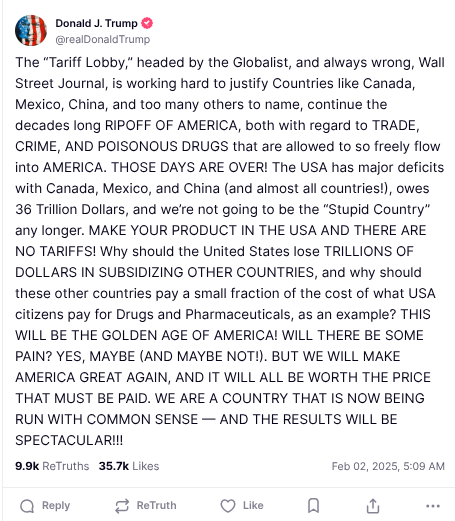
Others did better.

“This is not the time to shut down the diversity of voices we've seen on this stage,” declared Alicia Keys as she accepted Dr. Dre's Global Impact Award. “DEI is not a threat, it's a gift. And the more voices, the more powerful the sound. When destructive forces try to burn us down, we rise from the ashes like a phoenix, and as you see tonight, music is the unstoppable language that connects us all.”

“I just want to say tonight that trans people are not invisible," said Lady Gaga as she and Bruno Mars accepted the Grammy for best pop duo/group performance for "Die with a Smile." "Trans people deserve love. The queer community deserves to be lifted up."

Before that, Chappell Roan marked her best new artist win to keep a promise to herself: “I told myself that if I ever won a Grammy and got to stand up here before the most powerful people in music, I would demand that labels in the industry profiting millions of dollars off of artists would offer a livable wage and health care, especially to developing artists.”

The singer went on to recall a low point early in her career when the label that signed her as a teenager dropped her in 2020, leaving her jobless and without health insurance during the pandemic. “If my label had prioritized it, I could have been provided care by a company I was giving everything to,” she said, winding up her speech with, “Labels, we got you, but do you got us?”

All of these were potent declarations welcomed with hearty applause, as expected. But if you’re the bridge between someone taking a political stand and turning the audience’s attention to wildfire relief, I feel for you.

Noah wasn’t always up to that task, as we saw in the moments following Roan’s wake-up call when he walked onstage looking like he had just stared into the sun. 

“Man. I don’t even know what to say,” he began, and proved that to be true by continuing to speak. “That’s amazing. And in that spirit, I just want to remind everybody that tonight isn’t just about getting awards. It’s also about giving back. I love what Chappell said there. It was absolutely beautiful…” A few sentences later we were thrown into shock by footage of Los Angeles looking like the End of Days.

But then, Noah was often awestruck, expressing some flavor of “That’s amazing” or freestyling about a “powerful” message. 


Want a daily wrap-up of all the news and commentary Salon has to offer? Subscribe to our morning newsletter, Crash Course.


Did this detract from the Grammys, described by Noah as “what Valentine’s Day is to romance, and Father’s Day is to Nick Cannon,” from being wildly colorful and satisfying? Hardly.

The producers fully committed this telecast as a dedication to the city and its role in music’s past and present, using the attention it would draw to fundraise for MusiCares Fire Relief. But it also brought the heart and soul of L.A. to the evening, kicking off with Taylor and Griffin Goldsmith of Dawes performing born-Angeleno Randy Newman’s “I Love L.A.” backed by a supergroup consisting of John Legend, Brittany Howard, Sheryl Crow, St. Vincent, and Brad Paisley.

Later, Mars and Lady Gaga cosplayed a version of “California Dreamin’,” with Stefani Germanotta donning a crocheted cap and prairie dress and going overboard with a kooky psychedelic lean. 

Leading off the live acts was Carpenter goofing her way through a mash-up of “Espresso” and “Please Please Please” that merged Hollywood glamour with jazz cabaret and slapstick, as she pretended to stumble through dropped props and wardrobe malfunctions. Which Noah found, you guessed, “amazing.”  “And funny, which I didn’t appreciate,” he added. “You do funny too, Sabrina? Really? You just gonna take my job like that?”

Probably not any time soon, since the reason the shows work is the emphasis on the music driving the theatrics. Maybe if Noah is asked to host again he’ll step up approach. But after a challenging 2024 and the draining year that was January, his version of par was the stabilizing force grounding the technicolor defiance vibrating the air around him. 

Chaos economy: Trump’s new tariffs signal dark days for America

During the last election, economics was on everyone's minds. Despite the greater economy being healthy with an extraordinary job market not seen since the 1960s, people told pollsters that they were extremely upset about the high cost of living that had been brought on by the disruption of the pandemic and took a couple of years to finally sort out. In poll after poll, Americans said that inflation was the biggest problem facing the nation.

When asked what he planned to do about this, then-candidate Donald Trump's only answers were "tariffs!" and "growth." It was the cure-all for every economic pain that ailed us. Here he is answering a question about what specific legislation he would propose to deal with the high cost of child care. Yes, you guessed it: tariffs.

He promised over and over again that he was going to lower the cost of living and he made it clear that the way he planned to do it was with his beloved tariffs. Well, we're about to find out how that's going to work.

Over the weekend, Trump followed through on his threats to impose 25% tariffs on Mexico and Canada and 10% on China. Imported goods from those nations will be hit with the new penalty beginning Tuesday, ostensibly because of immigration and fentanyl coming over the borders, which is ridiculous. There's no need to discuss Trump's obsession with immigration except to say that Mexico has been cooperating fully with U.S. demands and there simply is not a problem with illegal immigration at the Canadian border except maybe from Americans trying desperately to escape Trump's dystopia.

"We have fought and died alongside you… during your darkest hours … we were always there standing with you …grieving with you the American people."

As for fentanyl, Trump claims that 200,000 people have died from fentanyl this year (I assume he really meant last year.) But that's wrong too. Fentanyl overdoses were down 21% last year and in total didn't even come to half that number. Obviously, all overdose deaths are a tragedy but how Trump thinks hitting Mexico and Canada with tariffs is supposed to solve America's drug problem is a mystery. Of course, in his mind they are instruments of magical power so perhaps he can make them work.

Canada responded immediately to the announcement with Prime Minister Justin Trudeau delivering what may be remembered as his finest speech just as he prepares to leave office. It made me, and I would imagine, plenty of other Americans feel a deep sense of shame at what our president is doing to our closest allies:

"We have fought and died alongside you… during your darkest hours … we were always there standing with you …grieving with you the American people."

We need your help to stay independent

One might have understood Trump aiming tariffs at China, which is the United States' greatest economic adversary, but then his co-president Elon Musk has important business there so perhaps that wouldn't be prudent. But these demands on Canada and Mexico are incredibly vague and impossible for either country to actually accede to, raising the question of what he's really after with these draconian hits on two of America's closest allies and trading partners.

Economist Paul Krugman wondered the same thing and hypothesized that it's "essentially a dominance display. And the many people pointing out that it’s a terrible idea probably only reinforced his determination to show that he’s in charge and smarter than anyone else." That sounds right, especially when you hear his recent rhetoric around America's relationship with the world.

While signing the Laken Riley Act, Trump rambled on about his recent confrontation with Colombia over the treatment of migrants being returned to their country. He said, "we may have tough talk from others, but it's not going to mean anything. They're going to all take them back and they're going to like it too. They're going to like it." It's like he's speaking in old movie dialog these days.

The other day when he virtually attended the World Economic Forum he said, "One thing we’re going to be demanding is we’re going to — be demanding respect from other nations." In the next breath came this, so we know what he was thinking of in his stream-of-consciousness "weave":

Canada.  We have a tremendous deficit with Canada.  We’re not going to have that anymore.  We can’t do it.  It’s — it’s — I don’t know if it’s good for them.  As you probably know, I say, “You can always become a state, and if you’re a state, we won’t have a deficit.  We won’t have to tariff you, et cetera, et cetera.” 

I think everyone has assumed that he is just trolling his younger, more handsome nemesis, Trudeau, with this endless talk about Canada becoming the 51st state – but at this point, you have to wonder. With his recent obsession with territorial expansionism and all the talk of buying (or seizing, if necessary) Greenland and taking back the Panama Canal, it seems that he has truly absorbed the idea that the United States should be growing its territory. His threats to Canada have become even more unhinged in recent days, suggesting that the US plans to choke its economy into subservience:


Want a daily wrap-up of all the news and commentary Salon has to offer? Subscribe to our morning newsletter, Crash Course.


It's nonsense, of course. The trade deficit with Canada is minor and it is not a subsidy. He's very confused about all of this. But it seems more and more obvious that he's seriously entertaining fantasies of being some sort of world conqueror. If it's a negotiating tactic, it's a mighty weird one.

We'll soon see if he really means to carry out this inane tariff plan. The markets may react badly which has, in the past, served as a moderating influence on him at least in the short term. (The Wall St. Journal called his plan "the dumbest trade war in history." )

He told reporters that he will be holding a call on Monday with Mexico and Canada, so maybe they can head this off before chaos reigns. If he's been watching Fox News he may have detected a little bit of a problem:

Throughout the campaign, Trump never admitted that his tariffs would cause prices to go up. He evaded it at every turn, saying that energy costs were the only cause of inflation and he was going to "drill, baby, drill." He now admits that it may very well happen but says, "it will be worth the price that must be paid." Paid by average Americans, not him of course. And possibly some of his erstwhile supporters in the business community who really didn't think he'd be dumb enough to kill the golden goose.

This is a person suffering from severe grandiose delusions and they're getting worse. But I'm afraid this is just the tip of the iceberg. His co-president Elon Musk is suffering from the same malady and they've banded together to take America and the rest of the world on their wild, psychotic ride-along. Fasten your seatbelts. 

Onsite gyms, transportation, meals: GOP floats tax on office perks

Office workers could be taxed for perks like on-site gyms, parking, transit passes and free meals under a proposal floated by House Republicans to pay for President Donald Trump's tax cuts. 

Trump wants trillions of dollars in tax cuts, and many employer-provided benefits are currently excluded from taxable income. Making them taxable is one of several options in a 50-page list of GOP ideas on how to cover the cost of a tax cut and immigration crackdown bill, The New York Times reported.

Taxing employees for their perks could generate around $157 billion over 10 years, according to Republican estimates, CNBC reported.

Workers would likely have to pay income tax on the fair market value of the fringe benefits they receive unless their employers decide to cover some or all of the tax burden. Companies could also decide to eliminate the perks.

This could lead to low morale and productivity, particularly among employees mandated to return to the office at least three days a week. Some companies, including Amazon, Goldman Sachs and JPMorgan Chase, are requiring five days a week. 

“If you start charging employees for parking when they’ve had free parking forever, that’s going to be a lot of unhappy employees,” Jeff Martin, tax principal at Grant Thornton’s Washington National Tax Office, told CNBC.

Congress has debated this kind of tax before, but it hasn't gained much traction. Tax experts said there are other options that are easier to implement and less likely to rankle voters. 

“I don’t think it’s going to be popular with employees, which potentially makes it hard to enact,” Dustin Stamper, tax legislative affairs practice leader at Grant Thornton’s Washington National Tax Office, told CNBC. “There are some real political downsides to some of these [proposals].”

Lawmakers are trying to determine how to accommodate a $4 trillion extension of Trump's 2017 tax cuts and help him follow through with campaign pledges to eliminate tax breaks on tips, overtime pay and Social Security benefits, per CNBC.

13 “Top Chef” alumni land James Beard nominations, reinforcing the show’s culinary legacy

Top Chef” has done it again.

As we’ve reported, “Top Chef” is a competitive reality show that stands out in its category. Few shows produce such high-caliber, award-winning or nominated professionals. For those unfamiliar, the James Beard Awards are considered the Oscars of the culinary world, much like the Emmys are for television actors. A nomination, alongside a Michelin star, is often the pinnacle of a chef’s career.

This year alone, 13 “Top Chef” alumni have been nominated as semifinalists for James Beard Awards. Contestants, from the most recent winner Danny (crowned last May) to season 5’s Hosea Rosenberg, have earned recognition in what is regarded as the pinnacle of culinary accolades.

Of course, there’s a bit of a “chicken and egg” situation here: Some “Top Chef” contestants come to the show with established reputations, while others grow into formidable contenders during or after the competition. The connection between the restaurant industry and a show like “Top Chef” is symbiotic. In some cases, contestants who excel on the show land a nomination, while others who leave early —like Feybesse and Howell — still earn recognition.

What’s clear is that the talent showcased on “Top Chef” is truly top-tier. The show can serve as a launching pad for chefs early in their careers, or it can act as further validation for those who have already earned awards and nominations before joining the competition.

Interestingly, the most recent season produced the highest number of nominations, with four. One category features two “Top Chef” alumni competing for Best Chef: Southeast—Bradley and Shanti.

Nominees will be announced on April 2, with winners revealed at the James Beard Restaurant and Chef Awards ceremony on June 16 in Chicago.

Ron Mare, Senior Vice President of Casting at Magical Elves, which casts the show, told Salon “We’re constantly striving to find the best of the best in the culinary world, and these accolades are a reflection of that commitment. We want to extend our heartfelt congratulations to all the chefs who’ve been honored — they’ve worked tirelessly to get to where they are, and it’s inspiring to see their talent and hard work celebrated on such a prestigious stage.”

Here is the full list of nominees, along with their original season, restaurant(s) and category:

  • Chef Hosea Rosenberg, winner of season 5, Blackbelly in Boulder, CO – Best Chef: Mountain
  • Chef Sheldon Simeon, seasons 10 and 14, Tiffany's in Wailuku, HI – Best Chef: Northwest & Pacific
  • Chef Nina Compton's restaurant Compère Lapin in New Orleans, LA, season 11 – Outstanding Hospitality (note: Compton herself wasn't technically nominated, but she was included here because she is the owner and chef of Compère Lapin)
  • Chef Kwame Onwuachi, season 13, Tatiana in NYC – Best Chef: New York State
  • Chef Sara Bradley, seasons 16 and 20, Freight House in Paducah, KY – Best Chef: Southeast
  • Chef David Viana, season 16, Lita in Aberdeen, NJ – Best Chef: Mid-Atlantic
  • Chef Avishar Barua, season 18, Agni in Columbus, OH – Best Chef: Great Lakes
  • Chef Monique Feybesse, season 19, Tarts de Feybesse in Oakland, CA – Outstanding Pastry Chef or Baker
  • Chef Ashleigh Shanti, season 19, Good Hot Fish in Asheville, NC – Best Chef: Southeast
  • Chef Evelyn Garcia, season 19, Jūn in Houston, TX – Best Chef: Texas
  • Chef Danny Garcia, winner of season 21, Time & Tide in NYC – Emerging Chef
  • Chef Dan Jacobs, season 21, EsterEv in Milwaukee, Wi – Best Chef: Midwest (note: Jacobs was nominated with co-owner Dan Van Rite)
  • Chef Laura Ozyilmaz, season 21, Dalida in San Francisco, CA – Best Chef: California (note: Ozyilmaz was nominated alongside her husband and restaurant co-owner, Sayat Ozyilmaz)
  • Chef Valentine Howell, season 21, Black Cat in Jamaica Plain, MA – Best Chef: Northeast