Spring Sale: Get 1 Year, Save 58%

Right-wing activists appear to be writing memos for the Trump White House

In the spree of memos coming out of President Donald Trump’s Office of Personnel Management, two conservative activists have emerged as key figures, appearing to ghostwrite memos ostensibly from the office’s acting director, Charles Ezell.

Noah Peters, an attorney who represented white nationalist Jared Taylor and who encouraged Kyle Rittenhouse to sue his critics, is listed as the author of a memo titled “Guidance on Presidential Memorandum Return to In-Person Work,” according to metadata reviewed by Salon. Peters, who also has ties to Project 2025, has been floated by the Heritage Foundation as a potential pick for a role in the Trump Labor Department.

James Sherk, the one-time director of the America First Policy Institute, a think tank dedicated to policies like ending funding for Planned Parenthood, opposing red-flag gun laws, opposing transgender rights and ending a slew of legal immigration policies, is listed as the author of the memo titled “Federal Civilian Hiring Freeze Guidance,” according to metadata reviewed by Salon.

Sherk, who Trump recently tapped to serve as the White House Domestic Policy Council, was central to Trump’s Schedule F plan late in his first administration, a policy designed to make it easier to fire federal employees while skirting civil service protections.

Sherk has also advocated for requiring federal employees to return to the office five days a week in the hopes that it would encourage civil servants to voluntarily leave their positions in a November 2022 op-ed in The Wall Street Journal.

Although the Trump administration has since moved to replace the files on the OPM’s website with copies of the memo with different authors listed, journalist Molly White has hosted the original files at her website, Citations Needed.

Although the former president has denied having knowledge of or a connection to Project 2025, the apparent inclusion of conservative agents like Sherk and Peters in his administration shows that many of the plans from the Heritage Foundation document are underway.

What’s the difference between a food allergy and an intolerance?

At one time or another, you've probably come across someone who is lactose intolerant and might experience some unpleasant gut symptoms if they have dairy. Maybe it's you — food intolerances are estimated to affect up to 25% of Australians.

Meanwhile, cow's milk allergy is one of the most common food allergies in infants and young children, affecting around one in 100 infants.

But what's the difference between food allergies and food intolerances? While they might seem alike, there are some fundamental differences between the two.

What is an allergy?

Australia has one of the highest rates of food allergies in the world. Food allergies can develop at any age but are more common in children, affecting more than 10% of one-year-olds and 6% of children at age ten.

A food allergy happens when the body's immune system mistakenly reacts to certain foods as if they were dangerous. The most common foods that trigger allergies include eggs, peanuts and other nuts, milk, shellfish, fish, soy and wheat.

Mild to moderate signs of food allergy include a swollen face, lips or eyes; hives or welts on your skin; or vomiting. A severe allergic reaction (called anaphylaxis) can cause trouble breathing, persistent dizziness or collapse.

What is an intolerance?

Food intolerances (sometimes called non-allergic reactions) are also reactions to food, but they don't involve your immune system.

For example, lactose intolerance is a metabolic condition that happens when the body doesn't produce enough lactase. This enzyme is needed to break down the lactose (a type of sugar) in dairy products.

Food intolerances can also include reactions to natural chemicals in foods (such as salicylates, found in some fruits, vegetables, herbs and spices) and problems with artificial preservatives or flavor enhancers.

Symptoms of food intolerances can include an upset stomach, headaches and fatigue, among others.

Food intolerances don't cause life-threatening reactions (anaphylaxis) so are less dangerous than allergies in the short term, although they can cause problems in the longer term such as malnutrition.

We don't know a lot about how common food intolerances are, but they appear to be more commonly reported than allergies. They can develop at any age.

It can be confusing

Some foods, such as peanuts and tree nuts, are more often associated with allergy. Other foods or ingredients, such as caffeine, are more often associated with intolerance.

Meanwhile, certain foods, such as cow's milk and wheat or gluten (a protein found in wheat, rye and barley), can cause both allergic and non-allergic reactions in different people. But these reactions, even when they're caused by the same foods, are quite different.

For example, children with a cow's milk allergy can react to very small amounts of milk, and serious reactions (such as throat swelling or difficulty breathing) can happen within minutes. Conversely, many people with lactose intolerance can tolerate small amounts of lactose without symptoms.

There are other differences too. Cow's milk allergy is more common in children, though many infants will grow out of this allergy during childhood.

Lactose intolerance is more common in adults, but can also sometimes be temporary. One type of lactose intolerance, secondary lactase deficiency, can be caused by damage to the gut after infection or with medication use (such as antibiotics or cancer treatment). This can go away by itself when the underlying condition resolves or the person stops using the relevant medication.

Whether an allergy or intolerance is likely to be lifelong depends on the food and the reason that the child or adult is reacting to it.

Allergies to some foods, such as milk, egg, wheat and soy, often resolve during childhood, whereas allergies to nuts, fish or shellfish, often (but not always) persist into adulthood. We don't know much about how likely children are to grow out of different types of food intolerances.

How do you find out what's wrong?

If you think you may have a food allergy or intolerance, see a doctor.

Allergy tests help doctors find out which foods might be causing your allergic reactions (but can't diagnose food intolerances). There are two common types: skin prick tests and blood tests.

In a skin prick test, doctors put tiny amounts of allergens (the things that can cause allergies) on your skin and make small pricks to see if your body reacts.

A blood test checks for allergen-specific immunoglobulin E (IgE) antibodies in your blood that show if you might be allergic to a particular food.

Food intolerances can be tricky to figure out because the symptoms depend on what foods you eat and how much. To diagnose them, doctors look at your health history, and may do some tests (such as a breath test). They may ask you to keep a record of foods you eat and timing of symptoms.

A temporary elimination diet, where you stop eating certain foods, can also help to work out which foods you might be intolerant to. But this should only be done with the help of a doctor or dietitian, because eliminating particular foods can lead to nutritional deficiencies, especially in children.

Is there a cure?

There's currently no cure for food allergies or intolerances. For allergies in particular, it's important to strictly avoid allergens. This means reading food labels carefully and being vigilant when eating out.

However, researchers are studying a treatment called oral immunotherapy, which may help some people with food allergies become less sensitive to certain foods.

Whether you have a food allergy or intolerance, your doctor or dietitian can help you to make sure you're eating the right foods.

Victoria Gibson, a Higher Degree by Research student and Research Officer at the School of Nursing, Midwifery and Social Work at the University of Queensland, and Rani Scott-Farmer, a Senior Research Assistant at the University of Queensland, contributed to this article.


Jennifer Koplin, Group Leader, Childhood Allergy & Epidemiology, The University of Queensland and Desalegn Markos Shifti, Postdoctoral Research Fellow, Child Health Research Centre, Faculty of Medicine, The University of Queensland


This article is republished from The Conversation under a Creative Commons license. Read the original article.

How DeepSeek is upending AI and the tech industry

An artificial intelligence chatbot from Chinese startup DeepSeek is upending assumptions that U.S. tech giants hold a firm grip on AI development, leading to a stock market shakeup and renewed concerns over national security. 

DeepSeek's bot assistant became the No. 1 downloaded free app on Apple’s iPhone store on Monday, outpacing OpenAI's ChatGPTAI-related companies like Nvidia, Microsoft and Oracle saw sharp declines as DeepSeek's rally erased nearly $1.2 trillion in market capitalization value from global stock names, according to Bloomberg data.

The fallout underscored how central AI has become to the U.S. economy beyond the tech sector. Nuclear power, crypto and infrastructure stocks were also impacted by DeepSeek's rally. 

And it raised questions about the billions of dollars tech companies say they'll use for future development, given that a Chinese startup has caught up with them at a much lower cost. 

What is DeepSeek?

DeepSeek was founded in 2023 by Liang Wenfeng, an entrepreneur who also established the Chinese stock trading firm High-Flyer. 

DeepSeek attracted attention when it said its AI model released last month could compete with similar ones, like OpenAI's ChatGPT, at a fraction of the cost. Its first free chatbot app was released this month, and became widely accessible on Apple and Google app stores.

We need your help to stay independent

In a research paper, DeepSeek said it used significantly fewer computer chips to build the technology than leading AI companies used for theirs. 

Before launching the chatbot, Wenfeng had acquired a substantial stockpile of chips sold by Nvidia that have since been banned from being exported to China, according to MIT Technology Review. 

“Recognizing the potential of this stockpile for AI training is what led Liang to establish DeepSeek, which was able to use them in combination with the lower-power chips to develop its models," according to the publication. 

Shares of Nvidia plunged 17% after DeepSeek showed it could do more with fewer chips, The New York Times reported.

"Nvidia is having a really bad day," Gary Marcus, an entrepreneur and AI critic, posted on X. “OpenAI’s day is worse. Their business model (charging big bucks for LLMs) basically just blew up, DeepSeek is running circles around them.”

Why are tech giants rattled?

DeepSeek's breakthrough challenges the tech industry's "bigger is better" narrative, The Times reported. It was thought that leaders in the AI race needed to spend large amounts of money to develop the infrastructure needed to expand their products.

Microsoft, Meta and Google have spent tens of billions of dollars and plan to spend billions more, The Times reported. And last week, the Trump administration touted "Stargate," a $500 billion AI infrastructure project with OpenAI, Softbank and Oracle to build data centers in the U.S. they say are needed for AI development. 

"What we’ve found is that DeepSeek … is the top performing, or roughly on par with the best American models"

Approximately $1 trillion is set to be spent globally on AI development in the coming years, according to estimates by Goldman Sachs. But DeepSeek developed its AI model for $6 million, according to Wedbush Securities analyst Dan Ives

DeepSeek was also able to create a more open-source product that could potentially accelerate wider adoption. Open source technology offers components that are free for anyone to access and modify. 

Developers of AI-powered applications "have rushed to test DeepSeek after seeing its performance in publicly available evaluations," The Information, a tech-focused business publication, reported.

This success could prompt investors to put their money into smaller AI startups, The Times reported, and create more competition for Big Tech titans.

Scale AI CEO Alexander Wang said the U.S. is now in an "AI war" with China. 

“What we’ve found is that DeepSeek … is the top performing, or roughly on par with the best American models,” he said, according to CNBC. 

What are the security concerns?

The pace at which U.S. consumers have embraced DeepSeek is raising national security concerns similar to those surrounding TikTok, the social media platform that faces a ban unless it is sold to a non-Chinese company.

The U.S. Supreme Court this month upheld a federal law that requires TikTok's sale. The Court sided with the U.S. government's argument that the app can collect and track data on its 170 million American users. President Donald Trump has paused enforcement of the ban until April to try to negotiate a deal.

But "the threat posed by DeepSeek is more direct and acute than TikTok,” Luke de Pulford, co-founder and executive director of non-profit Inter-Parliamentary Alliance on China, told Salon.

DeepSeek is a fully Chinese company and is subject to Communist Party control, unlike TikTok which positions itself as independent from parent company ByteDance, he said. 

“DeepSeek logs your keystrokes, device data, location and so much other information and stores it all in China,” de Pulford said. “So you’ll never know if the Chinese state has been crunching your data to gain strategic advantage, and DeepSeek would be breaking the law if they told you.”  

“Five-alarm fire”: Trump OMB tries to freeze federal spending in unconstitutional power grab

In a sweeping and unprecedented attempt to seize power reserved for Congress, President Donald Trump's budget office on Monday directed government agencies to freeze all grants and loans for a wide range of programs that could include domestic infrastructure projects, health care programs, housing assistance and a host of other initiatives that depend on money authorized by lawmakers. The order was issued in a leaked two-page memo first obtained by Marisa Kabas, an independent journalist.

Matthew Vaeth, Trump’s acting head of the Office of Management and Budget (OMB), wrote that the pause, which will take effect on Tuesday evening, is being imposed to ensure that the government is complying with Trump's policy agenda and will not affect Social Security, Medicare or "assistance provided directly to individuals." Possible exceptions will be reviewed and granted on a "case-by-case basis." Agencies have a Feb. 10 deadline to submit appeals on any program targeted for suspension.

The memo by Vaeth lays the groundwork for Trump's nominee for OMB chief, Russell Vought — who is awaiting confirmation by the Senate — to implement deep cuts detailed in Project 2025, a right-wing policy blueprint he played a key role in assembling.

Despite the memo's stated instructions to implement the pause “to the extent permissible under applicable law," critics pointed out that almost everything the memo instructs is an illegal abuse of presidential authority: The U.S. Constitution gives Congress the power to determine federal budgets through legislation, while the president administers its disbursement. Because of the memo's broad latitude, Democrats, political activists and nonprofit leaders fear that almost anything that provides essential aid to low-income and struggling Americans without falling under the administration's definition of "direct" assistance could be suspended indefinitely.

The memo was issued after spending freezes were announced at the National Institutes of Health, resulting in a suspension of new research grants and spurring chaos at major scientific institutions.

Senate Majority Leader Chuck Schumer, D-N.Y., condemned the effort in a statement as a "blatant" and "unprecedented" power grab that will hold up "virtually all vital funds that support programs in every community across the country.”

“They say this is only temporary, but no one should believe that,” he said. “Donald Trump must direct his Administration to reverse course immediately and the taxpayers’ money should be distributed to the people. Congress approved these investments and they are not optional; they are the law.” Later Tuesday morning, he told reporters that a group of state attorneys general are going to challenge the order in court.

Other Democrats are raising questions over what exactly will be cut. "Are you stopping NIH cancer trials?” Sen. Amy Klobuchar, D-Minn., asked on social media.

We need your help to stay independent

The memo, while light on most administrative details, broadly attacks "Marxist equity, transgenderism, and Green New Deal social engineering policies" that are a "waste of taxpayer dollars," singling out infrastructure and clean energy projects, foreign aid, funding for nonprofits and diversity-related programs for permanent elimination. Trump has already issued orders to halt government operations like health agency meetings and foreign aid and signaled his intentions to target federal disaster relief.

While Vaeth claims that the federal government spent nearly $10 trillion in fiscal year 2024, the source of those figures is not clear; the nonpartisan Congressional Budget Office (CBO) estimated government spending in 2024 at a much lower $6.75 trillion.

"This order is a potential five-alarm fire for nonprofit organizations and the people and communities they serve," Diane Yentel, CEO of the National Council of Nonprofits, said in a statement. "From pausing research on cures for childhood cancer to halting food assistance, safety from domestic violence, and closing suicide hotlines, the impact of even a short pause in funding could be devastating and cost lives."

Officials from states that have received federal money warned that a sudden freeze of unspecified duration will cause enormous social and economic disruption for their constituents.

"Whether it's [Hurricane Helene] recovery in Southwest… semiconductor manufacturing in Northern Virginia… pharmaceutical jobs in Richmond… renewable energy in coastal Virginia… or the Microporous expansion in Southside – every one of these projects is in part the result of federal funding from laws we fought tooth and nail to pass in Congress, and could now be endangered thanks to President Trump's mess," Virginia Democratic Sens. Mark Warner and Tim Kaine, said in a joint statement.

Republicans, on the other hand, characterized the order as Trump fulfilling his campaign promises, even though he repeatedly disavowed Project 2025 only to now embrace many ideas it proposed.

"You need to understand he was elected to shake up the status quo. That is what he's going to do. It's not going to be business as usual," House Majority Whip Tom Emmer, R-Minn., told reporters at a GOP policy retreat in Miami. He did not comment on the potential fate of $6.5 million in federal funding he requested for infrastructure projects in his district last year.

Love, food and the fight to endure: HBO’s new “Like Water for Chocolate” is ideal for trying times

“Like Water for Chocolate,” has always been a delectable tale of food, love, and the power they wield when intertwined. Now, Salma Hayek Pinault reimagines Laura Esquivel's 1989 classic as a story of women’s resilience in the face of a turbulent political landscape.

Woven throughout the storyline of Tita de la Garza and Pedro Muzquiz’s forbidden love is the power struggle between a small pool of wealthy landowners and politicians and the people who serve them. Backroom deals, violence and fear tactics are tools the ruling class employs in the series to maintain the status quo and achieve their desired outcomes. The country is on edge as the fight for control breaks out, and yet the show still takes time to explore the human spirit’s desire to love and be loved.

Today’s political upheaval mirrors the struggles of this fictional tale. With a second Trump term underway and a desire for escapism and reassurance, now might be the time to dig into the new series on HBO.

The show debuted right after Election Day, and I watched it to escape the new, oppressive reality. I doubt the show’s themes of feminine survival would have stood out to me as much had Trump lost. 

I half-expected a frame-for-frame modern retelling of the story of two unrequited lovers, set against the backdrop of Mexico’s Revolutionary War. Instead, I got luscious set pieces as Hayek and her team explored the various ways women wield — and at times, give up — their power. 

The series became the most watched Latin American content on Max worldwide and climbed to rank among the top three most watched series on the platform during its premiere month of November and has already been renewed for a second season. 

“This second season of the series will complete the story, fusing essential aspects of Mexican culture, such as magical realism and gastronomy, acting as forms of expression and connection,” said Mariano Cesar, SVP of General Entertainment Content and Programming Strategy at Warner Bros. Discovery for Latin America and US Hispanic upon news of the show’s renewal. “These themes are developed from a female perspective, in which the questioning of social and family mandates reinforces the current relevance of the narrative.”

We need your help to stay independent

In one memorable scene Azul Guaita, who plays Tita de la Garza — a sweet character kept apart from her lover by her mother — uses her calm demeanor to talk down revolutionary soldiers set to raid her family’s ranch of food and resources. 

Irene Azuela plays her mother Elena, who aims a shotgun at the group’s leader, firing it with no fear and precision to scare them off her land. With guns raised by both sides, Tita steps in between the two to prevent bloodshed. 

The revolutionary leader, once a servant to the De La Garza family, agrees to Tita’s request to leave without violence (calling Tita jefa or “boss” in the process), but orders his men to grab provisions on their way out. Tita turns to her mother with a smile on her face that implies she’ll be praised for the outcome of the exchange. Instead, she’s slapped by her mother across the face as she spits out the word jefa out to her. 

The women here are sweet and vicious. They take orders and give them. They’re mothers and killers. Some use words to get their way, others use guns and food.

“Women have always had to fight to have a voice or control over our destiny,” Hayek Pinault stated during the premiere of the show’s press conference. “Women participated in the revolution. They had to defend their homes, protect their families. The contributions of women is often overlooked in all the political conflicts all over the world.”

With a new Trump administration, I’m reminded of the old adage that “history doesn't repeat itself, but it often rhymes." The horrors of the past won’t be the same, but new challenges — and moments of sweetness — will help us endure. A reminder that what is old, can be new again. So to survive the present, it feels only natural that we should look to the past. 

What the past tells us, in both fiction and non-ficition, is survival is crafted moment by moment. You look for the light, to get you through the darkness. Tita and her lover Pedro find connection in mundane, routine moments. They’re kept apart but their love burns bright through stolen looks, shared laughs and electrified touches where their hands brush past each other. Where they find each other, they find love, magic and a way through. Love is revolutionary and imbues people with the power to do incredible things. For Tita, love gives her the ability to survive the unbearable agony of a lifetime of injustice. 

This superhuman strength reminds me of the moment Miss Pross, an average woman at best, overpowers the vicious and bitter Madame Defarge in Charles Dickens’ “A Tale of Two Cities.” How does she do it ? With “the vigorous, tenacity of love, always so much stronger than hate.” Dickens' story is over 160 years old and still inspiring audiences today (The Dark Knight Rises is a modern retelling of the French Revolutionary tale and one of the highest grossing films of all time). The past cannot predict the future but it can remind us of universal truths. In this case, there is a range to love. Tita uses it to escape her reality, Miss Pross employs it to kill.

This new version of “Like Water for Chocolate,” brings us familiar characters imbued with new elements — much like the current political landscape in the U.S. And what the past tells us is that there is power in radical love and we will survive. It won’t be unscathed, but the parts of us that make it will have a story to tell and it is the responsibility of future generations to make meaning of it. 

“The strength of solidarity”: A Whole Foods in Philadelphia is the first in the country to unionize

Workers at a Whole Foods in Philadelphia are on track to be the first in company history to be represented by a labor union after a majority voted Monday to join the local chapter of the United Food and Commercial Workers.

According to the National Labor Relations Board, 130 workers voted to be represented by UFCW, while 100 voted against, out of nearly 300 eligible employees. Now, said NLRB's Teddy Quinn, "The employer must begin bargaining in good faith with the union."

The development comes two months after a majority of workers at the sprawling, flagship location signed cards expressing interest in collectively bargaining. The election was facilitated by the National Labor Relations Board, which under former President Joe Biden adopted a rule expediting such votes, limiting the time employers have to engage in anti-union advocacy; before the vote, workers had accused Whole Foods and its parent company, Amazon, of having turned union-busting into a "science," claiming employees were retaliated against for organizing.

Whole Foods Market was purchased by Amazon in 2017 for $13.7 billion. Since then, workers who spoke to Salon said Amazon's warehouse-style metrics have been extended to its grocery stores, which also serve as Amazon distribution hubs. At its store in Philadelphia, the first floor is dedicated to online shopping, with workers fulfilling grocery orders and accepting Amazon returns.

“We are incredibly proud of the Whole Foods workers who have stood up to Amazon’s union-busting tactics and demonstrated the strength of solidarity,” UFCW Local 1776 President Wendell Young IV said in a statement. “This fight is far from over, but today’s victory is an important step forward. We are ready to bring Whole Foods to the bargaining table to negotiate a fair first contract that reflects the workers’ needs and priorities.”

The company has five business days from the time of the union election to lodge any objections. A spokesperson, asked if the company intends to do so, said only that Whole Foods "is proud to offer competitive compensation, great benefits, and career advancement opportunities."

America rejected MDMA, but Australia didn’t. Here’s why psychedelics have been embraced Down Under

In Sydney, Australia, Rebecca Huntley had been seeking psychiatric care on-and-off for thirty years when she heard from an otherwise straight-edged friend about her experience going through MDMA-assisted therapy. At the time, MDMA, also known as the party drug ecstasy, had been outlawed in Australia since 1987, despite research suggesting the drug can treat mental illness. But Rebecca’s friend connected her with an underground therapist providing this service to a select clientele. After a rigorous vetting process, their first session took place at Rebecca’s house, a quiet place surrounded by trees.

“I felt like I needed something other than what I was doing,” she told Salon. “I was grinding my gears in terms of my mental health; I was pretty angry all the time. So I thought I’d give it a go.”

“It’s like you’ve jumped forward in light-speed to an accelerated point in your mental health journey,” Rebecca added. “For me, particularly the first session released an enormous amount of pain and grief and sadness that I had been spending years trying to push to the periphery of my consciousness. And the next day, after the drug was pretty much out of my system, I woke up feeling like I'd woken up in a different kind of body, a calmer body, a body that was more grounded.”

After that it was a six month process, including two more trips with MDMA and follow-up integration sessions to make sense of the experience. Rebecca wrote a book, “Sassafras,” about her journey.

“It's up there with giving birth to my three children in terms of genuinely life-changing experiences,” she said.

In 2023, Australia became the first country in the world to legalize both MDMA and psilocybin-assisted psychiatric therapy, strictly under very specific conditions: MDMA for post-traumatic stress disorder (PTSD), and psilocybin (the drug in “magic” mushrooms) for treatment-resistant depression.

"I woke up feeling like I'd woken up in a different kind of body, a calmer body, a body that was more grounded."

In the United States, the psychedelic renaissance was led by the charismatic Rick Doblin and his Multidisciplinary Association for Psychedelic Studies (MAPS), whose groundbreaking clinical studies appeared to show astounding results in treating PTSD with MDMA. The drug can spur patients away from inhibition and anxiety, which can be useful for therapists trying to get someone to open up. Doblin believed psychedelics could change the world, and openly admitted that just like medical marijuana, psychedelic therapy was a backdoor to legalization.

Over a decade ago, MAPS spun their pharmaceutical development arm into a subsidiary known as MAPS Public Benefit Corporation, later renaming it Lykos Therapeutics. But last year, the U.S. Food and Drug Administration (FDA) rejected MDMA as a prescription medication, taking issue with Lykos’ scientific rigor, dashing the hopes of patients and psychonauts alike.

“I was quite frustrated at some of the questions that were being asked [at the FDA hearing] that indicated the folks asking the questions clearly didn't have a real understanding of MDMA,” Dr. Stephen Bright, a drugs expert at Edith Cowan University in Perth, Australia, told Salon. “There were concerns that people might develop problems with other substances after being administered MDMA, and within the course I teach, we're teaching the students not to frame things within that disease model. So it's a bit frustrating to see a prestigious U.S. government department promoting that model.”


Want more health and science stories in your inbox? Subscribe to Salon's weekly newsletter Lab Notes.


As medicinal MDMA’s future in America looks uncertain, are there any lessons to be learned from Australia?

If America had Rick Doblin, then Australia has Peter Hunt and his wife, opera singer Tania de Jong, the power couple behind Mind Medicine Australia (MMA) — essentially MAPS Down Under. Hunt, a multimillionaire investment banker, was haunted by losing his father to suicide when he was thirteen. The pair were inspired to launch MMA after a shroom trip in Amsterdam. 

“The experience was so powerful that we felt compelled to help support the legal development of psychedelic-assisted therapies in Australia and start a charity to ensure safe and equitable access to these transformational treatments,” Tania told Salon.

Like the FDA, Australia’s Therapeutic Goods Administration (TGA) refused to clear MDMA and psilocybin at first, turning down MMA’s initial application in October 2022 on the grounds there wasn’t enough evidence, potential health risks, and clandestine diversion of drugs to the black market. But just a few months later, in February, the TGA abruptly reversed course, moving MDMA from Schedule 9, for prohibited substances like heroin, to Schedule 8, a category for controlled medicines.

To get this to happen, MMA mobilized an immense letter-writing campaign, flooding the TGA with 13,000 submissions initially, plus another 3,000 upon news of the rejection from individuals describing how the substances helped them or why they should be legal. These mainly consisted of personal, not professional, viewpoints, but apparently this was enough to sway the decision. 

"Our advocacy efforts focussed on a limited rescheduling of MDMA and psilocybin as unregistered medicines, whereas MAPS was pursuing registration of MDMA."

Citing new research into psychedelic medicine, the TGA finally allowed MDMA and psilocybin in a therapeutic context. Prominent researchers like Prof. David Nutt, a renowned neuroscientist from Imperial College London, flew in to show his support. The decision was still controversial to some experts, who cautioned against rushing ahead since psychedelics aren’t for everyone and some vulnerable patients might actually wind up worse after a trip. Meanwhile, skeptics accused the TGA of caving in to peer pressure (“C’mon TGA, be cool”). The TGA replied that the benefits outweighed the risks.

Tania dismissed these criticisms as “nonsense.”

“There is a lot of clinical trial evidence to support the safe and effective use of these therapies in clinical environments,” she said. “We have an increasing mental health epidemic in Australia with an estimated 1 in 4 people suffering with mental illness. There have been no substantive innovations in mental health treatments for over 50 years. Whilst further research is important – we are financially supporting a number of innovative trials – the argument that we don’t have enough data to support limited accessibility in highly supervised clinical environments is not valid given the amount of supportive evidence and the high levels of suffering.”

So why has the TGA proven more flexible than the FDA?

“Our advocacy efforts focussed on a limited rescheduling of MDMA and psilocybin as unregistered medicines, whereas MAPS was pursuing registration of MDMA,” Tania explained. “With registration in the U.S., MDMA is likely to be more widely accessible for PTSD and able to be used off label for other relevant mental illnesses where there is research support for this, whereas in Australia MDMA, as an unregistered medicine, is available only for PTSD patients and psychiatrists must apply for a permit to become an ‘authorized prescriber.’ By pursuing a limited rescheduling, we were able to support limited access for those most in need, while the evidence base continues to grow to support wider scale accessibility.”

This model, according to Tania, is more restrictive than what was proposed in the States, but allowing each clinician to prescribe at their discretion. But only those blessed by an ethics committee may become authorized prescribers. 

“Most psychiatrists don't have the sort of experience with research to be able to write a protocol that's going to be approved by an ethics committee, which is why it's really limited how many authorized prescribers there are in Australia,” Bright explained.

As a result, rollout has been slow — with the first-ever non-research medical prescription for 180mg of MDMA only written by a Melbourne doctor in January last year — and it came with an expensive price tag. Clarion Clinics, Australia’s first private psychedelic therapy centre that opened in February last year, charges an eye-popping 27,000 Australian dollars (approx. $16,500 USD) for a full nine-month course, well out-of-reach for most Aussies. Medical marijuana too is legal in Australia, but so prohibitively priced that 78% of patients still score from dealers. 

“I worry that people who are unwell aren't going to be able to access it — and desperate people will do desperate things,” said Bright. “My worry is that people will access these treatments either in an underground setting or try a DIY approach, and that could potentially result in harm. We've actually seen a significant increase in calls to the poisons hotline related to MDMA and other psychedelics.”

Recreational molly is still illegal in Australia, manufactured or imported by crime syndicates like the ‘Ndrangheta, mafia clans from southern Italy who made their riches in Australia’s drug game by growing weed in the Outback. In 2016, Pasquale Barbaro, the scion of a mob family behind a plot to smuggle a whopping 15 million ecstasy pills weighing 4.4 tonnes hidden in tins of peeled tomatoes, was gunned down by a biker gang while leaving a friends’ house in Sydney. And since the drugs are prohibited, there’s no telling what’s inside and they often mixed with other substances: recently, partygoers at festivals have been victims of nitazene poisoning, a synthetic opioid.

“I think the early evidence is that it can be, again, life changing, so I'm very excited,” said Rebecca. “But I've got to say there's some trepidation about how it's going to go and who's going to have access to it. And of course, there's a massive underground … My therapist who I worked with is just top-notch; so good, so diligent, so professional … But there are people who aren't. There are people who aren't really doing the due diligence, aren't really working out whether the person that they're treating is ready for the therapy.”

There are also efforts to bring down the cost.

“MMA has set up a patient support fund to help those in need who can’t otherwise afford the treatment with up to 50% of upfront costs for the therapy program being covered by the Fund,” Tania said. “Additionally, we’re seeing funders begin to support the therapies. Work Cover and the NDIS have subsidised treatment for some patients, the Department of Veterans’ Affairs has announced that they will begin assessing applications for funding by the end of March 2025, and multiple private health insurers are preparing pilot programs for their members.”

Another company, Emyria, is offering free MDMA-assisted therapy trials to first responders grappling with PTSD.

We need your help to stay independent

Another danger that could arise is a moral panic. The media certainly has the incentive to sensationalize drug use, followed by calls to ban this “sick filth,” but prohibition certainly offers no solutions to the mental health crisis or actually stops drug use. In 2001, a supervised injection facility run by Australia’s Uniting Church opened in King’s Cross, Sydney — a district at the epicentre of the overdose crisis, claiming 10% of all deaths nationwide.

This was a place where narcotic consumers could safely inject under the supervision of trained medical staff. Anyone overdosing can be instantly attended to. A few years later, a newspaper splashed images of dozens of syringes littering the street over its front page. It turned out that the used needles actually belonged to the owners of a diabetic cat named Trotsky, who’d momentarily left their rubbish unattended only for it to spill over and be photographed by reporters.

“I'm largely very positive, but of course as we know with these things, there's so much stigma around the drug and so much bullshit around mental health, that it could all unravel,” Rebecca reflected. “I feel like the world is looking at us and saying, you know, how might Australia do it? And so I really don't want us to f**k it up!”

It’s not sci-fi: Americans support asteroid defense spending

What are the odds of an asteroid of dangerous dimensions striking the planet? If you wait long enough, it’s 100 percent. And they don’t even have to be especially gargantuan to cause widespread harm: So-called city killers — football stadium-size asteroids that can handily vaporize a metropolis with their nuclear weapon-style explosion — are disturbingly common in near-Earth space.

If we do find that a city killer is barreling toward us, there are only three possible outcomes: the asteroid hits the planet, impacts a densely populated area, and millions of people perish; the asteroid impacts a remote spot in the desert or the middle of the ocean, and nobody dies; or, the intruder is detected well in advance of its destined impact day, and we somehow manage to deflect it or blow it to smithereens.

On paper, planetary defense is one of the easier global problems to solve. If you can find Earthbound asteroids in space before they find us, and you’ve got the technology available to knock them away from our blue marble — or, if you are short on time, the technology to obliterate them entirely — then you can rule out almost all but the smallest asteroid impacts. You can effectively cancel out an entire category of natural disaster.

Remarkably, it seems we’re well on our way to doing just that. NASA’s Double Asteroid Redirection Test, or DART, rammed an uncrewed spacecraft into a (harmless) city killer back in 2022, successfully deflecting it and demonstrating that humanity can rearrange the cosmos to keep the Earth safe. And before the decade’s end, an asteroid-hunting space-based telescope, NASA’s Near-Earth Object Surveyor mission, will be launched; with its infrared eye, it is set to find almost all the city killers orbiting perilously close to the planet.

Planetary defense is a global imperative, of course, but for the time being, NASA — and, by extension, the United States — is leading the charge. Others players, including the European Space Agency, Japan, and (imminently, with their own DART-like mission) China, are also contributing to the fight against lethal asteroids.

For the moment, though, the world appears to be America’s to save. Yet planetary defense only operates if the government funds it and has space policies that prioritize it. NASA’s Planetary Defense Coordination Office — which is responsible for things like DART, the NEO Surveyor mission, and America’s suite of ground-based asteroid detecting telescopes — gets funding from the federal government to work toward all its goals. The annual funding amount changes year-on-year, but it’s risen from the single-digit millions to well over $100 million in just the past 15 years.

If you can find Earthbound asteroids in space before they find us, and knock them away from our blue marble, you can effectively cancel out an entire category of natural disaster.

Now it seems that the Department of Government Efficiency, or DOGE, run by SpaceX CEO and billionaire Elon Musk, is set to take an axe to much of the federal government. Several agencies have already been cited as targets, perhaps including, as some have suggested, NASA itself. With Musk’s frequent overtures about sending astronauts to Mars, and with tech billionaire Jared Isaacman — who made the first private spacewalk with SpaceX — being nominated by Donald Trump to lead NASA — it’s also not difficult to imagine a strong U.S. pivot toward Mars, with other key programs in the space agency’s purview left in the dust. “Elon, get those rocket ships going, because we want to reach Mars before the end of my term,” Trump said during a campaign rally, according to a video clip of the speech tweeted by Musk in September.

So the future of America’s planetary defense research is uncertain. But there are reasons to be sanguine.

The first is that, as of 2022, NASA’s Planetary Defense Coordination Office gets around $150 million per year. That’s almost a rounding error on a federal government spending spreadsheet. (As a point of comparison, the Artemis program, which hopes to get American astronauts back to the lunar surface in the next few years, is costing tens of billions.) For that low cost, the benefit is extremely high: Defending everyone on the planet, which, to state the obvious, also includes America, something that should hold sway with the new government.

But, perhaps more importantly, planetary defense has long been one of the few issues that has had strong bipartisan support both inside and outside of Congress.

In 1998, Congress gave NASA a legal requirement to find 90 percent of the kilometer-size asteroids — those capable of causing global devastation — orbiting near Earth as soon as possible. (They managed it in 12 years.) In 2005, Congress also legally required NASA to find 90 percent of the near-Earth city killers, a target they are still working on but toward which they are rapidly making progress. Congressional acts, caucuses, and hearings involving planetary defense have often been given support by Democrats, Republicans, and Independents.

“Elon, get those rocket ships going, because we want to reach Mars before the end of my term.”

NEO Surveyor, in particular, has garnered immovable bipartisan support in recent years. In 2022, NASA’s senior leadership, which was struggling to manage ballooning planetary science mission budgets, was reluctant to ask Congress for the full amount of annual funding for the Surveyor mission. (It needed $170 million for 2023, but NASA asked for $40 million.) Congress gave them more than they requested anyway, $90 million.

That year, several Republicans on the House science committee demanded that NASA make sure the mission gets the funding it needed. Writing to then-NASA administrator Bill Nelson, they complained that NASA’s senior leadership wasn’t doing enough to find potentially hazardous asteroids, that they had no plan to replace the collapsed Arecibo Observatory in Puerto Rico — a radar facility that, among other things, helped characterize asteroids — and seemed to be dawdling with NEO Surveyor’s budget unnecessarily. Referring to the 2005 act that directed NASA to find those city killers, they wrote that “NASA failed to plan, develop, and implement a program to achieve this goal.”

The makeup of the House of Representatives and the Senate has ebbed and flowed dramatically over the past three decades. But it seems that, no matter which party has control, planetary defense — even if it lingers deep in the background, behind many other issues — gets its due. Perhaps that’s because the benefits of protecting the world from asteroid strikes is obvious to politicians, especially if the U.S. can take credit.

Or perhaps it’s because the electorate, too, seem to be very keen on planetary defense. In recent years, the Pew Research Center has surveyed the American public regarding their opinions on NASA, and asked them what its objectives should be. Its 2023 survey revealed that “monitor asteroids, other objects that could hit Earth” came in at number one, with 60 percent of respondents saying it should be a top priority for NASA; another 30 percent said it shouldn’t be of paramount importance but still something NASA should pursue. (Pew’s 2018 survey on the same subject had similar results.)

Among respondents, both Democrats (64 percent) and Republicans (57 percent) said that monitoring potentially Earthbound asteroids should be a top priority. As it happens, sending astronauts to the moon and Mars ranked at the bottom of the list of priorities — something that probably won’t affect Musk’s incorrigible enthusiasm for the red planet.

At the bare minimum, then, NASA’s ongoing planetary defense work should tick along as planned, with NEO Surveyor continuing to be funded, as well as its ground-based asteroid-questing telescopes.

Casey Dreier, chief of space policy at the Planetary Society, a nonprofit planetary exploration and planetary defense advocacy group, recently wrote that it’s difficult to predict what’s going to happen with NASA during the second Trump administration. The Artemis program is likely to be a huge focus during the transition; planetary defense hasn’t emerged as a talking point for the administration.

In a 2023 Pew survey, both Democrats (64 percent) and Republicans (57 percent) said that monitoring potentially Earthbound asteroids should be a top priority.

It is worth noting, though, that during Trump’s first term, the administration made moves to secure greater funding for planetary defense research. And in its final days, it released a report looking into America’s asteroid impact emergency protocols, suggesting planetary defense is an issue that it sees as important.

If Republicans remain die-hard fans of planetary defense, there is also a chance that anti-asteroid efforts will be accelerated over the next four years. DART is a method of planetary defense known as a kinetic impactor: a partly autonomous spacecraft slams into an asteroid, just at the right speed and angle, to knock it onto a different orbit around the sun, one that doesn’t terminate in a violent collision with Earth.

Deflecting an asteroid with something like DART clearly works well, but if miscalculated, and that asteroid is punched with too much oomph, it could fracture the asteroid, turning an Earthbound cannonball into a shotgun spray of still-lethal objects.

But there are many more methods of planetary defense; it’s just that, for now, they are purely conceptual. Take the gravity tractor, for example: If you park a hefty spacecraft next to an asteroid, you could potentially use that spacecraft’s own gravity to gradually pull the asteroid out of Earth’s way. (This is a concept that’s spoken about not just in planetary defense circles, but in asteroid capture and mining discussions.) Such a program would require many years, perhaps decades, of work, but it’s a more precise, gentler method of planetary defense.

Some officials at NASA, and those further afield, are keen to try out alternative methods of planetary defense, including something like a gravity tractor. Others, meanwhile, want to proceed with DART 2 — to impact other types of asteroids. Not all of the objects have the same structure, size or composition, and some act more like boulders flying in formation than anything rigid and monolithic. So, these experts say, we need to deflect a variety of space rocks to see if they all respond the same way to a kinetic impactor.

Planetary defense experiments are inherently imaginative, almost sci-fi-esque, so the appeal to people of any political persuasion seems obvious — particularly with how ingrained dangerous asteroids (and comets) are in our collective pop culture-infused psyche. But conducting these space-based experiments also shores up humanity’s ability to prevent a cosmic catastrophe.

In 2021, Lindley Johnson, who was then the head of NASA’s Planetary Defense Coordination Office, said during an interview: “I think we've gotten the Planetary Defense program at NASA now to about the right level of resource and attention,” before adding: “Our challenge will be to keep it there.”

The hope back then is the same as it is now: that no matter who holds political power, NASA gets to keep looking up, and is granted the ability to protect the only home we know.


Robin George Andrews is an award-winning science journalist who regularly writes about space and geosciences for outlets including The New York Times, The Atlantic, National Geographic, Scientific American, Atlas Obscura, and Quanta Magazine. His previous book is “Super Volcanoes: What They Reveal About Earth and the Worlds Beyond.” He lives in London.

This article was originally published on Undark. Read the original article.

What “law and order”? Trump’s first week will only unleash more crime

Donald Trump's endless first-term bleating about crime and how he was the only one who could bring an end to it was always a joke. It took on new levels of ridiculousness when he spent the next four years accumulating a dizzying number of felony indictments and, eventually, 34 convictions. (There would certainly have been more if he had actually faced trial for stealing classified documents and attempting to steal an election.)

Trump's alleged crimes weren't bloodless "white-collar" matters, either. Jan. 6, of course, was a violent assault on the Capitol. A civil jury also found Trump liable for sexually assaulting journalist E. Jean Carroll, which is anyone's definition of a violent crime. But American political discourse left behind quaint concepts like "making sense" years ago. Trump forged ahead with claims that he would "dismantle the gangs, the street crews and the criminal networks that are ravaging our towns," even though he and his Jan. 6 co-conspirators look an awful lot like one of those "criminal networks."

We need your help to stay independent

Trump's lies are exposed, first of all, by the fact that crime rates fell steeply under Joe Biden. And now, Trump just spent his first week back in the White House doing everything he possibly could to increase the levels of street crime ordinary Americans may face. His most overt pro-crime move, of course, was literally springing a bunch of violent criminals from federal prisons with the Jan. 6 pardons. One such person, Daniel Ball, was arrested again hours later on a federal gun charge. His crimes during the insurrection included assaulting police officers and throwing an explosive device inside the Capitol building. On Sunday, another pardoned rioter, Matthew Huttle, was killed by a police officer after "an altercation" during a traffic stop. He had previous convictions for beating a toddler, drunk driving and "disorderly conduct" stemming from battering his partner. Family members of other rioters have expressed fear that their pardoned relatives could come after them, since many of those convicted had prior histories of domestic violence.

Forget dismantling gangs: Trump's pardons sent a signal to radicalized and violent people that he'd love for them to form right-wing militias and terrorize people he doesn't like.  As Andy Campbell of HuffPost reports, the Proud Boys — who were "circling the drain" a year ago — are swiftly reforming. Leaders celebrated their reemergence by drinking whiskey, chanting about reclaiming the streets and throwing fascist salutes. As Campbell notes, the Proud Boys largely functioned in the first administration by starting street fights with leftists, often after prolonged harassment of people who were just trying to go about their days in "blue" cities like Portland, Oregon. Trump also pardoned 23 people convicted of blockading abortion clinics, an act that Trump called "peaceful," even though at least two people were injured during such altercations. As with the Jan. 6 pardons, this sends a signal that the use of force and even violence is just fine if you're trying to stop women from terminating pregnancies. 


Want more Amanda Marcotte on politics? Subscribe to her newsletter Standing Room Only.


Most of the people Trump has set free sprung to wreak havoc are white, so of course they aren't considered "criminals" in MAGA-speak, no matter how heinous their real-world crimes may be. Trump mostly uses "criminal" as a code word for "nonwhite immigrant." This week, ICE kicked off a dramatic series of deportation raids, and while some of the people they grabbed have criminal records, many do not. Some of those targeted for abuse and harassment aren't even here illegally. ICE reportedly detained a number of U.S. citizens in New Jersey and Arizona raids, largely because agents targeted people based on perceived ethnic identity. As the New York Times reports, large numbers of migrants who have legal work visas and even Social Security numbers may end up "abruptly detained and swiftly deported." 

Forget dismantling gangs: Trump's Jan. 6 pardons send a clear signal to radicalized, violent people that he'd love for them to form right-wing militias and terrorize people he doesn't like.

These tactics might satisfy the sadism of Fox News viewers, but one likely side effect of all this is an increase in crime. The reason is twofold. First, as California Attorney general Rob Bonta told Greg Sargent of the New Republic, victims and witnesses of crimes are "much less likely to come forward" if they fear "they would be put in jeopardy because of immigration enforcement." Second, as Nicholas Grossman, a professor at the University of Illinois, explained on Bluesky, the Trump administration is diverting local and state police "away from murder, rape, gang violence and other serious crimes to round up dishwashers and construction workers." Law enforcement has limited resources, and every man-hour spent on harassing immigrants is being taken away from dealing with real crime. 

Trump lies about everything, so we shouldn't assume he's sincere about wanting to reduce crime. Quite the contrary: He has every reason to think that he will benefit from more crime and chaos. Street fighting and other crimes create images that right-wing media use to terrify their largely elderly, exurban audiences, shoring up even more support for "tough" measures and "crackdowns" on people they don't like. Most people, especially those who consume authoritarian propaganda, will never see the clear research that shows Trump's policies lead to more crime. They'll just see scary images on TVs and nod vigorously along as Trump claims that this proves we need more round-ups, more support for far-right militias and more abuse of innocent people who have nothing to do with such crimes. 

We saw this paradox in action in the summer of 2020, when conservative media exaggerated and often lied about violence during the Black Lives Matter protests. Those protests were overwhelmingly nonviolent, but many voters in rural and suburban areas were led to believe that America's cities were practically burning down. Instead of blaming the guy who was actually president at the time, many were suckered into conspiracy theories accusing the "deep state" of constraining him. Trump leveraged that propaganda into claims that he needed even more unchecked power. 

All that came in response to an imaginary crisis, built mostly on Fox News and other outlets who used a handful of misleading video clips repeatedly to portray the protest movement as as a violent uprising. When real crime happens, Trump can embrace, it, declaring that he'll fix the problem if only the public and their elected representatives bow down before him even harder. We got a taste of this last time around as well. Proud Boys went into relatively liberal cities like Portland and picked fights with locals. Those chaotic images were broadcast far and wide by conservative media, who blamed "antifa" for literally all of it. After  shifting blame to the left, they claimed that the "emergency" justified rolling back civil rights.

In other words, Donald Trump needs crime, so he can pretend to save us from it. He will clearly invent imaginary crime if he needs to, but even he understands that lies are more persuasive if you have pictures that seem to back them up.

“Just as bad as we feared”: Experts on the chaos and carnage of Trump’s first week

Donald Trump's "shock and awe" first week in office was exactly what he had promised — or threatened.

He issued almost 100 executive orders and policy changes during that chaotic week. These included freeing virtually all of his supporters who attacked the Capitol on Jan. 6, 2021, attempting to nullify the 14th Amendment and end birthright citizenship, declaring a national emergency on the U.S.-Mexico border, launching nationwide raids against undocumented immigrants and their communities as part of “the largest deportation plan in American history,” escalating attacks on the LGBTQ community, closing down government programs and offices focused on diversity, equity and inclusion, withdrawing from both the World Health Organization and the Paris climate accord, and throwing out many other changes made by the Biden administration regarding the environment, the economy, education, and other areas.

Most of this was spelled out in advance by Project 2025 and Agenda 47. None of it should have come as a surprise.

As Trump’s eventful first week concluded, he fired more than a dozen inspectors general across a wide range of federal agencies. The role of such inspectors is to provide nonpartisan legal supervision and oversight, something Trump manifestly sees as an obstacle to autocratic rule. Firing them all was likely illegal, but Trump simply doesn't care. According to him — and also according to the right-wing justices on the Supreme Court — his narrow electoral victory now renders him above the law as a de facto dictator.

In an essay for the Philadelphia Inquirer, Will Bunch reflects on this "reactionary Week One backlash" striking "at the very heart of LGBTQ rights, academic freedom on college campuses, the environmental movement, and decades of rising empowerment for women":

On the surface, Trump’s dictator-on-Day-One orders were a campaign-promise-fulfilling war on 21st-century liberal “wokeness,” but in reality the MAGA movement was stabbing at the heart of MLK, of LBJ’s “Great Society,” and the progressive victories that have sustained my generation for our lifetimes.

In a matter of hours, an American strongman had achieved the long-held dream of the far right, to toss the wave of liberations of the Long Sixties down an Orwellian memory hole … .

[B]oomers like us grew up in the afterglow of victory of World War II that led us to believe America was the nation that conquered fascism, not a land that would someday succumb to it. Most of us didn’t realize as schoolchildren what we understand better today, which is that the forces of reaction that powered Jim Crow and the KKK would never go away or stop pushing back… . There is much to be written — today and by future historians, if the field of history survives — about how we got here, with the dangerous mix of understandable grievances about a capitalist and right-wing assault on the American middle class mixed with the toxic base fuels of racism and sexism. But first we’re going to have to grapple with how does it feel, with no direction home.

One of the most ominous and dangerous of Trump's executive orders targeted the supposed "weaponization of the federal government." Under this directive, the Department of Justice will begin systematically investigating those deemed to have “persecuted” Donald Trump by attempting to hold him and his MAGA allies accountable under the law like any other person in this country.

To this point, Trump and the MAGA Republicans have encountered no substantive opposition from Democrats or the so-called resistance. Public opinion polls show that a large percentage of Americans, close to a majority, either support Trump's early actions or are indifferent to the existential threat he represents to American democracy and a healthy and free society. If there is indeed a slumbering mass of Americans who believe in real “we the people” democracy, they need to wake up. immediately.

In an attempt to make sense of President Trump’s first week and what happens next, I reached out to a range of experts.

Norman Ornstein is emeritus scholar at the American Enterprise Institute and co-author of the bestseller "One Nation After Trump: A Guide for the Perplexed, the Disillusioned, the Desperate, and the Not-Yet Deported."

I am distraught. This is just as bad as we have feared. The sweeping executive orders, right out of Project 2025, stretch and in most cases shatter legal and constitutional limits, but I do not in any way trust the Supreme Court to constrain the dictator. The actions to stop legitimate and important government programs in their tracks, including foreign aid and information about diseases and viruses, are destructive and deadly. This is only the beginning.

As I have said for years, and as Susan Glasser wrote in The New Yorker, the strategy of flooding the zone with scandals and outrages means that we lose track of them, lose our capacity for outrage. They are lost on most Americans, in part because of the inadequacy of press coverage. He will get away with a lot of this until it is too late.

"I am distraught. This is just as bad as we have feared. The sweeping executive orders … stretch and in most cases shatter legal and constitutional limits, but I do not in any way trust the Supreme Court to constrain the dictator."

The press is once again normalizing Trump with softball questions. Any tough ones get thrown back at the questioner, with other journalists refusing to follow up or defend their own. So people see an active president who reporters say good things about because they love their access and fear any blowback — including from their owners.

We have lost our guardrails against autocracy. The press is pathetic. The Republicans running Congress are pathetic. The Supreme Court is in Trump's pocket. Civil society, starting with the business community, is worthless. Be afraid. Be very afraid.

Jennifer Mercieca is a historian of American political rhetoric at Texas A&M University and the author of several books, including "Demagogue for President: The Rhetorical Genius of Donald Trump."

Trump's return to power is going as I expected it would. He's declared a state of emergency, declared that God endorses his agenda and declared that he has unlimited power. He's using that power to reward himself and his friends and punish his enemies. A lot of folks in my community are scared by Trump's moves, but I feel calm. I expected them. The goal is to see it for what it is and figure out how to preserve and protect democracy within these new constraints. 

It's important to see what it is so you don't waste time hoping it won't be what it is. Figure out how you can resist in your area of influence. Test the boundaries of power where you are. Put pressure on the capitulators above you. Support fellow Democrats. Give your time and attention to organizations, businesses and people who support democracy. Defend people who are turned into hate-objects.

We need your help to stay independent

Trump's intimidation campaign is working. People in all parts of government, industry and education are going with a strategy of appeasement, trying to get by. Trump's goals are to remake the nation in every way, so people focus on the parts they want to see remade and ignore the parts they don't like. Trump's supporters are thrilled to see so much action — even if his policies and proclamations are illegal or against the Constitution. 

American politics is all spectacle — it's a form of entertainment that gives us the illusion of democratic deliberation, without the substance. Since Teddy Roosevelt and Woodrow Wilson, presidents used the media to communicate directly with the public, which changed the balance and separation of powers between the branches of government and made the president the center of our political system (which the founders tried to prevent).

By Reagan's presidency, it was clear that the president had two jobs — the first is the actual job of the president, which is to go to meetings, attend briefings and make the hard decisions required of the office. The public has no access at all to the president doing the actual job of the president. The second job of the president is to play the role of the president on TV and the rest of America's screens.

"Trump excels at the role of playing the president on TV. Trump calculates his performance to be aggressive and outrageous in order to attract and keep our attention."

Trump excels at the second role — playing the president on TV. Trump calculated his performance to be aggressive and outrageous in order to attract and keep our attention. I called him the "demagogue of the spectacle" in my book about his 2016 campaign rhetoric — part authoritarian and part P.T. Barnum. He's quite good at it, which accounts for the loyalty of his base.

People are looking for leadership and they're seeing it on the right, and not the left. Democrats and left-leaning independents feel abandoned, and they don't know where to turn or what to do. They feel vulnerable. It's hard to watch all sectors of the government, media and business capitulate to an authoritarian. The notable standout of the past week is Alexandria Ocasio-Cortez, who has been showing that it's still possible to resist Trumpism. 

D. Earl Stephens is the author of "Toxic Tales: A Caustic Collection of Donald J. Trump’s Very Important Letters."

Personally, I feel angry as hell, which is a decided improvement from feeling just plain sad. There is a feeling of helplessness I am seeing among many, which is understandable, and is being exacerbated by the opposition’s muted approach and pushback on this authoritarian attack on our democracy.

I found Joe Biden’s reaction to the election to be appalling at best, heartless at worst. He struck an incomprehensible tone. His doubletalk and verbal whiplash were stunning in their ineffectiveness. Instead of paving a way forward, he left a trail of smoke. It took Biden but a week to invite the man who tried to overthrow our government back to our White House. He seemingly couldn’t wait to warm Trump by the fire while literally smiling and saying, "Welcome back!" Can somebody explain to me what the hell that was about? 


Want a daily wrap-up of all the news and commentary Salon has to offer? Subscribe to our morning newsletter, Crash Course.


It only got worse, because in Biden’s final days his "welcome back" turned into "warning, warning!" when he addressed the nation and solemnly warned us that "an oligarchy is taking shape in America of extreme wealth, power and influence that literally threatens our entire democracy." Thanks, pal. Most of us were aware of that eight years ago. Now he's gone, his family is safe and we are left holding the bag. Like I said, I’m angry. 

Trump’s "shock and awe" campaign is working as planned. It’s Trump’s singular talent. Trump is a chaos agent. Consider this: On the first day of his reign of terror, Trump released 1,500 or so dangerous people, who beat the life out of cops and tried to set fire to our country by violently stopping the certification of our election. Trump said that he “loved” them, and they now have safe harbor. 

"Now we see if Democrats can find their footing. … Some of the political infrastructure they put in place will slow this unrelenting attack. But it won’t erase the damage that has already happened."

What kind of job has our media done in explaining this to the public? If I still ran a newsroom, here’s the slammer at the top of the page: "America in Middle of National Emergency!" Instead, it’s just another day. We won’t make it if this kind of shoddy journalism continues. 

Now we see if the Democrats can find their footing. They have fought hard the past eight years, and some of the political infrastructure they put in place will slow this unrelenting Republican attack. But it won’t erase the damage that has already happened, and too much of what is coming.

You don’t need me to tell you that we are craving bold leadership on the left, who will not only oppose this anti-American attack but will speak to it in ways that inspire a call to action. There are openings all over the place. As split as we are as a nation, there is a consensus that billionaires don’t belong anywhere near our government, much less running it. A recent AP Poll showed only 12 percent of Americans thought it was a good idea for a president to rely on billionaires for advice on government policy. Democrats need to exploit this. 

Democrats need to realize they still have power. They haven’t relinquished it — they still demand more of themselves and the people who will lead us. Maybe that doesn’t mean a thing right now, in practical terms, but it's much more in line with this nation’s democratic values. 

After a disaster, communities can be at risk for toxic exposures. Do residents know that?

Heavy rains accompanying Hurricane Helene in September caused flooding that reached heights in Asheville, North Carolina that prior flooding hadn’t reached since 1902. In the aftermath, buildings, railroad cars, and trees lining the French Broad River in the town’s center were completely turned upside down

As communities began cleanup efforts in the area, many expressed concerns that the debris left behind was producing a foul odor and speculated that it was contaminated with chemicals and other hazardous materials. Several steel manufacturers lie in the flood-prone region of Asheville, and many were concerned that Silver-Line Plastics, which manufactures PVC pipes, could have released solvents or vinyl chloride into the surrounding environment with the flood.  

However, Silver-Line Plastics published a statement saying it receives “already manufactured PVC resin, which is non-hazardous and inert.” And of about 185 chemical pollutants tested for in the region by MountainTrue, an environmental conservation organization, almost none tested positive, except for some metals that were present in quantities lower than what the Environmental Protection Agency (EPA) considers safe. 

Nevertheless, the situation in Asheville and surrounding communities shed a spotlight on the regulations that are in place to ensure residents are aware of toxic exposures after a disaster — which some say were not created with the climate crisis in mind.

“There are laws on the books that do not meet the moment,” said Eve Gartner, an attorney focused on toxic exposures at the nonprofit Earthjustice. “The laws are not set up to deal with climate-related disasters.”

"There are laws on the books that do not meet the moment."

As the recent wildfires in California have exemplified, our overheating world is making it increasingly challenging to rebuild after a natural disaster, at least before the next one strikes. But regulations that require these industries to inform residents of their true risk of exposure after a natural disaster have been criticized for being difficult to access and only reporting on a limited number of chemicals. As a result, experts are concerned that communities across the country are vulnerable to being exposed to such toxic contamination after a natural disaster strikes without knowing.

“The people that are losing out, that are missing out on the information, are the residents, the community members who have a real need for this information,” Gartner told Salon in a phone interview.

Several disasters have led to toxic exposures in recent years, including Hurricane Ian in Florida in 2022 and Hurricane Harvey in Houston in 2017. Although it wasn’t caused by a natural disaster, a fire at a chemical plant called Bio-Lab in Atlanta in September also reportedly exposed thousands of residents to chlorine gas, which can lead to respiratory distress, chest pain, and other symptoms. In response, the local government issued a shelter-in-place warning and closed the highway.


Want more health and science stories in your inbox? Subscribe to Salon's weekly newsletter Lab Notes.


The U.S. Chemical Safety and Hazard Investigation Board (CSB) issued a report in November that showed this toxin was still detectable throughout the EPA's investigation, which ended in mid-October. Experts have said that it is unclear how long the chemicals are able to stay in the water and soil surrounding the region, meaning the full potential health consequences of the exposure remain unknown.

Yet this event followed another Bio-Lab facility fire in 2020 in Louisiana that did occur because of Hurricane Laura. Similarly, the fire and ensuing plume exposed thousands of residents to the toxic gas. But it wasn’t until 2023 that the CSB released a report that found the plant, built in 1979, had not been updated with security standards to prepare for such climate disasters.

“With powerful storms and other extreme weather occurring more frequently, companies and regulators must take action to prevent weather-related releases of hazardous chemicals that can cause substantial damage to facilities and threaten surrounding communities," CSB board chair Steve Owens said in a statement.

There are regulations in place to ensure the public is notified of their risk after an exposure. In 1976, the EPA passed the Toxic Substances Control Act, which gives the agency the authority to regulate chemicals produced in the country. In 1986, the agency also passed the Emergency Planning and Community Right to Know Act, which requires states and local commissions to create an emergency response plan that protects the public from any hazardous chemicals they could be exposed to and notifies them if there is an exposure. 

We need your help to stay independent

The EPA’s Risk Management Program under the Clean Air Act also requires facilities that use extremely hazardous substances to develop a plan should they be exposed to something like a natural disaster. However, this program has also been criticized for containing loopholes that allow industry to release contaminants regardless, said Caroline Cress, a senior attorney at the Southern Environmental Law Center.

“It’s kind of a patchwork, which I think makes it difficult for folks to know what is applicable and where to go to find information, because it’s different under all of these laws,” Cress told Salon in a phone interview.

Moreover, citizens who do decide to file the public records requests necessary to access some of the information about any potential toxic exposures might have that information withheld if an investigation is ongoing or the materials in the manufacturing facility are deemed to be a national security risk, Gartner said.

During a disaster, standard reporting systems can also be suspended in certain states, making any potential exposures even more unclear, said Dr. Jim Elliott, the co-director at the Center for Coastal Futures and Adaptive Resilience at Rice University. 

“You have a regulatory system that is oftentimes very voluntary and suspect to begin with becoming more so during the event,” Elliott told Salon in a phone interview. “What we end up with is basically a lot of gray area and question marks that are left to the public to try to figure out themselves.”

Elliott has tried to access information about exposures after the hurricanes in the Northeast this fall and has also tried to access information about the risks in Houston, Texas to support protective planning efforts should a major storm hit the metropolitan area — which is one of the largest petrochemical complexes in the world and has a high risk of flooding.

“We thought it would be useful to not only map where that is likely to happen but what the plans in place are if it does, starting with the private industry folks who are responsible,” Elliott said. “We came away with only being able to access things through a very restricted request or petition through a federal office in D.C., waiting for clearance, getting clearance, and then being approved to only view 10 of these documents at a time in a secure, federally monitored facility in town.”

Once the records were obtained, Elliott said, they were "heavily redacted in terms of what's actually provided as a public citizen to be able to access."

Even if citizens do go through the effort required to access these materials, the standards set by the EPA are notorious for being inaccurate and unreliable, based on self-reported data from the industries producing the emissions compiled in a central database called the Toxics Release Inventory. Plus, this database only includes about 1,000 chemicals out of nearly 50,000 that are used in commerce, Gardner said. 

Still, this information is becoming increasingly important as natural disasters continue to strike communities. One study published in Environmental Science & Technology found between two and three times more pollution was released in the Gulf of Mexico when there was a hurricane compared to when there wasn’t. Another report released in 2021 found more than 400 hazardous sites are at risk for flooding with sea level rise in California, lingering parts of which are still aflame from wildfires as of this writing.

“We believe this limited public information on rising chemical threats from our changing climate should be front-page news every hurricane season,” Elliott wrote in The Conversation. “Communities should be aware of the risks of hosting vulnerable industrial infrastructure, particularly as rising global temperatures increase the risk of extreme downpours and powerful hurricanes.”

“No-spend” trend gains steam as consumer sentiment shifts

Americans are looking to tame their spending habits in response to overconsumption, ongoing inflation and a potential recession, recent analytics and social media data suggest.

While many people make bold resolutions at the beginning of the year that evaporate before the end of January, this "no-spend" trend feels different, according to industry experts.

"Typically, people will freeze their spending for a month or two, but lately we’ve been seeing content creators on TikTok going to the extreme, with some talking about doing this trend for the entire year," Rianka Dorsainvil, a certified financial planner with financial technology company Chime, told Salon. 

This shift to curb overspending picked up steam at the end of last year. The hashtags #NoBuy and #NoBuy2025 jumped 90% on X, Reddit and Pinterest between Dec. 1 and Jan. 1, according to research conducted by Chime using Meltwater, a social analytics tool. 

On TikTok, the no-spend trend is even more popular, according to Chime analysts. The hashtag #NoSpendChallenge reached over 25,000 posts as of January, with hundreds of content creators posting about their plans to have a “no-spend” or “low-spend” year in 2025, according to publicly available data on TikTok.

We need your help to stay independent

TikTok's power and influence continue even as it faces a ban in the U.S. Many Americans use it for financial education: According to research compiled by Chime, one in four Americans used FinTok — the financial side of the app — to search for savings tips in 2024. Over 50% plan to use FinTok more in 2025, and 37% say they'll use it to get out of debt.

"While this concept isn’t new, its current popularity reflects a growing desire among consumers to reassess their spending habits and financial priorities. Anti-consumerism has definitely skyrocketed over the past year," Dorsainvil said.

Changing consumer mood

Holiday shopping might be one reason our wallets are tightening. Roughly 36% of Americans took on new credit card debt during the 2024 holiday season, accruing an average of $1,181, according to a survey conducted by LendingTree.

Political and economic stressors also affect consumer sentiment. Recent Bankrate data shows many Americans feeling significant financial pressure, with more than two-thirds saving less due to inflation and 69% concerned about covering immediate living expenses if they lose their primary source of income. 

An Alix Partners poll conducted last September and October showed U.S. consumers planned to spend 16% less in 2025; that percentage decreased a bit in a survey conducted after the presidential election.

"I recommend adopting a 'low-buy' approach. This method encourages a significant reduction in non-essential spending rather than eliminating it entirely."

Consumers say they're planning to cut back on discretionary expenses — eating out, entertainment and shopping.

While limiting spending is a solid strategy, taking this type of challenge to the extreme is not necessarily a viable financial plan or the path to a healthy relationship with money, Dorsainvil warned.

"As a certified financial planner, I have some reservations about this strategy," she said. "While temporarily refraining from non-essential purchases can effectively reset spending habits and enhance savings, it may not be sustainable or beneficial for everyone in the long term. Instead, if consumers are interested in this strategy, I recommend adopting a 'low-buy' approach. This method encourages a significant reduction in non-essential spending rather than eliminating it entirely."

Who’s who among the Grammys’ Best New Artists? Raye, Doechii and Shaboozey take center stage

Last summer, you probably sang "Good Luck Babe!" at every festival Chappell Roan headlined, or cursed Sabrina Carpenter for the catchiness of "Espresso."

Roan and Carpenter captivated the masses and dominated the charts, earning numerous 2025 Grammy nominations — including Best New Artist. Their success not only solidified their place among pop’s elite but also proved that breakout moments can happen at any time, no matter how long an artist has been in the game.

Even though the Best New Artist category is controversial for its guidelines, to the Recording Academy, it does not matter if an artist has "just a few singles or 10 studio albums under their belts." Meaning that it's "all about highlighting how an act pushes creative boundaries and challenges a saturated industry with outstanding — and sometimes surprising — music."

Some of the other musicians nominated for Best New Artist have also been subtly under our noses, putting out music to their small fanbase for years while the rest of the world has been unaware. With the 67th Grammys just around the corner on Sunday, here are some of the other breakout artists who need to be on your radar in the future:

Benson Boone

This 22-year-old's career started with a short stint on season 19 of "American Idol" nearly four years ago. Following his "Idol" appearance, Boone used TikTok to build his fanbase and it wasn't long before Imagine Dragons lead singer, Dan Reynolds, hopped on the opportunity to sign him to his label, Night Street Records.

The pop rock and alternative rock singer released a series of singles and two EPs in 2022 and 2023. But his major breakout moment came in January 2024 when he released the edgy power ballad "Beautiful Things." The hit song peaked at No. 2 on the Billboard Hot 100 and garnered 1.7 billion streams on Spotify. He also released his debut album in April called "Fireworks & Rollerblades."

Boone performed "Beautiful Things" at the VMAs and made the audience gasp as he purposefully flipped off a platform in a sparkly blue jumpsuit, but his biggest jump was joining Taylor Swift during her Eras Tour in London last year. 

Doechii

Tampa rapper Jaylah Hickmon (AKA, Doechii) takes inspiration from her home state in her mixtape, "Alligator Bites Never Heal." The self-proclaimed "Swamp Princess" has had an internet presence for years, posting to YouTube manifesting that she would make it big — and she did. Doechii's first taste of success was her viral single, "Yucky Blucky Fruitcake." Since then, she has released two EPs with hit songs like "Persuasion" and three mixtapes, collaborating with artists like SZA, Katy Perry, Banks and many others. 

While her mixtape was released in August 2024, Doechii began picking up steam with the general public when she dropped an electrifying Tiny Desk performance for NPR and released a ‘00s Black sitcom-inspired music video for “Denial Is A River” starring Zack Fox and Rickey Thompson. She also collaborated with Issa Rae — who voiced the singer’s inner monologue for "Denial Is A River."

Doechii has been nominated for two other Grammys: Best Rap Album and Best Rap Performance.

Khruangbin

This instrumental band is nothing like you've heard before. The Texas trio has been on the radar of your most educated music super fan for years, but now the Grammys have recognized them for the decade they've put into building up their talent. 

Created by bassist Laura Lee Ochoa, guitarist Mark Speer and drummer Donald "DJ" Johnson Jr., Khruangbin — which means Airplane — fuse their music with everything from Middle Eastern scales to Peruvian cumbia. The band first found inspiration from Thai funk from the '60s and '70s, collaborated with Paul McCartney, and worked with soul singer Leon Bridges on two EPs.

After more than a decade together as a band, Khruangbin has released their fourth album "A La Sala" or "To The Room" in English.

Raye 

For years, British artist Raye was shelved by her record label, Polydor Records. The contentious relationship with her label led Raye to become a songwriter for some of pop music's biggest stars like Beyoncé and Rihanna. She released five EPs and a handful of singles, gaining traction in the U.K. music scene, but Raye didn't break through until she was freed from her record contract and released her independent debut, the 2023 album "My 21st Century Blues."

Thanks to TikTok, her single "Escapism" — detailing her experiences with drugs and alcohol dependency — became a smash hit, topping the British charts and becoming the singer's first-ever Billboard Hot 100 entry. 

Since then, Raye has been recognized by the U.K.'s most prestigious music awards, the Brits, where she swept the night, winning most of the top prizes like Best New Artist, Artist of the Year, Album of the Year and Song of the Year.

Raye has been nominated for two other Grammys, including Songwriter of the Year and Best Engineered Album for her work on Lucky Daye's album "Algorithm."

Shaboozey

This hip-hop country star is carving out his own path in a notoriously difficult country music scene. Nigerian-American-born Collins Chibueze is known for his smash hit "A Bar Song (Tipsy)," which propelled the musician to become the first Black artist to be No. 1 on Billboard's Hot Country Songs and Country Airplay charts at the same time. "A Bar Song" even spent 16 weeks atop the Billboard Hot 100 — just one week shy of breaking the record for the longest run this decade.

While Shaboozey has been making music since 2014, the musician received a high-profile boost when he collaborated with Beyoncé on her country debut "Cowboy Carter," featuring on the tracks "Spaghetti,” and "Sweet Honey Buckin." Shaboozey even performed with Beyoncé at the Christmas Day football game half-time performance.

The country star was also nominated for a slew of CMA Awards last year, including New Artist and Song of the Year. Not long after, Shaboozey was recognized by the Grammys for six awards, highlighting "A Bar Song" for song of the year.

Teddy Swims

Like many of the other nominees in the category, Swims, or Jaten Dimsdale, started on the internet in 2019. The artist fuses genres like pop, soul and country into his powerful music. He released singles and EPs before the vocalist found his sweet spot in the hit breakout song "Lose Control," earning him his first-ever entry into the Billboard Hot 100 and 1.4 billion streams on Spotify.

Swims' smokey, rich voice has captivated audiences and it's only right his impact has garnered him a Best New Artist nod. The musician has just released the second part of his first album "I've Tried Everything but Therapy (Part 2)" last week.

How does “raw” water compare to tap water? A microbiologist explains

Water that comes straight from natural sources, dubbed "raw water," is gaining popularity. Raw water advocates reject public water supplies, including tap water, because they don't enjoy the taste or believe it's unsafe and depleted of vital minerals.

On the surface, raw water might seem alluring – the natural surroundings may look beautiful, and the water may look clean and taste refreshing. But unlike tap or commercially bottled water, raw water is not evaluated for safety. This leaves the people who drink it vulnerable to infectious microbes or potentially other toxic contaminants.

I'm a microbiology researcher studying infectious diseases. From a public health perspective, clarifying misconceptions about tap water and the health hazards of raw water can protect consumers and curtail the spread of infectious diseases.

A short history of public drinking water

Archaeological evidence suggests that humans have long associated dirty water with negative health outcomes. As early as 1500 BCE, ancient Egyptians added a binding agent to their water to clump contaminants together for easy removal.

Two major developments in the mid-1800s showed why impure water is dangerous. First, physician John Snow traced a deadly cholera outbreak to contaminated water from London's Broad Street pump. Second, Louis Pasteur advanced the germ theory of disease, which postulated that microbes can cause illness. Pasteur established that consumable liquids like raw water and milk can harbor disease-causing pathogens.

Scanned page of neighborhood map, with stacked black rectangles in various streets

Physician John Snow's 1854 map of cholera cases in London, highlighted in black, clustered around a contaminated pump. John Snow/Wellcome Collection

These discoveries paved the way for large-scale infrastructure projects in the 20th century to ensure the public water supply is safe.

Today, the process of cleaning water begins with the same steps employed by the ancient Egyptians, followed by extensive filtration to get rid of debris as well as most germs and chemicals. Chlorine is added to kill lingering pathogens, including those that may reside in the service pipes carrying the water to the faucet. Beginning in the 1940s, a small amount of fluoride was added as an inexpensive, safe and effective means to improve dental health.

The cleanliness and fluoridation of the water supply has dramatically reduced infectious disease and cavities, and has been heralded as one of the 20th century's greatest public health achievements.

Is raw water healthier than tap water?

People who champion raw water claim it has health benefits, such as essential minerals and beneficial bacteria called probiotics, that are stripped from tap water. Let's unpack each of these claims.

Water dissolves bits of soil and rock at its source; therefore, its mineral content depends on the local geology. Areas with a lot of limestone, like the Midwest, have water that is higher in calcium. Water from deeper in the ground may have higher mineral content since it passes through more rock on its way to the surface.

The idea that tap water is depleted of essential minerals is not true, as these nutrients are too small to be excluded by the filtration process. Test kits can determine the mineral content of your water, and if you find it lacking, mineral supplements can be added. Experts suggest, however, that most minerals you need come from your diet, not water.

Some also claim that raw water contains probiotics that are removed from tap water. The amount of probiotics in water would also vary by location, and the notion that health-promoting bacteria reside in raw water has not been proved.

There are no studies associating raw water with any health benefit. Anecdotal claims about smoother skin or increased energy are likely to be placebo effects. Even the idea that raw water tastes better might be more psychological than physiological – a 2018 study showed that most people preferred tap water over bottled water in a blind taste test.

Risks of drinking raw water

Raw water carries the risk of serious gastrointestinal infection from a wide variety of pathogens.

Water-borne viruses include rotavirus and norovirus, which cause rapid-onset diarrhea and vomiting, and hepatitis A, which infects the liver. Bacteria such as E. coli and Salmonella, or parasites like Cryptosporidium and Giardia, also cause severe diarrhea that can lead to dangerous levels of dehydration. Toxoplasma gondii can also lurk in raw water and can cause miscarriage or birth defects if consumed during pregnancy.

Diagram of water treatment process, moving from water source to treatment plant to community

Tap water undergoes several treatment steps before it reaches your faucet. CDC

Carriers of diarrheal infections can transmit them to others if they swim in public pools or fail to properly wash their hands before touching others or preparing food. Norovirus is particularly durable and can survive on surfaces for days, increasing chances of it infecting someone else.

Raw water can also contain algae that release toxins causing abdominal issues and damage to the brain and nervous system.

Cholera, dysentery and typhoid fever are no longer health burdens in the U.S. thanks to a robust water treatment system. But areas of the world lacking this privilege suffer high child mortality and widespread diarrheal diseases.

How safe is tap water in the US?

Tap water in the U.S. is among the safest to drink in the world. The Biden administration took steps to further improve it, including funding to replace lead pipes and new rules to monitor forever chemicals like perfluoroalkyl and polyfluoroalkyl substances, or PFAS, which have been linked to cancer and developmental disorders.

Importantly, raw water is not necessarily free from lead, arsenic, pesticides or industrial contaminants. Raw water sources are not reliably monitored by experts, so it is difficult to say which ones pose less risk. In addition, the water may be acceptably safe one day, but not on another. For example, soil runoff from a storm could introduce new germs or pollutants into the area.

The Environmental Protection Agency routinely screens for nearly 100 contaminants to ensure tap water is safe. In contrast, raw water remains untested, unregulated and untreated, leaving its safety to drink in question. In terms of risks and benefits, there are no demonstrated health benefits from drinking raw water, but clear evidence that you may be exposing yourself to harmful infectious and toxic contaminants.

Bill Sullivan, Professor of Microbiology and Immunology, Indiana University

This article is republished from The Conversation under a Creative Commons license. Read the original article.
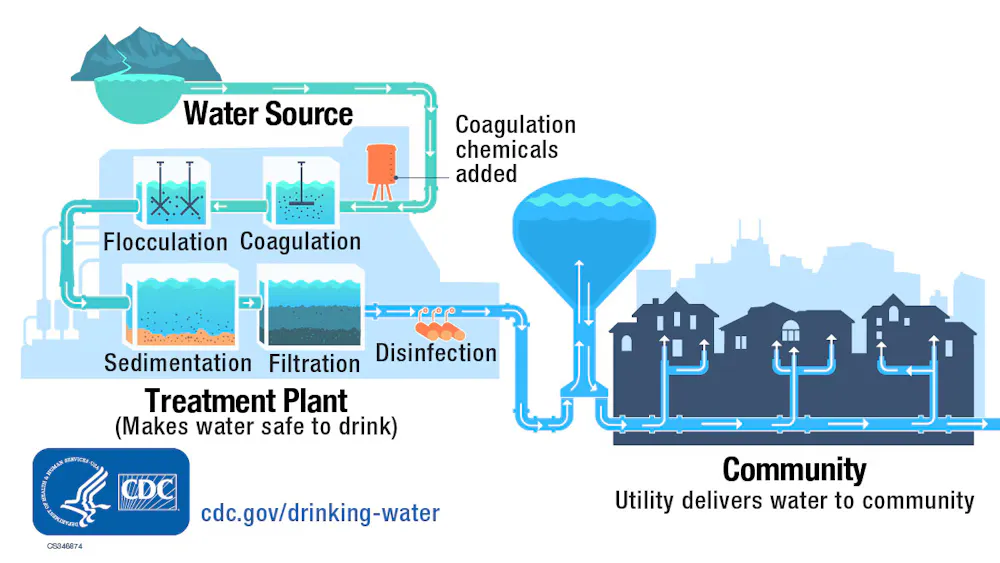
Liza Minnelli’s biggest disappointment in life revealed in new documentary

"Liza: A Truly Terrific Absolutely True Story," which premiered at the Tribeca Film Festival last summer and is currently playing in select theaters, offers an intimate look at the ups and downs of Liza Minnelli's iconic career and how, in her eyes, she didn't quite have it all — despite all her many successes.  

Through accounts from friends and via archival footage, the film reveals that her biggest disappointment in life was her inability to have a family of her own, due to her experiences with several difficult miscarriages over the course of her past four marriages.  

"I desperately want a family. I really want a family," she's shown saying to Geraldo Rivera in an archival interview.

Allan Lazare, a friend of the performer, touches upon Minnelli's heartbreak over never having children in the documentary, saying, “We have been with Liza through all her emotional setbacks, like miscarriages."

"If she had to pick one thing that she’s disappointed about in her life, that’s not being a mother," Lazare says. "She would have been a great mother. She has so much to give. She’s been so wonderful with our children."

Another friend, actress Mia Farrow, goes into Minnelli's close relationship with her own children, and how she's been so great with them.

“She’s godmother to my twins, who are 50 now, and she’s never missed a birthday,” she says.

Despite Minnelli not having children, one of her friends, Michael Feinstein, says in the documentary that her relationship with her close friends' children brought the "Cabaret" star comfort.

“Even though she wasn’t able to have children of her own, she seems to have created her own family through all the children who came into her life and all the godchildren," he says.

“She would have made an incredible mother, and life wasn’t perfect," Lazare adds. "But she moved on, and she’s become part of our family. I think that’s part of our attraction for her. We’ve kept this bond with sort of a family she didn’t have.”

"Liza: A Truly Terrific Absolutely True Story" is out in select theaters in the U.S. now

Why government can’t make America healthier by micromanaging groceries purchased with SNAP benefits

President Donald Trump's pick for director of the Health and Human Services Department, Robert F. Kennedy Jr., has announced a bold plan. He wants to "Make America Healthy Again."

Kennedy's strategy has gotten a lot of attention for its oddities, such as his opposition to vaccine mandates and support for raw milk. But it includes some concepts that many public health experts consider sensible, such as calling for a stronger focus on chronic disease prevention and seeking more restrictions on prescription drug advertising aimed at consumers.

But he's also demanding a ban on junk food from the Supplemental Nutrition Assistance Program. Banning junk food from SNAP is something that has divided public health experts for years.

As public health researchers, we've devoted our careers to helping reduce chronic diseases. We agree with Kennedy that a healthy diet and sound nutrition are important ways to improve the nation's health. We also know from our own research that safety net programs, including SNAP benefits – which are still sometimes called food stamps – are staving off hunger and food insecurity for millions of Americans.

And we're certain that adding to the restrictions that already limit access to SNAP benefits do little to make Americans healthier.

What is SNAP?

Over 42.1 million Americans, about 13% of all families, receive SNAP benefits. More than 1 in 4 of the households enrolled in the program include someone who is earning at least some income.

More than 4 in 5 families getting SNAP benefits include a child, someone over 65 or someone with a disability. These benefits are distributed on a monthly basis through an electronic benefits transfer card that looks and works like a credit or debit card and can be used at supermarkets and other approved retailers. The federal government has spent more than US$110 billion annually on this program in recent years.

Benefits help get food on the table but typically don't cover everything a family needs to eat. The average monthly benefit is $195 per person.

Americans who earn less than 130% of the poverty line are eligible for SNAP. In the 2025 fiscal year, a family of three can't make more than $2,152 a month in net income or have assets of more than $4,500 if a household includes someone over 60, and $3,000 if it doesn't.

Adults without children or disabilities can't get these benefits for more than three months every three years unless they meet the program's work requirements by being employed or spending at least 20 hours weekly in a training program. People who are on strike and foreigners living in the U.S. without authorization are ineligible. People with prior drug-related felony convictions are federally banned from SNAP for life, but states can waive this rule. This program is federally funded but administered by the states, which have some leeway in determining eligibility.

People enrolled in SNAP already face some restrictions on what they can buy with their benefits. They can't use SNAP to purchase premade or restaurant meals, alcohol, tobacco, or things such as diapers, vitamins and toilet paper.

Why restrict SNAP?

Since SNAP is administered by the U.S. Department of Agriculture, Kennedy would have very little power to change SNAP's rules should the Senate approve his nomination following the controversial politician's upcoming confirmation hearing on Jan. 29, 2025.

Still, we're concerned that his support for new restrictions could help sway the authorities who would be responsible for such a policy change.

Proposals to ban particular foods from SNAP have been floated many times by state legislators and members of Congress over the years.

These bills have generally been designed to exclude supposedly luxury items, such as steak and seafood, or aimed at barring purchases from a different supermarket aisle: candy, soda and other junk foods.

States can't make this kind of modification without the USDA's authorization. And so far, the USDA has rebuffed calls for it to allow such measures. Even without the agency's support, Congress can make changes to these policies in the Farm Bill, which could in the future force the USDA to allow these restrictions in states that ask for them.

The Trump administration, including Kennedy, has signaled its interest in these kinds of restrictions.

Why SNAP restrictions won't make America healthier

While improving the American diet is a worthy goal, research that we and other scholars have done makes it clear that adding new restrictions to SNAP will do little to help us become a healthier nation.

First, many studies have found that nearly all Americans could eat healthier.

The rich and the poor alike consume unhealthy food in the U.S.

Studies show that while lower-income Americans often spend more of their food budget on unhealthy stuff than more affluent people do, families in the middle and at the top of the income ladder still purchase lots of junk food.

Unsurprisingly, those purchases reflect what we're eating: Americans at all income levels have diets that don't satisfy federal dietary guidelines. Spotlighting the poor food choices of SNAP participants would be a distraction from these facts and would risk further stigmatizing a successful anti-hunger program.

Maintaining a good diet is not cheap or straightforward, especially on a low income. The poorest communities have far more inexpensive fast-food chains and dollar stores than their wealthier neighbors, as well as more ads for unhealthy products. Even when they get SNAP benefits, many Americans still struggle to make ends meet, and studies show how this negatively affects the quality of their diets.

Another reason SNAP restrictions wouldn't make America healthier is that diet is just one of many contributors to chronic diseases. Your level of physical activity, exposure to pollution, stress and genetics, among other things, shape your risk of getting heart disease, diabetes or other chronic diseases.

Flexible but don't cover all needs

SNAP benefits are fairly flexible, covering just about anything people might want to eat, even if they have dietary restrictions due to their culture or health conditions. The program helps Americans afford most of their basic necessities, although it fails to pay for all the groceries most people who rely on the program need to buy in the course of a month.

SNAP's main function is preventing the worst effects of hunger and food insecurity for the more than 41 million people relying on it.

There are other ways for the government to help make Americans healthier besides the imposition of stigmatizing restrictions on SNAP. For example, it can create matching programs for SNAP dollars spent on fruits and vegetables, which would give retailers incentives to offer more produce and make it easier for people who get SNAP benefits to buy more healthy food. The USDA has begun to support this kind of effort in several states.

Benjamin Chrisinger, Assistant Professor of Community Health, Tufts University and Danielle Krobath, Assistant Professor of Epidemiology, University of South Carolina

This article is republished from The Conversation under a Creative Commons license. Read the original article.
“Could be disastrous”: Democrats sound alarm over Trump’s NIH suspending scientific research grants

The Trump administration's suspension of all communications at the National Institutes of Health and cancellation of grant-review meetings is threatening scientific research across the country, three Maryland Democrats warned in a letter Monday.

"We write to express our grave concerns about actions that have taken place in recent days that potentially disrupt lifesaving research being conducted and supported by the National Institutes of Health (NIH)," states the letter, signed by Rep. Jamie Raskin, D-Md., Sen. Angela D. Alsobrooks, D-Md., and Sen. Chris Van Hollen, D-Md. "Without quick corrective action, the consequences of further disruption could be disastrous for both medical progress in America and our nation’s overall standing and competitiveness on the world stage."

Last week, many scientists expressed alarm that the Trump administration had suspended most operations at NIH, which provides grants for scientific research at universities across the country. The suspension means no research grants are being reviewed; experts have warned that even a short delay could derail ongoing studies and hinder major research institutions' ability to plan for the coming year, coming just as universities are admitting their next round of PhD students. NIH is also prohibited from hiring amid a government-wide effort to purge federal employees perceived as disloyal to Trump.

NIH, based in Bethesda, Maryland, has a budget of more than $47 billion and is a key driver of scientific research. But it has been targeted by the conservatives, who generally oppose scientific research that exposes the extent of climate change or addresses questions related to gender and human sexuality. Project 2025, the far-right policy agenda for the second Trump administration, proposes replacing NIH's scientific research funding with block grants to states.

In addition to NIH, scientists have reported that that the National Science Foundation, a government agency that also disperses research funding, has also canceled activities.

In their letter, addressed to the acting director of the Department of Health and Human Services, the Maryland lawmakers warn that Trump risks doing lasting damaging to NIH and the country as a whole.

"NIH attracts our nation's brightest scientists, physicians, health care providers, and other experts but, with these crippling blows to its mission and without sufficient staff going forward, NIH will be unable to realize its vital mission," the letter states.

“The Fall of Diddy” chronicles decades’ worth of failures to hold a powerful monster accountable

We’re only beginning to feel the vast consequences of American voters returning a twice-impeached, 34-count felon to the most influential leadership position on the planet. Academics and analysts are still sorting through the how and why of Donald Trump‘s election victory, but much of it boils down to fame worship.

Enough viewers believe the myth “The Apprentice” perpetuated about Trump to give rise to a movement that took over one of America’s two major political parties. Its senators and congressmen enable his grifting and normalize his morally reprehensible and outright dangerous decrees. Those who disagree with him are afraid to publicize their objections.

“The Fall of Diddy” presents Combs as an extreme example of America’s tendency to allow inflated perceptions of wealth and power to blind us to justice.

The entertainment industry that normalized Sean “Diddy” Combs operates similarly. Investigation Discovery’s four-part docuseries “The Fall of Diddy” is the latest to prove that, starting with one of the first times Combs’ name appears in the New York Times.

In 1991, Combs was the main promoter of the first annual (and only) Celebrity Charity Basketball Game held at the City College of New York; the other was legendary rapper Heavy D. Inadequate planning and security led to a stampede that killed nine people. Such a tragedy would have ended most people’s careers, but it only made Combs’ star rise higher.

Two years later, R&B impresario Clive Davis handed him a label to run, and soon Bad Boy Records dominated radio airplay. Combs made superstars out of Usher, Mary J. Blige, Biggie Smalls, Faith Evans – and himself, by appearing in their videos.

The 47th president is an extraordinary figure in history, but in the ever-expanding disgraced celebrity true crime genre, his type is commonplace. Naturally, he makes a cameo appearance in “The Fall of Diddy,” by way of archival footage.

Trump and Sean “Diddy” Combs are fellow New Yorkers. One was born into wealth and political connections, and the other had real talent and the instinct to get into hip-hop on the ground floor and mold it for the masses. Combs is one of the earliest hip-hop moguls to wed the culture to high fashion and luxury goods. Trump embraced performers like Combs as a means of giving his brand street cred, and Combs flaunted their alleged friendship as proof of his membership in an elite social tier.

“The Fall of Diddy” doesn’t spend much time with this link, but it’s a contextualizing one. Its four episodes present Combs as an extreme example of America’s tendency to allow inflated perceptions of wealth and power to blind us to justice.

“Sean Combs has been the figure more associated with death, tragedy and brokenness than any mogul,” says Reverend Conrad Tillard in the first episode.

The filmmakers behind “Quiet on Set: The Dark Side of Kids TV” collaborated with Rolling Stone films to make “The Fall of Diddy,” which arrives a little more than a week after “Diddy: The Making of a Bad Boy.” Both inevitably cover some of the same ground, with the Peacock documentary taking a different approach to the circumstances surrounding Combs’ relationship with the late Kim Porter, with whom he has three children.

After its cold open, “The Fall of Diddy” leaps out of the gate with Danyel Smith’s damning account. Vibe Magazine’s first woman editor-in-chief was among several prominent people in entertainment whose life he threatened. Combs said he would see her “dead in the trunk of a car” because she didn’t show him the photos chosen for a 1997 dual cover profile, per the magazine’s editorial policy.

That threat is alarming, but the way Smith still wears her trauma is devastating. Two years later, Combs assaulted Interscope Records executive Steve Stoute in his offices.

Combs is in federal custody and awaiting trial at Brooklyn’s Metropolitan Detention Center. His trial is expected to commence on May 5, 2025. In response to producers’ questions, his legal team conveyed this message that runs at the end of each episode: “Mr. Combs has full confidence in the facts and integrity of the judicial process. In court the truth will prevail: that the accusations against Mr. Combs are pure fiction.”

The Fall Of DiddyThe Fall Of Diddy (Courtesy of Investigation Discovery)
His accusers number in the dozens and the nature of his alleged crimes isn’t limited to allegations of sexual harassment and assault. Combs is believed to have maintained his empire on a structure of physical violence and psychological menace from which nobody was immune.

Sustaining verbal disparagement was accepted as part of working in his orbit, and fellow employees downplayed the extent to which people like Jourdan Cha’Taun, who worked as Combs’ personal chef between 2007 and 2010, suffered while working for him.

But even those unlucky enough to cross his path on the wrong day may be contending with aftershocks. The first episode ends with DeWitt Gilmore recounting his claim that Combs instigated a car chase in 1996 that ended with a member of his entourage shooting at him and a friend. The fear in his expression is unmistakable.

Combs is believed to have maintained his empire on a structure of physical violence and psychological menace from which nobody was immune.

The docuseries follows Rolling Stone’s expansive report from May 2024, featuring its investigative journalist Cheyenne Roundtree as one of more than 30 interview subjects providing their perspectives on Combs’ influence globally and personally. It’s preceded by enough examples of other powerful entertainers wielding their fame as cover for violent predations to fool you into thinking there’s little in this you haven’t already seen elsewhere. That’s not entirely wrong. Aspects of the allegations against Combs paint him as R. Kelly, Harvey Weinstein, Jeffrey Epstein and Bill Cosby rolled into one.

Somehow his crimes are more egregious because all the while he spearheaded partnerships with spirits, starred in movies and TV shows and received career achievement awards.

Despite all he amassed, though, Combs couldn’t keep his violence in check. His childhood friend Tim Patterson offers some insight into how Combs grew up, which explains a few things but excuses nothing. Even his relationship with Porter is tainted by knowing that while he was supposedly with her he was also publicly dating Jennifer Lopez.

The most bone-chilling of the claims against Combs, beginning with the civil suit Casandra Ventura filed against him in 2023, spell out horrific sexual abuse and alleged rape and coercion. Ventura, known as Cassie, settled with Combs the day after the filing went public, but the details of the lawsuit provided the feds with a clue trail to pursue criminal charges.

After May 2024, when CNN aired security camera footage from 2016 of Combs beating Ventura in a hotel hallway, the floodgates opened. Combs took to social media to fake an apology, alleging such behavior was behind him.

The Fall Of DiddyThe Fall Of Diddy (Courtesy of Investigation Discovery)

Kat Pasion’s account of her time dating him in 2019 contradicts this. Pasion’s interview in “The Fall of Diddy” marks the first time she’s gone public with her accusations. Understandably, she refuses to go into specifics about the worst of what she alleges occurred, beyond saying it was not consensual.

By that point, Thalia Graves has gone into enough detail about the circumstances surrounding Combs’ alleged drugging, sadistic rape and threats in 2001 to render subsequent descriptions of reported assaults unnecessary. When Pasion calls Combs a demon, we believe her.

Employees were shown his darkest face, but the public saw glimpses of it too, as D. Woods, a member of Danity Kane, breaks down in her first time going public with her experiences. Danity Kane was part of the all-female pop group featured in Combs’ MTV reality show “Making the Band 3,” and was fired, along with fellow member Aubrey O’Day, in a 2008 episode. That was presented as entertainment, along with Combs relentlessly body-shaming Woods. She believes Combs cut them from the band because neither would give in to his intimidations on and off camera.

After Combs’ arrest and indictment on racketeering and sex trafficking charges, O’Day went public to accuse him of grooming her and other band members. While she doesn’t appear in “The Fall of Diddy,” Woods bolsters those claims and hints her former bandmate may have saved some inflammatory and crude communications Combs sent to her.


Want a daily wrap-up of all the news and commentary Salon has to offer? Subscribe to our morning newsletter, Crash Course.


Many more of us would be excused for forgetting the other reports of assaults Combs was associated with. Such dramas were written off as part of rap culture, and beating the legal system was painted as a virtue. When Combs was acquitted of firing his gun and injuring two people in a nightclub in 1999, his profile rose even higher; the woman who took a bullet to her face, Natania Griffin, received death threats for testifying he was the one who shot her.

But the broader argument of “The Fall of Diddy” is that the private monstrosities become everybody’s problem, and they’re fed by our collective refusal to hold them accountable. Before Combs escaped responsibility for the deadly tragedy at City College, a former classmate of his at Howard University, whose identity is kept hidden, recalls watching from her dorm room window as he beat a woman he was dating in the courtyard.

That person expresses guilt and helplessness at not doing more than yelling from her window for him to stop. Others were nearby too, the subject says, and did nothing.

The broader argument of “The Fall of Diddy” is that the private monstrosities become everybody’s problem, and they’re fed by our collective refusal to hold them accountable.

Listening to these stories leads a person to wonder what it’s like to have witnessed up close the savage side of a person who would go on to become one of the most famous and wealthy men on the planet, and hold onto that terror for decades.

The audience may feel some version of that in reverse, realizing the part we unwittingly played in glossing over Combs’ sins by upholding his celebrity. Millions were awed by his award show performances, bought his albums, flaunted his fashions and allowed all that to distract us from the warning signs that seeped into plain view and were ignored.

We helped sustain the billion-dollar illusion that ultimately protected one monster who, after decades’ worth of brutality going unchecked, may finally face accountability for his actions. That won’t save our democracy, but it may grant us a better understanding of how America got here. All it takes to be an American great is confidence, a lust for money, a veneer of glamour, and enough people to stay silent about the crimes that would make that story into a lie.

“The Fall of Diddy” airs in two parts beginning at 9 p.m. Monday, January 27 and continuing at 9 p.m. Tuesday, January 28 on Investigation Discovery. 


Starbucks is getting back to basics — but trains baristas in de-escalation to manage new tensions

Since his appointment as CEO of Starbucks, Brian Niccol has charted a course back to the company’s roots: good coffee, served swiftly, in a welcoming café. It’s an almost quixotic ambition after years in which the Starbucks experience has drifted toward something less human and more mechanical — a fast-moving conveyor belt of caffeine. The promise, however, feels refreshing, if not overdue.

Starbucks’ pivot toward efficiency began long before Niccol took over, accelerated by the pandemic’s relentless push for contactless everything. A couple of years ago, I found myself unwittingly stepping into one of their “pickup-only” locations — a slightly dystopian version of the Starbucks I once knew. There were no tables or chairs. The warm din of clinking ceramic mugs, muted conversation and the whir of espresso machines was absent, replaced by the cold glow of a giant screen listing customers’ names in a clinical, digital procession. Orders moved up the queue with all the charm of a DMV waiting room, turning green when they were ready.

I walked to the counter, expecting to place an order as I had for years. The barista, kind but firm, explained that this wasn’t possible; orders could only be made through the Starbucks app. Short on time (and honestly unwilling to find  alternative parking in downtown Chicago) I downloaded the app, placed my order and resigned myself to waiting in the sterile quiet.

Soon after, a dad in a Bears sweatshirt and his three daughters walked in, looking as flummoxed as I had been. He approached the counter, received the same explanation I had and returned to his daughters for a whispered conference. Their faces cycled through frustration, confusion and finally resignation. The dad declared, with the unmistakable exasperation of a man bested by technology, “F**k it, we’re going to Dunkin’.” They turned and left without another word.

Moments like this encapsulate what Starbucks became in the wake of its rapid expansion and pandemic adaptations: less a café, more a glorified takeout counter. The menu ballooned in such a way that it seemed like someone was simply throwing cold foam at the wall and seeing what stuck, generating additions like boba-inspired refreshers and olive oil-infused lattes, the latter infamous not for its flavor but for its gastrointestinal side effects. The calm and connection that once defined Starbucks gave way to the frenetic pace of mobile orders and delivery pickups.

Niccol’s strategy represents an attempt to reclaim that lost identity. He’s bringing back ceramic mugs and plush chairs for customers who want to enjoy their coffee in-store — a gesture as nostalgic as it is pragmatic. Yet, this return to form comes with new restrictions. Beginning today, Jan. 27, Starbucks customers must make a purchase to use the restroom, sit at a table or even refill a water bottle. The policy, designed to reassert control over the chain’s spaces, is supported by a wave of de-escalation training for employees, who are now tasked with enforcing these rules.

We need your help to stay independent

De-escalation, a technique borrowed from fields like psychiatric care and social work, emphasizes calm and empathetic conflict resolution. As Business Insider reported, Starbucks baristas have been trained to gently explain the new policy to non-paying customers, listen to their concerns and, if necessary, escalate the issue to a manager. The training is intended to give employees the confidence to navigate these situations with kindness and respect — or at least to prevent them from boiling over into viral moments.

But baristas, many of whom already feel stretched thin, aren’t convinced. At a “high-incident” location in Philadelphia, where confrontations with customers are common, one employee described the policy to Fortune as an added stressor. “We know that these situations are going to happen more frequently in our store,” the employee said. “And we will not be able to take the measures that we need to make ourselves safe.”

According to the employee, Starbucks has yet to address practical concerns, such as giving employees the ability to pause incoming digital orders during tense moments.

"By setting clear expectations for behavior and use of our spaces, we can create a better environment for everyone."

Critics have also called the new policy anti-homeless, pointing out that Starbucks’ 2018 open-door initiative — implemented after two Black men were arrested while waiting for a business meeting to begin in a Philadelphia location — was one of the few examples of a major corporation embracing inclusivity. With public restrooms scarce and coffee shops often serving as de facto daytime shelters, the reversal feels, to some, like a step backward.

Starbucks, for its part, defends the changes as necessary to restore its cafés to their intended purpose. 

“We want everyone to feel welcome and comfortable in our stores,” Starbucks spokesperson Jaci Anderson told Fortune. “By setting clear expectations for behavior and use of our spaces, we can create a better environment for everyone.” But the line between inclusivity and exclusivity is a delicate one. What does it mean to create a “better environment,” and better for whom?

The tension between Starbucks’ ideals and its realities has always been part of its identity. The company has spent decades branding itself as a “third place,” distinct from home and work — a communal space where anyone can feel welcome. Yet, as Niccol and his team attempt to reclaim the Starbucks of the past, they may find that it’s no longer possible to be all things to all people. The challenge lies not just in serving coffee, but in serving it with humanity — something the company is still learning how to do.


Miley Cyrus staying out of conflict between brother and dad Billy Ray

Miley Cyrus seems to be keeping her distance from the escalating feud between her brother, Trace Cyrus, and father, Billy Ray Cyrus.

A source affiliated with the Cyrus family told People Magazine that Miley does not want to be involved in her family's conflict, which began after Trace publically voiced his concerns following Billy Ray's performance during Trump's inauguration celebrations last week — which many online described as a "disaster," due to the 63-year-old's appearance and his out of sorts reactions to several technical difficulties, leading to wider speculation about his health.

In his post about his dad, Trace said, "Me and the girls have been genuinely worried about you for years but you’ve pushed all of us away."

While Trace named Miley in his statement, the People source said, “Miley used to feel overwhelmed by the family drama. She worked hard to remove herself. She's not about to get involved again. She's in a great place now. She's thriving and looking out for herself."

Following Trace's initial plea for his father's betterment, he took to social media again on Saturday to reveal that his father threatened legal action against him.

“Dad my message was beyond loving,” Trace wrote. “I could have been extremely honest about a lot more but I don’t want to put your business out there like that. But for you to threaten me with legal action for wanting you to get help is a disgrace."

The statement continued, “Pappy is looking down at you with such disappointment I can assure you. You should be ashamed of yourself. I will always love you but I no longer respect you as a man. Everyone close to you is terrified to tell you how they really feel. I’m not. Get help.”

“Wholesale endorsement of political violence”: Democrats condemn Trump’s pardon of violent criminals

Senate Democrats are condemning President Donald Trump's decision to set free some of his most violent supporters, introducing a resolution Monday that condemns his opening-day pardons of Jan. 6 rioters who were convicted of attacking police.

“Insurrectionists cracked the ribs of police officers and smashed spinal disks," Sen. Patty Murray, D-Wash., said in a statement. "Donald Trump’s pardons are a wholesale endorsement of political violence — as long as it serves Donald Trump."

As Politico's Kyle Cheney reported, the resolution — backed by every Democrat and independent in the upper chamber, but no Republicans — expresses opposition to Trump's decision in a single line, stating: "the Senate disapproves of any pardons for individuals who were found guilty of assaulting Capitol Police officers."

Trump's decision to pardon the most violent Jan. 6 convicts came after Vice President J.D. Vance had himself said earlier this month that such criminals should not be freed. "If you committed violence on that day, obviously you shouldn’t be pardoned," he had said, saying there were only some cases where there were "gray areas."

Vance dutifully reversed himself following Trump's decision, saying in an interview Sunday that he now supports such pardons, while claiming he does not necessarily endorse the violent crimes that were committed: "[W]e're not saying that everybody did everything perfectly," he told CBS.

More than 140 police officers were assaulted during the attack on the U.S. Capitol, including more than 80 members of U.S. Capitol Police. Just under 170 rioters pleaded guilty to attacking police that day, all of whom have now been let out of prison.

Trump's decision to free scores of his supporters who admitted carrying out violent crimes was condemned last week by the Fraternal Order of Police, which endorsed his 2024 campaign, and the International Association of Chiefs.

"When perpetrators of crimes, especially serious crimes, are not held fully accountable, it sends a dangerous message that the consequences for attacking law enforcement are not severe, potentially emboldening others to commit similar acts of violence," the groups said in a joint statement.


Are there any real Republicans left? Tulsi, RFK Jr. offer them a chance to stand up

Among the most shocking actions taken by Donald Trump and the Republicans in the first week of his new administration — and there were many — successfully confirming a totally inexperienced weekend TV show host with obvious character flaws and a penchant for war criminals as defense secretary was one for the books. Pete Hegseth is now in charge of the world's most powerful military, as well as the country's largest bureaucracy, and he is completely unqualified for that task in every way. But he is a Trump loyalist for sure. It says something about the president's coterie of followers that Hegseth was the best he could do.

There was some visible discomfort among Republican senators. Three of them actually voted against Hegseth, including former majority leader Mitch McConnell, along with Lisa Murkowski of Alaska and Susan Collins of Maine. Not a single Democrat supported Hegseth, leaving the Senate divided 50-50, which meant that Vice President JD Vance was required to cast the tie-breaking vote. Other Republicans who had expressed reservations came home in the end, likely because Hegseth is a true blue MAGA warrior with the full backing of the hardcore base, which made its wishes known in no uncertain terms. You could tell that whole experience left a bad taste in some senators' mouths, but they weren't willing to poke those bears.

There are a couple of nominations coming up this week that may give those Republican senators an opportunity to pretend to themselves that they still have some integrity, and a chance to salvage some self-respect. There will be hearings for former congresswoman Tulsi Gabbard and anti-vaccine activist Robert F. Kennedy Jr., Trump's nominees for director of national intelligence and secretary of Health and Human Services, respectively. Neither has any obviously relevant experience for those positions — and both have, shall we say, some unique characteristics that ought to be disqualifying in themselves.

Gabbard is a shocking choice for this particular job atop the entire intelligence community given that she has frequently been accused of alliance or sympathy with global adversaries of the U.S., particularly Russia. Perhaps her most famous act as a politician was her travel to Syria under false pretenses, where she met with then-president Bashar Assad, a dictatorial strongman accused of war crimes against his own people. After being overthrown in December, Assad is now in exile in Russia, whose talking points have been embraced by Gabbard over the last couple of years, most pointedly over who caused or started the war in Ukraine. To say that she's a bizarre choice for a top Intelligence job is an understatement, and it's causing severe consternation among U.S. allies.

To say that Tulsi Gabbard is a bizarre choice for a top Intelligence job is an understatement, and it's causing severe consternation among U.S. allies.

But there's more to Gabbard than that, although honestly that should be enough. She was born into a Hindu sect that has sometimes been described as cult-like, and remains a member, as are her husband and most of her closest aides. According to Elaine Godfrey of the Atlantic, that relationship is the one "throughline" in her politically peripatetic career. Following the tenets of the so-called Science of Identity Foundation, an offshoot of the Hare Krishna movement led by a man named Chris Butler, Gabbard started out as a conservative anti-LGBTQ politician before morphing into a progressive ally of Bernie Sanders as a member of Congress. Next came her bizarre turn as a pro-Assad advocate and an eventual falling out with the Democratic Party. After that she went on Fox News, where she charmed the MAGA faithful and endorsed Trump. And here she is today, nominated to become America's top Intelligence official.

But who is Gabbard, really? She's only been a Republican for a couple of years, and ran for president as a Democrat in 2020. Can MAGA trust someone with that history? National Review, a flagship of GOP orthodoxy, certainly doesn't think so, calling her "an atrocious nominee who deserves to be defeated." Gabbard does not appear to inspire the sorts of threats and intimidation that Hegseth did, so if any GOP senators feel the impulse to demonstrate some vestigial independence, this nomination is probably pretty safe from the MAGA hordes.

We need your help to stay independent

That ought to go double for Robert F. Kennedy Jr., who ran for president as a Democrat last year before attempting a third-party campaign and then endorsing Trump, in exchange for what turned out to be a Cabinet nomination. It's hard to imagine that Trump actually cares that much whether RFK Jr. gets the job at HHS. The president may even be hoping that the Senate will save him from this guy, since it's clear that he's going to be nothing but trouble.

RFK Jr. told Joe Rogan that "wifi radiation” could be causing autism, food allergies, asthma, eczema and other chronic conditions: "I think it degrades your mitochondria and it opens your blood-brain barrier." 

By this time, most people are aware that Kennedy is a crank and a weirdo who believes that vaccines have caused a Holocaust among children and has admitted to dumping a dead bear in Central Park as a joke — when he was already over 60. Among other loony conspiracy theories he embraces, Kennedy told Joe Rogan that "wifi radiation” could be causing autism, food allergies, asthma, eczema and other chronic conditions, saying, "I think it degrades your mitochondria and it opens your blood-brain barrier." He has been accused of contributing to the deaths of dozens of Samoan children by pushing bogus anti-vaccine ideas. He doesn't entirely believe in germ theory, suggesting that a "healthy" human body cannot be damaged by microbes. 

These ideas are downright medieval, at best. This person has no business being in government in any capacity, much less overseeing the agency responsible for public health, Medicare and Medicaid. It is unacceptable that he was even nominated.


Want a daily wrap-up of all the news and commentary Salon has to offer? Subscribe to our morning newsletter, Crash Course.


Now it turns out that he appears to be corrupt as well, having made millions off anti-vaccine suits brought by law firms with which he's been affiliated. He says he has no intention of giving up that gravy train as HHS secretary, even though he would have direct control of the nation’s vaccine policy.

Kennedy is a member of the most famous Democratic political family in America, and supported that party himself until about  five minutes ago. He still says he's pro-choice, which is generally a deal breaker in GOP politics. That has brought out some token opposition from outside groups, including one led by former Vice President Mike Pence. He's assured all the GOP senators that he won't let his liberal affiliations get in the way of Trump's agenda, but if any of them have even the slightest concern for the health of the American people (or simply for themselves and their families) surely they can find the smidgen of courage it would take to tell Trump that they can't vote for a pro-choice nominee.

All of this is assuming that anyone beyond Murkowski, Collins and McConnell, who have made clear they won't vote for either of these absurd nominees, actually gives a damn. There is little reason to think the other 50 Republican senators care about anything beyond hanging onto their seats. But if they just tell the MAGA they can't possibly vote for a Democrat, they might be able to wriggle off the hook. 


Surviving “political grief”: You’re not alone, and there is a path forward

Donald Trump is now the 47th president of the United States. Compared to the horrible things that will happen in America over (at least) the next four years, the weeks between Election Day and his inauguration may be remembered as the good times.

I tried to enjoy that reprieve while it lasted. It was not all that successful. The shadow of Jan. 20, and the cruel coincidence that it fell this year on Dr. Martin Luther King Jr.'s remembrance day, hung over us all. King was among American history's great defenders of democracy and human rights; Trump is a committed enemy of those values. 

Millions of Americans who voted for Kamala Harris, and who believe in American democracy and the common good, remain collectively stuck in the various stages of grief. That grief is made even more painful by the fact that tens of millions of other Americans are jubilant at Trump’s return to the White House and his vows of revenge against “the enemy within” as part making America "great again.” Most people who voted for Trump under the mistaken belief that he would improve their lives and “restore” the nation have no experience living under autocratic or authoritarian regimes. They perhaps voted to “shake things up” and believed they were supporting a leader who will "break the rules” to “get things done. That will turn out to be a Faustian bargain. While the MAGA are likely to feast on the proverbial fat of the land, the rank and file will be feasted upon like everyone else.

A colleague recently observed to me that journalist and other public voices who have tried to warn the American people during this time of crisis are something like homicide detectives, who must document and investigates terrible events with little power to control or prevent them. It is grinding and emotionally difficult work that often feels futile and can lead to PTSD, substance abuse and mental health issues. 

Considered in the aggregate, America's public mood is negative, anxious and discontented. Public opinion polls consistently show that a majority of Americans believe the country is heading in the wrong direction, and that its best days are behind it. Most Americans lack faith that government can solve problems or improve their lives, and have little confidence in democracy or its institutions. A new Economist/YouGov poll suggests that Americans are evenly split on Trump's return to power, with 47 percent reporting that they are "either enthusiastic (31%) or satisfied but not enthusiastic (16%) about the next four years with Trump as president" and 45 percent saying they are "either upset (31%) or dissatisfied but not upset (13%)."

In many ways, this crisis of democracy is also a crisis of the collective “life force,” meaning the sense of purpose and the drive to lead a meaningful life. This weakening or maladapted life force can negatively Impact both an individual's internal life and their relationship(s) with other people and the larger society. When a society's collective life force turns negative in this way, that helps to spawn authoritarians, demagogues and other kinds of toxic and antisocial leaders and movements. 

The American people are under systematic assault from disinformation, misinformation and propaganda, including conspiracy theories, often spread by malign actors who have successfully undermined the public’s ability to engage in what psychologists describe as “reality testing.” Many Americans also exhibit a systematic form of negativity bias, consistently telling public-opinion pollsters and researchers that the country is generally worse than it actually is on issues like crime, immigration and the economy. This negativity bias is especially acute among Trump followers and right-wing evangelical Christians, who truly believe America is under attack by demonic forces and must face a spiritual war with Donald Trump as its champion.

I have been reading comment sections on a wide range of news, politics and general interest websites, as well as on forums focused on such subjects as health care and chronic illness, psychology and mental health, disability issues, money and finance, labor and economics, and aging. What I have encountered is widespread fear among ordinary people who are trying to survive financial precarity and avoid total household collapse and homelessness. Many fear the loss of social safety-net benefits and are concerned they will not be able to afford prescription drugs and medical care. They fear the loss of reproductive rights and the end of the Affordable Care Act. They fear extortionate student-loan payments and the rise of hate crimes and political violence. In other words, they are afraid of suffering life-altering harm from the Trump administration's plans and policies. 

Dr. Gail Christopher, a public health expert, shared this personal account in an essay for Washington Monthly:

This autumn, I stopped by a local nonprofit run by a friend who helps refugees, immigrants, and formerly incarcerated victims of abuse get jobs that can transform their lives. I was there to donate, and when I found my friend distressed, I asked why he was so down. He had recently lost his dog of 14 years. Then, days later, his mother passed. I embraced him, expressing my condolences. As we embraced, he said, "And then my country died."

He referred to the election, which put one party in charge of the White House, Senate, and House. And in that moment, I realized that perhaps half of the nation’s voting population is grieving what they perceive to be the death of their country.

Many reports suggest an increase in people seeking therapy and counseling. Mental health professionals are also seeking help for their own heightened anxiety and emotional challenges in the aftermath of the presidential election and the heightened demand for their services. Crisis lines have seen an increase in callers, as the Seattle Times reported in November:

[E]lection night clearly raised anxieties and fears for many Americans. In Washington, operators of some regional crisis lines say they saw a spike in calls in the days after Nov. 5, with the majority of callers expressing worry about the potential impacts of the election.

While an increase in calls can’t explicitly be tied to any one event, operators say many of the calls they’re taking are related to Trump’s promises to roll back rights for transgender Americans and conduct mass deportations of large numbers of undocumented immigrants.

Crisis Connections, which operates hotlines including 988 in King County, saw a 9% increase in calls the week after the election, compared to call volume in the month before. …

Izzy Engberg, a clinician who answers calls for Volunteers of America, said nearly every single call on Nov. 6 was related to the election.

“A lot of people were calling in crisis about that. They were overwhelmed, having anxiety about their families, how this will relate to them in the future,” Engberg said.

Nationally, crisis lines have seen even larger spikes in calls from LGBTQ+ youth with concerns about the new administration.

For Rolling Stone, Elizabeth Yuko spoke with mental health professionals about the phenomenon of "political grief":

Keep in mind that if you’re mourning the outcome of the election, you’re not alone. It can be helpful to identify and acknowledge the ongoing collective grief a large part of the country is experiencing, says Raquel Martin, PhD, a clinical psychologist specializing in community-related and liberation psychology.

“We experience traumatic events together, and this [election] result definitely brought fears and hurt and memories of what was previously, and concerns about it only being worse,” Martin tells Rolling Stone. “Collective grief is understandable when you feel as though you put your all into something and you see an outcome that is incredibly scary for you.”

In fact, there’s an even more specific term for what we’re going through.

“Political grief is a very real thing,” says Melissa Flint, PsyD, a professor of clinical psychology at Midwestern University Glendale, noting that it occurs on both individual and collective bases. “When one struggles with a particular ideology held by those in political power, there is grief.” 

Political grief, that article continues, “also reflects the feeling that your worldview or political beliefs — what we think is right vs. wrong, or morally valid — is under attack." An individual "may be mourning potential losses of [their] own rights and economic stability, as well as worried about the impact it might have on reproductive rights and public health." Such grief can also "involve the fracturing of relationships as a result of ideological disagreements or grappling with your identity if your values are at odds with the rest of your community."

We need your help to stay independent

Darcy Harris, a psychology professor at King's University College in Ontario, Canada, describes the root of political grief as "a sense of despair due to the loss of predictability and safety in governmental structures.” It seems clear, as a recent report from the American Psychological Association suggests, that America is suffering from "collective stress," which it defines as a significant public health problem. Long-term stress, fueled by the COVID pandemic and political division, "has had a significant impact on well-being, evidenced by an increase in chronic illnesses — especially among those between the ages of 35 and 44, which increased from 48% reported in 2019 to 58% in 2023." That population also experienced a rapid increase in mental health diagnoses, as did adults aged 18 to 34.

Psychological science has revealed that long-term stress creates risks for a variety of mental health challenges, may make us feel more sensitive even to daily hassles, can have broader impacts on our general life outlook and goals, and affects the body’s physiological response to stressors in ways that have notable implications for our physical health. Coping with long-term stress requires a different set of skills than adjusting to temporary stressors.

Stress puts the body on high alert and ongoing stress can accumulate, causing inflammation, wearing on the immune system, and increasing the risk of a host of ailments, including digestive issues, heart disease, weight gain, and stroke.

This experience of collective stress exists in conflict with an American society that worships individualism. Many Americans, therefore, are reluctant or unable to consider how their experiences and personal challenges reflect larger dynamics and power relationships. They may instead internalize this stress and subsume the political into the personal in a manner that isolates them further, rather than bringing them together in a more healthy communitarian fashion with the goal of solving shared political and social problems.


Want a daily wrap-up of all the news and commentary Salon has to offer? Subscribe to our morning newsletter, Crash Course.


Like other demagogues and right-wing populists, Trump is highly skilled at manipulating the emotional pain, anxiety and other negative emotions of his followers and the larger public. At least in the short term, his followers feel seen, acknowledged and validated, which was a huge advantage in the 2024 election. Democrats will need to learn that kind of emotional language to counteract Trumpism and this era of populist rage.

In an interview with the Guardian, disability advocate Alice Wong offered this advice on navigating, surviving and successfully resisting the bad times now upon us: 

I’m scared, like millions of marginalized people who know exactly who Trump is and what he stands for. Strangely, I’m not as panicked as I was in 2016, but I know he will unleash great harm in his second administration. All I know is that networks of mutual aid and community care will continue and require additional support and infrastructure….

I feel despondent and overwhelmed by the political situation often, but then I remind myself this is by design, that those in power want to erode our resolve and [for us to] give up.

“Doing” activism is neither linear or smooth and in times of frustration or exhaustion I tap into my memories of injustice. I remind myself of why I am doing what I am doing and this sustains me. Anger transforms into a battery charger that gives me a boost when it’s sorely needed.

Americans of conscience who wish to redeem and renew democracy must harness their distress and anxiety and use it to recharge their batteries, as Wong suggests. Inaction and learned helplessness are an unacceptable choice. The only way through this disaster is forward.

Addiction treatment often overlooks trauma. That’s a major hurdle in stopping the overdose crisis

The fourth step in Alcoholics Anonymous requires participants to take a “moral inventory” of the problems their substance use has caused in their lives before asking God to remove their “defects of character” in a later step.

A portion of the millions of people in the U.S. participating in AA find the 12-step program helpful, but others have criticized it for lacking efficacy and taking a white-knuckle approach to recovery. Moreover, many treatment models like this fail to take into account co-occurring and underlying traumatic experiences that drive a large portion of people to self-medicate with drugs in the first place, said Maia Szalavitz, a journalist who writes about trauma, addiction and her experience going through some of these programs.

“So much of our addiction treatment is actively traumatic,” Szalavitz told Salon in a phone interview. “It tells people, ‘Sit down and shut up, and your best thinking got you here,’ and there is this idea that you should take moral inventory because you have a problem you created.”

Estimates suggest roughly three-quarters of people who use drugs have experienced trauma, but many addiction treatment facilities do not incorporate the level of trauma-informed care people with co-occurring trauma and substance use require, risking further stigmatization and even retraumatization, Szalavitz said.

“If you want to actually treat addiction, we need to help people deal with trauma,” Szalavitz said. “Now this does not mean that you go to rehab and they tell you, ‘Okay, tell me about your sexual abuse,’ because this could be actually very harmful. You need to deal with this stuff sensitively and on the person's timetable.”

"If you want to actually treat addiction, we need to help people deal with trauma."

Research shows that treating post-traumatic stress disorder (PTSD) or other symptoms of a traumatic experience also helps people with their substance use, likely because most people use drugs as a way to self-medicate or cope with stressors or overwhelming emotions — like those accompanying trauma, said Dr. Denise Hien, the director of the Center of Alcohol & Substance Use Studies at Rutgers-New Brunswick. 

“Our messaging around it is… we have to get you to face the feelings and realize that you can live through them and you can heal,” Hien told Salon in a phone interview. “When we do that, it’s amazing what happens to people in their transformation, and they stop using substances or reduce how much they are using.”

In one randomized control trial, clinicians assigned people with these co-occurring conditions to receive one of the standard treatment models for trauma called prolonged exposure, in which physicians review the traumatic event with patients in a structured manner to help them regain autonomy over it, in addition to relapse prevention therapy and relapse prevention therapy alone. The group that received both had significantly improved mental health symptoms compared to the control group of people that received relapse prevention therapy only.


Want more health and science stories in your inbox? Subscribe to Salon's weekly newsletter Lab Notes.


Although substance use remained constant in this trial, other studies have shown that changes in traumatic symptoms can have downstream effects on substance use, said Dr. Teresa Lopez-Castro, an associate professor of psychology at the City College of New York and one of the trial's investigators.

“We did all of this work with people and their substance use was not exacerbated,” Lopez-Castro told Salon in a phone interview. “What we see is this mediation effect where the change in substance use disorder is taking place through PTSD symptom reduction.”

Understanding the origins of substance use 

Deep-seeded stigma surrounding substance use can ostracize people who use drugs and put them in the moral wrong, with programs like AA focusing on confronting the behavioral factors that lead a person to use drugs. In recent years, as the understanding of addiction has improved, more research has been focused on the biological underpinnings of substance use, mapping neurological differences in people who use substances and those who do not, developing questionable genetic tests that claim to predict the risk of developing substance use disorder, and even creating an addiction vaccine.

Although understanding addiction as a biological mechanism can potentially help reduce stigma and make it easier to develop better treatments for substance use disorder, some argue that this model strips people who use drugs of their autonomy and makes addiction seem like an irreversible condition from which people can’t recover — which is not the case.

“When we only focus on the brain component and you kind of disembody it and remove it from the person’s psychology, the social context, and the physical context, that’s when we get into trouble,” Lopez-Castro said.

The reasons people gravitate toward substance use are still being understood but are thought to share both biological and environmental influences. Substance use does seem to involve some sort of genetic vulnerability that can be exacerbated when paired with certain exposures or experiences in one’s environment like trauma, Hien said.

When considering the criminalization of drug use, the relationship between trauma and substance use becomes even more complicated.

Nevertheless, once both occur, trauma and substance use can help “maintain,” each other, Lopez-Castro said. Trauma and the body’s chronic stress around it has been shown to change certain parts of the brain involved with executive functioning and the body’s reward system, which are also impacted by substance use when people use these agents to cope.

When considering the criminalization of drug use, the relationship between trauma and substance use becomes even more complicated. Dr. Kim Sue, an addiction medicine physician whose book "Getting Wrecked" concerns women with substance use disorder who were incarcerated, said the experience of being imprisoned makes existing trauma or mental health symptoms worsen for the people she works with. 

“Addressing trauma also means addressing community systems, racialized traumas caused by drug policy, and providing and being able to meet people's current and future needs in a stable environment,” Sue wrote to Salon in an email. “We should also think about what it would look like to prevent trauma and prevent substance use disorders, by early treatment and  timely intervention after traumatic events, especially for young people.”

Barriers to incorporating trauma-centered care

Some trials are being conducted to test whether certain pharmaceuticals could target the shared biological underpinnings of trauma and substance use, including MDMA-assisted therapy, which utilizes the psychedelic-adjacent drug also known as ecstasy. But many of the recovery programs tasked with the overwhelming task of treating the millions of Americans with substance use disorder do not incorporate a trauma-centered approach, Hien said. 

“A lot of places will say [they] do trauma-informed care, but what trauma-informed really means is that they understand that people have trauma, and maybe they're kinder to people,” Hien said. “But it’s not really doing the trauma-focused treatments and giving the medications that have been shown to actually work and help people.”

Many harm reduction programs do the best they can to treat people with the resources they have. Yet these programs are chronically underfunded in relation to the scale of resources needed to treat the U.S. population seeking help. 

“There are system-level barriers because specialists have to know how to treat mental health conditions or need to be in conversation with people if it demands a system that is integrated, with collaboration between psychiatrists, psychologists and counselors,” Lopez-Castro said. “That takes energy and a culture change, which we see happening, but it is quite slow.”

We need your help to stay independent

Some providers also fear that treating trauma in people with substance use would be opening Pandora’s box and could cause a person to relapse, although that has proven to not be the case, Lopez-Castro said. 

“It's almost like, ‘don't ask, don't tell’ in the sense that they don't even want to ask about it because if they ask about it, then they'll feel like they have to do something,” Hien said. “But they don't have anything to offer.”

Ultimately, that approach ignores the root of substance use disorder for so many. Although progress has been made in recognizing and treating co-occurring substance use disorder and trauma conditions, there is still a long way to go to ensure people using substances are getting the resources they need to heal from both.

“We have this whole false idea that most addiction is about seeking excess pleasure, and, in fact, most addiction is about trying to be okay,” Szalavitz said. “If we want to have less addiction and less harm associated with addiction, we have to improve people's lives.”