Spring Sale: Get 1 Year, Save 58%

“It sounds pretty, no?”: Sheinbaum pokes at Trump Gulf of Mexico plans with map of “Mexican America”

Claudia Sheinbaum is taking the air out of Donald Trump's plans to rename the Gulf of Mexico.

The Mexican president responded to President-elect Trump's contention that the sea should have a more U.S.-centric designation by showing a map from 1607 during a Wednesday press conference. The map, which predates the founding of the United States by more than 150 years, labels all of North America as "América Mexicana” (“Mexican America”). 

“Why don’t we call it Mexican America?” Sheinbaum said. “It sounds pretty, no?”

Trump has made Mexico a target of his incoming administration, threatening stiff tariffs and leading a MAGA push for possible military action in Northern Mexico. President Joe Biden has called Trump's proposed 25% tariffs on the United States' southern neighbor deeply misguided and urged Trump to "rethink" his stance.

"I think it’s a counterproductive thing to do,” the president shared with reporters in November."We have an unusual situation in America. We’re surrounded by the Pacific Ocean, the Atlantic Ocean, and two allies: Mexico and Canada. And the last thing we need to do is begin to screw up those relationships."

Other Democratic Party leaders are already attempting to use Trump's Mexico fixation to their advantage. Senate Majority Leader Chuck Schumer said that he'd be willing to work with Trump on renaming the Gulf of Mexico, provided that Trump puts forward a plan to lower the cost of living for Americans. 

"Renaming the Gulf of Mexico may be a zany new idea, but it isn't going to help people save money at the grocery store," Schumer said on Wednesday,

“A peek at the test”: New book claims Trump was fed questions from Fox News town hall

A new book claims that Donald Trump was given questions from a Fox News town hall in advance.

CNN shared excerpts from “Revenge: The Inside Story of Trump’s Return to Power” by Politico's Alex Isenstadt to illustrate the president-elect's close relationship with the conservative news network. In one, Isenstadt claims that Trump's team was fed the questions that moderators Bret Baier and Martha MacCallum planned to ask in a January 2024 town hall. 

"About thirty minutes before the town hall was due to start, a senior aide started getting text messages from a person on the inside at Fox," Isenstadt wrote in the book due out this March. "They were images of all the questions Trump would be asked and the planned follow-ups, down to the exact wording. Jackpot. This was like a student getting a peek at the test before the exam started.”

While Baier is known for being a tougher interviewer than many of his Fox News counterparts,  the book paints a picture of a close relationship between the anchor and Trump, calling them "golf buddies." A Fox News spokesperson denied this characterization in an email to Salon.

Baier landed in hot water earlier this year after he provided cover for Trump during an interview with then-candidate Kamala Harris. The host responded to Harris' concern about Trump calling Democrats the "enemy from within" by playing a deceptively edited clip of Trump speaking. Baier later admitted that he had made "a mistake."

The network denied any collusion between themselves and Trump in a statement to CNN.

“While we do not have any evidence of this occurring, and Alex Isenstadt has conveniently refused to release the images for fact-checking, we take these matters very seriously and plan to investigate should there prove to be a breach within the network,” they told CNN.

A source familiar with the inner workings of the network told Salon that the alleged breach would not have come from either the anchors or higher-ups.

“If there was a breach, it was not from Bret or Martha or the top editorial levels of the network and there is a sophisticated and extensive digital footprint of all editorial material,” they shared.

Six shocking bombshells from “The Curious Case of Natalia Grace: The Final Chapter”

For years, Natalia Grace's story has perplexed true crime fans, investigators and the public.

In three seasons, "The Curious Case of Natalia Grace" has examined Natalia's troubling and traumatic life story, bouncing from foster homes to many different adoptive parents after coming to the U.S. from Ukraine as a child. Natalia was diagnosed with a form of dwarfism, spondyloepiphyseal dysplasia congenita, which has led to long-standing issues with caretakers exploiting her.

The mistreatment began with her first adoptive family, Michael and Kristine Barnett, who alleged that Natalia was older than she said she was. The Barnetts re-aged Natalia by changing her legal birth year from 2003 to 1989. The Barnetts cut off Natalia in 2013 and another adoptive family, Cynthia and Antwon Mans stepped in. A decade after being welcomed into the Mans family, Natalia alleged that the Manses were financially exploiting her and physically abusing her.

In the final chapter of Natalia's story, a former adoptive family, the DePauls, attempts to uplift and support Natalia to gain financial and personal independence from the Manses. The twisty documentary series unveils more shocking details about Natalia's former adoptive family in four episodes released on Jan. 7 and 8 on Max.

Here are some of the biggest bombshells from "The Curious Case of Natalia Grace: The Final Chapter:"

01
The DePauls helped Natalia leave the Manses
For a decade, Natalia lived with the uber-religious Mans family, who fostered countless other children. In those 10 years, Natalia relayed to her former almost-adoptive mom, Nicole DePaul, that the Manses were controlling her life. She also revealed that she lived with chronic pain that the Manses ignored. She even shared with Nicole that when she told the Mans, “I wanted to go," they called her "mental."
 
Unable to live under Antwon and Cynthia's control, Natalia asked the DePauls to help her escape from their firm grasp. Natalia and Nicole communicated through Natalia's overseas boyfriend, Neil, to set up the elaborate escape.
 
The DePaul family, originally from upstate New York, traveled to Nashville, Tennessee to secretly pick up Natalia at Antwon and Cynthia's church. Then Natalia and the DePauls drove 16 hours to New York. Finally, Natalia would be free.
 
Despite the escape, Antwon and Cynthia's hold on Natalia was tight and she immediately contacted her mom to explain why she left them.
 
"Once I got in [Nicole’s] car, I had to text my mom to let her know I wasn’t kidnapped or dead,” she says. “It was an emotional time. I had to spread my wings.” 
02
The Manses were accused of abuse that Natalia adamantly denied
Throughout "The Curious Case of Natalia Grace," it is unveiled that there are numerous witnesses, including neighbors and friends, who alleged that the Manses abused their adoptive and foster children. Some even detailed claims that they saw the Manses hit Natalia with a belt, slap her in the face and even lock her in a room.
 
However, when asked, Natalia would deny any claims of abuse on camera. But Nicole and her daughter, Mackenzie, said Natalia painted a different story in private.
 
“Every now and then, she’ll drop little tidbits about the abuse that went on in the Manses’,” Nicole said. “Natalia has admitted to me firsthand that she has been whooped by both Cynthia and Antwon. She clarified that “a whooping is like a beating.”
 
Mackenzie said, “[Natalia] did mention whooping — scared-of-Antwon-type whooping. Hitting anybody with a disability is already messed up, let alone a child, let alone somebody with such severe dwarfism.”
 
Another witness, Robert Madewell claimed that Antwon and Cynthia abused his son and Natalia. Madewell also said he called Child Protective Services when his son told him Cynthia refused to let him use the bathroom.
 
The producers of the series said the Manses did not respond to the allegations. 
03
Nicole theorized that the Manses were blackmailing Natalia
In the four-part series, it is confusing to decipher how Natalia felt about the Manses. One moment she relayed traumatic experiences she had with the couple and in another moment she strongly defended them.
 
This behavior leads Nicole to believe that the Manses were blackmailing Natalia for her support. The documentary series shared that both Cynthia and Antwon have confiscated Natalia's phone many times, gathering information about her romantic and sexual relationships.
 
Nicole theorized that they may have personal videos or messages of Natalia that they were threatening to leak if she spoke badly about them. Natalia never confirmed this theory but she does express that she fears backlash from her adoptive parents.
 
“I feel like with those videos, they’re going to start a f***ing war . . . My parents are gonna come out and say s**t . . . and it hurts because I never thought in my entire life that they would probably do that to me, but I’m really, really certain that they would,” she said.
 
“I’m worried about my relationship with Neil. I want to just live my life. I want to be with the person that I love, and I feel like they are really going to put some s**t out there.”

Want a daily wrap-up of all the news and commentary Salon has to offer? Subscribe to our morning newsletter, Crash Course.


04
Nicole added hidden cameras in her house
Eventually, Nicole took matters into her own hands because of Natalia's flip-flopping comments and opinions on the Manses. Nicole set up hidden cameras in her house to protect herself and her family and to corroborate Natalia's contradictory statements. But Nicole also shared that Natalia is fully aware of the cameras because she helped set them up. 
 
The cameras catch numerous truthful moments from Natalia. In a conversation with her boyfriend, Neil, he told her, "I think maybe you should talk to someone about some of this stuff, you know? I mean, some of it was pretty brutal."
 
Natalia responded, "Hmm, yeah."
 
Then Neil said, "Especially from Antwon. Do you understand what I'm saying?"
05
The Mans family refuses to help pay for Natalia's taxes
Alongside alleged physical abuse, the Manses were accused of using Natalia and other foster children to fund their lives. 
 
Ultimately, Natalia demanded that the Manses pay her some of the money she earned from public appearances. However, they made her agree that she has no right to the Manses’ home even though it was purchased with Natalia's money. Natalia also agreed to let Cynthia remain as Natalia's monthly social security payment receiver. 
 
Natalia also acquired a $104,000 tax bill because of Cynthia and Antwon. At first, the couple said they would help Natalia pay the taxes but they backed out. 
 

“We told her we would go in on it because it was our money, but we never said we was paying that whole thing. That devil’s a liar,” Cynthia told Nicole and her husband, Vincent.


The Manses refused to help pay the taxes and to send bank statements, emphasizing to Nicole and Natalia that they would continue to benefit from her social security payments. 


Natalia said Cynthia told her, “Maybe this is God’s way of saying you can move to the U.K.,” so that she could be with her boyfriend, Neil.

06
Natalia is diagnosed with reactive attachment disorder and finally agrees to a life-changing surgery
At the end of the series, it is clear Natalia has deep-rooted trauma from her difficult childhood and adulthood. She admits that she does need therapy but is reluctant to ask for help.
 
On the other hand, Nicole supported Natalia in receiving the help she needed. Nicole met with a 
rehabilitation psychologist, who further explained Natalia's reactive attachment disorder.
 
“Reactive attachment disorder is what happens when children don’t bond to their caregivers,” the therapist said. “Individuals with unaddressed trauma like Natalia has, these are behaviors that are coming from years of rejection and trauma.”
 
When Natalia's relationship with the Manses began to sour due to financial reasons, she hit a breaking point. This ultimately changed her mind on an important surgery that could alter her chronic pain.
 
"I always thought doing the surgery, I might be paralyzed, but then I learned if you don't get the surgery at all, you could still go paralyzed. I do want my back straight. I do want to take away the pain," she said.

"The Curious Case of Natalia Grace: The Final Chapter" is available to stream on Max

“I think yes”: Biden believes he would have won election over Trump had he stayed in the race

President Joe Biden thinks he had the juice. 

The outgoing president speculated that he would have beaten President-elect Donald Trump a second time had he stayed in the presidential race in 2024. In a wide-ranging interview with USA Today, Biden was adamant that he would have fared better than Vice President Kamala Harris but balked on whether he could have served for four more years.

"It's presumptuous to say that, but I think yes," Biden told the outlet when asked if he would have won in November. "When Trump was running again for reelection, I really thought I had the best chance of beating him."

Biden was less confident about making it through a second term. He said he considered "pass[ing] the baton" because he "wasn't looking to be president when I was 85 years old, 86 years old."

"Who the hell knows?" Biden said when questioned directly about whether he would have held his hypothetical presidency through 2028.

Elsewhere in the interview, Biden speculated about how his presidency would be remembered and advocated for what he viewed as the strengths of his administration.

"I hope that history says that I came in and I had a plan how to restore the economy and reestablish America's leadership in the world," Biden said. "That was my hope. I mean, you know, who knows? And I hope it records that I did it with honesty and integrity, that I said what was on my mind."

Wildfire smoke’s health risks can linger in homes that escape burning

On Dec. 30, 2021, a wind-driven wildfire raced through two communities just outside Boulder, Colorado. In the span of about eight hours, more than 1,000 homes and businesses burned.

The fire left entire blocks in ash, but among them, pockets of houses survived, seemingly untouched. The owners of these homes may have felt relief at first. But fire damage can be deceiving, as many soon discovered.

When wildfires like the Marshall Fire reach the wildland-urban interface, they are burning both vegetation and human-made materials. Vehicles and buildings burn, along with all of the things inside them – electronics, paint, plastics, furniture.

Research shows that when human-made materials like these burn, the chemicals released are different from what is emitted when just vegetation burns. The smoke and ash can blow under doors and around windows in nearby homes, bringing in chemicals that stick to walls and other indoor surfaces and continue off-gassing for weeks to months, particularly in warmer temperatures.

In a new study released three years after the Marshall Fire, my colleagues and I looked at the health effects people experienced when they returned to still-standing homes. We also created a checklist for people to use after urban wildfires in the future to help them protect their health and reduce their risks when they return to smoke-damaged homes.

Tests in homes found elevated metals and VOCs

In the days after the Marshall Fire, residents quickly reached out to nearby scientists who study wildfire smoke and health risks at the University of Colorado Boulder and area labs. People wanted to know what was in the ash and causing the lingering smells inside their homes.

In homes we were able to test, my colleagues found elevated levels of metals and PAHs – polycyclic aromatic hydrocarbons – in the ash. We also found elevated VOCs – volatile organic compounds – in airborne samples. Some VOCs, such as dioxins, benzene, formaldehyde and PAHs, can be toxic to humans. Benzene is a known carcinogen.

People wanted to know whether the chemicals that got into their homes that day could harm their health.

At the time, we could find no information about physical health implications for people who have returned to smoke-damaged homes after a wildfire. To look for patterns, we surveyed residents affected by the fire six months, one year and two years afterward.

Symptoms 6 months after the fire

Even six months after the fire, we found that many people were reporting symptoms that aligned with health risks related to smoke and ash from fires.

More than half (55%) of the people who responded to our survey reported that they were experiencing at least one symptom six months after the blaze that they attributed to the Marshall Fire. The most common symptoms reported were itchy or watery eyes (33%), headache (30%), dry cough (27%), sneezing (26%) and sore throat (23%).

All of these symptoms, as well as having a strange taste in one’s mouth, were associated with people reporting that their home smelled differently when they returned to it one week after the fire.

Many survey respondents said that the smells decreased over time. Most attributed the improvement in smell to the passage of time, cleaning surfaces and air ducts, replacing furnace filters, and removing carpet, textiles and furniture from the home. Despite this, many still had symptoms.

We found that living near a large number of burned structures was associated with these health symptoms. For every 10 additional destroyed buildings within 820 feet (250 meters) of a person’s home, there was a 21% increase in headaches and a 26% increase in having a strange taste in their mouth.

These symptoms align with what could be expected from exposure to the chemicals that we found in the ash and measured in the air inside the few smoke-damaged homes that we were able to study in depth.

Lingering symptoms and questions

There are a still a lot of unanswered questions about the health risks from smoke- and ash-damaged homes.

For example, we don’t yet know what long-term health implications might look like for people living with lingering gases from wildfire smoke and ash in a home.

We found a significant decline in the number of people reporting symptoms one year after the fire. However, 33% percent of the people whose homes were affected still reported at least one symptom that they attributed to the fire. About the same percentage also reported at least one symptom two years after the fire.

We also could not measure the level of VOCs or metals that each person was exposed to. But we do think that reports of a change in the smell of a person’s home one week after the fire demonstrates the likely presence of VOCs in the home. That has health implications for people whose homes are exposed to smoke or ash from a wildfire.

Tips to protect yourself after future wildfires

Wildfires are increasingly burning homes and other structures as more people move into the wildland-urban interface, temperatures rise and fire seasons lengthen.

It can be confusing to know what to do if your home is one that survives a wildfire nearby. To help, my colleagues and I put together a website of steps to take if your home is ever infiltrated by smoke or ash from a wildfire.

Here are a few of those steps:

  • When you’re ready to clean your home, start by protecting yourself. Wear at least an N95 (or KN95) mask and gloves, goggles and clothing that covers your skin.

  • Vacuum floors, drapes and furniture. But avoid harsh chemical cleaners because they can react with the chemicals in the ash.

  • Clean your HVAC filter and ducts to avoid spreading ash further. Portable air cleaners with carbon filters can help remove VOCs.

A recent scientific study documents how cleaning all surfaces within a home can reduce reservoirs of VOCs and lower indoor air concentrations of VOCs.

Given that we don’t know much yet about the health harms of smoke- and ash-damaged homes, it is important to take care in how you clean so you can do the most to protect your health.The Conversation

Colleen E. Reid, Associate Professor of Geography, University of Colorado Boulder

This article is republished from The Conversation under a Creative Commons license. Read the original article.

The Girl Scouts are discontinuing two fan-favorite cookie flavors this year

Girls Scouts of the USA (GSUSA) announced that they’re bidding adieu to two cookie flavors in 2025. S’mores and Toast-Yay! flavors will be leaving the line-up at the end of this year's cookie season, so longtime fans of the cookies should grab them as soon as possible.

A spokesperson for the organization told TODAY that this marks the first time GSUSA has announced that a flavor is being discontinued ahead of time to allow customers plenty of time to purchase as many boxes of their favorite cookies. The recent news comes after GSUSA discontinued Raspberry Rally back in 2023.     

S’mores cookies were introduced in 2017, while Toast-Yay! cookies were introduced in 2021. Both flavors can be purchased in person at Girl Scouts cookie booths or online using the Girl Scout Cookie Finder.

This year’s Girls Scouts cookie season will take place from January through April but may vary by location.  

“Girl Scout Cookie season is about so much more than selling the iconic cookies people know and love,” GSUSA chief revenue officer Wendy Lou said in a statement, per TODAY. “The funds girls earn throughout the season directly power girls’ journeys in leadership, entrepreneurship and community building. The sweet success of each sale is a testament to how much girls can change the world when they put their minds to it.”

We can all learn something from “It’s Always Sunny in Philadelphia” visiting “Abbott Elementary”

We get it in our heads that some flavors could never, ever work together — only for their collision to yield something wonderful. Kids make these discoveries all the time. Inebriated people do too. Separately, we hope.

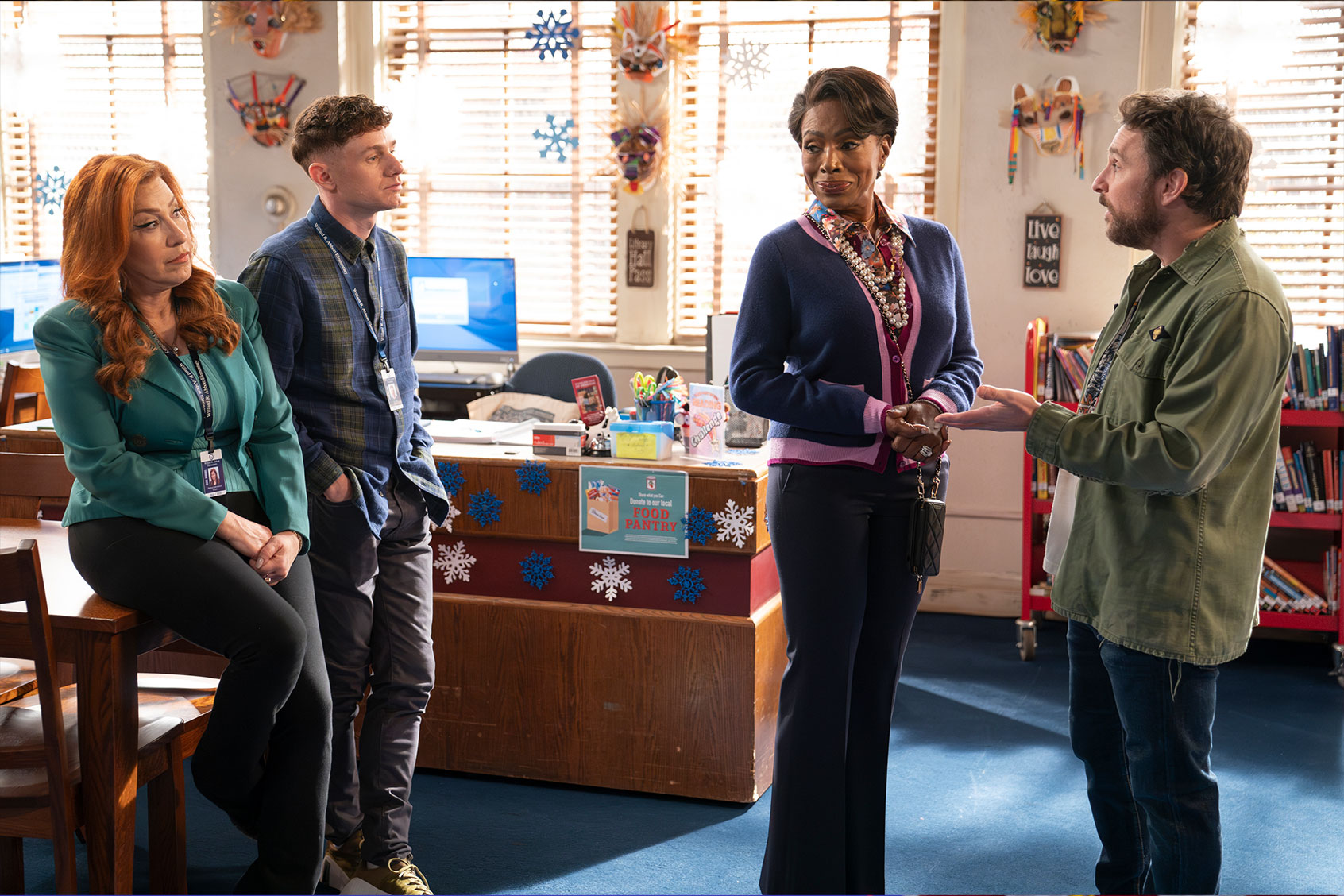
Placing ABC’s “Abbott Elementary” and FXX’s “It’s Always Sunny in Philadelphia” into the same lunch tray compartments feels higher risk than, say, mixing red gelatin into your tater tots instead of ketchup. But that’s probably why anybody who watches both shows will appreciate what their respective creators Quinta Brunson and Rob McElhenney have pulled off with "Volunteers," its midseason return.

It’s natural to view the temporary mixing of Willard R. Abbott’s earnest teachers with the scuzzy simpletons who barely run the worst bar in America as, um, entirely unnatural.

Temporarily merging the two series stirs up excitement and fear in equal measure.

Brunson’s Janine Teagues and her colleagues are nurturing educators eager to set up their under-resourced students for a fighting chance in life. McElhenney’s Mac and his partners in business and crime Charlie (Charlie Day), Dee (Kaitlin Olson), Dennis (Glenn Howerton) and Frank (Danny DeVito) are living proof of what happens when you don’t take learning of any kind seriously. Also, as any longtime “Sunny” viewer knows, the show has provided many reasons why the Paddy’s Pub gang should not be allowed within 100 yards of a school — or any child. A clip from a Season 13 episode settles that for all time.

Warning: although the following video features kids, it is definitely not for young children.

Needless to say, temporarily merging the two series stirs up excitement and fear in equal measure.

A crossover between “Abbott” and “Sunny” is unusual enough to wrap our heads around to be worth a brief consideration of this classic TV stunt’s value. Crossovers have been with us since the earliest days of the medium and serve a specific purpose. Mainly they're employed to goose a show’s ratings. “Abbott” may be critically beloved and an awards season favorite, but it also performs modestly in overnight Nielsen tallies.

“Sunny” isn’t exactly a weekly viewership powerhouse either. But it’s already the record holder for the longest-running live-action TV comedy, trucking past the count for “The Adventures of Ozzie and Harriet” 14 seasons when its 15th premiered. (The 16th season of “Sunny” ran in 2023; it is contracted to air through its 18th.)

So, yes, this could be an instance of two shows with passionate fanbases crossing the streams for the chance to grow their audiences. (Also, factoring in delayed viewing yields better numbers for each. Lots of people watch both shows on Hulu.)

There might also be a whiff of executive engineering about this crossover since FXX and ABC are corporate cousins under the Disney umbrella. (Olson is also toplining her own ABC series “High Potential.”) However, Brunson and McElhenney shared in interviews leading up to this “Abbott” midseason premiere that they sparked the idea on their own during a backstage meeting at the Emmys.

We need your help to stay independent

Even if we didn’t know this, the “Abbott" + "Sunny” team-up would still feel something special at a time when most series’ intersections are presented as part of a comic book movie roadmap or branding events within the same producer’s universe. Marvel, we’re looking at you, but DC played the game too.

The CW’s “Arrow”-verse made annual events of its heroes fighting crises on various shows – a treat for the fans but a pain for anybody dropping in for a taste of what those shows were selling.

This, though, reminds us that a worthwhile crossover can still be the result of a fanciful concept hatched over party cocktails.

Abbott ElementaryLisa Ann Walter, Chris Perfetti, Sheryl Lee Ralph and Charlie Day on "Abbott Elementary" (Disney/Gilles Mingasson)

The outcome clearly required a lot of sober planning. Maintaining the defining characteristics of the selfish, venal “Sunny” personalities without losing a drop of the feel-good nature fueling “Abbott Elementary” requires care, even though the thought of the “Sunny” barflies meeting these teachers isn’t outside the realm of possibility. They all live in Philly, and they’re all Eagles fans.

The prevailing sentiments in this episode are that nobody is entirely useless or beyond redemption with patience and the right guidance.

Every urbanite knows that a variety of disparate worlds and cultures often exist within the same city’s limits and that for reasons practical and shameful some people never venture into certain neighborhoods. “Abbott” features the largest primarily Black cast on network TV, whereas the ensemble in “Sunny” is white and rarely crosses paths with Black characters without it turning into some kind of travesty.

The Paddy’s gang doesn’t do anything that doesn’t somehow benefit each of them, meaning the volunteer stint that brings them to Janine’s school probably isn’t being undertaken out of the goodness of their hearts.

Melissa Schemmenti (Lisa Ann Walter), the only teacher among them who can sniff out low lives without much effort, clocks them immediately. But that doesn’t disqualify the Paddy’s crew from helping . . .as much as inept clowns can.


Want a daily wrap-up of all the news and commentary Salon has to offer? Subscribe to our morning newsletter, Crash Course.


Crossovers are ratings stunts – there’s no getting around that – and sometimes they can ruin a season's flow with their “Very Special Episode” standalone feel. Some of that comes into play here, because how can it not? There isn’t much that those of us provided with review episodes can or should reveal that would ruin its surprise except to say that this half-hour has an entirely different perspective and some backstory McElhenney pledges will be revealed in a few months when the “Abbott” teachers come to "Sunny."

The prevailing sentiments in this episode, though, are that nobody is entirely useless or beyond redemption with patience and the right guidance. The “Abbott” writers, with a little help from the “Sunny” staff, strategically pair each character with the personality most likely to tolerate them. Sheryl Lee Ralph’s Barbara Howard and Janelle James’ Principal Ava Coleman enjoy the best showcase of the half-hour, although Olson’s Sweet Dee is memorably true to what we know of her in a turn that catches Janine off-guard.

There probably isn’t much of a Venn diagram overlap between these two shows' viewerships now, and both creators doubt there will be much of one in the future. “Sunny” was never a family-friendly show, and from what McElhenney and Brunson tease about its FXX-appropriate response to this “Abbott Elementary” entry, don’t expect it to soften up for the under-21 crowd.

The Paddy’s gang is proud of its ignorance and refusal to learn anything of lasting value. But the success of their odd partnership with a grade school across town might be an inspiring lesson for other shows to find their perfect mismatch and make it work.

"Abbott Elementary" returns at 8:30 p.m. Wednesday, Jan. 8 on ABC. Episodes stream Thursdays on Hulu.

“Give it all a break”: Demi Moore didn’t snub Kylie Jenner at the Golden Globes, daughter says

The internet can rest easy — Demi Moore did not ignore Kylie Jenner at the Golden Globes.

After Moore's big win on Jan. 5 for the body-horror satire "The Substance," she briefly stopped at a table with "A Complete Unknown" stars Timotheé Chalamet and Elle Fanning. In a closely analyzed video, Moore hugged Fanning, spoke to Chalamet and seemingly skipped over Chalamet's date, Jenner. Now, the viral video has nearly 30 million views and its wide circulation has pushed Moore's daughter, Tallulah Willis, to address the potential snub, People reported.

Willis took to Instagram to "nip this straight in the bud," clarifying, "We spent New Year's with Elle, so connecting with her after a win was a very organic thing to do."

"This angel was in total shock and delight and moving throughout a warm room of well-wishers," Willis continued. "There was [no] snub of any sort, had she seen KJ wanting to congratulate her she would have fully given her the time and space. Literally just give it all a break and let a gal enjoy her accomplishments!" 

While Moore's three daughters were not at the Golden Globes in person, they all gathered to broadcast the award show from home. They celebrated Moore's win for best actress in a comedy or musical in a heartfelt video, showcasing their varied reactions.

In an Instagram story, Willis expressed her love for her mom: "The genuine shock makes me tear up. You are so worthy. The world is seeing you as your family does, and I am beaming with pride."

“Moral failure”: Advocates slam Tennessee’s rejection of summer meal program for hungry kids

Tennessee Governor Bill Lee’s quiet decision to forgo $1.1 million in federal funding for the Summer Electronic Benefits Transfer for Children — or Summer EBT — program has ignited a fierce debate among lawmakers, advocates and families over the state’s priorities and values, especially when it comes to the well-being of some of the state’s most vulnerable residents. Lee’s decision could leave 700,000 low-income children without access to summer meals in 2025. 

The Summer EBT program, created during the pandemic and later made permanent by Congress, provides financial support to ensure children who qualify for free or reduced-price school meals have access to nutritious food during summer break. Under the program, families receive a debit card preloaded with $40 per month per eligible child, restricted for use on food. In Tennessee last year, this initiative — branded as "Sun Bucks" — issued $120 to each child over three months, injecting an estimated $77 million into local grocery stores and generating up to $140 million in economic activity.

But that impact is now in jeopardy. 

Governor Lee’s administration, which already signaled its reluctance to renew the program last year, allowed the state’s participation to lapse by quietly missing the Jan. 1 renewal deadline. In a statement given to NBC News, Lee’s office justified the decision by citing administrative costs. 

“The Summer EBT program was established in the pandemic-era to supplement existing food assistance programs in an extraordinary circumstance,” press secretary Elizabeth Lane Johnson wrote. “The federal government has increasingly shifted the administrative cost burden to the states, prompting Tennessee not to renew our participation, as the program is mostly duplicative.” 

Johnson added that the Summer Food Service Program served about 3.4 million free meals to children in Tennessee this year.

However, critics argue the administration’s rationale is both insufficient and out of touch with the realities faced by struggling families. U.S. Representative Steve Cohen (D-Memphis) called the move “a moral failure” in a letter to Lee, urging him to reconsider. Cohen cited data from the Vanderbilt Center for Child Health Policy, which found that 40% of Tennessee families experience food insecurity.

We need your help to stay independent

“Feeding our children is not just a matter of public policy — it is a moral imperative,” Cohen wrote, according to the Memphis Flyer. “Well-nourished children are better able to learn, grow, and lead healthy, well-adjusted lives.”

Tennessee House Democrats have also been vocal. They criticized Lee on social media, comparing him to the Grinch in a meme that read: “Will the Governor steal your child’s summer meals?” Accompanying the image was a rhyming post styled after ’Twas the Night Before Christmas, urging Tennesseans to call Lee’s office in protest: “‘Twas the week before Christmas, when all through the state, Tennesseans were begging Gov. Lee to stop with the hate.”

Advocacy groups are equally alarmed. A coalition of more than two dozen community organizations — including school officials, food banks and child welfare advocates — penned a letter to the governor in December. They warned that rejecting Summer EBT funding would not only harm children but also undercut local economies.

“Every dollar spent on this program generates between $1.50 and $1.80 in economic activity,” the letter stated. “The decision to decline these funds will have far-reaching consequences for families and communities alike.”

Tennessee isn’t the first state to reject federal funding for Summer EBT; last year, 15 Republican-led states, ranging from Alaska to Georgia, opted out of the program. States like Iowa have similarly cited administrative costs and a preference for investing in existing programs. Iowa Governor Kim Reynolds argued that EBT cards do little to promote nutrition, framing her decision as part of a broader strategy to address childhood obesity.

"To know that the governor doesn’t want to help in the one little way he could is heartbreaking."

Yet, critics of this stance point out that many of these states already face high rates of food insecurity, and federal programs like Summer EBT are designed to supplement, not replace, state-level efforts. The U.S. Department of Agriculture, which oversees the program, estimates that 21 million children nationwide benefited from Summer EBT in 2023.

For families in Tennessee, the impact of the decision is deeply personal. Bobbi Jo Miller, a single mother of three who cannot work because she is disabled, told NBC News Summer EBT funds enabled her to buy additional staples such as eggs, milk, bread and cereal. When she heard Lee didn’t plan to renew the program in 2025, she cried. 

“I have a very fixed income,” she said. “To know that the governor doesn’t want to help in the one little way he could is heartbreaking.”

Representative Cohen and other lawmakers have called for a detailed explanation of Lee’s decision by January 17. Meanwhile, advocates are urging the governor to reverse course before the next funding cycle begins. Whether Lee’s administration will reconsider remains uncertain. As the debate continues, the stakes are clear. For hundreds of thousands of Tennessee children, the question of whether they will have enough to eat this summer now hangs in the balance.

Pamela Anderson returns in “The Last Showgirl,” a sublime, timely comeback in a changing world

During the joyous holiday season, I am typically at my most serene and emotionally content. But one night this last December, against the cozy glow of my fake Douglas fir, I found myself acting completely out of character, sitting up to hurl insults at an advertisement on television. It’s worth mentioning that I’m a sucker for Christmas nostalgia, and in recent years I’ve found myself returning to my favorite compilation of holiday ads from the '70s and '80s for a little extra comfort. Only a few decades back, holiday advertising was softer and more amiable; commercials were designed to appeal to a customer’s heart, illustrating how everyday products and higher-end gift items could bring people together during the holidays. Yes, these ads were still cleverly capitalist, but they highlighted how we can integrate consumerism into a holiday without losing the harmonious spirit of the season.

Having spent the last year feeling increasingly out of place in a world that devalues art and process over expedience and automation, watching “The Last Showgirl” felt like looking in a mirror.

So, maybe you can understand why an advert showcasing built-in AI features writing someone’s Christmas card caused me to fling expletives through the air like verbal snowballs. As if the mass normalization of generative AI wasn’t already terrifying, imagine picking up a Christmas card from your dearest friends or family and realizing that the “personalized” message is little more than hollow ChatGPT prose with a few holiday buzzwords thrown into the mix. Have we lost touch with intimacy to such a severe degree that we can’t even muster a few sentences about how our year went without relying on AI? A Christmas card, sent during the most mirthful time of the year, should come from the heart, not a program rapidly depleting our planet’s natural resources. We’re being sold products that covertly encourage us to let elegance and the connections we forge with others through earnest vulnerability fall away. With AI writing something as simple as a holiday greeting, we lose the charm in the occasional grammatical error, the typo and the silly dad joke. There’s worth and warmth in the work. Or, at least there used to be.

Having spent the last year feeling increasingly out of place in a world that devalues art and process over expedience and automation, watching Pamela Anderson’s stunning performance in “The Last Showgirl” felt like looking in a mirror. Though I don’t sport rhinestone bras or ostrich feather headpieces that caress the ceiling like the ones worn by Anderson’s character Shelly in her dying Vegas dance revue, I recognized the horrible sensation of feeling left behind that consumes her. Shelly is a woman who deeply relishes her work. Her sensual cabaret, Le Razzle Dazzle, is a classic, bawdy show on the Las Vegas Strip, the kind that requires work and passion as much as it necessitates the cheeky flash of a nipple. And though Le Razzle Dazzle has some glimpses of nudity, Shelly can see the beauty between the boobs. She takes pride in every stitch in her costumes and step of her feet.

The Last ShowgirlPamela Anderson in "The Last Showgirl" (Courtesy of Roadside Attractions)
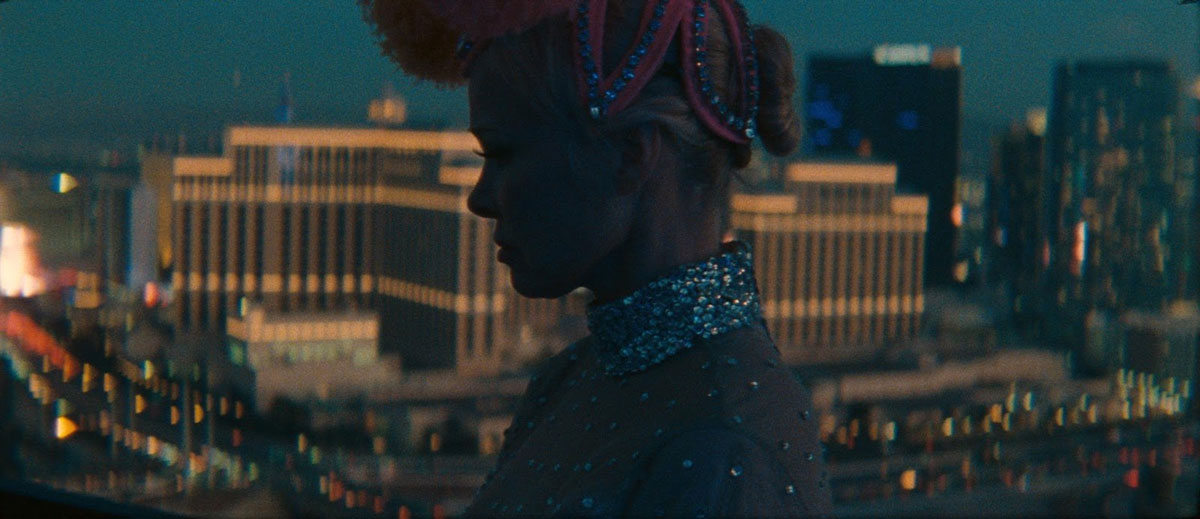
Like her character, Anderson was once a woman jettisoned into space to watch the world spin without her. She was chewed up during her time in Hollywood at the apex of its predatory tabloid era. Despite her commitment to her art, most filmmakers, critics and audiences refused to take Anderson seriously. Her beauty made her a target, and her soft heart all but guaranteed she’d be an easy mark. “The Last Showgirl” director Gia Coppola has spoken at length about her ardent desire to cast Anderson in the lead role, and it’s plain to see why Coppola knew that Anderson would be the right person to play Shelly. Anderson and Shelly have a symbiotic connection, a shared heart that makes for a singular experience for the film’s audience. It’s impossible not to be enchanted by Anderson’s compassionate turn, and her tender work makes it all the more heartbreaking to watch Shelly refuse to go quietly into the night.

If the title “The Last Showgirl” didn’t already imply it, it would still be obvious that Shelly is part of a dying breed. As Shelly and her friends and fellow dancers Jodie (Kiernan Shipka) and Mary-Anne (Brenda Song) prepare backstage for a performance, their intricate costuming is enough to convey how antiquated Le Razzle Dazzle has become. Their corsets are hand-stoned and their wings are finely sewn; a single rip will take days to fix. It’s the kind of show that takes a decent chunk of money to keep it going, if only because each person working behind the scenes and on the stage needs to be properly compensated. In an era where Vegas tourists would rather sit inside a giant sphere to watch a glorified music video play on an LCD screen than pay to see a glittering, choreographed burlesque, Le Razzle Dazzle is hemorrhaging cash. 


Want a daily wrap-up of all the news and commentary Salon has to offer? Subscribe to our morning newsletter, Crash Course.


Coppola’s film is largely set in the span of the show’s final performances, as Shelly and her cohorts contend with the end of an era and figure out what to do next. For Mary-Anne and Jodie, who are in the prime of their youth, the question of what will follow Le Razzle Dazzle isn’t so intimidating. There are options, albeit less elegant ones. But the closing of her beloved revue is coming at the worst possible moment for Shelly as she stares down the end of her fifties. To her faithful producer Eddie (Dave Bautista), Shelly is an old soul, but to those who cast Vegas’ remaining live dance shows, she’s just old. Suddenly, the once-shining Sin City looks a lot more dull, and Shelly can see the cracks in everything. Even her dear friend Annette (Jamie Lee Curtis) is being slowly pushed out of her job as a casino floor cocktail waitress — a gig where you used to be able to work until you kicked the bucket amid all the jackpots and coin slots. Maybe that’s not the most dignified way to go, but for Annette and others like her, it’s better than croaking in the heat of the desert sun. 

Screenwriter Kate Gersten’s script is its sharpest when it’s focused on Shelly and Annette, whose bond feels heartwarming and utterly real. The film is less tight when it spotlights its younger characters, especially Shelly’s estranged daughter, Hannah (Billie Lourd). Gersten beautifully expounds on the complicated dynamics of young motherhood and how it felt for Shelly to be a working Vegas showgirl while trying to care for her daughter. But Hannah herself is relatively one-dimensional, and Lourd is unsuited to her paper-thin character. 

The Last ShowgirlPamela Anderson in "The Last Showgirl" (Courtesy of Roadside Attractions)While some might find the inconsistent character writing detrimental to the film, those disparities only further spotlight Anderson’s impeccable performance. Among all the blinding lights that bookend Vegas’ Strip, she shines the very brightest. Shelly is magnetic and magnanimous, compelling in the ways she extends so much kindness to others (or, at least, wants to) while working through the throes of personal crises. Coppola’s enthusiasm for her star pays off in droves throughout the film, as she frames Anderson in lush pastel pinks and baby blues to emphasize Shelly’s gentle soul and Anderson’s unique presence. 

With her marvelous return to the screen in “The Last Showgirl,” Anderson declares that good, honest work is timeless.

For as long as Anderson has been absent from our screens, which is far, far too long, she stomps back triumphantly, showcasing candor and affection for both this specific material and her craft. Considering all the years she spent being misunderstood by the public and the industry, it’s nothing short of miraculous to see her sparkle on the silver screen once more. Shelly is intensely fond of her art, prattling on to anyone who will listen about the show’s style originating from Parisian dance troupes, and practicing her choreography and technique from old movement videos she projects onto the wall in her living room. Her graceful motions are beautifully complemented by Andrew Wyatt’s score, which floats in and out of the film like a dream. Shelly exists in that hazy romance, the same kind that Anderson lives in, the one that was so apparent in 2023’s “Pamela, A Love Story,” which documented Anderson’s long journey to this moment and stressed her appreciation for all of the life — good, bad and ugly — that led to it. 

“The Last Showgirl” isn’t wonderful because Anderson plays a version of herself, but rather because Anderson fundamentally understands her character, empathizing with Shelly’s desperation to hold onto modern life’s fleeting romance. When Shelly readies herself for a dinner date who eventually cancels on her, she shrugs it off and prepares the fish she was planning to make for her friends instead. It would be a shame to waste such a great cut of fish, and the lemons for the recipe were so expensive, she says. Things didn’t used to be this way. The lemons were cheap and the guys weren’t trying to score something on the side in their marriages. The phone rang with friends calling just to say hello. People were encouraged to pursue their dreams, not abandon them. Shelly can’t see life any other way. When Hannah tells her mother that others have told her to give up photography to get a job that makes money, Shelly scoffs. “That’s the dumbest thing anyone ever told anybody with a dream,” she replies. 

Those words are especially pertinent to Anderson, who once believed her time in the movies was finished. With her marvelous return to the screen in “The Last Showgirl,” Anderson declares that good, honest work is timeless. Craft and process are things that are worth defending, and the effort it takes to create something is part of what makes the finished work so special. The kicks are high because the dancers stretched. The costumes are shining because the seamstress stoned them. The showgirls are smiling because they worked for years to get to that stage. Automation might create the illusion of ease, but it will never replicate the radiant joy of watching people who love what they do.

“So sad our house is gone”: Celebrities suffer losses and evacuations due to Palisades fire

The raging Palisades fire has affected tens of thousands in Los Angeles, including some of Hollywood's biggest stars.

The life-threatening blaze was first reported late Thursday morning in the affluent area of the Pacific Palisades, which houses celebrities like Jennifer Aniston, Bradley CooperTom Hanks and many more. A severe wind storm called the Santa Ana winds exasperated the unpredictable weather, pounding Southern California and spreading the fire to parts of Malibu and Santa Monica. 

The L.A. Fire Department said that as of Wednesday morning, the three fires were zero percent contained. California Gov. Gavin Newsom declared a state of emergency on Tuesday evening — affecting 39,000 people in the area — and Santa Monica and Malibu have since called for evacuation orders, The Hollywood Reporter said.

"Star Wars" star Mark Hamill is one of the numerous celebrities forced to flee their home in the night, revealing in a post to Instagram that by 7 p.m., his wife, his dog and himself had "Evacuated Malibu so last-minute there (were) small fires on both sides of the road as we approached (Pacific Coast Highway)."

Hamill's family arrived at their daughter's home safely. He added in his post, “Most horrific fire since ’93,” expressing he hoped people would "stay safe."

Other celebrities like "The Hills" stars and couple, Spencer Pratt and Heidi Montag, shared a series of social media posts documenting the fire inching closer to their home. Pratt said online, "I'm watching our house burn down on the security cameras." 

In a video, Montag cried and expressed she was "so sad our house is gone." But she added, "We're out safe, and that is the most important thing."

Eugene Levy, the "Schitt's Creek" actor and current honorary Mayor of the Pacific Palisades, evacuated his home on Tuesday. He told the LA Times, “The smoke looked pretty black and intense over Temescal Canyon . . . the smoke was very dark.”

James Woods also took to social media to say, "I couldn't believe our lovely little home in the hills held on this long. It feels like losing a loved one."

Even Hollywood premieres for films like Jennifer Lopez's "Unstoppable" had to cancel its red carpet due to "safety concerns around heightened wind activity and fire outbreaks." Universal also canceled the premiere of the horror film "Wolf Man" because of "sensitivities around the worsening weather situation in LA and related evacuations."

Some unaffected by the fire still shared their condolences. Recent Golden Globe winner Zoe Saldana said, "sympathies with all those affected by the devastating fires in Southern California, particularly those who have lost their homes."

Why Justin Trudeau resigned and what that means for Canada and the coming trade war

Canadian Prime Minister Justin Trudeau announced his resignation this week, setting off a scramble to replace him both as the country's head of government and as leader of the center-left Liberal Party, just months out from a federal election.

Trudeau won a sweeping parliamentary majority in 2015, but another election in 2019 reduced his party to minority status, though he was still able to form a government as the Liberal Party remained the largest in Parliament. Amid fallout from a limping post-COVID economy, a housing affordability crisis and battles over surging immigration, Trudeau and his government hemorrhaged support from both Canadian voters and erstwhile political allies.

Last month's abrupt and acrimonious resignation of Trudeau's chief deputy, Minister of Finance Chrystia Freeland, appeared to seal the prime minster's fate.

Trudeau's capitulation sets in motion an adjournment until late March, during which parliament is disbanded while Liberal Party members elect a new leader. After the leader is chosen, Trudeau will officially resign. Whoever replaces Trudeau has only until October, potentially, to re-position a wounded party for its reckoning with a mutinous electorate. And that is the best-case scenario: a probable vote of no confidence by a majority of the House of Commons would prompt an immediate federal election, giving Liberals almost no time to recover.

Either way, polls indicate a historic drubbing in store for the Liberal Party, which at around 20% popular support is far behind the Conservative Party led by Pierre Poilievre, which is now approaching 45% support.

Rather than electing their head of government directly, Canadian voters in each constituency choose a member of parliament to represent them in the House of Commons. The leader of the party able to form a government — by virtue of holding a majority in the House of Commons, by toughing it out as the largest minority party or by forming a coalition — is then officially appointed by the British monarch's governor-general to form and lead a new government as prime minister.

The son of former Prime Minister Pierre Trudeau and a savvy self-promoter, the younger Trudeau enjoyed a long "honeymoon" phase after 2015 as a favorite of liberals passionate about climate change, electoral reform, reconciliation with Canada's Indigenous people and expanding the country's intake of asylum-seekers. But a series of embarrassing scandals — from a photo of Trudeau in blackface to revelations that he had interfered in a corruption case against a favored construction firm — and accusations of broken promises over those very same issues diminished his standing, while the 2019 federal election deprived him of his absolute majority in parliament.

After two frustrating years as leader of a minority government, Trudeau rolled the dice by calling a mid-pandemic election in 2021, falling short of a majority once again and only avoiding a much greater defeat due to political infighting among his opponents. This time, he entered into a supply and confidence agreement with the progressive New Democratic Party (NDP), which allowed him to form a government and pass his budgets, in exchange for Trudeau adopting some of its proposals.

Trudeau, unable to contain soaring costs and prod stagnant wages but insisting that his measures had prevented a worse situation, struggled to respond to the Conservative opposition. Led by Poilievre, the Conservative Party of Canada (CPC) has courted the support of working-class voters by blaming government policies, like a carbon tax, for the country's economic woes and professing sympathy for those hurting in populist language — language some critics say belies the failures of the previous Conservative government (of which Poilievre was Housing Minister) and regressive policies that would only worsen voters' plight.

But naturally, it was the government that faced the voters' wrath. In a series of special elections between 2021 and 2025, Liberal Party candidates faltered in what should have been strongholds like Toronto and Montreal.

We need your help to stay independent

A few last-minute moves by Trudeau to placate the right, like a sharp cut to the number of immigrants allowed into the country, failed to arrest his party's slide. Trudeau's left flank also grew restive: Last September, his decision to break a railworkers' strike prompted the NDP to cut loose from its uncomfortable and ultimately damaging association with the Liberal Party.

“The fact is, the Liberals are too weak, too selfish and too beholden to corporate interests to fight for people,” NDP leader Jagmeet Singh said in a video address. “They cannot stop the Conservatives. But we can.”

Now unable to command a majority in parliament, a weakened Trudeau began facing calls from his own backbenchers to resign for the good of the party. The prime minister, seeking to break a century-long precedent by winning a fourth federal election in a row, clung on defiantly. Then at the worst possible moment for Trudeau, a victorious Donald Trump pledged to slap a 25% tariff on all Canadian goods and services, driving yet another wedge into his government.

Freeland, the Finance Minister whose influence and wide portfolio has led the Canadian press to dub her the "Minister of Everything," disagreed with a slew of spending plans Trudeau hoped would claw back some popular support, calling them a "costly political gimmick" that would drain the "reserves we may need for a coming tariff war." Trudeau then offered Freeland a different position in the cabinet if she could not accept a budget deficit that would far exceed her own caps. Instead, she sent him a resignation letter.

While her letter did not pack the same bombast as the speech in parliament that brought down Britain's Margaret Thatcher, Freeland's December resignation exposed Trudeau's slackening grip and emboldened more Liberal MPs to call for the prime minister to follow suit. Poilievre, for his part, repeated his calls for an immediate election, saying: “The government of Canada is itself spiraling out of control.”

Trudeau, alone and shunned by his chief lieutenant, announced his own resignation three weeks later. "I intend to resign as party leader, as prime minister, after the party selects its next leader through a robust, nationwide, competitive process," he told reporters.


Want a daily wrap-up of all the news and commentary Salon has to offer? Subscribe to our morning newsletter, Crash Course.


While the Liberal Party holds its internal contest, parliament is prorogued until March 24. No candidate has officially announced their entry into the race yet, but Freeland, her replacement Dominic LeBlanc, Foreign Minister Mélanie Joly and Innovation Minister François-Philippe Champagne have all been named as potentially strong contenders.

Whoever emerges victorious will inherit leadership of a damaged party, premiership of a country beset by numerous crises as well as a potentially hostile neighbor to its south, and calls by all three major opposition parties — the CPC, NDP and separatist Bloc Quebecois — for an immediate election. If the three parties unite in a vote of no confidence upon parliament's return, Trudeau's successor will have to face an angry electorate by the end of spring.

Poilievre has said that if he became prime minister, he would cut government spending, end handouts to corporations and repeal Trudeau-era policies like the carbon tax, which was implemented to reduce greenhouse gas emissions. Despite his populist messaging (and criticism from the left that it's all just empty words), Poilievre is not often compared to Trump, a more vulgar kind of agitator who inveighs against immigration using much uglier language.

And while he would like to pursue a "great deal" on energy with the American president-elect, Poilievre has joined Trudeau, Freeland and other leading Canadian politicians in denouncing Trump's proposed tariffs as an "unjustified threat” on “our already weak and shrinking economy" and committing to economic retaliation "if necessary."

About 60% of U.S. crude oil imports and 85% of electricity imports are from Canada, according to The Associated Press. Canada is also the largest foreign supplier of steel, aluminum and uranium to its southern neighbor. Any trade war between the two countries would have disastrous effects on the economy and the costs of living for both of them, economists warn.

On at least one other issue, Poilievre can find agreement with Trudeau: Canada will not become the 51st state.

“Grave injustice”: Trump’s legal team wants the Supreme Court to postpone his felony sentencing

President-elect Donald Trump asked the Supreme Court on Wednesday to intervene and pause his sentencing in New York, his attorneys claiming that being sentenced for his felony conviction would be a “grave injustice.”

Trump’s attorneys appealed to the Supreme Court after a New York appeals court refused to postpone his sentencing, which is set for Friday. Trump’s attorneys claimed that action from his allies on the Supreme Court was necessary to guard against "harm to the institution of the presidency and the operations of the federal government.”

“President Trump is currently engaged in the most crucial and sensitive tasks of preparing to assume the Executive Power in less than two weeks, all of which are essential to the United States’ national security and vital interests,” Trump’s lawyers wrote. “Forcing President Trump to prepare for a criminal sentencing in a felony case while he is preparing to lead the free world as President of the United States in less than two weeks imposes an intolerable, unconstitutional burden on him that undermines these vital national interests.”

The arguments presented by Trump’s team lean on the Supreme Court’s presidential immunity decision, which held that presidents could generally not be prosecuted over “official acts.” The acts at issue in the hush money case in New York, however, concern actions Trump took before his presidency. 

Trump’s lawyers have also argued that defending himself in court is “uniquely taxing and burdensome” and that this presents a challenge for the president-elect, who they say is “engaged in the most crucial and sensitive tasks of preparing to assume the executive power in less than two weeks.”

Justice Sonia Sotomayor oversees cases arising on an emergency basis from New York and can choose to either respond to the appeal on her own or refer it to the whole court.

Emergency declared as “apocalyptic” fire engulfs wealthy Los Angeles neighborhood

A brush fire, goaded by a wind storm, has swallowed up much of Palisades Park, an affluent community in northwest Los Angeles, and forced the evacuation of around 30,000 residents from the area. Both the state of California and the City of Los Angeles declared states of emergency Tuesday, with municipal, state and federal agencies coordinating to deal with the crisis.

“We’ve declared a state of emergency to amplify our response to this devastating fire and clear a path for a rapid recovery,” Los Angeles Mayor Karen Bass said in a statement Tuesday evening. “ To the thousands of families impacted by this horrific fire — the City of Los Angeles is providing resources and shelter as this emergency continues. To the hundreds of brave firefighters and first responders who have been responding all day to this blaze — we thank you. The City is working aggressively to confront this emergency.”

President Joe Biden said shortly afterwards that the Federal Emergency Management Agency had approved a grant "to support areas that are impacted and help reimburse the state of California for the immediate firefighting costs."

The Palisades fire was first reported late Thursday morning and has grown to at least 2,921 acres, with zero containment as of Wednesday. Major Los Angeles roadways are either closed or jammed with cars full of people fleeing the fire, with many having abandoned their vehicles to walk on foot. Nearly 300,000 energy customers were in the dark this morning, according to the Los Angeles Department of Water & Power.

Fires have also broken out in Sylmar and the hills above Altadena, threatening more homes and residents. The conflagration was sparked by a combination of dry conditions and powerful winds that have become more frequent in recent years, with many scientists pointing to the effects of climate change.

No deaths have been reported, but fire officials said they had reports of multiple burn victims. The scene is said to be "apocalyptic," with firefighters battling overnight and through the day to contain its reach.

DOGE, looking to slash federal spending, is hiring full-time, salaried employees

Elon Musk and Vivek Ramaswamy's Department of Government Efficiency, a nongovernmental advisory group created to slash the federal government's budget, is looking to hire "a very small number" of full-time, salaried positions, according to its X account.

The group — nicknamed "DOGE" after the memecoin that Musk has promoted — is recruiting people to fill software engineering, information security engineering, HR, IT and finance roles, Business Insider reported.

The X post instructs applicants for the HR, IT and finance roles to direct message the DOGE account with their resumes and "a few bullet points about why you are interested in DOGE." In a separate post, applicants for the software engineering and information security engineering jobs were told to send bullet points "demonstrating exceptional ability" along with a cell phone number. The posts do not offer details on job descriptions, salaries or how many positions will be filled.

Musk, who has said DOGE is looking to cut $2 trillion from the federal budget, said in November that DOGE employees would not be paid. "This will be tedious work, make lots of enemies & compensation is zero," he posted on X.

Trump announced in December that William McGinley, a longtime election attorney who served as cabinet secretary in Trump's first term and has been appointed White House counsel for his second term, will be DOGE's attorney. McGinley has also served as the Republican National Committee's outside counsel for election integrity. Katie Miller, deputy press secretary for the Department of Homeland Security under Trump's first administration, would also DOGE, Trump said. 

Trump announced the creation of DOGE weeks after he was reelected in November. Musk and Ramaswamy, the billionaires he put in charge of it, have pledged a "chainsaw" approach to cutting the $6 trillion federal budget.

Ramaswamy has suggested eliminating programs that have lapsed spending authorizations despite still being funded by Congress, such as veterans' health care services, housing assistance and the Justice Department. Musk has called for "deleting" the Consumer Financial Protection Bureau.

In an op-ed published by the Wall Street Journal, they pointed to $535 million allocated to the Corporation for Public Broadcasting, $1.5 billion for "grants to international organizations" and nearly $300 million allocated to "progressive groups like Planned Parenthood" as examples of funding that could be cut.

Fiscal policy experts say their proposals misunderstand the role of funding authorization in Congress. 

"They have a fundamentally superficial understanding of what they're doing," Bobby Kogan, senior director of federal budget policy at the Center for American Progress, said. "They have a meme-level understanding. 'Let's get rid of unauthorized spending' is the sort of thing that you might see in a Facebook meme."

Trump’s minions are laying the groundwork for military action

Many people still don't have the stomach to follow politics these days after the disappointment of the last election and the return of the Trump three-ring circus to Washington. It's depressing and nerve-wracking, even if you just hear snippets in passing or read a few paragraphs of a news story about billionaires at Mar-a-Lago or strange D-list celebrity political figures being lifted into positions of great responsibility. There's only so much you can take.

But I do wish that everyone could bring themselves to watch at least some of the president-elect's press conference on Tuesday. Yes, much of it was the standard lunacy about showerheads and whales and windmills. He always plays his greatest hits. But he's got some new material that I think people should be aware of.

I've been saying for years that his schtick about being some kind of peacenik was a crock. First of all, it was obvious that he adopted that pose in order to position himself as the opposite of both Bush and Obama who were criticized for their foreign policy. He has almost no understanding of international affairs, even now, so his shorthand decision-making was simply to say that anything his predecessors did was stupid and made the world laugh at us as he promised to reverse their policies. Sometimes he even did it, as with the Iran Nuclear Deal, the Paris Climate Agreement and the Trans-Pacific Partnership. He simply tweaked NAFTA and pretended that it was genius. And he left Afghanistan a terrible mess for his successor which allowed him to condemn it all over again. But generally, beyond kvetching endlessly about NATO not "paying its dues" and crowing about his love affairs with all the world's worst despots, Trump really didn't have a foreign policy.

But he did have a worldview.

His central conceit all the way back to 2016 was that he's a man of peace who wanted to put America first. People misinterpreted it as a sort of pacifist isolationism. It was not. He wanted to spend massive sums to build up the U.S. military to make allies pay up for protection and he believed that tariffs should be used as economic weapons to dominate other countries. In other words, he believes that U.S. power should be used to bend the world to his will.

His recent comments about Mexico, CanadaPanama and Greenland show that this strategy has matured beyond just extorting money from other countries at the end of some very big guns, both military and economic, and has now become a full-fledged policy of territorial expansion.

In that typically crazy press conference on Tuesday, he made the startling announcement that he plans to rename the Gulf of Mexico the Gulf of America. His loyal hatchet woman, Georgia Rep. Marjorie Taylor Greene, promptly announced legislation to do just that so that the government could get to work changing all the maps. The fact that the Gulf of Mexico has been called that since before there was a United States of America makes no difference. Trump wants it and he's going to make it so.

That wasn't all, however. Earlier in the day we had all been treated to reports that Donald Trump Jr. and activist Charlie Kirk had been dispatched to Greenland to take the temperature of locals to see if they wanted to be annexed by Donald Trump. It was embarrassing, needless to say.

And when asked in the press conference if Trump actually planned to seize the island, and the Panama Canal as well, Trump said it was necessary for national security, the same rationale Vladimir Putin used to invade Ukraine which Trump called "savvy" and "genius" at the time. It is quite clear that Trump is serious about this. When asked directly, he would not rule out using the military to accomplish his goal.

We need your help to stay independent

He is also quite serious about using U.S. troops to stage military operations in Mexico, ostensibly against the drug cartels. And for all of his "joking" about Canada being the 51st state as a way to emasculate Prime Minister Justin Trudeau, he conceded that he only planned to use economic force to bend Canada to his will, which was very restrained of him.

The Atlantic's David Frum discussed what a change this was from the way the world has been organized since the end of WWII when the world was in rubble and the United States made the decision to help rebuild it:

Americans sought to achieve security and prosperity for themselves by sharing security and prosperity with like-minded others. The United States became the center of a network of international cooperation—not only on trade and defense, but on environmental concerns, law enforcement, financial regulation, food and drug safety, and countless other issues.

And yes, we also exploited other countries, chased phantom ideological goals and otherwise betrayed our ideals but this was central to how we organized our tremendous military and economic power in the world. After the searing experiences of two world wars, a global Great Depression and the long slog of the Cold War, the hard-won lesson was that everyone was safer and more prosperous under mutual cooperation. The international institutions, alliances and treaties that sprang from that understanding were devised to at least make it difficult to completely abandon those ideals.

That concept is no longer operative under Donald Trump. Here you have one of Trump's glib minions openly wondering why America shouldn't expand its territory. It's as if the last century never happened.


Want a daily wrap-up of all the news and commentary Salon has to offer? Subscribe to our morning newsletter, Crash Course.


With Trump saying that the U.S. needs Greenland and the Panama Canal for national security reasons it's pretty clear that they are laying the groundwork for military action. (Nobody is going to "sell" either of them.) I doubt that there will be any serious actions, economic or otherwise against Canada because America does lots of business with them. But Trump is stirring up a tremendous amount of resentment for no good reason. And we have every reason to believe that he's serious about some kind of military action in Mexico. (And don't be surprised if he proposes a Venezuelan invasion. He wanted to do it in his last term.)

Nobody voted for any of this. It wasn't even a "vibe" in last November's election.

Trump appears to have taken some inspiration from Vladimir Putin's Ukraine invasion which he thought from the beginning made perfect sense. His Defense Secretary nominee, Pete Hegseth, put it in terms Trump probably liked very much. He called it "Putin's give me my shit back war":

I have always said that even if you believed that America's role in the world was too broad and too expensive and perhaps outdated, just taking a wrecking ball to it without anything to replace it would be a horrible mistake. Well, Trump has something to replace it now. When he says "America First" he means "America Uber Alles ."

And guess what? Other countries aren't eager to go along with that. So they're arming up:

What could go wrong?

Mark Zuckerberg’s Meta makeover: MAGA grandpa is about to get much worse

In part because of his goofy appearance and in part because he doesn't engage in fascist trolling like fellow billionaire Elon Musk, Mark Zuckerberg is rarely seen as a sinister character in modern American life. But Zuckerberg's announcement that Facebook and Instagram will soon cease fact-checking is such a stellar model of villainous doublespeak that George Orwell would have thought it was a bit much. Zuckerberg insisted it's in the name of "free speech" that he must unleash uncontrolled disinformation on his platform, adding, "The recent elections also feel like a cultural tipping point towards, once again, prioritizing speech."

It's bad enough when leaders like Trump and Musk, who are at least open about their authoritarian beliefs, tell their followers that it's okay to ignore facts and believe whatever feels emotionally satisfying. When someone like Zuckerberg — who has long presented as moderate or even liberal — says it, it furthers this normalization of dishonesty.

Yep, he is saying Donald Trump is a "free speech" champion, saying the company plans to "work with President Trump" in what sounds very much like bullying countries that have more stringent laws banning false information and hate speech. Of course, Trump is a stalwart enemy of free speech and the First Amendment. Trump has repeatedly threatened to imprison journalists or use government power to shut down news organizations that publish unflattering information about him. The president-elect routinely uses baseless defamation lawsuits to punish journalists for reporting his actions. He has repeatedly called for throwing people in prison for criticizing right-wing judges. But, as the Atlantic's Adam Serwer said on Bluesky, the right's definition of "free speech" is "conservatives being able to say nasty things about people without those people being able to respond."

Instead of using professional fact-checkers, parent company Meta will copy X's "community notes" model. This feature allows people to attach "corrections" to tweets they believe contain false information. If enough people do this, the community note will appear on the original post. X's owner, Musk, claims the notes are "the best source of truth on the internet." Like much of what Musk says, this is not true. A Washington Post report on the program published in October shows it "does a poor job of responding to falsehoods relating to politics," because people who post factual corrections are challenged by those who defend the original lie. The researchers found that accurate community notes only survived downvoting by trolls 9% of the time. 


Want more Amanda Marcotte on politics? Subscribe to her newsletter Standing Room Only.


But even on those rare occasions when the facts get attached to a false post, it may not matter. As disinformation expert Jared Holt noted on Bluesky, "fact-checking ultimately does very little to curb the spread of false information online." What matters instead, he said, is algorithms that favor good information over bad. If anything, community notes may end up spreading disinformation wider. When people are arguing over the content of a post, as community notes encourage, that boosts its engagement — and therefore pushes the disinformation in front of even more eyeballs than if people were just ignoring it. Meta is "consciously going to let more toxicity through the floodgates," Holt added. 

From a business standpoint, choosing to be even more of a vector for right-wing disinformation and general looniness seems like a poor idea. Musk turned Twitter into a MAGA cesspool after acquiring it in 2022, and the results haven't been good for the accounting books. As Futurism reported last month, the renamed X is rapidly losing users to competitors like Threads and Bluesky. As the Deseret News reported in October, X has lost 80% of its value since Musk took over, mostly because "the company’s primary source of income, advertising revenue, has hit the skids during his tenure as owner."

Musk probably doesn't care. He spent a ridiculous sum — $44 billion — to buy X, which was only valued at $20 million at the time. (It plummeted in value to $4.2 million in two years.) One reason is his narcissism and wanting to use the platform to force people to pay attention to him. It was also an in-kind donation to the Trump campaign, on top of the over quarter-billion Musk spent directly on Trump in 2024. That investment has returns for Musk, who made most of his money off the federal government and would like to keep that spout open. Zuckerberg isn't plugged into such investments, though his announcement video did suggest one reason he's buttering Trump up like this: he wants the U.S. government to penalize foreign nations that have cracked down on Facebook disinformation. Considering that the free flow of lies on the platform has led to countless deaths from everything from vaccine refusal to genocide, Zuckerberg's urge here feels less about "free speech" and more about avoiding the consequences of vile behavior. 

Whatever Zuckerberg's motives, this move will have ramifications far beyond making Facebook, which is already a miserable platform, even more unusable. There will be an immediate effect, which is that the already voluminous amount of MAGA disinformation on the network will grow. But this is much worse than having to deal with MAGA grandpa sharing more fake stories about "migrant crime." By so publicly affirming the Trumpian belief that facts don't matter and that "truth" is whatever MAGA says it is, Zuckerberg has offered even more permission to ordinary Republicans to lie shamelessly and spread obviously false conspiracy theories. 

As Mike Caulfield and Charlie Warzel wrote this week in the Atlantic, "misinformation is powerful, not because it changes minds, but because it allows people to maintain their beliefs in light of growing evidence to the contrary." It's bad enough when leaders like Trump and Musk, who are at least open about their authoritarian beliefs, tell their followers that it's okay to ignore facts and believe whatever feels emotionally satisfying. When someone like Zuckerberg — who has long presented as moderate or even liberal — says it, it furthers this normalization of dishonesty. The message is now perceived to be coming from all corners: it's okay to lie for MAGA, and anyone who says lying is immoral wants to take your "free speech" away. With this new level of permission to lie without shame, the already mendacious MAGA movement is going to get even more addicted to disinformation. 

“The entertainment of MAGA infighting” is a trap

On Monday, Donald Trump was officially certified by Congress as the winner of the 2024 Electoral College vote. Vice President Kamala Harris, who Trump defeated in the election, fulfilled her responsibilities by overseeing the vote count and ceremony. Trump will take power on January 20. His inauguration coincides with Dr. Martin Luther King Jr. Remembrance Day. Trump is America’s first White president. Dr. King is one of America’s great freedom warriors for multiracial democracy and human rights. He was martyred for his struggle to force America to live up to its professed ideals and unrealized potential. The coincidence of these two events is one more example of how this version of reality feels fundamentally broken.

Trump’s official victory as the 47th president of the United States also took place on the fourth “anniversary” of his attempt to remain in office despite being defeated in the 2020 election. On Jan. 6, four years ago, in one of the most infamous moments in American history, many thousands of Donald Trump’s MAGA followers, at his encouragement, participated in a violent assault on the Capitol. They came dangerously close to succeeding. Then-Vice President Mike Pence (and other high-ranking government officials including Nancy Pelosi) were minutes if not seconds away from being tracked down by the MAGA mob. The quick thinking by an African American Capitol Police officer named Eugene Goodman likely saved Pence’s life — and American democracy.

  "I think of what filmmaker Ernst Lubitsch said when he left Berlin for the U.S. in the run-up to fascism in Germany: 'Nothing good is going to happen here for a long time.'"

Trump has repeatedly said that he will pardon many members of the Jan. 6 MAGA attack force because they are "victims," "political prisoners," and "patriots" if not civic saints and heroes. Trump has described the Jan. 6 attack by his MAGA followers on the Capitol as "a day of love."

The centrists, institutionalists and other such mainstream voices who continue to naively believe in a version of an eternally democratic and decent America that does not exist and where autocrats and demagogues are anathema to the country’s political traditions and culture were (self- and incorrectly) convinced that the events of Jan. 6, 2021, would be the end of Donald Trump’s political power and the MAGA movement. Instead, Donald Trump and the MAGA movement would endure and grow in power and influence. There is a deep appetite for authoritarianism in America (and other parts of the world).

In all, Trump’s victory in the 2024 election, the certification of the Electoral College votes on Monday, and Jan. 6, 2021, have caused a type of cognitive dissonance and frustration among pro-democracy Americans and other members of the “reality-based community” that none of this should be happening but all of it has and continues to. On this, Heather Cox Richardson writes in her newsletter Letters from an American how, “Democracy stood in the sense that its norms were honored today as they were not four years ago, which is no small thing. But it is a blow indeed that the man who shattered those norms by trying to overturn the will of the American voters and seize the government will soon be leading it again.”

The emotional core of this dissonance and disbelief at Trump and MAGA return to power is a profound state of mourning for the nation and its future.

In an attempt to make better sense of our collective emotions (and tumult and upset) in these weeks before Trump’s return to power, reflect on the previous year and the election, and what may come next, I recently spoke to a range of experts.

Steven Beschloss is a journalist and author of several books, including "The Gunman and His Mother." His website is America, America.

The failure of American voters, including many Democrats, to embrace Kamala Harris is a tragedy that the country will only begin to comprehend in the months ahead. Whether she was rejected because of her gender or race, her ideas or the price of eggs, the failure of a strong majority of Americans to grasp or care about the danger of electing a vengeful convicted felon who despises the Constitution, the rule of law and the will of the people has ensured that the coming years will be calamitous. This tragic reality is not simply about the choice between two candidates, but a sign of how broken our political system and information ecosystem are. The lack of an informed citizenry is a perfect predicate for the rise of oligarchic, kleptocratic and authoritarian rule—and the further decline or demise of democratic self-governance. So is demagogic leadership that fuels grievance, anger and scapegoating instead of offering real answers to complex problems.

I expected the recklessness would not be on full display until closer to the inauguration. We have seen the incompetent, corrupt, criminal and sycophantic nominees for Donald Trump’s “leadership” team quickly chosen without proper vetting. Tulsi Gabbard? Pete Hegseth? Kash Patel? Robert F. Kennedy, Jr.? Not only do many of his choices seek to normalize immoral or criminal behavior, but they also make clear — for anyone who wasn’t paying attention — that Trump’s primary interests are retribution, dismantling our government, serving Vladimir Putin by aggressively undermining national security and further enriching himself and his super-rich cronies. The planned installation of nearly two dozen billionaires in leading positions makes it obvious that he never intended to prioritize the needs of the working classes. The Trump-supporter ascendancy of Elon Musk, the world’s richest man, who is bent on stripping away funding of popular and necessary social programs to finance his interests, mocks our democracy and makes clear that America is now at the mercy of its self-serving oligarchs.

With the inauguration still days away, we can hope that the MAGA infighting and the incompetence of Trump’s choices will undermine their cruel and reckless agenda. So, too, I am encouraged by the many dedicated people at every level who will oppose this dangerous regime, not just in broad terms but the daily assaults on our institutions and vulnerable populations. This is a reason to hope that we can survive and ultimately overcome the onslaught ahead.

Lastly, the passing of former President Jimmy Carter is a reminder of the value of compassionate, empathic, humanistic, and service-minded leaders who provide a model for the public. It will take all my effort to manage my anger that so many Americans chose four years of Trump’s selfish depravity, cruelty, and idiocy. But I’ll take strength from every voice I hear and action taken to oppose Trump and his hateful enablers.

Dr. Gary Slutkin is a distinguished epidemiologist, formerly with the World Health Organization (WHO), where he founded the Intervention Unit, which designed innovations in epidemic control and is the founder of Cure Violence Global, rated as the #1 NGO for reducing violence. 

I am an infectious disease physician and epidemiologist formerly with the World Health Organization. I led efforts to reverse epidemics overseas and have lived and worked in several dictatorships. Violence is an infectious disease — and is a common feature of dictatorships. This is relevant to all Americans — no matter who you voted for and must be avoided.

2024 is in the past. The election suspended our experience of time. What is to come is planned chaos — and threatens a relapse of historical-level disorder. This is seemingly considered desirable by distressed personalities. However, we can chart a better course if we stop to understand what is happening better: Tolerate the chaos — but not violence — not to immigrants nor to our own population.

We need your help to stay independent

Fortunately, over the last few decades, we have come to understand how violence and authoritarianism work better than we ever did. Chaos distracts and tricks us. Threats and violence, however, are infectious and lethal, destroying our mental health and our whole society — friends and families, home and work, all of life, and all of us. Nobody is spared. Threats and violence affect all of us everywhere. It is to be avoided everywhere.

We now need to focus amid the chaos on two critical issues: First, stopping cruelty, raids, violence and deportation camps, and finding humane and better ways to change our immigration issues. Secondly, we must not allow the U.S. military to be used domestically for this or any purpose — against citizens or non-citizens. Staying within the bounds of acceptable modern society requires our understanding of the difference between loyalty and obedience. This is especially true for our elected officials now. They must be leaders, not followers now. Loyal if needed, but obedience is different, treacherous and disloyal. Obedience is the problem that will destroy us, personally and as a country.

Obedience is not loyalty.

Loyalty is how we relate to our family, friends and those we play and work with. Obedience is giving up your sense of self. Obedience is giving up your personal identity, your own agency and your conscience. Obedience is what we commonly expect from our dogs. Obedience is different. Obedience is part of a brain disease that violence uses.

No authoritarian leader does the violence himself. They use and abuse other people to allow it or to do it. They use other people to sign legislation that allows cruelty and violence. They threaten and use people as empty vessels to do violence in a “non-thinking” mode. With excuses they give themselves that are not worth it. 

For all of us — from our elected officials who are supposed to be leaders — not followers — to our media owners and reporters, to everyday citizens of any political party, violence is not loyalty. The difference between loyalty and obedience needs to be cleared up quickly.

We are now awaiting storms and must focus. The two biggest immediate dangers: inhumane, cruel and brutal raids and deportation camps; and the use of our military within our borders are where obedience must stop — at every level.

Historians of the 20th century, including Timothy Snyder and Ruth Ben-Ghiat and the preeminent scholar Hannah Arendt, all revealed that there are several layers of people (preciously “normal” people) who allow “obedience” to take over their brains. This includes people who hand themselves over to become cronies and people in government not clearly seeing that they can become so-called desk killers. There are the otherwise previously normal working people who are made to think violence is good or needed. These thoughts are wrong. This is where good and bad get confused, where we all need to slow down and call for help with our thinking, talk to trusted friends and colleagues, stop these personal errors and stop the country from going over the cliff. There are alternative personal choices. If not, generations of shame follow later among children and grandchildren. 

Let’s avoid the distractions of Canada and Greenland, the entertainment of MAGA infighting and the sci-fi delusions of living on Mars where there is no livable oxygen or temperatures and focus on stopping the cruelty and abuse of good people, most of whom need help like our own ancestors did. Raids of homes, schools and workplaces, and concentration camps in the desert are not ok. Military actions against free speech or assembly in the country are not ok.

Neuroscience and other disciplines have both suggested and shown that many people in power are different from the rest of us and have morally disengaged, are without normal brain empathy connections and do not even see some of the rest of us as people or humans in the usual sense. These are not the people to follow or obey.

More than one member of Congress has said some version or another of “Whatever Trump wants I will do.” This is the mark of compromised or damaged people. Acting for the cruelty and violence of deportation is not acceptable or normal. Military actions that impair free speech or assembly within the country are not acceptable or normal. Acting with your own moral being and own self-respect is needed.

Obedience that goes against moral principles is not only not ok, but the end of personhood. We, which includes our legislators, can stick together against blind obedience and violence.

I am personally sad this sickness has emerged here. But it is more relevant for us to understand this serious variant of a violence disorder and help those who have been infected not cause further damage to themselves and all of us. Otherwise, our society and our morality will devolve to something nobody, but a handful wanted. We have a choice still.

Investigative reporter Heidi Siegmund Cuda writes about US politics and culture for Byline Times and Byline Supplement. Her Substack site is Bette Dangerous.

My podcast partners and I spent three years warning that Democratic leaders were ignoring information warfare at our country’s peril and we urged them to address the war in a speech we were asked to write for Joe Biden, which later became an open letter. The speech was never read and from what we understand there was no interest in publicly acknowledging the degree that Russia was blanketing America with digital poison. I spent the last two weeks proving that America is just one of two dozen countries Russia is attacking and that we are not alone or unique.

Russia doesn’t invent our problems, but as Dr. Michael MacKay explained it pours gasoline on our fires. So, in the end, a convicted felon and someone who appears to be heavily influenced by Russia was elected over the competent Black prosecutor and vice president, a woman, who believes in democracy.

If Americans would take a moment from their navel-gazing, they would see other countries protecting democracy in ways we can now only dream of – like Romania, which rejected the results of its first-round presidential elections due to Russian interference. We don’t even do recounts where sources that appeared to be in Russia targeted swing states with bomb threats. These are terrorist attacks on our own soil.

I have been thinking about what Dr. Marci Shore taught me — history doesn’t tell us what is going to happen, it merely offers suggestions. I think of what filmmaker Ernst Lubitsch said when he left Berlin for the U.S. in the run-up to fascism in Germany: "Nothing good is going to happen here for a long time.”


Want a daily wrap-up of all the news and commentary Salon has to offer? Subscribe to our morning newsletter, Crash Course.


I only cried once since the election. When my friend sent me information about obtaining a German passport my mind flashed to my father at 21, on a train, with his arm extended out the window, saying goodbye to his buddies playing the accordion on the platform. He was smiling big because he was on his way to the New World, leaving his war-ravaged country of Germany behind him.

Most days I attempt to balance the comfort of the activist communities we’ve built with the fact that there are forces who are trying to destroy America and those who voted for this destruction have no idea how their decisions will hurt them to.

How am I preparing for Inauguration Day? I am largely detached from social media. It is a toxic space. The right-wing is doing it political performance art of course.

I also see a potential future where Trump’s regime collapses under the weight of its own corruption. It is my hope that the Democrats are preparing to step in with a shared vision of the future that will entice MAGA to wake up from its dark fairytales and rejoin the ranks of the pro-democracy, disenchanted with their fascist flirtation when polio ravages the country and granny loses her Medicare.

I am reading history books and writing. History just offers suggestions but here are a few: within weeks of Putin coming to power, the Kremlin began to erode basic individual freedoms guaranteed under the 1993 Russian Constitution – closing the public space, denying the rights of free speech and press – all planned from the outset. Within six months of President Duterte coming to power in the Philippines, journalist Maria Ressa told Guardian reporter Carole Cadwalldr: “It took six months after he took office for our institutions to crumble.” Within three months of Hitler becoming the German Chancellor, his enemies were imprisoned. In Viktor Orbán’s Hungary, free speech has been replaced with propaganda and lies. 

I am preparing myself with knowledge, and not the distractions designed to stoke fear and paralysis.

On the night of the election, I was with a veteran activist who told me a story about Dalton Trumbo, the blacklisted writer. When asked about his time during the Red Scare, Trumbo recounted that regardless of what we endure, we still have to have a happy life. I have held that close.

In addition, my friend told me that in 1930s Germany, there was a saying that the pessimists went to New York and London, and the optimists went to Auschwitz. I have also held that close. Those who oppose the regime and have the means to get out will not be faulted for doing so. There are many fronts of this war. Others who are in public opposition to the regime are being encouraged to go underground. I’m not sure that is feasible in a post-privacy world.

Nothing good is going to happen here in the United States for a very long time unless, of course, the people wake up and challenge the regime. As Yale intellectual historian Dr. Marci Shore explained to me, everything can change in an “augenblick” — a blink of an eye. After 25 brutal years, the Romanian dictatorship of Nicolae Ceausescu came to a swift end on Christmas Day 1989, when someone in a pro-regime crowd said, "Boo."

America doesn’t have 25 years to relinquish to the cruelty of Trump — we have real issues to tackle, like global warming and mass inequity. We can’t do that under the Trumpocene. We have to look to other countries to see the bravery that is out there to help light our way forward.

Fearing another pandemic, people are prepping for bird flu. Should you?

For months, bird flu has been on Desiree’ Moffitt’s mind. The more she learns about the H5N1 virus, and the more updates that populate news headlines, the more alarmed she becomes. Unlike when COVID-19 spread across the globe and shut down businesses and cities — a time, she said, when she felt wildly unprepared — Moffitt is now taking steps to prepare for a potential bird flu pandemic in the foreseeable future.

“I decided after that experience [COVID-19] I was not going to put myself in that same confused category again,” Moffitt, a 45-year-old mom of two in North Carolina, told Salon “So I've learned everything that I can —  and it's not just bird flu, it's any event that could happen at pretty much any time.”

This means when Moffitt is at the grocery store, she picks up extra gallons of water to store in case of an emergency. She has also started picking up extra food and putting it next to her water and extra toilet paper. She has a first aid kit, and water filtration set, and recently purchased a $3,000 freeze dryer. 

“I noticed that I started to feel really content with packaging my food, sticking them in the oxygen absorber, and then putting them in my bin,” Moffitt said. “I filled my first really big tote with oatmeal and different soups.” 

"If bird flu comes around and the infrastructure shuts down for a while, I'm set."

At the time of our conversation, she estimated that she had enough dry meals prepared for her family of five for at least one week. She told Salon she plans to keep making meals and stocking up on goods. Moffitt added that she and her family are backpackers and that the freeze dryer helps alleviate weight when they’re on their family backpack trips, too. 

“A part of me is a little bit embarrassed because it sounds extreme,” Moffitt said. “But the other part of me feels that that is such a practical evolution in my thinking.”

Moffitt is not the only one preparing for a just-in-case bird flu pandemic. On Reddit, there have been several discussions in the r/preppers channel concerning people anticipating for a bird flu pandemic. In these conversations, people swap tips, share what they’ve been doing to prepare, and share what they think will be most helpful in a bird flu pandemic. 

At the moment, most experts don’t believe a H5N1 pandemic is an immediate threat, it’s completely possible in the near future, especially as cases continue to rise. Unlike the once "novel" coronavirus SARS-CoV-2, H5N1 is nothing new and has been documented since the '90s. But in 2024, officials confirmed that the virus had jumped from birds to cows to humans, all while massacring millions of wild animals and tearing through dairy and poultry farms across the country.

Any time a virus jumps from one species to another, it runs the risk of mutating to become more primed for human-to-human transmission, which is why it's so concerning when the virus jumped to pigs for the first time on record last year. Humans and pigs share many biological traits that can amplify the spread and evolution of viruses — with swine flu (H1N1) being the prime example.


Want more health and science stories in your inbox? Subscribe to Salon's weekly newsletter Lab Notes.


According to the Centers for Disease Control and Prevention (CDC), there have been a record 66 human cases of bird flu since spring. Out of those cases, two sources of exposure remain unknown — the rest have been traced to farm animals or wild birds. Only two of these cases have been severe, resulting in one death that was announced Monday.

In the U.S., there haven't been any known cases of human-to-human transmission, a key factor of what makes a pandemic a global crisis. While human infections have occurred in other countries, these cases didn't spread beyond close contacts. According to the CDC, the total fatality rate of people who have been infected with H5N1 is estimated to be more than 50 percent, though the true case fatality rate is hard to know without more testing.

“While the current public health risk remains low, the potential severity of an H5N1 pandemic urges us to stay vigilant,” Dr. Rajendram Rajnarayanan of the New York Institute of Technology campus in Jonesboro, Ark., told Salon, adding that the current situation is “akin to stepping on a land mine."

“We already have stepped on it,” Rajnarayanan said. “Our early response is not on par for the course, both at local and at federal level.” He said “stepping up monitoring and preparedness” is needed to avoid “triggering the land mine into a full-scale pandemic.”

The current situation is "akin to stepping on a land mine."

As mentioned, this week, the Louisiana Department of Health reported that a patient with a severe case of bird flu died from their infection, a first for the United States. The deceased was over age 65 and was reported to have underlying medical conditions. The patient contracted H5N1 after exposure to a combination of a non-commercial backyard flock and wild birds. 

This first death "changes things a bit,” Rajnarayanan said, adding, “The available viral genomic sequence from the Louisiana patient did suggest virus trying to adapt intrahost.” 

Rajnarayanan was referring to a genetic analysis suggesting the virus mutated inside the patient to make it a more severe illness in humans.

Amesh Adalja, an infectious disease physician and senior scholar at Johns Hopkins Center for Health Security, told Salon he doesn’t believe an H5N1 pandemic is “imminent or likely,” though predicts there will be avian influenza pandemics in the future. Still, he said that for individuals prepping, it depends on their own “risk tolerance.” 

“They can prepare to the degree that they feel comfortable with,” Adalja said. “Such preparations will also be useful for all hazards, such as a weather emergency.”

We need your help to stay independent

The idea of prepping might sound extreme to some, but it’s becoming more popular. According to a survey from the Federal Emergency Management Agency (FEMA), more people are preparing by stocking up on supplies than in previous years. In 2022, only 33 percent of people surveyed said they were stocking up on supplies; in 2023, 48 percent did.

But not all public health experts support the idea of prepping for a pandemic that may never come.

“I don’t think this is wise, especially since there are quite a few people that need access to supplies, like masks and antivirals right now, given we are in the height of the seasonal flu season,” Katelyn Jetelina, an epidemiologist and author of the newsletter Your Local Epidemiologist, told Salon. “We don’t know if, or when, an H5N1 event will hit.”

For Frank, a 55-year-old based in Ohio, it’s not just about prepping for bird flu, but any event that could lead people to need extra supplies — like a natural disaster or power outage. He has what he refers to as a “deep pantry” of supplies, including three months' worth of toilet paper, solar batteries, and a generator.

“Power outages aren't necessarily specific to bird flu, but if bird flu comes around and the infrastructure shuts down for a while, I'm set for that as well as a winter storm,” Frank told Salon, requesting to use only his first name for privacy. “I've got extra ways to cook, extra ways to power the house, power the TV, and so all of those preps would all help, depending on what happens with bird flu.”

The top crypto predictions for 2025

By all accounts, cryptocurrency had a big year in 2024. Bitcoin surpassed the $100,000 mark, legislation to govern the industry moved forward and donors became a political heavyweight, sending hundreds of pro-crypto candidates to Washington along with a new crypto fan — Donald Trump.

2025 is shaping up to be even bigger, even though there are concerns over Trump's potential conflicts and his appetite to regulate the industry. There's the possibility of a larger crypto bill becoming law, the potential for more currencies to become mainstream and a chance for crypto to capitalize on its political power.

"With a pro-crypto president and a bipartisan, pro-crypto Congress, our industry has a rare opportunity to get smart policy across the finish line that will shape the future of crypto in the United States,” Blockchain Association CEO Kristin Smith told Salon.com. "I’m confident that the crypto industry has the political capital, the public support and the technological vision to write the next chapter of America's innovation story.”

Here are some of the top predictions for 2025:

1. Industry-shaping legislation

The Financial Innovation and Technology for the 21st Century Act, or "FIT2" bill, passed the U.S. House last May, clearing a path for the most comprehensive legislation on crypto assets in U.S. history. And after Trump won reelection in November, crypto advocates became more ambitious.

"Can stablecoin legislation happen? Can market structure legislation happen? Can we make sure that the [Commodity Futures Trading Commission] gets the necessary authority to regulate spot markets? Can we also make sure that we protect all the developers and software engineers and people who are building really innovative products and who should not be regulated?" said Kara Calvert, vice president of U.S. policy for Coinbase, a digital currency exchange for crypto users.

The leading industry players are also lobbying to make sure it doesn’t become overregulated. "Technology itself should not be regulated, and we've been working very hard to make sure that this kind of legislation focuses on those intermediaries and not on the decentralized community that are out there building and innovating," Calvert said.

It’s reasonable to project that in 2025 we’ll see bipartisan support for breakthrough industry-wide legislation. It will be a test of crypto's lobbying power to see how much of their wish list this new legislation will include.

2. Support for stablecoin legislation

Stablecoins — digital assets pegged to the U.S. dollar and designed to maintain a stable price over time —became increasingly popular in 2024. Big banks showed interest and Regal movie theaters allowed U.S. customers to use stablecoin to buy tickets and concessions, per Pymts.com.

Cleve Mesidor, executive director of Blockchain Foundation, a nonprofit working to educate the public about the crypto industry, said legislation to provide a governing framework for stablecoins is likely to see support this year. Stablecoins are believed to be one of the easier starting points for updating U.S. laws on cryptocurrency. 

"Congresswoman Maxine Waters will negotiate across the aisle to pass the stablecoin package she worked on with former House Financial Services Chair Patrick McHenry," Mesidor said. "It has the best chance of being passed in both chambers and signed into law."

But a divided Congress will need to find common ground if crypto legislation is to advance further, she said.

"It will take votes from both sides of the aisle in order for bills to pass out of committee, or out of the House or Senate,” Mesidor noted. “Democrats working in crypto who have strong relationships in the party will be crucial, particularly during deliberations around market structure and considerations for microenterprises and [small and midsized enterprises]."

We need your help to stay independent

3. Bitcoin price projected to rise

Crypto enthusiasts have been making sky high predictions about bitcoin price for as long as bitcoin has been around, and 2025 is no exception. Galaxy Research projects bitcoin price will hit $185,000 by the fourth quarter, driven by "institutional, corporate, and nation-state adoption."

Bitcoin's momentum has included a growing acceptance of the digital asset's exchange-traded funds. Eleven spot bitcoin ETFs were approved by the Securities and Exchange Commission in 2024, opening the door for a broader range of investors. In the past, many applications were rejected on the grounds that bitcoin's unregulated nature created too much risk.

"These products are making bitcoin more accessible to traditional investors, and we project bitcoin could reach $185,000 to $200,000"

"These products are making bitcoin more accessible to traditional investors, and we project bitcoin could reach $185,000 to $200,000 as it becomes a core component of diversified portfolios," Sid Powell, CEO of decentralized finance lending platform Maple Finance, told The Defiant.

4. Solana ETFs could gain approval

Crypto watchers are following the path of solana, an altcoin named after a beach town in southern California that is poised to become the next breakout star of the crypto world.

Nate Geraci, president of The ETF Store, sees spot solana ETFs gaining regulatory approval in 2025, solidifying the altcoin's position as a significant player in the digital asset space. Solana jumped to $257 in November 2024; it dipped to $220 at the start of the year.

The prediction is not unreasonable, given that spot bitcoin and ethereum ETFs gained approval last year and Trump has nominated pro-crypto Paul Atkins to lead the Securities and Exchange Commission. Already, five asset managers have filed applications to issue solana ETFs, according to etf.com.

However, industry observers have raised questions over investor appetite and how much solana ETFs would be able to attract. 


Chick-fil-A made a “slight adjustment” to its waffle fries, much to the dismay of countless fans

Chick-fil-A recently shared some big news that fans aren’t super thrilled about. According to an announcement posted on its official website, the fast-food restaurant chain made a “slight adjustment” to its classic Waffle Potato Fries recipe.

The revamped fries don’t contain any of the nine major allergens, but do include pea starch in their coating. Per Chick-fil-A, the new recipe “offers the same great taste while also making our Waffle Potato Fries stay crispier, longer.”

Many longtime consumers, however, were upset over the new change, saying fans who have allergies to peas and pea protein can no longer enjoy the popular menu item.

“Please go back to the original fries. My daughter has an allergy to peas and pea protein. We can no longer visit the restaurant due to allergy concerns and cross-contamination,” wrote one individual under a post that Chick-fil-A shared on Instagram.

“The people have spoken, and I agree, why do companies have to mess with what works?” a second commented. Another person wrote, “How many times do we need to say it? BRING BACK THE FRIES,” adding that the new fries “taste like paper.”

Chick-fil-A’s most recent change comes after the chain announced last March that it would not keep its chickens antibiotic-free. The company said the decision “enables us to not only ensure we can continue to serve high-quality chicken, but also chicken that still meets the expectations our customers count on us to deliver,” per a statement from a Chick-fil-A spokesperson to TODAY.

How China’s appetite for salmon could reshape global seafood markets

China's demand for farmed salmon is growing at an unprecedented pace. In 2023, its imports grew by 46% year on year – with imports of fresh and chilled Atlantic salmon up 63%.

This remarkable growth is reshaping the global seafood trade. Exporters from Scotland, Norway, Chile, Australia, Faroe Islands, Canada and Iceland are racing to supply the needs of this vast and rapidly evolving market.

At the same time, China's efforts to produce its own Atlantic salmon have faced significant challenges, highlighting the need for substitutes like rainbow trout to meet the country's growing appetite for seafood delicacies.

An important shift occurred in 2018, when the Chinese government permitted rainbow trout to be labelled and sold as salmon. This decision blurred the distinction between imported Atlantic salmon and locally farmed rainbow trout, creating a more accessible option for cost-sensitive consumers.

Trout is comparable to salmon in appearance and size, with firm and oily meat that has a similar orange-pink color. Nutritionally too, the species are alike, as are the ways in which they can be cooked and prepared.

In our new research which included taste tests, we found that many Chinese consumers could not distinguish between domestic rainbow trout and imported Atlantic salmon in blind testing. But when informed about the origin, testers' preferences shifted strongly in favor of imported Atlantic salmon, highlighting the power of provenance in consumer tastes.

Although people's willingness to pay did not vary initially in our blind tests, it became a decisive factor once the origin of the fish was revealed.

But we found that origin alone was not enough. For our testers to be prepared to pay higher prices, they also had to like the look, smell and taste of the product more, or be persuaded by its ecolabel (indicating environmental standards).

Environmental costs

Transporting Atlantic salmon from Scottish lochs, Norwegian fjords or Chilean waters to Chinese markets involves complex logistics and significant environmental costs. The carbon footprint of this trade, combined with the resource-intensive nature of salmon aquaculture, raises critical concerns about sustainability.

These challenges are particularly pronounced in China, where consumers have a strong preference for freshness. This drives demand for quick delivery of imported salmon despite its environmental impact, and consumers are increasingly turning to online platforms to buy their seafood.

E-commerce has reshaped seafood retail in China, offering quick delivery and products that cater to consumer demand for quality and freshness. Salmon stands out in this market due to its perceived high value, premium quality and price point. Unlike other expensive seafood that often needs to be sold live to maintain its value, salmon retains its appeal when chilled or frozen.

This makes salmon particularly suited to modern retail models, where sophisticated cold-chain logistics ensure its freshness without the complexities of live transport. However, these innovations come at a cost.

The energy-intensive storage and rapid transportation required for imported salmon contribute significantly to environmental harm. As China's seafood market continues to grow, addressing the sustainability challenges associated with this trade will be critical to balancing consumer demand with environmental responsibility. Current international certification schemes aiming to improve the sector's sustainability have had limited impact in China so far.

China has made significant efforts to establish a domestic Atlantic salmon industry, but these attempts have largely been unsuccessful due to technical challenges and environmental constraints. This has left a gap that domestically farmed rainbow trout is poised to fill.

In 2022, China produced 37,000 tonnes of rainbow trout. This is a relatively small amount compared with international production levels, but still notable considering that rainbow trout is a new farmed species in China, unlike traditional species like carp.

However, rainbow trout farming in China is geographically constrained, as the species thrives in cooler freshwater temperatures found in higher-lying lakes and reservoirs, as well as in "raceways" (channels supplied continuously with fresh water diverted from rivers).

Advances in aquaculture systems offer a potential pathway to expand China's production. Trout farming is a more sustainable, locally sourced alternative to Atlantic salmon that reduces the carbon footprint associated with imports and ensures fresher options for Chinese consumers. Developing a robust domestic trout industry could enhance food security, reduce dependence on imports, and create economic opportunities in rural areas.

China's evolving seafood market offers valuable lessons for the global industry. Emphasizing quality, freshness and sustainability will resonate with the increasingly sophisticated Chinese consumer.

At the same time, investment in eco-friendly aquaculture practices, both domestically and internationally, will be essential to balance the growing demand for premium seafood with environmental responsibility. These could include reducing feed waste and recirculating aquaculture systems (which filter and reuse water) to minimize water use. Recycling waste nutrients by using them elsewhere in food production could also be key.

As rainbow trout gains prominence in China's seafood landscape, the relationship between consumer preferences, environmental concerns and economic opportunities could in turn shape the future of the global salmon trade.

If domestic fish captures a larger share of the Chinese market, salmon producers in Europe, Canada and other exporting regions may face significant challenges. This could ultimately force them to rethink their strategies in order to adapt to shifting market dynamics.

Although the goal of creating a domestic Atlantic salmon industry has proved difficult for China, trout farming presents a practical and sustainable solution for its luxury seafood sector.

Dave Little, Professor of Aquatic Resources Development, University of Stirling and Mausam Budhathoki, Postdoc Researcher, University of Copenhagen, University of Stirling

This article is republished from The Conversation under a Creative Commons license. Read the original article.

“Would really be something”: Trump muses about annexing Canada and going to war for Greenland

President-elect Donald Trump said Tuesday that he won’t rule out using military and economic force to take control of the Panama Canal and Greenland, while also raising the possibility of annexing Canada.

During a winding hour-long press conference, a reporter asked the president-elect whether he would rule out using force to take control of the Panama Canal and Greenland, which is part of Denmark. Trump responded: “No.”

“I can’t assure you. You’re talking about Panama and Greenland. No, I can't assure you on either of those two but I can say this, we need them for economic security. The Panama Canal was built for our military,” Trump said. “Look the Panama Canal is vital to our country. It’s being operated by China, China.”

Under a 1978 treaty, the U.S. ceded control of the Panama Canal to the government of Panama. It is now operated by an independent Panamanian government agency.

At another point in his remarks, the president indicated that he would also not rule out using economic force to coerce some sort of annexation of Canada, encouraging reporters to see the border as an “artificially drawn line.”  

“Economic force, because Canada and the United States — that would really be something. You get rid of that artificially drawn line and you take a look at what that looks like. And it would also be much better for national security,” Trump said.

Trump also suggested that the United States should begin referring to the Gulf of Mexico as the “Gulf of America.” He has in the past also praised the prospect of unilaterally attacking drug cartels Mexico.

Amazon paid $40 million for the rights to a Melania Trump documentary directed by an alleged abuser

Amazon reportedly spent $40 million to secure the rights to produce and stream a documentary about Melania Trump, outbidding both Disney and Paramount in what some observers interpret as yet another stretch in a race to earn some more of her husband's goodwill.

According to Puck News, the sum only covers a flagship documentary that will be released in theaters and on Prime in the second half of 2025; a two-to-three episode docuseries will then air as a follow-up.

One of the biggest names attached to the project is Brett Ratner, who will return to the director's chair after living in relative obscurity since 2019, when several women accused him of sexual abuse and misconduct — claims he has denied. Overshadowing Ratner, however, is Melania Trump herself, who will act as one of the project's executive producers.

It is unknown how much Melania will be compensated or how much of the $40 million payout will go into her pockets.

The first lady's involvement would suggest that this “unprecedented behind the scenes look” at Melania's life, per a statement provided by Amazon, will offer a relatively friendly appraisal. Semafor has reported that Ratner was spotted frequenting Mar-a-Lago, Trump's resort in southern Florida. He has reportedly been living in Israel for four years and has not made a Hollywood film since the accusations against him.

One actress told the Los Angeles Times in 2019 that Ratner forced himself on her sexually, while others described his inappropriate conduct. A different woman accused him of rape in a Facebook post, but later retracted the allegation. How he joined the project is for now unknown, but Puck's Matthew Belloni posits that he came as part of the package on the insistence of TrumpWorld, with which Ratner has maintained close ties.

This wouldn't be the first time Amazon founder Jeff Bezos, who shut down The Washington Post's endorsement of Kamala Harris in the 2024 election, shared his wealth with the Trumps. Last month, news outlets reported that he donated $1 million to the president-elect's inauguration fund, joining other billionaires like Mark Zuckerberg in courting the incoming administration.