Our Picks

Pick of the week: Childhood adventure from a Japanese master

Pick of the week: "I Wish" is an art-house rarity -- a lovely, bittersweet Japanese yarn for all ages

A still from "I Wish"

“I Wish” is an old-fashioned kind of movie about a subject that might sound, at first, both worn-out and a little retrograde: the dislocating and disorienting effects of a family breakup. It’s also a movie whose principal actors and characters are children, that tries to view the world from a child’s point of view — and that’s an enterprise so perilous, so prone to easy gags, cheap tears and nauseating sentimentality, that hardly anyone ever gets it right. But “I Wish” is a wonderful adventure film that’s no less thrilling for its modest scale, and a film whose emotional power and intelligence sneak up on you. Thoroughly accessible and rewarding, it might finally mark the mainstream breakthrough (relatively speaking) of Hirokazu Kore-eda, one of the finest living Japanese directors. I should add that “I Wish” is that rarest of fauna in the international art-house market, a genuine family movie that will charm both adults and children, albeit for somewhat different reasons. If your kids have the patience for a picture with subtitles where nothing explodes, don’t hesitate to bring them. (There’s no sex or violence.)

As those who have seen Kore-eda’s wrenching 2004 near-masterpiece “Nobody Knows” are already aware, he has a remarkable ability to work with children, and also to capture the geographical and psychological landscape of childhood, where objectively minor events can have enormous significance. (Other titles from Kore-eda’s exceptionally varied oeuvre to check out: “Still Walking,” “After Life” and his 1995 feature debut, “Maborosi.”) In “I Wish” he captures the different worlds of two separated brothers, who both yearn (at least officially) to get their parents back together and reunite as a family. Koichi (Koki Maeda), aged around 12, is an introspective kid with a permanently stunned expression who’s on the edge of teenage alienation. He lives with his mom and grandparents on the southern tip of the island of Kyushu, in the shadow of the ash-spewing volcano Sakurajima. (A major eruption, he imagines, might be just the catastrophe required to undo the divorce.) His younger brother, Ryu (played by Koki’s real-life brother, Ohshiro Maeda), is an ultra-cute, gregarious kid who hangs with a posse of platonic girlfriends and lives with his kind but irresponsible indie-rock dad in the city of Fukuoka, about 175 miles to the north.

Kore-eda is often celebrated in international film circles as a throwback to the Japanese Golden Age of big-name directors like Ozu, Mizoguchi and Kurosawa — he has said his favorite is the lesser-known Mikio Naruse, director of “Late Chrysanthemums” and “Floating Clouds” — but there’s nothing forbidding or ascetic about the precise, bittersweet childhood world of “I Wish.” Indeed, according to Kore-eda, the initial inspiration came from the new bullet-train line (or “shinkansen,” in Japanese) that opened last year on Kyushu — and the first image that came into his head was that of the kids walking along the railroad track in “Stand by Me.” Indeed, “I Wish” possesses the tender intimacy, mixed with the slightest tinge of grown-up irony, of some of the very best tales of childhood adventure, from Stephen King to E. Nesbit to Truffaut’s “Small Change.”

Koichi and Ryu, you see, have heard about a piece of shinkansen folklore: When a new train line opens, if you can observe the precise moment when two trains pass each other at high speed for the very first time, wishes can come true and miracles become possible. They’d like to believe this, and maybe partly do, but Kore-eda clearly sees that the imagination of children (and adults too) is not constrained by questions of logic or plausibility. The two boys’ convoluted (and surprisingly expensive) scheme to run away overnight, along with several friends and all their wishes, becomes its own kind of miracle, and the magic it yields — including a fairy godmother! — is even more precious because it requires no suspension of disbelief.

Arguably, the quest for a bullet-train miracle is something of a MacGuffin in “I Wish.” It’s a good one, because it pays off in the end, but the real point of the movie is watching the way Kore-eda and the Maeda brothers (who also work as a kid-comedy act in Japan) capture the competing worlds of Ryu and Koichi with heartbreaking specificity. Koichi, the older of the two, is in many ways less worldly; he can’t quite see that his desire to reunite the family is about as likely to happen as one friend’s desire to become the next Ichiro Suzuki, or another’s to grow up and marry the leggy middle-school librarian. (Like a true romantic, he doesn’t notice or care that she’ll be pushing 50 by the time he’s legal.) As we regard Koichi through Kore-eda’s sympathetic but slightly detached camera — the cinematographer is Yutaka Yamazaki — we both cling to his last moments of innocence and root for him to grow up and reach a more mature understanding of the world. On that knife edge of yearning and longing is this whole film balanced.

Koichi’s only sustaining adult relationship is with his garrulous, chain-smoking grandpa (Isao Hashizume), who was once famous for his traditional sponge cake but now can’t get the recipe right. His mother Nozomi (wonderfully played by Nene Ohtsuka) is lost in booze and self-pity after her breakup with indulgent wastrel Kenji (Joe Odagiri), who’s raising Ryu in a household of benign rock ‘n’ roll neglect. Perhaps the most devastating scene in the entire movie is a wordless interlude when we watch Nozomi coming home from an evening out drinking with friends. Momentarily giddy, she buys an electronic flashing duck from a street vendor, but by the time she reaches her bus stop she doesn’t think it’s so funny anymore and gazes at it in puzzlement and anguish: Why did I buy this, and how did I get here?

Children, of course, will forgive the grown-ups in their lives almost any degree of lameness and irresponsibility if they feel loved, and Kore-eda takes somewhat the same attitude with his adult characters. Even in a slightly darker subplot involving Ryu’s aspiring actress friend Megumi (Kyara Uchida) and her embittered bartending mother (Yui Natsukawa), what we see is a parent doing the best she can, who has lost the ability to see the bigger picture. (If you have kids too, you’ve been there and done that.) When the kids make their pilgrimage to the mystical bullet-train spot, it may not bring Ryu and Koichi back together permanently, or launch a baseball superstar’s career, or bring a beloved family dog back to life. But those aren’t the only forms of magic, and this marvelous work of all-ages movie craftsmanship has magic aplenty.

“I Wish” is now playing in New York and Los Angeles. It opens May 25 in Boston, Philadelphia and Washington; June 1 in Chicago, Honolulu, Palm Springs, Calif., San Diego, San Francisco and San Jose, Calif.; June 8 in Atlanta, Denver and Phoenix; June 14 in Bloomington, Ind.; June 15 in Minneapolis and New Orleans; and June 22 in St. Louis and Seattle, with other cities and home video to follow.

Johnny Depp’s delirious “Dark Shadows”

Tim Burton's "Dark Shadows" blends a passion for the cult series with some hilarious '70s gags and good-bad acting

Johnny Depp in "Dark Shadows"

Early in Tim Burton’s “Dark Shadows,” Victoria Winters, the proper-looking aspiring governess played by lovely young Australian actress Bella Heathcote, arrives at the gates of Collinwood, a decaying family mansion in rural Maine. (She’s gotten there by riding Amtrak, while we listen to “Nights in White Satin,” which is somehow exactly right.) Vicky, whose real name is something else entirely, has always been a strange girl who sees things, and who is dramatically out of step with the pot-smoking, rock ‘n’ roll youth culture of today (and by today I mean 1972). A strange force has drawn her hither! Could it be the bizarre charisma of the undead monstrosity who (as we already know) lies entombed and enchained, almost beneath her feet? As the door to Collinwood creaks open revealing the idiot caretaker (Jackie Earle Haley, who is priceless), we glimpse a powerful, almost Proustian totem leaning against the front porch: A Schwinn kids’ bicycle, with a banana seat. I had already suspected I was going to love “Dark Shadows,” even before that moment. But that’s when I knew it for sure.

There’s no doubt that Burton’s “Dark Shadows” has issues, and it will probably be considered a misfire in many quarters. It’s so incredibly specific — in its detailed recall of the original late-’60s “Dark Shadows” soap opera (truly one of the strangest series in television history), its finely honed hambone acting by Johnny Depp, Michelle Pfeiffer and Helena Bonham Carter, and its campy but affectionate treatment of its Nixon-era setting — that it’s hard to tell who the intended audience is. Me, evidently, along with other relics of that era and longtime “Dark Shadows” fans who’ve been waiting — and waiting, and waiting — for Barnabas Collins to be exhumed yet again, along with his lugubrious extended family. (We’ll talk about the doomed 1991 series some other time, OK?) But I honestly don’t know what sense it will make to people who show up because Johnny Depp and Tim Burton made a vampire comedy and that sounds cool. This “Dark Shadows” clearly leaves the sepulcher door ajar — nay, gaping wide open — for potential sequels. But it’s such an odd movie and it’s facing the triumphalist superhero tidal wave of “Avengers.” Disaster is definitely possible, so I’m not holding my breath.

Anyway, here’s the principal issue I see with Burton and screenwriter Seth Grahame-Smith’s (he of “Pride and Prejudice and Zombies”) strange blend of nostalgia, farce and spooky-loo: Total delicious goodness! Oh, sure, it all comes unglued in the final 15 minutes, when like all Hollywood movies the story devolves into CGI fight scenes and stuff blowing up. But “Dark Shadows” offers potent atmosphere and delirious ’70s fashions and hilarious gags and some really terrific performances, none better than Pfeiffer’s triumphant return to the screen as a pitch-perfect family matriarch. This film seems to engage Burton’s attention and imagination as no movie has since — well, a very long time ago. You can definitely make a case for his 2007 version of “Sweeney Todd,” and the animated “Corpse Bride” is more enjoyable than most of Burton’s live-action films, but so much of his career — like that of Depp, his good friend and muse — has been expended on stylish resuscitations of moribund pop-culture properties that look great but just go through the motions, storytelling-wise.

That Schwinn bike outside Collinwood is a good way of explaining the delicate balance Burton and Grahame-Smith try to strike here. This “Dark Shadows” seeks to be just as melodramatic and claustrophobic and ridiculous as Dan Curtis’ original series — which only introduced its supernatural elements out of desperation, in an effort to raise abysmal ratings — but not exactly in the same way. Yes, the self-aware camp factor has been turned way up, and that will no doubt displease some original fans. When Depp’s Barnabas, an 18th-century gentleman vampire, is first loosed from his 200-year imprisonment by a road construction crew, he marvels at the towering luminescence above him, clearly the work of Mephistopheles (the golden arches of a McDonald’s). Later, upon glimpsing Karen Carpenter on TV, he is disturbed and beguiled: “What sorcery is this? Reveal yourself, tiny songstress!” Curtis’ show certainly never contained internal gags of that sort, but from the audience point of view, it was a camp object even at the time; its goodness and badness and creepiness and sex appeal were always intertwined and inextricable.

If you’re too young to have seen the original “Dark Shadows” — which remained a daytime staple, in reruns, well into the 1980s, and is now available on DVD in (almost) its 1,245-episode entirety — or just aren’t wired that way, explaining its importance may not be possible. The main thing to point out is the immensely different cultural context in which the show emerged. Barnabas Collins predates not just “Twilight” and “True Blood,” but also Anne Rice’s “Interview With the Vampire” and the entire rise of the Goth sensibility. In the 1970s, vampires were something that only marginal weirdos who went to science-fiction bookstores and watched Hammer films like “Dracula: Prince of Darkness” knew about. People like the teenage Tim Burton, in other words. (Christopher Lee, who played Dracula in seven Hammer movies, has a cameo role here, at least his fifth performance for Burton.)

Many of us unlucky enough to be conscious during the 1970s were desperate for markers of cultural difference, and “Dark Shadows” offered a big one in the years before punk rock. If you were into that show, you probably listened to records by Alice Cooper and the Rolling Stones and the Velvet Underground. You read Tolkien, and Harlan Ellison. You also watched “Star Trek,” an extremely different kind of show with some odd similarities. (Each became more popular after their cancellation; each starred a Canadian Shakespeare actor — William Shatner and Jonathan Frid, respectively — who took a low-paying TV gig that would define the rest of his life.) You probably knew the guy in your town who sold Acapulco Gold and Panama Red.

But I wouldn’t make an argument for “Dark Shadows” purely on context and significance, and Depp and Burton don’t either. Curtis’ show made a virtue out of poverty, and while that might not have been entirely new in pop culture, it sure felt that way. Wobbly sets, flubbed lines and wandering stagehands became part of its live-to-video appeal (nothing was ever shot twice), but the zero-tech effects, stilted dialogue and noodly score (by Robert Cobert) were often surprisingly powerful. After Barnabas was loosed from his coffin about a year into the series, the storytelling became increasingly unhinged and improvisational — there were werewolves, zombies, witches and time travel — and the show’s long arc featured two long detours into two different past centuries, along with parallel and contingent universes that might befuddle Stephen Hawking. It was all made up on the fly, of course, and didn’t necessarily make sense, but there’s no question it fired the imagination of a generation: Burton and Quentin Tarantino and Joss Whedon and J.J. Abrams and countless others.

Burton and Grahame-Smith essentially build a series of affectionate riffs on the characters and situations of the original series, and personally I can only wish there were a lot more of it. The aforementioned Vicky Winters bears an uncanny resemblance to Barnabas’ long-ago lost love, Josette, who was driven to suicide by Angelique (spectral French actress Eva Green, still awaiting her moment of Hollywood stardom), the comely witch he spurned who then sought gruesome revenge. Indeed, when Barnabas returns to 1972 Collinwood and divulges his secret to the resolute Elizabeth Collins Stoddard (Pfeiffer) and then to drunken, zaftig New York psychiatrist Julia Hoffman (Bonham Carter, hilariously mimicking the mannered performance of the late Grayson Hall in the original), he soon discovers that Angelique has endured into the 20th century as well — and, like all women, still wants him.

Is it inherently bizarre and pointless that Burton has spent millions of dollars on a studied, postmodern attempt to both emulate and parody something that was made on the cheap, and that essentially parodied itself at the moment of its creation? I dunno. If you rely on Susan Sontag’s famous definitions of camp, the original “Dark Shadows” would count as naive or “Pure Camp,” whereas Burton’s film can only be “Camp which knows itself to be Camp,” which Sontag says is less satisfying. I’m not sure these distinctions hold up, personally, and I see no moment of innocence in pop culture’s past. Burton and Depp have made this film out of a pure, deep passion for something that was created 40 years ago for entirely pragmatic reasons — a desire to keep a TV show on the air and get paid for it — and then fed on its own nuttiness and the public’s almost erotic appetite for something new. In so doing, they may have created a movie that’s meant for a mass audience, but that only a few people will enjoy the way they do. (The “Cable Guy” of vampire movies, perhaps.) A mistake, and a failure? Maybe. But isn’t that a wonderful twist to the tale?

Continue Reading Close

Bobcat Goldthwait: Let’s kill all the mean people!

Comedian turned filmmaker Bobcat Goldthwait talks about his outrageous, ultraviolent satire "God Bless America"

Bobcat Goldthwait (Credit: AP/Matt Sayles)

Bobcat Goldthwait is something like the id underbelly of Michael Moore, with every pretense of journalistic objectivity and reasonableness stripped away. While Moore has a background as a reporter and editor, Goldthwait has always been an entertainer, who began doing stand-up comedy as a teenager in the late 1970s. Both guys present as rumpled, middle-aged heartland Americans with blue-collar roots — Goldthwait is from Syracuse, N.Y., where his dad was a sheet-metal worker — who are angry about the debasement of political life and public dialogue in their beloved country.

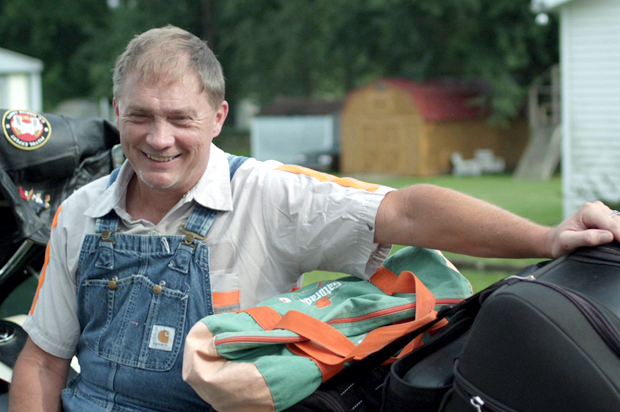
But I feel pretty confident that even Moore would not make a movie about a laid-off worker who hits the road with a runaway teenage girl and goes on a killing spree aimed at right-wing talk-show hosts, obnoxious reality-TV subjects and people who talk on the phone in movie theaters. “God Bless America” is Goldthwait’s fourth film as a writer-director — I’m going clear back to “Shakes the Clown” in 1991, often described as the “‘Citizen Kane’ of alcoholic-clown movies” — and it’s definitely his most coherent and most consistently hilarious, perhaps because its canvas is so large and the world it depicts so insane. It plays a little like “Network” mixed with Mike Judge’s “Idiocracy” mixed with “Natural Born Killers,” and in the very first scene its main character, the depressed, divorced and soon-to-be unemployed Frank (Joel Murray), does something completely unforgivable.

That first scene turns out to be a dream sequence, thankfully, but it’s not like the stuff Frank will actually do in the waking world “God Bless America” is so much better. After losing his job and getting some really bad medical news, Frank decides to seek violent retribution against the evil, stupidity and cruelty he sees streaming out of the TV every day. (He could, after all, just turn it off instead; I think that’s part of Goldthwait’s point.) While hunting down an ultra-spoiled Southern teenager and her stupid-rich parents — the subjects of an especially insulting reality show — he meets Roxy (the wonderful Tara Lynne Barr), a precocious high-school girl who says she’s fleeing an abusive home life and whose appetite for destruction beggars his own. Roxy’s delighted to waste vapid cheerleaders and reactionary creeps, but wants to up the ante: People who high-five! People who say things are “punk rock”! Adult women who call their breasts “girls”! Diablo Cody (described herein as “the only stripper with too much self-esteem”)!

Yeah, OK, that’s all pretty funny. But what about 50-year-old guys who go on cross-country road trips with cute underage girls, without asking themselves too many hard questions? Somewhat less funny, right? On one level, “God Bless America” is grossly inflated, over-the-top satire, but on another, it possesses its own kind of moral subtlety. Goldthwait doesn’t so much want us to root for Frank and Roxy without question, or to excuse actions that can’t be excused. Rather, he wants us to acknowledge that the idiotic and insulting state of public discourse in our country has made us all a little crazy. And this critique isn’t coming from some avant-garde outsider or media-studies professor, by the way. Goldthwait is a lifelong showbiz professional, who spent four years as the principal director of his friend Jimmy Kimmel’s late-night talk show.

I met Goldthwait last week in his Manhattan hotel room, where he was joined by Joel Murray, who plays ultra-violent anti-cruelty crusader Frank in “God Bless America.” You may know Murray from his recurring role as Freddy Rumsen on “Mad Men,” or before that for extended runs in “Still Standing” and “Dharma & Greg.”

So — another work of subtle and delicate social satire from the mind of Bobcat Goldthwait.

Bobcat Goldthwait: Well, in these not very subtle times, this is what’s called for.

You’re just about the right age to have seen “Network,” growing up, and I couldn’t help thinking there’s a lot of that movie in here.

Oh, I actually went back and watched it when I was writing the movie. You know, this movie’s influences are like “Bonnie and Clyde” and “Network,” a movie I love. I went back to movies where obviously comparisons were going to be drawn and watched those too. You know, like “Falling Down.” Which, by the way, is a terrible movie.

Yes, absolutely terrible.

Some people absolutely love it. I’m like, I don’t know. I could never get into the movie. When Michael Douglas finally kills somebody, they make the guy a closet Nazi. So you don’t have to feel bad, you know — Michael Douglas’ character isn’t a bad guy. And he really just wants to get home. It’s also a very racist movie.

I mean, I didn’t want this to be a vigilante movie where everybody that Frank kills — not only do they talk in the movie theater, but they also happen to be Nazis or they kill a puppy in the parking lot. Because it isn’t OK to shoot people that text in the movie theater! I was just trying to make it clear to people that text in the movie theater that there’s a lot of people that really don’t like them. It’s funny with some of the comments I’ve gotten: “Oh so — what? I’m not supposed to be using my phone in the movie theater?” I can’t even comprehend that someone might be upset by that.

Here’s one scene I found upsetting and challenging. When Frank kills the sleazy contractor dude who has challenged him about his relationship with the girl, I think that gets at something very essential in the movie. Because that guy hasn’t actually done anything except make a disturbing comment. It’s like he’s spoken a dangerous version of the truth, and Frank doesn’t want to hear it.

Joel Murray: It’s a moment in the film where I realize I brought this girl along for the ride and that was a complete lie. I was doing a thing in the movie about the pain in my head — when it was relieved by killing, suddenly the pain would go away. In that scene, I’m slamming that steering wheel in that Camaro as hard as I can, and the pain in my head was really bad. Because suddenly everything was wrong, and I had to kill someone right about then.

B.G.: To me, what’s happened is that guy represents Frank. You know, Frank is flawed because he’s a human being. He has these really strict ideas about how people should live and then he can’t live up to them. He’s not killing that guy because that guy’s a scumbag. He’s killing that guy because he represents a side of himself he did not expect to encounter. He’s been fooling himself: Yeah, I could go home more often, I could have a life to go home to.

J.M.: Yeah, maybe we really can move to France and get some goats! It’s pretty nice dancing with you and touching you and … [growls]

It’s like for the whole movie Frank has been aware of the danger of being around this teenage girl, and trying to reassure himself that he’s not that kind of guy.

B.G.: That he’s not a creep. You know, for the first two-thirds of the movie the girl just supplies Joel’s character with this family he doesn’t have. And then the wheels fall off.

Bobcat, there’s a lot of material in this movie that feels somewhat like your comedy routines, so I’m tempted to see a lot of it as the author speaking through the characters. Is that misleading?

You know, it’s funny, and I haven’t said this in any other interview or anything. But I’ve seen reviews where they say, “It’s clearly Bobcat saying this and that.” But I’m like — well, Bobcat has access to a medium where he gets to say everything he wants and rant for an hour on Showtime. So it’s a character. Clearly I agree with about 90 percent of the things Frank says, but it’s not a showcase for me. I wanted to make a movie that explores our appetite for distractions. Like I said, I do agree with almost everything Frank says, outside of killing people. But I didn’t feel like as a human being I was being ignored and I needed to make a movie because I was pissed off no one was listening to me.

Well, one of the things Frank is pissed off about — or you’re pissed off about, I guess — is the cruelty and sadism we see in popular media, reality shows and talk TV. Frank talks about how that’s a symptom of a dying empire. But do you think that cruelty is specific to the media, or is it a larger social phenomenon?

It’s our appetite for the cruelty. I didn’t want to make a movie that blamed the media because I thought that was really lazy. Both the right and the left blame the media constantly. It’s either bashing Fox News or bashing the “lamestream media.” As soon as I see a post or comment where someone uses the word “Hollyweird” or “elitist” I go, oh, your opinions are already formed for you. You don’t make your own ideas. I’m not interested in what you have to say. But I didn’t want to make a movie that blamed the media because that’s too easy. I didn’t want to kill the messenger. I think the media takes a beating. You know those guys who are trying to give you the truth? We hate them. [Laughter.]

I’m talking about the public’s willingness to be spoon-fed their opinion and not even discuss the different sides. Just: This is my team, I root for this news. This is what I think. I’m jumping off the cliff. I like this radio personality because they’ll make all my decisions for me and I don’t have to. I’m going to sit around for hours talking about Charlie Sheen instead of my own life.

This isn’t in your movie, but I’ve been working in the media for 25 years, and while watching this I couldn’t help thinking about all the tools we have now and the changes they have wrought. It used to be that TV had the Nielsen ratings and the newspapers had circulation numbers. You did marketing surveys or whatever, but that was about it. These days we can tell precisely what people are watching or reading at any given moment. If I publish an article on our site, I can find out, in real time, exactly how many people are looking at it.

So later on, editorial policies — wow, I didn’t even think about that — will be dictated by that.

Sure. Back when I worked at an old-school alternative newspaper, we could decide to run an article about some avant-garde dance performance that nobody else was interested in, just because we thought it was cool and because it was the sort of thing we were supposed to cover.

And you were forcing people to expose themselves to it. My wife is younger than myself — she’s not Roxie’s age, she’s actually age-appropriate. Which is, whatever, new. [Laughter.] But, you know, newspapers seem weird to her: “Why would you hold those dirty things?” Well, because before I rush to the entertainment section, I have: Oh, what are we doing in Syria? On the Web you just click to your site and just keep clicking, like a mouse who has something that stimulates his pleasure zone. I think it’s very cocainey.

Well, that depiction of the workplace in your movie, where people only talk about what they saw last night on TV or what they just heard on the drive-time radio shows. It’s obviously exaggerated for effect, but there might be a kernel of truth there. And it’s very much like mice responding to stimulus.

My exposure to that world is when I go to comedy clubs and do the morning shows and I’m up against this talking that’s all about non-information. Now, I don’t think everything should be the heavies, but very little of it is about our own selves. I’d be more interested if someone tells me something about themselves, versus posting something about their political opinions or whatever. It’s like, I’m about to say that I’m an atheist who owns a gun and is a vegetarian — is he still going to like me? Instead I go: They’re going to take our guns away!

I wanted to talk about the violence in the movie. There’s a fair amount of it! Let’s just say that. And one of the things about contemporary society is that there’s all this cruel and angry discourse you’re talking about, and there’s a national fixation on crime and violence, yet we’re living in a time of relatively low violence. The three of us can all remember the ’70s, when crime rates were double or triple what they are today.

B.G.: Yeah, maybe people are getting it out? I think it’s like, most people don’t even know or feel that, because we’re just constantly told how violent the world is.

J.M.: And how you can’t even let your kids walk to the corner. “What are you thinking?” And it’s less dangerous than it was in the ’70s.

B.G.: We must be comfortable in fear. It must be rewarding for some reason that we want to live in it so much. What I’m learning is that there are a lot of extreme right-wing websites that are really going after me. But what I realize now is that it really doesn’t matter. It’s so funny how little it affects my life in any way at all. They’re saying I’m the worst thing ever.

Because of your movie?

Yeah. I guess I’m really naive about how much anti-Semitism there is. When I ego-surf the comments under the trailer there’s so much stuff about what a dirty kike I am. And I’m not Jewish.

I was gonna say: Wikipedia definitely conveys the fact that you were raised Catholic. They’re just making the incorrect assumption because your name has “Gold” in it?

Yeah. I’m willing to become a Jew, but it’s just really funny.

J.M.: Right when the trailer first came out they were calling us dirty Jew bastards. My first name is Joel, OK, that’s Hebrew. But Murray is 100 percent Irish. I got a sister that’s a nun. I went to Catholic school growing up. Do some research before you start, you know, posting this stuff!

B.G.: You know what’s also funny is that this really isn’t the world I live in, this movie. This is just a theme I wanted to explore. I’m actually fairly happy. I was the one up on the bar last night at Blazing Saddles, dancing with a couple of hot young dudes. They were aping my moves! Aping the moves of a 50-year-old.

J.M.: He’s a shrinking violet.

B.G.: I was like, look, man, carpe diem. How many times am I going to have that kind of access? Can I get on the bar?

There are some truly delicious rants in this movie, both from Frank and Roxy. I love the rhythm of those, because you’ll start out with something almost everybody hates, like texting in the movie theater or whatever, and then it becomes completely absurd. Let’s kill everybody who high-fives! Let’s kill everybody who says “punk rock”! Which spoke to my personal animus, by the way.

J.M.: Right. I try to call her on it when she says we should kill NASCAR fans. What?

Yeah. That’s, like, 40 percent of the United States population.

B.G.: I think the “punk rock” thing is about doing a lot of radio. I’ll be on what they call an alternative rock station and this guy is giving me attitude and I want to say, “Dude, I opened for Nirvana and actually roadied for the Ramones when they were in central New York, the original Ramones. Don’t talk to me about punk rock, you fucking prick.”

I sympathize, it’s the diminishment of discourse. Terms stop meaning anything, you know? You didn’t even bring up the word “hipster.” Let’s shoot everyone who uses that word, positively or negatively.

It means nothing. It’s like the new version of yuppie. In the ’80s, everyone, including me, was always bashing yuppies, and now it’s hipsters that everyone’s decided they don’t like.

Some people think it’s just me writing a list of what I like and what I don’t like. Today, people find a bond because they hate the same things. Or like all of us, because somebody’s listening to them. But Frank has a moral code, which is that he wants to kill people who are mean to him. It sounds trivial but that was the point.

J.M.: I could definitely relate to Frank and the people he had problems with. And then Roxy enters and brings this whole Pandora’s box of people she wants to kill. It was a great contrast of her, with all the energy, and me being very low-key. I tried to become paternal, to say, “No, you can’t do that. People who really deserve to die and not just anybody.”

I’m glad that you pulled her back on her plan to kill Diablo Cody. I don’t know that you’re going to be on her Christmas list this year. Maybe she has enough of a sense of humor, I’m not sure. You know that people are going to say that Roxy seems like a Diablo Cody character, right? That’s part of the joke?

B.G.: Of course. Another movie that’s often brought up, and it’s not a movie that I’m a fan of, is “Heathers.” So when I wrote “World’s Greatest Dad” someone said, “This script is like ‘Heathers,’” so then I just named the Goth girl Heather. I just ran into it. Someone else said it’s a little bit like Wes Anderson, so the principal is W. Anderson. So, clearly, Roxy speaks like a Diablo Cody character. I thought that was funny. It was originally one line, because my daughter is really funny and people say, “You’re like Juno,” and she said, “Dad, whenever people say that I want to stab them right in the fucking throat.” And then, when it was pointed out that I should remove that line, I went back and added an entire page of dialogue about it. Whatever you tell me to do, I don’t do it.

I have to admit that I don’t watch the kind of TV shows you parody here, so it’s impossible for me to gauge how far you went.

Oh, I didn’t parody it at all, I just refilmed it.

That’s all real stuff? The girls throwing used tampons at each other?

Yeah, and a lot of the stuff the political pundits are saying are really paraphrased or not even paraphrased. My first exposure to Glenn Beck was when I was flipping around the channels and he had Obama with a Hitler mustache next to Stalin, and I was like, what is this guy? All those shows are real and I just reshot the footage. Even the ringtone commercial with a pig that comes out and farts. OK, it’s an elephant, not a pig. But the animation is exactly the same animation. I took it really personally, it really hurt my feelings. The elephant sticks his ass to the camera and makes a farting noise, and it’s the funniest ringtone.

Were you consciously thinking about the question of audience sympathy for Joel’s character, and how complicated that gets? Because Frank seems like a likable guy. He’s not a creep, and he’s going through a hard time, and then he starts doing stuff that from any standard is not defensible. And, as an audience member, you’re sort of stuck with him.

I like the idea that you empathize with this guy and he’s doing these horrible things. So then hopefully, if it’s working for the movie, you’re uncomfortable with the fact that you’re empathizing with this guy who is doing horrible things. That’s the point. I didn’t want to make this vigilante movie where you cheered along with the guy. That’s not the movie, and that’s not what I had any interest in doing. What’s cool about Joel is he’s a fabulous actor but he’s great at playing people who you empathize with, who you care for, but he’s not pathetic. I don’t like that. That would have been bad; the wrong actor would have screwed it up and made a gross movie.

We have to quit, but I wanted to ask you about maybe the most hilarious and painful thing in the movie. That’s the character named Steven Clark, who performs “Theme From ‘Mahogany’” on a show called “American Superstar” and becomes a kind of celebrity for being talentless and terrible. I assume that was based on a really similar case in real life, right?

Right. It’s loosely based on my dealings with William Hung when I was directing the Jimmy Kimmel show. This other director was shooting a piece with him and said, “He’s such a pain in the ass!” I go, “Come on!” And I go down there and his mother’s saying, “We don’t want William saying that.” And William Hung is like, “This is bullshit. I’m William Hung!”

Even William Hung turned out to be a diva after all.

Well, I realized that everybody gets corrupted. No one is mentally ready for fame, including myself.

“God Bless America” opens this week in Chicago, Houston, Kansas City, Los Angeles, Minneapolis, New York, Northampton, Mass., Orlando, Philadelphia, Phoenix and San Francisco; May 18 in Atlanta, Boston, New Orleans, Portland, Ore., and Salem, Mass.; May 25 in Austin, Texas, Charlotte, N.C., Columbus, Ohio, Dallas, Gloucester, Mass., Mobile, Ala., Palm Springs, Calif., Peoria, Ill., and Pittsburgh, with more cities to follow. It’s also available on-demand through many cable and satellite providers.

Continue Reading Close

Gorgeous saga, global crisis

"Last Call at the Oasis" paints a haunting, even poetic, portrait of the global water crisis. Will anyone listen?

Here’s the short version of humanity’s relationship with water, as delivered by hydrologist Jay Famiglietti in Jessica Yu’s compelling and often gorgeous documentary “Last Call at the Oasis”: “We’re screwed.” Yes, we should all install low-flush toilets and plant gardens that require less watering, but conservation is simply insufficient to cope with a global fresh-water crisis that involves many interlocking factors: overpopulation and overdevelopment, depletion of groundwater, climate change, and widespread contamination.

Solving the human race’s worsening water problem requires overcoming what Yu’s film terms the “Hydro-Illogical Cycle,” which is defined by the belief that because most of the Earth’s surface is covered in wet stuff, there’s no problem. As one horrified woman proclaims in a hilarious segment that explores the possibility of marketing recycled and purified sewage water (to be sold under the brand name Porcelain Springs), “This says to me that there’s some shortage I don’t know about. When they show those photographs from space, there’s a lot of water!”

“Last Call at the Oasis” is the latest social-advocacy documentary from Participant Media, whose previous output includes “An Inconvenient Truth,” “Food, Inc.” and “Waiting for ‘Superman,’” along with many other less obvious (and less successful) films. Like most of those movies, it’s adapted from existing material in another format, in this case journalist Alex Prud’homme’s book “The Ripple Effect.” At its best, Participant has been able to marry a message-delivery system to a genuine cinematic experience, and that’s definitely what Yu — an eclectic talent whose work includes the documentary “In the Realms of the Unreal” and the narrative feature “Ping Pong Playa,” along with numerous TV episodes — delivers here. “Oasis” packs in a lot of dire information, but it wraps it in often-spectacular images and cutting-edge graphics, moving from Las Vegas to rural Michigan to the Australian outback to the nearly depleted waters of the Jordan River, where the traditional baptismal spot of Jesus has become a fetid swamp contaminated with sewage from a nearby Israeli town.

While the discussion in “Last Call at the Oasis” is never directly about partisan politics or ideology, and although Yu relies mostly on the testimony of respected scientists, this film probably faces a version of the “Inconvenient Truth” problem. It’s largely preaching to the converted, in the sense that if you fail to accept certain basic premises — that climate change is a scientific fact, for example, and that fresh water is a limited and fragile resource that is nearly maxed out on a global scale — then you’ll just blow this off as left-wing fearmongering. In one especially effective section, Yu shows us file footage of Sean Hannity and Sarah Palin ostentatiously taking the side of Latino farmers in California’s Central Valley who were denied irrigation water because of an endangered fish called the Delta smelt. Then she has a scientist explain the larger context: Yes, the smelt is an insignificant species in and of itself, but you can’t consider it on its own. In fact, it’s a key indicator species in an enormous interlocking ecosystem that extends from the rivers and estuaries of the inland West to San Francisco Bay and the Pacific Ocean. If the smelt dies, that tells us the whole system is dying.

“Last Call at the Oasis” follows a familiar pattern seen in Participant productions and other social-issue docs, but it does so with such panache and visual variety that I really never felt lectured at. About three-quarters of the film lays out an immensely complicated set of problems and argues that they’re all connected. Agriculture and overdevelopment in the West and Southwest have drained the regions’ reservoirs and aquifers nearly dry, while in many wetter heartland areas the groundwater has been poisoned with exotic industrial toxins and antibiotic-laced cattle manure. Americans’ growing use of all sorts of supplements and pharmaceuticals — many with unknown long-term effects — has created a problem for municipal sewage treatment facilities, which are set up to remove trash and organic waste, not unknown chemical compounds.

Then, of course, Yu has to make the case that it’s not too late for us to clean up this precious resource — along with sunlight, the one absolutely necessary component of life on Earth — and learn to share it better. Erin Brockovich leads a campaign on behalf of poisoned homeowners in Midland, Texas, that leads to new regulations on hexavalent chromium in drinking water. (Yu does not fail to mention that Midland is George W. Bush’s adopted hometown.) The Israeli town stops pumping poop into a Christian holy site, and a coalition of Jordanian, Palestinian and Israeli activists work on a plan to share the Jordan River’s water. Many people, the marketing firm discovers, can be convinced to try Porcelain Springs. (The water we drink every day is recycled sewage, too — we just don’t know where or when it happened.)

If anything, the real downside of “Last Call at the Oasis” comes after the movie is over, when you think back over the rather thin optimism of the last 20 minutes. Sure, Los Angeles will supposedly start piping recycled tap water by the end of this decade, and that’s great and all. But that does nearly nothing to address the fact that only about 1 percent of the planet’s water is drinkable, and 80 to 90 percent of that is used to grow food, often in agricultural regions (like the Central Valley of California) that would otherwise be barren. In case you’re wondering about desalinating seawater, by the way, the answer is no. (It’s like the hydrogen-car solution to the energy crisis, an expensive boondoggle that won’t work.) So we need to figure out how to use a lot less water, very quickly, with a rapidly growing population. Or we just shrug our shoulders and agree with Famiglietti’s two-word prognosis.

“Last Call at the Oasis” is now playing at the Lincoln Plaza Cinema and Sunshine Cinema in New York, and at the Landmark in Los Angeles, with wider release to follow.

Continue Reading Close

Pick of the week: An early-’60s hipster time capsule

Pick of the week: Shirley Clarke's once-banned "The Connection" is a lean, mean saga of jazz, junk and rebellion

A time capsule loaded with smack from the bohemian underbelly of JFK-era America, Shirley Clarke’s 1961 film “The Connection” is an illustration of how much things change, and how much they stay the same. I’d be stretching to call “The Connection” a great film — it’s mannered and edgy, in a way that’s partly deliberate but also distinctive to its period — but it’s an important one in cultural and historic terms, despite being largely unknown. Watching this ensemble drama about a multiracial group of New York jazz musicians and beat philosophers in a run-down apartment, waiting for their drug dealer to show up, is like traveling back 50 years in time, only to encounter the same people you might meet on the street today (at least, in certain neighborhoods of Brooklyn, San Francisco, Austin and so on). At one point, the characters even debate the illusory distinctions between “hipsters” and “squares.”

A Park Avenue society girl turned Greenwich Village beatnik, Clarke was the pioneering female director in the early history of American independent film, good friends with John Cassavetes, Frederick Wiseman, Jonas Mekas and other downtown legends of the period. If her name and her films have virtually disappeared from history, that’s partly due to institutional sexism, no doubt, and partly to bad luck and bad timing. Milestone Films, which is releasing this version of “The Connection” restored by the UCLA Film & Television Archive, will go on to release Clarke’s 1960s documentaries “Robert Frost: A Quarrel With the World” and “Portrait of Jason,” an interview with a black gay street hustler, along with her 1985 comeback film “Ornette: Made in America,” about jazz legend Ornette Coleman. (Clarke died in 1997.)

“The Connection,” Clarke’s first feature, was a high-profile project, the screen adaptation of a 1959 Living Theater play by Jack Gelber that had become a cause célèbre despite scathing reviews, attracting uptown artistic types like Leonard Bernstein, Salvador Dalì and Lillian Hellman to take a walk on the wild side. Clarke and her producer, Lewis Allen, funded the film’s $177,000 budget — not so meager, at the time — through the then-unknown tactic of collecting small sums from a large number of investors, establishing a model that endures in micro-budget and mid-budget filmmaking to this day. (Weirdly enough, as Manohla Dargis has reported in the New York Times, former Republican presidential candidate Rick Santorum’s parents were among the investors, along with Norman Mailer and architect Philip Johnson.)

But once completed, “The Connection” only screened twice at a single theater on Manhattan’s 45th Street before being closed by New York State’s censorship board. I’m not sure which is more amazing: the fact that New York had a censorship board in the early ’60s that could control what movies the public saw, or the reason for the seizure of “The Connection,” which was two or three uses of the word “shit” (as a synonym for drugs). By the time some edits were made and the ban lifted, public interest had faded, largely because of a swath of unrebutted hostile reviews. Bosley Crowther of the Times, a noted get-off-my-lawn crank of the time, wrote an especially peculiar one in which he praised the actors, the live jazz soundtrack and Clarke’s “bold direction,” but described the film overall as “deadly monotonous, in addition to being sordid and disagreeable.”

I won’t pretend not to understand what Crowther was talking about. “The Connection” remains much better known among jazz fans for its soundtrack album featuring pianist Freddie Redd and saxophonist Jackie McLean (who play live in the film, as they did onstage), than it is among movie buffs as, you know, a film. Clarke should certainly get credit for exploring the faux-documentary format decades before it became a film-school gimmick (the story-within-a-story premise was already present in Gelber’s play), but the first 10 minutes or so of “The Connection” are decidedly awkward. Squaresville white filmmaker Jim Dunn (William Redfield) wanders around in his high-waisted chinos, trying to convince the group of crashed-out junkie hipsters to “act natural” and “be themselves,” and assuring them that he’s studied the documentaries of Robert Flaherty and knows what he’s doing. (A dig at the old-school variety of documentary film, before cinéma-vérité, I guess.) It’s clear that the addicts would rather relate to Dunn’s hipper African-American cameraman, J.J. Burden (an early role for future Hollywood character actor Roscoe Lee Browne), who is rarely seen but makes occasional oracular pronouncements.

In the interests of art, Dunn has apparently agreed to finance a major purchase from a smack dealer named Cowboy, but for most of the movie we are obviously encouraged to ponder the similarities between drug culture and Beckett’s “Waiting for Godot,” and to wonder whether Cowboy will ever show up at all. Prowling the dingy, open flat restlessly — it looks disconcertingly like a group household I actually lived in, 20-odd years ago — Clarke’s camera introduces us to the all-male assemblage, in fragmentary interviews. Leach (Warren Finnerty), a wiry, whiny fellow who looks and acts alarmingly like the young Steve Buscemi, is the official tenant. He is troubled by a painful boil on his neck, which may symbolize the fact that the other denizens suspect him of being gay. As his black friend Sam (Jim Anderson) will tell him later, he’d be more relaxed if he could “get with the whole homosexual scene.”

There’s also Ernie (Garry Goodrow), an embittered-genius West Coast white jazzman who has hocked his horn to buy junk, and Solly (Jerome Raphael), an educated, middle-class Jewish guy who has thrown it all away for philosophical reasons, or none at all. McLean, Redd, bass player Michael Mattos and drummer Larry Richie get fewer lines, but every so often pick up their instruments to deliver angled, edgy blasts of early-’60s hard bop. Today these characters would presumably be obsessed by some other cultural form — hip-hop or Scandinavian black metal or YouTube clips or hockey fights or something else I’ve never even heard of — and they’d be able to badger Cowboy with illiterate texts every few minutes. But they’d basically be the same guys; Gelber’s characters are drawn so sharply that many 21st-century viewers will identify people they know or used to know (perhaps even people they used to be).

When Cowboy finally arrives (played by Carl Lee, who would become Clarke’s longtime partner), he turns out to be the archetypal “hip Negro” in Ray-Ban shades, sporting a blazing white outfit and a messianic mien, and bringing with him an old-lady evangelist, as comic relief and cover story. He brings other kinds of blessings too, the kind that allow this cast of semi-lovable, self-destructive losers to get through another day. The central conflict faced by the characters in “The Connection” doesn’t have much to do with heroin, though — that too is a symbol or synecdoche. It goes way back before Clarke’s time, not to mention ours. If this film has something to say to us now — and I emphatically think it does — it’s about the costs and opportunities that come with “dropping out” of mainstream society, in the name of political-cultural-aesthetic rebellion. It asks a question that has no answer, one that every disgruntled young dreamer — every potential Shirley Clarke, of every generation — must face on her own.

“The Connection” is now playing at the IFC Center in New York, with other cities and DVD release to follow.

Continue Reading Close

“Sound of My Voice”: A tense sci-fi puzzler

"Sound of My Voice" is the latest film to take a brain-twisting narrative -- and actually make it work

Christopher Denham and Brit Marling in "Sound of My Voice"

David Lynch likes to talk about “movies that make you dream,” and he’s made his share of them. (Whether any sane people wanted to share the dream that was “Inland Empire” is another question.) I’ve always preferred a more prosaic phrase: Movies that mess with your mind, using another verb in place of “mess.” My personal view is that even when cinema apparently depicts the most quotidian reality, it poses a sort of epistemological challenge: How do we tell the difference between image and narrative and reality, when all we ever have to work with are mental constructions of those things anyway? There are the crowds who (supposedly) ducked in terror while watching the Lumière brothers’ 1895 film of a train arriving at La Ciotat, and there are people who have Internet arguments about what “really happened” in “Memento” or “Mulholland Drive.” Both are caught on the horns of the same dilemma.

Personally, I can hardly get enough of the WTF/OMG/we-all-live-in-Plato’s-cave-my-mind-is-blown school of moviemaking. Not only was I a big fan of “The Matrix,” but to this day I will also defend the even nerdier “Matrix Reloaded,” Cornel West cameo and everything. (“Matrix Revolutions” — let’s all agree not to talk about that, OK?) One of my proudest achievements as a critic — and I’m not kidding about this, even a little bit — is that I wrote one of the very few positive reviews of “Donnie Darko” on its initial release, long before it became a dorm-room, bong-hit fave rave. Next week you’ll probably get to read me expounding on Jacques Rivette’s “Céline and Julie Go Boating,” which is a drug-addled continental meta-narrative exploration from 1974, and I know you just can’t wait.

I dig moderately cheesy sci-fi or horror that offers a peek behind the narrative curtain, like “Cabin in the Woods” or the underappreciated “Source Code,” and I’m a huge admirer of Austrian director Michael Haneke (“Caché,” “The White Ribbon,” “Funny Games”), who offers the chilliest, most art-housey version of porous-reality cinema. There’s Lynch, of course, and Christopher Nolan, of course, and we’ll discuss my reservations about both of them some other time. I’m not going to defend M. Night Shyamalan’s films on any grounds except sincerity and enthusiasm, but if I’m laid up with a bad cold or whatever, I’ll happily watch any of them. (I’m not counting “The Last Airbender.” OK, I’m not counting “The Village” either, it’s just too stupid. But anything else, even “Signs.”)

So I’m delighted to report that “Sound of My Voice,” a low-budget cult-thriller puzzle that made a splash at Sundance in 2011, proves how effectively you can set the mind-bending mood without any special effects, action sequences or spectral rabbits. On its most fundamental level, “Sound of My Voice” is an L.A. character drama built around the unresolved erotic tension between a tall, otherworldly-looking blonde named Maggie (Brit Marling), a nervous would-be documentary filmmaker named Peter (Christopher Denham), and Peter’s girlfriend Lorna (Nicole Vicius), a onetime Hollywood wild child gone straight. But when you throw in the fact that Maggie claims to be a time traveler from the year 2054, bringing word from a world half-destroyed by civil war and technological meltdown — and that Peter and Lorna have set out to expose and debunk her — things really get interesting.

Marling is a fascinating new arrival in movies, an actress with commanding screen presence who decided she could write roles better than the crappy ones agents were offering her. She co-wrote “Sound of My Voice” with first-time director Zal Batmanglij, at exactly the same time as she was writing another sci-fi indie, “Another Earth,” with Mike Cahill. That one also had a cool premise, and Marling is magnetic in both roles, but I think “Sound of My Voice” is far more compelling as storytelling, blending its enigmatic sci-fi elements with a creepazoid cult drama somewhat akin to “Martha Marcy May Marlene.”

Divided into numbered chapters that gradually heighten the tension, “Sound” presents a mystery that seems at first like hardly any mystery at all. Maggie’s coterie of followers are standard-issue California New Age seekers, dressed in white robes. They arrive blindfolded in her secret basement hideout somewhere in the San Fernando Valley, where she keeps them in line with tried-and-true psychological manipulation, mixed with nostrums from the future that are so vague as to be meaningless. (When she is finally coaxed into singing a hit song from the 2050s, a time when CDs and MP3s have almost ceased to exist, it turns out to be — well, no, I shouldn’t spoil it.)

But Maggie’s apparent lameness and fakeness is itself part of the mystery. Fraudulent or not, there’s no question that she’s a sexy and compelling woman, and there’s nothing false about the odd chemistry she strikes with the withdrawn and overly controlled Peter, or about Lorna’s mounting jealousy. And what about the chapters we don’t understand? What is the significance of the 8-year-old girl, a student of Peter’s at the private school where he’s a substitute teacher, who’s apparently suffering some kind of disturbing abuse? And what’s driving the mysterious female cop or secret agent (Davenia McFadden), who arrives in L.A. with a lot of puzzling gear hidden beneath a shopping bag, including a photograph that seems to be of Maggie?

All this is heading toward a dynamite denouement, which, for all the movie’s tense atmosphere and expert pacing, Batmanglij and Marling can’t quite pull off. I’m totally OK with irresolution and mystery, don’t get me wrong; the spinning top at the end of “Inception” is all good, and I don’t need to know for sure whether Maggie is an oracle of doom from the middle of the century or a tall drink of water running a delicious con. Maybe, in the quantum state of low-budget mind-melter cinema, she can be both! But “Sound of My Voice” has such creepy-crawly, brain-tickling energy that I wanted a much bigger payoff out of the final collision of all these people and episodes. (Go see the movie and come back; we’ll talk.) Maybe they’re saving that for the sequel. In which case, I’m mastering the secret handshake — there really is one — memorizing the lyrics of the surprising hit song, and getting in line.

“Sound of My Voice” is now playing in major cities.

Continue Reading Close

Page 1 of 107 in Our Picks

www.salon.com/topic/our_picks/index.html