





While some people think doctors see themselves as gods, oblivious to their mistakes, the behind-the-scenes reality tends to be quite different. In regular meetings called “morbidity and mortality” (or M&M, for short), doctors close the doors and candidly discuss their mistakes and try to learn from them. The meetings can be full of ruthless — and helpful — self-flagellation.
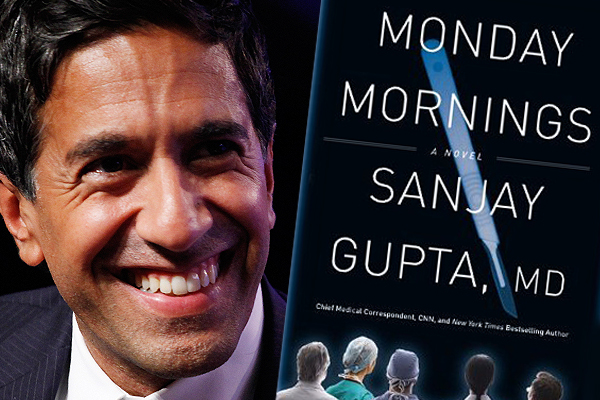
Most people don’t know they even take place. Now, “Monday Mornings,” a novel by Sanjay Gupta — CNN’s chief medical correspondent and a practicing neurosurgeon at Atlanta’s Emory University — lifts the veil on these gatherings.
While driving one of his three daughters to school last week, Gupta, 42, talked to Salon about his bestselling first novel, how doctors can do better, and the controversial ethics of being both journalist and physician.
What made you decide to leap into fiction?
It was an evolution. Originally, I wanted to write a nonfiction book about my specific experiences as a resident. I always took very diligent notes, and when I pulled them out, it really reminded me about that time. Then I learned that the whole idea that a meeting like M&M even exists was surprising to a lot of people. I had assumed that most people knew that doctors and surgeons got together regularly to discuss their mistakes. It turns out that most people didn’t know that, even ones who work in health care. This was interesting in and of itself. So I wanted to show people that this existed and that it can be one of the most indelible experiences that somebody can ever have. But to do that, it would need to be fiction, so it could be more unrestricted and have some creative power.
What’s the message of the book for doctors and their patients?
I think the biggest point was to expose people to M&M. When a mistake happens, or an unexpected outcome, oftentimes the immediate thought is “That’s a bad doctor.” They may even think “That’s a bad human being.” Most of the time that’s not true, and often doctors beat themselves up, to the point where I’ve seen some of them disengage. They no longer feel they’re up to it. They couldn’t stand the fact that someone got hurt because of something they did. So I wanted to tell a story about how people react to a mistake in medicine, and then to show the accountability that doctors hold for each other is sometimes far worse than any other punitive system. It doesn’t take the place of malpractice or administrative sanctions. This is doctors on doctors — and sometimes that has a much greater impact. It’s a pretty unique thing — the idea that you close the doors and be candid. It’s worth asking whether there’s a role for that kind of meeting in other places in our society as well.
Are we in medicine good at learning from our mistakes?
In 1999, because of the Institute of Medicine Report, people started paying more attention to medical errors. It’s not a great study, and even the way they define mistakes is different [from how others in the field] define mistakes. Still, there’s a problem, and over the past decade or so we have focused on this, and some of the things people have done have been effective at trying to curb mistakes. Yet if you look at the number, there’s hardly any evidence that mistakes have gone down.
So learning from our mistakes requires a more immediate sharing of the lessons. There’s also the cultural change for any new thing that needs to be done. These things need to come from within the medical community as opposed to being mandated. How do you get a significant cultural change and get everyone to buy into it? One place I saw cultural change happen lightning-fast was through the M&M meetings. It was so indelible and vivid, it just became the way we did things.
During the book’s first M&M meeting, the chairman of your fictional team of surgeons, Dr. Harding Hooten, makes a statement about missing the basics in medicine. Do you think doctors in this country, because of the cushion of medical technology, have lost sight of getting the fundamental medical history and giving a complete physical?
No question. We overtreat. The irony is that we do this in part to prevent errors — and as a result we probably make more errors. As I was writing the book, I read Abraham Verghese’s essay in the New York Times. I attempted to incorporate some of that into Hooten’s dialogue.
Can we go back? Is it too late to regain that appreciation and rely on a conversation with and an exam from your physician?
It’s difficult to go back. I think we can mitigate some of the increase in the use of technology. Some of that was part of the discussions around health care reform. I also think that our tolerance for risk in medicine is different from anything else we do. I hate to be trite, but if a plane crashing every day would equal the same number of people who die each year from medical errors — we haven’t done a good job of explaining risks and benefits very well. Even informed consent is almost like a hat tip; people do it because they have to, not because they really sit down and really have a conversation about the risks.
What about the patient’s side of the equation? When you see the story of the face transplant or the former vice president getting a heart transplant, you’re left with the view that in American medicine, all things are possible. Is there a way we can communicate better what it is what we can and cannot do?
Yes. It’s hard because people want those stories. It’s a tough balance, and we have to be very careful in our reporting to present the risks of things. I think people tend to focus on costs, but they don’t talk as much about risk.
When you were in Haiti in 2010 covering the earthquake, some people criticized you for becoming part of the story when, with cameras rolling, you began caring for patients at an abandoned medical camp. What’s your view of balancing journalistic objectivity with your commitment as a physician?
It’s a little bit artificial to say journalistic objectivity and helping people when you can are somehow at odds with one another. I’m not in way trying to demean journalistic objectivity. But whether or not you’re a physician, if you can help someone as opposed to just sitting there, I think most people from a human standpoint will do that. Anderson [Cooper] for example, was in a situation once where a boy was getting pummeled with rocks. He was right there and grabbed the kid and pulled him out. You would do it. Anybody would do it.
It’s worth pointing out that so much of the time I was in Haiti, for example, I was going to general hospitals and doing things. It wasn’t stuff for the cameras. There was just a tremendous need, as journalists get into these situations so quickly. Many times we are the first ones there before anybody else. In Haiti we were there within 12 hours of the earthquake because we have such an infrastructure built into the work that we do. In Iraq, I was embedded with Navy doctors; I was reporting on them and what was happening. And then I was asked to operate because there were no neurosurgeons there. I took some criticism for that, and that was early on in my career, and I was a bit befuddled by it. Having trained as a doctor, why would anybody think that I wouldn’t do it? But when I came back and had lots of conversations with lots of other people in the journalism community, they raised the question of whether I can be objective. I think it was a worthy discussion to have, but as a general rule, I don’t think putting on a press badge means parting with your humanity. I’m pretty comfortable that as a journalist-physician, I am a physician first.
How do you keep a balance between your duties as a doctor and your duties as a journalist?
It’s pretty busy. I like to make rounds early, around 5 to 5:30 a.m., so I can come back and take the girls to school. I find that the car rides are the only times where you get one-on-one time and get to talk. When you have three kids, the house is active. The medical stuff, the work, has a pretty defined schedule. Every Monday and every other Friday I operate. In total, it’s about 2.5 days a week of work. Straddling two fields, I have a view of both. I know medicine’s changed a lot. But when I wake up in the morning, when I’m in the operating room, there’s such a clear sense of purpose. It’s very hard to replicate that in anything else I do or anywhere else in society. I love that part of my life.
Doctors routinely meet with patients who make requests for specific medicines, tests and referrals to specialists. In this era of the Internet, consumer-driven healthcare and direct-to-consumer drug marketing, this is no surprise. And while an informed patient is a good thing, what may surprise you is just how hard it is for doctors to say no when a patient makes a specific request for something he or she doesn’t really need.
Right now, Dr. Conrad Murray sits in jail because he couldn’t say no to Michael Jackson when Propofol came up in conversation between them. But even doctors who aren’t tempted by an enormous monthly retainer and access to one of the world’s biggest celebrities are challenged by the word “no.”
American medicine is a business — but a weird one. In any other sector of our economy, businesses are determined to give their customers what they want, however they want it. But in medicine, the “have it your way” mind-set doesn’t always jive. First, physicians have a duty to avoid doing harm. The choice of a drug or test based solely on a patient’s request can undermine that. Second, as everybody knows, we spend a big slice of our GDP on healthcare. Since the person who has control over expensive tests and the prescription pad is your doctor, there’s ever-increasing scrutiny to be responsible stewards of healthcare dollars.
All these factors come to life in the exam room. Case in point: I periodically get requests from parents to prescribe cough medicine for their child that contains codeine. Besides the codeine, the drug contains alcohol, naturally leading to a better night’s sleep for child and, hence, the exhausted parent. But there’s no evidence that this cough medicine helps the child get better any faster, and it may even be dangerous. Should I prescribe it or not? The evidence says no, but to say that can lead to a confrontation with an angry parent. Though cough medicines aren’t expensive, if it’s hard to say no to something that simple, it’s even harder when the stakes are higher — an unneeded new drug, a CT scan, a referral to America’s top cardiologist.
The phenomenon of how requests impact the patient-doctor relationship has been studied extensively by Dr. Richard Kravitz at the University of California at Davis. Kravitz’s research has shown that somewhere between 10 and 25 percent of patients bring a specific request to their doctor (the high end of that range is between a patient and his or her primary care doctor). Here are some of his sober conclusions: Patients who do not have their requests met rate their physician lower, are less likely to adhere to their doctor’s recommendations, and use more healthcare resources than those who do get their request.
Physicians who encounter the patient with a request report those visits to be stressful and unsatisfying as well. But if you’re wondering who wins, Kravitz suggests it’s the patient, though just slightly. He and his team looked at how doctors responded to patients’ requests for an antidepressant medication. Fifty-six percent of the time, patients got the drug they wanted.
Why is it so hard for doctors to say no? To be honest, it’s often just easier to say yes. Usually, we’re behind schedule, with a waiting room full of impatient customers, and we have a desk full of phone messages to return and charts to finish. To take even a few extra minutes and open the conversation — even a confrontation — about a request is time and energy we don’t want to expend. So we put pen to paper, rip the script off the pad and hand it to them as we rush out the door.
The other thing is that nobody really teaches us how to say no. It seems ridiculous, but neither Kravitz nor I could remember an instance during medical school or residency when we were coached about how to manage inappropriate requests from patients. Many of us probably figure out ways to parry the patient over time, but not without inflicting some damage. Back to the example of cough medicine requests for kids: I remember earlier in my career when, on a very stressful day, I walked into a room with a teenage girl and her mother. The mother directly asked for a codeine-containing cough syrup. I knew better, and I wasn’t about to let this parent have it. “No. Look,” I bluntly replied, “it only works because it contains alcohol. Why don’t you just go out and give her a glass of Scotch.” It was not my best moment doctoring. I’ve taken a long and bumpy road since to get better at managing patient requests. These days, I’m more likely to explain the issue, decline the request, ofter an alternative, apologize for any inconvenience, and make sure they know they can always seek a second opinion.
Kravitz’s research, in fact, does reveal that there are ways to say no that are better for both doctor and patient. In Kravitz’s aforementioned study where patients requested an antidepressant, he was able to categorize how doctors handled patient requests. The most successful method is for the doctor to exercise a little curiosity and delve deeper. It’s not surprising, for example, to find out that a patient who comes in with headaches wanting an MRI had a friend or relative who died of a brain tumor, or one with a cough who wants an antibiotic who knew someone hospitalized with pneumonia. If both patient and doctor can get to the root of the request, they can, in many cases, discuss it and figure out a third way.
The second way doctors in the study managed patient requests was to try to order some tests. While it can be a successful strategy to look for “objective data” to help reassure a patient, it isn’t always cheap or safe. Labs and X-rays don’t cost much individually, but the volumes of them that doctors order add up fast. Unnecessary tests beget more unnecessary tests. For example, if I order blood work for a patient who I don’t really think needs it, and one of the numbers — one that has nothing to with why I ordered the test — comes back slightly off, I’m stuck having to call the patient and tell them to repeat the test, even if the child is completely fine now. All of us have had a test or radiology result we ordered just to satisfy a patient come back to bite us like this.
Kravitz and I both agreed that “patient-centered care” or “shared decision-making” are euphemisms for negotiation. And perhaps, like other professionals, we in medicine ought to focus more on negotiation tactics (Kravitz’s last paper is called “Getting to ‘No,’” a riff on the famous business book about negotiation called “Getting to ‘Yes’). This may sound coldly corporate to the average patient who has ever wanted something from their doctor, but it’s a reality we need to address. In pediatrics, where limiting the overuse of antibiotics is a priority, it’s recommended that doctors not prescribe drugs in most cases of middle-ear infections. Instead, since evidence suggests most ear infections get better on their own pretty quickly, we can treat a child’s pain with over-the-counter drugs like ibuprofen. But just in case things don’t get better, we often keep an antibiotic prescription ready for the child for the parent to fill. Doctors call it a “safety-net prescription,” but MBAs know it as a contingency — a common negotiating tactic to satisfy both parties during a negotiation.
Finally, for doctors who are still entrenched in the belief that patients shouldn’t be asking for anything, or for patients who are too timid to speak up, Kravitz has some interesting findings: In cases where the patient had a specific request but didn’t make it because they were uncomfortable, pressed for time, or because the doctor’s bedside manner didn’t afford the chance, that patient left less satisfied. Doctors, too, rated the visit where something was left unsaid as more difficult.
The lesson here is that it’s best for the doctor and the patient to get everything out in the open, and for a healthcare system that affords the right amount of access and time — especially in primary care — to make that to happen.
Continue Reading
Close
Here’s a hypothetical question: As your daughter’s doctor, what if I could prescribe a drug that could protect her from cancer? What if I told you that this drug has no known severe side effects, and that she can get it free of charge? The only thing that I would need from you is to show up in my office three times to give your child the entire course of this medicine.
If you believe me, I’m guessing that this is an offer you can’t refuse. On the other hand, we know U.S. Rep. Michele Bachmann’s answer to my question is “no.” That’s because I really do have this drug. It’s called the HPV vaccine, which prevents cervical cancer. I administer it to teens (mostly girls, but increasingly boys) in my practice every day.
I won’t waste words refuting Bachmann’s ridiculous (and campaign-killing) claim that the HPV vaccine causes “mental retardation.” But here are the facts: The American Cancer Society estimates that about 4,000 women die from cervical cancer in the United States each year. Approximately $4 billion is spent annually on these conditions. The HPV vaccine is virtually 100 percent effective in preventing infection by strains of the virus associated with 70 percent of cervical cancers. A second HPV vaccine is also highly effective, preventing more than 90 percent of infections. Researchers estimate that if widespread vaccination is achieved, cervical cancer could drop by as much as 77 percent. That’s as close to a cure for cancer as we’ve ever had.
Yet even before Bachmann’s statements, the HPV vaccine has struggled to gain traction. A recent survey by the Centers for Disease Control showed that less than half of teen girls started the vaccine series, and less than one-third of those girls completed it. That leaves the promise of a cure for cervical cancer well out of reach. The question is why?
One myth to dispel right away is that parents believe the HPV vaccine will encourage sexual activity. Studies have never demonstrated this is a major factor that prevents vaccination. Parents do hesitate to give their teens the vaccine because they think it’s too new and needs more time in the marketplace (the vaccine was first licensed in 2006). Others worry their children are too young for this vaccine, though the vaccine is most effective before people become sexually active (on average, at age 15 in the U.S.). Education and time will help sort this misinformation out.
That out of the way, the common barriers — and solutions — to getting kids vaccinated are practical ones. First, the vaccine is primarily targeted toward teenagers. They’re healthy and busy — and hard to get into the doctor’s office. At best, we can get them in once a year for a checkup and immunize them there. But this vaccine is a three-dose series, and getting this group of kids — who go between home, school, friends, extracurricular activities, etc. — back isn’t so easy. Most teens also don’t feel physically vulnerable to illness, let alone a chronic or life-threatening disease. How do you motivate one to come in to stop a disease that might be three or four decades away?
If and when teens do come to the office, doctors present our own barriers to vaccination. First, we miss a lot of opportunities. While teens don’t usually develop devastating illnesses, they frequently come in with a cough, a sore throat or some other minor problem. If we’re not taking that opportunity to offer to vaccinate them, we’re missing the chance to save their lives. My practice uses something called the “Preventive Health Prompt,” which lists all vaccines a patient is due for. Our hope is that if the doctor doesn’t catch that the teen in front of him or her needs HPV, the parent or child will ask for it themselves, since we provide that list at every visit and online.
But there are also missed opportunities during routine visits. We know, for example, that it’s a strong influence when a doctor urges a patient to get the vaccine. Yet this doesn’t seem to happen as often as it ought to: In one study, among girls and young women who had planned to get the vaccine, a third who didn’t said that the most common reason was that their doctor did not offer it to them. Similar findings show up in other research.
When we do offer the vaccine, how we frame it can backfire. In many cases. the discussion of preventive HPV vaccination focuses on sex. That can be unsettling for parents and time-consuming for doctors. If it doesn’t go right, the myths of a child’s being too young for the vaccine or that it’s a ticket to sexual activity can easily surface. Finally, the vaccine’s cost is a major barrier, though not to patients. Rather, it’s doctors who get burned. The HPV vaccine is the most expensive of all recommended children’s vaccines. It costs $360 to vaccinate one child ($120 per dose). By comparison, most other recommended vaccines cost less than $50. Doctors have to pay the upfront costs, hoping that insurers will reimburse them. In some cases, doctors have only received $2 above the cost of the vaccine. This, and the tepid demand for it, makes it bad business to stock up.
The good news is that most of these barriers have solutions. Simple, straightforward education is a sure bet. In one study, the intent to vaccinate rose from 49 percent to 70 percent after doctors gave families educational literature about the vaccine. Making sure doctors frame the discussion about the HPV vaccine in terms of cancer prevention – instead of sexual activity — has been shown to help improve uptake.
One way to get teens to come back for the full series is to reach them on their cellphones. In a recent study, researchers sent a group of patients text message reminders to come in for their HPV vaccine booster, and compared the results to a group that did not. The group that was texted was significantly more likely to return. Given that teens send an average of 3,000 text messages each month, the results are a good sign that this is one of the best channels to connect doctors and teen patients.
Then there are some more old-fashioned ways to get kids vaccinated. The first is to make them. In the U.K., rates of HPV vaccination hover around 80 percent. The reason for this staggering success is that the vaccine is mandated through a school-based program. School nurses get and administer the vaccine (if parents don’t want their child to receive it, they must opt out).
Yet, as the Republican debate highlighted, political and legal mandates are very divisive. Instead, we can also rely on some good old-fashioned “mandate” from Mom. It turns out a mother-daughter discussion can increase the rate of vaccination, even if the daughter is over 18 and no longer requires parental consent to get vaccinated. So moms, please help your kids to grow up cancer-free.
(Note: Dr. Parikh has no relationship, financial or otherwise, with the manufacturers of the HPV vaccine.)
Continue Reading
Close
When Dr. Kerri Boutelle of Rady Children’s Hospital in San Diego decided to do a research study on what children and their families order at fast-food restaurants, she didn’t have to go very far. Rady Children’s has a McDonald’s right in the hospital.
McDonald’s recently drew criticism from child nutrition advocates for resurrecting the iconic Ronald McDonald character, but Boutelle’s research reminds pediatricians that Ronald never really left. Twenty-seven children’s hospitals across the U.S. have a McDonald’s on site, and there are many more at centers worldwide.
At a time when more than one-third of American children are obese and type II diabetes is rampant, it’s hard to imagine why children’s hospitals — especially some of the very best — would put a McDonald’s front and center. But there’s a McDonald’s at the Children’s Hospital of Philadelphia, which U.S. News recently ranked alongside Children’s Hospital Boston as the No. 1 kids’ center in the country. In an online review of the Children’s Hospital of Los Angeles (ranked eighth by U.S. News), one parent observed that “McDonald’s is the only 24-hour food source. (Odd, since their food puts people in the hospital.)” When “Super Size Me” director Morgan Spurlock learned about the McDonald’s at the highly regarded Texas Children’s Center (ranked fourth by U.S. News), he called it “utterly irresponsible” and “a flagrant violation of the doctor’s pledge of “Primum non nocere” (First, do no harm.)
Common sense makes it hard to argue with Spurlock, even though some equate those who share his view to “food police” preaching political correctness over personal choice. Yet to me, morality isn’t the issue. The question is why do children’s hospitals peddle McDonald’s and other fast food, even when they know they’ll get a black eye for doing it?
It’s not a question many of these hospitals want to answer. All of the hospitals I contacted with a McDonald’s on campus (Texas Children’s, Children’s Philadelphia, Children’s Los Angeles and several others), either declined to comment or didn’t return my calls. Even on their Web sites, the hospitals choose their words carefully. “It’s important for children to have good nutrition and their favorite food, especially when they are sick and in the hospital,” is how Rady Children’s puts it. Texas Children’s offers some pithy advice on how to order when you get in line at their McDonald’s — avoid the fries and don’t super-size.
The silence — and advice like that — speaks volumes about just how uneasy these hospitals are about selling Big Macs and fries to kids with diabetes and other chronic illnesses. On the other hand, McDonald’s Corp. was willing to explore these issues. Its answers, and a little history, sheds some light on what’s behind the relationship between Ronald McDonald and children’s hospitals.
“Like any business, when the restaurant is in or on the hospital campus, we lease the space and pay rent,” said Dr. Cindy Goody, McDonald’s senior director of nutrition. Follow the money — the marriage between fast food and children’s hospitals is, at its root, a side effect of competitive market forces in healthcare. Extra money is something that’s always necessary in pediatric healthcare, as volumes of kids need more attention, even as the money paid by insurers and the government declines. Hospitals need to make up the difference. As one researcher put it: “The incorporation of McDonald’s into a hospital environment must be seen … as a compromise between health and economic goals, a compromise that may have been avoided in other financial climates.”
Past reporting on this subject indicates that it’s often the hospital that first approaches the restaurant chain, seeking to replace a revenue-losing establishment with one that makes money. The outpatient cafeteria in St. Joseph’s Hospital and Medical Center in Phoenix, for example, was losing $19,000 a year before 1985. McDonald’s agreed to renovate the cafeteria, pay a flat fee for the lease and turn over a percentage of the profits. When a McDonald’s opened at Starship Children’s hospital in New Zealand in 1997, the hospital was guaranteed either an annual base return or a generous percentage from sales (from 7.5 percent of sales up to $1.29 million to 8.5 percent of sales above $1.69 million).
Once they’re in, McDonald’s and other fast-food outlets can be difficult to get rid of. Several years ago, the Cleveland Clinic, one of the nation’s most respected centers, made the decision to remove McDonald’s from its premises. McDonald’s fought back, refusing to terminate its lease early. It remains open today. In Canada, there have been similar efforts to close fast-food restaurants in other hospitals. Toronto Sick Children’s Hospital recently shuttered its Burger King franchise, though it took some public shaming for that to happen — a physician started a Facebook page demanding that the hospital make a change. “I’ve seen doctors remove their name tags when they’re in line, ordering super-value meals,” said Dr. Vishal Avinashi, who led the effort. “There’s obviously some guilt associated with that.” Nevertheless, the closure comes at a price. Over the years, Burger King raised more over $2.5 million for the hospital’s foundation.
For McDonald’s, the constant traffic through a hospital is a consistent source of profits. There are also some unexpected benefits for the company as well. Since McDonald’s is the archetypal bad guy in the war against childhood obesity, a hospital location vastly enhances the image of the company and its food. A 2006 study that looked at customers’ impressions of McDonald’s found clear evidence that parents who bought fast food at the hospital-based restaurants believed that McDonald’s Corp. was a hospital benefactor. More remarkably, they had positive perceptions of the healthiness of McDonald’s food. The researchers couldn’t explain why, but the company agrees. “Our menu fits into a healthy, balanced and active lifestyle. Children’s well-being requires an ongoing effort and we’re committed to being part of the solution to childhood obesity,” said Dr. Goody. Children’s Hospital of Philadelphia has even taken diabetic patients on field trips to its McDonald’s to learn how to stay on a diet.
Over the years, McDonald’s has found various ways to answer questions about its presence in hospitals and assuage its critics. At first, the company relied on cold pragmatism. ‘We go where there are people who need to eat, and there are a lot of people in hospitals,” said Ann Connolly, a former spokesperson for the McDonald’s Corp. back in the 1980s. More recently, the company has been pointing out it recent efforts to offer healthier menu options.
But it’s not evident that kids and their parents care to choose those healthier choices. That study by Dr. Boutelle showed that even when apple dippers and milk jugs were on the menu at Rady Children’s, families rarely ordered them. Apple dippers were purchased by anywhere from 0.3 percent to 3.6 percent of kids; milk from 1.1 percent to 6.6 percent of the time, depending on the age of the child. Almost no children purchased a yogurt parfait, apple juice or orange juice. On the other hand, french fries, soda, cheeseburgers, apple pie and the Big Mac were the most often-ordered items.
McDonald’s has its defenders. Put yourself in the shoes of a parent of a child with severe congenital heart disease, or a child with cancer on chemotherapy. Imagine having to come to the hospital over and over again for invasive and painful treatments. McDonald’s represents normalcy for many kids and their families, and could be a fun, comfortable place to go under very grave circumstances. It’s also worth noting that McDonald’s Corp. is the main backer of Ronald McDonald House Charities, which has built houses for families of hospitalized children to stay at, and over the years has donated hundreds of millions of dollars to help kids with cancer and other chronic illnesses.
As Spurlock writes: “The doctors at Texas Children’s Hospital told me they had young patients who were dying of cancer, and it was hard to get them to eat anything. At least these poor kids would eat some fries, take a bite of a burger: food they were familiar with. It was junk that they had been eating all their lives.”
That sums up a difficult alliance. I wonder, for example, if some of these children’s hospitals would even exist if not for their relationships with corporations like McDonald’s and others paying rent and sharing profits. It’s impossible to know what might not have been, but nobody wants kids losing access to something as fundamental as healthcare. So we close our eyes, sign the contract, hand Ronald McDonald our soul, and let our patients eat their french fries with packets of fancy ketchup.
Continue Reading
Close
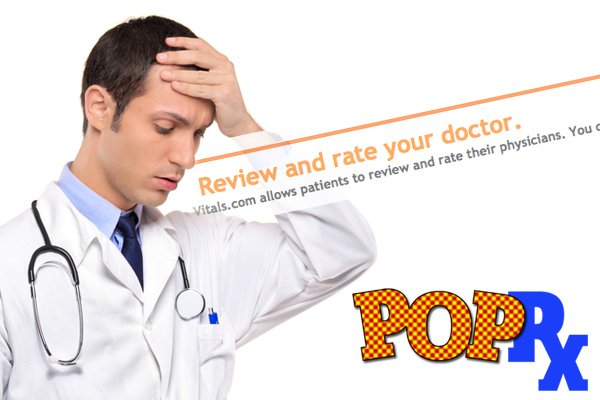
Dr. David McKee, a neurologist in Duluth, Minn., didn’t much like an Internet review that called him “a real tool” and suggested he didn’t care about his patients’ comfort. So he filed a defamation suit against the patient’s son who wrote the critical piece, which also alleged McKee wasn’t interested that his dad’s gown was hanging from his neck with his backside exposed.
A judge ultimately dismissed the case, stating that “the court does not find defamatory meaning, but rather a sometimes emotional discussion of the issues.” But it’s not the first time a physician filed a suit against a consumer for a bad Internet review — and probably won’t be the last. A physician’s reputation is all he or she has, and a sour review on the Web can make us very anxious.
Online review sites, of course, are imperfect and open to manipulation. But we all head to Google nevertheless in search of information and advice, whether we’re shopping for a book or a new physician. So how do you know whether the doctor you’re seeing is any good? And how do I know how good a doctor I am?
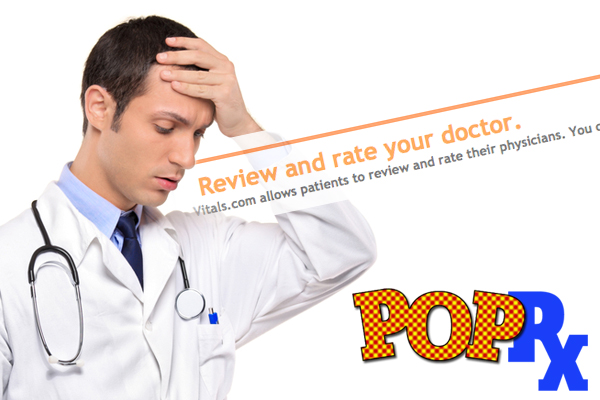
I recently Googled myself to determine how I fared on sites like Healthgrades, which exclusively rates doctors; and Yelp! and Angie’s List, which grade doctors alongside restaurants and plumbers. The results were inconclusive. Many sites had me listed but not rated. However, on Vitals.com I earned a mere one-star review (out of four). I had no idea who had rated me, or why I earned such a subpar grade. Some of the other information on the site was correct and some was not. It claimed I work at two four-star hospitals (that’s incorrect — just one four-star center), attended a three-star medical school, and that patients wait an average of 20 minutes to see me. It’s unclear how that number was calculated.
All of which suggests the amount of information online about doctors and the growth of ratings sites doesn’t make it any easier to figure out whether your doctor is brilliant or a quack.
The main reason for this is because it’s hard to figure out what “good” means. On one hand, it could mean delivering safe and effective care. Let’s call this high-quality care (though even defining “quality” this way is also sure to raise debate). Practically speaking, this could mean that if you bring your child to me with fever and an earache, I have the skill to diagnose an ear infection (an accurate exam) and prescribe the correct treatment (the right dose of the right antibiotic for the right number of days). On the other hand, “good” can also mean determining the kind of service I provided. When you brought your child to see me, did I greet you with a smile, listen, show some empathy? Was my office staff courteous and professional? Was it hard to find parking? Did you wait too long? Ideally, we want our doctors to give us both the highest-quality care and service. In reality, that’s almost impossible to judge.
Vitals and other sites have collected lots of anecdotal information about service — indeed, it’s one reason why the site was launched. “I was about to get my Achilles’ tendon repaired. On the table, the doc said, ‘I’m excited to do one of these. It doesn’t happen to me that often.’ That’s not the info I wanted to know then,” said Mitch Rothschild, the CEO of Vitals. “So we started Vitals to help people get that info ahead of time — when they are deciding, not when they are in a hospital gown.”
Rothschild said that we “are a social species — we care what other people think. And many of us make decisions not empirically, but by soliciting other people’s opinions.” Online sites are often the easiest place to speak out as well. After all, how many of us know where and how to file a formal complaint against a doctor or hospital?
But even with the best intentions and rationale, ratings sites have taken fire from the medical community. Much of this has to do with the traditional culture of medicine — new-media transparency causes a clash between the conservative and hierarchical nature of medicine and the forces that are trying to level the playing field between doctor and patient. In our guts, doctors are deeply uneasy about transparency; no one wants their strengths and weakness splayed for all to see in even the smallest open square, let alone anyone who Googles us. We want to care for patients in the best ways possible, despite all of the modern factors (insurance, bureaucracy, cost, risk) that have made this harder than in the past. So a negative review, while usually not leading to a lawsuit, often leads to anxiety, a crisis of confidence and concern for our reputation.
Doctors, of course, aren’t the only people who have to deal with potentially unfair reviews online. And most of us recognize that some criticism online is part of the deal these days. Nevertheless, doctors grounded in science bristle at the unscientific methods behind these ratings — especially if people are using them to make life or death decisions about medical care.
These sites also do very little to help me get better as a doctor or improve the doctor-patient relationship. Did my one-star review come from someone who felt I was rude or from someone who demanded a prescription but didn’t get one from me? With anonymity, it is impossible to tell. And even if I wanted to respond, federal privacy laws would not allow it.
That anonymity can also deceive our potential patients. A study looking at physician rating sites published in the Journal of General Internal Medicine last year identified several reviews that were written by doctors themselves. “Every anonymous review I’ve written on myself has been glowing,” confessed one doctor to researchers. On Vitals, I gamed the system myself. My own review went up from 1 to 3.5 stars after I entered several positive reviews. When I told Mitch Rothschild about this, he said, “We strive for the highest ‘signal to noise ratio’ by limiting the IP address’ ability to submit multiple ratings, asking for email afterwards, and then seeing if a doctor has many reviews with no emails — a suspicious note.” That didn’t stop me from entering those raves from my mobile phone, laptop, iPad and then my desktop.
Another problem academic reviewers of these websites have pointed out is that they often ask the same questions about a doctor regardless of her specialty. Asking whether a pathologist (who examines slides, not patients) communicates a diagnosis to a patient well doesn’t make sense at all.
Perhaps the biggest limitation with Vitals and other sites has to do with the paucity of reviews. While Vitals claims it has information on some 720,000 doctors, according to Rothschild, each doctor has only an average of four ratings. In another study of physician rating sites, researchers found that only three out of 250 doctors had been rated five or more times. Given the thousands of patient visits one doctor will take part in each year, one-to-four opinions hardly counts as the wisdom of the crowd.
Despite all of these criticisms, it’s worth noting that nearly 90 percent of reviews, as sparse as they are per doctor, are positive, suggesting that doctors’ collective angst is probably overblown. Still, in an effort to fight back, some doctors have taken to making their patients sign gag orders that prevent them from writing reviews online. Others have “incentivized” patients to favorably review them online by offering discounts on certain services. (Botox for four stars, anyone?) Some have suggested perhaps the best thing to do is to actually encourage patients to use these sites so the overall number of good reviews drowns out bad ones.
So if service “data” is not necessarily helpful for figuring out how good a doctor is, what about quality statistics? Some states have taken to publishing hard outcome data about certain doctors. New York, for example, publishes data on the performance of its cardiologists and cardiac surgeons. It’s an impressive set of spreadsheets dating back to the 1990s. But this kind of data does not exist for all doctors, and for the ones it does exist for, it certainly isn’t easy to find. Even if they did find it, it’s pretty clear from studies and surveys that consumers aren’t motivated to drill this deep into statistics to figure out which doctor is right for them. From a physician’s standpoint, there is some indication that cardiologists and CT surgeons may be reluctant to treat riskier patients for fear of getting dinged on these spreadsheets. Finally, to get back to the root of my inquiry: Can data like this help doctors get better? No study has suggested any proof that it helps.
The result of all this push toward transparency doesn’t seem to have affected consumers. A 2008 survey by the California HealthCare Foundation found that although more than 80 percent of the state’s adults turn to the Internet for health-related information, less than one-quarter have looked at physician ratings sites. Only 2 percent of those surveyed made a change in physicians based on information posted on a rating site. Other surveys demonstrate similar lack of influence for published quality data.
All this puts us back at square one when it comes to figuring out how good our doctors are. Service and quality are both essential skills for doctors to master, but online rating sites don’t have enough information to attest to quality. And the states’ quality data tells us nothing about bedside manner.
Perhaps “how good is your doctor?” is the wrong question to ask. Given how complex medicine and medical care is these days, no single doctor can know it all and do it all. Instead, it may be better to look for a system of care — primary care, specialists and other members of a team — that works to provide quality care and multi-star service in a coordinated fashion. A few such systems exist around the country, and as healthcare reform continues, we’ll probably see more sprouting up. If you’re skeptical of that view, just look at the scandal in the military at Walter Reed Hospital. That shameful service and quality wasn’t because of a single doctor, but because the entire system meant to take care of wounded soldiers was in shambles, leaving patients out in the cold.
Continue Reading
Close
Like many sci-fi films, “The Rise of the Planet of the Apes” stirs up a host of medical and moral issues. The plot kicks into overdrive after a chimpanzee Caesar is given a fictional drug that makes him the smartest Simian on Earth. Regular readers of this column will make the connection to neuro-enhancement drugs like Provigil and Ritalin designed to boost people’s brainpower and awareness.
But, as a doctor, I was struck by a more subtle medical conundrum. Toward the beginning of the movie, scientist Will Rodman (James Franco) injects his Alzheimer’s-stricken father (John Lithgow) with the same drug he gave Caesar. In the following scene, Lithgow’s character recovers the memories and mental capacity he lost to dementia. That particular plot point raises a question we as physicians often face: Should doctors treat their own family and friends?
The practice is officially frowned upon. Most medical associations and many state boards consider caring for relatives or friends to be a form of professional misconduct. Insurers don’t support the practice either: To curb fraud, Medicare stopped reimbursing doctors for treating family members nearly two decades ago, and Blue Cross hasn’t paid doctors for taking care of relatives since 1976. And legal issues abound: Physicians can be liable for off-the-cuff diagnoses made at the bequest of family or friends. In 1990, a Chicago doctor was tried for murder after his wife died from complications from liposuction.
But these guidelines and legal ramifications do little to deter us from becoming, literally, the doctor in the house. In 1991, the New England Journal of Medicine published one of the few studies of this practice. It found that 99 percent of surveyed physicians admitted to providing medical care for a family member. Eighty-three percent of physicians had prescribed medication, 80 percent had diagnosed medical illnesses, 72 percent had performed physical examinations and 15 percent had acted as a family member’s primary doctor. And we’re not just talking about treatment of minor scrapes and sniffles: 9 percent of doctors in the study had actually performed surgery on a family member. Others had diagnosed cancer, strokes and other serious illnesses for their relatives. This physician tendency to care aggressively for relatives is echoed by Will Rodman’s behavior in the latest “Apes” film: The drug he gives his father is experimental and hasn’t been approved for human trials.
Dispensing advice to friends and family begins as early as medical school, but the breadth and depth of our involvement grows rapidly. In my own career I’ve given my wife flu vaccines, prescribed steroid ointments for my father, and birth control pills for my cousin. I diagnosed a subtle wrist fracture in my neighbor’s kid and signed a health form over my backyard fence to give another neighbor’s son permission to play basketball (I asked the parents to let me review his chart before I put pen to paper).
It’s hard to turn down a friend or relative asking for basic medical advice, and many physicians (myself included) enjoy this sense of giving something back to our families and communities. But issues arise when we treat people with whom we have personal relationships. For one thing, many such requests often deal with issues outside our area of expertise. As a pediatrician, I don’t always feel qualified to answer questions about adult medical matters.
Even more problematic is our loss of objectivity. Given the added emotional anxiety of caring for a family member, the first diagnosis that pops into my mind when I’m treating a relative is often the worst. Case in point: At 9 months old, my oldest daughter began intermittently vomiting for a few days. Her pediatrician would likely have examined her and told us she had a case of the stomach flu. I, on the other hand, convinced myself she had developed type 1 diabetes or a urinary tract infection. A day or so later, our daughter was back to her usual rambunctious self, but not before I’d ordered costly blood work, and attempted to collect a urine sample using a plastic bag (which you stick to a child’s genitalia) rather than a catheter (which is standard practice for infants). No studies have compared the cost and quality of healthcare doctors give to their patients versus their loved ones and neighbors. But if my experience is any guide, we’re likely to give our loved ones costlier but shabbier care.
These sorts of personal consultations can complicate care for patients as well. Once, the parents of a 7-year-old patient of mine came to see me. Their daughter had developed a fairly serious condition, and they’d been consulting a family friend who was an adult specialist over the phone. True to form, he had suggested a whole battery of tests, including an ultrasound. Based on the child’s story, the diagnosis was pretty clear, and it only required a urine sample and a few blood tests, certainly not a high tech, expensive scan. The parents later told me that their doctor friend had ordered the ultrasound himself. I didn’t want to put the child in the middle of a medical turf war, so I didn’t try to talk them out of it. What bothered me most was that the physician who ordered the test didn’t bother to tell me what the results were (I dug them up on my own). And it easily could have put our patient at risk, had the other physician prescribed medication without my knowledge or needlessly subjected her to radiation from a CT scan.
There are exceptions, like actual emergencies, but as a rule we doctors need to get better at saying no when it comes to treating our friends and loved ones. And it can certainly help to be a medical expert when you’re translating medical information and advocating for a loved one or friend. But boundaries are important. The aggressive urge to ensure that our loved ones are getting the very best, most medically advanced care often ends up doing more harm than good: In “The Rise of the Planet of the Apes,” Will’s father eventually begins to experience unexpected side effects from his son’s miracle drug, and his Alzheimer’s returns.
Now, when I get casual questions from friends and family, I try to stick to general advice and then recommend they visit their own doctor. In our prescription and test-driven healthcare system, the last thing we need is to be encouraging costlier, less effective care.
Continue Reading
Close