Matt Zoller Seitz

The best TV shows of the year

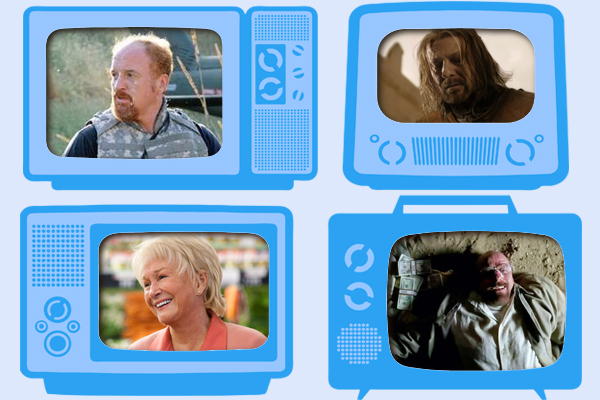
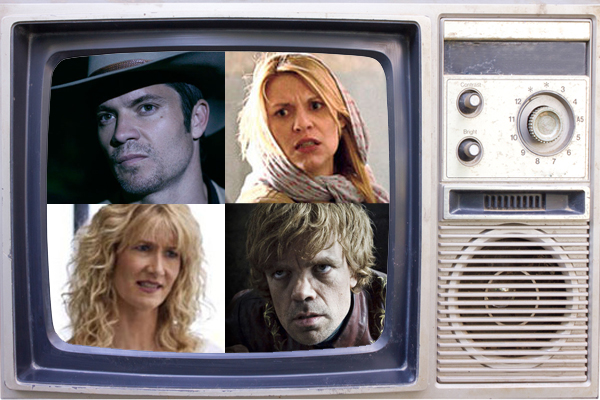
Slide show: From "Breaking Bad" to "Homeland" and with a surprise at No. 1, cable dominates the best shows of 2011 SLIDE SHOW

  • more
    • All Share Services

The best TV shows of the year

View the slide show

We’re living in some kind of new Golden Age of scripted TV, and this year’s best offerings were amazing. I decided to be rigorous and restrict myself to just 10 entries. It wasn’t easy.

These 10 picks represent what I think were the most creative and consistently satisfying scripted comedies and dramas that aired on American TV during 2011. If I’d expanded the list to account for shows that were somewhat more erratic but that produced terrific individual episodes, this list would have had 30 or maybe even 40 titles on it. If anybody’s curious, I may post the expanded list in the comments section.

You may see some of the runners-up cited next week, when I will present a slide show honoring the best individual episodes of scripted series. There might be an article listing the best nonfiction programs as well.

View the slide show

Searching for Oscar hints in Golden Globe nominations

Is "Dragon Tattoo" off the list? What about Spielberg? Salon critics analyze the picks with an eye on the future

  • more
    • All Share Services

Searching for Oscar hints in Golden Globe nominations

Andrew O’Hehir:

Since the Golden Globes nominate both films and actors in two streams of categories — what they call “drama” vs. “musical or comedy” — they have the luxury of not winnowing down the awards race at all, and just handing things out promiscuously. So you have to look at the Globe nominations and ask, in effect, “Which of these things does not belong here?”

For instance, I have difficulty believing that “The Ides of March,” “50/50″ or “Bridesmaids” are legitimate Oscar contenders, and all three of those just got best-picture nods from the Globes. (Given that we don’t know how many films the Academy will nominate, I suppose their presence creates intriguing possibilities.) Similarly, there were some improbable nominations in the acting categories. No one seriously expects Brendan Gleeson or Joseph Gordon-Levitt or Kristen Wiig to be among the nominees on Oscar night — which is not in any way a suggestion that their work doesn’t deserve it. I’m strictly playing horse-race analyst here.

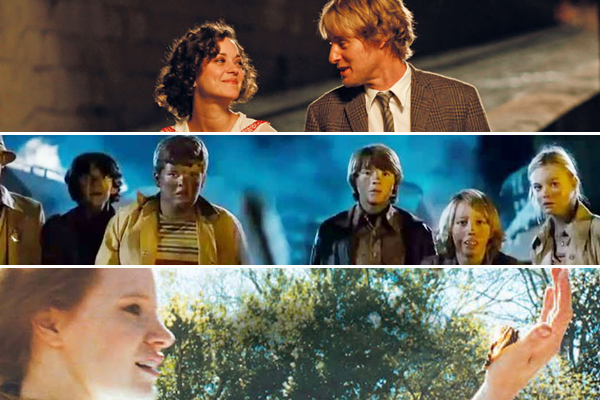
Still, in the categories where the Globes have only five nominees, they have a strong predictive record. Look at the best director category: Woody Allen, George Clooney, Michel Hazanavicius (of “The Artist”), Alexander Payne and Martin Scorsese. Now, Clooney’s name is a pretty big surprise on that list; I’d have expected to see David Fincher or Steven Spielberg instead. But it’s a highly plausible list. Ditto for the screenplay category, where the nominated films are “Midnight in Paris,” “The Ides of March,” “The Artist,” “The Descendants” and “Moneyball.”

There are a few things we can say with reasonable clarity, some positive and some negative. On the positive side, “The Artist” is for real. As weird as it still seems that a black-and-white silent film by a French director could be a leading Oscar contender, it clearly is. “The Ides of March” and “Moneyball,” two films that did not do well at the box office and got mixed reviews, are clearly still in the money in various categories. Ryan Gosling — who was nominated for best actor for both “Ides” and “Crazy, Stupid, Love” — was not poisoned for awards voters by his year of ridiculous media overexposure. Pretty much all the major actors we were expecting to see nominated are here: Clooney, Brad Pitt, Leonardo DiCaprio, Jean Dujardin, Michael Fassbender, Glenn Close, Viola Davis, Meryl Streep, Tilda Swinton.

On the other side of the ledger, it sure looks like Fincher’s “Girl With the Dragon Tattoo” is out of the running for major Oscars, even before regular people get to see it. Rooney Mara got an acting nomination (and she deserves one), but the film was otherwise ignored. This may be reading tea leaves too closely, but I get the feeling that neither Spielberg’s “War Horse” nor Scorsese’s “Hugo,” the two biggest old-time Oscar-bait movies of the year, exactly wowed the Globes voters. Neither got any acting nominations (I’m startled to see Ben Kingsley overlooked for “Hugo”) and Spielberg was left off the directors’ list. Overall, it remains a mixed-up and unsettled year in the awards race; I think “The Descendants” remains the front-runner, with “The Artist” and “Midnight in Paris” just behind.

Matt Zoller Seitz:

The Golden Globe ceremony itself tends to be a half-jokey, half-mortifying spectacle, but I’ve got to hand it to the Hollywood Foreign Press: with a few bizarre exceptions, they tend to put out a list of worthy nominees. This year’s crop of TV nods is no exception. Looking over the list I see omissions that I personally don’t approve of, but it’s hard to argue with most of the shows and individuals they did select.

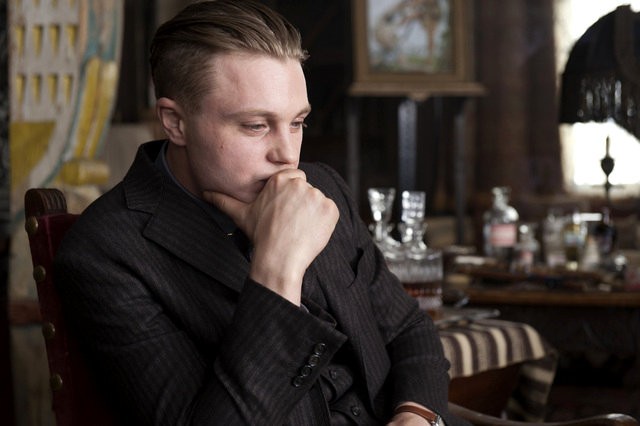
The best drama nominees are solid: HBO’s “Game of Thrones” and “Boardwalk Empire,” Starz’s “Boss,” Showtime’s “Homeland” and FX’s ascendant frightfest “American Horror Story.” I would have liked to have seen the epic modern western saga “Justified” or even “Sons of Anarchy,” which had a consistently strong fourth season, in the place of “Boardwalk Empire,” and “Treme” taking the urban malaise slot over “Boss.” It’s stylish, compelling and superbly acted (especially by star Kelsey Grammer, who got a best dramatic actor nod) but rather silly in places. But I’m not hugely surprised that my proposed alternates were snubbed, as they’re specifically, even defiantly American in their textures. (“Sons of Anarchy” has gotten some Globes love in the past, but maybe the organization is over it now?)

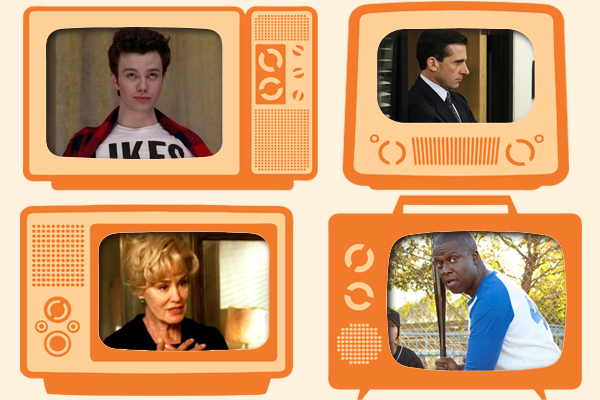
The comedy or musical nominees are three-for-five in my book: ABC’s “Modern Family,” Showtime’s “Episodes” and yes, yes, yes to HBO’s “Enlightened.” But the “Glee” nomination is baffling to me — it’s the only major scripted musical series right now, and it has its brilliant moments, but there are severe quality control problems on that series. And the fifth nominee, Fox’s “New Girl,” just gives me a headache (maybe this is the international cult of Zooey Deschanel — a nominee as best actress in a comedy or musical — asserting its clout?) Those last two slots should have gone to “Louie,” “Community,” “Parks and Recreation,” “Bored to Death” or any number of more deserving half-hour shows.

Best made-for-TV miniseries or movie is a mixed bag: Look for “Downton Abbey” to square off against “Mildred Pierce” in this category and related ones, and probably take the top prize. BBC’s “The Hour” was terrific but doesn’t stand a chance against “Abbey” and “Pierce,” and the nod for HBO’s “Cinema Verite” feels like a reflex; it was pretty good, but didn’t say anything about its subject, documentary filmmaking and the myth of objective detachment, that countless other films hadn’t already said as well or better. And HBO’s “Too Big to Fail,” about a behind-the-scenes conference of CEOs trying to halt the economic collapse of 2008, was a rich guy masturbation fantasy in which the guys who caused the problems were turned into heroic problem solvers; that this movie got nominated at all, in this year of all years, is pretty shameful.

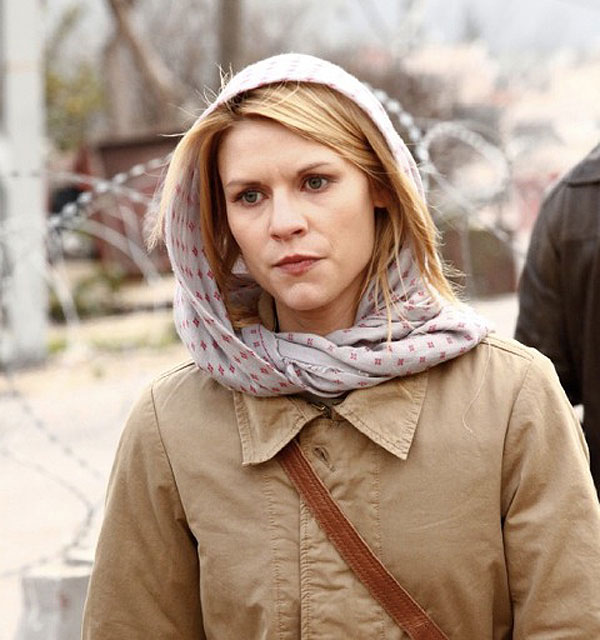
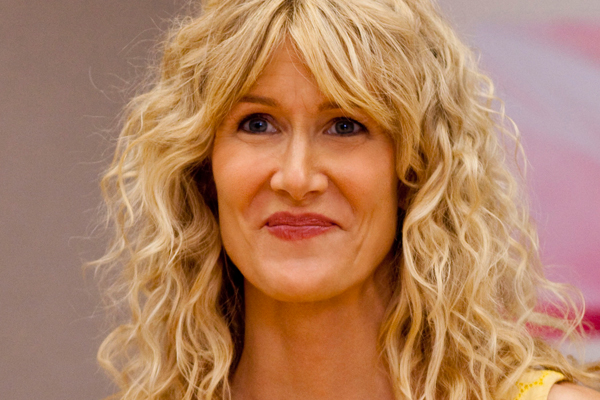
I can’t say much against the acting nominations in any major category. I’d like to see Claire Danes and Damian Lewis of “Homeland” take the top prizes in the drama categories. But they might face tough competition from, respectively, Mireille Enos in “The Killing” (awful show, superb lead female performance) and Grammer in “Boss” (critics groups love to reward an actor who obliterates typecasting, which is one of the reasons why Michael Chiklis of “The Shield” and Bryan Cranston of “Breaking Bad” (who’s up again this year) won in the past. Laura Dern should win as best actress in a comedy or musical for “Enlightened” — case closed — but the eerie, mesmerizing power of eternal It Girl Zooey Deschanel should not be underestimated. I’d like Matt LeBlanc to win best comedy or musical actor for “Episodes,” on which he played a sexually voracious, dumb-brilliant-manipulative version of himself, but the character might be too slippery for this group. Besides, three-time Globe winner Alec Baldwin is up yet again, and these days he tends to accumulate awards the way magnets pick up iron filings.

In my dreams, Kate Winslet and Evan Rachel Wood win best actress and supporting actress in a miniseries or movie for their mother-daughter teamwork in “Mildred Pierce.” Jessica Lange deserves to win best supporting actress for “American Horror Story,” in which she seems to be channeling Bette Davis in “Whatever Happened to Baby Jane?” by way of Blanche DuBois in “A Streetcar Named Desire.” If Peter Dinklage doesn’t pick up yet another award as best supporting actor for “Game of Thrones,” I’ll be most surprised — but I wouldn’t object if Guy Pearce snuck in to win as Monty in “Mildred Pierce,” the kind of sneakily deep performance that tends to be undervalued.

The complete list is here. What do you think?

Continue Reading Close

Where can “American Horror Story” go from here?

In a creepy, nasty, psychedelic, super-bitchy episode, FX's horror opus let its ghosts take center stage

  • more
    • All Share Services

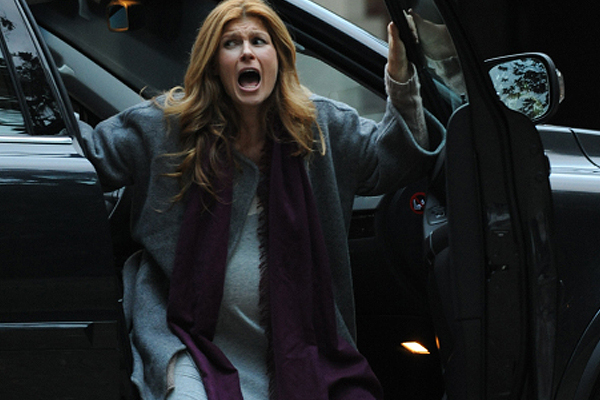
Where can Vivien Harmon (Connie Britton) prepares for a big event on "American Horror Story." (Credit: FX)
The following article contains spoilers for "American Horror Story" season one, episode 11, "Birth." Read at your own risk.

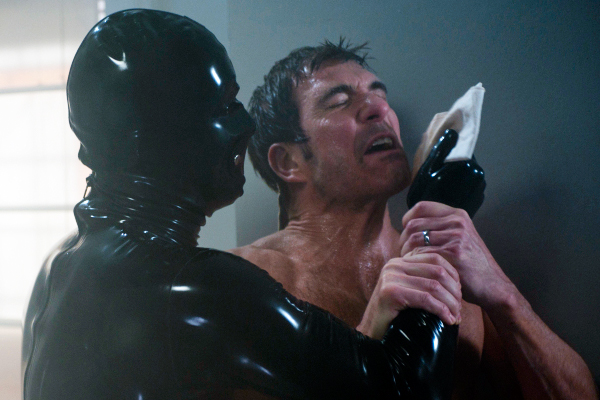
“Just because we’re dead doesn’t mean we don’t have wants … desires,” said Tate, the pouty, bratty, forever-teenage rubber-suit-wearing, mom-of-the-house raping, suicide pact-making … sorry, I feel like there should be about 12 more adjectives in there, because the ghostly Tate, like most of the characters on FX’s aggressively lurid “American Horror Story,” requires them. But let’s stay focused on Tate’s statement, because it’s key. Yes, of course! He and the other ghosts have wants … desires. And one of the many amazing things about the show is how, over the past few episodes, it has subtly moved the ghosts to the center of the narrative, to the point where the ever-dwindling number of living characters have started to seem like the supporting cast on a show that they were ostensibly the stars of. (Of course, now that they’re all dropping like flies — even money on Constance to bite the dust by the end of season two — they get to be at the center of the story again.)

I’ll spare you a detailed recap because if you didn’t see the episode, you shouldn’t be reading this article in the first place — and besides, appreciation and speculation is more fun. As written by Tim Minear and directed by Alfonso Gomez-Rejon, it was perhaps the show’s spookiest episode to date, campy and trippy (check out all those dissolves!) yet straightforwardly horrific, in the art house/grindhouse vein of a 1970s Ken Russell or Dario Argento picture.

First, the appreciations: Chad’s insouciant “You gotta love this house!” was a trailer-made laugh line because it said what many of us were thinking. I do indeed love The Murder House, which as far as I’m concerned has already earned a spot on the list of great cinematic nightmare real estate, along with the Bates Motel in “Psycho,” the Dakota in “Rosemary’s Baby,” the academy in “Suspiria,” the starship Nostromo in “Alien” and the hospital in Lars von Trier’s original Danish miniseries “The Kingdom” (which “AHS” is resembling more and more with each passing week). It’s a dream space, even more so than the rest of the locations on this batshit-crazy series. Once you settle into the show’s super-bitchy Grand Guignol groove, you get used to the fact that pretty much anything can happen, and start to look forward to the latest outrage in much the same way that you might have looked forward to the less ghastly twists that used to fill out old-fashioned weekday soap operas, the kind that the broadcast networks don’t make anymore. (CBS called “Dallas” a nighttime soap back in the day, but it was a “Little House on the Prairie” romp through sun-dappled meadows compared to this.)

What else was there to like? Oh, come on, what wasn’t awesome? I loved the torchlit flashback to the Roanoake colony, where supposedly 117 dead souls tormented the living until they were dispersed by a magic word, and I loved how Violet tried it on Chad and it didn’t work. (I was reminded of Barlow the vampire’s great line in Stephen King’s “Salem’s Lot”: “Give me a bite … I love garlic.”) We got some explanations (via the medium) as to what in the Sam Hill is going on up in that house; apparently it’s a conduit to the dark beyond, and it’s spreading evil and misery out into our world via tormented ghosts that serve as its permanent residents and ambassadors. Or something. Like it matters! The escalating shocks and turn-on-a-dime segues from melodrama to catfight humor are the real draw here — that and the cast, which would probably be more widely appreciated for its dazzling tonal control if the show weren’t part of an inherently déclassé genre. The thickening mythology is intriguing, too — and grimly funny. There’s a pyramid scheme aspect to the way that the ghosts keep murdering the living, driving them to suicide or killing them off as collateral damage in other outrages. They’re forcibly recruiting for the house, swelling the ranks of the tortured dead. The way Violet described it in her tearful confrontation with Tate, the young man essentially killed her mom by raping her and impregnating her with a demon-spawn. (If I were Violet, I’d break up with him, too.) All that on top of Tate’s other, past murders. I gotta hand it to the kid, he’s a hard worker; if this were “Glengarry Glen Ross,” he’d take the Cadillac away from Ricky Roma.

As Constance, Jessica Lange should win not just a best supporting actress Emmy, but a special bonus award for keeping a straight face when Chad answered her terse, “Man should not lie with man, it’s an abomination!” with “So’s that hairdo.” That was a good one, but I liked the dialogue in the climactic scene with Constance, Moira and Hayden even better. Moira: “She’s the most beautiful baby I’ve ever seen.” Constance: “From blood and pain come perfection.” Moira (appearing at the back of the kitchen): “Hey, bitches … You wipe that slime off my baby yet?” Now that Vivien has given birth in the most psychedelically nightmarish delivery sequence since “Rosemary’s Baby” — the dolly-backward away from her blood-drenched corpse had an Argento-like mournfulness — where can the show possibly go from here? The previews for next week’s episode set up a multi-tentacled undead custody battle over the two babies, and showed Ben threatening Constance and putting a gun to his own head. My money’s on Ben becoming the final regular cast member to join the ranks of the spirit world, thus paving the way for new arrivals in the Murder House next season. With the body count somewhere in the double digits, the latest buyers should be able to pick the place up for a song.

I’m a bit perturbed that executive producer Ryan Murphy and Brad Falchuk’s FX series apparently claimed most of their enthusiasm this year, leaving their exuberantly silly and occasionally brilliant Fox network series “Glee” to founder this season and eventually succumb to the stupidity and half-assedness that were always nipping at its heels even during strong weeks. But this outcome was creatively and perhaps biologically inevitable. As the doctor explained, all the necessary nutrients were devoured by the larger fetus.

Continue Reading Close

“Glee” has a Judy Garland Christmas

In a clever, charming black-and-white interlude, the show reminds us what it's capable of

  • more
    • All Share Services

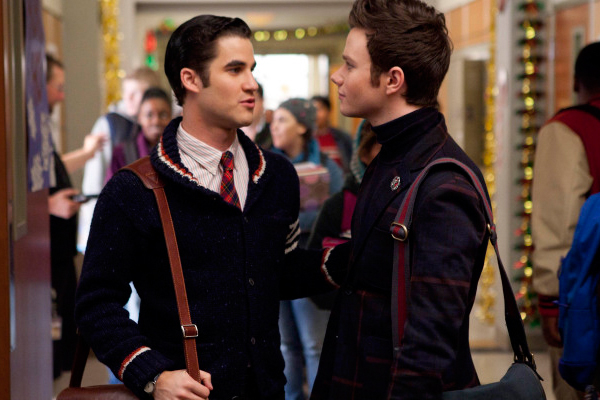
Darren Criss and Chris Colfer on Tuesday night's "Glee"

All together now, readers: If you hate “Glee” so much, Matt, why do you keep watching it? I don’t know, folks. At the risk of sounding like a masochistic romantic who’s stuck in a tortuous relationship — Dear diary, I can’t TAKE this anymore, it’s horrible and it’s KILLING me … but OH MY GOD IF YOU COULD HAVE SEEN THE GIFT SHE BOUGHT ME! — I have to go on the record about last night’s “Glee” Christmas special. It was brilliant.

OK, actually, I should qualify that — the middle section was brilliant. The wraparound stuff was the “Glee” usual: silly, pandering and dull. During the final number — “Do They Know It’s Christmas,” set in a soup kitchen that no doubt was populated by the children of “Glee” cast and crew — even the actors seemed bored, except for Jane Lynch, whose Coach Sylvester was acknowledging the first anniversary of her sister’s death. (Tear cup.) But OH MY GOD IF YOU COULD HAVE SEEN THAT MIDDLE SECTION, DIARY! Presented in black-and-white, it perfectly re-created the set, the tone and even the camera moves of “The Judy Garland Show” Christmas special from 1963, but with a cultural flash forward/flashback quality, presenting a patchwork quilt vision of America that wouldn’t have gotten past the network censors four decades ago.

Artie conceived the special to fill unexpectedly vacant airtime on the local PBS affiliate. Lovers Kurt and Blaine, devoted Friends of Judy, hosted an homage to the broadcast that they no doubt would have watched in awe had they been a couple (closeted, surely) in early-1960s Lima, Ohio. Early in the episode proper, there were ostentatious references to 1978′s legendarily awful “Star Wars Holiday Special,” but in the PBS special, that reference was reduced to Finn and Puck dropping by in Luke Skywalker and Han Solo costumes and performing a Springsteen-y version of “Santa Claus Is Coming to Town.” The rest of the special was Judy, Judy, Judy. The filmmaking was vintage 1963, letting action play out in waist-up medium shots and head-to-toe long shots with a minimum of cutting. “Glee” even replicated the old-fashioned network TV special conceit of pretending that the unseen viewer was a party guest (“Well, hello! … Come on in!”). I love that certain McKinley High performers were incredibly smooth on camera, while others glanced nervously at the lens. And the staging of Kurt and Blaine’s “Let It Snow” was a delight.

Set, according to Artie, in the Swiss Alps village of Gstaad, there was a kind of alternate-universe feeling to the whole production, as if it were unfolding not on a public-TV soundstage in Lima but in a blandly benevolent dream space — one in which the characters all got along fantastically well and never cut each other down in public or stole each other’s boyfriends and girlfriends, and one in which it was possible to call Christmas “Christmas” rather than “the holidays” without seeming exclusionary. Herbie the Elf — sorry, Rory the Irish exchange student — even invoked “A Charlie Brown Christmas” by reciting from the New Testament, Linus-style. (“Lights, please.”) During a season in which “Glee” feels even more slapped-together than it already did, this charming interlude was a reminder of what the show can do when it puts its mind to it.

Continue Reading Close

Dear HBO: Renew “Enlightened”

Laura Dern's great comedy about personal responsibility captures the frustrations and possibilities of our time

  • more
    • All Share Services

Dear HBO: Renew Laura Dern

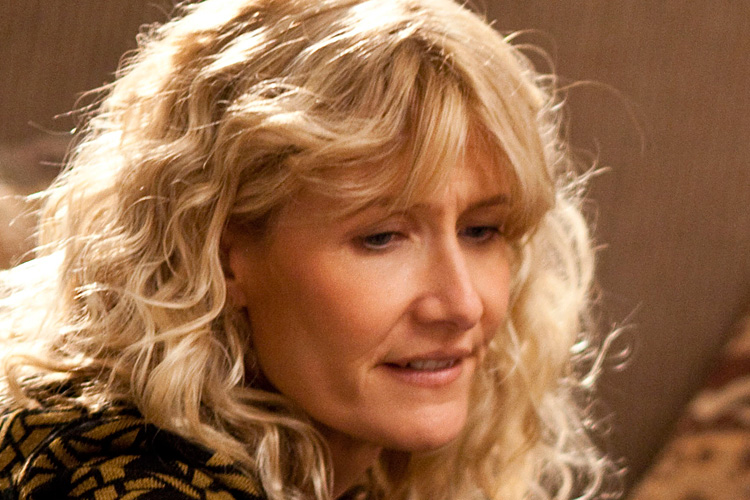
“Everything can be transformed,” said Laura Dern’s character, Amy Jellicoe, on last night’s first-season finale of “Enlightened,” walking to work and then through the corridors of her office. “Every single thing. Goodness exists. It’s all around. It’s just sleeping. It can be wakened.”

HBO, which is reputedly on the fence about renewing this critically acclaimed but low-rated series, should recognize the goodness on its schedule Monday night and give “Enlightened” another season. It’s charming, intelligent, uncomfortable, often moving. Executive produced by Dern and writer-producer Mike White, and written by White, “Enlightened” is doing things that no series has ever done, in a tone that no show has ever attempted. And on top of that, it feels like a definitive statement on a troubled era.

If you saw the finale of “Enlightened” last night — only half-jokingly titled “Burn it Down” — you know that Amy made good on her promises to confront her employer, the giant drug company Abaddon, about the callousness and illegality that she uncovered through research. You also know that Amy, who survived a breakdown so severe that it sent her into rehab, is especially outraged about her own department, which is developing software that figures out how to work employees as hard as possible while paying them as a little as possible. “Enlightened” is not an explicitly political series — not in the way that “South Park” is, or that “The West Wing” was — and yet the corporate intrigue aspects strike to the heart of the moral crisis that’s convulsing this nation. The image of Amy fantasizing about pouring gasoline on the floors of Abaddon’s headquarters and setting it ablaze was chilling — and as metaphor, perfect. Do we continue to accept business as usual out of a weary belief that change is just too hard? Or do we say something, and do something, even if means enduring humiliation and abuse? Do we continue to live in this rotting house, or do we burn it down?

“I will not be afraid,” Amy said, walking into her office to demand a meeting with department heads and address the problems, her light blue blouse and yellow skirt standing out in a sea of corporate greys and blacks. “I will be bolder.”

It also helps to be “crazy,” one of the epithets that some of Amy’s co-workers use when they talk about her. Some people, of course, really are mentally ill, or at least so emotionally disturbed that nothing they say is of much use to anybody. But such epithets can also be used to stigmatize people who act and think in ways that call out the powers that be on their arrogance and complacency. The easiest way to neutralize a bringer of bad news is to stigmatize the messenger, either by calling her crazy (which is more or less what the board did after Amy left the room, revealing that they only let her speak to them as a joke) or by settling on some other pejorative phrase, such as “lazy bums” or “dirty smelly hippies” or any of the other retro smears trotted out in arguments about Occupy Wall Street.

One of the many wonderful things about “Enlightened” is that you can’t take anything that that pops out of its characters’ mouths at face value — especially not Amy’s remarks and requests, which are often self-serving. We’re quite aware that Amy is a terrible employee and is acting at least partly out of personal grievance. She wants to get back some of the power she lost when she went into rehab and lost her executive position, and she’s hurt by overhearing the board calling her crazy. But it’s also true — in life and in this series — that righteous action needn’t come from a disinterested place to be worth pursuing. Politics is personal.

“We can blow this place wide open!” Amy excitedly tells her co-worker, Tyler (Mike White), urging him to help her hack into the email system and retrieve correspondence proving that the company’s executives are hopelessly corrupt. “Why would we want to do that?” Tyler asks.

It’s also worth noting the difference between real-world Amy and the Amy we see and hear in the show’s contemplative, voice-over segments. Many of the lines that I quoted in this piece occur in what you might call a “protected space” — inside Amy’s roaming mind. The character that we see in these sequences is a best-case-scenario version of Amy. I think her statements express the show’s true outlook on life, its sense of what is possible, without sarcasm, irony or winking. It’s a benevolent and even inspirational view. It’s very easy to sneer and snicker at. It’s valuable. And right now it’s almost nonexistent on TV.

“Enlightened” might be a great series even without the parts about Amy’s workplace crusade. White, Dern and their collaborators have a keen ear for the way that people deceive each other and themselves. As TVLine’s Michael Slezak, another renewal booster, wrote, Amy is “the most tantalizingly/unapologetically unlikable lead character in recent memory” — and considering how many comically unlikable characters there are on television, that’s a bold statement. At the same time, though, “Enlightened” has compassion for foibles and empathy for pain. Last week’s episode — essentially a solo turn by Diane Ladd, who plays Dern’s elderly, widowed mom on the show, and is Dern’s mom in real life — might have been the most moving half-hour of TV I’ve seen this year, as good as the best of “Louie.” The scene between Ladd’s character and Amy’s druggie ex-husband Levi (Luke Wilson) in the kitchen had the sting of observed truth, each character reopening old wounds and saying and doing things that real human beings would actually say and do. As I said in an earlier piece about the show, the series is as merciless as can be without being mean. It sees through everyone’s b.s., including Amy’s.

But it’s the connection between Amy’s personal psychodrama and her workplace that puts the series over the top, and turns it into something more than a quirky half-hour show about a troubled woman living with her mother. It’s a reminder of how work defines us, and in some cases deforms us, along with everyone we know — and the soul-crushing opposition that rises up whenever we try to change anything about it.

We need a show like this right now, and not just because it’s a great comedy and a great character study. Beneath its comic brilliance and formal daring, it believes in a better future, a better country, a better human race. And if you rolled your eyes at that last line, you should work for Abaddon.

Continue Reading Close

Hateful campaign targets “All-American Muslim”

In a shameful move, Lowe's pulls its ads from a Learning Channel show that dares present young Muslims as people

  • more
    • All Share Services

Hateful campaign targets

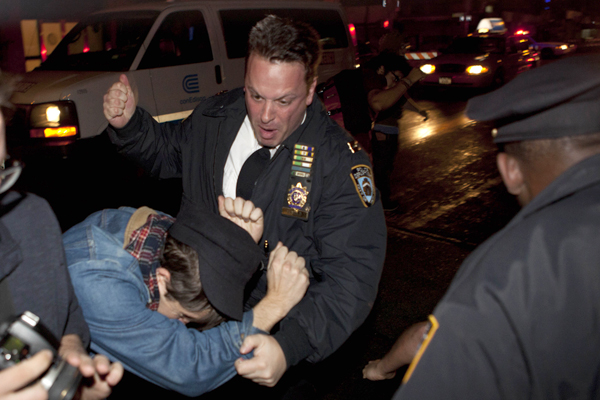
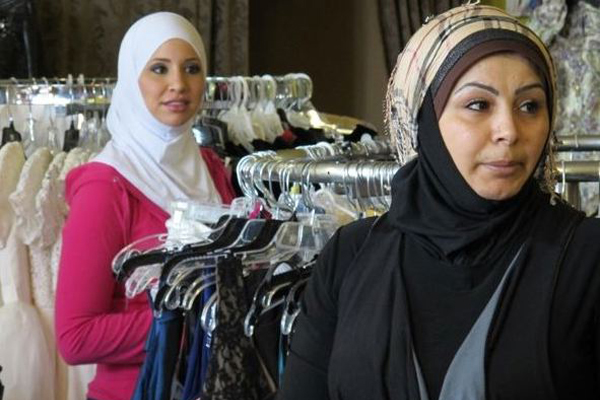
And now, a dispatch from the Department of Corporate Cowardice: The home improvement chain Lowe’s has pulled its advertising from TLC’s documentary series “All-American Muslim” (Sundays 10 p.m./9 Central) because … Well, because … It’s baffling, really. I guess it’s because the series portrays the vast majority of American Muslims as law-abiding citizens who just want the same right to life, liberty and the pursuit of happiness enjoyed by others. It’s the 21st-century Muslim-American version of a show that might have run on network TV during the civil-rights era in hopes of persuading bigots that black folks weren’t just looking to knock the white man down and take his women.

Lowe’s immediately became the target of online boycott campaigns. On its corporate Facebook page, Lowe’s said that: “It appears that we managed to step into a hotly contested debate with strong views from virtually every angle and perspective – social, political and otherwise – and we’ve managed to make some people very unhappy. We are sincerely sorry.”

The stated reason for the pullout, according to Lowe’s, is that the show was “a lightning rod” for controversy. That means the company and others were subjected to an organized email campaign by the Florida Family Association, a … whoops, I nearly typed “conservative group,” but the attitudes expressed in the FFA statement approving Lowe’s decision should shame anybody to the left of Ann Coulter.

“The Learning Channel’s new show ‘All-American Muslim’ is propaganda clearly designed to counter legitimate and present-day concerns about many Muslims who are advancing Islamic fundamentalism and Sharia law,” stated an article that ran on the group’s web site in advance of the series’ November premiere. “The show profiles only Muslims that appear to be ordinary folks while excluding many Islamic believers whose agenda poses a clear and present danger to liberties and traditional values that the majority of Americans cherish. One of the most troubling scenes occurred at the introduction of the program when a Muslim police officer stated ‘I really am American.  No ifs and or buts about it.’ … The show portrayed a Roman Catholic who converted to Muslim to marry.  However, there was no mention of a Muslim who attempted to convert to Christianity which has resulted in a multitude of conflicts in America and abroad. Many woman were shown wearing hijabs and many who were not, but the program did not show what happens if one of the hijab-wearing women decides to take it off.  Such conflicts would conflict with The Learning Channel’s agenda to inaccurately portray Muslims in America. There is no mention of the honor killing of Jessica Mokdad who lived not far from where this show was taped in Dearborn. The show fails to mention many Islamic believers’ demeaning treatment of women or great disdain for non-Muslims (infidels).

This is a request for “balance” that would actually have moved “All-American Muslim” closer to the Coulter/Rush Limbaugh/Fox News Channel idea of fairness, which amounts to a full-on conspiratorial panic attack. It’s akin to a 1960s reactionary group organizing a letter-writing campaign against a network documentary attempting to humanize workaday African-Americans on grounds that it didn’t include sections on drug dealers, gangsters, unwed mothers, junkies and other negative archetypes. The TLC series is nothing less than an attempt to depict mundane, and, heaven forbid, positive aspects of Muslim life that rarely get addressed in American journalism and popular culture, except in patronizing “Hey, don’t worry ,.. We don’t totally hate you!” pieces that run during Ramadan. Airing in a country in which Shariah law has become the latest right-wing creeping menace, the show is an ideological counterweight if anything, and it only omits things that get covered to death on cable news outlets to the exclusion of anything neutral, much less positive.

Nevertheless, Lowe’s backed out. “Lowe’s has received a significant amount of communication on this program, from every perspective possible. Individuals and groups have strong political and societal views on this topic, and this program became a lightning rod for many of those views. As a result we did pull our advertising on this program.”

It’s important to note, however, that Lowe’s is not the only advertiser to pull its ads from “All-American Muslim.” It is just the only one to issue a press release acknowledging the decision and see it turned into a news story. Also notable: While the FFA is the public face of pressure on the TLC series, it’s far from the only group to target the show’s advertisers.

“The Washington-based Council on American-Islamic Relations (CAIR) said Thursday that “the calls for an advertiser boycott are coming from Internet hate sites like Bare Naked Islam, which recently featured a number of threats of violence targeting U.S. and European mosques, and right-wing groups such as the Florida Family Association and American Decency.”

Updates to the FFA article bragged, “TWENTY FIVE (25) out of TWENTY SEVEN (27) NEW ADVERTISERS targeted in the November 29th email alert did not advertise again during the December 4th and 5th episodes. … SIXTY FIVE (65) companies that Florida Family Association targeted with emails did NOT advertise again during the only two episodes of All-American Muslim that aired this past week (meaning the week of Dec. 4). ”

You can see the complete list of who did and didn’t fold at the link above. It’s quite a list of deserters.

This morning, Bare Naked Islam celebrated the campaign in a post headlined “WOO-HOO! Our crusade against TLC’s ‘All-American Muslim’ has gone viral!”

“I wonder why they aren’t bothering all the other sponsors who pulled their ads from All-American Muslim after the first show?” the site asked rhetorically. “I guess it’s because only Lowe’s went public with their decision to stop advertising there.”

Continue Reading Close

Page 2 of 63 in Matt Zoller Seitz