Spring Sale: Get 1 Year, Save 58%

Here’s a guide to Paramount+, the latest streaming service vying for your eyeballs and money

Yet another challenger has entered the streaming wars as Paramount+ has thrown its hat into the ring as of Thursday, March 4. What does this new service have that its predecessors — Netflix, Hulu, Apple TV+, Quibi (RIP), Disney+ , HBO Max and Peacock — don’t?  And is it really necessary for you to cough up another subscription fee?

The newly Paramount+ will feature shows and movies, including originals, tied to ViacomCBS’ properties, like MTV, BET, Comedy Central, Nickelodeon, CBS and Paramount Network, plus new and classic Paramount Picture studio movies. 

Salon took a dive into the service’s offerings, so read on if you’re curious about cost, how to stream, the fate of your CBS All Access account and what shows and movies to expect from Paramount+. 

How much does Paramount+ cost? 

Basic plan: $5.99/ month (with intermittent ads) Access to the entire library, including CBS’ live feed and Paramount+ originals

Paramount+ Premium: $9.99 per month (no ads) Everything in the basic plan with additional access to mobile downloads and HD viewing options. 

Currently, Paramount+ is offering a one-month free trial, available until March 31. 

Where can I watch Paramount+? 

Go to ParamountPlus.com to download the app or just add it to the following devices: Android, Apple, Apple TV, Chromecast, Fire TV, LG, PS4, Roku, Samsung, Vizio, Xbox One, Xbox Series X, Xfinity (So much easier than the HBO Max debacle!)

What happens to my CBS All Access account?

If you’re already a CBS All Access subscriber, that streaming service will automatically roll over to Paramount+ and its original content. Therefore you can still find “Star Trek: Discovery,” “The Stand” and “The Good Fight” here.

What is going to be on Paramount+?

Movies

One of the most substantial portions of the Paramount+ library are classic Paramount Pictures films, like “Breakfast at Tiffany’s,” “Titanic,” the “Indiana Jones” franchise, the “Transformers” franchise, “Forrest Gump” and”Mission Impossible.” 

Additionally, any future Paramount theatrical films will land on the platform, where they will be viewable within 35 to 45 days after they first premiere in theaters. Some already announced titles include “Top Gun: Maverick” (July 2), “A Quiet Place II” (Nov. 1) and “Mission Impossible: 7” (January 3, 2022) 

One of the most heavily advertised launch day films, however, is the new “SpongeBob Squarepants: Sponge on the Run” film, which follows the titular Krusty Krab fry cook who learns that his beloved pet snail, Gary, is being held captive in Atlantic City. 

This streaming is also the exclusive premiere of “76 Days,” the acclaimed documentary shot in Wuhan, China in the earliest days of the pandemic.

Television Shows and Original Series

As mentioned above, Paramount+ will become the home for CBS All Access content, like “Picard” and “The Good Fight” in addition to CBS broadcast series like “FBI,” “All Rise” and “Bull.” The streaming service will also feature series from sister networks like MTV, VH1, Comedy Central and Showtime. According to a press release, the service will “feature [a] depth of content across key genres, including 7,000 episodes of kids’ content, 5,000 episodes of reality and 6,000 episodes of comedy.” 

Some of the standout shows include: 

“Younger” — Darren Star’s guilty pleasure series which, as Salon’s MaryElizabeth Williams put it, shares “shares SATC’s” slick capacity for pretty scenes of New York City and what sometimes comes close to social commentary.” It follows Liza Miller (Sutton Foster), a talented editor navigating the highly competitive world of publishing — while juggling the lie she created about her age to land her dream job.

“Frasier” revival — Hey baby, I hear the blues a-callin’ — again. The “Cheers” spinoff that wrapped in 2004 isn’t quite wrapped anymore. “There has long been a call from fans for its return, and that call is now answered thanks to the amazing Kelsey Grammer reprising his iconic role of Dr. Frasier Crane,” David Stapf, the president of CBS Studios said. “We can’t wait to reveal its next chapter on Paramount+.”

“Halo” — Originally slated for a Showtime release, the video game-based series has made the leap to this platform. “Halo” will take place in the universe that first came to be in 2001, dramatizing an epic 26th-century conflict between humanity and an alien threat known as the Covenant. 

“The Offer” — This highly-anticipated limited series is based on Oscar-winning producer Al Ruddy’s dramatic experiences of making “The Godfather.” 

“The Real World: Homecoming: New York” — It’s been almost 30 years since the original “seven strangers” met up in a New York loft and started a reality TV revolution. The series begins streaming March 4 and, as the show’s description says, “find out, once again, what happens when they stop being polite… and start getting real.” 

“Love Island on Paramount+” – an extension of the popular CBS reality series that takes subscribers beyond the boundaries of what’s shown in the broadcast with exclusive content and live visits to the Villa.

“Star Trek: Strange New Worlds” – This installment of the Star Trek franchise takes place one decade before Captain Kirk boards the U.S.S. Enterprise. It will follow Captain Christopher Pike, Kirk’s predecessor, Science Officer Spock and Number One. 

Paramount+ will also offer reboots, continuations and reimaginings of hit series like “Criminal Minds,” “Reno 911!,” “Inside Amy Schumer,” “RuPaul’s Drag Race,” “Avatar,” “iCarly,” “Rugrats” and “Behind the Music.” 

However, Paramount+ will not have “Yellowstone,” one of the shows most associated with the studio, as it’s currently streaming exclusively on Peacock. A spinoff, which currently has the working title “6666,” is expected later this year. According to ViacomCBS’s description, the show will center on the 6666 Ranch, “a merciless endeavor to raise the finest horses and livestock in the world, and ultimately where world class cowboys are born and made.” 

Live sports and news

Paramount+ will also provide viewers with live-streamed major sporting events and leagues, including the NFL, Masters, PGA TOUR, NCAA, SEC, The PGA Championship, UEFA Champions League, UEFA Europa League, National Women’s Soccer League and Concacaf. 

The streaming service also includes live broadcasts of local news affiliates in over 200 markets across the U.S.,  the 24-hour streaming news service CBSN and new series such as 60 Minutes+. 

Verdict

If you’re already paying for CBS All Access, you’re probably in the best shape since this will get you so much more without lifting a finger. If you’re not, this is where you’ll have to decide if it’s worth it to add to your already packed streaming queue.

The Basic streaming service is a good deal for viewers who have a strong affinity to a particular franchise, like “Star Trek” or “Love Island.” If you have kids (or if the pandemic has just made you nostalgic for the after-school programs of your youth), the extensive Nickelodeon catalogue kind of makes signing up a no-brainer. 

While a Premium subscription of $9.99 may seem a little steep, the platform has promised to add 10,000 new programs from Viacom’s extensive library, including those films from Paramount Pictures (as many as 2,500 of them by summer, according to Variety). Given the diversity of ViacomCBS’ portfolio, there’s going to be a wide variety of content from which to choose — from mindless CBS daytime programming to now-classic MTV shows. 


Republicans pounce after Biden slams “Neanderthal thinking” of GOP governors repealing mask mandate

White House Press Secretary Jen Psaki defended President Joe Biden’s claims that the Mississippi and Texas governors’ decision to lift the mask mandates was “Neanderthal thinking” after Republicans unleashed a seemingly coordinated torrent of complaints about civility. 

On Wednesday, President Biden expressed frustration upon hearing that the GOP governors of Texas and Mississippi revoked their states’ mask mandates and allowed businesses to re-open at full capacity –– a move that flies in the face of the President’s 100-date mask mandate.

“We are on the cusp of being able to fundamentally change the nature of this disease because of the way in which we’re able to get vaccines in people’s arms,” Biden said. “We’ve been able to move that all the way up to the end of May to have enough for every American to get — every adult American to get a shot. And the last thing — the last thing we need is Neanderthal thinking that, in the meantime, everything is fine, take off your mask.”

Biden’s comments were quickly met with a predictable torrent of outrage by conservatives in Congress and beyond.

Sen. Marsha Blackburn, R-Tenn., spun Biden’s anthropological comparison into a complement. “Neanderthals are hunter-gatherers,” she tweeted, “They’re protectors of their family, they are resilient, they’re resourceful, they tend to their own. So, I think Joe Biden needs to rethink what he is saying.”

Kayleigh McEnany, press secretary under the Trump administration, compared Biden’s remarks to those of Trump challenger Hillary Clinton’s, who in 2016 called Trump’s supporters “a basket of deplorables.”

Rep. Dan Crenshaw, R-Tex., also joined the chorus Republican outrage. “Freedom of choice for Americans: “Neanderthal thinking,” he tweeted. “Opening borders to illegal immigrants with COVID: “compassion.”

“President Biden’s use of an old stereotype is hurtful to modern Europeans, Asians & Americans who inherit about 2% of their genes from Neanderthal ancestors,” tweeted Sen. Marco Rubio, R-Fla. “He should apologize for his insensitive comments and seek training on unconscious bias.”

twitter.com/marcorubio/status/1367562330515660801

During Thursday’s press conference, Psaki admitted that President Biden felt frustrated by the lack of responsibility state leaders were taking. “I think the president, what everybody saw yesterday, was a reflection of his frustration and exasperation,” she told reporters, “which I think many American people have, that for a almost a year now people across the country have sacrificed, at many times they haven’t had information they need from the federal government.”

Experts say that now is an extremely precious time to drop pandemic precautions, as the next few months will determine the success of the nation’s vaccine rollout. Dr. Rochelle Walensky, the head of the Centers for Disease Control and Prevention, said on Wednesday, “Now is not the time to release all restrictions.”

On Tuesday, Biden announced that the federal government will have a large enough supply of vaccines to distribute to the entire U.S. adult population by the end of May, a marked improvement from the administration’s original promise of July. However, many Republican state officials are showing no signs of relenting in their march against science. As Mississippi Gov. Tate Reeves, R, stated, “No insults from the President will stop us from leaning towards freedom.”

How inequity gets built into America’s vaccination system

It’s a fact that simply being eligible for a vaccine in America doesn’t mean that you can instantly get one. Yet the ability to get to the front of the line isn’t the same for everyone. ProPublica has found that, whether intentionally or not, some vaccine programs have been designed with inherent barriers that disadvantage many people who are most at risk of dying from the disease, exacerbating inequities in access to health care.

In many regions of the U.S., it’s much more difficult to schedule a vaccine appointment if you do not have access to the internet. In some areas, drive-through vaccinations are the only option, excluding those who do not have cars or someone who can give them a ride. In other places, people who do not speak English are having trouble getting information from government hotlines and websites. One state is even flat-out refusing to allow undocumented workers with high-risk jobs to get prioritized for vaccination.

The vaccine supply is too low to inoculate everyone who is eligible, and competition for appointments is fierce.

“My nightmare scenario is that we have this two-tiered health system where there are people who are wealthy, privileged or connected, and then there’s everybody else,” Dr. Jonathan Jackson, director of the Community Access, Recruitment, and Engagement Research Center at Massachusetts General Hospital and Harvard Medical School, told ProPublica. “Once we hit that saturation point where the first tier has all gotten their vaccines, the narrative will shift to blame. It’ll be ‘Why haven’t you taken care of this yet?'”

For people with disabilities, it can be a struggle just to access their appointments

From the moment her 69-year-old father, Jose Balboa, became eligible for the vaccine in January, Kristine Mathason spent part of each day on the phone and online trying to get him a shot. She found available appointments a few times, but couldn’t find a way to actually take her father to the vaccination sites. Balboa is paralyzed on his left side after a stroke and needs a wheelchair to get around. In Miami, where he lives, most vaccine sites are drive-up only.

Mathason doesn’t have a van that can accommodate Balboa’s wheelchair, and she isn’t able to lift her father out of it. To move him between his bed and the chair, his home health aides use a patient lift. This isn’t possible when trying to get him into a car, Mathason said, as the door gets in the way of either a lifting device or two people trying to support him at once. In the past when family members tried to move him, Balboa fell.

Mathason said she was “willing to jump through all the hoops” to get Balboa the vaccine. “He’s super high-risk: He’s diabetic, he had a stroke 17 years ago,” she said. “He has high blood pressure. My half brother who lives with him works at a restaurant, so that’s like a high-risk job. We do our best.”

Mathason checked out every other avenue she can think of, but each was a dead end. She looked into renting a van, but she’s been out of work because of the pandemic and couldn’t afford it. She thought about Uber, but wheelchair access and the cost of waiting in a drive-through were prohibitive. “He’s just one of those people who unfortunately is falling through the cracks,” she said.

A county service offers scheduled rides for seniors, but it only provides drop-off services and wouldn’t take Balboa through a drive-through. There was an additional Catch-22: The scheduled rides require 24 hours’ notice for pickup, but the local hospital that offers walk-up appointments schedules them less than 24 hours in advance. The health department in Miami-Dade County directed questions to the Florida state health department, which did not respond to requests for comment.

According to data from the Centers for Disease Control and Prevention, about 14% of adults in Florida have disabilities that affect mobility, which the CDC defines as serious difficulty walking or climbing stairs. While some people with mobility limitations may be able to access a car more easily than Balboa, he and his family were left with very few options.

“I just wish they had thought about people like my dad,” Mathason said. “What about the people who don’t have a me who’s trying to move heaven and earth to get him an appointment? What about the people who just don’t have a car and can’t get anywhere?”

After more than a month of searching, Balboa got a call from the medical center he goes to for doctor visits. The center had gotten a supply of doses, and they picked him up and took him to the site in one of their wheelchair-accessible vans. On February 24th, he got his first shot.

If you can’t access or navigate the internet, you might have fewer options

Eneyda Morales, a 40-year-old mother of three in East Hampton, New York, was diagnosed with breast cancer two years ago and is still undergoing treatment. Four days a week, she works at a bagel shop near her home. “I’d like to get a vaccine because of the health issues I have and because I work in a place where I have to serve people,” Morales said in Spanish. But she’s not sure how she’s actually going to get a vaccine; while many Americans are hunting for information online, Morales doesn’t own a computer, nor does she know how to use one. She has a smartphone, but she primarily uses it for simple searches like looking up addresses. The only computer at her home is the one her 8-year-old daughter’s school provided for classwork.

New York state has a vaccination hotline for scheduling appointments by phone, but only for vaccines administered at state-run sites. The state site closest to Morales is about 60 miles away, an hour and a half by car. If Morales wants to get an appointment closer to home, she’ll need to contact local hospitals and pharmacies directly. The state hotline’s automated message tells callers that the quickest way to get information about eligibility and appointment scheduling is online.

Morales plans to seek help from OLA of Eastern Long Island, a local nonprofit, to schedule an appointment closer to home on one of her days off. Without their help, she said, she wouldn’t know where to begin searching.

Some states that have tried to provide offline options for booking vaccine appointments have stumbled. A phone line set up in Maryland was inundated with callers, who complained of being put on hold and then hung up on. In Tennessee, Shelby County’s decision to allow internet users to sign up first meant all the slots were snapped up by those with web access before phone appointments even opened.

About 10% of U.S. adults don’t use the internet, according to the Pew Research Center. Americans who are older, have less income, have less education or are nonwhite are less likely to go online, researchers found.

People who don’t speak English may have trouble getting information

Gladys Godinez, the daughter of retired meatpacking workers, is an organizer for Solidarity with Packing Plant Workers who lives in Lexington, Nebraska. Her parents, like many of the immigrant workers she represents, are not fluent in English. Nebraska’s Spanish-language vaccine website offers a hotline to schedule appointments by phone. Godinez wanted to see what people in her parents’ situation were up against if they didn’t have a tech-savvy English speaker to help, so she called the number on Feb. 2. She said it took 15 minutes for someone to pick up the phone; that person answered in English.

Godinez said she was told that no one who could speak Spanish was available. She tried to insist: “I said, ‘Please, I would really like to be able to register for the vaccine.’ I said it in Spanish. She said, ‘We don’t have anybody that can talk to you in Spanish.’ So I just said ‘gracias’ and hung up.”

Nebraska’s Department of Health and Human Services said that since Feb. 13, 25% of each hotline shift is staffed by fluent Spanish speakers, but each call center agent can connect with interpretation services as needed. A spokesperson for the department did not comment on Godinez’s experience.

Language isn’t the only potential barrier facing immigrant workers in Nebraska. In January, Gov. Pete Ricketts was asked if undocumented immigrants in meatpacking facilities would be included in the state’s upcoming vaccination push. His response was discouraging: “You’re supposed to be a legal resident of the country to be able to be working in those plants. So I do not expect that illegal immigrants will be part of the vaccine with that program.”

Godinez said the governor’s words did a lot of damage even for people who are legal residents. “That scared a lot of individuals,” she said. “Just Spanish-speaking individuals living their life, they have legal status, they’re already scared of being profiled. Now here is your governor saying, ‘Sorry, not sorry, undocumented workers are not going to get the vaccine.'”

Later that day, the governor’s communications director tweeted that “while the federal government is expected to eventually make the vaccine available for everyone in the country, Nebraska is going to prioritize citizens and legal residents ahead of illegal immigrants.” Nebraska’s Department of Health and Human Services told ProPublica that proof of citizenship is not a requirement to receive the vaccine.

The federal government, even under the Trump administration, has encouraged undocumented immigrants to get vaccinated. According to a report by the Kaiser Family Foundation about immigrant vaccine access, Arizona has specifically prioritized undocumented immigrants, while Virginia and New Jersey have prioritized migrant workers. Several states, including Utah, have emphasized that undocumented immigrants are eligible for the vaccine and their personal information will not be shared with authorities. Oregon and Washington have discussed doing outreach to immigrant communities to make sure they have the right information.

Health care workers and advocates are also trying to make access to COVID-19 vaccines more realistic for undocumented residents. In Baltimore, local nonprofit CASA de Maryland is hiring people to knock on doors to share vaccine information and pushing for its Baltimore office, located in a COVID-19 hot spot, to become a vaccination site.

Vaccine sites that are drive-through exclude people without cars

Los Angeles’s Chinatown is about a mile from Dodger Stadium, one of the largest vaccination sites in the country. Despite the short distance, many of the neighborhood’s seniors have no way to get vaccinated at the stadium; the site is drive-up only, and many of them have no cars. Sissy Trinh, executive director of the Southeast Asian Community Alliance, which has been providing aid to families in Chinatown and nearby Lincoln Heights during the pandemic, said community members face various hurdles that local government and testing sites haven’t accounted for.

Along with lacking access to cars, many of the seniors served by SEACA primarily speak Chinese dialects, Vietnamese, Khmer or Spanish and aren’t internet users. Trinh and her colleagues have been scrambling to figure out how to get these seniors vaccinated. They considered hiring Ubers or Lyfts, but the cost of paying drivers to wait in line would be too high for the small nonprofit. SEACA also can’t bus the seniors together to a vaccination site for fear of exposing them to potential infection.

In late February, Los Angeles Mayor Eric Garcetti announced that the city would send a mobile vaccination clinic to Chinatown and a few other neighborhoods prioritized for their medically vulnerable residents. The city reserved 800 doses for Chinatown. SEACA helped get them to residents, scheduling appointments from its waiting list of 2,500 people, translating documents for them and recruiting volunteers who are fluent in Cantonese, Taishanese, Teochew or Vietnamese.

Trinh said she’s excited that some doses are finally reaching seniors in the neighborhood, but she wishes officials had started planning for this when the pandemic started. “I know a lot of people were rushing to figure out how to get PPE to people and updating stay-at-home orders,” she said. “But there should have been a dedicated team to figure out the vaccine rollout.” Los Angeles officials said they hope to open additional mobile clinic sites by the end of March.

In Pima County, Arizona, health officials are also using mobile clinics to bring vaccines to high-risk residents. Baltimore and Fort Worth, Texas, are among other places attempting to overcome transportation barriers by using mobile sites.

Unclear communication leaves people anxious and unable to plan

James, 82, lives in Chesterfield County, Virginia, outside of Richmond. (He asked to be identified only by his first name for privacy reasons.) Like many Americans, he turned first to his primary care physician for information about the vaccine. “I contacted my physician’s office to find out if they’d let me, as a patient, know when I’d get the vaccine, and they said, ‘Oh, no, no, we’re not going to do that.'” They instead directed him to the Virginia Department of Health. So James went on the state health department’s website. “I filled in all their little boxes, and that was it — I never heard a word,” he said. “I had no idea whether I’m registered or not.” He also tried registering on his county health department’s website, and had the same experience. “You don’t know whether you’re talking to a computer or to a garbage can,” he said. “When you’re filling it in, where does the form go? I’m concerned that when I finally get to go to the vaccine site, someone’s going to say I’m not registered.”

James contrasted the experience to online shopping: “When you go buy something off the web, you get an immediate response from the vendor saying, ‘Thank you for your purchase.’ Why can’t they do that? Say thank you for your registration?”

Virginia’s initial vaccine registration system indeed provided no email confirmation, but the new system, implemented on Feb. 16, now provides “an immediate acknowledgement on the screen” as well as an email or text message, according to health department spokesperson Melissa Gordon. She added that “it is not practical to give an exact place ‘in line’ or estimated appointment time frame, because clinics are put together based on capacity, eligibility and equity drivers that change over time.” The only thing the email confirmation can do, she said, is to “notify the recipient that their information had been transferred to the new statewide system and no other action was needed.” Residents who signed up under the old system, including James, eventually got an email to acknowledge their registration, albeit weeks after they filled in the form. Gordon added, “Unfortunately, it may be several weeks or months before everyone can get an appointment.”

Confusion over “When’s it going to be my turn?” has only increased as states start to expand access to people with underlying health conditions, with criteria that can be hard to interpret. Some Massachusetts residents with asthma, for example, are at a loss as to whether they qualify, WBUR recently reported. Massachusetts has “moderate to severe” asthma on its list of eligible medical conditions, but what counts as “moderate” asthma is ambiguous.

James has been waiting for the vaccine so he can safely visit his children and four grandchildren, who range in age from 11 to 28. In the absence of information from his local health department, he’s been relying on the news to glean details about the rollout. He said he read about one couple who drove nearly five hours each way from the Richmond area to Abingdon to get a vaccine. James thinks it’s not worth going that far, especially since that could involve an overnight stay somewhere. “I’ll just sit around and wait and mind my p’s and q’s,” he said.

The experience so far has made him “lose faith in the whole process,” he said. “The president can get on TV and say he’s purchased 600 million, 600 billion of these things, and I say, ‘Fine, but where is this stuff? Tell me, when is it going to be on my street?'”

ProPublica is a nonprofit newsroom that investigates abuses of power. Sign up to receive our biggest stories as soon as they’re published.

Scientists may have discovered a new layer within the Earth

The idea that the Earth has four layers has long been considered a basic tenet of geology, taught to schoolchildren around the globe. Think of it like an onion: First there is the crust, which is where we live and contains of water, soil and various layers of rock. Next comes the mantle, the thickest layer, which makes up 67% of the Earth’s mass. Then there is a liquid outer core, comprised mostly of iron and nickel. Finally there is an inner core, which is believed to be solid and mainly comprised of an iron-nickel alloy.

Scientists were certain that these four discernible layers comprised the innards of our planet. But that appears to be suddenly called into question thanks to new study, which provides evidence that the Earth’s inner core may actually have two distinct layers.

The paper, which was written by scientists at Australian National University, describes how researchers analyzed thousands of models of Earth’s inner core using a special search algorithm. Their goal was to study how long it took seismic waves to travel through the planet based on decades of data compiled by the International Seismological Centre. By doing this, they could learn more about the inner core’s anisotropy, a term that refers to how the differences in a given substance’s make-up alters the properties of seismic waves.

In the process, the scholars discovered that although there is not much variation when it comes to the inner core’s depth, slower seismic waves changed at a 54 degree angle and faster waves ran parallel to the Earth’s rotational axis.

“We found evidence that may indicate a change in the structure of iron, which suggests perhaps two separate cooling events in Earth’s history,” the study’s lead author, PhD researcher Joanne Stephenson, said in a statement.

Stephenson added, “The details of this big event are still a bit of a mystery, but we’ve added another piece of the puzzle when it comes to our knowledge of the Earths’ inner core.”

Writing to Salon, Stephenson explained that “our study confirms that there is a change at about 650 km in the inner core — adding another piece to the puzzle. Importantly, what makes this study unique, is the vigorous treatment of uncertainty and the methods we used — we wanted to make sure what we saw in the inner was definitely a change and not just noise in the data.”

She added that while it is “incredibly difficult to know exactly what it looks like inside,” the scientists’ results suggest that “perhaps there is a change from one form of iron to another deep within the [inner core]. Potentially due to some kind dramatic event in Earth’s history which happened as the Earth cooled.”

Stephenson and the ANU team are not the first scholars to suggest that there might be layers to the Earth’s inner core. Stephenson herself acknowledged that it was “proposed a couple of decades ago, but the data has been very unclear,” pointing out that the team used “a very clever search algorithm to trawl through thousands of the models of the inner core.”

She added, “It’s very exciting — and might mean we have to re-write the textbooks.”


Want more science stories in your inbox? Subscribe to Salon’s weekly newsletter The Vulgar Scientist.


“The Truffle Hunters” filmmakers on the fungi’s mystique: “Everything about this world is a secret”

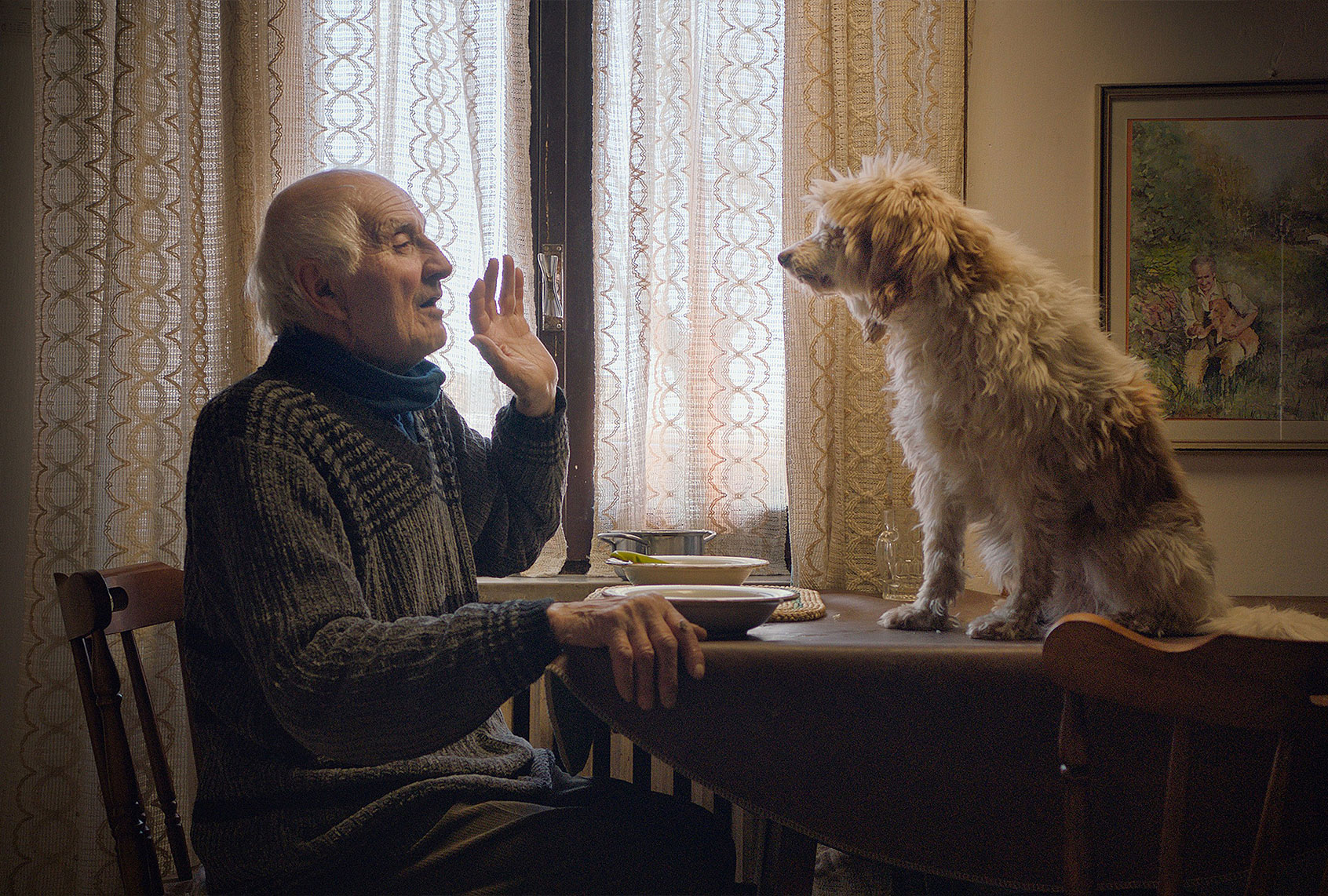
“The Truffle Hunters” is to valuable fungi what “Honeyland” was to Macedonian beekeeping. This compelling documentary opens with an overhead shot of a dog sniffing out the precious truffle in the Piedmont region of Northern Italy. What the animal finds can fetch thousands of Euros. The handful of octogenarian men who are profiled in this observational documentary are master truffle hunters, and they have no interest in stopping (save one who objects to the greed and destruction it has caused). The men stave off bids for their knowledge of prime hunting spots and blank checks for their dogs. 

But as filmmakers Michael Dweck and Gregory Kershaw show, this insular world is rife with competition, a vibrant black market, and class issues. A scene late in the film has a truffle buyer enjoying a meal, however, one of the truffle brokers tells his daughters he never eats them. Why are truffles so desired, and who are the men in this industry? 

Dweck and Kershaw spoke via Zoom with Salon about “The Truffle Hunters” to find out. 

How did you find these men and gain their trust to tell their story?

Michael Dweck: It’s almost unbelievable. Gregory and I happened to be in the same region of Italy, at almost the same time, without knowing it. He told me he was in this town in Northern Italy where it seemed like time has stopped. I told him I was in that exact same region the week before he was there. We talked about the place, and how it was unique; it didn’t seem to be stripped of its soul by technology and globalization. There was something magical about that town. We went back together. 

We were there in August, and they said, “Why aren’t you here in November, when its truffle season?” They told us about the truffle hunters, and these old men — they have these dogs and they go out at night and find these truffles. We were then in the trattoria and they had truffles on their menu. We asked where they came from and they said, “We don’t know. We put 50 Euros in this box and truffle magically appears in the morning.” That lead us to find out who these people were. It took three years. We immersed ourselves in this world and get to know these families.

Gregory Kershaw: Everything about this world is a secret. The towns keep these hunters a secret. It took us a long time to even meet the truffle hunters. The whole act is done at night for secrecy, but also so the dog has less distractions. The markets where they are sold, we had heard about these rumors of a black market, and from a storytelling perspective, it seemed too good to be true.

We heard whispers of it and its one town, which we can’t say, and you go to this certain street, we can’t say, at 3 o’clock in the morning, two days a week, you’ll see this black market. We scoped it out during the day, and we went to each of the shops on the street and asked if they had heard of black truffle market in the middle of the night. They looked at us as if we were crazy.

We went back at 3 o’clock in the morning and it was all these truffle buyers like Gianfranco, in the movie, and they have their collars turned up in front a church with a streetlight hanging over them, and there was a line. There was a drought that first year, so there were hardly any truffles because truffles bloom after a rainfall. These dealers were desperate. Gianfranco’s clients are three-star Michelin chefs who will fly private planes to get truffles and fly back. These guys looked like they were drug fiends waiting for their fix. Eventually, a car pulls up and all the buyers ran to his car, and he opens the back of his trunk. We are watching from a distance as they run with wads of cash trying to get the truffles they desperately need. Every aspect of the truffle trade is a secret. It felt like a fairy tale, which we wanted to capture, but there is a mystery we can build a narrative out of.

You take an observational, immersive approach, even using a dog-cam at times to document this world. What prompted that decision? You let viewers unfamiliar slowly come to appreciate it.  

Dweck: We saw this as being like a series of paintings, that we take you through one by one, like you would in a storybook. That’s how the language of the film came about. It was the two of us, the sound person, a translator who is a coproducer. They are so used to us being in their world they forgot about us, which gave us the ability to frame the shots that we thought were appropriate and why their lives were unencumbered. We also wanted to teach the audience how to see, to take your time, and observe this world. Seeing Angelo cooking a chicken in his house, there’s a pot from the early 19th century on his wall. And he had a wood-burning stove, and you listen to the sound, because this world sounds different than the other worlds. We recorded this beautiful symphony of nature, and sounds coming out of the forest. Dogs barking from different valleys, church bells ringing all different tones, and leaves rustling. We wanted the audience to feel how it felt to us; we were after the objective truth. 

For the doggie-cam, we wanted the audience to experience the dog’s point of view and how he interacts with his partner. We experimented with harnesses, but we went to a shoe cobbler in Alba, and told him what we wanted. After four to five variations, he came up with a really workable high-tech solution for us, and it was really successful. There really is a very intimate connection between the dog and owner; they are more like family.

The Truffle Hunters
“The Truffle Hunters” (Sony Pictures Classics)

Kershaw: We were trying to capture a feeling and we wanted to have a deliberate approach and we were making a verité documentary. We wanted to construct images but also disappear from the world that we were filming. We experimented with different ways of shooting, but we discovered we had to slow down and embrace the speed of this community we were filming in. But on any film shoot, you feel this need to be rolling the camera and if something interesting happens take the camera out quick. We had to pull away from that and immerse ourselves in the world we were filming and the rhythm of that. We needed to build relationship. Any shot that came out of that happened slowly. We would find a place and a location that had a feeling that felt like it supported whatever emotion that came out of that scene. There was a dance between want has happening in the world and how we captured with the camera. Every image had you learning about the world, the characters, and being moved through the narrative by the image and the feeling it evokes. We wanted every image we created to transmit the feeling of being with the truffle hunters. 

Dweck: We had only 107 shots in the whole film. There are no cutaways. It’s a very pure form.

Can you talk about the market for truffles, the Alba truffles especially? They appear to be sold by brokers, by auction, and on the black market. What is driving this economy? The hunters are not getting rich, are they?

Kershaw: The truffle hunters we filmed do it because they love it. There’s a certain energy and life they get from just being in the forest. Carlo is 88, and he still works with his hands, doing hard, manual labor with his hands covered in the dirt. He says that’s what keeps him healthy and happy. That also exists with the relationship with the forest. Being in nature and playing this game with their dogs, and this lifetime of knowledge they develop gives him life. That’s why they do it. They sell to a middleman before they end up in final destination and where the price can quadruple. They are aware of that. They like to play the game of negotiating with the dealer, but everyone in this world seems content with the way the marketplace is working. We were struck by the absurdity of it. The hunters lived these incredibly simple lives and then we’d go into Alba which is the commercial center of the truffle trade, and where Gianfranco has his shop and displays truffles like diamonds, and see the wealth there, and the way the truffle is consumed and commercialization around the market. The juxtaposition, there is something almost comical about it.

Dweck: Two worlds never collided but never overlapped, despite being 2-3 kilometers apart. The hunters live in an area that is isolated and remote. Alba is the big city to them.

Kershaw: Gianfranco is the conduit. He has a beautiful store, but his business is getting really expensive truffles to wealthy people all over the word. He says his life is like operating like a drug dealer. The market and availability is always changing. 

Is this a dying industry in that younger hunters are more interested in buying the knowledge than learning the craft or trade?

Dweck: It’s true. A lot of people don’t want to dig in the mud and be in the woods in the cold and spend four years training a dog. This tradition has been going on for six or seven generations at least. The hope is that the film might inspire another generation to reconsider what they are doing now with their time, and how beautiful it is to have this relationship with nature and animals. 

Carlo doesn’t want to stop hunting, despite his wife’s protestations. Another man refuses to go hunting again despite owning a valuable property. He is disgusted by the greed in the industry and the plundering of the forest. I’m glad you gave him a voice. What do you make of his attitude? 

Kershaw: We found this group of hunters, this generation, and they had these lives that were so removed from the modernity that most of us live in. Most of us suffer from social media and being bombarded from digital technology, and the comforts we enjoy on a daily basis that take us away from nature and the relation this generation has with nature is different than the way a lot of urban, modern people think about nature. When you are with the hunters, life feels different; we felt an urgency to make this film. Truffle hunting will continue on in some form, but hard to imagine that it will continue in the way hunters we filmed do it. It’s the way they live — lives that are removed from the globalized, digitized world. We were obsessed with finding places like this to explore because it feels different to be in them. These places are harder and harder to find. Modernity and technology transforms things.

Dweck: They don’t have cell phones and computers. Their hands were worn and crooked and beaten up. You can see their life through the history of their hands. None of them have been to a movie, either. 

It’s amusing that the agent for truffles does not eat them, despite having a fridge full of them. Are you a truffle eater? Can you describe what makes them so valuable?

Kershaw: Before filming, we knew what most people know about truffles, which is truffle oil. It has no truffles in it. It’s a synthetic compound that mimics truffles. It’s what a strawberry Starburst is to a beautiful fresh strawberry. What drew us to this world was this community and this place. It’s an appropriate center of the world. It’s this thing that science has not cracked. The white truffle can’t be cracked. It feels like science has taken the mystery away from the world. But the white truffle, it still has that mystery and that magic. It’s emblematic of the whole world.

The first time we had a truffle while we were shooting was the first year we started filming. There was a drought, and it had finally rained, and it takes a few days for them to start blooming under the ground. We were out in the middle of the night, and after a few hours, our hunter found one. We assumed he was going to call Gianfranco, but he didn’t. He invited us back to his home, he had a wood stove and put a cast-iron skillet on the stove, and he cracked eight eggs, and shaved the truffle over it. It was delicious for so many reasons, we had been freezing out in the cold. We were in a humble but beautiful home, and he was inviting us in at this moment. “You’re my friend now.” It was an invitation into that world, and the beginning of the real relationship we had with them.  

The Truffle Hunters opens in select theaters March 5, followed by a gradual expansion across the country and on digital.

“It’s not fair!”: Capitol rioter who invaded Pelosi’s office screams at judge over pretrial jailing

An Arkansas man who stormed the U.S. Capitol building on Jan. 6 and went viral after photos circulated showing him with his feet up on Nancy Pelosi’s desk, appeared before a federal judge this Thursday for a status hearing.

According to NBC4 investigative reporter Scott MacFarlane, Barnett began “screaming” at attorneys and the judge, saying that it’s “unfair” that he’s been locked up “for a whole month.”

The judge called for a 5-minute recess as a result.

Richard Barnett has been charged with aiding and abetting, disorderly conduct in a capitol building, parading or demonstrating in a capitol building, and theft of government property. He has pleaded not guilty on all counts and is currently being held without bond and will remain in custody until his trial.

South Dakota Gov. Kristi Noem’s family got $600,000 in COVID relief grants

Family members of South Dakota’s Republican Gov. Kristi Noem came into more than $600,000 from a state relief fund that was boosted by the governor herself to support small businesses struggling under the weight of the pandemic. 

According to the Associated Press, a ranch owned by Noem’s family benefited from a single relief payment of $500,000. Another family business owned by Noem’s two brothers, Arnold Bros. Water Management Inc., took two payments amounting to more than $100,000.

South Dakota’s relief program was drummed up last October and originally limited grants to $100,000 per recipient. However, just a month later, Noem raised the cap to $500,000 and tacked on a second round of the program to target businesses affected through the months of September to November. 

According to the grant program’s records, just 4% of the businesses were eligible to receive state aid, which amounts to 126 businesses total. 

Noem reportedly retained part-ownership of twenty-two acres of the ranch’s land and received annual rent of $2,200, but the lease expired on Jan 1, about a year after Noem had taken office. “The Governor has no financial interest in Racota Valley and hasn’t for years,” said her spokesman Ian Fury. Fury maintained that South Dakota’s grant program’s eligibility requirements were ultimately set by the state’s legislature, and carried out by Guidehouse, an outside consulting firm. 

In October, as the state’s grant program was being developed, Noem directly asked South Dakota’s Supreme Court whether lawmakers would be able to benefit from the program, citing “potential conflicts of interest.” The Court unanimously ruled that state lawmakers would not be able to benefit from the program, adducing a 2001 court decision that came to a similar conclusion. However, that ruling did not apply to the governor. 

Last year, many South Dakota businesses were dissatisfied with the pace at which the program was carried out. The $450 million program was instituted in October and only provided aid to twenty percent of its applicants by December. 

The Bureau of Finance and Management did not provide any information regarding when Noem’s family businesses submitted their applications, but according to program records, Racota Valley Ranch Partnership received funds on Feb. 19, while Arnold Bros. Water Management Inc., while Arnold Bros. Water Management Inc. received grants on Jan. 6 and Jan. 20.

Last week, Noem attended CPAC and received a standing ovation for attacking Dr. Anthony Fauci, the Director of the National Institute of Allergy and Infectious Diseases (NIAID). The governor advocated for a hands-off approach to COVID-19, stressing the need to preserve people’s personal liberties. 

I don’t know if you agree with me, but Dr. Fauci is wrong a lot,” she said. “South Dakota is the only state in America that never ordered a single business or church to close,” she said. “We never instituted a shelter-in-place order. We never mandated that people wear masks. We never even defined what an essential business is.”

According to a Statista study as of March 1, South Dakota has the eighth highest COVID fatality rate per capita of any state in the country and the second-highest number of cases per 100,000 residents in the country.

Texas schools don’t have to require masks, education officials announce

Masks are still required in Texas public schools unless local school boards decide to make them optional, the Texas Education Agency announced Wednesday.

The guidance follows an announcement from the Texas Department of State Health Services that school and child care staff are now eligible for vaccines, effective immediately. It fills an information gap Gov. Greg Abbott created Tuesday, when he announced he was rescinding a longstanding mask mandate effective next Wednesday, but gave no details about how that would affect schools.

Health experts recommend wearing as many as two masks indoors to protect against COVID-19, especially as more contagious variants circulate.

“Every student, teacher, or staff member shall wear a mask over the nose and mouth when inside a school building, school facility, facility used for school activities, or when in an outdoor space on school property or used for school activities, wherever it is not feasible to maintain six feet of social distancing from another person not in the same household,” the TEA’s new public guidance reads.

The requirement does not apply to students younger than 10, those with medical conditions or disabilities that prevent wearing a mask, anyone eating or drinking, anyone exercising outdoors or maintaining a safe distance from others, or anyone giving a speech to an audience. It also doesn’t apply to districts that were previously exempted from the governor’s executive order.

On Tuesday and Wednesday, many school superintendents were informing parents, students and staff that they still planned to require masks at least until they got more information. Some of the state’s largest urban and suburban school districts, including Dallas Independent School District and Northside ISD, said they would keep the mandate in place.

About 56% of Texas public school students are attending classes in-person, Texas Education Commissioner Mike Morath told state lawmakers this week.

Some school districts now face challenging decisions, with their communities deeply divided over how school officials should be responding to the pandemic. Thousands of parents have joined Facebook groups pushing their districts to fully reopen, especially earlier this fall when some schools restricted the numbers of students who could come back in person.

Disclosure: Facebook has been a financial supporter of The Texas Tribune, a nonprofit, nonpartisan news organization that is funded in part by donations from members, foundations and corporate sponsors. Financial supporters play no role in the Tribune’s journalism. Find a complete list of them here.

The Texas Tribune is a member-supported, nonpartisan newsroom informing and engaging Texans on state politics and policy. Learn more at texastribune.org.

Josh Hawley calls for removal of National Guard as threats to Capitol prompt House to cancel votes

Sen. Josh Hawley, R-Mo., dismissed the idea on Thursday that the National Guard should be stationed outside Capitol Hill on March 4, the day pro-Trump conspiracy theorists mistakenly believe he will be sworn in for a second term, flouting intelligence received by Capitol Police suggesting that there might be a far-right plot to breach the building again. 

“I certainly appreciate their service,” Hawley said in a Fox News interview, “but the idea they’re going to be there indefinitely, that appears to be the plan.”

On Thursday, Capitol Police requested a 60-day extension for the National Guard presence at the Capitol.

“Folks have been asking,” Hawley continued, “‘How long will the Guard be on Capitol Hill?’ Nobody can get an answer […] I think the idea of keeping them there indefinitely and keeping a barbed wire fence around the Capitol indefinitely is crazy.”

Hawley went on to stress that the Capitol is “the people’s house” and that “it should be open to the people,” despite the fact that right-wing radicals staged an armed insurrection just two months ago.

Fellow Republican Rep. Mike Waltz of Florida echoed Hawley’s concerns in another Fox News interview on Thursday. 

 “January 6 was horrible,” Waltz said, “Everyone should be prosecuted that participated. But I’m just not seeing the specific threat that keeps these soldiers here.” He continued, “I’ve been asking official after official for that briefing and we’re not getting it.”

Republican Rep. Greg, R-Fla., also joined the GOP chorus of complaints about increased security at the Capitol, telling the Washington Examiner, “None of us have received a response.”

Meanwhile, members of QAnon have had Mar. 4 marked on their calendar since late January, warning that former President Trump will usurp President Biden and reclaim power over the federal government. The conspiracy stems from principles held by the “sovereign citizen” movement, which avers that The Organic Act –– which turned the District of Columbia into a municipal corporation –– actually turned the entire country into one, rendering all laws Presidents null and void after 1871. 

Now, members of QAnon have reportedly latched onto Mar. 4 –– the original date of the presidential inauguration –– to plot another insurrection and oust President Biden from office.  

According to ABC News, U.S. Capitol Police are reportedly taking the threat “seriously.” In a statement on Twitter, the Capitol Police tweeted: “Our Department is working with our local, state, and federal partners to stop any threats to the Capitol. We are taking intelligence seriously. Due to the sensitive nature of this information, we cannot provide additional details at this time,” the statement said.

The Capitol Police have stationed 5,000 troops around the perimeter of the building, which is guarded by tall fencing topped with razor wire. 

On Tuesday, the Capitol Police distributed an intelligence bulletin warning of the possibility that the “Three Percenters militia group” may “use diversionary tactics such as detonating a bomb” in order to lure Capitol Police away from the building. The bulletin also alleges that the group is planning on bringing a brigade of 50,000 people, although one intelligence official disputes this claim. 

Acting Capitol Police Chief Yogananda Pittman declined to provide specifics about the threats intelligence officials have gathered, but she stated the department is “prepared to respond appropriately.”

Republican Senators opposed to Biden’s HHS nominee have taken nearly $10 million from Big Pharma

As the Senate Finance Committee on Wednesday deadlocked along party lines on whether to advance the nomination of Xavier Becerra as secretary of Health and Human Services, a new analysis shows that the 14 Republican members of the panel have taken $36.1 million from the health sector, including $9.6 million from Big Pharma — a fact that progressives say explains the GOP’s opposition to President Joe Biden’s Cabinet pick, a supporter of Medicare for All.

“While Xavier Becerra has spent his career taking on the pharmaceutical industry for their corrupt price gouging, Senate Republicans have spent their political careers lining their pockets with millions of dollars from Big Pharma and furthering the industry’s bottom line in Congress,” Mairead Lynn, spokesperson for the Accountable Senate War Room, a project of the watchdog group Accountable.US, said in a statement.

Becerra has pledged to expand healthcare access and lower drug prices. According to Accountable.US, the opposition to Becerra by Republican members of the Senate Finance Committee—who “have oversight of the very same industries that have bankrolled their campaigns with millions of dollars” — reflects “an effort to appease their Big Pharma donors.” 

The watchdog group highlighted the following GOP lawmakers’ conflicts of interest:

  • Ranking Member Mike Crapo (R-Id.) “has accepted over $1.8 million from the health sector throughout his career, including over $616,000 from Big Pharma. Crapo also raked in contributions from the healthcare and financial sectors as he was poised to become the Committee chairman at the end of last year,” according to Accountable’s report.
  • Sen. Chuck Grassley (R-Iowa) “has accepted over $3.7 million from the health sector throughout his career, including nearly $1 million from Big Pharma.”
  • Sen. John Cornyn (R-Texas) “has accepted over $1.7 million from the health sector throughout his career, including over $1 million from Big Pharma. Cornyn said the quiet part out loud when he brought up concerns with Becerra’s lack of ties to the pharmaceutical industry, implicitly admitting he’d prefer a nominee in the pocket of Big Pharma.”
  • Sen. Richard Burr (R-N.C.) “has accepted over $4.8 million from the health sector throughout his career, including $1.5 million from Big Pharma.”
  • Sen. Bill Cassidy (R-La.) “has accepted over $5.1 million from the health sector throughout his career, including over $736,000 from Big Pharma.”
  • Sen. John Barrasso (R-Wyo.) “has accepted over $2.7 million from the health sector throughout his career, including over $651,000 from Big Pharma.”

Despite Wednesday’s evenly split vote — which made Becerra the first of Biden’s Cabinet nominees not to be favorably approved out of committee — his confirmation is not doomed. Once Democrats introduce “a motion to discharge his nomination and hold an additional four hours of debate,” Senate Majority Leader Chuck Schumer (D-N.Y.) can “bring the nomination up for a full Senate vote,” Politico reported.

According to The Hill, the right-wing group Heritage Action is running a $500,000 ad campaign in West Virginia and Arizona to undermine Becerra’s nomination, portraying him as a “radical pick” with “zero medical experience.”

The GOP hopes the ads persuade conservative Democratic Sens. Joe Manchin (W.Va.) or Kyrsten Sinema (Ariz.) to vote against Becerra.

Nonetheless, Becerra — a former House Democrat who is now California’s attorney general and would be the first Latino to lead the Department of Health and Human Services (HHS) — is still “likely to be confirmed as early as next week,” Politico reported, “barring any unexpected Democratic defections.”

While a Democratic leadership aide told the news outlet that they “remain optimistic” and want to get Becerra approved as quickly as possible given the significance of HHS to the federal government’s pandemic response, the 14-14 vote in the Senate Finance Committee reveals the depth of Republican lawmakers’ hostility toward Becerra.

The GOP has been trying for weeks to derail the appointment of Becerra, who was first nominated by Biden in December 2020. 

As Common Dreams reported last month, watchdog groups and former top federal health officials denounced Senate Republicans for what they described as a deliberate attempt to undermine the Biden administration’s response to Covid-19 by needlessly delaying Becerra’s confirmation hearing — leaving the key agency that plays a role in overseeing vaccine distribution, among other things, without a permanent director amid a catastrophic public health crisis.

As Politico noted, “The Senate’s ongoing work on Biden’s $1.9 trillion Covid relief bill and a pile-up of other nominees awaiting confirmation complicates the timeline for Becerra — particularly if Vice President Kamala Harris needs to be on hand to break a tie.”

Regarding the Republican lawmakers who have been obstructing Becerra’s confirmation, Lynn said that “it’s obvious what motivates their opposition.”

“But it’s time for these senators to stop catering to Big Pharma and instead confirm Becerra quickly and work with the Biden administration to get this pandemic under control and the American people back on their feet,” she added.

Mr. Potato Head, Dr. Seuss and trans kids: How Democrats are already letting Republicans win in 2022

It’s early, but Republicans have already seized on their strategy for winning the 2022 and 2024 elections.

Of course, it does not depend on mundane tactics like “running on their record” or “making robust arguments about how their policies are better than their opponents.” The GOP is instead returning to the well that has, time and again, paid off handsomely: feigning umbrage over culture war flashpoints, usually ones wholly invented by the right or propped up with lies, to distract from substantive policy debates that actually impact American lives. 

And it will probably work — again— because Democrats, hamstrung by their own inability to end the Senate filibuster, will not be able to pass substantive legislation they can tout as accomplishments in future campaigns. And so the election will come down to the Great Potato Head and Dr. Seuss Wars of 2022. Even more unfortunate, truly vulnerable people — like those who are part of the trans community — are also in the crosshairs, as the favored target for the culture wars that Republicans want to wage ahead of the next election. 

For those of you blissly unaware of what some 20th century children’s artifacts — Dr. Seuss and Potato Head — have to do with politics, well, let me briefly explain.


Want more Amanda Marcotte on politics? Subscribe to her newsletter Standing Room Only.


Conservatives are fanning out on Fox News and other right-wing media, as well as in the hallowed chambers of Congress, to spread lies about these childhood mainstays being “canceled” due to imaginary liberal censorship. It’s not true, of course, but that’s never stopped the right-wing noise machine before and it won’t now. 

With Dr. Seuss, the issue comes down to the children’s book author’s estate deciding not to continue publishing some of the more obscure titles because they include racist imagery that runs against the childrens’ author’s own lifelong commitment to progressive politics. Importantly, most of his titles, especially the ones that are most beloved by the public, such as “Green Eggs and Ham” and “The Grinch Who Stole Christmas” will continue to be published. But conservatives took this nugget as an excuse to go buck wild with lies about Dr. Seuss being “canceled.”

It was never suggested that Dr. Seuss be “outlawed,” of course, but more to the point, House Minority Leader Kevin McCarthy, R-Calif., told this lie while on the Senate floor to literally vote against a bill protecting the right to vote. Whining about “cancel culture” while trying to cancel legal voters is a new low in GOP bullshit, that’s for sure. 

It’s the same story with Potato Head, or as the toy brand was previously called, Mr. Potato Head.

Both Mr. and Mrs. Potato Head toys will still be sold, but the umbrella brand name was changed to reflect what was always true about the toy: featureless potatoes have never had a gender. As far as the right is concerned, however, this is a reason to pretend we’re facing the apocalypse. 

Unfortunately, the feigned outrage isn’t limited to whining about toys and children’s books. The “for the children” posturing is being used to justify a larger assault on trans people, as Republicans cast around for a wedge issue to define the 2022 election. Namely, the GOP is gearing up for an all-out campaign that claims, falsely, LGBTQ activists are trying to “turn” your kids trans, and that cis girls will be under threat from “boys pretending to be girls,” which is the offensive frame that Republicans use to describe trans girls. Freshman Rep. Marjorie Taylor Greene, R.-Ga., hanging an anti-trans sign outside of her office to bully Rep. Marie Newman, D-Ill., who has a trans daughter, is just the tip of the iceberg here.


Want more Amanda Marcotte on politics? Subscribe to her newsletter Standing Room Only.


There’s been a drastic escalation of anti-trans rhetoric on the right, most of it centered around false claims that trans girls and women are a threat to cis girls and women. Worse, Republicans are also introducing bills meant to make life much harder for trans kids in schools by barring them from participating in school activities and, in some cases, even banning trans kids from using the bathroom

These bills are justified with claims to be “protecting” cis girls from dangers that lurk only in the imaginations of transphobes. Unsurprisingly, actual evidence shows trans kids are not a threat to anyone: 

In fact, not only do these bills not protect cis girls, but they can and likely will be used to hurt cis girls. In some states, the bills allow schools to force any girl participating in sports to “prove” her gender by submitting to a genital inspection. It’s easy to see how both trans kids and cis kids who don’t fit conservative school officials ideas about “proper” gendered behavior — such as boys who want to be cheerleaders or girls deemed “too” muscular — will be bullied with forced genital exams. Indeed, the ACLU has already filed suit against Idaho on behalf of two students, one trans and one cis, who object to being forced to undergo genital inspections in order to play sports. 

Former House Speaker and all-around repugnant scumbag Newt Gingrich tied all this together on Fox News Wednesday night, declaring, “They want to create an alternative America” in which “transgender dominates Christianity and Judaism” and “they just proved with Dr. Seuss” that “they really despise America.” (Gingrich would, have, unsurprisingly, hated Dr. Seuss when he was alive, as the children’s author was an environmentalist who loathed authoritarians like Gingrich.) 

While Republicans have long used these kinds of fake issues to distract voters from what really matters, Democrats could actually fight back this time — with one simple trick: Nuke the filibuster

Culture war antics work because they keep the GOP voters whipped up over imaginary threats. The most famous example is how Republicans fed their voters a bunch of lies in 2004 about the “danger” to marriage poised by same-sex couples, which drove up turnout and helped drag George W. Bush over the finish line in a tight race.  But Democrats can also drive up turnout on their side, by focusing on real issues that actually matter to voters, such as economic issues and health care.

However, running on the real issues requires showing voters that Democrats are capable of taking actions on these matters. Unfortunately, as recent days have shown, passing even basic legislation to do very basic things to help people — such as raising the minimum wage — is currently impossible, due to the stubborn unwillingness of centrist Democrats like Sens. Joe Manchin of West Virginia and Kyrsten Sinema of Arizona to vote to end the filibuster. As long as Republicans have veto power over all substantive legislation, Democrats will get very little done. And so their voters will get disillusioned and drop off, leaving the polls to people who mostly vote how Fox News tells them to.

If Democrats want 2022 to be a referendum on real issues, where they have an advantage, they need to pass bills.

And it’s not enough to pass one coronavirus relief package through budget reconciliation. Republicans can, truthfully, say they also did that — and unlike Democrats, they didn’t take away checks from 12 million voters that were promised they’d get checks. Running on your record requires having a record to run on, not on twiddling your thumbs for two years because an arbitrary and unnecessary Senate tradition stops you from passing bills. If bills don’t start moving through the Senate, the 2022 election will be defined by fake hysterics about trans kids in bathrooms and the gender identity of Potato Head. And that is not an election that Democrats win. 

House Republicans are getting tired of Marjorie Taylor Greene’s pointless delay tactics

After being booted from her committee assignments last month, Rep. Marjorie Taylor Greene admittedly has more free time on her hands. But the Georgia Republican’s colleagues are becoming increasingly irritated with how she’s chosen to use her newfound spare time.

At least three times since last week, Greene has motioned to adjourn the House, forcing lengthy — and pointless — delays. With coronavirus restrictions and increased security measures in place, including the requirement that all members must walk through a metal detector before entering the floor, each vote can take upwards of an hour to complete.

Not surprisingly, each of Greene’s attempts to end business for the day has failed. At first, her GOP colleagues went along with it. Zero Republicans voted against her first motion to adjourn on Feb. 24. A day later, Feb. 25, two Republicans bucked Greene’s second motion. And with her third attempt on Wednesday, the number of Republicans who had apparently decided they’d had enough grew to 18.

Greene’s tactic, even if it’s widely seen as a stunt and has begun to annoy some of her Republican peers, is clear enough as political messaging: She’s trying to draw attention to Democratic legislation she opposes.

“I called for a motion to adjourn to give Democrats time to think before they pass horrible HR1 & the Hate Police Act,” Greene tweeted on Wednesday, referencing two landmark Democratic reform bills that tackle policing and voting rights. (There is not in fact a bill called the Hate Police Act.) “Some GOP members complained to me that I messed up their schedule. I’m not sorry for interrupting fundraising calls & breakfast. GOP voters are tired weak Rs.”

A spokesperson for Greene did not respond to Salon’s request for comment.

Rick Tyler, a conservative political consultant and veteran of Republican politics, described Greene’s actions as “sophomoric and childish.” It’s nothing new for politicians to deploy all sorts of delay tactics to gum up the works for their opponents, Tyler said, but he sees no long-term end or policy goal that Greene is working toward.

“It doesn’t gain you anything,” Tyler said of her repeated motions to adjourn. “One word on how our government functions, meaning how ideas go through a whole process and become a law, would be ‘compromise.'” He cited the welfare reform bill passed in 1996 under President Bill Clinton and then-House Speaker Newt Gingrich of Georgia as an example.

The Daily Beast’s Sam Brodey offered an accurate perspective of what Greene’s antics would equate to in other office settings: “This is the congressional equivalent of microwaving fish every day for lunch,” he tweeted last week.

The Republicans whose patience has clearly diminished with Greene’s time-consuming escapades vary in terms of their political ideology and their standing in the party. They range from people like No. 3 House Republican Liz Cheney of Wyoming and Adam Kinzinger of Illinois — both of whom voted in favor of former President Trump’s second impeachment — to staunch conservatives Darrell Issa of California and John Rutherford of Florida.

“Republicans were fine with Greene as long as she stuck to spreading anti-Semitism and stoking a domestic terror movement,” a Democratic leadership aide told Salon. “But apparently, wasting their time is a bridge too far.”

Greene was stripped of her seats on the Education and Budget Committees last month over her previous support for QAnon and after past social media posts suggesting that she had endorsed the executions of prominent Democrats before becoming a member of Congress were brought to light. Greene tried to distance herself from her past views and actions, but it was too little, too late for Democrats and the 11 Republicans who voted her off the panels.

Democrats have been more vocal in their criticism of Greene beyond simply voting down her motions.

“Most of us are able to think about things like legislation without having to stop doing our jobs for the day,” Rep. Don Beyer, D-Va., wrote in a series of tweets Wednesday that bashed the Republicans wanting to adjourn. “182 House Republicans voted to end business for the day at 10:30 a.m. rather than vote on a bill that would help get big money out of politics.”

Greene is no stranger to controversy or drawing attention to herself, even if it means angering those around her. But members in such a scenario would typically look to make amends with their colleagues in hopes to work more closely with them in the future. 

Given the role that intense partisanship now plays in congressional politics, and the fact that Greene’s bombastic style appears to play well with her supporters, it seems entirely likely that the freshman lawmaker will continue to spend much of her time in office as a thorn in the side of leadership.

Jim Jordan hit with FEC investigation over $2 million in campaign donations after Trump’s election

Rep. Jim Jordan, R-Ohio, is facing scrutiny from federal regulators following an influx of campaign cash following the election of Donald Trump to the White House.

Jordan was sent ten officials notices by the Federal Elections Commission (FEC) on Tuesday demanding an “audit or enforcement action” over financial discrepancies in several of his campaign finance reports. The notices ask that Jordan explain away discrepancies between reports filed years ago and reports filed earlier this year. Some of these discrepancies are considerably large, with ten of them exceeding $100,000 and one exceeding $900,000, according to the Cleveland Plain Dealer

Jordan’s campaign has maintained that there was never any money missing from the account, attributing the discrepancies to honest accounting mistakes made due to trouble adjusting to a flood of money that quickly poured in as a result of Jordan’s sharp uptick in popularity. 

“The campaign has filed an amendment with the FEC to correct its campaign finance reports going back to 2018,” said Jordan’s campaign manager, Kevin Eichinger. “There was never any money missing from the account. In fact, the campaign’s cash balance is actually higher than previously listed on the campaign finance reports. The error occurred when the former campaign treasurer inadvertently double-reported certain fundraising expenses.”  

Jordan’s campaign raised $733,416 during the two years before former President Trump took office. Jordan spent $422,967 of this money, and was left with 1.3 million in his treasury. In the next two years, Jordan’s campaign took in $1,241,417 but spent $1,809,464.

From 2019 to 2020, Jordan raised $18,637,140 and spent $13,268,968, leaving him over $6 million in the bank. By then, California had become his top fundraising source as opposed to Ohio, his home state. 

“The outpouring of nationwide support for our message is why we are raising a ton more money,” said Eichinger. “It wasn’t like we were actively looking to raise more money. There was an organic outpouring of support. We needed to put in place the operation to handle that kind of influx.”

Campaign finance experts have said that, if Jordan does not address the discrepancies adequately, the case may be given to the FEC’s law enforcement arm, a move that would not be made public. 

“Jordan’s campaign appears to have had systemic reporting problems over multiple years, and these amendments represent substantial shifts in the campaign’s disclosed fundraising and spending,” said Brendan Fischer, director of reform at the Campaign Legal Center, “I suspect that the FEC will closely review discrepancies of such a significant amount.”

Jenna Grande, press secretary for Citizens for Responsibility and Ethics in Washington, said, “This is a very large amount of money in discrepancies. While there is still much to learn about this situation, Rep. Jordan’s campaign needs to provide a full accounting of what happened and why.”

In addition to Jordan, other top Trump supporters currently facing an FEC probe for curious campaign funding include freshman Colorado Rep. Lauren Boebert and fellow insurrection caucus member Texas Sen. Ted Cruz. 

How to store carrots so they last for months

In The Kitchen Scientist, The Flavor Equation author Nik Sharma breaks down the science of good food, from rinsing rice to salting coffee. Today: the right way to store carrots.

* * *

I rarely buy a lot of carrots unless I’m making carrot cake, a large pot of soup, or gajjar ka halwa, a carrot-based Indian dessert. The refrigerator I’m stuck with is tight on space and its temperature seems irregular. Sometimes the vegetables in the crisper turn frosty. We even had a frozen carrot situation once, and the only “person” who loves that is my puppy — it helps with his teething. But carrots are one of those vegetables that can last for a good amount of time if stored properly (and if you have a proper refrigerator).

What’s a carrot, anyway?

To understand how to store carrots smartly, let’s take a closer look at the ingredient.

Carrots are roots, more specifically a taproot: a single conical-shaped root from which tinier feathery roots (called secondary lateral roots) emerge. How a carrot takes shape as it grows depends on a variety of factors, from the type of carrot strain to soil conditions and climate.

If you slice through a carrot, you will notice that the center is slightly lighter in color than the exterior. The outside of the carrot is where most of the storage sugars reside. Growing at temperatures greater than 68°F tends to produce carrots that have less sugar but a stronger flavor.

Carrots are typically considered to be a vegetable low in starch but higher in sugars like sucrose. However, this depends on the carrot variety and the growing and storage conditions, like stress. In one study, when carrots were subjected to mechanical stress, like excessive shaking during growing, they tasted bitter and “sickeningly sweet.” The cells inside the root release an enzyme called amylase (the same enzyme present in our saliva) that will cut up the starch to release sugars.

In another study, carrots stored at 35.6°F showed a decrease in the amount of starch and an increase in the sugars. In the same study, when carrots were stored at room temperature (66.2°F), the amount of starch declined while the amount of sugars rose, but it did not involve amylase. You might have noticed this too at home: If you leave a carrot on the kitchen counter for a few days, it will taste a bit sweeter than it did the day you brought it home, though it will lose some of its firmness.

Another note you might find valuable: If you’ve ever heard that smaller, younger carrots are sweeter than larger, older ones, this detailed study by Hans Platenius from 1934 might convince you otherwise. Older carrots actually contain more carotene and more sucrose, and less crude fiber, which makes them a great choice for cooking.

What’s the best way to store carrots?

Carrots can last up to two to three months in the refrigerator if stored properly.

If you grow your own carrots or buy them fresh from the farmers market, immediately place them in a bag and store them in your refrigerator. Avoid exposure to sunlight or air, which can cause carrots to worsen in quality.

To store carrots in the refrigerator for a long period of time (say, more than three days), I’ve found that keeping them in an airtight and zip-top or vacuum-sealed bag is the most efficient. The bag’s seal helps control the humidity (refrigerators tend to create dry conditions, which causes food to dehydrate).

When storing carrots, keep them away from vegetables and fruits like apples, pears, ripe bananas, etc., which produce ethylene gas. In plants, ethylene acts as a hormone and hastens ripening of fruit and, in the case of carrots, it will cause them to quickly deteriorate and make them taste bitter by producing a substance called isocoumarin.

If the green tops are still attached to the crown, that will lead to condensation inside the container or bag. The greens also draw water away from the root, so it is best to cut them from the crown as soon as they are brought home. I put a clean kitchen towel inside the bag — this wicks the water away, so the carrots don’t sit in a puddle. Then I store the greens separately like herbs, with a damp paper towel in a bag or in an herb container (those special attachments that are sometimes included in refrigerators). If you decide to leave the greens attached, this wicking method will also prevent the leaves from browning quickly.

Some folks also recommend storing carrots in a bowl (or a sealed airtight container) of clean filtered water in the refrigerator. The water must be changed daily and the carrots will last for up to a week—but beyond this time period, the carrots tend to rot easily. This can be a bit cumbersome, a waste of water, and doesn’t extend the shelf life of the carrots, so I don’t do this.

Try this at home

An easy way to determine whether your storage method is working: Make notes comparing how limp or firm the carrot remains and any changes in weight. Over time, as the carrot ages, it will turn softer and lose weight. This occurs due to water loss from the vegetable but also due to metabolic changes taking place in the carrot. The cooler temperature of the refrigerator slows down these changes but does not completely halt them.

Place your carrots in a cooler spot in your fridge (but not in a spot where they’ll freeze). Sometimes, as it is with everything in life, storage might not be perfectly efficient, and you might end up with soft carrots. If this happens, I find it best to cook those carrots right away. Use them in dishes where a crunchy texture is not needed: Roast them in the oven, blend them into a soup, toss them into a pot of stock, or make a carrot mash. And if you don’t have time to cook them that day, freeze them and cook them when you need to in recipes where their texture is not important.

What’s your go-to way to store carrots at home? And how long do they usually last?

Related reading:

This post contains products independently chosen (and loved) by Food52 editors and writers. As an Amazon Associate, Food52 earns an affiliate commission on qualifying purchases of the products we link to.

Ex-Democrat Rep. Jeff Van Drew slams bill as “socialism” — but he used to support it

In 2019, newly-elected Rep. Jeff Van Drew of New Jersey hailed a sweeping elections reform package led by Democrats as a “clean-up corruption in Washington” bill that would “restore our democracy and promote bipartisanship.”

But on Wednesday, almost exactly two years later to the day, the two-term lawmaker equated the legislation, known as H.R. 1, to socialism “served on a platter.”

What changed? Not the legislation; the content of the measure remains virtually the same, which Democrats say would tackle corruption, provide greater government transparency, increase access to voting and end gerrymandering.

House Democrats passed it under the previous Congress with the help of Van Drew. It passed the lower chamber again on Wednesday night, largely along party lines. The most significant difference this time around is that Van Drew is now a Republican.

“We were warned for years about the rise of socialism,” Van Drew said in a brief floor speech. “Well, here it is, served on a platter.”

This remarkable reversal is a byproduct of Van Drew’s denunciation of the Democratic Party in December 2019 just ahead of former President Donald Trump’s first impeachment trial. Van Drew left the party — quite literally — and went from the Capitol to the White House, where he pledged his “undying support” to Trump in front of cameras in the Oval Office. At the time, internal polling showed he had dismal chances for re-election as an anti-impeachment Democrat.

Van Drew’s office did not respond to a request for comment about his policy flip-flop.

He lauded H.R. 1 in a March 2019 press release as legislation that would reign in the power of dark-money politics and unlimited corporate political spending.

“This reform bill will clean-up corruption in Washington, restore our democracy, and promote bipartisanship,” Van Drew stated at the time. “We need to restore our democracy to a government of the people, by the people and for the people.

His tone toward the package on Wednesday was quite different.

“It would keep the status quo, like we saw this past November with voter rolls that are not up-to-date and live ballots being mailed to voters that have died, moved or even multiple ballots to the same voter,” Van Drew said. “Elections do have consequences, and when leaders said the goal was to change America, they were telling the truth. And here we are.”

Van Drew also repeated an inaccurate claim, widely circulated among Republicans, that H.R. 1 would use “taxpayer money” for a public campaign financing program. In response, Democrats have tweaked the language of the bill. It remains true, however, that the legislation would use public funding through civil and criminal court penalties — not a blanket tax on Americans, as Republicans have suggested — to match small-dollar donations for candidates who meet certain requirements.

“Do you like those robocalls during campaign season? How about the negative TV ads and the mailers?” Van Drew said. “Well, your tax dollars are paying for them. And yes, this is taxpayer dollars, no matter how they tell you otherwise.”

CPAC 2021: A school for indoctrinating and radicalizing right-wing extremists

This year’s Conservative Political Action Conference (CPAC) was both a school and a celebration for right-wing extremists and other neofascists.

Donald Trump was the featured speaker. In that role, he delivered a speech consisting of lies about how the 2021 election was “stolen” from him and his followers. Trump further positioned himself as a shadow president, cult leader, demigod, prophet and kingmaker of the Republican Party, an organization he now hopes to purge of anyone who has dared to oppose him (even marginally or infrequently) by supporting democracy and the rule of law.

Today’s Republican Party is now a de facto terrorist organization. Donald Trump, the twice-impeached president whom Senate Republicans twice acquitted for his crimes, is its leader.

Trump, a president who attempted a coup against American democracy that included a lethal assault on the Capitol, has not been broken, and is not behaving as if he had been defeated. At CPAC, he spoke in his role as leader of a violent right-wing insurgency, one which law enforcement and counterterrorism experts warn is continuing to gain momentum.

The danger from right-wing terrorists is now so great that the House of Representatives will not convene on Thursday this week because of credible reports that Trump supporters and QAnon cultists may be planning an attack.

In his role as featured attraction at CPAC, Donald Trump almost served as a distraction from the even more dangerous indoctrination into right-wing extremism which took place at the event.

That ground-level work occurred at CPAC’s panels and during other discussions among attendees. Over the course of four days, CPAC attendees were told that America is (or should be) a theocracy, and that right-wing Christians are being “oppressed” in “their own” country. Attendees would also be further indoctrinated into hatred of LGBTQ people and others who are not white, Christian and heterosexual.

CPAC events repeatedly reinforced the “Big Lie” about the 2020 Election, spread the myth of Donald Trump’s inherent greatness, paired with the narrative of his victimization by the “deep state” and “liberals” who “stole” the election from “real” Americans and “patriots.”

Anti-Semitism, white supremacy, racism and racial resentment, white privilege and Christian Nationalism were shared cultural assumptions that functioned almost as background radiation.  

The theme of the conference itself was heavy with meaning. “America Uncanceled” is a concept built on the fiction that white “Christian” Americans (meaning “conservatives”, Republicans and Trumpists) are somehow existential threatened by liberals, progressives, nonwhite people, Muslims, Democrats, gays and lesbians, and other groups.

What does one do when faced with being “canceled”? Evidently, this means that normal politics are abandoned, and political violence is to be used against the “oppressors.”

Because many Americans are blinded by American exceptionalism and the “disimagination machine” that unmoors the nation’s culture and people from any substantive sense of historical continuity and responsibility — a trait made worse by the trauma of five years of Trumpism — there is a profound tendency to pretend that America’s problems and challenges are somehow unique in the world.

Of course, they are not. Right-wing radicalization and extremism in the Age of Trump and beyond is following a pattern already visible in Islamic extremism and terrorism. The CPAC gathering and other parts of the right-wing extremist culture machine are among the primary places where such indoctrination is taking place.

Radicalization is commonly understood to be a continuum that involves various stages, and which may look like a pyramid or staircase. National security and terrorism expert Damian Szlachter offers this helpful description: “Radicalization is a process of adopting an extremist system of values combined with expressing approval, support for, or use of violence and intimidation as a method of achieving changes in society or encouraging others to such acts.”

The radicalization process involves stages where an individual identifies certain personal grievances as being caused by “the system.” They then start seeking ways to resist their unfair treatment (which may or may not objectively exist). Then comes the move to focus one’s anger and aggression on some targeted group, and then to view the problem (and its solution) as a moral one involving “right and wrong,” “good and evil” and “us versus them,” as defined by the terrorist organization or movement.

Once the belief system and cognitive framework become cemented in place, terrorist acts naturally follow. 

Writing at the Lawfare blog in 2016, Benjamin Wittes and Quinta Jurecic offered the following prescient analysis, which merits lengthy quotation:

Here’s a different frame with which to think about the Trump movement: We have a vigorous academic literature on the issue of radicalism and radicalization, some of which overlaps with the burgeoning scholarship on countering violent extremism. With five days left before Americans finish voting, we want to pose the question of what this literature has to teach about the Trump movement. …

Let’s begin by being clear about what we are not saying: We are not saying that Trumpism is the moral equivalent of jihadism. We are not saying that Trump is a terrorist or supports terrorism. We are also not saying that his supporters are extremists. We are not saying that the body of the Trump movement is violent. But of course, the body of the Muslim Brotherhood movement did not sanction violence either. The overwhelming majority of its supporters were also not terrorists or extremists. In both cases, it is wrong to engage in guilt by association. …

But here’s what we are saying: Trumpism, like the Brotherhood, is a political movement built on the mass mobilization of faith — in the one case religious faith and in the other case faith in a single charismatic individual. Like the Brotherhood, it is a movement that exists within an electoral system but which has a deeply ambivalent relationship with the democratic norms of that system, a movement which both formally rejects violence yet manages also to tolerate or encourage it. Recall that less than a week ago, Trump declared that “we should just cancel the election and just give it to Trump” and has suggested he will concede the election only if he “wins.” And at the fringes of both movements are radicals, some of whom are violent. …

There’s a simple measure for whether our basic theory here is, in a general sense, right: If it is, we will see a significant spike in white supremacist violence over the next few years. The Trump campaign has provided a baseline undemocratic ideation to hundreds of millions of people and also provided a platform through which extremists, both violent and non-violent, can recruit and cultivate. If our collective understanding of the process of violent radicalization is correct, the result will be blood.

Returning to these warnings and concerns three years later, in 2019, Wittes and Jurecic offered these observations:

The past few years have unfortunately provided a dramatic test of this theory; more unfortunately still, the theory has held up well. By nearly any metric, white supremacist violence is up significantly, the lethality of attacks has risen dramatically, and the link between the ideation and action has become particularly clear. President Trump plays a key role in this ideational cauldron — though pinning down the precise role of his rhetoric in any one incident is a mug’s game. …

Something similar is happening here. No one incident can be laid at President Trump’s feet. Yet when a president talks the way Trump talks over a long period of time, when he deploys rhetoric routinely that can be expected to stir the pot of violent extremism, when one can predict — as we did — prospectively the manner in which such rhetoric will interact with a political community and yield violence, and when violence then materializes in precisely the hypothesized fashion, it would be unreasonable to deny that there is a connection.

We certainly don’t let the Muslim Brotherhood off so easily.

Of course, Wittes and Jurecic’s analyses did not predict an attack on the U.S. Capitol by Trump’s supporters. Recent public opinion and other research also echoes their concerns about Trumpists, Republicans and other “conservatives,” who — in increasingly large numbers — support the use of violence to “defend” their notion of a “traditional” America.

At least 50 percent of Republicans believe that the 2020 election was stolen from Trump and that Joe Biden is therefore not a legitimate president. A new Gallup poll also indicates that a majority of Republicans want the party to either continue with Trump’s neofascist agenda or become even more extreme. Other research shows that the Capitol attackers were not some isolated or fringe group among Republicans, but instead represented a broad swath of white and largely middle-class Americans.

Ultimately, right-wing extremism is a serious cultural problem in America, one that transcends naïve beliefs about the enduring health and stability of the country’s democracy.

In response to such a political and social crisis, the American mainstream news media must learn new skills and frameworks to report on authoritarianism, neofascism, and other anti-democratic behavior by the Republican Party, its followers, the far right more generally and its entire ideological and cultural apparatus.

Most in the American mainstream news media, however, now that Biden is president, are continuing with the failed approaches that helped elect Trump in 2016 and then normalized his presidency.

The Democratic Party must abandon any efforts to find “bipartisan solutions” or “compromise” or “unity” with the Republican Party and its voters: Collectively, the latter are an increasingly violent, dangerous, anti-democratic and anti-human force in American life and politics.

To save itself, the United States needs to invest in projects aimed at rejuvenating civil society and the public sphere as well as teaching lessons of responsible citizenship and democracy that have been forgotten or willfully denied by tens of millions of its citizens.

Part of this process of defending America’s multiracial democracy is to use all available means to defeat the right-wing terrorists who are actively working to recreate a new American apartheid or Jim Crow regime, echoing the one created by their white terrorist forefathers and foremothers. The United States must also institute a large-scale deradicalization program as a central component of its battle against right-wing terrorists and other extremists.

Do the nation, its leaders and its people have the courage and grit to do what is necessary to confront and defeat right-wing domestic extremism and terrorism?

Now is the time for a long-overdue reckoning, and an answer born not of political convenience but rather of imminent necessity.

Will regenerative agriculture change how we grocery shop?

Look for the word “regenerative” at your local grocery store. Chances are, you’ll spot it on boxes of mac and cheese, cartons of milks, or even bags of chips. Regenerative agriculture, also called carbon farming, has become the latest darling of everyone from food companies to universities to politicians. But what is regenerative agriculture? How do products made with these practices differ from others, and can buying them help consumers fight the climate crisis? Here’s what you need to know about this farming philosophy.

What is regenerative agriculture?

Ask 10 different people to define regenerative agriculture, and you’ll get 10 different answers. There is no one single definition, although several organizations are currently working to establish formal guidelines.

“The idea with regenerative agriculture is to make the land better than it was,” says Dawn Pettinelli, associate cooperative extension educator at the University of Connecticut’s Institute of the Environment.

In essence, regenerative agriculture is farming done in a way that helps build soil health, increase organic matter, store water more effectively, and draw carbon out of the atmosphere. This isn’t exactly a new idea — farming with soil health in mind is a concept nearly as old as agriculture itself. It wasn’t until the 1980s, however, that the Rodale Institute began using the term, and it’s only recently become a buzzword.

“There’s a lot of power in words, and I think people are drawn to the term because it conveys something that is missing,” says Jiff Martin, associate extension educator in sustainable food systems for the University of Connecticut’s College of Agriculture, Health, and Natural Resources, adding she’s noticed the term being used more frequently in the past five years.

Regenerative agriculture vs. organic

The number of labels on our food and other products can be overwhelming, but there are some differences between organic, other labels, and those that denote products made with regenerative agriculture. Think of organic as the idea of “do no harm.” Regenerative takes it a step beyond that: It’s a farming philosophy focused on healing.

You may find this terminology on products under the Regenerative Organic Alliance label. Designed by Rodale Institute, Patagonia, and Dr. Bronner’s, products certified by the Regenerative Organic Alliance are organic and made in a way that benefits farmers and promotes long-term soil health.

“It’s soil health, animal welfare, and social fairness,” says Birgit Cameron, head of Patagonia Provisions. “It goes together with organic. You can call it regenerative or not, but you can’t have a truly regenerative system if organic isn’t attached to it.”

Patagonia Provisions partners with farmers and producers interested in regenerative agriculture that are already practicing organic farming, and the company has strong animal welfare and social fairness philosophies behind its line of shelf-stable packaged foods. While regenerative agriculture is something that many small farmers have long specialized in, that doesn’t necessarily make the practice an easy one.

“It’s hard because all of agriculture is hard, and you need to be viable,” Martin says. “But people have different notions of what viable is, how much money you have to make to be successful, and ultimately if you can grow food in a way that meets your values while still being able to sell it.”

Regenerative agriculture and the climate crisis

More and more consumers are paying attention to the climate crisis. According to Nielsen, 73% of global consumers say they would change their habits to reduce their environmental footprint.

“I do think the market is there and that it can grow,” Martin says.

In January, President Joe Biden rejoined the Paris Agreement, the international treaty designed to avert catastrophic global warming. Still, according to several recent studies, it will be impossible to meet the agreement’s global warming benchmarks without reducing emissions from food production. So, does buying regenerative agriculture products really reduce your foodprint? It’s complicated.

“Carbon farming can help to mitigate climate change to some extent,” says Pettinelli.

What’s not clear, at least not yet, is how much carbon the soil can hold, and for how long. It’s also hard to compare the regenerative agriculture products you find at the supermarket because (for the time being) General Mills’ definition will be different from Patagonia’s, whose definition might be different from your local CSA farmer’s.

“If at all possible, see the farm and purchase from them directly,” said Pettinelli. “If you can’t visit, explore their website and ask questions about their practices. It’s challenging to see past the marketing.”

You can explore more about the Regenerative Organic Alliance label on their website and shop for certified products there. Still, Cameron suggests looking for organic products as a start.

“Organic is the base, and regenerative helps elevate the things that are good for people and good for the planet,” she says.

Related reading:

Welcome to the age of social murder: The elites will try to mollify us, but do nothing to stop it

The two million deaths that have resulted from the ruling elites’ mishandling of the global pandemic will be dwarfed by what is to follow. The global catastrophe that awaits us, already baked into the ecosystem from the failure to curb the use of fossil fuels and animal agriculture, presage new, deadlier pandemics, mass migrations of billions of desperate people, plummeting crop yields, mass starvation and systems collapse. 

The science that elucidates this social death is known to the ruling elites. The science that warned us of this pandemic, and others that will follow, is known to the ruling elites. The science that shows that a failure to halt carbon emissions will lead to a climate crisis and ultimately the extinction of the human species and most other species is known to the ruling elites. They cannot claim ignorance. Only indifference.

The facts are incontrovertible. Each of the last four decades have been hotter than the last. In 2018, the UN International Panel on Climate Change released a special report on the systemic effects of a 1.5 degrees Celsius (2.7 degrees Fahrenheit) rise in temperatures. It makes for very grim reading. Soaring temperature rises — we are already at 1.2 degrees Celsius (2.16 degrees Fahrenheit) above preindustrial levels — are already baked into the system, meaning that even if we stopped all carbon emission today, we still face catastrophe. Anything above a temperature rise of 1.5 degrees Celsius will render the earth uninhabitable. The Arctic ice along with the Greenland ice sheet are now expected to melt regardless of how much we reduce carbon emissions. A seven-meter (23-foot) rise in sea level, which is what will take place once the ice is gone, means every town and city on a coast at sea level will have to be evacuated. 

Roger Hallam, the co-founder of Extinction Rebellion, whose nonviolent acts of mass civil disobedience offer the last, best chance to save ourselves, lays it out in this video:

As the climate crisis worsens, the political constrictions will tighten, making public resistance difficult. We do not live, yet, in the brutal Orwellian state that appears on the horizon, one where all dissidents will suffer the fate of Julian Assange. But this Orwellian state is not far away. This makes it imperative that we act now.

The ruling elites, despite the accelerating and tangible ecological collapse, mollify us, either by meaningless gestures or denial. They are the architects of social murder.  

Social murder, as Friedrich Engels noted in his 1845 book “The Condition of the Working-Class in England,” one of the most important works of social history, is built into the capitalist system. The ruling elites, Engels writes, those that hold “social and political control,” were aware that the harsh working and living conditions during the industrial revolution doomed workers to “an early and unnatural death”: 

When one individual inflicts bodily injury upon another such that death results, we call the deed manslaughter; when the assailant knew in advance that the injury would be fatal, we call his deed murder. But when society places hundreds of proletarians in such a position that they inevitably meet a too early and an unnatural death, one which is quite as much a death by violence as that by the sword or bullet; when it deprives thousands of the necessaries of life, places them under conditions in which they cannot live — forces them, through the strong arm of the law, to remain in such conditions until that death ensues which is the inevitable consequence — knows that these thousands of victims must perish, and yet permits these conditions to remain, its deed is murder just as surely as the deed of the single individual; disguised, malicious murder, murder against which none can defend himself, which does not seem what it is, because no man sees the murderer, because the death of the victim seems a natural one, since the offence is more one of omission than of commission. But murder it remains.

The ruling class devotes tremendous resources to mask this social murder. They control the narrative in the press. They falsify science and data, as the fossil fuel industry has done for decades. They set up committees, commissions and international bodies, such as UN climate summits, to pretend to address the problem. Or they deny, despite the dramatically changing weather patterns, that the problem even exists. 

Scientists have long warned that as global temperatures rise, increasing precipitation and heat waves in many parts of the world, infectious diseases spread by animals will plague populations year-round and expand into northern regions. Pandemics such as HIV/AIDS, which has killed approximately 36 million people, the Asian flu, which killed between one and four million, and COVID-19, which has already killed over 2.5 million, will ripple across the globe in ever more virulent strains, often mutating beyond our control. The misuse of antibiotics in the meat industry, which accounts for 80 percent of all antibiotic use, has produced strains of bacteria that are antibiotic-resistant and fatal. A modern version of the Black Death, which in the 14th century killed between 75 and 200 million people, wiping out perhaps half of Europe’s population, is probably inevitable as long as the pharmaceutical and medical industries are configured to make money rather than protect and save lives.

Even with vaccines, we lack the national infrastructure to distribute them efficiently because profit trumps health. And those in the global south are, as usual, abandoned, as if the diseases that kill them will never reach us. Israel’s decision to distribute COVID-19 vaccines to as many as 19 countries while refusing to vaccinate the 5 million Palestinians living under its occupation is emblematic of the ruling elite’s stunning myopia, not to mention immorality.  

What is taking place is not neglect. It is not ineptitude. It is not policy failure. It is murder. It is murder because it is premeditated. It is murder because a conscious choice was made by the global ruling classes to extinguish life rather than protect it. It is murder because profit, despite the hard statistics, the growing climate disruptions and the scientific modeling, is deemed more important than human life and human survival. 

The elites thrive in this system, as long as they serve the dictates of what Lewis Mumford called the “megamachine,” the convergence of science, economy, technics and political power unified into an integrated, bureaucratic structure whose sole goal is to perpetuate itself. This structure, Mumford noted, is antithetical to “life-enhancing values.” But to challenge the megamachine, to name and condemn its death wish, is to be expelled from its inner sanctum. There are, no doubt, some within the megamachine who fear the future, who are perhaps even appalled by the social murder, but they do not want to lose their jobs and their social status to become pariahs.  

The massive resources allocated to the military, which when the costs of the Veterans Administration are added to the Department of Defense budget come to $826 billion a year, are the most glaring example of our suicidal folly, symptomatic of all decaying civilizations that squander diminishing resources in institutions and projects that accelerate their decline.  

The American military — which accounts for 38 percent of military spending worldwide — is incapable of combating the real existential crisis.  The fighter jets, satellites, aircraft carriers, fleets of warships, nuclear submarines, missiles, tanks and vast arsenals of weaponry are useless against pandemics and the climate crisis. The war machine does nothing to mitigate the human suffering caused by degraded environments that sicken and poison populations or make life unsustainable.  Air pollution already kills an estimated 200,000 Americans a year while children in decayed cities such as Flint, Michigan, are damaged for life with lead contamination from drinking water. 

The prosecution of endless and futile wars, costing anywhere from $5 trillion to $7 trillion, the maintenance of some 800 military bases in over 70 countries, along with the endemic fraud, waste and mismanagement by the Pentagon at a time when the survival of the species is at stake is self-destructive. The Pentagon has spent more than $67 billion alone on a ballistic missile defense system that few believe will actually work and billions more on a series of dud weapons systems, including the $22 billion Zumwalt destroyer. And, on top of all this, the U.S. military emitted 1.2 billion metric tons of carbon emissions between 2001 and 2017, twice the annual output of the nation’s passenger vehicles.

A decade from now we will look back at the current global ruling class as the most criminal in human history, willfully dooming millions upon millions of people to die, including those from this pandemic, which dwarf the murderous excesses of the killers of the past, including the Europeans who carried out the genocide of the indigenous peoples in the Americas, the Nazis who exterminated some 12 million people, the Stalinists or Mao’s Cultural Revolution. This is the largest crime against humanity ever committed. It is being committed in front of us. And, with few exceptions, we are willfully being herded like sheep to the slaughter.

It is not that most people have faith in the ruling elites. They know they are being betrayed. They feel vulnerable and afraid. They understand that their misery is unacknowledged and unimportant to the global elites, who have concentrated staggering amounts of wealth and power into the hands of a tiny cabal of rapacious oligarchs. 

The rage many feel at being abandoned often expresses itself in a poisoned solidarity. This poisoned solidarity unites the disenfranchised around hate crimes, racism, inchoate acts of vengeance against scapegoats, religious and ethnic chauvinism and nihilistic violence. It fosters crisis cults, such as those built by the Christian fascists, and elevates demagogues such as Donald Trump. 

Social divisions benefit the ruling class, which has built media silos that feed packaged hate to competing demographics. The greater the social antagonisms, the less the elites have to fear. If those gripped by poisoned solidarity become numerically superior — nearly half of the American electorate rejects the traditional ruling class and embraces conspiracy theories and a demagogue — the elites will accommodate the new power configuration, which will accelerate the social murder. 

The Biden administration will not carry out the economic, political, social or environmental reforms that will save us. The fossil fuel industry will continue to extract oil. The wars will not end. Social inequality will grow. Government control, with its militarized police forces of internal occupation, wholesale surveillance and loss of civil liberties, will expand. New pandemics, along with droughts, wildfires, monster hurricanes, crippling heat waves and flooding, will lay waste to the country as well as a population burdened by a for-profit health care system that is not designed or equipped to deal with a national health crisis.

The evil that makes this social murder possible is collective. It is perpetrated by the colorless bureaucrats and technocrats churned out of business schools, law schools, management programs and elite universities. These systems managers carry out the incremental tasks that make vast, complicated systems of exploitation and death work. They collect, store and manipulate our personal data for digital monopolies and the security and surveillance state. They grease the wheels for ExxonMobil, BP and Goldman Sachs. They write the laws passed by the bought-and-paid-for political class. They pilot the aerial drones that terrorize the poor in Afghanistan, Iraq, Syria and Pakistan. They profit from the endless wars. They are the corporate advertisers, public relations specialists and television pundits that flood the airwaves with lies. They run the banks. They oversee the prisons. They issue the forms. They process the papers. They deny food stamps and medical coverage to some and unemployment benefits to others. They carry out the evictions. They enforce the laws and the regulations. They do not ask questions. They live in an intellectual vacuum, a world of stultifying minutiae. They are T.S. Eliot’s “the hollow men,” “the stuffed men.” “Shape without form, shade without color,” the poet writes. “Paralyzed force, gesture without motion.”

These systems managers made possible the genocides of the past, from the extermination of Native Americans to the Turkish slaughter of the Armenians to the Nazi Holocaust to Stalin’s liquidations. They kept the trains running. They filled out the paperwork. They seized the property and confiscated the bank accounts. They did the processing. They rationed the food. They administered the concentration camps and the gas chambers. They enforced the law. They did their jobs. 

These systems managers, uneducated in all but their tiny technical specialty, lack the language and moral autonomy to question the reigning assumptions or structures.

Hannah Arendt in “Eichmann in Jerusalem” writes that Adolf Eichmann was motivated by “an extraordinary diligence in looking out for his personal advancement.” He joined the Nazi Party because it was a good career move. Arendt continues:

The trouble with Eichmann was precisely that so many were like him, and that the many were neither perverted nor sadistic, that they were, and still are, terribly and terrifyingly normal.

The longer one listened to him, the more obvious it became that his inability to speak was closely connected with an inability to think, namely, to think from the standpoint of somebody else. No communication was possible with him, not because he lied but because he was surrounded by the most reliable of all safeguards against words and the presence of others, and hence against reality as such.

The Russian novelist Vasily Grossman in his book “Forever Flowing” observed that “the new state did not require holy apostles, fanatic, inspired builders, faithful, devout disciples. The new state did not even require servants — just clerks.” This metaphysical ignorance fuels social murder.

We cannot emotionally absorb the magnitude of the looming catastrophe and therefore do not act. 

In Claude Lanzmann’s Holocaust documentary “Shoah,” he interviews Filip Müller, a Czech Jew who survived the liquidations in Auschwitz as a member of the “special detail”:

One day in 1943 when I was already in Crematorium 5, a train from Bialystok arrived. A prisoner on the “special detail” saw a woman in the “undressing room” who was the wife of a friend of his. He came right out and told her: “You are going to be exterminated. In three hours, you’ll be ashes.” The woman believed him because she knew him. She ran all over and warned to the other women. “We’re going to be killed. We’re going to be gassed.” Mothers carrying their children on their shoulders didn’t want to hear that. They decided the woman was crazy. They chased her away. So, she went to the men. To no avail. Not that they didn’t believe her. They’d heard rumors in the Bialystok ghetto, or in Grodno, and elsewhere. But who wanted to hear that? When she saw that no one would listen, she scratched her whole face. Out of despair. In shock. And she started to scream.  

How do we resist? Why, if this social murder is inevitable, as I believe it is, do we even fight back? Why not give in to cynicism and despair? Why not withdraw and spend our lives attempting to satiate our private needs and desires? We are all complicit, paralyzed by the overwhelming force of the megamachine and bound to its destructive energy by our allotted slots within its massive machinery.

Yet, to fail to act, and this means carrying out mass, sustained acts of nonviolent civil disobedience in an attempt to smash the megamachine, is spiritual death. It is to succumb to the cynicism, hedonism and numbness that has turned the systems managers and technocrats that orchestrate this social murder into human cogs. It is to surrender our humanity. It is to become an accomplice.

Albert Camus writes that “one of the only coherent philosophical positions is revolt. It is a constant confrontation between man and his obscurity. It is not aspiration, for it is devoid of hope. That revolt is the certainty of a crushing fate, without the resignation that ought to accompany it.” 

“A living man can be enslaved and reduced to the historic condition of an object,” Camus warns. “But if he dies in refusing to be enslaved, he reaffirms the existence of another kind of human nature which refuses to be classified as an object.” 

The capacity to exercise moral autonomy, to refuse to cooperate, to wreck the megamachine, offers us the only possibility left to personal freedom and a life of meaning. Rebellion is its own justification. It erodes, however imperceptibly, the structures of oppression. It sustains the embers of empathy and compassion, as well as justice. These embers are not insignificant. They keep alive the capacity to be human. They keep alive the possibility, however dim, that the forces that are orchestrating our social murder can be stopped. Rebellion must be embraced, finally, not only for what it will achieve, but for what it will allow us to become. In that becoming we find hope.

Mitch McConnell tells Fox News he’s concerned people won’t go back to work if they get $1,400 checks

Senate Minority Leader Mitch McConnell, R-Ky., said on Wednesday that he opposes extending unemployment and providing $1,400 COVID relief checks for Americans because people may decide not to go back to work.

During an appearance on Fox News, host Martha MacCallum posed the question to McConnell.

“Do you think the checks that are going out — you know, there’s some unemployment benefits, additional benefits that would run out in March — do you believe that these checks prevents some people from wanting to work?” McCallum asked.

“Well, there is a concern,” McConnell replied, “about making it more advantageous to stay home rather than going back to work.”

The Republican leader argued that the COVID-19 emergency called for “considerably less” spending than the Democrats have proposed.

You can watch the video below via Fox News:

New York prosecutors zero in on son of Trump Organization’s chief financial officer: report

It was revealed Monday that the Manhattan DA Cy Vance is asking a lot of questions about the Trump Organization’s CFO Allen Weisselberg as part of his investigations into the company’s finances.

Wednesday, The Washington Post had more details about the investigation, specifically that Vance’s questions about Weisselberg also include questions about his two adult children.

“One of Weisselberg’s sons also works for the Trump Organization, where he manages the company’s Central Park ice rinks. Another Weisselberg son works for a company that has extended loans to the Trump Organization,” said The Post.

“Allen is in charge of everything,” The Post cited a former Trump employee.

The Wollman Rink was a New York City government contract with the Trump Organization that ended in 2021 after it was canceled. It operates on a cash-only basis.

“In this case, prosecutors have scrutinized Weisselberg’s work in helping to assess the value of Trump buildings as the company sought to obtain loans or property-tax reductions, people familiar with the investigation said,” according to The Post.

“They have also asked about a Trump-owned luxury apartment where Weisselberg’s son Barry lived for several years. The exact nature of Vance’s interest in the apartment is not known, but if Barry Weisselberg, who manages Trump’s ice skating rinks, got the apartment rent-free, that might be considered a fringe benefit of his job and subject to income tax.”

Read the full report at The Washington Post.

Maddow: Chao is one of four Trump cabinet members referred for criminal prosecution for corruption

On MSNBC Wednesday, Rachel Maddow outlined how the inspector general referral of former Secretary of Transportation Elaine Chao to the Justice Department for potential criminal prosecution was part of a pattern of Trump administration Cabinet secretaries being implicated in possible criminal conduct and let off.

“Robert Wilkie, Trump Veterans Affairs secretary, investigated for corruption, resulted in referral to the DOJ, Trump’s DOJ declined to prosecute,” said Maddow. “Interior Secretary Ryan Zinke, investigated for corruption. Found to be substantive and serious enough it was referred to Justice Department for criminal prosecution. Trump’s Justice Department declined to prosecute. Also, Trump Labor Secretary Alex Acosta was investigated for corruption. Found to be serious enough he was referred to the Department of Justice for potential prosecution. The Trump Justice Department declined to prosecute him as well. Now four of them at least, now Trump Transportation Secretary Elaine Chao as well also referred for criminal prosecution, and referred to Trump DOJ, an interesting timeline, before they too decided not to prosecute her.”

“In this letter explaining the actions of their office, inspector general’s office says they started an investigation into Elaine Chao in 2019 and decided some of the allegations were serious and substantive enough they required a criminal referral to the Justice Department and made that referral based on the findings of the investigation,” said Maddow. “Waning days of the Trump administration, during the transition, a month before Biden was sworn in as president, the Trump Justice Department receives criminal referrals to potentially prosecute Mitch McConnell’s wife, Elaine Chao, and quietly decline that prosecution.”

“What other president in one term was effective enough to have four different Cabinet secretaries, at least, referred for criminal prosecution for corruption?” added Maddow.

You can watch the video below via YouTube

Trump’s D.C. hotel is still jacking up room prices around QAnon’s March 4 conspiracy

After the inauguration of Joe Biden on Jan. 13, some QAnon supporters turned in the towel and admitted to falling prey to the elusive and dangerous conspiracy theories. Others, however, continue to stoke the power of Q and bend the theories to their will, most recently involving the day of March 4, 2021. And perhaps not so coincidentally, room prices at Trump International Hotel in D.C. are $1,000 more than their standard prices for the date.

As the most recent Q fable goes, QAnon followers are convinced that in 1871, the United States was secretly turned into a corporation, and Ulysses S. Grant was the last legitimate president, who was inaugurated on March 4 of that year. Being that Grant was the 18th president, they’re deducing that Trump will therefore be the 19th. (Yes, it’s a head-scratcher.)

Forbes first reported that room rates for March 4 surged to $1,745 for a standard room with two queen-sized beds at the shortly after Jan. 6. On the eve of the big date, the room prices listed are still well above $1,000. And the weekend after March 4, however, prices are back down to $745, 180% above the typical rate of a D.C. hotel rate in February or March. It’s typical for hotels to bump up their prices for holiday weekends, major sporting games, or, apparently, other events like an insurrection of the U.S. Capitol.

During the Jan. 6 attack on the capitol, Forbes reported that the hotel rates were a staggering $7,500 to $8,000 a night, nearly triple the nightly rate of $2,200 that the hotel was charging during the inauguration seven days later. 

Trump hasn’t been shy when it comes to promoting his personal business alongside political campaigns. From 2016 to 2021, he merged campaigning with making a personal profit. His D.C. hotel alone has raked in $3.2 million from political groups and Republican events since the beginning of his campaign in 2015, and Trump’s businesses at large made $1.9 billion in revenue during his first three years. Many have mused about the ethics of having a president whose business uniquely benefit from his position in office, creating numerous opportunities for conflicts of interest.

While Trump continues to financially capitalize on the QAnon conspiracies, there’s no saying what will happen when the Q theorists wake up on March 5 with Joe Biden still holding office as the 46th president of the United States. But fortunately for The Trump International Hotel, QAnon might be back in D.C. again soon in hopes of fulfilling whatever the next conspiracy holds.


“Murder Among the Mormons” filmmakers on how forgeries, faith and a salamander led to Utah bombings

Netflix’s “Murder Among the Mormons” co-directors Jared Hess and Tyler Measom were both young — six and 14, respectively — when a series of Salt Lake City bombings killed several high-profile members of the Mormon church in 1985. The murders drew national attention to the church, which, after a century of being viewed as a sort of “outsider religion” plagued by 19th-century extermination orders and persecution campaigns, had become and remains one of the fastest-growing denominations in the United States. 

The violent nature of the crimes was a juxtaposition against a religious group that is often caricatured for its unrelenting optimism (as David Foster Wallace once wrote, “There’s always a Mormon around when you don’t want one, trying your patience with unsolicited kindness”), and as such, the bombings captured tabloid attention, which quickly gave way to conspiracy theories. 

“Nobody knew what was going on,” Hess told Salon in an interview. “Because of that, it was a really uncomfortable time for so many people. Everyone was trying to get to the bottom of this tragedy, the likes of which Salt Lake City had never really experienced before.” 

Speculation continued. Was the Church of Jesus Christ of Latter-day Saints actually behind the bombings? Or was it tied to the impending collapse of an investment business with which two of the bombing victims were involved? 

The real answer, which is comprehensively outlined over the gripping three-episode true crime docuseries, is stranger than fiction. And it’s a story that many Americans either never knew or don’t clearly remember.  

It starts with Mark Hofmann, a master forger who had initially made a name for himself in the burgeoning Mormon antiquities market. He launched his career by selling “found” documents about the early LDS Church to collectors, or the Church itself, and was known by some at the time as the “Indiana Jones” or a “rock star” of Mormon documents. 

But then, in 1984, he produced what was later termed the “Salamander Letter.” 

The correspondence describes how Joseph Smith found golden plates, which later resulted in the Book of Mormon, with the help of what the letter described as “a seer stone, a kind of magical looking-glass.” The letter also said Smith was initially barred from gaining possession of the plates by an “old spirit” that “transfigured himself from a white salamander.”

This stood in opposition to the early church’s claims that it was the angel Moroni who had appeared to Smith and told him about the buried ancient record that would later become the Book of Mormon, and the fear was that the “Salamander Letter” would call into question Smith’s spiritual experience by associating it with folk magic.

“I think when a lot of these documents were ‘discovered,’ it was really disrupting for the church, because it called into question the basis of what the church was, its history and founding,” said Hess. “[The LDS Church leaders] had never dealt with anything like this before.”

That revelation could potentially cause a huge rift in the denomination. Hofmann anticipated this fear and acted to suppress the letter, but then his life, finances and work came under increased scrutiny — and secrets began to emerge from his past, sparking violence. 

“There’s no other true crime saga out there like this,” Hess said. “There are the murders, the forgeries and the religious aspects of it. And it was important to tell it from the perspective of people who lived it.” 

According to Hess, who is still a member of the Mormon church, and Measom, who left the faith years ago, the initial title of the series was “The Salamander,” and then later “The Salamander Murders,” but they were ultimately influenced by the streaming service to change it. 

“I think clearer is better for Netflix true crime,” Hess said. “There was this question of ‘Is it about killing lizards? What is it about?’ But there was this clip of archival news from the time, I think it was a national news report about all the attention on Utah, that said, ‘There’s murder among the Mormons.’ And that was it.” 

Measom continued with a laugh: “Plus, we like alliteration.” 

The new title is more conspicuous, which Hess and Measom anticipate could turn off some potential viewers. “But I think anytime you’re doing a film about a particular group, people are going to be nervous,” Measom said. “You could say you’re doing a film about a country club, and if someone is a member, they’re going to be at least a little nervous about how it’s portrayed.” 

However, one of the ultimate goals of the series, Hess said, was to clarify the events surrounding the Salt Lake City bombings which, while becoming part of the church’s collective mythology, are largely unremembered by the mainstream public. 

That was what drew him to the project after nearly two decades of making offbeat comedies like “Napoleon Dynamite,” “Nacho Libre” and “Don Verdean,” a 2015 comedy lightly based on Hofmann’s forgeries about an archeologist who, after being bankrolled by an evangelical pastor, searches for items that can prove that the stories from the Bible are true. 

“We showed it to several people during production, including my brother and some other people who are also LDS, and they said that it was educational and that it helped ‘clear the air’ regarding some of the details of the bombings,” Hess said. “It’s a true crime story that just has so many layers to it.” 

But the docuseries isn’t just a reflection on the history of a crime. A major, contemporary theme woven throughout “Murder Among the Mormons” is how susceptible people are to disinformaion when they want to believe something simply because it supports an existing point of view, much like how Hofmann found eager buyers for his earlier forged documents. 

“We are all surrounded by so much information, it’s everywhere, and people could do so much research — and they just don’t,” Measom said. “And what Mark found in his forgery victims were people who were willing buyers, people who were susceptible to that disinformation, because they were blinded by their own faith or beliefs or sometimes greed. He even says at one point, ‘When somebody says something is real, it becomes real.'” 

And, “Murder Among the Mormons” quietly asserts, we could all be similarly taken. Not that we’d necessarily rack up thousands of dollars of debt to purchase purported Mormon antiquities, but for all of us, there’s likely a point that we would take an ill-advised leap of faith, without fact-checking, simply because doing so supports the beliefs we currently hold. With that in mind, the series overwhelmingly eschews salaciousness for compassion in its retelling of the Salt Lake City bombings. 

One of the reasons the series is able to achieve that tone is because “Murder Among the Mormons” offers unprecedented access to people who were intimately familiar with Hofmann and the bombing victims, including Brent Metcalfe, a historian who did research for Hofmann; Dorie Olds, Hofmann’s ex-wife; Randy Rigby, a close friend of one of the bombing victims; Richard E. Turley Jr., a Latter-day Saint historian; and Ken Sanders, a Salt Lake City-based expert in rare books and antiquities.  

Many of those interviewed for the series were still emotional about the tragedy, the filmmakers said, largely because it was underpinned by fundamental questions about faith, religion and skepticism, which are also often private topics in American culture. You see hints of this as soon as the documentary opens on a visibly upset Shannon Flynn, a rare documents dealer whose voice wavers when he’s asked about Hofmann. 

“Can I ask a favor?” he says. “Don’t make me answer that. Don’t make me answer that. Let someone else do it. I don’t want to make a hero out of him. Because he was fantastic.”

Hess and Measom said that getting people to open up was a process. It helped that they were both raised in the LDS church, currently lived in Salt Lake City and had been toying with the idea for a documentary project about the “Salamander Letter” for almost a decade. 

Measom also has a track record of exceptionally thoughtful work about Mormonism, including the longform NPR radio documentary “Wives Tale,” a short documentary about a love story between a Mormon missionary and a communist in 1974 called “Elder,” and “Sons of Perdition,” which “follows three teenage boys after they escape from the secretive FLDS polygamist sect and must fend for themselves in mainstream America.” 

But according to Measom, in the case of “Murder Among the Mormons,” the biggest thing they had going for them was time. Living in Salt Lake City, they spent years going to lunch with the individuals whom they would eventually go on to interview. 

“This wasn’t a situation where we just spent an hour with someone to get a quote,” he said. “We would sit with them, just asking questions and really listening to their memories and feelings. Think about it — how often do people have the opportunity to tell their stories and have someone really listen?”  

Hess added: “A lot of the people we spoke with hadn’t had to talk about [the events surrounding the bombings] for years, so I think when they started reliving it, and we were listening, the emotions became very fresh again.” 

“Murder Among the Mormons” is currently streaming on Netflix. 


Amy Poehler’s banal “Moxie” is a dream of a rebel girl made by and for her well-meaning Gen X mom

Feminism as a philosophy shifts culture, shapes policy, promotes equality,  protects women’s rights, our bodies, health and safety.

Feminism as a brand sells fashion, music and movies.

Somewhere in between these two truths sits “Moxie,” Amy Poehler‘s cinematic celebration of riot grrrls, cropped motorcycle jackets and the awesome power of the ‘zine. Remember those? Probably not, if you were born any time after, I don’t know, 1985? (Kids, “zines” are the olds’ versions of blogs, the grandparent to Facebook, which is the obsolete version of your Instagram feed.)

But to women of a certain age those do-it-yourself mags were lifelines, a low-to-no cost entry to secret rebellion and place of belonging ignored by your corporate glossy-mag worshipping classmates. If you remember them – hell, if you made one – “Moxie” exists for you. The cast may be around your daughter’s age, but don’t be fooled. It is a temple to a certain kind of ’90s-era Third Wave white feminist whose main goal at age 16 was to “smash the patriarchy,” as Poehler’s mom character Lisa casually puts it.

Lisa says this while digging into a pint of her favorite flavor of Umqua ice cream and relaxing into her couch (feeling seen yet, fellow Xers?) while daughter Vivian (Hadley Robinson) flails about for a way to stand up to the rampant, unchecked sexism making her high school life a living Hell.

Of course, when Lisa was 16 she probably only had a very basic concept of what constitutes “the patriarchy” and the actions required to smash it. This guess is based on faded memories of adolescence, additionally informed by the fact that Lisa keeps these remnants of her past cool existence in a sticker-covered vintage suitcase that Vivian unearths just in time to save her school.

Vivian’s heroism is also somewhat a matter of happenstance. At first she and her similarly introverted best friend Claudia (Lauren Tsai) are struggling to figure out what they’ll write for the essay portion of their college applications. Claudia is entirely on top of her game; Vivian is not. But then a nasty ranking list assigning superlatives to all the young women at school, an annual tradition, posts on social media. Vivian gets off light with the title of “Most Obedient.” Other girls aren’t so lucky, as their names are associated with their body parts or their sexuality. One young woman is called the C-word.

The faculty’s reaction to all of this is a shrug. Vivian responds by transforming scissors, markers and a glue-stick into weapons and birthing her Moxie, a ‘zine taking aim the most aggro boys; also, the patriarchy. She runs off photocopies of pages and leaves them in the girls’ bathroom, byline free, to be stumbled upon. The mystery of who is responsible for Moxie quickly grows a movement around it.


Amy Poehler and Hadley Robinson in “Moxie” (Netflix)

“Moxie” is one of those movies a person who lived through and/or loves the time period that Poehler and screenwriter Tamara Chestna reference really wants to be wildly fantastic, especially in a time like this where we need a punch of upbeat energy. Unfortunately it is so caught up in the Gen X mom’s fantasy of either what they wish they were like when they were their teen daughter’s age, or wishes their teen daughter would be like that it forgets to develop its characters beyond the archetypes they represent.

The era “Moxie” channels also happens to be defined and blessed by a number of defining films that show it up at every turn. “Clueless,” “Bring It On,” these are just a few movies vibrating with a feminist energy and memorable personalities that informed every empowering teen girl flick that arrived in their wake.

An apples-to-apples comparison with these teen-targeted movies or “Mean Girls,” which gets a shout-out in the script, does this story no favors.

Frustratingly “Moxie” merely plays at rioting by placing Robinson’s mousy Vivian in the invisible heroine role and only granting her a semblance of psychological range. Wallflower status is useful, in that it allows her to witness the abuses suffered by new student Lucy Hernandez (Alycia Pascual-Peña), an Afro-Latina woman who is immediately harassed by Mitchell Wilson, the smug, handsome white poster boy for entitled mediocrity played by Patrick Schwarzenegger.

Lucy is also one of a number women of color who are overlooked, neglected and threatened as Moxie grows from a ‘zine to a movement, several of whom are targeted as Vivian churns out aggressive (wo)manifestos from the safety of her anonymity.

Schwarzenegger is a flawless casting choice here, not only for his punchable good looks for but the utter ease he pours into Wilson as he smoothly inflicts violence onto Lucy and generally punches down at everyone, including teachers. Even the principal (Marcia Gay Harden) is reluctant to do anything about Wilson’s sociopathic behavior, refusing to allow Lucy to even use the word harassment when she attempts to report him. Not only is this bizarre, it’s also barely believable.

Of course there are plenty of established examples of high school and college administrators looking the other way when women present cases of harassment or sexual assault which, yes, pops up in this storyline. But the one-dimensionality of Harden’s principal is almost comedic and at the same time nowhere near to the level of funny for her willful enabling of misogyny to come off as satire. Ike Barinholtz’s barely engaged English teacher Mr. Davies fares slightly better, but the actor’s charm deserves the credit for the character’s appeal, not the script.

None of the young women and men in “Moxie” receive much in the way of layering or nuance besides Vivian and her mother, in fact. Vivian’s crush Seth Acosta (Nico Hiraga) is kind and sweet and prosaic and forgettable. The little we see of Claudia’s mother borders on stereotype. Claudia is Vivian’s best friend, remember, and yet she is barely present for long enough to render any impression of individuality.

Arrange all these pages and you get a harmless entirely flat, banal narrative that demonstrates all the ways that society fails women, that takes a curious left turn near the end and hints that at least one of its villains will receive their just deserts – and yet, pitches enough of the joy of being a girl to make it bearable. “Moxie” wants to capture the spirit of youth revolt but alas, this is without a doubt your mother’s film.

“Moxie” is currently streaming on Netflix.