Spring Offer: Get 1 Year, Save 58%

Alito’s the tip of the iceberg: More Republicans wave Christian nationalist flag despite MAGA threat

When news broke late last month that Justice Samuel Alito had an "Appeal to Heaven" flag flying over his New Jersey vacation home, alarm bells went off in the press for two reasons. First, this was the second flag associated with the January 6 insurrection that had been spotted gracing the property of the infamous Supreme Court justice. It also suggested that the Alito family (he's blaming his wife) is extremely invested in the semiotics of American fascism. Or, put another way, the "Appeal to Heaven" flag, which features a pine tree on a white background, is a MAGA deep cut. Even many experts on 21st-century authoritarianism have barely heard of it. To not only know this flag but to own it? It's the far-right equivalent of being a Phish fan who owns every demo and live recording.


This affection for a flag that symbolizes a violent rejection of democracy is an outrage, especially in the aftermath of Trump being found guilty on 34 felony charges related to election interference and campaign fraud.

As Lindsay Beyerstein explained for Salon, "the banner is the calling card of a Christian supremacist movement seeking to impose theocracy on America." Ironically, the flag was initially commissioned for General George Washington, to symbolize resistance against tyrants who oppose democracy. In the hands of the January 6 insurrectionists who waved it, however, it symbolized the opposite: A belief that secular democracy must be destroyed, so that Christian nationalism may reign over the United States. As a spokesperson for San Francisco, which recently took down an "Appeal to Heaven" flag flown in front of city hall, said, "It's since been adopted by a different group — one that doesn't represent the city's values."

Alito is notoriously a far-right crank, so drunk on his untouchable power that he feels free to flaunt a frankly fascist aesthetic while openly lying in his opinions. Unfortunately, it turns out that he's far from the only Republican who has become enamored of this flag. We were quickly reminded, for instance, that Speaker of the House Mike Johnson, R-La., has the flag hanging outside his office. As Haley Byrd Wilt of NOTUS documented this week, "at least 10 House Republicans were displaying" the flag outside their offices. 


Want more Amanda Marcotte on politics? Subscribe to her newsletter Standing Room Only.


Tellingly, they pretty much all lie about their motives. Johnson claims not to know that the flag was a symbol of convicted felon Donald Trump's attempted coup, but, as Wilt points out, "Johnson himself was involved in that effort in 2020, leading an amicus brief and coaxing signatures from other Republican lawmakers in a Texas lawsuit that sought to overturn the election results in other states." Others insisted it was a stand against "tyranny," but all of them support Trump in his efforts to become a dictator who does not have to accept democratic checks on his power from either voters or the jurors who found him guilty of election-related crimes in Manhattan late last month. 

There is nothing new, of course, about Republicans playing fascist peekaboo, where they signal support for authoritarian views, and then pretend they did nothing of the sort when called out for it. Gaslighting is the native tongue of MAGA. Still, this affection for a flag that symbolizes a violent rejection of democracy is an outrage, especially in the aftermath of Trump being found guilty on 34 felony charges related to election interference and campaign fraud. Trump's already unsubtle calls for MAGA violence are only going to get louder, as he seeks a bloody Hail Mary to keep him from facing the consequences of his crimes. Flying this flag is, intentionally or not, inherently supportive of Trump in that endeavor. 

During a heavily edited Fox News interview over the weekend, Trump once again made a thinly veiled threat of violence, claiming "the public" will hit a "breaking point" if he is sentenced to jail. After years of this obnoxious winking, no one of good faith is confused about his meaning. Rep. Maxine Waters, D-Calif., swiftly noted on MSNBC that Trump's rhetoric is "dangerous" and a signal to "domestic terrorists." This sparked another round of GOP gaslighting, with Republicans pretending it was outrageous to think Trump — a man who literally sicced a murderous mob on the Capitol — might have violent designs. The Republican National Committee even used one of Trump's favorite barely disguised racial slurs — "low IQ" — to smear Waters. It's a reminder that white supremacy is an inextricable part of Christian nationalism. 

After January 6, of course, there's no wiggle room to deny the bad faith of Republicans doing the "how dare you" act when it comes to accusations that they support political violence. But as further proof, Aaron Blake of the Washington Post offered a helpful round-up Monday of how Trump's violent "track record is unmistakable." He offers 11 separate examples of Trump continuing "to not-at-all-subtly raise the specter of unrest and violence as a political bargaining chip," from suggesting that "Second Amendment people" get rid of Hillary Clinton to saying "it depends" on whether he wins if he backs violence after November's election. 

Certainly, the volume of threatening language from Trump supporters in response to his convictions has reached histrionic levels. On MAGA forums, posters have declared someone "needs to take care of [Judge Juan] Merchan," that it's time to "start capping some leftys," and that domestic terrorists need to storm D.C. and "hang everyone." There were thankfully failed efforts to doxx the jurors and an unfortunately successful effort to publish personal information about the wife and children of witness Michael Cohen. 

So far, however, all this vitriol has not manifested in real-world violence towards people involved in this case. As Ali Breland at the Atlantic notes, "mass mobilizations are hard and require work." Trump may think that it's just a matter of calling for it on social media, but even January 6 — which was spurred by Trump on Twitter begging people to come — required "a process that bore out over the course of months" and orchestrated by Trump lackeys like the Proud Boys. As I've argued before, it's also hard to get the MAGA faithful to risk their neck to protest a verdict in a case where even they know, on some level, Trump is guilty as hell. Even those drunk on Democrat-hating outrage are struggling to pretend there's some great principle at stake in fighting for the "right" of Republican politicians to commit campaign finance fraud as part of a larger scheme to deceive the public. 

We need your help to stay independent

That, however, is why the "Appeal to Heaven" flag is so dangerous. It stands for a larger ideological commitment that Trump supporters can feel they're standing up for, namely the end of democracy in the name of Christian nationalism. To make it worse, a central aspect of the flag's symbolism is a justification for violence. The phrase "appeal to heaven" literally means that only God can judge the political violence the flag-bearer intends to commit. Human justice should have no say. 

It's unlikely we'll see another riot soon, but if Trump can convince his followers that his avoidance of legal consequences is necessary to preserve their grip on power, the possibility of violence remains high. Not just — or even primarily — towards people directly involved in Trump's prosecution, either. As the guy threatening to murder "leftys" demonstrates, the anger can be inchoate and the targets are chosen nearly at random. 

Past examples like Timothy McVeigh, Elliot Rodger, or Scott Roeder show how this works. Domestic terrorists are generally people — mostly men — who are lost souls that glom onto half-baked political rationalizations. Right-wing rhetoric drives them to fixate on strangers like employees at a federal building, college girls, or abortion providers, so they can blame these people instead of themselves for their personal failings. With Trump and his allies unleashing a firehose of right-wing resentment and violent eyebrow-waggling, the chances are unfortunately high that one of the millions of losers that listens to them will take action. 

When libido is a burden, some men turn to unproven treatments

After the stress of a recent divorce waned and Ryan settled into a new routine, he noticed a huge spike in his libido. The thing is, that’s the last thing he wanted.

Ryan works two jobs in cybersecurity in addition to being a single dad. He doesn’t have time for a relationship and knows he is not ready for one. Yet he found himself looking for a partner for the sake of gratification. So, he turned to the internet to find a remedy to curb his libido instead. 

“The more I thought about it, the more I didn’t want a romantic relationship,” Ryan, who requested to use his first name only, told Salon in a phone interview. “I’d rather just take something that can help me manage my libido and not have to worry about it.”

Online, Ryan was recommended everything from supplements like Lion’s mane mushrooms and chasteberry to antidepressants like selective serotonin reuptake inhibitors (SSRIs) and finasteride, a drug for hair loss sometimes used to treat prostate conditions. Elsewhere on the internet, others recommend men who want to lower their libido go so far as to put their testicles in ice water or punch their penis. Many people dismissed Ryan’s problem and told him to just “find a girlfriend,” instead.

“I’m still kind of in the process of self-discovery of exactly what I am but I think I am a bit more on the aromantic side,” Ryan said. “So it’s hard for me to be told to just go find someone special because I don’t have any desire to do that.”

Men are increasingly turning to the internet to find ways to lower libido and finding communities that push toxic ideas connecting masculinity to sexual desire. Due to stigma, many are pursuing unproven treatments recommended on social media that could have serious health consequences. Finasteride, for example, carries a boxed warning for suicidal ideation.

"I didn’t want a romantic relationship. I’d rather just take something that can help me manage my libido and not have to worry about it."

Additionally, there could be an underlying medical condition tied to libido or feelings of shame around it that is not being treated, said Nicole Prause, PhD, a neuroscientist who studies human sexual behavior and addiction. 

“Anytime you are taking a medication that is not prescribed for something it is not designed to do, you will have a lot of side effect risks for no reason,” Prause told Salon in a phone interview.

Libido is subjective and changes throughout a person’s lifetime, but it’s generally seen as a medical issue if it is causing distress. The most common reason couples come into a sexual health clinic is usually because they have mismatched libidos, and therapy involves finding somewhere in the middle where both parties are sexually satisfied, said Stanley E. Althof, PhD, the executive director of the Center for Marital and Sexual Health of South Florida, Case Western.


Want more health and science stories in your inbox? Subscribe to Salon's weekly newsletter Lab Notes.


Compulsive sexual behavior disorder (CSBD) is a real condition and there are treatments designed to lower libido in people who find their sex drive is impeding their lives. Not all men who want to lower their sexual drive will be diagnosed with this condition, but the second most common reason heterosexual men come into Althof’s clinic is because they see their masturbation or sexual habits as out of control habits that have become problematic, he said.

“They may stay up until 4 a.m. watching porn or masturbate 10 times a day, and at some point, that person realizes this doesn’t seem right,” Althof told Salon in a phone interview. “The person may try to stop on their own and realize it is too powerful and they are really not able to stop.”

Some argue that the approval of Viagra in 1998 commercialized male sexual desire and prioritized male enhancement as the status quo. On one hand, the little blue pill has undoubtedly helped millions of people struggling with erectile dysfunction and helped erase some of the stigma around it. But others argue the marketing strategy of Viagra and other erectile dysfunction drugs like Cialis and Levitra pathologized sexual desire and created a culture in which men needed to take medicine to “fix” their sexuality and have more sex.

This was, in turn, connected to definitions of masculinity. As one analysis of these pills’ marketing campaigns concluded, “masculine identity itself becomes attainable with the help of medical intervention.”

For a long time, pharmaceutical companies tried to find the “female Viagra” to treat low libido in women, which was often blamed when heterosexual couples were having sexual problems, Prause said. However, that rhetoric has started to change in the past two decades, she explained.

“Sex addiction became in vogue and now they point the finger the other way,” Prause said. “Now it’s the man who wants it too much, and they’re the 'addict.'”

This culture of pointing fingers and shaming one party into having too much or too little sex drive might have played a role in birthing fringe movements like NoFap, an online community designed to help people overcome porn addiction and other forms of compulsive sexual behavior by abstaining from masturbation or sex. 

“It seems reactionary, where they are saying, ‘A real man controls himself … and has complete control over their body,’” Prause said. “That’s my read of it, that they tell each other to self harm as a way of managing their sexual urges, which they view as too strong.”

Having attracted more than one million users, the website and its forums encourage participants to abstain from sex and masturbation to “reboot” the brain and increase testosterone. Its practices, which are not evidence-based, tout abstinence and control over one’s libido as a way to increase masculinity. It has been practiced by far-right extremist groups like the Proud Boys.

On one NoFap social media post, one user said three years of semen retention transformed him from "a pathetic loser to a successful young man."

"Now I find porn and masturbating disgusting and pathetic," he wrote.

One 2022 analysis published in the International Journal of Impotence Research found the most common men’s sexual health topic being discussed on TikTok and Instagram was semen retention. However, fewer than 4% of posts were created by physicians or experts and most were misinformation.

We need your help to stay independent

Prause said she is concerned about some of the myths associated with these practices circulating online, which are perpetuating shame and stigma. Ultimately, it’s up to the individual to determine whether their libido is impacting their life and warrants treatment, much like many other bodily functions. 

Yet rigid definitions of what masculinity and libido should be continue to make many men feel like they are somehow wrong or broken for having lower sex drives. In one 2018 study published in the journal Sex Roles, heterosexual men reported feeling pressured to demonstrate a high interest in sex and that masculine norms restricted their sexual experience. Ryan, the cybersecurity analyst, initially asked his doctor for advice in lowering his libido, but was met with some of this stigma.

“They told me, ‘You’re a young adult, this is normal, and there is no reason you should want to change it or worry about it.’” he said. “I usually don’t try to go online for medical advice, but I felt like that was my next best option.”

Heat dome that killed 61 in Mexico headed toward Southwest, bringing triple-digit temperatures

More than 17 million people risk exposure to dangerous temperatures thanks to a "heat dome" that has emerged in the western United States. Such a dome occurs when hot ocean air becomes trapped, forming something almost like a lid or cap that keeps temperatures broiling. Already this heat wave has been directly responsible for at least 61 deaths in Mexico, causing major power outages and killing at least 150 monkeys. Now it's moving north.

Residents of California, Nevada, Arizona and Utah are predicted to experience daily temperatures 20º Fahrenheit (11.11° Celsius) or more warmer than normal for this time of year. As a result, the National Weather Service is issuing its most extreme kind of heat alert for the populations of those areas, one reserved for occasions when widespread and dangerous heat is anticipated.

Death Valley, the hottest location in the world, is expected to reach temperatures of at least 120º F. California's Central Valley is expected to reach the high 90s to low 100s, while Phoenix, Arizona will experience temperatures as high as 110º, unusual for that area this early in the year.

Scientists are already seeing evidence of climate change pushing the planet's boundaries. In 2023 alone, climate change broke records for hottest summer, global surface temperature, ocean heat content and ice melt. By 2024, the accelerating heat and heat-related problems prompted Samantha Burgess, deputy director of the European Union's Copernicus Climate Change Service, to issue a statement saying that humanity is living "already on borrowed time." Dr. Twila Moon, the deputy lead scientist and science communication liaison at the NSIDC, similarly said that humanity is "already in uncharted territory," adding that "extreme and record-setting weather events are happening more often, impacting local communities [and] international economics."

“I need some air”: José Andrés is stepping back as CEO of his eponymous restaurant group

José Andrés will no longer be serving as CEO of his eponymous restaurant group José Andrés Group (formerly known as ThinkFoodGroup).

In an announcement made last Thursday, the esteemed Spanish-born chef revealed that Sam Bakhshandehpour will take over his former position and work closely with the group’s president & chief operating officer and chief financial officer to run daily operations.

“Sam understands the power of restaurants to transport us, for food to be the language of connection, and how we can be a part of communities in a meaningful way, all over the world,” Andrés said in the announcement. Despite his departure as CEO, Andrés will still continue to serve as the founder and executive chairman of José Andrés Group.

Last week, Andrés told Washingtonian — a monthly magazine covering news in the Washington, D.C. area — that he’s “been nonstop the last 30 years, but especially the last 15 years . . . I need some air. This is giving me air.”

José Andrés Group was launched over 30 years ago in hopes of introducing and sharing Spanish cuisine throughout the states. The restaurant group currently touts nearly 40 restaurant concepts across the country and internationally. This summer, the group will debut Bazaar Mar — a seafood and tapas spot — and Bar Centro — a cafe by morning, bar by night — in various Las Vegas locations and in Palo Alto.

Colorado Republicans mark Pride with extremist hate speech targeting “godless” LGBTQ+ community

Pride Month in Colorado was marked by the state Republican Party blasting out a homophobic mass email that refers to LGBTQ+ people as "godless groomers” and telling followers on social media to “burn all Pride flags.”

The Colorado GOP’s campaign email went out with the subject line, “God Hates Pride." It called members of the LGBTQ+ community “barbaric,” “creeps,” “degenerates,” “predators,” “radicals,” and “reprobates,” The Advocate reported.

The outlet also noted that the email contained a link to a sermon by Pastor Mark Driscoll with the video title, "God Hates Flags,” a reference to the Westboro Baptist Church's anti-gay posters. The party’s message was signed by chairman Dave Williams, KUSA reported.

"The month of June has arrived and, once again, the godless groomers in our society want to attack what is decent, holy, and righteous so they can ultimately harm our children," the email stated, according to screenshots posted by Colorado journalist Kyle Clark.

The email went on to call gender-affirming care a “barbaric medical procedure” and falsely stated that the treatment is “irreversible.” The message continued on a loathsome note: "These degenerates want to violate our children and their innocence."

After Clark posted the emails to social media, the Colorado GOP took its hate to X, urging followers to "Burn all the #pride flags this June,” with an image of flames attached.

Poppi soda has been hit with a lawsuit claiming the brand falsely advertised its health benefits

Poppi, the popular prebiotic soda brand, is not as “gut healthy” as it claims to be, a new class-action lawsuit alleges.

The complaint, filed May 29 on behalf of San Francisco resident Kristin Cobbs, claims “Poppi soda only contains two grams of prebiotic fiber, an amount too low to cause meaningful gut health benefits for the consumer from just one can.”

“Accordingly, a consumer would need to drink more than four Poppi sodas in a day to realize any potential health benefits from its prebiotic fiber,” the suit — filed in the Northern District of California — further states. “However, even if a consumer were to do this, Poppi’s high sugar content would offset most, if not all, of these purported gut health benefits.”

Poppi’s drinks contain apple cider vinegar, fruit juice and agave inulin, a prebiotic and natural sweetener extracted from the agave tequilana plant. The lawsuit takes issue with the final ingredient, claiming that much of Poppi’s success can be attributed to “agave inulin, the Products’ so-called ‘Prebiotic.’”

In addition to accusing the brand of misleading advertising, the lawsuit claims that Poppi is detrimental to consumers’ health. Citing several scientific studies (including a 2020 study published in the journal Nutrients and a 2023 study published in the journal Microbiome), the suit says consuming too much agave inulin can negatively impact one’s gut flora and lead to immune system disruptions.

In response to the lawsuit, a spokesperson for Poppi told Food & Wine that the brand “stand[s] behind our products,” adding that it’s “on a mission to revolutionize soda for the next generation of soda drinkers.”     

“We believe the lawsuit is baseless, and we will vigorously defend against these allegations,” the spokesperson said.

“I would be held in contempt”: Experts say “biased” Judge Cannon giving Trump unusual leeway

Former President Donald Trump has until June 14 to respond to the prosecution’s motion for a gag order in his classified documents case amid shrinking odds that the trial could take place before the November election.

Trump has faced gag orders in legal proceedings in New York and Washington, D.C. – and was hit with fines for violating orders in his criminal hush-money trial and his civil fraud case. He's repeatedly called the gag orders unconstitutional and challenged them in court.

Some experts have questioned the constitutionality of a potential gag order in the Florida case overseen by U.S. District Judge Aileen Cannon.

“The problem is that the only court that seems to take the constitutional issues seriously is the Supreme Court, and getting to the Supreme Court is a long way away,”  Syracuse University law professor Gregory Germain told Salon.

But Germain said a gag order is less likely in the classified documents handling case for a different reason.

“Judge Cannon’s very unlikely to grant it just because she seems like she’s pretty biased in terms of Trump’s favor,” he told Salon.

Lyrissa Lidsky, constitutional law professor at the University of Florida, said Cannon could point to First Amendment concerns.

“We're very, very suspicious of gag orders, because they go into place before there's been a full adjudication of wrongfulness of the speech at issue,” Lidsky said. “Gag orders are rarely resorted to because they're presumptively unconstitutional under the First Amendment.”

The 40 charges against Trump, stemming from the discovery of classified documents at Mar-a-Lago after he left office, have been stuck in limbo since Cannon indefinitely pushed back the trial date in May. 

An unsealed legal filing from the Trump defense described the FBI’s 2022 raid on Mar-a-Lago and led to Trump making claims that President Joe Biden was “locked & loaded ready to take me out."

But there is no evidence of a plot to kill Trump, as The Associated Press reported. Trump was pointing to boilerplate language about “use of deadly force” in the operations order for the Mar-a-Lago raid. It’s standard to include that language – which sets out Department of Justice use-of-force policy – in those orders.

Lidsky said judges overseeing the Trump cases are faced with a “very unusual scenario.”

“It's the rare criminal defendant that continues criticizing the entire process while the process is taking place,” Lidsky said. “How many criminal defendants do you see who just keep going out there on social media, basically taking it to everybody involved in the process? That's just not a very common strategy that criminal defendants resort to for fear that it might backfire.”

Last week, Cannon dismissed special counsel Jack Smith’s request for a gag order, writing that “the Court finds the Special Counsel’s pro forma ‘conferral’ to be wholly lacking in substance and professional courtesy… Sufficient time needs to be afford to permit reasonable evaluation of the requested relief by opposing counsel and to allow for adequate follow-up discussion as necessary about the specific factual and legal basis underlying the motion.”

We need your help to stay independent

Smith refiled the motion Friday, and Cannon gave Trump until June 14 to respond.

Smith's motion asked Cannon to modify Trump’s conditions of release to ensure he cannot “make statements that pose a significant, imminent, and foreseeable danger to law enforcement agents participating in the investigation and prosecution of this case.”

“The Government’s request is necessary because of several intentionally false and inflammatory statements recently made by Trump that distort the circumstances under which the Federal Bureau of Investigation planned and executed the search warrant at Mar-a-Lago,” the motion reads. “Those statements create a grossly misleading impression about the intentions and conduct of federal law enforcement agents—falsely suggesting that they were complicit in a plot to assassinate him and expose those agents, some of whom will be witnesses at trial, to the risk of threats, violence, and harassment.”

The motion says Trump’s “deceptive and inflammatory claims” expose law enforcement agents to “the sort of threats and harassment that have occurred when other participants in legal proceedings against Trump have been targeted by his invective.”

The gag order would “fully comport” with the First Amendment, the motion argues, adding that Trump “‘does not have an unlimited right to to speak.’”

Smith’s motion says whether a particular Trump statement would “pose a significant, imminent and foreseeable danger” to law enforcement agents would be “‘determined by reference to the statement’s full context.’”

“But that condition would clearly prohibit further statements deceptively claiming that the agents involved in the execution of the search warrant were engaged in an effort to kill him, his family, or Secret Service agents,” reads the motion. 

Prosecutors are also arguing that criminal courts must take steps to limit the influence of “prejudicial outside interferences” on the trial process.

Neama Rahmani, an attorney and former DOJ prosecutor, called a gag order “warranted.”

“He has arguably threatened witnesses, or dissuaded them from testifying, and we know that his supporters can — some of them can be extreme, so protecting the safety of the witnesses and the integrity of the proceedings is very important,” Rahmani said. “Any other judge would have probably granted this order. It's not a controversial order. Don't say or do things that may put witnesses in harm's way. But we know that Judge Cannon has sided with Trump's defense team on almost every step of the way.”

Rahmani said that courts have upheld gag orders to protect criminal trials. 

“Trump has been given a lot more leeway than any other criminal defendant,” Rahmani said. “You or I would be held in contempt in custody by now.”

Lidsky said gag orders have to be narrowly written and sufficiently justified to protect fair trial rights.

“The gag orders in New York were, ostensibly, issued to protect the fair trial rights of everybody concerned, to make sure that the trial process was not tainted by out-of-court statements influencing witnesses or influencing other parts of the proceeding,” she said. In contrast: “the gag order sought here seems to be tailored to protecting certain personnel involved in the process."

“Some of the claims are that law enforcement needs are getting threats because of statements that the defendant has made,” Lidsky said. “And that's a very unusual scenario.”


Want a daily wrap-up of all the news and commentary Salon has to offer? Subscribe to our morning newsletter, Crash Course.


However, Smith’s motion does state that some of the law enforcement agents “will be witnesses at trial.” 

Trump’s “‘documented pattern of speech and its demonstrated real-time, real-world consequences, have often posed significant, imminent, and foreseeable threats to witnesses, particularly where, as here, they include deceptive and inflammatory claims,” reads the motion.

The motion also says that Trump has not disputed court authority to prohibit him from communicating with witnesses as a condition of pretrial release.

Still, Lidksy said she thinks "the judge will be skeptical of the request for a gag order because of the strength of the First Amendment rights at stake."

“This speech has not been adjudicated as falling into an unprotected category,” Lidsky said. “So, you might say, well: ‘The speech is a threat.’ A threat is a legal term. And to determine if something's a threat, you have to meet very high standards of intent and likelihood of violence ensuing or effect on the victim.”

Germain has written about the constitutionality of Trump's New York gag order, and whether gag orders can restrict out-of-court statements criticizing the court process or other participants. 

Germain said the government may have “legitimate concerns” about how Trump's supporters could respond to his social media posts and campaign statements that baselessly claim that Biden's administration set out to kill him. But, Germain said, "free speech cases make it pretty clear that you can't restrict someone's speech because of how someone else might respond to it.”

Germain said prosecutors could have a case for a gag order if they can prove Trump himself is inciting violence. Germain defined the test of incitement as “imminent threat of immediate violence, and he's got to be advocating for that violence.”

Germain said instead of bringing up incitement, prosecutors are raising concern about his supporters’ potential behavior. 

“So that's the problem I think the government has here is – yeah, Trump shouldn't be doing what he's doing, but it's not illegal,” Germain said.

Germain said it appears Trump is making political arguments about the propriety of the use-of-force order.

“If we're worried about how some crazy person might respond to somebody's political arguments, well, then there wouldn't be free speech to make political arguments,” he said.

Kanye West sued by former assistant for sexual harassment

Kanye West is under fire again from another former employee. This time, an ex-assistant is alleging in a lawsuit that the rapper sexually harassed her.

In the lawsuit filed on Monday, West's former executive assistant Lauren Pisciotta claimed that West not only sexually harassed her but intentionally inflicted emotional distress, was in breach of contract and terminated her wrongfully. According to Rolling Stone, Pisciotta claimed that as a music industry veteran working for 15 years, she collaborated with him on his Yeezy women's fashion line and three songs on his "Donda" album. 

Pisciotta claimed in the lawsuit that before becoming West's assistant, her income came from OnlyFans and other social media platforms. She recounted that when she first began her job in 2021, West had no issues with her OnlyFans account. However, in 2022 she claimed that he wanted her to be "God like" and proceeded to ask her to delete her account in exchange for $1 million. According to the lawsuit, Pisciotta deleted her account and soon after, she received countless sexually explicit messages from West. Pisciotta also stated that while she would be discussing work-related matters with West, he would masturbate while on the phone with her.

Another claim in the suit stated that during a flight to Paris with other Yeezy employees, West shut the door of his room on the plane, with only the two of them inside. Pisciotta claimed that West masturbated under the covers of his bed until he fell asleep. In September 2022, Pisciotta said she was promoted and would be given an additional $3 million. However, she was fired and offered a $3 million severance package, which she say she has not received.


Merrick Garland pushes back on “extremely dangerous” lies about the FBI and Donald Trump

Attorney General Merrick Garland forcefully pushes back on “false” narratives he claims are being spread about the Department of  Justice, ABC News reported

The AG chided Republicans for their “extremely dangerous falsehoods” attacks on the DOJ. During his appearance before a House panel led by Trump’s allies, he told Republicans — who are seeking to hold him in contempt for not handing over records related to Biden’s handling of classified documents after his vice presidency — that he will “not be intimidated.” 

The House Judiciary Committee hearing was used by Republicans as an excuse to push their claim that Biden weaponized the department against Trump, a theory that might have held more going for it if Biden’s son, Hunter, was not himself on trial for federal firearms charges. However, Trump has continued to paint himself as a victim of a "rigged" legal system, a distortion that elected Republicans have eagerly embraced.

Garland condemned Republicans’ “conspiracy theory” that the department was responsible for Trump’s criminal conviction in New York, which was a state-level prosecution led by Manhattan District Attorney Alvin Bragg. Garland called the GOP's claims “baseless," the Associated Press reported.

"Certain members of this Committee and the Oversight Committee are seeking contempt as a means of obtaining — for no legitimate purpose — sensitive law enforcement information that could harm the integrity of future investigations," Garland said in his opening statement, ABC News reported. "This effort is only the most recent in a long line of attacks on the Justice Department's work."

Garland also slammed Trump’s false claim that the FBI agents who searched his Mar-a-Lago estate had been "authorized to shoot." Last week, the FBI issued a statement noting that its agents followed "standard procedure."

Garland said the lies about the FBI "raises the threats of violence" and noted that the language highlighted by Trump and others, authorizing force if certain conditions are met, "was part of the package for the search of President Biden's home as well."

Biden signs order restricting asylum at the US-Mexico border, prompting immediate legal challenge

Asylum-seeking migrants will be barred from crossing over the US-Mexico border without prior authorization once a daily quota of 2,500 is met under an executive order signed Tuesday by President Joe Biden, NBC News reported.

Under the order, migrants that meet certain exemptions, like unaccompanied children or others with immediate fears of violence, will still be permitted to apply for asylum, an international legal right, on days the quota is met. The border will only reopen to others after the number of daily crossings falls to 1,500, the senior administration claims.

“The action will not ban people based on their religion, it will not separate kids from their mothers, there are also narrow humanitarian exceptions to the bar on asylum, including for those facing an acute medical emergency or an imminent and extreme threat to life or safety — the Trump administration's actions did not include these exceptions,” one official said, CNN reported.

During a Tuesday call with reporters, senior administration officials revealed that migrants will be removed immediately should they not meet the “credible fear” requirement when applying for asylum. Officials said they “anticipate that we will be removing those individuals in a matter of days, if not hours,” NBC News reported.  

In 2018, the Trump administration attempted a similar border restriction but the courts blocked it.

One Biden official predicted there would be legal challenges, “frankly, from both sides of the political spectrum.”

Indeed, the American Civil Liberties Union told Axios that it plans to file one of those challenges itself.

"We intend to sue," the ACLU's Lee Gelernt told the publication. "A ban on asylum is illegal just as it was when Trump unsuccessfully tried it."

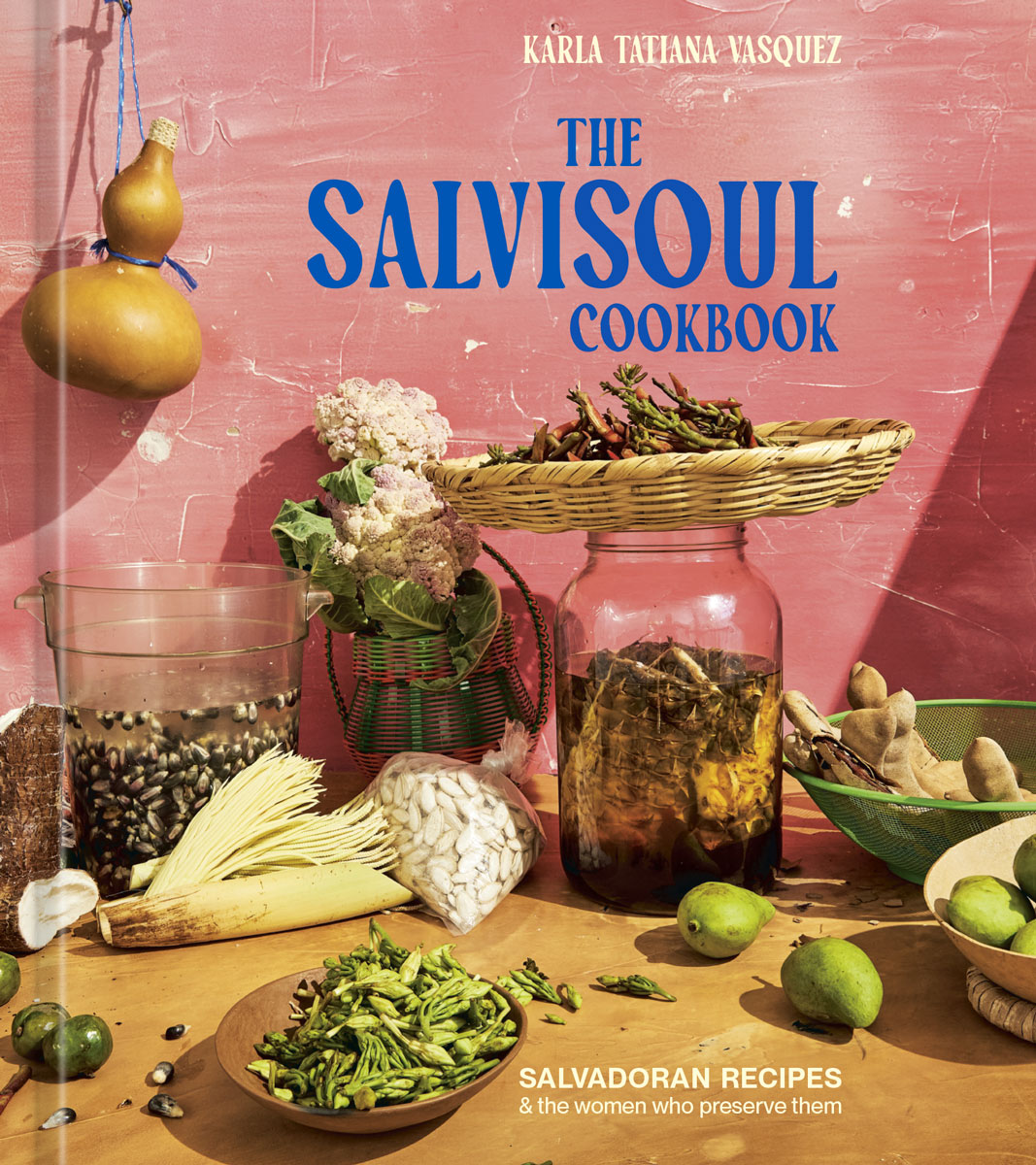
Karla T Vasquez traces the history of Salvadoran food, shining a light on the women who pioneered it

Unfortunately, there are certain cuisines that don't have the same cultural cache, if you will, that others — like Italian, Thai, Chinese and Mexican — have developed in the United States. 

One of these unsung heroes of the culinary space is El Salvador, and Karla Tatiana Vasquez has made it her mission to celebrate the country, the cuisine, and in particular, the women who forged ahead, ideating brilliant dishes and highlighting the best ingredients from their land.

Vasquez credits her grandmother with giving her the idea to look deeper into their collective history and heritage, which brought SalviSoul — and Vasquez's new cookbook of the same name— to life. It's a particularly notable accomplishment because "SalviSoul" is the first Salvadoran cookbook to ever be released by a major American publishing house. 

"Historically, women's labor has always been ignored and by proxy they become invisible, this has been even more true for Salvadoran women as we are often erased due to being women of color and immigrants," Vasquez said. 

Salon Food spoke with Vasquez about the history and tradition of Salvadoran culinary customs and how important it is to continue to honor those efforts — and enjoy some really delicious food while you're at it, too

The SalviSoul CookbookThe SalviSoul Cookbook: Salvadoran Recipes and The Women That Preserve Them by Karla Tatiana Vasquez (Ren Fuller/Ten Speed Press)
The following interview has been lightly edited for clarity and length.

For those unfamiliar with Salvadoran food, how would you explain its fundamentals, tenets, core ingredients and focuses? 

A part of the cuisine that often gets me excited is how many edible blossoms and flower buds there are to consume. Just in the diaspora, we have access to about three: Flor de Izote, Flor de Loroco, and Flor de Pacaya. There are more than that, but these are the most easily accessible to us living away from El Salvador.

Then, there are of course a love for corn, beans, ayote (squash) and chiles: These Mesoamerican ingredients are part of the building blocks of Salvadoran cooking, but also there are tropical flavors like plantain, mangos, pineapple. Finally, there's an appreciation to a lot of tart, sour and funky flavors. We see this in Salvadoran cheeses, the many curtidos, and fruits we consume. 

I love the subtitle “Salvadoran Recipes and the women who preserve them.” Obviously, you go in-depth about that in the book, but how would you sum up that notion for our readers? 

SalviSoul is all about giving credit where credit is due. There has not been a place, or book yet that acknowledges the labor of Salvadoran women cooks who are largely responsible for bringing this cuisine to this country. Historically, women's labor has always been ignored and by proxy they become invisible, this has been even more true for Salvadoran women as we are often erased due to being women of color and immigrants.

Making that the subtitle was honest to my personal journey with this work but also an effort to show them love, care, tenderness and respect. 


Want more great food writing and recipes? Subscribe to Salon Food's newsletter, The Bite.


Can you explain a bit about SalviSoul? What led to its founding? 

SalviSoul started in 2015 with my grandmother, Mama Lucy. Back then, I had a craving for Salpicon  a meat salad  but I did not possess the skills to make it, so I reached out to my grandmother. As she taught me the recipe, she shared some of her stories and that time laid the groundwork for what SalviSoul is now.

Recipes and stories are equal amounts of nourishment, especially for someone like me, who wanted to know more about what El Salvador was like. I felt the most connected to what it meant to be Salvadoran when I was surrounded with Salvadoran food and family.

This work also started because even though there are more than 2 million Salvadorans in the country and we've been in the country since the late 1970s, a major publisher had still not published a cookbook on the cuisine. I'm fortunate that I've had a lot of crystal clarity about what SalviSoul is here to do, and that's carve a place for it to exist in mainstream culture through a cookbook so that anyone that wants it, Salvadoran or not, can access it. 

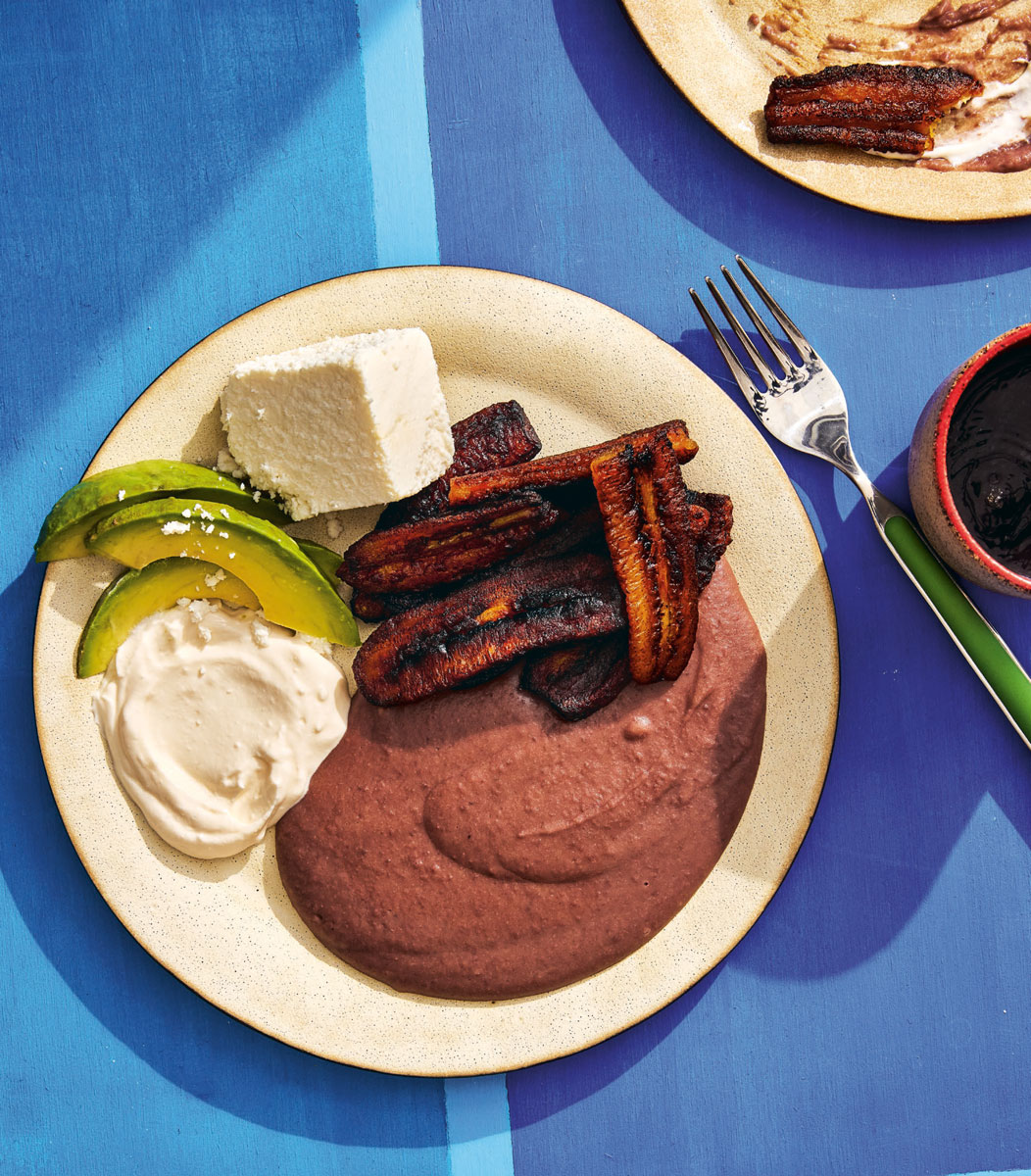
Platanos Fritos con Frijoles LicuadosPlatanos Fritos con Frijoles Licuados (Ren Fuller/Ten Speed Press)

How important — as well as necessary and overdue — is that representation?

It's important because there are so many Salvadorans in the diaspora and so many of us have a transnational identity. We live in one place, but are very much sincerely connected to a homeland, and for a lot of us, practicing our foodways is a way to keep that connection alive.

I'm so happy this book exists for those that are looking for it. When I started this project, I would have loved to have come across a book like this. I didn't think I would have to make it happen myself, but now that it's here, I'm so happy for the community that wants this because they'll be able to access it.  

We need your help to stay independent

Do you have a favorite recipe in the book? Conversely, what would you say is an ideal “gateway” recipe in the book for someone who’s never cooked or eaten Salvadoran food before?

One hundred percent it would be Rellenos de Güisquil. They are my absolute favorite and it's one of those great home made dishes. You don't usually find this dish in restaurants, so if you're curious about what Salvadoran families ate on a weekday, this would be it.  

What stands out for you as a formative moment that got you into cooking or food at large?

My experience as a food justice organizer was crucial to my formation as a cookbook author. Food is such an enormous presence in our lives, but so many of us don't really know what or how it's made, harvested, cared for, etc.

Working with farmers [and] championing programs that benefited WIC and Cal Fresh participants were all incredible important to the work I do now even. I've been in food for about 12 years, as a culinary producer, food stylist, [and] food writer, but my experience as a food justice organizer were much more formative for me when we talk about life and meaning.

The others felt like professional stops along the way, but with organizing, everything changed for me. 

Karla Vasquez Author PhotoKarla Vasquez (Ren Fuller/Ten Speed Press)

What was the development process of the book like? 

This process has been 8-plus years. It's taken very long to get here. So much of it felt like kismet and fate collaborating with me to see what this project [or] book wanted to be.

First, I interviewed my grandmother, then more family and family friends, and then a callout in 2017 helped me find the rest of the women. Then, through a collaborative process, we curated what would be in the book.

The stories I share in the book are their stories [from] when we cooked [and] these memories would pop up. It took so much time because the industry wasn't ready to get behind it when I started pitching. Then, part of it was also [that] it's been my emotional journey in real time. The Karla who started this is not the same to now. My grandmother passed throughout the process, so it became a way to process my own grief and a myriad of other things.  

The book contains 30-plus accounts from Salvadoran women, discussing everything from the idea of the American dream to the food and Salvadoran culture at large. That link from El Salvador to wherever some of them now reside in the US is so strong. How do most of them strive towards preserving those foodways? 

Most of them do the best they can to remember and practice what they can. I think most of them do so because all of us have a longing for home or the familiar so even if they don't set out to "preserve foodways," food is how we can touch home sometimes.

For a lot of us who aren't able to go back, don't have the means to go back, or maybe Spanish isn't something we have to help us feel connected, food can be that bridge. 

Horchata de Semilla de MorroHorchata de Semilla de Morro (Ren Fuller/Ten Speed PressNO REUSE Horchata de Semilla de Morro NO REUSE inline)

I love how the recipes connect to the stories from the particular women throughout the book; are there any specific examples that stand out most for you or best exemplify the ethos of SalviSoul? 

The best part of having the book done is that any way you slice the book, you will get an example that exemplifies the ethos of SalviSoul. The whole book is about that question. Each recipe and story illustrates the heart and soul of the culture and people. 

Can you explain the meaning behind "Donde come uno, comen dos is a dicho?" 

I love this dicho/saying because in all of my interviews with the Salvadoran women in the book, this saying came up. The saying literally translates to "where one can eat, two can eat."

Without fault, whenever they shared stories where they encountered hard times, when there wasn't enough food, or food was scarce, they would finish their story with this saying. It became another way to describe radical community care, Salvadoran hospitality and women taking care of their loved ones.

Former Trump aides indicted over Wisconsin “fake elector” scheme face up to 6 years in prison

Wisconsin’s attorney general, Josh Kaul, filed felony forgery charges Tuesday against one of former President Donald Trump’s aides and two attorneys who worked on the scheme to have fake electors overturn the 2020 election.

The charges against the three men — Kenneth Chesebro, Jim Troupis, and Michael Roman — are classified as class H felonies, punishable by a fine of up to $10,000 and up to six years in prison. 

State prosecutors first filed the charges against anyone who appeared to be involved in the scheme, wherein 10 Wisconsin Republicans met in the state capitol and signed paperwork falsely claiming to be legitimate electors for Trump after Biden won.

Chesebro orchestrated the overall scheme, the Guardian reported. He emailed Troupis, the former judge who represented Trump in Wisconsin during the 2020 election, five days after the election to discuss overturning Biden’s 21,000 vote victory in Wisconsin. Over the next few months, the two developed the fake electors scheme.

Later, Chesebro worked with Roman, Trump's former director of election day operations, who delivered the fake elector paperwork to a Pennsylvania congressman’s staffer, aiming for it to reach Vice President Mike Pence on Jan. 6, 2021. Trump was able to seek a recount in Dane and Milwaukee counties only to confirm Biden’s win, the Milwaukee Journal Sentinel reported.

The criminal complaint filed against Chesebro and Roman detailed a text exchange between the two about changing the language in their fake elector certificates to be more conditional than the ones that were ultimately signed by the fraudulent electors. The text messages reveal that Roman disagreed with Chesebro on the changes, which were intended to limit their legal liability, and when the attorney offered to help out with the draft, Roman simply wrote: "fuck these guys." 

Chesebro pleaded guilty to his role in the scheme in a different case in Georgia earlier this year. He is also believed to be one of the unidentified co-conspirators mentioned by special counsel Jack Smith in his federal election interference indictment of Donald Trump last year.

Roman still faces charges in Georgia and is a defendant in an Arizona fake elector case that also involves Chesebro. Prosecutors in Michigan and Nevada have also brought up charges against Trump's fake electors.

Power outage-causing storms are on the rise. That’s already impacting food insecurity

As rounds of severe weather — complete with thunderstorms, hail and flooding — continue to pummel Dallas and surrounding Texas counties, many of the over 650,000 people who were left without power are grappling with the question of how they will afford to replace the food they lost in the nearly week-long outage. According to the Food and Drug Administration, perishables like milk, eggs and meat can only keep cold for about four hours in an unopened refrigerator, meaning that for many Texans, the entirety of their fresh food supply had to go in the garbage. 

They aren’t alone. 

Just a few weeks ago, Community Food Share, a Colorado food bank that serves Boulder and Broomfield counties, lost 1,500 pounds of food during a windstorm with gusts up to 100 miles per hour, which prompted a preemptive power outage from Xcel Energy. It’s a tremendous loss, but one that chief executive officer Kim Da Silva has cautioned could have been worse. 

"We were actually able to salvage almost all of the food that was in our freezers and our refrigerators,” she told local Colorado television station KUSA. “Which we're so thankful for that because that was about $80,000 worth of food.” 

All in all, it was a stroke of luck, but with power outage-causing storms on the rise, luck can only go so far in preventing similar — and larger — losses, which means that food pantries are increasingly having to adapt their operations to account for the effects of climate change. 

As reported by The Conversation, many Americans think of power outages as infrequent inconveniences, however data shows that major power outages have “increased tenfold since 1980, largely because of an aging electrical grid and damage sustained from severe storms as the planet warms.” According to an analysis by Climate Central, a nonprofit research group, 80% of all major US power outages were due to weather from 2000 to 2023, with the number of weather-related outages from 2014 to 2023 doubled when compared to outages at the start of the century. 

Relatedly, in 2021, the Intergovernmental Panel on Climate Change (IPCC)’s Sixth Assessment Report found human-caused rise in greenhouse gasses has increased the frequency and intensity of extreme weather events. 

In contemporary American society, going without power for any length of time is, at best, an inconvenience, but for communities that are already marginalized, a lack of electricity can dovetail with adverse health effects — especially in poorer communities where, as studies have shown, the outages tend to drag on for longer. 

We need your help to stay independent

For instance, after analyzing data from 15 million consumers in 588 U.S. counties who lost power when hurricanes made landfall between 2017 and October 2020, a February report from Chuanyi Ji of the Georgia Institute Of Technology and Scott C. Ganz of Georgetown University found socioeconomically disadvantaged communities often wait longer to see their power restored. 

“A 1-decile drop in socioeconomic status in the Centers for Disease Control and Prevention’s social vulnerability index was associated with a 6.1% longer outage on average,” they write for The Conversation. “This corresponds to waiting an extra 170 minutes on average for power to be restored, and sometimes much longer.” 

The pair continues: “The upshot is that households that are already at greater risk from severe weather — whether due to being in flood-prone areas or in vulnerable buildings — and those who are least likely to have insurance or other resources to help them recover are also likely to face the longest storm-caused power outages. Long outages can mean refrigerated food goes bad, no running water and delays in repairing damage, including delays in running fans to dry out water damage and avoid mold.” 

Some researchers refer to the inability to meet household energy needs, whether that be because of cost or extreme weather events impacting failing infrastructure, as energy insecurity. It’s a concept that doesn’t just mirror food insecurity, but one that coincides with it, especially during and following power outages that may force already vulnerable people to trash whatever fresh or frozen food they have on-hand. It’s a loss that many Americans, who are already beleaguered by sustained grocery costs, would feel acutely. 

In order to maintain service to the communities that need them most, food pantries across the United States are starting to update their own personal infrastructure to ensure they maintain power during outages — or at least have a plan if the lights go out. Many of the best examples are found in areas that are hotbeds for inclement weather. 

For instance, Feeding South Florida has bought backup generators and insulated storage facilities to ensure refrigerated supplies are protected during hurricanes. After Hurricane Harvey, the Houston Food Bank implemented similar measures, while also establishing partnerships with local businesses who would provide storage and transportation in the case of an emergency. 

The Midwest Food Bank — which serves multiple states in the region — utilizes elevated storage in areas that are flood-prone, while the Greater Baton Rouge Food Bank built their own flood barriers. Meanwhile, the Community Food Bank of New Jersey invested in a fleet of refrigerated trucks in case they need to move supplies out of the immediate area. 

These are big investments for organizations that are already stretched pretty thin (following the pandemic, nearly two-thirds of responding food banks reported to Feeding America an increase in demand for food assistance) but ones that are needed in order to continue serving those in need when they most need it. 

“With the economic pressures that everyone is facing, right, and inflation and costs of food,” Christina Cavalier, senior director of community relations for The Salvation Army in Colorado told KUSA. “For people that are experiencing poverty or … already experiencing food insecurity, to lose everything due to a power outage can be devastating to them.” 


A riveting “Star Wars: The Acolyte” breaks away from the usual Jedi rhetoric about good and evil

Five years’ worth of “Star Wars” shows has provided enough evidence for a person to suspect that the extensively known canon fans revere has also creatively shackled it. Instead of expanding the universe in new ways, the corporate dream machine plugged into familiar characters and artifacts. Recent series hinged upon the adventures of young-ish Obi-Wan Kenobi and younger Leia, adult Ahsoka, and an unmasked Boba Fett.

At least “The Mandalorian” expands the culture behind some very familiar armor using characters most viewers knew nothing about before watching it.

Star Wars: The Acolyte” does something similar with the franchise’s most emblematic figures, which would be a snooze if not for their role in a story that asks us to question our presumed faith in their righteousness. 

Generations who came of age with George Lucas’ fantasies had the light versus dark side, Jedi versus Sith dichotomy drilled into us along with the assurance that Force-wielders, besides being special, belonged to one team or the other. The first six movies packaged this alongside an unsubtle version of misogyny: nearly all human Jedi with lines were white guys until Samuel L. Jackson.  

“Acolyte” creator and showrunner Leslye Headland wipes those images away within the opening frames of the series when a young woman (Amandla Stenberg) rolls up to Master Indara (Carrie-Anne Moss) in a tavern and challenges her to fight. The ensuing battle is a slice of straight-up action movie fan fic, pitting Trinity from “The Matrix” movies against an ace fighter with a vendetta a la “Kill Bill” – except, again, this is “Star Wars.”

Headland, who co-created “Russian Doll,” knows exactly which buttons she’s pushing by leading with this scene in the same way Disney and Lucasfilm are cunning to use an economic montage of its highlights to promote the show. 

Both women are unknown characters, with one of them representing an unknown faction. The show itself arrives in a cloud of mystery, limiting which specifics we can detail. 

What I can say is that Headland takes a relatively ordinary plot device and uses it as a vehicle to do some quietly revolutionary storytelling – again, by “Star Wars” standards. 

Star Wars: The AcolyteLee Jung-jae and Carrie-Anne Moss in "Star Wars: The Acolyte" (Lucasfilm/Disney+)

Liberated from most aspects of the Skywalker saga, she and her writers take a relatively simple fugitive mystery tale and use it to remind us of the patriarchal and spiritual colonialism inherent to the galaxy’s foremost religious order. 

It’s also a ripping, nimbly paced action series that knows its audience and knows how to exploit this fandom’s strengths and weak spots. Let’s just say that Moss isn’t the main star here. That honor goes to Stenberg, who plays two roles, Osha and Mae, along with “Squid Game” star Lee Jung-jae as Sol, a Jedi Master tasked with finding a rogue Force user whose skills are formidable and troubling.

“This is about power . . . and who is allowed to use it.”

“The Acolyte” is set a century before the rise of the Empire when the Jedi Order managed the galaxy – meaning, lots of rough robes, humming lightsabers and battles between opponents who fling each other around without touching. But it also pre-dates many other traditions which may be why Lee and other stars seem freer to emote.  

No new addition to this entertainment catalog can be entirely divorced from everything we’ve already seen. In the slightest details of that opaque description, we recognize a few repeating refrains: Osha and Mae are twins. The Jedi’s adversary is presumably evil; we already know of such a group. Perhaps this show explores their origins, but the four episodes provided for review don’t show anything definitive that would indicate that.

Driving the season is a straightforward crime-solving arc that seems simplistic next to the do-or-die sagas driving nearly every other installment in this library besides “Andor.”  The ticking time bomb in “The Acolyte” ostensibly comes down to saving a group of individuals that the galaxy probably wouldn’t miss from a nobody with an axe to grind. There are no planets at stake, no rebellion whose survival teeters on a knife's edge.

Some people are going to absolutely hate that.

We need your help to stay independent

But in the same way that “Andor” used its title character to navigate a parable about how fascism has a way of rising from rampant corporate greed, “The Acolyte” is at its best when it asks both its protagonists and the audience to question our blind faith in the concept of so-called law and order.

It hints that in an opening title card that forgoes the long crawl to simply describe the era as a time of peace, explaining that The Jedi Order and the Galactic Republic “have prospered for centuries without war.” For such a political arrangement to prosper, there must be the necessary tension of an antagonist being kept at bay. As a perfectly reasonable character points out in an upcoming episode, some conflicts don’t originate from which side is “good” and which is “bad”: “This is about power,” they say, “and who is allowed to use it.”

Star Wars: The AcolyteCharlie Barnett and Dafne Keen in "Star Wars: The Acolyte" (Lucasfilm/Disney+)

Moss may beckon viewers to “The Acolyte,” but beyond her role, the show places the most weight on Stenberg, who evokes a natural duality in her sisters that sidesteps the usual pitfalls of such performances. 

The opening quartet of installments doesn’t feature her acting against herself yet, which is the real test of how well an actor pulls off believably playing her double. But she plays the more shadowed of the siblings without any of the flat spikes and splinters of pure evil that inform most of the hostile beings in this universe. 


Want a daily wrap-up of all the news and commentary Salon has to offer? Subscribe to our morning newsletter, Crash Course.


Lee balances this with a performance soaked in empathy and regret, granting his physical confrontations with the lost soul he’s tracking a hint of operatic pathos.  Setting this bar allows the actors playing other knights of his order and his padawan Jecki Lon (Dafne Keen) to accordingly relax or stiffen up. 

Charlie Barnett’s Yord Fandar is wound especially tight when it comes to dealing with Osha, which doesn’t allow for the actor to showcase the admirable range and subtleties of which he avails himself in “Russian Doll.” Mae, on the other hand, has a lazy and barely trustworthy smuggler pal Qimir (Manny Jacinto), making it tough to determine which sister is on the less desirable team.

Ultimately these characters’ personalities matter less than what they represent on the moral scale instead of how closely they hew to established “Star Wars” canon. “The Acolyte” carries fewer of those weights, allowing it the space to reconsider our dogmatic devotion to one of cinema’s exemplary institutions of heroism. 

There’s much to appreciate about a show that cunningly strives not only to be deemed good but to make us redefine what that means. And it only took looking farther into this saga’s distant past to move ahead in ways its storytelling can challenge us.

"Star Wars: The Acolyte" debuts with two episodes Tuesday, June 4 at 6 p.m. PT / 9 p.m. ET on Disney+.

Anthony Fauci laments that some Americans believe the “nonsense” spouted by Marjorie Taylor Greene

Rep. Marjorie Taylor Greene, R-Ga., hijacked the House Oversight Committee meeting on Monday to lambast Dr. Anthony Fauci over has response to the COVID-19 pandemic, resorting to all sorts of name-calling and bizarrely insisting that the retired medical professional is “not a doctor.”

Fauci, former head of the National Institute of Allergy and Infectious Diseases, was summoned to the hearing as part of a effort by Republicans to push conspiracy theories about the origins of and response to the pandemic, Raw Story reported. Theories included that there was no scientific evidence for social distancing and that the real origins of the virus were still unknown because of an international cover up.

Greene kicked things up a notch when she told the doctor, who served under former President Donald Trump, that he “belonged in prison” because of his “crimes against humanity,” The Independent reported

Greene added that Fauci experimented on beagles with disease-causing parasites, something that she simply couldn’t bear “as a dog lover" (she was referencing a scientific study that had received an NIAID grant).

“I want to tell you this is disgusting and evil, what you signed off on, and these experiments that happened to beagles paid for by the American taxpayer,” she told Fauci. “And I want you to know that Americans don’t pay their taxes for animals to be tortured liked this.”

After the hearing, Fauci appeared on CNN with Kaitlin Collins to set the record, calling Greene's attack on him an “unusual performance” but noting that there is a "segment of the population out there that believe that kind of nonsense.” He blamed Fox News and public figures like Greene for him still receiving death threats, two years after leaving government service.

“White collar crook”: Biden says Trump is not just a “convicted felon” but a “diminished man”

President Joe Biden had some choice words for Donald Trump during his Monday remarks at a campaign event, leaning into the verdict in Trump’s hush money trials and calling the former president a “diminished man,” “convicted felon” and “white collar crook,” NBC News reported.

“Folks, the campaign entered uncharted territory last week,” Biden said at a fundraiser in Greenwich, Connecticut, according to a White House pool reporter. “For the first time in American history, a former president that is a convicted felon is now seeking the office of the presidency.”

Biden added: "But as disturbing as that is, more damaging is the all-out assault Donald Trump is making on the American system of justice.” 

He is not wrong. Trump confirmed during a Fox News interview Sunday that his “revenge will be success.”

Since his verdict, Trump has conveyed his purported shock at the jury’s decision and maintained that the whole trial is a political ploy to slow him down on the campaign trial.  Despite an utter lack of evidence, he has falsely claimed that the case was “all done by Biden and his people,” CNN reported. (“I didn’t know I was that powerful," Biden told reporters.)

Biden’s remarks on Monday were the first time he brought up Trump's conviction in a campaign setting. He noted that Trump is claiming the justice system is "rigged," mirroring his rhetoric about elections.

“Now, he will be given an opportunity to appeal,” the president said, arguing that it is “reckless and dangerous for anyone to say that [a trial] is rigged just because they don’t like the verdict.”

"Nothing could be more dangerous for the country, more dangerous for American democracy,” Biden added.

Reacting to the remarks, a Trump spokesperson on Fox News said it was "shameful" for Biden to describe Trump as a "convicted felon." Noted the Biden campaign: "Trump is, in fact, a convicted felon."

Trump's press secretary called it “shameful” for the Biden campaign to call Trump a convicted felon, true or not.

“What the f***?”: Jon Stewart calls out GOP spin after Trump’s felony conviction

Jon Stewart on Monday's edition of "The Daily Show" took aim at the media coverage and spin of former President Donald Trump's felony conviction.

The comedian rehashed the fallout of the Trump hush-money trial, where the former president was convicted of 34 counts of falsified business records. After the trial came to a close on May 31, both sides of the political aisle had reactions to the shocking verdict and so did Stewart.

The media coverage of the trial showed that many liberal pundits thought it was a sad day for the country but Stewart pointed out the joy coming from President Joe Biden. 

"Perhaps nothing personified the delicate highwire between glee and gravitas more than President Biden's Cheshire Cat press conference encore," Stewart said.

The show highlighted the now-viral clip of Biden walking away from the White House podium when a reporter asked, "Mr. President, can you tell us, sir, Donald Trump refers to himself as a political prisoner and blames you directly. What's your response?" The president turned slowly and gleefully smiled.

However, on the conservative media side, the trial was as Sen. Ted Cruz, R-Texas, said, "a political smear job."

The show also played a clip of Sen. Tim. Scott, R-S.C., who also shared the same sentiment. "This is a weaponization of the justice system against their political opponent. This is a justice system that hunts Republicans while protecting Democrats."

But Stewart wasn't ready to let the hypocrisy go.

"Oh my god! The justice system hunts Republicans while protecting Democrats? Someone should mention that to unprotected Democrats such as Sen. Robert Menendez and Congressman Henry Cuellar both facing corruption charges brought on by our Department of Justice," Stewart said, adding that even Hunter Biden is currently facing trial on a federal gun charge.

The comedian emphasized that right-wing pundits continue to force their narrative that people on the left like Hillary Clinton and Barack Obama are still out to get them when they have a now-convicted felon as their leader.

The show played a clip of Trump, over the weekend claiming that he never said that Clinton should be locked up. Stewart in shock took a pregnant pause before saying, "What the f**k?"

“I think I remember you saying it ― to her face, at a debate," he said. 

We need your help to stay independent

An exasperated Stewart showed many clips of the former president telling Clinton at a 2016 debate “you’d be in jail” if he won the election and echoing his "lock her up" catchphrase at rallies.

“And he said it a million times!” Stewart yelled.

“And that ladies and gentlemen, I present to you, is why we need courts. Whatever flaws the American justice system has and they are legion, especially for nonbillionaire former presidents, it does appear to be the last place in America where you can’t just say whatever the f**k you want regardless of reality,” Stewart said. “Trump knows this better than anyone.”

"The Daily Show" airs Monday through Thursday at 11 p.m. on Comedy Central and streams on Paramount+

Trump aides receive “significant financial benefits” after testifying, suggesting witness tampering

Former President Donald Trump may have been involved in witness tampering, including in his latest hush money case, where he was found guilty on 34 counts of felony, according tor reporting by ProPublica.

As ProPublica reported Monday, nine witnesses who have testified in proceedings involving the former president were provided “significant financial benefits." The money “often came at delicate moments in the legal proceedings against Trump,” the outlet reported, sometimes between when witnesses were subpoenaed and when they testified. Benefits included “large raises from his campaign, severance packages, new jobs, and a grant of shares, and cash from Trump’s media company.” 

One of Trump's lawyers, David Warrington, sent a cease-and-desist letter demanding ProPublica not publish the exposé, warning that if the outlet and its reporters “continue their reckless campaign of defamation, President Trump will evaluate all legal remedies." The intimidation did not work.

Examples of witnesses receiving benefits included Dan Scavino, Trump’s aide who was given a “plum position on the board of Trump’s special media company,” and Boris Epshteyn, campaign adviser, who had his pay more than doubled. Trump’s campaign also hired the daughter of another witness, Susie Wiles, who in turn received a raise of her own.

The list goes on. Payments to lawyer Evan Corcoran’s law firm “dramatically increased” around the time he was asked to testify in the classified documents case against Trump. And the Trump Organization’s former chief financial officer, Allen Weisselberg, received a $2 million severance package four months after Trump was sued for financial fraud by the New York attorney general.

In addition, Weisselberg’s severance agreement contained a nondisparagement clause that bars him from voluntarily cooperating with investigations against Trump. Prosecutors in the hush money trial brought up the agreement when trying to explain why they didn’t call Weisselberg to the stand as a witness. 

The ProPublica report — written by Robert Faturechi, Justin Elliot, and Alex Mierjeski — noted that, while its investigation did not find evidence that Trump personally approved the benefits to witnesses, the former president is an infamous micromanager.

For its part, the Trump campaign denies everything. Steven Cheung, a spokesperson, said that “[a]ny false assertion that we’re engaging in any type of behavior that may be regarded as tampering is absurd and completely fake.”

“Buying off witnesses constitutes alleged obstruction”: Experts alarmed over Trump witness payouts

Before he broke down in tears on the witness stand in the civil fraud case brought against the Trump Organization, corporate controller Jeffrey McConney, overcome by how “very proud” he was of his work at the company, signed an agreement that netted him a $500,000 severance payment.

His colleague Allen Weisselberg, the Trump Organization’s former chief financial officer, did a lot better. Before he checked into Rikers Island, where he was sentenced to a five-month stint for lying under oath, the loyal accountant got a severance payout of $2 million; in exchange, the 76-year-old explicitly promised that he would never criticize the company and its owner, Donald Trump, or voluntarily “provide information to, or otherwise cooperate in any way with” law enforcement.

As ProPublica reported Monday, McConney and Weisselberg are just two of the people who testified in trials involving the former president and who happened to also receive big raises or other payouts from Trump's campaign and company. Others included a campaign aide whose salary doubled to more than $53,000 – per month – and another who got a 20 percent raise, herself, in addition to her daughter landing a $222,000 gig on the Trump campaign.

“If you’re not outraged, you should be,” commented Katie Phang, a legal analyst with MSNBC who says the payments suggest that testimony favorable to Trump is being rewarded, if not purchased. “Is this bad? ‘Cause it seems bad,” chipped in George Conway, a conservative attorney and Trump critic.

It could all be a coincidence. In 2024, however, there is a record that one can review.

Take Paul Manafort, Trump’s 2016 campaign manager who handed over internal polling to an agent of Russian intelligence: After he was indicted by special counsel Robert Mueller, Manafort assured a colleague that he would be fine, saying he had spoken to Trump’s personal attorney and was told that Trump and company are “going to take care of us.” Manafort, who refused to cooperate with investigators, later received a pardon.

A former Trump White House aide, Cassidy Hutchinson, did cooperate with those investigating the January 6 insurrection. But as she was preparing to tell investigators what she know about the attack on the U.S. Capitol, she received a message claiming that her old boss, ex-Trump chief of staff Mark Meadows, “knows you’re loyal, and you’re going to do the right thing when you go in for your deposition.”

We need your help to stay independent

Timothy Heaphy, an attorney who worked as chief investigative counsel for the January 6 committee, does not believe in coincidences. Even though Trump has never been charged with witness tampering, Heaphy argued that does not mean it’s not happening.

“In these cases you never have direct evidence of the sort of attempt to corruptly influence testimony – you don’t need it, because the power of the person providing the benefit is such that it’s clear what the intent is,” Heaphy said on MSNBC. “The mob boss doesn’t say, ‘Hey, if you don’t do this, I’m going to kill you.’ But it’s clear, right? Because of the power imbalance and the provision of the benefit that engenders loyalty.”

It is also hard to prove, or at least no prosecutors have been confident enough to charge Trump over. MSNBC anchor Nicolle Wallace argued that reflected timidity, not the facts, and has contributed to the apparent pattern identified by ProPublica.

“There’s a consequence to never holding Trump accountable,” she said. “If someone’s going to keep doing this thing over and over again, the system has failed.”

Trump and his acolytes, as ever, insist that the former president has done nothing wrong. A campaign official told ProPublica that the money flowing to the nine witnesses was a product of business as usual: standard raises for performance or, for example, lawyers working more hours on Trump’s cases (one attorney, Jennifer Little, received $1.3 million from a Trump PAC after providing favorable testimony before a Georgia grand jury).

But former assistant U.S. attorney Richard Signorelli doesn’t believe any innocent explanation.

“Buying off witnesses constitutes alleged obstruction of justice,” he posted on social media. But he doesn’t blame Trump alone. The former president “wouldn’t get anywhere close to destroying us without his many craven enablers,” Signorelli wrote, “including lawyers unfortunately.”

Trump lawyers in lawsuits claiming he won 2020 election are getting punished for abusing courts

Over the past four years, U.S. courts and state bar associations have taken action to protect the integrity of the U.S. judicial system by penalizing attorneys who filed meritless lawsuits claiming – without evidence – that the 2020 presidential election results were invalid.

Despite aggressive litigation by attorneys denying wrongdoing, over time the U.S. legal community has exercised the oversight needed to hold most of them accountable for misusing U.S. courts.

Most lawsuits challenging the 2020 presidential election results were filed in federal courts. Federal judges not only dismissed the claims for lack of evidence, but some also penalized the attorneys who filed them.

Judge Linda Parker of the U.S. District Court for the Eastern District of Michigan acted first, ruling in August 2021 that a lawsuit filed by nine lawyers was “a historic and profound abuse of the judicial process.” In a 110-page opinion, she wrote that the abuses included:

“proffering claims not backed by law; proffering claims not backed by evidence (but instead, speculation, conjecture, and unwarranted suspicion); proffering factual allegations and claims without engaging in the required prefiling inquiry; and dragging out these proceedings.”

“Print, television, and social media” are where the attorneys could have made their “protestations” and “conjecture,” Parker wrote. But “such expressions are neither permitted nor welcomed in a court of law.”

The judge imposed three penalties on the attorneys: US$175,000 in defendant legal costs; 12 hours of mandatory instruction on pleading standards and election law; and referrals to the Michigan Attorney Grievance Commission and their home state disciplinary authorities for possible suspension or disbarment.

Appeals to the 6th Circuit and Supreme Court to reverse the sanctions failed. After three years of litigation, the Michigan-ordered penalties still stand.

‘Fantastical’ claims

Courts in other states have taken similar action to hold accountable attorneys who filed abusive or frivolous lawsuits challenging presidential election results:

Colorado: A federal district court penalized two attorneys, Ernest Walker and Gary Fielder, for filing a complaint seeking $160 billion in damages from 19 defendants for alleged misconduct related to the 2020 presidential election. After finding its claims were “fantastical” and “filed in bad faith,” the court ordered Walker and Fielder to pay defendants’ attorney fees totaling $187,000. Appeals to the 10th Circuit and Supreme Court failed.

Arizona: A federal district court imposed similar sanctions on three attorneys – Andrew Parker, Kurt Olsen and Harvard professor Alan Dershowitz – who challenged the 2020 presidential election results in Arizona. The court found their complaint contained “false, misleading, and unsupported factual assertions” and “did not have an adequate factual or legal basis.” It ordered the attorneys to pay defendants’ attorney fees totaling $122,200. The attorneys have appealed.

Florida: One federal district court even confronted a 193-page lawsuit filed by Donald Trump in 2022, claiming 31 defendants disseminated false information about him to rig the 2016 presidential election. The court wrote: “This case should never have been brought. … No reasonable lawyer would have filed it.” The court ordered Trump and his lead counsel, Alina Habba, to pay defendants’ attorney fees totaling $938,000. Both are appealing.

These cases create a solid body of precedent for inflicting penalties on attorneys who file abusive pleadings challenging election results.

Suspension and disbarment

In addition to courts penalizing attorneys for inappropriate filings, bar association disciplinary authorities in multiple states have initiated proceedings to suspend or disbar those attorneys from practicing law in their jurisdictions. Despite lengthy procedures involving multiple steps met by aggressive litigation in opposition, those disciplinary proceedings are nearing final action.

In New York, the key disciplinary authority found “uncontroverted evidence” that Rudy Giuliani, who served as legal counsel to President Trump and his campaign, “communicated demonstrably false and misleading statements to courts, lawmakers and the public.” It ordered his immediate suspension from the practice of law in New York pending further proceedings. The D.C. Bar Association, relying on the New York action and without conducting its own fact-finding, did the same in the District of Columbia.

While no further proceedings occurred in New York to permanently disbar Giuliani, the D.C. Bar’s disciplinary authority issued a 2024 report recommending his disbarment in that jurisdiction..

Focused on his actions in Pennsylvania, the 2024 report states that he violated the Pennsylvania Rules of Professional Responsibility by filing a lawsuit seeking “to disenfranchise hundreds of thousands of Pennsylvania voters without the slightest factual basis for doing so.” It concludes “disbarment is the only sanction that will protect the public, the courts, and the integrity of the legal profession, and deter other lawyers from launching similarly baseless claims.” The disbarment recommendation is now under review by the D.C. Bar’s final disciplinary authority.

In similar proceedings against another attorney, the D.C. Bar’s disciplinary authority issued a preliminary finding that Jeffrey Clark, former acting head of the Justice Department’s Civil Division, also violated D.C. ethics rules and should be sanctioned. The move was in response to Clark’s alleged efforts to help Trump overturn the 2020 election results.

Comparable disciplinary actions have taken place in other states.

The California Bar’s disciplinary authority recommended disbarment of John Eastman, a law professor who filed abusive pleadings and engaged in other unethical conduct while representing President Trump and the Trump campaign.

When the Georgia State Bar’s Disciplinary Board asked Trump campaign attorney Lin Wood to undergo a mental health evaluation, he sued to prevent it. A federal district court dismissed his suit, and his appeal failed. In 2023, Wood announced his permanent retirement from the practice of law.

The Michigan Attorney Disciplinary Board denied multiple motions by the attorneys who filed abusive suits there to dismiss pending disbarment proceedings.

Not all state disciplinary authorities prevailed. Sidney Powell, who represented Trump and his campaign, won dismissal of ethics charges brought against her in Texas. However, she still faces possible disbarment in Michigan and pled guilty to criminal charges in Georgia relating to the 2020 presidential election there.

Judicial system integrity

Many attorneys who filed abusive pleadings challenging the 2020 presidential election have paid a price, incurring litigation costs, judicial condemnation and reputational damage. Some no longer practice law.

The legal community’s tough oversight should make attorneys think twice before misusing U.S. courts, but still unknown is whether past disciplinary efforts will deter any potential misconduct following the 2024 presidential election.

What is known is that the integrity of the U.S. judicial system is only as strong as its commitment to the facts.


Elise J. Bean, Director of the Washington Office of the Levin Center for Oversight and Democracy, Wayne State University

This article is republished from The Conversation under a Creative Commons license. Read the original article.

Don’t let MAGA theatrics fool you: Donald Trump’s 34 felony convictions are not helping him

Many people mistake cynicism for savviness. So, of course, it took no time at all for some political pundits to rush forward to declare that Donald Trump's historic 34 felony convictions would somehow "help" him. Republicans rushed to beat their chests and made loud threats that Democrats will rue these convictions, even though it was 12 randomly selected jurors in Manhattan, and not the Democratic Party, that convicted Trump. He falsely claimed that his "poll numbers have gone up substantially" since the verdict. (So far, it hasn't moved the polls much, though it seems to have made some voters more hesitant to support Trump.) The campaign claimed a $53 million fundraising haul in the aftermath of the verdict, though this should be taken with a grain of salt, as they lie constantly. And, of course, Republicans ran towards every microphone is sight to feign outrage and declare that an upswell of once-skeptical Americans would now vote for Trump. Who knew there was a massive constituency of voters outraged that New York would enforce its laws against criminal conspiracies to defraud the public? 

Alas, the GOP theatrics appear to have scared some folks.

Conservative media has been downplaying these charges for over a year now, so it's possible many of these voters are only now just realizing these were serious crimes indeed. 

Failed presidential candidate Rep. Dean Phillips, D-Minn., called on Gov. Kathy Hochul, D-N.Y., to "pardon" Trump, claiming failure to do so is "[m]aking him a martyr" and "energizing his base." Future failed presidential candidate Robert F. Kennedy Jr. — pretending still not to be on the right — insisted this will "backfire" on Democrats. (It cannot be stated enough that the Democratic Party did not convict Trump, a jury did.) But even some well-meaning liberals had a nearly superstitious reaction to the celebrations, worried that somehow Trump would find a way to turn this to his advantage. 

I don't want to jinx things, but it seems highly unlikely that Trump will benefit from having "convicted felon" replace "former president" as his most recent title. It doesn't mean Trump's presidential bid is doomed, as the polls remain alarmingly tight. But the notion that Trump is going to find some fresh wellspring of support because he's been proved a grubby little criminal by a jury of his peers? I'm not buying it. 


Want more Amanda Marcotte on politics? Subscribe to her newsletter Standing Room Only.


Even Jonathan Chait of New York magazine, who tends to be the voice of the Democratic skittishness, had to admit that the MAGA hollering over the Trump conviction has failed to intimidate. He points out that Republicans are always claiming Democrats are forcing them to support an odious policy or candidate. Even 24 years ago, Republicans argued they had no choice but to vote for George W. Bush because Bill Clinton lied about an extramarital affair. Now, of course, they are "forced" to vote for Trump, which they definitely weren't going to do before, in defense of candidates breaking the law to cover up sexual misdeeds. "Next thing you know, Trump is going to be so angry about his conviction that he will resort to attempting to overturn an election result," Chait joked. It's ironic because Chait was one of the loudest quisling voices freaking out over hypothetical backlash when District Attorney Alvin Bragg indicted Trump on these charges in April 2023. So that even he's not scared of Republican threats says a lot.

But ultimately, it comes down to this: If getting convicted of crimes is so goshdarned awesome for Trump, then why are his allies doing everything in their power to delay Trump's other criminal trials? If a guilty verdict is such a boon to Trump, you'd think the six corrupt Republicans on the Supreme Court would be eager for the January 6 trial, instead of dragging their feet on releasing a decision on presidential immunity that will likely push the trial until after the election. If Judge Aileen Cannon believed a conviction would boost the man who appointed her to the federal bench, you can bet the classified documents trial would have happened already. Instead, she's indefinitely delayed it. If felonies give Trump such an edge in the polls, Republicans in Georgia would be rushing forward with the RICO case there, instead of filing frivolous motions against District Attorney Fani Willis to keep the case from trial. 

Certainly, the post-conviction Reuters poll showed 35% of Republican voters saying the verdict makes them more likely to vote for Trump, but that's a number roughly no one is taking seriously. Those are quite obviously people whose political motives are defined entirely by resentment of liberals and feelings of entitlement, i.e. folks who were going to vote for Trump anyway. What's more interesting is the 10% of Republicans who say they are less likely to vote for Trump now. Conservative media has been downplaying these charges for over a year now, so it's possible many of these voters are only now just realizing these were serious crimes indeed. 

What all this discourse about "the base" is missing is that it's not just Trump who has a base of supporters to motivate. Trump hasn't actually risen in the polls. It's just that President Joe Biden's support has eroded. It's not entirely clear why so many people who voted for Biden in 2020 are unhappy. They keep saying "the economy," even though unemployment is at record lows and inflation has dropped back down to low rates. I agree with Heather "Digby" Parton, however, that the actual reason is the general bad vibes caused by Trump's continuing presence on the political scene. "For all of Biden's successes, he couldn't put an end to the single biggest problem we face," she writes. Biden, although it's unfair, is paying the price for our Trump-caused psychological malaise. 

But that's a reason to hope that Trump's conviction might actually matter. It's not a cure-all for the corruption and institutional failure that is wearing people down, to be sure. But it's energizing to have proof that Trump is not invincible. Especially if Democrats can find the discipline to hammer the words "convicted felon" and "jury of his peers" home through brute repetition. It's not just about reminding voters what a terrible man Trump is. Those phrases are a promise that the system can work, if people put their minds to it. It might actually help put a little pep in people's steps, all the way to the polls. 

Certainly, Trump himself is not acting like a man who thinks things are going great for him. His post-conviction appearance at Trump Tower more closely resembled the ravings of an addled person screaming about demons on the subway than a press conference. Over the weekend, he gave an interview to Fox News that appears to have created a lot of headaches for their talented editing staff. 

We need your help to stay independent

As many have pointed out, the only way the Trump trial in Manhattan really benefitted him is by keeping him off the campaign trail. Whenever he speaks publicly, the lies and rants are startling, even to people who follow politics closely and are aware that Trump's already low levels of coherence have fallen through the floor. Beyond just the rabid MAGA base, a lot of Trump's polling support comes from people who just aren't paying much attention, and have no idea what Trump is sounding like these days.

The prediction is that once some of these folks hear Trump's word salad rage dumps, they might rethink their complacent acceptance of a grievance-addicted liar with 34 felony convictions. Certainly, if that theory has any juice, there's reason to hope they'll be alarmed, as the guilty verdicts increase the number of truly unhinged statements from Trump. He won't have the Fox News editing staff around every day to protect him from himself. 

“A giant step toward autocracy”: Trump makes his criminal conviction bad for democracy

Donald Trump is now the first president – and also presumptive presidential nominee for a major political party – to be a convicted felon. Trump still faces far more serious felony charges in three other criminal cases. His sentencing hearing in New York's hush-money trial is scheduled for July. Given his open disdain for the court and utter lack of contrition, it is possible, however unlikely, that he could be sentenced to some type of home confinement or even prison.

To that point, convicted felon Donald Trump appears to be daring Judge Juan Merchan, who presided over the New York hush-money election interference trial, and other law enforcement to take action against him. During interviews and other statements since his conviction, Donald Trump and his propagandists and other agents have been threatening and inciting violence, revenge, and mayhem against their perceived “enemies”, including Judge Merchan, the prosecutors and attorney generals, the jurors, President Biden and the Democrats, and anyone else they believe is part of a “witch hunt” and attempt to persecute him.

"The fact that prominent lawyers, including many who have attended Harvard or Yale Law Schools, are attacking the fundamentals of a legal system that is operating by the book, is a giant step toward autocracy."

Of course, there is no conspiracy against Donald Trump. He was finally held responsible, in some small way, for his decades-long crime spree. If Donald Trump somehow ends up in prison, it is his own fault.

These are truly historic times here in America where long-standing assumptions and norms about the country’s political culture and values — and the future of its multiracial pluralistic democracy — are being challenged to the extreme by Trumpism, American neofascism, and a “conservative” movement and Republican Party that are openly contemptuous of real democracy. Trump’s wanton criminality reflects these much deeper challenges and problems. But in this historic moment, opportunity exists alongside great peril. The American people and their leaders can choose to put a convicted felon and aspiring dictator who admires Adolf Hitler and Vladimir Putin back in the White House or they can instead defeat him soundly in November, and then use that momentum to renew and improve the country’s democracy and society more broadly.

In an attempt to make better sense of Donald Trump’s historic felony conviction and its meaning and implications for this political moment, the 2024 election, the country’s democracy and what may happen next, I recently spoke to a range of experts.

Rick Wilson is a co-founder of The Lincoln Project, a former leading Republican strategist, and author of two books, "Everything Trump Touches Dies" and "Running Against the Devil: A Plot to Save America from Trump – and Democrats from Themselves."

That a convicted felon remains the GOP's nominee shows how the party jettisoned any semblance of principle and is nothing more than a Trump personality cult. The party's leadership response since the trial has been to attack the court and undermine the rule of law just like they've worked to create doubt in the political process. While Trump's conviction will provide some accountability for his crimes, the only way Trump and the MAGA movement will be defeated is through the ballot box.

Norm Ornstein is emeritus scholar at the American Enterprise Institute co-author of the bestselling book "One Nation After Trump: A Guide for the Perplexed, the Disillusioned, the Desperate, and the Not-Yet Deported."

Joe Biden did not make Donald Trump a convicted felon. Democrats did not make Donald Trump a convicted felon. The Deep State did not make Donald Trump a convicted felon. Donald Trump, by cheating and lying, by falsifying business records and enlisting David Pecker, Allen Weisselberg, Michael Cohen and others to kill stories that would damage his faltering presidential campaign, committed 34 felonies. 12 ordinary New Yorkers acting as a jury, listened to weeks of testimony and followed a voluminous written trail of records, and unanimously came to the conclusion that Donald Trump was guilty.

But you would not know that if you watched Fox or listened to the likes of Susan Collins, Josh Hawley, John Yoo, Mike Lee, Speaker Mike Johnson, Jonathan Turley, and so many more. Lies and distortions, all from a script that could have been written by Trump based on his unhinged rants in front of the courthouse. It is worse than a cult simply acting as puppets. Jim Jordan, chair of the House Judiciary Committee, wants to haul in Alvin Bragg, and no doubt will not stop there. Other congressional Republicans want to bring in Judge Marshan and his daughter. John Yoo has called for Republicans to retaliate by prosecuting Democrats. Of course, that means prosecuting whether there are offenses or not.

We need your help to stay independent

The threats to the judge, including Trump's ethnic slur, and the fact that prominent lawyers, including many who have attended Harvard or Yale Law Schools, are attacking the fundamentals of a legal system that is operating by the book, is a giant step toward autocracy, with potential for violence along the way. It is unfortunate that the unconscionable delays in prosecuting Trump for instigating an insurrection and pilfering our most sensitive classified secrets and criminally sharing them— while obstructing justice to stay out of prison— have left us with just this one prosecution. But this, even if it is less serious than the others— not to mention Georgia— is still a clearcut violation of New York law that arguably altered the election outcome, with devastating consequences.

Will it affect the outcome in November? It very well could. It is true that most voters have told pollsters it will not affect their votes. But that is meaningless. We know this election will be decided at the margins in 7 or 8 states. And for the swing voters, especially college-educated suburban Republicans and Independents, the fact that Trump is a convicted felon, along with his assaults on democracy and women, could easily tip their votes to Biden— and to a greater receptivity, for those not happy with either Biden or Trump, to the argument that a vote for anybody other than Biden is a vote for a convicted felon, sex offender and insurrectionist.

Dr. Jennifer Mercieca is a historian of American political rhetoric. She is a professor in the Department of Communication and Journalism at Texas A&M University and author of several books including "Demagogue for President: The Rhetorical Genius of Donald Trump." 

The decision shows that Trump illegally interfered with the 2016 election, and essentially stole the presidency. This verdict is a major victory for the cause of democracy and free and fair elections. At the same time, the partisan extremes and highly engaged likely will not be persuaded by the jury's decision. They'll rationalize the outcome to be consistent with their partisan preferences.

So, what impact will this have on the election? (that's the wrong question) The right question is what impact will this trial have on democracy? A lot. All bad. Trump has used the authoritarian strategy of attacking judicial proceedings throughout this election, delegitimizing the rule of law. Trump has attacked the court daily in media appearances, his propagandists have attacked the court, the trial, the witnesses, etc. The whole strategy has been to try the case before the public as another example of corruption. That delegitimizing propaganda has been ubiquitous and reported everywhere. While Trump has attacked this case and the rule of law, he's also declared that the rule of law doesn't apply to him. In a nation ruled by laws, not men, no one is above the rule of law. Not even a president.

Autocrats "rule by law," they use the law to punish their enemies & reward their friends. Autocrats like Trump do not allow themselves to be held accountable to the rule of law. What we've seen over this case (& others) is proof positive that Trump is an autocrat, not a democrat.


Want a daily wrap-up of all the news and commentary Salon has to offer? Subscribe to our morning newsletter, Crash Course.


To be clear: Trump should have been tried for these crimes. What we learn from the trial is that he's guilty of the crimes he is accused of committing AND that he's an autocrat. Trump has proved beyond a reasonable doubt that he's an autocrat for how he attacked the rule of law throughout the case.

D. Earl Stephens is the author of “Toxic Tales: A Caustic Collection of Donald J. Trump’s Very Important Letters."

The trial and Trump’s conviction were about the best thing to happen to (and for) America in a long time. I’m not going to go all the way to shouting “no person is above the law” because that’s patently false. Hell, we all know there are double-dealers and liars on our Supreme Court who are wreaking havoc with our Democracy, and fancy themselves untouchable, because it looks like they are.

Still, watching this 12-person jury of Trump’s peers with no dog in the fight, sit through weeks of testimony and then waste little time unanimously convicting America’s biggest loser on all 34 counts he was charged with was a real shot in the arm to the millions of us who have waited to see some consequences.

There was no gaslighting allowed in the courtroom. There was no safe harbor for the unsubstantiated waste that’s rolled out by the GOP daily in public and then spread like manure by our corporate media as something resembling normal. There were simply the facts, and when the jury heard those facts, the rest was easy. Trump was guilty as charged.

Now the Republican Party knows it is left with a complete, anti-American, uncivil lowlife who lies as he breathes and contaminates everything he touches. Trump remains their problem.

Not surprisingly they have doubled down with their support for the convicted felon because there is no place left for them to go. The anti-American mob boss and his MAGA flunkies have got them right where they want them, and generally in the lowest places possible.

I could still stand to see much more outrage about this by our media, who can make literally anything seem normal these days. A convicted felon who attacked our country and stole top-secret documents heading the ticket for one of our two major parties isn’t that. It’s repulsive.

AI, health care and the realities of being human

There exists something in medicine called the “doorknob phenomenon.” It’s when a doctor, just about to leave the company of a patient (with a doorknob possibly in grasp), finally hears them divulge what has been weighing most heavily on their mind. Recently, a form of this phenomenon happened to me.

In the midst of a busy outpatient clinic, I was handed a chart. Attached to it was a referral note that read, “lymphadenopathy NYD,” which meant swollen lymph nodes that were “not yet diagnosed.” My patient was a middle-aged man, and quiet. I gleaned from talking with him that he lived an uneventful life. Pea-shaped lumps dotted his neck and armpits, and as I rolled them between my fingers I flipped through my mental checklist of potential diagnoses: the effect of medications, infectious exposures, the spread of possible cancer. I wasn’t yet sure of what caused them, I told him. I tried to be reassuring.

But as the exam went on, I noticed a change in his expression. Starting to explain the tests I would order, I saw that his feet began to shift, and he tugged nervously at his sleeves. “I get the sense something else is bothering you,” I said. His eyes then glossed over, and he began to cry.

In moments like these, I stumble. As a physician, my focus is roped tightly around a very narrow notion of healing: I follow a blueprint of tabulating signs and symptoms, rendering diagnoses, and setting forth treatments. But in practice, this script is prone to unravel, because at its end lies the larger and fraught forces that truly affect my patients’ health.

I spend a significant amount of time learning about my patients’ plights: the lack of money and food, the troubles with finding a job or a house, or the addictive substances that can hold a person tight in their grip. These situations are so often messy and convoluted, and so rarely possess straight through lines to a solution, that I increasingly wonder: How do they fit into a future of health care that strives to be so tidily packaged, helmed by the algorithms of artificial intelligence, or AI, that many are so eager to adopt?

Physicians are generally remiss to part with the ways passed down to them. But now many share a belief that AI holds a worthwhile promise of making doctors more clinically astute and more efficient. The technology would be a paradigm shift, for an overworked lot, that glitters with appeal.

How do messy human problems fit into a future of health care that strives to be so tidily packaged, helmed by the algorithms of artificial intelligence that many are so eager to adopt?

Yet how patients will receive the insights of these algorithms is far less clear. For instance, I can imagine growing more distant and less empathetic to the sincere concerns of my patients if AI were to do the emotional heavy lifting for me, drafting email replies “infused with empathy,” as suggested by a study recently released in the JAMA Network Open journal. Algorithms, we also know, are coded with, and can perpetuate, health biases based on factors such as race and ethnicity. They can opaquely label patients who need opioids as people with potential addictions, for example. And although AI might reduce our workload, in some cases by a sizable amount, we must be careful about the risk of overdiagnosing patients.

Adopting a more formulaic approach to medicine, it seems, is part of a natural evolution. Clinical scoring systems that I, and many physicians, regularly employ help to predict aspects of our patients’ health we cannot reasonably foresee. Feeding in certain parameters such as a heart rate, age, or a measure of liver function allows us to retrieve various likelihoods such as the chance of having a blood clot in the lungs, a heart attack in the next decade, or a favorable outcome from steroids for someone whose liver is inflamed by alcohol.

Yet the more familiar we become with these methods, the less certain we know those truths to be. A person’s health follows a multipronged course set as much by the mysteries of their biology as by the realities of where they happen to live, grow, and work.

Discrete outputs don’t always reflect discrete inputs. And as we steer the understanding of our health towards the very minutiae of our genetic and molecular makeup, what falls out of focus is the bigger picture of how fundamental social systems support our existence. AI in health care was valued at more than $11 billion in 2021, according to the global data platform Statista. By the end of the decade, depending on which projection you read, that number is expected to grow tenfold. Meanwhile, state and local health departments get short shrift. Their efforts to address gaps in critical areas like housing, education, and mental health remain chronically underfunded and the subject of stifling budgetary cuts.

I often think about what gives meaning to the help we offer patients, how that might be shaped by the precision and calculations of a looming revolution from a novel technology, or by greater investments into the social safety nets that undergird them. But, in the end, I come to the same the conclusion: that neither is of any use without the uniquely personal connections that sustain us.

A person’s health follows a multipronged course set as much by the mysteries of their biology as by the realities of where they happen to live, grow, and work.

I do not see my patients as an assemblage of data points in the way that they, perhaps, do not see me as merely a central processing unit in the flesh. Understanding them more deeply means precisely inhabiting these human moments together and bringing my focus beyond the neat tracks an algorithm purports to lay out. Endeavoring to put what ails us in a greater context then requires maintaining a curiosity for all of life’s wrinkles. A context, ultimately, that must recognize my patients for what they are, and will always be, as I am —distinctly, imperfectly, human.

An AI, one day, might diagnose the cause of my patient’s swollen lymph nodes, parsing a database through a sequence of responses to the software’s questions — all before I may have even met him. (It would take me until a second visit a few weeks later to reach a diagnosis.) But speaking to my own uncertainty and human limits, I believe, brought him an acceptance of his. He had moved from the city to a rural area to help his aging parents, and they soon passed away. This had left him in despair — jobless, depressed, and addicted, he told me.

“We can help you,” I said. “We’ll take it slowly. One step at a time.”


Arjun V.K. Sharma is a physician whose writing has appeared in the Washington Post, L.A. Times, and the Boston Globe, among other outlets.

This article was originally published on Undark. Read the original article.

What’s the difference between vegan and vegetarian?

Vegan and vegetarian diets are plant-based diets. Both include plant foods, such as fruits, vegetables, legumes and whole grains.

But there are important differences, and knowing what you can and can't eat when it comes to a vegan and vegetarian diet can be confusing.

So, what's the main difference?


What's a vegan diet?

A vegan diet is an entirely plant-based diet. It doesn't include any meat and animal products. So, no meat, poultry, fish, seafood, eggs, dairy or honey.


What's a vegetarian diet?

A vegetarian diet is a plant-based diet that generally excludes meat, poultry, fish and seafood, but can include animal products. So, unlike a vegan diet, a vegetarian diet can include eggs, dairy and honey.

But you may be wondering why you've heard of vegetarians who eat fish, vegetarians who don't eat eggs, vegetarians who don't eat dairy, and even vegetarians who eat some meat. Well, it's because there are variations on a vegetarian diet:

  • a lacto-ovo vegetarian diet excludes meat, poultry, fish and seafood, but includes eggs, dairy and honey

  • an ovo-vegetarian diet excludes meat, poultry, fish, seafood and dairy, but includes eggs and honey

  • a lacto-vegetarian diet excludes meat, poultry, fish, seafood and eggs, but includes dairy and honey

  • a pescatarian diet excludes meat and poultry, but includes eggs, dairy, honey, fish and seafood

  • a flexitarian, or semi-vegetarian diet, includes eggs, dairy and honey and may include small amounts of meat, poultry, fish and seafood.


Are these diets healthy?

A 2023 review looked at the health effects of vegetarian and vegan diets from two types of study.

Observational studies followed people over the years to see how their diets were linked to their health. In these studies, eating a vegetarian diet was associated with a lower risk of developing cardiovascular disease (such as heart disease or a stroke), diabetes, hypertension (high blood pressure), dementia and cancer.

For example, in a study of 44,561 participants, the risk of heart disease was 32% lower in vegetarians than non-vegetarians after an average follow-up of nearly 12 years.

Further evidence came from randomized controlled trials. These instruct study participants to eat a specific diet for a specific period of time and monitor their health throughout. These studies showed eating a vegetarian or vegan diet led to reductions in weight, blood pressure, and levels of unhealthy cholesterol.

For example, one analysis combined data from seven randomized controlled trials. This so-called meta-analysis included data from 311 participants. It showed eating a vegetarian diet was associated with a systolic blood pressure (the first number in your blood pressure reading) an average 5 mmHg lower compared with non-vegetarian diets.

It seems vegetarian diets are more likely to be healthier, across a number of measures.

For example, a 2022 meta-analysis combined the results of several observational studies. It concluded a vegetarian diet, rather than vegan diet, was recommended to prevent heart disease.

There is also evidence vegans are more likely to have bone fractures than vegetarians. This could be partly due to a lower body-mass index and a lower intake of nutrients such as calcium, vitamin D and protein.


But it can be about more than just food

Many vegans, where possible, do not use products that directly or indirectly involve using animals.

So vegans would not wear leather, wool or silk clothing, for example. And they would not use soaps or candles made from beeswax, or use products tested on animals.

The motivation for following a vegan or vegetarian diet can vary from person to person. Common motivations include health, environmental, ethical, religious or economic reasons.

And for many people who follow a vegan or vegetarian diet, this forms a central part of their identity.


So, should I adopt a vegan or vegetarian diet?

If you are thinking about a vegan or vegetarian diet, here are some things to consider:

  • eating more plant foods does not automatically mean you are eating a healthier diet. Hot chips, biscuits and soft drinks can all be vegan or vegetarian foods. And many plant-based alternatives, such as plant-based sausages, can be high in added salt

  • meeting the nutrient intake targets for vitamin B12, iron, calcium, and iodine requires more careful planning while on a vegan or vegetarian diet. This is because meat, seafood and animal products are good sources of these vitamins and minerals

  • eating a plant-based diet doesn't necessarily mean excluding all meat and animal products. A healthy flexitarian diet prioritizes eating more whole plant-foods, such as vegetables and beans, and less processed meat, such as bacon and sausages

  • the Australian Dietary Guidelines recommend eating a wide variety of foods from the five food groups (fruit, vegetables, cereals, lean meat and/or their alternatives and reduced-fat dairy products and/or their alternatives). So if you are eating animal products, choose lean, reduced-fat meats and dairy products and limit processed meats.


Katherine Livingstone, NHMRC Emerging Leadership Fellow and Senior Research Fellow at the Institute for Physical Activity and Nutrition, Deakin University


This article is republished from The Conversation under a Creative Commons license. Read the original article.