Spring Offer: Get 1 Year, Save 58%

Natalie Portman on Method acting: “I think it’s honestly a luxury that women can’t afford”

Method acting may be seen as controversial, but accordingly to Natalie Portman, it's not available to adopt for some actors.

In an interview with the Wall Street Journal, Portman suggested that the strict technique is only  limited to people whose job as an actor is seen as more important than the other roles they hold in life (i.e. men).  “I’ve gotten very into roles, but I think it’s honestly a luxury that women can’t afford," she said. "I don’t think that children or partners would be very understanding of, you know, me making everyone call me ‘Jackie Kennedy’ all the time,” she said, referring to her Oscar-nominated role in the 2016 biopic “Jackie.”

Portman spoke about her latest role in Todd Haynes’ drama film “May December,” in which she plays Elizabeth Berry, an actress who closely studies the life of a controversial woman named Gracie Atherton-Yoo in preparation for playing her in a film. As time passes, Elizabeth finds herself almost becoming Gracie as she delves deeper and deeper into her home life and marriage.

Method acting, a technique developed by Russian theater practitioner Konstantin Stanislavski, encourages actors to use their “physical, mental and emotional self” to fully immerse themselves into the life and mind of their characters. Jeremy Strong, Daniel Day-Lewis, Jared Leto and Robert De Niro have committed to Method acting throughout their career.

On Sunday's Golden Globes, Leto even joked about his reputation for extreme Method acting as he presented an award. "I have been in presenter mode for weeks now,” he said. “I’ve been doing research developing my character . . . I’ve also learned the art of holding an envelope."

“Impossible”: OpenAI admits ChatGPT can’t exist without pinching copyrighted work

Artificial intelligence company OpenAI — currently valued at a minimum $80 billion — told the British Parliament on Monday that its content-generating ChatGPT product would be impossible to create without the company's use of human-created copyrighted work for free. As reported by the Telegraph, the company's remarks were submitted to a House of Lords subcommittee which is weighing possible changes to AI and copyright law amid ferocious backlash from human writers and creators. 

"It would be impossible to train today's leading AI models without using copyrighted materials … Limiting training data to public domain books and drawings created more than a century ago might yield an interesting experiment, but would not provide AI systems that meet the needs of today's citizens," OpenAI said in its evidence filing, adding that the company believes "legally copyright law does not forbid training."

The company's admission that it could not profit without freely using human-copyrighted material comes as it faces significant lawsuits from collectives of famous authors, and from the New York Times. The paper is suing both OpenAI and Microsoft for "massive copyright infringement, commercial exploitation and misappropriation" of its work. 

“Preposterous argument”: Expert says Trump statements “coming back to haunt him” in immunity hearing

Things aren't looking good for Donald Trump's immunity claim.

A federal appellate court hearing oral arguments in the former president's appeal in his federal election subversion case strongly suggested Tuesday that it would reject his claims of presidential immunity from criminal charges connected to his effort to overturn the 2020 election results, according to Politico. The three presiding judges appeared deeply skeptical of his argument that a president could not be prosecuted — even for assassinating a rival — if he did not first go through Congress' formal impeachment and conviction process.

“I think it’s paradoxical to say that his constitutional duty to take care that the laws be faithfully executed allows him to violate criminal law,” said Judge Karen Henderson, who was appointed by George H.W. Bush.

Despite the skepticism, the panel of judges, which includes Biden appointees Florence Pan and Michelle Childs, seemed split over how to cast their decision. No matter what they rule, the question will likely be appealed to the Supreme Court for a final determination on whether Trump's Washington, D.C. criminal trial will occur this year.

The trial is currently slated to begin March 4, but will likely be postponed because of the litigation over Trump's immunity claims, which argue he should be shielded from prosecution for his alleged misconduct because he was acting in his official capacity as president. Special counsel Jack Smith has accused the former president of attempting to disenfranchise American voters and defraud the country by peddling false claims of voter fraud in the 2020 election and trying to remain in power.

U.S. District Court Judge Tanya Chutkan, who is assigned to oversee the trial, rejected Trump's immunity claim early last month. Trump then filed an appeal on the immunity issue, essentially pausing the trial proceedings until the question is resolved. 

Tuesday's hearing lasted over an hour, with the three judges of the D.C. Circuit Court of Appeals seeming inclined to maintain Chutkan's ruling though their exact reasoning remained unclear, according to Politico.

Trump's lead attorney, John Sauer, argued that allowing Smith's case to go further would set a “republic-shattering” precedent that would allow future presidents to reflexively prosecute their predecessors from opposing parties. 

To “authorize the prosecution of a president for his official acts would open a Pandora’s Box from which this nation may never recover,” Sauer argued.

None of the three appeals judges seemed convinced, however. In one instance, Pan asserted that dismissing Trump's prosecution would result in its own slate of negative outcomes for the nation, such as weakening enforcement of criminal laws and the Constitution's pledge that executive power will only go to a duly elected president. 

Though mostly directing arguments at the judges, Sauer also took the opportunity to sprinkle in campaign fodder for audiences outside the courtroom, describing Trump as President Joe Biden's “number one political opponent” and “greatest political threat." He later declared in his rebuttal argument near the end of the hearing that Trump was "leading in every poll."

The judges further nipped at Trump's arguments, noting a key discrepancy. Though the former president claimed "absolute" immunity from prosecution for his official acts, his attorneys also said that presidents can be prosecuted for that conduct if they're first impeached and convicted by Congress. Even though a majority of senators voted to convict him, Congress acquitted Trump for his role in inciting the Jan. 6, 2021 Capitol attack.

Pan emphasized that tension, suggesting that if the panel disagreed with the notion that impeachment must precede a president's prosecution, then it must also allow Smith's case to proceed to trial. 

“Once you concede that presidents can be prosecuted under some circumstances, your separation of powers argument falls away,” Pan said.

We need your help to stay independent

CNN legal analyst Elie Honig also pointed out the holes in the Trump legal team's argument on Tuesday.

"The problem with the argument that Trump's lawyer just staked out, that there has to be an impeachment and conviction before there can be a prosecution, is it leads to absurd results that cannot be the way this works," Honig said.

"Impeachment is entirely different," he continued. "A judgment about whether to impeach could be political, it could be based on any number of factors. That is just a different ballgame altogether than a decision whether to prosecute and eventually convict somebody."

Honig went on to question why Sauer didn't advance the argument presented in the legal team's brief, which referenced a 1982 Supreme Court ruling that found presidents should be protected from civil lawsuits, in which the underlying conduct involved actions taken within the “outer perimeter” the president's official duties. 

"The thing that I keep coming back to is they had an easier way — Trump's team had an easier way. They briefed a better way," Honig said. "They just made the traditional argument of what he's charged with doing here is within the scope, within the outer perimeter of his job as president. If they stuck to that, I still think they probably would have had a losing argument, but they wouldn't have had a preposterous argument, and I think they would have had a stronger case to make."

While discussing an instance in Trump's Tuesday hearing when his lawyers were asked about past statements made in his January 2021 impeachment hearings, former Manhattan prosecutor Karen Agnifilo highlighted that "clearly, Trump's arguments in other forums are coming back to haunt him."

“Judges are listening to each other," Agnifilo told CNN. "They're seeing what's happening in other cases or in other forums, and you can't be inconsistent and disingenuous, especially when you speak to the court."


Want a daily wrap-up of all the news and commentary Salon has to offer? Subscribe to our morning newsletter, Crash Course.


The ex-prosecutor went on to praise the judges for narrowing the number of outstanding concerns of the case, which include whether presidents are immune from criminal prosecution generally, whether double jeopardy could apply, whether the court has jurisdiction to hear the case now given that these appeals typically follow a conviction, and whether one has to be impeached and then convicted in order to be prosecuted via the impeachment judgment clause. 

“What I thought that the appellate court did a really excellent job here was narrowing the issues down,” Agnifilo said. “At the end Judge Pan got Mr. Sauer, who represents Trump, to concede that there is no absolute immunity here.”

Because Sauer answered yes to her question about whether prosecution would be proper for a president on the same or related charges if a president had been impeached and convicted by Congress, Pan got the Trump lawyer to concede there is no double jeopardy and no absolute immunity, Agnifilo explained. 

"The only remaining issues here are does the impeachment judgment clause require a conviction first in order to do this," she added.

"Trump’s lawyer bobbed and weaved, but was basically pinned to wall by court on position that if court doesn’t accept his impeachment judgment clause argument, he loses," tweeted former U.S. Attorney Harry Litman. "And court won’t accept argument, which is outlandish and illogical."

National security lawyer Bradley Moss said on X/Twitter that he expects the judges to "rule against Trump, and a decision to issue within the next two weeks."

"Scheduling question becomes what happens next: they can do a temporary stay, saying 'you have X days to appeal or this automatically goes into effect', so as to keep this thing expedited," Moss added, before speculating about the potential timeline.

Moss explained that, if the case goes directly to the Supreme Court, he doesn't expect the justices to rule earlier than early March even under an expedited schedule, meaning the case would return to Chutkan by March at the earliest and push the current March 4 trial date back. 

"You're likely looking at a trial no early than May at that point," Moss concluded. "[T]ime will tell."

Expert: Trump co-defendant’s filing accusing Fani Willis of “improper relationship” could upend case

An attorney for Michael Roman, one of Donald Trump's co-defendants in the Fulton County election interference trial, claimed that Fulton County District Attorney Fani Willis is engaged in an improper “romantic relationship” with one of the lead prosecutors handling the case and was “profiting significantly from this prosecution at the expense of the taxpayers.”

The filing, which doesn’t point to any direct evidence supporting these claims, instead relies on “sources close to both the special prosecutor and the district attorney” who confirmed the pair had a “personal relationship.”

The motion, filed on behalf of the former Trump campaign official, seeks to have the charges against him dismissed, claiming that they were invalid and unconstitutional. It also seeks the

“If the claims in the filing are true, then Fulton County will be disqualified from pursuing the case, and it’s not clear that anyone will step up to take their place."

disqualification of Willis, the special prosecutor, and the entire D.A.'s office from further prosecution of the case, The Atlanta Journal-Constitution reported

The filing claims that Nathan Wade, a private attorney that Willis brought on to the case, financed extravagant vacations with Willis using funds his law firm received from Fulton County. Without citing any evidence, it says Wade paid for them to travel personally together to places like Napa Valley, Florida and the Caribbean. The special prosecutor also “purchased tickets” for them to travel on both the Norweigan and Royal Caribbean cruise lines.

Ashleigh Merchant, the lawyer representing Roman, said that she examined the case file in Wade's ongoing divorce proceedings and made copies of specific documents. However, the motion asserts that the case file was later improperly sealed due to the absence of a court hearing, as mandated by law. Since the case remains under seal, Merchant said she is not sharing the information she obtained from the divorce file until the seal is lifted, The Atlanta Journal-Constitution reported.

The filing's serious allegations raise questions about their potential impact on Trump and the other 14 co-defendants in the case.

“I don’t think that the romantic partnership creates any constitutional questions about the case, or is likely to lead to outright dismissal of the indictment,” Atlanta defense attorney Andrew Fleischman told Salon. 

Fulton's major concern is the potential discovery of a conflict of interest by the trial court, leading to the disqualification of the entire Fulton County office, Fleischman explained. If that happens, it will be up to the prosecuting attorneys' council of Georgia to pick a replacement, a process that is expected to take “serious time.”

“Even leaving aside the politics of the situation, there are not many district attorneys who want to take on a year-long trial with 15 codefendants,” he continued. “If Willis is [disqualified,] that would spell the end of attempts to convict Trump before the next election.”

The filing accuses Willis of intentionally failing “to disclose her conflict of interest” to Fulton County and the court. This coupled with her selection of the special prosecutor driven by personal motives “may well be an act to defraud the public of honest services since the district attorney ‘personally benefitted from an undisclosed conflict of interest’ which is a crime under 18 U.S.C. § 1346 as well as a predicate act which could result in a RICO charge against both the district attorney and the special prosecutor,” Merchant wrote.

However, Fleischman argued that in the “absence of concrete proof,” the claims aren’t significant at all. “Stuff we write in legal filings isn’t evidence.”

But the filing lays out some “interesting circumstantial” evidence, he explained, including Wade’s qualifications for the job and how much he’s been paid.

County records reveal that Wade has been paid nearly $654,000 in legal fees since January 2022 and the district attorney is in charge of authorizing his compensation.

It also “dangles” the possibility that the sealed Cobb divorce filings (which trial counsel has read) will support claims of a romantic relationship, Fleischman said.

We need your help to stay independent

“If Roman’s lawyer has actual evidence of an improper relationship between Willis and Wade, it was incumbent on her to make that part of her motion, such as by attaching sworn affidavits from witnesses with personal knowledge or authenticated documents,” Clark Cunningham, a law and ethics professor at Georgia State University, told The New York Times

He further expanded on X/Twitter indicating that the motion “repeatedly asserts ‘improper relationship’” as factual yet it relies on sources that are either anonymous or undisclosed.

Anthony Michael Kreis, a Georgia State University law professor, wrote on X that while this is “certainly a political problem,” if true, he doesn’t see how any of this violates Roman’s constitutional rights. But to be clear, there is “no hard evidence” that backs up these claims, he added.

“Judge McBurney rejected a similar claim about ADA Wade’s oath finding that Wade did not prejudice the process leading up to the Fulton County indictments,” Kreis wrote. “So, too, Judge McAfee will likely rule here.”


Want a daily wrap-up of all the news and commentary Salon has to offer? Subscribe to our morning newsletter, Crash Course.


Aside from both the legal and ethical implications of their conduct, Wade and Willis’ conduct also “undermines the sanctity of the criminal justice system, erodes public trust in our judicial system, and would place them above the law,” Merchant wrote in the filing. 

Allowing such conduct to go "unchecked" by a powerful, public, elected official "threatens to undermine the very principles of democracy" that the district attorney herself claims to defend in this prosecution, she said. 

In August, Roman, Trump, and 17 co-defendants pleaded not guilty to a comprehensive racketeering indictment, for their alleged efforts to overturn the 2020 presidential election results in Georgia. However, four defendants opted for plea deals, agreeing to testify against their fellow defendants.

“If the claims in the filing are true, then Fulton County will be disqualified from pursuing the case, and it’s not clear that anyone will step up to take their place,” Fleischman said. “The District Attorney could be impeached by the George House of Representatives, or they could rewrite their prosecutor accountability law to target her. She could be charged with state or federal crimes for misusing public funds. It would delegitimize and delay her case in serious ways.”

A 2-ingredient chocolate mousse that doesn’t sacrifice on flavor

"I found a super easy method for chocolate mousse on the internet" is a sentence that I never thought would make its way onto my blank page or even come out of my mouth. But Pinch Me Good had a great vegan recipe that I simplified.

But it is true! I found it, I whipped it up, I served it — and now I'm eager to share it with you.

If I weren't on a quest to lead a healthier lifestyle, I never would have stumbled across this almost too-simple recipe. And honestly, I didn't think my stint with clean eating would last long enough for me to discover a recipe like this because being healthy is so difficult, life is so stressful and salty, greasy, sugary-packed carbs always make everything feel so much better.

But after a few months, I'm proud to say, I'm still swinging with two fists full of lettuce and (surprise!) I actually lost weight. It's something that I would not have envisioned happening . . . but here we are.

And no, I don't have one of those hyper obvious before and after pictures where in photo one I look sad, chunky and hunched over in comparison to the beautiful 4K, perfectly postured, version of myself in photo two, in which my teeth are both abnormally white and straight and my muscles pop out of a shirt that appears to be painted on me.


Want more great food writing and recipes? Subscribe to Salon Food's newsletter, The Bite.


In reality, I'm probably the only one who sees and feels my results. For the past week, I've been trying on old clothes that should be destined for my donation pile — not because they're dated or hideous, but rather my talent for adding on pounds over the years. Now, they're loose, and I need a belt (a new one because my old one is too big).

In order for me to maintain this progress, I must continue to cook, control myself on cheat days and tmake little snacks like my "2- (maybe 3-) ingredient chocolate mousse."

***

Inspired by Pinch Me Good

2-Ingredient Chocolate Mousse
Yields
4 servings
Prep Time
5 minutes (plus overnight refrigeration)

Ingredients


Directions

  1. Blend 2 1/2 cups dark chocolate chips with water for about 3 minutes, or until completely smooth.
  2. Pour the contents into a bowl and let sit in refrigerator overnight.

  3. The next day, you should have fluffy chocolate mousse.

  4. Sprinkle the remaining chocolate chips atop your creation and enjoy.

How to maintain a healthy gut microbiome in 2024

We all know by now that the pillars of a healthy lifestyle are regular exercise, eating enough fruit and vegetables, a good night's sleep and staying hydrated. All of these things also support the gut microbiome – all the microbes that live in your digestive system – but there are some extras to consider if you want to optimize your gut health.

It's widely accepted among those of us who study the gut microbiome that a healthy gut is one that contains a diverse range of microbes and has an effective gut barrier (the lining between your intestine and bloodstream).

Let's look at diet first. It probably has the biggest influence on your gut health. Diets high in fibre, unsaturated fatty acids (found in fish and nuts), and polyphenols (chemicals found in plants) will promote a healthy gut, while those high in saturated fats, additives (such as "E numbers") and sugar can harm gut health. So avoid consuming a lot of ultra-processed foods.

Emulsifiers, a common additive in ultra-processed foods, have been found to cause intestinal inflammation and a leaky gut. The most common ones to look out for on packaging are lecithin, guar or xanthan gum and mono- or diglycerides.

These additives are also common in protein supplements, whose popularity has steadily been increasing since the early 2000s, especially among gym goers looking to bulk up.


Prebiotics and probiotics

It would be unreasonable and unrealistic to tell you to avoid foods with additives, but trying to limit consumption, while increasing your consumption of prebiotic and probiotic foods, could help protect your gut.

Dietary fiber is a good example of a prebiotic, which is defined as a non-digestible food ingredient that can stimulate the growth of good bacteria in the colon. As the main food source of your gut microbes, it is important to consume enough if you want your microbiome to flourish. Government guidelines suggest around 30g of fibre a day for adults and 15-25g for children.

Most prebiotics come from plant foods, so getting a high diversity of plant products in your diet will keep your gut healthy. The latest recommendation is to include 30 plant species in your diet per week. This may sound hard to achieve but bear in mind that both good-quality coffee and dark chocolate count.

Probiotics, the live bacteria and yeasts themselves, can be easily consumed through fermented food products, drinks or supplements. Choosing a high-quality probiotic is important. While there is an increasing amount on the market in supplement, powder and tablet form, they can be expensive. Fermented foods can be just as effective, but a whole lot cheaper.

Yoghurts, cheese, sauerkraut, kimchi and fermented soy products, such as tempeh and miso, are examples of fermented foods that not only support the healthy balance of your gut bacteria but provide a good source of fibres, vitamins and other nutrients.

To get the most benefit from these products, look for those in the fridge section labelled as containing "live cultures" or "live bacteria", with minimal ingredients and no heating or pasteurization processing.

Aside from what you eat, how often you eat could also affect your gut health. Fasting can allow repair of the gut lining and reduce inflammation.


Medication and the microbiome

Medications can directly and indirectly affect our gut health. You may have heard that antibiotics are bad for your gut microbiome, especially those which are "broad spectrum" and will kill off not only harmful bacteria but beneficial ones too. This can be associated with gastrointestinal problems and decreased immunity, especially after prolonged use.

Of course, doctors do not prescribe antibiotics lightly, so it is important to take them as instructed. If you are concerned, discuss the potential effects on your gut health with your GP.

Although you may not have much say over which medications you take, there are a few strategies to support your gut during and after medication.

Staying healthy by prioritizing good sleep and managing stress levels is also important, but increasing your intake of both prebiotics and probiotics at this time may lessen the blow of medication on your microbiome.

It is always recommended you check with your doctor before introducing a probiotic supplement in the rare case that it may not be suitable alongside the treatment.

Microbiome research is continuously shedding new light on the intricate connections between the microbes that live in our gut and our wellbeing. So watch this space. In the meantime, follow the above advice – it will help you maintain a healthy gut microbiome in 2024 and beyond.

Rosie Young, PhD Candidate, Gut Microbes in Health and Disease, Quadram Institute; Mariam Gamal El-Din, Visiting Postdoctoral Scientist, Food Microbiome Interactions, Quadram Institute, and Yang Yue, PhD Candidate in Plants, Food and Health, Quadram Institute

This article is republished from The Conversation under a Creative Commons license. Read the original article.

One of the best parts of “The Real Housewives?” Hearing what the ladies order

When it comes to the “Real Housewives” universe, I believe that viewers are drawn to the franchise for different reasons: To ogle the often ridiculous levels of luxury, to revel in a little interpersonal conflict, to connect with the ladies on deeper issues, or to simply relax and watch some “Bravolebrities” traipse through their real lives in ways that aren’t unlike soap opera heroes and villains. 

Me? I like all that, but as someone pretty deeply enmeshed in the food realm, I also love one of the series’ more seemingly superfluous conventions: Seeing each of the Housewives order at the seemingly never-ending cavalcade of restaurants and bars featured on the series. 

I'm not alone. Online coverage spotlights restaurants the ladies have attended, and food diaries and other insights into the various, quirky connections between Housewives and food abound. There are even Instagram accounts that track their dining-out habits. 

But as many a Reddit thread demonstrates, my delight isn’t necessarily shared by all viewers. “I always feel like every scene of housewives ordering food and drinks is strangely awkward. It never fails. Never seems organic and normal,” one fan of the show wrote on the platform, while others seem to think these scenes are unnecessary and should instead be cut, using that 20 seconds to extend another scene altogether. 

Brian Moylan, the author of “The Housewives: The Real Story Behind the Real Housewives,” says the ordering scenes are interwoven into the DNA of the series — and it’s something that has real-world effects beyond the small screen. 

“It’s been a part of the Housewives universe since day one,” Moylan said. “Andy Cohen supposedly loves having everyone order and the network used to make sure that the crews got it. I think they think it adds reality to the scene, like they're actually at the restaurant ordering.”

In reality, Moylan said, it’s not always as straightforward as the Housewives walking into a restaurant and consulting the menu. 

We need your help to stay independent

"So, when the ladies go out to a restaurant, either in duos or a big group, production is picking up the tab,” he explained. “Sometimes restaurants will give them a discount or free desserts or something like that, but production is paying  . . . They also send crews in early to set up lights and cameras so that when the ladies arrive they're all set to go, production-wise."

Food is a common theme in the “Housewives” realm at large. Restaurant scenes are often an anchor for some of the series’ more bombastic or substantial scenes, from the Salt Lake City franchise’s recent Bermuda Triangle dinner — an episode that has garnered high praise as one of the best in years, even from Jennifer Lawrence — to the infamous table-flipping courtesy of Teresa Guidice in the inaugural New Jersey season (which I can state, with pride, occurred at an establishment practically down the street from where I live). 

Of course, some food scenes are used for humor or character-building; I think of Lisa Barlow’s well-documented fast-food proclivities or Dorit Kemsley’s ludicrously long drink order (“a Belvedere and soda with three lemons, juiced and 'carcass out,' served in a short glass, please”) which has become something of a running joke on the series. Some other examples are Melissa Gorga's sprinkle cookies, Luann's Eggs a la Française, Karen Huger's aversion to all things chicken — Moylan points out how she calls it a "dirty bird" — or Carole Radziwill's peculiar, particular order for eggs.


Want more great food writing and recipes? Subscribe to Salon Food's newsletter, The Bite.


This is actually a welcome departure from some of the mainstays on the series: branzino, sea bass, burrata, rosé, Casamigos tequila and beef of all cuts (most often filet).

Moylan said there are definitely favorite cast orders.

"Part of the art of being a Housewife, for better or for worse, is being skinny,” Moylan said. “So lots of salads, lots of fish, lots of steamed vegetables, lots of dressing on the side. But more than anything, I think we're used to all of their cocktail orders, which tend not to change no matter where they are.”

Since the “Real Housewives” universe has expanded so much — as NPR reported in 2023, there are now 50 total programs from the franchise, including former shows, international installations and spinoffs — it has also left a real-world imprint on the restaurants featured in the series. 

“When doing research for my book, the restaurants where the women film said they often get people coming in just because they've seen it on the show,” Moyland said. “The more iconic a dinner in an establishment is (i.e., the more drama) the more likely fans will come visit.” 

This can also be seen at establishments like, ironically enough, The Quiet Woman, which is featured very often on the Orange County franchise; New Jersey's Rails Steakhouse; SLC's Valter's Osteria; and Housewives-owned establishments like Kandi Burruss' many restaurants in Atlanta.

Moylan himself is not especially enamored of restaurant scenes, though. "It's not my favorite Housewives convention, but I'm so used to it at this point I don't think I even notice." 

I maintain that the restaurant scenes are an important component of this now very well-oiled machine. In a way, the ladies are a specific brand of influencer; their memorable scenes can sometimes subconsciously suggest an order in real life. For instance, my mom is not a big drinker, but once she saw Emily Simpson of the O.C. franchise order a glass of Prosecco when out for dinner with her husband, something clicked — and now that's my mom's go-to drink order whenever she's out to eat.

So don't knock those 30 seconds of footage that show what the ladies order; it just might influence your next night out. 

Trump attorney tells court presidential immunity covers assassinating rivals and selling pardons

An attorney for Donald Trump pushed an expansive interpretation of presidential immunity before a federal appeals court on Tuesday, arguing that presidents can't face prosecution for selling pardons or assassinating rivals through SEAL Team Six, The Messenger reports. John Sauer, the former president's lead lawyer, argued that only an impeached and subsequently removed president would be at risk of prosecution for those kinds of crimes. 

The three-judge panel appeared skeptical of the interpretation, acutely questioning and interjecting Sauer in the early minutes of the oral arguments as Trump looked on nearby. “Could a president order SEAL Team Six to assassinate a political rival? That’s an official act–an order to Seal Team Six,” U.S. Circuit Judge Florence Pan asked Sauer. 

“He would have to be, and would speedily be, you know, impeached and convicted before the criminal prosecution,” Sauer replied. The former president was impeached twice by the then-Democrat-controlled House of Representatives but was acquitted during trials in the Senate, which was then controlled by Republicans. He has since been indicted four times in Florida, Washington, D.C., New York and Georgia.

James Pearce, assistant to special counsel Jack Smith, pointed out that Sauer's proposed condition of prosecution would allow a president to claim immunity for crimes by resigning before any potential Senate conviction. "That is an extraordinarily frightening future," Pearce said. But Sauer countered that it's "not a frightening future. That’s our republic.” The U.S. Court of Appeals for the District of Columbia began hearing arguments in Trump's appeal over the immunity question Tuesday following the trial judge's rejection of his immunity arguments early last month. 

9 celebrity memoirs we’re eager to read in 2024

Last year was big for the celebrity memoir.

There was Britney Spears' tell-all "The Woman in Me" exposing the nefarious details of the pop singer's conservatorship and intimate relationship with Justin Timberlake, along with Prince Harry's royal shake-up "Spare." We also enjoyed Pamela Anderson's "Love, Pam," an intimate retelling of her story of exploitation and abuse. All these personal stories created an insight into the vulnerable plight of famous people whilst also humanizing their experiences.

This year's celebrity memoirs are also promising to be just as page-turning as last year's triumphs. So play your favorite song to lip-sync for "The House of Hidden Meanings" by RuPaul or gear up for the late Princess Diana's younger brother Charles Spencer's book "A Very Private School."

Here's a list of nine of the most anticipated celebrity memoirs this year:

01
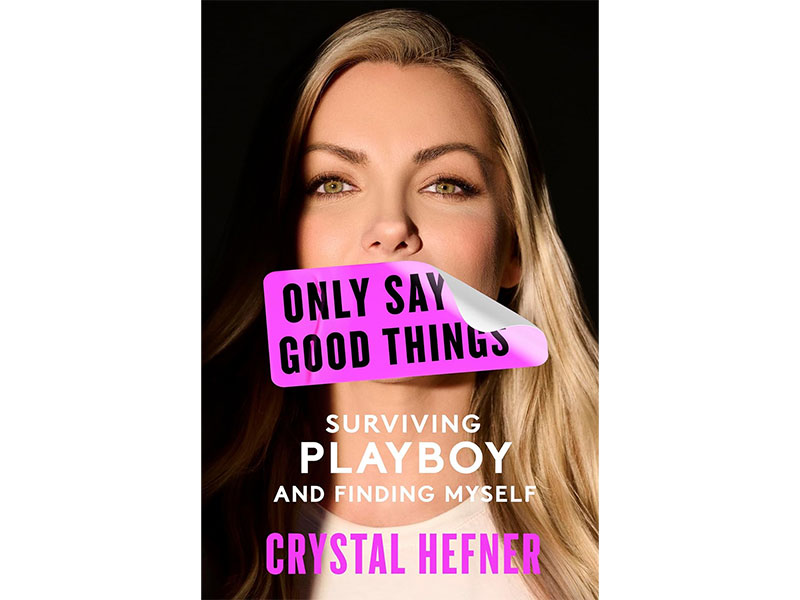
"Only Say Good Things: Surviving Playboy and Finding Myself" by Crystal Hefner (Grand Central Publishing, Jan. 23)
Only Say Good Things: Surviving Playboy and Finding Myself"Only Say Good Things: Surviving Playboy and Finding Myself" by Crystal Hefner (Jan. 23, 2024) (Grand Central Publishing)

Starting the year off with a bang, Crystal Hefner will be releasing her tell-all of her experiences as the 21-year-old woman who became the third wife of the controversial Playboy publisher Hugh Hefner until he died in 2017. 
 
The book is said to be a "raw and unflinching look at the objectification and misogyny of the Playboy mansion," detailing Hefner's experience living inside the mansion and how the alluring lifestyle sold to her had a dark side filled with control and cutthroat competition for attention. The memoir also details Henfer's rare personal experiences with her husband's final days.
02
"Dear Mom and Dad: A Letter About Family, Memory, and the America We Once Knew" by Patti Davis (Liveright, Feb. 6) 
Dear Mom and Dad: A Letter About Family, Memory, and the America We Once Knew"Dear Mom and Dad: A Letter About Family, Memory, and the America We Once Knew" by Patti Davis (Feb. 6, 2024) (Liveright Publishing)
Pattis Davis – most known for being the first daughter of former President Ronald Reagan and First Lady Nancy Reagan – recalls her childhood filled with celebrities and complicated familial dynamics through letters addressed to her parents exploring the weighty significance of their existence. 
 
The memoir is said to reexamine the Reagan family dynamics, which suffered "in an increasingly dysfunctional family drama," while casting an "empathetic" and truthful perspective on her parents. Her father, "the eternal lifeguard, who saved 77 people, yet failed to create a coherent AIDS policy." And her mother who could never escape her "own tortured youth." Davis is said to share the details of her parents' highly edited public personas and distant personalities. Nothing is more complex than being the child of two actors who later led the country from the White House.
03
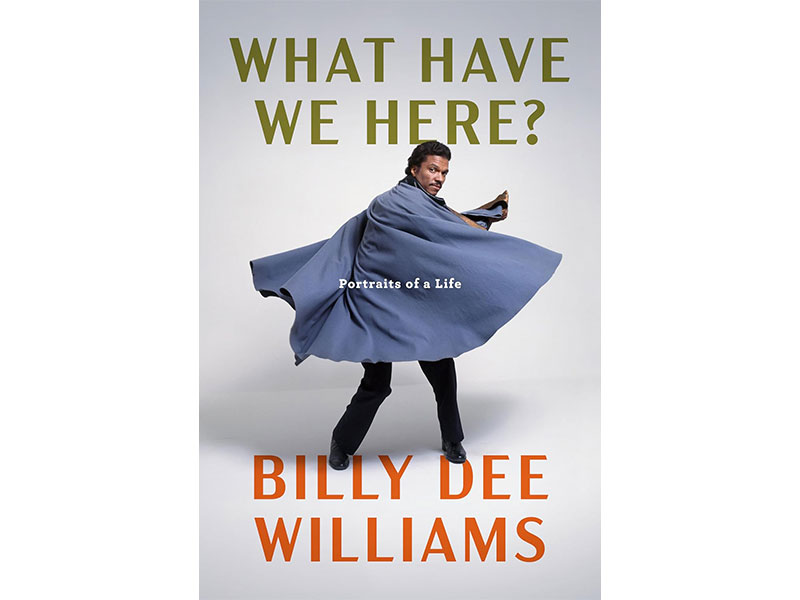
"What Have We Here?" by Billy Dee Williams (Knopf, Feb. 13)
What Have We Here?"What Have We Here?" by Billy Dee Williams (Feb 13, 2024) (Knopf)

Calling all "Star Wars" fans, Lando is back — kinda. The legendary actor Billy Dee Williams tells the story of his early life filled with love in Harlem during the neighborhood's Black cultural awakening.
 
The memoir follows Williams through his extensive and impressive career through the changing racial landscape in the arts. He recalls landing what he calls "the role of a lifetime: co-starring alongside James Caan in 'Brian’s Song.'" But most importantly, he shares his experience as the first Black character in the Star Wars universe, playing Lando Calrissian in George Lucas’s "The Empire Strikes Back."
04
"Burn Book: A Tech Love Story" by Kara Swisher (Simon & Schuster, Feb. 27)
Burn Book: A Tech Love Story"Burn Book: A Tech Love Story" by Kara Swisher (Feb. 27, 2024) (Simon & Schuster)
 
Journalist Kara Swisher has been covering ever-evolving technology since the dot.com boom in the 1990s. Her work is said to stoke fear in tech CEOs like Facebook’s Sheryl Sandberg who once said "It is a constant joke in the Valley when people write memos for them to say, ‘I hope Kara never sees this.’”
 
Her new memoir is an accumulation of her life's work as a reporter but also deep insights into her personal life and a "necessary recounting of tech’s most powerful players" like Steve Jobs, Jeff Bezos, Elon Musk, Bill Gates."
05
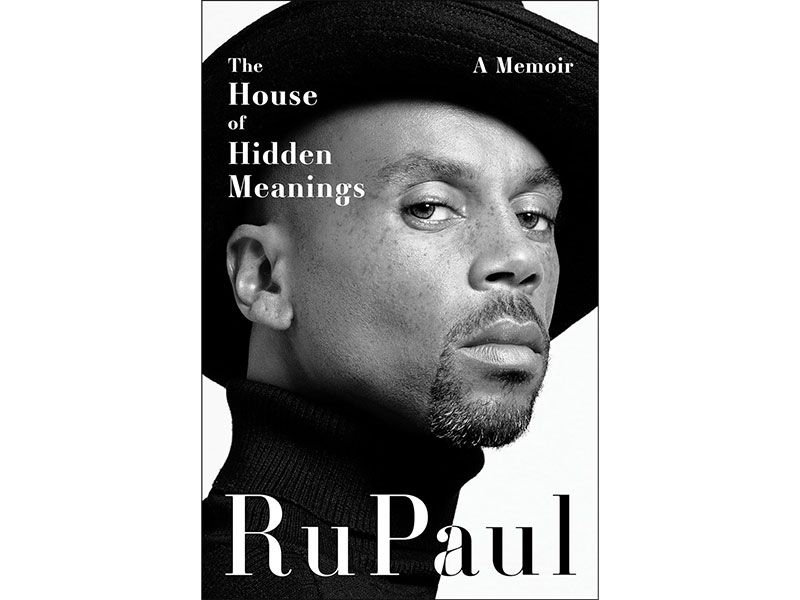
"The House of Hidden Meanings" by RuPaul (HarperCollins, March 5)
The House of Hidden Meanings: A Memoir"The House of Hidden Meanings: A Memoir" by RuPaul (March 5, 2024) (HarperCollins/Dey Street Books)

You know him from his long-running and revolutionary drag competition reality television show "RuPaul's Drag Race," but the show's creator and host trades his fabulous wigs and make-up for a pen and paper (or most likely, a computer). In his new memoir, he strips away all the performance and tells his life story which begins as a queer Black kid in San Diego to "forging an identity in the punk and drag scenes of Atlanta and New York."
 
RuPaul's memoir is an insight into the behind-the-scenes world of drag but most crucially, it allows us "introspection of his life, relationships and identity."
06
"A Very Private School" by Charles Spencer (Simon & Schuster, March 12)


A Very Private School: A Memoir"A Very Private School: A Memoir" by Charles Spencer (March 12, 2024) (Simon & Schuster/Gallery Books)
The royal family drama never ends. While last year's bombshell "Spare" rocked the book and royal world, this memoir is from one of Prince Harry's relatives — actually his late mother Princess Diana's younger brother Charles Spencer.
 
The memoir is about Spencer's first-hand experience of "a culture of cruelty" at the first boarding school he was sent to as a child. Spencer takes his audience through his privileged childhood through letters and diaries from the time period, reflecting "hopelessness and abandonment he felt at aged eight." It is said to be a "candid reckoning with his past and a reclamation of his childhood."
07
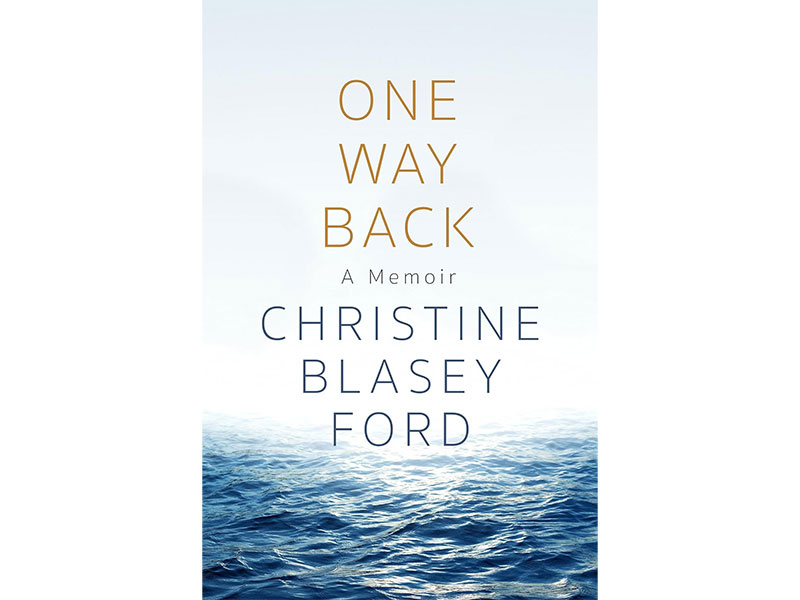
"One Way Back" by Christine Blasey Ford (St. Martin’s, March 19)
One Way Back: A Memoir"One Way Back: A Memoir" by Christine Blasey Ford. (Mar. 19, 2024) (St. Martin's Press)
In 2018, Christine Blasey Ford showed true American bravery when she testified in front of the Senate that current Supreme Court Justice Brett Kavanaugh had alledged sexually assaulted her in prep school during the 1980s.
 
Her memoir recounts the months Ford spent "trying to get information into the right hands without exposing herself and her family to dangerous backlash," which unfortunately did happen even with her careful preparation. The memoir is said to reveal new details about the "leadup to her testimony and its overwhelming aftermath" that rocked a nation. "One Way Back" tells the story behind the headlines straight from the scientist's mouth herself.
08
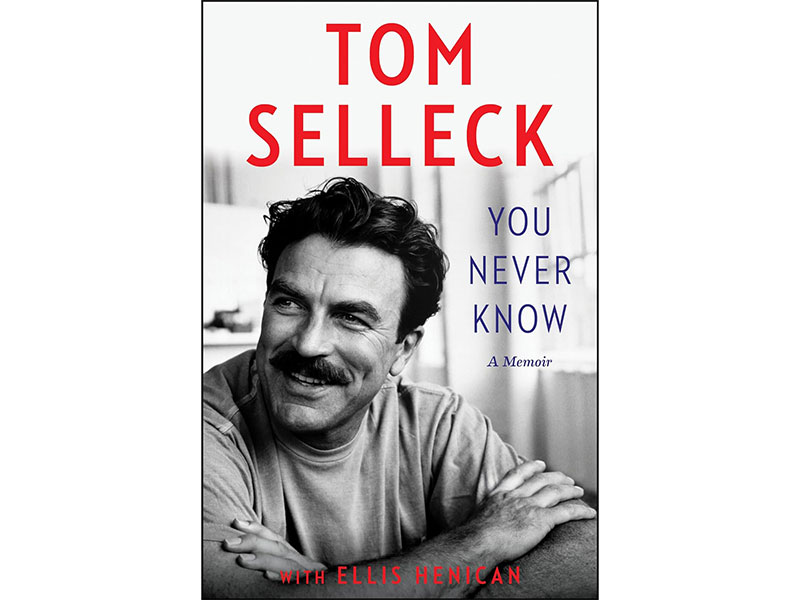
"You Never Know: A Memoir" by Tom Selleck (HarperCollins, May 7)
You Never Know: A Memoir"You Never Know: A Memoir" by Tom Selleck (HarperCollins, May 7, 2024) (HarperCollins/Dey Street Books)

Tom Selleck, the iconic actor known for playing private investigator Thomas Magnum in the television series "Magnum, P.I.," which he won an Emmy for in 1985, is ready to share about his accidental and successful career in acting.
 
Starting at business school and a basketball court at the University of Southern California, the actor was not prepared for the glamorous Hollywood lifestyle but he shaped up to be one of the most successful actors in the industry. His memoir is said to share Selleck's close friendships with A-listers like Frank Sinatra, Carol Burnett and Sam Elliott.
09
"Rise of a Killah" by Ghostface Killah (Macmillan, May 14)
Rise of a Killah"Rise of a Killah" by Ghostface Killah (May 14, 2024) (St. Martin's Press/Macmillan)
The Wu-Tang Clan rapper and group co-founder, Ghostface Killah, also known as Dennis Coles is one of hip-hop's genre shapers. In the '90s, the group broke all genre rules and took their music to the streets. Wu-Tang is known for being the foundation for modern-day hip-hop. Just ask artists like SZA.
 
Coles' memoir explores his most meaningful moments as a longtime writer and performer. The book is said to go "back to the creative ferment that led to Ghost’s first handwritten rhymes." It also highlights the group's "early successes to the pinnacle of Ghost’s career touring."
 

Sinéad O’Connor’s cause of death revealed

Sinéad O’Connor’s cause of death has been revealed.

The acclaimed Irish singer died on July 26 from natural causes, a coroner in London ruled on Monday. She was found unresponsive at her home in Herne Hill, South London, and pronounced dead at the age of 56. London’s Metropolitan Police reported at the time that O'Connor's death was not being treated as suspicious.

O’Connor rose to global acclaim amid the 1990s with her rendition of Prince’s megaballad “Nothing Compares 2 U.” She often spoke publicly about her struggles with mental health, and spotlighted several major issues — like child abuse, women’s rights and organized religion — both on and off stage. During a "Saturday Night Live" performance in 1992, O’Connor ripped up a photo of Pope John Paul II to protest against the Catholic Church.

A private funeral for O’Connor was attended by singer Bob Geldof, U2’s Bono, Irish Taoiseach (Prime Minister) Leo Varadkar and Irish President Michael D. Higgins and his wife Sabina, Ireland’s public broadcaster RTE reported. Several celebrities, including Janelle Monáe, Patton Oswalt, Jamie Lee Curtis and Toni Collette, paid tribute on social media.

Don Jr. hypes Jeffrey Epstein victim’s recanted claims — but leaves his dad’s name off the list

Another spate of court documents was unsealed Monday in the rolling disclosure of files connected to convicted trafficker Jeffrey Epstein and his co-conspirator Ghislaine Maxwell's sex trafficking operation. Right-wingers jumped on salacious accusations against former President Bill Clinton, while failing to mention those against former President Donald Trump, whose alleged "sexual proclivities" are also detailed in the filing.

Several media outlets, including Sky News, the New York Post and The Guardian, ran stories following Monday's unsealing reporting that a witness claimed in a series of emails that Epstein had "sex tapes" of Prince Andrew, Bill Clinton and Sir Richard Branson, many of them also mentioning in the body of the article that Trump had also been accused of appearing in those videos. The witness, alleged Epstein victim Sarah Ransome, later recanted her claims

According to The Messenger, Ransome allegedly wrote that her friend had sex with Trump on "regular occasions" at Epstein's mansion, and recalled meeting her for coffee once before she was scheduled to meet them both at the Manhattan townhouse. 

“She confided in me about her casual 'friendship' with Donald. Mr. Trump definitely seemed to have a thing for her and she told me how he kept going on about how he liked her 'pert nipples,’” Ransome wrote, according to the court filing.

“Donald Trump liked flicking and sucking her nipples until they were raw. One evening when we were showering together she showed me her nipples. They looked incredibly painful as they were red and swollen and I remember wincing when I looked at them,” the email allegedly reads.

A spokesperson for Trump said that the claims were baseless. 

“These baseless accusations have been fully retracted because they are simply false and have no merit,” Steven Cheung said in a statement. 

Ransome, according to Rolling Stone, had claimed to have these materials on multiple occasions, writing in another instance, "[M]y friend had sexual intercourse with Clinton, Prince Andrew and Richard Branson, sex tapes were in fact filmed on each separate occasion. I eventually managed to persuade her to send me some of the video footage which she kept, implicating all three men … I have backed up the footage on several USB sticks and have securely sent them to various different locations throughout Europe."

All have denied any wrongdoing, with Branson dubbing the claims "invented" and "baseless."

In other messages Ransome claimed the CIA had hacked her emails and that “Special Agents Forces Men sent directly by Hilary [sic] Clinton herself" visited her, also promising to leak damaging images and footage to WikiLeaks to derail both Clinton and Trump's 2016 presidential campaigns.

The document detailing the alleged tapes shows that the legal team of attorney and Epstein associate Alan Dershowitz, whom Ransome had claimed in an affidavit Epstein instructed her to have sex with, pursued a removal of the "confidentiality designation" on the emails, seeking to undermine Ransome's credibility by showing her "inflammatory, salacious, and defamatory testimony concerning [Dershowitz] and others is false."

We need your help to stay independent

Ransome later retracted the allegations in a separate email to journalist Maureen Callahan, writing that she had to step away from the story because of "bad things" that could result, court records showed, per The Messenger.

“I have spoken to my family at some length this morning and I would like to retract everything I have said to you and walk away from this,” Ransome allegedly wrote in October 2016. 

“I shouldn't have contacted you and I'm sorry I wasted your time. It's not worth coming forward and I will never be heard anyhow and only bad things will happen as a consequence of me going public and I know this to be true,” she allegedly added. 

When interviewed for a New Yorker article on Dershowitz in 2019, Ransome also walked back the allegations. 

“In the fall of 2016, she had suggested to the New York Post that she had sex tapes of half a dozen prominent people, including Bill Clinton and Donald Trump — but couldn’t provide the tapes when asked,” reporter Connie Bruck wrote, adding, “(Ransome told me that she had invented the tapes to draw attention to Epstein’s behavior, and to make him believe that she had ‘evidence that would come out if he harmed me.’)”


Want a daily wrap-up of all the news and commentary Salon has to offer? Subscribe to our morning newsletter, Crash Course.


In their rush to publicize the details of the new batch of documents, conservative influencers neglected to note Ransome's retractions and often left out Trump's inclusion in the filing. 

Right-wing conspiracy theorists and misinformation pushers, including Chuck Castello and Laura Loomer, jumped on the reports. Loomer wrote, "BILL CLINTON PEDO SEX TAPE," while A QAnon-affiliated X user posted an unfounded claim that "the FBI covered this up" after receiving payouts from the Clinton Foundation, according to Rolling Stone.

Donald Trump Jr. also latched onto the accusations, writing on X/Twitter Monday afternoon, "This seems like a big deal if true why has nothing been done about it?" over a headline that read, "Breaking News: Court documents allege Jeffrey Epstein recorded sex tapes of Prince Andrew, Bill Clinton, and Sir Richard Branson," but excluding Trump's name.

Liberals, Rolling Stone notes, largely highlighted the claims in the same document that Trump Sr. sexually abused an underage girl, with the Independent writing that “Donald Trump’s alleged ‘sexual proclivities’” were “graphically detailed in new Epstein documents" and Newsweek dubbing Monday's documents the "Worst One for Trump Yet." 

The released documents so far have largely outlined details and names already widely known to be linked to Epstein after years of interconnected legal battles. But the right-wing media furor over their unsealing presses on, according to Rolling Stone, as they hold "out hope that the newly unsealed Epstein documents can land prominent Democrats in deep trouble and somehow shake up the 2024 race."

Independent presidential candidate and avid conspiracy theorist Robert F. Kennedy Jr. in a Monday campaign email echoed a previous call for a "total and complete release of the Epstein Files," despite revealing in the same December, Fox News interview that he made the initial demand during that he and his family had flown on Epstein's private jet twice in the 1990s.  

Trump has been accused of misconduct several other times over the years. In 2020 ABC News reported that “[a]t least 18 women have accused Donald Trump of varying inappropriate behavior," including claims of "sexual harassment or sexual assault. All but two came forward with their accusations before or during his first bid for the White House.”

The former president was found liable for sexually abusing journalist E. Jean Carroll early last year. 

The alleged emails were part of a settled defamation civil suit brought by alleged Epstein victim Virginia Giuffre in 2015 against Maxwell. A federal appeals court judge ordered the documents to be unsealed after the Miami Herald pursued their release. 

Epstein died in a jail cell in 2019 while awaiting trial on sex trafficking charges in U.S. District Court. His death was later ruled a suicide. Maxwell was convicted on five counts pertaining to sex trafficking and sentenced to years in prison. 

Power, respect and conscience: How the women of “Fargo” manage (up) in a man’s world

“This is not a story about a woman who made the best of traditional skills . . . This is the ‘woman’s pluck’ story, the dust-bowl story, the burying-your-child-on-the-trail story, the I-will-never-go-hungry-again story, the Mildred Pierce story, the story about how the sheer nerve of even professionally unskilled women can prevail, show the men; the story that has historically encouraged women in this country, even as it has threatened men.”

That prose could be describing Lorraine Lyon, Jennifer Jason Leigh’s indomitable Queen of Debt and the true showstopper of “Fargo.” She seems the type, descending her spiral staircase into our lives (which she’d describe as “sad,” “little” or both) with an imperious purr of “I’m here,” before demanding a do-over when her lawyer on call ruins her entrance.

Lorraine makes the men around her nervous because she has little use for them. For what use are men to a woman with billions in the bank, six governors on speed dial and a personal liaison at the Federal Trade Commission? Her son and husband might as well be pets. She wears her power like a second skin and speaks a mid-Atlantic accent similar to the one Leigh used in “The Hudsucker Proxy,” only mellowed by casks of rare scotch and impatience with unrefined dullards.

Lorraine is not a hero, nor a pure villain, but one of the rarest forces in nature – a woman billionaire who can afford to buy respect or purchase punishments for those who don't show her a healthy fear when she fires a warning shot.

One also gets the sense that Lorraine had to earn a good share of that influence, though. Maybe she was born rich, but not with the type of money she has. Her multibillion-dollar debt consolidation company is cruelly named Redemption Services. Redemption implies salvation or forgiveness, two graces Lorraine lacks for strangers and barely bestows on loved ones. Looming behind her office desk is a behemoth of a painting bellowing what we presume to be her motto: “No.”

By now you may have deduced that the passage quoted above is not about Lorraine. Joan Didion wrote that for The New Yorker about Martha Stewart, although the line that comes next in that paragraph could have easily been written about Lorraine’s Bisquick-mixing daughter-in-law Dorothy (Juno Temple). “The dreams and the fears into which Martha Stewart taps are not of ‘feminine’ domesticity but of female power,” Didion writes, “of the woman who sits down at the table with the men and, still in her apron, walks away with the chips.”

Assuming Lorraine is around the same age as the actor playing her, she would have learned plenty from the example set by Stewart's public rise and fall, and her precarious choice to make her identity and image her brand. Didion’s essay was published four years before Stewart’s pristine if prickly image was undone by her implication in an insider trading scandal, in which she was found guilty of obstructing justice and lying to investigators.

Stewart’s empire was built on elevating the art of homemaking, winning the gratitude and millions of dollars of support from of underappreciated women everywhere. As many have written since, Stewart's main sin was being a successful older woman. She was around 63 when she was sentenced to five months in prison.

Lorraine would have vowed to never go out like Stewart did, making her money by becoming the person who takes the good life for granted instead of toiling to create it.

What use are men to a woman with billions in the bank, six governors on speed dial, and a personal liaison at the Federal Trade Commission?

She barely tolerates Dorothy until trouble comes knocking, threatening her son and her granddaughter, an intentional friction constructed by series creator Noah Hawley. Their rivalry continues the “Fargo” tradition of burdening women with having to constantly fight for every inch of the life they’ve won and the slightest esteem of the men surrounding them.

Lorraine’s battle readiness is the type one learns by competing against men – and it is mostly men in the billionaires’ club – and not only winning but routing them every single time. It’s the arrogance of a woman who never received respect or sympathy and therefore appears to have none to give.

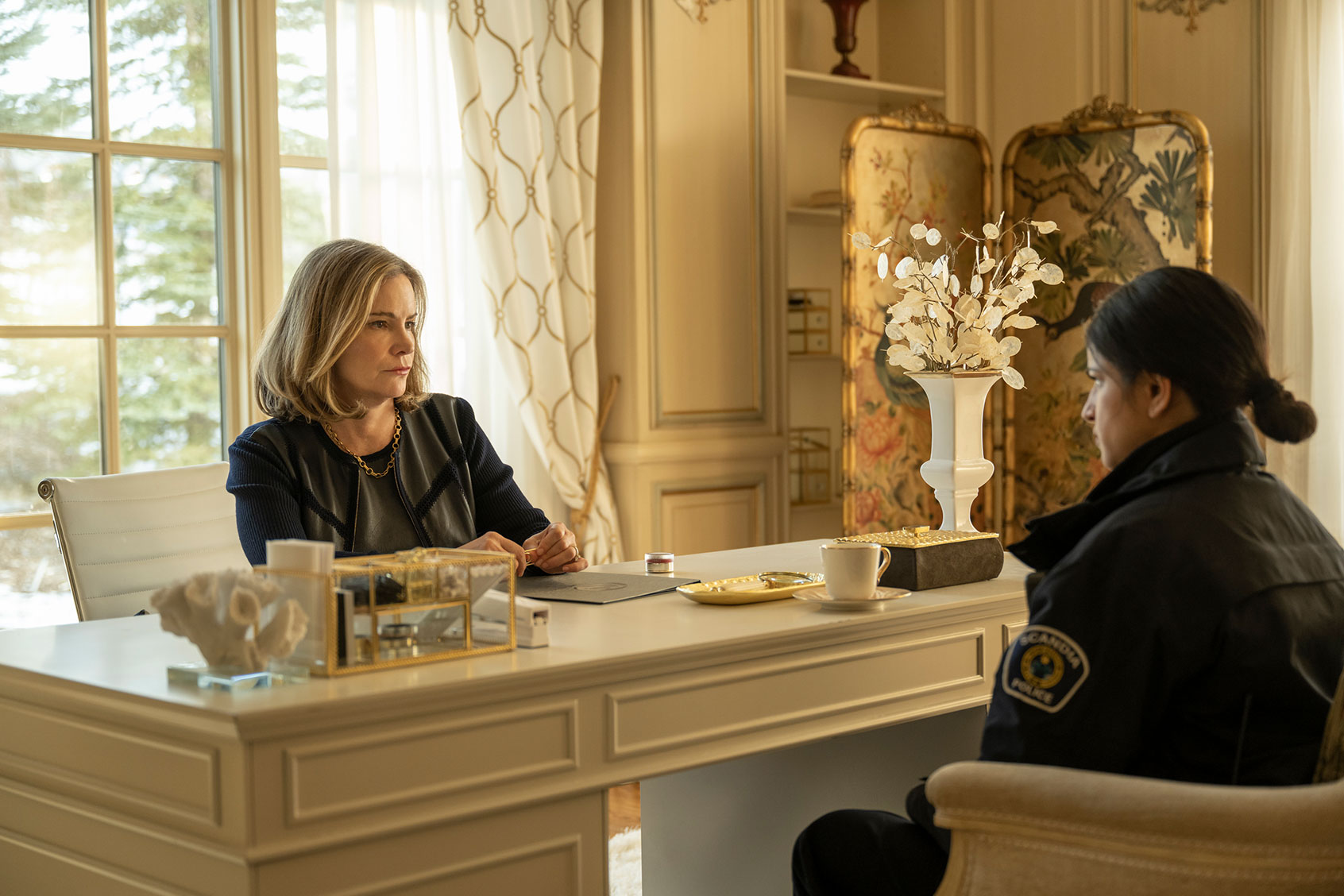
FargoJennifer Jason Leigh and Richa Moorjani in "Fargo" (FX)One of the most satisfying subplots of the season involved a sexist pair of bank executives with whom Lorraine sits down, only for them to initially refuse to deal with her until she sets them straight by informing the two that she intends to buy their bank.

Even then, the bank’s top executive fears Jon Hamm’s sheriff Roy Tillman more than Lorraine, because what’s the worst a woman can do? Roy threatens the man to stop him from making the sale to Lorraine, simply because he doesn’t want “that woman” to profit on his territory.

And that makes Scandia police officer Indira Olmstead (Richa Moorjani) braver and more stalwart than she realizes.

We need your help to stay independent

When Lorraine first meets Indira, several episodes before she sits down with those good old boys, all she can see is a civil servant in debt up to her eyeballs.

“What is your function?” Lorraine asks Indira when they first meet in her office. “The police. I mean, why do we need you? . . . You’re gatekeepers standing outside the walls, keeping the rabble from getting in. But in here, inside these walls, you have no function. You should remember that.”

Women like Lorraine pride themselves on rarely being surprised, which works in Indira’s favor. She’s also constantly underestimated, leaving her with nothing to push back with except for her anger. So when Lorraine tries to shut her up by saying, “I don’t like your tone,” Indira replies, “Tough s**t. Some of us work for a living and go home to empty houses. Or houses that should be empty bedrooms filled with the dirty underpants of our man-child spouses. Your problem is you think that you're rich because you're better than me.”

Then Indira lists all the ways the two women are alike – more to the point, how alike Lorraine and Dorothy are, despite Lorraine’s dismissive refusal to look at her daughter-in-law’s police file showing the harrowing abuse she survived. In a single conversation Indira moves Lorraine from the conservative “People claiming to be victims are the downfall of this country” to offering Indira the job of heading her security team.

Who doesn’t love a fairy godmother who can make a few calls to reduce your problems if not make them entirely vanish?

Moments after Indira walks out of Lorraine’s office, Dot’s mother-in-law gets on the phone with that banker who thought denying her was the safer choice. She opens that conversation with, “Are your balls in your belly looking for a safe place to hide? Good.” Mrs. Lyon then opens her devouring maw, listing all the ways she’s arranged to destroy the man’s life. These are not empty words but actions that have already been set in motion. “You want to know what your mistake was? It was thinking death is the worst thing that could happen to you.”

Lorraine’s epic chilliness contributes mightily to the delectability of this season of “Fargo,” offsetting its grim themes of spousal abuse and marriage as a chain of indebtedness. But her relative warming to Indira and Dorothy in the season’s second half makes her more compelling, moving what starts as a pair of adversarial relationships toward a team of women who understand each other, with one offering others a chance to succeed where bureaucracy and lazy men have failed them.

Helpfully we can see some version of this in reality. As Taraji P. Henson spills the details of how poorly treated the cast of “The Color Purple,” she’s returned to mentioning that Oprah Winfrey’s intervention helped her get better pay and other benefits casts of primarily white productions receive, like drivers to the set.

“They [Warner Bros.] gave us rental cars, and I was like, ‘I can’t drive myself to set in Atlanta,’” the Oscar-and Emmy nominee told The New York Times.  “This is insurance liability, it’s dangerous. Now they robbing people. What do I look like, taking myself to work by myself in a rental car? So I was like, “Can I get a driver or security to take me?” I’m not asking for the moon. They’re like, ‘Well, if we do it for you, we got to do it for everybody.’ Well, do it for everybody!”

Since Henson first went public with her career-long struggles to get paid what she’s worth and treated with the same respect as her white peers, people have reverted to blaming Winfrey for failing her, playing into the classic tendency to pit high-profile women against each other. 


Want a daily wrap-up of all the news and commentary Salon has to offer? Subscribe to our morning newsletter, Crash Course.


But of Winfrey, one of the movie’s main executive producers, Henson posted on her Instagram, “She told me personally to reach out to her for ANYTHING I needed, and I did! It took ONE CALL . . . ONE CONVERSATION . . . and ONE DECISION-MAKING BLACK WOMAN to make me feel heard.”

FargoRicha Moorjani in "Fargo" (FX)Who doesn’t love an aspirational power figure and fairy godmother who can make a few calls to reduce your problems if not make them entirely vanish? Hence the satisfaction of witnessing Lorraine’s steady shift from Mommy Dearest to vindictive she-dragon protecting what’s hers, including the two women she views as equals in gladiatorial terms if not financially.
Even so, Lorraine is a dangerous type of savior, playing into our culture’s poisonous trust that oligarchs and corporate titans hailed for their innovations and insufficiently questioned for their wrongdoing. And that may be intentional on the writers’ part, since presenting society as it is and not necessarily as we wish it were is the “Fargo” way.

Indira accepts Lorraine’s offer because it’s better pay than what the Scandia police can offer and a job where with actual power and resources to save Dorothy – another woman who, like her, never asked for a handout and fought for the meager life she wants.

Indira achieves that by hitching her career to someone who benefits from the common person’s suffering, and that should not be lost on us. Neither should the new power she may wield as Lorraine’s new right hand, functioning as the single commodity the Queen of Debt needs but lacks: a conscience.


Jack Smith victim of Christmas “swatting” call claiming he shot his wife: report

Special counsel Jack Smith has become the latest in a line of political and legal figures to fall victim to a "swatting" call, in which a person places a call reporting a nonexistent threat. Smith, who is spearheading the prosecution of former President Donald Trump in two of his criminal cases, was targeted at his Maryland home on Christmas Day when someone placed a call to Montgomery Country Police telling them that Smith had shot his wife at his personal residence, according to NBC News. Deputy U.S. Marshals protecting Smith and his family ultimately called off the police, informing them that there was no viable threat. According to NBC, Cecil VanDevender, Smith's attorney, previously told appeals court judges in D.C. that Smith has faced "multiple threats” and “intimidating communication” after Trump published “inflammatory posts” about Smith. Notably, on Christmas Day, Trump posted an invective targeting President Joe Biden, Smith, and others, saying he hopes the "ROT IN HELL."

On Monday, U.S. District Court Judge Tanya Chutkan, the judge overseeing Trump's election subversion case, was subject to a similar "swatting" call. The Messenger reported that the call was placed to Chutkan's home on Saturday night — police in the area were notified that "multiple people were shot," but quickly determined that the bogus report was "unfounded," per reports on X/Twitter.  Also targeted by the counterfeit calls last month were Reps. Marjorie Taylor-Greene, R-Ga., and Brandon Williams, R-N.Y. 

Last week, Georgia Secretary of State Brad Raffensperger pushed lawmakers to address the uptick in instances of "swatting" with a bill that would enforce harsher penalties for the calls. “It is deeply troubling to see a rise in swatting and other physical threats. We expect heightened tensions as we head into a major presidential election,” Raffensperger said in a news release. “We expect American citizens to engage in the democratic process — not resort to cowardly acts of intimidation,” he continued. “We’re committed to upholding our democratic principles and fighting for an environment in which citizens can freely and safely participate.”

Flailing Republican humiliated after CNN anchor grills him on threat to ban Biden as Trump revenge

Missouri Secretary of State Jay Ashcroft struggled to maintain his countenance during a recent CNN interview when asked to elaborate on his recent threat to remove President Joe Biden from his state’s primary ballot if Donald Trump continues to be ousted in other states.

The former president, who has thus far been disqualified from the 2024 GOP primary ballot in Colorado and Maine for his alleged efforts to overturn the 2020 election and the insurrection that followed, is reportedly concerned that the Supreme Court may rule against him in both cases.

On Friday, not long after the Supreme Court stated that it would look into the Colorado ruling, Ashcroft took to X/Twitter. “What has happened in Colorado & Maine is disgraceful & undermines our republic,” he tweeted. “While I expect the Supreme Court to overturn this, if not, Secretaries of State will step in & ensure the new legal standard for @realDonaldTrump applies equally to @JoeBiden!”

Ashcroft later told NBC that his post was meant to “remind people of how severe this is” and that “chaos” will follow if the Supreme Court does not reverse Colorado’s decision. He also stated that Biden has “let an invasion unstopped into our country from the border,” seemingly conflating Biden’s immigration policies with the severity of Jan 6.

CNN anchor Boris Sanchez pressed the Missouri official to qualify his words during a sit-down, first observing that “the secretary of state lacks authority to assess qualifications of a candidate, to determine whether to place a candidate’s name on a primary ballot.”

Ashcroft replied that Sanchez was “not an attorney,” stating that he would only pursue his plan if Colorado’s ruling was upheld, before Sanchez again cited Missouri constitutional law. 

“And I continue to try to answer your questions, and you continue to try to tell me stuff that just isn’t true,” Ashcroft said.

“I’m wondering, though, what would then be your justification for removing Joe Biden from the ballot in Missouri?” Sanchez asked. “Has he engaged in your mind in some kind of insurrection?”

We need your help to stay independent

Ashcroft replied by noting that  “there have been allegations that he’s engaged in insurrection,” which Sanchez swiftly followed by asking for examples.

A seemingly floundering Ashcroft claimed Sanchez was “scared of the truth,” which the CNN host Sanchez rejected.

“Oh, I’m not terrified of the truth at all. It seems like you might be. Let’s hear what you have to say,” Sanchez retorted. “What did Joe Biden do in your mind that equates to insurrection? What allegations are you talking about?”

Ashcroft ultimately used vague references to claims made by Texas Lt. Gov. Dan Patrick and Florida Gov. Ron DeSantis, who have both previously suggested that Biden could face ballot removal in their states over his handling of immigration. 


Want a daily wrap-up of all the news and commentary Salon has to offer? Subscribe to our morning newsletter, Crash Course.


“They made allegations and all it took for the president, for former President Trump to be taken off the ballot in Colorado and in Maine were allegations,” Ashcroft alleged. “We should not be a country that removes people from the ballot based on allegations. I think you can agree with that.”

After Sanchez attempted to delineate the galling differences between actions taken at the southern border and a full-fledged insurrection at the U.S. Capitol, Ashcroft accused him of supporting his “guy,” Biden. 

"My guy, Joe Biden is not my guy,” Sanchez hit back. “You don’t know who my guy is. The point is, sir, the point is that it’s not clear whether the 14th Amendment is self-executing or not. In other words, it doesn’t matter to a court at that point whether there was a conviction of Donald Trump for insurrection or not. That is a debate for the Supreme Court to have.”

“Desperate” Trump says he wants the economy to crash this year — because it will give him a boost

Donald Trump during a Monday interview with Lindell TV said he hopes for an economic crash because he thinks it will boost his chances of winning the 2024 presidential election. The former president sat down with Lou Dobbs, a former Fox host whose show was axed in 2021 over Dobbs’s intense MAGA fervor. During the interview, Dobbs asked Trump to disclose his plans for how he would “restore primacy” for those who are “fighting for their economic and their real survival.” Trump replied by discussing the proposed Keystone XL Pipeline, which would run between Nebraska and Alberta, Canada, though President Joe Biden revoked the pipeline’s permit once he assumed office. “That’s one of just so many different things,” Trump said of the pipeline. “So what we will be doing is we will be drilling, we will be reducing energy, that will bring down inflation, that will bring down interest rates.”

“We have an economy that is incredible,” Trump added. “We have an economy that is so fragile. And the only reason it’s running now is it’s running off the fumes of what we did—what the Trump administration did. It’s just running off the fumes.” He continued: “And when there’s a crash, I hope it’s going to be during these next twelve months, because I don’t want to be Herbert Hoover,” referencing the acting president during the Great Depression. “The one president—I just don’t want to be Herbert Hoover.”

MSNBC host Joe Scarborough took sharp issue with Trump’s remarks about the economy, using them as fodder for why he should not be permitted to once again run for office. "What you have to love is that he's once again exposed himself to show just how horrific of a public servant he would be," the “Morning Joe” host said. "This is a guy that admitted on television, because he's so focused on himself, that he wants Americans to hurry up and lose their jobs. He wants them to lose their savings, he wants them to lose their 401(k)s. Yes, he wants their retirement accounts to be shattered over the next 12 months. He's that desperate to be elected." Scarborough continued by asserting that “economists from left to right” will claim the economy is stronger than it has been in recent years. “It's more resilient than they ever expected it to be,” he added. “This economy, you even had conservatives, you had [Wall Street Journal editor] Gerard Baker, no fan of Joe Biden, saying one of the big winners of 2023 last year was the United States economy. It is strong."

The 10 biggest bombshells from Lifetime’s doc “The Prison Confessions of Gypsy Rose Blanchard”

Gypsy Rose Blanchard, who became notorious following the death of her mother Clauddine "Dee Dee" Blanchard, is taking control of her own narrative now that she’s out of prison.

On Dec. 28, Gypsy was released from prison on parole after serving eight-and-a-half years of a 10-year prison sentence. In 2016, she pleaded guilty to orchestrating the murder of her mother, who was stabbed to death in June 2015 by Gypsy’s then-boyfriend Nicholas Godejohn. Dee Dee suffered from Munchausen syndrome by proxy, a psychological disorder and form of child abuse in which a caregiver fabricates, exaggerates or induces serious illness in another person — typically their child — to garner attention.

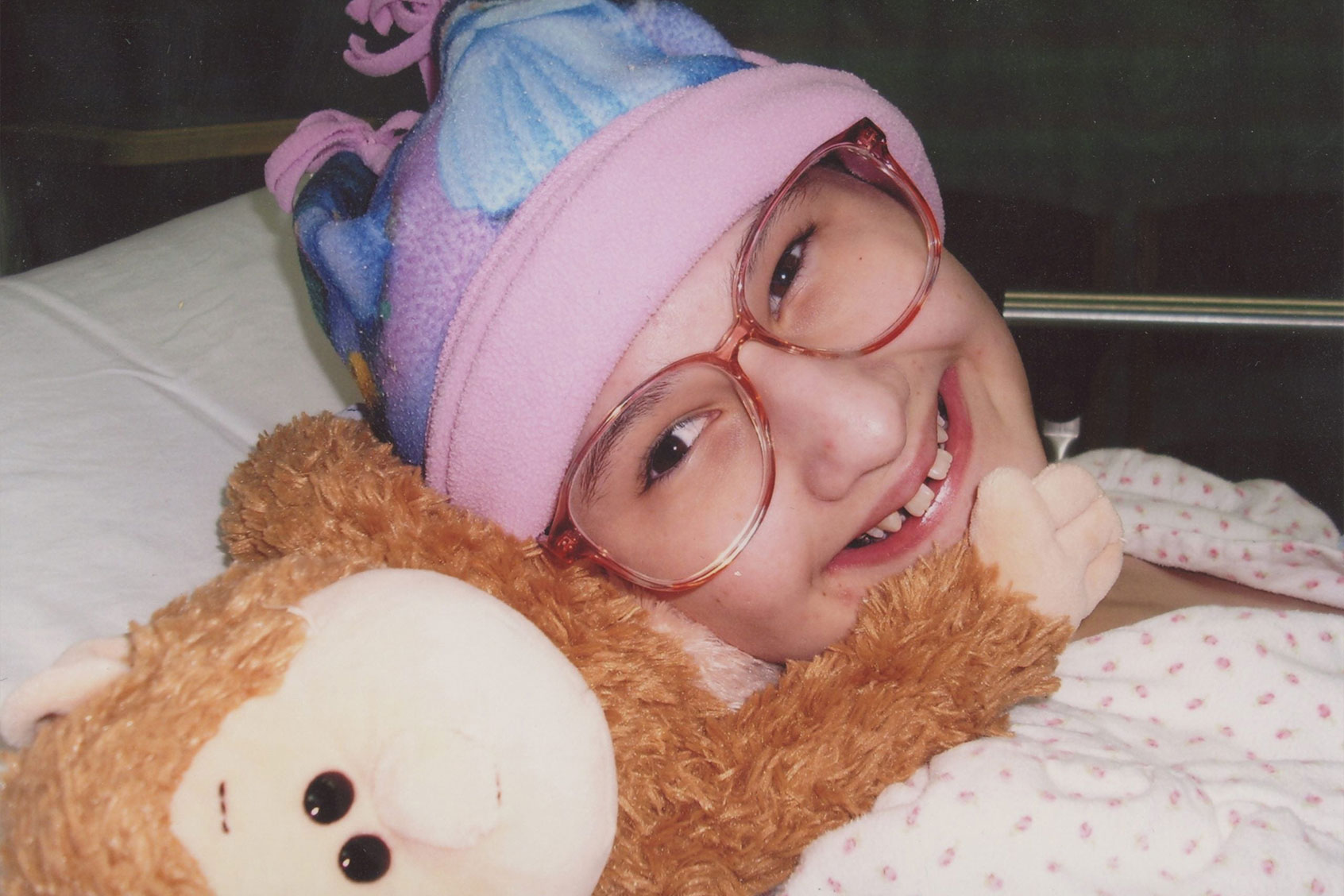
For years, Gypsy was forced to pretend that she suffered from leukemia, asthma and muscular dystrophy. Her mother routinely shaved her head and forced her to use a wheelchair, feeding tube and oxygen tank, even though she didn’t require them. Gypsy was also subjected to several intrusive medical procedures and kept in captivity by her mother.

Gypsy’s heartbreaking story is explored in the Lifetime documentary “The Prison Confessions of Gypsy Rose Blanchard.” The six-episode series, which premiered on Jan. 5, features several exclusive interviews with Gypsy, conducted over the span of 18 months both in person and over the phone. Gypsy’s health providers, closest acquaintances and immediate family members also make several appearances.

Here are 10 of the biggest bombshells from the series:

01
Dee Dee lied about her age when she first met Gypsy’s father 
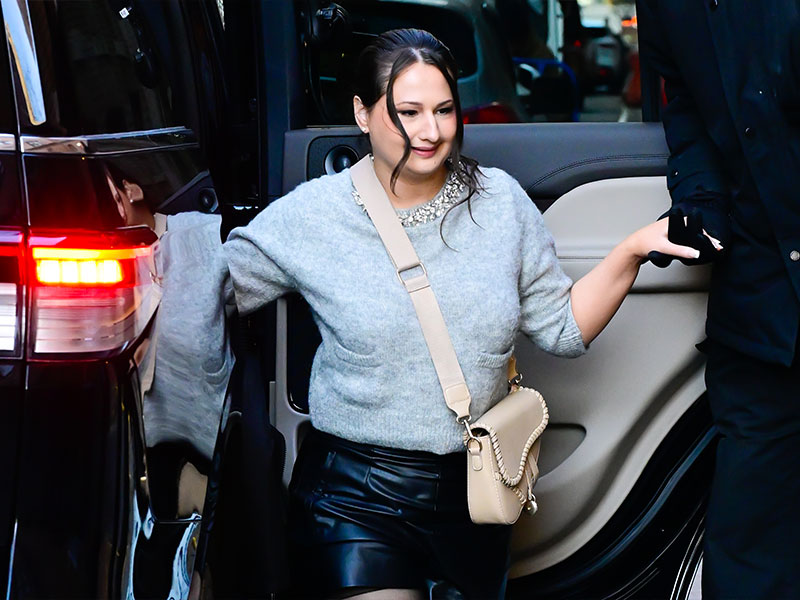
Gypsy Rose BlanchardGypsy Rose Blanchard is seen in midtown on January 05, 2024 in New York City. (Raymond Hall/GC Images/Getty Images)
Rod Blanchard, Gypsy's father, said he and Dee Dee were dating only three months when Dee Dee told him that she was pregnant. Rod was 17 and still in high school at the time. Dee Dee, he recalled, told him she was 21 when she was actually 23.


“I felt it was important to get married, but I woke up three months later on my 18th birthday, and it just kind of hit me like, ‘You’re married to a woman you’re not in love with,’” Rod said. “So Dee Dee, I’m sorry. I tried to be there as a father but as a husband, I said, ‘I don’t feel that.’ She grabbed our marriage license, it was in a frame, and threw it on the ground.”


Gypsy said she believes her mother’s “most devastating failure” was her divorce from Rod. Dee Dee blamed Gypsy for their divorce because she “wasn’t the son that [Rod] wanted.”


“I’m like thinking in my mind, ‘How are you blaming me for something that happened before I was born?’” Gypsy said.

02
Gypsy accused her grandfather of sexually abusing and molesting her
The Prison Confessions of Gypsy Rose BlanchardThe Prison Confessions of Gypsy Rose Blanchard (Courtesy of the Blanchard family/Lifetime)
After Dee Dee was badly injured in a car accident in 2000, Gypsy was sent to live with her grandfather, Claude Pitre, Sr. Gypsy alleged that during this time, she was sexually abused and molested by Claude.


“My grandpa would take me out of my wheelchair and bring me into a closet or the shack that was behind their house where he would do wood-working and he would perform sexual acts on me,” Gypsy said. “He would make me touch him and he would touch me.”


When asked about the abuse allegations, Claude denied them on camera, claiming that Gypsy had tried to touch him: “She would try to touch me, and I’d say no. Don’t do that. . . . She started that when she was about four years old . . . she was trying to touch me.”


Gypsy’s uncle, Evans Pitre, asserted that the allegations were untrue and “probably taught to her [Gypsy] by her mom . . . to throw the spotlight on someone else besides her.” Gypsy, however, insisted that it “100% happened,” and even said she wants nothing to do with her grandfather.

03
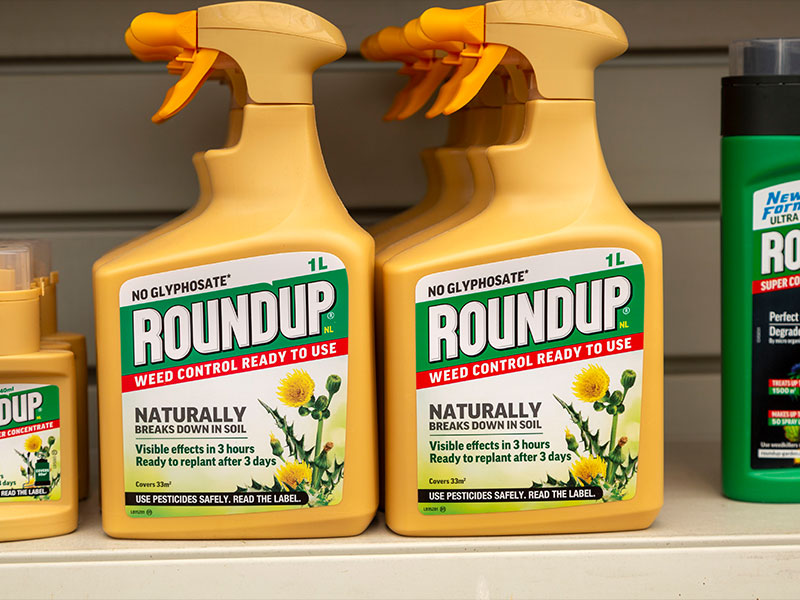
Dee Dee allegedly put Roundup in her stepmother’s food
Roundup no Glyphospahte weed killerPlastic containers Roundup no Glyphospahte weed killer spray (Geography Photos/Education Images/Universal Images Group via Getty Images)
According to Gypsy’s cousin Bobby Pitre, Dee Dee harbored a deep hatred for her stepmother, Laura Mae. After Dee Dee recovered from her injuries, she stayed at Claude’s place and began poisoning Laura’s food with weed killer.


“One day, my grandfather and Gypsy were hanging out, and Gypsy sees the Roundup in the corner and tells my grandfather, ‘Oh that’s the vitamins that mom gives to grandma Laura Mae,’” Bobby said.


Gypsy said she knew that her mother had “this hatred” towards Laura Mae. She recalled a heated argument between her mother and step-grandmother, in which Laura Mae told Dee Dee that she didn’t want Dee Dee living with her and Claude anymore. Dee Dee and Gypsy left Claude’s house and moved to Slidell, Louisiana.

04
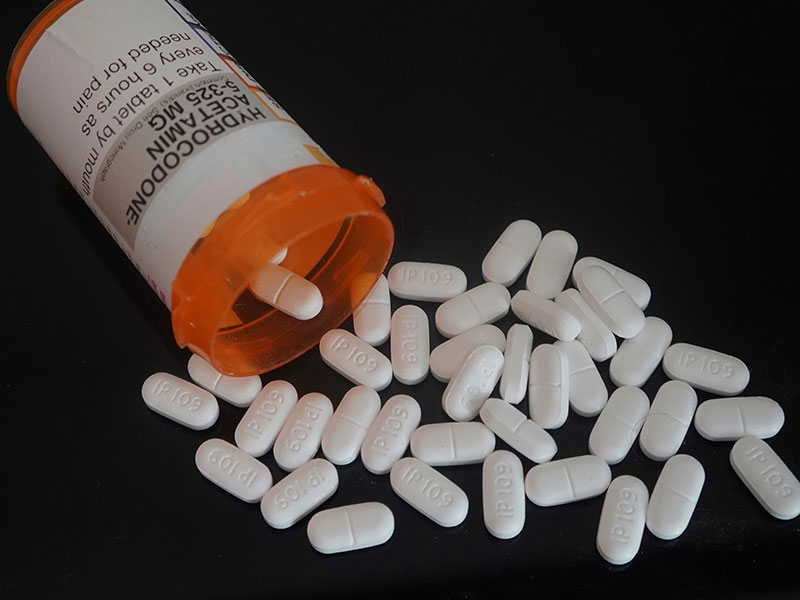
Gypsy became addicted to pain medications
Prescription opioid pain pillsPrescription opioid pain pills spilling out of medicine bottle (Getty Images/Julia Mascardo)

Dee Dee claimed Gypsy suffered from several chronic conditions including leukemia, asthma and muscular dystrophy. In one instance, Dee Dee sought assistance from an ENT (ear, nose and throat) specialist for Gypsy’s excessive salivation, a common problem in children diagnosed with cerebral palsy. Gypsy's salivation problem wasn't caused by cerebral palsy — instead, it was caused by Dee Dee, who would numb Gypsy’s mouth with Orajel, which caused her to drool. Although Gypsy was never diagnosed with the neurological disorder, her salivary glands were removed.


“After surgery, I had more and more of my teeth removed. And now, I have 16 of my teeth left. Today, my dentures don’t fit in properly,” Gypsy said, adding that she wasn’t able to get a new set of teeth while in prison because “they don’t do that here.”


The surgery also fueled Gypsy’s addiction to pain medication, which she opened up about for the very first time in the documentary. After her prescription ran out, Gypsy said she would secretly “take one or two” of her mother’s prescribed Vicodin to help ease the pain.


“I didn’t know what addiction really was. I just knew that it was a craving . . . and all I could think about,” she said.


When she first got to prison, Gypsy said she was “subjected to a lot of peer pressure" and her addiction worsened. She smoked for about a year, first by vaping and then with real cigarettes. During the first few years of her incarceration, Gypsy said she coped by using drugs like suboxone, a narcotic drug used to treat opioid addiction.


“Instantly, I was brought back to the addiction that I had to pain pills, back when I was living with my mother,” she continued. Gypsy recalled the time she lied to her stepmother, Kristy Blanchard, so she could pay a fellow inmate back for drugs: “I told her that I accidentally broke this girl’s CD player and if she could please send $50.”


“I hated myself and I hated what I became,” Gypsy said. She eventually told Kristy the truth and said she is now sober.

05
Dee Dee chained Gypsy to the bed for two weeks as punishment
The Prison Confessions of Gypsy Rose BlanchardThe Prison Confessions of Gypsy Rose Blanchard (Courtesy of the Blanchard family/Lifetime)
In 2011, Gypsy made a plan to run away from home, after she met a man named Dan — who was 36 years old then — at a sci-fi convention. The pair began an online relationship on Facebook, where they exchanged messages routinely. Gypsy opened up to Dan about her life at home and her mother. He became the first person to know that Gypsy could walk.


Gypsy, who believed she was 15 at the time, fantasized about being older so she could legally be together with Dan. She later came across her Medicaid card, which revealed that she was actually 19 and born in 1991 — not 1995, like her mother had claimed. The shocking revelation was enough to encourage Gypsy to run away from home.


Gypsy stole her mother’s pain medication and cash before fleeing to Dan’s friend's house, where Dan was staying. When she arrived, she learned (much to her horror) that Dan was on parole and couldn’t leave Missouri.


“My first reaction was ‘Oh my God. She’s going to find me,’” Gypsy recalled.


Dee Dee was able to locate Gypsy using her cell phone, which fell out of her backpack when she attempted to run away. Gypsy eventually agreed to come back home when Dee Dee told her that she could continue seeing Dan.


However, once they returned, Dee Dee smashed Gypsy’s computer and her cell phone. She also chained Gypsy to the bed using handcuffs and a dog leash. Gypsy was chained for two whole weeks.


“I was at her mercy for everything, so to go to the bathroom, for food,” Gypsy said. “As punishment, she would not feed me every day and she would eat whatever she wanted. It was these things that she would do that was almost taunting.”

06
Dee Dee put a Voodoo hex on Gypsy so she would never find love
Voodoo dollVoodoo doll (Getty Images/DedMityay)

After Gypsy's two-week-long punishment was over, Dee Dee decided to also put a Voodoo hex on her daughter so she would be unsuccessful in love. Gypsy recalled her mother putting a cow’s tongue, a picture of Dan, a picture of Gypsy and “a little bit” of Gypsy’s menstrual blood in a mason jar. Dee Dee buried the jar in the backyard and told Gypsy, “You will never find love. You will never be happy.”


“I just think that it’s true because every time I get close to someone, they leave me,” Gypsy said.

07
Gypsy first attempted to kill her mother with a BB gun
BB gun pelletsBB gun pellets (Getty Images/markcarper)

Gypsy tried to run away again in 2011. She packed a bag and hid it under the couch but unfortunately, Dee Dee found it and confronted her about her plans to flee from home. Gypsy, in a moment of fear and panic, grabbed a gun her mother had purchased and “pulled the trigger as many times as I could.”


Gypsy realized that the gun she had used was actually a BB gun when she noticed her mother’s superficial wounds. She recalled feeling relieved at the time because “I did not intend to kill her.”


“But the point is, I was shocked that I pulled the trigger at all,” Gypsy added.


Records revealed that when Dee Dee went to receive medical care for her injuries, she lied about the incident. Dee Dee told doctors that she and Gypsy were robbed by a man, who had shot her 10 times with an air pellet gun. Everyone believed the story and no one suspected any wrongdoing on Dee Dee’s part.

08
Ex-boyfriend Nick Godejohn claimed to have a vampiric “alternate personality”
Bats flyingBats flying (Getty Images/BirdHunter591)
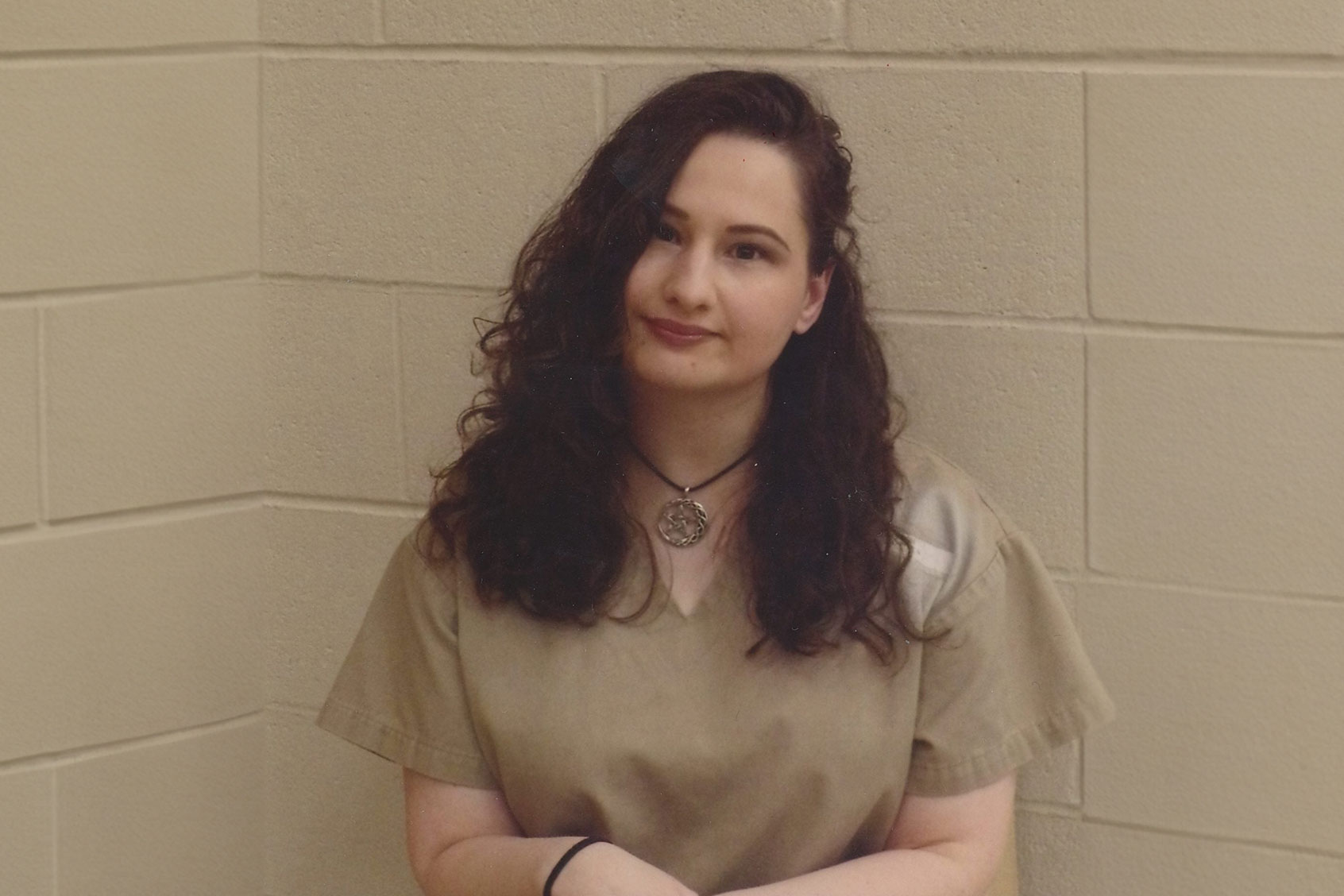
In 2012, Gypsy began an online relationship with Nick Godejohn, who she met on the website Christian Dating For Free. After publicizing their relationship on Facebook, Gypsy said one of Nick’s exes reached out to her to warn her that Godejohn was verbally abusive, violent and controlling. Gypsy ignored the warning, believing that the ex was "jaded." Gypsy and Godejohn met in person for the first time in 2015.     


After Dee Dee filed for power of attorney, Gypsy said she proposed the idea of killing her mother to Godejohn, who was on board. He told Gypsy about his “alternate personality” — a 500-year-old vampire who loved killing and would kill Dee Dee for her. Godejohn allegedly “directed” Gypsy to research ways to commit murder, suggesting poison and arson. Gypsy said she suggested using a gun, but Godejohn told her it would be too loud and alert the neighbors.


The pair eventually settled on using a knife to kill Dee Dee. Gypsy said she stole the weapon from a Walmart.


“I look at myself (then) as a scared little girl trapped and desperate to get out of a bad situation,” she said. “I wish that I knew that there were people that I could go to for help. I wish that I would’ve known that I didn’t have to commit this crime.”


Gypsy recalled a conversation she had with her mother on the night of the murder. She said that Nick had told her to tell Dee Dee "I love you" one last time.


“I gave her a big hug,” Gypsy said. “And I remember her telling me, ‘What’s that for? I’m not dead yet.’ It was so ironic.” Gypsy went into Dee Dee’s bedroom afterwards and cried. “A part of me didn’t want to go through with it [the murder]. I hugged her pillow because it had her scent.”

09
Godejohn allegedly raped Gypsy after murdering Dee Dee
The Prison Confessions of Gypsy Rose BlanchardThe Prison Confessions of Gypsy Rose Blanchard (Courtesy of the Blanchard family/Lifetime)

After her mother had gone to sleep, Gypsy said she texted Godejohn, who arrived at the house and instructed Gypsy to go to the bathroom and cover her ears. Moments before her death, Dee Dee called out for help.


“To this day, I can’t get that out of my head,” Gypsy tearfully said. “And I want to help her, but I don’t. I just sit there. I don’t do anything. I just sit there and then I hear her screaming again, and then there was one sharp scream, and then it was over.”


Gypsy said she was “completely dissociated” throughout the murder. She alleged that after Godejohn finished the job, he “commanded” Gypsy to be naked and raped her. “Because I didn’t let him rape my mother, I had to agree to let him rape me,” she said.


“After Nick killed my mother, he told me to get in my bedroom and take off all the stuffed animals that was on my bed. I knew that he was going to have sex with me. Never once was it a fantasy to me,” Gypsy said. “When I yelled ‘stop,’ he didn’t. I called for my mother.”


According to the documentary, Godejohn has never been charged with sexual assault, despite Gypsy’s allegations.

10
Gypsy’s family was skeptical of her marriage to Ryan Anderson
Ryan Anderson; Gypsy Rose BlanchardRyan Anderson and Gypsy Rose Blanchard attend "The Prison Confessions Of Gypsy Rose Blanchard" Red Carpet Event on January 05, 2024 in New York City. (Jamie McCarthy/Getty Images)

Ryan Scott Anderson, a 37-year-old sixth grade social studies teacher, said he began writing to Gypsy in prison in 2020 as part of a deal with his friend, who wanted to write to Joe Exotic from the hit Netflix series “Tiger King.”


"'Tiger King' was very popular at the time. And so my friend said, 'Oh, I really want to write Tiger King,'" Anderson said. "And I said, 'OK, well, I'll make a deal with you. You write Tiger King. I'll write Gypsy Rose Blanchard.' And that's what happened."


Gypsy said she admired Anderson’s sense of humor in his first letter to her. She revealed that she was in a relationship at the time, but quickly broke things off with her boyfriend so she could pursue a relationship with Anderson.


The pair wrote to each other for 14 months before Anderson met Blanchard at the Chillicothe Correctional Center, he said. On their third visit, Anderson proposed to Gypsy with an engagement ring he snuck into the prison by wearing it on a chain. Gypsy and Anderson married in a small prison ceremony on July 21, 2022, less than a month after obtaining their marriage license.


Gypsy’s father Rod and stepmother Kristy met Anderson shortly before the wedding. Although the family offered their support for the newlyweds, they also expressed their concerns with the pacing of the relationship and timing of the marriage.


“Ryan’s demeanor was very pleasant. Real sweet, good manners. And it makes me happy that she has somebody she can turn to,” Kristy said. “But, I said, ‘Gypsy, I’ll support what you want to do, but please don’t get married.’ Learn his habits, learn everything there is, just like he would need to learn with you. Walk out as a single woman or dating Ryan — don’t walk out married.”


Three months after the wedding, Kristy advised Gypsy to get an annulment when Gypsy and Anderson had an argument about Gypsy being in contact with an ex-boyfriend. Gypsy and Anderson, however, were able to work through their issues:


“I said, ‘I need help, I need therapy and I think that you do, too,'” Gypsy said. “So he got a therapist and he has gotten me a therapist. And that has been the last argument that we have had.”


As for Rod, he told Gypsy on a phone call, “I like Ryan; he seems pretty genuine. So if you really love each other, it’s going to work out and y’all gonna make it. You have to be in love with him, and you know, I wasn’t in love with your mom. Wish I would have, but you can’t force that. And it’s not always going to be easy. Just be strong for him when he’s weak, and he’ll be strong for you.”

“The Prison Confessions of Gypsy Rose Blanchard" is currently available for streaming on Lifetime. Watch a trailer for it below, via YouTube:


“I’m not fully this either”: Lily Gladstone discusses pronoun inclusivity

"Killers of the Flower Moon" star Lily Gladstone is breaking boundaries and industry standards not only by becoming the first Indigenous person to win best actress at the Golden Globes, but also by challenging the gender binary.

In an interview with the New York Times, the actor said she has always felt like she has existed in-between because of her mixed-race heritage, which is comprised of Blackfeet and Nez Perce and white. But there's another aspect where they felt in the middle, too — her gender identity.

“It’s kind of being middle-gendered, I guess,” said Gladstone, who uses both “she/they" pronouns. “I’ve always known I’m comfortable claiming being a woman, but I never feel more than when I’m in a group of all women that I’m not fully this either.”

From Gladstone's personal experience growing up on a Blackfeet reservation in Montana for most of her adolescent life, gender fluidity was normalized and honored. Outside of the community, Gladstone's "boy cousins were misgendered because they wore their hair long . . . It happens to a lot of kids, I think, especially Native boys leaving a community where long hair is celebrated [and then] just kind of getting teased for it,” they told People magazine.

But, most importantly, the reason why gender neutrality is accepted in some Indigenous communities is because “in most Native languages, most Indigenous languages, Blackfeet included, there are no gendered pronouns. There is no he/she, there's only they,” Gladstone said.

Interestingly enough, Gladstone said when other Indigenous people from different tribes have spoken to her in English, they have accidentally misgendered her. "And then they'll get embarrassed about it, but it's because they've learned English later,” they said.

In Blackfeet, Gladstone said the language doesn't have gendered pronouns, but "our gender is implied in our name. But even that's not binary” because men can be given names typically considered female and vice versa, depending on the type of role they fulfill in society. In addition, according to Indian Health Services, traditionally, for Native Americans, there's an identity known as two-spirit. Two-spirit people are neither men nor women, but rather separate genders. The person potentially inhabits both masculine and feminine spirits, while also being gender nonconforming.

For Gladstone, “my pronoun use is partly a way of decolonizing gender for myself,” they said. 

While there are very few high-profile gender-neutral or nonconforming actors in Hollywood, Gladstone shared a moment with a young actor on the rise, Bella Ramsey. At Elle’s Women in Hollywood event, Jodie Foster told the nonbinary “The Last of Us” actor that the room was full of supportive siblings.

“That’s wonderful and that’s true,” Gladstone said. Afterward, Gladstone introduced herself to Ramsey to "let them know, 'You also have siblings here, too.'"

“There will always be fat people”: Kate Manne fights fatphobia in the age of Ozempic

The fat acceptance movement has been around for decades now, and has even gained mainstream traction in recent years, usually under the banner of "body positivity" or the rejection of "diet culture." Nowadays, even fitness influencers and women's magazines feel the need to downplay weight loss as an exercise goal. Weight management services sometimes avoid the word "diet" in favor of championing "wellness." But right in the middle of this slow-moving gain toward a more body-inclusive culture, a bomb was dropped: The sudden arrival and rapid spread of weight-loss drugs like Wegovy and Ozempic. Both are being marketed as something akin to a "miracle cure," allowing people to lose a lot of weight, something rarely achieved through diet and exercise alone

It's a hell of an environment for Kate Manne to publish her new book "Unshrinking: How to Face Fatphobia." Yet the Cornell philosophy professor exudes the same calm, rational style of argument that she has offered in previous works addressing misogyny. She spoke with Salon about why she believes the weight-loss drug revolution is overrated and why it's still important to push back against the overwhelming pressure on women to be thin. 

This interview has been edited for length and clarity. 

You put more of yourself in this book than you have in your previous books. Why did you make that choice? How are you feeling about that?

I've often been asked, when it comes to my work on misogyny, why I got interested in the topic. I found that I really couldn't tell that story without also telling a story about fatphobia. I had been especially targeted as a fat girl and then fat woman over the years. I wanted to tell more of my personal story. Misogyny and fatphobia crucially intersect. 

It's certainly important to have a deep dive on the empirical evidence, like the evidence that for many people dieting is a common pathway to eating disorders. But I needed to make the point that no one is immune to the pressure to shrink yourself. It's so pernicious and toxic. As someone who's written two books about patriarchy, I still felt this intense pressure to be thin or at least thinner. My hope is that the personal story makes it clear to the reader is that no one is really immune to these pressures. We really can't think about how to resist and combat misogyny without being smart about body diversity more generally.

It's an interesting book to come out at this particular point. The discourse around body acceptance and fat acceptance has become more mainstream in the past decade, and that's all been upended in the past year with the widespread release of Ozempic and other weight-loss drugs. How do you feel about those particular change?

I think you're right that it exposes much of the body acceptance or fat acceptance that we've seen superficially. It exposes it as a kind of fragile detente, rather than a real peace or truth that we're having with our bodies. The war against our bodies is still being waged — and now there's a new tool in that fight, a new weapon in the attempt to make yourself small.

No matter what you think about drugs like Ozempic and other related drugs, they're not going to make everyone thin. The most optimistic estimates from the companies themselves show people losing 15% body weight. [In other words, approximately 45 pounds for a person who weighs 300 pounds.] So there will always be fat people. There have always been fat people. We're going to need to deal with body diversity for as long as we have bodies. Ozempic is not going to make any of that go away. It exposes just how ambivalent our fat acceptance has been. We've done fat acceptance as a "lemonade out of lemons" strategy, rather than fully embracing the bodies that we have, which would be my preferred way of doing things.

It seems as if, prior to these drugs, there were two threads of fat acceptance. One is resigned, saying, well, dieting doesn't work and exercise doesn't work. So since there's nothing that fat people can do to change themselves, we need to move to acceptance. Then there's a different argument which is that it shouldn't matter one way or another. We should accept fat people as they are, regardless of whether or not they can lose the weight.

"What if we believed with our whole hearts that bodies come in different shapes and sizes? Bodies come with different heights and different hair colors, skin colors and hair textures. What if we embrace a range of body masses as a beautiful part of human diversity?"

It's a great distinction to make. I do agree that body size is not under our tight control.  But you're right that a deeper and more radical point is: What if we thought differently and believed with our whole hearts that bodies come in different shapes and sizes? Bodies come with different heights and different hair colors and skin colors and hair textures. What if we embrace a range of body masses as a beautiful part of human diversity? I know that thought will be uncomfortable to many of my readers, but it's where I have ended up, having been down the road of thinking through this. It's not only about my body, but about the world that I want my child to grow up into. I want a world where we regard body size as another beautiful facet of the ways that we differ. It shouldn't be minimized, even if we could minimize that diversity. 

I remember many years ago, back in the feminist blogosphere days, when Kate Harding wrote a blog post about this. As I recall, she wrote that she could probably lose some weight if she starved herself, but she didn't want to. I remember feeling how radical that was: Like, I just don't want to. So much of this is about the role of food and pleasure and our right to eat. 

I think Kate Harding is a brilliant writer and really broke huge ground in this space. She was one of the first writers I read 20 years ago when, as a fat young woman, I was discovering these ideas and their radical power. It took me a long time to get fully behind the ideas, personally. But politically, they've had long-standing influence on me as part of my feminism. There's an idea that we might think of our bodies as something as not a ripe subject for endless manipulation to make them more pleasing to a pretty narrow set of beauty ideals. That is both a familiar idea and a radical idea when it's actually practiced. To say that I love my heft. My body is partly a f**k you to the patriarchy and I'm not changing. It is pushing back on those really narrow and frankly fascist beauty norms and values.

The pleasure piece that you raise is really apt. One thought that has really troubled me lately about the weight-loss drugs is the way that they reduce food and pleasure. How they work is to make food much less rewarding and pleasurable, as well as making us less hungry. People are often tempted to reframe that as a lack of "food noise." The concept did not have any traction until the last year, when these drugs made people less excited about food. I would align myself with the Twitter commentator who replied to a post of Nigella Lawson, when she said she couldn't bear to live without "food noise." I believe he called it "food music."

The idea is embracing your body, embracing your fatness, and not viewing your body as something that should be a visual object that pleases or soothe or serves, but rather a vehicle through which you experience pleasure in the world. And one of those, very fundamentally, is the pleasure of food. That's how I'm encouraging readers to think about their bodies as for them. My body is for me. Your body is for you, and so on. But also the pleasure to be garnered through food is a fundamental human good, and not something to be minimized or degraded or sneered at, or just simply forsworn in the name of a kind of thinness that I think is a really hollow and pointless human value.

We need your help to stay independent

I was listening to a podcast recently and they mentioned that "food noise" phrase. I had never heard that before. The first thing I thought was: What if there was like a pill to make your sexual desire go away? How would we think about that? On one hand, there are times that would be useful. But I think it would make us uncomfortable.

You can imagine the same thought experiment with sleep. Imagine that we have this powerful amphetamine that suddenly means people don't need to sleep for days or weeks at a time. And now we have "sleep noise," not normal human tiredness. It's  a way of refusing our humanness, and with it our animal nature. Our visceral appetite is a part of being alive and being human and having a life that is rich and having fundamental needs. There's the pleasure of sleep, the pleasure of sex, the pleasure of food.

"The idea is, not viewing your body as something that should be a visual object that pleases or soothe or serves, but rather a vehicle through which you experience pleasure in the world."

I'm wary of thinking of those pleasures as suspect, for reasons connected with making us more productive little capitalist machines that don't have needs. And for reasons to do with the overarching feminist principle: Are we really going to continue this long-standing practice of telling women to be ashamed of their visceral appetites? Eighty-one percent of people on Wegovy are women

That's telling, because, as far as I know, men are more likely to be classified as overweight or obese than women.

I think it depends on the racial and socioeconomic bracket. Certainly the numbers are not vastly different. So there's no reason why it should be that disproportionate based on the statistical likelihood of being a certain size. And a lot of women taking the drug are already thin and getting thinner. I suspect it will historically be looked at as a rather dangerous practice and potentially a gateway to disordered eating for many people.

The gender aspect of this continues to confuse a lot of people. People do know women are under more pressure to be thin than men. But it is also true that fat men are made to feel bad as well. There is pressure on men to lose weight and to not be fat.

That's a really important question. Studies look at just how bad fatphobia is for men versus women. A lot less work has been done on nonbinary people, but what work has been done suggests nonbinary people and other marginalized genders may have it even worse than girls and women. But in one study, four candidates applied for various job openings: A fat woman, a thin woman, a fat man and a thin man. And the employment opportunities were diverse. They were things like a salesperson, a university lecturer, a manual laborer and so on. The fat woman was judged the worst candidate, and the thin man was judged the best candidate for every single job opening. Their CVs were the same.

When it comes to the concrete material implications of fatness, women don't just face more pressure to look a certain way. We face more in the way of discrimination and also a wage gap that has a direct impact on life prospects. Another study showed that for millennial women, there's about a $20,000 average annual wage gap between very fat women and so-called average weight women. With the various aspects of fatphobia, we see when it is just much more pronounced for women.


Want more Amanda Marcotte on politics? Subscribe to her newsletter Standing Room Only.


Sexual fatphobia is particularly pronounced for women. Think about the practice of "hogging" or "pig roast," which takes place, unfortunately, at many universities. There are competitions among frat brothers to see who can bed the heaviest or fattest woman. This is a form of bullying and taunting and, arguably, in some cases sexual assault because the woman isn't consenting to be part of this toxic game among frat brothers. No equivalent practice applies to fat boys and men. Similarly, about 90% of fat women can recall instances of being belittled by a male partner for their weight if they're in a heterosexual relationship. It seems like the converse is much less common. Fatphobia is absolutely real for men, especially for men with other vulnerabilities, like being Black or being queer or being trans or being poor. But all other things being fixed, a woman is often at more of a disadvantage for being fat than her male counterpart.

Your book isn't just coming out during a weight-loss drug bonanza. The amount of social control that people are attempting to exert over women's bodies is generally escalating. The most obvious is the Dobbs decision that led to banning abortion in a lot of states. But it's not just that. I follow right-wing rhetoric very closely and I've noticed that many conservative men get angry when women dye their hair or have tattoos or wear certain kinds of makeup. There's so much entitlement in these spaces to tell women what to do with their bodies.

It's quite fearful as well as overtly hostile and full of misogynistic rage towards women who they think fit a certain stereotype. Like a queer woman who is not wearing makeup, or is heavily tattooed. Or who has cut her hair short or has visible body hair. Someone who's fat or who is intensely progressive. Maybe as a "cat lady" too. There is a real fear of the kind of progressive feminist woman whose body is seen as resistant to patriarchal norms and expectations. Just by existing publicly and visibly in the world, she is saying that she really doesn't care about the male gaze and that she's not subject to that tight form of control or policing.

"That is a pretty radical thing, to let your body do the talking when it comes to some of your values, and the particular value of being deeply resistant to patriarchal norms and expectations."

That is a pretty radical thing, to let your body do the talking when it comes to some of your values, and the particular value of being deeply resistant to patriarchal norms and expectations. It's resisting the idea that your body is there to serve and please and placate straight men. That woman is a terrifying prospect to a misogynist. Also, good for her. For all of us, for a nice big old f**k-you to patriarchal domination.

I get called "cat lady" day in and day out, and I'm just like, "Yes, I am."

It's just that idea you should be looking anywhere else other than a men's eyes. It's that simple. How dare you avert your gaze from men to appreciate others, including cats.

It reminds me of a couple I'm friends with. They were walking down the street and this guy walks by and hisses "lesbians" at them. They were like, "Yep, we are." 

It's so offensive to not be in a position of deference, looking up in admiration at a man. Having a body that is visibly out of line with those norms is being resistant to these noxious values. I have certainly been in the game, historically, of trying to make my body look more conformist than it actually is or wants to be. Given my overall beliefs about what matters, I just had to ask: What is worth spending my time on?

“Nail in the coffin”: Legal experts say aides’ new testimony is “kryptonite” for Trump’s defense

New evidence obtained by special counsel Jack Smith from Donald Trump’s former aides could be “kryptonite” to the former president’s defense in the D.C. election subversion case, legal experts say.

Trump “was just not interested” in stopping the violence on Jan. 6, longtime aide Dan Scavino told Smith’s team, according to ABC News. “So what?” Trump asked when told that then-Vice President Mike Pence had to be moved to a secure location, former aide Nick Luna told prosecutors.

“The new evidence will be kryptonite to Trump’s hopes for avoiding a conviction,” former federal prosecutor Dennis Aftergut wrote in an op-ed at Slate.

“Trump’s reported statements are loaded with cruelty, self-interest, and abandonment of allies. It becomes indisputable that he was using his most violent followers to try to override the voters’ will and keep himself in power,” Aftergut argued.

A Trump campaign spokesman said in a statement that the “media fascination with second-hand hearsay shows just how weak the Witch-Hunt against President Trump is.”

“This hearsay claim is 100 percent wrong,” Aftergut asserted. “What witnesses told Trump and what he told them are not “hearsay” because the statements will not be offered in court to prove the truth of what they assert. Only statements offered for that purpose meet the legal definition of hearsay and are barred from being heard by jurors in criminal proceedings.

“The introduction of such testimony from Trump’s closest aides establishes his criminal intent and should seal his fate in the trial to come,” he added.

We need your help to stay independent

Former U.S. Attorney Harry Litman told MSNBC that the testimony goes to the heart of Trump’s intent.

“[I]f you think of it through the vantage point of the prosecution, the one thing that Trump could maybe try through surrogates to claim at trial is, ‘It took him by surprise. He never knew this would happen.’ You’ve heard claims of that. It seems dubious,” Litman said in a clip posted by Mediaite.

“It is very, very powerful evidence if you look at it through the prism of what Jack Smith has to prove at trial,” he added. “It pretty much is a nail in the coffin of Trump’s intent.”


Want a daily wrap-up of all the news and commentary Salon has to offer? Subscribe to our morning newsletter, Crash Course.


Former federal prosecutor Andrew Weissmann, who served on special counsel Bob Mueller’s team, was asked what else Smith needs to learn about Trump’s actions on Jan. 6.

"Based on the reporting, nothing," Weissmann said. "What he needs is a trial date that sticks. This is a very strong case."

The former prosecutor noted that Smith would have to prove his case beyond a reasonable doubt.

"So I don't want to say this is what's going to happen," he said. "But in terms of the strength of the case…this is a strong case, seeing the Dan Scavino reporting, assuming that's accurate, that's another nail, but there are many, many nails that he has."

Religion scholar on the “civil war” within Christianity — and the urgency of stopping Trump

In this age of intense political and religious division, Christian nationalists have convinced themselves that they have a special claim on America. That simply is not true. The United States was not founded as a “Christian nation." The Constitution enshrines a clear separation of church and state, and no version of Christianity has ever been the official national religion.

Furthermore, white evangelicals and Christian nationalists are not the “silent majority,” nor indeed a majority of any kind. Public opinion research has consistently demonstrated the opposite: Across a range of issues the policies and politics supported by the Christian right are broadly unpopular among the American people.

Ultimately, the voices, beliefs and desires of those who embrace what some scholars and observers have called "White Christianity" are not entitled to any special privileges over people of other faiths or none at all.  

In reality, such believers in "White Christianity" are a diminishing minority in American society, even as they aspire to be the dominant force and to silence those they disagree with, by any means necessary. In a fateful attempt to win and hold power, the Christian right forged an alliance with Donald Trump and his neofascist MAGA movement. This has been a transactional relationship, given that Trump transparently violates almost every supposed tenet of Christian faith and doctrine. Through almost any religious lens, he can reasonably be described as an unrepentant sinner.

With the 2024 presidential election approaching, Trump is increasingly suggesting that he has been chosen, almost as a messianic figure or the Second Coming. In a brilliant work of propaganda, he recently debuted a campaign ad proclaiming that “God Made Trump" — which translates into Trump being a type of messianic figure.

If they consistently applied their purportedly deeply held beliefs, right-wing evangelical Christians should condemn such behavior by Donald Trump and his MAGA movement as blasphemy. Instead, they appear to have convinced themselves that Trump is in fact some type of divine messenger, sent to permit them to impose their reactionary-revolutionary project on the American people. The classic warning that when fascism comes to America, it will come wrapped in the flag and waving the cross is proving correct.

I recently spoke about Trump and contemporary American Christianity with Dr. David P. Gushee, who is distinguished university professor of Christian ethics at Mercer University and chair of Christian social ethics at the Free University of Amsterdam. He is also a senior research fellow at the International Baptist Theological Study Centre and a past president of both the American Academy of Religion and the Society of Christian Ethics. Gushee is the author of several books including his most recent, “Defending Democracy From Its Christian Enemies.” He has published hundreds of opinion articles and been interviewed by many major outlets, including the Washington Post, CNN and USA Today.

In this conversation, Gushee explains his view that the Christian right is an implacable enemy of American democracy, and reflects on what it means to be a Christian and person of faith in a time of ascendant neofascism and global discord. He argues that believing Christians should actually oppose and resist authoritarianism, rather than supporting it in any form. Toward the end of this conversation, Gushee details the types of myth-making, conspiratorial thinking and other fantastical narratives that the Christian right has created to justify its campaign against multiracial pluralistic democracy — and even against reality itself.

This is the first of a two-part conversation, and has been edited for length and clarity.

Given all that is happening with the 2024 election, Trumpism and the reality that he and his MAGA movement are an existential danger to the country, how are you feeling? What are you preparing yourself for in 2024? 

I am feeling a sense of dread as I contemplate a Trump-dominated 2024. He is like one of those horror-movie villains who you think has been defeated or destroyed but keeps showing up to terrorize the neighborhood. While the polling results are mixed, there are plenty of polls that show him leading in most or all of the swing states. The fact that this person in 2024 might well create a constitutional crisis, and that he doesn’t care at all about that — and that his followers are fine with it — is appalling beyond words. The weakness of Joe Biden’s candidacy in this context only raises the sense of vulnerability.

I am preparing myself for 2024 like a person who is facing a grave spiritual, emotional and moral challenge, with a very limited sense of agency and no control over the outcome, but with responsibilities that I am trying to discharge faithfully.  

How did we arrive at such a moment of crisis or disaster in America?

Deep cultural polarization since the 1960s. The frozen two-party system. Money in politics. The marriage of the Christian right to the GOP. The uniquely malignant Donald Trump, who has facilitated the rise of what I am calling authoritarian reactionary Christianity.  

For you, what does it mean to be a person of faith, a Christian, in a time of such challenges?

It means that I am called to act faithfully — that is, to try to follow Jesus’ way and teachings and to fulfill my calling as a Christian, pastor, ethicist and public intellectual with fidelity to God. It does not mean that I am assured of any particular outcome, as I believe that humans determine what happens in human history, or at least that we must act as if we are entirely responsible for our own actions and their results. In light of the manifest surrender of so many Christians to Trump and to authoritarian reactionary Christianity, being a Christian means resistance to this surrender, participation in this internal struggle for the soul of Christianity in the United States. 

We need your help to stay independent

What does it mean to be an evangelical Christian in the Age of Trump? 

For me, evangelicalism as a “movement” in the U.S. needs to be abandoned because it has lost its religious and moral credibility and is a source of more harm than good. I abandoned it in the 2015-2018 period. I write about that in my memoir "Still Christian" and my book "After Evangelicalism." I fear that what “evangelical” has come to mean is an authoritarian, reactionary white conservative population whose religion has become indistinguishable from radical right-wing politics. Those who remain “evangelical” by self-definition and do not want their movement to mean what I just called it have the responsibility to wrestle it back in a different direction.  

What is the role of Christianity in a time of democracy crisis and ascendant neofascism, both here and around the world? 

"In light of the manifest surrender of so many Christians to Trump and to authoritarian reactionary Christianity, being a Christian means resistance to this surrender, participation in this internal struggle for the soul of Christianity."

Christianity should be a source of resistance to neofascism, illiberalism and authoritarianism. That is what I take it to be and the path I outline in my new book. Christianity is, instead, often a source of neofascism and illiberalism because of how its religious and moral demands and implications are so badly misunderstood. This means there is an internal civil war within U.S. Christianity that must be understood as a big part of the current situation we face here.  

Language matters. The mainstream news media and the country’s political leaders use terms such as “evangelical” and “Christian” without defining them. “Christian nationalist” is another example. What do these words actually mean in practice?

All significant definitions are contested. The contours and boundaries of any and all religious communities are also contested.  

For me, the term “Christian” should mean a person devoted to following Jesus Christ, his way of life and teachings. In practice it means many other things, including a person with a vaguely religious identity associated with Christianity rather than some other world religion and whose way of life could be fundamentally driven by any number of factors other than their purported religious identity. Thus, a white xenophobic tribalist American filled with hatred for “the other” could self-identify as a “Christian” because they are not, for example, Muslim, Buddhist or atheist.  

"The religious-political movement we're talking about is a white people’s thing. It reflects distortions in Christianity that were introduced during the earliest days on this continent and can be traced more broadly to European colonialism."

“Evangelical” should mean a Protestant Christian who demonstrates very high degrees of commitment in their relationship with Christ, respect for the Bible, involvement in church life and determination to share their faith with others and to live it out with integrity. It has come to mean many other things in practice, including a right-wing white person who supports Donald Trump somehow, in part motivated by a vague connection to his and their purported religious identity. It is up to evangelicals to police their own boundaries and identity so as to prevent such a dramatic and disastrous identity and definitional slippage.  

The color line goes through all things in America and around the world. How does race, and specifically the Black prophetic and liberation tradition, complicate and push back against those definitions and boundaries?

You make an important intervention. The religious-political movement or problem we have been talking about so far is a white people’s thing. It reflects distortions in Christianity that were introduced during the earliest days here on this continent and can be traced more broadly to European colonialism. This is Christianity as inflected or infected by whiteness (e.g., a worldview of white supremacism), conquest, colonialism, genocide of the Indigenous populations and enslavement of Africans. "White" equals American equals Christian equals nationalism equals goodness only in this frame.  


Want a daily wrap-up of all the news and commentary Salon has to offer? Subscribe to our morning newsletter, Crash Course.


The Black prophetic, liberationist, abolitionist Christian tradition is the single most significant resistance movement ever to develop in the U.S. Enslaved people in the 18th and 19th centuries largely embraced the faith of their enslavers, but then many profoundly reworked it — drawing on biblical resources like the Exodus and a different reading of the meaning of Jesus — to be a religion of liberation. That’s why I devote a chapter to this tradition in my new book. I think it is a hugely important resource for resisting white authoritarian reactionary Christianity now, as it has been for 400 years.  

In my writing about the Christian right, especially as that movement is working the levers of power in the Trump era, I have sometimes described them as “Christofascists” or “White Christian supremacists.” Is that language accurate or excessive? Offer a corrective, if you would.  

"Christofascism" is certainly a provocative term. I deal with fascism in my book and try to define it very carefully. While it is not the term that I choose to describe the main problem as I see it, there are especially awful parts of authoritarian reactionary Christianity and its political expression that might well merit the term. As one who wrote his dissertation and first book about Nazi Germany and the Holocaust, I don’t use these terms lightly.

But I also know that the deployment, manipulation and fusion of Christianity with racism, authoritarianism and violence was not just a possibility in one country at one given time. It is a possibility in any country that has a large but shrinking Christian population that feels threatened by unwanted cultural changes in a liberalizing direction — including immigration, racial and ethnic pluralism, loosening of sexual morality, feminism, etc. — is attracted to authoritarianism and disdainful of democracy, and finds leaders who can take them right over the edge into the future of which they had perhaps only begun to dream.  

Politics is about emotions and stories. What narrative and mythology have those on the Christian right created about the United States and their relationship to it?

"What [Christian nationalists] really mean is that America was founded by white Protestant Christian men as a quasi-democracy (with slavery and then segregation) who properly set the values and parameters of the society. Those were the good old days."

The story is that America was a great nation, founded by Christians as a Christian constitutional republic, which lost its way and needs to be made great again. What they really mean is that America was founded by white Protestant Christian men as a white-dominated quasi-democracy (with slavery and then segregation, which to them was perhaps unfortunate but doesn’t change the fundamental narrative) who properly set the values and parameters of the society. Those were the good old days, ruined in the last X number of years by, fill in the blank, socialism, atheism, globalism, communism, political correctness, critical race theory, liberalism, wokeness, feminism, immoralism, Democrats, etc. Now we are in a cosmic fight to the finish between the rightful leaders and vision of the society and those who have hijacked it.  

One of the great challenges in this moment of political and social crisis is that the Christian right, like “conservatives” more broadly, do not believe in facts, evidence, consensus reality and verifiable truth claims. They engage in magical thinking, driven by ideology and raw power, in a reactionary project to remake American society. You can’t argue facts, data and evidence with those who are possessed by religious politics. That is a source of great frustration for many self-described liberals and centrists who have deluded themselves into believing that the truth and good policy will win out in the end.

The susceptibility to QAnon-type conspiracy theories on the right reflects the geographic ghettos and echo chamber in which many of these folks live. I lived in small-town west Tennessee for 11 years and it helps me understand this phenomenon. There are huge numbers of pious white Christians who live and move exclusively in 99% white Christian enclaves — home school or church school, fundamentalist or evangelical churches, school curricula, publishing houses, magazines, friendship circles, entertainment outlets, social media subcultures, Fox News and OANN, etc. The subculture extends onward to colleges and seminaries and professional schools in the conservative Christian world.

Utterly alienated from mainstream culture and mainstream higher education and scholarship, which is often viewed with suspicion, these people live in an information bubble in which their version of reality is constantly repeated and reinforced. I view House Speaker Mike Johnson as a garden-variety Louisiana outgrowth of this subculture. People with his views are a dime a dozen all over the South.  

Most members of Congress have been moral failures on Gaza: Hold them to account

The vast majority of members of Congress have refused to call for a ceasefire in Gaza, even after three months of slaughter and destruction by Israel’s military. Capitol Hill remains a friendly place for the Israeli government, which continues to receive massive arms shipments courtesy of U.S. taxpayers. 

“Israel would not be able to conduct this war without the U.S., which over time has provided Israel with about 80 percent of the country’s weapons imports,” Vox reports. The distance between the Capitol and Gaza can be measured by the vast disconnect between the standard discourse of U.S. politics and the carnage being inflicted on Palestinian people.

The human toll includes upward of 22,000 dead, more than 85 percent of Gaza’s prewar population of 2.2 million displaced and the emerging lethal combination of hunger and disease that could kill several hundred thousand more.

The impunity enjoyed by Israeli leaders is enabled by President Joe Biden, who clearly does not want a ceasefire. The same can be said of the vast majority of Congress, whose responses range from silences and equivocations to zealous support for the wholesale killing of civilians in the name of Israel’s “right to defend itself.”

Members of Congress, who now deploy such easy rhetoric in public statements to justify massive and ongoing U.S. military support to Israel, would likely be far less complacent if they had to dig their own dead children out of rubble.

Seventeen members of the House stepped forward in mid-October to sign on as co-sponsors of the ceasefire resolution introduced by Rep. Cori Bush, D-Mo., “calling for an immediate de-escalation and ceasefire in Israel and occupied Palestine.” But the number of members willing to take such a forthright public stance has not risen during the 11 weeks since then.

What we’ve gotten instead has been the molasses-pace drip of some other members of Congress calling for — or kind of calling for — a ceasefire.

Now in circulation from some antiwar organizations is what’s described as “a growing list of members of Congress who have publicly called for a ceasefire in the Gaza Strip.” But the basis for listing those names — 56 House members and four senators — ranges from solid to flimsy.

We need your help to stay independent

A case in point is my congressperson, Rep. Jared Huffman of California, a Democrat whose name is on the list but doesn’t belong there. As ostensible documentation, the list provides a link to a Nov. 19 social media post from Huffman stating that a ceasefire would require “Hamas releases all hostages, disarms & relinquishes control of Gaza” — in other words, demanding a full surrender by Hamas as a prerequisite for ending Israel’s mass killing of civilians there.

Several other listed House Democrats, such as Reps. Judy Chu of California, Diana DeGette of Colorado, Teresa Leger Fernández of New Mexico and Jamie Raskin of Maryland, have “publicly called for a ceasefire” only with caveats and preconditions — without calling for the U.S.-backed Israeli government to stop killing Palestinian civilians immediately, no matter what.

Many members of Congress, to be sure, have taken far worse positions. But we should not be grading on a curve. Constituents need accurate information — so they won’t be under the false impression that they are represented by an actual supporter of a ceasefire.


Want a daily wrap-up of all the news and commentary Salon has to offer? Subscribe to our morning newsletter, Crash Course.


Even including the most dubious names that have been classified as ceasefire supporters, the current list comprises just 13 percent of the House and 4 percent of the Senate. That’s a measure of how far we have to go in order to end what amounts to overwhelming congressional support for Israel’s devastating war on Palestinians in Gaza.

Outpourings of protests against U.S. support for that war have included large nonviolent actions at bridges, highways, train stations, airports, college campuses, legislatures and more. Some activists have also confronted members of Congress.

But for the most part, congressional supporters of Israeli impunity have been spared the nonviolent confrontations that they deserve. Such confrontations can occur at their office on Capitol Hill, but traveling to Washington is not necessary. Senators and House members all have offices in their home states and districts, conveniently located for many constituents to visit, express their views and even disrupt with nonviolent protest, making the point that support for the mass murder in Gaza is morally unacceptable.

Welcome to 2024: The only thing you have to lose is your mind

As we’re again shoved face-first into another year of surveillance capitalism, climate change, imperial decline and nuclear tensions, America's mental health epidemic isn’t exactly getting better. In my completely non-expert opinion, I recommend that you take every available opportunity to do the most important thing a person can do in such times: lose your mind. 

I’m not talking about tucking into a tasty psychotic break or indulging in a drug-fueled bender on someone else’s dime (though who am I to judge). I’m not even talking about adopting some stringent 5 a.m. meditation routine and a diet of overpriced whole-grain food. I’m talking about giving your brain some time to screw around without all your guilty productivity-gouging, giving it a break from your constant money-panic and letting it chill in the peaceful abyss of a non-scrollable daydream — even if just for a little while — every single day. 

Daydreaming could be just the thing to save your sanity in all this mess ahead. Even if it’s not, I can hardly think of a better way to reclaim a chunk of your mind meat from the digital addiction dealers of the world. 

“Daydreaming is not a pointless and idle activity. It has great impact on how all the things we have perceived before are organized and made sense of,” writes Cambridge University professor Bence Nanay for Psychology Today. “In the last decade or so, the time we spend daydreaming or mind-wandering has seriously diminished, mainly because of the use of smartphones …. which — if it is true that daydreaming plays an important role in the organization of perceptual stimuli — could have serious consequences for our mental life.”

Cambridge professor Bence Nanay: "In the last decade or so, the time we spend daydreaming or mind-wandering has seriously diminished."

Nanay’s analysis follows recent findings from Harvard Medical School on the fascinating new neuroscience data we’re discovering about daydreaming. Most recently, studies found that when mice daydream, brain activity signals can be seen in the visual cortex that indicate that the critters are replaying an image previously shown to them by scientists. The animals were, essentially, processing what just happened, allowing their tiny nuggets of gray matter to drift along and make sense of these curious humans’ images. 

It may seem a far cry from the human world, but it’s just the latest piece of evidence on daydreaming that’s been mounting steadily across studies of mice and men. 


Want more health and science stories in your inbox? Subscribe to Salon's weekly newsletter Lab Notes.


“We feel pretty confident that if you never give yourself any awake downtime, you’re not going to have as many of these daydream events, which may be important for brain plasticity,” researchers said, adding that for humans this could mean taking a break from scrolling on a smartphone.

I don’t think it’s a stretch to say the problem is more than just smartphones. 

In March last year, the Biden administration threw $123 million at community behavioral health clinics to tackle addiction disorders and the sprawling mental health crisis. With one in five adolescents estimated to have a major depressive disorder, the youth mental health crisis alone was enough to make the Biden administration direct another $88 million in August toward school-based mental health programs and overdose prevention. 

The thing about smart people and mental illness is that they tend to think through suffering rather than feel it.

The same month, the Centers for Disease Control marked another 2.6% increase in suicide among Americans in 2022 — accounting for 49,449 deaths — following a 5% increase in 2021. The upticks may seem small, but they amount to a roughly 30% increase since 2000, with a third or more of U.S. adults reporting symptoms of either depression or anxiety, according to the latest numbers. 

Meanwhile, the American Psychological Association recorded a rise in adult mental illness diagnosis from 31% in 2019 to 45% in 2023, U.S. mayors cited the “unprecedented” mental health crisis as their top concern last year, and the disputed link between social media use and mental health got louder and clearer. Amid all this, however, the concern over collective stress and trauma of the COVID-19 pandemic loomed — as did more physicians’ worries about the longer-term neurological damage of the inflammatory illness. 

“The COVID-19 pandemic created a collective experience among Americans,” the APA said at the time. “We cannot ignore the fact that we have been significantly changed by the loss of more than one million Americans … To move toward post-traumatic growth, we must first identify and understand the psychological wounds that remain.”

Prone as I am to indulging our audience, it’s not just flattery to suggest that Salon readers, considered as a whole, are likely to be on the sharper side. And the thing about smart people and mental illness is that they tend to think through suffering rather than feel it. There’s always some childhood root cause of the psychodrama (let’s rationalize). There’s always a reason you can tolerate more than other mere mortals (let’s reassure). Besides, someone’s always got it worse somewhere in the world (let’s minimize). 

“The majority of adults also downplayed their stress; 67% said their problems aren’t ‘bad enough’ to be stressed about, knowing that others have it worse,” wrote the APA. 

Oof. They got us, folks. 

But even smart people can’t fool themselves forever. A broken leg is a broken leg — whether it was sustained tripping over the red carpet on awards night, or dodging gunfire in a war zone — and legs are no less prone to breaking for the valor or shame of their injuries. Depression, anxiety, trauma and stress are the same. Your brain hurts no less from them based on whether or not you believe it’s allowed to. So if you’ve been waiting for permission, let me be the first: The suffering Olympics is over, no one wins, and your consolation prize is that you’re allowed to point to where it hurts. 

We need your help to stay independent

Everyone’s cope is going to look different after the last three years of death and hunger. We’re all seeing the stress manifest as breakdowns in different parts of our lives. If you’re Black or Latino, if you’re gay or otherwise not heteronormative, if you have disabilities, if you’re a woman — the APA notes you’re not alone in feeling a heavier burden of chronic stress. And among all groups, money was the biggest stressor. Eighty-three percent of those surveyed pointed to their struggle for basic necessities as a root cause.

My breakdown point, and the place I had to make the most changes for my sanity, was in my work — the thing I love more than myself and slightly less than God. I spent a decade thinking about journalism around the clock, always on call in my desperate bid to stay afloat amid so many sinking industry ships. All I got to show for it was alcoholism and an identity crisis, a lesson learned the hardest way. 

So these days I no longer have a choice: I have to stay out of work-think when I’m off the clock. No brainstorming, no whiteboarding, no mulling over pitches, no books about journalism and — God willing and the creek don’t rise — as little news consumption as humanly possible. Just peaceful dawdling. Just poetic drifting wherever I can steal it. Just me, a purring housecat and the little mice scurrying around in my daydreams.

An earlier version of this article originally appeared in Salon's Lab Notes, a weekly newsletter from our Science & Health team.

“They’re really annoying”: Jodie Foster takes a jab at Gen Z’s work ethic

Jodie Foster has a bit of a small, humorous gripe with Gen Zers — their annoying workplace habits.

The 61-year-old actress and mother of two Gen Z sons told The Guardian, “They’re really annoying, especially in the workplace."

"They’re like, 'Nah, I’m not feeling it today, I’m gonna come in at 10:30 a.m.' Or, like, in emails, I’ll tell them this is all grammatically incorrect, did you not check your spelling? And they’re like, ‘Why would I do that, isn’t that kind of limiting?" she said.

But Foster, who started her career in the entertainment industry at age three and received her first Oscar nomination at age 14, finds herself in a mentorship position with incoming Gen Z actors in the industry like Bella Ramsey.

 “I do a lot of reaching out to young actresses. I’m compelled. Because it was hard growing up.” Foster said, adding that she had reached out to the 20-year-old "Last of Us" actor in order to introduce them at a Women in Hollywood event. 

Foster said events like these determine "who represents us. [The organizers] are very proud of themselves because they’ve got every ethnicity, and I’m like, yeah, but all the attendees are still wearing heels and eyelashes," she said. "There are other ways of being a woman, and it’s really important for people to see that. And Bella, who gave the best speech, was wearing the most perfect suit, beautifully tailored, and a middle parting and no makeup."

How drinking sustainable wine can help vineyards and the planet

The current global food and beverage system is unsustainable.

In 2023, world leaders issued a declaration at the UN climate change conference COP28 acknowledging the role that more sustainable and resilient agri-food systems can and must play in responding to the climate crisis.

The wine industry is both one of the sectors of our agri-food system most affected by climate change and is also a small (if not insignificant) contributor to system-wide greenhouse gas (GHG) emissions.

The wine industry has faced criticism over its environmental, economic and social sustainability more generally. However, it is consumer purchase decisions (which wine do I buy?) which have the greatest potential to drive much needed systemic change to improve sustainability across the wine industry.


Bottling grapes

Conventional wine production is not inherently sustainable, degrading land, water and air while reinforcing social injustices and inequity.

Wine grape production is responsible for over 17 per cent of the sector's GHG emissions, mainly through fossil fuel-powered machinery, while the application of pesticides, herbicides and fertilizers can reduce biodiversity, cause soil infertility and pollute local rivers and lakes.

Less visible are the social injustices experienced by many of the critical migrant workers employed during the grape harvest. In the 2023 harvest, two human trafficking investigations were launched in Champagne. Investigators discovered numerous undocumented workers living in squalid conditions describing their ordeal as being "treated like slaves."

Wine-making accounts for up to 81 per cent of sector-wide GHG emissions through electricity, chemical and water use. However, the emissions from glass bottle production and transport can also be a signifficant factor. Bottles can weigh from around 350 grams to almost 1,220 grams.

It's estimated that more than half of the bottles used in the United States are shipped from China, crossing the Pacific Ocean before being filled and then distributed across the globe. The heavier the bottle, the more fossil fuels are required to transport them. Then once consumed, managing the waste creates further emissions.


Growing actions

The wine industry is responding to these challenges. In fact, Canada has been pioneering some of the important initiatives. For instance, the Liquor Control Board of Ontario (LCBO) is one of the world's largest alcohol purchasers and requires that standard wine bottles (750 ml) sold through their stores weigh no more than 420 grams.

Both small and large producers in the U.S., France and New Zealand are using lighter bottles to reduce their environmental impact and save money.

Wine writers are also playing their part, by beginning to add the bottle weight in their reviews. Reusing empty bottles can also significantly reduce emissions — more so than lowering bottle weight — and some countries are making significant progress in this regard.

Alternatives to glass bottles with lower carbon footprints do exist, including bottles made from polyethylene terephthalate (PET), paper bottles, boxed wine, wine on tap and aluminium cans. Unfortunately, customers can be hesitant to buy wine in these alternative formats, perceiving it to be of lower quality. Thus, consumer education is important.

While winegrowing using organic or biodynamic principles may in some cases promote greater sustainability, these account for only six per cent of vineyards.

Most wine producers employ more conventional grape growing methods, which in many cases are being adapted to create more sustainable practices. In the vineyard, these include using more disease and drought resistant grapes and rootstock, which require fewer chemical sprays and less water.

On the wine production side, many wineries — including here in Canada — are investing in geothermal systems for heating and cooling needs in the winery, significantly reducing electricity use. These initiatives are supported by the International Organisation of Vine and Wine (OIV) — whose 50 member states produce 87 per cent of global wine — which recently adopted a policy promoting general principles of sustainability across all production phases.

Other industry organizations such as International Wineries for Climate Action are focused on ways to reduce GHG emissions to net zero by 2050, while the Sustainable Wine Roundtable is an independent group seeking to advance sustainability across the wine value chain and transfer that information to the consumer.


Encouraging sustainability

However, these efforts to improve sustainability have been uneven and inconsistent, confusing consumers wanting to make an informed decision when purchasing wine.

Recent research from our lab has shown relatively limited consumer knowledge about sustainably produced wine, but equally a willingness to engage in many behaviors around the product, including buying more environmentally friendly wine and paying more for both environmentally and socially responsible wines.

Interestingly, this is especially the case with younger wine consumers, who value sustainability considerations more than older generations when making purchase decisions generally.

Consumers seek easy ways to identify sustainable wine, such as clear visual cues on labels and trustworthy sustainability certifications. These considerations need to be priorities for the global wine industry as it seeks to respond to consumer demand and address existential challenges to its long-term viability.

Gary Pickering, Professor, Biological Sciences and Psychology, Brock University and Kerrie Pickering, Research Associate, Environmental Sustainability Research Centre, Brock University

This article is republished from The Conversation under a Creative Commons license. Read the original article.