Spring Sale: Get 1 Year, Save 58%

Hipster coffee enthusiasts have taken the joy out of coffee

Coffee is multifunctional: For some, like me, it’s a morning necessity. For others, it’s a once in a while indulgence. And for a select few, it’s a sugary treat — something that’s more akin to dessert than mandatory fuel.

Regardless of what purpose coffee serves for you, the beverage is at its crux pleasurable. There’s nothing like stopping by at your local coffee shop, grabbing a beverage and reveling in that first sip. In a world where global atrocities continue to make headlines and the onset of another debilitating pandemic doesn’t seem like a far-fetched concept, coffee provides a bit of a reprieve.

That, however, has been tainted by hipster cafes: swanky spots with fancy barista gadgets, beans sourced from an array of exclusive locations (like coffee excreted from civet cats found on the islands of Bali!), and a menu that’s shorter than my weekly grocery list. If the unconventional coffee isn’t enough to grab your attention, the eye-catching aesthetic certainly will. Such cafes are either riddled with minimalistic decor or filled with a superfluous amount of plants and wacky artwork.

Hipster cafes — which is basically a euphemism for high-end, overpriced coffee shops — have long existed as an extension of so-called “coffee culture.” The fact that the term “culture” is even associated with coffee is pretty cringe. But so are the folks who wholeheartedly embrace it. Liking black coffee, as opposed to a PSL or frappuccino, is suddenly a measure of one’s caffeine expertise, instead of just a simple drink preference. Flaunting where and how your coffee beans were sourced is suddenly a symbol of superiority. And comparing how debilitating your own caffeine habits are suddenly determines whether you’re even worthy of drinking the darn beverage.

That’s all to say that “coffee culture” is pretentious. As described by one Redditor in a 2020 post titled “Coffee culture is just as annoying/cringey as weed culture,” people “use it as a crutch for gaps in their personality.” Hipster cafes are only feeding into that culture, providing customers the standard drink options of an espresso, an americano, a latte, a macchiato and maybe one or two funky creations just to spice things up. Ask for a frappuccino and you’re bound to get several side-eyes and snarky remarks.

It’s no surprise why hipster coffee enthusiasts and cafes carry with them an air of superiority, considering that coffee shops have long been a marker of gentrification. It’s a tale as old as time: a swanky coffee shop marks its territory in a historically low-income neighborhood, meaning trouble is on the horizon.

We’ve seen this process play out in real time and in various works of entertainment (albeit, satirically). In the black comedy thriller series “The Curse,” a whitewashed minimalist coffee shop is built within the city of Española, New Mexico, under the guise of providing locals with new income opportunities. However, the reality of the situation is that the shop primarily exists to mass-gentrify the town and amass good publicity for an HGTV couple and their controversial new series, “Flipanthropy."

We need your help to stay independent

“The coffee house has always been a mark of sophistication…and a barometer of gentrification,” coffee historian Matthew Green told The Guardian. “Even going back to [the] 1650s they were a sign of a rising tide of economic prosperity, because that’s when there was a trade boom.”

In the United States, the first coffeehouses were created as places where business was conducted. Take for example Merchant's Coffee House, a Wall Street-based shop where merchants organized to create both the Bank of New York and reorganize the New York Chamber of Commerce amid the 1780s. Coffee was seen as a patriotic drink in the colonies following the Boston Tea Party, but it was also a snooty one. Coffee was the go-to beverage of intellectuals, free thinkers and creatives. Those esteemed enough to fuel real change in society were also noble enough to drink one or two (why not go crazy and have three even!) cups of fresh coffee.


Want more great food writing and recipes? Subscribe to Salon Food's newsletter, The Bite.


Hipster cafes continue to cater to a subset of drinkers who can only be described as a modern-day iteration of those early caffeine aficionados. Their coffee remains “Black as hell, strong as death, sweet as love,” a Turkish proverb that also encompasses the die-hard attitude that so many folks have for their cup of joe.

Earlier this week marked National Peppermint Latte Day. So to celebrate, let's just allow people to enjoy their coffee how they please. There's no shame in enjoying a cup of coffee filled with all the sugary toppings your heart desires. There's only shame in judging.

Teenager sentenced to life in prison for fatally shooting four classmates in Michigan

Ethan Crumbley, who was only 15-years-old when he fatally shot four of his fellow classmates at Oxford High School on Nov. 30, 2021, has been sentenced to life in prison without the possibility of parole for what Oakland County Circuit Judge Kwame Rowe calls a "true act of terrorism." The teen pleaded guilty last year to one count of terrorism causing death, four counts of first-degree murder and 19 other charges related to the deadly shooting.

According to CNN, Crumbley told Oakland County Sheriff Michael J. Bouchard that he's prepared to spend the rest of his life in prison for the school shooting, during which he used a firearm purchased for him by his parents which he obtained from an unlocked container in his home and brought to school with the intent to kill. 

“I’m proud of him. It’s a first step to healing for the community and for him moving forward and dealing with a lifetime that’s going to be extremely difficult," defense attorney Paulette Loftin said of her client, adding that Crumbley has spent the last two years in solitary confinement and is remorseful and relieved for this to be done.

James and Jennifer Crumbley, the teen's parents, are in the midst of separate trials on involuntary manslaughter charges in relation to their son's crimes, on the basis that they knew enough about his troubled mindset to have been able to stop him and for giving him access to the weapon he used to kill the students on the day in question. 

Watch Crumbley's sentencing here:

The holidays can unleash an avalanche of microstressors. Here’s how to defeat them and find calm

Last weekend, I attended my town’s tree lighting ceremony to commence the holiday season. I went into the event thinking just how the technicians would easily switch on the tree’s lights, the holiday spirit would also illuminate inside me. But then an unfortunate event happened to would cause me to spiral. A treat I had been looking forward to all day was sold-out: a cup of hot chocolate.

As a result, I turned into a Grinch about to steal a memorable night with my bad mood. While I should have admired the joy of my daughter soaking it in, all I could think about was my sold-out hot chocolate. But like the old saying goes in relationships, it’s not about the dishes. Perhaps, my bad mood wasn’t about the hot chocolate either. More likely, it was a bunch of tiny inconveniences and annoyances that had built up throughout the day, or even week, and boiled over into me being thrown into a tizzy because I couldn’t get a hot chocolate.

I’m sure I’m not alone in such a scenario during the holiday season. And it’s not just because it’s a stressful time of year, but it could be due to an accumulation of what has been dubbed “microstressors.” While it’s not a clinical term, psychologist Dr. Carla Manly, and podcast host of Imperfect Love, defined microstressors like the waves of meringue on top of a tasty pie. 

“They’re the small dollops of stress that occur throughout the day,” Manly told me. “In many cases, we are not aware when a microstress occurs and may only take notice when an accumulation of microstressors causes feelings of overwhelm or angst.”

An estimated nine out of 10 adults say something causes them stress during the holiday season.

From travel, decorating the house and tree to meal preparations to family dynamics, not to mention financial overload, the psychological strain can be immense during the holiday season, Manly said. According to a poll conducted by the American Psychological Association (APA) an estimated nine out of 10 adults say something causes them stress during the holiday season; a little less than half say that the stress interferes with their ability to enjoy the holidays. Microstressors, Manly explained, have a sneaky way of building up over time.

The metaphor of “the straw that broke the camel’s back” rings true for many over the holiday season, meaning that seemingly small stressor can have the power of triggering a big reaction, "such as learning at the last minute that an extra guest is coming to dinner,” Manly said. “For those who are people pleasers or always on the go, it’s all too easy for the holiday season to take an especially heavy physical and psychological toll.”

Rob Cross, senior vice president of research at the Institute for Corporate Productivity and co-author of The Microstress Effect, who helped coin the term microstressor, told Salon he first came across the idea of microstressors when he was doing research on highly successful people like a pharmaceutical executive. First, during interviews, it appeared as if many of these people had the ideal life. As the minutes passed, it became clear that they were incredibly stressed and it wasn’t due to just one stressful catalyst. 

“It was almost always an accumulation of small moments of stress that had pervaded into these people's lives and just became overwhelming,” he told me.


Want more health and science stories in your inbox? Subscribe to Salon's weekly newsletter Lab Notes.


Typically, when the human brain perceives a threat or something stressful, it activates our nervous systems and sends them into a fight-or-flight response. When this happens, a person might always feel like they are under attack. A person’s heart rate might speed up, oxygen flows faster and pain responses weaken. Interestingly, microstressors alone don't trigger this physiological reaction.

A little bit of stress can be good once in a while, but the human body suffers if stress turns into a chronic condition — like the fight-or-flight is always switched on. However, the accumulation of microstressors can have an impact on a person’s health, too, despite our brains not fully registering them as a threat. For example, one study found that if a person is exposed to social stress, (which can count as a microstressor), within two hours of a meal, the body metabolizes the food in a way that adds 104 calories. Cross noted that in his research he’s found that people often cite interactions with friends and family as the biggest source of microstressors.

“When we set firm boundaries that honor our need for self-care and balance, we’re far more likely not to get overly stressed.”

“Family and friends are sources of great joy, but also in different ways sources of great stress,” Cross said, emphasizing that he hasn’t specifically studied microstressors during the holidays, but it makes sense that this time of year could be full of them. “I have no doubt that they go up during the holidays in different ways.”

When asked how to cope, Manly said she believes “boundaries and mindfulness” are two key tools for coping with microstressors during the holidays. 

“When we set firm boundaries that honor our need for self-care and balance, we’re far more likely not to get overly stressed,” she said. “Mindfulness, slowing down to be in the present rather than worrying about the past or the future, is an excellent tool to reduce stress and enjoy the holiday season.” 

We need your help to stay independent

Cross said understanding the top three or four sources of microstress are helpful when it comes to coping, and setting expectations up front with people. For example, if your children’s expectations for presents are stressing you out, communicate the reality of the situation in advance. But he’s also found another solution to be effective: connecting with people in two to three groups outside of a person’s family or profession — like a tennis club, book club or running group. It could even be a regular volunteering gig. 

“Things that create a greater perspective in life and tend to keep us generally from getting down into the minutia, and getting really upset about small things,” he said. “Don't let go of those groups, and don't let go of them in general, for life, because they help, they're really critical to managing the degree to which we experience those microstressors.” 

Perhaps, even critical to mitigating meltdowns over sold-out hot chocolate.

This 60-minute immensely creamy, cheesy artichoke and spinach pasta is truly something special

I love dips.

I have always loved dips, but they've really done a number on me in recent years. I've gotten to the point where I cook almost nothing else whenever I"m entertaining pals, family, friends and loved ones. It's dips galore at my humble abode, all year round.

From poolside hangs to cozy, comfy Christmas parties, dips are a perfect go-to in almost any setting, environment and occasions, from buffalo and gussied-up ranch to five-cheese and onion extravaganzas — plus everything in between. 

I also love the variety and diversity of dippers: you can keep things raw and gluten-free with raw carrots (my favorite), celery, radish and cucumber. You can offer tortilla or pita chips, or you can opt for large, torn irregular hunks of sourdough. There's no limit to the options.

And as a Libra through and through, that's one of my favorite aspects (Also, as anyone who knows me can attest, my dips will have an especially cheese, bronzed top in 99% of instances)


Want more great food writing and recipes? Subscribe to Salon Food's newsletter, The Bite.


An especially popular dip, which many go bonkers for, is the classic spinach and artichoke. I decided to turn those familiar, reliable flavors into a pasta sauce that enrobes and enriches a baked pasta dish — which is then, of course, topped with tons of cheeses and broiled until properly browned and bronzed. There's no beating it.

Bring this dish to a festive gathering or enjoy it on a Tuesday in March You'll love it whenever you eat it. And so will your guests.

We need your help to stay independent

Baked rigatoni with spinach, artichoke and fontina 
Yields
06 servings
Prep Time
10 minutes
Cook Time
45 minutes

Ingredients

1 pound rigatoni, ziti or other short-cut pasta shape (or whatever you have on hand)

Kosher salt

3 to 4 tablespoons unsalted butter

1 shallot, peeled and minced

8 cloves garlic, peeled and minced

1 large bag baby spinach* 

10 ounces artichokes, roughly chopped (canned or bottled in oil, ideally)* 

1/3 cup white wine

1 cup milk of your choosing (I used A2)

1/2 cup heavy cream

2 tablespoons mascarpone, optional* 

2 lemons, zested and juiced

4 ounces fontina, grated*

6 to 8 ounces mozzarella, shredded

1/4 cup grated Parmigiano Reggiano, plus more for topping 

Freshly ground nutmeg

Freshly ground black pepper, optional

Dried chives, for garnish 


Directions

  1. Preheat oven to 450 degrees.
  2. Bring a large pot of water to a boil. Salt heavily (the water should "taste like the sea," as AB would put it) and then cook pasta according to package directions, removing pasta from water about 2 to 3 minutes shy. Reserve a cup of starchy cooking water. Drain pasta and set aside. Do not rinse.
  3. In a large saucepan over medium-low heat, melt butter. Cook shallot until translucent. Add garlic and toast for 30 seconds or until fragrant.
  4. Add spinach and artichokes. Cook for 5 minutes, stirring occasionally. Add wine and reduce, about 2 to 3 minutes. 
  5. Add milk and cream. Increase heat to medium. Stir until slightly thickened. 
  6. Add starchy cooking water and mascarpone, if using. Cook for about 3 to 4 minutes. Sauce should be somewhat loose. Taste for seasoning and add salt, if need be. 
  7. Add lemon juice and zest and cook for about a minute or two.
  8. Add half of the cheeses and a dash of nutmeg. Lower heat and stir until fully melted. Taste for seasoning and add salt and freshly ground black pepper, if you'd like.
  9. Add pasta to saucepan and stir well. Transfer to a buttered, oven-safe dish. Top with remaining cheese and extra parm. 
  10. Put in oven and cook for 20 minutes or until the cheeses are fully melted. 
  11. Broil until deeply browned on top. Remove from oven or broiler, let cool 10 minutes, top with chives and serve. Be sure to top your individual bowl with an outrageous amount of grated parm. Enjoy

Cook's Notes

-Feel free to use literally any other dark green here. Even the largest quantity of spinach can sometimes become so infinitesimal after cooking, so if you'd rather something heartier like a kale or collard, go wild. 

-You can also turn fresh artichokes, but that's just far too much work for this time of year. It's also one of my least favorite kitchen tasks. But I won't yuck your yum if that's what you're into!

-I love the body, consistency and flavor that mascarpone adds, but feel free to skip if you'd rather or don't feel like buying it. This is certainly not a "clean eating" dish and the heavy cream adds a ton of body in and of itself. 

-Just double up the mozzarella if you can't find fontina. 

-You must listen to Christmas tunes while making this. That's mandatory. 

“May December”: Joe never stood a chance – how powerful, privileged women preyed on him

Power comes in all shapes and sizes — but how one wields the power is at the center of Todd Haynes' intriguing drama "May December."

In Netflix's darkly comic social commentary, a middle-aged Gracie (Julianne Moore) and her younger husband Joe (Charles Melton) invite well-known actress Elizabeth (Natalie Portman) into their home as she researches the couple. Elizabeth is interested in telling their story for her new film in which she will portray Gracie.

Gracie and Joe's relationship is inspired by the real-life relationship that began between 35-year-old teacher Mary Kay Letourneau and her 12-year-old student Villi Fualaau. The scandal was the stuff of tabloid fodder for years, and Letourneau went to prison for statutory rape. "May December" reimagines the story between a 36- and 13-year-old, respectively, with the illicit affair taking place in a pet shop's storeroom. Like Letourneau, Gracie also spent time in prison for rape, and afterward married her victim and had children with him.

As Elizabeth researches the couple, Gracie and Joe's relationship is presented as loving and otherwise unremarkable, but it's soon clear that it's a deeply unhealthy and unbalanced dynamic. As a child, Joe couldn't resist Gracie, and that has carried over into his adulthood. When Elizabeth comes along, similar patterns play out between her and Joe even though they're chronologically the same age. "May December" shows how Joe never stood a chance against these women, who had innate power based on their background and identity, and were practiced at wielding it to get their own way.

The power of privilege

May DecemberJulianne Moore as Gracie Atherton-Yoo and Natalie Portman as Elizabeth Berry in "May December" (Courtesy of Netflix/François Duhamel)Letourneau was the daughter of a chemist mother and politician father, a U.S. Congressman who once ran for president. While Gracie is loosely based on Letourneau, not much is revealed about Gracie's background other than the fact that she has many protective brothers (just like her real-life counterpart). However, despite her housewife cosplay, it's clear by the lifestyle she maintains that money is coming from somewhere, most likely her powerful parents. Joe's meager salary as an X-ray technician can hardly afford their sprawling estate in Savannah, Georgia. And Gracie's homemade cake business is more of a hobby than a source of any real income. In fact, Gracie's former lawyer confides in Elizabeth that his wife is one of the few people who consistently orders cakes from Gracie because they feel bad for her. That expression of pity is just one of the many examples of how the Savannah community rallies around and supports Gracie, despite her notoriety. Her influential and no doubt affluent roots have seen to that.
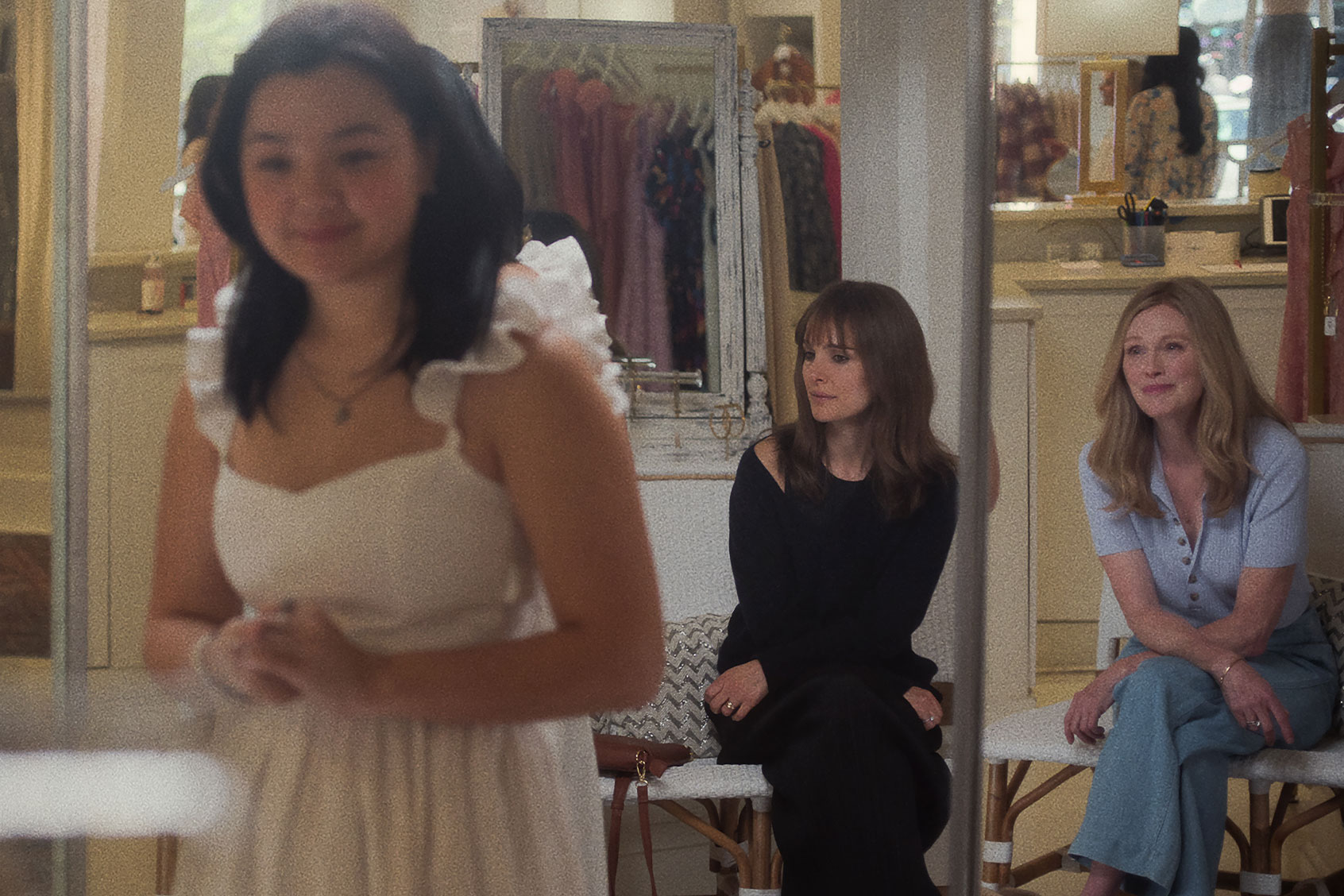
Despite her housewife cosplay, it's clear by the lifestyle [Gracie] maintains that money is coming from somewhere.

Meanwhile, Elizabeth is the child of two academics and is a longtime entertainment industry veteran, which comes with its own influence. Throughout "May December," she is recognized everywhere she goes from just about anyone — old, young, men, women and children. It changes the way people see her and grants her a certain level of access – and leeway – in Savannah. When she visits the local high school's drama class, she inppropriately answers a question about sex scenes – going into excited detail to the minors listening, alternately enraptured or disgusted. The teacher is clearly uncomfortable but doesn't feel empowered to stop or reproach Elizabeth. At another point in the film, she attends a family dinner out celebrating the graduation of Gracie and Joe's twins. Is it germane to her research? No . . . but she's invited anyway and gets to sit at their table, unlike the family from Gracie's previous marriage who gets invited to the restaurant but is relegated to the back. 

Elizabeth's power also extends to getting the movie about Gracie and Joe made, and judging from her phone calls with the director, she's the one really calling the shots. As she drags out her time in Savannah all in the name of research, the director reminds her that she's been there too long, which puts the film over budget. Her glib response? The wrap gifts for the crew can be downgraded to something cheaper to make up the financial difference. 

Unlike Gracie and Elizabeth, Joe doesn't come from a privileged background and never had a chance to gain any sort of influence in the community before he became embroiled in scandal as a child. His father, a Korean American man, lives alone in a modest apartment, and most likely immigrated to the U.S. and had to start from scratch. There's no generational wealth on display here.

Furthermore, when Joe was growing up without a strong parental presence at home, he had to step up and raise his two sisters, one of whom had severe asthma. He wasn't afforded a comfortable and responsibility-free childhood. Between the damaging psychological effects of parentification and then becoming a teenage father in actuality, Joe didn't have time to focus on his own personal development. Since one can become an X-ray tech through a certification program, it's also probable that he didn't pursue higher education so he could spend time raising his kids. (His real-life counterpart Villi Fualaau dropped out of high school.)

The power of whiteness

May DecemberElizabeth Yu as Mary Atherton-Yoo, Natalie Portman as Elizabeth Berry & Julianne Moore as Gracie Atherton-Yoo in "May December" (Courtesy of Netflix)Even though Gracie was in prison for the sex crimes committed against Joe, she isn't seen as a threat in her predominantly white high-middle-class community in Savannah because she's one of them. Sure, some anonymous person continues to send packages of poop to her house, but that hasn't stopped the community from backing her publicly. She is seen as a victim instead of a perpetrator, and really, how bad can she be if she's hosting barbeques for her friends and neighbors? It would have been difficult to imagine this level of support and camaraderie from the community had the races been flipped – with Gracie as a woman of color who victimized a white child. Instead, one Savannah neighbor urges Elizabeth to "be kind" in her portrayal of Gracie – you know, since she's suffered through so much already.

In Elizabeth's case, her whiteness lets her enter into Gracie's world almost seamlessly. While it's true her fame also gains her entry, she doesn't stick out in the predominantly white community that is used to people who look like her. As she studies Gracie, it's easy for her to become the sex offender's mirror because the two share so much in common. Although it's not quite the same, this affords Elizabeth similar cachet in Savannah . . . and with Joe.

In contrast, Joe is relatively alone when it comes to racial identity, and therefore does not have that built-in community that Gracie has and even Elizabeth enjoys by proxy. The only other times we see other people of Korean descent are Joe's visits to his father and through Joe's three mixed children – all of whom are at odds with their own mother. Race is barely mentioned in the movie, but its effects are felt by the overwhelming, almost bland whiteness that overtakes everything and how the few people of color are all struggling against it. Of course Joe and his kids stand out, but to acknowledge that would mean acknowledging their differences in background. It's far easier to adopt an "I see no color" attitude to play at inclusion without actually embracing it.

Joe's race is mentioned only once. At the beginning of the film Gracie says she originally had noticed Joe because he and his family were the only Koreans in town. She had Othered them, fetishizing Joe when he was a child because he was different.

Director-writer Haynes said in an interview, “Joe’s otherness as a Korean-American is just one more aspect that makes the choice to seduce this young boy all the more fraught and transgressive.”

Being the only people of color in a majority white community usually leads to an urge to assimilate, and that means being of service, acting pleasant and non-threatening – nothing that would make one stand out and be targeted. It's easy to see how being the only South Korean boy in his neighborhood influenced Joe's reserved, quiet nature. He is subservient to Gracie and always shifting himself to meet her needs. He is a model husband and father so he doesn't receive any negative attention or criticism. And his children learn that they also must fall in line with Gracie's demands. 

The power of gender stereotypes

May DecemberNatalie Portman as Elizabeth Berry, & Charles Melton as Joe Yoo in "May December" (Courtesy of Netflix)Gracie and Elizabeth are able to take advantage of Joe for one other reason: they're women. When it comes to sexual assault and harassment, the bitter irony in a patriarchal society is that when women are the perpetrators, the crimes are often dismissed or seen as impossible. Traditionally, women aren't seen as sexual aggressors –  and even when they are able to take advantage of a boy or man, his arousal and sexual participation are interpreted as proof of consent. The victim himself may even believe this at first.
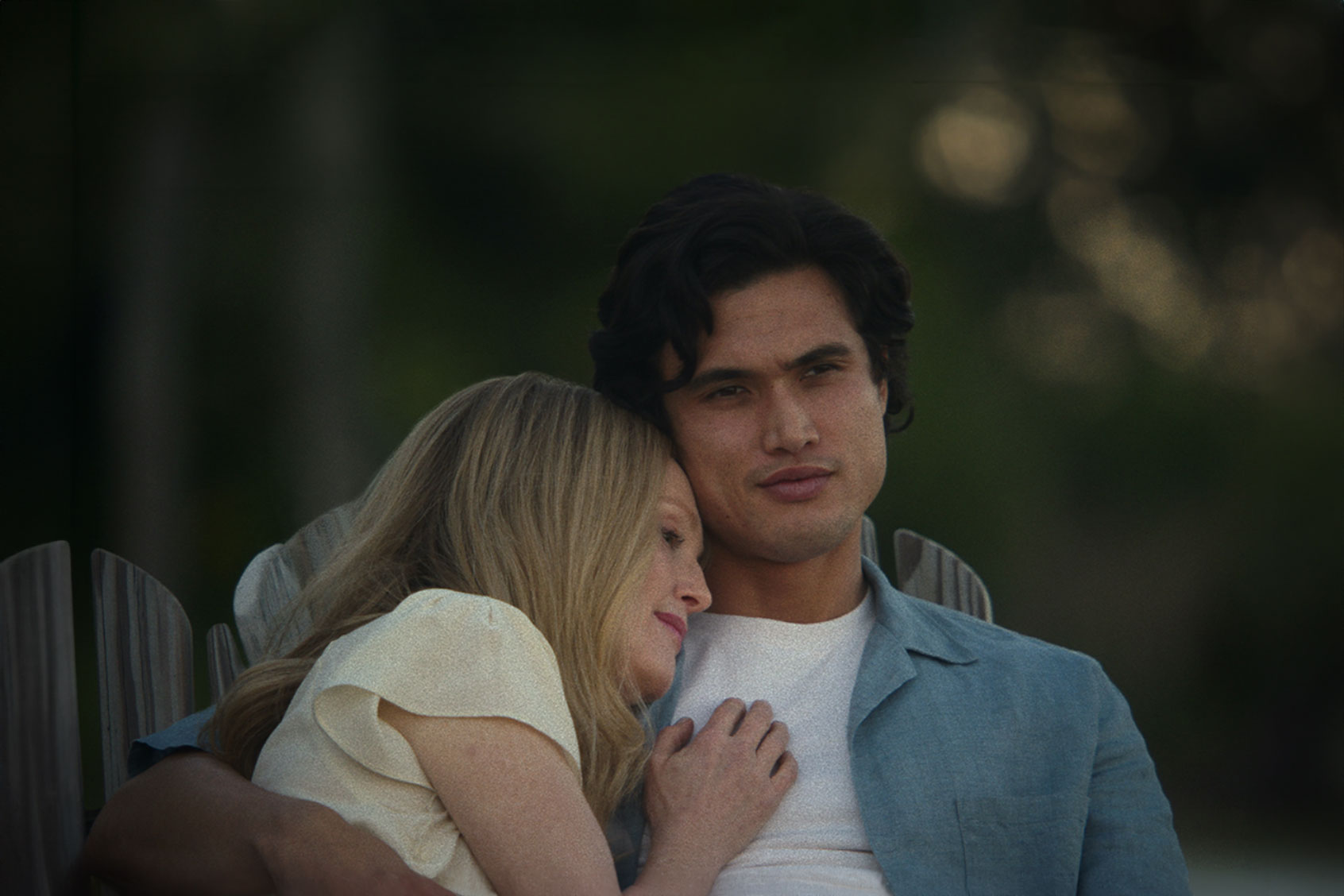
But of course, consent doesn't come into play when the person being taken advantage of is a child, no matter how much Gracie claims otherwise. During one stomach-turning scene, Joe questions if he was too young to have been a father. But Gracie tries to paint him as the aggressor who put this life into motion. "You seduced me," she declares and even demands, "Who was the boss?" referencing their dynamic . . . when he was only 13. The gaslighting doesn't stop there, and Gracie even goes so far as to portray him as more sexually experienced than herself. After all, she reasons, she grew up sheltered and was only married once before. In contrast, she points out that he's had previous relationships that clearly made him more experienced . . .  again, when he was only 13.

No matter what she insists, Gracie established her power over Joe when he was a child, and that hasn't changed even though he's a 6-foot-1 man in his 30s towering over her. That's why he performs all the chores and runs all the errands she tells him to, while she puts on a front of the happy homemaker, uselessly baking cakes and arranging flowers. He's even her emotional support person, soothing her when she has a meltdown over a canceled cake order. She demands, and he gives. 

May DecemberJulianne Moore and Charles Melton in "May December" (Netflix)
Elizabeth enters the picture with this dynamic already established. Joe is used to helping dominant women and being flattered by their attention. He is not used to advocating for himself simply because he never got a chance to become a fully realized adult after his traumatic, life-changing teenage experience. It's not terribly surprising then that as she begins to identify with Gracie, Elizabeth then seduces Joe. Is it more research or Method acting? It doesn't matter, as she almost immediately discards him after their tryst when he gives her valuable information needed to make her film. Even though they are both the same age, Joe isn't emotionally 36, as seen from his almost boyish glee after they have sex and then incomprehension when she describes the fling as merely "what adults do." Sadly, Joe has been conditioned to not be an adult by his own wife, but rather yield to her whims and dictates.

We need your help to stay independent

The lasting effects on Joe

From the need to assimilate to the way that he serves Gracie, Joe is constantly performing the role he's been instructed to play since he was a child. That means outwardly confirming that he's really in love with Gracie, that they have an enduring love story. His whole life would feel like a lie if he acknowledged what was actually true – that he was groomed by Gracie to meet her needs and hasn't ever developed his own personhood separate from her.

By the end of the film, he starts to have how own emotional breakdowns, questioning how he's spent the last 24 years. It's a different, twisted sort of empty nest syndrome that Joe realizes as his youngest children, the twins, are about to graduate from high school. Yes, as their primary caregiver, he'll miss them. But more importantly, their imminent absence reminds him of his own lost childhood. He hasn't had the crucial teenage experiences they've had that are a part of growing up.

In a simultaneously sad and funny scene, son Charlie treats his dad as a peer, giving Joe his first puff off a joint as they sit on their roof. Initially, Joe feels giddy, laughing and almost toppling off the side of the house. But that soon gives way to worry and grief as he tearfully tells Charlie he wants his kids to have the good life, free of the responsibilities he had to endure as an adolescent. Later at the twins' graduation, he breaks down again, sobbing while witnessing the milestone he didn't get to experience himself, regretting how his own bright future was stolen from him.

Both Gracie and Elizabeth had taken advantage of Joe, and because of these complex intersections of power, Savannah society reinforced their influence and Joe's helplessness. "May December" not only questions what abuse and abusers may look like, but it also challenges the systems in place that allow communities to ignore who's being hurt.


Texas Supreme Court steps in the way of woman’s fight for an emergency abortion

Just days after receiving a temporary restraining order from a lower court judge preventing the state of Texas from enforcing their abortion ban in the instance of solely her own personal emergency, Kate Cox, a 31-year-old mother of two from the Dallas area, has been blocked by the Texas Supreme Court in her efforts to end an unviable pregnancy that is putting her health at risk. 

According to CNN, the higher court handed down their one-page ruling late Friday, temporarily blocking the previous ruling hat would have allowed Cox to obtain the procedure, “without regard to the merits.” In a statement from Molly Duane, an attorney at the Center for Reproductive Rights, which is representing Cox, she expresses concern over a pause that is further endangering her client, saying, “We are talking about urgent medical care. Kate is already 20 weeks pregnant. This is why people should not need to beg for healthcare in a court of law.”

This latest ruling comes hours after Texas Attorney General Ken Paxton petitioned the high court to intervene in the case, threatening prosecution against anyone who helps facilitate the abortion and sending letters to hospitals disputing Cox's claims that her pregnancy is actually a threat to her.

Per AP News, "Cox learned she was pregnant for a third time in August and was told weeks later that her baby was at a high risk for a condition known as trisomy 18, which has a very high likelihood of miscarriage or stillbirth and low survival rates. Additionally, doctors have told her that "if the baby’s heartbeat were to stop, inducing labor would carry a risk of a uterine rupture because of her two prior cesareans sections, and that another C-section at full term would would endanger her ability to carry another child." 


Justice or stigma? The controversial sentence that spotlights America’s bias against fast-food jobs

After throwing a hot bowl of food into the face of a Chipotle employee, 39-year-old Rosemary Hayne of Parma, Ohio was given two choices in court: She could either go to jail for 90 days, or she could have her misdemeanor assault sentence reduced to 30 days in jail if she agreed to work an additional 60 days at a local fast-food restaurant. 

“Do you want to walk in her shoes for two months and learn how people should treat people, or do you want to do your jail time?” Judge Timothy Gilligan asked Hayne at the hearing. She chose the former. 

In speaking with CNN, Gilligan said that he has unfortunately seen other incidents of violence directed at fast-food employees. According to him, there was a case a few years ago in which a customer who didn’t get a cookie in a McDonald’s Happy Meal began punching a worker through the drive-thru window. That defendant got 90 days in jail. 

As Gilligan told the publication, he had never given out a sentence like the one leveled at Hayne. 

On one hand, there’s a certain level of schadenfreude to be derived from the situation because of the dark reality that Hayne is very likely to experience at least a certain level of the abuse she directed at the Chipotle worker. In 2021,  the Service Employees International Union (SEIU) published a first-of-its-kind analysis that put into numbers just how common issues of assault and harassment are at some of the most popular fast-food chains. As The Counter reported, the analysis found that between 2017 and 2020, fast-food restaurants were the sites of at least 77,000 violent or threatening incidents. 

The numbers included conflicts between non-workers on a restaurant’s premises, as well as instances of abuse directed at workers. 

On the other hand, sentencing someone to work at a fast-food restaurant is a curious punishment, simply because it’s not really a sentence — it’s a job, one that nearly 4 million workers in this country hold. And while this has been a major year for labor rights in the food service industry, as both activists and politicians fight for better wages and working conditions, this court case spotlights America’s continued bias against fast-food jobs and the people who hold them. 

Threatening people with service industry jobs isn’t new, of course. “What are you going to do, flip burgers?” has long been a cultural shorthand for “You’d better finish school” or “go to college” or “choose the right degree.” Meanwhile, a seemingly innumerable amount of sitcoms and coming-of-age films feature a scene where the Cool Kids descend upon their town’s local burger joint, only to find the plucky protagonist working behind the counter, typically wearing some doofy uniform. 

The meanest, yet most insecure of the jocks or the prettiest cheerleader will typically say something cutting, then punctuate it with a statement like, “Oh, and I will want fries with that,” much to the tittering delight of their companions. 

Sure, these scenes are supposed to show us something about the bully’s character, or lack of it, but the underlying message isn’t great either. It goes something like: Good people don’t delight in someone else’s humiliation, and don’t get us wrong, this — someone holding a normal job at a normal restaurant — is a humiliating situation. 

We need your help to stay independent

In Sam Mendes’ 1999 film, “American Beauty,” Lester Burnham, played by Kevin Spacey, kicks off a corporate blackmailing scheme that ultimately leaves him with a $60,000 pay-out. This helps fund his midlife crisis, which also looks a lot like a total regression. He lusts after his daughter’s teenaged friend, buys a 1970 Pontiac Firebird, starts smoking weed and gets a job in the drive-thru window at Mr. Smiley’s. “There are no jobs for manager, it’s just for counter,” a college-aged employee tells Burnham, who applies after seeing a flier in the window. 

“Good,” Burnham replies. “I’m looking for the least possible amount of responsibility.”

Through the years, Republicans lawmakers have pointed to the purported lack of difficulty of fast-food jobs as a justification for keeping the minimum wage low. For instance in 2021, Senator John Thune of South Dakota announced that he opposed raising the federal minimum wage to $15 an hour because, when he was a teenager, he was paid just $6 an hour while working as a restaurant cook. 

“Mr. Thune has been rightly and roundly roasted for innumeracy,” the New York Times’ Binyamin Appelbaum reported at the time. “He was a teenager in the 1970s. Earning $6 an hour back then is equivalent to earning more than $20 an hour today, because inflation has reduced the purchasing power of each dollar.” 


Want more great food writing and recipes? Subscribe to Salon Food's newsletter, The Bite.


Relatedly, in September, when California passed a law that will raise the minimum wage for the state’s fast-food workers to $20 per hour, Democratic Governor Gavin Newsom said specifically he wanted to dispel the long-held notion that fast food work was just for teenagers, rather than household leaders trying to provide for their families. 

“That’s a romanticized version of a world that doesn’t exist,” Newsom said. “We have the opportunity to reward that contribution, reward that sacrifice and stabilize an industry.”

According to the Center for American Progress, 60% of fast-food workers across the nation are over the age of 20, and 1 in 5 are over the age of 35. “The demographics of workers in the industry also indicate that these jobs provide critical support for workers and their families and are not primarily about teenagers earning pocket money, as some opponents of minimum wage increases contend,” the Center reports. 

However, tired attitudes around who does fast-food work and its relative value continue to prevail, which is the main if not sole reason it’s remotely appealing as a form of punishment. Put another way: If someone had attacked their accountant with a stapler, would they then be sentenced to shuffling papers at a competing firm? 

When asked for a comment on the case, Chipotle responded: “The health and safety of our employees is our greatest priority, and we’re pleased to see justice served for any individual that does not treat our team members with the respect they deserve.”

EV battery repair is dangerous. Here’s why mechanics want to do it anyway

About three times a day, Rich Benoit gets a call to his auto shop, The Electrified Garage, from the owner of an older Tesla Model S whose car battery has begun to fail. The battery, which used to provide several hundred miles of range, might suddenly only last 50 miles on a single charge. These cars are often out of warranty, and the cost of replacing the battery can exceed $15,000.

For most products, repair is a more affordable option than replacement. And in theory, lots of these Tesla batteries can be fixed, said Benoit, who runs one of the few Tesla-focused independent repair shops in the United States. But due to the time and training involved, the safety considerations, and the complexity of the repair, Benoit said that the bill to fix one car battery at his shop might run upwards of $10,000 — more than most consumers are willing to pay. Instead, he said, many choose to sell or donate their old vehicle for scrap and buy a brand new Tesla.

“It’s getting to the point where [the car] is almost like a consumable, like a TV,” Benoit said.

Benoit’s experience heralds a problem that early adopters of EVs, as well as electric micromobility devices like e-bikes and e-scooters, are beginning to face: These vehicles contain big, expensive batteries that will inevitably degrade or stop working over time. Repairing these batteries can have sustainability benefits, saving energy and resources that would otherwise be used to manufacture a new one. That’s particularly important for EVs, which contain very large batteries that must be used for years to offset the carbon emissions associated with making them. But many EV and e-mobility batteries are difficult to repair by design, and some manufacturers actively discourage the practice, citing safety concerns. The small number of independent mechanics who repair EV or e-bike batteries struggle to do so affordably due to design challenges, safety requirements, and a lack of access to spare parts.

“There’s a lot of batteries in the recycle bin that could be repaired,” said Timoté Rouffignac, who runs a small e-bike battery repair business called Daurema in Brussels, Belgium. But “because they are not made to be repaired, it’s quite hard to propose a good price.”

A lithium-ion battery in a smartphone contains a single “cell” consisting of a graphite anode, a metallic cathode, and a liquid electrolyte that allows lithium ions to move from one side to the other to generate an electrical potential. An e-bike battery often contains dozens of cells. EV batteries, meanwhile, can contain hundreds to thousands of individual cells, which are often packaged into “modules,” and from there, bundled into a battery pack. In addition to cells and modules, electric car and e-bike batteries typically include a battery management system that monitors the battery’s state of health and controls the rate of charging and discharging.

“There’s a myriad of different reasons repair is vastly [more] beneficial than replacement."

All lithium-ion batteries degrade with use and eventually need to be replaced. But when a battery contains many individual cells and other components, its lifespan can sometimes be extended through repair, a process that involves identifying and replacing the bad cells or modules and fixing other faulty parts, like a glitchy battery management system. In some cases, a single module is all that needs to be replaced. Swapping that module out, instead of replacing the entire battery, reduces demand for battery metals like lithium, as well as the carbon emissions tied to manufacturing replacement batteries (or new vehicles). That makes battery repair “highly desirable for a circular economy” — a system in which resources are conserved and reused — said Gavin Harper, a research fellow who studies battery sustainability at the University of Birmingham in the United Kingdom.

And while not necessarily cheap, repairing batteries can save money. Tyler Helps of Cox Automotive, which repairs in-warranty EV batteries on behalf of automakers and their dealers across the United States, said that in general, a refurbished EV battery is about half the cost of a new one. Since it began offering EV battery repair services in 2014, Cox Automotive estimates that it has saved over a gigawatt hour’s worth of batteries — enough to power about 17,000 new EVs — from being prematurely discarded. 

“There’s a myriad of different reasons repair is vastly [more] beneficial than replacement,” Helps told Grist.

But battery repair is dangerous and shouldn’t be attempted at home or by novices, experts say. If battery cells are damaged during a repair attempt, it can cause a short circuit that leads to a fire or explosion. If the person attempting the repair isn’t wearing the proper high-voltage gloves, they could be electrocuted. “You’d be playing with fire” if you didn’t know what you were doing, said John Mathna, who runs the e-bike repair shop Chattanooga Electric Bike Co., noting that some e-bike batteries contain “enough current to kill someone.” 

At a bare minimum, battery repair requires high-voltage training, electrical experience, personal protective equipment, and “a baseline understanding of the architectures and how the battery works,” Helps said. Those wishing to fix EV batteries also need equipment to lift the car off the ground and physically remove the battery, which can weigh thousands of pounds. 

“There’s very few people that could or even should attempt something like this,” Benoit said. 

“There’s very few people that could or even should attempt something like this."

But even those who have the proper training often struggle to repair EV or e-bike batteries because of how they are designed. Many e-bike batteries are housed in heavy-duty plastic cases that can be difficult, if not impossible, to open up without damaging internal components. Inside an e-bike battery, or inside individual modules of an EV battery, cells are often glued or welded together, making them difficult or impossible to replace individually. What’s more, as a 2021 report by the European Environmental Bureau highlighted, some e-mobility batteries contain software that causes the battery to shut down if it detects evidence of unauthorized tinkering.

Manufacturers argue that their batteries are designed to promote safety, durability, and high performance, which can come at the expense of repairability, and many offer free or discounted replacement batteries within the warranty period (typically around 2 years for major e-bike brands and 8 to 10 years or 100,000 miles for EVs). Repair advocates, on the other hand, contend that modular designs with reversible fasteners, such as clips or adhesives that can be unstuck, don’t necessarily compromise safety and that the benefits of designing for repair far exceed the costs.

European policymakers are beginning to listen to advocates. In August, the European Union adopted a new regulation aimed at fostering battery sustainability. Among other things, it includes a provision requiring that the batteries used in e-bikes and other “light means of transport” vehicles, like e-scooters, be repairable down to the individual cell level by independent professionals. The European e-bike industry, which strongly opposed this provision due to concerns over safety, battery certification, and legal liability issues, is now grappling with how to comply. 

“We are still examining how the requirements of the new EU battery regulation can be made possible while complying with the applicable safety regulations and our high quality standards,” e-bike battery manufacturer Bosch told Grist. One challenge for manufacturers, Bosch noted, is the “contrary development in the USA,” which is “on its way to stronger regulations and higher standards for e-bike batteries and systems.” 

Indeed, the federal Consumer Product Safety Commission recently announced that it is considering regulations for e-bikes and their batteries. This comes after a recent rash of e-bike battery fires that have also spurred a policy response on a local level. The New York City Council recently amended its fire code to prohibit “the assembly or reconditioning of a lithium-ion battery” using secondhand cells from another battery, which repairers sometimes do. 

The city also recently enacted a law requiring that e-mobility manufacturers ensure their products’ batteries are certified to the UL 2271 design standard, which is intended to promote safety. Ibrahim Jilani, the global director of consumer technology at UL Solutions — a multinational company that develops safety certification standards for a wide range of industrial and consumer products and materials — said that repaired batteries can meet this standard. But the company doing the repair would be required to “keep the design exactly how it was prior to needing repair,” Jilani said, including using the same make and model of cells and electronic components. Battery repair shops would also need to submit to UL field inspections four times a year. Overall, obtaining this certification would cost repair businesses a little over $5,000 a year, Jilani said.

Compared with e-bikes, lawmakers have been relatively quiet on EV battery repair. In the U.S., there are no specific laws or regulations that address the issue. The EU’s new battery regulation doesn’t touch on EV battery repair either, other than to suggest lawmakers update a separate vehicle regulation “to ensure that those batteries can be removed, replaced, and disassembled.” 

That’s an idea that GDV, the German Insurance Association, “strongly supports,” a spokesperson told Grist. In October, the group published the results of a study that found EVs are a third more expensive to repair than similar gas-powered vehicles, a finding it attributed in part to the high costs of fixing or replacing batteries.

“There are a lot of automakers who do not allow battery repair, even in case of minor damages to the battery case,” a GDV spokesperson told Grist. Automakers sometimes choose to replace the battery if the car was involved in an accident that caused the airbags to activate. Both practices “will lead to an increase of repair costs,” and ultimately, higher insurance premiums, the spokesperson said.

New rules around EV battery repairability would come at a critical time. Helps, of Cox Automotive, said that two trends in EV battery design are occurring in parallel: “Batteries are either becoming very serviceable, or not serviceable at all.”

Some, like the batteries inside Volkswagon’s ID.4, feature LEGO-like modules that are easy to remove and replace. Others, like Tesla’s new 4680 structural battery pack, don’t include modules at all. Instead, all of the cells are bonded together and bonded to the pack itself, a design Helps described as “impossible to service.” If a bad cell group is found, the entire battery must be replaced.

“It’s still a fully recyclable battery,” Helps said. “You’re just not able to repair it.”

Tesla didn’t respond to Grist’s request for comment.


The insurrection clause has waited 150 years for the Trump test

Lawyers who represent the government in federal court face a never-ending supply of 1st and 14th Amendment cases from creative plaintiffs. Most such Constitutional claims don’t stick. They hit a well-oiled wall of federal case law and slid right off. 

Applying the insurrection clause of the 14th Amendment to bar Trump’s 2024 candidacy presents the opposite scenario. There exists virtually no prior cases to follow. In fact, critics who reject Trump’s disqualification under this clause lean almost entirely on the lack of legal precedent. 

Other than Trump, in the history of the United States, a defeated president has never tried to stop the peaceful transfer of power. In over 150 years following the 14th Amendment’s adoption, there was never a set of similar facts that could have triggered the insurrectionist clause. 

Lack of precedent is irrelevant 

Lack of prior similar cases doesn’t render Section 3 of the 14th Amendment any less potent, or its historical imperative any less compelling. If anything, its application is even more urgent as the same violent insurrectionist forces that tore the nation apart in the Civil War are back at it today. 

Section 3 of the 14th Amendment states plainly that, “No person shall … hold (federal) office… who, having previously taken an oath… to support the Constitution of the United States, shall have engaged in insurrection or rebellion against the same, or given aid or comfort to the enemies thereof…”

We need your help to stay independent

It’s true that despite its passage more than 150 years ago, it has never been used to bar a candidate seeking the presidency, but this is a specious legal argument. Anyone professing an informed opinion on the 14th Amendment also understands the “case and controversy” requirement, which would have made such a case legally impossible in the absence of an insurrectionist actively seeking the presidency.

Written into the Constitution’s early structure, Article III prohibits courts from hearing anything except actual cases and controversies. It requires cases between opposing interests over a dispute that is real, factual, and concrete. So cases cannot be hypothetical. Courts require real cases in controversy in part because ruling on hypotheticals is tantamount to setting policy, a violation of separation of powers as established in 1790. 

Trump’s counsel argues that his candidacy can’t be barred based on a Constitutional clause that has been used only a handful of times in 150 years, emphasizing that, “(Challengers) are asking this court to do something that’s never been done in the history of the United States.” It bears repeating that since the 14th Amendment’s adoption in 1866, a defeated president has never fomented a violent insurrection against the U.S. capital to impede the counting of electoral votes, or pressured state officials to violate the Constitution by lying about the election results, nor, before Trump, has any major party candidate seeking the presidency openly embraced political violence against government officials.

So, a similar 14th Amendment challenge could not have been brought prior to Trump because without an actual insurrectionist actually seeking the presidency, there was no Art. III case in controversy.

Originalists on the high court should love this

Multiple cases challenging Trump’s candidacy under the 14th Amendment are winding their way through the courts now. In a recent Colorado case, the presiding judge concluded from the evidence that Trump had, indeed, engaged in insurrection, as that term was originally understood, when he assembled and incited the January 6 mob that attacked the U.S. capital. 

Although the judge punted on the applicability of the 14th Amendment, her evidentiary ruling finding insurrection is most significant, because it will both guide the case on appeal, and be referenced as a judicial finding in similar cases. 

When the case gets to SCOTUS, the originalist majority should salivate over the chance to illuminate the underlying historical context in which the 14th Amendment was adopted. 

After the Civil War, despite their loss, former slave owners continued to brutalize and terrify emancipated Black Americans. They engaged in horrific political violence, and did whatever they could to keep freedmen from exercising their new rights. Even after losing the war, wealthy white Southerners-many of them enslavers- claimed the right to freely elect former Confederate leaders who would advance their immoral interests.

Setting aside the amnesty period, the 14th Amendment sought to protect a raw and reeling democracy by prohibiting politically violent agitators- insurrectionists- from holding federal office. Disqualifying insurrectionists from holding federal office was a way to keep wealthy agitators from fomenting some variation of war all over again.

The constitutional disqualification of government officials who violate their oath of office is common sense; if they don’t uphold the Constitution, to what are they sworn? Then, as now, disqualification is key to electing ethical candidates who can be trusted to uphold the Constitution rather than divide the nation for personal gain, which brings us back to Trump.

Section 3 meets its intended nemesis

Orchestration of violence at the U.S. capital on Jan. 6 was, at its core, Trump’s effort to disenfranchise the more than 81 million Americans who voted for Joe Biden, just as secessionists attempted to disenfranchise Lincoln supporters.

Trump’s legal pleadings argue that he is immune from prosecution for official actions he took while in office, and that everything he did, including on Jan. 6, was an official action. A wizard at projection, he calls 14th Amendment challenges “election interference.” He also calls the business fraud case against him election interference; ditto, the election interference case itself. Trump claims that all the various criminal charges against him, including the hush money case, the classified federal documents case, the Jan. 6 insurrection case, and the “find me 11,000 votes” in Georgia case, are election interference. If the war in Ukraine somehow breaks to Biden’s credit, that will be election interference as well.

For now, the nightmare of an ascending and lawless insurrectionist re-taking power by force is real. George Washington warned us that “cunning, ambitious, and unprincipled men (who) subvert the power of the people and usurp for themselves the reins of government” would be fatal to the nation.  

Section 3 of the 14th Amendment’s silence for the past 150 years is a testament to its strength, not its weakness. After its adoption, no violent insurrectionist usurper dared seek the presidency, until Trump. 

Section 3 has lain silent and watchful, its potency simmering for 150 years, waiting for the beast it was meant to slay to raise his ugly head.

Duck! Fifty years later, Walt Disney and Salvador Allende are still fighting for our souls

This year marks the anniversaries of two drastically different events that loomed all too large in my life. The first occurred a century ago in Hollywood: On Oct. 16, 1923, Walt Disney signed into being the corporation that bears his name. The second took place in Santiago, Chile, on Sept. 11, 1973, when socialist President Salvador Allende died in a military coup that overthrew his democratically elected government.

Those two disparate occurrences got me thinking about how the anniversaries of a long-dead American who revolutionized popular culture globally and a slain Chilean leader whose inspiring political revolution failed might illuminate — and I hope you won’t find this too startling — the dilemma that apocalyptic climate change poses to humanity.

This isn’t, in fact, the first time those two men and what they represented affected my life. Fifty years ago, each of them helped determine my destiny — a time when I had not the slightest hint that global warming might someday leave them again juxtaposed in my life.

In mid-October 1973, as the Walt Disney Corporation was celebrating the 50th anniversary of its founding, I found myself in the Argentine embassy in Santiago, Chile, where I had sought refuge after the country’s military had destroyed its democracy and taken power. Like 1,000 other asylum seekers, I was forced to flee to those compressed premises — in my case, thanks in significant part to Walt Disney. To be more specific, what put me in peril was "Para Leer al Pato Donald" ("How to Read Donald Duck"), a bestselling book I had co-written in 1971 with Belgian sociologist Armand Mattelart that skewered Uncle Walt’s  — as we then called it  — “cultural imperialism.”

That book had been born out of Salvador Allende’s peaceful revolution, the first attempt in history to build socialism by democratic means rather than by conquering the state through armed insurrection. That Chilean road to socialism meant, however, leaving intact the economic, political and media power of those who opposed our radical reforms.

One of our most urgent cultural tasks was contesting the dominant stories of the time, primarily those produced in the United States, imported to Chile (and so many other countries), and then ingested by millions of consumers. Among the most prevalent, pleasurable and easily digestible of mass-media commodities were historietas (comic books), with those by Disney ruling the market. To create alternative versions of reality for the new, liberated Chile, Armand and I felt it was important to grasp the ideological magic that lurked in those oh-so-popular comics. After all, you can’t substitute for something if you don’t even know how it works.

Our goal was to defeat our capitalist adversary not with bullets but with ideas, images and emotions of our own. So, the two of us set out to interpret hundreds of Donald Duck historietas to try to grasp just what made them so damn successful. In mid-1971, less than a year after Allende’s election victory and after 10 feverish days of collaboration, he and I felt we had grasped the way Walt’s supposedly harmless ducks and mice had subtly shaped the thinking of Chileans.

Our goal was to defeat our capitalist adversary not with bullets but with ideas, images and emotions. So we set out to interpret hundreds of Donald Duck historietas to try to grasp just what made them so damn successful.

In the end, in a kind of frenzy, we wrote what John Berger (one of the great art critics of the 20th century) would term “a handbook of decolonization,” a vision of what imperial America was selling the world as natural, everlasting and presumably unalterable by anyone, including our President Allende. We did our best to lay out how Walt (and his workers) viewed family and sex, work and criminality, society and failure, and above all how his ducks and mice trapped Third World peoples in an exotic world of underdevelopment from which they could only emerge by eternally handing over their natural resources to foreigners and agreeing to imitate the American way of life.

Above all, of course, since the values embedded in Disney comics were wildly individualistic and competitive, they proved to be paeans to unbridled consumerism — the absolute opposite, you won’t be surprised to learn, of the communal vision of Allende and his followers as they tried to build a country where solidarity and the common good would be paramount.

The empire strikes back!

Miraculously enough, our book hit a raw nerve in Chilean society. In a country where everything was being questioned by insurgent, upstart masses, including power and property relations, here were two lunatics stating that nothing was sacred  — not even children’s comics! Nobody, we insisted, could truly claim to be innocent or untainted, certainly not Uncle Walt and his crew. To build a different world, Chileans would have to dramatically question who we thought we were and how we dreamt about one another and our future, while exploring the sources of our deepest desires.

If our call for transgression had been written in academic prose destined for obscure scholarly journals, we would surely have been ignored. But the style we chose for "Para Leer al Pato Donald" was as insolent, raucous and carnivalesque as the Chilean revolution itself. We tried to write so that any mildly literate person would be able to understand us.

Still, don’t imagine for a second that we weren’t surprised when the reaction to our book proved explosive. Assaults in the opposition press and media were to be expected, but assaults on my family and me were another matter. I was almost run over by a furious driver, screaming “Leave the Duck alone!” Our house was pelted with stones, while Chileans outside it cheered Donald Duck. Ominous phone calls promised worse. By mid-1973, my wife Angélica, our young son Rodrigo, and I had moved — temporarily, we hoped — to my parents’ house, which was where the military coup of Sept. 11 found us.

We need your help to stay independent

Salvador Allende died at the Presidential Palace that day, a death that foretold the death of democracy and of so many thousands of his followers. Among the victims of that military putsch were a number of books, including "Para Leer al Pato Donald," which I saw — on television, no less — being burnt by soldiers. A few days later, the editor of the book told me that its third printing had been dumped into the bay of Valparaíso by Navy personnel.

I had resisted, post-coup, going into exile, but the mistreatment of my book convinced me that, if I wanted to avoid being added to the inquisitorial pyre, I would have to seek the safety of some embassy until I could get permission to leave the country.

It was a sobering experience for the man who had brazenly barbecued the Duck to find himself huddling in a foreign embassy on the very day the corporation that had created those comics was celebrating its 50th anniversary. Consider that a sign of how completely Uncle Walt had won that battle, though he himself had, by then, been dead for seven years. Very much alive, however, were his buddies, those voracious fans of Disneyland — then-American President Richard Nixon and his national security adviser Henry Kissinger, masterminds of the conspiracy that had destabilized and sabotaged the Allende revolution, which they saw as inimical to American global hegemony. Indeed, the coup had been carried out in the name of saving capitalism from hordes of unwashed, unruly revolutionaries, while punishing any country in the hemisphere whose leadership dared reject Washington’s influence.

It was a sobering experience for the man who had brazenly barbecued Donald Duck to find himself huddling in a foreign embassy on the very day the corporation that had created those comics was celebrating its 50th anniversary.

Nor would it take long before the dictatorship that replaced Allende began enthusiastically applying economic shock therapy to the country, accompanied by electric shocks to the genitals of anyone who dared protest the extreme form of capitalism that came to be known as neoliberalism. That deregulatory free-market style of capitalism with its whittling down of the welfare state would, in the years to come, dominate so many other countries as well.

Fifty years after the coup that destroyed Allende’s attempt to replace it with a socialism that would respect its adversaries and their rights, such a revolutionary change hardly seems achievable anymore, even in today’s left-wing regimes in Latin America. Instead, capitalism in its various Disneyesque forms remains dominant across the planet.

Nor should it be surprising that, in all these years, the corporation Walt Disney founded a century ago has grown ever more ascendant, becoming one of the planet’s major entertainment and media conglomerates (though it, too, now finds itself in a more difficult world). Admittedly, with that preeminence has come changes that even an obdurate critic like me must hail. How could I fail to admire the Disney corporation’s stances on racial equality and gay rights, or its opposition to Ron DeSantis’ “Don’t Say Gay” bill. How could I not note the ways in which its films have come to recognize the culture and aspirations of countries and communities it caricatured in the comics I read in Chile so long ago? And yet, the smiling, friendly form of capitalism it now presents — the very fact that it doesn’t wish to shock or alienate its customers — may, in the end, prove even more dangerous to our ultimate well-being than was true half a century ago.

True, I would no longer write our book the way Armand and I did all those decades ago. Like any document forged in the heat of a revolutionary moment eager to dismantle an oppressive system, imbued with a messianic belief in our ability to change consciousness, and tending to imagine our readers as empty vessels into which ducks and mice (or something far better) could be poured, we lacked a certain subtlety. It was hard for us to imagine Chilean comic-book readers as human beings who could creatively appropriate images and stories fed to them and forge a new significance all their own.

And yet, our essay’s central message is still a buoyant, rebellious reminder that there could be other roads to a better world than those created by rampant capitalism.

Warnings from the fish

Indeed, our probe of the inner workings of a system that preys on our desires while trying to turn us into endlessly consuming machines is particularly important on a planet imperiled by global warming in ways we couldn’t even imagine then.

Take a scene I came across as I scanned the book just this week. Huey, Dewey and Louie rush into their house with a bucket. “Look, Unca Donald,” they say, in sheer delight, “at the strange fish we caught in the bay.” Donald grabs the specimen as dollar signs ignite around his head and responds: “Strange fish!… Money!… The aquarium buys strange fish.”

In 1971, we chose that bit of Disney to illustrate how its comics then eradicated history, sweat and social class. “There is a great round of buying, selling and consuming,” we wrote, “but to all appearances, none of the products involved has required any effort whatsoever to make. Nature is the great labor force, producing objects of human and social utility as if they were natural.”

What concerned us then was the way workers were being elided from history and their exploitation made to magically disappear. We certainly noted the existence of nature and its exploitation for profit, but reading that passage more than 50 years later what jumps out at me isn’t the dollarization of everything or how Donald instantly turns a fish into merchandise but another burning ecological question: Why is that fish in that bucket and not the sea? Why did the kids feel they could go to the bay, scoop out one of its inhabitants, and bring it home to show Unca Donald, a displacement of nature that Armand and I didn’t even think to highlight then?


Want a daily wrap-up of all the news and commentary Salon has to offer? Subscribe to our morning newsletter, Crash Course.


Today, that environmental perspective, that sense of how we humans continue to despoil our planet in an ever more fossil-fuelized and dangerous fashion, is simply inescapable. It stares me in the face as we now eternally break heat records planetwide.

Perhaps that fictitious fish and its castoff fate from half a century ago resonate so deeply in me today because I recently included a similar creature in my new novel, "The Suicide Museum." In it, Joseph Hortha, a billionaire (of which there are so many more than in 1971), snags a yellow-fin tuna off the coast of Santa Catalina, California, a bay like the one where those three young ducks netted their fish. But Hortha, already rich beyond imagining, doesn’t see dollar signs in his catch. When he guts that king of the sea, bits of plastic spill obscenely out of its innards, the very plastic that made his fortune. Visually, in other words, that tuna levels an instant accusation at him for polluting the oceans and this planet with his products.

To atone, he will eventually make delirious plans to build a gigantic “Suicide Museum,” meant to alert humanity to the dangerous abyss towards which we’re indeed heading. In other words, to halt our suicidal rush towards Anthropocene oblivion, we need to change our lifestyles drastically. “The only way to save ourselves is to undo civilization,” Hortha explains, “unfound our cities, question the paradigm of modernity that has dominated our existence for centuries.” He imagines “a Copernican swerve in how we interact with nature,” one in which we come to imagine ourselves not as nature’s masters or stewards, but once again as part of its patterns and rhythms.

If imagining a world without plastic is daunting, how much more difficult will it be to implement policies that limit the way our lives are organized around a petro-universe now blistering the planet?

And if just imagining a world without plastic is daunting, how much more difficult will it be to implement policies that effectively limit the way our lives are organized around a petro-universe now blistering the planet? You have to wonder (and Uncle Walt won’t help on this): Is there any chance of stunning the global upper and middle classes into abandoning their ingrained privileges, the conveniences that define all our harried existences?

Walt Disney and Salvador Allende are still duking (or do I mean ducking?) it out

On this increasingly desperate planet, I suspect the critique of Disney that Armand and I laid out so long ago still has a certain potency. The values symbolized in those now-ancient comic books continue to underwrite the social order (or do I mean disorder?) that’s moving us towards ultimate self-destruction globally.

Such a collective cataclysm won’t be averted unless we’re finally ready to deal with the most basic aspects of contemporary existence: unabashed competition, untrammeled consumerism, an extractive attitude towards the Earth (not to speak of a deeply militarized urge to kill one another) and a stupefying faith that a Tomorrowland filled with happiness is just a monorail ride away.

To put it bluntly, our species can’t afford another century of the principles fostered by the Disney emporium.

And what of Salvador Allende, dead this half-century that’s seen Uncle Walt’s values expand and invade every corner of our souls? What of his vision of a just society that seems so much farther away today, as would-be autocrats and hardcore authoritarians rise up everywhere in a world in which The Donald is anything but a duck?

Allende rarely spoke of the environment in his speeches, but he did want us to live in a very different world. While he was no eco-prophet, he distinctly had something to say about the catastrophic predicament now facing us.

Today, we should value his lifelong certainty, reiterated in that last stand in defense of democracy and dignity in Chile’s Presidential Palace 50 years ago, that history is made by unexceptional men and women who, when they dare imagine an alternative future, can accomplish exceptional things.

As the symbolic battle between Walt Disney and Salvador Allende for the hearts and minds of humanity continues, the last word doesn’t, in fact, belong to either of them, but to the rest of us. It’s we who must decide if there will even be generations, a century from now, to look back on our follies, no less thank us for subversively saving our planet for them.

Trump’s path to dictatorship depends on our democracy working

I do not imagine that there are more than a handful of Salon readers who are not familiar with the danger of electing Donald Trump to the Presidency of the United States for a second time. It is not hyperbole for me or anyone else to write that the upcoming 2024 presidential election will be the most dreadful election since the one of 1860. In that election, and again in 1864, Abraham Lincoln’s victory heralded the end of slavery and the beginning of the Civil War. A victory next fall by the former president would portend the end of American Democracy as we have known it for some 250 years and the instigation of a new illiberal democracy or autocracy. 

The GOP’s assault on the U.S. Constitution and the rule of law combined with a Trumpian desire to censor the fourth estate, restructure democratic institutions, and weaponize systems of power are all in sync with a rising wave of anti-democratic and authoritarian movements worldwide.As a kleptocratic and wannabe authoritarian dictator, Donald Trump and the US are not alone in the contemporary world of neoliberal, illiberal, and authoritarian regimes engaged in various geopolitical struggles between competing democratic and autocratic styles of governance. These battles are commonly immersed in nationalist and/or populist movements of xenophobia. Most of the nations involved – democratic or authoritarian — are also trending towards fascism, standardization, and disinformation. During Trump’s recent Veterans Day speech, for example, the Insurrectionist-in-Chief used everyday parlance that echoed those authoritarian leaders who rose to power in Nazi Germany and fascist Italy in the 1930s. 

Thirty years after the collapse of the Soviet Bloc, there is President Putin invading Ukraine and promising another Russian Empire. In Brazil, there was former Army Captain Jair Bolsonaro elected to office in a landslide in 2018. Bolsonaro, a Trump ally, had surfed the anti-corruption wave promising to put an end to the “old politics” only to be narrowly defeated in 2022 by the progressive and former jailed President Lula da Silva. In Argentina there is right-wing libertarian and newly-elected President Javier Milei, a 53-year-old economist and former TV pundit promising to reduce the size of government and three decades of triple-digit inflation. To most people’s surprise, Milei at least temporarily has broken the hegemony of the nation’s two leading political forces, the Peronists or left of center party and the older conservative party, the Union Civica Radical. In the Netherlands, there is also the newly elected anti-immigrant Geert Wilders promising “to break a few rules, shake up democratic institutions and spread a populist message.” 

We need your help to stay independent

In MAGA America, there is demagogue Trump who has hijacked and broken the Grand Old Party. Trump has been all too willing to exploit aggrieved voters and disavowed crowds of citizens who espouse conspiracies while he gaslights everybody else. Like Adolf Hitler in post-World War Germany, there is the racist, homophobic, and misogynistic Trump who also refers to people of color, homosexuals, leftists, progressives, and communists as vermin who are busy poisoning the blood of America and who need to be rooted out and destroyed. Trump, similar to another celebrity turned dictator with a “cult of personality” fanbase and a fascination with violence, elicits the performative style if not the self-discipline of Benito Mussolini — the man known as The Leader during post-World War Italy. 

Among other things, déjà vu Trump has once again been promising to overturn Obamacare, ban Muslims, and to make America great for a second time. Hopefully, not like when he was screwing up the USA’s security responses to COVID-19 and needlessly facilitating the death of a quarter of a million Americans.  

As Barton Gellman reflects in The Atlantic as part of its “If Trump Wins” special issue, Trump “tried and failed to cross many lines during his time in the White House. He proposed, for example, that the IRS conduct punitive audits of his political antagonists and that Border Patrol officers shoot migrants in the legs.” We also know from the second volume of special counsel Robert Mueller’s report, that on 10 occasions, Trump tried to obstruct justice. These failed attempts to violate the law, like Trump’s failed coup, were stymied because other officials such as Vice President Pence refused to go along with Trump. Should Trump regain the White House in 2025, not only will there be no persons or officials left to stymy Trump in his second administration, but there will only be Trumpists left in the House, if not, the Senate too.


Want a daily wrap-up of all the news and commentary Salon has to offer? Subscribe to our morning newsletter, Crash Course.


In the fall of 2023, one year out from the 2024 election, Trump and his minions, joined by the newly elected House Speaker Mike Johnson – an ultraconservative and right-wing Christian from Louisiana –  are promising to return God-fearing heterosexual Americans to the mythical days of a glorious white supremacist past. At the same time, these Trumpists have been uniformly calling for revenge and seeking retribution from all those people standing in the way of the former president’s treasonous rebellion masquerading as some kind of revelatory salvation or patriotic revolution. For the criminal record, it was the mild-mannered Republican speaker from the Bayou State who wrote the amicus legal brief signed by more than 100 House Republicans in support of the failed Texas lawsuit seeking to invalidate the 2020 presidential election.  

In brief, today’s Republican Party is a de facto political crime organization and three years after his failed coup attempt to remain in power, Boss Trump is still in charge. The former president rules this organization through fear, intimidation, and the threat of violence from Mar-a-Lago, his golf club and winter home in Palm Beach, Florida. As Robert Kagan, a Washington Post contributing editor and author of the forthcoming “Rebellion: How Antiliberalism Is Tearing America Apart – Again” has argued, “Let’s stop the wishful thinking and face the stark reality: There is a clear path to dictatorship in the United States, and it is getting shorter every day. In 13 weeks, Donald Trump will have locked up the Republican nomination.” 

If this were not bad enough, America’s leading mental health professionals have concluded that Donald Trump is mentally unwell, likely a sociopath – if not a psychopath. In starker terms, Trump has shown himself to have a “diseased mind, which in turn amplifies his already corrupt morality and ethics, attraction to violence,” and capacity for wickedness.  

After Thanksgiving and the publication of Thomas Edsall’s essay in The New York Times on the state of Trump’s mental health, Chauncey DeVega underscored that “Trump’s aberrant behavior is getting worse” and he questioned, “Why are Americans ignoring his decline?” Not to be too reductionist, I would contend that this is because absent his legal troubles and polling numbers the mass media with the exception of MSNBC is no longer paying much attention to Trump, let alone, covering him 24/7 as they had previously done for more than five years.

Hot mic catches Megyn Kelly’s post-debate panel making fun of Ron DeSantis

On Wednesday, Former Fox News anchor Megyn Kelly served as a moderator for the fourth Republican presidential primary debate at the University of Alabama in Tuscaloosa, Alabama, presenting questions to candidates Nikki Haley, Vivek Ramaswamy and Ron DeSantis. The outcome of the GOP grudge match was plentiful in terms of soundbites and pull-quotes, but a real highlight came later via a hot mic slip-up courtesy of a panelist on her special SiriusXM wrap-up show.

In a newly circulated clip from that show, which can be heard below, an unidentified male voice from the panel comments on DeSantis' appearance after running back footage of him preparing to answer a question from Kelly about his poll numbers, saying, “Look at that face. He looks like he shot his dog." 

As of Friday evening, Kelly's panelists for the show in question — NewsNation politics editor Chris Stirewalt, “The Fifth Column” podcast host Michael Moynihan, RealClearPolitics co-founder and publisher Tom Bevan and Emily Jashinsky of the Federalist — have not fessed up as to who made the comment but, as The Independent points out, whoever said it is certainly not the first to find humor in DeSantis' awkwardness. 

Appeals court upholds Trump’s gag order with a few key tweaks

A three-judge panel’s ruling on Friday is largely upholding the gag order placed upon Donald Trump in relation to comments he's made throughout his 2020 election interference case, concluding that his rhetoric has caused real threats, but narrowing the restrictions on his speech when not directed at court staff or witnesses.

In a statement for the court, Judge Patricia Millett summarized the importance of keeping the gag order in place, saying, “Mr. Trump’s documented pattern of speech and its demonstrated real-time, real-world consequences pose a significant and imminent threat to the functioning of the criminal trial process in this case;" highlighting that many of Trump's targets “have been subjected to a torrent of threats and intimidation from his supporters.” She adds that Trump has a constitutional right to free speech, like everyone else, but “does not have an unlimited right to speak.”

Taking to Truth Social to air his grievances on this, Trump batters against the ruling, writing, "An Appeals Court has just largely upheld the Gag Order against me in the ridiculous J6 Case, where the Unselect January 6th Committee deleted and destroyed almost all Documents and Evidence, saying that I can be barred from talking and, in effect, telling the truth. In other words, people can speak violently and viciously against me, or attack me in any form, but I am not allowed to respond, in kind. What is becoming of our First Amendment, what is becoming of our Country? We will appeal this decision!"


Fake Trump electors probes ramp up in multiple state after Jan. 6 architect spills the beans: report

Kenneth Chesebro, one of the architects of former President Donald Trump's Jan. 6 scheme who pleaded guilty in October to the fake elector conspiracy in Georgia, is now cooperating with Michigan and Wisconsin state investigators in an effort to avoid additional criminal charges, sources told CNN. In 2020, Chesebro, who is now helping investigators in at least four states who are probing the plot, was at the center of Trump's efforts to overturn his electoral defeat. Chesebro's cooperation in Wisconsin is the first indication that the state attorney general has launched an investigation into the slates of false, pro-Trump electors.

The lawyer has entered into proffer agreements in several states, which provide him with some protection from prosecution, multiple sources told CNN. Chesebro recently testified to a grand jury in Nevada, where state prosecutors announced indictments against six false electors Wednesday. He has also been in contact with Arizona prosecutors and has plans to sit for an interview as part of the state's ongoing investigation into the elector plot. The Michigan attorney general's office, whose probe of the false electors was the first to produce criminal charges, confirmed to CNN that its investigation is still active, indicating that its scope may be broader than previously known. 

CNN previously identified Chesebro as an unindicted co-conspirator in special counsel Jack Smith's federal indictment against Trump, where Trump is accused of orchestrating the fake electors plot “to disenfranchise millions of voters” and unlawfully remain in office. There is no indication that Chesebro is cooperating in the federal probe or that Smith has decided against charging him. Trump's campaign targeted seven states with the scheme in 2020, and charges have been filed in Georgia, Michigan and Nevada. Investigations are ongoing in Arizona, New Mexico, and apparently Wisconsin. The seventh state targeted was Pennsylvania. 

“Girls, gays and theys”: A key “Squid Game: The Challenge” move set up its artful conclusion

More than 23 years before “Squid Game: The Challenge” aired its finale, CBS introduced America to TV’s first grand-scale reality competition “social experiment” with “Survivor.” Sixteen people were dropped into a remote part of Borneo and tasked to deal with exposure to the elements, fend off starvation and complete physical challenges for a shot at $1 million. How would these conditions change them? an enthralled public wondered.

Fourth runner-up Sue Hawk answered that in her infamous finale speech, where seven of Richard Hatch and Kelly Wigglesworth’s longest-lasting peers decide which was more deserving of the ultimate prize.

“This island is pretty much full of only two things: snakes and rats,” Hawk said. “And in the end of Mother Nature, we have Richard the snake, who knowingly went after prey, and Kelly, who turned into the rat then ran around like the rats do on this island, trying to run from the snake.”
She continued: “I feel we owe it to the island’s spirits that we have learned to come to know, to let it be in the end the way that Mother Nature intended it to be: for the snake to eat the rat.”

Whether Hawk or Mother Nature deserves credit for the outcome, Hatch became the show’s first winner – a man viewers came to know and Hawk accurately described as “a very openly arrogant, pompous, human being.”

“Survivor” came down to rodents and reptiles. “Squid Game: The Challenge” was decided by . . .  ugh . . . Rock, Paper, Scissors. Challenges modeled after children’s games, along with social experiments and simple elimination rounds drained its 456-strong contestant pool down to Player 451, Phill Cain, and Player 287, Mai Whelan.

Squid Game: The ChallengeSquid Game: The Challenge (Netflix)And audiences discovered that watching many rounds of Rochambeau is a deadly dull way to determine a $4.56 million jackpot winner. Nevertheless, that is how Mai won this all but senseless season of “Squid Game: Non-Lethal Edition.”
That it was a small miracle that we came to connect with either of them is among a list of criticisms longer than a CVS receipt, foremost being its excision of the original K-drama’s guiding indictment of a capitalist system that thrives on greed and enables the super-rich to view their fellow humans as exploitable units.

Mai’s presence in the earliest episodes cemented our impression of her through others, including former Harlem Wizards player T. J. Stukes (Player 182) who revered Mai as wise and unwisely assumed she felt the same about him. Mai played the part of the caring elder with T.J. and the other men in the game, leading them to view her as harmless. By playing T.J.'s heartstrings he gave her one of the best advantages in the game, allowing allies to take the fall for her until she had none left. By then it didn't matter because she’d made it to the last three standing, which included Sam Lantz (Player 016).

Mai played the part of the caring elder with T.J. and the other men in the game, leading them to view her as harmless.

Lamenting that “The Challenge” missed the point misses that Netflix correctly gambled that audiences would not care. Sure enough, the reality spinoff is currently the top-ranked show on the streaming service, which announced a second season on Thursday.  Meanwhile, production on the follow-up season for the scripted "Squid Game" has already been underway.

Desperation made us ache for that drama’s characters. A flair for cunning, meanwhile, edited Mai into the type of victor we could live with, one of a slew of manipulations engineering the outcome, some of them placing the competitors in dangerous situations. (That opening game of “Red Light, Green Light” that supposedly lasted a few minutes actually kept contestants standing in freezing conditions for nine hours.) She played her opponents and the audience in equal measure as a student of human nature and these types of shows.

Squid Game: The ChallengeSquid Game: The Challenge (Netflix)One aspect of the show the game makers could not have predicted – an Episode 7 twist concocted by the nine women left standing in a group of 31 players. A few of them proposed a gender-based alliance, reasoning that if it were the next test was social, picking each other would be the best way to ensure a woman would make it further than she would otherwise.

It is possible that the people behind the scenes digested this campaign and concocted a “test” to give their plan its best chance to succeed; the subsequent “Allegiance Test” was a convenient requirement to pick a friend to move forward in the game. Regardless of that, it worked . . . eventually.

TJ chose Mai, and Mai chose her next biggest fan . . .Chad Van Horn (Player 286) – decidedly not a woman. For a moment it looked like the outcome would be a straight man beef log basket . . . until the guy Chad chose selected a woman. Then the situation became intriguing – women chose women until the choice fell to Jackie Gonzalez (Player 393), a deaf competitor, who selected friendship over gender. That friend happened to Phill, a queer person, who honored her request to choose a woman, who in turn selected Sam, a gay man.

On it went until the 20-person cut was complete, sewing up nearly half of the available slots for women and three for queer men. Sure, representation matters, as Charles Roquemore (Player 221) announced when he said he would “continue to respect what’s been going here today” before bringing the final woman into the fold. 

In pure reality TV consumption terms, however, this gambit ensured that at least one woman would make it to the end. That she ended up being Mai was in part a matter of chance, or the appearance of such. That two queer men stood beside her was another unexpected result of that move.

We need your help to stay independent

We will never know if the 11 men who went home would have also selected Phill, Sam and Charles or any of the women. It also remains a mystery as to whether the dealmaking to navigate the Glass Bridge, where each forward move presented a 50% chance of quite literally dropping out of the game, would have happened with a different group of people. (Bucking the cutthroat outcome Hwang Dong-hyu scripted in the original drama, the contenders agreed on a deal wherein each person would only be responsible for one step, equaling the risk for everyone.)

The “Girls, Gays and Theys” scheme, as Phill dubbed it, is reminiscent of what the Black players on “Big Brother” accomplished in 2021.

What we saw is that five women and four men made it through to the penultimate episode. Two of those men are queer. Two of the women are Black. “The Challenge” is a British production that pulled contenders from 20 different countries, but anyone who watched American reality TV competitions knows that is not the way most socially fueled competitions play out.

Nothing could save “Squid Game: The Challenge” from being a cheap, bitter entertainment. It's based on a moving societal commentary in which characters die graphically and traumatically. Watching “The Challenge” contenders pretend to dramatically expire for the cameras when ink squibs explode on their chests dilutes the tragedy in that.

Squid Game: The ChallengeSquid Game: The Challenge (Netflix)The surviving contenders’ cheers at the filling piggy bank suspended from their dormitory ceiling only added to the enterprise's moral frigidity. Even the son who beat his mother at the format’s brutal game of marbles can’t stop himself from cheerily pointing out that her defeat, transformed into cash plopping into the pot, was floating above them too.
But the “women stick together” turn tightened up a show whose unwieldiness stymied its ability to efficiently deploy the usual hero, villain and loser edits without its fakery showing. That is bound to happen when you try to weave compelling, connective narrative arcs from a field that starts with hundreds of people.

The “Girls, Gays and Theys” scheme, as Phill dubbed it, is reminiscent of what the Black players on “Big Brother” accomplished in 2021 by forming The Cookout, ensuring one of them would be that show's first Black winner in 23 seasons. It may have also boosted Mai’s chances even though she was for herself above all from the moment she cleared “Red Light, Green Light.”

Moreover, it gave a show that made us constantly wonder why it exists something to cling to. A major annoyance in the first few episodes was to watch the close students of “Squid Game” jockey for supremacy, sure in their ability to beat the brutal tests depicted in that 2021 tale. Indeed, this skewed the conditions of "Physical: 100" in favor of its male entrants.

Injecting tests of character, as the producers described them, made it anyone's game while distracting us from the mercenary nature of what both the players and Netflix were engaging in. Only to a degree, since the entire premise of “Squid Game” requires all bonds to break in the end.


Want a daily wrap-up of all the news and commentary Salon has to offer? Subscribe to our morning newsletter, Crash Course.


The women evened the odds as much as they could in a game when success and failure came down to random luck, gifting a morsel of justice to the affair. Directly before that happened, Jackie endured an older entitled man’s bombastic accusation that she was somehow playing her handicap to her advantage, and a cocky younger white man employ a series of microaggressions against his Black female competitor, eventually forcing a stalemate that eliminated both. 

Squid Game: The ChallengeSquid Game: The Challenge (Netflix)Post-alliance, the remaining people strived to be fair, which was noble but silly and salted the beef between Mai and Ashley Tolbert (Player 278), who also strategized ruthlessly on the Glass Bridge, forcing a well-loved competitor to take extra steps and eventually fall before aligning with the majority agreement and taking one, ensuring her safety.
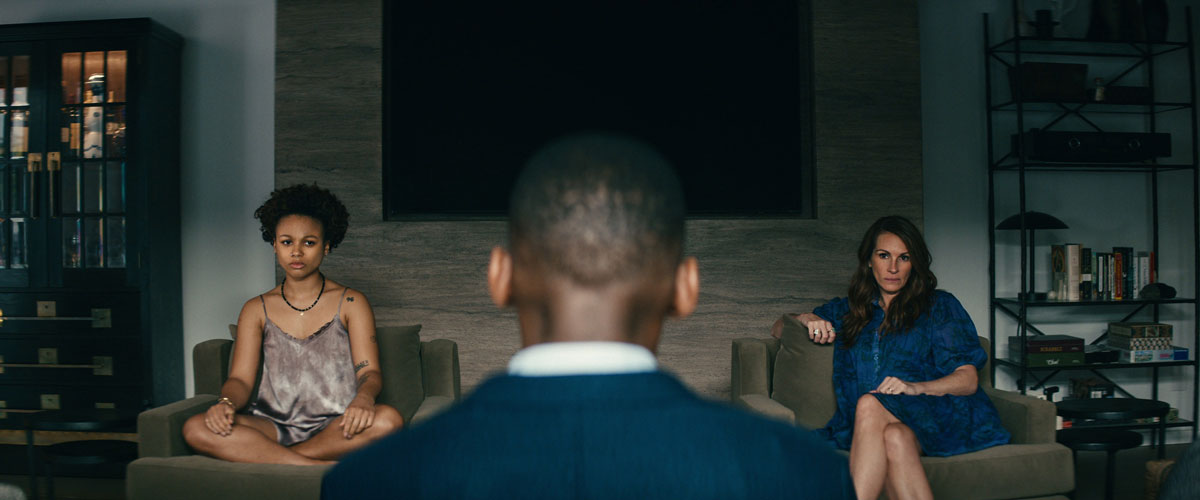
[Mai] played everyone else much more artfully than Richard Hatch did.

Wealth distribution is unequal and unfair for many reasons, as the Korean drama reminded us. These interactions alluded to a few of them. Mai’s success in the wake of all that is not necessarily satisfying as much as it is understandable.

By the competition series’ end we knew she came to the United States from Vietnam as a child refugee, served in the Navy, was disowned after becoming pregnant at 19, and eventually became an immigration adjudicator. These experiences required her to read people and plot her actions accordingly. She may not have demonstrated female solidarity, but one thing women of color know is that such declarations tend to be transactional. Anyway, she played everyone else much more artfully than Richard Hatch did. Two of the people she brazenly betrayed had no idea she was a snake until they watched the show. That’s what it took to win this mess, which is a dark moral to be left with. We’d be foolish to expect anything else.

All episodes of "Squid Game: The Challenge"  are streaming on Netflix.

“Individuals looking for a quick payday”: Breaking down Diddy’s numerous sexual assault lawsuits

Ever since singer Cassie filed and settled a bombshell lawsuit alleging decades of sexual violence and sex trafficking against longtime ex-partner and hip-hop music mogul Sean "Diddy," Combs the floodgates have opened. This has resulted in Diddy vehemently denying any wrongdoing and stepping down from his businesses.

This week a fourth woman has come forward accusing Combs of sexual assault in a lawsuit filed on Wednesday in New York federal court. The lawsuit alleged that she was a teen when she was gang raped and sex trafficked by Combs alongside Harve Pierre, a former president of Bad Boy Records and another unnamed person. The unidentified woman claimed that the assault took place in 2003 when she was 17 and Combs was 34. The lawsuit was filed under the Victims of Gender-Motivated Violence Protection Law. NBC News reported that the law allows survivors of alleged gender-motivated violence, including sexual abuse that occurred in the state, until March 2025, to file civil claims.

Additionally, the woman is also using the same representation as Cassie in the now-settled lawsuit against Diddy. Her attorney said that Combs and Pierre, "preyed on a vulnerable high school teenager as part of a sex trafficking scheme that involved plying her with drugs and alcohol and transporting her by private jet to New York City where she was gang raped by the three individual defendants at Mr. Combs’ studio."

But this isn't the only sexual assault lawsuit that the Bad Boy Entertainment CEO is facing now. Before the newest lawsuit, two other women had accused the musician of sexual abuse too.

Following Cassie's lawsuit against Combs, the second accuser filed her suit one day before the expiration of the New York Adult Survivors Act, which allows adult sexual assault survivors one year to sue regardless of when the original statute of limitations expired, according to NBC News. The woman said that she met Combs at Syracuse University when she was a college student in 1991. In the lawsuit, she claimed that Combs drugged her, sexually assaulted her, and recorded and showed the video to people without her knowledge.

The accuser said she chose to file the lawsuit after Cassie filed the lawsuit alleging he raped, sex-trafficked and abused her.

A spokesperson for Combs denied the allegation calling the claim "not credible" and "purely a money grab.”

The third lawsuit filed on Nov. 23, the same day as the second lawsuit, accused Combs and R&B singer Aaron Hall of sexually assaulting a woman at Hall's apartment in the early '90s. Again, the lawsuit was reportedly filed because of the expiration of the New York Adult Survivors Act.

After the third lawsuit, the music mogul stepped down as chairman from Revolt, the music-oriented television network he co-founded in 2013.

Regardless of the settlement with Cassie or his resignation at Revolt, he refutes any culpability. Combs said in a statement on X: “Enough is enough. For the last couple of weeks, I have sat silently and watched people try to assassinate my character, destroy my reputation and my legacy. Sickening allegations have been made against me by individuals looking for a quick payday.

“Let me be absolutely clear: I did not do any of the awful things being alleged,” he continued. “I will fight for my name, my family and for the truth.”


“Absolutely taking a risk”: Legal experts say Trump lawyers “afraid” his testimony could backfire

Attorneys for Donald Trump aren't looking forward to the former president's Monday testimony in his New York civil fraud trial, according to MSNBC legal analyst Lisa Rubin. 

Speaking with "Morning Joe" co-host Willie Geist about Thursday's hearing, Rubin reported that the $250 million fraud trial isn't going well for Trump, who is facing the possible dissolution of the Trump Organization and other companies in his business empire, and his defense team fears his testimony will only hurt his case. She speculated that over the weekend the former president's lawyers will attempt to convince him against taking the stand.

"I don't think it is going particularly well," Rubin told Geist, who asked about the status of the case. "Let me resist your question to one extent: I'm not positive Donald Trump is going to testify. I can tell you, looking at you here, I know Donald Trump wants to testify but his lawyers desperately wanted to lift the gag order that's still in place. They weren't able to do so. They asked Judge [Arthur] Engoron to pause the trial, he would not do so."

She further explained that Trump's attorneys personally told her the day prior that they did not want to ask Engoron to pause the trial because they figured he would reject the request.

"That signals to me they are afraid of having their client on the stand and inches away from that principal law clerk he can't talk about when he testifies," Rubin said, noting that Trump "speechified" in the courthouse hallway Thursday instead of answering questions. 

"Our folks who were in the hallway, who follow him on the campaign trail, said he was unusually disciplined in the sense that, while he attacked and gave his usual Trumpian talking points, he would not engage with any of the press corps assembled in the hallway," Rubin added. "All this is to say, I'll believe he takes the stand when he does." 

CNN legal analyst Elie Honig speculated Friday that, in deciding to testify next week, Trump must be dismissing his lawyers' advice, outlining the massive risks he's taking in the case in doing so. 

"Any competent lawyer on the planet would tell Donald Trump, 'You are taking the fifth, you are not taking the stand," Honig began before decrying Trump attorney Alina Habba's explanation to the former president as to why he shouldn't take the stand — because he has a recently reinstated gag order — as making "no sense." 

We need your help to stay independent

"That gag order applies equally inside and outside the courtroom. It makes no difference if you take the stand," Honig said. "The reason you tell Donald Trump, 'You're not taking the stand' is you have four pending indictments and anything he says in this case on the stand can absolutely be used against him."

Honig noted that attorneys for New York Attorney General Letitia James, who brought the lawsuit against Trump, would question the former president about his finances, which could reveal evidence that could be used against him in the criminal hush money case brought against him by Manhattan District Attorney Alvin Bragg.

"He's absolutely taking a risk by taking the stand," Honig concluded.


Want a daily wrap-up of all the news and commentary Salon has to offer? Subscribe to our morning newsletter, Crash Course.


Trump's civil trial, which began in early October, is set to end this month, and he has repeatedly denied any wrongdoing in the case and previously defended his property valuations.

The New York attorney general accuses him, his sons and other Trump Organization executives of overinflating his assets to gain better loan terms and make favorable business deals. She seeks $250 million in penalties against the former president and a ban on his ability to conduct business in the state.

In a partial summary judgment ahead of the trial's start, Engoron found Trump liable for defrauding banks and insurers and ordered the dissolution of his businesses. The latter ruling was paused pending appeal, and a New York appeals court on Thursday ruled to continue the stay on the order, Rubin reported

The appellate court's ruling allows for Trump's businesses in the state to continue operating while under investigation. But, Rubin notes, the court denied a pause to the other relief granted to the attorney general in the summary judgment. 

That denial allows for the enforcement of provisions of Engoron's Oct. 4 order ruling that Trump and the other defendants must provide the court-appointed monitor, former Judge Barbara Jones, with information pertaining to their businesses' ongoing dealings, Rubin said.

"If Judge Jones is the agreed-upon receiver, Trump and his co-defendants owe her a bunch of information and advanced notice about their ownership structure and future activity," she added.

Julia Roberts and Mahershala Ali are wary strangers in Netflix thriller “Leave the World Behind”

“Leave the World Behind” is an unsettling thriller featuring a series of unexplained phenomena. Director Sam Esmail (“Mr. Robot”), adapting Rumaan Alam’s novel, keeps audiences as clueless as the characters as strange things keep happening. The ambiguities are intriguing, but they also can be so vague that viewers may stop trying to sort out why or what they might mean.

The film opens with Amanda Sandford (Julia Roberts) informing her husband Clay (Ethan Hawke) that she rented a fabulous house by the beach for an impromptu vacation. Her speech about wanting to get away from people — “because she “f**king hates them” — is pointed,  amusing and typical of her sardonic nature. They pack their kids, teenage Archie (Charlie Evans) and tween Rose (Farrah Mackenzie) into the car and head off to Point Comfort. 

However, the family’s day at the beach becomes a nightmare when a massive oil tanker runs aground. What is worse, they return home and find there is no wifi or TV. How will Rose see the last episode of “Friends” she has been binging?!” Apparently, seeing a deer in the yard may not be the good omen, that Clay says it is “according to Meso-American mythology.”

There is a growing sense of urgency of that becomes more unnerving as the story progresses.

But things get a bit stranger when G. H. Scott (Mahershala Ali) and his daughter Ruth (Myha’la) turn up in the middle of the night. G. H. claims he is the owner of the house and because that there was a blackout in the city, he hopes he can spend the night with the Sanfords. Amanda, acting like a “Karen,” is skeptical of these strangers, but Clay encourages the Scotts to make themselves as home, as it were. G.H. may not have his wallet with his ID, but he does have keys to the locked top shelf liquor cabinet and makes a mighty fine cocktail.

“Leave the World Behind” dwells on the tensions between the Sanfords and Scotts in ways that address race without actively naming it. These moments ratchet up the anxiety as the strangers try to find common ground to confront an unexpected and unwelcome situation. G.H.’s comments are validated when Amanda momentarily sees some news items on her phone about the blackouts, and a suggestion that hackers are at work. (She also sees some gibberish before it disappears.) The TV also indicates a national emergency but no further details about what is happening emerge.

When Clay drives off to get a newspaper and some answers, he encounters a frantic woman (Vanessa Aspillaga) yelling in Spanish before a drone overwhelms his car with red flyers. Archie and Rose go explore a cabin in the woods, and an insect bites Archie. G.H. tries to get a satellite phone, but it is inoperable. These scenes are compelling, and there is a growing sense of urgency of that becomes more unnerving as the story progresses. 

Leave the World BehindMyha’la as Ruth and Julia Roberts as Amanda in "Leave the World Behind" (Courtesy of Netflix)
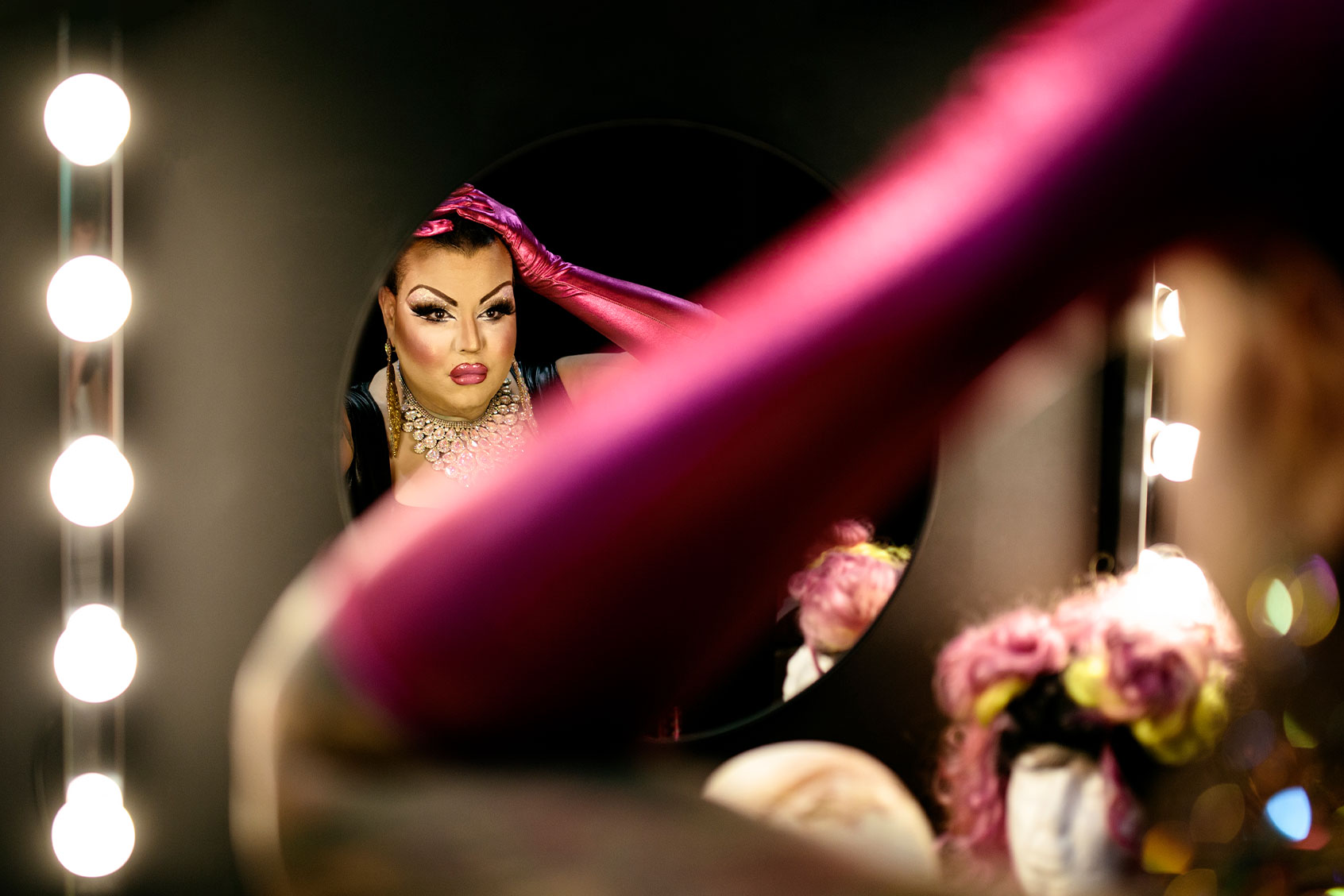
Esmail films “Leave the World Behind” in ways that emphasize the abnormality of what should be normal. He uses overhead shots and camera angles and plays with focus to displace or disorient viewers. There are shots of guns that suggest violence will happen, and scenes featuring animals — herds of deer or flamingos landing in the pool — that are discomfiting. When the Sanfords try to drive away, they encounter a pileup of cars in one of the film’s more intense sequences. One character suffers a terrible affliction. Even the music, by Mac Quayle, adds to the power of what is happening. 

But “Leave the World Behind” builds slowly to a small denouement, not a big awesome moment, an approach that may frustrate viewers looking for answers. It is best to just appreciate each odd scene for what it is.

As G.H., Mahershala Ali is all class, but he keeps an air of mystery about him that forces viewers to recalibrate what is true.

Some of the film’s most engaging moments are the character-driven ones. G.H. and Amanda have a drink, and she apologies for her rudeness, and they go dance. Ruth and Clay vape weed by the pool and have a revealing chat. There is still some animosity between Ruth and Amanda, but a scene where G.H. and Clay seek medical assistance from Danny (Kevin Bacon), shows how the guys assist each other as a simple request soon turns into a standoff. 

“Leave the World Behind” repeatedly suggests a powder keg is going to blow, and characters raise their voice to a scream, yet mostly the film is more sinister than scary. 

Julia Roberts makes Amanda unlikeable, but she defends her behavior by always doing what she thinks is right for her family. Ethan Hawke registers in a much lower key, which counterbalances Amanda’s shriller moments. As G.H., Mahershala Ali is all class, but he keeps an air of mystery about him that forces viewers to recalibrate what is true. In contrast, Myha’la injects Ruth with a spikiness that makes her endearing, especially when she speaks her mind. 

In support, Kevin Bacon has a memorable scene as Danny offers some candid advice to G.H. and Clay, and both Charlie Evans and Farrah Mackenzie acquit themselves well as Archie and Rose, respectively.  

If the point of Esmail’s film is how people treat each other, especially during times of crisis, he lets Amanda’s early remarks about hating people echo in many of the film’s scenes. But in addressing an impending apocalypse, the filmmaker does not create great stakes. The film wants audiences to connect the dots between the characters and the episodes, adding morality or questioning authority. But “Leave the World Behind” invites viewers to just let it wash over them, absorbing the content without engaging deeper. 


Want a daily wrap-up of all the news and commentary Salon has to offer? Subscribe to our morning newsletter, Crash Course.


Esmail gives G.H. various speeches to download information to Amanda or Clay, but it is far easier to align with Rose, who just wants to watch “Friends” because it makes her happy. This may be the film’s point — that society is far more interested in distracting ourselves than paying attention to critical political matters (e.g, climate change). Therefore, we will be unprepared for the apocalypse and devastation that is likely to happen. 

That may be a viewpoint as cynical as Amanda’s take on people, but it is the one certainty that “Leave the World Behind” offers. 

“Leave the World Behind” debuts Dec. 8 on Netflix.

There is a cunning strategy behind Trump’s outlandish court tactics

My first book on Donald Trump was an examination of one of the world’s most successful outlaws. Over the course of five decades, Trump had been accused of sexual assault, tax evasion, money laundering, non-payment of employees, and the defrauding of tenants, customers, contractors, investors, bankers, attorneys, and charities. Along the way Trump owned at least twenty different businesses that went “belly up” and six times he filed for Chapter 11 bankruptcies. Nevertheless, Trump managed to amass power alongside much of the wealth that his father had made and passed along to him. In short, Trump was never the successful self-made “art of the deal” billionaire that he claimed to be. 

Trump’s political success, similarly, had nothing whatsoever to do with his understanding of domestic or international affairs. Nor did Trump win the 2016 race for the presidency based on his expertise in business, finance, or real estate. Rather, Trump’s unique ability to acquire power, even after losing the 2020 presidential election and his failed coup two months later, came from his perseverance and expertise as a huckster and conman, along with his uncanny ability over decades to double down on corruption, lawlessness, and deception. 

Much of the empowerment of Trump has come from his understanding of the usefulness of tabloid journalism, labeling, branding, and social media combined with his innate talent for self-promotion. As the host of the acclaimed TV series “The Apprentice,” with the catchphrase “You’re Fired!” Trump nurtured his celebrityhood. 

The power of Trump has stemmed from his shrewd salesmanship and hustler like abilities to alter the social realities for tens of millions of Americans — even though the majority of people in the US know that there is not a grain of truth to any of the lies or poppycock that he and his cronies are forever spreading throughout the body politic. Nevertheless, at this moment in time, Trump and his organized crew have been able to win the political narrative with the idea that “no matter how vile and seditious Trump may be, Joe Biden and the Democrats are always worse,” as Will Saletan recently stated on The Bulwark Podcast.. As I have argued in The Crime Report, however, I believe that this narrative will no longer suffice once Trump has been convicted of the January 6 charges against him by a jury of his peers.

Trump’s “art of the steal” and his very skillful gaslighting can also be described as the art of the fairground barker à la P.T. Barnum. The American showman, businessman, and politician best remembered for founding the Barnum & Bailey Circus and for promoting celebrated hoaxes, such as the Feejee Mermaid, the Cardiff Giant, and Tom Thumb’s Baby. 

In my first account of Trump’s lawlessness, I explained how the fraudulent behavior of the Houdini of white-collar crime escaped the clutches of the long arm of the law with only some minor scratches. And without so much as one criminal indictment. I described how the racketeer-in-chief used his four years in the White House to broaden his financial schemes or rackets, such as selling pardons to name my favorite. I also revealed how Trump expanded his criminal enterprise by monetizing the powers of the presidency for the benefit of himself, the Trump Organization, and his children. All of these corrupt activities fell in line and conformed with a wide array of his other scams from a lifelong pattern of mixing legitimate and illegitimate business transactions. 

In the words of Steve Bannon, throughout the reign of Trump, his administration sought to deconstruct the state and to weaponize the political apparatus, including workstations and headquarters, for example, of the Environmental Protection Agency, the Consumer Protection Agency, and the Department of Justice (DOJ). The politicization of the DOJ with the cooperation of Trump’s third attorney general, Bill Barr, involved several criminal prosecutions and was as blatant as interference can become. In addition not only to delaying the release of the Mueller Report, so that Barr and Trump could falsely spin the findings about the 2016 Russian interference into Trump’s first presidential election, the two men appointed the hard-nosed prosecutor John H. Durham as a special counsel to discover any wrongdoing behind the Russian investigation as evidence of a “deep state” conspiracy by either intelligence or law enforcement to go after Trump in order to eliminate him from the competition. 

According to The New York Times, during the time between the Mueller investigation in 2016 and the release of Durham’s final report in May 2023 that revealed his inquiry had failed to find any wrongdoing in the origins of the Russian investigation, two of its “field investigators” on the case were Rudy Giuliani and Bill Barr on assignment in Italy to discover any evidence of persecution or witch-hunting. There was none, but they did manage to gather some worthy tips that connected Trump to some unrelated criminality. Not surprisingly, Durham never bothered to follow up on this information, preferring instead to “deep six” any incriminating evidence against the then-president. 

Subsequently, when Durham delivered his final report after four years taking nearly twice as long as the Mueller investigation had taken, the special counsel thanked President Biden’s Attorney General Merrick Garland for his continued support of an independent investigation into the investigation that had previously been investigated to no avail by Trump’s inspector general. 

Less than two years after being sworn into office, Trump armed with the help of a handful of billionaires, the Fox News corporation, his devoted MAGA base, and such media platforms as Twitter, Facebook, and YouTube took control of the Republican Party. After his re-election loss to Biden by more than seven million votes, #45 spent his final days in office not as a lame duck about to hand over the keys of the White House to occupant #46. 

Instead, the soon to be former president had become “obsessive-compulsive” about resisting by  any means necessary his electoral defeat to the same Joe Biden who had garnered seven million more popular votes than Trump. This included the orchestration of bogus lawsuits as well as government officials, political hacks, and fake electors to overturn a fair election and to violently interfere with the congressional certification of the president on January 6, 2021. 

We need your help to stay independent

No question that Trump’s shamelessness in addition to his vibrant sociopathic personality are key attributes that have well served the former president. However, what has allowed Trump to evade prosecution and ruin all these years is captured best in the various struggles to impeach and/or criminalize the ex-president, who is only three months away from Super Tuesday and on the road to securing the 2024 GOP nomination for president. I am referring to Trump’s acute abilities to corral and maximize economic and political power, on the one hand, and, on the other hand, to his mobster like proclivities for corrupting, fixing, resisting, and intimidating not only ordinary people, politicians, victims, witnesses, and jurors, but even those members from law enforcement and the judicial communities.

Speaking to reporters on March 13, 2023, aboard Trump Air Force One on his way to Davenport, Iowa, the 2024 presidential candidate  rebuked his former vice-president, Mike Pence, for a speech that he gave the night before at the white-tie Gridiron dinner in DC. Pence’s gaffe had been to state that Trump should be held accountable for the events of January 6. As usual Trump was blaming others for his crimes saying to the contrary, “don’t blame me, blame Mike. It was all his fault.”

Trump continued “‘Had he sent the votes back to the legislatures, they wouldn’t have had a problem with Jan. 6, so in many ways you can blame him.’” Trump was referring to Pence’s refusal to lawlessly reject the electoral college votes in Congress as the lame duck president had wanted him to do. Trump tersely explained: “Had he sent them back to Pennsylvania, Georgia, Arizona…I believe, number one, you would have had a different outcome. But I also believe you wouldn’t have had ‘Jan. 6’ as we call it.”

Placing Trump’s lawlessness and unaccountability for his crimes into the context of the crimes of the powerful and their lack of crime control, the privileged more often than not are not concerned about certain legalities and their consequences. Conversely, everyday people especially “the poor, the working class, Black and brown folks, a large majority of women, LGBTQ people and members of other vulnerable and disadvantaged communities do not have the privilege of ignoring” the law or thinking that it does not apply to them. 

One constant in the differential or selective administration of criminal justice is that ordinary persons without privilege are criminally indicted every day without unreasonable delays. Their criminal charges are not subject to prosecutorial discretion over whether a conviction beyond a reasonable doubt can be absolutely secured by a jury of their peers before indictments are brought forth. Mostly this is because less than five percent of their cases will ever go to trial.      

Moreover, the typical crimes of the powerful are not offenses committed by ordinary people nor are they delt with as matters of criminal law though they could be. Rather, these are elite offenses committed by powerful persons who use their economic wealth and privileged statuses to enable their crimes and to resist their capture. Structurally, elite or privileged transgressions of the law are not normally subject to criminal sanctions or to the loss of liberty. Typically, there are only civil liabilities and/or compensatory damages at stake. Unlike the offenses of the powerless who are almost exclusively subject to criminal sanctions and not to civil, administrative, or tort resolutions of conflict. 

What makes Trump and his legal teams’ defense tactics and strategies so interesting is that they represent the same types of practices or services that white-collar and corporate defense lawyers normally provide for their clients at more than $1000 per hour, such as prefrontal litigation or argumentation as a means of avoiding trials altogether or resolving complaints rather than prosecutions by stay if not dismissal. In criminal cases, these types of pre-trial activities are quite rare, short of guilty plea deals as contrasted with white-collar and corporate non-prosecutorial agreements. Putting aside the statuses of Trump as a former president and 2024 presidential candidate, neither the leaders of the Proud Boys or the Oath Keepers, who were convicted of seditious conspiracy related to the U.S. Capitol breach on January 6, for example, mounted any kind of prefrontal white-collar or corporate like defense. 

Because of the intersecting legal arrangements of elite accountability, Wall Street institutions and securities financiers, and multinational corporations and their CEOs, for example, or wealthy and corrupt former presidents, they will often remain for very long periods of time – if not indefinitely – beyond legal incrimination. Think of Too Big to Fail, Big Tobacco, Big Chemical, Big Oil, Big Pharma, and so on. As an informal rule, only when on those occasions where there has been enough social pressure built up over many years, sometimes over decades, do these powerful offenders find that they are no longer beyond the reach of the law. And only then are they ever held criminally accountable for what generally amounts to short prison sentences and fines at a fraction of the value of the harms or injuries they have caused.   

Ergo, the myth that no persons or corporations are above the law has little to do with the workings of law enforcement and criminal justice in the United States. Special treatment of privileged people, especially those who have reached the pinnacles of economic power and political authority are often held conspicuously unaccountable for their misdeeds, criminal or otherwise. 

In the spring of 2023, former head U.S. Attorney for the Southern District of Alabama Joyce Vance wrote about Supreme Court Justice Clarence Thomas in the legal context of the difficulties of suing Fox News and the Trump Organization. When Thomas’ conflicts of interest and alleged criminal conduct had become a judicial scandal, and after Chief Justice John Roberts had declined an invitation to testify before the U.S. Congress about SCOTUS’ lack of a judicial code of ethics or oversight, the distinguished Alabama law professor underscored that “much of what we are experiencing comes down to a single flaw in our system: High-level officials are not held to the same standards of accountability that the rest of us are.”

Or as George W. Bush’s ethics czar Richard Painter stated on MSNBC’s “The ReidOut” at the time, “Justice Thomas has clearly violated the ethics regulations of SCOTUS as well as the law and should be impeached by the U.S. Congress and removed from the court at a minimum.”   

When it comes to the normalization of crime and criminalization, the powerful and privileged have always had institutionalized advantages, and the powerless and oppressed have always had institutionalized disadvantages. These inequities or biases in the substantive laws have over time become routine through the legal formalities and discretionary informalities of the procedural law. From this perspective of justice evolution, the variance in the accountability and management of criminals and the distinct systems of social control that are in play should be viewed legalistically – conforming with the state definitions of harm and injury – and extra-legalistically – conforming with the ideologically informed practices of law enforcement and the administration of justice. In other words, when it comes to specific laws and the different institutional relations of resolving conflicts and administering criminal justice, people’s choices of crime and their forms of social control are not at all equal or subject to the same due process of law.


Want a daily wrap-up of all the news and commentary Salon has to offer? Subscribe to our morning newsletter, Crash Course.


Structurally, the crimes of all people are mostly shaped by their differential access to legal and illegal opportunities and the types of punishments they receive are mostly shaped by the intersections of their socioeconomic statutes and the substantive laws they break. For example, rich people do not hold up 7-Elevens for a few hundred dollars a heist and poor people do not fix prices for hundreds of millions of dollars looted over months or even longer. Meanwhile, law enforcement does not care nearly as much about looting capitalists as it does about pilfering workers even though the costs of the former are one-hundred times more costly than the latter. This corporeality is also evidenced by finite resources and the allocation of an underabundance of money spent for policing “suite” crimes as compared with an overabundance of money spent for policing “street” crimes.

Legal myths aside, before becoming president-elect in 2016, Donald Trump, his organization, shell companies, and employees were at every level of government subject to a wide range of 13 major legal probes between 1973 and 2016. Prior to Trump becoming president, the criminal matter of indicting him had always begged the question: “How many years of accumulated lawlessness and abuse of power would it take before the criminal law would, if ever, catch up with Teflon Don?” Until recently, the answer had been for more than 40 years and counting. 

After Trump became the former POTUS the question was reframed: “How long would it take for a twice impeached Commander-in-Chief undergoing a countless number of criminal and civil charges including stealing highly classified documents from the United States and a presidential election from the American people, before he would finally be charged and held accountable for at least one of his dozens of serious felonies?” 

The answer to the first reframed question came on April 4, 2023, when Trump was arraigned in Manhattan and charged by the people of New York with 34 counts of falsifying business records related to violations of election and tax laws used to cover-up hush money payments made to suppress two of his extramarital sexual liaisons from becoming public knowledge only days before the 2016 election for the presidency. At the time, such public knowledge may very well have tipped the scales and prevented Trump from narrowly winning that election with three million fewer votes than Hillary Clinton received. 

The answer to the second question will not be known until after Trump’s upcoming 2024 criminal trials have concluded.

“It was beneath me”: Trump fumes at his own lawyer on Truth Social for giving him “not good advice”

Former President Donald Trump lashed out after one of the Democratic Party's largest financiers donated a large sum to a super PAC supporting 2024 Republican presidential candidate and former South Carolina Gov. Nikki Haley — and took a shot at his own lawyer in the process. The former president took to social media Thursday to insult Reid Hoffman, the billionaire co-founder of LinkedIn who The New York Times first reported gave $250,000 to the pro-Haley super PAC, SFA Fund Inc, a contribution confirmed by his political advisor Dmitri Mehlhorn. 

Hoffman's team asked specifically if the super PAC would accept money from him given that he is a Democrat who actively supports President Joe Biden, Mehlhorn told the Times, adding that the super PAC said yes. "This disgusting Slob, a Democrat Political Operative, is the same guy who funded a woman who I knew absolutely nothing about, sued me for Rape, for which I was found NOT GUILTY," Trump ranted on Truth Social. "She didn’t remember the year, decade, or much else! In Interviews she said some amazingly 'inconsistent' things. Disgraceful Trial—Very unfair. I was asked by my lawyer not to attend—'It was beneath me, and they have no case.' That was not good advice."

Hoffman has financially supported a number of anti-Trump candidates and causes. He also helped fund writer E. Jean Carroll's lawsuit against Trump for rape and defamation earlier this year. Trump was found liable for sexual abuse and defamation in the suit, and was ordered to pay Carroll a total of $5 million in damages. Hoffman's donation will help Haley's PAC buy more ads as she fights to close the gap in polling with Trump, but cross-party giving is rare and risks backlash. Hoffman's donation was made public after Trump criticized JPMorgan CEO Jamie Dimon's comments urging Democrats to back Haley. 

Climate scientists need power to prescribe climate policies: report

Climate scientists currently face a dilemma. A scientist's chief responsibility is to report the observed and analyzed facts as neutrally and accurately as possible. On the surface, this would seem to preclude offering policy recommendations. Yet when comes to an issue as dire as climate change, where the stakes are literally humanity's continued existence, it could be argued that failing to prescribe solutions is equally irresponsible. Five lead authors of a report by the Intergovernmental Panel on Climate Change (IPCC) are now arguing that climate scientists need to be able to make policy prescriptions and oversee their implementation, according to a report by The Guardian.

“At some point we need to say that if you want to achieve this aim set by policymakers then certain policies need to be implemented," Sonia Seneviratne, an IPCC vice-chair and coordinating lead author since 2012, told the Guardian. "As climate change becomes worse and worse, it is becoming more difficult to be policy relevant without being prescriptive.”

Gert-Jan Nabuurs, a coordinating lead author on three IPCC report, reinforced her conclusion. “The IPCC’s critical, independent and guiding roles seem to be less and less evident," Nabuurs said. "As they decline, countries seem to be exerting a larger and larger influence.” He added that the problem for the authors is that "we can’t be policy prescriptive, so we can’t make hard statements on what should be done."

The scientists' comments are being made after it came out that the United Arab Emirates, which is hosting this year's climate summit, was using the event to strike oil and gas deals. Sultan Al Jaber of the United Arab Emirates (UAE), the president of COP28, came under fire on Sunday for saying that any phase-out of fossil fuels would "take the world back into caves" and that "I don’t think [you] will be able to help solve the climate problem by pointing fingers."

Texas AG Ken Paxton threatens to prosecute woman’s doctors for emergency abortion approved by court

Texas Attorney General Ken Paxton threatened on Tuesday to prosecute any doctors who provided a woman with an emergency abortion hours after she won a court order allowing her to obtain the procedure due to medical necessity, Reuters reports. Paxton, a Republican, wrote in a letter that the order from Austin District Court Judge Maya Guerra Gamble did not protect the doctors from prosecution under all of Texas' abortion laws, and that the woman, Kate Cox, had not proved she qualified for the medical exception to the state's abortion ban.

In a statement that came alongside the letter, Paxton added that Guerra Gamble's order "will not insulate hospitals, doctors, or anyone else, from civil and criminal liability for violating Texas' abortion laws." The letter was sent to three hospitals where Damla Karsan, the doctor who said she'd provide Cox with abortion care, has privileges to admit patients. "Fearmongering has been Ken Paxton's main tactic in enforcing these abortion bans," Marc Hearron, senior counsel at Center for Reproductive Rights, which represents Cox, said in a statement. "He is trying to bulldoze the legal system to make sure Kate and pregnant women like her continue to suffer."

Cox filed a lawsuit on Tuesday requesting a temporary restraining order to prevent Texas from enforcing its near-total abortion ban in her situation, arguing that continuing her pregnancy threatened her health and future fertility. Cox's fetus was diagnosed with trisomy 18, a genetic abnormality that usually results in miscarriage, stillbirth or death soon after birth. The judge said she was granting the order at a Thursday morning hearing. "The idea that Ms. Cox wants desperately to be a parent, and this law might actually cause her to lose that ability, is shocking and would be a genuine miscarriage of justice," Guerra Gamble said during the hearing.

From drag queens to guyliner-wearing rock stars, eyeliner aids in “rebelling against societal norms”

Journalist, editor and author Zahra Hankir wants to make it clear that eyeliner isn’t just about women and beautification. Eyeliner “transcends borders and eras,” she writes in a November essay for The Guardian. But it also challenges our understanding of gender and identity, especially as more men are now incorporating eye makeup into their everyday look. 

"When Muslim men wear eyeliner as a form of connecting or adhering to the Sunnah, they're not wearing it to beautify themselves."

On TikTok, Gen Z influencers are at the forefront of a new trend centered on countering toxic masculinity, in which 20-something-year-old men partake in fashion and beauty fads that have historically been considered feminine. That includes wearing more ruffles, notably in tops, undershirts or formal wear. That includes wearing body-con silhouettes, like skin-tight flared trousers. And that includes putting on eyeliner. Videos of conventionally attractive men meticulously applying eyeliner to their water lines have already garnered their own category on TikTok: “Men Eyeliner.” These same men caption their content with proud declarations like, “real men wear eyeliner” and “proof all guys should wear eyeliner,” much to the amusement of their fans. 

Despite the message that social media is sending, men wearing eyeliner isn't new; they've been using the cosmetic since its earliest inception, Hankir explains in her new book “Eyeliner: A Cultural History.” That’s because eyeliner first emerged as a symbol of culture — not as a beautifier exclusively reserved for women. Take for example ithmid, which is deemed the “purest form of kohl” by Muslims across the Middle East and North Africa and other parts of Africa and Asia. Today, many devout Muslims, namely men, wear ithmid on their eyes because the Prophet Muhammad was said to have worn it. The same goes for surma, another rendition of kohl that’s commonly worn by Muslim men in South Asian countries.

“When Muslim men wear eyeliner as a form of connecting or adhering to the Sunnah, they're not wearing it to beautify themselves. They're wearing it for other reasons,” Hankir explains during a recent conversation with Salon. “The same for the Bedouin community, whereby the men who I spoke to were wearing it to protect against the glare of the sun. So they're not considering it a form of beautifying themselves.”

Years later, eyeliner grew popular with Western men for its aesthetic benefits, thanks to several rock stars who blurred the lines between gender, sexuality and self-expression. Called “guyliner,” the phrase describes the thick, smudged black eyeliner rimming the eyes of some of the biggest sex symbols of the 20th century. David Bowie, Mick Jagger, Keith Richards, Steven Tyler, Prince, Freddie Mercury and more were just a few major names who stenciled their eyes as part of their signature look.

“I think ‘guyliner’ plays a significant role in the idea of sort of mutating into new personas or different personas or . . . rebelling against societal norms,” Hankir says. “How’s the man expected to present? Is he expected to present in this particular way? It’s this idea of playing with gender norms and gender expectations.”

The weight of eyeliner among drag queens

Drag queen admiring herself in the mirror in a dressing roomDrag queen admiring herself in the mirror in a dressing room (Getty Images/Jesus Calonge)Those concepts also resonated with members of the queer and drag communities. Wearing eyeliner was a method of self-expression and celebrating one’s own personal identity. But it also came with consequences. Queer folks experienced ostracism for their looks “because we are gay and gay is verboten,” writes Simon Doonan in “Drag: The Complete Story.”

On the other hand, high-profile straight men (or men who were believed to be straight outside of their offstage persona), could dress and look however they pleased without facing any discrimination. It’s why Freddie Mercury could dress up as a vacuuming housewife in his 1984 music video for “I Want to Break Free,” Hankir says. Or Boy George could wear “bold and colorful guyliner.” Or David Bowie could wear “high heels and smoky eyes.” Or Kurt Cobain could wear smudged eyeliner and dresses while performing live.


Want a daily wrap-up of all the news and commentary Salon has to offer? Subscribe to our morning newsletter, Crash Course.


That being said, Hankir stresses the fact “that eyeliner is deeply personal.” It’s something she learned through her personal story with the makeup tool and the stories of those within the drag community. She recalls the time she saw New York City-based drag queen Lucia Fuchsia perform at a coffee shop in Crown Heights:

“That, to me, really demonstrated the transformative power of eyeliner and how it can give you not just a different aesthetic, but also can give you confidence within your own community when you're looking for a space within it,” Hankir says. “For [Fuchsia], eyeliner is a tangible object that allows him to kind of revel in his queerness, and that's something that I loved to see.”

As for eyeliner’s gender-bending history, Hankir adds that it’s time people understand the many meanings eyeliner can carry: “It is about conveying multiple messages, whether that's about our sexuality, gender, spirituality, heritage or ancestry. That's how deep eyeliner is.”

She continues, “When I think about eyeliner, I don't think about it anymore as a beauty product that is used primarily by women. I think of it as an item that, like ink, can convey so many messages to people who observe the wearer but also, the wearer themselves.

“They're deciding, they're being intentional with the message they want to convey.”

Donald Trump’s dream team looks like an American nightmare

Many breathless headlines have appeared in the mainstream media over the past couple of weeks about the impending dictatorship of Donald Trump if he were to win the election next fall. All the major newspapers and magazines have finally begun to delve into exactly what Trump and his henchmen have in store to exact his revenge and enact the white nationalist agenda of the MAGA far right. It's about time. Let's hope they keep it up. 

Trump sycophants would have no compunction about pushing whatever buttons they have at their disposal to punish their enemies and vanquish the political opposition.

Here are just a few of the proposals that we know about. He plans to gut the Environmental Protection Agency and drill in Alaska under the illusion that somehow the "profits" will pay for Social Security and Medicare. (It's a totally absurd proposal.) He's going to use the Insurrection Act to deploy the military to quell domestic dissent and he'll ban homeless camps in cities and put the unhoused in "tent cities." And there are very detailed plans to round up millions of migrants and put them in detention camps before mass deportation. (We're going to have a whole lot of "camps" in America under Donald Trump.) He plans to pardon "a large portion" of the Jan. 6 insurrectionists and "go after" Joe Biden and other political enemies using the Department of Justice as well as the media. And he's going to pull out of NATO, abandon Ukraine and back the right-wingers in the Israeli government. He will essentially declare war on blue states, particularly the cities where he plans to send in what amounts to an occupying federal force. 

If you can believe it, those are just some examples of what has been proposed. The entire program is beyond belief and there's something new every day. 

Trump appeared with his favorite courtier, Sean Hannity, this week and was asked very politely if he had any intention of becoming a dictator. Trump said only on day one when he planned to close the border and drill, drill, drill. "After that," he said, "I won't be a dictator." But everyone should realize that Trump has always believed that he had unlimited power as president and continuously patted himself on the back for restraining himself from overusing them. 

He's not going to be a "dictator." He just plans to use the power he believes he already had, that's all. 

But for all his dictatorial impulses, it is also true that Trump has a fatally disorganized mind and a tendency to lose focus and there is no way that he will be able to accomplish any of this by himself. So the big question on everyone's mind is just who is he going to get to help him fulfill his goals? We know that the top qualification for all jobs in the administration will be that they can demonstrate 100% fealty to Donald Trump. In fact, that may be the only requirement. 

Axios reported that job questionnaires are already being circulated and they match what was being used in the final days of the first Trump term when a wholesale reshuffling of the Executive Branch took place. The questions included:

What part of Candidate Trump's campaign message most appealed to you and why?"

"Briefly describe your political evolution. What thinkers, authors, books, or political leaders influenced you and led you to your current beliefs? What political commentator, thinker or politician best reflects your views?"

We need your help to stay independent

This tracks with the questions in the "Talent Database" that's being assembled by the Heritage Foundation which, as I wrote about here, has a very spotty record of accomplishment in similar endeavors. 

But what about the big jobs that everyone will see — Cabinet members and department heads? Or powerful White House positions? It's highly unlikely anyone who isn't already in the Trump inner circle will stick his or her neck out "for the sake of the country" after what happened to those who did that in the first term, nor would Trump want anyone like a General Mattis or even a Bill Barr in the Cabinet this time. He will put his closest cronies into "acting" positions wherever he can, just as he did in the last year, and if the Republicans take the Senate, I expect they'll be happy to change the filibuster to give him anyone he wants. 

So who are we looking at? Axios had another report this week that revealed the top contenders. 

For vice president, Trump is considering Ohio Sen. JD Vance, Arkansas Gov. Sarah Huckabee Sanders, MAGA superstar Kari Lake, South Dakota Gov. Kristi Noem and Georgia Rep. Marjorie Taylor Greene. Byron Donalds, R-Fl., is also on the list as is fellow Floridian Matt Gaetz. Melania Trump is reportedly pushing for Tucker Carlson. Seriously. (Nobody thinks he would be a good fit, however, because "he can't be controlled," which is hilarious.) 

Carlson and Trump are on the horn regularly, however, and he is apparently advocating for the odious Stephen Miller, the mastermind of Trump's heinous immigration program, for, wait for it, attorney general because he's "a serious person." It's not a bad guess that this is being considered since Miller is currently working on the recruitment of an army of right-wing lawyers to staff a MAGA-dominated executive branch. 


Want a daily wrap-up of all the news and commentary Salon has to offer? Subscribe to our morning newsletter, Crash Course.


Then there is the swashbuckling Mike Davis, the former general counsel to Iowa Sen. Chuck Grassley. Davis announced that he would immediately launch a "three-week reign of terror" in which he would "put kids in cages" and jail prosecutors and journalists who have gone after Trump. That's exactly what Trump wants to hear so don't be surprised if he is chosen. 

Podcaster Steve Bannon, who was fired from the first Trump administration but is back in the in-crowd is being discussed as chief of staff, and Kash Patel, the man Trump promoted from the ranks to sabotage the Pentagon is assumed to be Trump's CIA pick. Trump's former body man and enforcer Johnny McEntee is expected to be given a powerful position, possibly even in the Cabinet and Ric Grenell, the erstwhile Twitter troll turned ambassador in the first term, is generally considered to be the front runner for secretary of state.

Uber wingnut Sen. Tom Cotton, R-Ar., is mentioned for Defense Secretary and Jared Kushner is definitely on the list for something if he wants it. There's no mention of Michael Flynn but don't be too surprised if he turns up too. It's a pretty thin bench. 

Just look at that list. What a rogues gallery. It's nothing but the worst MAGA blowhards and the last standing retreads from the first term so the list isn't very long. Would they end up having to choose from nutty failed candidates like Pennsylvania's Doug Mastriano or Herschel Walker? Maybe Kanye West could be Treasury Secretary and Alex Jones could be the White House Counsel. Why not? Would they be any worse than Marjorie Taylor Greene?

It's really not a joking matter actually. All the people mentioned in the Axios piece may be third-rate political figures but they are also dangerous authoritarians and Trump sycophants who would have no compunction about pushing whatever buttons they have at their disposal to punish their enemies and vanquish the political opposition. What they lack in integrity they make up for in malevolence and it's simply unthinkable that the U.S. government would be in their hands.