Spring Sale: Get 1 Year, Save 58%

Doja Cat’s new polarizing, dark side cashes in on how controversy always sells

Pop musicians love eras. Every album cycle they put on a new alter ego different from the last like a costume, taking on a whole new personality, aesthetic and sometimes public persona too. Taylor Swift and Beyoncé are literally in the midst of tours that cycle through their decades-long careers, personalities and music. Pop rapper Doja Cat is no different from every other pop star even if she claims she isn’t.

The singer is using controversy to sell her new venture into what she calls her truest rap era.

For her new album “Scarlet,” the pop rapper transforms into her new era: The Scarlet Era. She now dresses in a new demonic, blood-red look all the while fending off her fans in real life and on the internet (See “Attention” music video). The promo for the album mostly consists of images of a bloodied Doja Cat and her dancers. At the VMAs, the artist was accompanied by a legion of bloodied Scarlets, and statues of red Scarlet mannequins have been popping up all over the country.

It’s a change from her previous albums “Hot Pink” and Grammy-nominated “Planet Her,” which fans familiarized themselves with her pop sound and look. It’s almost fitting that the rapper has released songs titled “Demons” and “Paint the Town Red” when she is aiming to burn down whatever favorable image people and her fans had of her before this new cosplay became her personality.

Like every artist that has come before Doja (think in the vein of Miley Cyrus), the singer is using controversy to sell her new venture into what she calls her truest rap era. Rappers usually have a closet full of skeletons and so does Doja Cat even though she says she doesn’t in the song “97.”

In the last handful of years, during her meteoric rise, the musician has faced possible cancellation for a plethora of bad behavior. It goes as far back as her early internet days saying homophobic slurs, in 2020 being accused of engaging in race-play chatrooms, and starting a feud with teen “Stranger Things” actor Noah Schnapp. While all this behavior she’s accused of is troubling and odd, unfortunately, it’s become expected for chronically online people to be engaging in this type of edge-lord, troll-like behavior. That’s not even the extent of where Doja’s controversies end.

Earlier this year, the singer took to Threads to claim that her former successful and critically lauded pop albums were “cash grabs,” upsetting her fans, who weirdly call themselves Kittenz. And yes, it’s with a “Z.” In a now-deleted post, Doja upset them even more: “My fans don’t name themselves s**t. If you call yourself a ‘kitten’ or f**king ‘kittenz’ that means you need to get off your phone and get a job and help your parents with the house.” When fans asked her to tell them that she loved them she said in response, “I don’t though cuz i don’t even know y’all.”

She’d rather be famous for metaphorically burning down her image because she let fame go to her head.

She reportedly lost 500,000 Instagram followers after the set of deleted posts. Fans even began to deactivate their fan accounts — no longer wanting to support the singer after her refusal to coddle fans. After the mass unfollowing, Doja said that it felt like she “defeated a large beast that’s been holding me down for so long . . . I feel free.” 

In her second Billboard No.1 single “Paint the Town Red,” the musician raps about this newfound freedom. She’d rather be famous for metaphorically burning down her image because she let fame go to her head. And she’s going to have so much fun in the chaos because “she’s the devil/She a bad lil’ b***h, she a rebel.”

She spits:

Yeah, b***h, I said what I said
I’d rather be famous instead
I let all that get to my head
I don’t care, I paint the town red

Furthermore, the fans also have a beef with Doja Cat because of her relationship with comedian and Twitch streamer J. Cyrus. The controversial Cyrus has been accused of emotional abuse, lying and manipulation by female moderators on Twitch. Fans also claimed that Cyrus would flirt and message younger female fans who were of legal age but were significantly younger than him.

Despite the allegations of abuse and following outcry from fans, Doja and Cyrus are reportedly still dating. There is speculation that her newest single off of “Scarlet” addresses everyone’s concerns about her relationship. The singer is in love in “Agora Hills” and she doesn’t care to show it off to everyone who chides her for it. But she also calls out her fans’ involvement in her personal life, and she basically tells them to bugger off.

The rapper sings:

Get used to my fans lookin’ at you
F*** what they heard, I don’t f*** with them birds
I’m a mean kitty, don’t get stabbed with the rat tooth
Boys be mad that I don’t f*** incels

In a moody “F**k the Girls (FTG),” the rapper again tells her fans off by referencing her viral Threads message: “I don’t love you h**s, you worship everything you couldn’t be.” In “97” she again, repeats the same grudge she holds against her haters who ultimately double as her fans:

Like they wasn’t tryna fight me in Threads (‘Bout some music)
In a tweet that I’ma probably still stand by (I’m ruthless)
Keep ya money, funky b***h, ’cause I don’t play about (The rumors)
They gon’ buy it, they gon’ pirate, they gon’ play it, they consume it

We need your help to stay independent

Doja Cat has a right to criticize how attached fans are to her personal life. Every celebrity deserves their right to privacy especially when it comes to their relationships, but the constant barrage against her fans feels like it’s misdirected and maybe even a level of projection. As someone who is so hell-bent on incinerating her already charred reputation, the singer sure as hell cares about what people think about her. As a woman, I understand her need to want to burn everything down and lash out when people are expecting too much from her. She will never 100% appease every single stan but regardless if celebrities like it or not they do have a pre-established social contract with their fans. Whether they honor it or not is up to them but they can’t be surprised when there is backlash when they say their fans are basically nothing to them. 

It’s easy for me to be unsympathetic to the backlash against her because she prides herself in being the same level of internet troll as her extremist super stans. Some pop music stans can act like rabid animals, and I know this as I had a One Direction Twitter fan account in 2013. But the only way to win the internet troll games as a creative artist passionate about the work is to drown out the noise and trust the opinions that hold real weight. 

Throughout “Scarlet,” Doja is palpably angry. She is ready to retaliate against the negative effects of the parasocial relationships between fans who have still given her the level of fame that allows her to openly say to them that they should “f**k off.” And even though the new album is receiving mixed reviews from critics, moderate sales numbers and a public souring on her image — she still has secured herself a Billboard No. 1 single. Selling controversy is the cheapest trick in the music game and clearly, no musician is above making a buck off their own personal mess. But it absolutely drowns out what is important about the art and fabricates it into a spectacle — the very thing Doja Cat is afraid of becoming.

Call for Clarence Thomas to recuse from CFPB over Koch ties grow: “He cannot be trusted”

U.S. Supreme Court Justice Clarence Thomas on Monday faced mounting pressure to recuse himself from a case that experts warn “poses an existential threat” to a consumer-focused federal agency in the wake of revelations that he secretly served as an in-person “fundraising draw” for Koch network donor events.

ProPublica‘s Friday reporting on Thomas’ Koch connections came amid heightened scrutiny of the justice’s ties to billionaires with business before the court. Next week, the court is scheduled to hear oral arguments in Consumer Financial Protection Bureau (CFPB) v. Community Financial Services Association of America (CFSA)—a case challenging the agency’s funding structure brought by a group that represents payday lenders.

“His repeated abuse of his office for personal gain is a national disgrace.”

“Clarence Thomas’ close ties to the Koch network—which has spent billions trying to make it easier for corporate predators to rip off everyday Americans and face zero accountability—are grounds for his immediate recusal from the CFPB case,” Revolving Door Project (RDP) senior researcher Vishal Shankar argued Monday.

“He cannot be trusted to rule impartially on matters that would financially benefit his billionaire benefactors, and by extension himself,” Shankar said of Thomas. “His repeated abuse of his office for personal gain is a national disgrace.”

Critics—including Democrats in Congress and watchdog groups—have called for new Supreme Court ethics policies, a U.S. Department of Justice probe, and even Thomas’ resignation over recent reporting about his relationship with billionaire Harlan Crow and other rich GOP donors who have showered the justice with luxury vacations and other gifts.

Crow’s “real estate empire has bankrolled the National Multifamily Housing Council—a landlord lobbying group that has opposed CFPB regulation of the tenant screening industry,” RDP highlighted Monday.

“While the artificial ‘Community Financial Services Association of America’ is the named litigant opposite the CFPB, all observers understand that the stakes in this litigation are shared by every investor in the types of companies that profit from unfair, deceptive, or abusive practices,” said RDP executive director Jeff Hauser. “Just because Koch and others have used a shell organization to back this lawsuit doesn’t mean that their ties to justices are any less relevant.”

RDP also noted that attorney John Eastman—an ex-adviser to former President Donald Trump who was indicted in the Georgia election interference case and corresponded with right-wing activist Ginni Thomas, the justice’s wife, before the January 6, 2021 insurrection—filed an amicus brief in CFPB v. CFSA supporting the payday lenders.

RDP’s recusal demand echoed Accountable.US senior adviser Kyle Herrig’s response to ProPublica‘s reporting last week.

“It’s clear that Justice Thomas sees his position on our nation’s highest court as a way to upgrade his own lifestyle with no regard for ethics or consequences,” Herrig said Friday. “It was his own decadeslong improper financial relationship with Harlan Crow that sparked the Supreme Court corruption crisis in the first place—and that was just the tip of the iceberg.”

“As ethics violations by Thomas and others keep piling up, Chief Justice Roberts’ lack of action becomes more egregious,” he added. “The chief justice must demand Justice Thomas recuse himself from upcoming cases with Koch network conflicts of interest. We need accountability and reform now.”

As Common Dreams reported last Monday, Justice Samuel Alito, another member of the court’s right-wing supermajority, has also faced calls to recuse himself from CFPB v. CFSA, given his private jet travel with billionaire Paul Singer, whose investment management firm holds at least $90 million in financial companies overseen by the agency.

“All justices personally close to proprietors of shady financial services firms should recuse themselves, full stop,” Hauser declared Monday. “And if any justices persist in hearing this case despite being self-evidently biased, the case for rebalancing the Supreme Court to create an ethical majority will become even stronger.”

Martin Scorsese believes comic book movies threaten our very culture: “We’ve got to save cinema”

Martin Scorsese is once again making it clear that he’s not a fan of blockbuster comic book-inspired films — which he once likened to “theme parks” in the past. In a new profile with GQ, Scorsese slammed comic book movie culture, asserting that it’s negatively impacting audiences who aren’t familiar with other types of film. 

“The danger there is what it’s doing to our culture,” he said. “Because there are going to be generations now that think movies are only those — that’s what movies are.”

Scorsese continued, “They already think that. Which means that we have to then fight back stronger. And it’s got to come from the grassroots level. It’s gotta come from the filmmakers themselves. And you’ll have, you know, the Safdie brothers, and you’ll have Chris Nolan, you know what I mean? And hit ’em from all sides. Hit ’em from all sides, and don’t give up. Let’s see what you got. Go out there and do it. Go reinvent. Don’t complain about it. But it’s true, because we’ve got to save cinema.”

Scorsese also clarified his definition of cinema, saying that “cinema could be anything; it didn’t just have to be serious.” Movies like the 1959 crime comedy “Some Like It Hot” are considered cinema in Scorsese’s books. But, he adds, “I do think that the manufactured content isn’t really cinema,” he said.     

“It’s almost like AI making a film. And that doesn’t mean that you don’t have incredible directors and special effects people doing beautiful artwork,” Scorsese added. “But what does it mean? What do these films, what will it give you? Aside from a kind of consummation of something and then eliminating it from your mind, your whole body, you know? So what is it giving you?”

Ultra-processed foods are not only bad for our bodies, their production damages our environment

Ultra-processed foods (UPF) have become increasingly popular and range from chips to microwave meals and even bread. Even just a casual glance at supermarket shelves reveals a plethora of UPF offerings in all their elaborate and enticing packaging.

Besides their affordability, UPF not only offer time-saving convenience but also momentary satisfaction drenched in saturated fat, sugar, salt and additives. After all, who can resist enjoying a tasty snack when indulging in a football game or an electrifying new TV series?

Although much is discussed about the direct negative impact of these products on our health, including obesity, cardiovascular diseases and diabetes, little has been said about the impacts of UPF on the environment.


What are ultra-processed foods?

UPF can be defined as “formulations of ingredients, mostly of exclusive industrial use, that result from a series of industrial processes” and contain little or no whole foods.

They are made using industrial processing methods that may include moulding, chemical modification and hydrogenation (which can turn liquid unsaturated fat into a more solid form).

The consumption of ultra-processed foods is not new. In Europe, processed products on an industrial scale have been widely consumed since the late 18th and 19th centuries. A 2020 Canadian study shows that the percentage of total purchased calories attributed to UPF in Canada increased from 24 per cent in 1938 to 55 per cent in 2001 and, in 2013, Canadians purchased an astonishing average of 230 kg of UPF per person.

Even more alarmingly, 99 per cent of Canadian adults consume UPF at least once a week. In comparison, 57 per cent of people in the United Kingdom consume some kind of UPF on a weekly basis.

The consumption of UPF in Canada is largely associated with men, youth, those struggling with low income and those with obesity.

Unfortunately, UPF tend to be more affordable than fresh, whole foods. They have a longer shelf life, require no preparation and can be enticing due to high sugar content that trigger feel-good dopamine responses.

However, consuming UPF comes at a high cost not just to our health but to our environment as well.


Cutting costs, raising emissions

UPFs rely on energy-intensive manufacturing processes and long supply chains, leading to substantial greenhouse gas emissions.

The most substantial environmental impacts of UPF-rich diets predominantly stem from the post-farm stages, specifically the final product creation and packaging processes.

One specific additive that has the most environmental impact is palm oil. Palm oil is responsible for deforestation of some of the world’s most biodiverse forests. It is the world’s most consumed vegetable oil that can be found in half of our food.

Another villain is high-fructose corn syrup, which not only leaves a long carbon footprint but is also linked to obesity, high blood pressure and Type 2 diabetes.

The massive waste generated by over-packaged UPF is another factor to consider. Their plastic packaging doesn’t degrade in landfills or in nature and has a dramatic impact on soil health and marine life.

One recent study published in Nature Sustainability demonstrates that UPF processing and packaging stages have the greatest environmental impacts of the whole system and are a major source of environmental waste worldwide.


The path to sustainability

There is no simple answer to the problem, but there are alternatives that can help reduce the pressure on the natural resources available on the planet. Embracing sustainable agricultural practices that prioritize regenerative farming, waste reduction and local sourcing of ingredients can effectively lower the carbon impact of UPF.

In addition, companies should adopt water-efficient technologies and support initiatives that restore natural habitats, as these are essential steps towards water conservation and biodiversity preservation. Public and health agencies need to put pressure on governments to adopt new policies and implement measures that will protect public health and the environment.

Advancements in agricultural technology could play a pivotal role in mitigating the environmental impact of food additives. Precision farming techniques, data-driven decision-making and AI-driven supply chain optimizations can enhance resource efficiency and reduce waste.

Small and medium-sized agri-food enterprises and small family farms often prioritize sustainable and locally-sourced ingredients, contributing to a more sustainable food system and enhancing biodiversity. Supporting local businesses not only encourages a healthier food ecosystem but also bolsters community resilience and regional economic development.

Indigenous communities as well possess a profound knowledge of sustainable agroforestry practices and collaborating with these communities can provide essential teachings into more sustainable food production and responsible land and water management.

The environmental impact of ultra-processed foods cannot be ignored any longer. As we become more and more conscious about what we buy and how it is produced, we hold the responsibility to advocate for change.

High rates of UPF consumption indicates an essential failure of our food system to provide universal access to affordable, wholesome food. Whether such a goal is even possible may be up for debate, but what cannot be denied is that our current industry-driven proliferation of UPF is inflicting harm on both our planet and our health.

Laila Benkrima, Agronomy Consultant, B.C. Centre for Agritech Innovation, Simon Fraser University

This article is republished from The Conversation under a Creative Commons license. Read the original article.

Remember her? Why your favorite Black female characters are being “summarily dismissed”

You may have heard of the Black Best Friend trope before. Think Stacey Dash’s Dionne in “Clueless,” or Angela in “Boy Meets World.” These characters existed to be the glorified foil and sidekick to their white best friend. They happily nodded along or acted as an all-knowing conscience for their misguided white friend. But television and film are more progressive than that now. So let me introduce you to what the internet has coined as the newest variant — the Disposable Black Girlfriend.

“It’s someone who is wielded or utilized . . . and then recedes into the background.”

The way Brandy Monk-Payton, an assistant professor at Fordham University who specializes in race and representation in film and television describes the Disposable Black Girlfriend trope is similar to the former Black Best Friend trope. She told Salon that this character is typically brought into a film or television show to allow the main character to grow and change but then is discarded after they have served a purpose.

“While being summarily dismissed after that, primary characteristic growth has been seen. And so this is why it’s a term is called disposable, right?” she said. “It’s someone who is wielded or utilized to serve a particular kind of function for the narrative for a main character, who is generally white, but I don’t think has to be white. And then recedes into the background.”

For example, in the second season of Netflix’s stand-out hit “Sex Education,” the show’s main character and teen sex therapist Otis (Asa Butterfield) begins a relationship with his crush Ola (Patricia Allison). And for more context, Ola is half Black. The two don’t last very long because of Otis’ lingering feelings for the girl he carries a torch for, Maeve (Emma Mackey), a white girl. Ola breaks up with Otis when she realizes he is still in love with Maeve and in turn realizes she doesn’t love him. She later receives significantly less screen time but she realizes she is pansexual and dates another of the other characters in the show. But in the show’s fourth and final season, Ola who served a larger part of the main character’s storyline in the earlier seasons disappears entirely with only a brief explanation from Otis that Ola and her father moved away. 

People online found that Ola was not the only Disposable Black Girlfriend victim — there are countless others from your favorite television shows: old and new. They all suffer the same fate as Ola or in some cases much worse fates. Characters like Laena (Nova Foueillis-Mosé, Nanna Blondell) from “House of the Dragon,” Nicole (Summer Madison) from “The Summer I Turned Pretty,” Josie (Ashleigh Murray) from “Riverdale,” Zoe (Melanie Liburd) from “This Is Us,” Stephanie (Jerrika Hinton) from “Grey’s Anatomy,” and the most egregiously mistreated Abbie (Nicole Beharie) from “Sleepy Hollow.”

The difference between the Black Best Friend and Disposable Black Girlfriend is that currently, many Black female characters are written as love interests for lead male characters. They also do not necessarily have to be with white male protagonists but they are typically in popular, mainstream white-led shows. And for the most part, they are usually ditched in favor of white women.

House of the DragonPaddy Considine as Viserys Targaryen, Nova Mosé-Foueillis as Laena Velaryon in “House of the Dragon” (Ollie Upton/HBO)Monk said you can trace back the origins of the Disposable Black Girlfriend and the Black Best Friend to the deeply racist Mammy or Magical Negro stereotypes. The Mammy trope came to life imitating the very real experience of Black women in a Jim Crow-era America where they worked in a white family and nursed the family’s children. But this representation created the vulgar basis that Black women are the help and can only be depicted to service white people. The most famous examples of the trope span from Hattie McDaniels’s character, aptly named Mammy in “Gone with the Wind” and Viola Davis’s Aibileen in “The Help.” McDaniels was the first Black woman to win an Oscar for this role. Davis was nominated as well.

“This ideal of whiteness even pops up when sort of men of color are utilizing disposable Black girlfriends.”

But this new iteration of the trope “creates Black women as sort of objects and subjects of desire, which I think is something that the industry has wanted to champion right, and diversity and inclusion, wanting to move away from that Black Best Friend’s category or that Mammy.” While these characters are written as the romantic paramours of a main character it’s always temporary. They are never given much interiority and they can be easily discarded without any warning. “She becomes a plot device,” Monk-Payton said.

Two of the biggest casualties of this trope are Stephanie from “Grey’s Anatomy” and Abbie from “Sleepy Hollow.” The long-running medical drama is all about love triangles and the intrapersonal relationships between doctors at Grey-Sloan Memorial Hospital. One of the more polarizing love triangles was the one between resident doctors Stephanie, a Black woman, Jackson (Jesse Williams), a half-Black man, and April (Sarah Drew), a white woman. Jackson and April’s complicated history started before Jackson began dating Stephanie. The former hookup couple had a very on-and-off relationship with it resulting in Jackson beginning to date someone else, Stephanie. Also, April was engaged to a random man named Matthew (Justin Bruening). In one of “Grey’s” most popular scenes, on her wedding day, April approaches the altar, and the officiant gives people time to object. Of course, Jackson now realizes with Stephanie sitting next to him as his wedding date, that April is the one for him. He admits his love in front of everyone, shocking April, her fiancée, and his own girlfriend. Jackson and April end up running away together in the midst of her wedding, leaving their partners in utter disappointment and pure horror.

“There is something to say about colorism that emerges right within this sort of landscape. This ideal of whiteness even pops up when sort of men of color are utilizing disposable Black girlfriends,” Monk-Payton said. “What factors are apparent in how these women are understood in a broader kind of cultural imaginary that says darker-skinned Black women are disposable, right?”

The Summer I Turned PrettySummer Madison as Nicole in “The Summer I Turned Pretty” (Prime Video)White male characters are clearly not the only ones that perpetuate this storytelling cliché and it’s incredibly important to point out the role that colorism within the Black community can play in the way we perceive dark-skinned Black women in relationships with light-skinned Black men or men of color. Monk Payton asks, “What happens when you have a sort of male character of color who was also subscribing to this same kind of logic?”
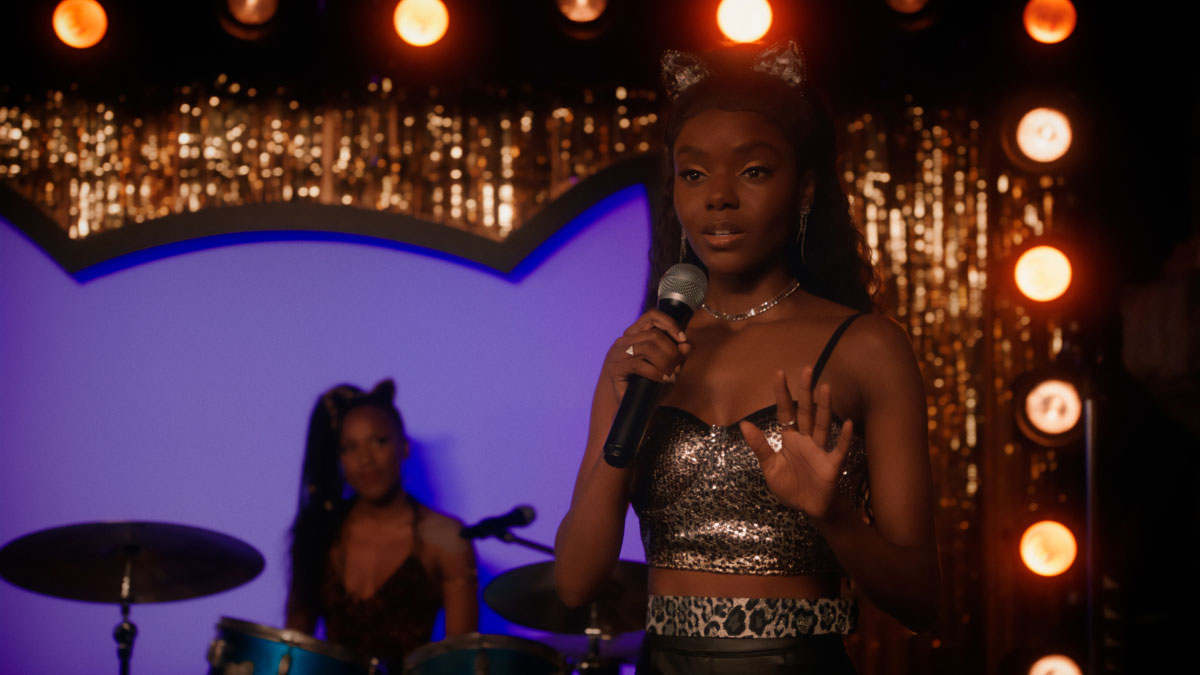
Stephanie was always a supporting cast member in “Grey’s Anatomy” so her slow fade into the background post-Jackson and April’s betrayal didn’t sting nearly as hard as the killing off of the Black female main character Abbie (Nicole Beharie) from “Sleepy Hollow,” which premiered in 2013 on Fox. In the supernatural series, Abbie is the hardened cop who can see ghosts and has a connection to the paranormal, which leads us to the co-lead of the show, a white man from the 1700s, Ichabod Crane (Tom Mison). Basically, it’s a buddy cop supernatural show. Viewers grew attached to the budding romantic relationship between partners and supernatural crime-fighting-duo Abbie and Ichabod. If it was any other procedural drama, Abbie and Ichabod would have been together by the third season but the show sidelines Abbie in the second season to focus on Ichabod’s long-lost wife and son. In the third season, Abbie’s character is killed off in a shocking event that stunned fans. Ending with a lackluster fourth season and without Beharie’s star power, the show suffered. Since the show’s end in 2017, more reporting has uncovered a series of allegations of a racist and hostile work environment, isolating Beharie, who was allegedly labeled “difficult” by a predominantly all-white male staff under showrunner Clifton Campbell.

While Abbie and Ichabod were never together, nonetheless, I feel the way Abbie as the main character, and Beharie the lead actress were treated is indicative of the same harmful and discardable pattern that the Disposable Black Girlfriend trope reinforces. In the case of Abbie, Monk-Payton points to the egregious lack of representation behind the scenes for one of many reasons both Beharie and Abbie were so horrendously mistreated.

We need your help to stay independent

“There’s a kind of anxiety around [positive representation] because they don’t have people in the writers’ room that could speak to a certain kind of experience,” she said. “Anything they do is always surface level which is a violence in and of itself, to not have that kind of complexity in this realm of representation.”

RiverdaleAsha Bromfield as Melody Valentine and Ashleigh Murray as Josie McCoy in “Riverdale” (The CW)Monk-Payton reinforced that the lack of diverse perspectives in writers’ rooms and in the production sphere allows for pervasive racism and tense working environments like the one that Beharie said she faced and countless Black female actresses have faced too.
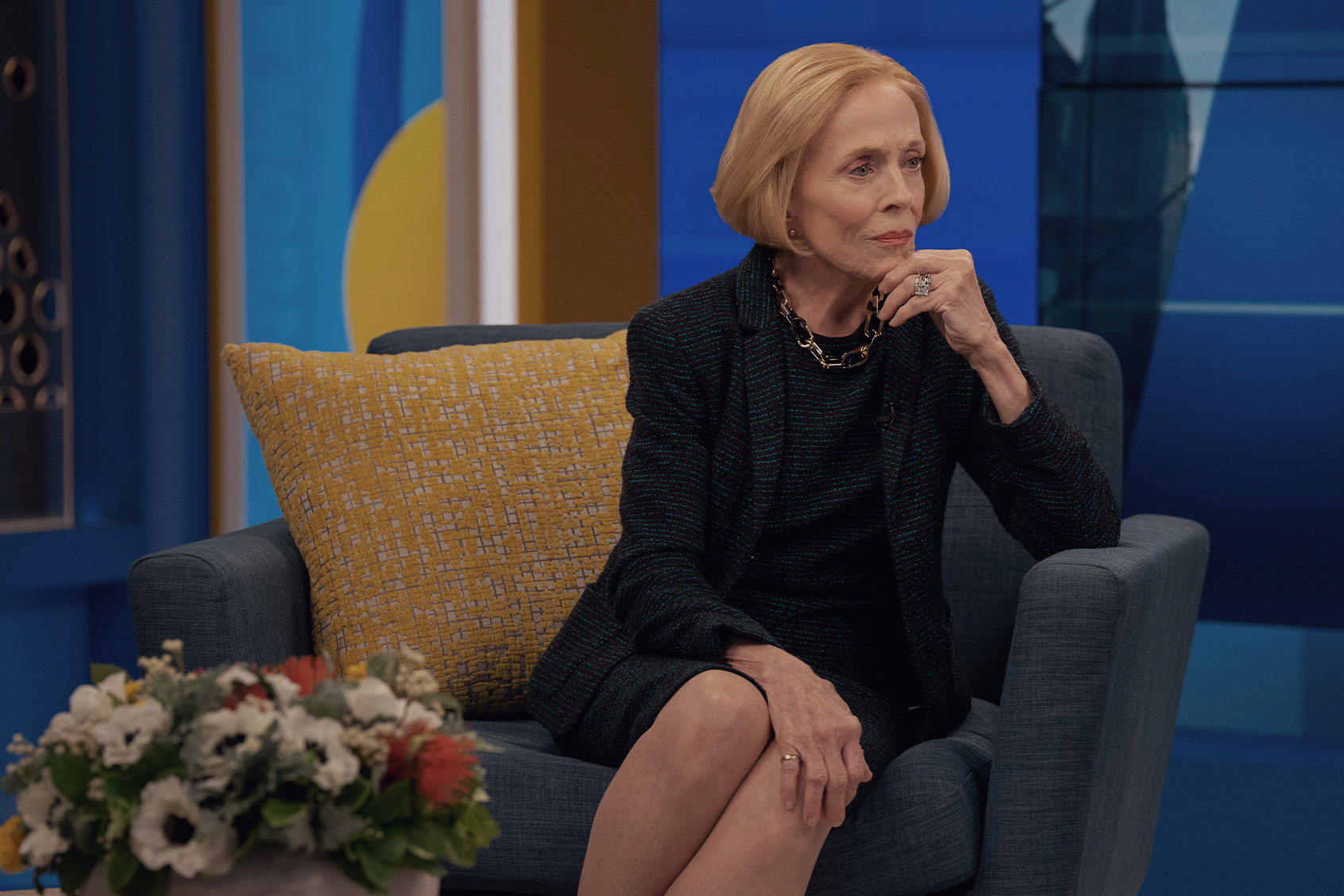
So the next time you watch your favorite popular show, pay attention if you can spot what is hidden from the common eye — the covert and longstanding mistreatment of Black female characters. They deserve to have voices that aren’t only heard but also considered, along with agency and permanence just like their white counterparts.


“I call for help from the highest courts”: Trump cries out in fear of “Trump-hating” prosecutor

Donald Trump has been on a prolific Truth Social tear, calling for the execution of a top US military general, vowing revenge on NBC Networks and demanding that Republican leaders take action against automatic voter registration to protect him from once again losing the popular vote. All of that was over the weekend. On Monday, the former picked up apace with attacks on New York Attorney General Letitia James. 

“I have been unfairly sued by the Trump Hating Democrat Attorney General of New York State, Letitia James,” he cried on his social media site.

James’ office has claimed that Trump has represented his worth as being $2.2 billion greater than it really is. Trump called that a “false fact.”

He then called the judge in the case a “Trump Hater” and cried out for help. 

“It is very unfair, and I call for help from the highest Courts in New York State, or the Federal System, to intercede.”

 I am not even allowed a Jury!”

“Disaster”: Trump says automatic voter registration “must be met harshly by Republican Leadership”

Donald Trump argued in a Monday post to his TruthSocial platform that Pennsylvania’s recent move toward automatic voter registration would come as a “disaster” to Republican candidates in the state, as well as his own prospects in the 2024 presidential election.

“Pennsylvania is at it again! The Radical Left Governor, Josh Shapiro, has just announced a switch to Automatic Voter Registration, a disaster for the Election of Republicans, including your favorite President, ME!” Trump wrote. “This is a totally Unconstitutional Act, and must be met harshly by Republican Leadership in Washington and Pennsylvania. Likewise, the RNC, and Ronna McDaniel, must spend their time working on this, instead of meaningless Debates where I am up by more than 50 points.”

The Keystone State’s Democratic governor announced last week that Pennsylvania would be moving toward automatic voter registration before the 2024 election takes place, also noting that both red and blue states have adopted the process. 23 other states already have automatic voter registration. 


End to WGA strike is in sight: Writers Guild and studios reach tentative agreement

After months of on-and-off negotiation talks, the Writers Guild of America and the Alliance of Motion Picture and Television Producers reached a tentative agreement to end the nearly 150-day-long writers strike. The WGA and AMPTP are currently in the process of drafting the final contract language. (Salon’s unionized employees are represented by the WGA East.)

“What we have won in this contract — most particularly, everything we have gained since May 2nd — is due to the willingness of this membership to exercise its power, to demonstrate its solidarity, to walk side-by-side, to endure the pain and uncertainty of the past 146 days,” the WGA negotiation committee wrote in a letter to members Sunday night. “It is the leverage generated by your strike, in concert with the extraordinary support of our union siblings, that finally brought the companies back to the table to make a deal.”

Details of the WGA’s agreement will be released once the final language is complete, per Variety. As for next steps, the WGA negotiating committee will vote Tuesday on “whether to recommend the agreement and send it on to the WGAW Board and WGAE Council for approval.” An additional vote by the committee could lift the strike “restraining order” and allow members to “return to work during the ratification vote.” Hollywood writers are still on strike as they await the results of those votes, but all picketing is hereby suspended, the WGA said.

The guild has also asked that their members not return to work until SAG-AFTRA also reached a new agreement with the AMPTP. The ongoing actors strike, which began on July 14, coincided with the writers strike as members of the Screen Actors Guild took issue with a series of Hollywood labor disputes. In the same vein as WGA members, SAG-AFTRA members are seeking a new contract between the union and the AMPTP, higher base compensation and stricter regulations against studio usage of artificial intelligence.

“Media will be thoroughly scrutinized”: Trump vows retaliation against “corrupt & dishonest” NBC

Former president Donald Trump, in a recent TruthSocial rant, condemned media conglomerate Comcast and its subsidiary NBC Networks for what he perceived to be “knowingly dishonest and corrupt coverage of people, events, and things.” Trump — whose anger ostensibly originated from the networks’ coverage of his various legal and political plights — also claimed that “when I WIN the Presidency of the United States,” he would launch a sort of probe against the “LameStream Media.”

“They are all dishonest and corrupt,” Trump fumed, “but Comcast, with its one-side and vicious coverage by NBC NEWS, and in particular MSNBC, often and correctly referred to as MSDNC (Democrat National Committee!), should be investigated for its ‘Country Threatening Treason.’ Their endless coverage of the now fully debunked SCAM known as Russia, Russia, Russia, and much else, is one big Campaign Contribution to the Radical Left Democrat Party. I say up front, openly, and proudly, that when I WIN the Presidency of the United States, they and others of the LameStream Media will be thoroughly scrutinized for their knowingly dishonest and corrupt coverage of people, things, and events. Why should NBC, or any other of the corrupt & dishonest media companies, be entitled to use the very valuable Airwaves of the USA, FREE? They are a true threat to democracy and are, in fact, THE ENEMY OF THE PEOPLE! The Fake News Media should pay a big price for what they have done to our once great Country!”

https://twitter.com/michaelpfreeman/status/1706129213479075920/photo/1

Are fish oil supplements as healthy as we think? And is eating fish better?

Fish oil, which contains omega-3 fatty acids, is promoted for a number of health benefits — from boosting our heart health, protecting our brain from dementia and easing the symptoms of rheumatoid arthritis.  

But what exactly are omega-3 fats and what does the evidence say about their benefits for keeping us healthy?

And if they are good for us, does eating fish provide the same benefit as supplements?


What are omega-3 fats?

Omega-3 fatty acids are a type of polyunsaturated fatty acid. They are essential to consume in our diet because we can’t make them in our body.  

Three main types of omega-3 fats are important in our diet:

  • alpha-linolenic acid (ALA), which is found in plant foods such as green leafy vegetables, walnuts, flaxseed and chia seeds

  • eicosapentanoic acid (EPA), which is only found in seafood, eggs (higher in free-range rather than cage eggs) and breast milk

  • docosahexaenoic acid (DHA) is also only found in seafood, eggs (again, higher in free-range eggs) and breast milk.

Omega 3s are key to the structure of our cells and help keep our heart, lungs, blood vessels and immune system working.


Eating fish vs taking a supplement

The initial studies suggesting omega-3 fats may have health benefits came from observational studies on people eating fish, not from fish oil.

So are the “active ingredients” from supplements — the EPA and DHA — absorbed into our body in the same way as fish?

An intervention study (where one group was given fish and one group fish oil supplements) found the levels of EPA and DHA in your body increase in a similar way when you consume equal amounts of them from either fish or fish oil.

But this assumes it is just the omega-3 fats that provide health benefits. There are other components of fish, such as protein, vitamins A and D, iodine and selenium that could be wholly or jointly responsible for the health benefits.

The health benefits seen may also be partially due to the absence of certain nutrients that would have otherwise been consumed from other types of meat (red meat and processed meat) such as saturated fats and salt.


So what are the benefits of omega 3 fats? And does the source matter?

Let’s consider the evidence for heart disease, arthritis and dementia.

Heart disease

For cardiovascular disease (heart attacks and stroke), a meta-analysis, which provides the highest quality evidence, has shown fish oil supplementation probably makes little or no difference.

Another meta-analysis found for every 20 grams per day of fish consumed it reduced the risk of coronary heart disease by 4%.  

The National Heart Foundation recommends, based on the scientific evidence, eating fish rich in omega-3 fats for optimal heart health. Fish vary in their omega-3 levels and generally the fishier they taste the more omega-3 fats they have — such as tuna, salmon, deep sea perch, trevally, mackeral and snook.

The foundation says fish oil may be beneficial for people with heart failure or high triglycerides, a type of fat that circulates in the blood that increases the risk of heart disease and stroke. But it doesn’t recommend fish oil for reducing the risk of cardiovascular diseases (heart attack and stroke).

Arthritis

For rheumatoid arthritis, studies have shown fish oil supplements do provide benefits in reducing the severity and the progression of the disease.

Eating fish also leads to these improvements, but as the level of EPA and DHA needed is high, often it’s difficult and expensive to consume that amount from fish alone.

Arthritis Australia recommends, based on the evidence, about 2.7 grams of EPA and DHA a day to reduce joint inflammation. Most supplements contain about 300 to 400mg of omega-3 fats.

So depending on how much EPA and DHA is in each capsule, you may need nine to 14 capsules (or five to seven capsules of fish oil concentrate) a day. This is about 130g to140g of grilled salmon or mackeral or 350g of canned tuna in brine (almost four small tins).

Dementia

Epidemiological studies have shown a positive link between an increased DHA intake (from diet) and a lower risk of developing Alzheimer’s disease, a type of dementia.

Animal studies have shown DHA can alter markers that are used to assess brain function (such as accumulation of amyloid — a protein thought to be linked to dementia and damage to tau protein, which helps stabilise nerve cells in the brain). But this hasn’t been shown in humans yet.

A systematic review of multiple studies in people has shown different results for omega-3 fats from supplements.

In the two studies that gave omega-3 fats as supplements to people with dementia, there was no improvement. But when given to people with mild cognitive impairment, a condition associated with increased risk of progressing to dementia, there was an improvement.

Another meta-anlayses (a study of studies) showed a higher intake of fish was linked to lower risk of Alzheimers, but this relationship was not observed with total dietary intake of omega-3 fats. This indicates there may be other protective benefits derived from eating fish.

In line with the evidence, the Alzheimer’s Society recommends eating fish over taking fish oil supplements.


So what’s the bottom line?

The more people stick to a healthy, plant-based diet with fish and minimal intakes of ultra-processed foods, the better their health will be.

At the moment, the evidence suggests fish oil is beneficial for rheumatoid arthritis, particularly if people find it difficult to eat large amounts of fish.

For dementia and heart disease, it’s best to try to eat your omega-3 fats from your diet. While plant foods contain ALA, this will not be as efficient as increasing EPA and DHA levels in your body by eating seafood.

Like any product that sits on the shop shelves, check the use-by date of the fish oil and make sure you will be able to consume it all by then. The chemical structure of EPA and DHA makes it susceptible to degradation, which affects its nutritional value. Store it in cold conditions, preferably in the fridge, away from light.

Fish oil can have some annoying side effects, such as fishy burps, but generally there are minimal serious side effects. However, it’s important to discuss taking fish oil with all your treating doctors, particularly if you’re on other medication.

Evangeline Mantzioris, Program Director of Nutrition and Food Sciences, Accredited Practising Dietitian, University of South Australia

This article is republished from The Conversation under a Creative Commons license. Read the original article.

Flesh-eating bacteria infections are on the rise in the U.S. A biologist explains how to stay safe

Flesh-eating bacteria sounds like the premise of a bad horror movie, but it’s a growing – and potentially fatal – threat to people.

In September 2023, the Centers for Disease Control and Prevention issued a health advisory alerting doctors and public health officials of an increase in flesh-eating bacteria cases that can cause serious wound infections.

I’m a professor at the Indiana University School of Medicine, where my laboratory studies microbiology and infectious disease. Here’s why the CDC is so concerned about this deadly infection – and ways to avoid contracting it.

What does ‘flesh-eating’ mean?

There are several types of bacteria that can infect open wounds and cause a rare condition called necrotizing fasciitis. These bacteria do not merely damage the surface of the skin – they release toxins that destroy the underlying tissue, including muscles, nerves and blood vessels. Once the bacteria reach the bloodstream, they gain ready access to additional tissues and organ systems. If left untreated, necrotizing fasciitis can be fatal, sometimes within 48 hours.

The bacterial species group A Streptococcus, or group A strep, is the most common culprit behind necrotizing fasciitis. But the CDC’s latest warning points to an additional suspect, a type of bacteria called Vibrio vulnificus. There are only 150 to 200 cases of Vibrio vulnificus in the U.S. each year, but the mortality rate is high, with 1 in 5 people succumbing to the infection.

Climate change may be driving the rise in flesh-eating bacteria infections in the U.S.

How do you catch flesh-eating bacteria?

Vibrio vulnificus primarily lives in warm seawater but can also be found in brackish water – areas where the ocean mixes with freshwater. Most infections in the U.S. occur in the warmer months, between May and October. People who swim, fish or wade in these bodies of water can contract the bacteria through an open wound or sore.

Vibrio vulnificus can also get into seafood harvested from these waters, especially shellfish like oysters. Eating such foods raw or undercooked can lead to food poisoning, and handling them while having an open wound can provide an entry point for the bacteria to cause necrotizing fasciitis. In the U.S., Vibrio vulnificus is a leading cause of seafood-associated fatality.

Why are flesh-eating bacteria infections rising?

Vibrio vulnificus is found in warm coastal waters around the world. In the U.S., this includes southern Gulf Coast states. But rising ocean temperatures due to global warming are creating new habitats for this type of bacteria, which can now be found along the East Coast as far north as New York and Connecticut. A recent study noted that Vibrio vulnificus wound infections increased eightfold between 1988 and 2018 in the eastern U.S.

Climate change is also fueling stronger hurricanes and storm surges, which have been associated with spikes in flesh-eating bacteria infection cases.

Aside from increasing water temperatures, the number of people who are most vulnerable to severe infection, including those with diabetes and those taking medications that suppress immunity, is on the rise.

What are symptoms of necrotizing fasciitis? How is it treated?

Early symptoms of an infected wound include fever, redness, intense pain or swelling at the site of injury. If you have these symptoms, seek medical attention without delay. Necrotizing fasciitis can progress quickly, producing ulcers, blisters, skin discoloration and pus.

Treating flesh-eating bacteria is a race against time. Clinicians administer antibiotics directly into the bloodstream to kill the bacteria. In many cases, damaged tissue needs to be surgically removed to stop the rapid spread of the infection. This sometimes results in amputation of affected limbs.

Researchers are concerned that an increasing number of cases are becoming impossible to treat because Vibrio vulnificus has evolved resistance to certain antibiotics.

Necrotizing fasciitis is rare but deadly.

How do I protect myself?

The CDC offers several recommendations to help prevent infection.

People who have a fresh cut, including a new piercing or tattoo, are advised to stay out of water that could be home to Vibrio vulnificus. Otherwise, the wound should be completely covered with a waterproof bandage.

People with an open wound should also avoid handling raw seafood or fish. Wounds that occur while fishing, preparing seafood or swimming should be washed immediately and thoroughly with soap and water.

Anyone can contract necrotizing fasciitis, but people with weakened immune systems are most susceptible to severe disease. This includes people taking immunosuppressive medications or those who have pre-existing conditions such as liver disease, cancer, HIV or diabetes.

It is important to bear in mind that necrotizing fasciitis presently remains very rare. But given its severity, it is beneficial to stay informed.

“DEATH”: Donald Trump ramps up the GOP’s attack on the military with call to execute top US general

In a Friday night post to Truth Social, former president Donald Trump seemed to suggest that Joint Chiefs Chairman Mark Milley should be put to death for a phone call following the Jan 6 Capitol insurrection. Milley, a top U.S. military general, stated in September 2021 that the phone call had been intended to reassure the Chinese that Trump was not planning an attack on China. 

“I know, I am certain, that President Trump did not intend to attack the Chinese and it was my directed responsibility to convey presidential orders and intent,” Milley told the Senate Armed Services Committee. “My task at that time was to de-escalate. My message again was consistent: Stay calm, steady, and de-escalate. We are not going to attack you.”

Milley’s phone call stoked considerable ire amongst some lawmakers — now, Trump has condemned the call as “an act so egregious that, in times gone by, the punishment would have been DEATH.”

“Mark Milley, who led perhaps the most embarrassing moment in American history with his grossly incompetent implementation of the withdrawal of Afghanistan, costing many lives, leaving behind hundreds of American citizens, and handing over BILLIONS of dollars of the finest military equipment ever made, will be leaving the military next week,” Trump wrote. “This will be a time for all citizens of the USA to celebrate! This guy turned out to be a Woke train wreck who, if the Fake News reporting is correct, was actually dealing with China to give them a heads up on the thinking of the President of the United States. This is an act so egregious that, in times gone by, the punishment would have been DEATH! A war between China and the United States could have been the result of this treasonous act. To be continued!!!”

Far-right legislator Rep. Paul Gosar, R-Ariz., on Sunday also took aim at Milley in his weekly email newsletter, funded by U.S. taxpayers, in a stream of homophobic and violent invective. Gosar, in his newsletter, claimed that Milley, “the homosexual-promoting-BLM-activist Chairman of the military joint chiefs,” was to blame for the delayed deployment of the National Guard on Jan 6. 

“After the riot was in full swing, the Chief’s request for National Guard was finally approved,” Gosar wrote. “But even after approval was given, General Milley, the homosexual-promoting-BLM-activist Chairman of the military joint chiefs, delayed. Of course, we now know that the deviant Milley was coordinating with Nancy Pelosi to hurt President Trump, and treasonously working behind Trump’s back.”

He continued: “In a better society, quislings like the strange sodomy-promoting General Milley would be hung.” The alt-right lawmaker said of Milley, “He had one boss: President Trump, and instead he was secretly meeting with Pelosi and coordinating with her to hurt Trump. That is, when he also wasn’t secretly coordinating and sharing intelligence with the Chinese military. How this traitor remains in office is a question we need answered.”

We need your help to stay independent

A Monday CNN report detailed how, every day, Milley staff pulls transcripts from Fox News primetime shows to see if he is being talked about. While the article cited the practice as a “pragmatic” one, owing to consistent slander from top Fox personalities, it also demonstrates how “intensely attuned” Milley is to “politics surrounding the military.” 

Milley’s political dexterity behooved him throughout his career, as CNN notes, as did his ability to cope with Trump’s “mercurial demands” with “a judicious silence.” A former senior aid to Milley told CNN that “the chairman understood that Washington is an inherently political environment and that even as he sought to keep the military apolitical, he had to work with members of both parties to do his job.”

By the end of Trump’s tenure in the White House, Milley faced a barrage of flagrant criticism from GOP lawmakers and Trump allies, accusing him of cultivating a “woke” military and subverting civilian control over the military.

Milley has rejected culture-war claims, telling CNN earlier this month, “This military is a lot of things, but woke, it’s not. So I take exception to that. I think that people say those things for reasons that are their own reasons, but it’s not true.”

Your brain is powered by literal emotional energy. An expert explains how to find the right balance

We were designed to feel our feelings. The electrical impulses firing around in that squishy thing inside our skulls are guiding how we experience love, or fear, or panic. Yet we often forget that there’s a science to our emotions, that they’re not some wild, untamed force operating independent of our minds and bodies. We are made of energy, energy that cannot be created or destroyed — but can be transformed.

“This is not metaphysical,” says neuropsychologist Dr. Julia DiGangi. “This is not metaphorical. It’s actual neural chemical energy.”

In DiGangi’s “Energy Rising: The Neuroscience of Leading with Emotional Power,” she explores the ways in which our brains can sabotage or support us, while offering practical advice on how to overcome the traps that hold us back. I spoke to DiGangi recently about the science of neuroenergetics, the rewards of “picking a more powerful pain” and why we need to overcome the epidemic of what she calls our “emotional constipation.” 

This conversation has been edited and condensed for clarity. 


I think often, especially in our tech and data-driven world, we don’t prioritize emotion. 

That’s why I wrote the book, to tell the story of emotion in a moment when people are obsessed with this idea of logic, speed, hyperinformation. I feel like this is the work that I was put on this planet to do. 

Let’s start by explaining this concept of neuroenergetics, because that is what ties our brains to the rest of the universe. 

“Your brain is running on real emotional energy. This is not metaphysical. This is not metaphorical. It’s actual neural chemical energy.”

Neuroenergetics is a fancy word, but it’s quite simple. It’s the idea that your brain is running on real emotional energy. This is not metaphysical. This is not metaphorical. It’s actual neural chemical energy. And when we understand how the energy of emotion works, we can engineer our lives in more satisfying, connected, confident ways. 

The brain is a pattern detection machine. This is a super useful heuristic to understand this idea of neuroenergetics. Your brain is moving you through your life going, “Apple, apple, apple…” Fill in the blank, it’s going to be an apple. A lot of times your brain is making smart predictions. 

But when you are in a chronic problem — you’re having the same annoying conversation, you’re stuck in the same aggravating situation, you’re feeling stressed out still at work — the solution is almost always to do the opposite. The problem is, the pattern detection machine keeps saying, “No, apple again. Try harder. Apple.” I do a lot of work in relational systems. I go into large organizations, I go into marriages and I go into families. People will have the same, I’m not kidding you, conversation for seven years.

We need your help to stay independent

You say, if you’re over one year old, you are familiar with patterns, and you’re looking for them. 

You are totally looking for them. So, what is the master pattern? What is the energy supply that it’s running on? Our pattern detection machine is the machinery. The energy that’s powering that thing is emotional. 

We’re talking about the ways we fall into pain in our life, aggravation, stress disconnection. The number one mistake that people make is they focus on the situation. “Bill said this to me… I really don’t like the way Mary’s talking to me.” I get it. We all do it. But there’s no power there.

So what do I need to do? I need to start thinking about not just emotion, but the master emotional pattern that is causing my pain. And it’s always always going to be something like, “Things never work out for me. Things never work out for me. Things never work out for me.” Then watch me get a new job, have an uptick in energy for three weeks, six months. No matter what, the pattern detector will return to baseline unless I’m working with the emotional energy in a new way. 

And one of the ways you do that is picking a more powerful pain. For anyone who has pain in their lives, that is absolutely the scariest concept in the world. Tell me what that looks like. especially for anxious people.

“If you really get reductionistic about it, the only problem in your life is pain. “

In other words, if someone calls me all kinds of names on social media, or I get fired from my job, and I truly don’t have any painful emotions about it, there is no problem. I’m not dissociating. I’m not drunk. But if there’s no negative emotional energy, there is no problem. Your problems are actually about not the situation. It’s about the emotional energy. 

Most people are familiar with this concept that we kind of have two brains: this very reflexive, primitive brain and then this really gorgeous, thoughtful part of the brain that really drives a lot of evolution in our own life and then across humanity. At this primitive level, the brain is going to respond to all pain the same. If I put my hand on a hot stove, the brain is like, “Let’s get out of here.” And if I start to have a conversation with somebody that I don’t want to have a conversation with, it’s like, “Let’s get out of here.” That is driven by an unconscious belief and unconscious sensation, “I’ve got a great idea — let’s avoid pain.” 

If this worked, I would be a huge advocate for it. But trying to find the pain-free option is like, “You know what I’m going to do? I’m going to spend all my life looking for a place to live where there is no gravity. Maybe if I try a little bit harder, I can make things fall up.” The consequence of trying to avoid pain creates so much more pain, and it’s worse. We know that chronic avoidance, chronic numbing, denying, avoiding, all of this, is just addiction and its various manifestations. It makes us sicker. 

“Trying to find the pain-free option is like looking for a place to live where there is no gravity.”

So in a life where there is no pain-free option, let me pick the pain that empowers me the most. If I have to have a very difficult conversation, am I going to feel the zings and zaps of anxiety, stress and fear? Sure. My hands will shake. My heart will start to pound. My thoughts will race. And then you know what? The brain is going to habituate. The nervous system is going to calm down and I am going to reap the reward of deeper confidence, deeper self trust and deeper expression. Whereas if I had taken the avoidance path, it really is this energetic shrinking. This idea of picking a more powerful pain is, let me do the thing that strengthens me. 

We get this so clearly in physical health and physical strength. No one is like, “I want to get strong, so today, I’m going to watch seven episodes of ‘Love Is Blind’ and I’m going to eat a lot of Flaming Hot Cheetos.” Now, there might be days where I’m going to sit on the couch and eat a lot of Flaming Hot Cheetos. But I am not confused why I’m not getting stronger. So even if I can say that today is not the day that I am going to have that conversation, I will be powerful enough to tell myself the truth. I know that in this avoidance, there’s no way for me to get stronger. And I know that in this avoidance, my anxiety will actually increase. Even that is a powerful way to meet the truth of your life. 

You talk about mastering the uncertainty, about finding our power and our leadership. Those are tough words for a lot of us to take on, because we feel, “I can’t do that. I don’t have mastery, I don’t have power. What I do have is uncertainty.”

“The brain has a strong aversion to confusion. Whether you want to call that ambiguity or uncertainty, they’re all neurologically the same.”

Being a trauma provider, I work with a lot of very intense emotions — rage, terror, dejection. I would suggest we miss one of the most hated human emotions. If you think about the one emotion that a pattern detection machine cannot tolerate, it’s actually confusion. If it’s like, “They hate me, they hate me, they hate me,” it feels bad but there’s no confusion here. If it’s, “They hate me, they hate me, why are they being so nice to me?” Then it’s, “Oh my god, they’re trying to kill me.” The brain has a strong aversion to confusion. Whether you want to call that ambiguity or uncertainty, they’re all neurologically the same. The pattern detection machine does not understand what comes next. 

Everyone understands that the brain’s number one function is survival. Here comes the problem. In order for me to survive, I need to have clarity. How am I going to get that clarity? I am going to get it through control of the external world. And so I start to overthink. I start to overdo. I think a lot of us start to over function, over appease, It’s all about, “How can I behave in such a way that I can control your behavior so that I don’t have to feel my feelings?” 


Want more health and science stories in your inbox? Subscribe to Salon’s weekly newsletter Lab Notes.


If you’re not really tearing apart or dissecting this idea of neuroenergetics, you’re starting to think that the opposite of uncertainty is certainty. It seems logical. People love to say emotions are so confusing. Emotions are not confusing. Emotions can be intense. But there’s a physics and a math to our emotions. When I over, over, over all this energy expenditure, the outcome is very predictable. The very reason I’m overdoing it is to feel better. I don’t. I feel I feel worse. 

“Emotions are not confusing. Emotions can be intense. But there’s a physics and a math to our emotions.”

Anxiety is a disturbed relationship with certainty. What is a very counterintuitive thing, and ultimately, a very relieving thing for people to understand is the more that you pathologically demand certainty, the worse you will feel and the more unsafe you will become. 

It raises this really interesting question. Well, what is the opposite of uncertainty? The opposite of uncertainty is self-trust. That whatever happens out there, I’m going to be okay. And okay does not mean, I’m not going to have feelings, I’m not going to have zing zaps of the nervous system. It means I already have what I need. 

“The opposite of uncertainty is self-trust. That whatever happens out there, I’m going to be okay. “

I’m not trying to downplay the pain that can be associated with some of these life transitions. But what happens for most of us is we come up with these catastrophic scenarios that don’t even happen anyway. And we hemorrhage all this energy of our life, trying to make ourselves safe. But the very mechanisms by which we’re trying to make ourselves safe, are what’s imperiling ourselves. 

What I see in couples all the time, the session starts with, “You don’t really respect me. You don’t really love me, you don’t really listen to me.” So I say, “That’s so valid. Before we’re going to talk about that, first, tell me how well you love yourself. Tell me what is the state of your self respect?” The expectation is that my partner is going to give me emotional energy. You can think of emotional energy as currencies that I am not set up to receive. It’s like trying to go to the ATM and put noodles in it. 

Sometimes you can love yourself enough to realize, this person isn’t good for me, this isn’t a good situation or a good job. But that comes from being in that place of power and self-love. And it’s very difficult to get there when you’re seeking it externally. 

“What we’re really talking about isn’t just, ‘How do I end the bad?’ It’s, ‘How do I leave the good?'”

That’s one of the best examples of picking a more powerful pain. One of the most difficult things to do is to leave relationships [with people] that on some level, we still love. If you think about any form of chronic emotional pain in your life, it’s not all bad. In other words, “I love you, but you hurt me. I like this, but I don’t like it. I want this, but it’s stressful.”

We have to understand that if we really want to transform our lives, what we’re really talking about isn’t just, “How do I end the bad?” It’s, “How do I leave the good?” 

Right in the beginning of the book you talk about how energy can’t be destroyed. So what do we do with it? Can you explain a little bit of what that looks like in terms of our own brains? 

We can put people in scanners and we see we see this energy force. We do know that energy cannot be destroyed, but it can be transformed. So then the question becomes like, “Let me think about the places that I keep falling into chronic pain in my life.” These are the things that are really hurting us are chronic pain cycles. So in order for me to transform it, I have to be willing to feel it. 

“When it comes to emotions, your nervous system is packing 150 million years of evolution. It understands what to do with hard feelings.”

Your brain and your body is the most exquisite machine on the planet. It’s the most powerful machine you own. The brain and the body know what to do with waste. I eat food, it comes out. I take in oxygen, I put out carbon dioxide. When it comes to emotions, your nervous system is packing 150 million years of evolution. It understands what to do with hard feelings.

But what happens is when the energy starts to rise through us quite literally, not metaphorically, rising into consciousness, we say “No, shut it down. Avoid it. Pretend. Distract.” The math behind the chronic avoidance is emotional constipation. I wish there was like a better metaphor, but we’re filled with emotional poo, and then things can’t move. So what is the process? The process is to move the energy that is stuck inside of you. 

In the race against machines, obviously, they’ve outpaced us cognitively, in terms of retention capacity, in terms of recall, all the kinds of information processing, memory, speed, things like this. People are kind of freaked out, like, are the machines going to crush us? But what I actually think is going to happen is we’re being pushed into a further evolution. What really differentiates us from the machines? It’s this idea of our emotional and relational intelligence. I think one of the most pressing questions before humanity is, are we going to come into a deeper appreciation of our unique intelligences, which are emotional and social. But in order to do so, we need to understand our pain.

The death knell for the GOP’s hold on the military

It’s time for another scintillating Republican presidential primary debate in which a group of people with no chance to win the nomination will face off against each other. On Wednesday, the GOP alsorans will meet at the Reagan Library in Simi Valley, California. The Republican front-runner, Donald Trump, won’t lower himself to attend such an event with the lesser candidates but he’s rejecting this particular one for other reasons as well. The former president is reportedly fit to be tied at the library for hosting “A Time for Choosing,” a two-year-long speaker’s series, envisioning a “fresh look — through reasoned, intellectual discussion — at the issues, ideas and policies that will define the Republican Party for decades to come.” Probably the most widely disseminated of these talks were those from Trump nemesis Liz Cheney and Reagan Foundation board member Paul Ryan, the former speaker of the House, who said it was “horrifying to see a presidency come to such a dishonorable and disgraceful end.” Apparently, the entire board of the Reagan Foundation agrees.

This is not surprising.

The legacy of Ronald Reagan was once the crowning glory of the conservative movement, a movement that has now been displaced by Trump’s MAGA cult. Reagan no longer has any cachet among the GOP rank and file, most of whom are uninterested in the ideology that once ruled the Republican Party. That ideology was best described by Reagan himself, who saw the conservative movement coalition as a three-legged stool with one leg representing traditional family values, another representing small government and the third representing a strong national defense; the idea being that the coalition could not stand without all three legs of the stool.

We need your help to stay independent

Trump never much liked Reagan. He thought he was too soft. Under the tutelage of sleaze monger Roger Stone, Trump took out a full-page ad back in 1987 to complain about Reagan’s foreign policy, making the case that other countries weren’t paying their fair share. No, Trump has not had a new idea in 40 years. Today, when asked what he would do about the Ukraine war he says he’d end it but won’t say how and then inevitably goes into his usual rant about how Europe is taking the U.S. to the cleaners, just as he did for four years as president when he whined non-stop about NATO failing to pay up. He told Fox News, “The money is number one. I’d tell Europe – you’re about $100 billion plus short. Okay? You gotta pay. Because Europe is smiling all the way to the bank” It is literally the only foreign policy he has ever had. On everything else, he just winged it.

Once he became president, he became hostile to the military because they weren’t like the heroes he’d seen in the movies, he was baffled by diplomacy as a tool to retain power and influence, he had no interest in the rest of the world except as a source of financial gain, and saw all threats, domestically and internationally as potentially subject to military violence if he didn’t get his way. People around him had to work night and day to keep him from making a catastrophic mistake from either ignorance or impulse.

I never thought I’d see the day that we’d see the Republican Party supporting Russia, denigrating the U.S. military and drawing up plans to start a war on the North American continent. 

If Trump were the only Republican with such a shallow understanding of national security and foreign policy perhaps we could all just hold our breath and do everything we can to ensure he stays a retired president dealing with his legal and financial problems as a private citizen. But he’s not. The Republican Party is now full of elected officials who are equally incoherent and it seems to be getting worse.

For instance, there is freshman Alabama Sen. Tommy Tuberville, who is holding up hundreds of military promotions in order to force the Pentagon to change a rule that allows service members to take paid leave to travel to a state that provides abortion services. It’s an absurd issue that only someone with an advanced case of Fox News brain rot would even think of but he’s managed to completely alienate the military brass and frustrate the entire Senate for months now. This would have been unthinkable for a Republican to do just a few years ago. The military was the one sacred institution in the U.S. government and funding it or following its guidelines was always an untouchable GOP priority. Not anymore.

But why would Tuberville think any differently? After all, we have the former president calling the outgoing chairman of the Joint Chiefs of Staff guilty of treason and declaring that he should be subject to the death penalty so it’s not as if there’s any requirement that Republicans be respectful of the military.

Last week the Speaker of the House, locked in a death struggle with his right flank, decided it was in his best interest to snub Ukrainian president Volodymyr Zelenskyy to demonstrate that he’s sympathetic with the pro-Russia faction in the House GOP. Again, just a few years ago the idea that we would be talking about a pro-Russia Republican faction would have been ludicrous. That they would be essentially backing a Russian invasion of its neighbor is beyond belief. But the movement among Republicans to withdraw funding from Ukraine, stop all assistance to the war-torn country and force a surrender on Russian terms is growing in the US Congress.


Want a daily wrap-up of all the news and commentary Salon has to offer? Subscribe to our morning newsletter, Crash Course.


Over the weekend, Speaker of the House Kevin McCarthy backed off the commitment he made to Georgia Rep. Marjorie Taylor Greene to stop all support for Ukraine in the Pentagon spending bill saying that some arcane rules make it too difficult to do but it’s not the last we will hear of it. Greene and her cohort are determined to stop the funding so they can bring the war home to the U.S. southern border.

Yes, their argument is that we should not be helping Ukraine defend its border when we aren’t defending ours. And yes, it’s a colossally fatuous argument to compare an armed invasion by the Russian military with migrants seeking asylum, but that’s just how they think. So Republicans are talking about a literal war with Mexico ostensibly to stop drug traffickers and Trump is right there with them having thrown out the idea of bombing the cartels and then lying to the Mexican government and saying “no one would know it was us,” and that he’d be willing to lie publicly about it. This is rapidly becoming GOP policy.

The conservative movement led by bomb throwers like former House Speaker Newt Gingrich, hate talk radio king Rush Limbaugh and Fox News’ Roger Ailes ushered in much of the obnoxious, vulgar smashmouth politics that Trump leads today and the party’s descent into ideological incoherence has been well documented. But I have to admit that I never thought I’d see the day that we’d see the Republican Party supporting Russia, denigrating the U.S. military and drawing up plans to start a war on the North American continent. Reagan’s three-legged stool is now nothing more than firewood to burn down the Republican Party and take the country with it. 

A group of U.S. governors promises to install 20 million heat pumps by 2030

Buildings, particularly older ones and those with poor energy efficiency, account for 31 percent of the nation’s greenhouse gas emissions. Beyond contributing to the climate crisis, these structures can saddle their occupants with high utility bills, further burdening those with low incomes.

On Thursday, the U.S. Climate Alliance, an association of 25 governors of states accounting for half of the country’s population, announced a major move to reduce those emissions, cut utility bills, and create jobs. Beyond committing to emissions reduction targets including achieving zero-emission new construction, they promised a four-fold increase in the number of buildings using heat pumps.  

Achieving that goal means installing 20 million of the devices by 2030 — a tall order indeed. What’s more, the alliance pledged to guide 40 percent of them into disadvantaged communities. 

Each state in the coalition has a unique set of goals and tasks ahead to reach the heat pump target. For instance, 10 states, including California, New York, and Hawaiʻi, are adopting zero-emissions standards for space and water heaters. And some states have a headstart on achieving their goals: Maine recently achieved its goal of installing 100,000 of them two years early.

“Transitioning to heat pumps in Maine is creating good-paying jobs, curbing our carbon emissions, cutting costs for families, and making people more comfortable in their homes,” Janet Mills, the state’s Democratic governor, said in a release. “Maine is meeting our climate action goals, and we’re proud to lead the way as part of the U.S. Climate Alliance to encourage other states to do the same.” 

“Transitioning to heat pumps in Maine is creating good-paying jobs, curbing our carbon emissions, cutting costs for families, and making people more comfortable.”

The effort is being backed by a combination of funding and incentives from the Inflation Reduction Act and Bipartisan Infrastructure Law. This announcement also builds on previous incentives to increase energy efficiency in older buildings, including a series of tax credits for consumers hoping to switch from fossil fuel appliances to those powered by electricity. The Biden administration recently announced $8.8 billion in rebates for energy-efficiency retrofits for low- and moderate-income households.

Electric heat pumps use much less energy to warm and cool homes and can reduce GHG emissions by an average of 45 percent compared to gas furnaces, making them a major climate solution. A Rewiring America report earlier this year suggested that putting the country on track to meet the Biden administration’s goal of net-zero emission by 2050, Americans will need to buy 2.38 million of the devices over the next three years.  Currently, 16 percent of American homes use them, and the administration is intent on bumping that up. 

Advocates of the technology say that it’s an essential part of green transition. Stephen Porder, an ecology professor at Brown University and his department’s associate provost for sustainability, is a big fan of heat pumps. He has seen a 50 percent reduction in his energy bills and a 75 percent reduction in his emissions since having one installed in his home 2014. “It’s a win-win-win,” Porder told Grist. But, at least in Rhode Island where he lives, it’s hard to find people to do the work. “We are facing a critical shortage of people to install these heat pumps.”

According to White House climate advisor Ali Zaidi, the collective commitment represents not just an investment in the climate, but an investment in domestic manufacturing and energy efficiency jobs. Many manufacturers have expressed support for the announcement, and Zaidi says several have committed to moving their manufacturing to the United States. The push also will compound a growing nationwide need for electricians.

This announcement follows the impending creation of American Climate Corps, a workforce program that Zaidi says could help provide the workers needed to make the retrofits and installations required to achieve the Alliance’s ambitious goals. Zaidi said the administration has been talking with the national sheet metal workers’ union to develop apprenticeship programs and other pathways for workers to join the energy efficiency sector.

“This is going to require tens of thousands of folks going door to door and installing these heat pumps,”” Zaidi said.  “If we’re gonna meet our targets, whether it’s in the building sector or the power sector, in resilience and adaptation or climate smart agriculture, we’re gonna need to field a full team here in the United States.”

This article originally appeared in Grist at https://grist.org/buildings/a-group-of-u-s-governors-promise-to-install-20-million-heat-pumps-by-2030/.

Grist is a nonprofit, independent media organization dedicated to telling stories of climate solutions and a just future. Learn more at Grist.org

“Trumpism imperils all Jewish Americans”: Experts warn of “America’s rising tide of antisemitism”

Last Sunday was the Jewish New Year and High Holy Day of Rosh Hashanah. As a public figure, in his role as ex-president and now Republican 2024 frontrunner, Donald Trump could have chosen many ways to honor Rosh Hashanah. He could have issued an obligatory statement acknowledging Rosh Hashanah and its significance for the Jewish people. Of course, Trump could have simply decided to be quiet instead of being a gum beater. Instead, Trump celebrated Rosh Hashanah by threatening Jewish Americans who do not support him in a post he shared via his Truth Social disinformation platform last Sunday night:

“Just a quick reminder for liberal Jews who voted to destroy America & Israel because you believed in false narratives! Let’s hope you learned from your mistake & make better choices moving forward! Happy New Year!”

Trump’s threats and the distinction he makes between “good Jews” and “bad Jews”, the supporters of him and his neofascist MAGA movement and those who dare to oppose him and it, are centuries-old antisemitic tropes.

Trump’s threats against Jewish people on Rosh Hashanah are but one example of many where throughout his decades of public life – and especially during his time as president and after – where the ex-president has proven himself to be a white supremacist and an antisemite.

MSNBC offers these examples:

During his 2016 campaign, for example, Trump spoke to the Republican Jewish Coalition and said, “You’re not gonna support me because I don’t want your money. You want to control your politicians.” He added, “I’m a negotiator — like you folks.”

Several months later, in the runup to Election Day, the Republican promoted antisemitic imagery through social media. In the closing days of the 2016 campaign, Trump again faced accusations of antisemitism, claiming Hillary Clinton met “in secret with international banks to plot the destruction of U.S. sovereignty in order to enrich these global financial powers.”

While in office, the then-president used some highly provocative rhetoric about Jews and what he expected about their “loyalties.” Soon after, Trump spoke at the Israeli American Council’s national summit, where he suggested Jewish people are primarily focused on wealth, which is why he expected them to support his re-election campaign.

NBC News adds:

In an interview in 2021, Trump also said, “The Jewish people in the United States either don’t like Israel or don’t care about Israel.”

“I’ll tell you, the evangelical Christians love Israel more than the Jews in this country,” said Trump, who won strong support from white evangelical voters in 2016 and 2020, according to the Pew Research Center.

Trump also came under fire for his remarks in response to the 2017 violence in Charlottesville, Virginia. At the Unite the Right rally in August 2017, white nationalists and neo-Nazis carried tiki torches and chanted “Jews will not replace us,” among other slogans.

CNN offers this additional context:

Trump has a long history of criticizing Jewish American voters who do not support him and of playing into antisemitic tropes.

More recently, ahead of the 2022 midterm elections, he criticized American Jews for what he argued was their insufficient praise of his policies toward Israel, including moving the US Embassy in Israel from Tel Aviv to Jerusalem.

In 2021, Trump claimed Jewish Americans “either don’t like Israel or don’t care about Israel,” while also suggesting that evangelical Christians “love Israel more than the Jews in this country.” In 2019, he accused Democrats of being part of an “anti-Israel” and “anti-Jewish party.” And during his first campaign for president, Trump delivered a speech to the Republican Jewish Coalition in which he repeatedly referred to the audience of Jewish donors as “negotiators.” He is scheduled to address the group’s annual leadership summit next month in Las Vegas.

We need your help to stay independent

America’s democracy crisis and ascendant neofascism are a state of malignant normality where antisocial and other antihuman and antidemocratic behavior becomes increasingly common as elites and the general public grow numb to it.

To that point, Trump’s latest example of antisemitic behavior and the evil it represents should have been the focus of much media coverage, condemnation by the country’s political leaders, and public outrage. Instead, with few exceptions, Trump’s vile behavior was largely ignored, except as the latest controversy of the day in a political environment driven by the 24/7 news cycle, hyper politics, and the culture of distraction. Such is how democracy dies.

Via email, I asked antiracism activist and author Tim Wise for his thoughts about Trump’s threats against Jewish people on Rosh Hashanah and how it fits into a larger context of racial authoritarianism:

This is just more of the same: “othering” distinct numerical minorities for the problems of the country. Whether brown-skinned immigrants, Black folks in cities, trans persons in schools, or Jews at the ballot box, Trumpism and MAGA ideology is all about scapegoating those deemed as somehow deviant from the white, Christian, straight norm. And by dividing Jews between the “good” conservative ones and the “bad” liberal ones, Trump is engaging a trope that has always been utilized by anti-Semites. From the “good” Jews who were willing to convert, or at least hide their Jewishness during the Inquisition to the “good” Jews who served as Kapos to the Nazis, anti-Jewish bigots have always found examples of Jews they like. But only as a cudgel to use against the rest. If this kind of signaling isn’t confronted, immediately, and forcefully by all Jews, and the Christians who constantly tell us how much they love us, anti-Jewish bigotry will likely grow even stronger. And with it, all the other bigotries that are part of Trumpism.

I also asked philosopher and Holocaust scholar John Roth for his thoughts about Trump’s threats against Jewish people who he is targeting because of their “disloyalty.” Roth connects Trump’s antisemitic threats to the ex-president’s recent interview on NBC’s “Meet the Press”:

His reflection deficient, his repentance nonexistent, Donald Trump demonstrated how little he knows and appreciates about Judaism and Jews when his insulting New Year’s jibe to Jewish Americans desecrated Rosh Hashanah and the Days of Awe by thoughtlessly accusing “liberal Jews” of voting to “destroy America & Israel.”

Earlier that same day, September 17, Kristen Welker’s inaugural “Meet the Press” program featured her fraught interview with the indicted former president.  She questioned Trump about his often-repeated vow to take retribution against his political enemies.  “When you launched your campaign in March,” she said to him, ” you told the crowd, quote, ‘I am your retribution.’ What does that mean? What does that look like?”  With more candor than usual, Trump replied that “I have to protect people,” making clear that he meant his staunch, anti-democratic, and often violence-prone allies.  “When I talk about retribution,” he insisted, “I’m talking about fairness.”

That comment was cunning and deceitful at once. Trump divides the world into those who support him and those who don’t. In his calculations, fairness for his supporters means—it requires—payback and revenge against his opposition. That’s how his protection scheme works. In his words and calculations, in his retribution racket, Trump’s transactional antisemitism is writ large.

In an email to Salon, Ethan Katz, who is Associate Professor of History and Jewish Studies at UC-Berkeley, and co-founder of the Antisemitism Education Initiative at Berkeley, historicized Trump’s most recent antisemitic screed in the following way:

The idea that many Jews are “unpatriotic” and working against the interests of the nation, unless they pass a certain purity test, goes back to longstanding antisemitic notions about Jewish dual loyalty, Jewish conspiracy, and Jewish power and control behind the scenes. Speaking here of “liberal Jews” sounds to many like it is code for the likes of George Soros, which for the extreme right is very clearly code for Jewish bankers, for Jews who allegedly control the world financial system, have enormous power, and exploit the masses. And the notion is present here also that Jews should be grateful for all that the government is doing for them — as if they are a monolith separate from everyone else, defined solely by their ethnicity or religion in how they vote, and see the world, and identify.

In reality, of course, for most American Jews, Israel is only one of a number of important issues shaping their voting behavior, and views of Israel for a majority of American Jews are far more nuanced than the views President Trump represents here. Moreover, deciding to target Jews on one of their holiest days in this way also comes uncomfortably close to medieval images of Jews as religiously impure due to their alleged opposition to Christianity, and the persistent (if clearly false and discredited claim) that they had murdered Jesus Christ. 

Trump’s antisemitic and white supremacist threats are both contributing to and reflect a larger societal environment where hate crimes and right-wing terrorism have been escalating during his time in office and now almost 3 years since he was defeated by President Biden.

“Trump’s willingness to single out Jews for critique about their voting behavior, on one of their holiest days, will surely be read by many of those voters as a symbol of a shared preoccupation with Jews and alleged Jewish power and influence.”

Law enforcement and other experts are continuing to warn that white supremacists and other right-wing extremists and malign actors represent the greatest threat to the country’s domestic safety and security. Neo-Nazis and other white supremacists and neofascists have engaged in mass shootings and other such lethal violence targeting Jewish people, Muslims, African-Americans, the LGBTQI community, and other marginalized groups and “enemies” throughout the Trumpocene.

Hate crimes against Jewish people in America are at historic levels. This includes bomb threats against synagogues on Rosh Hashanah.

In Florida, neo-Nazis have become increasingly emboldened by Gov. Ron DeSantis, a man who they correctly see as their leader. Ron DeSantis, Donald Trump, and other leading Republican fascists and their forces are enacting an Orwellian Thought Crime regime in Florida and other parts of the country, where “un-American” and “un-patriotic” books and other materials deemed too “woke” or otherwise contaminated with the “Critical Race Theory Mind Virus”, i.e. they are not right-wing indoctrination and propaganda mind killers, are being banned. These banned books (and courses) include those that focus on the Holocaust.

“Disloyal” and “dangerous” teachers and other educators are also being threatened with violence, harassed, and even fired from their jobs.19th-century German poet Heinrich Heine’s warning that “those who burn books will in the end burn people” most certainly applies to the Age of Trump.

In his email to Salon, Katz also emphasized how America’s rising tide of antisemitism, white supremacy, neofascism, and other attacks on multiracial pluralistic democracy and society in the Age of Trump and beyond are part of a much larger revolutionary project by the global right:

In some respects, Trump’s relationship to Jews echoes that of a leader like Viktor Orban in Hungary, who is openly autocratic, and has embraced Far Right conspiracy theories about George Soros that seem unmistakably antisemitic, but also has built alliances with more conservative elements in the Hungarian Jewish community. Like the supporters of Orban and a growing number of autocrats in Europe and beyond, many in the MAGA movement appear skeptical of the importance of democratic institutions, and a significant number of these voters are openly hostile to the achievements of the Civil Rights movement and ongoing efforts to make America a more fulsome multiracial democracy. Here I’m speaking of those who really embrace white nationalism, which fixates obsessively on Jews in well-documented and terribly dangerous ways. The American Jewish community, as I mentioned, is diverse in its politics, even as more than 70% of Jewish voters supported Joe Biden, as they have every Democratic nominee for president for decades. But the role that conspiratorial thinking about Jews plays for many of Trump’s most right-wing supporters is very worrisome. And Trump’s willingness to single out Jews for critique about their voting behavior, on one of their holiest days, will surely be read by many of those voters as a symbol of a shared preoccupation with Jews and alleged Jewish power and influence. Whatever your politics, this should be a cause of grave concern. 

Trump’s antisemitic threats are not part of a separate and distinct “culture war” by the right-wing as too many among the mainstream news media and political class (especially “centrists” and “liberals” and “progressives”) have reflexively and lazily suggested in their attempts to create some false distinction between “real politics” such as voting, elections, and “the economy” vs. “silly” and “dumb” and “distracting” “culture war” issues.

There is no “culture war”: in reality, the so-called culture war is a fascist war where the neofascists, white right, and other illiberal and antidemocracy forces know that culture and “real politics” are closely linked as spaces where power (and the future) are contested and won (or lost).

Ultimately, those people who mock and dismiss Trump and the Republican fascist’s antisemitism and larger “culture war” behavior are speaking from a lofty perch of imagined security and false safety.

For those who are being targeted, this is all very deadly serious business.

I conclude this essay with a warning from John Roth:

Attacks on some Jews don’t stop there. The contagion spreads. Trumpism imperils all Jewish Americans, especially to the extent that they defend the highest traditions of Rosh Hashanah and Yom Kippur, which resist the corruption and venality that characterize the American fascism of Trump and his MAGA stalwarts.  Trump’s hatred of Jewish opposition to him is rooted in his disrespect—and perhaps in some fear—of commitments to justice and truth embedded in the Days of Awe and resolved to hold him accountable.   

You have been warned again. We, who are the miner’s canary, keep telling you to wake up. Unfortunately, too many people in America insist on not listening.

Hasan Minhaj and the New Yorker: Who decided comedy needed fact-checking?

Comedy legend Richard Pryor had a regular bit where he talked about his father’s death. “I’d like to die the way my father died. My father died f**king,” he’d say. “My father was 57. The woman was 18. My father came and went at the same time.” For years, according to Pryor, the woman couldn’t get anyone to have sex with her. Then one day she apologized to Pryor for killing his dad, to which Pryor said there was no need to apologize. His father had died having sex: “That’s called recycling.” 

Pryor’s joke is infamous. Yet guess what? No one, to my knowledge, ever tried to fact-check it. No one fretted over whether the woman had really been 18, whether, in fact, she didn’t have sex for years after that, whether Pryor’s father had actually died during sex and whether, as Pryor suggests, the woman got pregnant. And you know why nobody checked all that? Because doing that would have been stupid. It would have missed the point of the joke, misunderstood the difference between literal and figurative communication and missed the power of comedy to make us think.

This story helps put in context New Yorker reporter Clare Malone’s recent fact-checking mission with Hasan Minhaj. Her article, which seems designed to suggest that Minhaj is not fit to become the next host of “The Daily Show,” points to moments in Minhaj’s stand-up routines where he appears to have stretched the truth for greater comedic impact.

According to Malone, Minhaj wasn’t literally accurate four times: 1) He suggested he had personally encountered an FBI informant, Craig Monteilh, who had infiltrated Muslim communities to spy on them in Southern California. Monteilh was indeed an FBI informant within the Muslim community, but Minhaj never met him. 2) Minhaj exaggerated a story about a threatening letter sent to his house. He did get a threatening letter containing white powder, but it wasn’t toxic and did not lead to his daughter going to the hospital. 3) He adjusted the timeline of a meeting at the Saudi embassy so it overlapped with the murder of Jamal Khashoggi in the Saudi consulate in Istanbul, when the two events were at least a month apart. 4) He told a story about being rejected by a white girl in high school whom he wanted to take to the prom. In his version, the rejection took place on the night of the prom in a highly humiliating fashion, when in fact it happened a few days earlier.

The big reveal in fact-checking Minhaj’s stand-up isn’t that on at least four occasions he said something happened to him in a way it hadn’t. It’s more that that’s all there were. Why is this even news? Comedy nearly always includes exaggeration, embellishment and hyperbole.

Beyond that, each of these “gotcha” stories is largely true. The only shifts involve putting Minhaj in a more central position in the story, or exaggerating his experience of threat and humiliation.

The big reveal in fact-checking Hasan Minhaj isn’t that on at least four occasions he said something happened to him in a way it hadn’t. It’s more that that’s all there were. Why is this even news?

But Malone didn’t want to write that story, for whatever reason. “After many weeks of trying,” she writes, “I had been unable to confirm some of the stories that he had told onstage.” She fails to tell why she felt compelled to fact-check Minhaj’s stand-up routine in the first place. If she spent weeks researching and could only come up with these four instances, why didn’t she write an article piece entitled, “I tried to fact-shame a comedian and all I came up with was a few minor examples”?

What lies behind Malone’s need to determine whether or not a comedian was telling the truth? And what does it tell us, not just about her, but also about the New Yorker, which published this supposed exposé? Even more, what does it tell us about the pathetic state of media, which seems obsessed with uncovering manufactured scandals rather than effectively informing the public? To put it bluntly, rather than use her time and energy to do the job of a journalist, Malone seems unhappy that Minhaj isn’t as good at her job as she should be.

Consider that Malone wrote a recent article about Elon Musk where the big takeaway was that Musk is petty — not that he is a liar, an undisputed fact that, without question, has far more dangerous potential effects than any fictional stories Minhaj could possibly tell.

We need your help to stay independent

There’s a classic George Carlin bit that goes into detail about the people he sees at the mall. He rants about how stupid some Americans are and explains that he has “evidence to support his claim.” He jokes about commercial culture and Americans who thrive on “shopping and eating.” It’s brilliant. But no one who hears it is likely to ask whether Carlin really went to a shopping mall to gather “evidence.”

To quote Mark Twain: “Never let truth get in the way of a good story.”

It goes without saying that comedy isn’t the same thing as factual reporting, but it’s important to recognize that not all genres of comedy embellish and exaggerate in the same way. Minhaj performs in two main types of comedy: satirical news and persona-driven stand-up. As Malone admits, she did not find an instance of Minhaj stretching the truth on his satirical news show on Netflix, “The Patriot Act.” Satirical news, like that seen on “The Daily Show,” offers reporting mixed with commentary and depends on factual accuracy to hit its satirical targets. Since 9/11, as my research has shown, satirical news has increasingly become a source of accurate information. In fact, viewers of news satire are some of the most accurately informed people in the nation.

The “fibs” Malone finds in Minhaj’s comedy were not part of a show designed to inform the public. They were found in stand-up routines, in other words in persona-driven comedy based in the creation of a character. Even when a comedian’s stand-up persona appears similar to the real-life person telling the jokes, it should still be understood as a character, perhaps especially when the comedy is connected to a representative of a marginalized community. In such cases, it is common for a comedian to concoct a character who stands in for a host of issues that people in that community face.

Even when a comedian’s stand-up persona appears similar to the real-life person, it should still be understood as a character, especially when the comedy is connected to a representative of a marginalized community.

This allows us to think about the two ways Minhaj exaggerates: He either does it to make a point, namely that Muslims in America must deal with Islamophobia that is often emotionally painful and occasionally violent, or to show that being a political satirist who uncovers truth can be risky. There is nothing in these larger points that isn’t true when considered in light of the broader communities Minhaj represents, even if he sometimes tells stories that didn’t happen to him.

Here’s another question that is much bigger than the four “gotcha” moments in Malone’s article: Why did a white female journalist feel compelled to fact-check one of the few widely-known male Muslim comedians in this country? Malone explains her quest as stemming from the fact that Minhaj “leans heavily on his own experience as an Asian American and Muslim American, telling harrowing stories of law-enforcement entrapment and personal threats.”


Want a daily wrap-up of all the news and commentary Salon has to offer? Subscribe to our morning newsletter, Crash Course.


One of Minhaj’s bits, Malone says, “underscores the threat that being Muslim in the United States carried during the early days of the war on terror.”

That’s true, but here are facts our fact-checker doesn’t mention: Islamophobia has been steadily rising since 9/11. Zahra Jamal of Rice University, explains that “62 percent of Muslims report feeling religion-based hostility and 65 percent felt disrespected by others.” Hussam Ayloush, executive director of the Los Angeles chapter of the Council on American-Islamic Relations, argues that Donald Trump’s presidency effectively normalized anti-Muslim bigotry.

And the news media itself has been a major contributor to negative perceptions of Muslims. One study analyzing 25 years of data from 1996 to 2021 found that 80 percent of all stories about Muslims in U.S. media were negative.

Minhaj belongs a small cohort of nationally visible Muslim American comedians, and is without question the best-known Muslim working in satire in the U.S., which is why he is reportedly on the short list as Trevor Noah’s potential replacement on “The Daily Show.” 

We could also question the sources Malone uses to support her claims. She doesn’t cite a single comedy expert to discuss the complexities of comedic communication or the challenges of being a Muslim American comedian. To the extent that she cites experts at all, they are other comedians, who are notoriously ill-equipped to explain the social ramifications of their work. Recall that Jon Stewart repeatedly said his satire had no public function and was just entertainment, at a time when public opinion polls suggested he was the most trusted journalist in the nation.

That’s how we get Minhaj coming up with the admittedly lame term “emotional truth” to explain that the stories he tells are true even if they did not happen to him. It’s a phrase almost as useless as Kellyanne Conway’s “alternative facts.”

But Malone uses an even more puzzling source, interviewing Craig Monteilh, the FBI informant, about whether he recalls ever meeting Minhaj. She reports that when Monteilh was told that Minhaj had invented an encounter with him, Monteilh said, “I have no idea why he would do that.”

Well, I have no idea why Malone would print that. She went to a person with a known history of spying “on Muslims for the FBI without having any reason to believe that these people were committing crimes” and asked him to tell her the truth about Minhaj. This guy had a career that was literally based in lying and entrapping Muslims. Yet somehow he’s a credible source?

What bothers Malone most, it seems, is that Minhaj is a Muslim comedian who “has become an avatar for the power of representation in entertainment.” As she puts it, comedians like Minhaj have “become the oddball public intellectuals of our time, and, in informing the public, they assume a certain status as moral arbiters. When fibs are told to prove a social point rather than to elicit an easy laugh, does their moral weight change?”

Malone is right that satirists have become public intellectuals, that they play an important role in informing the public, and that they have become moral arbiters. They have assumed that role, in large part, because politicians and the media have done an increasingly terrible job at those things. Better yet, they make their points about society while making us laugh.

Minhaj doesn’t tell crude sex jokes or rely on ethnic or racial stereotypes. Instead, he tells jokes that help us understand social injustices and rethink the status quo. So I look forward to his next stand-up special, where I hope he’ll tell a story about how a white journalist tried to ruin his career while advancing hers. He won’t have to embellish anything, but he may have to work hard to make it funny.

“Devastating experience”: Some grocery employees brace for the worst as Kroger sells 400 stores

Earlier this month, the national supermarket chain Kroger — which owns Ralphs, Fry’s, Harris Teeter and Pick ‘n’ Save among other brands — announced that it would be selling over 400 grocery stores to C&S Wholesale Grocers, a much smaller grocery supply chain company that currently has around two dozen stores under the Grand Union and Piggly Wiggly brands.

It’s anticipated that Kroger will receive about  $1.9 billion for the store divestitures — however they still may end up selling more. 

As Reuters reported, in order to receive regulatory approval for their planned $25 billion merger with Albertsons in early 2024,  the company has said it may need C&S to purchase up to an additional 237 stores in certain geographies, leading some employees to voice concern about the future of their jobs. 

The proposed Kroger-Albertsons mega-chain has been controversial since it was announced in October 2022 that the boards of both companies had voted to approve the merger; a month later, their respective chief executives stood before members of the Senate Subcommittee on Competition Policy, Antitrust and Consumer Rights to defend the decision. 

As Salon Food reported, Rodney McMullen, the chair and CEO of The Kroger Co., told committee members — who are led by U.S. Senator Amy Klobuchar (D., Minn.) —that the merger would “bring together two complementary organizations to establish a national footprint, allowing us to expand our customer reach and improve proximity to deliver fresh and affordable food.”

However, senators from both parties questioned the need for the merger and voiced concerns over whether it would result in lost jobs and decreased competition in the grocery sector.. Senator Mike Lee (R., Utah), the subcommittee’s ranking Republican member, questioned if the companies would actually keep prices low for customers. 

Inflation, to put it gently, is wreaking havoc on our entire economy, but not on the grocery industry, it appears,” Lee said. 

McMullen responded that the combined entity planned to keep prices stable; he said price cuts would start immediately and that simultaneously, no “front-line workers” in stores, warehouses and manufacturing facilities would be laid off. The position that no front-line workers would be forced out during the merger is one that McMullen has since maintained throughout preparations for the deal to close — however recent history raises a few flags. 

“Inflation, to put it gently, is wreaking havoc on our entire economy, but not on the grocery industry, it appears.”

On July 25, 2014, Safeway stockholders approved a $9 billion merger with Albertsons. As CNN reported, in order to win approval for the deal from antitrust regulators, Albertsons and Safeway agreed to sell 168 of their stores to buyers approved by the Federal Trade Commission. 146 of those stores were purchased by Haggen, a small supermarket chain in the northwestern United States with just 18 locations. 

“The grocer expanded more than eight-fold essentially overnight, and couldn’t absorb the stores it acquired,” Nathaniel Meyersohn wrote for CNN. “Less than a year later, Haggen filed for bankruptcy and closed some locations.”

Job losses followed and eventually Albertsons bought back dozens of the same stores it previously sold to Haggen in bankruptcy court — at a much lower price.

“The 2015 Albertsons and Haggen deal left many workers scrambling around,” Christina Robinett, who now works at Vons in Ojai, California, said in a statement to Eater in May. “After Haggen went bankrupt and shut down my store, I applied for work at four different stores . . . I wasn’t able to get a job for three months and I had to take side jobs as a seamstress and cleaning houses to make ends meet. That merger caused me a lot of anxiety.”

Throughout discussions regarding the merger, members of the UFCW local unions —The United Food and Commercial Workers International Union represents many Kroger employees — have been vocal regarding their concerns over whether the accompanying divestiture would result in job losses. 

We need your help to stay independent

In November, union leaders  representing 100,000 Kroger and Albertsons workers in twelve states and the District of Columbia traveled to Washington, D.C. to demand regulators halt the proposed merger between the chains. Lugretzia Berg, a UFCW 770 member and a Vons (Albertsons) Front End Supervisor from Camarillo, California whose store closed as part of the 2014 Albertsons-Vons merger, gave a public statement

“In a few months, Haggen shut down. Thousands of my coworkers and I lost our jobs. I had to juggle two jobs: cleaning houses and waitressing to be able to pay my bills and feed my family,” she said. “We were all put on a waiting list to get our jobs back at Vons. We had to reapply for a new position. My coworkers were unemployed for a year or more and some never got their jobs back. Others came back at a lower wage rate and have never been able to recover the standard of living they had before that merger. We don’t want to go through the same devastating experience again.”

How is the union treating the current news of the divestiture? Earlier this month, UFCW International President Marc Perrone released a very measured public statement that prioritized the workers. 

“We don’t want to go through the same devastating experience again.”

“As we have made clear since the day the proposed Kroger Albertsons merger was announced, our focus is, and will always be, on a stable and long-term solution that protects our members’ wages, benefits, and pensions,” Perrone said. “Any deal must be in their best interest, as it is our members – and all Kroger and Albertsons workers – who perform the invaluable job of helping feed and serve our nation every single day.” 

He continued: “These companies are successful because it is our members who make them a success, and no proposed merger or divestiture of stores should endanger or threaten the vital role they play.” 

The stunning, rude awakening of Nicole Beharie’s Chris Hunter on “The Morning Show”

Shortly after starting my second full-time position at a major metropolitan newspaper, the newsroom's I.T. department gave me a computer previously used by an editor who worked with me at my prior job. Nobody told me that machine belonged to that editor. I found out because the techs hadn't sufficiently wiped its memory, which is how I came to read an email to that person from my former boss . . . about me. According to her I was a disappointment, lazy and worse. This, from someone who once worked me into a migraine that blinded me in one eye, all for an intern's salary.

The punchline? The email's recipient wasn't even my supervisor.

This wouldn't be the last time that a newsroom manager or a colleague would salt the earth behind me. Based on conversations I've had with other Black journalists, my experience isn't unique. Regardless of how hard we work, some corporate decision-makers think less of us from the start. Nothing we do changes that opinion.

And those people pay us accordingly – which is to say, less than colleagues in equivalent positions – only to disparage us behind our backs.

"She was only hired because she's Black."

"White Noise," the third episode in the latest season of the Apple TV+ series, "The Morning Show" got that part dead right. The fact that UBA's latest technical difficulties deliver a distressing betrayal via email, akin to my situation, is a coincidence. But it's also as validating as all the other Working While Black content surfacing right now.

"The Other Black Girl" and Showtime's "Dreaming Whilst Black" reveal the inner distress of being The Only in a primarily white workplace, a situation most white people never consider and couldn't understand.

Black people in semi-public positions experience another point of psychological vulnerability, since some people may not simply question your logic or reporting but, based on your skin color in any photo featured in a publication, whether you took your job from a "more deserving" white person.

Nicole Beharie's Christina Hunter joined UBA "The Morning Show" in such a situation, although she would never have known this if not for a massive hack that made dozens of email communications and reams of other sensitive information public.

Christina is an Olympic gold medalist turned TV personality who succeeds Reese Witherspoon's Bradley Jackson as their new morning anchor after Bradley moves into the evening news anchor chair. And in the limited story development she's gotten so far, beyond almost taking the place of Alex Levy (Jennifer Aniston) on the Hyperion One space flight, she's taken each small snub in stride.

But one revelation publicized by UBA's right-wing adversary Eagle News isn't something Christina or her bosses can let slide. In a cache of emails provided to Eagle, its anchor gleefully tells viewers that in an email between UBA Board President Cybil Reynolds (Holland Taylor) and another hiring manager, Cybil likens Christina to Aunt Jemima.

The Morning ShowHolland Taylor in "The Morning Show" (Apple TV+)This drives Christina to do something no sane journalist should ever do, which is read the comments in a subsequent article about it. "She was only hired because she's Black," one reads.
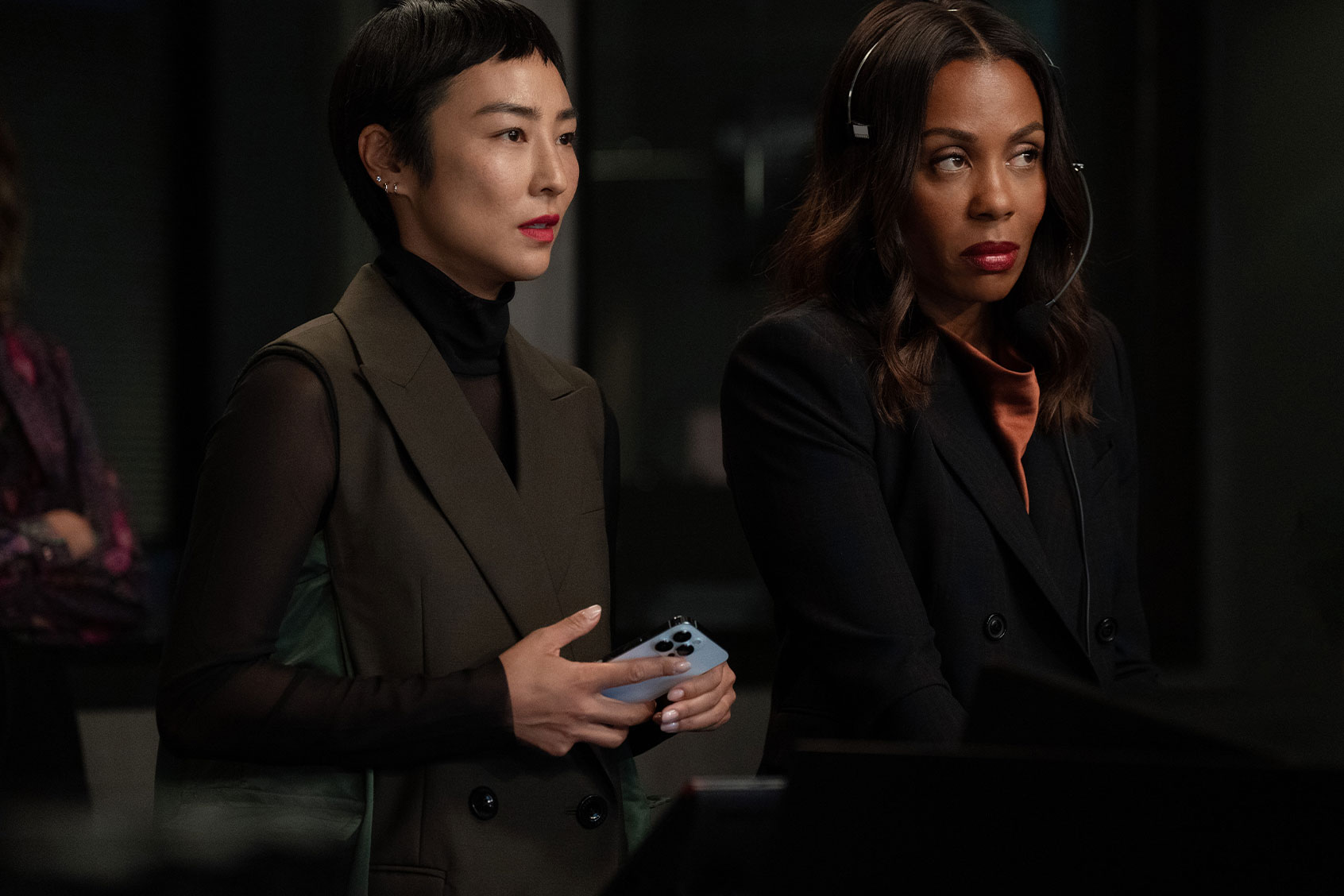
Another says, "She should stick to running." Yet another theorizes she leaked the emails. "[C]an't fire her for being bad at her job now."

"The Morning Show" itself – the TV series, not the show within it — is guilty of sidelining its Black and brown characters too.

But the racist insult isn't as offensive as the other information revealed in that email, which is that UBA hired Christina at a lower salary than what they paid Bradley when she first came to the network to do the same job. Remember Bradley was a relative nobody plucked from a small market while Christina, one board member points out, is popular enough to be on cereal boxes.

"Aunt Jemima was on cereal boxes too," Cybil responded, "and no one's buying her anymore."

Viewers raved over Beharie's work in "White Noise," which is certainly excellent, especially in the scene where she simply recoils, wordless, as she takes in the vile digs anonymous commenters get in at her expense. I suspect the raw, honest anger that reddens her eyes comes from a place of knowing and experience.

Ten years ago Beharie was one of the leads on "Sleepy Hollow," a cult favorite whose viewers were only recently made aware of the hell she was put through behind the scenes. By the time she left, she had been smeared by a whisper campaign claiming, among other things, that she had bitten a co-worker.

That gossip circulated widely enough for me to hear it, and it's chronicled in detail in Mo Ryan's "Burn It Down."  That damaging hearsay contributed to slowing down Beharie's career for most of the last decade, until she made an extraordinary comeback in 2020's independent film "Miss Juneteenth."

Watching Beharie cook Christina's dignified stoicism in a low boil of rage throughout this episode is even more satisfying when you know that backstory. Pairing her with Karen Pittman, who plays "Morning Show" producer Mia Jordan, gives us one of the most substantial moments of this season and others before it.

"I never doubted my worth. I just didn't know other people did."

Having said that, "The Morning Show" itself – the TV series, not the show within it — is guilty of sidelining its Black and brown characters too. There's much to appreciate in this honest portrayal of what it's like for non-white reporters to negotiate their second-class status in top newsrooms or the fact that managers of color frequently must work twice as hard as their white counterparts to get a promotion.

Placing these stories in the hands of Beharie and Pittman also reminds us that "Morning Show" viewers primarily see and hear from these women and others when they're featured in a crisis or some other distressing subplot. And it isn't just them.

Desean Terry played weekend anchor Daniel Henderson, who was never featured in any other context but the office and who left UBA after being informed he didn't have enough of an "it" factor to be a star. Gugu Mbatha-Raw was featured in the first season, but mainly in the background until we discovered she was a victim of Steve Carell's Mitch Kessler. She exited the show by way of her character's suicide.

At least in this episode we see that Beharie's Christina has a home life. Three seasons into her tenure on "The Morning Show" Pittman's Mia is seen waking up . . . in the office. The writers also explain why that is within this episode, along with developing Pittman's character and explaining her quiet frustration more than in previous seasons.

Or maybe I'm simply giving this show credit for featuring Pittman more expansively this season than "And Just Like That" ever did.

The Morning ShowGreta Lee and Karen Pittman in "The Morning Show" (Apple TV+)Mia is nothing like that show's Nya, which isn't necessarily a good thing. The producer is devoted to this loveless marriage of a job for reasons she can't adequately explain beyond offering support to the Black talent and staffers who come and go.

"White Noise" lets us know how thankless of an effort that is. "Don't let Cybil or this whole corporate machine make you doubt your worth," Mia pleads with Chris, who calmly yet tersely replies, "I never doubted my worth. I just didn't know other people did."

There are other traps that even the healthiest newsroom cultures can't always protect their employees from, like the impressions of co-workers or the public that a qualified Black professional stepping into a position previously held by a white person is fulfilling an imaginary quota. Even if a person doesn't have imposter syndrome, confronting such doubt in your colleagues and your manager might infect you with it. Even if you know you have a legal case, "if you sue once," Chris tells her husband, "you are forever the woman who sues."

We need your help to stay independent

Beharie's character receives more than the actor did, which is an apology and a payout – "ho money" is how Christina describes it. None of it is compensatory enough, but it's more than "The Morning Show" support staff is offered. Another document dump from the hackers reveals they're getting lowballed, too.

To prevent a mutiny, Mia and news division president Stella Bak (Greta Lee) call an all-hands that slides into disaster.  

When one staffer says the quiet part out loud – which is that Cory Ellison (Billy Crudup) and Cybil didn't bother showing up because they assumed everyone would "shut the **k up" and remember their place – Christina's fellow anchor Yanko Flores (Nestor Carbonell) drives the conversation into an "All Lives Matter" tarpit.

He asks her why she would "play into the hands of people who want you to see yourself as a victim . . . You don't see how disempowering that is?" Invoking "wokeness" douses this fireside chat.

Accuracy and clarity aren't descriptions typically associated with "The Morning Show" in a decent episode. Here, however, they are keen, sharp knives cutting through the leathery bull of corporate diversity claims to reveal the terms of the game and the toll playing it takes on those who agree to enter the arena. It would be maddening, a downer of an episode, if not for its cathartic resolution – which, again, is brought about in a way that makes Aniston's Alex a hero.

Cory, anxious to "move past" this reputation-blackening incident, agrees to allow Cybil to sit down with Alex on her streaming show to come clean about the allegations. But once Alex talks to UBA's beldame, whose grandfather founded the network and simply wants all of it to go away, she realizes the right interviewer isn't her. It's Chris.


Want a daily wrap-up of all the news and commentary Salon has to offer? Subscribe to our morning newsletter, Crash Course.


As Cybil ventures closer to the interview, she's more contrite and nervous while also insisting she was thrilled to hire her, despite Chris' inexperience. Green or not, Chris calmly walks Cybil into a corner with Mia's assistance, following a barrage of prevarication: "In the interest of transparency, was I hired for a permanent anchor position because I am black?"

"Obviously not, no!" Cybil babbles.

"But you see my confusion, right? Because you used a clumsy, racist comment to complain about my hiring. Did you think I wasn't qualified? Was that it?"

From there, Chris simply glides by Cybil and makes her eat her dust. Cybil admits she didn't think she was qualified – or to rephrase, was untested. From there Chris regales her with the stats – she was Q-tested more than any other person who has ever anchored the show. There were strategy sessions about her hair, and she spent her weekends working with former anchors to hone her on-air skills.

"That aside, I don't understand why you used a racialized image when discussing me. Is that how you see me? Is that . . . how you see us?" Chris keeps on firing. On Cybil's watch, she says, she allowed employees of color to be systematically devalued. Mia instructs the camera to push in on Cybil, "and keep pushing until I see her pores." Cybil then uses the phrase that is her undoing, telling Chris she should be grateful to be in her position, and that she wishes everyone would just move on from "this climate where racial divisions are exploited."

Beharie twists Christina's expression into a quizzical look. "But that's every climate, wouldn't you say? . . . But yes, we will move on from institutional racism right after this break."

The camera cuts to a commercial, and Chris stalks off the set without once looking back at Cybil, who knows she's headed to a vote of no confidence from the UBA board. Chris takes her husband's hand and walks out the studio's door to prep for the next battle, better armed this time.

"The Morning Show" streams new episodes Wednesday on Apple TV+. 

As suicides hit record highs, what can we do about “contagion”?

Phrases like “break the stigma” and “start the conversation” have now long been associated with mental health movements, but when it comes to the occasional contagious elements of suicide, is it possible such matter has been destigmatized too much?

Some communities know this all too well; one suicide and the proceeding public grieving and validation of the late individual leads another community member, who identified in some manner with that person, to also consider suicidal thoughts and actions. This convoluted reality serves as a “double-edged sword” experts say, because in one right, no progress will be made around mental health if it’s inundated with stigma or not discussed — but not all dialogue is productive and safe. 

“The long journey from sin to science failed to eliminate the stigma of suicide,” Dr. Heather Stuart, the Bell Mental Health and Anti-Stigma Chair at Queen’s University said referencing the long history of suicide stigma in Suicide From a Global Perspective: Public Health Approaches. If minimized, the stigma of suicide can reduce suicide deaths by way of earlier detection and care — however, it remains a barrier to care for now, she added.

While some societal progress around suicide stigma has been made since the time when insurance wouldn’t pay out death by suicide and suicidal burials were forced to take place outside of a cemetery, advocates say the fight is only beginning.

(Call or text 988 to receive 24-hour free and confidential crisis support)

No progress will be made around mental health if it’s inundated with stigma or not discussed — but not all dialogue is productive and safe. 

In August, the Centers for Disease Control and Prevention (CDC) released provisional data indicating the United States reached another record in its slow public health decline: nearly 50,000 deaths by suicide in 2022. Media headlines and news conversations were flooded with the topic. While experts say data and reporting on the latest figures are important to shape public health responses, they warn some language can be harmful to at-risk populations.

“If you think that something is happening frequently, it can normalize it for you,” Stuart told Salon. “So, If you’re a person with a mental illness, and you know that more and more people are using [suicide], then maybe you’ll consider it, too.”

However, silencing talk of suicide has proven to not be the answer either, since this fosters shame and hinders help-seeking measures, such as the use of helplines, therapy and safe conversations. The stigma shadowing suicide has long plagued the grueling timeline of suicidal ideation, from inception to the family’s grieving, most involved have been stigmatized to not talk about what they’re enduring, whether directly or indirectly.

Silencing talk of suicide has proven to not be the answer either, since this fosters shame and hinders help-seeking measures such as the use of helplines, therapy and safe conversations.

“Talking about [suicidal ideation] with people is better than not, especially if you’re talking about it in a way that you’re trying to promote treatment seeking help and awareness,” Stuart said. “Just simply talking about it is only going to be one small contributor to the overall problem.”

To reduce both stigma and contagion, discussions of suicide should exclude any mention of method and include more context about the undercovered yet notable number of abortive suicidal attempts and considerations, not only confirmed deaths, according to Dr. Christine Yu Moutier, the American Foundation for Suicide Prevention’s (AFSP) Chief Medical Officer. For every one person that dies by suicide, 316 people seriously consider suicide but don’t kill themselves, according to the 988 Suicide and Crisis Lifeline, which recently marked its one year of operation.

The depth of social contagion from graphic depictions and talk of suicide can be seen in the aftermath of the popular and controversial 2017 Netflix Series “13 Reasons Why,” the third most binge-watched show of 2017 that graphically detailed the suicide of an adolescent girl. The release of the show was associated with a 28.9 percent increase in the suicide rate among 10-to-17-year-olds in April 2017, the month following the show’s release, according to a study by Carnegie Mellon University (CMU.) While other studies found similar results, many experts advise cautious interpretation of the findings as the direct link is hard to prove.

The character’s suicide in ’13 Reasons Why’ was depicted as a cause-and-effect scenario — because she endured a sequence of traumatic life events, suicide was the ultimate outcome. This rhetoric of suicide being a cause-and-effect framework with an inevitable outcome is inaccurate and of utmost danger, as it neglects to factor in very real elements like heavy-weighing social determinants of health, Moutier said, language that only fuels potential contagion, which CMU found alongside suicide stigma.


Want more health and science stories in your inbox? Subscribe to Salon’s weekly newsletter Lab Notes.


Although rare, estimates say approximately 100 to 200 preventable deaths occur annually due to suicide contagion, with nearly 135 people affected by every single suicide. Suicide can often billow well beyond an individual’s immediate circle and into a vast network, according to Dr. Madelyn Gould of Columbia University, one of the earliest suicide contagion researchers.

Without normalizing the act itself, Moutier says that anything destigmatizing help-seeking and the experience of suicidal struggle is generally beneficial to suicide prevention, despite being a nuanced reality. However, messaging is still paramount when discussing suicide, unlike dialogue around non-contagious public health threats like heart disease and cancer. 

“It is helpful, not harmful to ask someone if they’re having thoughts of suicide,” Dr. Moutier said.

For Stuart, the double-edged sword comes into play here because those experiencing suicidal ideation often feel isolated and coverage of the matter lets them know they’re not alone. This convoluted dynamic touches on the underlying reality that just because suicidal behavior can be contagious doesn’t mean it will, no one should be further isolated because of a behavioral health experience, despite it’s severity. If society is less willing to interact with suicidal individuals, that only spins the wheel of stigma while neglecting to respectfully understand the contagious elements of behavior.

We need your help to stay independent

To combat suicide contagion, Gould says society can start by following diligent media guidelines for reporting on suicides, screening advance individuals for suicide risk, and postvention/crisis intervention after a suicide to minimize and contain the effects of suicide contagion.

While each encounter with the wrenching realities of suicide is unique, and no grieving community should be faulted for their coping mechanisms, the aura encircling suicide must not neglect the threatening reality of contagion and snowballing stigma.  

If you are in crisis, please call the 988 Suicide and Crisis  Lifeline by dialing 988, or contact the Crisis Text Line by texting TALK to 741741.

Trump’s mugshot and “Dumb Donald”: How beer labels are doubling as political discourse

Earlier this month, Ultra Right Beer released a limited-edition $25 six-pack called “Conservative Dad’s Revenge.” On the label, it featured Donald Trump’s mugshot; on their website, the brand advertised that a portion of the proceeds would be used to fight the “communist Fulton County District Attorney” on behalf of the three Georgia Republicans who are being prosecuted as part of the state’s election racketeering case

“This will become the most collectible beer can in American history,” the description of the product further promised.

There’s been a lot of consumer research done in the past about how what Americans drink is indicative of where they fall politically. In 2014, the Washington Post summarized it succinctly like this: “Hipster beers are for Democrats. Lites are for Republicans. And scotch drinkers vote.” 

A few years later, research compiled by DataQuencher in 2018, which was reported on by Good Beer Hunting, found that those who identified as conservative drank more macro beer than those who see themselves as liberal (81% to 65% purchase rate), while craft was favored among liberals (59% to 39% purchase rate).

However, as evidenced by Ultra Right’s new release — as well as a legion of craft products by makers that espouse opposing views — the beer industry is shifting in an interesting way in which a drinker’s politics aren’t just something that drives purchasing decisions. They also belong on the label. 

Some may see this development as performative, but like all political discourse, there’s the hope that one’s message can resonate with the opposition, and where better to start than the beer aisle of a liquor store? 

For instance, in 2016, North Carolina introduced and passed House Bill 2 (HB2) in less than twelve hours. The legislation, which became known colloquially as “The Bathroom Bill,” forced transgender individuals to use restrooms that did not correspond with their gender identity and also rescinded all LGBTQ-inclusive nondiscrimination ordinances, prohibited new ones and barred residents from suing for discrimination in state court.

“We didn’t feel like the law that was passed represented us as constituents, entrepreneurs, or business owners,” said Erik Lars Myers, the CEO and head brewer at Mysterby Brewing, at the time. “We wanted to do something in response. But what?” 

We need your help to stay independent

The obvious answer was, of course, to brew some beer. Myers and Keil Jansen of Ponysaurus Brewing in Durham organized an effort to craft “Don’t Be Mean to People: A Golden Rule Saison.” The beer, which was ultimately jointly brewed by 40 small breweries across the state, was a protest against HB2. The striking white label said as much, while also letting buyers know that their purchase would support Equality NC and Queer Oriented Radical Days of Summer (QORDS), an organization that leads camping trips for queer and transgender youth. 

“We just felt it was something we wanted to do to show the rest of the world we’re not all like that in North Carolina,” Myers wrote on the group’s now-archived fundraising website

Around the same time, Wedge Brewing Company in North Carolina took an approach that was somehow both more overt and more subtle; on the bottom of the cans of their best-selling  Iron Rail IPA, they printed to phrase “#F**K HB2” in such a way that it looks like a serial number. 

Six years later, in 2022, as the nation was (and still is) awash in book bans, Maryland’s Flying Dog Brewery released its 451 Juicy IPA, a nod to Ray Bradbury’s “Fahrenheit 451,” which pretty overtly warns against the dangers of unchecked government censorship. It’s worth noting that Flying Dog is not a stranger to fights against censorship. 

“We’re using this beer to remind people that banning books is dumb.”

The brewery — which has a long-standing creative partnership with Hunter S. Thompson’s longtime creative collaborator, illustrator Ralph Steadman — sued Colorado and Michigan previously over its beer labels being deemed inappropriate for shelves and won both cases. 

“What’s beautiful about Bradbury’s novel — aside from the incredible art from Ralph Steadman — is that the human spirit’s innate thirst for knowledge, ideas, growth, and freedom ultimately wins,” CEO Jim Caruso said in an interview with Craft Brewing Business. “So, in the face of attempts to restrict the content our community can access, Flying Dog will always throw our support behind defending freedom of expression because truth-seeking and freedom of expression are inseparable.” 

When Flying Dog shared an image of the beer on X, formerly Twitter, the case of 451 Juicy IPA was displayed on a bookshelf alongside titles that have been previously and are currently banned including “To Kill a Mockingbird,” Anne Frank’s “The Diary of a Young Girl,” “The Handmaid’s Tale” and “Clockwork Orange.” 

“We’re using this beer to remind people that banning books is dumb,” Flying Dog wrote. 

Inevitably, as our country has become more overtly partisan, so, too, have the beer labels. They also serve as interesting artifacts in charting Donald Trump’s candidacy, eventual presidency and defeat. 

In 2015, 5 Rabbit Cervecería, a Latin-inspired and Latin-owned craft brewery that was brewing the Chicago Trump Tower’s in-house blonde ale severed ties with the company after Trump made statements suggesting Mexican immigrants were criminals and rapists; in turn, they released a new blonde ale called “Chinga tu Pelo” (F**k Your Hair), featuring a label decorated with an coiffed swirl of yellow hair

In 2016, Philadelphia microbrewery Dock Street Brewery released an IPA called “Friends Don’t Let Friends Vote Drumpf.” A year later, Chicago’s Spiteful Brewing put out a new imperial IPA with Key lime to start a “social commentary on ignorance.” It was called “Dumb Donald.” 

It seemed the tides were finally turning in 2020, when Wisconsin brewer Kirk Bangstad put out his “Biden Beer” in celebration of the then president-elect’s victory. The label description reads: “It’s inoffensive, especially to women. It’s not bitter. It’s best served while taking the temperature down. Guaranteed not to overstay its welcome in your fridge. How do you spell RELIEF? Biden Beer.” 

Inevitably, as our country has become more overtly partisan, so, too, have the beer labels. They also serve as interesting artifacts in charting Donald Trump’s candidacy, eventual presidency and defeat. 

However, as evidenced by “Conservative Dad’s Revenge” and the ongoing  “Chinga tu Pelo Collection,” the country (and its brewers) are still making sense of the ensuing Capitol Riot. Within this environment, even macro-brands that have traditionally avoided stepping into the political fray have become enveloped within it. 

The ongoing Bud Light boycott is perhaps the most salient example. After partnering with transgender influencer and activist Dylan Mulvaney, the brand came under fire from conservative pundits and public figures including Kid Rock, Dan Crenshaw and Ted Cruz. Bud Light stayed notably quiet amid controversy, even as pressure from both LGBTQ activists and conservatives to clarify their corporate position mounted. 

Eventually, Bud’s parent company, Anheuser-Busch, released a non-committal statement. 

“We never intended to be part of a discussion that divides people. We are in the business of bringing people together over a beer,”  Anheuser-Busch CEO Brendan Whitworth said in an April 14 statement titled “Our Responsibility to America.”

Can’t we all just drink together? These days, it really depends on who is on the other side of the table — and their beer label. 


Fast food: Black holes devour stars much quicker than we thought

Across the universe, the immense gravitational pull of black holes sucks up whirlpools of gas called accretion disks. Due to something called the “Lense-Thirring effect,” surrounding matter falling into black holes doesn’t just fall straight down as an object dropped on Earth would. Instead, upon entering the black hole, objects start rotating in a process called “frame-dragging,” which swirls surrounding plasma into spiraling accretion disks. A study published this week furthers what we know about what happens once that disk enters the black hole — and it’s quite a violent process.

Using computer simulations, researchers saw that the rotations caused by the black hole actually warp the entire accretion disk such that its gas begins to cave in on itself and drive mass inwards faster. As it gets pulled in closer and closer to the belly of the black hole, the gravity gets so strong that the black hole eventually tears the accretion disk in two before devouring first the inner disc and then the outer one. Think of it like you’d tear a sandwich in half to be able to handle it more easily on its way to your mouth. 

The study suggests black holes eat away at this accretion disk in a matter of mere months — rapid, on an interstellar time scale, and 10 to 100 times faster than prior research suggested, the authors reported in The Astrophysical Journal

Accretion diskA new study shows that, by dragging space-time, supermassive black holes can rip apart the violent whirlpool of debris (or accretion disks) that encircle them, resulting in an inner and outer subdisk. (Nick Kaaz/Northwestern University)

“This is a very violent process that definitely would look interesting observationally,” said study author Nick Kaaz, a graduate student in astronomy at Northwestern University. “This is another one of those processes that can force the black hole to eat extremely quickly.”

The study suggests black holes eat away at this accretion disk in a matter of mere months — rapid, on an interstellar time scale.

Astronomers have been working to understand accretion disks’ behavior since the 1950s, with decades of research conducted to understand one of the most high-energy systems in the universe. Initial studies assumed that the angular momentum of the accretion disk would synchronize with the angular momentum of the black hole, Kaaz said. In the 1970s, scientists realized the two could actually be misaligned, but calculations at the time were limited to what could be done with pen and paper, and the full extent of how that misalignment affected the system wasn’t well understood, he explained.

Misaligned subdisksThis still from a simulation shows how a supermassive black hole’s accretion disk can rip into two subdisks, which are misaligned in this image. (Nick Kaaz/Northwestern University)

“In reality, things can be really severely misaligned, and in those extreme cases we have to resort to computer simulations,” Kaaz told Salon in a phone interview. “It was only when computer simulations got advanced enough that we were able to look at this and say, ‘We’re missing something.'”


Want more health and science stories in your inbox? Subscribe to Salon’s weekly newsletter Lab Notes.


“It was only when computer simulations got advanced enough that we were able to look at this and say, ‘We’re missing something.'”

This study leveraged the power of one of the “smartest” supercomputers in the world, Summit, to calculate what happened when an accretion disk got dragged in by a black hole’s gravity. Running at 200 petaflops, or 200,000 trillion calculations per second, Summit is about eight times faster than its predecessor supercomputer. Even with that computational power, the simulation took between three and four months to run, Kaaz said.

“This is basically at the limit of what scientists do,” Kaaz said. “There are very few astrophysics simulations that are comparable on scale to what we looked at here.”

The relationship between black holes and accretion disks is one of the most energy-consuming processes in the universe, right up there with gamma-ray bursts, in which black holes devour entire stars, Kaaz said. One mystery Kaaz is particularly interested in is “changing-look quasars,” in which black holes feeding on gas at the center of galaxies experience alternating periods of luminosity and darkness.

We need your help to stay independent

Understanding how the black hole feeds on the gas in its accretion disk can provide clues into why the light that is emitted from the system changes over time. It could be the black hole consuming a portion of its accretion disc causes its light to dim in periods of changing-look quasar darkness. 

“This supports the tantalizing hypothesis that some [changing-look quasars] may be the observational result of the tearing process,” according to the study. “We plan to perform a dedicated comparison of [general-relativistic magnetohydrodynamic] disk tearing to [changing-look quasars] in an upcoming work.”

Marjorie Taylor Greene fumbles her Yom Kippur greeting with image of Chanukah menorah

In a now deleted message to X (formerly Twitter) on Sunday, Rep. Marjorie Taylor Greene, R-Ga. fumbled a Yom Kippur greeting by using incorrect imagery associated with an entirely different Jewish holiday.

In her original message, she wrote, “To all those preparing for the solemn day of Yom Kippur, I wish you a meaningful fast. Gamar Chasima Tova!” And along with it, an image of a Shofar in front of a Chanukah menorah, which many were quick to point out was incorrect. Deleting that, she fired off a new message to social media, minus the imagery.

Although she caught her error relatively quickly, and attempted to correct it, her initial efforts served as a reminder that this isn’t the first time she’s insulted the Jewish community. Back in March, she was similarly called out for writing, “Happy Purim! May it bring light, happiness, joy, and honor!” 

Greene has a reputation for making antisemitic statements (remember “space lasers?) which are contradictory to her messaging on holidays, obviously making them read as insincere.  

Nice try, but too late. You already showed the people your true colors,” one person responded to her most recent offense today.

Space Lasers for All!!!” wrote another. 

A cozy 5-ingredient apple and parsnip soup that tastes like peak autumn

Fall starts this weekend. You know what that means! Our cozy soup season era has started. And step aside, canned soups: A recipe like this is so, so much better. 

This astonishingly simple autumnal soup recipe, courtesy of Chef Hector Laguna of Botanist Restaurant in Vancouver, is the perfect choice for those blustery autumn nights that are just around the bend. 

With only five ingredients (plus one optional) and a super short cook time, this is an amazing option for any fall weeknight. Conversely, make a big batch and then enjoy it throughout the week.

No matter soup strategy approach, this recipe is a real winner.

We need your help to stay independent

Apple and Parsnip Soup
Yields
06 servings
Prep Time
10 minutes
Cook Time
30 minutes

Ingredients

2 pounds heirloom apples, peeled and diced (peels reserved) 

2 pounds parsnips, peeled and diced

1/4 to 1/2 teaspoon citric acid, optional

Salt, to taste

Grapeseed oil, as needed (or any other neutral oil)

Vegetable stock, as needed


Directions

  1. In a small pot over medium heat, place apples, parsnips and the bulk of the apple peels and barely cover with grapeseed oil. 

  2. Cover and cook until very soft. Don’t bring to a boil!

  3. Take the pot off the heat and cool down to room temperature.

  4. Once cooled down, blend in batches in a food processor or Vitamix, adding vegetable stock as needed in order to achieve the right consistency. 

  5. Season with salt.

  6. To serve: Serve in large bowls. If you’d like, add protein (like shrimp, as pictured), infused oils or fried parsnip and/or apple peels for garnish.