Spring Sale: Get 1 Year, Save 58%

When conservation meant the right to kill animals

Theodore Roosevelt is one of American’s most revered presidents — and one of its most famous environmentalists. If you attended an American school as a child, you were likely taught in history class how Roosevelt preserved vast tracts of the United States, including 230 million acres with the Newlands Reclamation Act of 1902. By the time he left office, Roosevelt had set aside more land for nature preserves and national parks than all of the presidents before him combined.

Yet Roosevelt’s environmentalism — if that’s what it can be called — bears little in common with the modern-day conception of what an environmentalist believes. Indeed, Roosevelt did not have warm and fuzzy feelings for wildlife. Case in point: the first major endeavor Roosevelt undertook after leaving office was embarking on an epic African hunting safari with his adult son, Kermit.

If the idea of an environmentalist also being a hunter seems a bit strange today (though they do exist), it was not in the early 20th century. In fact, modern environmentalism owes as much to the enthusiasm of big game hunters and trophy keepers from bygone days as it does to those who want to save the animals, stop climate change and stop pollution. This is perhaps most vividly illustrated by Roosevelt’s safari, from which he returned in 1910. As he unhesitatingly bragged to the world, the former president had killed 296 animals including 15 common zebras, 11 Thomson’s gazelles, nine lions and three pythons. His son Kermit had an even more eye-popping kill count: Eight lions, seven cheetahs, three leopards and three crocodiles were among his kills.

Certainly these statistics conjure up visions of exciting (if ethically questionable) safari adventures. Yet how does one reconcile the hunting ethos with the ideology of environmentalism?


Want more health and science stories in your inbox? Subscribe to Salon’s weekly newsletter The Vulgar Scientist.


One can look to Roosevelt himself for answers as to how he squared killing animals with conserving animals.

“In a civilized and cultivated country, wild animals only continue to exist at all when preserved by sportsmen,” Roosevelt once explained. “The excellent people who protest against all hunting, and consider sportsmen as enemies of wildlife, are ignorant of the fact that in reality the genuine sportsman is by all odds the most important factor in keeping the larger and more valuable wild creatures from total extermination.”

The former president had killed 296 animals including 15 common zebras, 11 Thomson’s gazelles, nine lions and three pythons.

There was more at play than merely enjoying the hunt, though. Conservationists from the late 19th and early 20th century also recognized that the Industrial Revolution was devouring millions of acres of wilderness that had once been pristine and beautiful. From John Muir to John Ruskin, these conservationists saw nature as something to be protected and nurtured. Many of them were appalled by Roosevelt’s proclivity for hunting — and saw right through the notorious myth that he had saved a bear cub, even though that urban legend wound up inspiring the creation of the teddy bear — for the same reasons that modern environmentalists dislike it.

Yet no one can argue against Roosevelt’s results. Before his presidency, the conservation movement was confined to intellectuals ensconced in the Ivy Towers or supposed “kooks” who spent too much time in the wilderness. (Many aspired to be just like Henry David Thoreau, the American transcendentalist who praised natural life while spending more than two years living alone in the Massachusetts wilderness — and then wrote the masterpiece “Walden.”)

There was also a very unsavory element to environmentalism from this era — the racism. This was perhaps best exemplified by the work of Madison Grant, who was instrumental in movements to protect bison and California redwoods, yet also wrote a white supremacist book in 1916 called “The Passing of the Great Race, or The Racial Basis of European History.” (His arguments were eerily similar to Tucker Carlson’s white replacement theory today.)

So what changed in the environmental movement between then and now?

Much of the credit belongs to Rachel Carson, whose 1962 book “Silent Spring” simultaneously put pesticide companies on notice by exposing their polluting ways and kickstarted the modern environmental movement. Near the end of her book, when criticizing the pesticide companies and their defenders, Carson noted that there were deeper existential issues at stake when it came to environmentalism.

“The resort to weapons such as insecticides to control it is a proof of insufficient knowledge and of an incapacity so to guide the processes of nature that brute force becomes unnecessary,” Carson observed. “Humbleness is in order; there is no excuse for scientific conceit here.”

What occurred was nothing more or less than a shift in the movement’s ethos, an evolution to realizing that nature is something more than a precious and beautiful resource to be preserved — it is also, in a sense, testing humanity’s worthiness to occupy this planet. Modern environmentalists realized that, while conquering nature a la Theodore Roosevelt might seem adventurous, that lack of humility toward nature contributed to the larger threat to humanity’s ongoing tenure on this planet.

At a time where chemical pollution could render humans infertile, and climate change is making much of the planet uninhabitable, that warning has particular resonance.

“Free Chol Soo Lee” investigates “what went wrong” in 1973’s forgotten conviction of an innocent man

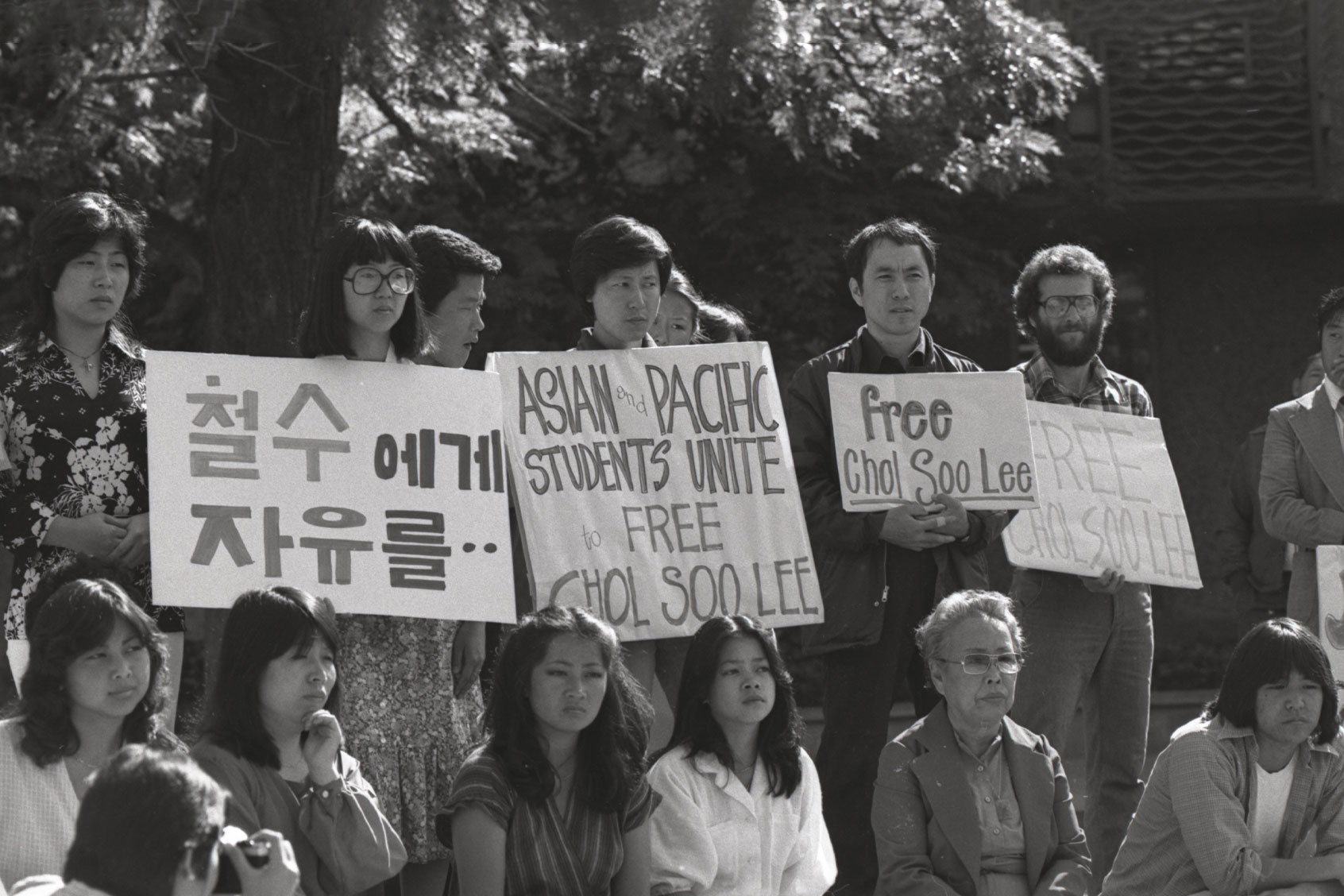
In 1973, Korean immigrant Chol Soo Lee was arrested for the murder of a Chinese gang member in San Francisco. He was convicted of the killing and sentence to life in prison, in part because of a false ballistics test. “Whether I’m an angel or a devil, it does not justify framing me for a murder I did not commit,” Lee says in “Free Chol Soo Lee,” a galvanizing documentary by Julie Ha and Eugene Yi.

Sebastian Yoon speaks Chol Soo Lee’s words — culled from letters and his posthumously published memoir, “Freedom Without Justice.” The film also features marvelous archive photographs and footage of Lee as well as interview with various folks involved in securing his freedom. Lee’s case generated interest from K. W. Lee, an investigative journalist, and he and his articles sparked a grassroots effort from the Korean American community to fight for social justice. 

“Why is this story underground after all these years? This is a landmark Asian American social justice movement . . . It is a singular story and hugely consequential. “

Ha and Yi trace Lee’s life, which includes his difficulties as a youth in America, where he struggled to learn English and was sent to juvenile hall as well as a psychiatric hospital. His case became a cause, and when he was freed — that’s not a spoiler — he had trouble living up to people’s expectations of him. He did drugs, got burned while committing an act of arson, and went back in to jail for a stint and even ended up in witness protection for a spell.  

Ha and Yi spoke with Salon about their documentary and its fascinating subject.

Lee was not necessarily a role model. This isn’t simply a wrongful imprisonment doc, but a case study about dehumanization, and how others in the community rallied for Lee. What was it about Chol Soo Lee’s case that sparked your interest in making a film about it?

Julie Ha: The story beckoned us. We’ve known about the case for quite some time. We learned about it though K. W. Lee, who I met at 18, and was my journalism mentor for 30 years. When Chol Soo Lee died, I went to his funeral to write an obituary, and while I was there, I was struck by this emotion in the Buddhist Temple. Most people present were activists, and many were expressing an emotion beyond grief — not just mourning for someone they cared for and lost, but almost this regret that they didn’t do enough for him. The movement was six years long, and they were dedicated to [freeing] a stranger from death row. I was struck by that depth of compassion and humanity. K.W. Lee was there and clutching a walking stick Chol Soo had carved for him, and he was angry. Why is this story underground after all these years? This is a landmark Asian American social justice movement. It was a case that’s been largely forgotten. It is a singular story and hugely consequential. Eugene has one foot in filmmaking and one in journalism and wanted to make a film. That heaviness and that story was with me. I told Eugene, “Let’s make this film.” This story shouldn’t be buried.

You tell the story starting with his arrest, flashback to his youth, and then, in the most poignant section, address Lee’s post-incarceration life, which is very troubling. Can you talk about your approach to the material?

Eugene Yi: We always wanted him to be looking back on his life. The film, after the opening, starts with him returning to Bay Area and the community he was separated from for so long because of his time in witness protection. We wanted him to have that journey and framing device, but it was important to have Chol Soo Lee tell his own story. You have to tell what happened after his release. The archival material came from journalists and activists who were involved in the time and hung on to the tapes and posters and materials and interviews. There was a journalist, Sandra Gin, who made a short documentary about the case. It came out in 1983 and ended with his release. But she along with K. W. Lee kept following him and his life and there was more story to tell. Sandra was happy to pass the baton along to us. They were generous and trusting with us. We had to tell this whole story. With the incredible work they had done we wouldn’t have a film. 

Let’s talk about the crime and the trial. What happened in the trials, which are not shown, that resulted in Lee being convicted of a crime he did not commit?

Ha: We had to make some tough choices because it wasn’t a true crime film, though it had elements of that. He was identified by three white out-of-town tourists who saw him for mere seconds. When we get to the retrial later in the film, that’s when we touch on what went wrong and how he was convicted. The murder in Chinatown was witnessed by dozens of local residents, but not one of them was interviewed by police or testified at his trial. People in Chinatown knew who the real killer was, and it was a Chinese American who fit the physical description and was part of the Chinatown gang. We wanted to get to the conviction and that injustice to get into the story. 

What is interesting to me too, what I would hear about this case from K.W. Lee – he would emphasize it wasn’t that hard to figure out what went wrong. He would look at court records alone and could not believe the injustice that happened and how Chol Soo could have been convicted. There is a line in the film where the arresting officer points at Chol Soo Lee, that Chinese man, and his own defense lawyer doesn’t correct that for the record and say he is Korean. It’s unbelievable, but that’s what happened.  

Did the police, who assumed Lee was guilty, ever apologize, or were they tried for their wrongdoing?  

Ha: They did not ever apologize. Eugene and I always wanted to talk to the D.A.s and the police who were involved. One day, I cold called Frank Falzon, and he was very forthcoming and said, “In my over two decades as a detective at the San Francisco Police Department, that is the one case that when I meet my maker I wanted to know if he did it or not. Because I have serious doubts all these years later.” I found that really compelling. For so many years, he stood by the belief that Chol Soo was guilty of that crime. It ate away at Chol Soo that he never got an admission from the police or the D.A. that they were wrong. He lived with that feeling of injustice and it really did affect him. I told Falzon, if I am asked as I talk about the film is it OK if share this information? and I told him it would mean a lot to Chol Soo Lee that this admission would come out, and he agreed. 

Free Chol Soo LeeFree Chol Soo Lee (Courtesy Unity Archive Project)
What observations do you have about the Korean American community that rallied to his defense and made Chol Soo Lee a symbol of injustice? Why did they connect with him?

Yi: So many of them had had the experience of going through the war and that was still in the lived experience of so many immigrants that were here. Chol Soo was a child of war, he had been through many of the experiences they had. He’s a young good-looking guy, and people constantly commented on that too, and he can attract that kind of attention. But it was this opportunity for the Korean American and Korean immigrant community, which was new at the time. The law changed in 1965 with the Hart-Celler Act to allow war immigrants to come and the population was much larger in 1978-’79. What is striking was this chance to form unexpected solidarities with other Asian American groups. The Korean American community was a backbone, and often rooted in church, financially. There were the young Asian American radicals who would be out there as well. They are not two groups that would find natural cause together. You don’t assume these people would work together.  

“It wasn’t just prison violence Chol Soo Lee was facing, but depression, loneliness, isolation, and expectations of wanting to put a happy face on for his supporters and not bring them down.”

Ha: I think it captured the imagination because of the way K.W. Lee wrote his first story [published in the Sacramento Union]. It was so humanizing. It was a two-part series and the second part dealt with the holes and judicial bias in the investigation, but the first story made you feel Chol Soo Lee could be your son or brother. People who read the story could identify with Chol Soo Lee as child from the Korean War separated from his birth mom and coming to this country with big dreams and finding an incredibly inhospitable environment for immigrants. And a place that was quick to put him in that school-to-prison pipeline. This sets the stage for him for him to be someone you consider a street criminal and have a life on the margins. That story really spoke to the Korean American community. As K.W. says is the film, “There is a thin line between him and me.” You can see there is a thin line between he and us and that’s why so many Korean American embraced him. 

I thought some of Lee’s remarks about prison and its codes about reputation, about disrespect turning into violence, and about showing no fear were very interesting. What thoughts do you have about his life behind bars, and his subsequent return to jail after he was freed? What observations do you have about how he processed prison?

Ha: We wanted to flesh out the lasting damage that incarceration did to him and that kind of dehumanization. We were fortunate to have his prison memoirs that were published posthumously, so we could use that material in interviews and the speeches. Our narrator, Sebastian Yoon, was also an important script collaborator with us. He emphasized that it wasn’t just prison violence Chol Soo Lee was facing, but depression, loneliness, isolation, and expectations of wanting to put a happy face on for his supporters and not bring them down. Sebastian helped us capture that emotion, that internal pain and trauma he experienced. He felt an obligation to make sure Chol Soo’s voice is represented and that someone stands up for him, and he can be understood and not be judged for his failures, and that they might show him some empathy and understanding.  


Want a daily wrap-up of all the news and commentary Salon has to offer? Subscribe to our morning newsletter, Crash Course.


The tragedy of the film suggests it was Lee’s lack of education that informed his misspent youth. His post-incarceration period was fraught with gangs and drugs, and he even went back to jail. Was Lee doomed even if he hadn’t been wrongfully imprisoned?

Ha: There is an archival interview with Ranko Yamada that is not in our film, but what she says is, “If that injustice had not happened to him when it did, who knows what his life could have been?”  That robbed him of even that chance of something better. He was robbed of that because of that racism and injustice. There were things working against Chol Soo Lee, and it was as if the 10 years wrongful imprisonment weren’t enough to haunt him. If you go back to his childhood and circumstances around his birth, you see the depth of suffering and pain he had to overcome in his life just to be, live, and endure. There were so many factors working against him. What I find inspiring is that Chol Soo kept getting back up. If that injustice had not have happened, he definitely had that fighting spirit as challenges came his way. We’ll never know.

“Free Chol Soo Lee” is in select theaters Aug. 12, before opening wider. Watch at trailer, via YouTube.

Released search warrant reveals Trump suspected of violating Espionage Act

Four days after Donald Trump publicly confirmed the search of his Mar-a-Lago resort by the FBI, the public now has access to the search warrant.

Shortly after 3 p.m. on Friday, the Justice Department confirmed that the former president’s lawyers would not oppose the public release of the search warrant and underlying receipt of materials, which had already begun to circulate widely — including to friendly outlets like Breitbart and the Wall Street Journal.

The right-wing Breitbart initially cited three criminal laws including the Espionage Act, which covers the unlawful retention of defense-related information that could harm the U.S. or aid a foreign adversary, before adding a clarification meant to downplay the severity of the allegations.

The site also included the names of the individual FBI agents involved in the search. The court issued release of the warrant, which was approved Friday afternoon, redacts that sensitive information. On Thursday, a man with a reported history of fervent support for Trump was killed in a shootout with FBI agents.

Signed on Aug. 5 by federal magistrate Judge Bruce Reinhart, the warrant lists the “transmission of national defense information or classified material” and the collection of “any evidence of the knowing alteration, destruction, or concealment of any government and/or Presidential Records, or of any documents with classification markings.”

According to Politico,  the retrieved documents include the highest levels of government classification. One item was labeled “Executive grant of clemency re: Roger Jason Stone, Jr.,” the longtime confidant pardoned by Trump in his final days in office. Another item was labeled “Info re: President of France.

Mothers behind book-banning campaign complain they are being “censored”

ProPublica is a Pulitzer Prize-winning investigative newsroom. Sign up for The Big Story newsletter to receive stories like this one in your inbox.

A group of Georgia mothers has been trying to get certain library books banned by reading sexually graphic passages aloud at school board meetings. Now, after the board barred one of the mothers from attending, the group is claiming in a federal lawsuit that their First Amendment rights have been violated.

In essence, members of the group, which has dubbed itself the Mama Bears, are arguing that they’re being censored — in their own pursuit of censorship.

At a February school board meeting in Forsyth County, Georgia, Mama Bears member Alison Hair wanted to draw attention to a book that was available at her son’s middle school library, according to the lawsuit. Turning to a page from “Extremely Loud and Incredibly Close,” Jonathan Safran Foer’s 2005 novel about a 9-year-old boy whose father was killed in the 9/11 attacks, Hair began to read: “I know that you give someone a blow job by putting your penis …”

That’s as far as she made it before Board of Education Chair Wesley McCall cut her off. He reminded her of “the rules that we talked about in the beginning” of the meeting concerning the board’s policy about “profane comments.” He also let her know that “we understand your point” and stated that the district already has a vetting system in place “so these books are not read out loud to students.”

Hair continued to try to speak during her allotted three minutes, asking that she be given back the time that McCall spent interrupting her. “Here’s what I’m here to tell you,” she said. “I am here to confront evil.”

McCall cut her off again: “Your time is up.”

Hair returned to the Forsyth School Board meeting the following month, again attempting to read from a book and again getting cut off. The board later sent her a letter banning her from school board meetings until she agreed to follow board policies: “It was clear that your intent was not to comment to the Board in the public forum but was to disrupt the meeting of the Board of Education to draw attention to yourself and your beliefs.”

The lawsuit, filed in late July by the Institute for Free Speech on behalf of Hair, Mama Bears of Forsyth County, and Mama Bears Chair Cindy Martin, claims that “the Forsyth County School Board, embarrassed by debate about its choices, has gone so far as to silence and banish from its meetings any parent who simply reads aloud from its schools’ library books.”

Del Kolde, a senior attorney with the Institute for Free Speech Institute who’s representing the plaintiffs, said of the lawsuit: “It’s not about censoring the books. It’s about reading from the books in a public setting. We don’t see any irony.”

“To me, the irony is if you’re putting books in the system, why can I not read them in a public setting?” Hair told ProPublica. “But again, this is not about books. This is about my right to speak to the school board about concerns that we have regarding our children.”

According to Kevin Goldberg, an attorney and First Amendment specialist with the nonprofit free-speech advocacy group Freedom Forum, “There’s at least some merit to the suit. The premise is valid.” (Forsyth County Schools Chief Communications Officer Jennifer Caracciolo said the district and school board could not comment on pending litigation; individual school board members did not respond to requests for comment.)

Goldberg points out that “the First Amendment provides a right for parents to petition.” And he notes that “the suit is not the first of its kind and likely won’t be the last, because it has legs.”

Below, Goldberg provides commentary on the lawsuit. ProPublica has provided relevant excerpts from the suit to give some additional context to Goldberg’s analysis.


Lawsuit: Plaintiffs — mothers who wish to protect their young children from Defendants’ questionable choices — want to exercise their right to criticize the placement of pornographic books in school libraries by accurately reading those books aloud at public meetings. The books’ language, after all, best illustrates why the parents contend the books are inappropriate for school. Plaintiffs want to read these books aloud because they want to elicit in these elected officials, and in their fellow citizens participating in the debate, the same emotions that struck them when they first read these words; embarrassment and motivation to action. They want their audience, including elected board officials, to hear the jarring, unsettling, and sexually graphic words in their original medium. If Plaintiffs cannot read these excerpts, then the power of their message is lost, indeed, the message itself is censored.


Goldberg: Parents have a right — and frankly, we want them to have a right — to be able to speak during these meetings. They also have a right to speak as they want to speak, and that right should be very broad. That’s why I think this case has some merit.

Lawsuit: At the February 15, 2022 school board meeting, Defendant McCall adopted the practice of opening every Public Comment period by purporting to read from the Public Participation Policy though he added language that cannot be found in the policy. This spoken variation of the policy adds a new category of things the boards can censor: A reading from something “inappropriate.”

We want to remind our citizens that public participation is to present issues or concerns to the Board” [the lawsuit quotes McCall as saying] “but in doing so we do not allow profane comments or comments which involve inappropriate public subjects. If your comments include anything that you might read tonight is … inappropriate to being stated in public you will be instructed to stop.


Goldberg: The policy as written is problematic, I think, from a First Amendment point of view. But certainly when you go off script, it raises a host of First Amendment problems, primarily because it tends to be vague.

The biggest problem with vagueness is that I don’t know how to moderate or calculate my speech, which means I’m likely to self-censor to not get in trouble. That is a clear First Amendment violation.

Vagueness also leads to selective enforcement. What we end up seeing here is one side being told to be quiet because they’re being inappropriate or disruptive.

Lawsuit: Protecting the innocence of Forsyth County’s children is central to Mama Bears and its members. Barring the availability of pornographic materials in school libraries is among the group’s chief concerns. …

The Mama Bears have identified over one hundred books they believe are inappropriate.


Goldberg: A stated purpose of their exercising their First Amendment right in this issue is to bar the availability of pornographic materials in school libraries. But pornography is protected by the First Amendment, and there’s no clear evidence that any of these materials are actually pornographic.

The First Amendment right of the parents is absolutely necessary for them to speak, to be a part of the process. It’s what makes the process work. It’s what helps us come to a final decision. But the parents should not be making that decision. The parents should not be imposing that decision. And that’s my real concern, that when they are imposing their decisions, their preferences on everybody else, we run into another First Amendment problem. They are now seeking to use the process to restrict the First Amendment rights of other parents.

Lawsuit: On March 17, 2022 Wes McCall sent Hair a letter banning her from attending future public meetings until she provided a guarantee in writing that she would follow the public participation rules and his directives. …

Though Hair did not attend any meetings after March 15, on May 11, 2022, the full FCS Board sent Hair a second letter, signed by each individual defendant Board member, confirming that she is banned from attending public meetings.


Goldberg: I would hope that they [the school board members] would be pushing to keep as many of these books in the library as possible, but they are at the same time shutting down speech.

Cohen v. California was a really fun and interesting case from the Supreme Court that was decided about 50 years ago. It’s best known as the “fuck the draft” case, where the guy wears the jacket in the L.A. County Courthouse that says “fuck the draft” on the back.

The court said, look, I mean, one man’s vulgarity is another man’s lyric. If you don’t like it, avert your eyes. We do not think that the mere presence of bad words is sufficient to punish somebody.

Well, I think that applies here. If you can use the words “fuck the draft” in a courthouse, you can use them in a school board meeting.

Scripts for “The Sandman” season 2 are already being written

“The Sandman,” Netflix’s adaptation of Neil Gaiman’s seminal comic book, is here, and it’s pretty spectacular. It’s also really odd; the story is about a family of concepts who are also god-like beings known as the Endless; Dream, played to moody perfection by Tom Sturridge, is the one we spend the most time with. I ended up really enjoying it and hope it catches on, in part because I want to see the rest of the comic; there’s a lot of good stuff in the issues to come.

For instance, there’s an episode in this first season where Dream travels to Hell and plays a game of imagination against Lucifer, played by “Game of Thrones” veteran Gwendoline Christie. Dream wins and humiliates the Lord of Hell, after which she swears revenge. That plot moves forward in the “Season of Mists” arc from the comics, and Gaiman himself can barely wait to adapt it for television, as he told Variety:

I take too much f**king pleasure in saying to people who do not know anything about what’s coming up in Sandman, “If we do Season 2, we’re going to be having the rematch and Morpheus is going to be going back to hell. And Lucifer has some surprises in store that Morpheus is not expecting.” And they are all like, “Ahh!” And I’m like, “Yeah, and I know how that’s going to work, and you don’t. And everybody who’s ever read “Season of Mists” knows how that’s going to work and you don’t. But that’s good because not everybody will have read “Season of Mists” and this is going to be so much fun.

In all, there are 10 volumes of “The Sandman” comic. The first season adapted the first two, “Preludes and Nocturnes” and “The Doll’s House.” Next on tap are “Dream Country” and “Season of Mists.”

Neil Gaiman has grand plans for adapting the rest of “The Sandman”

And ideally, fans want to see the whole thing adapted, as does Gaiman. “Well, we told the first 400 pages of a 3,000-page arc in the first 10 episodes. So there’s a kind of a ‘you do the math’ on that,” he said. “But then the other answer is, how long is a piece of string? What we know that we would like to do, in a perfect world, as long as the audience is there and people come out for it and people want it, is we want to tell the whole story of Sandman that went through to ‘The Wake.’ And after that we want to tell ‘Sandman: Overture,’ and somewhere in there, possibly, even as a special or whatever, we’d love to do things like ‘The Dream Hunters.’ We quite probably weave the stories that are in ‘Sandman: Endless Nights’ into the body of the whole. What is nice is we have the entirety of Sandman to draw on.”

We also have the “Death” books. It might be great to go off and do one of those as a sideline, in addition to which, anybody who has seen “Sandman” Episode 3 has sidled over to us at some point or other in the last six months and said, “Do you think there’s any possibility that we could do a Johanna Constantine show with Jenna Coleman?” And, oh my God, she’s a star and you just want to see her going through battling demons and destroying other people’s lives. So that’s in there, too. We can keep going on this for a long time to come.

But this isn’t us going, it’s eight season exactly and then out — or five seasons and out. We want to tell the story. Which feels wonderfully familiar for me, because when I was writing “Sandman,” people go, “So how long does Sandman go?” And I’d go, “I don’t know, maybe Issue #50?” And I’d be at Issue #50, and go, “I don’t know, Issue #75, maybe?” But when you get there, there’s still be more story to tell after that.

There is indeed a lot of material to draw on, although we haven’t heard anything about a renewal yet. I have all my fingers and toes and arms and legs crossed.

In the meantime, producer David S. Goyer told Den of Geek that the team was working on scripts for Season 2 whether or not it’s ordered. “In some ways, it’s easier because we’ve educated the audience to the basic ideas,” he said. “We’ve shown how the dreaming life can affect the waking world.”

There are also some key characters we have yet to see, including a couple members of Dream’s Endless family; we’ve met Dream, Death, Desire and Despair, but I won’t be satisfied until we also see Destiny, Delirium and Destruction. “Right now, what we’re doing is every time I think of or run into or pass or notice an actor who could be either a Destruction or a Delirium, [producer Allan Heinberg] gets an email,” Gaiman said.

Everything you need to know about kohlrabi

Have you heard of kohlrabi? If you’re a member of a local CSA (Community-Supported Agriculture) farm and receive regular deliveries of seasonal produce, then you are likely familiar with this often-unknown vegetable. Or you may have seen it at a farmers’ market and wondered what it was and how to use it. No, that’s not an alien vegetable, and yes, it is delicious, healthy and versatile!

Kohlrabi look similar to a turnip, generally round in shape with leaves growing out of one end; both the ball and leaves are edible. Kohlrabi can range in color from white to green to purple and are generally the size of a baseball. Treat the leaves just as you would another hearty, leafy green like collards or kale. The root part is mild, juicy and sweet and may remind you of a variation of jicama. It has a texture similar to a radish, without being spicy, and it has a cool, crunchy flesh and velvety leaves.

Kohlrabi is part of the Brassicaceae family, which includes broccoli, Brussels sprouts, cauliflower, collard greens and kale. It is packed with nutrients, including dietary fiber, vitamin C, several B vitamins, copper and potassium.

How to select and store kohlrabi

Kohlrabi is generally available June through September, throughout prime farmers’ market seasons. Follow these tips to select and store your kohlrabi:

  • Look for an even, round shape and greens that look fresh and not wilted.
  • Avoid any kohlrabi with gashes and bruises in the skin.
  • Once you get home, cut the greens off and store them separately from the kohlrabi root in a crisper drawer.
  • Peel the kohlrabi root before using.

Ways to use kohlrabi

Kohlrabi has versatile applications. Here are some preparation ideas to get you started:

  • Slice and add it to raw vegetable salads or as part of a crudités platter.
  • Grate it and use in a slaw.
  • Dice the root to roast with some olive oil, salt and pepper.
  • Boil and mash it with some potatoes or on its own.
  • Use in place of potatoes in a baked gratin dish.
  • Sauté the leaves with oil, salt, pepper and garlic.

Here’s a simple kohlrabi recipe to get you started.

Kohlrabi Apple Slaw
Yields
6 servings

Ingredients

  • 3 tablespoons extra-virgin olive oil
  • 2 tablespoons white wine vinegar
  • 1 teaspoon honey
  • 1 lime, zested
  • 1 teaspoon kosher salt
  • 1/4 teaspoon ground black pepper
  • 3 kohlrabi, peeled and grated
  • 2 Granny Smith apples, diced
  • 1 cup celery, diced
  • 3 scallions, white/light green parts only, thinly sliced 

Directions

  1. Combine oil, vinegar, honey, zest, salt and pepper in a large bowl and whisk.
  2. Add kohlrabi, apple, celery and scallion whites to bowl and mix thoroughly.
  3. Garnish with scallion greens.


Cook’s Notes

I always turn to honey and maple syrup as my sweeteners of choice. These ingredients provide nutrients, such as magnesium, zinc and antioxidants. They also impart flavor components, adding depth and complexity to a dish.

If you’d like to take it up a notch, feel free to use a spiralizer. Both the apples and kohlrabi can be spiralized for a fun twist.

By Chef & Registered Dietitian Abbie Gellman, Institute of Culinary Education

The best veggie burger for anybody and everybody

What is a perfect veggie burger? That depends on how you like it: there are fans of burgers that are bean-based, nut-based, vegetable-packed and made with grains. Not every veggie-burger-lover loves every veggie burger. (Try saying that 10 times fast.) Some people want it to resemble meat, some like them nutty, and some focus on grill-ability.

For each kind of veggie burger enthusiast, we rounded up the best recipes on the internet. Making your own veggie burger is not only really easy but it’s a great way to make sure your burger is chock full of real food. We added in a few supermarket options as well, although it’s worth keeping in mind they will almost always be more processed and use at least a few ingredients you wouldn’t find in a home kitchen. Make sure to check out the ingredient list! Now choose your style, and get cookin’!

The most meat-like, non-meat burger

Although his veggie burgers attract both vegetarians and meat-eaters alike, New York City chef Brooks Headley isn’t trying to make a meat replacement at his vegetarian outpost, Superiority Burger. Instead, he layers flavor by treating the vegetables as he would meat: long roasting carrots, deglazing with vinegar to catch all the flavorful bits. The result is a flavorful veggie burger with nice texture from a mix of carrots, walnuts, chickpeas and quinoa. Thanks to Headley’s cookbook, Superiority Burger Cookbook, you can try the method out yourself.

It’d be hard to find a supermarket patty that could compete with this, but there are a few products on the shelf, like Dr. Prager’s, which contain a similar mix of real, recognizable vegetables and legumes without any strange powders or fillers.

The beet, not meat, veggie burger

For Ana of The Awesome Green, a good veggie burger needs to have smoky flavor and a succulent and chewy texture. Her beet burger recipe meets all those requirements. She roasts her beets first, to give them a smoky, rich flavor, then combines the veg with quinoa, breadcrumbs and seasoning to give it the proper texture. Don’t love beets? Try out her technique with sweet potatoes.

There are several beet-based supermarket patties available from companies like Strong Roots or Dr. Prager’s.

The bean burger to showcase your favorite condiments

Veggie burger expert Lukas Volger’s carrot and white bean burger is a beloved classic. This one-pan wonder is easy to make and can accommodate substitutions to make it a good refrigerator-cleanout burger as well. Volger says it’s a good one because “it’s a burger that aims to express veggies, rather than mimic meat” and “its flavor profile is somehow neutral enough to complement whatever your favorite burger toppings are.”

The grill-able, freezable, anything goes veggie burger

Just because veggie burgers are delicious, doesn’t mean they are grill-able. Most have a fragile texture that’s better suited for baking or sautéing. But if you’re a backyard barbecue champDana from Minimalist Baker perfected a veggie burger recipe that is both delicious, and grill-able. She uses a combination of mashed black beans, walnuts, spices and barbecue sauce to create a patty that’s totally grill-able, plus they have about 14 grams of protein each, so even meat-eaters can’t complain. Want it even easier? Cook them, then freeze, and you can have a veggie burger anytime you want it.

A veggie burger for the but fanatic

Some swear that nuts belong in veggie burgers since they add more protein and texture. If this is you, then we suggest Vegan Richa’s walnut and lentil burger, a hearty combination of lentils, rice and walnuts, along with warming spices like cumin and garam masala. Her avocado ranch sauce takes this veggie burger over the top.

A veggie burger for the cauliflower obsessed

Cauliflower rice, cauliflower pizza, cauliflower tots: can’t get enough cauliflower? Then try out Lindsay from Pinch of Yum’s spicy cauliflower burgers, made with quinoa, cauliflower and pepper jack cheese for a rich burger that has just the right texture. And don’t sleep on the chipotle mayo, friends — as Lindsay says, it makes the burger.

Looking for a premade, supermarket version? Look for Hilary’s or Dr. Prager’s.

The grain god/goddess veggie burger

For some, the only way to get the ideal veggie burger texture is to add in the chewy bite of cooked grains. In fact, quinoa or brown rice is commonly found in most veggie burger mixes. But the folks over at Oh My Veggies created this mostly grain burger, using freekah, a roasted durum wheat, to give their burger mix that chewy taste. Topping the burger with caramelized onions cooked in harissa, as well as a smoked garlic mayonnaise, adds in tons of rich flavor.

There are several oat, rice or quinoa-based patties available in the grocery freezer aisle, including Hilary’sSunshine and Strong Roots.

The toss-in-all-the-scraps veggie burger

Want a burger that’s both delicious and reduces your food waste? Then start saving that juice pulp, because Joni of Food by Jonister has a veggie burger recipe that puts the pulp into the mix. Juice pulp is full of nutritious fiber, and makes for a “juicy” burger. Don’t have a juicer? Use grated vegetables like beets and carrots instead.

The person who wants to cut back on, but not give up, meat

If you haven’t gone quite veggie, but are looking to cut back on meat, the blended burger is perfect for you. Swap finely chopped mushrooms for 25 to 50% of the total amount of meat. Use whichever type of mushroom you like, and any kind of ground meat. Not only will the burgers be more flavorful (and moist!), they’re also better for the environment.

For those of you in a hurry and looking to buy a blended burger at the store, there are several blended burgers available at the supermarket from some large brands. They can be found in the meat case and freezer aisle right next to their 100% meat counterparts.

Legal expert calls out Trump’s “O.J. Simpson defense”: “Strongly suggests consciousness of guilt”

After the FBI executed a search warrant at Mar-a-Lago on Monday, August 8, Fox News and many other right-wing media outlets were quick to leap to former President Donald Trump’s defense — describing the search as government overreach and essentially telling their audience: If the FBI can go after Trump, you’re next. Attorney Philip Rotner, in an article published by the conservative website The Bulwark on August 12, describes this type of messaging as “the O.J. Simpson defense.”

Although The Bulwark itself is a right-leaning media outlet, the website is overtly anti-Trump and features a who’s-who of well-known Never Trump conservatives, including Charlie Sykes, Bill Kristol, Mona Charen, Tim Miller and Amanda Carpenter. The Bulwark has become the go-to website for anti-Trump coverage from the right. And when Rotner describes Trump, his supporters and his allies as invoking the “O.J. Simpson defense,” he certainly doesn’t mean it in a positive way.

“In 1995,” Rotner explains, “football great O.J. Simpson was tried for the murder of his ex-wife Nicole and her boyfriend Ronald Goldman the year before. The case against him looked airtight.… Yet Simpson was acquitted. His defense team turned the tables to portray law enforcement as the culprit and Simpson as the victim. They argued, without a shred of direct evidence, that all of the incriminating forensic evidence was either planted by police officers who were out to get Simpson or mishandled by bumbling investigators.”

The attorney continues, “This week, it was Trump preemptively asserting the O.J. defense. By Tuesday morning, one of Trump’s lawyers, Christina Bobb, was crying foul, suggesting that the FBI had planted evidence.”

While Fox News pundits were trying to paint the FBI and the U.S. Department of Justice as heavy-handed persecutors of Donald Trump and the MAGA movement, mainstream media outlets like CNN, MSNBC, the New York Times and the Washington Post were busy doing actual reporting and really digging into the FBI’s reasons for the search. The Post and others reported that the FBI was looking for White House documents that shouldn’t be stored on private property such as Mar-a-Lago; under the Presidential Records Act of 1978, official White House and presidential documents must be given to the federal government after a president leaves office — they are government property, not private property. And on August 12, the Post reported that according to sources, the FBI agents who searched Mar-a-Lago were looking for, among other things, “classified documents relating to nuclear weapons.”

Rotner stresses that the problem with “preemptively invoking the O.J. defense” is that it “strongly suggests consciousness of guilt.”

“The allure of the O.J. defense to Team Trump, of course, is that it erases everything,” Rotner argues. “It doesn’t matter how incriminating the evidence is against him. Whatever the evidence, if Team Trump can convince people that it was planted, it’s toothless as far as the public is concerned. So, it is incumbent on the government to get this right. We can only hope that the FBI agents who conducted the search created a meticulous record of what they found at Mar-a-Lago and where they found it. Without a bulletproof chain of custody, Trump’s O.J. defense could work — just like it worked for O.J., no matter what they actually found.”

Anne Heche dead at 53 after injuries sustained from car crash

Actress Anne Heche, who sustained critical burns, significant pulmonary injury and severe anoxic brain injury after crashing her car into a private residence in California last week, has died at the age of 53. 

Earlier on Friday morning word circulated that Heche had lost brain function, but was being kept on life support to determine if her organs were viable enough to donate, according to representatives for the actress providing information to People

“Today we lost a bright light, a kind and most joyful soul, a loving mother, and a loyal friend,” says a rep for Heche in a statement provided to People. “Anne will be deeply missed but she lives on through her beautiful sons, her iconic body of work, and her passionate advocacy. Her bravery for always standing in her truth, spreading her message of love and acceptance, will continue to have a lasting impact.”

The crash that caused the injuries that Heche ultimately succumbed to took place last Friday on the 1700 block of South Walgrove Avenue in Mar Vista, a neighborhood on the Westside of Los Angeles. Heche was caught on neighborhood security cameras driving her Mini Cooper at high speeds down the residential street before crashing into the home of Jennifer Durand, which was occupied by a renter. The interior and exterior of the home were completely destroyed due to a fire that erupted from the crash, and a fundraiser is currently underway to help the renter, Lynne Mishele, get back on her feet after having lost everything she owns in the fire. 

While it was initially speculated that Heche had been under the influence of alcohol at the time of her crash, blood tests obtained via a search warrant found traces of cocaine and fentanyl. A second test of Heche’s blood was in the works to rule out any narcotics that may have been administered as pain medications while she was under the care of the hospital she was being treated in.

On December 6, 2022, the Los Angeles County Medical Examiner-Coroner issued a report that “there were no active drugs found in actress Anne Heche’s system at the time of her car crash in August,” per an update from CNN. The coroner’s report now clarifies that “certain drugs were detected from prior use through a urine and blood test but were determined to be inactive at the time of the accident.”

Heche was born on May 25, 1969, in Aurora, Ohio and is survived by two sons, Atlas Heche Tupper and Homer Laffoon. The actress starred in countless television shows and films, and gained tabloid notoriety by being briefly romantically linked to actress, comedian and talkshow host, Ellen Degeneres.

“My brother Atlas and I lost our Mom,” says eldest son, Homer. “After six days of almost unbelievable emotional swings, I am left with a deep, wordless sadness. Hopefully my mom is free from pain and beginning to explore what I like to imagine as her eternal freedom.”

Experts: “Signals intelligence” from wiretaps found at Mar-a-Lago make Trump’s scandal even worse

While the world was shocked after The Washington Post dropped the bombshell report that the FBI was searching Mar-a-Lago for nuclear weapons documents, some national security experts were also shocked that “signals intelligence” was recovered from Donald Trump’s Florida home.

“Former senior intelligence officials said in interviews that during the Trump administration, highly classified intelligence about sensitive topics, including about intelligence-gathering on Iran, was routinely mishandled,” the newspaper reported. “One former official said the most highly classified information often ended up in the hands of personnel who didn’t appear to have a need to possess it or weren’t authorized to read it. That former official also said signals intelligence — intercepted electronic communications like emails and phone calls of foreign leaders — was among the type of information that often ended up with unauthorized personnel. Such intercepts are among the most closely guarded secrets because of what they can reveal about how the United States has penetrated foreign governments.”

That pattern may not have ended when Trump left the White House after losing the 2020 presidential election to Joe Biden.

“A person familiar with the inventory of 15 boxes taken from Mar-a-Lago in January indicated that signals intelligence material was included in them,” the newspaper reported. “The precise nature of the information was unclear.”

Former acting Solicitor General Neal Katyal tweeted, “Signals intelligence (like electronic intercepts) are some of the most sensitive and secretive material in the US.”

“There are a host of special markings and protections on every such document,” Katyal noted.

The fact signals intelligence was reportedly recovered at Mar-a-Lago shocked national security professionals.

Retired USAF Gen. Michael Hayden, who served as director of the NSA and CIA, simply tweeted, “Jesus Christ.”

Bill Kristol, who served as Vice President Dan Quayle’s chief of staff, offered his analysis.

“It’s been a while since I was in government, but signals intelligence—man, you are really not supposed to mess around with that,” he wrote.

He wondered if it might be connected to Saudi Arabia Crown Prince Mohammed bin Salman.

“People ask why Trump would keep docs,” he added. “Plenty of possible reasons. E.g.—and this example is pure speculation: Signals intel on MBS and [Jamal] Khashoggi, or on Saudi nukes, are the kind of docs you’d want in case you had to remind the Saudis to keep the $ coming.”

Historian Claire Potter wrote, “If it was you or I who, and not Trump, who were in possession of top secret documents about nuclear weapons, or signals intel–well, you or I would be in handcuffs in a very bright room with glam rock playing in our ears. Yet he plays the victim.”

Journalist Kurt Eichenwald wrote, “I never thought there was anything left that Trump could do that could shock me. But THIS? He took nuclear weapons and signals intel documents to his goddamn golf resort? Ok, I will finally say it. Lock him up.”

Former Deputy National Security Advisor Ben Rhodes was asked about the reporting during an interview with MSNBC’s Lawrence O’Donnell.

Rhodes said, “I keep coming back to the fact that — how unusual, how remarkably unusual it would be for anybody to be keeping this information, frankly even like while you are in the White House. It’s not like you need to keep records of the stuff if you are the president of the United States.”

Watch below or at this link.

Fox News host corners Elise Stefanik over “rogue” FBI claim: “FBI director was appointed by Trump!”

On Friday morning’s edition of “Fox and Friends,” Rep. Elise Stefanik, R-N.Y., went on to attack the FBI — but was caught off guard when co-anchor Steve Doocy actually hit back and pointed out there are several reasons to think the search warrant at former President Donald Trump’s Mar-a-Lago country club was justified and serious.

The FBI, as Doocy noted, was in fact looking for highly classified nuclear secrets as part of their search — and he challenged Stefanik to justify why that wouldn’t be a legitimate thing to investigate.

“House Republicans are going to follow the facts and demand accountability and transparency,” said Stefanik. “The statement by Attorney General Merrick Garland is not nearly enough … this is Joe Biden’s Department of Justice and FBI, targeting his most likely presidential opponent in 2024. It is not news to the American people that President Trump is very likely to run for president. This was incredibly an overreach, it’s un-American, and there’s going to be a lot more questions from the FBI that the American people deserve.”

“Well, of course, the FBI director was appointed by Donald Trump,” Doocy corrected her. “But Congresswoman, if — and they’re just allegations, and we just have a little taste of the story from The New York Times and The Washington Post — they say, as Peter talked a moment ago, that apparently there was a national security concern about some of the documents, allegedly, at Mar-a-Lago. That they were materials from — they were higher than Top Secret, they were classified higher than that. As you know, they’re called special access programs, and apparently they’re related to nuclear weapons. We don’t know if they’re our weapons, we don’t know if they’re another country’s weapons. But if that is true, and they were just in the basement at Mar-a-Lago, that’s kind of a big deal.”

“Well certainly, Steve, there’s been a lot of, again, guesses as to, and media reporting,” said Stefanik. “We do not know the facts, which is why it’s important to follow the facts wherever they lead. And that’s why it’s important in our oversight role on the House Intelligence Committee, we continue to see the FBI refuse to answer questions when they create controversies and they overreach, and that should never be the case.”

Trump responded to the new reports that the FBI was searching for nuclear material with a new rant earlier in the morning, accusing them of “planting information.” However, he has indicated he will not contest the DOJ’s move to unseal the warrant.

Watch below:

Trump puts a target on the FBI: Cincinnati gunman shows danger posed by an endless supply of dupes

The main reason that Donald Trump is forever turning Republican campaign events and conservative conferences into fascistic rallies featuring two-hour stemwinders is that he’s a champion narcissist with a vampiric need to feed off the adulation of blockheads. But a major secondary reason is what happened on Thursday, when a deranged Trump supporter named Ricky Shiffer fired a nail gun at the FBI offices in Cincinnati, Ohio, before getting killed in an hours-long standoff with the police.

As reporters covering right-wing extremism swiftly documented, before much of it was taken down, Shiffer was all wound up by Trump’s lies about the FBI raid on Mar-a-Lago Monday, lies that have been amplified and validated by right-wing media outlets like Fox News and much of the GOP establishment

“Kill the FBI on sight, and be ready to take down other active enemies of the people,” Shiffer apparently posted on Truth Social, a Trump-owned social media site, according to Andy Campbell of HuffPost.

“Well, I thought I had a way through bullet proof glass, and I didn’t.  If you don’t hear from me, it is true I tried attacking the F.B.I., and it’ll mean either I was taken off the internet, the F.B.I. got me,” Shiffer allegedly posted on Trump’s site, right after the nail gun attack, according to NBC News. 

The saddest part is that, while Ricky Shiffer took it to the next level, he’s far from alone.

Truth Social was set up in large part to give Trump, who was banned from Twitter after inciting the January 6 insurrection, a platform to keep up his stream-of-consciousness bigotry, lies, and conspiracy theories. It also, under the guise of “free speech,” serves as a clearinghouse for fascist sentiment and violent rhetoric. As with Trump’s rallies, much of it is about keeping his followers on the hook by making them feel close to their hero, an illusion he knows how to strategically bolster. In May, for instance, Trump endorsed a post by a user fantasizing about “civil war.” It raised alarms about how Trump is still inciting violence, but also, crucially, it allowed his followers to believe that he reads their social media posts and cares about them. 

Keeping these people hyped with lies and conspiracy theories, all meant to feed their ridiculous persecution complex, is mostly about Trump keeping the fountain of cash and worship turned on. But, as the January 6 committee has carefully demonstrated, Trump is also keenly aware that these folks are well-armed and awash in violent fantasies, making them a weapon he can wield to intimidate those he has a quarrel with. 


Want more Amanda Marcotte on politics? Subscribe to her newsletter Standing Room Only.


“They put their faith, their trust, in Donald Trump … he deceived them,” Rep. Liz Cheney, R-Wyo., said during a July 12 hearing of the committee. The hearing featured testimony from Stephen Ayres, who was convicted of rioting on January 6 at the Capitol, and who feels remorse over his role in it. He portrayed himself as a dupe of Trump’s, testifying, “I felt like I had horse blinders on, I was locked in the whole time.”

Keeping these people hyped with lies and conspiracy theories, all meant to feed their ridiculous persecution complex, is mostly about Trump keeping the fountain of cash and worship turned on.

Trump is once again tapping his supporters as a violent resource for intimidation against Attorney General Merrick Garland and the FBI with his lies and public tantrums over the document search. While he is careful to avoid direct calls for violence, Trump’s tactics rely on the universal understanding that his supporters are unhinged and armed maniacs, many of whom, as Ayres testified, are so caught up in their fantasies of “civil war” that they aren’t thinking about the consequences. Trump’s hyperbolic language about being “persecuted,” for instance, was amplified by his stooges, such as Steve Bannon and Alex Jones, who floated false claims that the FBI was targeting Trump for assassination. Everyone knew that the chance of one of Trump’s supporters going off like this was high. Indeed, after January 6, we can know that Trump himself frequently hopes his words have exactly this effect. 

Trump’s magic trick with his followers is convincing them that they’re in on the con, when, in fact, they are his marks. Take his inciting speech on January 6, for instance. He made sure to wedge the word “peaceful” into it so that he had something to point to later when people correctly accused him of sending a violent mob to ransack the Capitol. The audience for that speech definitely heard the quotation marks around the word “peaceful,” and understood that it was a CYA move to keep Trump out of trouble. I’m sure it was quite thrilling to many of them, to be part of one of Trump’s schemes to slide away scot-free, covered by the legal magic of that disingenuous use of the word “peaceful.” 

In fact, they got so caught up in the drama of Trump’s clever ass-covering, however, that they didn’t stop to consider that his was the only ass covered by that bad faith deployment of the word “peaceful.” Once his followers actually rioted, the word “peaceful” did nothing to protect them, only Trump. Of course, you cannot claim intent to be peaceful when you’re the one beating cops with a flagpole.


Want more Amanda Marcotte on politics? Subscribe to her newsletter Standing Room Only.


I have no doubt that Trump’s followers are deeply invested in his neo-fascist movement and stick by him because they think he’s the single best shot they have of creating the authoritarian state they desire. However, in their fanaticism, they keep missing the part where Trump always puts Trump first, and so often his machinations are more about serving his personal interests than their movement. 

This situation around the FBI search of Mar-a-Lago is looking to be an example of this.

We still don’t know why Trump was squirreling away illegally-held documents from the U.S. government. Reporting from the Washington Post suggests that nuclear secrets were in the boxes Trump was refusing to relinquish to the feds. There are a lot of uses that Trump could find with such information to achieve his personal goals, but it’s hard to imagine how hanging onto it serves the wants and needs of his supporters. Whatever higher cause Shiffer deluded himself into thinking he was following, we can bet “helping Trump hang onto nuclear secrets” was not among them. 

Yet Trump is out there now, claiming it’s a “hoax” that what he’s hoarding is related to nuclear intel. Because even he knows that even his most delusional supporters are going to think twice about being Trump martyrs for the “cause” of letting Trump hang onto some pricey info that serves his interests but not their movement. 

The saddest part is that, while Shiffer took it to the next level, he’s far from alone.

The FBI and the judge who signed the warrant have been deluged with threats from Trump supporters. These people aren’t acting like maniacs because they want to make sure Trump has a box of valuable information he could sell on the black market. They are telling themselves a story about how Trump is some great MAGA hero that is being persecuted by the deep state. The QAnon folks are clinging to this bizarre hope that Trump is about to expose an international pedophilia ring and that’s why the FBI is going after him. Some of these people know that their cause is fascist. Some are just delusional. But none of them are facing up to the fact that the number one “cause” that Trump is using them to protect is his own sorry ass. Trump wants what he wants, often for petty and selfish reasons, and doesn’t care how many of his followers he has to feed into the gunfire to get his way. 

Trump lawyer blows up his “planted” evidence claims: Trump watched “the whole thing” on CCTV

Former President Donald Trump and his lawyers have baselessly peddled a conspiracy theory that the FBI may have “planted” evidence during its raid on Mar-a-Lago because “nobody” was allowed to watch. But Trump’s lawyer admitted on Thursday that Trump and his family watched the “whole thing” go down from New York through CCTV footage from the resort.

Trump and his attorneys, Christina Bobb and Alina Habba, immediately claimed that the FBI may have “planted” damning evidence during the Mar-a-Lago raid on Monday without any proof, citing only the fact that Bobb was prevented from observing the search as is standard in such FBI operations. Trump, Bobb and Habba in numerous statements speculated about what the FBI may have done while “nobody” was watching.

“The FBI and others from the Federal Government would not let anyone, including my lawyers, be anywhere near the areas that were rummaged and otherwise looked at during the raid on Mar-a-Lago,” Trump ranted on Truth Social on Tuesday. “Everyone was asked to leave the premises, they wanted to be left alone, without any witnesses to see what they were doing, taking or, hopefully not, ‘planting.’ Why did they STRONGLY insist on having nobody watching them, everybody out?”

Bobb acknowledged on Thursday that while surveillance cameras at Mar-a-Lago were shut off for a “very short period of time” while FBI agents spoke to Trump’s legal team, the former president and his family were able to view the entire raid through surveillance video.

“I think the folks in New York — President Trump and his family — they probably had a better view than I did. Because they had the CCTV, they were able to watch,” Bobb told the right-wing outlet Real America’s Voice.

Bobb said that she was busy speaking with investigators during the search but the Trump family saw “the whole thing.”

“So they actually have a better idea of what took place inside,” Bobb said.

The Wall Street Journal reported earlier this week that FBI agents asked for “surveillance cameras to be turned off, citing officer safety.”

“You’re telling me they didn’t?” Real America’s Voice host Gina Loudon asked Bobb.

“They did. So initially they said that… need to turn off all cameras and of course, the staff complied… oh the FBI is making us turn off the cameras and then lawyers said that you don’t actually don’t have to turn them off,” Bobb said. “So shortly after they turned them back on.”

Eric Trump confirmed in an interview with the Daily Mail that staff refused to turn off the security cameras and that he was able to view video of the raid. He also claimed in the interview that the FBI “would not give her a copy of the search warrant” even though Bobb acknowledged that she received it.


Want a daily wrap-up of all the news and commentary Salon has to offer? Subscribe to our morning newsletter, Crash Course.


Attorney General Merrick Garland on Thursday called Trump’s bluff, announcing that the DOJ had filed a motion to unseal the search warrant from the raid, which targeted secret documents related to nuclear weapons, according to The Washington Post. Trump on Truth Social claimed that he would encourage the “immediate release” of the document even though he could release it himself.

Garland confirmed on Thursday that Trump’s lawyer received a copy of the search warrant.

“Copies of both the warrant and the FBI property receipt were provided on the day of the search to the former president’s counsel, who was on site during the search,” Garland said.

Bobb offered a novel defense for why Trump’s team is refusing to release the warrant in an interview with NewsNation on Thursday.

“We’re trying to do everything in accordance with the law,” she argued.

“There’s actually nothing preventing you guys from releasing it, though,” anchor Leland Vittert shot back.

“Other than decorum. I mean, we’re trying to work well with the Justice Department,” Bobb replied amid a torrent of attacks on the DOJ from TrumpWorld.

Trump’s response to FBI investigation into classified docs at Mar-a-Lago: What about Obama?

Former President Donald Trump attacked Barack Obama on Thursday after Attorney General Merrick Garland made a statement announcing that he plans to unseal the search warrant issued against Mar-a-Lago.

Garland said that normally the department wouldn’t have said anything and simply spoken through their court filings but in this case, he wanted to make it clear that they made every effort to obtain the documents requested and were unable to obtain them from the former president.

Garland did not explain the reason for the search, but stressed there was “probable cause” and said he had asked a court to make the case’s documents public.

“I personally approved the decision to seek a search warrant in this matter,” he told reporters. “The department does not take such a decision lightly.”

Trump responded to the press briefing not by attacking Garland or proclaiming his innocence. Instead, Trump attacked Obama.

“I continue to ask, what happened to the 33 Million pages of documents taken to Chicago by President Obama?” Trump raged on his social media site. “The Fake News Media refuses to talk about that. They want it CANCELED!”

Trump appears to be referring to records shipped to Chicago for Obama’s presidential library.

“As was reported back in late 2016, the Obama team was transferring the records to Chicago through the National Archives, which legally owns the documents once a president leaves office,” the Washington Post wrote in a fact-checking article earlier this week. “Once the documents ultimately reached a warehouse in Chicago, the Obama Foundation was then due to pay the National Archives and Record Administration to digitize the documents. The lengthiness of that process aside, there isn’t the faintest hint of legal violations.”

The extraordinary FBI raid this week on Trump’s Mar-a-Lago residence has sparked a political firestorm in an already bitterly divided country and comes as he is weighing another White House run.

Leading Republicans have rallied around the former president, who was not present when the raid took place.

Trump’s former vice president Mike Pence, a potential 2024 rival, expressed “deep concern” and said the raid smacked of “partisanship” by the Justice Department.

Garland criticized “unfounded attacks on the professionalism of the FBI and Justice Department agents and prosecutors.”

In a later post, Trump claimed he was cooperating with federal agents and said that he didn’t have any of the documents that they said he had.

“My attorneys and representatives were cooperating fully, and very good relationships had been established. The government could have had whatever they wanted, if we had it. They asked us to put an additional lock on a certain area – DONE! Everything was fine, better than that of most previous Presidents, and then, out of nowhere and with no warning, Mar-a-Lago was raided, at 6:30 in the morning, by VERY large numbers of agents, and even “safecrackers.” They got way ahead of themselves. Crazy!” the statement read.

Trump explodes on Truth Social over report that FBI targeted nuclear secrets at Mar-a-Lago

Former President Donald Trump on Friday cried “hoax” over a report that FBI agents that raided his Mar-a-Lago residence were searching for classified documents related to nuclear weapons.

FBI agents searched for highly secret documents related to nuclear weapons “belonging to the United States or some other nation,” The Washington Post reported, though it’s unclear if such documents were found in the raid. Experts told the outlet that the report suggests investigators were worried about the danger of the information “falling into the wrong hands” and may help explain the urgency of the FBI’s search.

“If that is true, it would suggest that material residing unlawfully at Mar-a-Lago may have been classified at the highest classification level,” David Laufman, the former chief of the Justice Department’s counterintelligence section, told the Post. “If the FBI and the Department of Justice believed there were top secret materials still at Mar-a-Lago, that would lend itself to greater ‘hair-on-fire’ motivation to recover that material as quickly as possible.”

Trump took to Truth Social to declare the report a “hoax.”

“Nuclear weapons issue is a Hoax, just like Russia, Russia, Russia was a Hoax, two Impeachments were a Hoax, the Mueller investigation was a Hoax, and much more,” Trump wrote, listing a series of investigations that found extensive evidence of wrongdoing and landed numerous members of his inner circle in prison.

“Same sleazy people involved,” Trump continued. “Why wouldn’t the FBI allow the inspection of areas at Mar-a-Lago with our lawyer’s, or others, present. Made them wait outside in the heat, wouldn’t let them get even close – said ‘ABSOLUTELY NOT.’ Planting information anyone? Reminds me of a Christofer [sic] Steele Dossier!”

Trump and his allies have cited the fact that his attorney was not allowed to view the search, as is standard in such operations, to baselessly peddle a conspiracy theory that FBI agents may have “planted” damaging evidence at Mar-a-Lago. But Trump attorney Christina Bobb told the right-wing outlet Real America’s Voice on Thursday that Trump and his family were able to view “the whole thing”  from New York through surveillance cameras at the resort.

Trump and his allies have spent days attacking the FBI and Justice Department, alleging political persecution. The attacks prompted Attorney General Merrick Garland to make an unusual statement on Thursday defending the raid, which he said he personally authorized. Garland announced that the DOJ filed a motion to unseal the search warrant and property receipt for items seized in the raid.

“The search warrant was authorized by a federal court upon the required finding of probable cause,” Garland said.

Garland suggested that the DOJ may have had some kind of urgency in executing the search.

“The department does not take such a decision lightly,” he said. “Where possible, it is standard practice to seek less intrusive means as an alternative to a search and to narrowly scope any search that is undertaken.”


Want a daily wrap-up of all the news and commentary Salon has to offer? Subscribe to our morning newsletter, Crash Course.


Trump, who has refused to release his copy of the search warrant, said on Truth Social that he would back the release of the documents.

“Not only will I not oppose the release of documents related to the unAmerican, unwarranted, and unnecessary raid and break-in of my home in Palm Beach, Florida, Mar-a-Lago, I am going a step further by ENCOURAGING the immediate release of those documents, even though they have been drawn up by radical left Democrats and possible future political opponents, who have a strong and powerful vested interest in attacking me, much as they have done for the last 6 years,” Trump wrote, before bragging about his “poll numbers” and “fundraising.”

Trump could, of course, release the documents himself. Garland confirmed on Thursday that the FBI handed the documents to Trump’s lawyer on Monday.

“Copies of both the warrant and the FBI property receipt were provided on the day of the search to the former president’s counsel, who was on site during the search,” Garland said.

Former federal prosecutor Elie Honig called Garland’s unusual statement on Thursday “remarkable.”

“We essentially saw Merrick Garland call Donald Trump’s bluff,” he said on CNN. “Essentially Merrick Garland just said, ‘Okay, Donald Trump, you’re not going to release them, we’re going to do it, we’re going to put those documents in front of the American public,'” he added.

Former U.S. Attorney Barbara McQuade, a law professor at the University of Michigan, said that Trump’s baseless allegations that evidence was planted makes more sense in light of the nuclear weapons report.

“If the documents contain information about nuclear capabilities, then the ‘planting’ of evidence fabrication makes sense,” she tweeted, “because there is no innocent explanation for having such things in a box in your basement next to your high school yearbook.”

Still no justice for Emmett Till: On Carolyn Bryant Donham, accountability and who is seen as a wolf

The system worked perfectly for Carolyn Bryant Donham, a white woman, as it usually does. 

Donham was the subject of an unserved warrant from almost 67 years ago, implicating her as a key figure in the case of Emmett Till’s lynching. Last week, a grand jury in Leflore County, Mississippi, decided that the discovery of the unserved warrant, in combination with the other evidence presented, was not enough to indict Donham on charges of kidnapping and manslaughter. 

In August 1955, Emmett Till, a 14-year-old Chicago teen, was visiting relatives in Mississippi. A few days after Till’s arrival, he and his cousin Curtis Jones skipped church and went to Bryant’s Grocery and Meat Market, the family store where Donham worked, for some candy. Donham accused Till of wolf whistling at her and touching her, which led to Till being taken, by Donham’s husband Roy Bryant and brother-in-law J.W. Milam, from his great-uncle’s house that night. 

The two monsters — who were acquitted by a jury, and then later confessed in a magazine interview — beat the young Black child into disfigurement, shot him in the head, strung barbed wire and a 75-pound metal fan around his neck, and dumped his small, lifeless body in the Tallahatchie River, where he was found days later. Till’s mother, Mamie Till Mobley, was brave enough to give her son an open casket funeral, telling the funeral director, “Let the people see what I’ve seen.” Her intention was to show the world exactly how disgusting, racist and unhinged her son’s killers were. The images from Till’s funeral, which were published in Jet Magazine, shocked the world and ignited the Civil Rights Movement.

Donham, now 87, has written an unpublished memoir titled, “I Am More Than a Wolf Whistle.” In the manuscript, she wrote that she was unaware of what would happen to Till after Bryant and Milam took him from his uncle’s home, even though it was the 1950s, and she was an adult, well aware of how Black people were treated in Mississippi and the level of danger her husband and brother-in-law posed to the child. I don’t know, but I feel that Till couldn’t have been the first Black person Bryant and Milam terrorized; killing a child on your first time seems extreme. Those guys had to be naturals. It would be impossible for Donham to not know that something really bad was going to happen to Till when her husband and brother-in-law had him — especially since she also claims she tried to protect him from them.

“I did not wish Emmett any harm and could not stop harm from coming to him, since I didn’t know what was planned for him,” Donham says in the manuscript, which was written with her daughter-in-law. “I tried to protect him by telling Roy that ‘He’s not the one. That’s not him. Please take him home.'”

After 67 long years, she still won’t take any accountably for her role in what happened to Till. Instead of acknowledging the blood on her hands, Donham has taken the opportunity to make it about herself — purifying her name, establishing her legacy — writing her version of the story in book, claiming that she tried to save the day, even though she is the doctor of the initial accusations. 

Donham’s inability to understand her role in the history of violence against Black bodies is even evident in the title, “I Am More Than a Wolf Whistle.” If I could sit down with Donham, I would ask her, “How good does it feel to tell your side of the story? Because Emmett didn’t get to tell his, and you played a part in that.”

What’s worse is that Black boys and men are still in danger — including from women like Donham — in a world that only chooses to see us as the wolf. Even young Emmett, an innocent young boy known for cracking jokes, whom Donham claims she tried to save after setting her husband on him, was seen as the wolf. 

When will we stop being seen as and treated like the wolf?

I have dozens of stories of run-ins with the law in which I was unarmed and innocent, but still ended up with my face pressed against the concrete or folded up like a pretzel in the back of a patrol car or on the wrong side of an officer’s pistol because people like Donham will forever see me as the wolf. 

Christian Cooper couldn’t watch birds in peace because Amy Cooper was breaking the law but felt entitled to call the police on him after he confronted her. Christian is a Black man, so he was seen as the wolf. Michael Brown’s body laid on the ground for four hours after Darren Wilson killed him because he looked like the wolf. George Zimmerman was not held accountable for killing Trayvon Martin because Martin, also a child, looked like the wolf. Derek Chauvin had no problem resting his knee on the back of George Floyd’s neck for over nine minutes because Floyd looked like the wolf. Father and son duo Travis and Greg McMichael apparently didn’t think twice about gunning down Ahmaud Arbery, because through their racist lens, he was also the wolf. 

When will we stop being seen as and treated like the wolf?

Donham may be “more than a wolf whistle” in her own eyes, and in the eyes of her family and friends. But not to me, nor to millions of Black people who have been hurt and continue to be hurt by her racist words and actions. If she wants to be perceived as more, then she needs to do more. Donham must know her actions ordered the death of a child, but she continues to refuse to admit it and turn herself in, as a person who truly wanted to make amends would. Nobody cares about another memoir from a person with a need to set the record straight. People care about justice — the kind of justice that Donham has robbed this country of for 67 years.

“Justice is not always locking somebody up and throwing the keys away,” Ollie Gordon, Till’s cousin, said in reaction to the Grand Jury’s decision. “Ms. Donham has not gone to jail. But in many ways, I don’t think she’s had a pleasant life. I think each day she wakes up, she has to face the atrocities that have come because of her actions.”

What Trump and Orbán want: It’s fascism — it’s not a metaphor or a joke

Are you a Democrat? Have you voted for Democrats in the past? If the answer is yes, Donald Trump wants to put you in prison.

That may sound preposterous, but these are are not idle threats. 

At a rally last week in Wisconsin, Trump told his followers this:

We are a nation that has weaponized its law enforcement like never before against the opposing political party. They send their law enforcement out to get them because they can’t beat us at the polls so let’s lock them up.

Like other autocrats and tyrants, Trump is engaging in an act of obvious psychological projection. He imagines himself to be the victim of some vast conspiracy, and this imagined victimhood becomes the justification for violence and other crimes against human decency and society.

Trump is actually threatening — or, more precisely, promising — to put his political opponents and others who dare to oppose him in prison, or to subject them to some even worse fate, if he manages to regain the presidency. These are themes that Trump and his acolytes have repeated during his presidency and beyond. The Jan. 6 insurrection and Trump’s coup attempt were those evil desires partly translated into reality.

Trump has gone further of late, even telling his audiences where he would imprison these “enemies of the people”. In a recent speech at the America First Agenda Summit, he promised to put “homeless people” and “drug addicts” in special camps as a way of removing them from the country’s major cities. Once such camps were created, they would in all likelihood soon be used for political enemies as well. Fascists and other authoritarians find ways to disappear people as a matter of routine.

Those who continue to believe in the permanence and sanctity of America’s “institutions” and the rule of law, and who instinctively proclaim that it would be “illegal” for Trump and the Republicans to do any such thing are living in a fantasy world. Many of those same public voices also announced with certainty that it would be impossible for Trump and his confederates to attempt a coup because such things simply “can’t happen here.” By definition, fascists and other authoritarians do what they want to do, proclaiming their deeds to be legal after the fact, if necessary. They have no use or respect for the law, except when they can twist it to advance their pursuit of power and domination.

As I and numerous others have repeatedly observed, demagogues, autocrats and tyrants typically tell you what they are going to do and then do it. They do not conceal their goals or motivations, and they are not kidding. One does not need to be an expert in semiotics or linguistics to decode what Trump and other fascists are saying. The meaning is clear for anyone who chooses to pay attention.

In a much-discussed 2016 essay for the New York Review of Books, Masha Gessen offered this prescient advice about understanding the realities of fascism and other forms of authoritarianism:

I have lived in autocracies most of my life, and have spent much of my career writing about Vladimir Putin’s Russia. I have learned a few rules for surviving in an autocracy and salvaging your sanity and self-respect. It might be worth considering them now:

Rule #1: Believe the autocrat. He means what he says. Whenever you find yourself thinking, or hear others claiming, that he is exaggerating, that is our innate tendency to reach for a rationalization. This will happen often: humans seem to have evolved to practice denial when confronted publicly with the unacceptable. Back in the 1930s, The New York Times assured its readers that Hitler’s anti-Semitism was all posture….

He has received the support he needed to win, and the adulation he craves, precisely because of his outrageous threats. Trump rally crowds have chanted “Lock her up!” They, and he, meant every word. … Trump has made his plans clear, and he has made a compact with his voters to carry them out. These plans include not only dismantling legislation such as Obamacare but also doing away with judicial restraint—and, yes, punishing opponents.

Last weekend’s CPAC meeting in Dallas once again proved the wisdom of Gessen’s advice. Consider what some of the featured speakers actually said. Donald Trump repeated his threats about putting homeless people and other vulnerable people in concentration camps. He reiterated his promise to federalize the National Guard as his personal enforcers, to be deployed against “crime” in majority Black and brown cities. He continued to encourage violence by his followers through both stochastic terrorism and overt threats:

So as we gather tonight, our country is being destroyed more from the inside than out. America is on the edge of an abyss. And our movement is the only force on Earth that can save it. This movement right here. What we do in the next few months and the next few years will determine whether American civilization will collapse or fail, or whether it will triumph and thrive, frankly like never before. This is no time for complacency. We cannot be complacent. We have to seize this opportunity to deal with the radical left socialist lunatics and fascists. And we have to hit them very, very hard. Has to be a crippling defeat, because our country cannot take it.

Steve Bannon, Trump’s former campaign CEO and White House strategist, who has since become a propagandist for international fascism, said in his CPAC speech: “We are at war. We’re at a political and ideological war. You can say anything else you want about it, but we’re at war.” He described Joe Biden as an “illegitimate imposter” and reiterated his goal of sending “shock troops” to Washington to destroy the “administrative state.” At Rolling Stone, Tim Dickinson adds: 

Bannon promised the crowd they had an opportunity to “shatter the Democratic party as a national political institution.” He alleged that the party has been overrun by “radical, cultural Marxists” and “groomers” who “want to destroy the Republic.” Bannon insisted the GOP must pursue absolute victory over “power-mad and lawless” Democrats, asserting: “There can be no half measures anymore.”

Viktor Orbán, the right-wing prime minister of Hungary, was the featured guest at the CPAC meeting. Kathryn Joyce of Salon offered this context:

Over the last two years, Orbán has become an icon of American conservatives rivaled only by Donald Trump himself. That’s so much the case that this week’s CPAC is bookended by Orbán’s opening speech and Saturday night’s closer by Trump, who earlier this week posted pictures of him and Orbán meeting at his New Jersey golf course along with the caption, “Great spending time with my friend.” Thursday’s opening speech was the most high-profile appearance Orbán has made since igniting international controversy two weeks ago over comments he made condemning the notion of “mixed race” nations as an “ideological ruse” of the “internationalist left,” and urging supporters to read one of the most infamously racist books of the last 50 years. But Orbán’s Dallas address wasn’t his first invitation by CPAC.

In recent years CPAC has incrementally broadened its scope beyond U.S. borders, holding mini versions of its flagship American gathering in countries such as Israel and Brazil. In May, the group held its first-ever European conference in Budapest, where Orbán, serving as host, offered a 12-point “open source” plan for Americans to emulate Hungary’s “Christian conservative success” and reject “progressive dominance.” … In Dallas, Orbán struck a similar tone: part pregame coach (“You must play to win!”), part commanding officer of an international brigade (“We must coordinate the movement of our troops because we face the same challenge”). Throughout he spoke from the premise, widely accepted among today’s U.S. right, that Hungary, which recently voted Orbán into his fourth consecutive term, has discovered the secret recipe for permanent conservative rule.

During his CPAC speech, as reported by the Guardian, Orbán summoned up centuries-old lies about a Jewish cabal that secretly runs the world and manipulates Black and brown people, along with unwitting “leftists,” into doing its bidding:

“Hungary is an old, proud, but David-sized nation standing alone against the woke globalist Goliath. We invite the solidarity of American conservatives. They are in total attack, so we need a total defense. You have to be brave. If you feel fear, you have a job to do. The only thing we Hungarians can do is show you how to fight back by our own rules.…

“We are not the favorites of the American Democrats. They did not want me to be here, and they made every effort to drive a wedge between us. They hate me and slander me and my country, as they hate you and slander you and the America you stand for.” Why? “Because they knew what I would tell you. Because I am here to tell you that we should unite all our forces.”

Orbán also channeled the white supremacist “great replacement” conspiracy theory:

“The future of the West is in grave doubt. We must take back the institutions in Washington and Brussels. We must find friends and allies in one another. We must coordinate the movement of our troops because we face the same challenge.” Europe and America’s coming elections, he said, “will define the two fronts in the battle being fought for Western civilization. Today we hold neither of them, yet we need them both. You have two years to get ready.” 

Other speakers and featured guests at the CPAC gathering in Dallas continued with these fascist themes, threatening political violence against “the deep state,” “socialist Democrats” and other “enemies,” wallowing in antisemitic conspiracy theories and celebrating both the Jan. 6 coup attempt and the Big Lie.

If a time machine or some other portal between the past and the present existed, the speakers and attendees at this month’s CPAC meeting could travel to the infamous 1939 pro-Nazi rally at Madison Square Garden, where they would feel right at home. 

In a 2019 essay for the New Yorker, Margaret Talbot explored the horrific resonance that connects the pro-fascist “America First” movement of the 1930s and early ’40s to Trumpism and the white right of the present day:

“A Night at the Garden” is a seven-minute documentary film composed entirely of archival footage that is, in its way, as chilling and disorienting to watch as the most inventive full-length horror movie. The film, which is nominated for an Oscar in the Documentary Short category, chronicles the night in February, 1939, when twenty thousand American men, women, and children gathered at Madison Square Garden for an event billed as a “Pro-American Rally.” In the opening minutes, the signifiers seem scrambled, as though in a nightmare. A banner of George Washington hangs at the back of the stage; there are American flags everywhere and excited kids dressed in what might be scouting uniforms. But people in the audience are giving the stiff-armed Hitler salute, and the speaker is Fritz Kuhn, the head of the German-American Bund, a national organization that supported the Nazi Party.

But even more unnerving than the strangeness of the spectacle is the creeping sense of familiarity it evokes. Kuhn’s snarky excoriation of the “Jewish-controlled” press, his demand “that our government shall be returned to the American people who founded it,” and even the idolatry of the Founding Fathers all have their echoes in far-right politics today. No moment in the film seems more redolent of our current demagogue’s maga rallies than the one in which a protester scrambles onto the stage — he was Isadore Greenbaum, a twenty-six-year-old plumber’s helper from Brooklyn — and is promptly tackled and pummeled by Kuhn supporters, amid appreciative laughter and hooting from the crowd.

One advantage to living through Trumpism is that it has compelled a reckoning with aspects of our country’s past that, for a long time, many Americans preferred not to acknowledge.

On Monday, the FBI searched Donald Trump’s Mar-a-Lago resort and residence in Florida, after obtaining a warrant from a judge. It has been reported that FBI agents recovered numerous boxes that may contain classified documents illegally taken from the White House. On Thursday night, the Washington Post reported that sources close to the investigation say some of those documents were related to national security matters, including U.S. nuclear weapons.

Predictably, Trump took to his Truth Social platform and issued a delusional edict, in which he again appeared to incite violence by his followers and proclaimed that he is the victim of a vast left-wing conspiracy:

These are dark times for our Nation, as my beautiful home, Mar-A-Lago in Palm Beach, Florida, is currently under siege, raided, and occupied by a large group of FBI agents. Nothing like this has ever happened to a President of the United States before. After working and cooperating with the relevant Government agencies, this unannounced raid on my home was not necessary or appropriate.

It is prosecutorial misconduct, the weaponization of the Justice System, and an attack by Radical Left Democrats who desperately don’t want me to run for President in 2024, especially based on recent polls, and who will likewise do anything to stop Republicans and Conservatives in the upcoming Midterm Elections.

Such an assault could only take place in broken, Third-World Countries. Sadly, America has now become one of those Countries, corrupt at a level not seen before….

The political persecution of President Donald J. Trump has been going on for years….

I stood up to America’s bureaucratic corruption, I restored power to the people, and truly delivered for our Country, like we have never seen before. The establishment hated it. Now, as they watch my endorsed candidates win big victories, and see my dominance in all polls, they are trying to stop me, and the Republican Party, once more. The lawlessness, political persecution, and Witch Hunt must be exposed and stopped.

I will continue to fight for the Great American People!

These are not hollow threats. Across the right-wing echo chamber, Trump, his followers and the larger American fascist movement are announcing their plans to retaliate and seek revenge against Joe Biden, the Democrats, Attorney General Merrick Garland and all others they target as un-American traitors.

The American people would be wise not to take these threats lightly. This is not a game or a joke, not material for mockery by late-night TV hosts. American democracy continues to be imperiled by Trump and his movement, and they will not stop until they succeed in replacing it with their own version of fascism, carrying a cross and wrapped in a flag.

How Merrick Garland turned the tables on Trump — and made Trump’s allies look foolish

After Monday’s FBI search of Donald Trump’s home at Mar-a-Lago, Trump blasted out the news of the unprecedented intrusion on a former president’s residence. He asserted that it was politically motivated. 

But late on Thursday, the Washington Post reported that “sources familiar with the investigation” say that “classified documents relating to nuclear weapons” were among the materials the FBI search was seeking. The Post’s sources did not say whether the agents found such materials.

One source, however, told the Post that among the 15 boxes of materials recovered from Mar-a-Lago in January was material that included “signal intelligence,” that is, “intercepted electronic communications like emails and phone calls of foreign leaders.”

The Post report surely caught Trump’s allies off guard, after many had amplified his claims earlier this week. House Minority Leader Kevin McCarthy tweeted, for instance, that Garland should preserve all documents relating to the search and clear his calendar for hearings after the midterms if Republicans, as expected, take control of the House.

Sen. Marco Rubio described the warrant-based search as sponsored by “Marxists.” After the Post story, it may be awkward watching him wipe that egg off his face.

Republicans had also mounted an unrelenting public pressure campaign to force Garland into a press conference justifying the search. On Thursday, Garland did exactly that, turning the tables on his attackers with the tactical skill and aplomb of Gen. George Patton. 


Want a daily wrap-up of all the news and commentary Salon has to offer? Subscribe to our morning newsletter, Crash Course.


Garland needed to abide by Justice Department norms, which generally preclude discussing details of an ongoing investigation while still responding to the attacks upon him, the Justice Department and the FBI.

At the same time, Garland was also eager to avoid becoming the next James Comey. As I observed in Salon on Thursday, Comey came under intense public criticism, and rightly so, for acting contrary to Justice Department norms about not revealing details about pending investigations of a candidate — Hillary Clinton, of course — during an election season.

The current attorney general rose masterfully to the challenge on Thursday. He established that the department had proceeded by the book. He recounted that, to get the warrant, the FBI’s sworn affidavit had to establish to an independent federal magistrate judge’s satisfaction that there was evidence of a crime and that the evidence would be found at Mar-a-Lago.

Even before Thursday evening’s Post report, anyone paying attention understood that this was no ordinary search warrant. Intruding on the residence of a former president is no small matter. The magistrate judge authorizing the warrant would have applied the most rigorous review to ensure that there was solid evidence of a crime. 

News reporting tells us that previous voluntary requests, followed by a grand jury subpoena, failed to produce the classified documents that the government believed had been improperly stored at Mar-a-Lago. So the DOJ took the next necessary step to protect national security.

At Garland’s press conference, he also made clear that the Justice Department had no intention to disclose Monday’s search or anything about it, until Trump revealed it himself. 

Trump evidently had his own reasons, including a perceived fundraising opportunity, for making the search public and blaring out his grievance as a purported victim of government oppression. Predictably, his congressional allies and his political base rallied to him, which may well have energized his presidential campaign hopes for 2024.

Here is where Garland turned the tables on Trump and seized the high moral ground. Acknowledging the public statements made by a Trump representative about the search, Garland announced on Thursday that the Justice Department had moved in court to unseal the search warrant and allow it to be made public, making clear that he would not have done that but for Trump’s public statements.

The attorney general was careful to say nothing more about the investigation than what the public already knew. The warrant and attached materials, should the court allow their release, will do the speaking for him.

Trump is now caught between a rock and a hard place. He is not likely to want the “inventory” of items that the FBI seized on Monday revealed or he would have done it himself; after all, the agents left a copy with his lawyer at Mar-a-Lago. On the other hand, opposing the motion to unseal the warrant and the inventory would add mightily to suspicion that he had indeed improperly kept state secrets and would prefer to keep that hidden.

He has until 3 p.m. on Friday to decide what stance to take in court.

In the meantime, the twice-impeached ex-president has chosen the safe and familiar course: distraction On his Social Truth media site, he posted: “Does anybody really believe that Joe Biden and the White House knew NOTHING about this great embarrassment to our Country?”  

Perhaps the only surprise in all this was his failure to include another familiar meme: “But her emails!”

FBI attacker in Ohio may have been at insurrection on Jan. 6

The man wearing body armor and armed with an assault-style rifle who allegedly attempted to breach the Cincinnati FBI building may have Jan. 6 ties, according to The New York Times.

“Investigators are looking into whether the man who tried to breach the F.B.I.’s field office in Cincinnati on Thursday had ties to extremist groups, including one that participated in the Jan. 6 attack on the Capitol, according to two law enforcement officials familiar with the matter,” the newspaper reported. “The suspect, identified by the officials as Ricky Shiffer, 42, seems to have appeared in a video posted on Facebook on Jan. 5, 2021, showing him attending a pro-Trump rally at Black Lives Matter Plaza in Washington the night before the Capitol was stormed.”

The newspaper zeroed in on an unverified Twitter account that follows Donald Trump, Jr. and one other account. In a March 7 tweet, the account said, “I was there” in a discussion about Jan. 6.

That same day he responded to Rep. Marjorie Taylor Greene (R-GA) by apparently attempting to invoke America’s Revolutionary War, but got his history wrong as to the year.

“Congresswoman Greene, they got away with fixing elections in plain sight. It’s over. The next step is the one we used in 1775,” the account wrote.

Later that night the account wrote, “Save ammunition, get in touch with the Proud Boys and learn how they did it in the Revolutionary War, because submitting to tyranny while lawfully protesting was never the American way. LEXINGTON.”

The account told Trump, Jr. it was opened on April 26.

Authorities say the suspect was killed by police.

FBI Director receives threats in wake of Mar-a-Lago raid

The director of the Federal Bureau of Investigations (FBI) recently shared details about the disturbing threats he’s received since agents searched former President Donald Trump’s Mar-a-Lago property in Florida.

On Wednesday, August 10, Christopher Wray called the threats leveled toward the FBI and U.S. Department of Justice “deplorable and dangerous.”

“I’m always concerned about threats to law enforcement,” Wray said during a news conference at the FBI’s Omaha, Neb., office. “Violence against law enforcement is not the answer, no matter who you’re upset with.”

Many of the threats have been made via social media platforms that typically cater to far-right extremists and Trump supporters. Per HuffPost, “reactions included the ubiquitous ‘Lock and load’ and calls for federal agents and even U.S. Attorney General Merrick Garland to be assassinated.”

On the social media platform Gab, one social media user who only goes by the name Stephen said that he was “awaiting ‘the call’ to mount an armed revolution.”

“All it takes is one call. And millions will arm up and take back this country. It will be over in less than 2 weeks,” the post said.

Another posting on the same platform also said, “Let’s get this started! This unelected, illegitimate regime crossed the line with their GESTAPO raid! It is long past time the lib socialist filth were cleansed from American society!”

The search Monday was reportedly to investigate whether or not he took classified documents when he departed the White House after his presidential term. The search comes amid the investigation into the potential mishandling of classified information. Earlier this year, the U.S. National Archives and Records Administration indicated that it had received a total of 15 boxes filled with White House documents from Trump’s Mar-a-Lago estate.

Some of those documents included are said to have been classified.

FBI searched for nuclear weapon documents during Mar-a-Lago raid

On Thursday evening, an anonymous source close to the investigation on Trump and the recent FBI raid of his Mar-a-Lago home revealed that the FBI had been searching for “classified documents relating to nuclear weapons,” among other sensitive documents, according to The Washington Post. As stated in the Post’s coverage, “experts in classified information” point towards the basis of the search being a fear that the documents thought to be held by Trump were “potentially in danger of falling into the wrong hands.”

Earlier on Thursday, Attorney General Merrick Garland  was unable to offer details on the contents of the search warrant issued prior to the Mar-a-Lago raid, but did specify that he personally authorized the decision to seek court permission for one.

Justice Department lawyers have filed a motion to have the search warrant unsealed, but the timeline for when the details of the warrant will be made public is, as of now, unknown.

“The public’s clear and powerful interest in understanding what occurred under these circumstances weighs heavily in favor of unsealing,” the motion says in a quote from The Washington Post. “That said, the former President should have an opportunity to respond to this motion and lodge objections, including with regards to any ‘legitimate privacy interests’ or the potential for other ‘injury’ if these materials are made public.”


Want a daily wrap-up of all the news and commentary Salon has to offer? Subscribe to our morning newsletter, Crash Course.


In terms of the nuclear weapons documents the anonymous sources close to the investigation spoke of to The Washington Post, they did not specify if the weapons referenced within belonged to the United States or another nation.

In terms of the urgency in which the raid was conducted, David Laufman, the former chief of the Justice Department’s counterintelligence section says “It would suggest that material residing unlawfully at Mar-a-Lago may have been classified at the highest classification level . . . “If the FBI and the Department of Justice believed there were top secret materials still at Mar-a-Lago, that would lend itself to greater ‘hair-on-fire’ motivation to recover that material as quickly as possible.”

Coffee cups, plastic bags, meal kit packaging: Here’s what to do with hard to recycle items

When it comes to recycling, most folks know to sort their plastic and paper, thanks to the blue and green plastic sorting bins given out by their municipal departments. But beyond the basics of cardboard boxes and plastic water bottles, there can be quite a lot of confusion about what goes where and whether or not certain items are even recyclable at all.

For instance, despite its cardboard-like appearance, biodegradable paper food packaging can’t go into the paper recycling stream. And things like plastic bags and plastic wrap shouldn’t be tossed into the curbside plastic bin. When they are put into the recycling stream, they junk up machinery and contaminate waste streams. Unfortunately, this is pretty common: one in four items tossed into the recycling bin isn’t actually recyclable.

And some items can stupify even the savviest recycler: things like paper coffee cups, bread bags, plastic wrap and freezer packs. While it might surprise you, these and many other items can be recycled, they just need to be brought to drop-off sites or are only recyclable in certain areas. Instead, they often get tossed into the garbage, eventually ending up in landfills where they break down into ever smaller pieces and where toxins leach into waterways and the soil. Microscopic pieces of plastic have been found in all corners of the Earth, from human feces and the bellies of marine animals to packaged grocery store ingredients like rice and beer.

On a household level, the best thing we can do to reduce plastic waste is to cut back on packaging (by shifting what we buy and how), then reuse the packaging we have as much as possible. (Get our tips for how to do this.) But when you do need to toss things out, taking the time to recycle these items properly helps clean up our waste streams and makes it easier for all recycling facilities to sort and process our trash. A labeling program called  “How2Recycle,” set up by Sustainable Packaging Coalition, breaks it all down into four helpful categories of items: those that are widely recycled, items that you need to check with your local municipality, items that are not currently recyclable and items you can drop-off at a special store collection site.

If an item doesn’t have the “How2Recycle” label, how can we know which of the four categories an item falls into? There are rules that govern these things, says Charlotte Dreizen, sustainability manager at The American Institute of Architects and former project manager at Sustainable Packaging Coalition.

“The Federal Trade Commission’s Green Guides govern environmental marketing claims, including recyclability claims and 60% is the threshold that they have for unqualified recycling claims,” she says. “Something like a PET bottle [typical plastic water or soda bottle], that’s accepted basically ubiquitously. [For other items,] you need to have a qualified recycling claim because it doesn’t yet meet that 60% threshold. The company is supposed to say, ‘recyclable in some communities, check locally.'”

To be better recyclers takes more work. It means reading these labels, sorting separately at home, finding local drop-offs and in some cases, mailing items in. But most of us are making mistakes by throwing recyclable items into the trash or placing items in the recycling bin that need to be sorted separately. One way to reduce your foodprint, and help our waste management system improve, is by taking a few extra steps in these areas. Here are some tips to get you started:

Paper coffee cups

An item that causes a lot of confusion is the paper coffee cup. That’s because there isn’t a clear answer. Paper coffee cups fall into that qualified recycling area; they can be recycled in some places, but not all. The best thing you can do is check with your local municipality.

“If you run a pulper, do you want paper cups? No,” says Dr. Martin Mulvihill, chemist, green packaging expert and advisor on the FoodPrint of Food Packaging Report. Paper coffee cups are coated with a plastic liner that, if the system isn’t set up for them, gum up the recycling process, slowing things down and possibly reducing the quality of the recycled paper. And sometimes, says Mulvihill, if too many paper coffee cups or other plastic-lined items end up in the recyclable paper goods stream, the sorter or processer may send a whole batch of materials — including what can be recycled — to the landfill.

That being said, the recycling systems for this type of item are improving. Some facilities can now process paper coffee cups because they process other paper materials with one side of polyethylene (PLA) coating, says Driezen. “Coffee cups, paper coffee cups. [They are] good quality fiber. Totally recyclable in lots of places, not recyclable in all,” she says. “They’re kind of in that “check locally” category that’s what we consider between 20 and 60% acceptance in communities nationwide.”

Plastic wrap and food bags

Most everyone knows you can recycle a plastic water bottle. But what about plastic bags or cling wrap? While we prefer to avoid using those things when possible (here are some tips for doing that), they aren’t always avoidable, and there is a lot of plastic that ends up in our kitchens that is recyclable, you just may not know it. In fact, 91% of the plastic we produce is never recycled!

In general, things like bread bags, water bottle case plastic, produce bags, Ziploc and other food storage bags, product wrap and other plastics (specifically plastic bags and film labeled with #2 or #4) — things that often end up in the trash — can be taken to drop-off collection bins, found at many grocery, pharmacy and convenience stores. This plastic is recycled and used for items like composite lumber, often turned into outdoor lawn furniture and other landscaping items. ” These plastics definitely make up a huge portion of the total plastic we produce, so if someone isn’t recycling their plastic film at a store drop-off I don’t think, you know, one could consider themselves to be managing their own plastic waste responsibly.”

Check out our plastics code graphic for more information on what plastics are recyclable and which aren’t, and get our tips for reducing this type of plastic in your kitchen in general.

Compostable plastic

For the most part, “compostable” plastic, aka plant-based plastic, is PET. Usually made of corn or sugarcane, these plastic lookalikes break down similarly to plastic and can be recycled in the same way. Unfortunately, adding confusion, there are some bio-based plastics that are PLA, often used in sealable bags, cutlery and the lining in paper cups. PLA bio-plastics look and feel like regular plastic or other bio-plastic, so they often end up in the recycling stream, slowing down the process and contaminating the end product.

“Because they’re similar chemical structures, PLA can absolutely contaminate PET recycling streams and lower the quality of PET,” says Mulvihill. Also, PLA sent to landfills produces more methane, a potent greenhouse gas, than items that are not made from plant-based materials. It’s also important to note that “compostable” plastic items will not compost in a backyard composter — they need to be broken down under high temperatures — and must be brought to municipal or commercial composters

To recycle these materials properly, check the label. PET items can go into plastic recycling, PLA cannot. And avoid purchasing items with PLA packaging, when possible. For take-out or to-go food served in PLA packaging labeled compostable, find a composting drop-off that accepts these items. 

Anne Heche under influence of cocaine at time of crash, according to LAPD

New information has been released by the Los Angeles Police Department providing further background on the factors involved in Anne Heche’s near fatal car crash last week. While it was widely speculated that Heche had been under the influence of alcohol at the time of the crash, tests of her blood performed at the hospital show signs of cocaine and fentanyl, according to TMZ.

Heche is still considered to be in critical condition following her crash last Friday, and a spokesperson says she is suffering from a “significant pulmonary injury requiring mechanical ventilation and burns that require surgical intervention.”

There is some uncertainty as to what hospital-administered drugs factored in to Heche’s blood tests, according to LAPD Public Information Officer Jeff Lee in a statement made to Los Angeles Times, so a second test will be administered with the hope of receiving those final results in 30 to 90 days.

On Monday, the Los Angeles Times reported that an officer for the LAPD had confirmed an investigation on the details of the crash, which took place on the 1700 block of South Walgrove Avenue in Mar Vista, a neighborhood on the Westside of Los Angeles, and that a search warrant had been obtained to test Heche’s blood as part of that investigation. 


Want a daily wrap-up of all the news and commentary Salon has to offer? Subscribe to our morning newsletter, Crash Course.


 As of the time of this post, Heche has not been charged with any crime in relation to her crash, which completely destroyed the exterior and interior of a home owned by Jennifer Durand, who learned of the incident via a call from her tenant, Lynne Mishele.

“Lynne called me and asked me if I was sitting down, and then told me a car had crashed through the home and it was on fire,” says Durand in a quote to People. “She could barely speak so it took a few minutes to really understand what was happening.”

“When I arrived, we hugged and cried a lot. In that moment, I was just so relieved and grateful that she and her animals had survived this,” Durand continues. “Nothing could have prepared me for what the house looked like . . . “The firefighters helped us sift through it — I can’t accurately describe how that feels,” she says.


Update: On December 6, 2022, the Los Angeles County Medical Examiner-Coroner issued a report that “there were no active drugs found in actress Anne Heche’s system at the time of her car crash in August,” per an update from CNN. The coroner’s report now clarifies that “certain drugs were detected from prior use through a urine and blood test but were determined to be inactive at the time of the accident.” 

Sean Bean: Having an intimacy coordinator on set “would inhibit me”

Over the last few years, Hollywood has started to make greater use of intimacy coordinators, who help manage the filming of sex scenes in film and TV. This job seemed more pertinent after the explosion of the MeToo movement, which called attention to how women in the industry were often preyed upon by men who abused their authority without any consequences.

Alicia Rodis, who worked as an intimacy coordinator on the HBO show “The Deuce,” which is about the American porn industry in the ’70s, explained her job like this: “I am here to give a voice to actors, especially actors who feel like they don’t have one. And I’m also here for the producers, to make sure that they know they’re doing their best to make sure the set is safe.” Although it looks real enough on camera, for actors, sex scenes are work, and Rodis helps it feel that way by “separating the sexuality between the characters and what’s actually happening between the actors.”

Intimacy coordinators are becoming something of an industry standard, but not everyone is on board. Just ask “Lord of the Rings” and “Game of Thrones” veteran Sean Bean, who remembered how they used to do it on the set of “Lady Chatterley” in 1993. “It would inhibit me more because it’s drawing attention to things,” Bean told The Times. “Somebody saying, ‘Do this, put your hands there, while you touch his thing . . .”

I think the natural way lovers behave would be ruined by someone bringing it right down to a technical exercise…’Lady Chatterly’ was spontaneous. It was a joy. We had a good chemistry between us, and we knew what we were doing was unusual. Because she was married, I was married. But we were following the story. We were trying to portray the truth of what DH Lawrence wrote.

Bean is definitely giving off some some “back in my day” energy here. I think we can chalk up his take to having come up during a different time in Hollywood, back when abuse was still happening but way less discussed. Happily, intimacy coordinators don’t seem to be going anywhere.

Actresses respond to Bean’s comments about intimacy coordinators

In response to Bean’s comments, other actors sounded off about their benefits, including “West Side Story” star Rachel Zegler. “[I]ntimacy coordinators establish an environment of safety for actors,” she wrote. “I was extremely grateful for the one we had on “WSS”— they showed grace to a newcomer like myself + educated those around me who’ve had years of experience. Spontaneity in intimate scenes can be unsafe. Wake up.”

“The Good Place” and “She-Hulk” actor Jameela Jamil also weighed in. “It should only be technical,” she wrote. “It’s like a stunt. Our job as actors is to make it not look technical. Nobody wants an impromptu grope . . .”

Lena Hall, who shared a sex scene with Bean on the show “Snowpiercer,” also gave her take. She said she was comfortable with Bean during their scene, but wanted to clarify some things. “If I feel comfortable with my scene partner and with others in the room then I won’t need an intimacy coordinator,” she wrote. “BUT if there is any part of me that is feeling weird, gross, over exposed etc . . . I will either challenge the necessity of the scene or I’ll want an IC…I do feel that intimacy coordinators are a welcome addition to the set and think they could also help with the trauma experienced in other scenes. Sometimes you need em sometimes you don’t but every single person and scene and experience is different.”

Sean Bean doesn’t like how fans are treated at conventions

Actually, Bean was dropping hot takes all over the interview. He also had something to say about fan conventions, which he attended after he played Boromir in “The Fellowship of the Ring.” He remembered it being “just a cattle market” and didn’t like how the guests were corralled.

“I didn’t like how the organizers treated the fans,” Bean said, talking about how the staff would cut him off if he tried to write a message to a fan when signing something. “They’d say, ‘No, no, just a signature. He needs to pay more for you writing a message.’ And these fans are good-natured, positive people who were getting tossed around and overcharged for things.”

You probably won’t be seeing Bean at any fan conventions in the future.