Gene Lyons

Obama’s “post-partisan” strategy

His rhetoric about consensus politics has sent the GOP off the deep end. Maybe that was the point

  • more
    • All Share Services

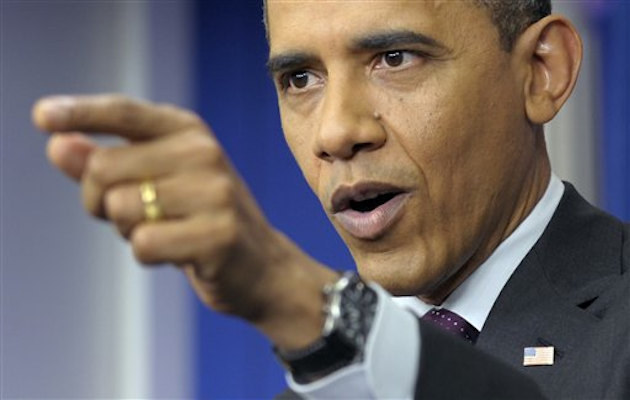
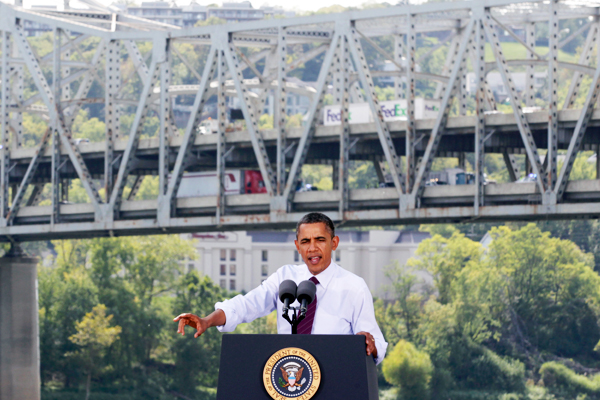
Obama's (Credit: AP)

To the extent that he ever believed much, if any, of his own soaring rhetoric about a transformative, post-partisan presidency during the 2008 campaign, President Obama would have to be judged a failure. Even after the election, his inaugural address called for “an end to the petty grievances and false promises, the recriminations and worn out dogmas that for far too long have strangled our politics.”

Was it really possible, I wondered, that Obama had mistaken the U.S. government for the Harvard Law Review, where the emollient balm of his personality persuaded rival factions to reason together? Did he actually believe that the political battles of the Clinton and Bush years could be laughed off as “the psychodrama of the Baby Boom generation,” easily transcended by an Ivy League raisonneur like him?

I’ve never thought any Chicago politician could possibly be so naive. Rather, Obama appeared to be an opportunistic shape-shifter like most successful candidates, enacting the pose of healer to set him apart first from Hillary Clinton, then Sen. John McCain — two figures hopelessly identified with the Washington trench warfare most Americans had grown heartily sick of. A fresh face, a proverbial outsider. “Mr. Hopey-Changey,” as an embittered Clinton supporter of my acquaintance called him.

So here we are, three years down the road. President Obama’s no longer a fresh face, Washington infighting has never been fiercer, nor Republican intransigence and recriminations any more bitter. “Predictions that Obama would usher in a new era of post-partisan consensus politics,” writes the New Yorker’s Ryan Lizza, “now seem not just naïve but delusional.”

Yet even as he’s disappointed liberals by yielding to GOP budgetary demands — extending the Bush tax cuts, and capitulating during last summer’s farcical debt limit hostage crisis — Republicans have responded by attacking him in ever more hysterical terms. Washington Post pecksniff George Will, who hosted a January 2009 dinner party introducing Obama to conservative pundits, now accuses the president of “Lenin-Socialism.”

The Post’s Charles Krauthammer reacted to Obama’s 2009 State of the Union speech by decrying “a shrunken presidency, thoroughly flummoxed by high unemployment, economic stagnation [and] crushing debt,” yet compared him a few sentences later to Mao Tse-Tung. This for the sin of calling for “equality and fairness.” You know, like the Sermon on the Mount.

Sometimes, you wonder what these boys are smoking. Whatever else you’d call Chairman Mao, you wouldn’t call him ineffectual.

If anything, Obama’s GOP political rivals have gone even further off the deep end. Mitt Romney has this passage in his stump speech where he all but accuses the president of being a communist.

“President Obama,” Romney insists, “believes that government should create equal outcomes. In an entitlement society, everyone receives the same or similar rewards, regardless of education, effort and willingness to take risk. That which is earned by some is redistributed to the others. And the only people who truly enjoy any real rewards are those who do the redistributing — the government.”

This when the multimillionaire Wall Street investment banker isn’t accusing hecklers of envying his wealth — rarely a successful political tactic, in my experience.

“This is nuts, Glenn Beck-level insane,” writes New York magazine’s Jonathan Chait. “Restoring Clinton-era taxes is not a plan to equalize outcomes, or even close. It’s not even a plan to stop rising inequality. Obama’s America will continue to be the most unequal society in the advanced world — only slightly less so.”

So is it possible that driving Republicans crazy is Obama’s deepest political strategy of all? His key to reelection in 2012? In Newsweek, Andrew Sullivan argues that’s precisely the case: that having inherited an economy in near-catastrophic free fall — losing jobs at a rate of 750,000 a month in early 2009 — problems he knew couldn’t be fixed overnight, President Obama has been playing a “long game” all along.

That is, thinking in terms of eight years rather than four, and employing a Zen-like strategy that makes him appear to the untrained eye incapable of defending himself. Time and again, Sullivan tells us “the president begins by extending a hand to his opponents; when they respond by raising a fist, he demonstrates that they are the source of the problem; then, finally, he moves to his preferred position of moderate liberalism and fights for it without being effectively tarred as an ideologue or a divider.”

Fair enough. But this isn’t the genius-level strategy of a political savant; it’s how a good poker player thinks. Play the cards you’re dealt, not the ones you wish you had. One hand at a time. To anybody not hypnotized by the Hopey-Changey business, President Obama’s never been anything else: a pragmatic mainstream Democrat, more Bill Clinton than, say, Dennis Kucinich.

As for Republicans, the Bush administration’s epic failures confronted them with two options: fold or double-down on ideology.

Most simply pushed all their chips onto the table.

Newt’s no-win political appeal

The neo-Confederate wing of the GOP cares more about humiliating Obama than about beating him in November

  • more
    • All Share Services

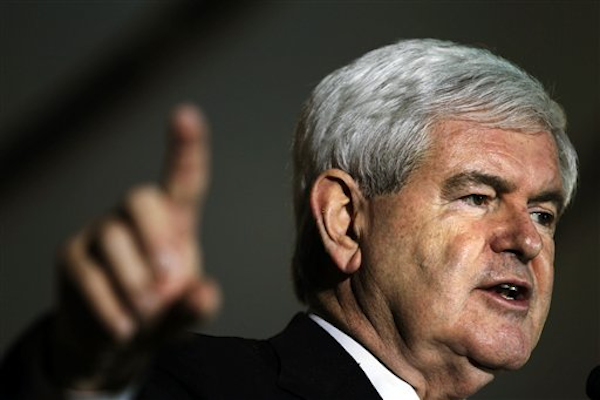
Newt's no-win political appeal (Credit: AP Photo/Matt Rourke)

Look, nobody’s third wife is going to be first lady. In the privacy of the voting booth, American women won’t stand for it. Regardless of how flawlessly the bejeweled Callista enacts the role of pious matron, she remains the embodiment of the Trophy Wife — younger, more adoring, unencumbered by children, a climber on the make. In effect, a successful Monica Lewinsky, although unlike Bill Clinton’s paramour, Callista was no kid.

Even Ann Coulter knows that. Having placed an early bet on Mitt Romney, the GOP’s vestal virgin pronounced herself shocked to hear South Carolina Republicans accepting “Democratic” arguments excusing Newt Gingrich’s serial adultery. On “Fox & Friends,” Coulter said, “I promise you, if Mitt Romney or Rick Santorum had cheated on two wives — that we know, the ‘open marriage’ thing is the only thing he contests, we know he cheated on two wives — I wouldn’t support Mitt Romney.”

Ah, but there were deeper passions at play in South Carolina. So let’s switch metaphors. Judging by the whooping and hollering of the CNN debate audience, the GOP’s neo-Confederate wing wishes for nothing less than an electoral replay of Pickett’s charge — the doomed infantry attack at Gettysburg most historians believe marked the beginning of the end of the Civil War. A sizable proportion of South Carolinians have yearned for a rematch ever since.

And they don’t think they’re going to get it with Mitt Romney, a Yankee’s Yankee who goes around babbling passionless truisms like this gem unearthed from his standard stump speech by the National Review’s Mark Steyn:

“I believe in an America where millions of Americans believe in an America that’s the America millions of Americans believe in. That’s the America I love.”

Do what? (That’s Southern for what the hell?)

Romney’s not only a dead ringer for Sesame Street’s puppet anchorman Guy Smiley, but could probably have switched places with CNN’s John King without missing a beat. To Gingrich supporters, Steyn observes, he comes across as “a synthetic, stage-managed hollow man of no fixed beliefs.”

There’s little sign of anger in his personality. But then why would there be? The son of a failed candidate, Romney gives every indication of wanting to be president simply because, well, he deserves to be president.

To a GOP base bombarded with Manichaean propaganda depicting President Obama as a veritable antichrist, that may not be good enough. They don’t simply want to prevent Obama’s reelection. They want to see him obliterated, humiliated and shamed. Watching Gingrich verbally pummel Fox’s Juan Williams and CNN’s King — antagonists who, by definition, can’t fight back — sharpened their appetite to see him take on Obama.

Republican debate audiences that have boisterously cheered Texas’ use of the death penalty, booed a gay soldier serving in Iraq, hooted at Fox News’ Williams for asking about racially stereotyping food stamp recipients, and even applauded torture, appear to find Gingrich’s surliness and ill-concealed personal resentments a perfect match for their own. Newt’s ability to channel their anger resembles Richard M. Nixon’s, albeit without Nixon’s self-discipline.

Fox News’ Steve Doocy spoke for them all, predicting that, if nominated, “Newt is going to take off the head of the president” (lovely metaphor) in debates. Many actually believe that Newt’s a brilliant extemporaneous thinker like Rush Limbaugh, while Obama’s an affirmative action hire who’s helpless without his teleprompter.

Meanwhile, back in reality, the saner kinds of Republicans are running scared. The Washington Post’s George Will empathizes with GOP candidates who could find themselves “running next autumn with Gingrich — whose current approval rating nationally in a Jan. 12-14 Fox News and Opinion Dynamics poll was 27 percent favorable, 56 percent unfavorable — atop the ticket.”

The very decorous Ms. Coulter laments that “South Carolinians would rather have the emotional satisfaction of a snotty remark toward the president than to beat Obama in the fall.” The scholarly author of “Demonic: How the Liberal Mob Is Endangering America” explains that the GOP nominee can’t win over independent voters simply by calling the president bad names. Now she tells us.

Conservative talk show host Michael Medved cautions that “for swing voters and independents, Gingrich’s reference to ‘Obama’s secular-socialist machine’… may sound extreme and irresponsible; few of them would agree with his conclusion that the current president represents a greater threat to the nation than Nazism or Soviet communism.” He adds that “the current craving for an intense and impassioned candidate” would likely backfire in the general election.

You know things are crazy when Ann Coulter starts making sense. I think even the perception that Newt could get under Obama’s skin is badly mistaken. In a presidential debate, the guy sweating and glowering is the guy losing. The sorehead right, however, won’t believe it until they’ve lost the visceral confrontation they so crave.

In that sense, a Gingrich nomination could end up being very good for the country.

Continue Reading Close

Newspapers, “truth vigilantes” no more

The NYT's fact-checking question was absurd, but the real problem is that the press has lost its credibility

  • more
    • All Share Services

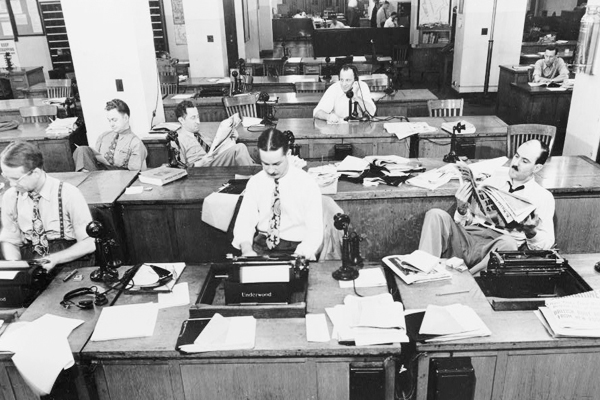
Newspapers, (Credit: Library of Congress/U.S. Farm Security Administration)

Time was when newspaper journalists prided themselves on being working stiffs: skeptical, cynical and worldly-wise. “If your mother says she loves you, check it out.” I’ve always preferred the unofficial motto of my native New Jersey: “Oh yeah, who says?”

Fact-check politicians? Here’s how H.L. Mencken saw things in 1924: “If any genuinely honest and altruistic politician had come to the surface in my time I’d have heard of him, for I have always frequented newspaper offices, and in a newspaper office the news of such a marvel would cause a dreadful tumult.”

Mencken could recall no such excitement. “The unanimous opinion of all the journalists that I know, excluding a few Liberals who are obviously somewhat balmy,” he added “… is that since the days of the national Thors and Wotans, no politician who was not out for himself, and himself alone, has ever drawn the breath of life in the United States.”

Alas, such attitudes went out of fashion with snap-brim fedoras, smoke-filled rooms and bottles of rye in desk drawers. Today’s national political reporters have attended fancy colleges, regard their professional affiliations as valuable status symbols, hence give every sign of identifying more with Washington courtiers and political professionals than the great unwashed.

To the extent they may share Mencken’s exuberant disdain for hoodwinker and hoodwinked alike, ambitious reporters are well-advised to keep it to themselves. As a career strategy, thoughtful circumspection is advised. The uphill path to a sinecure on “Meet the Press” must be trodden carefully.

Many readers, for example, can probably identify a name-brand journalist such as Judith Miller, who fell into disrepute for parroting Bush administration propaganda about Saddam Hussein’s WMD. But can you name anybody whose skeptical reporting made them famous? No, you cannot.

Columnists have more leeway, but even there it’s safer (and easier) to stick to anodyne topics such as dorky clothes, bad hair, which candidate resembles what character in “Pride and Prejudice,” and who mistreats his dog. To me, it’s significant that an honorable exception like Paul Krugman — my nominee for progressive MVP — is not a product of newsroom culture.

So now comes New York Times “public editor” Arthur Brisbane with maybe the most disingenuous question of the year: Should Times reporters be “truth vigilantes”? When politicians lie, should reporters call them out?

And if so, how?

Brisbane’s two columns on the subject drew widespread astonishment and hilarity from readers and journalists alike — partly because journalists love talking about ourselves as much as the average Hollywood starlet. They also drew a sharp rebuke from Times editor Jill Abramson, who insisted that the “kind of rigorous fact-checking and truth-testing you describe is a fundamental part of our job as journalists.”

Abramson gave instances of the newspaper supplying proper context for politicians’ statements such as Mitt Romney’s preposterous charge that President Obama wants “to replace our merit-based society with an entitlement society.” (Wink, wink. Nudge, nudge. Know what he means?) She said that the Times reported that “the largest entitlement programs — Social Security, Medicare, Medicaid — were all enacted before Mr. Obama entered grade school.”

Of course, that’s not what Romney’s really saying. Look, as somebody who spent more than a decade waging a quixotic war of words against the New York Times over its role in the Whitewater hoax, the subsequent “War on Gore,” and its shameful (and acknowledged) role in “catapulting the propaganda” that led the U.S. to invade Iraq, I have two observations.

First, the Times has rebounded since those dark days of 2003. Far less unmediated government propaganda and make-believe scandal characterizes its news columns. Abramson’s 2011 appointment as executive editor gives further reason for optimism.

Second, the answer to Brisbane’s real question — exactly how reporters are supposed to go about calling Mitt Romney a liar — has no good answer. Because the more forcefully it’s done, the more the GOP candidate’s apt to like it.

Take Romney’s oft-repeated charge that Obama goes around apologizing for America. The Washington Post’s Glenn Kessler did this one to a fare-thee-well, showing conclusively that the allegation is completely false — an absurd mix of misrepresented circumstances, doctored quotes, etc. And it took him 1,800 words.

And who read them? Certainly nobody who’d already swallowed the lie on Fox News, Rush Limbaugh or any of a hundred right-wing websites. So the Washington Post says it’s a lie. Well, they would, wouldn’t they? The Times agrees? Even better.

Romney’s not talking to reporters, but over and through them, seeking not nuanced news stories, but five-second video clips and TV ads. Reporters who ask confrontational questions can be ignored, or worse, made characters in the story. Well-paid operatives can make their editors’ lives miserable.

The uncomfortable truth is that no newspaper today has the power and moral authority the New York Times so thoughtlessly squandered, and it ain’t coming back. Obama will have to defend himself.

Continue Reading Close

Paul’s damning effect on foreign policy

His anti-Semitism-tinged opposition to an Iran war makes it easier for neocons to dismiss legitimate objections

  • more
    • All Share Services

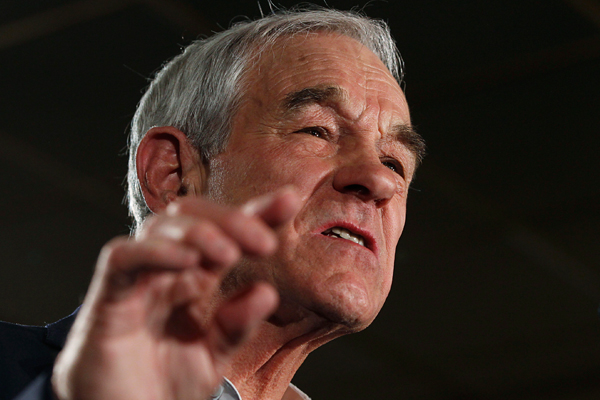
Paul's damning effect on foreign policyRon Paul (Credit: Reuters/Shannon Stapleton)

Hey, sailor, just how strange a political bedfellow have you got in mind?

That’s the question raised by the suggestion in certain quarters that the real progressive in the 2012 presidential contest may be Texas Rep. Ron Paul. Democrats who fail to acknowledge this brilliant insight are alleged to be either blinded by partisanship or actively in league with that warmonger and baby-killer President Obama.

The latest rationalization by Salon’s David Sirota involves distinguishing between the powers of the president as commander in chief and those requiring the cooperation of Congress. That President Paul would move to abolish Social Security and Medicare and repeal the Civil Rights Act of 1964 isn’t supposed to matter because he couldn’t do so unilaterally, while President Obama could presumably ignore the War Powers Act (as some allege he did in Libya) plunging the nation into war “with the stroke of a pen.”

Of course, so can any president. But hold that thought.

Meanwhile, anybody who questions the character and judgment of a politician who until fairly recently peddled “The Original Famous Ron Paul Survival Kit” in his eponymous newsletter isn’t playing fair.

How it worked was you sent them a check or money order in (doomed) U.S. currency, and they sent you a WWII Army ammo box filled with silver coins for “hand-to-hand” commerce after U.N. troops have seized control of the United States. Back when I was a lad, you could only get bargains like that from tiny ads in the back pages of DC Comics.

But I digress. Hasn’t the Great Man renounced the race baiting and conspiracy mongering in the newsletter he supposedly never read?

“Just kidding!” Paul said. You know, like a junior high school girl.

I’m like, whatever.

But at least one aspect of the pro-Paul argument is worth unpacking further if only to show why embracing his candidacy is such a terrible idea. I take Glenn Greenwald’s point that nobody ever gets exactly what they want in a political candidate. To anybody not completely blinded by partisanship, there are always tradeoffs to be made, tactical silences to be observed, and fools to be suffered, if not gladly, at least without rancor.

To me, at least, the futile and destructive Drug War is one such. It’s like Roaring Twenties all over again, only worse. Alas, no Democrat, and certainly no black or Latino Democrat, can afford to touch it. So Obama gets a pass.

Anybody who tries can probably come up with a dozen examples of his own. Sometimes, you’ve just got to hold your nose and vote.

But let’s talk war and peace, as Paul boosters insist.

Recently, I wrote about Paul’s apostasy regarding Iran. In a GOP debate, Paul aptly compared election-year bombast about the alleged Iranian nuclear threat to the 2003 propaganda campaign that drove the U.S. to invade Iraq.

“Even when he’s right, as on bombing Iran,” I wrote, “he’s wrong. (Hint: it’s about the Jews.)”

Numerous Paul loyalists angrily seconded the motion. “Have you ever questioned,” one wrote, “why Jews pop up in every major national swindle and tragedy:  9/11, TARP, Wall Street swindles, AIPAC, illegal wars, Goldman Sachs, The FED, ADAA, financial crises, etc?  It is not a real conspiracy because they are doing it in plain sight … I think you are either a traitor or just another dumb American.”

Nice, huh? While he’s often cagey about how he expresses it, Ron Paul’s whole history as a conspiracy theorist is right out of the “Protocols of the Elders of Zion” — the 19th century forgery that’s kept anti-Semites buzzing for generations.

Here’s a second thinker in the Paul tradition: “Zionists dominate many of the world’s centers of power, wealth, and media … plundering the wealth and assets of nations … depriving peoples of their freedoms and destroying their cultures and human values by spreading their nexus of corruption.”

Actually, that’s Iranian President Mahmoud Ahmadinejad, also a sometime Holocaust denier, in a speech at Tehran’s Sharif University in 2009.

Reader Mel Birge of Portland, Ore., argues that’s precisely why Paul makes such a terrible spokesman. Complaining of “sitting in synagogue for the last dozen years listening to pseudo Middle East experts give the same frantic talk about the danger of Iran nukes and how the U.S. must stop it,” he believes such a war “is no way in the United States’ interest.”

But he also thinks Paul’s “anti-Semitic paranoia allows AIPAC, the neocons and their fellow travelers to paint the entire Iran war opposition with the Ron Paul brush. That’s the danger of Ron Paul that you should speak of:  He snuffs out substantive discussions on Iran.  The media feasts on him and the neocons love it because he’s his own straw man.”

I think that’s exactly right.

However, Birge also wonders, “Where’s Obama saying, ‘I was elected on getting us out of Middle East wars. I’m not starting another’?”

Well, we’ll see, won’t we?

Continue Reading Close

Ron Paul, still loony

Even when the Texas congressman is right on an issue, it's for the wrong reasons

  • more
    • All Share Services

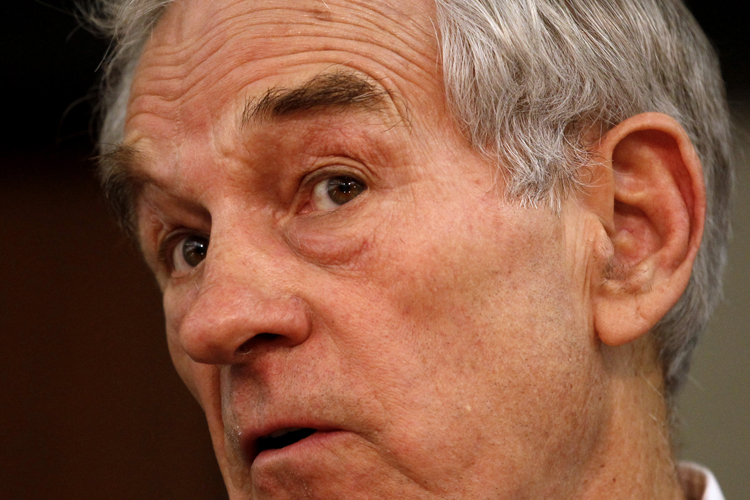
Ron Paul, still loonyU.S. Republican presidential candidate and Representative Ron Paul (Credit: Jeff Haynes / Reuters)

Revolution
Is the affair of logical lunatics.
The politics of emotion must appear
To be an intellectual structure. The cause
Creates a logic not to be distinguished
From lunacy…
– Wallace Stevens, “Esthetique du Mal”

Let’s start at the starting place. Rep. Ron Paul has no chance whatsoever of securing the Republican nomination, nor of being elected president under any imaginable circumstances. Ain’t gonna happen. Even Newt Gingrich has basically said he’d vote for President Obama over Paul. Given that Newt would probably back Vladimir Putin over Obama — robust foreign policy, after all — that’s definitely saying something.

So don’t tell me about Paul’s political courage. It’s easy to be a fearless iconoclast when nothing’s at stake. That said, it was heartening to hear the Texas congressman, during a Fox News-sponsored Iowa debate of all places, stress the similarities between the current “bomb Iran” chorus and the 2003 propaganda campaign that led the U.S. to invade Iraq. Paul dismissed as “absurd” Rick Santorum and Michele Bachmann’s assertions that the Iranian government’s “theology” would lead it to start a nuclear war for the sake of national martyrdom.

“To declare war on 1.2 billion Muslims and say all Muslims are the same, this is dangerous talk,” Paul added. “Yeah, there are some radicals. But they don’t come here to kill us because we’re free and prosperous. Do they go to Switzerland and Sweden? I mean, that’s absurd … The CIA has explained it to us. They said they come here and want to do us harm because we’re bombing them.”

Actually, Iran and al-Qaida are bitter enemies. Otherwise, Paul’s on target. He also pointed out that the U.S. and Iran haven’t been at war since 1979, as Santorum asserted, but since 1953, when a CIA-sponsored coup overthrew Iran’s elected government and installed the corrupt, dictatorial Shah. For all the current regime’s brutality, that historical grievance is why attacking Iran would only strengthen the Ayatollahs.

It’s precisely such interludes that have led luminaries like Bachmann, Rush Limbaugh and the New Hampshire Union-Leader to declare Paul a dangerous heretic. A bit more surprising is his fan base on the left. “I have big problems w/ Ron Paul on many issues,” tweeted the Nation’s Katrina vanden Heuvel. “But on ending preemptive wars & on challenging bipartisan elite consensus on FP, good he’s in.”

Salon’s Glenn Greenwald went much further. Paul’s “nomination,” he wrote, “would mean that it is the Republican candidate — not the Democrat — who would be the anti-war, pro-due-process, pro-transparency, anti-Fed, anti-Wall-Street-bailout, anti-Drug-War advocate (which is why some neocons are expressly arguing they’d vote for Obama over Paul). Is it really hard to see why Democrats hate his candidacy and anyone who touts its benefits?”

Oh please. In as much as Paul’s nomination would also be preceded by signs, portents, graveyards yielding up their dead and lions whelping in the streets, hating him would be rather a waste of energy.

In the meantime, Talking Points Memo overheard candidate Paul warning the citizens of Sioux Center, Iowa, that land use regulations could lead to dictatorship.

“I’m fearful,” he said “because some people would like us to go all the way to the U.N. and have the U.N. controlling our lands, too.”

Black helicopters, anyone? Exactly who these “some people” might be, Paul didn’t say. Of course, some people think space aliens monitor their thoughts through fillings in their teeth. Some people even believe that the U.S. government has installed chemical tracking agents in $100 bills.

Oops, actually that was Dr. Paul himself. A 1993 promotional letter for the militia-friendly “Ron Paul Newsletter,” published the last time a Democratic president provoked apocalyptic fears among Moron-Americans, helpfully explained: “The totalitarian bills were tinted pink and blue and brown, and blighted with holograms, diffraction gratings, metal and plastic threads, and chemical alarms. It was a portable inquisition, a paper ‘third degree,’ to allow the feds to keep track of American cash, and American citizens.”

Send that tainted cash straight to Ron Paul. He’d know what to do with it. Today, of course, the candidate says he neither wrote nor read any of the crackpot ravings in the Ron Paul Newsletter. Not the stuff about how Martin Luther King was a pedophile, how Israeli agents bombed the World Trade Center, about the coming American race-war, or the “federal-homosexual cover-up on AIDS,” none of it.

Even “The Original Famous Ron Paul Survival Kit,” an official World War II U.S. Army ammo holder filled “with highly liquid, small-denomination silver and gold coins for hand-to-hand use,” was supposedly news to Ron Paul.

Sure it was. How could anybody doubt him?

Look, this guy’s no more a Libertarian than I’m a Rastafarian. Even when he’s right, as on bombing Iran, he’s wrong. (Hint: It’s about the Jews.) What he’s got against the federal government is the Civil Rights Act of 1964.

Anyway, call me old-fashioned, but sanity matters.

Continue Reading Close

The real problem in Iowa

The issue isn't the indecisiveness of the caucus voters. It's the terrible GOP field

  • more
    • All Share Services

The real problem in Iowa (Credit: AP Photo/Rainier Ehrhardt)

Pardon me if I fail to join the crowd handicapping next week’s Iowa GOP caucuses like race track touts peddling betting tips on the Kentucky Derby.

To begin with, I have no clue. Except on the sports page, I normally skip articles speculating about what might happen tomorrow. Damned if I’m going to start writing them.

Also, who cares? History teaches that Iowa Republicans have a particularly poor record of supporting the eventual presidential winner. In six contested GOP primaries dating back to 1976, Iowans have gotten it right exactly once. They chose George W. Bush in 2000 — definitely nothing to brag about.

In essence, the Iowa caucuses amount to a marketing device for cable TV news channels; it’s “American Idol” for the politically obsessed. Their secondary function is to introduce cosmopolitan news correspondents to the homespun wisdom of Real Americans in places like Ankeny, Iowa, a Des Moines suburb where John Deere tractors are manufactured.

A Washington Post reporter found a grandmother there he thought epitomized Iowa voters’ inability to make up their minds. First, she liked Texas Gov. Rick Perry on account of his advertised piety. Then she watched Perry’s hilarious impersonation of a stoned cowboy during the umpty-seven GOP debates, and switched to The Girl With the Faraway Eyes, as Esquire’s Charles Pierce calls her, also due to her religiosity.

Alas, Michele Bachmann “has kind of an annoying voice,” so grandma changed to Newt for a few days before seeing a TV report of U.S. troops pulling out of Iraq, taking no casualties as they went. God, she believed, had protected them in spite of gay marriage, abortion, consumerism and greed. And if God hadn’t given up on America, how could she? So she dropped “the smart one” (Newt) in favor of the holiest candidate of all.

“It was just this big epiphany,” she said. “We’ve got to vote for Santorum! That’s all there is to it.”

If Santorum’s lucky, his newest supporter won’t learn that he has bitterly criticized President Obama on the grounds that very far from following God’s plan, by leaving Iraq the U.S. has “lost the war.” He’s also keen on attacking Iran, a nearby country several times larger than Iraq.

Anyway, who knows? Maybe the nice lady in Ankeny — whose vote counts every bit as much as yours, mine and Lady Gaga’s — would be down with that, although in my experience it’s the rare grandmother who’s enthused about preemptive bombing strikes.

Besides, what’s alarming about the GOP contest isn’t the indecisiveness or poor reasoning processes of Iowa voters. It’s the dismal quality of the choices they’re offered. Is this the best that one of America’s two major political parties can do? You’ve got to wonder what would happen if they put “None of the Above” on the ballot.

With the possible exception of Mitt Romney, there’s not one among them you’d hire to run a WalMart — a difficult job requiring mastery of a million details and an ability to manage people. Of course, if you did hire Romney, you might wake up to find he’d fired all the employees, spun off the grocery operation, and sold the building to Dollar General for a fraction of its value and a player to be named later.

Even the former Massachusetts governor appears only intermittently in touch with the visible world. Recently he described himself as an advocate of “the opportunity society” and his putative opponent as follows: “President Obama believes that government should create equal outcomes. In an entitlement society, everyone receives the same or similar rewards, regardless of education, effort and willingness to take risk. That which is earned by some is redistributed to the others. And the only people who truly enjoy any real rewards are those who do the redistributing — the government.”

In short, Obama’s a communist. And the evidence for this preposterous claim? Certainly nothing the president has ever said or done. Obama favors a return to Clinton-era tax rates, a time of balanced budgets and growing prosperity. A multimillionaire like Romney would find his marginal tax rate on income over $1 million had risen from 35 to 39.6 percent. I believe he can afford it. True, Obama’s healthcare reform is mildly redistributive, but then so is Romney’s Massachusetts insurance plan it so closely resembles.

For that matter, Social Security’s mildly progressive too. But then candidate Romney wants to privatize that. And, oh yeah, bomb Iran. Or he pretends to believe these things, anyway, and none too convincingly. Hence, the confusion we observe.

The GOP’s larger problem is that following upon the 2008 financial crisis, Barack Obama’s election stunned and frightened a significant fraction of the GOP base. Psychologists call it “projection,” the habit of attributing one’s own darkest motives and fears to others. Rather than govern, Republican leaders went with it.

This dreadful spectacle is exactly what they deserve.

Continue Reading Close

Page 2 of 29 in Gene Lyons