“Hatfields & McCoys”: No heroes, no humor
Kevin Costner and the entire three-part mini-series are too self-serious for any post-"Deadwood" Western
Bill Paxton in "Hatfields & McCoys" The Hatfields and McCoys — two rival clans who ruthlessly and needlessly slaughtered each other in the decades following the Civil War — are infamous for being vengeful, wasteful and murderous. The internecine conflict they waged began in earnest with a dispute about a pig and went on to consume dozens of lives for no reason but bullheaded family honor. The sheer scale and meaninglessness of their fight makes it ripe source material for a revisionist Western in which the good guys don’t wear white because there are no good guys. (Though given the stylistic ultra-grime currently en vogue, in which costume designers seem to be trying to make the audience smell something, white is also in short supply these days.)
The History Channel’s “Hatfields & McCoys,” a painstakingly detailed, mind-numbing, three-part mini-series about the feud, stars Kevin Costner as Anse Hatfield of the West Virginia Hatfields and Bill Paxton as Randolph McCoy of the Kentucky McCoys, the two unyielding patriarchs of the warring families. “Hatfields & McCoys” is a sort-of enervated “Deadwood” (one of the writers, Ted Mann, worked on “Deadwood”). It’s got law and lawlessness duking it out against a backdrop of grime, guts and gravelly voices, but this is all served up humorlessly and laden with self-seriousness. In this telling, there are no heroes and, ultimately, no justice, but the whole sordid saga gets lightly burnished by its epic treatment, anyway. The story of the Hatfields and McCoys is as profligate and petty as it was bloody, but a handsome three-part mini-series starring Kevin Costner that carefully, ploddingly catalogs each and every murder inadvertently makes meaning where there are only bodies.
In this version of the feud, Anse and Randolph fought together for the South in the Civil War. Randolph saved Anse’s life, and Anse bravely saved their unit before deserting, an act that earns him the forever enmity of his former friend. It is McCoy’s rigid hatred that fuels the fight that follows, even though it is the death of his brother at the hands of an unhinged Hatfield (a grizzled Tom Berenger in the equivalent of the Joe Pesci part in “Goodfellas”) that precipitates the conflict. Paxton has a beard and a nasty haircut, and his Randolph McCoy is unforgiving, unyielding and righteous. Unlike the Hatfields, McCoy wants to have the law and God on his side — but seemingly to justify doing lawless, godless things. As the feud is escalating, his three sons unwarrantedly stab a Hatfield to death. In retribution, the Hatfields round up the killers and execute them. McCoy hires bounty hunters, enraged that the Hatfields didn’t allow his sons to be prosecuted in a court of law, but seemingly indifferent to the fact that they are murderers. He thinks he is in the right, and so he believes he can continue overseeing wrong.
In comparison, Costner’s Anse, who smiles a grand total of two times in this largely smile-free production, seems likeable. The title of the movie is a little misleading, there are both Hatfields and McCoys in it, but the Hatfields get the better edit. Yes, the Hatfields seem to be far more effective killers than the McCoys, but Anse holds no grudge against Randolph — after the war, he tries to make nice — and he operates according to the relatively untortured “if you kill a member of my family, you should be killed in return” motive. Anse forgives his traitor son Johnse (Matt Barr) for falling in love with a McCoy, while Randolph will not forgive his traitor daughter Roseanna for falling in love with a Hatfield. (This storyline, the Romeo and Juliet portion of the Hatfield-McCoy feud, seems dropped in from The CW’s TV movie on the same subject, endlessly showcasing Barr without his shirt on.) Anse’s tragic flaw is an unwillingness to turn the other cheek. Randolph’s tragic flaw is to believe in his own rectitude. One guy is a brawler, the other a lecturer. They may be equally wrong, but they are not equally good company.
Watching Costner be mildly likeable despite his best efforts to be merely gruff and tortured, I was reminded that the ideal Kevin Costner, the guy who was a movie star, was willing to make a joke. Ever since he won an Oscar for “Dances with Wolves” and was overly rewarded for taking himself way too seriously, Costner has all but disavowed the humor that popped up in his best performances (or at least in “Bull Durham’s” Crash Davis) in favor of something more macho and steely, forgoing the laid-back everyman who rises to the occasion to play the guy who lives by his guns. But even guys with guns can throw in a wry line or two, and “Hatfields & McCoys” could use some levity. (To be fair to Costner, that’s more on the writers than the actors. “Hatfields & McCoys” has an almost entirely joke-free script. In this post-“Deadwood” age, I’m flummoxed that humor could still be considered antithetical to heady, dirty, violent period dramas dealing with American lawlessness.)
Speaking of levity, perhaps our nation’s most beloved class clown once had a run-in with the Hatfields and McCoys. About halfway through “The Adventures of Huckleberry Finn,” Huck finds himself in the middle of a bitter, nonsensical feud between the Grangerfords and Shepherdsons that closely resembles the one between the Hatfields and McCoys. At one point Huck, who is trying to get back on the river, hides in a tree while some Sheperdsons kill two Grangerford boys, one of whom Huck knows. “The boys jumped for the river — both of them hurt — and as they swum down the current, the men run along the bank shooting at them and singing out, “kill them, kill them!” Huck says. “It made me so sick I most fell out of the tree. I ain’t a-going to tell ALL that happened – it would make me sick again if I was to do that. I wished I hadn’t ever come ashore that night to see such things. I ain’t ever going to get shut of them — lots of times I dream about them.” As violent and detail-oriented as “Hatfields & McCoys” is, there’s not one scene as horrifying as the image of grown men singing out “kill them, kill them” while shooting at helpless teenagers, but, be warned, it’s not for lack of trying.
Ernest Hemingway made silly
HBO's unintentionally hilarious "Hemingway & Gellhorn" gets everything disastrously wrong
Nicole Kidman and Clive Owen in "Hemingway & Gellhorn" Here’s something you should consider doing before watching HBO’s inadvertent comedy “Hemingway & Gellhorn,” a disastrous two-and-a-half-hour CliffsNotes on the passionate, dysfunctional love affair between Ernest Hemingway (Clive Owen) and his third wife, the war correspondent Martha Gellhorn (Nicole Kidman), which airs Monday night. Find some Hemingway — take it off the shelf, download it to a Kindle, load a page of “The Sun Also Rises” onto your computer via Google books — and leave it within arm’s reach. You are going to want to read from it at fairly regular intervals to remind yourself that though he may have been a drunk, a brute and a womanizer, Ernest Hemingway was not a complete and total idiot. And then you can also use it to shield your eyes from the movie’s myriad crimes against sepia, its extensive use of what appear to be Instagram photo effects, the hot pink blood, Metallica’s Lars Ulrich in a beret, and the scene toward the end of the film in which Kidman’s face is superimposed over real footage of emaciated bodies at Auschwitz and Dachau.
Continue Reading Close“American Idol”: Riveting despite itself
We all knew Phillip Phillips would win. Yes, the judges are nuts. So why did I feel real emotion anyway?
The final episode of any season of “American Idol” is always a smiling show of force, a confetti-laden massacre of time. After a nearly 40-episode season, along comes the gargantuan finale, an enormous spectacle that contains exactly one minute of real content — when the winners are announced — and two-plus hours of filler. Last night’s episode was nominally about who would be declared the winner of the 11thseason of “Idol” — Phillip Phillips, the humorously named yet handsome guitarist with a twang in his voice and shirts cut to display exactly the appropriate sliver of chest hair, or the huge-voiced, personality-less 16-year old Jessica Sanchez. But sleepily good-looking white guys (and Scotty McCreery) have won the last four seasons of “Idol,” and Phillips was pretty much a lock before the night even began. And so it is a commendation to the near-military professionalism of “Idol” that somehow, for the last half-hour or so, I was riveted to the screen.
Continue Reading CloseMore sex and disasters, please
TV season finales used to be about crazy couplings and exciting explosions. Where did the fun go?
Gabriel Mann and Emily VanCamp in "Revenge" There are a few times of year when network television can typically be relied upon to be as interesting as cable: The fall, when the networks vomit out dozens of new programs; February, when the networks cough up a dozen or so more; and May, when all the series that have survived the year try to end in spectacular fashion. During this last period, season-finale time, couples couple, get married and have babies; characters quit, get fired and die; disasters occur; buildings explode; guns blaze; hatches are discovered and protagonists are left dangling off cliffs, both actual and metaphorical. It’s the TV equivalent of blockbuster season, and like blockbuster season, it can and should be fun. Though in recent years cable shows have been responsible for a disproportionate number of the “Holy crap, did that just happen?!” finales (hello, Gus Fring and his brand-new face!), network shows are usually good for at least some insanity, some drama, some transcendent event that will get people talking around the storied watercooler. Not this year. Nope, this year, season finale season has been a bust.
Continue Reading CloseWhat’s “Community” without Dan Harmon?
Less ambitious shows might survive losing a creator. But firing the prickly showrunner bodes poorly for next season
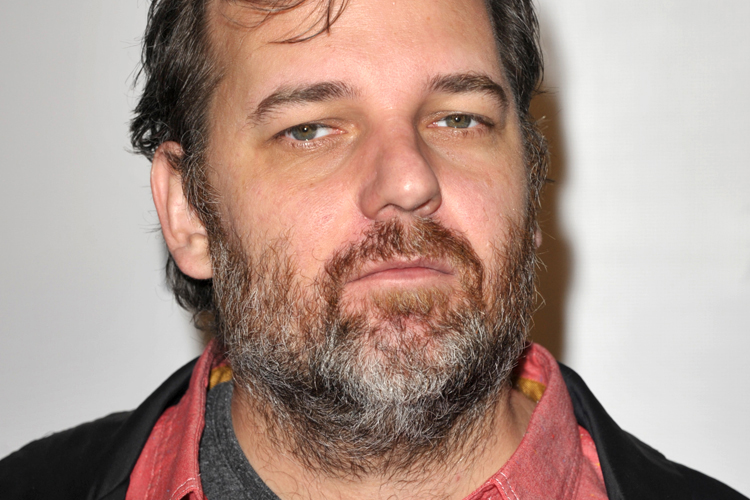
Dan Harmon (Credit: AP/Matt Sayles) A recent episode of NBC’s “Community” floated the possibility — debunked by episode’s end — that the seven main characters had not spent the previous three years navigating life, each other and paintball fights at Greendale Community College, but instead, had only been imagining them. In the episode, the recently expelled Greendale Seven found themselves in a group therapy session with a nefarious shrink, keen to keep them away from their college using any psychological means necessary. The therapist temporarily convinced them they had spent the previous years in a mental institution and that everything they remembered happening at school, except their friendship, had been a collective fantasy, a “shared psychosis” dreamed up in the asylum.
Continue Reading CloseTV’s coming attractions
The fall brings shows from Dane Cook, Matthew Perry and Kevin Bacon. Is there anything new to look forward to?
Connie Britton in "Nashville" The four major networks, ABC, CBS, NBC and Fox, trotted out their new fall shows this week. All of next season’s new comedies, dramas and reality shows, the vast majority of which will be flops, got shiny trailers, two to three minutes culled from the first episode of the series, which is, for now, the only episode that exists. These trailers were made to entice advertisers into parting with some of their money, but they are also an occasion for TV obsessives to behave like fashion police, i.e., to make rash, bitchy, wildly subjective judgments based on very little information. I love this week so much.
Continue Reading ClosePage 1 of 9 in Willa Paskin