Spring Sale: Get 1 Year, Save 58%

Are anti-mandate protests now a menace to society?

Nationwide rallies against masks and vaccine mandates reemerged over the weekend in full force, with one Republican candidate for office in Pennsylvania threatening to bring “20 strong men” into school board meetings to protest for their children to be able to attend school maskless. 

“Forget going into these school boards with freaking data. You go into these school boards to remove them,” Steve Lynch, a GOP candidate for the Northampton government, told a crowd gathered outside the Harrisburg Capitol in Pennsylvania on Sunday. “I’m going in with 20 strong men and I’m gonna give them an option – they can leave or they can be removed.”

Lynch made headlines back in February, when the GOP candidate first launched his campaign. An ardent supporter of Donald Trump, Lynch believes the election was stolen from the former president, and is vehemently against COVID-19 health precautions, which have largely fueled his candidacy as a political newcomer. 


Want a daily wrap-up of all the news and commentary Salon has to offer? Subscribe to our morning newsletter, Crash Course.


“This past year, we have seen our businesses, our families and our communities upended and destroyed by the Wuhan virus along with the tyrannical government that starts right at the top with Gov. Wolf and permeates through weak elected officials at Northampton County,” Lynch told The Morning Call.

Harrisburg’s protest this past week, reported on by Freedom News TV, is just the latest to come in a nationwide string of anti-mandate protests over the past several months. 

Last week, a Louisiana state school board meeting descended into bedlam when a throng of anti-mandate parents and protesters interrupted a meeting in the state Capitol to speak out against Democratic Gov. John Bel Edwards’ recent COVID-19 mask mandate in schools, the Daily Advertiser reported.  

Some of the 200 protesters screamed words like “traitors” and chanted, “We will not comply, we will not comply.”

The nation has seen countless interventions just like this in cities such as Kenosha, Wisconsin; Bristol, Connecticut; Spokane Valley, Washington; and Annapolis, Maryland – some of which have erupted into shouting matches and even violence. Earlier this month, in Williamson County, Tennessee, healthcare professors were surrounded and yelled at by an angry mob of anti-mask protesters after a school board meeting.

Mass demonstrations are also being held outside of various state Capitol buildings, where thousands throughout the country have publicly gathered to call out what they feel is America’s slide toward authoritarianism. In Minnesota this past weekend, over 2,000 anti-mandate protesters assembled outside of the State Capitol, chanting slogans like, “my body, my choice” and holding up signs that read “Stop the Mandates.”

Even though the state’s mask mandate was pulled back in May, the demonstrators railed against numerous public health precautions, including the use of so-called vaccine passports, according to The Star Tribune. That same day, hundreds gathered outside of Connecticut’s capitol building in the same spirit, expressing vehement opposition to mask mandates in schools. 

“We want to see the end of mask mandates for children in Connecticut regardless of vaccination status,” anti-mask activist Jonathan Johnson told The Hartford Courant. “We need to give parents choices for their children regarding any medical treatments and/or medical devices, including the use of masks or vaccines.”


Want a daily wrap-up of all the news and commentary Salon has to offer? Subscribe to our morning newsletter, Crash Course.


Last week, Connecticut’s Democratic Gov. Ned Lamont – who recently imposed a mask mandate until September 30 – had to be escorted from a back-to-school event in Cheshire when parents barged into a meeting to protest his enactment of COVID-19 health precautions.

The acting director of the St. Louis County Department of Public Health alleged that he was verbally and physically assaulted at a recent City Council meeting after encouraging the council’s members to enact a mask mandate. Dr. Faisal Khan said that members of the crowd mocked with impressions of “Simpsons” regular Apu – a character whose stereotypical portrayal of Indians was an element of the show that voice actor Hank Azaria recently apologized for.  As he was attempting to leave the chamber, Khan said he was “confronted” and “surrounded” by a “crowd in close quarters” and called a “fat brown cunt” and a “brown bastard.”

“I have worked to improve public health around the world, working in Australia, Vietnam, Pakistan, South Africa, the People’s Republic of China, Zimbabwe, Botswana and the United States (West Virginia, Massachusetts and Missouri),” Dr. Faisal Khan wrote in a Wednesday letter to the council’s chairwoman. “In all that time and in all those places,” he continued, “I have never been subjected to the racist, xenophobic, and threatening behavior that greeted me in the County Council meeting last night.”

How to peel an apple in 3 seconds

Apple peeling isn’t the most difficult kitchen task, but why not make it faster and easier if you can? When Thanksgiving is around the corner and you’re trying to peel apples for stuffingpies, and even a beautiful roast turkey, it can become a monotonous, time-consuming task and frankly, who has the time? A few years ago, Food52 co-founder Merrill Stubbs and Creative Director of Genius Kristen Miglore shared their favorite way to peel an apple and I haven’t gotten over it. Now you can peel pounds and pounds of apples (and put them to good use in apple pie, cobblers, crisps, and sauces) in no time. 

In the romantic-comedy “Sleepless in Seattle” by the late, great Nora Ephron, Sam Baldwin (played by the great Tom Hanks) chats with Dr. Marcia Fieldstone about how his wife used to be able to peel an apple in one long strip. From the first time I watched the movie, I felt that being able to peel an apple was the ultimate way to be the perfect partner. I have failed to ever successfully do so, but this has stuck in mind as the ultimate food prep challenge. And when dependable y-shaped vegetable peelers and paring knives have failed, there’s always a power drill.

Wait, what? A power drill? Trust me, dear reader. After watching this video from our founding editors — and some trial and error — we’ve found that a power drill moonlights beautifully as a quick and easy, albeit messy, way to peel a bushel of apples after you’ve gone apple picking (though we were less successful with other produce). Here’s how to use a power drill to peel an apple in just a few seconds:

Tools you need to peel an apple 

  1. Any fully-charged electric drill
  2. A flat drill bit, glass bit, or any bit that has a flat end (We used a Phillips-head, but a flat-head will offer more torque and apple peeling success.)
  3. A very sharp vegetable peeler
  4. A peck — or bushel — of apples (go ahead — go crazy)
  5. Safety goggles (Not really, but we wouldn’t have turned down a pair if they were available.)

How to peel an apple with a drill 

To peel an apple using a power drill, start by assembling the drill just as you would use it for building a bookcase or hanging a picture. Secure the drill bit in the drill. Next, keeping your fingers out of the way, skewer the apple onto the flat drill bit. Point the drill into the sink or a compost bin — the apple peels are going to fly unless you’re a professional at this, in which case you probably don’t need this article. Lean the vegetable peeler onto the apple at the base closest to the drill, just hard enough to make an indent in the fruit but not quite cut into it, then increase the speed of the drill so that the apple moves away from the peeler. This may be a little rough the first time, but after the first few apples, you’ll get the hang of things. With the drill bit going, move the peeler down the apple until the skin is completely off. Repeat to your heart’s content (or until all of the apples that you picked at the orchard are peeled).

 Our favorite vegetable peeler

Oh, so you’re not into power tools? We get it. If you want to use a regular vegetable peeler to peel an apple, might we suggest these Y-shaped silicone peelers from our shop? They peel produce so much faster than vertical-shaped peelers and will help you peel your stash in a breeze.

Once you remove the peels, you can cook with the apples whole or place them on a cutting board and use a paring knife to cut the apples into wedges or a small dice. Use an apple corer (another nifty tool that you most likely won’t find in the hardware store) to remove the core from the top of the apple. 

Can you use a power drill to peel other produce? 

When we tried this with other vegetables, we didn’t have nearly as much luck: This tip doesn’t work with stone fruits because the drill bit can’t go through the pit. Potatoes were too heavy and made a run for it as soon as we pressed “on,” and while the cucumberszucchini, and tomatoes all had great starting potential, the nightshades weren’t dense enough to stay on the bit. But apples, on the other hand, worked like a dream. We’ve also heard this works well for lemon zest with the proper machinery. Stay tuned for that test. 

Hurricanes and COVID: Republicans’ hostility to science causes existential emergencies to collide

It is an understatement to say there is a lot going on right now. The two biggest stories over the weekend were the winding up of the dangerous airlift out of Afghanistan and the arrival of an epic hurricane hitting the Gulf Coast on the anniversary of Hurricane Katrina.

Now is a dangerous time —  but judging from the news coverage, I don’t think we’ve fully grasped just how much danger Americans are actually in.

In a number of states, this latest COVID-19 surge, driven by the lethal Delta variant, has now surpassed the deadly surge of last winter. In two hard-hit states, the massive hurricane is coinciding with an equally massive surge in hospitalizations, making for an extremely volatile situation.

According to LAIlluminator, which covers Louisiana state and local government, hospitals have been at capacity for weeks, as have all the other hospitals throughout the region, causing the authorities to make the frightening decision not to evacuate patients. There was nowhere for them to go. Temporary shelters had to be kept at lower numbers because of the COVID risk and nursing homes residents who would normally be transferred to hospitals due to serious medical conditions were told to shelter in place.

The Illuminator reports that while Louisiana has had a rough go with this round of COVID, it was thought to be turning the corner last week. On Friday COVID hospitalization was below 2,700. That is 300 fewer than the week before but the positivity rate is still very high and people not able to follow precautions during the emergency will cause more of the virus to circulate, likely leading to another surge. Nobody knows what will happen to the inevitable victims of injuries and accidents in the aftermath.

Louisiana’s Democratic governor, John Bel Edwards, reintroduced an indoor mask mandate weeks ago and has been exhorting people to get vaccinated but many of his rural constituents have refused to comply. The state has only a 40% vaccination rate, much lower than the national average. Like many others, they managed to get most elderly patients the shot, but younger folks just haven’t seen the need. The cultural and political pressure among Republicans in the state to defy the health professionals, and their Democratic governor, is enormous.

The Mississippi coast took a battering from the hurricane as well, but its COVID surge is far more life-threatening to many more people in the state. The New York Times reported that Mississippi was “uniquely unprepared” for this latest onslaught of COVID patients:

The state has fewer active physicians per capita than any other. Five rural hospitals have closed in the past decade, and 35 more are at imminent risk of closing, according to an assessment from a nonprofit health care quality agency. There are 2,000 fewer nurses in Mississippi today than there were at the beginning of the year, according to the state hospital association.

The Times characterizes this as a combination of “poverty and politics” but really, it’s just politics — that’s what’s at the heart of the poverty and everything else.


Want a daily wrap-up of all the news and commentary Salon has to offer? Subscribe to our morning newsletter, Crash Course.


The state is never very generous when it comes to benefits, which they tend to see as going to “the wrong people” (if you know what I mean). But by rejecting the Medicaid expansion that came with the Affordable Care Act, they willfully deprived themselves of the money that would have allowed them to alleviate many of the current deficiencies in their system. And Mississippi’s Republican governor has basically given up, the Mississippi Free Press reports:

After Mississippi became the world’s No. 1 hotspot for COVID-19, Gov. Tate Reeves told attendees at a Republican Party fundraiser in Memphis, Tenn., on Thursday, Aug. 26, 2021, that Mississippians “are a little less scared” of COVID-19 than other Americans because most share Christian beliefs (about 70% of all Americans identify as Christian).

“When you believe in eternal life—when you believe that living on this earth is but a blip on the screen, then you don’t have to be so scared of things,” Bill Dries reported the governor saying in the Daily Memphian.

I’m no Biblical scholar but I do seem to recall something about the Lord helping those who help themselves.

This summer’s Delta surge has hit all the states but has been particularly virulent in the Southern states, the epicenter of anti-vax activity.

And yes, there are a number of reasons why people haven’t gotten vaccinated in the last few months when they’ve been (mostly) easily accessible, free and very effective. Many young people erroneously believe they aren’t in danger of serious illness and some people of color are just generally leery of government edicts to take vaccines because of America’s woeful history of using those populations for experimentation. But the largest cohort of people who are winding up in the hospital are those who are refusing for irrational political reasons. The vast majority of deaths could have been avoided if the victims had gotten vaccinated.

And just as they did during the first surges, they are not only adamantly against vaccine mandates, they are protesting all mitigation measures such as requiring masks in schools despite the fact that children under 12 are unable to be vaccinated so there is also a surge of kids getting sick and being hospitalized. And following their leader, Donald Trump, they are still perversely willing to take dangerous, untried snake oil cures while refusing to take the vaccine which has been received by hundreds of millions of people all over the globe with only minor side effects.


Want a daily wrap-up of all the news and commentary Salon has to offer? Subscribe to our morning newsletter, Crash Course.


Even the COVID deaths of a spate of high-profile anti-mask protesters and flamboyantly anti-vax right-wing media stars don’t seem to have changed the minds of the hardest core, true believers. It seems that the only time any of them change their minds is when they are on their own deathbeds and it’s too late.

There have been millions of words written about the American right-wing’s hostility to science over many decades. Cynical politicians in the pockets of wealthy interests have worked hard to exploit it. But this weekend has illustrated both the long and short-term threat of this insensate attitude. The ongoing rejection of the dangers of climate change and the resulting warming of ocean waters is fueling the new devastating pattern of monster storms that we are seeing more and more often. The hostility to public health measures and life-saving vaccines during this pandemic has extended this crisis to the point that we are now endangering children and killing thousands of people who didn’t have to die.

In the states along the Gulf of Mexico this weekend two existential emergencies collided and it didn’t have to happen. It’s terrifying to contemplate but unless we are able to figure out a way to change the hearts and minds of the rigid and stubborn minority of science deniers in this country, this is just the beginning. 

Laurence Tribe: If Garland doesn’t prosecute Trump, the rule of law is “out the window”

If American democracy were a hospital patient, the diagnosis would be “critical”. The Jim Crow Republican Party and larger neofascist movement are escalating their war on democracy by passing laws across the country designed to stop Black and brown people from voting. A new report from the Brennan Center details this:

After the 2010 elections, for the first time since the peak of the Jim Crow era, states across the country began to enact laws making it more difficult to vote. This wave of voter suppression was intertwined with race and the nation’s changing racial demographics and was, at least in part, a backlash against rising turnout among communities of color contributing to the election of the nation’s first Black president. Efforts to suppress the votes of communities of color accelerated in 2013, when the Supreme Court gutted a key part of the Voting Rights Act in Shelby County v. Holder. In the eight years since, and especially in 2020, these trends continued.

Fascist violence continues unabated. In Portland, Oregon, last weekend right-wing street thugs attacked people they believed to be anti-fascists. The violence included a gun battle in downtown Portland. Police did not intervene, which is not entirely surprising given that America’s police have long supported fascists and other right-wing extremists.

And let’s not forget — as so many in the mainstream American news media have already done — that less than two weeks ago a Trump supporter threatened to detonate a car bomb near the Capitol if his demands were not met. He was apprehended after an hours-long standoff. (He did not actually have a bomb, but no one could be sure of that at the time.)

America’s political institutions have shown themselves to be greatly weakened in the battle against Trumpism and the larger neofascist movement. A series of recent Supreme Court decisions have been made by fiat through what is known as the “shadow docket” process. Instead of acting as a final check against fascism and authoritarianism and other abuses of power, the right-wing justices of the Supreme Court have proven willing to restrict Joe Biden’s presidential powers in ways they refused to do under the Trump regime.

The Supreme Court is no longer calling “balls and strikes,” as the cliché holds. It is putting a fist on the scales of justice in favor of the far right. This is by design: Donald Trump and the Jim Crow Republicans packed the court, essentially for that purpose.

At the Daily Beast, commentator and author David Rothkopf offers this warning about America’s crisis of democracy:

Fox News has run an article about the “news” that last week I tweeted: “The Taliban, all of them together, plus every Al Qaeda fighter in the world, do not pose the threat to the United States that Trump or Trumpist extremists do.”

That was not the first time I have said that nor will be it the last time. Because it is true. They did ask me if I wanted to comment on what I’d already said publicly, and I emailed the following:

The Taliban and Al Qaeda are among the most vile, dangerous violent extremist organizations in the world. They pose a threat that must be taken very seriously and actively combatted. They do not, however, pose an existential threat to the United States or our way of life. Trump and his supporters have, with support of one of America’s most dangerous enemies, actively sought to undermine democracy in America. The coup attempt on January 6th and the propagation of the Big Lie are an example of this.

Their efforts to suppress the vote are an example of this. Trump’s active obstruction of justice is an example of this. Should they succeed, democracy in America will be gutted, our way of life ended, our values undermined and our standing in the world destroyed. They may yet succeed. As a consequence, the threat they pose is far greater to the United States as a whole….

For these reasons, it is irrefutable that Trump and many of the people seeking to advance his agenda or claim it for themselves are poised to have a far greater negative impact on Americans and the country as a whole than foreign extremist groups.

In response to the dagger being pointed at the heart of American democracy by Donald Trump, his followers and the Jim Crow Republican Party, President Biden and Attorney General Merrick Garland are not acting with the necessary urgency. In a new op-ed for the Boston Globe, Laurence Tribe, the Carl M. Loeb University Professor Emeritus of Constitutional Law at Harvard, offers this warning:  

We need to begin with the fundamental precept that not all crimes are created equal. Those crimes — regardless of who allegedly commits them — whose very aim is to overturn a fair election whereby our tradition of peaceful, lawful succession from one administration to the next takes place — a tradition begun by George Washington, continued by John Adams, and preserved by every president since except Donald Trump — are impossible to tolerate if we are to survive as a constitutional republic. …

Trump’s relentlessness has laid bare the defects in many of those accountability mechanisms. Now Garland stands as the final line of defense for our constitutional democracy. No prior attorney general has confronted so daunting a challenge. For what might be the first time in his life and what will surely be the last, Garland could hold the future of the last best hope on earth in his hands.

I recently spoke to Tribe in search of more details on his deep concerns about the future of American democracy. In our conversation, he also reflected on how the current political crisis, in conjunction with the coronavirus pandemic and other problems, has caused many Americans to sink into a state of exhaustion, and an almost total withdrawal from politics. Tribe warned that such feelings represent a form of defeatism that will end in surrender to the neofascists.

Tribe also shared his thoughts on why Garland and the Department of Justice have (at least to this point) not attempted to prosecute Donald Trump and his confederates for their apparent crimes against democracy and the rule of law – and warned that not to do so would be a critical mistake, potentially fatal to the future of America’s democratic project.

This conversation has been edited for length and clarity, as usual.

How do you make sense of all these events, from Jan. 6 to the continuing attacks on democracy, the upsurge of right-wing terrorism and this overall democracy crisis? And of course, all this is happening in the midst of the COVID-19 pandemic. It is a never-ending tsunami of events. How do you try to make it legible for yourself and the public?

If I had an answer I would sleep better at night. I am not sleeping well because I have not found a way to make this confluence of events even remotely legible. At this stage in my career, when I’m not actively teaching, it is much harder for me to avoid plunging into a sense of dismal distress. For example, when I look at how Republicans are organizing the suppression of votes — more specifically, the deliberate miscalculation of votes — and pushing this theme of “independent” state legislatures and their ability to just pick a president, even if the person that they’re picking lost that state’s popular majority, it is very depressing. I do not see even a little bit of a silver lining amongst the clouds.

So I tell myself, just put one step ahead of the other. I just take on one battle at a time and try to do the best to win it. Whether it’s a battle over the massive eviction of people during the pandemic, or a battle over not adequately investigating people who were involved in the coup. If I can make even a slight difference on those few things, while other people try to do the best they can, I am hoping that the pendulum will at some point swing back and that we are not doomed to lose our democracy.

How do we help the public to maintain a balance between staying focused while also seeing the big picture?

Many people are overwhelmed and/or beaten down into indifference. I believe that many Americans are coping with this by withdrawing into their personal lives, the core self. They can take care of the parts of their lives they have control over, and try to forget about the threats to democracy. That is what fascists and authoritarians count on — indifference by everybody except those that they have successfully riled up and fomented into violence and anger. We cannot afford to withdraw from these events. I believe that many people are basically giving up on politics and on making any difference.

The only way to overcome this is by making a convincing case that there have been so many times in history where one person has made a difference. There are times in our own experience where perseverance matters. Somebody might have said during World War II, when it looked like Hitler was going to take over completely, that we were lost. And yet somehow we mobilized and came back.

What is the role of the rule of law in stopping fascism and authoritarianism in the United States?

It is the only alternative to anarchy and chaos and violence. That is the rule of law. If it’s more than just a slogan, the rule of law is a set of binding precepts that are enforced by independent judges to make sure that no one is capable of getting away with unbelievably destructive behavior without being held to account. The rule of law also requires making sure that there are deterrents in place so that the worst instincts of people — especially those of profoundly bad character — are held in check.

Thus, the rule of law serves to provide a potentially stable platform on which people can plan their lives and not be subject to the whims and will of those who happen to have the greatest amount of power. That version of the rule of law is in great danger now. This is not only because some people appear to have gotten away with extraordinary acts of subversion and insurrection, but because corrupt corporations get away with minimal accountability as well. Money influences politics and the law in America to an alarming degree.

People with power can find their way around the rules, and because they make the rules there are loopholes and pathways that allow them to basically get away with murder. In that way, the rule of law depends on the substantive justice of the rules themselves. It’s not enough just to have formal procedures and regulations. The law has to be just.

Why have Donald Trump and other members of his regime not been prosecuted for their many obvious crimes? Where is the accountability? To me it appears that some type of decision has been made at the highest levels of government not to prosecute Trump and his allies in order to “protect” the country.

There are very accomplished, serious people who have written op-eds saying not to worry and that it is important that Attorney General Merrick Garland builds his case slowly.

These same people have also counseled that the American people should not assume that because we know nothing about investigations into the role of Mo Brooks and Rudy Giuliani and Donald Trump himself in fomenting the insurrection that there is not in fact a grand jury looking into those matters.

I hope that is the case. But if you are correct and there’s been some kind of decision at a high level that we shouldn’t rock the boat, that we should look forward, not backward, that we should let bygones be bygones, that we should not descend into what some people will call an endless spiral of vengeance and retribution, that we had better not go after people like Trump, then the country is in really desperate trouble.

As wrote in my Boston Globe op-ed, what I’m saying to Merrick Garland is: Wake up! You’ve got to do something to hold this man accountable.

Now somebody could say, well, what about the presumption of innocence? How do you know he’s guilty? All I can say in response is that we’ve heard with our own ears, and Donald Trump has never denied, that he said to Georgia Secretary of State Brad Raffensperger, “Just find me 11,780 votes.” To me that is compelling proof that Trump was essentially trying to erase his legitimate loss by creating votes that were not his. That is stealing the election.

Moreover, it’s an attempted coup when Trump twists the arm of his acting attorney general and tells him, “Just say that the presidential election was corrupt, and I’ll take care of the rest with my friends in Congress.” On its face, that is proof of corrupt intent beyond reasonable doubt. It is also proof of a plan to take over the country without legitimately winning. That’s a crime.

So the question is: Why is it taking so long? One possible answer is that it’s not easy to get a conviction of a president. What appears compelling to a layperson is going to be difficult in practice. It will also be difficult to put down the riots that the very announcement of an indictment may bring. There may be a great deal of worry about fomenting civil war to no good end, because we will not succeed in holding the president accountable.

In the end, all I can do is make the counter-argument that if you’re worried about the consequences of going ahead with this evidence against Trump and perhaps not convicting him, then you had better start worrying about the consequences of not going ahead with this evidence — and telling presidents in the future, including this president, who undoubtedly is going to try to seize power again one way or another, that they can get away with this. If that is the message, then the rule of law has basically been thrown out the window.

My other deep worry is that these so-called institutionalists are so afraid of how the American people and world would respond to the full truth about the Trump regime’s crimes that they have decided the only way to protect the institution of the presidency is not to prosecute Trump and his confederates. Am I going too far?

I desperately hope that is not a shared mindset because it would be delusional. If anyone worries about destroying the institution of the presidency, I would say that when the presidency has been transformed into an autocracy and a veritable dictatorship, it has already been destroyed. If anyone thinks that the presidency will be dangerously weakened by saying that a president who tries to bring down his own government and steal the next election should not be able to do that, then there’s something wrong with them.

That is certainly not what the framers had in mind with the presidency. Their great fear was that the president would have more power even than a monarch, to use his command of the military, his role as commander-in-chief and his power as chief executive to end the process of peaceful transition to the next election. In the United States we established a tradition with Washington passing the baton to Adams and Adams to his great enemy Jefferson.

It was an unbroken tradition, but it was one that I think people who have been serious about preserving the country and the Constitution have realized was quite fragile and could be destroyed at any time.

With Donald Trump we have now seen someone who tried his damnedest to destroy that tradition. It almost succeeded. There is now a substantial cadre of an entire major political party, the Republicans, who are trying to whitewash the past, rewrite history and claim that they are the true patriots. They want to claim that theirs is the “real” Constitution, and those of us who believe that the American people should choose who leads them are misguided and crazy.

How would the “originalists” and “strict constructionists” on the right, a group that wraps themselves in the American flag and the Constitution, have responded to Donald Trump if they truly believed in those principles and symbols?

If they believed in either the letter of the Constitution or its structure or its history or its purpose, they would have responded by being aghast. Such people would say, “We didn’t really know what monster we were we’re putting in place. He’s clearly a threat to the Constitution. If not literally a traitor, Trump is certainly treacherous and dangerous.” They would have abandoned Trump in droves. They didn’t, so it follows that they are hypocrites who do not really believe in any of the things you are describing.

You are a doctor of democracy. Evaluating America as your patient, what is your prognosis? How is the patient doing?

The patient is in a deep sleep and needs to be awakened immediately. If not, that deep sleep may become a coma that slips into death. My parents fled the pogroms and the Holocaust. I grew up in Shanghai and came here. I feel I owe something to the United States. If I can help wake it up, then I will have paid a small part of that debt.

Biden commission on Supreme Court isn’t moving fast enough — or thinking big enough

In 1787, delegates to the Constitutional Convention engaged in contentious debate, working with urgency to establish a self-governing people capable of representative democracy. The convention produced a governing document that, for more than 200 years, has largely guided our nation through triumph and tribulation. It took 116 days. 

Two centuries later, our democracy no longer needs to be created from scratch. But make no mistake — it is in desperate need of saving. And quickly. Yet President Biden’s Commission on Supreme Court reform has already spent more than those 116 days with little to show for it.

If you think the comparison sounds dramatic, just consider the past week: In a 48-hour window, in a secretive process aptly known as “the shadow docket,” the Supreme Court has effectively destroyed the entire balance of power, designed by our Framers, between the unelected and elected branches of our government. 

Last Tuesday night, without any public hearing or testimony, unelected Supreme Court justices released a radical ruling requiring the Biden administration to reinstate Donald Trump’s cruel and inhumane “Remain in Mexico” policy. Not only did the conservative justices insert themselves in foreign policy, they made a blatant and scary political statement — having permitted Trump to create immigration policy by executive order, but now prohibiting a Democratic president from doing the same. 

Dispelling any notion that this might be a one-off overreach into judicial lawmaking, the court did it again late Thursday night, overturning President Biden’s eviction moratorium and granting its blessing to kick off mass evictions in the midst of a deadly global pandemic.

When only one party is allowed to govern, we are no longer living in a democracy. Especially when the one party allowed to govern has lost the popular vote in seven of the last eight presidential elections. 

The GOP stranglehold on the Supreme Court is so thorough that two-thirds of all Americans weren’t even born yet the last time a majority of the justices had been appointed by Democratic presidents. And the court’s current 6-3 Republican majority, coupled with the Republican Party’s stated intent to block Democratic presidents from filling any vacancies that arise, means that absent reform, Republicans are likely to continue to enjoy a majority on the court for decades to come. An undemocratic majority put in place via minority rule has behaved as we should expect. As Demand Justice co-founder Chris Kang recently told the Commission: “The court’s most consistent victim is democracy itself.”

Unfortunately, you wouldn’t have any reason to believe we are living through a massive crisis of our democracy, based on how little urgency or action we’re seeing from Biden’s Supreme Court commission. In the roughly four months since its first organizational meeting in May (which lasted only 20 minutes), the commission has met just two other times, listening to panels of elite legal scholars and academics. Nowhere in this process have the voices of everyday Americans — the people with the most at stake — been elevated. The commission has one final meeting on the calendar for November and has already said it won’t be producing any recommendations. 

With all due respect to the members of this commission, all of whom have other obligations, and to members of Congress, all of whom are grappling with many complicated issues: We do not have time to waste, and we need not spend any more of it on an apathetic academic exercise. 

If we want our democracy to survive, this commission needs to move faster — and think bigger. Recommending immediate expansion of the Supreme Court by at least four seats is the only reform that meets the urgency of the moment. No other proposal would immediately wrest control of the Supreme Court from the extremist political minority that is using it to assail our democracy and impose minority rule.

There are a number of actions that would help reinforce the court’s independence and integrity, including a code of ethics for justices and term limits. But because of the political realities of our present court, it’s obvious that expansion is a necessary precursor to other reforms. Without expanding the Court immediately, other reforms may be struck down by the current court or take too long to have a meaningful impact on its composition and reduce the threats to our democracy we face today. 

The same is true of a host of other urgently-needed policy reforms before Congress that would strengthen our democracy: All are vulnerable to a Supreme Court that has been captured by a political party committed to establishing minority rule. Should Congress enact laws to restore democracy — by enfranchising U.S. citizens in its territories and the District of Columbia, explicitly combatting the voter suppression laws cropping up across many conservative and battleground states, or altering the campaign finance laws that allow dark money to flood politics — the entrenched conservative justices can be expected to strike down any legislation that would threaten the Republican stranglehold on the country.

The Republican Party is actively trying to destroy American democracy and entrench itself as a permanent governing minority party, and the Supreme Court’s right-wing majority is an active and enthusiastic participant in this effort. By ignoring this reality, the commission won’t make it go away. 

We are at a critical moment as we approach the end of this Commission’s timeline. There exists a narrow window to act to expand the court. With a president and majorities in both chambers of Congress that are at least nominally supportive of democracy, there’s a chance our democracy can be saved and strengthened. But that window may soon close. Republicans need to win control of just one chamber of Congress next year in order to thwart any effort to strengthen democracy. And if this governing window closes without expanding the court, the opportunity may never arise again. Like it or not, those who value democracy are in a race against those who are trying to dismantle it. 

We can do big things, but the question is whether, like the Framers, we are willing to do them. If we aren’t, our fellow Americans will have to live with the consequences for generations to come.

The “blame Trump” defense doesn’t seem to be working for Jan. 6 Capitol rioters

To hear his attorney tell it, accused rioter Kyle Fitzsimons was merely “caught up in the frenzy of the rally and protest” when Donald Trump incited his followers to storm the U.S. Capitol on January 6.

It is a defense that first started getting noticed in the weeks following the insurrection. But even though Trump certainly incited the riot that day, it’s not clear that it is a winning argument when it comes to the exoneration of the rioters.

Fitzsimons, 37, of Lebanon ME, was bloodied by an officer’s baton on the front lines of the riot, but “lowered his shoulder and charged at the line of officers” according to the FBI. The criminal complaint against him cited multiple witnesses who told agents of his “vocal right-wing beliefs,” including frequent references to firearms.

“Fitzsimons has been held without bail since Feb. 4, when authorities arrested him at his Lebanon home. He was indicted on 10 charges, including rushing at a line of officers, disorderly conduct and assault on a federal officer,” the Bangor Daily News reported.

“When a judge denied him bail in April, he rejected Fitzsimons’ contention that a crowd pushed him from behind into a line of police at the Capitol.

“‘I saw you charge at the officers, you were beat down but then got up and went back at them,’ U.S. Magistrate Judge G. Michael Harvey said at the time,” the Daily News reported.

In court Friday, however, Fitzsimons’ public defender Natasha Taylor-Smith argued for his release pending trial “due to his “minimal” criminal history that includes a drunken driving offense and “no history of substance abuse or mental health issues.” She said he is not a flight risk and poses no threat to the community,” the newspaper reported.

“Mr. Fitzsimons had no prior intent to enter the Capitol building or engage in violence, but the energy of the crowd that day is well-documented, and the mood shifted from one of purported patriotism to agitation,” Taylor Smith said. She added that his mother has offered to open her Titusville, Florida, home to Fitzsimons, who worked as a freelance butcher in York County and has no passport.

But the Portland Press-Herald reported this:

Federal prosecutors have a very different portrayal of Fitzsimons in their arguments to hold him in jail pending trial. Prosecutors had not yet responded Saturday to Taylor-Smith’s latest request, but among the reasons they cited in earlier filings were threatening calls Fitzsimons allegedly made to the office of a member of Congress later identified as Maine’s Rep. Chellie Pingree, D-District 1.

He was reported to be very aggressive, shouting and yelling,” prosecutors wrote in a motion filed with the courts in March. “Fitzsimons said that he was going to ‘give it to her hard’ and that ‘we’re coming for her’ (referring to the Congressperson).

Fitzsimons allegedly called back the next day to say the Electoral College vote is “corrupt and total garbage. ‘He urged the Congressperson to dispute the election results in January,’ prosecutors wrote. “He stated that Biden is a corrupt skeleton and that this is going to be civil war.” In another call, Fitzsimons identified himself as ‘Kyle Fitzsimons, the man who wants to start a war’ as he demanded a number for Chinese President Xi Jinping.

Stephen Miller loses his cool during Fox News interview about Afghan refugees

Former Trump adviser Stephen Miller on Sunday called President Joe Biden “clinically insane” for allowing Afghan refugees to live in the United States.

Miller yelled at the current commander-in-chief throughout a Fox News interview after host Maria Bartiromo asked him about “refugees” that are being brought to the United States from Afghanistan.

“Your thoughts on this debacle?” Bartiromo prompted.

“This is a double Biden disaster,” Miller said. “He got rid of the Trump plan, the Trump conditions-based plan. And now Afghanistan is a terror wonderland once again, with terrorists just running around doing whatever they want to do.”

The former Trump adviser raised his voice as he talked about the people who are being evacuated from Afghanistan.

“Have we forgotten so quickly the 9/11 terrorists were granted visas by our State Department?” he shouted. “Have we forgotten so quickly that all that blood was shed because we weren’t able to secure our own immigration system? Now we’re going to repeat these mistakes again?”

Miller then falsely suggested that Biden was allowing “every person in the world who is living under Islamic theocracy” to move to the United States.

“How is that safe for us?” he exclaimed. “But this open-ended obligation to take up every one of the 40 million people who would prefer to live here than under Sharia law is clinically insane! And we will rue the day that we made that decision.”

Watch the video below from Fox News:

My 2015 study on virus evolution went viral among anti-vaxxers — but they don’t understand it

Takeaways

  • A 2015 paper on a chicken virus showed vaccines could enable more deadly variants to spread – in chickens.
  • But that outcome is rare. Only a minority of human and animal vaccines have affected the evolution of a virus. In most of those cases, evolution didn’t increase the severity of the pathogen.
  • The hypothetical possibility that the COVID-19 vaccines could result in more harmful variants is no reason to avoid inoculation. Rather, it shows the need to continue developing vaccines.

* * *

In 2015, my collaborators and I published a scientific paper about a chicken virus you have likely never heard of. At the time, it got some media attention and has been cited by other scientists in the years since.

But now, by late-August 2021, the paper has been viewed more than 350,000 times – and 70% of those views were in the past three weeks. It has even appeared on a YouTube video that’s been seen by 2.8 million people, and counting.

The paper has gone viral because some people are using it to stoke paranoia that the COVID-19 vaccines will cause the virus to evolve in the direction of even more severe variants. Doctors have told me that patients are using the paper to justify their decision to not get vaccinated. Some pundits are even using it to urge an end to vaccination campaigns in order to prevent the sort of viral evolution we were studying in chickens.

I am receiving emails daily from people worried about getting vaccinated themselves or worried about people rejecting vaccination because of misunderstandings about the paper.

Nothing in our paper remotely justifies an anti-vaccine stance. That misinterpretation – if it causes people to choose not to be vaccinated – will lead to avoidable, and tragic, loss of life. A new study estimates that as of early May 2021, vaccines had already prevented nearly 140,000 deaths in the U.S.

For over 20 years I’ve been working with collaborators and colleagues on how vaccines might affect the evolution of disease-causing organisms like viruses and malaria parasites.

Nothing we have discovered or even hypothesized justifies avoiding or withholding vaccines. If anything, our work adds to reasons for investigating new vaccine schedules – and for developing second- and third-generation vaccines.

But in the context of the COVID-19 virus, our work does prompt a fair question: Could vaccination cause the emergence of even more harmful variants?

From chickens to COVID-19

In the 2015 paper, we reported experiments with variants of Marek’s disease virus – the name of the chicken virus we were studying. It is a herpesvirus that causes cancer in domestic chickens. A first-generation vaccine against it went into widespread use in poultry in the early 1970s. Today, all commercial chickens and many backyard flocks are vaccinated against Marek’s.

Chickens with Marek’s disease virus became capable of transmitting the virus about 10 days after they get infected. In our lab experiments, we worked with variants of Marek’s disease virus that were so lethal they would kill all unvaccinated birds in 10 days or fewer. So prior to the vaccine, the birds died before they could transmit the lethal variants to other birds. But we found that the first-generation vaccine protected the birds from dying. In other words, the Marek’s-infected chickens lived and were thus able to spread the highly virulent strains to other birds.

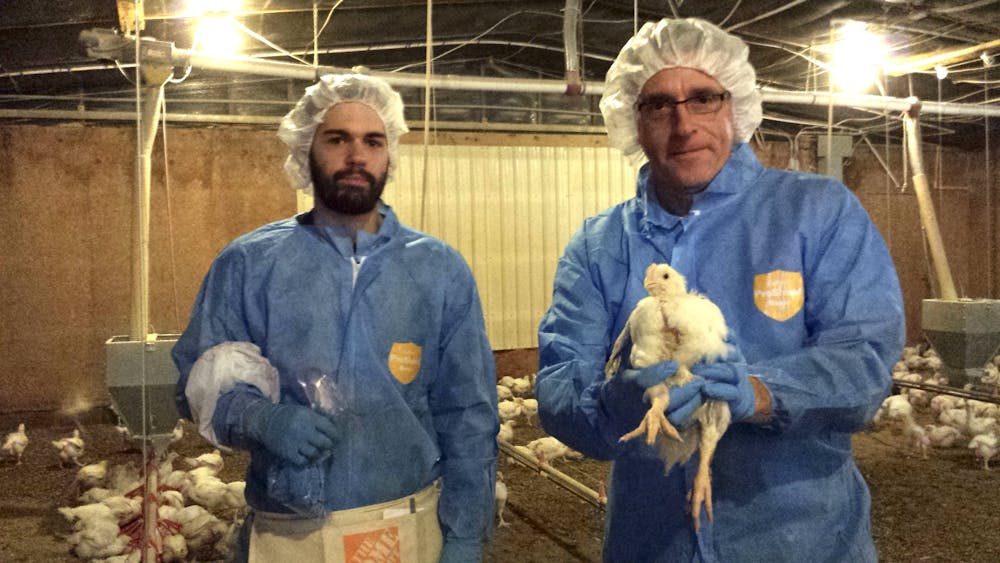
Penn State biologist Andrew Read holds chicken at poultry farm

Penn State biologist Andrew Read (right) and research assistant Chris Cairns studied Marek’s disease virus in poultry chickens. (A Chan, CC BY-ND)

In the case of COVID-19, it’s becoming increasingly clear that even vaccinated people can contract and transmit the highly transmissible delta variant. Since viral transmission from vaccinated chickens is what allowed more lethal variants to spread in Marek’s, it’s reasonable to ask whether COVID-19 transmission from vaccinated people could allow more lethal variants to spread.

Evolution can go in many directions

As evolutionary ecologist David Kennedy and I have written about previously, the evolutionary path that the Marek’s disease virus took is one of many that are possible – in rare cases where vaccines drive evolution.

Only a minority of human and animal vaccines have influenced pathogen evolution. In nearly all of those cases – which include the hepatitis B virus and bacteria that cause whooping cough and pneumonia – vaccine efficacy was reduced by new variants. But in contrast to Marek’s, there was no clear evidence that the evolved variants made people sicker.

In nature, we know of course that not all viruses are equally lethal. Biological differences in things like the linkage between disease severity and transmission can cause lethality to increase or decrease. This means that the future of one virus cannot be predicted by simply extrapolating from the past evolution of another. Marek’s and SARS-CoV-2 are very different viruses, with very different vaccines, very different hosts and very different mechanisms by which they sicken and kill. It is impossible to know whether their differences are more important than their similarities.

Evolutionary hypotheticals are important to consider. But up against the hugely beneficial impact of COVID-19 vaccines on reducing transmission and disease severity – even against the delta variant – the possibility of silent spread of more lethal variants among the vaccinated is still no argument against vaccination.

As novel variants of the coronavirus spread in the months and years ahead, it will be vital to work out whether their evolutionary advantage is arising because of reduced disease severity among the vaccinated. Delta, for instance, transmits more effectively from both unvaccinated and vaccinated people than did earlier variants. Extrapolating from our chicken work to argue against vaccination because of the delta variant has no scientific rationale: The delta variant would have become dominant even if everyone refused vaccination.

But what if?

If more deadly variants of the coronavirus were to arise, lower vaccination rates would make it easier to identify and contain them because unvaccinated people would suffer more severe infections and higher death rates. But that kind of “solution” would come at considerable cost. In effect, the variants would be found and eliminated by letting people get sick, many of whom would die.

Sacrificing chickens was not the solution the poultry industry adopted for Marek’s disease virus. Instead, more potent vaccines were developed. Those newer vaccines provided excellent disease control, and no lethal breakthrough variants of Marek’s have emerged in over 20 years.

Chickens in poultry house in Maryland

Marek’s disease, a cancer-causing herpesvirus in domestic chickens, took a heavy toll on the poultry industry before vaccines were developed against it. (Edwin Remsberg/The Image Bank via Getty Images)

There are probably ways the available COVID-19 vaccines could be improved in the future to better reduce transmission. Booster shots, larger doses or different intervals between doses might help; so too, combinations of existing vaccines. Researchers are working hard on these questions. Next-generation vaccines might be even better at blocking transmission. Nasal vaccines, for instance, might effectively curtail transmission because they more specifically target the location of transmissible virus.

As of late August 2021, more than 625,000 Americans have died from a disease that is now largely vaccine-preventable. It is sobering for me to think that some of the next to die might have avoided lifesaving vaccines because people are stoking evolutionary fears extrapolated from our research in chickens.

In the history of human and animal vaccines, there have not been many cases of vaccine-driven evolution. But in every one of them, individuals and populations have always been better off when vaccinated. At every point in the 50-year history of vaccination against Marek’s disease, an individual chicken exposed to the virus was healthier if it was vaccinated. Variants may have reduced the benefit of vaccination, but they never eliminated the benefit. Evolution is no reason to avoid vaccination.

Andrew Read, Professor of Biology, Entomology and Biotechnology, Penn State

This article is republished from The Conversation under a Creative Commons license.

20 epic fails from the history of pop culture

The history of pop culture is rife with fun moments and huge successes — like the concept of video streaming, hip-hop musicals about Founding Fathers, and those photos of Jake Gyllenhaal incorrectly holding dogs. But for every smash hit, big or small, there’s a plethora of projects that thoroughly went awry.

Here are 20 of our favorite memorable misses, from an ill-conceived Hitler sitcom to 2019’s “Cats.v

1. “Saturday Night Live’s” muppets

Jim Henson’s Muppets were booked for “Saturday Night Live’s” first season in 1975 as a way to ensure that something in the live show wouldn’t be a total wild card. Henson developed “the Land of Gorch,” a kingdom ruled by hideous, lascivious, wholly inappropriate puppets with names like “Ploobis” and “Vazh.” They weren’t a smash hit, but the bigger issue was that “SNL” writers absolutely hated penning sketches for what cast member John Belushi called the “mucking Fuppets.” Each week, they drew straws to determine who would get stuck covering the Land of Gorch, which suspiciously always fell to the rookies. While Lorne Michaels was pondering how to pass a pink slip to the Muppets, UK network ATV happened to ask Henson if he wanted his own show. He agreed, and Michaels dissolved his “SNL” contract post-haste.

2. NBC’S Supertrain

After storied tenures at both CBS and ABC, Fred Silverman shouldered the gig of NBC president in 1978 and promptly set out to replicate the success of ABC’s “The Love Boat” with “Supertrain” — a melodramatic series that followed passengers on a high-speed luxury train. Producers funneled tons of money into flashy gimmicks and impressive train models (one set alone reportedly cost $5 million), but invested little in the actual substance of the show. Suspense seemed contrived; pacing was jerky; and even charismatic guest stars like Rue McClanahan and Zsa Zsa Gabor couldn’t salvage the dialogue. “Supertrain” premiered in February 1979 and lasted all of nine episodes before NBC finally admitted defeat, making it one of the most expensive TV failures of the time.

3. E.T. the extra-terrestrial: the video game

By the time Atari executives and Steven Spielberg finally reached a deal for an “E.T. the Extra-Terrestrial” video game in summer 1982, designer Howard Scott Warshaw had just five weeks to actually create it. If he failed, the game wouldn’t be on store shelves in time for the Christmas shopping season. In retrospect, it probably would have been better if he had failed: Sales were soft, and the game itself was abysmal. Basically, players had to collect pieces of a phone hidden in holes so E.T. could — you guessed it — phone home. But the game didn’t progress intuitively; E.T. often got relocated to a previous screen or randomly stuck in the pits. NPR’s Gene Demby compared the experience to “purgatory.”

Worse still, when the video game industry crashed in 1983, people placed the blame squarely on the maligned movie tie-in. The real culprits, however, included inflation, an oversaturated market, and the rise of the PC. “It’s awesome to be credited with single-handedly bringing down a billion-dollar industry with 8 kilobytes of code,” Warshaw later told BBC News. After Atari laid him off that year (along with hundreds of other employees), Warshaw became a therapist.

4. New coke

When Coca-Cola unveiled a sweeter take on their classic formula, dubbed “New Coke,” in 1985, it was an unsubtle attempt to wrench back its dwindling market share from its arch-rival Pepsi. But longtime Coke drinkers did not go gentle into that New Coke-filled night — and none battled harder than Gay Mullins, who poured his retirement savings into establishing an organization (the Old Soda Drinkers of America) that swore to protect the beloved beverage. The media latched onto Mullins’s sacred cause and covered the nationwide backlash at length. After less than three months, Coca-Cola agreed to return to its original recipe, though New Coke did eventually get rebranded as Coke II and stuck around until 2002.

5. “Carrie: the musical”

Murder stories have a pretty good track record on Broadway — “Sweeney Todd,” “Little Shop of Horrors,” etc.—but the 1988 musical adaptation of Stephen King’s “Carrie” bucked the trend. The creative team did include some musical theater heavyweights: Michael Gore, composer of 1980’s “Fame,” and Debbie Allen, choreographer of the Fame TV series (Allen also appeared in both the film and the show). Alas, their razzle-dazzle ’80s style clashed with all the carnage, and critics’ reviews were their own kind of bloodbath — The New York Times went so far as to compare the production to the Hindenburg disaster. “Carrie” closed after just five performances.

6. Rob Lowe’s 1989 Oscars opening number

The Academy Awards got off to a rocky start in 1989, when Rob Lowe and Snow White (played by Eileen Bowman) kicked off the ceremony with a bizarre rendition of “Proud Mary.” What was meant to be a campy homage to the Hollywood of old—the set was modeled after the Cocoanut Grove nightclub, which used to host the awards—turned out to be a fragmented mess that proved Lowe couldn’t sing and convinced Bowman to quit entertainment forever. Worse than the performance itself was the fallout: Disney threatened to sue the Academy for not licensing Snow White, and Hollywood legends like Julie Andrews and Paul Newman signed a letter denouncing the production as “an embarrassment to both the Academy and the entire motion picture industry.”

7. Milli Vanilli’s lip-sync fraud

When Milli Vanilli’s track started skipping during a July 1989 performance of “Girl You Know It’s True,” fans realized that members Rob Pilatus and Fab Morvan had been lip-syncing. What they didn’t yet realize was that the duo was always lip-syncing: Rob and Fab’s producer, Frank Farian, had signed them without any intention of letting them sing their own vocals. Rob and Fab weren’t comfortable with the arrangement, but their career snowballed before they had much of a chance to do anything about it. Several hits and one stage gaffe later, they sensed the precariousness of their situation and told Farian to let them do their own vocals on future tracks. They couldn’t come to an agreement, and Farian finally confessed the deception during a press conference. Though Rob and Fab tried to make a comeback with their own album in 1993, fans had already moved on, and the Milli Vanilli legacy is mostly confined to a few fraudulent chart-toppers.

8. When Kim Basinger bought a town

In 1989, Kim Basinger decided to give back to her home state of Georgia by converting a small town into a tourist destination, complete with a theme park and Hollywood production studios. With the help of investors, she purchased Braselton, Georgia, for a solid $20 million. Unfortunately, the town became less of a Dollywood and more of a “Schitt’s Creek,” partially because of the early ’90s recession. “With the current state of the economy, it’s difficult to find investment partners you want to get in bed with,” Basinger’s brother and business partner, Mick, told the Chicago Tribune in 1992. The following year, Basinger filed for bankruptcy after being sued for dropping out of the 1993 film “Boxing Helena,” and was forced to sell Braselton before implementing any of her grand plans. These days, the town isn’t exactly Disney World — but it does boast an idyllic downtown, racetracks, a winery, and a free weekend trolley that stops at all the major sites.

9. “Heil honey, I’m home!”

By the time the pilot episode of “Heil Honey, I’m Home!” premiered on the British Satellite Broadcasting network in September 1990, people were already scandalized by the series. In the vein of “I Love Lucy,” the show chronicled the domestic antics of Adolf Hitler and Eva Braun, a garden-variety suburban couple (who happened to have New York accents) with Jewish neighbors. Not only was writer Geoff Atkinson trying to turn Hitler into a joke, but he was also poking fun at mid-20th-century Hollywood’s obsession with green-lighting sitcoms of any kind.

The Third Reich had been spoofed to general acclaim before — in Charlie Chaplin’s “The Great Dictator” (1940) and Mel Brooks’s “The Producers” (1967), for example — but the idea of Hitler as the goofy husband-next-door didn’t exactly land. After the pilot debuted, management brought in an American showrunner to tone things down before filming season 1, but those episodes never aired. Sky Television acquired the network in November of that same year and quickly halted production for good.

10. Hulk Hogan’s Pastamania

Hulk Hogan took Hulkamania to new heights in 1995 with the opening of Pastamania, a fast-food pasta joint in the food court of Minnesota’s Mall of America. The menu featured a mix-and-match section, an international pasta section (Swedish meatballs! Beef stroganoff!), and a kids’ section with “Hulkaroni & Cheese” and “Hulkios.” Though the wrestler threw his full weight behind the venture, which mostly entailed shouting about his “Pastamaniacs” running wild during TV spots, the restaurant shuttered within a year.

11. Michael Moore’s O.J. Simpson Interview

In November 1997, several weeks after O.J. Simpson was found not guilty of murder, he made a surprise appearance in the pilot for documentarian Michael Moore’s talk show. It was Simpson’s first post-trial TV spot, and the audience had only been told to expect a “mystery guest.” Moore and Simpson chatted about football for a while before Moore finally asked, “Would you have worn gloves, O.J.?” At that point, the mostly hostile audience began shouting their own questions and comments, and Moore even asked people to raise their hands if they thought O.J. was guilty — roughly 70 percent did. A few dozen audience members were so incensed at Moore for having invited Simpson on the show that they up and left in the middle of the taping. Fox, which had produced the pilot, never picked up the series; and, as far as we know, the pilot has yet to see the light of day.

12. Microsoft’s iLoo

In April 2003, Microsoft’s UK branch announced the development of the iLoo, a portable toilet stall that would feature a plasma-screen computer, a wireless keyboard, surround-sound speakers, and Wi-Fi access so music festival-goers could really relax during bathroom breaks between sets. Mainstream media outlets reported the news widely, prompting a Microsoft spokesperson to claim the product was a hoax that the UK team had originated without running it by the corporate office. But the company’s UK public relations representatives maintained that the iLoo was real, so Microsoft then had to rescind its statement alleging that the whole thing was a joke.

Apparently, the UK branch had actually been serious about the iLoo, but corporate headquarters decided to pull the plug on the process after enduring so much public ridicule for the idea alone. Considering how common it is to use your phone on the toilet these days, it seems like this joke’s on us.

13. When Kanye West interrupted Taylor Swift’s VMAs speech

At the 2009 MTV Video Music Awards, an awestruck, 19-year-old Taylor Swift took to the stage to claim her award for Best Video by a Female Artist, which she won for “You Belong With Me.” Seconds into her speech, Kanye West bounded onstage, snatched the microphone, and essentially shouted that Beyoncé should have won for “Single Ladies (Put a Ring on It).” He exited the stage in a flurry of boos, leaving Beyoncé stunned and Swift on the verge of tears. In her 2020 documentary Miss Americana, Swift explained that she had thought the audience was booing her, not West. “For someone who’s built their whole belief system on getting people to clap for you, the whole crowd booing is a pretty formative experience,” she said. It was also the beginning of a decade-long beef in which Swift repeatedly tried to bury the hatchet with the rapper and was repeatedly let down.

14. The “Scary Lucy” statue

In 2009, Lucille Ball’s tiny hometown of Celoron, New York, erected a bronze statue in her likeness. It went virtually unnoticed by the general public until 2015, when social media users began to point out that it was, to put it bluntly, sort of terrifying (not to mention that it looked nothing like the “I Love Lucy” star). The campaign to replace “Scary Lucy” went viral, and town officials eventually gave in. A more accurate statue, nicknamed “New Lucy,” was installed the following year, and Scary Lucy was relocated to a spot about 75 yards away. Soon after, Scary Lucy’s sculptor Dave Poulin quit sculpting altogether — though he maintained that his decision had nothing to do with the debacle.

15. The Kardashian Kard

The Kardashian Kard was a prepaid debit card that the Kardashian sisters released in November 2010 and marketed toward teens. It did technically teach young users a little about personal finance — if we’re specifically talking about the dangers of hidden fees. Initial fees totaled $100, with an extra $8 a month after the first year. On top of that was $1.50 for an ATM withdrawal; $2 for every bill paid automatically; $1 to add funds; and a 2.5-percent fee for any transfers from another card. If you wanted to complain to a customer service representative about those fees (or anything else), you’d have to cough up another buck and a half. And if you got so fed up you decided to shut your card down completely, you’d owe $6.

Business Insider said it “may be the worst credit card ever,” and Connecticut’s attorney general announced an impending investigation weeks after its debut. By the end of the month, the Kardashians had canceled the Kard — no doubt a relief to all 250 or so people who had purchased one.

16. When U2’s new album appeared in every iTunes account

In September 2014, U2’s new album “Songs of Innocence” appeared, completely unbidden, in every single iTunes library — the result of an exclusive deal between Apple and the band. The company considered it a clever business innovation, Bono considered it a critical way to disseminate songs that might otherwise be overlooked, and U2 fans considered it Christmas come early. To everyone else, it landed somewhere between a trifling annoyance and an unconscionable invasion. The Washington Post describedremove the album within a week of its release.

17. Fyre Festival

In 2017, clout chasers shelled out thousands of dollars to attend a ritzy music festival on an island in the Bahamas, where hot-ticket acts like Tyga and Migos would perform and models like Kendall Jenner and Bella Hadid would mingle with the masses. As guests began to arrive, it became clear that the festival fell criminally short of what it had promised. Gourmet food turned out to be little more than a paltry piece of cheese slapped on a slice of bread (served in Styrofoam containers, no less), luxury lodging comprised soggy mattresses beneath industrial-looking tents, and most of the talent dropped out once all this damning evidence of a scam hit social media. Fyre Festival crashed and burned so spectacularly that Hulu and Netflix both saw fit to produce documentaries about the fiasco — and festival organizer Billy McFarland landed in prison for fraud.

18. Burger King’s Wikipedia ad

In April 2017, Burger King tried to brag about the freshness of its Whopper by way of a video ad in which a Burger King employee says “OK Google, what is the Whopper Burger?” Upon hearing the operative phrase OK Google, Google devices were supposed to spring to life and spout out an answer. And they did — but the answers came from Burger King’s Wikipedia page, which schemers immediately tampered with. The page claimed that the burger patty was made with “100-percent medium-sized child” and topped with cyanide; that the Whopper was “the worst hamburger product” sold by Burger King; and that it “remains far inferior to the Big Mac.” To add insult to 100-percent medium-sized child, Google—which hadn’t OK’d the campaign — swiftly stopped the ad from waking its gadgets altogether.

19. “Cats:” The movie

Tom Hooper’s film adaptation of Andrew Lloyd Webber’s classic Broadway musical seemed like a good idea in the early stages: Hooper himself won the Oscar for Best Director for 2010’s “The King’s Speech,” and his “Cats” cast nabbed some of pop music’s hottest talent, from Taylor Swift to Jason Derulo, complemented by a whole host of professional dancers.

But while certain numbers were impressive from a technical standpoint — Skimbleshanks the Railway Cat, for example, surely made tap-dancing tabbies everywhere purr with pride, and Jennifer Hudson’s Grizabella was a credit to all glamour cats — something about seeing huge stars prance around as naked (though fur-covered) bipedal felines rubbed viewers the wrong way. “Cats” was a box office flop and the butt of many jokes for months. At least it didn’t feature any digital cat buttholes, which the visual effects editors mercifully decided to delete.

20. Quibi

Quibi, launched in April 2020, was a streaming app predicated on co-founder Jeffrey Katzenberg’s ardent belief that people’s deepest wish was to watch high-quality, short-form video content on their phones — quick bites, hence the name. Within about seven months, Quibi was no more. But the cause of death wasn’t lack of star power (participating celebrities included Liam Hemsworth, Jennifer Lopez, Kevin Hart, and so on) or lack of capital (Katzenberg raised $1.75 billion for the project).

Instead, people simply weren’t willing to shell out $5 a month for the service. Not only was Quibi competing against much beefier new streaming platforms, like HBO Max and Disney+, but TikTok and other apps already offered quick bites at no cost. Though the app itself has ceased to exist, Quibi shows will soon be available on The Roku Channel. And this time, they’ll be free.

How gay men justify their racism on Grindr

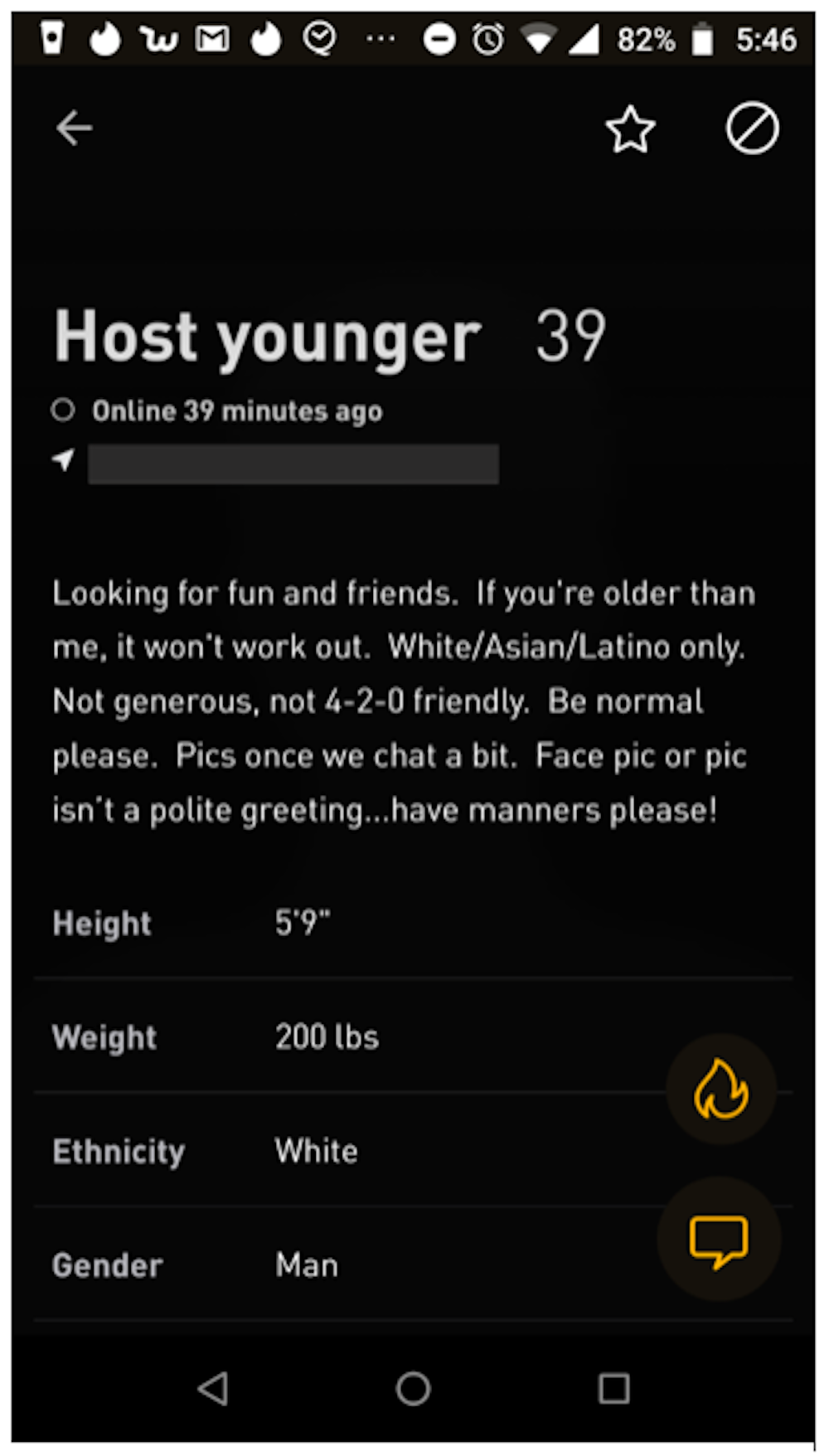
On gay dating apps like Grindr, many users have profiles that contain phrases like “I don’t date Black men,” or that claim they are “not attracted to Latinos.” Other times they’ll list races acceptable to them: “White/Asian/Latino only.”

This language is so pervasive on the app that websites such as Douchebags of Grindr and hashtags like #grindrwhileblack can be used to find countless examples of the abusive language that men use against people of color.

Since 2015 I’ve been studying LGBTQ culture and gay life, and much of that time has been spent trying to untangle and understand the tensions and prejudices within gay culture.

While social scientists have explored racism on online dating apps, most of this work has centered on highlighting the problem, a topic I’ve also written about.

I’m seeking to move beyond simply describing the problem and to better understand why some gay men behave this way. From 2015 to 2019 I interviewed gay men from the Midwest and West Coast regions of the United States. Part of that fieldwork was focused on understanding the role Grindr plays in LGBTQ life.

A slice of that project – which is currently under review with a top peer-reviewed social science journal – explores the way gay men rationalize their sexual racism and discrimination on Grindr.

“It’s just a preference”

The gay men I connected with tended to make one of two justifications.

The most common was to simply describe their behaviors as “preferences.” One participant I interviewed, when asked about why he stated his racial preferences, said, “I don’t know. I just don’t like Latinos or Black guys.”

A Grindr user says 'Whites/Asians/Latinos only.'
A Grindr profile used in the study specifies interest in certain races. Christopher T. Conner, CC BY

That user went on to explain that he had even purchased a paid version of the app that allowed him to filter out Latinos and Black men. His image of his ideal partner was so fixed that he would rather – as he put it – “be celibate” than be with a Black or Latino man. (During the 2020 #BLM protests in response to the murder of George Floyd, Grindr eliminated the ethnicity filter.)

Sociologists have long been interested in the concept of preferences, whether they’re favorite foods or people we’re attracted to. Preferences may appear natural or inherent, but they’re actually shaped by larger structural forces – the media we consume, the people we know and the experiences we have. In my study, many of the respondents seemed to have never really thought twice about the source of their preferences. When confronted, they simply became defensive.

“It was not my intent to cause distress,” another user explained. “My preference may offend others . . .  [however,] I derive no satisfaction from being mean to others, unlike those who have problems with my preference.”

The other way that I observed some gay men justifying their discrimination was by framing it in a way that put the emphasis back on the app. These users would say things like, “This isn’t e-harmony, this is Grindr, get over it or block me.”

Since Grindr has a reputation as a hookup app, bluntness should be expected, according to users like this one – even when it veers into racism. Responses like these reinforce the idea of Grindr as a space where social niceties don’t matter and carnal desire reigns.

Prejudices bubble to the surface

While social media apps have dramatically altered the landscape of gay culture, the benefits from these technological tools can sometimes be difficult to see. Some scholars point to how these apps enable those living in rural areas to connect with one another, or how it gives those living in cities alternatives to LGBTQ spaces that are increasingly gentrified.

In practice, however, these technologies often only reproduce, if not heighten, the same problems and issues facing the LGBTQ community. As scholars such as Theo Green have unpacked elsewehere, people of color who identify as queer experience a great deal of marginalization. This is true even for people of color who occupy some degree of celebrity within the LGBTQ world.

Perhaps Grindr has become particularly fertile ground for cruelty because it allows anonymity in a way that other dating apps do not. Scruff, another gay dating app, requires users to reveal more of who they are. However, on Grindr people are allowed to be anonymous and faceless, reduced to images of their torsos or, in some cases, no images at all.

The emerging sociology of the internet has found that, time and again, anonymity in online life brings out the worst human behaviors. Only when people are known do they become accountable for their actions, a finding that echoes Plato’s story of the Ring of Gyges, in which the philosopher wonders if a man who became invisible would then go on to commit heinous acts.

At the very least, the benefits from these apps aren’t experienced universally. Grindr seems to recognize as much; in 2018, the app launched its “#KindrGrindr” campaign. But it’s difficult to know if the apps are the cause of such toxic environments, or if they’re a symptom of something that has always existed.

Christopher T. Conner, Visiting Assistant Professor of Sociology, University of Missouri-Columbia

This article is republished from The Conversation under a Creative Commons license.

Drummer jokes got it wrong: Why drummers are smarter, healthier, and live longer lives

Despite having never been in a band or actually showing any real aptitude for playing the drums, I’ve always in some small way identified as a drummer. I got my first drum set when I was 16, with heavy metal dreams and a touch of teenage angst. Thirty years on, I have a digital kit, and I take lessons periodically. I may not be able to play (well), but I still love the drums.

So I was saddened by the passing of Rolling Stones drummer Charlie Watts. Watts played with the world’s biggest rock band for a staggering 58 years and was happily married for 57 until his death at 80; beyond his musical talent, Watts was remarkable for being impervious to the rock-n-roll debauchery that defined his bandmates. He met celebrity with indifference. “Playing the drums,” he said, “was all I was interested in. The rest made me cringe.”

As well as his jazz-inspired, swing-infused drumming style, Watts was known for his steady, Zen-like eccentricities. On the road, he would draw a sketch of the bed of every hotel room he slept in. In the midst of post-show bedlam, he would calmly return to the stage to meticulously check that his drumsticks were placed just so on his kit, even though it would soon be dismantled and stored on a tour bus. Over the years he said that he could easily accept the Stones coming to an end, but that without drumming, he would probably go mad.

Though that might sound extreme, there’s some scientific basis for his claim. Research has linked musical engagement — and drumming in particular — to well-being and human flourishing, which is linked to physical health and life longevity. In ancient philosophy, the highest human good is to attain Eudaimonia, to live in harmony with the highest version of yourself. Watts certainly came close to attaining this, and it is arguably in part because, before he was anything else, Charlie Watts was a drummer.

Multiple studies show mental perceptions have direct impact on our physical health. For example, subjective age — the age you feel versus the age you are — has been shown to be an important predictor or late-life health outcomes, including level of risk for stress-related illness, depression, and the negative physical effects of a sedentary lifestyle. An equal factor is subjective wellbeing — how much you feel your life is going well.

Ruth A. Dubrot, a lecturer in music education at Boston University, sought to identify ways in which engagement with music impacts the lives of older adult blues/rock musicians who regularly participate in a blues jam. She found that “eudaimonic well-being is the result of active engagement in human activities that are goal-directed and purposeful,” and that having a positive subjective wellbeing involves “the self-realization of individual dispositions and talents over a lifetime.”

A 2003 study published in the American Journal of Public Health investigated drumming as a complementary therapy to treat addiction. The study’s author, anthropologist Michael Winkelman of Arizona State, concluded that drumming “produces pleasurable experiences, enhanced awareness of preconscious dynamics, release of emotional trauma, and reintegration of self.” Winkelman noted further that drumming “alleviates self-centeredness, isolation, and alienation, creating a sense of connectedness with self and others” and “provides a secular approach to accessing a higher power and applying spiritual perspectives.”

Another study, published in the International Journal of Qualitative Studies in Health and Well-being in 2018, investigated the relationship between group drumming and wellbeing; the study’s co-authors found that, through drumming, certain emotional, psychological, and social dimensions of wellbeing emerged, including agency, accomplishment, engagement, identity, hedonia (positive affect and pleasant physical effects of drumming), and social well-being.

But if joining a drum circle — gathering in a ring to drum, purely to form a group consciousness — sounds a bit too woo-woo, there are health benefits to jamming out by yourself, too.  Researchers at multiple UK universities found that rock drumming for one hour per week improves how children with additional educational needs; their study specifically focused on children with autism, and suggested that drumming for an hour a week helped them perform better in school, particularly by helping them improve their dexterity, rhythm, and timing.

Beyond mental health effects, drumming provides a physical workout. The so-called Clem Burke Drumming Project, a drumming-related research collaboration involved in the aforementioned childhood drum study, also found drumming requires enormous stamina, burning between 400-600 calories an hour. In tests conducted for the project, drumming brought Burke’s heart rate up to between 140-150 beats a minute on average, with a peak of 190, which is comparable to that of top athletes — with the difference being that a drummer on tour will perform to this level nightly, far more frequently than most participants in professional sport.


Want more health and science stories in your inbox? Subscribe to Salon’s weekly newsletter The Vulgar Scientist.


And more good news: While percussionists are stereotyped as unintelligent, data suggests otherwise. Swedish researchers found drummers score higher on intelligence tests, and say that the “rhythmic accuracy in brain activity that is observed when a person maintains a steady beat is also important to the problem-solving capacities measured with the intelligence tests.” Another study investigating a drummer’s ability to perform complex motor tasks with their two limbs independently found that drummer brains are wired differently, having a “more efficient neuronal design of cortical motor areas.”

Of course, we can only speculate on the impact drumming had on the actual physical and mental health of Charlie Watts. But research certainly supports that drumming and musical engagement in particular can only be strong factors to a person’s general wellbeing, and directly contribute to positive health outcomes and longevity.

As for my own drumming, every now and then on the rare occasion I actually sit down to play, I have a fleeting moment of not overthinking or being self-conscious where I experience pure flow. It’s that feeling, I realize, that keeps my appreciation for the drums alive — not with the ambition of rock stardom, but the aspiration to arrive at some Eudaimonia of my own, and to feel that little bit more like Charlie Watts. 

How these 6 liquor brands prioritize the planet

Not only are we in the midst of a global pandemic, we’re also in the grip of the sixth great extinction — a “biological annihilation” of species worldwide as a result of human activity — including planetary climate change, leading to extreme weather events, damaged marine ecosystems, and negative impact on crops. Suffice it to say that after reading that, you might want a drink. Luckily, you have the option to pour a drink that plays a small part in helping the planet. In an effort to challenge the industry’s reliance on energy-intensive processes and the production waste, many liquor producers are becoming more sustainability-minded, whether that means using less glass to make bottles or turning scraps from other industries into a liquor’s main ingredient. Get ready to mix your favorite cocktail, comforted by the knowledge that you’re giving the environment a helping hand. Here are six beverage producers who are doing their bit for the planet right now.

Avallen Calvados

Going back to the very beginning, it seems as though Avallen Calvados could have been any liquor, but sustainability brought the company to one specific fruit: “We started with a blank sheet of paper and firstly looked at the raw materials used to make alcohol,” Tim Etherington-Judge, founder of Avallen, explained in an email. “After detailed analysis, we settled on apples as the best from a sustainability point of view.”

Produced in Normandy, France, and recently judged the Best Speciality Calvados in the world, Avallen means “apple tree” in Old Cornish. They use 40 varieties of apples from local pesticide-free apple orchards to create this fresh, fruity apple brandy, aged in French oak barrels for two years. With no added sugar, colorings, or additives, it’s simply made from apples, water, and time. From the apples to the corks and bottles, Avallen sources from local businesses, reducing their carbon footprint and supporting the local economy. Aiming for sustainability and biodiversity in all aspects of production, they are planting wildflower meadows to support bee populations, and they even use recycled apple pulp to make their labels. Says Etherington-Judge: “With every business decision we ask ourselves the question: Is this the best choice we can make from a sustainability perspective?”

Black Cow Vodka

This unusual vodka is made in West Dorset, England, from the milk of grass-fed cows. This unique process gives the vodka an exceptionally creamy taste, with a smoother finish than most other vodkas. With a 300-year family history of cheesemaking, the inventors of Black Cow Vodka saw a way to make use of milk by-products that usually end up going to waste. The cheesemaking process starts with separating milk into curds and whey — the former becomes the base of cheese, but instead of discarding the rest, Black Cow takes the whey and turns it into vodka. This innovative way of reusing makes sure that less goes to waste on a dairy farm, and resulted in the world’s first pure milk vodka.

Copalli White Rum

Crafted with passion and sustainability at its core, Copalli Rum is an organic, single-estate rum made from just three ingredients: non-GMO heirloom sugarcane, rainwater captured straight from the rain-forest canopy, and yeast — all sourced from 22,000 acres of pristine rain forest in Belize. In addition to being a zero-impact distillery powered by regenerative biomass, Copal Tree Distillery supports the local community as the largest employer in southern Belize, and provides educational grants for local children to attend high school.

Don Q Rum

Don Q is the top-selling rum in Puerto Rico, from an award-winning sixth-generation distillery, family-run for more than 150 years. They have 12 different expressions, all distilled from their environmentally-aware distillery, which is a leader in green production practices, such as using carbon dioxide produced during fermentation to generate energy, and the use of molasses (a natural by-product from cane-sugar production) in their fermentation process. Additionally, they are committed to protecting their local community and local wildlife for the future, as demonstrated by their wastewater treatment system, which, as well as allowing them to harvest energy for production, has ensured their wastewater has not entered oceans or rivers since 2005.

Fair

Established in 2009, Fair is an international brand of ethical, fair trade spirits. It offers high-quality, naturally sourced ingredients from local farming communities across the globe. Never compromising on taste, this organization takes pride in caring for “the planet and its people,” from a small farmer (and farm) in Uzbekistan or Belize, to a French distiller, all the way to the final consumer. Fair Vodka is made using fair-trade quinoa from the Andes Mountains and Fair Café (their coffee liqueur) is created using coffee beans from Mexico and distilled in France, all the while ensuring the growers a fair price for every crop. Additionally, their recent bottle redesign aims to improve their carbon emissions by using less glass, the manufacture of which involves high temperatures and energy consumption.

Vivir Tequila

Vivir is an award-winning range of premium tequila, made from 100% highland agave. It is the first tequila ever to win Gold Awards at the Great Taste Awards for the whole range: blanco, reposado, and añejo. Their aim is to change the perception of tequila, as the most common brands on offer are “mixto” tequilas, made using additives, colors, and flavorings, and can contain as little as 51% agave. Keen to ensure their production is sustainable, their tequila is made using agave grown only on their own land, and by sourcing water from a volcanic spring on site at the distillery.

In defense of Natural Light, the unfairly maligned O.G. light brew

“What should we bring?”

It seemed like a simple enough question: a friend and I were standing in front of the beer aisle at our neighborhood bodega, bathed in fluorescent light and debating which brew we should bring to our first graduate school party — and really, when I think about it, our first party as real, bona fide adults.

As silly as it seemed, the choice felt heavy with significance. First impressions, as they say, are everything, and when attending a party full of writers it’s especially important to be aware of the metaphors you’re presenting. 

“F**k it,” I said, picking up a 30-pack of Natural light. “This is who I am.”

I can still remember the clamor after I told my classmates that the box was fair game — everyone rushed to grab a can, saying things like “What a throwback,” and “I haven’t had this in years.”

By the end of the night, my counterpart’s $40 bottle of wine sat, unopened, at the edge of a counter covered with silver-and-blue cans in various states of distress. Sure, craft beer and specialty cocktails have their place, but here was proof that there’s nothing wrong with loving a mass-produced domestic beer that’s cheap enough to buy in bulk and light enough to keep drinking for hours on end.

Thinking back on that night, now, I can barely remember the taste — those Natural Lights tend to blend together with the memories of countless others, many of those moments lost to the tipsy haze of time.


Want more great food writing and recipes? Subscribe to Salon Food’s newsletter.


Much ink has been spilled about the relative merits and drawbacks of Anheuser-Busch’s original light beer, and despite its cult-classic status on college campuses — it’s been affectionately nicknamed “Fratty Light” — it seems Natural Light’s detractors are winning the battle for hearts and minds, with many in my personal life declaring it “tasteless” and “cheap, but not in the good way.” In fact, the website RateBeer.com lists Natural Light at No. 1 on its list of “Worst beers in the world.” 

What a travesty. 

For one, it was the ninth best-selling beer in America by volume last year, according to data compiled by the Chicago-based market research firm IRI — a stunning accomplishment for a brand whose business is largely retail. (Can you remember the last time you saw Natural Light on a bar menu, let alone a draft list?) 

College students couldn’t possibly be responsible for that kind of sales volume alone, which means most of the Natty lovers in your life — and there are surely a few — have stayed silent for far too long. 

The author, during his younger years, sitting atop a throne of Natural Light. (Brett Bachman)

As for the people who say it has no taste, well, I politely disagree. It’s not as full-bodied as some of its “light” brethren — but then again, that’s not the point. Natural Light’s high carbonation and slight funkiness make it the perfect pairing for seafood and other grilled entrees, with a subtle flavor that leaves room on the palette for brine, saltiness and smoke. Don’t let the beer snobs tell you anything different.

In fact, Natty is a favorite of the crab-crazy Maryland coast, especially the summer mecca Ocean City, where it’s colloquially known as “Shore Champagne.”

“God help you if you — you high-minded individual — try to suggest folks here drink Bud Light (too expensive), or Coors Light (trashy), or something more millennial-approved like Miller High Life (for sissies),” the Ocean City native Mickie Meinhardt writes for Bitter Southerner, in an ode to her hometown’s favorite brew.

“Bud is heavy, flat, muddy; Miller sounds like your dopey next-door neighbor; Coors is uttered like a question. Coors? Why? But Natty, oh, Natty is your friend. Your oldest, most dependable friend.”

***

Natural Light’s reinvention as a drink for college students is largely a byproduct of smart marketing — Anheuser-Busch InBev famously uses the brand as the face of its student debt relief program, for example — but ask anyone over a certain age and they’ll recall a time when Natty was one of just two games in town.

Natural Light was Anheuser-Busch’s 1977 answer to Miller Lite, which was the first of its kind and a sea change in the way Americans thought about beer. At just 96 calories, Miller’s low-calorie beer was a smash hit, and Natural Light was Anheuser-Busch’s foothold in the nascent marketplace. 

It even predated Bud Light by two years — apparently executives didn’t want to “water down” their flagship brand with a namesake light beer, though they changed their minds after Natural Light proved to be a best seller. 

Contrary to other light beers of the era, it wasn’t marketed solely toward women or those interested in weight loss. Instead, early advertisements for the brand touted it as a proto-organic product for active people, best enjoyed after a jog or some kind of manual labor. Taste and drinkability were Natural Light’s selling points, making it perfect for a newly health-conscious nation.

“When you’re thirsty for a beer or two, but what you’re doing isn’t through, that’s the time to take a natural break,” one 1977 jingle declares.

Another campaign featuring Mickey Mantle attests “there’s nothing artificial in this light beer.” The Yankees’ legend had previously done commercials for Miller Lite, and the switch also made history by sparking one of the first athlete endorsement dramas of the modern era.

With the introduction of Bud Light, however, Natural Light was, over time, shunted off to the side of AB-Inbev’s marketing schedule. Its “natural” ingredients quickly fell by the wayside as a marketing strategy as well, making way for its current image as an “economy” brand largely heralded for its cheapness. 

To that end, I can still remember walking into the convenience store near my college apartment and seeing a towering case of Natural Light boxes for sale — indeed, this appears to be the preferred method of display for the brand today. 

At that time, 30 cans cost just $9.99. My friends and I actually did the math: Natural Light cost less per unit volume than the flat of bottled water next to the beer display. How was that even possible?

***

My own personal love for Natural Light, unfortunately, doesn’t come from any kind of regional affiliation or nostalgia for its original brand image — but it was, by dint of its price and widespread availability, one of the first beers I drank. I’m certainly not alone in this.

This brings me to my final case for Natural Light: I went to college at the University of Wisconsin, the hardest-drinking school in the hardest-drinking state in the hardest drinking country in the world. By extension, however, I’ve seen a lot of people struggle with problem drinking — and liquor is usually the culprit.

It’s possible to get drunk on Natural Light (I’ve been there a time or two) — but by dint of its low 4.2% ABV, the sheer volume of liquid one has to drink to accomplish this feat makes it difficult, something that rarely happens by accident. 

One friend recently likened Natty to a car’s cruise control function, perfect for day drinking or other functions you’d like to remain pleasantly-drunk-yet-put-together at for hours on end. I’ve rarely needed help standing up after a night of Natural Light — something I cannot say for whiskey.

No sweets for the sweet in new “Candyman,” which neglects the legend’s seductively scary legacy

Horror movies are made to trigger somatic responses, right? This expectation is communicated in the adjectives typically used to describe a film’s potency, among them: Chilling. Squeamish. Disgusting. You should feel something. That the overwhelming sensation provoked by Nia DaCosta’s “Candyman” is numbness, then, is a problem.

This isn’t a universal opinion, admittedly. Most critics are high on DaCosta’s spiritual sequel to the 1992 original, which starred Tony Todd as the titular demon and Virginia Madsen as his prey. That film and this one are set in the Cabrini-Green housing projects bordering one of the wealthiest areas of Chicago. In the original film Todd’s Candyman hunted the people who still lived in those buildings. The new film returns to what remains of its community, mainly a few abandoned buildings.

DaCosta, who co-wrote the script with executive producers Jordan Peele and Win Rosenfeld, styles this fourth film around messages about over-policing and state-sanctioned brutality alongside incisive critiques about gentrification, both geographic and artistic.

Yahya Abdul-Mateen II plays its main protagonist Anthony McCoy, a creatively stalled artist competing in a white-dominated art scene in which one of his main promoters demands he lean into his Blackness but warns him that the South Side is “played out.” When the brother of his gallery-owner girlfriend Brianna (Teyonah Parris) shares the Candyman urban legend with Anthony, he takes a field trip to Cabrini-Green, seeking inspiration. There he’s stung by a bee, which may be what leads him to create the work he eventually contributes to Brianna’s gallery show, a mirrored piece titled “Say His Name.”

As the story goes, to invoke Candyman a person must look in a mirror while saying his name five times. Doing so doubles as an invitation to be sliced to ribbons with his hook hand. But nobody believes this, especially not the assortment of smug white folks who utter that incantation, including an art critic whose disdainful half-grin during her first appearance announces her as future hanger steak.  

The title of Anthony’s piece also is recognizable as a play on the Say Her Name slogan meant to memorialize victims of anti-Black violence and police brutality such as Breonna Taylor and Sandra Bland. The recognition of that inference is the only point of connection to it.

Beyond that, little about the plot makes a statement about over-policing or the socio-economic violence that gentrification creates by destroying and displacing low-income communities. Its characters blithely discuss these concerns over drinks or Brianna’s well-appointed living room, but only as part of a litany of urban ills. The sequences are the film’s ways of throwing a message that’s on-brand for 2021 behind a horror movie meant to speak to an audience that supports protests against racial injustice and biased policing in principle without having any actual skin in the game.

To those impacted in a real way by these issues or savvy enough to recognize when they’re being used as mechanisms to impart a sense of relevance, they come across as didactic nonsense. All that noise strangles the twin melodies that make up the Candyman character’s siren song: seduction and legacy.

Peele, Rosenfeld and DaCosta do make legacy central to the new “Candyman,” but not in the way to which I am referring. The legacy they’re attempting to capitalize upon is the history of racial violence that has always been part of living as a Black person in America but became part of the national dialogue – again – in 2020.

As one of Cabrini-Green’s few remaining lifelong residents William Burke (Colman Domingo) explains, Candyman isn’t the wrathful spirit of one man but that of many victims of racist violence. Candyman, he says, “is the whole damn hive.”

This refers to the monster’s origin story. In life he was Daniel Robitaille, a 19th century Black portrait painter lynched to death by a white mob whipped into a rage by his white lover’s father. In the frenzy his assailants chopped off his hand, shoved a hook into the remaining stump, and riled up a bee swarm to sting Robitaille all over his body before setting him on fire. Ominously in the present day Anthony’s bee sting starts to necrotize his flesh, crawling from his hand up his arm and transforming his skin into a honeycomb of scars.


Want a daily wrap-up of all the news and commentary Salon has to offer? Subscribe to our morning newsletter, Crash Course.


One doesn’t conjure bees without also thinking of honey, however, and Bernard Rose’s 1992 film never forgets this. When Madsen’s graduate student Helen manifests Todd’s Candyman, we meet a figure who is simultaneously charismatic, terrifying and haunting. One of his hands may be a bloodied murder weapon but Todd’s velvety purrs transforms all of his threats in loving promises. When he says, “They will all abandon you. All that you have left is my desire for you” or “Your death will be a tale to frighten children, to make lovers cling closer in their rapture,” Madsen weeps.

Todd’s interpretation aligns with Clive Barker’s original rendition of the character in his 1985 short story “The Forbidden,” upon which these movies are based. Barker set his story in a British council estate; Rose changed the location to Chicago’s most notorious housing projects and breathed the specter of American racism into the story. But he and Todd kept the eroticism Barker writes into the character, which makes his predator uniquely disturbing.

When he comes for Madsen’s Helen, his approach isn’t signaled with crazed fury, nothing so overtly sinister. His menace takes the form of a twisted sense of ownership that’s oddly intoxicating. (In the story Barker writes that his gaze makes Helen feel drowsy, “like that summer that sang in her head.”)

But the new “Candyman” bestows none of that air of seduction upon Anthony who, it’s hinted early on with that bee sting, is being targeted by the titular evil for a specific reason. This robs the legend of its power; moreover, it passes up the opportunity to capitalize on Abdul-Mateen II’s natural magnetism to create a more layered performance than that of a small-time creative poisoned by a hunger for fame. How might he have evoked such a transition from a man exhausted with white exploitation into someone possessed by an impulse that’s as repulsive as it is beckoning? That would be a challenging performance worth enduring the rest of the movie’s shortcomings – and it would give a real reason to inflict the audience with a dilute version of body horror by way of Anthony’s decay.

Even if one wagers that DaCosta, Peele and Rosenfeld are more focused on telling a more important story than actually scaring people, if that story lacks a central fascination, there is no point to sitting through it. 

At least the filmmakers remedy one of Rose’s inexplicable choices, in that in the 2021 “Candyman” the monster mainly victimizes white people instead of Black people, which makes sense for the spirit of a man lynched by bigots to do. Then again, Rose’s entire portrayal of the people living in Cabrini-Green is steeped in stereotypes. The place is populated by the faceless waiting to harass Helen when she makes a fact-seeking visit to find out about the Candyman legend. This leads to the obligatory scene of her being mugged for no reason but to satisfy Hollywood’s yen to perpetuate tropes about Black criminals preying on white women. In contrast, the remaining community residents we meet in DaCosta’s “Candyman” are fully realized individuals. On the downside, we don’t meet very many of them.

The new film isn’t as unseemly in its choices as the 1992 version, and yet the ones into which it leans the hardest are bloodless. It’s heavy-handed in its sermonizing, including exchanges such as one where the art critic that has it coming blames “you people” for gentrification as she’s cutting Anthony to the quick – and then, after a pause, clarifies her meaning by specifying she means artists.

But then, after Candyman’s first bloodletting before Anthony’s art show contribution, suddenly the same woman finds macabre representations of Black pain intriguing. The writers’ implication here is obvious enough to make its role in the presentation as a whole bloodless without a legitimately haunting and compelling figure to hold it together.

“Candyman’s” undoing by a script explains much and shows little, all of which robs the tale of any emotional build. The exceptions to this determination are the recurring shadow puppet sequences, first seen in a moment of play in a flashback to William’s childhood, then returning in flitting moments before starring in a haunting post-credits sequence. Each is a woeful depiction of racist crimes perpetuated through the decades, all capturing the fragility of the flesh, making art out of the painful parts of a people’s history. Together, they create a honeycomb of sorrow stuck together with sweetness – everything we wanted from its star’s performance, but never fully taste.

“Candyman” is now playing in theaters.

Scientists must speak out against misinformation about “immune-boosting” supplements

The COVID-19 pandemic saw huge increases in searches for immunity boosters, including for things like supplements claiming to improve immune function. But even before COVID-19 scared people into their nearest supermarket aisle, “wellness” through supplements was a multi-billion dollar industry. Celebrities and influencers across social media platforms regularly advertise and promote a myriad of supplements to improve health and the immune system. However, there are some major problems with these claims — namely, vitamin companies are not regulated by the Food and Drug Administration (FDA) as drugs, and many supplements don’t work as claimed

Unlike pharmaceuticals, which must undergo clinical trials that are reviewed by the FDA for the product’s safety and efficacy, dietary supplements have a less stringent path to market shelves. Even though they are most often found in or next to the store pharmacy, dietary supplements are regulated as food, not as drugs. This means that they have not been evaluated or proven effective. Furthermore, while the manufacturer must prove the ingredients are “reasonably safe”, none of these products are formally “approved” by the FDA. But these supplements are not always inherently harmless options for people trying to live a healthy lifestyle. A 2015 studyconcluded adverse effects from dietary supplements caused an “estimated 23,000 emergency department visits in the United States every year.” 

Despite these risks, there has been an unfortunate absence of expert voices contesting supplement company claims with real data. “There needs to be a more robust response from the science community in the face of pseudoscience and misinformation,” says Tim Caulfield, a professor of health law at the University of Alberta, who has worked on studies and books examining ads and posts claiming to support the immune system on social media. He explains that supplement marketing often builds on the common misperception that if the right amount of a vitamin is good for you, more is better. “That’s not the case at all,” he says.

On the topic of supplement misinformation, Pieter Cohen, an associate professor of medicine at Harvard Medical School and a general internist at Cambridge Health Alliance, says, “The main problem is that the law permits companies to promote supplements as if they have important benefits for health even if there has never been a single study in humans to study the product’s efficacy or safety.” 

Indeed, dietary supplements are not required to be reviewed by the FDA before they are distributed because they are not considered medications. Vitamins say right on the bottle that their claims “have not been reviewed by the FDA.” Instead, they are predominantly regulated by the Federal Trade Commission, or FTC, which monitors the claims the labels make; however, this is limited to ensuring that the supplement makers are not explicitly claiming the product can be used as a treatment. The FTC does allow companies to suggest a range of benefits their products provide, which may be why up to 70 percent of adults in the United States take at least one dietary supplement daily, with the most common reason being to try to maintain or improve their health. 

While some individuals with specific vitamin deficiencies may benefit from these products (under a doctor’s supervision), most of us do not. However, those marketed as “immune boosters” or “immune boosting” are more problematic. 

Despite suggestive labels, there is no way to “boost” the immune system. The immune system is a complicated and dynamic network of cells, proteins, hormones, and other biological components. Even if it were possible to ratchet up such a complex system, you wouldn’t necessarily want to, because the immune system operates primarily by inducing inflammation. This alerts various immune cells to mobilize and fend off danger. In moderation, this is perfectly healthy, and the system has a braking mechanism all its own. But if a product were to truly “boost” the immune system, this mechanism would be amplified. We know what too much inflammation looks like: autoimmune disorders, inflammatory disease, and allergies. 

Ironically, in some cases, products heralded to improve immune function can actually suppress it. Take vitamin D, touted for its ability to enhance “immunity.” While it may increase the inflammatory response, it has been shown to actually reduce the activity of other cell types—namely T cells, which are critical in forming long-term memory. The same is true of many other popular supplements, such as zinc, when a person takes substantially more than the recommended daily amount

Supplements can be actively harmful in other ways too. Since supplements aren’t regulated by the FDA, they aren’t evaluated for safety in the same way as pharmaceuticals. Of course, the manufacturers cannot knowingly use or include compounds that are known health hazards — legislation from 1994dictates that ingredients used in supplement products must not have been shown to cause harm. But that doesn’t mean these products aren’t without yet unrecognized risks. 

“I think one of the biggest things that gets overlooked is the potential for a drug-drug interaction,” says Dr. Kathryn Nelson, a medicinal chemist at University of Minnesota. Physicians need patients to disclose what supplements they are using, including multivitamins, because they might interact with prescribed medications. From inactivating a pharmaceutical prescription, to dangerously exacerbating its effects, these products can have significant consequences. Yet many patients do not disclose or discuss their supplement use with their healthcare providers, due to their misguided perception that vitamins are safe or not worth mentioning. 

Additionally, the active ingredient in vitamins must be either be purified from a natural source or synthesized in a lab, and both methods have the potential for carry-over from compounds used in these methods. Such contamination is called “residual complexity,” Nelson says. This is particularly concerning when heavy metals are used and possibly present in the final product. In pharmaceutical drugs, these compounds would usually go to clinical trials, and any potential introductions of heavy metals removed in what’s called “process chemistry” to gain FDA approval. But the purification process of supplements are not reviewed by the FDA. This has opened the door for potential contaminants-heavy metals as well as other drugs and even pathogens-into these products.

Given all of this negative and even contradictory information about these products, why is the supplement market a multi-billion dollar industry? Much of the answer lies in its advertising. Companies often collaborate with social media influencers, who talk up how great the product is. And despite thousands of scientists across the country with expertise in nutrition and immunology, experts rarely publicly contradict these statements. 

Science communication is an important part in the scientific process. However, more often than not, important conversations happen only with other scientists at scientific conferences, or in journals behind paywalls. As a result, the larger non-expert community is left in the dark. Daniel Pham, the associate director of the Milken Institute’s Center for Strategic Philanthropy, wrote an essay in 2016which detailed the lack of support for science outreach by scientists, and an absence of communication training. Almost five years later, he says, “The same issues have resonated with me even more in the times of COVID. I feel like there’s a bigger sense of the need for improved communication of science to the public. But the tools we’re using are just woefully inadequate.”

The evidence of his statement can be seen in a recent study by Arizona State University, which showed the majority of scientists believe that it is important to inform and engage the general public about science topics. However, when asked about their personal interest or intentions of doing this, the answers are less enthusiastic. Often scientists are not encouraged or even rewarded for public outreach, which doesn’t aid securing funding, publishing, or gaining tenure. One possible solution might be to reform the funding and promotion institutions so they reward researchers for this kind of public service.

However, scientists should also not anticipate their feedback will be immediately accepted based on their resumes. As Nelson points out, the first step in improving the public’s access to verified information is building trust with experts. That includes breaking down the stigmas surrounding what it means to be a scientist, and making expertise more accessible. A recent example is the initiative Science on Tap, where a scientist describes their research in general terms to patrons at a local bar or venue. Pham has also started a similar effort at Johns Hopkins University, called Project Bridge, bringing small, introductory science demonstrations to public spaces such as farmer’s markets. Specific tactics to counter supplement marketers could also include partnering with influencers who are willing to share verified research, as well as lobbying for legislative reform. 

The supplement industry is a prime example of the dangers of misinformation, which is damaging to both science and the public at large. Cohen notes that the next steps are to urge the FDA and FTC to enforce existing laws prohibiting the promotion of products with disease claims, in an attempt to get them off the shelves. In the long-term, he notes the existing law on these products needs to be reformed so that “all products [are] registered with the FDA.”

Scientists and researchers have the expertise to get information to the public and enact policy change. But it will require getting creative. “A lot of the misinformation really has become a social media story,” Tim Caulfield says, “so we need to go to where the misinformation resides.” Scientists, he adds, “need to find their own voice.

Conservative radio host who called himself “Mr. Anti-Vax” dies of COVID-19

Yet another right-wing radio host who spent months railing against public health and vaccination efforts succumbed to COVID-19 this weekend after a protracted battle with the virus. 

Marc Bernier, who called himself “Mr. Anti-Vax” at one point, died Saturday night after spending three weeks in the hospital. The news was announced by Florida’s WNDB-AM/FM on Facebook. He was 65.

Consistent until the end, Bernier’s last tweet compared vaccination outreach efforts to Nazi Germany. 

The station’s operations director, Mark McKinney, said after Bernier’s hospitalization that he was not sure what the longtime conservative host’s vaccination status was — though he acknowledged Bernier’s fiery rhetoric and outspoken opposition to any public health efforts in his home state of Florida, which is currently dealing with its worst surge of the virus since the pandemic began last year.

“If you’ve listened to his show,” McKinney said, “you’ve heard him talk about how anti-vaccine he is on the air.”

Bernier even told one guest: “I’m not taking it. Are you kidding me? Mr. Anti-Vax? Jeepers.”


Want a daily wrap-up of all the news and commentary Salon has to offer? Subscribe to our morning newsletter, Crash Course.


Bernier was just the latest right-wing media figure to succumb to COVID-19 after railing against public health measures. Earlier this month, a former Newsmax host reportedly had a deathbed about-face about vaccines — which several friends in the conservative movement cited as their reason for finally getting the jab.

And Phil Valentine, another anti-vaccine radio host who made a parody song, “Vaxman,” set to the tune of The Beatles “Taxman,” also died last week after a bout of COVID-19

Jim Jordan exposes more details about Trump’s Jan. 6 communications — and ropes in Matt Gaetz, too

A new report on Sunday in Politico’s Playbook offered new details about former President Donald Trump’s communications during the Jan. 6 attack, which may be of interest to the investigators on the House committee examining the day’s events.

Trump’s role in organizing, encouraging, and supporting the rioters’ aims of preventing Congress from recognizing Joe Biden’s win in the 2020 election is already well-known, but some are hoping to find additional evidence of his conduct that day that could potentially shed more light on his knowledge of the events and his culpability in any crimes or wrongdoing.

Republican Rep. Jim Jordan of Ohio, a close ally of the former president, has already admitted that he spoke to Trump on the day of the attack. But he has strained to avoid answering questions on the topic directly, suggesting that he has something to hide about the conversation. He has declined to divulge details about the content of the conversation or when it took place.

The new report from reporter Tara Palmeri revealed that, in fact, Jordan had multiple conversations with Trump during the day:

We know that DONALD TRUMP and Rep. JIM JORDAN spoke once on the day of the Capitol riot, but the Ohio Republican has said he doesn’t remember when their conversation took place. We have some new details that could help clear up that timeframe — including confirmation of at least one more phone conversation between Jordan and the then-president during the siege.

After a group of lawmakers were evacuated from the House chamber to a safe room on Jan. 6, Jordan was joined by Rep. MATT GAETZ (R-Fla.) for a call during which they implored Trump to tell his supporters to stand down, per a source with knowledge of that call. The source declined to say how Trump responded to this request.
Jordan, when asked about whether Gaetz participated, said he’d “have to think about it,” citing many conversations he had during the frenetic attack. He also said phone calls to Trump happened more than once on that deadly day.

“Look, I definitely spoke to the president that day. I don’t recall — I know it was more than once, I just don’t recall the times,” Jordan told our Olivia Beavers. He later said that “I’m sure” one of the Trump-involved calls took place in the safe room “because we were in that room forever.” (For safety reasons, we are not disclosing the specific room where members were evacuated to, but that is the room Jordan is referencing.) Jordan would not get into the specifics of what he discussed with the president, though he said that like everyone, he wanted the National Guard to get involved.

There are several important details here. First, it’s clear that in addition to being cagey about speaking with Trump on Jan. 6, Jordan has been actively concealing further details about the talks. He didn’t mention that one of them took place during attack itself while lawmakers were in hiding, and that there were other witnesses to the calls — even when he has said he’s had trouble remembering the events. If he has trouble with his memory, he could consult other witnesses to the events. (As the piece is written, it’s not clear if the word “he” in the last sentence refers to Jordan or Trump wanting to get the National Guard involved. But there’s no credible indication that Trump had a role in deploying the Guard that day.)

But what’s most important is that Jordan doesn’t seem interested in recalling or sharing these details at all. It’s difficult to believe they weren’t memorable. That strongly suggests that the conversations would reflect quite poorly on Trump. If Trump said something exonerating during the conversations, such as indicating that he was shocked and horrified that his supporters were attacking the Capitol, and he was trying to get them out. Of course, none of his other actions that day suggest this was his attitude. And if Trump had said something exonerating, presumably Jordan would have brought it up during the impeachment hearings that charged him with inciting an insurrection.

Separate reports have indicated that Trump had a conversation with House Minority Leader Kevin McCarthy during the attack. Trump reportedly told McCarthy of the attackers: “Well, Kevin, I guess these people are more upset about the election than you are.” McCarthy hasn’t denied these reports but has declined to talk about them further.

The new report also reflects poorly on Gaetz, who through a spokesman refused to deny the claims. They suggest Gaetz was well aware that the rioters were acting out Trump’s desires. But hours later, on the House floor, Gaetz would cite a later-debunked media report to suggest that “some of the people who breached the Capitol today were not Trump supporters. They were masquerading as Trump supporters and in fact, were members of the violent terrorist group antifa.”

Keep your pandemic hobbies — your brain will thank you

British swimmer and Olympian Tom Daley is renowned for his skill and form. Not just at diving, but also at knitting. Though he hasn’t won any medals for it, Daley’s knitting has arguably earned him as much attention as his diving: a photo of the 27-year-old knitting from his perch in the stands at the Tokyo Aquatics Center during the 2021 Olympics went viral. Daley, who picked up knitting at the beginning of lockdown, often posts his projects on his yarn-centric Instagram account, where he now has 1.4M followers. Stitching a medal pouch, a dog sweater, and a team cardigan, all while he watched others compete during the Tokyo games, Daley said he learned to knit and crochet to help him remain calm during long and draining competitions.

Daley is not unique in finding solace in traditional pastimes like needlework and knitting during stressful moments. Throughout history, humans have turned to crafts to improve both mental and physical health, and science has confirmed what most of us already supposed: engaging in beloved pastimes, including crafting, can help improve mood and a person’s sense of well-being. Due to their ability to distract from worries and promote mindfulness, crafts in general are excellent for easing stress and anxiety.

Like Daley, many looked to hobbies at the start of the COVID-19 pandemic in order to ease the boredom of lockdown and tame the anxiety that spread along with the virus. Kate Walter, an author based in New York City, opted to teach herself harmonica because the instrument was small and portable, and because she was “bored and wanted a challenge.” Walter says it provided a welcome escape from her daily quarantine routine. Risa Kerslake, a registered nurse and health freelance writer in Minneapolis, MN, learned to crochet simply to make a blanket for her daughter. She had no idea that the act of crocheting itself would turn out to be a “tremendous stress reliever.”

The trend of adopting a hobby at the start of lockdown was international. In the UK, Hobbycraft, the country’s largest craft supplier, reported a 200% boom in online sales during the first few months of the pandemic. The same is true in the U.S. where leading craft store Michaels saw a 150 percent increase in viewers on its Facebook Live tutorials. Interest in Internet search terms including “crafts,” and demand at stores such as Jo-Ann, also rose.

It has long been acknowledged that hobbies can help ease stress and improve well-being during worrying times. But what is it that makes them so beneficial? According to neuroscientist Dr. Stan Rodski, author of “The Neuroscience of Mindfulness”, hobbies promote a state of relaxation when they require three things: control, repetition, and focus. Experts have noted that such attributes can help a person enter what is called a flow state.

Flow state, a term which was popularized by psychologists Mihaly Csikszentmihalyi and Jeanne Nakamura, occurs when one becomes fully immersed in the task at hand. “There’s this focus that, once it becomes intense, leads to a sense of ecstasy, a sense of clarity…you forget yourself, you feel part of something larger,” Csikszentmihalyi said in a 2004 TED Talk.

It is thought that activities that induce this flow state activate the autonomic nervous system (ANS). Also known as the visceral or involuntary nervous system, the ANS is made up of two parts: the sympathetic and parasympathetic systems, and it functions without our conscious, voluntary control. This part of the central nervous system influences the activity of most tissues and organ systems in the body. When parts of the ANS activate it can help us relax and keep us in balance.


Want more health and science stories in your inbox? Subscribe to Salon’s weekly newsletter The Vulgar Scientist.


The good news is there is no one-size-fits-all calming activity. You don’t have to take up knitting, or even a type of craft to experience stress relieving benefits from a hobby. Any pastime can help keep you calm as long as it promotes the three qualities of control, repetition, and focus to help induce a flow state. For stitcher Kerslake, though she did not start to crochet in order to use it as a stress relief tool, she soon realized how much her anxiety would ease after an evening spent crocheting. It seems that in crochet she found an activity that helped her enter that flow state. “There was something about doing the same repetitive stitch over and over again that really calmed my mind,” she said.

 Dr. Rodski notes that it is also important that the activity one chooses be non-competitive. If the brain senses evaluation or comparison it will cause the nervous system to enter an aroused state, reducing the relaxation effect. Harmonica player Walter enjoys playing the instrument precisely because the pursuit is free of competition. “It is fun,” she said. “There is no pressure.”

The good news about our pandemic hobbies is that their benefits can follow us long after the pandemic is under control. Activities to soothe our psyches and occupy our minds during the pandemic can be more than just fleeting fancies.

For diver Tom Daley, he has not only turned his pandemic passion into a tool for relieving the stress of competition, but he is now auctioning off his finished products to raise money for causes dear to his heart. Kerslake, too, is thrilled with her new diversion.

“I’m pretty sure this crochet hobby is the best thing that ever happened to me,” she said. “It’s not even about the stress relief, though that’s a huge perk.” Rather, it’s the joy of creating something new that makes her happiest. “Hats, mittens, blankets, shawls — I love it all,” she added.

Keep your pandemic hobbies — your brain will thank you

British swimmer and Olympian Tom Daley is renowned for his skill and form. Not just at diving, but also at knitting. Though he hasn’t won any medals for it, Daley’s knitting has arguably earned him as much attention as his diving: a photo of the 27-year-old knitting from his perch in the stands at the Tokyo Aquatics Center during the 2021 Olympics went viral. Daley, who picked up knitting at the beginning of lockdown, often posts his projects on his yarn-centric Instagram account, where he now has 1.4M followers. Stitching a medal pouch, a dog sweater, and a team cardigan, all while he watched others compete during the Tokyo games, Daley said he learned to knit and crochet to help him remain calm during long and draining competitions.

Daley is not unique in finding solace in traditional pastimes like needlework and knitting during stressful moments. Throughout history, humans have turned to crafts to improve both mental and physical health, and science has confirmed what most of us already supposed: engaging in beloved pastimes, including crafting, can help improve mood and a person’s sense of well-being. Due to their ability to distract from worries and promote mindfulness, crafts in general are excellent for easing stress and anxiety.

Like Daley, many looked to hobbies at the start of the COVID-19 pandemic in order to ease the boredom of lockdown and tame the anxiety that spread along with the virus. Kate Walter, an author based in New York City, opted to teach herself harmonica because the instrument was small and portable, and because she was “bored and wanted a challenge.” Walter says it provided a welcome escape from her daily quarantine routine. Risa Kerslake, a registered nurse and health freelance writer in Minneapolis, MN, learned to crochet simply to make a blanket for her daughter. She had no idea that the act of crocheting itself would turn out to be a “tremendous stress reliever.”

The trend of adopting a hobby at the start of lockdown was international. In the UK, Hobbycraft, the country’s largest craft supplier, reported a 200% boom in online sales during the first few months of the pandemic. The same is true in the U.S. where leading craft store Michaels saw a 150 percent increase in viewers on its Facebook Live tutorials. Interest in Internet search terms including “crafts,” and demand at stores such as Jo-Ann, also rose.

It has long been acknowledged that hobbies can help ease stress and improve well-being during worrying times. But what is it that makes them so beneficial? According to neuroscientist Dr. Stan Rodski, author of “The Neuroscience of Mindfulness”, hobbies promote a state of relaxation when they require three things: control, repetition, and focus. Experts have noted that such attributes can help a person enter what is called a flow state.

Flow state, a term which was popularized by psychologists Mihaly Csikszentmihalyi and Jeanne Nakamura, occurs when one becomes fully immersed in the task at hand. “There’s this focus that, once it becomes intense, leads to a sense of ecstasy, a sense of clarity…you forget yourself, you feel part of something larger,” Csikszentmihalyi said in a 2004 TED Talk.

It is thought that activities that induce this flow state activate the autonomic nervous system (ANS). Also known as the visceral or involuntary nervous system, the ANS is made up of two parts: the sympathetic and parasympathetic systems, and it functions without our conscious, voluntary control. This part of the central nervous system influences the activity of most tissues and organ systems in the body. When parts of the ANS activate it can help us relax and keep us in balance.


Want more health and science stories in your inbox? Subscribe to Salon’s weekly newsletter The Vulgar Scientist.


The good news is there is no one-size-fits-all calming activity. You don’t have to take up knitting, or even a type of craft to experience stress relieving benefits from a hobby. Any pastime can help keep you calm as long as it promotes the three qualities of control, repetition, and focus to help induce a flow state. For stitcher Kerslake, though she did not start to crochet in order to use it as a stress relief tool, she soon realized how much her anxiety would ease after an evening spent crocheting. It seems that in crochet she found an activity that helped her enter that flow state. “There was something about doing the same repetitive stitch over and over again that really calmed my mind,” she said.

 Dr. Rodski notes that it is also important that the activity one chooses be non-competitive. If the brain senses evaluation or comparison it will cause the nervous system to enter an aroused state, reducing the relaxation effect. Harmonica player Walter enjoys playing the instrument precisely because the pursuit is free of competition. “It is fun,” she said. “There is no pressure.”

The good news about our pandemic hobbies is that their benefits can follow us long after the pandemic is under control. Activities to soothe our psyches and occupy our minds during the pandemic can be more than just fleeting fancies.

For diver Tom Daley, he has not only turned his pandemic passion into a tool for relieving the stress of competition, but he is now auctioning off his finished products to raise money for causes dear to his heart. Kerslake, too, is thrilled with her new diversion.

“I’m pretty sure this crochet hobby is the best thing that ever happened to me,” she said. “It’s not even about the stress relief, though that’s a huge perk.” Rather, it’s the joy of creating something new that makes her happiest. “Hats, mittens, blankets, shawls — I love it all,” she added.

Keep your pandemic hobbies — your brain will thank you

British swimmer and Olympian Tom Daley is renowned for his skill and form. Not just at diving, but also at knitting. Though he hasn’t won any medals for it, Daley’s knitting has arguably earned him as much attention as his diving: a photo of the 27-year-old knitting from his perch in the stands at the Tokyo Aquatics Center during the 2021 Olympics went viral. Daley, who picked up knitting at the beginning of lockdown, often posts his projects on his yarn-centric Instagram account, where he now has 1.4M followers. Stitching a medal pouch, a dog sweater, and a team cardigan, all while he watched others compete during the Tokyo games, Daley said he learned to knit and crochet to help him remain calm during long and draining competitions.

Daley is not unique in finding solace in traditional pastimes like needlework and knitting during stressful moments. Throughout history, humans have turned to crafts to improve both mental and physical health, and science has confirmed what most of us already supposed: engaging in beloved pastimes, including crafting, can help improve mood and a person’s sense of well-being. Due to their ability to distract from worries and promote mindfulness, crafts in general are excellent for easing stress and anxiety.

Like Daley, many looked to hobbies at the start of the COVID-19 pandemic in order to ease the boredom of lockdown and tame the anxiety that spread along with the virus. Kate Walter, an author based in New York City, opted to teach herself harmonica because the instrument was small and portable, and because she was “bored and wanted a challenge.” Walter says it provided a welcome escape from her daily quarantine routine. Risa Kerslake, a registered nurse and health freelance writer in Minneapolis, MN, learned to crochet simply to make a blanket for her daughter. She had no idea that the act of crocheting itself would turn out to be a “tremendous stress reliever.”

The trend of adopting a hobby at the start of lockdown was international. In the UK, Hobbycraft, the country’s largest craft supplier, reported a 200% boom in online sales during the first few months of the pandemic. The same is true in the U.S. where leading craft store Michaels saw a 150 percent increase in viewers on its Facebook Live tutorials. Interest in Internet search terms including “crafts,” and demand at stores such as Jo-Ann, also rose.

It has long been acknowledged that hobbies can help ease stress and improve well-being during worrying times. But what is it that makes them so beneficial? According to neuroscientist Dr. Stan Rodski, author of “The Neuroscience of Mindfulness”, hobbies promote a state of relaxation when they require three things: control, repetition, and focus. Experts have noted that such attributes can help a person enter what is called a flow state.

Flow state, a term which was popularized by psychologists Mihaly Csikszentmihalyi and Jeanne Nakamura, occurs when one becomes fully immersed in the task at hand. “There’s this focus that, once it becomes intense, leads to a sense of ecstasy, a sense of clarity…you forget yourself, you feel part of something larger,” Csikszentmihalyi said in a 2004 TED Talk.

It is thought that activities that induce this flow state activate the autonomic nervous system (ANS). Also known as the visceral or involuntary nervous system, the ANS is made up of two parts: the sympathetic and parasympathetic systems, and it functions without our conscious, voluntary control. This part of the central nervous system influences the activity of most tissues and organ systems in the body. When parts of the ANS activate it can help us relax and keep us in balance.


Want more health and science stories in your inbox? Subscribe to Salon’s weekly newsletter The Vulgar Scientist.


The good news is there is no one-size-fits-all calming activity. You don’t have to take up knitting, or even a type of craft to experience stress relieving benefits from a hobby. Any pastime can help keep you calm as long as it promotes the three qualities of control, repetition, and focus to help induce a flow state. For stitcher Kerslake, though she did not start to crochet in order to use it as a stress relief tool, she soon realized how much her anxiety would ease after an evening spent crocheting. It seems that in crochet she found an activity that helped her enter that flow state. “There was something about doing the same repetitive stitch over and over again that really calmed my mind,” she said.

 Dr. Rodski notes that it is also important that the activity one chooses be non-competitive. If the brain senses evaluation or comparison it will cause the nervous system to enter an aroused state, reducing the relaxation effect. Harmonica player Walter enjoys playing the instrument precisely because the pursuit is free of competition. “It is fun,” she said. “There is no pressure.”

The good news about our pandemic hobbies is that their benefits can follow us long after the pandemic is under control. Activities to soothe our psyches and occupy our minds during the pandemic can be more than just fleeting fancies.

For diver Tom Daley, he has not only turned his pandemic passion into a tool for relieving the stress of competition, but he is now auctioning off his finished products to raise money for causes dear to his heart. Kerslake, too, is thrilled with her new diversion.

“I’m pretty sure this crochet hobby is the best thing that ever happened to me,” she said. “It’s not even about the stress relief, though that’s a huge perk.” Rather, it’s the joy of creating something new that makes her happiest. “Hats, mittens, blankets, shawls — I love it all,” she added.

8 kitchen shelf ideas to maximize every inch of space

It doesn’t matter whether your kitchen is especially expansive or incredibly tiny — every cooking space has room for shelving. In fact, the more cramped your kitchen, the more important it is that you’re able to access all of your key dining essentials and ingredients without having to search high and low every time you’re about to prep a meal. But we also understand that determining where to install (and how to style) kitchen shelves can pose a bit of a conundrum, which is why we’ve rounded up nine delightful setups that are sure to inspire you. No matter your style or kitchen size, you can learn a thing or two from each of the below arrangements.

* * *

1. Next-to-stove shelves

https://www.instagram.com/p/CO1XzNfjKpi/

Open shelving doesn’t need to be installed directly above a sink or countertop; feel free to get creative and hang it off to the side of your fridge, dishwasher, or oven, if you have available wall space there. Here, wooden shelves are made extra artful looking with the addition of pops of cheerful paint and are styled with a mix of fun and functional items.

2. No pantry, no problem

https://www.instagram.com/p/CNJItsRlqCI/

If you’re lacking a real pantry, decant your go-to ingredients and place them in uniform glass jars so that you can keep all of the essentials without having to stare at unsightly bags and canisters. Note that you don’t need to spend much on storage solutions; jars can be purchased affordably at craft and hardware stores, or you can reuse those you buy at the grocery store after emptying their contents.

3. Floating shelves forever

https://www.instagram.com/p/CN2c9s0BPPu/

Floating shelves can be an excellent way to express your personal style — choose a color scheme or aesthetic that inspires you and stick to it. Everyday pieces such as cutting boards, chic bottles of olive oil, and small plants can easily double as decor.

4. Install a do-it-all shelf

https://www.instagram.com/p/CNagGISLJvU/

This shelf takes the place of traditional cabinets and can neatly hold everything from plates to pitchers to condiments. It will also give you incentive to empty the dishwasher right away — who can resist such a cute little display?

5. Make use of the hutch

https://www.instagram.com/p/CFe0TiDnwh6/

If you have a large hutch in your kitchen, use it to display a mix of functional and personal items. Think a bit outside the box when it comes to styling and feel free to integrate sculptures and other pieces that we don’t traditionally see in the kitchen. You spend enough time in the space prepping three meals a day — there’s no reason for your decor to feel bland.

6. Go for a peg rail

https://www.instagram.com/p/CMZj0qiAGBU/

Try installing one long peg shelf that will add a focal point to your kitchen. This one makes for a great spot to hang shopping bags, aprons, and the like. It also defines the color-blocked wall and gives the space some architectural character on the cheap.

7. Go vertical

https://www.instagram.com/p/CQ9qUvNMYSz/

Make use of vertical space! If your ceilings are high enough, install tall cabinets that can hold all of your serveware, drinkware, and beyond. The little ladder is a charming touch that makes it easy to access even the tallest of shelves on a whim, no so-so step stools required.

8. Squeeze ’em in where you can

https://www.instagram.com/p/CQsXofLLqXN/

Shelves don’t need to be large in size to come in handy — or to make an impact in a space. After all, your mugs and glasses need a home, too. Everything in this kitchen is neatly arranged by type.

How North Carolina became a laboratory for the GOP’s subversion of democracy

North Carolina has become a laboratory to subvert democracy. Republicans captured both houses of the state legislature in 2010, then engineered gerrymandered maps that ensured  power for a decade. 

Then they went to work: Voter ID bills that surgically suppressed the Black vote, a brazen power grab over the state judiciary and election administration boards, an assault on academic freedom in the state university system, a 2016 lame-duck session that neutered the authority of incoming Democratic Gov. Roy Cooper. This version of political hardball provided the playbook for Republicans in other states across the country, including Wisconsin, Michigan, Texas and Arizona.

Many villains provided the funding and legal cover for this evisceration of public institutions and meaningful elections. But if you want to understand how North Carolina’s democracy became so diseased, a former state representative named David Lewis is a pretty good place to start. 

Lewis, a farmer from rural Hartnett County who chaired the legislative committee that was responsible for redistricting, became the folksy public face of the greedy GOP gerrymander and freely admitted its partisan design. Now, after pleading guilty to two federal charges related to a scheme to siphon campaign funds for personal use, Lewis is also the public face for the greed, public corruption and entitlement that’s too easily bred when lawmakers benefit from districts they can’t lose. 

Lewis didn’t draw the actual maps; that task fell largely to notorious GOP mastermind Tom Hofeller. His job was genial obfuscation. In a line that was quoted all the way to the U.S. Supreme Court, Lewis proclaimed that the purple state’s map was was intentionally drawn to elect 10 Republicans and three Democrats — because he did not believe it was possible to stretch the advantage to 11-2. 

“I think electing Republicans is better than electing Democrats, so I drew this map to help foster what I think is better for the country,” he said. It was a canny admission, delivered with an aw-shucks drawl, designed to conceal the unconstitutional race-based “packing” of Black voters that made the partisan edge possible. One congressional boundary in Greensboro even bisected North Carolina A&T, the nation’s oldest historically Black university, creating two likely Republican seats, partly by putting seven of the school’s dorms in one district and six in another.

When I asked Lewis about this on a 2019 panel at the University of North Carolina campus in Chapel Hill, he worked himself into a moral dudgeon over being accused of a racial gerrymander. It was simply a coincidence, he insisted, hardly intentional. After all, every district line had to go somewhere! Months later, however, when Hofeller’s daughter turned over his digital files after his death, a story I first broke in the New Yorker, the truth was revealed. Hofeller had included racial data on his draft maps. Republicans had misled a federal court about how they used that racial data. Furthermore, the files suggested that Lewis had lied to his colleagues about when Hofeller started drawing maps, perhaps to sneak in one more election cycle under the tilted lines. As I dug through Hofeller’s files, I found multiple spreadsheets with the addresses of thousands of North Carolina college students, coded not only by university and voting pattern, but based on whether or not they had the necessary ID to vote after passage of the legislature’s new restrictions. Hofeller knew full well the meaning of that line through the A&T campus. The North Carolina Supreme Court would ultimately invalidate the map and demand a new one.

Lewis did no better when it came to hiding a brazen scheme to divert hundreds of thousands of campaign contributions for his own use. (An examination of his campaign finance reports showed that many donations came from national PACs with ties to GOP political interests, perhaps related to this rural lawmaker’s control over redistricting.) Struggling to pay the bills on a family business, Lewis set up a bank account for a phony organization that he called NC GOP Inc., so that it resembled the name of the state party. He did not register that company with the state. Then he wrote checks from his campaign account to his sham company and reported them as donations to the actual North Carolina GOP. 

They were not. According to the federal indictment, for just one example, Lewis caused a check for $50,000, made out to NC GOP, to be written from his campaign account in the summer of 2018. He deposited it instead into his own NC GOP Inc. account — and almost immediately wrote two checks from that account. One, for $47,600, went to Lewis Farms, his family business. Another $2,050 went to the landlord of his residence. According to prosecutors and Lewis’ guilty plea, he ultimately siphoned some $365,000 for personal use

This week, Lewis received a slap on the wrist for this illegal financial behavior: No prison time and a $1,000 fine. It pays to be well-connected. Indeed, those without fancy lawyers and professional acquaintance with the judge would almost certainly have earned serious prison time for matters involving much smaller amounts. 

It hardly seems enough, not for Lewis’s abrogation of public trust, and not for his larger sins against democracy which have ruined lives and damaged public institutions. But in the end, North Carolina Republicans essentially got away with that too. When courts overturned the GOP maps as unconstitutional partisan or racial gerrymanders, the party had infamous partisan loyalists like Hofeller on speed-dial to replace them with new maps that were just as obviously rigged, allowing Republicans to hold supermajority power even when the two parties closely divided the vote. And even when the state supreme court overturned Hofeller’s handiwork in 2019, the maps went back to the legislature for tweaking and still favored Republicans in 2020, just a little less.  

Which means Republicans will control the next decade of mapmaking in North Carolina as well. That got underway in earnest last week. There is a new public face. Republican lawmakers are already making troubling noises about how they will and will not use racial data. The disease is metastasizing. Lewis’ petty corruption generated only the most tepid response. As for the egregious corruption of democracy itself — the bulldozing of competitive elections, the perversion of public policy? For that, there never seem to be any consequences at all.

Belief in immortality is reason Mississippi isn’t afraid of COVID, governor says

Mississippi GOP Gov. Tate Reeves is facing an explosion of coronavirus and few empty hospital beds as Hurricane Ida barrels towards the Gulf Coast.

“Mississippi has now surpassed the state of New York, the nation’s original pandemic hotspot, in total COVID-19 deaths per capita. The only state where the pandemic has proven deadlier than the Magnolia State is New Jersey. Mississippi displaced New York with a report of 65 additional deaths on Friday—a day after Gov. Tate Reeves told a Tennessee audience that southerners are ‘a little less scared‘ of COVID-19 due to their religious faith,” the Mississippi Free Press reported Saturday.

The state has now recorded 8,279 fatalities. But Gov. Reeves does not seem that worried.

“I’m often asked by some of my friends on the other side of the aisle about COVID … and why does it seem like folks in Mississippi and maybe in the Mid-South are a little less scared, shall we say,” Reeves said at a fundraiser, the Daily Memphian reported.

“When you believe in eternal life — when you believe that living on this earth is but a blip on the screen, then you don’t have to be so scared of things,” he said, adding: “Now, God also tells us to take necessary precautions.”

Reeves has refused calls for a statewide mask made in public schools, as he instituted one year ago.

Aasif Mandvi talks “Evil,” djinns and “the appeal of Trump” despite being hated by GOP leaders

Aasif Mandvi is a Muslim guy playing a Muslim character on the addictive Paramount+ series “Evil.” And get this, he’s not the evil one on the show. He doesn’t blow things up or even threaten a jihad. Years ago this would be unheard of, but thankfully in recent years Hollywood has become a bit more responsible when it comes to depicting Muslims.

On “Salon Talks” I spoke to Mandvi, who I’ve been friends with for many years, about “Evil,” a truly scary drama that deals with (possible) demonic possessions and other supernatural horrors. Mandvi plays Ben Shakir, a technical expert who helps his two partners make sense of the unknown and investigate cases through varying lenses of belief and scepticism.

When we chatted, Mandvi, who many know from his nine years on “The Daily Show” as the “all things Brown” correspondent, was especially excited about an episode this season that features a djinn. In Islam, a “djinn,” better known as a “genie” (yes, think “Aladdin”), is a supernatural spirit that can be good or evil. The episode also features a priest battling an Islamic cleric over who gets to perform an exorcism on a person thought to be possessed by a jinn. The battle is a bit comedic, but still introduces the audience to an Islamic cleric who is depicted in a positive, caring light — as opposed to how we have typically seen Imams portrayed by Hollywood in the past.

But even as Ben’s team brushes againt the supernatural, everyday real-world concerns intrude to demonstrate the far-reaching nature of evil and navigating what it means to be a moral person. This is a natural direction for the series’ storytelling, consdiering the series is created by “The Good Fight” duo Michelle and Robert King.

Mandvi discusses all things “Evil,” childhood horror stories, demons and his views on America post-Donald Trump. You can watch my “Salon Talks” interview with him here or read a full transcript of the interview below.

The following interview has been lightly edited for length and clarity.

Tell people about “Evil.” It is a crime supernatural drama and it is truly scary.

“Evil” is, I would say it’s like “Ghostbusters” meets “Silence of the Lambs” meets “The X-Files.” If you mash all that and you make a baby out of that, that is kind of what “Evil” is. 

The premise is that there are three characters, Katja Herbers plays Kristen Bouchard, Mike Colter plays David Acosta, and I play a character named Ben Shakir, and we’re sent out by the Catholic Church to investigate their backlog of miracles, demonic possessions, whatever it is – in terms of like trying to figure out is it something supernatural or is it something that can be explained technically or through psychology. Is it a psychopath?

I play Ben Shakir, who is an atheist, but he comes from a Muslim family. He’s a scientist. He’s a tech wizard. He’s kind of like a MacGyver sort of character who, if there’s anything that needs to be figured out on a non-psychological or non-spiritual plane, Ben’s your guy.

What I’ve learned is that children can go from cute to creepy in five seconds on your show.

I have a child myself, and I know that to be true.

I’m not kidding, there’s something about children that are so endearing that on your show you have these cute little kids and then you have these children who are . . . it’s like “The Exorcist.” I mean, literally there’s an exorcism episode, several, where you have these kids that are really creepy.

We’ve got some great young actors. The kids that we’ve gotten are remarkably good and really talented. The kid who in the first season, the fourth episode, was this psychopathic kid, this kid who, he must’ve been 10, 11 years old, he was trying to kill his baby sister. It sounds creepy, folks, but it was hilarious.

It’s not a funny show. You’re the comedic relief.

I am, and so there you go, it tells you everything right there.

The fact that you’re Muslim and an atheist, it doesn’t come up that much, but there was an episode this season where it did come up.

Yeah. It’s interesting, when I got cast on the show, the character that I originally got, his name was Ben, and so he was not supposed to be Muslim or brown. Then when they cast me, I think they were like, oh, this is an interesting place to explore. There was always this idea that I think Robert King had brought it up to me a while ago that he had this idea of doing sort of like a Muslim and a Catholic exorcism. He was asking me a little bit about Muslim exorcisms and stuff like that. They wrote this episode and it’s kind of crazy because you have these two, an imam and this priest, and they’re kind of vying for who’s going to do this exorcism on this young girl who’s seeing a djinn.

Explain what a djinn is. It’s not G-I-N.

No, it’s spelled in English D-J-I-N-N. Most people know it from Aladdin and the lamp, the genie that came out of the lamp. The word “genie” comes from djinn, and a djinn is a spirit. What’s interesting is that Ben goes to some explanation on the show about how a djinn can be good or bad in Islam. In Catholicism or Christianity, demons are always bad and they’re always evil. Whereas in Islam, a djinn can be a trickster or mischievous. It can just f**k with you, but not necessarily of Shaitan, you know? Which is what we would say in Islam.

I thought it was really interesting. It was creepy and the girl who played that part was really good and she was really scary, but then there was also this kind of absurd quality of these two guys who are like, “No, I’ll be the exorcist!” “No, I will be the exorcist!” The show does that a lot where it travels this line of it’s scary, but it’s also kind of weird and crazy and sometimes even slightly funny.

There are definitely funny moments. That’s really interesting is when you had the imam and you had the priest who both wanted to do an exorcism of this young girl, and they’re not joking. It was kind of humorous to watch it. It’s like a mini holy war and then there’s some coexistence at the end.

Exactly.

There was a part in the show when you were talking to your sister and she says it’s an ifrit. Not a freak, but an ifrit. When I was a kid, my dad would call me ifrit all the time, like little devil. Because I wasn’t a djinn, but I was always mischievous and causing trouble. So it was funny to watch her say the Arabic word, ifrit.

Well, you know what’s funny, what’s interesting is that Robert King and I were talking a while ago and he was asking me about crazy horror stories from my own childhood and my own family. I told him the story about how my grandmother used to tell me this story when I was a kid about in the little village in India where she grew up if you went out at night there were these women that would walk the streets at night and they would dress very beautifully. Some of them were dressed like prostitutes, you know? But if you looked down at their feet and if their feet were turned backwards, then you knew that they were actually spirits. They were demons. They were not, you know? The weird thing is that I heard this as a child and it scared the living s**t out of me.

I remembered it and I brought it up to Robert and then they put it in an episode that’s coming up on the show this season where Ben has this experience with this creature that is dressed like a very seductive woman and then the feet are turned backwards. Actually, in South Asia and many parts of Asia, this idea of these demons that walk with backward feet is a very common thing. So they’ve incorporated this stuff and I thought it was really cool that they put that into the show.

Most people have never heard of a djinn, they have no idea. So by watching that episode, Americans have heard about a djinn, they learned about there are exorcisms, both Muslim exorcism and Catholic exorcism. Which is kind of interesting that it’s not something that’s talked about much.

No, no. I’ve never seen it done before. I’ve never seen a Muslim exorcism ever. My mother saw one.

Really? She actually watched an exorcism?

She saw an exorcism, she said, as a child. Then she said she saw one when she went to Karbala in Iraq. We go to Karbala to go to the tomb of Imam Husayn. This is going over the head of a lot of people.

Well, no. People want to learn, so it’s good you explain.

There’s people out there who know what I’m talking about. She said she saw a demon come out of a woman’s body, that kind of thing. So that kind of stuff was definitely very normal in my home to talk about. I don’t know about your family.

No, not at all.

Yeah, we were always talking about demons and ghosts and stuff.

My mother, who’s Sicilian, would curse about the devil all the time. I think more on my Italian Catholic mom’s side were there talks of devils and supernatural things.

Little devil, I think that was your comedy name when you first started in the business.


Want a daily wrap-up of all the news and commentary Salon has to offer? Subscribe to our morning newsletter, Crash Course.


Tell people about the showrunners on “Evil” and how collaborative they are.

I could talk about the Kings all day long, Michelle and Robert. It’s so interesting because they really are like a powerhouse Hollywood couple. If you ever watched “The Good Wife” and “The Good Fight” and now “Evil,” they are creators who have created a lot of really amazing content and are incredible writers. So often in this business you meet creators or showrunners and there’s just a Hollywood vibe to them, this kind of whole LA-Hollywood vibe, and Michelle and Robert look like they live in Michigan or something. They just look like mom and pop down the street.

It’s been an amazing experience to work with them and to work with the rest of the cast. We all get along. It’s also kind of fun to do a show where there’s no huge egos. I mean, maybe I might start developing an ego at some point. We’re kind of betting on who’s going to become the big diva on the show because right now we don’t have one. Somebody is going to have to break out as the diva.

Have you had any nightmares from working on the show? Does anything stay with you?

Well, the biggest nightmare was when I didn’t know if we were going to get picked up for Season 3. That was a big nightmare. I mean, I can’t say, because it’s so weird. If you watched this season, there’s a bunch of episodes where Ben gets visited by a night terror and she’s this female demon and the succubus sort of inhabiting all of his darker thoughts and stuff. But you shoot a scene like that and on screen it looks really scary and terrifying and she’s there, and the actress who played the part was a lovely woman and had a very lovely demeanor, but she’s got this giant costume and so the whole thing feels very, it’s hard to be terrified.

You’ve got to really act because she’s got an electronic tail and there’s three guys, you know? At one point I remember they got a camera above me and I’m lying there with the demon woman to my side and one of the crew guys comes over to the DP and he’s like, “You know, if she was seducing him, she might have her hand here,” and he rubbed my . . .  It’s just this kind of surreal experience of like all these guys standing around, and you’ve got this demon on top of you with an electronic tail and there’s three guys working the tail. It all ends up feeling like that behind the scenes on this kind of thing, but it is all put together.

The humor of that, it’s scary, but then she takes her retainer out.

It’s so funny, I’ve been asked about that line a lot. I remember reading it on the page and I thought, oh, that’s an interesting line. As I was working on it, I thought, well, Ben doesn’t believe any of this stuff, right? He’s a pragmatist, he’s an empiricist, and so he doesn’t believe that he’s really being visited by demon. So he probably goes, oh, I’m making this up. So if I’m making up a demon in my dreams, why am I giving her a retainer? What is that about? Was I so hurt by someone who had a retainer at some point? Do you know what I mean? So it came out of that sort of idea, Ben really being like what is it about me that makes my demon that I create have a retainer? 

Yeah, I imagine since you created the demon in your brain, it must be from a relationship that you had somewhere.

I think Ben was like, did I date someone who had a retainer who broke my heart?

“Evil” was on CBS the first season and then moved to Paramount+, which is the new streaming network that they have. What is your reaction to moving from CBS to Paramount+?

I think it’s great. Look, obviously there are people who are disappointed that it’s gone from free television to now behind a paywall. Here’s the reality, I think the reality is that television is moving to streaming, and network television was down 20% last year compared to streaming. You can see that the entire industry in terms of TV is all moving towards sort of the streamers and you can see the success of Netflix and Apple and Hulu, and Paramount+ is the new game in town. I think you’re going to just see the most content will in the next few years start moving towards streaming.

What CBS did for us was they said, look, this is a great show, it’s an expensive show, and it deserves to have a platform where you guys can actually creatively also do much more interesting stuff. Because we’re not limited by network Standards & Practices anymore, so we can do all kinds of stuff in our third season now that we couldn’t do it when we were on CBS. And we get a full hour as opposed to 43 minutes or whatever, which affects the way the show is edited and stuff, so I think it could be creatively a really good move.

Will there be djinn sex, naked djinns?

I hope so. My goal for Season 3 is that Ben gets to show his naked back. Not anything else, just drop the rope and just to get to see the back. Just the back. Just the top of the butt crack.

The future of content is really online now, which is remarkable.

There are still people who tune in on Thursday nights at 10 o’clock or whatever, but I think people are now watching it mostly when they want to watch it. They’re bingeing things, and that’s where the content is moving.

With our show right now, it is airing once a week, so if you can’t wait and you want to watch it, you want to watch it once a week. There is a certain sort of beauty in that as well where you kind of get the anticipation of watching once a week, or you could just wait till it’s all there and then you just go and binge it because the other thing is it’s on there. It’s like you can just keep watching it, it’s not like it’s going anywhere. So it’s on Paramount+, you can watch it, you can binge the whole season once it’s aired if you don’t want to watch it right now.

Before I let you go, let’s just get your reaction to politics. You’ve lived in different countries, by choice or by people clamoring for you to leave. Now you’re here in the states, but you and your family were immigrants here. Where do you think we are now? Trump’s gone, but on some level it seems almost more alarming where the Republican Party is going. It’s not even about politics, it’s just going in a trajectory that we’re not used to seeing in America. We’re used to seeing it on History Channel about the 1930s and ’40s.

I mean, it’s interesting how the Kool-Aid gets drunk, do you know what I mean? You think to yourself, how did that happen? How did the Nazis come to power? How did the fascists come to power? Then you just start to realize, oh, it is just a chipping away at little things. That’s what we’ve been seeing and it’s still continuing.

The Republican Party has moved now to a kind of embracing this fringe QAnon part of it.  I think what’s happened to Republicans now is that they’re terrified that Trump is still in control of the Republican Party because he’s still got this giant base of people that support him and that voted for him in the last election. He’s kind of almost become the Rush Limbaugh now of the Republican Party where he’s the puppet master from behind the scenes.

Everyone’s dancing the dance to just keep those people happy and that’s what ends up happening is that you start, and by doing that and discarding your own moral barometer you start to just get sucked into the sort of vortex of Washington where it’s just maintain and retain power. Mitch McConnell is a perfect example of that, somebody who’s just whatever means necessary. It’s like he doesn’t care what he has to do just to retain that control and then it just becomes a chess game. Then you realize that all these guys are just playing chess and they’re just trying to win, and it doesn’t matter. Then we’re all sitting here going, how could anybody really believe that? It’s like, well, they probably don’t, but they just know that’s the winning formula and that’s what they’ve got to do so they’ve got to say that. They’ve got to just say that and they hate Trump. Most of them hate Trump.

Well, I think the bigger name Republicans might, but the rank and file love him.

I think a lot of the people who are die-hard politicians, I think they hate Trump. They hate the fact that he has a chokehold on the party now.

I think about how much fun it is to be a Trump supporter because you’re not restricted by facts or reason or knowledge. You can believe anything you want. It’s like being Peter Pan forever.

Well, that’s what I think is part of his appeal. Part of the appeal of Trump was like, “I’m a bad guy, and I don’t care that I’m a bad guy. If you’re a bad guy, if you have these thoughts.” The genius of Trump was he never apologized for anything. He would just be this kind of narcissist, sort of just juvenile, whatever it was, man-baby, and never apologize for anything and just double-down, and people saw that as, yeah, I want to be like that as well. There’s something about that that’s cool to me.

I think Trump might be a djinn. Definitely an evil one.

He might be a djinn.