Help keep Salon independent

Steve Silberman, ally of the neurodivergent community, dies at 66

Steve Silberman was one of the greatest writers to ever put pen to paper about the subject of neurodiversity. Yet Silberman was not autistic; I learned this because, on the one occasion we had a conversation that made it to print, I accidentally claimed he was.

"The main problem that autistic people and their families face is the lack of support and resources across the life span."

I erroneously believed that to be the case because, when Silberman wrote about neurodiversity for Wired, he wrote with a passion and authority that could not be denied. When Silberman explored the concerns of people who are neurologically different, he had the detailed knowledge of an expert — and the empathy of someone who has also walked the walk. This is why he is perhaps best known for authoring "NeuroTribes: The Legacy of Autism and the Future of Neurodiversity," a 500-page classic that is part detailed historical narrative, part scathing sociological critique. With "NeuroTribes," Silberman traced how society has attempted to diagnose and treat autism, as well as by extension other neurodivergent conditions. Yet instead of centering the doctors, parents and other "normal" people, Silberman kept the neurodivergent people themselves as the focus of his work.

In short, one can be forgiven for thinking he was autistic himself. He wrote like someone who literally lived as an autistic person.

At the time of this writing, all that is known for sure about Silberman's passing is that he died on Wednesday, August 29th, and that his surviving husband Keith hopes people will "remember his kindness, humor, wisdom and love." Silberman will also be remembered as one of hell of a writer. He studied under the legendary Beat poet Allen Ginsburg, who later became his good friend. After carving out a substantial career for himself as a journalist — for twenty years he was an editor and regular contributor at Wired — Silberman took an interest in the autistic community. He decided to use his platform to advocate for us, and when he did, he made it clear that we are a special interest group worthy of attention.

Take his analysis on how autistic people are able to unify to be proactive as a community — and why that is such an important development for humanity.

Most researchers now believe that autism is not a single unified entity but a cluster of underlying conditions. These conditions produce a distinctive constellation of behavior and needs that manifests in different ways at various stages of an individual’s development. Adequately addressing these needs requires a lifetime of support from parents, educators, and the community, as Asperger predicted back in 1938. He was equally prescient in insisting that the traits of autism are “not at all rare.” In fact, given current estimates of prevalence, autistic people constitute one of the largest minorities in the world. There are roughly as many people on the spectrum in America as there are Jews.

This is the right way to advocate for the disenfranchised. It stands in stark contrast to the supposed activism of Robert F. Kennedy, Jr., notorious anti-vaxxer and former third-party presidential candidate, whose career was the subject of my single published conversation with Silberman.


Want more health and science stories in your inbox? Subscribe to Salon's weekly newsletter Lab Notes.


"When Silberman explored the concerns of people who are neurologically different, he had the detailed knowledge of an expert."

RFK Jr. "presents himself as an advocate for the disenfranchised following in the footsteps of his late father, but his lies about vaccines have the effect of reinforcing the oldest and most damaging stereotypes of the people that he claims to be defending," Silberman told me at the time. He particularly objected to RFK Jr. description of autistic people as "vaccine-injured," which is not only scientifically inaccurate but deeply insulting. In his mind, this was analogous to when RFK Jr. told talk show host Bill Maher that when he spoke to autistic people, "their brain is gone."

"Grotesque statements like this present people on the spectrum as entirely lacking in humanity, agency and the potential for development — as if they were zombies," Silberman explained. "He compares autistic people to Holocaust victims, which does a grave injustice to both autistic people and Jews. And even in apologizing for that comparison, he described autism as 'shattering' families, when some of the most loving and supportive families I know are the families of autistic people."

We need your help to stay independent

Characteristically, Silberman pivoted from talking about the powerful to thinking about the plight of the disempowered. "The main problem that autistic people and their families face is the lack of support and resources across the life span, but Kennedy condemns the 'crippling' cost of providing disabled students with access to education, using an ableist slur to complain about resources that were fought-for by generations of disabled people and their families," Silberman told Salon. He compared the popular myths about autistic people to the widely-debunked myths from history that led to "generations of autistic people who were often misdiagnosed with conditions like childhood schizophrenia, and subjected to cruel 'treatments' including lobotomies and brutal punishments for autistic behavior that included electric shocks."

This is the "kindness, humor, wisdom and love" described by Keith. It is why it is particularly fitting to close a tribute to Silberman by describing his writing with the same words he used to characterize the work of another great science writer, Dr. Oliver Sacks.

"In his writings about patients' sometimes bizarre case studies — which he would call 'neurological novels' — Sacks was able to draw out the humanity in pathology," Silberman wrote about Sacks. While Sacks specialized in actual diseases and other pathologies, Silberman also spoke for the wrongly pathologized… but with the same compassion and humanity that he admired in Sacks.

Trump’s getting desperate: Now he turns to failing Moms for Liberty

Donald Trump has a woman problem — and it's not just his pending court cases regarding his sexual assault of journalist E. Jean Carroll. Polling shows a growing divergence between male and female voters that could become the largest election gender gap in history. A new CBS poll found that 56% of women say they plan to vote for Vice President Kamala Harris, while 54% of men say they're backing Trump. The problem for Trump is that women historically vote more than men, and the percentage of the electorate that is female grows more each presidential election cycle. 

It's not hard to see why most women despise Trump, a man who bragged about sexually assaulting women on tape. On the policy front, of course, Trump is the single person most responsible for the overturn of Roe v. Wade. The published agenda for his second term, Project 2025, includes plans for a national abortion ban and restrictions on contraception. Not only does Trump not try to hide his misogyny, but his campaign makes it a selling point in a bid to win over bitter male voters. On Wednesday, Trump posted a sexually explicit comment about Harris to Truth Social, accusing her of selling sex because she dated other men before she met her husband. As Anderson Cooper noted on CNN, this is not "out of character" for Trump, who usually calls women "pigs," "dogs" and "nasty" for showing anything but submission to him. 

Trump's campaign is in danger if he can't get at least a few skeptical women to vote for him. So on Friday, Trump is scheduled to be the keynote speaker at the third annual Moms for Liberty summit in Washington, D.C. It's another sign that his campaign has run out of ideas to appeal to women. Moms for Liberty's fall from political grace has been as rapid as their rise to prominence. Associating with the group is more likely to hurt Trump with female voters than to help him. 


Want more Amanda Marcotte on politics? Subscribe to her newsletter Standing Room Only.


Moms for Liberty was founded in January 2021. Initially, the group found success in helping Republicans claw back support from suburban women that had been lost during the Trump presidency. By channeling the frustrations parents felt over pandemic school closures, Moms for Liberty positioned itself as a moderate-seeming "parental rights" organization. In reality, the group was controlled by far-right activists with deep ties to Christian nationalism. When Moms for Liberty-linked school board members started taking actions like banning books and vilifying LGBTQ teachers, it provoked a nationwide backlash, with parents in affected communities coming together to kick Moms for Liberty members off their school boards

It's safe to say the "Moms for Liberty" brand is toxic now. One of its founders, Bridget Ziegler, got caught up in a sex scandal when a woman she and her husband were meeting for threesomes accused her husband, Christian Ziegler, of rape. (The case was eventually dropped after police claimed insufficient evidence.) With the pandemic over, all the group had left, issue-wise, was their zeal for book banning, which is a wildly unpopular position. In addition, they're closely associated with Florida's Republican governor, Ron DeSantis, who has become something of a punchline after spending $160 million in the GOP presidential primary only to be handed a humiliating defeat by Trump. 

"DeSantis and MfL appear to have lost their juice," journalist Kelly Weill wrote in her recent MomLeft newsletter. "In 2022, the group claimed to have elected approximately half of its 500-plus school board candidates," reaching an 80% success rate in Florida. In 2023, however, the group only won 35% of its races, and that's after dramatically scaling back the number of candidates they were running. This month, Moms for Liberty got another shellacking, as only 6 out of 23 candidates backed by DeSantis and Moms for Liberty in Florida even won a primary. 

"Big losses across the state for candidates who advanced the group’s agenda, including efforts to ban library books and restrict lessons about race, sex and gender, pointed to mounting dissatisfaction with an organization that had quickly gained sway with powerful Republicans amid the anti-mask, parental rights politics of the pandemic," reports the Tampa Bay Times

Despite this, Politico reports, "Republicans show no signs of changing their strategy." Last year, Trump's speech before Moms for Liberty drew heavily on plans outlined in Project 2025 to gut public education altogether, starting with abolishing the Department of Education. This year, Moms for Liberty head Tiffany Justice said she hopes "to hear some more plans" regarding this, because "it’s a little more complicated than just waving a magic wand and making it go away." Democrats no doubt agree they'd like to hear more about Trump's plan to end the Department of Education, as 64% of Americans oppose the idea

That Trump and Republicans are sticking with Moms of Liberty suggests they're desperate. Polling shows that since Harris replaced President Joe Biden as the nominee, there's been a major uptick in female support for the Democratic ticket. On Tuesday, Democratic research firm TargetSmart published a new report chronicling the surge of voter registrations since Harris joined the race, including a whopping 175% spike in registrations from Black women under 30. 

We need your help to stay independent

Harris' appeal is a huge part of this, but it's also driven by women's outrage over Trump and his running mate, Sen. JD Vance of Ohio. Vance can't seem to pull his nose out of women's uteruses. New quotes of Vance painting childless women as "miserable cat ladies" and "sociopathic" are released practically every day. Like Trump, he has a special zeal for attacking hardworking schoolteachers, claiming teachers who do not have biological children "disorient and really disturb" him. 

In response, the head of the American Federation of Teachers, Randi Weingarten, said, "It sure seems like Vance lacks an empathy gene—thank goodness he’s not a teacher."

This rhetoric seems like it will only further alienate female voters, especially mothers who tend to have close relationships with local teachers and know they don't need to be parents to be skilled professionals. (For one thing, most start teaching full-time at age 22. That's five years younger than the average age of a first-time parent, and 12 years younger than when Vance had his first child.) It just reinforces the accusation of the Harris campaign that Vance is "weird" and out of touch with how normal Americans live. 

But it's not like Trump and Vance have a lot of options for reaching out to female voters. Moms for Liberty's brand is failing and their views are unpopular, but they do have "Moms" in their name and female leaders for Trump to be photographed with. If you squint hard enough, that could look like Trump playing nice with women. Moms for Liberty doesn't offer much, but it's the best the Trump campaign can do. 

A candidate, not a president: Jack Smith crafts a simple solution to Supreme Court Jan. 6 roadblock

The Supreme Court’s late-term decision recognizing a dangerously expansive immunity from criminal prosecution for former presidents effectively cut off any chance of the original indictment in the January 6 case against former President Donald J. Trump going forward. But for all its terrible flaws, the immunity decision left a path for Special Counsel Jack Smith to pursue a narrowed case that targets only conduct for which Trump is not immune. So Smith seized that opportunity by filing a superseding—or amended —indictment against Trump on Tuesday. 

The filing is an explosive reminder of the powerful criminal charges against Trump and puts the lie to those who said the case might be dead in the aftermath of the immunity decision. Together with the pretrial proceedings to follow, this development thrusts the question of Trump’s criminality back into public focus during the heart of the campaign.

In the superseding indictment, Smith retained all four charges in the initial indictment. But to comply with the Court’s decision, prosecutors trimmed certain factual allegations to ensure that those charges are predicated on conduct that is not shielded by immunity. In particular, they excised all allegations related to Trump’s interactions with the Department of Justice. Although those allegations involve a chilling abuse of power, the Court held that they constitute a core executive function for which presidents are absolutely immune. 

As a result, Trump’s attempts to weaponize the Department of Justice to his own private ends are no longer part of the case. Gone is the allegation that he pressured the Department to release a letter falsely claiming that the election was marred by outcome-determinative fraud. Gone is the allegation that he sought to use the Department to press state officials to certify his electors, rather than those of President Joe Biden. And gone is the allegation that he attempted to install his now-excised co-conspirator, Jeffery Clark, as the Acting Attorney General to implement his scheme when other officials resisted.

The vast majority of the conduct alleged in the original indictment, however, remains. The core of Trump’s plot to reverse the legal results of the 2020 election involved unofficial acts for which he is not immune: spreading false conspiracy theories about voter fraud, organizing fraudulent “alternate” slates of electors, and then seeking for those fraudulent electors’ votes in the Electoral College to be counted on January 6. Each of those elements survives essentially unscathed in the superseding indictment. 

From the very first paragraph, the superseding indictment clarifies that Mr. Trump is being prosecuted for his conduct as a candidate, not as president. That distinction is essential because the lies Trump spread through his campaign as a candidate were not official acts of the office he sought. Similarly, organizing fraudulent alternate slates of electors bears no connection to any official responsibility of the president. Just like Biden and the Democratic Party organized their slates of electors, Trump and the Republican Party organized their own slates of electors. Both were the political actions of each respective candidate; neither constituted an official act.

We need your help to stay independent

Trump’s plot culminated in pressuring Vice President Mike Pence to recognize the fraudulent electoral certificates on January 6 and count those electors’ sham votes for Trump. The Supreme Court held that Trump’s interactions with Pence were official acts, but even still those interactions are only presumptively immune—they are not immune if, in the Court’s words, their prosecution would not “pose any dangers of intrusion on the authority and functions of the Executive Branch.” Smith clearly believes he can overcome the presumption. 

To accommodate the Court’s rule, Smith wisely clarified that Pence presided over the electoral count in his legislative capacity as President of the Senate. It is difficult to see how it would interfere with the functioning of the executive branch to prosecute a former president for pressuring a legislative branch official to take plainly unconstitutional action over the electoral count. That was conduct by candidate Trump, not President Trump, and is fair game for prosecution. 

The case that emerges from Smith’s superseding indictment against Trump is strikingly similar to the case he made in the original indictment last year. Indeed, of the seven categories of allegations in the original indictment, six of them remain in the superseding indictment almost untouched. 

Smith’s decision to file a superseding indictment, rather than simply striking the Department of Justice allegations from the original indictment, is strategically savvy. Providing a cleaned-up version is a more elegant solution that avoids confusing the court and ultimately the jury. Moreover, by going back to a grand jury to get a new indictment, Smith cuts off any argument that the excised immune allegations taint this indictment—and it allowed him to add subtle clarifications about why the remaining allegations are not immune.

What happens next? The case that many assumed was dead after the Supreme Court’s immunity decision will roar back to life in the coming weeks and months. Because Smith filed a new indictment, Trump must be arraigned once again. On Friday, the parties will propose how Judge Chutkan should proceed. Next week, on September 5, she will hold a status conference about those proposals and to decide on the next steps in the case, potentially including substantial pre-trial proceedings before the end of the year.

The Supreme Court directed the trial court to apply its immunity test, and that will require Judge Chutkan to take evidence. She will need to review documents and may choose to hear from witnesses to answer questions like whether Trump’s public claims of voter fraud were the unofficial acts of a candidate, whether his pressure campaign against Pence must be immune to protect the functioning of the executive branch, and whether organizing alternate slates of electors was (somehow) part of the president’s official responsibilities. 

If she holds an evidentiary hearing, or mini-trial, that may well happen before November. Such a proceeding, where witnesses like Mr. Pence and former RNC chair Rhonna McDaniel could testify, would not yield an ultimate verdict on Trump’s guilt or innocence, but would allow the American people to hear the unvarnished facts about Trump’s conduct in the last election as he seeks to win the next one. Even if recent reporting that Smith has decided against requesting a mini-trial turns out to be true, Judge Chutkan could choose to proceed with one anyway if she believes it's necessary to develop the factual record—the Supreme Court chastised her in its opinion for failing to do that. She has said that defendants before her commonly have job-related inconveniences that do not derail their criminal cases, and Trump shouldn’t be treated any differently.

But we should be realistic about the prospects for trial in 2024. Even if Judge Chutkan proceeds with an evidentiary hearing prior to Election Day and, applying the Supreme Court’s new test, decides that Trump is not immune for the conduct in the superseding indictment, that ruling would itself be subject to an immediate appeal. As a result, the Supreme Court will almost certainly review the immunity issue a second time before Trump would face trial—which would likely occur in 2025 at the earliest.

Even without a trial on the immediate horizon, these pre-trial proceedings in the January 6 case—together with expected September developments, including a sentencing in Trump’s conviction in New York—means that Trump’s alleged election interference promises to be a recurring theme over the remaining 70 days before Election Day. 

That theme should bring into sharp focus the stakes facing American voters. Should Trump win reelection, he will surely order the Department of Justice to drop the criminal cases against him, pardon himself, or both. That means that the 2024 election is in effect a referendum on whether Trump ever faces a trial in the January 6 case at all. 

There is not a lot Smith can do about that; he’s a prosecutor, not a politician. He is appropriately leaving the political judgment to the voters, and proceeding as if a trial is inevitable. He is treating the most significant criminal case in American history as a run-of-the-mill prosecution. That decision should confirm that Smith’s case is a matter of defending the rule of law against Trump’s attacks on it, not a politicized prosecution as Trump has claimed.

But there is one thing Smith can do that is both legally sound and politically salient: to make clear that he thinks that he continues to have a strong case, that it almost entirely survives the Supreme Court’s abysmal decision: Get ready now for a mini-trial or a real one whenever it transpires.

Israel’s military assault may trigger a polio epidemic in Gaza if vaccines can’t reach people

During the recent Democratic National Convention in Chicago, half a dozen doctors assembled to protest the public health crisis caused by Israel's ongoing military onslaught in Gaza. While the physicians spoke in large part of bombs, gunfire and the other direct consequences of armed conflict, the region faces another serious threat: poliovirus, which has been detected in Gaza wastewater since July.

"Polio could cause a serious epidemic in Israel, the region and beyond. Polio and other infectious diseases know no boundaries."

Partially conceding to the humanitarians' outrage, Israel announced on Thursday that it will implement a series of pauses in fighting throughout September to distribute vaccines. Perhaps Israel had no choice; the reality of a variant type 2 poliovirus outbreak in Gaza had the whole region bracing for a public health crisis. Israel has already killed at least 40,000 people, including 16,000 children. Israel's military campaign began following the Hamas-led October 7th attack killed around 1,200 Israeli people, including many civilians and children. But a major epidemic would only make things worse and could potentially spread polio to other countries.

Hence why on Monday more than 1.2 million doses of the novel oral polio vaccine type 2 were delivered to Gaza, courtesy of a coalition of humanitarian groups including the World Health Organization (WHO), UNRWA (the main United Nations agency for aiding Palestinians) and UNICEF, the UN children's fund. According to experts who spoke with Salon, all of this is a big step in the right direction.

At the same time, the potential calamity has not yet been averted because Israel's ongoing assault and the current damage to Palestinian infrastructure will still make it difficult to get shots in the arms that need them at the time they are needed.

"This is the correct vaccine for the current outbreak," Dr. William Haseltine, a pioneer in fighting HIV/AIDS and chair and president of the global health think tank Access Health International, told Salon. After praising the vaccine itself and saying that overall it is a "very good move" that the shots are now in Gaza, he added that if the problem is not effectively addressed "polio could cause a serious epidemic in Israel, the region and beyond. Polio and other infectious diseases know no boundaries. This is yet another consequence of destroying all the infrastructure in a neighboring country."

Dr. Georges C. Benjamin, executive director of the American Public Health Association (APHA), also warned that polio is such a highly infectious disease, even a moderate outbreak in Gaza could easily spread through the region. As such, APHA is calling for a ceasefire "in order to distribute humanitarian aid and to address health risks like this one," Benjamin told Salon. "We also have called for the release of the hostages and for a rapid negotiated settlement of the hostilities."

Even if a ceasefire occurs, however, Israel has already caused so much damage to the region's infrastructure that it will be very challenging at this point to prevent an outbreak.

"First getting the first shot to every eligible individual is challenging but tracking these individuals for their second shot will be very, very challenging because the people don’t have a fixed location," Benjamin said. "Also the disease spreads easily in crowded conditions and where hygiene and routine environmental cleaning is not available."


Want more health and science stories in your inbox? Subscribe to Salon's weekly newsletter Lab Notes.


"The public health implications of conflict are enormous and include the physical and mental health trauma for the populations impacted."

The reemergence of polio is particularly notable because the disease has been defeated in the past, and in theory should be easy to contain again. When Dr. Jonas Salk announced that he had developed a polio vaccine in April 1955, he not only helped eradicate an epidemic but revolutionized the science of developing vaccines in the process. In a sense, the history of fighting polio and the history of developing innovative vaccines are one and the same story. Yet polio could always become a global menace again if it happens to pop up in an area where people do not have ready access to effective inoculations.

"This is a tragic situation in that polio is one of the infections worldwide that we are hoping to eradicate and this reappearance of polio in the region absolutely can lead to spread outside of the Middle East," Dr. Monica Gandhi, an infectious disease doctor and professor of medicine at the University of California–San Francisco, told Salon. "The effects of war and the destruction of infrastructure in the region has led to exposure to raw sewage and a lack of clean water in the region, which is exposing tens and thousand of Palestinians to polio which is already circulating in the wastewater and has led to the partial paralysis of a 10-month old child."

We need your help to stay independent

Vaccines would prevent many more children from suffering a similar fate. The nOPV2 vaccine is very effective. Dr. Russell Medford, CEO of Covanos and Chair of the Global Center for Medical Innovation at the Georgia Institute of Technology, cited a 2024 study in The Lancet which found the vaccine was both immunoprotective and safe in a trial including 2345 infants and 600 young children in the Gambia.

"The nOPV2 vaccine is expected to effectively interrupt poliovirus transmission and thus markedly reduce the risk of seeding further polio outbreaks," Medford said. His views were echoed by Dr. Alfred Sommer, dean emeritus and professor of epidemiology at Johns Hopkins Bloomberg School of Public Health.

"Since these vaccines were supplied through UNICEF/WHO, I would expect they are standard, highly effective vaccines that have been used to eradicate polio around much of the world, particularly in low-resource populations," Sommer said. "We were on the cusp of eradicating this dreaded disease a few years ago, but the virus remained active in areas where vaccination efforts were less than ideal, and keep spreading from there to re-infect once polio-free zones."

Benjamin also emphasized that the context of war is crucial to understanding the current polio outbreak.

"The public health implications of conflict are enormous and include the physical and mental health trauma for the populations impacted," Benjamin said. "Violence is never a way to solve our differences and should be avoided."

Drought in Namibia has gotten so severe, the government urges hunting hippos and elephants

As climate change continues to worsen the droughts afflicting Africa, millions of people face starvation as a result. In the southwestern nation of Namibia, nearly half of the 2.5 million citizens are grappling with food insecurity, with 84 percent of its food reserves being exhausted.

Now the government is paying hunters to slaughter hippos and elephants to help feed them.

"The Ministry will contribute 723 animals comprising 30 hippos, 60 buffalos, 50 impalas, 100 blue wilderbeast, 300 zebras, 83 elephants and 100 elands," the Namibian Ministry of Environment, Forestry and Tourism said in a statement. "The animals are sourced from national parks and communal area with sustainable game numbers." The statement argued that "with the severe drought situation in the country, conflicts are expected to increase if no interventions are made. To this effect, 83 elephants from identified conflict areas will be culled, meat will be allocated to the drought relief program under the Office of the Prime Minister."

World Weather Attribution, a collection of scientists and researchers who analyze severe weather events, attributed the current drought to the recent El Niño phenomenon; it did not directly link the drought to climate change, but observed that climate change exacerbates drought conditions during El Niño by increasing aridity.

While not much is known about hippopotamus intelligence, a 2022 study in the journal Science found that hippos can recognize the voices of their friends and potential enemies. Elephants, meanwhile, are also smart enough to form sentences with their rumbles — and are also uniquely vulnerable to climate change. Conservationists are determined to protect both groups of animals from poaching, although each one has histories of disruptive interactions with local humans.

Winona Ryder wishes young people would watch more movies

Winona Ryder wishes her younger costars would share in her passion for cinema.

In an interview with the Los Angeles Times ahead of the release of “Beetlejuice Beetlejuice,” the actress sang the praises of costar and it-girl, Jenna Ortega, and her deep-cut film fanaticism. Per the outlet, Ryder “almost wept” when Ortega pulled out a reference to the 1964 film “I Am Cuba.”

But while Ryder celebrates Ortega and “Stranger Things” costar Finn Wolfhard’s cinephile tendencies, she says young people could stand to do better when it comes to knowing their history.

“I don’t mean to sound so hopeless,” she said. “There are a few that are just not interested in movies. Like, the first thing they say is, ‘How long is it?’”

In another interview with Esquire Magazine pegged to the release of their shared film, Ryder touched upon more serious matters, having opened up to Ortega about her harrowing industry experience, and how the re-telling of it helped her process her feelings.

The “Edward Scissorhands” actress detailed her run-in with Harvey Weinstein  which left her black-listed from Miramax  and instances of sexual harassment by other industry figures in her twenties and thirties. Ryder explained her moment of clarity during a conversation with the “Wednesday” star.

“As I was saying it, I was like, ‘Jesus Christ, that’s really f**ked up,’” Ryder said. “If someone was being inappropriate or drunkenly hitting on me it was like, ‘Ha ha! . . . You kind of do that. ‘Ha ha!’ Inappropriate? I dealt with that. But touching me? It felt very invasive.”

Ortega and Ryder also shared a touching moment on Wednesday, when the young actress stood up for Ryder after a photographer demanded the “Heathers” star remove her sunglasses.

“No, you don’t have to,” Ortega said, as Ryder moved to remove the glasses.

“My values have not changed”: Harris defends policy in first interview as candidate

In Vice President Kamala Harris and Minnesota Gov. Tim Walz’s first interview with CNN, Harris explains some key policy changes she has made since becoming the Democratic nominee for president.

Harris, who has taken a more conservative position on immigration and backed off of her support for a ban on fracking since her first campaign for president, told CNN’s Dana Bash that it was a matter of experience, not values.

“How should voters look at some of the changes that you’ve made? Is it because you have more experience now and you’ve learned more about the information?” Bash asked. “Should they feel comfortable and confident that what you’re saying now is going to be your policy moving forward?”

Harris, who took the post at the top of the ticket last month, championed her record and openness to act. 

“I think the most important and most significant aspect of my policy perspective and decisions is my values have not changed,” she said. “You mentioned the Green New Deal. I have always believed — and I have worked on it — that the climate crisis is real. That it is an urgent matter to which we should apply metrics that include holding ourselves to deadlines.”

Harris, who also shut down a question on Trump’s smear that she “all of a sudden” became Black, calling the racial attack the “same old, tired playbook,” was previously criticized by some for failing to sit for an interview with major media outlets since becoming the presidential nominee, before the CNN interview.

In what may come as a surprise, Harris also says she's keeping herself open to appointing a Republican to her cabinet.

“I have spent my career inviting diversity of opinion. I think it’s important to have people at the table — when some of the most important decisions are being made — that have different views,” Harris said. “And I think it would be to the benefit of the American public to have a member of my Cabinet who was a Republican.”

Trump says he was treated “worst” of any president, in angry Michigan speech

Donald Trump recycled attacks on the media, Joe Biden and the justice system in an angry Michigan speech on Thursday, as his campaign attacks pollsters tracking his losing ground.

Trump began by taking several minutes of the speech to complain about the media’s coverage of his rallies, alleging that his speeches don’t get the same praise as Harris’, despite what he views as being similar-sized crowds.

“They never said Trump’s a great speaker, I don’t even want that, but I must be a great speaker, right?” Trump said, seeking applause from the audience.

In addition to the media, Trump attacked the justice system, lambasting his “nine indictments” as unfair.

“Far more than Alphonse Capone . . . He liked killing people, but he had nothing like me,” Trump said.

Trump went on to suggest that he was treated worse than Abraham Lincoln, Andrew Jackson and Thomas Jefferson were, adding that he “even got shot.” 

With a strained voice and meandering speech patterns, Trump showed signs of his age and demonstrated that it’s still hard for an old dog to learn new tricks, attacking President Joe Biden rather than his current opponent.

“He [Biden] was supposed to go to the White House, but he never got there. He went to Delaware, and he’s laying on a beach sleeping all day long,” Trump said. “No, seriously, who the hell wants to sleep? And who wants to sleep in public? He’s sleeping.”

The appearance in Potterville, Michigan came amid falling poll numbers, including a FOX News poll spelling bad news for the Trump campaign in historically red sun belt states, which the campaign sharply criticized.

“It's that time of year again. Fox is releasing atrocious polling,” a statement from the Trump campaign read. “President Trump continues to outperform polling from past cycles.”

GOP media doubts Harris’ McDonald’s tenure because she left it off a post-college resume

Republican media figures have a new conspiracy-laden line of attack on Kamala Harris: that she lied about holding a summer job at McDonald’s while she was in school.

While the fast food titan claims that around one in every eight Americans has worked for McDonald’s, Harris would likely be the first president to boast Golden Arches tenure if elected, though reporters at the conservative Washington Free Beacon news site doubt her history.

The Beacon, which obtained a one-page law-school-era resume of Harris’ which leaves out her summer-long stint where she “did fries,” as she put it in an interview with Drew Barrymore, suggested Harris may have fabricated the work experience in an attempt to make herself more relatable to working-class voters.

The attack isn’t playing well with some voters, though. Social media users were quick to note that it wouldn’t be unusual for Harris to leave the part-time food service line off of a resume when applying for legal work, especially when she boasted experience as a law clerk and a Senate intern by the time she applied to work with the Alameda County District Attorney’s office. 

Harris, who has proudly spoken about the experience publicly since at least 2019, even joined the picket line to support striking workers at McDonald’s during her first presidential bid.

The attack isn’t the first time the right has picked apart the Harris-Walz campaign’s work experience. Vice presidential nominee JD Vance previously called into question Minnesota Gov. and 25-year-tenured National Guardsman Walz’s service record.

Harris, who grew up in Oakland, California in a single-parent household, has marketed herself as more down-to-earth than her billionaire opponent and his venture-capital running mate, alongside Walz, who holds a lower net worth than the average American.

Vance calls booing firefighters “haters” during speech to union

JD Vance made another uncharismatic stop on the campaign trail on Thursday, making an appearance at an International Association of Fire Fighters event in Boston, where he was booed before his speech even began. 

“Sounds like we got some fans and some haters. That's okay,” Vance, who’s been dubbed the “negative rizz” candidate by social media users, said.

But Vance earned even more raucous boos, and some laughs, for dubbing his and Trump’s ticket the “most pro-worker Republican ticket in history.”

The boos mark just another entry in a seemingly endless list of Vance stump stops gone wrong. Last week, he was relentlessly mocked on social media after a donut shop worker shook him off during a stop in Georgia. On Wednesday, Vance gaffed, referring to the Abbey Gate bombing where 13 American troops and 60 Afghans were killed as “Abbey Road." 

In a statement from the Harris campaign, spokesperson Sarafina Chitika pointed out the stark contrast between the speech on Thursday and the one that took place the day before, in which IAFF members embraced Democratic Vice Presidential nominee Tim Walz during his address before the union’s conference.

“JD tried selling firefighters on the Trump-Vance Project 2025 agenda to undermine workers, gut labor protections, and cut overtime pay – and got hosed,” Chitika said.

Walz, a former union member, championed his and Harris’ pro-labor agenda over that of Trump, who said in a conversation with Elon Musk earlier this month that he would fire federal striking workers, prompting the UAW to file NLRB charges against the duo.

The group, which endorsed Joe Biden in 2020, has yet to make an endorsement, though the Harris campaign has scooped up the support of several of the largest labor groups in the country.

How Angelina Jolie relates to playing opera singer Maria Callas: “I share her vulnerability”

Angelina Jolie is having her operatic moment.

The actor graced Venice, Italy on Thursday for the world premiere of her new film, "Maria," at the Venice International Film Festival. The biopic, for which Jolie serves as the titular character, focuses on the isolated final days of the legendary Maria Callas, an American-born Greek soprano singer whose illustrious career spanned from the mid- to late 20th century. Born Maria Kalogeropoulos in Queens, New York, the singer got her start in the industry as a teenager, performing in Athens, Greece. 

“I felt such a privilege to feel like I got to know this woman and got to be inside her skin a moment. I really care for her deeply,” Jolie told The Associated Press. “I think I’ll carry that like a friend.

“When I put her big glasses on and her Greek hair and I sat in my little robe as an older lady, I felt a (Maria) that felt like the private (Maria) that the world didn’t know,” she added. “And I connected to her first and, and kind of loved her.”

Directed by Chilean filmmaker Pablo Larraín, "Maria" is set in 1977 Paris, the time and place of Callas' untimely death by heart attack at age 53. As noted by The AP, the film's premiere in Venice fulfills Larraín's triptych of movies about iconic female figures in history. In 2016, he and actor Natalie Portman came to the festival for his "Jackie," in which Portman portrayed former First Lady Jacqueline Kennedy in the immediate aftermath of President John F. Kennedy's assassination. Callas notably had an affair with Greek shipping tycoon Aristotle Onassis, who ultimately left her for Jackie Kennedy. Larraín returned to Venice in 2021 with "Spencer," in which Kristen Stewart starred as Princess Diana during a tumultuous period of her marriage to Charles III. 

“There’s something about people like Maria Callas, but also Angelina Jolie — these women have a physical presence on a stage, in front of a camera or even just in a room, and you feel the enormous amount of humanity they carry,” Larrain said in a statement shared with the press, per The Hollywood Reporter. “There was no struggle for Angie to be Maria Callas and carry that weight, as she already has it.”

Jolie underwent monthslong training in order to prepare for the role, requiring that she work with professional opera singers and coaches to embody the essence of Callas' voice and onstage presence. The singing in the film combines Jolie's singing with Callas' at the height of her career. According to The Hollywood Reporter, the actor practiced a series of difficult Italian operas and arias, oftentimes in front of hundreds of crew members. “My first days, (Larraín) was very good to me in that we started in a more intimate first with very few crew members,” Jolie said, as noted by The AP. “And we ended at La Scala with everyone. So I had a little time to get my nerve. But this is the hardest thing I’ve ever done. I was terrified.”

Despite the intensive nature of her vocal training, Jolie called learning how to sing opera “the therapy I didn’t realize I needed.”

“I had no idea how much I was holding in and not letting out,” she said in a statement. “And so the challenge wasn’t the technical, it was an emotional experience to find my voice, to be in my body, to express. You have to give every single part of yourself.”

Regarding her familiarity with opera, Jolie shared that she never had a strong affinity for it growing up. “I was more of a punk. I loved all music, but I probably listened to The Clash more than most." Still, however, she observed that life — and all its peaks and valleys — has led her to find resonance with opera and other forms of classical music. “I think when your life is full, when you felt a certain level of despair, of pain, of love, at a certain point, there are only certain sounds that can match that feeling,” she said.

Jolie's sentiments strike a chord with the recent difficulties she has endured. She remains mired in a variety of legal battles with her ex-husband and fellow actor, Brad Pitt. In 2022, it was reported that Jolie in a 2016 FBI filing had alleged that Pitt had physically abused her and her children while in flight on a private plane. Variety reported that Pitt had "choked one of the children and struck another in the face” and “grabbed Jolie by the head and shook her." The same year, Pitt sued Jolie for acting in violation of contractual rights when she sold her portion of the former couple's French winery; Jolie subsequently hit her ex with a countersuit pertaining to the reported plane incident. 

In April of this year, a new report stated, “While Pitt’s history of physical abuse of Jolie started well before the family’s September 2016 plane trip from France to Los Angeles, this flight marked the first time he turned his physical abuse on the children as well. Jolie then immediately left him.”

When asked by reporters how she most closely aligns herself with Callas, Jolie said, “Well, there’s a lot I won’t say in this room, which you probably know or assume."

“The way I related to her, may be a surprise, was probably the part of her that’s extremely soft and doesn’t have room in the world to be as soft as she truly was — as emotionally open as she truly was . . . I share her vulnerability more than anything.”

“Harness our Swiftie power into political power”: Swifties organize to rally behind Kamala Harris

Swifties are using their powers to make change.

The fervent Taylor Swift fanbase, who have helped boost local economies across the globe, has banded together to use their organizing tactics for the 2024 election. The group is helping campaign for Vice President Kamala Harris' presidential bid with the help of singer Carole King and Sen. Elizabeth Warren. While Swift herself is not involved in the organization and hasn't endorsed any political candidate this election year, that is not stopping her fans from mobilizing for Harris. 

On Tuesday, an unofficial event neither sponsored by Harris nor Swift called "Swifties for Kamala" reportedly raised $142,000 for Harris' campaign. The event hosted 34,000 people on Zoom and was joined by King and politicians like Warren, Sen. Kirsten Gillibrand, Sen. Ed Markey, Rep. Chris Deluzio and Rep. Becca Balint. 

The Washington Post reported that the grassroots group is working to "harness our Swiftie power into political power," said April Glick Pulito, the group’s political director.

Warren also stated on the call, "I am looking forward to the era of the first woman president. Swifties, you can get this done."

The Massachusetts senator also mentioned that Harris would use her presidency to regulate and take down corporations, highlighting Ticketmaster which completely malfunctioned during the 2022 sale of Swift's Eras Tour tickets.

Legendary singer King, who said she is friends with Swift, sang the chorus of "Shake It Off," on the call.

“I see her as sort of my musical and songwriting granddaughter,” King said. “We have a lovely relationship, and I’m so proud of her.”

About Swift, Gillibrand added, “Whether it’s sexism or misogyny, or not being listened to, or being spoken over, or being disregarded or being counted out, she’s lived those experiences and I think that’s why she’s such a rallying cry for women."

Swifties for Harris also shared on their social media account a link to merch that will go to "organizations working to register voters, help them have their voices heard and elect Democratic leaders up-and-down the ballot who will protect our democracy and rights!"

The “Voting Era” collection merch spans from tote bags to stickers – one featuring a donkey wearing friendship bracelets – shirts and hats, many of which include the "I'm in my voting era" motto.

The organization's co-founder, Irene Kim told NBC News in an interview Wednesday, that despite Swift's lack of endorsement they believe in supporting Harris. "We’ve seen the good we can do as a fandom and what happens when we mobilize our community, so we don’t need to wait. . . . We personally know what our values are. We also know what Taylor’s values are. She’s made them very clear to us."

We need your help to stay independent

Meanwhile, the pop singer's politics have been slightly more subdued this election cycle. Her more reserved approach may be linked to the public outcry from Donald Trump and conservatives about her relationship with Chief's tight end Travis Kelce, and how they were supposedly taking over the NFL, and by proxy the 2024 election, while working in tandem with President Joe Biden. This year, Trump has made multiple comments about Swift, including using a fake image of Swift falsely endorsing him.

In 2020, Swift endorsed Biden but only a month before election day. The singer, who was a fan of Harris, supported Harris' vice presidential announcement and said on X, “Gonna be watching and supporting @KamalaHarris by yelling at the TV a lot." In the post was also a photo of her holding cookies frosted with the Biden-Harris campaign logo.

Earlier this year, Swift pushed her fans who are eligible to vote to head to the polls to support candidates that personally best align with their views and interests.

"I wanted to remind you guys to vote the people who most represent YOU into power," she wrote in a post on Instagram. "If you haven’t already, make a plan to vote today."

The singer is still touring on her global Eras Tour despite a foiled terrorist attack in Austria that resulted in the cancellation of her shows in Vienna. The C.I.A. said on Wednesday that it provided intelligence to Austrian authorities that helped them thwart the planned attack that could have killed thousands, The New York Times reported.

New investigation finds insects, mold and mildew in Boar’s Head plant linked to listeria outbreak

U.S. Department of Agriculture (USDA) inspectors have found a handful of health violations at a Boar's Head plant in Jarratt, Virginia, linked to a nationwide listeria outbreak concerning sliced deli meats.

New records released by the department reveal that inspectors faulted Boar's Head several times for mold or mildew building up throughout the site of the plant. CBS News reported that last month, inspectors found what appeared to be mold and mildew around the hand-washing sinks used by workers preparing ready-to-eat meats. Mold build-up was also found outside of steel vats used by the plant and inside holding coolers between the site's smokehouses.

Inspectors noted the presence of insects in and around deli meats at the plant. In one instance, the USDA had to tag more than 980 pounds of ham in a smokehouse hallway to be “retained” for an investigation. Flies were also seen going in and out of “vats of pickle” left in a room.

Other locations reportedly had issues with leaking or pooling water and even puddles of blood. 

A spokesperson for Boar’s Head told CBS News that all operations have been suspended at the Jarratt plant. The company is currently working to disinfect the plant and retrain its employees. 

On July 25, Boar’s Head recalled its Strassburger Brand Liverwurst made at its plant in Jarratt, Virginia, along with nine other products made on the same line and the same day. The company updated its recall just four days later after testing confirmed that the liverwurst was contaminated with Listeria monocytogenes and indeed the source of a multistate outbreak. In the interest of public health and safety, Boar’s Head also expanded its recall “to include every item produced at the same facility as our liverwurst.”

The outbreak has been reported in 18 states. At least nine deaths have been reported and 57 people have been hospitalized since the outbreak. “This is the largest listeriosis outbreak since the 2011 outbreak linked to cantaloupe,” the Centers for Disease Control and Prevention (CDC) said Wednesday.

Musk’s X censors coverage of Trump’s Arlington incident, citing potential “spam”

Coverage of a damning altercation between Donald Trump’s campaign and staff at the Arlington National Cemetery was briefly censored by Elon Musk’s X on Thursday morning, amplifying concerns surrounding the platform’s role in burying anti-Trump content, as its owner embraces the candidate.

An article, which ran on NPR with the headline “Army says Arlington National Cemetery worker was 'pushed aside' by Trump aides,” contains a statement from the Army condemning the Trump campaign for its actions, later flagged with a warning from X reading, “this article may be unsafe,” per a screenshot circulating on the platform.

The article, which was shared on the account of reporter Stephen Fowler, as NPR elected to stop sharing content on X last year when the publication was designated a “state-affiliated media” group by Musk, was further addressed in a response from X, stating that the label was a “false positive.” But it’s not the first time in recent weeks that X has limited the reach of anti-Trump and pro-Harris content. The platform faced scrutiny last month for suspending pro-Harris account “White Dudes for Harris,” a group that raised over $4 million for the candidate during a July Zoom meeting

Musk, who previously used the X platform to advertise pro-Trump tags to all U.S. users, has pledged tens of millions of dollars in monthly contributions to Trump’s re-election effort, enlisting a personal Republican political consultant and founding a PAC that was caught misdirecting hopeful swing state voters.

Musk’s platform has also enlisted moderation tools to attack the use of words like “cisgender” on the platform, and reduced blocks on electoral misinformation, including claims that the 2020 election was stolen. Still, critics note that filters against hate speech have been weakened, and the use of political content containing stolen and deep-faked photos remains prevalent.

Why restaurant self-service kiosks can actually result in customers ordering less food

When restaurant customers order from a self-service kiosk while a line forms behind them, they feel rushed, prompting them to buy less and stick to familiar items instead of browsing for something new, according to a recent study we published.

We found that businesses can reduce this pressure and increase satisfaction by revamping their system so that a single line of waiting customers leads to multiple kiosks. That way, customers feel less rushed because they aren't the only ones who may be holding up the line.

We are experts in food and beverage marketing who research self-service technology. In recent years, many restaurants have adopted automated technology to streamline the menu ordering process and address staffing shortages. This ultimately gives customers more control over ordering, but an unintended consequence of this has seemed to be that it also makes them feel more responsibility for keeping the line that forms behind them moving, leading to rushed orders.  

To understand what's going on, we conducted three experiments in which we asked hundreds of participants to imagine waiting in line at a restaurant in a variety of scenarios. We found that most people do in fact feel pressured to order quickly when there's a queue behind them. This resulted in hasty decisions and lower overall spending.

But we also found that retailers can mitigate this in one of two ways: by creating a single line serving several kiosks or by showing a pop-up message on the kiosk interface stating that the business takes full responsibility for any service delays during menu orders.

Our research reveals the social dynamics at play in do-it-yourself ordering and we believe offers valuable implications for designing a more effective and customer-friendly self-service process. It also alerts restaurant owners to the potential unintended consequences of switching to automated technology.

237000


Lu Lu, Associate Professor of Sport, Tourism and Hospitality Management, Temple University and Wangoo Lee, Assistant Professor, Hong Kong Polytechnic University


This article is republished from The Conversation under a Creative Commons license. Read the original article.

Harris campaign pushes back on mic mute rule for upcoming debate with Trump

Ramping up to the Sept.10 Kamala Harris vs. Donald Trump debate on ABC, Harris’ campaign is still pushing for a return to debate normalcy with microphone rules, while Trump’s campaign seeks to shield him from a hot mic moment, despite his wishes. 

“Our latest understanding is that even though Trump said Monday he would be fine with an unmuted mic, his handlers don’t trust him to spar live with VP Harris and are asking ABC to ignore Trump’s comments and keep the mics muted or else they will back out of the debate for a third time,” Brian Fallon, a senior advisor to the Harris campaign, wrote on X, adding that though the campaign was asked to comply with the Trump campaign’s wishes, they will continue to push for the mics to remain on.

In a departure from previous debate structures, the microphones were muted outside of candidates’ allotted speaking time for the first presidential debate this year — when President Biden faced off against Trump in a now-infamous performance that ultimately led to Biden exiting the race — which kept Trump somewhat under control, barring a bizarre spat over golf and strange lies about abortions “after birth."

Trump has publicly said that un-muting the microphones “doesn’t matter” to him, and the Harris campaign has pushed for the mics to be left on, with some hoping to catch Trump in a “hot mic” attack on the candidate.

“I’d rather have it probably on, but the agreement was that it would be the same as it was last time,” Trump said on Monday, squarely agreeing to the match-up he once tried to back away from.

Aside from the microphone change, ABC plans to keep other key changes to the structure adopted by CNN for the June debate between Biden and Trump. The face-off, moderated by Linsey Davis and David Muir, will feature no live audience. The Harris campaign hopes to continue negotiations.

A Republican donor’s lament: “Is Trump Trying to Lose?”

Republican donor Eric Levine is not too pleased by former President Donald Trump’s decision to welcome aboard Robert F. Kennedy Jr. and former Rep. Tulsi Gabbard, asking in an email sent to allies, “Is Trump Trying to Lose?” RawStory reported

Levine, who had supported the campaign of former United Nations Ambassador Nikki Haley, urged Trump to focus on the “middle” instead of "seeking and coveting the endorsement of fringe candidates with fringe policy positions that offend most Republicans and Independents."

The wealthy New York conservative condemned the former president for embracing “anti-vax kook” Kennedy, who he claimed “sees conspiracies behind every tree and under every bed,” and Gabbard, the “former vice-chair of the DNC and co-chair of the 2016 Bernie Sanders for President campaign.”

Levine serves on the board of directors for the Republican Jewish Coalition, which has raised more than $2.8 million for Trump's campaign, The Independent reported.

In the email, made public Wednesday by Jewish Insider reporter Matthew Kassel, the GOP donor warned Trump that he risked alienating himself from more traditional Republicans by welcoming two former Democrats.

Levine lamented that Trump is not more disciplined, claiming that Vice President Kamala Harris could be "easily exposed" if he chose to focus "on policy and records." Instead, the former president appears “laser focused on narrowing his base rather than expanding it.”

"It is hard to imagine a more self-destructive announcement," Levine wrote. Addressing the GOP candidate, the donor added that if Trump doesn’t “fight for the middle,” he “will forever be known from this day forward as the ‘Former President.’”

With Democrats “fired up” by Harris’ candidacy, young people are now registering to vote in droves

Vice President Kamala Harris' ascendance to the top of the ticket has shaken up the political landscape and resulted in a surge in voter registration among key Democratic voting blocs, Mediaite reported.

In a conversation earlier this week, CBS News’ Chief Washington Correspondent Major Garrett and Tom Bonier, a senior adviser at political data firm Target Smart, discussed the incredible increase in voter registration as compared with this time in 2020.

According to Target Smart, data show that registration is up 175.8% among young Black women; 149.7% among young Latinas; 98.4% among Black women overall; 85.8% among Black Americans generally; and 83.7% among young women as a whole.

“It’s incredibly unusual to see changes in voter registration that are anywhere close to this. I mean, there might be 175% is almost tripling of registration rates among this specific group,” Bonier noted. “You just don’t see that sort of thing happen in elections normally.”

Bonier noted that his firm began its analysis on July 21, "which is the day that President Biden announced that he’ll be withdrawing from the race and Kamala Harris announced her candidacy. And so that moment seems to be a potential tipping point in this race where we’re seeing suddenly Democrats saying, I’m fired up, I want to participate. And since then, you’ve seen Democrats out-registering Republicans.”

Robots are coming to the kitchen − what that could mean for society and culture

Automating food is unlike automating anything else. Food is fundamental to life – nourishing body and soul – so how it's accessed, prepared and consumed can change societies fundamentally.

Automated kitchens aren't sci-fi visions from "The Jetsons" or "Star Trek." The technology is real and global. Right now, robots are used to flip burgers, fry chicken, create pizzas, make sushi, prepare salads, serve ramen, bake bread, mix cocktails and much more. AI can invent recipes based on the molecular compatibility of ingredients or whatever a kitchen has in stock. More advanced concepts are in the works to automate the entire kitchen for fine dining.

Since technology tends to be expensive at first, the early adopters of AI kitchen technologies are restaurants and other businesses. Over time, prices are likely to fall enough for the home market, possibly changing both home and societal dynamics.

Can food technology really change society? Yes, just consider the seismic impact of the microwave oven. With that technology, it was suddenly possible to make a quick meal for just one person, which can be a benefit but also a social disruptor.

Familiar concerns about the technology include worse nutrition and health from prepackaged meals and microwave-heated plastic containers. Less obviously, that convenience can also transform eating from a communal, cultural and creative event into a utilitarian act of survival – altering relationships, traditions, how people work, the art of cooking and other facets of life for millions of people.

For instance, think about how different life might be without the microwave. Instead of working at your desk over a reheated lunch, you might have to venture out and talk to people, as well as enjoy a break from work. There's something to be said for living more slowly in a society that's increasingly frenetic and socially isolated.

Convenience can come at a great cost, so it's vital to look ahead at the possible ethical and social disruptions that emerging technologies might bring, especially for a deeply human and cultural domain – food – that's interwoven throughout daily life.

With funding from the U.S. National Science Foundation, my team at California Polytechnic State University is halfway into what we believe is the first study of the effects AI kitchens and robot cooks could have on diverse societies and cultures worldwide. We've mapped out three broad areas of benefits and risks to examine.

You aren't likely to have a robotic home kitchen anytime soon, but several companies are making them and marketing them to early adopters.

Creators and consumers

The benefits of AI kitchens include enabling chefs to be more creative, as well as eliminating repetitive, tedious tasks such as peeling potatoes or standing at a workstation for hours. The technology can free up time. Not having to cook means being able to spend more time with family or focus on more urgent tasks. For personalized eating, AI can cater to countless special diets, allergies and tastes on demand.

However, there are also risks to human well-being. Cooking can be therapeutic and provides opportunities for many things: gratitude, learning, creativity, communication, adventure, self-expression, growth, independence, confidence and more, all of which may be lost if no one needs to cook. Family relationships could be affected if parents and children are no longer working alongside each other in the kitchen – a safe space to chat, in contrast to what can feel like an interrogation at the dining table.

The kitchen is also the science lab of the home, so science education could suffer. The alchemy of cooking involves teaching children and other learners about microbiology, physics, chemistry, materials science, math, cooking techniques and tools, food ingredients and their sourcing, human health and problem-solving. Not having to cook can erode these skills and knowledge.


Community and cultures

AI can help with experimentation and creativity, such as creating elaborate food presentations and novel recipes within the spirit of a culture. Just as AI and robotics help generate new scientific knowledge, they can increase understanding of, say, the properties of food ingredients, their interactions and cooking techniques, including new methods.

But there are risks to culture. For example, AI could bastardize traditional recipes and methods, since AI is prone to stereotyping, for example flattening or oversimplifying cultural details and distinctions. This selection bias could lead to reduced diversity in the kinds of cuisine produced by AI and robot cooks. Technology developers could become gatekeepers for food innovation, if the limits of their machines lead to homogeneity in cuisines and creativity, similar to the weirdly similar feel of AI art images across different apps.

Also, think about your favorite restaurants and favorite dinners. How might the character of those neighborhoods change with automated kitchens? Would it degrade your own gustatory experience if you knew those cooking for you weren't your friends and family but instead were robots?

The hope with technology is that more jobs will be created than jobs lost. Even if there's a net gain in jobs, the numbers hide the impact on real human lives. Many in the food service industry – one of the most popular occupations in any economy – could find themselves unable to learn new skills for a different job. Not everyone can be an AI developer or robot technician, and it's far from clear that supervising a robot is a better job than cooking.

Philosophically, it's still an open question whether AI is capable of genuine creativity, particularly if that implies inspiration and intuition. Assuming so may be the same mistake as thinking that a chatbot understands what it's saying, instead of merely generating words that statistically follow the previous words. This has implications for aesthetics and authenticity in AI food, similar to ongoing debates about AI art and music.


Safety and responsibility

Because humans are a key disease vector, robot cooks can improve food safety. Precision trimming and other automation can reduce food waste, along with AI recipes that can make the fullest use of ingredients. Customized meals can be a benefit for nutrition and health, for example, in helping people avoid allergens and excess salt and sugar.

The technology is still emerging, so it's unclear whether those benefits will be realized. Foodborne illnesses are an unknown. Will AI and robots be able to smell, taste or otherwise sense the freshness of an ingredient or the lack thereof and perform other safety checks?

Physical safety is another issue. It's important to ensure that a robot chef doesn't accidentally cut, burn or crush someone because of a computer vision failure or other error. AI chatbots have been advising people to eat rocks, glue, gasoline and poisonous mushrooms, so it's not a stretch to think that AI recipes could be flawed, too. Where legal regimes are still struggling to sort out liability for autonomous vehicles, it may similarly be tricky to figure out liability for robot cooks, including if hacked.

Given the primacy of food, food technologies help shape society. The kitchen has a special place in homes, neighborhoods and cultures, so disrupting that venerable institution requires careful thinking to optimize benefits and reduce risks.

Patrick Lin, Professor of Philosophy, California Polytechnic State University

This article is republished from The Conversation under a Creative Commons license. Read the original article.

“Enormous injustice”: UN chief warns that rising sea levels threaten coasts and island nations

United Nations Secretary-General António Guterres issued a dire warning to the world on Monday — climate change is causing sea levels to rise to dangerous levels.

“Rising seas are a crisis entirely of humanity’s making," Guterres said in the report. "The world must act, and answer the SOS before it is too late.”

“The Pacific is today the most vulnerable area of the world,” Guterres told BBC at the Pacific Island Forum Leaders Meeting in Tonga. “There is an enormous injustice in relation to the Pacific and it’s the reason I am here.” Referring to a pair of United Nations reports on climate change and how it endangers small Pacific island nations, Guterres said that "the small islands don’t contribute to climate change but everything that happens because of climate change is multiplied here.”

In addition to rising sea levels, rising temperatures are also causing ocean acidification. This destroys marine ecosystems by eating away at the minerals used by aquatic animals like lobsters, crabs, clams, oysters, shrimp, corals and other living creatures of that nature to build their shells and skeletons. All of this has a devastating impact on Pacific Island communities, and the constant warming has been decisively linked to human fossil fuel-use.

“The reason is clear: greenhouse gases – overwhelmingly generated by burning fossil fuels – are cooking our planet,” Mr Guterres said in a speech at the forum. “The sea is taking the heat – literally.”

Speaking to Salon last year about the dangers of sea level rise, University of Pennsylvania climatologist Dr. Michael E. Mann said that "if we act to reduce carbon emissions dramatically in the decades ahead, we can probably keep sea level rise to roughly a meter by 2100. That would be hugely disruptive but not civilization ending. It would mean the displacement of hundreds of millions of people, but it would take place over decades, and managed, orderly retreat would be possible."

Mann added, "if we continue with business-as-usual fossil fuel burning, we could be looking at 6 feet of sea level rise by the end of the century, the displacement of nearly a billion people, and we can't rule out the possibility that it would happen on an accelerated timeframe. So we still have much to say about this."

Army confirms an Arlington National Cemetery employee was “pushed aside” by Trump campaign staff

The U.S. Army issued a rare statement on Thursday addressing a scuffle involving Donald Trump's entourage and a female employee on the grounds of the nation's preeminent military cemetery, CNN reported.

The scuffle took place after Trump's campaign staff were told they could not film in a restricted area of the cemetery housing graves for veterans of the Iraq and Afghanistan wars, dubbed Section 60. Disregarding the rule, Trump's campaign released photos and video taken in that section in apparent violation of federal law.

“Arlington National Cemetery routinely hosts public wreath-laying ceremonies at the Tomb of the Unknown Soldiers for individuals and groups who submit requests in advance, ANC conducts nearly 3000 such public ceremonies a year without incident,” the rare Army statement read. “Participants in the August 26th ceremony and the subsequent Section 60 visit were made aware of federal laws, Army regulations and DoD policies, which clearly prohibit political activities on cemetery grounds."

Trump visited Arlington National Cemetery on Monday, participating in a a wreath-laying ceremony to honor 13 U.S. military service members who died at Kabul airport’s Abbey Gate in 2021. The former president stomped through the cemetery visiting grave sites while criticizing President Joe Biden’s administration’s “disaster” for TikTok

Cemetery officials said that they informed the Republican candidate’s campaign ahead of time that staff were prohibited from engaging in political activity, NPR reported. Despite this, Trump's campaign staff refused to heed an employee's reminder of the prohibition, reportedly verbally and physically abusing her; in a statement, the Trump campaign later attacked the employee, claiming she was mentally ill.

In its statement, an Army spokesperson confirmed that the clash took place.

“An ANC employee who attempted to ensure adherence to these rules was abruptly pushed aside. Consistent with the decorum expected at ANC, this employee acted with professionalism and avoided further disruptions.The incident was unfortunate, and it is also unfortunate that that the ANC employee and her professionalism has been unfairly attacked. ANC is a national shrine to the honored dead of the Armed Forces, and its dedicated staff will continue to ensure the public ceremonies are conducted with the dignity and respect the nation's fallen deserve."

Some lawmakers are now demanding answers.

Sen. Tim Kaine, D-Va., is requesting that the Army release more details about what exactly happened, telling The New Republic's Greg Sargent that, “As a member of the Armed Services Committee, I am troubled by the reporting and want to see the incident report."

“The Rings of Power” handsomely returns with an arc about the peril of shiny empty promises

Hot people will be the death of us. J.D. Payne and Patrick McKay probably don’t mean that to be the moral of "Lord of the Rings: The Rings of Power,” but look at where they left us. Intrepid elven warrior Galadriel (Morfydd Clark), who spent several human lifetimes hunting the supposedly sleeping evil known as Sauron, allowed him to worm his way into her heart.

She couldn’t have predicted he would disguise himself as a scruffy snack — the oldest trick in the F-boy manual, and it's a classic because it works. Honestly, who among us would have left Halbrand (Charlie Vickers) at the municipal pound? Those sympathetic eyes, that square jaw and pettable five o’clock shadow would ruin anyone's resolve.

Galadriel, though, took it a few steps beyond drooling. She assumed Halbrand was a lost king, invited him into the elves’ inner sanctum and persuaded those who most trusted her, including master smith Celebrimbor (Charles Edwards), to accept his counsel. 

Times are desperate, with the Light of the Eldar fading at all. He appeared to have a solution. Then, wouldn’t you know it, right when everything looked like everything was going her way, Galadriel realizes the man making her tingle is her mortal enemy.
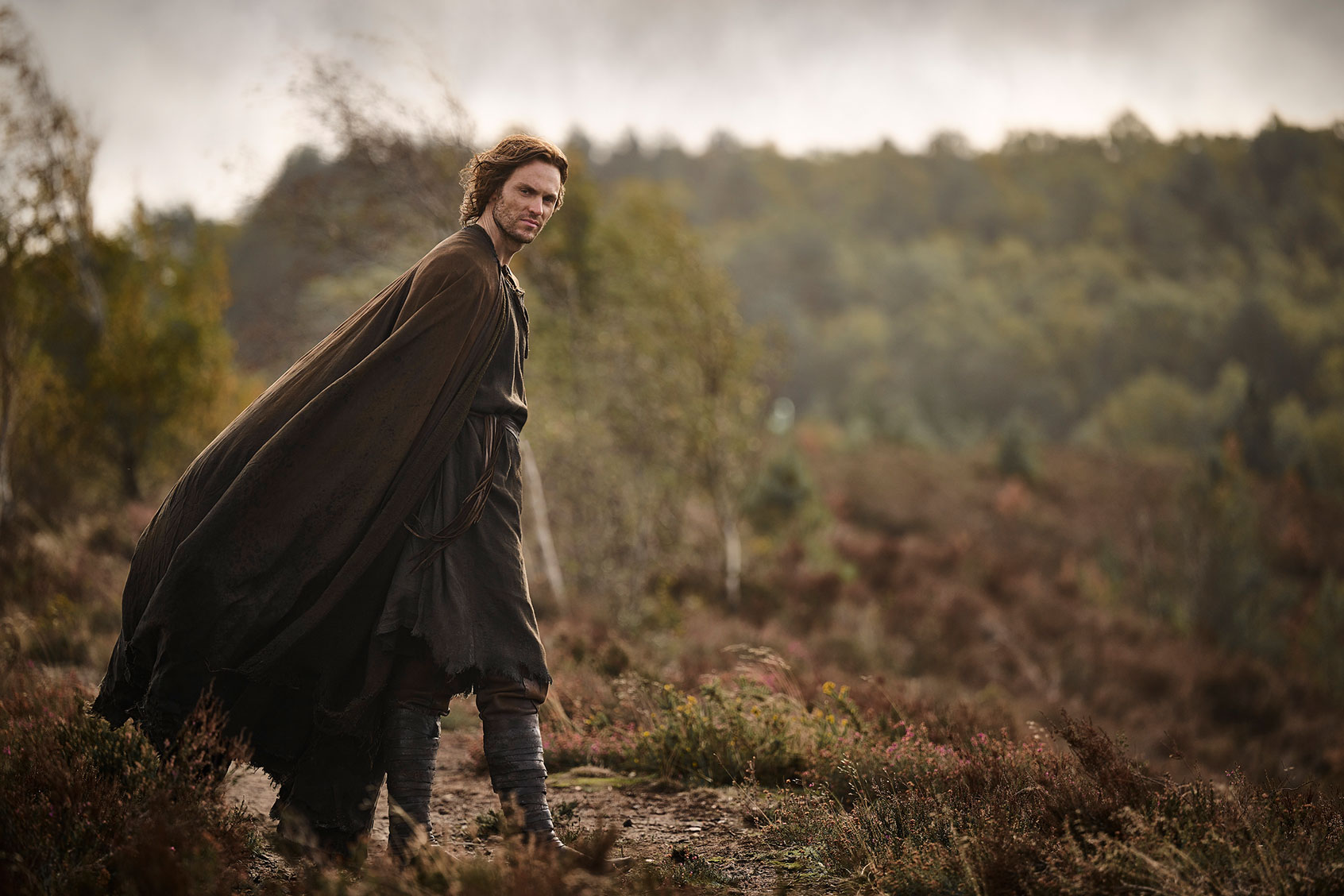
The Lord of the Rings: The Rings of PowerThe Lord of the Rings: The Rings of Power (Prime Video)

If this were 2024 Earth, Galadriel’s nearest and dearest would give her a shoulder to cry on, a weighted blanket to hide in and maybe keep her supplied with some warm lembas bread rolled in cinnamon and sugar with a tub of frosting on the side for dipping. 

But this is Middle-earth’s Second Age. Evil is corrupting every corner. There’s no time for tears and plenty for blame – and neither High King Gil-galad (Benjamin Walker) nor Galadriel’s closest confidante Elrond (Robert Aramayo) trust her judgment since she was grifted by a greasy cologne spokesmodel. Sauvage!

Worshippers at J.R.R. Tolkien’s altar may take issue with my boiling down high fantasy’s greatest epic into a “Love Is Blind” arc, but that’s what “The Rings of Power” is. That's meant as a compliment. This is a war story, no question. But every great epic has a soap opera's heart. Rather than cheapening such stories, it makes them more alluring.

This one happens to have a massive budget and a huge cast that has further expanded in this second season to include, among others, Rory Kinnear as Tom Bombadil and Ciarán Hinds as . . . you'll have to watch to find out.

Unlike the recently ended chapters of that other swords-and-sorcery TV show, this show’s second season juggles its characters and storylines seamlessly. The elves may be the main players, but Payne and McKay’s writers take pains to ensure we care just as much about the rancid politics in Númenor, where men chafe at the thought of being ruled by a woman Queen Regent Míriel (Cynthia Addai-Robinson). 
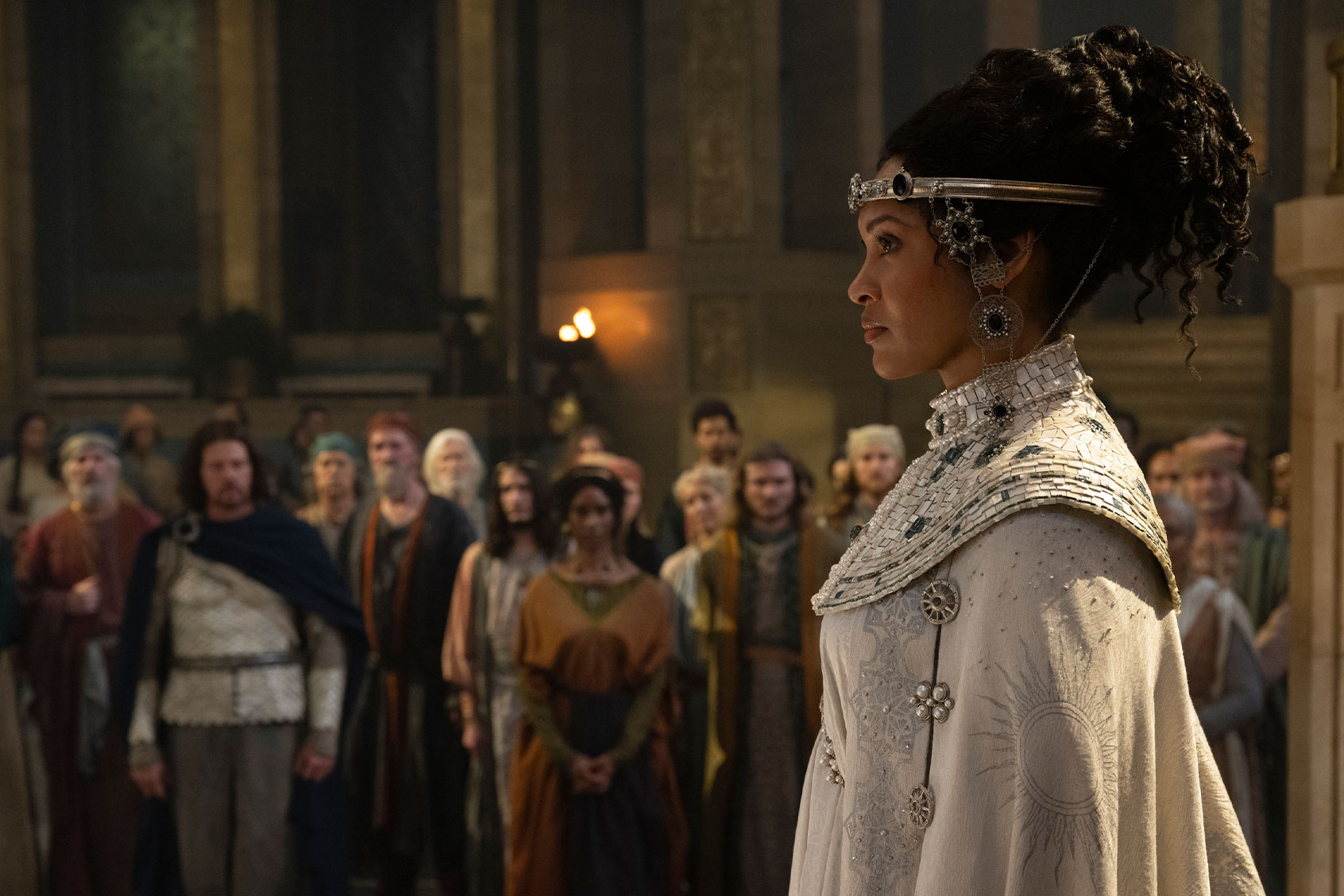
The Lord of the Rings: The Rings of PowerThe Lord of the Rings: The Rings of Power (Prime Video)

They help us invest in the woes besieging the dwarves and their prince Durin IV (Owain Arthur), along with his wife Princess Disa (Sophia Nomvete), who keeps him morally grounded as his father’s resolve weakens and his mountain's magic fails. They even conceptualize an engaging arc for Nori Brandyfoot (Markella Kavenagh) and nameless companion The Stranger (Daniel Weyman) who wields incredible power but doesn’t yet know how to control it. 

These are familiar stories, especially those for whom Peter Jackson’s “Lord of the Rings” trilogy was as influential as “Star Wars.” Recall, too, that the first of Jackson's films came out three months after Sept. 11, 2001, a time when American geopolitics radically shifted and then-president George W. Bush pushed the United States into a war that stretched on for two decades. 

Season 2 of “The Rings of Power” arrives at no less of a thematically pertinent time – not with a tale about a hot war (in its first three episodes, anyway) but an environment in which competing egos and greed are easily exploited by those set on conquest and control.  And it begins, as every story that you can’t put down does, with a long seduction.

We need your help to stay independent

Prime Video provided critics with a long spoiler list, which is easy enough to adhere to. There's plenty to talk about without blowing any secrets, starting with what we already know: the three elven rings are complete, and alluring to an extent as to transform iron wills from "Get thee behind me, Sauron" to "OMG, he went to Jared!" in the space of a glance. What that means for Middle-earth impact is anyone’s guess. The elves' fate entwines not only with the dwarves', Harfoots' and humans', but that of the land. 

The wisest of the elves make a persuasive argument that they'll use their rings for good, convinced as they are of their superior wisdom and morality. Of course, as Cate Blanchett explained at the top of “The Fellowship of the Ring,” that doesn't happen. The dwarves get seven rings, and men get nine. Season 2 is all about how that happens.

This is a war story, no question. But every great epic has a soap opera's heart.

"The Rings of Power" is also a work of persuasion, demonstrated in the way the writers convince us to care about all of its characters, including minor figures. They even do a fair job of making the orcs somewhat empathetic. This is an effect of introducing Adar, Sam Hazeldine’s cursed elf, who you can tell was some kind of zaddy before the place's original Morgoth messed up his face. 

To the orcs he’s known as Lord-father, and throughout the season his interactions with select minions bring out touches of their individuality and personality not seen in Jackson's films. There’s even a frame in which a lieutenant's mate is cuddling their infant. Mind you, they're still murderous snarling beasts that drool black ichor, but these commiserative glimpses illustrates a broader point about evil’s predilection toward indiscriminate violence in sole service of itself.
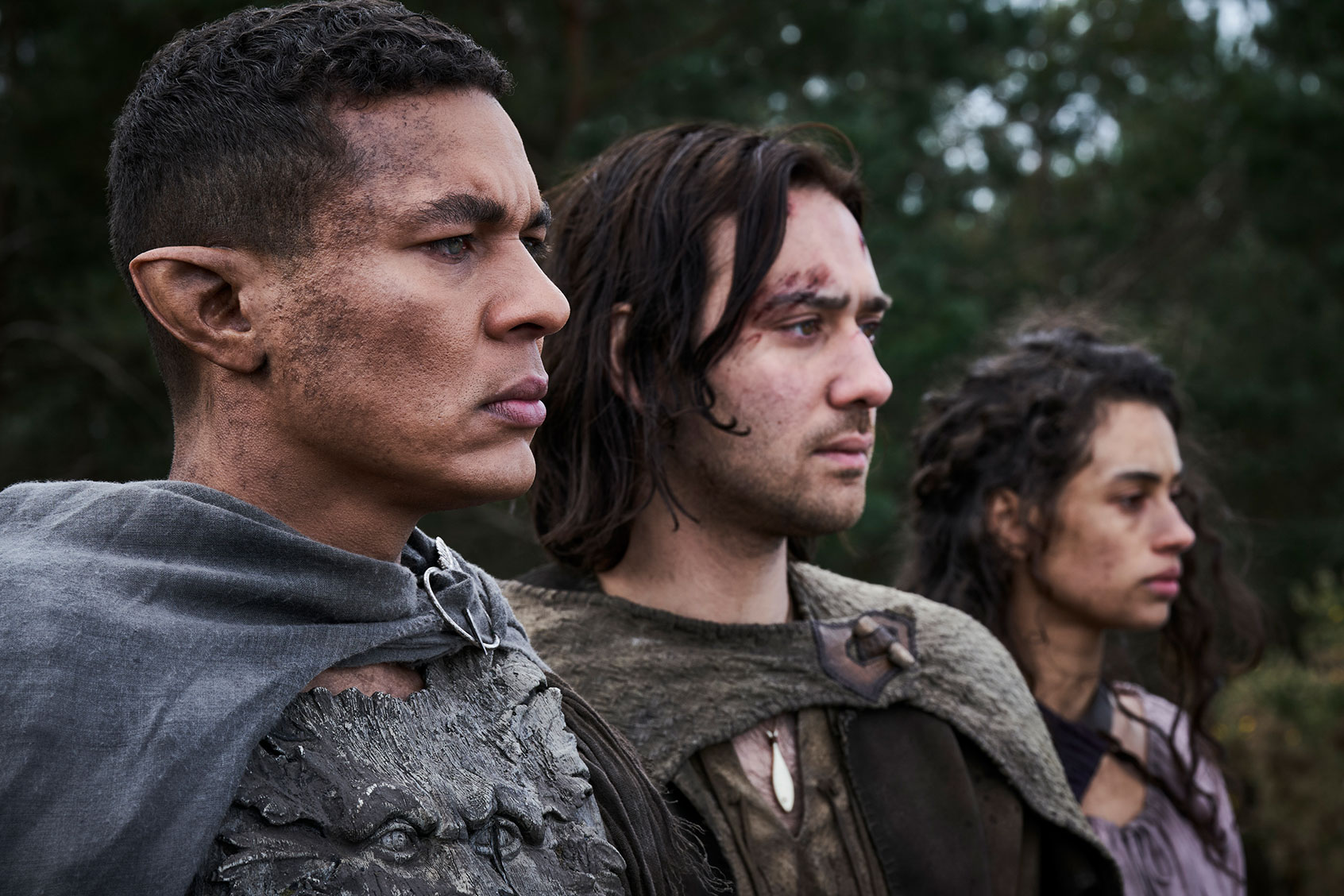
The Lord of the Rings: The Rings of PowerThe Lord of the Rings: The Rings of Power (Prime Video)

A broader view reaffirms how painstakingly rendered this world is, from its sylvan forests settings to its frantic battle sequences. The fight choreography is stunning as always, highlighting Clark's balletic movement along with that of the show’s Legolas equivalent, Ismael Cruz Córdova's Arondir, whose fetching broodiness intensifies across these new hours. (He has his reasons.)

The realm of men, meanwhile, is embroiled in paltry political battles as Míriel, who lost her sight in battle, struggles to prevent her cousin Pharazôn (Trystan Gravelle) from wresting the crown away from her.  Addai-Robinson’s bearing maintains the character’s regality, but this season her role is designed to be more in service of Lloyd Owen’s Elendil, father of Isildul (Maxim Baldry), whose fate was left in the air at the end of the first season. They’re cornered by a group of politicians who desire power more than to do what’s best for their people, a situation that may resemble our present reality more closely than we’d admit.

Of course, we needn’t worry too much about Isildur since we know he’s destined for much greater things, including fathering a line that lives on in Viggo Mortensen's Aragorn. Meanwhile Pharazôn failson Kemen (Leon Wadham) is such a worm that it feels like he's being set up for one of those flaming demises we’ll probably applaud. 


Want a daily wrap-up of all the news and commentary Salon has to offer? Subscribe to our morning newsletter, Crash Course.


Close students of Tolkien’s lore recognize that McKay and Payne have condensed this history, leaving certain developments up in the air and presenting others out of order with the original timeline. The showrunners deploy their twists and betrayals judiciously, ensuring even that which we know to be inevitable remains thrilling to watch. “House of the Dragon's" producers could learn a few things about energy and pacing from these eight episodes, including how to close a season with a gut-punch and leave us yearning for the next. 

There’s plenty of action throughout, none of which feels harried, and building to a grand and explosive confrontation that honors the scale of what Jackson wrought for the big screen without severing our emotional connection to the story. But the story’s timelessness grounds it in foreboding; this season has a lot to say about the rise of charismatic empty suits and the peril of trusting in shiny new promises.

“The Rings of Power” is a tale told well that’s also one of the most handsome productions on TV, backing its great looks with narrative substance and moving portrayals. That makes it the rarest of affairs: one we can give ourselves over to entirely, reassured that it hasn’t let us down yet.

Season 2 of "The Lord of the Rings: The Rings of Power" premieres Thursday, Aug. 29 with three episodes on Prime Video. New episodes stream weekly. 

“Everyone watches women’s sports”: When Simone Biles met Caitlin Clark

Some of the biggest names in U.S. women's sports came together on Wednesday in Indianapolis to watch a close game between the WNBA's Indiana Fever and the Connecticut Sun.

Legendary gymnast Simone Biles and track and field standout Gabby Thomas — each of whom garnered gold medals for Team USA in their respective sports at the Paris Olympics — were amongst those in the crowd at the game, cheering on the Fever's phenom rookie, Caitlin Clark. Clark helped the Fever eke out an 84-80 win after she racked up 19 points over the game, including three 3-point shots, helping her clinch the WNBA rookie record for most three-pointers in a season. 

After the game, Biles and Thomas linked up with Clark and her teammates for photos, with the Fever's X/Twitter account capturing the meetup moment and acknowledging how "ecstatic" the players were to meet the Olympians. 

“They were so excited. Oh my god. It’s like usually the boys will just pass and be like, ‘Yo.’ But they were so excited. That was so cool,” Biles can be heard saying in the video after the team departs.

Clark reposted the footage of her smiling alongside Biles and Thomas to her personal Instagram story, captioning it “lemme fan girl real quick."

"EVERYONE WATCHES WOMENS SPORTS so happy to be able to go support! my first of many WNBA games," Biles wrote in an X/Twitter repost of the Fever's clip. "So happy to be able to go support! my first of many WNBA games."


Like their shoppers, Costco employees hate the latest crackdown on membership-card sharing

Earlier this month, Costco announced that it will implement membership card-scanning devices at the entrance door of warehouses nationwide to prevent non-members from entering store grounds. The policy — which was met with mixed reviews from shoppers — recently garnered backlash from Costco employees, who took to the Internet to voice their complaints.

A Costco worker posted a lengthy rant on Reddit, claiming shoppers are bullying and harassing store employees over the membership card-scanning policy. 

“Members are irate about being mildly inconvenienced at the door by having to prove they are a member at a MEMBERS ONLY store,” the poster, u/gasbottleignition, wrote. “Members are irate about Costco trying to stop people from account sharing…Members are irate because Costco has policies that they AGREED to when they joined, which are being enforced.”

“Now, imagine being the low-level employee at the door that is instructed to enforce those policies.”

The user then detailed a few horrific examples of the “abuse and mistreatment” many employees have faced: “Calling them slurs. Getting in their faces. Swearing at them. Threatening them. Assaulting them. Spitting on them. Complaining to them.” They said they’ve seen “coworkers reduced to tears, crying because a Member decided that it was OK to take out their frustration (bully) on a woman standing at a scanner.” 

“We're just doing our jobs, people. Stop being like this,” the user continued. “That smiling face at the door is a low-level employee trying to do their job. They don't make policies. They have NO influence.”

Other Costco workers in the comments shared similar stories of dealing with angry, misbehaving shoppers. 

“I’m a supervisor and this guy tried to walk in the exit door and started arguing with our exit door staff (an old man in his 70s) so I stepped in,” said user u/Tgtt10. “He told me that what I am doing is illegal and that he has to be allowed to go to the pharmacy…He proceeded to say how what I’m doing is illegal and that I better watch out because his son works for the Department of Justice.” 

Many people sympathized with the workers and even called for Costco to start revoking memberships. “They need to [start] revoking memberships. Ban people,” wrote one user.


Want more great food writing and recipes? Subscribe to Salon Food's newsletter, The Bite.


“Harassing an employee for enforcing a policy seems like a fast way to getting your membership revoked,” said another Costco customer. A separate user wrote, “I will never in my life understand the need to be rude and mean to someone doing their job.”

Costco’s membership card-scanning policy was formally enforced more than a year after the big-box warehouse chain said it would find stricter ways to prohibit membership sharing. The company told CNBC back in June 2023 that stores were requesting to see cards with a photo at self-checkout registers — and a photo ID if a customer’s membership card doesn’t have a picture.

“Over the coming months, membership scanning devices will be used at the entrance door of your local warehouse,” Costco said in an August statement. “Once deployed, prior to entering, all members must scan their physical or digital membership card by placing the barcode or QR Code against the scanner.”

Costco added that guests must be accompanied by “a valid member for entry.”