Spring Offer: Get 1 Year, Save 58%

“War Criminal”: Rep. Rashida Tlaib protests Netanyahu’s visit to Congress

Michigan representative Rashida Tlaib protested Israeli Prime Minister Benjamin Netanyahu’s address to Congress, displaying a sign reading “War Criminal” and “Guilty of Genocide,” as his country’s attack on Gaza has killed nearly 40,000 people.

Tlaib, who also wore a keffiyeh to the Congressional gallery, is the first and sole Palestinian-American member of Congress. In a statement, the congresswoman described the invite to Netanyahu as “utterly disgraceful,” urging her colleagues to cease funding to the Israeli military. 

The series of Israeli military operations at the center of Tlaib's protest began after the October 7th terrorist attack by Hamas, so far displacing more than two million Palestinians. The International Court of Justice ordered a cease on such operations in May, citing the Genocide Convention 

While other congressional progressives opted to boycott the address, Tlaib’s act of protest was coupled with another powerful statement in bringing Hani Almadhoun, an international aid worker who saw family members killed by Israel, as a guest to the address.

“After witnessing his sister forced to eat animal feed, he and his family were determined to start a soup kitchen to feed their starving neighbors,” Tlaib wrote of Almadhoun in a post to X. “The Israeli apartheid regime is using starvation as a weapon of war, a war crime.”

Tlaib’s silent protest of the prime minister’s invitation to D.C. came a day after Republican House Speaker Mike Johnson warned chamber members that attempts to disrupt the address would not be tolerated. 

Tlaib, who has been outspoken in opposition to the Biden administration’s enabling of Israeli military action in Gaza, has broken with her Democratic colleagues and fellow members of “the squad” in not yet endorsing Vice President Kamala Harris for president. Harris herself skipped out on presiding over the address. 

Understanding Kamala Harris’ “brat” appeal

This summer, even our politics has been touched by Charli XCX's new album "Brat." 

Charli's Euro-club music has transformed into a lifestyle, an aesthetic and an internet phenomenon that has even tinged Vice President Kamala Harris lime green, the color of the musician's studio album.

After President Joe Biden bowed out as the Democratic presidential nominee and endorsed Harris, she's now having a viral moment when Charli subsequently tweeted, "Kamala IS brat." As Harris has increasingly gained popularity as a new leader of the Democratic party, the internet has embraced her personality as a fun example of a brat.

But what exactly is a brat, and why does this fit Harris?

Salon explains Harris' brat moment:

What is a brat?

According to Charli, being a brat is a hedonistic way of living in a person's womanhood and that includes being a mess, a "3-6-5 party girl" or a "city sewer slut.” 

The pop singer further explained that an example of a brat is a "girl who is a little messy and likes to party, and maybe says dumb things sometimes, who feels herself but then also maybe has a breakdown but parties through it. It’s very honest; it’s very blunt — a little bit volatile, does dumb things, but, like, it’s brat. You’re brat. That’s brat."

But also, Charli also shared that “It can go that way, like, quite luxury, but it can also be so, like, trashy. Just, like, a pack of cigs, and, like, a Bic lighter, and, like, a strappy white top. With no bra. That’s, like, kind of all you need,” she said.

OK, that doesn't really sound like the Vice President . . . or does it?

How does Harris embody a brat?

On July 21, Charli tweeted after Harris' presidential bid was made known, "Kamala IS brat." Evidently, the singer felt there was something about the Veep that resonated with the brat mindset. While being a "brat" perhaps should not be taken literally, the biggest clue to understanding how Harris has seemed to achieve honorary brat status is when Charlie mentioned, "It’s very honest."

The way Harris comports herself is not just relatable, it's human. Unlike Biden's mixed attempt to appeal to younger voters through Dark Brandon memes, Harris' online popularity and brattiness seemingly stems from her personality, through her words, dances, laughter and jokes.

In a viral video seen more than a million times on X, Harris utters her most quotable line, "You think you just fell out of a coconut tree?” from a 2023 speech. The edit flashes frames of Charli's album cover over the video. Then the video transitions from the speech to various clips of Harris with the Charli song "Von Dutch" playing over the video. 

More videos of the coconut tree quote have been edited and remixed into songs like Charli's viral TikTok song "Apple," "Not Like Us" by Kendrick Lamar, "Rude Boy" by Rihanna and many others. The videos, viewed millions of times, are gaining traction online simultaneously as Harris has already garnered $100 million in donations in the first 48 hours of her campaign. 

We need your help to stay independent

Her campaign spokesperson Kevin Munoz told The Associated Press, “The historic outpouring of support for Vice President Harris represents exactly the kind of grassroots energy and enthusiasm that wins elections."

While Charli also highlighted the connection between Harris and the brat aesthetic, Harris's team has also played into Harris' brat moniker. The Kamala HQ account on X has cheekily adopted the lime green background and font from Charli XCX's "brat" album. So far, Harris herself has not acknowledged her new title, but isn't that just like a brat?

Humanity will “scorch and fry”: The hottest day in human history just happened twice in a row

On Sunday, Earth experienced its hottest day ever recorded in human history, according to the European climate service Copernicus. That record was then broken the very next day, underlining the troubling trajectory global temperatures have taken in the last several years.

The European Union's Copernicus satellite produced preliminary data showing the global average temperature was 17.15º Celsius (62.87º Fahrenheit) on Monday; it had been a mere 0.06 degrees Celsius (0.1 degree Fahrenheit) cooler on Sunday, which still broke the previous record set last year.

In a statement to the Associated Press, former head of U.N. climate negotiations Christiana Figueres said humanity will "scorch and fry” if the world does not implement "targeted national policies have to enable that transformation.”

As humans continue to burn fossil fuels, we release greenhouse gases like carbon dioxide and methane, nitrous oxide that trap heat that would otherwise radiate back out of the planet's atmosphere. Over time this global heating pushes the planet past its limits, creating the conditions which are cooking us like never before. In fact, the last 13 months straight have been the hottest in recorded human history, which is making Earth's weather more "weird." By the end of of 2023, climate change had broken records for hottest summer, global surface temperatures, ocean heat content and ice melt.

The first two months of 2024 were also the hottest on record, and after more temperature records were broken in April, Copernicus deputy director Samantha Burgess said in a statement that although the Paris climate accord threshold has not been breached, "the reality is that we’re extraordinarily close, and already on borrowed time." The Paris climate accord estimates that humans should keep global temperatures to under 1.5º Celsius above pre-industrial levels to avoid serious long-term damage to our planet.

Inside a new experiment to find the climate-proof coffee of the future

David Ngibuini is a second-generation coffee farmer in Kenya's central highlands, an area of cool temperatures and rich volcanic soil that's long been one of the best places to grow coffee on Earth. On an afternoon in May, after a couple of months of rain, his 11-acre plot is lush. Six thousand trees — nearly all of them varieties of Coffea arabica, the most widely consumed and best-tasting coffee species — sit in neatly planted rows, their waxy, deep green leaves shimmering in the sun. Workers sort a pile of freshly-picked cherries — the red fruit that contains the beans that will be fermented, dried, and shipped to roasters around the world.

The vigor of this year's harvest masks a deeper, existential struggle. Arabica coffee, which has been farmed in Kenya since the 19th century, is especially vulnerable to climate change. One 2022 study, from the Zurich University of Applied Sciences, projects the amount of land most suitable to growing it will fall more than 50 percent by 2050. 

Ngibuini's farm, Maguta Estate, is already feeling the impact. Rising temperatures have inhibited the growth of cherries and made trees more vulnerable to diseases and pests. Rains, which used to come reliably twice a year, are increasingly erratic, which leads to wide swings in volume and quality. In his best year, spanning 2020 and 2021, Ngibuini processed nearly 50,000 pounds of beans, sourced from his farm as well as others in the area. The next year, following a prolonged drought, output was down almost 80 percent. 

"We didn't even have a major pest attack," he said. "The drop was just because of the climate."

As coffee's precarity is rising, so is demand: According to some estimates, global consumption, currently 2.3 billion cups per day, could double by mid-century. The projected supply gap has left the industry scrambling for possible fixes, including non-arabica coffee species and caffeine-infused alternatives made from substances like chickpeas and date seeds.

For coffee purists, though, and millions of farming families like Ngibuini's, the most promising solution might be a newfound push to improve adaptability, and yields, of arabica itself. That's the idea behind Innovea, a new project led by the nonprofit World Coffee Research, that seeks to supercharge the breeding of improved arabica varieties unique variations of a given species that have been selected for certain characteristics. In an industry that has long neglected to fund research and development, Innovea, a collaboration with government-affiliated research institutions in nine partner countries, including Kenya, is widely considered to be the most sweeping coffee breeding initiative in decades.

According to Vern Long, CEO of World Coffee Research, or WCR, which is based in the United States and funded by the coffee industry, new varieties are one of the best ways to "improve a crop's productivity and reduce risk." Innovea's goal, she said, is to develop trees that are optimized for a range of production environments — and ultimately give farmers more climate-resilient options.


Although nearly every commodity faces threats from a warming climate, arabica is especially picky. Its trees perform best in areas with moderate rainfall and temperatures that stay between 59 and 82 degrees Fahrenheit. This typically means regions of the tropics at least 3,000 feet above sea level; Ngibuini's farm near Mount Kenya, Africa's second-highest peak, sits at a cool 5,700. As temperatures warm, many expect cultivation to shift to even higher altitudes. This, however, has its limits. "The higher up you go, the less land there is available," said Roman Grüter, an environmental scientist who led the Zurich University of Applied Sciences study. Farmers shifting upwards, he added, are more likely to encounter slopes that are too steep, or protected conservation areas.

Arabica is so fragile in part because its gene pool is surprisingly narrow. The 58 varieties that are widely grown today are all derived from a subset of wild forest coffee native to Ethiopia, which was brought by Arab traders to Yemen in the 15th century and later spread by European colonizers across Asia, Africa, and Latin America. Because it is a slow-maturing tree crop, new variety development, which involves breeding over several generations, can take decades. Coffee R&D, like much crop innovation, is largely state financed — and in the low- and middle-income countries where arabica is grown, governments are often strapped for cash. While Brazil and Colombia, the two largest arabica producers, have a history of strong government support for coffee research, many of their counterparts have long lacked sufficient resources for variety development. A study commissioned by WCR in 2023 estimates that just $115 million is invested in coffee R&D each year, less than one-tenth of one percent of coffee's $200 billion retail value.

"If you're a low-income country, and you need to pay for roads and clinics and teacher's salaries, there's a strong pull to put revenue from coffee into those things instead of research," Long said. 

For much of coffee's history, the importers, roasters, and retailers of the rich world haven't put much money into crop improvement either: As long as they had a reliable supply of beans, they didn't have to. A wakeup call came in 2012, when shifts in temperature and rainfall linked to climate change triggered an outbreak of coffee leaf rust, a debilitating fungus, that would affect Latin America for years. A group of coffee businesses established WCR that year as a way to facilitate collaborative R&D; the organization today is funded by 177 member companies. 

WCR began by conducting a trial of existing varieties, planting 31 of them from around the world in a range of climate zones in 15 countries. It also established a project to develop and trial new "F1 hybrids," varieties created from genetically distant parents that tend to be higher yielding but are also more expensive to cultivate.

Innovea, which launched in 2022, builds upon both efforts. To start, WCR breeders created 30 novel crosses from 16 parent varieties chosen based on their performance in prior trials. WCR then shipped 5,000 resulting seeds — each of them genetically distinct — to government researchers in Kenya, Rwanda, Uganda, India, Indonesia, Costa Rica, Mexico, Peru, and Hawai'i. Planting on experimental sites began this year and will continue into 2025.

After six years, when the new trees have matured and produced several harvests of their own, many will have traits that are undesirable, Long said. Some, though, will be "high yielding, disease resistant, and taste good," and will be moved to further trials or used to make new crosses that could result in even better trait combinations. While the breeding is done using traditional methods, it's being aided by low-cost genetic sequencing technology, which allows WCR and partner breeders to correlate observed traits with plant DNA and make new crosses faster.

"The idea is to identify the genes we're looking for and move on with those plants instead of others," said Jane Cheserek, lead breeder at Kenya's government-run Coffee Research Institute, WCR's Kenyan partner. 


Innovea is not the only private sector-funded coffee breeding effort: At least two big industry players, Nestlé and Starbucks, have variety-development programs in-house. 

What makes Innovea stand out is its scale and its collaborative approach. Although coffee-exporting countries are natural competitors, Long said, partner governments have accepted that it's in their best interest to cooperate on R&D and allow their genetic material to move across borders. WCR expects to make 100 new pre-commercial varieties available for trials by 2030 and will then work with partner governments to release a subset of those to farmers as soon as 2036. Ultimately, these "finished varieties" will be owned by governments, rather than by WCR or its financial backers. 

The effort "amps collaboration up to a new level," said Stuart McCook, a historian at the University of Guelph in Ontario who studies coffee and other tropical commodities and who is not involved in Innovea. The program, he added, represents the first coffee breeding project of such a global scope since a Portugal-led effort to develop and circulate leaf rust-resistant coffees in the 1960s. 

While McCook believes that new variety development is vital to the quest to make coffee more resilient, he and many other experts argue it's not a panacea. As coffee growing regions warm, he said, innovations in breeding will need to be combined with adaptations in farming practices, like the introduction of "shade trees" — other types of trees to block the sun — and efforts to regenerate depleted soils. Coffee growers around the world, especially at the 12.5 million smallholder farms that produce 60 percent of the world's supply, will continue to face a global market defined by wild swings in price that at times mean selling harvests for below the cost of production — which in turn makes investing in these adaptations even harder. One 2018 study by the Kenya Coffee Platform, an industry association, estimated that only 49 percent of Kenya's coffee smallholders earned a "living wage" from the crop. Kenya's coffee output today is less than half that of its peak in the 1980s, in part because younger generations are turning to more profitable crops, like macadamia nuts or avocados, or selling land to developers. On the outskirts of Nairobi, Kenya's capital, many areas that once brimmed with arabica have been paved over for housing estates or shopping malls.  

Ngibuini, 32, is somewhat insulated from the market's excesses: he sells most of his beans, which have won awards for quality, to a specialty buyer at a premium. In recent years he's planted shade trees, which have also boosted soil nutrients and led to improved cherry quality. 

What he cannot do, at least for now, is plant the perfect variety of coffee. While he has several on his farm, all of them come with tradeoffs: One Kenya-developed F1 hybrid, for example, which he chose for its disease resistance, struggled more than other varieties in the recent drought. Ideally, he'd plant a variety that could resist the coffee berry borer, a beetle that feasts on coffee cherries, and that would ripen with greater uniformity. The erratic rains, he said, mean cherries are ripening less consistently than ever, which makes harvesting and processing less efficient.    

This variety, today, remains hypothetical. Yet in the years ahead, if Innovea lives up to its promise, Ngibuini will have more control over the types of coffee trees he cultivates — so he can better play his part in saving the morning brew for all of us.


This article originally appeared in Grist at https://grist.org/food-and-agriculture/inside-a-new-experiment-to-find-the-climate-proof-coffee-of-the-future/.


Grist is a nonprofit, independent media organization dedicated to telling stories of climate solutions and a just future. Learn more at Grist.org


"This story was originally published by Grist. Sign up for Grist's weekly newsletter here."

Trump shooter searched for details about the JFK assassination, FBI reveals

Before attempting to shoot Donald Trump, the would-be assassin went to Google and typed: “How far away was Oswald from Kennedy?”

As the Associated Press reported, Thomas Matthew Crooks searched for the answer to that question on July 6, the same day the Trump rally in Butler, Pennsylvania, was announced. Lee Harvey Oswald is the man who killed President John F. Kennedy on. Nov. 22, 1963. 

The FBI found the search after recovering Crooks’ laptop in an attempt to discern his motive for shooting at Trump.

“A lot of the usual repositories of information have not yielded anything notable in terms of motive or ideology,” FBI director Christopher Wray told the AP. Crooks also had photos of President Joe Biden saved on his laptop, though he reportedly was fixated on Trump in the days leading up to the shooting, Wray said.

Though Crooks’ intent remains unknown, the FBI revealed that Crooks flew a drone “around the area” just hours before the rally began. The drone was in the air for approximately 11 minutes, CNN reported

“It was almost like giving him a rear-view mirror of the scene behind him,” Wray told CNN. 

The assassination attempt on Trump has been widely considered as a major failure on the part of the Secret Service, with many questioning how it could happen at such a high-profile event.

The scrutiny has been so severe that the previous director of Secret Service, Kimberly Cheatle, resigned this week after lawmakers from both parties repeatedly called for her to do so. 

The FBI will continue its investigation into the shooting, Wray promising lawmakers that his agency would “leave no stone unturned."

U.S. District Court judge is considering food stamp backlog case against Alaska’s health department

U.S. District Court Judge Sharon Gleason is considering a case that’s calling for stricter oversight of Alaska’s health department after extreme delays in food stamp distribution left thousands of residents without aid for months, the Alaska Beacon reported Thursday.

In January of last year, ten plaintiffs sued the state, claiming the Department of Health (DOH) failed to process Supplemental Nutrition Assistance Program (SNAP) applications and issue eligibility determinations within the time frames required by federal law. As a result, many Alaskans were left “without critical food assistance in the coldest months of the year,” according to court documents.

The plaintiffs in the class action complaint include Della Kamkoff, John Andrew, Kayla Birch, Rose Carney, Tereresa Ferguson, Zoya Jenkins, Troy Fender, Rhonda Conover, Autumn Ellanna and Nataliia Moroz. They are “seeking preliminary and permanent injunctive relief and declaratory relief requiring” the DOH to timely process new and recertification SNAP applications; provide applicants with written notice of delays in processing their application that convey corresponding fair hearing rights; provide applicants with written notice of their eligibility for assistance; provide interpretation services and translated materials to applicants and recipients; and ensure that SNAP applicants can apply for benefits on the date of their first contact with the DOH.

Health Commissioner Heidi Hedberg said in December that the backlog was caused by a 2021 cyberattack and an influx of paperwork after the state declared COVID-19 was no longer a public health emergency. However, employees within the Division of Public Assistance told KTOO that the problem actually stems from mismanagement, understaffing and workforce cuts within the division. Workers said they were harassed and even threatened with violence. They added that the issue is systemic and has gone ignored for years. 

According to data from the United States Department of Agriculture, Alaska had a 57% payment error rate for administering food stamp benefits — a percentage that is more than five times the U.S. average of 11.5%. Public assistance advocates told Anchorage Daily News that the error rate, which “measures how accurately a state agency processes federal benefits,” underscores the Division of Public Assistance's longstanding struggle to process applications for food stamps and other federal benefits for countless residents.    

The recent food stamp backlog case was delayed for a year and a half because the court granted the state several stays to allow it to remedy the issues, according to the Alaska Beacon. Gleason refused to grant stays in February after the state relapsed into another backlog of food stamp applications.    

State officials said they have worked through the latest wave of backlogs and are issuing benefits in a timely fashion. However, the plaintiff’s latest filing says some people are still experiencing delays.

Gleason heard oral arguments Thursday in Anchorage.

Lael Harrison, representing the Alaska Department of Health, argued that a court order urging the DOH to speed up food stamp distribution would be pointless. 


Want more great food writing and recipes? Subscribe to Salon Food's newsletter, The Bite.


“This proposed order…is not sufficiently specific in terms that the director of the Division of Public Assistance could then know how to apply it and know how to avoid risking contempt through her actions going forward,” Harrison said, citing the Federal Rules of Civil Procedure.  

She added that a preliminary injunction would not fix the delays in application processing that the state is already working to solve. 

“The Division of Public Assistance isn’t saying ‘Somebody else has to figure out what we got to do.’ They figured out what they got to do. They’re doing it. You can see the results from it already,” she said. “And so what more is this adding? What does this tell them that they need to do that they’re not already doing?”

Nick Feronti of the Northern Justice Project, who is representing the plaintiffs, offered a rebuttal, saying, “If we were in a state where the timeliness percentage was 20% or 10% and the state got up and said, ‘We’re doing everything we could do,’ there’s no way a federal judge would say, ‘Okay, it’s all good.’”

“A federal judge’s power does not stop just because the state runs out of ideas.”

Gleason said she would “take the matter under advisement,” per the Alaska Beacon. She did not say when she’ll make a decision.

A multi-state Listeria outbreak linked to deli meats has killed two and sickened 28, CDC warns

The Centers for Disease Control and Prevention (CDC) has issued a warning about a multi-state Listeria outbreak connected to sliced deli meats. At this time, the outbreak has resulted in two deaths and 28 illnesses — all of whom required hospitalization — the agency specified in an investigation notice released Friday.

Specific cases have been reported in these states: Georgia, Illinois, Maryland, Massachusetts, Minnesota, Missouri, New Jersey, New York, North Carolina, Pennsylvania, Virginia and Wisconsin. The CDC noted that the outbreak has likely been happening for months and may not be limited to the states with known illnesses. 

The first reported illness occurred in late May. The most recent reported case occurred on July 5, per the CDC. 

According to interviews conducted by public health officials, 16 individuals said they had eaten sliced meat from a deli in the month before they developed symptoms. No illnesses have been reported or linked to packaged deli meat, the CDC said. 

The CDC has not been able to identify what specific meat is responsible for the outbreak, although most individuals who were sickened in the outbreak said they ate turkey, liverwurst or ham. DNA testing further revealed that while the meat came from different grocery store delis, the bacteria that made consumers sick were genetically similar.

Symptoms usually begin within two weeks after eating food contaminated with Listeria but may start as early as the same day or as late as 10 weeks after consumption. Listeria is “especially harmful to people who are pregnant, aged 65 or older, or have weakened immune systems,” the CDC warned.

The investigation is ongoing. No recalls have been issued.

A pacifier for the mind: Biden and Trump conspiracy theories are America’s toxic coping mechanism

It’s been a wild month for conspiracy theories in America. When President Joe Biden announced he would step down as the Democratic presidential nominee, fringe conjectures have spread regarding his whereabouts. Specifically, many were speculating whether or not he’s alive, though his first public appearance since contracting COVID on July 17 should hopefully answer that question.

Just a week before, when a 20-year-old gunman opened fire at a former President Trump campaign rally, many people also gravitated toward conspiracy theories to make sense of what happened. People on both sides of the political spectrum latched on to various strains of viral misinformation.

Some on the left believed the assassination attempt was staged in order to garner sympathy for the former president. Others on the right blamed the assassination attempt on the Democrats. The degree of factual content inherent in these conspiracy theories isn’t as relevant as the fact that they keep sprouting and many believe them at face value.

It's part of a much larger trend in America, but also across the globe. In 2022, researchers found that beliefs in conspiracy theories have increased over the last 50 years in seven different nations. In a time of chaos and uncertainty with an unprecedented presidential race, mental health experts say part of the appeal is that conspiracy theories are being used as a coping mechanism in chaotic times.

“Believing in conspiracy theories is a way for people to try to calm their nervous system during times of upheaval or uncertainty,” Rachel Bernstein, a licensed marriage and family therapist and host of the Indoctrination Podcast, told Salon. “It's a way to have an answer and to explain the unexplainable, and to ascribe meaning to an event that seems mysterious or unbelievable.”

When the human brain perceives a threat, or something stressful, it activates the nervous system and sends it into a fight-or-flight response. When this happens, a person might feel like they are under attack constantly. A person’s heart rate will increase and oxygen flows faster. Psychologist Dr. Carla Manly told Salon believing in conspiracy theories “satisfies” the human need for certainty and can temporarily soothe an overactive nervous system.

"Believing in conspiracy theories is a way for people to try to calm their nervous system during times of upheaval or uncertainty."

“Human beings do not like uncertainty, it increases our stress response, and that's where the coping mechanism comes in,” Manly said. “As humans, we prefer to have a certain answer — and in politics, as with many other elements of life, certainty isn't really present.” 

Hence, the prevalence of conspiracy theories in today’s political climate and in crisis-times of the past. Indeed, after the 9/11 terrorist attacks, conspiracy theories swirled and still cloud the assassination of John F. Kennedy and the death of Martin Luther King Jr. For people who need to have a sense of certainty, Manly said, conspiracy theories help them confirm their political and social biases as well. 

“It feels satisfying,” she said. “It feels safe, and reassuring.”


Want more health and science stories in your inbox? Subscribe to Salon's weekly newsletter Lab Notes.


But Bernstein warned it’s just a band-aid fix kind of coping mechanism. In other words, it can provide people with a short-term relief, but not a long-term one. 

“The inherent issue in it, though, is that it doesn't ultimately lessen anxiety but rather often gets people quite riled up, feeling they need to protect themselves more, spread the word to others for their protection, look out for other perceived dangers to protect themselves,” Bernstein said. “And not rest for a moment while looking for new information about conspiracy theories in the hope of finding evidence to prove the theories are correct.”

Bernstein added that specifically after the assassination attempt of Trump, the world was drawn in by conspiracy theories on both sides because there was also something “exciting” and “dramatic” about them which allowed the conspiracy theories to serve as a “distraction” when news in the world was “troubling.” 

“It gave people on both sides of the aisle a perception of having a mystery to solve, a way to be drawn in, distracted, so they were, to a certain degree, protected from looking at what just happened and feeling the weight of it,” Bernstein said. “And seeing that it is a concerning event and a concerning trend, no matter who you were planning to vote for in the election.”

Bernstein alluded to an important point: believing in conspiracy theories can create a sense of belonging. Cult mediation specialist, Patrick Ryan, told Salon in a phone interview it reinforces a feeling of “being special” and feeling connected to “a piece of knowledge” that other people don’t have, which can be especially effective in unstable times. 

“When you're in times of uncertainty and you don't know what's going on, people default to their sort of tribes,” Ryan said. “People gravitate toward these kinds of tribal, simplistic understandings of complex issues.”

Manly added that conspiracy theories enable people to “create a community of shared beliefs.”

We need your help to stay independent

“For many people who are isolated, they really like having people come together and say, ‘Yes, it was all rigged; there was no assassination attempt,’” she said. “Now we have community, you have this shared collective of people that you don't likely really know, because many of them are online, but you feel as if you're not isolated and as if you’ve created community — another coping mechanism.” 

A 2022 paper published in the scientific journal PNAS proposed that one major driver of conspiratorial beliefs is stress. In the paper, the authors argued that stress amplifies dichotomous thinking — essentially a black and white worldview. Something is either right or wrong, good or bad, with no room for nuance. Notably, the authors suggested an interesting solution: improving basic social services to ease societal stress, which could effectively decrease conspiratorial thinking in society. "Measures reducing social stress, including economic policies such as universal base income, may be the most effective ways to counteract this vicious cycle," the authors wrote.

Balancing nuance, Manly added, is hard — but it is also one way out of conspiratorial thinking. In part because believing a conspiracy theory inadvertently can be isolating itself, despite creating a false sense of security that is “based in fear.”

Manly said she usually proposes that clients ask themselves: “How can I get out of this firmly entrenched belief over here, that is maybe isolating me or causing me angst, and get into a place where I'm able to still hold on to my beliefs, whatever they are, but also allow other people to have theirs in a very open way?”

“Making history in the completely wrong way”: JD Vance is really unpopular and “dragging Trump down”

Sen. JD Vance, R-Ohio, is making history as Donald Trump's 2024 running mate, but not in the way that the Trump campaign had hoped. According to a CNN survey taken after the Republican National Convention, Vance has an approval rating of -6 points, making him the first vice presidential nominee to enter the general election with a negative rating since 1980.

The average rating for a running mate after a party convention has been +19 points.

"Frankly, I don't really understand the pick, and apparently neither do the American voters," CNN data analyst Harry Enten said on Tuesday's OutFront with Erin Burnett. Vance, he said, is "dragging Trump down."

Trump may have picked Vance as his running mate to fire up his MAGA base in an anticipated campaign against President Joe Biden, but a changed battlefield with Vice President Kamala Harris at the helm of the Democratic ticket may lead him to view him as a liability more than an asset.

With Trump struggling to appeal to moderate women, the former president may rue choosing a man who ran for Senate on a hardline anti-abortion stance, criticized childcare subsidies as "class war against normal people" and suggested that married women would be selfish for divorcing their abusive husbands, saying in 2021 that "one of the great tricks that the sexual revolution pulled on the American populace" was "making it easier for people to shift spouses like they change their underwear.”

When running for Senate in 2022 with Trump's endorsement, and before the Supreme Court overturned Roe v. Wade, Vance declared that he would back a nationwide ban on abortion, even in cases of rape and incest. He now supports allowing states to decide on abortion policy, a stance that allows to stay in lockstep with Trump's messaging. Since the Supreme Court decision, 14 states, all with GOP legislatures, have passed total abortion bans, with many others instituting partial bans or severely restricting people's ability to get an abortion.

We need your help to stay independent

Even Vance's purported appeal among white working-class voters appears overstated. He won Ohio in his 2022 Senate election by 6 points; by comparison, Trump won by 8 points in 2020 and Gov. Mike DeWine carried the state in 2022 by 25 points. Among white voters without a college degree, Vance, with a 31-point lead over Democrat Tim Ryan, also lagged behind Trump and DeWine, who won by 36 and 45 points respectively.

"Pretty much every Republican wins white working-class voters," Enten said. "And if you look here again, the margin Vance put up was the weakest performance of any major Republican."

Since being elected to the Senate, Vance has built a reputation not only as a right-wing culture warrior but also as one who questions foreign interventions and pro-corporate economic orthodoxy. In reality, though, Vance enjoys close ties to tech billionaires and embraced calls to bomb countries like Mexico and Iran.

Vance, who never held political office before 2023 but won fame from his "Hillbilly Elegy" memoir, has less government experience than former California Attorney General and U.S. Senator Kamala Harris, despite the oft-repeated GOP claim that the latter was an unqualified "DEI hire" by Biden due to being a Black and Indian-American woman. And Vance has turned in a mixed performance on the campaign trail, struggling to turn anti-woke culture war material into punch lines.

"It is the weirdest thing to me, Democrats say that it is racist to believe — well, they say it's racist to do anything. I had a diet Mountain Dew yesterday, and I'm sure they're going to call that racist to you," he told a crowd in Ohio, to paltry laughter. "It's good," he emphasized, before laughing himself and saying "I love you guys."

Apple’s “Time Bandits” reboot is a worthy journey, venturing more broadly through history

Society’s trend toward historical ignorance is nothing new or recent. Terry Gilliam’s original “Time Bandits” presents it as a kind of passive villainy, although if you were among the kids who saw it in 1981 you might not have recognized that.

Instead, Gilliam banked on the relatable appeal of making a nerdy little boy that nobody listens to, his parents least of all, something every child understands. But when Kevin Haddock is drawn into the adventures of six small beings leaping between portals in space and time with a stolen map, his knowledge becomes his superpower.

Apple TV+'s modern “Time Bandits” doesn’t change this, although the 2024 version of Kevin (played by Kal-El Tuck) is geekier and more settled into his outcast status than the boy who actor Craig Warnock originated some 43 years ago.

Whether the plot loses something significant in casting Lisa Kudrow and four other average-sized actors instead of casting little people in those roles as Gilliam did in 1981 is also debatable. Less so, we should say, than the fact that such meaty roles remain rare for actors with dwarfism, as the granddaughter of Jack Purvis, who plays Wally in the original movie, pointed out in 2022.

"'Time Bandits' is the only film that's ever represented people like me in a way that isn't seen as a goblin or one of Snow White's seven little men,” Abbie Grace Purvis shared in a TikTok video that has since vanished. "This was a film that changed the times and it was ahead of the times, to be honest, because people like me weren't treated the same as they are now.

"For a generation that is so big on talking about inclusivity and diversity and making sure that everyone's heard, this whole casting choice just seems absurd," Purvis added.

The revival’s creators Jemaine Clement, Iain Morris and Taika Waititi took some of that criticism to heart, writing little people into the show and setting them up to play more expansive roles if Apple TV+ picks up a second season.

Said renewal depends on whether enough people who loved Gilliam’s original movie show up for this family-friendlier update with their children and their children’s children. And just like Kevin and his friends are never quite sure where they’ll end up next, the show’s popularity is anyone’s guess.

How many Gen Z and Millennials are familiar with “Monty Python” or Gilliam’s Trilogy of Imagination? That's hard to say, along with whether they’ll appreciate the film's “every expense was spared” craftiness. 

Time BanditsTime Bandits (Apple TV+)Gilliam’s more amply budgeted and Oscar-nominated films “Brazil” in 1985 and 1988’s “The Adventures of Baron Munchausen” loom larger in the memory. But “Time Bandits” has a fierce cult appeal partially comprised of a crowd that probably crosses over with Waititi and Clement’s “What We Do in the Shadows” faithful. 

Don’t discount the revitalizing cinematic appeal of traveling beyond the usual Western civilization circles.

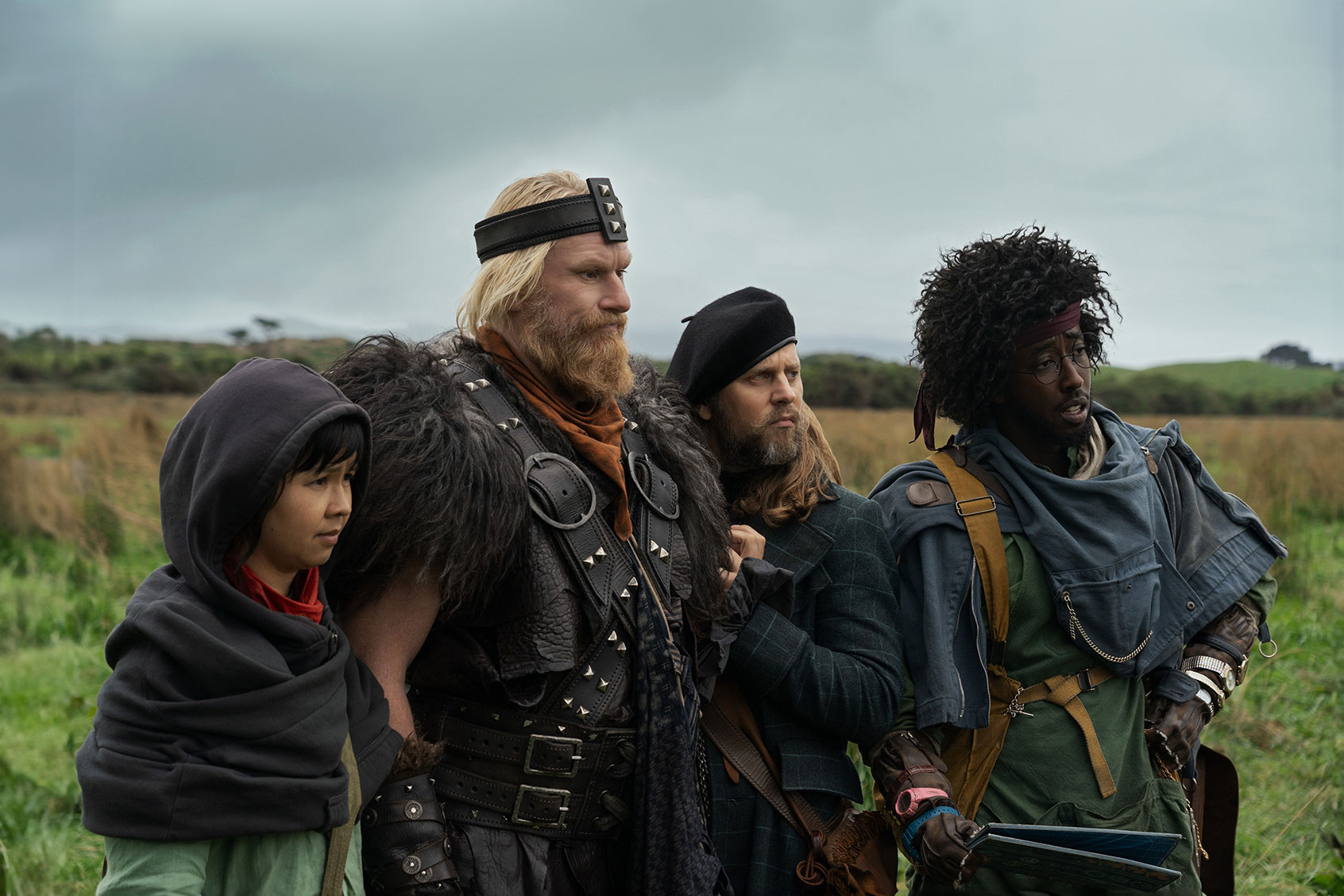
Their bandits aren’t limited to brief touchdowns in ancient Greece, the Napoleonic era and the Titanic. After Kudrow’s Penelope and her companions Bittelig (Rune Temte); Alto (Tadhg Murphy); Widgit (Roger Jean Nsengiyumva), and Judy (Charlyne Yi) crash through Kevin’s bedroom by way of a time egress in his closet, he tags along as they hopscotch through time, space and continents. They plop down in most of their destinations accidentally, since Widgit, the map’s keeper, is an inept navigator. Along with Bittelig, the group’s strong man, Alto the thespian, and Judy the empath, everyone nonchalantly reminds Kevin of how boring he is  while also proving they need him.

It takes about half the season for the plot to find its momentum, but don’t discount the revitalizing cinematic appeal of traveling beyond the usual Western civilization circles for keeping our attention until the pace picks up.

Kevin and the bandits drop in on the Mayan empire at its height, witness the sacking of Troy and accompany a massive pilgrimage to Mecca embarked on by the richest person in history — Mansa Musa, who ruled the West African empire of Mali. None of this makes them better thieves, but that was never this story’s point.

Having 10 episodes to play with removes much of the movie’s tendency to hasten past the story’s few poignant moments, although the writers file the points of the film’s fanged humor.

We need your help to stay independent

Throughout the season Tuck strikes a wonderful balance between Kevin’s know-it-all enthusiasm and the internal bruising he carries due to his inability to fit in.

Expanding his development beyond a couple of hours allows the writers to ripen the bond he develops with Penelope and his other friends — along with showcasing his sister Saffron (a wonderfully snarky Kiera Thompson), the second most dismissive figure in his life after his parents.

Waititi calls upon his usual slate of actors like Rachel House and others from “Our Flag Means Death,” and writes additional scenes and riffing into his role as the Supreme Being, some of which unnecessarily pad the season’s runtime.

Time BanditsTime Bandits (Apple TV+)Clement picks up the many helmets of Pure Evil – he really does enjoy the best costumes of anyone in this show – leaving out the reckless, slapstick violence that defined David Warner’s portrayal.
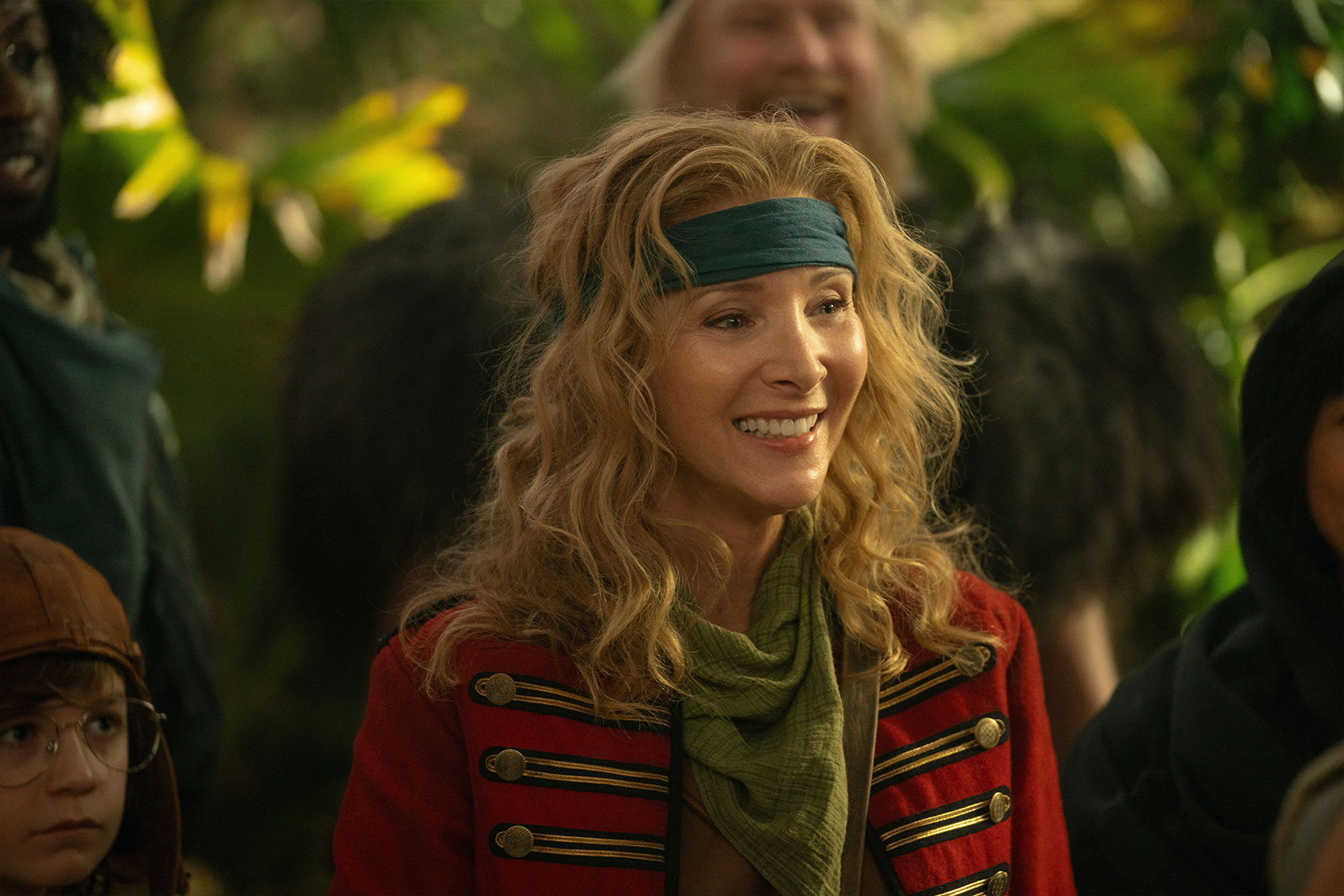
Modern parents may appreciate the remake’s lower doses of, say, pet and parent explosions while missing the tension that sense of peril added.  

But Kudrow is the marquee magnet every Apple TV+ series requires, as did Gilliam’s movie. (The classic featured cameos by Sean Connery, Shelley Duvall and “Monty Python’s Flying Circus” co-stars John Cleese and Michael Palin, who co-wrote its script.) To some degree this character lets her trade some of her signature comedic loopiness for a brittle insistence on control, clarifying her personality as a recreation of David Rappaport’s Randall.

Like Rappaport’s leader who insisted he wasn’t, Penelope’s companions soften her bossiness by wearing their hearts on their sleeves. Temte’s gentle strong man Bittelig and Nsengiyumva’s Widgit, the keeper of the map, emotionally anchor the story as the band’s softest sweethearts. Meanwhile, Thompson’s extraordinary performance in a pair of later episodes is entirely unexpected, fundamentally transforming the character and the series’ tone by extension.


Want a daily wrap-up of all the news and commentary Salon has to offer? Subscribe to our morning newsletter, Crash Course.


The not-so-great part of this is the possibility that the attention they pull is due to a shift in focus necessitated by the sudden disappearance of Yi’s Judy midway through the season. (The actor exited the 2022 production due to what they describe as physical assault and verbal abuse on the set.)

Time BanditsTime Bandits (Apple TV+)

But as that character’s absence grows more palpable, so does the show’s subtextual championing of personal bonds and expansive thinking.

The same outlook made Gilliam a sympathetic inspiration to nerds and weirdos that comprise his core fandom. Many of them became influential creators themselves, including the people responsible for this show.

Clement, Morris and Waititi compensate for what they’re right to presume concerning the audience’s thin knowledge about these figures by thickly layering their signature humor on top of excursions with the likes of 19th century pirate Zheng Yi Sao while dropping trivia bits, through Kevin, like the fact that she was the most successful pirate ever.

This comes from the perspective that considers how few high-concept family TV shows dare to invite people to do their homework. “Time Bandits” floats the possibility that viewers learn a few things while accepting that most will watch for the lighthearted jokes and the stars.  That approach may not earn it a future season. But we’re content enough to tag along for the hours it’s been allotted.

"Time Bandits" is now streaming on Apple TV+.

Diabetes and obesity can damage the liver to the point of failure – but few people know their risk

Metabolic dysfunction-associated steatotic liver disease, or MASLD, is an umbrella term describing conditions related to a buildup of fat in the liver. Formerly known as nonalcoholic fatty liver disease, this condition affects 1 in 4 people worldwide. Among those with type 2 diabetes, insulin resistance, obesity or all three, the prevalence of MASLD increases to 3 in 4 people.

As a diabetologist, the possibility of liver disease is on my mind every time I see a patient. Understanding your risk of developing this common yet underrecognized condition is essential to treating it.

What is MASLD?

MASLD is a complex disorder with both environmental and genetic contributions. In its early stages, liver cells accumulate fat in a process called steatosis. Major sources of this fat include adipose tissue as well as fatty acids the liver makes in response to insulin resistance and excess caloric intake. This fat accumulation can enlarge the liver and interfere with its normal functioning.

Over time, fatty acids activate enzymes, which can produce toxic byproducts capable of causing liver cell injury, inflammation and scarring. This condition is better known as MASH, or metabolic dysfunction-associated steatohepatitis. Progression to MASH is more common in the presence of other risk factors such as type 2 diabetes, insulin resistance and metabolic syndrome.

Left unaddressed, MASLD and MASH can progress to liver scarring, failure and, in some cases, cancer. They also increase risk of death from cardiovascular disease and liver-related complications.

In the U.S., MASH is the leading cause of liver transplants due to hepatic cancer among women and in those 65 and older. It is also on track to overtake hepatitis B and C as the main reason people develop liver cancer and thus need a liver transplant.

Liver disease and type 2 diabetes

Three out of four people with type 2 diabetes have MASLD. Linking liver disease, type 2 diabetes and obesity is the key role insulin resistance plays in their genesis.

Obesity is associated with increased fat deposits around the internal organs and higher levels of fatty acids delivered to the liver. Accumulation of fat in the liver increases its resistance to insulin.

Normally, insulin suppresses glucose production in the liver when blood sugar is high. When the liver becomes resistant to insulin, it produces more glucose despite elevated blood sugar levels, which in turn contributes to the development of type 2 diabetes.

A 2015 meta-analysis found that people with MASLD have a nearly twofold greater risk of developing type 2 diabetes than those without the disease. MASLD is also more likely to progress to MASH in the presence of type 2 diabetes.

MASLD disproportionately affects certain ethnic groups. For instance, 1 in 5 people of Hispanic descent in the U.S. have MASLD, with or without diabetes. This is thought to be related to genetic mutations that affect how the liver cells process fat. One particular mutation more common in Hispanic people promotes steatosis by interfering with the cells’ ability to clear fat deposits.

Treating MASLD and MASH

The silver lining is that management of obesity and type 2 diabetes – such as through lifestyle changes – is very similar to management of MASLD. The most critical early interventions for type 2 diabetes can also help with MASLD, and this is not surprising given how closely interrelated these two conditions are.

The best way to reverse the early stages of MASLD is with weight loss through healthy eating habits and regular exercise. The aim is to shed at least 5% to 10% of initial body weight, maintain that weight loss through sustainable and realistic lifestyle choices, and avoid excess alcohol intake to limit additional liver injury.

New medications to treat diabetes, such as GLP-1 receptor agonists like Ozempic and Mounjaro, as well as SGLT2 inhibitors like Jardiance or Invokana, have also shown benefit in early stages of MASLD. These drugs promote weight loss, which in turn improves MASLD. In addition, studies have shown that Ozempic and Mounjaro could reverse MASH, even with inflammation and fibrosis.

Older medications used for diabetes, such as pioglitazone, typically can also help reduce the progression of MASH by reducing insulin resistance.

Liver disease progresses in stages of increasing damage.

In people with severe obesity or who have not had success with lifestyle changes and weight loss drugs, bariatric surgery is another highly effective option to treat MASLD, as it is associated with significant and sustained weight loss.

New drugs are also in the pipeline. The Food and Drug Administration recently approved a new medication called resmetirom to treat MASH with advanced liver scarring.

However, a cure for this chronic disease remains elusive. This is why it is essential to diagnose MASLD as early as possible and use proven measures that can be maintained long term. Treatments and lifestyle changes need to be deployed as early as possible, before inflammation and scarring have firmly set in. MASH gets trickier to treat in more advanced stages when liver damage becomes irreversible. For instance, while Ozempic may help treat early MASH, it doesn’t benefit patients with more advanced stages of liver scarring.

Ignorance is not bliss

Very few people are aware of MASLD and its health implications, including those living with it. While roughly over 35% of U.S. adults have MASLD, less than 5% are aware they have liver disease.

MASH can be difficult to diagnose because it either causes no symptoms or can be mistaken for other conditions. Patients may have the condition for years and not be aware that it is slowly and meticulously causing damage. In that sense, MASH is strikingly similar to type 2 diabetes or high cholesterol.

Young people are increasingly being diagnosed with early-onset MASLD. Indeed, MASLD with MASH is the most common pediatric liver condition, affecting nearly 8% of children and adolescents and over 34% of children with obesity in the U.S. These children and adolescents are at high risk of developing type 2 diabetes and have a significantly increased lifetime risk of cardiovascular disease and cancer.

Health care costs for people with type 2 diabetes and MASH are estimated to reach US$55 billion over the next 20 years, accounting for 65,000 liver transplants, 1.37 million cardiovascular-related deaths and 812,000 liver-related deaths.

These grim statistics need not be if MASH is tackled early and aggressively.

If you are one of the millions of Americans with prediabetes or diabetes and are also overweight, you most likely have some degree of MASLD or MASH. Being aware of MASLD and getting checked is the first step to addressing it.

Promptly determining the best way to treat your MASLD or MASH is the next step. An early referral to a liver specialist will help you halt the progression of this challenging and common condition and take advantage of the treatment breakthroughs researchers have made in the past few years.The Conversation

Madona Azar, Associate Professor of Medicine, UMass Chan Medical School

This article is republished from The Conversation under a Creative Commons license. Read the original article.
Kamala Harris’ bid for presidency increases viewership of HBO satire “Veep”

Move over Selina Meyer, Kamala Harris is the new female vice president turned presidential hopeful.

Following President Joe Biden's drop out of the 2024 election, Harris is expected to be the Democratic nominee. Coincidentally, the same fictional scenario played out in "Veep," the 2012 HBO satire starring Julia Louis-Dreyfus. Since Harris' declaration to run for president, it has been reported that viewership to the first season of "Veep" on Max was up 353% on Monday, according to Luminate, a site that calculates streaming viewership data. 

Luminate reports that "Veep" had 2.2 million total minutes watched on July 22, increasing from 486,000 total minutes the day before.

Many of the show's clips have gone viral as well, with one clip of Selina learning that the president wouldn't seek re-election, making a clear pathway for the fictional vice president to run for president.

While fans have quickly pointed out the similarities between Selina and Harris, "Veep" creator Armando Iannucci said on X, "Don’t forget we made all that up, though."

Last year, Harris shared more about her experience meeting Louis-Dreyfus on "The Late Show with Stephen Colbert." The Vice President said, "There are bits of it that are actually quite accurate."

Cheesemaking is a complex science – a food chemist explains the process from milk to mozzarella

Cheese is a relatively simple food. It's made with milk, enzymes – these are proteins that can chop up other proteins – bacterial cultures and salt. Lots of complex chemistry goes into the cheesemaking process, which can determine whether the cheese turns out soft and gooey like mozzarella or hard and fragrant like Parmesan.

In fact, humans have been making cheese for about 10,000 years. Roman soldiers were given cheese as part of their rations. It is a nutritious food that provides protein, calcium and other minerals. Its long shelf life allows it to be transported, traded and shipped long distances.

I am a food scientist at the University of Wisconsin who has studied cheese chemistry for the past 35 years.

In the U.S., cheese is predominantly made with cow's milk. But you can also find cheese made with milk from other animals like sheep, goats and even water buffalo and yak.

Unlike with yogurt, another fermented dairy product, cheesemakers remove whey – which is water – to make cheese. Milk is about 90% water, whereas a cheese like cheddar is less than about 38% water.

Removing water from milk to make cheese results in a harder, firmer product with a longer shelf life, since milk is very perishable and spoils quickly. Before the invention of refrigeration, milk would quickly sour. Making cheese was a way to preserve the nutrients in milk so you could eat it weeks or months in the future.


How is cheese made?

All cheesemakers first pump milk into a cheese vat and add a special enzyme called rennet. This enzyme destabilizes the proteins in the milk – the proteins then aggregate together and make a gel. The cheesemaker is essentially turning milk from a liquid into a gel.

After anywhere from 10 minutes to an hour, depending on the type of cheese, the cheesemaker cuts this gel, typically into cubes. Cutting the gel helps some of the whey, or water, separate from the cheese curd, which is made of aggregated milk and looks like a yogurt gel. Cutting the gel into cubes lets some water escape from the newly cut surfaces through small pores, or openings, in the gel.

The cheesemaker's goal is to remove as much whey and moisture from the curd as they need to for their specific recipe. To do so, the cheesemaker might stir or heat up the curd, which helps release whey and moisture. Depending on the type of cheese made, the cheesemaker will drain the whey and water from the vat, leaving behind the cheese curds.

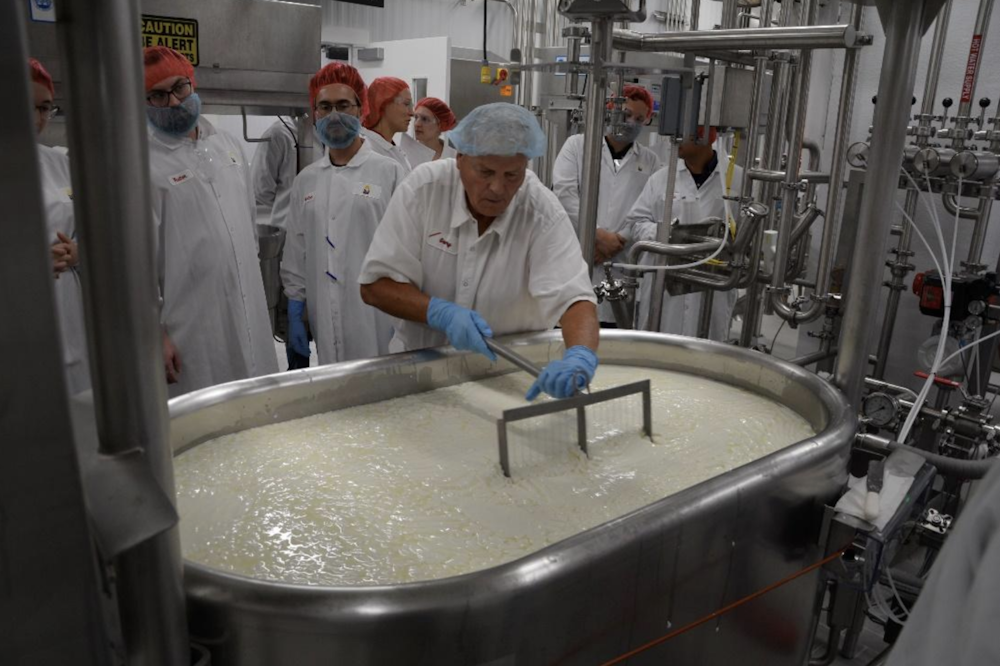
            A man in a white lab coat, hairnet and gloves pulls a device through a large tub of white liquid.
Wisconsin Master Cheesemaker Gary Grossen cuts a vat of cheese with a cheese harp during a cheesemaking short course at the Center for Dairy Research in Madison, Wis. Cutting helps release whey during the cheesemaking process. UW Center for Dairy Research

For a harder cheese like cheddar, the cheesemaker adds salt directly to the curds while they're still in the vat. Salting the curds expels more whey and moisture. The cheesemaker then packs the curds together in forms or hoops – these are containers that help shape the curds into a block or wheel and hold them there – and places them under pressure. The pressure squeezes the curds in these hoops, and they knit together to form a solid block of cheese.

Cheesemakers salt other cheeses, like mozzarella, by placing them in a salt solution called a brine. The cheese block or wheel floats in a brine tank for hours, days or even weeks. During that time, the cheese absorbs some of the salt, which adds flavor and protects against unwanted bacterial or pathogen growth.

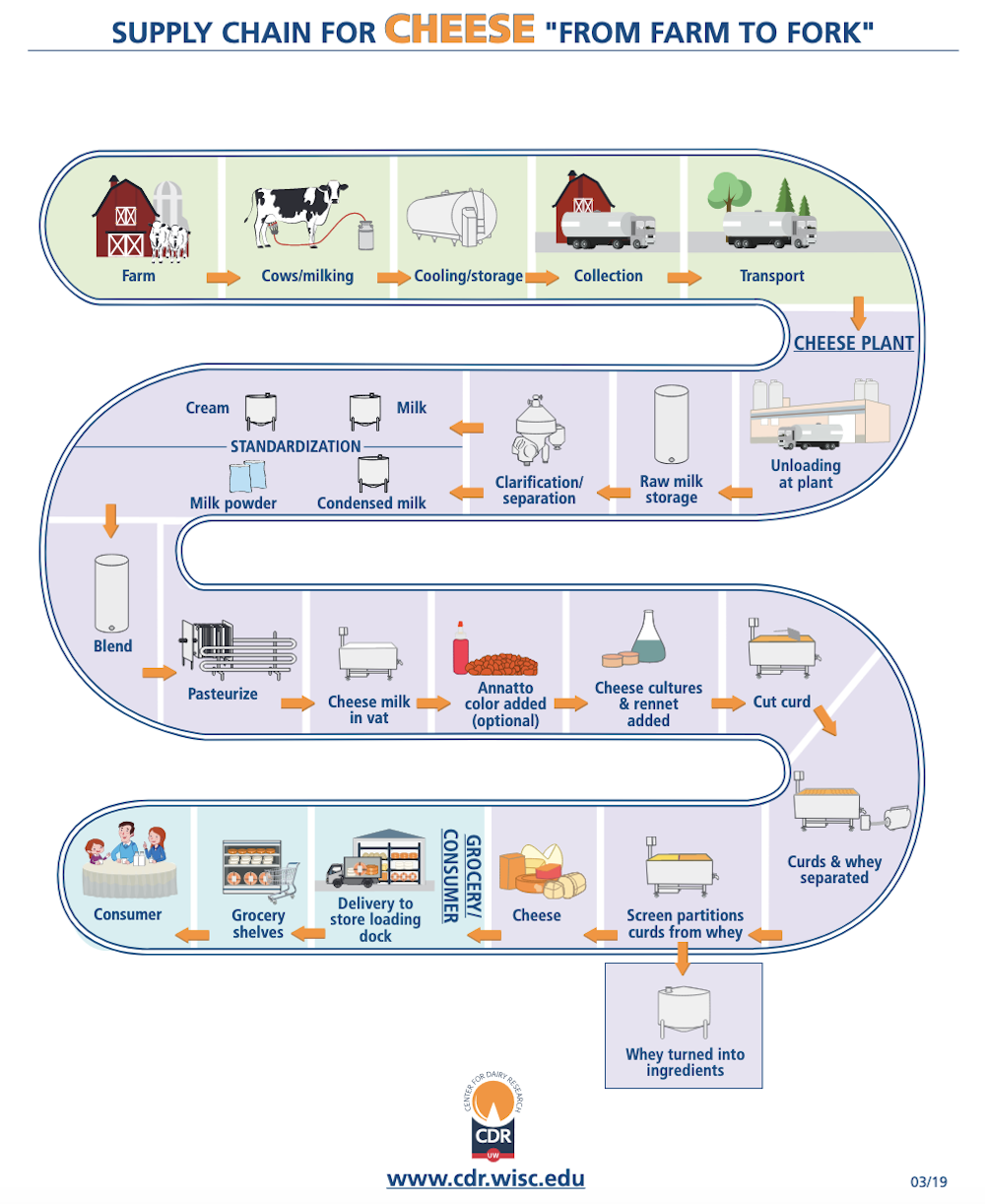
            A graphic showing the many steps between a farmer harvesting milk from cows and the cheese reaching the consumer.

The cheese production process. UW Center for Dairy Research


Cheese is a living, fermented food

While the cheesemaker is completing all these steps, several important bacterial processes are occurring. The cheesemaker adds cheese cultures, which are bacteria they choose that produce specific flavors, at the beginning of the process. Adding them to the milk while it is still liquid gives the bacteria time to ferment the lactose in the milk.

Historically, cheesemakers used raw milk, and the bacteria in the raw milk soured the cheese. Now, cheesemakers use pasteurization, a mild heat treatment that destroys any pathogens present in the raw milk. But using this treatment means the cheesemakers need to add back in some bacteria called starters – these "start" the fermentation process.

Pasteurization provides a more controlled process for the cheesemaker, as they can select specific bacteria to add, rather than whatever is present in the raw milk. 
Essentially, these bacteria eat (ferment) the sugar – the lactose – and in doing so produce lactic acid, as well as other desirable flavor compounds in the cheese like diacetyl, which smells like hot buttered popcorn.

In some types of cheese, these cultures stay active in the cheese long after it leaves the cheese vat. Many cheesemakers age their cheeses for weeks, months or even years to give the fermentation process more time to develop the desired flavors. Aged cheeses include Parmesan, aged cheddars and Gouda.

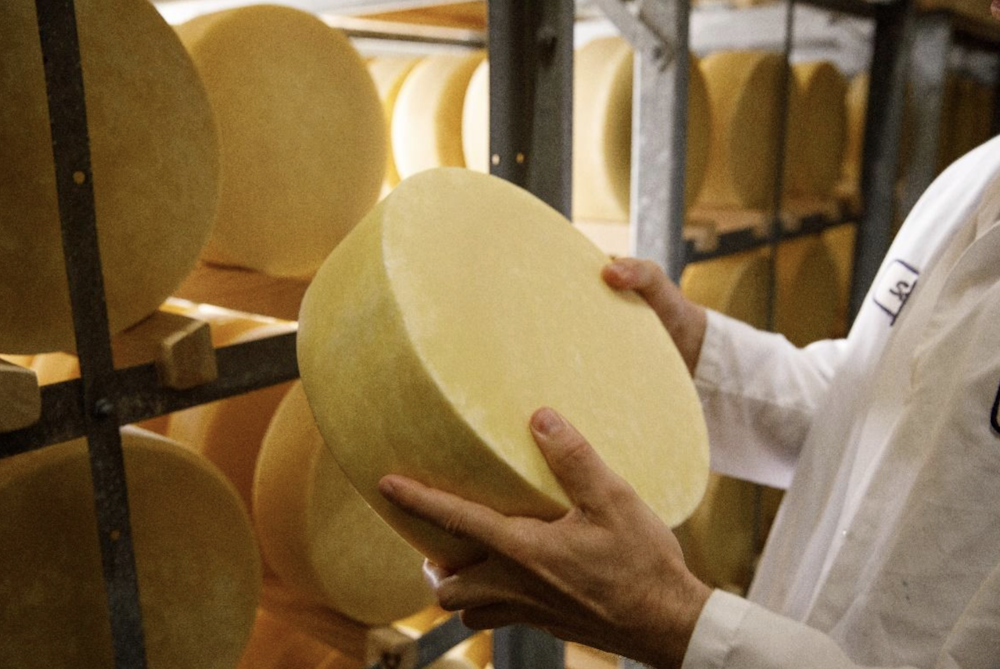
            A person in a white coat holds a wheel of cheese.

A Wisconsin cheesemaker inspects a wheel of Parmesan in the aging room. Aging is an important step in the production of many cheeses, as it allows for flavor development. The Dairy Farmers of Wisconsin
                     

In essence, cheesemaking is a milk concentration process. Cheesemakers want their final product to have the milk proteins, fat and nutrients, without as much of the water. For example, the main milk protein that is captured in the cheesemaking process is casein. Milk might contain about 2.5% casein content, but a finished cheese like cheddar may contain about 25% casein (protein). So cheese contains lots of nutrients including protein, calcium and fat.


Infinite possibilities with cheese

There are hundreds of different varieties of cow's milk cheese made across the globe, and they all start with milk. All of these different varieties are produced by adjusting the cheesemaking process.

For some cheeses, like Limburger, the cheesemaker rubs a smear – a solution containing various types of bacteria – on the cheese's surface during the aging process. For others, like Camembert, the cheesemaker places the cheese in an environment (e.g., a cave) that encourages mold growth.

Others like bandaged cheddar are wrapped with bandages or covered with ash. Adding a bandage or ash onto the cheese's surface helps protect it from excessive mold growth, and it reduces the amount of moisture lost to evaporation. This creates a harder cheese with stronger flavors.

            A man in a white apron and hat stands in a room full of shelves stacked with cheese.

Wisconsin Master Cheesemaker Joe Widmer in his brick cheese aging room. Brick cheese is a smear-ripened cheese – Dairy Farmers of Wisconsin


Over the past 60 years, cheesemakers have figured out how to select the right bacterial cultures to make cheese with specific flavors and textures. The possibilities are endless, and there's no limit to the cheesemaker's imagination.


John A. Lucey, Professor of Food Science, University of Wisconsin-Madison


This article is republished from The Conversation under a Creative Commons license. Read the original article.
How a Kamala Harris presidency could change how we feed America

Food insecurity has reached a critical point in the United States. 

Currently, more than 44 million Ameircans face hunger, including one in five children, with the need for nutrition assistance at its highest point in 20 years. Those employed in agriculture, food processing and food service — ironically, often the same positions deemed “essential” during the pandemic — frequently earn wages insufficient to cover basic living expenses, including the cost of nutritious food.  

A recent analysis conducted by the Urban Institute found that Supplemental Nutrition Assistance Program, or SNAP, benefits did not cover the cost of a modestly-priced meal in 98% of U.S counties last year, yet Republicans are intent on cutting the program even further. 

Against this backdrop, Vice President Kamala Harris's potential nomination for the 2024 presidential election brings renewed focus on her extensive record addressing food insecurity and labor issues. 

As a U.S. Senator and California's Attorney General, Harris has championed numerous initiatives aimed at reducing hunger and improving economic conditions for low-income families. Her legislative efforts, such as the introduction of the Closing the Meal Gap Act of 2020 and her support for the American Families Plan, underscore her commitment to ensuring access to nutritious food for all Americans, though her involvement with raising the federal minimum wage is slightly more complex. 

Here’s a deeper look: 

Food insecurity 

“Short of having somebody who has actually worked in the food system or has experienced hunger themselves, she’s about as good as they get on food and hunger,” Jessica Bartholow, a policy advocate for the nonpartisan Western Center on Law & Poverty, told Civil Eats in 2020, just after Biden had selected Harris as his running mate. 

Four months prior, in her position as a California state senator, Harris — along with Senators Elizabeth Warren, Mazie K. Hirono and Christopher F. Murphy — wrote a letter to Sonny Perdue, the then-secretary of the USDA, urging him to reconsider the “blanket denial of waiver requests from states wishing to maintain eligibility in the Supplemental Nutrition Assistance Program (SNAP) for college students who have lost their employment due to COVID-19.” 

One month after that, in May 2020, Harris co-introduced the Closing the Meal Gap Act of 2020, which was intended to expand SNAP benefits amid the pandemic. 

We need your help to stay independent

"We are in the midst of a historic economic crisis — people are hurting,” Harris wrote at the time. “They are struggling to put food on the table, and existing nutrition benefits don't get people through the end of the month. Folks are looking to Congress to take immediate action to help them make ends meet. I'm proud to introduce the Closing the Meal Gap Act because we need to give people the resources they need to afford food during tough times. No one in America should ever go hungry, especially during a public health crisis."

That same month, Harris also aided in introducing the bipartisan FEMA Empowering Essential Deliveries (FEED) Act. The legislation, which was endorsed by several celebrity chefs including José Andrés, allows the Federal government to pay 100% of the cost to states and localities so that they can partner with restaurants and nonprofits to prepare nutritious meals for vulnerable populations, such as seniors and underprivileged children.

"They are struggling to put food on the table, and existing nutrition benefits don't get people through the end of the month. Folks are looking to Congress to take immediate action to help them make ends meet."

In April 2021, Biden and Harris unveiled the American Families Plan, a sweeping initiative designed to combat child hunger and ensure year-round access to nutritious meals for children. Central to the plan was the expansion of the Summer Electronic Benefit Transfer (EBT) program, which would provide 29 million children who qualify for free or reduced-price school meals with a permanent monthly benefit to purchase food during the summer. This approach addresses the increased food insecurity that occurs when school is not in session.

The plan also proposed increasing the number of high-poverty schools offering free meals to all students through community eligibility, reducing the threshold for elementary schools to participate and raising the reimbursement multiplier, making the program more financially viable. Additionally, children receiving Medicaid or Supplemental Security Income (SSI) would be automatically eligible for free school meals nationwide, streamlining administrative processes and ensuring the most vulnerable children receive necessary nutrition. 

A $1 billion healthy foods initiative is included to support schools in meeting higher nutrition standards, reflecting the critical role of child nutrition programs highlighted by the pandemic.

This plan — many elements of which remain under legislative consideration, especially with the current controversy over the 2024 Farm Bill — has been lauded by food insecurity-focused organizations, ranging from the Food Research & Action Center to the California Association of Food Banks, which reported that their affiliate banks now see double the amount of clients they did prior to the pandemic. 

Labor 

Many labor advocates within the food sector have already voiced their support for Kamala Harris’ potential presidential campaign, including Teresa Romero, the president of United Farm Workers, a labor union for agricultural workers. In a Sunday release, Romero characterized President Biden as “the greatest the United Farm Workers has had in the Oval Office.” 

“The Biden-Harris administration has worked tirelessly on behalf of farm workers, from championing state legislation to strengthen farm workers’ right to join a union, to ensuring undocumented essential workers were eligible for COVID vaccines and relief payments, to working to raise wages and increase legal protections in the exploitative H2A agricultural guest worker system, to proposing the nation’s first ever federal standards to protect farm workers from dying during extreme temperatures,” Romero wrote. “President Biden deserves the gratitude and respect of all Americans for his lifelong service to our country and his fierce dedication to working people across America.” 

Now, the United Farm Workers as an organization is endorsing Harris as the “best leader to defeat Donald Trump” and to continue the work of the Biden-Harris administration, writing that she has stood with farm workers in California — the nation’s largest agricultural producer — as California Attorney General, as a United States Senator and as Vice President. 

“The United Farm Workers could not be prouder to endorse her for President of the United States,” Romero wrote. 

This endorsement is reminiscent of the statement the United Farm Workers sent out after Biden chose her as his running mate. The organization praised the decision then, citing how Harris has a long history of working directly with the UFW. For instance, she joined farm worker marches and the 2016 UFW convention. 

"The United Farm Workers could not be prouder to endorse her for President of the United States."

As senator, Harris also joined the UFW in “leading a national petition drive that organized 100,000 public comments opposing Trump’s attempts to reduce farm worker wages” under the federal H-2A agricultural guest worker program. 

Off the farm, Harris’ record on labor is a little more complex; take, for instance, how she has engaged with calls to raise the federal minimum wage to $15 per hour. 

In 2019, Harris made headlines for joining striking and marching McDonald’s workers in Des Moines, Iowa. “These golden arches are not representing opportunity,” Harris said, while standing in a pool of red-shirted workers in a McDonald’s parking lot. “We are not paying people a minimum wage that allows a minimum standard of living.” 

She continued: “Let’s, one, bust the myth and make it clear families are relying on these salaries, and they must be paid $15 an hour.” 

However, as reported by economist Dawn Allcott, once Harris joined the Biden administration she was in a position to overrule Senate parliamentarian Elizabeth MacDonough's ruling to remove a $15 minimum wage provision in a Covid-19 relief bill. She didn't take that action —one that would have directly undermined Biden who spent 36 years in the Senate and, per the Los Angeles Times, “regards its traditions with reverence” —  which meant the minimum wage increase didn't happen. 

This ruffled many Democrats, including the Rev. William Barber II, one of the nation’s leading civil rights activists who, at the time, served as the co-chair of the Poor People’s Campaign: A National Call for Moral Revival.

“We have it on tape,” Barber told the Los Angeles Times in 2020. “Her and Biden and the entire Democratic Party, their platform says they want to eradicate poverty. Her and Biden ran on 15 — never said ’15 unless the parliamentarian advises not to.’”

That said, as pointed out by economist Dawn Allcot, if Harris was to become the president, she would only have so much power when it comes to actually adjusting the minimum wage, as it is set by Congress through legislation. 

“But, wage workers don’t just encompass those making minimum wage. More significantly, Harris has also shown support of unions, a fact which could help her garner support from service workers, trade workers and educators,” Allcot wrote. “Her support of unions could help wage workers fight for everything from increased wages to better benefits.” 

One relatively recent and tangible example of Harris’ support of unions is how she advocated for the continuation of “hazard pay” for grocery workers during the pandemic. Along with Marc Perrone, president of the United Food and Commercial Workers International Union, which represents 835,000 grocery store workers, Harris wrote an Aug. 2020 commentary for CNN simply titled: “Why grocery store workers deserve hazard pay.” 

“Our country is hurting. People are losing their jobs, parents are struggling to keep a roof over their kids’ heads and Americans are getting sick and dying in record numbers,” they wrote. “The pain and suffering is often too much to bear. As this crisis continues, we must remember all of the frontline workers who are continuing to put themselves in harm’s way to help others make it through these challenging times.” 

The letter continued: “While top grocery chains rake in billions in profits during this pandemic, these frontline workers cannot choose to work from home like the corporate executives of these companies do. The responsibility to properly protect and support store workers lies with these executives, who must make the decision to consistently pay workers a wage that justly compensates them for the clear and present dangers of their jobs during the pandemic.” 

Colbert: Trump “upset” Biden dropped out because he doesn’t have “good line of attack” on Harris

Stephen Colbert on Tuesday's episode of "The Late Show" weighed in on Vice President Kamala Harris' new role as the presumptive Democratic nominee and what former President Donald Trump might be concerned about.

“Biden dropped out and endorsed Kamala Harris on Sunday, and today, Tuesday, she’s already secured enough delegate endorsements to win the Democratic presidential nomination,” the late-night host said. 

“Democrats everywhere are feeling the Kamalamentum,” Colbert continued. “Her campaign broke a single-day fundraising record with 1.1 million individual donors, and 60 percent of those donors were making their first contribution to the 2024 cycle. Holy cow!”

For his part, Colbert was outwardly vocal in advocating for President Joe Biden to reconsider running in the 2024 presidential election. “It’s a shame because Joe Biden is a great president,” he said during a "Late Show" episode that aired earlier this month. "I don’t know what’s the right thing to do here. And I think that this is actually a battle of two virtues. One of them is perseverance. Biden is famous for that . . .  [the other] is self-sacrifice. And self-sacrifice takes a particular kind of courage, and that is a courage I believe Joe Biden is capable of. I believe he’s a good enough man. He is a good enough president to put the needs of the country ahead of the needs of his ego, and however painful that might be, it is possible.”

Colbert on Tuesday claimed that Trump is deeply disconcerted by Sunday's abrupt candidate swap, before turning to the ex-president's recent Truth Social posts for justification.

"It’s not over! Tomorrow Crooked Joe Biden’s going to wake up and forget that he dropped out of the race today!" Trump posted on Sunday night, in an ostensible jest at Biden's age-related gaffes — like his struggling debate performance last month — that largely spurred his bowing out. The following day, Trump made a nearly identical jab at Biden, writing on Truth Social, "It’s a new day and Joe Biden doesn’t remember quitting the race yesterday!"

“Uh … Do you remember making that joke yesterday?” Colbert quipped in response, before parodying the former president. “Joe Biden’s memory is so bad he doesn’t remember what he just said. And … Joe Biden’s memory is so bad he doesn’t remember what he just said.”

“One reason Trump might be upset about Biden dropping out is that he does not have a good line of attack against Harris,” Colbert said, before showing footage of a recent MAGA rally in which Trump referred to the veep as “Laughin' Kamala.”

Colbert offered an impersonation of Trump, saying, “Laughin’ Kamala. Experiencing joy like a total freak … They call her ‘Capable of Human Emotion Harris.’ ‘The Not Dead Inside Veep.’ She’s not at all sad, folks, and we all know that is … sad.”

We need your help to stay independent

The ex-president has seemingly already tried to raise questions about his second scheduled debate appearance. Despite agreeing to the debate back in May, Trump after Biden announced that he had dropped out whined that it should be broadcast by Fox News instead of the "very biased" ABC. 

“ABC Fake News is such a joke, among the absolute WORST in the business," Trump complained on Truth Social. "They then tried to make ‘Sleepy’ look like a great President — he was the WORST, and Lyin’ Kamala into a competent person, which she is not. ABC, the home of George Slopadopolus, is not worthy of holding a Debate, of which I hope there will be many!”

“Trump’s also jealous of how everyone’s talking about Joe Biden’s patriotic and selfless sacrifice for the greater good,” Colbert said. “Well, Donald, if you really want to steal his thunder, all you have to do is drop out. Imagine how mad that would make the Democrats.”

“Now, one reason Trump might be struggling to find a good attack on Harris is that deep down, he likes her,” the host offered. “Because we know that, when she was running for California attorney general, Trump donated to her re-election campaign. Yeah, $5,000."

“Or, as Fox News is reporting it, ‘Bombshell: Kamala Harris Took Money From Convicted Felon!’”

Trump pollster lowers Republican expectations, warns the “Harris Honeymoon” will “last a while”

One of Donald Trump's pollsters is warning the former president’s campaign that support for Vice President Kamala Harris will likely skyrocket in the coming weeks.

In a memo to Trump’s team, pollster Tony Fabrizio warned of a “Harris Honeymoon” among voters. Bolstered by positive media coverage and President Joe Biden's unprecedented decision to pass the torch, Harris’ popularity is likely to show in upcoming polls, Fabrizio said in the memo. 

“The coverage will be largely positive and will certainly energize Democrats and some other parts of their coalition at least in the short term,” Fabrizio said. “That means we will start to see public polling — particularly national public polls — where Harris is gaining on or even leading President Trump.”

In a recent Reuters/Ipsos poll, Harris leads Trump by 2%, whereas Biden trailed Trump in nearly every poll before he dropped out of the race on Sunday.

“Given what has happened over the past couple of days and her impending VP choice, there is no question that Harris will get her bump earlier than the Democrat’s Convention,” Fabrizio said in the memo, which was shared with reporters. “And that bump is likely to start showing itself over the next few days and will last a while until the race settles back down.”

Though Trump received his own "bump" with voters after he survived an assassination attempt, a major party candidate has never withdrawn from the race so close to the election, which puts Harris in “uncharted territory,” Fabrizio said. 

But the honeymoon won’t last, Frabizio assured the former president. 

“The Democrats deposing one Nominee for another does NOT change voters discontent over the economy, inflation, crime, the open border, housing costs not to mention concern over two foreign wars,” he said. “Before long, Harris’ ‘honeymoon’ will end and voters will refocus on her role as Biden’s partner and co-pilot.”

Fox News cut from Kamala Harris’ first campaign speech after she started bashing Trump

Fox News cut short its broadcast of Vice President Kamala Harris’ first campaign speech after she went after Donald Trump in front of cheering crowd of supporters in Wisconsin

Harris made her campaign trail debut in Milwaukee on Tuesday, redefining November’s election as a choice between “two different visions for our nation,” The Washington Post reported.

In her remarks, Harris noted she had experience prosecuting fraudsters and predators. "So hear me when I say I know Donald Trump's type," Harris told the crowd. “As Attorney General of California, I took on one of our country's largest for-profit colleges that was scamming students. Donald Trump ran a for-profit college that scammed students."

"As a prosecutor, I specialized in cases involving sexual abuse. Well, Trump was found liable for committing sexual abuse," the vice president added.

Just minutes after the speech began, Fox News cut the broadcast and returned to its anchors in-studio. Other networks including CNN and MSNBC broadcast the entire speech. 

"Very little mention, John, of her accomplishments while vice president, while in the White House," Fox News host Sandra Smith said to her co-anchor John Roberts. 

"Yeah, critics would say if she was to base a speech on her accomplishments in the White House, it would be a very short speech," he replied, adding that Harris is going to use the “prosecutor vs. felon” tactic as he rolled his eyes. 

On Tuesday, Harris officially received enough support to clinch the Democratic nomination after President Joe Biden announced he was stepping aside from the campaign on Sunday.  In a new Reuters/Ipsos poll, Harris now leads Trump by 2 points, which is within the margin of error.

Police footage shows that an Illinois cop shot and killed Sonya Massey inside her own home

Body-camera footage released this week shows a sudden escalation by police that resulted in Deputy Sean Grayson shooting a 36-year-old Black woman dead in her home on July 6 — an act for which the officer is now facing murder charges.

In the footage, Grayson and another deputy speak calmly with the woman, Sonya Massey, in her living room, asking her for paperwork and ID, though Massey sometimes appears confused by their questions and unsure of where to find her documents. The two Sangamon County sheriff's deputies were responding to a 911 call by Massey, who had reported a "prowler" at her home in Springfield, Illinois, according to a court document. 

After several minutes, one of the officers points to a pot of steaming water on a stove, telling Massey that "we don't need a fire while we're here." As Massey goes to retrieve the pot, the three continue to talk casually, with the other deputy stepping back away "from your hot steaming water."

"I rebuke you in the name of Jesus," she responds, possibly in jest. "Huh?" the deputy says, before Massey repeats herself, holding the pot and standing in front of the stove.

“You better f**king not or I swear to God I’ll f**king shoot you in the f**king face,” Grayson says, his tone suddenly threatening. He then draws his gun on Massey, who ducks and says, "Okay, I'm sorry," while still holding the pot. "Drop the f**king pot," both deputies shout, as three shots are fired. After a few seconds, one deputy reports a headshot wound and calls emergency medical services. "F*ck," he says.

When his partner says he's going to retrieve a medical kit, Grayson tells him that it's no use. "Nah, she's done," he says. "You can go get it but that’s a headshot."

Grayson appears to believe that he had just shot down an imminent threat. “God d*mn it. Dude, I’m not taking f**king boiling water to the f**king head. And look, it came right to our feet, too,” he says, even though the footage shows that Massey did not throw any water. Grayson later repeats the claim to another law enforcement officer, telling him that Massey "had boiling water and came at me with boiling water … she said she was going to rebuke me in the name of Jesus and came at [me] with boiling water," calling her a crazy "f**cking b*tch."

We need your help to stay independent

In a news conference on Monday, civil rights attorney Ben Crump, who is representing Massey's family, told reporters that she had mental health challenges but did not show any real aggression.

"She needed a helping hand,” he said. “She didn’t need a bullet to the face."

Grayson, who has been fired, was indicted by a grand jury last week on three counts of first-degree murder and one count each of aggravated battery with a firearm and official misconduct. He has pleaded not guilty and was denied pretrial release.

An Illinois State Police investigation into the shooting “does not support a finding that … Grayson was justified in his use of deadly force," according to a report. Massey's death follows several cases of Black women being killed by police in their own home, including Breonna Taylor and Atatiana Jefferson. In both cases, the perpetrating officers were accused of using excessive and unnecessary force.

According to a Washington Post database of deadly police shootings, Black women are far more likely to be killed by police than other women.

“Until we get justice for Sonya Massey, we rebuke this discriminatory criminal justice system in the name of Jesus,” Crump said.

Massey's father, James Wilburn, said at the news conference that he thought Massey was killed by an intruder until his brother found the truth on the internet. Later, Wilburn told CNN that Massey's death underscored the need for Black parents to warn their children about the potentially fatal dangers of dealing with police in America.

“You’re used to having ‘the talk’ with boys, but now I guess we have to talk to our girls about … their interactions with the police,” Wilburn said.

“MAGA dictatorship or American democracy”: Experts warn of “chaos” and “corruption” if Trump wins

Legal experts, political advisors and scholars from across the political spectrum are warning that a second term for Donald Trump could mean effectively ending democracy in America, a threat they say calls for voters putting aside their policy differences to defeat the threat of autocracy in November.

The warning came from bipartisan group of experts who gathered at New York University on Tuesday to discuss the impact a second Trump term would have on the country. The event, “Autocracy in America: a Warning and a Response,” was planned before President Joe Biden announced he was stepping down as the Democratic nominee, a decision that speakers said had upended the race for the White HOuse.

“We’ve gone from age vs. autocracy to dictatorship vs. democracy as the theme of the next 119 days,” Norm Eisen, a legal analyst at CNN, said of Biden’s announcement.

Ruth Ben-Ghiat, an expert on authoritarianism and a history professor at NYU, opened a panel discussion Tuesday by warning that Trump and Project 2025 — the hard-right policy manual drafted by the former president's allies at the Heritage Foundation — are following the model of Hungary’s Victor Orban, even resembling past dictators like Italy’s Benito Mussolini. 

Though warning of autocracy in America may seem extreme, the threat is very real, Ben-Ghiat said.

“It is MAGA dictatorship or American democracy," she said. "It is repression — the iron first coming down on us — of freedom. I've seen what happens to societies when corrupt leaders and their allies gain power based on division or hatred and Project 2025 is a recipe for mass chaos, abuses of power and dysfunction in government.” She urged listeners to have open, bipartisan discussions with one another to truly understand “the stakes” of November’s election. 

George Conway, a conservative lawyer and vocal Trump critic, expanded on Trump’s authoritarian qualities. 

“Everything is about him — the government is about him — [and] pleasing him and his glory and his power at any given moment," Conway said. “People don’t take him seriously because they find the depths of his depravity too difficult to comprehend."

If re-elected, Conway said Trump’s narcissism will likely have greater consequences this time around as he will remove anybody around him who understands and wants to obey the law, a situation exacerbated by the Supreme Court granting him near-absolute immunity. He warned that honest civil servants will resign or be removed, forced to choose between “fighting and succumbing.”

If Trump wins in November, Conway warned that an executive branch unbound by the Constitution will give rise to a notion often seen in authoritarian regimes: that “the law only applies to people we don’t like — it doesn’t apply to us."

“What we will see is corruption on a scale like we’ve never seen before in this country,” Conway added.

We need your help to stay independent

Trump’s running mate, Sen. JD Vance, R-Ohio, has been vocal about replacing civil servants with Trump loyalists. “Fire every single mid-level bureaucrat, every civil servant in the administrative state, replace them with our people,” Vance said on a podcast in 2021, according to reporting by Vanity Fair. 

Maya Wiley, attorney and CEO of the Leadership Conference on Civil and Human Rights, warned of Trump and Project 2025’s possible impacts on civil rights for anybody who is not a straight, white male.

“If you are LGBTQ, you are not inscribed in the philosophy and the underpinnings of how Project 2025 is looking at how the executive branch will reconsider and utilize its powers, its resources, its obligation to enforce civil rights,” Wiley said, referencing Project 2025’s opposition to LGBTQ+ rights.

This exclusionary vision, coupled with the Supreme Court’s immunity ruling prosecution for “official acts,” is incredibly concerning, Wiley said, eliminating "independent oversight" and preventing prosecutors from even examining the motives of "someone who is an autocrat."

The threat posed by a Trump presidency no longer constrained by the rule of law demands people across the political spectrum working together to defeat a threat to democracy.

"Autocracy only happens when we the people don’t get together and say, 'No you won’t,'” Wiley argued. “Democracy is not a promise, it’s a commitment, so let’s stay committed.”

“Totally stupid and dumb”: Even some Republicans fear “DEI” attack on Kamala Harris will backfire

How ignorant and racist are some Republicans being about Vice President Kamala Harris? Ignorant and racist enough that even former House Speaker Kevin McCarthy, R-Calif., felt the need to criticize members of his party, if only because their rhetoric has limited appeal outside of a GOP primary.

Speaking with NBC News on Tuesday, McCarthy was asked what he thought about the likes of Rep. Tim Burchett, R-Tenn., dismissing Harris as a mere “DEI hire,” referring to corporate diversity, equity and inclusion policies.

“Look, I disagree with DEI,” McCarthy said, “but she is the vice president of the United States. She is the former U.S. senator. These congressmen that are saying it, they’re wrong in their own instincts.” The California Republican described it as one of two “totally stupid and dumb” lines of argument from his party, the other being that President Joe Biden should immediately resign and hand the keys to the White House (and the power of incumbency) over to the new presumptive Democratic nominee.

It’s not just elected Republicans who are focusing on the color of Harris’ skin, but the entire right-wing ecosystem. Astonishingly, it seems no one, from Donald Trump to the programming director of Fox News, actually prepared for the possibility that Biden would step aside, despite insisting for years that he lacked the mental fitness to do the job. That has forced conservative lawmakers and television personalities to just go with their gut response to seeing a woman of color.

“The only reason she is in the White House is because of the DEI deal Biden cut with Bernie to seal the nomination,” Jesse Watters, Fox News’ prime-time replacement for Tucker Carlson, said Tuesday, inventing a deal to be mad at (it’s not clear why Sen. Bernie Sanders, I-Vt., would have struck a deal with Biden to pick a vice president that he himself has yet to endorse)

To be clear, in this context “DEI,” like “affirmative action hire” before it, functions as a stand-in for a racial slur — “as a pseudonym for the n-word,” as Democratic strategist Ameshia Cross put it on CNN.

Alyssa Farah Griffin, a former spokesperson for the Trump White House turned critic of the modern right, said her former allies were flailing and that their fallback on misogyny and racism would alienate the voters they need to win over.

“Listen, MAGA is in full-blown meltdown right now,” she said Tuesday on ABC. Although they should have planned for a Harris-led ticket, for some reason they did not; a hastily crafted GOP memo on Harris faults her for laughing a lot and liking Venn diagrams. “They don’t know what play to run, and right now they’re running the worst plays they can.”

We need your help to stay independent

The remaining adults in the Republican Party understand that. “It’s certainly not something I’m going to say,” Richard Hudson, head of the National Republican Congressional Committee, recently said of the “DEI” line of attack. “I’m going to remain focused on the policies.”

By focusing on “the policies,” Republican leaders mean: taking everything they previously said about Biden and switching it to Harris. The play here is telling voters that the vice president, previously relegated to the shadows, was in fact “the architect of many of President Biden’s worst failures,” House Majority Leader Steve Scalise, R-La., told reporters.

Expect, then, claims that Harris is responsible for inflation that ebbed two years ago. Republicans will also falsely claim she is responsible for everything they don’t like about immigration (these days: that it happens at all), conflating her efforts to improve living conditions in Central America — to give people less reason to flee their homes — with being Biden’s “border czar.”

However, there is a serious flaw with the GOP plan to stick with dishonest policy critiques for the next three months: The Republican Party of 2024 is not known for its messaging discipline, nor can it exert much control over the right-wing influencers driving the “DEI” conversation.

“[C]ampaign officials can only exert so much control over a broader conversation that will be driven as much by Elon Musk and Candace Owens as any professional operative,” Semafor noted in a report on Tuesday. “And the person who will ultimately set the tone for the party the most is Trump himself.”

Trump, recall, has already been accused of using the n-word while working on “The Apprentice”; his nephew, Fred Trump, also has a new book out accusing him of repeatedly uttering the slur. We’ll see, then, how the next three months go and whether a campaign led by a racist is capable of dialing down the racism.

An emerging “autocratic international order”: Trump has plans for domestic authoritarianism

When Donald Trump began his third run for president back in 2022, he said very explicitly that his campaign was organized around vengeance for his 2020 humiliation. "I am your retribution!" he proclaimed, assuring his devoted cult following that their belief in the Big Lie would be rewarded when he exacted punishment on the political enemies who had denied their Dear Leader his second term. It was a speech you might expect from any demagogue. But in Trump's case, it also spoke to the deep psychic wound he suffered as a malignant narcissist unable to accept that he had lost so it was hard to know if he had any other goals beyond the need to prove that he was a winner after all. As the campaign has gone on it's become clear that Trump has actually evolved into a true authoritarian. Yes, he's still simple-minded and juvenile in many ways, and it will always be all about him, but it's become clear that his attraction to strongmen has developed into a yearning to be a member of their club in a new and different way — and he's becoming more and more open about it.

We always knew that Donald Trump admired Russian President Vladimir Putin and Chinese leader Xi Jinping. His bromance with the tyrannical North Korean dictator Kim Jong Un and affection for various Middle Eastern leaders was no secret. He's always bragged about his ability to "get along with" dictators. He talked about it in his soporific acceptance speech at the Republican National Convention:

I got along very well, North Korea, Kim Jung Un. I got along very well with him. The press hated when I said that.

“How could you get along with him?”

Well, you know, it’s nice to get along with someone who has a lot of nuclear weapons or otherwise. See, in the old days, you’d say that’s a wonderful thing. Now they say, “How can you possibly do that?”

But no, I got along with him and we stopped the missile launches from North Korea. Now, North Korea is acting up again. But when we get back, I get along with him. He’d like to see me back too. I think he misses me, if you want to know the truth.

He spoke similarly about how the Taliban really thought highly of him. In the same speech, he said that when snipers were killing American soldiers in Afghanistan he spoke with the Taliban leader:

 I spoke to the head of the Taliban. You’ve heard this story. Abdul, still there. Still the head of the Taliban. The press got on me, “Why would you speak to him?” I said, “Because that’s where the killing is.” I don’t have to speak to somebody that has nothing to do with it.

And I told him: “Don’t ever do that. Don’t ever do that again. Don’t ever, ever do that again, you’re going to stop.” Because during the Obama administration, many great people and soldiers, a lot of soldiers, were being killed from long distance. I said, “If you keep doing that, you’re going to be hit harder than anybody has ever been hit by a country before.” And he said, “I understand, Your Excellency.” He called me “Your Excellency.” I wonder if he calls the other guy “Your Excellency.” I doubt it.

(That's complete nonsense, of course.) We're all familiar with his embarrassing encounters with Putin and Xi. They saw him coming a mile away. 

But for all of his shameful fawning sycophancy over murderous tyrants, Trump has mostly confined his strongman adulation to matters of foreign policy and national security. His domestic authoritarianism has generally been cloaked in demagogic ranting about crime and such things as the use of executive power to exact revenge on his enemies and abuse the presidential pardon power to excuse his accomplices' crimes. The plan to round up tens of millions of people and force them into detention camps for deportation is about as authoritarian as you can get. (In fact, the proper word is "fascist.")

But he's going even further now, drawing a direct line between the foreign tyrants he admires so much and his own domestic agenda. He recently remarked on the campaign trail that China's Xi is a  “brilliant man” who controls 1.4 billion people with an “iron fist.”. He acknowledged his new best friend, Hungary's Viktor Orban, by saying "This is the way it's going to be." And that's the end of it, right? He's the boss and … he's a great leader, fantastic leader. In Europe and around the world, they respect him.” (They don't, actually.) 

Now he's making it clear that we need that here in the U.S.

We need your help to stay independent

His reference to Orban was about a visit that took place just a few days ago at Mar-a-Lago when the Hungarian president flew in to brief him on his recent meetings with Putin and Xi during the NATO summit in Washington. An axis (if you will) of mutual interest is forming among the world's authoritarian leaders and Trump wants to be a part of it. As historian Ruth Ben-Ghiat, a scholar on fascism and authoritarian leaders observed he is "immersed" in it.

Greg Sargent of The New Republic hosted Never Trumper Rick Wilson on his podcast this week to talk about this and it was, frankly, chilling. Wilson spent years in the right-wing fever swamps and knows all about their tactics and strategies. He says we must take this very seriously and that even if the media cynically dismisses all this as a "schtick" or old news, Trump and his henchmen are deadly serious.

Media analyst Jamison Foser noticed the same thing:

Trump sees himself as part of this emerging "autocratic international order" and is openly campaigning on that issue. His followers are being programmed through his usual mind-numbing repetition to accept this as normal politics. It may be normal in some countries but up until now, it's never been normal in America. In fact, it's what normal people used to call un-American.


Want a daily wrap-up of all the news and commentary Salon has to offer? Subscribe to our morning newsletter, Crash Course.


Nephew claims Trump repeatedly used the N-word during angry tirade in new book

Former President Donald Trump said the N-word multiple times after his car was damaged, his nephew claimed in a new memoir.

In "All in the Family: The Trumps and How We Got This Way," Fred C. Trump III describes a scene from the 1970s where Trump was examining damage to his white Cadillac Eldorado convertible, which had a gash in the canvas roof. Trump looked at his nephew, who was a preteen at the time, and said  ‘N—s,’ I recall him saying disgustedly. ‘Look what the n—s did,’” Trump III writes in the book, a copy of which was obtained by The Guardian.

Trump III, a New York real estate executive, claimed that his uncle didn’t actually see how the damage was done, but his mind went “straight to the place where people’s minds sometimes go when they face a fresh affront. Across the racial divide,” he reportedly wrote in the book.

The information comes just days after President Joe Biden stepped down as the Democratic nominee and Vice President Kamala Harris became the presumptive candidate, the first woman of color to do so.

Racist remarks are nothing new for Trump, with allegations of racism following him throughout his business and political career. A former producer recently claimed that a tape exists from his time on The Apprentice where he reportedly used the N-word. 

In 2020, Trump III’s sister Mary Trump, shared similar reports of her uncle using racist language in her book "Too Much and Never Enough" and told the press that her uncle was “clearly racist.” 

The publisher of Trump III’s memoir said the former president’s nephew chose to deliberately share his story close to November’s election, in the hopes that it could help “shape the decision of a nation.”

Invasive species are thriving thanks to climate change while worsening global heating

From Burmese pythons and European starlings to zebra mussels and Great Lake lampreys, the United States is in the midst of an invasive species crisis, impacting local environments both on the land and in the water. There are a number of factors making this problem worse, but foremost among them is climate change.

Dr. Robert C. Venette, a research biologist working for the United States Department of Agriculture (USDA) Forest Service Northern Research Station, is paying close attention to multiple invasive species, including "several bark beetles, emerald ash borer, spotted lanternfly, hemlock wooly adelgid, oak wilt, Palmer amaranth and Japanese knotweed, among others." But figuring out exactly how much damage they will do — and what that means for the future of the environment — isn't an easy task.

"We are still witnessing the effects of climate changes that have already happened."

"Forecasting which invasive species will be a concern is incredibly complex," Venette told Salon. "As temperatures warm, I expect that many invasive insects, pathogens and weeds will begin to occur farther north than they have previously. Some invasive species will be active earlier in spring and summer than they have normally. Lastly, some of these invasive species may become more abundant than they have been."

Dr. Chelcy Miniat, a USDA biologist at their Rocky Mountain Research Station, identified a few variables that can help determine which species will thrive and which ones will not survive as global temperatures continue to rise.

"Scientists have identified some general factors that that could influence the consequences of climate change for a given invasive species at a given location," Miniat said. These include "direct effects of climate change on individual species," as well as "indirect effects that alter nutrients, water, or other resources available or interactions with other species or hosts" and "other factors such as human influences that can alter the environment for an invasive species, making it both harder or easier to invade."

Miniat pointed to one of the most comprehensive summaries published in 2021 that covers knowledge of invasive species in the U.S., using the expertise of over 100 leaders in invasive species research. From that report, scientists determined that the invasive vine Japanese honeysuckle (Lonicera japonica) is expanding its northern range in Eastern North America due to changing climatic conditions or that more broadly roughly 15% of invasive species can adapt and shift their ranges or environmental conditions outside of the climatic conditions in their new ranges.

Zebra MusselZebra Mussel (Getty Images/Ed Reschke)

By contrast Dr. Rob Progar — an entomologist and pathologist at the USDA's Sustainable Forest Management Research — told Salon that one problem with invasive species is that they reduce humanity's ability to adapt to the environmental impacts of climate change.

"The long-lasting and devastating impacts of invasive species reduce climate change resilience by altering ecosystem structure and function," Progar said. "Changing climate can also impact forest ecosystems by increasing stress due to increased temperature extremes, drought or high levels of precipitation. These stressors can render tree species more vulnerable to infection by disease, or non-native insects."

According to Progar, societies must prepare by integrating invasive species management into their climate change adaptation plans.

"Increase support for national and regional networks and programs working at the intersection of climate change and invasive species," Progar said. "Ensure early detection, rapid response and safeguarding strategies account for up-to-date climate data, projections and models. Increase investment for long-term management of invasive species that threaten climate preparedness and resilience."


Want more health and science stories in your inbox? Subscribe to Salon's weekly newsletter Lab Notes.


"Reporting new finds of invasive species is incredibly important."

Miniat says that there will need to be "strong collaborative partnerships between scientists, managers, landowners, [Indigenous] tribes and public and private agencies at local, regional, national and even global scales." Importantly "citizen science has a role to play in this as well. Because early detection is an important threshold in the response process, if people see an invasive species, reporting it is incredibly helpful. There are apps like EDDMaps that allow people to upload or record sightings of invasive species. These type of data can then be used by researchers to model invasive species spread."

One example of a species monitored through these methods is Canada's mountain pine beetle. Although native to western Canada, as winters have warmed it has spread beyond its native range, to the point where they can live in areas that previously would've been deadly for them. The beetles destroy pine trees, threatening them across Canada, where environmental agencies urge vigilant citizens to monitor them — including in the United States.

As more trees die from invasive species, their ability to capture and store large amounts of atmospheric carbon — which helps offset the impacts of climate change — is diminished, creating a negative feedback loop.

"A [Mountain pine beetle] outbreak could turn Canada’s forests from a carbon sink to a carbon source, as killed trees release stored carbon back into the atmosphere – further accelerating climate change," Progar said. At the same time, Progar said that people must "reduce nature-based solutions like carbon sequestration. We need to increase coastal communities' resilience to storms, erosion, flooding, and biodiversity loss. Together, invasive species and climate change can interact to degrade natural and built infrastructure resilience, impacting rural and urban communities. We should actively work to mitigate these impacts."

Venette also encouraged people to stay vigilant in monitoring for invasive species.

We need your help to stay independent

"Reporting new finds of invasive species is incredibly important," Venette said. "Free cell phone apps, like iNaturalist, make it pretty easy, even for amateurs," Venette said. "Knowing where invasive species are is a critical first step before management plans can be developed."

He also expressed optimism that, despite the damage done so far by climate change, many cherished ecosystems can still be saved.

"We are still witnessing the effects of climate changes that have already happened," Venette said. "If future climate change is limited, we would expect to slow the rate of change in some ecosystems, either through species losses or additions. As a result, we would hope those ecosystems would retain their core structure and function."

Kamala Harris makes Donald Trump do the one thing he fears most: Get up and get out

The joyful reception that Vice President Kamala Harris received from Democrats when President Joe Biden dropped out of the race and endorsed her was rooted largely in the contrast between the relatively youthful 59-year-old woman and the increasingly frail 81-year-old president. She gives good speeches! She's fun and energetic! And she can campaign aggressively, especially with Biden remaining president, allowing Harris to make campaigning her full-time job. People in focus groups frequently say they haven't seen much of Harris these past four years. Well, that's about to change, since she is well-positioned to give endless interviews, attend frequent events, and give oh-so-many speeches. The contrast with Biden, who struggled to find the energy to campaign on top of running a country, will be notable. 

Every time Trump talks, it confirms the Biden campaign's narrative that the former president is a self-centered jerk who will sell out the country for his own interests. 

The contrast stands not only with her boss but with her new opponent. It isn't just Biden who has to limit public appearances, lest he get tired and cranky. Donald Trump, at age 78, has also been mostly absent from the traditional campaign rigamarole. He goes to occasional rallies, where his fans swoon over him, but which get relatively little press. There's no incentive to cover his usual incoherent stump speech because he doesn't break any news. He gives interviews to right-wing outlets, which mostly ask him how he got to be so darn perfect while avoiding topics that might draw interest from the larger public. He unloads his far-right venom on Truth Social, but since most journalists ignore that, he might as well be blogging into the void. He golfs a lot and, of course, had to sit in the untelevised trial in May, which resulted in 34 felony convictions. But to average Americans, especially swing voters who will decide the race, Trump is mostly out of sight and out of mind. 

This appears very much by design. While they are being graded on a steep curve, Trump's campaign managers are, as reported, more professional and competent than his previous hires. They're no doubt aware that the biggest obstacle to persuading skeptical voters to back Trump is the candidate himself. His overt racism, sociopathic impulsivity, and off-the-charts narcissism turn off everyone who isn't deeply in the MAGA cult. Every time Trump talks, it confirms the Biden campaign's narrative that the former president is a self-centered jerk who will sell out the country for his own interests. 


Want more Amanda Marcotte on politics? Subscribe to her newsletter Standing Room Only.


Trump has so far been able to stay out of the spotlight because of Biden. The president had a lightweight campaign presence. He barely did any interviews or press conferences, which only fueled speculation that the Biden team was hiding their candidate's condition from public view. This enabled Trump to hang back, as well. Trump's campaign created the illusion that he was campaigning more vigorously than Biden, by putting him out there in situations noticed by the press but not by ordinary voters. The rallies looked campaign-like while keeping Trump out of the news. Trump gave a lengthy interview to Time, in which he hinted at election violence and supported abortion bans. These views hurt him with swing voters, but almost no one heard about it, because it was a print interview in a publication few people outside of the Beltway read.

Astute readers will remember that the reason Biden wanted a June debate was to remind voters what a vile person Trump is since so many memories had faded. If Biden had been coherent, the plan would have worked. As Heather "Digby" Parton wrote, Trump "couldn't control himself and behaved once again like the undisciplined, lying, vulgarian who half the country already hates." He told laughable lies, such as denying sex with Stormy Daniels. The post-debate fact-checker spoke as fast as he could to debunk Trump's lies and finally had to quit from exhaustion after three minutes. 

But once again, Biden's age worked to cover up Trump's myriad deficiencies. It was too troubling, watching the president stumble, to even pay that much attention to Trump's same old lie-and-hate routine. Not just for journalists, either. Voters who watched the debate were too worried about Biden to pay much mind to Trump. 

With Harris as the Democratic nominee, however, Trump is caught in a no-win situation. If he continues to hang back from the campaign trail while she's out there hustling, he'll start inviting the questions about whether he's too old and weak, the exact questions that plagued Biden. But if he starts doing more media and events that are outside the MAGA bubble, he will draw negative attention and remind voters why they hate him. In the face of this paradox, Trump's first impulse was to keep pretending Biden is his opponent. As reality sets in, Trump's freaking out. 

One sign that Trump doesn't know what to do: He's casting around for an excuse to back out of the debate that's scheduled for September. In doing so, he exposes how cornered he feels. In his posts, he insists Harris is not "competent," a dog whistle to racist claims she's a "DEI hire." But Trump, despite his massive ego, is intelligent enough to understand that any debate with Harris would expose that he's the one with no merit, who only sails by because of race and gender preferences. Harris, on the other hand, would remind voters how much nicer it is when a politician can speak in complete sentences without going off on weird tangents about electric sharks and "the late, great Hannibal Lecter." 

For those who could stomach it, Trump's performance at the Republican National Convention was a reminder that he is not doing well these days. After sitting through it, I rewatched portions of his 2016 speech, and even I was surprised by the contrast. In 2016, Trump sounded every inch the fascist he turned out to be. But the 2016 speech at least made sense and was delivered with an undeniable level of bombast that turned the audience into a rabid, foot-stomping horror show. In 2024, even his lengthy, self-pitying story about nearly being killed by an assassin's bullet was an incomprehensible snooze. At one point, Trump rambled about how ears bleed more than other parts of the body. The theme in 2016 was "American carnage." In 2024, the theme was "racist grandpa is up way past his bedtime."

We need your help to stay independent

Here's where I offer the usual caveats that the race is close, especially in swing states. Due to partisan polarization, Trump could win, because he has a base that hates all Democrats enough to turn out to vote. Harris has much work to do to gin up enthusiasm, though the rush of social media love and record-setting donations after Biden stepped down suggests she's off to a good start. But there's a reason Trump is panicking, and it's not just that his entire campaign was structured around a "Biden is old" message. 

Trump was running as something of an un-candidate. Knowing most people like him more the less they see of him, he was staying out of view and on a golf course. That path seems less viable now that he's facing an opponent who can give interviews where she sounds like a normal politician and a stable leader in a time of chaos. Doing more press hurts him, but hiding from cameras will just give Harris space to dominate the narrative more effectively. Trump's entire strategy was based on the assumption of an opponent who didn't have the energy to fight back. Without that, Trump's in serious trouble.