Spring Sale: Get 1 Year, Save 58%

“Still no Epstein files”: MAGA conspiracy theory in crisis after victim’s death

It seemed as though QAnon was everywhere a few years ago, but in recent months, the name of this infamous Donald Trump-worshipping cult has faded from headlines. Sadly, it's not because they went away. Instead, the already-porous boundary between the mainstream GOP and the conspiracy cult has collapsed completely. Elected Republicans now spend taxpayer money hyping debunked conspiracy theories, while popular MAGA influencers keep up a steady stream of ever-stranger claims that mysterious forces run the world — and are, of course, out to get Trump. 

The surest sign of the merger of QAnon and the larger GOP is the right's obsession with the Jeffrey Epstein case. At first blush, you'd think MAGA thought leaders would want to throw the story down the memory hole, since Trump was a close friend and a big fan of the deceased rapist. Instead, MAGA pundits and news outlets have become obsessed with finding the fictional "Epstein files," which they falsely believe will produce a "client list" kept by the infamous sex trafficker. QAnon is the key to understanding the MAGA fixation on Epstein.

The central QAnon belief is that a secret cabal of Satanic pedophilic Democrats runs much of the world and that Trump is prophesied to be a savior who will expose them all. They now hang their hopes on the belief that the mythical "Epstein files" will fulfill the prophecy. But even though Trump now controls the federal government and has appointed lickspittles to run the Justice Department (DOJ) and FBI, those "Epstein files" keep not showing up. The reason is that they don't exist.

Rather than level with the conspiracists and risk losing them forever, however, Trump and his team keep lying. Trump said they'd be here in "two weeks" — more than a month ago. Attorney General Pam Bondi gave them binders of "Epstein files," which proved to be the already-public information, because there isn't anything more. Then Trump released the classified files from John F. Kennedy's assassination, hoping to distract them, but no cigar. 

As silly as the Epstein obsessives are, they're part of a larger trend of Trump voters struggling more to suppress pangs of doubt.

On Friday, the MAGA restlessness reached a new level after the news that Virginia Giuffre, one of the most outspoken of Epstein's victims, died by suicide. Sadly, this was not a shock considering Giuffre's lifelong mental health struggles and recent news stories suggesting she's been experiencing personal turmoil recently. Predictably, the entire MAGA propaganda apparatus immediately decided it was murder. (They also believe this of Epstein's death by suicide in a jail cell.) Giuffre spent years sharing all the details of what she endured, making it unlikely she was holding back something that needed "silencing," not that conspiracists can reason based on evidence like that. But even in their addled state, Giuffre's death is making it hard for MAGA conspiracists to ignore that Trump keeps not fulfilling the "prophecy" of the "Epstein files" that they have clung to for so long. 


Want more Amanda Marcotte on politics? Subscribe to her newsletter Standing Room Only.


"RELEASE THE FREAKING EPSTEIN FILES before even MORE victims get suicided," complained MAGA influencer Nick Sortor to his nearly million Twitter followers. "ALL of MAGA, myself included, has collectively been SCREAMING for the release of the Epstein files for close to 100 days now, since Trump came back to office," griped The Patriot Voice to 155,000 Trumpist followers. "First she gets in a car crash, now they say she killed herself? Sounds like someone wanted her dead," Laura Loomer, a conspiracist and frequent Trump travel companion, told her 1.6 million X followers. "Still no Epstein files."

Other MAGA figureheads are trying to strike a balance between defending Trump and keeping the "Epstein files" conspiracy theory alive. But it's not going well. Donald Trump Jr. blamed the Clintons for Giuffre's death. Alongside all the liberals on X reminding him that Giuffre was recruited by Epstein when she was working at Mar-a-Lago, he was swarmed by right-wing users complaining, "AG Bambi isn’t releasing the[] files" and the "administration should’ve already released the files like they promised." The pressure is getting so bad that both Alex Jones and Glenn Beck released videos begging their audiences to stop blaming Bondi, FBI Director Kash Patel or FBI Deputy Director Dan Bongino for the lack of "Epstein files." 

Despite Trump's extensive connections to the Epstein case, it's easy to see why he and his acolytes were eager to feed MAGA interest in the case. Trump's pitch is that he's an "outsider" here to take on the "deep state" that is supposedly the source of all their woes. Epstein conspiracies, fueled by QAnon prophecies, helped feed this illusion, while also casting Trump as a champion for victims, instead of a man who has been found liable for sexual assault by a civil jury. But a decade into Trump's presidential career, it's getting hard to prop up the illusion that he's still an outsider fighting to get enough access to expose the "deep state." He's the most powerful man in the world, but he can't even get agencies he controls to release some paperwork? 

So far, the conspiracists are papering over the contradiction by focusing their ire on Bondi, Patel, and Bongino, rather than Trump himself. The three's efforts to appease the conspiracists aren't going well. "NO, we are NOT moving on from Jeffrey Epstein and the Epstein Files," Bongino insisted in late March on Instagram, only to be met with a chorus of anger that Bondi "blew it" and is all "big talk" but no action. Patel can't arrest Hillary Clinton, the central villain of the QAnon conspiracy theory. (Telling themselves that feminists are the "real" sex criminals is a big part of the appeal of QAnon.) He no doubt hoped that this lust would be satiated when the FBI arrested a substitute older white lady, Judge Hannah Dugan of Wisconsin, on iffy-sounding charges of "obstruction." He even posted a photo of her arrest from behind, maximizing the Clinton resemblance, to feed the misogynist masses on X. 

As much as MAGA loves throwing perceived feminists in jail, this was not enough to satisfy them. The replies to the post were a pile-on of angry demands that Patel focus instead on arresting Clinton and various other prominent figures they believe were involved in an international pedophilia blood-drinking cult with Epstein. "[H]ow come these people from the Epstein list or not in prison yet?" complained one typical, typo-laden response. Others posted AI-generated images of Clinton getting arrested, in case Patel needed a helpful illustration of what they want. 

We need your help to stay independent

Trump voters, of course, have an almost boundless ability to ignore contradictions in their worldview. Still, it's hard to square their belief that Trump is a singularly mighty man sent by God to defeat the infidels, but also that he's incapable of hiring people to fulfill the promise to release the "Epstein files." One can see it in the X discourse under big MAGA accounts. The audience is starting to blame Trump for failing to fulfill the QAnon prophecies that sustain them.

As silly as the Epstein obsessives are, they're part of a larger trend of Trump voters struggling more to suppress pangs of doubt. As Heather "Digby" Parton chronicled, Trump's approval ratings have fallen so fast in his first 100 days that he's making empty threats of federal prosecution against outlets that publish these polls. Semafor's recent exposé of the private group chats of right-wing billionaires shows that the same rich men who got Trump elected are starting to get antsy about the economic ruin promised by his tariffs. Even Fox News is struggling to find something to hype from Trump's first 100 days in office. 

even Fox News is having a hard time spinning Trump's first 100 days

[image or embed]

— Aaron Rupar (@atrupar.com) April 29, 2025 at 9:29 AM

The preoccupations of the conspiracy-drunk world of the MAGA base aren't just weird entertainment. They're a helpful barometer. These are the people who have done the most work to break their own brains to justify supporting Trump. They're desperate to ignore Trump's long history of bragging about and allegedly committing sexual assault. Instead, they've constructed a fantasy world where he's an avenging angel, and it's the feminists who commit sex crimes. The level of commitment is only analogous to a cult. Now, even these people are starting to worry that their prophesied savior is too busy golfing and setting up a massive financial corruption scheme to care about the conspiracists who got him elected. They aren't yet ready to quit Trump, but it's a good sign that his support may be eroding. 

50 years later, Vietnam’s environment still bears the scars of war

When the Vietnam War finally ended on April 30, 1975, it left behind a landscape scarred with environmental damage. Vast stretches of coastal mangroves, once housing rich stocks of fish and birds, lay in ruins. Forests that had boasted hundreds of species were reduced to dried-out fragments, overgrown with invasive grasses.

The term “ecocide” had been coined in the late 1960s to describe the U.S. military’s use of herbicides like Agent Orange and incendiary weapons like napalm to battle guerrilla forces that used jungles and marshes for cover.

Fifty years later, Vietnam’s degraded ecosystems and dioxin-contaminated soils and waters still reflect the long-term ecological consequences of the war. Efforts to restore these damaged landscapes and even to assess the long-term harm have been limited.

As an environmental scientist and anthropologist who has worked in Vietnam since the 1990s, I find the neglect and slow recovery efforts deeply troubling. Although the war spurred new international treaties aimed at protecting the environment during wartime, these efforts failed to compel post-war restoration for Vietnam. Current conflicts in Ukraine and the Middle East show these laws and treaties still aren’t effective.

Agent Orange and daisy cutters

The U.S. first sent ground troops to Vietnam in March 1965 to support South Vietnam against revolutionary forces and North Vietnamese troops, but the war had been going on for years before then. To fight an elusive enemy operating clandestinely at night and from hideouts deep in swamps and jungles, the U.S. military turned to environmental modification technologies.

The most well-known of these was Operation Ranch Hand, which sprayed at least 19 million gallons (75 million liters) of herbicides over approximately 6.4 million acres (2.6 million hectares), of South Vietnam. The chemicals fell on forests, and also on rivers, rice paddies and villages, exposing civilians and troops. More than half of that spraying involved the dioxin-contaminated defoliant Agent Orange.

Herbicides were used to strip the leaf cover from forests, increase visibility along transportation routes and destroy crops suspected of supplying guerrilla forces.

As news of the damage from these tactics made it back to the U.S., scientists raised concerns about the campaign’s environmental impacts to President Lyndon Johnson, calling for a review of whether the U.S. was intentionally using chemical weapons. American military leaders’ position was that herbicides did not constitute chemical weapons under the Geneva Protocol, which the U.S. had yet to ratify.

Scientific organizations also initiated studies within Vietnam during the war, finding widespread destruction of mangroves, economic losses of rubber and timber plantations, and harm to lakes and waterways.

A photo in a museum shows a broad area of destroyed mangroves with no leaves

A photo at the War Remnants Museum in Ho Chi Minh City, historically known as Saigon, shows the damage at Cần Giờ mangrove forest. The mangrove forest was destroyed by herbicides, bombs and plows. Gary Todd/Flickr

In 1969, evidence linked a chemical in Agent Orange, 2,4,5-T, to birth defects and stillbirths in mice because it contained TCDD, a particularly harmful dioxin. That led to a ban on domestic use and suspension of Agent Orange use by the military in April 1970, with the last mission flown in early 1971.

Incendiary weapons and the clearing of forests also ravaged rich ecosystems in Vietnam.

The U.S. Forest Service tested large-scale incineration of jungles by igniting barrels of fuel oil dropped from planes. Particularly feared by civilians was the use of napalm bombs, with more than 400,000 tons of the thickened petroleum used during the war. After these infernos, invasive grasses often took over in hardened, infertile soils.

“Rome Plows,” massive bulldozers with an armor-fortified cutting blade, could clear 1,000 acres a day. Enormous concussive bombs, known as “daisy cutters”, flattened forests and set off shock waves killing everything within a 3,000-foot (900-meter) radius, down to earthworms in the soil.

The U.S. also engaged in weather modification through Project Popeye, a secret program from 1967 to 1972 that seeded clouds with silver iodide to prolong the monsoon season in an attempt to cut the flow of fighters and supplies coming down the Ho Chi Minh Trail from North Vietnam. Congress eventually passed a bipartisan resolution in 1973 urging an international treaty to prohibit the use of weather modification as a weapon of war. That treaty came into effect in 1978.

The U.S. military contended that all these tactics were operationally successful as a trade of trees for American lives.

Despite Congress’ concerns, there was little scrutiny of the environmental impacts of U.S. military operations and technologies. Research sites were hard to access, and there was no regular environmental monitoring.

Recovery efforts have been slow

After the fall of Saigon to North Vietnamese troops on April 30, 1975, the U.S. imposed a trade and economic embargo on all of Vietnam, leaving the country both war-damaged and cash-strapped.

Vietnamese scientists told me they cobbled together small-scale studies. One found a dramatic drop in bird and mammal diversity in forests. In the A Lưới valley of central Vietnam, 80% of forests subjected to herbicides had not recovered by the early 1980s. Biologists found only 24 bird and five mammal species in those areas, far below normal in unsprayed forests.

Only a handful of ecosystem restoration projects were attempted, hampered by shoestring budgets. The most notable began in 1978, when foresters began hand-replanting mangroves at the mouth of the Saigon River in Cần Giờ forest, an area that had been completely denuded.

Tall mangroves line a river bank.

Mangroves have been replanted in the Cần Giờ Biosphere Reserve near Ho Chi Minh City, but their restoration took decades. Tho Nau/Flickr, CC BY

In inland areas, widespread tree-planting programs in the late 1980s and 1990s finally took root, but they focused on planting exotic trees like acacia, which did not restore the original diversity of the natural forests.

Chemical cleanup is still underway

For years, the U.S. also denied responsibility for Agent Orange cleanup, despite the recognition of dioxin-associated illnesses among U.S. veterans and testing that revealed continuing dioxin exposure among potentially tens of thousands of Vietnamese.

The first remediation agreement between the two countries only occurred in 2006, after persistent advocacy by veterans, scientists and nongovernmental organizations led Congress to appropriate US$3 million for the remediation of the Da Nang airport.

That project, completed in 2018, treated 150,000 cubic meters of dioxin-laden soil at an eventual cost of over $115 million, paid mostly by the U.S. Agency for International Development, or USAID. The cleanup required lakes to be drained and contaminated soil, which had seeped more than 9 feet (3 meters) deeper than expected, to be piled and heated to break down the dioxin molecules.

A pit with sandbags and tarps and buildings in the background.

Large amounts of Agent Orange had been stored at the Da Nang airport during the war and contaminated the soil with dioxin. The cleanup project, including heating contaminated soil to high temperatures, was completed in 2018. Richard Nyberg/USAID

Another major hot spot is the heavily contaminated Biên Hoà airbase, where local residents continue to ingest high levels of dioxin through fish, chicken and ducks.

Agent Orange barrels were stored at the base, which leaked large amounts of the toxin into soil and water, where it continues to accumulate in animal tissue as it moves up the food chain. Remediation began in 2019; however, further work is at risk with the Trump administration’s near elimination of USAID, leaving it unclear if there will be any American experts in Vietnam in charge of administering this complex project.

Laws to prevent future ‘ecocide’ are complicated

While Agent Orange’s health effects have understandably drawn scrutiny, its long-term ecological consequences have not been well studied.

Current-day scientists have far more options than those 50 years ago, including satellite imagery, which is being used in Ukraine to identify fires, flooding and pollution. However, these tools cannot replace on-the-ground monitoring, which often is restricted or dangerous during wartime.

The legal situation is similarly complex.

In 1977, the Geneva Conventions governing conduct during wartime were revised to prohibit “widespread, long term, and severe damage to the natural environment.” A 1980 protocol restricted incendiary weapons. Yet oil fires set by Iraq during the Gulf War in 1991, and recent environmental damage in the Gaza Strip, Ukraine and Syria indicate the limits of relying on treaties when there are no strong mechanisms to ensure compliance.

Large equipment move piles of contaminated dirt.

Remediation work to remove dioxin contamination was just getting started at the former Biên Hoà Air Base in Vietnam when USAID’s staff was dismantled in 2025. USAID Vietnam, CC BY-NC

An international campaign currently underway calls for an amendment to the Rome Statute of the International Criminal Court to add ecocide as a fifth prosecutable crime alongside genocide, crimes against humanity, war crimes and aggression.

Some countries have adopted their own ecocide laws. Vietnam was the first to legally state in its penal code that “Ecocide, destroying the natural environment, whether committed in time of peace or war, constitutes a crime against humanity.” Yet the law has resulted in no prosecutions, despite several large pollution cases.

Both Russia and Ukraine also have ecocide laws, but these have not prevented harm or held anyone accountable for damage during the ongoing conflict.

Lessons for the future

The Vietnam War is a reminder that failure to address ecological consequences, both during war and after, will have long-term effects. What remains in short supply is the political will to ensure that these impacts are neither ignored nor repeated.The Conversation

Pamela McElwee, Professor of Human Ecology, Rutgers University

This article is republished from The Conversation under a Creative Commons license. Read the original article.
Pastor busted for praying: Rev. Barber arrested after taking Moral Monday to Capitol Hill

On Monday afternoon, Rev. Dr. William Barber and two others were arrested inside the U.S. Capitol for praying on behalf of the tens of millions of Americans set to lose their healthcare if Congress passes the pending GOP budget which cuts $800 billion from Medicaid to fund tax cuts for the nation's wealthiest households and corporations. They were held for three hours.

"This is the inaugural launch of Moral Monday. When Congress can come in each day and pray over its work while the majority seeks to pass a budget to prey on women, children, the disabled and the vulnerable—that's not faith—that's hypocrisy, Rev. Barber texted to WBAI/Work-Bites after his release. "Seeking to pass a bill that will cut 36 million people from Medicaid is a direct frontal attack on the sick and disabled in this nation. It requires a deep moral pushback."

Poverty is already the fourth leading cause of death in the United States — ahead of homicide.

On Sunday, Rev. Barber and a broad coalition of clergy from multiple denominations came to the steps of the U.S. Supreme Court and the U.S. Capitol in their religious regalia reflecting their diverse faith traditions to protest an "immoral proposed budget that would slash essential aid for the most vulnerable to give tax breaks to billionaires."

We need your help to stay independent

Back in 2013, Rev. Barber, who hails from North Carolina, and a grassroots coalition of progressives organized what came to be known as Moral Mondays that started in Raleigh, the state capital, to advance voting rights as well as to press for a living wage in the anti-union “right to work” state.

Over time, the weekly protests grew exponentially, drawing thousands from around the state and beyond. Hundreds of protestors submitted to arrest.

Rev. Barber's arrest on Monday was on the 99th day of President Trump's second term and follows growing mass protests that saw millions turn out in scores of actions that were sparked in all fifty states.

"This is not politics as usual. This is a moral and spiritual crisis," according to the press release announcing the the inaugural kick-off of Moral Monday in Washington D.C. "Workers, children, and the poor are suffering at the hands of extremists in Congress and the Trump Administration, and religious leaders are declaring that they will not stand down in the face of this national emergency. The historic coalition of leaders this weekend will raise moral dissent at the proposed federal budget, which is a direct attack on the most vulnerable Americans."

Jack Jenkins of the Religious News Service first reported the arrests of Rev. Barber and his colleagues.

"After issuing verbal warnings, dozens of officers expelled everyone from the Rotunda—including credentialed press," Jenkins reported. The arrests occurred roughly 15 minutes after Barber, the Rev. Jonathan Wilson Hartgrove and Steven Swayne, director of St. Francis Springs Center, started praying in the Rotunda as dozens of police stood nearby, some prepared with plastic handcuffs."

In the first few months of the Trump regime, the administration has terminated over 250,000 federal civil servants and tossed out long-standing collective bargaining agreements. Elon Musk and his so-called Department of Government Efficiency have gutted federal agencies created by Congress, like the U.S. Agency for International Development and the Consumer Financial Protection Bureau. 

On the immigration front, the regime has invoked the Alien Enemies Act of 1798, which permits the president to detain and deport people from an enemy nation without judicial review. 


Want a daily wrap-up of all the news and commentary Salon has to offer? Subscribe to our morning newsletter, Crash Course.


Return to the office turns rude: 62% more “acts of incivility” reported in the workplace

Does going to the office make us miserable, or is misery simply inherent in the American office?

It’s a capitalist “chicken or egg” question that, just half a decade ago, would’ve been difficult to treat as anything other than a thought experiment. For the last 80 or so years, hundreds of millions of Americans, at a largely uninterrupted clip, have found themselves reporting to some variation of a fluorescent-lit cubicle, day in and day out, spending the bulk of their lives in a place that we’ve never since lived without. 

Then came the pandemic, creating the highly unlikely conditions that allowed workplace researchers to examine the difference between white-collar workers in the office, and white-collar workers out of the office. For a little more than a year, the Society for Human Research Management, the largest trade and research organization for HR professionals, has been surveying U.S. workers about conflict at their workplaces to develop a “civility index,” measuring the amount of interpersonal conflict that employees report at work. 

Think of “incivility” as the fairly common, routine disagreements or conflicts we all experience most days: being talked over, having an idea dismissed, inadvertently touching on a sensitive subject. James Atkinson, a vice president in SHRM’s research division, told me it boils down to “that ability to communicate, and both step away from the conversation and feel like your voice was heard, your voice was not dismissed.” 

The organization’s most recent civility index, released in March, found that workers at companies that brought their employees back to the office reported 62% more incivility in the workplace, versus those whose companies didn’t return to the office. In the five quarters that SHRM has been conducting the survey, the March reading is its second-highest, following its survey at the end of 2024, after the U.S. presidential election. 

We need your help to stay independent

On its face, it makes sense that office workers would report more day-to-day conflicts than remote workers. “I think one of the primary drivers is simply the fact that it's more face-to-face interactions,” Atkinson said. “And while this creates more opportunities to engage and collaborate, and get to know other people better, it also creates the opposite.”

The most commonly cited drivers of incivility in the workplace were politics, social opinions and differences in race or gender, Atkinson said. “And those are all things that are going to come out in the course of your conversations, right?” he said. 

"One of the primary drivers is simply the fact that it's more face-to-face interactions"

Still, while looking over the report, I couldn’t help but think of the ways that most people working some sort of white-collar laptop job — graphic designers, lawyers, accountants, marketing managers, customer care agents, recruiters, copywriters, consultants and dozens more — have taken to talking about our jobs. Because nowadays, post-COVID, when I’m meeting somebody new and we’re talking about what we do for a living, the conventional reaction to learning somebody has one of these laptop jobs is to ask whether they’re remote, or at least hybrid, for Christ’s sake. Two-days in-office gets a high-five, while three solicits a knowing shrug. Four days a week in the office, though, and you’ll either be asked how the job hunt is going, or assumed to be paid handsomely for your sacrifice.

Do companies enacting RTO mandates simply run unhappier companies? It’s a sweeping theory, but not at all far-fetched. Consider alone that virtually every organization ending remote work is doing so against the known wishes of their workers, who have demonstrated in countless surveys and studies their strong preference for more flexible work arrangements. 

The post-pandemic business landscape is full of public, drawn-out battles between a companies’ executives and its workers over the RTO mandate. Jamie Dimon, CEO of JPMorgan Chase & Co. and a dogmatic proponent of RTO, went on an eight-minute rant during a town hall meeting in February, rejecting a petition against the company’s in-office mandate that was signed by 950 JPMorgan Chase employees. “I don’t care how many people sign that f***ing petition,” Dimon said in leaked audio from the town hall. He’s since apologized, saying, “I do town halls all around the world, and as you know, I mope sometimes.”

A recruiter showed me how many JPMorgan Chase employees have their LinkedIn preferences set to “open to work.” Of the company’s 300,000 workers, 120,000 currently indicate they’re open to new opportunities. 

Patrice Williams-Lindo, a workplace strategist based in Atlanta, said the companies most strictly enforcing return-to-office mandates often have “a legacy of top-down decision making.” Upper management at these companies tend to distrust their employees, she said, and hold
“outdated definitions of productivity” — an approach that, naturally, makes employees resentful and inhibits healthy communication. “In other words, the incivility didn’t start with RTO — it was just harder to see when people were apart,” she said. 

"The incivility didn’t start with RTO — it was just harder to see when people were apart"

For Nadine, a people manager in New York City who requested anonymity to speak openly, her company’s return-to-office rollout in March felt like “a huge slap in the face.” Her employer, a live music and event production company based in New York, brought employees back to the office four days a week once pandemic restrictions were lifted. But since March, the company has required all employees to work in-office, five days a week. “Everyone was upset, especially in our industry,” she said. “Pretty much the whole office took it poorly.” 

Nadine manages nearly a dozen direct reports from New York, most of whom live in different cities. The five-day mandate landed in employees’ inboxes in February, in an email from the company’s chairman, who included the usual reasons behind the new policy: better collaboration, synergies, innovation, etc. As a people manager, she also received a separate email with suggested talking points for the inevitable questions she’d be fielding from her direct reports, all of whom have used their one-on-ones to vent their frustrations with RTO, she said. 

“It’s been difficult because I feel similarly,” she said. ”I'm like, ‘What am I supposed to say as a manager when I agree with everything that they're saying?’ It’s tough. It’s not reasonable.” 

“Every year, our company makes us fill out this survey,” she continued, “and every single year, the results show that people want a better work-life balance and more work-from-home flexibility. For them to do the opposite of that, and slap us with a five-day, in-office schedule just feels disrespectful … especially in this industry, where so much work is done outside the office.”

Not everybody on the company's payroll is adhering to the new mandate, she said. “The heads of our company are rarely here in the office, and their corner offices sit dark a lot of the time.” 

Nadine read aloud from the chairman’s email to all employees, beginning in the middle of a sentence: “… being together in the office also helps you and your colleagues grow your relationships and professional careers in-office. Presence fosters more effective collaboration, training, supervision, mentoring and innovation.”

The email continued: “We grow and learn new skills faster and better through everyday, in-person interactions with leaders, colleagues and mentors, as well as in-person training, development and networking events.”

“Bull****,” she said, after finishing the last line. “Morale sucks, and it's only going to get worse.”

“A liability for your party”: Schumer confronted over flagging poll numbers

If you were looking for a handy summation of what's wrong with the Democratic Party, and many voters are, you could do a lot worse than Senate Minority Leader Chuck Schumer

Metaphorically speaking, of course, since many people think it would be impossible to do a worse job of opposing President Donald Trump. The senior senator from New York has a pitiful 17% approval rating, according to a new poll from CNN. The general public's concerns with his leadership were brought to Schumer directly on Tuesday when the network's Manu Raju asked Schumer if he was bringing the party down.

"There was a poll out today that has your approval rating lower than any other congressional leader," Manu said. "Are you concerned that you may be a liability for your party?"

“Polls come and go. Our party is united," Schumer said, before pivoting into a reality where congressional Democrats have mounted a real opposition to Trump 2.0. "We’re on our front foot. We’re stepping forward and going after Trump, and having real success."

If there have been successes, the party has not done the work of relaying them to the public. The growing consensus is that the Democrats are marching out a vanguard of ancient party members to fight the war before the last war. Through 100 days of lawlessness and a Trump-led program to end due process, Schumer's biggest headlines have come from cooperating with the regime. 

 At a New York City rally in March, Schumer's constituents urged him to step aside if he wasn't willing to fight the Trump regime. 

"He is not the leader for this moment," organizer Lisa Raymond-Tolan told rally-goers. "We need him to fight back or get the f**k out."

“We cannot lose the midterms”: Trump admin already preparing for third impeachment

The keyword for Donald Trump's first 100 days has been impunity. The president has moved quickly and with little regard for the law in the opening months of his second term, implementing questionably legal programs and outright ignoring the rebukes of the courts. Still, Trump's inner circle knows he's far from invincible. 

Axios reports that Trump's advisers are preparing for a potential third impeachment of the president and strategizing ways to pass key agenda items before a congressional trial gums up the works. 

Trump pollster John McLaughlin told the outlet that he's "certain" Trump would face impeachment if Democrats retook the House during the 2026 midterm elections. McLaughlin said GOP lawmakers should have a sense of urgency and work to right Trump's underwater polling on the economy if they want to avoid a record third impeachment.

"We need to pass the tax cuts and avoid a recession," McLaughlin said. "That's the high stakes here. We cannot lose the midterms."

Other advisers in Trump's orbit are less than concerned with a looming impeachment. Trump is already the only president to be impeached twice, and neither attempt led to a successful removal from the Oval Office. Seeing as Trump's position has only become stronger with the support of the Supreme Court, there's reason to believe that a third impeachment would be little more than theater. 

"Ooh, impeachment," an unnamed adviser joked while speaking to Axios. "They already did it twice, and it did nothing."

Press Secretary Karoline Leavitt similarly brushed aside a Dem lawmaker's attempt to start the discussion, calling Rep. Shri Thanedar, D-Mich, a "lunatic" after he introduced seven articles of impeachment.

Martinelli’s recalls over 170,000 bottles of apple juice due to potentially toxic substances

Martinelli's, the brand name of S. Martinelli & Co., has voluntarily recalled more than 170,000 bottles of apple juice due to potential contamination with toxic substances. The recall was issued in 28 states on March 18 for 7,234 cases of the product, according to the Food and Drug Administration (FDA).

“In 2024, the Food & Drug Administration (FDA) routine testing indicated that one lot of 10-ounce Martinelli’s Apple Juice glass bottles (in 4-packs only) produced in December 2023 may contain elevated levels of Patulin, a naturally occurring substance produced by molds that can grow in apples,” Martinelli's said in a statement obtained by NBC News.

The FDA classified the recall as a Class II, which is described as “a situation in which use of or exposure to a violative product may cause temporary or medically reversible adverse health consequences or where the probability of serious adverse health consequences is remote.”

The recalled apple juice was distributed in almost 30 states. It has a “best by” date of Dec. 5, 2026 and UPC number 0 41244 04102 2.

Martinelli’s said it has worked with retailers that received the recalled product. The retailers “have removed anything that still remained in inventory. No other production dates or Martinelli’s products are affected by this recall.”

“At S. Martinelli & Company, we hold ourselves to the highest standards of excellence, and the health and safety of our customers remains our greatest priority,” the statement concluded.

Democrats get a do-over: Connolly resignation is an opportunity to promote youth

Democrats had two options last December: They could promote the young, rising star in their party — one of its most beloved figures, appealing to both the Bernie Sanders wing and anyone who just wants to see more fight from the opposition — into the role of investigating the Trump administration or they could give the job to an elderly man no one had ever heard of because that’s just the way things have always been done. 

Monday’s announcement that Rep. Gerry Connolly, D-Va., is “stepping back” from his role as the top Democrat on the House Oversight Committee confirms what was apparent four months ago: Democrats made the wrong decision. Connolly, 75, had already been diagnosed with esophageal cancer when he laid claim to the position of ranking member on the panel, asserting his right to the position by way of his time spent in Congress. Dems believed his seniority trumped the 34-year-old Rep. Alexandria Ocasio-Cortez, D-N.Y., and her claim to be the more gifted communicator.

“No one who sees me in action would doubt that I remain the bulldog that I am,” Connolly said at the time, about 135 days before announcing his retirement from public life. Connolly was undergoing treatment at the time for the cancer, his retirement announcement claimed, has “now returned.” 

It is hard to fault Connolly for believing that he had what it took to serve at least another two years despite his serious health problems. Hubris is not unknown in the field of politics. Less forgivable is everyone else going along with it.

By a vote of 131-84, a supermajority of House Democrats chose to hand one of the most visible positions in Congress to someone who announced their retirement from public life four months later. They did this at the urging of former House Speaker Nancy Pelosi, who had announced her own retirement from Democratic leadership just two years earlier. Pelosi had also just led a last-minute campaign to get President Joe Biden to step out of the 2024 race after his own issues with health and aging became undeniable.

Democrats saw the problems that arose from the party indulging an old man’s ego and decided to do it again within the same calendar year. Some did it out of cowardice, believing that Trump winning a plurality of American voters meant the death of “wokeness,” or the sort of progressive values espoused without apology by the likes of Ocasio-Cortez. Others did it for the same reason that former Attorney General Merrick Garland declined to arrest Donald Trump on January 21, 2020: deference to "norms" and the way we do things here.

“Seniority isn’t a rule of the House, it is not a law, it’s not in the Constitution. It’s a norm and custom,” David Karol, who teaches political science at the University of Maryland, explained to Roll Call. Like the Senate filibuster, in other words, it’s a thing that members of Congress made up, at the expense of a truly representative democracy, that is now spun by its beneficiaries as a pillar of The Republic.

We need your help to stay independent

There are at least some indications that Democrats have learned the lesson this time. According to Axios, the fight over who should take Connolly’s job is seen by some members of Congress as an opportunity to hit “reset” and acknowledge that their party’s base wants to see a more aggressive approach to Trump. “Now, some lawmakers feel, is the time for House Democrats to show that they can adapt to those expectations,” the outlet reported, citing multiple lawmakers who had expressed an openness to a Millennial or even Gen Z member taking the lead on oversight.

Ocasio-Cortez is reportedly mulling her options, though she would need a special waiver to rejoin the Oversight Committee. She's joined by even younger Reps. Jasmine Crockett, D-Texas, and Maxwell Frost, D-Fla., both of whom have demonstrated a knack for grabbing media attention and reflecting the Democratic base’s anger in their public pronouncements. Also in the running is a 70-year-old moderate, Rep. Stephen Lynch, D-Mass., who is temporarily serving as the panel’s top Democrat in Connelly’s absence.

It’s rare that anyone gets a do-over so soon after an objective mistake. But Democrats, in Congress and out, have been given multiple, persuasive answers over the past year to the charge of “ageism” with respect to elderly lawmakers. In practice, people holding onto public office until the day they die denies opportunities to capable young adults and harms the party they serve. Seemingly not trusting anyone under 70 with power — and refusing to acknowledge the legitimate concerns about aging and inevitable decline— has been tried. It resulted in outcomes ranging from embarrassment to catastrophe.

This time? Democrats should forget their stifling, discredited norms, do the right thing for the country and just pick the most effective person for the job.

“Top Chef’s” Dale Talde wants you to grill weirder, looser — and with a wok

As the weather continues to warm as we march in May, there's really only one thing to do: stock up on propane or charcoal, because grilling season is upon us (or, if you don't have access to a backyard grill, a year-round grill pan is always a great bet).

Chef Dale Talde, an accomplished and decorated chef with a cookbook, various restaurants, two appearances in the golden era of "Top Chef" and numerous Food Network appearances, also happens to also a grilling aficionado. 

Talde's "All Up In My Grill", which has run for 4 seasons on Tastemade, shows Talde exploring all that grilling, barbecuing and backyard yakitori-ing has to offer. We had the opportunity to speak with him about his career, grilling, easy tips for grilling novices and much more. 

The following interview has been lightly edited for clarity and length. 

Can you describe All Up In My Grill a bit for any readers who aren't familiar with it?
"All Up In My Grill" reimagines the traditional cooking show by extending the idea of grilling beyond its usual confines. It’s about bringing the functionality of your indoor kitchen to the outdoors, making grilling approachable, fun, and a more integrated part of everyday cooking.

We had a lot of fun with Season 4, which explored everything from the art of open-fire cooking and globally-inspired burgers to street food feasts and grilling summer fruits. I even brought the wok outside! You can watch all episodes on-demand with Tastemade+, or via the Tastemade streaming channel.

I'm super intrigued by the idea of backyard yakitori. Can you talk a bit about that? Same for "wok on a grill"?
I’ve always been obsessed with live-fire cooking—it’s one of the oldest, purest forms of preparing food. Japanese cuisine, especially yakitori and robata, fits right in with my love for grilling and cooking over open flames. As for wok cooking on a grill, it’s about taking the intense heat that a wok thrives on and adapting it to an open fire.

Sure, it's unconventional, but it’s a different way to think about grilling.

For grilling novices, where should someone start? Any particular technique or dish you’d recommend?
Start simple. Grab a steak, a piece of chicken, or some fish and just cook it! Grilling is about enjoying the process, not perfection. Have a drink in hand, invite friends or family over, and let the fire do its thing.

It’s less about getting everything perfect and more about connecting with the outdoors and creating a laid-back vibe. Oh, and don’t forget the beer!

Is grilling your preferred cooking method overall, or do you reserve it for the summer months?
I love grilling—it’s my favorite way to cook when time allows. There’s something primal and rewarding about cooking over an open flame. The smokiness, the char… it just makes everything taste better.

That said, life can get busy, and sometimes I need to get dinner on the table quickly. But when I have the time, grilling is always my go-to.

You have Goosefeather in Tarrytown, and I know you also have Talde Noodle Bar at LaGuardia. How do you differentiate between your various ventures, past and present?
The past is the past. I’m proud of the restaurants I’ve opened, but as a chef and restaurateur, you’re always evolving. Right now, my focus is on Goosefeather in Tarrytown, Talde Noodle Bar at LGA, and my newest ventures: Tigress and Easy Tiger at The Perry Hotel in Naples, Florida.

You can’t rest on your laurels—it’s about continuing to create and learn.

Why do you cook?
Cooking is my way of connecting with people and sharing my story. It’s about bringing happiness to others through food—there’s nothing more rewarding than that.

What was a formative moment that led you to cooking?
Growing up in a Filipino household, food was central to everything. Watching my mom cook and seeing how food brought people together — that planted the seed. From there, working in kitchens felt natural, and I loved it from the start. Cooking became my way of expressing my creative side.

Do you have a favorite cooking memory?
There are so many wonderful memories tied to food, it’s hard to pick just one. Food has opened doors for me, connecting me with incredible people. Whether it’s cooking with family, eating at world-class restaurants with my wife, or traveling and learning about different cultures through food, it’s always been at the center of my experiences.

Do you have a number-one favorite ingredient to cook with?
Rice. It’s so versatile and a great canvas for flavors. It can be humble or elevated, but it’s always comforting. Plus, it’s my favorite thing to eat.

We need your help to stay independent

How do you practice sustainability in your cooking?
We try to use as much of the ingredient as possible—repurposing trimmings into stocks or using leftovers creatively. Supporting local farmers and sourcing responsibly are also key.

What tips do you have for home cooks to reduce food waste?
Plan your meals and shop smart. Use scraps for stocks or sauces, get creative with leftovers, and store ingredients properly to extend their shelf life.

It’s been a while since you were on "Top Chef." Looking back, what stands out from your experience on the show?
"Top Chef" was incredible. I’m grateful for the experience—meeting culinary icons like Anthony Bourdain and Tom Colicchio was a highlight. One of my favorite moments was the fishing day on "All-Stars" Season 8.

Being part of the judging panel on Season 18 in Portland was just as amazing. It was a whole different perspective to see the talent and creativity from the other side of the table.

Would you ever consider competing again if the opportunity arose?
I’d definitely consider it! I love the rush of competing and the challenge it brings. Life’s a bit busier now with kids and other commitments, but I’d probably say yes… I’m a sucker for the adrenaline.

What’s the biggest lesson you learned from competing on Top Chef?
Nothing is impossible. The show challenges you in ways you don’t expect, and it teaches you to adapt and push through whatever comes your way.

What are your three most-used ingredients?
Salt, butter, and fish sauce.

What’s next for you?
Right now, I’m focused on my projects at The Perry Hotel in Naples, Florida, including Tigress (a Cantonese steakhouse), Easy Tiger (cocktail bar), a poolside bar, and a bodega concept. There’s a lot to do, but I’m excited to bring something new to the area.

You can also catch the Season 5 premiere of my Tastemade show, All Up In My Grill, on Wednesday, July 2, streaming at 7:30 PM and again at 8:00 PM as part of Tastemade’s Grill Week.

Lili Taylor’s “Turning to Birds” champions the little things and warns of “Terminator Sparrows”

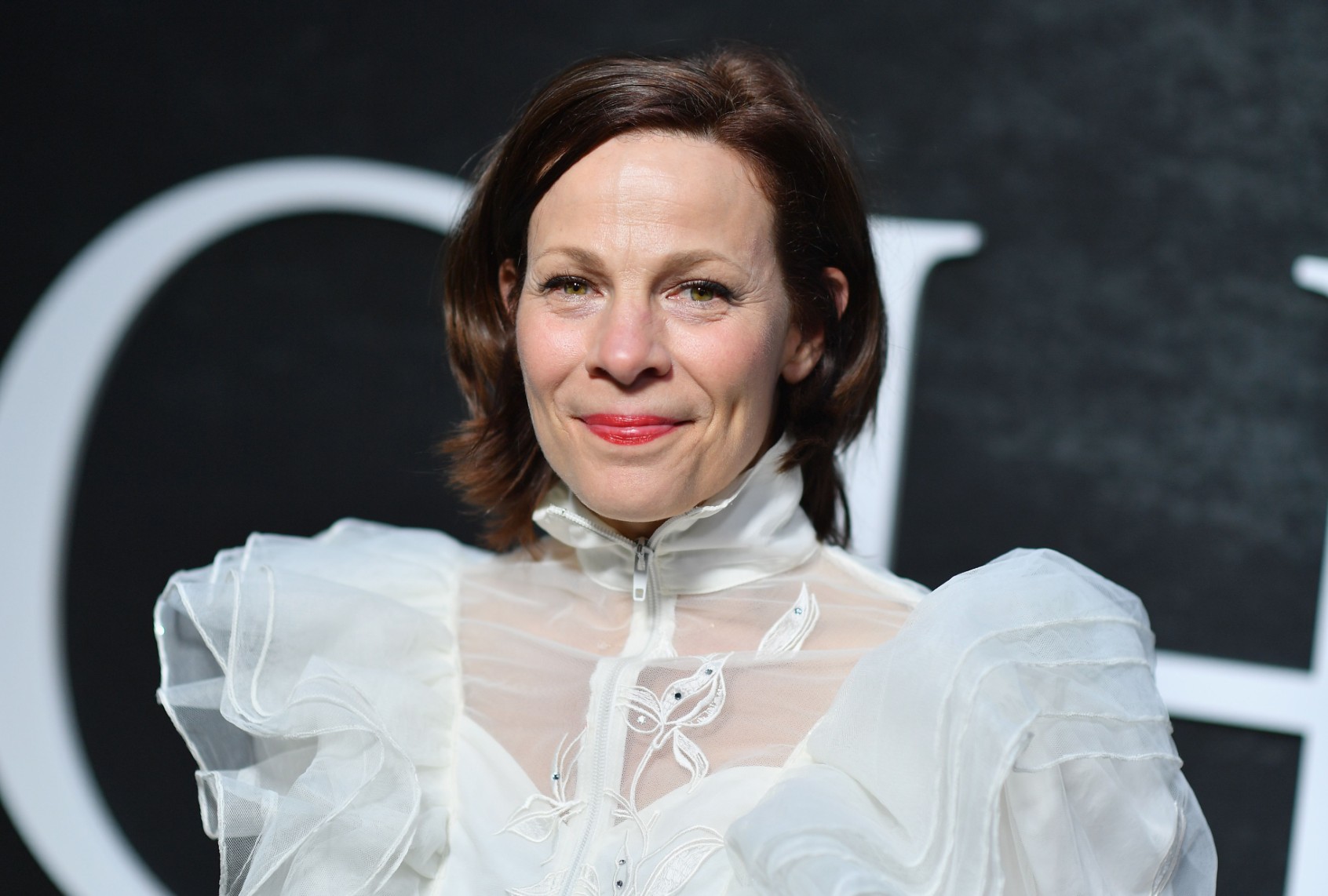
Lili Taylor has changed my opinion on house sparrows forever.

In her first book, "Turning to Birds: The Power and Beauty of Noticing," released on April 29, the Illinois native and longtime New York resident with a lifetime of iconic film roles under her belt — spanning from "Mystic Pizza," "Say Anything," "I Shot Andy Warhol" and "The Conjuring," in addition to TV roles in "Six Feet Under," "Outer Range," and, soon, the second season of "Daredevil: Born Again" — refers to one of the world's most common birds as being not very nice to each other, "always bickering," and particularly disruptive to nesting bluebirds, aggravating her to such a degree that she bought a pellet gun at Dick's Sporting Goods in an attempt to take them down before realizing it would be too difficult to hit such small moving targets.

During a lengthy conversation over Zoom, as she was in Vancouver working on an undisclosed project, I checked in with Taylor as to the status of her sparrow beef, sharing with her that, as they are the dominant visitors at the feeders in my own backyard, I now keep an askance eye on them, having read the chapter in her book where she details boiling a sparrow's eggs and placing them back in the nest to keep them from multiplying and taking over the nests of gentler birds, only for one to hatch anyway.

"The Terminator Sparrow was born," she writes, describing her horror and, eventually, admiration at the bird's resilience after rejecting its fate as essentially an Easter egg to come to life, at any cost, to further torment Taylor. 

"It’s a work in progress, my relationship with sparrows," she said during our conversation, spent primarily focused on her love of birds (although not these particular birds) and her work as a board member for both The National Audubon Society and the New York City Bird Alliance.

Read the rest of our interview — her first for the book — to learn more about when and why Taylor became interested in birds and how an appreciation for them is a switch in all of us, just waiting to be flipped.

The following interview has been edited for length and clarity.

As someone who, over the past few years, also entered their bird era, this book really spoke to me. I can remember being younger and looking at all the bird books and figurines in my gramma’s house, thinking, “What’s this lady’s deal with birds?” And then, flash forward 30 or so years later, I’m like, “Oh wow, listen to those mourning doves!” Why do you think that, for so many people, this switch flips at a certain age, and birds suddenly become a point of fascination?

"Just by even mentioning birds, it sort of opens up a door."

That’s something I think about a lot. I think the switch is there to be flipped . . . our innate wiring to be ready for it. I think it can happen through other people. It’s so wild. Just by even mentioning birds, it sort of opens up a door; it’s really weird. It’s kind of cool—you don’t have to do much. Like, I remember I took these kids out for a walk—my kids’ class. I take them out on little bird walks. This was when they were in the third grade, and it was 20 minutes, and one of the kids’ moms, for the rest of the year, she goes, “Jesus, he can’t stop talking about birds . . . now I gotta put bread out.” And then another mom was like, “Oh my God, every time a bird comes out he says, ‘I like birds now.’” Twenty minutes—that’s all it took. So I guess it’s just letting people know that there are birds around.

Could you ever have imagined in the wilder days of your youth that you’d be publishing a bird book?

No. No. I mean, I always knew that I wanted to write on some level. Not like in the way I’m writing, because I always thought, I’m not a writer. But I always thought, I wanna write plays, or screenplays, because that felt more in my wheelhouse. I did not think I’d be [uses airquotes] an author. When I was doing a little PR thing for the book, I was like, “What do I say? I’m like the . . . of this book? I’m the writer?” And they said, “Well, you can say author.” And I was like, “Author?!” So that’s pretty cool. I still feel a little insecure about my grammar and s**t like that, but my agents and my editor just say, “Don’t worry, we can always work on that. Just be who you are.”

You did a fantastic job. In fact, it’s interesting to hear you say that you would have never thought of yourself as a writer or an author, because you write in my favorite style. It’s very conversational. And there’s a lot of humor in it that I would assume is not even intentional humor; it’s situational humor. Like you going about and interacting with people and stuff. I got so many chuckles out of it and could really put myself in your shoes, and that’s something that's difficult to do when you’re writing, so you really achieved that.

Conversational. That’s an interesting way to describe it. I feel like I wanna take notes. This is my first interview for the book. This is very interesting for me. This is my first way into the world of being a writer. It’s very strange. Not strange. But it’s new. So, conversational, as opposed to a writer being like . . .

Just like, “Birds, birds, birds.” Like, if I were to sit down . . . I love all animals, and I have a dog, but if I were to sit down and write a book about dogs, I feel like I’d find myself wanting to act like an expert and go into breeds and this and that, and end up writing something pretty boring. And I’ve read bird books. I read some books about crows that are along those same lines. Instead of talking about life, life with such and such, life with birds, and your experience as a human with these creatures, it can often read very scientific. So your writing was another way to open that door of appreciation, I feel. Like, oh yeah, you can look outside. There they are. And here’s how you can help them. And it was really cool. 

Thank you. Thank you. I’ll note that. 


Want a daily wrap-up of all the news and commentary Salon has to offer? Subscribe to our morning newsletter, Crash Course.


This book really changed my opinion on house sparrows. Reading the chapter you devoted to them, which details their bullying of bluebirds trying to nest, I looked out the window, because I have feeders out, and I was glaring at the feeders in my backyard that were swarming with sparrows. I’m still a novice in this world. I don’t know much about the birds other than, there they go. But I look at them differently now. Especially reading about the “Terminator Sparrow.” So I’m curious, do you still have sparrow beef?

Yeah. I do. Though they’re declining. So now I feel a little bit more . . . well, here’s the thing, look, they’re a reality. I guess I’m just . . . it’s a work in progress, my relationship with sparrows. But if I f**king see one . . . like cats, now look, I wanna keep my cat stuff pretty low profile, because cat people are crazy. And I mean, I love cats. But if I see a f**king cat. And I do, in Brooklyn. I don’t like cats when I see them near birds. I don’t like house sparrows when I see them near bluebirds. 

You have opened my eyes to that because I see them now, and I’m watching them more closely. They are bullies. And there are so many. And they pick at each other. They aren’t even nice to each other. The bugs of the bird world. 

[Laughs]

This was really interesting to me as well in your book, and another reason why it spoke to me, because I’m also an introvert. I have anxiety . . . not like they go hand in hand . . . but I’m anxious just waking up in the morning. Upon rising. Being a birder would seem like a solitary practice, but at your level, you detail in your book lots of interactions with strangers while in pursuit of specific birds, or especially in your work helping to keep them safe. So, as an introvert, what are the pluses and minuses there?

Do you mean being an introvert who’s also in the public eye?

Well, when you’re out there with birds, people are like, “What are you looking at?” They’re gonna be coming. People.

I guess I gave up a long time ago on any anonymity. That’s just the reality, if you’re an actor in this century. Maybe if I were acting . . . well, I wouldn’t have been acting in 1500, because it would have been a man anyway. So this is my reality now. If someone’s focused on something we’re like, “Whoa, what is it?” I didn’t realize that was so active. And I also didn’t know how curious birders are, and how open they are to talking about or figuring out birds. Just a couple of days ago, I was at a place with a little lagoon and I was sitting on a little strange, I don’t know, cement thing a little bit out on the shore, and a mom and her kid . . . I think he may have been a little autistic because he was kinda close to me . . . and she was like, you know, “Back away,” and then she was like, “Have you been here much? Do you know . . . wait, are you from? That haunted house . . .  wait . . . “ And I was like, “Yeah, it’s 'The Haunting,'” And she was like, “Oh my goodness.” You know, if you just kinda cut to the chase, tell them what it is, because a lot of times people aren’t sure where they know me from. So I just cut to it. And then the exchange is usually over pretty fast. They can see I love birds and that I wanna go back to it. And usually it’s pretty OK. And then they realize, oh, someone else loves birds, that’s cool, let’s stop and look at another bird. 

Lili Taylor (ANGELA WEISS/AFP via Getty Images)You are actually on the board of The National Audubon Society, which I think is an amazing example of signal boosting. Reading every mention of your work with them, detailed in your book, I get the sense that when you’re passionate about something, you go all in, which includes your collection of binoculars, which I now know that birders refer to as “bins.” How do you balance your time between your acting work and your work with Audubon​​​​​?

I haven’t been as busy as an actor as I would like, honestly. And I probably shouldn’t say this much in interviews. You should say you’re very busy, you know, whatever—you don’t say things like that—but it’s the truth. And so I’ve had time. And, you know, I also have a daughter, and my husband teaches from January to May in Houston, so there have been certain reasons why I maybe have not been as out there as I . . . right? And you know something else, it’s like, with Audubon, somehow I’m just able to make things work.

I think that not being so overwhelmingly busy that you can do your own life stuff is a good thing. It must feel nice. I could never even imagine the life of a celebrity . . . not only speaking events, but there’s so much. People want so much of you. I've seen interviews you’ve done in the past talking about riding along with Julia Roberts during press for “Mystic Pizza,” and you were just amazed. I remember you said specifically, talking about how she was treated, that it seemed like a prison. So I think, good for you that you have time to do this stuff and be a person. 

That’s a great point, and I need to bring that in more. What are the things I’ve gotten by not being busy? And maybe it’s not because I haven’t been wanted as an actor, maybe it’s because I also want a certain quality of life. And you can see the things I do in the book. I want to do all those things that I’m doing, and that does take time and quiet. 

I came across a video featuring you on the National Audubon Society YouTube page where you explain how your love of birds led to your love of native plants as a way to fill your garden with healthy food options for birds and butterflies. To me, this is such a beautiful example of how appreciating nature creates a positive ripple effect, opening your heart to so many other things, which we need now. Where would you eventually like to take this next?

"I don’t even know some of the ways I might be able to help, but I wanna be ready to do it when it shows up."

I wanna do things. And I’ve found my thing. And I guess with acting . . . I love acting, and I miss it. I do miss it. I need it. And for all my introversion . . . I love to collaborate. And being a writer, you collaborate in a different way. And I love being with a crew. And I realized while I was writing that I need this. That being said, I’ve also found that I’ve got something I love, and I know what it is. And I’ve hired a publicist who will work with me on, specifically, how to develop myself as an ambassador. I don’t even know some of the ways I might be able to help, but I wanna be ready to do it when it shows up. 

I was excited to see that you got added to the cast for "Daredevil: Born Again" Season 2

I know! It’s kinda cool. I haven’t started yet. I start in a couple of weeks, but yeah! 

I’m curious, when you travel for projects (although for that one, you don’t have to travel very far), do you research what birds are in the area, like some travelers would research restaurants? 

Yes and no. Once I was really on a destination to see a bird, which I don’t really do, and I hadn’t done any homework, and I was really f**ked. I’ve been to Vancouver before, and I was here for about a year, so I have a pretty good sense. I guess I do, for sure—like, before I go, like, oh, you’re gonna be shooting in Atlanta, Georgia . . . yeah, actually, I will look up and see what’s going on. I do. I do.

Two feral cats like to sneak into my backyard to hunt the birds at my feeders and they’ve caught more than a few bluejays and mourning doves, which makes me want to set up little fences and do things to protect the birds, which makes me question to what level humans should interfere with nature doing what nature does. Have there been instances in your work with birds when that quandary has presented itself? When to step in, and when to allow nature to run its course, because we can’t always be around to protect?

It’s a great question . . . to accompany or to interfere. And I think it changes with each situation. For me, like when that cat was around in Brooklyn, I took the feeders down. Because I felt that birds haven’t evolved to deal with cats, and so it’s putting them in a situation that’s just not fair. With the bluebirds, that’s a clear thing where they need intervention. Now, house finches, for instance, they have a really terrible disease that’s like pink eye, and it’s really taking them down. It’s really bad. They get it from each other and at feeders and stuff. I was talking to this finch expert, and he had said, “Keep the feeders up.” Because they need to develop [an immunity.] Now, someone else would say, “No, no, no, take those feeders down.” So that I feel is a more nuanced thing where, for instance, I know with a lot of those cams, those nest cams, the public gets very upset. I heard one of them had to shut down an eagle cam because they were mad at the park service, because they weren’t intervening. Because one of the chicks was sick or something, and they didn’t like the way the parents were treating the chick. So they had to shut it down. And that’s when I get really upset, like we really need to do a lot of education on anthropomorphizing, on just live and let live, and step back. It’s not Disney. So, it’s a great question, and I think it’s a question we should be asking.   

Lili Taylor will be at a number of events for "Turning to Birds," which you can keep an eye on here.

The enemies list: Trump takes a page from Nixon’s playbook

"We're all afraid . . . " Sen. Lisa Murkowski, R-Alaska, told a gathering of nonprofit and tribal leaders in her home state on April 14. "We are in a time and a place where I have not been before. I am oftentimes very anxious myself about using my voice because retaliation is real — and that's not right."

Murkowski, one of few Republican senators to have publicly opposed President Donald Trump, was voicing concern about his administration's wide-ranging effort to seek revenge against a lengthy list of individuals perceived as political enemies. The New York Times listed more than 50 individuals who have been "targeted for retribution" by the Trump administration. The president and his appointees have attacked these people by firing them, stripping them of Secret Service protection and security clearances, ordering federal investigations against them and even threatening criminal prosecution.

The list of Trump's targets includes former President Joe Biden, his son, Hunter Biden, former Vice President Kamala Harris, as well as members of the first Trump administration who later turned against him such as John Bolton and Mike Pompeo.

Nixon and his "hatchet man"

Trump isn't the first modern president to assemble a list of political enemies to be targeted for revenge. After he won the presidency in 1968, Nixon spent hours plotting revenge against his enemies. Ken Hughes, a researcher with the Miller Center at the University of Virginia, as well as the author of two books on Nixon, said there were three groups Nixon fixated on in particular: Jews, Ivy Leaguers and intellectuals. "He believes that members of all those groups are arrogant, and that they put themselves above the law."

In 1971, Charles Colson, a special counsel, known as Nixon's "hatchet man," organized a 20-person list soon approved by John Dean, then chief White House counsel. Dean wrote a confidential memorandum addressing "how we can use the available federal machinery to screw our political enemies." The planned methods included leveraging IRS tax audits, phone-tapping, the cancellation of contracts and even criminal prosecution.

Colson's roster featured a diverse group of adversaries: two Democratic congressmen, several reporters, a labor leader, as well as the actor Paul Newman.

On June 17, 1972, a team of burglars was arrested at the Democratic National Committee headquarters at the Watergate Hotel. The five-member team, nicknamed "the plumbers," was created by the Nixon White House to conduct espionage against perceived foes. After the arrest, the White House stopped harassing opponents and began the long, complicated cover-up of its covert espionage operations.

"I am oftentimes very anxious myself about using my voice because retaliation is real," Sen. Lisa Murkowski, R-Alaska, said.

In June 1973, during the opening days of the Senate Watergate Hearings, John Dean revealed the list of "enemies," which had by then expanded to a file "several inches thick." There was bipartisan shock and disgust at the existence of the administration's organized effort to silence political opponents. William F. Buckley, a leading conservative and the editor of The National Review, wrote that the "stealth and brutality" made it "an act of proto-fascism."

Because he faced several major restraints, Nixon moved slowly in taking retaliatory actions. For his entire six years in office, the Democrats controlled both chambers of Congress. He was also faced with a powerful and often critical media. The three TV news networks then in existence — ABC, CBS and NBC — all fielded skilled reporters who questioned Nixon directly and cultivated leads in the administration. The Washington Post won a Pulitzer Prize for its fearless reporting on the Watergate scandal.

"There's way too much retribution"

Trump has no such restraints. Today, he enjoys Republican control of both the House of Representatives and the Senate, as well as something Nixon could have only dreamed of: the unconditional support of Fox News, the most-watched TV news outlet. Not to mention the small universe of radio talk show hosts, podcasters and social media personalities who relentlessly cheer Trump on and spew vitriol at liberal opponents.

In contrast to Nixon's secret planning, Trump has been boasting about how he would retaliate against his enemies since his first presidential campaign. In 2016, he vowed to prosecute his Democratic opponent, former Secretary of State Hillary Clintion. Trump applauded as crowds of supporters chanted, "Lock her up! Lock her up!" After winning his first election, however, he ultimately did not pursue any legal action against Clinton.

Rick Wilson, a veteran Republican campaign advisor, now a vocal Trump critic, compared the two presidents vengeful instincts. "Richard Nixon is typically considered the modern exemplar of a dark and vindictive president," Wilson wrote for The Daily Beast in 2016. "President Trump would be Nixon minus the keen intellect and work ethic."

Amid his 2020 campaign, Trump made more than 100 threats against his political opponents. During his 2024 campaign, he repeatedly ranted against Biden. A year prior, he told supporters, "I will appoint a real special prosecutor to go after the most corrupt president in the history of the United States of America, Joe Biden, and the entire Biden crime family." Trump would later amplify false allegations of Rep. Lynne Cheney, R-Wyo. — then the head of a committee investigating the events of Jan. 6, 2021 — being a traitor who should face a military tribunal.

In the first 100 days of his administration, Trump has wasted no time taking action against his perceived enemies, including prominent universities, major media outlets and top law firms. He has drastically cut budgets and reportedly fired at least 121,000 workers across 30 federal agencies.

The Washington Post reported on April 10 that Trump had crossed "the Rubicon" when he ordered federal investigations of two senior executives from his first administration. The two former security officials, Chris Krebs and Miles Taylor, had spoken out against Trump's false claims of a stolen election in 2020. Most observers expect Attorney General Pam Bondi, who has displayed fierce loyalty to Trump, to follow through.

The courts, the third branch of government, remain as one possible check against Trump's campaign of political suppression. So far, the administration has been hit with more 100 lawsuits. On April 19, the Supreme Court ruled against the Trump administration, halting the deportation of Venezuelan migrants.

Another factor may be the public's increasing disenchantment with Trump. Noting his falling approval ratings, Karl Rove, the chief political advisor to former President George W. Bush, observed in an April 16 Wall Street Journal editorial that the nation is experiencing "Trump fatigue." "There's way too much retribution," he warned. "Most of the president's revenge attempts will end badly for him. Republicans could rue the day they set a new justification for retaliation from Democrats."

“He’s no moderate”: Republican rising star has a rough time at his New York town hall

Earlier this week, Rep. Mike Lawler, R-N.Y., a self-described moderate Republican eyeing New York’s governorship, faced a hostile crowd and witnessed firsthand how the public is souring on the Trump administration.

On Sunday, Lawler held the first of his series of in-person town halls. Though the representative has held call-in, virtual town halls previously, attendees who attempted to ask questions said that they were heavily screened and not representative of sentiment in the district.

I had attempted to register for the event well ahead of time. However, without an in-district address, I couldn’t do so online. At the same time, no one picked up the phone when I called each of Lawler’s three offices to attempt to register or seek admission as a member of the press.

Showing up to the event at Clarkstown South High School in West Nyack, a hamlet situated in Rockland County, I was denied entry by Lawler’s staff, who were even checking to ensure that those who successfully registered could provide proof they lived in the district. One teacher at the high school was asked to provide a utility bill with her name and address because she had left her driver’s license at home.

Speaking outside the high school where the event took place, many constituents who had come out told Salon that they were unhappy with Lawler. Even among those who did approve, many were concerned about his relationship with President Donald Trump’s administration.

Vincent Solar said he had voted for Lawler in 2024, when the lawmaker successfully pitched himself as a moderate, winning re-election over former Rep. Mondair Jones, D-N.Y., by about six points. He was at the town hall, he said, to see if the representative was “talking out of both sides of his mouth” and “to see if he represents us or if he represents the president.”

Solar said that he was most concerned about “Medicaid cuts, unelected officials having influence inside the administration and unqualified people in the cabinet." Above all, he added, "it’s the spineless Congress that’s the issue.”

Another constituent, Taylor Mandelbaum, said he was hoping to hear “Lawler get some questions that he doesn’t have a pre-scripted answer to.”

“A lot of his recent town halls — phone town halls — you only got 11 questions. I actually got a pre-screened for one of them, and they were asking pretty tough questions about what I was going to ask him,” Mandelbaum said.

Mandelbaum said that he didn’t vote for Lawler in the last election and that he was hoping to ask him about funding cuts to NOAA and the National Science Foundation.

We need your help to stay independent

Brian Hall, another constituent, said he did not vote for Lawler but that he, in theory, “likes a lot of his policies and what he’s done," adding: “President Biden even said that Congressman Lawler was the type of Republican that he could do business with."

Hall said he was hoping to hear a response from Lawler to Trump’s deportations of legal U.S. residents, and refusal to bring back the wrongly expelled Kilmar Abrego Garcia, despite the Supreme Court ruling against the Trump administration unanimously. He also indicated that he was disappointed with Lawler’s behavior in relation to the press.

“I don't think he wants reporters such as yourself from Salon.com and CNN and MSNBC to be privy to unfavorable media coverage,” Hall said. “I think it is an overall affront and ongoing strategy of First Amendment rights, and I wish that the Congressman would allow the press inside.

At this point, a Lawler staffer who refused to give his last name but whom I later identified as Sean Glendening, chief counsel to the congressman, told me that I wasn’t allowed to talk to people who were walking into the public high school where the event was taking place. Glendening told me that if I did not remove myself from the premises, he would have to get security involved.

While Lawler's organization was selective in the press they allowed in, The New York Times reported that the town hall was characterized by "groans and mockery" of the representative, as Lawler repeatedly claimed that he didn't support slashing Medicaid, despite his voting for a budget framework that demands the committee that oversees Medicaid find $880 billion in cuts. The audience even laughed when he said that the United States is "strong and united."


Want a daily wrap-up of all the news and commentary Salon has to offer? Subscribe to our morning newsletter, Crash Course.


On my way out, I spoke with some of the remaining protesters at the event. While there had been hundreds ahead of the event, most went inside around the time the doors opened. 

One protester, Merrill Tone, said her chief concern was about American democracy and that Lawler had “done a good job trying to portray himself as somebody that cares about people, and then he goes along with his party.”

“He wants to, you know, further his career so he’s going to back whatever horse is winning the race,” Tone said. “I'd be sorry to see him as governor if he's if he's keeping on the way he's keeping on now, with all of these being okay with all this stuff that's going on, because Congress should really step in. They let all these illegal things happen, and they have a voice and they're not speaking up, the Congress is doing nothing.”

Jacob Tananbaum, a resident of the district, told me that he was out protesting because Lawler “thinks of himself as a moderate, but he's been backing this regime of the Donald Trump.”

“I mean, you can't call yourself a moderate if you back something so extreme,” Tananbaum. “He’s no moderate. That's not who this person is. He’s standing behind this Trump administration.”

Lawler's icy reception comes as Republicans around the country are returning to districts where their politics — cutting Medicaid, praising Trump and supporting mass deportation — are becoming increasingly toxic. Even Republicans like Reps. Marjorie Taylor Greene, R-Ga., Nancy Mace, R-S.C., and Byron Donalds, R-Fla., are facing hostile crowds. Trump, meanwhile, has claimed without evidence that Democrats are "paying a fortune" to disrupt town halls.

In early March, the chief of the National Republican Congressional Committee, Rep. Richard Hudson, R-N.C., even directed his fellow representatives to stop holding in-person town halls because of how poorly the events were going for Republicans.

The turn against Republicans in their districts seems to be part of a broader souring on Trump and his allies, with the president's approval rating sinking to just 39% in April, according to a recent Washington Post-ABC News-Ipsos poll, marking the lowest his approval has ever sunk, according to that pollster.

Bob Dylan can do whatever he wants

The spring edition of Bob Dylan’s "Rough and Rowdy Ways 2025" tour rolled into Kalamazoo, Michigan, on a Wednesday evening in mid-April. Earlier in the month, the tour had visited places like Eau Claire, Wisconsin; Davenport, Iowa; and Omaha, Nebraska. 

Dylan does not need to tour. He will be 84 years old in May, has recently sold his songwriting catalog to Universal Music for a rumored $300 million, and if he felt the need to play in front of a live audience, could easily set up shop for a couple of weeks in places like New York, Chicago, or Los Angeles and let the fans come to him — and they happily would.

The only answer to why Dylan is in Kalamazoo (or something similar) is that he wants to be there, playing small to mid-sized audiences in cities and towns that don’t usually get concerts by someone of his stature. The audiences have reciprocated the gesture by filling the theaters more than they usually do. Outside of the major cities, it’s usually not all that hard to find a good ticket to see Dylan. 

But this time out — possibly because of a wave of both renewed awareness and maybe some general goodwill thanks to "A Complete Unknown," the film based on Dylan’s early days in New York City — the shows sold briskly and the Bobcats (yes, that is a name used to describe the diehard fans) had to hustle to get into the building. 

The only answer to why Dylan is in Kalamazoo (or something similar) is that he wants to be there.

When I arrived around 2:30 p.m. to collect my ticket from will call, I overheard someone in the box office inform a caller that there were only about 30 tickets left, and as I stood waiting my turn, two of those were sold, one to a university student and another to a gray-haired gentleman who arrived on his bike. 

Dylan’s been to Kalamazoo six times since 1978 and was last at the 3,500 capacity Miller Theater on the Western Michigan University Campus in 2010. But the city seemed genuinely proud to have Dylan in their midst. The hotel desk clerk mentioned that she’d heard about it on the news, and the venue’s request that attendees show up early in order to get through security was taken seriously, with a line of cars waiting to get into the parking lots an hour before showtime. But perhaps the best indicator of their appreciation was in the fact that the K’zoo audience listened to the music for the entirety of Dylan’s usual 90-minute set with what felt like deep interest and attention. 

There were no exoduses out for drinks, disruptive yells for song requests, or even the tried-and-true “I LOVE YOU BOB.” But people in the audience would stand and applaud for particularly notable performances, and not just for the obvious hits. They acknowledged a powerful “Desolation Row,” but also rose to applaud a particularly intense “Black Rider,” from Dylan’s most recent album. The woman who sat next to me, accompanied by her son, asked me, towards the end of the night, what album “Mother of Muses” was on, and if she could purchase it on Amazon. 


Want a daily wrap-up of all the news and commentary Salon has to offer? Subscribe to our morning newsletter, Crash Course.


Dylan would even seemingly acknowledge the audience’s response about halfway through the set, saying, “We’re doing all the hits tonight” after “My Own Version of You.” While that’s not strictly true — about half the 17-song set draws from 2020’s "Rough and Rowdy Ways" — that is a lot from a man who isn’t fond of talking much onstage these days. 

Bob Dylan (Gary Miller/Getty Images)Dylan and his band were in particularly sharp form on Wednesday in Kalamazoo, with strong renditions of “When I Paint My Masterpiece” — Dylan's vocal delivery was almost playful — an unexpectedly bubbling “To Be Alone With You,” and his own careful, studied recitation of R&RW’s “Key West” transported you there, or at least into his imagination. “It’s All Over Now, Baby Blue” felt like a gentle croon as compared to the frantic desperation of the original, but still felt decisive. It felt in some ways as though Dylan wanted to reward the audience’s attendance and attention with performances that were easier to comprehend — at least melodically — than previous outings may have been. 

The musicians onstage with Bob absolutely deserve praise and attention. Three of the musicians you would have seen him with in 2024 are still around: Tony Garnier on bass and Bob Britt and Doug Lancio on acoustic and/or electric guitar. They arrange themselves facing Bob, who sits at center stage, and do not take their eyes off him for one minute. On the drums currently is Anton Fig, who most people know from his tenure on "The David Letterman Show." He took the place of legendary session drummer and previous Dylan collaborator Jim Keltner, who was in the seat last summer. 

You don’t go to a Dylan show in 2025 hoping to hear a rarity, you’re going to spend time in the same space as Bob Dylan.

Bob’s main instrument of choice these days is a grand piano, and sometimes his execution on that is masterful, and other times it feels a little slapdash. But this has been recently augmented with an electric guitar. In 2024, there was always an electric guitar onstage, lying flat on an equipment case against the back wall; it was both frustrating and tantalizing because he could pick it up at any time, and yet sadly, he did not. 

But this spring, the guitar was behind the piano within arm’s reach, and there were 2-3 songs in which Dylan did indeed play electric guitar. In Kalamazoo, the audience got to experience this on “I’ll Be Your Baby Tonight,” which opened the show, as well as “It Ain’t Me, Babe” and “Watching the River Flow.” He’s sitting on the piano bench while he’s doing so, which means the only people who can actually see him playing are his band, but you can absolutely hear it, and there is this little frisson of excitement when he does. It sounds different; it feels different, even if just for a split second.

This spring outing has experienced exactly one set change from this outing’s start in Tulsa, Oklahoma at the end of March: he opened with “All Along The Watchtower,” and a week later switched it for “I’ll Be Your Baby Tonight,” which held its place until this run’s end (in Williamsport, PA, on April 22nd). But you don’t go to a Dylan show in 2025 hoping to hear a rarity, you’re going to spend time in the same space as Bob Dylan. The Bobcats have their own reasons for turning up multiple nights and can debate the finer points of, say, the phrasing and delivery of individual lines of songs from night to night. It’s the same set except that it’s never the same set. 

But any of this — the set, the instruments, the band members — can change by the time Dylan is back on the road again, this time on the 10th anniversary of the Outlaw Music Festival, once again sharing a stage with Willie Nelson (along with Billy Strings, Sheryl Crow, Nathaniel Rateliff and a whole host of other rotating musicians). They’ll be hitting the road out West in mid-May and continuing across the outdoor amphitheaters of America until the fall. 

What changes can an audience expect? Well, for last summer’s Outlaw tour, he changed the entire set, replaced the drummer (Jerry Pentecost, who’d taken the place of Charley Drayton in 2023) with Jim Keltner, and removed a long-time band member (multi-instrumentalist Donnie Herron, who’d been playing with him for 19 years). Anything remains possible with Dylan, which is delightful, improbable for a man of his stature, and yet perfectly in character for the man who changed the face of rock and roll. He’s still doing that.

“Hostile and political act”: White House slams Amazon’s plans to display tariff costs

The honeymoon that Amazon founder Jeff Bezos attempted with President Trump hit a snag on Tuesday after reports that the company planned to show shoppers how much tariffs will add to the price of products. 

"I just got off the phone with the president about this, about Amazon’s announcement. This is a hostile and political act by Amazon,” White House press secretary Karoline Leavitt said at a press briefing following the report by Punchbowl News.

An Amazon spokesman responded soon after, saying the plan had been discussed at Amazon Haul, its lower-cost store that competes with online retailers like Shein and Temu.

“Teams discuss ideas all the time,” Ty Rogers, an Amazon spokesman, said in a statement reported by The New York Times. “This was never a consideration for the main Amazon site and nothing has been implemented on any Amazon properties.”

An hour later, Amazon said the plan was “never approved” and is “not going to happen," media outlets reported.

Trump and Bezos spoke over the phone after the Punchbowl report was published, The Times and NBC News reported.

Temu, based in China, raised prices in recent days after Trump hiked tariffs and closed a loophole that allowed duty-free shipments to the U.S. Temu also started listing the "import charges" above the total price of its items. Some of the fees range between 130% and 150%, more than doubling the cost of the items, CNBC reported. Shein, founded in China and based in Singapore, also increased prices in response to tariffs.

After clashing with Trump in his first term, Bezos and other tech billionaires have been trying to work their way back into his good graces, visiting Trump at his Mar-a-Lago resort after his reelection, donating to his inauguration fund and scoring prime seats at his swearing-in. 

Amazon reportedly spent $40 million to secure the rights to produce and stream a documentary about Melania Trump, outbidding both Disney and Paramount.

Bezos, who owns The Washington Post, was behind the decision to shut down the newspaper's endorsement of Kamala Harris in the 2024 election.

Asked to comment on the status of where things stand now between Bezos and Trump, Leavitt told the media: “I will not speak to the president’s relationships with Jeff Bezos."

I never thought to air-fry salmon — until this recipe changed my mind

The air fryer is truly a wonder appliance. From wings and steak to burgers, chicken and hard "boiled" eggs (along with crispy cheeses and leftovers, too), there's no shortage to the amount of foods the air fryer can cook perfectly. It's even better for the air quality in your kitchen!

As someone who prioritizes texture over practically anything else, the air fryer has been astonishing across the board, crisping and caramelizing countless foods that would've ended up limp — and then likely wound up in the garbage).

One food item that I had, up until this point, not introduced to my air fryer was seafood. I( had reheated some fried shrimp in an air fryer to great results, but no actual from-scratch, raw seafood).

As my colleague Ashlie Stevens outlined, though, salmon and the air fryer make for great pals.

Similar to how I cook chicken breast in the air fryer, my primary goal is texture: crispness, browning, crunch. Generally, it's challenging to get that with salmon without intensely high heat and lots of oil  but alas, the air fryer does all that and then some in 15 minutes or less. The air fryer is also adept, unfortunately, at burning certain things. So if you were hoping for a brown sugar coating or a sugary marinade here, you'll be disappointed.

I went very barebones here, with nothing but a spray of Pam, kosher salt, garlic powder, onion powder and a touch of paprika. The real power of this recipe comes in the sauce and garnish: salmoriglio, an Italian sauce that's like a mashup of pesto, chimichurri and salsa verde  and the crispiest fried leeks imaginable.

Altogether, the color, flavor and textural differentiation is incredibly varied: briny, oily, herbaceous sauce slicks the crisped salmon, with the crunchy leeks providing another dimension of flavor and texture. I fry the leeks on the stove while the salmon air-fries, but if you'd rather, you can most certainly air-fry the leeks, too.

This is a perfect meal for warm, sunny spring days — and it all comes together in practically no time at all. 

We need your help to stay independent

Air-fried salmon with salmoriglio and crispy leeks
Yields
3 servings
Prep Time
5 minutes
Cook Time
15 minutes

Ingredients

For salmon:

2 to 3 skin-on salmon filets

Pam or cooking spray

Kosher salt

Garlic powder

Onion powder

Paprika


For salmoriglio:

2 lemons, juiced and zested

Palmful of oregano, roughly chopped

Palmful of parsley, roughly chopped

2 cloves garlic, peeled and minced (or grated on a microplane) 

Kosher salt

1/4 cup olive oil 


For leeks:

1 to 2 large leeks, trimmed (hairy end and dark greens cut off)

1/3 cup neutral or olive oil

Kosher salt


Directions

  1. Add salmon filets to air fryer basket skin-side up. Spray with pam and season with salt. Cook in air fryer at 400 degrees for 12 minutes.
  2. At the 6 minute mark, flip salmon and season with garlic powder, onion powder and paprika. Season again with salt. Return to air fryer.
  3. At the 12 minute mark, evaluate your salmon. If you'd like it darker or crispier, cook another 3 to 5 minutes.
  4. While your salmon is cooking, heat oil in large saucepan over medium heat. Add leeks, in batches, stirring often to help break up the leek strands and to help circulate. Once leeks are golden brown, remove from pot with a slotted spoon and let drain on an oven rack over a sheet tray or a paper towel-lined plate. Season with salt while still hot.
  5. For salmoriglio, stir together lemon zest and juice, herbs, garlic and salt. Drizzle in olive oil, stirring consistently, until the sauce is pourable. 
  6. To serve, remove air-fried salmon to a plate, drizzle with salmoriglio and finish with crispy leeks. Serve immediately.

Cook's Notes

  • If you're one who prefers a flaky, tender salmon, more akin to a poached filet, then cut the cook-time down a bit here. As I previously noted in an air fryer chicken breast piece, "I'm always a sucker for over-done, uber-crisp proteins, so this might even veer on overcooked for a normal person." This goes for all proteins, so feel free to cook a good five minutes less or so if you prefer a lighter, softer salmon. 
  • If you're going for a skin-on filet, you can feel free to air-fry with the skin-side up first, to render the skin and get it crispy-crunchy, which will make flipping and cooking the other side much easier than doing this in the opposite order.
  • Stir together the salmoriglio just before you are ready to serve. It's at its best when its bright, punchy and fresh as can be.
  • Do your darnedest to cut the leeks as thinly as possible. They’ll crisp up and be immensely delicious, similar to a shoestring fry or those cans of fried shallots or onions that people sometimes buy to use on green bean casseroles.
  • I like using a neutral oil here, but you can use an olive oil, too.
  • Be sure to season well once the leeks have been fried and crisped — and pull them out of the oil a shade or two lighter than you’d like them to be, as they'll darken in color ever so slightly as they cool and drain on paper towels or an oven rack.
  • For leeks: a good method for this is to trim your leeks of the hairy end and the darkest green parts, then cut the remaining leek into thirds. Cut thin strands, end to end  without cutting through entirely  and repeat with remaining leek pieces. Rinse under cold water (don't skip this: leeks can get incredibly sandy), throughly. Dry with paper towel and now finish cutting through entirely, resulting in thin, matchstick-sized leek pieces.

An American emergency: Is the patient half alive or half dead?

You’re not alone if you feel like the last 100 days have been one very long episode of “The Pitt,” HBOMax’s new hit medical drama about an emergency room in a hospital in Pittsburgh, PA, starring Noah Wyle, the actor who starred in “ER.”  We’re the patient in this drama — the U.S.A., the oldest continuous democracy in the history of the world — and it feels like we’ve been on the table in the OR since the credits rolled back in January, with one bleeder after another squirting blood all over the surgeons, the nurses, the operating instrument tray and everyone’s bootie-clad feet slipping on a floor slick with blood.

Patients end up in the ER because they were in a car accident, had a heart attack or stroke, suffered from some pathogen that hit them out of nowhere or had been lurking in their systems unnoticed and undiagnosed until they spiked a fever or passed out or started coughing up blood and couldn’t stop, or somebody shot them or they shot themselves. 

This patient – you and me and our neighbors and people we don’t even know half way across the country riding tractors or flipping burgers or tapping at keyboards in offices or changing the diaper of their newborn baby or studying biology and calculus and psychology in college or learning to read and write in an elementary school at the edge of a small town with a flag waving atop a pole at the apex of the driveway where the school busses drop kids off in the morning and pick them up in the afternoon – we ended up in the ER with an ailment we had suffered before and thought we had been cured of. But the medicine didn’t take, or it was the wrong diagnosis, or we didn’t take care of ourselves and were reinfected. It happens. Getting sick is a fact of life.

Ending up in the ER, however, isn’t.

How the hell did we get here? Sure, there was an election, but we’ve had elections before that didn’t put us into surgery with our abdomen open with several failing organs and forceps pinching a half-dozen veins that threaten to bleed us out.  Some of the tissue that has held us together and kept us alive is already necrotic. The Department of Education and the EPA are turning black around the edges, as is the Department of the Interior, which just announced that they’re going to reopen drilling at Bears Ears and other national monuments.  

New infections are threatening our intelligence agencies like the NSA and the CIA. They turned out the lights in the room where cyberattacks used to be watched out for. Over at the Pentagon, they’re converting executive offices on the E-Ring into Mar-a-Lago bathrooms where anybody can walk in and rummage through stuff that used to be Top Secret.  They’re talking to each other on cell phones as secure as those at strip mall Verizon stores.  Over at the CDC, they’ve decided it’s no longer necessary to protect ourselves from diseases like AIDS and measles or even tuberculosis by helping foreign nations with their outbreaks because…uh… none of their citizens travel to the U.S. on airplanes, and nobody sneezes on each other anymore…or the oceans protect us from all that foreign stuff…or something anyway.

And just in case you do get run over or start bleeding and are taken by ambulance to an actual emergency room, forget about all the OR gowns and light blue scrubs and latex gloves and face masks and eye shields and the rest of the stuff everybody puts on every time they walk into an operating room. It was reported over the weekend that there won’t be any container ships arriving at U.S. ports by the end of next month because China isn’t going to load them up at their ports and put them to sea, so we’ll just have to put all that OR stuff in the laundry and reuse it. Oh, I’m sorry. Most of it is made from paper and disposable plastic and biodegradable this and that, so we’ll just start using paper towels and tissue paper and spray everything down with Clorox. Don’t worry. We’ll make do.

There was some good news over the weekend. Inflation hasn’t begun to spike and there aren’t yet any empty shelves at Walmart and Home Depot and Target, and nobody has had their Social Security numbers sold to crypto kings operating out of Pacific islands nobody has ever heard of. Still, people are starting to notice that something is…off. Polls have Trump’s numbers down 10 percent from where they were on Inauguration Day, with the president’s approval ratings in two polls at 39 percent and in the low 40s on most other issues, with his disapproval in the mid-50s to even higher. Polls aren’t an election, but as Josh Marshall from Talking Points Memo said, “Politics doesn’t stop just because the President says it does or even when he’s in the midst of an attempted authoritarian takeover. Politics continues. Public opinion, if anything, becomes even more important.” 

We need your help to stay independent

To put it another way, public support matters more, not less, when you’re trying to do big things like upset the constitutional order and cancel stuff like due process under law and deport people who have rights that you might not like but are guaranteed by – get this – their physical presence within our borders.  People notice when economic apple carts start to turn over, and they even notice when you start losing in every courtroom your new staff of genius DOJ lawyers has been forced to walk into to face lawsuits that mounted slowly at first but are now reaching a kind of national crest.

So, how are we doing under the big round lights laid out there on the table in the OR with our torso sliced open and guts glistening, held together with forceps and clamps and surgeons’ thumbs and forefingers and the floor slick with blood? Is the patient half alive, or half dead?

They’re going to destroy the economy and put us in a recession before Trump declares that he has made a “deal” and “won” the “trade war” and tries to dig us out of the hole he’s got us into. They’re going to lose in lower courts until they get a few cases before the Supreme Court, which is going to rule against him on birthright citizenship but give him just enough of a “win” on one of the immigration cases that he can declare “victory” and avoid disobeying a court order. He’s going to get some kind of “deal” on Ukraine with a side-promise from Putin not to take any more territory until 2028, which will quiet down the Europeans and give him a chance to defenestrate NATO, which is what Putin has wanted from the beginning and what they started talking about as far back as Helsinki. He’ll fatten his bottom line with crypto and pay-to-play trade deals with foreign countries, and he’ll play plenty of golf. 

He’ll be the President of the Red States of America, meaning as a country, we’ll be half alive and half dead.

Donald Trump is more popular than the public opinion polls suggest

President Donald Trump's first 100 days in office have been some of the most chaotic and destructive in American history. Given this fact, the “conventional wisdom” suggests that Trump’s presidency should be in grave trouble at this early point in his second term. But the following caveat must always apply when assessing Donald Trump and his political fortunes: He has repeatedly broken the limitations, expectations, and force of the “conventional wisdom.” Trump would not have otherwise been elected twice.

Nonetheless, the public opinion polls would appear to suggest that the conventional wisdom about Donald Trump’s declining popularity is, at this early point in his reign, correct. On broad assessments of the economy, Trump is continuing to lose support. For example, a new poll from Gallup shows that the American people feel that the economy is heading in the wrong direction and are less hopeful about the future. The new Gallup poll contains these specific findings:

  • A majority of Americans are finding it harder to get a job.
  • A majority of Americans assess their personal financial situation as now more difficult.
  • 75 percent of Americans report that the economy is doing poorly.
  • Almost 60 percent of Americans believe that the country is already or soon will be in a recession.

Here is a devastating reality check for the Democratic Party in the Age of Trump: What if the real story of this era and the country's democracy crisis is not so much that the American people fell in love with Donald Trump and the MAGA movement but that they dislike the Democrats even more than him?

At the Washington Post, Phillip Bump describes Trump’s rapidly falling poll numbers about the economy — as well as for his handling of immigration, which was once his strongest issue — in the following way: “There’s a difference between seeing your elevation descend because you’re in an airplane and watching it go down because you’re in free fall. It may prove challenging for some of the above trends to be reversed.”

Beyond the economy, a new Pew Research Center survey finds that only 40 percent of Americans approve of Trump's overall performance as president. The Pew survey also shows that 55 percent of Americans disapprove of his deep cuts to the federal government. On governance, 51 percent of Americans believe that Trump is abusing his authority via executive orders.  

A new, wide-ranging and comprehensive poll from the New York Times and Sienna College reveals more growing discontent from the American people. At the Times, Shane Goldmacher, Ruth Igielnik and Camille Baker explain:

The turbulent early months of Mr. Trump’s administration are seen as “chaotic” and “scary” by majorities of voters — even many who approve of the job he is doing. Voters do not view him as understanding the problems in their daily lives and have soured on his leadership as he approaches his 100th day in office….

Voters do not seem to believe Mr. Trump empathizes with their struggles. After spending much of last year promising to immediately lower prices, he and his allies have urged patience and tried to brace the country for short-term economic pain.

Only 44 percent of voters — including a meager 31 percent of independents — said that he “understands the problems facing people like you. Broad majorities said they would prefer to place limits on exactly the kinds of powers that Mr. Trump has tried to exercise…. 

One of the most troubling numbers for Mr. Trump is the share of voters who feel they have been harmed by his policies.

Voters are more than twice as likely to say his policies have hurt them as they are to say his policies have helped them. That is a reversal from last fall, when many voters across demographic groups said his policies during his first term had helped them.

Donald Trump has been in office for almost 100 days. His approval rating is now the lowest of any president in 80 years

This is the warm hug with soothing words whispered in the ear that "everything will somehow be OK" that the Democrats, the so-called Resistance and other Americans who believe in real We the People democracy and the Constitution are hungry for. The big picture is a more complex and realistic story that is very discomforting, if not existentially perilous and dread-filled. 

Public opinion polls are a response to a series of questions. Public opinion polls are also a snapshot in time that do not predict the future. By comparison, focus groups and other qualitative approaches offer much more insight into how people think about politics. To truly make sense of the Age of Trump, it is that "how?" and "why?" — and certainly not the shortsighted obsession with public opinion polls that is typical among the mainstream news media and political class — that are potentially most instructive and illuminating.

The New York Times has been convening a series of focus groups comprised of “cross-sections of Americans whose voices are often not heard in opinion journalism.” The Times’ April 14 entry in the series, “How 13 Independent Voters Who Backed Trump Think He Is Doing So Far,” should provide some comfort for Donald Trump and his MAGA Republicans:

“There’s a lot of social media saying: Hey, are you Republicans or MAGA people regretting your vote? And no, I’m not,” one participant told us in Opinion’s latest conversation with voters in our America in Focus series….

His vow that short-term pain would mean long-term gain resonated with a number of these voters, who envisioned better jobs and a more even playing field on the other side of the tariffs. As one participant said, “I had my eyes open when I voted for Trump that it was going to hurt.” But what does short-term pain look like? That’s the question everyone, including the participants in this group, is trying to answer.

When asked by the moderator, “Does anybody say: If I had to go back, I would have voted differently?” Two members of the focus group, a Latina who works in finance and a white man who is retired, offered these pointed responses:

“There’s nothing that would have made me vote for Kamala Harris.”

“No.”

The BBC and The Wall Street Journal recently spoke to Trump supporters about his new tariff regime and other economic policies:

On a quick drive around the small Ohio town of Delta, you can spot nearly as many Trump flags as American stars-and-stripes banners.

And at the petrol station near the Ohio Turnpike, the pumps bear relics of the last administration, with slogans slamming Trump's predecessor: "Whoever voted for Biden owes me gas money!"

This is Trump country – the Republican ticket easily won here in November's presidential election by a margin of almost two-to-one. And while the markets are in turmoil following Trump's unveiling of expansive global tariffs this week, plenty of people in Delta and hundreds of Midwestern towns like it still back the president's plans.

Those plans, to impose tariffs of between 10% and 50% on almost every country, have upended global trade and led to warnings that prices could soon rise for American consumers. Trump, meanwhile, has said the move will address unfair trade imbalances, boost US industry and raise revenue.

For some in Delta, the president's argument about fairness resonates….

A Trump voter in Delta told the BBC that "Sometimes you have to walk through fire to get to the other side." The BBC story concludes by highlighting the desperation that drove the Trumpists in that community to make a Faustian bargain with their “savior”:

And as they recounted Delta's history, they described a gradual erosion in quality of life that they believe has made many people willing to roll the dice even when economists say Trump's tariff plan comes with stark risks.

"It was a good little town to grow up in…. It seems like the heart of America is gone… [It] is the kind of place where 25% or 30% of the people are struggling with their demons".

And while these issues have little to do with tariffs, the challenges faced by people in towns like Delta may go some way to explaining why many are willing to give President Trump the benefit of the doubt, even as markets plunge on faraway Wall Street.

We need your help to stay independent

In a second story from the BBC about Trump’s tariff regime, his supporters shared similar rationalizations and motivations, like this from a 71-year-old woman from Michigan who supports Trump:

I know we're all going to get pinched in the pocket for a while. I think in the long run, it's going to get us out of the massive deficit that we're in.

I am concerned about the price of goods going up. I am going to end up being more particular about what I buy, basically I'll tighten the belt for a while.

But then I think it's going to go full circle and it's going to be a good thing for the economy and for people in general.

We've been the world's financial doormat for a while and we've gotta stop it.

A 38-year-old trucker from Ohio told the BBC that:

I feel like the way to kick-start investment back into US manufacturing is exactly this.

It's a necessary evil.

Up until the 70s, there were two steel mills [in my area] and then they closed. And up until the last 10 years, the sites have been abandoned

We might not get back everything, but even if we recover 30-40% of it, it's quite a bit of money and jobs.

The April 10 Wall Street Journal story “Trust Unshaken: Trump Voters Are Sticking With Their Guy” contains more good news for Donald Trump. His followers remain loyal, trustful, and hopeful:

“I always tell people: I don’t have to worry about anything because he’s got it…. There’s a method to his madness, and so I do trust it.”

“Everything Trump does they say is going to be nuclear, and it’s not….Right now is not good for middle-class or just-starting-out people. Things are not good. So somebody has to come in and break things apart a little.”

“The train’s running pretty fast. It’d be ugly to jump off now.”

“He’s the only president who has the balls to do it, whether it pees in your Cheerios or not. I absolutely trust him.”

Beyond these focus groups and other conversations with Donald Trump supporters, there is polling data that greatly challenges the conventional wisdom about Trump's doomed political fortunes. The following should be alarm sirens for anyone desperate for some hope that Trump's “shock and awe” campaign and political power are getting weaker. A new poll from NBC shows that a growing number of registered voters now identify with Donald Trump’s MAGA movement. NBC details how:

As President Donald Trump nears the 100-day mark of his second term, recent polling from NBC News shows how he has consolidated the Republican Party not just around himself, but also around his broader “Make America Great Again” movement.  

Thirty-six percent of registered voters identified themselves as MAGA supporters in the March NBC News poll. It’s a significant increase from past NBC News polling — up from 23% of respondents in a merged sample of all of NBC News’ polling across 2023 and 27% of respondents in a merged sample of NBC News’ 2024 polling.  

The overall share is powered by the 71% of Republicans who now call themselves MAGA supporters.

A recent analysis of the 2024 election by Democratic pollster David Shor should give the Democratic Party even more reason for extreme worry, doubt and fear about their ability to defeat the MAGA movement. At The New York Times, Shor explained to Ezra Klein how people who voted for the Democrats in 2022 but did not vote in 2024 are more likely to support Donald Trump and the Republicans. These findings are counter to the self-comforting narrative that the Democratic Party’s leadership and mainstream liberals and progressives (and the news media and pundit class) have been telling themselves that 2024 was a voter turnout election, and if they could have gotten politically demobilized and disengaged Americans to show up then Kamala Harris would have easily won:

The story of this election is that people who follow the news closely, get their information from traditional media and see politics as an important part of their identity became more Democratic in absolute terms. Meanwhile, those who don’t follow politics closely became much more Republican….

This problem didn’t exist four years ago. It’s not just that the New York Times readers are more liberal than the overall population — that’s definitely true. It’s that they’re more liberal than they were four years ago — even though the country went the other way. And so there’s this great political divergence between people who consume all the news sources that we know about and read about versus the people who don’t.

As a result of these changes, we’re seeing the reversal of a decades-long truism in American politics. For a long time, Democrats have said, and it’s been true, that if everyone votes, we win and that higher turnout is good for Democrats. But this is the first cycle where that definitively became the opposite.

I have some numbers here: If only people who had voted in 2022 had voted, Harris would have won the popular vote and also the Electoral College fairly easily. But if everyone had voted, Trump would have won the popular vote by nearly five points. And generally what you see now is that every measure of socioeconomic status and political engagement is just monotonically related to your chance of liking Trump….

Shor summarizes this painful reality for the Democrats: “It’s basically that the lower your political engagement, education level or socioeconomic status, the less engaged you are in politics, the more Trumpy you are. And that just wasn’t true four years ago.”


Want a daily wrap-up of all the news and commentary Salon has to offer? Subscribe to our morning newsletter, Crash Course.


A series of national polls show that the approval rating of the Democratic Party has plummeted to historic lows since the 2024 election.

The following new poll from Quinnipiac University should also shock the Democratic Party out of its complacency and stale leadership, branding and messaging. Republicans and Democrats are now tied at 33 percent on the question, “Which party cares more for the needs of people like you?” This is a reversal of a decades-long pattern in American politics where the Democrats — and not the Republicans — have consistently been seen as the party of working people and the average American.

CNN’s Harry Enten provides this context:

This, to me, is one of the most shocking pieces of poll data that I truthfully have seen this year or maybe in any prior year…. We got to tie even after this tariff war had already started, split between Democrats and Republicans on how people feel. Which party cares more for needs of people like you, and why is that so surprising? Because I want you to take a look at prior years. Democrats always lead on this question. Back in 2017, before the 2018 midterms, 13-point lead. [In] 2005 a 23-point lead for Democrats. [In] 1994, which was a big Republican year, a 19-point lead for Democrats, and now all of a sudden, a tie, all of a sudden the Democrats, who are the party of the people? No more, no more….

The gains have been concentrated at least within the last decade among voters without a college degree, the working class – that is where Republicans have gained even since the beginning of the Donald Trump administration. The Democratic base is now those with a college degree. Among the working class, those without a college degree, Republicans have overwhelmingly gained on this all-important question of which party cares more for people like yourself.

CNBC’s poll also has more bad news for the Democratic Party: Trump’s weakness on the economy has not translated into political dividends for the Democrats. “Asked about congressional preference, 48% of the public support Democratic control and 46% support Republican control, barely changed from CNBC’s March 2022 survey.”

ABC News has ice-cold water in the face of premature jubilation at Trump's historically low public opinion polls:

The silver lining for Trump is that the opposition party remains out of favor.

People said they trust him over the Democrats in Congress to handle the nation's main problems by 37%-30%. Underscoring bipartisan disaffection, 30% said they don't trust either party.

Further, while 60% said Trump is out of touch with the concerns of most people in the country, even more, 69%, said the Democratic Party is out of touch. It's 64% for the Republican Party overall.

Here is a devastating reality check for the Democratic Party in the Age of Trump: What if the real story of this era and the country's democracy crisis is not so much that the American people fell in love with Donald Trump and the MAGA movement but that they dislike the Democrats even more than him?

The Democrats need to engage in some real introspection, look in the metaphorical mirror and then ask themselves the hard question, "Why don't they love me anymore?" The Democrats must confront these ugly truths and uncomfortable realities if they are to have any real chance of defeating Donald Trump and his MAGA Republicans in the midterms, taking back the presidency, and by doing so saving the country's democracy. And of course, this scenario makes the huge assumption that America will still have reasonably "free and fair" elections in 2026 and then 2028. 

Looking to Trump’s next 100 days: DOJ tees up process for jailing journalists

The White House Correspondents Association held its annual celebratory dinner on Saturday night. Only this year it was more somber than celebratory —and with good reason. Since its return to power in January, and over the last month, the Trump administration has launched an all-out assault on the press and news media.

As NBC News explains, “The Trump administration has had multiple skirmishes with the press in recent months. The FCC is investigating several media companies, the administration is working to shut down Voice of America and other government-run outlets, and The Associated Press has sued the administration for reducing its access to events because it has not renamed the Gulf of Mexico in line with Trump’s executive order.”

Its latest effort to bring the press to heel came on April 25, when news leaked of the Justice Department’s intention to aggressively pursue journalists who receive leaked information from confidential government sources. When it is implemented, the policy will give the administration another tool to make the lives of reporters miserable and provide the basis for jailing those who resist.   

While no journalists are presently in jail in this country for doing their jobs, prosecuting and punishing them is a regular part of the arsenal of repressive regimes around the world. And the atmosphere for the American press is by no means friendly.

April alone saw a dramatic escalation of threats. 

For example, on April 5, Republican Senator Markwayne Mullin of Oklahoma marked the 135th anniversary of a shooting incident between a journalist and a former congressman inside the US Capitol by suggesting that in our era, “there’s a lot we could say about reporters and the stories they write, but I bet they would write a lot less false stories — as President Trump says, ‘fake news’ — if we could still handle our differences that way.”

On April 14, the White House issued a bill of particulars entitled, “The NPR, PBS Grift Has Ripped Us Off for Too Long.” It did not hide its desire to punish them for the content of their broadcasts, a clear violation of the First Amendment. Its charges included, “In 2020, NPR refused to cover the explosive Hunter Biden laptop scandal in the runup to the election, baselessly claiming there were ‘many, many red flags’ and its ‘assertions don’t amount to much.’” And “in 2024, PBS produced a documentary making the case for reparations.” The White House concluded that “For years, American taxpayers have been on the hook for subsidizing National Public Radio (NPR) and the Public Broadcasting Service (PBS), which spread radical, woke propaganda disguised as ‘news.’” 

To make good on its charges, the Trump Administration plans to ask Congress “to cancel $1.1 billion in funding already approved for public broadcasting.” 

On April 16, Federal Communications Commission Chair Brendan Carr accused Comcast — the parent company of MSNBC and NBC News — of “violating its broadcast licenses.” Carr said, “Comcast outlets spent days misleading the American public—implying that Abrego Garcia was merely a law-abiding U.S. citizen, just a regular ‘Maryland man.’ When the truth comes out, they ignore it. Comcast knows that federal law requires its licensed operations to serve the public interest. News distortion doesn’t cut it.”

That brings us back to Attorney General Bond and the Trump Justice Department.

The Guardian reports that Bondi “has revoked a Biden administration-era policy that restricted subpoenas of reporters’ phone records in criminal investigations….The memo says federal employees who leak sensitive information to the media for ‘the purposes of personal enrichment and undermining our foreign policy, national security, and government effectiveness’ are engaging in conduct that could be characterized as ‘treasonous.’”

The Attorney General has concluded, the Guardian continues, “it is necessary to rescind Merrick Garland’s policies precluding the Department of Justice from seeking records and compelling testimony from members of the news media in order to identify and punish the source of improper leaks.”

Among other things, that policy forbids investigators from accessing “reporters’ phone records to try to identify the sources for stories that describe classified information.” When he issued that policy, former Attorney General Garland said, “These regulations recognize the crucial role that a free and independent press plays in our democracy.” 

“Because freedom of the press,” Garland observed, “requires that members of the news media have the freedom to investigate and report the news, the new regulations are intended to provide enhanced protection to members of the news media from certain law enforcement tools and actions that might unreasonably impair newsgathering.”

More than fifty years ago, Supreme Court Justice Hugo Black also recognized the importance of that freedom after a leak of the Vietnam-era Pentagon Papers to the New York Times and Washington Post. As Black put it, “In the First Amendment, the founding fathers gave the Free Press the protection it must have to fulfill its essential role in our democracy… the government's power to censor the press was abolished so that the press could remain forever free to censure the government.” 

We need your help to stay independent

“The press,” Black explained, “was protected so that it could bear the secrets of the government and inform the people. Only a free and unrestrained press can effectively expose deception in government.”

“In my view,” Black concluded, ” deserving condemnation for their courageous reporting, the New York Times, the Washington Post, and other newspapers should be commended for… revealing the workings of government that led to the Vietnam War…(and doing) precisely that which the founders hoped and trusted they would do.” 

How times have changed.  

Bondi’s new memo chastises the news media for publishing leaked material “that undermine(s) President Trump’s policies, victimize(s) government agencies, and cause(s) harm to the American people”.

Calling such activity Illegal and immoral, the Attorney General said she would be personally responsible for approving “efforts to question or arrest members of the news media.”

There you have it. Journalists are put on notice that if they publish leaked material that “undermine(s) President Trump’s policies,” they may be arrested. 

We know how this goes. A story gets published. A journalist gets subpoenaed and asked to reveal a confidential source. Two bad outcomes result. The source is revealed and prosecuted. Following that, others get the message and are afraid to reveal information the administration wants to hide. Or the journalist does not reveal their source, is held in contempt of court, and goes to jail.

All this is possible because, in January of this year, while they still had a majority, Senate Democrats failed to pass the so-called Press Act. That act, which had bipartisan support and passed unanimously in the House of Representatives, was intended to “protect journalist-source confidentiality, subject to common-sense exceptions, such as cases involving terrorism, other serious emergencies, or journalists suspected of crimes.” 

It would have covered “anyone who regularly gathers, prepares, collects, photographs, records, writes, edits, reports, investigates, or publishes news or information that concerns local, national, or international events or other matters of public interest for dissemination to the public…., not just professional journalists.” 

President-elect Trump opposed it and called on Republicans to “kill” the bill. Because he got his way, Attorney General Bondi can now mobilize the resources of the federal government to send reporters to jail merely for doing their job.

And when she does, the American people will be the real victims, and democracy will take another devastating hit. 

“We will bring this home”: North Carolina Democrats confident they’ll defeat GOP election denial

Speaking from an office in a bright fuchsia blouse, North Carolina Supreme Court Justice Allison Riggs thanked her supporters for caring about democracy in her state, the United States and worldwide over the last several months.

"I am so touched and heartened by your support from Murphy to Manteo — and England, apparently," she told some 1,200 attendees of a virtual volunteer mobilizing event last Friday.

The Democratic incumbent has been embroiled in a contentious legal battle over her victory in what has become the nation's last uncertified election since the end of last year. Riggs beat her opponent, Appellate Judge Jefferson Griffin, by just 734 votes, a slim margin twice confirmed by recounts. With the number of contested ballots now down to nearly 2,000 — from the initial tens of thousands Griffin first argued should be thrown out — Riggs vowed to never give up her fight to protect her constituents' right to vote.

"We will not give up — never, ever, ever give up, and we don't have to finish the work, but we can't abandon it," Riggs said. "So however long I'm called on for this fight, however long you all are willing to stand with me, we will bring this home for all of us."

Nearly six months ago, her 2024 opponent, Appellate Judge Jefferson Griffin, filed his election protests, challenging more than 65,000 votes he said were invalid and arguing they should be tossed out. He claimed that mail-in and early voters neglected to provide or weren't asked to provide identification information on their registrations, overseas voters failed to include a copy of their photo IDs with their absentee ballots, and a small crop of voters, whom North Carolina ensured could vote through a 2011 law, had never physically lived in the state. He has argued that discounting those votes, which largely come from Democratic counties, would secure his win.

After months of progressing through state court, federal court and state court once more, the North Carolina Court of Appeals earlier this month ruled in Griffin's favor, ordering the state Board of Elections to outline a process for overseas voters and those with incomplete voter registrations to cure their ballots. The few hundred "Never Resident" voters would be excluded from the count altogether.

In another decision shortly thereafter, the North Carolina Supreme Court declined to take up Riggs' appeal but instead ruled that the 60,000 "Incomplete Voter Registration" ballots will count, extended the period of time overseas and military voters had to cure their ballots and upheld the exclusion of "Never Resident" votes.

Since then, the case has returned to federal court, where the U.S. District Court for the Eastern District of North Carolina has consolidated it with two other lawsuits related to Griffin and the state GOP's election protest, including one filed by impacted voters in mid-April. The state Elections Board has also determined that up to 1,409 overseas voters registered in Guilford County are at risk of disenfranchisement should they fail to cure their ballots, alongside another 266 "Never Resident" voters registered in 53 counties. 

Last week, the Fourth Circuit Court of Appeals granted a temporary pause on the previously ordered cure process, pending the district court's decision. With the final briefing deadline on Monday, a decision could come as early as this week. 

Riggs told supporters Friday that she doesn't believe the cure process should happen because voters did nothing wrong. 

"I know that it would be a short-term victory if we just went out and chased all these votes and fixed it," she said. "What that would open the door to is any disgruntled politician anywhere in the country saying, 'If I don't like the election outcome, let me decide which election rule I can challenge to cancel some of my opponent's votes, and then, hurrah, I win.' That is not acceptable."

We need your help to stay independent

As other North Carolina Democratic Party leaders spoke, event organizers shared links to the necklace Riggs flashed earlier in the evening — an $88 "Vote" necklace from North Carolina's own Kenda Kist Jewelry, which will contribute a portion of the proceeds to backing Riggs' legal fight — and the party's Act Blue fundraising page should they want to donate directly.

The North Carolina Democrats' director of voter protection answered participants' deep legal questions about the future of the case as it plays out in federal court and how the parties are funding the battle. Meanwhile, a Carolina Federation organizer briefed attendees on the party's call to action for the evening: "hurry up and wait."

With the cure process on hold in court, previously planned events to help voters cure ballots have also been put on pause.

"I don't want you to think that we are sitting on our hands, not getting ready for if we need to chase and cure. Because I promise you, if we need to chase and cure, we will do it, we will confirm my victory, and it will, in the end, get us to where we need to be, which is putting people on the courts who are going to put the Constitution and the rule of law over partisan politics," Riggs said. 

The team is currently working to update the Griffin List website, where voters can check whether their vote is impacted; researching how best to reach affected voters and build relationships with organizations that can connect them; building strategies and scripts for door-knocking and phone banking; and collecting data on and contact information for voters and their family members. 

In the interim, Riggs encouraged supporters to connect with and inform concerned voters now. Event organizers also shared a volunteer sign-up sheet for those willing to be on-call and jump in if the federal courts uphold the state-level rulings. 

Though she recognized how dizzying following the case to this point could be, Riggs reminded attendees that the ultimate outcome of her race and the result of the legal battle could have far-reaching implications across the country. 

"It's a fight worth having because a North Carolina problem today is a Michigan and an Arizona and a Georgia problem tomorrow," Riggs said. "And yes, 68,000 voters is way too many, 8,600 is too many, 1,600 is too many. One voter disenfranchised is one voter too many. This is a fight worth having. It's a fight that we were made for."

Mansplaining is still a thing — try some “fauxtitude” to shut it down

“I can’t believe mansplaining is still a thing,” my colleague said, describing a recent work meeting. After she presented her idea, the guy sitting beside her rephrased and took credit for what she said.

Unfortunately, she’s not alone. Recent studies showed that 57% of women have experienced mansplaining about their work, and 46% of employees are affected by bullying at work. Toxic behaviors like this make employee resignation 10 times more likely, costing businesses a trillion dollars each year. 

I told my colleague the same thing I tell my clients — next time, try fauxitude. Say something like, “I’m so glad you agree with me, Tom! Do you have anything to add to my idea?”

Fauxitude — or faux gratitude — directly addresses the issue while keeping a professional tone. While some people may say it’s a touch passive aggressive, it’s a step toward assuming best intent. We often become frustrated or angry at work when we believe our colleague said something to be competitive or malicious. While some folks are straight-up bullies, others are misguided. With fauxitude, we’re faking it-til-we-make it with regards to giving thanks. We’re maintaining a positive outlook while communicating to everyone present that we need to be acknowledged for our contribution. 

Jehann Biggs, president and owner of the ecoluxury store, In2Green, described another way to use fauxitude, “If someone starts explaining something I already know, I tell them, ‘I’m familiar, but thank you for sharing.’” Maria Chamberlain, president at Acuity Solutions, uses this approach to “shift the direction of the conversation to collaboration. For example, ‘Thank you for the input, I’ve actually handled this extensively, so maybe we can discuss the next steps? And please feel free to ask any questions you have about my approach.’”

We need your help to stay independent

While fauxitude can alter the tone of the moment in positive ways, it doesn’t solve the core of the issue: Men are still talking over women, and women are expected to communicate differently than men. Andrea Javor, an executive vice president in corporate marketing who has worked in male-dominated industries for two decades was often told by men that the way she phrased things was “too emotional.” 

“In places where I've worked, I feel confidence was rewarded, but it was only recognizable when it came in a certain package,” Javor said. "I felt that as a woman I was brought up to communicate within the confines of what others expected — and maybe that was wrong — but I saw my mom and other female role models being measured, likable, sometimes assertive but not aggressive. I found men at work celebrated for bluntness or dominance, sometimes not with a big blatant promotion but an invite to a leadership meeting or getting a career coach before I did.”

These constraints on women’s communication style are well-documented in research, and studies show that women are judged more harshly than men for their communication style, negatively impacting advancement to leadership roles. The problem isn’t that women intrinsically communicate differently from men – it’s that women are perceived differently. Studies show that when women signal ambition, assertiveness, or dominance, it can result in workplace penalties. While women are expected to show agreeableness, care and altruism, they aren’t rewarded when they do, but men are. 

Studies show that women are judged more harshly than men for their communication style, negatively impacting advancement to leadership roles

Fauxitude takes on another more general but profound meaning when we are required to maintain a falsely pleasant and accommodating attitude, regardless of our true feelings, powerful ideas and drive to collaborate and succeed. Javor illustrates the harm of this requirement, which inordinately impacts marginalized groups, “Women, trans folks and people of color are expected to frame their ideas within the established confidence norms in order to be taken seriously, which is a subtle but powerful form of corporate gatekeeping.” 

Of course, the onus should be on the offending party to confront their own biases and behaviors. Employers are also responsible for creating and sustaining inclusive and welcoming work environments. A 2024 Gallup poll suggests that the high turnover across all sectors in the U.S. is preventable — if employers work harder to check in with employees about job satisfaction. Administrators and supervisors can collaborate to identify and change the situation by making a practice of consistently prompting meaningful conversations and truly listening.  In an inclusive workplace, fauxitude would be rendered unnecessary. “Everyone is entitled to work in a space where they don't have to manage the emotions of individuals who disrespect them,” said Kelsey Szamet, an award-winning employment lawyer. 

"Everyone is entitled to work in a space where they don't have to manage the emotions of individuals who disrespect them"

If you encounter mansplaining — or other forms of demeaning communication — it’s important to check with yourself before you respond. I tell my clients to ask themselves, “What do I feel?” and “What do I want to do?” If it doesn’t feel safe to address it in the moment, you can always talk to the individual in private — or with HR present — to unpack the nuances of the situation and make reparative decisions to prevent a repeat.

I’ve worked in public school, higher education, medicine and the private sector for the last 15 years. Even in women-dominated fields like mine, my ideas have been discredited, dismissed and reexplained. I strongly believe in honesty and authentic communication, but without a strong workplace policy on accountability and equity, fauxitude can be a powerful tool to communicate your sincere wish to claim credit where it’s due.

The idea with fauxitude is to avoid snarkiness, and remain both authentic and kind. If you have the internal resources available and feel safe enough to self-soothe and stay professional, fauxitude can make you a compassionate advocate for your own inclusion.  

“It simply means we choose to begin from a place of grace," said Danaya Wilson, founder and CEO at BetterCertify. "If clarity is needed, ask for it. If lines are crossed, name them. But let us start with hope. Is that not the kind of world we all want to live and work in? One where empathy fuels progress — and where women no longer question whether their voice belongs?”

White House proposal could gut climate modeling the world depends on

Over the past two months, the Trump administration has taken steps to eliminate regulations addressing climate change, pull back funding for climate programs and cancel methods used to evaluate how climate change is affecting American society and its economy. Now it is directly undermining the science and research of climate change itself, in ways that some of the nation’s most distinguished scientists say will have dangerous consequences.

Proposed cuts to the National Oceanic and Atmospheric Administration, the agency whose weather and climate research touches almost every facet of American life, are targeting a 57-year-old partnership between Princeton University and the U.S. government that produces what many consider the world’s most advanced climate modeling and forecasting systems. NOAA’s work extends deep into the heart of the American economy — businesses use it to navigate risk and find opportunity — and it undergirds both American defense and geopolitical planning. The possible elimination of the lab, called the Geophysical Fluid Dynamics Laboratory, in concert with potential cuts to other NOAA operations, threatens irreparable harm not only to global understanding of climate change and long-range scenarios for the planet but to the country’s safety, competitiveness and national security.

The gutting of NOAA was outlined earlier this month in a leaked memo from the Office of Management and Budget that detailed steep reductions at the Department of Commerce, which houses the science agency. The memo, which was viewed by ProPublica, has been previously reported. But the full implications of those cuts for the nation’s ability to accurately interpret dynamic changes in the planet’s weather and to predict long-term warming scenarios through its modeling arm in Princeton have not.

According to the document, NOAA’s overall funding would be slashed by 27%, eliminating “functions of the Department that are misaligned with the President’s agenda and the expressed will of the American people” including almost all of those related to the study of climate change. The proposal would break up and significantly defund the agency across programs, curtailing everything from ocean research to coastal management while shifting one of NOAA’s robust satellite programs out of the agency and putting another up for commercial bidding. But its most significant target is the office of Oceanic and Atmospheric Research ⎯ a nerve center of global climate science, data collection and modeling, including the Geophysical Fluid Dynamics Laboratory ⎯ which would be cut by 74%. “At this funding level, OAR is eliminated as a line office,” the memo stated.

The total loss of OAR and its crown jewel in Princeton represents a setback for climate preparedness that experts warn the nation may never recover from.

“If we don’t understand what’s happening and why it’s happening, you can’t be adapting, you can’t be resilient. You’re just going to suffer,” Don Wuebbles, an atmospheric scientist who sits on NOAA’s scientific advisory board, told ProPublica. “We’re going to see huge impacts on infrastructure and lives lost in the U.S.”

There are other national climate models, but they also appear to be in jeopardy of losing funding. The National Science Foundation supports the National Center for Atmospheric Research, but the foundation announced it was freezing all research grants on April 18. NASA’s Goddard Institute for Space Studies has a model, but the institute could see cuts of up to 47%. And the Department of Energy, home to a fourth climate modeling system, is also under budget pressure.

"If we don’t understand what’s happening and why it’s happening, you can’t be adapting, you can’t be resilient. You’re just going to suffer."

Without the models, and all the sensor networks and supporting NOAA research programs that feed them, “We’ll go back to the technical and proficiency levels we had in the 1950s,” said Craig McLean, a 40-year veteran of NOAA who, until 2022, was the agency’s top administrator for research and its acting chief scientist. “We won’t have the tools we have today because we can’t populate them by people or by data.”

Neither the Department of Commerce nor NOAA responded to lists of emailed questions, including whether the agencies had appealed the OMB’s proposal before the April 12 deadline to do so or whether NOAA has prepared a plan to implement the changes, which is due by April 24. OMB also did not respond to a request for comment.

Princeton and NOAA together built America’s global supremacy in weather and climate science over generations. After World War II, the United States refocused its scientific superiority ⎯ and its early computing capabilities ⎯ on understanding how the weather and the planet works. The Geophysical Fluid Dynamics Laboratory was established in 1955 and moved to Princeton in 1968. Under NOAA, which was established by President Richard Nixon in 1970, the lab advanced early forecasting, using sensors in the oceans and the sky. It developed theories for how fluids and gases interact and came to understand that the oceans and the atmosphere drive weather ⎯ what today has become known as climate science.

The GFDL’s models, including the first hurricane model, became the basis for both short-term weather outlooks and longer-range forecasts, or climate prediction, which soon became one and the same. Those models now form the underlying modeling architecture of many of NOAA’s other departments, including the forecasts from the National Weather Service. The GFDL has trained many of the world’s best climate scientists, who are leading the most prestigious research in Japan, the U.K. and Germany, and in 2021 an alumnus of its staff won the Nobel Prize in physics. The U.S. agencies periodically run their models in competition, and last time they did, the GFDL’s models came out ahead. The lab is “the best that there is,” McLean said. “It’s really a stunningly impressive and accomplished place. It is a gem. It is the gem.”

Today the GFDL works in partnership with Princeton researchers to produce a series of models that have proven extraordinarily accurate in forecasting how the planet is changing when their past predictions are tested against past events. The GFDL models formed the basis of NOAA’s Hurricane Weather Research Forecast model that almost exactly foretold the extraordinary and unprecedented rainfall near Houston during Hurricane Harvey in 2017 — the model predicted 45 inches of rain, the final total was 48 inches. The GFDL models are working to incorporate once-elusive factors, like large-scale methane emissions from melting permafrost, and are increasingly understanding the role of changing currents and warming ocean temperatures in driving rapid storm intensification of hurricanes like Milton and Helene. Every May the lab delivers an updated model to the National Hurricane Center, which uses it to produce the center’s annual forecast for the following season of storms.

It is not yet clear what the potential loss of the GFDL and the databases and sensors that support it might mean. Funding cuts could merely hobble the lab’s staff and prevent the model from ever being advanced, or its operations could be shut down entirely, the responsibility perhaps passed on to another agency’s models. What is clear, McLean and others point out, is that even the degradation of American climate prediction capabilities poses significant risks to the U.S. economy, to national security and to the country’s leverage in the world.


NOAA makes its data ⎯ from ocean buoy and satellite readings to the outputs from the GFDL models ⎯ free to the public, where it constitutes a certified base layer of information that is picked up not only by American policymakers, regulators and planners but also by scientists around the world and by industries, which use it to gain a competitive advantage. A 2024 study by the American Meteorological Society found that NOAA’s weather forecasts alone ⎯ which use parts of the GFDL models and represent just a tiny fraction of the agency’s data production ⎯ generate more than $73 in savings for every dollar invested in them.

The data that drives those forecasts informs the calculations for an untold number of property insurance policies in the country, helping to channel billions of dollars in aid to home and business owners in the aftermath of natural disasters. All three of the major U.S. insurance catastrophe modelers build their assessments at least in part using NOAA data. Munich Re, the global reinsurance giant backing many American property insurers, depends on it, and Swiss Re, a second reinsurance powerhouse, also routinely cites NOAA in its reports.

"Why would any U.S. administration choose to forfeit this vital strategic edge?"

The shipping industry charts its courses, plans its fuel use and avoids disaster using NOAA climate and weather forecasts, while NOAA data on water levels and currents is relied on to manage the channels and ports used by those ships, which carry a sizeable portion of global trade, generating trillions of dollars in economic activity each year. The trucking industry, too, saves upward of $3 billion in fuel costs based on idling guidelines that apply NOAA temperature data. It is equally important for farmers and large agricultural corporations, which rely on NOAA’s seasonal and long-range precipitation forecasts to make strategic planting decisions. NOAA’s chief economists estimate that the agency’s El Nino outlooks alone boost the U.S. agricultural economy by $300 million a year, and that corn growers save as much as $4 billion in fertilizer and cleanup costs based on optimizing to NOAA forecasts.

Developers and homebuilders rely on NOAA data to determine coastal flooding risk and to schedule work. The Federal Aviation Administration is using new NOAA models to develop its next-generation air traffic management system. And the banks and financial corporations that depend on the healthy functioning of these other industries know this. Morgan Stanley uses NOAA climate data to assess risk to the economy across multiple sectors. As does J.P. Morgan, whose top science adviser is a former NOAA scientist who once worked directly with the climate modeling program at the GFDL.

The secretary of commerce himself, Howard Lutnick, endorsed the importance of climate science when he was the CEO and chair of the global Wall Street investment firm Cantor Fitzgerald, which characterized climate change as “the defining issue of our time.” In the same report, the company wrote that “Scientific evidence indicates that if left unchecked, climate change will be disastrous and life threatening.” The report went on to state that those changes could offer “a unique investment opportunity” but also “presents a challenge to our investments.”

A spokesperson for Cantor Fitzgerald did not respond to a question about whether the firm’s assessment was based on NOAA data, but McLean asserts that it likely was because NOAA and the GFDL’s data represents “the roots of every climate model in the world.”

Perhaps this is why Lutnick, when asked by Sen. Maria Cantwell, D-Wash., during his confirmation hearing in January whether he believed in keeping NOAA and its core scientific responsibilities together, declared that he did. “I have no interest in separating it. That is not on my agenda,” Lutnick told her. When asked again, 30 minutes later, by Sen. Brian Schatz, D-Hawaii, whether he agreed with the Project 2025 goal that NOAA “should be dismantled and many of its functions eliminated,” Lutnick was again explicit: “No.”

Yet after the NOAA budget documents were leaked and the threats to GFDL became clear, Lutnick’s office targeted even more climate-related programs, announcing the suspension of $4 million in grants to a separate but related program at Princeton that includes its Cooperative Institute for Modeling the Earth System, a research effort run in conjunction with the GFDL, and that provides some of the core staffing and research for the lab. “This cooperative agreement promotes exaggerated and implausible climate threats, contributing to a phenomenon known as climate anxiety,” his office wrote in an April 8 press release from the Department of Commerce. “Its focus on alarming climate scenarios fosters fear rather than rational, balanced discussion.”

Princeton University did not respond to emailed questions.

The potential loss of the world’s greatest climate forecasting tool has other ramifications for long-term safety and security. NOAA’s climate modeling systems ⎯ in combination with other national climate models at the National Science Foundation, NASA and elsewhere ⎯ help the Defense Department to run its operations and to anticipate and prepare for emerging threats.

NOAA models and data generate the actionable weather forecasts for operational planning in conflict theaters like the Middle East. Its measurements of ocean salinity and temperatures inform Navy operations, according to the Council on Strategic Risks, a nonpartisan security policy institute in Washington. It contributes to the forecast data for Air Force strike planning and Army troop movement. Its long-range climate forecasts are core to the Defense Department’s five-year planning for each of its global Geographic Combatant Commands that divide jurisdiction for U.S. forces around the world, according to a Rand report.

Without this information, warned Rod Schoonover, a former State Department analyst and director of environment and natural resources within the office of the director of national intelligence, the U.S. surrenders its superiority in projecting all kinds of security concerns, including not only threats to its own facilities and operations but also cascading power failures or extreme heatwaves and sudden food price spikes that can lead to destabilization and conflict around the world. “This is a foundational degradation in our intelligence capabilities,” said Schoonover, the founder and CEO of the Ecological Futures Group. “There is a profoundly changed and heightened threat if the U.S. can no longer rely on its own premier, ‘homegrown’ climate forecasts for strategic and operational decisions.

“Why would any U.S. administration choose to forfeit this vital strategic edge?”

ProPublica is a Pulitzer Prize-winning investigative newsroom. Sign up for The Big Story newsletter to receive stories like this one in your inbox.

Trump signs orders targeting sanctuary cities, seeking military involvement in law enforcement

Donald Trump may be a fan of archaic laws, but an executive order signed on Monday shows he has little concern for the Posse Comitatus Act

In an order focused on protecting law enforcement officers from legal repercussions, Trump included an aside to Secretary of Defense Pete Hegseth and Attorney General Pam Bondi. It asked the duo to "determine how military and national security assets, training, non-lethal capabilities, and personnel can most effectively be utilized to prevent crime."

Using "personnel" to "prevent crime" seems to run afoul of the 1878 law, which is one sentence long. 

"Whoever, except in cases and under circumstances expressly authorized by the Constitution or Act of Congress, willfully uses any part of the Army or the Air Force as a posse comitatus or otherwise to execute the laws shall be fined under this title or imprisoned not more than two years, or both,” the act reads, with later laws extending the same restrictions to the Navy and the Marine Corps.

The law has some truly disreputable origins — being a key plank in the end of Reconstruction in the secessionist South — but the general idea of keeping the military separate from civilian law enforcement is a fairly sound principle. As Trump has ramped up his program of deportations, taken an axe to due process and continually inveighed against his political enemies, the directive to root around for loopholes is cause for concern. 

Elsewhere in the order, Trump ordered Bondi and other agency heads to push for increased pay and benefits for law enforcement officers and to strengthen legal protections for police. It also encouraged a reexamination of federal consent decrees, a legal mechanism that is commonly used to encourage notably violent police departments to reform.

Another order Trump signed on Monday sought to punish sanctuary cities for their failure to cooperate with immigration enforcement. The order charged federal department heads with identifying funding that might be reduced or terminated in municipalities that "obstruct the enforcement of Federal immigration laws."

AOC stonewall complete, Connolly announces retirement

Gerry Connolly announced his retirement on Monday, after more than a decade in the House of Representatives.

In a note shared to social media, Connolly, 74, cited his ongoing battle with esophageal cancer as the reason for his retirement.

"The sun is setting on my time in public service and this will be my last term in Congress," Connolly wrote. "I will be stepping back from my role as Ranking Member of the Oversight Committee soon. With no rancor and a full heart, I move into this final chapter full of pride in what we’ve accomplished together."

The Democrat from Virginia became a figurehead for the recalcitrant and aging wing of the party after leadership boosted his bid to serve as the party leader on the House Oversight Committee. Connolly successfully fended off a challenge from Rep. Alexandria Ocasio-Cortez, D-N.Y., earlier this year, despite his already public diagnosis. 

AOC's bid was reportedly opposed by former House Speaker Nancy Pelosi, D-Calif. House Democrats selected Connolly by a vote of 131 to 84. Ocasio-Cortez has since left the committee. 

At the time, an unnamed Democrat explained to Axios that the party was acting with stereotypical fear of a hypothetical conservative reaction and pre-emptively giving in.

 "While AOC is young, talented and incredibly inspiring to the progressive base, there’s been much conversation about whether it’s wise to promote the GOP’s favorite foil to lead a high-profile committee sure to provide the very content Republicans will use during the midterms to effectively define Dems as woke, Trump-hating leftists,” they said.

From fiery moats to hidden bunkers, the “panic industry” is booming

What would you do with a few extra million dollars in your savings account? For roughly one-third of Americans, the answer isn’t to take exorbitant vacations or buy mansions. It’s preparing for doomsday. 

According to The New York Times, the "panic industry" — consisting of at-home bunkers, hidden shooting ranges and more protective real estate renovations — has been booming in response to growing global uncertainties. Over the past 12 months, $11 billion has been spent on similar hefty purchases, as billionaires and blue-collar workers alike worry about the worst-case scenario, per The Times.

What is the worst-case scenario? Atlas Survival Shelters, a company dedicated to building bunkers and implementing doomsday measures, told The Times it can range from “malicious mobs” to “biological nuclear FALLOUT or EMP attacks from homegrown terrorists or other nations.” To these companies and their customers, nothing is too implausible — or too outlandish.

Steve Humble, president of Creative Home Engineering — a company specializing in building hidden doors leading to panic rooms and shelters — is a firm believer in his own product, as described by The Times. In his Arizona home, a secret fireplace door opens when the James Bond theme is played on a piano nearby; another hidden compartment hides a stockpile of medication and nonperishables.

While some of his clients install these doors for entertainment, Humble tells The Times he feels safer with his preparatory measures in place. And he notes that, while Creative Home Engineering’s protective products may have been seen as overkill in the past, there’s been a recent tone shift in the panic industry. 

“Now I think people are realizing, ‘This is something you do if you’re serious about security’,” Humble told The Times.

The panic industry used to cater mainly to the wealthy, as escape tunnels and secret rooms aren’t cheap to install. But as more Americans see the appeal in these bunkers, companies are offering doomsday-prevention solutions at a relatively more affordable price point — with "relatively" being the key word. 

So if you’re in the market for a bunker and you’re on a tight budget, you have nothing to worry about, as long as you have at least $20,000 saved up (not including construction and permit costs). Inversely, if you’ve got money to spend and find secret fireplaces a little too tacky, good news: How does a fire moat sound?