Spring Offer: Get 1 Year, Save 58%

“He was so mad”: Carroll lawyer says Trump threw hissy fit at deposition over lunch order

Former President Donald Trump exploded during a deposition in the E. Jean Carroll defamation case after his legal team offered to provide Carroll’s lawyer with lunch, attorney Roberta Kaplan said in a podcast interview with George Conway, according to CNN.

Kaplan said that she rejected Trump’s request to work through a launch break because he thought the deposition was a “waste of my time.”

“And then you could kind of see the wheel spinning in his brain. You could really almost see it,” Kaplan said. “And he said, ‘Well, you’re here in Mar-a-Lago. What do you think you’re going to do for lunch? Where are you going to get lunch?’”

Kaplan said she told him that his legal team had “graciously offered to provide” her team with lunch, a common practice among attorneys.

“At which point there was a huge pile of documents, exhibits, sitting in front of him, and he took the pile and he just threw it across the table. And stormed out of the room,” Kaplan said, adding that Trump directed his ire at attorney Alina Habba.

“He really yelled at Alina for that. He was so mad at Alina,” she said.

Kaplan added that Trump later called her a euphemism for the c-word.

“We come in the room and I say, ‘I’m done asking questions’ and immediately I hear from the other side, ‘Off the record. Off the record. Off the record.’ So they must have planned it. And he looks at me from across the table and he says, ‘See you next Tuesday,’” Kaplan said.

“You could tell it was like, it was like a kind of a joke again, like teenage boys would come up with. But again, I wasn’t in on the joke,” she said. “I wasn’t in on the joke, so I had no idea. Then we get into the car and my colleagues are like, ‘Robbie, do you know what that means?’ And I’m like, ‘No, what are you talking about?’ They tell me and I’m like, oh my God, thank God I didn’t know because had I known, I for sure would have gotten angry. There’s no question I would have gotten angry.”

Mar-a-Lago co-defendant Walt Nauta was accused of sexual misconduct before Trump hired him: report

Just weeks before beginning his post-presidential assignment for then-President Donald Trump, White House valet Walt Nauta was escorted from the grounds and reassigned to a new post with curtailed security clearance by Navy officials in response to claims of fraternization, adultery, harassment and inappropriate sexual conduct, including "revenge porn," against the Navy enlistee, two sources with direct knowledge of the matter told The Daily Beast.

Three female servicemembers made the claims against Nauta, the sources said, noting that the women first reported his conduct, which had been occurring for years, to supervisors in spring 2021. 

The initial complaints arose after a woman reported an "inappropriate relationship between a senior person and a junior person" on a "command climate survey" around April 2021, one of the sources with direct knowledge told The Daily Beast. Given his high rank in the White House detail's leadership, Nauta was among the Navy officials briefed on the complaint, the source said, but the response did not name Nauta. A follow-up inquiry later identified the Trump aide and two inappropriate romantic relationships with two other women. The source told The Daily Beast that Nauta was removed from the White House after admitting to the relationships in a White House interview.

"[I]t's unclear whether the Navy officially charged Nauta with any violations, or whether all parties were content to let him quickly and quietly retire without further incident," The Daily Beast reports. When approached for comment by the outlet, a spokesperson for Trump's campaign, in a statement, did not deny the allegations but characterized them as a politically motivated effort to disparage Nauta. The Trump aide also faces seven federal charges in the Mar-a-Lago classified documents case, where he's accused of obstructing government efforts to retrieve highly sensitive national security material from the former president's resort club. 

Joe Biden’s economy is roaring back against right-wing sabotage

Nobody on planet Earth has more chutzpah than former president Donald Trump. After claiming over and over again that the stock market would crash if Joe Biden became president, in light of the market reaching yet another high this week, he had the audacity to claim — in all caps no less —“THIS IS THE TRUMP STOCK MARKET BECAUSE MY POLLS AGAINST BIDEN ARE SO GOOD THAT INVESTORS ARE PROJECTING THAT I WILL WIN, AND THAT WILL DRIVE THE MARKET UP." He always finds a way to blame others for his failures and take credit for others' successes. And his followers never seem to notice how obviously dishonest he is about it.

Joe Biden, on the other hand, is brushing off the stock market's stellar performance even though he could take credit since every president is largely held responsible for economic conditions during their term, whether it's fair or not. But unlike Trump, he is required to act like a normal human being and the stock market isn't really relevant to most people. Yes, plenty of people have retirement savings in their 401ks but for the most part, this particular economic indicator doesn't tell the average American much about their everyday economic lives.

There is a view among political mavens that it's a bad idea to talk about the good economic news.

That doesn't mean Biden doesn't have a good story to tell about this economy and his administration's accomplishments, however. While many in the media have been flogging the doom and gloom of the post-pandemic recovery, both reflecting and creating a narrative of economic angst, the facts on the ground have been looking positive for a while. Now they are starting to look downright stellar and it's not just the stock market.

Friday's job report was chock-full of objectively fantastic economic news. The U.S. economy added 353,000 jobs in January, far exceeding economists' expectations of 180,000 jobs. With last month's jobs gains revised upwards to 333,000, the unemployment rate now stands at 3.7%. There is even good news on the stubbornly high inflation front. The Washington Post published a piece this week with the headline, "Falling inflation, rising growth give U.S. the world’s best recovery." Friday's report confirms that wage growth has outpaced inflation by over a full percentage point over the past year. 

Even Larry Kudlow, Trump's former economic adviser and current Fox Business host, had to tip his hat to reality this week.

We need your help to stay independent

Here's just a short list of all the good economic indicators that have been there for quite some time now and are only now being acknowledged by the likes of Kudlow and, finally, the mainstream press as well, gathered by Democratic strategist Simon Rosenberg, for his newsletter:

Best job market since the 1960s, stock market setting records (401Ks are happy), best recovery in the G7GDP growth 3.3% last quarter, consumer sentiment rising

-The inflation fueled by COVID/supply chain disruptions, the Russian invasion of Ukraine and OPEC price hikes has ended, and we are now in a place much closer to historic norms. Prices for many items are falling including groceries, rents and mortgage rates [and people are starting to notice.]

-Historically elevated wage growthnew business formation and prime-age worker participation rates. In the last few months we’ve seen some of the most robust real wage growth we’ve seen in decades, and Americans at all income levels have seen sizeable increases in their overall net worth

Lowest uninsured rate in historyrecord ACA signups this year

-Renewable and domestic oil production set records in 2023, US more energy independent than its been in decades. In 2023 the US produced more oil than any country has in any year in history

There is a view among political mavens that it's a bad idea to talk about the good economic news. "People aren't feeling it" they say, and they get mad when you tell them that they should be feeling good when they aren't. "Talk about what you plan to do to help them out of their troubles if you get another term" they say, "make them understand that you feel their pain." That might make sense if those statistics didn't belie that reality and if the sour responses weren't so colored by partisanship.

The New York Times' Paul Krugman has been tracking this phenomenon:

I’ve been writing about the recent improvement in reported consumer sentiment, which is really startling; here’s a chart from the Michigan consumer survey. In the release containing that chart, the survey notes that “Sentiment is now just 7 percent shy of the historical average since 1978.”

Reading that, I couldn’t help thinking about recent work by Ryan Cummings and Neale Mahoney in which they estimate the extent to which partisanship moves these numbers. Both sides of the aisle are more negative about the economy when the other party holds the White House, but the effect is much stronger for Republicans. Adjusting for this effect, they find, raises consumer sentiment by seven points, or around 10 percent — more than enough to bring current consumer sentiment above the historical average.


Want a daily wrap-up of all the news and commentary Salon has to offer? Subscribe to our morning newsletter, Crash Course.


The good news is that people are starting to feel it, even if they aren't yet ready to accept that it might actually be real. The pandemic was a terrible jolt to the entire world economy and when you combine that horrible experience with the trauma of four years of Trump culminating in a coup attempt and insurrection it's not surprising that the American public has been suffering from mass PTSD. And this has been exacerbated by a coordinated right-wing propaganda effort and a mainstream media that has been relentlessly perpetuating the narrative that the country is in dire economic straits.

You can see the results in polling that has shown for months that a majority of people feel good about their own financial circumstances but believe that the rest of the country is in economic crisis. Why? Because that's what they are being told. When the media narrative changes, their views on the broader economy change too, and that's starting to happen.

The Wall Street Journal reported, "consumer sentiment leapt 13% in the first half of January from December, the Michigan survey said, after a sharp rise the prior month. The pickup in sentiment was broad-based, spanning consumers of different age, income, education and geography." They also point out that some of this rise in confidence comes from the shift in the press in recent weeks:

Media coverage might be rubbing off on consumers, too. The mood of economy-related articles has rebounded since November to the highest level since 2018, according to the San Francisco Fed’s Daily News Sentiment Index. Coverage had skewed much more negatively in the past three years relative to economic fundamentals, a Brookings Institution analysis found.

It is unknown if the strong economic news will be enough to boost the Democrats next November and prevent Donald Trump's restoration to the presidency. It's still a long road to bringing Joe Biden's approval rating up after having been ruthlessly battered by the bad press on this issue over the past three years and there is no time to waste. But the economy is always a primary concern in any presidential election and having a good one is certainly an asset.

Just in case, it might be wise for the Democrats to revisit this famous ad and think about updating it with an accurate picture of America in 2024. (Even in 1984, the whole country wasn't white…) Voters may just be getting ready to hear this message:

“Stunning”: Experts think Trump CFO perjury caused judge to “slam the brakes” on fraud trial ruling

Allen Weisselberg, the former longtime chief financial officer of the Trump Organization, is negotiating a deal with Manhattan prosecutors to plead guilty to perjury, according to The New York Times.

The deal would require Weisselberg to admit that he lied while testifying at Trump’s recent civil fraud trial and in an earlier interview with the New York attorney general’s office, sources told the outlet.

The reported deal comes after a long pressure campaign by Manhattan District Attorney Alvin Bragg, whose team sought Weisselberg’s cooperation in several investigations into Trump’s business and alleged election crimes. Trump is scheduled for trial in Manhattan in March in the 2016 hush-money case.

The deal likely would not require Weisselberg to “turn on his former boss,” according to the report. Prosecutors are not expected to call him as a witness in the hush-money case and the investigation into Trump’s finances “may no longer be a priority for prosecutors,” the Times reported.

The potential deal is likely to strengthen Bragg’s hand, the report added, because it could deter other witnesses from lying on the witness stand. And it could discredit Weisselberg, who has disputed prosecutors’ evidence relating to the hush-money case.

Weisselberg previously pleaded guilty to a yearslong tax fraud scheme and spent about 100 days in jail on Rikers Island.

Bragg’s office threatened to bring additional charges against the longtime accountant. If the two sides don’t reach a deal, Weisselberg could be indicted, the report said.

It’s unclear whether Weisselberg would plead guilty to a felony or misdemeanor or what his sentence could be. It’s also unclear which statement brought about the perjury allegation, though reports accused Weisselberg of lying under oath about Trump’s Trump Tower triplex apartment, which is 10,996 square feet but was listed for years on financial statements as 30,000 square feet.

Weisselberg testified that he “never focused” on the unit but a Forbes article showed that Weisselberg “played a key role in trying to convince Forbes over the course of several years” of the apartment’s value.

Weisselberg was abruptly pulled from the stand after the article was published.

The reported deal comes amid a reported delay in the ruling in Trump’s fraud trial. Judge Arthur Engoron is now expected to issue a decision in early to mid-February, a court spokesperson told The Guardian.

It’s unclear what prompted the delay, which came after a court-appointed monitor flagged a potentially fake $48 million loan, but some legal experts believe it could be related to the Weisselberg negotiations.

“Why has Judge Engoron not issued his decision on the Trump civil fraud? One reason could well be the news that the Trump chief financial officer may be pleading to lying to Judge Engoron in a way to help Trump,” tweeted former Mueller prosecutor Andrew Weissmann. “And the Judge is waiting for that to support his decision against DJT. This [would] be another big nail in the Trump civil fraud coffin.”

CNN legal analyst Elie Honig, another former federal prosecutor, agreed that the deal may have given Engoron pause.

"If I'm in Judge Engoron's position here, and getting ready to issue a big verdict and ruling, and now I've heard this , and we've all heard it, that one of the key witnesses committed perjury in front of me — I slam on the brakes and say, 'I'm not going to rule until I know the specifics of this,'” he said Thursday.

"If you're going to issue a ruling and it turns out Weisselberg lied, that's going to harm the Trump Organization when it comes time for the verdict," Honig said, adding that the plea deal and delay are a “problem for Donald Trump because he's going to be on the receiving end of this verdict."

We need your help to stay independent

Honig also cited a report that Weisselberg’s $2 million severance package from the Trump Organization “required him not to cooperate with any law enforcement unless he was legally required.”

“That was stunning to me,” he said. “I’ve never heard of such a thing! I don’t think that’s enforceable to say you won’t cooperate with law enforcement. I mean, it certainly undermines what prosecutors are trying to do.”

Experts say the development is likely to affect Trump’s upcoming Manhattan trial.

"It really does send a message to other witnesses in a case. I've been involved in cases where we prosecuted someone for perjury in a grand jury. And you see the other witnesses who are trying to decide just how much they can get away with, take note, so in this case I think it is really important,” former U.S. Attorney Joyce Vance told MSNBC on Thursday.


Want a daily wrap-up of all the news and commentary Salon has to offer? Subscribe to our morning newsletter, Crash Course.


"One thing — it probably serves to keep Allen Weisselberg off of the witness stand as a defense witness for Donald Trump," Vance added. "He has always defied the normal expectations with someone who completes a guilty plea that they will cooperate for prosecutors as part of that deal. He never fully cooperated in any case… Keeping him off the stand and sending out a caution to other witnesses would be important for Alvin Bragg at this point."

Former federal prosecutor Renato Mariotti called the development “very consequential.”

“You have to know that Allen Weisselberg is giving Alvin Bragg and his team a heck of a lot,” he told MSNBC. “Realistically, a prosecutor putting a witness up for the prosecution who's pleading guilty to perjury, you know, that's not going to be a very attractive witness… In order for that witness to be worth the time, they've got to be giving up something really important. That's what I think is really the news here."

The wildest Taylor Swift conspiracy theories, from Biden 2024 to a cat spy comedy

Taylor Swift is public enemy No. 1 – well, maybe No. 2 – judging by the obsession of right-wing conservatives.

The singer has burst through the pop cultural stratosphere with her rerecorded albums, her billion-dollar Eras tour, and last but not least, her high-profile relationship with two-time Super Bowl champion Chiefs tight end Travis Kelce. Ignoring the artist's impact is almost impossible. And this kind of frenzy has breathed new life into numerous wild claims about Swift. 

Swift's mere presence is seemingly disturbing former president Donald Trump's peace. Swift lives rent-free in Trump's head even though he dominates the Republican caucuses and aims to secure the nomination against his mortal enemy President Joe Biden. Without even trying, Swift has a gained the attention of the Republican party, which has recently ignited wacky, out-of-pocket conspiracy theories swirling around the pop star and her very public life.

Here are some of the most eyebrow-raising viral conspiracies about the "Karma" singer, political and otherwise:

01
The long NFL con to secure Biden's second term

For months MAGA heads been spreading theories that Swift is attempting to control the outcome of American politics through the Super Bowl. It all began when Swift began dating Kelce last fall. The singer began supporting her new beau at his games, appearing in the private box where family and friends usually sit to watch the games. 


Historically, Swift has supported Democratic candidates, LGBTQ+ initiatives and spoken out against Trump. Her boyfriend Kelce may also share similar values, evidenced by his support of Black Lives Matter and the Pfizer COVID-19 vaccine partnership. The suspected liberal leanings of a power couple that has all eyes on them could not go unnoticed.


Therefore, some football bros and conservatives became increasingly annoyed when the NFL broadcasts flashed to Swift during the games, claiming that her appearance was ruining the sport and the viewing experience. In response to the reaction to her presence, Swift said, “I’m just there to support Travis . . . [and I] have no awareness of if I’m being shown too much and pissing off a few dads, Brads and Chads.”


The firestorm only grew on Sunday as the Chiefs secured a spot at this year's Super Bowl. Vivek Ramaswamy tweeted, "I wonder who’s going to win the Super Bowl next month. And I wonder if there’s a major presidential endorsement coming from an artificially culturally propped-up couple this fall. Just some wild speculation over here, let’s see how it ages over the next 8 months."


Rolling Stone even reported that MAGA influencers are peddling theories that the Super Bowl is "the Democrats’ Taylor Swift election interference psyop" and the Super Bowl is "totally scripted" to "elect Joe Biden WW3 will likely follow in a 2nd Biden term and millions will die."


Trump and his GOP allies are convinced that Swift is ready to endorse Biden for the second time, and his allies are ready to wage a "holy war" of American culture wars if she does. Reportedly, the former president said he is "more popular" than Swift and has more followers than her Swifties.

02
A super-secret author of a spy comedy featuring a cat

The internet or at least Swifties on the internet have theorized that she may be behind spy comedy movie "Argylle." This all began when the film's production company claimed that the movie an adaptation of the thriller by a mysterious writer named Elly Conway. It turns out that Elly Conway is actually the name of the fictional author in the movie (played by Bryce Dallas Howard) who has written a series spy novels. Directed by Matthew Vaughn of "Kingsman" series fame, the movie also stars Henry Cavill, Sam Rockwell, Bryan Cranston, Catherine O'Hara, Dua Lipa, Ariana DeBose, John Cena and Samuel L. Jackson. 


Before learning the truth, The Hollywood Reporter first tried to track down Conway in September and could only find bare Instagram account with nine followers — one of which was a Howard fan account. Now the Instagram is active, with Conway posting, "How do you fluster an introvert? Publish her first novel, have Matthew Vaughn buy the movie rights, then tell her she has to start using social media for “visibility.” So I’ve returned to where I feel the most at home. I love bookstores and this one especially has my heart."


Her comments are filled with Swifties theorizing about the author's identity — assuming she is Swift.


https://www.instagram.com/p/Cxgjt6mSU2t/?hl=en


Furthermore, the film's trailer shows the character Elly Conway as a cat owner who uses a backpack/pet carrier equipped with a window for easier pet viewing. The bag resembles one that Swift has for her own cats and is seen carrying it in her documentary "Miss America." Most importantly, Elly’s cat is a Scottish Fold, the same cute breed as Swift’s two famous cats Olivia and Meredith.


"Argylle" star Howard addressed the rumors on "The Tonight's Show with Jimmy Fallon."

"[Director Matthew Vaughn] must have been subconsciously influenced in some way, shape or form, but he had no idea of this rumor until his daughter ran into his room and was like, 'Why didn't you tell me that Taylor Swift wrote 'Argylle?''' 


She continued, "The Swifties are such an incredibly supportive community – amazing, amazing, amazing – and it got to the point where I was reading these things and I was like, 'Matthew, you haven't told me the whole truth, man.'"


The singer is not a stranger to pen names, using Nils Sjöberg to help ex-boyfriend and DJ Calvin Harris write the song "This Is What You Came For," so the theories could actually continue. But for the record, the film's writer is listed as Jason Fuchs, with no additional false claims about adaptation.

03
A closeted queer woman

The singer is used to people speculating on her love life so it comes as no surprise that no matter how violating it is, her sexuality is actively in the conversation too. There is a subset of her fans who believe Swift is not straight and who call themselves "Gaylors." They spend countless hours dissecting Swift's every move, lyrics, music videos and her female relationships to prove that she is queer.


In 2014, rumors began swirling about Swift's sexuality as she developed a close friendship with former best friend and supermodel Karlie Kloss. A photo of the pair kissing went viral and the internet exploded. Despite all the closeness and public events where they were spotted together, Swift’s rep asserted that the possibility of a Swift-Kloss romance was complete “crap.” However, Gaylors were adamant that Swift was just in the closet.

For years Swift never addressed the rumors, but last year she finally spoke her truth. 


In "1989 (Taylor's Version)'s" written prologue, Swift writes, “Being a consummate optimist, I assumed I could fix this if I simply changed my behavior. I swore off dating and decided to focus only on myself, my music, my growth and my female friendships."


She continued, "If I only hung out with my female friends, people couldn’t sensationalize or sexualize that — right? I would learn later on that people could and people would.”


Although Swift finally addressed the rumors and her friendship with Kloss has ended, the speculation has continued as recently last month when the New York Times published an opinion piece peddling Gaylor theories called, "Look What We Made Taylor Swift Do." The piece was met with a barrage of criticism from fans and even Swift's team who reportedly called it “invasive, untrue, and inappropriate.”


04
Secret 4Chan user

As far-fetched as all the conspiracy theories have been thus far, this one takes the cake. Reported by the Huffington Post in 2013, the publication claimed that Swift was using the anonymous message board website 4Chan. Users on the site said they uncovered a celebrity lurking amongst them.


At the time, the pop star was said to be an active user on the website, and users compiled evidence proving it. Some of the evidence was that the user they assumed was Swift claimed they were "one of the 50 most famous people on the planet." The user said they were famous for being an "entertainer." Some more proof that the singer was supposedly on 4Chan was that the user had a new kitten, asking people to help them name it. Users helped her pick the name Meredith . . . which at the time was the name of Swift's new cat too.


But the most convincing piece of evidence that people highlighted was that the 4Chan user posted a photo with her face cut off in the same location as the one in the singer's own photo.

 If the theory was true, all of the masterminding and Easter Egg-like qualities Swift has in her music and album rollouts could have stemmed from her mysterious online usage as a young 23-year-old.


Expert: Report that search missed “hidden” room at Mar-a-Lago suggests “insider tipped the FBI off”

Special counsel Jack Smith’s team has questioned several witnesses about a “hidden room” and a closet that the FBI did not check while searching former President Donald Trump’s Mar-a-Lago residence in 2022, sources told ABC News.

Some investigators after the search came to believe that the closet, which was locked during the search, should have been checked, sources told the outlet. Investigators later learned that Trump allegedly had the closet lock changed while his attorney was searching for classified documents in a basement storage room, according to the report. One former maintenance worker described the request as “unusual,” sources told the outlet.

Trump’s efforts to conceal the classified documents from his own attorney were part of the indictment brought by Smith. The questioning suggests Smith’s team is still “trying to determine if there might be more classified documents there,” ABC News reports.

Jordan Strauss, a former Justice Department national security official and prosecutor, said the failure by the FBI to search the closet is a “bit astonishing” given how “especially thorough” the agents were.

"You're searching a former president's house. You [should] get it right the first time," he told ABC News.

Agents were unable to unlock the closet door because they could not find a key and were told the space behind the door went nowhere so agents decided not to break it open, sources told the outlet.

Agents also decided that they felt they had been at Mar-a-Lago long enough, sources said, but a senior FBI official pushed back.

"Discussions took place that day about additional areas of the property and it was determined that actions already taken met the parameters of the search warrant,” the official said.

Strauss questioned the FBI’s decision.

"[The FBI] is almost notorious for their relentlessness and follow-through," Strauss said.

The FBI also failed to search a so-called “hidden room” connected to Trump’s bedroom, sources told the outlet. Smith’s team was later told that some Trump employees heard that the FBI missed at least one room at Mar-a-Lago. Unlike the closet, the FBI was unaware of the “hidden room” at the time of the search, sources said.

A senior FBI official told ABC News that agents focused on areas they believed might have government documents.

"Based on information gathered throughout the course of the investigation, areas were identified and searched pursuant to the search warrant," the official said.

We need your help to stay independent

It’s unclear whether prosecutors or Trump’s lawyers were aware of the unexamined spaces and whether Smith considered seeking another search warrant to search Mar-a-Lago for additional documents.

A spokesperson for the Trump campaign called the investigations into the former president “desperate attempts at election interference … to stop the presumptive Republican nominee for President."

Former federal prosecutor Andrew Weissmann, who served on special counsel Bob Mueller’s team, tweeted that the report suggests that “an insider has tipped the FBI off,” suggesting “another cooperating witness” in the case.  


Want a daily wrap-up of all the news and commentary Salon has to offer? Subscribe to our morning newsletter, Crash Course.


Former U.S. Attorney Joyce Vance on her Substack blog called the FBI’s failure to search the closet and hidden room “troubling.”

“It’s inexplicable that agents didn’t insist on being provided with a key or break the lock in order to look into the space. Important national secrets were at risk, and they were authorized to look into any space within Trump’s control where they could be stored,” Vance wrote.

Though investigators did not appear to seek a second search warrant, it “doesn’t mean this evidence couldn’t prove to be useful,” she noted.

“The meat of the case against Trump is his effort to obstruct the investigation and to keep classified material from being recovered by the government, even after his own lawyers advised him he was required to return it,” she wrote. “If Jack Smith’s team has come up with evidence that Trump, for instance, changed the lock on his closet and stored documents there to conceal them from the government, that would be powerful when the case goes to trial.”

Not clowning around: Clown fish can count each other’s stripes and will fight enemies they recognize

Even before the Disney Pixar vehicle "Finding Nemo" turned a pair of clown fish into popular ocean-dwelling protagonists, these distinctive orange and white fish were adored for their charismatic coloring and habit of turning venomous sea anemones into their apartments. These qualities have made clown fish (Amphiprion ocellaris) some of the jewels of home aquariums but these flashy bars serve a purpose beyond looking festive.

"The white bars could be an important color pattern for distinguishing competitors for territory in anemonefish."

Now a new study in the Journal of Experimental Biology offers an insightful clue into why some of the 28 described species of clown fish have white bars on their bodies in the first place — and in the process, their research demonstrates that the fish are even smart enough to count.

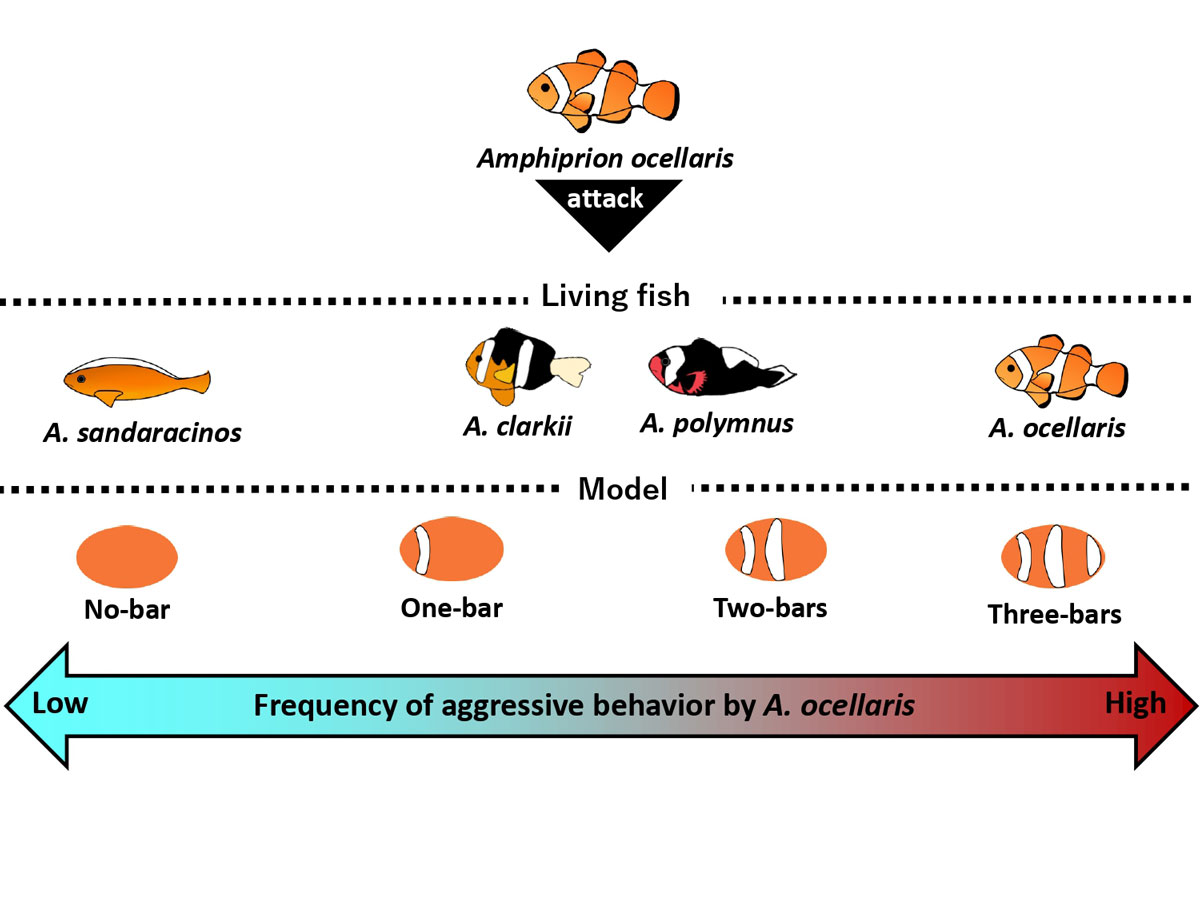
The experiment in question involved 120 individual A. ocellaris fish, which typically have three white bars on their bodies. The fish were then provided with opportunities to interact with model fish that had varying numbers of bars on their bodies. As this happened the scientists noticed a striking pattern. The real-life fish behaved more aggressively toward models with three bars than any of the other models, and as much so as they did against other living A. ocellaris.

They also showed considerable aggression (Nemo can be very territorial) to other clown fish who had only two bars, which is consistent with the developmental biology of young clown fish, which start two bars before growing a third. These aggressive behaviors in themselves make sense, since the researchers observe that clown fish will inhabit a host sea anemone for their entire lives and "fiercely" defend it as their territory. Yet what is striking is that the 120 clown fish reacted differently to other supposed fish based on the specific number of bars they sported.

Infographic aggressive behavior of Amphiprion ocellarisFigure showing the aggressive behavior of Amphiprion ocellaris, or clown anemonefish, in response to different species of anemonefish, both live and models. (Kina Hayashi)

"We conclude that A. ocellaris use the number of white bars as a cue to identify and attack only competitors that might use the same host," the authors conclude. "We considered this as an important behavior for efficient host defense."

The experiment has its limitations. Foremost among them, as the researchers pointed out, the 120 clown fish were raised in a controlled environment where they had only ever seen members of their own species. As such, it is unclear whether the aggressive behavior to other fish is innate to A. ocellaris or acquired due to their domesticated upbringing. At the same time, previous experiments have suggested that clown fish use the white bars to identify both each other and different fish species.

The authors point to field experiments conducted by Japanese scientists in the Ryukyu Archipelago, during which A. ocellaris behaved aggressively much longer with models that had white vertical bars rather than models with white horizontal bars. Those researchers theorized that the clown fish behaved this way because their colonies are prone to being invaded or intruded upon by fish species like damselfish, cardinal fish and wrasses, all of which have various horizontal stripe patterns but no vertical bar patterns.

"Amphiprion ocellaris may therefore recognize fish with bar patterns as competitors and frequently attack and chase them out to defend their host anemone," the authors explained. "These previous studies indicated that the white bars could be an important color pattern for distinguishing competitors for territory in anemonefish."


Want more health and science stories in your inbox? Subscribe to Salon's weekly newsletter Lab Notes.


Immature clown fish "exhibit more frequent aggressive behavior toward their own species than toward other species, and differences in the number of white bars caused differences in the frequency of aggressive behavior."

The scientific community is divided on whether fish overall are intelligent, which challenges pop culture assumptions that these things are nothing more than dumb animals that "don't have any feelings," as Kurt Cobain once put it. But that perception is changing. In a 2014 article for the journal Animal Cognition, Macquarie University biologist Culum Brown argued that the existing scientific literature suggests fish are more intelligent than popularly acknowledged.

"The review reveals that fish perception and cognitive abilities often match or exceed other vertebrates," Brown wrote, before adding with an eye on the question of animal rights that "a review of the evidence for pain perception strongly suggests that fish experience pain in a manner similar to the rest of the vertebrates."

Brown later concluded that "the extensive evidence of fish behavioral and cognitive sophistication and pain perception suggests that best practice would be to lend fish the same level of protection as any other vertebrate." By contrast, a trio of Swiss and Dutch scientists published a 2022 study in the International Journal of Behavioural Biology which argued that ectotherm vertebrates — that is animals like fish, reptiles and amphibians — have brain structures which make them inherently more intelligent than endotherm vertebrates (animals like mammals and birds).

We need your help to stay independent

"Endotherm and ectotherm vertebrates may process cognitive tasks in fundamentally different ways due to differences in brain organisation," the authors argued.

While the researchers behind the clown fish study did not elaborate on the intellectual abilities of their subjects, they argue that at the very least clown fish can count as high as they need to in order to ascertain the number of bars on potential rivals.

"It is thought that A. ocellaris attacked more frequently 2- and 3-bar models in this experiment than no-bar and 1-bar models because during their developmental stage they have often seen individuals with 2 or 3 bars as competitors," the authors write in the study. They concluded that, as a result of their experiment, they know that immature clown fish "exhibit more frequent aggressive behavior toward their own species than toward other species, and differences in the number of white bars caused differences in the frequency of aggressive behavior." If nothing else, clown fish are smart enough to read visual patterns and use them to distinguish between other individuals in their own species and among other fish species.

The FTC is attacking drugmakers’ “patent thickets”

The Federal Trade Commission has challenged the validity of over 100 drug product patents, focusing on devices used to deliver medicines, like inhalers and autoinjectors, in an effort to increase competition and potentially lower some prices.

The FTC says drugmakers illegitimately use the patents to prevent competitors from offering cheaper generic alternatives.

It’s the first time the FTC has tried the tactic, said Hannah Garden-Monheit, director of the FTC’s Office of Policy Planning.

“We are using all the tools we have to bring down drug prices and reduce barriers to generic competition,” she said in an interview.

President Joe Biden has instructed his Federal Trade Commission to be more aggressive in reining in the pharmaceutical industry. Under its chairperson, Lina Khan, the agency is aggressively testing the limits of its powers in pursuit of that goal.

The targeted patents cover devices that propel medicines for asthma and emphysema into the lungs or inject epinephrine to treat a severe allergic attack. Drugmakers list them in the FDA’s “Orange Book,” which can afford the products greater protection from generic competition.

Many of the medicines delivered by the devices are decades old, years off patent. But manufacturers have long tweaked the delivery methods, patenting the changes, in ways that sometimes make the drugs more convenient to administer.

Drugmakers frequently extend the 20-year patent protection of a drug by changing the delivery device or method.

They might, for example, change the propellant in an inhaler or add a counter that tells a patient how many doses are left. Autoinjectors mean patients don’t see a needle or syringe but merely press a device with a hidden needle against the skin to deliver the medicine. Some autoinjectors even talk patients through the process.

Though there has long been a procedure for disputing the validity of Orange Book-listed patents, it is rarely used.

In challenging Orange Book listings, the FTC is trying to cut away at what are known as patent thickets. While a single patent once would cover a single active medicine, many drugs today are protected by half a dozen patents or more, creating additional obstacles for cheaper generics seeking to enter the market.

The move is critically important because drugmakers frequently extend the 20-year patent protection of a drug by changing the delivery device or method. For example, instead of a pill, they make a capsule. Or instead of a dose every six hours, they create a longer-acting, once-a-day version. They can also alter the process by which a drug is made — so-called “process patents.”

Each tweak gets a new patent, which the manufacturer then adds to its official compendium of drug patents. There is no advance scrutiny of listings by regulators.

Generic drugmakers wishing to make a copycat version of a branded drug generally have to challenge the patents in court. But merely listing a patent in the Orange Book automatically triggers a 2½-year delay of FDA approval of a litigating generic competitor.

The FTC says patent law protects active ingredients, not delivery methods.

The pharmaceutical industry, already battling the Biden administration’s plan to negotiate prices of some drugs for Medicare patients, says it wants more clarity about which aspects of its products can be patented.

“Companies who haven’t received a letter from us challenging a patent shouldn’t think they’re off the hook.”

“The underlying statute is not clear about listing certain types of drug delivery device patents, and the industry has long asked for the FDA to provide guidance,” said Megan Van Etten, a spokesperson for Pharmaceutical Research and Manufacturers of America, the industry trade group, in an email. “We’re disappointed that the FTC has characterized companies as acting inappropriately rather than help seek the clarity the industry needs to ensure compliance.”

After an FTC challenge, companies have 30 days to withdraw or amend the patent or show it is valid. Some have already backed down.

“We’ve had some significant wins,” Garden-Monheit said. After the FTC’s challenge, drugmaker GSK, formerly GlaxoSmithKline, withdrew all patents on two popular inhalers for asthma, Advair and Flovent, both of which contained old off-patent medicines but nonetheless cost hundreds of dollars. Amneal Pharmaceuticals withdrew patents on its epinephrine injector.

Still, the deadline for companies to respond to the first set of warning letters has passed and only about 30% of those that received them answered, leaving the commission to ponder its next steps. The FTC could take a drugmaker to court to seek a cease-and-desist order.

And Garden-Monheit said the agency is poised to look at other types of patents that may be invalid, which pile up to add to the thicket. There are thousands of patents in the Orange Book.

“We are taking a close and active look at this,” Garden-Monheit said. “Companies who haven’t received a letter from us challenging a patent shouldn’t think they’re off the hook.”

KFF Health News is a national newsroom that produces in-depth journalism about health issues and is one of the core operating programs at KFF—an independent source of health policy research, polling, and journalism. Learn more about KFF.

Subscribe to KFF Health News' free Morning Briefing.

Taylor Swift, Stanley cups and a brewing backlash to MAGA’s sexist snobbery

Thursday brought people who are worried about the survival of democracy welcome polling news from Quinnipiac University: For the first time in months, Joe Biden is cresting 50% in a head-to-head match-up with Donald Trump. That puts the current president 6 points ahead of the former president, who had been enjoying an alarming lead in polls for months, despite being under 91 felony indictments in four separate jurisdictions. We have women to thank for this swing towards basic sense and decency in the polls. 

"Women 58 – 36 percent support Biden, up from December when it was 53 – 41 percent," explains the Quinnipiac analysis. "Men 53 – 42 percent support Trump, largely unchanged from December when it was 51 – 41 percent."

So you enjoy bashing Taylor Swift, Republicans? Well, how's that working out for you?

Okay, it's probably not just about the hyper-famous pop star whose romance with a Super Bowl-bound football player has driven Republicans batty. Trump has been on TV bragging about how he's the one who got Roe v. Wade overturned, a clip that has thankfully drowned out mainstream media efforts to paint him as somehow "moderate" on abortion. He also lost in court again to E. Jean Carroll, which resulted in a massive amount of news coverage reminding voters that, in the words of the judge, "Trump sexually abused — indeed, raped — Ms. Carroll." Plus, Trump won both the Iowa caucus and New Hampshire primary, causing a lot of voters who were previously skeptical to understand that yes, the sexual assailant who attempted a coup really will be the Republican nominee for president again. 


Want more Amanda Marcotte on politics? Subscribe to her newsletter Standing Room Only.


But let's face it: The Taylor Swift thing is not helping Republicans. For those remaining 7 people still unaware, there's been a growing amount of Republican hate towards the beloved singer-songwriter and her beau, Kansas City Chiefs tight end Travis Kelce. They're mad that she is an unashamed cat lady, that she's more interested in being a superstar than a housewife, and, of course, that she is a Biden-endorsing liberal. But mostly the right is mad that Swift and her fans crush the stereotype that cat-loving feminists are ugly and unloved. This is why the fury metastasized over the weekend when Swift kissed her hunky boyfriend on the field after his big win. 

We have women to thank for this swing towards basic sense and decency in the polls. 

Fox News went ape with outrage at this young (ish) love. Trump got involved, pathetically lying by saying he's "more popular" than Swift while his allies dramatically declared "holy war" on her. The combination of overkill, silliness, and pop culture relevance sent the story of GOP angst over Swift into every corner of the media. So even people who pay very little attention to politics were hearing about MAGA's beef with America's sweetheart. Most people, however, did not react how Republicans had hoped, by deciding they now hate Swift. Instead, they were grossed out by the misogyny. As popular sports commentator Colin Cowherd said in a viral video this week, the hate is coming from "weird, lonely, insecure men" who "are often misogynistic and resent women."

Or, as the big brains setting the MAGA strategy might say, their voting base. 

Starting in 2014 with "Gamergate," an online harassment campaign against women in the gaming industry, Trump advisor Steve Bannon has championed the idea that misogynist tantrums in the face of "girl power" pop culture would attract young male voters to the GOP. That's why there's this targeted GOP hate at everything from Cardi B's hit songs to the "Barbie" movie.

As Adam Serwer recently wrote in the Atlantic, Republicans hope the overt misogyny is "a way to expand their base of support beyond the core of white Christian conservatives," by reaching some men of color and non-religious men. The strategy has had some success, especially in radicalizing angry young men by blaming feminism rather than their own hygiene/video game addictions for their romantic failures. But what Bannon and his crew failed to account for is that women can also vote, and they are getting increasingly angry about this crap. 

The pandemic exposed how much the nation still relies on women's unpaid labor to keep the economy running. The thanks women got for holding things together, however, were abortion bans.

It doesn't help that these misogynist pile-ons are happening against a backdrop of rising frustration from women over being overworked and underappreciated. As Melanie McFarland wrote at Salon, regarding the cultural impact of the "Barbie" movie, there's a reason audiences gushed for America Ferrara's "being a woman is impossible" speech. The pandemic exposed how much the nation still relies on women's unpaid labor to keep the economy running. The thanks women got for holding things together, however, were abortion bans and a cascade of media stories demanding that women settle for unsatisfying marriages so men don't have to suffer the indignities of wifelessness. The injustice of it all is getting harder to ignore. 

I've been struck, for instance, by this bizarre and sudden freakout over the Stanley cup — not the hockey trophy, but the thermos that has suddenly become a hot commodity among lady influencers and their legions of fans. As Daniela Pierre-Bravo at MSNBC documented, the Stanley Quencher model has been around since 2016, but exploded in popularity after three online influencers convinced the company "to start marketing to women for the first time." The campaign focused on moms by highlighting that it's a great way to caffeinate and hydrate while driving kids around to soccer games and, oh yeah, it's dishwasher-safe. 

We need your help to stay independent

But of course women can't simply enjoy something, even something so innocent as a water bottle, without it kicking off a massive moral panic. We're now deluged with scare stories about how the cups are dangerous (they're not) and sensationalist stories about how women are going too far in their enthusiasm for the cups. "Saturday Night Live" even had a sketch about the "big dumb cups" that went viral despite being only mildly funny. 

I admit I laughed a few times, but basically the joke of the skit was a series of stereotypes about middle-class soccer moms being vapid. Which isn't just unfair, but frustratingly so. These are women who are doing everything they were told they're "supposed" to do. They got married and had kids. They try to stay sexy and fashionable, and keep their marriages interesting despite being overwhelmed with responsibilities. And their reward for hard work and sacrifice and conforming to social expectations? They get shamed because they want a nice cup to make their endless responsibilities a little easier. Because a woman's job is apparently to sacrifice and never want the slightest creature comfort for herself. 

So far, the right-wing noise machine has mostly left the Stanley cups alone, though give it time. But the cup discourse adds to the larger aggravation that comes from the Taylor Swift hate or the parade of hand-wringing articles demanding women lower their standards to get married to Trump voters. It really is impossible to be a woman. Even if you clip your own wings and marry someone who is beneath you, the next phase of your life is being told you're a bimbo because you want your coffee to stay hot in between PTA meetings. Complicity, it turns out, buys you nothing but more bulls**t.

I know that Biden's campaign will reject my proposed slogan: "Stanley cups and free abortions." Still, it's a vibe and one they'd be wise to ride throughout what is going to be, if the Swift paranoia is any indication, a ridiculously sexist campaign from the other side. 

Either “malpractice” or “criminal”: Dr. Justin Frank on power, drugs and Trump’s White House

Donald Trump has repeatedly shown that he is a lawless person — but his malign influence extends far beyond himself.

Trump’s “dangerous charisma” attracts already corrupt and ethically compromised people into his orbit. He also exerts a malignant perfidious influence over people who are vulnerable to such energy and temptations, but for whatever reason have not yet fully surrendered to them. This is a defining feature of dangerous leaders. 

On this, political scientist Brian Klaas warns in his book “Corruptible: Who Gets Power and How It Changes Us": “Whatever specific interventions are adopted, a big part of the battle is acknowledging a core problem: those who shouldn’t be in power are more likely to seek it. We need to design every system to try to screen out the corruptible, power-hungry candidates.”

New reporting about the inner workings of the White House during the Trump administration sheds even more light on the ex-president’s (and now criminal defendant facing 91 felonies and hundreds of years in prison) corrupting power and influence over the people around him and the type of toxic environment he created and enabled while in office. From Rolling Stone:

White House pharmacists reportedly distributed uppers and downers like candy to Trump administration officials during his time in office, according to a new report from the Department of Defense Inspector General. 

The 80-page document, which was released on Jan. 8, found that “all phases of the White House Medical Unit’s pharmacy operations had severe and systemic problems due to the unit’s reliance on ineffective internal controls to ensure compliance with pharmacy safety standards.” …

While Trump lived under the White House roof, the pharmacy reportedly kept messy, handwritten records, spent lavishly on brand-name medications, and failed to comply with a slew of federal law and Department of Defense regulations governing the handling, distribution, and disposal of prescription medication. 

Through in-person inspections and interviews with over 120 officials, the report concluded “that the White House Medical Unit provided a wide range of health care and pharmaceutical services to ineligible White House staff in violation of Federal law and regulation and DoD policy. Additionally, the White House Medical Unit dispensed prescription medications, including controlled substances, to ineligible White House staff.” 

In an attempt to better understand the Trump White House pharmacy scandal, I recently spoke with Dr. Justin Frank. He is a former clinical professor of psychiatry at the George Washington University Medical Center and the author of "Trump on the Couch: Inside the Mind of the President."

In this conversation, Dr. Frank shares his professional insights about the Trump White House pharmacy and why it was so dangerous. He also discusses the specific drugs and narcotics that were apparently being given out there with few or any controls of limits and how they could impact people’s behavior and moods – which includes the possibility of fatal outcomes.

Dr. Frank also continues to warn about Trump’s extremely dangerous mind and overall pattern of behavior and why as seen with the second E. Jean Carroll court case for defamation, and escalating threats of violence and retribution against his “enemies”, that the corrupt ex-president will not be stopped by “the walls closing in." Instead, Dr. Frank predicts that Trump is a malignant narcissist who will go down in a blaze of glory before he ever surrenders or is otherwise made to yield in his assaults on society, human decency, and the rule of law.

How are you feeling given what has happened since our last conversation a month or so ago? Trump is winning in the primaries and is about to become the Republican Party's presidential nominee. He is being forced by a civil court to pay even more money to E. Jean Carroll for attacking her reputation. Trump is only continuing to escalate his threats of violence and mayhem and being a god-like dictator. And how do you think the American people are doing emotionally right now?

Your question is very broad, pertaining both to my individual reactions as well as assessing the American people in general. So there is a bifurcation in my own feelings. The tension is between rage and resignation. And then somewhere in the middle is a wish to expose the criminals who are part of Trump's orbit, and more generally who are inspired by his behavior. There is a part of most people's personalities that gets a thrill from breaking the rules and engaging in the types of misdemeanors that kids indulge in such as taking candy from a store without paying. But there are people who are far more dangerous than that. Trump is one of them. He unconsciously declares himself a psychopath by saying that he is above the law. He is also a cruel man who enjoys destroying anyone who disagrees with him.

As for the American people? We are a society more divided than united. Many of us are anti-intellectual and don't want to think. That makes such people attracted to strongmen and bullies like Trump. Trump has made his followers reject the truth for alternate facts – and that makes most of us insecure and uncertain about what to believe. As November approaches there will be more uncertainty and anxiety about who and what to believe. That can only lead to people making choices and then sticking to them for their own safety sake. To me, cruelty is the biggest change that is happening, and it is getting worse on a daily basis.

During the second E. Jean Carroll civil trial, Trump was disruptive. He got angry and stormed out of court while it was in session. He continued to attack her character, literally, while being involved in a second trial for defamation. You are an expert on Trump's mind and behavior. What did you see as you watched Trump's antics?

From the time Trump was five years old, he hated rules and couldn't control himself. If Trump didn't like something, he would convert feelings into immediate action. He threw rocks at a toddler who lived next door when he was five. He punched out his second-grade teacher because he got mad at him. As a father, Trump knocked out his son, Don Jr., when he was in high school because he wasn't dressed appropriately. Trump has always been like this. As people age, they generally do not change; they instead become more of their true selves.  His capacity for self-restraint is becoming a thinner veneer over fundamental destructiveness. He is increasingly no longer able to fake it. This is why Trump is in court acting out, mumbling, being angry and disruptive. 

Trump continues to claim, contrary to all the evidence, that he didn't know E. Jean Carroll. Based on what we know about his personality and mind, does Trump really believe this? Is he just lying and/or delusional?

In my opinion, Donald Trump is a "segmental thinker". He lives in the moment and is attracted by a shiny object and forgets everything else. Trump sees an attractive woman and she becomes the focus of his attention. That is who Trump is. Trump was caught bragging on that recording admitting that he grabs women in their genitals whenever he wants to. So, when Trump says that he didn't really know E. Jean Carroll, he is not simply denying having known her. But the real meaning goes much deeper: Women are interchangeable for Trump. So of course, Trump didn't know E. Jean Carroll. When Trump says he doesn't know a woman, or anyone else, he is really letting you know that he has no concern or care about anyone other than himself.  

During her interview on Monday with MSNBC, E. Jean Carroll said that she is not afraid of Trump anymore and that he is like a “walrus” making noises. Many people ran with Carroll's comment about Trump and then proceeded to make fun of him. As you know, I have repeatedly warned that there is nothing funny about Trump. Donald Trump and what he represents is terrifying. That laughter is defensive and a function of deep existential terror and denial. In the end, all these people laughing at Trump are engaging in gallows humor.  

E. Jean Carroll was not simply making fun of Trump. She was speaking her truth, that when she saw Trump in the court, she suddenly realized he was like the emperor without clothes. She is saying that to her Trump is nothing. To be afraid of this man is ludicrous as she now sees him. Trump has a lot of money, but he really is unremarkable. Sure, he bullies weak Republican congressmen but he is nothing at his core. E. Jean Carroll called Trump a hollow man. That is what E. Jean Carroll is saying.

We need your help to stay independent

Moreover, E. Jean Carroll and Liz Cheney and Hillary Clinton and the other women who have stood up to Trump show, at least as I see it, that women are less afraid of Trump than most men are. Lots of men – both in Congress and his MAGA followers in general – are terrified of Trump and are afraid of being emasculated by him. That fear of Trump also paralyzes many among the opposition. When Trump says "jump!" there are so many men who say, "how high?" and then do whatever Trump wants.  

It is now being reported, which is not at all surprising, that the White House pharmacy under Trump's regime was giving out prescription medication, including powerful narcotics, with few oversights or limits. It was basically candy and it was being doled out like Dr. Feel Good was running the pharmacy. You are a highly respected physician who has worked at some of the country's leading medical facilities, what was your initial reaction when you learned about the Trump White House pharmacy? 

Trump basically gave the people in his White House permission to not obey the law, since the law doesn't matter to him. There was no regulation in Trump's White House as seen with the pharmacy — and more generally. Drugs were basically being given away to anyone who asked for them. Under Trump, the White House pharmacy was basically lawless and like something out of the Wild West. As for specifics, two of the drugs that are prominent in the reporting on that pharmacy are Ambien, which is a common sleeping pill, and Provigil, a psychological stimulant that makes the brain more alert. It doesn't work like amphetamines and was first used to treat narcolepsy.  Provigil is also used by people to help them concentrate.

The Department of Defense's investigative report into the Trump White House pharmacy lists many different drugs. Here are some drugs that stood out to me: morphine, ketamine, and fentanyl.

Those drugs are really dangerous, and they're controlled substances. I cannot prescribe codeine or morphine unless I have a special license that allows me to do it. My medical license alone will not allow me to prescribe those drugs.  I have a special license from the Bureau of Narcotics and Dangerous Drugs so I can prescribe some of those medicines. Not only that, but I also can’t even call in a script over the phone. The patient has to bring in a written prescription in order to get it filled. I'm really struck by the amounts that were given out and the poor record keeping. Many of these drugs are addictive narcotics. They are also sedatives and depressants. These drugs make you disconnected and calm. You feel no pain. These drugs numb you.

What about the ketamine and fentanyl? 

Ketamine is used to treat severe depression, but under controlled circumstances where it's administered intravenously, and the person goes into a special ketamine practice where it is administered via an IV. Ketamine is also used as a recreational drug. It is a very powerful drug that is dangerous and needs to be monitored. Fentanyl is a sedative that people take who just want to zone out. But Fentanyl can kill you really fast; if a person takes too much Fentanyl they will die.

If a physician was giving out drugs in the ways these government audits and investigations are indicating it is malpractice. If someone who is not a physician is giving out these drugs in the manner detailed in the report on the Trump White House pharmacy it is, in my opinion, criminal. They should all be prosecuted.

What do you think is going to happen with Trump's behavior as the election approaches and his criminal trials, fingers crossed, finally begin in earnest? What do you want to prepare the American people for?

The main thing that I am worried about is the complacency of the public and specifically the country's leaders and law enforcement and other people in positions of authority and power who are still letting Trump run wild. Trump is extremely dangerous. Trump does not believe in laws and rules. He wants to be a lawless dictator. This is why I continue to share my conclusion, based on the evidence, that Donald Trump appears to be psychotic. He is a person who is detached from reality. Even with the trials and other pressures, Trump is not capable of breaking down, of being cowed and/or broken. If anything, Trump will go down in flames if he goes down at all. Trump is an extreme narcissist who will destroy anyone who has ever done anything to hurt him, to oppose him, or defy him.

Women are far more likely to develop autoimmune diseases. A new study may have finally cracked why

Twenty years ago, seeing the letters "GF" on a menu could have been easily mistaken for “good food.” But today, it is the near-universally recognized shorthand for gluten-free. That’s in part a testament to the rapid rise in the number of people with the chronic autoimmune condition known as celiac disease, which affects as many as 2 million Americans — most of whom are women.

The reason why celiac disease has become so common is not entirely known, but it speaks to a bigger trend where autoimmune diseases are on the rise. Autoimmune diseases occur when the immune system mistakenly attacks healthy cells in a person's body. Other examples are multiple sclerosis, type 1 diabetes, asthma, eczema, lupus and rheumatoid arthritis.

In 2023, researchers published a huge study of 22 million people that estimated one in ten people have an autoimmune disorder — again, with more women being affected than men. In the U.S. alone, researchers estimate that between 24 and 50 million Americans have an autoimmune disease, and nearly 4 out of 5 of those people are women. 

Why is it that females are at a greater risk of having their immune systems turn against them? A stud published this week in the journal Cell says it might boil down to the most fundamental difference between biological men and women: the difference in sex chromosomes.

“The situation is actually much more striking, some even common diseases like lupus, the ratio is nine to one, female to male.”

“The big picture of this study is to understand what autoimmune diseases collectively affect women much more so than men,” Dr. Howard Chang, a professor of dermatology and of genetics at Stanford University, who co-led the study, told Salon. “The situation is actually much more striking, some even common diseases like lupus, the ratio is nine to one, female to male.”

Typically when people think about sex differences, they think it has to do with sex hormones. Females tend to have more estrogen whereas males tend to have more testosterone. But a key finding in Chang’s research shows that hormones aren’t responsible, but instead a single, female-specific gene that plays a significant role in female bias autoimmunity. 


Want more health and science stories in your inbox? Subscribe to Salon's weekly newsletter Lab Notes.


Embryos for both females and males carry 22 identical pairs of chromosomes, but the 23rd is different. For females, they have two X chromosomes; males have an X and a Y chromosome. On each chromosome there are genes that produce proteins to conduct specific functions inside of our cells. Since women have two X chromosomes, one might think that means that women have double the proteins.

But that’s not the case, as nature developed a way to neutralize those proteins. It's a good thing, too, given such an overproduction of them could be deadly. This is called “X-chromosome inactivation.” But in this study, researchers found that it’s this process that can increased susceptibility to autoimmune disorders thanks to a gene called Xist, which is responsible for silencing the proteins on the extra X chromosome.

"That just highlights the fact that autoimmunity is multifactorial, there's not a single cause or only a single way to get there.”

As the Xist does its job, researchers found that in some cases it can trigger a strong immune response and that many of its co-conspirator proteins have been associated with autoimmune disorders.

“The thinking is that if this experiment were successful, this would mean that you don't have to have different sex hormones, you don't even have to have a whole second extra X chromosome — just this RNA being enough to confer the increased autoimmune risk,” he said. “And that's what we found.”

Indeed, the researchers placed Xist genes on two different strains of male lab mice – one that is susceptible to lupus and one that is resistant to it. Researchers found that once the Xist gene was activated, the male mice developed lupus-like autoimmunity at a rate similar to females. But human men still get autoimmune disorders without having their chromosomes manipulated in a lab. Why?

We need your help to stay independent

“That just highlights the fact that autoimmunity is multifactorial, there's not a single cause or only a single way to get there,” Chang said. “You can still get an autoimmune disease, obviously without Xist and not all autoimmune diseases have a strong female bias.”

“You shouldn't fault women for getting sick, there is absolutely nothing we can do about it. It’s nobody’s fault,” Chang added, saying he hopes the biggest takeaway from this study is that female bias in autoimmunity disorders is a “critical feature” and science finally has an understanding as to why. That could open the door to new disease diagnoses and therapies, such as targeting B cells.

"Those are cells that make antibodies, that seem to expand in response to Xist," Chang said. "So maybe therapies targeting those B cells would be helpful. This obviously is now future research. But now we have some clues as to what might be happening."

Yet there is clearly still a lot to learn about how these conditions manifest.

"There are more than 100 known autoimmune diseases that in aggregate afflict ∼50 million Americans and comprise one of the top ten leading causes of death for women under the age of 65," Chang and his co-authors wrote. "Understanding the risk factors and drivers of autoimmunity has become even more critical in the race to develop effective therapies and sensitive diagnostics specific to each autoimmune disease."

Constitutional scholar explains why “treason” is a key topic in Trump’s 14th Amendment SCOTUS appeal

As oral arguments approach in former President Donald Trump’s U.S. Supreme Court appeal of a Colorado Supreme Court decision, many friend-of-the-court briefs in the case bring up a subject not much found in public discussion of the case: treason.

Trump is appealing a Colorado ruling that the 14th Amendment bars him from holding office because he engaged in insurrection before, during and after Jan. 6, 2021. That decision – and several others in states around the nation, some agreeing and some disagreeing with Colorado’s conclusion – have roots in the Constitution’s definition of treason, and Congress’ intent to block traitors from serving in the government.

As a scholar of constitutional law, I have submitted legal briefs in several of those cases, explaining the history of the 14th Amendment’s drafting and passage, and discussing what Republicans immediately after the Civil War hoped to attain from constitutional reform.

What did Congress intend?

Section 3 of the 14th Amendment reads:

“No person shall be a Senator or Representative in Congress, or elector of President and Vice-President, or hold any office, civil or military, under the United States, or under any State, who, having previously taken an oath, as a member of Congress, or as an officer of the United States, or as a member of any State legislature, or as an executive or judicial officer of any State, to support the Constitution of the United States, shall have engaged in insurrection or rebellion against the same, or given aid or comfort to the enemies thereof. But Congress may by a vote of two-thirds of each House, remove such disability.”

When Congress was drafting Section 3 of the 14th Amendment the year after the Civil War ended, the purpose of that provision was clear: to prevent people from serving in the government if they had used force to resist or overthrow the United States. To Congress, those actions constituted treason.

In drafting the language, Congress drew inspiration from the framers of the Constitution that was ratified from 1787 to 1789. Article III of the Constitution declares that there are two ways to commit treason against the United States: “levying War against (the U.S.), or in adhering to (its) Enemies, giving them Aid and Comfort.”

Section 3 of the 14th Amendment, passed by Congress and ratified by the states in the late 1860s, makes the same division when describing the actions of people who should be barred from public office. There is one change: Republicans in Congress substituted the phrase “engaged in insurrection or rebellion” for “levying war.”

A significant offense

Treason has long been a serious crime, different from other crimes because the target was the government.

Since at least the 1760s, and almost certainly for centuries before that, English common law made clear that treason was not a regular crime like, say, murder: Someone who gave a weapon to a person knowing they intended to kill another person is an accessory to murder. But someone who gave a weapon to a person knowing they intended to commit treason is a traitor, not an accessory to treason.

In short, treason is treason, and a person either engages in treason or does not. There are no degrees of treason.

This rule applied in the U.S. too: Samuel Chase, who signed the Declaration of Independence and was appointed to the Supreme Court by George Washington, said so in 1800. His view was echoed in 1807 by Chief Justice John Marshall and in 1851 by Supreme Court Justice Benjamin Curtis.

The rule was also reiterated in an 1863 case, U.S. v. Greathouse, in which people were charged with treason for buying a ship and outfitting the vessel to break the U.S. blockade of Confederate ports.

Supreme Court Justice Stephen Field served on the bench of a lower federal court for that trial, as justices often did then. In directions to the jury, he declared, “all who aid … whether by open hostilities … or any part in the furtherance of the common object, however minute or however remote from the scene of action, are equally guilty of treason.”

Two forms of treason

In the Constitution’s Article III, and in the 14th Amendment, there are two ways a person can commit treason: by “levying war” – which in the 14th Amendment is replaced with “engaged in insurrection or rebellion” – or by giving “aid and comfort” to people determined to be “enemies” of the United States.

The distinctions were important enough for the Framers to make, and for Congress to repeat in the late 1860s, when the 14th Amendment was passed and ratified by the states.

But ever since the nation’s founding, the difference between those two has been clear, and it’s not whether a person took one treasonous action or another. Field made very clear the distinction is in the person’s nationality: By constitutional definition, U.S. citizens cannot be considered “enemies of the United States.” They can only be viewed as rebels or insurrectionists.

In the Greathouse case, another federal judge, Ogden Hoffmann, served alongside Field. When Hoffmann spoke to the jury, he agreed with Field that the distinction between the two categories was whether the fighters were U.S. citizens or not. And he was clear that any treasonous action a person took was covered by either category:

Every act which, if performed with regard to a public and foreign enemy, would amount to ‘an adhering to him, giving him aid and comfort,’ will, with regard to a domestic rebellion, constitute a levying of war. And, conversely, every act which, with regard to domestic rebellion, will constitute ‘a levying of war,’ will, with regard to a foreign enemy, constitute ‘an adhering to him, giving him aid and comfort.’”

Trump’s defenders

Many of those who support Trump have argued his actions don’t amount to engaging in insurrection. They say that, therefore, he can’t be disqualified from office for that reason.

Several of his allies have even pointed out that nobody has accused him of giving “aid and comfort” to the insurrectionists.

At least one of those supporters has gone so far as to claim that the failure to accuse him of “aid and comfort” is a reason to overturn the Colorado ruling and declare Trump eligible to hold office.

Trump did not personally attack a police officer on Jan. 6, 2021, or aid and abet a foreign nation. In legal terms, then, Trump did not offer “aid and comfort” to “enemies” of the United States: The people he urged to march on the Capitol and said kind words to may have been enemies of democracy. But like Trump himself, they were American citizens, and therefore, constitutionally speaking, could not be enemies of the United States.

Rather, they were insurrectionists. And as Hoffman’s 1863 statement makes clear, the constitutional law of treason does not differentiate between supporting them and being among them.


Mark A. Graber, University System of Maryland Regents Professor of Law, University of Maryland

This article is republished from The Conversation under a Creative Commons license. Read the original article.

Trump’s former CFO faces perjury charge in connection to civil fraud investigation

Allen Weisselberg, the former chief financial officer of the Trump Organization, is in the early stages of negotiations with the Manhattan district attorney’s office regarding a potential guilty plea in connection with his allegedly fraudulent testimony on the witness stand in Trump’s civil fraud trial.

According to The New York Times, people with knowledge of the matter are saying that, in order for the agreement to move forward, Weisselberg would have to admit that he did, in fact, lie on the stand regarding Trump's finances, and that he lied under oath during an interview with the New York attorney general’s office, which brought the civil fraud case. 

"The deal being negotiated would most likely not require Mr. Weisselberg, 76, to turn on his former boss," writes NYT reporters William K. Rashbaum, Jonah E. Bromwich and Ben Protess. "Although Mr. Weisselberg was involved in the action at the heart of that case — a hush-money payment meant to bury a potential sex scandal just before the 2016 election — prosecutors are not expected to call him as a witness. And the investigation that most required Mr. Weisselberg’s help, the district attorney’s inquiry into Mr. Trump’s finances, may no longer be a priority for prosecutors."

Britney Spears rescinds her apology to Justin Timberlake in basketball-themed diss post

Britney Spears and her ex, Justin Timberlake, are back to airing their grievances towards each other in ways that pop stars do best — via live performances and half-veiled attacks on social media.

Just last week, Spears extended an olive branch to Timberlake, posting to her Instagram account, "I wanna apologize for some of the things I wrote about in my book. If I offended any of the people I genuinely care about I am deeply sorry . . . I also wanted to say I am in love with Justin Timberlake's new song ‘Selfish’ it is soo good.” But when Timberlake didn't return the sentiment she, in her own way, chucked that olive branch into the street.

Vulture breaks down the timeline of the former couple's back and forth, pinpointing the event that led to Spears changing her mind about making amends. Apparently, during his free birthday concert at New York’s Irving Plaza on January 31, Timberlake told the crowd, “I’d like to take this opportunity to apologize to absolutely f**king nobody,” leading into his song, “Cry Me a River,” which is believed to be about his breakup with Spears, and her alleged cheating that he seems to think caused it. 

After word of this got back to Spears, she went scorched Earth, posting once again to Instagram but, this time, seeming to neg Timberlake's lack of basketball skills. 

“Someone told me someone was talking s**t about me on the streets!!!,” she writes in her new post. “Do you want to bring it to the court or will you go home crying to your mom like you did last time ??? I’m not sorry!!!"


MTG profiles Rep. Ilhan Omar over speech translation and threatens to censure and deport her

Rep. Ilhan Omar (D-MN) has become the target of Republican ire after an inaccurate translation of a speech delivered in Somali last week triggered desires to racially and culturally profile her — with Rep. Marjorie Taylor Greene (R-GA) taking up the charge, calling for her censure and deportation.

In the speech in question, which was given at the Minneapolis Hyatt Hotel at a celebration of the recent election in Puntland, a region of Somalia, Omar is reported to have told the audience that Somalia would remain united, and that she would use her influence to keep it that way, according to Minnesota Reformer, which, along with a befuddled understanding of the rest of her speech on the part of Republicans, ignited the questioning of her allegiance to the United States.

"Today, I’m introducing a Censure Resolution on Ilhan Omar for admitting she’s working as a foreign agent for a foreign country," Greene declared in a post to X (formerly Twitter) on Thursday. "I urge my colleagues to vote to Censure, but I wish I had the votes to expel and deport her."


Why I sometimes wake up thinking about “Swamp Soup,” a soul-warming Southern dish

Some people think Swamp Soup and Turnip Green Soup are the same, but I know them to be different — similar for sure, but each distinct in both flavor and appearance. 

If you put something called Swamp Soup on your menu, it is to be kitschy and fun. Granted, this soup is delicious — but it does look swampy.

The broth is a light mud color and the beans and floating clumps of green, along with the other ingredients, look very reminiscent of the kinds of plant matter you would see in a stagnant wetland. You will love how it tastes, but it very much lives up to its name, especially the first time you have it. 

Swamp Soup has become increasingly popular where I live in large part because of Fish River Grill, where this soup gets a lot of love all year round. With four locations scattered around lower Baldwin County, Alabama, this seafood-heavy, locally-owned, light-spirited, southern-style restaurant has shined the light on one of our down home favorites since they opened their doors many years ago; in fact, their slogan is “A Funky, Junky, Redneck Joint & Home of the World Famous Swamp Soup.   

In other parts of the country — if Swamp Soup even exists in other areas — it may be common to use chicken or some other type of protein, but Conecuh sausage is very much essential to ‘proper’ Swamp Soup in southern Alabama. (Although, I must interject that I have been known to make a vegetarian version that is exceptionally good.) 


Want more great food writing and recipes? Subscribe to Salon Food's newsletter, The Bite.


On the other hand, Turnip Green Soup is the non-swampy variation on the theme of greens and, in this case, peas. Resembling Hoppin’ John without the rice, it is a hearty concoction of collards, turnip greens (or a combo) and most often black-eyed peas, but lady peas, field peas, purple-hulled peas, crowder peas, cream peas, zipper peas also work — just not green “garden” peas. 

Unlike Swamp Soup, which uses sausage to season its base, bacon is the only protein in Turnip Green Soup. As you might guess; however, I have successfully converted it to vegetarian on a few occasions.    

I grew up with Turnip Green Soup, and I can remember craving it like you might Red Beans and Rice or Taco Soup or even Chili. The flavors are unique and satisfying. 

We do not have long, extended periods of freezing weather along the Gulf Coast, which is a good thing because we do not deal with it very well and neither do our pipes.

We do, however, get our fair share of chilly, dreary, overcast days, and our high humidity drives what cold we do have straight into my bones.

One of these soups served with a skillet of cornbread is soul food at its finest and the perfect accompaniment for sitting fireside. But like Fish River Grill, we do not relegate either of these to a certain time of the year. We find that the ingredients seem to call out every now and then. You just wake up thinking about how good a bowl would be for lunch or supper, regardless of the temperature.

Swamp Soup
Yields
6 to 8 servings
Prep Time
15 minutes
Cook Time
1 hour

Ingredients

1 package Conecuh sausage

1/2 large sweet onion

1 package Knorr vegetable soup mix

1 to 2 boxes chicken broth or bouillon equivalent

2 to 3 cans seasoned turnip/collard greens, or fresh cooked equivalent

2 cans great northern beans, drained and rinsed

2 cans navy beans, drained and rinsed

Texas Pete hot sauce


Directions

  1. Slice sausage into 1/8” to 1/4” rounds and then quarter.

  2. Brown sausage and saute onions in drippings. 

  3. Remove some of excess fat, if desired, before adding the rest of ingredients (except the hot sauce).

  4. Bring to a low boil and simmer at least 30-45 minutes. 

  5. Serve an added dash or two of Pete’s accompanied with plain cornbread or jalapeno-cheddar cornbread.

We need your help to stay independent


Cook's Notes

-To make Turnip Green Soup, substitute black eyes peas for beans and use bacon instead of Conecuh sausage.

-Shortcuts: turnip or collard greens – although it is common to use leftover, fresh cooked greens for both of these soups, Margaret Holmes brand or another preferred brand of canned “seasoned” greens can be used.

-According to individual preferences, there are number of delicious ways to make vegetarian and vegan versions of these soups. In addition to substituting a flavorful vegetable broth for the chicken broth, here are my current favorite sausage and bacon substitutes: 

-Quorn Grounds or your favorite neutral tasting, ground beef-like textured meat substitute, with the following for a sausage substitute: maple syrup, smoked paprika, sage, fennel seeds, thyme, Cayenne (optional), and tamari, soy Sauce, Bragg’s liquid aminos or coconut aminos. For a bacon substitute, omit the sage, fennel and thyme.

-Smoky Tempeh Strips by the brand Lightlife can be used as a ready made bacon substitute.

Expert: “Almost impossible” to prosecute Trump before election if Fani Willis is disqualified

Fulton County District Attorney Fani Willis and Nathan Wade, one of her top prosecutors working on the sprawling racketeering case in Georgia against former President Donald Trump and others, have been subpoenaed to testify at a hearing next month regarding allegations that the two were involved in an improper “romantic relationship,” according to a lawsuit filed Tuesday.

The subpoenas were initiated on behalf of Michael Roman, a former operative from Trump's 2020 presidential campaign who is one of 15 remaining defendants in the racketeering case that accuses Trump of orchestrating efforts to overturn the 2020 presidential election results in Georgia.

The lawsuit accuses the Fulton County district attorney's office of "intentionally withholding information,” and "stonewalling" the attorney, Ashleigh Merchant, in her attempts to acquire records from the office using public information requests, ABC News reported.

Willis has come under significant public scrutiny following initial allegations that she derived financial benefits from a romantic relationship with the lead prosecutor, who the filings claim financed extravagant vacations with Willis using funds his law firm received from Fulton County. 

“If it is found that Wade and Willis had an improper relationship beginning before she hired him as special counsel, it could lead to state or federal charges because D.A. Willis may have financially benefitted from an undisclosed personal relationship at taxpayer expense,” Andrew Fleischman, Atlanta defense attorney, told Salon.

Willis hired Wade to assist with the case against Trump and his co-defendants. Roman has claimed that the two prosecutors benefited financially from the arrangement. While some legal experts have urged the district attorney to recuse herself to protect the case's integrity, sources told CNN that she is unlikely to take that step.

The allegations surrounding the supposed relationship between Wade and Willis were raised in a filing earlier this month that lacked any supporting evidence. Without citing any evidence, Roman claimed that Wade had been paid more than $650,000 by the district attorney's office and financed trips for the pair to places like Napa Valley, Florida and the Caribbean. 

Besides pursuing the dismissal of his charges, Roman is also pushing for Willis to be disqualified from the case.

The allegations can impact the case because if Willis is disqualified, it will be “almost impossible” to find another prosecutor to take the case before the election, and because it will “strengthen claims of bias and corruption” that defense attorneys may raise at trial, Fleischman said.

The issuing of subpoenas may pave the way for a high-stakes confrontation involving Willis and Wade. Despite their previous silence on the matter, they may now find themselves compelled to testify under oath in the televised hearing scheduled for Feb. 15, ABC News reported. 

Trump and other co-defendants are aiming to leverage these allegations to request the removal of Willis and Wade from the case, potentially leading to the dismissal of the indictment.

The hearing can play out in one of two ways, Fleischman suggested. In one scenario, there could be no conflict of interest found and the case proceeds as it was. 

“Defense counsel will almost certainly ask for a pretrial appeal, which they may or may not get,” Fleischman said. “If that happens, the case will be significantly delayed. If no pretrial appeal is granted, the disqualification issue will be preserved for appeal and any convictions procured at trial may be reversed.”

We need your help to stay independent

In the event that a conflict of interest is found, Willis and her entire office will be disqualified. The Prosecuting Attorneys’ Council of Georgia will select a new prosecutor, eventually. That new prosecutor will try the case in Fulton County, and must decide whether to try the case as “indicted, simplify it, or dismiss it,” he explained. 

Merchant, who made the misconduct allegations against Willis earlier this month, asserts in her new lawsuit that the D.A.'s office deliberately hindered her ongoing attempts to collect information on the issue, suggesting an intentional effort to delay the process, ABC News reported. 

"It is evidence that the [Fulton County District Attorney] has withheld the records without substantial justification," the complaint stated. "Indeed, it appears that [Fulton County DA's Office] is acting intentionally and in an effort to hide from public view public documents showing how [the office] has spent public monies related to the operation of the office."


Want a daily wrap-up of all the news and commentary Salon has to offer? Subscribe to our morning newsletter, Crash Course.


The complaint alleges a violation of the state's Open Records Act by the office, detailing several open records requests submitted by Merchant to the office, some dating back to September. The lawsuit contends that these requests were either ignored, partially responded to, or met with assertions that the records did not exist, the outlet reported.

It's “not very serious” that the D.A.'s office may have violated the Open Records Act, Fleischman said, adding that there's often litigation around this law, and it usually settles out of court.

In a letter sent on Friday, the D.A.'s office informed Merchant that they "respectfully disagree with your disingenuous implication" of violating the Open Records Act, The Atlanta Journal-Constitution reported. The letter stated that the office has fulfilled all 14 of her requests, including 12 recently filed ones.

Jimmy Kimmel: Donald Trump’s downfall will be “an army of pissed-off Swifties”

A number of late-night hosts are weighing in on former president Donald Trump's baiting pop star Taylor Swift, who has faced backlash from MAGA supporters for her left-leaning politics and previous endorsement of President Joe Biden in 2020. Trump recently claimed he is "more popular" than Swift, alleging his fan base is stronger than hers, per Rolling Stone. 

“This fight he’s about to pick with Taylor Swift, this might be what does it,” Jimmy Kimmel, host of "Jimmy Kimmel Live!" said on Wednesday, per the New York Times. “It won’t be Jan. 6, it won’t be the election fraud or the sexual assault or dancing with Jeffrey Epstein, or even fathering Don Jr. What’s finally going to bring down Donald Trump will be an army of pissed-off Swifties.”

Kimmel underscored the irony of Trump's claim, saying, "And unlike your rallies, her tickets aren’t free. People paid hundreds and even thousands of dollars to see her — and that’s just here in America. How’s your popularity in Tokyo? And Singapore? How’s your popularity in Gelsenkirchen, Germany? Because she’s doing three nights at a soccer stadium there that holds over 62,000 people even though no one has ever heard of Gelsenkirchen, Germany. It might not even exist.” 

Kimmel continued with more jabs. "If Taylor Swift told her fans to storm the Capitol on Jan. 6, they would have succeeded. They would be running the country right now," he quipped. "Taylor Swift is so popular, people want to watch her watching a football game," Kimmel added, referring to coverage of Swift attending boyfriend and Kansas City Chiefs tight end Travis Kelce's NFL games. As the NYT noted, other hosts, including Jimmy Fallon, Stephen Colbert, and Seth Meyers, have made similar jokes about Trump for his remarks about the singer. 


“Operation Blizzard”: Texas police say they busted a small town Dairy Queen meth ring

Texas police announced last week that they had busted a methamphetamine ring operating out of a Dairy Queen based in Clifton city.

Police received word of the drug ring back in June of 2023, Delish reported. An investigation revealed that several individuals were selling meth out of a Dairy Queen in Clifton — a small town located just a few miles from Waco. Two people were arrested on Jan. 16 and eight others on Jan. 26. The arrests took place after police obtained multiple search warrants.   

“This led to us finding out that these individuals were also selling drugs at other locations around Clifton. During the investigation, we uncovered additional persons who were also trafficking methamphetamines in Clifton," read a Facebook announcement from Chief of Police Chris Blanton.

He continued, “To those who may still be selling drugs in our community just know that we are always watching, we probably already have you on our radar, and you never know when it’s your door we are busting through next.”

Why Black-owned farm acreage shrank 80% in 100 years

The Biden administration recently invested more than $3 billion in “climate-smart” agriculture. But the program has an interesting stipulation: Black farmers and other historically underserved groups must be key participants in funded projects.

So why the focus on Black farmers? It’s been estimated that, in 1910, Black Americans owned roughly 16 million acres of U.S. farmland, mostly in the South. That land was hard-earned, and represented the triumph of Black farmers despite limited opportunities to accumulate wealth in the Reconstruction era. But as of 2017, the year of the most recent Census of Agriculture, that had dropped to only 2.9 million acres — a more than 80% decrease during that 107 year period.

This land loss is the result of many factors, which we document in our new white paper: “Black Land Loss in the United States.” From outright violence and theft to exclusion from federal aid programs, Black farmers have frequently experienced discrimination and worse from both their government and the society in which they live. Because racism is systemic and pervasive, the impacts were compounded for many landowners over the course of the 20th century: Exclusion from aid led to financial trouble, which limited Black farmers’ ability to qualify for other loans in the future. And with often little money for legal resources, Black farming families have fallen prey to a host of exploitative maneuvers from property developers and other bad actors, speeding the decline in land ownership.

Those disparities are ongoing, with even the most recent research suggesting that Black farmers get loans and other aid at lower rates than their white counterparts. Meanwhile, attempts to resolve those gaps have been met with intense hostility from some white farmers and political activists.

The loss of farmland has done more than marginalize Black farmers: It’s a stolen opportunity for Black families to build wealth, one that researchers estimate represents more than $300 billion since the early 20th century. While fully repairing that damage would require a commitment from the government that seems politically unfeasible, further Black land loss is preventable, and even reversible with policies that compensate farmers who have faced discrimination in the past and that prevent it in the future by changing the culture and operations at agencies like the USDA.

Read more about the long history of racism in U.S. agriculture, the fight for land ownership and what must be done to protect and support Black farmers in “Black Land Loss in the United States.”

Cori Bush demands apology after GOP lawmaker calls her husband “thug”

Democratic Missouri Congresswoman Cori Bush on Tuesday demanded an apology after one of her Republican colleagues called her husband a "thug" and suggested that she shouldn't be so outspoken if she does not wish to receive death threats.

Commenting on the U.S. Justice Department probe of Bush's alleged misuse of campaign funds to pay her now-husband Cortney Merritts to provide private security services, Rep. Troy Nehls (R-Texas) told CNN's Melanie Zanona that the progressive congresswoman "doesn't even support the police."

"But the idea to pay her thug money to try to help protect her this and that, for what?" he added. "Maybe if she wouldn't be so loud all the time, maybe she wouldn't be getting threats."

Asked by Zanona if Bush deserved to be threatened, Nehls replied: "No, what I'm saying is, is that when you're out there talking the way she does… she's pretty radical. And maybe she should tone it down a little bit."

Bush—who denies the allegations against her—said on social media that Nehls "just called my husband, a Black man and Army veteran, a thug. And I'm the loud Black woman who needs to be silent in order to be safe from violence, or else?"

"Squad" members including Bush and Reps. Alexandria Ocasio-Cortez (D-N.Y.), Ilhan Omar (D-Minn.), and Rashida Tlaib (D-Mich.) have repeatedly received death threats from white supremacists and others opposed to their progressive politics. Nehls' remarks resemble some of the worst threats Bush has received.

Tlaib said on social media that Nehls' "comments are racist, dangerous, and unacceptable."

"The racism in Congress is real," she added. "This is what we deal with as women of color on a regular basis."

This isn't the first time Nehls has been accused of racism. Civil rights defenders said the former Fort Bend County sheriff racially profiled Latino motorists, who campaigners say were disproportionately stopped during his tenure. He was also fired from a previous law enforcement job for documented offenses including destruction of evidence and improper arrest.

Alec Baldwin pleads not guilty to involuntary manslaughter charge in “Rust” shooting

Alec Baldwin has pleaded not guilty to involuntary manslaughter in the ongoing legal battle over the fatal shooting on the "Rust" film set that claimed the life of cinematographer Halyna Hutchins in 2021, NPR reported. Baldwin and the film's armorer, Hannah Gutierrez-Reed, were both charged with involuntary manslaughter last January; however, those charges were dismissed in April after special prosecutors said they were told the gun may have been modified ahead of the shooting and malfunctioned. But last month, a Sante Fe grand jury indicted Baldwin, following a forensic report conducted in August that determined the trigger on Baldwin's Colt .45 revolver "had to be pulled or depressed sufficiently to release the fully cocked or retracted hammer of the evidence revolver," per NPR. New special prosecutors Kari T. Morrissey and Jason J. Lewis subsequently sought a new charge. 

According to NPR, Baldwin is currently free pending trial and barred from leaving the country, consuming alcohol and possessing firearms. Gutierrez-Reed pleaded not guilty to involuntary manslaughter, tampering with evidence related to Hutchins's death and bringing a gun into a Santa Fe bar in the days ahead of the fatal shooting. Her trial will begin Feb. 22.

Morrissey, in a court filing on Monday, alleged that there is "substantial" evidence demonstrating that Gutierrez-Reed unknowingly brought live bullets to the set of the Western film. She was previously offered a "favorable plea" last September if she would admit to bringing the live rounds. “If Hannah can provide any answers regarding the origin of the live rounds I am happy to work with her but short of that we should just move on,” Morrissey wrote in an email to Gutierrez-Reed's attorney, per Variety.


Greta Thunberg on trial in London following arrest for protests that blocked oil conference

Swedish climate change activist Greta Thunberg is on trial in London this week for allegedly refusing to comply with police orders at a protest in 2023. According to prosecutors who appeared at the Westminster magistrates court on Thursday, Thunberg and four other protesters "fail[ed] to comply with a condition imposed under section 14 of the Public Order Act” when they refused to stop protesting after law enforcement told them to do so during the event last year. The protests, which had been organized by Fossil Free London and Greenpeace, targeted the Energy Intelligence Forum (EIF) at which fossil fuel industry executives met with government ministers to hand out awards. Thunberg and the other protesters had been standing outside the entrance of the InterContinental hotel in Mayfair prior to the arrest and refused when police officers demanded they move.

A police officer testified, "It seemed like a very deliberate attempt … to prevent access to the hotel for most delegates and the guests. People were really restricted from having access to the hotel.” If Thunberg and the other protesters are convicted, they could receive fines of up to 2,500 pounds (approximately $3,170), according to ABC News.

The arrests may not have happened if not for the recent policy by Suella Braverman, then the United Kingdom's Home Secretary, to lower the threshold in which police can arrest protesters by arguing that it can be justified for any “more than minor” disruption. This is consistent with a larger public trend of government officials attempting to stifle climate change-related dissent. "Climate activism is a threat to the fossil fuel status quo, so it makes sense that corporate polluters and their allies in government are striking back hard," Folabi Olagbaju, the democracy campaign director at Greenpeace USA, told Salon in an recent interview.

Later outside court, Thunberg made a statement alongside a few of her co-defendants: "Even though we are the ones standing here, climate, environmental and human rights activists all over the world are being prosecuted, sometimes convicted, and given… penalties for acting in line with science," the BBC reported. "We must remember who the real enemy is, what are we defending, who our laws are meant to protect," Thunberg said.

If the government recognizes that “food is medicine,” why aren’t they taking hunger more seriously?

On Wednesday, the United States Department for Health and Human Services (HHS) held the first ever “Food is Medicine” Summit, which focused on ways to increase access to healthy foods to promote “health as a preventative and healing practice.” Arguably, the biggest headlines that came out of the meeting centered on three new public-private partnerships into which the Biden administration is entering. 

As Salon Food reported, the Rockefeller Foundation is going to collaborate with the HHS  "to identify how food-based programs can lead to better health outcomes in marginalized communities." Feeding America and the Biden administration will work together to provide expanded food bank access, while "Insatcart will use its advocacy to expand access to healthy food."

In a release, the HHS, which is led by Secretary Xavier Becerra, who champions the “food is medicine” effort, said that "food is a powerful tool for preventing and managing health conditions, and HHS’s ‘Food is Medicine’ summit will examine the broad range of approaches that promote health … through nutritious food."

Public-private partnerships, especially in the realm of food security, are always an interesting endeavor, simply because hunger is such a pervasive issue in the United States; that’s why previous initiatives, such as the USDA’s Farm to School program, which promotes collaboration between schools and local farmers to provide fresh produce to students, have generally enjoyed bipartisan support. What is more interesting, however, is how and why the “Food is Medicine” initiative was started — and how the impetus behind the program seems to stand in sharp contrast to current conservative-led efforts to throttle anti-hunger programs like WIC and SNAP.

In September 2022, the Biden administration held the White House Conference on Hunger, Nutrition and Health, ultimately issuing a call to action to, per the HHS, “end hunger and reduce the prevalence of chronic disease in the United States by 2030.” The department built on this collective energy to develop a “Food is Medicine” initiative. 

“Food is Medicine approaches that focus on integrating consistent access to diet- and nutrition-related resources are a critical component to achieve this goal,” the department wrote in their description of the project. “The approaches are increasingly present across many communities and systems. There’s also increasing federal investment and action to support Food is Medicine approaches in a variety of settings.” 

We need your help to stay independent

How this looks in action will be different based on the communities in which programs are implemented; for instance, last summer, the U.S. Department of Health and Human Services, through the Indian Health Service, awarded $2.5 million in funding to support the development of produce prescription programs in tribal communities. The purpose of the IHS Produce Prescription Pilot Program is to help reduce food insecurity in Native American and indigenous communities by increasing access to traditional foods and produce. 

“Food is medicine and nutrition is health. It is critical that all Americans have access to healthy food,” HHS Secretary Xavier Becerra said at the time. “Programs like this feed directly into our Administration’s goal of building healthier communities at the local level.”

In a document outlining the framing language and principles of the “Food is Medicine” approach, the HHS writes that a food is medicine initiative: recognizes that nourishment is essential for good health, wellbeing and resilience; facilitates easy access to healthy food across the health continuum in the community; cultivates understanding of the relationship between nutrition and health; unites partners with diverse assets to build sustained and integrated solutions; and invests in the capacity of under-resourced communities. 

"Food is medicine and nutrition is health. It is critical that all Americans have access to healthy food."

As Politico reported last November, The White House last year pledged billions to the movement, “and several state Medicaid programs are piloting such efforts. Backers say the programs — which don’t necessarily have a standard definition — can help prevent or treat some conditions and bolster health equity.”

Current data really drives home why addressing food insecurity is so critical. As Salon Food reported late last year, just a few days before Thanksgiving, new data from the Census Bureau’s Household Pulse Survey showed that nearly 28 million people reported experiencing food scarcity in October — both the highest number of 2023 and the highest number recorded by the survey since December 2020. 

Meanwhile, according to the HHS, “about half of all American adults — or 117 million individuals — have one or more preventable chronic disease, many of which are related to poor-quality eating patterns and physical inactivity. These include cardiovascular disease, high blood pressure, type 2 diabetes, some cancers, and poor bone health.” 

Lower food security is associated with higher probability of chronic disease diagnosis — including hypertension, coronary heart disease, hepatitis, stroke, cancer, asthma, diabetes, arthritis, COPD (chronic obstructive pulmonary disease), and kidney disease. Additionally, nearly $173 billion a year “is spent on health care for obesity alone.” 

However, despite all the evidence suggesting how much of an impact connecting Americans with nutritious, culturally-appropriate food could have, two of the most important anti-hunger programs in the United States have come under increased fire from conservative lawmakers. 

Last year, in a concession to avoid a default crisis, President Biden folded to Republican pressure and shifted the work eligibility requirements for the Supplemental Nutrition Assistance Program (or SNAP). Prior to the pandemic, people younger than 50 who met certain requirements had to volunteer, work or receive job training for 80 hours a month in order to receive regular assistance. The new budget cuts package raised the age of recipients required to work to 55 and, according to The Center for Public Integrity, made it harder for states to waive work rules in areas with high unemployment.

Coming into 2024, the Special Supplemental Nutrition Program for Women, Infants, and Children, or WIC, may not receive the funding it needs to adequately serve participants. In a December press release, the USDA itself wrote that WIC costs are higher this year than last year, in part because more eligible people are signing up for the program meaning, per the organization, that “more pregnant women, new mothers, infants, and children are getting access to nutritious food and important health resources they need to thrive” 

However, they still haven’t received the estimated $1 billion needed to address the greater level of need, and if they don’t, the U.S. Department of Agriculture, which oversees the program, said in December that states will face “difficult, untenable decisions about how to manage the program” — something even select public-private partnerships likely can’t rectify.