Spring Offer: Get 1 Year, Save 58%

“Faux-zempic”: Behind the rise in fake weight loss drugs that are hospitalizing some people

When Lucy, a psychiatrist practicing in the Northeast, saw one of her patients after she started using Ozempic, a drug that has exploded in popularity in recent months, she could tell that something was off. Lucy’s patient was getting her medication from a medical spa, and it was clear there were other additives in the medicine making her jittery and agitated. And it wasn't cheap. On top of the negative side effects, she was also paying $2,000 a month for her prescription, Lucy said.

“I think it was effective for her, but the additives they put in it were not great for her,” Lucy, who asked to be referred to by her first name, told Salon in a phone interview. “There were, I think, a little bit of various supplements that help with weight loss, and a lot of those are pretty psychoactive and make people anxious.”

"It’s an alarming trend out there of these predatory people being involved with this medication."

Lucy takes Ozempic (which has the generic name semaglutide) herself and is a part of many Ozempic public forum groups on social media. Originally approved by the Food and Drug Administration (FDA) in 2017 to treat type 2 diabetes, many forms of semaglutide are increasingly being prescribed off-label for weight loss, including Wegovy, which has a different dosage that is FDA-approved for weight loss. However, Lucy had to leave several online groups because moderators were trying to sell various shady forms of the drug, she said. 

“It’s an alarming trend out there of these predatory people being involved with this medication,” Lucy said. “A lot of people will go to pill mills online and get various people ‘prescribing’ [weight loss drugs for them] when they haven’t even talked to a physician.”

Ozempic is in a class of drugs called a glucagon-like peptide-1 (GLP-1) receptor agonists. They work by mimicking hormones in the gastrointestinal tract the body naturally produces to reduce blood sugar and control appetite. Though these drugs have been around for a few years, their popularity rose significantly in 2023 after celebrities like Oprah Winfrey and Elon Musk began attributing their weight loss to semaglutide. Between 2020 and the end of last year, the number of prescriptions for Ozempic and similar weight loss drugs — such as Rybelsus tablets, which were FDA-approved to lower blood sugar in adults with type 2 diabetes — increased 300 percent.


Want more health and science stories in your inbox? Subscribe to Salon's weekly newsletter Lab Notes.


Kelli Coviello, a principal's assistant at an elementary school in Massachusetts, said Ozempic was life-changing for her. The medication made her eat less and also took away some of her joint pain and other things associated with her weight that made it more difficult to stay motivated to exercise. Yet pretty soon after she started taking it, she could no longer find it due to the shortage and hasn’t taken a dose since late November 2023.

“I felt like the way I used to, and it felt really good,” Coviello told Salon in a phone interview. “It gave me this motivation that this is really going to work, I'm feeling myself and I can start exercising again.”

“When even your own industry body is telling you that you've crossed the line, it's safe to say that you're marketing your product very hard.”

A skyrocketing demand along with high prices for these weight loss drugs led to a global shortage that made them inaccessible for many. Pharmaceutical companies also hyped up demand with an aggressive marketing strategy more than they ramped up supply, said Margaret Steele, a postdoctoral researcher who studies obesity and the philosophy and ethics of medicine at the School of Public Health at University College Cork.

In particular, Novo Nordisk was banned from the industry body of pharmaceutical companies in the U.K., the Association of the British Pharmaceutical Industry (ABPI), for "bribing health professionals with an inducement to prescribe," according to a 2022 ABPI complaint. (Such behavior is more or less excused in the U.S.)

“When even your own industry body is telling you that you've crossed the line, it's safe to say that you're marketing your product very hard,” Steele told Salon in a video call. “Of course, the result is that people are going to want the product, and when there isn't enough of it out there in the legitimate supply chain, they're going to look elsewhere.”

A representative from Novo Nordisk, the pharmaceutical company that manufacturers Ozempic, said in response that the company "will remain committed to following the ABPI Code of Practice and maintaining the highest possible ethical standards required by the pharmaceutical industry." They also said they are working to expand production sites in Denmark and France to ease the shortage.

Meanwhile, many illegitimate sources online are selling “generic” or counterfeit weight loss drugs and capitalizing on millions of U.S. patients eager to access a drug that helped them stabilize their insulin and appetite — with serious consequences. According to the American Association of Poison Control Centers, the number of calls related to injectable weight loss drugs increased 15-fold between 2019 and 2023. One study published in October in the Journal of the American Pharmacists Association reported two cases in which people took 10 times the recommended dose of drugs like Ozempic. In Austria, several patients were hospitalized after taking counterfeit Ozempic that contained insulin instead of semaglutide while a man in Chicago slipped into a coma after supplying the drug from an unregulated source.

According to a study published this week in JAMA Network Open, one in 10 teens have also used laxatives and supplements labeled as “nature’s Ozempic” or “budget Ozempic” in their lifetimes. These substances are not recommended for children and have been linked to an increased risk of being diagnosed with eating disorders and mental health conditions.

And it’s not just teens increasingly ordering drugs like this online. In a 2023 survey conducted by the Alliance for Safe Online Pharmacies (ASOP), 59 percent of respondents said they’d be comfortable ordering controlled substances from an online pharmacy if the drugs weren’t available at their local pharmacy. Another 44 percent said a prescription was not necessary on these sites — even though that is false.

"They're not only counterfeiting the actual pharmaceutical product, they're also counterfeiting the needles that go with it."

Any drug received from an illegitimate source comes with inherent risk, including getting sugar pills and wasting money, getting a substance that has been contaminated with something that shouldn’t be consumed, or not having a prescriber to issue instructions on how to administer it, said Dr. John Hertig, a pharmacist and ASOP member. However, illegitimate weight loss drugs posing as Ozempic carry specific risks because they are injectables.

“They're not only counterfeiting the actual pharmaceutical product, they're also counterfeiting the needles that go with it,” Hertig told Salon in a phone interview. “Think about counterfeit needles in the risk that that might have is you're literally injecting yourself with something you don't know where that needle came from either.”

These weight loss drugs are only available with a prescription and authorized to be sold by FDA-approved vendors. In recent months, the FDA issued warning letters to various websites for selling unapproved or misbranded semaglutide products. 

“Although we understand certain drugs are in short supply and patients are having difficulty obtaining their medication, the FDA urges patients to obtain prescription drugs only from state-licensed pharmacies that are located in the U.S., where the FDA and state authorities can assure the quality of drug manufacturing, packaging, distribution and labeling,” an FDA spokesperson told Salon in an email. “FDA’s BeSafeRx campaign helps consumers learn about how to safely buy prescription medicines online.”

Certain sellers are pushing semaglutide salt forms online, but these formulations have different active ingredients and may not be safe or effective in humans, according to the FDA. Some sites based in the U.K. demonstrate how to mix raw ingredients for weight loss medications at home before injecting, despite the dangers associated with doing this. Buyers should also be aware that there is no FDA-approved “generic” version of semaglutide, so any product marketed as such could pose risks.

“Even with drugs that have gone through all the phase three clinical trials and are used in humans, you’ll still hear doctors and scientists say things like, ‘We don’t fully know why this works,’” Steele said. “If you're taking something that hasn't even gone through those hoops, we really don't know what it's doing.”

“If you're taking something that hasn't even gone through those hoops, we really don't know what it's doing.”

Some companies offer compounded versions of Ozempic or other semaglutide-based weight loss drugs. While Novo Nordisk says it doesn’t sell semaglutide to compounding pharmacies, certain compound pharmacies are licensed by the FDA or state boards of pharmacy to make their own version of a drug with raw materials provided by the original manufacturers, particularly when that drug is in shortage, according to a statement issued by the Alliance for Pharmacy Compounding (APC). 

The FDA confirmed Ozempic and Wegovy were both listed on the FDA’s drug shortage list as of May 2023, but noted that compounded drugs may pose a higher risk because they haven’t been tested and approved by the agency.

“The FDA’s compounding program aims to protect patients from poor quality compounded drugs while preserving access to lawfully marketed compounded drugs for patients who have a medical need for them,” the FDA spokesperson said.

Still, last summer, Novo Nordisk pushed ahead with 12 legal actions against medical spas and certain compound pharmacies for selling semaglutide products. Eli Lilly, which manufactures Mounjaro, a drug similar to semaglutide, also recently sued various providers for “passing off as ‘Moujaro’ their own unapproved compounded drugs.” 

"Novo Nordisk does not directly or indirectly provide or sell bulk semaglutide to compounding pharmacies or any other entity for the purposes of compounding semaglutide products," the company spokesperson said. "Medical spas, weight loss or medical clinics, and compounding pharmacies that are claiming to offer or sell compounded products claiming to contain 'semaglutide' are sourcing their ingredients from entities other than Novo Nordisk."

We need your help to stay independent

However, the APC said in its statement that Novo Nordisk does not have total control over the supply chain and that other FDA-registered manufacturers can produce semaglutide and provide it to compounding pharmacies.

“Compounding is authorized in federal law and in all 50 states — as is compounding ‘essentially a copy’ of an FDA-approved drug when that drug appears as ‘currently in shortage’ on FDA’s drug shortage list,” according to the statement. 

It remains to be seen what comes out of the litigation regarding compound pharmacies. Regardless, it will likely keep the spotlight on these weight loss drugs even longer. Meanwhile, intermittent Ozempic shortages are expected to continue throughout 2024, potentially leading more patients to turn to illegitimate sources to buy what some are calling "Faux-zempic."

In the meantime, the demand is clearly there: Close to 40% of Americans meet the criteria for obesity and more than half of Americans want to lose weight. Now that there are therapeutics designed for both of those things, people are scooping them up more quickly than they can be produced. 

"The question is: Why are people so desperate that they're willing to buy weight loss drugs from seedy online sources?" Steele said. "That kind of takes you into weight stigma and fatphobia and the cultural drive for thinness, which I think is also very much the elephant in the room for all of this."

Judge scolds Trump after Carroll attorney calls him out for grumbling so loud the jury could hear

Former President Donald Trump, who was present on Wednesday for writer E. Jean Carroll's testimony in her second defamation case against him, has been engaging in some sideline commentary, according to CNN. 

CNN's Kara Scannell reported that the former president shook his head while Carroll testified that he had assaulted her in a New York City department store dressing room in the 1990s. Carroll at the start of her time on the witness stand, asserted, “I’m here because I was assaulted by Donald Trump. And when I wrote about it, he said it never happened. He lied and he shattered my reputation.” 

"So, right as E. Jean Carroll said that Donald Trump, who was facing her sitting at least three tables back from her," Scannell said, "he was shaking his head side to side in a sign that it never happened. And this is, of course, the issue in this case."

"I mean, there’s been a lot of objections so far during the trial, but Donald Trump otherwise is sitting straight ahead. He’s passed a few notes to his attorneys, leaned over to his lead attorney, Alina Habba, whispering to her a few times, but no other grand reaction. It was just that first statement with Carroll saying, what happened? Trump shaking his head side to side, that it didn’t." 

After the jury left the room during a recess, Carroll attorney Shawn Crowley complained to the judge that Trump was muttering loud enough for the jury to hear him allege that Carroll's testimony was false and that she had "suddenly gotten her memory back," according to Politico's Erica Orden

Before the jury re-entered, Kaplan warned Trump: "I’m just going to ask that Mr. Trump take special care to keep his voice down when he’s conferring with counsel so that the jury does not overhear it."

What’s the best diet for healthy sleep? A nutritional epidemiologist explains

You probably already know that how you eat before bed affects your sleep. Maybe you've found yourself still lying awake at 2 a.m. after enjoying a cup of coffee with dessert. But did you know that your eating choices throughout the day may also affect your sleep at night?

In fact, more and more evidence shows that overall dietary patterns can affect sleep quality and contribute to insomnia.

I am a nutritional epidemiologist, and I'm trained to look at diets at the population level and how they affect health.

In the U.S., a large percentage of the population suffers from poor sleep quality and sleep disorders like insomnia and obstructive sleep apnea, a condition in which the upper airway becomes blocked and breathing stops during sleep. At the same time, most Americans eat far too much fatty and processed food, too little fiber and too few fruits and vegetables.

Although it is difficult to determine whether these two trends are causally linked to one another, more and more research points to linkages between sleep and diet and offers hints at the biological underpinnings of these relationships.


How diet and sleep quality can be intertwined

My colleagues and I wanted to get a deeper understanding of the possible link between sleep and diet in Americans who are 18 and older. So we analyzed whether people who follow the government's Dietary Guidelines for Americans get more hours of sleep.

Using a nationally representative dataset of surveys collected from 2011 to 2016, we found that people who did not adhere to dietary recommendations such as consuming enough servings of fruits, vegetables, legumes and whole grains had shorter sleep duration.

In a separate study, we followed more than 1,000 young adults ages 21 to 30 who were enrolled in a web-based dietary intervention study designed to help them increase their daily servings of fruits and vegetables. We found that those who increased their fruit and vegetable consumption over a three-month period reported better sleep quality and reductions in insomnia symptoms.

Research conducted outside the U.S. by my group and others also shows that healthier overall dietary patterns are associated with better sleep quality and fewer insomnia symptoms. These include the Mediterranean diet – a diet rich in plant foods, olive oil and seafood, and low in red meat and added sugar – and anti-inflammatory diets. These are similar to the Mediterranean diet but include additional emphasis on certain components in the diet like flavonoids, a group of compounds found in plants, which are shown to lower inflammatory biomakers in the blood.


Parsing the foods and nutrients

Within overall healthy diet patterns, there are numerous individual foods and nutrients that may be linked to quality of sleep, with varying degrees of evidence.

For example, studies have linked consumption of fatty fish, dairy, kiwi fruit, tart cherries and other berries such as strawberries and blueberries with better sleep. One of the common pathways through which these foods may affect sleep is by providing melatonin, an important modulator of sleep and wake cycles in the brain.


Walnuts and almonds, as well as fruits like kiwis and bananas, provide natural sources of melatonin.


Fiber-rich foods like beans and oatmeal and certain protein sources – especially those that are high in the amino acid tryptophan, such as poultry – are also associated with higher-quality sleep. Individual nutrients that may be beneficial include magnesium, vitamin D, iron, omega-3 fatty acids and manganese. Some foods like salmon are sources of multiple nutrients.  


Untangling the complexity

One important caveat with a lot of the research on individual foods, as well as diet patterns, is that most studies cannot easily disentangle the direction of the relationships.

In other words, it's hard to know whether the association is a result of diet affecting sleep, or sleep affecting diet. The reality is that it is likely a cyclical relationship, where a healthy diet promotes good sleep quality, which in turn helps to reinforce good dietary habits.

With observational studies, there are also possible confounding factors, such as age and economic status, that may have important correlations with both sleep and diet.


Foods to avoid for sleep health

Aiming for higher intake of sleep-promoting foods isn't necessarily enough to get better sleep. It's also important to avoid certain foods that could be bad for sleep. Here are some of the main culprits:

Interestingly, our group has recently shown that toxicants in food or food packaging, like pesticides, mercury and phthalates – chemicals used to manufacture plastics – can affect sleep. Since toxicants can be found in both healthy and unhealthy foods, this research suggests that some foods can contain a mix of components that are both beneficial and harmful for sleep.


Timing of meals and gender considerations

The timing and consistency of eating, known as "chrononutrition" in the sleep research field, also very likely help to explain associations between healthy diets and good sleep.

In the U.S., eating at conventional meal times as opposed to random snacking has been associated with better sleep. In addition, late-night eating is typically associated with unhealthier food intake – such as processed snacks – and could cause more fragmented sleep.

A final and very interesting piece of this puzzle is that associations between diet and sleep often differ by gender. For example, it appears that the associations between healthy diet patterns and insomnia symptoms could be stronger among women. One reason for this could be gender differences in sleep. In particular, women are more likely than men to suffer from insomnia.


Keys to a good night's sleep

Overall, there is not one magic food or drink that will improve your sleep. It's better to focus on overall healthy dietary patterns throughout the day, with a higher proportion of calories consumed earlier in the day.

And, in addition to avoiding caffeine, alcohol and heavy meals in the two to three hours before bed, the last few hours of the day should include other good sleep hygiene practices.

These include disengaging from technology, reducing light exposure and creating a comfortable and relaxing environment for sleep. Moreover, allowing enough time to sleep and maintaining a consistent bedtime and wake time is essential.

Erica Jansen, Assistant Professor of Nutritional Sciences, University of Michigan

This article is republished from The Conversation under a Creative Commons license. Read the original article.

“Sit down”: Judge Kaplan shuts down Trump lawyer Alina Habba for complaining at trial

U.S. District Judge Lewis Kaplan erupted at Trump lawyer Alina Habba when she asked for an adjournment of E. Jean Carroll's second defamation trial against the former president, which began on Tuesday. Habba asked Kaplan to delay the proceedings so that Trump could attend his mother-in-law's funeral, a request which Kaplan sharply denied. Politico reporter Erica Orden captured the "VERY testy exchange" live from the Manhattan courtroom and shared it on X/Twitter

"The application is denied. I will hear no further argument on it," Kaplan told Habba, who then attempted to continue speaking.

"None. Do you understand that word? Sit down," Kaplan reiterated.

"I don't like to be spoken to that way, your honor," Trump's lawyer replied. Orden noted that Habba pressed Kaplan, and continued asking for an adjournment. 

"It’s denied. Sit down," Kaplan said, cutting her off.

As noted by CNBC, Kaplan has rejected Habba's request to push the trial several times. Trump, who was present for part of Tuesday's trial, has continued to make defamatory statements about Carroll, the columnist who claimed that Trump sexually assaulted her in a New York City department store dressing room in the 1990s. In May, a jury ordered the ex-president to pay Carroll $5 million after finding him liable of sexually abusing and defaming her. Since that decision, however, Trump has continued to assert his innocence and publicly called Carroll a liar. This latest trial stems from Trump's persistent slandering of the writer, and could potentially see her awarded even more financial damages. 


Move over Instant Pot: The rice cooker is having a renaissance

I have in my lifetime in the kitchen regifted not one but two Instant Pots. I have let go of a salad spinner, a bread maker and an oversized ice cream maker. Because I have a kitchen that is short on a space and a lifestyle that is short on time, my appliances either prove themselves indispensable or they're gone. So I stand by the Vitamix, the Crock Pot, the KitchenAid stand mixer, the Lodge cast iron skillets. And then there's my rice cooker. It has one button. It does not sync to any app. It cost $25, and it's easily the best investment of my cooking life.

I got my first rice cooker thirty years ago, after a dinner at the home of a Japanese friend. The way she calmly bustled about her kitchen while the rice just… took care of itself was revelatory to me, a person who'd never met a pot of grains she couldn't burn. I wanted that level of effortless finesse in my own life, and as a broke young person, I was further incentivized by the low price tag. And when, decades later, my cheap Aroma rice cooker finally expired after serving me through literally thousands of meals, I immediately purchased the exact same small model for roughly the exact same price. It too has never let me down. My only nitpick is that phrase "rice cooker" doesn't begin to do this thing justice. This is far from some Alton Brown repelling unitasker.

Like my colleague Michael La Corte, I use my rice cooker to cook my morning oatmeal, preparing a stick-to-the-ribs breakfast for me while I shower or do yoga. I use it to cook lentils, quinoa, barley, farro and more. For dinner, I'll throw tender or finely sliced vegetables and some herbs or saffron threads on top, push a button, and then just sauté or roast a protein with some onions and garlic for a fast and simple meal. And when it's ready, the cooker switches to warming mode so I can get everything on the table with perfect timing. Sarah Johnson, an appliance expert at Big Air Fryers, likes that function about it too. "You can prep and make the rice, then set the rice cooker to keep it warm until it’s time to serve," she says. "And that time could be as long as 12 hours. You can make rice for lunch, leave it in the rice cooker on warm, then enjoy it for dinner too."

We need your help to stay independent

For years, I regarded my rice cooker as something of a secret weapon, a clever tool that had remained largely unknown in the U.S. But all that's changed recently. In 2023, market research company NPD reported that rice cooker sales had spiked a surprising 34% in just one year. Calling it the "hot new kitchen appliance," thanks not just to their verstaibilty or changing demographics but to our collective "diminishing interest in low carbohydrate diets." Today, nearly 70 years after its invention in Japan, roughly 28% of American households have a rice cooker. What are the other 72% of you waiting for?

"I have to admit, it all started because I got myself a rice cooker."

"I got into rice cookers when I started living on my own," says Tim Lee, a restaurant owner and founder of Tim’s Coffee. "It's a no-brainer. As a cooking newbie, I began hunting for fancy, easy recipes for my rice cooker. That's when I saw its creative side. I began with simple dishes, like tuna rice. Soon, I was creating my own recipes. After mastering basic rice, experimenting becomes easy. That's how I turned into a recipe developer." Now, he says, "I rely on my rice cooker for all my meals. I have to admit, it all started because I got myself a rice cooker."

There are high end rice cookers that have a multitude of functions and play pretty songs, and  the possibilities with them are even more expansive. "Many rice cookers have a steaming tray or basket that allows you to steam vegetables, dumplings, fish, or other foods while the rice is cooking. This eliminates the need for a separate steamer and makes it convenient to prepare a complete meal in one appliance," says Robert Smith, a private chef with Culinary Collective Atl. "And he, notes, "Some have a slow cooking function, which allows you to slow cook stews, soups, or other dishes. A few high-end rice cookers have a baking function that allows you to bake cakes, bread, or other baked goods. This feature expands the versatility of the rice cooker beyond just cooking rice." 

In contrast, my rice cooker has no special settings — which is precisely a big part of why I love it. But it still intuitively cooks different grains perfectly, and with different liquids like water, broth and wine. (I haven't fully cracked the code for polenta or risotto, but have have achieved reasonable results with both.) I've never attempted to make bread or cake in my Aroma — though it can be done — because a) sticking something in the oven feels just as hands off and b) the Maillard reaction. For anything that can be boiled or steamed, however, my Aroma is my go-to.

"They taught us how to nail rice on a stovetop, but it's just not as good as the fluffy version that comes out of a rice cooker."

Of course, this includes rice. "For most people with busy schedules, it can be difficult to cook rice because it typically requires constant oversight," says Gene Kato, a James Beard Award nominated chef with the Boka Restaurant Group in Chicago. "A delicate blend of a crockpot and pressure cooker, the rice cooker is a great tool to use both professionally and as a home cook that results in consistently delicious, worry-free rice. With the rice cooker however, you can set it to cook for the length you want and then walk away. Also, it can keep it on a warm setting after cooking, so that stays nice and hot when you are ready to serve. Better yet, if your rice cooker has a timer, you can stew beef, pork belly, cook a whole chicken, etc. The possibilities are endless."

And Amy Hand, a contributing writer at The Skillful Cook, assures that the convenience doesn't come at the cost of flavor. "It's so easy to end up with under or overcooked rice when you're working on the stovetop, but with a ricecooker, all you need to do is wash your rice, add the rice, salt, and water to the cooker, and let it do its thing. At cooking school," she recalls, "they taught us how to nail rice on a stovetop, but it's just not as good as the fluffy version that comes out of a rice cooker."

After breaking my ankle recently, I've come to appreciate what a lifesaver a rice cooker (like my equally treasured slow cooker) can be for someone with limited mobility. And as I start the planning for a home renovation this year that will likely put our kitchen out commission for several weeks, there's a huge relief in knowing that I can get by without my oven for a little while. It's a classic for a reason, one that leaves all trendy gadgets and doodads in the dust. "Finally," says Amy Hand, "America is catching up to the possibilities of rice cookers that the whole continent of Asia has been talking about for decades." 

“The word politics has shifted in its meaning”: Noah Hawley breaks down the “Fargo” finale

Roy Tillman swore it was his destiny to go out in a furious blaze of glory. Noah Hawley was never going to give him that honor. The "Fargo" creator believes in goodness, which is the reason he presents so many varieties of evil in each season of his anthology series. For this fifth round, he pits his hero, Dot Lyon (Juno Temple) against what the average person might describe as a great evil, in the form of her murderous militia-leader of an ex-husband (Jon Hamm) and a lesser one, i.e. her billionaire mother-in-law Lorraine Lyon (Jennifer Jason Leigh) who waits for Dot to fight for her respect.

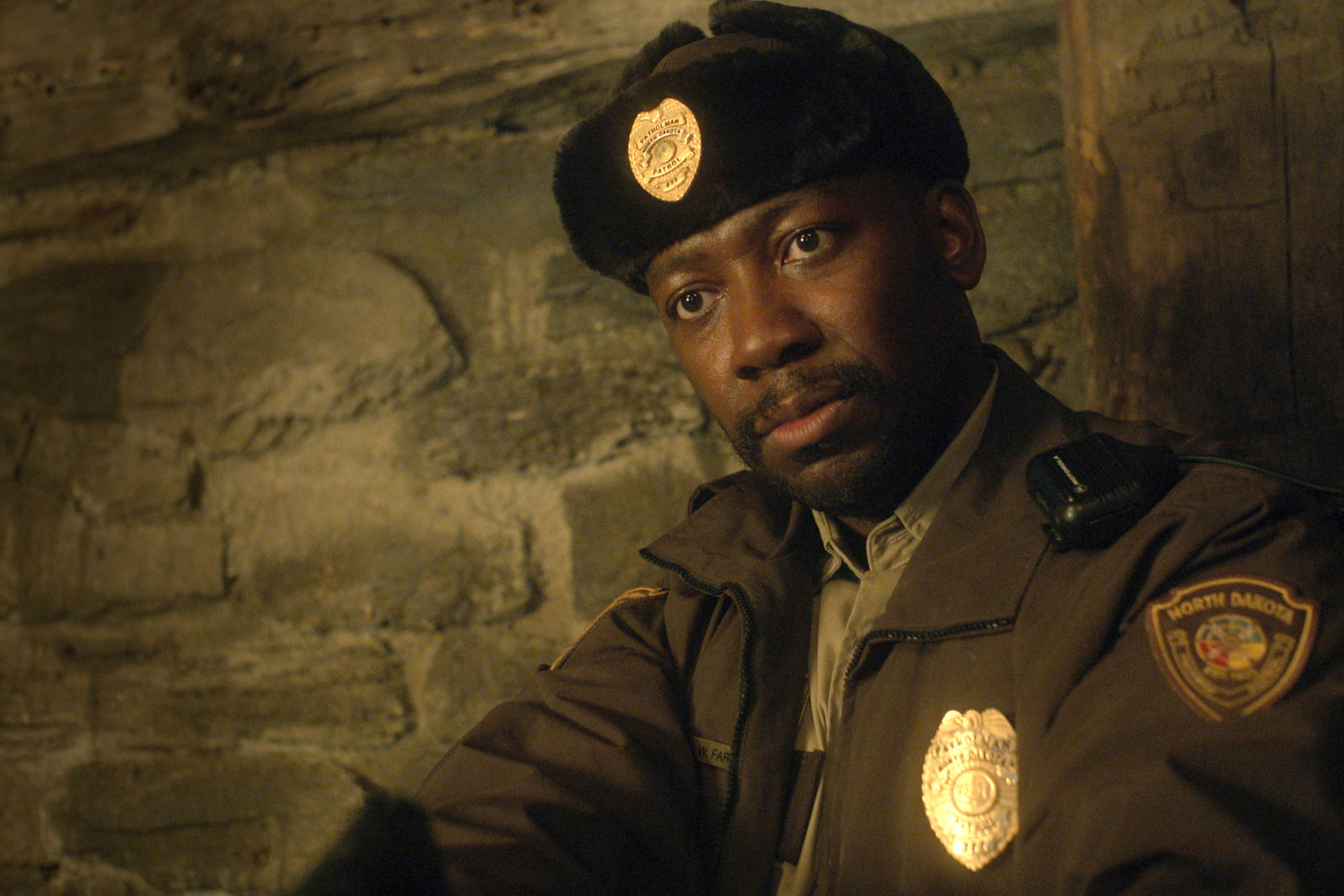
Dot does that many times over throughout the season, even slipping free of the mental institution where Lorraine tries to have her committed against her will. But her daughter-in-law's last stand against the man who abused her and kidnapped her, an early highlight of "Bisquik," finally did it for Mama Lyon. Dot slowed down Roy with a gut shot, but he was able to elude the FBI team that came for her, led by Witt Farr (Lamorne Morris). Roy might have fulfilled his desire if not for his son Gator (Joe Keery) giving him up — but not in time to stop him from committing the unthinkable.

This edition of "Fargo" grapples with the theme of indebtedness — and happily, the finale ends this story well and with the sense that all can be well.  A year after Dot's ordeal, Roy is behind bars and Lorraine, the Queen of Debt, informs him of her plan to make sure he pays her back for all the pain and suffering he's caused…with interest. A more compelling conclusion, though, circles back to Sam Spruell's Ole Munch calling in the debt he perceives Dot owes him. She offers a better resolution than an eye for an eye, in the form a honey-flavored absolution, baked with love. 

At the close of prior seasons, Hawley was always asked if he intends to make another round of episodes. He used to claim he didn't know. Now the auteur is straightforward.

"The reason that I keep coming back to this thing we call 'Fargo' is that I like telling stories about decent people, and I like families that get along," he told Salon. "You know, everyone always says, conflict equals drama, and so they insist on putting conflict everywhere. I just really liked creating fun space, safe places where the audience wants to be, and then to threaten that."

How this plays out in his next project, a TV series adaptation of "Alien," is yet to be seen. But the outcome of the recently culminated fifth season's match between "basically decent people versus the forces of cynicism and corruption" feels familiar and right, even if a couple of the folks we loved watching didn't make it out of this caper. Hawley discussed those choices and other themes he explored through Dorothy Lyon's adventure in a recent interview conducted over Zoom.

The following interview has been lightly edited for length and clarity.

In previous seasons, you've shown either through a mid- or post-credits scene or through different characters, how all the seasons are connected. Is there any connection here to the previous seasons that people may have noticed or is it intentionally not connected? And if that's the case, why?

It’s not that Machiavellian. It's sort of organic or it's not organic. Obviously, Season 2 is a prequel to Season 1 and the Molly Solverson origin story. And then in our third year, we have Mary Winstead’s [Nikki Swango] connect to the Mr. Wrench character, and in a way that I think is very satisfying. Then the fourth year connects to Bokeem Woodbine’s [Mike Milligan] character.

This year, it just didn't really come up. On some level, the story was a sort of modern, complete story with a beginning, middle and end. There was never a moment where I was like, “Oh, I need that thing that connects this . . . ” It's sort of either there or it isn't. And I just didn't find anything that made sense.

That doesn't mean if we were to do another one that we wouldn't connect it to this one. It’s just TBD.

When I was on the set visit last spring, one recurring notion that the producers and I think Dave Foley stressed — he said it best, actually — is that these stories aren’t meant to be political. That what they are is a kind of psychological view of where American culture stands. I don't know if you agree or disagree with that.

Well, the goal of the show is not to stake a position in this polarized nation that we live in. That said, the show is definitely engaging with the struggles that we're going through, the different realities that people are living in and the different sort of definitions of who deserves what. So it's certainly topical.

I do think the word politics has shifted in its meaning. Politics was originally this idea of civic life that we had, the society that we share and the obligations and responsibilities we have toward each other. The show is definitely engaging on that level. 

. . . We're not in the stone-throwing business. And part of what was interesting to me in crafting the story was the idea that in my mind, almost all the characters in the season are some definition of Republican.

"It feels like none of us are in a fair fight. And you know, 'when they go low, we go high.' How's that going to work out?"

Jon [as Roy Tillman] is this sort of modern far-right Republican. Jennifer [as Lorraine Lyon] obviously is that old-money Koch brothers Republican. Even Dot and Wayne. I don't know that they voted for the last guy, but they're probably conservative small-town folks who think about the world in a certain way. And you can see Richa Moorjani’s character [Indira Olmstead] and the bootstrap story that she tells herself, etcetera. So it wasn't my way of saying you have these two sides and one side is right and the other is wrong. Let's just talk about the civic society of it, of people who believe that there are rules and the rules matter, and then people who believe they make their own rules, and they don't owe anything to anybody.

FargoFargo (FX)I was taken by the duality that we're presented with between Lorraine Lyon and Roy Tillman, who is a very specific kind of evil. I’ll rephrase that, since most writers don’t necessarily want to ascribe good or evil to their characters. Let's put it this way – those two aren't necessarily people that I would want to have in my life. But if I were caught in Dot's situation, I'd certainly want Lorraine in my corner more than Roy. Watching them left me wondering what you wanted to say about the way they wield power, both locally and nationally.
Increasingly we're in a place where human beings are refusing to see each other and refusing to acknowledge the humanity of other human beings. The idea that Jennifer Jason Leigh’s character, has this cliche of Dot as the sort of gold digger, low-rent skirt that her son knocked up, and she's so plebeian and oh God, now she's got this story about being beaten by this guy. “It's so much drama. Can't we just get rid of her?” . . .That’s why those scenes with Richa Moorjani and Jennifer Jason Leigh were so great, where [Indira] says, “Have you ever heard your daughter-in-law complain about anything?” 

Dot is not a victim. She doesn't act like a victim. But sometimes people are victimized, and even that doesn't really get through to [Lorraine] until she sees the pictures [showing Dot’s abuse]. 

I’m sure there are circumstances from Lorraine's life when she was young, where she was in rooms that she had to get out of. She knows, deep down in places that she doesn't want to look, that she and Dot but for things happening slightly differently could be in a similar position. Versus [Roy], who just refuses to see her as anything other than his property.

This season says a lot of interesting things about masculinity. Roy is a pretty straight case of some version of manliness we’ve seen a lot of. But I wanted to talk a little bit about Wayne (played by David Rysdahl). There are plenty of moments where he’s accidentally goofy, like when he gets shocked and his brain is scrambled. But there's never a time when it's implied that he's anything less than a man. 

Yeah. And you know, after his shock, he becomes even more decent, you know what I mean? . . .  But for me, I really wanted to explore masculinity. We were exploring a lot this concept of the wife, and looking at this idea of “wifeyness.” 

. . . The flip side of that is the masculinity of it. We're used to the stories in which the alpha male – the Roy Tillman, the jilted ex-husband – and the current husband, who's the nice guy, the beta male, that there is inevitably going to be a scene in which they have to face off against each other. And the beta male rises and becomes an alpha and dominates the alpha male, and that way justice is done. 

We need your help to stay independent

And I just fundamentally reject the idea that the alpha male is the apex of masculinity. Do you know what I mean? Here’s a guy, Wayne, who's raised by Lorraine, a hugely strong woman . . . and then Wayne married Dot. He's like, “I just want to play floor hockey in my socks and watch ‘Real Housewives.’” But he's a breadwinner. He owns a car dealership. He's very competent guy. He's not a doofus. He's just comfortable around strong women. And I think that's also masculinity, you know what I mean? That's the spectrum on which we're having this conversation.

FargoFargo (FX)

Let’s bring Witt Farr into that spectrum. There were so many times when Witt was doing the right thing and trying to be decent and working within the law only to be thwarted when he’d face the real probability of mortality by way of lawlessness. In the very end, he tries to do the right thing, working within the law, and ends up getting him killed. Was there ever going to be a scenario where Witt, instead of Wayne, would have been that person who triumphs over Roy Tillman? 

Of course. In the beginning, you don't know anything. And then as you go, you have to make choices. A big part of what defined this season was the system of justice versus “I am the law.” Witt Farr was a real believer in the justice system, a real believer in the rules. 

"I just fundamentally reject the idea that the alpha male is the apex of masculinity."

The tragedy of it, of course, is it's sort of what we're all struggling with in this moment: it feels like none of us are in a fair fight. And you know, 'when they go low, we go high.' How's that going to work out? Do you have to get down on people's level? 

. . . It's a kind of lose-lose situation, a dilemma that I don't necessarily have the answer to. But in that particular case, it ended tragically. And then justice was done for Roy.

It's designed to be painful, and on some level, it's because in real life, the heroes don't all live and the villains don't all die. And you know, it's messy.

And I'm guessing that you already have predicted this reaction, but as a Black viewer, I was left going, “Man . . . why did this have to happen to Witt?”

I know, I know. But I also knew that I felt like it would be stepping outside of reality on some level to give him a pass. Intentions either matter or they don't matter, right? 

We wrestled with the issue in Season 4 with Chris [Rock's] character. He was a criminal who was leading this much larger organization, and there aren't a lot of old criminals in the world who aren't in jail. 

We were very clear that we didn't want the last image of Chris Rock to be a Black man behind bars. But I also didn't want, you know, the Italians to kill him. And I also thought it's not realistic to think he lives happily ever after.  . . . So we landed on the story in which after everything had been resolved, one of the things he did came back to haunt him.

. . . I'm never going to be the guy who says I did everything right or made everyone happy. All I can say is that I wrestled with the problem, and I was aware of the problem, so then I made the choice that I made. 


Want a daily wrap-up of all the news and commentary Salon has to offer? Subscribe to our morning newsletter, Crash Course.


This season may not have been politically themed but the religious and spiritual overtones in the final episode were unmissable, like Dot offering Ole bread to eat as a means of forgiveness. You’ve always featured these figures who are kind of outside of our normal understanding of the world. Some are simply chaos agents. Ole is specifically supernatural and says that he's been alive for centuries. Can you talk about your decision to end his story with these specific religious references, including communion?

This season was so much about trauma, which is a word that has become a real part of the cultural conversation over the last few years. This idea of trauma, of having suffered some kind of abuse, and figuring out how to move how to move past it. Without getting too deep into the weeds, my mother [Louise Armstrong] wrote “A Speak-Out on Incest.” She was an incest survivor herself, and she interviewed dozens of women when I was nine or 10. Back then, in 1978, the word “survivor” was political. It meant that she had survived the abuse now and moved on from it. 

And then what was born in the '80s was the self-help movement in which survival then became something you did over the rest of your life. Do you know what I mean? You sort of never escaped the abuse on that, on that level. 

What I wanted to look at in the end of this is that Munch was a guy who clearly had been suffering abuse from his very early days, and then became an abuser of other people.

And Dot had suffered her abuse and had been abused by Munch, and then had injured Munch. 

The question is, well, how do we get past this? Are we just going to keep doing the “I hurt you, you hurt me forever,” like the Hatfields and McCoys? What is the way past it? Whether it's a religious idea or a civil idea, at a certain point, we're going to have to own what happened to us and own what we did, and then ask for forgiveness for it, you know, and the clarity of that. 

When Munch sold his soul to eat that rich man’s sins, he lost his sense of self, he lost the “I,” and he lost the “me.” You’ll notice he never uses those pronouns – he’s pronoun-less basically. And this is probably the first time in centuries that he's been invited to sit at a table with people who don't have murder in their hearts. And he is offered not only an act of kindness, but to participate – to make the meal, to partake of the meal, to share the meal, and then the ultimate offer, which is the offering of forgiveness. 

It's very emotional for me, those last few moments, every time I watch it. God bless Sam Spruell for that smile at the end and for really experiencing that joy as if he doesn't even remember what joy feels like. I think it's a cathartic moment. And I wanted the audience to have a moment of catharsis at the end of the story that just felt ugly, about asking if the only way for me to protect myself from you is to destroy you. I just thought this offered the audience an alternative.

All episodes of "Fargo" are streaming on Hulu.

Legal experts warn that Judge Aileen Cannon is “quietly sabotaging” Trump documents case

Legal experts accused U.S. District Judge Aileen Cannon of "quietly sabotaging" the classified documents case against former President Donald Trump following her Friday ruling against special counsel Jack Smith. Cannon's order denied Smith's request that she compel Trump to state whether he intends to use an "advice of counsel" defense of ahead of the May 20 trial. 

In a Tuesday analysis for Slate, former federal prosecutor Dennis Aftergut and longtime Harvard legal scholar Laurence Tribe argued Cannon's move is part of an existing pattern of her "laying the groundwork for delaying Trump’s trial—until it’s too late for a jury to be empaneled and the case tried to verdict before the election." The legal experts pointed to Cannon's November order "slow-walking" the pretrial motions in the case and cited previous arguments from ex-CIA attorney Brian Greer and New York University law professor Andrew Weissman that the Trump appointee is stealthily working to delay the trial for his benefit.

"By continuing to maintain the trial date while rendering the date virtually impossible to keep, Cannon evidently hopes to maintain plausible deniability from charges like Greer’s or Weissmann’s," Tribe and Aftergut write. "At the same time, her pretense that the trial will commence on schedule prevents any attempt by Fulton County, Georgia, District Attorney Fani Willis to seek to advance into May the scheduling of her prosecution of Trump for attempting to interfere with Georgia’s 2020 election." It's "difficult," they added, "to imagine that anything that deserves to be called justice will emerge from a criminal proceeding over which Cannon presides in which the fate of her benefactor, and thus her own career, is at stake."

“Make him stop”: E. Jean Carroll’s lawyer asks jury to make Trump “pay dearly” after new attacks

Writer E. Jean Carroll's second trial against Donald Trump kicked off on Tuesday morning, with her lawyers imploring jurors to hit the former president with financial damages for continuing to defame her, per Business Insider.

Trump, who was ordered to pay Carroll $5 million after being found liable of sexually abusing and defaming her in May, has continued to deny the longtime columnist's allegations that he assaulted her in a department store dressing room in New York in the 1990s. "Can you believe I have to defend myself against this woman's fake story?!" Trump wrote on his Truth Social platform on Tuesday. The ex-president also doubled down on previous assertions that the case is a "hoax" and a "witch-hunt," language he has used to describe some of his indictments. 

In his opening statement on Tuesday, Carroll's attorney Shawn Crowley asked jurors to hit Trump with monetary fines for persistently speaking ill of Carroll. 

"How much money will it take to make him stop?" she told jurors. "Because he hasn't stopped. Ms. Carroll had taken on the most powerful man on Earth, and she won. And even that didn't stop him."

Business Insider reported that by the time Crowley delivered her opening statement, Trump's Truth Social account had posted about Carroll 22 times. 

"It's time to make him pay dearly for what he's done," Crowley said. "Make him pay enough to finally stop him."

Crowley observed how Trump, while sitting in the Manhattan courtroom, "posted more defamatory statements. More lies about Ms. Carroll… Think about that when you consider how much money it will take to get him to stop."

NYU law professor and MSNBC contributor Andrew Weissmann argued that Trump's proclivity to fire off posts about Carroll may not bode well for him legally, alluding to former New York City mayor Rudy Giuliani being ordered to shell out nearly $150 million to election workers in Georgia. "Trump's social media posts may play outside the courtroom," Weissmann tweeted, "but inside they may be as deadly to him as Rudy's comments were to him in the Freeman/Moss defamation case."

MAGA attorney Alina Habba responded by alleging the ex-president's posts about Carroll were in fact a boon for her career. "Her career has prospered, and she has been thrust back into the limelight, as she always wanted," Habba said. "She went on talk shows. She did interviews. She has gained more fame, more notoriety." Habba added that Carroll now wants to collect more money from Trump because "some people online said something mean to her." The writer "doesn't need to repair her reputation," Habba continued. "She likes her new brand" as an "anti-Trump figure."

“Take a seat”: Judge tells Trump adviser Boris Ephsteyn to clam it during Carroll trial

U.S. District Judge Lewis Kaplan, who is overseeing E. Jean Carroll's second defamation trial against former President Donald Trump, did not hold back on Tuesday when one MAGA adviser tried to interrupt the proceedings by saying his piece. Politico reporter Erica Orden caught the moment when longtime Trump adviser Boris Epshteyn attempted to interject in real-time at a Manhattan courtroom. 

"Are you a member of the bar of this court?" Kaplan asked Epshteyn.

"I'm a member of the New York State Bar," Ephsteyn replied.

Kaplan swiftly put the matter to rest, quickly saying, "Alright, then please have a seat." 

Trump's legal team has repeatedly groused about Ephsteyn. Rolling Stone reported last year that Ephsteyn's presence on the team led to the departure of former Trump lawyer Drew Findling. The "same kind of power struggles that have long plagued Trump’s legal teams, even (or, especially) during times when Trump is trying his hardest to stay out of prison," the Rolling Stone piece added.

“Not a very competent lawyer”: Ex-Trump attorney says he “tried to warn” him about Joe Tacopina

Donald Trump's former attorney Tim Parlatore excoriated another ex-lawyer of the former president, Joe Tacopina, after the latter withdrew on Monday from two of Trump's cases. Tacopina did not explain why he exited the former president's New York criminal case, which alleges Trump lied on business records to hide hush money payments, and ongoing defamation case brought by writer E. Jean Carroll, whom jurors awarded $5 million last year after finding Trump liable for sexual abuse and defamation. Parlatore, however, offered that Tacopina just wasn't cut out for the job.

“He’s essentially been on the shelf ever since he screwed up the first Jean Carroll case,” Parlatore told MSNBC host Ari Melber during "The Beat" Tuesday. “He’s very good at self-publicity, but not actually very good in the courtroom, and I think that that’s something that we all saw during the Jean Carroll case. It’s something that I warned them repeatedly – do not bring this guy in at all.”

Parlatore explained that he advised Boris Epshteyn against bringing Tacopina onto the 2023 E. Jean Carroll case and criticized his performance during the trial. "[H]ere’s a guy that probably hasn’t tried a case in over 10 years coming in cold and barely cross-examining a witness," Parlatore said. 

Melber then asked why he believed Tacopina performed so poorly.

"Look, it’s something that a lot of people in New York – certainly myself – have believed about him for a very long time, that he’s not a very competent lawyer, that he is somebody who’s more into publicizing his acumen than actually demonstrating it," Parlatore replied. The ex-Trump lawyer previously swiped at Alina Habba last week on CNN, saying the team in Trump's civil fraud trial, given her prominent role, appears to be "un-led."

Trump’s dominating Iowa win reveals massive cracks in his coalition

The Trump juggernaut rolled into Iowa on Monday and won what the media is calling a "historic" victory. He garnered 51% of the vote while his closest rival Florida Gov. Ron DeSantis only won 21% and Former South Carolina Gov. Nikki Haley, 19%.  It was a tremendous victory for the former president, demonstrating his massive strength going into the 2024 election. Or was it?

If that's the case in conservative Iowa, what do you suppose the numbers would be in some of the swing states?

First of all, this was no surprise. Donald Trump has been destined to win this caucus and frankly, every nominating contest from the moment he announced he was running. Unlike in 2016, he reportedly had a very professional campaign in the state and was polling over 50% throughout the race. It is very probable that he will be the de facto nominee within the next month and will have it all wrapped up by Super Tuesday.

However, taking a closer look at those Iowa numbers shows some of the pitfalls awaiting him in the general election.

We need your help to stay independent

If there's one state in the nation you can call MAGA country, it's Iowa. It's something like 95% white, older than most states, extremely rural and the Republican Party there is as conservative as it gets. And yet, 40% of the voters who came out voted for someone else. Yes, sure, a good many of them voted for Trump-plus and Trump- X (DeSantis and entrepreneur Vivek Ramaswamy), but nearly 20% of them voted for the daughter of immigrants positioned as the "moderate " in the race. Recall, Trump beat Joe Biden statewide by 53% in 2020. He won the Republicans by an even smaller majority on Monday. That is not a good sign.

Iowa is a state that has been inundated with campaign ads and personal appearances by the Republican candidates for the past year. Unlike the rest of the country, they've been forced to pay attention to this race. They are the canaries in the coal mine.

Trump may have won over 50% of the vote in a field that included a handful of others but as far as the Republican Party is concerned, he's the incumbent (some think he's secretly running everything even now) and he barely got a majority. Despite all the crowing about history being made, that's not what Trump wanted.

For a campaign that's supposed to be Trump's thrilling return from exile, it doesn't appear to have particularly motivated the faithful. Yes, it was very cold on Monday night for the caucuses, below zero. But this is Iowa. They are used to extreme cold in January. And Dear Leader Donald Trump told them to go out and vote even if they were on death's door and passed away afterwards. "It will be worth it!" he quipped. Even though there is supposed to be a ton of excitement among his MAGA followers, the turnout was abysmal.

Only 110,000 people turned out, which comes out to about 15% of registered Republicans. This means that he only won 7% of GOP voters in the state of Iowa, a MAGA stronghold. Considering that this is the beginning of his supposed big comeback, that's pretty underwhelming.

The Des Moines Register poll which was released last weekend showed some other rather surprising numbers about the Republican electorate in Iowa. It found that if Trump is the nominee 11% said they would vote for Joe Biden while another 14% said they would vote for a third party candidate or someone else. That adds up to 25% of the party saying they will vote for someone else in the general election. That seems worth pondering. And we hear constantly about how all these criminal and civil proceedings just make his base love him more, but even more concerning for the Trump campaign should be the fact that according to the entrance polls, 32% of caucus participants believe that if Trump is convicted he will be unfit for the presidency.

If that's the case in conservative Iowa, what do you suppose the numbers would be in some of the swing states?

There is no doubt that Trump dominates the Republican Party. In fact, MAGA is the Republican Party and vice versa. GOP luminaries, like Marco Rubio, who once called Trump a con man, endorsed Trump just before the caucuses, no doubt after looking at the final polls and determining that they wanted to be on the winning side early enough to curry favor with the boss. All the top GOP House members have rushed to join the party. He is their undisputed leader. But there is reason to question whether, beyond his hardcore base and the craven politicians who seek his favor, the party he leads is the same party that voted for him in 2016 and 2020.

All this does raise the question: Why are the national polls so close?

In the last few months, the polls have shown Trump and Biden neck and neck within the margin of error. You would think that if there was really a substantial faction of Republicans and GOP-leaning Independents who aren't going to vote for Trump it would be showing up. But remember, the data we've been discussing was all from Iowa, a state that has been inundated with campaign ads and personal appearances by the Republican candidates for the past year. Unlike the rest of the country, they've been forced to pay attention to this race. They are the canaries in the coal mine.


Want a daily wrap-up of all the news and commentary Salon has to offer? Subscribe to our morning newsletter, Crash Course.


As evidence of how important this is, CNN reported that "the majority of undecided voters simply do not seem to believe – at least not yet – that Donald Trump is likely to be the Republican presidential nominee." If you're reading this you probably find that to be absurd. He's the front-runner! But most of America has tuned out the Trump show since he left office. When they realize that he's going to be the nominee and the show is unavoidable again, they are going to see what at least a quarter of Iowa Republicans and all of Iowa's Democrats have been seeing these past few months and it's not pretty. Let's just say, that show has not aged well.

The polling in New Hampshire, which is set to vote next week, suggests that voters there are not prepared to nominate Trump by acclamation either. In fact, there's even a slight chance that Nikki Haley might edge him out. It certainly doesn't look as if he's going to get over 50%. These people have been tuned in just as long as those Iowans and a good number of them are not enthusiastic about the big Trump comeback. Soon the rest of the country will be tuned in as well.

Sure, Trump won Iowa and he's highly likely to win New Hampshire and all the rest of the states as well. The Republican Party establishment will back him to the hilt and he'll have plenty of money to wage his campaign. But there are some very big cracks in his coalition and they are becoming more and more pronounced. Remember, if the election is close, as it may very well be, it would only take a small number of GOP and Independent defections in the right states to put the country out of this misery at long last.  

“Completely out of bounds” Trump filing would delay docs case. Expert says expect a “harsh” response

Former President Donald Trump’s legal team in a series of new filings on Tuesday signaled that they plan to argue that the intelligence community and the investigation into classified documents found at Mar-a-Lago was “politically motivated and biased.”

The lawyers in a filing to Trump-appointed U.S. District Judge Aileen Cannon accused special counsel Jack Smith of withholding records from Trump and flouting “basic discovery obligations,” according to The Messenger.  

Trump attorneys Chris Kise and Todd Blanche alleged that Smith’s team is "seeking to avert its eyes from exculpatory, discoverable evidence in the hands of the senior officials at the White House, DOJ, and FBI who provided guidance and assistance as this lawless mission proceeded, and the agencies that supported the flawed investigation from its inception such as NARA, the Office of the Director of National Intelligence ('ODNI'), and other politically-charged components of the Intelligence Community."

The filing requested reams of additional materials from Smith’s team, arguing that the “prosecution team” is larger than the FBI and DOJ.

"The prosecution team includes the Intelligence Community agencies and components that participated in the investigation, such as during classification reviews and damage assessments," Trump's lawyers wrote. "This includes the Office of the Director of National Intelligence and the agencies identified in…the Indictment as 'equity' holders of some of the documents at issue: the Central Intelligence Agency, the Defense Department, the National Security Agency, the National Geospatial Intelligence Agency, the National Reconnaissance Office, the Department of Energy, and the Statement [sic] Department."

Former U.S. Attorney Joyce Vance told MSNBC that the filing furthers the “fantastical narrative that Trump is the victim” of a politicized federal branch.

Vance said that while it may be “warranted” for Smith’s team to go back and talk to all of the FBI and DOJ personnel involved in the case, the other parts are “just completely out of bounds.”

We need your help to stay independent

"They want the special counsel to go and work with the entire intelligence community to turn over everything in the intelligence community's possession that touches on anything to do with this," said Vance. "So I think the safe thing to say is that we should wait for Jack Smith's response, which will undoubtedly be pretty harsh, given what the defense is requesting here."

Vance added that the filing also gives Judge Cannon, who has repeatedly delayed proceedings in the case, the “opportunity to delay things even further.”

“This could be where that May trial date goes off the rails,” she said.


Want a daily wrap-up of all the news and commentary Salon has to offer? Subscribe to our morning newsletter, Crash Course.


National security attorney Bradley Moss called the filing a “political talking point and narrative dressed up with legal arguments.”

“They don’t expect to find this evidence of collusion if they were to get some of this extra discovery… they want to drag the process out,” he said. “That’s their point with this, to try to see if Judge Cannon will agree with them to expand the scope… and produce information that would take longer to get through. That’s their goal with this. I don’t believe they expect to find a lot of interesting information, they just want this to take longer.”

Meghan McCain’s sexist comment shows why Nikki Haley has no chance of winning the GOP nomination

Leave it to Meghan McCain to offer the perfect example of the ironclad rule: Anyone who claims they are "not sexist" is about to say something ridiculously sexist. In this case, the former host of "The View" revealed her misogynist instincts with regards to Vice President Kamala Harris, in a recent episode of McCain's podcast. 

"Not because of sexism," McCain claimed before she unloaded a series of sexist stereotypes about Harris, saying the vice president is "really unserious" and sounds like "a 19-year-old stoner in college who's high at 3 a.m." McCain insisted it's a mystery why "I have a very strong adverse reaction to her."

Anyone who claims they are "not sexist" is about to say something ridiculously sexist.

"If anything, Vice President Harris has proven to me that maybe a woman can't be Vice President. I actually think she's setting feminism back 10 years," McCain said. She then covered her tracks by claiming, clearly falsely, "There are so many female politicians I love and respect that I'd be happy with being President."

Ah yes, the old "I'd love to vote for a woman, just not that woman" gambit. As Maggie Astor of the New York Times wrote in 2019, "Few Americans acknowledge they would hesitate to vote for a woman for president." Instead, they simply hold women to a standard so high and contradictory that no woman could ever meet it. For instance, sexist voters dislike ambition in female politicians, but of course, the mere act of running for office is inherently ambitious. Or, as with McCain's "19-year-old" comment, sexists will sneer at the high timbre of a woman's voice. But if a woman has a voice low enough to sound like a man's, they would object that it's weird and off-putting. 


Want more Amanda Marcotte on politics? Subscribe to her newsletter Standing Room Only.


Voters of both parties fall into the "just not that woman" trap, though it's not a serious problem on the left. After all, Democrats mostly did turn out for Hillary Clinton, awarding her nearly 3 million more votes than Donald Trump received in the 2016 election. (He only won because of the Electoral College, which tilts unfairly towards Republican-controlled regions.) But there's little doubt that Republican voters, who back a party opposed to women's basic rights, are especially bad on this front. They may be OK backing female politicians for Congress or even as governors, but when it comes to the White House, knee-jerk views that women aren't "strong" enough, as McCain's comments show, will always win out in the end. 

This is why South Carolina's former Gov. Nikki Haley never had a real shot at winning the Republican nomination, despite the endless cable news hype of her candidacy. It's not just that Trump is the 800-pound orange gorilla in the race. Haley didn't even manage to beat Florida Gov. Ron DeSantis in the recent Iowa caucus. DeSantis is a historically bad candidate, snappish and known for eating pudding with his fingers. The media narrative is that he's flaming out while Haley, with her normal demeanor and political graces, is the only viable not-Trump candidate. But that's the power of being male with Republican voters, especially in a presidential race. A woman simply cannot win with these voters, no matter how much better at this she is than her male competitors. 

Despite the chatter about "small government" over the years, it's clear that the main beliefs animating the Republican Party are about maintaining unjust racial and gender hierarchies.

It's true that Republican voters rarely come right out and say they will never vote for a woman for president. Gallup polling shows that 90% of Republicans say they would vote for a female candidate, compared to 97% of Democrats. But when the question is softened a little, so that it sounds less like an accusation of sexism, the true preferences come out. When YouGov pollsters asked if they hope to see a female president in their lifetime, enthusiasm stayed high for Democrats, at 89%. The number for Republicans, however, plummeted to a mere 41%. This is much closer to the real feelings people have on this issue. After all, if you think women are equal to men, you would hope that could be reflected in our leadership choices. But most Republicans still see women as less worthy than men. 

Republican pollster — and never-Trumper — Sarah Longwell has turned up similar results in her focus group testing of Republican voters. On her recent podcast, Longwell described how Iowa Republican voters reacted to the mere idea. "I would love to see a woman president," Longwell recounted one person in the focus group saying as the rest of the group "just stared" at her in a hostile fashion. Longwell said this comes up a lot with Republican voters. "I often hear someone say 'I don't think a woman can be president,'" and "there are nods from the group."

Longwell reiterated this point on the Pollercoaster podcast, when discussing a group of Trump voters in New Hampshire: "Five out of seven people in the group said they would rather vote for a man than a woman." She said it's been "coming up in all these groups," this notion that a woman is not "strong enough" to be president.

Despite the chatter about "small government" over the years, it's clear that the main beliefs animating the Republican Party are about maintaining unjust racial and gender hierarchies. In-depth polling last year from PerryUndem shows a "majority of Republicans hold hostile sexist views," regardless of their gender. In fact, partisan identity was a far more reliable indicator of sexism than gender, with Republican women being more likely than Democratic men to cite cruel stereotypes about women. Over 80% of both Democratic men and women, for instance, agreed that it would be better if men and women had equal share of power in our society, while a majority of Republicans disagreed. Meanwhile, strong majorities of Republican men and women claimed "white men are the most attacked group." Few Democrats of either gender agreed. 

Haley is certainly smart enough to know that the voters she's vying for are sexist. We know this because she panders to even the grossest forms of misogyny, such as sexual abuse denialism. 

We need your help to stay independent

Of course, Trump was found functionally guilty of sexual assault by a jury in May. While the statute of limitations for criminal charges had run out, the verdict in the civil trial was clear as day. By any meaningful standard, he is no longer "innocent until" anything. He was proven guilty. 

But even this disgusting sexism from Haley won't save her, because she is still a woman herself. Republicans obviously tolerate some number of women running for higher office, which is why Haley got the South Carolina governorship to begin with. That's due, however, to the perception that governors are caretaker offices focused on administrative duties. They're like H.R. managers, but in government. The presidency, however, comes with titles like "commander-in-chief." For most Republicans, such power and prestige should only belong to men. 

The mainstream press depends on the illusion of a competitive primary to generate clicks and ratings, so the hype machine is already in full swing for Haley's chances in New Hampshire's primary next week. A CNN poll that found Haley is only "single digits" behind Trump, for instance, far eclipsing the less exciting aggregate poll numbers that show she's running more like 14-15 points behind Trump in the Granite State. Worse for Haley, those numbers are goosed by the fact that New Hampshire has an open primary, meaning she's likely drawing support from independents and Democrats who want to register their distaste for Trump. The GOP is composed of voters who sound just like Meghan McCain: They may deny they're sexist, but they can't stand any woman who would actually make a run for president. Haley never had a chance with the Republican base.  

“Huge monetary award”: Legal experts warn jury may hit Trump hard to “shut him up” amid new attacks

Former President Donald Trump is facing trial again in New York this week to determine additional damages for defaming former Elle magazine columnist E. Jean Carroll in 2019 when he denied her sexual assault allegations. 

A federal jury will begin deciding how much the former president owes the writer. It’s the second trial to be held in a pair of cases against Trump brought by Carroll.

In a prior civil lawsuit, Carroll accused Trump of raping her in a Bergdorf Goodman dressing room nearly 30 years ago and defaming her. Last year, a jury ruled in favor of Carroll, finding Trump liable for sexual abuse and defamation, and awarded her $5 million in damages.

“The jury has the power to impose substantial punitive damages on Trump for raping Ms. Carroll, then branding her accusation as made-up and then repeatedly castigating her in public and social posts as crazy and ‘whacky,’” Bennett Gershman, a former New York prosecutor and law professor at Pace University, told Salon. 

The longtime advice columnist for Elle magazine first came forward with the allegations in an excerpt from her book in New York Magazine. Then-President Trump accused Carroll of fabricating a story to sell her book.

“I’ve never met this person in my life,” Trump said. “She is trying to sell a new book — that should indicate her motivation. It should be sold in the fiction section.”

Carroll filed a suit against him the same year, saying that Trump’s repeated denials and derogatory comments harmed her reputation.

U.S. District Judge Lewis Kaplan has ruled that Trump's remarks as president were defamatory and held him liable based on last year's trial outcome. The focus of the new trial is solely on determining the amount of money the jury deems Trump should pay in damages. Carroll is seeking $10 million in compensatory damages, which would be in addition to the $5 million awarded in the previous case that Trump has appealed.

“The damages will be calculated from 2019 when the subject statements were made, and since it covers a longer period of time than the damages awarded in the first trial, the damages could be more,” Los Angeles entertainment and libel law attorney Tre Lovell told Salon. “Also, Trump’s constant posting and tweeting about Ms. Carroll could have an effect on punitive damages, suggesting he is targeting her out of ill-will and spite.”

It’s possible that the court could "enjoin" Trump from repeating the statements found to be defamatory, but it’s not clear that Carroll is asking for this, Lovell added. Going forward, Trump is like a “walking slot machine for Carroll, and each time he repeats the defamatory statements, she pulls the lever and hits the jackpot.”

From a matter of law, the previous verdict may well be “material” in this case but in terms of liability and in terms of damages, if Trump is found liable, the court may be asked to consider not just real damages to Carroll’s character, but the court “may consider Trump’s failure to desist” as a factor in the awarding of punitive damages, David Schultz, professor of political science at Hamline University, told Salon. 

“This is an unusual case in that most individuals having lost, stop the defamation,” Schultz said.  “But here the issue is not so much that it is an ex-president or Trump, but that the issue is a billionaire who has deep pockets and is willing to keep spending money to defame someone. The court may need to think of punitive damages at a significantly higher level than perhaps we have ever seen in defamation cases. I think the parallel here is the recent Fox settlement with Dominion.”

A jury can take “literally anything” into consideration when determining punitive damages against the former president, including Trump's "despicable behavior," which involved luring Carroll into a dressing room, forcibly removing her clothes and sexually violating her, Gershman said. The judge himself called it “rape.”

Other factors that could influence his punishment may also include the “terrible emotional anguish” Carroll felt at the time of the rape and its impact on her life, work and relationships as well as Trump’s public attacks calling Carroll “mentally unbalanced” and “a whack job,” who is trying “to frame him for political reasons,” he added.

“The jury also must take account of the failure of the earlier award to deter him from repeating his wrongdoing, which is a critical factor in imposing punishment on a wrongdoer,” Gershman said.

We need your help to stay independent

Trump’s comments about Carroll have continued even as jury selection was set to take place Tuesday morning with the former president referring to the allegations made against him as “fabricated lies and political shenanigans.”

“The only right, honest, and lawful thing that Clinton-appointed Judge Lewis Kaplan, who has so far been unable to see clearly because of his absolute hatred of Donald J. Trump (ME!), can do is to end this unAmerican injustice being done to a President of the United States, who was wrongfully accused by a woman he never met, saw, or touched (a photo line does not count!), and knows absolutely nothing about,” Trump posted to his social media platform Truth Social.

Due to the trial's specific focus, Kaplan has significantly limited the evidence Trump can present, ruling that Trump is “precluded from offering any testimony, evidence or argument suggesting or implying that he did not sexually assault Ms. Carroll, that she fabricated her account of the assault, or that she had any motive to do so.”

The previous finding by the jury that Trump is guilty of sexual assault is now the “law of the case,” and cannot be “relitigated,” Gershman said. The previous damage award was imposed both as “compensation and punishment” against him. 

In this new proceeding, Carroll is claiming that Trump’s subsequent “public tirade” against her on social media not only continues to injure her emotionally but also signals to the jury and judge that Trump has “not been restrained or deterred from his wrongful conduct” by the previous amount of damages and that he believes the jury and judge should be ashamed of themselves and are complicit in what Trump calls a “rigged trial.” 

“The jury may now determine that a much heavier monetary amount must now be necessary to shut him up,” Gershman said. 


Want a daily wrap-up of all the news and commentary Salon has to offer? Subscribe to our morning newsletter, Crash Course.


The list of restrictions is “quite extensive” and puts Trump in a position where if he is to testify, his answers will be “narrowly tailored” to answer questions, defamation law attorney Camron Dowlatshahi told Salon. He won’t be able to “essentially campaign,” as he somewhat successfully did in the civil fraud case before Judge Arthur Engoron.

"This trial could answer the question of whether any amount of damages can silence Trump,” Dowlatshahi said. “If the jury were to return a judgment of that magnitude, even Trump would have to think twice before speaking badly of Carroll.”

From a matter of law, “the restrictions” that the judge has in place for Trump should not matter, Schultz explained. But for Trump who wants to make this a “show trial” and argue it is about politics, it may be a problem.  

“Trump wants to make this about politics so that arguably he could fund-raise and pay the fees and judgments here as a campaign-related expense,” Schultz said. “If he cannot make it about his campaign and it is personal, he needs to bear his own costs.”

Should the jury once again determine that Trump defamed Carroll, they could impose a “huge monetary award” as a form of punishment, Gershman explained. This would not only address the recent harm to Carroll but also account for the damage inflicted by Trump on the justice system. Despite the jury's prior finding that Trump sexually assaulted and defamed Carroll, he “continued to rant repeatedly” that the system, particularly the jury, is “rigged” against him.

“It appears that hitting Trump with a far heavier monetary damage award may be the only thing to deter him and silence him,” Gershman said.

The resistance caucus: A Democrat goes through the looking glass in Iowa

It is a strange time to be a Democrat in Iowa.  Sometimes it’s downright surreal.  While our Republican neighbors have been basking in the glow of the national political spotlight, we simply haven’t had much to do. With an incumbent shuffling around the White House, there has been no real campaign beyond RFK Jr.’s fitness videos. To add insult to injury, earlier this year the Democratic National Committee officially stripped Iowa of its first in the nation caucus – as a consequence of the epic dumpster fire that was the 2020 caucus.  

While rank-and-file Democrats in the Hawkeye State were understandably disappointed, this did present a unique opportunity.  Namely, the chance to resistance caucus. Because while the Democrats dumped a bucket of hog manure on their own heads in 2020, the state GOP made no such error.  They still have the leadoff spot. As an American, I want to do everything possible to prevent Trump from returning to the White House.  So on Monday, this Democrat decided to step through the looking glass and attend my first Republican caucus.

In normal times, I wouldn’t be here.  We left normal times the day Trump descended the golden staircase.

I did not make the decision to go caucusing in bizarro world lightly. First, I asked my wife to join me as a precaution against an accidental self red-pilling. It was not an easy sell.  I won’t divulge the specifics of that negotiation, except to say that I will be doing most of the household chores for the foreseeable future. 

On top of worrying that I might come away from the caucus actually believing some right-wing conspiracy theory, I was a little worried that I might be discovered as a liberal interloper, and you never know where that might lead.  I’m a 40-something white guy, so I don’t exactly look out of place at a Republican caucus, but I figured a traditional-looking wife on my arm couldn’t hurt.

We were able to participate in the Republican caucus due to the beauty of same day registration, an old-fashioned, “small d” democratic idea that allows you to register for the party of your preference on the day of the caucus.  Despite seemingly being against everything Republicans stand for, they still allow it in Iowa. So, Monday night at the caucus location, we simply changed our party affiliation from D to R, then walked right in and caucused with our now-fellow Republicans.  

Our caucus location was a local elementary school in Des Moines. We arrived about 30 minutes early so that we would have time to become Republicans. When we walked in, there was a small line of people quietly waiting to check-in.  I was immediately jarred by how calm and quiet the crowd was. Democratic caucuses tend to be loud, raucous, chaotic affairs.  The atmosphere typically resembles nothing so much as a group of people trying to exit a theater on fire. By contrast, this Republican caucus had the feeling of a church potluck. 

As I expected, the crowd was also older and whiter than a Democratic caucus, with more men than women.  The crowd was also significantly smaller than Democratic caucuses in the same precinct. (Like most Americans, I live cloistered with my ideological compatriots, which is to say, I live in a deep blue precinct.) Also, it was ungodly cold. There was some speculation in the room that the weather may have depressed turnout among older voters, and the statewide numbers seem to support that.  The official total for my precinct was 25 voters.  My unofficial count showed two African Americans and eight women, all of them white.  Everyone else was a white man. Suffice it to say my precinct was not exactly representative of the country at large.  And yet, statistically, it was more diverse than the Republican electorate.

We made our way to the registration table and went through the process of changing our party registration, which was surprisingly easy.  It’s basically the same process as changing your address at the post office.  Show two forms of ID, fill out a form and you’re a Republican.  As I checked the R next to my name, I felt my stomach churn.  My wife shot me a death glare that told me I will never live this down, no matter how many dishes I wash.  I paused to marvel that a party that seems to fetishize stricter voting laws has done nothing to prevent Democrats from influencing their caucus. 

 The looking glass nature of the evening began to set in when the Republican caucus started on time.  Democrats never start on time.  Democratic caucuses are notoriously messy, even before the train wreck of 2020.  In previous years when both parties had competitive primaries, the Republicans in our precinct were done before the Democrats got everyone in the door.  The benefit of caucusing in a looking glass world is that the Republican caucuses are extremely organized and efficient.  Monday’s caucuses began promptly at 7:00 pm.  If you’re late, Republicans are more than happy to disenfranchise you. 

The proceedings began with party business, which consisted of electing central committee members and delegates to the county convention.  It was all boring, tedious stuff, just like it is on the Democratic side. The one key difference was that the party business did not include proposing planks to the party platform.  At the Democratic caucuses, anyone can and frequently does, propose new planks to the platform.  For the Republicans, the platform simply wasn’t on the agenda.  That struck me as fitting, since their platform in 2020 essentially amounted to “let Trump do whatever he wants.”

After the party business came the speeches in support of the candidates.  This is where I journeyed to the dark heart of GOP looking glass logic.

We need your help to stay independent

As a Democrat, my biggest conundrum was picking which candidate to support.  None of the above was not an option.  Since I didn’t agree with any of them on anything, I decided to use the process of elimination and choose the candidate whose supporters seemed to live in the reality closest to my own.

Each candidate was allowed to have one supporter speak for three minutes.  The representative from the Haley campaign asked to go first.  She stood and read from a prepared speech that included lines like “Ambassador Haley is the only candidate who clearly beats Joe Biden”  and “she will secure our border, rebuild our economy and keep Americans safe from criminals, terrorists and communists.”  The speech succinctly made the case for Haley’s nomination and the speaker did an adequate job delivering it.  It roughly had the feeling of a cover band playing the original’s hits.  In normal times, this would be exactly what is expected at a local precinct.  

Next was the Ryan Binkley supporter, an older gentleman who cited Binkley’s “list of his specifics of what he wants to accomplish.” The voter said he was impressed that the Texas pastor is “a man of God” who is “not afraid to not say that's what he believes in” and was “trying to bring the country back to what it was originally founded about.”  It struck me that in normal times Binkley would have also garnered significant support among traditional conservatives. On Monday, however, Binkley received 754 votes statewide, according to the Associated Press, pulling ahead of only former Arkansas governor Asa Hutchinson.

The final portion of the evening was the secret ballot. As a Democrat, this was perhaps the most jarring moment of the night, because it’s the part where the 2020 Democratic caucuses turned into a complete debacle.

In normal times, I wouldn’t be here.  We left normal times the day Trump descended the golden staircase. After Binkley, the Trump supporters started speaking.  This was the moment when the train left for crazy town.  True to form, there was not just one Trump supporter that spoke, but four. The first speaker started with a list of Trump's main talking points that are now very familiar to the American public. Lines like “He's a fighter,” “he was not a politician,” and “he doesn't need to go (to Washington DC) but he's doing it for us.” The second speaker followed suit, saying “Trump's been through the learning curve. He knows the swamp now. Give him a chance and he'll get it drained.”

After the second Trump supporter, a Vivek Ramaswamy supporter gave a brief speech describing him as “probably the brightest person I've ever seen run for president, in this country, in my lifetime.”

Then a third Trump supporter spoke, saying “Nobody called him a racist, nobody called him a criminal, nobody called him a bad person until he ran for president.” The thousands of lawsuits Trump was involved in prior to running for office apparently don’t count.  The third speaker concluded by saying “it's hard to argue that he didn’t do a great job for us.” Mentally, that is when I flipped through a large Rolodex of ways that Trump didn’t do a great job.

The fourth Trump supporter spoke immediately after the third.  He began by extolling Trump’s experience saying ”We have an experienced man running for office. Anybody else who comes in is inexperienced.”  True enough, I began to think.  But before I could finish the thought, he continued “we're on the verge of third world war, okay? And we can't have the Secretary of Defense in the hospital for four weeks when it takes 15 minutes to go nuclear bomb our property.”  

That escalated quickly, I thought.

Not once did any of the Trump supporters, or anyone else, mention his 91 felony indictments, the January 6 insurrection or his COVID pandemic response. I found myself thinking “did these people not just spend two years inside?”  Then, just as quickly, I answered myself.  “No, they probably didn’t.” 

After the fourth Trump supporter spoke, the Haley speaker became visibly annoyed and reminded the precinct captain that each candidate was only supposed to have one speaker.  The captain apologized and then spoke on behalf of DeSantis, saying he supported the Florida governor because he wants to empower state legislatures “to amend the Constitution to really address the problems that all Republican counties that are running into right now with the bureaucracy in DC with the spending control and with government overreach.” 

As the speeches concluded, my wife sent me a text that read “I just realized I have to go to the DMV to change my registration back to Democrat.  Like, tomorrow.  YOU OWE ME.”

The final portion of the evening was the secret ballot. As a Democrat, this was perhaps the most jarring moment of the night, because it’s the part where the 2020 Democratic caucuses turned into a complete debacle.

In order to vote, everyone simply wrote their vote on a piece of paper.  Then they handed it to the precinct captain who counted the votes. There was no moving around the room, no picking a second choice if your first choice wasn’t viable.  Just a simple vote.  Democrats could definitely learn from this.


Want a daily wrap-up of all the news and commentary Salon has to offer? Subscribe to our morning newsletter, Crash Course.


I couldn’t help but let out an exasperated chuckle.  It’s a little too on brand that Democrats would manufacture a fiasco by using a non-functional app, when their problems could have been solved with pens and paper. 

 I voted for Haley based on our shared annoyance with the Trump voters.

When the votes were counted, the outcome was a bit of a surprise. Unlike the state as a whole, in my precinct Trump and Haley tied with nine votes each. Ramaswamy came in second with four votes and Desantis a distant third with two votes.

By 7:45 pm, my wife and I were back in the car, the ruthless efficiency of Republicans having rendered their caucus mercifully quick.  I was enjoying a small sense of satisfaction at having prevented Trump from winning our precinct when the strangest moment of the evening hit me.

“That was oddly pleasant,” my wife said.  I had to agree.  Because even though I completely disagree with them on almost everything, the Republican caucusing experience is significantly better than the Democrats. As usual, they’re just more organized.    

On top of that, I couldn’t help but notice that progressives and Republicans actually share a common point of agreement:  they are completely fed up with the status quo in Washington D.C.  We’re simply staring at the problem from opposite sides of the mirror, as if we are mutually staring at the negative images of each other’s photographs.  It’s no wonder we can’t see the same picture.

My journey through the looking glass was complete.

“I need a shower,” my wife said, “to get the conservative off me.” I laughed, started the car and drove home through the frigid cold to the liberal side of the looking glass.

The FDA is failing children with a rare, neglected disease sometimes called “childhood dementia”

The effects of Sanfilippo syndrome in small children are so devastating that the rare disease is often known as "childhood dementia." 

About one in 70,000 newborns inherit this disorder. The affected children look normal at birth, but between ages one and six they begin to develop a host of symptoms, including severe developmental delays, seizure-like episodes, and losses in cognition, vision and hearing. These symptoms are often accompanied by chronic pain and general emotional distress. After a number of years, patients become unresponsive. Without exception, Sanfilippo leads to an early death.

I have devoted my career to understanding this cruel disease and to looking for ways to treat or cure it. Thankfully, therapies for Sanfilippo are on the horizon — for the first time.

Yet there is a barrier to the development and approval of these treatments. The barrier is no longer scientific, but bureaucratic. The Food and Drug Administration is holding potential Sanfilippo therapies to an impossible and inhumane standard.

Without exception, Sanfilippo leads to an early death.

Sanfilippo syndrome, of which there are four types, results from a deficiency of one of four enzymes needed to break down long chains of carbohydrate molecules. These undegraded molecules accumulate with devastating effects within a child's brain, leading to a heartbreaking neurodegeneration. 

There are no approved Sanfilippo syndrome therapies yet, but the science has come a long way. Right now, what's blocking progress is the FDA.

The problem lies in the standard approach the FDA is applying in evaluating Sanfilippo syndrome therapies. Under the agency's traditional approval path, a drug must undergo randomized trials that demonstrate clinical benefits.


Want more health and science stories in your inbox? Subscribe to Salon's weekly newsletter Lab Notes.


This process makes sense for common diseases, such as diabetes, where doctors can administer an experimental type of insulin and judge its efficacy and safety compared to existing treatments or no treatment at all. Diabetes has reversible symptoms that can be observed within weeks.

But that's not the case with Sanfilippo syndrome. Traditional approval processes make no sense for ultra-rare and irreversible conditions. This is precisely why the FDA has another path to get treatments to patients sooner.

Under the agency's "accelerated approval" path, the FDA can make a treatment available on the basis of a "surrogate endpoint" — a measurable biochemical change that predicts forthcoming improvements.

The FDA has refused to allow Sanfilippo treatments access to the accelerated approval path, insisting instead on traditional approval.

In the case of Sanfillipo syndrome, patients have abnormally high levels of a particular carbohydrate called heparan sulfate, which builds up because of the inherited enzyme deficiency. A reduction in heparan sulfate levels is a robust surrogate endpoint demonstrating a medicine's potential efficacy. Treatments simply need to replace the missing enzymes, allowing the body to break down the heparan sulfate.

Sanfilippo syndrome is exactly the kind of illness regulators had in mind when they created accelerated approval. The straightforward biology behind Sanfillipo syndrome should make approving treatments easy. Yet the FDA has refused to allow Sanfilippo treatments access to the accelerated approval path, insisting instead on traditional approval.

That's a disaster for current and future patients. 

Because Sanfilippo syndrome is so rare, recruiting enough patients for traditional clinical trials is a challenge. This obstacle has already forced several research programs to close down. In fact, a biotech executive just shut down his world-leading clinical trial on Sanfilippo, citing the FDA's regulatory process as a key obstacle.

An additional problem with the FDA's traditional approval path is the dampening effect on newborn screening. Routine screenings already benefit an estimated 15,000 infants per year, and the technology exists to help more newborns by testing for all four subtypes of Sanfilippo syndrome.

But without a single approved treatment, public health administrators have little reason to implement newborn screening for Sanfillipo syndrome. Approval of an effective treatment would jumpstart the development and implementation of an effective newborn test for the disease.

Then there's the gut-wrenching ethics issue. The FDA's requirements demand control groups that receive either delayed treatment or no treatment for a year or more. A Sanfilippo patient in one of these groups could hit the point of no return in their illness — beyond which future treatments would be ineffective. In other words, participation in these trials could be a death sentence.

We need your help to stay independent

Research suggests that effective Sanfillipo treatments will need to begin before age 2. Forcing a 1-year-old child with the disease to remain in a placebo group for a year could permanently eliminate the possibility of improvement. Is this the only way to evaluate promising treatments? Do some children have to die in order to satiate our desire for data? Some at the FDA seem to think so.

Given the option, most parents of Sanfilippo patients would gladly accept an experimental treatment rather than a placebo, since the alternative is certain death.

Effective treatments for Sanfilippo are finally within reach. The only question is whether the FDA will allow modern medicine to deliver on this promise — or if the agency will continue to insist on an unscientific and unethical approval process when it has a better path readily available. 

Aubrey Plaza’s unique Emmys dress inspires this hilarious “Sex & the City” reference

The ever-sardonic Aubrey Plaza may have lost to "The White Lotus" co-star Jennifer Coolidge at the Emmys but she is certainly winning the internet over with her noteworthy red carpet look.

On Monday night, the actor, who was nominated for her supporting performance in the HBO resort series, sported a silky, buttercream gown from Loewe's Spring 2024 collection. Plaza, who happens to be the new face of Loewe, was also one of the best-dressed female celebrities at the Emmys, according to Harper's Bazaar.

However, in Loewe fashion, the gown features an unexpected detail that has inspired all types of running jokes online. While the dress' skirt is a simple and chic fitted silhouette, the unconventional and dramatic square bodice features an oversized pin stabbed right through its top. It's a look that fits right into the fashion house's typically elegant but playful and challenging designs. You may spot a Loewe item a mile away with their staple Anthurium flower front and center. 

While Plaza has been praised for the eye-catching dress by fashion critics, people online saw the untraditional gown and had fun with its weirdness. Some people on X questioned, “Why did she dress as a paperbag lunchbox?” Another said, “Looks like she stapled a bib to the front of her dress." Others made comparisons to Kraft singles.

Most, however, saw the giant square as a mini notepad. Therefore, the most comical jokes were courtesy of people editing random quotes onto images of the dress. For example, there was the infamous note Snooki wrote Sammi on "Jersey Shore" or Kendall Roy's (Jeremy Strong) crossed-out name on his late father Logan Roy's (Brian Cox) succession plan in "Succession." 

But the most popular meme treated the dress as if it were a giant Post-it note emblazoned with a "Sex & the City" reference that went viral with 2.3 million views on X.

In the fifth season of the HBO series, Carrie Bradshaw (Sarah Jessica Parker) meets fellow writer Jack Berger (Ron Livingston), but when they begin dating in earnest in Season 6, his insecurity begins to show. Berger is a struggling writer who is jealous of Carrie's success and takes it out of her, especially when she disagrees with parts of his new book because he wrote a character that is a woman in New York City wearing a scrunchie.

The relationship has its issues, and the couple appears as if they're going to work it through before Berger sneaks out of Carrie's apartment and breaks up with her via the iconic Post-it note with only a few words as explanation.

Jack may have been one of her worst, noncommittal boyfriends, but thanks to him, it inspired one of the best Aubrey Plaza dress memes, immortalized with the words "I'm sorry. I can't. Don't hate me."

Expect more measles outbreaks in 2024, health experts warn

Traveling during the holidays comes with many risks — overbooked flights, delays, bad weather and exposure to COVID-19. And now, people can add exposure to measles to the list. Measles is a viral disease that causes a characteristic rash. The Virginia Public Health Department has issued a warning to people who were at Dulles International Airport on Jan. 3 and Ronald Reagan National Airport on Jan. 4 of this year. Specifically those who were near the international arrivals area of the main terminal at Dulles airport between 4:00 p.m. and 8:00 p.m. on Jan. 3, and to those in Terminal A of the Ronald Reagan airport between 2:30 p.m. and 6:30 p.m. on January 4, 2024, as they might have been exposed to measles. 

“Measles is preventable through a safe and effective MMR vaccine. Two doses of the vaccine are given to provide lifetime protection,” the department wrote. “Virginia has high measles vaccination rates, with approximately 95% of kindergarteners fully vaccinated against measles.”

However, children under the age of 12 months are especially vulnerable because they are too young to get vaccinated. The D.C. Health department also issued a warning to its residents.

“DC Health has been notified of a confirmed case of measles in a person who traveled through DC area airports when returning from international travel,” they wrote. “While the threat of transmission is low, DC Health is notifying District residents who were at these locations about their possible exposure.”

It’s not just Virginia and Washington D.C. where measles is spreading. According to the Philadelphia Department of Public Health, there were confirmed cases in December. More recently, there’s been a confirmed case in New Jersey. In the UK, a children’s hospital is being “inundated” with measles cases, with a rise of more than 30% of cases in less than a week, according to the BBC. Dr. Cheung, officer for health services at the Royal College of Paediatrics and Child Health told BBC that we "almost certainly will" see more cases throughout 2024, "partly because we know that vaccination rates are very low and they are not equally distributed."

Our “food environments” affect what we eat. Here’s how you can change yours

In January, many people are setting new year's resolutions around healthy eating. Achieving these is often challenging — it can be difficult to change our eating habits. But healthy diets can enhance physical and mental health, so improving what we eat is a worthwhile goal.

One reason it's difficult to change our eating habits relates to our "food environments". This term describes:

The collective physical, economic, policy and sociocultural surroundings, opportunities and conditions that influence people's food and beverage choices and nutritional status.

Our current food environments are designed in ways that often make it easier to choose unhealthy foods than healthy ones. But it's possible to change certain aspects of our personal food environments, making eating healthier a little easier.


Unhealthy food environments

It's not difficult to find fast-food restaurants in Australian cities. Meanwhile, there are junk foods at supermarket checkouts, service stations and sporting venues. Takeaway and packaged foods and drinks routinely come in large portion sizes and are often considered tastier than healthy options.

Our food environments also provide us with various prompts to eat unhealthy foods via the media and advertising, alongside health and nutrition claims and appealing marketing images on food packaging.

At the supermarket, unhealthy foods are often promoted through prominent displays and price discounts.

We're also exposed to various situations in our everyday lives that can make healthy eating challenging. For example, social occasions or work functions might see large amounts of unhealthy food on offer.


Not everyone is affected in the same way

People differ in the degree to which their food consumption is influenced by their food environments.

This can be due to biological factors (for example, genetics and hormones), psychological characteristics (such as decision making processes or personality traits) and prior experiences with food (for example, learned associations between foods and particular situations or emotions).

People who are more susceptible will likely eat more and eat more unhealthy foods than those who are more immune to the effects of food environments and situations.

Those who are more susceptible may pay greater attention to food cues such as advertisements and cooking smells and feel a stronger desire to eat when exposed to these cues. Meanwhile, they may pay less attention to internal cues signalling hunger and fullness. These differences are due to a combination of biological and psychological characteristics.

These people might also be more likely to experience physiological reactions to food cues including changes in heart rate and increased salivation.

Other situational cues can also prompt eating for some people, depending on what they've learned about eating. Some of us tend to eat when we're tired or in a bad mood, having learned over time eating provides comfort in these situations.

Other people will tend to eat in situations such as in the car during the commute home from work (possibly passing multiple fast-food outlets along the way), or at certain times of day such as after dinner, or when others around them are eating, having learned associations between these situations and eating.

Being in front of a TV or other screen can also prompt people to eat, eat unhealthy foods or eat more than intended.


Making changes

While it's not possible to change wider food environments or individual characteristics that affect susceptibility to food cues, you can try to tune into how and when you're affected by food cues. Then you can restructure some aspects of your personal food environments, which can help if you're working towards healthier eating goals.

Although both meals and snacks are important for overall diet quality, snacks are often unplanned, which means food environments and situations may have a greater impact on what we snack on.

Foods consumed as snacks are often sugary drinks, confectionery, chips and cakes. However, snacks can also be healthy (for example, fruits, nuts and seeds).

Try removing unhealthy foods, particularly packaged snacks, from the house, or not buying them in the first place. This means temptations are removed, which can be especially helpful for those who may be more susceptible to their food environment.

Planning social events around non-food activities can help reduce social influences on eating. For example, why not catch up with friends for a walk instead of lunch at a fast-food restaurant.

Creating certain rules and habits can reduce cues for eating. For example, not eating at your desk, in the car, or in front of the TV will, over time, lessen the effects of these situations as cues for eating.

You could also try keeping a food diary to identify what moods and emotions trigger eating. Once you've identified these triggers, develop a plan to help break these habits. Strategies may include doing another activity you enjoy such as going for a short walk or listening to music — anything that can help manage the mood or emotion where you would have typically reached for the fridge.

Write (and stick to) a grocery list and avoid shopping for food when hungry. Plan and prepare meals and snacks ahead of time so eating decisions are made in advance of situations where you might feel especially hungry or tired or be influenced by your food environment.

Georgie Russell, Senior Lecturer, Institute for Physical Activity and Nutrition (IPAN), Deakin University and Rebecca Leech, NHMRC Emerging Leadership Fellow, School of Exercise and Nutrition Sciences, Deakin University

This article is republished from The Conversation under a Creative Commons license. Read the original article.

New year, new you? This green smoothie is so filling while also being incredibly nutritious

Are you trying to "eat clean" for the New Year? Try my green smoothie recipe, which will fill you up for breakfast or lunch. And most importantly? It's not gross. 

The only thing that's easier to break than a cheap wine glass is a New Year's resolution. Every year we sit around waiting for the ball to drop so that we can declare new lives for ourselves.  Friends always spew things like, “No more drinking in the new year, no more wasting money in the new year, I'm only eating clean food in the new year!” and my favorite, “I am cutting all of the toxic people out of my life, beginning January 1st!” 

We all know that you don't have to wait until the beginning of January to cut off a toxic person, as a matter of fact it would be easier to sever ties right before Thanksgiving dinner or one of those family holiday celebrations where everyone unites. Maybe the easiest way is to wait until their birthday . . . and then purposely not call. 

There's something about waiting until the new year to tackle a goal that kind of almost guarantees failure. So, while I would never wait until the new year to start a brand new goal, I still would like to take the opportunity to introduce you to a clean eating hack I learned in 2023. A simple trick that I would like to call, “Make your vegetables taste like ice cream!” 

I always loved the great smoothie. Even during the days when I used to frequent some of the major franchise spots where they don't really use fresh fruit at all, just a combination of powders mixed with water. There are few good local spots in my hometown, but being a small business is tough and sometimes they are forced to step away from the fresh fruit I love, as their budgets only allow the frozen stuff. 


Want more great food writing and recipes? Subscribe to Salon Food's newsletter, The Bite.


I started toying around with different smoothie recipes after I decided that taking control of the ingredients is the healthiest option. The biggest problem I ran into was watching the blades on my cheap blenders cracking as soon as I add nuts and too much ice. Eventually, I bought a Vitamix.

Now I must admit that the Vitamix will make you kind of a snob, because it blends everything — even if you had a taste for broken off screws and crushed up nails, a Vitamix can transform that junk metal into a liquid. Knowing this, I decided to focus on the right mix of ingredients needed to blend up filling fruits and vegetables.

My green smoothie is not only healthy, but it leaves me full enough to skip one meal.

We need your help to stay independent

Green smoothie
Yields
02 servings
Prep Time
05 minutes

Ingredients

2 cups spinach

1 cup mango chunks

1 cup almond milk

1/4 cup water

2 whole bananas, peeled

½ cup almonds

1 tablespoon agave nectar

Directions

  1. Pour all ingredients into your blender and blend until smooth.
  2. Serve immediately. 

Nicole Kidman used to lie about this one thing to get auditions

Sometimes lying on your resume can get you far — look at Nicole Kidman.

The Oscar-winning actor revealed that she lied about her height early in her career to land auditions. Kidman is 5 feet 11 inches but she would pretend to be 5-foot-10 and a half.

“I was told, ‘You won’t have a career. You’re too tall,’” the two-time Emmy and six-time Golden Globe winner said to the Radio Times.

“People would say, 'How’s the air up there?' Now, I get, 'You’re so much taller than I thought,' or men grappling with how high my heels should be," she said. "Whenever I go on the red carpet, I get sent shoes that are always so high. I’m like, 'Do they have a kitten heel? I’m going to be the tallest person – a giraffe.'"

As a child, Kidman auditioned for the musical "Annie" but in the queue for auditions, children were measured before they were let into the room. At the time, she said she was 5 feet 4 inches, just two inches taller than the 5-foot-2 cut-off. Even though she was above the required height, the young actor still auditioned. “I didn’t get the part,” she said. “I didn’t even get a call back – but at least I got to sing four lines of a chorus.”

Now, the actor said she tells her two teenage daughters, "What matters is how you allow other people to either say 'yes' or 'no' to you, and whether you accept that. Inner resilience as a human being, that’s the superpower really."

Ultra-processed foods: Here’s what the evidence actually says about them

The perils of ultra-processed foods received widespread coverage in recent months — thanks in no small part to the publication and promotion of TV presenter and doctor of virology Chris Van Tulleken's book Ultra-Processed People.

Ultra-processed foods, in short, are commercially manufactured food products that include ingredients you wouldn't cook with at home. Some of this processing makes foods more palatable, some increases shelf life and makes them more affordable — such as wholemeal supermarket bread, for example.

Scientists have long known that foods high in saturated fat, salt, sugar, calories or which contain too few wholegrains and fibre contribute to greater risk of health problems — such as obesity, hypertension, heart disease and type 2 diabetes.

A fair number of ultra-processed foods will have some of these unfavorable nutritional profiles — but many don't. What is new and controversial about ultra-processed food is the idea that food processing itself is deadly.

Van Tulleken's book argues that "it is the ultra-processing, not the nutritional content, that's the problem". Musing on why some pizza isn't great for our waist lines, he writes "the only question is whether it is an ultra-processed food". Van Tulleken also claims ultra-processed food is linked to more deaths than tobacco and is the number one cause of early death globally.

But, in my view a lot of this is just wrong.


Myths scrutinized

Ultra-processed foods haven't been shown to be the largest cause of deaths globally and no scientific study has ever found this.

I believe this bold but misleading claim appears to be a misinterpretation of research which suggests that poor diet is a leading cause of death. Most deaths attributed to poor diet in this and similar studies are due to factors such as not eating enough fruit and veg, oily fish or whole grains.

Nor is there strong evidence that whether a food is ultra-processed or not is what determines how it may affect your health.

Many studies have shown that people whose diets are high in ultra-processed foods have poorer health compared to those whose diets contain fewer ultra-processed foods. However, research suggests that it's some specific types of ultra-processed foods foods that are linked to worse health in studies that examine this, rather than all ultra-processed foods.

This includes categories like sugary drinks and processed meats, which we have known for some time are bad for health. Eating other foods classed as ultra-processed does not predict worse health. And some studies have even shown them to predict better health. Brown bread and cereals, are good examples.

Pretty much all scientific studies used as evidence on the harms of ultra-processed foods are "observational studies". This means the researchers don't change a person's diet to see what happens to their health — they observe the health of people based on what they report they eat.

As such, observational studies can only try to account for all the ways in which people who eat a lot of ultra-processed foods versus fewer ultra-processed foods differ.

This is key to ultra-processing, because there may be unmeasured factors about a person or their diet that cause worse health — making it appear the number of ultra-processed foods in a person's diet is harming their health, when it isn't. A recent study captures this perfectly.

The study looked at whether ultra-processed food consumption was associated with developing cancer. It was, as shown in other studies. But it also looked at whether ultra-processed food consumption was associated with a health outcome it should have no plausible reason to be associated with: accidental death. People who ate a lot of ultra-processed foods were more likely to die in car crashes, falls and other accidents, it turns out.

There's no plausible reason why processed food would cause accidental death. Rather, the reason is probably something else that has either not been accurately measured and accounted for or not measured at all — known as a "confounding factor".

People from poorer backgrounds are more likely to be victims of accidental death — as are people who have worse mental health. We also know that people from poorer backgrounds or who have worse mental health often eat more ultra-processed food.

A study can measure a person's income, but the many ways in which living in poverty or having worse mental health can damage physical health are very difficult to measure with any accuracy. They therefore may be examples of confounding factors that make ultra-processed food appear to predict worsening health, like cancer.

Given the doom and dread about food processing, you'd think there's convincing evidence that has identified how food processing harms health in humans. But there isn't. Panels of scientists from the US and UK (both with and without histories of food industry funding) agree on this and agree that it currently isn't clear if food processing itself harms health.

I believe there's good reason to conduct more research to understand ultra-processed food and health. But this is a long way from Van Tulleken's assertion that we're eating "food that isn't food" and that ultra-processed food is worse for health than smoking.

Hype around ultra-processed food is problematic because it may be causing unnecessary anxiety among people who already struggle with food or worry about their health.

As well as confusing the public on what food is and isn't healthy, ultra-processed food hype may also distract attention from much-needed government action to restrict food industry marketing and sales of the types of foods we already know are bad for health — foods higher in sugar, salt, saturated fat and calories.

Perhaps in the future, convincing evidence might show that some specific types of food processing can cause severe health problems. But until then, sensationalist messages and misleading claims about ultra-processed food are very real problems.

Eric Robinson, Professor in Psychology, University of Liverpool

This article is republished from The Conversation under a Creative Commons license. Read the original article.

“The View”: Ana Navarro says white kids should not “feel bad” learning about slavery in school

"The View" hosts Ana Navarro and Sara Haines disagreed over whether educating students about Black history and slavery in schools should make white children feel bad or not.

During the show's Martin Luther King Jr. Day broadcast on Monday, host Whoopi Goldberg started the conversation by asking why Americans were so nervous to learn about Black history. She said that only 12 states in America have a Black history mandate in grade schools while 18 states have passed laws “severely limiting” the curriculum.

Host Sunny Hostin said, "They not only erase the ‘bad stuff’ that may make people ‘feel bad’ like slavery, which is responsible for the very foundation of this country." She continued that lawmakers have been erasing the contributions of “people that don’t look like them."

To Hostin, this erasure is a way to "otherize" other cultures. But Navarro said that there's more to it than Hostin's take.

"Black History and other things, banning books, has been weaponized for political purposes — to drive people to the polls based on outrage because ‘my poor little white kid is feeling bad because he’s learning about slavery.’ That’s ridiculous," she said. “Learning about history should not make anybody feel bad."

Haines interrupted, “Well, it should make you feel bad. But it’s important that it makes you feel bad.”

But Navarro disagreed: “I don’t think it should make you feel bad. I don’t think a white child that had nothing to do with slavery should feel bad about slavery. I think we need to learn history so we don’t repeat the same mistakes about history.”

Punchline science: What we accidentally learned from a study on humor

The funniest thing about studying the science of humor is that you’re essentially watching a bunch of nerds try to explain a joke. Then people get to watch you, as a writer, awkwardly trying to explain how those nerds are explaining the joke. As you know, this is how every truly great comedian in the history of the universe has ever won at “being funny.” You may recall the great George Carlin (rest his soul) who, in humble self-reflection, always held marathon question-and-answer sessions in public schools where he performed his famously family-friendly stand-up routines — which, of course, concluded with a group prayer and Pledge of Allegiance led by the pope.* 

If you still want to see a joke being smothered to death (and this column somehow doesn’t get the job done), you can always do a speed-run through the methodology section of any scholarly research on the psychology of humor. I suggest starting with a recent Oxford University-led study which gauged 3,380 museum visitors’ reactions to 38 yellowed, hardly legible political cartoons, drawn as long ago as 1930 and in some cases offering such esoteric commentary on long-forgotten events that researchers had to include little captions explaining the jokes. 

“A commentary on the expulsion of the Greek banks from Egypt in 1961,” reads one note beneath the image of a gold prospector tunneling into a bank. 

“​​Purely verbal pun on well known TV programme (bird is there simply to contextualize joke),” reads another accompanying a doodle of a bird watching a show titled “Ready, Steady, Cuckoo.” 

After running what I’m sure were some very important tests and excluding any participant under age 18, scientists determined with great confidence that neither the participants’ nor cartoons’ ages had significant impact on laugh counts. A down-page caveat, however, politely adds the “age of viewer had an effect, but not always in a simple way and there was often a strong interaction with gender.” 

The researchers then categorize, with labels like “domestic dynamics” and “social comment,” all the cartoons — wherein, notably, the punchline of those that feature female characters is almost invariably some version of “woman bad.” Then they tallied up the self-reported chortles, sorting men’s from women’s, and reached this startling conclusion: men find visual jokes and slapstick funnier than women do, women like verbal jokes about relationships and politics more than men. 

“Women’s friendships are created and maintained principally through conversation, where the focus is often on intimacies and the discussion of social and emotional issues,” researchers mused. “Whereas men’s are more activity-based, where conversation is used more to trigger laughter than discuss emotional issues.”  

Surely, Carlin himself, noted for his anti-abortion stance, would offer a chauvinistic nod of approval at the study’s choice of material. Both the cartoons and methodology, he would undoubtedly assure us, are bound to yield empirically accurate results on the gendered psychology of modern comedic taste. 

We need your help to stay independent

All sarcasm aside (and with apologies to George for tarnishing his proudly foul-mouthed, pro-choice reputation), the Oxford study’s authors probably wouldn’t have shot so wide of the epistemological mark if they would have just gone to a few comedy clubs first. Or, remaining in the realm of 2D chuckles, at least gathered some comparative data from literally anywhere other than a museum. 

It’s harder to overlook these limitations in the study given the Brits’ undeniable history of lethal hilarity. Consider the 15th century parchment set-list of a lackwit minstrel named Richard Heege, who was gigging among the gentry during the War of the Roses on material about hunting down killer rabbits, centuries before the first Monty Python boy donned a codpiece: "Jack Wade was never so sad / As when the hare trod on his head / In case she would have ripped out his throat."

I know, I know — Heege’s proto-Holy Hand Grenade routine may not be a banger by modern standards. But he had some brilliantly unhinged bits about pigs getting insanely zooted and bumblebees getting into street-brawls that I’d kill to hear today. In the same manuscript, Heege even succumbs to an early form of what 21st-century right-wingers like to call the Woke Mind Virus, as when he pretends to be a slutty priest, preaching sermons urging the audience to bring him another beer. 

“People back then partied a lot more than we do today,” the study authors wrote. 

Amen. Heege finally hits rock bottom with a bit about violent incontinence that ends in a tale of bowel explosion among 24 aristocrats, which is so mortally buck-nasty I can’t even bring myself to tell you the manuscript can be read online in full, courtesy of the National Library of Scotland. 10 out of 10.

As for the wokeness problem, it’s only gotten worse according to the conservatives at the Media Research Center. Last week, after learning to count all by themselves, the organization reported that among late-night show jokes, conservatives were butts 81% of the time in 2023. To no one’s surprise, Jimmy Kimmel was the high (or low) scorer at 88%.  

This ideological disability is nothing new. The humorlessness of the right-wing has a well-documented history that may even underlie the lonely contingent of sexually frustrated Trump supporters recently noted in the panicked columns of the Washington Post. Worse yet, a growing number of studies indicate straight women get hotter for guys who are funny than for khaki-wearing beef-necks who can’t pronounce mifepristone. The editorial board’s prescription for lefty ladies is, of course, to lie back and think of America. That strategy may not get unruly, Women’s March types into bed with clinic-closing bro’s, but now that conservatives have taken over Twitter, they could start a viral hashtag campaign to raise awareness. I’m no comedian, but what about #LaughForTheCure? Maybe #TheyTookOurJokes? 

With no answer in sight, it seems conservatives’ only hope is to seek out the same guru of hilarity the Oxford study authors should have consulted from the start — the man who considers himself the funniest human on Earth, a one-man army fighting the woke mind virus, and the savior of both free speech and right-wing comedy. I refer to Elon Musk, of course. Without him around, how do we know when to laugh?


*For those unfamiliar with Carlin’s comedic work, see “By George: A Totally Real Biography of America’s Cleanest Comic Who Never Once Criticized the Catholic Church and Who Definitely Did Not Get Arrested in 1972 for Performing a Filthy Monologue Called ‘Seven Words You Can Never Say on Television’” by Rae Hodge (Fandom House, 2024).

An earlier version of this article originally appeared in Salon's Lab Notes, a weekly newsletter from our Science & Health team.