Spring Sale: Get 1 Year, Save 58%

The poison of Trump’s “intolerant language”: Violent rhetoric is a road to civil war

It seems like only yesterday that the entire Republican Party was calling for smelling salts over the shocking decision by Majority Leader Chuck Schumer that senators would no longer be required to wear suits and ties on the floor of the Senate. The keening and wailing from the members of both chambers over the loss of decorum could be heard from coast to coast. How could the nation survive such a blow to the dignity of the U.S. Congress? 

Republicans were so outraged they sent a letter to the majority leader registering their “supreme disappointment and resolute disapproval” of the decision. The outcry was so overwhelming that the chamber voted to restore the old dress code so that the Senate would once again be a place of honor and tradition. 

How absurd it all was in light of what commonly happens these days in those same sacred halls — mostly at the hands of the Republicans themselves.

Just a week or so ago we had a senator from Oklahoma challenging a witness at a congressional hearing to a fist fight, right there on the Senate floor. Supreme Court nominees are blatantly lying under oath about their intentions and beliefs and suffering no repercussions from the supposedly co-equal branch. A single freshman member has completely shut down military promotions in order to force the Pentagon to change a policy the majority in the government and the country support. And let's not forget that fateful day when thousands of Republican voters stormed the Capitol and trashed the place in order to force Congress to refuse to follow the Constitution and install their Dear Leader for a second term. Decorum you say?
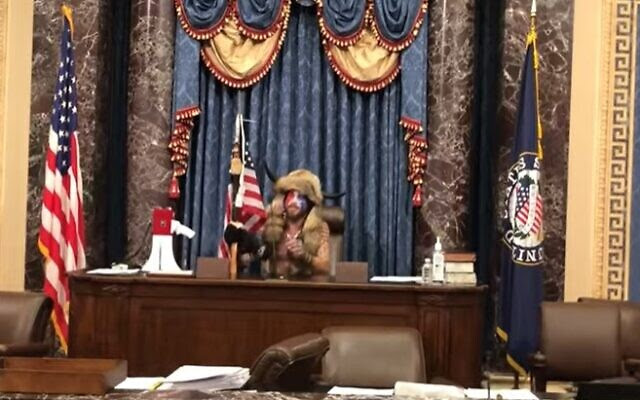
And why wouldn't they believe that acting like barbarians is acceptable behavior? The leader of the GOP has become downright lewd on the campaign trail and his crowds are delirious with delight. 

This was very dignified as well:

Those are actually more unusual examples of Trump using crude adult language. Generally, he sticks to childish insults, referring to his rival, former South Carolina Gov. Nikki Haley, as a "birdbrain" and repeatedly mocking former Gov. Chris Christie as "a fat pig" (something he calls his former Attorney General Bill Barr that as well). 

His boorishness is rubbing off on the people who work for him. When confronted with a recent article in which many of Trump's closest advisers in the first term said they are shocked that none of the exposés and revelations about his manifest unfitness have made a dent in his popularity among Republicans, Trump spokesman Steven Cheung issued this statement:

“These media whores are always looking for their next grift — whether its book deals or cable news contracts — because they know their entire worth as human beings revolve around talking about President Trump…"

For the record, Kelly hasn't made even one appearance on television that I'm aware of nor has he written a book. 

We need your help to stay independent

Trump's rhetoric has always been violent and lurid going back to the days when he proclaimed, "I love waterboarding," and regaled his audiences with tales of generals in days gone by summarily executing dozens of Muslim prisoners with bullets dipped in pigs' blood. But recently, he's adopted the language of fascists from the 20th century, declaring that immigrants are "poisoning the blood of our country" and promising to rid the country of the “communists, Marxists, fascists and radical left thugs that live like vermin" within it. He has defied the proclamations of judges in his various lawsuits and criminal cases to refrain from intimidating witnesses and causing his rabid followers to issue threats against them. The violence is coming to a boil just below the surface. 

Trump's intolerance truly is ecumenical in that it could be any group, any individual, any foe or (former) friend at any given moment. It's entirely self-serving. 

I suspect that most journalists and pundits just shrug their shoulders and say, "oh that Trump, you know how he is." And maybe his more sophomoric rhetoric isn't really that important in the grand scheme of things, particularly compared to his actual plans and policies which are truly terrifying and require that the media pay close attention and make it their mission to ensure that the public understands the threat he poses in a second term. 

But there is an effect on our culture and our politics from his crude behavior. Chris Christie appeared on CNN's State of the Union on Sunday and said it plainly: 

When you show intolerance toward everyone, which is what [Trump] does, you give permission as a leader for others to have their intolerance come out. Intolerance toward anyone encourages intolerance toward everyone.

I think to be more precise, Trump shows intolerance toward people who disagree with him and that can be anyone. And his example has given permission to vast numbers of Americans who now believe that they have no obligation to tolerate anyone they don't like. 


Want a daily wrap-up of all the news and commentary Salon has to offer? Subscribe to our morning newsletter, Crash Course.


Now, it's perfectly true that there was never a time in America when everyone just got along beautifully. Our history of racism and xenophobia alone puts the lie to that. But Trump's intolerance truly is ecumenical in that it could be any group, any individual, any foe or (former) friend at any given moment. It's entirely self-serving. 

It's making more and more people embrace political violence. The recent American Values Survey from Public Religion Research Institute (PRRI) in partnership with the Brookings Institution think tank found that one in three Republicans agree that “because things have gotten so far off track, true American patriots may have to resort to violence in order to save our country” – up from 15% in 2021. (22% of Independents and 13% of Democrats agree, all numbers having increased since 2021.) The truly frightening number is that among those who believe the Big Lie, 46% believe they may resort to violence, as well as 41% of Trump fans and 41% who buy into the "Great Replacement Theory." 39% of Christian nationalists are ready to take up arms to "save the country." Those numbers represent tens of millions of Americans.

I think this is part of what's making so many of the rest of us feel so off-balance right now. Sure, Trump is a classic mid-20th-century racist and xenophobe in the old Archie Bunker mold. But over the course of the last eight years, he has created a political environment of coarse intolerance. A whole bunch of young people don't remember anything else — this is normal political discourse to them. And it's translating itself in many different ways into Trump's stated ethos of "either they win or we win" which makes a pluralistic democracy virtually non-functional. "My way or the highway" isn't a joke. It's the road to civil war. 

Families call for hate crime investigation after 3 Palestinian students shot in Vermont

A suspect was arrested Sunday in the shooting of three Palestinian students attending college in Vermont, which advocacy groups believe was a hate crime.

Burlington police arrested 48-year-old Jason Eaton in the shooting, according to The Washington Post. A judge granted a search warrant for Eaton’s residence after evidence “gave investigators and prosecutors probable cause to believe that Mr. Eaton perpetrated the shooting,” police said. The shooting allegedly took place in front of Eaton’s apartment building, according to The Daily Beast.

Eaton is expected to be arraigned Monday and faces three counts of aggravated assault, according to the report.

Police have not specified a motive but said it is possible the students were targeted because they are Arab, according to the Daily Beast. They were reportedly in town to celebrate Thanksgiving with one of the men's relatives.

Police said Sunday that a “white male with a handgun” approached the three friends and shot them at least four times “without speaking” before fleeing on foot.

“All three victims were struck, two in their torsos and one in the lower extremities,” the Burlington Police Department said in a statement, adding that they remain hospitalized and one has very serious injuries.

The victims’ parents identified the students as Haverford College junior Kinnan Abdalhamid, Brown University student Hisham Awartani, and Trinity College student Tahseen Ahmed. Police said two of the students are U.S. citizens and one is a legal U.S. resident. The West Bank high school Ramallah Friends said that all three had attended school there before enrolling in American universities, according to the Post.

“As parents, we are devastated by the horrific news that our children were targeted and shot in Burlington,” the parents said in a statement, according to the Post. “We call on law enforcement to conduct a thorough investigation, including treating this as a hate crime. … No family should ever have to endure this pain and agony. Our children are dedicated students who deserve to be able to focus on their studies and building their futures.”

The Arab American Anti-Discrimination Committee said the group believes the “shooting occurred because the victims are Arab,” noting that they were wearing a Kuffiyeh and speaking Arabic.

We need your help to stay independent

Burlington Police Chief Jon Murad said in a statement on Sunday that police are investigating whether the attack was “hate-motivated.”

“In this charged moment, no one can look at this incident and not suspect that it may have been a hate-motivated crime. And I have already been in touch with federal investigatory and prosecutorial partners to prepare for that if it’s proven,” Murad said. “The fact is that we don’t yet know as much as we want to right now,” he added. “But I urge the public to avoid making conclusions based on statements from uninvolved parties who know even less.”

The Council on American-Islamic Relations issued a statement on Sunday offering a $10,000 reward for information about the shooting.

The FBI said Monday that it “continues to actively investigate” the shooting and “has deployed numerous technical, forensic and investigative resources in support of the investigation.”


Want a daily wrap-up of all the news and commentary Salon has to offer? Subscribe to our morning newsletter, Crash Course.


“That there is an indication this shooting could have been motivated by hate is chilling, and this possibility is being prioritized in the BPD’s investigation,” Burlington Mayor Miro Weinberger said in a statement.

The shooting comes amid growing concerns about threats and violence against Arab Americans amid the Israel-Hamas war. In October, 6-year-old Illinois boy Wadea Al-Fayoume was killed and his mother was stabbed 12 times in an attack allegedly carried out by their landlord days after the October 7 Hamas massacre in Israel.

“It is shocking and deeply upsetting that three young Palestinians were shot here in Burlington, VT,” Sen. Bernie Sanders, I-Vt., said in a statement. “Hate has no place here, or anywhere. I look forward to a full investigation. My thoughts are with them and their families.”

The insidious rise of “tradwives”: A right-wing fantasy is rotting young men’s minds

If the average American were asked what they imagine the priorities of the feminist movement are these days, most people would likely cite concerns like "fighting abortion bans" or "getting justice for sexual violence victims" or boring mainstays like "equal pay for equal work." But if you listen in to the world of right-wing social media influencers, they have a different answer. To them, feminists are single-mindedly obsessed with destroying women who identify as "tradwives." 

"Trad Wives Are Triggering Feminists," according to the YouTube channel for Daily Wire contributor Brett Cooper, who has 3.75 million subscribers. 

Most "tradwives" online are far more #GirlBoss than even the most outspoken feminist.

"Angry Feminist Compares Tradwives to Neo-Nazis and White Supremacists," screams the headline from the YouTube channel for Michael Knowles, a far-right troll with 1.75 million subscribers. 

"This Video Is Triggering All The Feminists," declares the headline of a video defense of tradwives from right-wing grifter Amala Ekpunobi, who has 1.7 million subscribers.

"Tradwife" is internet slang for "traditional wife." It's largely a social media trend of conventionally attractive white women putting out TikToks and videos gushing about the joys of submissive marriage and "modesty," though notably this "modest" clothing often leaves little to the imagination. 


Want more Amanda Marcotte on politics? Subscribe to her newsletter Standing Room Only.


@esteecwilliams Comment any video ideas you would like to see on my channel ❤️ #ReadySetLift #fyp #tradwife #megawife #homemaker #housewife #makewivesgreatagain #traditionalwife #realhousewivesoftiktok #sandwhichmaker #traditional #newlymarried #wifeytip #obediantwife #traditionalmarriage #americanhousewife ♬ original sound – Estee


It's a neat marketing trick from tradwives to position themselves as a dangerous threat that feminists are desperate to take out. It helps sell the central, lucrative fantasy to credulous audiences: That female submission is a woman's natural desire, one that's being stolen from them by sinister feminist forces. And that you, male viewer, would be gifted with a compliant helpmeet of your very own, if not for those dastardly feminists. But these brave women of YouTube, with their picture-perfect make-up and slender-but-curvy physiques, will stand up to those bitches and restore your birthright: A smoking hot 22-year-old housewife who never talks back, never gets tired, never says "no," and never gains weight, no matter how many children she has. 

By feeding conservative audiences a largely imaginary war with feminists, the tradwives are also pulling off another sleight of hand: distracting from how their content preys upon men, especially young men, by selling them a silly fantasy as reality. In the process, they're contributing to the male loneliness epidemic, by discouraging young men from developing the skills and mindset they need to get a real girlfriend, instead of just subsisting on a steady stream of social media delusions. 

There's been much debate over whether or not porn, especially the ubiquitous online porn of our modern era, is damaging to young men. What this discussion tends to overlook is that there's a huge swath of online material about sex and relationships that presents over-the-top sexist fantasy disguised as reality. Tradwife content is some of the most pernicious. Unlike porn, which positions itself as fantasy, most of the women creating "tradwife" content online claim it's a window into their real lives. Even though, if you ask any real housewives, you'll find few find it necessary to put on a full face of make-up, get a professional blow-out, and don a push-up bra in order to wash dishes. 

@gwenthemilkmaid And *that’s* on getting brainwashed at college ? It’s absolutely insane to me how much I’ve changed over the last 10 years LOL… Just goes to show: no one is ever too far gone ? #femininenotfeminist #tradwife #homesteadmom #conservativewomen #prolife #antiabortion ♬ On the river Avicci – Daniel Burke

No doubt, there's been a robust feminist response to the proliferation of tradwife content online. Most criticisms, however, start with the assumption that the audience for this content is primarily, if not exclusively, female. In some cases, especially with feeds that feature actual housework and cooking tips, that might be true. But many of the videos marketed as "tradwife" have a strong whiff of the male gaze to them. Some shamelessly serve cheesecake, even while pretending at "modesty."

@jasminedinis2 Many masculine men appreciate the allure of feminine women because it often signifies a balance in a relationship ? I found that embracing femininity, not just in clothing but also in my attitude, deepened our connection. It’s important to remember that being a “godly woman” transcends mere appearance, as Proverbs 31:30 reminds us, “Charm is deceptive, and beauty is fleeting, but a woman who fears the Lord is to be praised.” True beauty, as I’ve come to understand it, lies in the inner qualities that reflect a heart guided by faith in Jesus ?? #feminineenergy #stayathomemom #traditionalwife #foryoupage #tradwife ♬ original sound – Jasmine Dinis

Others, like "Classically Abby" by Ben Shapiro's tradwife sister, Abigail Roth, adopt a smug "debate me bro" tone. It cuts against their claims to demure femininity, but definitely appeals to men who are eager to hear a woman ramble on about how feminism is bad. 

We need your help to stay independent

Whatever the demographic makeup of their audiences, the concept of the "tradwife" is damaging to men's psyches. We've heard so much in the media about the "male loneliness epidemic." Much of the focus, thankfully, has been on how toxic masculinity gets in the way of men cultivating platonic friendships with people of any gender. But there's no doubt that part of what is fueling this anxiety is the way many young men seem to be failing at dating. Especially with conservative commentators, porn and video games take the brunt of the blame, along with feminism. Sen. Josh Hawley, R-Mo., for instance, has been out there complaining about "more and more men are withdrawing into the enclave of idleness and pornography and video games."

By feeding conservative audiences a largely imaginary war with feminists, the tradwives are also pulling off another sleight of hand: distracting from how their content preys upon men, especially young men, by selling them a silly fantasy as reality.

Hawley offers conservative politics as a solution to male malaise, but in truth, the last thing a young man who is adrift needs is right-wing content. These materials, especially the tradwife videos, teach young men to expect young women to be placid vessels, who exist only to be pretty and to serve. For instance, one video by popular vlogger "Mrs. Midwest" is titled "10 Way to Bless Your MAN!" and has chapters like "Cooking!", "Compliments!" and "Anticipate needs!" The comments on the video suggest that the viewers are unaware that this is not for real, and that flesh-and-blood women are not, in fact, perfectly coiffed sex-robots here to read your mind and fluff your pillows. Young men who mistake this fantasy for reality are going to have a tough time on the dating market. Inevitably, many get angry and disillusioned upon finding out that most women aren't interested in the thankless role of an unpaid maid and sex worker. Unfortunately, when that happens, there's even more right-wing propaganda aimed at them, which blames their frustrations on feminism. An entire industry of right-wing grifters, from Ben Shapiro to Jordan Peterson to Andrew Tate, are making a mint by exploiting young men who are desperate to hear that the problem isn't that they're sexist, it's that women don't like sexism. 

None of which does anything to actually help men. If anything, shotgunning noxious right-wing propaganda causes women to swipe left with haste, something men on conservative forums often complain about. Instead, men would be better served if they had a more realistic view of dating and relationships. Despite what tradwives would have you believe, women have never been happy being treated as second class citizens. What changed wasn't women's brains, but their options. Women, being humans like men, value their independence and their freedom. Once they were allowed to have both, they grabbed their rights and rarely looked back. Learning to like and respect women as they actually are doesn't just make dating easier. It also opens up the possibility of a real relationship with someone who is fun to hang out with, who has stuff in her life to talk about other than washing your underwear. 

The tradwives claiming otherwise on social media are playing a shell game. They sneer at feminists for working, but creating online content is work, and often quite lucrative for those who snag huge fanbases. They deride feminists for having ambition, but of course, building an audience in the competitive world of online influencers requires a striver. They want to sell themselves as humble, but the whole "tradwife" genre is built on being aggressively opinionated — and reaping major rewards, both in terms of attention and money. Most "tradwives" online are far more #GirlBoss than even the most outspoken feminist. Their viewers are just too gullible to know what they're consuming is a toxic fantasy. 

Sure, Joe Biden is pretty old: Listen, could you do what he’s doing?

For months, since Joe Biden's age became the pet topic of the corporate media — you know, rather than the openly authoritarian maneuverings of the former occupant of the White House — I have said to anyone who will listen (OK, mostly to my wife, who nods agreeably) that I couldn’t do a quarter of the things that Joe Biden is doing. Honestly, not many of us could.

Not long ago on MSNBC’s “Morning Joe,” journalist Mike Barnicle defended Biden on the “age issue” in the same way. His comments came after host Joe Scarborough noted that Biden, beyond his normal duties as president, currently has multiple other full-time jobs:working to try to limit the conflict in the Middle East, supporting Ukraine’s war against Russian aggression, trying to stabilize relations with China. (His recent meeting with Xi Jinping reportedly went quite well.)

Here’s what Barnicle had to say about the media’s focus on Biden’s age:

Very few of us, very few in the media, really pay enough attention to the weight that this president carries each and every day. … Right now, he’s carrying two twin towers of tyranny: one in Donald Trump here domestically and the other Bibi Netanyahu in Israel, who is perhaps the biggest obstacle to a two-state solution that exists today. So, the president has that on his plate. … He has, every hour of every day, something that comes across his desk. None of us can comprehend the weight of the presidency, every hour of every day. 

And as he would tell you if he were here today, it’s amazing how every country in the world looks to the United States for help, for solutions, for just almost anything you can think of. Every single day.

Read every newspaper in the country about President Biden, within the first two paragraphs they’ll point out he’s in his 80s. No kidding. He knows how old he is. You couldn’t do it. I couldn’t do it. Someone 45 years of age couldn’t do what he does every day. But he does it.

Scarborough pointed out that leaders and diplomats around the world admire and trust Biden and say that he fully understands the issues facing their own countries. Scarborough also commented that Biden works hard as president, while Trump notoriously spent most of his days in the White House watching cable TV until noon and often continued viewing even when he bothered to show up in the Oval Office. 

Trump entered the presidency with no experience in public service and left it with next to none. He did, however, leave office with two impeachments and box after box of classified documents. One recalls that Rex Tillerson, his first secretary of state, said that getting Trump to pay attention to important issues around the world was always a challenge, partly because he was likely to listen to others and “form a view that had no basis in fact.” (We all know what Tillerson really thought of Trump.) 

I understand the hand-wringing about Biden’s age. Didn’t he say he would be a one-term bridge to a better, Trumpless future? (Well, Republicans haven’t given up on their angry cult leader.) Haven’t I considered Ruth Bader Ginsburg’s decision to remain on the Supreme Court? Don’t I hear Bill Maher and David Axelrod unhelpfully quailing at the polls and saying that Biden can’t win because people think he’s too old? I have, and it makes me feel deeply anxious (so I stop thinking about it and go for a walk or do some push-ups).

Still, Biden is doing a lot more than I could do, and I suspect (as Barnicle said indignantly) that he's doing a lot more than most of us could do, physically and emotionally, and he’s doing it with something we lack: a deep understanding of the deftness needed in maintaining personal relationships and the give-and-take critical to governing and diplomacy. 

Biden has the experience we need in political leadership in general, especially with the Republican Party dead and gone and reduced to playacting “toughness” by elbowing House colleagues and challenging witnesses to fistfights in the Senate. Too many Republicans don’t take their oath of office seriously, and now even have to be reminded they are members of Congress. These seriously unserious people know their ideas are unpopular with the American public and thus have seriously unhinged plans for instituting minority rule permanently in any way they can.

Less than a year from now, Americans face a choice between remaining a democratic republic or morphing into a chaotic, vengeful theocracy, where millions of immigrants will be sent to holding camps before being deported (that’s the stated plan) and where women and people of color and LGBTQ folks and political “enemies” and journalists and authors and critics are targeted by those in power. For all their endless talk about the First Amendment, the MAGA insurrectionist party wants to turn it on its head, by instituting a national “religion” (Christian in name only) and silencing dissent.

Would it be ideal to have someone younger than 80? Sure it would. But that’s not reality — and that imaginary 45-year-old wouldn't have the extensive institutional and foreign policy experience that Joe Biden has.

Would it be ideal to have someone younger than 80? Sure it would. But that’s not reality this time around. And that imaginary 45-year-old wouldn't have the extensive institutional and foreign policy experience that Joe Biden has. The Democratic Party has quite a few truly worthy (and perhaps even charismatic) future candidates for the highest office waiting in the wings, gaining more experience in governing and serving all the citizens in their districts or states, not just the ones who voted for them. 

But those candidates will need a liberal democracy in place (i.e., basic rule of law, support for voting rights, willingness to compromise on policies and acceptance of the peaceful transfer of power) for us to find out what they can do to move us forward.

If you think 80 is really old — well, in some cases it is. People sometimes die much younger than that. In the two months since I retired, I’ve lost two close friends. But let’s list just a few older people who are still out there killing it: Paul McCartney is touring again and puts on vigorous three-hour concerts (without breaks). He turned 81 in June. Mick Jagger is still doing that chicken-strut thing he learned from Tina Turner, and celebrated his 80th birthday in July. At 97, Mel Brooks is sharper (and a lot funnier) than you or me. So is the amazing Norman Lear, at 101. Many notable scientists, philosophers, poets, artists and people in other demanding fields function at a high level, mentally and physically, deep into their lives.

Moreover, emotional well-being tends to increase in old age, as personal ambitions drop away and we allow ourselves the time to just be. (These findings do not apply to people who never grow up, by the way.) Biden stays active, eats a good diet, has social intelligence and awareness of others’ needs, has varied interests and solves complex problems daily — those, it seems, are the habits and characteristics of "super agers." He is buoyed by a loving wife and family, because he’s earned that love. (The Beatles would approve.)


Want a daily wrap-up of all the news and commentary Salon has to offer? Subscribe to our morning newsletter, Crash Course.


No matter how any of us may feel about Biden going for a second term at his age, it is beyond my comprehension that anyone could consider Trump, who is only a few years younger, as being more mentally or physically competent. According to his niece Mary Trump and others who know him well, has not been mentally fit for most of his life. 

Physically, as a young man Trump claimed he was not fit enough to serve his country, and, by all accounts, his diet continues to be a disaster zone of highly processed food and well-done steaks served with ketchup, sometimes tossed against the wall (speaking once again to his mental state, which seems to be characterized by endless, irrational resentment). 

Does Trump have any interest in or curiosity about anything beyond himself (except for a few of his favorite authoritarian leaders)? Has he ever solved a complex problem for the benefit of anyone but himself? He’s teased them endlessly but has never delivered — think those multiple, embarrassing “Infrastructure Weeks”; think “I will get it all done” to bring peace to the Middle East, fobbed off on his embarrassing son-in-law.

Trump has made it crystal clear over many years that he is vengeful and only out for himself. He now threatens those he wants to “root out” like “vermin,” jutting out his chin like his favorite historical Italian dictator and talking like his favorite German one. He also likes to fantasize that he’s a superhero.

I suspect that if it weren't that guy the Republicans seemed determined to put up again, Biden would have determined it was safe to step aside. But it is that guy, who now has two impeachments, 91 felony indictments in four different jurisdictions, findings of liability for sexual assault and business fraud, and a history of telling lies every time he opens his mouth, including persistent whoppers about the 2020 election and about being good at business.

I suspect that if it weren't that guy the Republicans seemed determined to put up again, Biden would have determined it was safe to step aside. But it is that guy.

Liberals and progressives, broadly speaking, tend to be people who believe in reality, in facts. Whether we're delighted about this or not, Joe Biden is running for president again. His leadership, whether you agree with every decision or not, can help us extend the American experiment and bolster democracy, as well as fight for more ways to share our nation’s prosperity and protect its cultural heritage. 

The other choice will be a man who is chronologically almost as old and who seems to live in an entirely imaginary version of America in a previous era. He is mentally and emotionally unstable, to say the least, and has no interest and no ability to help anyone other than himself. Oh, and he intends to be a dictator and get revenge on his perceived enemies.

If we lose our democracy because voters tie themselves in knots about Joe Biden's age. that will go down as ageism for the ages.

Chris Christie says Trump’s “intolerant language” has given people “permission” to act the same

During an interview on CNN’s “State of the Union” on Sunday, former New Jersey Gov. and 2024 Republican presidential candidate, Chris Christie, placed further blame on Donald Trump for a rise in intolerance, making a case that people acting hateful are just following his lead. 

“When you show intolerance toward everyone, which is what [Trump] does, you give permission as a leader for others to have their intolerance come out,” Christie said, adding that “Intolerance toward anyone encourages intolerance toward everyone.”

This echos recent statements from Christie made against Trump in his campaign against the current GOP frontrunner in which he also blamed him for an uprise in bigotry against Jews, as Politico points out. In an interview with The New York Times published earlier this month, Christie said, “I don’t think Trump’s an antisemite,” but added that the former president's “intolerance of everybody” is “what’s contributed to” the surging bigotry.

“I think that there have been a lot of people who contributed to it,” Christie said Sunday. “I believe Donald Trump’s intolerant language and conduct gives others permission to act the same.”


The fancy croissant obsession continues over a decade after cronuts took the internet by storm

When Dominique Ansel debuted the Cronut in May 2013, people went berserk. 

The croissant-donut hybrid caught the attention of many around the world who flocked to Ansel’s Soho-based bakery to get their hands on the pastry. Celebrities even fought the masses to enjoy their fair share of cronuts. Keri Hilson proudly flaunted that she got not one, but six cronuts in an infamous TMZ video. Anderson Cooper tried to get a batch delivered for his birthday, but was ultimately unsuccessful in his efforts. And Kelly Ripa had what can only be described as an out of body experience while sampling one on live television.

“I thought it was the line to the Apple Store,” Ripa said while talking about the never-ending line outside of Dominique Ansel Bakery during an episode of “Live! with Kelly and Michael.”

Ansel’s Cronut was conceived after the pastry chef was told he didn’t have doughnuts on his menu. Although Ansel had tried doughnuts before, he was more familiar with a pastry he’d been eating since he was a child in rural France — the croissant. So, he decided to mesh the two desserts, using his expertise in French baking to unite a classic pâtisserie and an American breakfast staple in holy matrimony.

As with any new invention, the cronut wasn't perfect from the get-go. It took Ansel more than three months and more than ten variations to perfect his recipe. The cronut officially became a major hit when Hugh Merwin wrote a glowing review of the dessert in New York Magazine's food and restaurant blog, Grub Street. The cronuts, Merwin said, were “a bold step forward for pastry.”

The Cronut’s legacy still runs strong today. Pastry chefs around the world have taken on the challenge of creating their own fancy hybrid croissant pastries and succeeded. Many of these desserts managed to go viral in the same vein as their predecessor.  

Take for example the Crioche, a combination of two classic pastries, the brioche and the croissant. The Crioche’s creator remains a mystery today — La Cucina Italiana credits the pastry to Italian pastry chef Marco Pedron, while Broadsheet says the pastry may have been invented by French chef Yves Scherrer. Regardless, the Crioche is a common sight across bakeries both near and far. They are a staple menu item at Carlo Cracco's Ristorante Cracco in Milan, Italy, and a must-have at Badolina Bakery & Cafe in Houston, Texas.

What makes the Crioche so special is its use of eggs in the recipe. Brioche, a traditional French bread, calls for a generous amount of butter and eggs. Croissants, on the other hand, call for copious amounts of butter but no eggs — at least when making the classic croissant recipe. That means the Crioche dough can either call for eggs or omit them entirely. Each recipe is customizable and varies from chef to chef. 

We need your help to stay independent

"It's neither a croissant nor a brioche. It's a crioche because before the dough is folded with butter, it's made with butter and egg yolk,” chef Pedron told La Cucina Italiana. Pedron’s recipe includes brioche-style dough that’s then styled and laminated using traditional techniques for making croissants. He adds vanilla beans, honey, orange zest and sugar syrup to his pastries to heighten their flavor profile.

Crioche can be served sweet or savory. Maison Daniel in San Francisco, California, adds ham and cheese to their Crioche, per Merci SF. Maker+Baker in Sussex, England, coats their Crioche in cinnamon and sugar for sweetness and a hint of crunchiness.

Alongside the Crioche is the Cruffin, a portmanteau of the croissant and the muffin. There’s also the Crogel, the world's first croissant and bagel hybrid that’s only sold by the Connecticut-based grocery store and bakery Stew Leonard’s. And there’s the infamous Doissant, which is D.C.’s attempt to prove that the nation's capital is not like other girls (spoiler alert: it is).


Want more great food writing and recipes? Subscribe to Salon Food's newsletter, The Bite.


Making handmade croissants is already hard enough. But making handmade croissants along with another complex pastry is pretty darn difficult. When it comes to the Cronut, frying croissant dough is not something every renowned pastry chef can achieve: 

“It’s not pretty,” explained Merwin. “Even if the laminated layers don’t separate instantly and part ways in the hot oil six ways to Sunday, chances are that yeast-leavened dough will have a lumpy, sad, and uneven ascent before it ever gets to the golden brown stage.”

Perhaps that’s why croissants are the go-to pick for hybrid pastries. Each creation poses several hurdles that only a handful of ambitious chefs are willing to tackle. If they are successful, the resulting gratification and stardom are priceless. These pastries, in their essence, are a work of art that people want to eat and admire.

“It’s still difficult to describe the success of the Cronut. I think it’s a mix of so many things together that work perfectly. Everyone’s had a doughnut before. Everyone’s had a croissant before,” Ansel told Condé Nast Traveler back in 2016. “But there’s always a different source of inspiration when it comes to pastry. 

“It can sometimes be color, sometimes an ingredient, sometimes a technique, sometimes a story. But it all comes together around the same thing when it comes to creating a new product, and it’s to do something good and tasty and something that people remember.”

A little over a decade after they took the internet by storm, cronuts (and their hybrid cousins) remain good, tasty and memorable.

These bat penises are so enormous, they can’t be used for penetrative sex, study finds

The shape and function of a penis is unique among some animals. Not every creature has one — birds, for example, simply eject sperm from their cloaca. But among male mammals, penises are widespread and quite useful for reproduction. If you need a refresher, the standard model of a penis is one that penetrates a female in order to spread biological material, continuing the cycle of life. A penetrating organ specialized in this way is known as "intromittent," and among mammals, there have been no known exceptions to this rule — until now.

According to a recent study published in the journal Current Biology, the male serotine bat (Eptesicus serotinus) has a penis so large it cannot penetrate the females in their species. It isn't because their phalluses are too small — in fact, the issue is exactly the opposite: their penises are way too big.

A fully erect serotine bat penis is seven times longer and wider than the female's vagina, with a bulging head the shape of a splitting grapefruit with a dent on the side, making penetrative sex physically impossible. Instead, the male serotine bats use their penises to push aside the protective tail membrane of the female members in order to reach their vulva. Once this has been accomplished, the bats participate in what is known as "cloacal mating" — that is, a practice in which the two animals rub against each other similar to "cloacal kissing" in birds.

The fully erect serotine bat penis is seven times longer and wider than their species' vagina, with a bulging head the shape of a splitting grapefruit, making penetrative sex physically impossible.

"To a degree, the female could employ the tail membrane to avoid copulation," the authors explain. "Consequently, E. serotinus’s long penis might serve as a ‘copulatory arm’ to bypass the membrane of the female. The hollow structure observed on the dorsal side of the erect penis might serve as a suction cup and support the maintenance of the copulatory contact."

As one of the authors, Nicolas Fasel of the University of Lausanne, explained in a statement, "we had observed that these bats have disproportionately long penises, and we were always wondering ‘how does that work?’ We thought maybe it's like in the dog where the penis engorges after penetration so that they are locked together, or alternatively maybe they just couldn't put it inside, but that type of copulation hasn’t been reported in mammals until now.”


Want more health and science stories in your inbox? Subscribe to Salon's weekly newsletter Lab Notes.


"E. serotinus’s long penis might serve as a ‘copulatory arm’ to bypass the membrane of the female."

To learn about serotine bat mating practices, bats at a rehabilitation center in Ukraine and in a Dutch church were closely observed with cameras. The team of scientists was ultimately able to chronicle 97 mating events, during which the male bats would grab the females by their napes and probed the females' pelvises with their penises until they made contact with the vulva. After that, they would hold still for a prolonged period and embrace the females through the process of copulation.

And these bats can go for a long time. "Half of the recorded copulations lasted for less than 53 [minutes], but the longest event extended to 12.7 hours," the authors reported.

It seems this was enough to transfer semen, as the female bats appeared wet after copulation, but more research is needed to really know for sure. It's not easy to study the mating habits of mouse-sized flying creatures that prefer the shadows, so when it comes to bat sex, we are largely in the dark.

"With the caveat that sperm transfer occurs during the recorded putative copulatory events, this study reveals a novel copulatory pattern in mammals," the authors wrote. "Further investigation should focus on the role played by pre- and post-copulatory female choice as well as male competition in the evolution of this prolonged and particular mating behaviour."

Studying bats can teach us something about human evolution as well. According to a 2021 study published by Ahana Aurora Fernandez, a Postdoctoral Researcher in Behavioral Ecology and Bioacoustics at the Museum für Naturkunde, Berlinbat pups engage in a form of babbling similar to that used by infant humans.  Specifically they found that bat pups from a species known as the neotropical greater sac-winged bat, Saccopteryx bilineata, "engage in daily babbling behavior during large parts of their development." Fernandez added that "greater sac-winged bats possess a large vocal repertoire that includes 25 distinct syllable types. A syllable is the smallest acoustic unit, defined as a sound surrounded by silence. These adult bats create multisyllabic vocalizations and two song types."

We need your help to stay independent

On a more somber note, there has been an increased amount of interest in bats due to the COVID-19 pandemic, which likely began due to a virus (SARS-CoV-2) that originates in bats. A February 2020 study in the journal eLife revealed that bats have such a fierce immune system when responding to pathogens that they could help viruses replicate faster — meaning they wreak chaos on human immune systems when a person is infected.

"The bottom line is that bats are potentially special when it comes to hosting viruses," Mike Boots, a disease ecologist and UC Berkeley professor of integrative biology, told Science Daily about that study. "It is not random that a lot of these viruses are coming from bats. Bats are not even that closely related to us, so we would not expect them to host many human viruses. But this work demonstrates how bat immune systems could drive the virulence that overcomes this."

My mother, the debutante Communist: An American family story of love, loss and J. Edgar Hoover

The story I want to tell you begins with a woman in a car in the middle of the night, in the middle of the last century. To be specific, it is late in 1951 or early in 1952, in the parking lot of an apartment complex in southeast Washington, D.C., across the Anacostia River from Capitol Hill. The woman is young and pretty, or at least she looks that way from here. In fact she is about 30, which nobody thought was especially young at the time. If she were reading this right now, she would curl her lip slightly and say, “Well, dear — Striking or handsome, perhaps. I was never pretty.”

We’ll stick to the facts: She has fair skin and strawberry blonde hair. She is an old-line WASP whose ancestry stretches back past the American Revolution, all the way to the Salem witch trials and the Mayflower. She grew up in an Arts & Crafts house on a leafy suburban street in Northern California, and attended a private school meant to produce marriageable young women who could play the piano and speak a little French. She was a sorority girl at Berkeley for about a year and a half — and even then, decades before that campus became famous for student activism, there were “radicals” handing out leaflets in Sproul Plaza. 

She dropped out of college and moved across the country to join the labor movement, an experience that will inspire her, many years after the story I’m telling you now, to write a novel that was nominated for a Pulitzer and optioned by Hollywood. (No movie was ever made, as is so often the case.) She has upright posture and what would then have been described as “good breeding” and a “nice figure.” In other words, she bears many of the markers of wealth and privilege, although when we find her on this rainy night in the early '50s, she has no money to speak of.

What I’m saying is that in a number of ways this woman appears dramatically out of place among the men in this car. I can’t identify them all, but it’s likely they are all Jewish, all immigrants themselves or the children of immigrants, all raised in urban working-class neighborhoods by parents who spoke foreign languages and lived by making things or selling them. 

There are at least three men in the car along with the young woman, probably four. It’s a rainy night but not especially cold; the windows are rolled up and the windshield is white with fog. Inside the car, the air is warm, damp and close. It smells of wet wool, body odor, cigarettes and heavy, half-digested dinners.

The CPUSA was like a secret inner clubhouse for the most dedicated people in the labor movement, people like the man she met and married not long after that.

If this sounds like a scene from a movie, front-loaded with potential sex or violence, that’s fair enough, although nobody’s getting shot or taking their clothes off on this particular night. It’s more like a scene from another kind of movie, a slowly unfolding, densely plotted American thriller whose unfinished story we’re all still inside, many years later.

The woman in the car is my mother, as I imagine you have figured out by now — or at least she will become my mother, a decade or so into the future and thousands of miles away. She is sitting in the front passenger seat. She is part of an impromptu jury or tribunal assembled to pass judgment on the man who is sitting in the middle of the back seat, crying.  

My mother always used the word “trial” when she told this story, and when she wrote about it in her own unpublished memoir. I always assumed that was a dramatic invention or an imprecise metaphor, but it turns out that was almost certainly the word used at the time to describe this kangaroo-court proceeding. In any case, the outcome was foreordained: The crying man in the back seat, a pharmacist who ran a nearby drugstore, was to be declared a traitor to the working class and expelled from the Communist Party USA. 

Yes, my mother was a Communist, to borrow a phrase that today, in 2023, you can buy through Etsy emblazoned on a water bottle, a baseball cap or an iPad case. She never held an official position within the Party leadership — which you may not be surprised to learn was almost entirely male — but it’s fair to say she was being groomed for one, more because of her improbable pedigree and her photogenic qualities than because of any ideological devotion or organizational ability.

In later years, she said she found the Party’s internal politics dreary and most of her fellow Communists tedious and pedantic. She joined up, to put it bluntly, because in the heady atmosphere of the Washington labor movement right after World War II, it was the cool thing to do. 

The CPUSA was like a secret inner clubhouse for the most dedicated people in the labor movement, people like the man she met and married not long after that. He was a handsome journalist from Brooklyn named Mel Fiske (originally Emanuel Fishkin), who styled himself after the movie star Cesar Romero — or, less flatteringly, after Joseph Stalin — and had fought with the Marine Corps in the famously brutal Pacific campaign. For the anti-Communist crusaders then emerging on the American right, Mel was a troubling and paradoxical figure: a decorated combat veteran whose patriotism could not be disputed, but who was also a proud member of a purportedly subversive political movement.

By that point in the early 1950s, it was becoming a lot less fun to be an American Communist.

I doubt my mother ever made much headway in reading Marx or Lenin, or that Mel did either. She read modernist poetry; he favored the laborious historical-realist fiction deemed acceptable by the socialist left: John Dos Passos, Theodore Dreiser, Howard Fast. He cultivated a lifelong friendship with the writer John Sanford, who had published several acclaimed novels in the 1930s and ‘40s before the McCarthy-era blacklist essentially ended his career. (I mention that now because of something I had forgotten: Mel once wrote about Sanford for Salon.)

As I have suggested, the Communist Party’s commitment to equality for women was entirely theoretical, but its leaders intermittently perceived the propaganda value of a conspicuously non-Jewish, conventionally attractive woman who knew which fork to use for the fish course. My mother’s great triumph came as the impromptu leader of a “meat strike” among the wives of industrial workers in Cumberland, Maryland, which forced the company store to capitulate on price increases and led a local newspaper to describe her as “the Red redhead of Cumberland Gap.” On my living room wall, I have an enlarged print of a photograph published in the Washington Star, probably in 1948: She is leading a march against the Ku Klux Klan, wearing a sundress, heels and dark glasses. She is presumably pregnant with my big brother at the time, but doesn’t look it.

But let’s get back to the crying man in the car on that rainy night, which could be called an inciting incident. My mother, as she told the story, was disgusted by the cruelty and paranoia of that episode. By that point in the early 1950s, it was becoming a lot less fun to be an American Communist. Her brothers, my two uncles, neither of whom was politically active in any way, received visitors who told them they would have great difficulty finding any form of career-level employment as long as their sister kept doing what she was doing. 

My mother and her husband faced a range of options that included going to jail, going to Europe or Mexico, or going “underground,” which meant abandoning your current life abruptly and establishing a new identity someplace where no one knew you, a difficult but not impossible task in those days. She chose none of the above. She left the Party, divorced her husband (who went underground for a while in upstate New York) and took their child — my older brother, then about 3 years old — to another city to build a different life. 

That was more or less the official prehistory of my childhood, although I learned it only in bits and pieces over the years. But that version of the story has been so foreshortened that I think it skips over the most significant facts, not to mention the unanswered questions.

The woman we started out with in the front seat of that car was first a second-tier California debutante named Diana Farnham, then a prominent radical named Diana Fiske (or, to the FBI, "Mrs. Melvin Fishkin," a name she never used in her life) and then a teacher, poet and novelist named Diana O’Hehir. She led a remarkable life by anyone’s standards. She would cheerfully agree that her initial privilege had a lot to do with that: She grew up as the adored only daughter of, quite literally, an absent-minded Shakespeare professor, and if he was hardly the world’s most attentive father he gave her something not many women got in those days: the freedom and confidence to reinvent herself several times over and to narrate her own story on her own terms.

The climate of fear and anxiety created by the McCarthy years and the Stalin years — and by the uniquely American blend of arrogance and amnesia and maybe just by the perennial weakness of human nature — is still with us.

After leaving Washington and left-wing politics behind, she taught in a church school, became one of the first female graduate students at Johns Hopkins University, married another man (worlds apart from the first, although he too had  working-class New York City roots), moved across the country, had a second child (that would be me), earned a PhD in her 40s, wrote a Pulitzer-nominated novel in her 60s and then, more than 30 years later, married her first husband, the formerly prominent Communist, all over again.

I have several things to say here. The first one is that this is an amazing but true love story. It’s impossible to write those words without sounding facetious, but, reader: This time they fit.

Another one is that the murk that we can feel hanging over those people in that car, even from this distance, never went away: The climate of fear and anxiety created by the McCarthy years and the Stalin years — and by the uniquely American blend of arrogance and amnesia and maybe just by the perennial weakness of human nature — is still with us. It affected my family so deeply that we all pretended not to feel it and never talked about it. It is painful to admit that even now. I assume that’s what is meant by the trendy psychological term “intergenerational trauma.”

I also think this story is about something much bigger than one oddball amalgamated WASP-Jewish-Irish family, although it’s fair to say that my family’s peculiar qualities are distinctively American, and more than a little symbolic. It’s about the more general and more systemic consequences of that historical trauma, which this society and this nation have never even tried to address honestly. 

This story is obviously personal for me, even though I’m not in it. We all have histories that shaped us before we were born, and this is mine. To misquote Faulkner only slightly, the past, in America, is never really past. I feel it as a living presence when I hear the former president of the United States, who seems increasingly likely to be the next president as well, vow to “root out the Communists, Marxists, Fascists, and Radical Left Thugs that live like vermin within the confines of our Country.” It is tempting, and at least somewhat reasonable, to assume that as usual that person has no idea what any of those words mean, no notion of their historical resonance, and nowhere near the executive function to turn his fantasies into reality. But none of that is terribly comforting. 

I feel it in a more intimate and ironic sense when I hear self-described American liberals — people I likely agree with on 90 percent of political issues — embrace the FBI and other instruments of the national security state as allies in the purported struggle between the forces of democracy and right-wing authoritarianism. Given my family’s experience and the experience of a great many other perceived dissidents, radicals or revolutionaries — most of whom have not looked like me, or shared my family’s obvious advantages — I cannot help but see that as a uniquely American variety of willful blindness and ignorance. 

We all have histories that shaped us before we were born, and this is mine. To misquote Faulkner only slightly, the past, in America, is never really past.

My stepfather Mel’s FBI file, which he labored long and hard to acquire and is my most important source material, fills several banker’s boxes in the corner of my living room. It comprises hundreds of pages of documents, many of them heavily redacted, even years after the deaths of everyone involved. They include transcripts of private meetings attended by three or four people, copies of letters he wrote but never sent, and interviews with every employer who ever hired him and every landlord who ever rented him a room, along with speculative essays about his intentions and motivations. Several documents in his file were routed directly to the desk of J. Edgar Hoover — and if I told you what was in them and didn’t have the evidence, you wouldn’t believe me.

There is also a memo personally signed by Hoover in April 1949 and directed to the attorney general of the United States, "urgently" recommending "technical surveillance" on the apartment of "Melvin Fishkin and his wife" (her name is redacted), and describing them as "very prominent in the Communist movement." One of the facts noted by FBI agents was that Black people ("Negroes") were frequently seen visiting their apartment, which was deemed to be unusual.

At around the same time as the episode with the crying man in the car, a couple of years later, my mother had been nominated as lead organizer for the Communist Party in the District of Columbia. She may have held that title briefly, in fact; it’s not like there are personnel records to consult. But in her version of the story, she understood that she was at a crossroads in her life: She was disgusted with the Party and didn’t want the job, so she simply walked away. Not exactly a moral parable for the ages, but instructive enough in its way.

If the story I have told you so far feels a bit novelistic, well, it feels that way to me too. I know it’s true, in a general sense, but it’s also “based on a true story,” as they say. 

I don’t actually know whether it was raining on that night in Washington, or what month it was, or how many people were in the car. I’m not quite sure what year it was either. My mother always placed it in 1952, which generally seemed to fit both historical events and her personal biography. But the documents in my stepfather's file appear to contradict that: FBI agents believed Mel and Diana had separated by the end of 1950, and their reports suggest that my mother's departure from the Communist Party was more gradual than sudden.

One possibility is that when the FBI questioned my mother, repeatedly and at length, about whether, when and why she had quit the Party and left her husband, she didn’t tell them the truth. (She is described in one memo as "not entirely cooperative.") Another possibility is that my mother borrowed or altered or embellished the tale of the weeping pharmacist, placing it in her story for maximum dramatic effect.

There is a third possibility which, understandably, I don’t much like but should acknowledge. It’s clear enough that those FBI agents tried to persuade or coerce my mother into providing them information — about Mel and others she knew in the Party — as the price of leaving her and her family alone. It's not clear whether they succeeded. But she was highly vulnerable, as a single mother with a young child who needed a job. And there's no question that happened to many other people, before and since — in the Communist Party and the labor movement, in the civil rights movement and the Black Panthers, in the anti-globalization movement and the eco-anarchist movement and the Palestinian solidarity movement and so on. (It also happened to the backwoods losers who wanted to kidnap the governor of Michigan, or at least said they did.) So, yeah, my mom could have been an informant. I’ll probably never know for sure.

As any journalist with real-world experience could have told you long before the dark insights of postwar philosophy made such concepts fashionable, truth is a slippery, ambiguous thing. It’s out there somewhere, but we don’t always find it, don’t always recognize it when we see it and very often don’t agree about what it means. That's not a new problem. So the last thing I will say here is that I believe this story is true — but then again, I’m the person telling it, so I would say that. It’s definitely not the kind of story where every question gets answered and every secret gets revealed. Are any of the stories we tell about our families, or about the past, or about America, ever like that? 

Wordless in Gaza: When poetry can go where journalism can’t

Two centuries ago, Percy Shelley wrote that “poets are the unacknowledged legislators of the world.” Yet elite power has routinely vetoed their best measures. Still, the ability of poetry to inspire and nurture is precious, including when governments are on protracted killing sprees. 

But sometimes conscience requires the withdrawal of poetic talent instead of helping to normalize the unconscionable. That’s what happened last week when the New York Times Magazine lost its poetry editor.

Anne Boyer, a poet and essayist who won the Pulitzer Prize in 2020, abruptly quit her Times gig and released a powerful resignation letter. She denounced what she called “the Israeli state’s U.S.-backed war against the people of Gaza” — calling it “an ongoing war against the people of Palestine, people who have resisted through decades of occupation, forced dislocation, deprivation, surveillance, siege, imprisonment and torture.”

Boyer’s resignation was not merely a protest against the continuous killing in Gaza. She also observed that the New York Times, like U.S. news media overall, can flatten mass murder into monotone narratives: “I can’t write about poetry amidst the ‘reasonable’ tones of those who aim to acclimatize us to this unreasonable suffering. No more ghoulish euphemisms. No more verbally sanitized hellscapes. No more warmongering lies.”

In Gaza, more than 13,000 civilians have been killed since early October. Children are perishing at an average rate of 10 every hour. The ongoing slaughter by Israeli forces — supported by massive military aid from the U.S. — follows Hamas’ atrocities on Oct. 7 in Israel, where the latest estimate of the death toll is 1,200, including at least 846 civilians, in addition to some 200 hostages kidnapped. (Some of whom are now being freed as part of a laborious negotiated exchange with Israel.)

We need your help to stay independent

But numbers don’t get us very far in human terms. And news accounts have limited capacities to connect with real emotions.

That’s where poetry can go far beyond where journalism fails. A few words from a poet might chip away at the frozen blocks that support illegitimate power. And we might gain strength from the clarity that a few lines can bring.

Stanley Kunitz wrote:

In a murderous time
    the heart breaks and breaks
        and lives by breaking.
It is necessary to go
    through dark and deeper dark
        and not to turn.

“In a dark time,” Theodore Roethke wrote, “the eye begins to see.”

Bob Dylan wrote lines that could now be heard as addressing Benjamin Netanyahu and Joe Biden:

You fasten all the triggers
For the others to fire
Then you sit back and watch
When the death count gets higher
You hide in your mansion
While the young people's blood
Flows out of their bodies
And is buried in the mud

June Jordan wrote:

I was born a Black woman
and now
I am become a Palestinian
against the relentless laughter of evil
there is less and less living room
and where are my loved ones?


Want a daily wrap-up of all the news and commentary Salon has to offer? Subscribe to our morning newsletter, Crash Course.


In the United States, far away from the carnage, viewers and listeners and readers can easily prefer not to truly see that “their” government is helping Israel to keep killing thousands upon thousands of Palestinian children and other civilians. “I call it cruel and maybe the root of all cruelty / to know what occurs but not recognize the fact,” a poem by William Stafford tells us.

From Pink Floyd:

Don’t accept that what’s happening
Is just a case of others’ suffering
Or you’ll find that you’re joining in
The turning away . . . .
Just a world that we all must share
It’s not enough just to stand and stare
Is it only a dream that there’ll be
No more turning away?

 Franz Kafka wrote: “You can hold yourself back from the sufferings of the world, that is something you are free to do and it accords with your nature, but perhaps this very holding back is the one suffering you could avoid.”

A fond farewell to the New York Times sports section: But what took so long?

In the spring of 1957, in search of a summer job before heading west to graduate school, I answered a classified New York Times ad for an editorial assistant. The personnel clerk at the paper was condescending. Bachelor’s degrees are a dime a dozen, she told me. For their newsroom, she said, they were looking for Ph.D. candidates and Rhodes scholars. Still, sighing at her own generosity, she let me fill out the paperwork.

I did so, but not being much of a Times reader then, I quickly moved on. I spent the rest of that day filling out other applications around town. When I got home my mother said, “You had a crank call, Bobby. A man said that, if you show up tomorrow and pass a physical, you can start work immediately at the New York Times.”

The physical consisted of nothing more than showing up, and that editorial assistant post turned out to be for a copyboy (no girls allowed then) in the sports department. I hated the job — sharpening pencils, fetching coffee, filling pots of library paste from 7 p.m. to 3 a.m. for a dyspeptic crew of “copy readers” (now, staff editors), who seemed to take joy in molesting the words of superb writers like reporter Gay Talese.

Sixty-six years later, I had a rush of mixed feelings when the Times recently announced that it was going to abolish its sports department. How could they part with such a critical piece of my life? And, by the way, what took them so long?

I had, in fact, long wondered whether the Times needed a sports department. Even back then, marketing polls showed that its readers who were avid sports followers mostly bought tabloids to satisfy their fandom. In house, in fact, sports was known as “the Toy Department” and often provided a dumping ground for writers and editors who had messed up “outside” (as we sports types called the other Times departments we revered and resented).

Why cover sports?

As it happened, that summer job of mine would last 26 years (in two acts with a 20-year intermission) and, in that time, I came to love the majesty of the Times, its sense of mission and the throb of the news flow. The sports section would be included in my new belief system. When I was anointed a reporter at 21, I felt as if I had been inducted into a knightly order dedicated to Truth and I’ve never been totally deprogrammed.

At the same time, during these past 66 years, even while writing on sports-related topics in genres ranging from art criticism to opera, I’ve continued to wonder about the true purpose of sports coverage. Is it to keep that industry profitable, critique and offer consumer reviews of performance, be that media platform’s most diverting section (like the comics in other papers), provide intelligence for gamblers, or offer real journalistic coverage of a compelling and useful window on society? Or maybe some combination of them all?

Such thoughts only intensified when I first saw the announcement that the Times was dropping its sports department.

Initially, I felt angry and sad, as if it reflected unfavorably on how I had spent so much of my life. But that was silly. And after several weeks without a formal sports department, I’m not totally convinced it was such a bad idea.

For 66 years, I've wondered about the purpose of sports coverage: Is it to keep that industry profitable, offer consumer reviews of performance, be a media platform’s most diverting section, provide intelligence for gamblers or offer real journalistic coverage of a compelling and useful window on society?

After all, so much of sports news is indeed trivial, a genuine waste of time and space, and continually updated reckless speculation (most of it soon to be discarded). Of course, that’s a description of a lot of news, some of it wrongly reported. At least in sports, no one dies from rumors of a coming baseball trade that never happens.

And yet … the sports department was also something of a newspaper within a newspaper, with its own deadlines, stand-alone pages and version of standards. For instance, sports figures (like felons) weren’t referred to with the normal honorifics (Mr., Mrs. and Miss) as they were then in other sections of the paper, while a certain lack of rigor in the editing may actually have contributed to greater readability, individuality and humanity.

Times sports goes abroad

For several years now, the Times has been chipping away at its sports report, dropping stand-alone sections (most notably on Sunday) and cutting back on the number of daily pages of coverage. COVID’s effect on sports spectatorship affected some of those decisions, as did the paper’s campaign to become the Global Times, with stories about local teams replaced by European soccer news.

Even my own interest faded. After all, I could get basic hardcore sports results any time online from ESPN or at a new site called The Athletic, even as my own old paper was focusing ever more on the Tottenham Hotspurs and ever less on the Yankees. I was born in the Bronx, so that mattered to me, at least on some level of hometown pride. But maybe the paper was trying to wean me from sports so I could concentrate on trendier revenue streams like recipes and word games (its newest toy departments).

Then, last year, the Times tipped its hand by purchasing The Athletic, an online prose sweatshop of sports-content providers, for a mere half-billion-plus dollars. It was planning to outsource sports coverage, while displacing its own department’s unionized workers along the way. I felt genuine outrage! Wasn’t sports worthy of the paper’s standards and resources? Weren’t its workers worthy of protection? Next stop, they’ll gut the Culture Department! (Why do all those smarty-pants critics have to be NewsGuild members anyway? Why not pick them up on the corner like day laborers?)

Many staffers at The Athletic are up to scratch, even excellent, but most don’t have the depth of knowledge and sense of style of a hand-picked Times’ sports lineup. 

Admittedly, The Athletic is good enough at what it does, covering games, human-interest stories and some sports-related social and political issues with Associated Press-style detail and clarity. Yes, its reportage is far better than anything artificial intelligence could produce (so far), but it hardly has the panache displayed by the Times’ regular sports writers. The Athletic was, in fact, originally staffed by culling faltering regional papers for some 400 reporters theoretically devoted to covering every pro and college team imaginable (an ambition that has since been relaxed).

Many of its staffers are up to scratch, even excellent, but most don’t have the depth of knowledge and sense of style of a hand-picked Times’ sports lineup. While, in the past 66 years, its sports department wasn’t always collectively the best in the nation (the Boston Globe, Los Angeles Times, Washington Post, and Newsday had their glory days, too), its roster of writers was invariably the deepest and most capable of explaining, say, the intricacies of pro football, as well as the medical disasters its plays could cause. In my time, the daily likes of Harvey Araton, Ira Berkow, John Branch, Steve Cady, Joe Drape, Gerald Eskenazi, Robin Finn, Jere Longman, Buster Olney and William Rhoden would have been hard to match, and that’s not even to mention its superb columnists. Now, that team has been disbanded.

The new game plan

Nevertheless, the Times’ current plan seems workable enough. Readers who have scaled the paywall will have access to The Athletic and once again be able to read about their favorite local teams. Meanwhile, the former department staff of about 40 writers, editors and videographers will do sports-related feature stories, analyses and investigations from new perches in departments like business, international news and culture. So far, so good, although the jury is still out.

An encouraging example of the new neo-sports department came out on a Sunday in late October. There were five packed sports pages at the back of the first section, while the lead story, which began on the front page, was a brilliant dive into the latest trend in the professionalization of college sports by Billy Witz, a seasoned varsity starter from the old sports department, and David Fahrenthold, an acclaimed investigative reporter acquired from the Washington Post. Then there was the kind of European soccer column I’ve come to expect from the entertaining Rory Smith and an excellent piece by jack-of-all-sports reporter Victor Mather on Native Americans being squeezed out of what was once their own game, lacrosse. (Consider it the latest inglorious chapter of colonization and oppression.) Meanwhile, major articles by Athletic reporters Doug Haller and Vic Tafur on the durability of basketball superstar Kevin Durant and the day’s NFL games proved adequate fanboy fare.

We need your help to stay independent

All in all, no terrible loss of standards. (Meanwhile, The Athletic has been bulking up its staff, even adding a respected former Times sports editor, Jason Stallman.) Yet with the exception of the Mather and Witz-Fahrenthold pieces, neither trees nor bandwidth needed to be wasted on those other four Sunday stories in the Times itself, when you could read them at The Athletic, saving space for Donald Trump, Gaza, Hamas, Ukraine, the latest mass murders, biblical House Speaker Mike Johnson and the rest of all-the-news-that’s-fit-to-print.

Once you start thinking like that, however, you’ve left the zone of sentimental sports writing and it’s time to start considering what we really need to know about our fun and games.

A new sports world or a new scam?

That front-page piece by Witz and Fahrenthold is a fine (if somewhat tardy) example of what any sports page should be focusing on in 2023. The latest key to successful college athletic recruiting, they report, is forming a “donor collective” of ultra-rich boosters. They then act as recruiting agents for the coach, who can assure an incoming star player of a package of no-show jobs and top-notch endorsement deals that, for a future starter on a major college team, could easily become the equivalent of a $100,000 annual salary (or more). To add a little spice to the funding group, that collective can be created as a charitable organization so its donors can claim tax deductions. (If you wanted to add another wrinkle to that story, as Jason Fuller of National Public Radio reported, you could include the creation of “transfer portals” that allow disgruntled players to switch schools without the old penalty of losing a year of eligibility.)

It was great that the Times covered the latest round in the professionalization of amateur sports so effectively, but the question remains: Under the new regime, will they stay with it? In the years to come, will it even seem like an Athletic kind of story?


Want a daily wrap-up of all the news and commentary Salon has to offer? Subscribe to our morning newsletter, Crash Course.


Keep in mind that such investigations aren’t what hardcore sports fans tend to enjoy in their time-outs from real life or what usually attract non-sports fans to the subject. And such reporting is expensive, too.

Only recently, however, we saw the sports version of journalism at the highest level in a blockbuster news piece by two of the Washington Post’s biggest stars, David Maranis and Sally Jenkins, writing about then-Republican House Speaker wannabe Jim Jordan. “As an assistant wrestling coach and graduate student at Ohio State from 1986 to 1994,” they reported,

he was on campus during the most grievous scandal in the school’s history. Over two decades, Richard Strauss, an athletic team doctor, molested scores of male students and athletes, especially wrestlers, with abuses ranging from excessive fondling of genitals during supposedly routine examinations to anal rape, according to a university report. When the crimes belatedly surfaced in 2018, Jordan insisted that he had been unaware of Strauss’s behavior.

However, wrestlers from Jordan’s time at Ohio State told the Post that they recalled team members complaining to Jordan and insisted that there was no way he didn’t know what was going on.

Theirs is another story that should be a model for the new neosports department at the Times, along with the role of gambling in the current sports world (including the NFL’s once unthinkable official betting sites), and how women’s sports is faring in a time of transgender athletes (and how those transgender athletes are faring, too). And don’t forget what’s new in sports writing itself, including the two highest-priced practitioners of the trade today, 54-year-old Adrian Wojnarowski of ESPN and his onetime protégé, 29-year-old Shams Charania of The AthleticThey might not have been considered real sportswriters over much of the past 66 years of my service. Both are transactional reporters who cultivate inside sources in order to be the first to break the news — often, in this distinctly online sports world of ours, by seconds — that some basketball player is being traded or manager fired. Admittedly, it hasn’t yet been explained why the timing of such information is important to anyone but gamblers — and if that’s true, consider it one measure of where we are right now in Sports World 2023.

Woj reportedly makes $7 million a year, while his rival Shams makes less. Arguably, he’s now the most important sports reporter at the Times. The question remains: Is he its future or proof of its ongoing decomposition?

Maybe answering that question could be the Ph.D. thesis I was headed toward 66 years ago when I answered that ad for copyboy in the late, lamented sports department of the New York Times.

Cats have driven many species to extinction. Experts share tactics for reducing feline destruction

Cat owners and cat admirers alike tend to be intrigued by their enigmatic companions. When we see an intrepid feline carefully stalking its prey or happily playing with other cats, we ponder the mysteries of its mind and the depths of its soul. What manic misadventures do cats engage in when we're not around?

"A free-roaming cat is not filling an ecological niche, or reverting to its ancestral form. It is merely a run-away pet that needs to be brought back inside."

Unfortunately, the real world of cats differs significantly from the innocent, whimsical versions depicted in movies like "Cats" and "The Aristocats." In fact, when domesticated cats are allowed to roam freely, they often leave a trail of ecological destruction in their wake. Many species have gone extinct due to domesticated cats being allowed to roam outdoors, and many other animals are suffering immensely because of it.

To understand why, it is first important to recognize that domesticated cats can never be "wild," whether they are owned by humans or "feral," meaning a domesticated cat that has no owner. Of course, wild cats exist — not only tigers, but also bobcats and literal wild cats, from which these favored pets evolved. But these cats are native, not invasive and don't spread wherever humans do. By definition, just like cows and chickens, a domesticated cat is biologically incapable of being a natural part of the wilderness.

"Just like a stray dog doesn’t become a wolf, a feral cat doesn’t become a wild cat," explained Daniel Joseph Herrera, a PhD student studying urban ecology at the University of Maryland–College Park who has co-authored a 2022 study on domesticated cats being an invasive species. "A free-roaming cat is not filling an ecological niche, or reverting to its ancestral form. It is merely a run-away pet that needs to be brought back inside."

"The species most detrimentally impacted by outdoor cats are island species [that] are often naïve to or ill-equipped to handle the enormous threat posed by cats."

Herrera said people often confuse the term "feral" with the term "wild" and use this confusion to justify the cat’s continued outdoor life. But it's quite clear that domesticated cats can be dangerous to ecosystems. The question is how dangerous. According to Grant Sizemore, the Director of Invasive Species Programs at the American Bird Conservancy, outdoor cats can negatively impact a wide variety of species from a diverse range of environments around the world, from backyards to oceans.

"Those impacts include direct predation, parasite and disease transmission, and indirect effects (e.g., competition)," Sizemore wrote to Salon. "Generally, however, the species most detrimentally impacted by outdoor cats are island species [that] are often naïve to or ill-equipped to handle the enormous threat posed by cats and often have smaller populations than continental wildlife."

Sizemore said that this is particularly true of species that are either only as big as cats or slightly smaller, such as the endangered Newell’s Shearwater, "which has nested in burrows in the secluded mountains of Kauaʻi for eons." Outdoor cats are also responsible for the extinction of the Stephen’s Island Wren (or Lyall’s Wren), with Sizemore adding this may be the most famous example of a species now extinct because of cats.

"These birds have been ravaged by outdoor cats, even more so than other introduced predators, because cats not only kill the young in the nest but also kill adults, eliminating the chance for that adult bird, which has already survived the trials of youth, to breed again in subsequent years," Sizemore explained. "Sadly, whether on islands or elsewhere, the impacts of cats adds up, and cats have now contributed to the extinction of at least 63 species of birds, mammals and reptiles worldwide." Outdoor cats have a particularly devastating impact on birds, ranking as "the top source of direct, human-caused bird mortality in the United States, killing an estimated 2.4 billion birds every year."


Want more health and science stories in your inbox? Subscribe to Salon's weekly newsletter Lab Notes.


"In Australia, feral cats were most likely the principal cause of extinction of the pig-footed bandicoot, central hare-wallaby, desert bandicoot, lesser bilby and long-tailed hopping-mouse, amongst others."

As Herrera pointed out, bird species are hardly alone in being targeted by outdoor cats.

"Free-roaming cats are known for their predation on bird populations, but research has found that cats actually prey on small mammals more than they do birds," Herrera explained. This can include chipmunks, moles, voles, mice and squirrels, which are easier to catch than birds since they cannot fly away. "Additionally, these species may prove a more reliable source of prey since they do not migrate annually like many species of bird do."

Although cats are traditionally known for preying on non-native rodents like brown rats, Herrera said "they prefer smaller and easier-to-handle prey such as native small mammals and birds. Previous research has found that cats do not reduce the number of rats in an area, and my own research has found cats and rats to live in relative harmony where people leave cat food outside."

Even when cats are not destroying native species through hunting, they can do so through by spreading infections.

"In those parts of the world without a long evolutionary history of cats, cats also spread some cat-dependent diseases (such as toxoplasmosis) to many native birds and mammals," explained John C.Z. Woinarski, a professor at the NESP Threatened Species Recovery Hub at Charles Darwin University, in an email to Salon. He added that "in Australia, there would be no toxo were it not for cats" and that "Australia's fauna has been particularly affected by cats, with cats implicated in the extinction of many native mammal species, and the ongoing decline of many threatened birds and mammals."

If there is any good news here, it is that humans can solve the problem they helped create. According to Arie Trouwborst, a professor of nature conservation law at Tilburg University, "the only effective way to protect vulnerable wildlife from cats is for people to keep their cats indoors or otherwise within their control — just as we expect pet owners to do with any other animal." He cited the Australian city of Canberra as an example of a government that has done this effectively.

"A sympathetic way to work towards a landscape without free-roaming cats, already employed by the Australian authorities in Canberra, is to gradually phase them out," Trouwborst wrote to Salon. "Whereas current outdoor cats may keep roaming the rest of their lives, each newly acquired cat must from now on be kept indoors from the start."

He added, "Feral cats are a different category. As cats are one of the world's worst invasive alien species, biodiversity conservation laws and policies require efforts to remove them from the landscape."

Woinarski offered suggestions for cat owners who want to protect the environment including de-sexing, registration and preventing cats from roaming, strategies which can be strengthened by government regulation. While the problem of dealing with feral cats is more complicated, he suggested actions like banning the importation of domesticated cats to islands that do not already have them, eradicating cats from the islands that do have them, regulating other threats to species susceptible to cat predation, creating predator-proof enclosures for species particularly threatened by cat predation (which is being heavily done in Australia) and "intensive baiting and other cat control programs at sites of conservation significance."

While these measures may seem extreme, Woinarski pointed out that "in Australia, feral cats were most likely the principal cause of extinction of the pig-footed bandicoot, central hare-wallaby, desert bandicoot, lesser bilby and long-tailed hopping-mouse, amongst others."

Dr. Sarah Crowley, a senior lecturer at the University of Exeter's Centre for Geography and Environmental Science, argued that there are "several techniques that could help people reduce the amount of wildlife killed by owned domestic cats. The most successful were feeding a meat-rich, complete diet and playing with cats in a way that simulates hunting behaviors (e.g. with a feather wand) for 5-10 minutes a day."

We need your help to stay independent

It is not merely the wildlife that suffers when outdoor cats are given free rein to roam. As Sizemore observed, "cats are the top source of rabies among domestic animals in the United States and disproportionately expose more people to this disease than wildlife." The animals which roam outdoors "are also about three times more likely to be infected with parasites, which can then be spread to people. Furthermore, cats are a definitive host for the parasite Toxoplasma gondii that causes toxoplasmosis. The parasite can only complete its life cycle in a cat’s digestive tract and is then excreted via feces into the environment, where it can subsequently infect any bird or mammal."

These parasites "can cause miscarriages, fetal deformities, blindness, organ failure and death and has been associated with neurodegenerative diseases (e.g., schizophrenia)," Sizemore said. "The risk of toxoplasmosis by cats is an often overlooked but potentially serious consequence of cats roaming the landscape."

Second group of Gaza hostages set to be released after delay regarding truce agreement

After a four-day cease-fire that began on Friday morning, followed by the release of thirteen Israeli civilians and eleven  foreign nationals, a second batch of Gaza hostage releases was delayed on Saturday due to a dispute over the terms of a truce agreement, according to Qatari government officials.

Per reporting from Politico, "Hamas’ armed wing said it would not release the second round of hostages until Israel held up its side of the deal: allowing aid trucks to enter the besieged northern Gaza region." Following this hitch, Israeli Prime Minister Benjamin Netanyahu “held an assessment of the situation to verify that the second phase is proceeding as planned” and Israel maintains that the agreement was not violated.

“After a delay, obstacles to release of prisoners were overcome through Qatari-Egyptian contacts with both sides, and 39 Palestinian civilians will be released tonight, while 13 Israeli hostages will leave Gaza in addition to 4 foreigners,” Qatari foreign ministry spokesperson Dr. Majid bin Mohammed Al Ansari wrote in a message posted to X, formerly known as Twitter, on Saturday afternoon. 

“It’s done when I say it’s done”: Santos drags House Ethics Committee in X Spaces convo

Over the course of a three-hours-long X Spaces conversation on Friday, Rep. George Santos, R-N.Y., dragged the House Ethics Committee and many of his peers in Congress up one side of the internet and down the other while addressing his time as a former "it girl," as he calls himself, expressing the opinion that he's been made into both a punchline and a punching bag during his first and possibly only term. 

Speaking to host Monica Matthews, Santos said he quickly went from the win of being the first openly-gay Republican elected to Congress to someone whose name is used primarily for "click-bait," admitting to making mistakes, and saying that he won't live long enough to apologize for all of them, at this point. But on that subject, he furthers that resigning would be admitting to everything that's on the 56-page report released by the ethics committee on November 16, and he's not about to do that, saying, "I'm not leaving. Come hell or high water, it's done when I say it's done." But although he's not leaving, he also has no plans to run for re-election, saying he doesn't "want to work with a bunch of hypocrites," meaning other members of Congress who he says are “more worried about getting drunk every night with the next lobbyist that they’re going to screw and pretend like none of us know what’s going on.”

“If you want to expel me, I’ll wear it like a badge of honor,” Santos furthered. “I’ll be the sixth expelled member of Congress.”

Listen to the full conversation here:


Marvel pulls its punches when it comes to showing women fighting men. A Netflix samurai explains why

What one person defines as catering is another’s example of pandering. No moment in the MCU’s movie library illustrates this better than the few moments at the close of “Avengers: Endgame” when the women of the MCU pull together to lend Captain Marvel (Brie Larson) assistance she obviously doesn’t need.

To jog your memory, Carol Danvers made her grand entrance by singlehandedly destroying a ship the size of a large city's downtown area. Everyone sees her do this. It’s fire! Yet when the cosmically charged woman takes over the Avengers’ high-stakes mission of Keep Away from little Peter Parker, who generally has a strong grasp of empirical evidence, he stares at an oncoming horde of meat-based creatures and says, “I don’t know how you’re gonna get through all that.”

Anthony and Joe Russo inserted this as “girl power” fan service, an homage to the handful of female heroes out of which only one at that point had headlined a movie. And that rock star of the Marvel universe almost wrestled the villainous titan of the Infinity Saga into submission . . . almost.

Tony Stark was always going to save the universe at the game's end, not Captain Marvel. If not him, then Thor or Captain America or any of the male Avengers developed over a series of sequels. Practical reasons come into consideration of course; Robert Downey, Jr. was ready to exit after spending a decade with the franchise. “Iron Man” lit the MCU match, so sending him off with a glorious sacrifice provides a spiritually symmetrical ending.

Such explanations also mask an irritating tendency to avoid showing superwomen physically subduing male opponents. This device is particularly rampant in Marvel, which either pits women against other women or casts them as battle assistants to men.

“The Marvels” doesn’t break this streak, sending Carol, Monica Rambeau (Teyonah Parris) and Kamala Khan (Iman Vellani) up against one of the franchise’s more forgettable heels, Dar-Benn (Zawe Ashton). The MCU has featured other antagonists with understandable motivations; Dar-Benn by another name might have been called Killmonger the Second.

But the Black Panther’s first archnemesis was allowed a measure of complexity, whereas Ashton’s Kree terrorist is mainly there to have an acceptable opponent with whom the film’s trio can fight.

The MarvelsZawe Ashton as Dar-Benn and Daniel Ings as Ty-Rone in "The Marvels" (Photo courtesy of Marvel Studios)This is commonplace in the MCU. “Black Panther: Wakanda Forever” allows Namor to avoid being beaten into submission by impaling Shuri while she wears the Black Panther suit. She gets him to yield by cooking him in the engine blasts on her crashed ship.  

The MCU loves to use combustion to helps its women defeat male adversaries, even ones who are not enhanced in any way. In her eponymously titled movie Black Widow faces down the manipulative boss brainwashing women into being killers, but gets hauled off by the mean girl tribe before she can permanently retire him with her fists. Her sister takes care of him by blowing up the helicopter in which he’s escaping.

Turn the tables, as “Thor: Ragnarok” does, and the cliché has a similar flavor. Cate Blanchett’s Hela is stronger than Thor, but technically she doesn’t defeat him. His exploding home world does her in, leaving the God of Thunder’s wrestling record more or less unblemished.

Empowerment fantasies should not require women to out-violent men, but this a genre defined by might and dominated by people punching through problems (more to its detriment these days). Audiences notice these gender divisions, which impacts our consideration for the characters most frequently shortchanged. 

We need your help to stay independent

A bigger puzzle is why this trope abides after 33 movies. One rationalization is obvious, in that for years comic books not only sexualized their women characters but victimized them. Decades of men writing these stories yielded scores of frames showing champions biffing unruly women in the face, as Batman’s done on more than one occasion. He's a DC character, not a Marvel concern – that publisher has its own object of debate in the periodical version of Hank Pym who, unlike his kindly Michael Douglas incarnation, is known for having struck his wife Janet in a rage.

TV and film writers don’t generally have a problem with men ganging up on superwomen, as long as those women are secondary figures. It’s when they’re better than exemplary male characters that those match-ups become a problem. And this lesson comes not from Marvel’s latest TV show or movie, but from the Netflix fable “Blue Eye Samurai.”

This animated series follows a standard hero’s quest, with its 17th-century half-white, half-Japanese ronin Mizu (Maya Erskine) hunting a quartet of white men she’s vowed vengeance against for making her an outcast in a society defined by racial purity. One of them is her father, but all of them are destructive, murderous criminals.

From a young age and at her mother’s insistence, Mizu lived as a man. But she only stops doing this when she is reunited with her mother, who after a point Mizu presumes to be dead. To save them both from destitution, her parent betroths Mizu to a disgraced samurai raising horses for a local lord. The episode recounting their love story, "The Tale of the Ronin and the Bride," flips on its ear when Mizu’s husband, who professes to accept her for who she is, invites her to show him her sword fighting skills.

Blue Eye SamuraiByron Mann as Mikio and Maya Erskine as Mizu in "Blue Eye Samurai" (Netflix)
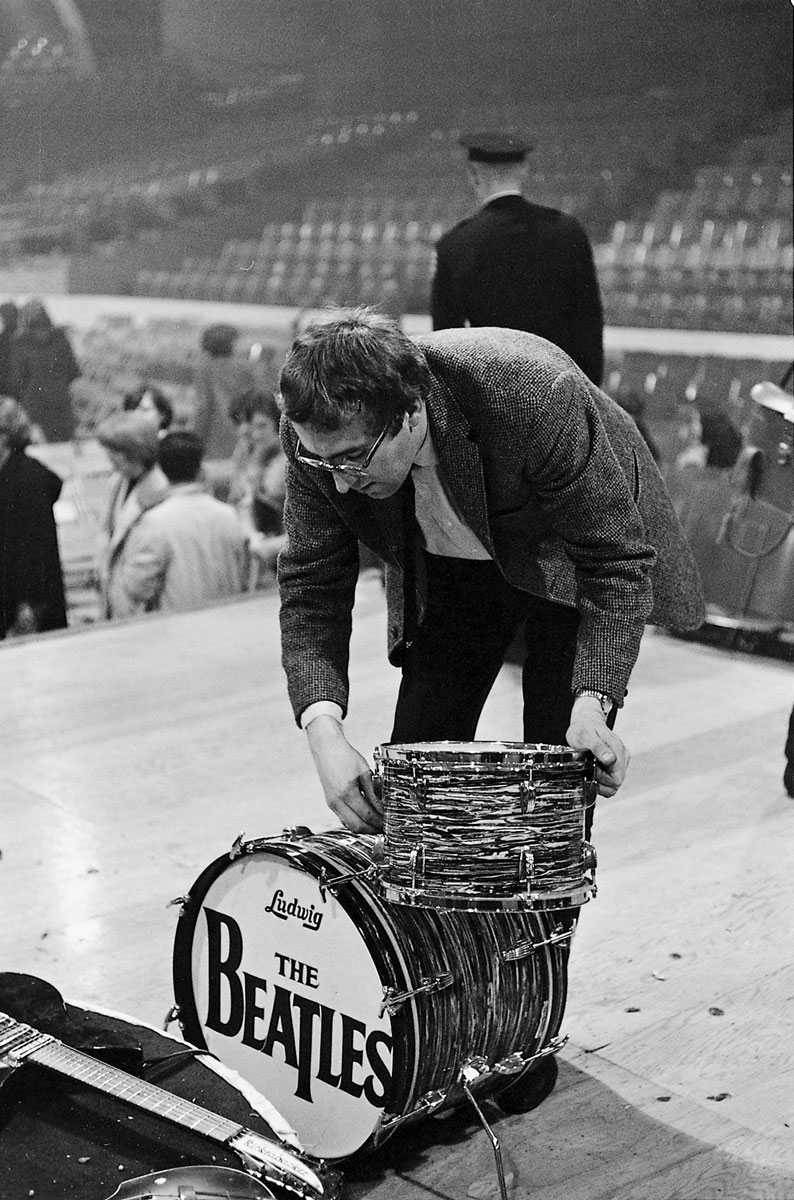
She doesn't hold back, eager to display her extraordinary agility and precision; her victory is not even close. Instead of being amazed or proud of his wife, Mizu's husband declares her to be monstrous. Relevant to the story is the fact that she defeats him while wearing a kimono, dressed like a respectable woman of the Edo era. Before this, and in the duel's aftermath, Mizu moves through the world as a man, is challenged as a man and builds her legend under the assumption that she’s male. Her strength and skill aren’t questioned, and neither is the honor of those facing her.


Want a daily wrap-up of all the news and commentary Salon has to offer? Subscribe to our morning newsletter, Crash Course.


But the lesson she learns in this lovers' match, written by series co-creator Amber Noizumi, is a transparent window into a way of thinking that delineates who gets to be physically capable and heroic, and more than this, who can be exceptional.

Noizumi’s husband Michael Green wrote for NBC's “Heroes” and was a showrunner on the first season of “American Gods” (i.e. the watchable one), two credits proving his experience with genre gatekeepers dimming the blaze of certain characters. Joining Noizumi in refracting that longstanding tendency into a hero that learns from the world’s sexist wounding to become more formidable, makes the show a masterful example of a mythical heroine whose ferocity defies minimizing or dismissal.

No excuses or assumptions are attached to her victories, and her status as her time’s best duelist is mentioned without categorization. She is accepted as the best in a time when nearly every known person in her field is a man. Audiences embrace this story because it acknowledges that if she presented as a woman, the world would treat her differently. Evidence of that fact abounds on TV and in theaters, doesn’t it?  

"The Marvels" is now playing theaters. "Blue Eye Samurai" streams on Netflix.


Comedian Tiffany Haddish faces second DUI after falling asleep at the wheel post Thanksgiving show

Comedian Tiffany Haddish — best known for her roles in "Haunted Mansion," "Girls Trip," as well as a number of stand-up specials — is facing another DUI charge after police found her passed out behind the wheel early Friday morning in Beverly Hills, where she'd performed at Laugh Factory Hollywood's 43rd Thanksgiving Feast the previous night. Just last year, she was arrested in Atlanta for a very similar incident and is due in court on December 4. Police say she is expected to appear in court in about 30 days for this most recent incident, according to Los Angeles Times.

According to CNN, police received a call at 5:45 A.M. PST on Friday informing them that there was someone slumped over the wheel of an idling car in the middle of Beverly Drive. After arriving at the scene, they discovered Haddish and took her into custody, releasing her shortly after when bond was posted. The comedian has yet to speak out about the dangerous slip-up, but footage from her arrest shows her being led in handcuffs by the arriving officers looking depressed, as one would imagine. 


A neuroscientist explains how climate change is altering animal brains and behavior

Human-driven climate change is increasingly shaping the Earth’s living environments. Rising temperatures, rapid shifts in rainfall and seasonality, and ocean acidification are presenting altered environments to many animal species. How do animals adjust to these new, often extreme, conditions?

Animal nervous systems play a central role in both enabling and limiting how they respond to changing climates. Two of my main research interests as a biologist and neuroscientist involve understanding how animals accommodate temperature extremes and identifying the forces that shape the structure and function of animal nervous systems, especially brains. The intersection of these interests led me to explore the effects of climate on nervous systems and how animals will likely respond to rapidly shifting environments.

All major functions of the nervous system – sense detection, mental processing and behavior direction – are critical. They allow animals to navigate their environments in ways that enable their survival and reproduction. Climate change will likely affect these functions, often for the worse.

Shifting sensory environments

Changing temperatures shift the energy balance of ecosystems – from plants that produce energy from sunlight to the animals that consume plants and other animals – subsequently altering the sensory worlds that animals experience. It is likely that climate change will challenge all of their senses, from sight and taste to smell and touch.

Animals like mammals perceive temperature in part with special receptor proteins in their nervous systems that respond to heat and cold, discriminating between moderate and extreme temperatures. These receptor proteins help animals seek appropriate habitats and may play a critical role in how animals respond to changing temperatures.

Climate change disrupts the environmental cues animals rely on to solve problems like selecting a habitat, finding food and choosing mates. Some animals, such as mosquitoes that transmit parasites and pathogens, rely on temperature gradients to orient themselves to their environment. Temperature shifts are altering where and when mosquitoes search for hosts, leading to changes in disease transmission.

Climate change is pushing more and more mosquitoes to take humans as their preferred hosts.

How climate change affects the chemical signals animals use to communicate with each other or harm competitors can be especially complex because chemical compounds are highly sensitive to temperature.

Formerly reliable sources of information like seasonal changes in daylight can lose its utility as they become uncoupled. This could cause a breakdown in the link between day length and plant flowering and fruiting, and interruptions to animal behavior like hibernation and migration when day length no longer predicts resource availability.

Changing brains and cognition

Rising temperatures may disrupt how animal brains develop and function, with potentially negative effects on their ability to effectively adapt to their new environments.

Researchers have documented how temperature extremes can alter individual neurons at the genetic and structural levels, as well as how the brain is organized as a whole.

In marine environments, researchers have found that climate-induced changes of water chemistry like ocean acidification can affect animals’ general cognitive performance and sensory abilities, such as odor tracking in reef fish and sharks.

Behavior disruptions

Animals may respond to climate adversity by shifting locations, from changing the microhabitats they use to altering their geographic ranges.

Activity can also shift to different periods of the day or to new seasons. These behavioral responses can have major implications for the environmental stimuli animals will be exposed to.

For example, fish in warming seas have shifted to cooler, deeper waters that have dramatically different light intensity and color range than their visual systems are used to. Furthermore, because not all species will shift their behaviors in the same way, species that do move to a new habitat, time of day or season will confront new ones, including food plants and prey animals, competitors and predators, and pathogens.

Behavioral shifts driven by climate change will restructure ecosystems worldwide, with complex and unpredictable outcomes.

Plasticity and evolution

Animal brains are remarkably flexible, developed to match individual environmental experience. They’re even substantially capable of changing in adulthood.

But studies comparing species have seen strong environmental effects on brain evolution. Animal nervous systems evolve to match the sensory environments of each species’ activity space. These patterns suggest that new climate regimes will eventually shape nervous systems by forcing them to evolve.

When genetics have strong effects on brain development, nervous systems that are finely adapted to the local environment may lose their adaptive edge with climate change. This may pave the way for new adaptive solutions. As the range and significance of sensory stimuli and seasonal cues shift, natural selection will favor those with new sensory or cognitive abilities.

Some parts of the nervous system are constrained by genetic adaptations while others are more plastic and responsive to environmental conditions. A greater understanding of how animal nervous systems adapt to rapidly changing environments will help predict how all species will be affected by climate change.The Conversation

Sean O'Donnell, Professor of Biodiversity, Earth and Environmental Science and Biology, Drexel University

This article is republished from The Conversation under a Creative Commons license. Read the original article.

“We are absolutely horrified”: Jewish activists demanding Gaza ceasefire face personal cost

In the month since Israel began its bombardment and ground invasion of Gaza, thousands of Jewish Americans have taken to the streets in droves to protest in support of Palestinians.

Last week, 40 rabbis with Rabbis for Ceasefire, alongside hundreds of congregants and a circle of clergy from other religions, gathered before the U.S. Capitol to pray for a ceasefire in Gaza to abate the rising Palestinian death toll, the release of the around 240 hostages seized by Hamas during the deadly Oct. 7 attack that killed 1,200 Israeli civilians, and a de-escalation of the decadeslong conflict. Over 11,000 Palestinians have been killed, including over 4,600 Palestinian children, since Israel launched its retaliatory attacks in Gaza, according to the Hamas-run Gaza Health Ministry.

"The images of these actions are going viral around the world because it's so meaningful to people to see Jews speaking out against the violence of the Israeli state."

At the same time, the demonstrators extended their grief in mourning to the Israeli and Palestinian families who have lost loved ones in the violence, many of whom their group members are just a few degrees removed from. Their goal was to say, "we can mourn every one of these deaths and fight to save life now," Rabbi Miriam Grossman, one of the participants, told Salon. 

"I see so many people coming and saying they're doing this, not in spite of their Judaism or Jewish heritage, but because of their Judaism and because of their heritage. That they were taught — thank God — they were taught in a Jewish education that every life is sacred," Grossman said.

Progressive Jewish activists like Grossman protesting to preserve Palestinian life — and rejecting the notion that Israel is carrying out its attacks on their behalf — form an increasingly vocal, if not growing, group in the calls for an end to the crisis in Gaza. But as their rallying cries of "ceasefire now" ring out, they incur a personal cost as they agitate a greater divide in sentiments toward the war throughout Jewish American communities.

Jewish Voice for Peace, which describes itself as the world's largest anti-Zionist organization, has conducted over 65 actions from organizing tens of thousands of calls to elected officials to occupying federal and landmark buildings — all to demand a ceasefire in the territory, according to JVP communication director Sonya Meyerson-Knox.

Hundreds of protestors with the group and IfNotNow, a progressive Jewish American organization that frequently collaborates with JVP, convened in the rotunda of the Cannon House Office Building on Capitol Hill on Oct. 18 in black, "Not in our name" t-shirts as an estimated 10,000 rallied outside on the National Mall. The demonstration became one of the largest Jewish-led pro-Palestine protests in the immediate aftermath of Oct. 7.

The Anti-Defamation League, which was founded in 1913 to combat antisemitism and bigotry, swiftly condemned the mid-October march and sit-in online, calling into question the activists' morals and accusing them of promoting antisemitism.

"Although they claim to do so, these far-left radical organizations do not represent the overwhelming majority Jewish community," Meredith R. Weisel, the ADL D.C. Regional Director said in a statement on X/Twitter. "Rather these groups are anti-Zionists that challenge Israel's very right to exist. Let's be very clear — anti-Zionism is antisemitism."

Since then, hundreds of activists with JVP and IfNotNow have led a sit-in outside the Statue of Liberty, packed Grand Central Station in protest in New York City, occupied the Ogilvie Transportation Center in Chicago and taken over the Ronald V. Dellums Federal Building in Oakland, California, among other actions, to amplify their demands for a ceasefire. Their calls, though not inherently antisemitic by virtue of being anti-Zionist, are at odds with the opinions of many Jewish communities, according to Tyler Gregory, the CEO of the Jewish Community Relations Council of the Bay Area.

"For us, the word ceasefire is not a peaceful term. It says we don't care about the lives at stake on the Jewish side," Gregory told Salon. "That's what we're trying to communicate to our elected officials and to progressive communities that are worried about the humanitarian issues there, which are real."

While many Jews are "distraught" over the humanitarian concerns Israel's bombardment of Gaza raises, Gregory believes that many American Jewish communities don't and won't see a place for a ceasefire in the ongoing crisis until hostages are released and the threat of Hamas against both Israeli and Palestinian lives in the territory is eliminated.

A poll from the Jewish Electoral Institute released last week found that a sizable majority of Jewish voters, who trend liberal, rejected calls for a ceasefire with 63 percent expressing support for the decision to veto a United Nations Security Council resolution calling for a permanent end to the violence.

Seventy-four percent of respondents also approve of President Joe Biden's handling of Israel's war on Hamas as he stands staunchly behind the Israeli government. Specifically, 80 percent expressed support for his request for $14.4 billion in military aid to be sent to Israel and 68 percent supported U.S. calls for humanitarian pauses, a measure Israel's right-wing Prime Minister Benjamin Netanyahu agreed to earlier this month.

Ninety-three percent of Jewish voters also expressed concern about the rise of antisemitism in the U.S. in the aftermath of Hamas' attack, a tally that reflects a recent ADL report that saw a 316 percent increase in the number of documented antisemitic incidents between the one-month period between Oct. 7 and Nov. 7, 2023 and the same period in 2022. The ADL also included at least 200 of the 653 anti-Israel rallies held in the U.S. since Oct. 7, where it claimed there was explicit or strong implicit support for Hamas and violence against Israeli Jews, in its count of antisemitic harassment incidents.  

The organization has further criticized JVP for its subsequent protests, accusing the group, alongside IfNotNow and others, of perpetuating "classic antisemitic themes" in their demonstrations. Progressive Jewish activists have also garnered increasingly harsh rebukes from community leaders and members with some on the far-right even declaring that their actions in support of Palestine strip them of their Jewish identity

Those charges the organizations vehemently rebuke, Meyerson-Knox told Salon.

"We are absolutely horrified that at a time when all American Jews and Jews around the world should be coming together both in grief and mourning — but also to ensure that we are engaging in practices of solidarity with the other communities who are also facing threats from white nationalism … we are being told that we are not welcomed by some of the largest American Jewish organizations," she said, adding that antisemitism has no place in their organizations' movements and protests.

When non-member protesters do spew "absolutely unacceptable" antisemitic rhetoric during demonstrations, it's often Palestinian students from Students for Justice in Palestine, a national pro-Palestine student group, and others who immediately act to remove the offender from the protest, Meyerson-Knox said. Those activists also pause the protest's schedule to have a conversation about the harm of antisemitism and reestablish their commitment to combatting it, she added, noting that the organization upholds that Israeli lives and safety are "absolutely intertwined" with that of Palestinians.

We need your help to stay independent

IfNotNow co-founder Simone Zimmerman told Salon that their groups' demonstrations have largely given rise to other similar actions in support of a ceasefire and have encouraged more American Jews to mobilize for Palestine.  

"It's absolutely unacceptable that people target Jewish communities when they're angry at the State of Israel," Zimmerman told Salon. "That's why I see these Jewish protests for a ceasefire as an important part of fighting antisemitism because you're now seeing thousands of us out there challenging that misconception that's out there." 

Almost every act of civil disobedience the groups have carried out has also seen hundreds of participants arrested. Just over 300 were detained after the Grand Central Terminal protest while JVP estimated 500 were detained after the Cannon House demonstration and rally. An action outside the Democratic National Committee in Washington, D.C. last week even turned violent as police clashed with protestors, The Washington Post reported

"People are dying in Gaza at this very moment and we're just horrified by every image that we're seeing coming out," Zimmerman told Salon. "It feels like the least we can do to keep disrupting business as usual until the bombs stop falling." 

Like Americans overall, the attitudes among Jewish voters toward Biden's handling of the crisis in Gaza is split generationally: Only 45 percent of respondents age 18 to 35 in the Jewish Electorate Institute's survey said they support the veto of the UN ceasefire resolution compared to the around 70 percent of those aged 36 and older who do. More Jewish voters 18 to 35 also supported the call for humanitarian pauses at 79 percent compared to 62 percent and 64 percent of respondents aged 36 to 64 and over 65 who did, respectively.

Those generational differences are most felt on college campuses, Meyerson-Knox told Salon, as anti-Zionist Jewish students alongside others who are "questioning" and "terrified" by Israel's actions have expressed they "do not feel welcome" in longstanding Jewish campus organizations like Hillel


Want a daily wrap-up of all the news and commentary Salon has to offer? Subscribe to our morning newsletter, Crash Course.


Still, many progressive Jews take the apparent bolstered interest in ending the violence among young Jewish Americans as a symbol of hope in the future of how American Jews define themselves in relation to Israel and their institutions. JVP has seen a rise in the creation of new chapters across the country since the bombardment began and the expansion of havurot — informal Jewish religious gatherings outside of a synagogue — as more people upset with Israel's response search for a way to embody their Jewish identity outside of Zionism, Meyerson-Knox said.

Seeing the breadth of demonstrations calling for a ceasefire and advocating for Palestinians seems to have also helped shift Americans' overall sentiment toward the war.

A Reuters/Ipsos poll from last week found that a majority of Americans believe Israel should call a ceasefire in Gaza with 68 percent of respondents indicating they agreed with a statement that "Israel should call a ceasefire and try to negotiate." The survey also saw a dip in support for Israel among both Democrats and Republicans with three-quarters of Democrats and half of Republican respondents supporting the idea of a ceasefire. 

The number of Americans who believe the government should support Israel when asked about what role the country should have in the crisis also dropped to 32 percent from 41 percent who shared that sentiment last month. That drop came alongside a 12 percent rise in the number of respondents who said the U.S. should be a neutral mediator in the war between the two polls.

The attitude toward the crisis has also appeared to shift among federal officials. Last week, twenty-four Democratic representatives signed a letter urging President Biden to push for a ceasefire to end the "grave violations of children's rights" in Gaza, The Guardian reported

While the letter, an initiative led by Reps. Alexandria Ocasio-Cortez of N.Y., Mark Pocan of Wisconsin and Betty McCollum of Minnesota, included signatures from the most vocal advocates for a ceasefire in the House —  including Squad members Reps. Ilhan Omar, Minn., Ayanna Pressley, Mass. and Rashida Tlaiba, Mich. — it also garnered support from Reps. Raúl Grijalva of Arizona, and Mary Gay Scanlon of Pennsylvania, who have neither previously called for a ceasefire or signed on to a recent resolution demanding one in the House.

Last Thursday, Rep. Becca Balint, D-Vt., also became the first Jewish member of Congress to call for a ceasefire, announcing her push in an op-ed for Vermont news site VT Digger. Two other Jewish members of Congress — Reps. Jamie Raskin, D-Md. and Sara Jacobs, D-Calif. — echoed that call in statements shared on X over the weekend. 

"For me, the thing that is most inspiring is the cacophony of it — that you see more and more people are coming out, going to these actions for the first time. People are finding community there, people are finding their voices there," Zimmerman said of the protests and their impact. "And the images of these actions are going viral around the world because it's so meaningful to people to see Jews speaking out against the violence of the Israeli state."

Will climate change make our planet a desert? Why “uninhabitable” may be the wrong climate framework

As fall weather bleeds into winter, it can be hard to remember that humanity just experienced its hottest summer in recorded history. We now hear news of billion dollar climate disasters on a regular basis, whether it's heatwaves or flash floods or wildfires. Of course, all these things happened before the Industrial Revolution, but the amount of heat we've added to the planet has supercharged these natural events, making them more destructive and more common.

And things are just getting started. As humans continue to emit greenhouse gases from fossil fuels into the atmosphere, extreme weather events like heatwaves, floods and tropical storms will become increasingly common, according to climate models that we are sadly proving right.

But does that mean the entire Earth will literally become uninhabitable? Perhaps not, according to scientists who spoke with Salon, but at the very least, large sections of the planet will undergo radical, life-altering changes thanks to climate change. Indeed, we are already seeing the beginning of a future where highly populated regions are rendered — if not literally uninhabitable — then at the very least far more challenging to live in.

"Areas that are already experiencing significant heat will likely become uninhabitable but these locations will spread further north, such as into southern Europe and southern U.S. states," Julienne C. Stroeve, professor of polar observation and modelling at the University of Colorado Boulder, told Salon by email. She described a talk during the World Climate Research Programme meeting, "where scientists are looking at what a heat wave would have been in a 1° C [about 1.8° F] colder or say a 4° C [about 7.2° F] warmer world. And the example from Germany showed the heat wave recently experienced would have risen from 40° C [104° F] to 47° C [117° F], which would lead to people likely dying."

Jonathan R. Buzan, a postdoctoral climate researcher at the University of Bern, Switzerland, elaborated on the implications of rising heat, explaining that it is not easy to determine precisely how different regions will be impacted. Some areas will be more affected than others but we can begin to understand how using a metric called "wet bulb temperature," which is temperature measured by a wet thermometer in the shade as water evaporates off it. This is a better way of measuring heat stress than a regular thermostat. In some places not as used to extreme temperatures, wet bulb conditions can quickly become lethal.

"Above 40°C (104°F), dry heat impacts humans significantly, but below 40°C, high wet bulb temperatures can dominate," Buzan explained, emphasizing that this makes it hard to predict where will become uninhabitable. "The expected exposure to moist heat (high wet bulb temperatures) is supposed to increase exponentially relative to dry heat."

"These are very high cost adaptations. Is it just less expensive to abandon inhospitable environments? In many cases, probably yes."

As a result, Buzan said, areas that will be harder to live in due to heat include "monsoonal regions (such as India/Pakistan/South East Asia) [that] have the highest combinations of moist and dry heat, and are likely to become physically straining first."

Bruce H. Raup from the National Snow and Ice Data Center at the University of Colorado warned about another factor that heavily bears on a region's inhabitability during climate change, namely "that once a place dries significantly (soil moisture drops and surface water evaporates), it can get a lot hotter quickly. That's because the energy that was going into evaporating water now goes into raising the temperature of the surface and near-surface air."

As all of these heat-related weather events build up one on top of the other, humans will struggle to survive in ways that are difficult to anticipate. Buzan drew attention to a recent study from the Journal of Thermal Biology which shows a growing epidemic of Chronic Kidney Disease in low latitude countries potentially caused by increased heat, as well as a study from the Annals of Medicine and Surgery which found an increase in disease outbreaks in flood-ravaged Pakistan.

"What I am wishing to highlight is that there are many unknown consequences of climate change in association with heat exposure; both short duration from heatwaves, but also long term exposure from seasonal, and with enough climate change, yearly exposure," Buzan explained to Salon.


Want more health and science stories in your inbox? Subscribe to Salon's weekly newsletter Lab Notes.


"A strictly climate determinism perspective is limiting and distorts reality."

Heat waves aren't the only factor making large regions of Earth harder to survive in. As Buzan also observed, "island nations are the first to be impacted by sea level rise. Agreements to relocate populations are already in effect. There is work towards development island rising to offset the effects of sea level change. But this isn’t to say that coastal areas are not impacted. Miami spends enormous amounts of money on pumping water out of the city due to sea level rise."

According to Walt Meier, a Senior Research Scientist at the CIRES/University of Colorado National Snow and Ice Data Center, sea level rise (SLR) will not be uniform around the world. There are global averages given in projections, but they can vary regionally "depending on local sea level and land subsidence or uplift."

Meier added that he would prefer the term "less inhabitable" rather than "uninhabitable," since humans could adapt to some of the changes they experience. Yet the questions remains of whether it is worth it to, for example, build levees and raise coastal elevation for areas that experience regular flooding due to sea level rise.

"These are very high cost adaptations," Meier wrote to Salon. "Is it just less expensive to abandon inhospitable environments? In many cases, probably yes."

Climate change will also pound regions of the Earth with intensified storms. Raup shared an analogy that "if you raised the floor of a basketball court by 4 inches, you'd expect more slam dunks. You expected some before, but now you expect more because the hoop is within easier reach of more players. Similarly, raising the average temperature of the atmosphere and the surface waters in the ocean provides a boost of energy to weather systems, and allows more water vapor to be in the atmosphere."

"The connection to extreme rain and disease, however, should not be overlooked."

While Buzan said it is "extremely difficult" to anticipate which regions will become uninhabitable due to intensified storms, he observed that "hurricanes are likely the type of storms that will cause consistent problems. However, as we’ve seen with extreme rainfall recently in Pakistan or in Germany, one can have extreme rainfall that causes widespread damage, but that does not mean that it will happen again or frequently."

He added, "The connection to extreme rain and disease, however, should not be overlooked. Water that is not cleared efficiently can quickly become a breeding ground for disease and parasites."

While these sobering developments could trigger climate despair, the experts who commented for this article insisted that "uninhabitability" is a potentially damaging framework through which to view the question of climate change. Instead of "uninhabitable," it may instead be useful to think of the world as being "harder to inhabit."

"A strictly climate determinism perspective is limiting and distorts reality," Matthew Huber, professor at the Department of Earth, Atmospheric and Planetary Sciences at Purdue University, wrote to Salon. "From the perspective of severe weather/climate or drought, Northern Canada and Las Vegas are uninhabitable. Most of the Netherlands is below sea level, so it is uninhabitable by simple sea level metrics. But people can build the necessary infrastructure to make a region inhabitable."

We need your help to stay independent

According to Huber, the more important question is, "Do the regions that are negatively impacted by climate change have the resources (money, technology, institutions, culture, political will) necessary to keep regions habitable and will they make the decision to do so?"

While he acknowledged that in some cases a place like an island nation may literally become uninhabitable, Huber said use of the term is generally harmful because it can lead to writing off large parts of the globe.

"Once one has labelled a region as such, it leads to a cognitive switch in which many people will start blaming the people who live there for living in a region that 'everyone knows' is uninhabitable," Huber said. "This becomes a blame-the-victim situation which simultaneously erases the responsibility of those who can afford to provide the necessary resources to maintain habitability and agency of those who would attempt it."

CORRECTION: This story has been updated to include more accurate temperature conversions to Fahrenheit.

We don’t have to keep doing this, Democrats

After another blockbuster election night for Democrats, Chris Hayes tweeted, “The political experience of the Biden era for Democrats is: extended periods of intense anxiety about terrible polling, occasionally punctuated by strangely positive election nights. And then the cycle repeats.”

I’m here to let you in on a little secret – we don’t have to keep doing this.

If you want to put money on this election, smart money is on Joe Biden winning again in 2024. How do I know? I watch Republicans all day, I don’t have the mysterious presidential election cycle amnesia half of Washington has caught, and I trust election results over the poll du jour.

In 2010, I co-founded the opposition research hub American Bridge 21st Century. Our mission remains the same — to track Republicans and hold them accountable.

For thirteen years, I’ve gotten dozens of daily reports from our team monitoring GOP candidates across the country. Here’s what’s clear — Donald Trump cannibalized the Republican Party. A decade ago if you told me my inbox would be filled with mainstream Republicans defending insurrectionists, calling to ban Bud Light, and attacking our military, I would have said: Lay off the hallucinogens. 

If you told me the GOP Speaker of the House monitors his own son's porn consumption, I’m not sure I would have continued in this line of work. 

But here we are.

We need your help to stay independent

Today, MAGA rules the day in Congress and up and down the Republican ballot. Voters outside the GOP primary ecosystem, especially women, have rejected these Republicans and their extreme abortion bans right where it counts: the ballot box.

Don’t believe me? Take a look at the results we have seen since the midterms. Voters in Ohio overwhelmingly supported two ballot measures in favor of abortion and marijuana rights — not exactly Republicans' favorite positions.

Kentucky Democratic Governor Andy Beshear cruised to re-election. In what Fox News’ Brian Kilmeade called an “epic failure” for GOP Governor Glenn Youngkin, Virginia Democrats held their Senate and flipped the House of Delegates.

I’ll keep going. Democrats defeated Republican anti-abortion extremist Carolyn Carluccio, electing a liberal to serve on Pennsylvania’s Supreme Court. And in April, Democrats flipped Wisconsin's Supreme Court by 11 points.

Watching the news and hearing pundits breathlessly regurgitate presidential polls, like the recent ones from the New York Times/Siena and CNN, you'd think Democrats were doomed — not sweeping elections. I've been around this town long enough to remember this panicked framing always happens, like clockwork, and it’s always premature.

Here’s a quick look at some headlines at this point in the 2012 cycle: Poll: Obama hits all-time low, Obama trails Mitt Romney in new Quinnipiac poll, and Gas Prices Slam Mobility — and Obama's Popularity Too.

Sound familiar?


Want a daily wrap-up of all the news and commentary Salon has to offer? Subscribe to our morning newsletter, Crash Course.


I know what you’re thinking — there’s a big difference between President Obama in 2011 and President Biden now. You’re right. Biden’s economy is stronger, we have a lengthy list of legislative and policy-driven wins, and his likely opponent is a man facing 91 felony counts who’s been found liable for sexual abuse and whose biggest accomplishment was cutting taxes for the wealthy and big corporations — putting Social Security and Medicare at risk. 

Another big difference between first-term Obama and first-term Biden? Republicans overturned Roe v. Wade. For the first time in nearly 50 years, abortion is no longer a constitutional right.

In red states and blue states, women voters have a unified message for Trump and his band of merry extremists: We’re not having it. Seven states have voted to protect abortion access since the Supreme Court struck down Roe v. Wade.. Voters, especially women voters, are fed up and don’t want to support Republicans. The results at the ballot box prove that. 

Trump may be able to shoot someone on 5th Avenue and walk, but as the face of the anti-choice movement, he doesn't stand a chance of stopping this force. He nominated the justices who tore down Roe. He promised to punish people who had abortions. He’s been an anti-abortion extremist from the start.

Protecting democracy and reproductive freedom are the key issues fueling the electoral juggernaut that is women.

I propose Democrats create a new political experience for the next year – ignore these polls, talk to voters about the issues that matter to them (abortion rights, freedom, democracy), get folks to the polls, then repeat on November 5, 2024.


Derek Chauvin, ex-cop convicted of George Floyd’s killing stabbed in prison: report

An inmate at a federal prison in Arizona Friday stabbed and seriously injured Derek Chauvin, the former Minneapolis police officer convicted in 2021 of murdering George Floyd in 2020.

As first reported by the Associated Press, who spoke with a person familiar with the matter, the stabbing occurred at the Federal Correctional Institution in Tucson, described as “a medium-security prison that has been plagued by security lapses and staffing shortages.” The AP’s source was not allowed to publicly comment and the Bureau of Prisons confirmed the incident but would not name the inmate. They did mention performing “life-saving measures” on the incarcerated person, who was “taken to a hospital for further treatment and evaluation.”

In 2020, Chauvin knelt on George Floyd’s neck for about nine and a half minutes while he was handcuffed, face down on the ground and crying out that he couldn’t breathe. Footage of the brutal murder sparked a summer of protests against police brutality and racism. Conspiracy theories about Chauvin and Floyd have surfaced, including a QAnon conspiracy that Derek Chauvin was replaced by an imposter at sentencing and that Floyd actually overdosed on fentanyl, and didn’t suffocate under the knee of a police officer. There is no evidence to support either theory.

Chauvin was transferred to the Arizona prison in August 2022, according to the AP, to "simultaneously serve a 21-year federal sentence for violating Floyd’s civil rights and a 22½-year state sentence for second-degree murder."

Spike in illnesses isn’t a new pathogen, China reassures WHO

An outbreak of respiratory illnesses in China has sparked alarm, but the sudden rise in sickness is not related to a new virus, according to Chinese health authorities. Instead, the rash of illnesses is being driven by familiar pathogens, including flu, RSV, Mycoplasma pneumoniae (which causes pneumonia) and, of course, COVID-19. Many of the cases involve children and are currently overwhelming hospitals.

On Nov. 22, the World Health Organization asked China for data on the diseases, which it received Thursday, according to Reuters. So far, the data suggests that there’s nothing out of the ordinary, but both the WHO and China have been criticized in the past for not being entirely transparent about the COVID-19 outbreak nearly four years ago. According to Newsweek, the U.S. ambassador to Japan, Rahm Emanuel, said that the outbreak raises “serious questions.” 

“It's time to abandon COVID deception and delays as transparent and timely information saves lives," Emanuel said. Bruce Thompson, head of the Melbourne School of Health Sciences at the University of Melbourne, told Reuters "At this stage, there is nothing to suggest that it may be a new variant of COVID." He added, "One thing to note is that we can be reassured that the surveillance processes are working, which is a very good thing."

“He is the Beatles’ first historian”: Why road manager Mal Evans meant so much to the Fab Four

Just when you think you know everything about the Beatles — along comes Kenneth Womack’s “Living the Beatles Legend: The Untold Story of Mal Evans.” The book is a meticulous accounting of the life of the Fab Four’s friend, roadie and personal assistant, who died in 1976 amid tragic circumstances. 

Written with the support of Evans’ family, the book features original interviews and information culled from Evans’ diaries, manuscripts and memorabilia. (Fortuitously, Evans kept meticulous diaries as he worked with the Beatles, meaning “Living the Beatles Legend” offers a new and intriguing perspective on a band that’s been thoroughly documented.) These archives are also due to be published in a second book. 

“The other half — I'm hoping it'll be sort of a DIY experience for folks, in the sense that they'll have access to all of the diaries for themselves, all of the manuscripts annotated,” Womack says. “And I look forward to seeing, with all of this raft of material and photographs, what they can come up with — what sort of Mal Evans stories they'll find when they go down the rabbit hole.”

Womack spoke with Salon via Zoom on a recent afternoon to delve into how “Living the Beatles Legend” came together.

How much did you know about Mal going into “Living the Beatles Legend” — and how did your perspective change upon writing the book?

I knew a lot about him simply because I've studied the band for so long. I knew the bare bones outline, certainly. But I didn't know as much as I came to know by working with the materials. 

"He's the reason they could stay up all night working on another great song."

When [Mal’s son] Gary Evans asked me to do the project, I knew he wanted a biography of his father. And within minutes of talking to him, I knew I would write it, because Gary Evans is very Mal Evans-like. You just love him. He's cuddly. He's grown into a great friend, and I would do anything for him. 

But we made a pact that we’d tell the story straight, which he was fine with, because he's had 50-plus years to understand his father and his complicated legacy.

I wondered that, because sometimes working with relatives of people who are deceased can be challenging because they have a specific view of what it should be. It’s nice to hear that he was like, “We have to write about what's there. We have to do the truth.” That’s good.

It is. And it helped that at one point, his dad was speaking to Ringo [Starr], and Ringo said, “Well, if you're gonna write anything, tell the truth.” And Mal adhered to that dictum. And so we kind of had Mal’s words in a cloud above us the whole time.

Even during even my first Zoom conversation with [Gary], which would have been at the beginning of our shared COVID lockdown, Gary said, “You know, you're gonna find out that a lot of the things in Wikipedia aren't accurate. And you've just got to tell the story like it is.”

We need your help to stay independent

That is such a common thing. There's the narrative that's out there — and then the narrative that's actually true. And it is often completely two different things. What was the biggest challenge for you in terms of putting this together?

Well, it was an unusual challenge. Usually, when we're working on subjects related to the Beatles, or any musical fusion that has a few decades on it, finding information is tough. And I knew that I would need to create a Rolodex of folks who were still living. 

When I spoke to Gary during that first call, I said, “So is it true that there is all this stuff?” And Gary said, “Yeah, you want to see it?” [Laughs.] I said, “Well, yeah, I want to see everything. No matter how minor you think it is, I want to see it.” 

Consequently, he regularly does surveys of his late mother's house and his attic, looking to make sure that I have everything. His sister, Julie, does the same thing. Within a few weeks of talking to him that first time, this giant box arrives.

The reason why this has been a challenge is there was so much stuff, where I'm used to not having very much material with which to work. Organizing that material — which Mal did not organize in his day, and certainly it had not been organized in the interim — was a challenge. There were 2,000 photographs, his diaries, notebook entries. He kept voluminous notebooks and his three manuscripts. Even some cassette tapes to play and transcribe. So [there was] lots of lots of material. 

Fortunately, I’m a college professor, so I have four or five grad students and one undergrad working on this project. They've been working on it for a couple of years under the veil of secrecy—and, of course, that made them like the project even more. [Laughs.] 

And that's when I basically hit the turf interview-wise. I've interviewed a few 100 people [for] several 100 hours, including weekly conversations with Gary since late 2020. It's been a strange research challenge in that I have lots of Mal in his voice, but it required corroboration from surviving witnesses.

Mal EvansMal Evans dismantles Ringo Starr's drum kit after the concert in Washington DC. 11th February 1964. (Mirrorpix via Getty Images)
Everyone remembers something a little bit differently. And when you talk about the truth—the truth is somewhere in the middle of all the different stories and deciding how to address and convey that, especially something as important as this story and taking into account Beatles fans who have everything documented. That’s also a challenge, I imagine.

Absolutely. I even made a joke about this to Gary — I said, you know, when I start calling all these folks, they're all gonna start the same way. “Mal was affable. He was lovable.” And after a while, that's not helpful. I know he's lovable and affable. All of those things are true. I just needed more candid observations. It was a matter of trying to get folks who were willing to really share the real story that Mal wasn't perfect — that they did love him, he was cuddly, but he had this side and that side.

And you don't want a book that's just all 100% glowing. When you talk about telling the truth — none of us are perfect. All of us have a different side, depending on who you talk to.

And in different periods in our lives. Mal has several where they're dark. Part of my job was to explain why.


Love the Beatles? Listen to Ken's podcast "Everything Fab Four."


Obviously, there's his chronological life story, but trying to find the stories and threads beyond that—what was the most surprising thing that you discovered upon doing all this research?

You know, I wasn't surprised—and this may have been simply because before I even made some phone calls, I knew the bare bones from Gary, right? 

"He was this de facto maternal figure because he would be there when they were angry, when they were sad and disillusioned."

The first thing I did when I received the materials was I went right to my May 9, 1969, when Allen Klein and the other three Beatles came and accosted Paul [McCartney]. I wanted to know, “How did Mal deal with this kind of situation? And there it was: He just drew a picture of Paul losing his mind. 

So that helped me because it gave me a way of reading Mal as a historian, because I think he is the Beatles’ first historian. He's the one who, packrat-like, kept all of this stuff, because he thought it would be important. 

Working on it chronologically allowed me to start to see where Mal could really tell that he was on a mission. There comes a point in ’67 or ’68 where it's very clear Mal is writing for posterity. He’s even hiding things in the diary entries, inside drawings and other sort of material. 

[He was also] even admitting things that, if you looked at his diary a certain way, would seem meaningless — and instead, when you start to think about the names, and who's there, you start going down a new rabbit hole, and learning more and more about him and how he lived. 

Did the Beatles realize at the time he was doing that and leaving all those breadcrumbs?

Oh, I think so. You know, John Lennon made a joke when he was asked to endorse the book — “I've been waiting to read your diary.” I think he'd been reading them regularly. There are times when you can find handwriting from all four of the Beatles or [road manager] Neil Aspinall in there, where they clearly have grabbed the diary and added something of their own. 

I look forward to book two because folks are going to have a lot of fun with that kind of stuff. They were very well aware of what he was up to. I think they also had so much confidence in Mal that they must have known that whatever story he tells — and I think the biography proves this — is really going to expose him and not them. His love’s too deep; his fanship is too much. 

There are so many stories of musicians that when they become huge stars, they don't know who they can trust. They don't know who has their best interests at heart. And Mal did — and they found him so early. There's something very sweet about that. Reading this book, that really comes through.

Yeah, they were very lucky. And we are, actually, that that Mal was on the case. He made so many things possible that otherwise wouldn't. He's the reason they could stay up all night working on another great song. He could make a meal. He could wake up the owner of an instrument store in the middle of the night and they would bring new equipment or replacement equipment. He just made so much possible.

His oldest surviving sister, Barbara — who, unfortunately, did just die — said to me that she really felt like what Mal did was mother them. He was this de facto maternal figure because he would be there when they were angry, when they were sad and disillusioned. And Mal could take the blows. He knew how to deal with the tremors of their personalities. Everybody needs a Mal in any social production like music or art.

Were there people that you wanted to talk to that you weren't able to catch up with — and/or were there things you couldn't figure out? Either rabbit holes or things that you wanted to find the answer to, but you just couldn't do it?

There are a couple of little mysteries that exist that I couldn't get to the bottom of. So what I would do is provide sometimes a different point of view — you know, “In somebody's view this, while in another's this,” because I couldn't solve them. 

There are a couple of little things I'd love to know more about during the touring years and the dismantling of Apple [Corps] in the early '70s that still elude me. At this point, I can approximate better what the outcomes of some of those little rabbit holes are. But when I didn't know, when I felt like it was important, I would simply show how people have different views of a particular incident.

First off, that gives people more fodder to chew on forever and debate. [Laughs.] But it does show that it's more complicated than you think.

That’s just a fact when it comes to this kind of story. I didn't speak to Mr. McCartney or Mr. Starr. But while I did reach out to their folks, the issue there is I'm not sure they have anything new to say. I know they loved him. Plenty of contemporaneous evidence is on the record from their heyday with Mal. So I really don't have any regrets of folks I couldn't talk to. 

There were a number of folks I spoke to in the nick of time, Ken Mansfield, who died last year. Alan White, Plastic Ono Band drummer and Yes drummer, I got him the week before he died. 

And there were folks from that time whose story was bound not to put them in the best light, but they spoke anyway. I was really proud of the number of folks who, when I called, were willing to put their two cents in and say, “Here's how I saw it.” Even though the ’70s were a wild and wooly time, and folks didn't always look so wonderfully in the silver backcast of four or five decades.

Ringo Starr; Mal EvansEnglish drummer Ringo Starr of The Beatles talks with Beatles assistant and roadie Mal Evans (1935-1976) during a rehearsal at the Royal Albert Hall in London in February 1971. (Evening Standard/Hulton Archive/Getty Images)When the time came to actually write the story and put pen to paper — or fingers to keyboards — did you end up writing it in pieces and sharing it with Mal’s family? Or did you send it all at once?

I wrote it completely chronologically over a matter of several months, and every time I would finish a chapter, it would go to Gary. Not for any approval, just to make sure I got it right as far as his memory goes.

It's remarkable how much he allowed in. He really never asked me to remove a single thing, frankly. Not once. He might have said, “Let's give this more context,” or what have you. But it went right to Gary so he could be proofing along the way. I prefer to fix things while I'm working on the book as opposed to six months later. [Laughs.] When it's harder to find your way into revising a text. I worked with Gary in that way, and my editor.

I'm so happy that the story is finally out there. Beatles fans know who Mal is. But I think a lot of people don't know who he is and don't realize the role he played. You could tell just from reading the foreword how much it means to Gary to that his dad's story is out there.

That's right. And, like I said, Gary has learned to love him over the long distance of time in his own way. And that is meaningful. Mal’s life ends in such a sad way. [Editor’s note: He was shot and killed by Los Angeles police at his home.] And folks have predilections about it, right? It was the cop’s fault. It was this; it was that. I mean, it really was mental health, and Mal was undiagnosed. That’s basically the era of the dinosaurs compared to today in terms of the kind of help you can get when you're in crisis. And Mal certainly was.


Want a daily wrap-up of all the news and commentary Salon has to offer? Subscribe to our morning newsletter, Crash Course.


What else do you want people to know about this book? Are there any preconceived notions they might have that you want them to leave at the door before really digging in?

I hope that they're openminded. You can still love Mal and know the truth about him and the mistakes he made and his flaws. I don't want to paint this with too broad a brush, but it’s kind of the story of all of us who really love something, right? A cultural artifact like The Beatles, you know. Mal had every fan’s ultimate dream: He had perfect access all the time whenever he wanted it. 

I mean, in that sense, it's a cautionary tale. In another sense, it’s the story of how artists produced. Everybody needs a Mal, right? Our favorite writers, whether it's Didion or Bronte, it doesn't matter. Nobody does it alone. Everybody has folks who are on their team, who were sometimes giving more of themselves than they should to make something possible. And Mal certainly did that.

13 Israelis among first hostages released as cease-fire in Israel-Hamas war kicks off

A four-day cease-fire began Friday morning in the ongoing Israel-Hamas war, thanks to an agreement that the nation of Qatar helped broker. The truce not only entails a lull in bombing, but also the release of dozens of hostages.

So far, 24 hostages have been released, according to CNN, which cited the Red Cross and a Qatari foreign ministry spokesperson. That tally includes 13 Israelis, 10 Thai citizens and one individual from the Philippines. Another 26 Israeli hostages are reportedly expected to be freed over the next four days. In return, Israel has promised the release of 150 Palestinian prisoners.

There have been no reports of fighting since the cease-fire kicked off, according to the Associated Press. The war began 49 days ago on Oct. 7, after "several thousand Hamas militants stormed into southern Israel, killing at least 1,200 people, mostly civilians, and taking scores of hostages, including babies, women and older adults, as well as soldiers."

Weeks of strikes in retaliation have killed nearly 15,000 people, according to the ABC News, who cited the Hamas-run Gaza Health Ministry. "As of Nov. 3, 67% of all deaths in Gaza were made up of women and children while thousands more have been injured, according to several U.N. agencies, including the UNRWA," Bill Hutchinson reported.

Health officials in Gaza have said they can no longer accurately count the dead due to the collapse of the local health care system. Thousands of individuals remain missing.

The surprising history of leftovers

If I’m being honest, my favorite part of Thanksgiving is the leftovers. This isn’t a novel declaration, as evidenced by the number of guides out there for making the perfect leftovers sandwich  (for me, that’s toasted white bread stacked high with turkey, cranberry sauce, a thin layer of stuffing and an even thinner sliver of brie) as well as slightly more involved fare: burritos, hashes, turkey noodle soup, casseroles, Hot Browns, empanadas and this new Thanksgiving Leftovers Hot Pocket by J. Kenji López-Alt, which I’m dying to try. 

That said, I understand that once the turkey has been stripped for all it’s worth and there’s no gravy left even in the deep recesses of the refrigerator, the concept of leftovers doesn’t necessarily have the same allure the other 364 days a year. Much like cafeteria food, liver and onions and canned cream of mushroom soup, leftovers have gotten a bad rap. Who wants to pack leftovers when you could pay $22 for a Sweetgreen salad delivery? Who wants to reach the end of a long day at home, walk in the cold to the train, then from the train to your apartment, only to reheat what you ate last night

Me. That would be me. Sign me up. 

Why? Well, my love of leftovers is partially rooted in my deep belief that there are so many things worth eating — beef stew, chili, a good veggie lasagna — that are even better the next day. This is an assertion that’s actually backed up by some science. Foods that are prepared with aromatics, like onions and garlic, tend to become more flavorful as they cool and then are reheated as the various flavor compounds in the dish meld and become more seasoned and, typically, a little less bitter. 

But a big part of my appreciation for leftovers is simply due to the fact that, despite their sometimes stayed reputation, when one assesses the spectrum of food history, leftovers are a relatively new invention. And who doesn’t like a little novelty? 

Since the dawn of time, humans have worked diligently to find ways to preserve the food they obtained and make it stretch. This was done through various methods like sun-drying, smoking, salting, fermentation, curing, pickling and, in regions where it was cold enough, developing some kind of cool storage. This last method was a popular one and led to the creation of ice houses, ice boxes and then, eventually, the refrigerator. 

The first practical and commercially successful refrigerator was invented by Carl von Linde, a German engineer, in 1876, and it had a significant impact on food preservation, storage, and distribution, revolutionizing the way people kept and consumed perishable goods. As refrigerators became more and more common, the way many Americans cooked changed, too. The focus was less on preserving items for the long term and more on how to transform some elements of last night’s dinner into a new, hot meal. In 1890, the term “leftover” was officially coined

We need your help to stay independent

This way of thinking was only further catalyzed by World War I which, according to the National Museum of American History, positioned saving and reusing food as a patriotic duty. A United States Food Administration poster that was created and distributed during the war urged citizens: “Food — Don’t Waste It. Use less wheat and meat. Buy local foods. Serve just enough. Use what is left.” 

The war ended, which brought many Americans a few years of prosperity, but then came the stock market crash of 1929 and the ensuing Depression. 

“It was unthinkable to throw away food during the Great Depression, and refrigerator sales grew thanks to discounted prices offered by manufacturers,” wrote Emma Grahn of the National Museum of American History. “The real bump in refrigerator sales, however, started in 1935, when New Deal loans encouraged Americans to make the switch to electric.”

Fast-forward a few decades, however, and leftovers had lost their luster. The 1963 edition of “The Joy of Cooking,” featured a section dedicated to leftovers that was drastically condensed when compared with the original 1931 edition which author Irma Rombauer said she created “one eye on the family purse.” As food and nutrition historian Helen Veit wrote for The Atlantic in 2015, this new edition opened with a joke: “‘It seems to me,’ the minister said, after his new wife placed a dubious casserole on the table, ‘that I have blessed a good deal of this material before.’”

“The truth was that by the 1960s leftovers were becoming a joke to a lot of people, with a grumbling husband and a mystery casserole playing stock roles,” Veit wrote. “That humor was a direct result of abundance. In the postwar era, a historically anomalous food economy was coming to define American culture, as the cost of food relative to income plummeted and even the poorest Americans were less desperate for calories than they had ever been. Leftovers were coming to seem less like a signal of household abundance and more like a drag. The best way to serve them, another joke went, was to somebody else.”

But Thanksgiving is as good an opportunity as any to reassess any lingering beliefs you might have that leftovers are tedious or gross — especially this Thanksgiving. According to the Census Bureau's Household Pulse Survey, nearly 28 million people reported experiencing food scarcity at the end of October, which is both the highest number of 2023 and the highest number recorded by the survey since December 2020. 

On a holiday that, among other things, is grounded in the idea of abundance, how are you going to use what’s left over?