Spring Sale: Get 1 Year, Save 58%

Trump on trial: The limits of MAGA legal are exposed

There's a lot going on in the world and here at home at the moment so it's not surprising that Donald Trump and his legal problems aren't front and center in our political coverage. Trump himself is very upset by this, lamenting on Truth Social earlier this week that he's forced to appear at the courthouse in New York where his fraud trial is being held (he isn't) and complaining that nobody's paying attention to him, posting, "despite my being here, the talk is all about Biden getting ready to fly to the Middle East…" 

But even though nobody is paying close attention to all of his troubles at the moment, there is quite a bit of news on the Trump legal front and some of it may have some very unpleasant consequences for the former president. The fraud trial is not going particularly well for him with ex-Trump Organization CFO Allen Weisselberg possibly having committed perjury on the stand which could mean his plea deal with the Manhattan District Attorney in the Trump Org case is in danger. Weisselberg went to jail for five months in that case but could easily see more time if that's proven. 

Legal filings by special prosecutor Jack Smith in both the Mar-a-Lago classified documents case and the January 6 case have been flying back and forth and none of them have been particularly helpful to Trump. Judge Tanya Chutkan, who is hearing the January 6 case issued a narrow gag order this week, saying “First Amendment protections yield to the administration of justice and to the protection of witnesses. His presidential candidacy does not give him carte blanche to vilify … public servants who are simply doing their job.” Trump has promised to appeal, no doubt in the hopes of delaying the trial since simply complying with that order would actually be quite easy to do. 

The Mar-a-Lago case has turned out to be trickier than most observers expected after it drew the inexperienced Trump appointee (and Federalist Society guru Leonard Leo protegé) Judge Aileen Cannon. It appears that she will be helping Trump to drag the case out for months by slow-walking her decisions at every turn. But at some point, he knows the law is coming for him in that case and it's a very strong one for the government. He's hanging his hopes on winning the presidency so he can shut the whole thing down on his very first day. 

The big news, however, was Thursday's guilty plea and cooperation agreement by former Trump campaign lawyer Sidney Powell in the Georgia RICO case just one day before she was scheduled to go on trial with co-defendant Kenneth Chesebro, another former Trump lawyer. Powell agreed to plead guilty on six misdemeanor counts relating to the Coffee County election machine tampering charges and to fully cooperate with the government as these cases go forward. 

Powell is the biggest fish to flip in any of these cases so far but it's unclear whether or not she will be solely testifying as a witness in that Coffee County case or if she is expected to tell what she knows about Trump and Giuliani and the rest of his indicted henchmen's activities leading up to the January 6 attempted coup. She certainly should have some stories to tell. And in fact, her involvement in that notorious White House meeting on December 18, 2022 when the discussions of seizing voting machines were brought up could even be related directly to Coffee County —- and Donald Trump was signing off on all kinds of nefarious deeds that night, most of which did not come to fruition, thank God. 

According to reporting by Rolling Stone on Thursday night, the Trump team was very surprised at this news. Powell is the most MAGA of all the lawyers for "team crazy" and she was the truest of believers. One source told the magazine, “[Fulton County district attorney Fani Willis and her team] managed to break the woman who was never supposed to be breakable."

We need your help to stay independent

But perhaps she isn't as deluded as they thought. There have been numerous leaks for months now that Powell was likely to be thrown to the wolves:

Before her plea agreement, some of Trump’s legal and political counselors had been working to cast Powell as a “fall guy” in the election-related cases against him and hoped to shovel the criminal exposure and blame for the failed attempt to overturn the election on to her and others, in the hopes of shielding former President Trump

They should be worried. As one former federal prosecutor told The Daily Beast, “One thing to note is just how favorable this plea deal is for her. She’s been permitted to plead guilty to misdemeanors… to get this good of a deal, she really has to know something." 

Her former co-defendant whose trial was set to begin today, Kenneth Chesebro, was reportedly offered a similar deal but refused. He's had a couple of setbacks as well this week which may make him rethink his strategy. On Wednesday, Judge Scott McAfee, ruled that some of the emails Chesebro wanted to protect as attorney-client privilege are actually admissible under the crime-fraud exception, which means they were used in furtherance of a crime under the crime-fraud exception. And to make matters worse, The NY Times got a look at some of Chesebro's emails and they are doozies. 

He wrote that the cases they were filing alleging fraud had little chance of success and admitted that the “relevant analysis is political.” He said that just getting it on file means that the Supreme Court will have ruled on it by January 6 or will have "appeared to dodge again" which would give Trump the argument that the courts "lacked the courage to fairly and timely consider the complaints, and justifying a political argument on Jan. 6 that none of the electoral votes from the states with regard to which the judicial process has failed should be counted.” Even more damning, he wrote "I think the odds of action before Jan. 6 will become more favorable if the justices start to fear that there will be ‘wild’ chaos on Jan. 6 unless they rule by then, either way." 


Want a daily wrap-up of all the news and commentary Salon has to offer? Subscribe to our morning newsletter, Crash Course.


It's pretty clear that he and his lawyer comrades were not just making legal arguments. They were engaged in plotting a coup which even included attempting to intimidate the US Supreme Court by suggesting that Trump's "will be wild" invitation was going to cause violence. It was clearly all of a piece with what Trump was tweeting and bleating through that whole period. While it appeared that Chesebro was prepared to take the fall for all that — he, too, took a last-minute plea deal on Friday. 

The case against Kenneth Chesebro was all about Donald Trump — even if his own trial hasn't started yet. The NY case is ongoing and it's driving him crazy, mostly because he can't stand having anyone question his net worth. And that's just the beginning. The saga of Trump on trial has begun. 

Trump blindsided by Powell guilty plea — and her “sweetheart deal” is ringing alarm bells: reports

MAGA attorney Sidney Powell’s guilty plea blindsided TrumpWorld on Thursday, raising concerns that she will testify against former President Donald Trump.

Powell, who played a key role in Trump’s post-2020 election legal battles and pushed a bizarre conspiracy theory alleging voting machines flipped votes from Trump to President Joe Biden in a plot involving deceased Venezuelan leader Hugo Chavez and the Chinese government, pleaded guilty in Fulton County to six misdemeanors accusing her of conspiring to intentionally interfere with the performance of election duties. Powell agreed to serve six years of probation, pay a $6,000 fine, write a letter of apology to Georgia residents and testify truthfully against her co-defendants at future trials.

"This caught TrumpWorld by surprise, as it did all of us,” New York Times reporter Maggie Haberman told CNN on Thursday.

"This was one of the best-kept secrets out of that DA's office in some time," she said. "They are trying to figure out what it means.”

Some TrumpWorld insiders have sought to downplay the threat posed by Powell, Haberman said, but there is “concern about the degree to which Powell could offer information, not just about former President Trump, but about Rudy Giuliani.”

“There's nobody in TrumpWorld who is pretending this is a good development,” she added. “They are split on what exactly it means."

Trump and much of his inner circle never thought Powell would ever cooperate with prosecutors, Rolling Stone reported on Thursday.

“Crazy as she was, she really believed what she was pushing,” a lawyer close to Trump told the outlet.

Fulton County District Attorney Fani Willis’ team “managed to break the woman who was never supposed to be breakable,” added another source, who has known Trump and Powell for years.

Some Trump legal and political advisers were looking to cast Powell as a “fall guy” in the election-related cases against him and hoped to shield the former president by pointing to the efforts of others, the outlet reported.

Instead, Thursday’s guilty plea “stunned a number of Trump’s top advisers and attorneys,” who believed Powell was among the least likely to accept a plea deal, according to Rolling Stone.

We need your help to stay independent

Experts told The Daily Beast there was a good reason prosecutors were willing to offer Powell a “sweetheart deal.”

“One thing to note is just how favorable this plea deal is for her. She’s been permitted to plead guilty to misdemeanors… to get this good of a deal, she really has to know something,” former Georgia federal prosecutor Amy Lee Copeland told the outlet.

“The fact that she was in a meeting at the White House, she can testify to what Trump said at that meeting. And we don’t have a whole lot of people who’ve been willing to do that. That’s going to be pretty powerful for the DA,” Copeland added.

“She’s someone who would bring out the absolute wildest in Trump. The things he probably said to her would be jaw dropping. To that extent, it’s red meat for the criminal trial,” agreed former federal prosecutor Kevin J. O’Brien.


Want a daily wrap-up of all the news and commentary Salon has to offer? Subscribe to our morning newsletter, Crash Course.


Trump’s lead attorney in the case, meanwhile, sought to frame the guilty plea as beneficial for his client.

“Assuming truthful testimony in the Fulton County case, it will be favorable to my overall defense strategy,” attorney Steve Sadow told the outlet without elaborating further.

The guilty plea doesn’t just spell trouble for Trump.

Former Trump lawyer “Giuliani is absolutely dead,” O’Brien told the Daily Beast.

“Not that he doesn’t have enough troubles already, but this is the worst blow yet to him… she’s got to be trouble for Trump and double trouble for Giuliani,” he said. “The floodgates are going to start opening in the Georgia case and it really vindicates Willis’ approach to the case. Even if it’s a headache administratively, they’re going to have plenty of cooperating witnesses against the people left standing.”

The 8 biggest bombshells in Britney Spears’ forthcoming memoir, “The Woman in Me”

For years, Britney Spears’ own story has been written by the media. The acclaimed pop diva only recently broke free from a debilitating conservatorship that stripped her of her autonomy and wreaked havoc on both her career and personal life. Now, for the first time ever, Spears is grabbing the pen and taking control of her own narrative in a forthcoming memoir.

Titled “The Woman in Me,” Spears’ latest literary work will tell the “journey (and) strength at the core of one of the greatest performers in pop music history.” In anticipation of the book’s release, People obtained excerpts from it which featured several shocking revelations about Spears’ love life and pivotal pop culture moments.

From her relationship with Justin Timberlake to her heartbreaking 2003 sit-down interview with Diane Sawyer, here are the 8 biggest bombshells from the book thus far:

01
Spears had an abortion while dating Justin Timberlake
Justin Timberlake & Britney SpearsJustin Timberlake & Britney Spears (Jeff Kravitz/FilmMagic/Getty Images)
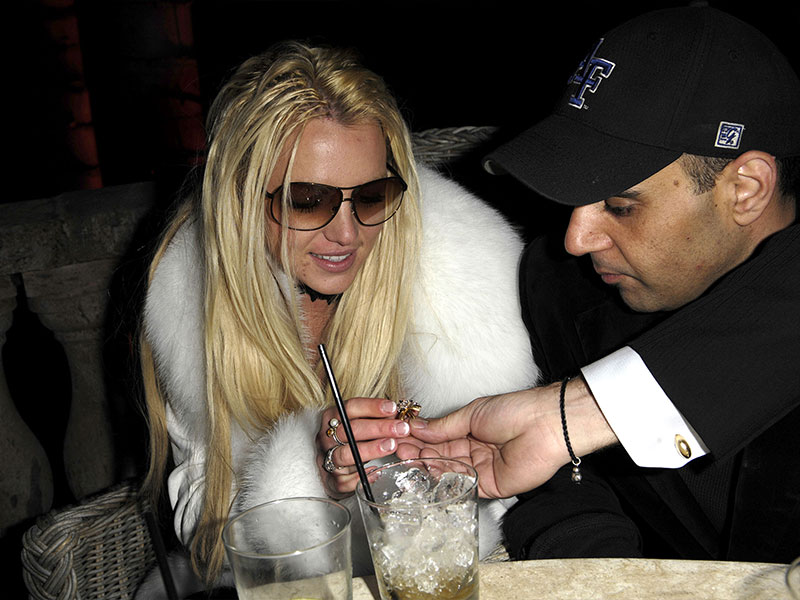
Spears revealed that while she was dating the lead vocalist of NSYNC, she became pregnant with his baby but ultimately had an abortion:


“It was a surprise, but for me, it wasn’t a tragedy. I loved Justin so much. I always expected us to have a family together one day. This would just be much earlier than I’d anticipated,” Spears recounted. “But Justin definitely wasn’t happy about the pregnancy. He said we weren’t ready to have a baby in our lives, that we were way too young.”


Spears continued, saying the abortion she underwent remains “one of the most agonizing things I have ever experienced in my life.” 


“If it had been left up to me alone, I never would have done it,” she wrote elsewhere in her book. “And yet Justin was so sure that he didn’t want to be a father.”


Spears’ abortion claim sparked online chatter and even grabbed the attention of Timberlake himself. In a new report from Entertainment Tonight, an unnamed source said Timberlake “has been focusing on his own family and trying not to concern himself with Britney’s memoir."


“In recent years, Justin has tried to be supportive of Britney from a distance,” the source continued. “They dated so long ago, but he still has respect for her. Justin and Jessica [Timberlake’s wife] just want everyone to grow and evolve instead of continuing to bring up the past.”

02
Spears said shaving her head and acting out were her “ways of pushing back”
Britney SpearsBritney Spears celebrates her birthday inside The ScandinavianStyle Mansion December 1, 2007 in Bel Air, California. (Toby Canham/Getty Images)

The infamous moment, which took place in 2007, was covered by several media outlets, namely tabloids that created an erroneous narrative that Spears was crazy and mentally unstable. At the time, Spears was navigating her bitter divorce from Kevin Federline and as a result, was targeted by paparazzis and hateful critics.


“I’d been eyeballed so much growing up. I’d been looked up and down, had people telling me what they thought of my body, since I was a teenager,” Spears wrote.


“Shaving my head and acting out were my ways of pushing back,” she added.


In 2008, when Spears was put in a 13-year-long conservatorship under her father, she said she wasn’t allowed to keep her head shaved:


“Under the conservatorship I was made to understand that those days were now over,” Spears wrote. “I had to grow my hair out and get back into shape. I had to go to bed early and take whatever medication they told me to take.”


“I think back now on my father and his associates having control over my body and my money for that long and it makes me feel sick … Think of how many male artists gambled all their money away; how many had substance abuse or mental health issues. No one tried to take away their control over their bodies and money. I didn’t deserve what my family did to me.”

03
Spears was terrified of the snake she performed with at the 2001 VMAs
Britney Spears performsBritney Spears performs (KMazur/WireImage/Getty Images)

Although Spears’ 2001 performance of “I’m a Slave 4 U” during the MTV Video Music Awards remains one for the history books, it’s also Spears’ scariest onstage moment. Spears opened up about how terrified she was of the snake she had to perform with:


“All I knew was to look down, because I felt if I looked up and caught its eye, it would kill me,” she wrote. “In my head I was saying, ‘Just perform, just use your legs and perform.’ But what nobody knows is that as I was singing, the snake brought its head right around to my face, right up to me and started hissing.”

04
Spears relied on Adderall throughout the 2000’s
Britney Spears, Paris Hilton and Sean P Diddy CoombsBritney Spears, Paris Hilton and Sean P Diddy Coombs (Jeff Kravitz/FilmMagic)

Spears said she sought the ADHD medication Adderall as a reprieve from reality, especially during her party girl days alongside Paris Hilton and Lindsey Lohan amid the early 2000s.


Adderall, Spears wrote, “made me high, yes, but what I found far more appealing was that it gave me a few hours of feeling less depressed.”

05
Spears said her 2003 Diane Sawyer interview “was a breaking point”
Singer Britney Spears, TV anchor Diane Sawyer and TV anchor Robin RobertsSinger Britney Spears, TV anchor Diane Sawyer and TV anchor Robin Roberts appear on ABC's "Good Morning America" at The Big Apple Circus tent at Lincoln Center on December 2, 2008 in New York City. (Bryan Bedder/Getty Images)
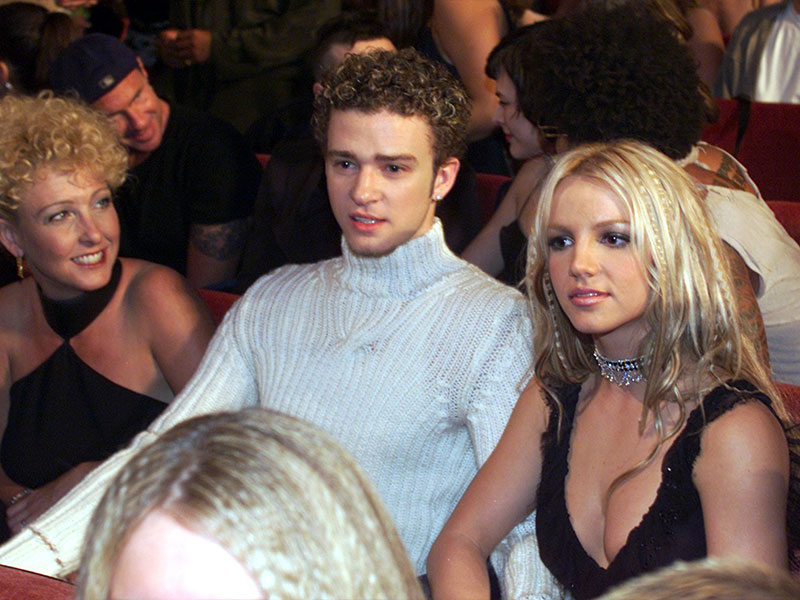
At just 21 years of age, Spears sat down with Sawyer, who interrogated the star about her career and personal life. When asked about her high-profile split from Timberlake, Spears broke down into tears and asked the camera crew to stop filming.


“I felt like I had been exploited, set up in front of the whole world,” Spears wrote.


During the interview, Sawyer brought up rumors sparked by Timberlake and the public that alleged Spears had cheated on him: 


“He’s going on television and saying you broke his heart,” Sawyer said. "You did something that caused him so much pain. So much suffering. What did you do?” Sawyer also called Spears’ abs the “most valuable square inch of real estate in the entertainment universe” prior to the sit-down.


Years later, notably after the release of The New York Times’ “Framing Britney Spears” documentary in 2021, Sawyer came under fire for her insensitive questioning and apparent misogyny.

06
Spears said Timberlake’s “Cry Me a River” video portrayed her as unfaithful
Justin Timberlake and Britney SpearsJustin Timberlake and Britney Spears (KMazur/WireImage/Getty Images)
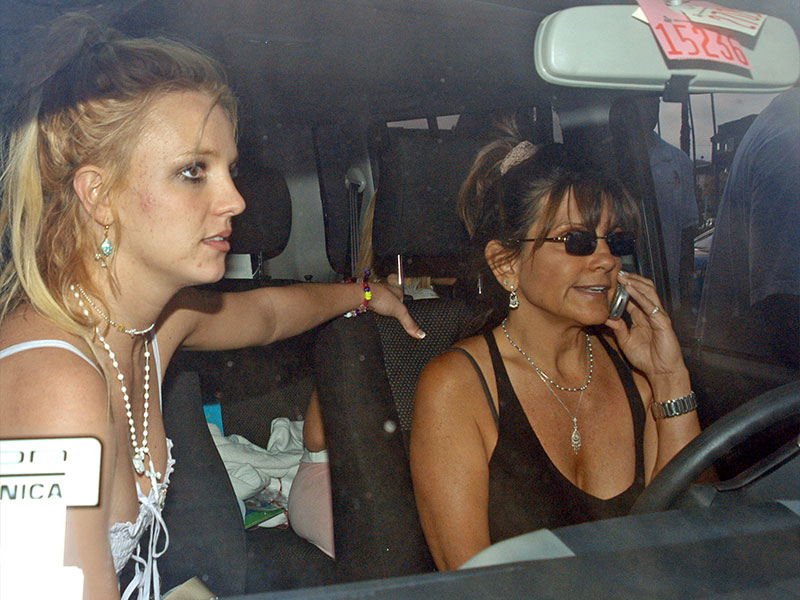
Spears reflected on the time Timberlake released his music video for “Cry Me a River,” which featured an unfaithful girlfriend that looked very similar to Spears. The plot of the video involves “a woman who looks like me, cheats on him and he wanders around sad in the rain,” as described by Spears.


Spears said the media outcry portrayed her as a “harlot who'd broken the heart of America's golden boy,” when she was actually “comatose in Louisiana, and he was happily running around Hollywood.”


Spears and Timberlake officially broke up in March 2002. Elsewhere in the book, Spears confirmed that she kissed choreographer Wade Robson while dating Timberlake.

07
Spears drank daiquiris with her mother when she was in the eighth grade
Britney Spears and Lynne SpearsBritney Spears and Lynne Spears are seen on June 20, 2004 in Los Angeles, California. (Bauer-Griffin/GC Images/Getty Images)

“For fun, starting when I was in eighth grade, my mom and I would make the two-hour drive from Kentwood to Biloxi, Mississippi, and while we were there, we would drink daiquiris,” Spears wrote. “We called our cocktails ‘toddies.’”


Spears said she and her mother, Lynne Spears, frequently drank alcoholic daiquiris together beginning when Spears was in the eighth grade. Drinking together was also a way for the mother and daughter to bond with each other.


“I loved that I was able to drink with my mom every now and then,” Spears wrote. “The way we drank was nothing like how my father did it. When he drank, he grew more depressed and shut down. We became happier, more alive and adventurous.”

08
Spears almost starred in “The Notebook”
Britney SpearsBritney Spears (Kevin Mazur Archive/WireImage/Getty Images)

Spears said her acting gig in the 2002 comedy-drama “Crossroads” wasn’t easy because of “what acting did to my mind.” Despite that, Spears was offered another major acting role in one of Nicholas Sparks’ film adaptations:


“‘The Notebook’ casting came down to me and Rachel McAdams, and even though it would have been fun to reconnect with Ryan Gosling after our time on the Mickey Mouse Club, I’m glad I didn’t do it,” Spears explained. “If I had, instead of working on my album ‘In the Zone’ I’d have been acting like a 1940s heiress day and night.”

"The Woman in Me" is slated to be released on October 24.

California lets companies keep “dangerous” oil wells unplugged forever

A new California law just signed by Gov. Gavin Newsom aims to close loopholes that have allowed oil drillers to walk away from wells that are no longer profitable but remain harmful. Oil majors have typically sold wells to smaller companies without paying to plug the wells, essentially sealing them off. Under the new law, buyers will have to put up a cleanup bond before regulators approve the sale.

But while the Orphan Well Prevention Act will help reduce the number of abandoned and orphaned wells — currently around 5,300 — industry watchers said it does little to address the looming issue of wells that remain dormant indefinitely, some of which leak climate-warming methane and toxic fumes.

About 38,800 wells in California are idle, meaning they’re unplugged but claimed by an operator; thousands more are barely producing and could be idled. Despite the health and climate risks, the state lets companies keep them that way.


Join our email list to get the stories that mainstream news is overlooking.
Sign up for Capital & Main’s newsletter.

For a few hundred dollars a year, the California Geologic Energy Management agency, or CalGEM, allows drillers to leave wells uncapped rather than paying to plug them. As they remain unplugged, the wells put low-income, mostly Latino communities at risk of air pollution, and any greenhouse gases the wells emit contribute to the climate crisis.

The agency reasons that companies might start producing oil from the wells again. But that doesn’t often happen, according to a report by Carbon Tracker Initiative, a London-based think tank. Thirty-nine percent of all wells in the state are idle; half haven’t produced oil in at least 15 years. More than 1,200 have been idle for longer than a century.

As they remain unplugged, the wells put low-income, mostly Latino communities at risk of air pollution, and any greenhouse gases the wells emit contribute to the climate crisis.

That was the case for wells that leaked in the southern San Joaquin Valley earlier this year. During an inspection in May, air quality inspectors from CalGEM, the California Air Resources Board and the San Joaquin Valley Air Pollution Control District discovered 27 leaking wells out of 68 inspected within a mile of Arvin and nearby Lamont.

Several leaked a combustible volume of methane, though agencies said the chance of an explosion was minimal. One was a few hundred feet from a high school’s outdoor field. Records indicated that the wells, many owned by Sunray Petroleum and Blackstone Oil and Gas Co., hadn’t produced oil in years. But for annual fees that ran between $150 and $1,500, companies were able to leave the wells unplugged.

The regulatory agencies, which examined the wells as part of the Methane Task Force, got the news out about the leaks via the internet.

Cesar Aguirre, the oil and gas director at the Central California Environmental Justice Network, said he and other organizers did their own outreach in person.

“We ended up running into people, especially closer to the wells, saying they felt lightheaded or smelled something,” Aguirre said. “They all shared symptoms typical when we do this kind of outreach, [such as] dizziness and headaches.”

CalGEM said the well and dozens of others were fixed three weeks later, but they remain unplugged.

In a statement, the agency said that all operators must test all their wells in idle status within six years of 2019, and repair or permanently seal them if they’re defective. It is also planning to plug and abandon 429 orphaned wells with federal and state funds.

Well Cleanup Costs in the Billions

In recent weeks, the task force discovered more than a dozen leaking wells in nearby Shafter. It will present the findings in a meeting this month. Thousands of idle wells across the state are at risk of similar leaks.

Earlier this year, methane leaked from an idle well that also spewed petroleum onto crops and livestock at a farm in Bakersfield back in February. The operator of the well, Sequoia Exploration, Inc, paid $150 in 2022 to idle the well. (Farmer Larry Saldana is suing the company, arguing that its proposed remediation is insufficient.)

And last year Capital & Main reported on dozens of leaking wells in Los Angeles County, documented by the group FracTracker. Among them were at least five wells whose owners pay idle well fees. 

Since 2019, CalGEM has collected $21 million from the idle well fee program, with about $4 million earmarked to plug and abandon. That amount is far less than the actual costs the state is likely to incur to permanently plug wells in the state.

There’s now a gap between the money needed to cap wells and the funds on hand to do so. It costs an average of $68,000 to plug a well; California only has about $1,000 each.

Carbon Tracker put the total well and associated infrastructure cleanup cost at $21.5 billion, a figure that will likely increase over the next two years as production revenue from oil fields declines. Companies have only put $106 million on the books, both through the idle well fee program and other bonding. Public funds to plug orphan wells currently stand at about $730 million.

By letting companies pay a small fee rather than forking up cash for remediation, the industry is putting the onus on taxpayers, according to Carbon Tracker. It also lets them avoid accounting for liabilities — old wells in need of costly plugging — on their balance sheets. 

“It’s in their self-interest to pay the fee, but that means all that time their [still-producing] wells are generating revenue that is passed on to shareholders, instead of using that money toward this eventual liability they have to pay,” said Rob Schuwerk, executive director of Carbon Tracker’s North American office.

California’s lax approach to idle wells contrasts with that of other states, which impose firmer bonding rules on companies and guidelines on how long they can claim an idle well might produce oil again. 

In North Dakota, the state requires companies to plug wells that haven’t produced oil or natural gas “in paying quantities” for one year, unless an extension is filed.

When BP decided to sell wells and other infrastructure in northern Alaska to private equity-backed Hilcorp — which one report ranked among the most polluting oil and gas companies in the U.S. — legislators said they won a legal guarantee from BP that it would remain liable for cleanup costs.

By contrast, when Exxon Mobil Corp. and Shell Oil Co. sold 23,000 California wells they operated in a joint venture called Aera Energy to German firm IKAV Asset Management this year, the state received no assurance that either company would help with any cleanup. 

Aera Energy paid $2.26 million in idle well fees for 5,454 wells, according to state records. The majority haven’t produced any oil in the last five years, and 15 have been idle since before World War II.

CalGEM said it has a rule in place permitting it to pursue the assets of operators who owned wells after 1996 — the most prominent example being a $35 million collection from Exxon to abandon an offshore platform. But in “many instances,” past operators don’t have enough money to collect for cleanups, the agency said.

Climate Impacts of Idled Wells Unknown

The aging wells crisis will become more acute. California’s long term decline in oil production started in 1985 and accelerated in the 2010s. Upswings in the price of oil haven’t reversed the trend, Carbon Tracker said. 

Yet regulators have continued approving permits for wells. This year, CalGEM issued 24 new well permits and nearly 2,000 for “reworks,” a type of permit issued to operators who want to repair aging wells.

Environmental justice and climate advocates have opposed each new approval as one too many. A working group convened by CalGEM found that toxins from wells in close residential proximity are “associated with adverse perinatal and respiratory outcomes.”

The climate risks of California’s idled wells are less well understood.

Last year, The Associated Press reported that the state wasn’t counting methane emissions from leaking wells in its greenhouse gas inventory. The state’s climate plan assumes oil field emissions will decline as Californians consume less oil, but does not account for unplugged and leaking wells.

Citing the passage of the Orphan Well Prevention Act, environmental groups demanded the state confront the broader costs of old wells.

“Lawmakers should build on this momentum and pass a bill that attacks the root of the problem by forcing the oil industry to clean up all its wells instead of pushing that burden onto California taxpayers or allowing wells to leak dangerous air pollution for decades,” said Kassie Siegel, director of the Center for Biological Diversity’s Climate Law Institute.

Carbon Tracker’s Schuwerk said that in the case of California, which faces an end game scenario for the oil industry, there are few incentives regulators can offer companies to clean up legacy wells. 

In another report, Carbon Tracker recommended a severance tax on remaining oil output to prop up an insurance program to plug wells. Those funds could mitigate costs for both companies and the state. 

“Who should bear the loss? Should it be the industry or taxpayers?” Schuwerk asked. “It’s mostly industry that has benefitted from the system, so my point is it should be them.”

Jim Jordan and Donald Trump’s embarrassing week reminds us: MAGA “tough guys” are cowards at heart

When Rep. Jim Jordan, R-Ohio, put in his bid to replace recently ousted Speaker of the House, Rep. Kevin McCarthy, R-Calif., one thing was certain: It would renew interest in the Ohio State University sex abuse scandal that has dogged Jordan for years. Jon Wertheim of Sports Illustrated stepped up to the plate, recounting how at least 11 members of the school's wrestling team reported abuse by the team doctor, Richard Strauss, to a coaching staff that included Jordan, who served as the assistant coach at the time. But, the athletes say, Jordan and other coaches ignored their pleas for help. 

Jordan denies it, but he's a notoriously dishonest person and these former players have no reason to lie. In addition, a legal investigation and settlement have created a public record of the truth of the allegations. The details Wertheim got out of the victims reveal quite a bit about how much of a chicken Jordan is under all that bluster.

Dunyasha Yetts, an All-American wrestler in the ’90s, recalls complaining to Jordan that he saw Strauss about a thumb injury and stormed out of the room when the doctor attempted to pull down his shorts. Yetts recalls Jordan saying that if Strauss ever approached him in a sexual manner, he’d “kill him.” Dan Ritchie, another wrestler, says he was present when Jordan was informed of abuse from Strauss. Jordan’s response: "If he did that to me, I'd snap his neck like a twig of dried balsa wood."

That's Jim Jordan in a nutshell: A lot of talk about how tough he is, followed up by an unwillingness to show even the barest amount of real courage. Telling these players they should have killed Strauss is not about actually being a badass. It's about shifting the blame to the victims so that Jordan can avoid taking action. 


Want more Amanda Marcotte on politics? Subscribe to her newsletter Standing Room Only.


The stakes were much lower on Thursday, but the pattern held firm: Jordan's focus was on creating an illusion of tenacity while being too much of a wimp to own up to his own failures. He talked up a big game about going forward to a third vote to be Speaker, having lost the first two. In reality, Jordan was negotiating a deal to cancel the vote and let Rep. Patrick McHenry, R-N.C., take on the role of "temporary" Speaker. (Though that looks like that option won't be happening, either.) As Jake Sherman and John Bresnahan of Punchbowl News explain, "Jordan hates to lose. His entire brand is wrapped up in fighting liberals and being a winner." He found a way to pull out of the race while pretending to stay in. 

That's Jim Jordan in a nutshell: A lot of talk about how tough he is, followed up by an unwillingness to show even the barest amount of real courage.

Jordan faux-fearlessness is the norm among the MAGA male set, of course. It's why he's become such a celebrity in right-wing media and a power player in the GOP. He's a perfect avatar of the toxic masculinity of the 21st-century Republican: Loud talking, followed by fleeing at the first sign of a real challenge. 

Donald Trump, of course, is the most prominent example. He uses social media near-daily to threaten his political and legal opponents while cringing from any real danger behind a phalanx of taxpayer-funded security.  But this week, he made a pathetic effort to bring his phony tough guy act out in person. He returned to court in Manhattan on Tuesday for the ongoing trial to determine how much he'll be punished for decades of fraud. He's been absent for a couple of weeks, once it became clear that his presence wasn't garnering the press coverage he craved. His return appears to have been an attempt at witness intimidation. 

Real estate appraiser Doug Larson was testifying against Trump, laying out the various ways the Trump Organization manipulated numbers to make their assets look much more valuable — often exponentially so — than they actually were. On Tuesday, Trump sat in court glaring at Larson, no doubt hoping to scare the man into silence. When that didn't work, Trump got even more disruptive on Wednesday, throwing his hands in the air and complaining loudly to his lawyers, until the judge was forced to tell him to shut up. He also tried to intimidate Attorney General Letitia James by sharing her home address on social media. 

Across all these attempts to be scary, however, Trump is mostly exposing his personal cowardice. Bellyaching at a witness from the safety of the defense table isn't exactly taking any great personal risk. Sharing a woman's home address in hopes someone else risks prison to go after her is quintessential cravenness. Trump likes to brag to cameras that he's "willing to go to jail," but of course, he's not even willing to go to a Republican debate, on the off chance someone calls him out for all his crimes. 

Similarly, Jordan's campaign to be Speaker was pure scare tactics. Republican holdouts — and their spouses — received a barrage of anonymous texts, emails from right-wing media figures, and other such messages commanding them to vote Jordan — or else witness the destruction of their political careers. Or worse, in the case of one Republican holdout who reported getting death threats

After it became obvious that the mobsters tactics were breeding rebellion and not compliance, Jordan belatedly tried to play good cop by tweeting, "We condemn all threats against our colleagues and it is imperative that we come together. Stop. It’s abhorrent." But even though the House GOP caucus is famously flush with some dim bulbs, it's doubtful anyone was buying this. Screaming at people until they submit is all Jordan knows how to do. But barking only works if people believe you'll bite. Jordan was in an uphill battle on that front since his colleagues actually knew the quisling heart of the man behind the performative bad haircut and rolled up sleeves. 

We need your help to stay independent

The emptiness behind the manly-man posturing of MAGA Republicans was hilariously illustrated on Wednesday when Trump failed to pretend that he was too busy fighting in court to handle the tedious candidate duties of kissing babies and eating corn dogs. Talking to reporters outside the courtroom, Trump complained, "They want to keep me here instead of campaigning in Iowa, New Hampshire, South Carolina, lots of other great places." Even by his low standards of chest-thumping, this lie was weak sauce. Not only did Trump sound more whiny than resolute, it was also a transparent lie that he "had" to be at a court proceeding he's been skipping out on for two weeks. 

But then the fragile ruse completely fell apart when a reporter asked Trump if he'd be in court again Thursday. "Probably not. We're having a very big professional golf tournament at Doral," Trump responded. Mr. "I'll Go To Prison," it turns out, doesn't even have the stamina to skip golf to meet voters. Unsurprisingly, Joe Biden's campaign had fun with this on Twitter. 

To make it even more fun, they posted it on Truth Social. I suspect the goal of this trolling is to get Trump, in a fit of Elon Musk-esque pique, to have the Biden account banned. At which point, Biden's campaign can once again remind everyone Trump's got paper-thin skin under all that orange makeup. There's a long road ahead in exposing the MAGA movement's emptiness for what it is, but this especially dumb week was a promising step in the right direction. 

A crisis of moral clarity: There’s no contest between Trump and Biden — why are Americans confused?

In response to Israel’s war against Hamas, President Joe Biden and the now criminally indicted leading Republican presidential candidate Donald Trump have demonstrated very different models of leadership. The stark differences between the two leaders are another example of how America’s democracy crisis is not “just” a political problem: It is a moral and cultural sickness that is far greater than any one political leader, political party, or political movement.

President Biden has given a series of speeches and interviews where he condemned Hamas’ barbarism, reinforced America’s commitment to Israel, emphasized the need to find a long-term solution to peace in the region, attempted to calm worries that the war could spiral into a larger regional conflict, cautioned against the temptations of antisemitism and hatred in their various forms, and spoke directly about the need to protect the human rights of the people of Gaza, the majority of whom have no connection to Hamas. President Biden traveled to Israel on Wednesday to signal America’s support for the war against Hamas. While there, he also announced humanitarian aid for the people of Gaza.  

Ultimately, whatever one may think about America’s foreign policy as it relates to the Middle East and Israel, Biden’s leadership style and demeanor in this time of crisis are most certainly “presidential." By comparison, how have Donald Trump and the other leading Republican fascists and members of the right-wing movement behaved in response to the horrible events of October 7? Their reactions and behavior have, for the most part, been partisan, tribal, petty, egomaniacal, narcissistic, conspiratorial, dishonest, irresponsible, hateful, willfully ignorant, and more generally contrary to the principles of responsible governance. 

In a time not too long ago, America’s mainstream political leaders, on both sides of the partisan divide, followed an informal rule that politics and partisanship stopped at the ocean. In the Age of Trump and ascendant neofascism, that rule has been jettisoned by the right wing because getting political power at any cost with the goal of ending America’s multiracial pluralistic democracy is more important than standing in unity in a time of crisis.

On the same weekend that Israel was attacked by Hamas, Donald Trump wallowed in his malignant narcissism and megalomania. He attacked Prime Minister Benjamin Netanyahu for supposedly not taking his advice while president, praised Hamas as “very smart," and suggested that the group would not have dared to attack Israel if Trump were still president. Trump even managed to connect the Big Lie about the 2020 election and how it was “stolen” from him and his MAGA movement to the crisis. Taking their cues from Trump, leading Republicans, and other right-wing propagandists and influential, used the October 7 terrorist attacks as an opportunity to tell lies like the Democrats "hate” Israel and support Hamas via Iran. In an especially loathsome example of this behavior, Sen. Tim Scott went so far as to accuse President Biden of “having blood on his hands,” because he is somehow responsible for Hamas’ terror attack on Israel. Not to be outdone in the amount of vitriol he can spout, Florida Gov. Ron DeSantis, told NBC's "Meet the Press" last Sunday that Palestinians “are all antisemitic” to argue against allowing refugees from Gaza into the United States.

Donald Trump and the other Republican fascists and members of the white right are also using October 7 as a chance to amplify their white supremacist paranoia and conspiracy theories about “invaders” and “terrorists” (in this iteration “Hamas”) who have supposedly infiltrated the Southern Border and are operating in secret terrorist cells, waiting for their moment to attack (White) America. Of course, this is a lie. Nonetheless, a large percentage, if not majority, of Trump and Republican voters (and right-wing independents) believe such fictions, which are reflections of the larger white supremacist great replacement conspiracy theory.

Last Thursday, the Washington Post editorial board summarized the contrasting leadership styles and behavior of President Biden and Donald Trump in the following way:

At a time when the United States, and the world, desperately need decency and moral clarity, President Biden has provided both. His words regarding the wanton atrocities Hamas has committed against hundreds of Israeli civilians, as well as many Americans and citizens of other countries, in the past week have been unequivocal. In remarks to a gathering of American Jewish leaders Wednesday, he described the mass murder as “sheer evil” and likened it to “the worst atrocities of ISIS.”

In condemning the terrorism, and offering support to Israel’s military response, the president also reminded the new emergency war government under Prime Minister Benjamin Netanyahu of its responsibilities under “the law of war.” These measured statements put the United States in just the right place: supportive of Israel but positioned, if need be, to influence and temper its response.

Mr. Biden has so far met the elementary test of political leadership amid crisis, as those who placed their trust in him at the ballot box three years ago hoped he could.

In a recent interview with Salon, David Rothkopf was much more pointed and direct:

They're just not comparable. Joe Biden is a good man, a dedicated and effective public servant who's trying to do a good job, who believes in our institutions, who believes in our values, who believes in alliances, who believes people are fundamentally good, and who is the kind of person that Donald Trump thinks is a sucker. Donald Trump is a bad man; he is all about himself. He doesn't care. He has no moral code whatsoever. He doesn't believe in the rule of law. He doesn't believe in the Constitution. He doesn't believe in American values…. How can those Republicans and others on the right say that they stand with Israel while they support Donald Trump who is an antisemite.

We need your help to stay independent

Via email, Rick Wilson, who is cofounder of the pro-democracy group The Lincoln Project said this about the profound differences between Trump and Biden as reinforced by their reactions to the terrorist attacks on Israel by Hamas:

President Biden has demonstrated great moral leadership and resolve in supporting Israel in the fight against terrorism and hatred. He understands that freedom and individual rights must be supported through strength, deterrence, international alliances, and, when necessary, force. Stopping authoritarianism abroad helps to prevent it from gaining ground here in the United States.

Trump on the other hand, is a transactional actor only concerned about how he can exploit this movement for his own personal benefit. He cares nothing about human rights and renewing democracy.

There is a feedback loop between the public and their leaders in a democratic society. Leaders take cues and directives from the public because they need their support to remain in power. Those same leaders also shape and influence the beliefs and values of their supporters and the public more generally. As such, what does the irresponsible, hateful, and morally compromised behavior of Donald Trump and other leading members of the right wing in response to the Israel – Hamas war further “reveal” about their supporters?

In the most basic sense, they have normalized deviance and embraced antisocial and other anti-democratic values and beliefs as a function of what psychologists have described as “malignant normality”. A series of recent public opinion polls offer support for this conclusion.

A 2018 Gallup poll shows that in the Age of Trump, Republicans now believe that presidential moral leadership is increasingly unimportant: "Republicans are much less likely now than they were during the Bill Clinton years to say it is very important for the president to provide moral leadership for the U.S. Democrats, on the other hand, are more likely to believe moral leadership is important now, with Donald Trump in office, than they were under Clinton.

Gallup continues:

By 59% to 40%, Americans believe Trump provides weak rather than strong moral leadership. Republicans and Democrats diverge greatly on this question, with 77% of Republicans believing Trump provides strong moral leadership and 91% of Democrats saying he provides weak leadership. Seventy-eight percent of Democrats believe his moral leadership is "very weak." Independents are much more negative than positive about Trump's leadership on morals.

A August 2023 Harris X poll for the Deseret News asked, “which of the presidential candidates for 2024 would do a good job providing moral leadership as president?”

Here are some of the key findings:

Roughly two-fifths of voters said former President Donald Trump would do a good job while nearly half said he was doing a poor job and 11% said they didn’t know.

Out of GOP voters, 7 in 10 approved of his moral leadership, while only 14% of Democrats said the same. Meanwhile, roughly 36% of independent voters said he did a good job….

Chris Karpowitz, the co-director of the Center for the Study of Elections and Democracy and a professor of political science at Brigham Young University, also said the results of the poll showcase “partisan cheerleading.”

The survey coincided with news of Trump’s third indictment, to which he pleaded not guilty on Thursday. The court documents allege that the former president “was determined to remain in power” after losing the 2020 presidential election to President Joe Biden, and he “repeated and widely disseminated” false claims about the election’s legitimacy, as Deseret News reported.

“These numbers are particularly striking, given that Donald Trump has now been indicted three times and was recently found liable for sexual abuse in a civil trial,” said Karpowitz.

A September 2023 poll, also by HarrisX for Deseret News, found that a majority of Republican registered voters believe that Donald Trump “is a person of faith” – this is a higher percentage than for Mike Pence, who is an evangelical Christian.

The Hill offers this context:

His personal history is also one that would seem, at a glance, to be potentially troubling for Christian conservatives.

Trump has been divorced twice and is in the middle of a lawsuit surrounding his alleged paying of hush money to a former adult film star to stay quiet about an alleged affair. He’s also been accused of cheating on his wife with a former Playboy model.

But Trump has consistently won the support of social conservatives, and the results of the poll could provide some insight into how people see him.


Want a daily wrap-up of all the news and commentary Salon has to offer? Subscribe to our morning newsletter, Crash Course.


Whatever one may think about the specific content and morality of the type of White Christianity that is practiced by Michael Pence, it is clear that he is more religious and “a person of faith” than Donald Trump, a man who has repeatedly demonstrated his discomfort with, if not outright disinterest and contempt for, the religiously minded. It Trump is in any way “religious”, it is transactional as a way for him to get votes from the Christian Right.

Racism, white racial resentment, hostile sexism, and other forms of prejudice and hatred in the form of social dominance behavior and authoritarianism have also played a powerful role in why Republicans and other “conservatives” have embraced the moral corruption of Trumpism and American neofascism. This is channeled through a yearning for a return to “the good old days” and “traditional values” and “Making America Great Again”.

On this, the PRRI 2022 American values survey is particularly illuminating:

Approximately three-quarters of Americans agree that the country is heading in the wrong direction, but there is considerable division over whether the country needs to move backward — toward an idealized, homogeneous past — or forward, toward a more diverse future. Though most Americans favor moving forward, a sizable minority yearn for a country reminiscent of the 1950s, embrace the idea that God created America to be a new promised land for European Christians, view newcomers as a threat to American culture, and believe that society has become too soft and feminine. This minority is composed primarily of self-identified Republicans, white evangelical Protestants, and white Americans without a college degree.

With their embrace of Trumpism, American neofascism, and hostility to real democracy more broadly, have the MAGA people and other members of the right-wing just forgotten basic standards of human decency, morality, and good leadership? Or have they instead actively chosen Donald Trump and what he represents knowing how destructive and evil such forces are because the power is intoxicating and a way to get what they want in an America they feel increasingly hostile to and alienated from – even if that means ending democracy?

Which of the two scenarios is worse? I am not sure.

In the end, how and if American can escape the Trumpocene and this time of democracy crisis in the long-term will greatly depend on the answer to these questions.

Treatments for stimulant use disorder are scarce or nonexistent. The FDA hopes to change that

When Amanda goes without her medication for attention-deficit hyperactivity disorder (ADHD), she struggles to function mentally and physically. Depression, anxiety and chronic pain stemming from fibromyalgia all become more prominent for the 46-year-old, which further exacerbate her ADHD symptoms, making everyday tasks like showering a challenge. Although she hasn’t faced any disruptions from this year’s Adderall shortage — which has now entered its second year — at one point she wasn’t able to get her medication filled at a single one of 16 pharmacies near her home in the Metro Detroit area.

Amanda, who asked to be referred to by her first name, has been on Suboxone since 2010 after two decades of using methamphetamine, cocaine and other drugs, including a few years of consistent heroin use. Once she decided to get treatment and stop using drugs, she continued to have to jump through hoops to get not only her Suboxone but also her Adderall prescription.

She said she was required to have monthly visits with her provider to get her prescription refilled and perform monthly urine screens, which both came with additional co-pays. There were other shortages, too, during which she had to go in person to multiple pharmacies and was sometimes turned away. Ultimately, she cycled through more than 10 different providers before finding one that was able to consistently fill both of them through Medicare, she said. But she's had friends who have been diagnosed with ADHD and haven't been able to connect to treatment.

Many people who use drugs do so as a means to cope with undiagnosed mental, behavioral or neurological health conditions.

“The whole system of just being able to acquire your ADHD medication is a huge problem and ordeal,” Amanda told Salon in a phone interview. “It's easier for a lot of people to just get it from the street.”

Amanda’s experience highlights a host of factors that have contributed to the rise in U.S. stimulant use in recent years: Many people who use drugs do so as a means to cope with undiagnosed mental, behavioral or neurological health conditions. Untreated ADHD is more common in people with stimulant use disorder than in the general population, and many patients get into using methamphetamine as a way to self-treat their condition, said Dr. Mark Willenbring, an addiction psychiatrist at the Expanse clinic in St. Paul, Minnesota. 

“I have patients who used it in a controlled way for 30 years, as if they were self-treating ADHD,” Willenbring told Salon in a phone interview. “Their doctors wouldn't prescribe anything for them, so they were kind of stuck between a rock and a hard place.”

Last year, the Drug Enforcement Agency’s (DEA) quota for the amount of drugs like Adderall used to treat ADHD fell short of increasing demand, which contributed to the shortage. Just like the withdrawal of prescription opioids on the market is thought to have pushed people with addiction toward illicit opioids like heroin, restricting prescriptions for stimulants like Adderall could push people toward an illicit supply instead.

“I've had people say to me, ‘Why don't you just do a bump of meth and it’ll set you straight all day?’” Amanda said. “I don't want to have to do that. I have a prescription and I just want to be able to get my medication.”

Although stimulants are becoming increasingly involved in overdose deaths in what some are calling the “fourth wave” of the overdose crisis, treatments for this form of drug use are few and far between. Earlier this month, the Food and Drug Administration (FDA) called upon drug makers to develop new treatments that could be used to treat meth, cocaine or prescription stimulant addiction. 

In a statement, Marta Sokolowska, the deputy director of the substance use unit within the FDA’s Center for Drug Evaluation and Research said: “Currently there is no FDA-approved medication for stimulant use disorder. When finalized, we hope that the guidance will support the development of novel therapies that are critically needed to address treatment gaps.” 

One of the main challenges to finding treatment for stimulant use is that it can vary significantly depending on the person, the drug of choice and the route of administration. Cocaine, prescription stimulants and meth all work differently in the brain, have different effects on the body and are used in different ways, including being snorted, smoked or injected.

In its draft guidance for stimulant use treatment, the American Society of Addiction Medicine (ASAM) cites a handful of pharmacological medications that can be prescribed off-label to treat stimulant use disorder. Some studies show bupropion, an antidepressant used to treat tobacco addiction, can be effective for cocaine use disorder as well as amphetamine use disorder, particularly when paired with a drug used to treat opioid use disorder called naltrexone in the latter. 

In addition to a few other off-label drugs that show some benefit in treating stimulant use disorder, one 2020 study published in Psychopharmacology showed stimulants used to treat ADHD can reduce cocaine use, including methylphenidate (also know as Ritalin) or mixtures of amphetamine salts like Adderall. Similarly, methylphenidate, which is FDA-approved to treat narcolepsy, can also reduce amphetamine use.


Want more health and science stories in your inbox? Subscribe to Salon's weekly newsletter Lab Notes.


The idea to use meth or amphetamines to treat these conditions resembles the idea behind using opioid agonist treatments like buprenorphine and methadone to treat opioid use disorder. These two medications have been shown to be very effective in treating opioid use disorder because, being opioids themselves, they target the opioid receptors that cause cravings and withdrawal. 

However, stimulant use activates not just one but many different receptors, and giving patients drugs like dextroamphetamine would not produce the same reductions in cravings or withdrawal for someone who used methamphetamine, said Dr. Brian Hurley, the medical director for the Bureau of Substance Abuse Prevention and Control for the Los Angeles County Department of Public Health. The why for using these drugs is also different: While people who use opioids tend to do so on a daily or more frequent basis to prevent withdrawal, people who use stimulants also differ in that they more frequently use in binges, Hurley said. 

“Though the analogy [comparing] opioid agonists with opioid use disorder and psychostimulants for stimulant use disorder is logical, the combination of the mechanism of action of stimulants and the variability in the reasons people use stimulants outside of just kind of pure pharmacologic craving make the stimulant agonists less effective,” Hurley told Salon in a phone interview.

The ASAM recommends using psychostimulants to treat underlying ADHD in people who have both ADHD and stimulant use disorder, although their use remains “controversial” due to the potential for "misuse." However, there are some prodrugs of dextroamphetamine used to treat ADHD, such as Vyvanse, that have a slow onset and could be used for these patients, Willenbring said. Yet providers may be hesitant to prescribe any controlled substances that have shown promise in treating stimulant use off-label due to all of the additional regulations they are under through the DEA.

In lieu of not having any FDA-approved medications to treat stimulant use disorder, the ASAM also recommends turning to behavioral interventions instead, including contingency management, an evidence-based program in which people using stimulants are awarded small monetary rewards for not using. 

California’s state health system has deployed contingency management across 24 counties. Essentially, when patients test negative on urine-drug screens, they receive gift cards, with a maximum reward capped at $599 over a six-month period. However, so far this is merely a pilot program and access is limited, said Chelsea Shover, Ph.D., an assistant professor-in-residence at the University of California, Los Angeles. Plus, contingency management in general tends to stop working for people once they stop attending, Willenbring said.

“It’s out there but in a pretty limited and scattered way,” Shover told Salon in a phone interview.

Why it hasn’t been more widely accepted traces back to the stigma that continues to constrain harm reduction efforts. Federal anti-kickback regulations that prohibit medical providers from rewarding patients to generate business may make healthcare providers nervous to offer services like contingency management, Hurley said. Although the Office of the Inspector General for the U.S. Health and Human Services Department released an advisory opinion that said such programs presented a "minimal risk" of being punished via anti-kickback statutes, a Montana clinic providing contingency management was investigated for fraud last year, illustrating the complexity of the issue.

Just like opioid agonist treatments are being used in addition to safe injection sites and needle exchange programs to mitigate the impacts of opioid use, any medications for stimulant use will need to be paired with behavioral and social interventions that meet people using these drugs where they are as well. Yet both pharmacologic and behavioral interventions are up against stigma that could prevent them from getting to patients even once they do prove to be effective.

We need your help to stay independent

"There are no molecules that I've seen in literature that have had a really robust response, but that doesn't mean that some can't help," Hurley said. "I'm glad [the FDA] is calling for additional research because we certainly need additional options."

For Amanda, the combination of Suboxone and Adderall to treat her substance use and ADHD has been "life-saving," she said. Not only does it help reduce cravings and attention problems, but also helps treat her fibromyalgia and depression that all once contributed to her substance use. 

"That combination has allowed me to get my life stable again, control my pain and help with depression," she said. "It helps with so much, but people are reluctant to believe that. There's so much stigma around it."

No third season of “The Problem With Jon Stewart” on Apple — sources cite “creative differences”

The Problem With Jon Stewart” has abruptly ended planning for its third season on Apple, just weeks prior to taping, due to what anonymous sources with knowledge of the decision are calling "creative differences." 

According to a New York Times article that broke the news, "Mr. Stewart told members of his staff on Thursday that potential show topics related to China and artificial intelligence were causing concern among Apple executives," per intel from a person with knowledge of that meeting. Another unnamed source further highlights that "as the 2024 presidential campaign begins to heat up, there was potential for further creative disagreements." 

In Salon's coverage of the show's first and second season, TV Critic Melanie McFarland points out that the second half of Season 1 "represents an improvement over the lackluster if well-meaning opening," and that the second season got even sharper, "pressing more forcefully into its confrontations with elected officials who other interviewers would allow to spew utterly false nonsense without confronting them on it." Stewart has made a reputation for himself as a host who asks hard questions, calls out bad answers and doesn't shy away from tense conversations. In cutting ties with Apple, it seems as though he doesn't plan to stop doing that any time soon, he'll just be doing it elsewhere. 


J.K. Rowling says she would rather go to prison than refer to transgender women as women

J.K. Rowling — the author best known for creating Harry Potter, and for her controversial views on transgender women which have led to her name becoming synonymous with the term "TERF" (trans-exclusionary radical feminist) — made a new series of anti-trans statements on social media this week, in which she said she would rather do a couple of years behind bars than refer to transgender women as women.

Her latest rant kicked off on Tuesday after sharing a text image reading, "Repeat after us: Trans women are women," to which she added her own commentary, writing simply, "No." This out-of-nowhere but very on-brand sentiment led to a bit of back and forth in the replies on X (formerly known as Twitter), after one commenter jumped in to seemingly reference the U.K. Labour Party's intent to bolster transgender protections in legislation that combats hate crimes. "Vote Labour, get a two year stretch!" the person said. To which Rowling shot back, "I'll happily do two years if the alternative is compelled speech and forced denial of the reality and importance of sex. Bring on the court case, I say. It'll be more fun than I've ever had on a red carpet."

Riffing with a person who offered, "See you on the inside. I quite fancy the kitchens," Rowling dug in deeper, proving fantasy to be her talent when it comes to writing, over that of comedy, with, "Hoping for the library, obviously, but I think I could do ok in the kitchens. Laundry might be a problem. I have a tendency to shrink stuff/turn it pink accidentally. Guessing that won't be a major issue if it's mostly scrubs and sheets, though."

From here, more and more people filed in to yuck it up with the author about denying transwomen basic human dignity and respect, but one commenter stood out as having some sense, whether they meant to or not, writing, "Those prisons are going to need more space for all those hills we’re dying on."

Pfizer is more than doubling the cost of COVID drug Paxlovid to $1,390 per course

Pfizer — the American pharmaceutical company that helped manufacture the COVID-19 vaccine — announced on Wednesday that it is hiking the price of its antiviral drug Paxlovid to $1,390 per course, starting in 2024. In a story first reported by The Wall Street Journal, a company spokesman confirmed that Pfizer plans on more than doubling the $529 that the federal government paid for Paxlovid. The current price is what customers can expect to pay before rebates and discounts to both pharmacy benefit managers and insurers. It is a stark contrast to American policy on Paxlovid during the height of the COVID-19 pandemic; starting in December 2021, the government had purchased and distributed Paxlovid to the public for free. Pfizer insists that its new policy will not create accessibility issues.

“As always, Pfizer’s goal is to ensure broad and equitable access to our medicines. We are working diligently with payers to achieve the best possible formulary placement for Paxlovid, resulting in low OOP [out-of-pocket] costs for patients,” a company spokesperson said in a statement to CNBC.

Although commonly described as one drug, Paxlovid is actually two different drugs that are packaged together — nirmatrelvir and ritonavir.

"It's a pill that's taken for five days and that works by interfering with the way the virus processes its proteins," Dr. Amesh Adalja, a senior scholar at the Johns Hopkins Center and infectious disease doctor, told Salon last year. He added that it has been "highly effective at preventing severe disease, hospitalization and death and high-risk individuals."

CBD: Why recommended daily dose was lowered from 70mg to 10mg by food regulator

Since 2018 when the UK parliament passed legislation legalizing CBD, the non-psychoactive component of cannabis, sales of CBD-related products have skyrocketed. Today, you can buy CBD oil, CBD vape pens, CBD coffee, CBD muffins to go with your CBD coffee .  . . CBD everything. And these products are often sold with various vague promises of increased wellness.

As CBD, in this context, isn't a medicine, it isn't regulated by the UK's drugs regulator but by the Food Standards Agency (FSA). In 2020, the FSA recommended that daily consumption of CBD should not exceed 70mg. Now, the FSA and Food Standards Scotland have reduced this limit to 10mg — roughly four drops of 5% CBD oil.

To be clear, 10mg is the advisable safe limit. You won't be arrested if you consume more than 10mg a day, but the agency warns that there may be long-term health effects if you ignore the advice — namely, harm to the liver and thyroid.

CBD's effects have been tested on a range of ailments, from schizophrenia to anxiety, with mixed results. When benefits have been evident, it is usually at a much higher dose — about five times the previously recommended maximum intake.

The new 10mg recommended limit has nothing to do with the effectiveness of the drug at this dose — because there is no proven effect. The shift to a lower recommended dose comes after several studies have indicated that CBD may not be as harmless as previously thought.

To determine how harmful a substance is — or rather, what's the highest safe amount a human can consume in a given time — scientists test it on animals and then apply a "correction level".

For example, if, in a study using rats, a dose of 100mg per kilogram of body weight is said to be the highest dose where no harms are observed, that would mean for a 70kg human an intake of 7g daily.

There are, however, differences in metabolism between species, with humans being potentially more susceptible to harm.


Accidentally boosting the dose

It is worth noting that seemingly harmless foods, such as grapefruit, broccoli and a well-done steak,can all interfere in the metabolism of certain drugs. It is already known that rifampicin, a widely prescribed antibiotic, can interfere with CBD metabolism. Other drugs need to be monitored closely for potential interaction.

There is also an increased risk of getting too high a dose when taking CBD with other medicines, such as ketoconazole (a drug to control fungal infection) and even an increase in absorption when CBD is taken with fatty food. That is why it is not uncommon for drug safety experts to apply a 400-fold correction factor to the previously calculated values. That would bring the allowed intake down from 7g a day to just 17.5mg a day.

Using several animal studies of CBD that indicated similar values and the correction factors, erring on the side of caution, the new recommended level was recently made public. That is the job of public agencies: On the best evidence possible, to indicate whether a component can do what it's supposed to and not cause harm when doing so.

It is important to highlight that the FSA's recent announcement is not a ban. You can still buy drinks infused with CBD that surpass the new daily limit in a single serving. However, any new product will need – as before – to undergo approval by the FSA, which may be harder with this new limit. Ensuring safety, especially for a substance that seems to bring very little benefit in return, is rightly the agency's priority.

Julio de Carvalho Ponce, Lecturer in Forensic Science, University of Winchester

This article is republished from The Conversation under a Creative Commons license. Read the original article.

New York AG asks judge to probe Allen Weisselberg emails after he’s accused of perjury

New York State Attorney General Letitia James requested that the judge overseeing former President Donald Trump's civil fraud case order a forensic examination of Trump Organization emails showing Allen Weisselberg's communications with Forbes after the magazine accused the former executive of lying under oath during his testimony last week, The Messenger reports. Weisselberg testified during his first day on the witness stand that he "never focused" on calculating the square footage of the former president's Trump Tower triplex, the size of which Trump had presented as nearly three times its actual size. But the co-defendant's second day of testimony ended abruptly after Forbes levied the accusation based on “old emails and notes" outside of the attorney general’s possession.

James asked New York Supreme Court Justice Arthur Engoron Thursday to empower a court monitor to investigate and determine if the Trump Organization had produced all relevant information. "The failure to produce these later emails indicates a breakdown somewhere in the process of preserving, collecting, reviewing and producing documents," the letter, signed by James' senior counsel Kevin Wallace, reads. "This failure also comes in the face of a years-long process to ensure a complete response to OAG’s subpoenas and multiple affidavits on behalf of the Trump Organization attesting to the completion of their production obligations. The failure is also suggestive of potentially broader issues in the production process."

"If the Monitor determines that responsive information was not produced, she can provide an assessment of where in the process the failure occurred and propose remedies to ameliorate those issues," Wallace added. Pages of Weisselberg's emails already submitted into evidence — and a few that have not — followed the letter. James has requested that the monitor submit a report with her findings of the "likely omissions" by Oct. 27, the end of next week.

Mary Lou Retton suffers “scary setback” amid battle against rare form of pneumonia, daughter says

Mary Lou Retton’s eldest daughter, Shayla Kelley Schrepfer, took to Instagram to share that her mother experienced a “scary setback” as she continues to battle a rare form of pneumonia.

“At the beginning of this week, we were going on the up and up, we were so excited, seeing so much progress and then yesterday we had a pretty scary setback,” Schrepfer said in a video posted on Wednesday. “She is still in [the] ICU and we’re just working through some things as far as her setback goes.” She added that her mother had “a better day today, which is great” but is still “just really, really exhausted.”

“So I just wanted to give an update and thank you guys again for just the support,” Schrepfer continued. “I’m getting so many messages and emails and … it’s so great to see people love on her.”

The recent update on the former Olympic gymnast’s health condition comes a little over a week after word broke out that Retton was in the hospital with a rare form of pneumonia: “My amazing mom, Mary Lou, has a very rare form of pneumonia and is fighting for her life," Retton’s daughter McKenna Kelley wrote in a Spotfund fundraising page for her 55-year-old mother. “She is not able to breathe on her own. She’s been in the ICU for over a week now. Out of respect for her and her privacy, I will not disclose all details. However, I will disclose that she [is] not insured.”

As of Thursday, the Spotfund page has raised $454,725 of its $50,000 goal.


Rancid food smells and tastes gross — AI tools may help scientists prevent that spoilage

Have you ever bitten into a nut or a piece of chocolate, expecting a smooth, rich taste, only to encounter an unexpected and unpleasant chalky or sour flavor? That taste is rancidity in action and it affects pretty much every product in your pantry. Now artificial intelligence can help scientists tackle this issue more precisely and efficiently.

We're a group of chemists who study ways to extend the life of food products, including those that go rancid. We recently published a study describing the advantages of AI tools to help keep oil and fat samples fresh for longer. Because oils and fats are common components in many food types, including chips, chocolate and nuts, the outcomes of the study could be broadly applied and even affect other areas, including cosmetics and pharmaceuticals.


Rancidity and antioxidants

Food goes rancid when it's exposed to the air for a while — a process called oxidation. In fact, many common ingredients, but especially lipids, which are fats and oils, react with oxygen. The presence of heat or UV light can accelerate the process.

Oxidation leads to the formation of smaller molecules such as ketones, aldehydes and fatty acids that give rancid foods a characteristic rank, strong and metallic scent. Repeatedly consuming rancid foods can threaten your health.

Fortunately, both nature and the food industry have an excellent shield against rancidity — antioxidants.


Foods turn rancid from a process called oxidation.


Antioxidants include a broad range of natural molecules, like vitamin C and synthetic molecules capable of protecting your food from oxidation.

While there are a few ways antioxidants work, overall they can neutralize many of the processes that cause rancidity and preserve the flavors and nutritional value of your food for longer. Most often, customers don't even know they are consuming added antioxidants, as food manufacturers typically add them in small amounts during preparation.

But you can't just sprinkle some vitamin C on your food and expect to see a preservative effect. Researchers have to carefully choose a specific set of antioxidants and precisely calculate the amount of each.

Combining antioxidants does not always strengthen their effect. In fact, there are cases in which using the wrong antioxidants or mixing them with the wrong ratios, can decrease their protective effect — that's called antagonism. Finding out which combinations work for which types of food requires many experiments, which are time-consuming, require specialized personnel and increase the food's overall cost.

Exploring all possible combinations would require an enormous amount of time and resources, so researchers are stuck with a few mixtures that provide only some level of protection against rancidity. Here's where AI comes into play.


A use for AI

You've probably seen AI tools like ChatGPT in the news or played around with them yourself. These types of systems can take in big sets of data and identify patterns, then generate an output that could be useful to the user.


AI tools have changed how many scientists conduct research.


As chemists, we wanted to teach an AI tool how to look for new combinations of antioxidants. For this, we selected a type of AI capable of working with textual representations, which are written codes describing the chemical structure of each antioxidant. First, we fed our AI a list of about a million chemical reactions and taught the program some simple chemistry concepts, like how to identify important features of molecules.

Once the machine could recognize general chemical patterns, like how certain molecules react with each other, we fine-tuned it by teaching it some more advanced chemistry. For this step, our team used a database of almost 1,100 mixtures previously described in the research literature.

At this point, the AI could predict the effect of combining any set of two or three antioxidants in under a second. Its prediction aligned with the effect described in the literature 90% of the time.

But these predictions didn't quite align with the experiments our team performed in the lab. In fact, we found that our AI was able to correctly predict only a few of the oxidation experiments we performed with real lard, which shows the complexities of transferring results from a computer to the lab.


Refining and enhancing

Luckily, AI models aren't static tools with predefined yes and no pathways. They're dynamic learners, so our research team can continue feeding the model new data until it sharpens its predictive capabilities and can accurately predict the effect of each antioxidant combination. The more data the model gets, the more accurate it becomes, much like how humans grow through learning.

We found that adding about 200 examples from the lab enabled the AI to learn enough chemistry to predict the outcomes of the experiments performed by our team, with only a slight difference between the predicted and the real value.

A model like ours may be able to assist scientists developing better ways to preserve food by coming up with the best antioxidant combinations for the specific foods they're working with, kind of like having a very clever assistant.

The project is now exploring more effective ways to train the AI model and looking for ways to further improve its predictive capabilities.

Carlos D. Garcia, Professor of Chemistry, Clemson University and Lucas de Brito Ayres, PhD Candidate in Chemistry, Clemson University

This article is republished from The Conversation under a Creative Commons license. Read the original article.

Congratulations, it’s a Kardashian! “American Horror Story: Delicate” delivers a new scream queen

When it was first announced back in April that Kim Kardashian would be joining the twelfth ensemble of Ryan Murphy’sAmerican Horror Story,” avid viewers of the buzzy FX series sat back and prepared to laugh. Myself included.

It turns out, the joke’s on us. In her first big acting debut as a character other than an exaggerated version of herself, Kardashian has proven to be the most exciting thing to happen to this lackluster franchise in years. Any LOLs elicited by Kardashian thus far in “Delicate” — the current two-part season of “AHS” — are the result of the kind of natural comedic ability that comes from a lifetime of being criticized for not really knowing exactly what you’re doing.

Deliver a punchline? Honey, she is the punchline. It’s pure camp — and Kardashian is exactly Murphy’s kind of girl. If these two have one thing in common, it’s how to make money. If they have two things in common, it’s that and being at the center of a teeth-gnashing spectacle.

After the finale of Part 1, now streaming on Hulu, we see full well how Kardashian was a good bet for this show, which has gone steadily downhill since previous season alumni Jessica LangeSarah Paulson and Evan Peters called it quits. In the years since, what has been a key missing ingredient? Star power.

When casting for “Delicate,” which is based on the novel “Delicate Condition,” written by Danielle Valentine — the rights for which were optioned by Murphy before the thing was even released — the series creator was inspired to bring on Kardashian after being “impressed with her well-received” hosting gig on “Saturday Night Live” in 2021, according to The Hollywood Reporter.

Kim Kardashian has proven to be the most exciting thing to happen to this franchise in years.

Call it stunt casting. (To that end, remember Lady Gaga on “AHS: Hotel”?) Call it divine intuition, or just call it a Hail Mary. Whatever the reason, Murphy saw enough in Kardashian in just one episode of “SNL” to hitch the scripted newbie to showrunner Halley Feiffer and tailor a role specifically for her. Indeed, Kardashian was a name big enough to float the boat in case Murphy’s bet didn’t pay off, but he struck gold here.

In the show, art imitates life, as Kardashian’s role, a publicist named Siobhan Corbyn, has drawn comparisons to her own momager, Kris Jenner. Kardashian’s Siobhan shares most of her scenes with Anna Victoria Alcott, played by Emma Roberts, who is one of the last of Murphy’s still-standing mainstays. (For the record, I prefer to refer to her as Emma “Misgender” Roberts.) Oh, to have been a fly on the wall when Roberts heard about this casting choice!

One of many shakeups to this season — other than it’s the first time the show has adapted a novel, as well as the first time it’s been written and showrun by a single writer (Feiffer) — Kardashian’s casting lends itself to this freshness in such a fun way where, really, the season as a whole doesn’t even need to be good in order to be a success. That’s good news for Murphy, because it isn’t.

American Horror Story: DelicateKim Kardashian as Siobhan Corbyn and Emma Roberts as Anna Alcott in “American Horror Story: Delicate” (Eric Liebowitz/FX)What, exactly, is this season even about? Literally, the hell if I know — and I’ve watched every episode thus far. In an interview with Entertainment Weekly, Valentine described the book that the series is based on as “essentially a horror novel about pregnancy,” going on to say that she was more inspired by “Alien” than “Rosemary’s Baby,” which both the book and the season are compared to most often.

Yadda yadda, spooky baby. Yadda yadda, Roberts as Anna, a starlet struggling to conceive a child using IVF. “AHS” alum Denis O’Hare is there in the background as Dr. Andrew Hill, “assisting” with the treatments and doing his enjoyably creepy thing. Cara Delevingne is somewhere over there, a Hot Topic nightmare. Take it or leave it.

Just hear me when I say it would all be truly stale without Kardashian in her role as Siobhan, whose first line in the season’s first episode is, “Tell the Daniels to suck my cl*t,” delivered while yelling into the phone on behalf of her client, Anna.


Want a daily wrap-up of all the news and commentary Salon has to offer? Subscribe to our morning newsletter, Crash Course.


Let’s be real: “American Horror Story” stopped leaning on good writing with a tight plot after its third season, “Coven,” which ended in 2014. The well has run dry, and if you doubt that, ask yourself why Murphy apparently has taken to cold-calling book agents for material to harvest.

Those still watching aren’t doing so for the quality, they’re doing so for the mess of it all, which Kardashian replenished the supply of when she crossed picket lines at the start of filming, all but waving highlighted call sheets and loose cash out the tinted windows of her chauffeured SUV calling out, “Tralatrala, where’s craft services?”

Is Kardashian the hero of this season? Is she the villain? It doesn’t matter. Either way, her hands are clean.

Part 1 of “American Horror Story: Delicate” is now streaming on Hulu.

Sausage and wild rice casserole is the perfect comfort food recipe that links my past and present

I can’t think of anyone I know who can’t throw together a casserole from what they have on hand in their homes in a moment’s notice.

I don’t know if it is a Southern thing or if it is the case everywhere, but where I live, families have favorite casseroles for certain occasions, for particular times of the year and for anytime it is cool enough to turn on the oven. We also all generally have all the necessary ingredients on the ready.

Because, hey, you never know when a casserole might just save the day. 

Even my friends who vehemently claim they cannot cook have at least two casseroles — usually one breakfast and another more suited for supper — that are generations old, venerated and depended upon, that they can cook and do cook when need be. 

Most of us, however, consider casseroles a comfort food and make them all throughout the year. But there are different categories of casseroles. It’s true. There are those we make for company, those we make for gifting and those we make on any random day of the week because they are simply family favorites. There are casseroles we make only at Thanksgiving or Christmas and those we are almost secretive about loving, like my family’s favorite Tuna Casserole. 

I’m reminded of those jokes that begin, You know you’re from the South if . . . in this case, you know if you have categories of casseroles. Well, I think we definitely do!    

We need your help to stay independent

Favorite family casseroles link us back to our mothers, aunts, grandmothers and great-grandmothers through their familiar smells, comforting tastes and even in appearance, especially when the serving pieces themselves are still around, having survived the cross-town or cross-country moves, the hurricanes and storms and every other loss, upset or disaster we may have encountered over the years.

I think of all the white Corningware with glass lids and bright flower motifs that I inherited at different times in my life, as well as the La Marjolaine line of Corningware with the tomatoes, mushrooms and artichokes trailing along the base. My grandmother’s kitchen cabinets were filled with what would now be considered vintage bakeware, their glass lids inverted so they stacked one on top of the other neatly. Her Corningware and her Desert Rose china with the large pink flowers and green leaves transport me back to being with her every time I see a piece.        

It is no wonder we all love a good casserole. They are easy to make and most freeze well, they are easy to transport and can be made well ahead of time, which can sometimes be the most important thing. 

We were taught at a young age to bake a casserole for our neighbor who is grieving the loss of a loved one or who we know is going through a tough, emotionally overwhelming time. We carry a casserole along when an invitation says, “Bring a covered dish.” 

We gift a casserole when our friend’s in-law’s and extended family are coming to stay for the week or maybe when their child is bringing home a passel of friends from college. By the way, it is totally appropriate to include a bottle of wine with those casseroles and perhaps stick around long enough during the drop-off to help plan an exit strategy for when that company has not left and the house starts to feel awfully small. 


Want more great food writing and recipes? Subscribe to Salon Food's newsletter, The Bite.


Casseroles make people feel loved and cared for. Whether you’re feeding those too bereaved to cook or simply helping to ease the pressure of entertaining guests, they are a kindness like few other things.

This Sausage and Wild Rice Casserole belongs in is the all-year-round category of casseroles, which is a big one that encompasses many different types, just not the ones specifically for holidays. I make this when I want a big warm hug of a meal. And when I gift the recipe or bring it to a potluck, I always double it because there is never enough for a crowd.           

Sausage and Wild Rice Casserole is one recipe that has stood the test of time. It passed through my college friend group like wildfire and since then has passed through all of our children and probably our children’s friends and families by now. Like all good “all-year-round” casseroles, it has Cream of Mushroom soup and a copious amount of cheese, but it can still be tailored to fit a variety of dietary preferences. Over the years, I have served it to most every age group imaginable with success. I have brought it along or gifted it on so many occasions that I have truly lost track. There are never leftovers to put away and despite having had it more times than I can count, I love it every time I make it.

This cozy weather we are enjoying right now is perfect for a casserole! And this one is a winner.   

Sausage & Wild Rice Casserole  
Yields
4 to 6 servings
Prep Time
10 minutes
Cook Time
35 minutes

Ingredients

1 box Uncle Ben’s Wild Rice “slow cook”

1 pound breakfast sausage with sage (like Jimmy Dean)

3 stalks celery, chopped

3 green onions, chopped

1 cup extra sharp cheddar cheese (or more)

1 cup mushrooms, sliced

1 tablespoon Worcestershire sauce

1 can Cream of Mushroom soup

1 heaping tablespoon mayonnaise


Directions

  1. Cook rice as directed on box. Preheat oven to 350 fahreinheit. 

  2. Brown sausage in skillet and in the last few minutes add chopped mushrooms, celery and green onion, cook until vegetables are soft.

  3. Mix all ingredients together and spoon into a buttered or oiled casserole dish and cook until bubbly, about 30-40 minutes according to the size of your casserole dish. (Smaller and thicker takes longer than larger and thinner.)

  4. You can save some cheese to sprinkle on top or simply add additional cheese to sprinkle on top.

  5. This casserole freezes well. Assemble, wrap well, before freezing. Allow to come to room temperature before baking.


Cook's Notes

You can use the following as a substitute for sausage:

  • Quorn Grounds or other neutral tasting meat substitute with a ground beef or sausage-like texture
  • Maple syrup
  • Smoked paprika
  • Sage
  • Fennel Seeds
  • Thyme
  • Tamari, Soy Sauce, Bragg’s liquid aminos or coconut aminos
  • Cayenne (optional)

Directions: Brown “Quorn Grounds,” or meat substitute of choice, in a little oil. Once fully cooked, season with a drizzle of maple syrup, 1-2 Tbsp tamari  and a sprinkling of all the other seasonings listed above. Make sure the sage flavor comes through. The other seasonings should be mild and not overly salty.

Proceed with the recipe using this in place of the browned sausage.

“Biggest F U”: Republican “almost lunges” at Gaetz as GOP meeting erupts over Jordan speaker failure

House Judiciary Chairman Jim Jordan, R-Ohio, is set to announce that he will not pursue a third vote for the chamber's speakership, but will support a plan to permit acting Speaker Patrick McHenry, R-N.C., to run the House temporarily.

The Ohio Republican's decision, a person familiar with the matter confirmed to Politico, followed his two defeats in the race earlier this week. It also marks a victory for centrists who created the proposal to empower McHenry, who had not sought out the position. 

Jordan's decision came as House Republicans convened for a closed-door meeting with his allies attempting to salvage a rag-tag effort that lost votes on Wednesday. He indicated on Wednesday his reception to a vote on the proposal to empower McHenry until Jan. 3 but has not signaled where his latest move leaves his bid for the speakership.

Rep. Dave Joyce, R-Ohio, author of the proposal, told Politico that "if anything, it buys [Jordan] more time to do what he needs to do in private” to convert his skeptics. Other Republican representatives, however, are "pissed" about Jordan's embrace of the proposal, Semafor reporter Joseph Zeballos-Roig reported

Rep. Jim Banks, R-Ind., called McHenry's potential election “the biggest F.U. to Republican voters," while Rep. Pat Fallon, R-Texas, told Punchbowl News that he is a "Hell no" on the resolution, both arguing that a majority of Republicans will oppose it.

"We don't deserve the majority," Banks told reporters, predicting that "more than half of Republicans" would oppose the measure. Fallon predicted it could be as many as two-thirds of the caucus.

"No Republican should under any circumstances support an unconstitutional elevation of power to an unelected Speaker, nor a highly dangerous coalition government arrangement with Democrats radically opposed to the America first agenda," Rep. Bob Good, R-Va., tweeted.

We need your help to stay independent

“We shouldn’t be setting the precedent that this is the way we should elect a speaker," House Freedom Caucus Chairman Scott Perry, R-Pa., told Punchbowl News, adding that Jordan “doesn’t need to drop out” and that he will continue to support him for speaker. 

Tensions flared at a House GOP meeting after Jordan's decision. Former House Speaker Kevin McCarthy, R-Calif., "screamed" at Rep. Matt Gaetz, R-Fla., who led the push to oust him, to sit down when the Florida congressman went to the microphone to speak, according to Axios reporter Juliegrace Brufke. Rep. Michael Bost, R-Ill., was "almost lunging" at Gaetz, sources told Brufke.

McCarthy later denied that he screamed at Gaetz, telling reporters that Gaetz interrupted him and he told him to sit down.

“I think the whole country is screaming at Matt Gaetz," he added, according to Brufke.

Reps. Debbie Lesko, R-Ariz., Nathaniel Moran, R-Texas, Lance Gooden, R-Texas, and Mariannette Miller-Meeks, R-Iowa, called on Jordan to step aside at the party's speaker designee at the meeting, according to Axios.


Want a daily wrap-up of all the news and commentary Salon has to offer? Subscribe to our morning newsletter, Crash Course.


Rep. Marjorie Taylor Greene, R-Ga., complained that she was "disappointed" in Jordan's decision.

Rep. Lauren Boebert, R-Colo., ripped the plan to elevate McHenry.

"I will not sit back and watch a complete betrayal of the GOP base with this 'plan' that’s being discussed," she vowed. "I ran because I was sick and tired of politicians coming up here and cutting deals and releasing 'holier than thou' statements about why we just had to accept it."

The right-wing gripes over the plan underscore the need for Democratic votes to empower McHenry.

"For many Democrats, backing the McHenry resolution is a hard, almost impossible vote if Jordan is still going to be running for speaker and not dropping his bid," CBS News' Robert Costa reported. "It essentially becomes a vote to give Jim Jordan more time to whip votes rather than simply empower McHenry."

Legal experts warn “Trump should be nervous” after guilty plea requires Sidney Powell to testify

Sidney Powell, one of 18 co-defendants in former President Donald Trump's 2020 election interference case in Georgia, took a guilty plea with reduced charges Thursday, just a day before jury selection in her case was set to begin, making her the second defendant in the case to broker a deal with prosecutors. 

Powell pleaded guilty to six misdemeanor counts of conspiracy to commit intentional interference with performance of election duties, according to the updated accusation. As part of the plea deal, she will receive 12 months of probation for each count, totaling six years, as well as a $6,000 fine. 

Powell must also "testify truthfully about any codefendants" involved in the case and "provide all documents to the district attorney's office" relevant to its case against the other defendants, Judge Scott McAfee said in court Thursday, according to ABC News

The agreement also bars her from having "any communication" with any of the co-defendants in the case or members of the media and mandates that she write an apology letter to the people of the state of Georgia, which McAfee noted during Thursday's court proceeding Powell has "already satisfied."

With jury selection scheduled for Friday, her speedy trial in Fulton County Superior Court — which would have been held along with her co-defendant Kenneth Chesebro — was slated to start Monday. Chesebro, who is facing seven charges after prosecutors said he orchestrated a plan to use so-called "alternate electors" to prevent President Joe Biden from receiving 270 electoral votes in the 2020 election, rejected last month a similar plea deal proffered by the state, sources told ABC News. The change in circumstances means that Chesebro will go on trial alone.

"Obviously this ups the pressure on co-defendant Ken Chesebro, whose speedy trial is set to begin tomorrow (initially alongside Powell) to cut a deal with prosecutors," Atlanta Journal-Constitution reporter Tamar Hallerman wrote on X, formerly Twitter. "We will see."

Powell's acceptance of a plea deal is especially notable considering her strenuous push of baseless conspiracy theories about the election being stolen from Trump despite extensive evidence showing otherwise, according to The Associated Press. If prosecutors call on her to testify, she could provide insightful information about a news conference she participated in on behalf of Trump and his campaign shortly after the 2020 election as well as a White House meeting she attended that December where attendees discussed strategies and theories on influencing the outcome of the election.

CNN legal analyst Elie Honig, a former federal prosecutor, predicted that prosecutors would use Powell's testimony as a "guide" during co-defendants' trials. 

"She will be the narrator. She will be able to say, I was in this room with Donald Trump, with Rudy Giuliani. Here’s what we discussed. Here’s who said what. Here’s what we knew," he said, according to Mediaite. "So now they’ve sort of got an ultimate insider, somebody who has remained steadfastly loyal to Donald Trump, to the stolen election narrative. Now she has flipped," he added. "Now she has come clean. Now she’s going to be a prosecution witness."

Barry Coburn, a Washington-based lawyer for Powell, declined the AP's request for comment.

Fulton County District Attorney Fani Willis charged Powell, Chesebro, Trump and 16 others in August in a far-reaching racketeering indictment regarding efforts to overturn the former president's 2020 election loss in Georgia. Powell was initially charged with racketeering and six other counts, including conspiracy to commit election fraud, and, alongside her co-defendants, pleaded not guilty to all charges that month.

We need your help to stay independent

Powell is now the second defendant in the case to strike a plea deal, following bail bondsman Scott Hall's agreement with Fulton County prosecutors late last month. As part of his guilty plea to five misdemeanor charges, Hall was sentenced to five years probation and agreed to testify in further proceedings.

Prosecutors accused Powell of conspiring with Hall and others to tamper with voting machines and hiring computer forensics firm SullivanStrickler to send a team to Coffee County, Georgia to copy software and data from election equipment. The indictment notes that a person, who was not named, sent an email to a top firm executive and instructed him to send all data copied from Dominion Voting Systems equipment in the south Georgia county to an unidentified lawyer associated with Powell and the Trump campaign. 

"This is exactly what the Fulton County, DA hoped would happen: Scott Hall's plea would lead them to Powell, whose own plea deal could lead them to . . . bigger fish without trial dates," MSNBC legal analyst Lisa Rubin tweeted


Want a daily wrap-up of all the news and commentary Salon has to offer? Subscribe to our morning newsletter, Crash Course.


In response to the development, legal experts opined that Powell's acceptance of the plea deal could mean disaster for the former president's case. Former U.S. Attorney Joyce Vance said on X that Powell's cooperation "could prove devastating for Trump."

"Sidney Powell, leader of the Krakens, pleading guilty to crimes in Georgia is very bad news for criminal defendant Donald Trump," former acting Solicitor General Neal Katyal added. "Those of us in the reality-based community knew this for years, but for Powell to join and to commit to testifying truthfully, is devastating for Trump."

But Randall Eliason, a law professor for George Washington University and former federal prosecutor, cautioned that Powell's contributions may be limited.

"Normally a plea from someone like Powell would be huge, based on her potential testimony against bigger fish," he tweeted. "In this case that has to be tempered by the fact that she’s so batsh*t crazy her value as a witness may be limited."

Experts also wondered what effect Powell's guilty plea would have on Chesebro's case.

"A plea to misdemeanor charges signals that prosecutors see high value in her testimony," Vance wrote. "Trump should be nervous. & it's likely she'll be a witness in the fed'l case too. Chesebro next?"

"I think if you're Kenneth Chesebro, you take a handful of misdemeanor pleas under the First Offender Act, withhold adjudication, and hope for the best in the event the Special Counsel's Office comes to you next," Georgia State law professor Anthony Michael Kreis said, referring to a Georgia law that allows someone with no prior felony conviction to avoid normal prosecution and having a permanent criminal record. 

A lapse in COVID wastewater detection is worrying scientists about distorted data

The expiration of the public health emergency in May also ended national test-sharing mandates that helped the Centers for Disease Control and Prevention (CDC) track the spread of SARS-CoV-2, the virus that causes COVID-19. As tests became more expensive and harder to come by, the CDC turned to wastewater testing — or collecting samples of pathogens in our poo — to monitor the national and regional spread of COVID-19

As Anne Zink, president of the Association of State and Territorial Health Officials and Alaska’s chief medical officer, told the New Yorker: Alaska is relying on wastewater testing because it “doesn’t have the money or political backing to set up daily nasal-swab testing sites.”

However, there is currently a lapse in data in one of the only COVID-19 monitoring systems remaining essentially due to a business deal. Last month, the CDC ended its contract with Biobot, the Cambridge, Massachusetts-based bioanalytics company that generated data for the wastewater monitoring system. The contract was transferred to Verily, which is owned by Google’s parent company, Alphabet. Some scientists — who have taken on the responsibility of monitoring and organizing Biobot’s data to keep the public aware of increasing cases — are concerned the transfer will throw a wrench in the modeling they’ve been sharing.

“Comparing the validity of their existing data, it's not as strong as Biobot's, but they haven't brought on all of the CDC-funded Biobot wastewater sites yet,” said Michael Hoerger, Ph.D., a psychologist at Tulane University who has been using Biobot’s data to post about the spread of COVID-19 on X (formerly Twitter) since January. “It's possible once they bring that over that they'll actually have much stronger [data] in some ways.”

“The biggest issue to me doing wastewater modeling is just its disruption. People rely on this data.”

Perhaps more concerning is that Biobot’s dashboard continues to track some wastewater facilities but is operating at only a fraction of its prior capacity — and Verily’s dashboard hasn’t yet picked up the slack, with about 350 sites involved in the transfer going back online in the next few weeks on a rolling basis. That's reflected in a lapse in the CDC’s wastewater data used to track COVID-19.

“The biggest issue to me doing wastewater modeling is just its disruption,” Hoerger told Salon in a phone interview. “People rely on this data.”

In 2020, the CDC launched the National Wastewater Surveillance System (NWSS) to track the spread of infectious diseases by testing for pathogens in sewage. However, the initial launch was criticized for being a patchwork rollout, and some counties, especially rural ones with less funding, faced barriers in implementing wastewater tracking systems. To beef up surveillance, the CDC partnered with private companies to expand access. In the spring of 2022, the agency partnered with Biobot, which added hundreds of new wastewater treatment facility sites to the dashboard.

Biobot CEO and cofounder Mariana Matus said the company will continue to monitor some of its sites but had to cut 35% of its employees due to losing the contract. The company is experiencing delays in getting back to its regular updates but will be “back to business as usual as soon as possible,” she shared in a statement. Neither Biobot nor Verily's press teams responded to Salon's request for comment before the publication of this story.


Want more health and science stories in your inbox? Subscribe to Salon's weekly newsletter Lab Notes.


“CDC NWSS is viewed by many citizens, public health officials, and politicians as a rare pandemic success story — a smart combination of public policy and private sector innovation in response to a national crisis,” Matus said. “Despite this setback, we remain committed to our company’s vision of transforming wastewater infrastructure into real-time data observatories — a vision that existed years before we started working with CDC.”

The CDC’s contract with Biobot expired on Sept. 15, 2023, and its new contract with Verily, which will test for not just SARS-CoV-2 but also mpox virus, will provide testing for up to 400 treatment plants across the U.S, including territories and tribal nations, said Tom Skinner, a CDC Public Affairs Officer.

Skinner told Salon in an email that wastewater results will be provided to public health agencies to support the COVID-19 response as well as the public, and that it was "testing with all previously participating sites is expected to restart soon." When the CDC similarly transferred contracts in the spring of 2022 from LuminUltra to Biobot, data was unavailable for 150 wastewater sites in 29 states for several weeks.

The “bumpy” transfer is reducing an already insufficient surveillance system.

One 2022 survey from the Rockefeller Foundation found two-thirds of state agencies planned to continue wastewater surveillance post-pandemic as part of a strategy to enhance preparedness for future ones, as it could potentially be used to test for any number of pathogens. There are certain aspects of Verily’s system that seem more promising than Biobot’s, like the ability to separate data by specific wastewater sites, Hoerger said.

Skinner said health equity is an ongoing priority for the NWSS moving forward.

"We work directly with health departments to respect their priorities and needs in wastewater surveillance," he wrote. "These may vary by community."

Time will tell how the CDC and local health departments use the data provided from the new contract with Verily to make recommendations about the spread of COVID-19. Data suggests cases are on the decline but some project they will once again rise in November. Although 7 million Americans have gotten the new batch of vaccines rolled out last month, uptake is also slower than this time last year.

Andrew Wang, Ph.D., a health equity researcher at Northwestern University Feinberg School of Medicine, said he is concerned the switch in contracts may change the sample processing and analyses in a way that prevents Verily’s data from being directly compared with Biobot’s hundreds of sites. The “bumpy” transfer is reducing an already insufficient surveillance system, Wang said.

We need your help to stay independent

“The danger that exists during a lapse in national and local reporting prevents public health agencies and the general public from being able to have timely awareness of changes in COVID transmission in the community, especially when changes are significant during increases or surges in COVID transmission,” Wang told Salon in an email.

Skinner said methodologies may change with the new contract but that the agency's COVID tracker is designed to integrate these different methodologies "to provide a national picture of wastewater surveillance trends."

Still, Hoerger said he’d like to see the CDC’s wastewater system ramp up the number of testing sites it includes and make its data more readily available.

“It would have been great if they used their funding to do the sorts of analyses that I'm doing and that others are doing to estimate cases, to make forecasts and to take their raw wastewater data and put it into metrics that people actually care about,” Hoerger said.

“I almost got an ulcer the last time”: Cher threatens to leave country if Donald Trump is re-elected

Cher has formally declared that she’ll pack her bags and leave the United States if former President Donald Trump wins the 2024 presidential election.

“I almost got an ulcer the last time,” the 77-year-old star said of Trump’s prior White House tenure, during an interview with The Guardian published Wednesday. “If he gets in, who knows? This time I will leave [the country],” Cher added. 

The “Believe” singer has long been a vocal critic of Trump. She previously called the ex-president a “consummate liar” and an “insane and sociopathic narcissist” at a 2016 fundraising event in Provincetown, Massachusetts. She also likened Trump to Joseph Stalin, Adolf Hitler and Patty McCormack in the 1956 American horror film, “The Bad Seed.”

This isn’t the first time Cher has vowed to leave the country in anticipation of a possible Trump presidency. In 2016, Cher took to social media to declare that she’d be “moving to Jupiter” if Trump, then a GOP presidential nominee, secured the spot as president.

In addition to Cher, Miley Cyrus, Samuel L. Jackson, Chelsea Handler and Amy Schumer said they’d also do the same and leave if Trump became president.


U.S. receiving dozens of UFO reports a month, Pentagon official says

Dozens of reports of unidentified anomalous phenomena (UAP) are being sent to the U.S. government each month, according to an annual report from the Pentagon released Wednesday. The All-domain Anomaly Resolution Office has received about 800 reports of unidentified phenomena since April, as reported by CNN, compared to the 650 reports received in August 2022. Office director Sean Kirkpatrick said about half contain enough data to be ruled out as "mundane things," but 2-4% require further investigation. The report said most sightings originate near restricted airspace, and Kirkpatrick said the office expects “hundreds, if not thousands” more reports in the near future.

“There are some indicators that are concerning that may be attributed to foreign activity, and we are investigating those very hard,” Kirkpatrick told CNN, adding that his office of more than 40 employees has transferred a lot of cases to law enforcement. "There are ways to hide in our noise that always concern me … It could just be a foreign entity. It could be a hobbyist. It could be anybody … And those are the things that we have to look into.”

The report attributes some of the increase in reported sightings to the Federal Aviation Administration — which has started to provide more information on air safety incidents to the Pentagon — along with other increases from additional sensors near restricted airspace. No UAP reports mentioned adverse health effects, flight-path interruption, interference with military craft or other direct threats, though the report says "the mere presence of UAP in airspace represents a potential hazard to flight safety." 

A third of schools don’t have a nurse. Here’s why that’s a problem

Jodi Bobbitt, the school nurse at William Ramsay Elementary in Alexandria, Virginia, is always ready to see children with a wide range of injuries and illnesses. One day during the first week of school, the parade started before the first bell when a little girl walked in with red, irritated eyes.

Then it got busy.

A student fell from the monkey bars and another tripped while playing tag. Two kids hit each other’s heads with lunchboxes and needed ice packs. A young boy had a stomachache. Bobbitt also saw her regular kiddos: one who has special needs and uses a wheelchair and another who has diabetes and gets his blood sugar checked daily before lunch.

“Every day, I’m seeing more and more [youngsters],” Bobbitt, who is a certified nurse practitioner, said with a smile. “I saw more today than yesterday, so we just have to wait and see what the year has in store.”

As the only school nurse at this suburban Washington, D.C., elementary school, Bobbitt’s responsibilities extend beyond treating scraped knees and sniffles for the school’s 600 pupils. At her under-the-sea-themed clinic, she administers medications, teaches kids about health care, and conducts routine health screenings. As the school nurse, she also serves as a public health point person — tracking student vaccinations, linking parents to local health care resources, and communicating sometimes difficult messages to them, such as warnings about sexually transmitted diseases and signs of depression.

An “extreme load of work was put on school nurses’ shoulders during the pandemic.”

It’s a full plate, but Bobbitt considers herself lucky. In a previous school nursing job, she split her time between two buildings within the same school district — some years three. What hasn’t changed is that school nurses play a critical role in keeping students healthy and ready to learn, but it’s an often-unrecognized field for which schools struggle to attract and retain employees.

More than a third of schools nationwide don’t have a full-time nurse on-site, according to a 2021 survey by the National Association of School Nurses. The schools that don’t have a dedicated nurse either share one with other campuses, or don’t have one at all. Meanwhile, the nation is facing high rates of chronic illnesses among K-12 students, such as diabetes and asthma, along with an unprecedented mental health crisis among youth, and school nurses are at the front lines — often, alone.

School nurses’ roles were further complicated by covid-19. Since the pandemic took hold, they’ve been tasked with tracking cases and tracing exposures. An “extreme load of work was put on school nurses’ shoulders during the pandemic,” said Kate King, president of the NASN.

They got caught in the middle between anti-maskers and maskers and anti-vaccine and pro-vaccine parents, and were the point of contact whenever students had to quarantine. “School nurses are used to interacting with parents who are angry,” said King, but because of the pandemic “that anger just got to levels we had never seen before.”

In general, kids’ attendance and learning can suffer when students don’t have access to a school nurse. “You’re going to see more absences,” she said, citing a study from the Journal of School Nursing that found students with illnesses or injuries were sent home 18% of the time when evaluated by an unlicensed school employee while only 5% went home after being seen by a school nurse.

Teachers and administrators are shouldering some of the burden by learning how to handle injuries and illnesses themselves, but “it doesn’t take the place of having a school nurse who can respond immediately,” King said.

Schools struggle not only to retain nurses but also encourage aspiring nurses to consider working in schools.

Though there is no federal law requiring schools to have nurses on staff, the Centers for Disease Control and Prevention recommends at least one full-time nurse for every 750 students enrolled — but most states are missing the mark by miles. School nurses in California have one of the heaviest workloads in the country with a student-to-school-nurse ratio of 2,410 students for every nurse, according to the Public Policy Institute of California.

According to research organization Child Trends, California, along with 34 other states and the District of Columbia, requires schools to employ school nurses. Of those, 12 set required nurse-to-student ratios. Seven states encourage schools to have nurses on staff. Eight states don’t have mandates on the books.

Still, schools were scrambling over the summer to hire nurses.

Jessica Sawko, director of education for Children Now, a California-based nonprofit organization, said schools struggle not only to retain nurses but also encourage aspiring nurses to consider working in schools. Districts can’t compete with the salaries and benefits hospitals offer. The national median salary for school nurses is nearly $55,000 a year, but a registered nurse could make nearly $30,000 more annually working at a hospital.

In some states, school nurses need special certification in addition to their nursing degrees.

The lack of school nurses is a byproduct of a larger issue: the nation’s overall nursing shortage. Health organizations in general — even those that offer healthy salaries — are facing difficulties hiring and keeping nurses. Around 40% of nurses who participated in a 2023 survey by McKinsey & Co. said they were considering leaving their position.

As a nurse for junior high students, King said she is keenly aware that school nurses sometimes serve as students’ only contact with a health care professional, especially at her campus.

World Language Middle School in Columbus, Ohio, where King works, has a diverse student body and takes in many students who are new to the country. “So that requires school nurses like myself to have a very broad range of knowledge of diseases and symptoms,” she said.

Robin Wallin, director of school health services for Alexandria City Public Schools, said that another layer of this issue is that school nursing “is an aging cohort.” The district has at least one school nurse in each of its 18 campuses — but this year it was a challenge to fill every spot. That’s partly because many school nurses are aging out, starting to retire, she said. “We need to start to replenish our cohorts.”

Bobbitt said the nursing students who shadow her almost never imagine themselves working in a school. “They want to work in the ER, they want to work in the hospital, they want to work in the NICU, or somewhere where they can have that adrenaline,” Bobbitt said. “This is a little different,” she said, adding that it is fast paced in its own way.

Robin Cogan is a clinical coordinator at Rutgers University’s School Nurse Specialty Program in New Jersey, and she said one of the biggest learning curves for nurses who opt to work in school settings is that they are “often an independent practitioner,” which involves juggling a lot of responsibilities.

Meanwhile, Bobbitt, working in her brightly colored clinic, stays focused on her daily mission: to address the students’ needs as quickly as possible. “We don’t want them to miss very much school or much class work,” Bobbit said. “That’s our goal, right?”

KFF Health News is a national newsroom that produces in-depth journalism about health issues and is one of the core operating programs at KFF—an independent source of health policy research, polling, and journalism. Learn more about KFF.

Subscribe to KFF Health News' free Morning Briefing.

“Embarrassing”: D.C. court flags Trump lawyer’s filing because he’s “not a member of the bar”

An attorney for Donald Trump must join the bar of a Washington, D.C., federal appellate court before he can participate in the former president's appeal of a partial gag order, the court said in a Wednesday letter. Trump lawyers John Lauro and Todd Blanche on Tuesday filed a notice of appeal in response to U.S. District Court Judge Tanya Chutkan imposing an order barring parties in Trump's D.C. criminal case from making inflammatory public remarks about staff, potential witnesses and the prosecution. 

In the letter to Lauro, the clerk of the U.S. Court of Appeals for the D.C. Circuit informed him he must obtain membership in the court's bar before the court will accept any of his filings. "Our records reveal that you are not a member of the bar of this court," the letter states per The Messenger, adding, "Our rules do not allow us to accept filings from attorneys who are not members." Lauro's application to join the bar is due by Nov. 2, the clerk added. “I’ve been a member of the DC bar and the federal trial court bar for nearly 40 years," Lauro told The Messenger. "This is a routine request from the federal appellate court to join its bar, which I will do in order to represent President Trump in this important matter.”

"Woke up to find out that Trump’s lawyers are not licensed to practice in the US Court of Appeals for the DC Circuit. That’s such a Trumpy thing," Georgia State law professor Eric Segall wrote on X, formerly Twitter. "Embarrassing," added former federal prosecutor Andrew Weissmann, who served on special counsel Bob Mueller's team. But national security attorney Bradley Moss downplayed the issue. "Oh c’mon, folks. It’s an administrative issue that will quickly be remedied," he tweeted. Court records show that Trump's appeal has been docketed and assigned a case number. 

“Just here to support Donald”: Court employee arrested after trying to “assist” Trump at trial

A spectator at former President Donald Trump's civil fraud trial in New York was arrested Wednesday after rising from her seat in the middle of testimony and approaching the front of the courtroom where he was, The Associated Press reports. The woman declared a desire to "assist" Trump, and the court system said that neither he nor anyone else at the trial was ever in danger. The former president did not display a reaction in court and told reporters later he did not know about the incident that had transpired behind him. “Who got arrested?” Trump asked. “We didn’t know anything about it.”

The woman, who was later identified as a court system employee, returned to her seat after a court officer instructed her to do so. Shortly afterward, officers removed her from the room and arrested her on a contempt charge for disrupting the proceeding, court spokesperson Lucian Chalfen said. Chalfen explained that the woman had been calling out to Trump that she wanted to help him, though reporters present in the courtroom did not hear her raise her voice. She was later heard screaming in the lobby as officers escorted her out of the building. 

“You’re scaring me, and I have a right to be here," an NBC camera caught the woman telling court officers outside the courtroom. "I’m an American citizen, and I’m also a court employee. I’m also just here to support Donald Trump.” She added that she had been “peacefully watching this proceeding” and complied when a court officer advised her against causing "any more problems." Chalfen said the woman, whose name was not released to the public, has since been put on administrative leave and prohibited from entering state courts while authorities investigate.