Spring Sale: Get 1 Year, Save 58%

America’s fatal division is nothing new: It was baked in from the beginning

For much of our history Americans have been enchanted by a fable of their own invention: that we are one people, that “America” means more or less the same thing to us all. If it has done nothing else, the political turmoil of the past decade has revealed the hollowness of that notion. In fact, polarization is fused into the very foundation of the American project. 

In the late summer of 1664, an English military officer named Richard Nicolls led a flotilla of four warships across the Atlantic with the intention of transforming the nascent American colonies. After a long and bloody civil war that had pitted the religious militants known as the Puritans against the Stuart monarchy, the royals were once again in power in England, and Charles II and his brother James, the Duke of York, were eager to begin building an empire.

Nicolls, their dutiful operative, had two missions. The first was to wrest Manhattan Island from the control of the Dutch, whose colony of New Netherland had existed for 40 years. Nicolls was armed and ready for battle — the two nations were bitter rivals. Surprisingly, however, he engaged Peter Stuyvesant, the Dutch leader, in negotiation. They discovered they had much in common. The royalist faction in England were essentially moderates, who believed in religious liberty, wanted global trade and founded the Royal Society to advance science. The Dutch were all about those same things. Rather than fight, Nicolls and Stuyvesant effected a merger. Under their agreement, the city of New Amsterdam would keep its mixed population and the Dutch features of capitalism and relative tolerance, but the settlement and its inhabitants would transfer to English rule. Nicolls proudly wrote James that he had renamed the city with one of his titles: “I gave to this place, the name of N. Yorke.” 

Then Nicolls turned to his other mission. Decades earlier, the Puritans had planted colonies in New England, with Boston as their base. Nicolls and his emissaries were to bring the Puritans there to heel, to compel them to put aside recent differences and respect the king and his government. But the Puritans had established a powerful theocratic rule, crushing political opposition and religious diversity with violence. They considered the Stuarts and their followers to be godless and corrupt, while they saw themselves as the chosen people. Nicolls got nowhere with them. 

For the Puritans' descendants, the American system of government that was forged in the 18th century was only ever a vehicle to get to the promised land.

Few Americans have heard of Richard Nicolls, but today we are living with the fallout from his two missions. New York and New England went on to become competing centers of power and ideology: one pluralistic and globally-minded; the other moralistic, monocultural and, well, puritanical. The geography shifted over the centuries, but these ideologies each grew along with the nation. Indeed, you can read American history — from the Civil War to Reconstruction to the civil rights movement to the age of Trump — as a long, Manichaean struggle between two opposing belief systems. 

The creation of the American republic was a valiant attempt at uniting the two sides, but the founders themselves were well aware of the gulf, and of how differently each saw the new nation. The philosophical descendants of the Puritans believed the call to freedom that was embedded in the founding was meant for white Christians. As it evolved in the 19th century, this ideology held that the country was a promised land, the “city upon a hill” that Puritan leader John Winthrop of Massachusetts spoke of. This America had a theological destiny – a manifest destiny, as it was termed in the 19th century by a pro-expansion, pro-slavery champion – “to overspread and to possess the whole of the continent which Providence has given us for the development of the great experiment of liberty and federated self-government entrusted to us.” 

We need your help to stay independent

The rival ideology, meanwhile, viewed the cry for freedom in the Declaration of Independence as only a first step. Over time, its adherents pushed for the abolition of slavery, for women’s suffrage, for civil rights for all, for same-sex marriage. As the left has ventured into new territory — trans rights, Black Lives Matter, land acknowledgments — the right has shifted in the other direction, embracing racist and “tradwife” tropes that no politician would have dreamed of employing a decade ago. Then, finally, a dam burst and, in the eyes of millions of latter-day Puritans, one man stepped forward who was brave enough to speak the truth. 

Republicans were the first to realize the hollowness of the myth of one America, and to act. Wokeness woke them, led them to see the other side as beyond their moral boundaries. Some on the right were goaded by media outlets that used wild exaggerations and downright lies to portray people on the left as cartoon effigies of evil secular impulses, but setting aside the lies and distortions, a great many people felt a genuine abhorrence for pluralistic, secular society and a government that based policy on cold scientific studies and New Agey concepts of radical equality rather than on biblical or other traditional precepts.


Want a daily wrap-up of all the news and commentary Salon has to offer? Subscribe to our morning newsletter, Crash Course.


Some on the left are shocked by the willingness of Republicans to follow President Trump into anti-constitutional territory, but for the Puritans’ descendants the system of government that was forged in the 18th century was only ever a vehicle to get to the promised land. America as a joint project was useful while the myth held. Today’s Puritans have shown in innumerable ways that they have seen through the myth and have moved on: from refusing to consider Barack Obama’s Supreme Court nominees to rejecting the results of the 2020 election to redefining the Jan. 6 insurrection as an act of patriotism to Vice President JD Vance’s recent reprise of Trump’s “enemy within” trope to the moves the Trump administration is now taking toward autocracy. 

Democrats still haven’t fully awakened from the dream of America as a joint project – think of Joe Biden’s quaint-sounding use of the phrase “my Republican friends” – though they are now tossing and turning in their sleep. What you might call an inherited trauma has defined us from the start. Unless Republicans have a radical change of heart and find that they would rather work alongside their ideological adversaries for the good of both than follow their president into a strange future of chaos and despotism, the non-Puritans among us need to accept that an accidental experiment, which began nearly four centuries ago with Richard Nicolls’ twin missions and which was rooted in the European struggle between faith and reason, is at an end. 

Like an otherwise sturdy building with a flawed foundation, the myth of one country held for a good long time then collapsed in a rush. We don’t know what the new structure will look like yet or who will build it, but one side already has its blueprints and has started hammering. 

How the right hijacked Jewish resistance to squash dissent

As the Jewish community marked the holiday of Purim this week, a group of anti-war Jewish activists and allies occupied Trump Tower in New York in protest over the planned deportation of legal U.S. resident and Columbia graduate Mahmoud Khalil. The timing of such an act of civil disobedience, while coincidental, is profound. The holiday of Purim is a testament to the will of Jewish self-preservation, intricately entangled with the liberation of all peoples. 

Briefly, the Purim holiday tells the story of Haman, advisor to the Persian king, who plots to kill all the Jews in the Empire. The secretly Jewish Queen Esther and her cousin Mordecai foil Haman's plan when Esther reveals her Jewishness to her husband and convinces the king to spare her people from genocide. Many consider this the most joyous day on the Jewish Calendar. My children and their friends at their preschool, for example, dressed up and celebrated with parties and parades all week long. 

The contrast between their joy and the suffering of Palestinians and children in our own country emerges more starkly than ever. In particular, one woman and baby due in just weeks, both U.S. citizens who embody phases of the lifespan that the conservative right claims to revere, who are now missing their husband and father. 

Khalil is a green card holder and legal permanent resident. He is married to an American; his wife is 8 months pregnant. A recent graduate of Columbia University, Khalil served as a student negotiator between the Columbia administration and students protesting Israeli violence in Gaza following October 7. On Saturday March 8, he was forced into a van in front of his pregnant wife by ICE without a warrant in what Trump described as the “first arrest of many” as his administration punishes campus opposition to our government’s support of Netanyahu’s agenda. Columbia likely knew this was coming; Khalil wrote to the University repeatedly asking for help in the weeks before his abduction to no response. Some accuse senior university officials of actively providing his name to ICE. 

The Department of Homeland Security argues it can deport Khalil because he has led “activities aligned to Hamas,” but has yet to provide evidence of this. While a federal judge has temporarily blocked the 30-year-old’s expulsion from the country, all defenders of free speech would be wise to take Trump’s warning seriously that this administration will criminalize dissent against Israel and support for Palestinians – and, inevitably, other forms of peaceful protest. What does it mean that such a prominent university appears complicit in this arrest as part of its proclaimed effort to fight antisemitism, even when so many Jewish students at Columbia and elsewhere call out, “not in our name”?

IfNotNow, a non-profit organization formed by “American Jews organizing our community to end U.S. support for Israel's apartheid system and demand equality, justice, and a thriving future for all Palestinians and Israelis,” highlights the tension between the Purim holiday and our current political landscape, sharing a post on March 11 that reads:

As Jews of conscience who are devastated by the ongoing atrocities in Gaza committed in our name, many of us carry this question: How can we observe a holiday this year that embraces revelry, pageantry, and play?

In the story of Esther, Mordecai entreats his niece to step into her Jewishness to prevent atrocities from happening. Just like Esther, we are invited to step into our power – not by moving away from our Jewishness, but by stepping into it in order to enact change. We are called upon to speak up, take a stance, and rise up with integrity in our wholeness. 

Here is the truth: Jews are not a monolith. To many of us, Khalil’s arrest, detention, and potential deportation are antithetical to Jewish values and our culture’s tradition of protest and resistance.

The Anti Defamation League’s endorsement of this administration and its treatment of a nonviolent protester constitutes one of many betrayals of our cultural and religious history. This faction of Jewish leadership once again allies itself with an Evangelical right that masks its own hatred of and prejudice towards Jews in the guise of defending our right to existence in Israel. 

Now, the right is using the spirit of Purim to criminalize, sanction and shut down Jewish solidarity with the Palestinian cause in the U.S. The Heritage Foundation, the right-wing think tank behind the infamous Project 2025 animating the policy of the second Trump administration, claims a “Hamas Support Network” on college campuses “fosters antisemitism” and that “there is an active cabal of Jew-haters, Israel-haters, and Americans-haters in Washington … likely funded by the same backers that support the [Hamas Support Network],” including over a dozen Democratic members of Congress. Rabbi Sharon Kleinbaum, co-chair of J Street’s Rabbinic and Cantorial Cabinet, explains how the Heritage Foundation’s newly-launched “Project Esther,” hijacks the spirit of Purim and is a “deep disservice to its namesake by focusing narrowly on left-wing critics of Israel while ignoring surging right-wing antisemitism”:

We need your help to stay independent

Documents from Project Esther reveal a disquieting strategy. It reportedly seeks to identify and pressure individuals it labels as “masterminds,” including Jewish figures such as philanthropist George Soros and Illinois Governor J.B. Pritzker. This language evokes long standing antisemitic tropes of Jewish control and manipulation — tropes that have historically fueled discrimination and violence. The project also proposes targeting “foreign members vulnerable to deportation” and working with law enforcement to “generate uncomfortable conditions” for progressive activists, raising serious concerns about civil liberties and the weaponization of antisemitism for political ends. We’ve already seen this playbook in action at Columbia University, with Trump declaring it “the first of many.” History shows the dangers of authoritarian regimes defining citizenship based on identity and political views.

To fight for the rights of protesters like Mahmoud Khalil is to step into our Jewishness like Esther on Purim and beyond. Like hers, this is an act not only of defiance but self-preservation.

A recent piece in The New Republic argued that the Trump administration’s use of antisemitism to justify a crackdown will endanger many Jews. Author Emily Tamkin denounced the arrest as a “cynical ploy by an administration full of people who promote and enable antisemitic conspiracies, which is fixated on attacking higher education, free speech, free assembly, and immigration and due process norms by using Jews, Jewish fear, and antisemitism as pretense to do that.”

The oft-quoted German pastor Martin Niemöller comes to mind, amended slightly: “first they came for the protestors…”. We know the rest. No one – certainly not Jewish people – is safe under this authoritarian administration that seems intent on undermining free speech and democracy itself. Any one of us could be or love Mahmoud Khalil. Any one of us can be an Esther.

NASA astronauts to return home after major delay. Their extended stay could have health consequences

On March 14, a journey that was originally supposed to be a little over a week — but was stretched out to nine months — began to come to an end. NASA astronauts Suni Williams and Butch Wilmore were selected for the first crewed test flight on Boeing's Starliner and were only supposed to stay at the International Space Station for 10 days, but when NASA discovered several helium leaks and propulsion system issues on the spacecraft, the agency decided to send it back empty until another mission could be sent up to get the astronauts. 

This isn't like some low-gravity version of "The Terminal," in which travelers are stuck in limbo due to some administrative glitch. Space can have devastating and profound health effects on astronauts, which means Williams and Wilmore's extended stay on the ISS could result in pronounced impacts on their bodies.

Launching into space requires undergoing g-force more than double that of what we experience on Earth, which former NASA astronaut Dr. Sandy Magnus once described as feeling like having a “700-pound gorilla sitting on your chest.” But that’s the last of gravity astronauts feel before reentering the Earth’s atmosphere once their mission is complete, and once they enter orbit they will spend the rest of their time in space floating in their seats. 

But the effects of gravity — or lack thereof — are just the beginning of how space manipulates the human body. Everything from worsening eyesight to genetic changes to skin rashes that develop upon arrival — even no longer feeling accustomed to the touch of fabric on one's clothes — have been reported in people who have gone to space.

"When we get back, even to lift a pencil we will feel the weight."

“In general, the environment in space causes an accelerated model for disease, and what we kind of say is an accelerated model for aging,” said Dr. Afshin Beheshti, director of the Center for Space Biomedicine at the University of Pittsburgh. “But you don’t age faster, it’s just that all of the things associated with aging, like cardiovascular risk or cognitive issues … Everything is kind of sped up in space because of that environment."

This week, four astronauts took off to the ISS, where the spacecraft will pick up Williams and Wilmore before returning home. At this point, Williams and Wilmore have been in space for nine months, joining just eight other astronauts who have spent more than 200 days in space. (NASA astronaut Frank Rubio holds the record at 371 days.) From what we know about the impacts of space on health, it will take them some time to recover from the journey.

“When we get back, even to lift a pencil we will feel the weight,” Wilmore said in a CNN interview last month. “That’s the transition back.”

That's in part because on Earth, the force of gravity constantly acts on the skeleton, which stimulates bone-building cells called osteoblasts that maintain our bone density. Without that force, bone density and muscles can atrophy and weaken, with bones becoming 1% less dense for every month spent in space without any measures performed to combat bone loss. 


Want more health and science stories in your inbox? Subscribe to Salon's weekly newsletter Lab Notes.


Although Williams and Wilmore exercise daily to mitigate these effects, they will still likely have experienced significant bone density loss when they get back. Upon landing, Wilmore and Williams will be met with medical teams who can help them get started on a 45-day post-mission recovery program, said NASA's Lead Flight Surgeon Dr. Stevan Gilmore.

"They work closely with trainers, dedicating two hours each day to return to their pre-flight baseline state of health and fitness," Gilmore wrote to Salon in an email. "Generally, most crewmembers’ physiological systems recover within this timeframe."

For comparison, after NASA astronaut Scott Kelly spent one year in space, he had to learn how to walk again, Beheshti said.

“Being a year in space like that, it definitely takes a while for them to recoup the damage done,” Beheshti told Salon in a phone interview.

Kelly participated in the Twin Study conducted by NASA, in which several biomarkers of his were compared to his twin brother (Sen. Mark Kelly) who stayed on Earth. After the space flight, Kelly had more symptoms of heart disease than his brother and showed symptoms of something called Spaceflight Associated Neuro-ocular Syndrome (SANS), in which blood and cerebrospinal fluid travels upward from the legs to the head without the force of gravity, impacting the brain and vision.

"He wasn't wearing glasses before he went, but he came back and started wearing glasses," Beheshti said.

Additionally, disruptions to the body's internal clock can affect astronaut's sleeping and eating cycles. Some studies have also shown that astronauts' cognitive processing speeds were slower in space, although these changes returned to baseline upon return to Earth. Similar results were found in research testing cognition in civilians who went to space.

"Sometimes people actually perform better in space, and they're more even more focused, in a way," said Dr. Chris Mason, a professor of physiology and biophysics at Weill Cornell Medicine in New York. "But sometimes people get a little slower. It really depends on the crew member."

Radiation is also much stronger in space without the protective ozone layer on Earth to buffer it, and it can have several impacts on the body at the cellular level. For each week that astronauts spend on the ISS, the radiation they experience is equivalent to about one year’s worth of exposure on Earth, although this can vary depending on how many solar flares or cosmic rays in space occur.

That radiation has been shown to impact the cell’s mitochondrial function, which can have downstream effects on the body, Beheshti said. 

“The mitochondria is your bioenergetics, so your energy in your body is produced by all of the mitochondria in your cells,” Beheshti said. “When the bioenergetics are damaged, you can imagine that it has detrimental effects … impacting your immune system and circadian rhythm.”

Exposure to radiation at these levels has been associated with an elevated risk for heart disease, cancer, and other degenerative disorders that affect the eyes. Researchers have been able to measure several biomarkers in astronauts who went to space and found that exposure to radiation and antigravity significantly impacts immune function as well. 

In one 2024 study published in Communications Biology, Mason found that astronauts who spent time in space had longer telomeres, or structures at the end of chromosomes which protect DNA. Although longer telomeres have been associated with youth, they are also linked to certain cancers. 

Mason’s research also found that several genes involved with the immune system were activated with space flight, presumably as a mounted response to the stress the body is put under in these conditions.

“There are also anti-inflammatory markers called interleukins which get activated, and we’ve seen some of them in almost every mission, so we would expect that they would also have them here,” Mason told Salon in a phone interview. “We see a lot of genes for DNA repair get activated, like the body is detecting some of the damage and then repairing that damage, which is a normal adaptive response.”

These effects increase the longer astronauts are in space, although about 95% of these cellular changes return to baseline within a few weeks of astronauts returning to Earth, Mason said. For Kelly, 90% of gene changes that he experienced returned back to normal within six months. In Mason’s study, telomere changes returned to baseline within days, he said.

Still, there are individual differences that can influence how quickly an astronaut bounces back and scientists are constantly researching what influences disease risk for astronauts. 

We need your help to stay independent

Scientists haven’t yet figured out a way to fully block radiation, which interacts with the body as fast-moving invisible particles that can break up DNA. However, efforts are underway to test new small molecules in rodents that could improve resistance to radiation. This could have implications not just for astronauts in space but patients on Earth having to undergo invasive radiation therapies for cancer. 

Others are studying whether an induced form of “artificial hibernation" could protect against some of the harmful effects of radiation. In recent studies, stimulating the same process that squirrels and bears go through in the winter has been shown to reduce the toxicity of radiation.

“When there's radiation damage caused to your body, you create reactive oxygen species and that causes downstream things to to impact your immune system and things like that while also suppressing your mitochondria,” Beheshti said. “But when your body shuts down in that hibernation state, like in these animals, those reactive oxygen species stop getting produced as much, and then there seems to be less damage caused by the radiation.”

Commercial space flight has taken off in recent years and billionaires like Elon Musk are increasingly pushing a move to Mars, and these issues highlight the innate challenges humans — who have evolved over millions of years to live under the influence of Earth's gravity and atmosphere — face in trying to expand our reach in outer space.

Wilmore and Williams will undoubtedly require some time to recover from their long journey, but they dedicated years to preparing for the experience. Still, they don't seem too bothered by the extra time they spent in orbit.

“I think both of us will be a little bit sad when that feeling of space leaves us after about 24 hours,” Williams said in the CNN interview last month. “That means that physically the spaceflight came to an end.”

CORRECTION: An earlier version of this story incorrectly stated that Starliner is a SpaceX spacecraft. Starliner was developed by Boeing.

How the left can win: Drop the statistics and tell real people’s stories

Why do progressives seem so bad at building coalitions, while the American right — which has its own share of internal divisions — has done so effectively? That’s been the subject of endless debate over the years. But in late February, sociologist Jessica Calarco — author of “Holding It Together: How Women Became America’s Safety Net” (Salon interview linked below) — boiled the essence of the problem down to a few key points in a Bluesky thread:

The right has united around a rejection of government as the solution to social problems. Which means they can generally agree to block new policies and programs. The left is united in its desire for government solutions. But that means they have to face the harder task of agreeing on what to do. 

For related reasons, the right can also unite people around shared enemies. Because even if people don't trust government to solve their problems, they still want someone to blame when they're struggling. And the right gives them scapegoats in spades. 

The right also blocks the left's efforts toward solidarity. Because if the right's default is to block everything, then the left has to make harder choices about what to try to push through. Which means there's only money/time/energy for some factions to get the new programs/policies they want. 

And notably, where the right does agree to implement some new program or policy, it's usually a policy or program that: 1) attacks the scapegoats they've built their solidarity around, and/or 2) pushes the cost onto those least able to fight back. 

One could argue that many other factors are involved: The right has enormous financial resources and plenty of institutional support, for instance. But that advantage has been present for decades, long before it was structured within the framework that Calarco describes. 

Struck by the simplicity and power of her formulation, Salon reached out to Calarco for further elaborate on the basic dynamics she describes. This interview has been edited for clarity and length.

In response to a question about ‪why progressives are bad at building coalitions, in contrast to the right, you wrote a brief thread that goes to the heart of the issue. What you wrote wasn't necessarily new, but it was concise and well constructed, and made points that are commonly ignored. I'd like to go through it point by point. You start by observing that since conservatives have “united around a rejection of government as the solution to social problems,” they find general agreement around blocking any and all new policies and programs. How does that shared goal help them unify?

The right oftentimes breaks out into two core groups, the religious right and the business right. On the religious side, churches often want to play that role of social safety net, instead of the government. They want either families or churches to be that protection, that source of solidarity and support for people in navigating their day-to-day lives, in part because there's money to be made there.  

On the business side of the equation, it's more wrapped up in not wanting to pay for the social safety nets that many other countries put in place. Funding large-scale social programs typically demands fairly high taxes, especially on wealthy people and large corporations. So the different sides of the right can come at this rejection of government for very different reasons. Yet if the goal is simply to block new and expensive programs — especially social safety-net programs that will provide people with a sense of security and stability — that's the easiest place for them to agree.

In contrast, you observe that liberals and progressives are united in a "desire for government solutions,” but often do not agree on exactly what to do. That difficulty is multilayered: It's always harder to do something than nothing, and harder to define what needs doing. Could you talk about the different kinds of difficulties involved? 

This is absolutely a multilayered problem. One thing I always tell my students is that, at least from a sociological perspective, causes imply solutions. When we are looking to solve social problems, first we have to agree that a problem exists. Even just deciding on what counts as a social problem, one that’s causing significant harm that is worth addressing, there can be disagreement around that on the left side of the aisle, in terms of what degree of harm, how many people have to be affected, at what severity, over what duration — all these factors people can disagree about. 

The second piece is to agree on where that problem is coming from. This is also where the left gets into trouble, because there are differences on whether these are individual causes versus primarily systemic or structural causes. Consider a problem like obesity. Before any solution can be implemented, there has to be agreement that obesity is in fact a problem, and a problem big enough to warrant trying to solve. Next they have to agree on where the problem is coming from.

"Different sides of the right can come at the rejection of government for very different reasons. Yet if the goal is simply to block new and expensive programs, that's the easiest place for them to agree."

Some policymakers might view obesity primarily as an individual problem, rooted in a lack of knowledge regarding the importance of eating a "good" diet and getting exercise, or in the lack of willpower to make those "good" choices. Other policymakers might instead view obesity primarily as a structural problem rooted in the features of people's physical environments — food deserts, lack of safe places to exercise — or the conditions of people's lives, such as the lack of resources to afford healthy food or time to exercise.

Those different understandings point to different possible policy solutions. Individual explanations might suggest that the problem can be solved with education campaigns to address gaps in knowledge, or with sanctions for "bad" behavior and rewards for "good" behavior. Charging higher health insurance premiums for people who are obese, for instance. They might even suggest that it's not worth trying to solve the problem, because if people don't have the will to make "good" choices, they don't deserve to be helped.

Thus, even if policymakers agree that obesity is a problem worth solving, they may still find it difficult to agree on solutions. And then there's the problem of where to spend political capital — which problems to prioritize, given how unlikely it is (in the context of right-wing opposition and internal opposition on the left) to get anything through.

That seems like the real choke-point.

Democrats and people on the left often have very little leeway. You might be able to get one thing through. A lot of political capital has to be spent to pass anything, so there’s disagreement about which problems to prioritize first. Do we focus on universal basic income or do we focus on child care? On raising the minimum wage or on health care? I would argue that any one of these in isolation, especially given what we know about the structural roots of social problems, is often not enough on its own to really make a difference. 

That's part of the problem as well. If we really want to address the biggest challenges that we face as a society, we need not only a single structural solution but layers of structural solutions. For example, you could create a mandate that every child has to have access to affordable child care. The problem then becomes that if that program is not sufficiently funded, it will underpay workers, as we have historically seen. Then the system becomes unsustainable because if you can't hire enough staff or keep staff at those low wages, or without offering health care benefits — which most child-care providers don't currently have — you have this mandate in place, but you're not able to sustain it. 

Often these have to go together: You need to raise the minimum wage and ensure access to health care and guarantee free or low-cost child care to everyone to be able to solve this problem. We need these multilayered solutions to avoid just pushing the problem somewhere else instead. 

The contrast you discussed is similar to the party-based analysis by Matt Grossmann and David Hopkins in "Asymmetric Politics" (Salon review here). They call for “renewed respect on both sides for the views and objectives of the opposition," which assumes the possibility of good-faith debate and reasonable ideas on both sides. That's not your perspective at all. 

I have not read this book, but I think there's something to the idea of understanding where the opposition is coming from, how they are conceptualizing the problem. I don't necessarily think that has to lead to a respect for the decisions that are made or the tactics that are being used. I think this kind of understanding mainly comes from a bygone era of conservative policy-making where it was more about how much money to spend on government services. 

The divide between left and right a decade or so ago was closer to the divide that now exists within the Democratic Party, between individual and structural solutions. Historically, Republicans or those on the right have been willing to see some role for government, but primarily in terms of the more individualistic, more libertarian ideas: We'll do things that can help people to be educated or to provide some opportunities, but we’re not going to tackle deep systemic issues. That historic left/right divide has moved more into the left, whereas the right has become increasingly solidified in its outright rejection of the role of government in solving problems more generally. That's where respect for both sides, I would argue, starts to fall apart. 

Grossmann has told me that he hopes that "liberals will learn the need to offer a broader symbolic message about the role of government in society and to accept that they are behind on this front.” Your book seems to makes a similar argument around the politics of care. 

"The divide between left and right a decade or so ago was closer to the divide that now exists within the Democratic Party, between individual and structural solutions. … Whereas the right has become increasingly solidified in its outright rejection of the role of government."

Yes. I think this is absolutely a place where those on the left can do a much better job of helping to articulate ways that governments can help people. Ronald Reagan didn’t start this, but he helped to solidify anti-government messaging that has generated broad distrust in government. That has also created a feedback loop situation, in the sense that the more Americans have been persuaded to distrust government, the easier it has been for those on the right to ratchet back the role of government, to defund key programs or to limit key regulations in ways that make government support less effective. 

That has made it harder for those on the left to make a strong case that government is good, because government has gotten less effective at solving people's problems. You have to make the case that this is the product of under-investment and that those on the right are the ones who have driven this under-investment in government programs that can help people, but only if they are fully funded. 

Care work can can make this very apparent, whether it's child care or education. You can put in place universal public education, but if it's not sufficiently funded, you're going to start seeing the erosion of the quality of public education, which is what we've seen in many parts of this country.

You say that the right "can also unite people around shared enemies.” People generally “want someone to blame when they're struggling,” and conservatives offer them “scapegoats in spades." In fact, distrust in government correlates with distrust more generally, doesn't it? So feeding distrust in government primes people to look for scapegoats. It's like they're generating a somewhat coherent worldview populated by threats. 

Absolutely. There is a long history of conservative fear-mongering. Fear is an incredibly powerful motivator. It is one of the best ways to spark people to action and also one of the best ways to push people to inaction if you don't want them to operate. You have to give them something to fear, and something to do about what they fear, which is sometimes to do nothing. Fear-based messaging is incredibly effective and once you start to see a fear, it becomes very easy to see fear in more places. 

"One common response to fear is fight-or-flight. When it comes to policy, the flight response is often to hide and do nothing, which fits comfortably with the conservative bent toward not changing social policy."

The research on moral panics is a good example. The Satanic panic of the 1980s started in one small sphere, with child care workers as the supposed source of Satanic abuse, and expands outward to K-12 schools and then to media. Once you start to see bogeymen in one place, it's easy to see them everywhere. And it's easy to piggyback on this kind of messaging and then manipulate that. 

One common response to fear is the fight-or-flight response. When it comes to policy, the flight response is often to hide and do nothing. This fits comfortably with the conservative bent toward not changing social policy, toward keeping things status quo or avoiding efforts to build new programs that can help people.   

You go on to say that the right “blocks the left's efforts toward solidarity.” If the right’s default setting is to block everything, “the left has to make harder choices about what to try to push through.” This seems central. As you described earlier, it’s difficult enough to make hard choices in trying to solve complex problems, but the right intentionally makes it much harder. 

Absolutely. If Democrats could reliably count on getting some Republican votes for any policy that they tried to pass in Congress, that would open the door to forming varied coalitions around varied issues.  As the right has increasingly lined up against all new social safety-net programs, that means there's so much less wiggle room for those on the left to pass anything, and there can't be any ideological disagreement on the left around which issues to pursue, because you have to focus on those issues where you have the strongest, most unified agreement. You need everyone, and you also need solutions that are uncontroversial or low-cost enough that you can potentially attract votes from the right as well to overcome things like the Senate filibuster, or not being the majority party in Congress. 


Want a daily wrap-up of all the news and commentary Salon has to offer? Subscribe to our morning newsletter, Crash Course.


This complicates the decision-making process around policies in myriad ways, and creates frustration not only among policymakers but also among people on the left. It then becomes very easy for anyone on the left to say, “Well, I have this really important issue and policymakers are not addressing my important issue — they're addressing this other person's issue instead.” So it becomes a way not only to deepen the right/left divide, but to generate resentments from people on the left toward policymakers on the left because they are not able to address all the issues that are most pressing to each group they serve.

Finally, you say that on the occasions when the right agrees to implement a new program or policy, it’s usually one that “1) attacks the scapegoats they've built their solidarity around, and/or 2) pushes the cost onto those least able to fight back." What's an example of this?

When talking about attacking scapegoats, look at policies like strengthening border protections, which is costly, like the idea of building a wall between the U.S. and Mexico, not that it actually happened. But stricter enforcement of immigration rules is a clear example of attacking the scapegoats that they built their solidarity around. These kinds of defense-based or protection-based policy initiatives, such as policing more generally, are often a place where the right is willing to spend money. They'll spend money on policing, but not on education or on health care. They’ll spend money to punish the scapegoats.

On the other side, it's about pushing the cost onto those who are least able to fight back. This is often about where the money is coming from. If they are passing additional defense spending, they're not going to do that by raising taxes on billionaires and big corporations. They're going to have a regressive tax structure or, at the very least, a non-progressive tax structure. They’re going to deregulate corporations in ways that push the cost of what government is doing disproportionately on to those who are less privileged. 

Or with defunding the IRS: It is incredibly expensive to investigate people who are wealthy, because they have teams of lawyers and accountants who can help them hide their money, so this can mean months-long, even years-long investigations. Investigating someone who makes tens of thousands of dollars a year who might have made a mistake on their tax forms is much simpler. This is a much lower-cost way of utilizing the IRS, so that's another example of pushing the cost onto those least able to fight back. 

I’m thinking here of the distinction Karen Armstrong makes between “mythos,” which makes sense of the world and our place in it, and “logos,” which makes sense of how things in the world work. Solving specific problems, at bottom, is a matter of logos. But as you say, you have to make sense of the world even to agree on a problem. So mythos is there in the background, at the very least, and the right pushes it into the foreground with their argument that the problem is really government in the first place, and all those people they scapegoat for trying to get something from government.  Does that make sense to you?

Absolutely. This gets back to what we were talking about before, in the sense that one of the first challenges in policy-making is deciding what counts as a problem. And that is where the modern left and the modern right are at loggerheads, in the sense that the left sees government as a solution, and the right sees government itself as a problem. 

"If you have a fundamental disagreement about whether government is the problem or a solution, there's almost no way to move forward, or to work in a bipartisan way to do anything in government."

I think that is the fundamental tension that has become almost insurmountable, and I think helps to explain the extreme gridlock that we've seen in Congress in recent years, and in policy-making more generally. Because if you have a fundamental disagreement about whether government is the problem or a solution, there's almost no way to move forward, or to work in a bipartisan way to do anything in government. The right is always going to frame the problem in ways that involves less government, or that sometimes involves punishment, and the left is almost always going to see government as the potential solution. It's just this fundamental incompatibility that stems from whether government is the solution or the problem. 

There seems to be a natural affinity between “mythos” on the right and “logos” on the left. For example, the right tells simple stories of praise and blame, resists the complexities of real history and assumes there are simple solutions to problems, however complex. Meanwhile, the left relies much more on facts and analysis, but as Matt Grossmann said, there's a need for more attention to “mythos” on the left, for creating a shared reality that helps us understanding the problems we want to solve, and helps us communicate it to the public at large. Your book suggests that care can play a key role in doing this. What are your thoughts on how we might start doing that?

This is a great question. In terms of what's happening on the right, stories, narratives, lend themselves to individual explanations to social problems. If the right is saying that the government is complicating things, they're often saying that individuals can solve problems for themselves, it's a very easy, uplifting story to tell. You can almost always find someone who has overcome adversity, whom you can then hold up and say, “Look, people don't need support, they can do this all on their own.” This is “The Little Engine That Could.” It's an easy kind of story to tell. And it makes sense, intuitively, to people that if you just try hard enough you can overcome these problems. You don't need government support. 

If on the left you're saying instead that the problems people face in their lives aren't just about bad choices and aren't just about the government doing bad things, but are deeply rooted in historical and structural inequalities and systems, it's often much harder to show that kind of harm. This is part of the challenge of sociological research, that people often aren't aware of the structures that are operating in their own lives. We may not be fully aware of the way that the socialization we received as children, or the kinds of opportunity structures available to us, are shaping our choices in ways that we can't fully articulate and aren't fully aware of.  

Because of that, the left has increasingly leaned on statistics, on data, to show, “Look, there's disproportionality here,” that we have these deep racial disparities, deep economic disparities and persistent gender inequalities, that we can show systematically that it's not just one person, but this is affecting people in patterned ways across all of society. 

Numbers help to demonstrate that those problems are real and likely have structural causes. But numbers are not great for persuading people. If we say that women do almost twice as much care work as men do, for example, that’s a powerful statistic, but it doesn't necessarily motivate men to change their behavior. And it doesn't necessarily give women a lot of solace or a way forward to solve that problem. You can easily push back and say, “Well, OK, but what if that's what they're happy doing? Maybe that's just the way it's supposed to be.”

Numbers alone can only tell part of the story. They can show the breadth of a problem, but they can't show its individual consequences, and they can't show how those deeper systemic forces play out in people's lives. I think the left has underutilized qualitative data in telling stories that help to trace those threads, that show how people's challenges are deeply rooted in these historical forces, in these structural forces, in these systemic inequities. Being able to help people see those threads can be really powerful in convincing people that a problem exists and that it needs to be addressed. 

We see this in terms of the trickle-down effect of illness, in the sense that care is also what allows us to take care of other people when they are sick. The same way that sickness can pass, like a COVID infection, not only to the first people who were closest but to secondary connections, care works in similar ways. It's not just the first-order effects. The second and third and fourth and fifth-order effects of breakdowns in care in any part of the system can put a strain on the system in ways that ultimately affect all of us, even if we're not entirely sure where that strain is coming from. Helping us to understand how care links our fates can be a way for us to have a sense of solidarity. Stories can play a key role in that.

Trump’s plan to wage war with cartels will backfire, experts say

In February, the State Department branded Mexico’s Sinaloa and Jalisco drug cartels, as well as several other Latin American gangs, as "terrorist organizations" akin to ISIS or al-Qaeda. This comes after years of Republican lawmakers banging the drums of war against the narcos south of the border, even describing illicit fentanyl, an opioid used daily in hospitals for surgery, as a "chemical weapon."

The declaration was shortly followed by the opening shots of a trade war with Mexico, Canada and China with the Trump administration imposing tariffs on goods imported from those countries unless they take drastic action to stop narcotrafficking. 

Back at the White House, President Trump told a meeting of governors he was ready to send drug dealers to the gallows.

“If you notice that every country that has the death penalty has no drug problem. They execute drug dealers,” the commander-in-chief claimed. “And when you think about it, it’s very humane, because every drug dealer, on average they say, kills at least 500 people — not to mention the damage they do so many others.”

This is, of course, bullshit. But the dubious factual accuracy of this aside, all signs point to Trump – like his predecessors Nixon, Reagan, Bush and Clinton – reinvigorating  the war on drugs at home and abroad. But why should he succeed where they’ve failed?

Let’s begin with the terrorist designation. There are fears that by lumping the narcos together with America’s more overt enemies like ISIS could set the stage for military action, a possibility Trump brought up in his 2024 election campaign. Indeed, Trump has both privately and publicly contemplated deploying special forces to liquidate cartel chiefs, seemingly lifting his foreign policy from the plot of the 1994 action flick “Clear and Present Danger.”

"I think it's all for show, because the terrorist designation is not going to have any impact."

“A lot of people are under the belief that this designation allows the United States to go into Mexico or do drone strikes or bombardments. Not hardly,” Mike Vigil, former head of international operations for the DEA, told Salon. “There's been actions like that taken against Osama bin Laden and other terrorists, but it's not done because of that designation. It's done through the executive power of the president.”

Such actions, if taken unilaterally without Mexico’s consent, would also be illegal under international law. If Mexico doesn’t agree to boots on the ground, it’s a breach of sovereignty — and you can kiss goodbye any counternarcotics and immigration cooperation after that.

That said, it’s possible Trump could order operations into Mexico anyway. But this has been tried before.

The killing frenzy that has engulfed Mexico erupted in the mid-2000s, partly from turf wars between criminal organizations and partly from the actions of President Felipe Calderón, who in December 2006 declared war on the cartels, starting with his home state of Michoacán. Troops and tanks poured into the state and Calderón himself flew down, dressed in full army regalia. Under the Mérida Initiative, Mexico received three billion dollars worth of American aid to fight the drug gangs, including training and Black Hawk helicopters. 


Want more health and science stories in your inbox? Subscribe to Salon's weekly newsletter Lab Notes.


Like the generals at the start of World War I, Calderón probably thought this would be over quickly. Two decades of slaughter later, he was proven wrong. Eliminating crime bosses created power vacuums that their capos scrambled to fill, as is happening now in the northwestern state of Sinaloa which is in a state of civil war after last year’s capture of narco-godfather Ismael “El Mayo” Zambada.

While Mexican crime lords do wield their own militias which occasionally engage the armed forces in open combat – sometimes even wearing their own uniforms and insignia – for the most part they’re more like insurgents than regular armies, deeply embedded in local communities, where it’s not always obvious who’s who. Abuses are rife: in 2019, 21-year-old Jennifer Romero was kidnapped, along with seven others, by the Mexican security forces in the border town of Nuevo Laredo, dressed as a sicario (cartel enforcer), and shot dead. She was two months pregnant. Any armed intervention is practically guaranteed to result in heavy civilian casualties. 

The term “cartel” plays well in an American courtroom but doesn’t accurately reflect reality.

Over two decades of this narco-war, drug deaths in America continued climbing, only suddenly falling last year. This is because all that gunplay failed to dismantle the basic structure of narcotrafficking. The term “cartel” plays well in an American courtroom but doesn’t accurately reflect reality. Mexican drug cartels are more than merely gangs of bandidos: they’re networks of traffickers, politicians, police chiefs and other strongmen, with factions between them. Parading gangbangers before the cameras is only good for PR.

Moreover, intensifying violence will only worsen the border crisis. The number of Mexican refugees fleeing gang warfare has already surged dramatically in recent years, and now the “terrorism” designation may add legitimacy to their asylum claims.

The label may have other unwanted consequences for American interests; chief among these is there is no evidence it will slow or stop drug trafficking.

“I think it's all for show, because the terrorist designation is not going to have any impact,” Vigil explained. “The terrorist designation allows for three things. One, it allows the United States to seize bank accounts that are in financial institutions here in this country that belong to these designated groups. Two, it allows the government to sanction U.S. citizens that provide material support to these designated organizations. Three, it tries to prevent them from coming into the United States.”

Vigil warned that sanctioning U.S. citizens would have a “ripple effect.”

“There’s a lot of businesses that operate in Mexico, and if they have ties or they're buying products from a company that belongs to or is tied to one of these designated groups, they can be sanctioned,” he continued. “So, Donald Trump has opened the door for that to occur with businesses operating in Mexico.”

Given how thoroughly the Mexican economy is compromised by organized crime, from paying protection to outright fronts, staying clean can be a challenge.

“Secondly, that would allow also for sanctions to be applied to the gun manufacturers and distributors here in the United States, because at least 80% of the weapons that are going into Mexico come from the United States,” noted Vigil.

Since 2021, Mexico has been suing the American firearms industry for enabling the cartel carnage.

We need your help to stay independent

Then there are the tariffs: 25% on Mexican and Canadian goods, and 10% on Chinese goods. The pressure has produced some immediate, if short-term results: Mexican President Claudia Sheinbaum, seemingly eager to stay on the good side of White House’s new occupant (unlike her predecessor, Andrés Manuel López Obrador), expedited the extradition of 29 cartel figures including Rafael Caro Quintero, who’s been wanted by the DEA since 1985 for ordering the slow, painful death of agent Enrique ‘Kiki’ Camarena — an event which shook Mexican-American relations. 

Meanwhile, the amount of fentanyl intercepted at the border shrank by 41% between January and February, although it had been shrinking for several months already. But it’s a little early to break out the champagne glasses. Sanho Tree, a fellow at the D.C.-based Institute for Policy Studies said it was speculative, "but it’s quite possibly drug war theater.”

“What we know that is getting through is much more than what they're confiscating, right?” Tree told Salon. “It's like the astrophysicists who search for dark matter in the universe — we know it's out there, and we know it’s massive." 

Tree said that if he were the Sinaloa Cartel, this is exactly the strategy he would pursue. 

“I would continue to send some drugs through ports of entry, some even with migrants in backpacks across the desert, even though I know they'll get caught,” Tree explained. “The Republicans are happy; they get to point to seizures and migrants. Customs and Border Protection is happy because they get all their new toys and they can show how many kilos they've intercepted. But if I'm a drug trafficker, that's the tax I'm going to pay whilst I use my primary means of smuggling.”

This, Tree points out, could be anything from tunnels running under the border, to boats, drones, submarines and even catapults. It could also be that drugs start moving from an entirely new direction. While Canada is not currently a significant source of narcotics (despite Trump’s tariffs, only 0.2% of fentanyl intercepted last year came from the Great White North), last year a fentanyl “super lab” was discovered near Vancouver, along with a large stash of weapons and explosives. It’s possible one day we will see fentanyl labs in the States – if they’re not already here.

Meanwhile, pressuring your neighbors with unrealistic demands is unlikely to endear them to you.

"They don't want to promote harm reduction. They want to promote harm maximization."

“Claudia Scheinbaum, when she took over as president of Mexico, immediately came out and said she wanted to work with the United States,” Vigil said. “And she continues to say that, despite the ridiculous attacks by Donald Trump, because Trump wants to put all the blame on illegal drug trafficking and consumption on Mexico and tries to absolve himself of any liability on his part. You know, no country is going to fully cooperate when they're being hit over the head with a sledgehammer, and that's basically what Trump is doing.”

Back home, the president has repeatedly stated he wants the death penalty for convicted drug peddlers.

“There are quite a few [countries]— many in Asia — where they have the death penalty,” he told the governors’ meeting. “There’s no drug problem whatsoever.”

Only the first part of that statement is correct. It’s true that Iran, China and Vietnam regularly execute traffickers, and yet they all still have well-documented drug issues, just like any country. Singapore will march you to the gallows over just half-a-kilo of weed, but authorities themselves admit drug consumption is steeply rising, especially among people under 30. 

And while the Philippines had not officially imposed capital punishment, recent hearings revealed that the anti-drug campaign under President Rodrigo Duterte, in which death squads may have mercilessly slain as many as 30,000 Filipinos, only reduced consumption by 4.5%. (Duterte was recently arrested by the International Criminal Court for alleged crimes against humanity over his violent drug policy.) In general, studies comparing crime rates between jurisdictions that do or do not have the death penalty fail to find a correlation.

“Whether you're a consumer or a trafficker or money launderer, every person gets into [drugs] because they think they'll get away with it — and by and large, they do,” Tree said. “And so using death as a deterrent, it's very difficult to get that to stick. [But] the drug warriors, they don't want to promote harm reduction. They want to promote harm maximization — that the wages of sin ought to be death, because that's how you send a message to all the other people not to do drugs. And of course, that has not worked ever.”

Then there’s another aspect: capital punishment in the U.S. has been disproportionately inflicted on minorities, particularly Black and Indigenous people. From 1998 to 2024, 60% of federal death penalty cases have convicted non-white defendants.

Both Vigil and Tree, despite their differing perspectives, agreed there was a racist element to the bloodlust.

“Donald Trump does not mention any white supremacist groups that are distributing drugs like the Aryan Brotherhood, the Aryan Circle, the Aryan Kings,” Vigil said. “The Aryan Brotherhood has between 15,000 and 20,000 members in this country that distribute drugs. But he focuses on Hispanic groups because it goes along with his racist narrative that migrants are all criminals.”

“He's not talking about going after, you know, white suburban kids whose daddy is a CEO,” Tree said.

Interestingly, Trump appointee Robert F. Kennedy Jr, now in charge of the Department of Health and Human Services, has been accused of selling cocaine while at college.

Finally, another part of Trump's strategy is a PSA campaign telling youngsters that “when you take certain drugs, the drug fentanyl … it destroys your skin, it destroys your teeth, it destroys your brain, it destroys everything.”

“When some young kid is sitting down watching this commercial a couple of times, I really don’t think they’re going to be taking drugs,” Trump said. “This is a big statement, but I think we can drop [drug use by] 50 percent by doing this.”

The ‘80s called, they want their propaganda back. For readers too young to remember, that decade was full of ominous voices on the television telling folks “this is your brain on drugs” behind an image of some fried eggs. There was also the DARE (Drug Abuse Resistance Education) program consisting of police officers visiting schools and warning children to stay sober. 

“Those programs were scare tactics, right?” said Sanho, who was a student activist when the government first invited “Officer Friendly or Not-So-Friendly” to come into the classroom. “And it backfired because they threw the baby out with the bathwater. They would lie and say, ‘kids, if you smoke a joint, you'll be doing heroin in six months.’ And a lot of kids, my older siblings didn't go through that. And they think, well, what other lies are the grownups telling me?”

Follow-up studies in the ‘90s and 2000s proved DARE had little effect on youth drug use; at least for one study cohort, drug use even increased.

But just as the drug war for Richard Nixon was an excuse to suppress leftist, countercultural and civil rights movements, so Donald Trump’s drug war may have ulterior motives. Some have speculated that sending the troops is just a ploy to grab the rich coal, oil and gas deposits in Mexico’s northeast.

“I think these tariffs have nothing to do with reducing fentanyl,” Tree said. “He needs an emergency declaration. The power to tariff used to belong to the legislative branch, but they've given it away over the decades to the executive branch. But the way the executive branch can do it unilaterally is to declare an emergency. So you have a fentanyl emergency, you have an invasion by migrants. They use this language very carefully, very specifically. And I think they’re laying the groundwork for something even worse, which is the Insurrection Act, which would eventually become the basis for martial law.”

The White House and Department of Homeland Security are already referring to undocumented immigration as an “invasion,” in-line with years of white nationalist rhetoric which has infected the Republican Party. 

Then there’s Trump’s own personality to consider.

“He's obsessed with discovering any unilateral powers he has, whether it's the power of commutation and pardon, or taking the FBI directly into the White House and operating it as his personal police service, or tariffs,” Tree concluded. “And so he's unlocking each unilateral power that he can discover and using them to the max. Number two, he gets to humiliate and beat allies and adversaries, which plays well to his base.”

This tomato-laced, comforting fish stew will gently lead you from winter into spring

I start the day each morning tentatively peeking my head out checking for dark clouds and foreboding skies. Spring is here, yes, but we are having a stormy season. Today, I hear the birds singing and the sun is, indeed, shining — all appears right and good, but my Spidey-sense says don’t let your guard down. 

My nervous system has not found its equilibrium from the wild ride that has been 2025, which came in with quite the bang. Makes sense really: I am not a fan of things that go boom (not literally, not metaphorically), and we have had lots of booming and banging since the first of the year. 

If I could draw it on paper, I would depict the new year arriving as a bigger than life Cruella DeVille with a wicked smile and a mane of wild hair, a death grip on the steering wheel of a red convertible, blowing up a cloud of dust in her wake as far as the eye can see, braking and skidding to a screeching halt — Coming in Hot!   

From Blizzard on the Beach, aka Snowmageddon, in January to all sorts of windy, unpredictable weather throughout February to these scary “bomb cyclones” so far marking the weeks of March, I have been on high alert for too many hours of too many days.

In the words of my late mother, I am discombobulated. 

Could be lack of sleep from spending many midnight hours glued to weather apps while under a tornado watch, or worrying over my not-as-feral-as-she-used-to-be kitty who refuses to come inside during a storm. For all I know, it could be the alignment of the planets — I heard they all lined up in some kind of planetary parade back a couple of weeks ago — or could it be the upcoming total lunar eclipse and “blood” moon later this week? All I know is I feel anxious and off, like I am not in sync with those around me.

Has Mercury gone retrograde? Can a person go retrograde? If so, I think maybe I have. 

I generally usher in St Patrick’s Day with an abundance of springtime energy and good cheer, feeling as light and breezy as my pollen-drenched hammock hanging outside. This year, though, has been different. I am just going through the motions, pushing forward with a fake-it-till-I-make-it kind of attitude, believing once this week’s ‘weather bomb’ is over —  or “bombogenesis,” or another menacing, meteorologists’ coined name thrown out for the latest explosive, fast-strengthening, impending-doom hyped storm, that my worry will subside. But lately it has been a rinse and repeat cycle with no end in sight.  

I do not know if it is my weather-anxiety or just that we are still having cool evening temperatures, but I have not stopped craving warm, cozy food despite our brighter, sunnier days. As a result, I have made most every comfort dish I know, but I saved this Boozy Fish Stew for St Patrick’s Day. It has neither cabbage nor potatoes and is tomato based, but it is so good no one is going to scrutinize.  

Speaking of what makes up this most delicious and fragrant stew and despite the name, go on and include shellfish: crustaceans, mollusks or bivalves, anything you like. It is luxuriously rustic and should include lots of local, fresh seafood of your choosing. Some people add lobster tails and mussels; others prefer to stay with only fish.

You cannot go wrong; it is your picture to paint. 

This recipe is faster, cleaner and simpler than other seafood stews, bouillabaisse, or cioppino, and by that I mean you will not have to deal with heads, tails, scales, bones or anything repulsive to make the flavorful, deeply-hued base, which is a massive plus for this home cook.

The bourbon and sherry, plus a few additional ingredients, make up for the depth and richness otherwise imparted from a long simmered fish broth made from, let’s just say, the less desirable bits. This spares quite a lot of cooking time, but vastly more important: you do not have to carry home, rinse, cook down, strain, or dispose of fish parts and pieces you do not want to even see, much less eat. 


Want more great food writing and recipes? Subscribe to Salon Food's newsletter, The Bite.


In addition to my Boozy Fish Stew, I am giving you a little happy St Patrick’s Day lagniappe: a stand alone recipe that turns out a good biscuit in no time flat. It is from my friend and second-mother, Chickie, who happens to be 91, though you would never believe it and good luck keeping up with her. She is salt of the Earth. Spreading joy and friendship wherever she goes, she adds sweetness and richness to my life in more ways that I can count, and I simply do not know what I would do without her. She is spending the week with me and taught me how to make these biscuits just last night.

They are called Easy Biscuits, and we added chives to our last batch to give them a bit of green for St Patrick’s Day. We nearly ate them all before trying out all the ways we imagined serving them, like with green mint jelly, but they are hard to beat plain.

A quick mix and ten minutes in the oven  you will never make an easier biscuit.

Boozy Fish Stew
Yields
4 to 6 servings
Prep Time
30 minutes, plus seafood prep.
Cook Time
1 hour

Ingredients

Fresh seafood mix of your choosing  I include the following: 

  • 1 pound scallops
  • 1 pound large shrimp, peeled, deveined, optional to leave tails intact
  • 3 pound fish fillets, 2 to 3 different types, local and fresh
  • (Oysters, lobster tails, crabs, mussels, clams, etc optional)

4 tablespoons butter, divided

1 large sweet onion, chopped into small dice

2 shallots, peeled and chopped

3 stalks celery, small diced

4 mixed color bell peppers, small diced

5 to 6 garlic cloves, peeled and minced

1/8 teaspoon dried thyme leaves (not ground), or several sprigs of fresh

1/2 teaspoon garlic powder

1 bottle clam juice

1 can clams with juice

1 bay leaf

1 1/2 cups diced tomatoes, canned or fresh

2 tablespoons tomato paste

1/8 cup sherry (or more)

1/8 cup bourbon (or more)

1/2 teaspoon to 1 teaspoon (or a nice pinch) saffron, optional but recommended

Freshly chopped parsley, optional 

Salt, pepper and cayenne for serving


Directions

  1. Rinse and pat dry seafood and refrigerate until needed. Cut fish into chunks.

  2. In a large pot over low heat, add 3 tablespoons butter and onion. Cover to sweat until very soft, then remove lid and cook slow until very well done and just beginning to brown. 

  3. Add shallots, celery and peppers and a pinch of salt, cook until softened, then add garlic and cook another 2 minutes.

  4. Add thyme, garlic powder, clams, clam juice, tomatoes, tomato paste, another pinch of salt and 1/2 cup water to thin (may require more later) and bring to a low boil. Reduce heat, cover partially.

  5. If using, place saffron threads in sherry or bourbon to soften while the stew simmers, about 20 minutes.

  6. Taste for seasonings, especially salt, then add sherry, saffron and bourbon.

  7. Next, add thickest pieces of seafood, saving shrimp for last as they need the least amount of cook time. Bring back to a low boil, then reduce back to a simmer.

  8. Add shrimp and continue cooking until they are pink and curled. Remove from heat, stir in last bit of butter, remove bay leaf, fresh thyme stems (if used) and allow to rest before serving.

  9. Serve over rice with an optional sprinkling of freshly chopped parsley and French bread to soak up the extra juices.

We need your help to stay independent

Chickie's Easy Biscuits
Yields
5 servings
Prep Time
2 minutes
Cook Time
10 minutes

Ingredients

1 cup self-rising flour

1 cup heavy whipping cream


Directions

  1. Preheat oven to 400F

  2. Gently mix the two ingredients together, knead briefly and flatten out to about 1/2” thickness on a floured surface.

  3. Use a floured small glass or biscuit cutter to make about 5 biscuits, or more, according to size desired. 

  4. Bake 10 minutes.


Cook's Notes

If you do not have self-rising flour, add 1 1/2 teaspoons baking powder and 1/2 teaspoon salt to 1 cup of AP flour.

If you make these gluten-free, pat dough out thinner (about 1/4”) and increase the bake time until golden on the bottom. They will not rise as well, but are still delicious.

Mahmoud Khalil’s attorneys accuse the Trump administration of “targeted, retaliatory detention”

President Donald Trump “weaponize[d] immigration law” against a Columbia University grad student protestor facing deportation, a new court filing alleges.

In an amended habeas petition, detained Columbia student activist Mahmoud Khalil accused President Trump and Secretary of State Marco Rubio of abusing the power of the federal government to send a political message.

Per Khalil’s attorneys, the Trump administration engaged in “targeted, retaliatory detention and attempted removal of a student protestor because of his constitutionally protected speech.”

“Neither Secretary Rubio nor any other government official has alleged that Mr. Khalil has committed any crime or, indeed, broken any law whatsoever,” the petition claimed, noting that Rubio’s determination alone triggered his arrest.

Khalil was arrested last weekend by Department of Homeland Security officers who initially told him his student visa was revoked. When Khalil presented his green card, they told him that, too, had been revoked, without so much as a hearing. 

Khalil alleges that his arresting officers “never showed him a warrant” when they arrested him in the lobby of the Columbia University-owned student housing he lived in

After an initial petition was filed, Khalil was moved by authorities to Louisiana – a state within the more conservative and Trump-friendly Fifth Circuit Court – in what his attorneys called blatant “retaliation and punishment for Mr. Khalil’s protected speech.” Ahead of the amended petition, a judge put the Trump administration’s attempt to deport Khalil on pause on Wednesday.

The Trump administration has taken an unusual interest in Khalil’s removal, the filing alleges, with Khalil claiming that the White House requested an update from agents while he was in detention. The president made it clear earlier this week that “many” more student activists would face arrest or deportation, too, for pro-Palestinian speech.

At least one other Columbia student, Leqaa Kordia, was arrested for overstaying a visa this week after participating in the Gaza solidarity encampments, DHS announced Friday.

“Black Bag” makes monogamy sexy again

A director having two great movies out within one year is already an embarrassment of riches for the cinema-starved public. But two great movies out within two months? That’s like being served the will to live and the meaning of life on the same platter and being told that you can indulge in both. 

A whisper here, a wink there; it all goes inside the bottomless black bag, meant to snare and snuff out interpersonal mysteries before they become marital weaknesses.

Watching Steven Soderbergh’s “Black Bag” — the director’s near-immediate follow-up to January’s “Presence,” both written by notoriously economical screenwriter David Koepp — really does feel that gratifying. Not that anyone should be surprised. In his nearly four-decade career, Soderbergh has proven himself the king of directorial reinvention, nimbly sliding between genre and style without losing touch with his signature aesthetics. (The piss-yellow color grading in the film’s opening shot is distinctly his, and seeing it conjures an immediate joy akin to plopping onto the couch after a long, trying day.) 

What’s more, in a time when mainstream cinema is often playing it safe, Soderbergh is all too happy to experiment. Though the risks in “Black Bag” aren’t quite as conspicuous as the camera-as-a-ghost conceit of “Presence,” they pay off in equally breathtaking dividends. “Black Bag” is movie-watching at its finest, in that its wealth of espionage intrigue is bound to be as enjoyable on a plane or on that comfy couch as it is in the theater. Just make no mistake: This is the most delightful moviegoing experience you can have this year, one that’s worth the price of admission several times over.

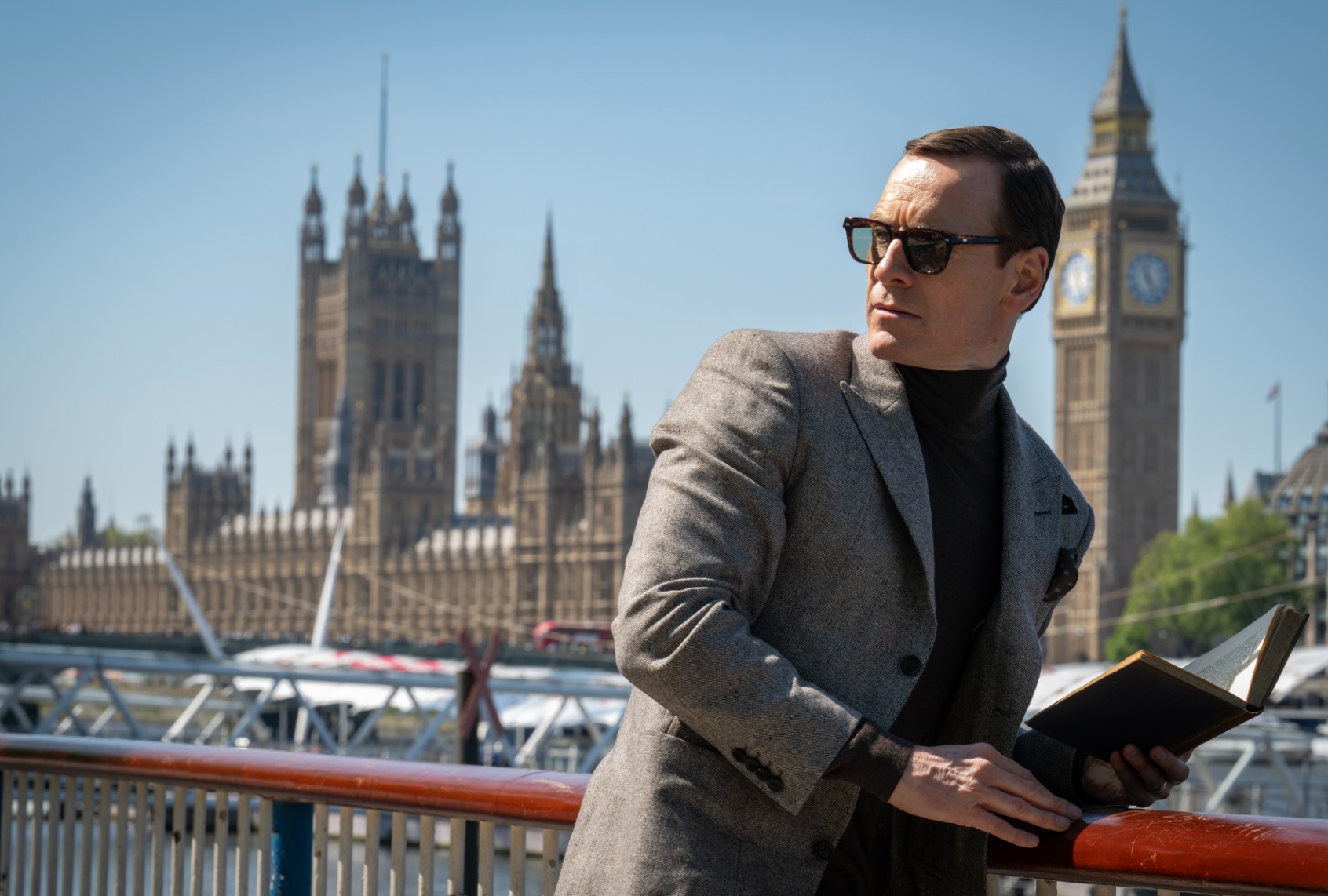
Soderbergh crafts an atmosphere of hazy sexuality right from the jump, with his camera hovering just behind the slender yet agile frame of George Woodhouse (Michael Fassbender) in an energetic long take that opens this sexy spy thriller. George, a top agent at a London intelligence agency, meanders through the chimeric bowels of a posh nightclub, hunting for a contact who’s got some bad news waiting. George’s wife, Kathryn (Cate Blanchett), is among five suspects in the company, wanted for treason after a mysterious weapon goes missing from their headquarters. George’s mission is to weed out the traitor in the house, even if it means putting a bullet in his beloved spouse. 

Cate Blanchett in "Black Bag" (Courtesy of Focus Features and Universal Pictures)A spy release that doubles as a marriage drama is nothing new. There have been plenty over the first quarter of this century alone; “Allied,” “The Americans,” “The Incredibles” and hell, a “Mr. and Mrs. Smith” movie and television series. It’s a formula that works almost every time, built on one simple question that most marriages confront at one point or another: Can you really trust your spouse? And though plenty have sought an answer to this age-old query, none have managed to do it with so much efficient wit as “Black Bag,” named for the phrase these deliciously deceptive agents use to bury secrets under the code of confidentiality. A whisper here, a wink there; it all goes inside the bottomless bag, meant to snare and snuff out interpersonal mysteries before they become marital weaknesses. 

But George and Kathryn aren’t the only couple at their agency whose relationship hinges on the privacy the black bag offers. The company’s clinical psychologist Zoe (Naomie Harris) and her field agent boyfriend James (Regé-Jean Page) are suspects too, as are the brilliant tech wunderkind Clarissa (Marisa Abela) and her older companion Freddie (Tom Burke). Each of the three couples has their ways of operating and communicating, and thus, their secrets to keep. “Not every spy is to your flavor of monogamy,” Kathryn tells George when he organizes a dinner party to begin sniffing out the mole under false pretenses. Maybe so, but perhaps they’ll enjoy George’s truth serum-spiked chana masala instead?


Want a daily wrap-up of all the news and commentary Salon has to offer? Subscribe to our morning newsletter, Crash Course.


This group dinner, which occurs early in the film, is the perfect opportunity for Koepp to highlight each character’s eccentricities and for Soderbergh to capture how his actors play them in front of the camera. Around the table, viewers are asked to study the dynamics between each couple closely and pay special attention to how characters interact with those outside of their romantic relationship. When Clarissa lobs a flirtatious invitation across the table to George, asking when she’ll get to take his renowned polygraph test, Soderbergh, Koepp and Abela are all working at the top of their games. Soderbergh lingers on Abela’s smirk, letting his audience wonder if she knows what George is up to; Koepp’s dialogue supplies the character with a spy’s intuition that belies the greenness of Clarissa’s age; and Abela delivers her question with a sparkle in her eye that exudes sex as much as it suggests danger.

Kathryn and George don’t see their fidelity as a hindrance, but rather a challenge. What constitutes spice when you’re both in a line of work where spice is the primary flavor? 

Sex is a critical tool for Soderbergh to call on in “Black Bag,” but not necessarily in the most expected way. Characters don’t screw so much as they screw each other over, but even their betrayals carry a degree of certitude that negates mere sensuality. These people know what they want, in and out of the bedroom, and they’re equipped with the tools to make those desires a reality. In this group of six, being boring falls just below treason on the list of unforgivable offenses. These characters don’t mince words, and Koepp’s dialogue reflects their conviction. When one person gets a knife stabbed through their hand, they aim for an equally cutting response to their assailant: “That’s the most boring thing you’ve ever done.”

For all of the high-tech spy gear and hidden motives, “Black Bag” is at its most electrifying when it claws at the drab plot points of your average marriage drama. It’s harder for audiences to approach spousal duplicity with a shrug when thousands of lives are at stake. But the film doesn’t simply evaluate the constraints of monogamy — you’d rarely find a plot point so trite in a Soderbergh film. Instead, “Black Bag” considers what keeps a loving, monogamous relationship healthy when temptation is waiting around every corner. Kathryn and George don’t see their fidelity as a hindrance, but rather a challenge. What constitutes spice when you’re both in a line of work where spice is the primary flavor? 

Michael Fassbender in "Black Bag" (Courtesy of Focus Features and Universal Pictures)

This question brilliantly sets up a short yet memorable scene where George and Kathryn enjoy a movie at their local multiplex. After finding a ticket stub in the garbage can, George asks Kathryn out to the same movie listed on the ticket to study her reaction, suspecting that she might’ve used the theater as a meeting place to trade government intel. We don’t know until the end of the film whether Kathryn is lying about not having seen the movie already, but at that moment, she’s having a fantastic time with her husband, causing George to settle into bliss too. As it turns out, even when partners lie and kill for a living, something as simple as a date night can be enough to invigorate a marriage. 

“Black Bag” has no shortage of notable moments like these, many of which end up in the hands of Abela, who is far and away the film’s scene-stealer — a lofty task as one-sixth of the finest ensemble cast in any movie so far this year. Abela more than makes up for her dismal turn as Amy Winehouse in the catastrophic biopic that was last spring’s “Back to Black,” and her work here is further proof that every great actor needs a couple of stinkers under their belt for audiences to really appreciate when they shine onscreen. Except in Soderbergh’s film, Abela doesn’t just shine, she often eclipses her far more seasoned castmates, knocking one-liners out of the park with such effortless aplomb that her performance feels like watching a movie star being born in real-time. Anyone who’s seen Abela’s work in HBO’s excellent finance drama “Industry” — which, in my opinion, topples "Succession" —  knows she has the varied skillset of any great actor. But in “Black Bag,” she takes off with the whole bloody affair, and it’s a delight to watch as she navigates Soderbergh’s expertly built tension with ease.

Then again, the entire thing is a jewel, an espionage romp that’s so consistently enjoyable throughout its snappy 94-minute runtime that you’ll want to buy another ticket the moment you walk out of the theater. Soderbergh’s sleek direction pours over the viewer like smooth espresso and energizes just as much too. “Black Bag” is a lean, mean spy machine. Good luck keeping it a secret, you’ll be talking about it all year long.

“Black Bag” is in theaters nationwide March 14.

Trump threatens to impose 200% tariff on European wine, champagne and spirits

On Thursday, President Donald Trump threatened to place a 200% tariff on alcoholic beverages from Europe— including wine, champagne and spirits — after the European Union imposed a 50% tariff on U.S. spirits Wednesday.  

“The European Union, one of the most hostile and abusive taxing and tariffing authorities in the World, which was formed for the sole purpose of taking advantage of the United States, has just put a nasty 50% Tariff on Whisky,” Trump wrote on Truth Social.

“If this Tariff is not removed immediately, the U.S. will shortly place a 200% Tariff on all WINES, CHAMPAGNES, & ALCOHOLIC PRODUCTS COMING OUT OF FRANCE AND OTHER E.U. REPRESENTED COUNTRIES,” Trump continued. “This will be great for the Wine and Champagne businesses in the U.S.”

The global trade war between the U.S. and Europe reached a peak on Wednesday after Trump’s 25% tariffs on aluminum and steel went into effect at midnight. The EU promptly criticized the trade action as “unjustified,” CNN reported, and proposed counter-tariffs on 26 billion euros ($28.31 billion) worth of American goods, including dental floss, boats, bourbon and bathrobes. The measures, which the EU said are both “swift and proportionate,” are scheduled to go into effect on April 1.  

In response to the U.S.-imposed tariffs, French Trade Minister Laurent Saint-Martin said Thursday that “Trump is escalating the trade war he has chosen to start” and that France would “fight back.”

“We will not give in to threats and will always protect our industries,” he also wrote.

According to data from the Distilled Spirits Council of the United States (DISCUS), the EU is “the [U.S. liquor] industry’s largest export market, taking in $883 million in American spirits in 2023,” MarketWatch reported

Masks off: The lessons we didn’t learn from COVID

When the SARS-CoV-2 virus first began spreading across the globe five years ago, some predicted that it could take five years for things to recover. Now that we've reached this seemingly impossible point, it seems some of those warnings were correct. Though infections are at a relative low these days, we're still dealing with COVID-19, which kills hundreds of Americans per week and disables countless others.

To date, the death toll from COVID is approximately 1.2 million Americans, the most deaths of any country, across two administrations. The fact that this was essentially allowed to happen, and that Americans were at greater risk than we could have imagined, is an eye-opener. So too is the fact that there has been no accountability. And that people continue to die from, and be disabled by, SARS-CoV-2 infection without any movement to change the situation. 

But it’s not just our life expectancy at birth that COVID has changed, or our probable risk of dementia. The pandemic has been a broader un-masker as well. Since perhaps FDR's New Deal and World War II, the interests of the average American have been understood to be inseparable from U.S. democratic capitalism. But since the pandemic, those interests have diverged sharply from the interests of the leaders and power-brokers of that system, regardless of whether they are Democrats or Republicans. (In other countries there's been a similar divergence between a wealthy minority and the majority most negatively affected by the pandemic.)

Of course, the arrival of COVID five years ago merely accelerated and facilitated existing trends of inequality, commodification and ownership consolidation of housing and agriculture (and everything else). It spurred massive geopolitical shifts, a class of increasingly precarious workers drawn from what was once a heartier middle class, the rise of tech authoritarianism and proto-fascism along with old-fashioned xenophobia, and the decline in public health and the scientific literacy, interest, trust and funding that support it. Perhaps most of all, these trends include acceptance of mass death, and of huge suffering among one identifiable group after another.

An interest in keeping us well

In the wake of COVID, existing trends in the spread and re-emergence of almost-forgotten diseases — trends mostly reflective of an increase in poverty, inequality and global travel, as well as in the alliance of so-called alternative medicine with the political far right — have been exacerbated.

A rise in syphilis cases in many countries over roughly the decade preceding the pandemic, for example, has accelerated since 2020, with congenital syphilis, where a mother passes the disease on to her child during pregnancy, rising 30% between 2021 and 2022 in the United States. University of Toronto infectious diseases researcher Ian Bogoch told the BBC that “a lot of this is reflective of a breakdown in public health care.” 

Indeed, a letter in the journal Science last week argued that preparing for an H5N1 pandemic is urgent, requires global cooperation, and must focus on equitable public health response funded by the government in collaboration with other sectors. Six years ago this might have read as a serious and realistic call for action. Now, it sounds more like a utopian incantation: read it aloud three times on a hill under moonlight and perhaps it will come true. Because the odds of such a serious, urgent, equitable and cooperative public health response being realized in the current reality seem incredibly unlikely. 

Syphilis is not a complicated disease to treat: it just needs penicillin. During the early phases of the pandemic, testing and treatment were delayed, and so rates of reported syphilis, like tuberculosis rates in this period, were artificially high for a while once testing began to catch up. But that issue has largely passed, without public health care returning to what it was. And syphilis is far from the only sign of a terribly sick health care system.

For many of us, it feels anything but normal.

Even as funding for necessary health care vanishes, essential data is removed from the public eye, and programs are forbidden from focusing on where they’re most needed, ordinary people are losing faith in the system, contributing to the problem by refusing simple, self-protective public health measures like wearing masks in indoor spaces or vaccination. Of course, not all groups are affected equally by these disparities.

“When we think about racial disparities in vaccination, it’s really important to get to the heart of why they exist and continue to persist,” Dr. Maimuna Majumder, a computational epidemiologist and faculty member at Harvard Medical School and Boston Children’s Hospital, told Salon in an email in relation to declines in measles vaccination fuelling the current outbreak of the disease.  

“Ultimately, under-vaccination has many causes. For example, in educated white folks, it’s often because of [factors like] lack of direct experience with [measles] itself; confidence in knowing the needs of their children, driven by their own education attainment; and so on. But in marginalized groups, the reasons can be completely different,” Majumder said, going on to note that a primary reason she’s seen in her own work is a lack of trust in the authorities that have themselves been responsible for their marginalization.

An interest in us believing our own eyes

We all saw the images of body bags stored in refrigerated trucks, and if we were in New York or another major city, we might viscerally remember the sirens. All this has faded awfully fast from our mass cultural memory. Could we really have lived through a situation in which, in that city alone, hospitals had to move bodies by forklift into makeshift truck morgues, in which bodies were stored in funeral home viewing rooms and chapels, in which four crematoria worked around the clock and bodies were buried in the same potter's field that has taken in the victims of past yellow fever, tuberculosis, HIV and influenza victims?

When we hit 100,000 American lives lost to COVID in May 2020, the New York Times published a moving tribute with detailed memorials to victims of the disease. When the figure reached one million the following year, the Times waited two weeks before representing all one million Americans as dots in a nonetheless valuable investigation of disparities in death rates. Thankfully, deaths have declined sharply from their peak during the Omicron surge, thanks to vaccination and acquired immunity from previous infections, which can make it feel like the virus is in the rearview.

But COVID — no longer subject to the precautions and policies of a national public health emergency or mandatory reporting of the disease — is still very much with us. Between 23 and 39 thousand Americans died directly of COVID in just the past six months, but their faces are no longer memorialized on the New York Times' front pages.


Want more health and science stories in your inbox? Subscribe to Salon's weekly newsletter Lab Notes.


In several years of writing about the opioid painkillers, the intersection of drug use and homelessness, and speaking with low-income people who used street drugs like illicit fentanyl or methamphetamine, I was struck by how often my interlocutors used the word "genocide." War on drugs policies that increase the unreliability of the underground drug market, combined with policies that criminalize poverty, were resulting in the regular deaths of the people around them. When they described it as a genocide, they were alluding to what they couldn’t help suspect was a concerted government policy to kill off drug users and the poor. The fact that the intersection of those two categories more often than not went along with one or more of being Native American, Black, disabled or queer only exacerbated these fears.

Conspiracy thinking in the absence of evidence is not helpful in understanding either COVID or toxic drug supply. But my respondents were accurately identifying a phenomenon of mass social abandonment. In their case, it began — or perhaps accelerated — as the impact of housing-commodifying policies of the 1990s coincided with the rise of illicit opioids, producing a class of extremely poor people with very little hope of emerging from desperate poverty. Addiction was really beside the point

COVID-19 Drive-Through Test SiteDrivers wait in a long line of cars for a COVID-19 test at a drive-through test site on December 9, 2020 in Riverside, California. (Gina Ferazzi / Los Angeles Times via Getty Images)So for two decades there has been mass death and displacement without any substantial ripples in the rest of society or significant policy changes to stop it. Rather, victims were increasingly criminalized. Attending funeral after funeral until it feels like an emergency, but seeing society continue as if nothing is going on is, for these people, a kind of gaslighting by policy.

Drug overdoses escalated from the start of the pandemic. While the rate has slowed, deaths have yet to decline back to where they were before COVID — a possibly significant drop just this year may be attributable to incomplete data, the CDC notes

Meanwhile, the sense of a crisis of mass death that society ignores as a whole, and policymakers in particular, has gone on to hit more and more identifiable groups. We stopped keeping track of COVID deaths almost altogether sometime in 2023, and given the lack of testing, there are no longer published death rates that can be said to accurately reflect actual deaths. There is evidence to suggest that some deaths attributed to natural causes, such as strokes, pneumonia or organ failure, during the first 30 months of the pandemic actually resulted from COVID. And now? All we know is that COVID, as a vascular disease, can have long-term effects on virtually every system of the body, worsening existing health conditions and creating new ones. But when someone dies of a heart attack now, or pneumonia, it is even less likely to be attributed to COVID. So we really don't know how many people are being killed as a result of past or current infection with SARS-CoV-2. But — as the National Organization for Women pointed out earlier in the pandemic — “Black, Hispanic, Latinx, Native American and Alaskan Native populations [are] suffering much higher rates of exposure, hospitalizations, and deaths.” 

These disparities are unlikely to have changed for the better. But those rates are no longer recorded.

"It’s extremely important from a health communications perspective to treat well-founded fears from a place of respect and empathy."

For many of us, this all feels anything but normal. The continuing toll of the coronavirus is officially unrecognized while being exacerbated by official policies that suppress the signs of a pandemic — without suppressing the virus itself. Immunocompromised and disabled patients are told that unmasked hospital waiting rooms are safe when we know they are not. Or that we must send our kids to crowded classrooms, but are not allowed to even donate an air filter to reduce our risk of life-changing infection. 

Those living with postacute sequelae of COVID (PASC, or long COVID) are routinely gaslit about their symptoms by medical professionals. Rates of numerous conditions for which there is a clear association with SARS-CoV-2 infection and even a demonstrated mechanism seem to be on the rise — heart disease and strokes or new onset type 2 diabetes, for example — but we are told that it has nothing to do with ongoing high wastewater rates of the virus. Patients go into hospital for surgery and come out with COVID. Or, sometimes, they don’t come out.

The same president who was the single largest driver of misinformation about COVID — as Cornell University researchers concluded in a 2020 study that looked at 38 million pieces of English-language content that year — has returned to power, vigorously pursuing the agenda that was briefly interrupted by the Biden administration. 

And then, of course, since Oct. 2023 we have watched war crimes livestreamed on our screens, even as the students protesting it and calling for ceasefire in Gaza have been treated as criminals. It's not just a war, it's also a public health crisis that, a couple of months of ceasefire aside, bridged the change in administration, assuring us that the cross-partisan tendency to gaslighting remains constant in regards to global geopolitics, as in regards to the pandemic. Jewish students holding open Shabbat dinners at encampments in support of Palestine, even, have been slandered as antisemitic. It’s enough of an inversion of truth, expected adherence to international law, the values that supposedly guided Western sympathy toward Ukraine, and basic compassion to give you whiplash. 

It all likely contributed to the return of Donald Trump, whose disregard for the Democratic tendency to use social justice rhetoric to mask billionaire-benefiting policy, and whose naked use of the president’s office as a profit-making, land-grabbing opportunity, takes unmasking of priorities to a whole other level.

The current administration’s attempts to visually and then literally wipe out concepts like racial disparities in health care outcomes, or health impacts of climate change, pollution and wildfires, or the vulnerability of groups like those over 60 or under 5 to infectious disease, fit right into the environment that’s been created: one in which one’s own experience is at odds with the official line. 

At which point, we’re told by friends, doctors, pundits and our political leaders that we’re clinically anxious, paranoid or even dangerous for the very logical skepticism and mistrust that result.

“As a Muslim scientist, a good deal of my community engagement involves reassuring my ummah that the government isn’t trying to chip us every time we get a vaccine — but I want to stress that this fear is not unfounded and does not deserve the ridicule it tends to receive,” Majumder explained, pointing out that Muslim Americans are extremely over-surveilled. "Many of us have first-hand experiences with inexcusable governmental infringements on our right to privacy."

"And sadly, we are not at all alone in this struggle, either; after all, our country has a long-standing history of government-financed eugenics programs that have targeted American minorities,” Majumder went on. "It’s extremely important from a health communications perspective to treat well-founded fears from a place of respect and empathy; that’s the only way marginalized communities — that are rightfully distrustful of the authorities — can be reached."

An interest in keeping us alive

Very early in the pandemic it became clear that, as is common for pretty much all diseases, the impact of SARS-CoV-2 infection is not evenly distributed across the population. Some groups have higher infection rates: like children under five, despite early and even continuing pronouncements about kids not getting COVID; Black people versus white, Hispanic versus non-Hispanic; men versus women. 

Others get more severe COVID if they get infected, and are more likely to be hospitalized or die (men; younger people with disabilities; older age groups.) Others are more vulnerable to long-term effects (women, people over 65, people with autoimmune diseases.) Still others live in areas or come from groups that have worse access to life-saving health care, or are less able to afford personal protection — everything from N95 masks to driving a private car instead of cramming into a packed subway car. 

"You do expect the state to save capitalism from its own worst instincts to some degree, in order to preserve social stability."

Study after study has revealed differential risk of death, likelihood of positive tests, or ability to isolate from family members to prevent spread of infection. The obvious course of action, once we learned that, for example, people with diabetes were at higher risk of dying due to infection, was to increase protection for people with diabetes. At the start, that meant giving them greater access to personal protective equipment and quick testing, and increasing their ability to get food delivered and to work from home. 

Later, the ways to protect what came to be generalized as "vulnerable people" included treatment with monoclonal antibodies and antivirals; and universal masking so that the amount of potential pathogen in any indoor space was reduced.  

“You do expect the state to save capitalism from its own worst instincts to some degree, in order to preserve social stability,” John Clarke, a long-time anti-poverty organizer who now teaches the history and practice of social struggle in Toronto, told Salon by email. He observed two ostensibly different responses play out around the globe — the Trump-style denialists, and leaders like Biden who purported to be responsible, but whose response was weak and inadequate, still put corporate profit over public health in reopening prematurely and without adequate mitigation. In practical terms, both approaches hung workers and those at risk of infection out to dry. In large part for this reason, more people ultimately died of COVID under Biden than Trump, as former Surgeon General Jerome Adams, who held this role under the first Trump administration, reminded Salon in December

That said, if we hadn't reopened as early as we did (Trump issued his reopening plan in April of 2020, a month after everything closed, while Georgia, Alaska, and Oklahoma began to reopen against public health advice April 24th), it's possible that the less infectious original strain of SARS-CoV-2 would have eventually fizzled out for lack of transmission, like SARS-1 and MERS, other coronaviruses with pandemic potential. Instead, mitigation was uneven and half-hearted, stoking frustration without effectively preventing spread of the disease, and paving the way for the backlash that followed.

“What was striking about the pandemic was how weak that limited restraining influence proved to be,” Clarke said. "In the face of a terrible virus that could have been even worse, measures of public health and social protection took a back seat to the needs of short-term profit in country after country. Lockdowns were too late and too little and temporarily improved income support and tenant protections were cast aside as rapidly as possible."
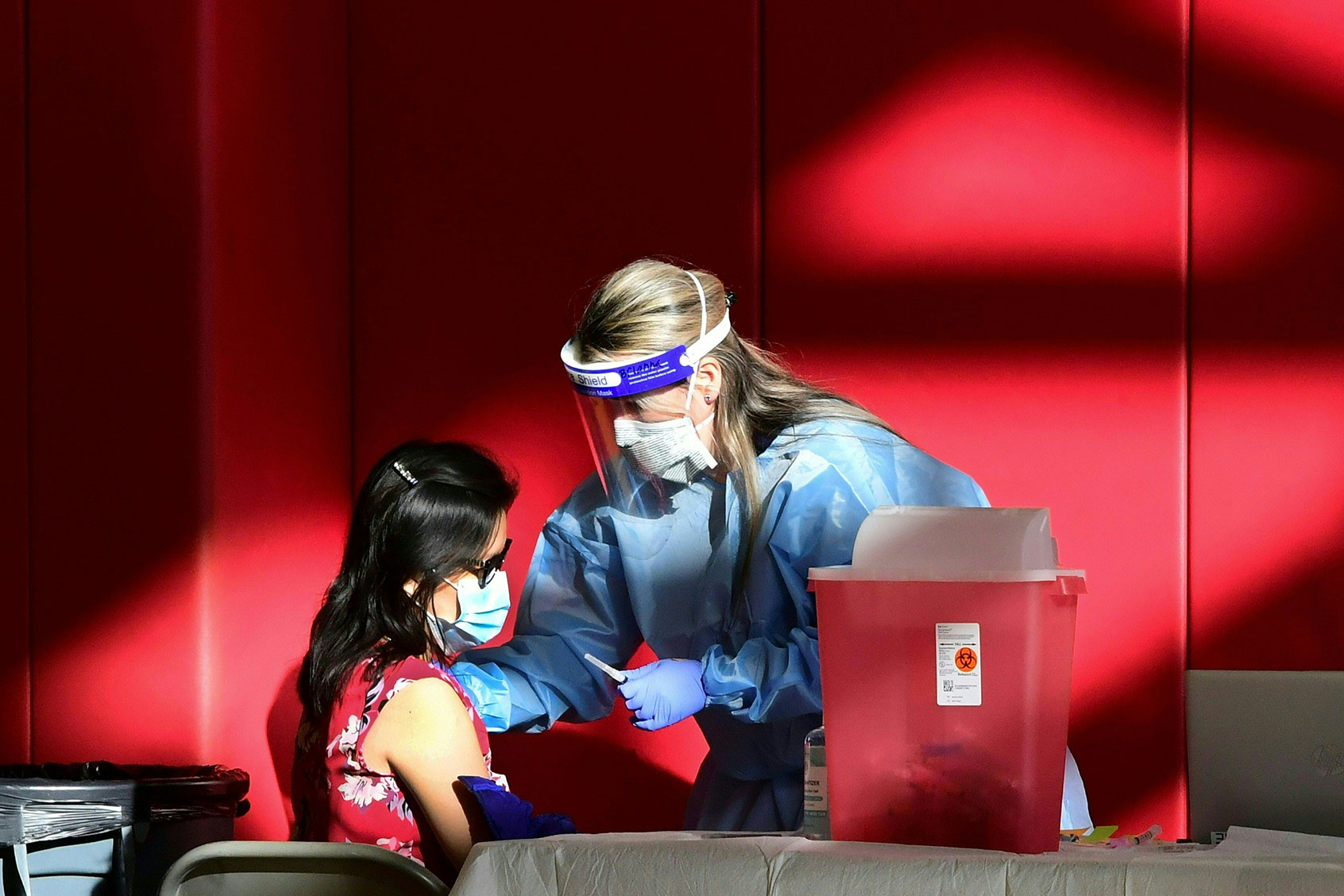
A registered nurse administers the COVID-19 vaccine into the arm of a womanA registered nurse administers the COVID-19 vaccine into the arm of a woman at the Corona High School gymnasium in the Riverside County city of Corona, California on January 15, 2021. (FREDERIC J. BROWN/AFP via Getty Images)

While we often heard about people’s vaccine fatigue or pandemic fatigue or masking fatigue, rarely did the media cover a far more entrenched structural issue: labor rights fatigue. Majumder told Salon that the second primary reason for low vaccination rates within marginalized communities is the lack of worker protections that would make it easier to get vaccinated. The majority of Americans consider themselves middle class, whether or not their lived reality or ability to afford housing or share of aggregate income reflect what we used to consider middle class. Thus they may not see themselves as marginalized. Still, if we’re considering who lacks worker protections, the term marginalized communities must refer to an amorphous but increasingly populated group that includes restaurant workers, daycare staff, delivery drivers, personal support workers — anyone who has trouble taking time off or who has an unpredictable work schedule and wages that are low in comparison to the cost of necessities. 

Such a group overlaps notably with that of workers who have difficulty voting because they can’t get the time off work: low-wage, more likely to be women, people of color, and working parents with young children. This is the group that needs daycare and good health insurance but is less likely to have it; that commutes large distances because they can’t afford rent near their workplace; that was disabled by COVID but lacks long-term disability insurance; and that was pushed back to in-person work most quickly and insistently, and before COVID rates justified it in epidemiological terms. This is often the group that were lauded as essential workers or heroes. Within this broad group, researchers have identified multiple identities that were hit with higher death rates than outside it.

An interest in real estate  — over workers

The move to remote work had its downsides, for sure. But for many people, the change represented a significant improvement in their work-life balance and quality of life, and allowed for workforce participation among people with disabilities, including those newly disabled from COVID. It also reduced workers' risk of new COVID infection, disability and death. A 2021 study based on a survey of one million Americans, for example, found that non-health care front-line workers experienced a sustained higher risk of testing positive for SARS-CoV-2 compared to non-frontline workers from Sept. 2020 to March 2021. These days, we’re all less likely to know if we are infected, so this kind of data is harder to collect. But we know that people continue to die of COVID, and they are largely not the CEOs who are pushing people back to in-person work or arguing against mitigations such as sick leave provisions or improving indoor ventilation and filtration in these workplaces. While there are strong cases to be made for hybrid or flexible workspaces that allow workers to spend time in person with colleagues, to get out of the house, and to interact with clients or customers in person, the push to return to in-person work has been imposed very definitely from above.

It’s not even because workers are more productive when they’re in an office workplace. They’re not. The U.S. Bureau of Labor Statistics demonstrates that what they call total factor productivity growth, a concept that tries to account for different ways of measuring productivity, rose along with the rise in proportion of remote workers across 61 private sector industries between 2019 and 2022. This holds even after you account for pre-pandemic productivity trends. The authors of the Bureau report dryly note: “productivity gains accrued to businesses, however, did not result in increased compensation to workers.” 

Despite the advantage to many businesses of reducing non-labor costs by remote work, the commercial real estate sector has needs. A 2023 McKinsey Global Institute report on remote work estimated $800 billion of commercial real estate value was at stake by 2030 across nine major world cities. Then there's the twitchy desire to maintain control over employees’ time. Together, these factors seem to have motivated the push to get low-wage workers back to in-person work in unmitigated environments, while white-collar workers and high-level decision makers continue to enjoy hybrid or work-from-home arrangements and the resulting lower risk of SARS-CoV-2 infection and death. One of Donald Trump's first executive orders was to send the entire federal workforce back to the office.

Majumder noted another way in which public health outcomes relate to worker protections, or lack of them: “It’s important to remember that many unvaccinated folks actually aren’t vaccine-hesitant; rather, they simply don’t have adequate accessibility to vaccination (i.e., easy access), driven in no small part by poor worker protections.” Some of her early pandemic research looked at the importance of paid sick leave in being responsive to public health interventions. 

“Vaccines are an excellent example of a situation where paid sick leave can be essential, especially if folks are worried about (minor, albeit disruptive) side effects. Moreover, it can be tough to even make it to the vaccine clinic — whether it be for yourself or for your kids — if you work a job where you can’t get time off for this essential public health activity,” Majumder told Salon. 

In effect, reports that emphasize vaccine hesitancy or talk about pandemic fatigue may conflate policymakers' goals of pushing people back into the workplace and of maximizing productivity at the expense of well-being with workers’ sheer exhaustion and barriers that make it hard for us to take part in protecting our own interests, whether through votes or vaccines.

So who is all of this for?

As documented in A Poor People’s Pandemic Report, “after its first wave, COVID-19 became largely a ‘poor people’s pandemic,’ with poor communities grieving nearly two times the losses of richer communities.” As this became evident, the “we’re all in this together” slogans petered out. Media and politicians began declaring the pandemic over, well before the epidemiological indicators bore this out in any way.

“The international reopening consensus that emerged as the pandemic ground on represented, in my view, a de facto consensus on social abandonment,” Clarke said. “There is no plan to deal more effectively with any future pandemic and the same is true of climate impacts. The cost of living crisis that followed the pandemic saw austerity intensified, wage demands resisted and an even more naked effort to deal with all social and economic crises in ways that served the needs of the vested interests. In conditions of 'polycrisis,' governments are more determined than ever to shape public policy in ways that favor the few at the expense of the many.”

Following the pandemic, homelessness skyrocketed. And the homelessness crisis that hit wealthy cities like San Francisco was by no means confined to people who used illicit drugs, or to the unemployed. 

This is the context in which the pandemic accustomed the rest of us to mass death, mass amnesia about that death, and criminalization of those who refuse to forget.

While U.S. politics have been dominated by the wealthy for as long as any of us can remember, and while Republican and Democrat representatives send their children to the same Ivy League schools where they will make the connections that lead to the same corporate boards, and while the dramatic concentration of wealth that results in inequality levels that would shock Marie Antoinette began ramping up in the '90s, the fallout of the pandemic has been such that the U.S. now have a government committed to avoiding any gestures towards the 99%.

The concentration of wealth has escalated through and since COVID. By the time the Omicron strain first turned up in South Africa in Nov. 2021, its current most famous son, Elon Musk, was already $293.7 billion richer than at the start of the pandemic. Collectively, America’s billionaires gained $1.8 trillion over that same interval, even as rents skyrocketed and 28.2% of lower-income adults lost their jobs, compared to just 7.8% of upper-income workers. They often ended up with more precarious positions or, as was the case for working women with children and people disabled by the pandemic, being pushed out of the workforce. And changes made in the wake of the pandemic have married wealth to power and governance as never before. 

Essentially, the world — including the majority of Americans — are being held hostage by a tiny group of people of unimaginable wealth. Just 36 fossil fuel companies are responsible for half of the world’s CO2 emissions. A majority of Americans have, since two weeks after Oct. 7, 2023, expressed support for restrictions on or reductions in weapons sent to Israel, and for a ceasefire in Gaza. But U.S. policy under Biden and under Trump has involved sending ever-greater amounts of money and weaponry that are then used to flatten or dismember Palestinian children. 

We need your help to stay independent

And we are asked to see the "vulnerable" as a small number of whiny people on death’s door anyway. It’s a straight-out lie — after all, being over 65, being overweight or obese, suffering from depression, having ADHD or having either type of diabetes are just a few of the all-too-common factors that put you on the CDC’s at increased risk list — but it’s been an enormously successful one. Its success during the pandemic, as a million Americans died of COVID-19 within a year, has emboldened those who steal the world’s resources and exploit our labor while putting us at risk we would never have tolerated decades ago, when it seemed that a rising tide was lifting all boats. Risk of disease. Risk of unemployment and homelessness. Risk of global climate collapse and constant disaster, for which we can no longer find insurance to help rebuild nor expect government support to do so.

And resistance will be criminalized

Authoritarianism has been a hallmark of the post-pandemic world. Human Rights Watch described, four years ago now, how at least 83 governments around the world had already used the COVID pandemic to justify attacks on free speech and peaceful assembly. In the wake of the pandemic in the U.S., we've seen a sharp increase in authoritarian response to social movements. This is despite initial successes of the Black Lives Movement and protests of police killings of unarmed Ahmaud Arbery, Breonna Taylor, and George Floyd during the pandemic. Protests of Floyd's murder were perhaps "the largest, broadest and most covered political protests in American history." But establishment and corporate support for changes to structures of systemic racism and racist policing proved short lived. 

As sociologists Deanna Rohlinger and David Meyer argued, "movements may have difficulty working with partners whose financial interests are likely to supersede political goals." Indeed, responses to exercise of the democratic right to protest have, especially in the case of student-led demonstrations against the U.S.-funded siege and bombardment of Gaza, been characterized by excessive use of police force that has been criticized by the American Civil Liberties Union, Amnesty International, Human Rights Watch, the Inter-American Commission on Human Rights, the U.N. High Commissioner for Human Rights, and U.N. experts, including the U.N. special rapporteur on the right to education.

Meanwhile, over the first two years of the pandemic, policing in Houston, Texas shifted from reactive to proactive, relying on increased police presence and targeting of perceived sources of disorder or violence as a way to prevent crime before it happens and avoid accusations of police brutality. However, in practice this might mean clearing encampments of homeless people, surveilling student activists, or targeting specific ethnic or income-defined neighborhoods. 

Harassment of mask-wearing individuals, followed by outright mask bans, has been a feature of this post-pandemic life, with even personal ways to attempt self-protection perceived first as an affront, and then as evidence of suspicious intentions, and even as a crime. At the same time, mask bans fulfill the authoritarian purpose of ensuring individual protesters can be identified by authorities in a climate that is ever more punitive of people exercising their rights to free assembly and freedom of expression.

Perhaps, perhaps, the pandemic sowed the seeds of future resistance by revealing to more and more of us that the world we live in isn't designed with most of our best interests (or the planet's) in mind. There are certain inflection points in history where you can imagine how things might have gone differently. If Martin Luther King Jr. hadn’t been assassinated, might he have succeeded at marrying his anti-war and economic inequality work with the civil rights advocacy for which he remains famous? Might we now all enjoy affordable housing and fair working conditions thanks to his economic bill of rights, rather than preparing for the world’s first trillionaires? If Al Gore had become President, would we now be wondering why climate change indicators are veering towards the worst case scenarios, or whether we’ll perish by water or fire?

And if it hadn’t been for that spiky little virus, would we all be one happy family? Or might we just still think we are?

“He is not the leader for this moment”: Protesters rage at Schumer for backing GOP spending plan

Hundreds gathered in Brooklyn, New York on Friday to express their discontent with Senate Minority Leader Chuck Schumer, D-N.Y., and his support for advancing a GOP budget extension.

On Thursday, Schumer said he was backing the Republican continuing resolution to avert a government shutdown, breaking with his Democratic colleagues in the House, who argue that doing so will enable President Donald Trump and Elon Musk to continue slashing away at federal agencies.

The message at the early morning rally outside the 74-year-old’s New York City home was clear: “vote no or go.” 

Organized late Thursday night by Indivisible Brooklyn, a progressive group that’s been pushing Democrats to fight back harder against Trump's agenda, the rally was the product of a massive online backlash against Schumer’s capitulation on a six-month continuing resolution that includes billions of dollars in budget cuts.

“He is not the leader for this moment,” Lisa Raymond-Tolan, an Indivisible Brooklyn organizer,  told rally-goers. “We need him to fight back or get the f*** out.”

“Block cloture — no help for fascists,” one sign read. “Schumer, you f****** coward,” read another.

Speaking to Salon, Raymond-Tolan said the protest was “a testament to how many people are upset," noting that hundreds "came out at 8 o'clock in the morning on a weekday to let the senator know that he is off course and capitulating to fascism — and we won’t stand for it.”

The Brooklyn demonstrators’ message to Democratic leadership? Tear up the old playbook.

“Throw out decorum. Throw out bipartisanship. We can't play by old rules. We need to stop, obstruct, block, delay, throw sand in the works that literally every opportunity,” Raymond-Tolan said.

We need your help to stay independent

Schumer, along with a number of other Democratic senators, plan to back cloture on the Republican CR, meaning that the GOP could pass the measure with a simple majority, waving through a budget that all but one Democrat in the House rallied against. 

Schumer told reporters on Thursday that while the GOP budget proposal was terrible, “allowing Donald Trump to take even much more power via a government shutdown is a far worse option.”

But critics say the Trump-Musk shutdown has already begun. Social media users argue the party was in a position to extract concessions, including a continuing resolution without cuts or a bill binding the executive branch to spending commitments made by Congress.

“The Senate thinks its voting to avoid a government shutdown. The shutdown is already happening, and it is permanent,” University of Michigan Public Policy professor Don Moynihan wrote in a post on Bluesky. 

Protesters said Schumer, whose office lines go straight to voicemail, wasn’t getting the message.

“We’ve been here outside of Chuck Schumer’s house for years, and people will say, ‘Why are you bothering him?’” Julie Peppito, a Brooklyn resident whose mother will be impacted by the GOP budget’s cuts to the Department of Housing and Urban Development, said in a speech to the crowd. “Well, look where we are.” 

The organizers behind the rally said the senator’s inclination towards inaction is not an option in the second Trump era.

“It's not hard to rally the troops because people are really f****** angry,” Indivisible Brooklyn organizer Jennie Spector told Salon. “[Schumer] has incredible power to stop [the CR] and to put the brakes on it… But he doesn't do that, and he doesn't know how to use his power. And we, the people who he works for and who elected him, need to tell him what to do. That’s why we’re here.”

You know people are furious when they show up at an 8am protest at @schumer.senate.gov house. Chuck you are betraying us. It’s not too late to change your mind and actually fight back! @indivisible.org @socialists.nyc @riseandresist.bsky.social @marisakabas.bsky.social @50501newyork.bsky.social

[image or embed]

— Indivisible Brooklyn (@bkindivisible.bsky.social) Mar 14, 2025 at 8:36 AM

It isn’t just the party’s left flank voicing opposition to Schumer’s concessions. Moderate Democrats Rep. Seth Moulton, D-Mass., former U.N. Ambassador Susan Rice and former Biden adviser Neera Tanden were among those who urged the Senate minority leader to “grow a spine.”

House Democrats — including the subject of his own Brooklyn protest over feckless leadership, House Minority Leader Hakeem Jeffries — also condemned the planned vote for cloture on Thursday night, with party leaders releasing a statement arguing that the “far-right Republican funding bill will unleash havoc on everyday Americans.”

And demonstrators were clear with Schumer: He needs to act or get out of the way. Amid rumors that Rep. Alexandria Ocasio-Cortez, D-N.Y., may be consdering a primary challenge against Schumer, some expressed support for ditching the old guard Democrats. “I wish AOC was my senator,” one sign read.

The demonstration marks the latest salvo in the party's internal battle over its opposition strategy to Trump. Groups like Indivisible and MoveOn, and some Democratic elected officials, have urged Congressional leaders to take the threat of Trump's lawlessness more seriously, leading an unsuccessful push to demand that Schumer use his power to slow down the administration's cabinet confirmations.

Unrivaled’s championship is set — and so is the future of women’s basketball

Growing up in Chicago in the '90s, I fondly remember the incredible sight of Michael Jordan and Scottie Pippen locked in an epic one-on-one battle on the court during their summer offseason. Just kidding. Of course that would never happen. Elite professional ballers — gold medal Olympians no less — would never be caught doing such a thing—until now, thanks to the brave women of the WNBA. Welcome to a new basketball club: It’s Unrivaled. The first season, found on TNT, TruTV, and Max, unveils the infinite and awesome possibilities of women’s basketball by rethinking the game’s format, structure, and financial ecosystem. Unrivaled is more than just a new club; it’s a game changer

The format of Unrivaled sets it apart from traditional WNBA and NBA games, creating a thrilling new style of play. The 3×3 format introduces a fast-paced and high-intensity environment that departs from the standard five-on-five structure seen in professional leagues. With fewer teams and a smaller number of players compared to the W, the game creates an elite, competitive atmosphere where every possession counts. The NBA has thirty teams compared to the W’s thirteen, but Unrivaled dramatically condenses its roster from about 156 W players down to just thirty-six for a more exclusive competition, ensuring that only the best of the best take the court. Co-founded by W stars Napheesa Collier and Breanna Stewart, this league prioritizes top-tier talent and action-packed games. The smaller, more agile game structure provides a fresh, engaging experience for both players and fans, amplifying the stakes of each game and shifting the narrative of women’s basketball.

Perhaps the most shocking and ruthless aspect of Unrivaled is the week-long one-on-one tournament embedded in the middle of the two-month season. As if 3×3 weren’t difficult enough, this sudden-death challenge disrupts traditional team dynamics and forces individual players to prove their dominance. The unpredictable and unforgiving nature of the format was made quite clear when rapt, unblinking audiences watched some of the most decorated and veteran athletes face early elimination at the hands of rookie Aaliyah Edwards as she scrapped her way to face WNBA Defensive Player of the Year Collier for a highly respectable 1-2 loss in the finals. Unlike regular-season games where teams rely on coordinated plays, this tournament strips basketball down to its most street and most revealing form: one player versus another. 

WNBA champion Azurá Stevens (Courtesy of Unrivaled)For her second-place finish, Edwards walked away from that one-on-one tournament with $50,000 in prize money—her W salary last year was just $25,000 more than that. The financial incentives are staggering, with massive cash prizes awarded not only to the winners but also to the teammates who supported them in getting there throughout the season. Unrivaled players have an average salary of more than $220,000, while the maximum base salary in the W is $208,000. With Unrivaled salaries averaging significantly higher than those in the W, the league ensures that women’s basketball players are compensated at a level far closer to their male counterparts than ever before. This redistribution of wealth ensures that Unrivaled remains a team-based endeavor, while still rewarding individual excellence.
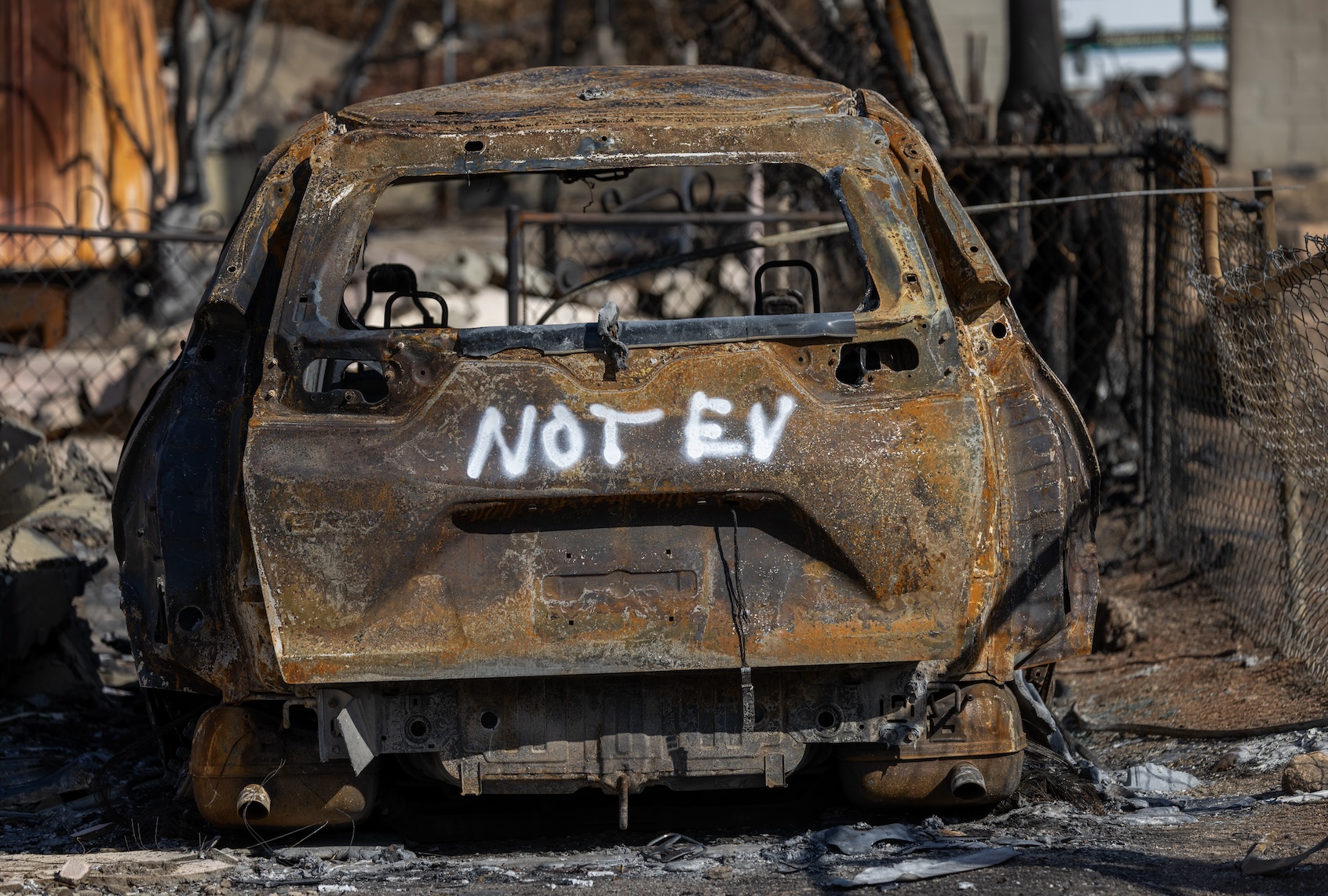

Want a daily wrap-up of all the news and commentary Salon has to offer? Subscribe to our morning newsletter, Crash Course.


Beyond its entertainment value, Unrivaled is a crucial economic lifeline for WNBA players who often must play overseas during their offseason just to make ends meet. This practice comes with significant risks, as seen in the case of Brittney Griner, who was detained in a Russian prison for 293 days while playing for an international team. Other notable players, such as Diana Taurasi, have also been affected. Taurasi was once paid by her Russian team to sit out the entire 2015 W season to more fully heal a hand she broke while playing in Euroleague, illustrating the financial disparity that forces players into difficult decisions. Her Russian team paid her $1.5 million, while her W salary that year was just $107,000. Unrivaled provides these athletes with a safer, high-paying alternative, allowing them to train and compete domestically rather than relying on international leagues for supplemental income. This shift could fundamentally alter the financial landscape of women’s basketball and certainly provides players with greater control over their careers.

Unrivaled directly challenges the systemic disparities that have historically hindered not only female ballers but women’s sports at large.

The centralized location of Unrivaled in Miami further enhances the experience for players, eliminating the relentless travel schedule that W teams endure. In contrast to the grueling cross-country flights and constant time zone changes of a typical W season, Unrivaled players remain in one place, in a professional atmosphere that serves up serious summer camp vibes reminiscent of the Olympic Village. This setup allows athletes to focus entirely on refining their skills and competing at the highest level without the logistical and physical toll of continuous travel. Moreover, it strengthens the bonds between players, who generally have friendships that transcend team rivalries. By prioritizing stability and community, Unrivaled cultivates an environment that is as enriching as it is competitive.

While the WNBA has long been a political force advocating for social justice and free speech, Unrivaled shifts the focus toward financial equity. The W famously took a stand against former Atlanta Dream owner Kelly Loeffler, leading to her relatively speedy departure from the league due to players’ activism. However, Unrivaled champions a different kind of political statement: one rooted in the fight for pay parity and equal facilities for women’s sports. By offering higher salaries, on-site childcare and state-of-the-art training environments, Unrivaled directly challenges the systemic disparities that have historically hindered not only female ballers but women’s sports at large. This economic empowerment sends a powerful message that athletes deserve the same financial and structural support, regardless of their gender.

Unrivaled champions a different kind of political statement: one rooted in the fight for pay parity and equal facilities for women’s sports.

Unrivaled also creates new opportunities in coaching and sports media, further expanding its influence beyond the court. The halftime commentary panel, featuring a trio of analysts, showcases fresh voices in basketball analysis and brings greater visibility to women in sports journalism. One of the standout voices is Renee Montgomery, whose sharp analysis, fly attire and energetic presence make halftime discussions as entertaining as the game itself. In addition, the league provides coaches from different avenues with a chance to refine their strategies and develop new play styles in a setting that values innovation over tradition. Assistant coaching staff from the NBA like Phil Handy and Adam Harrington get to rise into first position. Others get a shot at redemption, like Teresa Weatherspoon, who was let go from her Head Coach gig at Chicago Sky after the team failed to make the playoffs last year. These developments not only enhance the league’s credibility but also pave the way for more diverse representation in leadership roles across professional basketball. By prioritizing new voices in both coaching and broadcasting, Unrivaled is helping to redefine the future of the sport.

All of this positions Unrivaled as a transformative force that is reshaping the future of women’s sports. Its groundbreaking format, ruthless midseason tournament, financial empowerment of athletes, centralized location, commitment to equity and investment in coaching and media create a model that challenges the status quo in every way. By offering a fresh take on competition while addressing long-standing structural inequalities, Unrivaled has the potential to change the trajectory of women’s basketball forever. See for yourself. The semi-final bracket airs on Sunday night and finals matchup is on Monday night. This is not just a new league—it’s a revolution.

“Joe Manchin always told me”: A centrist Democrat explains why he sided with Republicans on the CR

In a call with a No Labels, a self-proclaimed centrist organization, Rep. Jared Golden, D-Maine, described his decision to vote for a Republican continuing resolution that stands to empower billionaire Elon Musk and President Donald Trump as him taking the “high road.”

Golden, speaking Thursday just before Senate Minority Leader Chuck Schumer, D-N.Y., announced his support for the same CR, was the sole Democrat in the House to back the GOP plan, which pairs spending cuts with funding to keep the government open for another six months. Many Democrats expressed concern that, while the passage of the CR would avoid a government shutdown, it would also further empower Trump and Musk to make unilateral cuts to congressionally authorized programs.

Indeed, Politico reported this week that Vice President JD Vance promised House Republicans wary of approving more spending that the administration would pursue impoundment, which legal experts decry as an unconstitutional attempt to seize Congress' power of the purse.

During the No Labels event, however, Golden suggested that it was he who was standing up to the administration. “I think people on the left are not really thinking this through, and they should be careful what they ask for,” he said in reference to people actively opposing the Republican bill.

“Anyways, Joe Manchin always told me, 'Don't — if you can't go home and explain something to people, then you probably ought not to vote for it.' And I can’t explain what good would come out of a shutdown,” Golden said.

Golden continued: “I also want to point out that right now, anyway, where [Trump] is exceeding his authority as president, the courts are doing a pretty good job so far.”

Asked about Vance's promise, Golden suggested in an email to Salon after the No Labels call that it didn't affect his decision.

"Statements by the vice president, or anyone else for that matter, didn’t factor into my vote for the CR at all," Golden said. "I voted to keep government open because I know that right now a shutdown will make things worse, not better. A shutdown will mean more people going home without pay, more federal agencies having their doors closed."

The "real fight," Golden said, is coming up: "I voted to keep federal spending at more or less current levels through the end of the fiscal year and to keep the government’s lights on so we can move on to the real fight, which is stopping the House GOP from using reconciliation to cut taxes for the wealthy while potentially taking health care away from hundreds of thousands of my constituents."

We need your help to stay independent

But plenty of Democrats disagree with that assessment.

Rep. Rosa DeLauro, D-Conn., described her issues with the CR at a House Rules Committee hearing earlier this week, calling the bill a “blank check” that allows Trump to “keep impounding." The bill, she charged, is “filled with cuts and policy changes while abandoning Congress’ responsibility to decide how and why to spend taxpayer dollars.”

Impoundment refers to when the president decides not to spend money appropriated by Congress. The power is both statutorily illegal under the Impoundment Control Act of 1974, and constitutionally illegal as the Supreme Court ruled in Train v. City of New York.

Golden's remarks come as most House Democrats are urging their Senate counterparts to stand firm and oppose the Republican CR. No Labels, the group that hosted the Maine lawmaker, presents itself as a counterweight to progressives, but a review of its finances shows that it has often backed Republicans. In 2024, the group donated more than $1.6 million to Republicans, compared to $236,000 to Democrats. Golden himself received $2,000 from the group. Other Democrats the group supported by No Labels include Reps. Ritchie Torres, D-N.Y., Henry Cuellar, D-Texas, and Josh Gottheimer, D-N.J.

While No Labels has historically sought to keep its donor roles a secret, an investigation by Mother Jones published in 2023 found that many of the group’s wealthy benefactors are business moguls.Some of the donors include Michael Smith, the billionaire founder of Freeport LNG, who has donated millions of dollars to support Republican efforts to control the Senate, and Tom McInerney, a private-equity investor with connections to the Republican National Committee and GOP affiliated super-PACS.

Bruce Springsteen warned Peter Wolf about writing a memoir — he did it anyway

Peter Wolf’s memoir, "Waiting on the Moon: Artists, Poets, Drifters, Grifters and Goddesses," is a powerful meditation on the music business. Authored from his unique perspective at the heart of the industry, Wolf’s autobiography makes for an unusual celebrity narrative — rather than concentrating on self-aggrandizing storylines, the musician devotes his writerly energy to bringing the look, sound and feel of as-it-happened rock history to life.

A native of the Bronx, Wolf spent his youth soaking up New York City’s music scene, especially the Apollo Theater’s array of soul, rhythm & blues and gospel performers. After moving to Boston, he attended Tufts University’s School of the Museum of Fine Arts. In 1967, Wolf and drummer Stephen Jo Bladd joined the J. Geils Band. 

During the 1970s, the group notched several Top 40 singles, including a cover of the Valentinos’ “Lookin’ for a Love” and the singles “Give It to Me,” “Must of Got Lost” and “Come Back.” With “Love Stinks,” the J. Geils Band enjoyed breakthrough success, followed by the megahits “Centerfold” and “Freeze Frame.” In 1983, Wolf and the J. Geils Band parted ways. As a solo artist, he notched several hits, including “Lights Out” and “Come as You Are.” 

Along the way, Wolf accumulated the unforgettable, often moving stories at the heart of "Waiting on the Moon." When it came to authoring his memoirs, Wolf turned to none other than Bruce Springsteen, the author of the bestselling "Born to Run" autobiography, for advice. Springsteen reportedly spent more than a decade penning the book. As Wolf relayed to me during a recent interview, Bruce explained, “Pete, let me tell you the best advice I can give you. You got to really, really, really, really, really, really, really, really, really, really, really, really want to do it. And until you really, really, really, really, really, really want to do it, don’t start it. Because if you don’t really, really, really, really wanna do it, it will take over your life.”


Want a daily wrap-up of all the news and commentary Salon has to offer? Subscribe to our morning newsletter, Crash Course.


For music lovers, Wolf’s painstaking efforts were well worth the time. Take his youthful days at the Apollo, an era when one legendary artist after another made their way to the vaunted Harlem venue. One of them was blues master Muddy Waters. Wolf recalled the moment when Muddy stepped onto the stage, writing, "After so many hours spent staring at the record cover, I was mesmerized at the sight of that familiar face come to life. His playing and singing were even more powerful onstage than they were in his recordings. He brought the audience to their feet several times.”

In an especially poignant vignette, Wolf recalled the last time he saw George Harrison. They were backstage at a Bob Dylan concert when Van Morrison took the stage for a duet with the folk legend. “During Bob’s set, I was stageside, standing next to George Harrison, who was quietly unassuming. Bob and the audience were connecting so deeply that it was like a form of communion,” Wolf writes. “When Van appeared onstage, you almost couldn’t hear the music — the crowd was cheering so loudly. I wondered why George wasn’t out there singing, too. He and Bob were so close. I said to him, ‘You should be out there.’ But George lingered in the shadows of the stage lights, just enjoying the music. Unbeknownst to me, he had been diagnosed with cancer, and the full meaning of seeing his friend Bob perform that song did not hit me until his passing.”

With "Waiting on the Moon," Wolf writes from the perspective of a tried-and-true music fan. And with such instances as his memories about the Apollo or a quiet moment with a Beatle great, he reminds us why we love music in the first place.

How much corruption can MAGA stomach? Trump and Musk test the limit

Donald Trump held a press availability with the NATO Secretary, former Dutch prime minister Mark Rutte, on Thursday which was anticipated to be a bit contentious considering Trump's hostility to the alliance. After all, he has made it very clear that he has nothing but contempt for the organization and could be expected to pull the U.S. out of it with the smallest provocation. And he was already very angry that Europe was retaliating against the tariffs he had enacted for no reason, writing on Truth Social that the EU is “one of the most hostile and abusive taxing and tariffing authorities in the World, which was formed for the sole purpose of taking advantage of the United States." His fuse was short.

But Rutte was deferential to Trump, laughing excitedly at his "jokes" and making sure to let him know how much he appreciated him and it seemed to loosen the president up. Trump regaled the press with anecdotes about how he "invaded Los Angeles" and reiterated his plan to seize Greenland, saying "Denmark is very far away. A boat landed there 200 years ago or something and they say they have rights to it. I don't know if that's true. I don't think it is, actually" before declaring that there may have to be more soldiers there. He called the EU "nasty" and again made it clear that he is dead serious about annexing Canada:

He seemed, as he often does lately, more than a little bit off his rocker. But the demands for obeisance from everyone around him, foreign and domestic, aren't new. It's just that now that he believes that he's achieved vindication for his Big Lie about the 2020 election and all the criminal and civil investigations from which he escaped, he's demonstrating that he'll use the power of the United States government to punish any offender if they look at him sideways.

In the last administration, Vice President Mike Pence set the standard for adoring toadyism. Commerce Secretary Howard Lutnick has taken it to a whole new level in this term:

As Bloomberg reported, Lutnick is very upfront about what Trump expects:

Lutnick says Europe and Canada are being disrespectful and Trump is growing tired of it. “If you make him unhappy, he responds unhappy,” Lutnick said of Trump’s threat to put a 200% tariff on wine, champagne and other alcoholic beverages from France and elsewhere in the EU.

It's been clear since the campaign that Trump was serious about exacting revenge on his enemies and he's doing just that, every day. (He's even going after the law firms that defended them.) But never let it be said that Trump doesn't also do favors for his friends. Just this week it was reported that his DOJ (and it is "his") fired a pardon attorney for balking at restoring his friend Mel Gibson's gun rights without any vetting. (He was convicted of very serious domestic violence.)

And everyone knows that if you want an exemption from Trump's tariffs, you have to ask very nicely and even then he might or might not agree. The same holds true for the DOGE billionaire Elon Musk who is in charge of destroying the federal government. CNN reported that he met with Republican lawmakers and gave them his phone number if they wanted to make the case to him directly to reverse a cut that hurts their constituents. (Needless to say, Democrats have not been offered the same privilege.)

We need your help to stay independent

I think everyone has struggled to perfectly define what's going on here. Is this autocracy? Oligarchy? Kakistocracy? Is Trump simply out of control, behaving like a Mad King, even worse than the one this country rebelled against in the first place? A widely read Atlantic article from last month by Jonathan Rauch gives a definition to the process that makes the most sense to me. He reaches back to German sociologist Max Weber who defined this as something called "patrimonialism."

Weber believed that rulers gain legitimacy from two one of two systems, the first being what Rausch calls "rational legal bureaucracy (or “bureaucratic proceduralism”), a system in which legitimacy is bestowed by institutions following certain rules and norms." That would be the system we have been operating under since the founding of our country under the Constitution. Patrimonialism, on the other hand, is the system under which nearly everyone on earth lived until pretty recently in human history. Quoting a book called "The Assault on the State: How the Global Attack on Modern Government Endangers Our Future" by Stephen E. Hanson, a government professor at the College of William & Mary and Jeffrey S. Kopstein, a political scientist at UC Irvine, which defines it as the state being "little more than the extended ‘household’ of the ruler":

Patrimonialism is less a form of government than a style of governing. It is not defined by institutions or rules; rather, it can infect all forms of government by replacing impersonal, formal lines of authority with personalized, informal ones. Based on individual loyalty and connections, and on rewarding friends and punishing enemies (real or perceived), it can be found not just in states but also among tribes, street gangs, and criminal organizations.In its governmental guise, patrimonialism is distinguished by running the state as if it were the leader’s personal property or family business.

That's what Trump and Musk are in the process of creating: A pre-modern patrimonial government where everything is decided through them on a personal basis.

Rausch makes the case that this is not necessarily authoritarian since authoritarian systems like Hitler's Germany or the Soviet Union were heavily bureaucratized. It can even begin as a democracy. But over time it almost always devolves into autocracy.

Rausch says that patrimonialism has two inherent weaknesses that make it vulnerable: incompetence and corruption. Once you chase out all the people who know how to make things run (bureaucrats) and allow corruption to supercede the needs of the people it breaks down.

Rausch says, "corruption is patrimonialism’s Achilles’ heel because the public understands it and doesn’t like it. It is not an abstraction like “democracy” or “Constitution” or “rule of law.” It conveys that the government is being run for them, not for you." It's the most potent argument against this patrimonial presidency, that's for sure.

I've never understood why more wasn't made of Trump's outright corruption in his first term. Now they are just waving it in our faces and it's a thousand times more blatant. Musk waving around a chainsaw and Trump hawking Teslas on the White House driveway last week says it all. Let's hope the opposition can get it together enough to pound that message home this time.

“Environmental disaster”: Toxic aftermath of Los Angeles fires puts public at risk, experts warn

The unprecedented Los Angeles wildfires nearly two months ago burnt down entire communities and displaced thousands of people have all been contained, but the questions about the extent of the remaining environmental disaster — and its impact on local communities — are still going strong.

Almost immediately after the fires broke out, many environmental experts warned that this is an urban wildfire unlike any we’ve seen before. So comparisons to the 9/11 terrorist attacks, other wildfires and major clean-up efforts were bound to fall short, they argued.

Months after the first fires broke out, many remain homeless, trying to get back to their communities or acquire access to potable water. For many others, concerns remain about the safety of air and water quality in the larger LA area, the second largest city in the United States.

Few people in the area were  immune to the fires: Ross Gerber, a climate activist, early Tesla investor and CEO of Gerber Kawasaki Wealth & Investment Management, was only able to return to his Pacific Palisades home in early March.

"It's an environmental disaster, and they [city authorities] are pretending like, ‘Oh, it'll just go away.’ But now it's sitting on our beaches, and it's just like going into the sand, and it's possible that, if they don't deal with this, it could be years of contamination for the LA beaches or more,” Gerber told Salon.

Even influential money managers like Gerber felt seemingly helpless in the face of local governments’ response to the wildfires and their immediate aftermath.

A car that was destroyed by the Eaton Fire is marked as a non-electric vehicle and not containing large EV batteries on January 29, 2025 in Altadena, California. (Photo by David McNew/Getty Images)

"The lifeguards are standing there, and I was like, ‘Dude, you're not going to tell these people to get out of the water?’” he said, describing a recent encounter on a beach. “They're literally wading in toxic s**t. It's all over. And they're like, ‘Yeah, whatever.’ I figured if I started telling people to get their kids out of the water, they would be like, ‘leave us alone.’"

Gerber has not been the only one concerned about the local response and on-the-ground application of city guidelines, as public officials scrambled to balance public safety with political considerations.

Almost immediately after the fires broke out, many environmental experts warned that this is an urban wildfire unlike any we’ve seen before.

“We’re in a race against time to stop disaster after the disaster,” Jane Williams, executive director at California Communities Against Toxics, warned during a webinar hosted by Coalition for Clean Air back on January 16, immediately comparing the Los Angeles wildfires to the impact of 9/11. “[That was] one of the largest public health disasters in the country’s history, and we’re faced with exactly the same problem in Los Angeles now: trying to intercept those exposures.”

Local authorities' response and messaging on health risks has been uneven, with many displaced residents struggling to get clear guidelines on the timeline of the cleanup or the status of the potable water in their districts.

In Pacific Palisades, the Los Angeles Department of Water and Power found trace levels of benzene, a known carcinogen, in several locations and is still working on resolving the contamination, the Los Angeles Times reported. Meanwhile, Altadena communities are still waiting for the final clearance from the state to lift the “do not drink” notices.


Want more health and science stories in your inbox? Subscribe to Salon's weekly newsletter Lab Notes.


Many residents have turned to local Facebook groups and private messaging boards in an attempt to navigate local bureaucracies, often making tough, personal calls on what is safe for their families.

The popularity of electric vehicles in California and the volume of electric cars damaged in the fires have added another layer of complexity to the cleanup efforts.

Steve Calanog, the EPA's incident commander for the Palisades and Eaton fires called it “probably the largest lithium-ion battery pickup, cleanup, that's ever happened in the history of the world,” according to an NBC Los Angeles report.

We need your help to stay independent

While some beaches that were previously closed due to fire debris have reopened, others remain closed. Health officials advise the public to check on the latest updates from the Los Angeles County Department of Public Health or call the beach closure hotline at 1-800-525-5662 for the latest information.

When it comes to air quality, officials have mostly warned about avoiding outdoor activities in areas with visible ash or poor air quality, but some safety experts say that many toxic particles could be hard to see.

“The particles are so small they can get into the brain,” said Ed Avol, professor emeritus at USC School of Medicine at the same Coalition for Clean Air event. “The ability to focus, pay attention in school, dementia – we’re looking at a range of outcomes. It affects your metabolic system.”

While California Governor Gavin Newsom touted “the fastest-ever hazardous debris removal effort in the nation” as of February 25, many questions about the safety of air, water and long-term health impact remain. Newsom’s office did not respond to Salon’s request for comment.

“They're driving those trucks right through West LA right through residential neighborhoods,” Gerber said of the ongoing clean up efforts. “The whole idea that they're using any level of safety is absurd."

“You must sacrifice”: MAGA excuses for Trump’s trade war echo “prosperity” preachers

"Go forward boldly into your destiny," declares Paula White, the head of Donald Trump's newly-minted White House Faith Office. The charismatic preacher's new video instructs her followers, whose ranks have swollen as a result of her close relationship to Trump, that "you must sacrifice some way during this prophetic season, because it's through sacrifice that your spirit opens up so wide that you can receive divine direction." She promises "increase" for those who sow a "seed," citing Proverbs 1:33, which promises "safety" and "ease" to believers. What is this "sacrifice" White wishes her followers to make for their safety and ease? Why, sending her a check for $133, which she implies will be returned to them many times over by God. 

White House faith adviser Paula White says there is a narrow "prophetic season" for God to bless you, but only if you give her $133, so act now.

[image or embed]

— Right Wing Watch (@rightwingwatch.bsky.social) March 10, 2025 at 11:11 AM

White is one of the country's most prominent peddlers of the "prosperity gospel." As religious studies expert Kate Bowler explained in Vox in 2018, it's a Christian movement that teaches "God will give you your heart’s desires: money in the bank, a healthy body, a thriving family, and boundless happiness." All you need to do is prove your faith by writing checks to the leaders, even — perhaps especially — if you can't afford it. By doing so, they promise, God will reward them amply, often in cold, hard cash. 

Trump built his career on scams, leading to multiple civil judgments against him and his company for defrauding customers and the public. Unsurprisingly, his favorite preachers are the "prosperity gospel" types, an especially shameless grifter style. Even some far-right Christian conservatives, who otherwise back Trump wholeheartedly, are angry about his relationship to White, calling her views "heresy," and balking at treating their religion like a get-rich-quick scheme. 


Want more Amanda Marcotte on politics? Subscribe to her newsletter Standing Room Only.


But what's striking about the prosperity gospel and its empty promises of future wealth in exchange for current privation is how much it sounds exactly like the excuses Trump and his allies are making for the economic wreckage he's inflicting on the U.S. through unnecessary and unjustifiable tariffs. During the campaign, Trump promised, "When I win, I will immediately bring prices down, starting on day one." Instead, he's doing the opposite: Imposing tariffs on most major trading partners, which function like a sales tax that will almost certainly cause inflation, which had been dwindling in the last year of President Joe Biden's term, to skyrocket again. 


The argument that financial suffering now will lead to wealth later is magical thinking, of the same sort that fuels prosperity gospel claims that donating to a preacher's private jet fund will inspire God to fill your coffers.

Trump seems motivated almost entirely by spite, lashing out at Americans for mostly not voting for him, at foreign countries for not kissing his ring hard enough, and at former Canadian Prime Minister Justin Trudeau for being so much better-looking than Trump ever was. But the sales pitch he and his allies are making to the base sounds like the same lie peddled by prosperity preachers: If you sacrifice this money now, you will be rewarded with untold future riches. 

"The hard way to do it is exactly what I'm doing," he told reporters on Tuesday. "The results are going to be 20-times greater." Sometimes, he uses euphemisms like "a little disturbance" or a "period of transition" to describe the pain he's inflicting on Americans, but he insists that the country will be "rich" because of it. On Thursday, he posted on Truth Social, "TARIFF RELATED MONEY IS POURING INTO THE UNITED STATES," as if shouting makes the lie more true. 

The message spread throughout the Trump propaganda apparatus to command the MAGA base to see their sudden loss of purchasing power as a necessary sacrifice for future riches. Commerce Secretary Howard Lutnick admitted that the tariffs will likely spur a recession, but insisted it would be "worth it" because they will supposedly "produce growth." "No pain, no gain — that’s what we used to tell our football players," Sen. Tommy Tuberville, R-Ala., said, falsely equating exercise, which promotes muscle growth, with sales taxes, which suppress consumer spending and shrink the economy. Fox News host Greg Gutfeld also invoked the language of sacrifice, instructing viewers, "don't buy the goods" if they don't want to pay the tax. That may be not possible with necessary goods, like food and fuel. But even with luxury items, the "don't spend money" message is death to economic growth. 

"Shut Up About Egg Prices," commanded Turning Point USA founder Charlie Kirk, in an article shared by Trump. Kirk promises his readers that if they're just patient and put their faith in God's, er, Trump's plan, eventually he will "put more money in everyday Americans’ pockets." "We’re just asking you to sacrifice for a little bit for the long-term prosperity of the United States," begged Dan Bongino, the MAGA podcast host nominated to be FBI deputy director. "There might be some pain in the beginning, but ultimately this is to help all of us," declared Steve Doocy of Fox News. The examples are endless, but they're all singing the same tune: If you let Trump jack up your prices now, you will be rewarded with riches in the future. 

This is all nonsense, as economists keep patiently explaining. The only thing that happens when prices are artificially raised is that people spend less, which slows the economy down — a recession, the opposite of the "boom" Trump promises. There's this elaborate and vague rationale that this is part of a plan to bring "manufacturing" back, but that's a lie. When he's not levying more tariffs on goods Americans depend on, Trump is demanding an end to large scale investments in manufacturing made by the Biden administration. In addition, the threat of tariffs is causing investors to pull back, afraid to open factories in the U.S. because they have no idea what it will cost to operate in this volatile environment. 

In truth, the argument that financial suffering now will lead to wealth later is magical thinking, of the same sort that fuels prosperity gospel claims that donating to a preacher's private jet fund will inspire God to fill your coffers. There's significant overlap between prosperity gospel adherents and Trump's fan base. He's likely counting on that fact to sell his tariff lies, assuming — for good reason — that his base voters are accustomed to calls to ignore reality and to have blind faith in their leaders instead. For his most loyal voters, he's not wrong to believe they have endless patience for being ripped off, which is why so many of them are still writing checks to televangelists when they can barely pay their own bills. 

Trump and his allies might do well, however, to look at new Pew research that shows Christianity continues to face a decline, as younger generations walk away from religion. It's not surprising, when the face of Christianity is increasingly shameless hucksters like Paula White. Trump won not because his base of support has grown, but because a large number of voters who had reservations about his personality fell for his false promises to lower prices. Now they're being told they must endure artificially jacked-up costs and take it on faith that they will someday be rewarded for their "sacrifice." Many people will sour quickly, realizing they're being conned. No wonder Republicans are already starting to sweat the midterm elections

“The new normal”: As Trump pursues mass deportations, tourists land in ICE detention

A number of tourists from European countries have been detained by ICE in recent weeks when attempting to enter the United States, their planned vacations instead turning into long stretches in detention. Experts say their arrests are an apparent escalation in enforcement action as President Donald Trump's immigration crackdown rages on. 

In the last month, at least three tourists — two from Germany and one from the United Kingdom — were stopped at a U.S. port of entry and detained for at least two weeks. The latest incident involves 28-year-old Welsh artist Rebecca Burke, who was handcuffed and detained when attempting to re-enter the country in Washington after being turned away by Canadian border officials, according to her father, Paul Burke. In a plea for help on Facebook, he said that his daughter was denied entry into Canada due to "an incorrect visa" and was refused re-entry and classified as an "illegal alien" by U.S. Customs and Border Protection. 

"Despite being a tourist with no criminal record, she was handcuffed and taken to a detention facility in Tacoma, Washington,” he wrote in the March 8 post. She has remained in detention since, sharing a cell and "surviving on a diet of cold rice, potatoes, and beans" with limited phone call access and "no clear timeline for her release," he added.

As of March 11, Paul Burke shared in a separate post, her family was working on arranging a return flight to Monmouthshire in Wales pending permission from Immigration and Customs Enforcement. Burke could not be reached for comment.

The recent spate of tourists detentions is "pretty unusual," according to Stephen Yale-Loehr, an attorney of counsel for Miller Mayer LLP's immigration practice group and former professor at Cornell University. He told Salon that CBP, if it suspects an issue with a tourist's visa, will typically will turn people around if they're entering through a border or send them on the next flight back to their home country. 

"The unusual part of this is that they've been detained so long," Yale-Loehr said in a phone interview, noting that CBP has "been much more vigilant reviewing everyone's credentials and reasons for coming to the United States" since Trump took office. 

"Our immigration detention system is often a black hole where individuals have a hard time contacting lawyers or family friends to be able to help them, and there's no clear procedures other than bringing a federal court action to try to get them released — or until CBP determines that they need to be deported and then sends them out," he added. 

Canadian officials first denied Rebecca Burke entry over concerns that she had violated her visa, Paul Burke told the BBC. As part of what was supposed to be a four-month trip backpacking across North America, Rebecca Burke had traveled to Portland, Oregon, where she stayed with a host family, whom she helped with household chores in exchange for lodging.

She then went to Seattle with plans to travel on to Vancouver, Canada, but officials stopped her at the border. Rebecca Burke told the BBC she spent some six hours at the border waiting as officials debated whether her arrangement counted as work, and they ultimately decided she had "violated" her visa.

The German tourists' experiences mirrored Burke's, with both being held at the Otay Mesa Detention Center in San Diego for weeks after being arrested at a southern port of entry in February. 

Lucas Sielaff, a 25-year-old German citizen, was arrested at the San Ysidro port of entry on Feb. 18. U.S. officials cancelled his entry permit at the border over suspicions that he intended to remain in the country for longer than allowed. According to his fiancee, Sielaff had incorrectly answered a question about his permanent residence due to a language barrier. He told immigration authorities Las Vegas, where he would be staying with his partner, when she shoud have said Germany, she said, per The Guardian

Sielaff was released, escorted to the San Diego airport by ICE and returned to Germany on March 6. 

Jessica Brösche, a 29-year-old German tattoo artist, was taken into custody at the San Ysidro border point in late January after she attempted to travel from Tijuana, Mexico, to Los Angeles with an American friend, the friend, Nikita Lovfing, told CNN. Brösche had been travelling with tattoo equipment. Lovfing speculated that immigration officials misinterpreted Brösche's statements that she was coming to the U.S. to tattoo her — part of a six-year long tattoo project that Lovfing returns with custom clothes in exchange — as an admission that she was entering the country to work. 

Brösche, who told ABC 10News San Diego she spent eight days in solitary confinement, remained in ICE detention for six weeks until Tuesday. Her mother confirmed to German media Tuesday that the artist was headed back home. 

Yale-Loehr said that, generally, individuals travelling to the U.S. as tourists are not allowed to work. In Burke and Brösche's cases, immigration authorities likely considered their accomodation arrangement or reason for entry were a "kind of work" and determined they both violated their visas. 

In Sielaff's case, officials likely assumed he did not have a "bona fide, non-immigrant intent" — a foreign residence he doesn't intend to abandon, per the regulations governing tourist and visa waivers — because of his incorrect answer, Jeff Joseph, the president-elect of the American Immigration Lawyer's Association, told Salon. 

"Had they pursued it a little bit further or asked him additional questions, they may have found out that that was not what he meant," Joseph said. Rather than placing him in detention without bond, immigration officials could also have used "less restrictive measures" like allowing Sielaff to withdraw his application and pay for a flight back to Germany, or leave voluntarily without a deportation order, per Joseph.

ICE did not respond to a request for comment. 

We need your help to stay independent

In a statement to ABC 10News San Diego earlier this month, a CBP spokesman said that if a foreign national denied admission to the U.S. is not able to book travel to their home country, "he or she will be turned over to the custody of Immigration and Customs Enforcement."

"All aliens in violation of U.S. immigration law may be subject to arrest, detention and, if found removable by final order, removal from the United States, regardless of nationality," an ICE spokeswoman also told the outlet in a statement.

As atypical as they are, these detentions are still legal, Joseph said. Still, they represent "a really strict interpretation" of the policy guidance the State Department and CBP use to make these determinations. 

"It's incredibly heavy handed, and it's not the least restrictive means," he said. Officials are "actually choosing to detain people and put government resources behind deporting them and giving them a deportation order."

Also of note, he said, is that these detained travelers' plights stems from their entering the country with visa waivers rather than tourist visas. Because they're citizens of two of the 43 countries with which the U.S. has agreements based on "good relations and good history of immigration compliance," they're allowed to waive the visa requirement and enter for tourism on short stints without a visit to and express approval from their consulates, Joseph explained. 

Though allowed greater freedom of movement, eligible foreign nationals also "waive" the due process rights and right to contest any removal action against them that come with a formal tourist visa, he added.

By comparison, citizens of nations without those agreements have to apply for a tourist visa at their consulate and undergo an intense vetting process to obtain it before they can travel, he said. Those nationals would "never" face a situation where they are detained at a border or airport if denied. 

These detentions and removals are "definitely an escalation" ushered in by Trump's presidency, he argued. The administration has made clear that they're "looking to deport everyone" regardless of where they're from, and that "chaos is the exercise."

"I think they're detaining these people intentionally because creating this mass hysteria and panic and media attention [for] these cases will prevent people from coming," Joseph said, adding: "We see that in all of their enforcement efforts, and they said it publicly, that he most efficient way to deport people is to have them do it themselves."

He warned that American citizens traveling to other countries, especially those in Europe with reciprocity treaties governing their visas, should expect to face increased scrutiny and similar treatment as the Trump administration has deployed here. 

"This, 100%, is the new normal," Joseph said. 

How to recession-proof your resume in an uncertain job market

An unpredictable and often volatile job market has created significant challenges for job seekers and working professionals. Mass layoffs, hiring freezes, economic shifts and the threat of AI automating certain jobs out of existence can make even the most qualified professionals uneasy about the future of their careers. When you’re facing these kinds of insecurities, it’s easy to fixate on factors that are completely beyond your control. The problem is, dwelling on those uncertainties won’t help you insulate your career or advance your job search. 

As difficult as it may be to face an unclear future, the most advantageous thing you can do is shift your focus to the things you can control. What actions and decisions can you make that will strengthen your career stability and move you toward your long-term goals? That’s where real progress happens. 

With so much change in the workforce, now is the time to take steps to recession-proof your resume and your career. 

Recession-proofing your resume and building career resilience means improving and showcasing your adaptability, demonstrating your commitment to achieving positive results and aligning your background and qualifications with employer needs and priorities. This doesn’t mean you need to completely overhaul your career, but it does mean that you should think about refining and repositioning your experience so your value matches current and future demand. 

Key strategies

Creating a job-search plan and mapping out your career trajectory isn’t something to ignore until you find yourself out of work or looking for a promotion. Even when you feel secure in your current role, you could be doing yourself a disservice if you aren’t taking steps to recession-proof your resume. Here are some key strategies that you can implement: 

Future-focused upskilling. One of the best ways to insulate your career and recession-proof your resume is through continuous learning and upskilling, particularly when that upskilling is future-focused. Employers value professionals who stay ahead of industry trends, adopt new technologies and regularly look to expand their expertise. By proactively learning and applying in-demand skills to improve the quality of your work and increase your efficiency and productivity, you demonstrate your commitment to growth in alignment with the needs of the modern workforce.

We need your help to stay independent

Future-focused upskilling, whether through online courses, certification programs or hands-on experience, makes you a more competitive candidate and can open doors to new opportunities. It can also make you more indispensable to your current employer and provide greater career stability, even in uncertain times. The key is to focus on skills that will enhance your value and improve your marketability. Learning to use AI tools to enhance your productivity is a prime example of this type of upskilling. Plus, a recent report from Resume Now found that 84% of workers say AI has made finding job opportunities easier, making this type of upskilling beneficial in more ways than one.

Emphasize adaptability and versatility. Change can happen frequently in an unpredictable market, which means that adaptability and versatility are critical qualities to possess. Employers appreciate professionals who are willing to take on new responsibilities and are able to thrive in an evolving workplace, so emphasizing your ability to pivot when change occurs is key to recession-proofing your resume. 

Highlighting your transferable skills, ability to learn new systems or step into new roles and knack for cross-functional collaboration demonstrates your resilience and capacity for problem-solving and critical thinking. Whether it’s successfully adopting new technologies, seamlessly navigating a company restructuring or consistently expanding your expertise beyond your core role, showcasing adaptability and versatility on your resume will show employers that you’re someone who embraces change and is always up for new challenges.

Showcase results and quantify your impact. If your resume reads like a job description, hiring managers will quickly lose interest. It’s essential to go beyond simply listing out the tasks and responsibilities you’ve held and instead showcase the results you’ve achieved. Quantifying your impact on your resume by including relevant metrics will help set you apart: You’re providing concrete evidence of your positive contributions and highlighting the magnitude of your work. 

If your resume reads like a job description, hiring managers will quickly lose interest

Not all roles lend themselves to easily quantifiable success metrics like revenue generation, error reduction, customer satisfaction ratings, project completion rates or cost savings. But you can still focus on your qualitative accomplishments by describing the outcomes of your work and the ways you supported the achievement of team and organizational goals. Results matter, and a results-driven resume allows you to emphasize your value and improve your career resilience. 

Network proactively. Too many people make the mistake of thinking that networking is only something you need to engage in when you need a favor or are seeking a new job. In reality, networking is a long-term investment in your career stability. Building and maintaining strong, mutually beneficial professional relationships can help uncover new opportunities, provide valuable insights and enable you to keep your finger on the pulse of industry trends and changes. 

If you’ve been neglecting your network up to this point, it’s never too late to reach out to former colleagues, engage with industry groups and increase your activity on social networking sites. Platforms like LinkedIn can also help you quickly identify and begin engaging with potential connections who are doing the type of work you want to be doing so you can start establishing and nurturing new relationships.

Maximize your visibility. Sadly, being great at your job isn’t enough to ensure career stability, particularly in an uncertain job market. The more visible you are in your industry, the more opportunities will come your way, regardless of market conditions. Making sure your professional networking profiles are up to date and optimized for your field, engaging in industry-relevant discussions and sharing your expertise can increase your chances of being noticed by recruiters.

Being great at your job isn’t enough to ensure career stability, particularly in an uncertain job market

Your professional brand is more than just your resume; it’s also about how you present yourself online, the connections you build with others in your industry and the reputation you cultivate. By consistently engaging with others and showcasing your thought leadership, you increase your chances of being sought out for new roles rather than scrambling to find one after disaster strikes. 

Take action today 

With the unpredictable nature of today’s job market, preparation is key, especially considering that 73% of employed professionals are already struggling to afford anything beyond their basic living expenses. This financial strain makes it even more important to strengthen your career stability and position yourself for long-term success.

While you can’t control economic shifts or hiring trends, you can control how you position yourself for success. By proactively upskilling, demonstrating adaptability, highlighting your impact, building strong connections and making your value clear, you’ll be better prepared to face whatever challenges might arise. The job market can change pretty rapidly, but your ability to navigate it confidently will help make your career recession-proof. 

Will the Supreme Court kill birthright citizenship? It’s a question of history vs. loyalty

President Donald Trump is asking the Supreme Court to prop up a January executive order ending birthright citizenship in the United States.

The order, which would stop the practice of granting citizenship to children of undocumented immigrants and other noncitizens born in the U.S., was all but laughed out of court by a federal judge that month. U.S. District Judge John Coughenour called the novel interpretation of the law “blatantly unconstitutional” while issuing a temporary restraining order on the Trump administration. Coughenour was one of three federal judges to put a pause on the policy.

The emergency application from the Trump administration asks the high court to “restrict the scope” of nationwide stays on the order’s implementation, citing Justice Clarence Thomas’s 2018 claim that universal injunctions were “legally and historically dubious.”

“Universal injunctions have reached epidemic proportions since the start of the current Administration,” attorneys for the Trump administration wrote, hoping the conservative-controlled Supreme Court would “declare that enough is enough” and check the judiciary’s own power to rein in the executive branch.

The court has proven to be unpredictable in Trump cases, throwing several wrenches into the administration's more blatant schemes. And the concept of birthright citizenship for all people born on American soil has much deeper roots than the Project 2025 platform.

Birthright citizenship is older than the United States

Birthright citizenship has been formally codified in the Constitution for over 150 years, but the concept dates back to long before the nation's founding. 

University of Virginia Professor Amanda Frost traced the pre-14th Amendment foundations of birthright citizenship in an article for the Yale Journal of Law and Humanities last year.

“Common law doctrine [of citizenship by birth] was the law of the land until it was erroneously rejected by the Supreme Court in its 1857 decision in Dred Scott v. Sandford, which declared that no person of African descent, slave or free, could be a U.S. citizen,” Frost wrote.

The “antebellum doctrine” of rights at birth was present in the laws of at least six northern states, laying the groundwork for a post-Civil War amendment. Incompatible statutes on the question of citizenship were finally resolved after the abolition of slavery and the ratification of the 14th Amendment. 

SCOTUS has long supported the 14th Amendment

The most sweeping of the Reconstruction Amendments, the 14th Amendment overturned the Dred Scott decision, which held that Black Americans weren’t entitled to citizenship at birth. The amendment explicitly states that “all persons born or naturalized in the United States and subject to the jurisdiction thereof, are citizens of the United States,” and has been held to grant unconditional citizenship to those born on US soil since 1898. 

That year, the Supreme Court ruled in United States v. Wong Kim Ark that an American-born son of two Chinese nationals was entitled to American citizenship despite laws barring Chinese individuals from the country.

For the majority, Justice Horace Gray ruled that the 14th Amendment “affirms the ancient and fundamental rule of citizenship by birth within the territory… including all children here born of resident aliens,” clarifying that Wong was a citizen.

The Supreme Court’s finding has been the law of the land since, with Congress occasionally broadening the scope of citizenship based on the court’s ruling. Lawmakers granted citizenship to all Native Americans in 1924, after the court had ruled decades before that people born on reservations were not entitled to citizenship.

"Either a crazy theory or a dishonest interpretation"

Experts agree that the text of the 14th Amendment is clear, and that Trump’s interpretation doesn't pass muster. Harvard Law School professor Gerald Neuman defended citizenship for all people born in the United States in a January interview with Harvard Law Today.

“The argument is either a crazy theory or dishonest interpretation of the Constitution,” Neuman said, adding that an executive order was also insufficient to augment constitutional law. “The president has no authority to change the citizenship rule at all… the merits are clear. There’s only one reasonable answer to this.”

We need your help to stay independent

Beyond questions of constitutionality, state officials fear the change would create devastating logistical crises. Officials from at least 24 states signed on to an amicus brief in support of New Jersey’s challenge to the executive order last month, saying the change would "cause administrative confusion…and immeasurable harm to individuals." 

Julia Gelatt of the Migration Policy Institute told Salon last year that excluding certain American-born children from citizenship would create a “multigenerational class of people who are excluded from full rights.”

"Denying people that legal status, even if they're born in the United States, would put people in a much more legally vulnerable, economically vulnerable position," Gelatt said. 

It is unclear whether the Supreme Court will give in to the president’s fringe interpretation, though the court recently narrowly ruled against the Trump administration’s illegal impoundment of $2 billion in Congressionally approved foreign aid. 

At least one expert thinks justices wouldn’t go so far. UCLA Professor Hiroshi Motomura told Salon last year that birthright citizenship was even more sacred than other rights this court has placed on the chopping block.

“Even though people say that the court has become more conservative, this would be even further in the direction of trying to overturn the past than we've seen,” he told Salon. “This goes way beyond overruling Roe v. Wade. I think that was a radical move, but this is no comparison. This is quite a bit more of a rethinking of what the country is even about.”

“A fighter and a champion”: Democratic Rep. Grijalva dies after cancer battle

Rep. Raúl Grijalva, D-Ariz., died on Thursday morning at age 77, his office announced.

Arizona’s longest-tenured member of Congress was diagnosed with lung cancer last spring, undergoing nearly a year of treatment. During his 22-year stint on Capitol Hill, Grijalva championed environmental protection, public education and reproductive freedom.

The Tucson-born representative previously co-chaired the Congressional Progressive Caucus and House Committee on Natural Resources, and sat on the Committee on Education and the Workforce. He was a vocal opponent of attacks on Arizona's immigrant community.

Democratic elected officials in Grijalva’s home state reacted to the news on Thursday with shock and sadness.

“Congressman Grijalva was not just my colleague, but my friend. As another Latino working in public service, I can say from experience that he served as a role model to many young people across the Grand Canyon State,” Senator Ruben Gallego, D-Ariz., said in a post to social media. “I am praying for his family during this time of grief, and I hope that that they find comfort knowing his legacy is one that will stand tall for generations.”

“I’m devastated to hear of the passing of my colleague Raul Grijalva. He was a fighter for Arizonans and a champion for Indigenous communities and our planet. We will all miss him dearly. My thoughts are with his family, friends, loved ones, and constituents,” Rep. Yassamin Ansari, D-Ariz., said in a statement.

Grijalva’s seat will remain vacant for at least six months under Arizona state law until a primary and special election can be held.

“It was a sham”: Judge orders Trump admin to reinstate thousands of fired federal workers

A federal judge ordered President Donald Trump's administration to reinstate probationary federal workers axed last month, the biggest blow yet to Trump and billionaire Elon Musk’s scheme to massively shrink the federal government.

Northern District of California Judge William Alsup ruled on Thursday that the firings were unlawful and said claims that the mass layoffs were based on performance amounted to a "sham to try to avoid statutory requirements."

"Our government would fire some good employee, and say it was based on performance. When they know good and well that's a lie," he shared.

Alsup said that the Office of Personnel Management, a favorite of DOGE in its crusade against career bureaucrats, had “no authority whatsoever” to remove workers at the departments of Agriculture, Defense, Energy, Interior, Treasury and Veterans Affairs.

Alsup repeatedly accused representatives of the Trump administration of talking out of both sides of their mouths when trying to justify the layoffs. He said that the OPM was crafting smokescreens between itself and the layoffs to make them legal and refused to buy the line that the agency had no say in the widespread reduction in force.

"The court rejects the government's attempt to use these press releases and to read between the lines to say the agency heads made their own decision with no direction from OPM," Alsup said, adding that he doubted government attorneys were "telling [him] the truth."

Alsup ordered Cabinet departments to “offer reinstatement to any and all probationary employees terminated on or about February 13.”

White House Press Secretary Karoline Leavitt promised to “immediately fight back against this absurd and unconstitutional order” in a statement.

"A single judge is attempting to unconstitutionally seize the power of hiring and firing from the Executive Branch. The president has the authority to exercise the power of the entire executive branch – singular district court judges cannot abuse the power of the entire judiciary to thwart the President’s agenda," she said. "If a federal district court judge would like executive powers, they can try and run for president themselves." 

Union leaders celebrated the reinstatement of early-career public service workers, who they say were “illegally fired.”

“We are grateful for these employees and the critical work they do, and AFGE will keep fighting until all federal employees who were unjustly and illegally fired are given their jobs back,” American Federation of Government Employees president Everett Kelley said in a statement.

Top House Oversight Democrat Gerry Connolly, whose Virginia district is home to thousands of federal civil servants, celebrated the ruling in a statement.

“This is a win for our democracy, the rule of law, and for the American people who are better served by having these federal workers on the job,” Connolly said. “The Trump-Musk Administration must immediately respect the court’s decision and reinstate these dedicated civil servants.”

“We will not be silent”: Protesters occupy Trump Tower demanding Mahmoud Khalil’s release

Hundreds of demonstrators occupied Trump Tower in New York City on Thursday to protest President Donald Trump’s detention and attempted deportation of former Columbia University student activist Mahmoud Khalil.

Activists from Jewish Voice for Peace donned matching shirts reading “not in our name” and flooded the building’s lobby to stage a sit-in.

JVP spokesperson Sonya Meyerson-Knox claimed that roughly 300 Jewish and non-Jewish demonstrators attended the protest in solidarity with Khalil. Protesters charged Trump and his administration with unlawfully detaining Khalil, a lawful permanent resident of the United States, over his activism on Columbia's campus. The Trump administration has alleged without evidence that the green card holder is a supporter of Hamas. 

Khalil was a lead negotiator for students participating in encampments at Columbia in support of Gaza last spring. In a hearing on Wednesday, a judge ruled he could stay in federal custody for the time being, though he can’t yet be deported.

The sit-in led to mass arrests of protesters. New York Police Department declined to provide arrest figures to Salon, though Meyerson-Knox told NBC News that police removed 100 or so individuals.

In a statement earlier this week, JVP demanded Khalil be released and denounced the crackdown on free speech “using the guise of fighting antisemitism.” 

“The Trump administration’s outrageous detention of Mahmoud Khalil is designed to sow terror among students and immigrant communities in order to silence people calling for Palestinian freedom and to feed the mass deportation machine,” the group said, adding that Khalil’s detention was “blatantly unconstitutional.”

Right-wing commentators and elected officials denounced the protest on X, including Georgia Rep. Marjorie Taylor Greene, who said President Trump should press charges against the peaceful protestors.

“I know the owner of that building and he will definitely be pressing charges,” Greene, who has a storied history of amplifying antisemitic conspiracy theories, wrote. “FAFO.”

“I’ve been acting my entire life”: Tan France on why pretending to be someone else feels familiar

"The hardest part was really trying to pretend to be straight," Tan France said of his new role in the new darkly comedic Hulu series "Deli Boys," where he plays a Cockney gangster with a flair for violence. Yet, the "Queer Eye" star is also talking about the first several years of his life. 

Growing up in a Pakistani family in Yorkshire and as a gay man in a Muslim community, he told me on "Salon Talks," he was "constantly reminded that you must code-switch at every turn, but it was great training," he added. "It put me in a position to be able to navigate any situation I'm in." Nevertheless, when it came time to play a straight character for comedy, "it doesn't come naturally," he said. "I tried for 17 years of my life."

After launching his fashion career in the UK, France eventually landed in the United States and, with the encouragement of his husband, wound up becoming one of the Emmy Award-winning Fab Five back in 2018. Over the years, he has turned down acting offers that he felt were too close to his real life persona. Instead, he auditioned four times for the colorful "Deli Boys" role of Zubair.

"I saw the outline of the show, and I just thought [series creator] Abdullah Saeed was so brave in wanting to depict a South Asian community this way," France said. "I really wanted this." Then he added, "I did vomit before my final audition." The effort and the nerves paid off. "Nothing about Zubair should be identifiable as Tan France," he admits.

During our conversation, France also opened up about why he feels safer raising his family in Utah than anywhere else in the world. "I can't handle what's happening in our country right now," he said. And France promises he’s not judging your outfit. "I don't really care what anyone's wearing. If you feel good, that's all that matters."

Watch my "Salon Talks" with Tan France here on YouTube, or read below, to learn more about how France became close with his "Deli Boys" cast, the story behind his new hairstyle, and why he's been studying acting for years.

The following conversation has been lightly edited for clarity and length.

Tell me about your character in "Deli Boys." You come in halfway through the season, you get called “dapper” and are still dressed to the nines, however, you and your character are different in many ways.

There's a wardrobe designer or a costume designer on the show who's wonderful. She was quite nervous when I was coming in because I do this for a living also. She was like, "I'm really worried. I want to make sure you are happy." I was like, "It's not about me. I'm not playing myself. I'm playing a guy called Zubair." So she said, "Okay, great, that makes it easier. Here are the looks we've got for you." I put the look on and I was like, "Yes, it's very nice for a straight man, this is the look we should go for." I personally hate it, but for a straight man, this suit is perfect. It is very dapper for a straight man, but it couldn't be more boring for Tan France.

What was the biggest challenge in this? Is it doing your Cockney accent? Is it beating someone up? 

There was so much that was difficult. It's not natural for me to be on a scripted set. I've become so used to being on an unscripted set where I just get to be myself, I say what I want, even when I'm doing “Next in Fashion” because there's a script, but it's me. I work on the script with them to make sure it's my voice. The hard thing with this is it's not just that I'm playing a different role, it's a character actor's job, which means my accent is different, my voice is different and the way I move is different. Nothing about Zubair should be identifiable as Tan France, and I would like to believe that we achieved that.

The hardest part wasn't necessarily the accent. I would never suggest I'm method because I'm not that kind of an actor. This is my first acting role, but I did try and stay with the accent the entire time I was on set and even a few days beforehand, and it's a Cockney accent. The hardest part was really trying to pretend to be straight. It doesn't come naturally. I tried for 17 years of my life and I was really good at it, and then finally at 17 I was like, “Okay, I can be free.” I am who I naturally am, which is a lot swishier. Now it's funny to play a straight person again.

You've also been taking acting lessons for years?

I have. I didn't expect to do an acting job ever. I was taking acting classes to make me feel more comfortable, not necessarily on camera [for] “Queer Eye," but doing talk shows. Late-night shows were intimidating quite honestly. When I first got the job, my agent suggested taking an acting class might make me feel more comfortable on set, and it did. I never thought that I would use that for anything other than to build confidence. 

"I loved that he was nothing like me, that it was going to be real work, a real challenge."

Then this audition came along for Zubair on “Deli Boys,” and I wanted to make sure that I gave it everything. I did a self-tape. I auditioned four times for this job and my acting lessons really came in handy because I felt relatively comfortable doing it. I did vomit before my final audition which was in front of people — the director and the producers — and I couldn't believe that I was having to do a live audition. I've not auditioned for anything in eight years. It was a very odd feeling to audition.

You've been offered things in the past over the years. You auditioned for this four times, why did you want this?

I saw the outline of the show and I just thought Abdullah Saeed, who created this, was so brazen in wanting to depict a South Asian family this way, or a South Asian community this way. We've worked so hard over decades against this stereotype, which is violence and crime, and show that we are just like everybody else. We live normal lives, we've got normal jobs. 

Poorna Jagannathan, the main female lead on the show, says something really funny, which is, "We're just trying to show that we're not just terrorists, we can also be drug dealers and killers." And I thought that's actually really funny that somebody just leaned into that. Why not? We can do everything, including crime.

I just thought this is profound what they're trying to do. They sent me the script of Zubair, and I loved that he was nothing like me, that it was going to be real work, a real challenge. Then being on set, I was just blown away by how incredible this show is. If you've had an opportunity to see any of it, it's so unexpected. It's so dark, but it's so funny. The cast is incredible. I'm so glad I waited for this.


Want a daily wrap-up of all the news and commentary Salon has to offer? Subscribe to our morning newsletter, Crash Course.


It is very funny, it's very violent, but it is also about casual racism, it's about code-switching, it's about people having conversations about things that they don't always say in front of white people. You know what that feels like. Tell me a little bit about what your experience has been like growing up in Yorkshire.

I haven't lived in England for a very long time, so thankfully this experience is old. When I was living in England, life was not like what it is like here. I'm not talking about the fame part of it, I'm talking about just everyday life. In England, there are pockets of South Asian communities in small towns, and when you are one of a very few people within a community of white people, they're not always the most welcoming. From a very young age, my earliest memories were that we are unsafe in this community, so we run to school, we run home from school. We don't hang around in public just strolling and enjoying the day. You get to where you need to get to and make sure you get there safely.

When you learn that basically at day zero, that puts you in a really weird mind frame. You realize that safety is such a luxury for everybody around you, but not something that you get to benefit from. That's a weird thing to teach a child, so I always knew that England wasn't going to be my home. 

"I can't quite articulate how hard it is to be a queer person coming out to a Muslim brown family, and then having to do it over and over again."

I learned to code-switch very early on at home. I'm very Pakistani. Even now, I'm very Pakistani. We didn't watch a lot of Western television. We spoke Urdu, we ate our own culture's food, and then I'd go to school. My parents made it very clear, you don't speak with an accent, you must learn to have a generic English accent. If we hear you using local words, we're going to correct you. We need you to seem like an average British person. You are constantly reminded that you must code-switch at every turn, but it was great training. It put me in a position to be able to navigate any situation I'm in. [Moving] to America and then getting into entertainment, I thought, “Oh, I know how to do this. I know how to fit in with any group I'm in.”

At the same time, in your own family and in your own community, you're also code-switching because you're queer. You're not telling them that for a long time.

I was destined to act in some way because I've been acting my entire life, whether it be out on the street or in my own home. I didn't come out to a lot of my family until just before “Queer Eye” came out, then everyone in the extended family found out once the show dropped. Some of my immediate family knew since I was 16, 17, but in our community, no one talks about that. Coming out is not just coming out to your community, it's educating them on what gay means. My family had no concept of what that meant because nobody is like that in our community as far as they were concerned. What they don't realize is no one is out because they understand the pressure of coming out, and it is massively overwhelming. I can't quite articulate how hard it is to be a queer person coming out to a Muslim brown family, and then having to do it over and over again, and then doing it very publicly.

Then as an entertainer – and I'm not suggesting that anyone forced me to do this, I chose to do this and I'm the luckiest person in the world – that also comes with the expectation that you have to be the perfect version of everything. The pressure on me I think is very different from all my classmates, especially on “Queer Eye.” They all got to experience the joy of fame as soon as the show came out. Instead, mine was fear. That's how I navigated my first couple of years, just making sure I was safe.

We need your help to stay independent

We are in a very fearful moment in our country right now. I wonder what you're feeling, and when you look at your sons, what you're thinking about the country you're building for them.

Quite honestly — and this is such a luxury and a privilege, and everyone out there will say ignorant — I can't handle what's happening in our country right now. I hear about it through my husband who looks at the news all day. I've tried to bury my head in the sand, which I know is not the way, but I just think there's nothing I can do. Over the last four years, even before Trump got into office, I tried to articulate what was about to happen, and clearly it fell on deaf ears. So I just think there's nothing I can do. All I can do is protect my own mental well-being throughout this, because it does affect so many of the things that I represent. I can't process how that feels and so I've tried to avoid it. There's nothing I can do at this point.

I just think we've led ourselves to this, not the left, but the right, and it's going to affect us all. You guys have to think about it now. I'm sick of having to be the one that's fighting. Actually, Karamo [Brown] and others on [“Queer Eye”] have mentioned that we're sick of always having to apologize for all of this, or fight for all of this, or explain who we are, or push for people to see us as humans and see our humanity. I want other people to do that now. Other people with the great privilege of not representing marginalized groups, I want them to become allies, and for them to start to say, "They don't need to fight for themselves anymore. They're sick of fighting. It's our responsibility."

You live in Utah and you have said you feel safer there in a community that is not particularly diverse than you would living anywhere else. What is it about that environment?

It's so funny, people always assume I live in LA or New York because you can't possibly come from England and then move to Utah. However, Utah for me has been amazing. For many people, that may not be the case, but for me personally, I've only ever experienced love and acceptance in Utah, even before I became the Tan France that the world knows.

"I wanted to cut my hair for a long time, but always avoided it thinking, I've had this look for almost 20 years, how would that be received?"

I feel safe because the Mormon community, even if people aren't Mormon, they've encouraged an environment where even if they think something negative, they're most likely not going to say it. I've never had anyone say anything inappropriate to me on the street, anything racist or homophobic, and I can't imagine a world where that could ever happen. That's much more likely going to happen or much more likely to happen in a larger city where people are probably a lot more forthright, but they're a lot more passive in Utah. For me, it's the safest place. Also, our crime rate is so low there, it's just an easier place to live. 

After "Queer Eye" came out, it would've been so easy to move to LA and New York, that's where the work is. Instead, I travel every week for work. This is just my job, this is not my life. I'm the luckiest person in the world to get to do this as a job, but I've never conflated life with work. So I do my job, I go home, I don't live a famous life. You will never see me stumbling out of a party or an award show. I do two of those a year. I have a couple of weeks in LA a year where I'll do the parties. Other than that, I'm just a person who does this very weird job for a living.

I've heard you say that when you tried out for this show, your husband encouraged you because you didn't have enough gay friends. How has that changed now?

Obviously, I have my castmates who I love and the other people that I actually hang out with, which is so nice. Also, they've taught me so much about what it is to be a member of the queer community. I've learned so much from them, so that's really opened my eyes to the world. 

Being on “Deli Boys” has given me another community. Again, I live in Salt Lake City, Utah, there aren't that many South Asians. Even though I was only [on “Deli Boys”] for a week, I became so close with every one of the cast members where I now go to events with them. Poorna is my date to this event and that event, I took Saagar as my date to an Emmys event. They've become my community also.

The greatest joy of being on “Queer Eye” and now “Deli Boys” is the celebration of that community. You don't get to be on shows very often where these marginalized groups are the focus. They are the ones we're celebrating, they're the ones we're championing. It's not necessarily about what they represent, it's just they are great humans who just so happened to be that thing. I've said this about “Deli Boys” before, if it was an all-white cast, it's still a d**n good show, but the fact that it's so specifically South Asian makes it even more appealing globally. You’re getting a window into our world that is so much more entertaining than you would ever imagine a Pakistani community to be. They expect us all to be in a mosque and building bombs. That's not the case at all.

Your whole thing is how we dress, how we look. Does that turn off?

Always. It's a thing I’m hired for on unscripted, but to be quite frank, I don't really care what anyone's wearing. Unless they ask me and they want help, it comes so easily to me that I'm always willing to say, "Yeah, let me give you some advice."

This is so arrogant or narcissistic, but I'm so focused on what I'm wearing because it's my job, and therefore people will have an opinion on what I'm wearing. For the average Joe on the street, I just think, wear what makes you happy, be comfortable, as long as you're happy. If you're not happy in what you're wearing, ask my advice, but if you feel good in what you're wearing, that's all that matters.

People do have opinions about you. You cut your hair. I heard that was based on feedback from the fans?

I had really tried hard to not look at comments online for about seven years, but we have a new cast member on “Queer Eye”, his name is Jeremiah Brent, and I wanted to know how the audience was receiving this new version of [the show]. I looked online and there were so many comments about how much people hated my hair, and how it made me just seem so unapproachable and pretentious.

I just thought, “Gosh, I would like to believe I'm so affable. I'm playful. I'm not a very serious person, typically.” On the show, if you were to meet any of my castmates, they'll tell you how annoyingly peppy I am. I'm usually in a very good mood — much to many of their dismay. Much of the dismay on the show is, "Calm down, Tan. Be more serious." And so I thought, “Oh, well, let's give a different look a try.” 

I wanted to cut my hair for a long time, but always avoided it thinking, I've had this look for almost 20 years, how would that be received? I was so anxious about cutting it. And I cut it, and I was even more anxious about the world seeing it. I posted about it at the start of the year and thankfully people were so kind. They were like, "Oh, finally he's chilled out."

I have a very selfish last question here. As a former Philly girl, this show takes place in Philly. What's your favorite Philly treat?

It may not be a specifically Philly treat because I don't have one in mind, but can I give you instead a restaurant?

Of course.

My two favorite restaurants that I've practically lived in whilst I was in Philly are [first] Little Nonna's. All the food was amazing. The savory food was amazing. The tiramisu was the best I've ever had in my life, and I love a good tiramisu. And then second, but arguably the first, is Zahav. It's the best meal I've ever had anywhere in the world—Zahav.

Philly will sneak up on you. It's a real food town. Plus the Tastykake are good too.

I don't know what that is.

It's a prepackaged cake brand.

Okay, here's the thing. I'm a very keen baker. Very, very keen baker. It's very rare I will go for a prepackaged baked good. I always want something freshly made and from a mom-and-pop style situation.

I'm there a lot, I will try it. But my husband was obsessed with Little Debbie's, and everyone I knew was going on about it and I tried it and I was like, that's a packaged thing. So obviously I want fresh, I want moist, but not oily moist. I want heaven on a plate. I'm really particular about calories. I don't count my calories, but if I take a bite of something and it's not gorgeous, I won't eat the rest. I just think I don't want to waste my calories on something that's subpar. I want heaven. Food is really important to me.