Spring Sale: Get 1 Year, Save 58%

Older LGBTQ adults fear going back “in the closet” upon entering assisted living

When Ann Francis and her partner approached their 80s, their list of medical needs grew longer. But they don’t have children, the circle of friends in their community that they relied on for care was also aging and they had their own medical problems to tend to. 

So when Francis and her partner started looking around for assisted living facilities near their home in Lansing, Michigan, they were disappointed they did not find one in which, as a lesbian couple, they felt welcomed. Once, someone told her they accepted LGBTQ residents, but they “could not guarantee” the other residents would be understanding, she told Salon in a phone interview.

“That was sobering,” Francis said. “We did not feel assured that if we had to go into assisted living or a nursing home that we would be respected, that we would be able to be together or that we would even have access to one another.”

Eventually, they found a community 200 miles away in Oberlin, Ohio that they felt comfortable in. But that meant leaving behind the supportive community they had built over the past 40 years in Michigan.

“We would have stayed in Michigan — we loved our community back in Michigan and we worked really hard to form an LGBTQ community that was supportive,” Francis said. “But when we aged, it became increasingly clear to us because of our circumstances that we would not get the support we needed to have a good experience in our senior years.”

The needs of older individuals can become invisible in decision-making as they age, partly due to ageism and ableism.

Francis is not alone. In a survey conducted by AARP New York and SAGE, one-third of older adults surveyed in New York said they feared having to “re-closet” themselves when seeking senior housing. Another report found half of older same-sex couples faced discrimination when applying for housing. 

The needs of older individuals can become invisible in decision-making as they age, partly due to ageism and ableism. While the LGBTQ community has visibility today, over 500 anti-LGBTQ bills have been introduced in state legislatures this year alone, and the community is still victim to outsized rates of violence

Many older LGBTQ individuals who came out in the ’60s or ’70s have faced threats or violence in their past or had to hide their sexuality for decades, said Dan Stewart, associate director of the Aging Equality Project with the Human Rights Campaign. Having to hide their sexuality not only dredges those feelings up but adds another layer of invisibility to a population that is already often overlooked.

One-third of older adults surveyed in New York said they feared having to “re-closet” themselves when seeking senior housing.

“A lot of these elders have lived in the closet for many decades and now, if they are out, are faced with the concern of, ‘If I go into long-term care services or access home and community-based services [will they] help support me as I age?'” Stewart told Salon in a phone interview.

Francis grew up in a Catholic home in Florida in the 1950s and didn’t come out until her 30s. She worked as a teacher, but without LGBTQ protections in place, she faced discrimination and left the profession to work in an automotive factory in Michigan for the next 20 years. As a peace activist, Francis spent decades fighting for civil rights and the climate movement and helped build a community supportive of women, the LGBTQ community, and people of color in her area in Lansing, Michigan over the course of 40 years.

At her new home in Ohio, Francis is building that support system up again. 


Want more health and science stories in your inbox? Subscribe to Salon’s weekly newsletter The Vulgar Scientist.


“We had a lot of hope also because of the welcoming nature of this community,” Francis said. “We have an LGBTQ group here and we’ve grown that, we’ve worked together to make that happen right here in the community.”

Although Francis feels safe in her assisted living facility, she doesn’t feel as comfortable in the wider community beyond its borders, especially as legislation was proposed in Ohio that would let parents opt out of “sexuality content” in school and prevent doctors from providing gender-affirming care this year.

“We’ve had a lot of pride activities and we made a point of being out in the community and out supporting pride events,” Francis said. “Do we feel safe? I would say no, you don’t feel safe. … I’ve grown up in very unsafe places. We don’t forget how unsafe it can be and is.”

Being in the closet — or not being able to be one’s true self — can be a source of toxic stress and exacerbate existing illness in itself.

A host of factors make the need for inclusive housing for LGBTQ individuals more pressing. The LGBTQ community is twice as likely to be single and live alone than other communities. This population also has higher rates of certain chronic health conditions and is less likely to access preventative health services. 

“When we think about this population getting to an age when they may need assistance in the home or perhaps they need to move into a more supportive environment, they’re bringing with them these generational experiences of health systems and government systems not seeing them,” Stewart said. “And if they do, it’s a danger to them — being fired or being denied service — and that’s the reality we see today, unfortunately.”

“It’s going beyond raising a rainbow flag or changing your logo during Pride month. It’s actually living that commitment to LGBTQ equity.”

Being in the closet — or not being able to be one’s true self — can be a source of toxic stress and exacerbate existing illness in itself, said Sherrill Wayland, the director of National Education Initiatives, including the National Resource Center on LGBT Aging, at Sage. On the other hand, older adults have been shown to be resilient, with more social connectedness tied to a better quality of life.

“During a time in life when we may be having to leave our homes and move to our new home where we don’t know our neighbors, where we’re more dependent on others for support if we are not able to be our true self, that can cause depression, anxiety and a whole host of potential mental health and other health-related conditions,” Wayland told Salon in a phone interview. “It’s really important for people to feel safe and comfortable when they’re having to go into long-term care communities.”

To implement inclusive policies in assisted living facilities, Wayland and Stewart lead the Long-Term Care Equality Index, a program that trains a network of long-term care communities across the country.

“It’s going beyond raising a rainbow flag or changing your logo during Pride month,” Wayland said. “It’s actually living that commitment to LGBTQ equity.”

We need your help to stay independent

Although it’s not a comprehensive list of LGBTQ-accepting assisted living facilities, 200 communities across 34 states, including Francis’ community in Ohio, have formalized inclusive policies since 2015. Other LGBTQ-specific assisted living facilities, like the Stonewall House in New York, are popping up across the country. Still, just 18% of long-term care communities across the country have policies to protect residents based on their sexual orientation and gender identity.

“When we talk about LGBTQ inclusion, it’s not just the fact that someone can come in and see, ‘Oh, I’m represented,'” Stewart said. “It really is a matter of taking a deep breath and sighing, like, ‘Okay, I am safe.’ That’s something we all need and deserve, especially if we are needing to access services when we are very sick or we need long-term support like in a skilled nursing community.” 
The Fani Willis fan club

In America’s latest iteration of law vs. scofflaw, Fulton County Prosecutor Fani Willis has brought the most consequential prosecution in U.S. history.  The Georgia DA’s 41 count indictment against Donald Trump and 18 of his closest co-conspirators threads the infinitesimal needle between free political speech and fraud, sewing Trump’s lies into a cloak of criminal enterprise beyond the protection of the Constitution.

The First Amendment protects lying politicians — Georgia law doesn’t  

Trump’s incessant drumbeat about a stolen 2020 election, repulsive to voters who value fact over fiction, is legally challenging to parse. Under the First Amendment, politicians have the right to lie to the American public with impunity.  Trump can claim that he is Jesus, that the Earth is flat, and that a chlorine enema can cure cancer; there’s little the courts can do. Since 1943, the Supreme Court has protected political speech — even demonstrably false and ridiculous political speech — as the heart of the First Amendment.

“If there is any fixed star in our constitutional constellation, it is that no official, high or petty, can prescribe what shall be orthodox in politics, nationalism, religion, or other matters of opinion…”

We need your help to stay independent

In deference to this reality, Jack Smith’s federal indictment acknowledged up front that Trump “had a right, like every American, to speak publicly about the election and even to claim, falsely, that there had been outcome-determinative fraud during the election and that he had won.”  

 Willis was not so constrained. She relied on Georgia Code Section 16-10-20, which makes it a crime to lie to any state, city or local government official in Georgia regarding any matter within their jurisdiction. It means that while Trump has gotten away with lying to his MAGA devotees for years, he broke the law when he lied to state and federal officials to try to change the outcome of the 2020 election in Georgia.

“It’s tough to own any of this when it’s all just conspiracy shit beamed down from the mothership.”

The Georgia indictment cites 162 separate acts by Trump and his co-conspirators, including false statements, impersonating a public officer, and forgery, and weaves them into criminal racketeering charges under Georgia’s RICO statute, which is broader than the federal RICO lawIt alleges that Trump conspired to convince Georgia election officials that fraud had occurred, despite a lack of credible evidence and consistent judicial rulings to the contrary. It describes Trump’s recorded call urging Brad Raffensperger, Georgia’s Republican secretary of state, to “find” nearly 12,000 non-existent votes, vaguely threatening Raffensperger if he did not.  

Trump’s “overt acts in furtherance of the conspiracy” to overturn the presidential vote in Georgia began on November 4, 2020, when Trump made a nationally televised speech falsely declaring victory. That lie quickly metastasized into varied iterations, including a pressure campaign on state and local officials to violate their oaths of office. It included transmitting false elector votes and forged elector certificates to state and federal officials; accusing low-level Georgia election workers of ballot stuffing; and trying to intimidate an election worker into falsely confessing to election crimes she did not commit.  

Trying to explain how Trump’s stolen election litigation resulted in massive losses (61 cases, at last count), one Trump advisor commented, “It’s tough to own any of this when it’s all just conspiracy shit beamed down from the mothership.”

The sweet poetry of watching a woman take down a misogynist 

Trump, who bragged in 2005 about assaulting women’s genitalia and then dismissed his comments as locker room talk, was found guilty of the same in 2023 by a jury of his peers. Aside from his vitriolic attacks on female politicians and professionals, he likes to brag that he personally “killed Roe v. Wade.” He campaigned on eliminating the constitutional right to an abortion, promising to appoint pro-life judges. Trump’s Supreme Court justices, Neil Gorsuch, Amy Coney Barrett and Brett Kavanaugh, have tilted a political court further to the right, injuring women more than any other demographic in the process.  


Want a daily wrap-up of all the news and commentary Salon has to offer? Subscribe to our morning newsletter, Crash Course.


As red states are now free to force pregnancy and birth on half the population, women have lost agency over their own bodies, are left unable to plan their own families or careers and are reduced to second-class status. How gratifying it is, then, to see Trump taken down by a woman, as there is no federal pardon for state crimes.  

How gratifying it is, then, to see Trump taken down by a woman.

Republicans have abandoned the rule of law, preferring political violence and authoritarianism over the loss of power, which makes it all the more gratifying to watch Willis rein them in. Pardon me while I swoon, but Fani Willis is no pushover.  She has taken on violent gangs and is now prosecuting rapper Young Thug under the same RICO statute ensnaring Trump.   

Willis leans conservative on criminal justice and her campaign for prosecutor was endorsed by the police union. She sought the death penalty for a man who murdered four women during a shooting spree that targeted Asian spas in Atlanta. She also prosecuted public school teachers in a high-profile test cheating scandal, a risky political move. When criticized for the case, Willis told her detractors to “put it in my obituary.”

I think Fani’s obituary is writing itself: Fani T. Willis, the woman from Georgia who took a criminal president down.

Hurricane Hilary triggers Southern California’s first tropical storm warning ever

Hurricane Hilary headed for Mexico’s Baja peninsula as a powerful Category 4 storm on Aug. 18, 2023, and was forecast to speed into Southern California at or near tropical storm strength as early as Aug. 20. For the first time ever, the National Hurricane Center issued a tropical storm warning for large parts of Southern California.

Hurricane scientist Nick Grondin explains how Hurricane Hilary, with help from El Niño and a heat dome over much of the country, could bring dangerous flash flooding, wind damage and mudslides to the U.S. Southwest.

How rare are tropical storms in the Southwest?

California has only had one confirmed tropical storm landfall. It was in September 1939 and called the Long Beach Tropical Storm. It caused about US$2 million dollars in damage in the Los Angeles area – that would be about $44 million today. A hurricane in 1858 came close but didn’t make landfall, though its winds did significant damage to San Diego.

What the Southwest does see fairly regularly are the remnants of tropical cyclones, storms that continue on after a tropical cyclone loses its surface circulation. These remnant storms are more common in the region than people might think.

Just last year, Hurricane Kay took a similar track to the one Hurricane Hilary is on and brought significant rainfall to Southern California and Arizona. Famously, Hurricane Nora in 1997 made landfall in Mexico’s Baja California and kept moving north, bringing tropical storm-force winds to California and widespread flooding that caused hundreds of millions of dollars in damage, particularly to fruit trees and agriculture.

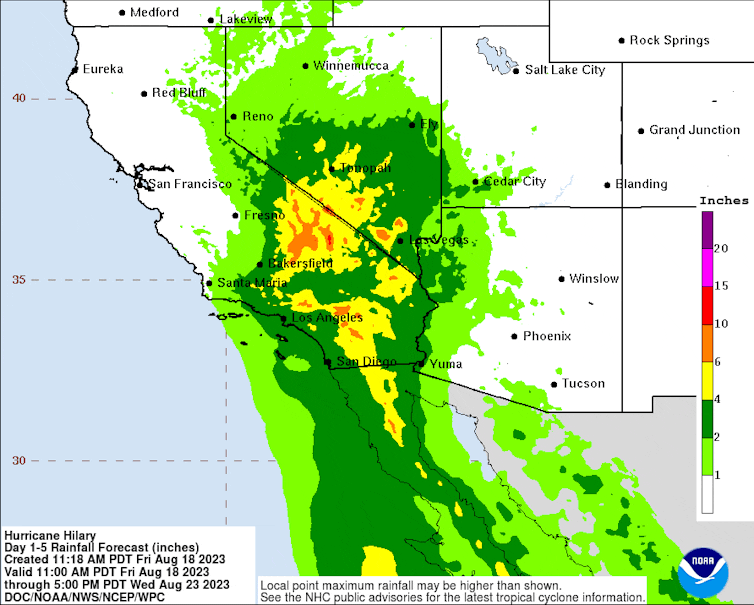
A map shows rainfall forecast across much of Southern California and into Arizona and Nevada.

The National Hurricane Center’s five-day rainfall forecast, issued Aug. 18, 2023, shows rainfall totals that are well above what some areas typically receive in a year. National Hurricane Center

A study led by atmospheric scientist Elizabeth Ritchie in 2011 found that, on average, about 3.1 remnant systems from tropical cyclones affected the U.S. Southwest each year from 1992 to 2005. That’s a short record, but it gives you an idea of the frequency.

Typically, the remnants of tropical cyclones don’t go beyond California, Nevada and Arizona, though it wouldn’t be unprecedented. In this case, forecasters expect the effects to extend far north. The National Hurricane Center on Aug. 18 projected at least a moderate risk of flooding across large parts of Southern California, southern Nevada and far-western Arizona, and a high risk of flooding for regions east of San Diego.

What’s making this storm so unusual?

One influence is the El Niño climate pattern this year, which is showing signs of strengthening in the Pacific. Another, which might be less intuitive, is the heat dome over much of the U.S.

During El Niño, the tropical Pacific is warmer than normal, and both the eastern and central Pacific tend to be more active with storms, as we saw in 2015 and 1997. Generally, hurricanes need at least 80 degrees Fahrenheit (27 degrees Celsius) to maintain their intensity. Normally, the waters off Southern California are much cooler. But with the high initial intensity of Hurricane Hilary over warm water to the south, and the fact that the storm is moving fast, forecasters think it might be able to survive the cooler water.

The influence of the heat dome is interesting. Meteorology researcher Kimberly Wood published a fantastic thread on X, formerly known as Twitter, describing the large-scale pattern around similar storms that have affected the southwestern United States. A common thread with these storms is the presence of a ridge, or high-pressure system, in the central U.S. When you have a high-pressure system like the heat dome covering much of the country, air is pushed down and warms significantly. Air around this ridge is moving clockwise. Meanwhile, a low-pressure system is over the Pacific Ocean with winds rotating counterclockwise. The result is that these winds are likely to accelerate Hilary northward into California.

Despite the rarity of tropical cyclones reaching California, numerical weather prediction models since the storm’s formation have generally shown Hilary likely to accelerate along the west coast of Baja California and pushing into Southern California.

What are the risks?

The threat of tropical storm-force winds led the National Hurricane Center to its first-ever tropical storm watch for Southern California. However, water is almost always the primary concern with tropical storms. In Florida, that means storm surge in low-lying areas and heavy rainfall. In California, it can mean flash flooding from extreme rainfall enhanced by mountains.

When a tropical storm plows up on a mountain, that can lead to more lifting, more condensation aloft and more rainfall than might otherwise be expected. It happened with Hurricane Lane in Hawaii in 2018 and can also happen in other tropical cyclone-prone locations with significant orographic, or mountain, effects, such as the west coast of Mexico.

That can mean dangerous flash flooding from the runoff. It can also have a secondary hazard – mudslides, including in areas recovering from wildfires.

In dry areas, heavy downpours can also trigger flash flooding. Forecasts on Aug. 18 showed Death Valley likely to get about 4 inches of rain over a three-day period from the storm – that’s about twice its average for an entire year. Death Valley National Park posted a flood warning for Aug. 20-25.

As Hurricane Hilary heads toward landfall in Baja California, forecasters are expecting dangerous flooding, storm surge and wind damage in Mexico before the storm reaches Southern California.

Keep in mind this is still an evolving situation. Forecasts can change, and all it takes is one band of rain setting up in the right spot to cause significant flooding. Those in the path of Hilary should refer to their local weather offices for additional information. This would include local National Weather Service offices in the United States and Servicio Meteorológico Nacional in Mexico.

This article was updated Aug. 19, 2023, with the National Hurricane Center upgrading the tropical storm watch to a tropical storm warning.

Nicholas Grondin, Assistant Professor of Environmental Studies, University of Tampa

Fani Willis’ secret weapon: Trump will face “the Michael Jordan of RICO”

When Fulton County District Attorney Fani Willis brought state racketeering and conspiracy charges against Donald Trump and 18 co-defendants over their efforts to reverse the former president’s defeat in the 2020 election in Georgia, she reached for a legal tool she has relied on before — in prosecuting corrupt school teachers and violent street gangs.

Georgia’s Racketeer Influenced and Corrupt Organizations, or RICO, law enabled Willis to charge Trump and his allies for allegedly engaging in an extensive plot to overturn the state’s 2020 election results. The historic 41-count indictment accused them of orchestrating a “criminal enterprise” with the intention of helping Trump maintain his hold on power.

Soon after her office opened up the investigation into potential illegal interference in the 2020 election in Georgia, Willis tapped John Floyd, who is viewed as one of the nation’s leading authorities on RICO and literally wrote the book on Georgia’s racketeering laws. Floyd was appointed as a special assistant district attorney to help with any racketeering cases her office would pursue.

“If I were charged with a RICO violation, the last person I’d want to see helping the prosecutor, maybe on the planet, is John Floyd,” Eric Segall, the Kathy & Lawrence Ashe Professor of Law at Georgia State University, told Salon. Floyd, Segall continued, could be considered “kind of the Michael Jordan of RICO.”

Throughout Floyd’s legal career, he has specialized in pursuing public corruption and gang crime. 

In 2007, Floyd was among the first lawyers to file suit against the pharmaceutical firm Allergan for promoting its widely used injectable drug Botox for unauthorized purposes, according to The Atlanta Journal Constitution. That eventually resulted in the company admitting guilt and disbursing a settlement of $600 million.

He was a member of the prosecution teams that secured guilty verdicts on RICO charges in two significant cases. One involved former DeKalb County Sheriff Sidney Dorsey, who was found guilty of orchestrating the assassination of his political rival, Derwin Brown. The other case pertained to multiple educators and administrators implicated in a cheating scandal within Atlanta’s public schools.

Fani Willis’ indictment claims that what Trump did in Georgia, “he also did [in] other places,” said Eric Segall. “That’s powerful, and that’s only possible because of RICO.”

One key advantage RICO gives a prosecutor, Segall explained, is that it allows the inclusion of alleged criminal acts from other jurisdictions. The Georgia case against Trump and his allies, for instance, includes actions carried out in Pennsylvania that Willis alleges were part of the same criminal scheme conducted in Georgia. Trump and his associates, according to the Fulton County indictment, engaged in a coordinated effort aimed at contesting the election outcomes in numerous different states and propagating unfounded allegations of election fraud. 

Their actions were included in the indictment as “acts of racketeering activity and overt acts in furtherance of the conspiracy.”

“The Pennsylvania part of the indictment is so powerful,” Segall said, because it presents evidence that Trump’s team was “basically doing the same thing in at least two different places.” Without the RICO statute, it wouldn’t be possible to admit actions in Pennsylvania as part of the evidence in the Georgia trial, he added. 

Essentially, Segall said, the indictment claims that what Trump did in Georgia, “he also did [in] other places. That’s powerful, and that’s only possible because of RICO.”

We need your help to stay independent

While RICO found its origin in mob prosecutions, it has been used in all kinds of organizational cases for decades now, Caren Myers Morrison, a former assistant U.S. attorney in New York and associate professor of law at Georgia State University, told Salon. What was “shocking, obviously” about this use of RICO “is that we’ve never had a former president indicted” under the statute, she added.  

The federal RICO Act originated in 1970 as a tool to fight organized crime, granting prosecutors the ability to target people in positions of power within criminal organizations, rather than only focusing on lower-level operatives who committed specific crimes.

But the intent behind the law was never solely confined to organized crime. RICO laws allow prosecutors to charge multiple individuals who commit separate crimes while working towards a shared objective.

“The RICO laws were enacted to prosecute organized crime figures” in circumstances when “often it was hard to prove that they were directly involved in the commission of crimes,” former San Francisco prosecutor Lateef Gray told Salon. Under RICO statutes, prosecutors “are able to charge multiple defendants at once and bring in a wide array of evidence.”

RICO charges generally come a substantial potential sentence that can be imposed in addition to any punishment for the underlying crimes. In Georgia, a felony conviction under RICO carries a prison term ranging from five to 20 years.

During John Floyd’s career he has been on both sides of RICO cases, representing plaintiffs and defendants in high-stakes civil litigation involving the racketeering laws. His experience spans decades, and he has refined the Georgia law through multiple notable cases, according to ABC News


Want a daily wrap-up of all the news and commentary Salon has to offer? Subscribe to our morning newsletter, Crash Course.


In 1996, when Georgia state investigator Richard Hyde was considering how to prosecute fraud at the Medical College of Georgia, he turned to Floyd for guidance after learning about his practices for addressing racketeering fraud, ABC News reported. Hyde ultimately credited Floyd’s help for the successful conviction of two faculty members, who were accused by prosecutors of embezzling $10 million in research funds. 

“If you’re going to indict the president, you’re going to want the best possible people on your team. I think John Floyd clearly fits the bill,” Morrison said.

She also added that RICO is an appropriate statute for addressing the alleged criminal behavior involved in the extensive efforts of Trump and his allies to overturn the election results in Georgia.

“Whether it was trying to get the legislature to come back into session, whether it was to try to get information from the voting machines in Coffee County, whether it was calling Brad Raffensperger, there were all these different things that they were trying to do, all to get to the same result,” Morrison said.

No one denies, however, that this particular use of the RICO laws is historic and unprecedented. Willis is “charging the president of the United States with being a racketeer,” Segall said. “If he’s found guilty, that’s different than being guilty of forgery or something,” he added. “A former president is being accused of being part of a criminal enterprise. Symbolically, that’s very important.”

Trump expected to surrender at Atlanta jail just short of Friday deadline

Anonymous law enforcement officials in Georgia are expecting Donald Trump to turn himself in no earlier than next Thursday — just short of the Friday deadline given by Fulton County District Attorney Fani Willis — at which time he’ll most likely be booked at the Rice Street Jail, according to the Fulton County Sheriff’s Office. Trump has been charged, along with 18 co-conspirators, with 13 criminal counts for his alleged attempt to overthrow the 2020 presidential election. 

In a report by The New York Times published Wednesday, the local sheriff said that Rudy Giuliani, Mark Meadows, John Eastman and the other defendants accused of conspiring with Trump will be “treated like everyone else should they surrender at the jail,” but the process could be different for Trump himself. Per the outlet, “whether Mr. Trump himself is processed there will very likely depend on the Secret Service.”

“We’re in uncharted waters at this point,” Chris Timmons, a former prosecutor and now a law partner at Knowles Gallant Timmons in Atlanta, told CNN. “We haven’t had a former United States president or anyone with Secret Service protection booked into the Fulton County jail.” Much is still unknown about just how this will go down next week, but the area is preparing for a media circus.   


I’m no longer a vegetarian — but I love these easy vegan banana pancakes anyway

My vegan pancakes taste better than anything your grandma has ever made in her life — I guarantee it. 

I am not a vegan, but I used to be vegetarian. It had nothing to do with health, ethics or a need to promote clean living. I was dating a girl out in Los Angeles, California, who was vegan, and she kind of talked me into it by saying things like, “Are you gonna live the rest of your life as a flesh eater?” and “Look what I just got from the farmers market; these are the most beautiful blueberries you’ll ever have!” and “Wearing leather shoes is just evil. Are you going to continue to live your life like that?”

It wasn’t hard for me to give up chicken, or at least not as hard as I thought it would be. I never had a real relationship with steak. After all, this was during my, “Excuse me, waiter, can you tell the chef to make my steak extra-extra-extra-extra well-done, because I sure would love to bite into a piece of leather?” days. 

Giving up eggs was impossible. And I was never going to give up leather sneakers — let’s not be crazy. But to avoid her constant criticism, I started identifying as vegetarian. 

And like a good guy, I wasn’t just a vegetarian in Los Angeles; I brought my vegetarian ways back to Baltimore. My favorite dishes were citrus ribs made of tofu, portobello burgers with a side of fries, big-ass kale salads and, when in doubt, a rotating collection of almond milk smoothies. Other than the smoothies, about 90% of my dishes came from a few soul food-inspired vegetarian spots popping up and around the city. 

The coolest part was that being vegetarian allowed me to be as judgmental as the lady I dated. “Yuck, you are going to eat beef?” I asked my friend Al. “That’s disgusting!” He told me to go play in traffic before biting his burger.

On one of those trips to Los Angeles, my judgmental counterpart and I slid to a vegan restaurant that served everything you could find in a greasy carryout back in Baltimore, except it was prepared in its glorious vegan version. Like a Chicken “Cheese Fake” or a Reuben piled high with thinly sliced pieces of tofu dyed to a dark shade of red with beet juice. Man, those people were sure were creative. 

“The coolest part was that being vegetarian allowed me to be as judgmental as the lady I dated”

When pulled up for their Sunday brunch and banana pancakes were on the menu. I had about three orders with a side of veggie sausage. Needless to say, it was one of the most delicious meals I had ever had. So good that I studied the menu to make them on my own. 

The long-distance relationship between me and the vegan never really worked for me, and I believe that we would not have even had a future if we lived in the same city. But I continued being a vegetarian for a year or so after we stopped talking — and I still eat a version of those pancakes to this very day. Here’s the recipe for one or two people. However, load up if you’re cooking for a bunch.

We need your help to stay independent

Easy vegan banana pancakes 
Yields
1-2 servings
Prep Time
10 minutes
Cook Time
10 minutes

Ingredients

  • 1 cup flour
  • 3 tablespoons organic sugar
  • 1 tablespoon baking powder
  • 1 teaspoon salt
  • 1 cup oat milk
  • 1 teaspoon vanilla
  • 3 thin banana slices per pancake 
  • olive oil spray or old-school olive oil or organic dairy-free butter


Directions

  1. Mix all ingredients except the bananas and olive oil in your favorite mixing bowl. I like to use olive oil spray in my nonstick pan, however, you should use what you are most comfortable cooking with. Remember that pancakes burn pretty quickly, so keep your jet on low unless you’re into the burned pancake thing.  
  2. Power 2 to 3 to neat little splotches of batter into your warm pan, allow them to round out and gently touch. This next part is essential–– watch your pancakes as they form. When you start seeing the little air holes appear as the edges harden, place the banana slices on top, and then flip. The banana slices should not cause the pancakes to break apart, and you should not see them once you flip them over–– if you do, you flipped too early.
  3. Brown them to your liking and serve them with organic maple syrup.


Listen: Dolly Parton joins forces with Beatles Paul McCartney and Ringo Starr on “Let It Be” cover

Country music legend Dolly Parton is teaming up with the Beatles Paul McCartney and Ringo Starr to re-record a new rendition of one of the British band’s most popular songs “Let It Be.”

Parton released a cover of the 1970s Beatles hit featuring McCartney and Starr on Thursday as one of the songs from her upcoming rock album “Rockstar.” 

On “Talk Shop Live with Nancy O’Dell“, Parton shared that she “was so proud of getting to sing songs like ‘Let It Be’ with Paul McCartney.” She mentioned that McCartney played piano and Starr played the drums on the track. Listen:

The mini Beatles reunion came together because Parton asked McCartney to collaborate with her. The cover originally had another drummer but then Parton added, “We thought, well why don’t we just replace the drummer with Ringo.

“And so that’s what we did because I thought wow, that would be all the Beatles,” Parton said of the surviving members of the band. John Lennon died in 1980, and George Harrison died in 2001.

Parton’s first foray into the rock genre will be out on Nov. 17.

“Just feed our children”: Minnesota Governor Tim Walz defends free universal school meals

Following criticism from Minnesota Republicans ho argue that it “doesn’t make sense” to fund universal free breakfast and lunch programs in the states public schools, Governor Tim Walz defended the creation of the initiative in a Wednesday press conference. “The haves and the have-nots in the school lunchroom is not a necessary thing,” Walz said. “Just feed our children.”

As reported by Jake Johnson at Common Dreams, the Minnesota free school meals program, which took effect this summer, offers both breakfast and lunch to students — regardless of family income. According to the Hunger-Free Schools initiative, “it costs Minnesota less than $2 per student, per day to provide school meals at no cost to kids and families.” 

As Nadra Nittle reports in 19th News, five other states — California, Maine, Colorado, New Mexico and Vermont — are also on track to pass similar legislation in the coming months.

Trump and Tucker unite to spite Fox News, RNC: Carlson interview to compete with debate

Former President Donald Trump plans on skipping the first Republican primary debate next Wednesday and, instead, has opted to join former Fox News star Tucker Carlson for an online interview, multiple sources briefed on the matter told The New York Times. Trump informed people close to him in the last 24 hours that he had made the decision, according to two of the sources.

The GOP primary frontrunner also posted an ambiguous message to social media Thursday night, possibly foreshadowing his decision to pass on the Milwaukee, Wisconsin debate.

"Many people are asking whether or not I will be doing the DEBATES? ALL AMERICANS have been clamoring for a President of extremely High Intelligence. As everyone is aware, my Poll numbers, over a "wonderful" field of Republican candidates, are extraordinary. In fact, I am leading the runner up, whoever that may now be, by more than 50 Points," Trump wrote on Truth Social Thursday night. "Reagan didn't do it, and neither did others. People know my Record, one of the BEST EVER, so why would I Debate? I'M YOUR MAN. MAKE AMERICA GREAT AGAIN!"

The exact time or platform of Trump's interview with Carlson is unclear. Until earlier this week, the former president had been giving others the impression that he was considering appearing at the Fox News-hosted event. Close associates of his, however, have noted for months that he's unlikely to participate in the first two debates. Fox News executives and personalities have made appeals to Trump to attend but seemingly have had no luck as Trump continues to accost the conservative network online.

Proud Boy vanishes from house arrest days before sentencing for Jan. 6

Authorities are searching for a member of the far-right extremist group Proud Boys after he disappeared days before his sentencing in a Jan. 6 Capitol attack case.

According to a warrant filed Friday, Naples, Florida resident Christopher Worrell was supposed to be sentenced this week after he was found guilty of pepper-spraying police officers during the Capitol riots. Prosecutors are seeking a prison sentence of 14 years, the Associated Press reports.

Court records show that Worrell's Friday sentencing was canceled, and a warrant for his arrest was issued under seal on Tuesday. The Washington D.C. U.S. attorney's office urged the public to share any information they may have about his whereabouts. Worrell had been on house arrest since being released from a Washington D.C. jail in November 2021.

Prosecutors are also seeking decades-long prison terms for leaders of the Proud Boys — Enrique Tarrio, Ethan Nordean, Joseph Biggs and Zachary Rehl — who were convicted of seditious conspiracy in May for their roles in the Jan. 6 riots in a parallel case, a new court filing showed. As CNN first reported, the government seeks a 33-year prison stint for Tarrio and Biggs; 30 years for Rehl; 27 years for Nordean; and 20 for Dominic Pezzola, a non-leading member of the group who was found not guilty of seditious conspiracy but convicted of other crimes, including obstruction of a congressional proceeding and assaulting an officer. U.S. District Court Judge Timothy Kelly is slated to sentence the quintet on Aug. 29.

Magnetars and “zombie” stars: New type of ultrahigh magnetic star discovered

When the roiling nuclear fusion inside of a star begins to die — gravity crushing into the star’s waning fuel-store of hydrogen atoms, fusing them into heavier helium nuclei — the universe usually offers that star a couple of dignified options for meeting its end. 

After its collapse and supernova finale, a star can become a dwarf (our sun’s likely retirement), its quieted core a celestial memorial to past glory, aglow in the soft fading of residual heat. Or a star can collapse so dramatically it becomes a black hole. The weirdest stars, though, become neutron stars — dead stars so powerfully dense that even a single teaspoon of their material would have the same mass as 900 Great Pyramids of Giza.

Rarer still are the 10% of those dead neutron stars which mysteriously transform into what NASA calls the “superheroes of the star world” — the most terrifyingly powerful magnetic stars in the universe, called magnetars. For decades, scientists have been baffled by their births and sudden eruptions. But on Thursday, all that may have changed. 

For the first time in history, scientists believe they’ve glimpsed a neutron star — the most magnetic ever discovered — on the verge of becoming a magnetar.

In an article published Aug. 17 in the journal Science, researchers detail their study of a star-pair known as HD 45166, discovered 100 years ago some 3,000 light-years from earth. They discovered one of the pair to be a particularly unusual Wolf-Rayet star. Its mass is twice that of our sun, but its magnetic field is an astounding 43,000 gauss, a unit for measuring magnetic induction. Compared to our sun’s one gauss, this makes HD 45166 the most magnetic massive star ever discovered. 

Lead study author Tomer Shenar, an astronomer at the Netherland’s University of Amsterdam, was himself drawn toward the enigmatic object, transfixed. 

“This star became a bit of an obsession of mine,” Shenar said in a statement.

“I remember having a Eureka moment while reading the literature: ‘What if the star is magnetic?’,”

And, at the brink of unraveling one of astronomy’s most mysterious origin stories, who wouldn’t be obsessed? ESO astronomer Julia Bodensteiner, the study’s Germany-based co-author, joked about the star’s nickname among the team. 

“Tomer and I refer to HD 45166 as the ‘zombie star’,” Bodensteiner said. “This is not only because this star is so unique, but also because I jokingly said that it turns Tomer into a zombie.” 

Although another theory holds that magnetars’ transformation happens due to intense heat and rotation in its core, magnetars are difficult to hunt down and observe, making this theory hard to test. But HD 45166 stands out — and it couldn’t be easily explained by previous models.

Shenar’s obsession turned into globetrotting for he and his team. Driven by past research into helium-rich stars like HD 45166, Shenar had a hunch about why the star didn’t fit the usual description. 

“I remember having a Eureka moment while reading the literature: ‘What if the star is magnetic?'” he said. 

In February of 2022, the team’s quest led them into the Pacific. Using the Canada-France-Hawaii Telescope at the Big Island’s Mauna Kea Observatory, the team were able to measure HD 45166’s magnetic fields — leaning on still more archival data from the La Silla Observatory in Chile, and confirmation of findings from the Royal Military College of Canada.

The obsession has paid off for Shenar and his team. For the first time, at least one clear line of observable, evidence-based theory can be drawn from supernova to monster magnetar — with an entirely new type of ultrahigh magnetic star in between which, as Shenar said, has “been hiding in plain sight all along.”

Interestingly, the key to the researchers’ theory is the duality of star-pairs — their merging is as much a part of the mystery as anything else. 

“We propose that the magnetized Wolf-Rayet star formed by the merger of two lower-mass helium stars,” the team wrote in the study.

It’s not just enough for a star to collapse into a dead neutron star after a supernova. Rather, if two stars merge to become one — and then form a single, overwhelmingly powerful, magnetic core — then, when that unified star finally collapses, it will become a neutron star with all the hallmarks of a magnetar precursor. 

We need your help to stay independent

“Stellar evolution calculations indicate that this component will explode as a supernova,” the team wrote, “and that its magnetic field is strong enough for the supernova to leave a magnetar remnant.”

There may yet be more than one way that magnetars are formed — and we won’t be around to check the team’s math when the Wolf-Rayet star finally collapses in approximately 1 million years. But, for now, Sheran and his team have brought us as close as we can get to the terrifying creation of the most powerful magnets in the heavens.

Texas Republicans expose GOP AG Ken Paxton in impeachment push

Texas House impeachment managers have submitted nearly 4,000 pages of exhibits ahead of next month’s impeachment trial of suspended Attorney General Ken Paxton.

The Senate, which is conducting the trial slated to begin Sept. 5, published the exhibits Thursday night on a website the chamber maintains for impeachment-related documents. The document dump provides granular detail of how Paxton allegedly abused his office to help his friend Nate Paul, an Austin real estate investor and campaign donor, who was being investigated by federal authorities as his businesses were floundering.

Paxton’s lawyers last week called for all 20 articles of impeachment to be dismissed, relying in part on an argument that the House had not produced evidence to support the allegations against the attorney general. Through the document dump, a remarkable public disclosure before the trial has started, the House managers have essentially called their bluff.

The managers’ responses to Paxton’s pretrial motions offer new allegations against Paxton, including that he used a burner phone, secret email account and fake Uber name to hide his relationship with Paul.

There are 150 exhibits across three documents totaling 3,760 pages. They include:

  • An interview with Paxton’s former personal aide who said he ferried documents to Paul on Paxton’s behalf and witnessed conversations about the renovations to Paxton’s home that suggested Paul had paid for it.
  • Emails showing how Paul and his lawyer directed a special prosecutor authorized by Paxton to investigate Paul’s business rivals and law enforcement officials that had raided his home.
  • Memoranda documenting numerous instances in which Paxton’s senior advisers unsuccessfully urged him to cut ties with Paul, who they suspected was a liar and criminal.
  • Trip records obtained from Uber showing an account Paul created under the alias “Dave P,” which Paxton used to travel to the home of Paul and the apartment of the woman with whom the attorney general was allegedly having an extramarital affair. Paxton is married to state Sen. Angela Paxton, R-McKinney.
  • An employment contract proving Paul had hired Paxton’s alleged girlfriend to work at his business.

An attorney for Paxton did not immediately respond to request for comment. Lt. Gov. Dan Patrick, the presiding judge in the trial, issued a sweeping gag order July 17, banning all involved parties from making comments that could prejudice the trial or impair the impeachment court’s ability to be “fair and impartial.”

The latest exhibits also add evidence to the allegation that Paxton recruited a state senator, Bryan Hughes, to request a legal opinion that helped avoid foreclosure on properties owned by Paul and his businesses. Hughes’ involvement was initially mentioned in the House’s articles of impeachment.

The new evidence shows that on Sept. 30, 2020, Paxton’s former deputy first assistant attorney general, Ryan Bangert, emailed another aide, Ryan Vassar, a timeline of events leading up to the opinion.

“[Paxton] agreed that we could reach out to Senator Bryan Hughes, which we did, and ask that he make a request, which he did,” Bangert wrote. “We then prepared the response and sent it to Senator Hughes.” Bangert and Vassar are among the seven former attorney general staffers who reported Paxton to law enforcement in 2020 for alleged abuses of office.

Hughes did not immediately respond to request for comment.

The records are dated Tuesday, meaning the managers filed them on the day that responses to pretrial motions were due to the Senate. Now a special committee of senators is reviewing the motions and responses. That committee has until Aug. 28 to prepare a confidential report with recommendations on the motions for Patrick, who can rule on all motions except for those that seek dismissal of any articles, which requires a majority vote of the Senate. Patrick also can ask senators to decide other pretrial motions, with approval granted by a majority vote.

The breadth of the evidence could put more pressure on senators to at least proceed to trial. Assuming all 12 Democrats oppose Paxton’s motions to dismiss, managers would have to convince at least four of the 19 Republican senators to side with the Democrats and clear the way for a trial. One of those GOP senators is Paxton’s wife, and she does not get to vote under the trial rules.

New video: Trump-aligned attorney Kenneth Cheseboro caught with Alex Jones at Capitol on Jan. 6

On Jan. 6, 2021, Trump-aligned attorney Kenneth Cheseboro, donning a red "Trump 2020" cap, was following alt-right conspiracy theorist Alex Jones around the Capitol before pro-Trump rioters eventually stormed the legislative building, according to an investigation carried out by CNN. Videos and photographs the outlet reviewed showed Cheseboro recording Jones with his phone as the talk show host ascended to the "restricted area" of the Capitol grounds.

When asked by the House Select Committee investigating the Capitol attack where he was the first week of January 2021, Cheseboro opted to plead the Fifth. Though his newly revealed actions outside the building that day did not prompt much scrutiny, Cheseboro's alleged role as the architect of former president Donald Trump's efforts to overthrow the 2020 election has placed him in the limelight. Several media outlets and legal experts have identified the lawyer as the unnamed, unindicted fifth co-conspirator described in the government's latest indictment against Trump.

"Even if Chesebro is simply a diehard 'Infowars' fan, I think that would further illustrate how thin the line was between the serious, credentialed people who sought to undermine election results and the extremist figures who sought to unleash havoc was in that period, to the extent it meaningfully existed at all," Jared Holt, an expert at the Institute for Strategic Dialogue, which investigates extremism, hate and disinformation, told CNN. Nothing indicates that Cheseboro entered the Capitol building or took part in the violence. Far-right extremist Jones did not enter the building or engage in the riots but had "warned of a coming battle the day before and urged his supporters to converge on the Capitol," CNN reports. 

Jones, for his part, is set to launch a new show after suffering major financial setbacks under his Infowars brand. 

“Good luck with that”: Legal Twitter mocks Trump’s request to push his trial back to 2026

The internet erupted with jokes Thursday in response to reports that former President Donald Trump has requested an April 2026 trial date in his federal case regarding his efforts to overturn the 2020 election, with many legal experts mocking the quadruple-indictee for the “absurd” proposal. 

The request to U.S. District Court Judge Tanya Chutkan came in a filing made Thursday evening and presents a lengthy time differential from special counsel Jack Smith’s proposal of a January 2024 trial date. According to CNN, the former president’s legal team rejected Smith’s suggestion, arguing that Smith “seeks a trial calendar more rapid than most no-document misdemeanors, requesting just four months from the beginning of discovery to jury selection.”

Trump’s attorneys also argued in the filing that Smith’s requested timeline would conflict with their client’s other ongoing criminal proceedings and that, in proposing a January date, the government is attempting to “deny President Trump and his counsel a fair ability to prepare for trial,” citing, in part, the 11.5 million pages of documents the Justice Department presented to them.

“Trump doesn’t try to invoke the election in asking for a 2026 trial date. He knows that Chutkan took it off the table,” former U.S. Attorney Harry Litman wrote on X, formerly known as Twitter. “Instead,” Litman said Trump “argues 1) lots of discovery; 2) complicated cast; 3) some classified materials. Then lays out a comically leisurely schedule. e.g basically all of 2025 taken up w/ 3 discovery conferences.”

In the filing, Trump’s legal team offers what they call a “more reasonable schedule” that’s “equal to the government’s time spent investigating” for the case. Under their proposed timeline, three initial discovery conference and motions hearings would occur between Dec. 4, and the week of Aug. 5, 2024, and four others would take place between Dec. 2, 2024, and the week of Dec. 1, 2025. The timeline also asks the judge to set the motions hearing for the week of March 2, 2026, and the pretrial conference for the week of March 23, 2026.

“Trump attorney’s saying they must have 3 years to do a page by page review of docs is not how any civil or criminal lawyer does doc review,” former Assistant U.S. Attorney Andrew Weissmann tweeted. “It’s all computer search terms. If otherwise, no case wd ever be tried.”

We need your help to stay independent

Other legal experts responded with disbelief to the former president’s proposed trial date.

Neal Katyal, a Georgetown University Law professor, said on X, “I’ll eat my hat if Judge Chutkan agrees with Trump to start this trial in 2026.”

“Absurd,” the former principal deputy solicitor general continued. “He’s just afraid to stand trial. Nothing more.”

Katyal repeated these sentiments during an appearance on MSNBC‘s “The ReidOut” Thursday evening, telling host Joy Reid that the term “laughable” gives Trump’s request “so much credit.”

“I don’t actually have adjectives in my vocabulary — at least no words I can say on television,” he said of how he’d describe the proposal, adding, “I’ve never in my 20-plus years of practicing law seen a request anything like that, and I’ll eat my hat if Judge Chutkan accepts it because justice delayed is justice denied.”

Katyal went on to ponder what the proposed schedule reveals about how Trump views the merits of the government’s case against him, arguing that an “innocent” person accused of what the former president is accused of would want the trial to happen “right away” in order to clear their name.

“But not this guy. This guy’s scared of going to trial,” Katyal surmised of Trump. “He talks all the gluster he wants outside of the courtroom, but he is terrified of actually being in a courtroom, and when he is in one he clams up.”


Want a daily wrap-up of all the news and commentary Salon has to offer? Subscribe to our morning newsletter, Crash Course.


“To me, this is just further indicative of his own consciousness of guilt,” he concluded, adding, “I think it tells us a lot about his own state of mind.”

National security lawyer Bradley Moss reacted to the request with a gif captioned, “You are not serious people,” before questioning the four to six weeks Trump and the government predicted the presentation of his defense would take during trial. 

“I will put good money on Trump’s defense taking no more than a day at most. Assuming he even bothers putting up one,” he tweeted.

“This is actually funny. 2026. Good luck with that,” former U.S. Attorney Joyce Vance quipped.

“What will come first: Professor Kreis gets engaged or Donald Trump’s proposed trial dates?” Georgia State Law professor Anthony Kreis added, poking fun at himself.

Conservative lawyer George Conway reacted by reformatting Trump’s request into a knock-knock joke.

“‘Knock, knock.’

“‘Who’s there?’

“‘April.’

“‘April who?’

“‘April 2026.’

“{endless, hysterical laughter}.”

“Pike made jambalaya”: How “Strange New Worlds” Captain Pike expresses care and diplomacy with food

As if “Star Trek: Strange New Worlds” doesn’t provide us with enough reasons for Anson Mount’s Enterprise Captain Christopher Pike to make us weak in the knees, it’s constantly reminding us that he loves to cook.

This is plain from the second episode of the show, “Children of the Comet,” which is the first time we see him mopping barbecue sauce over a rack of ribs, part of a heaping feast for his senior staff and other crewmembers.

Cooking for loved ones is Pike’s specialty. But in the eighth episode of the recently completed second season, “Under the Cloak of War,” Pike uses food to bring former enemies together. He invites Federation-Klingon war veterans among his crew to  the same table as a former Klingon general believed to be responsible for numerous war crimes.

One of those veterans, Lieutenant Erica Ortegas (Melissa Navia) almost backs out, suspecting she doesn’t have the stomach for this Starfleet-ordered diplomatic act until Dr. Joseph M’Benga (Babs Olusanmokun) reminds her of the real reason to set her anger aside: “Pike made jambalaya. With Deltan parsley.”

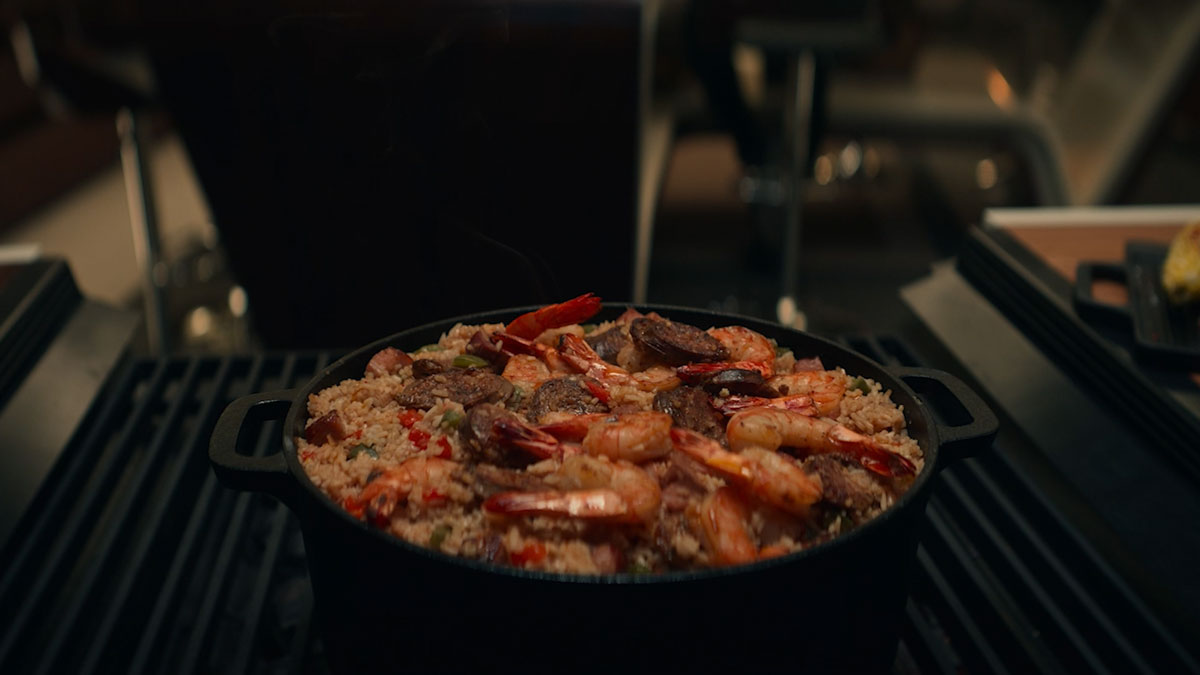
Cut to: a close-up of the classic Creole dish, heaping with jumbo shrimp, sausage and bits of that parsley.  Flanking it on one side is a platter of corn on the cob. A bowl of emerald vegetables sits the other. All of it the work of the show’s food stylist Tanya Osmond.

Star Trek: Strange New WorldsStar Trek: Strange New Worlds (Paramount+)Osmond, who joined “Strange New Worlds” midway through Season 2, added there were other dishes viewers may not have spotted that tie to the jambalaya dinner’s Southern theme – pickled watermelon rinds, cornbread and even a fun jelly salad, she explained, “because they’re shiny and they light really well.”

These toothsome visuals serve a higher narrative purpose too. “Jambalaya is a community dish,” Osmond explained in a recent interview with Salon. “It’s something that is served out of a big pot in southern tradition, a food that you gather people around. Everybody gets together and shares.

“Particularly in that episode, we have a new ambassador coming in, somebody who’s trying to bridge those gaps between what were very recently warring communities,” she continued. “And so it’s a very appropriate dish to serve.”

Pike’s penchant for cooking in “Strange New Worlds” expands a franchise tradition associating Starfleet captains and significant senior crew members with favorite foods or, more typically, signature beverages. Indeed, Osmond confirms that choosing to have Pike cook jambalaya for this occasion is a small homage to Avery Brooks’ “Deep Space Nine” Commander Benjamin Sisko, the son of a New Orleans’ chef for whom the dish holds tremendous family significance. (The version prepared for “Strange New Worlds,” was inspired by Leah Chase’s classic recipe in “The Dooky Chase Cookbook.”)

Star Trek: Strange New WorldsStar Trek: Strange New Worlds (Paramount+)

. . . But the jokes about replicated food’s shortcomings serve a function, to anchor the characters in this fantastical universe in their humanity. They may be flying through space, surrounded by impossibly sophisticated technology, but the characters on Star Trek still long for Mom’s sweet potato casserole.

Osmond affirms this. “Something that is really important throughout different ‘Star Trek’ series is that even though we find ourselves in the future, we still have a connection to the past. And cooking, eating, is something we can all relate to and that we have deep connections with — our own personal cultural upbringing, things that remind us of home. And so I feel like in the future, it’s nice to have that place to anchor yourself, that place to sort of relate to.”

Mount’s captain stands apart in this way. He’s a Montana man who longs for his ranch, so it follows that he’d be partial to home-cooked meals prepared with natural-as-possible ingredients. His produce, proteins and the rest are probably delivered via replicator but he keeps a selection of fresh herbs in his cabin and hand-chops his vegetables. His kitchen is impeccable and, as a recent Food & Wine magazine feature points out, his tools are top-notch.

These are all hallmarks of someone living on borrowed time. A leitmotif in “Strange New Worlds” relates to Pike foreknowledge that a life-changing accident lurks in his future. Therefore, his gastronomic inclinations are one way for him to live in the present.  

Star Trek: Strange New WorldsStar Trek: Strange New Worlds (Paramount+)
But he reserves his homiest meals for those cares most about, lovingly slow-cooking Julia Child’s bœuf bourguignon to win back Captain Marie Batel (Melanie Scrofano) in “Subspace Rhapsody” or, as he does in the first season’s finale, transforming a previous night’s extra spaghetti into pasta mama, describing it as a simple way to take leftovers and make them into something new.

A happy crew is a well-fed crew that will comply with almost any request made of them, whether that means flying into an asteroid field or breaking cornbread with an adversary that would have killed them without a thought only a few years prior. And Pike makes creating it as good-looking as everything else he does. Early in the series, Ortegas advises Celia Rose Gooding’s then-cadet Nyota Uhura, “You do not want to be late to the Captain’s table.” By the end of Season 2, we couldn’t imagine why anyone would be.

Pike’s Creole Jambalaya (recipe by Leah Chase)
Yields
6-8 servings
Prep Time
30 minutes
Cook Time
1 hour

Ingredients

1 lb. smoked ham (cubed)

1/2 lb. chaurice* (hot sausage cut in pieces)

1/2 lb. smoked sausage (cut in 1/2-inch slices)

1 cup chopped onions

3 cups uncooked rice

1/4 cup chopped green onions

1/2 tsp. paprika

1 tbsp. chopped parsley

1 tsp. ground thyme

1 tsp. chopped garlic

1/2 cup chopped green pepper

1 tsp. salt

1 bay leaf

1 lb. shrimp (peeled and deveined)

4 cups boiling water


Directions

  1. Place ham, sausages, and onions in 3-quart saucepan. Cover and cook over medium heat until onions are soft. No need to add any oil as the meat will provide enough fat for cooking. 
  2. Add rice and stir well.
  3. Add all other ingredients and bring to a boil. Let boil for 5 minutes, then lower heat. 
  4. Cover pot tightly and let cook slowly for 35 minutes or until rice is tender.
  5. With a fork, fluff rice up, mixing sausages well.


We need your help to stay independent


Cook’s Note from Tanya Osmond:

Whatever jambalaya recipe you use, take your time and let the meat brown to a nice deep golden color — in batches if the pan is too crowded. Don’t worry if the pan looks a little too dark. Scrape up the browned bits when you add your liquid. All the caramelized bits will add a ton of flavor to your final dish.

A new Republican tradition: Ron DeSantis’ presidential campaign dud follows a long history

I should probably be ashamed to admit this but my favorite part of any presidential election season is the Republican primaries, especially the debates. Since Republicans rarely have an incumbent president running (they have only had three Republican presidents in the last 35 years) the primaries are usually a free-for-all that features some very eccentric fringe characters as well as the precipitous fall of at least one highly touted conservative hero who everyone in the political establishment assumed was a shoo-in just months before.

I think back to 1992 which featured what we all thought was a completely beyond-the-pale Pat Buchanan speech at the RNC that the late great Molly Ivins famously quipped “sounded better in the original German.”(That speech now sounds like virtually every GOP candidate running for any office.) In 2008 the open primary offered up the excitement of yet another Hollywood actor-turned-Republican politician in Fred Thompson, then a senator from Tennessee, who had the entire political press corps in a swoon, convinced that he was the next Ronald Reagan. Like so many others, Thomas quickly flamed out on the trail, showing himself to be a bad retail candidate once he had to mingle with the polloi in Iowa and New Hampshire.

2012 featured yet another presumed savior in Gov. Tim Pawlenty of Minnesota, who weirdly opened nearly every appearance with a quip about his “red-hot, smokin’ wife.” He convinced the establishment that he was the perfect candidate to win over Democratic moderates, who were believed to be dying to vote for a midwestern Republican governor for some reason. His ads were awesome:

He dropped out after coming in third in Iowa.

We need your help to stay independent

But nothing can beat the 2016 GOP presidential primaries for sheer spectacle. (I actually did 22 podcasts about that crazy race.) That was, of course, because of Donald Trump. There were several serious contenders in that race, from former Gov. Jeb! Bush and Sen. Marco Rubio, both of Florida, to New Jersey Gov. Chris Christie. But nobody came close to the hype about yet another midwestern governor, Wisconsin’s Scott Walker, who was presumed to have a magic touch because he’d beaten a recall attempt a couple of years before. He was backed by the mighty Koch brothers who had been instrumental in his rise in Wisconsin and had amassed a massive war chest.

No one can pry Trump’s devoted base away from him.

Unfortunately, it turned out once again that a colorless automaton wasn’t quite the winning personality everyone was looking for. Walker lost his frontrunner status almost as soon as he announced his campaign and steadily declined in the polls as more people began to get to know him. His debate performances were the final nails in his coffin. After the first one he dropped below 5 percent and in the second he was a cipher. He dropped out not long after when he finally went below 1 percent.

In fairness, those debates were dominated by Donald Trump’s wild performances and nobody fared very well against him. But Walker was unique in that he had run through many millions and didn’t even make it to Iowa. As I wrote here in Salon at the time:

The sad fact is that Walker has been the most overrated politician in the country based largely upon the Republicans’ quixotic desire to find a leader who can put a respectable face on its increasingly disreputable base — and the media’s odd willingness to not believe what their eyes were telling them: that Walker was a terrible candidate. Like Pawlenty and Thompson before him, he may have looked good on a PowerPoint presentation, but in reality he showed few signs of life on the debate stage or on the stump.

Hmmm. Does that remind you of someone by any chance? Yes, I thought it might.


Want a daily wrap-up of all the news and commentary Salon has to offer? Subscribe to our morning newsletter, Crash Course.


This year’s GOP savior was supposed to be Florida Gov.Ron DeSantis, the anti-woke crusader who managed to win big in his re-election race in 2022. He’s been getting tons of press ever since he launched a culture war offensive the likes of which we hadn’t seen since Alabama’s George Wallace in the 1960s. Trying desperately to get to Trump’s right in a quixotic attempt to appeal to the hard-core MAGA cult without ever criticizing Trump himself, DeSantis created the persona of a Cyborg in a stacked heel boot, relentlessly stomping on “woke” wherever he found it.

Trying desperately to get to Trump’s right in a quixotic attempt to appeal to the hard-core MAGA cult without ever criticizing Trump himself, DeSantis created the persona of a Cyborg in a stacked heel boot, relentlessly stomping on “woke” wherever he found it.

But no one can pry Trump’s devoted base away from him. The only hope anyone ever had was to try to lure away everyone else in the party and get all the GOP-leaning independents. It was never a very likely possibility but at least it made some logical sense. DeSantis’ strategy has been a massive flop and like Walker before him, he has wilted like a week-old bag of butter lettuce once he had to perform.

After several campaign shake-ups and a so-far unsuccessful attempt to change the message, the conventional wisdom is that he has one more chance to turn things around. If he performs well in the debate next week, maybe he can regain some momentum. The problem is that he’s not a very good debater:

The New York Times reported on Thursday that DeSantis’ Never Back Down Super PAC has some ideas on how he can improve his performance and they posted them online. The debate strategy memo was created by the political consulting firm of Axiom Strategies owned by Jeff Roe, the Super Pac’s chief strategist.

The Times reports:

The document outlines a strategy framed around Roger Ailes’ “Orchestra Pit media theory,” which proposes that headlines won’t be achieved by getting bogged down in policy discussions, but by creating viral moments through directed attacks, emotional statements, and clippable quotes. […]

“There are four basic must-dos,” one of the memos urges Mr. DeSantis, whom the document refers to as “GRD.”

“1. Attack Joe Biden and the media 3-5 times. 2. State GRD’s positive vision 2-3 times. 3. Hammer Vivek Ramaswamy in a response. 4. Defend Donald Trump in absentia in response to a Chris Christie attack.”

I get the idea that he must attack Joe Biden and the media, that’s standard stuff, but he’s going to have to dig deep for a “positive vision” because that’s really off-brand. Sadly, defending Donald Trump is very much on brand which is one of the main reasons why Trump is going to win the nomination. Some of the most pugnacious Republicans are mewling kittens when it comes to him.

But professional strategists are telling him to “Hammer Vivek Ramaswamy” and it’s not a joke? Apparently not. They even gave him a nickname: Fake Vivek’ Or ‘Vivek the Fake.'” Is attacking someone nobody’s ever heard of supposed to make DeSantis look strong? It’s an exact replay of DeSantis’ fellow Floridian Marco Rubio’s 2016 strategy of attacking Chris Christie in New Hampshire instead of going after Trump in the hopes of winnowing the field. How did that work out for Rubio?

I have to admit I’m looking forward to watching these Republicans once again demonstrate their fecklessness for the whole country to see. There’s a reason why they have only had one popular vote since 1988 but they never change course. It makes sense that Trump was able to come in and sweep the GOP primary voters off their feet because the establishment keeps hyping these alleged superstars who turn out to be insufferable duds.

If the big donors and party establishment wanted to get Trump off the stage, maybe they should have come up with a new formula. This one has never worked, not once. 


“It’s not a smart idea”: As legal bills mount up, Trump may not have the choice to abandon Giuliani

Rudy Giuliani, the former New York City mayor and personal attorney for Donald Trump, was paid $300,000 for pitching investors on an anti-Biden film that was never made, a lawsuit filed earlier this month by the investors, who are seeking their money back, claims.

In 2019, the two farmers — California fruit-and-nut farming barons and brothers Baldev and Kewel Munger — invested $1 million into a documentary they were told would expose President Joe Biden and his son, Hunter Biden, holding corrupt business dealings in Ukraine ahead of the 2020 election, Insider reports. According to the suit, Tim Yale, a political operative and defendant in the suit, introduced the two to Giuliani who, by that time, was already working to dig up dirt on the Bidens. The complaint alleges that Giuliani, alongside Yale and cannabis investor George Dickson III, who is also listed as a defendant, pitched the farmers on a documentary that would be “a possible ‘kill shot’ to Biden’s presidential campaign.”

The trio “all represented that they possessed key documents that were ‘smoking guns’ that would establish that the Ukrainian government engaged in a quid pro quo exchange with the Biden family to benefit Burisma,” the suit continues, referencing the Ukrainian energy company that paid Hunter Biden to sit on its board. Republicans have long worked to prove the connection between Hunter Biden’s work on the board and then-vice President Biden’s effort to remove a Ukrainian prosecutor who was investigating the company, but haven’t brought forth any tangible evidence of the alleged corruption.

We need your help to stay independent

The information the proposed film would reveal would incriminate the Bidens, secure a second term for former president Trump, and yield a hefty payoff for the Mungers. “Yale and Dickson represented that this documentary movie was going to be bigger and more profitable than Michael Moore’s ‘Fahrenheit 9/11,’ which earned $200 million at the box office,” the brothers, who hold part ownership of the world’s largest producer of blueberries and had previously given tens of thousands of dollars to Republican candidates, wrote in the suit. Promissory notes attached to the complaint as exhibits show that the Mungers, through one of several multinational LLCs they control, gave Yale and Dickson $1 million in four installments of $250,000 between April 2020 and August 2020. Out of that sum, $300,000 went to Giuliani himself, while the rest “was stolen by Dickson and Yale for their own personal use,” the lawsuit alleges.

The film was never made or released, and since Joe Biden won the 2020 presidential election, the Munger’s investment disappeared. After conducting interviews with a range of Ukrainian officials, Giuliani failed to produce the supposed “smoking gun” and instead set his sights on the emails and data obtained from Hunter Biden’s laptop.

Giuliani is confronting nearly $90,000 in sanctions in the Smartmatic case, a $20,000 fee to a company hosting his electronic records, $15,000 or more for a search of his records and a $57,000 judgment against his company over unpaid phone bills.

Giuliani’s attempts in the months after Trump’s loss to overturn Joe Biden’s victory have made him one of the 19 defendants in Georgia District Attorney Fani Willis’ sprawling indictment against Trump and his associates, which alleges they conspired to subvert the election results in the state. He is widely believed to be the unnamed and unindicted first co-conspirator described in Trump’s federal indictment in connection to the 2020 election. Giuliani’s former assistant, Noelle Dunphy, has also filed a lawsuit against him, accusing the lawyer of wage theft and sexual assault.

As the once-regaled mayor’s legal battles mount both in connection to his work for the former president and of his own alleged misconduct, so has his heap of legal fees. Alongside his attorney, Giuliani traveled to Trump’s Mar-a-Lago beach club in Florida in late April to make a “personal and desperate appeal” to Trump to foot the bill for his legal bills, CNN reports. By going in person, Giuliani and his lawyer Robert Costello believed they could convince the former president of why it was in his best interest to assist his former personal attorney with his legal fees, a source familiar with matter told the outlet.


Want a daily wrap-up of all the news and commentary Salon has to offer? Subscribe to our morning newsletter, Crash Course.


The duo had two meetings with Trump to discuss Giuliani’s seven-figure legal fees, but the former president, who is notorious for not paying for his legal services, didn’t bite. After Costello made his appeal, Trump verbally agreed to foot the bill for some of Giuliani’s legal bills but did not commit to any specific amount or timeline. He also agreed to appear at two of Giuliani’s fundraisers, another source told CNN.

The outlet confirmed that the $340,000 payment federal campaign filings show Trump’s Save America PAC paid to a data vendor hosting Giuliani’s records, which a source had told CNN Trump agreed to, was intended to cover the former mayor’s outstanding bill with the company. Another attorney for Giuliani referenced the payment in court Wednesday, arguing to a New York state judge that Giuliani can not afford to pay additional legal costs to produce records in a defamation suit brought by voting tech company Smartmatic.

Trump’s unwillingness to pay for Giuliani’s bills, given that his former attorney could find himself under pressure to cooperate with federal and state authorities in any of the former president’s ongoing cases, has surprised members of his inner circle. 

“It’s not a smart idea,” one person close to the situation told CNN, noting how Trump’s relationship with Michael Cohen fell apart during special counsel Robert Mueller’s investigation. 

The outlet reported on Tuesday that Giuliani has accumulated hundreds of thousands of dollars in legal fees, bills and sanctions amid his range of lawsuits, including those tied to his claims that the 2020 election was stolen. Not including standard legal bills, Giuliani is confronting nearly $90,000 in sanctions in the Smartmatic case, a $20,000 fee to a company hosting his electronic records, $15,000 or more for a search of his records, and a $57,000 judgment against his company over unpaid phone bills.

His attorneys have said in court that he “cannot afford” a bill that could range from $15,000 to $23,000 to pay for more discovery-related document searches. In what appears to be a response to his thinning wallet, Giuliani has also listed his three-bedroom Manhattan apartment for $6.5 million.

Mother Jones reported in 2020 details about Yale and Dickson’s efforts to finance the film by raising a total of $10 million in investments. In a 2021 follow-up, the magazine reported that the production only yielded 15 minutes of low-quality footage while Giuliani received six figures to get potential investors on board. The failed documentary project is also noted in a whistleblower disclosure from FBI special agent Johnathan Buma, whose allegations against Giuliani, Insider first reported. Buma’s disclosure claims that Giuliani raised money from a group of California activists for an election-year film about Biden and that Giuliani was seeking information on Biden from “Ukranian and also likely Russian sources.”

Though Giuliani is not a defendant in the Mungers’ lawsuit, he and Dickson were reportedly the subjects of an FBI investigation because of the documentary. The bureau searched Dickson’s home in connection with the film in 2021 but never filed charges. The suit also refers to “John Doe” defendants and could be updated to include more people.

In Jackson, Mississippi, a water crisis that never ends

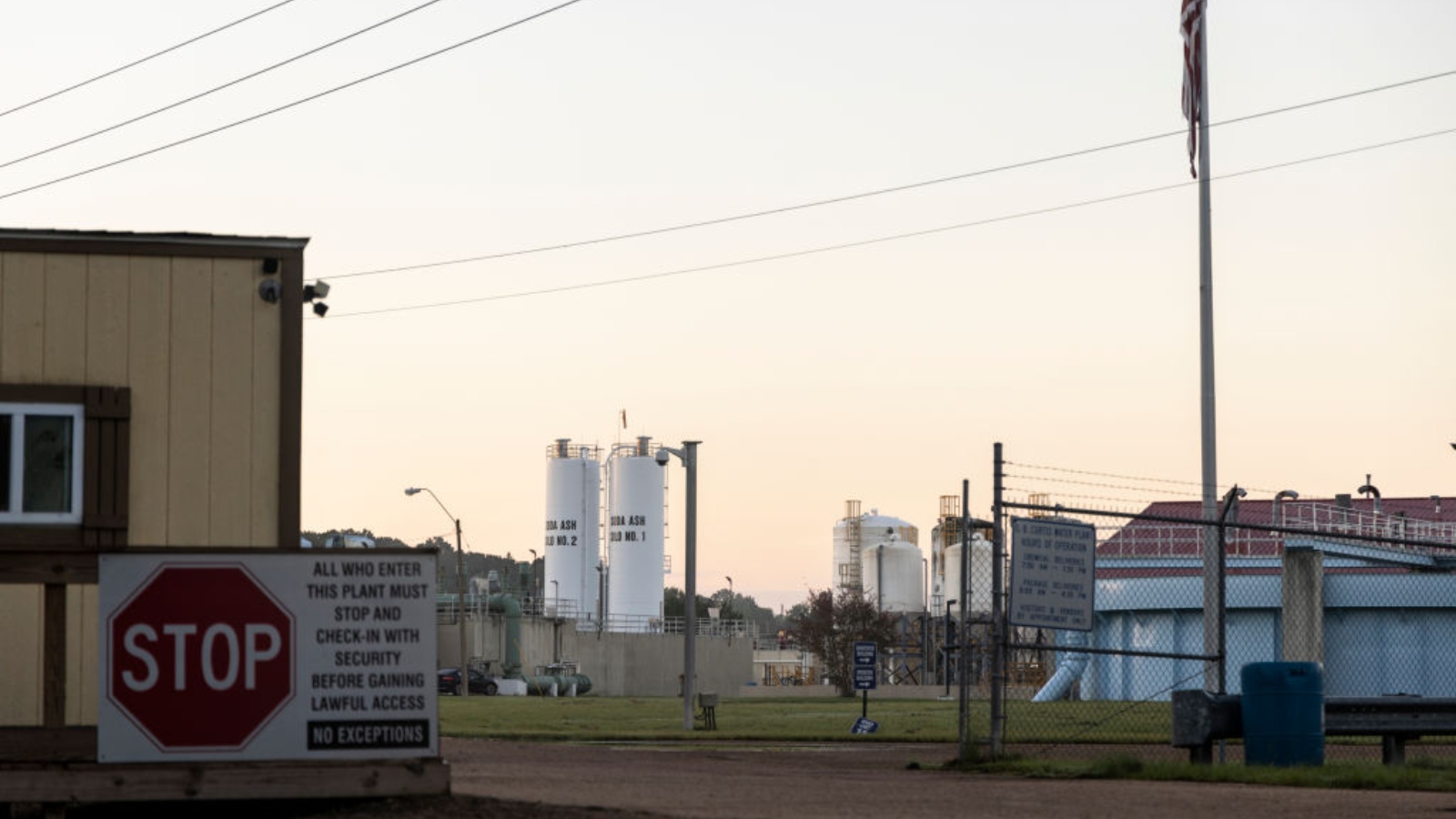
One year after the water system in Jackson, Mississippi, failed during heavy flooding — precipitating one of the highest-profile municipal public health crises in recent U.S. history — officials are telling residents that their water is safe to drink. But these claims have failed to restore Jacksonians’ trust in the system: Last week, two local advocacy organizations filed an emergency petition with the Environmental Protection Agency, or EPA, requesting interim relief from persistently poor water quality and a greater degree of public involvement in plans to update the infrastructure. 

The petition follows a press conference in mid-June, during which Jackson Mayor Chokwe Antar Lumumba announced a new initiative to distribute water filters to customers of the city’s beleaguered water system.

The federal government had been generous in providing critical funding to repair the system, he said, “but none of this will make any difference if we don’t restore the confidence within our residents,” many of whom were still buying bottled water. Providing filters, particularly to vulnerable people like pregnant women and families with young children, might help convince residents to use their taps again, he reasoned. 

The speech landed him in federal court a week later, where a judge expressed concern that his comments contradicted the progress that had been made since the court had appointed a third-party manager, Ted Henifin, to oversee the city’s water system after its treatment plants failed last August. 

“There is no health risk drinking the water that I’m aware of,” Henifin told the court on June 21. “We really need to be careful with messaging about the water.”

These assurances seem to contradict the experiences of many Jackson residents. In court testimony and interviews with Grist, residents described chronic odors and discoloration in their tap water, which has persisted even after the water manager’s remarks in June. In the petition filed last week, local groups also claimed that officials have failed to adequately account for numerous sources of lead and bacteria that could be contaminating the city’s water supply.

“Due to inadequate corrosion control, the downplay of historical lead contamination risk, failure to identify the locations of lead service lines, and the continued delay in rehabilitating microbial treatment processes, Jacksonians have no confidence in [Henifin’s] sweeping statements that Jackson’s tap water is safe for all,” the petition read. (The EPA has not yet responded publicly to the petition; when approached to comment for this story, Lumumba’s office referred Grist to Henifin, who did not respond to requests for comment.)

Local groups also claimed that officials have failed to adequately account for numerous sources of lead and bacteria that could be contaminating the city’s water supply.

Jackson made national headlines last August after torrential rain caused the pumps at its main water treatment facility to fail, forcing local officials to distribute bottled water to the city’s 180,000 people. But the problem long predates that high-profile event. Jackson’s residents have endured years of low-pressure taps and rolling notices recommending that they boil their water before use. In March 2020, the EPA issued an emergency order warning that the water system could contain elevated levels of bacteria such as E. coli. Four years before that, state officials identified elevated lead levels in the drinking water. 

The problem has its roots in decades of disinvestment and discriminatory neglect. After Congress passed the 1964 Civil Rights Act, which cemented the integration of schools and public spaces, white residents began to leave town. Between 1980 and today, the population of white residents dropped from 52 percent to 15 percent. Today, Jackson is more than 80 percent Black and 1 in 4 people live in poverty, according to data from the U.S. Census. 

The eroded tax base has made it difficult for city officials to perform much-needed repairs on the city’s water system, parts of which are more than a century old. Donald Cohen, executive director of the nonprofit research group In the Public Interest, told Grist that many poor cities around the country struggle to upgrade their water systems, because residents cannot afford high utility rates, and the tax base is insufficient to supplement that revenue.

In Jackson, matters are made worse by a growing antagonism between Republican Governor Tate Reeves and Lumumba, the Democratic mayor. Prior to becoming governor, Reeves used his power as state treasurer to block efforts to update the capital city’s infrastructure. As governor, he has routinely rejected legislation that would raise money for water-system improvements. (The governor’s office did not respond to multiple requests for comment.)

“There’s a political component to what’s going on in Jackson,” said Cohen. “It’s a red war on a blue city, and it’s a white war on a Black city. Both of those things are true.”

“There is a sense of you’re giving all this power to one person without including people who are from here in this process.”

After Jackson’s pumps failed last August, a federal court appointed Henifin, an engineer by training, to oversee the city’s water system. Lumumba has called Henifin “instrumental” in lending his expertise to repair the water system, and advocates that Grist spoke to said they had felt hopeful that matters would improve when he entered the picture. However, they quickly felt boxed out of the process and frustrated by what they perceived as a lack of transparency.

“There is a sense of you’re giving all this power to one person without including people who are from here in this process,” said Brooke Floyd, co-director of the Jackson People’s Assembly at the People’s Advocacy Institute, one of the organizations involved in the petition. During a public meeting in March, Henifin said that the court had given him “really really broad authority, probably more than I would have given myself.” Earlier this month, Henifin was also put in charge of the city’s sewer system, which has at least 215 leaks that pour wastewater into the streets of some neighborhoods. 

In their letter to the EPA, the petitioners allege that Henifin has repeatedly failed to meaningfully engage the community, which has resulted in decisions that are against the wishes of Jacksonians, such as taking steps towards privatizing the water system. Earlier this year, he incorporated JXN Water Inc., the body formed to overhaul the city’s water system, effectively shielding it from public disclosure laws. Research has shown that private water systems have, on average, better water quality than public utilities, but they tend to be more costly to customers and more opaque, both factors that could harm officials’ efforts to restore trust in the Jackson community.

water treatment facility in Jackson, MS

The O.B. Curtis Water Treatment Plant on August 31, 2022, in Jackson, Mississippi. Brad Vest via Getty Images

A section of the petition addresses Henifin’s statements to the court in June about the water being safe to drink. Floyd told Grist that the same week that Henifin made those claims, the water in her tap was discolored and “stuff was floating in it.” Her family has had to rely on huge water jugs that they buy from Office Depot — a luxury, she added, that many households can’t afford.

In a declaration submitted to the EPA alongside the petition last week, Jackson resident Danyelle Holmes said that every few months, there comes a week when her tap water runs brown and smells like eggs. During a court hearing in July, another resident said that when she leaves town, her and her son’s eczema improves. Shemeka Cavett, who’s lived in Jackson all her life, told Grist that all summer long, she’s filled two garbage bags a week with emptied water bottles. Sometimes, she said, her tap water is the color of tea. When she washes her face with it, she breaks out. 

“I still don’t trust it after boiling it,” she said. “If the water is a different color, you can’t get that out.”

The poor water quality could be stemming from multiple sources, the petitioners wrote. Old hookups and bad plumbing in the city’s water distribution network could be leaching lead into some neighborhoods’ tap water, but a lack of access to sampling data has kept residents in the dark about the degree of their potential exposure. As of Henifin’s last quarterly report, the city’s main water treatment plants still did not have optimal corrosion control equipment, an important safeguard against lead contamination.

Last month, JXN Water Inc. reported two water quality violations at that facility to the state. In 2020, the EPA issued an emergency order stating that Jackson’s water system had failed to meet federal filtration and disinfection standards, elevating the risk of bacteria such as E. Coli and Giardia in local taps. In his latest report, Henifin has said that work on the local filtration system is ongoing, but that no completion date could be established. 

“Water is life. That’s really why it was important to file this emergency petition to seek some relief while the residents of Jackson are going through all this.”

A lack of access to clean water disrupts almost every aspect of life, said Makani Themba, a local activist. When the water quality is low, people are scared to shower or wash their hands often. One recent study connected boil water alerts in Jackson to higher rates of unexcused absences in schools. Pregnant people and children are particularly vulnerable to the lead exposure, while the  elderly and immunocompromised are at a greater risk for microbial contamination. The advocates’ petition suggests that in light of these risks, residents with compromised water be given bottled water or temporary relocation funds. 

“Water is life,” Themba told Grist. “That’s really why it was important to file this emergency petition to seek some relief while the residents of Jackson are going through all this.”

Federal relief is on the horizon, but it won’t be nearly enough to meet residents’ needs. In June, President Biden announced that Jackson will be receiving $115 million to improve its water system. The funds are part of a wider $600 million package approved by Congress in the latest federal budget. The money will be used for a range of improvements including fixing leaks in the pipes and ensuring adequate pumping to keep a safe level of pressure in taps. The distribution of funds will be overseen by the EPA under the Safe Drinking Water Act. But Mayor Lumumba has estimated that it would take approximately $2 billion to completely overhaul the city’s water system.

EPA Administrator Michael Regan visited Jackson in November 2021 on his “Journey to Justice tour,” a survey of communities across the South dealing with issues of environmental justice, a term that refers to the disproportionate levels of pollution experienced by low income people and communities of color. Floyd recalls meeting Regan during the tour, and said that his visit was an opportunity for places like Jackson to have a platform to hold regulators accountable. But now, she added, the question is whether they will get the job done.

Is the federal government’s action “just going to be performative, or is environmental justice really going to be served?” she wondered aloud. “It’s on the community and the people to really make sure that they follow through.”

This article originally appeared in Grist at https://grist.org/equity/jackson-mississippi-water-crisis-petition/.

Grist is a nonprofit, independent media organization dedicated to telling stories of climate solutions and a just future. Learn more at Grist.org


Trump judge’s actual argument for abortion bans: Doctors are harmed without cute sonograms

Watch out, Justice Samuel Alito! You’ve got real competition when it comes to federal judges whose judicial opinions sound more like unhinged posts from an incel forum than legal writings from a professional adult.

Judge James Ho, a Donald Trump appointee who sits on the Fifth Circuit Court of Appeals, is quickly building a name for himself as the biggest crybaby troll on the federal bench. In and out of court, the man is so whiny and obsessed with unjustified grievances, that one expects any day now for him to be outed as “ElliotRodgerFan48” on some low-rent message board. Ho is the judge who argued that, because they didn’t take away guns from convicted wife-beaters in the 19th century, the government has no right to do it now. He’s the judge who swore he would never hire a Yale graduate because Yale students, using their right to free speech, protested a leader of a hate group. He sneeringly argued that pregnancy cannot ever be a serious medical condition, questioning, “When we celebrated Mother’s Day, were we celebrating illness?” He was sworn in by Justice Clarence Thomas at the home of billionaire Harlan Crow, but Ho routinely paints himself as the victim of “elites” like, uh, college students and everyday women who need abortion access. 

As James LaRock at Balls and Strikes writes, “Ho often confuses being a federal judge with being a speechwriter for a right-wing shock jock’s presidential campaign.” But even by the sub-Steven Crowder standards of Ho’s cringeworthy career, he bests himself his opinion in a recent case on whether the courts can unilaterally throw out FDA approval of mifepristone, which is part of a two-pill regimen to terminate early term pregnancies.


Want more Amanda Marcotte on politics? Subscribe to her newsletter Standing Room Only.


Ostensibly, the fight is over whether the drug is “dangerous,” but even those arguing that point can barely be bothered to pretend to believe it. Abortion pills have been legal since 2000 and have been used over 5 million times. As the American College of Obstetricians and Gynecologists writes, “serious side effects occur in less than 1% of patients, and major adverse events—significant infection, blood loss, or hospitalization—occur in less than 0.3% of patients. The risk of death is almost non-existent.”

So instead, Ho decided to argue that women need to be forced into unwanted pregnancies so there are more adorable sonogram pictures to gaze upon. No, I’m not exaggerating. 

“Unborn babies are a source of profound joy for those who view them,” he wrote in his Wednesday opinion. “Expectant parents eagerly share ultrasound photos with loved ones.  Friends and family cheer at the sight of an unborn child. Doctors delight in working with their unborn patients—and experience an aesthetic injury when they are aborted.”

The obvious flaw in this argument is that people seeking abortion clearly don’t feel stoked about having a baby. But such a point requires believing women are complex human beings with rich interior lives, an idea that anti-choicers are not willing to concede. Instead, the anti-choice movement has long held that all women wish to be pregnant all the time. Any woman who disagrees is immediately written off as too corrupted by feminist propaganda to know her own mind. The solution, according to anti-choicers, is simple: Just force her to have the baby, and she’ll soon see it was what she always wanted. 

But Ho isn’t just being a sexist pig with this argument. This argument is just as much about exercising a grievance against environmentalists as it is about painting women as empty-headed baby vessels. 

As is typical with grievance-mongering from MAGA types, trying to figure out what they’re mad about is a headache. But I’ll try to explain. Ho is bitter that groups like the Sierra Club have, in the past, sued to stop development on ecologically valuable lands by arguing that the public has an interest in preserving nature. Basically, if a corporation wants to bulldoze the habitat of some endangered bird, environmentalists will get bird-watchers to join the lawsuit, arguing they will lose out if the birds are killed off. Ho thinks this is stupid. To the right, making a quick buck will always trump supposedly petty interests like preserving nature. So he’s shotgunning his loathing of tree-hugging hippies into this abortion debate. 


Want more Amanda Marcotte on politics? Subscribe to her newsletter Standing Room Only.


Yep, it’s the “liberals want to save the whales but not the babies” gambit. It’s dumb in a high school debate club and certainly unworthy of the federal bench. It’s irrational on its face, of course. Abortion has been legal for five decades and people did not stop having babies. It’s also profoundly misogynist, as it equates a woman’s body to a natural resource available for public consumption. He’s literally saying that since other people would like to use a woman’s body to produce sonogram pictures, she has no say over what happens to it. That’s quite a rape-y mentality, of course, but no surprise from the “let wife-beaters keep their guns” guy appointed by President Grab ‘Em By The Pussy. 

The legal fate of abortion pills is still distressingly up in the air. Because the Supreme Court forced them, two of the three-judge panel reluctantly agreed that they couldn’t revoke the FDA’s 2000 decision legalizing the pill. But they did strike down subsequent FDA rulings that made the pill easier to get. This is justified because the plaintiffs, a small group of Christian right doctors, don’t like it when other doctors perform abortions. As one of the doctors who sued argued, “When my patients have chemical abortions, I lose the opportunity . . . to care for the woman and child through pregnancy.” 

Yes, the court is ruling that at least some women must be forced into unwanted pregnancy because this small group of doctors wants more patients. 

Notably, this is a fringe group. The mainstream of American medicine does not believe that women should be forced into childbirth so they can make more money, er, see more cute sonograms. On the contrary, the American Medical Association argues that doctors should prioritize the wellbeing of patients over their own desire for cash and/or ultrasound photos. “Evidence shows patients are at least 14 times more likely to die of complications during childbirth than during any abortion procedure,” they explain in their brief defending legal abortion pills. “And substantial evidence shows that denying abortion care puts patients at an increased risk for violence from intimate partners and it exacerbates patients’ economic hardships.”

Common sense if you believe women are people. But Ho obviously does not. Instead, he openly compares a woman’s body to a public park. Usually, right wingers go to some effort to conceal that they view women as resource extraction sites. But this is a new era of court corruption, where conservative justices are bought off with millions of dollars of vacations and other goodies. So why not take that level of impunity into the decisions themselves, which are increasingly indistinguishable from the self-pitying rants from misogynist forums?

Our collective malady: Donald Trump’s mental health crisis is America’s problem

To properly respond to Donald Trump and the level of extreme danger he represents — especially as he faces multiple criminal prosecutions — requires understanding some specific aspects of Trump’s behavior and motivations.

Trump has shown a wide range of pathological behavior over the past seven years or so. He has an unhealthy fascination with violence. He lacks impulse control and empathy. He revels in cruelty. He compulsively lies and exhibits traits of malignant narcissism. He is a confirmed sexual predator and misogynist. He has a tenuous relationship to reality, and increasingly retreats into victimology and a persecution complex. He believes himself to be almost literally superhuman and often behaves like a cult leader. 

In my many conversations with mental health experts during the Age of Trump, one of their consistent themes has been the suggestion that if the ex-president was not a rich white man he would likely have been arrested or otherwise removed from normal society decades ago.

Trump’s pathological behavior is in no way separate from his role as leader of the neofascist MAGA movement and larger white right. One repeated error made by the mainstream media and the larger political class is to divide Trump’s obvious mental health issues from his political behavior and the ascendancy of his movement.

Fascism and other forms of illiberal politics are not “merely” political problems. In reality, such things are a societal force and imaginary that both harness and generate collective mass sociopathy and other forms of physical, emotional, psychological, intellectual and spiritual pathology. Sick societies produce sick leaders; sick leaders have sick followers; in combination, those forces produce sick political movements. Collectively, these are manifestations of a condition of malignant normality that can all too easily end in societal destruction.

After four indictments on a wide variety of charges for which he potentially faces imprisonment, Donald Trump has reacted in entirely predictable fashion, lashing out at many of his perceived enemies, including President Biden,  Attorney General Merrick Garland, special counsel Jack Smith, Fulton County District Attorney Fani Willis, the Democratic Party, the FBI and others he views as part of a “deep state” plot against him and his MAGA movement. Consider this recent fundraising email from Trump:

I honestly believe that Joe Biden doesn’t love America.

Right now, our once great country is falling apart. Inflation is ravaging our economy. Our border is in complete disarray. Our enemies are openly spying on us and getting away with it. And our justice system has been replaced by a weaponized legal system that criminalizes dissent.

We are a nation in decline.

If I were in the White House right now, I would dedicate every waking hour and every fiber of my being to fix this mess.

But what’s Crooked Joe doing as America burns?

… Spending millions and millions of YOUR taxpayer dollars to wrongly indict, arrest, and possibly even JAIL his leading opponent.

The truth is: Crooked Joe doesn’t care if our country burns to the ground. He only cares about his own power.

But I trust you know that I truly care about America. Nothing motivates me more than my endless love for our country.

Look, I didn’t have to run for president. I didn’t have to challenge the Deep State.

I’m not in this battle for fame or fortune. I’m in this battle to save our country and nothing else.

That’s just one in a lengthy series of emails on the same theme: Biden and the Democrats and their voters are existential enemies of the nation, and the twice-impeached, four-times-indicted ex-president is the only person who can defeat them.

Rather than mocking or deriding these rants, it is better to understand them as problematic and dangerous. This is classic projection: Trump is projecting his inner views and pathological sense of self-identity outward onto others.

Trump’s projections and his evidently unstable behavior may provide insight and map onto what he and his followers will do next — up to and including potential acts of political violence — in response to his impending criminal trials amid the 2024 presidential campaign. I asked Dr. Marc Goulston, a prominent psychiatrist, former FBI hostage-negotiation trainer and author of the bestsellers “Just Listen” and “Talking to ‘Crazy’,” for his insights into Trump’s inflammatory rhetoric and what it reveals about the ex-president’s state of mind. He responded by email:

If we took out the words “Joe” or “Biden”  from his rants and asked non-dictator world leaders to choose whom they seemed to describe more accurately, Biden or Trump, I’m guessing most would say it’s a better description of Trump and what he is or would do to America.

So even to the untrained eye it is clear that Trump is projecting a lot of negativity on Biden. If that is so, what lies beneath?

One of the things Trump cannot tolerate is feeling powerless or helpless, which triggers something called “impotent rage.” That is the rage of powerlessness, and the more powerless and now imperiled he feels, the greater his rage. …

[T]he more Trump is feeling destroyed by the indictments the more he needs to destroy Biden. Trump is a gambler and not a very effective one, given his real financial dealings from the past several decades. His current gamble is that he will be re-elected so he can pardon himself for everything and create a Justice Department to do his bidding, or that if another Republican is elected they will pardon him for fear of alienating Trump’s base.

Or if he believes he didn’t lose the 2020 election — a more likely possibility is that he can’t believe he lost to Joe Biden — he could convince himself that he isn’t paranoid, but that Biden, the Deep State and the Justice Department are truly out to get him, which would justify in his mind his attacking them before they destroy him.

I also asked Dr. Lance Dodes, a retired assistant clinical professor of psychiatry at Harvard Medical School and a training and supervising analyst emeritus at the Boston Psychoanalytic Society and Institute, for his assessment of Trump’s behavior and language. He also responded by email:

Donald Trump has always relied on primitive psychological defenses, including denial of reality, as in his long history of inventing “alternative facts” and fake news. Another of his primitive mechanisms is projection and its more severe form, “projective identification.” In the latter case, he reverses identities to claim that those opposed to him have exactly the amoral traits that define himself, for example, calling President Biden “Crooked Joe.” This dangerous capacity to project his identity onto another person, in order to shift responsibility and anger away from himself, is common in tyrants and would-be tyrants. For example, they routinely claim that truly democratic leaders are antidemocratic while they, who are actually antidemocratic, seize power for themselves to “restore democracy.”

Projective identification can be a surprisingly effective technique, since it simultaneously attacks the honest person while pretending the dishonest one is against the very things he is [himself]. This worked for Trump in 2016, and to the extent he is able to con people into thinking that he is the honorable person being victimized by bad people, he can win again.

In a recent interview with Salon, Dr. Marcel Danesi, author of the new book “Politics, Lies and Conspiracy Theories: A Cognitive Linguistic Perspective,” explained how fascists, authoritarians and demagogues use emotions and rhetoric in sophisticated ways to control their followers. I asked Danesi for his analysis of how Trump’s attacks on Biden fit into that model:

Trump’s strategy has always been to attack back when under threat, or even better to attack first. It is a major tactic of political manipulators throughout history, whereby they blame the blamer, without any proof, denying any wrongdoing and thus deflecting attention away from themselves. Just like a character from an Orwellian dystopia, he uses use words to obscure the truth, including irrelevant responses or feigning offense via denial.

This strategy is right from the Machiavellian playbook. In “The Prince,” Machiavelli warned that any admission of wrongdoing is the death knell of the prince’s rule and loosens his mind control over people. … Trump’s current attacks on the judiciary are a calculating, Machiavellian strategy of deflection by projection — blaming others for employing his own tactics. Interestingly, in an article Orwell wrote in 1940, he pinpoints the core of this strategy, writing that the manipulator portrays himself as a martyr, a victim, the “self-sacrificing hero who fights single-handed against impossible odds.” The intent is to portray himself as fighting against an invisible enemy — the same enemy that Trump’s followers are purported to be fighting.

Trump’s strategy is not new. It has always existed. In ancient Greece, the aristocrat Cleon was elected in 424 B.C., using oratory that resonated with people … instilling a mistrust of intellectuals and even aristocrats opportunistically, despite the fact that he was an aristocrat himself. He called them liars, responsible for all the ills that were endemic to society.

Trump’s attempt to cling on to power and avoid accountability is actually a simple one that has worked from time immemorial — blame the deep state (whatever that may be) as the enemy engaged in a takeover of the “real America.” As Machiavelli wrote in various works, never admit any wrongdoing, accuse others of the wrongdoing, and do it over and over, and the prince will enhance his chances to keep people in a mind fog. 

Donald Trump’s mental health and diseased mind are not likely to improve, given the pressures he now faces. And as goes Trump, so goes the Republican Party, the MAGA cult and the larger white right.


Want a daily wrap-up of all the news and commentary Salon has to offer? Subscribe to our morning newsletter, Crash Course.


In total, Donald Trump’s poor mental health and aberrant behavior amount to a political, social and legal crisis for America and the world. He must be defeated at the polls and prosecuted in the courts, but even that will not be enough.

To paraphrase historian Timothy Snyder, the Trump era is America’s “collective malady.” It will take years of collective hard work, grit and determination to get better. 

Locals have been sounding the alarm for years about Lahaina wildfire risk

David woke suddenly in the mid-afternoon. The 56-year-old chef could hear commotion outside and scrambled up from his nap, finding his roommates on the roof of their shared home, holding garden hoses and spraying water on a raging inferno licking closer by the minute. 

“No, brah, we got to go,” he yelled. He couldn’t believe they hadn’t woken him up, or the dog who had been lounging in his room, that they were attempting to hose down the fast-growing flames instead of getting away from them as fast as possible. “We got to go!” He ran into the street. It was Tuesday, Aug. 8, and in the town of Lahaina in West Maui, people were screaming and running as the sky rained embers. 

There was no warning from anyone about the fast-moving fire — no text, no officials knocking on his door, no sirens. 

“It was just, boom!” he said later. “You saw a fire and you’re going to die. That’s how fast it happened. Run for your life.”

That’s what he did. 

He jumped in a car with a panicked driver who drove the wrong direction, straight into the flames, where she got stuck in back-to-back traffic along the two-lane highway. David clutched the door handle to get out but it was so hot that it burned his fingers. The flames were 60 feet high and five feet away on either side of them. The cars in front of them were on fire. He yelled that they should run but he was the only one in the car who jumped out. Everyone else was frozen. He threw open the door and ran until the flames were far behind.

In the days since, he hasn’t been able to stay still. Every day he cries and keeps moving, sleeping along the road, by the park, at a friend’s and in a shelter. He can’t stop thinking about what he saw and questioning if he could’ve done more.

No one he was with that day survived — not his roommates, none of the other passengers in the car, not even the dog with whom he had been sleeping before waking up to a literal nightmare.

Just over a week later, the depth and breadth of the fire is still only just growing clear. Dozens of cadaver-sniffing dogs have been flown in from the continent to scour the fire zone. Less than half of the burned area has been searched, and with more than 100 dead, the fire is already the deadliest in modern U.S. history, yet 1,000 people are still missing. Family members are submitting their saliva to identify loved-ones’ remains, many of which are so badly burnt that they crumble when touched. It may not even be possible to identify or recover all bodies as some drowned at sea trying to escape while others succumbed to the flames.

But while the inferno happened shockingly fast for the people of Lahaina, it didn’t come out of nowhere. It had been building for years, like the dry grasses that caught alight and fueled the blaze. The enormity of the catastrophe speaks to both the challenges of preparing for the unimaginable and the incredibly high stakes of inaction.

Susanne Moser, a New England-based climate change resilience expert, says communities and governments are going to have to confront that reality as climate change makes disasters like Maui’s more likely to occur. It may be expensive, but if people don’t pay for it upfront, they may pay later in lives. 

“I think what’s happening now is that climate change is essentially coming back at us with its bill much more ferociously and rapidly and in a much more integrated, systematic sort of way than we have tried to understand it,” Moser said.

Lahaina, in Hawaiian, translates to “cruel sun.” The area was once home to 14 acres of wetland, including a large fishpond and a one-acre sandbar where high chiefs, and, later, Hawaiian royalty lived.

Katie Kamelamela, an assistant professor at Arizona State University who specializes in forest restoration and Indigenous practices, says the tragedy in Lahaina can trace its origins to the privatization of land in 1848, known as the Great Mahele, that eventually led to huge swaths of land sold to large agricultural companies.

Sugar became the dominant industry in Lahaina in the latter part of the 19th century, and to irrigate their fields, plantation owners diverted streams that once flowed from the mountains to the sea. Lahaina’s royal fishpond devolved into a stagnant marsh, and plantation owners filled it in with coral rubble. 

When Lahaina burned last week, the former fishpond had long been buried under a baseball field and parking lot.

an engraving of an island with small town and palm trees

An engraving depicts Lahaina, Maui, in the 1880s. The Print Collector / Print Collector / Getty Images

The dominance of the sugar industry was cemented with the 1893 overthrow of the Hawaiian Kingdom. American and European businessmen backed the removal of Queen Liliʻuokalani and succeeded with the support of United States Marines and Navy sailors. The last of Mauiʻs sugar plantations closed in 2016, as tourism and real estate superseded agriculture as the state’s most lucrative land uses. 

Water is still a finite resource. Firefighters battling the Lahaina flames found themselves pulling from dry hydrants until they were eventually overwhelmed. A state official has come under scrutiny for delaying the release of water in West Maui, though it’s not clear whether his decision actually affected the hydrants. 

What is clear is that instead of a wetland cultivated by Indigenous caretakers or a sugar plantation irrigated for crops, the Lahaina that the fire met last week was dry and primed to burn. A third of Maui was in drought and a hurricane passing south of the islands whipped up 80 mph winds. Non-native grasslands had proliferated after the closing of the sugar and pineapple fields, but many thinly walled wooden plantation homes still stood.

Local wildfire experts like Clay Trauernicht for years had been sounding the alarm on the risks. When brush fires scorched 10,000 acres in Maui in 2019, Trauernicht wrote articles, testified in public hearings, and held meetings letting people know that fires were getting worse and Hawaiʻi needed to be prepared.

It was difficult to get people to care about fires when the main casualties were native forests and structures, Trauernicht told Grist this week.

It didn’t help that the neighborhoods most likely to burn statewide were communities like Oahu’s Waianae, drier west side communities with lower property values and more Native Hawaiian residents, rather than the lush, green wealthier enclaves on the windward coasts. 

What’s frustrating to Trauernicht is how easy it would have been to prevent non-native grasslands from running rampant. “Almost anything other than what we are doing — which is nothing — will reduce fire risk,” he said.

a burned out shell of a home

The remnants of a home in Lahaina one week after the fire. Gabriela Aoun Angueira / Grist

But much easier than pinpointing problematic land use decisions is condemning whoever lit the spark. And so far, many are blaming the Hawaiian Electric Company. No official cause has yet been determined, but at least four lawsuits have already been filed against the utility, sending its stock value plunging by $1 billion and casting doubt on the future of the company established in 1891 – two years before the overthrow of the Hawaiian Kingdom.

Attorneys point out that the utility recognized in a public filing last year that its risk of sparking a wildfire was “significant” and argue that the company was too slow to implement reforms. “The need to adapt to climate change is undeniable and urgent,” the company acknowledged in a public filing.

A downed power line hangs over grass on Maui.

Power lines hangs over dry grasses and a sign that says “dry area prevent fires” on Maui in the aftermath of the fire that has killed over 100 people. Experts and community members had long raises the alarm about the dangers of dry, invasive grasses. Gabriela Aoun Angueira

Planning document after planning document suggests Hawaiʻi officials both knew this tragedy could happen, and yet couldn’t imagine it actually happening. A 2020 hazard mitigation plan identified Lahaina as a high risk area for wildfires. Maui’s draft climate change action plan notes that wildfire burn areas quadrupled in the last century. But in a state report on emergency planning, officials said wildfires were considered a “low risk” to human life. 

The more pressing concerns were hurricanes or tsunamis, so much so that although the state had invested in a state-of-the-art siren system — “the largest single integrated public safety outdoor siren warning system in the world” — local emergency officials didn’t turn it on even after learning that firefighters were being overwhelmed by the blaze.

a siren on a beach near a woman in the water

A statewide outdoor warning siren system stands over Kamaole Beach Park I on August 13, 2023 in Kihei, Hawai’i The system did not alert thousands of Lahaina residents about a wind-driven wildfire that killed over 100 people in August 2023. Justin Sullivan / Getty Images

On Wednesday, Herman Andaya, then Maui’s top emergency management official, defended that call, saying the system would not have saved lives because people would not have heard the sirens if they were indoors, and that the sirens may have prompted people to flee inland, toward the fire, as the blaring sound is intended to push people to find higher ground. Andaya resigned Thursday.

Instead, county officials sent out emergency phone and social media alerts – alerts that many, like David, never received.

The next day, Hawaii Lt. Gov. Sylvia Luke told news media that officials hadn’t anticipated that a hurricane that never made landfall on the islands could have wrought such destruction. But five years before Lahaina’s historic Front Street was incinerated — almost to the date — the periphery of another hurricane was stirring up strong winds on Maui, fueling another conflagration that was stopped just yards away from homes.

“There was a very, very strong possibility that the entire Lahaina town could have gone up in flames yesterday,” then-Mayor Alan Arakawa told a local news crew as rain poured down behind him on Aug. 26, 2018. The mayor said he’d been on the phone with federal emergency officials trying to figure out how to evacuate 20,000 people in the Lahaina area if needed. 

There was no guarantee such an evacuation was even possible. “If the hurricane had generated the kinds of winds and surf that we had been anticipating — 15 to 20 plus feet — it would’ve buried Honoapiʻilani Highway and we would not have had access in and out of Lahaina,” he said. 

Burned-out cars now line that same two-lane highway where people abandoned them in desperation or were caught by the roaring flames.

a burned car on the street

Burned cars and homes are scattered even in neighborhoods outside of the impact zone in Lahaina. Gabriela Aoun Angueira / Grist

One cruel irony is Hawaiʻi has been a national leader in climate change preparedness. While states like Montana have banned agencies from considering climate change in their decisions, Hawaiʻi was the first state to set a 100% renewable energy goal, the first to declare a climate emergency, funding climate commissions and offices and pledging to go net-carbon neutral by 2045.

But what local officials may have overlooked was the incredible risk of what scientists call compound hazards, the intersection of multiple disasters — such as how hurricane-fueled winds can combine with a brush fire to erase an entire town. 

Even Trauernicht, the state’s Cassandra, describes what happened last week as “unimaginable.” Moser from New England says she hears that word over and over again when she works with emergency preparedness officials in the wake of a disaster. 

“The strong takeaway for me is that if you want to get prepared, you have to open the taboo, the unimaginable, to think about it,” said Moser. “Everybody should be thinking about multiple system failures at the same time and multiple hazards coinciding because that’s the kind of world that we live in.”

On both its north and south sides, there is only one road leading out of Lahaina, underscoring the importance of an emergency warning system. Gabriela Aoun Angueira / Grist

What has been heartening to her is seeing how on Maui, Native Hawaiians and other locals have come together to help one another emerge from the wreckage. She’s much more concerned about places where there’s not as much social cohesion, where people may go hungry longer without concerned neighbors knocking on their doors. 

But nothing can erase from David’s memory the scenes he keeps replaying over and over. After he ran from the car, he joined a caravan of survivors that walked south for miles until they hit the next town of Olowalu. A friend of his eventually picked him up, and they went to Costco where they drank alcohol, covered in soot, trying to comprehend what had just happened. 

He also replays the scenes of the Lahaina he knew. The waves and the harbor and the boats and the ocean. The chickens and birds he passed when riding his bike down Front Street to make loco moco and pancakes for patrons at the cafe where he worked.

“It was just the most beautiful place you’ve ever been,” he said. “All of a sudden it looks like literally a nuclear bomb went off.” 

He would give anything to go back. 

Grist climate solutions writer Gabriela Aoun Angueira contributed reporting to this story.

This article originally appeared in Grist at https://grist.org/wildfires/maui-fire-risk-drought-grass-sound-alarm-lahaina-hawaii/.

What’s next in Ukraine as U.S.-backed “counteroffensive” grinds to a halt?

President Biden wrote in the New York Times in June 2022 that the United States was arming Ukraine to “fight on the battlefield and be in the strongest possible position at the negotiating table.” 

Ukraine’s fall 2022 counteroffensive left it in a stronger position, yet Biden and his NATO allies still chose the battlefield over the negotiating table. Now the failure of Ukraine’s long-delayed “spring counteroffensive” has left Ukraine in a weaker position, both on the battlefield and at the still empty negotiating table.

So, based on Biden’s own definition of U.S. war aims, his policy is failing, and it is hundreds of thousands of Ukrainian soldiers, not Americans, who are paying the price, with their limbs and their lives. 

But this result was not unexpected. It was predicted in leaked Pentagon documents that were widely published in April, and in President Zelenskyy’s postponement of the offensive in May to avoid what he called “unacceptable” losses. 

The delay allowed more Ukrainian troops to complete NATO training on Western tanks and armored vehicles, but it also gave Russia more time to reinforce its anti-tank defenses and prepare lethal kill-zones along the 700-mile front line.

Now, after two months, Ukraine’s new armored divisions have advanced only 12 miles or less in two small areas, at the cost of tens of thousands of casualties. Twenty percent of newly deployed Western armored vehicles and equipment were reportedly destroyed in the first few weeks of the new offensive, as British-trained armored divisions tried to advance through Russian minefields and kill-zones without de-mining operations or air cover. 

Meanwhile, Russia has made similar small advances toward Kupyansk in eastern Kharkiv province, where land around the town of Dvorichna has changed hands for the third time since the invasion. These tit-for-tat exchanges of small pieces of territory, with massive use of heavy artillery and appalling losses, typify a brutal war of attrition not unlike the First World War.

Ukraine’s more successful counteroffensives last fall provoked serious debate within NATO over whether that was the moment for Ukraine to return to the negotiating table it had abandoned at British and U.S. urging in April 2022. As Ukrainian forces advanced on Kherson in early November, the Italian daily La Repubblica in reported that NATO leaders had agreed that the fall of Kherson would put Ukraine in the position of strength they had been waiting for to relaunch peace talks.

On Nov. 9, 2022, the very day that Russia ordered its withdrawal from Kherson, Gen. Mark Milley, the chairman of the Joint Chiefs of Staff, spoke at the Economic Club of New York, where the interviewer asked him whether the time was now ripe for negotiations.

Milley compared the situation to the First World War, explaining that leaders on all sides understood by Christmas 1914 that that war was not winnable, yet they fought on for another four years, multiplying the million lives lost in 1914 into 20 million by 1918, destroying five empires and setting the stage for the rise of fascism and the Second World War.

Milley concluded his cautionary tale by noting that, as in 1914, “there has to be a mutual recognition that military victory is probably, in the true sense of the word … not achievable through military means. And therefore, you need to turn to other means. … So things can get worse. So when there’s an opportunity to negotiate, when peace can be achieved, seize it, seize the moment.”

We need your help to stay independent

But Milley and other voices of experience were ignored. At Biden’s February State of the Union speech in Congress, Milley’s face was a study in gravity, a rock in a sea of misplaced self-congratulation and ignorance of the real world beyond the circus tent, where the West’s incoherent war strategy was not only sacrificing Ukrainian lives every day but flirting with nuclear war. Milley didn’t crack a smile all night, even when Biden came over to glad-hand after his speech.

No U.S., NATO or Ukrainian leaders have been held accountable for failing to seize that moment last winter, nor the previous missed chance for peace in April 2022, when the U.S. and U.K. blocked theTurkish and Israeli mediation that came so close to bringing peace, based on the simple principle of a Russian withdrawal in exchange for Ukrainian neutrality. Nobody has demanded a serious account of why Western leaders let these chances for peace slip through their fingers. 

Whatever their reasoning, the result is that Ukraine is caught in a war with no exit. When Ukraine seemed to have the upper hand in the war, NATO leaders were determined to press their advantage and launch another offensive, regardless of the  human cost. But now that the new offensive and weapons shipments have only succeeded in laying bare the weakness of Western strategy and returning the initiative to Russia, the architects of failure reject negotiating from a position of weakness.

In an intractable pattern common to many wars, all parties to the fighting — Russia, Ukraine and leading NATO members — have been deluded by limited success into prolonging the war and rejecting diplomacy.

So the conflict has fallen into an intractable pattern common to many wars, in which all parties to the fighting — Russia, Ukraine and the leading members of the NATO military alliance — have been encouraged or, we might say, deluded by limited successes at different times into prolonging the war and rejecting diplomacy, despite appalling human costs, the rising danger of a wider war and the existential danger of a nuclear confrontation.

But the reality of war is laying bare the contradictions of Western policy. If Ukraine is not allowed to negotiate with Russia from a position of strength nor from a position of weakness, what stands in the way of its total destruction?

And how can Ukraine and its allies defeat Russia, a country whose nuclear weapons policy explicitly states that it will use nuclear weapons before it will accept an existential defeat? 

If, as Biden has warned, any war between the U.S. and Russia, or any use of “tactical” nuclear weapons, would most likely escalate into full-scale nuclear war, where else is the current policy of incremental escalation and ever-increasing U.S. and NATO involvement intended to lead? 


Want a daily wrap-up of all the news and commentary Salon has to offer? Subscribe to our morning newsletter, Crash Course.


Are they simply praying that Russia will implode or give up? Or are they determined to call Russia’s bluff and push it into an inescapable choice between total defeat and nuclear war? Hoping, or pretending, that Ukraine and its allies can defeat Russia without triggering a nuclear war is not a strategy. 

In place of a strategy to resolve the conflict, the U.S. and its allies harnessed the natural impulse to resist Russian aggression onto a U.S. and British plan to prolong the war indefinitely. The results of that decision are hundreds of thousands of Ukrainian casualties and the gradual destruction of Ukraine by millions of artillery shells fired by both sides.

Since the end of the First Cold War, successive U.S. governments, Democratic and Republican, have made catastrophic miscalculations regarding the United States’ ability to impose its will on other countries and peoples. Their incorrect assumptions about American power and military superiority have led us to this fateful, historic crisis in U.S. foreign policy.

Now Congress is being asked for another $24 billion to keep fueling this war. They should instead listen to the majority of Americans, who, according to the latest CNN poll, oppose more funding for an unwinnable war. They should heed the words of the declaration by civil society groups in 32 countries calling for an immediate ceasefire and peace negotiations to end the war before it destroys Ukraine and endangers all of humanity.

Trump wants trial for election case pushed to 2026

In a filing made on Thursday evening, Trump‘s team has requested that the date for the former president’s election subversion case be pushed to April 2026 — a far cry from special counsel Jack Smith’s previous request for January 2024.

Per CNN, his representation is rejecting Smith’s date on the grounds that he “seeks a trial calendar more rapid than most no-document misdemeanors, requesting just four months from the beginning of discovery to jury selection.” Adding, “The government’s objective is clear: to deny President Trump and his counsel a fair ability to prepare for trial. The Court should deny the government’s request.”  

In the outlet’s coverage of this wild move, Breaking News Reporter Devan Cole highlights that, “Among other things, Trump’s team argued that Smith’s proposed timeline for the trial would conflict with the other criminal and civil cases in which the former president is a defendant, including the classified documents case brought by Smith, the hush money case in New York and the Georgia election subversion case.” US District Judge Tanya Chutkan is expected to make her decision on the finalized date by the end of the month. 


The death hoax of a child influencer: Lil Tay’s recent infamy shines a light on a bigger problem

The 14-year-old social media personality, Lil Tay, was pronounced dead on her Instagram on Aug. 9. The news sent tidal waves all over social media and people mourned the life that was seemingly taken so soon. But she’s very much alive, according to a statement from TMZ. The news was revealed to be a hoax, and Tay said she is “safe and alive.” 

Tay became an internet sensation when she was nine years old for being a foul-mouthed child flashing stacks of cash.

Even though Lil Tay, whose real name is Tay Tian, is confirmed to be still alive people online began to speculate that there were troubling circumstances surrounding the death hoax. Some even said that her family faked her death for online clout and notoriety. A spokesperson for Meta told TMZ the Instagram account was hacked by a third party.

While the Tay hoax did not confirm people’s suspicions, it did open the floodgates for a larger conversation on the treatment of child social media personalities who are still under the jurisdiction of their parents. Child influencers or children who are a part of the content that their influencer parents film and post are susceptible to being financially and emotionally exploited by their family – and in Tay’s instance, it feels like both.

Tay became an internet sensation when she was nine years old for being a foul-mouthed child flashing stacks of cash, dropping the n-word, and starting feuds with other social media personalities like Bhad Bhabie, aka Danielle Bregoli. Bhad Bhabie is another young overnight internet star who went viral for her infamous phrase “cash me ousside, how bout dah.”

The death hoax isn’t the first time people online have shown concern for the young influencer. In 2018, Tay’s Instagram went dark — her posts were deleted, and she’s been inactive ever since. In order for an influencer to have a successful career, engagement is crucial, and going dark is never good for a brand. People Magazine obtained records that showed the influencer’s parents were entangled in a contentious custody battle over Tay. She was court-ordered to move back to Canada with her father in 2018. Two years later, a judge approved that she move back to Los Angeles with her mother. She’s been completely dark on the internet ever since.

Being the face of a brand or persona for purely monetary gain compromises a child’s digital safety.

Before the indefinite hiatus from her socials, Tay was claiming to be worth millions. But she still wore clothes with tags on them. And the mansions she filmed her videos in were allegedly just a part of her real-estate agent mother’s listings. The red sports car seen in her most popular Instagram video — also not hers. It belongs to her mother’s boss, who then forced her to resign when he found out Tay used the car without approval.

A video also leaked that showed Tay’s older brother, Jason Tian, coaching her on her lines for YouTube videos, telling her she needed to be “more ignorant” in her delivery. When asked about coaching during a “Good Morning America” interview, Jason said, “A lot of people are going to say this and that, we just keep going.” Tay and her mother, Angela Tian, were both asked to clear up misconceptions about the child’s controversial internet persona during the on-camera interview. Tay’s mother urged that she was a “wonderful child” and a “top student.” Angela said she was even present when Tay drove in a car illegally for her videos. Tay insisted that this is all a persona that she has concocted and that she actively participates and enjoys the lifestyle even though it seems her responses are a bit shaky or flustered. 

Tay’s circumstances illustrate a troubling pattern that children who are exposed to this type of visibility are susceptible to not only financial exploitation but emotional and physical abuse and/or exhaustion too. The persona Tay put on was clearly something that she had to be trained to do through her family members. But being the face of a brand or persona for purely monetary gain compromises a child’s digital safety and their ability to be healthily socialized as a growing adolescent.   

We need your help to stay independent

Child influencing is a whole other monster in the fame machine but similarly, many child stars have faced parallel levels of exploitation from their families, the industry and the surrounding general public. High-profile celebrities who began their careers as child stars have all experienced the downfall of their starhood while people have made money from their trauma. People like Britney Spears, who just recently has been relinquished from a 13-year-long conservatorship controlled by her father, and Jenette McCurdy, who last year wrote the NY Times best-selling memoir “I’m Glad My Mom Died” dived into the abusive relationship the former “iCarly” child star had with her mother, are both examples of how deeply injuring the industry can be when you are not protected as a child but only taken advantage of.

Even though laws are slow to change and safeguard children, Illinois has now become the first state to enact a law that protects the compensation of child influencers or children of influencers. The law states that content creators in the state are mandated to set aside a portion of earnings that include “likeness, name, or photograph of the minor” in a trust for them to access when they are of legal age. How much the children earn is based on how heavily the minor is in the content. They can even earn money if their names are mentioned in a story told about them without their image being shown. The law is meant to supposed to kickstart a chain reaction so other states across the country follow suit.

The industry is an ever-changing space and as child influencers become hypervisible through Instagram and TikTok it’s more important now than ever to implement secure and impenetrable safeguards so children aren’t taken advantage of by the people who are seemingly there to protect them. We should not enable these cautionary tales of child fame’s ugliness. As an audience, we can no longer participate in the same violent cycle when we engage with their content just because they serve as our entertainment.