Spring Sale: Get 1 Year, Save 58%

“Shady and corrupt”: Watchdog group sounds the alarm over Amy Coney Barrett real estate deal

Supreme Court Justice Amy Coney Barrett has personal ties to a leader of the legal clinic under the Notre Dame initiative that funded Justice Samuel Alito’s July 2022 speaking trip to Rome, CNN reports.

Just months after she was sworn in at the Supreme Court in 2020, Barrett, who had left her judgeship and job as a Notre Dame law professor, sold her private home in South Bend, Indiana, to a recently hired Notre Dame professor who was assuming a leadership role at the Religious Liberty Initiative, according to records discovered by the left-leaning non-profit watchdog group Accountable.US.

The initiative’s legal clinic has curried favor with the Supreme Court since its founding in 2020 and filed at least nine “friend-of-the-court” amicus briefs in religious liberty cases before the Court. Alito joined the majority in deciding in favor of the initiative’s conservative positions in several of those cases, including the one that reversed Roe v. Wade, and others on issues of school prayer and COVID-19 restrictions on churches.

Neither Barrett’s real estate transaction nor Alito’s trip to Italy to deliver a keynote at a gala violated the court’s ethics rules, several experts told CNN.

“It raises a question – not so much of corruption as such, but of whether disclosures, our current system of disclosures, is adequate to the task,” Kathleen Clark, a professor at Washington University in St. Louis Law School who specializes in government ethics, told the outlet.

Barrett sold the home to Brendan Wilson, then a Washington D.C.-based lawyer, for $905,000, a transaction that she was not required to disclose on her annual financial forms. Federal regulations exclude sales of the “personal residence of the filer and the filer’s spouse” from financial matters judges are mandated to disclose.

However, some experts told CNN that Wilson’s role at the Religious Liberty Initiative and the work of its legal clinic provide another reason why some rules at the Supreme Court should be adapted to increase transparency for the public, giving it a better understanding of the ties between the justices and legal advocates in the high court. 

“The court, frankly, it faces a kind of legitimacy crisis because of the really dire weaknesses of its ethics,” Clark said. “It has the opportunity to address that legitimacy crisis by, you know, stepping up its ethics game – imposing on itself and then abiding by additional disclosure operations.”


Want a daily wrap-up of all the news and commentary Salon has to offer? Subscribe to our morning newsletter, Crash Course.


Stephanie Barclay, the Religious Liberty Initiative’s director, emphasized to CNN that Wilson “really could not be further removed from Supreme Court litigation” and explained that many people involved with the group contribute to the briefs they submit to the Supreme Court.

Wilson’s biography on the initiative’s page says his role covers “the transactional component of the Religious Liberty Clinic,” and a recent job posting from the group specified that the transactional component includes legal advising for religiously affiliated organizations.

Wilson did not respond to CNN’s interview requests, nor did Barrett respond to the network’s request for comment.

Barrett’s real estate transaction makes her the third member of the Supreme Court to have made money from property sales with powerful conservative figures or people connected to legal advocacy groups writing the Court. 

Politico reported that Justice Neil Gorsuch sold a vacation home to the CEO of a major law firm who has argued before the court and did not disclose the buyer’s name. Justice Clarence Thomas also came under fire earlier this year when ProPublica revealed a 2014 real estate deal he made with GOP megadonor and billionaire Harlan Crow and failed to disclose. The outlet also revealed that Crow had financed decades of lavish travel and gifts for Thomas and paid the tuition of Thomas’ grandnephew for two years in the 2000s.

Indiana University law professor and legal ethics expert Charles Geyh told CNN that despite Barrett’s transaction falling within Supreme Court regulations, it only further complicates the perception of the court in the public eye.

“It is addressed by the court being much more vigilant in guarding against perception problems created by (the justices’) financial wheelings and dealings and going the extra mile to make sure that they not only are clean, but look clean,” he said.

The controversies and increased public scrutiny of the court have also sparked calls for a defined code of ethics to be imposed and enforced on the justices.

“The endless drip of shady and corrupt Supreme Court dealings just further underscores the need for reform.” Accountable.US President Kyle Herrig said in a statement. “Every federal judge is bound to an ethics code requiring them to avoid behavior that so much as looks improper, except for Supreme Court justices. Chief Justice (John) Roberts has the power to change that, but so far he hasn’t shown the courage. If he fails to do his job, Congress must do theirs.”

How “Star Trek: Strange New Worlds” uses Rebecca Romijn’s Number One to place prejudice on trial

Regardless of how well people think the current custodians of “Star Trek” are minding its legacy, it’s tough to find fault with its casting choices – particularly “Star Trek: Strange New Worlds.

The second season’s episodes highlight the crew’s superb chemistry both with and apart from Anson Mount‘s Captain Christopher Pike. He may be the ensemble’s heartbeat, but his Number One, Rebecca Romijn‘s Commander Una Chin-Riley, exemplifies their highest ideals.

If that wasn’t clear before the events of “Ad Astra per Aspera,” we know it now. Along with that, the episode reveals why Romijn, familiar to most as Mystique in the original “X-Men” movies, is a purposeful choice as Pike’s second in command.

Mount has an extensive history in TV and his own connection to Marvel (“The Inhumans,” “Doctor Strange in the Multiverse of Madness“), but Romijn’s geek cred outstrips his by a mile. To merely employ her as a supporting player would be a waste.

But using her character as a vehicle to take on the bigotry baked into originalist interpretations of an outdated Federation law is not a turn I would have predicted.

Una’s military trial in “Ad Astra per Aspera” was inevitable, set in motion in the show’s third episode “Ghosts of Illyria.” When a virus rips through the Enterprise crew, Una’s genetically enhanced immune system fights it off and enables the medical staff to synthesize a cure.

In saving the ship, she exposes herself as an Illyrian passing as human, a serious violation of Starfleet regulation and Federation law. Genetic augmentation was banned in the 21st century following Earth’s Eugenics Wars, instigated by human scientists engineering superior human beings who ended up conquering mankind. The most famous of these “Augments” was Khan Noonien-Singh, the ancestor of Enterprise security officer La’An Noonien-Singh (Christina Chong).

The Eugenics Wars are a cautionary historical example of what can happen when mankind turns its back on humanistic principles. But by banning all genetic augmentation for what it believes to be the right reasons, the Federation ended up discriminating against an entire people.

On the stand, Una recalls her own experience with persecution as a child living in a Federation colony where her family was forced to perform their cultural customs and rituals in secret.

She describes neighbors and friends being arrested, including her best friend’s cousin, and the way that anti-augmentation laws encouraged people “to act on their worst impulses.” The resulting civil unrest led to the local government segregating the Illyrians from the rest of the populace. Una’s family chose to pass as non-Illyrian, enabling her to join Starfleet.

But that also left her in a precarious position of being found out, arrested and tried for treason, all of which comes to pass.

Star Trek: Strange New WorldStarfleet in “Star Trek: Strange New Worlds” (Michael Gibson/Paramount+)
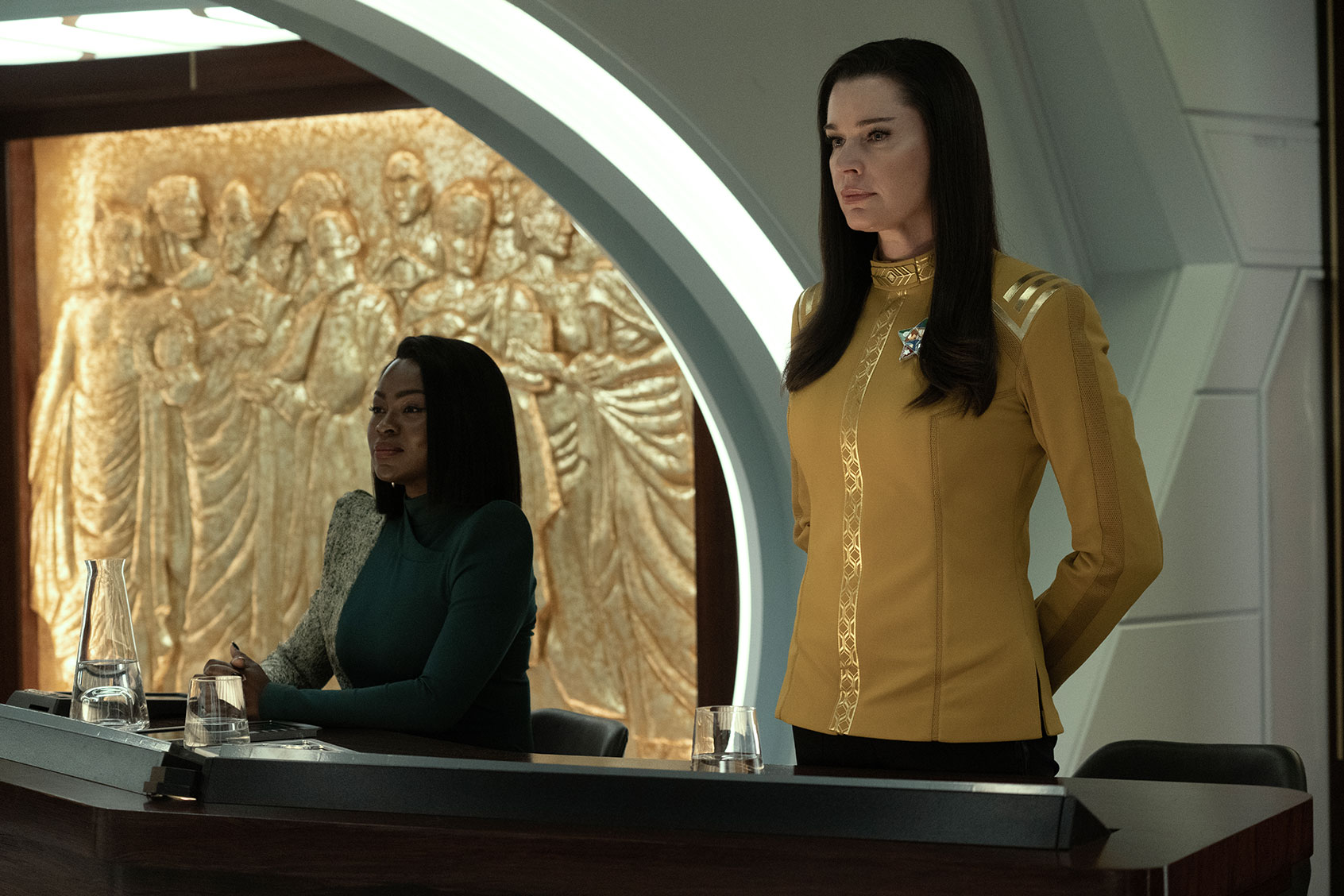
One element of recent “Star Trek” chapters that I’ve appreciated is their willingness to question the ways the Federation and Starfleet fail to live up to their vaunted utopian strivings. Inconsistent as “Picard” could be, it handles its hero’s disillusionment with Starfleet’s disinclination to take responsibility for massive moral failings, and his own, quite capably.

“Star Trek” isn’t in the business of following by-the-book captains, so nobody expected Pike or the Enterprise crew to turn on Una, even though her mentee La’An expresses anger at her deception when Una comes clean. But the opening moments in “Ad Astra per Aspera” show how far he’s willing to go to get her the best defense, nearly succumbing to asphyxiation to prove his stubbornness when a famous Illyrian civil rights attorney Neera Ketoul (Yetide Badaki) refuses to give him an audience.

He convinces her to take the case, although Neera doesn’t agree to represent Una out of empathy, especially since Neera is that best friend Una refers to in her testimony. Neera sees an opportunity for this case to change a longstanding law she views as draconian and bigoted.

It will be fascinating to see how “Ad Astra per Aspera” plays in the longer term. Within the wider “Star Trek” legacy, it continues Gene Roddenberry’s tradition of holding a mirror to humanity in the present from the imagined perspective of our future selves.

Pre-“Discovery,” the franchise was hesitant to confront racism directly – which isn’t to say its writers were capable of doing that particularly well. The original’s famously maladroit “Let That Be Your Last Battlefield,” with its adversaries whose faces were painted white and black on opposite sides, is kindly remembered as well-intentioned and poorly executed.

Within the wider “Star Trek” legacy, “Ad Aspera per Aspera” continues Gene Roddenberry’s tradition of holding a mirror to humanity in the present from the imagined perspective of our future selves.

At least it tried. In the main “The Next Generation” and “Voyager” were content to carry forward the first series’ dedication to visible diversity. Jean-Luc Picard’s Enterprise had a Black helmsman and a Klingon played by a Black actor; Captain Janeway’s crew on the U.S.S. Voyager includes a Vulcan played by a Black actor and a half-Klingon played by a Puerto Rican performer, as well as an Asian operations officer and an Indigenous commander (realized problematically and for reasons unrelated to the Mexican-American actor playing him).

Among the second generation “Trek” titles, it fell to “Deep Space Nine” and Captain Benjamin Sisko, the first Black commanding officer to star in a “Star Trek” series, to specifically take on anti-Black discrimination with the sixth season episode “Far Beyond the Stars” in 1998.

“DS9” addresses prejudice in episodes prior to this, especially 1995’s “Past Tense” when Sisko, Chief Medical Officer Dr. Julian Bashir, and Jadzia Dax, a humanoid alien who appears white, are accidentally zapped from their time to San Francisco 2024, where economic disparity is so extreme that the unhoused and mentally ill are warehoused in oppressive “sanctuary districts.” That’s where Sisko and Bashir, a North African man, are shipped while Dax, presumed to be an amnesiac white woman, is whisked away to a fancy hotel for safekeeping.

But the Brooks-directed “Far Beyond the Stars” doesn’t veil its aims. Sisko hallucinates that he’s a Black science fiction writer in 1953 named Benjamin Russell working for a magazine called Incredible Tales. He and a female staffer are discriminated against at work; among other slights, he’s banned from taking part in a staff photo because, as his boss explains, “as far as our readers are concerned, Benny Russell is as white as they are.” He’s also harassed by white cops who later end up killing a friend of his and beating him.

Eventually Benny Russell is fired for writing a story about Black space station captain – Sisko — triggering a nervous breakdown that snaps him back to the presumably more equitable 24th century.

Star Trek: Strange New WorldYetide Badaki as Neera and Rebecca Romijn as Una in “Star Trek: Strange New Worlds” (Michael Gibson/Paramount+)
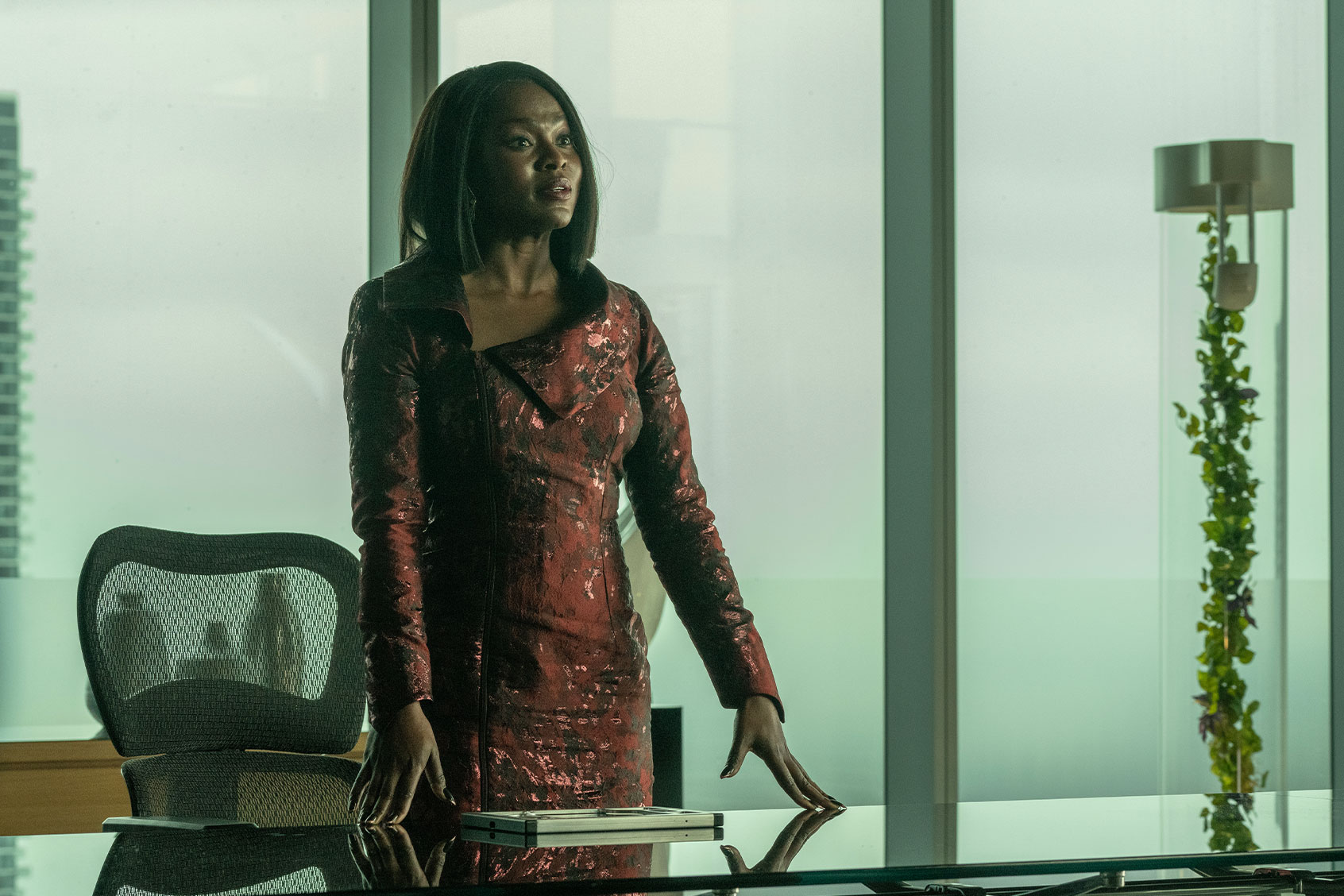
“Ad Astra per Aspera” is not so straightforward, walking the line between “Past Tense” and “Far Beyond the Stars” by making a character played by a relatively famous white woman / former model represent a persecuted culture. Because of this I suspect its allegorical potency will be perceived as a bit too mutable. Una and other Illyrians could represent a number of marginalized populations, but not all versions of oppression take the same shape.


Want a daily wrap-up of all the news and commentary Salon has to offer? Subscribe to our morning newsletter, Crash Course.


The Illyrians’ struggles  are similar to those contending with the material and psychological impact of anti-trans legislation, victims of antisemitic violence or families affected by the previous administration’s Muslim bans, to cite three examples. Life in her childhood colony sounds a lot like the Jim Crow South, and the local government’s solution is basically a resurrection of Apartheid. It all works. Even so, when a show tries to be everything at once it risks diluting its message.

One reason this angle doesn’t go terribly wrong is that Una is not the physical exemplar of Illyrians. Her people vary in appearance according to where they live; their culture modifies their bodies to adapt to their environment instead of changing the environment to suit them. But to the Federation there is no such thing as benign augmentation, making their entire population illegal, including children modified by their parents before they could consent. (The vanished Illyrian colonists the Enterprise away team was attempting to locate in “Ghosts of Illyria” tried to remove their augmentations to join the Federation, leaving them vulnerable to the virus.)

Neera points out that Una and others like her could hide who they were and enjoy the benefits of the Federation while others of her kind weren’t as fortunate. She looks the part of a respectful member of Federation society.

Star Trek: Strange New WorldYetide Badaki as Neera in “Star Trek: Strange New Worlds” (Michael Gibson/Paramount+)
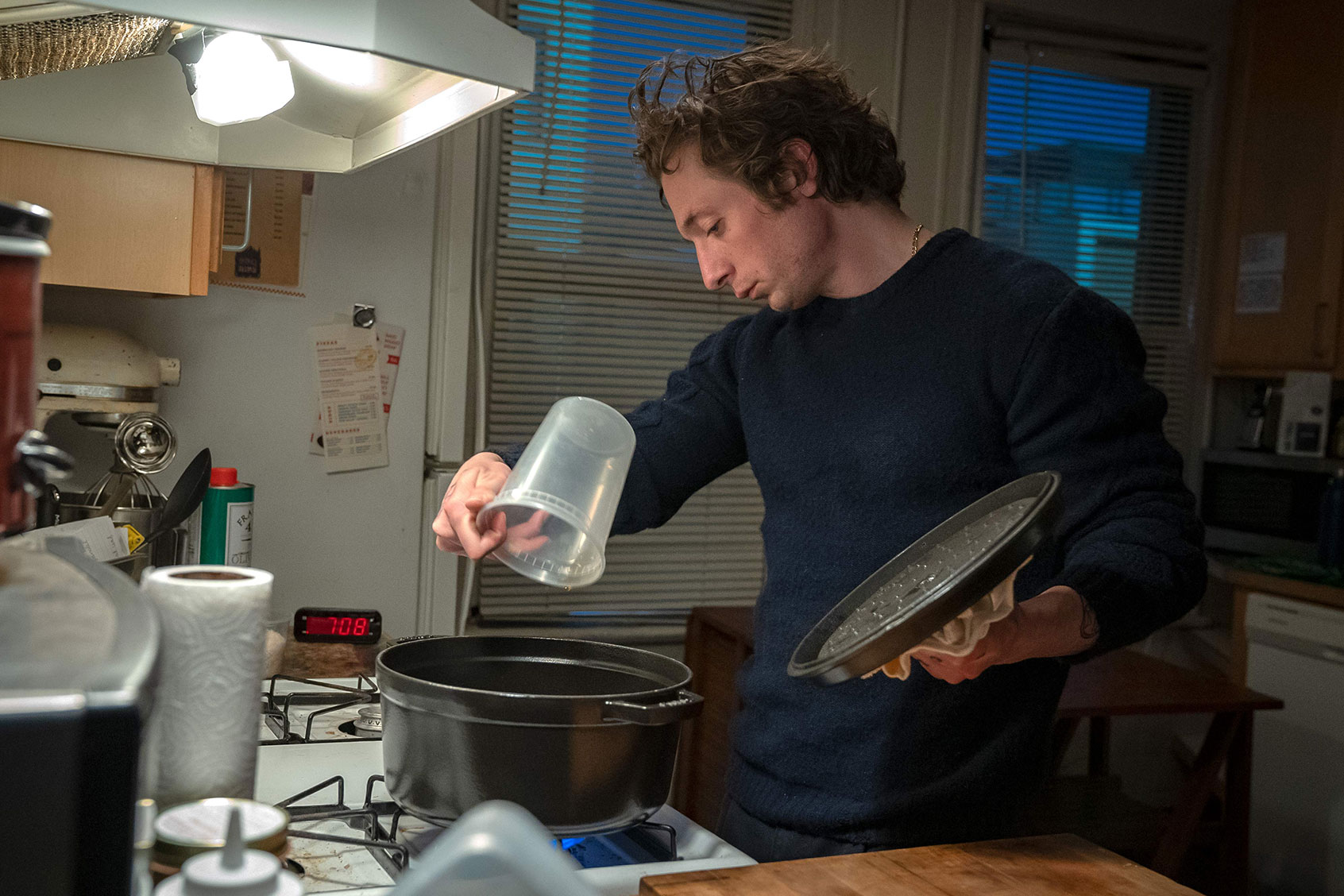
It can’t be accidental that Neera and the other Illyrian in this episode (besides Una) are played by people of color. Or that two of the Starfleet personnel directly involved with the trial are portrayed by Black actors – Admiral Robert April (Adrian Holmes) and a Vulcan judge (Eugene Clark) sitting on the tribunal.

These choices signal intent rather than specifically stating it. “Slavery was once legal. Apartheid was legal,” Neera says in her opening statement. “Discrimination against people for how they worshipped, how they loved, their gender, color of their skin, all legal at one time or another.” One gets the sense that we’re not merely meant to absorb the surface meaning of those words.

We’re supposed to read the room where she cites these examples before arriving at her conclusion: A law does not make something just. “If a law is not just,” she concludes, “then I ask: How are we to trust those who created that law to serve justice?”

It will be fascinating to see how “Ad Astra per Aspera” plays in the longer term.

Governments and systems, and the people who most benefit from those structures governing bodies put into place, do not easily yield to voices that question their rectitude, especially when those structures claim to represent equality and an ideal way of life.

“Strange New Worlds” is the most broadly embraced of the new “Star Trek” series because of its preservation of the original show’s vision and style. With “Ad Astra per Aspera” it aspires to be bolder and wiser while shielding itself somewhat from the accusations “Discovery” sustains for supposedly making its social justice themes text as opposed to subtext.

“Ad Astra per Aspera,” Una explains, translates to mean “To the stars through hardship.” It was Starfleet’s motto prior to the Federation; she interprets it to mean that the stars could deliver us from anything.

This episode happens to premiere right before the final weekend of 2023’s Pride Month, landing in an age where those raucous celebrations we once took for granted are now defiant statements against attempts to legislate queer people out of existence. Through that lens Una’s trial and vindication are a hopeful bridge from our time to a future that believes it has learned from this era’s ignorance and still has some distance to travel for that to be true.

New episodes of “Star Trek: Strange New Worlds” stream Thursdays on Paramount +.

Worse than Trumpism: Ron DeSantis flips conservative ideology to make it more dangerous

I realize that many people are probably sick of hearing about Florida Gov. Ron DeSantis now that he’s fallen in the polls and looks less like a real threat to win the GOP presidential nomination. He’s an unpleasant person and it’s vaguely uncomfortable to even read about him which is no doubt why his slide has invited what seems like dozens of new entrants into the race. They all now think they could be in second place in case Trump trips on the golf course and breaks a hip. It’s still quite early in the process, DeSantis has a lot of money and is, by all accounts, putting together a serious campaign so it’s too early to write him off. But there’s no need to dwell on his candidacy quite as much now that he’s lost his luster.

Still, it’s probably a good idea to continue to keep an eye on DeSantis regardless of his presidential ambitions. Of all the candidates, he best represents the next generation of GOP leaders and his political philosophy is something quite new for the Republican Party. It’s not the conservatism that dominated the GOP since the 1950s but neither is it Trumpism, to the extent that such a thing even exists without Trump. It’s a whole new ballgame.

As he has done in Florida, DeSantis plans to use the massive power of the government to inflict his own ideology on the country by force.

Trump is essentially all about Trump. He still says it all the time: “I alone can fix it” or, more recently, “I am your retribution.” Since he apparently considers himself the natural heir to the Sun King, Louis XIV, his view of government is essentially “L’État, c’est moi” and therefore anything that hurts him can be seen as an attack on the country. Despite all the hand-wringing about “what it all means” with reporters venturing out to the heartland every few weeks to figure out what it is that Real America really wants from the moment he won the nomination in 2016, all of politics and government has been about what is good for Donald Trump. MAGA isn’t an ideology it’s a cult of personality.

That is not to say that Trump doesn’t have his hobby horses, and they signal a populist turn on the right. His focus on trade wars and immigration and the promises to preserve the government safety net programs are classic populist policies. For whatever reason, these happen to be issues in which he formed a shallow interest years ago or instinctively understood would set him apart from the normal Republican, so he did manage to shift the GOP away from policies that had been fundamental to the party’s identity for decades. It wasn’t a coherent philosophy but he understood that this agenda had great appeal to the GOP base and anyway, the Sun King of Mar-a-Lago can do what he wants.

That element of populism is really all there is to an ideology like Trumpism. The rest is all about attitude, image and personality. DeSantis, on the other hand, has a fully developed political and governing philosophy and it’s something that is similarly unfolding all over the world. It’s not complicated. It’s authoritarianism.

As he has done in Florida, DeSantis plans to use the massive power of the government to inflict his own ideology on the country by force. There’s no need to go into all the ways in which DeSantis has demonstrated his willingness to do this. There have been endless articles laying out the atrocities from his assault on teaching history and recognizing LGBTQ rights to restricting voting, cruelty to immigrants and even bizarre attacks on Disney, the biggest employer in his state, all in the name of battling the “woke” left and consolidating power in himself and the Republican party. He’s leaving no stone unturned.

All of DeSantis’ assaults on the civil rights and civil liberties of those with whom he disagrees, and using government power to enforce it, simply cannot be defined as anything but authoritarian.

Just this week, he continued his ongoing quest to turn the entire Florida education system into a laboratory for instilling his belief system by banning information and views with which he disagrees. According to the Washington Post, “after signing legislation that blocks spending on campus programs for diversity, equity and inclusion “and another that requires “more than half of Florida’s public colleges and universities to change accreditors in the next two years,” DeSantis decided to sue the federal government over its policy to defund higher education institutions which are not properly accredited. This is all about using his power as governor to dictate what can be taught in Florida’s colleges (right-wing ideology) all while saying that he’s restoring academic freedom.


Want a daily wrap-up of all the news and commentary Salon has to offer? Subscribe to our morning newsletter, Crash Course.


Republicans have been trying to instill “traditional family values” in American society forever. There’s nothing new about that. But at the same time, they always pounded away at the idea of small government and individual freedom. There has often been tension between how they chose to use the law to enforce their values but DeSantis doesn’t even try to hide what he is doing. A master propagandist, he couches his power grab in paeans to freedom but the intent is clear as day.

As he said in a speech at Charleston College in April:

“I don’t think you have a truly free state just because you have low taxes, low regulation, and no COVID restrictions, if the left is able to impose its agenda through the education system, through the business sphere, through all these others. A free state means you’re protecting your people from the left’s pathologies across the board.”

That pesky First Amendment thing is a real problem isn’t it? This country needs big, strong men like DeSantis to protect “his people” from all those ideas that are bad for them.  As he made clear in his recent pledge:

“I will be able to destroy leftism in this country and leave woke ideology in the dustbin of history.”

Only then will his people truly be free. (What happens to the people who hold those beliefs is not spelled out but I think you can use your imagination and you probably wouldn’t be wrong.)

Are Americans going to buy this fatuous definition of freedom? It doesn’t seem so, at least not so far. You can say the word “woke” over and over again and it won’t make people understand it and you can repeat the word “freedom” until you’re blue in the face and Americans just aren’t seeing six-week abortion bans and firing teachers for speaking about gay people as freedom. All of DeSantis’ assaults on the civil rights and civil liberties of those with whom he disagrees, and using government power to enforce it, simply cannot be defined as anything but authoritarian. Calling it “freedom” is absurd on its face and most people can see right through it.

Americans value the idea of liberty probably more than any country in the world. It’s enshrined in the Declaration of Independence, the Bill of Rights and even the pledge of allegiance and no matter where you sit on the political compass most Americans will say that it’s important. I have a sneaking suspicion that DeSantis’ definition won’t scan for most people. There may be different ways of looking at the concept but declaring that the government needs to “protect” people from ideas they don’t agree with meets no one’s definition of freedom. In fact, it’s downright un-American.

“More conservative jury pool”: Judge signals she’ll hold Mar-a-Lago trial in “solid Trump country”

The Trump-appointed judge overseeing the Mar-a-Lago documents case signaled that she will hold his trial in a court likely to have a conservative jury pool, according to The New York Times.  

Judge Aileen Cannon signaled that the trial would take place in the Fort Pierce courthouse where she normally sits, according to the report. The region that feeds potential jurors to the courthouse includes one swing county and four deep red counties that overwhelmingly voted for former President Donald Trump in 2016 and 2020.

Cannon did leave open the possibility that the trial could be moved but legal experts say the location could provide Trump a favorable jury pool.

“For years, it’s been a very conservative venue for plaintiffs’ lawyers,” Florida trial attorney John Morgan told the Times. “It is solid, solid Trump country,” he added.

The region includes Okeechobee County, where Trump won 71%. Of the vote in 2020; Highlands County, where the former president received 67% of the vote; Marin County, where Trump won 62% of the vote; and Indian River County, where Trump got 60% of the vote.

But St. Lucie County, where about 172,000 votes were cast, only went to Trump with 50.4% of the vote.

Dave Aronberg, the Florida state attorney in Palm Beach County, told the Times that the Fort Pierce counties provide a “much more conservative jury pool” but added that a number of jurors could be drawn from St. Lucie, which is more politically diverse.

Cannon signaled in an order on Tuesday that the trial and related hearings would be held at the Fort Pierce courthouse, about 120 miles north of Miami. But she left open the possibility of moving the trial, noting that “modifications” could “be made as necessary as this matter proceeds.”

While Trump’s arraignment took place in Miami, where the magistrate judge assigned to his case sits, it “became her prerogative to move it to Fort Pierce,” the Times reported, where she is the sole district judge.

But Aronberg predicted the trial could be moved to the courthouse in West Palm Beach, which is the county where Trump lives and stashed the classified documents he’s charged with illegally retaining.

“I’m not convinced this case is going to go in Fort Pierce,” he told the Times.


Want a daily wrap-up of all the news and commentary Salon has to offer? Subscribe to our morning newsletter, Crash Course.


Politico reporter Josh Gerstein added that if Cannon “does plan to do Fort Pierce” it’s unlikely special counsel Jack Smith’s team would object “because they have to take [the] position that their case is so strong they can win anywhere.”

The evidence in the trial was first heard by a grand jury in D.C., where Trump has complained he could not get a fair trial. The case was later relocated to South Florida, where the alleged crimes took place.

In order for Trump to be convicted, all 12 jurors must unanimously find him guilty, meaning he could be acquitted if a single juror disagrees. But Trump also faces 37 felony counts, including 31 under the Espionage Act.

George Washington Law Prof. Jonathan Turley, who has frequently defended Trump against legal troubles in the past, warned that the former president has “got to run the table” in the case.

 “All the government has to do is stick the landing on one count, and he could have a terminal sentence,” he told Fox News last week. “You’re talking about crimes that have a 10- or 20-year period as a maximum.”

The gun violence epidemic is ‘locking us back in our room’

NEW ORLEANS — Erin Brown recalls all too well the dreadful call he received from his mother in 2021, while in the thralls of the covid-19 pandemic: His cousin — his “brother” — had been shot six times.

Although it was not the first time gun violence had reached the then-17-year-old Brown’s social circle, that incident was different. It involved family. So it hit Brown harder, even though his cousin, then 21, survived the gunshot wounds.

Now, while Brown works toward high school graduation and a career in graphic design, he said, he stays indoors in his neighborhood, the Lower 9th Ward. The frequent accidental shootings there frighten him the most. The gunfire outside his windows makes it hard to sleep.

“We were all just quarantined, now we can’t even go outside,” said Thomas Turner, 17, Brown’s classmate at the campus of the NET: Gentilly charter school, in New Orleans’ Gentilly neighborhood. “Just because you want to shoot and stuff, I feel like that is just locking us back in our room.”

It’s an all-too-common feeling in pockets of this city — which had one of the nation’s highest rates of homicides among large cities in 2022 — and other communities across the country where shots ring out regularly. As gun violence soars nationwide, children’s health experts are advocating for such traumatic exposure to be considered what’s known as an “adverse childhood experience.”

For decades, the definition for these adverse childhood events has excluded exposure to community gun violence. That means young people exposed to shootings outside the home have been without access to the broad range of intervention efforts and support at various stages of life given to youth facing other forms of traumatic events, such as child abuse or household dysfunction, said Nina Agrawal, a pediatrician who has researched how such experiences have been handled.

“We need to start recognizing that our children are experiencing trauma and it may not show up overtly, but we have to start recognizing it and listening,” said Agrawal, who chairs the Gun Safety Committee for the New York state chapter of the American Academy of Pediatrics.

Agrawal’s young patients who have witnessed the effects of gun violence are developing chest pain, headaches, and other health concerns, a commonality among youth experiencing a lack of sleep due to gun violence paranoia, she said. The more time a child spends on high alert, the more disruptions to the immune system and brain function occur, as well as effects on mental and behavioral health, said Agrawal.

For Turner, it was the day of his grandmother’s funeral in 2021 that brought gun violence too close to home. As young children and older relatives gathered to honor her life in the Holly Grove neighborhood, shots were fired outside the church.

Turner recalled how his first instinct was to find his younger sister and mother, who were also attending the funeral. Although he is relieved that the suspect in the shooting was arrested — something locals complain is rare — Turner said he now feels as if he’s susceptible to such capricious violence while living in New Orleans.

Gun injuries, including suicides, are the leading cause of death for children and teens nationwide. But the Centers for Disease Control and Prevention does not differentiate which injuries come from stray bullets, and electronic health records don’t typically record how patients feel about their safety. So Agrawal regularly asks her patients if they feel safe at home, school, and other places.

Brown and Turner are aware of the ever-present risk, so they channel their energy into the classroom, where they recently competed, with a small group of fellow NET students, in the national Aspen Challenge, aiming to pinpoint societal solutions to curb the epidemic of gun violence and reduce the damage it causes to mental health. The group, Heal NOLA, recommended coping mechanisms such as creating artwork and encouraging anonymous story-sharing of the mental trauma through social media. They also said the normalization of gun violence needs to end.

Before debuting their proposals in competition, Turner and classmate Chainy Smith spoke at a city-sponsored public safety summit in early April about how the internet and social media further the culture of gun ownership as self-defense. They advocated for a cultural shift in which flaunting one’s gun doesn’t earn respect and popularity.

For them, mental health resources are available inside the halls of the NET, the students said, and the intimate classroom where they work on the Aspen Challenge feels like a safe space for emotional processing. But Turner, Brown, and their other classmates know that isn’t always the reality elsewhere — outside of school, they said, they’ve been told by family and other adults that they are too young to understand depression.

Terra Jerome, a student participating in the Aspen project, said that when she has spoken out about mental health she feels as if no one understands where she is coming from. “Like, you’re not getting what I’m saying,” she said.

And the veneer of safety disappears when they leave school each day.

During spring break, two students from the school died in separate shootings.

“New Orleans is very traumatized,” said Erin Barnard, the Heal NOLA faculty adviser. “Everybody seems to know that everyone’s traumatized, but then, what are we doing to get out of that?”

Brown and Turner each worry about what lies beyond for them — and for their mothers — when they leave home. Both are close to their moms. They can talk openly about mental health with them, something they realize isn’t the case for every kid.

This element of being heard is a crucial intervention, Agrawal said. She said medical research needs to further understand the effects of youth isolation, adding that she has seen how it leads to increased rates of mental health problems, from intergenerational trauma to suicidal ideation. The younger children are when exposed to gun violence, she said, the higher their susceptibility to post-traumatic stress disorder. She is advocating for intervention for children under age 5 and before they’re exposed to gun violence.

Rather than feel the all-too-common urge of retaliation, Turner and Brown reflect on the incidents from a mental health perspective, wondering what was going on in the heads of the individuals who carried out the shootings.

“It all leads back to mental health, because why is that person carrying a gun in the first place?” Turner said.

Turner said he sees things he shouldn’t have by age 17. But he said his fear may not always be visible to others when he is on the basketball court, in the gym, or at the Uptown pizza spot that employs him. He’s just trying to live his life, he said. He hopes to become a firefighter and, someday, have kids. He said he doesn’t want them to endure such mental trauma.

For now, Turner feels it is his role to get the word out that young people are hurting mentally.

“If somebody need a hug, just a hug, I don’t have to know you, I’ll give you a hug,” said Turner. “You want to talk to me and tell me anything? I’m going to sit here and listen, because I’d want someone to do that for me.”

KFF Health News is a national newsroom that produces in-depth journalism about health issues and is one of the core operating programs at KFF—an independent source of health policy research, polling, and journalism. Learn more about KFF.

Subscribe to KFF Health News’ free Morning Briefing.


Samuel Alito scandal shows why conservative justices on the Supreme Court are so whiny

Earlier this week, ProPublica, which had previously exposed the bottomless corruption of Supreme Court Justice Clarence Thomas, scored another big hit on Justice Samuel Alito, who is best known for citing a medieval witch-burner as a legal authority in his Supreme Court opinion overturning Roe v. Wade. The report recounts how Alito allegedly broke the law and violated all manner of judicial ethics by accepting a gift of a fancy fishing trip to Alaska from right-wing billionaire Paul Singer. The 2008 trip included a seat on a private jet, valued at $100,000, accommodations at a fancy hotel, $1,000 bottles of wine and “multicourse meals of Alaskan king crab legs or Kobe filet.” 

The details are infuriating, but not surprising because Alito tried to get ahead of the story by writing a “prebuttal” for the Wall Street Journal’s editorial page, which ended up reading as a confession to deep and long-standing corruption. The justice tried to write the whole thing off as a minor excursion, dishonestly downplaying how fancy the trip was.

Plenty of people have dunked on Alito’s efforts to treat fine wines and private jets like a humble camping trip, so I won’t bother here. 

No, what was really remarkable to me was just how whiny Alito’s op-ed read. Here is a man gifted with so much power and prestige, and apparently many free, fancy vacations, yet he talks like a man who can’t catch a break in life. 


Want more Amanda Marcotte on politics? Subscribe to her newsletter Standing Room Only.


Alito expects women to stoically undergo forced childbirth as penance for the sin of fornication, but when asked to be a little less greedy, he reacts like he just got framed for murder. Anyone who has followed Alito’s career isn’t all that surprised, of course. He’s the same justice who heckled President Barack Obama during a State of the Union address for speaking a plain truth about money’s corrosive effect on politics. Alito then histrionically declared that a leaked draft of his opinion in Dobbs v. Jackson Women’s Health made the justices “targets of assassination,” even though he himself has a history of leaking. Indeed, as many pointed out, the Dobbs leak was awfully convenient for Alito, who was waging a pressure campaign on Justice Brett Kavanaugh to join the decision. 

The justice tried to write the whole thing off as a minor excursion, dishonestly downplaying how fancy the trip was.

But while Alito is an especially comical example, the grim truth is that “petulant crybaby” is the dominant personality trait of the conservative justices, now a majority.

Kavanaugh, of course, famously had a crocodile tears breakdown during his confirmation hearing where he insisted that he was the real victim after sworn witness Christine Blasey Ford told her story of being sexually assaulted by him in high school. Thomas, for his part, often reacts to criticism of his hackish opinions by comparing his plight to a cheated-upon spouse, which befits a lifetime of him regarding himself as a victim who deserves to be avenged. Justice Amy Coney Barrett recently gave a self-pitying speech about how unfair it is that the public thinks the Donald Trump-appointed majority consists of “a bunch of partisan hacks.” Recall that Justice Neil Gorsuch threw a tantrum over the expectation that he wear a mask in court during the pandemic, even though at least one colleague, Sonia Sotomayor, has a high-risk condition. Even Chief Justice John Roberts, who often gets praised as a grown-up in the press, has proved to be anything but. His recent refusal to testify about the lack of court ethics before the Senate was bratty and patronizing, making it clear he thinks he owes nothing to the people he allegedly serves. 

As Slate’s Dahlia Lithwick said, they are “acting like small children.”

Beyond just being conservative, what these whiny justices have in common are strong ties to the right-wing Federalist Society and its former head/current board member Leonard Leo. The legal fraternity has received a lot of press for its role as a training ground for future far-right judges and lawyers, but what ProPublica’s reporting shows is that its influence goes well beyond that. As ProPublica reporters Justin Elliot, Joshua Kaplan and Alex Mierjeski note, “Leo is now a giant in judicial politics who helped handpick Donald Trump’s list of potential Supreme Court nominees and recently received a $1.6 billion donation to further his political interests.”

He’s also the guy who keeps hooking up justices with billionaires who will shower them with fancy vacations as gifts. Leo is the one who set Alito up to go on this expensive fishing trip with Singer, a man Leo likely knew because both he and Singer are heavily involved in spreading money around to buy the federal courts for far-right interests. He plays a similar role in the friendship of Thomas and his billionaire benefactor, Harlan Crow. They’re all so tight, in fact, that the infamous painting of Crow and Thomas together at Crow’s lavish estate also features Leo. 


Want more Amanda Marcotte on politics? Subscribe to her newsletter Standing Room Only.


As Josh Marshall at Talking Points Memo writes, “Somewhat like some colleges or the service academies match a sponsor family with first-year students or cadets, Leo seemed to do that with incoming Supreme Court justices.” Calling it the “Sugar Justices” program, Marshall contends that “the justices remain ‘kept’ in perpetuity by the right-wing activist donor network.”

Slate’s Dahlia Lithwick concurs: “It’s like the oligarch Big Brothers program for underprivileged jurists who just want to live large on the hog.”

Beyond just being conservative, what these whiny justices have in common are strong ties to the right-wing Federalist Society and its former head/current board member Leonard Leo.

Defenders of the justices argue that all this largess doesn’t matter because the justices are already conservative and likely to vote the way these billionaires want anyway. But that’s not actually true. For one thing, people like Singer have personal business cases before the court that might have gone the other way if they weren’t buddies with the justices. But even on the larger ideological questions, there are reasons to think Leo and his billionaire allies are smart to keep spoiling “their” justices with goodies.

There’s a lot of pressure on Supreme Court justices coming from all sides. They are, as the public whining shows, sensitive to criticisms that their opinions are hackish nonsense instead of rigid legal reasoning. They also worry about the Republican Party, which can face political blowback if the court tacks too hard to the right. That’s what is currently happening with the Roe overturn, and likely why Kavanaugh was reportedly getting cold feet such that he needed a well-timed leak to keep him in line. Plus, there’s always a real chance that being presented with superior evidence and arguments from liberal lawyers will weaken their resolve. 

I suspect that’s what these billionaire-funded right-wing summer camps are all about: ensconcing the justices in a bubble of validation for their kookiest far-right theories, all to protect their resolve to keep being the worst. It has to be pretty seductive. You’re on private jets, sipping unbelievably expensive wines, and chatting with some of the richest people in the world about how your authoritarian belief system is the One True ideology. Anyone can learn to silence self-doubt when soothed with Kobe steak, expensive cocktails, and a lot of talk about how much smarter you are than those irritating liberal lawyers, coming at you with all their facts and logic. 

Well-heeled puffery makes it much easier to buy your own hype. The side effect, of course, is a dramatically weakened ability to handle criticism. The justices emerge from their cocoon of billionaire adulation only to hear that people in the real world think they suck. They simply cannot handle the dissonance.

Well-heeled puffery makes it much easier to buy your own hype. The side effect, of course, is a dramatically weakened ability to handle criticism.

They don’t suck! Do people who suck get free vacations to Alaska to watch bears from airplanes? Do people who suck get to travel to Indonesia on private superyachts? Do people who suck have fancy people fawning about their brilliance nightly over plates of caviar and crab? Clearly, the problem here isn’t your Alitos and Thomases, but those seething peasants who think they get to have an opinion. 

I suspect that one reason Leo has done such a good job at getting billionaires to give him money is that he is excellent at the art of psychological manipulation. The corruption of the courts would never be anything as crass as a tit-for-tat exchange of fancy vacations for expected court outcomes. Instead, the money goes to creating a series of luxurious experiences for the justices that reinforce their own self-importance. On these vacations, they are no doubt immersed in hours of conversation about how their far-right legal theories are all good and true. Honestly, better people than they are could get brain-zapped by such tactics, but let’s face it, Leo is pushing on an open door with the Supreme Court’s conservative justices. 

As the walls close in, the Trump money machine cashes in

Right now, the American people are hearing two loud noises at the same time.

The result is confusion and disorientation.

One sound is from how “the walls are finally closing in” on Donald Trump for his decades-long crime spree where he is now the first ex-president to have been arrested and indicted for federal crimes because of his alleged stealing of top secret documents. The highly classified information supposedly included details of the country’s military and other strategic vulnerabilities, identities of its spies abroad, and other closely guarded secrets, including the Pentagon’s plans for an attack on Iran. Additionally, Trump is likely to be indicted and arrested for federal crimes connected to the coup attempt on Jan 6, 2021. As it stands today, Donald Trump faces the possibility — however unlikely — of being put in prison for the remainder of his natural life.

Here is where the confusion comes in. Making this noise even louder is Donald Trump himself.

Trump, a malignant narcissist who lacks impulse control and internal self-regulation, continues to publicly incriminate himself by basically admitting his guilt during TV appearances and interviews, at rallies, and via his Truth Social disinformation platform while simultaneously proclaiming his innocence.

That’s when the second sound is heard. It comes from the metaphorical and literal cash registers that are continuously ringing from the many millions of dollars that Donald Trump and his inner circle are being given by the MAGA faithful and other Trump cultists as they throw money at their Dear Leader in an act of support for his crimes so that he can “defend himself” against being unfairly “persecuted.” 

Donald Trump is a master showman and his being arrested and indicted is first and foremost an opportunity to make money. To that point, Trump now claims to have raised at least seven million dollars since being indicted and arrested in Miami for his alleged crimes related to the Espionage Act. This is in addition to the millions of dollars that Trump’s followers gave him after his pleas for support following his arrest and indictment in New York for alleged crimes connected to hush money payments and other financial crimes at the end of March.

Politico provides this context:

Former President Donald Trump’s 2024 fundraising has been turbocharged by his indictment, according to new figures provided by his campaign.

Trump raised a combined $18.8 million in the first quarter through his joint fundraising committee and his campaign, the latter of which is required to report its first-quarter financial activity on Saturday.

But the campaign also says it brought in nearly the same amount in the two weeks after the charges were filed against the former president — $15.4 million — underscoring just how much the charges against Trump have animated his backers. In another indication that the indictment has helped Trump to grow his fundraising base, nearly a quarter of those who contributed to Trump during that period had never given to him before.

The figures provide a snapshot of how Trump’s arrest has, at least for the time being, shaped the Republican primary. While the former president’s indictment — along with potential future charges in several ongoing investigations — puts him in serious legal jeopardy, it has helped to solidify his standing with his supporters and grow his campaign war chest.

“In general, any time a candidate’s name is all over the media and dominating attention, it’s good for fundraising,” said Eric Wilson, a Republican digital strategist. “The wall-to-wall coverage just put him top of mind for donors.”

Whether Trump’s torrid fundraising pace persists — or gradually returns to its slower, pre-indictment level — is uncertain. Trump had been raising roughly $168,000 per day from Jan. 1 until when charges were filed against him on March 30, according to the figures his team provided. In the 24 hours that followed, he raised over $4 million. (The first quarter ended on March 31, the day after Trump’s indictment was first confirmed, meaning only a small segment of Trump’s post-indictment fundraising is reflected in the first-quarter figures.)

Public opinion polls consistently show that the American people as a whole want some closure. They want all of the Trump noise goes way. Such an outcome is unlikely any time soon, however, because of the vast amounts of money to be made from the chaos, confusion, danger, and peril that surrounds Trump. 

In a recent interview at Salon, political consultant Cheri Jacobus explains how the Trump money machine works:

For Trump’s direct victims, and for many in the country at-large, the indictments, while welcome, are somewhat anti-climactic. We are tired. These indictments and the expected additional coming indictments are at least a year too late. So much damage has been done and so many Trump criminal allies still roam free, inciting violence, fomenting fascism, and spreading disinformation. The national security ramifications of this massive breach are almost too frightening to comprehend. The cottage industry surrounding Trump — on both sides — media, superPACs, pundits — are largely repeating the mistakes of 2015-2016 that got us here in the first place. There is big money in promoting Trump, covering Trump as “news”, and “fighting” Trump. To be clear — Trump understands this at a granular level. [my emphasis added]


Want a daily wrap-up of all the news and commentary Salon has to offer? Subscribe to our morning newsletter, Crash Course.


The matchup between Trump and Special Counsel Jack Smith is lucrative in other ways as well, as there is now an entire industry selling t-shirts, hats, mugs, and other merchandise to both Smith’s fans and his haters.

So I envision three possible outcomes in the next months and through to the 2024 election:

Trumpism will then become a more powerful 21st-century version of the white supremacist neo confederate Lost Cause.

One: Trump becomes the Republican Party’s 2024 presidential nominee while he is also on trial for violating the Espionage Act, and faces potential trials for cases in Georgia and D.C. for the crimes of Jan. 6, in New York for illegal payments to his mistress Stormy Daniels, and perhaps elsewhere for fraud and financial crimes. America is washed over by a cacophony of sound, fury and chaos; it is deafening and maddening. Trump somehow wins the election, pardons himself or otherwise is allowed to be free, and then embarks upon a revenge-fueled assault on the American people and their democracy.

Two: Donald Trump is defeated in the 2024 election by President Biden and the Democrats. Trump is also found guilty and sentenced to prison. He is disappeared from public life – but this does not remove all his power or influence as the leader of the MAGA fascist movement and larger white right. Donald Trump is more than a man or leader; he is a type of symbol and signifier and an object of sacred worship and salvation — a MAGA Jesus — for his followers.

Because of that fact, the idea of Donald Trump and what he represents will endure and his power will be passed on to a successor.

Trumpism will then become a more powerful 21st-century version of the white supremacist neo-Confederate Lost Cause, a threat and constant noise in the background of American life that crashes and electrocutes like thunder and lightning when the right (wrong) circumstances come together to harness it.

Here is the third scenario. Donald Trump is truly vanquished and he and the MAGA movement and their followers are treated by “respectable society” as something verboten and to otherwise be shunned. As has often happened in other countries when they have suffered through great national traumas, a type of organized forgetting takes hold. Of course, this does not solve the deeper problems that gave rise to such crises.

The American mainstream news media — as they have already been doing throughout the Age of Trump and beyond — will create false distinctions between “normal” and “responsible” Republicans and the “far right” and “extreme” elements of the party and “conservative” movement as though that separation can be neatly made or even substantively exists.

In this scenario, Trumpism and neofascism are absorbed by the Republican Party and “conservative” movement as a new type of status quo and ideological baseline. America’s political terrain shifts to accommodate it in unhealthy ways; America’s slide into neofascism and competitive authoritarianism continues. Here, Donald Trump and Trumpism are like a type of loud silence, something unnatural and uncomfortable in American life and society, and the public is afraid to say their names aloud lest they manifest like the bogeyman or some other monster.

Ultimately, one thing is almost certain: The American people will not have the much-needed silence and peace to heal and recuperate that they desperately need any time soon.

How I successfully defended abortion after Dobbs

One year ago, the Supreme Court made the retrograde and destructive decision to overturn Roe v. Wade—vacating nearly a half-century of legal precedent that protected the privacy and autonomy of more than 166 million women and girls throughout the nation. 

In the almost 365 days since the Dobbs decision unleashed chaos, fourteen states have outright banned abortion—stripping vulnerable Americans of their reproductive rights. Doctors in those and other states are now afraid to provide medical care out of fear of being sued or prosecuted. Expectant parents experiencing life-threatening complications have gone into septic shock because of ambiguous anti-abortion laws— barely surviving their brushes with death. Family planning centers and abortion clinics have been attacked and vandalized. And abortion providers have faced an ever-increasing stream of violence from those who claim to care about “life” one moment, and then threaten to bomb a women’s health facility the next. 

And while the pro-choice majority calls out such blatant hypocrisy and fights for a return to sanity, radical right-wing legislators around the country continue to push through ever more restrictive policies—grandstanding for an extremist minority that wish the nation would return to an era where women’s rights were subjugated to men’s control and women were denied authority over their own healthcare.

But here in Illinois, those seeking to take away reproductive rights will fail. 

As Governor of Illinois, it is my duty to not only keep our residents safe, but to uphold our 205-year legacy—a legacy rooted in progress and justice. So, while every state bordering us is forcing women to revert to back-alley abortions, with some elected officials threatening to limit contraceptive access only for those with approval from their husbands, I’ve worked hand-in-hand with members of the General Assembly to extend protections for patients and providers alike. 

“Here in Illinois, those seeking to take away reproductive rights will fail.”

We have welcomed abortion providers who fled their states, and we eliminated barriers to access by allowing birth centers to provide all reproductive care and removing copays for birth control and medication abortions. We instituted new protections for patients, doctors and nurses from out-of-state subpoenas—creating another safeguard for reproductive access in Illinois. We funded the creation of the Reproductive Health Public Navigation Hotline—a centralized resource where patients will be able to find the services that will meet their needs. And all the while, we are investing millions toward learning collaboratives and abortion provider trainings, so we can continue to train healthcare personnel to meet the demand of patients seeking reproductive freedom who are flooding in from across the nation. 


Want a daily wrap-up of all the news and commentary Salon has to offer? Subscribe to our morning newsletter, Crash Course.


Anti-choice extremists aren’t going to stop at Roe v. Wade. They will keep chipping away—bit by bit—at reproductive healthcare and other related privacy rights. But Illinois will remain a haven—so long as we fight for it. And my administration and pro-choice members of the General Assembly will do everything in our power to ensure widespread, equitable access to reproductive rights as a foundational freedom.

In Illinois, abortion is legal, abortion is health care, and personal decisions about it will remain between a woman and her doctor.

Missing Titanic sub imploded, Coast Guard says — Here’s what went wrong

The search for the missing submersible Titan that disappeared in an attempt to view the RMS Titanic has concluded. On Thursday, the U.S. Coastguard hosted a press conference announcing that “five major pieces of debris” found were from the lost vessel, including its tail cone. The wreckage indicates that there was an implosion, or a violent collapse inward, that was “consistent with catastrophic loss of the pressure chamber.”

“The debris is consistent with a catastrophic implosion of the vessel,” Rear Admiral John Mauger said during the press conference.

The news came right after OceanGate, the company that operated the submersible that went missing on Sunday, announced in a statement that they believed all five passengers were dead. On Thursday morning, news broke that one of the remote-controlled search vehicles located a “debris field” nearly 1,600 feet from the bow of the Titanic after hours of being deployed.

The OceanGate statement read:

“This is an extremely sad time for our dedicated employees who are exhausted and grieving deeply over this loss. The entire OceanGate family is deeply grateful for the countless men and women from multiple organizations of the international community who expedited wide-ranging resources and have worked so very hard on this mission. We appreciate their commitment to finding these five explorers, and their days and nights of tireless work in support of our crew and their families.

This is a very sad time for the entire explorer community, and for each of the family members of those lost at sea. We respectfully ask that the privacy of these families be respected during this most painful time.”

The five passengers on the missing submersible were Stockton Rush, the chief executive of OceanGate; French maritime expert Paul-Henri Nargeolet; British billionaire Hamish Harding; Pakistani and British billionaire Shahzada Dawood, and his 19-year-old teenage son, Suleman Dawood.

Yesterday, the Coast Guard said that sonar had picked up “banging noises,” providing some hope that the submersible was still intact somewhere in the ocean. During the press conference, Rear Admiral John Mauger said “there doesn’t appear to be any connection between the noises and the location on the seafloor.”

Sonar buoys deployed to search for the missing vessel after it went missing did not pick up sounds of an implosion. This suggests it occurred before the search took place. A trip to see the Titanic wreckage at the bottom of the ocean on OceanGate’s 23,000-pound vessel costs $250,000, but the sub itself may not have been properly outfitted for such a deep dive, lacking even some basic equipment. As reported by Forbes, “If the hull of the Titan did fail, it may take a long time—if ever—to diagnose what exactly went wrong.”

Dr. Nicolai Roterman, a deep-sea ecologist and lecturer in marine biology at the University of Portsmouth, told Forbes, “If there was any kind of hull breach, the occupants would succumb to the ocean in a near instant.”

This result was predicted by many in the deep sea diving industry. For example, the Marine Technology Society warned of a catastrophic event for years.

“This letter is sent on behalf of our industry members who have collectively expressed unanimous concern regarding the development of TITAN and the planned Titanic Expedition,” the Society stated in a letter from March 2018. “Our apprehension is that the current experimental approach adopted by Oceangate could result in negative outcomes (from minor to catastrophic) that would have serious consequences for everyone in the industry.”

In the press conference, authorities said they will continue to try and piece together a timeline of events. However, no further press conferences are scheduled.

“I know there’s a lot of questions about how, why, when this happened,” Mauger said. “That’s going to be, I’m sure, the focus of future review. Right now, we’re focused on documenting the scene.”

Unsealed court docs reveal that Santos’ father and aunt signed for his $500,000 bond

After pleading not guilty in May to charges of wire fraud, money laundering, theft of public funds and making false statements, Rep. George Santos, R-N.Y. was released on a $500,000 bond. When pressed at the time to name who signed for his bond, he stated that he’d rather go to jail than do so. 

On Thursday, U.S. District Judge Joanna Seybert ordered for Santos’ court docs to be unsealed, revealing the identities of the individuals who sprung him as being his father, Gercino dos Santos and his aunt, Elma Preven, according to NBC News, much to the chagrin of Santos and his lawyer.

Speaking to reporters on Capitol Hill regarding the unsealed court documents, Santos stated that he’d wished for the identities of his suretors to remain anonymous in an effort to protect their safety.

In a statement made to Twitter, Santos went into this further saying, “My family & I have made peace with the judges decision to release their names. Now I pray that the judge is correct and no harm comes to them. I look forward to continuing this process & I ask for the media to not disturb or harass my dad & aunt for the sakes of cheap reporting.”


Want a daily wrap-up of all the news and commentary Salon has to offer? Subscribe to our morning newsletter, Crash Course.


Santos’ relatives will not be called upon to pay the costly bond unless a situation arises in which he’s found to have violated the terms of his release, which detail that he consent to random monitoring at his home, restricted travel outside of New York and Washington and the surrender of his passport. 

Legal experts: Court filing suggests Jack Smith plans to use Trump’s public statements against him

The Justice Department has provided the first batch of evidence in the classified documents case to Donald Trump’s legal team, which includes multiple “interviews” of the former president “conducted by non-government entities,” which legal experts believe could be used against him. 

The evidence also includes transcripts of grand jury testimony taken in both Washington and Florida, materials collected via subpoenas and search warrants, witness interviews conducted through mid-May and copies of the surveillance footage investigators obtained in the investigation, according to CNN

“President Trump’s public statements about the mishandling of classified information – whether through TV interviews, social media activity, or print commentary – could possibly be used by prosecutors as additional evidence on top of the information already collected to support the 37 charges brought against him,” Javed Ali, a former senior counterterrorism official at the Department of Homeland Security, told Salon.  

Adam Kamenstein, a former federal prosecutor and partner at Los Angeles-based Adams, Duerk & Kamenstein, told Salon that there is “no question whatsoever that Trump’s statements to the media, or almost anyone else for that matter, can be used against him.”

The only prohibition on using a defendant’s statements against him would be if the statement was somehow obtained unlawfully by the government, or if the statement was otherwise privileged, Kamenstein said. However, statements to the public or media are never privileged and entirely admissible against a defendant.

“It’s Defendant School 101: Never talk about the facts of your case,” he added. 

The recordings obtained by the DOJ include audio of a meeting held in July 2021 at Trump’s golf club in Bedminster, New Jersey, with a writer and publisher, in which Trump displayed and explained a Defense Department-prepared “plan of attack,” the Associated Press reported

Trump, who was interviewed by Fox News earlier this week, disclosed he wasn’t able to hand over government records to federal officials because he was “very busy” and didn’t have time to sort through the box’s contents. His latest comments could impact his criminal defense, legal experts pointed out.


Want a daily wrap-up of all the news and commentary Salon has to offer? Subscribe to our morning newsletter, Crash Course.


“The statement is arguably an admission by Trump that the government can use as evidence against him,” Kamenstein said. “By saying he was too ‘busy’ to sift through government records to return classified materials, he is arguably implying both that he knew he possessed classified materials and that he knew he had a duty to return them. These two admissions alone prove most of the government’s case. There is no such thing as a ‘too busy’ defense. No one can claim to be too busy as a defense for not doing what the law requires. If that were the case, most folks would be ‘too busy’ to pay their taxes.”  

Ali pointed out that it is “very likely” that the former president’s legal team is trying to provide counsel so that Trump does not provide further information which could be seen as “incriminating.”

Trump has denied any wrongdoing and pleaded not guilty to the charges special counsel Jack Smith has brought against him, including 31 counts under the Espionage Act that accuse him of willfully retaining national defense information. 

He’s continued to attack the investigation on his social media platform Truth Social, referring to it as “The Boxes Hoax,” where he is a “NON CRIMINAL” under the Presidential Records Act and has done “NOTHING WRONG.”

Trump is not charged with violating the Presidential Records Act and was instead charged with having classified documents and obstructing the government’s efforts to retrieve them.

In another post, Trump called on Congress to “investigate the political witch hunts” against him “being brought by the corrupt DOJ and FBI, who are totally out of control.”

He also claimed that he has “no doubt” that information is being secretly “planted” against him “by the scoundrels in charge.”

Anything that Trump says in public can be used against him, said criminal defense attorney Julia Jayne, a former prosecutor in Contra Costa County, California.

“Though he may think he is setting up his defense in the court of public opinion, prosecutors are carefully scrutinizing every word he says,” Jayne said. “For example, if he testifies and says something contrary to what he’s said in the press, that can be used to impeach him on the stand.”

Earlier this week, a federal judge ruled in favor of a Justice Department request to restrict the public disclosure of evidence that Trump receives through the discovery.

“If Trump or his team violate the protective order, they could be held in contempt,” Jayne said. “The judge could also place even more restrictions on his access to evidence, making it that much more difficult to prepare a defense or conduct an investigation. It would impact the case to the extent that the defense would not only be hamstrung in their ability to prepare, but it could also create animosity with the judge presiding over the case.”

The presiding judge, Aileen Cannon, has scheduled an initial trial date of August 14th, but Trump’s legal team is expected to push to delay the trial, challenging the government’s pretrial motions.

“Politically dumb”: House Republicans fume after Lauren Boebert goes “rogue” on Biden impeachment

House Republicans are growing tired of their right-wing colleagues’ attempts to impeach President Joe Biden and investigate his family after Rep. Lauren Boebert, R-Colo., filed a privileged motion Tuesday on articles of impeachment she introduced against the president.

Boebert surprised many of her colleagues on the floor when she filed the motion, which would force a vote to impeach Biden as early as this week. The articles relate to Biden’s handling of the U.S.-Mexico border and allege his dereliction of duty and abuse of power. 

The hardline conservative’s critics have called her move premature and assert that it will harm the ongoing Republican investigation into the Biden family’s alleged international financial schemes and undermine future attempts at impeachment, The Hill reports

During a Tuesday closed-door GOP Conference meeting at the Capitol, Speaker Kevin McCarthy, R-Calif., encouraged his colleagues to oppose the resolution when it hits the floor, an unnamed Republican representative told the outlet.

“I don’t think it’s the right thing to do,” McCarthy later told reporters.

“This is one of the most serious things you can do as a member of Congress. I think you’ve got to go through the process. You’ve got to have the investigation,” he continued. “And throwing something on the floor actually harms the investigation that we’re doing right now.”

McCarthy added that he called and asked Boebert to speak at the House GOP conference meeting about the impeachment resolution before moving to force the vote, to which he said Boebert responded that she would think about it. However, Boebert then went ahead with filing the motion on Tuesday and did not appear at Wednesday’s meeting.

She instead joined former Trump adviser Steve Bannon for an interview about the impeachment articles on the Wednesday morning edition of his show, ultimately defending her move despite pushback from leadership.

“I would love for committees to do the work, but I haven’t seen the work be done on this particular subject,” Boebert said, adding later that the GOP does not have enough votes to pass impeachment articles outside of the committee.

“This, I’m hoping, generates enthusiasm with the base to contact their members of Congress and say, ‘We want something done while you have the majority,'” she said.

During Bannon’s show, she also advised Republicans against voting to table her resolution. 

“We have the majority. This does not have to be tabled,” Boebert said. “If we have Republicans stick together, we can have that debate about the sovereignty of our nation and how important it is to shut the southern border down and secure it.”


Want a daily wrap-up of all the news and commentary Salon has to offer? Subscribe to our morning newsletter, Crash Course.


The House on Thursday voted to refer her articles of impeachment to committees as part of a deal between McCarthy and the MAGA wing, according to The Washington Post.

Several Republicans told Axios that they oppose Boebert’s measure.

“I think they’ve kind of gone rogue,” McCarthy ally Rep. Ken Calvert, R-Calif., told Axios.

“This motion is not going to pass. It’s probably going to have quite a bit of opposition from both parties,” Rep. John Duarte, R-Calif., told the outlet.

Rep. Carlos Gimenez, R-Fla., said he is “probably not” voting for the “premature” impeachment.

“I may vote to impeach the president, but we need to go through a process,” he added.

“Impeachment [is] one of the awesome power of the Congress. It’s not something you should flippantly exercise in two days,” Rep. Garret Graves, R-La., said, arguing it “actually undermines” future attempts.

They also added that Boebert’s move puts them in a difficult position politically. Duarte told Axios that he is “frustrated” with the Colorado representative for even bringing it up, while an anonymous House Republican accused colleagues of “just using [these motions] for raising campaign cash.”

Several Senate Republicans also questioned Bobert’s move when first hearing of the surprise motion. 

“Really?” Sen. Cynthia Lummis, R-Wyo., asked in disbelief when asked about movement on the articles, The Hill reports.

“I know people are angry. I’m angry at the Biden administration for their policies at the border and a whole host of other things, but I think we also need to look at what’s achievable,” Sen. John Cornyn, R-Texas, said. “And with a Democratic majority in the Senate, I don’t think that’s achievable.”

“I’ve got a pretty high bar for impeachment,” Sen. Todd Young, R-Ind., added, noting that he maintained the same stance in his votes against convicting former President Trump. “I fear that snap impeachments will become the norm, and they mustn’t,” he said.

Sen. Mitt Romney, R-Utah, who voted to convict Trump both times, even responded in the affirmative when asked if the impeachment articles were a waste of time.

“If someone commits a high crime or misdemeanor, of course. If they don’t, it’s a waste of time,” he said. 

Boebert’s push for impeachment comes alongside another right-winger’s measure this week in the ultra-conservative Republicans’ seeming revolt against the current state of the party’s agenda. Representatives voted Wednesday to pass Rep. Anna Paulina Luna’s, R-Fla., resolution censuring Rep. Adam Schiff, D-Calif., for his actions while leading investigations into then-President Donald Trump as chair  of the House Intelligence Committee. The measure had failed on the floor last week.

Prior to the vote, McCarthy argued that Schiff’s censure was a reason why they shouldn’t jump the gun on impeachment articles, according to The Hill.

“We’re going to censure Schiff for actually doing the exact same thing — lying to the American public and taking us through impeachment,” McCarthy said. “We’re going to turn around the next day and do try to do the same thing that Schiff did? I just don’t think that’s honest.”

Rep. Marjorie Taylor Greene, R-Ga., has also previously filed articles of impeachment against five Biden officials and has said that she will convert all of the articles into privileged motions to employ “when I feel it’s necessary.”

Right-wing House Republicans are also maintaining their attention on the Bidens after Hunter Biden took a plea deal Tuesday regarding federal tax and gun charges. The representatives have reportedly since burrowed into their investigation into the Biden family’s alleged bribery and money laundering schemes, much to the ire of some of their less-radical party members.

Brendan Buck, the former top advisor to former House Speaker Paul Ryan, told MSNBC that House Republicans are increasingly growing impatient over “politically dumb” investigations, like the Biden crusade led by Reps. Jim Jordan, R-Ohio, and James Comer, R-Ky.

“I feel for Kevin McCarthy,” Buck said. “A not insignificant part of the job of being speaker is stopping your members from doing something politically dumb — and that’s clearly what is going on here.”

“But the reality is, House members are losing patience with a lot of these investigations. That’s because they rushed out right after the election and said that, pretty plainly, that Joe Biden is part of some corruption deal with his son,” he continued. “In fact, Jim Jordan and James Comer, the two party chairman came out and said they have direct evidence that Joe Biden was part of some schemes with overseas dealings. Of course, six months later, we’ve not seen any of that.”

“So, at some point, your members get tired, lose patience, and they want to see action — that’s what came to a head with Rep. Lauren Boebert,” he added. “Kevin McCarthy has put that to bed, but I wouldn’t be surprised if that doesn’t bring itself back up in the not-too-distant future.” 

Why shouldn’t I pour oil or paint down the sink? And what should I do instead?

Are you ever tempted to pour used cooking oil down the sink? Just turn on the tap and flush it all away. What about that half-used tin of paint in the cupboard? It would be so easy just to wash it down the drain, wouldn’t it?

Well, please don’t! Not just because these bad habits cause problems in your house, backyard, apartment block or neighborhood (and these products do lead to huge blockages and other issues for household pipes).

It’s also because pouring these things down the sink triggers society-wide problems for the entire sewerage system and the workers who maintain it.

For the sake of all of us, please dispose of these liquids properly. Here’s what you need to know.


A disaster for our sewerage systems

The smooth day-to-day operation of our wastewater collection, treatment and disposal relies on the cooperation of people to “do the right thing”.  

I’ve contacted many of our water utilities across Australia for this article. They are in broad agreement: Please don’t put oil, fats, grease or paint or other chemicals down the sink.

They all offer advice on far better alternatives. But the water industry has no control over what we do in the privacy of our homes. It really is up to us.


The worst culprits

Canberra’s water utility, Icon Water, gives advice on what you can and can’t flush down the sink. They rate “fats, oils and grease” as the worst culprits.

When still hot, oils are often liquid and easily pour. But down in the sewer pipes they rapidly cool and solidify.

This is a serious and common problem. Western Australia’s Water Corporation estimates 30% of sewer blockages are due to fats, oils and grease.

All sewerage systems are vulnerable to blockages from unsafe materials tipped down the sink or flushed down the toilet.

Oils, fats and grease can combine with other materials flushed down the toilet. These particularly include hair and so-called “flushable wipes” (which, despite the name, should not be flushed down the loo).

These can build up over time, creating giant monstrosities known as “fatbergs“: horrible clumps of wipes, hair, hardened oils and other waste.

Fats and oils act as the glue that helps fatbergs build up at choke points in sewer systems.

Thames Water engineers in the United Kingdom worked in underground sewers for two weeks during 2021 to remove one the size of a small house. I’m claustrophobic and cannot imagine a more horrible job.


Uncontrolled release of raw sewage

Blocked sewers are not just a smelly problem for the water industry; they are bad for all of us. They can trigger the uncontrolled release of raw and untreated sewage into the environment.

As Sydney Water explains, these can be health and environmental nightmares.

I have seen raw sewage flowing in public places, parks, people’s backyards, shopping centers, thanks to blocked pipes. Raw sewage is a serious public and environmental health hazard.  


So what am I supposed to do instead with oils?

Cooking oils can actually be recycled and used to make stockfeeds, cosmetics and biofuels.

With some careful preparations diesel engines can run on cooking oil.

It is particularly important the food industry carefully manage their waste as it can generate very large volumes of fats, oil and grease.

Small amounts of cooking oil can safely be composted. But be careful; too much can disrupt the flow of oxygen. This can trigger anaerobic decomposition of compost, which smells unpleasant and can also attract unwanted pests.  

Even just disposing of fats, oils and grease into the rubbish and landfill is much better than tipping it down the sink. Remember, you may need to cool hot oil down before putting it in the bin.  


What about tipping that old paint down the sink?

Many people are unsure what to do with unused housepaint.

GWM Water, the water service for regional western Victoria, says paint, oils, lubricants, pesticides and thinners should not go down the sink. They can damage sewer pipes, cause pollution and create fumes which can be dangerous for maintenance workers.

Sewer maintenance workers have to work underground in incredibly demanding environment; squeezing into tight, enclosed spaces in sewerage system is part of the job.

The quality of air that they breathe reflects what people flush down the sink. Some chemicals can even create explosive conditions in sewer pipes. Sadly, sewer workers have even been killed from dangerous fumes.


What should I do instead with old paint?

Contact your local council or refer to this helpful guide from the ACT government.

The paint industry encourages all people to take unwanted paints to a “Paintback” drop-off center. This industry-funded scheme aims to reduce the risks of unsafe disposal of unwanted paint products and maximize recycling.

Please try to thoughtfully dispose of all waste products. And please try to resist the temptation to quickly flush away oils or paint that could damage or block the sewerage system.  

Ian A Wright, Associate Professor in Environmental Science, Western Sydney University

This article is republished from The Conversation under a Creative Commons license. Read the original article.


Phosphorus, a building block for life, was just discovered on a moon of Saturn

At first glance, Enceladus doesn’t look like much — just a scuffed up, icy white ball that spins around the planet Saturn. Yet a recent study in the journal Nature revealed quite significant evidence for life on the distant moon. Using archival data from a past NASA mission, scientists analyzed a watery plume shot into space from Enceladus’ southern hemisphere, revealing traces of phosphorus.

For people who think of phosphorus as nothing more than a white powder used to make certain types of explosives, this news may seem unimpressive. Yet scientists consider phosphorus to be one of the essential building blocks of life.

“It’s the first time this essential element has been discovered in an ocean beyond Earth.”

The new data was culled from the Cassini-Huygens space research mission that was launched by NASA, the European Space Agency and the Italian Space Agency in 1997. Before the mission ended nearly 20 years later, the Cassini-Huygens space probe managed to provide unprecedentedly detailed readings about the planet Saturn, along with its rings and various satellites. While doing so, the data also managed to break down the chemical composition of the aforementioned Enceladusian water plumes — but it took until now for the phosphorus to be discovered.

“We previously found that Enceladus’ ocean is rich in a variety of organic compounds,” lead author Frank Postberg of Germany’s Freie Universität said in a statement. “But now, this new result reveals the clear chemical signature of substantial amounts of phosphorus salts inside icy particles ejected into space by the small moon’s plume. It’s the first time this essential element has been discovered in an ocean beyond Earth.”

Phosphorus is a vital element in the composition of bones, teeth, DNA and RNA. It is also essential in forming cell membranes and in creating adenosine triphosphate (ATP), an important energy source for most living things. This is why it is so significant that phosphorus was found — and, indeed, how it was found.

As the Cassini-Huygens probe flew through the enormous geyser-like water plumes that burst out of Enceladus’ South Pole, (along with Saturn’s E ring, which is actually formed by ice grains escaping Enceladus’s violent plumes), it acquired enough data to determine that the grains of ice ejected by the plumes contain many of the materials essential for creating life. Considering that any subsurface ocean in Enceladus is likely to be 26 to 31 kilometers deep (compared to Earth’s 3.7 kilometer deep oceans), this means there is literally plenty of room for life on Enceladus’ hypothetical oceans.

And that was before scientists confirmed the existence of phosphorus.


Want more health and science stories in your inbox? Subscribe to Salon’s weekly newsletter The Vulgar Scientist.


Considering that any subsurface ocean in Enceladus is likely to be 26 to 31 kilometers deep (compared to Earth’s 3.7 kilometer deep oceans), this means there is literally plenty of room for life on Enceladus’ hypothetical oceans.

This is not to say that all of the recent news out of NASA and the astronomy world has been encouraging, at least for those who hope to find alien life. A recent report from the James Webb Space Telescope announced that the powerful scientific instrument had closely examined an exoplanet (or planet that does not orbiting around our Sun) known as TRAPPIST-1 c. Best known for orbiting around the star TRAPPIST-1, astronomers have speculated that the planet could harbor life due to its Earth-like size and ideal distance from its star. This indicates that the planet may not be too irradiated to support life.

Yet the new report from the James Webb Space Telescope revealed that TRAPPIST-1 c does not have an atmosphere — which, unfortunately, is also considered essential for supporting life. As such, scientists are left to conclude that TRAPPIST-1 c no longer ranks on the list of potentially inhabited other worlds. However, several of the other worlds surrounding TRAPPIST-1 may still be candidates for bearing life, especially planets e and f, according to an analysis posted on the preprint server arXiv. More analysis is definitely warranted.

Nonetheless, there is still no rock solid evidence that life exists on planets or moons besides Earth, although NASA suspects microbes may be living on the Moon. But the astrobiology beat is often filled with disappointments.

In late 2020, evidence seemed to emerge from Venus that the atmosphere there contained phosphine (not the same as phosphorus), a gas that on Earth can only be produced by anaerobic bacteria (or bacteria that live in environments without oxygen). If Venus had indeed contained phosphine in its clouds, that discovery could prove that microscopic organisms live on that planet. Yet subsequent research failed to replicate the initial supposed findings of phosphine. Even worse for those who believe life may exist on Venus, a highly anticipated probe to Venus saw its funding slashed back in March.

At present, scientists determine whether a planet or moon may contain life by determining how similar it is to Earth in size, chemical composition, distance from its star and other key factors. As of February 2023, only 1.5 percent of the estimated 5,307 exoplanets in 3,910 planetary systems are catalogued as potentially habitable worlds. The bodies currently considered most likely to contain life include Wolf 1069b, Teegarden’s Star b, TOI 700 d, Europa and Mars.

These simple iced coffee bars honor my grandmother — and her love of coffee

For as far back as I can remember, I have loved coffee.

Even when I was a child and didn’t actually like it, I loved it. I can remember the stolen sips from my grandmother’s cup tasting bitter, sharp and harsh, being so disappointed that her declaration that I was “going to develop a taste for it” never seemed like it was going to happen. At the time, I didn’t understand why this taste-for-it thing was taking so long. Of course, she meant it would happen once I was grown, but with fingers crossed, I tried her coffee daily during my stays with her, hoping each day would be the day when I would miraculously love her acrid brew as much as she did. 

My maternal grandmother, Frannie, was my first love  and I wanted to be just like her. And she loved coffee. She used to say that when she died, she wanted to be cremated and put in a Folgers coffee can, which when she said it sounded like “Fol’-jahs  caw’-feh kay-an.” She had a distinctive Southern accent, different from the rest of ours, a true Southern belle  and could charm her way in or out of pretty much anything. Thinking back, it was a little macabre, her talking about her death like that to me at such a young age — but somehow it wasn’t creepy at all. It just reinforced her passion for her Folgers coffee and inspired in me that growing to love coffee was in my DNA. 

In case you are too young to remember or perhaps weren’t even born, Folgers and Maxwell House were the only two coffee brands in grocery stores for-ever, at least until the early 1980’s. Folgers was in the large red metal can and Maxwell House in blue. (We were a Folgers family on both my mother’s and my father’s sides!)

Frannie said she didn’t start drinking coffee until ‘The War,’ meaning World War II. Coffee was among many everyday items like sugar, cheese and milk that were rationed during that time, so perhaps that added to its mystique. She turned 17 the year The War started in 1939 and was soon to be married, but when she made that statement about not drinking coffee until The War, it sounded like she was implying she was older, not younger, when her love affair with coffee began.     


Want more great food writing and recipes? Subscribe to Salon Food’s newsletter, The Bite.


Frannie took her coffee black and only wanted her cup filled to halfway. I aspired to have mine the same way (though drinking it black would take a few years) and still to this day, prefer only a half cup pour at a time.

Brewed in her sleek silver percolator, the coffee was ready before I was up each morning and I loved waking to its smoky, earthy smell. When I stayed at her house, the aroma of fresh coffee came to signify another perfect day unfolding:  staying home, reading, playing Scrabble and card games and maybe having some cinnamon toast when we felt like making it. No plans, no rush, just the two of us hanging out and letting the day stretch out for as long as possible. Those were my favorite days — and those were every-days when I was at Frannie’s. 

She was not known as one of the gifted cooks in my family, but I will admit she had stiff competition. It wasn’t that her food wasn’t good . . . it was! She just couldn’t carry off the timing of a big to-do like Thanksgiving or Christmas dinners without at least one or two things tasting faintly burnt or being stone cold from finishing them too early to coordinate with everything else. She also might cook a pot roast big enough to feed the whole neighborhood while barely having enough carrots and potatoes for three. You could, however, count on her to have plenty of delicious, hot coffee and a little something sweet afterwards to fill in whatever gaps her meals might have had.

These Iced Coffee Bars are reminiscent of the ones she and I would get at a little cafe called La Patisserie, which was a few miles from her house. She with her steaming mug of java, filled to just halfway, please  and me with my hot chocolate, laced with a few spoonfuls of her coffee. We would savor our fresh baked, delicious selections. I could never resist their huge (but thin) cinnamon rolls as large as a dinner plate, warmed with a pat of butter gently melting out from the center; and Frannie would order a piece of coffee cake or one of their coffee bars, as they always had one or the other. We never finished it all, but looked forward to having what was left with our next go-round once we were back at home.

Coffee was served morning, noon and night at Frannie’s house and the ritual of making it and of being with her imprinted on me a love for it that has remained throughout my life.

Iced Coffee Bars
Yields
6 or 12 servings (depending on how it’s cut) 
Prep Time
10 minutes
Cook Time
20 minutes

Ingredients

1/2 stick of butter, at room temperature

1 cup brown sugar 

1 large egg

1/2 cup strong coffee or espresso

1 1/2 cups all-purpose flour

1/2 teaspoon baking soda

1/2 teaspoon baking powder

1/2 teaspoon salt

1/2 teaspoon ground cinnamon

1/2 cup chopped walnuts or pecans 

1/2 cup raisins


For the icing:

1/2 cup powdered sugar mixed with 1 tablespoon coffee


Directions

  1. Preheat oven to 350 degrees Fahrenheit.

  2. Cream together butter and sugar. Add egg and coffee and mix well.

  3. In a separate bowl, combine flour, soda, baking powder, salt and cinnamon.

  4. Gradually add the dry mixture with the butter and egg mixture.

  5. Then, stir in raisins and chopped nuts.

  6. Spoon into an oiled or buttered 8″ x 8″ pan.

  7. Bake for 20 minutes.

  8. Allow to cool in the pan, then ice and cut into either 6 squares or 12 bars.  


Cook’s Notes

-As per usual, I reduce the amount of sugar in this recipe by close to half unless I am making them for company. I also use coconut sugar which is much less sweet than brown sugar.

-I continually experiment with various ways to impart a richer coffee flavor into this recipe. One way is to add a bit of instant espresso powder into the coffee called for in the recipe.

Full-fat or low-fat cheese and milk? A dietitian on which is better

When it comes to dairy products do you tend to buy full-fat or low-fat products? For many people, going for low-fat options can seem like the “healthier” choice.

Indeed, a 2020 survey in the US found that out of 1,000 people questioned, one in three sought out “low fat” or “reduced fat” foods or drinks, with dairy being the most common food category for low–fat options. But is low-fat milk, cheese, yoghurt and butter really any better for us?

Many governments and public health bodies recommend dairy as a key part of a healthy diet (although it’s perfectly possible to be healthy without it, as many people around the world are). And many people opt for low-fat options as part of this.

Low-fat milk is made by removing or skimming the cream off the milk. So you can get whole or full-fat milk (3.5% fat), semi-skimmed or half-fat milk (1.8% fat) or fully skimmed milk (0.1%-0.3% fat).

The same process can be used to make lower-fat cheeses and yogurts. However, removing fat can affect how cheese dries and how flavors develop during maturing.

Most relevant dietary guidelines encourage the consumption of low-fat dairy foods, except for in very young children. But a recent review of the available research found that children who consumed full-fat dairy foods were healthier and leaner than those who consumed reduced-fat versions.

It could be that families who tend to have a history of living with health issues relating to diet or higher body weight may be more likely to eat low-fat products. An alternative view is that full-fat dairy products might be more filling and help with the regulation of appetite, meaning people eat less overall.

Either way, these observations in children have also been seen in adults.


Explaining the science

It’s not just that low-fat dairy foods may not be better for our health. There is increasing evidence that some of the fatty acids found in dairy fats might actually reduce our risk of developing heart disease and type 2 diabetes.

Indeed, it seems that higher intakes of fermented dairy products like unsweetened full-fat yoghurt and some cheeses might be associated with lower risks of heart disease and type 2 diabetes.

When it comes to the recommendation to eat reduced-fat dairy foods, the Australian guidelines seem to be based on a mathematical decision around how calories add up to meet the recommended calorie intake for an average adult.

It’s unclear if this is the same for the guidelines in other countries, as elsewhere the detailed evidence has not been published in the same way. But it may well be that other recommendations to use lower-fat dairy products are based more on maths than science.

It’s also worth noting that the potential health benefits linked to dairy foods do not extend to butter and possibly not milk either, but are largely linked to intakes of yoghurt and some types of cheese.

There’s also a myth that low-fat milk and cheese can lead to weight gain, but this is false. It appears to be based on historical farming practices that used leftover skimmed milk from making cream to fatten piglets.


Low-fat vs. full-fat

So, given the minimal evidence, why do so many healthy eating guidelines — including in the UK, US and Australia — recommend that we choose low-fat or reduced-fat versions of dairy products?

Research has found that higher intakes of saturated fatty acids are linked to an increased risk of heart disease, type 2 diabetes and dementia.

But this research looks at saturated fatty acids in general and not specifically saturated fatty acids found in dairy products, which have been shown in both children and adults to be potentially beneficial for our health. This is thought to be to do with the way these foods are fermented.

So these recommendations may come as part of suggestions to limit overall fat intake more broadly, rather than because full-fat dairy is “bad” for us.

Switching from full-fat milk to semi-skimmed milk in tea (up to five cups a day) is likely to save the average person less than 50kcal per day. This means, even when considering calories and energy, the effect of reducing fat is minimal.

So if you consume dairy products, it’s likely that there’s no need to worry too much about the fat content. This is especially the case when it comes to unsweetened yogurt and cheese, which when consumed in their full-fat form do seem to come with potential health benefits.

Duane Mellor, Lead for Evidence-Based Medicine and Nutrition, Aston Medical School, Aston University

This article is republished from The Conversation under a Creative Commons license. Read the original article.


You can listen to more articles from The Conversation, narrated by Noa, here.


Kari Lake now “practically lives” at Mar-a-Lago and is there more than Melania: report

Kari Lake, a former news anchor and failed Republican Arizona gubernatorial candidate, has frequently appeared at former President Donald Trump’s Mar-a-Lago Palm Beach resort club during its open season, a political source told People.

“Kari Lake is there every night … She’s there all the time,” the source said. “There’s a suite there that she practically lives in.”

The source added that Trump most often appears at the club “on the weekends” after dinner when he turns “the music up” on a self-curated playlist. His wife, former First Lady Melania Trump, however, generally keeps to herself at the resort after their Saturday night dinners.

Lake’s frequent Mar-a-Lago visits followed Trump’s official campaign announcement in November for his 2024 presidential bid and come after a source told People late last year that Lake is aiming to be Trump’s running mate.

“She is working the deal. She wants something bigger, fast, to compensate for her loss in Arizona,” that source said.

The twice-indicted Trump previously endorsed Lake during her 2022 campaign for Arizona governor. Following her loss, the former anchor then took a page out of Trump’s book, denying the results of the Arizona race and the 2020 presidential election. Lake has also recently sued Arizona officials over the gubernatorial election results, requesting that they overturn them and declare her the rightful winner.


Want a daily wrap-up of all the news and commentary Salon has to offer? Subscribe to our morning newsletter, Crash Course.


Trump faces a range of legal troubles himself, most notably his second criminal indictment from the Justice Department’s probe into his handling of classified materials after leaving office.

Trump pleaded not guilty before a Florida federal district court last Tuesday and has repeatedly denied any wrongdoing in the case.

“Planted by scoundrels”: Trump melts down on Truth Social after DOJ reveals evidence against him

Former President Donald Trump erupted on social media early Thursday after special counsel Jack Smith began turning over evidence Wednesday from his investigation into Trump’s handling of classified documents and alleged attempts to obstruct government retrieval efforts.

A Wednesday court filing signals that investigators obtained several recordings from “interviews” of Trump “conducted by non-government entities” — not just the previously reported audio of Trump during an interview for former chief of staff Mark Meadows’ memoir.

The first batch of evidence produced in the case’s discovery period, which is comprised of unclassified materials, also includes transcripts of witness testimony before grand juries in Florida and Washington, D.C., subpoenaed and seized materials, memos describing other witness interviews given in the investigation through mid-May, and copies of surveillance footage obtained in the inquiry, according to CNN.

This evidence “includes the grand jury testimony of witnesses who will testify for the government at the trial of this case,” the special counsel’s office wrote.

The former president, who pleaded not guilty to all 37 criminal charges in the indictment last Tuesday, took to Truth Social Thursday morning in a series of posts dubbing the federal probe and his other ongoing investigations “witch hunts.”

“The Radical Left Investigations of me now, Federal, State, and City, are a SCAM and continuation, tightly coordinated with each jurisdiction and run by the now fully exposed as being corrupt and shameless, DOJ & FBI,” he wrote in the first post. “The Boxes Hoax, where I come under the NON CRIMINAL Presidential Records Act and have done NOTHING WRONG, has exposed Biden, who is not protected by the PRA because he was not President. He has literally thousands of Boxes, numerous in Chinatown, & containing really bad ‘STUFF!'”

Trump has repeatedly argued that the President Records Act, which defines the scope of presidential records and states they belong to the government, exonerates him from prosecution for hoarding classified materials.

Legal experts, however, clarified for Salon last week that Trump is not facing charges for violating the PRA but rather the Espionage Act, which instead pertains to national defense records from agencies like the CIA that the indictment accuses him of willfully retaining.


Want a daily wrap-up of all the news and commentary Salon has to offer? Subscribe to our morning newsletter, Crash Course.


Experts have also noted the stark difference between Trump’s alleged attempts to obstruct retrieval efforts that were outlined in the indictment and President Joe Biden’s cooperation with the government when his aides found and returned classified documents obtained during his vice presidency in his old Delaware office earlier this year.

“Congress will hopefully now look at the ever continuing Witch Hunts and ELECTION INTERFERENCE against me on perfectly legal Boxes, where I have no doubt that information is being secretly ‘planted’ by the scoundrels in charge, the Perfect Phone Calls (Atlanta), the illegal DOJ/Pomerantz/Manhattan D.A. Hoax, where virtually EVERYONE agrees THERE IS NO CASE, and the NYSAG SCAM, where I have proven beyond a doubt that there is no case, but have a hostile Judge who should not be on this case!” Trump continued.

“CONGRESS, PLEASE INVESTIGATE THE POLITICAL WITCH HUNTS AGAINST ME CURRENTLY BEING BROUGHT BY THE CORRUPT DOJ AND FBI, WHO ARE TOTALLY OUT OF CONTROL,” the Republican frontrunner concluded. “THIS CONTINUING SAGA IS RETRIBUTION AGAINST ME FOR WINNING AND, EVEN MORE IMPORTANTLY TO THEM, ELECTION INTERFERENCE REGARDING THE 2024 PRESIDENTIAL ELECTION. IT WILL BE THERE UPDATED FORM OF RIGGING OUR MOST IMPORTANT ELECTION. LOOK AT THE POLLS – THEY CAN’T BEAT ME (MAGA!) AT THE BALLOT BOX, THE ONLY WAY THEY CAN WIN IS TO CHEAT. STOP THEM NOW!”

Trump’s most recent set of criminal charges follows his first criminal indictment earlier this year on charges relating to an alleged hush-money payment made to adult film actress Stormy Daniels prior to the 2016 election. 

The former president also faces another special counsel investigation into his attempts to overturn the results of the 2020 election and his alleged incitement of the Jan. 6, 2021, insurrection as well as another probe into alleged efforts to subvert the election results in Georgia.

He maintains he committed no wrongdoing in each case. 

A new season “The Bear” marinates a great show into a superb exploration of purpose

Like the first season of “The Bear” introduced us to the sex appeal of kitchen slang, the second acquaints us with the chaos menu. In the way of all skilled storytelling, nobody stops to explain what it is, preferring to let us derive its meaning from context. As restaurant partners Carmy Berzatto (Jeremy Allen White) and Sydney Adamu (Ayo Edebiri) blue sky concepts for their soon-to-open restaurant’s menu, each suggests pairings of mains and accompaniments that defy convention.

Then the term is invoked, either to question the overall direction of their offerings or as a gentle warning against losing focus. Each time Carmy refutes that insinuation — his concepts have a story and a reason, and every technique that guides them into place is the result of methodical mastery.

The same high level of execution is at work in Season 2, steered with perfection by series creator Christopher Storer and co-showrunner Joanna Calo. Where the introductory plot seized our attention by combining explosive realism and concentrated feeling, the second invites us to sit with the soul of this heroically grubby Chicago spot and understand its people.

That doesn’t only mean Carmy, Sydney, Cousin Richie (Ebon Moss-Bachrach), Marcus (Lionel Boyce), Tina (Liza Colón-Zayas) and Fak (Matty Matheson), although the character development devoted to each of what was once The Beef’s crew makes the operatic climax of these episodes resonate like little else.

In these new episodes they’re leaving all of that behind, including the simple sandwich menu, to shoot for a Michelin star. Now that the crew gets why order is essential to an efficiently run kitchen, the next step is to embrace focus. That, along with demolishing the decaying structure and rebuilding the place from the studs up, salvaging whatever they can from The Original Beef and throwing out the waste to fling the doors open on The Bear –  all in under 12 weeks and without enough money. The chaos menu, then, is literal and metaphorical.

Without invoking the “B” word, “The Bear” is stepping into the hole left by “Ted Lasso.”

Shows that illustrate the artistic process as a natural extension of a person are uncommon. I suspect that is related to our culture’s dismissive view of creativity that isn’t related to fame or profit. This is not to say that Carmy’s quest to evolve what was once a hole-in-the-wall into a transcendent experience is purely for the joy of it; there is a clock ticking on the new restaurant’s ability to turn a sufficient profit, imposed by the shady businessman of the Berzatto clan Uncle Jimmy (Oliver Platt).

But what separates Carmy, Syd and the rest from other two-dimensional TV artists is their loving dedication to this work as a calling. This evolves “The Bear” from a character-driven drama masquerading as a comedy into a philosophical journey toward purpose.

The BearJeremy Allen White as Carmen “Carmy” Berzatto in “The Bear” (Chuck Hodes/FX)

Season 2 makes us comprehend what it takes to not merely hack the restaurant game but to love it enough to give all they have, wringing every drop of creativity onto a plate. As it builds that argument spoonful by spoonful it never forgets that this kitchen team striving to become an optimized machine began as a pile of parts stirred up by the suicide of Carmy’s brother Michael (Jon Bernthal). 

Carmy’s motivation is personal since running a restaurant with Mikey was his ultimate dream. As he sorts through the decay hidden in the walls and crunches the numbers, he accepts that he can’t do it alone. But success doesn’t merely rely on muscles and hands and favors to secure permits, repair The Beef’s faulty innards and help the place pass all the various inspections in record time. It also requires persuading his brother’s old team to want this dream as badly as he does.

There are many more reasons to abandon this rebuild than stick with it. But as Sydney tells her father (tenderly played by  Robert Townsend), “Why can’t we put everything that we have into everything that we can?”

Without invoking the “B” word, in this new season “The Bear” is stepping into the hole left by “Ted Lasso.” That it does this without becoming cloying is miraculous. Credit the writing and consistent directing, with Storer directing seven of the 10 new episodes and Calo helming two. (Ramy Youssef guides the remaining half-hour and one of the season’s best: the dreamy “Honeydew,” depicting Marcus’ instructive baking expedition, one further enriched by Will Poulter’s meditative guest star turn.)

“Why can’t we put everything that we have into everything that we can?” says Sydney

But the performances are the binding agent holding it all together, especially in this go-round. Abby Elliott’s expanded screentime as Carmy’s sister Natalie grounds his pressured aspirations, moving her from the boundaries into the thick of the mess. The new season also fleshes out Tina, capitalizing on the nuanced tones Colón-Zayas uses to color a personality far more expansive than a hard exterior and roughhousing humor.

The BearLiza Colón-Zayas as Tina and Edwin Lee Gibson as Ebraheim in “The Bear” (Chuck Hodes/FX)
And if Edebiri stole the first season by establishing Sydney’s drive, optimism and anxiety, Richie’s odyssey allows Moss-Bachrach to transform his Cousin from a hotheaded goon into someone greater than anyone could have pictured a year ago.

White remains the story’s emotional anchor, wearing the hell out of that blank canvas of an expression that subtly masks anxiety and anger, in one moment and a sense of inquisition in the next. 

But with a season expanded from eight episodes to 10, nearly everyone surrounding Carmy and Syd receives their time to shine.

From Syd psyching herself up to become head chef by reading Duke University’s coach Mike Krzyzewski’s “Leading with the Heart” to Tina and Ebraheim’s (Edwin Lee Gibson) training at a local culinary school, every subplot mindfully invests in the entire ensemble. This also makes the risk bigger than one man’s dream. Everyone is putting something on the line or sacrificing precious time they can never get back for this shot, in a financial climate that’s been hardest on restaurateurs.


Want great food writing and recipes? Subscribe to Salon Food’s newsletter, The Bite.


In this way “The Bear” expands its field of vision beyond the restaurant’s walls and Chicago’s city limits, making us fall more in love with its family and friends, their talent and, yes, the food. Culinary porn is a reliably potent visual employed sparingly in a first season that preferred to gaze at the mess Carmy inherited, but it assumes central placement as Syd, Carmy and the rest open their senses to what’s possible, further elevating these new episodes.

The BearEbon Moss-Bachrach as Ricard “Richie” Jerimovich in “The Bear” (Chuck Hodes/FX)

As rare as compelling fictional considerations of art are TV shows that use their running time wisely without abusing their audience’s attention. “The Bear” was and is made to be consumed, although Season 2 invites a slower digestion than the first season’s bingeable urgency. About half of the episodes clock in around 30 minutes with the foundational sixth episode, “Fishes,” clocking in at 66. 

Any other comedy would net complaints about doubling the established episodic runtime. But in keeping with the season’s motto, every second counts in that installment and its importance to the overall story put it over the top as one of the series’ best.

It also encourages a pause either before viewing it or afterward, which is wise. Tempting as it may be to wolf down these episodes in a single sitting, trust us. This “thoughtful chaos menu” is best savored in bites, and over all too soon anyway, leaving us starved for more.

Season 2 of FX’s “The Bear” streams Thursday, June 22 on Hulu.


Legal experts: John Durham made false statements to Congress about Trump-Russia probe

Special counsel John Durham, who was appointed by former Attorney General Bill Barr to investigate the FBI’s probe into the Trump campaign’s alleged collusion with Russia during the 2016 election, made false statements while testifying before the House Judiciary Committee Wednesday, legal experts say.

Durham, who House Republicans have heralded over his widely criticized report, misrepresented key parts of the Russia election scandal, “suggesting he was either unfamiliar with basic facts or was purposefully trying to mislead the committee and the American public,” according to Mother Jones.

Durham’s report on the FBI’s inquiry was released last month after four years of investigation and notably did not produce any evidence backing former President Donald Trump and his allies’ claims that the bureau’s investigation was an elaborate hoax concocted by opponents in the Deep State. During his inquiry, Durham lost two jury trials unconnected to the bureau’s reasons for launching their investigation and did not prosecute any FBI or Obama administration officials for orchestrating the alleged plot against Trump.

His only success in the probe was a plea deal with an FBI agent who admitted to modifying an email to back a surveillance warrant for a former campaign advisor to Trump. In the final report, however, Durham concluded there was justification for the bureau to conduct a preliminary investigation, just not a complete one, of Russia’s election interference and contacts between the campaign and Russia.

Rep. Adam Schiff, D-Calif., asked Durham Wednesday about the June 9, 2018, Trump Tower meeting between Donald Trump, Jr., Jared Kushner and Paul Manafort and a Russian emissary, who was said to have dirt on Hillary Clinton. Trump, Jr. received an email from a business colleague that scheduled the meeting and informed him that the session was part of a secret Russian plot to support his father’s campaign.

“People get phone calls all the time from individuals who claim to have information like that,” Durham said, dismissing the situation. 

“Are you really trying to diminish the importance of what happened here?” Schiff asked in response, surprised that Durham found the meeting, which indicated to Moscow that Trump’s camp was receptive to Russian election intervention, unimportant.

“The more complete story is that they met, and it was a ruse, and they didn’t talk about Mrs. Clinton,” Durham answered, repeating a claim from the Trump camp when the meeting was revealed in 2017.

But the report from special counsel Robert Mueller indicates that the Russian Counsel, lawyer Natalia Veselnitskaya, did discuss Clinton. According to the report, Veselnitskaya had stated the Ziff brothers, owners of an American family investment broke Russian laws and donated profits to the Clinton Campaign or the DNC even though no evidence of wrongdoing was found. She also claimed the firm had participated in tax evasion and money laundering in both the U.S. and Russia.

The report also notes that Trump, Jr. “asked follow-up questions about how the alleged payments could be tied specifically to the Clinton Campaign, but Veselnitskaya indicated that she could not trace the money once it entered the United States” and quotes a meeting participant who recounted “that Trump Jr. asked what they [the Russians] have on Clinton.”

In a subsequent interaction, Rep. Tom McClintock, R-Calif, noted that the “central charge in the Russia collusion hoax was that Trump campaign operatives were in contact with Russian intelligence sources.”

Durham’s response that “there was no such evidence” was also false.

While chairing Trump’s campaign in 2016, Manafort was regularly in contact with a former employee of his in Ukraine who several U.S. government officials — including Mueller — had identified as a Russian agent: Konstantin Kilimnik. Mueller had even indicted him in 2018 on obstruction of justice charges.

The Senate Intelligence Committee and media reports chronicled the interactions between Manafort and Kilimnik, including a secret meeting in a Manhattan bar, Manafort giving him internal campaign polling data to pass to a close ally of Russian President Vladimir Putin, and Manafort also agreeing to continue passing information through Kilimnik.

The committee revealed that it discovered publicly withheld information “suggesting Kilimnik may have been connected to the [Russian] hack and leak operation targeting the 2016 U.S. election” and cited “two pieces of information” that “raise the possibility” of Manafort’s involvement in the scheme.


Want a daily wrap-up of all the news and commentary Salon has to offer? Subscribe to our morning newsletter, Crash Course.


Some legal experts argued that Durham may have violated Title 18 U.S. Code section 1001, which penalizes knowingly and willfully falsifying information known to be a material fact before any branch of the federal government, could come into play.

“In a just world, Durham would be investigated for the crime of violating 18 U.S.C. § 1001,” tweeted Laurence Tribe, a legal scholar and University Professor Emeritus at Harvard

Former federal prosecutor Andrew Weissmann, who served on Mueller’s team, agreed that Durham made “flat-out wrong statements” about Russia’s ties to the campaign and the Trump Tower meeting.

But national security attorney Bradley Moss said he does not envision Durham facing any charges.

“I get the argument that Durham was, at best, providing misleading assessments here,” he wrote, “but I don’t see 1001 charges in his future.”

Who was the mystery MAGA rabbi who prayed with Trump? We found him — but big questions remain

On the afternoon of June 13, Donald J. Trump sauntered into Versailles, the legendary Cuban restaurant in Miami’s Little Havana, for what was the first post-arraignment wrap party in the history of the American presidency. Once inside, he paused to huddle for two prayers with two men. 

The first cleric who blessed Trump was quickly identified by the media. He is a right-wing evangelical Christian pastor named Mario Bramnick. We’ll familiarize ourselves with his global political activism in a moment. 

The second man to bless Trump was, in most news reports, identified as a “rabbi,” presumably because he was wearing a large black kippah or Jewish skullcap. His invocation began with a few words in ritualistic Hebrew. He then switched to rapid-fire Spanish.

This man was not named in any of the original media reports. On Twitter no one seemed to know who he was. On YouTube he was briefly (but incorrectly) identified as a prominent Miami rabbi — whose synagogue, ironically enough, is an ally of the city’s LGBTQ community. 

Over the past week, a small group of political and media observers in the American Jewish community have been resolutely DM-ing one another the same question: Who the hell was that guy? Strangely, neither the Jewish-American media nor mainstream American news organizations made much of an effort to find out. 

But I, for some reason, did. Maybe that’s because everything about the man with the ostentatious kippah extolling Trump’s virtues set off the alarm bells on my Jewdar. Even as I watched the images of that prayer circle in real time, something seemed, well, unkosher. 

Like some tenured, landlocked Captain Ahab, I spent the entire week maniacally consulting with an equally agitated crew of scholars, undergrads, Cubans, Jubans, journalists, rabbis and one very committed lawyer in Miami. All of us, including my two research assistants (Ria Pradhan and our translator, Juan P. Espinosa) went deep down the rabbi/t hole of trying to figure out who this Mystery MAGA rabbi really was. 

Nothing panned out. An earlier version of this article nearly went out on Thursday morning with the (admittedly disappointing) conclusion that even though I could not name this man, I was 99% convinced that he was not a Jew according to normative canons of Jewish law (known as halakha) but rather a type of Christian known as a Messianic Jew. I’ll explain the difference between the two in a moment, and the relevance of this distinction for both the American political context and contemporary Judaism. 

But then a secular miracle occurred. Thanks to some relatively old-fashioned reporting from my colleagues at Salon, we have now identified the second man blessing Donald Trump at Versailles. 


Want a daily wrap-up of all the news and commentary Salon has to offer? Subscribe to our morning newsletter, Crash Course.


His name is Isaac Aretuo (also known as Alex Isaac Aretuo and Alejandro Isaac Aretuo). He is affiliated with Congregation Najamu Ami in Miami, which explains itself this way on Instagram: “Somos una Comunidad Judío Creyente (Yeshua) ישוע Creemos en un solo dios y en Yeshua como el Meshiah” (“We are a Jewish Yeshua Community. We believe in one God and in Jesus as his Messiah.”) As far as I can tell, Aretuo refers to himself as a “teacher” or “master” rather than a rabbi. As I predicted (God is my witness here, BTW) he is a Messianic Jew.

Aretuo was certainly not concealing his participation in last week’s ceremony, which makes it even more mysterious that mainstream media couldn’t find him. On his Instagram account a few days back he offered this witness (and video) of the scene:

There were many motorcycles and vehicles at the place. He [Trump] had not even gotten out of his car when I felt something, something spiritual.. . Another thing I noticed was his impressive character. But his heart… I, who had the opportunity to be with him, touch him, and he was looking me in the eye, realized that in the media, Trump seems to be a very tough person but his heart is totally sensitive. A heart that is being put on trial. He was coming back [from court] but when he entered [the restaurant], his smile and excitement after people sang happy birthday to him… he had to look the other way because he got too excited. He is very docile, very sensitive. 

So who are Messianic Jews? Put most simply, they are evangelical Christians who identify as Jewish while proclaiming the divinity of Jesus Christ. That conviction places them well outside the boundaries of halakah, which is why no major Jewish denomination recognizes them as Jewish. 

These Christians generally subscribe to some form of “replacement” or “supersessionist” theology. They believe that Judaism has been disgraced in God’s eyes. In their view, the Lord has turned his back on the stiff-necked Jewish people and redirected His love to them (i.e., to Christians and/or to Christians who identify as Jews). 

Messianic Jews exist in a variety of iterations, with “Jews for Jesus” being only the most familiar. Nowadays, many of them pray in Hebrew. Some even dress and groom themselves like ultra-Orthodox Jews (an act of appropriation which many in the latter group find deeply upsetting). Check out Najamu Ami’s house band — which shreds! — to get a sense of the vibe. Messianic Jews also sometimes overlap theologically (but less so, vibe-wise) with Judaizing evangelical Christians, who might do things like bring shofars (a Jewish ritual instrument) to the Jan. 6 insurrection.

Many Messianic Jews present themselves as “philo-semitic“; that is, they claim to love Jews. So much so that they want to convert them. Today’s Messianists descend from Judeophobic strains in Christianity that reach back to antiquity. In this country, Messianic Jews have long been a tiny and obscure subset of American Christianity. 

They no longer are. And here is where our “very docile, very sensitive” former president comes in, as inevitably he must.  

Did an indicted American president just roll into a Cuban restaurant and procure a “Jewish” blessing, in Jesus’ name, from a “rabbi,” so designated without comment by the New York Times and the Washington Post? Did that really happen? It did.

Donald J. Trump is like the conjurer of a national apocalyptic seance. He is a medium who summons the spirits of malign or marginal ideas and centers (or re-centers) them in American public discourse. He didn’t invent white supremacy. He validated it, normalized it and conjured it (back) into the epicenter of the nation’s politics. He didn’t invent African-American ultra-conservatism. He platformed and drew attention to figures like Diamond and SilkCandace Owens and Michael the Black Man (founder of “Blacks for Trump”). In this and so many other ways, Trump took players on the fringes and thrust them back into the game.

It’s much the same story with Messianic Jews. In 2015, Trump received the blessing of the Messianic rabbi Kirt Schneider at a campaign event featuring leading evangelicals. One of Trump’s most dogged lawyers during his first impeachment was Jay Sekulow, a fierce anti-secular jurist and a Messianic Jew. During Trump’s presidency, groups like the Messianic Jewish Alliance of America entered (or at least approached) the corridors of power, advocating policies that supported Israel’s hard-right government. 

Now let’s return to the scene at Versailles in Miami. It begins when the first cleric, Pastor Bramnick, blesses Trump. His backstory is quite germane to this tale.  When not schmoozing with assorted right-wing strongmen in South America (such as former Brazilian president Jair Bolsonaro), or importing the American religious right’s worldview into El Salvador, Honduras and Guatemala, or encouraging the governments of those countries to relocate their embassies from Tel Aviv to Jerusalem, Pastor Bramnick serves as President of the Hispanic Israel Leadership Coalition. 

In his ministry and preaching, Bramnick focuses a lot on Jews. He makes supersessionist declarations such as “God spoke to us and he said ‘I’m pouring out my glory upon the church to provoke the Jewish people to jealousy.'” 

Pastor Bramnick finished his prayer for Trump, and he handed off praise duties to the man we now know was Isaac Aretuo. Before we identified him on Wednesday evening, I had to concede that the mystery MAGA rabbi could theoretically be a Jew.  Trump, after all, received roughly 30 percent of the Jewish vote in 2020 (up from 24% in 2016). In Israel, his popularity ratings are astronomically high among the ultra-Orthodox and settler movements. There are more than a few rabbis out there who avidly support Trump.

But this “rabbi” at Versailles did a variety of things that few rabbis, especially the primarily Orthodox and ultra-Orthodox rabbis who back Trump, would ever do. They would be strongly disinclined to hang out in a veritable cathedral of ham and pork delicacies like Versailles. They would not call out “Amen!” in response to Pastor Bramnick’s invocation of Jesus. They’d be very uncomfortable being touched by, or even standing next to, that woman dressed in red. (She has been identified as Trump advocate Carinés Moncada). And even the most MAGA-friendly of rabbis would think twice about blessing Donald Trump half an hour after he entered not guilty pleas in response to 37 felony charges.

Which brings us to the kicker. Although the audio is not crystal-clear, most Spanish-speaking listeners I consulted agree that the mystery “rabbi” exclaims: “En el nombre de Jesús lo declaramos libre de toda maldición…” (“In the name of Jesus, we declare you free from all curses…”). That would be a pretty strong tell — but given the audio quality, I still couldn’t say, with 100% confidence, that this man was not Jewish. Now, of course, I can.

As usual in the era of Trump we are left asking, “Did this actually happen?” Did an indicted American president just triumphantly roll into a Ham Bar and procure a “Jewish” blessing, in Jesus’ name, from a “rabbi,” so designated without comment by the New York Times and the Washington Post? Did that just happen?  

It did. And there are lessons to be learned. News organizations — many of which I admire for their work in trying to save the republic during the Trump presidency — need to tweak their protocols. When reporting on clergy or faith groups conjured up during Trump’s trance, they must be on the lookout for fake electors, if you will. 

As for Judaism, this episode raises really difficult and divisive questions. Indeed, they are so difficult and divisive that I wonder whether the Jewish community and its most prominent media organs are reluctant to revisit them. Right-wing Jews are deeply enmeshed with supersessionist evangelical pastors such as Bramnick, and with Messianic Jews such as Aretuo. Why? Because those folks enthusiastically support the positions of Israel’s hard-right governments, positions the Trump administration did much to advance. 

I implore my coreligionists to select their bedfellows more carefully. Indeed, Aretuo and Bramnick may have done us a favor by calling attention to an unsettling truth: These allies genuinely and fervently believe that Jews will ultimately disappear, either through mass conversion or divine annihilation. Summoned up and re-platformed by Donald Trump, they long to turn their theological fantasy of Judaism’s disappearance into a political reality.

“Prosecutors can absolutely use that”: Ex-Trump lawyer warns him to stop talking ahead of trial

A former lawyer for Donald Trump has some candid advice for him: Stop talking.

Tim Parlatore, who up until last month was among the team of lawyers representing the former president in the Mar-a-Lago government documents investigation, appeared on CNN on Tuesday to discuss Trump’s current legal situation. Among the topics he spoke with host Abby Phillip about was Fox News interview that Trump gave over the weekend in which the former president presented a new excuse for why thousands of government documents were improperly in his possession.

Trump appeared to admit in that interview that he knew he had government documents in his possession and that he was keeping them in violation of a subpoena order from last year. He tried justifying this action, however, by claiming that the documents were intermingled with his personal items, and that he was simply too busy to organize them.

“Because I had boxes, I wanted to go through the boxes and get all of my personal things out. … I was very busy, as you’ve sort of seen,” Trump told Fox News host Bret Baier.

Several legal experts who have watched the interview said that Trump’s words were an admission of guilt.

“Mr. Trump’s lawyers had to be cringing during that interview, and DOJ lawyers were no doubt taking notes,” Bradley Moss, a national security attorney, told Newsweek.

Trump was indicted earlier this month with 37 counts of criminal wrongdoing relating to his hoarding of documents — which he removed from the White House after he left office — at his Mar-a-Lago estate. The allegations against him include charges that he illegally held onto sensitive government materials in violation of the Espionage Act and that he obstructed efforts by the Department of Justice and the National Archives and Records Administration to retrieve the documents last year.

Importantly, the laws Trump is alleged to have violated don’t concern themselves with how a person stores government documents or whether they are too “busy” to separate personal and governmental records — even if Trump’s latest defense is accurate, it doesn’t demonstrate innocence; if anything, it provides greater evidence of negligence, something the statutes do cover.

In his interview on Tuesday, Parlatore was asked whether Trump’s words were indeed an inadvertent confession. Parlatore didn’t give a definite answer about his former client’s apparent flub, but said that Trump was only hurting himself by continuing to talk openly about the case.

“It’s difficult to know” if Trump was admitting to obstruction or not, Parlatore said. “This is one of the reasons why we always advise our clients, ‘Don’t talk about the case. You have the right to remain silent. Use it. Let your attorneys talk about it.'”

Prosecutors could use Trump’s words in a trial, however, Parlatore said.

“Putting that statement out there — with that question — yes, the prosecutors can absolutely use that,” the former Trump lawyer added.

Parlatore also declined to explain, when asked by Phillip, what specific advice he has given Trump in the past.

“As a general practice, I always tell all my clients, ‘Don’t talk about the case,'” Parlatore said.

Hunter Biden and Donald Trump: Not remotely equivalent — but still a problem for Joe Biden

Everything isn’t equal.

A traffic ticket isn’t a robbery charge. A scratch isn’t the same as a bleeding gut wound. And the charges against Hunter Biden are not the same as those against Donald Trump.

Trump and his minions have struggled against the facts with a long-running deceitful narrative that benefits only themselves: They claim that Hunter Biden is a larger-than-life criminal, perhaps a Michael Corleone figure in a family criminal enterprise that threatens our way of life.

House Speaker Kevin McCarthy would have you believe that Hunter Biden’s plea deal is evidence of a “two-tiered” justice system. Mind you, just a few days ago he was among those complaining that Trump had been indicted and the younger Biden had not, so that was definitive evidence of a two-tiered justice system. Now McCarthy just doesn’t like the deal Hunter got after pleading guilty. Let’s let Trump plead guilty and then we can argue about the deal he makes. This claim of a two-tiered system, coming from the GOP, is not only laughable but about as disingenuous as claiming that Kevin McCarthy is a capable public speaker.

To say there’s a two-tiered justice system in America is a credible argument — but only for those who have actually experienced it. Republicans in Congress use the expression even though they are a group of privileged politicians who have almost nothing in common with those who are actually subjected to that system. They do this because it resonates with those who have suffered, and cons voters into backing them. This works sometimes, because the poor and the under-educated in our society are smart enough to understand that there really is a two-tiered justice system, even if some of them make the unaccountable mistake of believing that Donald Trump is on the lower tier.

That is an insult to every person of any color or creed who has been killed, roughed up, beaten, jailed or abused by our system for little or no reason. Donald Trump has never had a cop put a knee on his neck. Donald Trump has never been randomly beaten, or subjected to “stop and frisk” based on no probable cause. Donald Trump has never even had a mugshot — although he’s been indicted for felonies twice, in two different jurisdictions, just this spring.

Donald Trump has casually flaunted his disrespect for the law ever since he crawled from the primordial ooze that spawned him. He’s a rich, entitled aging white guy with a bad combover, a private jet and a knack for inciting violence. He’s a grifter with no soul, a black spot on America’s lungs that only metastasizes further each time he draws breath.

To claim there’s a “two-tiered justice system” in America is legitimate — but only for those who’ve encountered it, which does not include Donald Trump or the Republicans in Congress.

He has been arraigned for two felonies without ever being handcuffed. He hasn’t spent a minute in jail. He hasn’t had to worry about a bail bond, or getting a ride home from jail, or being denied the ability to travel. He hasn’t lost his passport even though with his private plane he’s a prime flight-risk candidate. He’s been afforded every courtesy a man of money and power has come to expect, even as the Justice Department investigates him. 

Trump is even being investigated by people he appointed to office! Who among us has had that privilege? That’s a special tier all by itself.

He continues to incriminate himself in public, and while he claims he did a great job in his recent Fox News interview with Bret Baier, very few people outside the prosecution team were cheering. Maybe special counsel Jack Smith congratulated him, but his own lawyers, according to Chris Christie, were headed for the windows and ready to jump.

Still, Trump holds a commanding lead over all his 2024 Republican opponents, even as his legal problems mount. The GOP faithful continue to scream that he’s getting screwed by the Justice Department, even though he appointed the head of the FBI that investigated him, and appointed the judge who is trying his case. All the evidence in the Mar-a-Lago indictment came either directly from him or people who worked for him.

And now Hunter Biden is his fall guy. Trump will continue to lie about the president’s son and take advantage of a man who has obviously battled addiction and a range of other personal demons, for as long as he possibly can.


Want a daily wrap-up of all the news and commentary Salon has to offer? Subscribe to our morning newsletter, Crash Course.


As for Joe Biden, he has no one but himself to blame for letting Trump get away with it. Biden is an excellent strategist. On the international stage he’s unparalleled. He’s had extensive success domestically, and he’s a caring and loving father. 

Despite all those qualities, Biden’s administration remains terrible at communicating his accomplishments. Part of that is because his aides fear putting the aging president out in public too often. At one recent public appearance, he shouted, “God save the queen,” and no one knows why. Trust me: We asked. Another reason Biden doesn’t speak often is because his administration has this arrogant idea that he doesn’t have to: “Actions speak louder than words,” as I and others covering the White House have been told on numerous occasions.

In fact speech is a form of  action. There’s no good reason to remove that arrow from your quiver. When Biden actually does speak in public, it is usually pointed, effective and often poignant. His dismissal of Vladimir Putin during Biden’s visit to Poland is one example. The off-the-cuff comment that Putin couldn’t be allowed to “remain in power” was actually embraced by some Trumpers.

Essentially the only thing Joe Biden has said about Hunter is “I’m proud of my son.” As a father myself, I understand exactly what he means. His son took responsibility for his actions. That’s something Donald Trump will never do. 

But by Wednesday morning, stories were circling that Sen. Joe Manchin was considering a run for the White House. Rep. Lauren Boebert was tweeting out a threat to introduce a motion to impeach Biden, while Rep. Marjorie Taylor Greene called Boebert a copycat, saying that she thought of it first. Jim Jordan, Kevin McCarthy and a slew of others took to the airwaves, streaming services and social media, shouting about the evils of Joe Biden via proxy in pulpits, grocery stores and on playgrounds across the country — even as McCarthy told Boebert that her motion to impeach was a dumb idea.

Who was pleading Joe Biden’s case? Other than the president’s restrained comment about his son, and a few news articles pointing out that Hunter Biden probably got a heavier hand from the Justice Department than your average Joe would have — precisely because he is the president’s son— little has been said.

Sirius radio host and Salon contributor Dean Obeidallah pointed to legitimate reasons to investigate Ivanka Trump and Jared Kushner, considering their dubious business dealings during Trump’s tenure in the White House. “If the GOP is truly concerned with relatives to a president profiting off their proximity to power, then they should be launching an investigation into both Ivanka Trump and her husband, Jared Kushner” for reaping “billions in profits” while Trump sat in the Oval Office, he said.

But it isn’t up to journalists and commentators to make Biden’s point for him. He has the bully pulpit. The job is his. “The buck stops here,” Harry Truman famously told us. Where is that level of responsibility in the Oval Office today? Trump replaced it with “I take no responsibility,” and for whatever reason, Biden appears to believe he is above the fray. I stress the word “appears” because we don’t know. The president of the United States has allowed Trump and his Congressional Chorus of Con Artists (the CCCA, for short) to take center stage. Their broken record plays nonstop. They grow exponentially bolder as they get little pushback to their warped narrative. They are the political equivalent of the droning sound of mating locusts in late summer. 

All those Trump Republicans like to talk about a failure of the system.

The only failure in the system that I can see is that we labor under the misconception that sane, rational adults would participate either in running for public office or in voting for those who run for office. Our forefathers crafted a government that gave power to the people, but they assumed the people would more or less understand what government was for — and also that we all shared a set of facts and were more or less in the same boat.

Today, there’s none of that. We have seemingly endless civil strife because we cannot find the harmony we all share. Take away the politics for just a second. Answer a few simple questions. Do you want to be able to choose your own health care? Do you want to walk in public without the palpable fear of being gunned down? Do you want paved streets? Do you want functioning hospitals? Do you want your police department to treat everyone equally? Do you want your children, and everybody else’s, to receive a decent education? If your house catches fire, do you want the fire department to answer the call? If you kept government documents that weren’t yours (even though you claimed that you didn’t have them and also that you did have them because you’re entitled to them) wouldn’t you expect to face criminal charges? Wouldn’t you expect to have a mugshot taken, to be fingerprinted, handcuffed and put in jail until you made bail?

Joe Biden has had a great run and a historic first term. But if he doesn’t have the energy for the “final battle,” as Trump calls it, he needs to tap out and give someone else a chance.

That brings us to the stalking horse and stooge, Robert F. Kennedy Jr. He’s 69 years old, but some consider him a youthful option next to Biden and Trump. He’s neither youthful nor a real option. He’s there to spoil the race and throw the handful of swing states that will determine the 2024 election into disarray, which can only benefit Donald Trump. If you want to know how crazy he is, he is supported by Joe Rogan and Elon Musk.

But here’s the thing: Right now, RFK Jr. is generating more press than the president of the United States. His crazy ideas, constantly spouted on a variety of platforms, have enable him to seem almost legitimate.

The battle for democracy, for a country of, by and for the people — meaning all of us, not just a few of us — is ongoing and coming to a crescendo. Joe Biden either needs to step up, or step off.

He has had a great run and a historic first term under remarkably challenging circumstances. If he doesn’t have the energy to complete the job and vanquish Trump in the “final battle,” as Trump calls it, he needs to tap out and give someone else a chance to build a coalition that can defeat the dark side of the force.

But  this isn’t just about the president getting energized. What does it take for the majority of people — those who get it, who  cannot abide  women losing their health care rights and are appalled by the Nazi-like takeover of the Republican Party and the acute threat to democracy — what does it take for those people to get energized? If you wait much longer, the Republicans’ voter suppression measures will make sure it’s too late to act.

President Bident represents a clear majority of the people. This is where and when we need true leadership to battle against the unending tide of noxious excrement heaped on us daily by Trump and those in his party who only serve themselves.

If Biden and his administration really understand the battle we currently face, they’ll get up off their flaccid backsides and start telling us why we should vote for them. Otherwise they cannot depend on a majority of  the American voting public — under a daily barrage of disinformation from Trump and his minions –— to come to a rational decision next November.

Not pushing back against Trump’s reign of error is insane, and this country has had enough insanity.

Donald Trump has lost the ability to convince millions of people that he should be the next president — but he still has the ability to cast doubt on Joe Biden’s viability for a second term. That will be enough to persuade some folks to vote for Trump.

In fact, Biden still has far more credibility than Trump. Things are not equal. But Biden and his people apparently do not understand the seriousness of the issue.

It is not enough to be pointed and poignant.

It’s time to be loud and proud.

After all, there’s an election coming.

“Gonna be a bad Christmas for Trump lawyers”: Court filing reveals DOJ has multiple Trump recordings

Special counsel Jack Smith’s office has begun to turn over evidence of former President Donald Trump’s legal team, according to a Wednesday court filing that suggested the Justice Department has multiple recordings of Trump.

Prosecutors revealed in the 37-count indictment unsealed earlier this month that they obtained a recording of Trump telling former chief of staff Mark Meadows’ autobiography ghostwriters that he had a secret plan for a potential invasion of Iran that he could not show to others because it was classified. Trump is heard waving papers around in the recording, according to the indictment.

Wednesday’s filing said that prosecutors obtained multiple “interviews” of Trump “conducted by non-government entities.”

It’s unclear what those recordings may be or how relevant they are to the case against him.

“I wouldn’t be surprised if the recordings of Trump produced as evidence by Jack Smith include Trump’s TV interviews,” predicted former federal prosecutor Renato Mariotti, who noted that his office sent former Illinois Gov. Rod Blagojevich his own interviews in discovery during his prosecution.

Legal experts have warned that Trump’s statements in his interview with Fox News earlier this week could be admissible in court.

“There is no Fox News interview exception… Trump’s comments will be admissible,” former acting Solicitor General Neal Katyal told MSNBC.

Former Trump attorney Tim Parlatore, who resigned from the Mar-a-Lago case, told CNN that “prosecutors can absolutely use that.”

“This is one of the reasons why we always advise our clients, don’t talk about the case. You have the right to remain silent, use it. Let your attorneys talk about it,” he said.

Sen. Sheldon Whitehouse, D-R.I., a former U.S. attorney, told MSNBC that Smith turning over evidence early in the process suggests he “thinks he’s got a very solid case.”

“It tells me that there’s gonna be bad Christmas for the Trump lawyers as they open the different files of evidence and find out how awful the evidence is against their client,” Whitehouse said. “It tells me that they want to stay ahead of Judge Cannon and make sure that there can be no complaint about their early disclosure. And it tells me that they want to get Trump’s attention early, by getting his lawyers the evidence that they need to be able to go to their client and say, ‘Hey, you are in real trouble here.'”


Want a daily wrap-up of all the news and commentary Salon has to offer? Subscribe to our morning newsletter, Crash Course.


The evidence turned over by Smith also includes “includes the grand jury testimony of witnesses who will testify for the government at the trial of this case,” according to the filing, as well as transcripts of grand jury testimony and materials collected via subpoenas and search warrants.

“Defense counsel can contact the government to arrange for inspection of unclassified items seized at Mar-a-Lago on August 8, 2022,” the filing added.

Mariotti said that prosecutors are “required” to turn over grand jury testimony from witnesses.

“They often do so near the end of the discovery process, not the beginning,” he tweeted.

The filing comes amid growing worries in TrumpWorld that former White House chief of staff Mark Meadows is cooperating with prosecutors.

“I guess we’ll know soon if Meadows is a witness,” predicted national security attorney Bradley Moss.

A judge earlier this week issued a protective order barring Trump from discussing evidence turned over by prosecutors.

“The Discovery Materials, along with any information derived therefrom, shall not be disclosed to the public or the news media, or disseminated on any news or social media platform, without prior notice to and consent of the United States or approval of the Court,” Magistrate Judge Bruce Reinhart said in the order

But Trump has repeatedly spouted off about the case on Truth Social.

“I would not expect Trump to obey the magistrates order to not talk about the case,” predicted former FBI official Frank Figliuzzi.

Read the full filing below:

Jack Smith evidence filing by Igor Derysh on Scribd