Spring Sale: Get 1 Year, Save 58%

The pilot of a small plane who threatened to crash into a Mississippi Walmart is in custody

On Saturday morning, the Tupelo, Mississippi Police Department issued a press release stating that the pilot of a small aircraft was threatening to crash into an area Walmart. The pilot, who was later apprehended, reached out to authorities at 5 a.m. informing them of his plans. 

In a recent update from Mississippi Governor Tate Reeves on Twitter he says the man is now in custody.

“The plane over North MS is down,” Tate says. “Thankful the situation has been resolved and that no one was injured. Thank you most of all to local, state, and federal law enforcement who managed this situation with extreme professionalism.”

The pilot has now been identified as Cory Patterson, who worked for Tupelo Aviation according to Tupelo Police Chief John Quaka.

“We do anticipate that the federal government will proceed with federal charges in the very near future,” Quaka said in a quote to Fox News

The full press release on the incident, issued by the Tupelo, Mississippi Police Department early Saturday morning and later updated when the suspect was taken into custody, can be seen here:

As of 10:55 a.m., the plane landed safely in a field in Benton County. The pilot is alive and is in custody.

As of 10:37 a.m., the plane landed in a field southeast of Ashland.

As of 10:24 a.m., the plane crashed/landed southeast of Ashland.

As of 10:17 a.m., the plane appears to have stopped. 

As of 10:07 a.m., the plane is northwest of Ripley.

As of 9:58 a.m., the plane is still southwest of Falkner.

As of 9:45 a.m., the plane southwest of Falkner.

As of 9:32 a.m., the plane is northwest of Ripley.

Update 09-03-2022 @ approximately 08:35 am the plane is reported to be airborne north of Tupelo in the Benton, Union County Area. Local, State and Federal Authorities are continuing to monitor this dangerous situation.

On 09-03-2022 at approximately 05:00 am TPD was notified that a pilot of an airplane (possibly King Air type) was flying over Tupelo. The pilot has made contact with E911 and is threatening to intentionally crash into Wal Mart on West Main.

TPD has worked with Wal-Mart West and Dodges on West Main to evacuate the stores and disperse people as much as practical. TPD also has been able to begin talking with the pilot directly.

At this time the situation is ongoing with TPD and all Emergency Services in our area are on alert.

Citizens are asked to avoid that area until an all clear is given. With the mobility of an airplane of that type the danger zone is much larger than even Tupelo.

More information will be released when appropriate.


Want a daily wrap-up of all the news and commentary Salon has to offer? Subscribe to our morning newsletter, Crash Course.


A person on Twitter who offered, at the time, unconfirmed information that the pilot is 29-years-old and flying a stolen plane included video of the scene from below.

“Citizens are asked to avoid that area until an all clear is given,” the police wrote. “With the mobility of an airplane of that type the danger zone is much larger than even Tupelo.”

Can women be saved from bad sex? “Finding your desires is a conscious process,” says author

Bad sex: Everyone’s had it, though few people are secure enough to talk about it. For women who have sex with men, bad sex is, frankly, a chronic problem, one that infects all sorts of encounters, from the classic one-night stand to the long-term marriage. It’s not supposed to be this way, Teen Vogue editor Nona Willis Aronowitz writes in her new book “Bad Sex: Truth, Pleasure, and an Unfinished Revolution.” “[S]ex has never been more normalized, feminism has never been more popular, romantic relationships have never been more malleable — yet we still haven’t transcended the binds that make sex and love go bad.” 

“It’s undeniable that monogamy works better for some people … but that still doesn’t mean that there’s any good reason why monogamy should be the default.”

Using her own failed marriage as a jumping-off point, Willis Aronowitz digs through her own life, the experiences of family and friends, and history itself to explore the various ways women have sought — and all too often failed to find — sexual satisfaction. The result is both thought-provoking and readable, though Willis Aronowitz’s frankness has provoked a lot of discomfited responses. Sexual desire is, after all, a messy and often contradictory business. But, as Willis Aronowitz’s explorations suggest, that may be the same reason it remains so compelling to people — even when it’s not satisfying to us. 

Willis Aronowitz spoke with Salon about her new book and the often elusive nature of sexual satisfaction. This interview has been edited for length and clarity. 

Preparing for this interview, I read some reviews of your book, and I was struck by how defensive a lot of them were. A lot of reviewers were so caught up in trying to argue that monogamy doesn’t make someone uncool, that they missed the point of the book. Literally, there’s only one chapter about non-mongamy, even though obviously that fact of your life is sewn throughout the book. Do you think your book has anything useful to say to us boring monogamous people?


Want more Amanda Marcotte on politics? Subscribe to her newsletter Standing Room Only.


A lot of people have been commenting on that chapter as if it’s some full-throated defense of non-monogamy, when really it’s just an argument against the default of monogamy. I think it’s undeniable that monogamy works better for some people. Either they don’t really feel the urge to have sex with other people, or they might have the urge, but just acknowledge that dealing with their own feelings of jealousy and insecurity is too disruptive.

I understand those reasons! It is disruptive. Dealing with jealousy is extremely hard because there’s so many reasons, both internalized by culture and perhaps intrinsic, why we would feel jealousy. But that still doesn’t mean that there’s any good reason why monogamy should be the default, given that so many people cheat on their partners and have feelings of wanting to hook up with other people or have relationships with other people.

I know what reviews you’re talking about. I feel like they made my point even stronger, because they felt very protective over the concept of monogamy. There are very strong cultural messages, especially geared towards women, that monogamy is preferable and even your secret desire. And I just think that a lot of those cultural messages seep into our consciousness, so there’s no way to know whether these desires are intrinsic. And there’s no way to know whether any desire is intrinsic, actually. 

“The backlash towards casual sex and sex positivity right now forgets that once you’re in a committed relationship, there’s all kinds of patriarchal expectations waiting for you on the other side. “

To answer your question about what monogamous people can learn from that chapter about non-monogamy, I think it’s to actively interrogate your desires, rather than just falling back on a cultural default. Finding your desires is a conscious process – sometimes really confusing and difficult, but in my opinion, necessary. And I think that’s true for straight people, too. You have to actively claim straightness in the same way, I think, you have to actively claim monogamy. Default positions not fully realized desires, in my opinion.

Your mom (rock critic and feminist writer Ellen Willis) is a major influence on this book. She was known in large part for her debates with anti-porn feminists in the 1980s. One thing that strikes me is that no one in the feminist sex wars in the 1980s, either the pro-sex side or the other side, was all that concerned about the difference between casual sex and committed sex. Andrea Dworkin didn’t think heterosex was any less exploitative if your partner married you or said he loved you. She said romance was bad too.

Yet, somehow the feminist sex debate has really morphed into one over whether or not it’s more empowered to be nonchalant, what you call Team Chill, or more demanding, like Team Intense. What do you make of that shift?

The second-wave feminists were a lot closer to the overt oppressions of old-fashioned marriage. Now marriage and committed relationships are much far improved, in my opinion, from a feminist perspective, although still have a long way to go. There is also a lot of casual sex, and it is less stigmatized. Meanwhile, marriage and committed relationships are actually becoming less common, for various reasons. And so I think a lot of women who are going through the wringer of Tinder, and campus hookups, and nonchalant casual sex look at committed relationships and really want them, and I don’t want to deny women’s desires.

I’ve been in committed relationships that were wonderful, including the marriage that I write about in the book. It had a lot of beautiful moments in it, and the support and loyalty that I got from that relationship was wonderful. I’m in a committed relationship right now that I find to be great too. So I’m not talking shit about committed relationships in general. But the backlash towards casual sex and sex positivity right now forgets that once you’re in a committed relationship, there’s all kinds of patriarchal expectations waiting for you on the other side. People like Andrea Dworkin, they came of age before the sexual revolution and before feminism. So they knew very well how oppressive marriage could be, and this idea of, to quote Andrea, “men possessing women.”

“Woke misogynists are a subset of fuck boys, although I don’t necessarily think that they’re allergic to emotional conversations. In fact, that’s what makes them so dangerous.”

That’s partly why it wasn’t a debate about casual sex versus commitment, although I do think that there was a debate about anonymous sex versus loving sex. They remembered very distinctly what it was like being a wife in the ’50s, which was often a nightmare.

Honestly, it’s still a nightmare now for a lot of people. What I liked about your book was that you dragged it back into that space. You talked about sex in committed relationships, and casual sex, and found both are rife with the same questions that plagued second-wave feminists.

I really didn’t want one to be privileged over the other. I think they both have their problems, and they’re very different problems.

I do want to talk about fuck boys, however. You hear the term a lot, and I think a lot of people don’t necessarily know what it means, especially when they’re Gen X or older. They do show up a lot in your book. You don’t always call them fuck boys, but I would say that I would identify them as such, both in the historical sections and just generally. So for our readers, what is the fuck boy? Why do they suck so much?

I think one definition of a fuck boy is a man with whom you have a sex-forward relationship, but also a kind of nebulous emotional relationship. And he’s somewhat of an emotional vampire as in trying to garner emotional support from you, but neglects to do it himself. And he is capricious. He is allergic to commitment and open communication. He often isn’t willing to be exclusive with you, but also gets jealous if you hook up with other people. Some or all of those characteristics, I would ascribe to fuck boys. They’re all kind of very emotionally indulgent on their end, but bristle when a woman displays emotional depth of her own.

There’s a lot of overlap with your concept of the “woke” misogynist, which is these guys who feel they have evolved, progressive opinions on gender and sexuality, but they are so swimming in male privilege that they just can’t stop acting entitled.

Woke misogynists are a subset of fuck boys, although I don’t necessarily think that they’re allergic to emotional conversations. In fact, that’s what makes them so dangerous. You think that they’re so emotionally intelligent. You feel at first that you can feel vulnerable with them, and then it’s a bit of a bait and switch. There are lots of different types of woke misogynists, but I think men who are adopting a feminist posture and then in some way act sexist or misogynist do know that women are looking for more emotional engagement from men. And therefore they do sort of give it often. So that might be a distinction.

This book has an interesting format. You toggle back and between your own personal life and your own exploration, discussions of your friends’ and family’s trials and tribulations. And then some of the more historical stories going back, honestly, centuries in some cases, of women who were kind of going through similar struggles with what you call bad sex. Why did you decide to go with that format?

Well, I decided to make it a memoir because I have a very clear narrative arc: A journey of being unhappy, then going through lots of different things, and then being somewhat at peace at the end. Although I wouldn’t say there’s a happily ever after at the end, because as I say in the book, sexuality is an impossible thing to pin down, and it’s always going to be a moving target and a dangling carrot, just out of your reach. But that reaching is still very important.

“We just have to accept that finding your desire is just an active process and will be for the rest of your life.”

So that’s why I wanted to make it a memoir, but I couldn’t not put history in there, because it was really part of my journey. I was reading a lot of history at the time that I was going through all this emotional tumult. I was reading a lot of my mother’s work. I think my early feminist education as a result of being her daughter and also just having an interest in the topic made me very connected to previous generations of feminists, and I’ve always kind of looked to them for guidance and advice. And this was no exception, because feminists had really grappled with these issues very directly.  

If I was going to write a memoir, history had to be a part of it. It’s central to my understanding of who I am as a woman, and as a feminist, and as somebody who desires sexual and romantic fulfillment. So it was not easy to toggle between the two and really the three, because it was also my mom’s story. It was actually one of the hardest things I’ve had to do writing-wise, but I felt like I couldn’t not do it.

One thing I kept thinking about when you’re talking about sex is this thing that you’re sort of reaching for a vine you’re never going to grasp. There’s really two issues here. There’s the problems that women face finding sexual satisfaction, because we live in a world that either shames us for it or at least doesn’t value women’s desires. But then there’s also the paradox of sexual desire: If you actually find satisfaction, you’re no longer feeling desire.

I do have to acknowledge what you’re saying, which is that sometimes if you have unfulfilled desires, they can feel a lot stronger. I was in this sort of state of perpetual horniness during my marriage, because I constantly felt sexually unfulfilled by it. And therefore sex just seemed just so, so, so important, because I wasn’t satisfied, and I could feel myself reaching for something else. And when I did have sexual encounters that were good during that time, they felt just so revelatory, and I couldn’t live without them.

But once your desires get met, sometimes you’re not craving them quite as much. And I think I’ve especially realized that being with a partner that I at first connected sexually with, and then later connected emotionally with. I still think we have a good sexual connection, but going through a pandemic, and then a pregnancy, and now three months of full immersion into newbornhood, I can’t say that I have that same desire that I did for sexual satisfaction compared to when I was in a marriage that didn’t have that element. It was such a priority because I didn’t have it.

I think we just have to accept that finding your desire is just an active process and will be for the rest of your life. It’s never going to be something that you can grasp and capture. You have to just constantly be reassessing. Some people can, but a lot of people can’t just keep seeking out the same sex act, or the same type of people, or the same type of relationship for years on end.

Not only will the dynamic happen that we just talked about, which is that now your desires are fulfilled, and it’s not this ache. It’s not this urgent task, but it’s also just your life circumstances changed. I think my very identity changed several times during the timeline of this book, and since I finished this book, it’s changed a couple of different times. Being comfortable with change is the real key.

Bringing it back to those defensive reviews. I think a lot of that defensiveness is rooted just that, this fear of change, that we and our desires change over time. It’s an understandable fear, because so much depends on maintaining a stable version of ourselves. But you’re right. We’re always changing. And how can people do a better job of embracing that and feeling comfortable with it?

Beyond just the fact that we are changing, we also have to acknowledge that our desires are made up of a lot of different influences. And I think that’s where people get defensive, and that’s where people feel threatened, when you try to tell them that their desires might be made up of a lot of unconscious pressures, and expectations, and norms. And that’s not necessarily a bad thing. I think that if you actively interrogate your desires, and you come up with something that aligns with the dominant culture, like monogamy, for instance, that’s fine, as long as you’ve done a conscious interrogation. I think it’s the same thing with feminism in general. If you decide to be a stay at home mom, for instance, and you really think about the reasons why, and you have personally decided that that’s going to make you happy, there’s no reason not to do it.

But there’s also a reason to acknowledge that it lines up with patriarchal expectations, and it’s worthwhile to acknowledge that many men wouldn’t make the same choice. And why are you necessarily making this choice, and what are all the influences involved in that choice? I think it’s the same with sex. It’s like, fine. You desire monogamy, be monogamous, but you have to sort of acknowledge that there are reasons why women are socialized to want commitment in a way that men don’t. And it’s honestly just a fact, and it could feel just like your raw and stark desire. But there’s very rarely such purity in your desires, and that’s true sexually and romantically.

I talk about, in the last chapter of my book, really caring about men’s pleasure while being kind of indifferent about my own orgasms. Orgasms during sex are not necessarily a huge priority of mine. In fact, the expectation of them can kind of be distracting and take me out of the moment. I’ll never know whether that’s because I’ve been socialized to really prioritize men’s pleasure, or because that’s just how my sexuality works. And I think with men, if they say that they get off on their partner’s pleasure, they’re celebrated, and people take it at face value. And people are like, wow, what a woke dude. But if a woman says something like that, she’s assumed to sort of be kidding herself. 

I know it in my gut that they’re my desires, but they also are clearly shaped by cultural expectations, and they could be totally coping mechanisms for how the world works. And I think even my heterosexuality might be that way, and there’s really no way to know. And I think embracing that is even more difficult than embracing change, because knowing deep down what you want and still not being able to disentangle it from society is really frustrating and humbling, but it’s necessary. It’s a nearly impossible task to just have desires in a vacuum, and that is why I think people get defensive more than the change part.


How Stoicism influenced music from the French Renaissance to Pink Floyd

Have you ever turned to music when struggling with a difficult emotion, like sadness, anxiety or anger?

Most people believe that music has some therapeutic power, and that confidence is increasingly backed by empirical evidence. However, there remains little consensus on precisely how or why music has an ability to influence our emotional, physical and mental well-being.

Since ancient times, physicians and philosophers have explored the power of music in human life. Although the writings of Plato and Aristotle are more famous, another ancient school of philosophy, Stoicism, cultivated an interest in music’s therapeutic potential.

Given that the word “stoic” is mostly used to describe a rigid, emotionless person, Stoic musical practices would seem doomed to the boring or bizarre.

But Stoicism – the capital “S” kind – is a school of thought that’s really more about managing turbulent emotions in everyday life. This casts their connection to music in a different light, and it helps explain how Stoicism positively shaped the course of intellectual and music history.

Control what you can

Founded in ancient Athens and peaking in popularity in first century Rome, Stoicism was developed by philosophers like Seneca, Epictetus and the Roman emperor Marcus Aurelius to manage destructive emotions such as anxiety, anger and grief through exercises that shift perspective. The question of control forms the core of this method. The Stoics taught that it is only by recognizing and accepting what is beyond a person’s control that a person can exert maximal control over what is within their power.

Importantly, the Stoic approach does not seek to directly suppress bad emotions but focuses instead on reshaping a person’s worldview, so that when they encounter difficulty or trauma, they will be prepared to experience emotions less destructively.

This strategy of putting things in perspective may seem familiar; the founders of cognitive behavioral therapy, one of the most popular forms of psychotherapy today, directly borrowed from Stoicism.

In recent years – and especially since the start of the COVID-19 pandemic – interest in Stoicism has surged, with people from diverse political and economic backgrounds recognizing the efficacy of this ancient system to address afflictions like anxiety and addiction.

In turbulent times, Neostoicism emerges

So where does music fit into all of this?

As a historical musicologist, I have done extensive research on musical practices inspired by the revival of Stoicism in late-16th and 17th-century France, a movement known as Neostoicism.

Emerging in the wake of the violent French Wars of Religion, Neostoics looked to Stoicism as a remedy for social and political instability. They developed a vocal music repertoire to teach the principles of the system, guiding singers and listeners to “rehearse” Stoic techniques of emotional regulation through informal musical gatherings in people’s homes.

These songs illustrated Stoic principles through musical “text painting,” in which specific words, actions or concepts were musically conveyed through sound – and, sometimes, visuals – in the score.

Take an example from 1582 – “L’eau va viste,” a poem by Antoine de Chandieu that was set to music by Paschal de L’Estocart.

L’eau va viste en s’escoulant, Plus viste le traict volant, Et plus viste encore passe Le vent qui les nues chasse. Mais de la joye mondaine La course est si tressoudaine, Qu’elle passe encor devant L’eau et le traict et le vent.

Water flows quickly, Even faster the flying arrow, And faster still passes, The wind which chases the clouds, But of worldly joy, Its course is so sudden, That it passes even before, The water, the arrow, and the wind.

Numerous Stoic writings, such as Seneca’s “On the Brevity of Life,” evoke similar imagery of running water to warn against placing one’s happiness in external comforts and securities, which, like a current, quickly pass.

L’Estocart’s musical arrangement for “L’eau va viste” picks up on this quality of motion. A snowballing rhythm gains momentum with each new example of quick passing.

The river of time

Zoom ahead almost four centuries, and the English rock band Pink Floyd composed a strikingly similar musical reflection in their iconic song “Time” from their 1973 album, “Dark Side of the Moon.”

The album outlines all the major forces and concerns that can drive people insane: aging, death, fear, greed and violence.

Mental health held particular salience for the band. Their founding frontman, Syd Barrett, had a mental breakdown only a few years prior. According to Pink Floyd’s Roger Waters, the album is about “life with a heartbeat,” and the band signals this by opening and closing the album with a slow, simulated heartbeat that sounds somehow both mechanical and profoundly human.

Developing this rhythmic symbolism further, the single “Time” uses numerous musical strategies to draw attention to the fragility of human life.

The track opens with a meandering two-and-a-half minute instrumental introduction, slowly building from a breathy synthesizer drone to the disorienting sound of numerous ticking clocks. Then there’s a cacophony of alarms before listeners hear a mechanical bass click that sounds like a metronome or a mechanical heartbeat.

The entrance of the electric guitar and increasingly regular musical phrases finally set up the arrival of the vocals in the first verse: “Ticking away the moments that make up a dull day / fritter and waste the hours in an off-hand way.”

This unusual extended instrumental introduction destabilizes a listener’s expectation of musical time and demands greater attention to the moment-by-moment sensations of its passing. The lyrics throughout the song reinforce this initial musical warning –that listeners must pay close attention to the flow of time and to make sure it’s used with purpose and meaning.

“The time is gone. The song is over,” the lyrics conclude, “Thought I’d something more to say.”

An internal store of power

These two musical examples, composed nearly 400 years apart, model a core element of Stoic therapy: By meditating on the fragility of time, Stoics seek not to instill dread, but to reveal death and transience as natural aspects of the human experience that can be faced without anxiety. This calm acceptance offers a release from destructive emotions like fear and yearning that pull our attention to the future and the past. As Marcus Aurelius recommended, “Give yourself a gift – the present moment.”

Stoicism and its abundant artistic echoes are easily misread as pessimistic because of this relentless focus on human mortality and fragility. This negative reading misses Stoicism’s profoundly optimistic and empowering message, which is that our mental freedom remains in our control, regardless of our external circumstances.

Waters highlighted exactly this point in his defense of the humanism of “Dark Side of the Moon,” explaining that “Despite the rather depressing ending . . . there is an allowance that all things are possible, that the potential is in our hands.”

Music, from this perspective, offers a way to learn about the therapeutic method of the Stoics in a way that goes beyond the contemplation of philosophical lyrics. These examples – and many others in the Stoic tradition that so thoughtfully unite words and sounds – transform helpful Stoic advice into a therapeutic practice guided through the twists and turns of song.

Melinda Latour, Assistant Professor of Musicology, Tufts University

This article is republished from The Conversation under a Creative Commons license.

A rat’s world map could hold the key to curing diseases of the brain

Have you heard the one about the rat who got lost? Probably not, because rats don’t need to ask directions. Jokes aside, it is well-established in scientific research circles that rats have an amazing sense of direction — possibly better than humans. In new neuroscience research from Frontiers in Behavioral Neuroscience, authored by Thomas Doublet, Mona Nosrati and Clifford G. Kentros, the research team studied the way that adolescent lab rats navigated. They found that these teenage rats had surprising intuition when it came to navigation: the rats did not need to actually physically explore an environment themselves in order to pick up crucial information about a specific location and how to navigate that space. Rather, they were able to intuit such information in other ways, akin to how a human might read a map in order to create a mental map of a space prior to physically experiencing it.

The Trondheim, Norway-based study at the Norwegian University of Science and Technology found “observer” rats were able to figure out the navigational challenge by watching another rat, called “demonstrator” rats, in the study. These observer rats were then able to successfully demonstrate their navigational knowledge, typically completing the maze challenge at nearly 100% during their first trial. In other words, they were watching and learning navigational skills by observing their rat colleagues.

Rats can learn navigational skills merely from watching each other.

Numerous studies have previously suggested that rats have an innate sense of direction from birth. One study found that the development of a rat’s directional abilities start before newborn rat pups open their eyes. Another study led by University of Richmond’s Dr. Kelly Lambert even found that lab rats with prompts could “drive” specially made tiny rat cars in order to get food rewards, suggesting that their navigational skills extend beyond walking on their legs.

Given what we already know about rats and navigation skills, what makes this study novel? According to Dr. Clifford G. Kentros, Ph.D, who heads the Norwegian University of Science and Technology Kentros lab, this study revealed that rats can learn navigational skills merely from watching each other, which was not something that was known definitively before. Some rats, like the demonstrator-in-training rats weren’t natural learners, however: Kentros notes that it took the demonstrator rats some time to figure out what to do. 

Kentros said, “We trained those rats to be the demonstrators. The next step in their research experiment was using the ‘naive’ observer rats who were able to watch the demonstrator rats first,” Kentros said. But once the observer rats learned, they would nail the correct sequence every time. 

One interesting finding in the study was that observer rats often ended up consistently outperforming the original demonstrator rats.

These latest research findings in this study are unique because, while research scientists believed that rats might have observational learning capabilities, it hadn’t been documented this ability in a study on this level. The study focused on how many rats also have deeply entrenched cognitive brain mapping skills. In order words, rats are able to acquire, store, recall, and decode information about spatial environments, including novel or new environments.

In the second phase of the study, the research team injected drugs into the observer rats to ascertain whether the rats’ navigational performance would be affected. The study’s results suggest that the medication did not affect the rats’ observational and navigational abilities or place memory. 

Intriguingly, this rat study also has implications for humans — or more specifically our knowledge of human brains. 

Our internal GPS

As fellow mammals, rats and humans are not too genetically distant: we share a common ancestor that probably lived a mere 65 million years ago. That isn’t a long time in evolution — life has been evolving and separating into different species for about 3.7 billion years, give or take — meaning that humans and rats have a lot in common in how our brains and bodies work. 

“Any fool knows that a rat brain and a human brain are different. It takes a Ph.D. in neuroscience to know that they are basically the same,” Kentros joked. 

Indeed, the rat navigation study aims to shed some light on how our (human) internal GPS works (vis-a-vis rats). The study authors said that further research is needed to understand the precise mechanism at play, and how these lab rats generate maps in their head.

“There is some evidence that some rats can demonstrate social justice and fairness, and there is documented lab research showing that rats passed up food rewards to assist other rats in distress.”

Parsons, a behavioral scientist who specializes in academic research relating to rat pheromones, says serendipitous observational data derived from rat behavior has given him a lot to ponder regarding rats’ internal GPS and navigational abilities. Likewise, he says that behavioral scientists have learned much about how rats travel differently: urban wild rats with access to sewers travel farther distances than previously thought. Additionally, male rats tend to travel greater distances than female rats (many of whom are constantly reproducing.) While wild rats are primarily motivated by food sources, there is really limited research on how well wild rats can find their way back to, say, previous food services that are great distances away.

Parsons also issued a paean for rat intelligence.

“There is some evidence that some rats can demonstrate social justice and fairness, and there is documented lab research showing that rats passed up food rewards to assist other rats in distress,” Parsons maintained. Notably, much lab research involves male sibling lab rats — meaning that even cutting-edge lab research may have shortcomings compared to those who study wild urban rats. Indeed, lab researchers typically exclude female rats, citing the possibility of hormonal issues skewing test results. Hence, there is a significant research disparity between male rats and female rats, both in the lab and in the wild, Parsons says.

Returning to the topic of direction and navigational skills and lab research, Parsons said he understands why neuroscientists and others have used lab rats, rather than wild rats, in their research. At the same time, he cautions about humane treatment among lab researchers and the pressure to go through lab rats needlessly, redoing already known scientifically-proven research.

Kentros notes that rats are treated very humanely in labs like those housed at the Norwegian University of Science and Technology, and at other reputable research centers. Kentros was born and raised in the United States and completed his graduate studies in neuroscience at Columbia University in New York City. He said he can confidently state the wild urban rats of New York City, for example, have significantly harder lives compared to the average lab rat. 


Want more health and science stories in your inbox? Subscribe to Salon’s weekly newsletter The Vulgar Scientist.


Kentros is motivated by altruism and the medical possibilities; and he says that society has a long way to go. Kentros noted that we have so much to learn about brain conditions and diseases — things like memory recall and directional issues that might be present if a patient has Alzheimer’s Disease.

 “While I am a big believer in pure science, in the course of trying to figure out how the brain works, my ultimate motivation is helping folks,” Kentros said, noting on a personal level that he has family members who have developed dementia.

“The brain is so complicated,” Kentros continued. “When it comes to a large number of diseases of the brain, you have to not look at the whole brain, but instead [p]articular circuits of the brain,” he said. Kendros explained that specialized neuroscientists tend to research specific circuits or neurons, considering the brain on a micro- level. 

Place cells, Kentros explains, are specific neurons located within the brain’s hippocampus that “fire” when an animal (or human) is in a specific environment, called a place location. 

“One of the amazing things about these place cells is that you can record – even eavesdrop – on what each place cell is doing: neuron A fires up in the north and neuron B fires up in the south. They are all kind of unique,” he said.

“The question now is whether that stabilizes place cells in rats. That is the thing. What is memory? It is basically the movies that you make with your eyes, ears etc. Your recording of your personal experience. The fact that the animal did not make place cells by observation alone when there was no observation alone. What to do there?”

“That is why we came up the experience in our research experiment,” Kentros said. 

Ultimately, wild rats’ navigational abilities — and their understanding of how to navigate sewers and urban pathways — is not well understood by current behavioral researchers, according to Michael H. Parsons, a rodent behavior expert, urban field ecologist and visiting research scholar at Fordham University in New York.

Rats on the move

Returning to the implications of the observer-demonstrator rat study, Kentros wants to study spatial cells in lab rats next. Spatial cells, Kentros said, constitute the “movie set” that typifies your life; he noted that the spatial cells are intimately connected to memory. “Can you not remember something without thinking of where it was?” he posed. 

The real surprising implication of the study is how similar we are to rats.

“What this experiment shows us is exactly how much like rats we really are,” Kentros says. “This fact that they are so much like us is why we need to [study] them to get after these really complex, really tragic, brain diseases in humans.”

Trump and consequences: After an amazing series of unforced errors, indictment is coming

The last week in August is usually a sleepy time in America, news-wise. A gigantic blanket of heat settles over the country, driving everyone inside, or to beaches and lakeside retreats. Congress is in recess with the president typically vacationing somewhere that features refreshing breezes if not cool temperatures; cable news anchors have retreated to their second homes in the mountains or by the seaside; even newspapers tend to take the slow-news days to run culture features on trendsetters and hip designers who have set the looks everyone will be sporting in the fall.

But none of that holds true when the disrupter in chief is facing investigations in multiple states and by the federal government itself that could land him in criminal court, and maybe even in jail. The former president, who throughout the past week had his lawyers refer to him as “President Trump” and “the President” in legal papers filed on his behalf in Florida, is facing a lawsuit in New York that could disassemble and fine out of existence his business, the Trump Organization; an investigation by prosecutors in Georgia for attempting to overturn the 2020 election results in that state (which he lost); and an investigation by the Department of Justice into his handling of official documents and national defense information that he spirited away to Mar-a-Lago when he left the White House and then refused to return to the National Archives over a period of almost 18 months.

It’s not a pretty picture for a man who would rather be on one of his golf courses than hiring new lawyers and holding Zoom meetings with them, especially when it became known this week, according to a report in Politico, “the Republican National Committee is not paying for Trump’s legal fees related to the FBI’s investigation and retrieval of documents at Mar-a-Lago.”

It’s not going to be cheap. The former president had four lawyers in a Florida courtroom on Thursday to argue his motion that a so-called special master should be appointed to go through the documents seized by the FBI in its search of Mar-a-Lago early in August. Trump had ordered his lawyers to file a motion requesting the outside arbiter to review the seized materials for documents that might fall under either attorney-client privilege or executive privilege, the second of which is accorded to presidents while in office to protect their communications with top aides and other senior government officials. (It’s unlikely to apply in this case, both because ex-presidents have limited recourse to executive privilege and because the FBI and the Justice Department are themselves part of the executive branch.)

That was on Aug. 22. That same day, Trump issued a statement calling the FBI search of Mar a Lago a “raid” and a “break in” and accused the FBI of “planting” materials in his Palm Beach residence. The search warrant, issued by Judge Bruce Reinhart, authorized the FBI to seize all physical documents and records constituting “evidence, contraband, fruits of crime” or other items illegally possessed in violation of three criminal statutes: 18 U.S. Code § 793, a subsection of the Espionage Act related to gathering, transmitting or losing defense information; 18 U.S. Code § 2071, relating to concealment, removal or mutilation of government records; and 18 U.S. Code § 1519, which relates to destruction, alteration or falsification of records in federal investigations and bankruptcy.

Whew. No wonder Trump went judge shopping and had his lawyers file the motion for the special master with a different federal judge, Aileen Cannon, whom Trump had appointed in 2020 and who did not assume her position until Nov. 13 of that year, less than a week after it became clear that Trump had lost the election.. Cannon, 40, is a conservative lawyer who has been a member of the Federalist Society since 2005.

Trump’s motion for a special master made at least two notable mistakes. It was like he switched from digging himself into a hole with a backhoe to doing it with an excavator.

Trump made a couple of notable errors when he ordered his lawyer to file the motion for a special master. First, he waited two weeks after the FBI search of his home to file the motion. That meant the Department of Justice had all the documents seized from his home and office in its possession long enough to have gone through and cataloged them, and as it turned out, to have its own “privilege team” review the documents for any communications between Trump and his lawyers that would be privileged and segregate them.

That’s what the DOJ told Judge Cannon in an initial response to the Trump motion last week. The judge, however, realizing that she was under the biggest microscope in her life, ordered the DOJ to file a more detailed response to Trump’s motion, and ordered Trump’s lawyers to file a response to the DOJ’s filing.

All of which amounted to the second error Trump made in his initial filing. His motion opened the door for the DOJ to go beyond what it had already been ordered to do, which was to release the search warrant, a redacted inventory of what it had seized and a redacted copy of the affidavit establishing probable cause, which had provided Judge Reinhart with the evidence he needed to issue the search warrant in the first place. The release of the search warrant and affidavit was not unprecedented, but it was unusual, and Reinhart ordered the release in response both to public demands from Trump on Truth Social and to a lawsuit filed by media organizations.

The materials Reinhart released were not helpful to Trump. The warrant laid out the laws he was suspected of violating (listed above) and the affidavit provided a window into the reasons the DOJ had obtained the warrant. The National Archives had sought the return of the documents Trump took from the White House for months in a back-and-forth with Trump’s lawyers, and Trump had responded to a subpoena from the DOJ only after a visit by Jay Bratt, the chief of the counterintelligence section of the DOJ National Security Division. 


Want a daily wrap-up of all the news and commentary Salon has to offer? Subscribe to our morning newsletter, Crash Course.


If Trump had used a shovel to dig the hole he was in before, he used a backhoe to respond to the subpoena, ordering one of his lawyers, Christina Bobb — a former host on the far-right One America Network who also worked with Rudy Giuliani and Jenna Ellis in their efforts to overturn the results of the 2020 election — to sign a document certifying that a search of Mar-a-Lago had been conducted and all documents Trump had taken with him from the White House had been returned to the National Archives.

This turned out to be, to use a common legal term when describing matters Donald Trump, bullhockey. Bobb did not appear in court on behalf of Trump in Florida on Thursday, possibly because she is consulting criminal defense lawyers of her own, since she may face charges of lying on an official document and obstruction of justice.

Trump moved from a backhoe to an excavator to dig his hole even deeper when he filed his motion for a special master. The DOJ response to the Trump motion filed on Tuesday reads like a “target letter,” a notification by a federal prosecutor to a suspect that he has been under investigation for violating one or more federal statutes. In Trump’s case, there are three laws the DOJ believes he has broken, and in its filing on Tuesday, Bratt and Juan Antonio Gonzalez, the U.S. attorney for the Southern District of Florida, laid out its case in spades.

In addition to revealing that the FBI had recovered more than twice the number of secret and top-secret documents that Trump’s lawyer Bobb had turned over to the DOJ in June in response to the subpoena, the filing revealed that many of those documents had security classifications so high that several DOJ prosecutors had to receive higher levels of security clearance just to process the documents. The documents seized on Aug. 8, we would learn, included some with “sensitive compartmented information” designations that marked them as having come from HUMINT, or human intelligence, and SI, or signals intelligence, and potentially containing the most closely held kinds of government secrets — the identities of some of its agents and sources of intelligence information.

The documents seized on Aug. 8 included some with designations that marked them as containing the most closely held kinds of government secrets, like the identities of agents and sources of intelligence.

All of that was shocking to learn from the DOJ filing, but more important was the fact that federal prosecutors have found a way to get around charging Trump with possession of classified documents. The laws Trump is suspected of having broken involve “national defense information,” which does not require that a document be classified. It is a crime to simply have so-called NDI outside of a secure federal facility, or to use persons who lack the proper security clearances to move it around, and it is an even bigger crime to keep it from federal officials when they demand its return. 

The DOJ evidently has tapes from Mar-a-Lago security cameras that show who moved top secret documents around from room to room and who had access to the places where they were stored. Not to put too fine a point on it, but neither Trump himself nor his staff are cleared to possess or move sensitive NDI materials, and the DOJ filing establishes beyond doubt how Trump delayed, denied and disrupted attempts by the National Archives and the DOJ to get him to give up the documents he took from the White House. The fact that the DOJ had to get a search warrant from a federal judge and deploy some 30 FBI agents, all of whom had at least top-secret security clearances, to search Mar-a-Lago, is all the evidence you need of Trump’s efforts to avoid returning the documents.

There is a kicker in the DOJ filing. Trump is suspected of violating statutes involving obstruction of justice in his handling of the documents he took to Mar-a-Lago. But it’s not the kind of obstruction where you lie to investigators or encourage witnesses to lie or avoid talking to the FBI or prosecutors. It’s an obstruction law passed under George W. Bush in 2002. The only thing the feds have to establish in order to prove Trump obstructed justice under that law is that he failed to return government property, or encouraged others to avoid returning it, when it was demanded by the government. The documents Trump removed to Mar-a-Lago and refused for 18 months to give back to the National Archives, where they belonged, all fall under that category.

Then there is the matter, revealed in the DOJ filing, of the national security analysis underway by the director of national intelligence to determine what damage may have been done to the nation’s security by the disclosure of any of the secrets Trump stole. The documents that appeared in the now-famous photo accompanying the DOJ filing showing Top Secret/SCI and Secret/SCI documents displayed on the floor of Trump’s Mar-a-Lago study are clear evidence that the documents were not secured as required by federal law. Three of the documents were found in an unlocked drawer in Trump’s desk alongside three of his passports, and the others were discovered in a leather-bound box kept in his study. Trump’s study is located just off the main ballroom at Mar-a-Lago, effectively a public space, and was used in the past as a bridal changing room for weddings. One of Trump’s lawyers did him a further disservice on Wednesday night when she went on Fox News and said that she had been in Trump’s study on an unrelated legal matter and that Trump frequently has guests in that office. 

Under the laws regarding national defense information, those guests would be required to have the highest security clearance the government issues just to be in the same room with the documents seen in the FBI evidence photo taken in Trump’s office. In fact, Trump himself would need the same security clearances to be in the same room with those documents. He may be a former president, and he may have had the right to review top secret information while he was in office. But he’s a civilian now, and in 2021 President Biden ended the previous practice of providing former presidents with intelligence briefings because it was known that Trump had a habit of revealing secrets, even to foreign officials, and then bragging about it. So he’s not allowed to possess or even be in the immediate vicinity of the stuff he was keeping in his office, or in the Mar-a-Lago storeroom that was not adequately secured until the DOJ demanded in June that he put a lock on the door.

Trump is a civilian now, and he’s not allowed to possess or even be in the vicinity of the stuff he was keeping in his study, or in a Mar-a-Lago storeroom that was not adequately secured.

Here’s the upshot of all this, folks. There are consequences when you willy-nilly have your lawyers file motions in federal court demanding stuff like special masters. One of those consequences is that you allow the government to reveal to the public all sorts of damaging information about you. Judge Cannon said in court on Thursday that she will probably order the government to provide Trump’s lawyers, and the public, with a more detailed list of the materials seized in the FBI search of Mar-a-Lago. Trump’s lawyers demanded the expanded inventory of the seized materials, (which was in fact released by the court on Friday) and even demanded the return of the documents the FBI took from Trump.

In a word, notgonnahappen.

What will happen, however, in all probability, is an indictment of Donald Trump for violating the laws discussed here. Legal experts and former DOJ officials predict that the department will wait until after the midterm elections in November, to observe that somewhat-famous DOJ policy about not interfering with politics during an election season.

We all learn as little kids that it’s wrong to take stuff that isn’t yours and it’s wrong to lie about it when you get caught. All of us, it seems, except spoiled brats who have gotten away with not paying their bills, welching on their debts and lying practically every time they open their mouths. The Republican Party enabled Donald Trump to beat two impeachments for crimes that would have driven any other president from office. But he is about to learn, rather late in life, that there are consequences when you take something that isn’t yours and refuse to give it back. 

This time, there will be no one in the White House to pardon him. 

A needle exchange project modeled on urban efforts aims to save lives in rural Nevada

ELKO, Nev. — Richard Cusolito believes he’s saving lives by distributing clean syringes and needles to people who use drugs in this rural area of northeastern Nevada — but he knows some residents disagree.

“I’m hated in this town because of it,” said Cusolito, 60. “I’m accused of ‘enabling the junkies,’ pretty much is the standard term. People don’t get the impact of this whole thing.”

Drugs, including heroin and other opioids, are readily available in Elko, and Cusolito said a program like his has long been needed. Cusolito is a peer recovery support specialist and received training through Trac-B Exchange, a Las Vegas-based organization that provides a range of harm reduction services throughout Nevada.

In a city the size of Elko, with 20,000 residents, Cusolito’s work has hit close to home. He helped his daughter access rehabilitation services, and earlier this year, she died from an overdose.

“I just keep up hope for the ones that I can help,” he said.

Cusolito has run the exchange program since 2020, when the Elko City Council approved a resolution that gave him permission to hand out needles and syringes at the city’s camp for homeless people. The agreement was originally for one year, but the council recently renewed it for three.

Elko officials’ approval of Cusolito’s work comes as leaders in small, often conservative cities have been asked to adopt policies forged in large, more liberal cities, such as New York and San Francisco. Federal reports show people who use needle exchange programs are five times as likely to start drug treatment programs and three times as likely to stop using drugs as people who do not, but programs in Nevada and other states have faced similar pushback.

Scott Wilkinson, assistant city manager for Elko, said the city’s ability to provide resources to people who use drugs is limited. “We’ve done what we can do to try to help out, but we don’t have a health department,” Wilkinson said.

Trac-B Exchange funds Cusolito’s project, and he provides reports to the city about how many syringes and needles he distributes and collects for disposal.

Needle exchanges are part of efforts known as harm reduction, which focus on minimizing the negative effects of drug use, rather than shaming people. In recent years, harm reduction tactics have begun to spread to rural areas, said Brandon Marshall, an associate professor of epidemiology at the Brown University School of Public Health.

Marshall said a 2015 HIV outbreak fueled by drug use in rural Austin, Indiana, became a “canary in the coal mine,” showing how shared needles could spread the virus. A syringe exchange program could have averted the outbreak or reduced the number of people who were infected, according to a modeling study that Marshall co-authored in 2019.

Cusolito is trying to prevent that kind of disaster in Elko. His small office, in a gray building just off the main street near downtown, isn’t eye-catching from the outside. A “Trac-B Exchange” placard is posted outside, but it doesn’t identify the space as a syringe and needle exchange. Yet Cusolito estimates he sees 100 to 150 people a month, relying on word-of-mouth.

He also visits the jail, helping people booked on drug charges complete assessments required to receive treatment at rehabilitation facilities.

He is adamant that participants turn in their used syringes and needles before getting replacements. The old ones go into a sharps container — a sturdy plastic box — that he sends to Trac-B Exchange in Las Vegas, where they are sterilized and pulverized for safe disposal.

Trac-B Exchange’s harm reduction efforts also reach other areas of rural Nevada: A peer recovery support specialist runs a needle exchange program in Winnemucca, 124 miles from Elko and home to 8,600 people. In Hawthorne, which has fewer than 3,500 residents, leaders approved installing a vending machine that is operated by the organization and contains clean syringes and needles, as well as condoms, tampons, and body soap. In 2019, the organization installed two sharps containers in Ely, a city of fewer than 4,000 residents.

Trac-B Exchange program director Rick Reich said the organization has been offering services in rural areas to help people there use drugs more safely or find resources so they can become and stay sober. The services include assistance in obtaining identification documents, housing, and jobs.

“You’re trying to get a carrot that someone will go after,” he said, referring to the clean needles and syringes. “Then as they come to you, to get that carrot and eat that carrot, they can see that you have other things available and that you aren’t the scary person that they thought you were in the nightmare that they were living.”

In 2020, the overdose death rate in Nevada was 26 per 100,000 people, 27th-highest among states, according to the Centers for Disease Control and Prevention. That year, as the spread of covid-19 spurred stay-at-home orders and shuttered businesses, more than 800 Nevadans died from overdoses.

Seven years since the 2015 HIV outbreak in Indiana, seven states still don’t have any syringe exchange programs, according to a KFF analysis. In some states, harm reduction workers could face criminal penalties for carrying clean syringes or strips that detect the presence of the synthetic opioid fentanyl, which is 50 to 100 times as strong as morphine.

Nevada’s legislature passed a law in 2013 that legalized syringe and needle exchange programs so peer recovery support specialists like Cusolito can do their work.

But that doesn’t mean such efforts are always accepted.

Cusolito said he can put aside nasty comments because he believes in the work he’s doing. He recalled a client who had one of the worst heroin addictions he’d ever seen. “I didn’t think he’d survive,” Cusolito said. After connecting with Cusolito and going through treatment, the client went back to work, bought a house, and got married. He still checks in with Cusolito every couple of months to tell him about his latest achievements.

Clients with stories like those help Cusolito move forward when other challenges of the job weigh on him. The hardest part is losing clients.

“Sometimes I feel really strong and like I can beat the world,” he said, “and other times I think about when I got the knock on the door, you know? I want to lock the door and not let anybody in because I don’t want to deal with anybody else who might die.”

KHN (Kaiser Health News) is a national newsroom that produces in-depth journalism about health issues. Together with Policy Analysis and Polling, KHN is one of the three major operating programs at KFF (Kaiser Family Foundation). KFF is an endowed nonprofit organization providing information on health issues to the nation.

Subscribe to KHN’s free Morning Briefing.

Jackson’s water crisis is another Hurricane Katrina moment

It’s a cruel irony that the same week of the anniversary of one of the worst disasters in our nation’s history – Hurricane Katrina — there’s another one unfolding in Jackson. About 160,000 people in and around the city – which is 82 percent Black – don’t have any running water. 

Yes, Jackson experienced severe storms and subsequent flooding – but this crisis was decades in the making. Underinvestment in critical infrastructure, white flight, and the prioritization of nonsense issues like critical race theory have created a perfect storm that is now ravaging the largest city in Mississippi. 

The same racism-fueled crises keep playing out over and over again: Hurricane Katrina. Flint, Michigan. Now Jackson. It is absolutely mind-boggling that in America, Black people still have to beg for basic resources. 

Let’s take a look at how Mississippi’s leaders allowed this crisis to come to fruition. Jackson’s water infrastructure has been in bad shape for decades. State leaders had countless opportunities to provide funding to repair and strengthen the system. But instead, the predominately white leadership chose to neglect it. This summer, that came to a head. For the past month, Jackson residents already had to boil their water – an enormous nuisance and public safety hazard. 

It is absolutely mind-boggling that in America, Black people still have to beg for basic resources. 

Now, due to a failure at the city’s primary water treatment plant, Jackson doesn’t have running drinking water. As a result, businesses can’t open their doors. Schools have had to abruptly switch to remote teaching. People have struggled to cook, brush their teeth, and flush their toilets. And many have waited in line for hours for safe drinking water. 

So what have Mississippi’s leaders been up to for the past few years instead of putting their time and attention toward repairing critical water infrastructure?

They illegally squandered tens of millions of dollars designated for the poor on luxury cars, sporting events, and cell phones. They also spent months pushing legislation that purports to stop “critical race theory,” but really stops teachers from educating students on the full history of our country. And they fought tooth and nail to prevent women from exercising their right to choose in the landmark case that overturned Roe v. Wade this year at the Supreme Court. With all of that top of mind, of course, they didn’t have time to ensure residents received a necessity as basic as water.

To be clear, this is part of a national pattern of purposeful neglect of Black communities.

So what have Mississippi’s leaders been up to for the past few years instead of putting their time and attention toward repairing critical water infrastructure?

Rewind to 2014, when officials in Flint, Michigan – which is majority Black – decided to switch the city’s water source to save money. They didn’t bother to properly treat and test the water – resulting in debilitating health issues, particularly for children. For months, residents complained about the issue but were consistently ignored.  It was only after relentless advocacy from the community that anyone paid attention and discovered dangerous toxins in the water. In a review of the crisis, Michigan Civil Rights Commission deemed it a clear case of systemic racism. 

Rewind even further to Hurricane Katrina. Due to decades of segregation and unequal investment, Black people were far more likely to live in areas susceptible to extreme flooding. And again, leaders refused time and time again to put resources towards infrastructure that could have mitigated the effects of the crisis. Sure enough, when the storm hit, people of color bore the brunt of the damage. And unsurprisingly, white, affluent communities were able to recover far faster than Black, poorer ones. 

Absent sufficient resources, local communities have always been the ones to pick up the pieces. Following Katrina, for example, my organization – the Mississippi Center for Justice – offered legal services to the thousands of Gulf Coast area residents who needed an advocate to help them fight for safe and affordable housing. We also sued the U.S. Department of Housing and Urban Development for failing to provide sufficient funding to many elderly, low-income, and minority communities, and won a landmark settlement of $132 million. 

Now in the Jackson water crisis, many groups in Mississippi are stepping up to get water to people in need. 

But community members shouldn’t have to be at the frontlines of major crises. We need to prevent crises from happening in the first place and mitigate their impacts when they do. At the root, that means tackling deeply-engrained racism. 

Green groups hope ruling on Wyoming fossil fuel leases gets Biden going

A coalition of 21 green groups on Friday welcomed a U.S. judge’s ruling rejecting a challenge by Wyoming and the fossil fuel industry to the Biden administration not holding oil and gas lease sales early last year.

“We are pleased to see this well-reasoned order in such an important case,” the groups—which were represented by Earthjustice and the Western Environmental Law Center (WELC), and defended the administration’s postponements and leasing pause—said in a statement.

“We hope that moving forward, the Biden administration won’t shy away from exercising its authority to limit oil and gas leasing in order to protect our climate and the environment,” the coalition added.

The industry petitioners filed their suit on January 27, 2021—the day of newly inaugurated President Joe Biden’s relevant executive order—and updated their petition in February and again in March. Wyoming launched its case on March 24, 2021.

Given the timing of both petitions in the consolidated case, Wyoming-based U.S. District Judge Scott W. Skavdahl considered whether the industry petitioners and state have the standing to challenge Department of the Interior (DOI) leasing actions related to either the first or second quarter of last year.

Skavdahl concluded that industry petitioners lack standing to challenge DOI moves beyond the initial filing date “because such later action is not necessarily ‘final agency action’ at the time their standing is determined.” He similarly ruled that the state “lacks standing to challenge anything beyond the first-quarter lease sale postponements.”

The judge further found that the administrative record shows the first-quarter lease sale postponements “were not arbitrary, capricious, or an abuse of discretion,” and did not violate the Federal Land Policy and Management Act, Mineral Leasing Act, or National Environmental Policy Act (NEPA).

In fact, he noted, “substantial evidence in record supports the DOI secretary’s decision to postpone the March 2021 lease sales over concerns that the associated environmental assessments did not satisfy recent federal court caselaw that had found similar EAs lacked sufficient NEPA analysis.”

Skavdahl’s ruling comes after U.S. District Judge Terry Doughty last month doubled down on his 2021 decision to block Biden’s oil and gas leasing moratorium. Doughty’s new injunction does not impact Wyoming—it only applies to the 13 states involved in the case: Alabama, Alaska, Arkansas, Georgia, Louisiana, Mississippi, Missouri, Montana, Nebraska, Oklahoma, Texas, Utah, and West Virginia.

That recent move by Doughty—an appointee of former President Donald Trump—came just a day after Judge Patrick E. Higginbotham of the U.S. Court of Appeals for the 5th Circuit struck down his 2021 nationwide injunction, concluding that it lacked necessary specificity.

While the recently signed Inflation Reduction Act is set to force more fossil fuel lease sales for federal lands and waters, climate campaigners continue to pressure the president to end the extraction of oil and gas from such spaces.

Former DOJ prosecutor says Trump’s empty folders are “a game changer”

On Friday’s edition of MSNBC’s “Deadline: White House,” former DOJ prosecutor Andrew Weissman, a veteran of the Robert Mueller investigation, claimed that the 43 empty classified document folders that were allegedly found by the FBI at Mar-a-Lago should raise alarm bells.

Some legal experts, like former CIA and State Department official David Priess, have emphasized this doesn’t necessarily mean the contents of these folders are missing, and it may simply be that the FBI separated the folders and contents to itemize them. But Weissman is not so sure.

“Tell me what, as we are here at 5:00 on Friday, what is your sense of what we understand about the nature of this investigation, that even former Attorney General Bill Barr has to sort of concede and acknowledge is a pretty good case?” asked anchor Nicolle Wallace.

“Two thoughts,” said Weissman. “So first thought, really revolves around those empty folders. Ever since we learned that there was a search warrant and learned that there were classified documents, what was in the back of everyone’s mind was the fear that these didn’t all stay at Mar-a-Lago, and was there any dissemination. That is the reason why government documents are supposed to stay with the government, classified documents are supposed to stay in a SCIF and top secret documents, more than that, are highly restricted in terms of who has access. And that is because of the concern that they get into the wrong hands.”

“And when you see how many folders were empty, that is the thing that causes you to take a deep breath and really be concerned about what happened to them,” continued Weissman. “It is very reason for this investigation and for the Department of Justice to be taking these actions. And the second thing that crossed my mind is we have learned a lot about Mar-a-Lago, that that is not the only place that the former president has a residence. And although he was given a grand jury subpoena that called for him to produce documents wherever located, that was not — we know that was not complied with.”

“So the second thing in my head is, what steps are being taken to make sure that the government has scooped up everything, especially given the concern about these getting into the wrong hands?” Weissman added. “You can be sure that our adversaries are looking at this and having a field day, and figuring out how they might be able, if they haven’t already, gained access to these documents.”

Watch video below:

Jane Fonda diagnosed with non-Hodgkin’s lymphoma

Actress and activist Jane Fonda announced on Instagram Friday that she’s been diagnosed with non-Hodgkin’s lymphoma, which she describes as being “a very treatable cancer.” 

“I’m doing chemo for 6 months and am handling the treatments quite well and, believe me, I will not let any of this interfere with my climate activism,” Fonda says in the written statement on her diagnosis. “Cancer is a teacher and I’m paying attention to the lessons it holds for me. One thing it’s shown me already is the importance of community. Of growing and deepening one’s community so that we are not alone. And the cancer, along with my age –almost 85– definitely teaches the importance of adapting to new realities.”

As detailed by the Mayo Clinic, “Non-Hodgkin’s lymphoma is a type of cancer that begins in your lymphatic system, which is part of the body’s germ-fighting immune system. In non-Hodgkin’s lymphoma, white blood cells called lymphocytes grow abnormally and can form growths (tumors) throughout the body.” 

Fonda highlights in her statement Friday that 80% of people survive this type of cancer.


Want a daily wrap-up of all the news and commentary Salon has to offer? Subscribe to our morning newsletter, Crash Course.


“I’m also lucky because I have health insurance and access to the best doctors and treatments,” Fonda says. “I realize, and it’s painful, that I am privileged in this. Almost every family in America has had to deal with cancer at one time or another and far too many don’t have access to the quality health care I am receiving and this is not right. We also need to be talking much more not just about cures but about causes so we can eliminate them. For example, people need to know that fossil fuels cause cancer. So do pesticides, many of which are fossil fuel-based, like mine.”

In March of 2022, Fonda launched a political action committee to work against politicians with ties to Big Oil. This PAC was put forth in an effort to help with the fossil fuel problems she mentions in the statement relating to her cancer. Her main goal in going up against fossil fuels is to do “whatever it takes to defeat the political allies of the fossil fuel industry, no matter which side of the aisle they’re on,” per a video statement issued by Fonda in March.

“The midterms are looming, and they are beyond consequential so you can count on me to be right there together with you as we grow our army of climate champions,” Fonda says in the closing of her diagnosis statement.

“It’s hard to watch”: Armie Hammer’s aunt on her family’s “sick and twisted behavior” in new series

Casey Hammer is a force to be reckoned with. The author, designer and aunt of disgraced actor-turned-timeshare-salesman, Armie Hammer, is exposing the dark secrets — from violence and drug abuse to financial fraud and political manipulation — behind the powerful Hammer dynasty.

“I just thought, ‘Here we go again, another Hammer making the headlines and getting away with whatever.'”

The shocking revelations are featured on “House of Hammer,” the new Discovery+ docuseries that revisits the allegations of rape, abuse and yes, interest in cannibalism, brought against the “Call Me By Your Name” actor. Over the course of three episodes, viewers are introduced to the victims who came forward to share their stories along with Casey Hammer — who witnessed and experienced abuse at the hands of her immediate family members.

The combination of wealth, power, privilege and mistreatment was so prevalent, in fact, that in the docuseries it’s revealed she had problems watching HBO’s hit series “Succession.” Not only did the show remind her of her family, but she deemed the real-life Hammers far worse than the fictional Roys.

“I grew up with very abusive, multi-generational men in the Hammer family,” she told Salon in a recent Zoom interview. “And I just felt such an admiration for these women about how brave they were and I wanted to help them somehow. ‘House of Hammer’ shines a light on victims and abuse and holding people accountable — especially people, power, money, influence and fame. That’s not easy to go up against.”

The second hour of the three-part Discovery+ series details the entitlement of the Hammer family and the ugliness behind the scenes to paint a picture of the legacy that Armie Hammer inherited. The physical and emotional abuse was all part of the controlling patriarchal package in which the men called all the shots, and the women were either complicit or at least had to toe the line to survive.

Hammer, who is estranged from her family and currently lives a quiet life in San Diego, dedicates all her work to victims of abuse who felt ostracized, ashamed and alone — feelings Hammer herself once grappled with. In addition to writing a 2015 memoir, “Surviving My Birthright,” and starring in “House of Hammer,” Hammer hopes to empower women and children through TED talks and a series of upcoming children’s books.

House of HammerCasey Hammer from “House of Hammer” (discovery+)
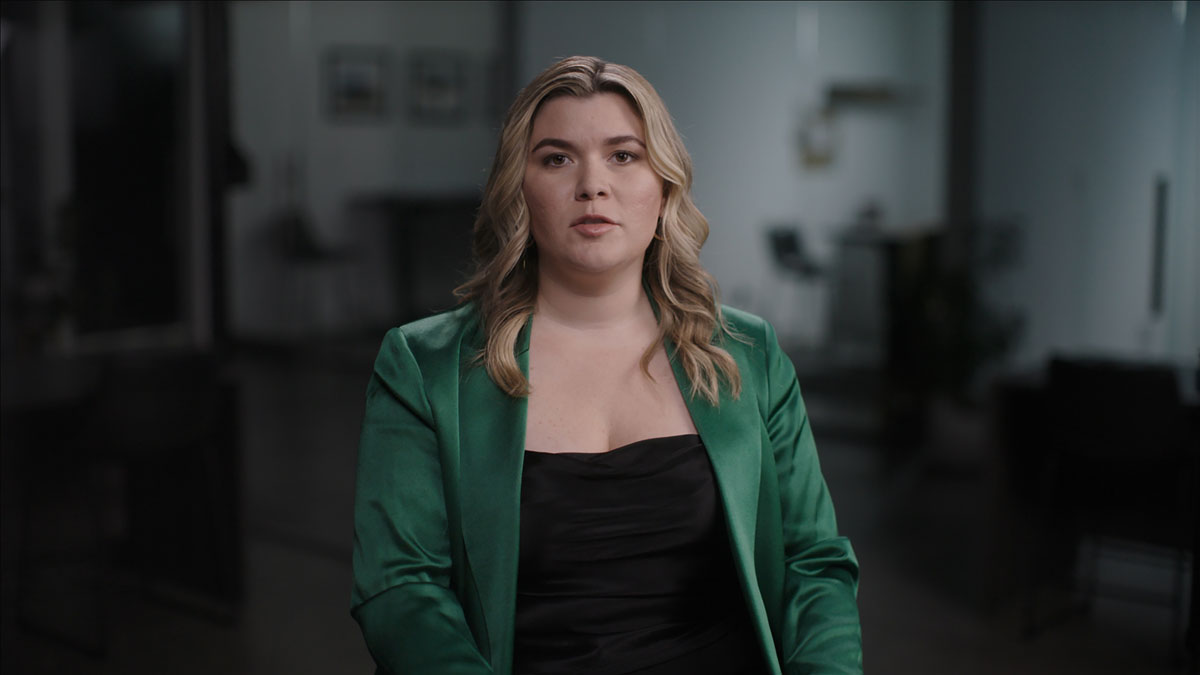
She spoke with Salon about her recent project, her family’s troubling history and the lessons she’s learnt thus far.  

This interview has been edited for length and clarity.

On “House of Hammer,” you share a lot of your story in front of the camera in the second episode. You are also a consultant on the series. What does that role entail?

Basically, I think it has to do with my involvement in the project. To give just a little bit of backstory, I had written a book, “Surviving My Birthright,” and it started out as a journal — kind of a healing for me to make sense of my life, what had happened and what was happening. And so when I wrote the book, I self-published it seven years ago and it was more of being able to hold it as a representation of my life being validated in this sense. So it was very empowering for me in that moment. And so since then, I had controlled the narrative and it was self-published.

“My grandfather controlled the narrative …  A good example of this is my mother, who had her cigarettes dyed to match her outfits.”

Fast forward seven years — last year, I was in San Diego working at Home Depot as a kitchen designer and one of my coworkers was like, “Casey, you better get on TikTok. There’s someone called The Zen Blonde blowing up your life.” And I was like, tech challenged and don’t do social media. So they got me on TikTok and literally, within two hours, I watched The Zen Blonde live-read my book. It was in that moment where my future and my fate were out of control, like being on a roller coaster where you just don’t know what’s about to happen.

House of HammerLauren Skae, aka The Zen Blonde, from “House of Hammer” (discovery+)
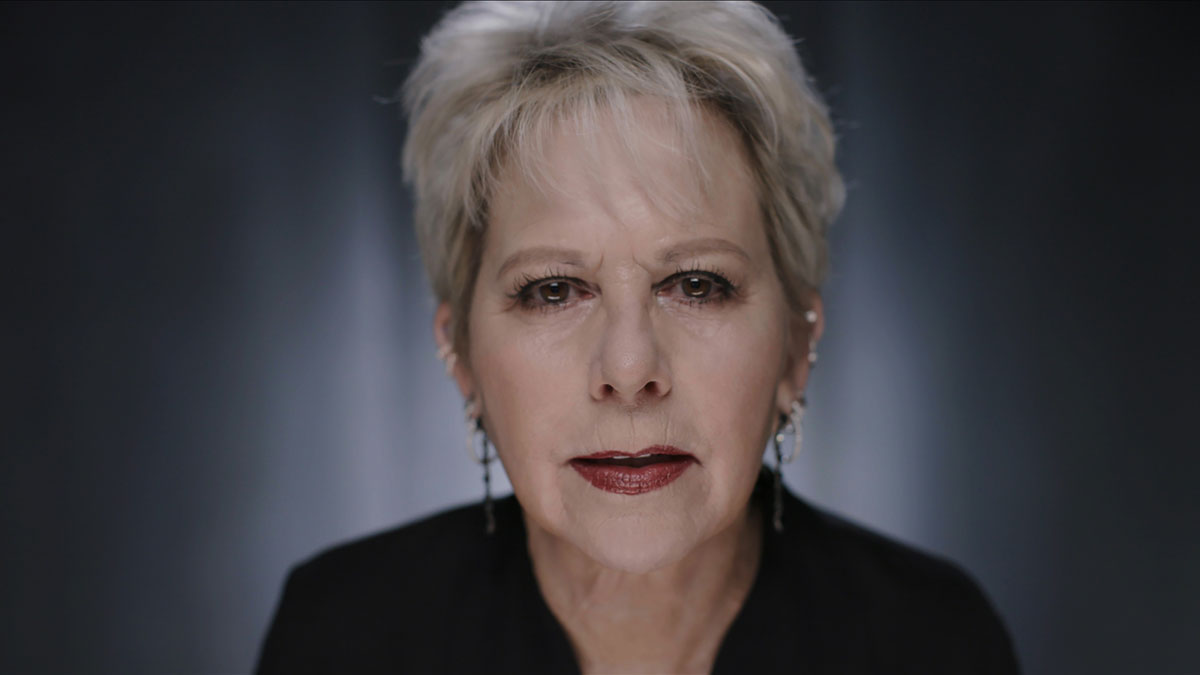
How did you get involved with this project? Were there any trepidations or concerns that you had when publicly coming forward with this story?

I think the universe gives you a moment where they say, “Alright, here’s your choice. What are you going to do with it?” And I thought when Armie first started imploding on social media, people wanted me to comment, they reached out to me when they found out that he had an aunt. I didn’t want to be a sound bite for that because that wasn’t my journey. I wanted to empower women and I wanted to be an advocate for victims.

So, I stayed away from all of that. But then, the producers [of “House of Hammer”] sent me a letter talking about my book and how they wanted to tell my story and were very interested. This is what I’ve been waiting for. This is a positive way to get my message across. I met with them, and then from that moment on, other people started joining, people wanted to tell their story. And the victims that came forward, I mean, these are smart, intelligent, successful women that got trapped and sucked down that vacuum.  

It’s hard to watch; don’t get me wrong. I’m still getting triggered, like, “Oh my God, it’s my life! I mean, I lived it. I know how it ends, I’m sitting here.” But I still watch it and it’s pretty horrific. So it’ll be interesting to see why people tune in, if it’s for entertainment or whatever. By the end of three hours, I guarantee their opinions will be changed and it will be something that they did not expect it.

I want to backtrack a bit and revisit the past. Where were you when the allegations made against Armie Hammer broke out and how did you react to that news?

I was working at Home Depot in San Diego, designing kitchens. My co-workers were sharing stories of Armie and what was happening and that’s how I found out, it was at work. And I wasn’t surprised. I just thought, “Here we go again, another Hammer making the headlines and getting away with whatever.” I really didn’t give a second thought to it in all honesty.

In the docuseries, you said your life was “like a chessboard” that was strictly controlled & monitored by your grandfather, Armand Hammer. Can you elaborate on that?

It was pretty terrifying, but again, that’s all I knew. And not having social media back then, you thought that’s just the way powerful, rich, famous families were behind closed doors. It was all kinds of abuse. It was physical, it was mental, it was you name it . . .

“Just because your family or your parents give birth to you and pretend to love you doesn’t mean that they can do whatever they want to you.”

My grandfather controlled the narrative, so he basically wanted us to act a certain way once we left and went out the front door. We had to be camera ready, picture ready. I mean, even though he had us followed, everything was always recorded. His goal was to win the Nobel Peace Prize. So, the last thing he could have is any family member disrespecting him or embarrassing him or saying the wrong thing.

We were always told what to do, where to go, what schools to attend. We were not given a choice in our lives at all and you just did it. Otherwise, you were threatened with lots of punishments, violence or being cut off. So at an early age, you learned how to act and you didn’t speak unless you were spoken to. A good example of this is my mother, who had her cigarettes dyed to match her outfits. It was mysterious back then; people wanted to know everything about old money. My grandfather hosted royalty and presidents and movie stars. They were at all the functions every month — we would meet new people and we just kind of hung out with all those people.

Hopefully “House of Hammer” exposes that, at least in the Hammer family, there’s a lot of things that go on, even to this day. Just because your family or your parents give birth to you and pretend to love you doesn’t mean that they can do whatever they want to you. And so until you can share your story and find a kindred spirit who knows what you’re going through, you feel so alone.

You talk a lot about the abuses you endured and witnessed over the years by the Hammer family, but one thing that surprised me about the allegations were the mentions of cannibalism and cannibalistic fantasies. Did that surprise you as well?

At this point, I don’t know to be honest. I just know that from my experience, there’s a lot of sick and twisted behavior in my family. And what I witnessed, I’m not surprised by anything I hear these days. I mean, it’s sad and it’s shocking.

“I was born and I was told I was a mistake.”

But again, it’s more about the victims, right? It’s sad and shocking that people seem to be forgetting about them. It just shows you that maybe by shining a light on Hollywood, so to speak — because I guarantee there’s probably a lot of people who aren’t speaking about a lot of things that happened to them — it’s important to know that you can come forward, that we’ve got you and hopefully, people will see a bit of themselves in this docuseries.

How has your family’s mistreatment of women influenced your perception of yourself?

Oh, it’s hard. I mean, I was born and I was told I was a mistake. And then I was told I was supposed to be a boy. I was also given the name “Casey,” which was spelled the boy way back then. And all through school I was called “Mr. Hammer” and I’d have to raise my hand and say no, I’m a girl.

It’s kind of ironic that now I’m standing before you as a girl and I’m not raising my hand anymore. I’m just speaking my truth and saying who I am. It’s challenging because you don’t think of it as you’re a girl that you’re not loved. You just think of it as “I’m not loved. What am I doing wrong? Oh, I better do more. I better be better behaved. Even though I’m really doing everything I’m supposed to be doing.” You don’t understand and you’re constantly chasing and then, the self-sabotaging and the self-hatred.

I speak a lot about it in my book of how I work through a lot of that just to get healed. That I’m even sitting here right now, it’s a testament that for whatever reason, I’m supposed to keep plugging along because you know, I’m here for a reason. And I think seeing “House of Hammer,” I had a moment where you go, “OK, this is why I’m going to keep moving forward with this purpose and help empower women because I know how great it made me feel.” It’s like one of those things where everything you need is inside. And the minute you stop and take the moment to just love yourself for who you are, it’s OK, it’s good enough.

House of HammerCasey Hammer from “House of Hammer” (discovery+)

What do you hope viewers will take away from “House of Hammer”?

How brave everyone who was a part of making it happen. Because again, a year and a half ago, I was in a different place and the difference I’ve made in myself and others by re-traumatizing and re-triggering myself and finding out how it’s okay, you can come out on the other end and be OK, that it reminds me how important this work is. If I can help a child or victim know that they’re heard and that they’re not alone, then all of this has been worth it. It’s such a beautiful life. If you just pause for a moment and show some kindness and some support for yourself first and then you can let that bleed out to the rest of the world. That’s what I’m hoping for.

“House of Hammer” is available for streaming now on discovery+. Watch the trailer below, via YouTube:

4 tea-licious tools for making better tea at home, according to our editors

Whether it’s a soothing glass of sweet tea or a warming cup of chai with a spoonful (or two) of sugar, tea is a simple yet rewarding beverage that is meant to be enjoyed year-round, no matter the season. Oh, and in case you were wondering, Costco’s instant boba tea is basically magic

That said, iced tea any way is one of the quintessential drinks of summer. When you need to beat the heat at picnics, barbecues or backyard pool parties, few things are as refreshing as an ice-cold glass. And when you pair iced tea with spirits, you get a low-ABV cocktail that is perfect for day-drinking or capping off a long day outdoors.

Across the pond, the traditions surrounding tea are entirely different. If you want to sip afternoon tea like the royals, you can reserve a table at the Kensington Palace Pavilion, which has a view of the beautiful Sunken Garden that dates back more than 100 years. 

No matter which way you go about it, making tea is an art in and of itself, but it doesn’t have to be overly complicated. That’s why the Salon Food team is here to recommend a few tried-and-trusted products to help make tea drinking more fun.

From a cute monster-shaped tea infuser to a sealable pitcher with a built-in pour spout, here are 4 tea-licious tools for brewing and sipping better tea at home:

1. Reusable Stainless Steel Straws

I have an inexplicable love for the bendable plastic straws you sometimes get at coffee shops or with soft drinks, but we all know those aren’t great for the environment. Late last year, I bought this pack of bent metal straws — which come in black, gold, rose gold and silver — to use in my morning iced coffee and with my afternoon iced teas. — Ashlie Stevens, deputy food editor

12+2 Pcs Reusable Stainless Steel Straws12+2 Pcs Reusable Stainless Steel Straws (Photo courtesy of Amazon)

Non-toxic metal straws. Top rack dishwasher safe.
Made of rust and scratch-proof 18/8 stainless steel. Fits most tumblers. 

STARTING AT $14.99

2. Baby Nessie Loose Leaf Tea Infuser

I go through so many tea bags, but during the pandemic, I was gifted lots of lovely loose-leaf teas. I didn’t want to brew a whole teapot, so I searched for a tea infuser that fit my personality. I settled on this one because it’s silicone, easy to wash, comes in three color choices (I settled on purple) and was easy to load the tea in. I also liked the idea of a Nessie sighting in the loch of tea in my mug, its little head peeking out, smiling at me. — Hanh Nguyen, senior culture editor

OTOTO Baby Nessie Loose Leaf Tea InfuserOTOTO Baby Nessie Loose Leaf Tea Infuser (Photo Courtesy of Amazon)

This cute tea infuser spoon brings out the wondrous flavors of loose-leaf teas. 
Unlike a tea press, this infuser is very convenient to use, especially for beginners.

BUY FOR $16.95

3. Rare Tea Cellar’s Mallorca Melon Tea

When I had tea at Chicago’s London House Hotel, the server specifically recommended the Mallorca Melon Tea. After a few sips, I totally understood why. The blend is tangy and sweet, made with a delicious mix of Spanish cantaloupe, honeydew, pineapple, hibiscus and Seville orange. While I had it hot that day, I can’t wait to put some on ice. — AS

4. Luminarc Sealable Pitcher

I love pitchers like this because they’re just as perfect for storing iced tea as they are for serving. They’re sturdy but also beautiful. When purchasing a pitcher, look for one with an integrated handle and a built-in pour spout for easy refrigerator-to-table transportation. — AS

Luminarc Quadro 1.7-Liter PitcherLuminarc Quadro 1.7-Liter Pitcher (Photo Courtesy of Amazon)

This pitcher is safe and easy to clean in the dishwasher.
It holds an ample supply of liquid, yet is small enough to conserve needed fridge space.

Starting at $15.35

Salon Food writes about stuff we think you’ll like. Salon has affiliate partnerships, so we may get a share of the revenue from your purchase.

How to save $50 off your food bill and still eat tasty, nutritious meals

Grocery prices have taken a hike upwards for a host of reasons, including the rising costs of petrol, fertiliser and labour.

You could “shop around” for cheaper groceries, but that would cost you more in fuel or travel, not to mention time.

Research shows a healthy diet costs low-income households 20 to 30% of their disposable income. But a healthy diet remains cheaper than one dominated by highly processed foods and drinks.

Cutting your grocery bill takes planning and flexibility – and knowing your budget.

So how do you do it?

Start by checking which vegetables and fruits are in season, and find recipes that include these.

Swap some fresh veggies and fruit with canned and frozen varieties, and substitute very expensive items for cheaper alternatives.

Have a meat-free meal at least once a week.

Next, create a grocery list. This helps save money by reducing in-store impulse buys. Look at what you already have in the pantry, fridge and freezer, and only buy what you need. This will reduce food waste.

Check online catalogues for specials before heading to the shops. Once in store, compare prices and choose brands that are cheaper. This makes nutritious meals more affordable.

How much do households spend on groceries?

A 2021 survey found the average supermarket grocery bill was A$98 per week for a single person, $145 for two, $168 for three, $187 for four and $255 for five or more people.

An older survey from 2016 found the average household (2.6 people) spent $269 per week across all food ($237) and alcohol ($32) purchases, both at the supermarket and other outlets.

About half the money was spent was on “discretionary” items such as meals out or fast food ($80), with $20 spent on lollies, chocolate, savoury snacks and potato crisps, and $10 on cakes, biscuits and puddings. At the supermarket, $26 was spent a week on fruit and vegetables.

A 2019 survey found the average person spent $300 a week for all food and drinks. This included groceries ($135), eating out ($52), alcohol ($31), take-aways ($22), barista coffee/tea ($13), food delivery services ($12), supplements ($12) and health foods ($11).

These surveys show it’s common to spend more on foods and drinks consumed away from home than on groceries and more on unhealthy items than healthy ones.

What about saving $50?

nomoneynotime.com.au

5 tips to help you save

Putting all this together, here are five key tips to keep in mind when planning food for your household:

1. Have a food budget

Total food budget dollars will be influenced by how many people you need to feed, their age and your household income. A rough rule of thumb is it shouldn’t cost more than one-third of your total household disposable income.

Allocate target amounts in your budget for both core, nutritious foods and discretionary foods and drinks (softdrinks, chips, biscuits, cakes, lollies, pies, pastries and deli meats) and on foods away from home (coffees, fast food, pubs, clubs, bottle shops and restaurants).

2. Make a weekly plan for breakfast, lunch, dinner and snacks

Write a matching grocery list. Check the pantry, fridge and freezer to see what you already have or whether any ingredients can be swapped to save a purchase.

3. Pack your lunch

Buy a lunch box and pack it the night before. Put it in the fridge so you can grab and go in the morning. For ideas, see our $5 make-at-home lunches.

If your mornings are too busy, pack in breakfast foods too.

4. Cook more meals at home

Cooking more meals at home might include cheaper and healthier versions of some of your take-out favourites such as pizza and burgers.

A study from the United States found those who cooked more at home spent half the amount of money on food eaten away-from-home than those who cooked infrequently. They also spent 17% less on food overall.

Interestingly, both groups spent the same on groceries suggesting that infrequent home cookers either wasted more food, ate more, or both.

5. Cook double batches

Cook greater quantities of meals like curries, soups and casseroles, and either freeze them or have the same meal twice.

For those needing to shop on a significantly restricted budget, we’ve developed a $60 a week meal plan on our No Money No Time website. This free resource contains a meal plan with inexpensive recipes, designed to meet key nutrients needed for health.

If you need help getting food right now, try the Ask Izzy website. By submitting your postcode, it shows support services, such as free meals, near you.


The authors acknowledge the assistance of Hannah McCormick and Ilyse Jones from the No Money No Time Project team in preparing this article.

Clare Collins, Laureate Professor in Nutrition and Dietetics, University of Newcastle and Megan Whatnall, Post-Doctoral Researcher in Nutrition and Dietetics, University of Newcastle

This article is republished from The Conversation under a Creative Commons license. Read the original article.

Environmentalists blast New Jersey environmental bureau’s decision to let dead vultures rot

Sometimes all it takes is a seemingly innocuous public notice put out by government agency that can tip the public off that there’s something seriously amiss in the bureaucracy. If COVID taught us anything, it’s that we need to pay close attention for ourselves. 

Such was this case over the weekend when DEP’s New Jersey State Parks, Forests and Historic Sites Facebook page posted an advisory that a portion of the Sussex Brach Trail in Lafayette was going to closed for further notice because the United States Department of Agriculture had confirmed that over 100 black vultures had died in that portion of the trail from Avian Influeneza (bird flu).

“New Jersey DEP Fish and Wildlife have left the dead birds to decompose on site due to rough terrain causing accessibility issues and a lack of personnel in the State certified to handle infected birds,” the notice said. “Improper handling can lead to further spread of disease.”

The agency went on the reassure the public that “the risk of avian influenza being transmitted to people is extremely low” and that the “New Jersey Department of Agriculture and NJ DEP Fish and Wildlife are continuing monitoring the situation.”

Back in April, the CDC reported the first human case of avian bird flu in the United States in a Colorado man who has since recovered. The agency says the risk remains of humans contracting the virus is considered “low”. 

“New Jersey DEP Fish and Wildlife have left the dead birds to decompose on site due to rough terrain causing accessibility issues and a lack of personnel in the State certified to handle infected birds,” the notice said. “Improper handling can lead to further spread of disease.”

“This one H5-positive human case does not change the human health risk assessment,” the CDC said in an on line up date. “CDC will continue to watch this situation closely for signs that the risk to human health has changed. Signals that could raise the public health risk might include multiple reports of H5N1 virus infections in people from exposure to birds, or identification of spread from one infected person to a close contact. CDC also is monitoring H5N1 viruses for genetic changes that have been associated with adaptation to mammals, which could indicate the virus is adapting to spread more readily from birds to people. CDC is taking routine preparedness and prevention measures, which includes an existing candidate vaccine virus that could be used to make vaccine for people if one were needed.”

The CDC advisory continued. “CDC has been monitoring for illness among people exposed to H5N1 virus-infected birds since these outbreaks were detected in U.S. wild birds and poultry in late 2021 and into 2022. To date, H5N1 viruses have been found in U.S. commercial and backyard birds in 29 States and in wild birds in 32 states.”

Here in New Jersey, the decision by the state agency to let the diseased bird carcasses rot “in situ” was uniformly blasted by environmentalists, including a former DEP official, as being wholly inadequate because it risked further infection of wildlife that will come into contact with the infected carcasses. This comes at a time when the world is seeing a troubling upsurge in wild birds contracting the virus and there are concerns about potential mutations as we saw with COVID. 


Want more health and science stories in your inbox? Subscribe to Salon’s weekly newsletter The Vulgar Scientist.


Jeff Tittel, the former executive director of the New Jersey’s Sierra Club for over 20 years, described the NJDEP response was “shocking.”

“By leaving those birds out there to rot you can spread Avian to other birds and you are taking about a stench and pollution as they decompose—it’s just malpractice from an environmental and public health standpoint,” Tittel said. “I think it’s a symbol of everything that’s wrong with the DEP when it comes to the budget where thanks to cuts over the years you now don’t have enough qualified staff to pick up these dead birds and dispose of them properly.”

Tittel continued. “The State of New Jersey now has the biggest budget in state history by fare yet DEP’s budget is languishing and in real dollars is much less than it was 30 years ago. If you can’t pick up these contaminated dead birds how are you going to have the money to deal with flooding or cleaning up toxic waste sites.” 

Bill Wolfe, a former DEP official and whistleblower, said the choice to let the contaminated vultures rot in the wild has roots in what has been a bi-partisan drive going back to the Gov. Florio administration to try and make the DEP more self-sustaining off of the revenues it can raise through permitting and promoting commercial activities.

“DEP Fish and Wildlife has plenty of staff available to promote hunting and logging of State lands (wildlife management areas) but not enough to dispose of dead birds? Are you kidding me?,” Wolfe said. “This is just another example of how DEP budget cuts, misplaced priorities driven by revenue generating activities like hunting and fishing, and lack of leadership at the top directly threaten public health and healthy ecosystems.”

Black vultures have a massive 5 foot wing span, slighting smaller than the turkey vulture. They play a critical role in a society where road kill is so common. Earlier this month, Newsweek reported an even larger Avian Influenza outbreak that killed 700 black vultures at Noah’s Ark Animal Sanctuary in Georgia, which ranks first in the U.S. for poultry, which is particularly susceptible to the virus.

The news outlet saw that the sanctuary had been placed quarantine by the Georgia Department of Agriculture. “As a natural disease event, the site needs to be contained, cleaned up and then sanitized/disinfected,” the Noah’s Ark Animal Sanctuary said in a statement to News week. “We are at the contained stage. But our State Agency partners are and will lead clean up and sanitization. They will lead full vulture removal and roost removal and sanitation.”

According to the USDA fact sheet the US is experiencing “a widespread outbreak of highly pathogenic avian influenza (HPAI). Although this disease primarily kills domestic poultry (chickens and turkeys), it can also affect more than 50 species of wild birds.” 

The federal agency asks property owners that find dead wild birds to call your “state wildlife agency or state health department so they can collect and test them for HPAI.”

The USDA fact sheet is not alarmist, but informative.

Back in 2012, researchers at the University of Michigan published research that predicted that “climate change could increase levels of avian influenza in wild birds” and that the Delaware Bay could be a nexus as “a crossroads for many bird species traveling between continents.”

“If local authorities tell you to dispose of the bird’s carcass (body), wear disposable gloves to pick it up,” warns the USDA. “If you don’t have gloves, turn a plastic bag inside out and use it to pick up the carcass. Double-bag the carcass and throw it away in your regular trash. According to the Centers for Disease Control and Prevention, handling HPAI-infected birds is unlikely to lead to illness in people.”

The USDA tip sheet continues. “However, you should seek medical attention if you experience any influenza-like symptoms or illness within 10 days of handling sick or dead birds. Disinfecting Shoes and Clothing Because HPAI spreads easily on contaminated surfaces, be sure to wash your clothing in hot water and disinfect your shoes after handling a dead wild bird. To disinfect your shoes, use one of the methods below: 1. Prepare a solution of 1 part bleach to 10 parts water and submerge shoes in the solution for 10 minutes. The mixed solution is good for 7 days. 2. Spray your shoes with a benzalkonium chloride based commercial disinfectant (such as Lysol* spray or similar product) and allow them to dry.”

Back in 2012 researchers at the University of Michigan published research that predicted that “climate change could increase levels of avian influenza in wild birds” and that the Delaware Bay could be a nexus as “a crossroads for many bird species traveling between continents” resulting in “an increase in the avian infection rate” as well as potentially spawning “novel subtypes of the influenza virus among North American wild bird populations.”

The University of Michigan study emphasized that while “avian flu viruses do not normally infect humans…..sporadic human infections with avian flu viruses have occurred. Since 2003, for example, more than 600 cases—including more than 300 deaths—of human infection with highly pathogenic avian influenza A H5N1 have been reported worldwide, according to the World Health Organization.”

It seems our black vultures may be that proverbial canary in the coal mine.

A headline in the May edition of Nature was as concise as it was sobering.

“Why unprecedented bird flu outbreaks sweeping the world are concerning scientists-Mass infections in wild birds pose a significant risk to vulnerable species, are hard to contain and increase the opportunity for the virus to spill over into people.”

Nature’s writer Brittney Miller described vividly how “a highly infectious and deadly strain of avian influenza virus has infected tens of millions of poultry birds across Europe, Asia, Africa and North America…. Since October, the H5N1 strain has caused nearly 3,000 outbreaks in poultry in dozens of countries. More than 77 million birds have been culled to curb the spread of the virus, which almost always causes severe disease or death in chickens. Another 400,000 non-poultry birds, such as wild birds, have also died in 2,600 outbreaks — twice the number reported during the last major wave, in 2016–17.”

In short, “researchers say that the virus seems to be spreading in wild birds more easily than ever before, making outbreaks particularly hard to contain, leaving scientists “concerned that the high levels of virus circulating in bird populations means that there are more opportunities for spillover into people.”

Exactly.

The time for feel good press releases and photo ops is over when the birds with that big a wing span drop dead. Somebody in the state legislature needs to not be afraid of having an independent thought and call an oversight hearing and found out why the NJDEP lacks the personnel to handle infected birds.

If necessary, it might be time to train the National Guard for this clear and present danger. Make no mistake, our planet’s fate rests with the birds, even the ugly ones. 

What’s behind America’s pickle craze?

Move over bacon and ranch dressing. There’s a new hot flavor in town.

A pickle craze is sweeping the nation, with dill pickle toppings and seasonings in such high demand that they’re appearing on popcorn, chewing gum, seeds and nuts.

The pickle obsessed can now order a pickle pizza with a side of pickle potato chips and wash it down with a pickle beer.

Need dessert? Choose from pickle cotton candy, pickle ice cream and pickle marshmallows. Or you can head over to your local Sonic Drive-In and order a Pickle Juice Slush.

Yet for all the hoopla, pickles remain an acquired taste that some are never able to appreciate. Part of the reason may be rooted in your personality. But if you’re able to get over that initial aversion, pickles can become perfect complement to any dish.

A cornerstone of civilization

In the U.S., pickles tend to be associated with the cucumber, but they can come from any fruit or vegetable preserved in an acidic solution or brine.

Having preserved food available regardless of the season allowed populations to grow and civilizations to develop. With their long shelf life, pickles helped humans traverse the world by foot, animal and boat; helped feed troops fighting in wars; and were also touted for various benefits such as preventing scurvy.

The popularity of the dill pickle – which many in the U.S. consider “the” preeminent pickled fruit or vegetable – is attributed to two sources. Dutch farmers started growing cucumbers in Brooklyn in the 17th century that were eventually pickled and sold. Then, in the late 1800s and early 1900s, surges of Eastern European Jewish immigrants brought kosher dill pickles to New York City.

Yet as chefs and teachers, we’re not surprised that Burger King’s famed jingle, “Have it Your Way,” begins with the omission of the pickle: “Hold the pickles / Hold the lettuce / Special orders don’t upset us . . .”

For all there is to love about pickles – they can be crunchy, sweet and acidic – they possess certain qualities that can make some people squeamish.

Sour and slimy can be a turnoff

For one, they’re sour.

Most pickles are sour because they soak for a long time in a salty brine. This long soak causes acetic acid bacteria known as acetobacter to grow and multiply. In a sense, pickles create their own vinegar, and that makes them sour.

The ability to detect a sour taste in foods likely came from our aquatic ancestors, who acquired the ability to determine the safety of their environment by detecting abnormalities in acidity.

There are also some evolutionary advantages for enjoying the mouth-puckering sensation. The same lactic fermentation necessary for early pickles also served as a green light for omnivores that a food was safe to consume, as lactic acid limits the reproduction of harmful bacteria.

This might explain why some have developed a taste for it and others haven’t.

In one study of children, their mothers, their ability to detect sour and their preferences for the taste, virtually all could accurately determine and rank acid levels in gelatin. However, some children preferred the highest concentration of acid levels – in other words, the most sour foods. Others blanched at it.

The authors indicate that it is unclear why this phenomenon occurs. They hypothesized that an affinity for sour flavors could be related to a child’s propensity for adventure. And there does seem to be a strong correlation between the aversion to sour in both children and adults and their unwillingness to try new foods.

Preservation methods also change food textures, and food aversions are rooted in texture as much as flavor or smell. The texture of a pickle can be off-putting for some people; foods described as “slippery” or “slimy” are ranked at the top for adult picky eaters. Both words could be used to describe a pickle.

A “new dill” for the American people

But if you can grow to appreciate the texture and taste, there’s a world of possible pickle pairings.

Pickles work well in so many dishes because the leading flavors in most main dishes are fat, umami, salt, something creamy and frequently something sweet. Pickles add acidity and crunch and balance out the dish. Burger King may sound eager to hold the pickle upon request, but a burger with a pickle – from a sensory perspective – is a better burger.

Seen this way, the pickle’s incorporation into pretty much everything starts to make more sense. Take, for instance, its surging popularity as a pizza topping. Much like that burger, pizza has yeasty bread, tomato sauce for acid and sweetness, mozzarella for fatty, rich, and creamy textures, and then all the other toppings you choose to put on to suit your needs.

In the case of the pickle pizzas, the most popular kind is served with a white sauce or olive oil, which adds even more fat and richness to an already-cheesy dish, giving the pie an unbalanced flavor profile. But pickles restore the flavor balance by introducing acidity and adding a texture that wasn’t there before. You’re also adding the temperature contrast and flavors of garlic, dill and subtle spice.

Dill pickle flavoring is versatile because of the combination of salty, sour and sweet, which allows it to complement so many items.

Take, for instance, potato chips or sunflower seeds. These are traditionally salty snacks with a relatively neutral flavor, which is why they so often have flavors added to them. Pickle flavoring adds sour and sweet – which are a classic, balanced duo – to the salty profile.

Pickle-flavored foods are everywhere because the profile works well with almost anything. But if you want to avoid offending your friends with your pickle breath, you might want to avoid the pickle flavored mints after dinner.

Kenneth Symsack, Instructor of Food Science and Human Nutrition, Colorado State University and Jeffrey Miller, Associate Professor of Hospitality Management, Colorado State University

This article is republished from The Conversation under a Creative Commons license.

Ex-FBI official: Trump’s inner circle should worry “how many of us are going to be charged”

In a column for MSNBC, the former assistant director for counterintelligence at the Federal Bureau of Investigation suggested that is inevitable that obstruction indictments will be handed down over the top secret documents that were hidden away at Donald Trump’s Mar-a-Lago resort, and that the only question left is who will be headed to court and how many there will be.

According to Frank Figliuzzi, the Department of Justice’s case against the former president has grown stronger by the day with no end in sight, and attempts by Trump and his lawyers to dismiss the relentless investigation are misfiring, meaning the DOJ has him dead to rights.

“We could be inching close to someone, maybe Trump himself, being charged with obstruction of justice,” the ex-FBI official wrote. “A successful obstruction prosecution would require two things. First, proof that the accused knowingly concealed or destroyed records and, second, proof they did so to impede the work of an official agency. DOJ’s response filing provides us some insights into why the department thinks such thing has already happened.”

Based upon government filings, Figliuzzi wrote that “the DOJ’s assertions seem to make a case for both the ‘knowing concealment’ and the ‘intent to impede’ requirements for obstruction,” and added that Trump ally Kash Patel could be in trouble, with the former FBI official suggesting, “It’s Patel who has claimed he can personally attest to Trump’s ‘standing order’ defense. Time will tell who’s telling the truth, but if the FBI were to develop evidence that Patel and Trump conspired to concoct a phony standing order defense, then they could be charged.”

“Trump has publicly repeated Patel’s assertion that he, Trump, declassified everything. Again, this could merely be free speech, or a deliberate attempt to convince others to go along with a ruse,” he wrote. “But if Trump were to repeat a false story to investigators, then they could charge him with obstruction and more. Trump is no innocent bystander here. He can’t say that he had no idea all these documents were in his house.”

He then claimed the piling up of evidence and the quickness with which the DOJ has responded to every Trump lawyer’s assertion should be causing panic in Trump’s world.

“Increasingly, it looks like Trump and others knew what he had, knew where it was, and knew not all of it had been returned,” he explained before concluding, “The questions they should now be asking themselves include, ‘How much more does DOJ know, and how many of us are going to be charged?'”

You can read more here.

George Conway destroys Trump lawyer’s argument that classified docs are like “overdue library books”

When FBI agents executed a search warrant at former President Donald Trump’s Mar-a-Lago compound on Monday, August 8, they were searching for classified government documents that, under the Presidential Records Act of 1978, should have remained in Washington, D.C. when Trump left office — not been transferred to private property in Palm Beach, Florida. James Trusty, one of Trump’s attorneys, tried to downplay the severity of the situation by comparing the presence of those documents at Mar-a-Lago to an “overdue library book.” But conservative attorney George Conway tore Trusty’s analogy to pieces during a Friday morning, September 2 appearance on CNN’s “New Day.”

“To gaslight a federal court the way they gaslight people on Fox News is singularly appalling,” the Never Trump conservative told “New Day” host John Berman. “I mean, if we’re talking about library books here, we’re talking about he took a truckload of library books, stole them from the library. The librarian came and asked for them, he didn’t give them back, the librarian shows up with the cops, he gives a few of them back, and then lies. And it turns out he’s got a whole cache of the books still left in his house.”

Conway continued, “That would be a proper analogy, except that we aren’t just talking about regular old books here — we’d be talking about rare library books of the sort that you have to be very, very careful with and treat with great care.”

Although he is married to a long-time Trump ally — former Trump adviser and veteran GOP strategist Kellyanne Conway — George Conway does not share his wife’s fondness for the ex-president. Conway, known for his Never Trump views, is one of Trump’s most scathing critics on the right and believes that Trump has been terrible for the Republican Party and the conservative movement.

Watch the video below or at this link.

Biden’s speech wasn’t “partisan” — it was the plain truth the media is too timid to make clear

During Thursday night’s somber warning about the threat to democracy posed by Donald Trump and his rising fascist movement, President Joe Biden repeatedly emphasized the importance of being “honest with each other and with ourselves” about the current situation. “But as I stand here tonight, equality and democracy are under assault. We do ourselves no favor to pretend otherwise.”

The president reiterated that point later, noting that it is “my duty to level with you, to tell the truth no matter how difficult, no matter how painful.”

Presumably, it is also the duty of the mainstream media to level with the American people, to tell these truths, no matter how painful and regardless of how much whining they get in response from Republicans. So too, it is the media’s duty to set aside the cynical “horse race” coverage that can reduce existential issues to little more than political game-playing. And to admit that the typical “both sides” and “partisanship” frameworks don’t apply in a situation where one party has embraced a fascist assault on democracy, while the other party is trying to stop them. It is on the media to prioritize the truth over some ill-fitting “balance” between two parties in an era when one of those parties rejects democracy itself. 

But of course, what we all too often get is a bunch of media hand-wringing about “partisanship” while ignoring the seriousness of the crisis in favor of a reductive lens treating this as little more than some campaign shenanigans. 


Want more Amanda Marcotte on politics? Subscribe to her newsletter Standing Room Only.


Amber Phillips of the Washington Post formatted her post-speech analysis in a listicle format. The first item? “This speech did not shy away from partisanship.” Yep, Republicans are embracing authoritarian, anti-democratic politics, but the Beltway press keeps acting as if “partisanship” is the thing to worry about. 

Peter Baker’s equally blinkered analysis at the New York Times starts with the headline, “A Rematch of Biden v. Trump, Two Years Early” and just gets worse from there.

“Rather than a referendum on his own presidency, which has been hurt by high inflation and low public morale, Mr. Biden wants to make the election a choice between ‘normal’ and an ‘extremism that threatens the very foundations of our Republic,’ as he put it on Thursday,” Baker writes. It’s as if a literal fight over whether we’ll continue to have a democracy is little more than the usual pre-election political posturing. 

ABC News also approached the question of rising fascism as if it were political theater criticism with the headline “Biden seeks to reframe midterms into stark choice between democracy and Trump-led extremism.” 

What’s frustrating is that all of these outlets have otherwise done rock solid reporting showing that Biden’s warning is not “partisanship,” but flat-out facts.


“We are not powerless in the face of these threats.  We are not bystanders in this ongoing attack on democracy.”

The Washington Post recently published an extensive expose of how insurrectionist candidates are winning Republican primaries, based on insinuated but unsubtle promises to use the offices they’re vying for to steal the 2024 election for Trump. ABC News has reported on how Trumpist politicians and activists have already dramatically undermined the election system. The New York Times editorial board even went so far as to recently call for Trump’s prosecution, in light of the growing threat he poses and the crimes he’s likely committed. 

Yet, once a Democrat opens his mouth and speaks, the bone-deep terror of Republicans’ bad faith whining kicks in, and far too many mainstream media outlets hide behind chatter about “partisanship” and “optics” and “both sides,” unable to speak the plain truth to their readers. 

Spinning a stark message about the future of democracy into little more than a political gambit may feel “fair” to journalists, but it’s actually very unfair to readers. It signals to readers that they shouldn’t take the threat seriously, but should simply tune this all out as political hyperbole. But the opposite is true. Readers need to understand that Biden is telling the truth and, if anything, he understated the case. (Mostly by underestimating how many Republicans are, in fact, fully on board with Trump’s authoritarian agenda.) That this isn’t about partisan politics at all, but about whether democratic politics as we know it will exist after the next two election cycles, or whether Trump will succesfully destroy it. 


Want more Amanda Marcotte on politics? Subscribe to her newsletter Standing Room Only.


To be fair, many other outlets took a more responsible approach, framing Biden’s speech as the warning it was intended and not merely as a political posture.

CNN’s Stephen Collinson drew the necessary contrast, in his opening paragraph, “Even on the day that President Joe Biden delivered his most jarring warning yet that democracy is in severe danger, Donald Trump teased how he might use a new White House term to further erode that core American birthright.”

Journalists had a choice: Do they level with their readers and tell them Biden is telling the unvarnished truth? Or do they sidestep the issue of what is true, in favor of the usual “he said/he said” coverage?

In a surprising twist, Politico — which is usually the worst about reducing every story to a “horse race” one — acceded to the truthful nature of Biden’s remarks. Biden is described as issuing “a stern warning about the future of the nation’s democracy,” and his behavior is contrasted with Trump’s. “Hours before Biden forcefully addressed election deniers and the rise in political violence, his predecessor was defending Jan. 6 rioters,” Jonathan Lemire and Merideth McGraw write.

This is what responsible coverage looks like: Focusing on the most important issue at hand — the fate of democracy — and not getting caught up in the cynical assumption that every communication from a Democratic president is a ploy. 

In her final column for the Washington Post, media columnist and former New York Times public editor Margaret Sullivan warned her fellow journalists that now is the time to rise above the typical bothsiderism that defines Beltway journalism. Noting that Trump is “by no means a normal political figure, and he will never reform into some kind of responsible statesman,” Sullivan asks what the media’s role is when dealing with a politician who is using the democratic system to destroy democracy. 

The deeper question is whether news organizations can break free of their hidebound practices — the love of political conflict, the addiction to elections as a horse race — to address those concerns effectively.

For the sake of democracy, they must.

She calls on the media to instead prioritize “using clear language, plenty of context and thoughtful framing to get that truth across.” Biden’s speech was an opportunity to do that. Journalists had a choice: Do they level with their readers and tell them Biden is telling the unvarnished truth? Or do they sidestep the issue of what is true, in favor of the usual “he said/he said” coverage that refuses to adjudicate, even when one side is plainly lying? Some outlets (Politico, can you believe it?) rose to the challenge. Others sadly failed. 

As Biden said in his speech, “We are not powerless in the face of these threats.  We are not bystanders in this ongoing attack on democracy.”

He was speaking to the general public, but his words should be heeded by mainstream journalists. This isn’t normal politics and covering it that way is no longer sufficient. If the threat of Trump and his fascist movement is beaten back, then maybe normal politics will return and we can once again fall into the “both sides” stupor. But to get back to where they want to be, journalists need to deal with the world as it is now. There is simply no other choice. 

“Does this man have any compassion?”: John Fetterman rips Oz’s “sad and desperate” murder smear

Democratic U.S. Senate candidate John Fetterman hit back Thursday after the campaign of Dr. Mehmet Oz, his Republican opponent, misleadingly accused the Pennsylvania frontrunner of employing two convicted murderers on his staff.

Oz’s campaign failed to mention that the brothers, Dennis and Lee Horton, were granted clemency after successfully arguing they were wrongfully convicted of second-degree murder and spent 27 years behind bars.

“This smear is a sad and desperate attack from Dr. Oz’s shambolic campaign,” Fetterman said in a statement. “Going after two campaign staffers is a new low for Dr. Oz. Dennis and Lee, who were wrongfully convicted, are two of the kindest, hardest-working people I know—fighting for their release was one of the proudest moments of my career and I’m honored to have them on this team.”

“Does Dr. Oz believe that the wrongfully convicted should die in prison? Does this man have any compassion?” he asked. “He’s making a predictable and fear-mongering attack against two men who spent 27 years in prison for a crime they didn’t commit.”

Oz’s calumny—which came as aggregate polling showed him trailing the Democrat by eight points with just about two months until the November midterm elections—follows another dubious attack in which the TV doctor made comments many observers said mocked Fetterman’s recent stroke.

“I survived a stroke. Plenty of others have dealt with health challenges too,” Fetterman said Wednesday during a campaign event. “Can you imagine if you had a doctor who mocked you for it?”

How to freeze bananas so they don’t totally and completely rot

It’s a tale as old as time: you buy a bunch of bananas at the grocery store with every intention to eat them with breakfast or lunch daily for the next five days, but they inevitably go bad before you get the chance. Banana bread is a great way to use up overripe bananas (as we all know from our quarantine days), but sometimes you can’t find the time to bake a loaf before they turn rotten. Like avocados, it’s tricky to track the ripeness of bananas, which leads to food waste. Enter: freezing bananas. Here’s the thing: freezing and thawing bananas leads to somewhat mushy fruit, so you won’t want to eat them as-is, which means they’re perfect for baking and blending. With this brilliant kitchen tip, you’ll never waste a bunch of bananas and will you’ll them on deck when a banana bread craving strikes. (Sounds like a win-win to us!)

How to freeze whole bananas

Technically, you can freeze unpeeled bananas, but we don’t recommend it; they’ll stick together more than their peeled counterparts. To freeze whole bananas, peel them completely, line them on a parchment paper-lined baking sheet, and put them in the freezer for at least 1-2 hours. Once frozen, transfer the bananas to an airtight, freezer-safe plastic bag or container, and place them back in the freezer.

How to freeze banana slices

Freezing sliced bananas follows a similar process: Begin by peeling whole ripe bananas, then slice or dice them (bigger chunks are better for smoothies, while 1/2-inch cubes are our preference for banana bread). Lay out the sliced bananas on a parchment-lined baking sheet, and place the tray in the freezer for about 1 hour, or until the slices are frozen solid. Ready to go? Place the frozen bananas in, you guessed it, an airtight, freezer-safe plastic bag or container and put it back in the freezer until it’s time to use them.

How long do frozen bananas last?

Frozen bananas will stay good for about 2-3 months, although you can safely consume them for several months beyond that window. If, like me, you tend to forget when you originally froze the fruit, label the filled container or bag with the date you froze them.

How to thaw frozen bananas

The safest way to freeze bananas isn’t the speediest, but it’s worth doing. To thaw frozen bananas, transfer them to a clean bowl or plate, cover them, and put them in the refrigerator overnight. In a pinch? You can also leave frozen bananas out to thaw on the counter at room temperature for approximately 3-4 hours. If you’re really crunched for time, microwave frozen bananas on the defrost setting for 3-4 minutes, or until completely thawed. Whichever method you use, go ahead and discard the excess liquid, which is simply a result of condensation.

Banana recipes

Kristen’s Family Banana Bread

Frozen and thawed bananas are ideal for this easy, endlessly adaptable recipe, which calls for 6 very ripe bananas. Make it your own by folding chocolate chips or nuts into the batter before baking.

3-Ingredient Pancakes

This clever recipe only calls for 3 ingredients — bananas, eggs, and almond flour — and results in a stack of delicious, filling pancakes, best served with salted butter and maple syrup. Use frozen and thawed bananas, which get mashed up with the eggs and flour to form a smooth batter.

The Kitchn’s One-Ingredient Ice Cream

The internet loves this recipe and for good reason: When you blend frozen banana slices in a food processor, the result is a remarkably creamy, ice cream-like frozen treat. Feel free to add ingredients like chocolate shavings or nut butters to jazz up the original recipe.

Dark Chocolate-Olive Oil Skillet Banana Bread

This sultry cake is made with bananas, which are blended into a smooth purée and mixed with tangy sour cream, which keeps the bread moist and balanced. Frozen and thawed bananas (sweet, slightly overripe bananas in particular!) are made for this recipe.

Berry Banana Oat Smoothie

No need to thaw bananas for this recipe; just blend frozen banana slices with the other ingredients and let the magic happen! Frozen bananas will lend a luscious, creamy texture to the smoothie, as well as a natural sweetness. A big spoonful of peanut butter is the metaphorical cherry on top.

Ron Johnson wants to “coax seniors” back to work amid attacks on Social Security

Republican Sen. Ron Johnson this week endorsed a proposal to “coax” seniors out of retirement to address so-called worker shortages, drawing backlash from his Democratic opponent and other critics who noted the GOP lawmaker’s long history of attacking Social Security.

“There are a number of innovative ideas I would support,” Johnson, R-Wis., said during a tele-town hall with constituents on Wednesday as he’s locked in a close reelection race with Democratic challenger Mandela Barnes in the key battleground state of Wisconsin.

“Former Senator Phil Gramm came to the Senate, we were talking about our labor shortage, and one of his suggestions was to coax seniors that could reenter the workforce—don’t charge them payroll tax,” Johnson said in remarks first reported by the Heartland Signal. “They’re not paying it anyway so if they want to get back and earn a few extra bucks, let them start working.”

The Republican senator’s comments came weeks after he sparked outrage by suggesting that funding for Social Security and Medicare should be discretionary rather than mandatory, a change that would pave the way for cuts or the complete demise of the popular programs.

Barnes, Wisconsin’s lieutenant governor, was quick to respond to Johnson’s latest remarks, slamming his opponent for “waging a war on our seniors and the benefits they’ve worked towards their entire lives.”

“Ron Johnson’s solution to the labor shortage: send seniors back to work,” Barnes said in a statement Thursday, noting that Johnson has voted to raise the retirement age from 65 to 70.

Social Security Works, a progressive advocacy group, also denounced Johnson’s comments on social media.

“This is the same senator who wants to turn Social Security into ‘discretionary spending,'” the group tweeted Thursday. “Ron Johnson thinks that working-class Americans don’t deserve to retire. That’s why he’s trying to steal our earned benefits.”

Survey data released in recent days shows that Barnes is out to a narrow lead over Johnson in Wisconsin’s U.S. Senate contest, which could play a pivotal role in determining control of the upper chamber.

“On Sunday, the Trafalgar Group released the results of a survey of Wisconsin voters conducted between August 22 and August 25. Barnes led Johnson 49.4% to 47.1%,” Wisconsin Public Radio reported earlier this week. “Just more than 3% of those surveyed were undecided. Barnes’ lead was within the poll’s 2.9% margin of error.”

“A Fox News poll released August 18 had Barnes with 50% of the support of likely voters and Johnson trailing with 46%,” the outlet added. “The Democrat’s lead was just outside the survey’s 3% margin of error.”

Trump sought “titillating” intel to use as “leverage” against foreign allies he dislikes: report

Donald Trump’s intelligence briefing habits while in office were the subject of a deep-dive by The New York Times published online on Thursday evening.

“As president, Donald J. Trump showed the most interest in intelligence briefings when the topics revolved around his personal relationships with world leaders and the power available at his fingertips,” the newspaper reported. “Mr. Trump’s appetite for sensitive information is now at the heart of the criminal investigation into his handling of hundreds of classified documents he kept at his Florida home after leaving office.”

Trump was particularly focused on his counterparts on the world stage.

“Mr. Trump devoured intelligence briefings about his foreign counterparts before and after calls with them. He was eager to deepen his relationships with autocrats like Kim Jong-un of North Korea or Xi Jinping of China and to get leverage over allies he took a personal dislike to, such as Chancellor Angela Merkel of Germany, President Emmanuel Macron of France and Prime Minister Justin Trudeau of Canada,” The Times reported.

A document identified as having information concerning Macron was listed by the FBI as having been recovered from Mar-a-Lago.

“With many world leaders, Mr. Trump, whose own dalliances were the stuff of gossip columns for years, was fascinated by what the C.I.A. had learned about his international counterparts’ supposed extramarital affairs — not because he was going to confront them with the information, former officials said, but rather because he found it titillating,” the newspaper reported.

Trump had reportedly bragged to friends he “knew illicit details” about Macron’s sex life.

“Late-stage dementia”: Trump erupts on Truth Social over Joe Biden’s MAGA takedown

Former President Donald Trump bizarrely claimed that President Joe Biden’s forceful rebuke of “MAGA Republicans” on Thursday was a threat to use military force.

Biden, who recently described Trump’s brand of right-wing ideology as “semi-fascism,” delivered an impassioned takedown of Trump’s wing of the Republican Party in a primetime speech at Independence Hall in Philadelphia.

“Not every Republican, not even a majority of Republicans, are MAGA Republicans. Not every Republican embraces their extreme ideology,” he said. “But there’s no question that the Republican Party today is dominated, driven and intimidated by Donald Trump and the MAGA Republicans. And that is a threat to this country.”

Trump on his Twitter knockoff Truth Social suggested that Biden’s speech with two Marines standing behind him was a threat to use military force.

“If you look at the words and meaning of the awkward and angry Biden speech tonight, he threatened America, including with the possible use of military force,” Trump wrote. “He must be insane, or suffering from late stage dementia!”

Trump took issue with Biden’s characterization of his far-right movement.

“Someone should explain to Joe Biden, slowly but passionately, that MAGA means, as powerfully as mere words can get, MAKE AMERICA GREAT AGAIN!” he wrote. “If he doesn’t want to Make America Great Again, which through words, action, and thought, he doesn’t, then he certainly should not be representing the United States of America!”

Biden, of course, never threatened military force against “America” in his speech. Trump, who has a habit of projecting, came under severe criticism during his administration for threatening to use military force against racial justice protesters across the country in 2020. The House Jan. 6 committee also found evidence that Trump sought to use the Defense Department to “seize” voting machines while contesting his 2020 election loss, though he ultimately did not follow through with the plot.

Biden’s speech focused on MAGA Republicans’ anti-democratic views and attacks on law enforcement.

“MAGA Republicans do not respect the Constitution. They do not believe in the rule of law. They do not recognize the will of the people,” he said. “They promote authoritarian leaders, and they fan the flames of political violence that are a threat to our personal rights, to the pursuit of justice, to the rule of law, to the very soul of this country. They look at the mob that stormed the United States Capitol on January 6 — brutally attacking law enforcement — not as insurrectionists who placed a dagger to the throat of our democracy, but they look at them as patriots.”


Want a daily wrap-up of all the news and commentary Salon has to offer? Subscribe to our morning newsletter, Crash Course.


While Biden sought to draw a contrast between MAGA Republicans and other Republicans, the GOP appeared to fully back Trump in response to the speech. House Minority Leader Kevin McCarthy, R-Calif., gave a prebuttal speech on Thursday and argued that it was actually Biden who was waging an “assault on democracy.”

“President Biden has chosen to divide, demean, and disparage his fellow Americans — Why? simply because they disagree with his policies. That is not leadership,” McCarthy said, demanding an apology for Biden’s earlier “semi-fascism” remark.

Biden made the comment during a meeting with Democratic donors.

“What we’re seeing now is either the beginning or the death knell of an extreme MAGA philosophy,” he said. “It’s not just Trump, it’s the entire philosophy that underpins the — I’m going to say something: It’s like semi-fascism.”

Republicans have claimed to be offended at Biden’s comments and roundly panned his speech on Thursday.

“With all due respect Mr. President, there’s nothing wrong with America’s soul,” tweeted Sen. Lindsey Graham, R-S.C. “The American people are hurting because of your policies.”

Sen. Ted Cruz, R-Texas, claimed that Biden “vilified millions of Americans in a divisive & angry speech that was detached from the reality of his political failures. He isn’t actually interested in restoring the soul of the nation, he’s only interested pitting his fellow Americans against one another.”

Right-wing Trump allies in the media echoed the former president’s complaints as well. Fox News host Tucker Carlson called the speech “truly horrifying.”

“But Joe Biden crossed into a very dangerous, very dangerous place. Tonight he declared in a speech in Philadelphia that anyone who disagrees with him is a threat to the country,” he falsely claimed, calling the speech “truly nuts and threatening to the future of the United States.”

Many of the right-wing criticisms appeared to be oddly similar to mainstream media backlash to virtually any Trump speech.

“That was the most demagogic, outrageous, and divisive speech I have ever seen from an American president,” wrote conservative commentator Ben Shapiro. “Joe Biden essentially declared all those who oppose him and his agenda enemies of the republic. Truly shameful.”

Don’t tell me my accent doesn’t exist

“Be very careful when talking to a person about their accent,” my wife Caron said to me with a raised eyebrow. “Someone at work said they talked to a linguist who explained how offensive that is. They said accents don’t exist anymore?”

Caron works in diversity, equity and inclusion (DEI). And even though her comment didn’t stem from one of her official trainings, the idea that this notion could be spreading bothered me. 

“Accents don’t exist? Have they ever traveled outside of the internet?” I chuckled back. “I’m from Baltimore! Tew, dew, and yew is all I know!” 

We laughed, and she rolled her eyes at my response. “Times are changing.” 

I didn’t know where this idea originated or how widespread it is, but it stuck with me. So I reached out to Dr. Ronnie Collins, Sr., a Coppin State University professor who has studied sociolinguistics for more than 30 years, for some scholarly insights on accent erasure. 

“That follows that same error we get from the color blindness domain. You know, [when people say] ‘we don’t see color.’ When you know that we all see color, and it’s not that we always act on it, but we see it,” Collins told me. “We all have have dialects. Unfortunately, what happens with language is that we tend to place more value on certain dialects.” 

He went on to explain that even though language constantly evolves, different regions will continue to display their own collections of distinct vernaculars. And Collins is right — some accents are definitely treated as less desirable than others, in some cases because of the assumptions other people make about people based on how they pronounce certain words or the idioms they use. It’s possible that a corrective idea like “everyone has an accent” — so they should be seen as value-neutral — could have been pushed even further to “accents don’t exist.” 

“Society pushes the [idea of] ‘can we all get along’ and forget about those things that make us different,” Collins said. “The famous sociologist Stuart Hall even identified ‘understanding human difference’ as the major the problem of the 21st century.”

“Language is a key part of everyone’s culture and identity, and it’s important to not erase that.”

But Caron was right; times are changing. Language changes with the times, and yes, many of these changes are needed and actually long overdue. For example, referring to people suffering from addiction as addicts rather than “junkies” humanizes a disease that has been over-policed for way too long. And calling newly released brothers and sisters returning citizens rather than “ex-cons” erases a nasty stigma and groups us all together as if we were one family, the way it should be. 

“I believe we do have to bring language into conversations about DEI. In order to make our social domains, such as our workplaces and schools, a more inclusive place, we have to respect, value and incorporate linguistic diversity,” Dr Christine Mallinson, a professor of language, literacy and culture at University of Maryland, Baltimore County, told me. “How we use language is a central part of who we are. Language is a key part of everyone’s culture and identity, and it’s important to not erase that — but rather to embrace the beauty of the different ways that we all use language every day.”

Some well-meaning attempts at language change can fall flat. Once, I spoke at a youth jail as part of a seminar for troubled youth and an event organizer, attempting to make me comfortable, billed me as a “Former Crack Entrepreneur.” I laughed on the inside — and maybe the outside, too (I don’t have a good poker face). In a former life, I slanged rocks; I was a dope dealer, a corner hustler who chased money all day like many of the kids in the program did. And that person’s effort to create a dressed-up, more PC job title for me and the kids I was trying to inspire — a kind of language change that I didn’t ask for — probably made all of us adults seem more disconnected. Luckily, I was still able to tell my story and get some positive feedback from the kids in the crowd. 

After the event, a few of us went off to have a drink. “Language like ‘Former Crack Entrepreneur’ might not be the best way to reach these kids,” I told the organizer, whose face shaded into a bashful red.

“But the drug game is so intricate,” the organizer explained over his un-sipped beer. “I don’t want to minimize you to ‘hustler’ or ‘crack seller.'” 

“I hear you,” I said. “But you could have called me ‘author’ or ‘college professor,’ and let me share my own story of what being in the streets is like.” 

He hid his face with both his hands before admitting that he had a lot of learning to do. We both agreed on the importance of meeting people where they are. And as goofy as Former Crack Entrepreneur sounds, I did understand what the organizer was trying to do. Because as much as society fails drug users, it has failed dealers from poverty even more.


Want a daily wrap-up of all the news and commentary Salon has to offer? Subscribe to our morning newsletter, Crash Course.


But are we now talking about erasing accents? This is where I must draw the line­­. It’s almost like we are looking for reasons to alter the ways we think and live, without actually solving the problems that are right in front of us.

Over the years I’ve found myself defending my beloved accent again and again.

When I consider how I feel about my own accent, I remember a basketball game at an LA Fitness in Atlanta in 2006. Paul’s 6-foot-7 frame glided clear toward the heavens, over everyone and everything in the gym, snatching the rebound and letting out a ferocious roar in process, only to be drowned out by his Nikes slapping the bleach-blonde floors. I broke toward half court as soon as the ball bounced off the rim because I’d played with Paul dozens of times and knew he could out-rebound anyone. Paul squinted his small narrow eyes and threw a hail Mary whole court pass to a soaring me. I snagged the ball out of the air like Randy Moss and rocked it like a baby between two defenders in one motion, as I took two steps to the basket and hit the hard lay-up, despite one guy slapping my face and bigger guy yanking my shoulder. I’m sure the foul could be heard round the globe. 

“And 1!” yelled me and Paul and a group of guys on the sideline concurrently. 

“Nah, you traveled, B!” shouted the stocky defender I scored the basket on. “Check up top, son, that’s on God!” 

“F**k is yew dumb? I took tew steps that split yew and him,” I shot back. “F**k yew mean? That’s a bucket.” 

“Yew, tew?” the stocky defender repeated. “I know that ugly ass Baltimore accent from anywhere!” 

From there the two us jokingly made fun of each other’s accents — his extra-New York vernacular, ending every sentence with B or son, and mine Baltimore to the core. Others in the gym chimed in, teasing both of us. I didn’t leave scarred, broken or defeated –– as matter a fact, I gained more pride in how I sound and where I come from. But I do understand that this is only my story and perspective, and that others may feel differently in the same situation. 

“We have to be careful to not stereotype someone’s accent or marginalize them for how they use language. For example, when a white colleague tells a colleague of color, ‘you’re so articulate’ or ‘you speak so well,’ the remark suggests that they assumed the other person would be less articulate and are surprised to find out they aren’t,” Mallinson told me. “That is a linguistic microaggression, and it is a clear example of why understanding language and culture is in fact critically important to DEI work.”

Over the years I’ve found myself defending my beloved accent again and again: during basketball games; as a student at John Hopkins University, when other Black students were code switching; against cops who’d pull me over just to bother me. But the funniest response came from women I’d meet in the nightclubs in Atlanta or Los Angeles who would say things like, “Oh, you have a heavy Baltimore accent. I don’t date guys from there — y’all too crazy.” Someone once tweeted that men from Baltimore sound like “dirty Australians,” which did make me laugh. But time and time again, I’ve had to step up and defend our precious accent or dew what I had to dew. 

Gawker even seeded Baltimore as #16 on its 2014 list of the ugliest accents in America:

“Anybody who has watched even one season (the good one) of The Wire has an ear for the beautiful Bawlmer accent. Unlike Boston’s The Departed and Filelfia’s Silver Linings Playbook, the accent work in The Wire has been lauded for its close likeness to how actual Baltimore residents speak—like warshing an Ole Bay stain out of your shirt in the baffroom during an Oh-ree-oles game. Still ugly, unfortunately, even when it’s coming out of Idris Elba’s pretty mouth.” 

But I didn’t let the corny code-switchers or closed-minded ladies who generalized me and my city get me down, because we all shared a special time in American history, when social media was expanding and beginning to change the world. The argument between me and the stocky New York guy on the court in Atlanta happened during the explosion of MySpace. Shortly after, Facebook exploded and Twitter and Instagram followed. These social networking sites made the world smaller by highlighting similar interests of people all over the world while simultaneously becoming a hub for exposing us to the different cultures that make people from each and every end of the world special. Unique fashion in New York, original artwork straight out of the Midwest, cooking tutorials syruped over with beautiful Mississippi accents, underground comedians from LA working on their sets, Philly poets putting on weekly performances. All of it left us overwhelmed with beauty. All different kinds of people with different accents from all over the place that belonged to people who loved how they sounded — or were at least comfortable enough that they chose to amplify their voices consistently as soon as the internet gave them the opportunity to do so. I was one of those people, too. 

That time of discovery feels far away. Now, culture is feeling more and more like operating system and app updates: constantly changing, evolving and elevating, but not always in the ways we actually ask for. I would like society to deal with racism, sexism and classism, but instead I get rhetoric on ignoring accents. Just as I would really like my phone to play videos without pausing, but instead I get an update that promises more emojis to play with and always — always — a better camera. I use the same three emojis over and over. I don’t take selfies. The updates come anyway. 

Of course language must adapt to be more inclusive. It’s one way we show our culture is evolving to be more inclusive, too. But we can do that without erasing our linguistic differences. Making fun of how another person is different from the dominant group, or putting them on the spot and making them feel bad for speaking differently, is wrong. But people who are proud of their accents — no matter how different they may sound to others — deserve to have that honored as well.