Ryan Brown
Uzbek women allege forced sterilization
Reports emerge of hundreds of victims, but Uzbekistan isn't the only country with this dark history
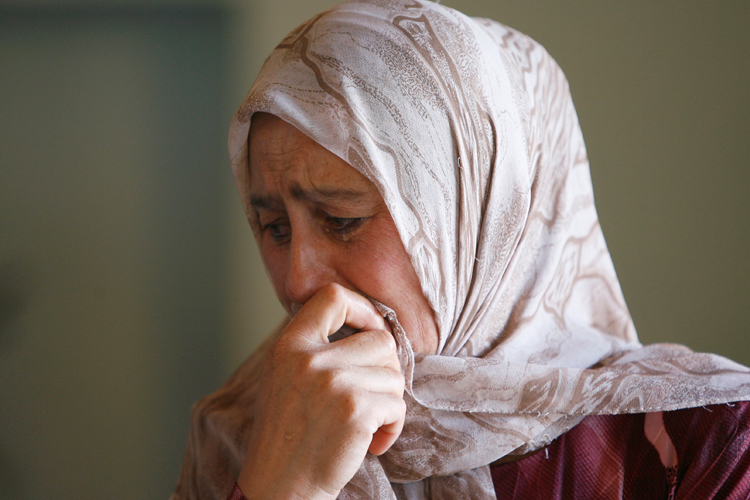
As if the Uzbeks haven’t been through enough class-A terrible shit lately, accusations emerged today that hundreds of the country’s women have been forcibly sterilized by the government in an attempt to reduce the birthrate. The main targets of the offensive, according to Uzbek doctors and human rights groups, are women from poor, rural areas, especially those with HIV, TB or drug addiction, and those who already have children.
“[The doctor] never asked for my approval, never ran any checks, just mutilated me as if I were a mute animal,” Saodat Rakhimbayeva, a 24-year old who was sterilized shortly after the birth of her son in March, told the Associated Press.
The family planning initiative, which was backed by the iron-fisted President Islam Karimov in the early ’90s, has never explicitly called for forced sterilization. But health workers say the procedure has always been a part of their lexicon, and that the pressure to perform it consistently comes “directly from the top.” Many doctors and nurses are threatened by the central government with salary cuts or firing if they can not persuade a quota of at least two women per month to be sterilized, and one victim reported that a nurse told her, “they would hang me if I let you have another child.” Observers say that sterilization is also the only form of birth control that the government health ministry consistently promotes, leading many Uzbek women, even those who are not explicitly forced into the procedure, to see it as their only option.
In our justifiably horrified response to this piece of news, we should keep in mind that 60,000 Americans, primarily the mentally ill, have been legally sterilized against their will. And I’m not talking ancient history — the procedure was performed in several states well into the 20th century, with the last recorded legal forced sterilization taking place in Oregon in 1981. That means there are still Americans living with the brutal consequences of their government’s belief that the decision to reproduce did not belong to them, a burden that they now allegedly share with hundreds of women half a world away.
Women: The missing weapon against AIDS
The U.N. calls for more female voices to lead the global response to the epidemic
The cover of the report, "Transforming the National AIDS Response" If you were to sketch the global face of HIV today, it would likely look something like this: young, poor and female. Women make up nearly 50 percent of the cases of HIV reported around the world this year, and in Sub-Saharan Africa, far and away the hardest-hit region, more than 60 percent of those living with the virus are women — and those numbers are growing. Yet from boardrooms to U.N. meetings to the halls of government, the global response to HIV continues to be shaped and directed by men.
Continue Reading Close“Voyager”: Who needs astronauts?
The moon landing and space shuttle get all the glory -- but robotic probes are doing the real exploration
On Tuesday, the world will mark the 41st anniversary of the first lunar landing, when American astronauts Neil Armstrong and Buzz Aldrin hopped, skipped and jumped their way across the surface of the moon. The 1969 touchdown was a historic accomplishment, but as science writer and academic Stephen Pyne points out in his new book, “Voyager: Seeking Newer Worlds in the Third Great Age of Discovery,” it wasn’t a terribly practical one. We’ve garnered more useful information over the last few decades, he argues, from our less glamorous unmanned space program than we have from manned flights. Case in point: Voyagers 1 and 2. Over the past 30 years, the probes have made fly-bys of Jupiter, Saturn, Uranus and Neptune; flooded us with groundbreaking scientific data about deep space; and snapped some of the most iconic and enduring images ever taken of our solar system.
Continue Reading CloseDoes the world need TEDWomen?
The TED conference creates a new venue for the ladies. Why not just add more to the main event?
A screenshot from the TEDWomen website Salon editor-in-chief Joan Walsh is the first to admit, she’s a bit envious of the luminaries who get invited to the annual TED conference, where the incredible, the famous, and the incredibly famous join to hear and present “ideas worth spreading.” Since 1984, the event’s organizers have drawn together stars from the worlds of academia, entertainment, technology and business — plus the crowds willing to shell out $6,000 a pop to see them speak — to convene, talk and hopefully forge change in the world.
Continue Reading CloseWhat’s on TV: Not women’s sports
Less than 2 percent of sports news covers female athletes, but why?
San Antonio Silver Spur's Becky Hammon, left, and Minnesota Lynx's Hamchetou Maiga-Ba, right, compete for a rebound during the fourth quarter of a WNBA basketball game, Saturday, June 26, 2010 in San Antonio. San Antonio won 80-66. (AP Photo/Eric Gay)(Credit: Eric Gay) The gender gap in TV sports coverage is widening, according to a new study from the University of Southern California. Wait, did I say “gender gap”? Sorry, I meant “gender cavernous abyss.” In a sample of six weeks of ESPN’s SportsCenter and Los Angeles area network news sports broadcasts, researchers found that less than 2 percent of the coverage was devoted to women’s sports, a plunge from the high — and that is truly a relative term — of 8.7 percent recorded a decade ago.
Continue Reading CloseFrench parliament OKs burqa ban
But the popular measure still has another hurdle to contend with: The country's constitution
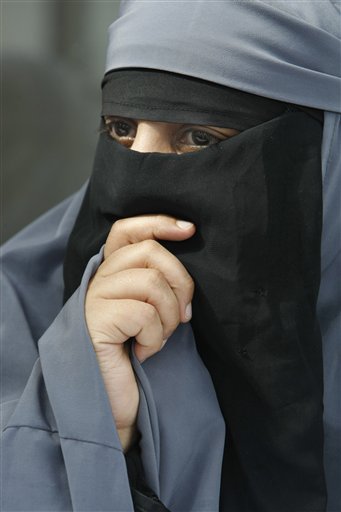
France's Kenza Drider, dressed in a niqab, speaks with reporters during a press conference in Montreuil, east of Paris, Tuesday May 18, 2010. The French government will examine Wednesday, a proposed bill forbidding burqa-style Islamic veils that cover the face, on the grounds that they do not respect French values or women's dignity.(AP Photo/Remy de la Mauviniere)(Credit: AP) France moved one step closer today to saying au revoir to the burqa.
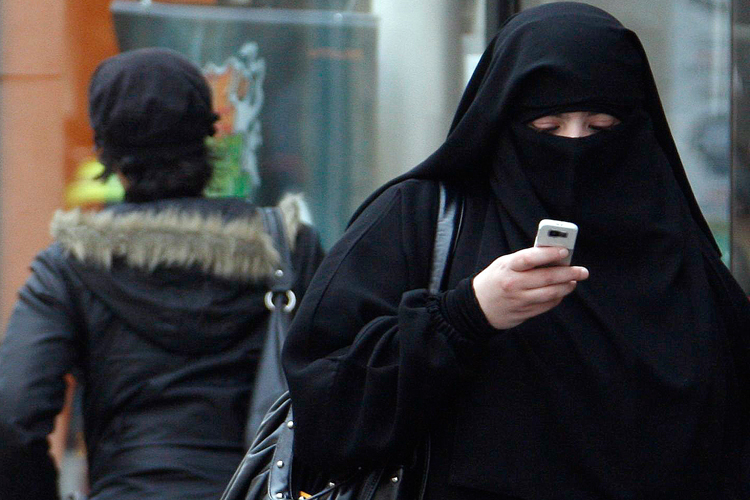
By a landslide vote of 336 to 1, the lower house of the French Parliament approved a ban today on the full head-and-body veil in public spaces, capping off more than a year of contentious debate on the issue. In a strange and fittingly French twist, however, some 200 liberal M.P.s walked out and abstained from casting a ballot at all — so as best to demonstrate their opposition to both the nature of the ban and the burqa itself. The lone dissenting vote came from a conservative M.P. named Daniel Garrigue, who told a reporter for the French paper Le Monde, “in fighting extremist behavior, we risk sliding towards a totalitarian society.”
Continue Reading ClosePage 2 of 4 in Ryan Brown