Will Doig

Rust Belt chic: Declining Midwest cities make a comeback

Gritty Rust Belt cities, once left for dead, are on the rise -- thanks to young people priced out of cooler locales

(Credit: StonePhotos via Shutterstock/Salon/Benjamin Wheelock)

More than any other city in America, Cleveland is a joke, a whipping boy of Johnny Carson monologues and Hollywood’s official set for films about comic mediocrity.

But here’s what else is funny: According to a recent analysis, the population of downtown Cleveland is surging, doubling in the past 20 years. What’s more, the majority of the growth occurred in the 22-to-34-year-old demo, those coveted “knowledge economy” workers for whom every city is competing. Pittsburgh, too, has unexpectedly reversed its out-migration of young people. The number of 18-to-24-year-olds was declining there until 2000, but has since climbed by 16 percent. St. Louis attracted more young people than it lost in each of the past three years. And as a mountain of “Viva Detroit!” news stories have made clear, Motor City is now the official cool-kids destination, adding thousands of young artists, entrepreneurs and urban farmers even as its general population evaporates.

It’s a surprising demographic shift that has some in the Rust Belt wondering if these cities should trumpet their gritty, hardscrabble personas, rather than try to pretend that they’re just like Chicago or Brooklyn, N.Y., but cheaper. Detroit has certainly proven that a city’s hard knocks can be marketed, from “ruin porn” coffee table books to award-winning Chrysler ads to “Detroit Hustles Harder” hoodies. Could other Midwestern cities go all-in on their own up-by-your-bootstraps appeal? “I think there’s a backlash in the American psyche that’s longing for that,” says Cleveland native Richey Piiparinen. “Look at Miami. We’ve learned that all that glitters isn’t gold.”

Piiparinen recently referenced this trend as “Rust Belt chic” in a post on the blog Rust Wire, describing its allure as “the warmth of the faded, and the edge in old iron and steel … part old-world, working culture, like the simple pleasures associated with bagged lunchmeat and beaten boots in the corner. And then there is grit, one of the main genes in the DNA of American coolness.”

Demand for decay could spell a new era for post-industrial cities — or run its course as a faddish blip that attracted more media coverage than actual converts. Piiparinen believes the shift could last, as more and more people find themselves not just priced out, but burnt out by increasingly tidy, boutiquey cities like New York and Seattle. “The country in the 2000s, it became about growth, glamour, living beyond your means,” he says. “It was all aspiration. Now we’re comparing the foreclosed glass condo tower to the old brick building that’s stood for a hundred years.”

But Rust Belt chic is at least partly a romantic fantasy, and that makes it a risky way to try to revitalize. Last year, Guernica magazine ran a withering critique of what it called “Detroitism,” the fetish for crumbling urban landscapes mixed with eccentric utopian delusions, “where bohemians from expensive coastal cities can have the $100 house and community garden of their dreams.” What these dreams seldom include, however, are the almost unimaginable systemic problems many of these cities suffer from: failed schools, violent crime, the threat of municipal bankruptcy. Photographers parachuting in to shoot Michigan Central Station and Anthony Bourdain’s gushing endorsement may be clouding the fact that cities in crisis won’t be lifted by chicness alone.

What struggling cities need are jobs, and not just jobs at coffee roasteries in abandoned railroad terminals that make for great style-section articles. “The only way [a turnaround] will really happen is by reintroducing meaningful, equitably compensated work into these cities,” says Catherine Tumber, author of “Small, Gritty and Green: The Promise of America’s Smaller Industrial Cities in a Low-Carbon World.” “This longing can be expressed aesthetically, but it can only be satisfied by restoring the workforce.”

That kind of pragmatic attitude defines Jim Cossler’s approach. The CEO of the Youngstown Business Incubator in Youngstown, Ohio, Cossler wants one distinctly non-gritty thing for his city: software companies. “We don’t want to take any other company,” he says, because software firms are cheap to start up, their location is irrelevant, and they either succeed or fail quickly.

Sexy, it ain’t. But the approach is simple and efficient: YBI uses LinkedIn to find young people who grew up in Youngstown but then moved away and now work in the computing field. “Then we make this pitch to them,” says Cossler. “We pitch them the fantastic software industry growing here in Youngstown, and the prospect of moving back to where their parents and grandparents are, and oh, by the way, have you seen our real estate prices?” So far they’re communicating with 1,800 of what he calls the “Youngstown diaspora,” and 187 of those — who now work everywhere from Austin to Tokyo to Tel Aviv — have asked to meet with him. But Cossler doesn’t believe that anyone who didn’t grow up in Youngstown will ever move there. “We’re making the case that they could run a software company for a fraction of the cost of Chicago, and their kids can see their grandparents more than once a year.”

Of course, Youngstown, population 60,000 and falling, is no Cleveland. And certainly, whatever tactics will work should be employed, be they gritty aestheticism or unsexy pragmatism. But it does point to a conflict: A lot of people love glassy condo towers. They may not want their city to be shabby. There could be potential Rust Belt returnees who disagree with Piiparinen’s opinion that Cleveland’s ossifying railroad bridges are the city’s “best pieces of public art.” Marketing a city as rough-hewn and rusty could attract a certain type of resident, but inadvertently repel another.

“I think there’s a certain schizophrenia going on in these cities,” says Tumber. “The local boosters and government leaders are pushing to rebrand themselves as part of the creative class. But then there are people who recognize that Akron will never be New York, who want to use the assets they do have to create a different kind of urban identity.”

There are ways the two can work in tandem. Tumber points to movements like New Environmentalism, part of which is the idea that repurposing old construction makes these cities a greener choice than, say, San Francisco. And there are many High Line-esque acts of readaptation that everyone can agree on — the Economist recently reported on a dying Cleveland mall that turned itself into an indoor garden.

If Rust Belt cities did find themselves in the position of having both decay and upscale development — if industrial loft apartments started selling in the millions and Cleveland became as well branded as Brooklyn — many residents might consider that a good dilemma to have. “This whole process of using the beauty and aesthetics of decay to revitalize, it’s a paradox you can never get out of,” says Piiparinen. “We’re competing with other cities to attract eyes and talent, and so we’re going to use our grit, our authentic landscapes, our coolness. Just don’t cheese it up. Don’t get cute. This Rust Belt chic, it could be a way toward something good.”

Whole Foods is coming? Time to buy

Forget Starbucks: It's the gourmet grocer that lands just before neighborhoods really explode

(Credit: AP/Christopher Penler via Shutterstock/Salon/Benjamin Wheelock)

If you ask Whole Foods why it’s breaking ground on a store in Midtown Detroit this month, it’ll say it wants to be part of “an incredible community” and “make natural foods available to everyone.”

And that may be. But it’s also true that the Austin, Texas-based retailer has made a science of putting down roots in urban locations at what often seems to be just the right moment. In Washington, D.C., near Logan Circle in 2000, Uptown New Orleans and the East Liberty section of Pittsburgh in 2002, Boston’s “Latin Quarter” in Jamaica Plain in 2011 — areas that other specialty grocers might have considered unworthy of goat cheese and ostrich eggs, but that were actually on the verge of a boom that, lo and behold, kicked into high gear as soon as Whole Foods moved in.

“Whole Foods will move into neighborhoods that, at first glance you think, why are they moving there?” says Bill Reid, a principal at the Portland, Ore., land-use consultancy Johnson Reid. “But they’re confident in their numbers.”

The company is so good at the real-estate game that it has spawned a catchphrase, the Whole Foods Effect, a phenomenon Detroit is clearly banking on — the developer of the site is receiving $4.2 million to build there. That figure suggests city leaders believe that Whole Foods is a force unto itself that can give a neighborhood the escape velocity it needs to break free of its doldrums. Are they right?

Whether the Whole Foods Effect is real, or the company is just extremely good at slipping into areas that would have gone upscale anyway, has never been directly quantified. But evidence suggests that Whole Foods can accelerate gentrification in particular ways. A new Whole Foods may not cause property values to shoot up on its own, but it can set into motion a series of events that change neighborhoods.

Take Gowanus, a windswept, post-industrial section of Brooklyn, N.Y., that’s home to a few bars and art spaces but is essentially a no man’s land sandwiched between the tonier neighborhoods of Park Slope and Carroll Gardens. Though Whole Foods announced in February it would open a 56,000-square-foot store there, Jim Cornell, senior vice president at Corcoran Group Real Estate, said prices in the neighborhood didn’t budge. “What [the announcement] did do, however, is give Gowanus, which already has a burgeoning arts and entertainment scene, additional credibility as a place to live,” he says. Fully half of his potential buyers have asked about the Whole Foods.

This “seal of approval” quality is Whole Foods’ Midas touch; as with streetcar tracks, potential gentrifiers see it as something tangible that certifies a neighborhood as a quality buy. And not just residents; businesses, too, look to Whole Foods as a disciplined pioneer that does its homework. (The retailer is debt-free, growing steadily and has 50 new stores in the pipeline.)  Sue Mosey, president of Detroit’s community development organization Midtown Inc. and a key player in bringing Whole Foods to Detroit, is hoping other businesses follow. “We definitely feel that just the signal that there’s a quality national operation moving in will interest other businesses,” she says.

But it’s not just what Whole Foods signifies — it’s the evidence of success that it generates. “Before a Whole Foods goes in, if there’s not much private investment in that district, there’s no data for developers to look at,” says Reid. A publicly traded behemoth is a data-generating machine. “You can go to their annual report and see how many customers they’re getting, how much traffic,” which lures other potential developers. And those other developers can bring Whole Foods’ numbers to a lender to get a loan. “To a lender and a developer, those are bankable numbers,” says Reid. “They’re as good as gold for a business.”

Which brings us back to how Whole Foods picks the locations where it can get those good numbers. Its most basic criterion is reportedly 200,000 people, a good portion of them college educated, living within a 20-minute drive. Amanda Musilli, the company’s Detroit Community Liaison, demurs when asked to elaborate, saying only that Midtown is “a community that’s going through a transformation right now.” About that, she’s absolutely right. The average household income of new home buyers in Midtown Detroit is now nearly $113,788, the highest in the city. And the neighborhood is facing a housing shortage (a miracle in Detroit), thanks to financial incentives offered to residents who move there. There’s also the $33,000-a-year College for Creative Studies nearby, packed with free-range foodies. If Whole Foods can succeed anywhere in Detroit, it’s here.

If it does, property values could eventually rise significantly. An exhaustive 2007 study by Johnson Reid quantified the effects that individual urban amenities have on home prices. Using hedonic modeling, it found that a specialty grocer will increase surrounding home prices by an average of 17.5 percent, more than bookstores, bike shops or gyms (with the caveat, of course, that this varies greatly depending on the situation — in the instances studied, the increases ranged widely from 6 to 29 percent).

But wait — I thought Whole Foods doesn’t raise real-estate prices. Not in isolation, and not right away. But like the retailer’s potential to attract residents and businesses, the Whole Foods Effect isn’t caused by the store itself, it’s caused by the events it sets into motion. And one thing Whole Foods does is stay open later than a lot of the other shops around it, laying the groundwork for expanding the length of that neighborhood’s day.

“What something like a movie theater or a Whole Foods does is it creates an extended-hours district,” says Reid. “Lots of downtowns close up shop at 6, but there are certain amenities that can make a downtown go from being a 10-hour thing to a 16-hour thing.” When this happens, evening foot traffic arrives, and new types of business can thrive. When Whole Foods moved onto P Street in Washington, D.C., 13 years ago, the only nightlife on the block was a divey (and awesome) rock club called the Vegas Lounge. The Lounge is still there, but it’s since been joined by a popular burger joint called Stoney’s, a “food-to-fork” locavore restaurant called Logan Tavern that owns a farm 30 miles south of the city, a Starbucks (open till 8 p.m.), a coffeehouse-slash-bar called Commissary and several retail stores, all squeezed onto the same block as Whole Foods.

Once evening-oriented development starts attracting people from outside the neighborhood, the area acquires what realtors call the “dwell factor,” a fancy way of saying it gets used in multiple ways. When we talk about the value of mixed-use neighborhoods, we’re often thinking of physical attributes — housing, retail, parks — but you could just as easily think of “mixed-use” in terms of time: school and work during the day, shopping in the afternoon and evening, restaurants, bars and entertainment well into the night.

Could a Safeway gentrify a neighborhood like Midtown Detroit? Could a Wal-Mart? Probably not in the same way. Not only do those brands not lure the high rollers that Whole Foods does, they don’t create an upscale version of what University of Chicago sociology professor Terry Nichols Clark calls the urban “scenescape,” the theory that public space is an idea as much as a physical place. Urban amenities have a multiplying effect on their immediate area — a Whole Foods is more likely to end up in a neighborhood with similar amenities, and vice versa. Jamaica Plain has had a big supermarket since 1964 called the Hi-Lo, known for its Latin-American items, which Whole Foods replaced. But the Hi-Lo didn’t gentrify the neighborhood — J.P. didn’t really start changing until the 1990s. That’s because Hi-Lo and Whole Foods aren’t just stores, they’re ideas that lead to similar ideas, and attract people who identify with those ideas in cyclical fashion.

Whether you think this is a good thing or a bad thing depends on what you believe your neighborhood needs: sustained affordability, or a gentrifying shot in the arm. Midtown Detroit is hoping for the latter. Unlike Jamaica Plain, where a vocal group of activists fought the new Whole Foods, opposition in Detroit has been virtually nonexistent. In fact, one of the most common concerns has been that Whole Foods will give the city a half-size store. (The company swears that it won’t.) Because just in practical terms, the city needs more places to buy groceries: Detroiters spend $200 million at suburban grocers each year because the city itself doesn’t have enough stores. But this is about more than having a supermarket. It’s about the gravitational force of a single establishment. In 2008, a gourmet grocery store called Zaccaro’s opened in Midtown — and closed less than a year later. Time will tell whether truffle oil will have better luck in the Motor City this time around.

Continue Reading Close

Science fiction no more: The perfect city is under construction

Cities as technologically precise as a Formula One race car are being built now. Do we really want to live in them?

(Credit: Shutterstock/Salon/Benjamin Wheelock)

Formula One car racing is the most viewed sport in the world. On any given race day, half a billion people — one-fourteenth of the globe — are watching it on TV. But it’s what they’re not seeing that wins races today: More than 300 sensors are implanted throughout each vehicle to monitor everything from air displacement to tire temperature to the driver’s heart rate. These data are continuously transmitted back to a control room, where engineers run millions of calculations in real time and tweak their driver’s strategy accordingly.

Through this process, every last ounce of efficiency and performance is wrung out of each car. And so it will be with cities like PlanIT Valley, currently being built from scratch in northern Portugal. Slated for completion in 2015, PlanIT Valley won’t be a mere “smart city” — it will be a sentient city, with 100 million sensors embedded throughout, running on the same technology that’s in the Formula One cars, each sensor sending a stream of data through the city’s trademarked Urban Operating System (UOS), which will run the city with minimal human intervention.

“We saw an opportunity … to go create something that was starting with a blank sheet,” said PlanIT Valley creator Steve Lewis, “thinking from a systems-wide process in the same way we would think about computing technologies.”

Built-from-scratch cities have been popping up for years, but fully sentient ones are only in the prototype stage (PlanIT Valley will have just 150,000 residents). And their goal, as with all sentient beings, is to replicate. The percentage of global city dwellers will surge to 70 percent by 2050, and many of the fastest-growing cities are sprawling eco-disasters in the making. PlanIT Valley’s hyper-efficient model promises to be bright green. A white paper created by Living PlanIT, the company designing PlanIT Valley, details an techno-paradise of energy conservation. (Living PlanIT did not respond to requests for comment.) Cars are guided toward empty parking spaces, personal computers are engaged to run the UOS when they’re sitting idle, and rooms not only lower the air conditioning when you’ve left them (yes, the system will know when you’ve left them), but can even decide whether it’s worth it to do so based on how long you typically leave that room vacant.

But wait, there’s more! Leaky faucet? The UOS can detect it, and if it can’t do the repair remotely, will dispatch a plumber. Lose your child? Surveillance cameras might be swiveled to ascertain “the child’s current location and activity.” Apartment on fire? The UOS will alert the fire department, direct each resident to the safest exit, adjust the neighborhood’s traffic lights to clear a path for the incoming trucks, tell the firefighters which parts of the building are affected and the locations of anyone inside, automatically unlock doors and windows, increase pressure in that neighborhood’s water mains, and allocate patients in priority order when they arrive at the nearest hospital.

In many ways, this type of city epitomizes our attitudes toward modern technology, says Mark Shepard, an architect and the author of “Sentient City: Ubiquitous Computing, Architecture, and the Future of Urban Space.” “From a tech perspective, we’re not really selling products and services anymore. We’re selling lifestyles,” he says. And the sentient-city lifestyle is sure to appeal to a certain brand of technophile. “Why not?” says Carlo Ratti, director of MIT’s SENSEable City Lab, when asked if he’d live in a city like PlanIT Valley. “Provided I have control of my own information, which is a very basic principle we should ask for.”

But for the rest of us, this radical re-imagining of city life is a classic example of top-down urbanism, treating the residents as a problem to be solved rather than as part of the solution. Certainly, city governments need to provide for their people and run a tight ship, but a city that operates like a valet service works against urban life’s primary strength. There’s a great little poem by D.H. Lawrence called “The Third Thing”:

Water is H20, hydrogen two parts, oxygen one,
But there is also a third thing, that makes it water
And nobody knows what that is.

Cities are more than the sum of their parts because it’s not their parts that make them great. It’s the thing in between those parts — if you live in a city, you know what I’m talking about. “Cities built from scratch have generally failed because they don’t become cities that people evolve through,” says Shepard. “Quite often, it’s the productive friction these places produce that make them dynamic.” Not that life in PlanIT Valley couldn’t end up being dynamic despite itself. “The funny thing about these cities programmed for efficiency, you find a lot of conversations about how to design serendipity back into them to make them more interesting,” says Usman Haque, founder of Pachube, an open Web service that manages real-time data.

Haque foresees that vital urban friction coming to PlanIT Valley, but not in preprogrammed form — rather, in the form of residents figuring out how to beat the system. “When you have more rigid structures, people get very creative in finding ways to get around it,” he says. You can picture PlanIT Valley following in the huge three-toed footsteps of Jurassic Park as “nature finds a way.” “The inhabitants will eventually want to reconfigure it and have an effect on it,” says Haque. “You either plan for that, or be surprised by the push-back.”

Some form of eventual push-back seems inevitable. Cities that segregate their citizens from the urbanization process risk ending up like Brasília, Brazil’s thoroughly planned, thoroughly unloved capital. And because it’s a prototype, pretty much everyone in PlanIT Valley will work for the companies that helped build it, making the sentient city a sentient workplace. “The thing that worries me is that these places become like urban factories, producing output that’s dictated,” says Haque. Who’s going to call in sick and go hit the beach when the UOS can tell when you’ve left your apartment?

Part of Brasília’s failure was its inflexibility, and PlanIT Valley has addressed this in part — indeed, the city is designed to be constantly tweaked according to the data. The difference is that, whereas PlanIT Valley will auto-tweak, a city like Boston is working hand in hand with residents to fix its streets — a cheaper, community-oriented method. An app called “Street Bump” developed last year by the mayor’s office of New Urban Mechanics was supposed to use drivers’ iPhones to create a virtual map of Boston’s potholes. Because iPhones can detect vibration, the idea was that drivers going about their commute would register bumps in the road on their phones, which would transmit that data back to city hall. It didn’t work very well (the iPhones mistook things like railroad crossings for potholes) so the city challenged armchair hackers to improve on it, with Liberty Mutual kicking in $25,000 for the winner. Three finalists were recently announced, and the city is now implementing the improved user-generated algorithms for a relaunch of the app this summer.

This isn’t just hippie-dippie idealism — it’s a better model. The city with 100 million sensors will cost $19 billion. Citizens engaged voluntarily? Free of charge. And how far this cool $19 billion will go is anybody’s guess — it’s impossible to predict whether today’s sentient cities will be responsive to tomorrow’s unforeseen urban problems. Had such a city opened 30 years ago, climate change might not have been a twinkle in its eye. It’s like those AT&T commercials from the ’90s that promised we’d all be sending faxes from the beach someday. This isn’t to suggest that climate change won’t be a problem in the future, only that it’s very difficult to predict what technologies will change the game going forward.

The technology isn’t the only wild card — the very idea of an Urban Operating System is a risky proposition. “Aerotropolis” author Greg Lindsay points out that a scaled-down version of it has been tried before, in New York City in the 1960s, when the RAND Corp. designed a computer model to streamline the city’s public services. Written about in Joe Flood’s book “The Fires,” the computer systematically withdrew fire protection from New York’s poorest neighborhoods, setting the stage for the blazes that would decimate the South Bronx over the next decade.

The lesson? Humans will act in ways that even the smartest computer model can fail to anticipate — which is fine, until you put your entire city in its hands. “What’s not being discussed is that cities are stubbornly resistant, highly unpredictable places,” says Shepard. “In the end, the unforeseen implications of this new technology will be the real story.”

Continue Reading Close

Will that Starbucks last?

Gentrification has remade some cities and left others behind. Alan Ehrenhalt tells us what changes to expect next

Alan Ehrenhalt (Credit: David Kidd)
Everyone knows that cities like New York, Boston and Chicago have flipped the script over the past couple of decades, turning richer and whiter as their surrounding suburbs grow more diverse. Today, you’re more likely to hear Farsi and Thai spoken in the sprawling cul-de-sacs outside of Atlanta than you are in many parts of the Starbucks-soaked city center itself.

Exactly how this happened, however, doesn’t get as much ink. We just assume that a lot of the kids who watched “Friends” in the ’90s decided they’d like to engage in witty repartee at Central Perk. But that’s just a small slice of what caused the massive shift that Alan Ehrenhalt details in his new book, released this week, “The Great Inversion and the Future of the American City.” In a wide-ranging survey of gentrified urban cores, struggling exurbs and outer-ring suburbs that went from lily white to multicultural seemingly overnight, he identifies the trends, policies and mayors that propelled the largest migration since the postwar suburban boom, and speculates on what our cities will look like 10 years down the road.

The revitalization of cities seemed to come out of nowhere, but you write that it was actually the result of deliberate efforts and policies. For instance, Chicago laid the groundwork for a resurgence, while other Midwestern cities missed out. What did Chicago do that, say, Cleveland did not?

In Chicago’s case there were two factors: One is that Chicago is simply the biggest, so it inherits the title of Magnet City of the Midwest. That gave it an edge. But it’s just as true that Mayor Daley the First had a clear idea that people would want to live downtown, and he made it possible for developers to acquire land there. Similarly to what New York City and Philadelphia did, he offered tax incentives to help the city center come back. Now, you can waste a lot of money on tax incentives if no one wants to live downtown. The market has to be right.

Of course, the flip side is more immigrants and working-class families now living in the suburbs, which has complicated politics in places like Gwinnett County, a suburb of Atlanta, because all these different immigrant groups have a harder time uniting on issues. Are we looking at a future of the ungovernable suburb?

Gwinnett County is interesting because the residents are now a nonwhite majority, yet it’s still all white Republicans on the council. It’s fairly common for a traditional white power structure to remain when diversity comes in. In Chicago, you had an Irish power structure in neighborhoods long after they became majority black. But yes, one myth is that Asians are Asians when it comes to politics, but each ethnic group is different, politically speaking. And another thing that’s clear is that African-Americans and Hispanics go their separate ways — the immigrants tend not to move into the African-American areas.

The suburbs themselves break down into different factions, too. You’ve got the outer suburbs, like Gwinnett County, which are seeing a true inversion, and the inner suburbs, which often still suffer from high poverty and high crime. I would think that as the inner cores of cities become more and more expensive, these inner-ring suburbs would inevitably gentrify completely. Is that too simple an assumption?

I think it’s a little too simple. The prewar inner suburbs — the Chevy Chases [in Maryland], the Brooklines [in Massachusetts] — those will do fine. But the ones built after the war, where the housing stock is smaller, those are going to be difficult to gentrify.

Right, I was fascinated to learn how small the houses were in Levittown on Long Island, the most famous postwar suburb.

Levittown houses were tiny. You don’t see many remnants of the original houses there anymore. Today, the average suburban house size has gone from 1,000 square feet to a little over 2,000 square feet.

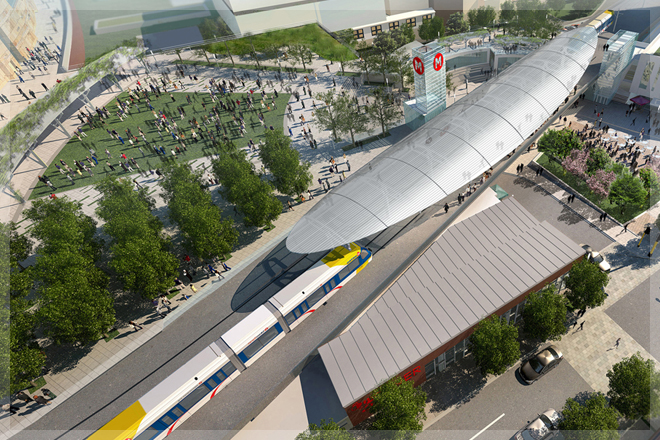
Transit has benefited greatly from the Great Inversion — ridership has surged in many cities. Why has gentrification led to increased ridership? It’s not as if working-class people don’t take the train.

I think the boost comes from leisure travel. You have gentrified neighborhoods to which people are going on weekends and evenings. And while they have a fair number of commuters, most of the cities that have developed light rail are seeing large amounts of non-business-related travel on those lines, too. I think it’s also important to make the point that development comes in once the tracks go in. Once you lay down light rail, developers begin to have confidence that this is a neighborhood where you can invest.

This whole idea of a Great Inversion has its naysayers, people who think the shift is temporary and the suburbs will be ascendant again once the economy picks up. Obviously you think that’s not the case.

I don’t think [the Great Inversion] is 100 percent guaranteed by any means. Nor do I think tens of thousands of people now living in the exurbs are going to head for the inner city. What’s more likely to happen is that Generation Y will show a preference for urban living. Now, that might mean “urban living” outside city limits. There’s simply a limit to how many people can live in the city, and at times there will be more demand than supply. So urbanizing the suburbs, creating a city out of a piece of suburbia, creating town centers, grids, that could make up the difference.

Could that, in turn, make the exurbs the new suburbs, residing on the edges of these newly urbanized towns? Many exurbs have been struggling because of foreclosures, high gas prices, etc. If today’s suburbs urbanize, could that help revitalize them?

I think some of the exurbs may stay vital, but many of the people who will move to them will be immigrants and the lower-middle class. What you’re not going to see is a mass movement of wealthy people to the exurbs. That’s not going to happen.

Should we feel upset or angry about the Great Inversion? It seems like we’re talking about the mass displacement of millions of people. Or are we talking about everyone getting what they want: wealthy people getting to move to urban cores, and immigrants finally getting a shot at a lawn and a two-car garage?

I look at it as an expansion of choice. We went through most of the postwar period where there wasn’t a choice to live in the inner city if you had money, and there wasn’t a choice to live in the suburbs if you didn’t. There were just too many factors working against it. Now people who want to live 40 miles out can live 40 miles out, and there’s more opportunity for people to live in the inner city, too.

Continue Reading Close

Your next mayor: A computer

Technology is helping cities control everything from traffic to disease. But who should control the technology? VIDEO

(Credit: Benjamin Wheelock)

Three years ago, 100 Parisians volunteered to wear a wristband with a sensor in it. The sensors measured air and noise pollution as the wearers made their way around the city, transmitting that data back to an online platform that created a virtual map of the city’s pollution levels, which anyone with an Internet connection could take a look at.

It was simple, elegant, effective — and a peek at the urban future, when “smart cities” will collect data of all kinds (in all kinds of ways) and use it to make themselves better places to live. The Paris wristband project shows how these efforts are already taking place, as urbanites conceive of solutions to their cities’ problems through creative uses of technology. It’s urban resourcefulness at its finest.

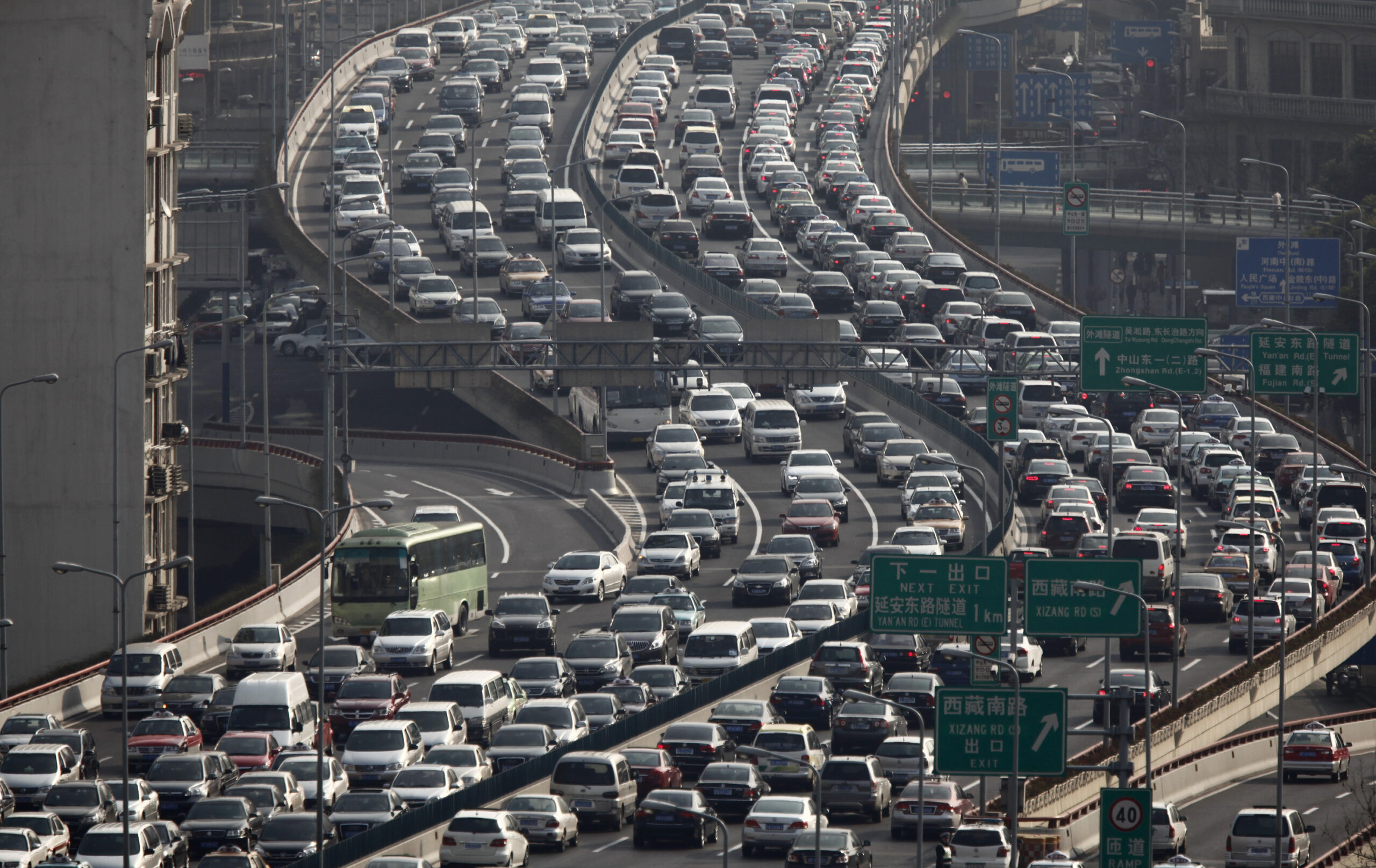
But it may not last. The smart-city movement is at a crossroads. With the market projected to be worth $16 billion by the end of the decade, big companies like IBM and Cisco have much grander — and more profitable — ambitions than these small-scale projects. They’re going all-in on smart cities, with designs that supposedly do everything from end traffic jams to prevent disease outbreaks to eliminate litter. “Almost anything — any person, any object, any process or any service, for any organization, large or small — can become digitally aware and networked,” said IBM Chairman Samuel J. Palmisano at the 2010 SmarterCities forum in Shanghai. “Think about the prospect of a trillion connected and instrumented things —cars, appliances, cameras, roadways, pipelines …”

Indeed, the goal of these companies is not just to participate in the evolution of smart cities, but to connect and control virtually everything with massive operating systems that will run these cities in their entirety. “Everybody wants to be the architects of these systems because then you own them forever,” says Greg Lindsay, author of “Aerotropolis” and an urban-technology reporter for Fast Company. “You could say it’s sort of a land grab.”

Which of these futures should smart cities shoot for — the bottom-up model or the top-down version? A few weeks ago, Lindsay and Anthony Townsend of the Institute for the Future debated just that question. It’s easy to feel a knee-jerk reaction against the top-down, evil-corporate-overlord schema, but it has some things going for it. Rio de Janeiro is perhaps the closest thing the world currently has to a top-down smart city. Two years ago, IBM built an enormous, Mission Control-like facility for Rio, from which emergency services, transit, traffic, air quality, weather, contagious disease outbreaks, landslides and just about everything else is now monitored and managed. “Eighty interchangeable digital panels project live video feeds from 450 cameras,” is how the Daily Beast described it, “plus a dizzying array of tricked-out Google Maps of schools and hospitals, car accidents … and close to 10,000 GPS-tracked buses and ambulances.”

It’s an undeniably nimble and efficient method (assuming the system doesn’t crash), and will come in handy when Rio hosts both the Olympics and the World Cup in the next four years. But it also consolidates power in the executive branch and creates an unsettling scope of surveillance. Its greatest novelty, however, may be that the system effectively puts a corporation, IBM, partially at the helm of a city of 6 million people.

“It has something like 70 different city departments under it,” says Lindsay of Rio’s system. “You create this entanglement where IBM almost becomes part of the city government. You couldn’t untangle it if you wanted to.”

Not to mention the fact that IBM is a computer company, not an urban planning consultancy. In his debate with Lindsay, Townsend asserted that the companies vying for smart-city dominance “know nothing about cities.” In fact, he said, despite having one of the biggest smart-city divisions in the IT world, IBM just hired its first urban planner last year. Why so little interest in what makes cities tick? “That’s probably the whole arrogance of the technology culture,” said Lindsay. “I think the software industry sees urban government as having failed.” Their attitude is: “‘We will come into your city and we will fix it.’”

It sounds, frankly, like Robert Moses all over again. New York’s “master planner” was notoriously uninterested in conforming his grand designs to urban nuances, with terrible consequences. Which is why the other way to approach smart cities, from the bottom up — referred to, naturally, as the Jane Jacobs method — is not only less risky, but holds vastly more potential.

“I always go back to the fundamental question of what cities are for, and what they do for us for free if we let them,” says Adam Greenfield, managing director of Urbanscale, an urban-technology consultancy. Rather than looking at cities as things that need to be be “fixed” by a distant force from on high, he sees technology as a tool to enhance a city’s existing strengths — starting with its residents themselves. “I go back to a book I read called ‘The Uses of Disorder,’ which suggests that cities are about maximizing interface between you and others,” says Greenfield. “You’re connected to a variety of people and providing the city itself with information and insights.”

A great example of maximizing the urban interface is SeeClickFix, an online platform that lets people report local infrastructure problems, from leaky hydrants to dangerous intersections. Other users can then “Like” those reports, Facebook-style, so city administrators can see which projects their citizens consider most urgent. It also saves local government the expense of monitoring every square foot of the city by itself.

There are other examples of bottom-up smart city thinking. In Seattle, 500 residents attached electronic trackers to pieces of their trash so that the items could be followed through the sanitation system to pinpoint inefficiencies. In Singapore, a group from MIT is developing a website that will show real-time movements of in-demand urban amenities, like cabs during rush hour. And a New York designer named Leif Percifield is prototyping a solution to his city’s combined-sewage overflow problem, in which thousands of gallons of raw sewage are dumped into the rivers when it rains. It would cost untold millions for the city to fix this problem; instead, Percifield is placing sensors in the sewers that will detect when the overflow is happening, so residents, who can opt to be automatically notified, can choose not to flush their toilets till the overflow has stopped.

Greenfield admits that these could be seen as a raw deal, government shunting its responsibilities onto the people. “But looked at from another perspective,” he says, “it’s empowering.” It’s a bit like how Twitter has become a place where people get their news — sure, a media company could have built and run a similar system itself, but on Twitter we send the links around for free, and gladly.

The common thread in all of these solutions is data, and much of it already exists, just waiting to be grabbed. “Your iPhone has eight sensors on it,” says Lindsay. “Think about the number of iPhones per city.” Cellphone signals, tracked en masse and anonymously, could be used to reorient transit service toward where it’s most needed, and to see how many people are visiting a city’s parks. It’s no more Big Brother-like than what already exists — the government can and does access cellphone location data all the time — so why not put that data to work for the benefit of cities?

Lindsay sees a day when the smart city has become so sentient that we can choose to have our phones make us aware of people in our immediate vicinity who would be advantageous for us to meet. A smart city could eliminate unused office space with a system that allows us to seamlessly share occupancy with strangers whose paths we never actually cross. In the future, we may even marvel that there was a time when cars sat unused 95 percent of the day.

“The city is already smart,” says Greenfield. “The intelligence is just bound up in the actions and behaviors of its users. If we harness that intelligence, we win.”

Next week: A look at the new smart cities that are being constructed from scratch, their place in the future of urbanism, and what our current cities can learn from them.

Continue Reading Close

Preserving history, or the 1 percent?

New historic districts seem less interested in saving a neighborhood's character than driving up property values

(Credit: iStockphoto/thinqkreations/Salon)

If Amy Poehler’s peppy, can-do bureaucrat is the soul of “Parks and Recreation,” it’s easy to picture the star of a show about a historic preservation commission: a feisty, aging bohemian who long ago traded in her sitar for a shawl, defending her city’s charm from greedy developers who hate history as much as they love towers of glass.

It’s the sort of character you might expect a Jane Jacobs devotee to follow in lockstep. But the people transforming today’s cities don’t forge their allegiances so predictably. Now, the developer who wants to demolish a row of historic houses to build a 50-story high-rise might be seen as the true urban savior — not the preservationist who wants to prevent him from doing so.

To see this shift in action, look no further than the site of Jacobs’ most famous battle, Greenwich Village. Fifty years ago, a high-rise urban-renewal project threatened to eviscerate the neighborhood. But local activists successfully quashed it, and the Village, now one of Manhattan’s most desirable neighborhoods, has enjoyed historic designation since 1969. The protected area has been expanded twice recently, in 2006 and 2010, and last month, the Preservation League of New York State recommended expanding it once again. The latest expansion would encompass clubs where Bob Dylan and Lenny Bruce once offended upper-crust sensibilities — which is funny, since the average Greenwich Village apartment now sells for upward of $2 million.

In that outrageous figure, you can see the root of the current backlash against historic districts. When Jacobs’ neighborhood was protected in 1969, it was no tony enclave. In fact, the justification for the urban-renewal project was that Greenwich Village was allegedly a slum. But now that the Village is wealthy, suddenly there are three expansions of its protective boundaries in six years. The timing invites cynical conclusions, bluntly summed up by urbanist Alon Levy on his blog last year: “Let us remember what historic districts are, in practice: They are districts where wealthy people own property that they want to prop up the price of.”

Restricting development in pricey neighborhoods, the new thinking goes, not only cements a city’s best sections as enclaves for the rich, it has wider anti-urban reverberations. It promotes suburbanization by pricing out the middle class. It prevents densification, the greenest, most efficient use of space and the defining characteristic of cities. And less density makes walkable, retail- and transit-oriented neighborhoods harder to sustain (though admittedly, this would never be a problem in a place like the Village, which is already far denser than most cities.)

It’s arguments like these that are pushing the usually planning-oriented New Urbanist crowd toward unlikely allies, like free-marketer Edward Glaeser, when it comes to historic districts. Glaeser was a speaker at last year’s annual meeting of the Congress for the New Urbanism, where he advocated for his trademark belief that density trumps preservation. “They impede new construction,” Glaeser wrote in a manifesto against historic districts in 2010, “keeping real estate in New York City enormously expensive … especially in its most desirable, historically protected areas.”

Glaeser’s research showed that condo prices in such districts rose faster than average over three decades, and that their residents grew richer and whiter than the surrounding city. Other economists have asserted that historic districts “squeeze the balloon” — by restricting the amount of housing in fancier parts of the city, more fancy people must move outward, displacing poorer residents. Even Jane Jacobs acknowledged the importance of density. “Densities are too low, or too high, when they frustrate city diversity instead of abetting it,” she wrote in “The Death and Life of Great American Cities.”

If anything, today it’s the preservationist who is accused as promoting suspiciously suburban-ish values: low-density housing, exclusive enclaves, aesthetics over practicality. But it’s hard to believe that Greenwich Village, as it currently exists, could be “anti-urban” in any way. Isn’t it exactly what many of us picture when we think of the ideal city neighborhood?

Roberta Brandes Gratz says the market itself shows that people like these neighborhoods as they are, an argument people like Glaeser should love. “Isn’t it interesting that the Trumps of the world fight to build these new monstrosities on the periphery of the historic districts?” says Gratz, a member of the New York City Landmarks Preservation Commission until 2010. “They want the value that comes with building on the periphery of a traditional urban district, but they don’t want the rules. They want the benefit but they don’t want the burden.” Gratz doesn’t buy the argument that taller buildings necessarily lead to more density, either. “When they build these luxury condos they either have huge apartments or people are buying two and combining them.”

Technically, New Urbanist theory is agnostic on the age of buildings — more important is that neighborhoods be dense, walkable, mixed-use and transit-accessible. And Gratz argues that historic districts preserve many of these qualities. “There’s variety, a sense of place, street life, a mixture of uses,” she says. “When you develop a new place, you get Battery Park City,” Manhattan’s unloved outpost of sterile skyscrapers.

Furthermore, old buildings have tangible benefits. “The greenest building is the one you don’t have to build,” says preservation architect Jeffrey Chusid. He says historic districts yield high-paying jobs as well, since old houses require skilled labor. “When you have to teach people to repair and restore windows, you’re creating more local jobs than if you buy windows from a factory in China,” he says.

Chusid is a proponent of the idea that historic districts can benefit working-class people. He points to the Main Street Program in Texas, which aims to revitalize cities’ declining downtowns. “It’s focused on economic development but uses preservation as one of its tools,” he says. Chusid has also written about a working-class historic district in Austin, Texas, whose protected status has helped prevent speculative land grabs.

But perhaps the biggest argument for preservation is also the one that sounds the wishy-washiest: People just like old buildings, from brownstones in New York to Victorians in San Francisco. Even Emily Washington, a writer for the libertarian website MarketUrbanism.com, admits they appeal to her, despite herself. “I like historic districts,” she says. “But I think it’s important to look at the cost of preservation as well as the benefits.”

That cost-benefit analysis is tough to pull off. In hindsight, the benefits of saving Greenwich Village from urban renewal in the ’60s ended up outweighing the costs. Today, the neighborhood is tremendously loved and as far from being a “slum” as possible. It’s also a refuge for the wealthy, however, and could house many more people than it currently does. But maybe the biggest problem with expanding the Village’s protected boundaries now is that, in the words of social theorist David Harvey, Manhattan is becoming the world’s biggest gated community. Taking steps that will likely make it even pricier could keep its real estate eclectic, but in the process, help make its diversity a thing of the past.

Manny Roth remembers when such diversity — of races, incomes and general freakishness — infused the Village back in the ’50s and ’60s, when he owned Cafe Wha? and the Bitter End. Both venues would fall within the expanded preservation zone if the proposal goes through. Roth (uncle of Van Halen’s David Lee) is now 93 and lives in California. But he remembers those days well, when he gave a young man named Bob Dylan, who had just breezed into town, a chance to perform three songs on his tiny stage, as well as Jimi Hendrix, Bruce Springsteen and others who would become legends. “If you go to Cafe Wha? today, my floor is still there, I laid it myself,” says Roth, who lived in the club when he first opened it, bathing in the bathroom sink.

Perhaps surprisingly, when told that the city is considering landmarking the area that includes his old clubs, Roth is unsentimental. “What do I care?” he says. “I’m 93 years old. I have my memories.” Wouldn’t he like to see the city preserve the place where those memories were formed? “Look, most of the greats came from the Village. Cafe Au Go Go was where Lenny Bruce played. Circle in the Square. Le Figaro. The Village Gate. How good does it get? I understand why they want to save it. But that was then.”

It wasn’t just buildings — it was a moment in history. “I was in the right place at the right time,” he says.

Such a dispassionate attitude, divorced from nostalgia and personal wealth concerns, could ease the process of deciding what to save and what to leave to the whims of capitalism. Landmarking is meant to preserve structures whose loss would be an affront to history. Removing entire neighborhoods from the natural evolution of cities is another thing entirely.

Continue Reading Close

Page 1 of 6 in Will Doig

www.salon.com/writer/will_doig/index.html