Spring Sale: Get 1 Year, Save 58%

Huge pro-democracy, anti-Netanyahu protest galvanizes Jerusalem before election

Over 50,000 Israelis demonstrated outside the residence of right-wing Prime Minister Benjamin Netanyahu in Jerusalem Saturday evening, demanding his resignation just three days before the country’s fourth election in two years.

The final mass protest before the March 23 elections drew the largest crowd of many previous anti-Netanyahu protests held over the past year.

Protesters from all across the country marched from the Knesset to Jerusalem’s Paris Square, which abuts Netanyahu’s residence on Balfour Street. Protesters filed through streets closed to traffic by police, waving black and pink flags, banging drums, blowing horns and shouting chants to replace Netanyahu over his indictments on charges of bribery, fraud and breach of public trust.

The Jerusalem Post reported:

The altogether message of the protest was clear: Go vote. Switch the government. Bring about change.

“In three days, he’s gone!” cried out Lior Ashkenazi, famed Israeli actor and anti-Netanyahu activist. “The most stubborn protest Israel has ever known, and perhaps even the most justified, overthrew the government and gave us all the opportunity to re-elect our leaders. Our future.”

Netanyahu’s right-wing Likud may emerge as the biggest party in the March 23 election, but various opinion polls predict no clear winner with a majority in parliament to be able to form a government.

Fox News host laughs as Jason Miller lies about Biden’s “wipeout” on Air Force One stairs

Fox News host and media critic Howard Kurtz on Sunday gave Trump adviser Jason Miller a chance to mock President Joe Biden for tripping while jogging up the stairs on Air Force One.

“I want to slip in one last question,” Kurtz said, setting up Miller to slam Biden, “which is Joe Biden tripped on the plane steps the other day, got a lot of media derision for that. I’m sure since the press went haywire when Donald Trump had a little trouble, was a little shaky walking down that ramp that you’re going to say that this is a non-story and give Biden a break, right?”

“Yeah, something like that,” Miller replied as both men laughed. “But here’s the thing. If Joe Biden can’t even make it up the flight of stairs. I mean, Howie, it wasn’t once, it wasn’t twice, it was three times. And who knew that Stair Force One was going to be such a challenge for our current leader of the country.”

“And now to see Joe Biden wipeout,” he added. “Karma is a you know what, Howie. And I think for so many in the media who focused on President Trump and are completely ignoring what happened to Joe Biden just this week, you know, let’s go and call it for what it is and Joe Biden just doesn’t have the fortitude for this job.”

“Alright,” Kurtz said. “I wouldn’t overplay either incident, but good to hear from you.”

You can watch the video below via YouTube:

From erasure to recategorizing: What we should do with Dr. Seuss books

Was the decision to stop publishing six obscure Dr. Suess titles containing racist imagery and messaging an erasure of history?

Media coverage of the controversy has presented it as an example of censorship, an attack on free speech and yet another example of cancel culture. These reactions are rooted in both a lack of awareness of the challenges and realities of maintaining collections and a false understanding of history.

Dr. Seuss Enterprises is a children’s entertainment company that functions as both a business and a family estate dedicated to preserving and promoting Theodor Seuss Geisel’s legacy. After consulting with educators and other experts, they decided to halt publication of six books because, in their words, they “portray people in ways that are hurtful and wrong.” An examination of many of the images and text in question confirmed the use of racist tropes in depicting Asian and Black characters.

This decision reflects norms in publishing, archiving and collecting.

Making space for new materials

Publishing companies regularly review their titles and sales to determine and reassess print runs. This is a necessary part of making space for new publications, and maintaining desirable profit margins.

In this context, thinking about museums and archives is helpful.

For cultural institutions tasked with collecting, preserving, ordering and exhibiting, utility is derived from selectivity: not everything can be saved, or it would prove so overwhelming as to render everything inaccessible. That is why galleries, libraries, archives and museums don’t only collect new materials, but also regularly remove them.

The role of curating is key: as both a form of care taking and as a selection process that chooses specific works. Exhibits can serve a variety of roles: they can educate, inspire, call to action, memorialize, entertain. And as new works are being produced at unprecedented rates, space must be made for new material.

History is not neutral

Even in our current context of rapidly improving technology, archives and museums must constantly make tough decisions about what to keep, what to refuse or even remove — this often causes controversy.

Whether focused on removing confederate and colonial statues, or retiring a small handful of Dr. Suess books, these moral panics and culture wars are often rooted in a false premise; that anything from the past comes from a pure and total point of origin, in other words, that representations of confederate soldiers tell a “true,” authentic and complete story that is neutral and objective.

“Don’t erase history!” people often cry, as if history itself wasn’t full of erasures from the beginning.

In historian and anthropologist Michel-Rolph Trouillot’s foundational book Silencing the Past, he examines the relationship between history, power and silence to explore the ways that certain experiences, historical actors and events are kept out of archival collections and the historical knowledge they help construct.

Trouillot illustrates this through highlighting the Haitian revolution: the possibility of Black slaves successfully revolting against their white colonizers was so inconceivable within the western ideology of white supremacy that it was effectively written out of history.

Recategorizing remnants of racism

The racist pages of Dr. Suess books are not in danger of being lost forever, but recategorized as evidence of outdated attitudes grounded in racial denigration and stereotyping that no longer have a place in popular culture.

Scholars of racism, like myself, can draw on these images and use them to better understand the past.

Some of Geisel’s earlier work was even more explicitly racist than the titles in question, but hasn’t been erased or destroyed and can be found in museums around the world. His earlier work also appears in scholarship on histories of racism, the Second World War and children’s literature, which would be a great place for the images and text from these six books as well.

There are many ways that racism can and should be tackled that don’t result in the erasure of history. But it shouldn’t be shrugged off — especially by white people who are not in a position to make such determinations.

Nowadays, parents and students object to racist texts used in class, people contact the media, political leaders, HR departments and investigatory commissions to report incidents of racism. Companies are boycotted. Protests are organized, movements are mobilized. And organizations like Dr. Suess Enterprises revisit their policies to ensure they are not perpetuating old-fashioned or harmful practices.

Not without value

I regularly take racist materials out of general circulation — through yard sales, used book stores, discount stores like Dollarama and in tourist shops — so they might be used in research and teaching. I have made many donations to the Jim Crow Museum of Racist Memorabilia, including some family heirloom photographs of one of my ancestors performing in vaudeville in blackface. In my classes on African history, I carefully use racist objects and texts to help teach students about histories of anti-Black racism.

While abhorrent, these texts, memorabilia and objects can be useful.

No children should see racism as something that is normal or funny. There is a lot of research that has examined the impact of the overwhelmingly negative representations of racialized people in popular culture. The research shows that images hurt people. That they contribute to assumptions that translate into discrimination in hiring, renting, selling, lending, treating, teaching and policing in ways that are hugely consequential for all of us.

These realities accumulate across people’s lifetimes in ways that devalue us all because they perpetuate unconscious and conscious racism and inequality.

Retiring racist texts from children’s literature is a crucial step in interrupting the racist legacies that continue to hurt and divide us. With careful contextualization, these historical materials can help document and teach people about the realities of racism that are so often belittled or denied. It also makes space, literally and figuratively, for new texts by diverse authors featuring diverse characters that provide a fuller picture of the world that better reflects the rich variety of people, experiences and perspectives it has to offer.

This is especially important considering how much work still needs to be done in galleries, museums, libraries and archives. These institutions are still overwhelmingly white and male.

It is past time we reach social consensus that racist caricatures should be obsolete. Not everything from the past should be kept alive through republication. Move this content to museums and books on racism where it belongs, but don’t keep it circulating among children.

Monica Eileen Patterson, Assistant Director, Institute for Comparative Studies in Literature, Art, and Culture (Curatorial Studies) and Associate Professor, Institute of Interdisciplinary Studies, Carleton University

This article is republished from The Conversation under a Creative Commons license.

Fox News fans freak out after host says mask-free spring breakers have “too many freedoms”

Fox News host Arthel Neville faced criticism from viewers on Sunday after she suggested that vacationers on spring break have “too many freedoms” if they refuse to wear a mask.

During a live report from Miami, one Florida correspondent told Neville that very few visitors were wearing masks.

“Because it’s not required,” Neville observed. “That’s the point… You know, people don’t follow the rules if they’re given too many freedoms.”

That remark prompted dozens of tweets from upset Fox News viewers.

“Did those words really just fall out of your mouth?” one viewer asked. “Lady you get worse and worse and worse.”


Hip-hop professor looks to open doors with world’s first peer-reviewed rap album

As a rap artist who is also a professor of hip-hop, I always make it a point to have my songs reviewed by other artists I admire.

So when I released “i used to love to dream” – my latest album – in 2020, I turned to Phonte Coleman, one half of the trailblazing rap group Little Brother.

“Just listened to the album. S— is dope!” Phonte texted me after he checked it out. “Salute!”

I responded with sincere appreciation for his encouraging words. I told him they meant a lot to me, especially coming from him.

“Nah, bro. The bars are on point,” he replied. “Much love and respect.”

This informal conversation with a highly esteemed rapper – one whose work I’ve studied and hold in high regard – is perhaps the most resounding affirmation I can ask for as an artist.

The situation is similar in academia. That is, in order to establish oneself as a serious scholar, an academic must get their work – typically some sort of written product – published in a peer-reviewed journal, which is a journal in which works are evaluated by others in a given field to ensure their relevance and quality.

As a rap artist and academic, I wondered if I could do the same thing with my new album. Could I get my album “published” through an academic press?

Thankfully, I have discovered that the answer was “yes.” In August 2020, my album became what Michigan Publishing described as the “first ever peer-reviewed rap album published by a university press.” This is a development that I believe could open doors for scholars from all kinds of different backgrounds – including but not limited to hip-hop scholars – to contribute new forms of knowledge.

New methods

“With this new form of scholarship comes a new approach to the peer review and production process,” the University of Michigan Press stated in an article about my work.

But in order to get a peer-reviewed rap album, it’s not like I just went into the studio, rapped over some beats and hoped for the best. I presented liner notes and created a documentary about how I made the album, which I refer to as a “mixtap/e/ssay” – an amalgamation of the words “mixtape,” which is a sampling of an array of select songs, and “essay.” I also submitted articles that help explain how the music relates to certain academic conversations, events in society and my own life.

For instance, since the album is semi-autobiographical and I am from Decatur, Illinois, I note how in May 2020, my hometown was listed as America’s third-fastest shrinking city. Since my album deals with Black life, I note how USA Today ranked Decatur as one of “the 15 worst cities in America for Black people” in terms of various metrics, such as household income, educational attainment, homeownership, incarceration and life spans.

My album – which is free and open source – deals with topics that range from race and justice to identity and citizenship.

Confronting societal ills

In the lyrics, I reflect from where I am now – in my career as an assistant professor of hip-hop at the University of Virginia in Charlottesville – on my memories growing up and living in the central Illinois town.

The content of the album demonstrates this, covering issues like the war on drugs and its legacy in the 1980s and 1990s and contrasting it with the current opioid crisis on the song “crack, usa“; the seeming inevitability of police killings of Black people and how we might prepare ourselves and our loved ones on “just in case“; and the trap of incarceration and institutionalization presented on “nword gem.” It also provides space for processing mental health matters like trauma, alienation, alcoholism and depression with tracks like “ampersand,” “stage fright” and “asterisk.”

I published my album with University of Michigan Press because I believe it’s important that hip-hop – and hip-hop scholarship – occupies a space that’s not an “exotic other” and, instead, functions as a way of knowing, similar to, but distinct from, other resources such as a peer-reviewed paper or book.

In order to review my album as an academic work, the academic publisher had to “come up with appropriate questions for the evaluation of a sonic, rather than written, work.”

“The press’s standard peer review questions consider purpose, organization, and audience,” the University of Michigan Press has stated. “While many of those general themes were captured in the questions developed for ‘i used to love to dream,’ the process for coming up with new questions was much more collaborative.”

Is higher ed ready?

I must admit – both before and during my doctoral studies – I was skeptical of the formal peer-review process. My thought was, what is the university to ask hip-hop to prove itself?

But my skepticism faded once I saw the responses from the anonymous scholars who reviewed my album. Based on their insightful feedback, I got the sense that they truly understood Black music and Black rhetoric. They encouraged me to consider how to present the album online in a way that would help audiences better understand the content, which is part of the reason I included the short documentary about the making of the album.

This is not my first academic foray using rap. I actually earned my Ph.D. for writing a rap album.

I appreciate that hip-hop is sometimes celebrated in the academic world, but it seems to me that a lot of the excitement focuses on hip-hop as a particular kind of content rather than what it teaches people about other things in the world, many of which aren’t hip-hop.

For me, hip-hop is like a telescope, and the topics I discuss are like celestial bodies and galaxies. Taking that astronomical analogy a step farther, I would ask: Does it make sense to spend more time talking about the telescope that brought those faraway objects into focus and a sharper view? Or should more time be devoted to discussing the actual phenomena that the telescope enables people to see?

I can fully understand and appreciate how hip-hop – being not just a telescope but a powerful telescope – would generate a fair amount of discussion as a magnifier. At the same time, at some point society should be able to both focus on the potency of the lens of hip-hop and also concentrate on what hip-hop brings into view.

A.D. Carson, Assistant Professor of Hip-Hop, University of Virginia

This article is republished from The Conversation under a Creative Commons license.

The pandemic has been hard on us extroverts — and it’s not getting easier

In the most simplistic, cliched and binary narrative of recent events, this would be the moment when the script flips. It would have it that we are all, always, one thing or the opposite. That on one side, the introverts all calmly adapted to quarantine life a year ago, devoting themselves to mediative baking and puzzle-doing. That on another, the extroverts have just been staring at the front door like puppies waiting to go for a walk, and that now our moment of rumspringa is close at hand.

But that’s not how the world works. As a self-identified people person, I can promise that’s absolutely not how being a full-fledged extrovert feels these days.

The past several years, perhaps in response to our aggressively shameless popular culture, there’s been a rise in interest in and study of the less outgoing among us. Author Susan Cain’s 2012 book “Quiet: The Power of Introverts in a World That Can’t Stop Talking” read like a rallying cry (or at least muted hand-raising), a paradoxical demand for introvert visibility. When COVID-19 hit, we were quickly treated to a torrent of commentary about the half of the populace that has been preparing for this moment their whole lives. A July paper from the German Marshall Fund pondered whether we were approaching “the twilight of extroverts.”

Yet as a September paper by Maryann Wei in Frontiers in Psychology noted, while “anecdotal evidence points to a common belief among the general public that introverts are faring better than their extraverted counterparts,” emerging research suggests instead that “higher introversion was associated with higher loneliness, depression and anxiety experienced as a function of COVID-19-related circumstantial changes.”

This mess has been cataclysmically rough on everybody, in ways most of us could never have imagined. Now, as the crocuses push through the soil, the Moderna flows into our arms and we slowly begin the process of re-entering the wider world, the sociable are finding their own sets of new challenges.

I was burned out on online socializing by (checks timeline) last April. I burst into grateful tears way back in August when I met up with friend for pizza in a parking lot. I am now entirely conditioned to flinch at proximity to strangers, and am pretty sure I’ve forgotten how to have a face-to-face conversation with anyone I didn’t give birth to. I hate being cooped up; I’m anxious about going back out there. I’ve grudgingly adjusted my eyes to this era of darkness; I can’t immediately just stroll casually in the sun. This moment has rewired all of us — in different ways, yes — but nobody’s escaped unaffected.

“If we view extroverts as the gas-powered cars of our culture, they’ve always been used to having a station just around the corner to refuel,” says TEDx speaker and clinical psychologist Michael Alcee. “The pandemic changed all that, leaving them stranded and confused about how to get their metaphorical cars up and running again. In contrast to introverts and ambiverts, who have been very accustomed to making adjustments in a culture that won’t naturally supply them with their needs, extroverts have been forced to learn new skills and reckon with a very unsettling reality.”

And, well, we’re not exactly used to practicing our indoor voices. Speaking to the Huffington Post last fall, Laurie Helgoe, author of “Introvert Power: Why Your Inner Life Is Your Hidden Strength,” explained, “there is research evidence that, while introverts can act like extroverts to adapt to situations ― think a work party ― it is harder for extroverts to act introverted. This makes sense — introverts have long been expected to be ‘bilingual’ in order to adapt to an extroverted society.”

Psychotherapist and cohost of the Very Bad Therapy podcast Ben Fineman echoes these observations as well.

“Extroverts are not used to having their social needs limited by external restrictions. This has been a difficult adjustment for many,” he says. And now, those shifting restrictions — and the fluctuating comfort levels of others — make for increasingly complicated boundaries. “The science behind socializing safety is still being determined,” he added, “and extroverts who are eager to be in large groups of people are finding themselves occasionally frustrated by state safety regulations and the varying personal preferences of their inner circle.” A more touchy-feely friend may be eager for a post-vaccine bear hug; someone else may not be quite so affectionate quite so fast.

Then there’s the simple issue of just feeling off our game. As Salon’s Nicole Karlis wrote earlier this year, “our lack of socializing is taking its toll on our social skills.” If social skills are kind of your thing, that’s been a tough identity shift. I’d never cut it in the diplomatic corps, but I’ve never been shy or at loss for words. Lately, though, I’ll go for a rare, distanced walk in the park with a friend and struggle for conversation. The challenge right now for the talkative, pro-party types among us is painfully twofold: we are wildly out of practice and we, as a species, at a profound loss for words.

How do I make small talk in the laundry room with the person who lost their job? Lost their mom? How do I, with a straight (albeit masked) face ask the utterly ridiculous question, “How are you?” Or the even dumber, “What’s new?” How do the amateur cheerleaders among us go forth in the world, when there is still not nearly enough to cheer about? I don’t even know how to lob a “Seen any good movies lately?” at a friend yet; I’m a long way from raucous heart-to-hearts at the bar.

All this alone time may have taught us things our introspective friends already know. Pasadena therapist and coach John Sovec says, “For many extroverts, the challenge of quarantine has been real, leading to high levels of anxiety and depression as their usual channels of connection have been cut off.”

But the good news, he adds, is that “the extroverts that I work with, including myself, are exploring the art of discernment as a means to weigh out the need for each interaction on their calendar, and learning that setting boundaries on their time can bring a newfound sense of ease and power into their day. By letting go of this ‘constantly on the go’ approach to life, many extroverts are actually discovering a richer, more purposeful life that is allowing them to enjoy and deepen their relationships and experiences.”

I would still take my old lifestyle and outgoing demeanor over this slowed down, more thoughtful 2021 version of myself any day. I miss dressing up, canapĂ©s and talking to strangers like I miss not having sanitizer-chapped hands. I’m scared that none of this is like riding a bike at all. But I’m getting my second vaccine shot in the coming days. Despite all my fears and accelerated awkwardness, I’m excited, too, to maybe become again a close approximation to who I once was. A person who’s learned that the silence is as meaningful as the noise. And one who is not distant. Just social.

Robert Reich on how to unrig the GOP’s minority rule

The Republican Party is shrinking. It’s lost the popular vote in seven of the past eight Presidential elections. Since Trump’s attempted coup, more Americans are abandoning it every day. 

Yet even as a shrinking minority party, the GOP intends to entrench themselves in power over the majority. Here’s their playbook — and what the rest of us can do to stop them.

1. In presidential elections, they’ll continue to try to win enough swing states to dominate the Electoral College and win the presidency.

The answer is to make the Electoral College irrelevant by having states join the growing movement to pass laws giving all their electoral votes to the winner of the national popular vote.

2. In the Senate, they’ll continue to try to win enough seats in mostly white, sparsely populated rural states to outvote highly populated urban states.

The answer here is for Congress to grant statehood to Washington D.C., and to work with Puerto Rico, which recently voted in favor of statehood, on a concrete path to self-determination.

3. They also aim to use the Senate filibuster to block the majority. The answer is to eliminate the filibuster, which Senate Democrats can do without a single Republican vote.

4. Finally, the GOP will use its control over state governments to gerrymander congressional districtsand gain disproportionate power in the House. And they will pass even more laws making it harder for Democrats to vote.

The answer is to prevent gerrymandering and voter suppression by passing the John Lewis Voting Rights Advancement Act — which Democrats can do with a simple majority of 51 votes  once they eliminate the filibuster. The values of the Republican Party do not reflect the values of most Americans. It should not be allowed to silence the voices of the majority.

Juia Turshen wrote a healthy cookbook that has nothing to do with weight loss — and it’s mesmerizing

This shouldn’t feel revolutionary, but it is: Beloved cookbook author Julia Turshen has written a healthy cookbook with no limitations. When I pointed this out to her, the culinary force behind “Simply Julia: 110 Recipes for Healthy Comfort Food” was both humbled and reflective.

“I both really appreciate hearing that, and I’m also so sad to hear that,” Turshen told me during our recent “Salon Talks” interview. “For so long, I know that I confused the words ‘healthy’ and ‘skinny.’ I thought they meant the same thing.”

Turshen wrote a healthy cookbook that celebrates comfort food — a genre often associated with feelings of guilt — and has absolutely nothing to do with weight loss. Instead of associating the word “healthy” with limitations, Turshen associates it with limitlessness.
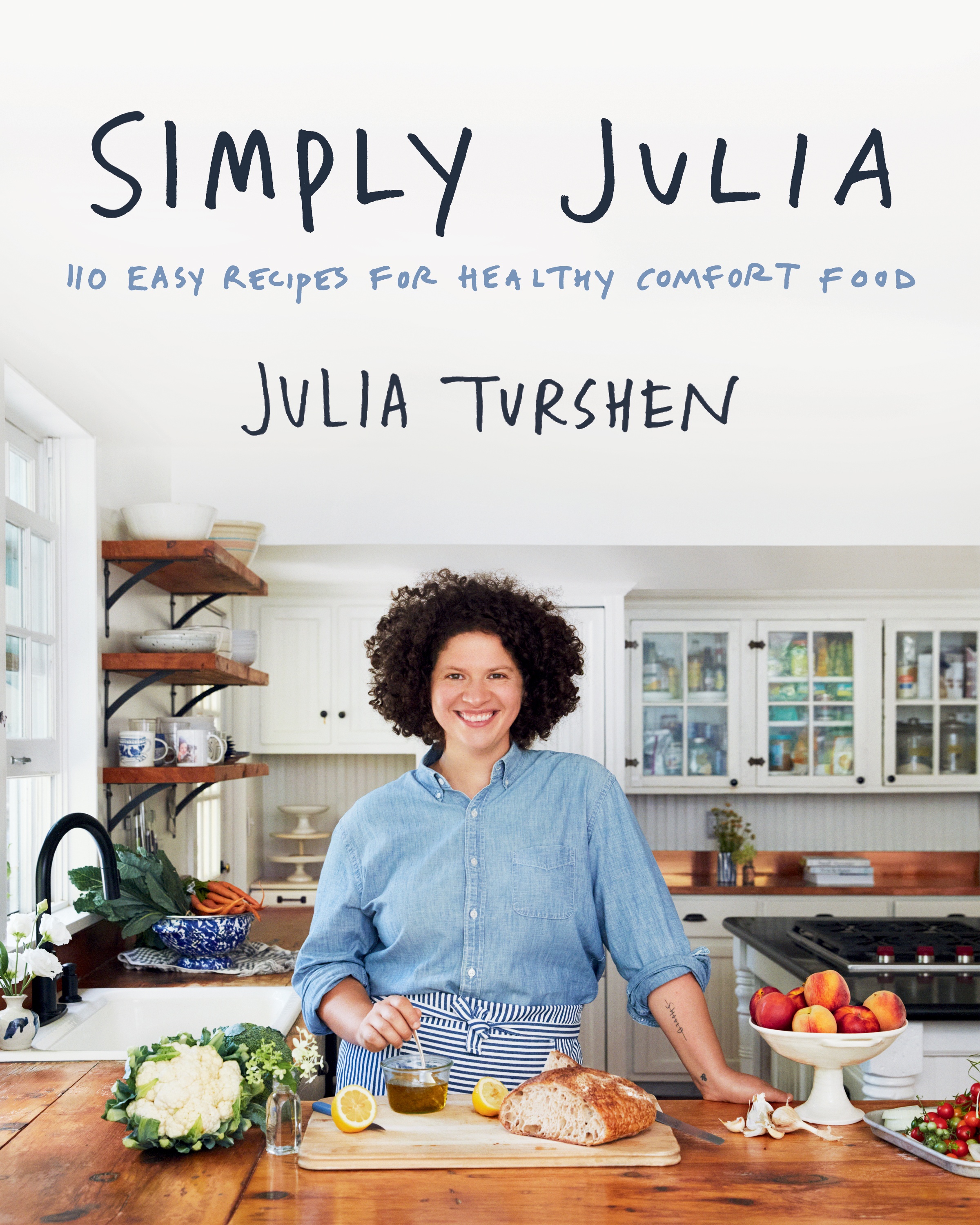
Simply Julia: 110 Easy Recipes For Healthy Comfort Food

“It has nothing to do with restriction. It has nothing to do with deprivation. There are no limitations in the book. And associating healthy with limitlessness, it does feel different to me,” she said. “I’m not the first person to have this thought or idea. I think I’m only able to have this thought and idea because other people have shown me what it looks like. But to put that in a mainstream cookbook feels really valuable and makes me feel just really happy it’s out there, and proud.”

It’s through this lens that Turshen defines comfort food, which can mean something different to each of us. Instead of something that divides us, comfort food can be a unifier.   

“I really, really like the place where healthy and comfort come together. Because when I feel my most comfortable, I feel my most healthy. When I feel my most healthy, I feel my most comfortable,” Turshen said. “And then bring in the word ‘easy’ — it’s like there’s an ease that comes with the feelings when I feel them at their best, like when I feel most comfortable in myself.”

RELATED: Julia Turshen unites healthy and comfort in the kitchen: Delicious “does not have to be complicated”

The end result is a masterpiece of a modern cookbook that feels both nostalgic and innovative at once. “Simply Julia” provides us with healthier approaches to timeless comfort foods that are within every home cook’s grasp. Many of these recipes are guaranteed to become staples on your weeknight dinner rotation. 

“Delicious food does not have to be complicated,” Turshen writes in her cookbook. “Cooking, when it’s at its best, is a way to take care of each other, not compete with each other.”

When Turshen recently appeared on “Salon Talks,” we talked about how cooking at home can make us feel more present to our daily lives. Did you know that a great way to make a new friend is to invite them over for dinner? To learn more, read or watch our conversation below.

This transcript has been lightly edited for clarity and length.

I’m going to mention your wife Grace in relation to the almond chicken cutlets. You developed that recipe after her diabetes diagnosis. I thought that also spoke to a different element of comfort food, that we can have food that still make us feel comfort, but it’s also literally comforting for our body at the same time.

So that recipe was something that I started making . . . Gosh, I should know exactly how long ago. I want to say about five years ago, Grace, my wife, who I’ve gotten to talk about a bit here, was diagnosed as an adult with type one diabetes. Not to get into specific detail, but if anyone listening doesn’t know, type 1 [and] type 2 are different. [With] Type 1 you basically have to act as your own pancreas. You have to inject insulin to compensate for your body not producing it. That means that Grace can and does eat whatever she wants, but when she was first diagnosed, she followed a pretty strict super-low carbohydrate diet, because — again, I’m over simplifying something that’s quite complicated, and Grace and everyone who lives with type 1 is doing math all day long every day and dealing with so many variables.

But to simplify it, the more carbohydrates you eat, the more insulin you have to take — which is fine, but it’s just a lot of math and calculation. As she was getting used to a brand new diagnosis, it was just easier to eliminate some of the variables. In that time, I really wanted to do whatever I could do to be helpful as a person who loves her very much and wants to support her, and also who finds the kitchen to be this place where I can enact that feeling in a very tangible way. It’s really hard to feel like there’s not much you can do when a loved one is going through something you can’t do much about. But you can cook. So I was thinking about things that Grace loves to eat and what are ways to make them in ways, just as you said, really beautifully that take care of her body, that don’t make it harder for her. She’s already going through something hard.

RELATED: Peanut butter is a great thing to spread on top of Julia Turshen’s Roasted Banana and Sour Cream Waffles

One of those things is chicken cutlets, old-fashioned: dip it in egg, bread crumb, fry it. Delicious, crispy, crunchy. I would brush chicken cutlets with a little mustard-mayonnaise mixture — or just one or the other, because instead of egg it was just more flavor, and I’m constantly looking for flavor. Then I would dust it with almond flour, which is just ground almonds. So almonds are high in fat and protein and fill you up, and [are] lower in carbs. But forget all that, they taste good — they’re crunchy, they still provide that texture and that same feeling. Then I bake them and they get brown and crispy, and it’s so much easier than pan frying them. There’s no mess. It gives you all this satisfaction, this familiarity, but it’s actually easier to make, and has the lower carb thing going for it, which was helpful for us in that moment. I love that recipe. It’s so, so good and it comes with a picture of my wife and our dogs, which makes me very happy.

My dog — you can’t see her, but she’s sitting at my feet right now — she has diabetes. It was a recent diagnosis, and I’m learning how to take care of her, because I’ve had no knowledge of it. I don’t have anyone in my family who’s suffered from it.

I knew cats could get it, but I didn’t know dogs could.

Yeah, she gets injections twice a day.

Let’s talk about side dishes. I’m from Alabama, so I love cheese grits, but I never thought of ranch in them.

I just love ranch dressing, which puts me in the majority of people in the world. I think it’s delicious and I love all the flavors in it. So yeah, there’s a chapter of really, really easy side dishes. I think pretty much all of them you can make ahead, or you can make most of it ahead. These grits fit right into that. I love grits. I love anything made with corn. They have some cheddar cheese in them and then also all the flavors of ranch dressing, so you get cheesy ranch grits. So good, so comforting. Really great if anyone has celiac disease and can’t tolerate gluten in their diet and maybe wants that kind of warm grain-type of thing. This provides that, but it’s great for anyone. And it’s also something you can make ahead and it reheats really well. Again, just really easy-going and super comforting. 

Then Brussels sprouts. That’s something I didn’t grow up with a lot as a kid and I think it has that negative stereotype, but it’s one of my favorite things in the world to eat now. So is Buffalo chicken. And you have Buffalo Brussels sprouts. How’d that come about?

Basically for all the reasons you just described. I love really crispy Brussels sprouts and I love Buffalo chicken and I love blue cheese. I just was thinking about these things at the same time and just thought, “What if they come together?” So you roast Brussels sprouts at a super high temperature. If you have an air fryer, which I just got — I’m new to the 21st Century — it’s really fun and I think the best thing you can make in it are Brussels sprouts, because they turn out so crispy, so quickly. 

You toss those with a little bit of melted butter and hot sauce, which is what goes on Buffalo wings, then you crumble a little blue cheese on it. So you don’t have to go to the trouble of making blue cheese dressing. You just get all that flavor and you can put a little thinly sliced celery, or just the leaves that come on celery, which most people throw out but they’re full of flavor. They’re so good. You get all that satisfaction of the celery stick dipped in the blue cheese dressing, with the spice. You get it all in one dish, so I love them.

That speaks again to comfort, but healthy. We were talking earlier about how you made your cobbler, and may have eaten it for lunch —

— and breakfast . . .

In the book, you wrote, “One thing I learned about being a private chef is never underestimate the value of a homemade dessert.” Going back to [your cookbook] “Small Victories,” my favorite party trick — and I make this all the time, and this time of the year is my favorite time to make it, because blood oranges are in season — I make the afternoon cake. But I do the swap that you recommended for citrus, so I make it with blood oranges and almond extract. It’s so simple to make, but people love it. That’s the one thing, anytime I make it, I get rave reviews. I can try to make a layer cake or something like that, and it just doesn’t get the same reaction. What is it about these simple desserts?

Not every meal has to be the best meal you ever ate. I think maybe a better way of phrasing that is: When I sit down to eat, whether it’s something I made myself or someone is kind enough to make for me, the last thing I want to feel is confused or stressed, or honestly, impressed. I just want to feel taken care of and I want to feel comfortable. When I’m cooking for someone, I don’t want to feel like I have anything to prove, and I don’t want anyone to feel like they have anything to prove with me. I just want to enjoy our time together and eat really simple, really good food. I think that’s how most people feel.

That afternoon cake is a recipe in “Small Victories” that’s super simple. You mix everything in one bowl. You bake it in the cake pan. It’s very forgiving. I’ve forgotten about it in the oven for longer than you should and it’s fine. I don’t recommend that, but it’s fine. It’s no big deal. You don’t need a machine to mix anything. If your oven is a little off, whatever, it’s fine. I just I think at the end of the day that’s what we all really want. We want things that aren’t complicated and [are] really satisfying, I think, to experience things that appear super simple — and they are super simple — but they taste just as good as you want them to. That is what I’m always aiming for and I think that cake fits that bill. It is also really flexible, as I would hope and I think all of my recipes are. You can make it with lemon, with blood oranges. I love that idea. Grapefruit, you can use any nut in it. It’s very, very easy going and you can make it yours.

I love all of the swaps that you recommend, using things that you may have already on hand in your pantry, that you don’t want to go to waste. Another example of that I love is your dad’s chicken and leeks, but I like the Vietnamese version — or the slightly Vietnamese-ish version. Again, it’s not an authentic dish, but represents those flavors.

I very firmly believe that recipes are just not prescriptions. I believe also in providing extremely clear, very reliable recipes. If you’re new to cooking, or you’re someone who’s made to feel more comfortable if you’re following a recipe, my recipes are there for you. You can follow them to the letter. I promise they’ll work out. But, they’re also just there as suggestions and guidelines. I sort of feel like at the end of the day there’s only a handful of recipes in the world. You can bake something, you can boil it, you can steam it, you can fry it. Otherwise, it’s all just mixing and matching. It’s like, “What ingredients do you want to use? How long do you want to do any of these things?” That’s it. So I think when we get that, then we realize it’s all flexible. I don’t like feeling like we have to follow a bunch of artificial rules. And so I want to give you all the guidelines, but also encourage you to not follow them if you don’t want to.

But then those are building blocks to help us feel more confident in the kitchen, right?

Exactly. 

So I have two Salon-specific questions, based on two of our food columnists here. Our first one is from Ashlie Stevens, she writes our column Saucy, about the love of condiments. And we’re really interested in your dressing that you make. You don’t have to peel or cut anything. It’s your go-to dressing. Can you tell us about that?

My go-to dressing, which you can make blindfolded basically, it’s equal parts of four ingredients: tahini, soy sauce, apple cider vinegar, olive oil. Four things that come in a bottle or a jar. You keep them in your pantry and you can make it just for yourself, you can use a spoonful of each of those. You can make it for a huge crowd and put whole bottles together and whisk them together or blend them if you’re doing that much. It is so good and it is so simple. I mean, I almost was like, “Is this worth putting in a cookbook? It takes one sentence.” Not even, just mix together. But I think it’s so useful and it’s good on everything.

Yes, it’s a salad dressing, it’s great on a salad — the first thing I think of is lettuce, but a salad can be anything. It’s great on roasted chicken. It’s great drizzled on brown rice. It’s great on noodles. You can put it on anything. It’s so good.

It’s great to dip things into. I find especially if cooking for young kids, having something like that that has a lot of flavor and is really a great way to get things like fresh vegetables and stuff into their bodies, because maybe they don’t want to sit down and eat a salad. Adults, too — this isn’t specific to kids — you cut up a bunch of carrots or cucumbers or something and you dip, and it’s a little bit more approachable. It’s very, very easygoing and flexible and just the easiest thing to remember.

That’s a perfect segue into my next question, because our Mary Elizabeth Williams has a column called Quick & Dirty. She went on a journey last year that she documented about all of her cooking at home during the pandemic, trying to reach for food for comfort. Now she’s a little burned out, so she has a column called Quick & Dirty, and it fully acknowledges that even professional chefs, home chefs, are sick and tired of cooking sometimes. And you touch on that in your book. So what do you do when you’re sick and tired and just want something easy for dinner?

Normally I will ask Grace to make dinner, or to just figure out something for dinner. Maybe to pick up food from a local restaurant, which we don’t have a ton in our area, but we have a handful that are really good and we’re really glad to be able to support them. I rely on my freezer. I think it’s probably my most used appliance. I write about this in the book too. Whenever I’m cooking, I’m always thinking about my future self and I want to make things easier for her. So, I am always just making more than we can eat and I’ll turn it into other things during the week. I wrote another book called “Now and Again” that’s all about reinventing your leftovers, because I truly love doing this. But I also just freeze a lot of things, because I love cooking, I love eating, but I don’t necessarily want to do it every day. I don’t want to make every meal from scratch.

If I have the time and energy and inclination to make something like, I don’t know, a chili or a soup or something, I’ll freeze it in individual portions. I’ll also keep ingredients in the freezer like, we ordered some fish from the Salmon Sisters in Alaska, they’re super cool. It comes sealed perfectly and all that. So I keep that in the freezer and I can pop a piece in the air fryer and just have it be super easy. Maybe I have the dressing in my fridge, throw it on some chopped up greens or something. It’s just takes a few minutes. And again, maybe it’s not a meal I’m going to remember for the rest of my life, but it’s going to do the job and it’s going to do it well, and it’s going to make me feel like I’m able to take care of myself, I’m able to take care of my wife. Or she can do that, and it’s just easy. So yeah, I ask the person next to me or I order take out or I go to the freezer. Also, frozen chicken tenders are wonderful.

I’m going to have to get on the air fryer bandwagon now that you’re doing it.

You live in New York City, right? You mentioned.

Yes.

I think if I lived in the city, I would be really into it in some ways, because you don’t have to turn on the oven or whatever. But also I wouldn’t be into it, because it takes up so much space on your counter and that’s just very valuable real estate. I don’t know, maybe you could put it in the living room.

You got your start, in cookbooks at least, through ghostwriting. It’s so interesting to me because this is your fourth book . . . There’s always been a picture of the food on the cover. And now we have a picture of you on this cover. You’ve really become a household name. It’s interesting that you went from ghostwriting to you right there on the cookbook. What does that journey feel like?

First, it’s important to me to be clear about it. I’ve never considered myself a ghostwriter and haven’t ever worked as one, because to me, my understanding is you’re doing work that you’re not acknowledge for and you’re very hidden behind the scenes. And I have gotten to be acknowledged for all the work I’ve done. So I’ve co-authored, I’ve collaborated. All those words are great, but there’s a lot of great ghostwriters and I’m just not one of them, so I don’t want to take credit for that.

In terms of the evolution of having worked with so many other people on their books — which is something I’ve continued to do even as I’ve done my own — but now, doing my own, previous ones had food on the cover, including my favorite food of all time, chicken soup was on the cover of Small Victories. Now that’s me. I’m actually wearing the same shirt [today]. 

It feels incredibly vulnerable. It’s truly putting myself out there. But it also feels valuable to me. We talked about how I identify very openly, very proudly as a gay woman. I don’t know if that’s something you know by seeing a photo of me, but it feels important to do whatever I can to create more representation of visibility in that department.

Also, it’s a book with the word “healthy” on the cover. I don’t think I appear like a lot of people who are on the cover of books that have the word “healthy” on them. It’s very important to me to do whatever I can to expand that definition and to make more space for other books for people who don’t look like me and people who live in all sorts of bodies. We all deserve to see our name and likeness under the banner “healthy.” That feels really important to me.

The picture is me in my kitchen. That is my home kitchen. All of my work and all of my books are quite literally from my kitchen to yours. That’s where I make all my recipes and share them. That’s where I write them. I sit at the kitchen table. And I’ve always wanted that to be the feeling — it feels like it’s coming from my kitchen. So this makes that very clear and undeniable. This isn’t a random thing of food that is out of context. This gives you all the context.

And I’ll also add, if you have a minute, I’ll tell you three little funny Easter eggs on the book.

Yes. Yes.

So, one, there’s a loaf of bread, that’s very important to me on a “healthy” cookbook. There’re vegetables, there’s produce, beautiful, wonderful. But there’s also a big loaf of bread, that feels just important. Two, I don’t know if you can see this, but this mug here on my shelf, that’s a picture of me and one of my dogs Winky. It’s what I drink my coffee out of every morning. It was very important to me that it make to the cover. Then lastly, on the counter behind me, there’s a few books stacked up. It’s blurry, you can’t see it, but those are my previous solo cookbooks, so they’re supporting me back here.

Awesome, the layers.

Yeah, those little details are valuable to me, so just wanted to share that.

Speaking of those books being hidden there, I’ve noticed just from following you on Instagram that you do have a little section where you have some cookbooks that are at the ready that you can go and pop out that you’re either using and working from at the moment or that you just use a lot. So I was wondering what some of those other cookbooks are that aren’t yours.

I’m surrounded by some great ones. Let me pull some. I didn’t know you were going to ask me this. This was not planned. These two that are right here, “Zoe’s Ghana Kitchen,” this is a wonderful book. I think it just got reissued or reprinted in the U.S. Zoe is awesome. It’s a very personal book, also super easy recipes. This is, you can’t quite tell from this cover, but this is a copy of Edna Lewis’s “The Taste of Country Cooking.” This is my favorite cookbook of all time — you can see some Post-its.

It is just the most beautiful written book. And the thing I believe so much with cookbooks is that all books, ideally, you only write the book that only you can write, and you share only the stories that you can share — me talking about my wife and stuff. These are my stories that I get to share with my recipes. Edna Lewis is so important to our history as Americans, as home cooks, and I think has done that sense of voice and personal storytelling so well. I learn something new every time I read it, and I’ve read it hundreds of times. 

My favorite thing to ask everyone who comes on the show is: Why do you cook? 

At the end of the day, I cook all day because it makes me feel deeply connected. It makes me feel especially connected to so many people in my family, especially those I didn’t know. I’m thinking specifically about my maternal grandparents, my mom’s parents. My grandfather was a bread baker. My grandmother worked with him in the bakery and cooked all their meals at home. I feel so tethered to the both of them even though I didn’t know them, and I feel that tether. It feels like a string I can hold onto when I’m in the kitchen. I don’t ever want to let go of that, so I think that’s why I cook. I mean, I cook for very practical reasons, mostly I just love eating. But I think that’s my why.

For more, read part one of the interview here. Then, check out Julia Turshen’s recipe for Roasted Banana and Sour Cream Waffles.

This spring, it’s time for an herby, citrusy Green Goddess renaissance

What is Green Goddess dressing? 

It’s a creamy and pungent salad dressing — that’s increasingly being used as a spread and condiment for dipping — traditionally made with mayonnaise, anchovies, lemon juice, vinegar, scallions and lots of herbs, including tarragon. 

It’s time for a Green Goddess renaissance 

Potentially unpopular opinion: I actually really love the first week after “springing forward” for daylight saving time. Granted, losing an hour of sleep the first morning after is rough — but, God, that extra hour of sunshine? It’s worth it. 

After the slog that is winter depression, it inevitably sparks some hyper-specific desires: I want to wear a white sundress and drink a gin and tonic (with an extra wedge of lime!) on a patio during golden hour; I want my dog to experience a sun-soaked meet-cute with another dachshund at the park; and I want to buy all the greens and pieces of citrus and figure out ways to use them up while they’re still vibrant. 

That means it’s officially green sauce season!

Most cultures have a green sauce, or several. There’s zhoug, pesto, salsa verde, green chutney, chimichurri, chermoula — and the list goes on. Moreover, there are some basic commonalities. They’re all herb-heavy with a hit of acid or umami, and I love them all equally — especially America’s own green sauce, Green Goddess dressing. 

For a while, Green Goddess dressing struggled with a cultural perception that it was a relic of another time. It’s had surges and dips in popularity over the decades, most recently falling off menus in the late ’90s in favor of Ranch dressing, which 40% of Americans cite as their favorite dressing, according to a 2017 study done by the industry group the Association for Dressings and Sauces. Italian dressing comes in second, with a comparatively meager 10% indicating that as their preference; at the time, Green Goddess didn’t garner enough votes to make the list. 

But for the past several years, the dressing’s popularity has started to steadily ascend. This spring is prime for a full-fledged Green Goddess renaissance. 

The dressing’s invention is attributed to Philip Roemer, who was the head chef at San Francisco’s Palace Hotel in the early 1920s. During his tenure in the kitchen, the British actor George Arliss was cast in the  play “The Green Goddess,” which eventually toured to California. 

While there, Arliss ordered dinner in the hotel’s Garden Court dining room, and Roemer made him a dish with a special sauce to commemorate the occasion. According to KQED, “the original recipe was heavy on the mayonnaise and was served on a canned artichoke, considered a luxury in those days.” Some food scholars think that Roemer was inspired by a French dish “anguilles au vert,” fileted eels in a tarragon-heavy green sauce. 

According to Julie Murray, the chef’s granddaughter, the original recipe contained anchovies, green onion, minced parsley, minced tarragon, mayonnaise, tarragon vinegar and snipped chives. As you can tell from the ingredient list, it’s a pretty pungent sauce — enough so that a 1949 letter about the dressing cautioned, “If it is for ladies only, it might be better to reduce onions quite a bit as men like onions better than ladies do.”

So, who exactly is the Green Goddess? Well, in the aforementioned play — which was later adapted into a radio drama, a silent film and eventually a ’30s talkie — she is a caricature of a Hindu deity. The play centers on a trio of passengers who are forced to land in the mythical kingdom of Rukh after engine trouble grounds their airplane. Arliss, who was white, played an Indian maharajah, flanked by other white actors in brownface and afros faking stereotypical Indian accents. 

It wasn’t a good look, but the dressing eventually took on a life where it was more broadly associated with Californian food than the play itself. In 1952, Helen Evans Brown published her “West Coast Cook Book,” which pushed regional readers to use local, fresh ingredients, many of which grew in Californians’ backyards, like avocados, cherimoyas, figs and loquats. Tucked in the pages of the cookbook was a reprint of the Palace’s Green Goddess dressing. 

Many credit Brown with laying the foundation for what would become known as California cuisine, a style of regional cooking that’s driven by sustainable, healthful ingredients and was pioneered by chefs like Alice Waters, Nancy Silverton and Wolfgang Puck. As a result, her work also served as sort of a connecting thread between the 1950s and 1970s for Green Goddess dressing. 

In 1971, Waters opened Chez Panisse, a restaurant that centered on the “immediacy and excitement of vegetables just out of the garden, fruit right off the branch and fish straight out of the sea.” Served alongside those was Waters’ own version of Green Goddess, which eschewed the mayonnaise base of its predecessor for avocado and a splash of heavy cream — a change that has largely stuck on many menus. 

This was also the era during which health food stores— like New Age Natural Foods and Staff of Life — and organic restaurants become entwined with the counterculture movement. Many sold and served Green Goddess and the dressing’s name eventually took on a sort of New Age-y, hippie-ish glow, another shift for the dressing that has largely persisted. 

During the ’80s, there were a few big moves in the world of salad dressings. Ranch dressing really hit its stride, as snack foods like Cool Ranch Doritos appeared on the market, absolutely causing the flavor’s popularity to skyrocket. And non-refrigerated bottled dressings increasingly became a grocery store mainstay as Kraft reformulated several of their most popular dressings, Ranch included. This . . . wasn’t great from Green Goddess dressing. Many (though not all!) bottled variations are kind of gloomy with a pervading artificial onion odor. 

Since then, there have been some attempts at a Green Goddess renaissance. In 1998, food writer Russ Parsons pined for the dressing in a piece for The Los Angeles Times.

“It’s as if the best parts of a California spring have been distilled into a rich creamy sauce,” he wrote. “Tangy with anchovies and heady with fresh herbs, with an appealing high note of tarragon soaring above it all, Green Goddess is the glue that will hold together any number of composed salads.” 

He added, “There are also dressings called Green Goddess that don’t have tarragon — including one in the current ‘Joy of Cooking‘ — but they are an historical aberration.” 

Starting in 2018, Green Goddess saw a comeback on hip restaurant menus. Watershed, an Atlanta restaurant that is now closed, created a Brussels Caesar with shaved brussels sprouts, shallots, pistachios, guanciale and Green Goddess, while Butcher & Bee in Nashville drizzled it on their Autumn Green Salad, made with shaved radishes, apples, pistachios and Parmesan. 

Its use wasn’t just reserved for salads, though. As the Nation’s Restaurant News reported, at Girl & the Goat in Chicago, their crispy pork shank special was finished with stone-fruit kimchi and Green Goddess, then served with a side of naan. At Decca, one of my favorite restaurants in Louisville, you can order a plate of shoestring fries with a little cup of homemade Green Goddess for dipping. 

It’s popular enough that the dressing has since been incorporated into dishes at fast-casual and fast-food chains, including Panera, Sweetgreen and Subway. Maybe it’s time to find a home for it in your spring kitchen, as well? 

How should I use Green Goddess at home? 

Like many green sauces, Green Goddess is incredibly versatile. It’s creamy, verdant and has an acidic bite which makes it stand up really well to hearty vegetables without being overpowering. I love using it to sort of bridge my cold weather and warm weather eating habits; it’s like a stepping stone from all-braised everything to crisp, herby salads. 

As such, I’m really digging hearty sandwiches, stacked high with roasted vegetables, a little cheese, some greens and slathered with a good Green Goddess spread. A note: If you’re using an avocado-based Green Goddess, feel free to skip the sliced avocado. (Or keep it, because the more the better!)

***

Recipe: Roasted Vegetable Sandwich with Green Goddess 

Yield: 2 sandwiches 

Ingredients:

  • 4 slices of hearty, toasted multigrain bread 
  • 2 slices of white cheddar cheese
  • 1/2 small eggplant, cut into rounds 
  • 1/2 sweet potato, cut into round
  • 1/2 red bell pepper, cored, seeded and thinly sliced
  • 3 tablespoons of olive oil, divided
  • 4 tablespoons of Green Goddess dressing
  • 1/2 avocado, mashed
  • 2 tablespoons of lemon juice
  • 1 cup of gem or bibb lettuce 
  • 1 cup of microgreens or sprouts 
  • Salt and pepper to taste 
  • Dried red pepper to taste 

Directions: 

1. Place the eggplant, sweet potato and red bell pepper slices on a prepared baking sheet. Drizzle them with 2 tablespoons of olive oil and sprinkle with salt, pepper and dried red pepper flakes to taste. Roast at 400 degrees for 30 minutes, flipping once midway through. Remove from the oven, and allow to cool slightly. 

2. Meanwhile, gently rip the lettuce leaves into bite-sized pieces, and combine them in a large bowl with the microgreens or sprouts. Drizzle with the remaining lemon juice and olive oil, and season with salt and pepper. Stir until thoroughly coated. 

3. To assemble the sandwich, spread 1 tablespoon of Green Goddess dressing and half the mashed avocado on a slice of toasted bread. Next, add a slice of cheese. Follow with the bell pepper, eggplant slices and sweet potato. Then add the dressed greens mixture. Spread another tablespoon of Green Goddess dressing on the second piece of bread, then top off the sandwich. 

4. Repeat with the second sandwich. Go eat them in the sunshine! Seriously!

***

Making Green Goddess at home, plus brand recommendations

There are a couple of great Green Goddess dressing recipes floating around online. I tend to stick with those inspired by Alice Waters’ recipe (i.e. the ones that use avocados), simply because I always have an avocado or two that I need to use up. 

In 2010, SFGate published the original Palace Hotel version, which was revived that year by Tyler Florence, who was the chef/owner of San Francisco’s Wayfare Tavern at the time. 

Again, bottled Green Goddess isn’t always stellar. Instead, keep an eye out for refrigerated versions at your grocery store. Trader Joe’s Green Goddess Dressing, which is tahini-based and slightly nutty, is actually really delicious and affordable. For grilling season, I’d also recommend Williams Sonoma Green Goddess Rub. Inspired by the classic dressing, it’s a seasoning packed with dried onions, spinach and lemons, highlighted by chives, tarragon, basil and other herbs. 

Read more Saucy:

The unintended consequences of taming nature

Elizabeth Kolbert lives her stories. In the course of reporting her new book, “Under a White Sky: The Nature of the Future,” she got hit by a leaping carp near Ottawa, Illinois (“It felt like someone had slammed me in the shin with a Wiffle-ball bat”) and visited tiny endangered pupfish at Devils Hole, a small pool in a cave near Pahrump, Nevada. She got her socks wet walking across a mockup of the Lower Mississippi in Baton Rouge, Louisiana, and watched corals reefs spawn at an ocean simulator in Australia. 

With her lively, vivid writing, Kolbert is one of the nation’s most high-profile science writers. Her Pulitzer Prize-winning 2014 book “The Sixth Extinction” made the disappearance of species understandable and urgent. She writes for The New Yorker, where portions of “Under a White Sky” first appeared. But even if some of it was familiar to me — both as a reader of The New Yorker and as a science writer who covers some of the same topics myself — I wanted to read it through, to see these pieces come together into an overarching argument.

In each of these trips, she tells of disaster — of invasive species and endangered ones, of coral bleaching, of the rapid land loss in south Louisiana. Disasters caused by us. The thought at the center of this wonderful book is that not only do we humans do a lot of damage to the planet, some of the worst damage we do occurs when we’re trying to fix things. As she puts it, this is a book “about people trying to solve problems created by people trying to solve problems.”

Why do we need to rebuild a sinking Louisiana? In large part because we solved the problem of seasonal flooding by penning the river between enormous levees, which meant the land-building sediment that came with those floods no longer arrived. The oil industry also cut channels into the fragile wetlands for exploration and extraction. That accelerated erosion added to the climate change that is causing sea levels to rise, much to Louisiana’s detriment.    

Why are people like her getting slammed by leaping Asian carp? The fish, which are out-competing other fish in American waters, were introduced as a natural way to control algae and other aquatic problems; of course, the carp have become an enormous invasive species problem of their own, and expensive technologies have been developed to keep them from reaching the Great Lakes. Those include giant multimillion-dollar projects to electrify the waters, and plans to roil the waters with bubbles and noise — together, they show how we just keep out-Rube-Goldberging ourselves. 

She visits the Old River Control Structure, made infamous by John McPhee in his 1989 bestseller “The Control of Nature” as an attempt to tame the mighty Mississippi River. It was designed to precisely regulate the amount of water flowing from the Mississippi into the Atchafalaya and prevent the natural transition that would eventually have directed increasing amounts of the Mississippi’s waters into the Atchafalaya, with its shorter, steeper path to the sea, rendering the vast ports of Baton Rouge and New Orleans useless. But in 1973 the structure nearly failed, which would have been its own kind of disaster.

Kolbert asks whether our meddling has blurred the lines between the natural world and the managed one. In the Anthropocene era, when humans have fundamentally altered the planet and its environment, she asks, what does nature even mean anymore? Nature, she notes, tends to reward our hubris with hard lessons. “A lot has happened to complicate the meaning of ‘control,’ not to mention ‘nature.'”

She describes other interventions gone horrifyingly wrong, including the introduction in the 1930s of enormous cane toads to Australia to eat grubs off of sugar cane. But, as it turns out, cane grubs “perch too high off the ground for a boulder-sized amphibian to reach. This didn’t faze the toads. They found plenty else to eat and continued to produce toadlets by the truck­load.” The spread of the poisonous toads has been epic, and scientists are experimenting with genetic modifications that might check their spread, or at least make them less toxic. And of course, there are those Asian carp.

Kolbert compares our efforts to repair the damage we have inflicted on the planet to “The Cat in the Hat Comes Back,” the Dr. Seuss children’s story in which the cat causes a mess — a pink ring in the bathtub — and his efforts to clean it up in escalating ways, beginning with the use of the mother’s white dress to wipe up the ring, only make things worse.

We are the cat, she says. Looking at the enormous effort the government has gone through to save those dwindling species of pupfish, she observes “how much easier it is to ruin an ecological system than to run one.”

This is all leading up to what could be our greatest human-produced crisis — climate change — and what could be the biggest intervention of all: solar geoengineering. Should we try to tweak the atmosphere to slightly dim the amount of solar radiation that reaches the surface of our planet, and thus slow the effects of global warming until we can get our greenhouse gas emissions under control?

She describes some of the ideas that have been floated, including spraying particles of sulfur, or calcium carbonate, or even finely milled diamonds, into the atmosphere. As she mentions, the resulting changes could also include turning the color of the sky from blue to white. You might think by now that she would deliver a full-throated cry against geoengineering. What she gives us instead is less certain, more nuanced — and more troubling.

Yes, she quotes Allison Macfarlane, a former chairwoman of the Nuclear Regulatory Commission, who gives the idea a thumbs down over the unintended consequences. But she also quotes those who say that we may be in such a deep planetary crisis that hacking the atmosphere itself might be the least horrible option, considering where the planet is headed. Among them is a scientist who compares it to chemotherapy, which no one would go through if there were better options available. “We live in a world,” he said, “where deliberately dimming the fucking sun might be less risky than not doing it.”

Kolbert writes, “But to imagine that ‘dimming the fucking sun’ could be less dangerous than not dimming it, you have to imagine not only that the technology will work according to plan but also that it will be deployed according to plan. And that’s a lot of imagining.”

She’s no fan of the idea, clearly. But she also suggests that the world might find its options so narrowed by inaction that it has little choice but to turn the sky white. Just don’t blame her if everything goes terribly, terribly wrong. Again.

In her passing reference to “The Cat in the Hat,” Kolbert doesn’t mention that the story ends when the cat uses Voom, a substance that magically gets rid of the ever-spreading pink mess and even shovels the snow around the house before Mother gets home.

Voom, unfortunately, is one thing we do not have.

* * *

DISCLOSURE: The author of this review briefly met Elizabeth Kolbert on a reporting trip in 2020, but no other interaction or relationship exists outside this chance meeting.

John Schwartz writes about climate change for The New York Times. He is the author of “This Is the Year I Put My Financial Life in Order.”

This article was originally published on Undark. Read the original article.

Lab leak: a scientific debate mired in politics — and unresolved

Nikolai Petrovsky was scrolling through social media after a day on the ski slopes when reports describing a mysterious cluster of pneumonia cases in Wuhan, China caught his eye. It was early January 2020, and Petrovsky, an immunologist, was at his vacation getaway in Keystone, Colorado, which is where he goes most years with his family to flee the searingly hot summers at home in South Australia. He was soon struck by an odd discrepancy in how the pneumonia cases were portrayed. Chinese authorities and the World Health Organization were saying there was nothing to worry about, but locals in the area, he says, were posting about “bodies being stretchered out of houses in Wuhan and police bolting apartment doors shut.”

Petrovksy is a professor at Flinders University, near Adelaide, and he is also founder and chairman of a company called Vaxine that develops immunizations for infectious diseases, among other projects. Since 2005, he’s received tens of millions of dollars in funding from the U.S. National Institutes of Health to support the development of vaccines and compounds called adjuvants that boost their effects. After Chinese scientists posted a draft genome of the novel coronavirus SARS-CoV-2, the disease culprit in Wuhan, Petrovksy — who by this time had put skiing on the backburner to work from his Colorado home office — directed his colleagues down under to run computer modeling studies of the viral sequence, a first step towards designing a vaccine.

This generated a startling result: The spike proteins studding SARS-CoV-2 bound more tightly to their human cell receptor, a protein called ACE2, than target receptors on any other species evaluated. In other words, SARS-CoV-2 was surprisingly well adapted to its human prey, which is unusual for a newly emerging pathogen. “Holy shit, that’s really weird,'” Petrovsky recalls thinking.

As Petrovsky considered whether SARS-CoV-2 may have emerged in lab cultures with human cells, or cells engineered to express the human ACE2 protein, a letter penned by 27 scientists appeared suddenly on Feb. 19 in the prestigious medical journal The Lancet. The authors insisted that SARS-CoV-2 had a natural origin, and they condemned any alternate hypotheses as conspiracy theories that create only “fear, rumors, and prejudice.”

Petrovksy says he found the letter infuriating. Conspiracy theorists is “the last thing we were, and it looked to be pointing at people like us,” he says.

Last month, a team of international scientists completed a month-long visit to Wuhan to investigate SARS-CoV-2’s origins. Convened by the WHO, and closely monitored by Chinese authorities, the team concluded initially that a lab leak was so unlikely that further investigations of it were unnecessary. The WHO’s director general later walked that statement back, claiming that “all hypotheses remain open and require further analysis and studies.” A group of 26 scientists, social scientists, and science communicators — Petrovksy among them — have now signed their own letter arguing that WHO investigators lacked “the mandate, the independence, or the necessary accesses” to determine whether or not SARS-CoV-2 could have been the result of a laboratory incident.

The WHO investigation follows a year during which debates over SARS-CoV-2’s origins turned increasingly acrimonious. Chinese officials were, and still are, unwilling to provide information that might settle lingering questions about where the virus came from, and in the absence of critical data, expert views coalesced around two competing scenarios: One that a lab leak was plausible and needed more scrutiny, and another that SARS-CoV-2 had almost certainly spilled over from nature and that the odds of a lab leak were so remote that the possibility could essentially be taken off the table. Those insisting on a natural origin say the virus lacks genetic features that would show it to have been deliberately engineered. But it’s also possible that SARS-CoV-2 evolved naturally in the wild before it was brought into a lab to be studied, only to subsequently escape. The Wuhan Institute of Virology, which many see as the likeliest site of a breakout, houses one of the largest collections of coronaviruses in the world.

David Relman, a microbiologist at Stanford University, says a lab leak was never the subject of a “fair and dispassionate discussion of the facts as we know them.” Instead, tempers soon began to flare as those calling for a closer look at possible lab origins were dismissed as conspiracy theorists spouting misinformation. Election-year politics and growing Sinophobic sentiments only added to the tensions. Attacks on Asian Americans had been escalating since the pandemic began, and with then-President Trump fuming about a “Chinese virus,” many scientists and reporters became “cautious about saying anything that might justify the rhetoric of his administration,” says Jamie Metzl, a senior fellow at the Washington, D.C.-based Atlantic Council, an international affairs think tank.

It could have been career suicide for scientists to voice suspicions about a possible lab leak, says Metzl, especially when there was already a long history of viral disease outbreaks spilling over from nature. Alina Chan, a post-doctoral fellow specializing in gene therapy and cell engineering at the Broad Institute in Cambridge, Massachusetts, echoes that view. Chan says the risk of challenging the orthodoxy that SARS-CoV-2 has natural origins — an entirely plausible hypothesis, she maintains — is greatest for established scientists in infectious disease with supervisory roles and staffs to support. She herself has spent much of the last year calling for more scrutiny of a potential lab leak, claiming that as a post-doc, she has less to lose.

The vitriol also obscures a broader imperative, Relman says, which is that uncovering the virus’ origins is crucial to stopping the next pandemic. Threats from both lab accidents and natural spillovers are growing simultaneously, as humans move steadily into wild places, and new biosafety labs grow in number around the world. “This is why the origins question is so important,” Relman says.

“We need a much better sense about where to place our resources and effort,” he adds. And if a lab release for SARS-CoV-2 looks plausible, Relman says, “then it absolutely deserves a whole lot more attention.”

* * *

If SARS-CoV-2 did spill over into humans from the wild, how and where did that happen? A year into the pandemic, these remain open questions. Scientists still speculate about whether the virus passed directly into humans from infected bats (known reservoirs for hundreds of different coronaviruses), or through an intermediary animal species. The Huanan Seafood Wholesale Market in Wuhan was initially thought to be the originating site of a potential spillover, since that’s where the first cluster of Covid-19 — the disease caused by the virus — was detected. But newer evidence suggests that animal or human infections may have been circulating elsewhere for months beforehand, and the focus has since broadened to other markets in the city, wildlife farms in Southern China, and other possible scenarios, such as consuming virally-contaminated frozen meat originating in other provinces.

Importantly, the virus’ immediate ancestors have yet to be identified. The closest known relative, a coronavirus dubbed RaTG13, is genetically 96 percent similar to SARS-CoV-2.

A lab-escaped virus, meanwhile, would have been introduced to the world by a researcher or technician who became infected with it. These sorts of lab leaks have happened before, and were implicated in several cases of community transmission during SARS outbreaks in the early 2000s. In 2017, the Wuhan Institute of Virology became the first lab in mainland China to receive a Biosafety Level 4 (BSL-4) designation, the highest security status for a research space. But the institute also has a history of questionable safety practices. The lab’s scientists reported a lack of appropriately trained technicians and investigators at the facility, prompting U.S. diplomatic scientists who visited in 2017 and 2018 to alert the State Department. At the same time, many scientists have pointed out, particularly in the aftermath of a recent, and for some, contentious, examination of the lab leak hypothesis in New York Magazine, that coronaviruses have typically been handled at BSL-2 or BSL-3 — lower security levels.

Such caveats aside, a prevailing theory among lab-leak proponents has been that SARS-CoV-2 was not simply brought into the Wuhan lab, but was somehow engineered there, given that many of its scientists routinely perform genetic research on coronaviruses and may also have “collaborated on publications and secret projects with China’s military,” according to a U.S. State Department fact sheet released during the last week of the Trump administration. On March 9, a Washington Post columnist, citing an unnamed State Department official, suggested that the Biden administration — while stopping well short of endorsing any particular theory regarding the origin of the virus — did not dispute many of the points made in that fact sheet.

Still, skeptics who doubt the lab leak hypothesis say SARS-CoV-2 doesn’t look anything like an engineered virus. Instead of appearing in discrete chunks, as would be expected with a genetically-engineered microbe, the differences with RaTg13 are distributed randomly throughout the viral genome. In an email to Undark, University of Chicago emeritus virology professor Bernard Roizman wrote that “we are many, many years away from a complete understanding of viral gene functions and regulation — the key elements critical for construction of lethal viruses.”

The virus does have an inexplicable feature: a so-called “furin cleavage site” in the spike protein that helps SARS-CoV-2 pry its way into human cells. While such sites are present in some coronaviruses, they haven’t been found in any of SARS-CoV-2’s closest known relatives. “We don’t know where the furin site came from,” says Susan Weiss, a microbiologist who co-directs the Penn Center for Research on Coronaviruses and Other Emerging Pathogens at the University of Pennsylvania’s Perelman School of Medicine “It’s a mystery.” Although Weiss says SARS-CoV-2 is unlikely to have been engineered, she adds that the possibility that it escaped from a lab can’t be ruled out.

Relman says it’s also possible that scientists working with undisclosed and even more closely related coronaviruses — perhaps one with a furin cleavage site and another with the SARS-CoV-2 gene backbone — may have been tempted to create a recombinant virus so they could study its properties. Indeed, researchers at the Wuhan Institute of Virology initially failed to disclose that eight other SARS-like coronaviruses had been detected in samples collected from the same mine cave where RaTG13 was found. Workers who cleaned bat feces in that cave, located in Yunnan Province near the border with Laos, went on to develop severe respiratory disease and one of them died.

Petrovsky leans towards another potential scenario, namely that SARS-CoV-2 might be evolved from coronaviruses that snuck into lab cultures. Related viruses in the same culture, he explains, such as one optimized for human ACE2 binding and another not, can swap genetic material to create new strains. “We’ve had this sort of thing happen in our own lab,” he says. “One day, you’re culturing flu, and then one day you sequence it, and you go ‘Holy shit, where did this other virus come from in our culture?’ Viruses are evolving the whole time and it’s easy for a virus to get into your culture without you knowing it.” Petrovsky and several co-authors speculated in a paper published as a non-peer-reviewed preprint in May of last year as to whether the virus was “completely natural” or whether it originated with “a recombination event that occurred inadvertently or intentionally in a laboratory handling coronaviruses.” The team wasn’t “saying this is a lab virus,” Petrovsky emphasizes, but rather “just presenting our data.”

But in late April 2020, as Petrovsky’s group was thinking about where to publish their work, “Trump blurted out” that he had reason to believe that the virus came out of a Chinese lab, Petrovsky says. And at that point, he adds, much of “the left-wing media decided they were going to paint the whole lab thing as a conspiracy theory to bring down Trump.” When Petrovsky approached administrators of the preprint server bioRxiv, the paper was refused. BioRxiv staff replied that it would be more appropriately distributed after peer review, “which stunned us,” Petrovksy says. “We thought the whole point of preprint was to get important information out quickly.”

The paper was subsequently posted on a different preprint server called arXiv.org, based out of Cornell University. Soon reporters came calling, but most were from right-wing news outlets representing what Petrovsky calls “the Murdoch press.” Petrovsky says he had to work at stopping some tendentious reporters from distorting his paper’s findings to shape a narrative that SARS-CoV-2 had unequivocally been manufactured. And at the same time, he says, other media tried “to make a mockery of the whole possibility of the lab thing.”

Petrovsky describes himself as politically neutral, and according to sources, he is highly regarded in the vaccine world. Maria Elena Bottazzi, a microbiologist at Baylor College of Medicine, in Houston, says Petrovsky doesn’t make scientific claims that aren’t fully supported by evidence. And yet, simply following the science, Petrovsky suggests, had become too politically fraught. “We were dealing with global forces,” he says, “that are way more powerful than a scientist trying to tell a science-based story.”

The Australian findings were also caught up in a backlash against papers claiming evidence of lab origins by scientists who had jumped opportunistically into the field. Many of these scientists had little relevant experience, and no understanding “of how molecular evolution actually works,” says Rasmus Nielsen, an evolutionary biologist and coronavirus expert at the University of California, Berkeley.

Nielsen cites as one example a Jan. 31 paper posted on bioRxiv by researchers from the Indian Institute of Technology, in New Delhi, that suggested there was an “uncanny similarity” between aspects of SARS-CoV-2 and HIV. In response to a deluge of criticism, the authors withdrew the paper only days after it had been posted. Because of the HIV manuscript and other poor-quality preprints, says Nielsen, the lab leak “became associated with these sorts of crackpot hypotheses and very, very, very shoddy science.”

In an email to Undark, John Inglis, a bioRxiv co-founder, acknowledged that “an extensive network of non-mainstream websites trafficking in theories about the man-made origin of the coronavirus” had amplified the HIV manuscript. From then on, any papers claiming a human-made origin for SARS-CoV-2 would be turned down, not as “a judgment of the investigations or their interpretations,” but “because such papers require peer review that only journals have the time and resources to do.”

* * *

By late spring of 2020, scientists in the natural origins camp had taken the upper hand in shaping opinions. Only a few researchers have looked deeply into SARS-CoV-2’s origins, and according to the Broad Institute’s Chan, the vast majority of those who did not investigate the question simply accepted what they perceived to be the prevailing view. If scientists were unwilling to challenge the orthodoxy for fear of the consequences, Metzl adds, then that “made it hard for journalists to write credible stories about origins, particularly in the absence of evidence.”

Perhaps no one played a greater role in galvanizing scientific opinions in support of natural origins than Peter Daszak, president of EcoHealth Alliance, a New York-based environmental health nonprofit. A long-time Wuhan Institute of Virology collaborator, Daszak — who in what many sources described as a conflict of interest was a member of the WHO-led team that visited China earlier this year — received grant funding from the National Institutes of Health to collaborate on research at the Chinese lab. (The Trump administration abruptly cut off this funding in April 2020 before it was later reinstated with new restrictions.) Daszak is purported to have written a first draft of the Lancet statement condemning hypotheses other than natural origins as conspiracy theories. After repeated requests for an interview, the EcoHealth Alliance and Daszak declined to comment for this story.

Stanley Perlman, a microbiologist and professor at the University of Iowa, in Iowa City, is listed as a co-author of the statement. In an email to Undark, he wrote that the “lab leak idea has several aspects, ranging from the statement that the virus was designed in a lab to ones that state the virus leaked from a laboratory but was not engineered.” The Lancet piece, he says, focused more on engineering, which “would presumably be for a nefarious reason, but fortunately is impossible with our present knowledge.” The actual text of the Lancet statement, however, never makes this distinction.

Charles Calisher, an emeritus professor in the Department of Microbiology, Immunology, and Pathology at Colorado State University, is also listed as a co-author. He says the conspiracy theory phrase was, in his opinion, over the top. “Unfortunately for me, [Daszak] listed everyone alphabetically and I was first,” he says. With his phone constantly ringing, Calisher says he told people he couldn’t say much until more information is available.

Relman agrees that in the absence of conclusive evidence, the message on origins should be “we don’t know.” After the Lancet statement, and then a subsequent paper on SARS-CoV-2’s origins written by scientists who concluded “we do not believe any type of laboratory-based scenario is plausible,” he found himself increasingly disheartened by those who he claimed had seized on a spillover scenario, despite “an amazing absence of data.” Relman says he felt he had to push back. So he wrote a widely-disseminated opinion piece in the Proceedings of the National Academy of Sciences claiming that a lab origin was among several potential scenarios; that conflicts of interest among those on all sides of the issue had to be revealed and addressed; and that uncovering SARS-CoV-2’s true origins was essential for preventing another pandemic. Efforts to investigate the origins, he wrote, “have become mired in politics, poorly supported assumptions and assertions, and incomplete information.”

One of the first media calls after the opinion piece was published came from Laura Ingraham at Fox News, Relman says. He declined the interview.

* * *

When asked why he thought Daszak and others pushed so strongly against the possibility of a lab leak, Relman says they may have wanted to deflect perceptions of their work as endangering humankind. With so-called “gain-of-function” experiments, for instance, scientists genetically manipulate viruses to probe their evolution — sometimes in ways that boost virulence or transmissibility. This sort of research can reveal targets for drugs and vaccines for viral diseases, including Covid-19, and was used at the Wuhan Institute of Virology in studies showing that certain bat coronaviruses were just a few mutations away from being able to bind to human ACE2. A 2015 paper in Nature Medicine notes that the “potential to prepare for and mitigate future outbreaks must be weighed against the risk of creating more dangerous pathogens.”

Relman proposes that among those trying to suppress the lab-release hypothesis, there might have been “far too much protection of one’s self and one’s peers before allowing a really important question to receive a hearing.” And scientists collaborating with researchers in China, “might worry about their working relationship if they say anything other than ‘this threat comes from nature.'”

Other scientists say opposition to the lab-leak hypothesis was grounded more in a general disbelief that SARS-CoV-2 could have been deliberately engineered. “This is what became politicized,” Perlman says. As to whether the virus may have escaped after evolving naturally, he says that is “more difficult to rule in or rule out.”

In an email message last week, Relman added that the question may never be fully settled. “From the natural spillover angle, it would take a confirmed contact between a proven naturally infected host species (e.g. bat) and a human or humans who can be shown with reliable, confirmed time-and-place details to have become infected as a result of the encounter, ahead of any other known human cases,” Relman says, “and then shown to have passed on the infection to others.” As for the lab-leak scenario, there would need to be “confirmed evidence of possession of the virus ahead of the first cases, and a likely mechanism for escape into humans” — all of which become less likely with the passage of time. “Finding the possible immediate parents of SARS-CoV-2 would help to understand the recent genomic/evolutionary history of the virus,” he adds, “but not necessarily how and where that history occurred.”

As it stands now, pandemic preparedness faces two simultaneous fronts. On the one hand, the world has experienced numerous pandemic and epidemic outbreaks in the last 20 years, including SARS, chikungunya, H1N1, Middle East Respiratory virus, several Ebola outbreaks, three outbreaks of norovirus, Zika, and now SARS-CoV-2. Speaking of coronaviruses, says Ralph Baric, an epidemiologist at the University of North Carolina, Chapel Hill, “it’s hard to imagine there aren’t variants” in bats with mortality rates approaching MERS’ 30 percent that also have “a transmissibility that is much more efficient. And that is terrifying.” Baric is emphatic that genetic research with viruses is essential to staying ahead of the threat.

Yet according to Richard Ebright, a molecular biologist at Rutgers University, lab-release dangers are growing as well. The risk increases in proportion with the number of labs handling bioweapons and potential pandemic pathogens (more than 1,500 globally in 2010), he says, many of them, like the Wuhan lab, located in urban areas close to international airports. “The most dramatic expansion has occurred in China during the last four years — driven as an arms-race-style reaction to biodefense expansion in the U.S., Europe, and Japan,” Ebright wrote in an email to Undark. “China opened two new BSL-4 facilities, in Wuhan and in Harbin, in the last four years,” he added, “and has announced plans to establish a network of hundreds of new BSL-3 and BSL-4 labs.”

Meanwhile, squabbles over SARS-CoV-2’s origins continue, some of them heated. During a recent exchange on Twitter, Chan was compared to a QAnon supporter and an insurrectionist. A few months prior, she had tweeted about issues of research integrity and stated that if the actions of scientists and journal editors were to obscure the origins of the virus, then those individuals would be complicit in the deaths of millions of people. (Chan has since deleted that tweet, which she says she regrets posting.)

“Tempers are high,” Nielsen says, making it hard for qualified scientists to have any sort of serious discussion.

In Australia, Petrovksy says he is trying to stay above the fray. He says he was warned to avoid speaking publicly about his modeling findings. “A lot of people advised us ‘even if it’s good science, don’t talk about it. It will have a negative impact on your vaccine development. You will get attacked; they will try to discredit you.'” But in the end, that’s not what happened, says Petrovsky. Last year, amid the origins debate, his team became the first in the Southern Hemisphere to take a vaccine for Covid-19 into human clinical trials.

“If we are at the point where all science is politicized and no one cares about truth and only being politically correct,” he says, “we may as well give up and shut down and stop doing science.”

* * *

Charles Schmidt is a recipient of the National Association of Science Writers’ Science in Society Journalism Award. His work has appeared in Science, Nature Biotechnology, Scientific American, Discover Magazine, and The Washington Post, among other publications.

This article was originally published on Undark. Read the original article.

Can you freeze potatoes? We investigated

A dear friend of mine is famous (infamous?) for once dropping her purse only to have several raw potatoes roll out onto the floor — intended for just the sort of emergency one might encounter in a place with a microwave but no food, like an office, for many, in “the before times.” For those of us without such forethought, the frozen potato offers a glimmer of hope.

This year has seen the frozen sweet potato seize its rightful place in the zeitgeist (the traditional Chinese technique makes sweet potatoes fluffier and more flavorful), but what of other potatoes? Wouldn’t it be wonderful if, instead of losing sleep over that bag of potatoes growing eyes and going green on the countertop, or arriving at work only to find your purse short a spud, you could rest easy in the knowledge that they were waiting for you in the freezer? It was a beautiful idea. And so I decided to investigate.

The experiment: Can you freeze potatoes?

Your intrepid reporter set out to test the promise of the frozen potato by, well, freezing some potatoes. I froze russet, red, and Yukon gold potatoes, and tested both an overnight freeze and a one-hour chill. Next, I allowed the potatoes to thaw, and then baked them alongside some raw, unfrozen potatoes. As you might imagine, the ordinary potatoes emerged convincingly baked, and potato-y (what more is there to say?). Alas, the frozen potatoes fared far worse. When I cut them open, I found their flesh glistening and unpleasantly starchy. It was as if someone had crossbred ordinary potatoes with powdered mashed potato mix. They were the solid equivalent of gloopy.

Why did this happen? When ice crystals formed inside the potatoes during the big chill, they sliced open cell walls and damaged the starch granules that give potatoes their distinctive texture. Instead of baking off fluffy with discrete granules of starch, the result was just one solid block of undifferentiated glop.

But wait! Don’t give up hope

All is not lost when it comes to freezing potatoes. If a frozen raw potato fails the potato Turing test (it could never fool you into thinking it was a real, unfrozen potato), a frozen cooked potato really walks and talks like a potato. Though this works for baked, boiled, or fried spuds, the best way to stock the freezer for your future potato needs is to parboil them. Simply clean the potatoes and boil them until they start to soften — but not until they are fully cooked — which should take about 8 to 15 minutes depending on the size. (Figure about 8 minutes for smallish Yukon golds, and increase the time from there.) Then, plunge the potatoes into a bowl of ice water to halt the cooking. Allow them to cool completely, then freeze in a single layer on a sheet pan lined with parchment (keep them separate until frozen so they don’t stick together). Once totally frozen, place in an airtight container until ready to fully cook.

From now on, your freezer will be stocked with spuds, ready at a moment’s notice. You’ll thank me next time you drop your purse.

Now that you’re rolling in potatoes, try these recipes:

Is Ivanka Trump’s new image makeover a clue about her next move?

In a column for the Daily Beast, style writer Alaina Demopolous claimed that Ivanka Trump is willingly making herself available for the paparazzi to snap pictures of her in Florida as part of an image makeover since leaving the White House after her father Donald Trump lost re-election.

Ivanka, who has given indications she would like to jump into politics like her father and other family members — including sister-in-law Lara Trump — recently made clear that she won’t be primarying Sen. Marco Rubio (R-FL) but that doesn’t mean that she doesn’t have her eye on running for office at a later date.

As Demopolous explains, “Have you missed Ivanka Trump’s frequent Instagram posts featuring glamour shots, MAGA propaganda, and snapshots from her children’s play time? Probably not. But the most image-obsessed of the Trump kids has been conspicuously silent on social media since her father left office,” before adding, “That’s not to say she’s gone completely: Ivanka, always her own best publicist, has been snapped by paparazzi dutifully camped outside her Miami home ever since she moved to a shiny $3.2 million waterfront condo.”

According to the columnist, Ivanka is going for a more breezy look in an attempt to make her more relatable while mocking her by writing, “These photo opps allow Ivanka to do her thing—look busy while accomplishing absolutely nothing.”

“Now that Ivanka is out of office and charting her next course, she has debuted a calculated new look. Some of the elements we know are there, like the stick-straight blonde hair and ultra-white teeth. But there’s a new style to Ivanka, one that might belie her future aspirations—whether in politics or business,” she wrote. “But just as her father campaigned on the false image of being an outsider and champion of the working class, Ivanka now finds herself in the midst of a precarious rebranding. If she wants to redeem herself, she will have to come back as the polished but relatable supermom. Hence the dowdy khakis and polos she wears while golfing (as if working moms actually have time to do that).”

“Ivanka has imposed a digital detox since her father left office on Jan. 21. (That’s a pretty privileged decision to make, considering so many of us are stuck working from homes, our internet access a requisite for our paychecks.) Still, she’s not entirely silent. Ivanka has always used her clothing to tell a story,” Demopolous continued before concluding, “This time around, it’s a tale of practiced domesticity. Where all this image-making takes her remains to be seen. But if you need Ivanka before then, this totally average, millennial mother will be lounging on her private beach.”

You can read the whole piece here.

6 questions officials still haven’t answered after weeks of hearings on the Capitol riot

After two weeks of congressional hearings, it remains unclear how a rampaging mob of rioters managed to breach one of the most sacred bastions of American democracy on Jan. 6.

During more than 15 hours of testimony, lawmakers listened to a cacophony of competing explanations as officials stumbled over themselves to explain how America’s national security, defense, intelligence and law enforcement agencies allowed a homegrown enemy to put an entire branch of government in danger during the attack on the U.S. Capitol.

The continuing questions surrounding the attack have prompted calls for a more sustained inquiry than has so far taken place. House Democrats have setting up an outside commission to investigate, similar to what followed the 2001 attack on the World Trade Center, but so far Republicans have the proposal. Among the key questions yet to be answered:

1. Why did national security officials respond differently to Black Lives Matter protesters than to Trump supporters?

Last week, deputy assistant defense secretary Robert G. Salesses was sent to explain to Congress the Defense Department’s decision-making on Jan. 6.

Salesses said the National Guard had been criticized for being too aggressive during the Black Lives Matter protests last year, and that played into the more restrained response to the insurrection.

But his personal involvement in the insurrection response was limited. Much to the frustration of the senators questioning him, he wasn’t able to provide details on why the guard took so long to arrive on Capitol grounds that day. This leaves some of the most alarming blunders of the day unexplained.

Last June in Washington, demonstrations calling for police reform following the death of George Floyd became a priority for top Defense Department officials. District of Columbia National Guard commander Maj. Gen. William Walker told Congress on March 3 that the head of the Army, Ryan McCarthy, spent almost a week by his side at the D.C. Armory to facilitate the guard’s response to those protests.

Nothing similar happened for the planned protests on Jan. 6.

Capitol Police Chief Steven Sund had to plead for guard support during a series of phone calls during the insurrection. Walker said McCarthy was “not available” for one crucial conference call at about 2:30 p.m. Rioters were minutes from the House chamber at that point, but the defense officials on the call were still skeptical. Walker said they were worried about how it might look to send troops to the Capitol and whether it might further “inflame” the crowd.

“I was frustrated,” Walker said. “I was just as stunned as everybody else on the call.”

It took more than three hours for the Pentagon to approve the request. During the Black Lives Matter protests, Walker said such approval was given immediately.

Salesses told Congress that McCarthy wanted to know more about how exactly the guard would be used at the Capitol.

An Army spokesperson did not answer specific questions about McCarthy’s decision-making during the Black Lives Matter protests or on Jan. 6, but said the guard’s posture on Jan. 6 was based on a request from the mayor of Washington.

“The Department of Defense Inspector General is now reviewing the details of the preparation for and response to the Jan. 6 protest and attack on the U.S. Capitol,” she said. “We intend to allow that process to proceed independently.”

2. Did lawmakers, particularly House Speaker Nancy Pelosi and then-Senate Majority Leader Mitch McConnell, play a role in security decisions?

Both the House and the Senate have a position known as a sergeant-at-arms, an official responsible for protecting the lawmakers. These officials oversee the Capitol Police chief, and while staff in lawmakers’ offices frequently maintain contact with the sergeants-at-arms about security plans and briefings, there are still questions about the details of consultations held before or during the Jan. 6 attack. Paul Irving, the House sergeant-at-arms, and Michael Stenger, his equivalent in the Senate, resigned along with Sund following the riot.

The pair reported to House Speaker Nancy Pelosi and Senate Majority Leader Mitch McConnell, respectively. Pelosi’s deputy chief of staff, Drew Hammill, told ProPublica that prior to Jan. 6, the speaker’s staff asked Irving questions about security and were assured on Jan. 5 that the Capitol complex had “comprehensive security and there was no intelligence that groups would become violent.” McConnell’s spokesperson did not immediately respond to questions about whether the senator was involved in any security preparations before Jan. 6. Staffers for both lawmakers told ProPublica they did not learn of the request for the guard until the day of the attack.

Sund has said that he began asking his superiors for guard assistance on Jan. 4.

Irving and Stenger dispute that. In their congressional testimony, they said Sund merely relayed an offer from the National Guard to dispatch a unit of unarmed troops to help with traffic control. They said the three of them together decided against it.

Irving and Stenger also said they did not discuss the guard with Pelosi or McConnell’s staff until Jan. 6, when the riot was well underway. But the details of those conversations remain vague.

Sund said he called Irving and Stenger to ask them to declare an emergency and call in the guard at 1:09 p.m. that day. In his written testimony, he said that Irving told him he would need to “run it up the chain of command” first.

Irving disputed that too. He said he granted the request as soon as Sund made it and Irving simply told congressional “leadership” they “might” be calling in the guard.

Sund also said in his written testimony that as they were waiting for the guard, Stenger offered to ask McConnell to “call the Secretary of the Army to expedite the request.”

Asked about his conversations with Congress, Stenger said only that he “mentioned it to Leader McConnell’s staff” on Jan. 6. No one asked him to elaborate.

In an emailed response to questions, Hammill said that at approximately 1:40 p.m. on Jan. 6, Irving approached Pelosi’s staff near the House chamber, asking for permission to call in the guard. Pelosi approved the request and was told they needed McConnell’s approval, too. Pelosi’s chief of staff then went to Stenger’s office, where McConnell’s staff was already meeting with the sergeants-at-arms.

Hammill said there was shared frustration at the meeting. “It was made clear to make the request immediately,” he said. “Security professionals are expected to make security decisions.”

A spokesman for McConnell did not answer questions about whether he was in fact asked to call the Army secretary, as Sund’s written testimony suggested. He referred ProPublica to an in The New York Times. The story describes McConnell’s staff learning of the guard request for the first time at the meeting with Stenger and staffers being confused and frustrated that it was not made sooner.

3. Was law enforcement unprepared for the attack because of an intelligence failure?

Last week, FBI leaders told Congress that the bureau provided intelligence on the threat to both the Capitol Police and local D.C. police. They also referenced more general warnings they’ve issued for years about the rise of right-wing extremism.

Jill Sanborn, assistant director of the bureau’s counterterrorism division, told Congress that leading up to the riot, the FBI had made Jan. 6 a priority for all 56 of its field offices.

But acting Capitol Police Chief Yogananda Pittman told Congress on Feb. 25 that the agency had received no actionable intelligence.

“No credible threat indicated that tens of thousands would attack the U.S. Capitol,” Pittman said, echoing a common position among law enforcement on the lack of persuasive intelligence going into Jan. 6. As a result, she said, her department was ready for isolated violence, not a coordinated attack.

A Jan. 5 intelligence bulletin from an FBI field office in Norfolk, Virginia, has generated significant attention. by The Washington Post, it described individuals sharing a map of tunnels beneath the Capitol complex and locations of potential rally points, and quoted an online thread calling for war: “Congress needs to hear glass breaking, doors being kicked in …. Get violent.” But the FBI itself has emphasized that the intelligence had not been fully vetted.

Pittman, who helped oversee the Capitol Police intelligence division at the time but was not yet the acting chief, also downplayed the memo. She said that while her department received the bulletin the evening before the riot, it never reached anyone in leadership. Reviewing the document later, though, she said the information was consistent with what the department already knew and that the memo specifically requested that agencies receiving it not “take action” based on its contents. “We do not believe that based on the information in that document, we would have changed our posture,” Pittman said.

4. Or was it a security failure?

Congress has not focused as much on the culpability of Capitol Police leadership.

Last month, ProPublica published an drawing on interviews with 19 current and former members of the Capitol Police. The officers described how internal failures put hundreds of Capitol cops at risk and allowed rioters to get dangerously close to members of Congress.

“We went to work like it was a normal fucking day,” said one officer. Another said his main instruction was to be on the lookout for counterprotesters.

On Feb. 25, Pittman acknowledged that the department’s communication system became overwhelmed during the riot. But fending off a mob of thousands would have required “physical infrastructure or a regiment of soldiers,” she said, and no law enforcement agency could have handled the crowd on its own.

She said that on Jan. 6, the department had roughly 1,200 officers on duty out of a total of over 1,800. On a normal Wednesday, she said, there are more than 1,000 officers on duty.

5. Was the National Guard ready?

Last week, Walker, the National Guard commander, offered startling testimony on what he called “unusual” restrictions limiting what he could do on Jan. 6.

He said that on Jan. 4 and 5, he was told he would need approval from top defense officials to issue body armor to his troops, use a “quick reaction force” of 40 guardsmen, or move troops stationed at traffic posts around the city.

In his testimony, Walker said he had never experienced anything like it in his nearly four decades in the guard.

At one point, the Metropolitan Police, D.C.’s police force, asked Walker to move three unarmed guardsmen one block to help with traffic control. To do it, he had to get permission from McCarthy, the man running the entire U.S. Army.

More frustrating, Walker said, was that he could have sent roughly 150 National Guard members to the Capitol within 20 minutes if he had received immediate approval. That “could have made a difference,” he said. “Seconds mattered. Minutes mattered.”

So far, the only Pentagon official who has testified publicly is Salesses, who had little direct involvement in the Jan. 6 response.

“I was not on the calls, any of the calls,” Salesses said.

Instead, Salesses stated that acting Secretary of Defense Christopher Miller was at the top of the chain of command and “wanted to make the decisions.”

“Clearly he wanted to,” Sen. Rob Portman said. “The question is why.”

6. How did officer Brian Sicknick die?

Capitol Police officer Brian Sicknick died the day after the insurrection. That evening, the Capitol Police released a saying he had died from injuries sustained in the riot. Law enforcement officials said Sicknick had been hit in the head with a fire extinguisher. Several Capitol Police officers told ProPublica the same. ProPublica also with members of Sicknick’s family shortly after he died. They said Sicknick texted them after fending off the mob to tell them he had been hit with pepper spray. The family told ProPublica that Sicknick later suffered a blood clot and a stroke. “This political climate got my brother killed,” his eldest brother said.

But the exact cause of Sicknick’s death remains unclear. On Feb. 2, CNN published a citing an anonymous law enforcement official who told the news outlet that medical examiners did not find signs of blunt force trauma, reportedly leading investigators to believe he was not fatally struck by a fire extinguisher. On Feb. 26, The New York Times reported that the FBI has “” and has identified a suspected assailant who attacked several officers, including Sicknick, with bear spray. The D.C. medical examiner has yet to conclude its investigation into the exact cause of Sicknick’s death.

On March 2, Sen. Chuck Grassley, R-Iowa, asked FBI Director Christopher Wray if a cause of death had been determined and if there was a homicide investigation.

Wray said there is an active investigation into Sicknick’s death, but the bureau was “not at a point where we can disclose or confirm the cause of death.” He did not specify whether it was a homicide investigation.

Pittman was also questioned about Sicknick.

“I just want to be absolutely clear for the record,” said Rep. Jennifer Wexton, a Virginia Democrat. “Do you acknowledge that the death of officer Brian Sicknick was a line-of-duty death?”

“Yes ma’am, I do,” Pittman responded.

ProPublica is a nonprofit newsroom that investigates abuses of power. Sign up to receive our biggest stories as soon as they’re published.

“The Simpsons” hasn’t declined due to bad writing; its outdated politics no longer make sense

This year’s “Simpsons” annual Halloween “Treehouse of Horror” special kicked off with a scene from election day in the titular family’s fictional American town of Springfield. The family patriarch, Homer, stands in the voting booth pondering how to cast his presidential vote. “I know who I want for all the judges and propositions. But president . . . that’s a stumper,” Homer says as he stares at the ballot. 

Seconds later, the moment is revealed as a dream sequence; Homer has forgotten to vote, and it is Inauguration Day, in 2021. Trump has been re-elected, and Springfield is reduced to an apocalyptic wasteland. 

There are funny moments sprinkled throughout this cold opening, but the underlying joke is that Homer is so dunderheaded as to have almost no opinion about Donald Trump. That might not be surprising knowing what we know, over 32 seasons, about Homer’s lovable brand of idiocy. Yet Homer isn’t really a person; like all TV characters, he is an archetype and a stand-in for a certain breed of American male — a middle-class, unintellectual, aging, TV-addled, dopey blue collar white guy. And the notion that such a person would have absolutely no opinion about Donald Trump — would indeed have been so disengaged with politics in the past four years — is absurd.

This surreal and unrealistic political moment concludes a transition that has occurred in the beloved TV show over the past three decades. While the series celebrates airing its 700th episode on Sunday, many of the show’s diehard fans stopped watching around Episode 200. Indeed, viewership has fallen linearly since the show’s 12th season, aired in 2000 and 2001, from an average 14.7 million viewers per episode to about 3.11 million viewers in Season 30. In that span, both critics and longtime fans have decried what they perceive as a decline in quality of the show’s writing. 

There are many theories explaining “The Simpsons'” alleged decline in quality — so much so that figuring out exactly when the show jumped the shark has become a point of contention among fans, who have drawn elaborate charts and graphs to pinpoint what they believe is the precise episode past which it is not worth watching. Back in 2003, the year that the 14th season aired, Slate critic Chris Suellentrop wrote that the series had already entered its “halo” phase and was “in decline.” The Simpson family, he wrote, “have become empty vessels for one-liners and sight gags, just like the characters who inhabit other sitcoms.” 

That was 18 years ago, meaning “The Simpsons” has faced accusations for two decades that its writing has become tired. As a longtime “Simpsons” fan and occasional humor writer, I count myself as a notable dissenter here. I don’t believe that “The Simpsons” is losing its edge because it has become more jokey, or the stories less emotionally meaningful, or because of one or two specific writers joining the team (all prominent theories). Rather, I believe that “The Simpsons” has waned in relevance and humor because it came of age in a political moment that no longer exists. As such, its plots, stories, and family no longer make sense in this political moment; the show, thus, won’t resonate. 

Even when it is not explicit, “The Simpsons” has always been very political. When it first aired in 1989, George H.W. Bush was president and the Reagan era had just ended. Homer, Marge and the rest of the family were the archetypal middle-class family that existed in that decade, the last lingering days of the postwar boom. Back in the 1980s, a schlub like Homer Simpson could perhaps get a job in a nuclear power plant without a college degree, serve as the sole breadwinner of a family of five, and even buy a home. The show’s writers in 1989 would have all grown up in the 1950s, 1960s and 1970s; hence, the Simpson family, and their cultural and political values, are drawn from that era.

Interestingly, the writers foresaw that a family like the Simpsons would have slowly become downwardly mobile as America became a more hostile place for the middle class as a result of financial deregulation, outsourcing, and the decline of unions. Hence, the family’s economic situation is one of the show’s constant underlying jokes; even in the pilot episode, “Simpsons Roasting on an Open Fire,” Homer takes a second job in order to pay for Christmas presents for the family. The writers knew that the American dream — in which a dopey white man could aspire to the middle-class — was just starting to die. 

But now, 32 years later, that American dream is beyond dead. It’s a myth. The political situation that would have allowed the Simpson family a relatively stable middle class life was made possible by a robust labor movement, high taxes on the wealthy, a strong welfare state and the postwar prosperity that stemmed from U.S. industry having been untouched by the ravages of World War II. We are very, very far from that moment now. 

Hence, guys like Homer could afford to be politically ignorant in the 1980s and 1990s, the early years of the show, because their lives had always been more or less okay. The American system was built for men like Homer. Because of that, Homer doesn’t pay attention to politics of any material consequence, and instead his political views are generally aesthetic. To wit: Homer likes Ronald Reagan’s mannerisms — he has a tape of Reagan rapping — and gets along well with Gerald Ford because of his similarly lowbrow tastes. He likes Jimmy Carter’s brother because of his beer brand. (Fittingly, Homer does not like George H.W. Bush, whose prudishness irks him to the point that they get in a physical altercation.)

But if Homer were a millennial living today — as a recent flashback episode suggested that he was — his politics, livelihood, and social status would be very different. And the same goes for his family. 

Consider how the Simpson family might look if the show premiered today: a white family of five, where the patriarch has a little college but no degree, would be unlikely to have a middle class life. That’s because the share of wealth controlled by middle-income earners has shrunk precipitously since 1989, as the St. Louis Federal Reserve Bank notes. 

Moreover, the average cost of a college degree has risen since 1987, from $39,643 to $103,616 in 2016 (both in inflation-adjusted dollars). That means that college-educated Marge would likely be saddled with far more student debt, and perhaps Homer too (who may or may not canonically be a college graduate, but definitely had to take some college nuclear physics courses after he accidentally triggered a power planet meltdown.)

Meanwhile, Homer and Marge, who are both in their 30s, would be far less likely to be homeowners. Few 30something couples would be able to afford a mortgage on a four-bedroom suburban home with a garage, basement and rumpus room — particularly on one salary. Because home values have drastically outpaced inflation, the average age of a homebuyer in the United States was between 25 to 34 in 1981, which is probably around when Homer and Marge bought in the series. By 2017, the typical homebuyer was 44. 

It is also less likely that Homer would have been able to find a good union job. Union membership has declined since 1989, from 16.4% of the workforce to 10.5% in 2018. Union jobs provide better benefits, better job protections, and higher wages on average compared to their non-union counterparts. Perhaps those job protections are the reason Homer hasn’t been fired from his job as a nuclear plant inspector, despite all his workplace transgressions. 

So what might the Simpson family be like if the show premiered today? First, a downwardly mobile couple with three children would be unlikely to mortgage a large house, and unionized manufacturing jobs are far more scarce. More likely, the Simpson family would live in an apartment as they worked to pay down consumer and student debt. Marge might work as well in order to support the family; Homer might turn to multiple part-time jobs, perhaps gig economy-type gigs, to make ends meet. The expense of raising three children would make home ownership a distant dream. 

These are not the kind of social conditions that produce apolitical individuals like Homer Simpson is written to be. To the contrary: a white family that has trouble affording a house, finding a good job, paying off debt and raising their children is apt to be extremely politically polarized nowadays.

In an attempt to understand what went wrong, and why he was consigned to a life of economic misery, television-addicted Homer might look for answers in the media most accessible to him. Perhaps he would find solace in the right-wing narratives of Fox News, and scapegoat immigrants or the poor or Democrats as the reason that his life sucks. Or perhaps he and Marge would be radicalized by a door-knocking group of democratic socialists, who would tell them how an elite ruling class rewrote financial and taxation rules to upwardly redistribute wealth. Indeed, the only political facet of the Simpson universe that might be the same in 1989 and 2021 is the town’s woefully underfunded public elementary school. 

This political reality, more than anything, is why it is harder to write well for “The Simpsons” nowadays, and more difficult to make plots and jokes that connect. Quite simply, the family’s politics and lifestyle make no sense in today’s world. In the early 2000s, Simpsons writer George Meyer commented that “the shows are more jokey than they used to be,” and “lack the individual flavor that they had in the early years.” But the jokiness might be an inevitable byproduct of trying to write for a family that is a caricature of something that no longer exists. In 2021, the Simpson family’s socioeconomic situation is absurd, and so the style of humor must trend towards the absurd, too.

“There’s no alternative”: Louisiana’s ambitious plan to stay above water

Louisiana has never been hard to pinpoint on a map — it’s the only state in the U.S. that looks like a giant boot. At least it did, before the ocean swallowed the carbon emissions belched out by industrializing nations and began to swell. Now, the boot is losing a football field of land every hour to the rising tide.

In order to save the state from sea-level rise, the Louisiana state government is embarking on a series of years-long, multi-billion dollar projects to slow the rate of land loss. This month, the U.S. Army Corps of Engineers, the federal civil works and military engineering agency, greenlighted the first of those large projects. The money to fund it is coming from an unlikely place: BP, the multinational oil corporation.

Slowing the rate of land loss in a state like Louisiana is easier said than done. As the ocean has risen, it has seeped into the delicate bayous that comprise the sole of the boot, flushing them with saltwater and killing the deep-rooted plants that keep the watery marshes from disintegrating. This slow seepage has cascading effects. It makes folks living along the coast more vulnerable to tropical storms, hurricanes, and storm surge. It threatens to wipe away huge swaths of Louisiana’s tourism industry and indigenous species of flora and fauna. And it will eventually force millions of Louisiana residents to flee their homes. The state could lose a third of its coast by 2050.

Counterintuitively, Louisiana plans to solve this problem using another body of water: the Mississippi River. State officials aim to harness the river’s unparalleled power to generate new land.

Their first foray into this land-making enterprise will take place in the Barataria Basin, a wetland south of the city of New Orleans. Using remediation funds from the Deepwater Horizon oil spill, which covered the coast in a thick layer of oil in 2010 and is still impacting wildlife and industry in the region, the state will channel the river and the crucial sediment and nutrients it carries into the basin. Doing so will prevent the basin — which serves as a buffer for the rest of the state, and particularly New Orleans, against flooding from hurricanes and sea-level rise — from losing 550 square miles of land over the next 50 years. The project made it through a major hurdle of the approval process on March 5 when the Army Corps released a draft environmental impact statement that assessed the pros and cons of the diversion. If all goes according to plan, construction could begin as soon as spring 2022. The mid-Barataria diversion is shaping up to be one of the largest ecosystem re-engineering projects in U.S. history.

Before the late 1800s, the Mississippi River flowed freely without sophisticated earthen and concrete impediments like dams and walls. As it flooded and retracted seasonally, it deposited sediment along its banks. Where it emptied into the ocean, it forged swaths of coastline. The volatile nature of the river made living near it impossible and using the river for navigation and trade difficult. Just before the turn of the 20th century, the Army Corps of Engineers started putting up walls and levees along the river to stop it from flooding. Louisianians drained the river-adjacent marshes and wetlands and built houses on them. Putting the river in a straightjacket made it possible for people to live along its banks, which, thanks to the river’s land-building power, were some of the highest land in a state. But restricting the river also prevented it from building new land, and the state stopped growing.

“We made a decision, and now we’re living with the results,” Steve Cochran, campaign director for the environmental advocacy group Restore the Mississippi Delta and vice president for coastal resilience at the Environmental Defense Fund, told Grist.

The $1.5 billion Mid-Barataria Basin Diversion project will punch a hole through the straightjacket and use a complicated series of gates and locks to divert a portion of the river into the Barataria Basin, allowing the river to deposit sediment into the wetland and rebuild it. The flow through the structure when the diversion is operational will equal the force of the Hudson River — 7,500 cubic feet of water and sediment will flow into the basin every second during peak river flow in the spring, the equivalent of approximately five Olympic-sized swimming pools, every minute. It’s expected to create about 28 square miles of new land in the basin, and help preserve many more square miles from disappearing.

“We’re managing change in a climate-driven environment, that’s the norm going forward,” Cochran said. “That’s what everybody in my business is doing, is trying to figure out how to manage ecosystems in a world where change is occurring.”

There are downsides to changing the landscape in Louisiana yet again. Oyster farmers and shrimpers in the Barataria Basin will face an inundation of fresh water, which will kill their shellfish and cover their farms with sediment. Bottlenose dolphins in the Barataria Bay will suffer, too — an estimated 34 percent of them could die when the diversion is up and running sometime in 2022. But the benefits of the project outweigh the negatives.

“There’s no alternative,” Andy Sternad, head of resilience practice at the Louisiana-based architecture firm Waggonner and Ball, told Grist. “If it doesn’t happen, there’s no land building, there’s increasing wetland loss, and New Orleans becomes coastal.” The protective systems built around New Orleans — 350 miles of floodgates and levees — and other densely populated areas of the Mississippi Delta were never intended to be the first line of coastal defense against storms and storm surge, he said. “They depend on the marsh in front of them to function properly.”

The project, which is one plank of a larger effort to protect and restore the Louisiana coast called the Louisiana Coastal Master Plan — a $50 billion plan created in 2007, two years after Hurricane Katrina walloped the state — will serve as a pilot for other parts of Louisiana experiencing severe land loss. Funding for the projects relies in part on the roughly $9 billion in BP settlement money the state will receive through 2032.

Access to that money has made it possible for Louisiana to design climate adaptation projects in the short term. Other states experiencing sea-level rise and other effects of climate change don’t have a pot of remedial money to dip into. But there are efforts underway to change that.

About two dozen counties, cities, and states across the U.S. have filed lawsuits against oil companies that seek to make those companies pay for their outsized contributions to the climate crisis. The lawsuits have been battled back by oil companies thus far, but many of them are still ongoing. If they’re successful, some of the lawsuits would establish stockpiles of money that could be used for projects to protect communities vulnerable to the effects of climate change.

Annapolis, Maryland, became the latest city to sue fossil fuel companies for damages inflicted by climate change in February. City Dock, the historic heart of Annapolis’ downtown area, flooded 65 times in 2019, the lawsuit alleges. The city plans to demolish and rebuild that dock and a nearby parking structure, a renovation specifically aimed at addressing “ongoing and future tidal flooding and storm surge issues,” the city said. The $56 million project is tiny compared to the $1.5 billion sediment diversion in Louisiana, but it’ll be the largest construction project in Annapolis history.

“This lawsuit is all about accountability and determining who should pay the high costs of dealing with climate change,” Annapolis Mayor Gavin Buckley said last month. “Fossil fuel companies knew the danger, concealed their knowledge, and reaped the profits. It is time we held them accountable.” If Annapolis and other plaintiffs have their way, the Mid-Barataria Sediment Diversion project won’t be the last climate adaptation project that Big Oil pays for.

This president’s mom survived a brutal abuser: She’s a genuine hero of women’s history

One recent president — at least relatively recent, in historical terms — wasn't born rich. He was raised in the Great Depression as an ordinary middle-class teenager. During his teen years in his Midwestern hometown, he made money by flipping burgers and washing dishes at a restaurant across the street from his high school. He liked to listen to big-band jazz on the radio while he worked. Many scenes from his life wouldn't have been out of place in a Norman Rockwell painting or a black-and-white sitcom.

One day he noticed a large middle-aged man staring at him. He tried to focus on his job, but the lurker was making him nervous. Eventually the mystery man introduced himself. His name was Leslie King and he had a secret to share: He was the young man's actual father, although he hadn't been around to raise him.

The teenage boy went out with King and his wife to a nearby restaurant, as Donald Holloway, curator of this future president's museum, tells the story to Salon. "They talk about football, about a variety of different things, but then King asks whether Leslie Jr. [the boy's original name] will come back with him to Wyoming." The boy didn't have to think about it more than a second: The answer was no. He'd had an archetypal all-American upbringing, he was a hard-working student and a high school athlete, and he didn't want to uproot his current life to go away with a father he had never known. 

Many years later the future president recalled that by then he had already learned "indirectly, by inference" that the man he knew as his father wasn't his biological parent. Yet he always viewed that man as his dad, and eventually took his name. As you probably know, we've never had a president named Leslie King Jr. — but we did have one named Gerald R. Ford Jr., who named himself after his stepfather. 

That's an interesting American tale, and essentially unique in the annals of the U.S. presidency. But neither the elder nor the younger Gerald Ford is the hero in this story. That would be Dorothy Ayer Gardner, the younger Ford's mother, who ended her abusive relationship with the cruel and violent Leslie King shortly after she married him in the 1910s, and got a divorce in an era when domestic abuse was rarely discussed in public and divorce — especially for women — was often seen as a mark of shame. 

According to Holloway, King became physically, verbally and psychologically abusive toward Gardner soon after they got married. He insulted and threatened her, slapped and beat her and tried to keep her away from her family. Within days of their son's birth, he reportedly threatened her with a knife, and she'd had enough. In Gardner's baby book of the young Leslie Jr. (soon to be Gerald), the boy's "first outings" were train rides to a better life in the Midwest. After a hotly contested (and very public) divorce, a judge ordered that King should pay Gardner alimony. He never did, although his family was wealthy and could easily afford it. It wasn't until the future president was an adult that he was able to help his mother find a good lawyer who got the deadbeat King thrown in jail, which incentivized him to pay a settlement.

Abusive relationships of all kinds have always been extremely difficult to leave. As we honor Women's History Month, it is worth examining how Gardner raised a future American president — one who helped heal the nation after Richard Nixon's 1974 resignation — by defeating an abuser more than a century ago, at a time when social mores were far more patriarchal and misogynistic than they are today. 

"First of all, it took a long time to recognize domestic violence as domestic violence," Stephanie Coontz, a historian at Evergreen State College and director of research at the Council on Contemporary Families, explained to Salon. As late as the 19th century some state courts ruled that in certain situations a man was within his rights to beat his wife, although by the close of that century domestic abuse was widely deemed socially unacceptable. Even so, there were still "experts" who argued that such abuse could be provoked, or at least understandable, a mindset that has not entirely disappeared today. 

"We have a long, long history in America of tolerating domestic abuse, of psychiatrists who said that the woman was too efficient and aggressive and that threatened the man," Coontz told Salon, adding that some people argued that physical abuse "restored the marital equilibrium." Despite these prejudices, it was possible for an abused woman to seek a divorce, albeit exceptionally difficult: Courts might deny her petition if she had fought back in any way, and therefore did not have "clean hands."

Gardner was white and came from a family of means — privileges that many other women did not possess, then as now — but she was still taking a "tremendous risk." Women often bore a stigma of being seen as responsible for divorce, and perhaps even of being unfaithful or having some other reason to be ashamed.

Salon reached out to two of Gerald Ford's nieces, who described the late president's mother as a woman who did not share many details about her experiences. They said she had taught the young Gerald great respect for women, and told her female relatives to stand up for themselves.

Julie Foster is the daughter of one of President Ford's three half-brothers from his mother's marriage to Gerald Ford Sr., in her case a Michigan state legislator named Tom Ford. "My grandmother was a very strong woman," Foster told Salon. She recalls being told by her mother that her grandmother had had a "beautiful wedding," followed by a pattern of abuse that started on the wedding night. In raising four boys, Foster said, her grandmother, "handled them and demanded respect, being polite and kind." Her mother once told her that when Gardner saw "Jerry" — the future president — developing a temper, "she addressed that right away, because she saw that in Jerry's father. She was not going to have Jerry be like that. She made him work on not having that short temper."

Linda Burba, whose father, Richard Ford, was the last of the Ford brothers to pass away, also said that her grandmother did not directly discuss her past with her. (Both she and Foster had also not heard the story about the knife until this interview.) She thought of Betty Ford, who would later use her platform as a president's wife to discuss her struggles with alcoholism.

"It would be akin to anybody talking about alcoholism prior to my Aunt Betty making it public in homes across America," Burba told Salon. "They hid the secret. It was just the way it was with domestic abuse," especially when it came to discussing it with children. "That's why I'm in awe of her strength." Burba speculated that this strength came in part from Gardner's lonely role as a "mama bear protecting her child." 

Credit also belongs to Gerald Ford Sr., whom the future president always thought of as his real father. Gerald Sr. treated his stepson exactly as he did his three biological sons, and served as a role model for Ford. As V. Scott Kaufman, a historian at Francis Marion University who wrote a biography of Ford, told Salon, the elder Ford was a businessman and a staunch Republican. He opposed President Franklin Roosevelt, a Democrat, and his son shared his father's disdain for FDR's liberal New Deal economic policies. He taught his sons that if they worked hard and followed an old-fashioned ethical code, they could be successful and happy.

It must be noted here that Ford's presidency was something of a mixed bag, starting with his decision to pardon Richard Nixon for the many likely crimes he committed during the Watergate scandal. Ford was an old-fashioned center-right Republican, but also a decent and honorable man who sincerely tried to navigate any number of challenging issues during his brief tenure in the White House. He was also the last Republican president before Ronald Reagan began pushing the party toward the far right, whence it has never returned. (And he will probably always be the answer to a trivia question: Which U.S. president was never elected to nationwide political office?)

After Jimmy Carter narrowly defeated Ford in the 1976 election, he took the rare step of thanking his defeated opponent during his inaugural address: "For myself and for our nation, I want to thank my predecessor for all he has done to heal our land." Even before he and Carter became good friends in their post-presidential lives, he could inspire that kind of respect.

Yet in the end this is not a story of partisan politics. Anyone, from any background, can be subjected to abuse, or can benefit from an abuse survivor's strength. Everyone who fights these battles, in their own way, creates the possibility of survival, healing and growth for others. One of these heroes was a woman who did that at a time when it was especially difficult, and while raising a boy into a man who became a college football star, a Navy veteran, a congressman, a vice president and president.

Years after that traumatic encounter with the biological father he never knew, Gerald Ford recalled that one of the most difficult parts was walking home in the evening and knowing he would have to tell his parents what happened. They answered his questions about the past and reassured him that he was loved. The future president still cried himself to sleep that night, as he told the story later, but got up the next morning and moved on with his life.

The no-pot, no-water way to make hard-boiled eggs

Using hot water to cook eggs in their shells is just one way to produce hard-boiled eggs, and although it’s the conventional method, you actually don’t need any water at all — hot air works just as well. Don’t believe it? Turn on your oven and take it for a spin. Whether you’re making Easter eggs, deviled eggs, egg salad, or anything else that calls for a big batch of perfectly cooked eggs in the shell, your oven is an excellent tool to get the job done. Ready to learn how to make hard-boiled eggs in the oven?

Temperature

Conventional wisdom says that 325°F is the sweet spot for baking eggs with shells on. At that temperature, baking times should proceed more or less as follows:

  • 20 to 24 minutes: In this zone the white should be set, and the heat is beginning to take the yolk from runny to jammy.
  • 25 to 27 minutes: Now, the yolk is firming up. It’s a deep golden color, still spreadable, but well on its way to pale yellow and crumbly.
  • 28 to 30 minutes: You have arrived. Here you will hit the classic firm (but not rubbery or chalky) hard-boiled egg texture that’s ideal for egg salad and deviled eggs. And deviled egg salad.

If you notice that these times aren’t lining up with your experience, it could be that your oven isn’t calibrated properly (which is more common than you might think), or another factor is causing your eggs to cook in an unconventional way, like extra-fresh or extra-cold eggs. Don’t worry, just adjust the temperature next time. If you aim at the timings above, you’ll have the process down pat in no time.

How to cook them

While you could put the eggs directly on the oven rack, there are better ways of doing it. The easiest and most effective way to get your eggs into the oven is a muffin pan. Most muffin pans have 12 cups, perfect for cooking a full dozen eggs — plus the eggs can’t roll anywhere, so you can take them in and out of the oven with ease.

If you don’t have a muffin pan, you can use a baking sheet or other oven-safe pan.

What are those brown spots?

Eggs baked in the oven often develop brown spots on the outside of the shells. Usually, the spots will rinse away, but sometimes they’ll remain, and even penetrate through the shell, leaving a brown spot on the egg white as well. This is most likely to happen in the places where the shell is in direct contact with hot metal, so if you’re using a muffin pan you can also use paper muffin liners as a buffer.

Whether or not you take steps to avoid the brown spots, they’re merely a cosmetic defect. It’s completely fine to eat any eggs that are affected.

Cool in an ice bath

Just like when hard-boiling eggs with water, it’s best to cool oven eggs quickly after removing them from the heat, and an ice water bath is the perfect way to stop the cooking process. This step will lock in the texture you’re aiming for. An ice bath can also make your eggs easier to peel.

Fill a big bowl with water and a couple dozen ice cubes — the more the better. After removing the eggs from the oven, carefully transfer them to the ice bath. Let them rest there for about 10 minutes before peeling.

More tips

  • Use older eggs if possible. We’re not talking old old, but freshly laid eggs tend to cling much more tenaciously to their shells and can be excruciatingly difficult to peel. With time, this tendency is much reduced.
  • If you have to cook a lot of eggs, consider getting a mini muffin pan. These commonly have at least two dozen cups, each of which will fit an egg perfectly.
  • Before peeling, try gently rolling an egg on the counter to help detach the white from the shell, then peel the egg under cold running water.

More hard-boiled egg tips:

In Israel and Palestine, vaccines stop at the border wall

Michael Che, the sardonic political commentator who co-hosts the iconic “Saturday Night Live” segment “Weekend Update,” was accused of anti-Semitism last month when he joked about Israel’s claim that it had vaccinated “half” of its population.

“I’m going to guess it’s the Jewish half,” Che cracked.

Yet even as groups like the Anti-Defamation League (ADL) claimed the quip had “crossed the line” and accused it of “playing into an antisemitic trope in the process,” Sari Bashi couldn’t deny that she saw the dark humor in Che’s observation.

“I thought it was very funny,” Bashi told Salon. Bashi is the Research Director at Democracy for the Arab World Now (DAWN), an organization launched to continue the vision of Jamal Khashoggi, a journalist and advocate for Middle Eastern democracy who was assassinated by Saudi agents in 2018. She also told Salon that Che’s observation was fundamentally correct: Although Israel has had one of the world’s fastest vaccine rollouts, Israel’s Jewish population has been prioritized over Palestinians.

“The Israeli system is highly centralized,” Bashi added. “There is universal health coverage for citizens and residents. The distribution system is very efficient. It’s a small country. There are lots of reasons why the Israeli government is in a very good position to vaccinate a lot of people quickly.”

The problem, fundamentally, is that the Israeli government does not treat Palestinians as equals. Jewish Israelis are prioritized and, as a result, vaccines are being distributed in an unequal and unjust way.

Omar Shakir, the Director for Israel and Palestine at Human Rights Watch, pointed out to Salon that the Israeli government has primary authority across Israel, which includes the occupied territories of the West Bank, the Gaza Strip and Western Golan Heights. This means that, whether they admit it or not, the responsibility falls on the Israeli government to inoculate all Palestinians against the COVID-19 pandemic.

“It has excluded the nearly 5 million Palestinians who live in the West Bank and the Gaza Strip under Israeli occupation,” Shakir told Salon. “The Geneva Conventions and the law of occupation more generally is quite clear that an occupying power has the duty to provide ensure medical supplies, including those needed to deal with a pandemic.” Despite these rules, the Israeli government has only made a few exceptions to its general approach of not prioritizing Palestinians.

“I think this is really speaks to the heart of Israel’s discriminatory rule,” Shakir added.

The problem is not one of whether or not they’re able to do it. In fact, when it comes to its Jewish population, Israel has been a model of efficiency. If not for its apartheid policies, it could serve as an example for the rest of the world to follow. Even as Israel celebrated its 5 millionth vaccination earlier this month, Palestinians continue to significantly lag behind Israelis in inoculations. The Israeli government only began launching a vaccination campaign for Palestinians working in the country and living in the West Bank two months after they had their blitz for its Jewish population.

“It’s not at all a logistics issue. I must say,” Ran Goldstein, executive director of Physicians for Human Rights–Israel, told Salon. “It’s all about the politics of the regime and the occupation policy of Israel. It’s a political decision not to transfer vaccination to the Palestinians.” As Goldstein put it, the Israeli government simply does not accept that it is responsible for its Palestinian citizens, even as it will prioritize Jews who live right across from them in the West Bank.

“It’s the nature of the occupation, which create a situation when one person in the same geographical area has all the rights, while the other one has no rights,” Goldstein explained.

This is just the latest example of how Israel mistreats Palestinians. As Shakir pointed out, “the gradations of repression vary” depending on whether a Palestinian lives in the Gaza Strip, the West Bank or within Israel’s official borders. The restrictions range from travel bans and discriminatory access to vital resources (like water and land) to whether or not a resident can vote or even be regarded as a legal citizen. 


Want more science stories in your inbox? Subscribe to Salon’s weekly newsletter The Vulgar Scientist.


“A Jewish Israeli has a nationality that’s different than a Palestinian,” Shakir observed. “In all these ways, in the everyday reality of almost virtually every aspect of everyday life, Jewish Israelis are privileged and Palestinians are repressed.”

As for the claim that Che’s joke was anti-Semitic? Bashi rejects that notion. In fact, she finds it ironic that some of the people most adamant in characterizing criticism of Israel as anti-Semitic — including President Donald Trump — have actually been guilty of the genuine article.

“Governmental policies are legitimate of material for discussion and criticism,” Bashi noted. “That’s not because the government officials that we’re criticizing are Jewish. It’s because they’re making decisions that are racist, that they’re being criticized. I think it’s also ironic that a government led by somebody who defended white supremacists marching and shouting ‘The Jews shall not replace us!’ is now trying to tell me and you what anti-Semitism is. I don’t accept that.”

As for Israel, Bashi thinks the government should come to its senses — if not for humanitarian reasons, than for the sake of Israel’s Jewish community.

“Don’t forget that Israelis and live among each other,” she pointed out.

Immunocompromised people must be a priority in the COVID-19 vaccination effort

Vaccine prioritization is both necessary and important, with a demand for coronavirus vaccines much greater than supply. These policies assure the most at-risk populations are protected from COVID-19. This has included front-line workers (ie. patient-facing nurses and doctors), the elderly, and those with serious health complications. Other non-healthcare priorities are those employed in firefighting, retail, public transport and logistics.

We have needed these phased distribution efforts to ensure a compassionate framework for high-risk populations. These initial plans were adequate, but findings from two case studies of immunocompromised people highlight a new priority for vaccination. These emerging data highlight two poignant facts — immunocompromised people lack the ability to fight COVID-19, rendering poor health outcomes while also serving as an unintended launching pad for SARS-CoV-2 evolution. 

Immunocompromised people have weakened immune systems, so the virus sticks around longer and copies itself to a high degree. Through this process, the virus adapts to its human cellular environment faster than normal, promoting mutations and potentially the formation of more transmissible variants. This is in some ways analogous to how incorrect or inconsistent dosing of antibiotics can cause the rise of antibiotic-resistant bacteria. 

The first evidence for enhanced SARS-CoV-2 evolution within immunocompromised individuals was reported in the New England Journal of Medicine in late December 2020, from a 45-year-old man with an autoimmune disorder called catastrophic antiphospholipid syndrome (CAPS) who had contracted COVD-19. People with CAPS are often treated using combination therapy that suppresses the immune system to repress autoimmunity. The man battled the virus successfully at first and lowered levels of viral load were seen approximately 39 days after infection. One month later, however, he was hospitalized with symptoms of COVID-19 and again tested positive, one of three recurrences.  

Over his 154-day battle with COVID-19, the research team continued taking samples from the patient to characterize the virus’s evolution. Using sequencing technology, researchers monitored the viral genome through infection. The results were striking – they saw that the virus in his body had evolved substantially compared to existing strains in circulation at the time. Some strains contained the same mutations later found in circulating COVID-19 variants like E484K and N501Y that are associated with increased transmission.

A secondary piece of evidence for accelerated COVID-19 evolution was reported in early February 2021. A person undergoing chemotherapy for B cell lymphoma was in an immunocompromised state when they also contracted COVID-19. Through similar methods to the first study, researchers took samples from the person to assess how SARS-CoV-2 was evolving in their body. 

Once again, they saw significant evolution of the virus. They detected many viral variants unique to this person through the 102 days of testing. One dominant viral variant in the population included deletion of amino acids 69/70, mutations also seen in circulating variants. 

Further investigation showed the danger of these variants, as they were better able to avoid detection by antibodies known to neutralize original SARS-CoV-2. With mutations being concentrated in the spike region and thought to change the architecture of the spike, the rapid evolution of the virus points to an urgent need to prioritize vaccinations for immunosuppressed patients. 

Despite this evidence, the urgency of prioritizing immunosuppressed people for vaccination has not been translated into public health plans. In the US and Canada, there has been mention to prioritize “those with underlying medical conditions,” but no focus on specifically targeting immunocompromised patients. The European Union and the UK’s focus is similar as well. Vaccination efforts remain focused on healthcare personnel and the elderly, although in some US states vaccine availability has rapidly expanded and other categories of people are now eligible. 

Policymakers need to consider emerging data from the scientific community. A pivot towards vaccinating immunocompromised people could still use the existing framework of focusing on the most elderly and at-risk populations, requiring a minor deviation from current plans.

The generosity of the immunocompromised people who gave their samples for research – both of whom died from COVID-19 – cannot be understated. The samples taken throughout their treatments illuminated an overlooked aspect for more compassionate patient treatment. Even disregarding the public health perspective, immunocompromised people should be prioritized for COVID-19 vaccination to avoid serious health complications. 

By drastically changing course and prioritizing immunocompromised people for vaccination, we can achieve two important goals by addressing public health concerns by limiting opportunity for viral evolution and protecting this group of more vulnerable people from serious COVID-19 complications. 

HBO’s QAnon series “Q: Into the Storm” is a bewildering attempt to decode a super-conspiracy

Perhaps you’re familiar with TV idiom “the crazy wall.” Watch any detective drama for a while and you’ll encounter one. The phrase describes a large vertical board kept out of sight by a dogged protagonist or freakish suspect who knows exactly what it says about them. Said board or wall is festooned with newspaper clippings, photos, maps, and Post-It Notes with random words like “PROOF???” written on them.

What makes a crazy wall crazy as opposed to an art installation is the tangle of yarn, push pins and creative thinking connecting everything together.  

Long story short, Cullen Hoback’s docuseries “Q: Into the Storm” is a crazy wall realized as a six-episode HBO Max docuseries. Any extended dive into the world of QAnon probably needs to be in order to understand how this mutating, supersized conspiracy theory infecting mainstream culture to an alarming degree came to be. Hoback traipses down several key timelines in the modern Internet’s history and the rise of troll culture as he begins to explain it: What starts with the comedy meme site Something Awful in the late ’90s morphs into the Anonymous hacktivist collective, Gamergate, the incel movement and Pizzagate.

All of it was the runway to 2017 when a mysterious user going by the handle “Q Clearance Patriot” began dropping strange riddles on 4chan and claiming Donald Trump to be a messianic figure. In the world according to Q, Trump is the only thing preventing a deep state run by infanticidal cannibalistic Democrats from ruining the world. This story may have started as an especially loony version of live action role play, or LARPing. Now there are likely hundreds of thousands (a very hopeful conservative estimate) who wholeheartedly believe in some QAnon lore if not all of it, including members of Congress.

Would you believe this is the part that makes absolute sense?

Adam McKay (“Succession“) produces “Q: Into the Storm,” which probably explains how Hoback, a nimble independent documentarian, can afford to jet to various American cities as well as Italy, Japan and the Philippines to conduct in-person interviews. He maintains a very lo-fi field shooting style, utilizing handhelds and surreptitiously filming at times even when he’s asked not to.

When Hoback attempts to make some sense of the alphabet soup of Q drops, numeric tags, random Socratic questions, that’s where the attention begins to wander. As the filmmaker twists this tale into rope he also introduces us to a passel of QAnon YouTube evangelists and zealots, a few of whom know one another well enough to share a bizarre sense of camaraderie.

Soon Hoback embarks on a journey to Asia to meet Jim and Ron Watkins, the father and son who run 8chan, the website that hosts Q, and Fredrick Brennan, the man who created 8chan before selling it to the Watkins.


Frederick Brennan in “Q: Into the Storm” (HBO)

Brennan, who has brittle bone disease and uses a wheelchair, once worked with them but is now their bitterest adversary, and their energized rivalry soon become central to “Q: Into the Storm.” The Watkins’ banal lack of concern over the uncensored hate speech on the site is in stark contrast to Brennan’s insistence that they shut it down, which only intensifies after a slew of violent racists incidents are traced back to 8chan.

Ironically Brennan’s dedication to uncensored speech is the reason he created 8chan in the first place.

Hoback approaches his series as part educational exploration and part investigation, and what emerges is a somewhat organized wreck. “Q: Into the Storm” soaks us in a deluge of information very quickly in the first two episodes before slowing down to entertain the veracity of several larger theories about Q’s identity. Included are insights from people who lived key parts of the Internet history and respected investigative reporters at respected (or: fake news) media outlets, but these are presented right alongside true Q believers.

Through it all Hoback engages in educated guesswork as Q’s true identity.  Could it be Steve Bannon, or Trump’s advisor Michael Flynn? Hoback pushes harder on the more believable notion that Ron or Jim Watkins may be Q. Ron, known by his 8chan handle “Codemonkey,” plays upon those suspicions by claiming to have been in contact with Q while insisting he doesn’t know who Q is.

The series turns more personal as the Watkins and Brennan compete for Hoback’s attention and his sympathy, and at times the filmmaker seems too close to maintain any objectivity. On the other hand, as he gains Brennan’s trust, Brennan divulges more and more about the inner workings of 8chan. Jim Watkins takes Hoback on strolls through his pig farm (which he says funds about 25% of the site), and Ron Watkins speaks to him from a cross-legged seated position, as if he were some dead-eyed martial arts master.

They’re an eccentric group of characters, Ron and Jim Watkins more than Brennan. Jim, who made his fortune in Internet hardcore porn, plays up his impishness for the camera, but given who he is and his off-kilter sartorial choices, his creepiness only increases as the series progresses.

Hoback resists the urge to paint Q followers like dupes, even the ones filtering their existence through analyses of each QAnon drop, searching for meaning and signs. But “Q: Into the Storm” doesn’t neglect to connect a movement they insist is heroic at best and harmless at worst with a surge in racist, anti-Semitic and Islamophobic violence and a rekindled rise in neo-Nazism.

The filmmaker nails that point by opening the series with footage of the Jan. 6 domestic terrorism attack on the United States Capitol, an inevitable result of years of conditioning people to disbelieve reality. Whether it ends by unmasking Q is probably beside the point, even if that’s the obvious reason to hang with it through its messiness. Even those who are reeled in by the quirkiness of these grimy characters can’t ignore the terrifying nonchalance with which they’re watching society tumble into ignorance and chaos simply because they can.

“Q: Into the Storm” premeires with two back-to-back episodes Sunday, March 21 at 9 p.m. on HBO Max.

MyPillow, MyMovie, MyFascistAmerica: Mike Lindell’s upbeat, incoherent “Absolute Proof”

Trying to watch MyPillow CEO Mike Lindell’s “Absolute Proof,” a two-hour “docu-movie” designed to convince its viewers of what they already believe — that Donald Trump’s defeat in the 2020 election was the result of a vast and incoherent conspiracy, or an overlapping set of conspiracies — reminded me of an experience I had once at the Cannes Film Festival. (That isn’t a sentence I expected to find myself writing.)

At the premiere of Jean-Luc Godard’s “Film Socialisme” some years ago, I found myself sitting next to a prominent British film critic I knew slightly. There’s no saving seats for your friends at a Cannes premiere; everybody piles into the ginormous theater in a wild scrum, and you sit wherever you can. If you catch sight of someone you recognize, so much the better. Well, this was late at night and after the lights went down and Godard’s hypnotic, non-narrative and deliberately baffling film began, my British acquaintance promptly went to sleep. As far as I could tell, he slept through nearly the entire movie — which is admittedly rough going — so I was especially impressed that he published a review of it the next day. Which was thoughtful and funny!

I didn’t fall asleep during “Absolute Proof,” I promise. But I’m not going to claim I watched all of it with keenly focused attention. It is simultaneously so bizarre, so boring and so amateurish — without form or depth or any variation in tone, and seemingly endless — that it becomes impossible for a viewer to follow the supposed arguments that Lindell and his interlocutors are making for more than a minute or two at a stretch. 

Evidence would suggest that the decision to package “Absolute Proof” as something vaguely resembling a movie, at least in terms of running time, came after the fact. Lindell repeatedly refers to it as a “show” and sometimes as “today’s show,” and performs both his stream-of-consciousness monologues and rambling interviews from behind a news-anchor type desk bearing the mysterious logo of the “WVW Broadcast Network.” (That appears to be a one-man Christian media outfit run by Brannon Howse, who is credited on Lindell’s website as co-creator of “Absolute Proof,” and should perhaps be considered its director.)

Arguably, “Absolute Proof” has more than a little in common with “Film Socialisme,” political orientation aside: It resists all structural and narrative conventions, makes no effort to tell a clear story, contradicts itself and leaps from subject to subject, and could fairly be described as a meditation on what has gone awry in our society. There are jagged mid-interview edits, unexplained fadeouts, occasional surges of faintly troubling soundtrack music and interpolated video essays composed of stock footage: the blinking lights on a broadband modem, the U.S. Capitol at night (dramatic foreshadowing?), someone using an iPad, a stylized spinning globe.

I watched the film on Lindell’s website — it hasn’t been “censored,” but no longer appears on major platforms like Facebook or YouTube, and even on the low-end right-wing cable channel OANN is shown only with a legal preamble essentially warning viewers that none of it is true — and was unable to prevent myself from toggling away sporadically to read email or look up what European soccer games were streaming later or search on Autotrader for cars I’m never going to buy. (I might like to imagine myself as the sort of person who would buy an ultimate Republican-dad car, like a Lincoln SUV, both out of some double-switchback ironic impulse and because I genuinely liked it. But I know I’m not.)

I think cars were on my mind because Lindell has the classic demeanor of a showroom salesman. I don’t mean to be insulting. I’m not talking about the odious and slimy salesman who keeps interjecting your first name into his sentences and maneuvers you into buying something you don’t want on egregious terms. Lindell is more like the guy who gradually wears you down with relentless Midwestern good cheer and a series of non-sequitur anecdotes until you sign up for the useless $500 service contract just to make it stop.

When Lindell calls out the mainstream media for refusing to pay attention to his grab bag of miscellaneous non-evidence about voter fraud — which is sometimes about small numbers of people in Nevada who allegedly voted when they shouldn’t have, and sometimes about a communist coup involving the Chinese government, the FBI and (of course) Dominion Voting Systems — he doesn’t get middle-school-girl pissy like Donald Trump or artificially hot under the collar like Ted Cruz. He mostly seems sad and disappointed, but still able to imagine an America where decent people do the right thing.

After chuckling about the fact that suddenly all the journalists who ignored him and treated him like a buffoon want to talk to him — “your CNN, your New York Times, your Worshington Post” — Lindell poses a rhetorical question to our entire profession: “Why dontcha become a real journalist and go, ‘Wow,’ and take this story and run with it?”

He’s fond of the disappointed question, which now that I think of it resembles a sales tactic. (“Andrew, why wouldn’t you go ahead and buy that Lincoln and do a good thing for your family? Is it really gonna be about the interest rate?”) That’s exactly the tone he strikes in a direct address to the former attorney general, lamenting his public announcement that there had been no significant election fraud: “Bill Barr, if you’re watching — why would you say something like that?” A few minutes later, he makes a similar inquiry of Michigan Attorney General Dana Nessel, again based on what we must consider the faulty assumption that she is riveted to the screen by this crackpot video hosted by a pillow salesman.

Let’s pause here to acknowledge that, out in the real world, Mike Lindell tried to convince Trump to stage an actual, literal coup-d’Ă©tat in the last days of his presidency, and was apparently 86’d from the White House by chief of staff Mark Meadows and presidential counsel Pat Cipollone, neither of whom is likely to go down in history as a hero of democracy. So, yes, I understand that Mr. MyPillow should be considered, in a certain light, as extremely dangerous. 

I’m not arguing that he isn’t. If anything, the fact that Lindell comes off on camera as a likable bumbler rather than a sanctimonious dickhead, that he is incapable of following a sentence from beginning to end in comprehensible fashion, and that it’s impossible to tell how many of these fractured fairy tales of electoral misconduct he actually believes undoubtedly makes him more dangerous, rather than less. There’s been a lot of speculation that maybe Republicans can achieve full-on American fascism by nominating a smarter, smoother and more competent version of Trump, but maybe that’s looking at the problem the wrong way around. A dumber, nicer Trump could be a far more effective instrument. Mike Lindell would genuinely feel sorry about some of the things he’d have to do as America’s dictator, and he’d want to make clear to us that, for gosh sakes, he didn’t hate anyone.

There’s no point in trying to detail or debunk the various conspiracy theories floated in “Absolute Proof,” which are assembled and delivered in such scattershot fashion that it’s clear the audience is already supposed to know the words and sing along. If you’re looking for evidence that Lindell isn’t quite as big a dope as he appears, and may have his eyes on a prize bigger than his bedding empire, that arrives in the ingenious premise that Trump’s electoral defeat — although of course illegitimate — was a blessing in disguise.

So many people showed up to vote for Trump, Lindell tells us, that they “broke the algorithm” — maybe the one inside the Dominion voting machines, maybe the ones in servers in Germany or Italy or Communist Party HQ in Beijing — that was supposed to ensure an easy Biden victory on election night. That led to all the supposed shenanigans by Democrats and their RINO allies (although, again, Lindell isn’t given to calling people names) that flipped states Trump had actually won to Biden, which in turn — and at last! — caused true patriotic Americans to sit up and pay attention. As Lindell puts it, “This is the most attack on our country, I’m telling you, ever.”

This is of course opposite-world thinking on a world-historical scale, in which the political faction that tried its damndest to overturn a clear election result imagines itself the victim of a fanciful web of interlocking conspiracies to destroy democracy. All of this was providential, however, because it led to — well, to what? To the widespread red-pilling of far-right America, to an unwatchable and probably accidental movie that Jean-Luc Godard might pronounce a work of genius, and perhaps to Mike Lindell’s next and greatest sales pitch.

Peanut butter is a great thing to spread on top of these roasted banana and sour cream waffles

Quickly roasting the bananas makes them extra soft and intensifies their flavor and sweetness, which also allows you to skip any additional sugar in the batter for these waffles. Moreover, roasting the bananas in butter means you get melted, ever-so-slightly browned butter in your batter. Flavor, flavor, flavor! Note that the amount of waffles this batter makes depends entirely on the size of your waffle maker and the amount of batter you put in it. With the inexpensive machine I’ve depended on for about a decade, I get four medium waffles, each quite thick. If Grace and I are very hungry, we can each put two away (and possibly take a nap afterward). If we’re not super hungry, and especially if we have the waffles with a side of sausage or fruit or something, one is good. Last note: Peanut butter is also a great thing to spread on these!

Before you get to cooking, get to know the author! According to Julia Turshen, “delicious food does not have to be complicated.” Watch the interview below, and check out the full Q&A here.

***

Recipe: Roasted Banana and Sour Cream Waffles

Makes four 6-inch [15-cm] waffles

Ingredients:

  • 3 bananas, peeled (2 broken into large pieces for the batter, 1 sliced for serving)
  • 3 tablespoons unsalted butter, cubed
  • 2 large eggs
  • 1 cup [240 g] sour cream, plus more for serving
  • 2 teaspoons baking powder
  • 1⁄2 teaspoon kosher salt
  • 1 teaspoon ground cinnamon
  • 1⁄8 teaspoon ground cloves
  • 1 cup [140 g] whole wheat flour
  • Cooking spray (my preference is olive oil spray, but use whatever you have)
  • Maple syrup, for serving

Directions:

Preheat your oven to 400°F [200°C].

Place the 2 bananas broken into large pieces and the butter in a small baking dish and roast until the bananas and butter are a little bit browned and the bananas are very soft when you press them with a fork, about 15 minutes.

Turn the oven down to 250°F [120°C] and heat your waffle iron to its highest setting.

Using a fork or a potato masher, crush the bananas directly in their baking dish with the butter.

Transfer the mixture to a large bowl and whisk in the eggs and the sour cream. Whisk in the baking powder, salt, cinnamon, and cloves. Stir in the whole wheat flour. Be careful not to overmix — just stir it until everything is combined.

Spray your waffle iron with cooking spray. Add enough batter to your waffle iron to cover most
of the surface area (the exact amount will depend on the size of your waffle iron). Close the waffle iron and cook the waffle until the iron has stopped steaming and the waffle is golden brown and crisp, about 4 minutes, but the exact timing will depend on the heat of your waffle iron and the size of your waffle. Transfer the waffle to a sheet pan and keep it warm in the 250°F [120°C] oven while you repeat the process with the rest of your batter (spray in between waffles as needed).

Serve the waffles warm with the sliced banana, extra sour cream, and maple syrup.

Republicans’ serious health problem — opposing the vaccines

It’s a year into the pandemic and U.S. deaths approaching 540,000. It turns out that Joe Biden’s biggest problem is no longer getting adequate numbers of coronavirus vaccines or solving inoculation logistics. The challenge is persuading hesitant Americans – including political opponents – to accept the tax-paid gift of disease protection.

What has become clear is that some combination of Black Americans made wary of medical malpractice, the widening anti-vaxx movement and a healthy dollop of white Republican men may deny the country the “herd immunity” needed to bury worries about coronavirus.

We’re looking at partisan politics once again, complete with charges and countercharges threatening the very effort to dump disease and get on with the business of full, safe re-opening.

It’s of note not only for public health purposes but because getting a fix on American values continues to divide and befuddle us.

“While there are degrees of opposition to vaccination for the coronavirus among a number of groups, including African-Americans and antivaccine activists, polling suggests that opinions, in this case, are breaking substantially along partisan lines,” intones The New York Times.  It points to “deep skepticism among many Republicans, a group especially challenging for him to persuade.”

What is remarkable here is not the relative silence of Republican leadership in promoting vaccines and public health in the name of seeming to help Biden. Emerging, if incomplete, data show that the disease is hitting hard areas, particularly rural, that showed stronger support for Donald Trump.

Even in the weeks after the November elections, the analysis showed that Trump earned big voter support in places where COVID-19 was most rampant. An Associated Press report showed that in 376 mostly rural counties with the highest number of new cases per capita, 93% of those counties went for Trump.

Polls pinpoint opposition

We’re hearing more along these lines now from focus groups as well as public statements and more studies.

  • In a CBS News poll, a third of Republicans said that they would not be vaccinated — compared with 10% of Democrats. Another 20% of Republicans said they were unsure. Distrust of government and speed of vaccine development were among the reasons cited.
  • A number of conservatives are objecting to disclosures that the Johnson & Johnson vaccine uses cell lines started 20 years ago from fetal tissue.
  • Some who already had COVID-19 think they are immune.
  • A new study of undercounted COVID-19  deaths says the disparities in reported deaths are greatest in pro-Trump areas. Stat News, which covers health issues, says 10s of thousands of COVID-19 U.S.  deaths are going unreported, especially in more rural counties that strongly supported Trump. Those areas also lagged in testing, potentially masking cause of death, said Andrew Stokes, a professor of global health at Boston University School of Public Health who performed the analysis of death certificates for Stat.
  • A separate study, led by Stokes, of 787 counties with more than 20 COVID-19 deaths last year found that deaths were not fully attributed to effects of coronavirus.

The silence

Naturally, there has been attention on Trump, who apparently got the vaccine in December while still in the White House, but who has not spoken to would-be followers to do so as well. Indeed, there is an overlap between those who believe in election fraud and those who oppose vaccines, as the conspiracy-believing QAnon movement is making clear.

Asked about it, Biden said it would be nice to have Trump’s participation, but he wasn’t going to beg The Former Guy, adding that word from local doctors and clergy was more effective. We are seeing receptivity now in the Black community.

For self-serving reasons, why wouldn’t Trump want to issue a video telling supporters that they should take the vaccine he supposedly created (or paid for)  – just to hasten re-opening?

We learned this week that one in four U.S. House members have opted against vaccines—all Republicans and Trump supporters. That is in violation of what I, as the employer here, want to see.  Minority Leader Kevin McCarthy (R-Calif.) got vaccinated, but he spends time attacking Biden over border issues rather than promoting the vaccine. Senate Republican leader Mitch McConnell (R-Ky.) was vaccinated but only spoke about vaccines on the day of his inoculation. Texas Gov. Greg Abbott has made re-opening his state 100% much more a priority than promoting vaccines, insisting that this is an individual decision.

The focus group

The idea that people will bitterly complain about government orders for protective public health protocols and still not take personal responsibility is hard to understand. I get the idea of insisting on individualism, on freedom, though I believe that personal freedom carries responsibility when it touches on my well-being. Isn’t it possible for individuals to decide to vaccinate or wear a mask without a government order?

How is it Biden’s problem alone to persuade partisan opponents to do the right thing that happens to coincide exactly with their own professed desires? Where is Republican leadership if this is identifiably a Republican problem?

The link among Republicans to vaccine opposition is strong enough to prompt Republican pollster Frank Luntz to have pulled together a focus group of Republicans who believe that coronavirus threats are real, but who oppose vaccines.

The Washington Post said participants were adamant that while they or family and friends had gotten ill, “They blamed their hesitation on factors like the unknown long-term effects of new vaccines 
 They also accused politicians and government scientists of repeatedly misleading them this past year — often echoing Trump’s charges that Democrats used the virus as an election-year weapon and overhyped its dangers.”

What came through was that political appeals to get the shot were only hardening their opposition, said The Post.  “These people represent 30 million Americans. And without these people, you’re not getting herd immunity,” said pollster Luntz. Still, by the end of the two-hour session, all 19 participants, which included public health Dr. Tom Friedan, said they were more likely to get vaccinated.

Meanwhile, we’re seeing images of mask-less Spring Break, mask-less Texas and Florida crowds – and continuing high daily death rates.