Spring Sale: Get 1 Year, Save 58%

Trump tax returns show he paid no taxes for 10 years, claimed golf courses lost $315 million: report

President Donald Trump avoided paying federal income taxes for a decade before paying just $750 in 2016 and 2017, according to a bombshell New York Times investigation.

Years of tax returns obtained by the outlet show that the president paid no income tax in 10 of the 15 years before he became president. The returns also show that Trump has more than $400 million in personally guaranteed loans that would come due during a potential second term. He has also waged a decade-long audit battle with the IRS after he received a questionable $72.9 million tax refund after declaring massive losses, which the IRS is seeking to claw back.

The investigation also raised questions about Trump’s self-proclaimed business genius. The tax returns obtained by the Times show that he declared more than $315 million in losses from his 15 golf courses in the U.S. and overseas. While Trump has brought in a steady flow of income from “The Apprentice” and licensing his name, the proceeds have been used to “prop up” his own businesses and using their losses to avoid taxes, according to the report.

Though he paid just $750 in income taxes the year he won the presidency, he has paid far more in other countries where his company has business. In 2017, he or his companies paid $156,824 in the Philippines, $145,500 in India, and $15,598 in Panama.

Trump has also regularly written off the work of his children, like Ivanka Trump, as consultant expenses even though she works as a senior executive at his company. He also frequently writes off expenses for his lavish lifestyle, including more than $70,000 on hairstyling.

Trump’s tax returns are not like those of other wealthy Americans, who also frequently rely on a vast array of write-offs to lower their tax liability. In 2017, the average federal income tax rate for the top 0.001% of filers was 24%.

“Over the past two decades, Mr. Trump has paid about $400 million less in combined federal income taxes than a very wealthy person who paid the average for that group each year,” wrote The Times’ David Leonhardt.

The tax returns obtained by the Times includes detailed data on Trump, his hundreds of companies, and many of his employees. Trump infamously broke with tradition and refused to release his tax returns when he ran for president. He has since waged a legal battle against federal and local investigators seeking his financial information.

Trump on Sunday insisted that the report was “fake news” and repeated his frequent claim that he is under “audit” by the IRS.

“The IRS does not treat me well, they treat me like the Tea Party and they never treat me well, they treat me very badly,” Trump said.

The Times investigation found that Trump’s “Apprentice” venture has been one of his most profitable, bringing in a total of $427 million in income, licensing and endorsement deals. But he “invested much of that in a collection of businesses, mostly golf courses, that in the years since have steadily devoured cash,” The Times reported. A previous Times investigation found that he similarly blew through a large chunk of the fortune left to him by his father in the 1990s.

The Times also previously obtained Trump’s tax documents from 1985 to 1994, which showed that during many years Trump “lost more money than nearly any other individual American taxpayer.”

“The returns… undercut his claims of financial acumen, showing that he is simply pouring more money into many businesses than he is taking out,” the report noted.

As revenues from “The Apprentice” began to dry up, Trump sold tens of millions in stock and took out hundreds of millions in loans, which he personally guaranteed.

His political ascent has been a renewed financial boon for the president, however. A flood of new members during his 2015 campaign helped him earn $5 million more per year from Mar-a-Lago.

The investigation also showed that Trump has brought in $73 million from overseas ventures during his first two years as president. The Times also found that his Miss Universe pageant in Moscow in 2013 brought in millions for Trump and NBC after losing money on previous pageants.

But his flagship properties have continued to lose millions. Trump’s Doral resort, which he bought in 2012 for $150 million, lost $162 million through 2018. His Washington hotel, which opened in 2016, lost $55 million through 2018. The Trump Corporation, which is one of the president’s real estate services companies, has reported losing $134 million since 2000.

Trump has also failed to pay vendors $287 million since 2010.

The Times report highlighted a previously unreported audit battle between the IRS and Trump. The president used an obscure provision in President Barack Obama’s recession relief efforts to declare $700 million in losses that he was not allowed to use in previous years. He received a $70 million federal income tax refund that has been under review since 2011. The case appears to have stalled since Trump ran for president in 2016. If the case is decided against him, he could be on the hook for about $100 million.

The Times also raised questions about Trump’s write-off of his Seven Springs estate in Westchester County, N.Y. Trump failed to develop the property after neighbors fought back so he took advantage of a historic conservation easement provision that allowed him to claim a $21 million charitable tax deduction when he signed a deal not to develop most of the property. He has also written off millions in property taxes as a business expense, classifying Seven Springs as an investment property rather than a personal residence, even though the Trumps appear to have used the sprawling estate as a summer “compound” and “retreat for the Trump family” for years.

Trump’s tax records show that about $119 million of the $130 million in charitable contributions reported to the IRS have come from the Seven Springs scheme. The Seven Springs deduction is under investigation by New York’s attorney general.

The tax records further show that Trump’s company has written off criminal defense for Donald Trump Jr., in the Russia probe and Trump’s now-defunct “charity” organization as a business expense.

Though Trump may be the wealthiest president in modern history, he has paid far less taxes than his predecessors. Obama and George W. Bush regularly paid $100,000 per year or far more while in office.

The Biden campaign quickly seized on the investigation, releasing an ad showing that Trump paid a fraction of the average tax burden for teachers, firefighters, and nurses.

“It is a sign of President Trump’s disdain for America’s working families that he has spent years abusing the tax code while passing a GOP Tax Scam for the rich that gives 83 percent of the benefits to the wealthiest 1 percent,” House Speaker Nancy Pelosi, D-Calif., said in a statement, adding that Trump gamed the tax code to “avoid paying his fair share of taxes.”

“In 2016 and ’17, I paid thousands of dollars a year in taxes as a bartender. Trump paid $750,” tweeted Rep. Alexandria Ocasio-Cortez, D-N.Y. “He contributed less to funding our communities than waitresses and undocumented immigrants. Donald Trump has never cared for our country more than he cares for himself. A walking scam.”

Can Joe Biden defang Donald Trump on the debate stage? And does it even matter?

On Sunday evening, the New York Times published a blockbuster story based on the tax returns that Donald Trump has gone all the way to the Supreme Court to keep hidden. He didn’t want Congress to see it, he didn’t want the Manhattan district attorney to see it and he didn’t want us to see it — and now we know why. He is deeply in debt and has paid virtually no federal income taxes for the last 15 years. Last year he paid $750. There are no zeros missing from that sentence.

It’s surely coincidental that this big story hit just two days before the next big event of the presidential campaign: Trump’s first debate with Joe Biden on Tuesday night. but you may recall this exchange in the debate with Hillary Clinton in 2016:

It’s a stark reminder of just how successful Trump has been at keeping this information away from the public.

It will be interesting to see how Biden handles all this in the first debate in Cleveland, or whether it will make any difference one way or the other. Trump likes to say that he won the general election debates with Hillary Clinton in 2016, and there even seems to be some conventional wisdom in the press that he’s right, but it couldn’t be further from truth.

Gallup polls after all three debates in 2016 made clear that Clinton cleaned his clock as far as the public was concerned. She won by 34 points in the first debate, 18 points in the second and 29 points in the third. Viewers preferred her positions on all the issues including the deficit, Social Security, Russia, foreign crises, the economy, the Supreme Court, immigration and overall fitness to be president. (In fact, 60% of those polled even found her to be more likable!) And 83 percent disagreed with Trump’s refusal to agree to abide by the results of the election, including 77 percent of Republicans. Imagine that.

But let’s not forget that he vanquished 17 more or less qualified opponents in the Republican primaries with his wild and unpredictable debate antics. The country wasn’t used to his insults and crude behavior at that point so perhaps it all seemed like fun and games. But he had all those men (and one woman) on their heels from the very beginning.

They tried everything. They went after his businesses, they demeaned his knowledge and intellect, they tried to disarm him with insults and humor, they tried to ignore him and talk past him. None of it worked. He wasn’t debating, he was performing, and it was like trying to play chess with someone who is just moving the pieces randomly on the board.

Clinton did well against him in spite of that, but she had to put up with some outlandish antics. He stalked her all over the stage like the Incredible Hulk, called her “the devil” and said if he were president she’d be in jail — all to her face. She gamely moved past it and people believed she won the debates. But will that work for Joe Biden?

Biden’s campaign spokesperson Kate Bedingfield appeared on CNN on Sunday and said he was planning to talk about all the great things he will do for the country, indicating that he is planning to try to ignore Donald Trump. Good luck with that. According to Jonathan Swan at Axios, Trump’s strategy, to the extent he has one, is to show the country that he’s a “tough guy.” So he’s been trying out attack lines at his COVID-19 super-spreader rallies “seeing what ignites his crowds or falls flat.”

One of his favorites is obviously the idea that Biden is on drugs:

This actually qualifies as a Trump greatest hit at this point. In October of 2016 he said the same thing about Clinton.

Many observers have noted that his depictions of Biden and Clinton as doddering invalids would seem to be counterproductive, setting the bar so low that they end up looking great. That’s why Trump uses this drug charge — yes, they are doddering invalids, which is why they need all those drugs! Trump “explained” all this at his rally in North Carolina last week:

According to Swan, Trump’s people are worried that he is overconfident, hasn’t prepared, doesn’t know anything about policy or what he wants to do in a second term, will attack the moderator and downplay the pandemic. They are clearly correct to be concerned, although apparently Trump and former New Jersey Gov. Chris Christie have been working with some flash cards, so it’s all under control.

Biden’s people are worried that he’ll commit some gaffe, lose his temper, talk too much or take the bait from Trump, all of which are reasonable worries. He’s not what you’d call a disciplined, precise speaker and Donald Trump can get under anyone’s skin.

There is a lot of advice floating around. Philippe Reines, who played Trump in the mock debates with Clinton, suggested in a Washington Post op-ed that Biden “preempt” the president by telegraphing for the audience what they’re about to hear:

C’mon, Mr. President. Everyone knows that whatever you call fake is real. Whatever you call a lie is the truth. Whatever you accuse others of doing is what you’ve done. And whatever you make fun of me for saying by accident only serves to deflect from what you say on purpose.

Dr. Richard Friedman, a professor of clinical psychiatry at the Weill Cornell Medical College wrote in the New York Times last week that Trump is best disarmed with humor and ridicule, suggesting that his fragile self-esteem can’t take it. I can’t help but recall Sen. Marco Rubio’s sad attempts at doing that during a Republican primary debate in 2016 and wonder if that’s really a good idea. On the other hand, Rubio isn’t exactly a natural comedian, while Biden got off one of the best debate zingers of all time back in 2008 when he accused then-GOP frontrunner Rudy Giuliani of starting every sentence with “a noun, a verb and 9/11.” (Maybe Giuliani’s bizarre obsession with Biden has less to do with loyalty to Trump than with his own desire for revenge?)

The Commission on Presidential Debates has announced that moderators will not be doing any fact-checking, so Biden will have to decide whether to spend his time doing that or try to control the debate on his own terms. It occurred to me over the weekend, as I watched the two men closely, that while Trump can accurately be described as that arrogant blowhard at the end of the bar who forces you to move to a table to get away from him, Joe Biden is the fellow at the other end of the bar who’s buying everyone drinks and telling funny stories. It could be that he’s just the kind of guy who knows how to handle Donald Trump. We’ll find out on Tuesday night. 

Science editor H. Holden Thorp: Scientists “should have spoken out” against Trump “a long time ago”

A healthy democracy is impossible without a common understanding of truth and empirical reality. This is why Donald Trump and other authoritarians systematically assault the legitimacy of the press (as the “enemy of the people” and “fake news”), higher education, teachers and educators (as indoctrinators in “cultural Marxism” and “political correctness”), scientists and other experts (“elites” who are part of a “deep state” plot) as well as truth-tellers more generally.

Writing at The Guardian, Michiko Kakutani warns: “With Trump, the personal is political, and in many respects he is less a comic-book anomaly than an extreme, bizarro-world apotheosis of many of the broader, intertwined attitudes undermining truth today, from the merging of news and politics with entertainment, to the toxic polarisation that’s overtaken American politics, to the growing populist contempt for expertise.”

In his bestselling book “On Tyranny,” historian Timothy Snyder expresses similar thoughts:

Believe in truth. To abandon facts is to abandon freedom. If nothing is true, then no one can criticize power, because there is no basis upon which to do so. If nothing is true, then all is spectacle. The biggest wallet pays for the most blinding lights.

Simultaneous with Trump’s authoritarian assault on the country’s democracy and truth itself, America remains under siege from the coronavirus pandemic that has already killed more than 200,000 people and may ultimately end the lives of millions. In total, “corona-fascism” is a double-sided dagger aimed right at the heart of America’s democratic project.

In the midst of such a public health crisis, America’s political elites should be unified in their commitment to finding a cure for the coronavirus pandemic by fully supporting the efforts of the scientific community.

Instead, Donald Trump and the Republican Party, along with their media and supporters, have sabotaged those efforts for personal and political gains. Most notably, Trump publicly lied for at least six months about the lethal danger embodied by the coronavirus pandemic. Trump and his servants also actively interfered with coronavirus relief efforts and should be charged with crimes including negligent homicide and de facto acts of genocide against the American people.

As part of their efforts to misrepresent the threat of the coronavirus and the destruction it has caused the American people both personally and financially, the Trump regime has manipulated and distorted public health data to serve its political agenda.

In response, prominent members of America’s scientific community have spoken out against Donald Trump and his regime. To that end, Scientific American, one of the country’s leading scientific publications, has now endorsed Joe Biden. In its 175-year history, the magazine has never previously endorsed a presidential candidate before.

Science magazine has also been outspoken in its criticism of Donald Trump and the administration’s positions on science and public policy. In his recent editorial “Trump lied about science,” editor-in-chief H. Holden Thorp also condemned Donald Trump’s response to the coronavirus pandemic, writing that it “may be the most shameful moment in the history of U.S. science policy.”

In my recent conversation with Thorp, he explains why he finally decided to publicly condemn Donald Trump and why America’s scientific community should have spoken out sooner. Thorp also explains that science is inherently political and has a responsibility to society, a position directly counter to what many Trump supporters and other conservatives try to claim.

You can also listen to my conversation with H. Holden Thorp on my podcast “The Truth Report” or through the player embedded below.

What is science? Why does it matter?

That is a very important place to start, and a foundational question that is not asked enough. Science is aspiring to look for meaning in nature and to understand it.

At its core, scientists are in a massive conversation with nature and with each other to try to understand the world and the larger universe. That is why most people want to become scientists. Science is not just something utilitarian. Most people do not get into science to make a drug or make a vaccine or make a battery. They want to become scientists because they are captivated by nature. But science is not outside of society or apart from human beings. This means that science can be weaponized politically. Unfortunately, we have been seeing that happen here in America with the coronavirus pandemic.

Donald Trump’s lies about climate change, the pandemic, and other science-related matters are also sustained by America’s deep problem with scientific illiteracy.

There is a large disconnect right now and it has many origins. Some of it is the fault of scientists, because we sometimes portray ourselves as being supremely objective. We do all our experiments and we subject them to all our sacred processes of peer review and the like. Somehow the experiments and the work of science are then free from human influence. That is not true. Science is done by human beings in a given society.

As scientists, I believe that we have done a poor job of helping people to have an understanding of what we are doing and the underlying concepts, so that they can participate in these conversations in a competent way. None of this is helped, of course, when science is weaponized by politicians, something that has been happening in this country going back to when Ronald Reagan decided to run against environmental protection laws. We now see that with the dismantling of the country’s public health infrastructure.

Donald Trump knows that what he has been saying publicly about COVID for the last six months is a lie. Trump giggles when he says that the scientists don’t really know what is happening with global warming and other scientific facts because he knows he can get a whole bunch of people to believe him — even though he knows what he is saying is objectively wrong.

What responsibilities do scientists have to society?

Science has tried too hard and too long to avoid that question. Science does have a responsibility to be engaged in the public discourse. As scientists we like the idea, because it’s convenient and less emotionally complicated, to say that we are totally objective and we put facts out there and let other people process them. That kind of thinking is what has led to the erosion of the country’s political and social institutions. The notion of the apolitical scientist, I think, is clearly outdated. That is why Scientific American magazine has spoken out against Trump by endorsing Joe Biden. I have written my editorials. There are many prominent scientists speaking out and contributing to the public discourse. As scientists, we should have spoken out a long time ago because we have not done enough to stop many of the things that have happened in this country with Trump and the pandemic and other matters.

What can be done better in terms of training scientists about social responsibility, and to view what they are doing as not being apolitical?

It would be good for undergraduate education to have a more holistic approach, where in addition to studying science there should also be a very rigorous program in the social sciences and humanities. We are seeing the real impact of that in this country right now. Engineering schools are the worst offenders in this regard because they have too many course requirements that crowd out other types of thinking.

What finally led you to make your decision to write “Trump lied about science”? Moreover, why do you think more scientists are finally speaking out against Donald Trump and in some cases even endorsing Biden?

I have only been the Science editor since November. My first piece about Trump was in response to a change he made in the EPA transparency rule, which was to further degrade environmental protections. I have written 10 or 12 pieces now about Trump and science. When I’m writing, I’m thinking about the scientists who are working in their labs while their families are home worried about COVID. Many scientists have been sleeping in their basements because they’ve been worried about bringing COVID home to their families.

Many scientists have been working 18 hours a day trying to get us a vaccine or a drug, or to learn more about the virus. Then they come home and flip on the TV and collapse from exhaustion and they hear the president undermining their work.

And then they hear Trump’s own voice telling Bob Woodward that it was all a lie. All a lie, while the president’s allies were saying that we scientists were not giving the American people hope. Or that we scientists were confused and are just trying to undermine the Trump administration as part of some “deep state” conspiracy. We knew all along that Trump was lying. But hearing his own voice admit to lying is when I decided to write my essay.

How did science and scientists become the enemy of Donald Trump and other autocrats?

They do not like expertise. Autocrats and authoritarians try to undermine experts by saying they are not coming up with the right conclusions because the latter are not in agreement with what they want. Trump and others of his sort have attacked the press, academia, and “coastal elites” as the “enemy.” Now they are adding science and scientists.

How do you feel when you read about the many examples of the Trump administration manipulating or misrepresenting scientific data about the coronavirus, or outright lying about it, to make it fit with Trump’s agenda?

There is a code of conduct in science about being honest with the way that data is collected and presented. It is scientific misconduct to change data. To see Trump and his co-conspirators changing data before scientists have had a chance to analyze it is not only outrageous in the act itself, but also outrageous in that one could imagine some well-meaning and well-trained scientist taking the altered data and analyzing it. That scientist would then come to the wrong conclusion because the data was manipulated.

There is a common talking point from Trumpists — and the right-wing more generally — that Democrats, liberals, progressives and others who are aghast at how the president and his administration have sabotaged and mishandled the pandemic are somehow “politicizing” the science and therefore should be ignored. How do you rebut that talking point?

All science has a political element to it. The trap that science has allowed itself to get caught up in is implying that science was apolitical in the first place. It never has been. It wasn’t for Galileo. It wasn’t for Darwin. It wasn’t at Los Alamos. It certainly has not been in the last 50 years here in the United States, with Reagan, the two Bushes and Trump now trying to undermine science. The myth of the apolitical scientist is outdated, if it was ever relevant to begin with.

I keep thinking about Jonas Salk and the hope that some great inventor will discover a vaccine or cure for the coronavirus pandemic and that he or she will just give it to the world for free. Is that just a wild fantasy?

There are a lot of good reasons why that previous era was better than the system we have now. It was much more egalitarian. But even then, there were still plenty of inequities built into the rollout of that vaccine for sure. The problem we have now in America is that there is no way for the government on its own, or the government in collaboration with academia, to make tests and produce 400 million to 600 million doses of the vaccine for the United States and 15 billion doses for the world. To make all those doses and distribute them and give people shots and the other steps involved is going to require the scale of major industrial corporations.

Assuming that we want to vaccinate people as soon as we can, collaborating with the pharmaceutical companies is inevitable. We should use this as a signal that the United States should invent a better system for the next pandemic or for other health problems in the future. But for the time being, it is going to take academia, government and industry all working together if we want to vaccinate as many people as we can. Ultimately, there is not enough time to scale up a socialized system for getting a vaccine in place.

In this moment, what is your greatest hope and what is your greatest fear?

My greatest hope is that we all get past the pandemic and do not discard the lessons learned and then use that knowledge to change the world for the better. If Biden wins the election and we as a country and world get past the pandemic, there will be an enormous temptation to just go back to the way things were and not address a lot of the underlying injustices that have created this crisis.

My greatest fear is that the pandemic will drag on and it will be used to further separate people from each other. If Trump wins, my fear of that happening will be much greater. For example, economists are saying that America is in the midst of what they are describing as a “K-shaped recovery.” That is an apt metaphor where the bottom of the K, those most vulnerable working-class and poor Americans will be even worse off than before the COVID pandemic. I worry that no one will do anything about this deep inequality and by the time the next crisis comes along it will be too late. So many people will be harmed.

This should be American workers’ future, say House Republicans

Ten House Republicans who fashion themselves policy wonks are out with their diagnosis of what ails the American worker. Their proposed cure is a future that would be brutish, nasty and short.

The Hobbesian, dog-eat-dog policies the Republican Study Group proposes would enhance the power of those born to privilege, just so long as nothing knocks them off their comfortable perch.

The report proposes:

  1. No forgiveness of student loans even though our federal government authorized students to borrow huge sums to attend worthless commercial schools that went bankrupt, leaving them with no degree, just debt. The Republican plan lacks even the mercy provisions for debtors written into Hammurabi’s Code almost 4,000 years ago, which wiped away debts when storms, war or corruption ruined a borrower’s finances.
  2. A turn away from comprehensive higher education, especially liberal arts, to focus on technical skills and employability. Forget about developing the rigorous and thoughtful minds that enable young people to become informed citizens.
  3. Throughout, the report makes recommendations that would require a larger federal government workforce to police workers, students, poor people and immigrants.
  4. Empower workers by further weakening, if not eliminating, unions. The Republican Study Group report calls for workers to have more freedom to negotiate directly with their employers, a solution in search of a problem. “Our approach would unleash the full potential of the American people by refocusing labor policy to provide workers more control over their own future,” the report states. Given that individual workers are mostly commodities, that’s the equivalent of urging that each grain of wheat in a silo be free to negotiate whether it goes into the grist mill first or last.
  5. Get tough on the poor and immigrants, who are portrayed as greedy thieves who shirk work, especially during the coronavirus pandemic. The poor and hungry get the blame for high levels of what the report artfully calls “improper payments” despite evidence that mostly these are screwups by federal agencies, not applicants. Not a word, by the way, is said about thieving defense contractors, farmers and other business operators even though a link in the report is full of examples where such businesses benefit from fraud, waste and abuse.

The 66-page report, Reclaiming the American Dream: Proposals to Empower the Workers of Today and Tomorrow, is amazingly slipshod. Frankly, the study group, lead by Rep. Mike Johnson (R-La.) and its staff should be ashamed that they published such low-quality work.

Many hypertext links in the End Notes don’t work, including the first. Others point to web pages that generate a “404” page missing response. While some End Notes refer to official data, many point to ideological marketing organizations like the Heritage Foundation and polemics based on a priori assumptions.

Anti-unions claim

Bizarrely, the report characterizes unions as holding down the compensation of members. That’s absurd since the whole point of collective bargaining is to ensure that workers get fairly paid for their contribution to their employer’s financial success.

Consider this lie on Page 32: “Under current law, union contacts set both a wage floor and a wage ceiling. As a result, individual workers cannot be given raises, including performance-based raises, by their employer.”

No law is cited because none exists. And not one example of a contract that prohibits merit pay is cited in the report or in the right-wing newspaper article to which it links. I’ve negotiated a labor contract and I’ve read countless such collective bargaining agreements, none of which had prohibition of merit pay or bonuses. It’s possible they exist, but the Study Group fails to show any evidence.

How revealing, though, that the Republican Study Group describes its imaginary prohibition on merit pay and bonuses as entirely a problem with unions rather than employers. The incentive to hold down pay lies with companies, not unions.

The report’s attacks on labor unions as a detriment to members comes right out of the Donald Trump playbook in which making stuff up or distorting it without any respect for facts is the name of the game. Just make the claim and damn reality.

Contradictory approach

Throughout, the report makes recommendations that would require a larger federal government workforce to police workers, students, poor people and immigrants. Many more auditors and investigators would be needed to investigate anyone who relies on what remains of America’s tattered social safety net.

Implementing the proposed changes also would require massive investments in technology, primarily computers to both operate federal programs and to find people who abuse these benefits.

Neglecting to propose these expansions of investigative staff and computer systems makes the study group report empty rhetoric that reveals its members’ mindset, favoring much more top-down power and punishment.

Attacking working-class leisure

The report attacks not working, something a wealthy nation could reasonably aspire to achieve. “Among the civilian labor force, less than half of those who fail to complete high school are participating in the labor force,” the report states, accurately.

Heaven forbid that people not work. This is on a theme with Trump, who throughout his 2016 campaign complained that too many Americans were not working.

Of course, there are many reasons people don’t work, especially the “poorly educated” whom Trump often says he loves.

Those reasons include staying home to raise children, which Republicans used to hail as a virtue. Then there’s caring for elderly parents or a disabled spouse or just enjoying leisure instead of chasing every last buck.

Unmentioned in the report are government policies that have driven down wages for the “poorly educated,” an issue examined in my 2014 anthology DIVIDED: The Perils of Our Growing Inequality. For the many people whom nature or education made fit only for unskilled work, wages are now so low that it doesn’t pay to get a job and can actually make you worse off.

We would have more people working if we moved to the shorter workweeks and mandatory paid vacations found in, say, Germany. That’s anathema to the Study Group’s perspective.

Tough luck for scammed students

Another bizarre claim is that forgiving the debt of students swindled by corrupt fake colleges “would actually drive up the cost of college tuition and send the message that students who make irresponsible borrowing decisions will ultimately be bailed out by the federal government.”

What of the responsibility of Congress, under both Democratic and Republican majorities, and presidents from both parties who enabled fake colleges and who put in place the harsh student loan rules that are also examined in my 2014 anthology DIVIDED. My 2008 bestseller Free Lunch tells of a student loan company that bought a Gulfstream jet to ferry members of Congress around gratis, the kind of institutional bribery that can distort the priorities of lawmakers.

Members of the Republican Study Group

Nowhere does the Republican Study Group propose the most obvious answer to America’s higher education affordability issues. To prepare our young for the increasingly complex world of the future, we could simply restore the mid-20th century policies of making public higher education tuition-free or nearly so, an investment of tax dollars to build a prosperous and durable future.

Not everything in the report is without merit. The federal government operates, the study group says, 90 social welfare programs. Consolidating and simplifying those programs is a worthy goal. The report, though, is antagonistic to such programs, making any reader reasonably suspicious of changes the Study Group would seek.

This misunderstanding of the American students’ and workers’ needs should come as no surprise considering the signatories of this report. Nine are male. All ten are white.

Fury follows Trump’s nomination of Amy Coney Barrett to Supreme Court

President Donald Trump’s nomination Saturday of Seventh Circuit Judge Amy Coney Barrett to the U.S. Supreme Court sparked a chorus of outrage from Democrats and progressive groups who warned her confirmation could shift the court to one that would dismantle the Affordable Care Act and “work to preserve the Trump agenda for decades to come.”

“To maintain security, liberty and prosperity, we must preserve our priceless heritage of a nation of laws,” Trump said during the Rose Garden announcement. “And there’s no one better to do that than Amy Coney Barrett.”

In her remarks at the ceremony, 48-year-old Barrett praised her former mentor, the late right-wing Justice Antonin Scalia, saying that “his judicial philosophy is mine too.”

Republicans, who refused to hold hearings for President Barack Obama’s SCOTUS election year nominee Merrick Garland, have already set up a lightning fast timeline for a confirmation vote to replace the seat held by the late Justice Ruth Bader Ginsburg, reportedly as soon as Oct. 29. That’s despite new polling showing a majority of Americans want the seat filled after Election Day.

Trump critics say the swift timeline and Barrett’s voting record mean issues including access to healthcare and ballots and reproductive and LGBTQ rights—as well as the outcome of the presidential election—are under immediate threat.

In an op-ed published Friday at the Washington Post, David Cole, national legal director of the ACLU and a professor at Georgetown University Law Center, wrote that if Barrett is confirmed, “the resulting shift [to the Supreme Court] will be tectonic.”

The change would “fundamentally alter the court’s ideological balance, giving it six conservatives and three liberals,” wrote Cole, who pointed to major rulings in the past decade that were decided in narrow 5-4 rulings, including the United States v. Windsor marriage equality case.

The top court is already scheduled to begin hearing arguments in a case challenging the legality of Obamacare November 10.

“Trump’s nomination of Judge Amy Coney Barrett means yet another ultra-conservative jurist could be confirmed to a lifetime term on the court—and that is unacceptable,” Stand Up America founder and president Sean Eldridge said in a statement Saturday.

“The American people see this rushed process for what it is,” said Eldridge. “An attempt to cement a right-wing supermajority on the highest court in order to dismantle the Affordable Care Act in the middle of a pandemic and overturn Roe v. Wade.”

Sen. Bernie Sanders (I-Vt.), who made Medicare for All a pillar of his presidential bids, also warned that millions more Americans could join the ranks of the uninsured if Barrett is confirmed.

“President Trump and Senate Republicans have badly mismanaged a deadly pandemic for months. Now, in the midst of an unprecedented public health crisis, they are willing to ram through a Supreme Court nominee—within days—who will vote to destroy the Affordable Care Act, kick millions of Americans off their healthcare, and eliminate protections for millions more who have preexisting conditions,” said Sanders.

“This is an absolute outrage,” he said.

According to advocacy group Indivisible, “Barrett is a conservative’s dream to fill RBG’s seat.” In a Twitter thread following her formal nomination, the group highlighted parts of Barrett’s voting record to show why she is “a truly horrifying pick”:

Writing at Intelligencer, Sarah Jones likened Barrett to Equal Rights Amendment foe Phyllis Schlafly to emphasize the Trump nominee’s far-reaching threats. Jones wrote Saturday:

For all the power the right wing is about to hand her, though, Barrett has indeed chosen a self-limiting ideology, and not just because of her views on Roe. Conservative women aren’t interested solely in abolishing abortion, or in limiting the scope of modern gender equality laws. Schlafly was an anti-communist who belonged to the John Birch Society before she ever campaigned against the ERA. Her anti-feminism comprised one strand of a comprehensively dangerous ideology. The women who serve the Trump administration aren’t much different, and neither is Barrett. A Supreme Court justice with right-wing perspectives on labor, the environment, immigration, and criminal justice can harm women from all backgrounds in all aspects of their lives. That is the intention, and not the accidental byproduct, of constitutional originalism. As embraced by jurists like Barrett and her old boss, Antonin Scalia, originalism is its own dogma; the extension of a political theology committed to an older and more exclusionary version of America.

Barrett understands all that. She’s exactly as intelligent as her advocates say, and she’s made all her choices with a sound mind. Her reward is power. If she’s confirmed by the Senate, she’ll be able to finish what Schlafly once started. She could help lock in Trump for another four years. She’ll be able to deal democracy and yes, the feminist movement the blows the Christian right has dreamed of landing for years.

In light of what’s at stake, Barrett’s critics are calling on senators, Democrats and Republicans alike, to refuse to vote on a replacement for RBG’s seat until after the election.

“The nomination of arch-conservative Judge Amy Coney Barrett should alarm anyone who cares about the future of this country,” said Healey and Rosenblum, warning that “healthcare, marriage equality, the right to abortion, worker protections, access to the ballot box, and so much more” is on the line.

“To every member of the Senate: find your backbone, buck McConnell, and let the people vote first,” they said.

People For the American Way president Ben Jealous directed his attention to Republican senators, asking in a statement: “Will they follow Trump and Mitch McConnell over the cliff in ramming this disastrous nomination through? Or will they stand up for their constituents who want their healthcare protected and expanded during this pandemic, and the millions of Americans who could lose coverage for preexisting conditions?”

“It comes down to this,” said Jealous. “Senators who ignore the will of the people so they can put another nail in the coffin of healthcare are putting another nail in the coffins of their own constituents. Come November, voters will remember this betrayal.”

Federal prosecutor speaks out against boss Bill Barr: Attorney General has “brought shame” to DOJ

Assistant U.S. Attorney for the District of Massachusetts James D. Herbert on Thursday slammed Attorney General William Barr for his “unprecedented politicization” of the Department of Justice, marking the first time a sitting U.S. attorney has publicly rebuked the head of the DOJ.

Herbert made the remarks in a letter published by the Boston Globe, arguing the attorney general’s efforts to serve President Donald Trump are “a dangerous abuse of power.”

“While I am a federal prosecutor, I am writing to express my own views, clearly not those of the department, on a matter that should concern all citizens: the unprecedented politicization of the office of the attorney general,” Herbert wrote. “The attorney general acts as though his job is to serve only the political interests of Donald J. Trump. This is a dangerous abuse of power.”

Herbert cited Barr’s “misleading summary of the Mueller Report” as one example of the attorney general’s apparent willingness to protect the president at the expense of truth. Barr offered his abridged summary of the report in 4-page letter to the members of the House and Senate Judiciary Committee, and also commented on the report during an April 18 press conference. Mueller himself said Barr’s letter “did not fully capture the context, nature, and substance” of his report.

“William Barr has done the president’s bidding at every turn,” Herbert argued in his letter to the Boston Globe. “For 30 years I have been proud to say I work for the Department of Justice, but the current attorney general has brought shame on the department he purports to lead.”

Bombshell NYT report: Trump writes off money he gives to Ivanka by calling her a “contractor”

President Donald Trump’s taxes are being reported by the New York Times revealing ways in which his daughter Ivanka has been getting millions from her father and avoiding paying the proper amount of tax on it.

The report detailed that Trump has tried to write-off things like family vacations while claiming to be a billionaire with nearly half a billion dollars in debt.

Gift taxes are when a living person gives over $15,000 to a person, and Trump has given Ivanka much more than that. But to get around it, he calls his money to her “contractor fees,” which she declares as “income.” She’s also had nearly $100,000 in fees for her hair and makeup paid by the president for years.

“Mr. Trump has written off as business expenses costs — including fuel and meals — associated with his aircraft, used to shuttle him among his various homes and properties,” said the Times. “Likewise, the cost of haircuts, including the more than $70,000 paid to style his hair during ‘The Apprentice.’ Together, nine Trump entities have written off at least $95,464 paid to a favorite hair and makeup artist of Ivanka Trump.”

In her public filings, Ivanka Trump said she was paid through TTT Consulting, LLC, which she indicated previously was giving “consulting, licensing, and management services for real estate projects.” It’s one of many companies connected to the Trump family under the tame TTT or TTTT.

“Like her brothers Donald Jr. and Eric, Ms. Trump was a longtime employee of the Trump Organization and an executive officer for more than 200 Trump companies that licensed or managed hotel and resort properties,” the report said. “The tax records show that the three siblings had each drawn a salary from their father’s company — roughly $480,000 a year, jumping to about $2 million after Mr. Trump became president — though Ms. Trump no longer receives a salary. What’s more, Mr. Trump has said the children were intimately involved in negotiating and managing his projects. When asked in a 2011 lawsuit deposition whom he relied on to handle important details of his licensing deals, he named only Ivanka, Donald Jr. and Eric.”

While Trump’s taxes don’t show the funds that he gave to Ivanka specifically, she reported payments from “consulting” totaling $747,622. It matches the number exactly that Trump wrote off as “consulting,” which he wrote off of his taxes.

See the full report.

Foreign hackers cripple Texas county’s email system, raising election security concerns

Last week, voters and election administrators who emailed Leanne Jackson, the clerk of rural Hamilton County in central Texas, received bureaucratic-looking replies. “Re: official precinct results,” one subject line read. The text supplied passwords for an attached file.

But Jackson didn’t send the messages. Instead, they came from Sri Lankan and Congolese email addresses, and they cleverly hid malicious software inside a Microsoft Word attachment. By the time Jackson learned about the forgery, it was too late. Hackers continued to fire off look-alike replies. Jackson’s three-person office, already grappling with the coronavirus pandemic, ground to a near standstill.

“I’ve only sent three emails today, and they were emails I absolutely had to send,” Jackson said Friday. “I’m scared to” send more, she said, for fear of spreading the malware.

The previously unreported attack on Hamilton illustrates an overlooked security weakness that could hamper the November election: the vulnerability of email systems in county offices that handle the voting process from registration to casting and counting ballots. Although experts have repeatedly warned state and local officials to follow best practices for computer security, numerous smaller locales like Hamilton appear to have taken few precautionary measures.

U.S. Department of Homeland Security officials have helped local governments in recent years to bolster their infrastructure, following Russian hacking attempts during the last presidential election. But desktop computers used each day in small rural counties to send routine emails, compose official documents or analyze spreadsheets can be easier targets, in part because those jurisdictions may not have the resources or know-how to update systems or afford security professionals familiar with the latest practices.

A ProPublica review of municipal government email systems in swing states found that dozens of them relied on homebrew setups or didn’t follow industry standards. Those protocols include encryption to ensure email passwords are secure and measures that confirm that people sending emails are who they purport to be. At least a dozen counties in battleground states didn’t use cloud-hosted email from firms like Google or Microsoft. While not a cure-all, such services improve protections against email hacks.

Although the malware used against Hamilton likely originated with foreign hackers, it appears to have been part of a widespread campaign, rather than one that targeted election-related sites. The malware also doesn’t appear to have spread from Hamilton to other Texas counties. And because Hamilton is a so-called offline county, the attack didn’t affect state voter systems. State and Hamilton County officials said the intrusion won’t affect voters’ ability to cast ballots or have them tabulated.

Still, such attacks could rattle voters’ confidence — or, at worst, bring down systems on election day. The type of malware deployed against Hamilton, called Emotet, often serves as a delivery mechanism for later ransomware attacks, in which swindlers commandeer a victim’s computer and freeze its files until a ransom is paid. U.S. officials have expressed concern that those attacks — which have paralyzed government agencies, police departments, schools and hospitals — could potentially disrupt the election.

Harvard’s Belfer Center for Science and International Affairs, which specializes in establishing best practices for political campaigns and election officials, said in a February 2018 report that election officials should “create a proactive security culture.” For political campaigns, the group suggested using cloud-based email and office software, which are more likely to neutralize threats like Emotet before they reach a user’s inbox. Experts said smaller governments with fewer resources should heed that advice.

Hamilton County has 8,500 residents and voted for President Donald Trump by a 6-to-1 margin in 2016. Almost all of the county offices, including Jackson’s, are located in the courthouse. During the pandemic, residents submit paperwork through a cracked window at the top of the courthouse steps, next to the door. A handwritten note taped to the glass reads, “If we don’t see you, please yell!”

Jackson’s office uses multiple email accounts, runs Microsoft Windows and edits Word files locally on its computers, as opposed to a cloud service like Google Docs, which is more likely to strip out malicious code. None of the emails sent to Hamilton was flagged as suspicious, according to a ProPublica review. The county’s email system lacks two-factor authentication — a standard protection involving a second means of verifying a user’s identity. It also hasn’t implemented DMARC, a system that helps organizations and businesses confirm that emails sent from their addresses are authentic.

Last November, AT&T Corp. performed a security audit for the county clerk’s office, a service offered free to counties by the Texas secretary of state. Jackson said last year’s audit, which took place before her appointment, highlighted no major concerns, but another one is being conducted this year. A representative of the secretary of state’s office said that the audit is a “top-to-bottom assessment” of both physical and cyber security, including the email system, and said Hamilton “may or may not have” implemented the recommendations.

ProPublica obtained five malware samples from Hamilton County and identified them as Emotet. The security firm Proofpoint, which examined the samples at our request, traced them to two weeklong Emotet campaigns in mid-September likely involving millions of malicious email attachments.

Emotet tricks users into clicking on plausible-looking messages and following phony instructions that in reality disable security settings in Microsoft Office. If successful, the ruse allows the malware to hijack the victim’s email conversations and send phony replies from bogus accounts. Malware attached to the messages is primed for a new set of targets automatically selected from the victim’s inbox, further spreading the infection.

Jackson, who has been county clerk less than a year, said she didn’t know who in the office clicked on the fake messages. She also said she has received little help from the county’s outside IT firm, BizProtec LLC. She said she noticed what appeared to be phishing emails on Monday, Sept. 14, and first alerted BizProtec the next day. By that afternoon, BizProtec called to assure her that it had fixed the problem by changing computer passwords for her and the rest of the office, which Hamilton County employees cannot do on their own. But the new passwords didn’t help. By noon this past Monday, a week after the attack began, her inbox had more than 35 suspicious emails — including one that appeared to be from the county judge and contained malware.

Experts ProPublica interviewed said that changing passwords is unlikely to scrub malware. “You facepalm when you hear that advice,” said Ryan Kalember, executive vice president of cybersecurity strategy at Proofpoint. “Unless you clean up an infection, it’ll just keep coming back. You can change your password a million times — it does not actually matter.”

Hamilton County wouldn’t say how much BizProtec charges for its services, but a work proposal for nearby Bosque County shows the firm bills $95 an hour for typical service calls and $125 for calls outside of normal business hours. BizProtec also appears to do IT work for Cooke, Falls, Gonzales, Wheeler, Young, Llano, Eastland and Somervell counties, procurement records show, which combined have more than 150,000 residents.

Email and phone messages left with BizProtec and its owner, Kerry Hancock, seeking comment this week were not returned. Email addresses for Uvalde, Kleberg and Matagorda counties appeared on Emotet-generated emails sent to a listserv of Texas officials. However, those counties said they were not infected, and it’s possible that their email addresses were taken from Hamilton County inboxes and used to spread the malware to recipients of Hamilton emails.

Emotet uses fake messages to trick targets into bypassing Microsoft Office’s security settings.

Hamilton residents and business owners have received malware from several county offices, according to Jackson. Yet the county’s top elected official, County Judge W. Mark Tynes, told ProPublica he doesn’t think there was a problem.

“We get spoofed all the time,” Tynes said, insisting to a reporter that he had no reason to believe the malware incident was anything serious. “BizProtec told me they were taking care of it,” he said. “I have no reason to be dissatisfied with BizProtec.”

Told that his own email address was being used to send infected messages, Tynes didn’t seem alarmed. “I’m retiring at the end of my term,” he said.

Security experts said there’s ample reason for concern. Last year, Emotet was one of the most common precursors for large-scale ransomware attacks, and the likely vector by which they wormed their way into municipal governments, according to a report by cybersecurity firm Intel 471.

“This is a massively spread, low-sophistication and low-targeting attack, and they were hacked by that. If a nation-state went after them,” Mark Arena, CEO of Intel 471, said, “they’d crumble in a second.”

A May DHS analysis obtained by ProPublica found that cybercriminals continue to use software tied to Emotet to attack public and private sector networks. Emotet hackers sometimes sell access to compromised computers to a third party, said Roman Huessy of abuse.ch, a website that tracks malware. “This third party then may resell that access once again, and it sooner or later ends up with a ransomware gang,” Huessy said.

Kalember, the Proofpoint executive, said that the Emotet cybercrime group likely originated in Russia, raising the prospect that computers compromised by the malware could end up in the hands of Russia’s military intelligence agency, the GRU. “There’s tons of history of Emotet-like groups being coerced into doing things that the GRU wants,” Kalember said. “If I were running an intelligence operation, I’d absolutely want to use [malware] like Emotet because there’s plausible deniability on multiple different layers.”

This year, ProPublica revealed the frailty of parts of America’s patchwork election infrastructure, including outdated websites that publish voting results. We found that at least 50 election-related websites in counties and towns voting on Super Tuesday were particularly vulnerable to cyberattack.

As of June 2019, Texas requires all elected officials and county employees who have access to local government computer systems to undergo cybersecurity training every year. The Texas Association of Counties, which represents county officials, offers a free course that it says meets the state’s requirements. Jody Seaborn, a spokesman for the association, said that he had not heard about the Hamilton County malware episode and that the group “strongly encourages” counties to adopt cybersecurity best practices. A representative of the secretary of state’s office said that Hamilton County employees recently renewed their security training, as is required annually by Sept. 1.

Jackson said she works 60 hours a week, often returning to the office after dinner. She said she doesn’t have time to also be her department’s IT staff and wouldn’t know how to do it if she wanted to.

She remains in the throes of planning for November, having gotten little rest after just organizing a July runoff election. “I am still trying to master elections,” she said. “How am I supposed to do that if I can’t use my email?”

Mike Tigas contributed reporting.

This article is co-published with The Texas Tribune, a nonprofit, nonpartisan local newsroom that informs and engages with Texans. Sign up for The Brief weekly to get up to speed on their essential coverage of Texas issues.

Votes cast in November will shape Congress through 2030

When voters cast their ballots in November, they won’t just decide who will be president in 2021 – they will also have a voice in determining the partisan makeup of Congress until 2030. Following each census, which happens every 10 years, states are required to adjust their congressional district boundaries to keep district populations equal.

District boundaries can profoundly shape election results – most notably when they are drawn in ways that benefit one political party or the other.

In the 2011 redistricting after the 2010 census, for example, Pennsylvania’s Republican-led legislature drew up districts that significantly disadvantaged Democrats. In the state’s 2012 congressional elections, Democrats won a majority of the votes, but Republicans won two-thirds of the state’s 18 seats in Congress. Our research has found that similarly biased redistricting – called partisan gerrymandering – is common across the country.

Most states give the power to draw new boundaries to their legislatures. So when voters in November pick among the candidates for state legislatures, they are choosing the people who will make the new electoral maps. That means the 2020 election will potentially affect the balance of power and the degree of partisan conflict in the House of Representatives for the next decade.

Legislators often draw biased lines

In drawing new boundaries, state legislators usually have very few constraints. The U.S. Constitution requires that each congressional district should represent a roughly equal number of people – except in states with too few people to have multiple districts – Alaska, Delaware, Montana, North Dakota, South Dakota, Vermont and Wyoming. They all get at least one representative in Congress.

But other than that, state lawmakers make their own rules. So it’s not surprising that congressional district lines tend to unfairly advantage the party whose members are a majority of the group drawing the lines.

In the seven small, single-district states and the District of Columbia, this isn’t a problem because the state boundaries are also those of the congressional district. In five others – Hawaii, Idaho, Maine, New Hampshire and Rhode Island – there are only enough people to warrant two congressional districts, making it statistically impossible to manipulate district boundaries to advantage one party.

But of the remaining 38 states, our analysis found that 22 created gerrymandered districts that benefited one party or the other. Other political scientists have come to similar conclusions after their own analyses. This is true despite the natural, nongerrymandered tendency for like-minded people, especially Democrats, to live near each other.

Most of the partisan gerrymandering created after the 2010 census benefited the Republican Party. That is because Republicans won control of many state legislatures in the 2010 elections, and then delivered congressional districts in their favor.

The bias from partisan gerrymandering was so high after the 2010 round of redistricting, particularly in seven states – Michigan, North Carolina, Pennsylvania, Ohio, Wisconsin, Virginia and Florida – that the 2012 elections produced a House of Representatives controlled by the Republican Party even though Democratic congressional candidates won more votes nationwide.

The 2020 state legislative elections will be similarly decisive of who will control the redistricting process, and what congressional elections will look like for the next decade.

Reforming the process

There are efforts to fix the redistricting process. In 2019, the Supreme Court effectively barred federal courts from considering whether partisan gerrymanders are constitutional, so reformers must look elsewhere for a solution.

Reform movements are working to take control of district boundaries out of the hands of legislators.

Several states have pioneered ways to draw their congressional boundaries more fairly. In New York, for instance, there is a commission that will advise lawmakers on potential maps that avoid partisan advantages. In Arizona and California, independent commissions have complete control over the district boundaries.

In New Jersey and Hawaii, commissions made up of politicians and political appointees draw the boundaries. And in three states – Connecticut, Indiana and Ohio – the legislature gets a first attempt to draw the boundaries, but must relinquish power to an independent commission if lawmakers can’t agree.

In some states, citizens have created independent redistricting commissions by popular referendum – through ballot propositions or initiatives – when legislators didn’t want to strip themselves of this key power. Colorado, Michigan and Utah all did this in 2018. Voters in Virginia will be given an option in the 2020 election to hand redistricting authority over to an independent commission.

Our research and others’ has found that commissions of all types tend to produce maps that are less biased than legislative ones. However, redistricting reforms in some states are now facing a backlash from state lawmakers who are attempting to reclaim power over the redistricting process through legislation, lawsuits or ballot measures of their own.

In presidential election years, the public is obviously focused on the race for the White House, but the decisions voters make in state legislative races affect the partisan composition of Congress for years to come. Without changes in who draws district lines, the U.S. is likely to enter another decade in which congressional elections are shaped not by everyday voters but by those who hold the power.

Robin Best, Associate Professor of Political Science, Binghamton University, State University of New York and Steve Lem, Professor of Political Science and Public Administration, Kutztown University of Pennsylvania

This article is republished from The Conversation under a Creative Commons license.

As a helium shortage looms, “vacuum balloons” could save physics, medicine, and birthday parties

Helium balloons are a quintessential party favor, a fixture of any birthday, wedding or anniversary party. But few consumers seem to know that helium is a limited resource — and one which physics experiments and medical imaging tools rely on to work. Worse, once a helium balloon pops, that gas is lost forever — it floats upwards and escapes into space, never to be seen on Earth again. 

Now, with the specter of a recent helium shortage still looming, consumers are being asked to ration their helium in order to save science and medicine. The idea that party supply companies and consumers can’t give up helium balloons in order to save these more worthy enterprises might seem a tad selfish; but this is how the market thinks. Yet a few inventors around the country have a brilliant compromise: what if we could make a “balloon” that needed no helium gas at all?

Indeed, as global helium supplies dwindle and prices skyrocket, some enterprising physicists around the country hope to create a prototype of a “lighter-than-air” vacuum balloon that would effectively float using “nothing.” And their research could just save science, medicine, and parties all at once.

While helium is largely used by consumers to fill balloons at parties and events, this only accounts for about 10% of total helium use. It is mostly used for medical and scientific purposes and research and to inflate flying objects like blimps, weather balloons and high-altitude balloons that provide internet access to remote areas. It is also used to produce fiber optic cables and semiconductor chips for phones and other electronics, as well as in its liquid state as a coolant for superconducting magnets

Helium, which is a nonrenewable resource extracted from natural gas and has a limited shelf life, has been in short supply in recent years due to the depletion of gas reserves in the US. The shortage has forced scientists to shut down projects and superconducting magnets that rely on helium while party stores that rely on balloon sales have shuttered due in part to the dwindling supply.

The coronavirus pandemic has reduced demand for both industrial and consumer use, meaning that the shortage has ebbed for now, but “prices in many cases have defied the laws of supply and demand,” forcing scientists to pay more than double for a liter of helium than they paid last year, according to Physics Today. It’s unclear whether the shortage will recur once economies recover.

Some physicists have a plan to develop floating balloons that don’t use helium. These balloons can be a game-changer for both industrial uses like blimps and internet access balloons, as well as the fun balloons like those kids get at birthday parties.

Andrey Akhmeteli, a physicist and president of the Houston-based LTASolid Inc., and Andy Gavrilin, a researcher at National High Magnetic Field Laboratory at Florida State University, first applied for a patent on a design for a vacuum balloon nearly 15 years ago. They recently released a preprint on a redeveloped design made from commercially available materials. The idea for a lighter-than-air vacuum balloon dates back to 1670, the researchers wrote, but has yet to materialize because it is “very difficult to design and manufacture.”

“It’s a new and exotic technology, and it’s very confusing for many people because everything really looks exotic, strange, unusual,” Gavrilin said in an interview with Salon. “It is just a large spherical shell, and the shell is really thin. It consists of three layers. In the middle we have a honeycomb. And the face skins are very thin, rigid, solid spheres, and the layers support each other and work together.”

“The design is a spherical shell. However, a homogeneous spherical shell is not able to withstand the atmospheric pressure. So we need a sandwich shell,” Akhmeteli added. “Sandwich structures are widely used, say in aerospace and in construction everywhere. “So it is just a sandwich shell, a relatively soft structure between two very hard structures. So we were able to show that it can be light enough to float in air and strong enough to withstand the atmospheric pressure.”

The technology could be used for “everything that is flying,” Gavrilin said. That includes internet access balloons and potential security and intelligence operations, Akhmeteli added. Using the technology for the kind of balloons you would find at a birthday party is not “economically feasible” right now but could certainly “become cheaper” once the technology is developed.

“So first we need to develop applications for serious things,” Gavrilin said, and “after that, you can start making some funny things.”

Miles Beaux, a physicist at the Los Alamos National Laboratory, is leading a team working on its own design that uses “ultra lightweight aerogel materials.” 

“Aerogels are ultralight materials that are basically 98 to 99 percent open space or void space, so they’re very low density materials, and the ones we produce here are about 20 times the density of air,” he explained in an interview with Salon. “You can create a material where, minus the void space, the overall density would be less than air and it would float, but that’s assuming that there is no air in the void space. You have to somehow remove the air in order to get it to float.

“Ever since I learned about aerogels, I had this idea that you could take out a chunk of solid material out of the vacuum chamber, and it would float like a helium balloon,” he said. “You have to have a structure that can withstand the crushing force of atmosphere when you evacuate it like a vacuum chamber, but at the same time, be lightweight enough in order to reach the buoyancy necessary to float. We never had materials like that until the aerogels materials and increases in the strength of these materials are getting to the point where you could actually conceivably have a vacuum chamber or vessel that’s lightweight enough.”

Beaux said the technology could be used to for any sort of remote sensing technology, to deliver internet access, like Alphabet’s Project Loon, and even for Amazon’s plan to develop floating warehouses that use drone deliveries.

“Drones are very energy inefficient,” he said. “Most of the energy they expend is to keep them in the air with their motors. And that runs their battery life out pretty quick. But if you can replace the energy required to keep a drone lofted [with] a buoyant structure, the energy requirements to keep something in the air goes down and the duration with which we can keep things in the air goes up quite a bit.”

Once the technology is scaled, he said, “there might be a crossover point” at which it can be used for party balloons.

The two teams disagree on the best approach to develop the technology. Akhmeteli questioned whether aerogel materials would work.

“I don’t see aerogels applicable to this technology because they are very light but they are extremely weak,” he said. “There are more attractive structures than aerogels. Some papers say that aerogels are lighter than air. Well, technically it may be correct, but practically it is wrong because when they say that aerogels are lighter than air —they mean that if you weigh aerogels in vacuum, it is lighter than air. However, in practice, if you have aerogel, you have air inside it.”

Akhmeteli continued: “Aerogels are just, I would say a collection of holes. . . . So if you have aerogel, you have air inside. And as a result, their density is higher than that of air. “One could say, well, we can cover the aerogel with film and there will be a vacuum inside, but this structure will fail.”

Beaux said that his team has produced several small prototypes showing that the technology works and “actually discovered that for certain densities, these materials actually hold vacuum and you don’t need any membrane or any balloon film to hold the vacuum.”

“It was like a balloon that’s filled with nothing instead of helium,” he said. “Once we discovered that we were able to create some spherical shells, so they’re basically hemispheres within walls, and we put two of them together and then we pump all the air out of it. And we’ve been able to show that these materials will hold vacuum without active pumping for up to 12 hours. And the materials we are using, even though they’re almost 98 to 99 percent complete empty space, they’re still very strong. While it was under evacuation, not only did it not crush under atmospheric pressure, we were able to bang on it with a ball-peen hammer and the ball-peen hammer just bounced off of it.”

But Beaux noted that these small-scale prototypes were not air buoyant.

“We’ve demonstrated that we can build them, we can pull vacuum, but in order to make them flow to air, we just need to make them bigger,” he said.

Akhmeteli and Gavrilin say they are “trying to find” funding to develop their prototype and have been hamstrung by access to necessary technologies.

“We need some technologies that are available, but they are not commercially available,” Akhmeteli said. “They are available at bigger government laboratories… And if we are trying to use commercially available technologies, then it would mean that the prototype will be larger. When we speak about prototype to demonstrate proof of the principle, we would like to have a small prototype and to this end, we need these sophisticated technologies that are not commercially available as far as I know.”

Gavrilin argued that these technologies could quickly become commercially available if there were enough investment.

“The only thing that can make it commercially available is money and desire,” he said. “So we have a desire, but some lack of money.”

Both teams have drawn industry interest, but have been hindered by production limitations. Akhmeteli said their talks with commercial interests fell apart because they could not access the technology to make the right size prototype. Beaux likewise said that the manufacturing limitations pose scalability issues.

“The manufacturing is the hardest part. We could conceivably go into production mode with a single mold right away. We could start selling them immediately, but it would be very slow,” he said. “The difficulty is just in the scale.”

Akhmeteli argued that his was the simplest solution to a problem that has been worked on for over 350 years, while others are more complicated with too many technological requirements.

While others are trying to “compromise,” he said, it’s very important to focus on the simplest technology “if you would like to produce something in quantity.”

“All existing technologies on this subject are exotic. And actually they are completely new. It’s a very revolutionary thing,” Gavrlirin added. “That’s why businesses would like to figure out how quickly they can do it and they just calculate how much money and so on. And they are afraid to do that.. It appears to me that right now we can prove that it can be done. And in our papers, in our publications,  we are trying to prove it. We’re just trying to prove the feasibility. And now it looks much more feasible than five years ago.”


Alex Wittenberg contributed to this report.

Trump’s appeals to white anxiety are not “dog whistles” — they’re racism

President Donald Trump’s rhetoric is often referred to as “dog whistle politics.”

In politician speak, a dog whistle is language that conveys a particular meaning to a group of potential supporters. The targeted group hears the “whistle” because of its shared cultural reference, but others cannot.

In 2018, The Washington Post wrote that “perhaps no one has sent more dog whistles than President Trump.”

When Trump this year planned a rally in Tulsa, Oklahoma — the site of one of the worst acts of racial terror in U.S. history — on the Black holiday of Juneteenth, the media called the rally a “racist dog whistle.” That suggests that white nationalists would view the timing as an overture, while others would miss the date’s racism. Journalists have also referred to Trump calling COVID-19 “the China virus” as a dog whistle.

Dog whistles

If so, Trump wouldn’t be the first politician to do dog whistle politics. My political psychology research has found that George W. Bush used religious dog whistles quite effectively.

When Bush said during his 2003 State of the Union address that the American people had a “wonder-working power,” it probably sounded like a nice turn of phrase to most Americans. But evangelical Christians heard a line from the hymn “Power in the Blood” and understood that the president was one of them.

In a 2004 presidential debate, Bush said he wouldn’t nominate a Supreme Court justice who agreed with the 1857 Dred Scott decision, which ruled that a formerly enslaved man had no right to citizenship. Dred Scott is broadly viewed as a travesty of racial justice.

But Christian conservatives see in the decision parallels with Roe v. Wade — the Supreme Court case that protects abortion rights — because in their view, both reflect judicial overreach and human rights violations. So what evangelicals heard in Bush’s Dred Scott comment was that he, like them, opposed Roe v. Wade.

True dog whistles rely on there being an “outgroup” that can’t hear the politician’s coded message. They are so specifically targeted that there’s no need to deny their coded meaning because no one outside the intended audience even hears them.

Coded speech

This is why the term “dog whistle” does not accurately describe Donald Trump’s rhetoric. When Trump talks about “rapists” from Mexico, “shithole countries” in Africa and white supremacists as “very fine people,” the racial connotation isn’t hidden — it is obvious.

“This isn’t just a wink to white supremacists,” said Sen. Kamala Harris in a tweet about Trump’s planned Tulsa rally. “[H]e’s throwing them a welcome home party.”

As language and culture change over time, dog whistles evolve, too.

In the 1980s and 1990s concepts like “law and order” and “inner city” — phrases well used by Ronald Reagan and George H.W. Bush — might have functioned as political dog whistles. Appealing to white suburbanites’ perception of cities as crime-ridden places overrun with Black and Latino people, they therefore signaled their intent to use the law against people of color to protect white people. Plausibly, 30 years ago, the racial meaning of the phrases might have evaded other listeners.

Today news coverage shows that Americans broadly understand the racial connotations when Donald Trump talks about “restoring law and order” and protecting “the suburbs.” Such phrases are no longer dog whistles, though they are still referred to as such.

Incorrectly characterizing Trump’s racist rhetoric — like calling lies “alternative facts” — obscures the serious problems in this administration’s politics. It suggests that most Trump supporters are missing his appeals to white fear and resentment, not ignoring or endorsing them.

Saying the quiet part out loud

But Trump’s racism is not lost on voters.

One 2020 poll by The Washington Post/Ipsos found that eight in 10 Black Americans think Donald Trump is racist. Another, from Yahoo!/YouGov, found that 86% of Democrats and 56% of independents think Donald Trump is racist.

Meanwhile, only 13% of Republicans consider Trump racist. His supporters usually say he’s just a plain-spoken leader who tells it like it is. This turns the dog whistle notion on its head: It’s the outgroup that’s picking up on the hidden message in Trump’s rhetoric, while the ostensible target group takes his words literally.

Trump says the quiet part out loud. There is both honesty and danger in that.

Bethany Albertson, Associate Professor, University of Texas at Austin

This article is republished from The Conversation under a Creative Commons license.

This easy-to-bake, three-ingredient chocolate stout cake was inspired by the “Notorious RBG”

How are you doing these days? Yeah, me too. On Friday evening, I enjoyed a relatively peaceful dinner with my teenaged daughter. Afterward, we stood side-by-side talking in the kitchen as we washed the dishes together. An explosion of heartbroken texts. None of them even said her name. It was just a string of expletives and crying emojis. That’s how I found out. That’s how I knew Ruth Bader Ginsberg was gone.

In the moments and hours since, I’ve been trying to hold it together. Trying not to fall into an abyss of terror for the America that my daughters — all our daughters and sons — face now. I am trying to instead ask myself, “What would RBG do?”

I’m also rage baking, because the kitchen is the place I feel most free. It’s there where I can work out my fury kneading pizza dough and console my sorrow with sugar. I can try to imagine what would might pleased Justice Ginsburg’s palate to make something in her memory.

I know that Ginsburg was a woman who seems to have enjoyed — if never actively made herself — a chocolate cake now and then. She was also one who could admit to not always being “100% sober.” Unlike her multitude of currently day drunk grieving fans, however, she also knew how to leverage alcohol to bend the legal system in the direction of gender equity.

Imagine for a moment that you’re young and living in Oklahoma back in the ’70s. You can purchase low-alcohol beer if you’re over 18 years old — and a woman. If you are a man, however, you have to wait until you’re 21. Now imagine that a thirsty college student named Mark Walker decides he’s having none of it, setting in motion a lawsuit which finds its way to the ACLU — and the young RBG herself.

“Delighted to see the Supreme Court is interested in beer drinkers,” she cheekily wrote to Walker’s attorney, as the case made its way to the highest court in the land. Ginsburg advised the attorney, submitted an amicus brief and was present during the arguments before the court. In 1976, the verdict in Craig v. Boren became a touchstone in the fight for equality under the law. Thanks, Ruth Bader Ginsburg! Thanks, beer!

This cake is a riff on the popular “soda pop cake” baking hack, but it’s better because instead of soda it relies on Guinness. It’s not too sweet, with the beer providing a depth and complexity that feels sophisticated. It’s also absurdly easy. Most cake mix recipes call for oil, but surprisingly, this turns out fine without it.

You can top it with sweetened whipped cream (or a squirt of Reddi-wip) and some RBG-inspired pearls for a two-toned, judicial branch of the U.S. government aesthetic. Or you can just enjoy it plain, a little something simple to enjoy while you confirm your voter registration and check the deadline for your mail-in ballot.

***

Recipe: Chocolate Stout Cake, adapted from My Man’s Belly and Betty Crocker

Makes one cake

Ingredients:

  • 1 box of chocolate cake mix
  • 1 cup of Guinness or stout of your choice
  • 2 large eggs

Instructions:

  1. Preheat oven to 350°.
  2. Grease two 8″ or 9″ cake pans.
  3. Mix cake mix, beer and eggs together in a large bowl.
  4. Pour into pan, and bake approximately 22 minutes until firm and springy.
  5. Remove from oven, and allow to cool before decorating.
  6. Store at room temperature, and enjoy within a few days.

This easy pumpkin spice breakfast bread lets you embrace fall flavors

The term “pumpkin spice” —  especially when paired with “latte” — has become a bizarre cultural stand-in for conversations about capitalism, holiday creep, and the dissemination of the concept of being “basic.” 

But let’s take a step back from what pumpkin spice has come to stand for, and talk about what it actually is. The spice blend is a mix of ground cinnamon, nutmeg, ginger, cloves and sometimes allspice. It isn’t a modern invention — as much as it may seem that it was born out of a Starbucks board meeting. There are references to it in “The Original Boston Cooking-School Cookbook,” an 1896 publication by Fannie Merritt Farmer. 

It imbues dishes with that kind of classic fall flavor that is instantly recognizable when it hits your tongue — which yes, is great for hot coffee drinks (or the faux-Starbucks pumpkin cream cold brew that I DIY-ed in my home kitchen), but it’s also ideal for baked goods. 

The thing is, I’m not an all-autumn pumpkin pie eater; I kind of get my fix in the days surrounding Thanksgiving, and am ready to put away the pie plate until next November. So, I’ve spent the last few days attempting to summon cooler temperatures with this pumpkin spice breakfast bread. 

Baking bread at home had a moment earlier this year, as a lot of people spent their additional time at home during the pandemic in the kitchen. Two loaves, in particular, kind of stood out as home baker favorites: the sourdough loaf and banana bread. 

Sourdough requires a lot of work to get it just right — you’ve got yeast, starters, crumb and scoring to think about. Banana bread, in contrast, is pretty low effort, but the results are immediately satisfying. If done well, it’s sweet, moist and has that lightly caramelized-sugar flavor that comes from using overripe bananas. 

I wanted to carry those flavors over into fall, using a can of pumpkin pie filling — which is already seasoned with pumpkin spice, taking the guesswork out of seasoning — and a healthy dose of brown sugar to get that moistness and toasty sweetness found in banana bread. 

It’s perfect alongside a cup of coffee — a pumpkin spice and coffee option for the non-PSL crowd. 

Pumpkin Spice Breakfast Bread
Makes one loaf 

1½ cups all-purpose flour
1¼ teaspoons baking soda
¾ teaspoon salt
1 cup brown sugar
½  cup vegetable oil
1 teaspoon vanilla extract
2 large eggs
1 cup canned pumpkin pie filling 

1. In a large mixing bowl, combine vegetable oil, vanilla extract, two eggs and pumpkin. Mix until completely combined. 

2. Fold in the remaining dry ingredients and stir until very smooth. 

3. Grease a standard loaf pan (I like to line it with parchment, too, just for an easier removal from the pan) and add the batter. Place in an oven that has been heated to 350 degrees. Bake bread until a tester inserted into the center comes out clean, 60–65 minutes. 

4. Transfer the pan to a wire rack and let bread cool in the pan for one hour, before popping it out on the rack. Welcome to fall!

In “Fargo,” comedian Chris Rock gets dramatic as a mob boss whose weapon of choice is the monologue

“Fargo” is a narrative landscape chockablock with stories. In the fourth season all the major characters have a parable to share, a historical anecdote to bestow or a yarn holstered and ready to unravel. The story that opens the series quotes from a history report written by Ethelrida Pearl Smutny (E’myri Crutchfield), in which she quotes Frederick Douglass, plainly and without frills.

From there, the dialogue thickens long before the plot follows suit. The new season is an underworld saga about two dueling crime clans from two disparate cultures pitted against one another in Kansas City, circa 1950.

On one side is the Fadda family, an arm of the Italian mob headed by Josto Fadda (Jason Schwartzman). On the other is Loy Cannon (Chris Rock) and his crew, the Cannon Limited, a numbers running and loan shark operation with an eye on expanding its territory. Loy and his right hand man Doctor Senator (Glynn Turman) cut to the chase with one another, but in the face of an adversary or weaker men, they casually launch into any number of tales.

A few words of introduction – the likes of, “Ever hear the one about” or “Are you familiar with” or “Have you ever seen” – are the click-click of hammer being cocked, the sign that we’re about to sustain a blast of blather to the face on the way to whatever point the person is trying to make. Soon enough, they’re off to the races.

Since the dialogue hits the ear before the season’s narrative has a chance to settle into something we can comprehend, I am betting it will be a dividing line between those who saddle up for this new installment of “Fargo” and folks who don’t have the energy to devote to so much active listening.

Story is where its creator Noah Hawley exercises his tendencies as a novelist, and the average “Fargo” viewer should know that by now. In his hands, the dialogue in “Fargo” may be as much of a star as the crime drama’s actors. Few, if any, of the lines uttered could be characterized as simple; every sentence is a luxuriant expenditure of $10 words. And you’re either impressed or charmed by that or utterly driven off before the story really kicks into gear.

The people in Hawley’s version of Kansas City’s criminal underworld and its adjacent parts are men and women – men, mostly – naturally given to grandiloquent speech and extensive verbosity. Even the episodic recaps are announced as “antecedently on ‘Fargo'” because “previously” is . . . basic, I guess. There’s a great deal afoot in this chapter, enough to qualify it as a fundamental departure from the previous three.

“Fargo” has steadily wandered farther away from the Coen Bros.’ original 1996 story to become less about the odd goings-on in North Dakota than a means of examining the banality of evil and the frailty of human morality. Initial seasons played with our concept of small town America flavored by so-called “Minnesota nice,” which each season connected to another in some way that may not be apparent at first. Seasons 1 and 2, which took place in 1987 and 1979 respectively, trace the legacy of a local law enforcement family, the Solversons, through two career-making crime cases.

The third season takes us to another cop shop in another town and presents a story that amply incorporates the perspectives of two cops and a con artist, all of them women. Distinct though each plot may be, they still follow a solidly established formula with recognizable parts: a main story, a B-plot and a C, as well as an X factor that lends a surreal unpredictability to it all.

Locations change, but the one constant is a story that places a crowd of outsized personalities on a collision course instigated by one of the local unsuspecting and meek smallfolk. Hawley’s game is to build the tension until everything doesn’t necessarily crash but implodes, and where this works best is when the crime is such that an otherwise mild-mannered person drops his or her façade and descends into evil.

Out of the gate, Season 4 deviates from that formula with a story about criminals and crooked cops with no out-of-the-blue inciting incident playing the straw that collapses the camel. Instead, Hawley is endeavoring to tell a localized story about America in general and casting it as, to paraphrase the second episode’s title, the land of taking and killing . . . and a whole lot of talking.

The Kansas City underworld has ties to Fargo mentioned in previous seasons, but the only connection to Minnesota is by way of an eccentric nurse named Oraetta Mayflower (Jessie Buckley, recently of “I’m Thinking of Ending Things”) who, in the tradition of characters played by Billy Bob Thornton, David Thewlis, and Bokeem Woodbine, slides into the part of this season’s random evil.

One must assume that the seasoned “Fargo” viewer is conversant in the mafia movie subgenre, and that makes Hawley’s choice to ground the action within that framework a chancy proposition. But this Kansas City season has grander aims than merely this. It’s an organized crime fable rubbing shoulders with the story of an angel of mercy serial killer with brief ruminations about the myth of race and assimilation strapped to its ankle.

It’s also the first season in which children are prominently featured – as insurance that civility will be maintained, each mob exchanges a son for the other to keep as its ward – and yet, only Crutchfield’s daughter is written with a mote of interiority.

This is the general flaw in a season conceived as a platform for Rock to demonstrate his chops as a serious actor: Hawley and his writers dangle a number of ambitious proposals in the beginning that sort of fade out, especially with regard to portraying race in this era.

The counter to this is that “Fargo” isn’t designed to be an inquisition about racism in America, but an exploration of cause and effect and the moral trials that result. Loy Cannon and his outfit are slick, organized mobsters representing a segment of the population rarely lionized for their strategic skill or business acumen. At the point in history portrayed here, the “Limited” and the Fadda mafia are both outsiders to the mainstream economy left to cobble together their empires out of ill-gotten scraps. That makes the plot’s main thrust one of crime, ambition and consequence, one in which race inevitably plays a role given the era’s codified segregation but isn’t the main story.

Maybe that gives Hawley a weak out. Maybe it’s an acknowledgment that he’s already managing so many ideas that if he successfully shepherds them to their intended destination that in itself should be seen as a small miracle.

Either way, Rock commits to his part entirely and with purpose. The performer has made the rounds and gently groused in a number of interviews that serious roles, the likes of which have earned trophies for Denzel Washington, have long passed him by.

Whether Rock has such a part here is open to debate, but he chews every word of every speech and heats up every smoldering silence. Only when Loy is pushed to his emotional edge do the limits of Rock’s dramatic abilities begin to show; fortunately that doesn’t happen until much later in the season. Long before that Turman’s performance proves to be the real stunner, complementing Rock in the scenes they share and elevating the room whenever he appears.

But between serving Rock’s character and wrangling the sheer sprawl of the cast, Hawley and the writers have a difficult time adequately servicing any of the roles that aren’t played by a name brand actor, be it Rock or Schwartzman, whose besieged mafia son resembles any number of parts he’s played for Wes Anderson, or Timothy Olyphant, who in homage to his career-defining role on “Justified,” shows up as U.S. Marshal Dick “Deafy” Wickware from Salt Lake, Utah, who is a very polite, by-the-book Mormon, and a racist.

Ben Whishaw is also put to fine use as Rabbi Milligan, the Irish son of a defeated mobster adopted by the Faddas but never fully accepted – a tragic role made for a man whose face wears sorrow as a baseline expression.

Beyond these actors and Buckley’s unsettlingly peculiar nurse rounding her Minnesotan O’s as if she has a robin’s egg nested where her uvula should be, the best the other actors can achieve is a highly noticeable two-dimensionality. That might only matter to viewers who come to a prestige series like “Fargo” and expect every crumb to be detailed just so. But even those of us who find a lot to enjoy in these new episodes will notice that the character development is the equivalent of a sliver of margarine spread over a broad slice of bread: only a few crannies are going to pick up the flavor in that scenario.

And in a few instances that’s just fine. A pair of outlaw women constructed as an homage to the principals in “O Brother, Where Art Thou” comes to mind, and Karen Aldridge and Kelsey Asbille play them with a winning zest that injects a terrific amount of fun into a family subplot that otherwise little more than a vestigial limb to the majority of the story. Representing the other side of this coin is Salvatore Esposito’s Gaetano Fadda, the crazy-eyed brother to Schwartzman’s Josto whose overwrought portrayal of a homicidal maniac distracts and irritates in equal measure.

Previous seasons of “Fargo” achieve a balance between quotable dialogue and surprising action. That former features much more heavily than the latter in this season that slow-walks the narrative toward inevitable death and violence. If you have an ear for logorrhea and a hankering for quirk, these new “Fargo” episodes should deliver satisfaction.

If that previous sentence made you roll your eyes or curse its writer, save your televisual peregrinating for another title. (To put it more simply, you can let this one pass.)

The two-episode fourth season premiere of “Fargo” airs Sunday, Sept. 27 at 9 p.m. on FX and streams the next day on FX on Hulu. New episodes will air Sundays at 10 p.m. on FX.

The “novelty hypothesis” explains how — and why — people fall for fake news bots

Social bots, meaning software-controlled social media profilesare a big part of how fake news spreads online and the way they are used to spread lies is both disturbing and fascinating. But bots are only part of the story. In reality, fake news spreads through a fascinating symbiosis between bots and humans. If we only focus on bots, we’ll miss the bigger picture and our own role in the spread of misinformation. Understanding our contributions to this symbiotic process is essential to fighting fake news.

In 2018 my friend and colleague Filippo Menczer at Indiana University, along with his colleagues Chengcheng Shao, Giovanni Ciampaglia, Onur Varol, Kai-Cheng Yang, and Alessandro Flammini, published the largest-ever study on how social bots spread fake news. They analyzed 14 million tweets spreading 400,000 articles on Twitter in 2016 and 2017. Their work corroborated the finding, from our ten-year study of misinformation on Twitter, that fake news was more viral than real news.  They also found that bots played a big role in spreading content from low-credibility sources. But the way bots worked to amplify fake news was surprising, and it highlights the sophistication with which they are programmed to prey on the Hype Machine, the ever-expanding social media ecosystem that has blanketed the planet over the last ten years.

First, bots pounce on fake news in the first few seconds after it’s published, and they retweet it broadly. That’s how they’re designed. And the initial spreaders of a fake news article are much more likely to be bots than humans.

What happens next validates the effectiveness of this strategy, because humans do most of the retweeting. The early tweeting activity by bots triggers a disproportionate amount of human engagement, creating cascades of fake news triggered by bots but propagated by humans through the Hype Machine’s network.

Second, bots mention influential humans incessantly. If they can get an influential human to retweet fake news, it simultaneously amplifies and legitimizes it. Menczer and his colleagues point to an example in their data in which a single bot mentioned @realDonaldTrump (the president’s Twitter handle) nineteen times, linking to the false news claim that millions of votes were cast by illegal immigrants in the 2016 presidential election. The strategy works when influential people are fooled into sharing the content. Donald Trump, for example, has on a number of occasions shared content from known bots, legitimizing their content and spreading their misinformation widely in the Twitter network. It was Trump who adopted the false claim that millions of illegal immigrants voted in the 2016 presidential election as an official talking point.

But bots can’t spread fake news without people. In our ten-year study with Twitter, we found that it was humans, more than bots, that helped make false rumors spread faster and more broadly than the truth. In their study from 2016 to 2017, Menczer and his colleagues also found that humans, not bots, were the most critical spreaders of fake news in the Twitter network. In the end, humans and machines play symbiotic roles in the spread of falsity: bots manipulate humans to share fake news, and humans spread it on through the Hype Machine. 

Misleading humans is the ultimate goal of any misinformation campaign. It’s humans who vote, protest, boycott products, and decide whether to vaccinate their kids. These deeply human decisions are the very object of fake news manipulation. Bots are just a vehicle to achieve an end. But if humans are the objects of fake news campaigns, and if they are so critical to their spread, why are we so attracted to fake news? And why do we share it? 

One explanation is what Soroush Vosoughi, Deb Roy, and I called the novelty hypothesis. Novelty attracts human attention because it is surprising and emotionally arousing. It updates our understanding of the world. It encourages sharing because it confers social status on the sharer, who is seen as someone who is “in the know” or who has access to “inside information.” Knowing that, we tested whether false news was more novel than the truth in the ten years of Twitter data we studied. We also examined whether Twitter users were more likely to retweet information that seemed to be more novel.

To assess novelty, we looked at users who shared true and false rumors and compared the content of rumor tweets to the content of all the tweets the users were exposed to in the sixty days prior to their decision to retweet a rumor. Our findings were consistent across multiple measures of novelty: false news was indeed more novel than the truth, and people were more likely to share novel information. This makes sense in the context of the “attention economy”. In the context of competing social media memes, novelty attracts our scarce attention and motivates our consumption and sharing behaviors online. 

Although false rumors were more novel than true rumors in our study, users may not have perceived them as such. So to further test our novelty hypothesis, we assessed users’ perceptions of true and false rumors by comparing the emotions they expressed in their replies to these rumors. We found that false rumors inspired more surprise and disgust, corroborating the novelty hypothesis, while the truth inspired more sadness, anticipation, joy, and trust. These emotions shed light on what inspires people to share false news beyond its novelty. To understand the mechanisms underlying the spread of fake news, we have to also consider humans’ susceptibility to it.

My friend and colleague David Rand at MIT teamed up with Gordon Pennycook to study what types of people were better able to recognize false news. They measured how cognitively reflective people were using a standard cognitive reflection task and then asked them whether they believed a series of true and false news stories. They found people who were more reflective were better able to tell truth from falsity and to recognize overly partisan coverage of true events. Research also shows that nudges to be reflective and veracity labels can help slow the spread of fake news.

These insights can help us stem the spread of fake news online. In addition to using algorithms to identify and disrupt bot networks, we should focus on the human side of the equation. Social media platforms should nudge humans to be more reflective, for example by asking them, from time to time, whether they think a particular headline is true or false. These prompts to be reflective have been shown to reduce our belief in and willingness to share false news. The platforms can then aggregate the answers to these labeling tasks and combine them with algorithms and employees tasked with labeling fake news to scale labeling across the social media ecosystem. The platforms should also de-monetize known falsity by banning ads shown next to false content, demote false content in search results and put limits on reshares (as WhatsApp did to reduce the spread of coronavirus misinformation), while public and private education emphasizes media literacy and critical thinking.

To win the war against fake news, we can’t rely only on defeating the bots. We have to win the hearts and minds of the humans too.

Trump attempts to bribe seniors for votes by promising to mail $200 medicine discount cards

Consumer advocacy group Public Citizen on Thursday accused President Donald Trump of a “transparent and pathetic attempt to bribe” seniors for their votes after Trump vowed to send $200 prescription drug discount cards to more than 30 million Medicare recipients just weeks ahead of the November election.

Robert Weissman, president of Public Citizen, called Trump’s highly dubious promise “bizarre” and said that “seniors and all Americans don’t need Trump cards, they need real solutions to rip-off drug prices,” which have continued to soar during Trump’s presidency despite his repeated vows to lower them.

“The solution to outlandishly high pharmaceutical prices is not to give people money to offset extortionate drug prices; the solution is to end price gouging altogether,” Weissman said in a statement.

During a speech on healthcare in Charlotte, North Carolina on Thursday, Trump claimed that “the cards will be mailed out in coming weeks” and declared he “will always take care of our wonderful senior citizens.”

“Nobody’s seen this before, these cards are incredible,” the president said. “Joe Biden won’t be doing this.”

The New York Times reported last week that in private negotiations with the pharmaceutical industry, the Trump administration demanded that companies “pay for $100 cash cards that would be mailed to seniors before November.”

“Some of the drugmakers bridled at being party to what they feared would be seen as an 11th-hour political boost for Mr. Trump,” the Times reported, noting that the demand was the “breaking point” in the now-collapsed talks.

A White House spokesperson told STAT on Thursday that the $7 billion in funding for the discount cards would come from savings produced by Trump’s so-called “most favored nations” drug pricing proposal, which has not yet been implemented.

“The Trump administration is effectively pledging to spend $6.6 billion in savings that do not currently exist,” STAT reported.

Huge swing state hurdle: returning your absentee ballot

Across the country, the Democratic Party and voting rights groups have been winning legal victories to make it easier to vote in the presidential election. But no ruling addresses an issue that some experienced election officials foresee as likely to delay voting at Election Day polling places on November 3.

What may trigger voter confusion and traffic jams are rules that do not allow voters to simply drop off an absentee ballot at an Election Day poll. In some states, those voters can wait in line and, after some completing some paperwork, will get to vote with a regular or provisional ballot. Or those voters can go to a local government office to return their absentee ballot or find a drop box if that return option is offered.

“It looks like a little tiny thing, but it is a major thing,” said Jan BenDor, a former election official and Michigan Election Reform Alliance statewide coordinator, speaking of voters not being able to simply return an absentee ballot at any Election Day precinct. “One reason we worked so hard to get these drop boxes is so that people don’t get caught in these traps.”

In MichiganPennsylvaniaOhioFloridaGeorgiaNorth Carolina and Wisconsin, there are varying scenarios awaiting voters who might think that they can quickly return an absentee ballot at an Election Day poll. Those voters face additional hurdles that they may not know about or anticipate. This snafu was previewed in some of 2020’s primary elections.

“It has already happened in the previous two elections,” BenDor said, referring to Michigan’s March presidential and August state primaries.

“Some voters in ​Milwaukee, Wisconsin,​ for example, reported confusion over where they could drop off their ballot in-person,” an analysisof August’s primaries in 16 states by the Stanford-MIT Healthy Elections Project said. “Though ‘[m]ost of Wisconsin’s 1,850 municipalities count absentee ballots at the polling place where the voter would normally vote… 35 cities, villages and towns, including Milwaukee, count their absentee ballots at a central location.'” (Those jurisdictions want voters to return their ballots at the counting centers, not at polls.)

Election lawyers and scholars gave several explanations why this issue has not been in 2020’s voluminous voting rights litigation. To win voting rights cases, one has to show the right to vote has been harmed. Because there are options for these swing-state voters, however laborious, and because the shift to widespread voting by mail in a pandemic is unprecedented and has had many impacts, fixing this potential problem on November 3 has not been prioritized.

Nonetheless, experienced election officials have been saying during recent press briefings that they expect Election Day voting to be slower due to many factors, including taking precautions in the pandemic. These officials said that they expect poll workers will tell many unsuspecting voters that they will have to go through more steps to vote—including voters who mistakenly assume that they can just drop off an absentee ballot. Indeed, the rules on this part of the process may be the last thing on many voters’ minds.

“There are stories around what we need our voters to know—and that is that you get to vote once,” said Arizona’s Tammy Patrick, who now is with the Democracy Fund, speaking at a 2020 media summit convened by the National Task Force on Election Crises. “But even that narrative is a little bit difficult because the president has said, ‘Request an absentee ballot, vote it, and then go and try to vote in person, and see if you can test the security…’ That [gambit] will further slow down voting.”

“There will be issues—some we planned for and some we haven’t,” said Jennifer Morrell, a former Colorado election official who is now a consultant on post-election audits, at the media summit. “What I think we are going to see, what we are seeing already, are some incredible challenges to the way we administer and conduct our elections.”

Hurdles removed, hurdles remain

Since Labor Day, there have been big victories for Democrats and voting rights groups that will make some aspects of voting easier in swing states and ensure that more ballots will be counted. (The notable exception has been Florida Republicans winning in federal appeals courtto block more than a million ex-felons from paying fines and restoring their right to vote.)

“We just got the BEST news of the cycle in Pennsylvania today,” said Marc Elias, the Democrat’s top election protection lawyer, on September 17, referring to the Pennsylvania Supreme Court’s ruling to let absentee ballots that are postmarked by Election Day be counted if the ballots arrive by Friday, November 6, as well as to allow ballot drop boxes to be used, and to require that any partisan poll watcher be from the county they are monitoring. However, Pennsylvanians with absentee ballots still must return the ballots to their county election office on November 3.

(The Republican National Committee filed an appeal on September 22 seeking to stay—or freeze—the Pennsylvania Supreme Court’s ruling, including an indication that they would seek a U.S. Supreme Court ruling on the extension of ballot return timetables.)

That same Election Day ballot return rule is also applicable in North Carolina, where voters can drop off absentee ballots at early voting locations but not Election Day polls. In Ohio, the ballots also must be returned to county election offices on November 3, although a recent ruling may allow counties to deploy more than one drop box (if it is not blocked on appeal). In both of these states, should a voter insist on voting at an Election Day precinct, they will be given a provisional ballot. (This process involves some paperwork in addition to voting.)

Michigan and Wisconsin have slightly different absentee ballot return rules. Both of those states offer Election Day registration, which means that voters can surrender their absentee ballot and fill out forms to vote with a regular ballot. In Michigan, Democrats won suits to extend the date when ballots postmarked can be returned, and overturned laws barring voters from seeking help to get driven to the polls and allowing people to return another voter’s ballot.

In Wisconsin, there are further variables. Thirty-five of the state’s 1,850 election jurisdictions, including its biggest city, Milwaukee, want voters to return absentee ballots on Election Day to a counting center—not a local polling place. However, the rest of Wisconsin’s townships will accept a voter’s absentee ballot at an Election Day polling place.

Florida and Georgia have additionally differing rules. In both states, absentee ballot voters will be allowed to vote at polling places but not before poll workers update their voter file, which can take time. Georgia also will be using ballot drop boxes on November 3.

What can be done?

With the 2020 Election Day less than six weeks away, there is little time left for state legislatures to adopt new voting rules or state election officials to issue new rules to allow voters to return absentee ballots to all polling places on November 3, legal experts have said.

However, that does not preclude governors or top statewide election officials—usually secretaries of state—from issuing narrow emergency rules to assist voters in a pandemic, the experts said. They noted that orders from state constitutional officers who sought to delay this spring’s presidential primaries that were opposed by GOP-majority state legislatures (and, in some cases, blocked by federal courts) are not of the same magnitude as allowing voters to return absentee ballots at Election Day polling places.

Facilitating expeditious ballot returns could be justified as a public health response during the pandemic, a former secretary of state said. Another constitutional scholar said that some states with Democratic constitutional officers were looking at potential Election Day issues and pondering emergency decrees. But he declined to be more specific.

White crowd cheers for the Confederate flag at an Illinois rally to resume in-person learning

During a rally to push for the resumption of in-person learning in Illinois schools, someone brandished a Confederate flag — which prompted cheers from the mostly-white crowd, WGN-9 reports.

Although the Crystal Lake event’s organizers said that they intended for it to be non-political, some arrived holding signs in favor of President Trump, while others wore MAGA hats.

“The main focus today is getting the kids back in school and putting the kids in the best position they can be in,” Steve Smith, co-organizer of the rally, said. “As parents, we don’t want this to be political and maybe we should make that a little more clear.”

Watch a report on the story from WGN-9 below:

Colleges’ opening fueled 3,000 COVID cases a day, researchers say

Reopening colleges drove a coronavirus surge of about 3,000 new cases a day in the United States, according to a draft study released Tuesday.

The study, done jointly by researchers at the University of North Carolina-Greensboro, Indiana University, the University of Washington and Davidson College, tracked cellphone data and matched it to reopening schedules at 1,400 schools, along with county infection rates.

“Our study was looking to see whether we could observe increases both in movement and in case count — so case reports in counties and all over the U.S.,” said Ana Bento, an infectious disease expert and assistant professor at Indiana University’s School of Public Health.

“Then we tried to understand if these were different in counties where, of course, there were universities or colleges, and particularly, to see if these increases were larger in magnitude in colleges with face-to-face instruction primarily,” she said.

Nearly 900 of those schools opened primarily with in-person classes, according to the draft study.

The research examines the period from July 15 to Sept. 13. It does not name specific institutions or locations, but researchers found a correlation between schools that attempted in-person instruction and greater disease transmission rates.

Just reopening a university added 1.7 new infections per day per 100,000 people in a county, and teaching classes in person was associated with a 2.4 daily case rise, the study found.

“No such increase is observed in counties with no colleges, closed colleges or those that opened primarily online,” the study says.

Factoring in whether students came from places where disease incidence was high added 1.2 daily cases per 100,000 people.

Daily new case counts nationwide during the study period ranged from a high of 70,000 to a low of 30,000, according to data compiled by The New York Times.

The authors are not calling it a mistake for colleges to have opened, considering the many variables each school faced. But earlier reporting on reopening plans around the country found a welter of chaotic efforts that did not conform to a single standard, suggesting the potential for disaster when students returned.

In fact, numerous reports surfaced around the country showing frightening COVID spikes in college towns, often blamed on partying by students. Even at the University of Illinois, a school lauded for its preparations and robust testing, more than 2,000 cases have been reported on campus since students went back last month. Cases there peaked about a week after classes began and have fallen since then.

The authors are not faulting irresponsible young people, either, since they studied class instruction methods, not behavior off campus, where some students have acted extremely poorly.

“I think that it’s slightly unfair, perhaps, to say, ‘Oh, students are congregating and creating these bad behaviors that lead to outbreaks,'” Bento said. “I think it’s more this idea of when you see a huge influx from all over the country, or from different counties, into a college town that we know had a very low burden of COVID throughout the first months, all of a sudden we have this increased probability of infection, because we have a large community of individuals that were susceptible still.”

Rather than lay blame, she said, the idea of the study was to measure the problem and then use that data to better figure out how to respond, which is the subject of a future study.

“In order for you to open online, hybrid or meet face to face, there needs to be a different combination of strategies that allows you to catch [cases] early so you’re able to control community spread, which is the biggest problem here,” Bento said.

The researchers hope to have that work done relatively soon, well before colleges start spring semesters.

There are some unanswered questions, such as how much of the surge in cases is simply from sick students testing positive when they arrive versus catching COVID-19 after they arrive — and how much students spread the virus to the community or the other way around.

Another is how well specific types of responses mitigated the spread, and whether different local safety measures helped or hurt.

And there is an alarming caveat: The work almost certainly did not capture the full extent of the campus-linked surge.

“While this study estimates around a 3,000 increase in daily cases, we have to take into account that this is actually likely an underestimate, because we still don’t see” people who are asymptomatic, Bento said.

Trump and his movement are evil — but the hope-peddlers in the chattering class won’t say so

Most Americans have heard (or asked) some version of the following questions during the last four years.

Will Donald Trump and his movement ever stop? Answer: No. They are winning.

Where are the principled and “good” Republicans? Why won’t they stop Donald Trump? Why won’t they speak out? There are none left, or at least not enough to make a difference.

Don’t Donald Trump and the other Republicans have a conscience? They do not. Power and vanquishing the “enemy” — meaning liberals, progressives, the Democratic Party in general and anyone else they do not see as “real Americans” — is the only goal that matters.

Is there no bottom to Donald Trump and the Republican Party’s cruelty? No. Cruelty and pain are weapons that advance their agenda.

How could this happen in the greatest country on earth? By many measures America is not the greatest country on Earth. The myth of American exceptionalism helped to spawn Trumpism.

What about the Constitution and the rule of law? Surely the institutions will save us! Such quaint notions do not matter to Donald Trump and the Republican Party in their quest for total and unlimited power. “Democracy” is but a means to an end. America’s political and social institutions are brittle. Trump and his movement simply exploited problems that have long been present.

Americans, by and large, are good people. Why is this all happening? How can they go along with it all? Tens of millions of Americans, at least, simply do not care about democracy or “the institutions.” Approximately 20 percent of Americans are strong authoritarians. Many tens of millions are white supremacists and racists. Likewise, tens of millions of Americans support putting nonwhite migrants and refugees in Trump’s concentration camps. There is wide support among this segment of the population for Donald Trump and the Republican Party.

It is disappointing, but not surprising, that so many Americans still have these questions even at this stage in the Age of Trump. In some ways, such confusion is understandable.

The Trump regime and the right-wing media have systematically (and successfully) attacked reality and truth itself.

Many Americans are vulnerable to such a campaign because of a public school system which, for the most part, does not teach critical thinking, responsible citizenship and civil literacy. Learned helplessness works through a culture of distraction, fear, social atomization, alienation and loneliness to deter collective action. There is a lack of faith in the country’s social and political institutions.

In a season of death from a pandemic that has killed at least 200,000 people and all but destroyed our economy, many Americans are just struggling to survive and exist.

In total, the American people know something is very wrong in the Age of Trump. But most Americans are unable to move from anger, despair and rage to mass collective action.

While many Americans feel hopelessly lost in TrumpWorld, political pundits and other members of the chattering class ought to know better and do better, in terms of the questions they ask and the answers they offer to the public.

It is a self-evident and obvious fact that Donald Trump is a neo-fascist who is systematically attacking American democracy, the rule of law and the country’s social and political institutions in an effort to stay in power indefinitely.

Through its allies, enforcers, sycophants, servants and camp followers, the Trump regime shows this to be true almost every day.

They have made it clear that Donald Trump has no intention of leaving office. They view any election where Trump does not defeat Joe Biden as illegitimate. They are seeking to suppress the votes of Black people, younger people and others who are most likely to support the Democratic Party. They are threatening violence against the Democratic Party, its leaders and its voters. In fact, political violence by Trump supporters and other members of the far right is increasing. They view a free press as “the enemy of the people” and believe that journalists and reporters who dare to tell the truth about Trump and his movement should be targeted with violence, imprisoned or worse.

With the passing of Supreme Court Justice Ruth Bader Ginsburg, the Trump regime has become even bolder in its obvious attacks on American democracy and freedom. Trump and his mouthpieces have explicitly said that Ginsburg must be replaced immediately to ensure a right-wing supermajority on the court — and of course to award Trump the presidency if there are any “irregularities” on Election Day.

The Trump regime has declared Democratic-governed cities such as New York, Seattle, and Portland, Oregon, to be “anarchist jurisdictions.” The apparent implication is that these cities are potentially subject to invasion by Trump and Barr’s “federal police” and “militias”, and treated as enemy territory to be subjugated.

Trump’s allies are reportedly moving forward with a plot to subvert the people’s will in key battleground states by having Republican governors and legislatures disregard the vote and appoint electors loyal to Donald Trump.

Writing at the Atlantic, Barton Gellman outlines the scheme:

According to sources in the Republican Party at the state and national levels, the Trump campaign is discussing contingency plans to bypass election results and appoint loyal electors in battleground states where Republicans hold the legislative majority. With a justification based on claims of rampant fraud, Trump would ask state legislators to set aside the popular vote and exercise their power to choose a slate of electors directly. The longer Trump succeeds in keeping the vote count in doubt, the more pressure legislators will feel to act before the safe-harbor deadline expires.

Such a move would almost certainly end up with the Supreme Court or the House of Representatives deciding the election in Trump’s favor, no matter how many votes were cast for Joe Biden and the Democrats.

Attorney General William Barr and other people close to Trump have suggested that the American people exercise their civil rights by protesting what would be a de facto coup then the U.S. military and other forces will be used against under the rarely-invoked Insurrection Act of 1807. Barr has also threatened to charge protesters with sedition, which is defined as “the act of inciting revolt or violence against a lawful authority with the goal of destroying or overthrowing it.”

On Wednesday, Trump again told reporters that he would not commit to a peaceful transfer of power if he is defeated on Election Day. He said: “We’re going to have to see what happens…. Get rid of the ballots, there won’t be a transfer, they’ll be a continuation.”

Instead of speaking in clear, declarative statements about the Trump regime and American fascism, too many members of the Fourth Estate and other public voices continue to ask questions to which they should know the answers

The worst offenders can be put into three categories.

The “hope-peddlers” will always find some way to spin harsh realities into a potential victory or hopeful possibility for the Democratic Party and the American people. They also believe that somehow the “better angels” will take over the Republican Party, thus saving the country.

The stenographers of current events are supposedly committed to “balance” and “fairness.” They are the purveyors of “both-sides-ism” and horserace journalism. As a group, the stenographers of current events are perhaps most responsible for normalizing Donald Trump and American fascism.

There are those who are stuck in an endless cycle of perpetual outrage, shock and surprise. These voices act surprised by the Trump regime’s newest offense, as though it were somehow unexpected rather than a continuation of an obvious pattern with hundreds of prior examples.

Why do the hope-peddlers, the stenographers and the shock brigade behave as they do? They are afraid of what is happening to American society, and do not know what to do about it.

They still maintain a deep belief in American exceptionalism and an inbred faith that “it can’t happen here” — that fascism and authoritarianism are ills that only afflict other countries.

They are wedded to the status quo and their role in the American political system as it exists. To question the health of that system and its long-term viability leads to existential questions about one’s vocation and other life choices.

They are wedded to being part of an elite class. Again, to criticize the system is to criticize oneself and one’s role in it. Moreover, to become too much a truth-teller risks exile from a system in which one are deeply invested.

They hold onto old myths and folk wisdom about American democracy, a responsible and informed citizenry, and the collective wisdom and virtue of the American people. To admit that America has fully become a pathocracy and kakistocracy under Trump would lead to profound cognitive dissonance.

They exist in their own political reality online and elsewhere, one in which they largely communicate with people of their same social and political class who share similar values and beliefs.

Perhaps the greatest failing of the hope-peddlers, the stenographers and the shock brigade is a deep reluctance or outright refusal to use clear, moral language to describe the current state of politics in America.

Donald Trump is evil. His movement and what it represents are also evil.

Trump has shown himself to be evil in many ways and on numerous occasions. Most notably, he admitted earlier this year to journalist Bob Woodward that he knew the coronavirus pandemic would likely kill hundreds of thousands of people in the United States. Instead of taking appropriate action to stop such a tragedy, the president chose instead to lie about the pandemic publicly and persistently, and to encourage behavior that would actually cause death, for his perceived personal and political gain.

Philosopher Susan Neiman, one of the world’s leading experts on evil, said this about Donald Trump in a conversation with Salon last year:

Donald Trump meets every single criterion for using the word evil — and he keeps meeting it every day. Evil is a word that should be used with caution. I believe that many people, particularly a certain type of liberal centrist, were put off by the way in which George W. Bush was described as being evil. I also argue that Bush is evil and I explored this in my book “Moral Clarity.” Unfortunately, the description of “evil” has been so overused that many people just believe that it is a type of name-calling.

I disagree. When we relinquish the use of language like “evil” we are leaving the strongest linguistic weapons that we have in the hands of the people who are least equipped to use them. But I do understand the caution and anxiety about using that language. Given the way that Trump’s supporters and the broader right-wing movement in America works, I am unsure if describing Trump as being evil would actually bring any clarity to the conversation. That does not mean that accurate language for describing Trump and what he represents should be avoided.

In a recent email, Neiman offered this further warning: 

If any moral judgment commands agreement today, it’s the claim that Auschwitz — the Nazi concentration camp that has become shorthand for the mass murder of men, women and children because of their ethnic heritage — was evil. But fascism didn’t begin with Auschwitz; it began with a series of attacks on the rule of law and the media that tested the German public’s readiness to accept them. Anyone who has followed the news over the past several years has seen how Trump and his enablers have increasingly tested our capacity for outrage by undermining one moral principle after the next.

Their determination to fill Ruth Bader Ginsburg’s seat is only the latest example. Should they succeed, and win a second term by whatever means, there would be little to reign in full-fledged fascism. And Americans who are now contemplating moving abroad should know that what happens in the U.S. affects the whole world; there will be few places to escape Trump’s influence.

Most members of the mainstream American media and other political observers will not publicly state that Donald Trump and his movement are evil — because that then demands they do something about it.

One important function of this inability to see American fascism in its proper historical and global context, as both a moral and political crisis, is that it is often discussed as something that is “coming” or “on the horizon” or “imminent,” instead of as something that is already here.

Writing at Bloomberg, Francis Wilkinson explains:

Americans who think the coming election is their last chance to save the republic from authoritarianism — Americans, until recently, like me — are almost certainly wrong. Authoritarianism is already here, and what Americans will decide in November is whether it will grow more deeply entrenched.

According to a new report, the U.S. is undergoing “substantial autocratization” — so much so that only one in five similarly damaged democracies has been able to reverse such decline. President Donald Trump’s administration is consuming democratic capacity at about the same pace that wildfire has been destroying the West. The White House has been a source of lies since Trump’s presidency began. Since his impeachment and acquittal by Senate Republicans, his transgressions have grown more aggressive, while being more aggressively supported by the departments of Justice and Homeland Security — together the equivalent of a mighty Security Ministry — both of which are controlled by men who share Trump’s disregard for rule of law …

The threat perception this time is not a political luxury, an ideological trifle afforded by a functioning democratic system. The threat is now firmly lodged inside the fortress of American power.

Regardless of what happens on Election Day in November, Trumpism and its followers will still be with us, and will continue to advance a neofascist agenda in this country.

In the near future and well beyond that, historians and other researchers will ask members of the Fourth Estate and the American political class many questions, to which we do not yet have complete answers.

Did you understand what Donald Trump represented?  

Why did you not sound the alarm and tell the truth much earlier?

Was it willful ignorance, terror, fear or something else?

Did you really believe that such choices would save you?

When you finally understood that your choices would not save you from the forces of Trumpism, what did you do?

The hope-peddlers, stenographers and those on the hamster wheel of surprise and shock, as well as others of their ilk, should start working on their answers now.

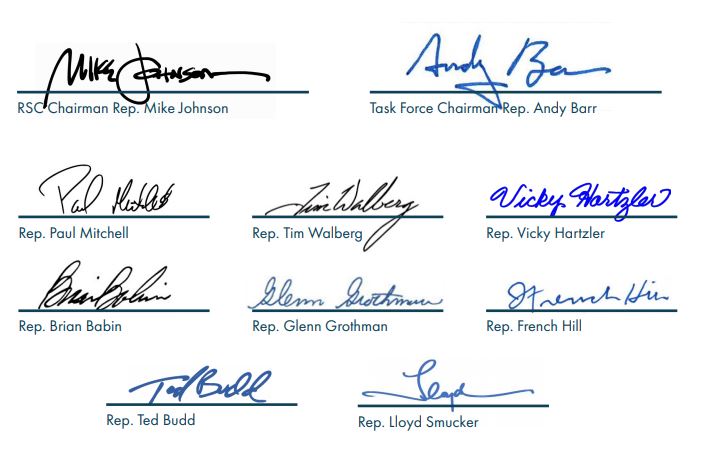
If Trump’s new Supreme Court kills Obamacare, here are eight ways your life will be affected

More than 10 years after its passage, the Affordable Care Act once more hangs in the balance. There have been plenty of near misses before, including previous Supreme Court appearances and Congressional votes. Yet in the wake of Justice Ruth Bader Ginsburg’s death, this time around Republicans may finally be successful in undoing the Obama Administration’s signature achievement. Hearings before the Supreme Court are scheduled to begin on Nov. 10 on whether a change in tax law makes the ACA unconstitutional.

The ACA can be improved in many ways, as I have written elsewhere. Yet if the Supreme Court strikes down the ACA, it seems unlikely to me that a meaningful replacement will be put in place among high levels of partisanship in Washington, D.C.

As a result, if the court kills it virtually all Americans would be affected by the policy reversal, as the almost 1,000 pages of legislative text and ensuing more than 9,000 pages in regulations have impacted all parts of the American health care system.

As a health policy and politics scholar who has published extensively on the ACA, I see the following as the most obvious effects if the Supreme Court ruled the ACA unconstitutional.

1. Millions of Americans will lose coverage

One of the key features of the ACA was the expansion of insurance to millions of Americans. Most of this was achieved through the expansion of the Medicaid program, America’s safety net program.

Additionally, the ACA provided insurance market reforms and subsidies that made it easier to buy health plans for those Americans making too much to quality for Medicaid.

Millions of young Americans able have been able to also stay on their parents’ coverage until they turn 26.

More than 20 million Americans will lose their insurance if the ACA is undone.

2. Many hospitals and clinics may close, especially in rural areas

Even before COVID-19, many medical providers including hospitals and clinics were struggling to keep their doors open. This particularly applied to those located in poorer and more rural areas of the country. Indeed, hospital closures since 2010 have mostly occurred in states that have refused to expand their Medicaid program, like Texas and Alabama. These pressures would be gravely exacerbated with millions of Americans losing coverage. Closures affect all community members, whether they have insurance or not, as residents lose access to hospitals and specialists.

3. Loss of protection for pre-existing conditions

Before the ACA became law, many Americans were frequently turned down when they went to buy insurance. The insurance carriers deemed them too much of a financial risk due to their “pre-existing conditions.”

Before passage of the ACA, this practice was subject to a confusing mix of state and federal laws, regulations and enforcement. Insurers developed lists of conditions, medications or occupations that would lead to an automatic denial of insurance coverage.

These “declinable conditions” including diverse issues ranging from substance abuse to acne. Many insurers also refused to cover victims of rape, and 45 states allowed the practice for C-sections. In total, a congressional report found that 425 medical diagnoses have been used to decline coverage.

It seems likely that exposure to COVID-19 would now also fall into this category. And, it’s far from certain whether so-called COVID long haulers would be covered.

4. Loss of some benefits and higher co-pays

Prior to the ACA, it was generally up to each state to determine what benefits insurance ought to cover. States differed widely in terms of comprehensiveness. Many did not require prescription drugs or well-child visits to be included. For example, 62 percent of individuals in the individual market lacked maternity coverage, and 34 percent lacked coverage for substance abuse disorder treatment.

The ACA established a floor by generally requiring coverage to include a minimum set of Essential Health Benefits. It also required that preventive services like vaccinations or wellness visits be provided without any out-of-pocket costs.

Equally important, the ACA eliminated annual and lifetime coverage limits that insurers commonly imposed. These restrictions often confused consumers and left them on the hook for large charges when they got sick and exceeded the limits.

5. Seniors will pay more, and Medicare will be destabilized

One of the biggest ways America’s seniors would be affected by the undoing of the ACA would be increases in prescription drug costs. Each year, about 5 million of them experience a coverage gap. This infamous Medicare Part D “donut hole”, which the ACA moved to close, required seniors to shoulder the full amount of prescription drugs costs after a certain amount until they reach a certain threshold.

Adding further costs, seniors, like all other Americans, would also face more out-of-pocket payments for preventive services.

Early retirees too young to qualify for Medicare will find it virtually impossible to obtain insurance coverage on their own. Those with pre-existing conditions would be turned down by the insurance carrier. Most others would face prohibitively high premiums due to their age.

Eliminating the ACA would also expunge the increase in payroll taxes for high-income earners, which stabilized the Medicare trust fund. This raises new concerns about the long-term viability of the entire program.

6. The opioid epidemic will get worse

While the public is focused on the current pandemic, an opioid epidemic has ravaged the nation for years. It will also likely long outlast the impact of COVID-19, as more than 20 million Americans suffer from addiction. The effects are enormous and permeate American communities. The ACA has allowed hundreds of thousands of Americans to get crucial treatment by providing them with access to health insurance.

Equally important, the ACA’s Essential Health Benefit provisions required policies sold in the individual market to cover addiction and mental health services. As mentioned before, it also eliminated annual and lifetime limits on these benefits.

7. Women will suffer disproportionately

Few groups have benefited as much from the ACA as American women, who have gained improved coverage benefits, and access. Importantly, the uninsurance rate for women dropped significantly, from as much as 17% prior to the ACA to 11%.

Reduction in uninsurance were particularly pronounced for Hispanic women and those with low socio-economic status. Both groups saw reductions by 10 percentage points to 22% and 21%, respectively.

Moreover, the practice of charging women higher premiums solely based on their gender was banned. Before the ACA, in most states it was even common to charge a male smoker less than a female nonsmoker for insurance coverage before passage of the ACA to account for higher levels of healthcare utilization of women.

Women have also benefited tremendously from the elimination of out-of-pocket cost for preventive services like mammograms, well-woman visits, domestic and interpersonal violence screening and counseling.

Pre-existing condition protections have also proven particularly important for women as they could no longer be denied coverage due to having had a C-section, being a survivor of breast or cervical cancer, or having received medical treatment for domestic or sexual violence.

The ACA also ensured that women are guaranteed coverage for pregnancy, maternity and newborn care and that preventive and prenatal services are now covered free of charge. Similarly, insurers are now required to provide new mothers with equipment to extract breast milk and the support services to do so.

Finally, the ACA also supports women in planning their families by eliminating out-of-pocket costs for contraceptive services. This reduced the number of women without such benefits more than 20% to 3%.

8. Coal miners and their families will lose benefits

Coal miners and their families will also experience a significant reduction in benefits if the ACA is reversed in court. A little-known provision in the ACA greatly facilitated access to benefits for miners affected by years of exposure to coal dust now suffering from black lung disease. These benefits would be eliminated with the ACA. Of course, it would also affect eligibility for many miners with regard to Medicaid and the ACA marketplaces.

Simon F. Haeder, Assistant Professor of Public Policy, Pennsylvania State University

This article is republished from The Conversation under a Creative Commons license. Read the original article.

“I’m still flip-flopping” on Oscar Pistorius’ guilt or innocence, says “30 for 30” director

The story of Oscar Pistorius is truly the definition of a meteoric rise and fall. The Paralympic — and then Olympic — sprinter defied odds and fought for the chance to compete victoriously against able-bodied athletes in the 2012 London games. 

A year later, he was under investigation for the shooting death of his girlfriend, Reeva Steenkamp. That case made just as many headlines as his initial rise to glory, and is back in viewers’ minds amid the postponement of the 2020 Olympics and Paralympics and in the wake of the enthralling Netflix documentary “Rising Phoenix.”  Pistorius is currently serving a 13-year sentence for murder.

Director Daniel Gordon has spent years working on the four-part ESPN “30 for 30” docuseries “The Life and Trials of Oscar Pistorius.” He spoke with Salon about how polarizing the case is and was, what he learned about the coverage of Pistorius as an athlete when surveying archival footage, and how the pandemic could have totally derailed the project. 

This interview has been edited for length and clarity.

You started talking about this series about four years ago, right? That was right around the time “O.J.: Made in America” had been released. Were you specifically looking for sports stories with a true crime angle? 

They were; I wasn’t. It’s never been something that specifically interests me. I love sports stories, but all my docs tend to have a sports backdrop, but they’re human stories. You’ll never know [what it’s like] to be a 400-meter hurdler, but you’ll know all about the character of this guy. So this was no different, really. 

And what really impressed me about the O.J. story was not the trial, but actually the college football angle and the layer of race and the fact that they gave it seven and a half hours, whereas, ordinarily, even in a two-hour film, you never got the layers or the details like that. I thought they were really brave as a broadcaster to go with that. They were saying, “We want more,” and that’s music to my ears. 

They came up to me and said, “What do you think about the Oscar Pistorius story [for a potential project]?” And I was like, “Not sure, to be honest, but I’ll give it two weeks and come back.” I was literally on the phone within three days saying that it was a really good story that I was going to flesh it out. There’s loads within it and there’s so much more than a crime story, as well. Even without the crime element, it’s an amazing story. 

I want to talk more about those layers in a minute, but for people who maybe didn’t follow the case super closely at the time, there are people on two ends of the spectrum when it comes to Oscar’s motivation behind killing Reeva. People who thought it was a genuine mistake, and people who thought otherwise. Could you talk a little bit about both those viewpoints? 

I mean, it literally is two polar opposites. There is no one character in the [series] who says there is a middle ground. Either you believe him, or you didn’t and he’s labeled as a vicious murderer. So, the state’s case is very simple. They had an argument that on that night, he lost his temper, followed her down the corridor with a gun in her hand, and she went into the bathroom. She locked herself in, the argument continued, and he fired four shots and killed her in cold blood. End of story — premeditated murder. That’s their line. 

There’s another version, which [Oscar] has said from the very, very beginning and still says to this day. That’s that he woke up in the middle of the night. It’s very dark; it’s summer in South Africa in February and it’s pitch black and he went to get the fans because they’re making a bit of noise. During that period, unknown to him, Reeva went to the toilet, he heard a noise and thought it was a burglar. He was in an awful lot of personal trouble at the time with unsavory characters in Johannesburg and assumed someone was coming to get him or that someone had invaded his home — which is very, very common in South Africa and typically ends as a violent home invasion. It’s something that we don’t quite really understand in Britain until you live there or are from there. 

Because he was not on his prosthetics, just on his stumps, he was very vulnerable. His natural instinct was to go to the danger and not flee from it. He went to confront the perceived burglar . . . then fires his shots. 

So they are two very different views in terms of investigation, and they’re both very plausible at certain points — despite being far from plausible at others. In terms of a case, it’s fascinating. Whenever people ask me what I think, I always refer them to whichever part of the [series] I’m watching at that time. 

We only just finished rewatching [Part 4] yesterday and I’m still like, “Four years in and I’m still flip-flopping.”  You’re never quite sure. 

Pulling back a little bit, from a storytelling perspective, one of the things that I thought was really interesting about this series was the variety of interviews featured — from family friends to fellow athletes to people involved in the legal system. We hear from a lot of people and it really propels the narrative forward. How did you determine whose voices you wanted to feature and center in this story? 

I mean, there are 65 characters in the [series]. There are 55 characters on the cutting room floor, and the same amount who we spoke to, in research, both to try and persuade them to be in the [series] and also just for pure knowledge, knowing they wouldn’t be interviewed, but for background research. 

So, I wanted to get as broad a character base as possible, but also have people who were not relying on third-party [information] in that they didn’t hear about the story, they were in the story. Even people like his brother and uncle who were in the story quite a bit, they weren’t there all the time. They can’t necessarily speak to his time spent in Italy or Iceland. 

That’s the good thing about it being a long-term project. I did 11 trips to South Africa, seven of which were with the film crew. We were constantly acquiring more people and getting more people on board. We did two trips to America, two trips to Iceland, three trips to Italy. Germany, Switzerland, we went all over the world for it and pretty much got everyone we needed. 

Much of this series is also bolstered by some really amazing archived footage. In combing through that, did you learn anything interesting or detect themes in how the media talks about disabled athletes? 

There were two things, one of them didn’t actually make it into the final cut, but it’s just one more layer. In terms of attitude towards Oscar, there was the controversy over him using his blades and whether he had an unfair advantage or not. We did a huge — initially an hour and a half or so — section on just the pure science and what the blades were doing. In editing, it didn’t really fit and it kept getting in the way of the [series] progressing, but that was really interesting to see. 

In terms of the archive, there was that very first press conference by the police and they allude to this history of domestic violence, but they actually describe it as an “incident of a domestic nature.” It’s the press who use the phase “domestic violence.” Then the press reports it as domestic violence and it just goes worldwide immediately. That sets the scene and that’s how we all come to that story, kind of like, “This athlete I loved is apparently a serial abuser.” And you’re like, that’s not what she actually said, but it’s very hard once that narrative is out to roll that back. 

Did the pandemic affect the release of the series at all? Did you consider holding it to pair with the Olympics, which will hopefully be held next year?

The intended time of the release was a month or so ago for the Telluride Film Festival, but that didn’t happen because it was canceled. But yeah, I mean, we were on the last plane out of South Africa doing our final filming and interview the day before they locked down the country for direct flights to and from the U.K. We were going anyway, but it turned out to be the last flight and it was chaos. 

From a personal perspective, you know, the project would have ground to a halt if it had been March 2019, not 2020. Because we’d literally done the last bit of filming. So all we had to do was editing which can be done during this time, whereas if we were waiting on more filming, that would have been more problematic. 

“30 for 30: The Life and Trials of Oscar Pistorius” premieres Sunday, Sept. 27 at 9 p.m. on ESPN. All four parts are available to stream on ESPN+ that day.

Democracies need to collect data to work properly. The US isn’t doing a good job

A government of by the people and for the people can’t function very well if you don’t know who those people are. Indeed, that’s why public data are foundational to our democratic system: in order to distribute resources and understand how to serve the public, elected officials have to understand the composition of the body politic. All nations collect data on their citizens in some way in order to do this. 

In the United States, we know about income inequality and job trends thanks to data from the Bureau of Labor Statistics. We know what’s happening to economic growth thanks to data from the US Census Bureau. We know about the impact of business tax changes thanks to data from the Statistics of Income Division. Data like these are profoundly important for most of us, and especially for individuals and small businesses who can’t pay for expensive experts to produce customized reports. 

One of the government’s jobs is to level the data playing field. Statistical agencies have historically been the source of accurate and objective information for democracies, due to the limitations of private sector–produced data. For example, emergency supplies probably shouldn’t be allocated to an area based on the frequency of tweets from that location. Why? Because that would mean more supplies going to the people who tweet, underserving babies and elderly residents who are less likely to have Twitter accounts. Emergency supplies should be allocated based on information about the people likely to need such supplies, and government data are the way in which we ensure that the right people are counted. If people aren’t counted, they don’t count, and that threatens our democracy.

But recently, the playing field has been tilting against public data. Our current statistical system is under stress, too often based on old technology and with too little room for innovation. Our public statistical institutions often are not structurally capable of taking advantage of massive changes in the availability of data and the public need for new and better data to make decisions. And without breakthroughs in public measurement, we’re not going to get intelligent public decision-making.

Over twenty years ago, one of the great statistical administrators of the twentieth century, Janet Norwood, pointed to the failing organizational structure of federal statistics, warning that, “In a democratic society, public policy choices can be made intelligently only when the people making the decisions can rely on accurate and objective statistical information to inform them of the choices they face and the results of choices they make.” 

We must rethink ways to democratize data. There are successful models to follow and new legislation that can help effect change. The so-called Data Revolution happening in the private sector — where new types of data are collected and new measurements created by the private sector to build machine learning and artificial intelligence algorithms — can be mirrored by a public sector Data Revolution, one that is characterized by attention to counting all who should be counted, measuring what should be measured, and protecting privacy and confidentiality. Just as US private sector companies—Google, Amazon, Microsoft, Apple, and Facebook—have led the world in the use of data for profit, the US can show the world how to produce data for the public good.

There are massive challenges to be addressed. The national statistical system — our national system of measurement — has ossified. Public agencies struggle to change the approach to collecting the statistics that they have produced for decades — in some cases, as we shall see, since the Great Depression. Hamstrung by excessive legislative control, inertia, lack of incentives, ill-advised budget cuts, and the “tyranny of the established,” they have largely lost the ability to respond to quickly changing user needs.  Despite massive increases in the availability of new types of data, such as administrative records (data produced through the administration of government programs, such as tax records) or by digital activities (such as social media or cell phone calls), the US statistical agencies struggle to operationalize their use. Worse still, the government agencies that produce public data are at the bottom of the funding chain—staffing is being cut, funding is stagnant if not being outright slashed, and entire agencies are being decimated.

If we don’t move quickly, the cuts that have already affected physical, research, and education infrastructures  will also eventually destroy our public data infrastructure and threaten our democracy. Trust in government institutions will be eroded if government actions are based on political preference rather than grounded in statistics. The fairness of legislation will be questioned if there is not impartial data whereby the public can examine the impact of legislative changes in, for example, the provision of health care and the imposition of taxes. National problems, like the opioid crisis, will not be addressed, because governments won’t know where or how to allocate resources. Lack of access to public data will increase the power of big businesses, which can pay for data to make better decisions, and reduce the power of small businesses, which can’t. The list is endless because the needs are endless.

I want to provide a solution to the impending critical failure in public data. Our current approach and the current budget realities mean that we cannot produce all the statistics needed to meet today’s expectations for informing increasingly complex public decisions. We must design a new statistical system that will produce public data that are useful at all levels of government—and make scientific, careful, and responsible use of many newly available data, such as administrative records from agencies that administer government programs, data generated from the digital lives of citizens, and even data generated within the private sector.

What’s at stake

Measurement is at the core of democracy, as Simon Winchester points out: “All life depends to some extent on measurement, and in the very earliest days of social organization a clear indication of advancement and sophistication was the degree to which systems of measurement had been established, codified, agreed to and employed.” 

Yet public data and measurement have to be paid for out of the public purse, so there is great scrutiny of costs and quality. Yet in a world where private data are getting cheaper, the current system of producing public data costs a lot of money—and costs are going up, not down. One standard is how much it costs the Census Bureau to count the US population. In 2018 dollars, the 1960 Census cost about $1 billion, or about $5.50 per person. The 1990 Census cost about $20 per head.  The 2020 Census is projected to cost about $16 billion, or about $48 per head. And the process is far from instant: Census Day is April 1, 2020, but the results won’t be delivered until December.

Another standard is the quality of data that are collected. Take a look, for example, at the National Center for Health Statistics report to the Council of Professional Associations on Federal Statistics. Response rates on the National Health Interview Survey have dropped by over 20 percentage points, increasing the risk of nonresponse bias, and the rate at which respondents “break off” or fail to complete the survey has almost tripled over a twenty-year period.

As a result, communities are not getting all the information they need from government for decision-making. If we made a checklist of features of data systems that have made private sector businesses like Amazon and Google successful, it might include producing data that are: (1) real-time so customers can make quick decisions; (2) accurate so customers aren’t misled; (3) complete so there is enough information for the customer to make a decision; (4) relevant to the customer; (5) accessible so the customer can easily get to information and use it; (6) interpretable so everyone can understand what the data mean; (7) innovative so customers have access to new products; and (8) granular enough so each customer has customized information.

If we were to look at the flagship programs of the federal system, they don’t have those traits. Take, for example, the national government’s largest survey—the Census Bureau’s American Community Survey (ACS). It was originally designed to consistently measure the entire country so that national programs that allocated dollars to communities based on various characteristics were comparing the whole country on the same basis. It is an enormous and expensive household survey. It asks questions of 295,000 households every month—3.5 million individuals a year. The cost to the Census Bureau is about $220 million and another $64 million can be attributed to the respondents in the value of the time taken to answer the questions.  Because there is no high-quality alternative, it is used in hundreds if not thousands of local decisions—as the ACS website says, it “helps local officials, community leaders, and businesses understand the changes taking place in their communities.”  In New York alone, the police department must report on priority areas that are determined, in part, using ACS poverty measures, pharmacies must provide translations for top languages as defined by the ACS,  and the New York Department of Education took 2008 ACS population estimates into account when it decided to make Diwali a school holiday.

Yet while reliable local data are desperately needed, the very expensive ACS data are too error prone for reliable local decision-making. The reasons for this include the survey design, sample sizes that are too small, public interpretation of margins of error when sample sizes are small, and lack of timely dissemination of data.

The core problem is the reliance on old technology. The data are collected by means of mailing a survey to a random set of households (one out of 480 households in any given month). One person is asked to fill out the survey on behalf of everyone else in the household, as well as to answer questions about the housing unit itself. To give you a sense of the issues with this approach: there is no complete national list of households (the Census Bureau’s list misses about 6 percent of households), about a third of recipients refuse to respond, and of those who respond, many do not fill out all parts of the survey.  There is follow-up of a subset of nonresponders by phone, internet, and in-person interviews, but each one of these introduces different sources of bias in terms of who responds and how they respond. Because response rates vary by geography and demography, those biases can be very difficult to adjust for. 

Such problems are not unique to the ACS; surveys in general are less and less likely to be truly representative of the people in the United States and the mismatch between intentions and reality can result in the systematic erasure of millions of Americans from governmental decision-making.

This spiked apple spice loaf cake is better than any pumpkin dessert you’ll bake this fall

You can find pumpkin-flavored everything on dessert menus now that fall is officially here, but the fresh fruits you should bake as soon as you feel that first crisp breeze in the air are apples.

“Fall is when holiday baking season officially begins, because it’s not too hot to turn on your oven,” Salon’s resident pastry chef Meghan McGarry of Buttercream Blondie says.

The recipe the culinary personality made this year to welcome the new season was her classic Apple Spice Loaf Cake, and it kicks off our fall baking series. The ingredients, which include walnuts and bourbon, spell fall. Also, it’s been a difficult year, and this is one easy cake to assemble. 

“It’s just incredibly simple to make. You don’t need a mixer or a stand mixer. You can whisk the eggs and sugar together by hand,” McGarry tells Salon Food. “Then you bake it a loaf pan just like a quick loaf.”

This loaf cake conjures up memories of some of our favorite quick bakes from McGarry’s library, which include her Meyer Lemon Blueberry Loaf and her Roasted Strawberry Banana Bread. By definition it is a cake, but it’s perfectly acceptable to eat a slice for breakfast or as a snack.

RELATED: These spiked apple crisp cheesecake bars are a hit even if it’s not fall

“This is my favorite fall Sunday bake. It’s one of those desserts that you throw in the oven on Sunday morning, and slice off a piece for brunch,” McGarry says. “Later in the day, it’ll turn into an afternoon pick-me-up, and the leftovers will make a great dessert when you don’t feel like turning on the oven again come Monday.”

The star of this loaf cake is the Granny Smith apple, which McGarry prefers to use because of its crispness. The remainder of the ingredients enhance the flavor of this fresh fall fruit. Spices, including cinnamon and cloves, provide a hint of coziness. Walnuts lend a nice crunch to every bite. And a splash of bourbon cuts the sweetness while adding a sophisticated layer of warmth. 

RELATED: You can bake this quick loaf with ingredients on hand in your pantry, because substitutions are easy

This dessert tastes like fall in a bite, and it smells like it, too. Within ten minutes of turning on your oven, your entire house is guaranteed to smell like a trip to your local apple orchard. That’s why this is one of those cozy fall bakes that will become a staple in your recipe wardrobe for years to come.

***

Recipe: Apple Spice Loaf Cake

Serving suggestion: Add a scoop or two of vanilla ice cream on top of a warm slice, and enjoy.

Ingredients:

  • 3 eggs
  • 1 cup sugar
  • 1/4 cup light brown sugar
  • 3/4 cup oil
  • 2 Tablespoons bourbon
  • 1 teaspoon vanilla bean paste or extract
  • 1 and 1/2 cups AP flour
  • 3/4 teaspoon salt
  • 3/4 teaspoon baking soda
  • 2 teaspoons cinnamon
  • 3/4 teaspoon cloves
  • 1/2 teaspoon allspice
  • 1 and 1/2 cups peeled and diced apple
  • 3/4 cup chopped walnuts

Instructions:

  1. Preheat oven to 350 degrees and spray a loaf pan with nonstick.
  2. Whisk eggs and sugars together in medium sized bowl till they get lighter and thicker.

Click here to access the remainder of Meghan McGarry’s apple spice loaf cake. And don’t forget to follow @ButtercreamBlondie on Instagram for more ways to bake through it.